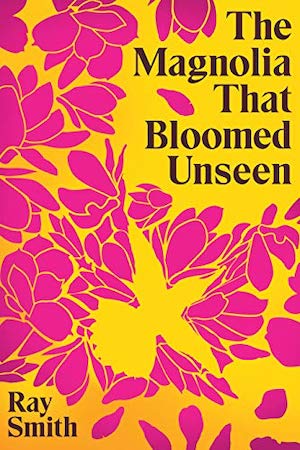
A cover is all about disclosure. A cover may encase a book but its purpose is to encourage readers to pry open its pages. A cover is as much an invitation as it is a revelation. This I’ve long understood in the abstract, but it wasn’t until the design proofs for my own came in that I realized just how literal that would feel. With its warm orange-yellow hue staring back at me, The Male Gazedcover was an arresting reminder that I’d written an entire book about desire and masculinity (there was a male torso on full display asking you to lust after it) filtered through my own experience (there was that “taught me” line in the magenta-colored subtitle right atop my own bolded name). All of this gave me pause: if every cover is a promise, I realized that what I’d be asking of my readers was precisely the kind of welcome ogling my prose dissected through its many chapters. On a more frivolous note, that image of a shirtless man wearing only a chain around his neck made me uneasy for a wholly different reason: I knew close friends would inquire whether, narcissist that I can sometimes be, I had posed for my own cover.
The reason such a question wouldn’t feel unwarranted (and hasn’t, for I’ve fielded it several times already) is that one of my more unorthodox long term hobbies has been collaborating with photographers. I’ve dropped trou in New York City office spaces on sunlit weekends and on sun-kissed mornings in my Hollywood apartment in a jockstrap; I’ve attended a World Naked Gardening Party where images that were of me and a Monstera leaf still give me pause, and a naked games night where a photo of me playing Twister wearing nothing but the shame of a second place finish. Some are striking in their simplicity (atop a stripped bed with a sheet serving as a makeshift prop to barely cover my so-called privates), others in their artistic ambition (against a pink furry backdrop mirroring a famous Playboy cover). Many have been taken with digital cameras and iPhones at the ready, their candid nature capturing me at my most unguarded, laughing gleefully at some already forgotten quip. But others have found me posing for polaroids and decades’ old cameras that required me to sit still for minutes at a time, revealing how rarely I smile unprompted when faced with such a lens.
To open that Google Drive folder (“Photographs: Manuel” ) is to run through the gamut of my amateur modeling career. I began that journey as a way to see myself anew; to find others who would gaze at me through their lens the way I’d gazed at men in underwear ads, sexy magazine photo shoots, and increasingly thirst-trappy Instagram posts. In hopes, I guess, of being able to wield whatever confidence boost I’d get from them in my day to day life. I yearned to find ways of feeling wanted and to find power in letting myself be so desired—you know, the very thing my book is all about. Then again, it would have been too on the nose, perhaps, to have fed the amazing creative team over at Catapult any one of the many tasteful nudes I’ve taken over the years and have it adorn a book that became, in its writing, a begrudging autobiography of sorts.
I began that journey as a way to see myself anew.
The working title for this cultural criticism-cum-personal-essay collection was “Thirst for Men.” I thought it playfully centered the elusive if titillating concept of “thirst” in a project about what it means to desire men, all while spoofing that needless “for men” branding that so litters beauty product marketing and which reinforces the idea that vanity is inherently a decidedly not-for-men practice. My partner at the time hated this title, groaning quite accurately that it was much too clumsy. It required too much explanation, he pointed out; the last thing a title needs. My agent similarly found it wanting. He encouraged me to find an alternative, one that would capture the key question at the heart of the book: Do I want him or do I want to be him? That’s how The Male Gazed came to be. Even without the cheeky nod to that famed Julia Mulvey essay, I enjoyed landing on an expression that used the elasticity of tenses to anchor the wordplay I so love deploying all throughout the book.
Such a shift in tone had an added benefit; it stressed how much more personal the overall pieces had become since I first scribbled essay ideas in a notebook back in the summer of 2019. When I first dreamed up what became The Male Gazed, true to my academic roots, my voice was rather impersonal. I moved through my prose like a hidden puppeteer of my own thoughts and arguments. You could see it was me behind the many discussions around how masculinity was an armor that trafficked in its own invisibility. But you didn’t really get much sense of who I was or why this topic so fascinated me. At the urging (or, really, encouragement) of my agent and editor alike, the essays began to feel more memoiristic. Childhood memories of going to the movies became cornerstones in discussions around Disney princes; angered tantrums led the way to a chapter about how I grew up on a steady diet of Japanese anime—even my own coming out story makes a cameo amid a meditation on the queer and queered futures that movies like The Fifth Element help us imagine. Such personal disclosures, I told myself while writing them out, were a means to an end. They were necessary anchors in what I still wanted to consider a work of cultural criticism. It was only when I stepped back and examined them together that I saw just how much of myself I’d poured into those pages. The title ended up being even more revealing than the cover: I am the male who gazed, but also the man who is and has been gazed.
I struggled a bit when first deciding to post one of the nudes a photographer in New York City had taken of me.
A central tenet of the book is the paradoxical power found in the demand to be looked at. The looker, we’re often told, is the one who wields control: they’re the ones who figure out the frame, who structure the shot, who bring in cultural strictures that strip agency of those who are ogled. They are active, and thus, in charge. But such a simplistic scheme erases the gravitational pull of those who beg to be watched, seen, looked at. What can sometimes be understood as a passive endeavor can, in fact, be quite empowering. In 2023 such a lesson feels obvious. We live in a world so guided by self-curated imagery that it may be hard to remember there was a time when we could all grow up without needing to think of ourselves as personal branding managers, where digital “walls” and “grids” didn’t double as surprisingly non-ephemeral photo albums and online vision boards cataloging our every move (and mood). It’s hard to disentangle who we present ourselves to be in our writing and how we offer ourselves to the (digital) world via candid pics or more carefully curated photos. Who among us, these days, doesn’t want to be seen? To be liked? To be favorited?
I struggled a bit when first deciding to post one of the nudes a photographer in New York City had taken of me. Back then I was a graduate student. Though I was already imagining off-ramps to a life in academia, posting that photo (in black and white, naturally), melancholy and tasteful as it was, meant forfeiting a professional kind of authority I was supposed to be nurturing in all aspects of my life. But what I’d learned from that photo session, and this is something that continues to be the case in the many that have followed (all with queer photographers, it must be noted) was the freeing sensation I felt once I let go of any shame and any embarrassment over being nude and having it so simply and unassumingly be so celebrated. That came from who and in what context I was being looked at. There was comfort, not to mention a level of titillation, to know that a fellow queer guy was the one letting me finally feel so at home in my own body. I’d say it was revelatory if such an expression didn’t feel so painfully cliché.
Realizing just how self-revealing The Male Gazed’s title and cover are, I can’t help but feel ill-equipped about inviting such a readerly gaze. And how much anxiety I’m experiencing as I muster up the courage to allow myself to be so emotionally vulnerable—so naked on the page, if you will. Perhaps this would have been different if I’d decided to write an autobiographical project from the start. I’d have known what to expect, of myself and of my readers. Instead, I find the prospect of having shown so much of myself rather daunting, embarrassing, even. Therein lies, perhaps, the most personal revelation of the entire project: I’ve long armed and hid myself in criticism. In pop culture, even. It was easier to dissect the way telenovelas spoke to my sense of self as a teenager than to really evaluate what such prime time lessons taught me about my own frail grasp on socially-sanctioned masculinities, the kind I coveted and feared in equal measure. The Male Gazed ended up being a call to finally strip down.
As writers we offer up our work in hopes it’ll find an audience. Or, at the very least (or, most, as the case may be) a generous attentive reader who’ll savor our sentences with gusto and turn our ideas over in their heads with grace. My chastely erotic scenario—where I’ve come to think of my book as a naked version of myself, a nude in prose that makes me sound like an acolyte of Frank O’Hara’s “Personism”—is ultimately a humbling prospect. To ask to be read, after all, is to ask to be seen. An ask as emboldening as it is terrifying. Best then, to see it as freeing as I found those nude photoshoots; a chance to let others see me as I am, as I was, as I could still be.
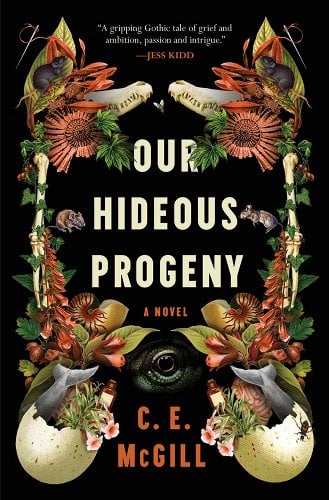
Women’s achievements have long been overlooked in the annals of history, and nowhere is this more apparent than in the field of science. When I first began digging into the history of nineteenth-century geology for my novel Our Hideous Progeny, I was shocked to find how many women were actually working in the field, considering how scarcely their names crop up in textbooks. Without access to formal education, many of these women either taught themselves or became involved in science by acting as assistants to their male relatives, learning on the job and often making significant discoveries in their own right. Indeed, many well-known and prolific scientists in recent history were enabled by women, who acted not only as their lab assistants and scientific illustrators, but also as their editors, translators, housekeepers, child-minders, and travel agents.
Even now, many women around the world are still denied access to education, and female scientists and academics have had to fight every step of the way for access to the same pay and recognition as their male peers. Although there is still a long way to go, modern historians, writers, and crowd-sourced efforts like Wikipedia Edit-a-Thons have made considerable progress in finally recognizing the women scientists whose work has long been overlooked.
As a nonbinary person and former engineering student, uncovering the real diversity of the history of science has always been important to me. The vast majority of scientists I read about as a child, in history books and in the science fiction stories I loved, were straight, cisgendered men; it took me years to discover Ada Lovelace, Katherine Johnson, Sally Ride, James Barry, and other role models who broke the mold. So, when I realized that I wanted to write a book that combined my love for nineteenth-century science with Frankenstein—transposing the fascinating themes of Mary Shelley’s classic into the turbulent world of 1850s paleontology—I knew that my main character had to be a Mary, not a Victor. Fortunately, Mary is in fantastic company, as novels honoring the work of women in science are now being more frequently published. Below are just some of my favorites.
In the 1980s and the world of computer science, this story follows dual protagonists Sadie and Sam, who meet in the hospital as children and bond over a shared love of video games. Later, as college students, they meet again by chance and decide to collaborate on a video game of their own. But turning the thing they love into a means of making money means facing the prejudices of the game industry, like when a large studio offers to produce their game—but only if they make their intentionally genderless protagonist male. Not to mention, as the game becomes a runaway success and the team suffers several tragic setbacks, Sam (the male developer) becomes the public face of the project and Sadie receives little credit for the code she contributed. While neither character is without their flaws, and their relationship is complicated, Zevin brings them together for a nuanced story about the challenges of creative collaboration, the escapist power of video games, and the gendered difficulty associated with receiving one’s due.
In this compact but powerful novel, set in the decades after World War II, we meet Katherine, a young Asian American woman determined to make her place in the world of mathematics. From an early age, Katherine’s parents foster in her a love of nature and science—but after her mother abruptly abandons the family one day, Katherine buries her hurt and confusion in her studies, eventually becoming fixated on proving the notorious Riemann Hypothesis. As it turns out, however, the Riemann hypothesis and her own family history are far more entangled than she knows, and Katherine finds herself journeying across Europe in search of the truth. I adored the way that Chung depicted the struggles that women (especially women of color) face in STEM—not just outright prejudice, but also loneliness, insecurity, and a complicated mix of inspiration and envy that comes from seeing someone else like you succeeding in your field. Plus, as a fan of mathematics myself, I thoroughly enjoyed seeing a character as driven and interesting as Katherine so passionate about the beauty and grace of a good equation.
This fascinating and introspective story covers the friendship of Mary Anning and Elizabeth Philpot, two real-life paleontologists of the nineteenth century. In the fossil-rich town of Lyme Regis, the Anning family made their living selling fossils to tourists and collectors, but Mary was the first in her family to appreciate the scientific importance of these objects and educate herself in paleontological classification. Elizabeth Philpot, originally from a well-to-do London family, moved to Lyme Regis and developed a fascination with fossil fish, through which she and Mary Anning forged a lifelong friendship. Chevalier does a fabulous job of exploring the religious and existential quandaries stirred up by the nascent science of paleontology, as well as the different ways in which gender and class affect the two friends’ lives: as a woman of some standing, Elizabeth is allowed scientific hobbies but will never be considered a professional; and as a working class woman, Mary is respected for her practical ability to find fossils, but never as a true contributor of scientific knowledge.
This introspective novel follows Gifty, a Ghanaian American student of neuroscience living in Alabama. Gifty’s parents immigrated to America before she was born in search of better opportunities for their future children; faced with poverty and racism, however, the family struggled, and Gifty’s father eventually returned to Ghana, claiming it was only a visit – though he never came back. Tragically, the family was wounded further when Gifty’s older brother, a talented high school athlete with a bright future ahead of him, addicted to opioids after a training injury, falling into addiction and eventually dying of a heroin overdose. Now, in the present, Gifty’s mother barely leaves her bed, near-catatonic with grief, and Gifty focuses herself on her research, trying to use science to make sense of the misfortunes her family has suffered. Compelling and full of emotion, this fascinating novel asks complex questions about grief, religion, and the workings of the human mind.
This novel follows another Elizabeth, the recently widowed Elizabeth Rocheid, who arrives in Edinburgh in the 1820s. An eager botanist and artist, she offers her services as an illustrator to capture the once-in-a-lifetime flowering of the Agave Americana plant in the city’s brand-new Botanic Garden. Along the way, Elizabeth strikes up a touching friendship with Belle Brodie, a fellow botany enthusiast (whose interest in the rare flower, however, runs in a far more commercially-exploitable direction). With plenty of cameos from famous scientists and thinkers of the era, Sheridan skillfully captures the buzz and excitement of this period of scientific history, painting a fascinating portrait of the Botanic Garden and Georgian Edinburgh as a whole.
In this fast-paced sci-fi thriller, geneticist Evelyn Caldwell is the pioneering scientist behind a new cloning technology that can be used to replicate already-existing humans with complete accuracy—at least, in terms of their physical form. When Evelyn creates a clone of herself named Martine, her husband decides that he actually prefers the personality of the clone, and leaves Evelyn for Martine. Forced to confront the ethical quandaries brought about by the technology she has created, and the long-standing flaws in her marriage, Evelyn’s life is thrown into disarray. Suspenseful yet also filled with deeper questions about personal autonomy and identity, The Echo Wife asks if we really know our loved ones as well as we think we do.
Set in an alternate 1950s in which the Eastern US is devastated by a meteorite and the resulting global warming necessitates the human colonization of space much earlier than planned, this novel follows Elma York, a brilliant mathematician and former WWII WASP pilot. Elma works as a computer at the International Aerospace Coalition (think: NASA), and despite her debilitating anxiety around reporters, her tireless campaigning for women to be included in the space program shoves her into the public eye as “The Lady Astronaut.” Kowal’s exhaustive research into the history of space travel shines in this novel, and touches on many aspects of real history, including the (sadly short-lived) female astronaut training program of the 1960s. In some ways, Kowal’s version of the 50s is almost better than ours, as the necessity for international cooperation requires that scientists of different races and nationalities be included in the space program far sooner than they were in reality. However, it is still the 1950s, and Elma’s Black colleagues, in particular, face countless obstacles. Elma, as a Jewish woman, is no stranger to prejudice herself, and finds solace throughout the difficulties she faces in her faith, community, and wonderfully supportive husband.
Beginning in the middle of a murder trial, this razor-sharp and beautifully written novel follows the life (and confessions, as the title suggests) of Frannie Langton. We meet Frannie as a domestic servant in early nineteenth-century London when she is accused of brutally killing her employers, a respected scientist and his wife—though she claims she cannot remember whether she did so or not. Through Frannie’s tense and atmospheric narration, we learn that she was originally born as a slave on a Jamaican plantation, where she was educated and taught to assist with her master’s scientific experiments, but at a terrible price. Based upon the real and horrifying history of medical experimentation on Black (and frequently enslaved) people, Collins sheds light on the ugly underbelly of nineteenth-century science, much of which was founded upon racist ideas and funded by colonialism. Evoking the best of the Gothic tradition, Collins’ prose brings Frannie (and her complicated and compelling relationship with her English mistress, Marguerite) utterly to life. I was glued to every page.
Sharp and thought provoking, Chemistry follows a young Chinese American student grappling with the expectations of academia, society, and her demanding parents. At first glance, our unnamed narrator seems to be on the perfect track to a successful and happy life: she’s studying for a PhD in chemistry, and her wonderful boyfriend just proposed marriage. But in reality, she’s overworked, riddled with stress, and unsure whether she wants to marry at all. Her PhD has already dragged on for several years—much to her and her parents’ frustration—and the question of whether she actually enjoys chemistry is impossible to disentangle from the heavy burden placed on her as a “model minority” and child of immigrant parents. Through the eyes of this anxious young student, Wang explores the immense pressure on women (particularly women of color) to prove themselves worthy of their place in academia.
One school morning in 2012, I woke up at home and alone. Everyone else was on holiday and I stayed behind by request. The class activity that day in high school was a debate about abortion. I was excited to participate – argument formulation was a strength of mine, and anything beat having homework.
Regrettably, my class schedule conflicted with another important event I was attending: my death.
I contacted my ride to school and told her that I couldn’t do it that day. I apologized for my absence, but left out the part where I planned to asphyxiate myself by noon. This wasn’t a suicide attempt with an subconscious desire to reach out for help and awareness. I had no intention of failing.
As I dragged my miserable self out of bed, a voice implored me to find help one last time. I wasn’t happy, but I struck a bargain: I would seek help one last time as a courtesy to that voice. I picked up the phone and called a suicide hotline, ready to ruin some underpaid counsellor’s morning. It rang for over a minute without a response – not even an answering machine. I put it down, thinking I had misdialed. I tried again and the same thing happened.
I had phoned a suicide hotline and nobody picked up.
When the realization hit home, I laughed – truly laughed – for the first time in weeks. The funniest point in one of the darkest periods of my life. The whole disaster put me in such good spirits that I postponed my death and skipped school for the day. I napped, and played video games, the same as any other teenaged boy would do with cherished spare time. I now had a mirthful secret: I was such a human catastrophe that I had failed my own death.
I postponed my death a few times during my teens, but this is the only story I tell to strangers. It’s the only one with any entertainment value. The other incidents aren’t funny.
I picked up the phone and called a suicide hotline, ready to ruin some underpaid counsellor’s morning.
There was the logical conclusion to my disjointed upbringing: failing at so many appointed tasks and then, failing at death.
With the privilege of hindsight and a Master’s in Psychology, I now know that fractured mental health and a critical shortage of support structures is ruinous. Tragically, I spent my formative adolescence in that whirlpool of ruinous emotions. I didn’t evade death through force-of-will or artful self-care. I avoided death because of small fortunes and a tiny spark of resistance.
May we never have to confront our killer in the mirror.
I was an auspicious creature, a thing of humble destiny that would bear my branch of the family tree forward. Chinese families often prefer boys for their value as income providers and bearers of the family name. A good education. A ‘respectable’ job (don’t tell them I did online sex work). Wife and kids. The responsibilities of Chinese masculinity mingle with the privileges. Boys are shaped into morally-upright and productive creatures who maintain their family’s face. Face. An untranslatable concept of social respectability, dignity, and public relations that governs many aspects of Chinese life.
What I’m saying is that I had a lot riding on my shoulders, and I don’t remember signing up for any of it.
Growing up, I was intimidated with stories of Chinese children failing to uphold their families’ standards. Young men who became video game-playing deadbeats; ‘good girls’ who partied their grades away at university. Chattering ladies and grandmothers endlessly compared their children to see who had the best one. Picture the javelin throw event, but the stakes are a family’s reputation and the children are the projectile. Who had the best grades? The best extracurricular record? The best musical performance? The children who left this crucible bore lasting imprints of the messages they heard. Depression, maladjusted personalities, and alcoholism. The coping mechanisms for success.
All of this was a preferable alternative to failure – becoming a failure was certainly the worst thing that could happen to a Chinese child. The ‘failures’ of my youth became cautionary tales passed to other children. Like the Titanic: doomed to serve as a warning to others. I sometimes think about a family friend whose son slipped so far that he failed a grade. I think he just needed social support. I hope he’s okay. I hope they all are.
I grew up under relentless pressure to be better than the person next to me, rather than befriend them. I bore the weight of being a Chinese boy remarkably well, considering that I was actually a girl.
May we reach our future without being twisted in someone else’s straitjacket.
By first grade, I was enrolled in visual art, dance and piano classes. My first piano teacher believed that a five-year old was too young to start. Unfortunately for her, my elders are Chinese. They knew enough stories of prodigal musicians to know that if you didn’t get your child against a grindstone early, they’d never be successful. I joined the millions of Chinese kids who were nudged (coerced) into extracurricular activities at their parents’ behest. My parents took pride in how liberal their parenting techniques were. They proudly told me that they consulted me, asking if I preferred piano or violin. They were under the impression that ‘asking’ me made it an informed decision. The fact that my five-year old brain wasn’t able to process the responsibility and expectations wasn’t considered. In adulthood, they asked why I hated it so much if I ‘chose it’. I had to explain the inability of children to give informed consent to them while sharing a pizza.
I bore the weight of being a Chinese boy remarkably well, considering that I was actually a girl.
Piano is just one of the many things I failed at during my childhood. The dance class melted away. My art class teacher politely ejected me from the class because I was too energetic for it. I wanted to draw fighting robots and she was interested in teaching still life and basic color theory. A thoughtful parent would have reconsidered their decision to enroll a child in extracurriculars that were beyond their child. These are Chinese parents, so I bore the mounting weight of familial disappointment. My upbringing was defined by my inadequacy. My failure to attain high grades. My extracurricular failures. My lack of piano achievements. My room was devoid of trophies like other children. Better children.
My body wasn’t good enough, either. The matriarchs got it into their heads that a seven-year old shouldn’t be so skinny. I was required to drink a loose fluid dotted with atolls of dusty powder—protein shakes— of a sickly vanilla flavor. Instead of turning me into the big, strong boy theywanted, I became more troublesome. I was a picky and slow eater, the way children who are forced to drink half-mixed protein shakes get picky. The way children who eat under risk of punishment eat slowly to appease their elders despite how little they’re enjoying the food.
Under threat of punishment, I learned to eat faster than anyone else at the table. When my family visits nowadays, they remark that I eat like ‘someone who has never seen food before,’ and implore me to slow down and enjoy it. I don’t even have the energy to explain the irony of this to them.
Every time I failed at an endeavor, I received a dressing-down about my shortcomings. If I was lucky, there was just an exasperated sigh. Still, the message was clear: I wasn’t good enough.
May we never be pulled away from the small things that bring us delight.
I tried to be a guy. I really did. By my teens, I was insisting to other guys that lesbian porn was the best, because it had twice the volume of women. In 10th grade, someone behind me was talking about a friend who was acting strangely. I shouted across that, “Well at least he’s not gay! It’s the gays that are the real problem!” That made me feel good, like a regular, gross teenager. They didn’t have to know that I grimaced in the mirror at home. Or that I hated compliments aimed at my broad shoulders and deepening voice. They needn’t know that I clung to my last plush toy until age seventeen – slightly ashamed of, but fiercely protective of my last ‘soft’ possession.
When I wasn’t a foreigner in my skin, I was reminded of it by the people around me. A stable feature of my childhood was being made aware of my differences. Casual remarks from classmates and passersby about my ethnicity. People asking if I ‘knew kung fu’ or was related to Jackie Chan. Casual, prejudicial ribbing from those around reminded me of my difference. I was being seen.
I once received a royal chewing-out from my grandmother for inviting two ‘ungrateful’ girls over to our house. They asked for a snack, which she considered a wildly inappropriate gesture. She encouraged me to stop befriending them. Not long after, I dared to ask a host for permission to watch TV while she tutored my cousin. Word reached my grandmother and I received an extraordinary dressing-down of my inadequacies as a human being. I never found out what I did wrong.
I was caught between Chinese and South African modes of being without an instruction manual. Each turn of the Earth made me more accustomed to the idea that I was a poor fit for my body and a poor fit for my life. Being alienated from society is familiar to most of us sometime or the other. Bodily alienation is a bit harder to grasp, even when you’re living in it. We all get ambushed by negative thoughts about our bodies, but the disconnection brought by dysphoria is truly alien. Even after a vibrant and successful gender transition, it hasn’t fully left me.
May we all graduate from our rental bodies to something that truly feels like home.
Every gender transition is different.
Mine started off exactly unsurprisingly: my mouth outran my brain. And before my brain had a chance to put a lid on it – to rationalize it away – I told my girlfriend Lucy that I might be trans. We blinked at each other in a feeble effort to process the gravity of what was just said. My mouth never paused to ask my brain for forgiveness. It still doesn’t, and I respect its enthusiasm. It was swift and resolute.
The year was 2020. There wasn’t much to do during lockdown other than make earth-shattering personal journeys and complain about life’s proceedings. My girlfriend ended her lifelong nail-biting habit. I realized that I’m transgender during lockdown. I’d say these were equally substantial events.
I was caught between Chinese and South African modes of being without an instruction manual.
I must have been insufferable during those early weeks, because the dam had broken, and all I could think or talk about was transition. I cooked up a schedule for transitioning: I would research for the next few months so that I could be extra sure about it. I would consider starting hormone replacement therapy in 2021 and let it work for three or four years. Then, I’d gradually make femininity a full-time thing. This was an orderly and steadily-paced transition that gave Lucy and I plenty of space to adjust.
Turns out, there’s no planning for reality. I was out of the closet to everyone in my social circle in two months (oops!). I started hormones in 2020, a year ahead of my plan. I was a full-time girl by the end of 2021. So, several years faster than expected. I was incorrigible. I studied every change to my physicality in joyful fascination. I wondered what the next change would be. How would I look once the body fat settled? How would my breasts turn out? Would people still like me? My internal monologue sounded like an adolescent girl – which in fairness, I sort of was.
I didn’t go into my transition blind to the trials that women face. In 2016, I was a crossdressing man in exploration, a tourist in femininity. I did so with the love and support of my friends. I was quickly exposed to the street harassment and nightclub groping that come with feminine presentation. When I started my transition, these experiences were a core part of the ruthless arithmetic of whether this was ‘worth it’. I was one of the few ‘men’ who had first-hand experience of some of the misogynies that women face. Was I willing to take up those experiences and shed the safety of manhood?
May we all be gifted with the determination to craft our best selves.
I noticed it quickly: the second glances and lingering looks. My anxiety said that people were ogling the broad-shouldered ogre man-lady who will never be a girl. My anxiety is kind of a dick.
With time, those negative thoughts were dispelled for the acrid illusion they were. Eventually, ‘positive’ confirmations of my femininity appeared. Drivers were much more polite to me at pedestrian crossings. I received offers for assistance with my groceries. Men were much more amenable to making chit-chat with me. People saw a woman and acted accordingly.
Success.
My internal monologue sounded like an adolescent girl – which in fairness, I sort of was.
Happiness bloomed in me. Society now saw the person I wanted them to see. Still, I mourned the men who society largely treats as unworthy of assistance or attention. I don’t see how things would be worse if we offered to help men with their groceries a bit.
My confidence escalated, but so did the attention. My girlfriend steadfastly told me that I wasn’t just any woman, but a beautiful woman. I entered the pandemic as a lanky young man with a penchant for baggy clothes, and escaped as a stately young woman. The physical traits that I found ill-fitting for manhood were now prized: thinness, long limbs, soft facial features. Men asked for my number. There was an occasional whistle or comment as I walked past (ugh).
I wasbeing read as a woman. As many trans people would say, I ‘passed’. This wasn’t a test like my childhood weight or piano recitals. It was self-imposed. I signed up for it, and I succeeded.
From now on, this is how it would be.
This new gaze of society – one reserved for beautiful Asian women – unsettled me. I didn’t consider myself beautiful. My anxiety and wounded self-esteem always assured me otherwise. However, others thought so. Strangers are inexplicably more polite to me despite no change in my behavior. Every time I’ve been asked on a date was post-transition. The unwanted compliments are a torrent. Being so vividly seen took me back to my childhood, but the jeering had been replaced with hungry second glances.
There’s a word for that. Trans people talk about gender euphoria – the unbridled joy of having our gender affirmed. But, this was gender ewphoria: the disconcerting half-happiness of one’s gender being affirmed in a harmful way. A trans woman encounters street harassment for the first time, but feels her femininity affirmed despite it being sexual harassment. A trans man is invited to participate in casually misogynistic conversation because he’s now one of the boys. Gender ewphoria.
‘Passing’ has its consequences. Even success has shortcomings, but it’s always worth it. That’s what makes it success.
May we please be affirmed for our beautiful selves in ways that aren’t gross.
Starting antidepressants didn’t cure my paired anxiety and depression. They took on the burden so that I could better uphold my daily life. Gender transition was the same. It freed up mental capacity previously occupied by the need to endure my incompatible body. With that alignment, I could focus my resilience on other endeavors.
Being so vividly seen took me back to my childhood.
Masculinity taught me much, not all of it good. It taught me hardness and suppression. I politely abided and suppressed my tears, my interest in men, and my femininity, to name a few. By the time people stopped telling me to bury myself, the lessons were entrenched and I perpetuated them myself. There was a lot of digging to do. With my newfound energy, I confronted parts of myself that I’d driven into the ground. One by one, I decided their fate.
My masculine upbringing taught me independence, assertiveness, and emotional resilience. A keeper, but I sanded down the hardest edges. My insular, nerdy-boy childhood formed a love for military history, scale model making and video games. Keep! But, let’s augment them with the feminine interests that I was always too afraid to try: cultivating my wardrobe and collecting plush toys.
But the eating disorder? That had to go.
It was anchored in my childhood diets. My family disciplined me for being a ‘fussy’ and slow eater. As a child, I was fed protein shakes because my body was too weedy. By my teens, this overbearing watch was replaced by apathy – I could eat whatever I want, whenever I wanted and nobody cared anymore. Great idea, right?
My understanding of what constituted healthy eating has always been lacking. My childhood primed me for an unhealthy relationship with food. However, that didn’t spawn an eating disorder. I needed motivation. One final push. It came in 2015, during my crossdressing cis-man era. My tourism in femininity showed me the joy of seeing my feminine form (euphoria), but I noticed a few squishy parts. Areas that could be a little ‘leaner’, or where my clothes could fit a little ‘better’.
One final push.
I didn’t have the language to make sense of dysphoria, euphoria, or men’s eating disorders in 2015. I just let my mind dictate this new path – just vibin’, if you will. I lost an alarming amount of weight by starving myself, and kept it off for over a year by force of will. I accepted a constant state of exhaustion and daily headaches as the price for my goal body—a feminine body. It never occurred to me to ask why a ‘cisgender man’ would crave a feminine body. I wasn’t eating enough to form such big thoughts.
This downward spiral only stopped when I was confronted with the reality of my situation: I was at a dangerously low weight and I wasn’t looking more feminine. I was just gaunt. Pallid in the face, and struggling to focus in my lectures. The pendulum swung in the opposite direction and I binge-ate to regain the weight. I declared this episode over when my weight returned. I was under the mistaken impression that eating disorders were just about weight.
My transition was marked by near misses and short relapses. I nearly relapsed when I dug up my old feminine wardrobe to see how the clothes fit. They didn’t. I did the smart thing and thrifted them away before I let Size S become a ‘body goal’. I relapsed when I visited Lucy’s family home and was surrounded by women who had complex (read: terrible) relationships with weight, and also unable to maintain my eating schedule. At work, someone remarked on my thinness and I later watched her scrape the chocolate icing from her cupcake before starting on it. I ate briskly and left, before those thoughts came back.
I was at a dangerously low weight and I wasn’t looking more feminine.
When my mother saw the new me for the first time, she said that I was too skinny and I had to eat more. There it is; ewphoria. No tradition in a Chinese family is more hallowed than making inappropriate remarks about a daughter’s weight. I knew at that moment that she saw a daughter in me. Still, Lucy had to talk me out of cutting down on my next meals.
Wicking away the pain of my past in careful, measured movements. Small, incremental successes chipped by the occasional failure. This is the trajectory of my eating disorder recovery.
May we all liberate ourselves from the pain that marks our body.
Most people who want to kill themselves don’t actually want to die. Dying is anathema to our body’s every interest. What we actually want is a quiet end to the suffering. Unfortunately, we know that such a thing can never pass, so dying becomes an adequate facsimile.
I was a frightened, lonely boy. I had finally been burdened with too much trauma – bodily, psychologically, socially. The scripts of inadequacy and manhood gave me none of the agency to cope with it. I didn’t want to die. I just wanted to go away. I’ll never know what pressed me to each new day during those years, but I’m glad it happened.
In 2015, I escaped my childhood to a university hundreds of miles away. That university experience shaped me into the woman I am today. Even better than shaping me into this woman, it gave me the courage to pick the threads of my past apart in search of that lonely child. In the recesses of inadequacy and trauma-memory, I found the definitive reward for the life I built. I gave the suicidally depressed boy-I-was what he wanted most: a conclusion.
By transitioning, I relegated him to the past tense. I released his life into the realm of memory. I ended his pain.
I didn’t have to take his life to accomplish it.
This is joyful beyond words.I am one of the few people who was able to put their suicidal self to rest without the horror of taking a life. That is prettier than living in a body I can call home and striding the world as my truest self.
I am proud of that shaken and bewildered boy for enduring his world while still trying his best.
I am proud of him for giving up his life piece-by-piece to shield a woman he didn’t know.
May he rest peacefully in the knowledge that it was worth it.
I am one of the few people who was able to put their suicidal self to rest without the horror of taking a life.
I empathize with trans people who want to relegate their past selves to oblivion. But this is my story and I’m obliged to make room for the sacrifices my past self made. I remember him for the courageous child that he was, even if he never believed it. He bore guilt for every test he supposedly failed, and he was nearly overcome. Only with the freedom of adulthood and recovery did I learn that sometimes, the bar for success is set at survival. It’s the only bar that really mattered to my younger self, and he upheld it.
No undertaking can affirm my agency as much as undergoing an adolescence of my choosing. Nothing can match the bliss of awarding my past self the accolades and rest he earned.
This delight – the embodiment of my euphoria deserved a name.
Her name is Summer.
I named her for the warmth roiling in her heart, the prosperity in her smile, and the unbound hope in every step she takes.
May we all be privileged enough to have a name that fits perfectly.
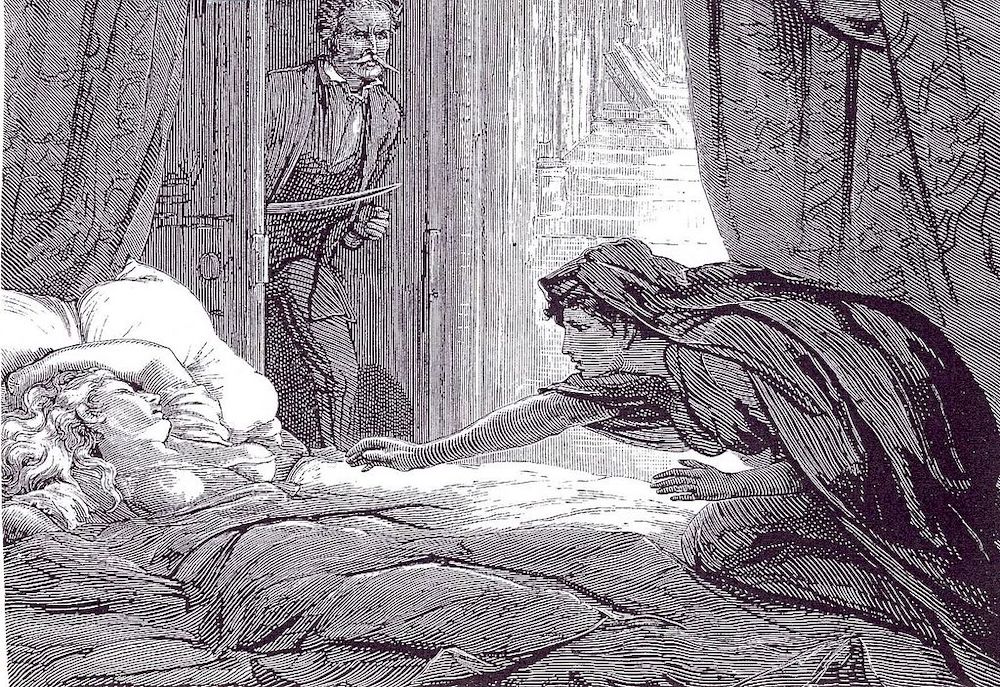
From the moment Carmilla sprang onto Laura’s bed to when M3GAN murder-danced her way down the red hall, the horror genre has been dominated by queer icons—and loved by queer audiences as well. While the subtext-entrenched classics remain iconic, the past few years have inspired explicitly queer retellings, such as AMC’s Interview with the Vampire, as well as fresh original stories, including one of my favorites, Carmen Maria Machado’s genre bending collection Her Body and Other Parties.
Here are 10 horror books coming out in 2023 to keep this queer tradition going.
Set in 1990s New York, Carmilla: The First Vampire follows a Chinese-American social worker named Athena who is determined to get to the bottom of a string of murders targeting young, homeless women in Chinatown. Athena’s clues lead her to Carmilla’s, a nightclub run by a mysterious figure who is always lurking behind the scenes. Filled with deliciously gothic artwork, Chu and Lee’s graphic novel is both an ode to Sheridan Le Fanu’s original and a stunning, modern take infused with dark, Chinese folklore.
Monstrilio opens with the death of 11 year-old Santiago, who was born with only one lung. Not ready to give up on her only son, Santiago’s mother, Magos, extracts his lung and returns it to Mexico City, where she nurtures it into a ravenous, fanged creature who she calls Monstrilio. As Monstrilio—or M for short—develops into a young man, he must contend with the longings and desires of all boys his age, as well as the deep seated hunger which only grows by the day. Gerardo Sámano Córdova’s horror debut on grief and monstrous love is not one to miss.
Eric LaRocca, author of the Bram Stoker Award-nominated Things Have Gotten Worse Since We Last Spoke, returns with a dark, occult tale set in rural Connecticut. As local law enforcement investigate a string of recent disappearances, a grieving widower finds herself pulled into the dark magic rituals of a man named Heart Crowley. Underneath these tangled threads is a simmering, unrestrained bigotry which threatens to swallow the town whole.
Alison Rumfitt, a self described “semi-professional trans woman,” has crafted a body horror novel not meant for the faint of heart. Brainwyrms follows Frankie, a woman whose life falls apart after her workplace is blown up in a transphobic attack. What follows is a messy aftermath of binge-drinking and one nightstands, until Frankie meets Vanya. Vanya is beautiful. Vanya is frightening. Vanya is—hiding something? As the relationship deepens, Frankie slowly uncovers the sick, twisted secrets between them.
Holly receives one last message before her brother’s body is found torn apart in his girlfriend’s home: “Get it out of me.” While the death is ruled a horrific suicide, Holly believes something more sinister is at play, and begins stalking her brother’s girlfriend: a beautiful, sophisticated woman named Maura. As Holly digs deeper into the world of Savannah high society, she finds herself lured into a confusing, guilt-inducing attraction to Maura.
Arguably no genre pairs better with horror than comedy. Boys Weekend, a graphic novel by Mattie Lubchansky, follows artist assistant Sammie, who despite recently coming out as trans, is invited to be ‘best man’ at their old friend Adam’s wedding. What follows is a bachelor party from hell, set in what is essentially a floating Las Vegas and featuring—you guessed it—a murder cult.
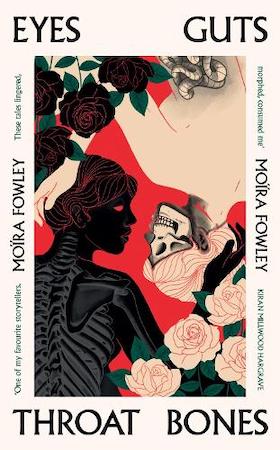
Eyes Guts Throat Bones by Moïra Fowley
In Moïra Fowley’s short story collection Eyes Guts Throat Bones, horror is beautiful, horror is funny, horror is romantic, and horror is, of course, haunting. An immersive, gothic read about queer lives at the end of the world.
Chuck Tingle—if anything, you probably know him for his viral gay erotica, but in Camp Damascus, he captures the twisted horrors that take place at a gay conversion camp in Neverton, Montana. At the center of this story is Rose Darling, a God-fearing young woman who happily attends her town’s cult-like mega-church. It is uncertain how someone such as Rose has any involvement with a place like Camp Damascus—until she starts vomiting flies and seeing a strange woman in the woods.
She Is a Haunting follows one of my favorite horror storylines: that of the broken family. The book begins when Jade Nguyen arrives in Vietnam to visit her estranged father, who promises he will pay for her dream school if she stays five weeks with him while he restores a 1920s French colonial for a bed-n-breakfast. Jade doesn’t mind helping out, nor pretending to be straight for a couple of weeks, but then she begins finding bugs in strange places and hearing noises in the walls at night. It soon becomes clear the house intends to destroy its inhabitants, and as the only one who can see the horrors, Jade must save her family. Warning: there are a lot of bugs in this. Hopefully you’re into that kind of thing.
Bildungsroman meets body horror in Jade Song’s debut Chlorine. The novel follows high school student Ren Yu, whose whole life revolves around swimming. Nothing comes close to the “isolated grandeur” she feels when she first plunges into the pool. It is her parents’ wish for her to get scouted, earn a scholarship, and eventually attend a good college—but Ren Yu wants more than to be a good swimmer. She longs for the touch of water. Needs it. It’s a desire that transcends human boundaries. When the pressures of everyday life become too much, Ren takes inspiration from the mermaid folklore she used to read as a child.
The following story was chosen by Anthony Doerr as the winner of the 2023 Stella Kupferberg Memorial Short Story Prize. The prize is awarded annually by Selected Shorts and a guest author judge. Subscribe to Selected Shorts wherever you get your podcasts to hear this story performed by an actor in the near future.
Carapace
Three crabs attended my grandfather’s funeral.
Atlantic blues, they picked at a lump of chicken inside a milk crate trap, legs turquoise and spine-tipped, shells olive, bellies white. As a puddle formed on Auntie Yin’s dock, their antennae stroked the poultry with a delicate, oblivious air. The ten of us paused to admire her catch.
“Fat ones.” My grandmother gave the tub of ashes an affectionate little pat. Yin, Uncle Teong, his wife, his twins, my parents, my sister, and I all nodded.
“Weng must be thinking of us up there.”
By her logic, the deceased had thought to send us dinner amidst the most profound spiritual bliss, while we, sweating in the Carolina summer damp, wouldn’t let his funeral begin until we had planned the resulting meal.
Appropriately, the tub was labeled: Daisy Sour Cream.
If the man hadn’t died, his memorial might have killed him.
Born in Malaysia, albeit more Anglicized than the average Brit, my grandfather exuded a knightʼs poetic strictness. Every day, he brushed his lone suit like a vassal polishing steel. His era had reduced him to a paralegal assistant. Still, on weekends, he made a leaky waterbed his court, where enchanted by his voiceʼs rumble, I absorbed chivalric illusions of King Arthur and Guan Yu.
Behind gold spectacles, his face was square. His skin was line-less save the forehead, bisected by a solitary, reddish crease. When I fell in love in college, it furrowed gravely.
“Knowledge is a jealous mistress,” he said.
For this exacting chevalier, we gathered behind the milk crate in T-shirts and shorts, faced the sound, and improvised our prayers. I sensed something ridiculous in the act. It didn’t help that by all appearances, we were speaking to the crabs.
“I never knew anyone so generous,” said Teong, a high-ranking member of a multilevel marketing scheme. “I remember . . . ”
Shifting so that its outer mandibles could reach a skirt of fat, the smallest crab pivoted its eye stalks, then undulated an orange-fingered claw.
I pictured the movement of my grandfatherʼs thumb. Somehow, this creature felt closer to us than him. Our T-shirts, dotted with sweat, the double rings of minnowsʼ jumps, the tub, the smell of brine, the wooden dock, where algal veins twisted under the cracked surface gray—they had no place in that incorporeal realm, so removed from us that describing it as angelic light or absent dark presumes, myopically, the eyes.
Even before his death, age reduced my grandfather to his strictness.
When a stroke claimed his right hand, he insisted on buttoning his shirts. Later, after persistent clots left him with aphasia, he arranged to study Japanese.
“I-if-ff I c-can’t enj-j-joy m-m-y c-c-conq-q-que-r-rors-s,” he rasped over Issaʼs collected verse, “th-th-then h-how ca-n I en-j-joy o-old a-ge?”
In two years, the man was bedridden, incontinent, held together by morphine and his shirt. Unable to speak, he moaned softly through his gums. The spare bedroom was his world, the flutter of curtains a major current event. Only when I read aloud to him could I spot flickers of intelligence. For instance, hours before he passed, I bungled a line of Yeats, “Nine bean-rows I will have there—” and saw his left thumb twitch. Incredulous, I skipped a word.
Another twitch. Secured by a tendon, the severity of his mind remained.
“Are you there?” I asked.
Phlegm bubbled in his throat. If he gave me a sign, I couldn’t understand it.
Eventually, to my horror, it was my turn to speak. Behind their legs, the paddle-like appendages the crabs used to swim accompanied the silence with gentle, useless clicks. They had their own language, I knew, alien and impenetrable as a mind whose body had abandoned it.
Having only known my own life, how could I hope for communion with the dead?
Desperate, I decided to become a crab. I liquified my bones, letting them rise through my capillaries to harden atop my skin. My torso widened; my belly formed segments. Then, once I had sprouted antennae, legs, and claws, I scuttled into the water, floating past shifting trails of sand, formless shadows, the refracted light of fish, and as my vision divided itself between ten eyes, I sensed vast eddies of nothingness. I released my words. At last, I hoped, the sounds were inhuman enough to reach him.
My family perceived none of this.
Instead, they saw me bow and whisper to the shellfish, “I’m here, I’m here.”
Evening came. We butchered the crabs and ate them.
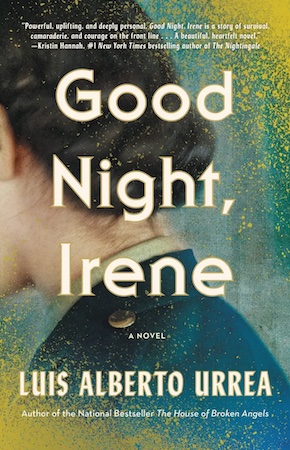
For 17 books, Luis Alberto Urrea has highlighted the joys and sorrows of life along the U.S.-Mexican border, a territory which moves with its peoples, no matter the walls we build on the land and in our hearts. Through his memoir Nobody’s Son, novels like The House of Broken Angels, his essay and poetry collections, and the investigative reportage which produced The Devil’s Highway, a Pulitzer Prize finalist, Urrea worked his way into a somewhat estranged but ultimately exuberant embrace of being born to a Mexican father and an American mother.
In his 18th book, a World War II novel called Good Night, Irene, Urrea shifts his focus away from Latinidad and toward the womanly resilience required by the collective trauma of defeating the Nazis. Hitler is everywhere and nowhere in this story, appearing as the negative space created by his depraved ambitions. Instead, Urrea gives us Irene and Dorothy, Red Cross workers who delivered coffee, donuts, and the will to live to soldiers who were fellow witnesses to atrocities from the Battle of the Bulge to the Buchenwald concentration camp.
Those horrors imbued Urrea’s own mother Phyllis with silences and night terrors. Like the Irene character she inspired, Phyllis evaded domestic confinement to become a Donut Dolly, a popular name which undermines the truth of what these frontline workers saw and did, much of which has been lost to history’s erasure of womanly courage.
Centering the triumphant friendship between Irene and Dorothy, this heavily researched novel traces the joyful arc of reconciliation which takes a lifetime to achieve. Like his prior oeuvre, Good Night, Irene is most profoundly about grace, whether in crisis or during the long reckoning which follows.
Kristen Millares Young: Let’s get into it. Your mother served on the front lines with the Red Cross during World War Two. She was a Buchenwald liberator. How did you learn her stories?
Luis Alberto Urrea: My mom was the only American in the family. Very proper, very New York from upper-crust people. I didn’t understand who she was, really. However, my mom had nightmares almost every night. Cried out in her sleep. I had seen that her thighs were deeply scarred and her abdomen was deeply scarred. I thought, Wow, what happened to Mom?
We lived in the barrio in South San Diego. A rough and tumble place. We had a terrible apartment. My mom had her war chest, and I was under strict orders not to open it. “Now, dear boy, we’re not going to open Mama’s chest, are we?” “No, ma’am.” She’d leave for work, and I’d be like, Yeah. She had an army jacket with patches from the Red Cross and Patton’s Army. But within that was her album of Buchenwald pictures. I believe I was seven when I discovered those pictures. They’re very gruesome. It’s just mind boggling. I tried to put it all back together neatly. Of course, she knew I’d been in there. “The world is terrible, dear boy. Terrible things happened to Mama.”
A little later, we left the barrio. We moved up to a little suburb with white folks. Though she felt that our neighbors were not of the class that she would prefer, they were her people for a change. She was quite happy, and she began to open up. She was with the Red Cross, the Clubmobile Corps, making donuts and coffee in combat. General Patton came and told them, “There’s a prisoner camp up on top of the mount, and I need you to help us go set everybody free and attend to people.” The women thought he was talking about a P.O.W. camp. They hadn’t yet encountered concentration camps. They thought they were going to go set American pilots free. Ironically, they made ham sandwiches. Baskets of ham sandwiches. They had no idea that the Jews were being exterminated. They were driven up the mountain in the morning, and my mother said she had no understanding of what was going on. There was a rail line with an abandoned train. There were piles of clothing and this weird odor they couldn’t figure out. As they walked in, the camp was full of shuffling, almost ghostlike, skeletal people. She saw a tractor pushing chopped down birch trees, the logs white across the ground. She realized those were not tree trunks. That’s where she turned a corner that she could never come back from. So that was our first talk about war.
KMY: What did her silence teach you about how past generations handle trauma? Is there anything that you learned to do or not do from what she did or did not disclose?
LAU: You couldn’t touch her at night if she was having a rough time. You couldn’t wake her. You absolutely could not lay a hand on her. She was having a nightmare. They don’t share. So many people with veteran grandparents or parents are astonished because they haven’t ever mentioned what they went through. I take them out for carnitas or chilaquiles. That always works. It’s like a truth serum. They’ll start telling me the most haunting things they saw or lived through.
Some of those stories are in the book. For example, when they’re first making the transatlantic journey and the ship explodes. Irene is watching the men go by, but they’re under orders not to stop. If they stop, the U-boats will sink them, too. They are to accelerate. She watches them vanish into the dark, and they see her and they’re yelling, and she knows they’re going to go die. She’s helpless. That actually happened to someone in our extended family.
The Donut Dollies. Nobody ever talked about them. They weren’t in any movies; they’re just forgotten. That’s part of the trauma: these women gave everything and were erased.
KMY: In “Steering the Craft: A Twenty-First-Century Guide to Sailing the Sea of Story,” Ursula K. Le Guin wrote that the way many creative writers and instructors prioritize conflict—wherein the rising and falling of action is oriented around conflict—prioritizes the worst aspects of our culture. Instead, we should build storytelling around seeking and knowing and discovery and meaning making. Even though Good Night, Irene is a wartime novel, it’s not about the conflict. It’s about the ways that these women find meaning despite what they encounter and what it does to them. So it would seem Le Guin got you into shape. I know she was your mentor. What did she teach you?
LAU: I was discovered by Ursula K. Le Guin. She used to call me Luisito, and she published my first story in an anthology. She was Ursula from the first moment… a little pageboy haircut, drinking whiskey. She had a pipe. She opened the door and said, “Luisito. Come in. It’s time for you to become a feminist.” 1977. She stopped me in my tracks: “Quit being an idiotic Southern California male and open up.” While writing the book, I thought, What would Ursula think about this? Am I telling the truth here? I’m very interested in the heroine’s journey rather than the hero’s journey. The manly shit intrudes almost for comedic effect.
She kicked me around for many years. Very tough, but very loving. I always felt answerable to her. Answerable to my mom. To Miss Jill, who was the model for Dorothy. I finally got to give my mother…to give what may have seemed baffling the meaning and resolution she never got.
KMY: Why do you think your mom and Jill, and the characters they inspired, fell out of correspondence after having such an intense experience of bonding together?
LAU: PTSD. It’s not rare at all that people traumatized by war and violence cut themselves off. For example, all Mom ever wanted was to come back home. She came home and she could not be with her family anymore. They didn’t believe her about the Holocaust. Very conservative. They said, “You’re dramatizing it. It wasn’t that bad.” Probably big Lindbergh fans, you know, America first folks. Lovely people, but they just didn’t understand. And she felt alienated. If you read about women with shell shock, as they called it back then, they isolated themselves. She could not find a way.
I go through life thinking I’m a Mexican Faulkner.
We thought the Donut Dollies were all dead. Cindy found a news story called “Miss Jill Goes to War.” From Champaign-Urbana, minutes from our house. We found Jill. They were all dead, except my mom’s best friend. Cindy wrote a letter because I was too shy. Jill called us the next day. 94-year-old woman. None of this Luis stuff. She called me Louis. My mom last saw her in 1954. And we visited with her until she was 102, when she died.
Jill had a very strong ego. A six-foot-tall woman. She had a picture of my mom on the Riviera, looking like a forties movie star, standing with this dude in black trunks. Leaning on her with a smirk. And I said, “Whoa, whoa, whoa. Who’s this guy?” Jill leaned over, “Oh. That’s Jake.” And I said, “Jake, who the heck is Jake?” She thought for a second and said, “Louis, it was a war. We all had men.”
All these revelations through Jill’s lens…I could have written a nonfiction book. I was going to, but I thought it’d be so much richer as fiction. If you notice, my actual mom Phyllis and Jill do drive by once in a while and show up in the background. So much of this story comes from her. She still had the actual map she used on the steering wheel. It’s got all of her notes and scribbles. On her wall was a huge portrait of my mom. She said, “I drove the truck. Your mother brought the joy.” That was the first time I really saw my mom.
KMY: In The House of Broken Angels, you explored an iteration of an event that you experienced: the funeral and gathering and celebration. Here you have taken up your mother’s experience and her burden of memory. How do you put those things down once you’ve picked them up? Do you ever?
LAU: I only write something if it’s haunting to me. So the house is full of ghosts already.
Both of my parents had PTSD. My dad, from awful things that happened in the Mexican government and army. My mother from her awful army experiences. My house was not a laugh riot. He ground his teeth so hard through nightmares that they all shattered. It’d be this grinding and grunting from his room and her whimpering and crying and yelling from her room. And me in my bedroom, sitting on the floor in my underpants listening to Leonard Cohen. I started writing stuff in notebooks.
KMY: Almost the entirety of your creative production has been preoccupied with Latinidad, as well as the proximity, burdens and complicity of being white adjacent. Here we have, for the very first time from you, a novel that centers two white women during a global conflict. This book is still, because it’s made by you, part of the Latinx canon. How does its production complicate what that means? How do you see it within your own creative arc?
LAU: It’s all been a work of witness, and that’s what interests me. It’s also a work of conjuring. In Good Night, Irene, the Lakota guy is my brother from Pine Ridge Reservation, Duane Brewer. Mr. Walker is Frank Walker, the former poet laureate of Kentucky who started the Affrilachian poetry movement. Zoot, the Chicano zoot suit, is Garcia from my first novel, In Search of Snow. Here he’s the hero. He was an anti-hero in that book, working at a gas station between Tucson and Yuma. I hinted that he’d had a terrible experience at Buchenwald. Finally, I found a way to show what happened to him.
I only write something if it’s haunting to me.
I go through life thinking I’m a Mexican Faulkner. Everything’s connected. At the beginning of The House of Broken Angels, when Big Angel is in bed looking at family pictures, there’s a picture of Segundo from The Hummingbird’s Daughter. That’s his grandfather. Everybody’s related; nobody knows it but me.
I was given the gift. I thought it was the curse. Spanish and English with two absolute language fascists who wanted me to be perfect in each one. I didn’t know until later that there was a chess game going between them. Who’s going to win? Is he going to be Luis, or is he going to be Louis? I’m just praying for that day when it’s okay to be you.
You know you’re representing. My next book is called The Zebras of Tijuana, so I’m not completely turning my back. And I would probably be suspicious of one of the great Chicano writers out there suddenly writing a book about, you know, non-Chicano characters. But it’s my mom, and my interest in bearing witness prevails. She was silenced and forgotten and battered by fate. Just like people in Tijuana. A garbage dump where she was somebody who was white. But she was my mama. You want to set the record straight. That’s more than being a writer. Maybe that’s my calling.
KMY: The characters in Good Night, Irene are fighting for a vision of America—as a bringer of freedom and moxie—that is out of keeping with our current political climate. That’s no longer the shared vision of America. What would it mean to demand that America can, and should be, what it was once conceived as being? Does literature play a role in that?
LAU: Just watch me, sister. We must understand that America is whatever we agree upon the myth of America to be. It’s a question of mythos. Of historicity. The dream of America is worth still having. Not the nightmare of America. A lot of what happens in this weird, perverse era is absurd to me. I’m not a big fan of the hate. The people I loved and cherish and worship were invisible. Mexicanos, Chicanos, my mother. I made it my duty to make them visible. I want to make my family your family as best I can.
In The Skin and Its Girl, my writing about Arab identity is driven both by a rich personal and cultural storytelling tradition and by a perhaps-endemic Arab American anxiety about how our stories are told in the West. I inherited, without really knowing I was inheriting, an existential comfort in the storytelling my jiddo saved for the airless time after meals, when the dishes were clean but Jeopardy wasn’t on yet, or the cookout was over but the fire was still hot and no one quite knew what to do before it was time to eat again. His was a style handed down from the old country but honed among his steel-mill crew, careful to note who was a good egg and who was the bad apple, and his stories were capable of unfolding to fill a temporal container of any size.
Structured by repetition, confidence, and deliberate uncertainty about whether the eventual resolution might ultimately break toward realism, absurdity, or a mere punchline, the stories riveted me. They also influenced the sort of tales we cousins invented for each other, straddling reality and fabulism. As I began to write seriously in the early 2000s, fiction from a literary magical realist vein felt natural. But when I began to seek more writing about my ancestors’ part of the world, I found a lot of it distorted by an Orientalist lens—that colonialist hangover that preserves racial bias in portrayals of SWANA cultures.
The problem has a root in Sir Richard Francis Burton’s (in)famous 1885 translation of The Book of the Thousand Nights and a Night. No one skewers it better than Diana Abu-Jaber, who writes in Crescent that the project is “his famous, criminal, suggestive, imperial version of Victorian madness dissolved in the sky over the Middle East.” Today, it still inspires writing directed at Western audiences because its stories are so recognizable, and even novels critical of its influence often reckon with it anyway. Yet for as many stories as Sheherazade tells the sultan Shahriyar, there are other ones that preserve, by turns, the humor, adventure, profluence, and moral instruction of a broader oral folktale tradition. Some of these stories appear in lesser-known works; for example, when writing The Skin and Its Girl, I found inspiration in the Palestinian Arab tales recorded in Speak, Bird, Speak Again (Sharif Kanaana and Ibrahim Muhawi, 1989).
I’m eager to share these seven novels. Familiar figures haunt their edges, but what feels like home to me is the way they engage their audiences, subtly teasing and feinting and coaxing us along until we find ourselves transported to an expanded world. I learned so much from these writers, particularly in how they use degrees of postmodern, self-aware storytelling to counter-colonize the narrative and reclaim cultural agency.
Naguib Mahfouz (1911–2006) spent an extraordinarily prolific career in Cairo and is, so far, the only Arab writer to have won a Nobel Prize in Literature. For his deep concern with Egyptian politics and his allegorical writing style, he shares with Salman Rushdie the unlucky distinction of surviving an assassination attempt brought on by extremists’ reaction to his work.
Borrowing from the traditional style of The Arabian Nights, this loose sequel picks up when the sultan Shahriyar chooses to marry Shahrzad following her life-or-death storytelling gambit, which has saved her life and the lives of many others. The sultan now commits himself to a leadership style that uses less rape and murder, but the personal transformation does nothing to change his city’s fundamental corruption, its governors, or the merchants who have profited from a lifetime of favors. Shahrzad says “[o]nly hypocrites are left in the kingdom,” but then genies begin appearing to various characters, coercing morally ambiguous chaos from her husband’s toxic legacy.
It’s one of the novel’s modernist ironies that its most fantastical element—the genies—provokes the novel’s most cutting realist critiques. The premise relies on Mahfouz’s contemporary reader, specifically an Egyptian reader, with whom the experience of living in a corrupt and hypocritical system is intended to resonate. Bound by a firm philosophical thread, its episodic chapters are propelled by the complexity of the wish for a more ethical society. Mahfouz writes in a cool, controlled tone; the original text serves, on one hand, to contain and magnify his critique, and on the other, to slide it behind an engaging screen that renders his protest indirectly, just as Shahrzad’s own storytelling protested the sultan’s cruelty.
When Osama al-Kharrat returns to Beirut after 25 years to be with his terminally ill father, he reenters a family in which he has long struggled to find his place. Politics, atheism, and sexuality are all taboo, and Osama’s communication with his father has been frosty since immigrating to the United States. This terse situation is a far cry from where it began long ago, with Osama’s gregarious pauper of a grandfather, whose skill as a traditional storyteller (“hakawati”) impressed a local bigwig enough to earn him the official surname al-Kharrat, fibster. Storytelling is in Osama’s name and in his blood, and as the novel weaves in and out of traditional-sounding tales, we follow a dizzy number threads that inter-borrow emotional notes. Osama, a first-person narrator, uses these stories to give his grief, familial love, and outsider identity their place when straightforward speech does not.
Inside its realist, short-timespan framing, The Hakawati is narratively agile, rich, and often hilarious. Incorporating family lore and fabulism, the stories draw on mythology, religious narratives, and characters familiar across the region. We see tales within tales, adventures within adventures, a cyclic storytelling style that also appears in The Arabian Nights. The style compares to the arabesque, whose ornate patterns repeat and occur within other repeating patterns, such as in music; it also harkens to a day when reciting a good yarn might take weeks or months. In my reading of the novel, I felt in the stories’ ever-subdividing complexity Osama’s wish to extend the amount of time he had left with his dying father.
All of Alameddine’s novels draw on his Lebanese American background. Nowhere else, however, does he sublimate reality into fabulism to such a degree, and so sublimely. He demonstrates not just how traditional storytelling can hold contemporary themes, but also how high the stakes are for his character in his father’s last days.
Written in the pre-9/11 U.S. but published in the years immediately afterward, Crescent pairs a sensuous, realist narrative with “the moralless story of Abdelrahman Salahadin,” a fable that “is deep yet takes no longer to tell than it takes to steep a cup of mint tea,” or so the teller assures us.
In Abu-Jaber’s body of work, food and cheeky father-figures abound. Here, Sirine is a 38-year-old chef who lives in West L.A. with the Iraqi uncle who raised her. Their peace is disturbed when she falls for Hanif, an Iraqi political exile who soon deserts her for a risky return to Baghdad to help his family. The relationship makes Sirine more interested in her “Arab” identity even as the novel criticizes the essential emptiness of such a broad term. It does so by using a second, seemingly independent fable told by Sirine’s uncle. The self-aware tale of Abdelrahman Salahadin draws on the cadence of an oral storytelling tradition, following a mother who sells herself into slavery to Sir Richard Burton find her missing son. The tale meanwhile aims jabs at Burton, Hollywood, and Western racism, landing punches with strategic humor.
The novel was published in a time where anti-Muslim and anti-Arab bias were no less ingrained in Western culture than they are today. Its two storylines twine around those biases, pulling them apart piece by piece from two literary directions. In Sirine’s narrative, the realist storytelling conventions of a Western fictive tradition embody and complicate the day-to-day experience of having an Iraqi immigrant family. Meanwhile, the fable invites us to loosen our grip on that reality just enough to for it to work its magic, upending expectations about Arab femininity, agency, and identity.
Situated with one foot in fable and one in the dark times of the 1981 Casablanca Bread Riots, this debut novel uses its inventive powers as a form of political resistance.
Multiple storylines braid around italicized sections featuring a wizened Sheherazade, who sits outside of time narrating to a young girl. In the main story, we meet Adam and Leila, an unlikely couple: Leila is a daughter of a wealthy and influential Casablanca family, and Adam is a poor scholar. Unable to conceive and unsure what the future holds, they feel the passion in their marriage draining away ever since they’ve returned from London. Casablanca itself struggles under a similar inertia, stuck in an economic depression and “forged in second-hand steel, barely able to resist decay.” The narrative is at its most surprising when the armed authorities who beat, imprison, and murder the city’s inhabitants turn out to be actual winged monsters. And because of them, after Leila’s imprisonment and rape, a daughter, Maryam, is born. Sheherazade foretells that Maryam, who rides a magic bicycle and can commune with the city’s fabulist creatures, will wield a power to change everything.
The outside-of-time narration gives the rest of the story a sense of being fated, almost immobile. Sheherazade’s character is a straightforward borrowing from The Arabian Nights: at last independent of any earthly power, she once again holds many narrative threads in her hands, and she once again uses them to weave a story capable of altering a city’s bloody fate. Alongside Maryam’s puckish character, Sheherazade’s retelling of old myths, such as an alternative Adam-and-Lilith creation story, opens up a space from which the power of the imagination can shift reality for the better.
Taking a lighter tone than many of the books on this list, The Night Counter tells the story of Fatima, a Lebanese grandmother living with her grandson Amir in L.A. a few years after 9/11. At its core, it’s about the evasions that undermine love. A grieving mother, Fatima divorced her husband after sixty-five years of marriage and is now determined to spend the remaining days of her life attending funerals and stubbornly searching for a wife for gay Amir. She’s lodged in the past, waxing poetic about an idyllic village in Lebanon. Nights, Amir hears her telling stories and wonders whether she is losing her sanity—but in fact, only the reader knows that she’s speaking to the apparition of Sheherazade.
This is the novel’s distinctive magical realist conceit: After arriving in L.A., Fatima began seeing Sheherazade in her window each night. The famous storyteller wanted to be a listener, and Fatima obliged, resigning to a belief that after the 1,001 nights are done, she’s fated to die. Yunis shields the narrative from its risks with deadpan humor, and now that only a handful of nights remain, Sheherazade is weary of Fatima’s repetitions, cajoling her to talk about the love she won’t admit to ever having felt. The light touch allows Yunis to probe these more painful spots in the family’s history.
Her humorous tone also allows the novel to juggle some traditional ideas in a contemporary context, such as the novel’s competing views on the role of fate in its characters’ lives—an important philosophical element of The Arabian Nights. More often, however, Sheherazade is (intentionally) cartoonish, such as when she travels by magic carpet to observe Fatima’s many children and grandchildren. But this choice helps Yunis mark a clear path between so many characters, preventing the reader from buckling beneath the effort to keep track of everyone. As a result, the novel can play with the many forms Arab identity takes in the family, pushing back against the monolithic exoticism of the original text.
Faquir is a Jordanian-British writer, and according to her mentor Angela Carter, Pillars of Salt offers a feminist vision of Orientalism. It’s a dark vision, at that: two women are confined to a Jordanian asylum, sharing a room, and they endure the days by telling each other their domestic stories of misogyny and abuse. Maha, a rural Bedouin woman, relates the tale of her husband’s death fighting the British, and her subsequent misfortunes at the hands of a lecherous brother. The other woman is Um Saad, whose more urban life offered her no more protection from violent patriarchy.
While the novel is engrossing both for its depiction of these two women’s lives and for its ability to capture the Arabic idiom in English, its use of a third narrator is what sets it apart as a postmodern critique of a particular kind of narrative. Speaking to an implied group of listeners, this third narrator calls himself Sami al-Adjnabi (“the stranger,” in Arabic) and his chapters are all titled “The Storyteller.” The pairing is intentional, as his voice picks up the bombastic cadences of Burton’s translation of The Arabian Nights and other Orientalist texts that were written to “interpret” and exotify Arabic-speaking cultures for Western audiences. This narrator inhabits only the margins of the women’s stories, distorting and misunderstanding them, all the while swaggering and insulting the women as temptresses deserving their punishments.
Faqir writes from a specific resistance to a text she positions as calcified and pandering. Um Saad herself tells Maha the traditional tales are all but useless in their own predicament: “I am not a character in One Thousand and One Nights. … I will never be able to roll into another identity, another body, travel to better times and greener places.” Of all the layers of their entrapment, the Storyteller’s distortion of their experiences seems to be the cruelest. And what makes this vision so dark is that though the novel gives these women limited agency as their own storytellers, they are still confined to a madhouse with an audience of only one.
Based on a true story, Lalami’s novel is narrated by Mustafa al-Zamori, the first African to explore the New World. Remembered as Esteban the Moor, he was enslaved to a conquistador and thus became one of four survivors of an ill-fated Spanish expedition to Florida.
As the party treks deeper into tribal territories in a fever-search for gold, Mustafa records the men’s abuses and failures alongside his own history. This is done in episodic chapters, each one titled as “the story of” an event. The novel is modeled after classical Arab travelogues, but at times it also takes on the dimensions of a traditional tale, like light catching the cut of a gem. It shines most often where Mustafa relates the rise and fall in his fortunes that led him to sell himself into slavery. As a believing Muslim from the city of Azemmur, he views the episodes of his early life on a moral dimension, whereby fates are written and human follies are punished. (Before his city fell to the Portuguese, he was a merchant who sold slaves.) The traditional stories and proverbs that initially skirt the novel’s margins, however, become central: Mustafa turns to the power of storytelling for agency, wielding it to record a more truthful account of the disastrous colonial expedition and then to trick his enslavers, becoming the clever hero who outsmarts a stronger enemy.
The novel uses a more classic approach than the other books here—Lalami dissolves most of the traditional storytelling style into the main narrative, drawing less attention to it as a self-aware element—but it is a fitting conclusion to this list. I can’t help but think of Sir Richard Burton’s intention that his translation serve as a serious ethnography of Arabic-speaking peoples, and how profoundly he blundered. No book can undo the past, but The Moor’s Account takes special care with Mustafa’s portrayal of Native Americans. It reminds the reader that these tribes were wiped out twice: once by violence and again in American culture by a colonizing story. Like the Apalache women who raise a cry in response to the rapacious soldiers, the novel has “made witnesses of us,” and its counternarrative warns against the violence—and insidiousness—of a single story.
Penelope Schleeman never thought she’d write a bestseller, but she’s trying to make the most of it. In the wake of her debut’s unexpected success, she departs her teaching job for Hollywood in order to adapt American Mermaid for the big screen. But as her co-writers’ suggestions tug and twist her beloved protagonist’s story further away from its original form, certain inexplicable events cause Penelope to wonder whether her creation has somehow taken on a life of her own in an effort to fight back.
As chapters from Penelope’s novel unfurl alongside her adventures in Hollywood, we come to know the eco-warrior mermaid protagonist of American Mermaid as well as the novelist who wrote her. While each character strives to understand their place in a world where they don’t quite feel like they belong—Sylvia, an actual fish out of water and Penelope, still a teacher at heart—both women find connection in unexpected places as they learn how to stay true to who they really are.
From characters who leap off the page—perhaps literally?—to a structure its author credits to her improv background, this debut’s dual narrativesdefy prediction on every page. The sheer joy that Julia Langbein garners from her work is evident, and as a result American Mermaid reveals itself to be far more than an exercise in entertainment—it’s a portal of discovery for its creator. And what a delight it is as a reader to join her for the ride.
I spoke with Langbein over Zoom about the complex dynamics of Hollywood film adaptation and mermaids.
Abigail Oswald: So first off,how did this book come to be? Why mermaids?
Julia Langbein: I’ve always been a reader, but really what I always did was just kind of compulsive weird projects—including a lot of comedy stuff—and in 2014-15 I went back to doing improv comedy. At that time I was a postdoc at Oxford in art history, and that was a serious job—I had serious pressures to get my academic book published and so on—but something in me just could not be a serious person in the world, and I started doing improv again. And then I got pregnant, and literally the day I became too pregnant to perform in bars anymore late at night, I sat down and started writing this. Even the structure uses longform improv, you know, the Harold… I feel like what happened was I sat down, and I was just a lonely, pregnant woman, and I started doing improv with myself.
And a couple of years before I started writing this particular project, I had gotten a bit obsessed with the idea of mermaids. I don’t remember why, but it was just something I talked about with people at cafes. It wasn’t that I was going to the British Library and pulling up everything I could on mermaids; I would just kind of poke people in the arm and say, “Do you guys not think there’s more here?” And everyone would go, “Okay, Julia, like, I guess?” Nobody cared as much as I did. So I guess there was a seed of curiosity about what a character of a mermaid could be. I realized there was an absurd comedy that could come out of it, you know? That it wasn’t just about mythology and sexuality and all these things, but there’s something absurdly comic about mermaids—that they’re half-fish and half-lady, namely. And there’s all kinds of things about the whole mermaid mythology that are strange and where there’s room to find funniness. So there was the desire to start improv-ing by myself, and then I had this story. I didn’t sit down to rewrite The Little Mermaid or something. It just came out of a potential for hilarity.
AO: Early on Penelope admits, “When I heard about the success of the book, I often felt like someone else had written it.” It seems like she frequently feels distanced from her own accomplishments. How does her self-image factor into the book’s events?
JL: Well, it’s funny. I suppose some people might call her a passive heroine, or something like that—that she lets things happen to herself. But one of her great gifts is being very analytical, and she sometimes has a hard time being both an analyst of the world around her and an actor in it. Her imagination is so powerful that she drowns in it all the time. Like when she’s at parties or in social situations, she gets overwhelmed with the density of her own internal analysis of the world and her own imaginative take on things.
And she thinks of herself as a teacher. She has a very strong identity as a teacher, and it just sucks that she can’t be that. So that’s what casts her adrift in this story, actually. I think she knows who she is, and she gets to be who she is in the end, but she also finds a place for her excessive imagination in the literary project that, to her surprise, ended up taking off.
But I very much identify with loving teaching and being so at home in the classroom. I wrote this book when I was a postdoc, which is this incredibly sought-after position where you essentially get bought out of teaching. But I actually loved teaching, and I feel like I went into academia to teach. So a longing to be in the classroom fully fed those descriptions of her comfort and her identity as a teacher.
AO: Penelope clearly has a complicated relationship to teaching but ultimately does love it, I think. What kept her coming back?
JL: You have to be so caring and careful with the people who allow you, as a teacher, to see them learning to think, being bad at things, being new at things. It’s such a psychically vulnerable relationship, teacher-student, and it’s also one that in a university setting, at least, is theoretically sheltered from commercial imperatives. One reason why I loved university life and the classroom is that at its best, it is a place where there is no financial interest, no self-interest. At its most utopian, it’s a place where you are just trying to learn from each other and you’re just trying to get to the meat of ideas. There are very few places in the world where that is purely true.
And of course, universities—I mean, there’s a whole Russian nesting doll of corruption that this activity takes place within, and financial compromise and elitism and all this stuff. But the classroom at its very heart, ideally. There are conversations, there are ways of being, there are ways of interacting that are shielded from self-marketing, you know, marketing from the logic of capitalism. So to me that is also a really important place for the book, right? Because of this idea of the part of you that can’t be sold. And also for the way people speak—the classroom has this crazy freedom, it’s a space of play. People end up saying insane things in the classroom, and that is an energy I want to hold on to. There are a lot of things about the classroom that I think have gone unexplored. People think about it purely as a pedagogical space. But actually all of the economic and emotional aspects of it are things that just refuse to leave me, even though I’ve left it.
AO: Conflict inevitably arises as Penelope’s fellow screenwriters begin to massage her novel into a more “Hollywood” tale, altering elements of Sylvia’s story that feel crucial and immutable to Penelope or removing them altogether. What do you think are realistic expectations a writer can have for their story once it’s released into the world?
JL: It’s funny you should ask that. A lot of people have been asking me, “Are you gonna freak out if this gets adapted and everyone wants to make it really sexy?” And actually my attitude is, “No, like, remake it with all dinosaurs!” I think the coolest thing about making a book is that there are lots of things about it that I don’t know, and someone else might literally know more than I know, might have a feeling that a minor character has a whole psychic life that I’m unaware of or whatever. So I actually think the process of adaptation has so much exciting potential and losing control is fun; I like losing control. (Watch me regret saying that.)
Mermaids are a very puzzling kind of seducer, right? They’re seductive and yet they are also, somehow not fuckable? Like, they are fish.
But I’m very careful in the book to not make Randy and Murphy monsters. Like, I point out repeatedly that what they do is very difficult. The art of the page and the art of the screen, things may get mangled in transition… but they’re not monsters. But there’s something that I do care about in the violation of the book in its transition to a movie, which is the kind of inevitability of nuance getting sucked out of it, and the inevitable [loss] of interiority. Like, the things that matter to me about being an embodied person in the world might be impossible to represent cinematically, or at least in the format of this kind of broadly popular cinema that the book deals with.
But there’s nothing about this book that’s, like, a “Hollywood is dumb” screed, right? Nothing at all. It’s not an anti-Hollywood book; it’s a satire. It’s finding the funny in the gaps between the see-able and the sayable, or the lived embodiment and the way it’s represented. So it was more like finding a potential for hilarity and comic structure in a novel than it was having some powerful critique of Hollywood. What I want to do is deeper than a critique of Hollywood. It’s actually really easy to critique Hollywood.
AO: I thought it was fascinating that within your book, we get scenes from a novelist’s life juxtaposed with excerpts from the book she writes—almost as if American Mermaid is inviting us to make connections between the two stories. It feels on some level that when the book presents Sylvia and Penelope’s stories side-by-side, we are being given the option to view the narrative through an autobiographical lens. There are certainly parallels to be drawn between Penelope and her protagonist, but at the same time, I thought about how often writers—particularly women—are asked whether their work is autobiographical. Was the concept of the “autobiographical novel” something you contemplated while working on this book?
JL: Well, you’re never told why Penelope writes about mermaids, are you? There’s no part of her backstory or anything that has anything to do with mermaids. In a way, I think it becomes more autobiographical after she writes it. In a sense, what she imagines springs her reality forward into a certain direction that then resembles the fiction, and that is a much more interesting phenomenon to me—particularly as a way to structure a story—than to think about women’s fiction as autobiographical. How is it that the things we imagine—like, speculation or imagination—can literally loose forces that change the world, create chaos, create situations that upend power structures?
Actually, in a weird way that happened to me, because I wrote a book about a person who writes a book, and then my book got published. I speculated about a teacher writing a book, and then I wasa teacher who ended up writing a book… More interesting to me than the idea of autofiction is the idea of how what you invent is smarter than you know. That if you let yourself think really deeply and imagine things really freely, you might create a new reality. That’s an idea that’s knocked around all of the critical theory around speculative fiction and stuff; I’m not coming up with this for the first time. But for me, that kind of energy is very present in this book.
AO: There’s this question that Sylvia’s narrative returns to that she might be “immune” to love; this perceived absence often makes her feel alienated from the rest of the world. Can you speak more to how you thought about love and desire while writing this novel?
JL: I didn’t go into this novel knowing that Penelope would have this desire to be kind of without desire or, as I think she says, to live without the humiliations of desire. That she’s scared of the part of herself that is sexual or gendered. But I think it came out of an awareness that something had attracted her to the mermaid story, first of all. And mermaids are a very puzzling kind of seducer, right? They’re seductive and yet they are also, somehow—as the novel makes great comedy out of—not fuckable? Like, they are fish. They are tuna from the waist down! So between those poles of the mermaid as this incredibly seductive, sexy, beautiful idea—even Disney’s The Little Mermaid, right, like, the curves on her—and these other potentials in the mermaid to resist sexuality, and to challenge these kinds of sexual norms, there was a lot of room to play. And Penelope’s character just grew into that space.
But I think desire is so important and so powerful. I don’t want to give any spoilers, but there are many hints that Penelope is going to continue to invest in and commit to and explore her sexuality, but on her terms, and always with a kind of awareness of the way she’s being seen, or that desire is going to motivate her in cheap or wrong or bad or dishonest ways. I think at one point I talk about, like, sexuality is transactional, and I think this book has a real care for the spaces where we can be ourselves without selling ourselves, and I think that sex and desire are moments where they are transactional, and they can be transactional in a safe and loving way, or they can be transactional in ways that are bad and scary. These questions about how to feel desire or how to live out desire and engage with other people, how do you do it without being transactional?
“On the Rooftop” by Xu Zechen, translated by Jeremy Tiang
My head throbbed and I felt a bright bird bursting from it. Having broken its metallic body free, it flapped its wings harder and harder, gleaming silver in the late afternoon sun. If it flew to the west, it would see private homes, undeveloped land, the stark fifth and sixth ring roads, the western hills, over whose peaks it would disappear. If it headed east, there’d be nothing but apartments and streets, buildings like mountains and avenues like valleys, people and vehicles flowing thickly down them. To the bird, Beijing must have seemed infinitely vast, so enormous you couldn’t catch your breath. Glinting in the light, it flew on and on.
“Hey, play a card!”
I tossed one down. “Bird.”
They stared at me, eyes wide.
I hastily corrected myself. “Six of clubs, I mean.”
“Yeah, maybe that looks like a cock, not a bird.”
We were on the rooftop playing Ace of Spades, shrouded by the shade of the pagoda tree. In our basic single-story pingfang on the outskirts of Haidian District on the western edge of Beijing, from summer to fall, we spent our days playing cards on that roof. Since moving in, on warm days I followed my friends’ protruding asses up to the roof, and somehow the ace of spades always ended up with Baolai. Round after round, at least ninety-five out of a hundred times. It got to the point that as soon as the cards were dealt, one of us would say, “Go on, Baolai, show us the ace.”
And he’d obediently produce it. “Here.”
It was never surprising when it was another loss for him. When he’d give me my winnings—a Zhongnanhai cigarette and a glass of Yanjing beer—I’d push them back at him. “Let the others have this, Baolai.”
I felt a bit sorry for him. I neither smoked nor drank, and I felt awkward with a cigarette between my lips and a beer in my hand. I’d moved to Beijing at the start of the summer after dropping out of school from what the doctor told me were “weak nerves.” He’d written me a prescription without much fuss: nerve and brain tonic, a solution of vitamins and sodium phosphate. Every time I felt my brain tighten or my head throb, I’d take a swig. It came in a can that looked like DDT, and every time I pulled off the lid, I’d imagine it was poison. Its therapeutic effects were negligible. Around four or five every afternoon, I stood atop the second-year school block, facing the sun, still feeling that inexplicable panic, as if the whole world were filled with the violent thudding of my heart, and my every vein would thrum. The doctor called them “palpitations.” Fine, but why was I palpitating? The Monkey King’s cursed metal band tightened around my head whenever I tried to read. The headaches meant I couldn’t sleep, and then I wouldn’t wake up on time the next morning. Even if I did manage to drift off, I only wafted along the surface of sleep and would jolt awake at so much as a mosquito’s sneeze. I often saw another me standing by my bedside staring, while the other seven guys in my dorm happily snored, ground their teeth, talked in their sleep, and farted. The doctor had said, “Go jogging; that’ll help stimulate your nerves. Did you know that when your nerves are too tense, they lose their elasticity? Like a worn-out rubber band. You have to train and train and train, until your nerves regain their resilience.” But it wasn’t like I could climb out of bed in the middle of the night and go running.
The doctor kept saying, “Run.” So I packed up my stuff and headed home, abandoning my studies. I told my parents they could beat me to death, but I wasn’t going back. They were perplexed by my strange illness. My baba circled me, right hand raised, thumb and index finger poised to find and pluck the gleaming metal thread from my head. Don’t let it get away. Where are you, you son of a bitch? He found nothing, nothing at all. Eventually he slumped on the old rattan chair whose legs were all different lengths and said dejectedly to Ma, “Well, he’s got nothing better to do; why don’t we send him to Beijing with Thirty Thou?
If he’s lucky, he might earn a bit of beer money.”
“He’s only seventeen,” said Ma.
“So what? My baba was seventeen when I was born!”
So that’s how I ended up going to Beijing with Thirty Thou Hong, my uncle who sold fake IDs in the city. From the way he dressed and the cigarette clamped between his lips, you knew he’d made it big. He only smoked Zhongnanhai Point-Eights. He generously gave a whole carton to his relatives, and we all got to try them. The leaders of our nation smoked that brand. My baba took two: one to smoke and one to tuck behind his ear. He took it out from time to time just to sniff at. So now here I was, living with Xingjian, Miluo, and Baolai in this pingfang, paying two-forty-a-month rent. We slept in two bunk beds in one room, and all four of us did the same work: going out at night and putting up small ads. You took a Sharpie, found an empty bit of wall somewhere eye catching, and wrote Seals and Documents Please Contact(510) 9391493. Xingjian and Miluo worked for Chen Xingduo, while Baolai and I worked for my uncle. Sometimes we didn’t use a pen or paste up ads, but dabbed a carved yam onto an ink-soaked sponge as a stamp. Much faster than writing. I was in charge of carving the words into the root vegetable. You wouldn’t call it pretty, but it was legible at a glance.
We worked only at night, to avoid getting arrested. The squinty, watchful eyes of security guards and police officers were everywhere, and they’d nab whomever they could. They’d all be asleep by the small hours, though, even in the wealthy district of Zhongguancun. The two of us boldly wrote and stamped our message on walls, bus stops, overhead bridges, stairs, even on the street itself. Sanitation workers would wash away our words, and we’d rewrite them. Let wildfires burn them down; spring breezes would raise them again. People who wanted seals carved or documents sorted out would obediently follow the trail of breadcrumbs to Thirty Thou Hong, and he’d pass the job on to his forgers. I wasn’t sure how much he actually earned doing this, but he paid us five hundred a month. Baolai said, “This isn’t bad, bro. We go out after midnight and make our rounds, like taking a nighttime stroll. And we get paid for it!” He was content, and
I was too. Not because of the money, but because I liked the night. It was quiet in the early hours, when Beijing’s dust had settled. The roads were like dry riverbeds, and the city felt much larger. Nighttime Beijing seemed more spacious, a vast and empty landscape beneath gentle streetlights. Ever since my nerves weakened, my dreams had grown to be as jostling and fragmented as daytime Beijing. If I could have dreamed such a scene of capacious peace as the night, I’d probably have woken out of sheer joy.
We slept from dawn till the afternoon. To make sure I was tired enough, I forced myself to jump around in my spare time and jogged every chance I got. If you happened to be wandering around Beijing back then in the small hours of the night, you might have seen a tall, skinny teenager with spiky hair hyperactively haunting the streets and alleyways of the capital. Yup, that was me. And the guy next to me, a little stockier, a little shorter, was Baolai. He was sluggish, and you might have thought he was slow, but I swear on my weak nerves that my friend Baolai wasn’t slow at all. He was a solid guy, and he was kind. The best of all the good people I met in Beijing.
Xingjian and Miluo insisted that he was useless and refused to address him with respect, even though he was older than them. He was left to do all the chores around the house: sweeping the floor, taking out the trash, slicing watermelons, opening beer bottles. If he could have eaten their dinner for them, they’d have ordered him to do that too. Not that they ever had to order him around—Baolai did it all of his own accord. He felt that, as the oldest, he ought to take care of us three. At this moment, for instance, we’re still sleeping soundly while he lugs the small dining table and four little stools onto the roof. It’s some time before sunset. Our only entertainment is Ace of Spades.
Before I arrived, the other three would climb onto the roof not to play cards, but to gawk at women. From up there, you could clearly see their faces and chests as they walked down the alley. As they passed by, the boys would swivel to stare at their legs and asses. It was cooler on the rooftop, with the wind blowing and the old pagoda tree’s expansive shade. When I moved in, four was just the right number for a game of cards. I liked being on the rooftop because you could see farther. The doctor had said standing high up and looking into the distance would be good for my nerves. I felt claustrophobic crammed into our little house. Besides, there were skyscrapers nearby, and even taller skyscrapers beyond them. Even just a little higher, it improved my spirits a tiny bit. Though no matter how I stood on tiptoe and craned my neck, I was still low.
I kept quiet while we played cards—talking too much made my head ache. Baolai didn’t say much either, just wrinkled his brow like a philosopher deep in thought. All that thinking didn’t do him any good, though; the ace of spades kept finding its way into his hand. He never tried to hide it, and Xingjian and Miluo could tell at a glance who had it anyway. I couldn’t bluff either—whenever I was unlucky enough to be it, I’d feel the bands of pressure tighten and would have to tap my head with my middle knuckle. Baolai was always slow to throw out a card, and while they waited, Miluo and Xingjian would talk about women.
They were one and two years older than me, respectively, but from the way they behaved, I could tell they were old hands at sex. Their familiarity with every part of a woman’s body was so detailed, they could have been scientists. If they happened to have a night off from pasting ads, they would go to some underground screening room to watch a late show. Before I met them, I thought the dirtiest films in the world were Category Three. They told me I hadn’t seen anything yet—it was all about “A” films! Did I know what that meant? Porn! To be honest, I had no idea then what they were talking about. They laughed at me, and even harder at Baolai. They said they’d get a bit of money together to pay some vegetable-selling auntie to take our virginities.
I kept my head down, my temples throbbing, and I thought about the girl I’d liked in my last year of school. She’d transferred into our class from some southern town. She had a sharp nose and talked with the tip of her tongue poking out between her teeth. The Mandarin she spoke was different from how any of us sounded, even if we put our tongues between our teeth. One day, around this time of the year, she rolled up the sleeves of her T-shirt, stuck her hands in her pockets, and swaggered through the late-afternoon sunlight behind the school, mimicking me. Her hands pulled her pants taut, and I could clearly see the curves of her butt. Standing there in the classroom, I watched through the window as she turned to smile at me. The sun gilded her ass. That’s my earliest romantic memory. After that, whenever the subject of women or love came up, two images flashed through my mind: a sharp nose and a gilded ass not yet at its full roundness. Then I’d feel a searing pain in my heart, my temples would ache, and I’d have to lower my head.
One afternoon last month, after we’d watched from the rooftop as a girl in a short skirt walked through the alley, Miluo ordered me to talk about what I knew of “women.” I didn’t know what else to say, so I told them about my classmate from two years ago. We’d lost touch. Xingjian and Miluo laughed so hard, they almost fell off the roof.
“Women, we said!” they chortled.
The way they saw it, if you weren’t talking about sex, you weren’t really talking about women. I knew I’d strayed from the subject, but I was fine having some distance between me and women. I was only hoping to get closer to my brain, but it seemed determined to stay far away—hurting so much it didn’t feel like it was mine.
The way they saw it, if you weren’t talking about sex, you weren’t really talking about women.
“What’s your favorite part of a woman, Baolai?” Xingjian asked.
“The face,” said Baolai, holding a card. Once he had the ace of spades, the other three of us would barricade him so he couldn’t discard it. “I need to see a woman’s face before I can trust her.”
This made no sense. Seeing someone’s face didn’t mean you could trust them, did it? Baolai didn’t explain, and we assumed he was talking nonsense. When someone’s lost that many games, you have to let them be a little illogical from time to time. Baolai was clearly going to lose this round too. I couldn’t have given him a chance even if I’d wanted to. Miluo went before me, and Xingjian went after, so they were able to squeeze Baolai. He lost eight cards. Including the four rounds from earlier, and not counting the three empty bottles at our feet, he still had to fork over three more bottles of Yanjing beer and a whole pack of Zhongnanhai Eights.
“I’ll go get more beer.” Baolai said, putting down his cards.
“No hurry, we can settle up when we’re done playing.” Xingjian didn’t want to stop.
“Xingjian, real talk.” Miluo said, bringing a beer to his lips. “If you woke up tomorrow afternoon with money, what would you do?”
“Fuck it. Buy a big house, marry a wife nine years older than me, lounge around in bed all day.”
“Why nine years older?” I was confused.
“So she’ll have experience,” said Miluo. “Little girls don’t know anything. You need a woman who knows what she wants.”
“Twenty-eight is a good age. I’m getting hard just thinking about it. Twenty-eight, oh god, yeah,” Xingjian said.
“If I had money, obviously I’d get a house and wife. Also, I’d take taxis everywhere, even to the toilet. Then I’d get a bunch of people, like you guys, to put up ads for me in the middle of the night. Fuck it, I’d be richer than Chen Xingduo!”
“If you had that much money, why not buy a car?” I asked.
“Don’t you know I have no sense of direction? I get dizzy going around the third ring road. If I set off for Fangshan, I might head in the totally opposite direction and end up in Pinggu instead.” Tapping Baolai’s knee with the beer bottle, Miluo said, “What about you, Baolai?”
“Me?” Baolai’s lips compressed into a smile. He stood, hitching up his trousers. “I should go get some beer.”
“Let’s finish talking first.”
“I’ll be quick.” Baolai glanced at his watch. “I’ll be back before you’ve smoked a cigarette.”
“What about you, kid?” Xingjian jabbed a finger at me. “Say you had five hundred grand.”
Five hundred thousand yuan was an astronomical sum to me. I couldn’t think how I would spend it. Build a house for my sixty-year-old grandpa and grandma to live out their twilight years? Buy my ba a truckload of Zhongnanhai Eights? Pay to replace my ma’s decayed teeth with porcelain crowns, then dye every strand of her prematurely white hair black again? For myself, if anyone could treat my weak nerves, I’d give him all of it.
“Hey, say something,” the two of them badgered me. “Would you try to get that classmate of yours?”
Sharp nose, curvy ass. My heart twinged. “I’ll help Baolai with the beer.” I clambered down after him.
Xingjian and Miluo chorused, “Fun-sucking motherfucker.”
They’d gotten to Beijing half a year before me and picked up a few more Beijing swears.
The closest convenience store was to our west, but Baolai was heading east. I asked if he was going the wrong way, and he told me to hurry up—we’d jog, which would be good for my nerves. I ran alongside him, down an alley, around a corner. He slowed down in front of Blossoms Bar. The bar couldn’t seem to make up its mind about its décor: a bit Tibetan, a bit European, with some cartoon characters and scarecrows thrown in. A rotating pole by the entrance made it look like a barber shop. I’d been inside once, when my uncle Thirty Thou Hong was buying. He ordered me a glass of beer and told me if I didn’t step into a bar at least once, I haven’t really been to the big city, and if I didn’t have a drink, I hadn’t really been inside a bar. The beer had tasted so-so, and I didn’t see what was so great about drinking it in a bar. When we’d left, Thirty Thou Hong had called my aunt and then my ba, loudly braying that we’d just been to a bar for a drink, and wasn’t that something . . . .
Baolai looked at his watch, asking, “Is it six o’clock yet?”
“One minute to.”
“Let’s keep running.”
I followed him another block, then we turned back. Jogging always helped my head feel less painfully tight. We were back outside Blossoms Bar.
“And now?”
“Nine minutes past six.”
“Let me catch my breath.”
Baolai sat on some rubble at the foot of a utility pole kitty corner to the bar. Bigger people often sweat a lot, even if they’re just a little fat. Baolai fanned his chin. The pole was covered with ads that promised to cure sexually transmitted diseases, body odor, vitiligo, sleepwalking, and prostate cancer, all from unlicensed doctors claiming to be descended from imperial court physicians. I read all the ones I could see, then it was twenty past and I said we should go get the beer. Baolai said “Fine,” and then insisted on going to the supermarket to our west, since we were now nearby. He was talking complete garbage—it was at least three hundred and fifty meters away. When we were done, we left the supermarket and walked past the bar yet again.
I snapped. “Man, why’re we just going round and round in circles? Like a couple of beetles or something.”
“I just want to look.” Baolai’s face was blazing red. “Guess what I’d do if I made big money?”
I shook my head. For years now, I’d given no thought to any goal other than getting into college.
“I’d open a bar. A place like Blossoms. People would be able to write anything they like on the walls.”
I remembered that the walls of Blossoms Bar were complete chaos, covered in words and pictures in all colors. It was the only bar I’d ever set foot in, but I’d seen quite a few in TV shows and films. They were all neat and clean, their walls adorned with paintings and designs. Thirty Thou Hong and I had sat with our backs to a wall, and when I’d turned to the side I could read, Hey, Old H, give me back my money or I’ll fuck your wife! Then, in a different handwriting: Feel free, I just married a Big White Pig from Changbai Mountain. Above and to the side: Brothers and sisters, come find me if you want mutton soup, I’m at the little table. All kinds of messages, sketches of genitals smushed together, the sort of thing you saw in public toilets. I hadn’t liked that wall covered in scribbled-over paper.
Back on the roof, I told Xingjian and Miluo about Baolai’s dream, and they burst out laughing.
“All right, Baolai,” said Xingjian. “Now you’re ready to live life in the capital!”
Miluo said, “You’ve got two legs up on me. But make sure we drink for free. Oh, and I’m going to draw a whole row of big white asses on the wall.”
“And the kuai! Don’t forget the money! Just the old man’s head, 10,000 each.”
We picked up our game again, and surprise surprise, Baolai got the ace of spades every single round. Afterward he had to pour us more beer and offer us cigarettes, and while we smoked and drank, we chatted about Baolai’s bar as if it was all a done deal. The more we talked, the more we admired Baolai’s vision and how elegantly he’d set up the whole place. How quickly we got used to spending that imaginary money.
Suddenly, Xingjian said, “Hey, Baolai, how come you want to open a bar anyway?”
“I like being around lots of people. It’s lively. Fun.”
“That still doesn’t mean you have to let people draw on your walls,” Miluo said.
“If you’re waiting for someone and they don’t come, just leave your number. A sort of message board, that’s all. I think it’ll be good.”
So that was it. Beijing’s too big, and it’s far too easy to lose people—it’s important to leave your number. He was actually onto something there. It didn’t feel like an idea Baolai would have come up with on his own, unless we’d all underestimated him. Certainly it made the tone of our conversation more serious.
Xingjian and Miluo were no longer talking about women and money. Holding the beers they’d won, they paced the roof, their gaze reaching into the distance. The sun had almost set, and light was draining from the sky. Far from us, the tall buildings darkened and then quickly lit up again. One by one, the lights of the city rippled on. As night arrived in Beijing and the city seemed even richer, the two of them grew anxious. They wanted something other than glimpsing women’s thighs and the abstract notion of wealth. I completely understood. Deep down, they thought of a “career” as that “something else.” Of course, career is a weighty word, and they were embarrassed to say it out loud. As far as I could tell, for all of Xingjian and Miluo’s cunning plans, they had no idea what their futures might hold. All they had was a vague feeling of aspiration and the desire to “achieve something big.” They’d only finished middle school and didn’t know any more than I did. Even so, the idea of transforming their lives and “achieving something big” was serious. Just like they were now, hands on their hips, holding their beers, cigarettes drooping from their lips, looking melancholy.
“Fuck it, sooner or later I’m going to own a whole floor of that building, the one where the lights just came on,” said Miluo. It was impossible to tell which distant skyscraper he was pointing at. He sounded like the Secretary General of the UN addressing the entire world.
“Even if it doesn’t work out, it’ll still be worth it if we get to die in this place.” That was Xingjian. It seemed to me Xingjian wasn’t quite as sharp as Miluo, and Miluo only conceded to him because he was bigger. Perhaps those broad shoulders provided cover.
It was completely dark now. The glow from the alley wasn’t enough for us to make out the cards. Flocks of pigeons began coming home, a ring of coos all around us. The sluggish night air was suddenly made clear and deep by the pigeons’ cries. We needed to grab some food and get ready for work.
I held the stamps made from yams and carrots, and Baolai carried the ink and sponge. Once again, we passed by Blossoms Bar. Only when I saw the fake barber pole did I realize I’d been seeing it every day for a month now. Our previous route had taken us past the donkey-burger shop and a lamb stew place, and when we were done eating, any bus from the stop just a few steps away would take us back into town. Baolai remained quiet, apparently deep in thought, and I decided not to question him about it out of respect.
A little before six o’clock, he once again climbed down from the roof to go buy beer. I volunteered to go with him to exercise my weak nerves. Out of necessity, I’d become addicted to running. Breathing hard, we reached Blossoms. Baolai slowed down as we passed, and his head swiveled until it had twisted almost all the way round as he peered inside. On our way back with the beer, he stared into the bar again, stopping once we got past it. Wiping his brow, he asked, “Did you see the person by the window? Did they have long or short hair?”
“Who?”
“Sitting by the plate glass window to the right of the door.”
I had no memory of this, but then I hadn’t really been looking.
“Help me see. Just check whether her hair’s long or short.”
I doubled back, and sure enough a girl was slumped over with her head on the table. I couldn’t see her face, and it wasn’t easy to tell the length of her hair. Amid the chaos of the bar, all I could hear was the loud thumping music and screeching voices. She was so still, I thought she might have fallen asleep. I picked up a pebble from the rubble around the utility pole and lobbed it at the glass, being careful not to use too much force. Her head moved a little. Long hair, or at least you wouldn’t call it short. I went back and told Baolai. He said “oh,” and his face drooped with disappointment.
“Were you looking for someone?” I asked.
“She has short hair.”
“Who is she?”
“I don’t know.”
“If you don’t know, why are you looking for her?”
Even with my weak nerves, I could see that Baolai was in trouble—he’d fallen in love with a girl he didn’t know. I tried to hold it back, but my laughter forced its way out. “Do you want to open your bar just to serve one person?”
“Don’t make fun of me.” Baolai’s face was bright red. “And don’t tell Xingjian and Miluo. Not one word.”
“Tell me the truth, then.”
Baolai blabbered a bit longer, insisting I had to keep it a secret. He wasn’t sure of his own feelings; all he knew was the first time he saw her, he felt a soft bone somewhere in his body click, like a tiny dagger slotting into its sheath. “Have you ever seen someone just staring into space, and suddenly your heart hurts and you feel sad?” Baolai asked, coming to a halt again. I swung the beer bottles a little to indicate he should go on. One afternoon, about a month ago, he’d been making a phone call to my uncle from the newsstand diagonally across from the bar. Then he turned, and in the seat by the window was a short-haired girl. She was sitting very upright, her chin a little sharp, and she was staring into space. A bottle of beer sat on the table in front of her, and next to it was a red drink with a straw—possibly watermelon juice, possibly not. She was so still she could have been a statue, and her blank stare made it clear that she saw nothing. Just sitting there, like a daydreaming student in class. For no reason, Baolai decided she must be very sad, and her posture proved this. Her skin was pale and looked fragile. That’s when Baolai heard that click deep in his body, the tiny dagger sliding home. A surge of pain through his heart. That was all: a little heartache, a scolding from my uncle for getting distracted and losing the thread of their conversation. Nothing more.
All he knew was the first time he saw her, he felt a soft bone somewhere in his body click, like a tiny dagger slotting into its sheath.
He saw her again the next day while making another phone call. It would have meant nothing, but the tiny dagger slipped farther into its sheath. The third time he saw her, he’d just been to the supermarket to buy us umbrellas because it was raining. I remembered that time—we’d been at home and wanted to go out for some food after we got tired of playing cards, but we had no umbrellas. We were always losing our umbrellas while out pasting ads. Xingjian and Miluo said to forget the cigarettes and beer; that day’s penalty would be umbrellas. So Baolai set off to get them, and as he passed by the bar, he saw the girl sitting in the same place, this time in a golden yellow outfit. For some strange reason, he felt sad again. A gold dress against such delicate skin ought to have made him feel joyful and invigorated, yet on her it felt sorrowful somehow. Her back wasn’t as straight as before. She was staring into space again but this time was twisted around to look out the window at the rain. Through the downpour and steamed glass, Baolai could see a slim, white cigarette between her index and middle fingers. She’d wiped the moisture from a patch of window, and Baolai was able to meet her eyes as he walked by. It felt the same as when he was pasting ads and caught sight of a police officer: His legs trembled and he almost fell into a puddle.
After that, Baolai began noticing that for whatever reason, at six o’clock each day, a dagger in his body needed a sheath, just like my panic attacks arrived punctually between four and five each day. He’d climb down from the roof and find some excuse to jog by to look, just to look. The girl was a regular. Every day around six, she’d be there sitting by the window, all alone, going through the same actions in turn: staring into space, smoking, sipping a beer or soft drink. Her posture would be either perfectly upright or a tiny bit slouched, though occasionally she’d slump right over onto the table and it would be hard to tell if she’d fallen asleep.
No wonder Baolai brought me out for a run whenever my head ached—it wasn’t purely for my sake. Counting back using my fingers, I must have jogged by here with him at least ten times. Clearly I wasn’t the brightest bulb.
“What happened next?”
“You know what. She hasn’t been here for three days now.”
“Do you think she knows who you are?”
“I don’t know.”
I laughed again. He’d be better off fantasizing about some twenty-eight-year-old woman like Xingjian. If I’d told the other two, they’d probably have thought he wasn’t just an idiot, but a full-on lunatic. I’d heard of love at first sight, but never through a pane of glass. Oh my god, Baolai.
“I’m not going to do anything,” said Baolai, his face tense. “I’m just worried about her.”
“Okay, then, if you have nothing better to do, feel free to worry about her. That’s the closest you’ll get to her, though.” I did want to get a look at that girl myself. She must have been very gloomy and sad indeed for Baolai to get so hung up on her.
For the next ten days, driven by weak nerves and enormous curiosity, I went on long runs with Baolai that took us past Blossoms Bar. Jogging alleviated my headaches and tension but did nothing to alleviate my curiosity—the girl never showed. If a young woman happened to be in that seat, even if Baolai was certain it wasn’t her, he still had me go check. He couldn’t let it go. One day, when I’d gotten all sweaty from running and my brain felt exceptionally clear, I began to suspect that the woman Baolai was so concerned about might not exist at all.
“No, she really does exist. She was sitting right there.” Baolai was very insistent, but the seat he was pointing at happened to be occupied by a long-haired guy. “Y . . . you don’t b . . . believe me?”
Now he’d started stammering, I felt I had to keep going with him at least for a few more days. Anyway, whether or not she showed up, the jogging was good.
Another five days passed with no luck. I decided I would run only for the sake of my weak nerves— I shouldn’t bother having any curiosity about this world. Baolai was losing weight from all the exercise, and his face looked somewhat deflated, which made him seem even more despairing with each passing day. Trying to comfort himself as much as me, he said no news was good news; no sign of her meant everything was fine. Out of habit, I argued back: “Why couldn’t it be bad news?” He seemed confused for a moment, then grabbed his fleshy earlobes and tugged frantically at them. Those earlobes were the envy of my parents. My ma kept saying, “If only your earlobes were as big as Baolai’s. Big earlobes mean good fortune. The Buddha’s are so large they touch his shoulders.” I wondered if Baolai’s ears were like that because he was always tugging at them. If I did the same, mine would probably be elongated too. He spent ten minutes leaning against the utility pole and pulling his ears, then he gritted his teeth, stamped his feet, and said, “Bro, do me a favor. Go in and ask if anything happened to that girl.”
Me? Just wandering in like a dumbass? Who would I even be asking about? People would think there was something wrong with me!
“Come on, brother, just this once. I’ll buy your train ticket for when you go home for New Year, even if I have to get in line at midnight!”
That wasn’t a bad offer. Buying a ticket from Beijing Train Station as New Year approached was as difficult as getting a postgraduate spot at Peking University… I’d heard that from a guy who’d wanted a fake Peking U degree cert. I pushed open the door and went up to the bar. The bartender asked what I wanted to drink, and I said I was looking for someone. Pointing at the seat by the window, I asked what happened to the short-haired girl who often sat there.
“Oh, her? No idea. She hasn’t been here for a while. Are you her friend?”
“Mm, thanks anyway.”
I went back outside. Baolai said, “Did you find out her name?”
“You didn’t tell me to.”
“Go ask. I’ll treat you to KFC later.”
I went back in. The bartender didn’t know her name either. They didn’t ask customers for their names. As I turned to leave, she suggested I check the wallpaper near that seat, to see if there were any clues. I went over, and between the beefy shoulder of a thirty-something bald man and the window, I saw a couple of lines in a slender, feminine scrawl: If it’s dark and you still don’t want to go home, just let me know. The famous “Sitting Upright Girl.” Followed by a pager number. I asked the server if the girl was “Sitting Upright Girl,” and she said maybe. I asked for pen and paper to take down the number.
Baolai stared at the paper and swore it had to be her. Because she always sat with her back straight, and didn’t leave till almost dark? Either Baolai’s intuition was superb, or he was confused. Either way, time for KFC.
Baolai carried Sitting Upright Girl’s pager number around all day but never used it. He didn’t dare. I tried several times to persuade him. “All you have to do is say it’s dark but you don’t want to go home either.” He still didn’t dare. He actually picked up the phone once but started trembling and hung up after only dialing a couple of digits. He’d begun sweating immediately. Another time, I offered to make the call myself, and though he eventually agreed after a lot of persuading, he grabbed the receiver and hung up before I could get through. It was torture for Baolai, not seeing her and being too scared to get in touch. We were still passing by the bar each day, but there was no sign of her. It was as if she’d evaporated into thin air.
If things went on like this, Baolai would get even crazier, or maybe snap altogether. I switched tactics and tried to shock him out of his obsession. For all we knew, she might be a Beijing girl, I told him, and what Beijinger would marry a penniless migrant worker like him? Let alone if she heard what he did for a living. Forget her. Baolai hung his head as if he’d been caught doing something wrong and said he didn’t expect anything to happen; he was just worried—he sensed something was wrong. I said, “You don’t know anything about her life. I sense something’s wrong with you.” He responded that I was young and didn’t understand. Well, fine. I couldn’t be bothered to understand that dogshit logic of his.
Life went on. We pasted up ads, played cards, and jogged. Like beetles, we circled round and round the bar. Another month passed. Baolai got even thinner, while my nerves slowly gained strength. As we ran past the bar one evening, he abruptly said, “I paged her.”
I didn’t understand.
“I called her pager.”
I waited.
“It’s a dead number.”
I stopped running and leaned against the utility pole, breathing hard. This unexpected development caught me off guard. Even though we hadn’t spoken about Sitting Upright Girl in a while, and even though it was Baolai who had the piece of paper with her number, I felt my pockets getting heavier. They seemed to weigh even more as we made another lap past the bar, until I thought my back would give out. Our lives were so monotonous. Apart from the cops, money, abstract ideas of struggle and ambition, and the steadily growing homesickness, Sitting Upright Girl was the most important thing in our lives, Baolai and me. I’d watched as anxiety, yearning, and vigorous exercise had transformed Baolai from a pudgy man to a trim figure. This kind man, who’d run the streets and alleys of Beijing with me, now had sadness written all over his face. I felt as if Sitting Upright Girl, who no longer existed, was clinging to him as tight as a shadow. Could someone I’d never seen, and whom Baolai had only glimpsed a few times through glass, be this important? It would seem so. Holding on to the utility pole to keep upright, I said, “Baolai . . . .”
His lips parted a little. Why even bother smiling? “It’s fine. Let’s go another round. Is your headache better?”
I didn’t mention it again. My nerves were still weak. Baolai was still a moron. We worked, slept, played cards, talked in theoretical terms about women and our dreams. We ran faster and faster.
One afternoon in late autumn, with a chill in the air and the city covered in fallen yellow leaves, we got out of bed and climbed up to the roof. Just as we’d started playing cards, my pager went off. It was Home. Ma paged every time she thought of me. I dropped my cards and went off to the newsstand across from Blossoms, where the public phone was. Halfway through talking with my mother, I suddenly hung up. A short-haired girl with a very straight back was sitting by the plate glass window, smoking. That seat. Her face was tilted out, and her eyes were as cloudy as the smoke coming from her lips. I was sure this was Sitting Upright Girl. Without even waiting for my change from the newsstand guy, I dashed back to the pingfang, shouting as I got close, “Baolai! Come down here! Quick!”
Baolai didn’t dare believe I’d seen the right girl, but he ran back to the bar with me. As we got closer, I saw three men dressed head to toe in denim hauling her out of the bar. One of them had a shaved head, one a crew cut, and the third the sort of center-part that villains have in TV dramas. The girl was clearly unwilling—she was rearing back with all her strength and clinging to the door frame. Shaved Head wasn’t very tall, but he was strong. He squeezed her wrist until the pain made her let go. By the time we got there, she was being dragged out, legs trailing on the ground, toes scrabbling to find purchase. Her legs left no mark on the damaged asphalt as she was pulled along.
She screamed, “I won’t go! Let me go! Please, I’m begging you! I don’t want to go!”
No one paid any attention. After the door of the bar closed behind her, nothing could be heard from inside, and no one came out. Baolai shouted, “Let go of her! Let go!” He wasn’t as fast a runner, but he still managed to pass me. He grabbed Crew Cut’s arm. “Let her go! You can’t do that to a woman!” I caught hold of TV Villain’s arm, but his elbow smashed into my chin, and I fell to the ground. Baolai managed to get Crew Cut to let go of the girl, but they outnumbered us. The girl was crouched down, sobbing in terror, too shocked to even run. By the time I’d gotten to my feet, Crew Cut and Shaved Head had flung Baolai to the ground.
“Run! Quick!” he shouted.
The girl didn’t move, and neither did I. It was all too fast for me. I’d never been in a fight like this.
“Quick! Go!” Baolai shouted again. “Get Xingjian and Miluo!” His voice strangled at the end, because the two of them were kicking him in his back. I tried to go help him, but TV Villain tripped me and the next thing I knew, I’d cut my lip on the road.
“Run!”
The autumn wind swept under my arms like a pair of wings.
I climbed to my feet and started sprinting. TV Villain couldn’t catch up. I felt myself going faster and faster. The autumn wind swept under my arms like a pair of wings. I felt a sort of satisfaction as I ran, faster and faster, faster and faster, faster and faster, only my toes touching the ground, my body as light as if I were doing the tiny water steps from Demi-Gods and Semi-Devils. It may have been the fastest I ever ran in my life. Quick as I could, I called up to Xingjian and Miluo. They ran back with me, each holding a stool, cursing all the way. We might be broke, we might be struggling to survive, but we would not be bullied. Even though it felt as if we’d flown there, we were too late. We found Baolai alone, slumped against the utility pole. No sign of the girl or the three guys. He was bleeding from his forehead. They must have bashed his head against the pole. There was a bloodstain on an ad for treating stomach ulcers.
I cradled Baolai’s head and called his name, weeping. Xingjian and Miluo were frustrated that they hadn’t gotten to fight. They sat on either side of us, on their stools, just staring. I yelled, “Call an ambulance, you idiots!”
They stared at me, eyes wide. “An ambulance? How can we do that?”
“Dial 120!”
The street was empty. The door to the bar remained shut. I couldn’t see how many people were inside, but not one of them came out.
Baolai’s eyes drifted open and his lips moved. “Was it her?” he asked, then his eyes shut again.
That was the last coherent thing he said, and maybe would be for the rest of his life.
At the hospital, they said he had a severe concussion—something had come unstuck in his brain. Perhaps he could be cured, but it would cost a lot of money, a bottomless pit. Baolai’s parents came to Beijing. They said even if they sold everything they had, including themselves, they still wouldn’t be able to raise the sum the doctor had quoted. My uncle Thirty Thou Hong contributed ten thou, which was a huge sum at the time. He wept as he left the room, sadness digging at his heart. Do you think it was easy for me to earn that money? he said to anyone who would listen. It’s not like it was a workplace injury. That ten thousand yuan was the most money Baolai’s parents had ever seen in their lives. They had nothing to say about it. The three men were never caught, and we never found the girl. All in all, I gave four statements, and each time I told the cops every last detail I could remember. One young officer seemed very curious about the girl. He asked if I was sure she was the woman who called herself Sitting Upright Girl. I recalled the last thing Baolai said to me by the utility pole and ruefully shook my head. For many years after that, I would wish, even in my dreams, that I could have been sure it was her.
Without being able to track down the culprits, there was pretty much no way the crime would ever be solved. After a period of convalescence, Baolai returned to Huajie. He spent each day drifting in and out of consciousness. Even at his most lucid, he still needed to wear a towel around his neck, because his drooping mouth could not stop dribbling.
We were sad for a very long time about what happened to Baolai. One afternoon, when the trees had lost their leaves, there wasn’t a whisper of wind, and the early winter sunlight felt infinite, Miluo got up and had a sudden impulse. Climbing up and down from the roof quite a few times, he swept it clean and moved the table and stools up there, all ready to play Ace of Spades with Xingjian and me. We all wanted to lighten the mood, but after a bit of chat, we just played in silence. Our hands full of cards, putting them down one at a time, no one knowing where the ace might be. It was impossible to guess with Baolai gone. Then all the cards were played, but we still hadn’t seen it.
“That’s impossible,” Miluo mumbled. “I counted the cards—they were all there. I definitely saw the ace of spades.”
The three of us searched under the table, under our stools, in our pockets, all over the roof, everywhere. The ace of spades was nowhere to be found. Spooky. Xingjian and Miluo looked suspiciously at me. I spread my hands, and just like that my face was all wet. I felt as if I’d waited a long time for those tears to come.
Romance blooms and ages alongside us, developing crow’s feet and laugh lines to mark the time spent in love, as well as muscle aches and twinges as tokens of time spent unrequited. As a romantic, I live for all the stages throughout this evolution of young romance to seasoned.
There are the first times as teens and young adults, where two characters are still yet unused to the pull of attraction beginning to form. Then, there is love that has lasted to life’s sunset, battle-tested and reminiscent, where all that is left to do is bask in the vast pool of memories that have accumulated over many years. Yet, even as we age, perhaps believing ourselves more impervious to crush-induced blushing and stuttering, there can still be a romance that will be just as flustered and sweaty as asking someone to the freshman formal. That spark of feeling is precious no matter the age, so here are nine love stories, each in a different decade of life.
Yamilet Flores is a Mexican American teen at Slayton Catholic, a school for the rich and white. Seeing as much of her identity will be defined by her conspicuous name and brown skin, she hopes to distinguish herself in ways that are more meaningful to her sense of self—with her killer winged eyeliner for example. As a new student, she makes it a priority to not stick out in the same way that she had in her previous school: as the lesbian. After revealing her crush on her best friend and being subsequently outed by that friend, she resolves to give herself a fresh start, and keep her sexuality a secret. Her resolve is weakened by an openly gay student at the school named Bo, who manages to be a devastating trifecta of talented, intelligent, and cute. So, despite Yami’s plans, The Lesbiana’s Guide to Catholic School develops into a heart-wrenchingly sweet sapphic romance about self-love and acceptance.
Grace Porter, a 28-year-old PhD student in astronomy, goes to Las Vegas on a girl’s trip and drunkenly marries a stranger. This is out of character for Grace; she’s used to following her father’s strict expectations of a perfect life. When she returns home to Portland, she is faced with the suffocating reality of being educated but unemployed in a job market that undervalues her Blackness and her womanhood. In an attempt to escape her existential dread and job-hunting burnout, she decides to visit her mysterious new wife, of whom Grace can only remember the distinct smell of flowers and sea salt. Morgan Rogers’ debut novel explores the feeling of loneliness, and the whirlwind of expectations that all twenty-somethings feel when finding their way into the world.
Sirene is 39 and remains blithely unmarried. Despite the consternation of her loving uncle, she is happy enough working as a chef at her Lebanese restaurant, and letting male attention come and go as it will. But she finds herself drawn to a returning customer, a well-known Arab Literature professor with a deep appreciation for her food. As she begins to fall for him, Sirene slowly unravels the professor’s story—of his family, and of his tragic exile from Iraq.
The novel delves into issues surrounding Arab identity in America, particularly in academics and politics. Professor Hanif and Chef Sirene’s romance simmers alongside rich descriptions of Levantine cuisine. Similarly to Like Water for Chocolate, Diana Abu-Jaber has enriched Crescent with recipes to invoke the scents and smells of Arab American food.
40s: The Magnolia that Bloomed Unseen by Ray Smith
At the age of 48, Molly Valle believes that she will no longer fall under the gaze of male suitors. She is a school teacher and a divorcee, and in her experience, women like herself are not desired by men. She dismisses herself from the dating pool so she wouldn’t have to subject herself to the scorn of men in search of younger women. But then, John Pressman, an ambitious activist, moves into her Mississippi hometown. The two fall in love within the backdrop of the Civil Rights era, finding in each other a certain magic that neither was expecting.
54 year-old Vivian Forest tags along on her daughter’s business trip to England, excited to vacation abroad at the grand royal estate. She unexpectedly meets Malcolm, the Queen’s private secretary, and their attraction to each other is immediate. Their flirting quickly becomes a steamy fling, one that is set to end on New Year’s Day, when Vivian will return home to California. Despite their differences, they find themselves quickly building a deeper relationship than a short trip would ordinarily allow. Royal Holiday is a sweet and lighthearted romance between two mature adults who are in danger of falling into the youthful impulsivity of their heart’s desires.
Retired Major Ernest Pettigrew is a proper English gentleman living in the countryside, unlikely to diverge from the values of duty and decorum that he has lived by throughout his 68 years of life. However, the unexpected death of his brother places 58-year-old Jasmina Ali, a Pakistani bookkeeper, in his path. Mrs. Ali is widowed, a booklover who stands out to the locals with her saris and overall rejection of cultural assimilation. A friendship blooms, but their bond is threatened by disapproving villagers and the ladies who have had the Major in their romantic sights. Major Pettigrew’s Last Stand boldly tackles interracial relationships, and does not sugarcoat England’s colonial past.
The book opens with the unexpected death of Martha Appleby’s husband. The 71-year-old books herself a flight to Glasgow, where she plans to scatter her beloved husband’s ashes in his home country from the top of Glasgow Tower. On this flight, she happens to run into Pamela Thornton, a dog trainer and Martha’s childhood sweetheart. They have not seen each other in 50 years, but quickly come to realize that they each still hold a special place in the other’s heart. In one hundred brisk pages, we see Martha and Pamela’s second chance at companionship as they rediscover their love for one another.
At the age of eighty, it is rare and beautiful to love the person that you met at age twelve. In the last hours of John’s life, he and his husband Jackie recount their 70 years together within five stories, through hardships and happy times. John and Jackie by T.J. Klune is a window into a deep, meaningful, and long lasting relationship between two people who have become each other’s world.
Leena Cotton is sick of her fast paced life in London. She is in her twenties, and has already had a nervous breakdown caused by the demands of her career. So, she escapes to her grandmother, Eileen’s, home in the countryside for some rest. Eileen is nearly 90-years-old, and is meeting her ninth decade with vigor and hope for new romance. Yet, she is frustrated in her search for love within the small Yorkshire village’s dating pool. Realizing that their problems may have similar solutions, Eileen proposes to Leena that they swap homes for two months. Leena can relax and find herself in the countryside, while Eileen can mingle among a large pool of interesting Londoners. For the two women in vastly different stages of their lives, their trade is an invaluable learning experience for both of them.
DON’T MISS OUT
Sign up for our newsletter to get submission announcements and stay on top of our best work.
YOUR INBOX IS LIT
Enjoy strange, diverting work from The Commuter on Mondays, absorbing fiction from Recommended Reading on Wednesdays, and a roundup of our best work of the week on Fridays. Personalize your subscription preferences here.