When I first became a single mother, I hid it from everyone, including myself. In my new book, The Leaving Season: A Memoir in Essays, I track the evolution of my relationship with motherhood, starting as a reluctant mother of two in a married household and ultimately ending as a single mother in suburbia (I openly considered this my personal nightmare for most of my youth, but I’m slowly coming around). Throughout the book, everything I thought I knew gets blown apart, including my belief that I am not a natural mother, or that there even is such a thing.
The stereotype of single mothers is one that reeks of shame and desperation. I knew there was more to that story, but it took me a long time to realize that I was a part of that cliché. I’ve since worked to search out stories of single motherhood that feel more nuanced, intellectual, and, even, joyful. There is plenty of complication and darkness—although single motherhood was a revelation for me personally, there is nothing about any kind of motherhood that is easy or uncomplicated.
Here are a few books that delve into the life of single mothers, both fictional and real:
Sonora Jha is a single, immigrant mother who uses her own hopes and fears surrounding the possibility of raising a feminist son in America to reflect on the stories we tell each other about gender, violence, and love. Jha takes a hard look and offers clear-eyed and realistic blueprints for including social justice and feminist practices into everyday parenting in an effort to help build the next generation of men. She has a ferocious intellect, unstoppable warmth and generosity, and an uncompromising vision. The gorgeous mix of personal story and reporting makes the stakes of this narrative so intense that it becomes about so much more than mothers and sons.
In her mid-30s, Lamott has a child on her own, and the book is a chronicle of the very real mix of dark and light that is life with a newborn, from unending colic nights to the crack of your chest expanding from the overwhelming amount of sheer love. Even in the midst of chaos, she manages to find warmth and humor. Lamott’s vulnerability with her struggles with sobriety, her brand of honesty and self-deprecation, and playfulness are what makes her book such a compelling read.
A thriller and wild romp, we follow the protagonist, Joan, as she at once self-destructs and resurrects in the Los Angeles hills, where she has escaped to after a long history of being used and abused following a tony but tragic youth. While predatory men and a culture of sexualizing women are the focus, Joan is ultimately complicit in unexpected and difficult ways. I cannot give the full reason why I’m including this book in the roundup without giving away too much of the plot, but suffice to say that ultimately the heady mix of female rage, burning love, and cracked open desire is deeply redolent of the most animal parts of motherhood.
As with Miller’s other masterful stories, Galatea is a feminist retelling of an accepted Greek myth, in this case tracing the story of the sculptor Pygmalion who creates his perfect woman in marble. After a blessing from a goddess, the sculpture comes to life, but Pygmalion soon boils over with rage when he realizes that by breathing life into her stone beauty, his creation now also has a mind of her own with desires and independent thought. After giving birth to their child, Galatea can no longer pretend to be submissive and obedient, understanding that unless she leaves, she is locking her own daughter into a cycle of thwarted independence. Galatea breaks free, working to build a beautiful life alone with her child, for a period. This tiny book (all of 64 pages) feels giant, with characters who dig their talons into you and refuse to let go.
When this collection blazed onto the scene in 2020, it won every award possible, putting West Virginia University Press on the map. The nine stories in this shatteringly beautiful collection are all part of a loosely interconnected galaxy in which Black women and girls move through kitchens, bedrooms, and back parking lots, searching for, and often finding, desire, agency, religion, and care. In the“Peach Cobbler,” a single mother is observed through her teenage daughter’s eyes, handing down her family recipe for the dessert, as well as much more than she intends.
Chan’s inspiration for this novel came from a real-life news story about a mother who left her child home alone to go to work and lost custody as a result. Frida Liu, the main character in this hauntingly incredible novel, also risks losing custody of her child to her ex-husband and his hyper-perfect younger mistress after a similar incident. She enters into a dystopian government reform program in an attempt to prove that she can become a “good mother” in the eyes of the state. It’s a kind of Margaret Atwood meets Octavia Butler-esque twist, but unfortunately, this commentary on the sacrifices and hard choices mothers are forced to make every day between providing for and caring for their children feels disturbingly realistic.
After 15 years of marriage, Olga’s husband abandons her and their young children one summer during a stifling heat wave in Italy. Throughout their marriage, her husband shaped Olga’s personality and choices, so much so that when he leaves she no longer knows who she is anymore in his absence. As the story unfolds, and she struggles to continue to care for the children while moving through the black hole of devastation that threatens to engulf her, Ferrante allows the reader such an intense and intimate look into Olga’s mind as she comes to terms with her new reality, and the claustrophobia of caring for children is heightened when the three of them become stuck in their high rise as Olga begins to unravel. Ultimately, Olga comes to understand it is not she who has been abandoned, but is the one who did the abandoning long ago, and Ferrante allows us to view a woman returning to herself: “He wasn’t even a fragment of the past, he was only a stain, like the print of a hand left years ago on a wall.”
Poet Jane Wong’s gorgeous memoir functions as a love song to her mother. This bi-coastal story flips between Wong’s childhood in New Jersey lived primarily in the family’s Chinese American restaurant and her adulthood as an academic in the Pacific Northwest. Wong’s portrait of her postal worker mother is blazingly beautiful, even and especially after her father abandons the family, disappearing into a gambling addiction. Although there is despair and heartbreak, the resounding note here is one of joy, resilience, and beauty.
In her debut novel A History of Burning, Janika Oza gives us the story of a family, one migration journey at a time. Beginning with indentured labor that leads the first member of the family, Pirbhai, from his home in India to East Africa, we follow four generations across several continents and over one hundred years. In the next generation, Pirbhai’s daughter Rajni faces a second exile when she and her family are forced to leave Uganda during the expulsion of Asians in 1972. The family is set to migrate to Canada, but at the last minute, her revolutionary daughter Latika chooses a different path. Starting school in a new country, Latika’s son Hari feels the weight of these social and personal fissures before he even discovers the whole truth about his kin. The narrative ends in 1990s Canada in the midst of the Rodney King protests, though the family’s arc is far from finished. As Oza puts it, the ending is not an answer, but rather, a landing point.
Oza is a master of time, equipped with the ability to render a historical arc in mere paragraphs or to expand a single moment into the joys and sorrows of a lifetime. In 2022 Oza won the O. Henry Prize for her gripping short piece Fish Stories, originally published in The Kenyon Review. It’s a piece I can’t stop passing around between my students and colleagues, who become equally gripped by its sensory detail, its interplay between reality and grief, and its immense heart.
I had the privilege of reading early excerpts of A History of Burning during a Tin House workshop in 2019, led by Ingrid Rojas Contreras. Even then, the viscerally moving nature of the story leapt from the pages. That same year, a chapter of the novel was longlisted for the 2019 CBC Short Story Prize and published in Prairie Schooner.
Recently, Oza and I sat down to have a conversation about the novel. We spoke about who gets to feel safety and security, writing an intergenerational narrative, and finding inspiration in her family history.
Rosa Boshier González: A History of Burning stays true to its title by cataloging the symbol of fire throughout the novel. Can you unpack this symbol and how it shifts through the book? And why was that symbol of burning important to you?
Janika Oza: I wanted a title that spoke to the themes of complicity and resistance running through the book. I landed on burning because when we think of a burning, what usually comes to mind is something that’s destructive or harmful or violent. Very often that’s true. But a burning can also be something that is purposeful or regenerative, like a controlled burning of a forest to encourage new growth. Throughout my novel, both of those possibilities are there.
RBG: I’m curious about the way that implication works in A History of Burning. Throughout the novel, you very deftly render the prejudices on both sides of ethnic and social conflicts, be it between Asians and Africans in Uganda and Kenya or white Canadians and recent immigrants in the wake of the Rodney King protests in 1991. Without giving too much away, towards the end of the novel there are twin acts of violence between two parties with very different ideologies. Was this a motif you were actively working towards?
JO: Bookending the motif of burning was not something I was actively working towards. But when I was thinking through these questions of complicity and resistance, I came up against questions of security and belonging: Who gets to feel safety and security in these countries? What does it mean for us to find refuge in a place that is also causing harm to other communities? What does safety mean in that context?
What does it mean for us to find refuge in a place that is also causing harm to other communities?
The Rodney King protests in Toronto spiraled into a solidarity movement and series of internally-motivated protests around racial violence and police brutality; that felt like another moment to really dig into those questions of safety, and to consider how different communities are experiencing these adopted homes, which we’re told are havens. In many ways they are and in many ways they are not.
RBG: Can you talk to me about the chronology of the book?
JO: The reason why I wrote it chronologically is partly because of the scope. The novel spans over 100 years. So for pure practicality, I ended up doing it that way.
Something else that was really important to me in the novel was being able to see the movements of, not only this family, these people, but of the movements through the generations of ideas, emotions, of trauma, of memory, all of that making their way through the earliest generation into the final generation in Toronto. The challenges that the first generation was grappling with—when they experienced rupture, when they faced being a part of this colonial construct and attempting to secure a place for themselves while also living true to themselves, while also taking care of their families—those continue through the other generations.
The youngest generation around the time of the protests in the ‘90s in Toronto are also still struggling with those same things and still struggling with how to live on this land and in community, and how to take care of one another and live with intention, and also survive. I could see this thread sort of moving through the generations, through the different times, through the different movements, whether it was independence in Uganda in the ‘60s or what we were just talking about in Toronto in the ‘90s.
RBG: Has writing about social protest movements over the last hundred years informed your thinking around social movements today or your responses to them? Are contemporary social movements something that you’re interested in writing about in the future?
JO: They’recertainly something I’m interested in writing more about. It’s so different today with the internet and social media. Social movements are organized and constructed through these new platforms. Of course, it allows for accessibility and reach, and also brings up new challenges of, like, actually engaging. We see so much performativity in politics. So I think writing about current events, whether in fiction or nonfiction, would be an entirely different kind of challenge, but it was definitely something I was holding in my mind as I wrote A History of Burning.
RBG: This story spans a large amount of time—1898 to 1991—and four different generations. It has a prismic quality to it; we learn something new with each character. Why was an intergenerational narrative crucial to the telling of this story?
Janika Oza For me, the root of that is in my own family history and coming to this novel knowing very little about my family history. Three generations of my family lived in East Africa and then were expelled under Idi Amin’s dictatorship. It was not talked about very much. As I grew older, I became very interested in the fact that we didn’t talk about it. I realized somewhere along the way that I couldn’t write this novel if I wasn’t speaking to my family and my community about it.
When we think of a burning, it’s something destructive. But a burning can also be purposeful or regenerative, like a controlled burning of a forest to encourage new growth.
A lot of the research process for this novel was through conversation and interview. I would speak to people who were in my generation, like me, descendants of this history. Mostly I was speaking to people who are in their 50s, 60s, 70s or even older who had real memories of this time and. It felt really important for me to honor that intergenerational exchange that I was able to engage in in writing this book and to put some of that into the novel itself. There was a lot of love in that research process.
It also felt very important for me to explore the ways that, despite the breadth of time and place, that these characters our continually grappling with these same questions, and also to show the ways that, from one generation to the next, certain experiences, manifest in each generation, even if they’re not spoken about, even if a character has no idea what one or two generations before them went through. It is still somehow a part of their own lived experience.
RBG: This research seems to be a reclamation of the Western understanding of archive.
JO: In my research I soon realized that there was very little written about this branch of history. This was yet another example of the erasure and the rewriting of a community’s history. That is when I realized that I would have to do the hard, scary thing and talk to my family and talk to my community. So I asked for help.
My family connected me with more family who connected me with friends who connected me with temples. It was this chain that spread all across the world and all the places that our people scattered. There were a lot of WhatsApp conversations and Zoom and Skype calls. Going into the research, I would have a few larger points I would want to come towards but I would mostly allow the conversations to go where they did, knowing that it’s a very sensitive history, one that has not been spoken about very much. Sometimes it would take several conversations.
What was so special and beautiful about that process was that it really was this collective remembering and sharing. I still have some descendants of the Expulsion of Asians in Uganda, people of my generation, who will text me and say, my family just sat down and had this conversation and told these stories that we’ve never heard before. So there was this sense of an opening. I think there is a lot of freedom and power in being asked to share your story and to tell it the way that you remember it.
RBG: In the first third of the novel, when Rajni tends to her child while also grieving, she decides that she is “whole enough to go on.” That struck me as a throughline in the book—characters who persevere, survive, and root out joy within their kinship again and again. Can you speak to this orbital resilience?
JO: I think the question of resilience is something that is tricky because ideally we shouldn’t have to be resilient. While resilience can be made to sound like something that is active, it’s actually reactive. It’s in response to repeated pain or suffering.
But it’s also undeniable that the characters in this book have experienced over time fractures and upheavals and are doing the only thing that they know how to do in those situations, which is persist.
For many of the characters, there’s an imperative to go on for the people we love. There are times in the book where this comes at a cost. To the characters themselves, to those in positions of caretaking, like the moment you were just mentioning with Rajni. I think there are times when characters are called on to be selfless or self-sacrificing.
RBG: How did your graduate work and professional background inform your writing?
JO: Yes, definitely. I worked as a refugee settlement counselor and then a school settlement counselor, working with immigrant refugee families and navigating the settlement process, from housing to jobs to everything in between. Much of the time that I was writing this book, I was working in those environments. I was thinking a lot about my own position as someone who was born and raised in Canada, but whose family has come from elsewhere. I was really thinking about what can change over the course of one to three generations. I was thinking a lot about support. I was in a role that was attempting to offer some kind of support to people who are in those very precarious situations. I was thinking about, in the ’70s, when my family and community were going through this, what kinds of supports were and weren’t there, and also all the ways that this is not an equal terrain. Everyone does not receive the same supports or possibilities. The work opened my eyes to the bureaucracy and the actual gritty truth of migrating. I had me thinking a lot about the structures that make community possible, the necessity of that as the most. Integral support when a person has had to leave the place that they know, they often are leaving family and all their networks behind.
RBG: In that same SmokeLong Quarterly interview, you asked, “Who am I fighting for on the page? What language do I need to do that justice?” What were your answers to those questions for A History of Burning?
JO: When I think about language, I think about literally what languages and I using to tell this story. And of course, it’s a book that I wrote in English. But it felt very important for me to also have lines and phrases be Swahili and Gujarati and to not give away a distinction between these languages, because the way that I learned them was very mixed. It comes out in daily life. To this day, there are words that we say at home that I don’t know if they are Swahili or Gujarati. It’s a testament to the places that my family comes from and the ways that our communities integrated and moved. So it felt necessary for me to honor that hybrid language throughout the book.
The other place my mind goes when we talk about language to do this story justice is related to time. It took a long time for me to write this book. I was learning to write a book as I was writing this book, but I was also learning to listen to the stories of my family and my people. I was learning to sit with these histories that were often difficult to hear. I was learning to sit with the discomfort of learning things about my family or the places we’ve come from that I had never known. And all the complexity of being a migrant community in another colonized place. I think I had to give myself a lot of time to distill all of that and to really think about what I wanted to share, w pieces of family history, community history felt necessary to put into this book, what stories I wanted to keep close to my chest, and allowing for there to be purposeful silence. Allowing for it to be an actual choice, what I was writing and what I was not.
“It is not the slumber of reason that engenders monsters, but a vigilant and insomniac rationality”—Deleuze and Guattari
The fly’s head is rendered in microscopic detail: its bulging compound eyes set above a fleshy proboscis, cradled between its mouthparts. There is, however, something more unusual about this intimate portrait. A pair of finely bristled, jointed appendages protrude from the front of its head. Even to the untrained eye, it is unmistakable: legs are growing from where its antennae should be. It is grotesque. It is uncanny. It is so obviously made wrong.
I learned that this fly was created through the mutation of a single gene. This type of mutation is called a homeotic transformation, when one discrete part of the body is transformed into a completely different one. The animating spark that first drew me to biology was encapsulated by this little mutant. I was captivated by the pliability of the living body, and with it, the promise and possibility of transformation.
I have researched and studied developmental biology for almost a decade now, first as an undergraduate assistant, and now as a graduate researcher. My work often elicits comparisons to Mary Shelley’s Frankenstein. It’s not completely unfounded—I study organisms in their becoming: how cells become tissue and how tissues become flesh. Many of the early classical experiments in the field evoke a similar sense of grotesque alchemy as Shelley’s descriptions of monster-making, with disparate flesh grafted together and tissues rendered into biochemical essences. The results of this experimentation resembled the eponymous monster as well—the mutant, leg-headed fly just one of a menagerie of lab-made monstrosities: two-headed, Janus-faced tadpoles fused along their shared spine, chimeric embryos formed with the cells of two different animals.
It wasn’t surprising, then, that my thoughts returned to these experiments when I first began transitioning. While a second head wasn’t among the changes I was expecting, I recognized myself in these laboratory creations. I wanted to believe that science would have no trouble accommodating me, that in its strangeness and infinite possibility I could build a space for my existence no matter how repellant it might seem to anyone else. Like every patchwork hybrid and mutant creature of science, I was visibly constructed and obviously made—and to a young scientist, that felt dizzyingly powerful.
Frankenstein proved more relevant to my experience than I’d anticipated. In some ways, this was unsurprising—I am hardly the first trans person to relate to monstrosity. In her 1994 monologue My Words to Victor Frankenstein Above the Village of Chamounix, the historian Susan Stryker explicitly articulates this struggle, positioning herself, a transgender woman, as the monster that society seeks to materially exclude and marginalize:
“Like the monster, I am too often perceived as less than fully human due to the means of my embodiment; like the monster’s as well, my exclusion from human community fuels a deep and abiding rage in me that I, like the monster, direct against the conditions in which I must struggle to exist.”
Stryker’s monologue is an unambiguous reclamation of monstrosity, a celebration and assertion of monstrous sentience and autonomy. Her rage and defiance shone through with total clarity. But it wasn’t the clarity that I felt. I felt as if I occupied the position of both doctor and monster— I didn’t just want to have autonomy. I wanted to be recognized as a scientific agent in my own transition. If I could express the changes that I saw in myself in the language of physiology, of anatomy and of endocrinology, why shouldn’t I be able to? I wanted to think of myself as capable of generating new knowledge, and capable of conveying it in a manner acceptable to the scientific community I’d been part of for almost a decade. I’d first approached transness specifically through the lens of scientific possibility—an expression more in the vein of Victor Frankenstein declaring that he would “unfold the world to the deepest mysteries of creation”, rather than the monster’s desire to simply exist. Yes, it was hubris, but wasn’t that a kind of rallying defiance too? Somehow, the desire for acceptance on these two fronts felt conflicted, but I didn’t understand why. Was it really so impossible to be both doctor and monster at once?
While a second head wasn’t among the changes I was expecting, I recognized myself in these laboratory creations.
But trying to see myself as both proved more fraught than I’d anticipated. In my excitement, I overlooked the nature of experimentation itself. Experiments are carried out by a scientist, on a subject of experimentation. This is not a relationship free of hierarchies. A scientist is not a medium through which the facts of nature simply flow through unimpeded. Experiments are designed and outcomes are interpreted. Ambiguity and uncertainty are resolved, or at least their parameters articulated. Specifically, the scientist (or the scientific establishment more broadly) is responsible for these processes and how they occur. In a scientific culture that is inextricable from, and often an active participant in, maintaining existing societal power dynamics, scientists often act in the service of maintaining hierarchies rather than dismantling them. The laboratory is not a site of liberatory transformation. It is a site of control.
Frankenstein is about science. Not only in its subject matter, but the process of doing modern science— its motivations, its ideals and the specifics of how it should be done. Victor isn’t just a scientist—he is a gentleman of science living in 18th century England. He performs experimental science, a mode of understanding and doing science that was only established about a century before his time. It is in this context specifically that the novel explores the power dynamics of experimentation. Frankenstein is commonly said to be about “transgressive” or “unrestrained” science, but the social context in which it takes place is important in defining what it is transgressing against—the qualities that define “transgression” were not created in a vacuum. Funnily enough, however, it might be said that they were created by one.
In the mid-17th century, the chemist Robert Boyle invented the air pump. Boyle was a prominent member of England’s Royal Society, and would go on to be highly influential in defining the way modern experimental science is conducted. The air pump was a large glass dome, perched on top of a brass base. It had an attachment for a pump, allowing the air inside the dome to be systematically siphoned away, forming a vacuum. The air pump would allow him to make the fundamental discovery that he is remembered for today— Boyle’s Law, the thermodynamically-determined relationship between a gas’s pressure and volume. Boyle saw the air pump as a means to control natural phenomena, to standardize observations and measurements by enabling experimental conditions to be replicated consistently. If the protocols for operating the air pump were judiciously followed, one could expect that its results would be the same during every scientific demonstration. The experimenter then became a messenger for the machine, a purveyor of instrumental readings rather than self-interested opinion. By factoring out human influence and agency, or as Boyle put it, “the morals and politicks of corporeal nature”, experimenters could produce results distilled purely from the laws of nature.
The laboratory is not a site of liberatory transformation. It is a site of control.
Unfortunately, as we see in Frankenstein, “corporeal nature” is not so easily extricable. To me, this is the anxiety that makes Frankenstein a scientist’s horror story—the inadvertent contamination of our observations, the creeping realization that we’ve allowed our objectivity to be compromised. Just as the air pump removes all traces of air from the dome, we are expected to remove all traces of ourselves from our research. There is a special horror, then, in not only recognizing yourself in your experiment, but having your experiment attest to your presence: just as Victor Frankenstein calls the Monster “my own vampire, my own spirit set loose from the grave”, the Monster reaffirms its form as “a filthy type of yours, more horrid even from the very resemblance”. It follows that if the most ideal scientific process is one that can completely separate experiment from experimenter, the most transgressive is one that enmeshes them completely.
I found myself charged with this grievous transgression about two years ago, when I’d only been publicly out for around six months. A professor at my graduate school was posting his views online about the reality of binary biological sex in humans— a discussion that was not the good-faith engagement with biological taxonomy one might have hoped it was. One opinion was particularly derisive:
“Question for scientists who do not believe that humans have two distinct binary sexes: How many legs does a dog have?”
My first impulse was to form a scientific rebuttal. There are many potential approaches to discuss the complexity of sex and gender in biology—the complexity of the human endocrinological system, the inaccuracy (and insensitivity) of calling intersex phenotypes “mistakes”—I might even choose to debate the taxonomical and anatomical definition of “leg”. But I saw the likely futility of engaging. The implied equivalence had already been made: determining sex in humans is as simple as determining the number of legs on a dog. It is an easily-made, individual determination that can be made by sight alone. Any scientist who cannot do so possesses woefully compromised judgment. And, of course, anyone with such compromised judgment cannot possibly be a good scientist.
And therein lies the rub: my desire to be seen as a scientific agent—in my own transition, as a transgender scientist—is at best, according to Boyle’s experimental philosophy, poor experimental design. By this logic, like Frankenstein and his monster, every observation I make, by design, attests to my inextricable presence.
Put simply, I am a bad scientist.
That is the crux of this type of bigotry—it isn’t about empirical truth or falsehood at all. Underlying this complacent declaration of equivalence is an invisible arbiter, the unseen, “good” scientist who is able and entitled to design the terms of discussion due to their neutrality and impartiality. Ultimately, it functions not as an assertion of truth, but an assertion of epistemological control: I decide who is a reliable arbiter of their own experiences.
If my first mistake was failing to live in such an unmarked body, my second was actively calling attention to it.
With the invention of the air pump, Boyle also advocated for a very specific code of conduct for scientists. To confer upon their results a sense of reliability and validity, Boyle proposed that experimenters should always employ restraint and modesty in the presentation of their results. Experimental descriptions were to be minutely detailed, judgments should err on the side of reasonable doubt, and confident assertions should only be used to convey academic consensus. It was humble to the point of self-effacing, refusing to unduly speculate on the theoretical causes of its observations. The resulting academic voice became characteristic of 17th and 18th century scientific correspondences of the Royal Society, codified into institutional and professional etiquette. Through this deliberately constructed image of propriety, Boyle created the ideal of the “modest witness”—a persona that the philosopher Donna Haraway defines as “the inhabitant of a potent unmarked category”. The modest witness was a civic man of reason, able to transcend biasing cultural polemic or political squabbles. In return for this performance, he was given the power to distill objective truth from subjective reality. The voice of a modest witness was the voice of objectivity itself, speaking what appeared to be perfect reproductions of the natural world into existence.
If my first mistake was failing to live in such an unmarked body, my second was actively calling attention to it. After the flurry of biological-sex based opinions had passed, a number of my peers and myself decided to quietly bring the professor’s comments to the attention of another senior professor with some oversight in the department, presenting it as an issue of potential discrimination. The senior professor attentively listened to our concerns. He paused, and looked genuinely thoughtful. Then he spoke.
“I understand, but it’s a divisive subject. It’s like…say, open carry-“
He sounded so earnest. He sounded so painfully earnest.
I cut him off before I could stop myself. I couldn’t bear to let him finish that comparison. “Professor, I am not a gun.”
The meeting went silent. The senior professor looked a little taken aback, awkward and apologetic. It was obvious that he hadn’t known I was trans, or that a trans person would be present at all in this discussion. I quickly launched into a formal spiel about institutional policy and workplace protections. This was my first experience making myself deliberately visible in my role as a graduate student, and all I wanted to do was take it back and disappear again. In the end we were met with expressions of sympathy, but little in the way of action. I did not speak again, nor did I follow up with the complaint. If my desire to exist freely was comparable to an instrument built for violence, what kind of justification could I ever provide for myself? What explanation could possibly suffice? I had received a tiny insight into how others—especially well-established scientists—might perceive transness. At the time, I thought I was the only trans person in my department. Newly out and still grappling with how it might impact my future prospects, even that awareness was enough to decide that being seen was a mistake. I didn’t want to see how I would be reflected back at myself, and I flinched. I am not a gun. I am not a gun.
I gave up on coming out publicly while I was still in academia.
When the Monster reads Victor’s journals, it internalizes Victor’s bitterness and resentment towards it as a deep sense of self-loathing. “Increase of knowledge only discovered to me what a wretched outcast I was,” it says, resenting that its deeply human desire to seek knowledge only leads to greater pain and misery. The tragedy is that the Monster first sees itself in relation to the world through its creator’s guilty eyes—a guilt that Victor projects onto the Monster due to his transgression of scientific and social norms. When I turned the scientific gaze on myself, I assumed that it was mine. I saw it as an exercise of autonomy: I was using my scientific knowledge to understand myself. But the surveilling gaze of science has historically been used as a project of control, seeking to make monstrosity legible through the language of taxonomy, and all too often, pathology. I was trying to see myself through a kaleidoscopic lens, each facet interconnected with innumerable others, the multitudinous inherited eyes of witnesses past. So many of those eyes are responsible for making monsters from the bodies of those too visible for the carefully guarded boundaries of polite society. Subjecting yourself to that gaze, if you are monstrous in any way, is risky—all you might see is the indelible, wretched stain of your ascribed subjectivity.
After the complaint led to little resolution, I removed all mention of transness from most of my public platforms. I deleted the pronouns from my email signature. I put off plans to medically transition. I gave up on coming out publicly while I was still in academia. This incident occurred during what collectively was my lowest and most precarious point in graduate school, and everything seemed to reinforce how thinly my presence was tolerated. An insidious mix of paranoia and shame bled into every interaction, and I began to withdraw entirely, working at strange hours and behind closed doors as much as possible. I envied peers who could so easily disappear into their arguments, who could move through academic spaces without friction. To achieve the same effect I excised whatever I could from my self, deftly performing the bloody surgery of dissecting accumulated feelings of rejection, anger and futility. I was going to be free of the baggage of an embodied existence, free of the corrupted viscera that only caused me distress. I spoke with a voice that I barely recognized. I imagined it as a ghastly hand puppet, a disembodied set of vocal cords that I manipulated by pulling on each tendinous strand. Here is a citation. Here is a scientific graph. Here is all of my heart processed into data, into statistics, into the only way you can bear to see me.
In all my cringing anxiety, I’d made the mistake of operating within the same logical bind laid out in the first professor’s derisive question. An institution that seeks to make monsters is never going to unconditionally welcome one into its midst. Stryker’s monologue is performed with this understanding in mind—it was inspired by a protest held at a meeting of the American Psychiatric Association. Stryker recognized that institutional science saw transness as a project of control, an attempt to stabilize ambiguity and subjectivity, and exert total mastery over the products of its creation. Tellingly, another of the first professor’s posts claimed that this exact project was the agenda of trans and gender-nonconforming people:
“[On the use of gender-neutral pronouns] Those claims are about wielding power over others…He/him and she/her are all that are necessary.”
It seemed so ridiculous at the time. What threatening power did I, a single graduate student, have within my institution, or even my department? I’d forgotten, after so long of being afraid, that monsters are typically the ones who are feared. In experimental science, the purpose of an experiment is to demonstrate empirical truth. The Latin root of “demonstration” is monstrare, which means “to show” or “to make visible”. It shares an etymological root with monster— both derive from the verb monere, or “to warn”. My claim to agency, or even my very presence alone, is perceived as a threat by those who are used to their own claims to autonomy and authority being uncontested. The power and promise of unquestioned neutrality is haunted by the specter of monstrosity, as it threatens to upend the clearly defined and neatly categorizable. And in this spirit Stryker closes her monologue with a monstrous warning:
“I call upon you to investigate your nature as I have been compelled to confront mine. I challenge you to risk abjection and flourish as well as have I. Heed my words, and you may well discover the seams and sutures in yourself.”
So much of queer and trans memoir is devoted to the idea of the multiplicity and fluidity of selfhood…
As I had long recognized for myself, Frankenstein captures the scientist’s horror in seeing themselves in their work, and with it, their own constructed nature. But I underestimated how terrifying Stryker’s charge is to those only made aware of their “seams and sutures” through the inconvenient presence of sentient (and opinionated) monsters. This anxiety seems to follow even the most vaunted men of science—on one of the buildings on the Caltech campus (where I am pursuing my graduate degree), there is a relief based on Da Vinci’s The Last Supper. Instead of Jesus and his disciples, the great men of modern science—Newton, Darwin, Copernicus, Franklin and the like— gather around a singular figure. That figure is Richard Feynman, the charismatic physicist who rose to prominence during his tenure at Caltech in the 1950s to the 1980s, winning the Nobel prize in physics for his contributions to quantum field theory in 1965. If any one person could be considered an institutional hero at Caltech, it would almost certainly be him. In a quantum physics textbook that he authored, he describes an intriguingly-framed observation about electrons:
“Instead of going directly from one point to another, the electron goes along for a while and suddenly emits a photon; then (horrors!) it absorbs its own photon. Perhaps there’s something ‘immoral’ about that, but the electron does it!”
Again—that moment of monstrous recognition as the electron interacts with itself. That instinctive cognitive and moral recoil from it. The intended meaning of the observation was likely to be a flippant joke about masturbation, but jokes aside, the anxieties are similar: to touch yourself intimately/to be so intimately aware of your own presence is a deeply forbidden thing. For the visibly-constructed, with our obvious cultural ties, our specific relationships with history, the non-normativity of our existence—this isn’t a new consideration. So much of queer and trans memoir is devoted to the idea of the multiplicity and fluidity of selfhood, of the careful attention to how moving through times and spaces changes us as people. But for those whose entire understanding of self is staked on the immovable pillar of presupposed neutrality, the idea that you too are a creature of context—that your perspective, your experiences, the way you understand yourself and others are a product of interactions with the world—can be overwhelming, to say the least.
But selfhood isn’t the only construction threatened by monstrosity. Much institutional power derives in part from its invisibility: the unquestioned ability to judge, stratify, categorize, to enact your will without being seen. Haraway describes how, in Boyle’s time, the modest witness was a composite of social mores prized by contemporary English institutional power— the politesse of gentlemanly conversation, the asceticism and self-renunciation of the Protestant clergy, and the high-status ideals of ethical restraint and discipline. Monstrosity threatens to make these systemic constructions visible, revealing that Doctors are as constructed as Monsters are—but in ways that reinforce the social relations and hierarchies of power of the day, rather than threaten them. It is no wonder, then, that confronting monstrosity provokes such discomfort. Standing above the village of Chamounix, finally face to face with the creation he has restlessly pursued, Victor attempts to rebuke the Monster’s request to listen to its story in an oddly distant manner: “Cursed (although I curse myself) be the hands that formed you”. As with Feynman’s fleeting brush with monstrosity, Victor’s moment of recognition is also pointedly contained in an aside. Finally confronted with the Monster, he can barely look it in the eye.
When I first pitched this piece, I half-heartedly returned to the first professor’s posts, to see if he’d at least deleted them. He hadn’t, but there was a curious addition to his bio: the letters X and Y. They were the very first thing there, ahead of his institution or faculty title. It took me a while to register that they were meant to be a declaration of sex chromosomes in the place of pronouns. On a professional level, this was disappointing. But on a personal level, this gesture fascinated me. If my pronouns were, as he’d put earlier, some sort of epistemological power grab, then this must be a rebuttal, inevitably revealing something of his own beliefs. The scientific legibility of chromosomes seemed to be symbolically elevated to a statement about truth— an insistence that chromosomal sex revealed something essential, or perhaps even metaphysical about people. That no matter what, chromosomes would remain the consistent guiding light, allowing you to navigate the treacherous unknown waters of gender to the safe ontological harbor of chromosomal sex determination. Their presence was almost totemic, as if brandishing them publicly would ward off the nasty unscientific ambiguity of gender identity. As the sole bearer of they/them pronouns in the biology department to my knowledge, I remain very amused that apparently, I specifically, am the hellish vampiric specter that this genomic talisman is meant to ward off. I am sure that this professor would say that this gesture was satirical, that it was simply meant to parody and ridicule irrational flights of gender fancy like mine. And maybe it was, but my accursed sentience leaves me free to find it funny from my own monstrous little perspective as well. Mostly, I was left with one thought: I can’t believe I was afraid of this chromosome-wielder for so long.
I do not think I can explain my transness in a “purely scientific” way, not in the way I imagined that being trained as a scientist would allow me to. I no longer think of this as a failure on my part, because science itself cannot be explained in a purely scientific way. There will be those who feel that same instinctive recoil to this sentiment, who are discomforted by our shared humanity, who would dismiss or ridicule what they do not understand at first sight. But monsters are never truly banished, only deferred. Like the specter of the reanimated dead, our autonomy, our collective wisdom and experience, our personhood already looms in the corner of your eye. Our gaze will meet yours, and the inescapable realization will finally dawn on you—“It’s Alive!”
Novels about intense romances are compelling because of the window of specificity it offers into something that from the outside might not make sense, but from the dizzying inside becomes intimately relatable.
In this reading list, characters are desperate to be filled up and satiated. They look for meaning in their partners, and hope that sex or love is going to transform their lives. Their obsessions—which aren’t always for love, but also for friends, or dreams, a particular type of body, a different life altogether—reveal their innermost vulnerabilities and insecurities. We see the loneliness and the pain they experience—and begin to understand the things that ordinary people will do to escape these overwhelming emotions.
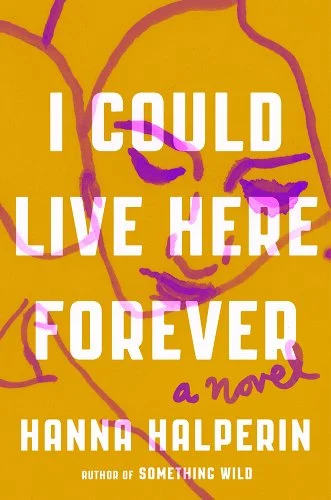
My second novel I Could Live Here Forever is about a relationship between Leah, a young woman yearning for love, and Charlie, a recovering heroin addict—a couple doomed from the start.
Below are nine novels about infatuations that are all consuming. In some of these novels, the relationships skew more towards obsession or toxicity, while others skew more towards love.
In The Pisces, Lucy is severely depressed and has just broken up with her boyfriend. She can’t finish her dissertation on Sappho, so she camps out in her sister’s empty beach house in order to reset. There she goes on a series of disappointing Tinder dates. When she does fall in love, it’s electric—and it’s with a merman, named Theo (from the ocean, not from Tinder.) The sex scenes between Lucy and Theo are hot and weird and very specific. Lucy abandons all her other responsibilities, friendships, and the group therapy that she’s committed to, so that she can throw herself fully into her relationship. No one describes obsessive desire like Broder—with brutal and hilarious candidness—and what I loved so much about this book is that Lucy, so many times, actually gets what she wants. But then when Lucy is left wanting—when Theo pulls away, or when Lucy really messes up and has to sit with herself, by herself, I felt that ache viscerally.
The unnamed narrator, referred to as C, in Little Rabbit dives head first into a relationship with a man who she doesn’t like very much the first time she meets him. He is arrogant and domineering. He is also older than her, has more money, and is farther along in his artistic career than she is in her career as a writer. In bed, he dominates her in ways she’s never experienced, and this thrills her. When they begin an all-consuming relationship, many people in her life have questions and doubts. C’s roommate, Annie, questions the relationship more than anyone. Annie wonders what her queer friend is doing, upending her life for a man who leaves bruises on her body after sex. I was swept up by this relationship, both stunned and softened by the ending.
The protagonist of Johnson’s remarkable Post-Traumatic, is Vivian: she is a Black Latinx lawyer living in New York City. She is a fierce advocate for her clients, patients at the city’s psychiatric hospital, but she is floundering in her own life. Post-Traumatic is, like the title suggests, about trauma, but the novel is not composed of flashbacks to Vivian’s own childhood trauma, but her experience of what it feels like to go on living, trapped in a traumatized mind. Vivian’s modes of survival include disordered eating, obsessive fantasizing, hanging out with her friend, Jane, and eventually, cutting off all communication with her family. Desperate for relief, Vivian is convinced that if one of the boys who takes her out on their (mediocre) dates, chooses her back, it will “change her life.” This novel gutted me.
In Aesthetica, Anna Wey, an ex-Instagram model, has elected to undergo a risky surgery to undo every cosmetic procedure she’s had in her life up until this point. Anna got her first major plastic surgery at age 19, when her older boyfriend and social media manager Jake insisted and paid for her to get breast implants. Now, at age 35, Anna and Jake are no longer involved, but she stalks his Instagram. The novel has dual timelines, and we experience Anna as a teenager immersed in the world of social media and influencing, and in the present day, as she prepares for her reversal surgery. Anna longs to see herself now, more clearly, as a 35-year-old woman—grieving, in pain, and getting older. This novel is about so many different kinds of obsessions. The obsession of being seen and wanted and valued; of natural and manufactured beauty. But it’s also about a deeper, more private kind of love. A kind of love that can’t be captured on camera or quantified.
The relationship in Acts of Desperation is toxic—increasingly and scarily so as the book goes on—but it’s the way Nolan describes love that took me aback. How true the narrator’s desire for love feels; love as a consolation, or a religion, as a way to be a real and productive person in the world. The protagonist is obsessed with Ciaran, who is beautiful, cruel and withholding. The narrator will do anything to maintain the relationship, and she performs these acts of self-sacrifice with enormous and self-aware intention. It’s because of Nolan’s remorseless writing, that we understand why.
In Sirens & Muses, Louisa transfers to Wrynn College of Art as a scholarship student from South Louisiana. At the new elite private art school, her work is mostly dismissed as “Southern Gothic Lite” by her classmates. Lonely and adrift, she eventually falls into a relationship with her wealthy and talented roommate, Karina. Karina, however, is also romantically involved with a senior, named Preston, who makes art (or rather content) for his popular Instagram account. When Preston starts a controversial feud with a professor named Roger and gets kicked out of school, Louisa, Karina and Roger end up leaving school, too, catapulting all four characters into the art world—and the real world. Here they have to forge identities as artists and figure out their relationships with one another, no longer in the safe bubble of school. Angress writes stunningly about love, art, money and class, and how all these things intersect in unavoidable and fascinating ways.
In Luster, Edie is the 23-year-old narrator, working in the publishing industry, wanting to do her art but mostly not. She’s broke, depressed, yearning, and a wry observer of the people around her. When she gets involved in a sadomasochistic sexual relationship with a man named Eric, who is in an open relationship with his wife, Edie gets tangled up with this older couple in disturbing ways. It’s Eric’s wife, Rebecca, who invites Edie to come live with them in their house. Rebecca’s main motive is that she hopes that Edie, who is Black, might take their adopted daughter, Akila, under her wing. Akila is one of the only Black kids in their mostly white suburb. This is when the truly complex relationships emerge in the book—those between Edie and Rebecca, and Edie and Akila. I was totally gripped by these characters and Leilani’s exquisite writing.
In A Novel Obsession, bookseller Naomi has great aspirations of writing a novel, but she doesn’t think she has interesting enough material. For inspiration, she begins to stalk her boyfriend’s ex-girlfriend, Rosemary Pierce. The more she learns about Rosemary, the hungrier she becomes for access to Rosemary—and the further she pushes, until she is totally enmeshed in Rosemary’s life. Naomi’s obsession with Rosemary grows huge and unmanageable, invasive, and quietly erotic. Barasch reminds us of all the ways we do so many of the very same things—compare, fixate and keep tabs. She is an honest and funny writer and this book was unputdownable.
In Another Marvelous Thing, Frank and Billie fall into an affair, while they’re both married to other people. Their love story is chronicled through eight interlinking stories, each told through a different point of view. Even though Frank and Billie are unfaithful, their current marriages aren’t loveless. But the relationship they find with each other—Frank is much older and more traditional than Billie—is tender, undeniable, and unusual. Frank says about Billy: “She is an absolute fact of my life…I conduct a mental life with her when we are apart. Thinking about her is like entering a secret room to which only I have access.” Laurie Colwin, who died in 1992, writes beautifully about people falling in love. One thing I love about this story is how gently it ends. Not all obsession leads to a crash. Sometimes people are just finding their way.
Editors’ Note: The Commuter is moving to Wednesdays! Diverting flash fiction, poetry, and graphic narratives will now be your mid-week pick-me-up. Recommended Reading is moving to Mondays; other than that, everything else will remain the same.
we dream of something, here
hide my kids. Lady, don't eat me alive.
i reek, and i live with myself. all
company gym-clothes, sweat stains,
the time it takes to scarf an orange
peel— no flesh. hairball, creativity-free zone.

Who I Am. i am wet like the dead sea.
never read Crying in H Mart and never will. Where
I Am From. nowhere, at least, nowhere you'd
vacation. not even worth the to-recycle-
or-not-to-recycle dilemma. as free

as whatever you pay me. You see?
if i stuffed myself into a time machine,
i would return here. my belly bulges like a private
jet cockpit. i suffer from the worst jellybeans of anxiety.
(vomit, earthworm, grass, toothpaste)

i am no fun to squish.
no lanternfly wings, only pantsuits
and 0 crunchy sound effects.
your soles would grow me-sized holes,
socks slick with salty, greasy tears.
curse of myself
i.did you know i know? had dinner with foreign
heads tonight picked leaves from their teeth spilled
century porridge into our laps played along
yanked ghost hair— your hair i knotted strands
about neck until i calloused let my ancestors rob
your ancestors’ shrine commit
grave spiritual sin relearn mother tongue
to curse in mother tongue beat you senseless
with heirloom my fortune cookie said
best adventures
the ones you don’t seek i gift
a grandfather clock to you to the writer of this fortune
to every consumer of panda express to me
to couples feeding each other on depraved lawns
to birds that won’t shut up— we all
look the same anyway
ii.
in this life i am many lives
chess grandmaster mahjong mistress who pushes
walls until dawn lucky snow among infinite
lucky snows
dumbly fractaled i am sweet annie i am
evil kate i am army of square-faced
warlords coming to consume your tap-access
your pipes your concert tickets
your charcuterie board your english
your wife your takeout my multitudes
will blizzard ruin your crop make you so bald
your lungs become bald your children become bald
In the years since the summer of Crazy Rich Asians, Asian American representation in mainstream entertainment has experienced a triumphant swell, producing positive, sympathetic portrayals where there were once only unflattering, stereotype-driven clichés. So long, Long Duk Dong! Hello, Shang-Chi and the Eight Abs!
Now, during Asian American Native Hawaiian/Pacific Islander (AANHPI) Heritage Month each May, we are spoiled for choices in works that celebrate and uplift our strength and beauty. This surfeit of wholesomeness can even feel a little monotonous at times, but who’s complaining?
Then along came Netflix’s Beef, an Asian American show with a full Asian American cast and Asian American creatives at the helm that eschewed of the familiar beats of intergenerational weepies and straightforward racist conflicts in favor of a darkly satirical dramedy about the inescapable cycle of misplaced hopes, bad decisions, and misunderstood misery. Beef’s creator says the series is not about race, and while this is technically true, there is no question that distinctly American white supremacist racial dynamics are a constant specter tormenting main characters Danny (Steven Yeun) and Amy (Ali Wong) as they blame each other for everything that goes wrong in their own lives.
There is no question that distinctly American white supremacist racial dynamics are a constant specter.
While many works led by people of color portray white supremacy in its more simplistic and hateful form, in Beef it is much more embedded in the characters’ mindsets, driving logical fallacies and foolishness in ways that hold an uncomfortable mirror to viewers, showing us that sometimes, we too, let white supremacy get into our heads.
Throughout the series, Amy frantically maneuvers to sell her plant business, Kōyōhaus, to Jordan Forster (Maria Bello), CEO of a big-box chain and casually obnoxious Asia-phile. Through Jordan and Amy’s various interactions, it is apparent that Jordan sees Amy as an Asian plaything to be acquired alongside her business—from the constant stream of racially-inflected quips, to overly-familiar touching. But on Amy’s part, she seems to have constructed both her business and personal brand for maximum appeal to the kind of white person that carries an orientalist appetite.
The brand identity of Kōyōhaus seems wholly constructed to represent Amy’s determination to gain white acceptance, with its Japanese-ish name (despite Amy being of Chinese and Vietnamese heritage) to communicate craft and a Germanic “haus” tacked on for added European premiumness. It doesn’t escape me that Japanese culture has long been fetishized in the West as being the upper echelon of Asian refinement. Kōyōhaus is Asianesque without cultural substance, engineered to let consumers feel cultured simply through a purchase, not unlike Jordan herself, who is willing to pay $150,000 to buy a chair from Amy called “tamago” (Japanese for “egg”) without even bothering to learn how to pronounce it correctly.
Amy makes bank from successfully courting white desire.
Amy herself is packaged in a similar fashion, clad in neutral, flowy outfits. She connotes zen, a gracious, solicitous smile pasted on her face for anyone she needs to approach with her model minority charms. It is entirely possible that Amy doesn’t realize her zen posturing is catnip for Jordan’s racist fetish because when she commiserates with her Japanese American husband about the acquisition deal, she never once brings up Jordan’s creepy racism. Acknowledging Jordan’s racism out loud would mean acknowledging the existence of systemic inequalities that work against—and in—her favor as an East Asian, and how she doesn’t have as much control regarding how her life turns out as she needs to believe.
Many viewers of color would be quick to recognize—with resignation—the need to play to stereotypes in order to usher through a positive transaction, or maintain a pleasant atmosphere in mixed company. So often, we have to put survival above dignity; we swim upstream even if the waters are unclean, tainting us the longer we linger. The Kōyōhaus storyline is a pitch-perfect critique of what happens when a person of color internalizes the necessity for self-tokenization without acknowledging the toxicity and wrongness of the whole process. In selling Kōyōhaus, Amy makes bank from successfully courting white desire, attaining perks of white adjacency in the process. Yet she is miserable, humiliated at every turn and unable to express it for fear of disrupting her carefully maintained Asianesque composure at the expense of her business interests.
In a series full of hard lessons, I recognized this one to be about the limits of finding true happiness through white adjacency. Ironic given what has transpired in the real world concerning the show, its producers, and one of its stars.
A week after the release of the show, investigative reporter Aura Bogado shared a video clip recorded in 2014 from Beef supporting actor David Choe’s podcast DVDASA in which he relates, in disturbing detail, an act of sexual assault he committed against a Black female massage therapist, and referred to himself as a “successful rapist”.
Previously, in both 2014, and later in 2017, Choe was met with backlash, and responded with statements that identified the story as fabricated for shock value, and emphasized that no real person was harmed by him. During the week after the clip resurfaced, Beef creators Lee Sung Jin, executive producers Ali Wong, and Steven Yeun, as well as Netflix and production company A24 remained silent while David Choe filed DMCA complaints to have the clip taken down from Bogado and cultural strategist Meecham Whitson Meriweather’s Twitter accounts. These actions drew a surge of criticism led by Black and Asian women, and grew to a degree that has come to overshadow the glowing critical response the series initially garnered.
Bringing up someone’s mental illness to explain their bigotry is a time-honored public relations tactic.
On Friday, April 21st, the Beef creators finally broke their silence, and in a short statement, condemned Choe’s original podcast as “undeniably hurtful and extremely disturbing” but also maintained that they believe Choe has “put in the work to get the mental health support he needed over the [past] decade to better himself and learn from his mistakes.”
In pathologizing Choe’s words and emphasizing their lack of veracity (and presumed lack of a “real victim”), Beef’s creators deny the harm caused by his so-called jokes, and also fails to acknowledge the potent societal forces that compelled him to publicly share such a vile tale in the first place—a bid to build his hypermasculine public image.
Aside from mining Black culture for coolness, Asians Americans upholding anti-Blackness also indicates their willingness to buy into the systemic inequality this country is built on, and to grow within it rather than challenge and dismantle it in favor of a system that’s more equitable for everyone. This validates a “model minority” existence, forgoing solidarity with other POCs in favor of the perks of white adjacency. To do so reveals a key misunderstanding of white supremacy itself.
Watching Beef, the series’ creators seem very much aware of this toxic dynamic, and pulls no punches in taking sharp jabs at Asian Americans who seek whiteness, not only through Amy’s chronic unhappiness of keeping up her “model minority” veneer, but also the visceral embarrassment of Danny’s secret yearning for white women when he masturbates to AMWF (Asian Male White Female) porn despite insisting to his brother that he prefers Asian women. Beef is clear about the humiliating hollowness of white adjacency for Asian Americans, and how attaining it comes at the expense of the freedom of being oneself. After all, it’s white supremacy, only white people are the real winners within it. Being an honorary white person is not a real status with any guarantee for power or safety.
You wouldn’t know that the people behind such a powerful, progressive message are the same people who have handled the Choe incident thus far. As I said, ironic.
It almost feels as if Beef is a show within a show, so darkly comical are Choe, Lee, Wong, and Yeun’s doomed bad decisions as they desperately try to protect Beef’s mainstream success as a vehicle for representation while ignoring their critics, many of whom belong to the groups they seek to represent.
They may very well consider the good-faith criticism they have received as a form of sabotage
There are those who believe that mainstream crossover success of celebrities of color among Hollywood circles eventually trickles down to better the lives of the rest of us. However, that doesn’t account for the collateral damage that comes with the trickle down. In the case of Choe’s rape stories, regardless of their veracity, downplaying their harm—specifically toward Black women—tells us that shielding a member of the Beef team from accountability is more important. They may very well consider the good-faith criticism they have received as a form of sabotage, muddying their media campaign, killing the positive buzz they had going. Some who believe in the power of representation even plead for the public to continue supporting Beefand not let their disdain for Choe ruin the show’s chances at prestige.
I say, whatever damage the series sustains, they have it coming.
In his recent comedy special, Chris Rock said that his parents taught him an important lesson growing up: “Don’t fight in front of white people.” It seems that Beef’s creators buy into the same stale respectability politics, this belief that publicly acknowledging your mistakes weakens your standing and diminishes your power.
But what truly diminishes the power of Beef is not the critics that refuse to let Choe’s ugly past go, but the hypocrisy of its creators, who cautioned us to the futility of chasing white adjacency for the sake of our own advancement.
Nothing seems to rally theatre fans quite like a play starring, and about, attractive, complicated gay men. In London, The Inheritance, Angels in America, and A Little Life are among the most important cultural events of the last decade. But beneath the erotically charged marketing campaigns featuring solemn, turtleneck-clad or partially nude actors draped over one another, it’s worth considering why, time and again, we turn to a collective group of gay peers to tell our stories in theatre. When I think about the canon of important modern theatre, the most prominent gay representation comes in the form of shows with an ensemble of gay characters: those I mentioned above, as well as The Boys in the Band and Love! Valour! Compassion! being notable examples. This has led me to wonder: is a choral cast structure necessary for an authentic representation of gay lives and stories—or is it mere coincidence?
So far in the canon of theatre, it appears that gay men are most truthfully represented when gayness is the default, rather than a token, an exception, or a novelty to be exploited for plot. It can feel like a trope, one existing in parallel to famous scripts about groups of women (e.g., Sex and the City, Little Women, Girls, Golden or otherwise), in which the absence of male protagonists is intrinsic to the story’s DNA. It’s fitting, however, that queer people have taken to the stage (rather than the screen) to hold court. Theatre is where, for centuries, characters have raged and grown and pushed against the boundaries of human experience through emotional expression. This is best—and perhaps exclusively—true for gay men. Of course, stories in which we are the comfortable majority, aren’t reflective of most contexts in daily life (a shame, really)—but is that not the power of theatre? To wield suspended disbelief for effect? Theatre allows us to manufacture the optimal conditions for emotional journeys in profound, entertaining, and transformative ways, which, for a multitude of reasons, have not always been afforded to queer people in real life.
So what is the root motivation driving this trend? Is an isolated gay character’s emotional depth more limited than when several gay men go through something together? Or is it just a convenient marketing tool—instead of trying to appeal to both straight and gay audiences, these plays go all-in on the reliable audience of gay male theatre fans by filling billboards with only gay faces? I believe the most compelling argument for the group of gay men phenomenon, which characterizes theatre’s enduring gay stories, is this: for many gay men, historically, it is with our friends and peers (chosen family, if you like) that we achieve the fullest emotional development. There is strength in numbers, and there is strength in the shared experiences of pain and joy. It follows that dramatic catharsis is therefore most present in the ensemble gay play.
It’s possible that, after watching a show like The Boys in the Band or Angels in America, audiences will want to see one protagonist’s arc teased out to its full multifaceted potential, separate and apart from the chorus of other characters. Yet, often in these stories, the queer lead is forced into conflict with straight people (or other antagonists) who act as obstacles to their biggest struggle, which is gayness. Frankly, it’s not that interesting to watch; conflict with straight people based on our sexual differences is such a small part of day-to-day gay life, and yet it is weirdly overrepresented in media. Certainly, our most dynamic cultural portrayals are in the spars and passions within a queer group dynamic. Gayness ceases to function as a weapon or a demon because it describes all of our protagonists. We become layered individuals informed by gayness, rather than narratively defined by it.
Queer people frequently have stunted, fraught, and dishonest relationships with their families, but one environment in which we can fully (and theatrically!) express the complicated truth of our inner lives is among our peers. Playwrights like Tony Kushner, Larry Kramer, and Terrence McNally recognize and harness this. The tensions in plays like The Boys in the Band reminds me of explosive family plays; finally we get to play out what heterosexual characters play out in Who’s Afraid of Virginia Woolf or August Osage County. In plays with majority straight characters, it is too tempting to use a gay character’s closeted status as fodder for conflict, thereby limiting the potential for that character to grow on their own terms.
A Little Life, currently playing in London’s West End, complicates the trend. Of the titles mentioned, this is the one with the least cathartic climax, and least generous portrayal of complex queer characters. For Jude, the arguably “main” character, devastation reigns regardless of the community he finds himself in. I suspect it comes down to the writer. Hanya Yanagihara, while an exceptional storyteller, doesn’t have the same personal stake in her narrative as the writers of other plays in this model. She is not depicting her own community, and the homogeneity portrayed in The Inheritance or Love! Valour! Compassion! is disrupted in A Little Life, with a messier sweep of queer identities commanding the stage. I want to be very clear: this approach is neither better nor worse; Yanagihara’s is just a different project with a different impact on the ongoing history of queer theatre (and I will be interested to see how it holds up in terms of longevity).
The group cast structure, however, gets us close to some sense of a collective wider experience.
Perhaps what has kept plays like Love! Valour! Compassion! and The Boys in the Band so alive in the cultural conversation, and in people’s hearts, is that they move beyond stereotyping (the enemy of authentic representation). The burden is lifted from one single character to represent the universal queer experience, with all our virtues and vices. I see this all the time in plays with one queer character—it’s a ludicrous paradox because there isn’t a universal queer experience. A token simply cannot be a character. The group cast structure, however, gets us close to some sense of a collective wider experience. For example, if we look at Love! Valour! Compassion!, most of the characters are actually really annoying and the idea of spending not one, but three summer weekends with them is frankly horrifying, except for the fact that they are all so beautifully and tenderly nuanced. They love and hate and have relatable, textured personalities. Plays like these reflect the truth that we are not a homogenous monolith; fixed types or preconceived notions of queerness disappear because we see a spectrum of gender presentation, of sexual promiscuity, of emotional maturity. These characters are allowed to be angry at something other than coming out or homophobic abuse. Those struggles are real but—shock! horror!—are not all we think about. When a queer storyline is transparently inserted, audiences can all but picture the writer thinking: “this will make it all a bit more interesting, a bit different, look at me ticking the inclusive box.” But when queerness is central to a group, there is an element of neutrality that lets more original thinking and tension take hold.
A lot of modern plays centering queer men focus on the coming out conflict or the crisis of hookup culture in our communities, which is interesting and relevant and can be a fruitful site for drama. But these stories also miss much of the reality of our lives. This essay is not a call to arms. I am not asking playwrights to shoehorn an abundance of gay characters into their work, nor am I dismissing theatre featuring very few or no gay characters. I would rather see zero gay characters on stage than one-dimensional ones superficially included in the name of diversity. Community is such a central pillar of the queer struggle, and it is in staging and presenting a very explicit sense of community (no matter how fraught) that we can present ourselves as a valid force made up of variegated voices and bodies and lives.
To me, the magic of the gay male ensemble show is that queerness becomes arbitrary, which happens so rarely in public life, where queerness is almost always a signifier. Our goal should not necessarily be for arbitrary queerness to be the norm. That said, it is clear that it is a model that has connected with audiences, gay and straight alike, for decades. When queerness is not a transgression on stage, it is allowed to be the beautiful identity and experience that it is in real life.
Karin Lin-Greenberg’s novel You Are Here places a dying mall in upstate New York at its center; its diverse cast of characters swirl in and around and through the mall, wrapped up in their various issues. Rotating between five different voices, this debut is an acute portrait of contemporary suburban America. At first glance, the characters’ lives and hopes seem mundane: Tina, the mall’s hair stylist, watches YouTube art tutorials on the side. Her young son, Jackson, dreams of being a famous magician. Jackson enlists Maria, a teenage cashier at the mall, to help him with his magic routines—while Maria harbors hopes of her own to become an actress. Across the mall, Kevin is dragging out his English PhD dissertation as he works at a bookshop. Ro, Kevin’s judgmental neighbor, has been going for a mall walk and getting her hair cut by Tina for years.
But with Lin-Greenberg’s in-depth character development, You Are Here shows both the unexpected connections between strangers and the unshakeable assumptions we have about one another. Lin-Greenberg mines the spectacular within everyday life, whether that is a moment of public violence or intense beauty. Similarly, she highlights how mall culture functions simultaneously as a dying part of suburbia, a symbol of lost dreams, and—perhaps surprisingly—a form of controlled community.
I chatted with Karin Lin-Greenberg about suburbia culture, the uniquely American phenomenon of desensitizing gun violence, and (on a lighter note) her favorite mall food.
Jaeyeon Yoo: I’m curious what drew you to write about malls, and what you think they depict about today’s United States.
Karin Lin-Greenberg: Obviously, the dying malls tell us a lot about commerce, about where we’re shopping. But also, malls—when I was growing up—were a place where people would go hang out, especially high school kids. I pay attention to my local mall, and it seems to be much less a place for shopping than a place you go to for entertainment. There are now these two escape rooms, indoor mini golf, an entertainment center where you could go on rides, movie theater—that seems to be what people are going to this space for, instead of for shopping. I think this is an interesting shift; maybe it just has to do with the pandemic, but as a writer, I was particularly drawn to the space.
I think it’s interesting to take people who would not run into each other in their everyday lives, then put them in a space where they’re forced to interact. A character like Ro, who would never really interact with people like Tina and Jackson in real life, comes to Tina’s salon for service and then realizes, “Oh, I really like these people. I feel really connected to somebody that I’m just coming to for haircuts from, but I wish I could have a deeper relationship with.” I think the mall is a sort of a place that puts together people who are not related, who might not otherwise encounter each other, and then sees what happens.
JY: I love that idea of forced interaction you highlighted. Do you think the malls becoming these places of entertainment would change the type of attractions that these characters have?
The mall is a place that puts together people who are not related, who might not otherwise encounter each other.
KLG: I think so, because you would go with your friends or your family, whether it’s the escape room or mini golf. I don’t think we would now necessarily go to [the mall to] meet people. You’re going to have less of those random encounters with people that are just there—because when you go somewhere with people you know, you’re focused on the people that you’re there with.
JY: Right, and it reflects American cultural life right now—everyone’s been talking about how we’re getting more and more into our bubbles, these political echo chambers. Speaking of America, your exploration of the dying mall was threaded through with gun violence, which I think is also deeply integral to U.S. society today. Could you talk a bit more about your decisions to intertwine these topics?
KLG: The gun culture question came from real life. As I was writing, there was a shooting at the local mall. The mall is so ordinary and it seems so sanitized and so—just nothing, you know? It just seems like a place you can go buy sneakers and eat your French fries in the food court. The shooting was just shocking and unexpected, but then, as you now think about it, it’s not. These public spaces that we think of as part of our everyday lives have been invaded by violence. When I was growing up, it would have never even crossed my mind that anything like this could happen at a mall—the mall was just where you went to hang out. But I remember some of my students were at the mall, at the shooting, and told me, “I can’t do my work right now. I was here for this, and it was the most frightening thing in my life.” This [type of violence] can creep into the most ordinary situations and you have to be aware of it now. I think about the last year—a supermarket, or these places you go to get the things that you need to live have been invaded in this way. From when I was writing the first draft in 2018, it’s just getting worse and worse.
JY: I’m struck by how you were drawn to the mall as a site of extreme mundanity, but simultaneously the site of very extreme violence—the violence of shootings itself has become ordinary. Which is something pretty uniquely American, I would say.
KLG: Right, schools too. Again, when I was growing up, I would have never thought that there could be a mass shooting in a school. That just wasn’t within my frame of reference. And now, kids are going through these drills, and it’s something that, unfortunately, a lot of kids have experienced or been close to in some way. These public places that you would have never had to think twice about in the past. Now anytime there’s a big group gathering anywhere in these public places—ones you would have never had to think twice about in the past—I think a thought flashes through a lot of people’s minds, “What could possibly happen here?”
JY: This question resonates nicely with your title, You Are Here. What led you to it?
You Are Here is a story about characters who don’t really understand how to connect. They keep making these mistakes that keep them apart from people, keep them lonely.
KLG: I have to say I can’t take credit for it; my agent came up with it. My original title was Those Days at the Mall, which is a character’s line in the very last chapter. Obviously, the mall map says “You Are Here.” But it’s also so much about place and where people spend their time. So, the question behind the title was thinking about where we spend our days.
JY: In contrast to the present moment we’ve been discussing, what did the mall mean to you as a teenager?
KLG: When I was a teenager, the thing that was really exciting to me about the mall was that it was a place to drive for. I grew up in New Jersey. Malls have huge parking lots, and when you’re bad at driving and parking, you can park at the top of the parking complex far away from other people. I was able to drive myself, park the car—my mom’s car—and not worry about coming home with a dent in the door. It was a place to walk around. I didn’t buy things, usually, but it was just a place to goto.
JY: The thrill of having a destination!
KLG: Right, and being able to drive yourself without an adult. This was suburbia, before Uber or Lyft. That was the most exciting thing.
JY: Most cultural depictions of malls I’ve seen focus on teenagers (usually as consumers), so I appreciated how You Are Here tackled what the mall means for a variety of people—the workers, the lurkers, and everyone in between. How did you decide on the polyphonic narration style?
KLG: I was very interested in showing people who are all different from one another, so I sat down and brainstormed a bunch of different people, who might be working at the mall or go to the mall. I wanted these people to be those whose lives would not otherwise intersect with one another. I also thought about conflict and tension; I have these characters who are extremely set in their ways and believe one thing so strongly. When you put them in scenes with each other, you can see what might happen. It’s also about questioning: are they going to stay static, or is there room for growth? If there is room, how much would feel realistic? With the multiple narrators, I enjoyed being able to get into each of their perspectives. A character might seem a certain way and be really frustrating in one chapter, when viewed through someone else’s thought process. In a later chapter, you might get their own thought process—they might still be frustrating, but you could at least understand why they believe the things that they believe.
JY: I feel like the form of the book plays out the mall’s forced interaction you were talking about, because we’re forced to interact with the characters’ thoughts—whether we want to engage or not from their perspective. Sometimes, the interactions lead to these glimmering connections in You Are Here; could you talk more about these relationships that surface?
KLG: This is a story, I hope, that makes people think a little bit more about their daily interactions. In real life, we don’t set out to find the people we encounter, but they affect us in some way. I think we generally want to connect, but it’s just hard to do that. I think You Are Here is a story about characters who, for the most part, don’t really understand how to connect. They keep making these mistakes that keep them apart from people, keep them lonely. But sometimes, random encounters can be incredibly positive—even if they’re really small or significant to just one person. For example, one character, Ro, has this intense connection with Maria [another character, a cashier]. This is the first time Ro has ever put money in a tip jar. But for Maria, it’s just ordinary chatting, the way she would talk to any other customer. It was interesting to explore connections that are potentially one-sided, or connections that emerge because they’ve gone through the same traumatic event. It was fun to be in each of their minds, so that we could see how something that meant a lot to somebody might not, to another character. I was thinking about the different ways that characters could connect, but also about different ways of disconnection.
JY: Yes, as your book demonstrates, “intimate” interactions can be uneven but still feel real. Before we end: do you have a favorite mall food? Mine are pretzels, hands down.
KLG: I don’t know if this is true, but I’ve heard they blow the scent of the pretzels out into the mall. There’s some fan—this is probably not true and is an internet legend—but they have pretzel-scented spray to blow out. I would say the pretzel is also the thing I would buy at the mall. You can walk around eating it! That, combined with the smell of Cinnabon, are “classic mall” for me.
JY: Exactly. It’s funny, we think of malls as being very ordinary—and they are—but they’re also sources of urban legends and intense collective memory for many Americans.
The wellness influencer has said the n-word again, but this time there’s evidence. She was singing in a crowded East Hollywood bar, a disco ball twirling above her head, turning her bleached hair metallic. Her pale skin dotted with splotches of pink and green. She’s not so much dancing as sexy writhing. The camera is trained on her, and at that exact moment in the song when she could’ve so easily stopped, hummed, or done a bird call or whatever, she says it. Laughs and puts her hand to her mouth in an “uh oh” gesture, like a toddler. Then, she keeps dancing.
By the time I wake up at seven, I’m already behind. The video is everywhere. The liberal sites have deemed her “problematic,” which is a single wispy, blonde hair away from being canceled. The East Coast team had a three-hour head start on panicking and slogging through the hate comments. I squint into the light of my phone. The red Slack notification reads 11, but in my blurred vision, they look like tiny exclamation points.
“Go back to sleep.” Tianah flips on her stomach. Slings her arm across my chest so it lands with a hefty thump.
“I gotta get up,” I say as I stare at my phone and scroll through all the messages I’m tagged in. Several of them end with the word “urgent.” Worse, they’re emoji-free.
Tianah sucks her teeth so hard I can hear the spit. When she turns her head to face me, her puff is smashed flat against the side of her skull. All I wanna do is fluff it out a little, make it more planet than pancake. But I know she wouldn’t want that. That her whole body would tense up.
“Okay I really gotta get up now.”
“Do you, though?”
I lift off her arm and slide on a pair of pants decorated with dog hair. Otto is snoring loudly from the mat in the bathroom. When we first adopted him, I said that he liked to sleep in our tiny-ass bathroom because he had a view of our bed. He could watch us through the night and maybe, as a senior dog, that helped him rest easy. Tianah laughed at that, said I was making Otto sound creepy and pathetic. “But in a cute way,” she added. That was back when we cared about sparing each other’s feelings.
“Lee.” Her voice is muffled by a pillow, but she’s speaking twice as loud to make up for it. “Those white folks will still be crazy in an hour. Come back.”
I dig through the clothes basket that I’ve been meaning to put away for a week now. Everything is crumbled and smells a bit musty-sweet because I didn’t have the patience to run the communal basement dryer twice. I pull out Tianah’s Howard sweatshirt, and even though I didn’t go there, it always makes me feel like I’ve leveled up when I wear it. Random black folks on the street give me a double nod. One for being black and another for black black.
“Quit,” she mumbles. When I don’t respond, she says it louder. “Just fucking quit this job already.”
I pat Otto’s head, which makes him groan sleepily. He doesn’t bother following, but his eyes track me as I stumble toward the door.
“I lowkey miss you,” Tianah says. She’s so quiet that she might have whispered something else into the bed. “You could be working with me at the storehouse. Helping folks like us.”
“Yeah, sure,” I say. “Maybe if I really wanna lose my shit.” The sentence plows out of my mouth before I can stop it. “I mean—” My words cut the room in half, make everything feel tight. But I try to push by them, edge my body past like black Indiana Jones squeezing through a narrow cleft in a rock. “We already see each other a lot,” I add and hope it sounds warm enough. I’ve lost the ability to read my own tone at some point in the last year.
“Yeah,” she says. I know better than to look at her right now. “Sure.”
Tianah props herself up on her elbows and glances at my chest. She stares long at Howard like she’s translating a full paragraph in another language.
“Alright,” I say again. I’m fidgeting under her gaze. “I gotta handle this for them and then I’ll come back to bed. Promise.”
“Yessa, massa. I’ll fix ya problems, massa.” She juts her chin out, bobs her head with every word. Her lips and eyes are overly animated. Then, a sharp look of disdain takes over her face. We stare at each other. Let the room plunge into silence.
“Cool,” I say and leave our room.
Our kitchen doubles as my office, my nap space, and on particularly bad days, my scream cave. I sit down, crack my neck so hard that it sounds like I’ve just stepped on a plastic water bottle. By the time I open my laptop, the messages have doubled.
“All hands needed on deck!! Call asap!” That is my manager’s manager. The word ‘boss’ has been retired for something less unseemly. Under her message, Pembroke (my manager) has put a gif of the black guy from Scrubs screaming. No one has liked it because laughing isn’t conducive to capitalism. I only like her gifs when they don’t contain black people. She hasn’t gotten the message, and to be fair, I’m not really sure what lesson I’m trying to teach her.
The Zoom link in the thread says seven people are already on a video call. When I open it, the preview of my face is ghastly. My hair is in braids, but they’re bunched behind me in a matted tail. I look like I haven’t brushed my teeth. Each call, I look more haggard and dry, like someone has been hiding the lotion in my house for months. My lips have a dusting of ash and are red from gnawing. Bright mouth, large roaming eyes — I’m nearly a minstrelized version of my former self.
“Hi everyone!” I say with a cheerfulness I can’t trace. My smile flicks up like a switch and my teeth are megawatts. It shouldn’t be this easy to pretend.
I mute myself, let my goofy lips slowly droop. Let my mind go on a hiatus for the remainder of the call. Yes, I could always have a running commentary every time someone says something too Woke or incredibly Un-Woke. But, I’ve found that self-inflicted numbness takes less spirit, soul, energy—whatever you want to call the intangible part of me that’s shrinking by the minute.
We wait for my grand-manager to stumble through her daily preamble. Usually it’s weakly feigned interest in the team’s lives or a shockingly unrelatable (to me) story about a boat on the coast of a country that is possibly made up. But because today is “critical” (her words), our introduction is mostly a generous retelling of the influencer’s mistake.
“For now, let’s forget about the rumors swirling everywhere. The story today is: she was singing and she got carried away,” Grand-Manager explains. Her tone is a one-shoulder shrug with a sprinkle of empathy. An adult, white woman version of “boys will be boys.” I expand the grid of faces to see who nods and whose eyes seem to be looking at me with fear or apology. Everyone only looks exhausted.
“We want to make it clear we don’t condone such language.” Grand-Manager sits up straight. She’s wearing a green turtleneck that fades into the ivy plant behind her. She doesn’t usually wear lipstick, but I see she’s got a reddish gloss on. She’s power posing in a way she learned from an overpriced seminar, but if I mute her, she just looks like Piranha Plant interviewing for her next gig. Which, yeah I don’t know. It’s kind of working for her, I guess.
“The issue is,” Grand-Manager begins, and people nod preemptively, “all of the ads she’s featured in. The growth we’ve seen. And I don’t need to remind you of the entire campaign on forgiveness she just did for us.”
“The growth,” someone unmutes themselves to echo, but it’s so fast it’s not clear who.
The forgiveness campaign Grand-Manager mentioned was just unattributed Gandhi quotes and the Wellness Influencer in an assortment of white outfits. I know because I’m the one who Googled ‘inspirational quotes + forgiveness + smart.’
“Team,” Grand-Manager says, “the question is, how do we make it clear that we don’t accept this language, but we also don’t believe people have to be perfect?”
“People can come back from mistakes,” another person types in the chat. It’s Kyle. We don’t fuck with or talk about Kyle.
The meeting lasts another twenty minutes. I pull at my toenails under the table, tell myself I will get around to that pedicure. I haven’t been anywhere besides the grocery store Tianah works at since things shut down, but nail salons look almost intergalactically clean, so that must count for something? And with more people getting vaccinated, maybe that’s somewhere Tianah and I can go that’s not our living room. The call ends with the West Coast team agreeing to meet the wellness influencer in our office this morning. Our task is to come up with strategies for “moving forward.”
“Her team has already debriefed her,” Grand-Manager says. “So whoever is there first, feel free to jump in. I’ll probably be running a few minutes behind. Okay?”
I haven’t spoken. I’ve taken a pen and written down a line on my dusty palm every time I catch myself reflexively nodding. Three.
“The biggest question is,” Grand-Manager ends the call saying, “how do we make all parties feel heard?”
Everyone else nods, some people unmute and say, “Yes, feel heard.”
I will my neck to stay stiff. To be stone.
I’m the first one at the office. I take a chair near the back of the conference room and wait. My phone buzzes, but it’s just Travelocity telling me that maybe I don’t have to be trapped in the dregs of the apocalypse. That glamping vacations are pandemic-friendly and cheaper than I think. I mark it unread even though I’ll never see it again. A part of me was hoping it was Tianah. “I’m sorry for the Kizzy voice,” or, “You aren’t the sellout you think you are.” More realistically, she’s sprawled out in the bed, enjoying this freedom. Her hours at the storehouse have been cut back to limit the number of people. Mostly just her boss works there now, but Tianah’s got a good amount saved from her days as a nanny. I rarely go into the actual physical office because no one really does anymore. Instead, for the last year, I’ve crouched at my laptop and listened to Tianah moan that she “can’t keep living like this.”
I haven’t asked any follow up questions, such as, “What the hell else can we do?” or “Who ever called this living?” Certain things, I’ve come to learn, aren’t worth saying aloud. I like to think we’re both trying our best, whatever that’s supposed to mean in a time like this.
I’d nearly forgotten how the office takes you in like a tunnel. Flat concrete that, at least today, feels like a kind of release compared to the tight hell of my kitchen. It’s all gray—the couches, the chairs, the carpet—a uniformity that hasn’t changed in my years working here. A fresh slate everywhere that says, at the end of the day, you too can be wiped clean. Maybe it’s a little threatening if you’re delusional and think you’re an individual or whatever. An unwelcoming palette that says people, much like a stain on this gray velvet, are temporary. I can admit that when I was first starting and a couple years younger, it bothered me. But now, I don’t know what feels good anymore.
“Darrrr-k. That is dark,” I sing to myself in the conference room. I’m alone still, so I take out my laptop, message the rest of the team.
“Here!” I say.
Slack is quiet.
The front door squeaks open and through the glass wall, I watch her approach. Wellness Influencer herself. She’s got a denim baseball cap pulled down low over her eyes. A light blue medical mask twirls around her index finger as she walks. She’s in all black, but her wedge sneakers are a blaring red. She’s nailing the possibly famous, possibly hungover sorority girl look. She pushes into the conference room door with a groan.
“Why the fuck is this so heavy? Is this like bulletproof or something?”
“Hi. Do you want to—” I point at my mask on the table. It’s black with white thread sewn in clumps to look like stars. Tianah’s mom was making them. She opened an Etsy store and sent out a mass email to everyone she’s ever encountered. I bought several (shipping not included). Her mom still calls Tianah and I “friends,” so Tianah refuses to wear the masks until her mother gets that shit together.
“Nah, I’m vax-ed, so we’re all good.”
I close my laptop for some reason. It seems rude to speak to someone for the first time with a screen ajar, a distraction right there in your face, even though she is the reason I am working in the first place.
“No one’s here?”
(I’m here.)
“Seriously? They made me get up early A-F and they aren’t even here?”
“Yeah, I think they’re running late.”
“Actually they can take their time. I’ve got a whole line of people waiting to see my head roll.”
She plops down in a chair that rolls back a little. But she uses her heels to pull herself forward like a kid in scooter derby. She’s pretty and as apathetic looking as all her videos. I’ve never seen someone sell something so flatly, but her “Nobody’s Perfect” and “Live Today Always” posts are our most liked in years.
“They should be here soon.” I push open my screen. Still no messages. When I glance up, she’s watching me like she’s somehow just discovered I’m here.
“Who are you?” Her voice, despite her twisted lip, is still monotone.
“I’m Lee, the copywriter.”
“Yeah?”
“For a couple years now. I work with Pembroke.” Technically for Pembroke, but I make a split-second decision that could either demote me to being “the help” or raise me to being nearly an equal.
“Pemmie? She’s great, isn’t she?”
“The greatest.”
I can see the moment her mistrust settles a bit. She realizes I’m just another one of the nerds cc’ed on all her emails. “So you’re the one putting all these words in my mouth, huh?”
I smile, squeeze out a sound that no one normal or stable would call a laugh. She frowns and folds her arms across her chest. If this is about to be an argument, I’m too tired. Whatever is the human equivalent of a dog rolling over with her stomach up, that is what I want to signal. I want to look as helpless as Otto when I found the trash rifled through and strewn around my office-kitchen. I surrender.
“I guess that’s me—the one putting words in your mouth.”
Whatever is the human equivalent of a dog rolling over with her stomach up, that is what I want to signal.
We sit in silence for over three minutes. If most of my day is my thoughts quietly eating at me, I’ll consider myself blessed. The only interruptions are when she sighs or laughs (some genuine, some not) at her phone. I’m sending direct messages to everyone on the team to figure out what’s going on. Only the East Coast teams reply saying they have no idea. They’ve been in meetings all morning with counsel and concerned corporate partners and maybe, for once, the West Coast team could handle their own shit, lasso and reign in this bucking nightmare of a Zillenial instead of waiting for East to handle it. Is that okay? Is that manageable?
They don’t say that explicitly. They all individually say versions of, “I’m currently in meetings and don’t fully have the bandwidth right now but if I can track someone down, I’ll let you know.” Which you know, all shakes out to be the same corporate speak for “lose my number.”
Wellness Influencer smacks her phone against the table and it snaps my brain awake. I’m sitting up straight for the first time this morning. She smiles. I wish people would stop doing that to me. Smiling now has more range than I’d like. It’s no longer exclusively happiness. It can be deceit, cruelty, anger, joy, confusion, suppression—
“It’s me and you,” she says.
“What?”
“We gotta handle this.”
“Who told you that?”
“So . . . ” She continues speaking like I’m a ghost unsuccessfully trying to connect with the living.
I open my laptop and there’s a direct message from Grand-Manager. It says, “I’m so sorry I can’t make it. You got this!”
Because of course she can’t make it. What else would it say? Who else would they toss to the digital wolves than me? I fight the knee jerk reaction to feel ridiculous because things are only as significant as you let them be. After all, getting words right and correcting the wrong ones is my job.
Wellness Influencer has been talking this entire time. She hasn’t been dissuaded by my lack of eye contact or dull expression. “We need to come up with a strategy. Which is like perfect because that’s what I do. Since you know words, it shouldn’t be an issue. Let’s do a working breakfast? There’s a cafe across the street. It looks like shit, but maybe it’ll win us over.”
I’m stuck thirty seconds in the past at the part where I’m supposed to work alone with her. But when she starts to leave, I move behind her like I’m her anxious chihuahua on a pink, bedazzled leash. It would be easy to hate myself in this moment, to dwell on Tianah’s massa voice this morning as I nearly trip on a white girl’s heels. But instead I try to focus on this therapist I had once who told me, “It’s so much easier to hate than to love. Love takes courage.” At the time, in my head, I had mimicked vomiting. I dumped her for a mean, British therapist who I ultimately dumped, too. But as I trail Wellness Influencer in her bright sneakers across the street, I’d do anything for this magical therapy courage. Or at least, to be a person who knows how to treat herself with nauseating kindness. A blend of Tianah’s “fuck this” attitude, Wellness Influncer’s confidence, and a therapist’s optimism. Someone who wouldn’t find any blame in turning around, going back to sleep, and letting this problem and this world fester. But I don’t. I am overly obedient.
The cafe doesn’t win us over, even though the waiter is attentive and somehow expressive despite his mask. I pull out my laptop and I still have a weak signal from the office across the street.
“Should we start?” I say. I’ve only ordered coffee, which made Wellness scoff. She ordered a proper meal, side salad and everything.
“I don’t know why I’m here.”
I’m able to catch my words before they bust through my teeth this time. I type, “Dear fans, I am selfish” in a clean doc. We’re facing each other and she can’t see my screen.
“Okay,” I say, trying a new direction. “What are the formulas you’ve used for other apologies?”
She grimaces and shakes her head, confused.
“I’m sure you’ve worked with a firm before. For . . . other . . . scandals?”
“Christ. Are you serious? Who do you think I am?”
I don’t know how to respond. There are several possible answers to her question:
A) An opportunist with above average branding skills and little regard for anyone else B) An apparition sent by my ancestors to haunt me for that time I clicked “no” to donating 10% of my Walgreens purchase to the United Negro College Fund C) Every white girl who escaped from her coastal suburb and never quite got the concept of accountability D) A fucking joke
I tilt my coffee straight into my mouth. The “outside seating” is a single table under a distressed awning with so many holes that the sun is starting to fry my scalp.
“I’ve never apologized for shit before,” she says. “Not publicly at least.”
I take more mouthfuls of coffee so I have an excuse not to say anything. Or mention the rumors online that she’s been caught using “politically incorrect” language before. I type something vapid but heartfelt enough in my doc, then read it aloud.
“Absolutely not,” she says when I’m finished. “It sounds like I’m saying nothing. It’s all blah blah blah blah blah.”
“Exactly.”
I want to go home for the first time in a while. To get away from this. Right now, listening to Tianah decry capitalism while sipping a Coke doesn’t sound like the worst way to spend an afternoon. Every second we fuck around at this cafe with Wellness’s non-apology is another I’m stuck here.
“Did you know it was wrong? To say that word?”
She signals to the waiter and points at her empty glass. A large SUV goes by and makes the table shake as the server struggles to keep his pour steady. There’s barely anyone else around. Wellness looks at her reflection and readjusts her cap in the restaurant window. She stares long at the couple talking loudly outside their parked car on the other side of the street. Anything instead of answering me.
Finally she says, “Does it matter if I knew?”
“You don’t want this to sound like drivel, so, yeah. It does.”
“I hate this country.”
I hum a rhythm that sounds like a hymn, trying to restrain myself. Tianah once told me I don’t have a personality around white people. And it’s true—I’m always thinking so hard about what I can and can’t say. Should or shouldn’t do. God forbid I shake my head by accident and Beth from marketing is suddenly doing a Sheneneh impression and snapping her hands in a Z formation. I’d rather be quiet. I’m trying my best to keep my mouth shut for my own sanity. I rummage through my pockets for loose cash. I’ve already drafted the message I’ll send to the team in my head. I’ll explain we have to drop Wellness, that we can easily find an over-privileged white girl to eventually offend someone else. They’re plentiful and hungry and everywhere. But really, I’ll probably say, “Let’s regroup on this in the morning,” which everyone will read as Lee’s failed.
She’s holding back a laugh, but watching me. All I want to do is push my foot onto the seat of her chair. Apply pressure and watch her slowly tip to the ground. Instead, I slam on my keyboard and all the words are a giant blob with one red, squiggly line under them.
“What’s it like to write all the time?”
“I’m almost done.”
“I’m serious.” She leans in. “I wanna know.”
I scoot my seat further back from the table. It’s dramatic to put that kind of distance between us, but people like Wellness have survived on their charm. I’m well aware that smarter folks than me have been fooled by her.
“Please. What’s it like?”
“Fine.” I take a beat, expecting her to lose focus. She doesn’t look away from me. “You know when you eat something really really fast?”
“Uh huh. I get bad gas when I do that.”
“And then someone’s like, how was it? And you realize you never actually tasted it?”
“Yeah.”
“It’s like that. I never really know what the hell I just wrote.”
“That sucks,” is all she says, and it sounds mostly sincere. She’s quiet. Thinking. She lifts her head and the sun catches her jawline like it’s been waiting for her. Pretty white girls can have whatever they want. Even if that’s not true, it feels like a given in this life, and that’s disappointing enough. Who would say no to her when she’s got so much of this world, including my job, in her hands?
“In my job, I’m always wrong and I’m always right,” she says, answering a question nobody asked. “Sometimes, I’m both. And sometimes it’s hard to know which. It can be tiring.”
I feel my phone buzz in my pocket, but I ignore it.
“Pandemic bae calling?” she says. “I’ve had plenty of those, and they were all awful in the same kind of way.”
“No, it’s not like that.”
“I tried to cut my hair once and my manager called me butch. He made me sign a contract that I wouldn’t get a haircut for a year.”
I pretend to type as she talks, but the words are fuzzy in front of me. It’s not that I want to be here with her, but I suddenly remember what surprise feels like. How much I used to like sitting across from someone I didn’t know. Someone who, even problematic, can be learned and puzzled out. I didn’t realize I lowkey missed the company of total strangers.
She keeps going.
“I’m not from Texas. I’m from Cave, Arkansas.
“I used to watch Legally Blonde a thousand times to learn how to laugh like Elle Woods.
“I’m in love with my roommate who doesn’t see me, like ever, and I’m in a situationship with Bon Jovi’s godson’s best friend.
“I sell skinny pills so I don’t have to fuck my landlord for rent anymore.”
The confessions are matter-of-fact. They trickle out robotically like she’s trying to recall her grocery list. Everything is a performance, but maybe that’s what makes her entertaining for certain people. She is the epitome of unbothered, and as much as I want to hate her for it, even I can recognize an ounce of jealousy when I feel it. She barely bats her eyes with the world raging around her. She speaks at a normal volume. I’m almost certain the waiter is hovering inside at the door, eavesdropping.
“I’m uncreative and lazy. I know how many likes I get because it can mean the difference between new hair or washing my nasty extensions again. Oh—this is good. You wanna know what my mom called me to say the moment that video came out?”
“What?” I say.
“She called me ‘a dumb bitch.’ And that’s so basic, isn’t it? It’s what some girls called me in middle school, but for some reason, coming from your mom, it’s way harsher.”
“It sounds harsh coming from anybody, I think.”
“And it’s not like she cares about black people. Where’d you think I first heard it? I know it’s fucked up. I do—I’m not an idiot. And she just kept saying, ‘This can end your career, this could end your career.’ And know what I’m thinking that whole time? And this is how I know I’m going to hell.”
She doesn’t sound particularly penitent.
“Sure.”
“All I’m thinking, after saying this fucked up word on camera when I’m not even drunk is, ‘Maybe I can finally go to cosmetology school now. Maybe I’m the hick Mom never wanted me to be and I can go and do hair like I’ve always wanted.’ How fucked up is that?”
“I won’t lie,” I say. My pocket is vibrating again. It feels like it won’t stop. “That’s brutal.”
“I know. So.” She collapses into her chair, like this whole time she’s wanted to slouch but was trying to stay strong. “That’s the kind of person you’re doing all this for.”
The fourth time my phone vibrates, I have to answer it. It’s Tianah and I take the call right at the table. She never really calls, either, so this was especially weird.
“I’m still working.”
“It’s Otto. He fucking ate—I don’t know, but we’re at the vet on Monroe. You got to come now.” She hasn’t had this much need in her voice in months. I picture her arms swaddled around Otto. Both of them are in a bright white room like they’ve already made the trip to the afterlife together.
“I’ll be there in ten.”
I throw dollar bills on the table, way more than the coffee probably costs but I don’t want to give myself a moment to hesitate. This momentum I’m feeling is rare for me, recently.
“What’s wrong?“
“It’s my dog.”
“We haven’t finished my statement.”
“I know, but I’ll be back in like under an hour.”
“I’ll come, too.”
An image flashes in my head. Tianah in this unnatural, ethereal world with Otto by her side. Tianah’s brown hands looped around Wellness’s white neck. A group of angels cheering on the fight, whooping in a circle like a rap battle.
“No.” But it’s as if she doesn’t hear me.
“I’m coming.” She throws down a twenty and gestures for me to lead.
I scramble into the vet office and a technician takes me to the exam room where Otto and Tianah are already being seen. Wellness follows me in. I knock and push inside before there’s an answer. The vet is a tall black man that Otto has never seen before. Tianah’s eyes get huge and then squint. She’s wearing a mask, but I can tell she mouths, “What the fuck?” the moment the two of us enter.
“Hello and you are . . . ?” The vet nods toward me. Otto is lying down on the shiny metal table. He doesn’t react to me at all.
“I’m his owner. Co-owner,” I correct before Tianah can.
“What’s she doing here, Lee?” Tianah’s got her hair slicked back and both hands stroking Otto’s head at the same time. She looks tender and ready to kick ass in the way that makes me love her. But also, kinda fear her, too. Wellness waves lightly and I try to pretend my heart isn’t crashing into my bones—with Tianah looking at me and Otto not looking at me, it’s all off-balanced. And why the fuck did I bring the white girl who sung the n-word to a black vet with my black girlfriend and my culturally (I have to assume) black dog?
I hold my open palm to Otto’s nose like I see detectives do on television to people, but only they use a mirror. He’s breathing.
“We gave him something to help him vomit. It should happen soon,” the vet says. He sounds like a newscaster, familiar and self-serious. An assurance that makes me trust everything he says.
“He got in the trash again and then he started howling,” Tianah says, pushing away tears with her sleeve. She hasn’t stopped massaging his skull, but she’s still looking at me. “I want her to go.”
To my surprise, Wellness doesn’t start anything. She mumbles something about waiting outside and leaves.
When she’s gone, Tianah points at the empty space where Wellness stood next to me. “You brought that white girl and you’re wearing my mother’s mask? Are you kidding me? Are you trying to kill me?”
The vet glances at my face and my mask. I can tell he’s trying to connect those two offenses logically in his mind. He flips open a chart and scratches something on the paper. The room is so small that we’re close. His pen is barely working, but he keeps writing anyway because he’s a good person who learned to mind his business.
“Maybe not now?” I say.
Tianah kneels, brushes Otto’s nose with hers. He sighs and to me, it sounds happy. A thank you sigh.
“If something happens to him, I’ll die. You know I will,” Tianah says.
Against my better judgment, I reach out and squeeze her shoulder. I nearly melt away from my bones when Tianah leans her head against my arm. Nuzzles like a sweet cat. Grief makes people more pliant, I think. And in the anticipation of grief, we’re all so destructible. It’s how I’ve been for months, for over a year. This pandemic, this life, this job has made me frail.
Grief makes people more pliant, I think. And in the anticipation of grief, we’re all so destructible.
“Otto’s gonna pull through,” I say. “He’s strong.”
“He was already old when we got him. Why did we think we could handle this?”
The vet has been so quiet, that I’ve almost forgotten about him pressed against the cabinets. He raises a hand like he’s waiting to get called on. When we look at him, he speaks.
“I don’t mean this as an exaggeration.” He’s cautious with his words in the way over-educated people can sometimes be. “But taking care of Otto here is probably one of the most generous things you could’ve done. I see a lot of dogs, but he’s a very, very happy one.”
And at that, Tianah is sobbing into Otto’s fur. I’m swallowing for gulps of air this room can’t provide, my fingers gripping her shoulders to keep us both upright. The vet returns to his cabinet corner, hoping this display of whatever emotion he’s seeing will pass. And Otto jolts up, stiff as wood, and heaves.
When I go outside, she’s still there, leaning against the building. Wellness doesn’t have her phone out. She’s contemplating the head of the parking meter in front of her.
“How is he?”
“Good. He ate some brownies apparently but after throwing up everywhere, he’s happy as can be.”
“Oh thank god.”
“The vet says that much chocolate would’ve killed a smaller breed.”
“Jesus Christ.” She takes out a pack of gum and pushes some into her mouth. “Gotta love dogs.”
“I’m gonna hang back with Tianah,” I say. “She’s having a hard time.”
“She hates me. She doesn’t know me, but she wants me dead.”
“Well . . . yeah. She has the Internet, too.” I almost say, And Black Twitter is gutting you like a fish right now, but it seems unnecessarily mean for the moment.
Wellness nods and gives me that same indecipherable smile she had when we first met. I don’t blame her. “You know,” she says, “you’re smarter than this job.”
“Yeah, well, the one at NASA fell through, so. Tough luck.”
She laughs. “That’s funny.”
We stand outside for a couple more minutes. She tells me about her family dog and how he looks like her dad, but has the mannerisms of her sister. How she wants to go back home and thinks she’s got a good chance of going to cosmetology school for real. For better or worse, she jokes, back home they don’t really care if you’ve let the n-word slip. It’s kind of a rite of passage, she laughs weakly, and we both know she means it.
“Whatever you write, I’ll post it,” she says. “Even if you fuck me over and call me a shithead, I’ll post it because I’ll know it’s true.”
She waves and leaves. Crosses the street where a car is waiting and I wonder if it’s been following us this whole time or if she just called it.
I go back inside and hug Tianah, Otto’s mess making us cling together and slip against each other at the same time. The vet is scrubbing Otto’s paws and hands us wet paper towels soaked with blue dish soap.
“We’ve been going through it, haven’t we?” Tianah says, dipping the paper towel between Otto’s toes. “It’s like we haven’t ever had an escape from each other. Do you know what I mean?”
“Yeah,” I say. “I have no clue what I want.”
“You wanna know what’s been scaring me, Lee?”
I know I’m not ready for whatever’s on her mind, but still, I say, “Sure.”
“What scares me is how un-mad you’ve been about everything. Us. Your job. The world. You don’t fight for things anymore. You’re on this sad autopilot. You know?”
I’m cleaning the grooves of fur around Otto’s eyes. He shuts them and breathes quietly like he’s exhausted. I’d press my face into his if he didn’t reek. Tianah is watching me. Waiting for me.
“If it’s alright,” I start. Then I can’t think of what I should ask her. What I should say to make this moment okay for us. “I’m not sure what’s wrong with me.” My fingers move in circles on Otto’s head. There’s nothing else I can say that doesn’t feel empty or insufficient. I don’t know what I expect from her or what she expects from me. But then, she pulls me close.
“I get that,” she says. And the vet scoots a little toward the corner. He scribbles with his dying pen again, pretending he’s not there, that Tianah and I are truly together, alone.
I make sure Tianah gets an Uber and we pay him extra to let Otto ride, too, even though they both stink like hot garbage. I order takeout for us but it’s pick-up only, so I go back to the office to kill some time.
There’s a Slack from Grand-Manger who tells me she wants to hop on the phone.
“She called me and raved about you,” Grand-Manager says. There’s not even a greeting. As common and uninteresting as “hello” can be, I find myself missing it still.
“She said she was impressed and that she’d do anything you said. She said she wanted to make sure you got a raise and a promotion. Don’t worry, I clarified the annual review process with her and told her it didn’t work that way but—”
“Why’d you do that?”
Quiet. Then, “What do you mean?”
“Why did you leave me to handle this by myself?”
There’s such a long pause that I can hear whoever else is in the room with her yawn. She’s got a couple children, and it could be any of them. It sounds small and comfortable.
“Because I knew you could handle it. You always do.”
I don’t speak. I let my eyes rest on the concrete wall in front of me.
“There’s no one I trust more,” she says. “You know that, right?”
We hang up with her promising to debrief the whole situation tomorrow morning. She says she wants me to feel seen/heard/touched/smelled/tasted or whatever verb will get her out of having to take in another word from me.
The food is still being prepared, according to my app. I pull off my mask which I’ve had on since the vet, even during my call with Grand-Manager.
I text Tianah asking how Otto is, and she sends back a photo of him sleeping on the bathroom mat, belly up and at peace. He’s got no recollection of spewing his guts out less than an hour ago. I ask Tianah if I can send her Wellness’s apology and she says, “Okay, sure.” I don’t know how to read that, but it’s better than a crisp and clear, “Fuck off.”
“Dear fans,” I type to Tianah. I usually do my drafts in Notes like any well-respected shameful celebrity, but not this time.
I write,
I’ve lost my way. And I can’t think of anything worse to admit right now because there are trailers of dead bodies, and I wish being as empty as I am was the worst hurt in the world. But here I am, a total bum, and as badly as I don’t want to be shit for you, right now, I don’t know how else to be. I’m mean because I think about dying too much. Because I don’t apologize enough or say I’m scared enough. I don’t love with courage because I’m flawed and even nice things like ‘love with courage’ sound super stupid to me. And as much as I post it, not all of my flaws are beautiful. Some of them are more dangerous, more deep than any of us know. I know better. I keep telling myself I’ll figure it out later. That I’m a good person, just not this week. This month. This year. I am not the person I want to be, but maybe one day I’ll be her. All I know is I’m leaving this shallow shit behind—that I’ll only use my words to love. And that if I fuck up again, I’ll still want to blame someone else. I’ll still be feeling lonely and neglected and angry. Because the truth is, I have no idea what I’m doing or why. But if I fuck up again, make me work for you. Make me earn you all over again. Because I know I don’t get you easily. That I’ve won your trust and your belief temporarily. And I can’t think of anything I’d hate to lose more while I still have the time. Love Today Always,
I send it to Tianah. It’s a giant blue chunk. Her three dots appear and then disappear. She waits several minutes. Our food dings that it’s ready, but I don’t move. My phone rings, and I almost drop it from trying to answer too quickly.
“Okay,” Tianah says on the other end. Her voice echoes like she’s in the bathroom. It’s only a phone call, but I can see her on the linoleum next to Otto. Picture her petting his head until he snores.
“What do you think?”
“I’ve got some notes.”
I laugh before it occurs to me that she isn’t joking.
“I think you could be meaner.”
“Maybe.”
“I’ll fix it later. And also, white girls don’t say ‘bum.’”
She is light, a smile—however small—coming through the speaker.
“No, I guess they don’t.”
“This is just a start. We’ve been—I don’t know how to even describe it.”
“I’m sorry,” I say. We’re both silent. I lean my neck back onto the chair. I can hear Otto shake out his fur and then plop down again.
“I don’t know how to put it, Lee,” she says. “But god. I just want to wake up from it all. Do you know what I mean?”
I let my fingers dig into my hair. It’s thick and dry against my palms because I haven’t used any oils in days. Still, I tug with one hand. The other gripped tightly around my phone.
“I just want this to end,” she says.
I pull until I feel a raw pain in my scalp. Until I hear the crack of strands being tested to their limits. Until my eyes are blurry and almost useless to me. I can feel my scalp resisting, but it’s either this or scream or die or another option no one really knows. I’ve never wanted to be held more.
“I want you to come home,” she says.
I close my eyes to see her again. Her hair is out but the scrunchie’s made a deep bend. Otto has his chin on her lap.
“If I come home,” I say. “Will you make me tea?”
Another laugh. This one’s loud.
“Maybe we put Otto to bed early. And then, just me and you watch a movie,” she says. It’s boring, sweet, and safe in a way we haven’t been in months.
“Fuck yes.” I let my phone rest between my shoulder and my ear. Press it closer to me and we both let the quiet talk. Our gentle breath. The soft shifting of our clothes.
“What are you going to do about all this?” she says.
I don’t know how to answer. All I got is, “I’m gonna start with the tea.”
I feel her nod on the other end of the line. “Okay,” she says. And I’m grateful that she lets that sit. That there aren’t any follow-up questions. We’re both so good at analysis when the world is ending, close reading the wreckage like that can put anything back together. But for the first time, we choose to say nothing. Acknowledge that maybe all we have is what’s in front of our eyes. Her. Otto. My shaking hands. And then after us, who knows.
With so many pressing global issues, writing about the sport of cycling can easily seem trivial or indulgent and, in some regards, the sport of cycling (as distinct from riding a bike as a means of transportation) has done itself no favors in terms of how it’s perceived by the average person.
Among the general public, the mention of road cycling immediately brings to mind not only doping, but a sort of self-obsessed neuroticism involving special diets and costly, lightweight carbon fiber racing bicycles—a sort of stand-in for a specific type of high-achieving, middle age self-absorption.
However, there also exists another version of cycling. Predating costly “super bikes,” and more romantic than technical, this version of the sport flourished in the San Francisco Bay Area where I grew up. Bound-up with the counterculture of the 1960s, this version of cycling was more about freedom and self-overcoming than it was competitive success, and it was this version of the sport which I sought to tap into when writing, The Art of Cycling: Philosophy, Meaning, and a Life on Two Wheels.
With this in mind, I sought out cycling books which—while topically about the sport—engage cycling in order to tap into matters which transcend bike racing as mere sport. And, from matters of mental health, to geography, discrimination, to one’s sense of place, these are titles which for the most part don’t demand a background or interest in the sport of bike racing and which, as spring approaches, will hopefully compel you to dust off whatever sort of bike you might have and go for a ride.
A beautifully crafted novel—and a classic in the genre—which follows a fictitious rider over the span of a road race. In it, Krabbé describes in intimate detail what the experience of racing a bicycle is like— from the tactics of opponents to the feel of handlebars in one’s hand—in vivid and evocative detail. Realistic and literary, The Rider tops many “best of” cycling book lists.
A collection of vignettes which use the bicycle to explore deeper matters of freedom and the passage of time. In it, Abraham traces her life and its changes through the various bicycles she has owned and the freedom she has found from them in cities from Ottawa to New York. Unique in its layout, Abraham also includes maps, routes, and other ephemera making Cyclettes unique and engaging.
The true story of Marshall “Major” Taylor, an African American cycling champion from the era when indoor racing on velodromes was the most popular spectator sport in America. Facing rampant discrimination, Taylor rose to the pinnacle of the sport in the late 1890s. A sprinter who specialized in explosive short-distance track events, he raced through the first decade of the 20th century and blazed a trail for other African American riders in the sport of cycling.
Leonard’s lyrical book seeks to explore the role played by the mountains in the sport of cycling—from the solo excursions of hobby riders, to famous summit finishes in the Tour de France. In Higher Calling, Leonard links racing and riding in the mountains to larger historical issues, exploring why these often isolated and treacherous roads even exist, and the role played by the mountains geographically, culturally, and militarily.
In Beryl, the sportswriter Jeremy Wilson skillfully traces the career of one of the UK’s finest cyclists, Beryl Burton. Competing in an era when women’s cycling wasn’t yet professionalized in the economic sense, Burton worked odd jobs in order to survive all the while setting numerous records on the UK’s highly competitive time trial circuit and often besting Britain’s best male riders in the process. Delving into her childhood and homelife, Beryl does what the best sports biographies do, exploring Burton’s childhood and temperament without offering-up overly simplistic or reductive answers.
Flying Scotsman: Cycling to Triumph Through My Darkest Hours by Graeme Obree
The autobiography of one of the most compelling figures of modern cycling, the Scotsman, Graeme Obree.
Obree famously broke the world hour record on his homemade bicycle constructed from washing machine parts. Besting far better funded riders, Obree went on to become the world champion twice. What makes his autobiography compelling however, is not only his underdog story but also his bravery in overcoming his mental health struggles and insight into how they both motivated and undermined his athletic career.
While most Americans think of The Tour de France when they think of European professional cycling, there are in fact three multi-week stage races on the calendar, the Tour de France, the Tour of Spain, and the Tour of Italy— the Giro d’Italia.
In his book on the event, the Irish writer Colin O’Brien deftly avoids many of the cliches of sports books by showing how the race is inexorably woven into the fabric of Italian culture and using it to explore deeper social and historical issues which transcend sport.
DON’T MISS OUT
Sign up for our newsletter to get submission announcements and stay on top of our best work.
YOUR INBOX IS LIT
Enjoy strange, diverting work from The Commuter on Mondays, absorbing fiction from Recommended Reading on Wednesdays, and a roundup of our best work of the week on Fridays. Personalize your subscription preferences here.