Click on images to enlarge
Forgiveness



Your Job






Click on images to enlarge
Plants don’t make the easiest protagonists. They’re largely silent and immobile; they rarely emote; they lack big brown eyes. When I consider the sub-genre of novels about famous writers’ pets (Woolf’s Flush, Nunez’s Mitz), I glance apologetically at the half-dead succulent on my windowsill. When will it have its day?

Honestly, I often feel this way about women. My new novel, The Weeds, is structured as a botanical flora and follows two young women cataloging all the plants growing in the Roman Colosseum—several hundred species, if you can believe it—while fighting the hierarchies of science. The more I learned about the overlooked and unwanted chickweed and vetch, the more I heard the echoes of women: troublesome, stepped on, judged by their blooms, hard to eradicate.
Maybe it’s climate change, maybe it’s the microattention forced upon us by the pandemic, but we’ve been blessed by a spate of recent books lifting plants up to a higher literary plane. From the fig tree holding court over human love in Elif Shafak’s bestselling The Island of Missing Trees to the anarchist gardeners in Eleanor Catton’s long-awaited Birnam Wood, the flora is fighting back. I hope this bodes well for all difficult narrators.
Giono, a French pacifist so pacific he was imprisoned during WWII, was attuned to the Provençal landscape as a breathing, active, often malevolent entity. Hill was his first novel and his most forceful; here, rural villagers do battle with the mountains, the wind, wild boars, and—yes—plants. When a character digs in a field, it strikes him “that there’s a kind of blood rising inside bark, just like his own blood; that a fierce will to live makes the tree branches twist and propels these sprays of grasses into the sky.” Giono set the bar for botanical respect.
German artist Johann Moritz Rugendas travels to Argentina in the nineteenth century to practice a new approach to painting: “his genre was the physiognomy of nature,” and the number of possible physiognomies was “nineteen.” Of course, the vastness of the Pampas undoes him, the landscape nearly drives him mad, and the human element is inescapable. This surreal adventure proves that while a landscape can be approached scientifically, it can only be understood with the body, the spirit, and the soul.
This deliciously witchy novel opens with a grad student poisoned to death in her own toxicology lab; the narrator, a young woman roiling with a dangerous combination of love and ambition, is trying to find the antidote to aconite—a wildflower known, fittingly, as women’s-bane. While the plants here are deadly, the chief draw is Knight’s prose: pungent and funny and wise, and evidence that a plant’s power extends far beyond its prettiness.
Legris’s poems dive straight into the linguistic richness of plant essence, making sepals and glumes roll on the reader’s tongue like marbles. The title of her first poem explains her mission: “Plants Reduced to the Idea of Plants.” As an imaginary Vita Sackville-West later asks, “How to write about flowers without the nauseating sentimental / phraseology?” There’s no false anthropomorphism here, only “Handloomed broad-glumed brome. / Yards and yards of yellow and yellow.”
In this haunting account of a young woman searching for some kind of peace in a misogynist world, plants both nourish and torment. On the outskirts of her Korean village, wild minari grows—collected by women, cooked by women. But in the city, where she finds a job in a flower shop, the hothouse orchids and philodendrons signal men’s cultivation, an interference in nature that distorts and manipulates its subjects in the name of beauty. The plant world, like the world of women, is not for the faint of heart.
Dungy takes issue with the past century of environmental writing—isolationist, navel-gazing, white—and in this deeply considered collection of essays and poems, she demands a new “radically domestic ecological thought.” Which is to say that plants and people are inextricable; narratives of exclusion and oppression can be traced from unwanted weeds to Black bodies; and a gardener can also be someone who mothers, who does laundry, who is exhausted. If you ever beat yourself up for not being as spiritually attuned as Annie Dillard, find a copy of Soil now.
Admit it: you sometimes skip a novel’s nature descriptions to get to the action. The wind’s whistling through the beech leaves—yes, yes—but is the housemaid going to elope with the doctor? In their mind-bending compendium of just the nature parts from 300 novels, Comitta asks what makes narrative, what merits attention, and whether humans have any business in this literary world at all. This is the novel to read conspicuously in your garden so the plants know you’re on their side. It’s only a matter of time before the weeds shall inherit the earth.
There’s a quote from novelist John Green that wonderfully captures the power and magic of shopping indie: “You cannot invent an algorithm that is as good at recommending books as a good bookseller, and that’s the secret weapon of the bookstore—no algorithm will ever understand readers the way that other readers can understand readers.”
In the last few years, despite doomsday declarations about e-books and big box stores making indie bookstores obsolete, small bookstores have been thriving. Even in our tech-centric society, readers know there is something treasured about the experience of holding a physical book in your hands, one that you picked up after a day of browsing at local shop or, even better, one selected just for you.
In July of 2022, I started working at The Bookshop, a cozy 500-square-foot and woman-owned bookstore in East Nashville. While the job of an indie bookseller involves typical day-to-day tasks like running the shop, ringing up customers, and restocking shelves, one major responsibility is keeping up with upcoming releases so that we can make the best recommendations to customers on what to read next. We read ARCs (Advanced Reading Copies) months before a book’s release date so that we alway have a sense of what is coming down the literary pipeline. I read because I love to read but also because I want my knowledge of books both old and new to remain fresh and vast. That way, I can introduce customers of all ages and backgrounds to a book they will love.
In short, as indie booksellers, we have an impeccable pulse on the literary landscape and a knack for giving the best recommendations. Our pool of book knowledge is wide, deep, and overflowing with information that we can’t wait to share. But don’t take it just from me. Check out the books 13 indie booksellers from across the country are most excited about in 2023.
“Izumi Suzuki’s a legend of Japanese science fiction and her work is full of deranged little freaks! There’s aliens, alternate dimensions, romance and more! I’m so pleased to be blessed with a new collection!!!”—Natalie Orozco, Books Are Magic in Brooklyn, New York
“Juno and Legs are unforgettable: charming and frustrating, loving and hurtful, fully brought to life in this novel about fierce friendship and chosen family. In a bleak world of adults who fail children, Juno and Legs hold tight to each other, finding solace and safety in a world of their own. I loved every harsh and tender moment of Geary’s moving story, and will think about these two lost souls for a very long time.”—Santiago Nocera, Greedy Reads in Baltimore, Maryland
A blistering corpo-fascist dystopia in which prisoners fight gladiator-style for public entertainment and a chance at freedom. Adjei-Brenyah takes the incendiary satire made famous in his collection Friday Black and applies it to America’s prison-industrial complex. Underpinning this vibrant sci-fi world and its rich characters is the horrifying realization of the dystopia we’re already living in.”—Cameron Vanderwerf, Brookline Booksmith in Brookline, Massachusetts
“LITERARY METALHEADS! DEATH CULTS! 1980’s GULF COAST FLORIDA! Sold. Gone to the Wolves follows three weirdo friends, united by their love of death metal, as they make their way from Venice, Florida strip malls to the glam-rock alleyways of the Sunset Strip, then into the forests of Norway when one of the trio follows a siren song into a dangerous underworld. Meeting Kip, Leslie, and Kira on the page gave me that same buzzy, frantic energy that I remember from going to shows and making unlikely friends as a Floridian teenager, and their relationships are remarkably layered and raw. John Wray’s writing is propulsive, unsettling; tender in some places and sharp as razorwire in others. The last third of this book had my ears ringing, like standing in front of a live amp inside a tornado. This book is an absolute banger.”—Rachel, Tombolo Books in St. Petersburg, Florida
“Woshibai’s comics combine a minimalist art style with surreal slices of life: a man breaks free from an egg, only to find himself trapped in another; a person reading a book finds themselves engulfed in greenery until the doorbell rings and they look up to find it was all in their head. His comics are like a quiet poetry—they achieve incredible depth with little to no dialogue or sound. I adore reading his collections, and I’m so excited to be able to introduce his work to English speaking audiences!”—Heather, Brookline Booksmith in Brookline, Massachusetts
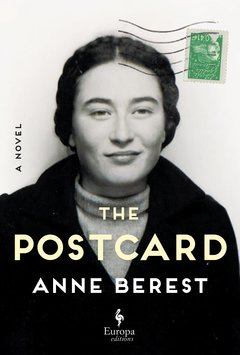
“While on bedrest Anne recalls a mysterious postcard sent to her family twenty years earlier. The postcard simply contained the names of her four relatives murdered at Auschwitz. Who sent the postcard and why? Anne and her mother work to uncover the mystery. Absolutely compelling and engrossing, The Postcard by Anne Berest and translated by Tina Kover is a story of memory and loss and a new standout in literature about the Holocaust.”—Caitlin Baker, Island Books in Mercer Island, Washington
“It is perhaps too on the nose to describe a book about magical books as a magical book. And yet there is magic of all kinds buzzing on each page of Ink Blood Sister Scribe: grisly, Grimm body horror magic; romantic, confectionary fairy-tale magic; and the binding, consuming magic of family and what it means to belong. Törzs has written a book that will make you laugh, weep, and contemplate what you know about human connection. I am still under its spell!”—Sarah Jackson, The Book and Cover in Chattanooga, Tennessee
“The narrator of My Murder by Katie Williams is the clone of a young mother recently murdered by a serial killer. Go ahead and read that again—I’ll wait. If that isn’t compelling enough, how’s about some wickedly clever prose, a propulsive pace, a not-so-subtle critique of our true-crime + motherhood obsessions, and, yes, a few twists and turns? Not only did I devour it in two sittings, but I’ve also been thinking about it ever since. I simply can’t wait to put this one in readers’ hands.”—Joelle Herr, The Bookshop in Nashville, Tennessee
“Your new favorite queer-mountain-lion-novel is coming this June from MCD books. Narrated by a queer mountain lion in present-day ‘ellay’ (Los Angeles)—Henry Hoke’s genre-bending novel is a quick read of profound depth. Hoke weaves the topics of ecosystem destruction and climate collapse, implicitly classist and racist policing, and our country’s despicable treatment of unhoused individuals into this tale seamlessly. Equal parts bildungsroman, thriller, and camp (feline cruising, playful spelling, and much more), Open Throat is a fable for our times that cements Henry Hoke as an essential voice in experimental and deliciously queer fiction. By the end, you will be roaring, too.”—Charlie, A Room of One’s Own in Madison, Wisconsin
“This book made me feel all the excitement of falling in love. Amnesia, hot spies, strong female lead, I mean… how could I want more? Ally’s transition into adult novels is one that I have been waiting on forever. Call me a fan-girl, because I am. This is a must read for anyone in need of a good romcom.”—Isa Fernandez, The Bookmatters in Milford, Ohio
“In a stunning sophomore novel steeped in Victorian spiritualism and gothic dread, the rigid gender norms of the past collide with the urgent questions of bodily autonomy we face in our present, with deadly results. The Spirit Bares Its Teeth cements Andrew Joseph White’s place as a master of horror.”—Kay Frost, Brookline Booksmith in Brookline, Massachusetts
“The Maniac is about to be one of the biggest books of the year, and it’s easily now the best book I have ever read. I have never felt so consumed, mentally, spatially, psychologically, by a book like I was with The Maniac. The prose is beyond electric, it’s nuclear. The multiple narrative accounts are so intricate and deliberate, you know from the very first few pages that you’re in the hands of a true master, an author so skilled that pages of text feel like works of art in and of themselves, so daring that you almost can’t believe just how successfully he pulled off a story this difficult and complex to tell. The Maniac is exquisite, horrific, mind-blowing, inspired, perfect. What Benjamín Labatut has made here is an absolute feat, and I can’t wait to watch the world lose its mind over this insane, extraordinary book.”—Emily Tarr, Thank You Books in Birmingham, Alabama
“A grief-driven writer on a desert wander, a lost trail, an accident, a fever dream. With talking rocks and teenage bunnies. Melissa Broder’s Death Valley is funny and moving and weird and perfect, and—like a cactus—will both stick and soothe.”—Gregory Kornbluh, Downbound Books in Cincinnati, Ohio
Electric Literature is pleased to reveal the cover for writer Ross White’s poetry collection, Charm Offensive, which will be published by Eyewear Publishing this July. White is the designer and author of Valley of Want, a finalist for Electric Lit’s Best Book Cover of 2022 contest.
Charm Offensive, Ross White’s debut poetry collection, explores the space between Dickinson’s directive to tell the truth slant and the universal reality of seeing the truth slant without knowing it. Charting the ways that tenderness can resolve into dissonance and uncertainty can resolve into transcendence, Charm Offensive crackles with the dangers of being alive and the joys of remaining defiant. At turns playful and surreal, exuberant and somber, these poems urge readers to find something new to trust in the world.
Opening with a cardiogram—White’s humiliation of his “white belly” and the jokes he shares with his wife over his aging body–and ending with a psychic’s prediction that his life will end at 52 (heart troubles)— White scours time, tenderness, and the mighty (godly) pleasures of overlooked things.
Only White could convey the simple pleasures of a junk drawer, the small gods and tender votives they contain. Each tiny nuisance of our history, each fascinating button, leaking pen, soy sauce packet, screw driver. Charm Offensive reveals to readers his smitten seconds, laments, and casual, witty uncertainties on the afterlife.
Here is the cover, designed by Edwin Smet.
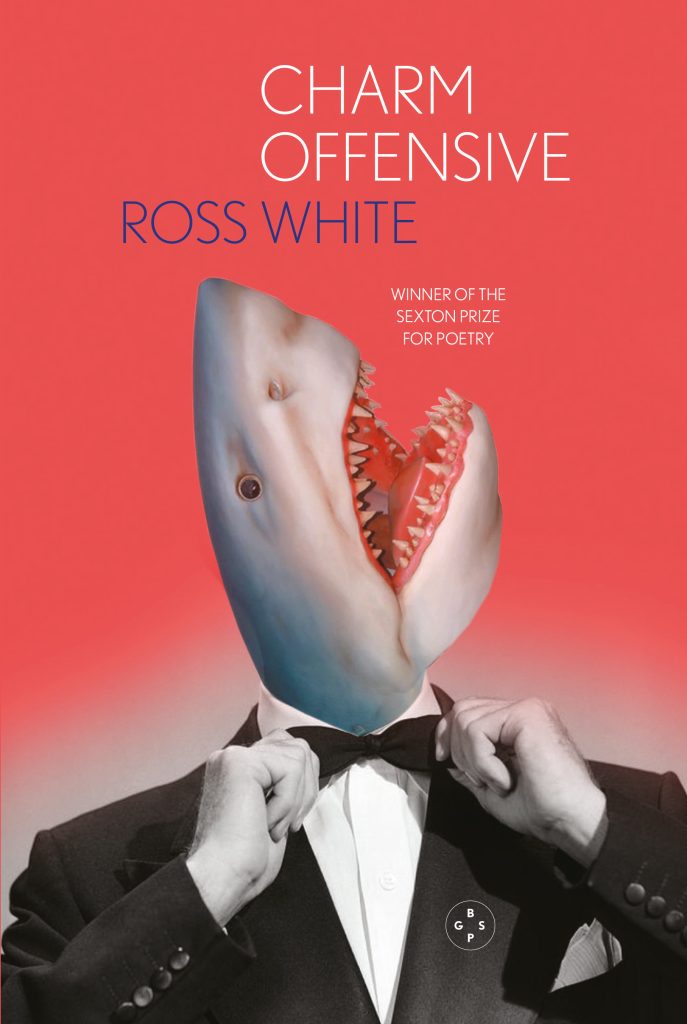
Ross White: “For a while in my twenties, before I got serious about poems, I tried oil painting. I loved the tactile sensation of each brush stroke, I loved making a mess, but I’d stare at the empty canvas for hours, never conjuring a vision of what could fill it and never bold enough to just start throwing colors up there without a plan. I only finished three or four paintings during that time—none very good!—but the image I kept returning to was a shark in a suit. I know I was just recalling the shark lawyer character from Alan Moore’s Top Ten, so everything I painted was derivative, but I loved the idea that you might be able to dress up all that wildness.
By the time Eyewear awarded Charm Offensive the Sexton Prize for Poetry, I had begun designing books and had the astounding good fortune to design my third chapbook, Valley of Want, for Unicorn Press. I asked my editor at Eyewear if she wouldn’t mind if I took a stab at designing Charm Offensive and she said that while they preferred to work with the remarkable Edwin Smet, I’d be welcome to send in some mockups. I put together a couple of rough drafts—almost all of which centered around the idea of someone being covered up by fabric—and sent them over, certain that I’d nailed it and the press would take one of those covers. But my editor replied that they’d be moving ahead with Edwin.
A few months later, she emailed me to tell me that the book’s cover was done. I had a moment of panic as I opened the attachment. I hadn’t talked to Edwin to describe what I imagined for the book! I hadn’t seen any options during the process! But, as if he had reached in and dug around in the recesses of my visual storehouse, there it was: a shark in a tuxedo.
I’m still left wondering—how did he know? I hadn’t shared anything aquatic, anything elegant, anything even remotely associated with this concept. In retrospect, I’d only sent the press a visual catalog of my doubts about having a first full-length collection: that person being covered by fabric was always an analog for me. I hadn’t dared to let myself imagine a concept featuring my long-loved image—I mean, who would have the sheer audacity to put the shark in a suit, tweaking his bow tie as if to say, “I look good and I know it,” on a book of poems?
Here’s the thing, though: it suits the book. So many of the poems in Charm Offensive catalog the joys of being audacious in a world you never fully feel you belong to or before a god who doesn’t feel like yours. The book has so many moments where the absurdity of our daily lives and our struggle to recognize the wonder and danger around us takes physical form—a photo of somebody defiling a Ronald McDonald statue or the shining cupola of a state capital built over unmarked graves—that the shark readying for his gala seems to embody perfectly the poems’ linked and conflicting impulses. I’m dying to know which party he’s going to. I’m dying to know which of the guests he’ll devour.
In my design work, I’ve sometimes been struck at how the writer’s vision for the book can differ greatly from the ways the book will resonate with readers. But of course it does! The writer has, wrapped up in their concept of the completed object, a set of hopes and dreams and dreads for the book but nonetheless external to the book. A good design team sometimes has to clear those hopes and dreams and dreads away before the book is free to become its best self, independent of its maker. Edwin’s cover for Charm Offensive has liberated the book to become its sassiest, most dangerous self.”
Charm Offensive will be published by Eyewear Publishing on July 1st, and is available for preorder here.
Rachel Heng’s sophomore novel is a sprawling, scrupulously researched marvel. At once a coming-of-age love story and a tale of political turmoil that takes readers through decades of Singaporean history, The Great Reclamation follows its smart but shy protagonist, Ah Boon, from childhood into adulthood, as he falls in love, makes his way beyond the small kampong where he was born, and finally begins to define for himself the man he wants to be—alongside his country, a nation desperate to determine its own character, to assert itself after years of British colonial rule. Through the particular details of Ah Boon’s own life, of the spaces he inhabits, and of the characters who inhabit them with him, Heng investigates how the interwoven legacies of war, colonialism, and nationalism have shaped her homeland.
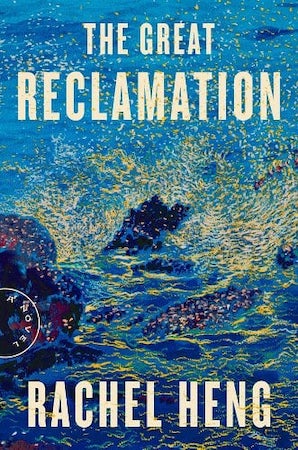
The language in The Great Reclamation is gorgeous, too. Lush and evocative, Heng’s sentences render every setting and each scene with vivid intensity. As a result, despite being nearly five hundred pages in length, this epic never feels like a slog; rather, we readers become so invested in the world of Ah Boon, in learning what challenge he’ll face next and how he’ll choose to navigate it, that it’s nearly impossible to put the book down.
I corresponded with Heng in writing, over a few weeks just after the New Year, about how she approached this ambitious endeavor. We discussed balancing research with story when writing historical fiction, the literature and art that was swirling in Heng’s mind while she worked on the book, how becoming a mother has only deepened her dedication to writing, and more.
Marisa Siegel: When did you start writing The Great Reclamation? Can you tell me a bit about how this book came to be?
Rachel Heng: I had been interested in writing about the massive land reclamation project that reshaped the eastern coast of Singapore for many years, and started researching it properly in 2017. The making of land from sea seemed like the perfect metaphor for so much of Singaporean identity and culture to me; a kind of literal nation building that is incredible, ambitious, but also in a way, violent.
MS: Did working on this project change your personal relationship to Singapore in any way?
A book that was large and sprawling, that could contain all the questions, ideas, and emotions I had in mind, but that was still powerful and cohesive.
RH: I don’t think it really changed it, but I feel immensely glad and grateful I got to spend these years researching, learning, and thinking about Singapore’s history, particularly that period which created the country that I grew up in and experienced so intimately.
MS: How was the experience of writing your second novel different from, and similar to, writing your debut novel, Suicide Club? The two books seem in many ways to be worlds apart, though I love them both so much!
RH: It was very different. I wrote Suicide Club while working a demanding full time job, getting up early before going to work to steal time to write. I hadn’t studied creative writing in undergrad, and didn’t even know what an MFA was at that point. I didn’t know if I could finish writing a book. So, it felt a lot like groping around in the dark, like an act of faith—just pushing forward to finish it.
Though of course I had dreams, I didn’t have expectations for Suicide Club to be published or read. There was a freedom to that. I wrote it quite quickly, and it sold extremely quickly (though I didn’t know at the time that this was unusual). I started the first draft in late 2015 and it had sold to publishers by early 2017.
When I wrote The Great Reclamation, on the other hand, I was in an MFA program at the Michener Center. I was taking workshops and studying with amazing teachers like Elizabeth McCracken. My MFA offered generous funding and required no teaching, so I was able to dedicate myself full time to writing.
Still, it took me much longer to write The Great Reclamation. Part of it was research—that took a full year alone, just to get enough background knowledge to even start writing. The other part of it was wanting to take my time. With the gift of space and funding to work on this book, I wanted to grow it slowly, to explore different possibilities for it, to write and rewrite and rewrite again. It was no longer a question of whether I could finish a book, but whether I could write a book that was large and sprawling, that could contain all the questions, ideas, and emotions I had in mind, but that was still powerful and cohesive.
MS: You certainly accomplished that! Was there a particular character in the novel who you felt closest to, or who came to you most easily?
RH: I feel close to all of them; all of them come from some part of me. But, I have a soft spot for Siok Mei. The way that she grapples with whether she wants to have a child or not was something I myself was working through when I was writing the book, and her strong political beliefs and fighting spirit made her a very dynamic character, one who kind of wrote herself, almost.
MS: And, too, the opposite: who was hardest to get on the page?
The research was endlessly enjoyable and interesting, and at some point I had to force myself to step away from it to actually write.
RH: Strangely, it was Ah Boon, though he was the main character. I saw him very clearly as a little boy, but it was more difficult to deepen and complicate the way he evolves as he grows up. Perhaps because he was the main character, and so finely balanced between the different and opposing points of view that the other characters hold, it was challenging to write him in a way that felt like an honest navigation of the different possibilities. I revised him many times, which was hard but also incredibly satisfying.
MS: You mentioned above you were considering motherhood while writing The Great Reclamation. Your life looks quite different now than when we met in 2018 — you’ve moved to New York, you’ve had a child. Has any of this changed your relationship to your work?
RH: Yes, life has changed quite a bit, especially with the arrival of our son, who was born in late 2021. Like many, I worried that I wouldn’t be able to write after having a child. And it is true that time is more scarce, and I am more tired. But rather unexpectedly, I also feel more creative than before; perhaps something about being busy, as well as the intensity of emotion that comes with parenthood, that creates a bubbling up or a subconscious accumulation that is particularly conducive to new ideas.
It’s cliched, I know, but life does feel so much richer and deeper with him. I feel that being his mother has sharpened my focus, in that it has become very clear what is important to me and what isn’t. A lot has fallen away, which is liberating, and one of the things which remains steadfastly present is my work. I feel more committed to and interested in it than ever before.
MS: You impart a great deal of Singaporean history to readers in The Great Reclamation, but it never feels cumbersome or heavy-handed. You mentioned earlier time spent researching for the novel; what kind of research did you conduct before and during your writing of the book? How did you go about incorporating it in such a natural way?
RH: I am absolutely fascinated by this time period of Singapore’s history, that moment of enormous change and possibility and also the unknown. So, the research didn’t feel like work to me. I spent over a year just reading various books by historians, geographers, sociologists, and politicians. I also spent hours and hours listening to oral history interviews stored in Singapore’s National Archives, which amazingly, is fully accessible online. Newspaper articles and photographs from the time were also rich inspiration, not merely for “accuracy,” but also for story, characters, and emotion. The research was endlessly enjoyable and interesting, and at some point I had to force myself to step away from it to actually write.
As for incorporating it in a natural way—thank you! I’m so glad you felt that way. It was a difficult line to walk, wanting to include enough so the reader has the context, and also to do justice to all the complex forces at play during the time, while not getting weighed down in exposition or too much detail. I also wanted there to be an expansive quality to the narration, a greater omniscience that could telescope between the intimate and the grand, the personal and the collective. Overall, I think always trying to remain grounded in character was helpful. No matter how far we veered into historical detail, I would always bring it back to what it meant for the characters that we’re following.
MS: Were there other novels and authors you looked to as guides—regarding researched novels, and also just in general? I’m curious to know what books and other outside influences (music, visual art) might’ve been floating around in your brain while you worked on this project.
RH: So many! Edward P. Jones’s The Known World was definitely a guide for me, in terms of voice, omniscience, and time. Wu Ming-Yi’s The Man with the Compound Eyes is quite a different book than mine, but was a big inspiration in its strangeness, and how it portrays land and environmental degradation. Jeremy Tiang’s State of Emergency was also a guide and inspiration as a novel that delves into this moment in Singapore’s history. I read and loved Namwali Serpell’s The Old Drift around this time; it was definitely an eye-opener for how history can feel fresh and narratively urgent. Finally, in an (amazing) class taught by Paul Yoon in my MFA, I read Michael Ondaatje’s In the Skin of a Lion and Maria Dermoût’s The Ten Thousand Things, both of which blend history and myth, and deal with industrialization and colonialism in interesting ways.
Visually, I was very inspired by Charles Lim’s SEA STATE. I came across it in the course of my research and watched it over and over again as I wrote the book. I found the images so moving; the ship, the fish, the sand, and that final pastel shot of the flats–just incredible. There is an uncanny quality to it that mirrored what I wanted to capture in The Great Reclamation, this sense that what is real is so much stranger than anything that could be invented. I also love the work of photographer Sim Chi Yin, those eerie, almost luminous aerial shots of sand.
MS: I don’t want to spoil the book’s conclusion for readers but I’m so curious about the ending you’ve chosen. Did you always know the ending you were writing toward, or did you find your way there as you developed the novel?
Ah Boon’s coming of age parallels the coming of age of Singapore as a country itself, and that’s the ending that the country chose—that’s the ending that we ended up with.
RH: I knew what ending I was writing toward. In a way, that’s because Ah Boon’s coming of age parallels the coming of age of Singapore as a country itself, and that’s the ending that the country chose—that’s the ending that we ended up with. So, I always had a sense of where I wanted to get to; the challenge was the usual one, which is figuring out how to do it in a way that felt surprising yet inevitable.
MS: What are you reading now? Any new and forthcoming books you’re particularly excited about?
RH: I am currently mired in research for a new novel, which is still far too early to talk about, but is somewhat related to botany. As part of that, I’m in the middle of Andrea Wulf’s fantastic The Invention of Nature, about the famous nineteenth-century naturalist Alexander Von Humbolt. I’m also dipping in and out of Charles Lyell’s Principles of Geology.
As for new books I’m excited about, I just received and am looking forward to reading Singaporean writer Jolene Tan’s After the Inquiry, which is being reissued this year. 2023 feels like a year of absolute riches! Some books I can’t wait to read are Nana Kwame Adjei-Brenyah’s Chain-Gang All-Stars, Nicole Chung’s A Living Remedy, Jenny Erpenbeck’s Kairos (translated by Michael Hofmann), and Jamel Brinkley’s Witness.
I have a photograph of Daniel on the last day I ever saw him. This would have been in 2005, just after we’d moved into our first house in San Antonio, our starter house, as my wife still refers to it now. In the picture, Daniel is standing next to me on our back deck, his arm draped loosely around my shoulder, his eyes glazed from all the wine we’d consumed earlier that day. It’s early evening in the picture, and summertime. You can see the flowering bougainvillea that’s cascading over the top of our back fence, and all of the little cacti that Tanya, my wife, had collected that year for her succulent garden. When I look at that picture now, I think as much about our old lives in that house as I do about Daniel. But of course the one obvious difference is that that house is still there, whereas Daniel isn’t.
When I first learned of Daniel’s disappearance, it was from his girlfriend at the time, Antoinette, who called me up one night shortly after Daniel had gone missing on the Fortynine Palms Oasis Trail in Joshua Tree National Park. I hadn’t seen Daniel in quite some time, maybe seven months, which was unusual given our closeness. He was living in Austin at the time, and I knew that he’d been traveling a lot more in the past year or so, taking several trips up to Yellowstone and also to Alaska. I hadn’t known about his latest trip to Joshua Tree, though I knew he’d made several trips out there in the past. According to Antoinette, he’d actually gone out to Joshua Tree three times in the past six months, once with her and the other two times alone, and was even thinking about buying a second home out there, near Riverside. Antoinette explained all of this to me the night she called, a few weeks after the start of the fall semester, a balmy evening in late September when I was running a group critique for one of my advanced evening drawing classes.
As I stood out on the balcony beside the studio where I teach, my worried students staring out at me through the glass window, Antoinette went over everything she knew: how Daniel had been missing for almost forty-eight hours, how the last contact she’d had with him directly was the morning of his last solo excursion, a phone call he’d made to her from his motel room in Yucca Valley, and how the search and rescue mission had so far turned up nothing, not even a footprint or a water bottle or an item of clothing from the trail he’d been hiking on. All they’d found was his Subaru, untouched, parked in the Cottonwood Visitor Center near the trailhead to the Fortynine Palms Oasis Trail, his cell phone locked in the glove box. She then explained that the main reason she’d called me was because she knew I was one of Daniel’s closest friends, that he talked about me all the time, and that she thought I’d want to know. She also said that a group of his Austin friends as well as his family from Houston were getting together that weekend to share information and have a kind of prayer vigil. If I wanted to join them, she said, I was welcome.
The whole conversation was a lot to process, and I don’t remember very much else from that night, only that I went into the classroom and said something brief to my students about an unexpected emergency and then I drove toward my house, only I didn’t go there. Instead I went to a bar that Daniel and I used to go to back in college, whenever we were home on break, a Mexican place that served these two-dollar Tecates and Coronas and Buds. I sidled up next to a bunch of the older patrons at the bar and proceeded to get drunk by myself. Daniel was thirty-three years old at the time. He was a baby by most people’s standards. He still had all of his hair, still had a runner’s body, still looked effortlessly fit. He had made all of this money working for Dell the past few years, so much money that I’d often found myself shamefully envious of it, even bitter about it, all of his sudden wealth—his new house out in the Westlake Hills, his swimming pool, his personal trainer. But now all I could think about was how sad it was, how tragic it was, really, that he might never have a chance to spend even half of the money he’d made. I knew that Antoinette had wanted to make it sound better than it was, more hopeful, but I could tell that it was dire. It was dire or she’d never be calling me like this, in such a panic.
I’d told her that I still had a couple of classes I had to teach that week—classes I couldn’t really get out o—but that I’d be up over the weekend to help out and attend the vigil if he still hadn’t turned up. Then I’d hung up and went in to see my students and then off to the bar. But I never did make it up to Austin that weekend—I had a sudden commitment at school, an emergency involving a colleague of mine and a student—and by the time I did make it up there, the following week, there wasn’t much hope left and almost everyone who had been there before was gone, everyone except for Antoinette and Daniel’s family.
I don’t have many regrets in my life but I do regret never making it out to Daniel’s house that weekend. From everything I’ve since learned, it wouldn’t have made much difference—it was just a few of his friends, his family, and Antoinette, everyone coming together to share information and comfort each other, but still, I would have liked to have been there to be a part of it.
By then, of course, the search and rescue had been called off, and by then, of course, there wasn’t much hope, but Antoinette hadn’t told me any of that during our phone conversation (or in any of her subsequent emails). Months later, when I was helping her organize Daniel’s belongings, I told her that I wished she’d leveled with me sooner and that I wished she’d called me earlier. She paused then—we were standing out by the pool in Daniel’s backyard a few days after the funeral; I’d driven up that morning from San Antonio to help her out with the packing up of the house, a task that seemed like it might take several days—and she was standing now with her back to the pool. She said that he’d actually been missing for almost four days at the time she called me.
“Four days?” I said.
“Yes,” she said. “But please don’t hate me.”
I looked over at the flowering plumbago at the far end of Daniel’s yard, the palm trees and the sagebrush. I thought of all the stupid stuff I’d been doing during that time Daniel was missing.
“You had a lot on your plate,” I said finally to Antoinette, touching her arm. “There’s no way of knowing the right thing to do in these situations.”
“His parents told me they wanted to keep it quiet.”
“I’m sure,” I said. “And you were trying to respect their wishes.”
“I was,” she said. “I felt I had to.”
“And you did.”
Antoinette looked away then. I was trying to be supportive, understanding, but a part of me still resented her for not telling me sooner, and I could tell that she could sense this. Antoinette was from France originally and she’d been living in the States for almost three years, but I had no idea whether she’d been living here legally or not. I knew that she didn’t work, and I knew that she wasn’t in school for anything. From what I could tell she had met Daniel at a party a few years back and had been living with him ever since. Daniel rarely talked about her when we met up, which made me think they weren’t that serious, and when I’d asked him once if they were going to get married, he’d just laughed and said maybe, maybe not. Then he’d laughed again. “Antoinette,” he said. “She’s a piece of work, my friend. I love her to death, but she’s a piece of work.” That’s all he’d said, and again I’d taken this to mean they weren’t that close, but now it looked like Antoinette had basically assumed the role of his common-law wife. I would have assumed that she was in this partly for his money, that she hoped to be included in his will, or in the settlement of his estate, but according to her, Daniel had left almost everything in his will to his family—to his brothers and sisters, his parents. She didn’t seem bitter about this or disappointed at all, which made me think that she might have genuinely loved him.
“And you weren’t upset that he never included you?” I asked her. This was later that day, after we’d finished most of the living room and pantry. We were standing in Daniel’s kitchen now, sunlight filling the room, though it was nearly six.
“I told him I didn’t want to be included. If I was his wife, that would be one thing, but I wasn’t his wife.”
“And what did he say?”
“He tried to insist, but in the end he respected my wishes.”
I looked at her. She was putting bottles of wine into boxes and wrapping them with tape. It was early evening, and I could see the sun setting outside the window beside the pool.
“Besides,” she said. “I want to stay close to his family—it’s important to me—and I don’t want them ever questioning my motives for being with him.”
“Have they been up here a lot,” I said, “to help?”
“Only that one time,” she said. “Isn’t that bizarre? You’ve come here more than them.”
“Maybe they’re still in denial.”
She shrugged. “If it wasn’t for me, the house would just be sitting here, filled with his things.”
“And you’ve been staying here still?” It was an obvious question perhaps, but I realized then that I’d never asked it officially, that I had no idea whether she had moved out or not.
“Yes,” she said. “And it doesn’t make me sad, actually. I thought it would, but it doesn’t. If anything, it makes me feel closer to him. Sometimes I still sleep with his clothes.”
I looked out the window then and noticed a flock of birds, grackles maybe, flying over the backyard. The pool had started to collect leaves, and the grass hadn’t been cut in several weeks. Antoinette had explained to me earlier that she’d let the maintenance guys go, as she didn’t have the money to pay them anymore and didn’t feel comfortable asking Daniel’s family.
“Do you know where you’ll go next?” I said.
She looked up from the box she was taping. Then she stood up and grabbed one of the loose bottles on the counter and looked at it, then smiled. “Do you want to drink this?” she said, showing me the bottle. “It isn’t cheap.”
I pretended to study the label, though I knew almost nothing about wine. “I still have to find a place to stay tonight,” I said. “If we’re going to pack up the rest of this stuff tomorrow, I’ll need my rest.”
“You could stay here,” she said. “Out in the cabana house, or even on the couch if you’d like.”
I thought about this, and then I thought about Tanya back in San Antonio and what I’d tell her. Antoinette was a beautiful woman, and I knew what Tanya might think, even if it was the last thing on my own mind. I’d told Tanya earlier that I was coming up here for a couple of days to help Antoinette out, to help her as a kind of gesture of goodwill. I knew that it was something that Daniel would have wanted me to do, I said. She’d balked at the idea at first, but had finally relented.
Staying over at the house, though, wasn’t part of the deal.
“Let me think about it,” I said, but Antoinette was already getting out glasses by then, already pouring the wine.
“Are you hungry?” she said. “I could make us something to eat, too.”
In the last email I’d received from Daniel he’d written a lot about wanting to return to France, where he’d lived for a year after college, backpacking around with a bunch of our mutual friends, and how he still thought about that year as the happiest in his life. He also added that he thought that part of his attraction to Antoinette had to do with that, with the fact that she reminded him of that year and of that time in his life. She was very traditionally French, he’d written, though he didn’t explain what he meant by this. He also wrote that she reminded him of a girl he’d dated over there named Claire, but unlike Claire, he wrote, Antoinette was very kind, very loving. This was the closest he’d ever come to actually describing how he felt about Antoinette, but from what I could gather, or from what I had managed to piece together, it was complicated.
Tanya thought it was strange that he’d never invited us up there to meet her, that he’d kept their relationship a secret, but I never saw it that way. I knew that Daniel was a private person and that he tended to be protective of his relationships, especially if they were serious. I’d actually met Antoinette twice before, both times when she and Daniel were passing through town on their way out to Marfa, and this was the reason I had her number in my phone. On both occasions, Daniel had asked me to meet them privately. He loved Tanya, of course, but I think he sensed intuitively that she wouldn’t approve of Antoinette if they met, and I think he was probably right. Tanya had always been protective of Daniel. She looked over him in a sisterly way, especially since he’d started making money, and she’d always been suspicious of his girlfriends. She’d taken the news of his disappearance hard, probably as hard as me, and had been inconsolable for several weeks afterward, too sad to even come up for the funeral. I’d actually asked her to come up with me that weekend—to help out with the house—but she said she couldn’t. She said that she didn’t think she could ever step inside that house again. It was strange, but things had been tense between us the past few months, and I couldn’t say why. If anything, I would have thought that Daniel’s disappearance would have brought us closer together but it hadn’t. Tanya had taken off a few weeks from work—she had over a month’s worth of vacation time saved up and had figured this was as good a reason as any to use it—but I hadn’t actually seen her that much over the past month. She’d taken to running and working out in the mornings, and spent her evenings lying on the couch, binge-watching shows that I’d never heard of, or staring at her computer screen, trying to compose emails to people I didn’t know. On the few occasions when I’d suggested we do something—go out to dinner or maybe grab a drink—she’d said that she wasn’t really in the right state of mind to be in public right now. I’d asked her what she meant by this, but she hadn’t elaborated. I think on some level the two of us just handled grief differently. When something traumatic happened, my natural instinct was to talk about it, to get it all off my chest, whereas Tanya was much more introverted and reclusive. Her natural instinct was to put up a wall around herself, to cocoon herself inside a blanket on the couch and not talk to anyone. Still, we’d been distant with each other even before Daniel’s disappearance, and now I was worried that things were getting worse.
When something traumatic happened, my natural instinct was to talk about it, to get it all off my chest.
I’d asked her to come up with me that morning—had begged her really—but she’d adamantly refused. She claimed that it would simply be too painful for her, but I knew that it was more than that. I knew that she didn’t want to spend an hour and a half alone with me in the car. I knew that she didn’t want to have to meet Antoinette and talk to her. And I knew that she didn’t want to be around all of Daniel’s stuff and be reminded of what had happened.
“I’ll call you as soon as I get there,” I said to her as I stood in the doorway that morning. She was lying on the couch at the time, a blanket wrapped around her body. She’d spent the night there.
“I might be on a run,” she said.
“I’ll leave a message.”
“Call me tonight,” she said. “Before you go to sleep, okay?”
“Okay,” I said.
But I hadn’t called her before I went to sleep. Antoinette and I had finished off the bottle of wine she’d opened and then we’d opened another. We might have had two or three bottles after that, I’m not sure, and then I went down to Daniel’s liquor cabinet in the basement and brought up several more bottles, all whiskeys. Antoinette had passed out by then on the living room couch, and so I sat down at the island in the middle of the kitchen and turned down the lights and proceeded to get drunk by myself. It had been a long time since I’d been on a bender like this, maybe five or six years, and I realized that my body had needed it. I ended up passing out on one of the chaise lounge chairs by the pool, and I must have tried to go into the water at one point, I think, because I was stripped down to my boxer shorts and holding a half- inflated raft when Antoinette discovered me the next morning around eight.
She was standing in a T-shirt and sweatpants, holding a package of frozen peas to her head.
“Do you want a glass of water?” she said. “Aspirin?”
“I’m actually okay,” I said, and I was. Surprisingly, I was not hung over at all.
“I’m going to go back to sleep for a little while, okay? Make yourself anything you want from the fridge. And wake me up if I sleep too long.”
She turned around then and went back to the house, and I lay there for a while longer, staring up at the morning sky, which was bright and cloudless, thinking about Tanya and whether or not I should call her.
After a while, I went back inside and made myself some oatmeal with fruit, some wheat toast, a glass of orange juice. I thought about what had happened the night before, but most of it was murky. I remembered talking to Antoinette about Daniel, and then about her childhood in Lower Normandy in the northern part of France. I remembered her telling a story about her grandfather—or maybe it was an uncle— building a somewhat primitive piano from scratch, and another relative, maybe an aunt, working for the Royal Opera House in London as an archivist. She had a lot of strange stories, and the longer she talked the stranger they got. At one point she went into the living room and never came out. When I went in to check on her she was passed out, so I went down to the basement by myself in search of the booze.
Later that night, after I’d found myself a comfortable spot on the back deck, by the pool, I heard what I thought was Antoinette crying, wailing almost, like an animal. I remembered sitting there, wondering if I should turn around and go back in, check on her, but then I thought it might be embarrassing for both us, so I didn’t. Instead, I leaned back in the chair and closed my eyes. I closed my eyes and I listened.
Now I wondered if I’d done the right thing by not going in. Maybe she’d expected me to come in and comfort her, maybe she’d wondered where I was. I looked around the kitchen at the mess we’d made and then walked into the living room, where I found most of the packing supplies she’d bought: the bubble wrap and heavy- duty packaging tape, the newspapers and boxes, the scissors and labels, everything she thought we might need. I sat down on the couch and started to assemble one of the cardboard boxes from the pack on the floor. Upstairs, I knew that she was sleeping and probably would be for some time, so I started picking up various things—picture frames and ashtrays and table lamps—and wrapping them up in newspaper and then placing them in the box. After I finished one box, I moved on to another, and then another after that. Pretty soon I had half the room packed up. In the smaller boxes I’d placed all of the books and heavier items, in the larger boxes all of the fragile stuff. I realized that I was sweating now, that I was feeling a little light-headed.
By noon, when Antoinette finally came down, I had packed up almost the entire living room and most of Daniel’s study. I had lined up all of the boxes in the hallway and labeled the ones I could. Antoinette stared at everything I’d done and then smiled.
“I should have slept longer.” She laughed.
I was soaked in sweat by then, my shirt drenched. The only things I hadn’t packed up were the original pieces of art that Daniel had hung on his walls. Some of these pieces were very expensive, I knew, and others were deeply personal. I didn’t know if Antoinette had any plans for them. A few of the pieces were actually lithographs I had done in grad school and given to him, and one of the linocuts in his study was a print I’d made in college. It was a bit embarrassing to look at all of this old work, all of my juvenilia, as my wife, Tanya, would put it. It was tantamount to looking at an old photograph of yourself from high school and thinking, did I really used to wear my hair that way?
Still, it had always touched me that Daniel had chosen to display my work around his house, even if it was early work, embarrassing work. As Antoinette explained to me later that day, as we were working on the family room, it was one of the ways he stayed close to me. “That’s how he always explained it to me,” she said. “He’d look at one of your prints, and he’d feel that you were there. Even if you weren’t. Even if you were very far away.”
We were sitting on the floor in the family room, packing up DVDs into boxes, and seeing all of the titles—Le Circle Rouge, Delicatessen, Cléo from 5 to 7—felt a little like going back in time, like we were back in our old apartment on Seventh Street or the one we lived in later in Barton Springs. This was all before Austin changed, of course, back when it was still just a sleepy college town. People my age like to wax nostalgic about those days, the early nineties in Austin, like we’re talking about Paris in the twenties, or Berkeley in the sixties, but it really felt that way sometimes, and I think we were all very aware of the fact that we were living in a very special place at a very special time in that place’s history and that it probably wouldn’t last. And of course, it didn’t last. The Austin of today barely resembles the Austin of our youth, or of our college and grad school years, at least, but I try not to think about that now when I visit. I try not to think about what Daniel used to call “The Last Days of April,” a reference to some poem he’d once read, a poem by a poet whose name I no longer recall.
I think we were all very aware of the fact that we were living in a very special place at a very special time in that place’s history and that it probably wouldn’t last.
“I think it’s almost cocktail hour,” Antoinette was saying now. This was later that day, after we’d finished the family room—or at least most of it—and were now back in the kitchen, looking for something to eat. Antoinette had found a loaf of sourdough bread and some fresh tomatoes and I’d found about a half pound of Gruyère and some olive oil and garlic. Together we were able to piece together something resembling an open- faced bruschetta-slash-grilled cheese sandwich. We assembled what we had on a cookie sheet and slid it into the oven to broil.
“It might not look pretty,” she said. “But I bet it’ll taste good.” Then she turned around and went downstairs to find more wine.
When she came back up, a few minutes later, she was holding several bottles of red and my cell phone.
“You must have left it down there last night,” she said, handing me the phone. “It was beeping.”
And I realized then that I’d gone the entire day without looking at it. When I unlocked the screen, I saw that there were seven missed calls and four new messages, all from Tanya.
I told Antoinette I’d be back in a minute and then took the phone out to the backyard by the pool. It was hot out, easily a hundred degrees, and I immediately started sweating. I sat down on the cement deck next to the pool and dangled my feet in the water, but the water wasn’t even cold now. It was tepid, like bathwater.
When Tanya finally picked up, she sounded drowsy. Not angry, though. Just tired.
“I’ve been calling all day,” she said.
“I know,” I said. “I’m sorry.” I could tell that something was wrong. “What’s going on?”
“I don’t know,” she said. “I think it’s just the fact there was actually a funeral, you know?” She paused. “It’s like it’s actually final now.”
I said nothing.
“I just can’t stop thinking about him, I guess. It’s like my brain’s stuck in a loop, and I can’t shut it off.”
“Have you tried reading?” I said. “Watching TV?”
“You know how much stuff on TV is about death? You don’t realize it until someone you know dies, and then it’s like everywhere. You can’t find a single show that doesn’t remind you of the very thing you’re trying to forget.”
I didn’t know what to say to her. “I miss you,” I said finally.
“I miss you, too,” she said, and was quiet. “Maybe I just wanted to hear your voice.”
When I went back inside, I found Antoinette sitting at the island in the middle of the kitchen, blowing on one of our sandwich creations.
“They’re still hot,” she said, nodding to the other ones on the cookie sheet. “But they smell good.”
I sat down on the other side of the island and reached for the wine she’d opened.
“I didn’t know if you wanted red or white,” she said.
“Red’s fine,” I said, pouring myself a glass.
“This feels like a familiar scene,” she said, “doesn’t it?”
“How so?”
“I don’t know.” She shrugged. “It just does.”
I looked at her. “Did you guys used to cook a lot?”
“Yes,” she said. “All the time. Daniel was a terrible cook, of course, but he enjoyed it so much I never had the heart to tell him.” She laughed. Then she looked out the window, where the sun was now setting, and I asked her to tell me about Daniel’s last few months, those last few months of his life when I hadn’t seen him.
“They were actually pretty peaceful,” she said, putting down her glass. “Kind of calm, actually. He traveled by himself out to Joshua Tree a few times, Big Bend, and when he came back he was always very relaxed about everything, you know, even work, which he usually never was.” She looked at me. “And that’s around the time he had the idea about buying another place out there, in Riverside. He was really getting into it, you know? Being out there for long stretches by himself.”
I nodded.
Antoinette picked up her glass and took a sip. “It’s strange, but sometimes I find myself still thinking it might be some type of joke, you know, like a trick he’s been playing on us. You know how he was always designing those elaborate tricks?”
“Yeah,” I said, “only what would be the point?”
“That’s the problem,” she said. “There isn’t one.”
She put down her glass and ran her finger along the counter. “And sometimes, you know—and I know this is crazy—but sometimes I still think he might show up or that someone might find him, you know?”
I nodded. “Me too,” I said.
“The human heart resists it, I think, on some level. The idea of someone just disappearing like that. It’s not a thing we can fully comprehend.”
I picked up the bruschetta and took a small bite. “Have you ever thought he might have wanted to do it intentionally?”
“Disappear?”
“Or end things.”
“Sure,” she said. “Of course. I’ve thought about it a lot. He was unhappy, you know. At work, especially. He talked about it sometimes. But he was never unhappy when he was out there.” She picked up her wineglass and took a sip, glanced out the window at the garden. “And then you talk to the police and they think it might have been foul play, but who in the world would have wanted to hurt him? He barely knew anybody, you know? He barely had any friends.” She looked at me. “It seems impossible.”
I nodded. “I’ve never thought that’s what it was.”
“Me neither,” she said. “Although the world is full of fucked-up people, right?”
“That’s true,” I said. “It definitely is.”
She looked at me then sipped her wine. “And if that’s what he chose, you know—the other—if he chose silence, then that’s fine. It’s his silence, and it’s a mystery and it’s not for us to understand. But I can tell you he was never unhappy when he was out there, in Joshua Tree.” She stared at me. “Never.”
We worked through the rest of the night, bringing the wine with us, as we moved from room to room, first finishing up the downstairs and the garage, and then moving upstairs to the guest room and the master bedroom. There was a sadness in the air as you got closer to the master bedroom, or at least it seemed that way to me, and I could tell that Antoinette was strangely protective of it, that she didn’t want me to see how she’d been keeping it up.
“I’ll do that room myself,” she said, as she saw me moving toward it with the vacuum.
“Okay,” I said. It must have been four in the morning by then, almost dawn, and we were both exhausted, our T-shirts clinging to our backs, our hands and forearms covered with scrapes. I sat down in the hallway outside the master bedroom and leaned against the wall, and Antoinette sat down beside me.
“There’s really not much left for you to help with,” she said. “I can do the rest myself tomorrow or Monday.”
“And Daniel’s parents are coming up Tuesday?”
She nodded. “But they don’t even know what he has here, and I doubt they have anywhere to put it.” She looked at me. “You know, you should take something. A photograph, a painting. They’ll never miss it.”
I nodded, and thought about what I’d take if I could. Daniel’s parents had lived in San Antonio when we were in college—he’d grown up there, like me—but now they lived in Houston. Before the funeral, I hadn’t seen them in probably seven or eight years, and they’d barely acknowledged me at the service. Still, I’d been strangely touched by his father’s speech. He’d always struck me as a hard-ass, a military type, but he spoke so eloquently about his son’s childhood, about that time when I hadn’t known him, and how sensitive Daniel had been back then. He finished by saying in a quiet, almost inaudible voice that nothing in his life had prepared him for the incomprehensible task of burying his own child. He looked down as he said this, his hands shaking, and something in my body shifted.
Antoinette was standing up now and walking toward the packing supplies at the end of the hall.
“I think I’m going to take a swim,” she said. “I can’t seem to cool down. Do you want to join me?”
She was already walking down the staircase as she said this, though, already disappearing from sight.
The pool that Daniel had installed several years ago when he purchased the house was an infinity style pool, one of those shapeless, modern designs that seems to have a vanishing edge, an edge that merges with the horizon, or the sky, and seems to create the effect of water without boundary. I’d only swum in this pool once or twice before, despite visiting his house many times, maybe because Daniel himself rarely used it. He was much more interested in hanging out by the pool, it always seemed, than actually getting in. As Tanya once put it, he seemed to have bought a pool for purely aesthetic reasons.
Still, it was a beautiful piece of craftsmanship—he’d hired an architect to design it—and after a day of sweating in the summer heat, of boxing up fragments of my friend’s life like they were pieces of a discarded puzzle, I felt ready for the coldness of the water, for the shock of it on my skin.
Antoinette was already floating around in the shallow end by the time I got down there. The pool itself was glowing blue, lit from below by underwater lights, and the sky above was filled with bright stars, and the air around us was very dry and still, making everything feel a little surreal. Antoinette had brought out a bottle of champagne from the kitchen, and as I took off my shorts and T-shirt, she floated over toward the side of the pool where she’d left it.
“After tonight I’m not going to drink anymore for like a month, okay?” She laughed then and grabbed the champagne and took a sip.
“You can hold me to that.”
“I will,” I said, and smiled at her as I slid in the water.
The water felt good on my skin, and for a moment my mind seemed to settle down, seemed to calm in a way it hadn’t in several days. I submerged my head underwater and then held my breath, and when I came back up, a few seconds later, Antoinette was gone.
I called out to her, but she didn’t answer. Then I heard some rustling in the cabana house and a moment later she emerged with two foam rafts, which she carried over to the pool and slid into the water.
I climbed on top of one, and she climbed on top of the other, and then we both paddled out toward the middle of the pool where we turned over and lay on our backs.
Antoinette had brought along the champagne with her, and for a while neither of us spoke. We just passed the bottle back and forth and looked up at the stars and listened to our own breathing.
Finally, after we’d finished about half the bottle, she turned to me, almost in a conspiratorial way, and said, “You know, I never told either of them, Alan. I never told them that I called you.”
“Who?”
“His parents.”
I looked at her.
“In case you were feeling guilty about it,” she said. “They never thought that you were coming up to help out that weekend, so they weren’t disappointed or anything. Nobody was. I just thought you should know.”
I nodded. I had been feeling guilty about this and probably would for some time, though I didn’t say that then. Instead, I just turned back toward the sky and took another sip of the champagne and then closed my eyes. In the distance, from somewhere inside the house, I could hear the faint sound of the music Antoinette had put on earlier, something light and ambient, something warm. I turned back to her.
“Can I ask you something?” I said finally.
“Of course.”
“Did he ever talk about me in the past few months? Me or my wife?”
She nodded. “He talked about you guys all the time,” she said.
“But yes, especially in the past year.”
I took the champagne as she passed it to me and put it to my lips.
“And, of course, he worried about you guys, too.”
I looked at her. “About us staying together, you mean?”
“Yes.” She nodded. “I think he thought that the two of you should try to have children.” “Really?” I laughed.
“Yes,” she said and smiled.
I passed the bottle back to her and waited for her to take a sip. In the distance, I could see the sky lightening, the first hints of dawn on the horizon.
“And he probably told you about Tanya and him, right? Before she and I were dating?”
“Yes.”
“Tanya always said that it was nothing, but I wonder.”
“I don’t think it was nothing,” Antoinette said and smiled. “But who knows?”
I nodded.
I shifted on the raft and looked at her. And I thought then for the first time that weekend about how beautiful she and Daniel had been as a couple, how beautiful they’d looked together those two times I’d seen them in San Antonio, at least, and then I thought for some reason about Daniel himself and how frightened he must have been had he in fact been lost on that trail, how impossible that must have been, having to accept the reality that he would never be found, that nobody out there was coming to get him.
I closed my eyes and let the water suspend me for a while, let myself float there, and then finally I looked back at Antoinette.
“You know,” I said after a moment. “You never answered the question I asked you yesterday.”
“Which one?”
“About what you’re going to do after you leave here, after you pack up the house.”
She shrugged. “Well, maybe because I don’t know.” She looked out beyond the blur of the vanishing pool edge, where you could see the faint lights of distant cars on the interstate. It occurred to me then that I’d have to get on the road in a few hours, that I had morning classes to teach on Monday. I took the bottle as she passed it to me and took a long sip.
“I don’t think I’d want to be anywhere else, though, not right now.” She said this faintly, quietly, and then she reached over and squeezed my hand, just gently, and let it go.
I passed the bottle back to her, and then closed my eyes again. I could feel my body loosening now, everything going soft. I thought of Tanya back in San Antonio, and what I’d say to her when I returned, what would happen to us now. And I thought about Daniel and how profoundly I missed him already, how profoundly I missed his face, and how already it seemed impossible to imagine my life without him. My dear friend. My dear, dear friend, who had lucked out in so many other ways in his life and then been dealt this one bad hand. It seemed so unfair to me that he was not with us, that we were here, in his beautiful pool, and he was not.
I finally opened my eyes and turned back to Antoinette and saw that she was staring right at me. She wasn’t smiling at me, but she didn’t seem sad either. She was just staring at me, and I gathered that she was probably thinking what I was thinking, that we had just spent these two very strange days together, and that after I left we would probably never see each other again. There would be no reason for that to happen, after all, and yet for now, we still had about a half hour or so before that happened, a half hour or so to pretend, a half hour to float here on our backs in the darkness, in silence, but together, a half hour before the sun came up, and the darkness faded, and we would realize, with something like fear, that we had to leave.
My book, The Dead Are Gods, centres around my friendship with Larissa, who I met in my early teens in early aughts London. She died in 2018, a death that shook me to my core. Together, we were fixtures on the rock ‘n roll scene in the city, and found home in each other, both of us Black women navigating distinctly white spaces of fashion and music in the UK. It is a home that harbours me still, even after her death.
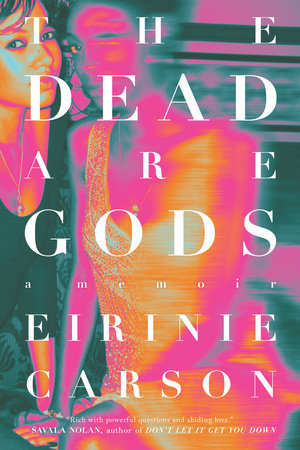
The Dead Are Gods is a book about grief, yes, but it is also a book about Black love, something we do not get to see nearly enough of in today’s media. While Larissa and I were friends first and foremost, our love for each other was expansive, and we both felt more like sisters than anything else. She was there for every pivotal moment of my life, we were entwined in a way that, when she died, I was unsure of how to untangle myself, and if I even wanted to. Our love was not one you usually see on tv—it was platonic, it was boundless, we came back to one another over and over and over again, and in my book we are together once more, a final (or perhaps infinite) time. We prioritize romantic love, but what are we without the love of our chosen family? This ballast that supports us through the hardest of times?
Here are some essay collections that illuminate and highlight essential conversations around Black life and love in America. Some are funny, some are poignant, all are important.
Savala Nolan, a biracial woman with a Black-Mexican father and white mother, explores the in-between liminal spaces where identities and selfhood overlap. As a mother, she considers what she will pass down to her child and reflects on the history of her female predecessors who were enslaved by her white ancestors. Don’t Let it Get You Down offers a personal look into race, gender, and the body and the ways in which the intersection of the three is seen by American society.
In her ode to Black girlhood, DaMaris B. Hill holds her own inner child’s hand throughout, and in doing so, uncovers much about what Black girls throughout America and beyond have inherited. Hill pays homage to trailblazing Black women like Phillis Wheatley, Zora Neale Hurston and Whitney Houston while lamenting the loss of Black girls whose disappearance goes unacknowledged.
Now arguably world renowned, I first discovered Samantha Irby via her blog, Bitches Gotta Eat (a reference from the movie Friday, don’t get much Blacker than that). Her writing is openly queer and openly weird, and unapologetic about both. She talks, unfiltered, about dildos, Crohn’s Disease and the stigma of being a Black woman with depression in a way that feels like sitting next to your funniest friend at dinner, trying to restrain yourself from doing a spit-take. She’s the gold standard on how to remain exactly oneself in a world that is trying to tell you how to change.
Separated into five segments, this collection of essays, paired with a selection of curated images, contains stories of Black female and genderqueer artists being confronted with the societal assumption that to be a mother or to mother and to be an artist are mutually exclusive, instead of inherently linked—to make art you create, to create is to give birth to something. The work of Black mothers and femme child-carers has long been overlooked and undervalued, and, in a time when deaths of Black birthing people during childbirth are on the rise, this book is a vital read.
Damon Young is undeniably funny; I first came across his writing on the Washington Post and The Root and have been hooked ever since. He tackles subjects like the ever-increasing anxiety of being Black in a country that is, at best, openly hostile and, at worst, murderous with a black (both senses of the word) humour this British person appreciates. In his opening essay, he lampoons the extreme sports world, a flagrantly white space, and compares simply existing as Black in America as an extreme sport capable of getting your heart rate up just as high as, say, bungee jumping. He deftly summarises misogynoir, takes the reader by the hand through Black neighbourhood staples like the barbershop, dusting the hair debris off the seat before sitting them in the barber’s chair and waxing lyrical about the difference between the n word “er” and the n word “a”. Honest, hilarious, a book that made me say, “well, shit” several times out loud.
We need more stories of Black joy and mirth and that social media trend of “frolicking” (mostly Black men grinning and skipping in nature, maybe the only good thing to have come from TikTok). Throughout Black Love Matters, the celebration of Blackness and Black romance is consistently emphasized over that of Black hardship, and it is a joy to behold. In this anthology, Jessica P. Pryde compiles essays about the essential nature of love in the Black community and how it has saved us countless times and in immeasurable ways.
A beautiful anthology about Black people in nature. Nature and its associated activities have long been the domain of white people—skiing when there’s snow, hiking when there isn’t, waterskiing and stand up paddleboards and all sorts of things that, if you were to try them as a Black person, you would find yourself very much in the minority. But Black people in America are inextricably linked to nature by our very history, and this book explores our love and our home in nature.
When I was 15, my family moved to a new city, and I transferred to a new high school. It was our second move in three years, and I was not handling the change well. Depressed, anxious, and terribly lonely, I did what most emotionally unstable teenagers do: devoted myself to a niche of pop culture that only a select few could ever truly understand. In my case, the niche interest was a genre of pop music from South Korea, a country I had no familial or cultural heritage to, yet was entranced by nonetheless. Fans of this music lovingly called it K-pop.

This was in 2012, a year before the global K-pop stars BTS debuted and still a few years before they’d achieve worldwide recognition. At the time, the genre was mainly seen as a cultural oddity in the west, a kind of pop music that could never achieve global popularity because it was too perfect in its performances, too feminine in its dress and makeup style, too foreign because of its Korean lyrics. Yet these were the aspects I loved about K-pop: its drive for perfection in performance and image portrayed a sense of realness to me, knowing how hard idol singers were working to bring sharp, synchronized choreography and well-timed smiles to my eager eyes. When I read English translations along with the music I was listening to, it seemed as though my soul was being filled with true understanding.
That these gorgeous, impeccably made up humans could be so friendly, sweet, and humble to their fan bases was a balm for my stinging loneliness in a new city. With my favorite artists, I sometimes felt like I knew their deepest thoughts and desires solely through the way they spoke on reality programs, or the interactions they had with their fans both online and off. I often felt comforted by the fact that I lived so far away from them—it meant that before I went to sleep in the US, I could imagine them out and about in their busy lives in South Korea. There was something comforting in knowing how alive we were at the same time, how close we felt in our shared love for not only music, but each other.
I sometimes felt like I knew their deepest thoughts and desires solely through the way they spoke on reality programs.
It might seem like an invasive sort of idea: the belief that a famous person loves you despite having never met you. But in K-pop, this belief is central to the genre’s success. In Y/N, the debut literary novel by Esther Yi about a woman obsessed with a K-pop star, this belief propels both fan and artist toward a disturbing climax.
Yi’s unnamed narrator starts the novel as a bored copywriter in Berlin, uninterested in communal worship and content with serious self-reflection: “What I feared most wasn’t death or global cataclysm but the everyday capitulations that chipped away at the monument of seriousness that was a soul,” she says. However, at the urging of her roommate, the narrator reluctantly attends a concert for a massively popular K-pop band (humorously referred to as “the pack of boys”), curious as to whether she would be able to find love for them. As soon as the concert begins, she finds herself captivated by the boys’ youngest member and best dancer, Moon. At first, she seems to resist the surge of affection that comes over her, describing Moon as a bother with a “disturbing neck.” But after seeing him dance with such magical precision and fluidity on stage, her heart is made up: “Confronted by the tetanic twitching of his individuality under the smooth skin of teamwork, I saw all the more clearly what was different about him, and I knew I loved him because I liked him better than the others.”
The narrator’s love, in this case, starts deceptively simple. But when you love someone who, in K-pop parlance, is called an “idol singer,” that love can so quickly turn into utter devotion. Yi mentioned this in an interview with Publishers Weekly last year: “K-pop is a symbol that, in my opinion, traffics in displaced spirituality…That’s how I view [my narrator’s] obsession. It’s not just a delusional exercise. To me, it’s a natural consequence of the sort of conditions under which she’s living.” Watching Moon perform, Yi’s lonely and disinterested narrator realizes she can find meaning through devoting herself to the movement of his body: “I could never predict his next move, but once it came along I experienced it as an absolute necessity.” After the concert, Yi’s narrator loops recordings of Moon’s voice. She admonishes her boyfriend, claiming that Moon is a better partner than he’ll ever be. And when her boyfriend breaks things off, she starts writing and sending him chapters of a genre of fan-fiction called “Y/N.”
“Y/N” stories are a type of reader insert—the letters stand for “your / name,” and are placed in the story rather than the name of an original protagonist. Instead of reading the letters “Y” and “N,” you’re meant to put in your own name as you read. This type of fan-fiction “can be a way for fans to see themselves and their experiences in scenarios that they don’t have access to in their online lives,” as noted by fandom analyst Stitch. I remember encountering my first Y/N story about a K-pop group I loved on Tumblr when I was a teenager. The story was short, poorly written, but intimate and romantic; I remember feeling disgusted after I finished it, not because the content of the story was bad, but because I had been so excited by it.
However grossed out you or I might feel about this type of fanfiction, the truth is that we still find ways to insert ourselves in our made-up projections of the lives of celebrities that we love. K-pop fans perform dance covers of their favorite groups and organize streaming campaigns for an upcoming album—they may even work on behalf of an artist in the name of social justice. Ultimately, whatever form of fandom one engages in is largely in service to the artist they love, and who they’ve convinced themselves loves them back. Early in Yi’s novel, her narrator attends a celebration for the pack of boys and is asked by the local fandom president to dress up as Moon and sign autographs; the fans have no problem ignoring the fakeness of the narrator’s Moon: “‘I love you,’ everyone said. ‘I love you more,’ I said, meaning it. I had to if I wanted to believe that Moon would say the same to me.”
The Y/N story Yi’s narrator writes is indeed a fantastical scenario: Y/N meets Moon—not a K-pop star, but a best-selling philosopher—at a bus stop. They instantly fall in love. Moon leaves his longtime girlfriend. They move to Seoul where Moon begins taking dance lessons, moving in a way that Y/N describes as a “rapidly expanding vocabulary of his body.” Dance—and the stardom that Moon will eventually follow with it—is key to this narrative, and it’s here that Yi’s protagonist takes a view that moves past devotion and into projection. Writing this fictional story, she weaves alongside it another tale that is rooted in pure faith, a knowledge that only she knows the real Moon and what he is capable of. When Moon mysteriously drops out of the pack of boys and from the entertainment industry at large, she books a one-way flight to Seoul in search of him, believing she alone can coax him out of retirement.
The truth is that we still find ways to insert ourselves in our made-up projections of the lives of celebrities that we love.
There’s no doubt that these are obsessive, unhealthy behaviors. Yet in my time as a K-pop fan, I’ve caught myself falling into those exact thought patterns, in part because of how reciprocal fan/idol relationships are. Fandom names in K-pop often reference love or adoration; the full name of the BTS ARMY is “Adorable Representative M.C. for Youth.” The group I loved most as a teenager, B1A4, has a fandom name which translates to “we have fallen for each other.” Y/N’s pack of boys has a darkly humorous fandom name that highlights this reciprocity quite well: “The pack of boys called their fans ‘livers’ because we weren’t just ‘expensive handbags’ they carried around. We kept them alive, like critical organs.’”
Idols will write songs dedicated to their fans, profusely thank their fans whenever they win an award, and communicate constantly with fans through social media, message boards, and live-streaming apps. They are in awe of fandom to an almost distressing degree; in the K-pop documentary K-pop Evolution, idol singer Kino from the group Pentagon paints them as if they are a close family member or lover: “Even if you want to quit, you end up getting back on your feet because you know they’re waiting for you. You don’t want to show them your weak side. That’s how they motivate you.” The idol/fan relationship is one of reciprocity—fans worship the idol’s dedication to work, and the idol responds with the divine gift of attention and devotion, not only to their fans, but to the labor that is exerted for them.
Even when idols work past their physical limits on stage, there is an unspoken expectation—from themselves, from fans, and from their company—that they continue to portray themselves as unstoppable performers. In the BTS documentary Burn the Stage, which follows the group on a 2017 world tour, lead vocalist and main dancer Jungkook suffers from extreme fatigue near the end of their second day of shows in Chile. Collapsed backstage, visible exhaustion on his face, he chooses to walk back on stage and sing with his bandmates as if nothing is wrong with him. At the end of the concert, he’s saddled with ice bags, a fan in his face and breathing through a respirator, drunkenly mumbling to staff members not to take his socks off.
Collapsed backstage, visible exhaustion on his face, he chooses to walk back on stage and sing with his bandmates.
“We only had two days of shows,” Jungkook reflected in an interview. “So I worked myself until my body couldn’t take it anymore… I knew my body wasn’t in a good shape before we started. My body knew it and I knew it. But I sang with only this thought in my mind: that I won’t be able to see [our fans] again for a long time.” On the YouTube page where this episode aired, fan comments are littered with words and phrases like “motivation,” “hard work,” and “effort.” One fan praises how BTS “work themselves to the bone and put everything into their job, into living to our expectation in order to not disappoint us.”
In Y/N, the narrator says this of watching Moon in concert for the first time: “he was a gift forever in the moment of being handed over.” But what happens when that gift wants to be recognized not as an object, but a human being? If working until one’s body can’t keep up with itself isn’t enough to stop, then what is?
Maybe it involves changing the companies that enforce this system. In Seoul, through a number of fortuitous encounters, Yi’s narrator ends up at the doors of Polygon Plaza, the entertainment company that once housed Moon. There, she meets Sun, who leads the pack of boys, and learns more about the philosophy that the company instilled in them by its CEO, the Music Professor. “She liked to compare Polygon Plaza to a monastery: a place where the dissolution of the self produced moments of astonishing self-expression,” Sun explains. The value that is instilled in him and the other boys is an extreme form of self-erosion, but one that is apparently necessary to achieve the devotion needed from a fanbase: “He took the dense yet limited substance of his lived experience and charged it—through sacrifice, through discipline—with breathless latitude. His work was thus capable of setting the souls of others on fire.”
The Music Professor champions how Polygon Plaza is apparently cordoned away from capitalist exploitation by allowing the artist to focus solely on himself. Yet it’s that intense focus on the self that causes both Moon’s retirement and his fan’s infatuation with him. Y/N’s narrator can only love Moon if he gives up control of his body entirely. In her eyes, Moon’s craft is God-given, and thus his labor is everflowing. If she receives anything less than that, even from Moon himself—when the climax of the novel puts the two together face to face—she is still inclined to believe it is not the real Moon.
In her eyes, Moon’s craft is God-given, and thus his labor is everflowing.
I’m reminded of when two members of my favorite K-pop group left their entertainment company a few years ago. I was 21, and fulfilled in enough real life relationships to not be devastated by the news of a K-pop band splitting up. But in the coming weeks, years even, I found myself deleting my cell phone wallpaper—a photo of the group. I stopped putting up the posters I had collected over the years. And whenever their music came up on shuffle, I felt a pang in my chest; I’d immediately skip to another song to prevent that pang from opening into a cavity of loss.
The three remaining members eventually released their own album a few years later, and I willingly devoted myself to that release, eager to love the boys that had soundtracked much of my teenage life. But even now, I skip over their older, five-member songs. I suppose, like Y/N’s narrator, I’m living in my own world of a Y/N fanfiction, one where I know the members so well that I venture to Seoul and convince them not to break up, to stay together and work hard for my own sake. Until that story is realized, maybe I’m better off not remembering their past.
“A disconsolate brown man in an unabashedly gentrified neighborhood is the beginning of a below-the-fold news item,” thinks Eduardo, the central character in Alejandro Varela’s new collection of interconnected stories, The People Who Report More Stress. He is sitting on a park bench, just moments after an emotionally devastating hookup, when he delivers this blunt observation about the world.

It’s this sharp, pithy commentary that permeates each story in The People Who Report More Stress. In “The Great Potato Famine,” Eduardo, sick and broken down by the state of healthcare in the United States, struggles to catch a cab back to Brooklyn. “The Six Times of Alan” looks at Eduardo’s love-hate patient-client relationship with a sometimes brilliant, mostly frustrating therapist. These stories are built like pressure cookers, all the tension roiling beneath every social interaction. Here, Varela uses his humor and wit to expose how people behave and react to one another, the biases they carry as well as the ones weaponized against them, as they navigate their lives with anxieties that are inextricable from an unkind and unjust history.
Varela and I chatted over email about overthinking in social situations, stress tied to class anxiety, and the possible difference between “queer” and “gay” fiction.
Christopher Gonzalez: You’ve spoken before about using fiction as a “conduit for public health”. Do you see any differences in how you incorporate public health advocacy in shorter fiction versus a novel? And, what do you hope The People Who Report More Stress could change about current policy?
Alejandro Varela: My public health curiosities dovetail with my own experiences on this planet: working class roots, Latine/x, immigrant parents, queer. What life has taught me is that differences are beautiful, but hierarchies are bad for our health. Whether based on race, class, gender, sexuality, ability, or nationality, they foster distrust and stress, both of which are detrimental to a cohesive society and to corporal health. I’ve never felt so unambiguous about anything in my life. And I am quite fortunate to have a background in public health to underpin these assertions. The research exists, and it’s become a bit of my life’s mission to make these sometimes abstract and esoteric ideas accessible to as many people as possible.
The American project has fooled us into believing that hard work and accountability are all one needs to succeed in this life. I know that to be untrue. People can bust their asses for a lifetime and fare much worse than their parents. They can do almost nothing and somehow leverage their parents’ wealth and skin color into billions. In both my short and long fiction, I’m trying to illustrate the fallacy of social mobility. I typically begin with an idea (a plot point, a scene, a location, a conversation) for a story I want to tell, sometimes vague, sometimes very specific. The public health content, both explicit and not, is secondary, but since I have a public health lens in life, it’s difficult not to apply it to my writing.
I can’t say my work rises to the point of political influence—¡Ojalá!—but I’d love for it to contribute to a larger conversation, one that elucidates how capitalism, individualism, and ladder climbing have negative consequences for humans. I hope readers set down my work and are happy to have read it, and feel it was worth their time. I also hope they think, Huh, eliminating the levels and barriers between us is the only remedy to our collective ills.
CG: The second story in the collection, “She and Her Kid and Me and Mine,” has stuck with me as a classic Varela story: Eduardo hosts a playdate with a white mom in his neighborhood whose name he can’t remember, and we’re given this thorough breakdown of race, gender and class dynamics in gentrified Brooklyn. By comparison, “Carlitos in Charge” is operatic in scale—it’s this erotic, political thriller, where we see the ramifications of colonialism and American intervention in El Salvador. Whether writing a more intimate story or something larger in scope, how do you find those moments for your protagonists and narrators to recall history, statistics, and data about systemic issues in a way that feels organic for the narrative?
What life has taught me is that differences are beautiful, but hierarchies are bad for our health.
AV: This inability to not overthink things is the trait I most share with my protagonists. The difference between me and Eduardo or Carlitos, however, is that I tend to keep my views and opinions to myself, which is to say, I don’t walk around telling people how to think or feel or draw the connections between their diabetes and settler colonialism. But I could! It would, in fact, be easy to do. The problem is humans, in particular the U.S. variety, don’t want to hear that the solutions to our problems are collective. We want the immediate individual fix. Who can blame us? Who doesn’t want succor in times of need? But this approach only kicks the can down the road. This is all made worse by the weakness of our political leaders and the Potemkin nature of our democratic institutions, never mind the lack of truth, reconciliation, or reparation for our history. And yet, I have hope. I write with hope and anger in equal measure. And I have found that neurotic and anxious protagonists allow me to say a lot without being too overbearing. Humorous didacticism can be entertaining, and it makes my protagonists necessarily imperfect.
CG: Class-jumping and class anxiety, more generally, are a shared source of stress for your characters. They’re never at ease, always in survival mode. There is stress even in other facets of their lives: relationships and dating, health, familial obligation. Even then, is their stress always tied to class?
AV: Absolutely. Humans are social animals above all things. The notion that we should excel economically at all costs implies a separation from the collective. We are choosing the individual over the community. The ramifications of that have been catastrophic for our society. As well as for the individual. Not only do the few of us who get to climb out of dire circumstances leave people behind, which is in itself devastating, we also end up in places where we are usually unwanted. To complicate matters, the early childhood and maternal stress that often accompanies lower socioeconomic status finds a permanent home inside of us, which is probably why those of us who do make the class jumps go to yoga and why we buy hot tubs, namely, to cope with the sadness and stress of conformity at the cost of dislocation. It’s a kick in the pants to have the resources to cope with stress but not be able to eliminate it for yourself or alleviate it for others. We’re simply left to report it.
CG: On the matter of the individual vs. a collective, do you see a collective as necessary to writing better fiction?
Gay sex isn’t enough—although it certainly was once, and still is in other contexts, but not so much in the American context—to qualify as queer.
AV: I hesitate to say better, but I tend to enjoy fiction that considers the social context for the individual(s). What experiences or conditions, for example, have shaped the protagonists or the worlds in which they operate? I will always gravitate toward a novel or collection full of upstream causes, sociological asides, and economic consequences. When I see workers striking for fair pay (here or halfway around the world), I cheer. I feel a visceral solidarity with anyone fighting for justice. I feel similarly when I see that struggle or like-mindedness in art. It’s akin to attending a march or rally and realizing you’re not alone. Yes! There are more of us who feel this way!
Since we’re talking about art and the collective, I’d be remiss not to acknowledge Hip Hop as the pinnacle of community-based art. One of its most beautiful attributes is its collectivism: the block, the cipher, the community, where the success of one often translates to the success of many. I can’t think of any other art forms that consistently function in this way. Maybe the “schools of… [insert visual art or philosophy era here]”, but I tend to think of those movements as comprised of competitors (even if friendly), not as fellow artists trying to elevate one another.
CG: While many of these stories revolve around Eduardo, in “Waiting,” we’re following Gus, his white immigrant husband after their separation. In Eduardo’s stories Gus always appears quite steadfast, but this is the first time we get to click into him on a deeper level. Did you always imagine there would be a story about Gus when you set out on writing the collection? And how did you approach capturing a tone that fit with the larger collection but didn’t sound like a story following Eduardo?
AV: Early feedback from friends about my stories almost always included questions about Gus. After a while, I realized his lack of perspective and dimension were missing enough to entice or distract the reader. And yet, I resisted. I had set out to write a collection that centered a brown, queer, class-jumping mestizo. We don’t have enough of those protagonists, but there’s no shortage of bourgeois white men. I also resisted developing Gus because one-dimensional non-white characters have always existed to serve the development or to bolster the arc of white characters. Why couldn’t Gus be that for Eduardo?
Truth is, I like Gus, and I like for all of my characters to be three-dimensional. I also wanted to explore the complications of “Latinidad,” the fallacy that we Latine/x folks are a monolith. Gus is an immigrant from Latin America, but he’s white. He’s white when he walks down the street; he’s white when he applies for a job; he’s white at the gay bar. His story was an opportunity to explore the racial hierarchy in the context of a marriage.
CG: In the first story, “An Other Man,” we see Eduardo and Gus opening their marriage for the first time, a thread we return to in “Grand Openings” and “Comrades.” It doesn’t seem to work for them, even in a multiverse, but there is a glimmer of hope for their child who, in one thread, comes out as trans and has hopes for a polyamorous commune. Do you see Eduardo’s anxieties about opening up his relationship as a generational one that perhaps is at odds with his queer politics?
AV: I have a very rudimentary understanding of what queer means. I’ve always believed it to be a questioning and an abrogation of institutions and norms that prevent the fullness of humanity. For example, I identify as a queer gay cis man, as do most of my protagonists. They are men who desire and have sex with men, but they also question the ways in which their desires conflict with social norms, how their sexuality forms crucibles with their other political identities. They have an awareness of how political categories are used by the powers that be to divide and conquer. Queer to me is a man who both enjoys rimming men and understands that reparations for slavery is racial, economic, gender, and LGTBQIA policy. My characters are of the multitasking guilt-ridden sort who cruise the halls of power and simultaneously simmer about the weakness of the minimum wage.
Gay sex isn’t enough—although it certainly was once, and still is in other contexts, but not so much in the American context—to qualify as queer. In some ways this is a semantic point, but it’s important to my work because I grapple with the road toward conformity. Eduardo, Gus, Carlitos, etc. have all strived to be gay men in good standing in society, but it’s their queerness that helps them to see the matrix—or maybe it’s because they see the matrix that they’re queer. What little they do to break free from what’s expected and accepted makes it easier for their children to live freely. Chronicling these battles with the internalized -isms is a way for the reader to take that journey too, to accelerate their own journey, or to witness the journey for the first time.
CG: What are examples of fiction you have read that include political analysis alongside its bourgeois gayness? Specifically, is there anything that influenced how you approached writing the stories in The People Who Report More Stress?
AV: I don’t have many examples to point to. I can think of gay fiction and queer fiction, but not much that breaks the wall to fully analyze the political underpinnings of the scene. (Nb: there’s plenty I haven’t read.) A stylized sort of pontification exists in the voices of Holden Caulfield, Harry Angstrom, the narrator of Middlemarch, Yunior. But in this regard, I’ve been much more influenced by film than literature. And very specifically, I can point to my experiences watching Annie Hall and Do the Right Thing for the first time. In the case of the latter, I think I was 17. And when the characters suddenly looked into the camera and delivered their race rants, I took notice. I hadn’t seen that sort of unvarnished editorializing in narrative form. The honesty of the moment inspired me on a creative level. Could it be? Was there a place for more pronounced telling in the sphere of showing? I’ve spent the last ten years trying to craft work that finds the right balance between my desire to tell and the artistry of showing. My hope is to develop a neurotic, self-effacing, intelligent, and hopefully endearing voice that can interrupt the showing to tell it like it is.
CG: Finally, what do you do personally to alleviate stress?
AV: First and foremost, host dinner parties. I have a great group of friends who make me laugh, who like to hug, and who tolerate the most insufferable similarities I share with my narrators. I also watch award acceptance speeches on YouTube because I’m fascinated by the silliness of artistic competition and the unbridled emotion it produces. And of course, I have sex whenever time permits.
First it was frogs, then locusts, then remote aerial drone strikes. Clearly God was punishing us. God was punishing us but we were happy because at least we knew that God existed.
All the liquid turned to blood. The water in our Brita filters and the fountain at the mall—all blood. The bartenders balked as the gin and vodka ran red through their shakers. The men wouldn’t stand for it. They blamed the women for the blood. The men blamed the women and the women blamed the horses and the horses blamed the babies and the babies cried for their milk which was blood, breast or bottle.
The frogs were getting out of hand. We dissected them in science class. The underserved communities were disproportionately affected by the frogs. If you were to kiss the frogs, they would not become princes. They’d chastise you for non-consensual touching. It was a disaster with PETA. Then the frogs started organizing. They formed an autonomous zone. They developed seasonal depression.
Everyone had a feeling that God had forsaken us. All the babies had colic. All the livestock had yeast infections. The rumor that God had forsaken us spread through our friends and neighbors and Priests. God’s forsaken us, pass it on. In God’s absence the girls rolled up their skirts. In God’s absence we pierced our ears and sullied the purity of our flesh and bought crypto and wrote autofiction. We played truth or dare. Never have we ever. Mary fuck kill: Father, Son, and Holy Spirit. We abolished homosexual marriage and then heterosexual marriage and then marriage in general. The nuns, who were of course married to God, filed for divorce. They hired Jewish lawyers.
Madeline brought the lice. That one wasn’t God. Madeline brought the lice from a boarding school in Vermont. Madeline passed the lice to Elijah who gave them to Anika who passed them to Jake Willner. Anika loved Jake Willner but Jake Willner could take it or leave it with Anika though Jake Willner would walk through hot coals for Katja who more or less hated Luca but loved Elijah who hung the moon for Abigail who passed the lice to Blake while giving him head in his parents’ basement so we all had lice—though Blake only had genital lice. “The future is uncertain,” said Elijah, “but we must keep on living so perhaps we should all make love in Blake’s parents’ basement.” So we took shots of blood and scratched our collective hair and had group sex in the basement while frogs pelted the roof.
One day the sun went down and did not come back up. We used our phone flashlights to open our doors and put on our makeup and file our taxes and read our newspapers though luckily the newspapers were on our phones/ flashlights. “Things have changed,” said my mother, “since I was a girl.” But we were happy. Because God existed. “Now sleep, sweet child, as we lie in wait for what horror tomorrow may bring.”
 Thank You!