9 Memoirs About Dating, Desire, and Reclamation

As someone who has been married for twenty years, I have heard Valentine’s Day dismissed as “a day for amateurs.” And yet for people actively dating or searching for love, it still carries undeniable allure. Long before it became about roses and prix fixe menus, Valentine’s Day was shaped by a legend of devotion and defiance tied to a saint who honored love against social constraint.

The lived experience of wanting, however, is far messier, more revealing, and more instructive than any single night can capture. When I was a magazine editor-in-chief in the 1990s and early aughts, publicly dispensing dating advice as the “Dating Diva” in talk shows and columns, I was also privately navigating my own search for love. I consumed advice books like The Rules and listened to psychics, tarot card readers, and therapists while internalizing cultural tenets about how love was supposed to unfold. My path was circuitous, but eventually and against all odds, I found my “one.”

The following reading list includes books I wish I had access to during that time. Their circumstances vary, but together, they offer a realistic counterpoint to Valentine’s Day myths, and a clearer understanding of what it really meant to search for love. These authors tell deeply personal stories in compelling prose and, in some cases, weave in research or cultural critique. They explore the emotional labor behind first swipes and cultural expectations, the intentional pauses in pursuit, and the hard-won reinventions that follow devastating disappointment. And most of them add in a much-needed dose of humor, because if you can’t laugh about the travails of love, then what are you doing? Most importantly, they remind us that the pursuit of connection should always lead us back to ourselves.

A psychic once told me during my search, “Your love is in you.” The line stayed with me long after I found myself, and love. 

Everything I Know About Love by Dolly Alderton

In Everything I Know About Love, British journalist and podcaster Dolly Alderton chronicles the chaotic early years of dating, friendship, disordered eating, partying, and growing up, using sharp humor and emotional candor to capture what it feels like to want love before knowing how to ask for it. Structured as a collage of personal essays, text messages, lists (“The Most Annoying Things People Say”), recipes (“The Seducer’s Sole Meunière”), and “Bad Date Diaries,” the memoir mirrors the messiness of real life and romantic longing. Alderton moves swiftly through breakups, nights out, getting drunk, getting dumped, and intense female friendships, tracing how romantic pursuit often runs parallel to the deeper work of self-definition. Therapy eventually helps her leave behind destructive patterns as she approaches thirty, but the book resists a tidy redemption arc. More than a dating memoir, this is a coming-of-age story that argues that friendship and self-knowledge gained from heartbreak can be just as formative and sustaining as romantic love.
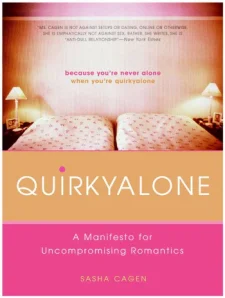
Quirkyalone by Sasha Cagen

In Quirkyalone, Sasha Cagen challenges a dating culture that treats singlehood as a problem to be solved. After years of navigating a romantic landscape that made her feel single life was a waiting room for love, Cagen began questioning whether romantic partnership was the only measure of fulfillment. Rejecting rules-driven romance and the pressure to pair off, she proposes treating singlehood as a creatively generative state. A “quirkyalone,” she explains, is someone who enjoys being single without rejecting the possibility of partnership. Blending personal reflection with interviews, graphics, pop culture references like Will & Grace and Sex and the City, and profiles of quirkyalones throughout history such as Queen Elizabeth I, Nina Simone, and Gloria Steinem, the book reframes single life as a meaningful chapter rather than a holding pattern. By introducing concepts like “quirkytogether” and “quirkyslut,” Quirkyalone expands the vocabulary around intimacy, sex, and independence and invites readers to cultivate fulfillment now

When Longing Becomes Your Lover by Amanda McCracken

Amanda McCracken’s memoir examines what happens when romantic fixation replaces intimacy and wanting takes on a life of its own. Writing from the perspective of a journalist and late-in-life virgin, McCracken explores limerence, an obsessive rumination on idealized partners, through personal narrative and research. Drawing from her widely read New York Times essays “Is It a Crush or Have You Fallen Into Limerence?” and “Does My Virginity Have a Shelf Life?” and her experiences with emotionally unavailable “anchor men,” she interrogates the idea of longing as a replacement for real emotional intimacy. The memoir blends storytelling with psychological insight, revealing how fantasy can eclipse presence and real connection. McCracken ultimately reframes longing as something that must be disentangled from inherited scripts and childhood hero fantasies about romance. Rather than offering a quick fix, she traces how this shift reshapes her behavior, expectations, and emotional availability. Learning to imagine love differently allows her to move beyond fixation and into genuine intimacy, ultimately leading to marriage and a relationship grounded in reality.

And You May Find Yourself . . . by Sari Botton

Sari Botton’s memoir-in-essays speaks directly to her experience of reevaluating love, ambition, desire, and reinvention later in life, when familiar romantic narratives no longer fit. The memoir moves between youthful missteps made to fit in with mean girls, misguided efforts to please men, fraught friendships, and professional dissatisfaction, alongside a present-day reckoning with who she has become. Botton writes with humor and clarity about bad therapists, “Mr. Wrongs,” and the exhaustion of contorting herself to meet expectations that were never really hers. As old identities fall away, she explores how desire shifts with age and self-acceptance. Grounded in feminist reflection and emotional honesty, the book offers a reassuring perspective, showing that intimacy and fulfillment can emerge from inhabiting one’s authentic self, flaws and all, with patience and self-awareness. Once Botton reaches that realization, she ultimately finds the intimacy she was seeking in a satisfying relationship and marriage.

Group by Christie Tate

In Group, Christie Tate turns to an unexpected structure to confront her struggles with intimacy: group therapy. After years of emotional avoidance and unsatisfying relationships, Tate tells her therapist, “I suck at relationships and I’ll die alone.” His response is blunt. In group, he tells her, all her secrets will come out. What follows is a memoir that unfolds through therapy sessions and increasingly uncomfortable “prescriptions,” ranging from calling a group member to ask for affirmation to more extreme real-world challenges: telling the man she desires that she is a “cocktease,” celebrating her anger after she leaves the therapist a furious voicemail, and inviting a man over solely to kiss for five minutes. Over time, the group becomes a kind of chorus, offering reflection, resistance, and accountability as Tate learns to sit with discomfort and pain rather than flee it. That work eventually carries into her romantic life, where she builds the secure relationship and marriage she once believed was impossible. 

The Dry Season by Melissa Febos

In The Dry Season, Melissa Febos begins with a radical question: What happens when we stop pursuing romance altogether? After a toxic relationship with a woman she calls “The Maelstrom,” Febos commits to a year of celibacy, not as punishment or deprivation, but as a deliberate act of reclamation. Moving between lived experience and reflection, Febos examines how desire, validation, and attachment have shaped her sense of self. When a spiritual advisor tells her she is a “user” of people, Febos confronts shame directly, writing, “The trick of shame is that it only becomes visible once you set it down.” Drawing on religious communities and feminist foremothers, she situates her personal divestment within a lineage of women who pursued autonomy and purpose outside romantic frameworks. By the end, Febos emerges ready to receive love, no longer defined by longing or seduction, but by presence and intention.

Nothing Personal by Nancy Jo Sales

Nothing Personal by Nancy Jo Sales details her midlife immersion into app-based dating culture, blending memoir, reportage, and cultural critique. As she navigates the then new app Tinder, and situationships with men much younger than her at age 49, Sales situates her experiences within a broader examination of how technology reshapes intimacy, often to women’s detriment. In between personal encounters and interviews with app users, app company executives and experts, she exposes the emotional toll of endless choice driven by impersonal algorithms. Sales reveals her addiction to the apps and her endless search for mind-blowing sex, coupled with her sharp observations on dick pics, sexting, and the commodification of desire, while becoming a leading critic of the industry through her journalism at Vanity Fair and her HBO documentary “Swiped.” Rather than offering easy solutions, Nothing Personal asks what intimacy means when connection is mediated by screens, and how self-worth can possibly survive in a culture designed to keep us swiping.

Redefining Realness by Janet Mock

This memoir opens with journalist Janet Mock preparing to tell her boyfriend her most closely held secret: that she is transgender. This is a moment that frames the memoir’s exploration of intimacy, vulnerability, and self-reclamation. Mock weaves personal narrative with social and cultural analysis, examining how race, gender, class, and desire intersect in her life as a trans woman of color. As she traces her path toward womanhood, including the physical transition, first with hormones, later through surgery in Thailand, Mock speaks about dating and romance and sex within a larger reckoning with identity, safety, and belonging. She writes how personal relationships are shaped by expectations, particularly around disclosure and risk, including moments when Mock recognizes how beauty can function as a form of social advantage, and how she uses hers to fit in where other trans people are unable to. Dating is addressed not just as a personal challenge, but as a political and emotional negotiation shaped by economic and societal constraints. Redefining Realness shows how claiming the right to define oneself reshapes not only how we love (and Mock does get her happy ending), but also, how we survive. 

Sometimes I Trip on How Happy We Could Be by Nichole Perkins

Nichole Perkins explores desire with humor and a bit of hubris, writing from the perspective of a Southern Black woman navigating sex, longing and power on her own terms. Told as a memoir-in-essays, the book moves between personal experience and pop culture touchstones from Prince and Janet Jackson’s power anthem Control to Niles Crane and his love for Daphne on Frasier. Perkins writes openly about crushes, fantasy, sex, and pleasure without apology, including the ways dominance and submission shape her relationships. She resists packaging her experiences into lessons, allowing longing for love to remain unresolved across essays that cover sexuality, religion, family, mental health, body image, and how misogyny and cultural myths shape how Black women’s desire for love and connection is policed and fetishized. Even the dripping peach on the cover signals what the book insists on naming: sex, pleasure, and the right to claim them for herself.

A Collaborative Story Collection That Spans Three Languages

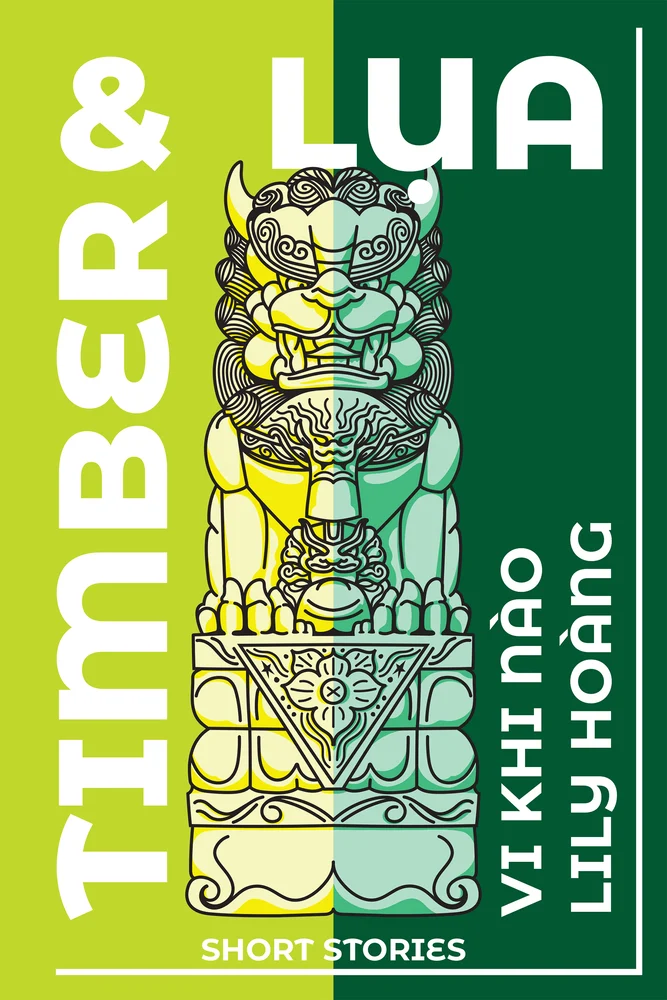
Vi Khi Nào and Lily Hoàng’s collaborative text Timber & La is a trilingual collection of ten short stories, each presented in Vietnamese, English, and a sui generis hybrid of the two, Vietlish. The book is structured to make its multilingualism legible and accessible: English is presented on the verso side, Vietnamese on the recto, while Vietlish sections are paired with an index of translated terms facing each page of narrative. The book’s glossary functions not unlike the Folger editions’ expansions of Shakespeare’s anachronistic language, providing guidance without foreclosing an experimental playfulness. Readers are free to move between versions—or remain with just one—and much pleasure of the text can be found in noticing which phrases are retained and which are transformed in the Vietlish.

With Nào and Hoàng’s signature styles of experimentation blending together, the resulting text is a cross narrative exploration of linguistic points that extract worlds populated by squids who are stars, Judith Butler-quoting sex robots, esophagus-swimming minnows, and lachyrimal episodes between cross-species lovers that threaten to last for millions of years. Interwoven in these plot points, which contort linearity until it’s an unrecognizable secret, is a surreal world not wholly unlike material reality: These characters still need to eat, make love, give birth, even as they morph into posthuman entities that defy easy taxonomy. These plot points invigorate the imagination as they shift quickly from one episode to the next. One moment we’re glimpsing an argument between lovers, and the next our narrator is contemplating the implications of growing a banana penis in her womb. 

Timber & La is a bridge between languages that generously holds the reader even as it destabilizes concrete presuppositions of separate cultures, which mirrors the ways in which the authors’ distinctive voices coalesce into a winking singularity of narrative finesse and postmodern exploration. The resulting text expands the boundaries of what is possible both narratively and linguistically. This collection elevates translation from a this-or-that dichotomy into a space of an intermingling, cross-pollinating and continent-traversing ellipse (or ellipses . . . ) that evokes notes of Samuel Beckett’s self-translation and a rich tradition of Viet texts.

Nào and Hoàng offered some of their time and thoughts on the nature of a collaborative text, obsession, and the complexities of working together in translation. 


Rory Strong: Writing is often seen as an individualistic pursuit of the self—the myth of the “solitary genius” is still a dominant (often masculinized) paradigm of the Serious Author. As collaborators, how do you feel your influences blend together to form something that is neither wholly Vi Khi Nào nor Lily Hoàng but a “secret third thing” (as the meme goes) that muddies the mythology of a singular voice and instead opts for the genesis of a narrative that expands possibility via the creation of a third, collaborative voice that contains both fractions of self and a unified whole?

Vi Khi Nào: While I am uncertain if my collaboration with Lily is the “secret third thing” in question, the concept evokes Margery Wolf’s A Thrice Told Tale: Feminism, Postmodernism, and Ethnographic Responsibility. This work employs a similar tripartite structure to ours—hers being fictional, ethnographic, and article-based renderings of a single event from her Taiwanese research—to give birth to a feminist anthropological response to postmodernist critiques. We, however, craft our feminist response by refracting a single story through a triad of linguistic prisms: Vietnamese, English, and Vietlish. 

RS: While the postmodern voices in Timber & Lụa differ greatly from each other and from Wolf’s model, we have, as you noted, forged a singular “third thing”—a unique feminist dimension emerged from the fusion of self, language, typography, and a fraction of that coalesced sum became Timber & Lụa.

Lily Hoàng: In my teaching, I actively work against the myth of the suffering genius writer. Last year, I taught a collaboration workshop for the first time, and as my students collaborated on the first day of class, the room erupted with laughter. Afterwards, my students reported that they never knew writing could bring them so much joy. Did they create the highest art? Probably not, but they had fun. Similarly, I have never laughed so much while writing as I did collaborating with Vi. I, too, had not realized that writing could make me feel joy. In particular because Vi and I collaborated in real time, I had the opportunity to watch her brain work in response to mine—and let me tell you: Vi has an incredible brain! 

Collaboration forces our writing into unexpected territory. It requires both collaborators to be extremely flexible and lithe. When Vi and I first began collaborating, we worked in English only. Those stories were okay, but something really transcendent occurred when we added Vietnamese into the mix. When we began generating our collaborative stories in Vietlish, a powerful new thing popped into being. It was instantly right, like a big bold epiphany, and it was only possible because we were collaborating. Whereas individually, Vi and I had used Vietnamese words in our writing (and Vi, of course, also translates), I wouldn’t have had the audacity to try to use more than a smattering of Vietnamese words across an entire book. Somehow, together, Vietlish was simply the correct language, and it wouldn’t have been possible for me to even think up, had I been writing on my own. 

RS: Were there any unique challenges or unexpected discoveries that emerged in the process of exploring these linguistic traditions?

VKN: Translation is an immensely time-consuming process. Given the experimental nature of both the original text and our approach, there was a point where a single Vietnamese sentence took us an hour to translate. What I truly admired about working with Lily was her commitment to precision, no matter how long it took. Also, the process revealed a deeper layer to her identity beyond that of a writer; beneath her literary composition lies a whole ecosystem of sorrow, heartache, death, and hiếu thảo (filial piety) that informs and underpins her work and her profound love for Vietnamese language and culture.

RS: In Timber & La, the pieces are initially presented with a hybrid of English and Vietnamese sharing the page and a translation guide on the recto side. Later, stories are printed fully in English (verso) and fully in Vietnamese (recto), but I was really struck by the experience of reading the Vietlish pages. What influenced your decision to make this a linguistically hybrid work?

VKN: Prior to adopting the tripartite model, I was finishing writing a Vietlish poetry manuscript titled: Reverse Abyss. This project, which employs mathematical equations and Vietnamese diction to capture the period before my second open-heart surgery, inspired me to suggest to Lily that we organically shift to the tripartite model. A few months ago, while discussing our collaboration, my sister Uyên introduced me to the work of Tree Vo, a queer Vietnamese Instagram influencer and comedian. She is a master of storytelling using the informal genre of “Vietlish.” She’s part of a growing group of creators in this experimental “lexical” space. I find this tongue-and-cheek “genre” to be uniquely accessible, relatable, and emotionally powerful. 

Last year, I taught a collaboration workshop and the room erupted with laughter. My students reported that they never knew writing could bring them so much joy.

LH: When Vi and I first started collaborating, we wrote in English only. And it was OK. Whereas Vi had a lot of experience collaborating, I hadn’t. I’d published two books that look like collaborations, but that’s just the surface of things: For Unfinished, I asked fifteen or so writers for stories that they started but couldn’t finish, things in their “Unfinished” files, and I finished the stories for them; and in The Mute Kids, I asked 140+ writers for a sentence or stanza of their work, and I used those words as the basis for a piece of flash. In both these books, I did collaborate with other writers, but ultimately, the end result was something I made. I just used their words as source material. So when I started writing with Vi, my concept of collaborative writing was skewed. I was used to a kind of collaboration that wasn’t actually collaboration, by which I mean, I had a difficult time acclimating to legit collaboration. 

A few years later, we tried again. Coming off a Vietnamese lesson (my amazing grad student Gin To was teaching me how to read and write in Viet), I talked to Vi about a few punny words, and we just started generating a story with both languages. And it was magical. It was like something just clicked into place and we found the correct method to collaborate and make art together. 

RS: Regarding the nitty-gritty of writing in collaboration, could you share a little bit on what your process was like? For example, would one of you begin with a story idea and then share it with the other, or was it a more granular, sentence-by-sentence collaboration along the lines of perhaps an exquisite corpse-like process? Or something else entirely? 

VKN: Our collaboration began with a structured, turn-by-turn approach, where we would alternate sentences—sentence-by-sentence as you say—to build a story. As the projects evolved—particularly our narrative set in the mid-27th century—our process became more fluid and organic, with each of us writing in a more integrated fashion. 

We watched each other, constantly, and we wrote one sentence at a time, switching back and forth.

While we met frequently during the Covid-19 pandemic, our sessions have since become less regular due to increasing professional commitments. Our collaboration was nearly over when the true burden of the Vietnamese translation became apparent. The workload felt intensely one-sided. When we first began the project, Lily informed me that she could barely read, write, or speak the language and was only learning it incrementally on Duolingo. In contrast, I have a stronger foundation from voraciously reading Vietnamese literature. To compensate for the imbalance, Lily proposed using reserved funds from her professorship to hire professional translators from the U.S. and Vietnam. This solution, however, introduced new problems, primarily the bureaucratic red tape involved in paying them.

LH: Timber & Lụa was written on Zoom and Google docs. We watched each other, constantly, and we wrote one sentence at a time, switching back and forth. We didn’t start by talking through a story. We just wrote. 

RS: Sometimes as a reader, I pick up on what I perceive as the obsessions of the author. This book seems to have obsessions, or at least fascinations, with food, transhuman identities, and relationships (to name a few). Do you feel you each have obsessions as a writer? And if so, how do the obsessions of two artists meet—what do they say to each other?

VKN: My obsession, it seems, is that I produce books too frequently, which is counterproductive and is at odds with a publishing culture that prefers a slower, more measured pace of output. When two artists meet they say: “Chữ tài liền với chữ tai một vần” (Talent and misfortune share the same rhyme). 

Vi and I both think in books.

LH: Oh yeah, Vi and I both have our own obsessions as writers, and I think a close reader can catch the difference. In particular, Vi has a very specific diction and I have a very specific syntax. There are words that find themselves in many Vi Khi Nào books, and they exist in this one, too. Similarly, I am obsessed with punctuation, and you can find that in this book, too. Of course, because we both know each other’s particularities, I think there are instances where we will adopt and adapt from each other, and that’s fun to watch and catch! 

RS: In the acknowledgments, you thank your “new BFFs,” Google Translate and ChatGPT. The use of AI is contentious in the writing world. Could you speak to your process of incorporating these new technologies in your work?

LH: Vi and I used Google Translate and Chat GPT as the ground floor for our translations. We typed a sentence into each and put them side-by-side, more as a way to conceptualize the grammar of the sentence in Vietnamese, and from there, we wrote our own translation. 

I know ChatGPT is contentious, and I’m sure most translators would gasp at our process, but Vietnamese is a complicated language, and only one of us (Vi) has any actual instruction in it. I can say, also, that although we used ChatGPT, by the time we finished translating any single sentence, there was little to no resemblance between what Chat offered and the final translation.

RS: You also mention that some of these pieces were previously published in Denver Quarterly and Puerto del Sol. When you began this project, did you plan on writing a full length collection together?

LH: Vi and I both think in books. Even from the very beginning, we understood that our collaborative efforts would accumulate into a book. There were certainly times along the way that I know I doubted if we could pull it all together as a book, but that is perhaps one of the blessings of writing with another person, especially a person with as much drive, determination, and iron work ethic as Vi Khi Nào. 

RS: What would you say to writers who are just setting out or considering working in collaboration? 

LH: For years, Vi and I wrote for at least an hour a day, seven days a week. After a while, we had to make it two hours a day, seven days a week. Before collaborating with Vi, I was a pretty flakey person, but working with Vi, I learned to show up, to not make excuses, and to not be late! Before collaborating with Vi, I only wrote during the summer months, when I was free from the burden of teaching. But writing with Vi meant a whole different style of writing for me, one that was foreign and exciting and quite frankly a little scary. But, in the end, we have this amazing book, and I feel such gratitude for Vi and the art we made together. 

Poetry Reminds Me of the Holes in My Memory

Caesura by Victoria Kornick

One of the most common symptoms of an oncoming grand mal seizure is the sense that it has happened before. Déjà vu, like an epileptic seizure, begins as a disturbance running through the temporal lobe of the brain. The sensation of déjà vu, in itself, can be a small seizure. It is possible to have seizures like this—absence seizures, very small seizures, seizures when sleeping—for years without realizing they took place.

The criteria for diagnosing epilepsy is simple: The patient has had two or more seizures, and these seizures have no other known cause. “Have you ever been unable to remember what you were thinking? Have you spaced out, or had a blank period of memory? Did this happen in your childhood? When? How often?” a neurologist might ask.

It is like being called upon as a witness to an event that occurred years earlier, one you can’t remember happening, and about which no one will tell you the date or any particulars. You must swear both to how you felt and how you looked from the outside, on some long-ago, unremarkable night, when you may have left your body.


The year I started writing poetry was also the year I had the worst migraines of my life. I was nineteen, in my second year of college, and enrolled in a workshop for the first time. The genre seemed true to my experience of being alive: images flashing over broken lines, rhythm and meter giving the illusion of familiarity, of a connection or meaning just outside of sense.

It was dark by the time I got back to my dorm after my last class each week. A migraine would begin throbbing on my walk home. By the time I reached my room, I had trouble seeing. I collapsed on the cold concrete floor of the suite’s bathroom and vomited on and off all night. Most of this I can’t remember well, but I had always thought that was simply the nature of the mind: to block out memories of pain so we can keep living.

I had always thought that was simply the nature of the mind: to block out memories of pain so we can keep living.

I thought of these periods as a caesura—the break within a line, a pause between ideas, a moment of breath that gives meaning to what falls around it. Caesura comes from the Latin to cut, though parenthetically, the Oxford English Dictionary notes that “(Some writers appear to have erroneously associated it with cease).” Cease, seize. Seizure, caesura. These are words I want to use, when trying to describe the blank spaces within a line, a night, a life.


The triggers for an epileptic episode, like those for migraine, include loud noises, bright lights, hormonal changes, periods of intense stress. One can be mistaken for the other. A migraine can move so variously, through the brain, the inner ear, the sinuses, the spine, the stomach, the gut. It can be dull or sharp, sudden or take days. It can begin with a spasm firing in the neck, a partial or complete loss of vision, a pulsing ache of blood and nerves in one eye.

“But was there ever a blank space within the sensation of pain?” The doctor looks at you, like you might know the answer. “Did you move your limbs without knowledge or effort? Would you describe your actions during any of these periods as involuntary?”


The primary definition of seizure is in the sense of possession: a sudden and forcible taking hold. Its etymology runs back through the romance languages to Frankish Latin. At the end of the entry, the Oxford English Dictionary hypothesizes its ultimate origin is the Germanic satjan (to place), the root of the verb set.

To set is related to, but more complex than, to sit. It isn’t simply a matter of having an object, like lay is to lie. Set can be transitive or intransitive, reflexive or figurative. Set can refer exclusively to a rabbit in one sense, to a hen in another, or, most often, to the sun. You can be set upon by plagues, set in motion, set a table, set up a scene, set down a law. Setting is definite, though not permanent. What sets can also rise.

It is like seizure in that way—what is seized can be released or reclaimed. Though not necessarily permanent, each can repeat infinitely. The sun sets and sets and sets. The body seizes and seizes and is seized.


On Friday nights in college, after my migraines, I went to parties. Everything then was some degree of a rave, all the house parties, the fraternities, the bars. The terrible pounding of dubstep making it all feel like one long version of the same song. A strobe light flashed somewhere, always, and some guy grabbed you from behind.

When it did happen, the seizure felt incredibly familiar.

Once, a tall, sweaty brick of a frat brother took my glasses off my face, and I had to leap at him, in the strobe light, clawing to locate where he held them in the air, then stretched the temples to fit over his huge, laughing face.

Wouldn’t it have happened then? A seizure I mean. It seems, looking back, so perfectly primed: the flashing lights, the strong emotion, the fatigue. Was it happening, that year, on the nights I had migraines? How can I know what went on in my body in the moments I can’t remember?


When it did happen, the seizure felt incredibly familiar. I was sitting at the dining room table of my childhood home, eating dinner with my parents, my husband next to me.

I lurched forward and thought I would be sick. My parents’ dog started barking, and I felt like I was remembering something, as if I were midway through a book I had just picked up again, or a dream I was trying to reenter. I could almost place it. Then I lost consciousness.


When I came to, I heard a loud, mechanical noise, like a revving engine. I wasn’t aware that any time had passed. I couldn’t see, though I sensed that my eyes were open. I felt hot waves of fury, like I was fighting with someone, though I couldn’t remember whom, or about what.

I saw my mother’s face, then my husband’s face, then my father’s. They were all standing over me. I was still in my chair, though I’d slid down, my head tipped over the backrest, face lifted to the ceiling.

Someone should turn off that machine, I thought, as the sound kept pounding in my ears. I tried to lift myself up, but my hands were too weak to grasp the edge of the seat. There were small points of blood on my palms, where my nails had pierced the skin.


In the emergency room, my husband described what had happened, since I couldn’t. It was strange to hear about myself like this, like a person who wasn’t there.

“She jerked backwards all of a sudden. She got so stiff, and the chair almost fell over. Her head tilted back all the way on her neck, and her hands clenched into fists, shaking really hard at her sides. It was maybe a minute, maybe longer, until she started coming to.”

I learned from the ER doctor that the anger I felt as I regained consciousness was a common neurological symptom. Patients often report strong, random surges of emotion—panic, laughter, tears, ecstasy—as part, sometimes the only part, of a seizure. The machine I heard was an auditory feature, a sound only the person having the seizure can hear.


“Did you convulse in your sleep as a baby? Did you have learning disabilities? Did you seem absent as a child?” A neurologist, a month later, interrogated me as if I had been an observer, and not the child in question.

He asked about the déjà vu I’d described to the emergency room doctor. “What image did you see?”

I said it hadn’t been an image, but a feeling, as if I were about to understand a connection or remember a dream.

“That’s not déjà vu,” he said. “My patients with déjà vu, it’s like they look at the television and think of a glass of water. Like, aha!” He snapped. “A totally random association. And then they have a seizure.”

The neurologist’s disbelief made me hopeful. “Does this mean there’s a chance I didn’t actually have one?”

“Oh no,” he said, looking back at his notes. “You almost certainly have epilepsy. You’re just not very accurate in describing things.”  


Poetry accounts for pauses in a way that prose refuses to. This was one of the reasons I loved it: how I could mark the breath of a caesura on the page, how I could scan syllables for emphasis and note line breaks with slash marks, stanza breaks with double slashes.

Poetry accounts for pauses in a way that prose refuses to.

When I teach poetry now, I show my students a line and cover the one below it. What would it mean if you only had access to the first? For example, if I began:

         I had a seizure, though perhaps not

It would cast doubt on the fact of the seizure, pausing your reading before you reach the rest of the sentence. Each line is, for a moment, true, even if the next complicates or negates it.

         I had a seizure, though perhaps not

         my first.

The line break allows for a brief deception, an omission, a doubling in meaning. Enjambment is, in some ways, a trick. But it is also powerful to hold two truths together at once—each line on its own, and what they become together.


Sometimes, prose writers in my class will ask how to use this idea in their work. I want to say that every lesson is applicable, that learning about poetry makes you a better writer of any genre. But caesura and enjambment simply don’t transfer. Maybe, I said once, you could imagine enjambment on a larger scale. Tell a story in parts, perhaps out of order. Let each piece you add change and complicate what came before it.


About a month before my seizure, my husband and I had been in Europe. We each had archives to visit for our dissertation research, but we also went sightseeing, walked for hours, ate late into the evenings, had drinks on patios, befriended strangers.

On a sweltering afternoon in Rome, I started feeling a little strange. I stared down at my pasta, unable to eat. The feeling didn’t abate that night, or the following day, when we travelled to the south of England. The temperature turned cool and crisp. The owner of our bed and breakfast was delightfully eccentric, walking barefoot with us to the grocery store and singing opera in the yard. My husband and I traipsed through gardens, and I spent hours in library special collections. Every afternoon, I was so exhausted, I slept until dinner. I drank cup after cup of tea, and my stomach lurched unsteadily.

We dropped our rental car at Gatwick Airport, before spending a final few days in London. While my husband sat with our luggage at the ground transit Costa Coffee, I restocked a few toiletries at Boots. I considered, as I picked up a box of tampons, whether my period might be late. I saw, at the very bottom of the display, a pregnancy test for only £3.99 and decided it couldn’t hurt to take it.

The one I’d chosen was so basic, its instructions so vague, that as I stood in the airport bathroom stall watching my phone timer, I was holding up the wrong side of the plastic test strip for results. Puzzled, after three minutes, that not even a control line had appeared, I turned the test in my hand. On the other side, I found two bold, fully formed blue stripes. I stared at them, then at the instructions. I stared at the dark, floor-length door of the stall, unable to believe I could be—I was—pregnant. I rushed back to Boots to buy a nicer, name-brand test.

The same teenage cashier rang me up both times. “I hope it’s the result you wanted?” she asked shyly, handing me another pregnancy test. I told her, laughing, that I thought it was.


I reached out to my gynecologist, who suggested taking an antihistamine for the nausea, which I later realized was mostly for sedative purposes. I learned, after the seizure, that antihistamines can be a trigger for epilepsy patients; the second neurologist I saw believed this was certainly to blame. But what, I wondered, of the countless times I’d taken allergy medications in the past? My GP speculated that pregnancy alone may have caused enough stress to lower my seizure threshold.

I kept asking what the seizure meant for our baby, but no one was sure. This was not the doctors’ primary concern. I needed to get more tests. I was only seven weeks pregnant, and an obstetrician hadn’t even confirmed viability.


My crisis in poetry came in graduate school, as my poems grew longer and longer. I didn’t want to omit anything. Still, I felt that what I was writing was poetry—poetry had been the shape my life had taken. My stories so seldom came to a climax.

The difference between poetry and prose can be, at times, difficult to define. One professor told me a poem is circular, the final line recalling each of the preceding lines and changing them. A simple test, he said, was when you finish reading a poem, you want to go back to the beginning and read it again. Prose, by contrast, takes you somewhere new and leaves you there.

I loved this idea, though I found it difficult to apply. After finishing a novel, for instance, I often reopened it and read again from the first page. I realized, eventually, that I wanted poetry and prose to do different things for me. I wrote poetry to replicate the way my life felt. I needed prose to help me understand it.


Seizure and caesura have no common etymology, nor do seize and cease. The constellation of words I wanted to use to describe what happened were related only by sound, that ghost of one thing in another that creates meaning in poetry, but elsewhere, creates no viable connection, much less a conclusion. 

As an EEG technician glued electrodes to my head, he told me about how, when his wife was first pregnant, they’d balanced a spoon on her belly to see whether it was a boy or girl. He said this casually, as if this were a test I’d be familiar with. I acted like it was, though later I wished I’d asked more questions.

He finished putting on the last of the electrodes and turned off the lights. When the spoon fell—how it fell was what mattered, though I couldn’t tell from his description why—he felt the urge to weep, an urge he said never left him. “I knew we were having a baby girl, and it changed something in me,” he said, and I could hear from his voice that he was crying again, as he stood at a monitor behind me in the dark room, recording the electrical activity of my brain.

I wrote poetry to replicate the way my life felt. I needed prose to help me understand it.

“You should relax,” he added. “Your High-Betas look like the waves of a very anxious person. But I’m not seeing seizures so far.” He asked me what had happened, that I was having this test now. He asked what the seizure had felt like, and if I was in pain.

“It felt like nothing,” I told him, “with terrible pain on either side.”

He said that sounded right. He told me about his wife’s pregnancy, which had also been very difficult, medically. He talked about his infant daughter. I thought about caesuras, and seizing, and ceasing, and cutting. Cut scene, the seizure has ended. Caesura, we’ve reached the other side of the line. Cease, start again. I thought about electricity, and a spoon falling slowly, and I felt like I was about to understand something important.  

I didn’t know I’d fallen asleep until the lights came back on. I felt panic rising at the sensation that I’d lost some amount of time during the scan. “Don’t worry,” he said. “You were just asleep. Your waves were like—” he moved his hand through the air, as if tracing a gently sloping line I could not see.


A woman who has her first seizure at thirty may not have a second. Each six-month period without one is a milestone, the passage of which lowers the probability of another happening. Nineteen months, a neurologist predicted, was when my next seizure would take place. But this was only a statistical likelihood, and it would change if I’d had seizures in the past, which I couldn’t confirm. I needed to pay attention, the doctors said, to the onset of any symptoms, particularly déjà vu.

Two nights after the first seizure, my husband and I stood in my parents’ street at dusk. We were going to start the drive back to Los Angeles in the morning. My husband said something, but I didn’t quite hear him. I was looking at the hellebores in my childhood garden, shining softly through the dark. I had the sense I recognized them, like the faces of people I’d known years before. I swayed and my husband caught my arm. It was only a slight pause in my steps, a momentary cessation of thought, a familiar longing. I couldn’t have said whether anything had happened in that small, almost unnoticeable gap between looking at the flowers, and looking at the flowers again.

Literary Citizenship Looks Like Aaron Burch

Aaron Burch is the Rick Rubin of online literary publishing. Over the last two plus decades, he’s helped hundreds of writers jumpstart their careers, whether it was through Hobart, the online literary magazine he edited for 20 years; the micro prose journal HAD; or his latest project, Short Story, Long on Substack. Burch is also a lecturer at the University of Michigan and a successful writer in his own right, having published an essay collection, a craft book, a novel, a memoir, a short story collection, and now a new novella, Tacoma. 

If there’s a shared thread in his work, it’s his playfulness, an underlying punk essence and dedication to absurdity that seems absent from some crustier tiers of the literary world. Tacoma is no exception. Though ostensibly about an ordinary couple enjoying their friend’s vacation house for the summer, Tacoma quickly dips its toes into the speculative waters of the Puget Sound when the couple discovers their neighborhood is full of portals that transcend space and time. They are forced to navigate this beautiful and strange world that threatens to pull them away from the present and each other. 

What I’ve always loved and admired about Burch’s writing is its earnestness: he writes, as my professor Lee Martin always said, quoting Isak Dinesen, “without hope, without despair.” Whenever I read Burch’s work, I feel almost no separation between my enjoyment of the text and his delight in creating it. I had the pleasure of speaking with Burch over Zoom about his writerly obsessions, the evolution of the online literary scene over the past 20 years, and what it means to be a model literary citizen today.

Sophie Newman: The first thing I wanted to ask you about is the title, Tacoma. Why does it capture your literary imagination?

Aaron Burch: I grew up there. It’s that mysterious, curious magic of childhood. In high school and college, I loved hardcore music, and I got really into this band Botch. There was a pretty good hardcore scene in Seattle, but then, being an hour south of Seattle, it always felt like Tacoma was both part of Seattle and not. They would start every show by saying, “We’re Botch, and we’re from Tacoma.” As somebody who knew them, somebody who felt a part of Seattle but also not, that felt really exciting and welcoming. At some point, I’d written a handful of chapters which at that point were stories. When I had the idea of pulling them together and making one unified narrative out of them, I was like, oh, I could call it Tacoma. It just made me laugh, the idea of calling it Tacoma.

SN: While we’re talking about constructing this book, I’m curious about the decision to name the chapters. Was this concept there from the start?

AB: The titles are because I was titling short stories. Me and my girlfriend spent a summer in Tacoma, and I was writing these stories in our Airbnb. Sometimes they were literally capturing versions of our day-to-day and other times they had nothing explicitly to do with place. At the end of the summer, I collected a bunch that felt most like they could be woven and collaged together. But at some point, I was like, I don’t really want it to just feel like a bunch of short stories. I want it to feel like a narrative. So, how do I force that upon this thing that started as unconnected stories? And also, how do I play with chapter titles [in a way] that lends them to feeling like chapter titles and also does something for the book? 

SN: Your narrator shares a lot of biographical details with you. At one point he tells his friend that he’s writing “exaggerated autofiction about us and writing and friendship and telling stories and life and seeing art and magic and beauty everywhere you look.” Do you consider this “autofiction”?

Sentiment and earnestness have always been there in my
writing. It doesn’t seem as cool as writing about despair, right?

AB: I do think of it as autofiction. Before this book, I wasn’t that interested in writing autofiction. I don’t read that much autofiction, which, counter-intuitively, was part of what was fun about this for me. How do I write into it, but make it my favorite book? How do I play with it? Anyone who reads [Tacoma] knows me to varying degrees. Some readers might not know anything about me. Some might be like: I’ve read a couple of things by you online, and I’m vaguely aware of your presence. My best friends probably notice things that aren’t important, but that are all over the book. Maybe part of the appeal is playing and bending and making stuff up but blending it with the stuff that isn’t [made up]. On top of calling it Tacoma, I knew I wanted to play with this summer that we spent in this place. But I didn’t want the impetus for the book to be, oh, the couple rents an Airbnb and goes and stays there. I wanted it to be a little more heightened, a little bit more magical, a little bit more fun.

SN: The inclusion of speculative elements plays with the expectations around autofiction. Some autofiction could literally be memoir. Instead, at times, you almost dip into horror, but always keep it very funny.

AB: Maybe there is a tradition of that silly, fun, magical element in autofiction, more than I’m even aware of. A lot of what I’m aware of is the, how do I most realistically capture my life on the page? Looking back, part of what all speculative writing is capturing with the magic are the feelings that feel true. I guess I was doing that.

SN: At the beginning of your first chapter, your narrator explicitly says, “this is a story about magic and beauty and wonder.” I was curious if you find these concepts harder to write about than, you know, crushing despair.

AB: I find them easier to write about, but I am something of a happy-go-lucky dork in general. Sentiment and earnestness have always been there in my writing. But, especially earlier on, I battled with it. It doesn’t seem as cool as writing about despair, right? The more I’ve embraced it, the better of a writer I’ve become. But it’s tricky. When it works, it lands so hard and lands so well and is so appreciated because it is a little less common. But then when you don’t land it, it’s so quickly and easily eye-rolly and easy to make fun of or groan at. That’s the tightrope.

SN: I think people shy away from it because there’s a vulnerability there. If you don’t stick the landing, you’re going to be exposed, versus if you’re writing about despair, you’re almost guarding yourself against those potential criticisms.

AB: It’s such an interesting contradiction, or two sides of the same coin, too. So much of the writing about despair or trauma is often celebrated for its vulnerability, and yet the flip side of that is we’ve been rewarding this kind of vulnerability while hiding or shying away from another kind of vulnerability.

SN: The novella seems to be about the tension between the past and the present. Your narrator is almost literally lost to the past. I understand Year of the Buffalo, your first novel, explores similar themes. Is this one of your writerly obsessions, or am I reading too much into it?

AB: No, it for sure is. As a human, I am generally a very nostalgic person and maybe often more nostalgic than is “cool.” I think both my reading and writing interests are books that deal with coming-of-age, growing up, nostalgia, wrestling with the past. That’s mirrored by when and where I grew up. Maybe I would have been like this no matter what, but Seattle in the 90s was so cool and so close, but also when you’re 16, an hour up the freeway is so far. I think I was at that age where, on the one hand, I was kind of perfect for being in the radius of grunge, but also, I was slightly too young to have gone to any of those shows. That idea of having grown up in a time and a place that felt so alive but often just barely out of reach definitely imprinted on me. All of my books are wrestling with the past to varying degrees and thinking about what that means.

SN: I wonder if we could transition to talking about some of your other literary projects. I know you started editing Hobart over 20 years ago. What’s your perspective on how the literary magazine landscape has changed since then, either for the worse or the better?

When I started Hobart, we were kind of in this boom of indie lit,
a lot of those people seemed like rock stars.

AB: At the time, websites with short shorts or flash fiction were not that common and were often looked down on like a little sibling or something. I’ve never made this connection before, but maybe there’s something interesting about thinking of Tacoma in relation to Seattle and websites in relation to print journals. Now, most writers I know would almost rather have something published online than in a print journal, because it’s going to get read more. 

When I started Hobart, we were kind of in this boom of indie lit seeming really cool. We were all just riding the McSweeney’s/Dave Eggers coattails. I mean, maybe it was just me because I was a writer, but a lot of those people seemed like rock stars. I don’t think that’s the case now, right? I don’t think there is that cool aura around this scene outside of a pretty small group.

SN Is it just that there’s an over-saturation of journals, or do you think people have actually changed their mind about what’s cool?

AB: It’s a little bit of everything. There’s always fads. The grumpy old man on his porch perception is: People are reading less and spending more time on social media and scrolling and watching TikTok and reels. When I was in my early 20s and a new graduate, in the early years of Hobart, I was working at a bank, and in my downtime between customers, I would alt-tab over and read the new piece on McSweeney’s. I didn’t have a smartphone yet, and there wasn’t social media. Now, if I need to kill two minutes or five minutes and I’m waiting in line somewhere, I’m just doomscrolling.

In the past few years, it’s been interesting to hear from my students about their awareness of their own online-ness and their desire to be a little less so. For a while, I was like, oh, it’s just me as somebody your parents’ age being like, you’re looking at your phones too much. And then at some point they were like, we are looking at our phones too much, and I wish we weren’t. Hearing a student say, “part of what I enjoy about golfing is leaving my phone somewhere, and I’m just golfing with friends for four hours.” I hadn’t thought about that with golf, but that’s an interesting take and cool to hear from an 18-year-old.

SN: On the topic of social media, tell me about your decision to start Short Story, Long on Substack versus a more traditional platform.

AB: A few years ago, I stepped away from Hobart. Immediately when I stepped away, I was like, I’ll probably start a new thing. At this point, it’s just such a part of my life. I’ve been doing it for 20 years. Although I was still editing HAD, we built a pretty well-oiled machine that takes a lot of time once or twice a month and then otherwise not very much, if any. One of the things that I liked at Hobart, that I thought I was pretty good at, was editing and publishing longer fiction. 

If you just want to start a journal, then start a journal.
An under-appreciated element is just trying.

There’re a bunch of websites that I love publishing short shorts and there aren’t many that excite me publishing a 4,000-word story. At the time, there hadn’t really been any literary journals using Substack, but it seemed to lend itself to it really well. It’s built in that you can subscribe as a paying subscriber, which meant I could pay contributors. It also meant not having to build a website myself or hire someone. Here’s this template, it’s set up, I can just plug and play, and I’ll borrow this One Story model of publishing one long story at a time and doing it once a month.

SN: I’m wondering how you split your time between teaching, writing, and editing. Do you have a schedule? Do you just organize by priority and deadline?

AB: I think some combo of priority and deadline and what feels exciting or where my own energy is. Sometimes those things align and sometimes they don’t. Sometimes, I really need to get this stack of papers graded. I’m not the most organized person—teaching, my own writing, editing, family life—I think I’m usually dropping one of those balls, and sometimes two. I think the journals take away time overall from my own writing. But the flip side of that is, I’m not always the most dedicated writer. It allows me to not be writing for a while but still feel like I’m being productive and living this literary life.

SN: Do you feel like teaching also feeds into your writing and editorial work?

AB: It all feels related and connected for sure. Obviously, it feels more like a job than writing or editing because it pays me and the other two arms don’t. Sometimes, it does feel a little bit more like a responsibility or a burden. Burden is kind of both too strong of a word and also true.

SN: I think a lot of people, myself included, see you as a model literary citizen who’s doing your own work, but you’re also dedicating a lot of time to championing other writers and building platforms for them. If a young writer asked you where they could plug themselves into the literary community, what would you say?

AB: For a long time, my answer was: Be on literary Twitter and interact with other writers. If you’re on Bluesky or if you are on Substack or if you are following the right journals and other writers and starting to interact with them, I do think there can be fulfillment there. I think every writer should be a reader for a journal for probably at least three to six months. I think if you just want to start a journal, then start a journal. In the publishing aspect, and also in our own writing, an under-appreciated element is just trying. Whether you’re like: What if I just try to be more earnest, and then don’t show anybody, and it turns out cheesy, but I tried? What if I just try to start a journal, and it turns out I don’t like it, and I fold it? But maybe it turns out I love it and it takes off.

7 Sri Lankan Novels Haunted by Skeletons in the Nation’s Closet

As a Sri Lankan-American born in rural Appalachia, I have always sought stories with characters who connect me to a culture and heritage I can’t find in my own backyard. Having not seen my own heritage reflected back to me anywhere outside my own home, stories were the only way I could get a better understanding of what it meant to be both Sri Lankan and American. My parents, foreigners in a land not accepting of them, wanted me to assimilate. They spoke to me more often in English than their native tongue, and told me to hide my clothing when my mother made curry so our clothes wouldn’t smell of cumin and turmeric. We were taught by neighbors, colleagues, and even friends, that to be accepted in America was to shed parts of ourselves, at least from public view. And even when we returned to Sri Lanka every summer to visit family, stories about relatives killed in bombings, rumors of child soldiers in the north, and cruelty imposed by the government swirled in a contextless haze. It seems even in Sri Lanka, a place I was supposed to be myself, the American ideal of assimilation followed me. 

During these visits to our ancestral home, where the sticky heat caused people to move like zombies and a war I couldn’t possibly understand infected every aspect of life, books kept me company. I was desperate for the greater truth as to who I was and where I came from. I sought out Sri Lankan stories and was struck with what I found: novels full of grief and complexity, grounded in sorrow, and haunted by a longing for a Sri Lanka that no longer exists.

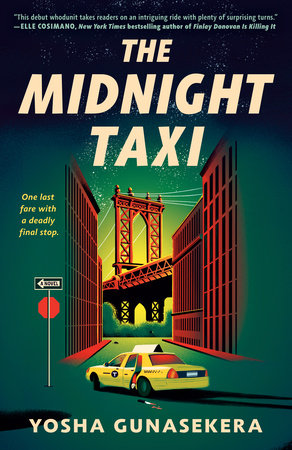
The novels on this list helped me understand what it meant to be Sri Lankan. Haunted by lingering ghosts of death, self-imposed exile, and the grief and terror that come from seeking the truth in a culture that sometimes wants to hide it, these narratives are anchored by the protagonists’ journeys of self-discovery. My own debut novel, The Midnight Taxi, follows a Sri Lankan–born taxi driver who feels neither fully Sri Lankan nor fully American and is searching for her identity and place in New York City. Like the protagonists in the novels on this list, my heroine, Siriwathi Perera, is running from something she cannot escape: the ghosts of her past and present. I hope my novel, like those listed below, helps readers better understand the Sri Lankan–American experience—and, beyond that, what it means to be imperfect in a world haunted by the ghosts of loss and uncertainty.

A Passage North by Anuk Arudpragasam

Quiet, introspective, and unsettling, A Passage North follows Krishan as he travels north for the funeral of his grandmother’s longtime caretaker: a woman he suspects may not have died by accident. As he journeys, Krishan reflects on her life, wonders whether her death was suicide, and confronts the enormous sorrow she carried after losing three sons to the war. At the same time, he revisits his dissolved relationship with Anjum, a political activist whose sense of urgency and moral clarity once gave his life shape. The ghosts here are intimate and internal: unresolved love, unanswered questions, and the emotional fallout of a war that keeps taking. Arudpragasam’s novel proves that silence can be as heavy as gunfire—and just as revealing.

Brotherless Night by V. V. Ganeshananthan

Brotherless Night unfolds amid the early years of the civil war between the Tamils and Sinhalese. Through the eyes of Sashi, a young woman who dreams of becoming a doctor, the novel traces how violence infiltrates domestic life and slowly dismantles a Tamil family weighed down by the decisions they make to uphold their way of life. Somehow, those very decisions are the things that unravel them all. We follow Sashi through her adolescence, her education, and her deepening political awareness as the war tightens its grip. The ghosts in this novel are many: missing brothers, dead classmates, and abandoned futures. As Sashi’s world shrinks under the weight of conflict, her lost possibilities haunt her as much as the dead. The final effect is devastating—a reminder of the enduring physical and mental trauma of war.

Anil’s Ghost by Michael Ondaatje

In Anil’s Ghost, a Sri Lankan-born forensic anthropologist returns home after years abroad to investigate extrajudicial killings during the civil war. Anil works alongside Sarath, a quiet archaeologist whose loyalties remain unclear, to uncover the truth behind a body discovered in a sacred burial site, a man they call “Sailor.” As Anil traces her identity, she is forced to reckon not only with political terror but with personal loss—especially the shadow of her own parents and her estrangement from home. Ondaatje frames forensic science as a confrontation with memory itself: what bones reveal, what governments erase, and what history refuses to admit. While structured like a mystery, the novel’s true power lies in its meditation on grief and the cost of knowing too much.

My Sweet Girl by Amanda Jayatissa

Jayatissa’s My Sweet Girl is a sharply plotted psychological thriller. It centers on Paloma, a woman adopted from a Sri Lankan orphanage into a vastly different life in the United States. But like most compelling thrillers, her adopted life is built on a buried truth and Paloma carries a secret that trails her like a shadow. Paloma’s roommate begins to uncover this past, but before Paloma can pay him for his silence, she finds him dead in their apartment. By the time police arrive, the body has disappeared. The novel’s ghosts include the past Paloma has tried so hard to outrun, the identity she tried to abandon, and the lingering spectre of people who refused to be erased. In My Sweet Girl, the truth always catches up and it never arrives quietly.

What Lies Between Us by Nayomi Munaweera

Munaweera’s novel opens with a chilling story about moon bears and their devotion to their young—before undercutting it with a declaration that “in America, there are no good mothers.” What follows is a devastating exploration of motherhood, displacement, and unhealed trauma. The narrator, Ganga, recounts her childhood in Sri Lanka, where appearances of privilege mask emotional neglect and abuse. Her father drinks; her mother vacillates between love and withdrawal. A single act of violence fractures her life, setting her on a path that leads eventually to the United States but even ghosts of traumas past can cross oceans. The ghosts in this novel are relentless: memory, shame, and childhood terror that resurfaces in adulthood and motherhood. Munaweera’s portrait of intergenerational trauma is unflinching and intimate.

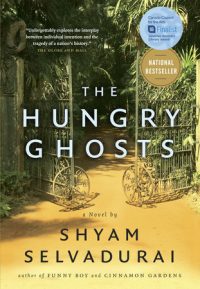
The Hungry Ghosts by Shyam Selvadurai

The title The Hungry Ghosts refers to a Buddhist concept of restless spirits plagued by craving—and it perfectly suits this coming-of-age novel set against Sri Lanka’s sociopolitical collapse. Shivan, a sensitive Tamil boy discovering his sexuality, grows up amid a disintegrating family and a nation consuming itself amidst a civil war. Shivan is craving a life of something more even as desire, shame, and fear intertwine with political violence threatening to erase his identity. Even as Shivan leaves Sri Lanka, he learns he cannot outrun his past and his earliest, and perhaps deepest, wounds suffered in his motherland. Selvadurai’s novel captures the cost of growing up gay in a culture where silence is survival and grief that lingers long after escape.

The Legend of Pradeep Mathew by Shehan Karunatilaka

Part mystery, part satire, part obituary, The Legend of Pradeep Mathew follows W. G. Karunasena—an alcoholic sportswriter racing his failing liver—as he hunts for the truth behind Pradeep Mathew, a cricket legend who has gone missing. Karunasena has a year or two to live at most. Even if he cuts back to only two drinks a day, the years of arrack consumption have finally and definitively done in his liver. Mathew may have been smart or alcoholic or entirely invented. As Karunasena interviews old players, officials, and drunk cricketers, the investigation sprawls into something larger than Karunasena could have imagined with the search touching on ghosts of corruption, class division, denial, and war that haunt Sri Lanka. The deeper Karunasena digs into the truth of who Mathew was and where he’s gone, the more unstable the sportswriter becomes. As the search dissolves into uncertainty, we’re left to struggle with the notion that men aren’t accidentally forgotten; they are buried by design.

Colonial Violence and an Old Prophecy Haunt a Chinese Family Across Generations and Continents

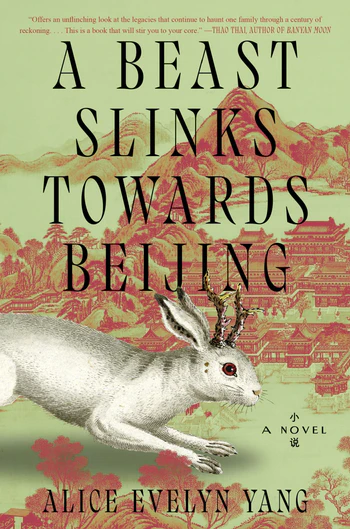
Alice Evelyn Yang’s sweeping debut novel, A Beast Slinks Toward Beijing, chronicles the experiences of a Qianze, a second-generation Chinese-American, whose estranged father reappears in her life a decade after leaving her and her mother. What follows is a whirlwind tale of Qianze’s lineage, spanning 93 years and two continents, tracing back through her father Weihong’s childhood during the Cultural Revolution in China to his mother Ming’s experience during the Japanese occupation of Manchuria. Shifting between these three perspectives, Yang not only chronicles the events that preceded and precipitated Weihong’s abandonment of his family, but also illustrates the magnetic power of stories and secrets as they accrue over generations, wielding the power to bring people together and repel them apart for reasons that seem inexplicable. 

Through lush imagery, other-worldly creatures, and breath-taking attention to detail, A Beast Slinks Towards Beijing mimics the form of the story within. Under Yang’s precise and delicate pen, a family’s decades-long web of well-intentioned avoidance and experiences of colonial violence unceremoniously unravel as a drunk and confused Weihong attempts to reveal a prophecy from his past in his daughter’s Chinatown apartment. Careening between time periods and dimensions, the novel’s central characters are tied together not only by shared history and DNA but a deep-seated sense of anger and fear that transmutates into an empathy that cuts across time and space, revealing untrodden paths forward. Much like the accumulated weight of Ming, Weihong, and Qianze’s inherited trauma, A Beast Slinks Towards Beijing is all-consuming and impossible to put down until every last stone is overturned. 

I had the pleasure of speaking to Yang in her Brooklyn apartment a week before her debut’s release about the blurred lines between predator and prey; folklore as a force of and against imperialism; and seeing one’s parents as complex, flawed humans.


Christ: I found A Beast Slinks Towards Beijing to be about the power of stories themselves. Was that the conception of the book? 

Alice Evelyn Yang: I began the book by writing the initial reunion scenes between Qianze and her father. After I had this seed of an idea, I wrote the book chronologically. I first wrote Ming’s timeline, then Weihong’s, and then the present-day sections. I always knew that there was this frame-tale that would wrap around the story. My idea for structure has always been a Russian nesting doll where each generation carries the previous generation within it. I want to use stories as a way to interrogate how people share societal values and how myths and folklore are representations of patriarchy and the fears of a certain society. 

C: So much in the book is about what happens when stories aren’t told. It’s understandable when parents want to save their children the unpleasant details of their past, but what do they risk when creating a vacuum like that?

It is possible to not follow down the path of your parents and grandparents.

AEY: I grew up in a first-generation immigrant household where my parents weren’t very forthcoming with their past or Chinese history at all. The bulk of what I learned about the Cultural Revolution I had researched on my own. Like Qianze’s mother, they thought, “Oh this is a new life, we are going to leave the past all behind.” The book poses the question of how do you reckon with trauma when it’s made physically manifest? A lot of the risks in not learning your familial history are things that are encoded genetically from intergenerational trauma. For Qianze, it’s physically-manifested unspoken trauma but also the trauma of colonialism and empire. The things that are happening to her she has no understanding of. You’re left in the dark scrambling, looking for answers, and the answers might be right in front of you, but you don’t have access to them.

C: Qianze, Ming, and Weihong all share experiences that lead to a bifurcation of the self. Is this exacerbated by their patchy understandings of their own personal histories? 

AEY: The situations they were placed in forced them to have this sense of themselves as a before and after. They can’t conceive of themselves as a whole being in which before and after are reconciled. The events that split them, they hold so central to their sense of identity that there’s no way to make peace with them. They can’t let these wounds heal; they have to keep picking at them and taking the scab off. So it becomes this part of themselves that is so core to their identity. 

C: As Ming and Weihong live through the Japanese occupation and the Cultural Revolution, respectively, the amount of political violence is staggering. How do you think that is reflected or refracted in Qianze’s timeline and her experience in the US? 

AEY: A lot of people around me who are also second generation immigrants are learning about the Cultural Revolution through my book, despite their parents living through it. For Qianze and for myself, we live in a relatively privileged time, especially because we live in the imperial core. We’re insulated from what is going on outside of the West, neo-colonialism, and empire. If you don’t even have the knowledge of the effects of colonialism and empire, and it’s not actively taught in schools in the West, you can’t understand what’s happening right now in the Global South. Qianze lives this very privileged life where she doesn’t know about her family’s past, but at the same time the atrocities that happened in her family’s past are still ongoing in the present. It offers a window into empathy for and understanding of what atrocities happened in the past, but also what atrocities are ongoing in the present.

C: That sense of perpetuality comes throughout the book: that these things that have happened, are happening now, and will always be happening. How does this shape the arc of these characters? 

AEY: I had to piece the timelines together like a patchwork quilt. I was looking for these tissues of connectivity between them to find where each generation echoed one another. Placing them in similar situations or placing the same objects throughout these generations, there is that sense of continuity, but also that they are speaking to one another. There are parallels between them, so even though Ming and Qianze never meet, Ming still somehow communicates with her, which is done through the folklore and magical realism elements. With the idea of a self-fulfilling prophecy, these characters find themselves in loops and a few of them can’t seem to break out. What I wanted to suggest in the ending is that it is possible to not follow down the path of your parents and grandparents, and you can find healing and move on from these cycles that feel inescapable. 

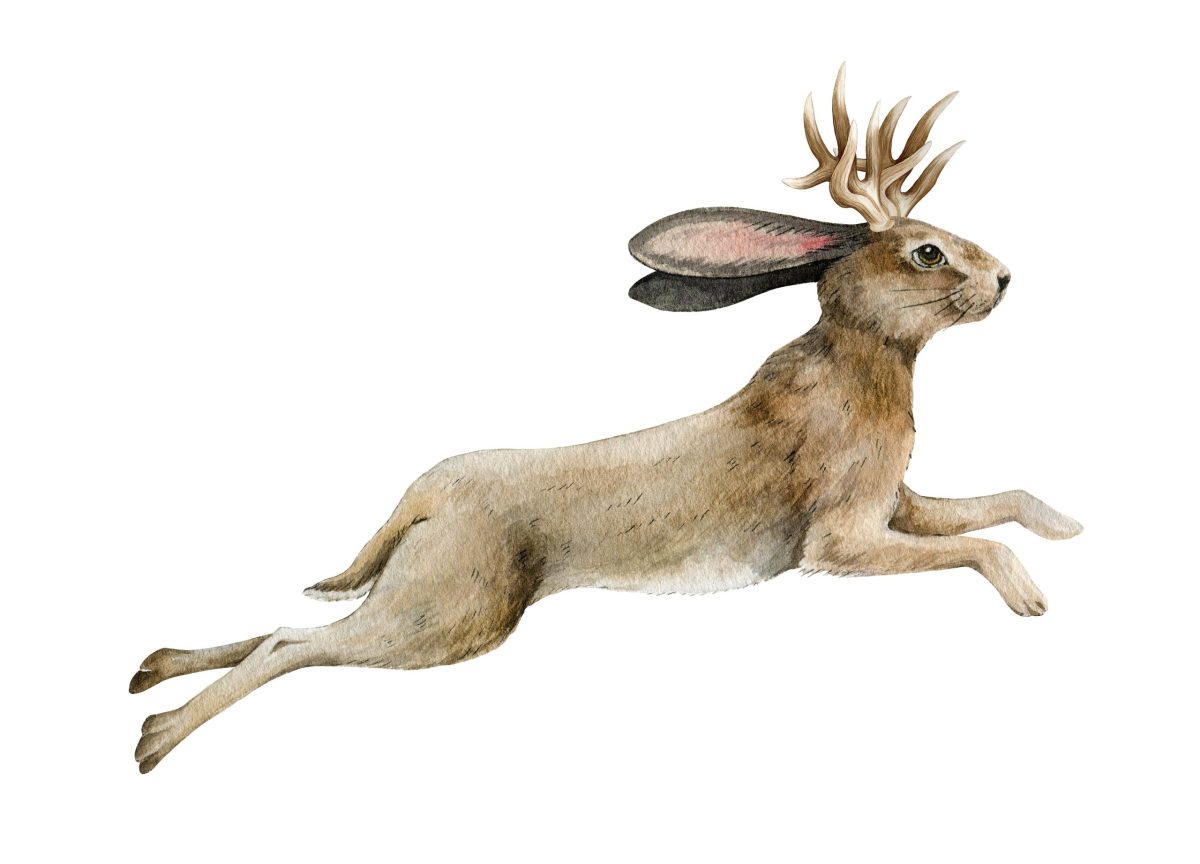
C: There is a recurring metamorphosis of prey becoming predator, most obviously embodied by the hare becoming the jackalope. How does that figure come to represent the experiences and fears of the book’s central characters? 

Anger is this nexus of transformation from prey to predator.

AEY: One of the primary emotions I am working with is anger and how transformative anger can be. Qianze is such an angry character and that anger has transformed her. Like you said, the bifurcation of her: The Qianze before Ba, who she sees as having this idyllic, happy childhood, versus the Qianze after Ba who’s forced into this position that she sees as unjust. She had to take on a very adult role from a young age. Anger is this nexus of transformation from prey to predator. At the same time, I want to challenge the notion of who is prey and who is predator. I never want to create a dynamic that is so black and white, because there is so much ambiguity. A lot of the characters that commit the most violent acts in the book, whose actions feel very predatory, you also understand the reasoning behind those actions and how, in certain circumstances, they were forced into committing those actions. Just because something or someone shifts from prey to predator doesn’t necessarily make them more powerful. 

C: You do such a wonderful job of weaving passages of surrealism into what is a deeply realistic, human, and historically accurate story. Could you speak on where the magic of the story originates?

AEY: I studied magical realism in university in the context of Latin American literature: works by Gabriel García Márquez or Jorge Borges, Pedro Páramo by Juan Rulfo, Kingdom of this World by Alejo Carpentier. In those cases, a lot of folklore and magical realism is within a narrative of colonialism. There is this traditional folklore that sort of works as a force against colonialism. I wanted to examine that idea as what happens when a colonizing force that uses folklore is also colonizing the land? That’s where Japanese folklore creeps in and intrudes into the family. You have a foreign colonizing force’s demons and monsters, but you also have traditional folklore like the hare with horns, which in its simplest form is a metaphor for intergenerational trauma. My editor asked, “What makes this family special that they have this hare with horns?” This family isn’t special. I found the hare with horns in a book of omens and prophecies with hundreds of creatures. It could be any family or any creature. The idea of the magical part where it follows them and haunts them doesn’t mean that they’re chosen in any way. In fact, there are probably all these other families with different omens following them. 

C: So many of the mythological or folktale figures during Ming and Weihong’s youth are women. Why is that? 

AEY: There are a lot of allusions to female monsters and demons in both Japanese and Chinese folklore: fox demons, the Yamauba, which are old mountain hags in Japanese folklore. All of these portrayals go back to this idea of monster theory, where folklore conceives of monsters as fears of a certain society. The village in rural China was so afraid of women deviating from the norm, of being anything but a chaste wife and mother. Even when someone is forcibly driven off that track, they are vilified and demonized. It’s a deeper understanding of how these monsters were created and how maybe they weren’t monsters at all, but a reflection of the values that this village had. 

A lot of what is considered monstrous is justified anger or emotion. Ming is seen as monstrous by the village because she is healing from something that they can’t understand, but they know that she no longer shares the values that they hold dear. Conversely, the Oni commander in the Japanese army is basically the most evil character, but when you think of someone who’s immortal, they have a completely different perspective of the world. There is complexity to him because he is envious of death. He isn’t meant to be a pure black-and-white figure. There is a sense he favors Ming because there is this distorted sense of connection between them. 

C: Despite him being the most evil character throughout the book, it’s made clear that the worst violence in the world is committed by humans. How does that ground the story?

AEY: There are these supernatural elements of monsters and demons, but at the same time, that’s a story that we tell in order to justify the actions that humans have taken to survive. Qianze says, “If I was backed up in a corner, would I have committed the same moral failings as my father?” Looking at memoirs of the Cultural Revolution, it’s likely. We all want to think that we’re better, but when we’re pushed into situations that come between our survival and our family’s survival, people can easily do monstrous acts. The harder thing is to stand by your morals. 

C: Food is very central to Chinese culture and the family unit throughout the book. How do you see food or the lack thereof operating across the book’s different timelines? 

People can easily do monstrous acts. The harder thing is to stand by your morals.

AEY: I come from a privileged background, so I can never imagine what famine feels like: food as luxury, food as a driving force to make someone do these unforgivable actions. During the Red Guard ransacks, they would take the food. So food is this reward that’s won. During the Japanese occupation, the Japanese army plundered Manchuria for their goods. In the present timeline, it’s very different. Food becomes this language of care. Qianze and Weihong have a hard time expressing their complicated feelings towards each other, but you see how she makes the steamed egg custard, which is something he made for her. These unspoken gestures show how the connection between them still exists. 

With all the motifs and symbols that keep on occurring in the novel, they have to change with time. It’s interesting to see how these same symbols appear in each generation, but they have completely different meanings. 

C: In that same vein, the color red plays a pronounced role throughout the book. 

AEY: Red is one of those symbols that accrues different meanings because it appears in all these different contexts. Part is the history of the Cultural Revolution. People were split up into this idea of red or black. You also have motifs: the red thread that is Weihong’s leading line into his past. He follows what he sees as a red thread of fate through the maze of his memory to find the memories that he feels are most important. The Cultural Revolution was so dominated by these colors of red, and I want it to have different meanings and complexity. In traditional Chinese culture, red is a very lucky color, and it’s something you wear for Chinese New Year and weddings. The color has such significance in the culture, it’s bound to have multiple meanings and the same is true in the book. It means fate and fortune, the communist regime and the violence that is committed because blood is red, and there’s a lot of blood spilling within this novel. Nothing is ever good or bad; it’s got multiple dimensions to it. 

C: In the last part of the novel, each of these three characters have moments of keen understanding of one or both of their parents. How are those insights necessary for rebuilding their own self-image? 

AEY: Ming was so vilified by the people around her who she considered part of her home [that] she understood more intimately the role of women in this society. That gave her access to understanding her mother and her conceptions of her mom as monstrous, which is not to say that her mother wasn’t a bad parent. She understands now how someone can become that angry and bitter because she’s gone through events that have created those emotions in her. That is a parallel experience with both Weihong for Ming and Qianze for Weihong: Understanding their parent’s past and what actions shaped them makes them more human. If you just know someone blindly without knowing their context, it’s easy to vilify them, but knowing [that] what happened to them and what they did didn’t occur in a vacuum lends itself to understanding them more as people. 

C: What is so hard about getting to the place where you can see your parents as people and not just parents?

AEY: This is something my friends and I have dealt with. When you’re a child, you don’t have the maturity to see your parents as fully-fledged people beyond them being your caretakers. I’m 27 now, and I remember when my mom told me that she was 27 when she immigrated to North America. That was really jarring to me because I always felt her past was this mythological thing, but then I imagined myself in her place. When you’re a child, you tend to idolize your parents and it erases the flaws, and humanity comes from the flaws. Qianze is having trouble reckoning with this idealized vision of her father, who abruptly left, with the very human person he is now. Writing this book for me was trying to put myself into the skin of someone who lived through the times that [these characters] lived through. 

[Like] a lot of second-generation children, I used to feel so frustrated with my parents that they hadn’t fully assimilated, because when you’re a child, being different feels so glaring, and I just wanted them to be like every other parent. I remember being frustrated when they would talk in Chinese in public. I have a lot of regret for how I acted then. I also don’t think I knew better, but now that I’m an adult, I just want to understand them as people, and I want to give them all the grace that they deserve.

Writing in Notebooks Is My New Personality

“Notebooks” by Imogen Clarke

I first found out about the notebooks from David. Interesting that somebody so pedestrian would change my life, but I suppose it had to come from somebody. If it wasn’t him it would have been one of the others. Or anybody, really. The source is not important. Obviously David was thrilled to be the instigator in our little group, but he has to take small victories doesn’t he.

He found out from his therapist. David was the last person I knew who was still doing therapy. Even Sophie couldn’t afford it anymore and she got pay raises in line with inflation. I dismissed the idea at first. It sounded like something I’d tried before. Bullet journals. Morning pages. Daily gratitudes. Hadn’t made a difference. “You didn’t use enough notebooks,” David said. “You need at least three.” That was the baseline. If you were doing ok, you needed three. But complicated people, with serious problems, creative inclinations, difficult thoughts, for them three was not enough. “I’m starting with ten,” David said. I immediately went out and bought fifteen. We all did. We just didn’t tell David how many. He was very insecure about the fact he didn’t have a diagnosed mental illness. We had to be mindful of that.

I didn’t start using my notebooks until I saw how they worked in practice. It was at Ben and Sophie’s house, maybe a week later. Ten minutes into the lentil ragu, David suddenly put down his fork, reached into his pocket and extracted a manila A6 notebook. Impressively nondescript. A flash of panic came over Claire’s face. Her notebooks were probably pink or purple or yellow, covered in stickers of potted plants and dolphins. She was already doing it wrong. I stuck a big piece of garlic baguette into my mouth to hide my smirk and made sure to observe David carefully. I’d decided to be the best at notebooks.

He only wrote for a few seconds, can’t have jotted down more than a sentence or two. Then he put the notebook back in his pocket, lifted his fork, and took another mouthful of linguine. Slowly. He was doing everything very slowly. And we were all quiet, of course, watching him, waiting for him to look up and say, “Oh, of course the notebooks, you must have questions about the notebooks!” He was loving every second of it. Finally he did look up and quietly said, “Lara, could you pass the parmesan please?” and Lara nearly screamed. She said she wouldn’t hand over the cheese until he told her what he’d been writing, and David said, “Well perhaps this is the impetus I need to finally go vegan” (moronic!), and then he talked about the notebooks for quite a while without really saying anything at all, just things like however you do the notebooks is the right way to do the notebooks and it’s really more of an instinctive thing and you’ll get the hang of it don’t worry.

So there we were, Lara fuming, Claire panicking about her ugly twee stickers, David, smug as anything. And that would have continued for a while, even as the conversation inevitably moved on to other things. Dating shows, spelt flour, personal vendettas. And then there would have been a fight about something, Lara’s cat maybe, because everybody knew it was her fault the poor thing had stress induced cystitis and kept pissing on her bed. We didn’t say anything usually when she brought it up, when she talked about how annoying the cat was (what a thing to say! about a cat!), but after a few bottles of wine somebody, probably Sophie, would ask if Lara had tried providing more of a structured routine for the cat and Lara would say, “I don’t like that accusatory tone, Sophie,” and Sophie would say, “I’m just looking out for the welfare of an animal,” and Lara would say, “You’re not better than me just because you have a dog! If I had inheritance and a garden, I’d get a dog as well and it would piss all over you!” and then Claire would inexplicably burst into tears, because whoever knew what was going on with her. I’ve known Claire the longest of any of them but I do find her difficult to read. Of course it’s difficult for her, because she never really grew into her looks the way I did, even though at school she was the pretty one and I was the intellectual. That’s what everybody said and now, bless her, she’s still not that smart, and those pink dungarees aren’t doing her any favors. 

So thank god Ben was there. Because Ben said something like, “Gosh, David.” That’s how Ben talked, he said things like, “Gosh, David.” And then he’d follow up with something inane like, “I’m really struggling with these notebooks, you know.” And then, if you can believe it, “I’d really, genuinely, appreciate some tips.” And if anybody else had uttered such a pathetic and earnest string of words they’d be treated with the contempt they deserved, but not Ben. Who knows what it is about some people. I guess he’s just nice. And it meant that David shared his notebook technique with us, and talked about personal growth and about doing the work, and everybody took notes, thought up their own adjustments, and I suppose that’s when things really got underway.

That was the last time that David got to hold court. Laughable really, when you think about it now. How we used to be quiet and listen to him. Now I don’t even read his texts.


The next dinner was at Lara’s house. I busied myself in the kitchen making margaritas—it was Claire’s first week in her new job and I didn’t want to hear about it. She’s never been very resilient. I was absorbed in my task, enjoying the sound of the ice clattering cheerfully, when I realized the table had gone silent. Everybody was writing in their notebooks. Well that was interesting. I brought the drinks through and set them down and a few people nodded in thanks. David didn’t make a comment about it being a Tuesday and Sophie didn’t pointedly say that she was fine with water actually and Ben took a sip and raised an eyebrow but he didn’t say that it was a bit strong wasn’t it. They all just kept scribbling. So I sat down and got out the notebook I’d brought with me, a forest green moleskine, and I wrote: I love margaritas and I want to drink them every day. And then I looked around and watched everybody else writing for a bit, and I wrote: Silence is golden. It felt shameful to have written something so trite, I would never have dared say it out loud. But the notebook was just for me. I crossed out golden and wrote margaritas in its place, and that seemed even worse somehow. The stupidest thought I could put down to paper. It was a thrill. It was so much better than talking. 

They were happening everywhere, these revelations, I suppose. We were early adopters, but we weren’t the first.

The silence was only temporary that night. The rest of the evening was similar to usual. We ate vienetta and took personality tests. Lara got an empathy score of 0/6 in the Hogan Personality Inventory and was furious. She stomped around the living room, shrieking. Any excuse to cause a scene. “Zero!” arms flailing. “Zero!” triple sec spilling over Ben and Sophie’s new floors. “Zero!” I also got zero, but people expected that, and I didn’t care. “Zero! Zero! Zero!” The flailing arms made contact with Claire’s nose but Lara didn’t notice. Usually David would have stepped in at this point but he was sulking over his low scores in the creativity section. “What about curiosity?” I asked helpfully. David wasn’t particularly bright but surely anybody could be curious. He didn’t respond. Well he was getting no sympathy from me in that case. A low curiosity score frankly meant he wasn’t even trying to be interesting.

I left soon afterwards. Claire’s nose bleed was off putting, and I could tell Sophie blamed me because I’d brought tequila again. Anyway I was eager to go home and write in my notebooks. I’d had such a fun evening, I felt very full of gratitude. And David had suggested we devote an entire notebook to that very topic.

Lara is a narcissist, I wrote. If David ever admitted how normal he is, he’d die of shame. I don’t think Ben and Sophie have sex anymore. Claire makes me uncomfortable. Why do I keep getting diarrhea? I was jumbling up notebooks back then. I hadn’t figured out the systems yet. But I was starting to understand what it was about, and so was everybody else.


We all went for a hike the following weekend, stopping every twenty seconds to write something or other down in a notebook. It seemed that most people had brought five or six books with them, so I was very pleased to be hauling around ten.

“You know you don’t need to have all your books with you at all times,” David said.

“Oh, I’ve only brought half of mine,” I replied, gleefully drinking in the look of panic in David’s face. Sophie whispered something in Ben’s ear. Claire suddenly started walking back in the direction we’d just come from. She did that kind of thing sometimes. The sun was shining off the hills. It was glorious.

From then on we all took enormous hiking rucksacks everywhere we went. They barricaded us in at the pub, where we sat silently scribbling. Conversation ceased almost entirely around week three or four. Why would you talk when you could write? If you’d just been to see a film you wouldn’t chat about it afterwards, you’d write it down in your notebooks, hash out your thoughts there. It was embarrassing to think about, really, how much we’d shared in the past. Our half-baked thoughts, those worries you have that are there one day and gone the next. How much of each other’s time we’d wasted! It became clear to me—conversation was just practice. That’s all it had ever been. Why talk to mediocre friends who were just trying to put their basic thoughts in order? The only reason I had ever tolerated this was so that I could talk back, so I could sort out my thoughts. But I didn’t need people anymore, I had my notebooks.

Why would you talk when you could write?

We need to stop rehearsing with each other, I wrote in Notebook #27. Let’s talk again when we have something worthwhile to say. I was on a roll. The thoughts I was coming up with. Unstoppable. Nobody in my way. Just the notebooks, just my own mind, encouraging, clarifying, putting the pieces together. Clogs, I wrote in Notebook #35. The others are clogging me up with their stupid opinions. I opened up Notebook #14. The best utensil is a spoon. Notebook #8. Lara’s cat is an incel.

Notebook #12. Buy peppermint capsules. Notebook #1. I’m notebook-maxxing.


I hosted the next dinner. I’d been working on improving my digestion and was undertaking an elimination diet to try and reduce bloating. We’re just tubes. Food goes in, shit comes out. Notebook #19. I served boiled white rice with black pepper. Nothing else. Nobody said anything, of course, they just wrote furiously in their notebooks. Most people got out several notebooks, writing in them all simultaneously. Sophie was colour coding, Lara had highlighters. Am I a tube or is there a tube inside me? The rice was overcooked, mushy and wet. The tubes are dying.

Afterwards we sat in the living room where we could write more comfortably. I put on a Randy Newman album, one I was sure everybody would hate. If it was two months earlier, everybody would have shouted at me. If it was two months earlier, Lara would have asked me about my new throw, instead of casually running her fingers over it, pretending she wasn’t actively seeking out the label to check if it was 100% cashmere (it was). If it was two months earlier, David would have said something extremely obvious about my new Leonora Carrington print, in order to demonstrate that he recognized it, instead of just staring at it with great intention in his face, and then looking around hoping to catch somebody’s attention. But it wasn’t two months earlier. It was blissful silence. I wrote about tubes for three hours.

Notebooks encourage proper rumination. It became distasteful to express an incomplete thought, an emotion that hadn’t been analysed. Even asking a question was frowned upon, if it was possible to find the answer yourself. At one point, Sophie started to say something. She thought she was ready, she thought she was finished. She only got three words in before Ben leaned over and clamped her mouth shut.


I spent Christmas alone with my notebooks. I explained to my mother, briefly over text, that I didn’t have any complete thoughts to share at that time, so the journey to Buckinghamshire seemed unnecessary. She wasn’t happy about it, but she understood. She had a few notebooks by then, the food bank where she volunteered had started giving them out. It was already helping her quite a bit. She’d stopped calling me so often.


I met up with the others in early January. I had no desire to see anybody, but I knew from my notebook work that if I went more than two weeks in isolation I would start to get acid reflux. And it was very pleasant in the pub. Quiet. Notebooks. Until Claire started crying.

Everybody shot her a sympathetic glance of course, I think Sophie even patted her on the shoulder. And then we turned back to our notebooks. When I looked up maybe fifteen minutes later, it was still going on. I nudged Lara. She cleared her throat and everybody saw what was happening, and we all waited politely. Waited for her to deal with it. Until finally, Ben, very gently, said, “Did you forget your notebooks, Claire?” She didn’t reply, just kept weeping into her pint. And I thought, well maybe she’s embarrassed, because at this point, who would forget their notebooks? Poor Claire. Poor stupid Claire. Perhaps I could tear a sheet out of one of my notebooks, and she could write in it and then glue it into her own book for later. It would be messy, but what are friends for? Or maybe they’d have some spares behind the bar. I was about to get up and ask when I saw it. A spiral bound notebook, peeking out of Claire’s jacket pocket.

It happened a couple more times. We reached breaking point when Claire called Sophie up and asked if they could talk. Said she wasn’t doing so good. Said she needed a friend. Well, that’s not right. That’s not how you should treat somebody, like a notebook. Claire wasn’t Sophie’s problem. And she said as much. Tactfully, of course. Sophie’s empathy score was 3/6. We didn’t see Claire after that. Last I heard, she’d moved to Germany and joined a wild swimming group, which is stupid because I’d already tried wild swimming years ago and it didn’t make any difference whatsoever. Faulty tubes, I wrote in Notebook #97. Deficient in notebooks. Notebook #84. You can’t control everything that comes out but you can control what goes in. Notebook #104. Half a cup of oats, boiled in water, pinch of salt. Handful of chopped and roasted hazelnuts. Five grams of psyllium husk. Bowel movement, Bristol stool scale type 3. Notebook #213.


This was in March and the notebooks were already everywhere. Who could have guessed that David would have stumbled onto a therapist who was actually at the forefront of something? Usually I’d be sceptical about anything that popular, but the notebooks just seemed right to me. Probably because they are. Of course, people complained when GPs started prescribing the notebooks, and then that they were overprescribing them, that it had become impossible to get any other kind of treatment, that the NICE recommendations were updated without proper consultation, that the introduction into schools happened too quickly. It was the usual suspects. Cowards who need their hands held, thirty-year-old children who won’t take agency over their own lives. Stupid people who were unable to grasp the message, the very basic message of the notebooks—stop expecting anybody to listen to you.

Ben and Sophie felt differently. “What are we losing?” Sophie asked, and I bristled at the sound of her shrill voice. It had been so long, I’d forgotten how annoying it was. “What are we giving up in place of these notebooks? What happened to society?” I packed up my books and walked away, my buddha bowl half finished. I wasn’t surprised this had happened. I was sure that Ben and Sophie still talked to each other. They didn’t know how to be silent in each other’s company. So they’d never really done the notebooks properly, never grasped what it was all about. And that’s why Sophie had thought it was acceptable to start shrieking at me about social welfare and youth groups and GP appointments. Sophie’s always been obsessed with the idea of structural problems. She’s never been very good at looking inward.

Stupid people were unable to grasp the message, the very basic message of the notebooks—stop expecting anybody to listen to you.

The more I’d gotten into notebooks, the more I’d found politics to be completely redundant. You have to start with the individual, self-improvement can only ever come from within. I assumed everyone else had also stopped going on marches, but maybe Ben and Sophie still were. That was concerning. That was a lot of time away from notebooks. Were they writing on placards? How much thought were they putting into their slogans? I would have liked to explain my tube theory to them both, to help them understand how everybody ultimately had the power to manage their own lives, to control their tube, but it wasn’t ready yet. I hadn’t quite figured out how to tie it in with my theories about notebooks. I was planning to keep my distance from those two now anyway, after that outburst. David seemed happy to avoid the politics discussions as well, which wasn’t surprising. I’d always suspected him of being a moderate, but too embarrassed to admit it. I don’t know what Lara felt about anything. Every now and then I’d sneak a peek at her notebooks, while she was scrawling away. She’d started using a red crayon, and for the past month or so all she’d been doing was drawing crude depictions of her cat. Most recently, I noticed the cat had grown wings, like an angel.


It’s not easy to fully commit to notebooks, and not just because of the intellectual discipline required. There are practical barriers too. By the end of that first year there really should have been more provisions in place, some kind of assistance for those of us who were doing it properly. Proper storage on trains, for example. When I went to the Isle of Skye with Lara and David, there was still nowhere to put our notebooks. We’d had to reserve extra seats on the train to Edinburgh, just for the books. It caused problems on the packed train, the people standing were pretty salty about it, but that’s why you need to reserve. We’d paid for the tickets, as I explained to anybody who objected. And surely they could see, from the number of notebooks we had, that perhaps our problems were a little bit more serious than theirs, our thoughts, frankly, quite a bit more sophisticated. A woman holding a tatty block of neon post-it notes scowled at me. I was hauling around 97 notebooks at this point. There was so much more to me than she could ever comprehend.

I was still stuck on the tubes. It was all I could really write about. Dozens of notebooks filled with my speculations as to what had happened to Claire’s tube, with no satisfactory answer. It was really very generous of me to be devoting so much of my thinking time to Claire. Our friendship had never made much sense in the first place, I only agreed to the relationship because she’d cornered me when I was eight years old and powerless. When I didn’t have notebooks. But I do feel bad for her nonetheless. She’s never been very cerebral. She’ll keep throwing her body into cold water, posting on Instagram, talking. She’ll never get anywhere like that and I’ll admit, it’s a real limitation of the notebooks, that they don’t work for people like her. That’s why I was working away, studiously tackling the task of Claire’s tube, when in fact my own tube was causing me all sorts of problems. The prune experiment was almost certainly the culprit, but I’d have to check Notebook #213 to be certain, and I’d left that one at home.

The train came to a halt just outside Peterborough. Par for the course these days. We were all scribbling away, no big deal. Our destination wasn’t going anywhere. But then the electricity went off. Well, whatever, it was still daylight outside, and notebooks didn’t need charging did they. Except the air conditioning was linked to the electricity. And it was August. A particularly hot August. And now the people standing and sweating were becoming more resentful about the notebooks. And my tube really wasn’t feeling great.

I stood up and saw somebody make a beeline for my seat.

“I’m coming back,” I said. “I’m just going to the toilet.”

“You can’t go to the toilet,” the somebody said. “The doors are electric. There’s no electricity.”

“What about in Coach A?” I asked, “the Coach A toilet doors aren’t electric.” They shrugged, turning back to their notebook.

Coach A was a snake of people, scrawling away. I stepped over bodies napping in the aisles. Notebooks under their heads.

“Is this a queue, or are you just standing?”

Nobody replied. Notebooks. My guts spasmed. I realized that in my rush I hadn’t brought a single notebook with me. I tried to remember my most recent thoughts and saw only blank pages. Panic set in. My tube. I had to do something about my tube.

I peered at a middle aged man with a red face. What did he have to write about? What problems could he possibly have? I couldn’t take it, I grabbed the notebook out of his hands. It was an unacceptable act. A woman fainted in response. Scribbling intensified. The man’s pages were horrible. Intense despair.

“You need therapy,” I said.

“There is no therapy,” he replied.

“Is this a queue, or are you just standing?” I asked. He didn’t reply.

I fought my way down the line, stepping over the fainted woman. People recoiled as I got near, held their notebooks close to their chests. Finally, I made it to the door.

“It’s locked,” somebody whispered. “It’s been locked the whole time.”

I shook the handle to no avail. My tube broke down.

It’s important to have humbling experiences. That’s how you strengthen your resolve. Because accidents happen. It’s what you do afterwards that matters. It’s what happens next that determines your fate. So I’m glad I was in that situation, I’m glad I felt, for one small moment, what it’s like to be Claire. I didn’t cry, of course, but there was a release of fluids. An uncontrollable release of fluids. And no way for me to escape, no notebook to write in. An old man started clawing at the windows. He’d forgotten that they don’t open on these trains. Minutes passed, maybe hours. I was paralyzed. The stench was horrific. A child threw up. My thoughts were empty. I could only feel. The child’s mother screamed at me. A growing desperation. Dripping down my legs. The inhabitants of Coach A fled, heads bowed, avoiding my gaze, stepping through vomit, stepping through feces, silent and furious. Finally somebody gave me what I needed.

To do. I wrote. One. Remove clothing. Two. Wipe self with t-shirt. Three. Place shirt on pool of excrement. It wasn’t possible to cover everything, of course, but so be it. Four. Trousers, also. Yes that was an improvement, an excellent addition. Five. Lift right foot and place 20cm ahead. Now we were getting somewhere. Six. Repeat with left foot. I began walking. Seven. Check the luggage rack for a better pen. Nothing to be found but so be it. I’m a pro, I could make do with a biro. Eight. Keep going. Oh absolutely. Nine. You’re doing great. I truly was! Scribbling away. Naked and invigorated. Ten. Enter Coach B. Filth on my feet and a smile on my face. A notebook in my hand. And there in front of me, my good friend from earlier, the man with the red face and the troubled thoughts! I looked up from my notebook to embrace him, to plant a gentle kiss on his large bald head. I could see his lips move, the dear man was trying to communicate with me but I couldn’t hear a word, how strange that I really couldn’t hear a thing. “Tubes!” I shouted, but I wasn’t sure if I managed to make a sound above the roar of notebooks. Eleven. Next destination: Coach C! Onwards I traveled, parting the aisles, admirers leaping out of the way to facilitate my journey. More friends, more notebooks. I grabbed them out of people’s hands, overcome by their generosity, by their recognition that I had important work to do, that my thoughts were more necessary than theirs. A man in a navy blazer handed me a stack of napkins, but there was really no need, I had more than enough notebooks at that point. What do Ben and Sophie mean when they say there’s no community anymore? This is community! Twelve. Push that woman. Why? She is in your way. Oh it’s true, and how much harder it was becoming to see things off the page, my vision blurring, the words clear but nothing else. Was I back at my seat yet? My destination no longer seemed important. I wrote. I thought. I didn’t stop. I was free again.

New page. New notebook. Important train thoughts. Free of my tube. Tears and feces. It’s all the same. I didn’t need a hero’s welcome as I marched through the doors of Coach E, triumphant. The body is separate from notebooks, it exists outside of notebooks. I didn’t expect Lara and David to jump up and offer assistance, to help me deal with the man who had taken up residence in my seat. What is the body? I knew they couldn’t yet understand the significance of what had happened, what was still happening. It moves around, things go in, things come out. That can’t be avoided. I knew all they could do was look, and very well, look if you must. It’s disgusting, but even calling it disgusting gives it too much credit. Look at my naked body, look at my soiled hands. What if the body was a notebook? I am beyond looking. Destroy all the mirrors. I am endeavouring to stay in the notebooks, I am working towards just being notebooks. I have almost succeeded. The body is a test. Claire failed the test but I will not! Fluids fluids fluids. I don’t care what happens to my fluids anymore as long as they don’t spill onto my notebooks. I don’t care if my fluids are spilling onto you because you are not a notebook. Tears and feces tears and feces. David’s mouth opening and closing. Lara’s arms moving erratically. The sweet stench of notebooks. There’s no point trying to communicate with me. Go on, leave. Get off this train, you are not ready. You were never even close. Everything outside of the notebooks is nothing.  You think this is too hard, but I remember how it used to be. No more talk. This is so much better.

7 Books That Reveal How Capitalism Is Coming for Your Corpse

When my parents died, I expected grief. I expected flowers and casseroles, sympathy cards and awkward hugs from well-meaning acquaintances. I did not expect sticker shock.

According to the most recent statistics from the National Funeral Directors Association, the median cost of a funeral with burial is $8,300. The median cost of a funeral with cremation isn’t much better, at $6,280. Fortunately, my parents left some money behind—their friends really know how to run up a bar tab! But the bills don’t end with the memorial service. It cost around $300 to publish my dad’s obituary in the newspaper. It cost thousands of dollars to hire an estate attorney. While that money ultimately came from my parents’ estate, I’d never hired a lawyer before—I was just a 35-year-old baby, after all—so I was initially under the horrifying impression that I’d be on the hook. And I might have been, had my parents been in significant debt when they died. (Fear not: You don’t inherit your dead parents’ debts. But if their estate can’t cover the incidentals—like hiring a lawyer to deal with probate court—those bills might land in your mailbox.) I also had to pay an accountant to handle the taxes, shipping companies to send their belongings across state lines, and the county clerk’s office for dozens of death certificates.

As it turns out, death ain’t cheap. And because I have extreme eldest daughter energy, I decided it was my problem to help everyone else navigate the maze of postdeath bureaucracy. When I was writing my how-to book, My Parents Are Dead: What Now? A Panic-Free Guide to the Practicalities of Death, I made sure to include information about covering the Grim Reaper’s associated fees, especially when mom and dad didn’t factor mortality into their budget. My research involved training as a death doula, auditing an estate law course, and interviewing morticians, accountants, attorneys, and more. And of course, I did plenty of reading. Here are some other books that show how the invisible hand of the market reaches far beyond the grave.

The American Way of Death Revisited by Jessica Mitford

Born into a conservative, aristocratic British family, Jessica Mitford defied her parents by embracing communism and eloping to Spain with her first husband to fight against Francisco Franco in the Spanish Civil War. That wasn’t the end of it; she later moved to the United States, married a civil rights attorney, and became a muckraker. Her most famous book is 1963’s The American Way of Death, which took the funeral industry to task for its exploitative behavior toward grieving families, from wildly inflated pricing to outright lying about legal requirements. Updated shortly before Mitford’s own death in 1996, her wry exposé remains depressingly accurate, despite the Federal Trade Commission’s efforts, beginning in the 1980s, to regulate the industry. Mentioning Mitford’s name is still an effective way to piss off many funeral directors.

Too Poor to Die: The Hidden Realities of Dying in the Margins by Amy Shea

Forget about a funeral—what happens when a bereaved family can’t even afford to bury their dead? And what about deceased people who have no family to claim them? Through a combination of reporting and personal essays, Amy Shea—author and cofounder of the Equitable Disposition Alliance—uncovers the patchwork system U.S. municipalities have cobbled together to lay the indigent dead to rest. Some cities bury the unclaimed dead, while others cremate them. Some cities hold mass memorial services, while others dispose of the bodies without ceremony. By weaving her own experiences of death and working with unhoused populations into the narrative, Shea forces us to consider not only how we plan (or don’t plan) for our own demise, despite our comparative privileges, but also what we owe others in our community—during and after their lives. No spoilers, but you shouldn’t skip the index.

The Unclaimed: Abandonment and Hope in the City of Angels by Pamela Prickett and Stefan Timmermans

While Too Poor to Die covers funeral poverty in the United States more broadly, Prickett and Timmermans focus on a specific case study in The Unclaimed: four Angelenos who join the ranks of the abandoned dead for dramatically different reasons. Their reporting reveals that the poor aren’t the only ones who end up in the care of the overworked and bureaucracy-burdened civil servants we meet in the book. Like many cities, Los Angeles prioritizes immediate family when it comes to claiming a body—and some families refuse to claim their dead. Even if friends or other communities wish to step in, they often aren’t legally allowed to do so. When I saw Pamela Prickett speak at last year’s Funeral Consumers Alliance conference, she emphasized another cause: fraying social ties. Our culture promotes self-reliance, which can easily turn into isolation. As communities dissolve, more people die alone.

Ashes to Admin: Tales from the Caseload of a Council Funeral Officer by Evie King

Although it’s tempting to imagine Europe as a paradise with robust social programs, they have their own problems with indigent death across the pond. In the United Kingdom, the Public Health Act requires that local governments provide funerals for the unclaimed dead. Enter Evie King. Ashes to Admin tells the story of how King became a Council Funeral Officer and her efforts to learn more about the individuals who wind up in her caseload so she can give them the sort of sendoff they would have wanted—mortician meets gumshoe. As far she’s concerned, a government funeral doesn’t have to mean a bad funeral. King’s memoir also discusses the increase in Section 46 funerals due to rising funeral poverty in the U.K., as well as the undue shame families feel when they can’t afford to pay for these services themselves.

All the Living and the Dead: From Embalmers to Executioners, an Exploration of the People Who Have Made Death Their Life’s Work by Hayley Campbell

In addition to its high monetary costs, death requires a tremendous amount of unacknowledged labor. In All the Living and the Dead, Campbell speaks to the workers you might expect—embalmers and gravediggers, for example. But she also speaks to a longtime executioner who performs complex mental gymnastics to reconcile his profession with his faith. She speaks to investigators who recover and identify bodies—or parts of them—after major disasters. She speaks to an artist who casts death masks of the recently deceased. Campbell is honest about how these interviews and experiences impact her own mental health, which gives readers permission to acknowledge and work through their abjection as they encounter these ordinary yet astounding professions for the first time. For what it’s worth, I don’t think it’s healthy—or even possible—to be stoic while reading an interview with a bereavement midwife.

Body Brokers: Inside America’s Underground Trade in Human Remains by Annie Cheney

Think capitalism stops with your funeral? Think again! In Body Brokers, Cheney reports on the illegal-but-thriving trade in human remains—bodies (and body parts) that were meant to be cremated or donated to science instead sold for a profit to companies who want them for research, testing, and transplantation. She even includes a price list, in case you want to know how much your knee is worth (though the book was first published in 2006, so you’ll need to account for inflation). I want to stress that this is incredibly unlikely to happen to you or anyone you know. Most corpses end up exactly where they’re supposed to go. But as the recent grave robbing scandal at Philadelphia’s historic Mount Moriah Cemetery shows, the black market body trade didn’t end with the Resurrectionists of the 19th century—who Cheney also covers, in case you’re unfamiliar with the term.

From Here to Eternity: Traveling the World to Find the Good Death by Caitlin Doughty

If we’re not doing death the right way, who is? After rising to prominence through her “Ask a Mortician” YouTube series, Caitlin Doughty began to publish some very funny books that, in no small part, influenced my own work. In the second of those books, From Here to Eternity, Doughty does exactly what the title says. She travels to Japan and watches families use chopsticks to carefully place the bones of cremated loved ones inside an urn. She travels to Bolivia to meet Doña Ely’s collection of behatted skulls from whom visitors seek advice about their daily problems. And while many Americans may be disinclined to imitate the Torajan people of Indonesia and ritually exhume their ancestors every few years to check in, Doughty’s morbid anthropological journey proves that we don’t have to accept the consumerist streak running through America’s funeral and mourning customs. There are other options.

In “Vigil,” Rage Is a Tool for Compassion and Liberation

As a shy junior high student, I had a love-hate relationship with my art teacher, Mr. Krezanosky. Love, because he paid attention to me. Hate, for the same reason. 

“That drawing would be half good if we could actually see it,” he’d say. “Make it darker.” 

I tried, but my version of dark was featherlight. Exasperated, he gave me a Sharpie.

“You’re only allowed to draw with this,” he said. “Use some force. Tentativeness kills talent.” 

I was horrified. I didn’t know how to draw with something so blunt and bold. Somehow, I managed to be just as timid with the marker as I’d been with the pencil. Mr. Krezanosky sighed. “You’ll get there someday, kiddo.”

But have I? George Saunders’s new novel, Vigil, made me question how far I’ve come. Saunders’s protagonist, Jill Blaine, is a distinctly unforceful person intent on rankling no one. In other words, she’s me. A people-pleasing, Buddhist-leaning, born-and-bred conflict-avoider, I immediately recognized myself in Jill’s delicate approach. If she’s got a writing instrument in her little tan purse, I’d wager it’s a Number 2 pencil. 

When I interviewed Saunders for my podcast, he confessed that he likewise relates to Jill’s kindly outlook on the world, experiencing a “generalized fondness” for strangers that makes it hard to fathom our transgressions as a species. Yet in Saunders’s case, a soft heart does not translate to a light line. Tentative he is not.    

Jill is a ghost—literally. Her mission in the afterlife is to comfort the dying, a job at which she is highly successful until she meets oil company CEO K.J. Boone, a man who spurns solace. He has spent his life funding and spreading false narratives to discredit scientific findings on climate change. The book takes place at his deathbed during his final moments. Unrepentant, he believes he has contributed to human progress and is leaving the world a safer, more efficient place. He has lived a big, bold life free of pesky reflection. Force is the blood in his veins.

Jill uses her secret weapon—gentleness—to try to penetrate Boone’s haughty veneer to reach the lost little boy within, a kid teased for his shortness and backwater origins. Her outlook on the human condition is reflected in this passage about Bowman, a character from her past:

“He had left his mother’s womb with a particular predisposed mind and started living, and immediately that predisposed mind had run up against various events, and had been altered in exactly the way such a mind, buffeted by those exact events, would be altered, and all the while he, Bowman, trapped inside Bowman, had believed he was making choices, but what looked to him like choices had been so severely delimited in advance by the mind, body, and disposition thrust upon him that the whole game amounted to a sort of lavish jailing.”

I nearly tore the page underlining this passage, exhilarated to find a character who so blatantly embodied my worldview. According to neuroscientists, over 95% of our thoughts and actions stem from subconscious conditioning. We operate out of familial, cultural, and epigenetic downloads that cause us to live on autopilot. Some scientists argue that any degree of free will is an illusion. The view that this whole human game amounts to a “lavish jailing” makes room for infinite compassion, even for behavior like Boone’s, who is merely a product of his upbringing. Jill perceives that anyone born into Boone’s particular body and circumstances would have made the same choices. And so, she brings to his bedside only comfort. 

I believe I generally succeed in humanizing my characters,
but do I sufficiently take them to task?

I adored her. Felt validated by her. Somehow my pale drawings of childhood felt vindicated. Yes, I thought, there’s a time and place—a deathbed, for example—when judgment must be relinquished and soft lines are called for. Yet, as in so much of Saunders’s work, as soon as my mind fixed on this conclusion, the novel stealthily toppled it over. A second psychopomp pops into the story, a furious Frenchman with a loaded backstory who comes to confront Boone with a mile-high list of his crimes against humanity and the planet. The Frenchman rebukes Jill’s soft approach, equating her sympathy to complicity. If she’s a Number 2 pencil, Frenchie is black spray paint. The two death doulas square off for Boone’s last breath, and the novel is off to the races.

The initial comfort I felt in my alliance with Jill turned to creeping unease—the kind of holy cognitive dissonance that lets me know I’m in the deep waters of living, breathing art. As a meditation teacher, I, like Jill, have come to see everyone as an “inevitable occurrence” shaped by forces beyond our control. Participating in Saunders’s Substack, “Story Club,” and reading his book on craft, A Swim in a Pond in the Rain, have bolstered my inclination to “revise toward kindness,” to ask, “who in this scene needs more love?” His novel Lincoln in the Bardo lends compassion to victims and perpetrators, each tangled in an unbidden destiny. Saunders is a Buddhist; dependent origination is a fundamental Buddhist belief that phenomena arise in dependence upon other phenomena, leaving us all interconnected.

In my own novels, I’ve savored writing unsavory characters—an abusive boyfriend in April and Oliver and a hard drinking philanderer in Dawnland. I worked to understand the roots of their particular “jailings”—not to satisfy some Buddhist precept, but because the substrate layers are what make a villain, or any character for that matter, compelling. When a narrative signals from the get-go who I’m supposed to love or hate, my engagement tanks and the fun stops. A villain who maps too closely onto a stereotype does nothing to expand the consciousness of the reader or the writer. I believe I generally succeed in humanizing my characters, but do I sufficiently take them to task? Are the two mutually exclusive? 

Jill and the Frenchman remind me of benevolent and wrathful Buddhist deities. As Jill tries to console Boone, the Frenchman reads from his towering stack of accusations: “The cardinal, he shouted, feeds on bits of plastic piping. In a ballroom filling with mud, chairs squeak in objection. A groggy hippo (What hippo, I wondered, why speak of hippos in this fearful place, this somber moment?) rolls yellow eyes up at a hunter seeking its ivory canines. A juvenile jaguar creeps forward, dismembers a poodle in a bright pink jacket.” 

Jill concludes the Frenchman is unhinged, yet I hear sanity in his madness. He asserts that Boone had power, knowledge, and choice. He was not a victim of conditioning, but an architect of climate catastrophe.

The Frenchman has his facts straight. In the 1970s, ExxonMobil executives had access to detailed climate data proving that burning fossil fuels would lead to global warming, yet the company publicly denied the link for decades. Just as tobacco companies refuted the health risks of smoking, oil companies deliberately sowed doubts about climate science to boost their bottom lines. Billionaires such as the Koch brothers and Robert Mercer heavily funded climate change denial. The misinformation they promoted impacted governmental policy decisions around the globe, and a disaster that could have been averted was instead accelerated. Like Boone, many of these men and women knew the truth. For the Frenchman, these decisions were not “inevitable occurrences,” but greed-driven choices made by people with extraordinary power.

“Rather than comforting him,” the Frenchman tells Jill, “I advise you to lead him as quickly as possible to contrition, shame, and self-loathing.”

Jill doesn’t buy it. But if what Boone needs most is redemption before death, isn’t leading him to contrition as forcefully as possible the most compassionate response? After all, in Dickens’s A Christmas Carol—a text which Vigil is deeply in conversation with—Marley doesn’t pat Scrooge’s hand. 

In his Substack, Saunders often quotes Chekhov: “A work of art doesn’t have to solve a problem; it just has to formulate it correctly.” In Vigil, he sharpens his long held personal inquiries into free will, identity, and corporate greed, and as always, trusts us to draw our own conclusions. Tragicomic and morally lucid, the book is at once signature Saunders—you can pluck out any paragraph and know that it’s his—and wholly groundbreaking. On the Richter scale, he’s made an exponential leap.

Much of this ferocity comes from Boone himself. No sooner do I begin shifting my allegiance from Jill to the Frenchman than the story presents a third argument—classic Saunders—through Boone, who responds to the Frenchman with a scorching counter:

“You know one thing you rarely heard about in the good old U.S.A. anymore? Monsieur Frog? A young fellow dying of appendicitis. At twenty-eight. Like Grandpa’s brother had. Because a road got washed out. And the horse-drawn cart couldn’t make it through. Imagine you go back in time and drop that young guy into the backseat of a big old SUV, fly him over a perfect four-lane to some gleaming modern hospital, save his life.”

Boone asks if the Frenchman would prefer to die in the horse cart or go “zinging toward help, air-con blasting? / Anyone with a lick of sense would choose the latter. / We had. / The world had.”

Boone isn’t wrong about the benefits of modern technology. But he’s also not addressing the Frenchman’s accusation: that he knew the cost and chose profit anyway. Novels about our current Dark Age that don’t challenge or deepen our understanding lack punch. Vigil is a boxing match.

The act of writing (and reading) invites us to abide more closely within another’s consciousness than is possible even with our loved ones. It’s the ultimate intimacy. How then to embody a character as reviled as Boone, whose very smile is a grimace “shot through with a measure of forced goodwill”? Saunders told me that in order to render Boone fully, he had to give himself over to his perspective, feel the certitude of his convictions, and express them as passionately as Boone himself would. Yet, Saunders conceded, Boone is not a real-life oil executive but Saunders’s image of one. Did he get it right? There’s no way to know, but the effort is a noble one that lies at the heart of all fiction writing. 

Novels about our current Dark Age that don’t challenge
or deepen our understanding lack punch.

As Boone’s life wanes, Jill nudges him toward a softer outlook on himself and those he harmed, trying her best to “revise” him toward kindness. In our interview, Saunders confessed to getting impatient with her in his early drafts. Her comforting style, successful with her previous charges, had no effect on this man. And so, it seems to me, Saunders revised not toward kindness, but fierceness—that is, fierce attention to what the story was telling him. Jill’s old bag of tricks didn’t cut it anymore. She had to come up with a bolder approach. In doing so, she becomes less wispy and tentative, more distinctly herself. 

As we spoke, I felt my case for my Number 2 pencil—in writing, in life—further eroding. Yet, would I rather be Boone, a man who drilled bold lines in the world and left wreckage in his wake, or Jill, who lived and died without leaving a trace? A pencil, after all, is low impact and erasable. In writing and in living, I’ve chosen—or inherited—the softer tool. I may not have managed to draw with a Sharpie, but at least I didn’t clearcut a rain forest. 

“Oh no?” asks the Boone in my head. “What about all the times you’ve driven your SUV—hybrid to assuage your guilt—while sipping from a throwaway coffee cup? How many goddam trees did that cost?” 

“Fine,” I say, “but passive participation is not the same as deliberate orchestration.”

“Passive?” he says. “Does the car pump its own fricking gas? Is your air travel an inevitable occurrence?”

Oof. Nailed. 

Boone points out that big actors rely on small actors. If I believe I had no part in “the world” deciding on progress, I’m a fool. Not leaving a bold mark doesn’t mean I’m innocent; it means I’m afraid of owning my power—and I have been for a long time. But I can’t hide behind pencil lines anymore. There’s no such thing as a passive participant when the house is burning down. I’ve walled myself off, but smoke is seeping through the doorjamb. Faced with the Frenchman’s accusations, Boone becomes aware of “the wall that must be continually maintained between himself and certain complicating admissions.” You and me both, Boonie.

Not leaving a bold mark doesn’t mean I’m innocent;
it means I’m afraid of owning my power.

One night while writing this, I dreamed of smoldering drones attacking protesters on a college campus. Caught in the chaos, there was no way for me to fight back. I did what seemed the most radical choice available. I sat on the pavement and meditated. Not to “pray away” the evil, but to invoke a fiery sword of inquiry: What walls have I built between myself and certain inconvenient admissions? What delusions do I maintain to fuel my personal bubble? If dependent origination is as true as modern science suggests and we are all intimately connected, the best thing I can do to abate our collective unconsciousness is to nudge my percentage of autopilot down a point or two, become slightly more intentional than inevitable.

Not so easy, it turns out—for me or for Jill.

Like Boone, Jill maintains a wall between herself and particular memories that, if allowed to surface, would complicate her work. She and Boone each practice their own form of denial, neither able to “expunge some clinging last bit” of themselves because that “bit” has never been brought into the light of awareness. Nevertheless, fragments surface that our dear girl would rather not acknowledge, stirring a wrath she didn’t know she could muster. In Buddhism, wrathful deities use their swords to cut through delusion as a means of fierce compassion. When free of self-interest and guided by wisdom, rage can be a powerful tool for liberation. The Frenchman’s fury isn’t cruelty. It’s clarity.

In Vigil, the picture of compassion drawn in the opening pages transmutes into a truer version of itself. Such metamorphosis becomes possible when we abandon our preconception of our work in order to ruthlessly listen to it. Saunders calls writing “a species of meditation,” and when he quiets his mind, in walks hilarity. Boone is visited by a host of people and birds, living and spectral. We can almost feel Saunders’s surprise as each new arrival materializes. He’s a kid in a sandbox, shutting out any “shoulds” convention might impose on him. His wild imagination springs from playful curiosity. Vigil is as funny as it is dark. 

I’ve come a long way since Mr. Krezanosky’s class. I’ve learned that conflicts don’t get resolved by hiding under the bed. I still don’t like arguments, yet when they happen, I’m more able to stand in the fire with calm curiosity. But how about my writing? Have I outgrown my Number 2 pencil and learned to commit to a line? I’m working on a novel set in China, where I lived for several years before and after the Tiananmen massacre. I strive to understand my characters’ lavish jailing, to humanize without exonerating, to hold the paradox of conditioning and accountability. In Buddhist iconography, the blade is two-sided for a reason. One edge severs inner delusion, the other, outer. Are both edges of my sword equally sharp? Let’s just say after readingVigil, I’m investing in a whetstone.

Good stories, like suspension bridges, are held together by the tension of opposites. I’m learning slowly, tentatively (old habit), that this is true in life too. We need empathy as well as judgment. Understanding as well as rage. Literature in the age of the Anthropocene needs writers who can do what Saunders does in Vigil: keep us on the razor’s edge of paradox without collapsing us into facile conclusions. Because sometimes rage isn’t the opposite of compassion—it’s compassion with a spine. It’s what love looks like when it isn’t afraid to draw a bold line.