9 Novels About Finding Purpose and Identity Through Someone Else

Parents, siblings, friends, romantic partners, perfect strangers. I’m endlessly fascinated by how other people inform our sense of who we are and our place in the world. 

Once in a bookbinding workshop, my instructor told us that sometimes binders used to find personal letters hidden under the endpapers of books—the leaves at the beginning and end that are adhered to the inside covers. The thought of this struck me as incredibly romantic and tragic—a person’s desire to connect with someone else, but only in a way that might never be discovered—and it’s haunted me for years. 
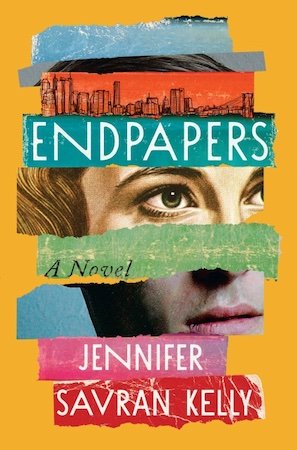
My debut novel Endpapers explores this idea from the point of view of Dawn Levit, a genderqueer bookbinder and artist who finds a love letter hidden under the endpapers of a mid-century book she’s repairing. The note is written on the back of a torn-off cover of a 1950s lesbian pulp novel with an illustration of a woman looking into a mirror and seeing a man’s face. As Dawn struggles with her own gender identity, her romantic relationship, and her artist’s block, she becomes obsessed with tracking down the author of the letter, hoping it will help her understand herself and get her life on track. 

These 9 novels are about people searching for connection and what happens when we believe another person holds the key to a meaningful life and sense of self. What happens when we find—or don’t find—what we’re looking for? 

Memorial by Bryan Washington

This breathtaking novel is told from the alternating points of view of Benson, a Black daycare teacher, and his boyfriend Mike, a Japanese American chef. As the story opens, their relationship is already strained and Mike is preparing to leave for Osaka to see his estranged father, who’s dying. He doesn’t know when he’ll return. Benson is left behind to host Mike’s mother, who he’s never met, while Mike reckons with a father and a country he’s never had opportunities to know. It pulls both him and Benson in directions neither of them anticipated.

The Leavers by Lisa Ko

On an otherwise normal day in New York City, 11-year-old Deming Guo’s mother Polly, an undocumented Chinese immigrant, goes to work at a nail salon and never returns. Deming is adopted by a white American family and renamed Daniel Wilkinson, but his search for his mother and the culture of his childhood doesn’t end there. Told from the perspective of both Deming and the fiercely independent Polly/Peilan, who aspires above all to retain the control she’s gained over her life, this novel explores the cruelness of American immigration policies by immersing us in a deeply personal saga about the strong bond between parents and children.

The Vanishing Half by Brit Bennett

Twin sisters Desiree and Stella Vignes are identical, down to their dream of escaping their hometown where their father was lynched when they were children. But one day Stella disappears, shedding her ties to both her sister and her childhood life to secretly pass as white. Desiree stays behind to raise her Black daughter, but she embarks on a decades-long search for her sister that culminates when circumstances bring their daughters together. In this sweeping multigenerational saga, Bennett navigates race, identity, and the influence of history and family on our understanding of who we are.

The Likely World by Melanie Conroy-Goldman

Conroy-Goldman comes out swinging and doesn’t let up in her incredible gut punch of a debut. Mellie is a single mom battling her addiction to the fictional drug cloud, which has destroyed her short-term memory and her knowledge of her baby’s father along with it. When a strange man shows up in her driveway, Mellie becomes obsessed with tracking him down, believing he holds the key to the life and self she no longer has access to. But she fails to anticipate the danger her search ends up posing to herself, her daughter, and the sponsor who’s been helping them build a new, healthier life.

Let’s Get Back to the Party by Zak Salih

In Salih’s highly thought-provoking debut, it’s 2015, weeks after the Supreme Court has ruled gay marriage to be legal. Estranged childhood friends Sebastian and Oscar run into each other at a wedding, and while Sebastian craves connection over their shared history, Oscar has no interest. He’s too disgusted by what he sees as the death of gay culture: conformity and assimilation. As both men struggle to understand their place in an evolving world, they latch onto new friendships that border on obsession—Sebastian with one of his students, whose sense of freedom he envies, and Oscar with a revered gay novelist from the AIDS era. 

Singer Distance by Ethan Chatagnier

As 1960 draws to a close, Crystal Singer, her boyfriend Rick, and three MIT grad students drive out to the dessert to send a message to Mars, which has been silent for 30 years. But the weight of the mathematical understanding that allows Crystal to communicate with aliens also threatens her stability. Soon she disappears, setting Rick on a years-long path to find her. A book about chasing connection across the galaxy and across Earth, Singer Distance is a story of love, loneliness, and hope, mixed with insights about science, math, the universe, and who we are once we discover the truly complex nature of distance—between points and between one another.

The All-Night Sun by Diane Zinna

Lauren Cress lives two lives: the kind, intelligent college writing teacher and the lonely, grief-struck child still suffering the loss of her parents from ten years earlier. Then she meets her new student Siri, who possesses all the self-assurance, talent, and charm that Lauren believes she herself lacks. Drawn to the sense of belonging Siri offers her, Lauren throws herself into an intense and inappropriate friendship with her student, even accepting an invitation to join her on a trip home to Sweden for the summer. But the disturbing events that unfold there force Lauren to reckon with her own past and everything that’s been holding her back.

Fight Night by Miriam Toews

The latest brilliance from Miriam Toews gifts us quick-witted, audacious nine-year-old Swiv. After getting suspended from school over a fight, Swiv is stuck at home caring for her equally spirited but ailing grandmother, Elvira. As Swiv and Elvira turn homeschooling into an adventure, Swiv writes an ongoing letter to her father, who went missing years before. She never sends it, nor does she understand why he left to begin with, but she writes in the hope that he’ll eventually return—and also to process her fears about who she’ll become with a pregnant mother whose volatile emotions suggest she might be losing her mind and a grandmother who could die at any time. Ultimately, however, it’s Swiv’s mother and grandmother who show her who she is: one of a line of women who’ve risen up from great challenges to fight for a meaningful life.

Detransition, Baby by Torrey Peters

Reese, a transwoman approaching her mid-30s, has been in a tailspin ever since her girlfriend Amy detransitioned to become Ames and their relationship ended. While Reese searches in all the wrong places for happiness, the thing she wants most—a child—gets further and further out of her reach. Meanwhile, Ames’s boss and lover, Katrina, gets pregnant. Ames is not ready to commit, either to Katrina or to life as a father, which would feel untrue to his gender identity, and Katrina doesn’t know if she’ll keep the baby without a partner. Seeing a chance to revive his connection with Reese and to live in a way that feels more authentic, Ames proposes the three of them become a family and raise the baby together. What ensues is a complicated and beautifully messy exploration of how these three women might entwine their lives to fulfill their own and one another’s deepest desires.

Trying on Alternate Selves at the Abandoned Mall

Shipwreck

The mall my mom took me to in a stroller shut down
a shutdown mall is the opposite of a pelican—
it feeds nothing with its body
dies like a politician, taking servants with him

that fountain for pennies is now broke and dry,
the atrium where my mother bought me slurpies
must look like a shipwreck now; half the stores
didn’t have lights on when I gave myself brain freeze.

The light in a mall is unearthly, makes me feel like a bug
caught between the god of a light bulb,
and the smooth glass of his church,

once, in a mall, I stepped with timid feet into the men’s section
I felt the three colors of fabric in my hands and put on the shirts
that have the give of an octogenarian helping his spouse ease into a coat

I avoided the eyes of teenage boys, who must scare themselves with categories
the man behind the counter had surprised eyes, but didn’t say anything
salespeople have always been the priests of transition
and I wondered what he would do when the mall shut down

At the bottom of the ocean, gender is inconsequential
fish swap it out like fashion,
swim from one section of a shipwreck to another,
and strip all us humans of our meaning

Hubcap Hunting

One March, my mom lost a hubcap
on her cherished red Corolla, standard shift.
We drove around Columbus looking for it.
She parked on the shoulder of a busy road,
waded ankle-deep in mud, It’s mostly decorative!
she yelled at my anxious face, hoisting up
homeless hubcaps holding them up, like an artist,
like an interior decorator
propped them on the stems of stop signs,
someone will come looking for them
she nodded imperiously shifting gears—
poor Serenity Prayer! The middle child.
Serenity Prayer buckled next to me,
throwing a fit, kicking the driver’s seat.
Me and Serenity Prayer laughed together
hubcaphubcaphubcap what does it mean?
What’s it for? I think mom’s going crazy
and Serenity Prayer and I play Punch Buggy
but Serenity Prayer always punches too hard.

8 Novels About How Work Seeps Into Our Personal Lives

I can’t be the only one who, when recalling the major contours of my life, ends up also automatically recalling the type of work I was doing at the time. After all, no matter what else might have been happening during a given period—heartbreak, grief, spiritual crises—it is likely that I was still spending the majority of my waking hours working. At a certain point then, it becomes both impossible and pointless to try to disentangle our relationship to work from our wider existence as social, erotic and political subjects. For better or worse, it is hard to illuminate the true texture of a life without also accounting for the type of work we do, and under what conditions of duress of freedom we undertake it. 

Considering this, alongside the more fundamental observation that most people spend the bulk of their waking life at work, exchanging their time, their health and their bodies for enough money to meet life’s necessities, like food, shelter, warmth and a modicum of social participation, it’s fair to say that, until recently, the quotidian details of labor have been curiously absent from most contemporary literature. There are lots of reasons why that might be the case. The socio-economic positions of those producing the majority of art, perhaps. The fact that, overall, the novel remains a primarily bourgeois form.  Or maybe just the fact that most jobs are boring enough to do, let alone to read about. Thankfully, things seem to be changing. 

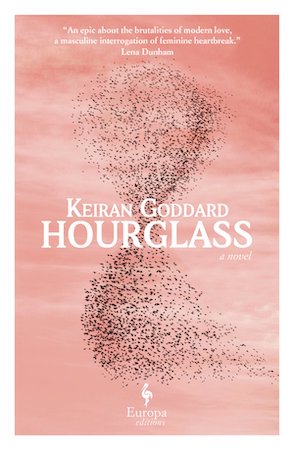
My debut novel Hourglass, although primarily a love story, tries to touch on contemporary labor in a way that acknowledges its continued centrality to the lives of most people. Not just in terms of how we spend our days, but also in terms of how the wage-labor mechanism shapes, reshapes, and ultimately misshapes our social, psychological, sexual and spiritual makeup.  And while Hourglass may be slightly unusual for a novel, in that it addresses the issue of work in a directly ideologically manner; it is certainly not alone in highlighting the many ways in which work and the workplace directly influence our inner and emotional worlds. In fact, I have been struck by how many recent novels deal with these topics in powerful and evocative ways. These are eight of the best:

The War for Gloria by Atticus Lish

Lish’s second novel, following the award-winning Preparation for the Next Life, The War For Gloria is a fierce reckoning with masculinity and loss. It follows a teenage boy, Corey as he cares for his terminally ill mother. In the process, Corey bounces between a raft of cash-in-hand manual labour jobs, initially itinerant and unreliable, necessity sees Corey’s attitude to work shift and morph as the novel progresses. Absent a stable father figure, Corey begins to seek guidance from the older men on the building site, and we also begin to see his dexterity as a laborer increase in lockstep with the physical confidence he attains via martial arts training. Corey’s body temporarily flourishes under the yoke of manual work, even as his own mother’s ebbs away, heartbreakingly shunned and humiliated by the world of employment now illness has rendered her economically unviable.  

Bad Girls by Camila Villada, translated by Kit Maude

Villada’s novel is a stark, but often poetic, portrait of a chosen family of “travesti” sex workers. Led by matriarch Auntie Encarna, the group discover an abandoned child that they decide to collectively care for and raise, generating unwanted attention from locals in the process. What is perhaps most striking about this book is the ways in which it sits broadly apart from Eurocentric debates about gender and also sex work. Instead, we see something less theoretical and more elemental; the vital role of interpersonal solidarity in the face of a hostile and hypocritical world, and the complex economic and emotional realities of existing in the grey areas of a broken system. 

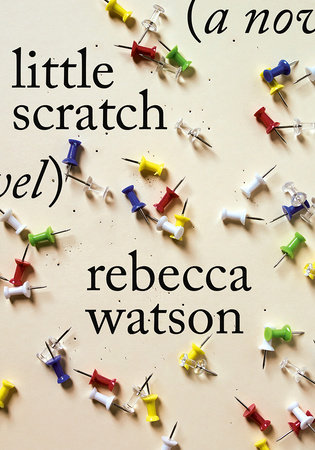
little scratch by Rebecca Watson

Lazily described by many reviewers as “experimental,” this does a disservice to the emotional clarity and intellectual directness of Watson’s debut. The novel uses a fragmented system of dual narration to explore both the deadening rhythms of contemporary office life and the tumbling, occluded recollections surrounding a sexual assault. The novel is particularly astute in capturing the highly codified emptiness that saturates so many bullshit jobs, and then contrasting it with the halting, elliptical, digressive cadences that characterize the inner world of the people who spend their lives doing them. 

Unfinished Business by Michael Bracewell

A quiet, meditative mood-piece, Unfinished Business tells the story of Martin, a once semi-glamorous man about town, whose life has gently dwindled to a state of repetitive, isolated mundanity. There is something dream-like in how we learn about Martin’s journey from fashionable flaneur to middle-aged office worker, trapped in a hamster wheel of commuting and solo dining in soulless restaurants. Martin is a man out of time, and no more so than in the case of his job. The reader gets the sense that the world has passed Martin by, and that he no longer understands precisely what his job is, let alone how to do it well. There is a grim inevitability to the way in which he is ultimately deemed to no longer be of sufficient use nor sufficient ornament. 

In the Seeing Hands of Others by Nat Ogle

A structurally innovative novel, Ogle’s debut is constructed from a patchwork of documents, blogs, character references, voicemails and internet comments. Ostensibly a book dealing with a life-altering act of sexual violence and the many ways in which it is metabolized by both the victim and the perpetrator, it is also a novel that grapples with the societal importance of care work. Protagonist Corina is a nurse, and is also caring for her ailing mother. It is in the moments where Ogle blurs the boundaries between caring as a professional duty, regulated and remunerated, and caring as an impulsive human instinct that we see how truly promising a writer he is. 

Last Night at the Lobster by Stewart O’Nan

A slim, elegiac novel, Last Night at the Lobster depicts the final night before a Connecticut lobster restaurant closes its doors for good. It’s very much a “not with a bang, with a whimper” situation; snow means the final shift is slow to the point of being almost eerie, and the majority of the soon to be unemployed staff don’t bother to show up. O’Nan is particularly skilled at capturing the heaviness and monotony of service work, how often workers are treated poorly by both the corporate overlords they never see and the nightmare customers that they very much do. 

The Country Life by Rachel Cusk

This early novel of Cusk’s is a perfect satire of the ways people aim to change themselves simply by changing their profession. It follows Stella Benson, a woman in her late twenties who decides to leave behind city life and move to a quaint British village to take up a position as an au pair and carer for the disabled son of a wealthy family. Cusk is a master at capturing and skewering the pretentions of class that too often end up shaping the power relations within the workplace. And the fact that in this instance the workplace happens to be a family home provides particularly rich and morally ambiguous source material. 

Christie Malry’s Own Double-Entry by B. S. Johnson

It’s half a century old, but the penultimate novel by much neglected British avant-garde genius B.S. Johnson remains remarkably prescient. Johnson is razor sharp on the ways in which the logic of the workplace can seep into our everyday lives, warping and distorting it in the process. Marly is a simple soul, he likes women and money, but after learning the art of double-entry bookkeeping (a two-sided method in which every entry requires a corresponding opposite entry to a different account), he decides to apply the methodology to his own life. The results, while occasionally grimly comic, are predictably destructive. A scathing satire on the hyperrationality of capitalism’s means and the ways in which they simultaneously occlude and justify any number of violent ends. 

Booktails from the Potions Library, with mixologist Lindsay Merbaum

In Hari Kunzru’s electrifying novel White Tears, Seth is a socially awkward, nervous, and frequently desperate youth. His only friend is Carter Wallace, an affable trust fund kid who DJs all the best parties on campus. The unlikely pair are united by an all-consuming passion for recording music, taking clinical precision to a magical level: “There are ways you can use a studio. Things you can do that open up impossible spaces in the mind. You can put the listener in a room that doesn’t exist, that couldn’t exist. You can put them in an impossible room.” Seth and Carter open their own recording studio in New York City right out of college, all of it funded by the Wallaces and their empire of correctional facilities. As young white men who fixate exclusively on Black artists, they quietly persist in the belief that their love of the music entitles them to a piece of the culture that made it.

For Carter, that piece is records. He goes to great lengths and drops an obscene amount of cash on his collection. When Seth uncovers a mesmerizing song he unwittingly recorded while wandering the city, the search for the song’s origin leads both friends down a tortuous path. As Carter unravels, then languishes, Seth sets out on a road trip to Mississippi, following a trail laid out decades earlier by another hunter. But shadows close in, time begins to fold. Identities become porous, boundaries shifting or vanishing altogether: “There is no clear border between life and non-life. Once you realize that, so much else unravels.” This record is much more than a piece of music produced by a master musician. Pain and rage follow it and ruin comes to all those who try to possess it.  

White Tears probes one tiny bud of slavery’s monstrous tree–the origin of a song. From there, a whole legacy of active and passive violence is exposed, one whose roots and leaves alike touch every part of US culture, so omnipresent as to be invisible to those afforded the privilege of blindness, or indifference. In turn, the novel reveals hatred and greed to be their own kind of spirits, and just as enduring as ghosts. 

Bourbon serves as the base of this booktail, a nod to the juleps served poolside at Cornelius Wallace’s conspicuous consumption-themed promotion party. In contrast, Seth also orders bourbon he doesn’t want at a fateful morning meeting at a sticky bar supposedly famous for its piña coladas. The man he sees there tells a horrifying tale of a journey Seth himself will soon take into the South, with sweet tea along the way. Not too long after, one of the Wallace company lawyers sips iced tea as he expertly bullies Seth into signing his life away. Adding sweetness and a floral note that complements the tea, lavender syrup references the folding of timelines and experiences, and longed-for comforts: “In my stifling little room that does not smell of lavender.” Finally, charred cedar bitters add a smokey, bitter note for a rare, portentous cabin with a cedar roof. 

This booktail is presented against an institutional-gray brick facade, with a textured white brick base. Set against this minimalist grayscale backdrop, the book title’s red lettering stands out, complementing the amber of the drink, served straight up in an elegant rocks glass. The glass is embellished with a simple white textured pattern that resembles a net. Both the book and cocktail are caught in the halo of a spotlight, suggesting a staged performance, pursuit and capture, or a secret, exposed. 

White Tears

Ingredients

  • 2 oz bourbon 
  • 1 oz Earl Grey or other black tea 
  • 0.5 oz lavender syrup (see recipe below)
  • 1 full dropper of Black Cloud charred cedar bitters 

Instructions

Prepare the syrup. Once cool, fill a mixing glass halfway with ice. Add all ingredients and stir until well-chilled. Strain into a rocks glass. Serve straight up, or on the rocks if desired. 

Lavender Syrup

Ingredients

  • 1 cup water
  • 1 cup sugar
  • ¼ cup dried organic lavender

Instructions

Stir all ingredients together in a small pot, then bring to a boil. Simmer for 15-20, stirring occasionally. Once cool, strain and discard solids. Store in a glass bottle or jar. Keep refrigerated.

8 Long-Awaited Follow Ups to Beloved Books

The last few months have been an exciting time in the world of publishing, not only for the litany of debut novel and short story collection releases, but also for the publication of two long gestating, highly anticipated projects by Cormac McCarthy and Katherine Dunn. The 89-year old’s first book since 2006’s Pulitzer Prize winning The Road, November saw the release of Cormac McCarthy’s The Passenger, which follows a salvage diver haunted by his father’s contributions to the invention of the atomic bomb (a companion novel, Stella Maris, was released in December). Meanwhile, Katherine Dunn’s posthumous novel, Toad, explores the grotesque, brooding reflections of an isolated woman who has purposefully cut herself off from the rest of the world, and represents the author’s first release since 1989’s cult-sensation Geek Love.

The long gap between publication dates for these two beloved authors is a far cry from the output of, say, a more prolific author like Stephen King (who, since the publication of his 1974 debut, Carrie, has published an average of 1.6 books a year!). From poetry to novels to short story collections, below are eight other literary works that serve as long-awaited follow-ups to their beloved predecessors, organized in descending order from the longest to shortest gaps between releases. 

Go Set a Watchman by Harper Lee (55-year gap) 

Published fifty-five years after Harper Lee’s first novel, the author’s ostensible To Kill a Mockingbird sequel, Go Set a Watchman, is the product of the largest gap between publication dates on this list. The novel was besmirched by controversy even before its 2015 release, with questions surrounding the authenticity of its alleged status as a stand-alone novel (and not, say, an unedited early draft of To Kill a Mockingbird itself) as well as the ethics behind HarperCollins’ decision to publish the novel in the first place, given the uncertainty around Harper Lee’s ability to give informed consent for the book’s publication. Critics and fans alike were largely disappointed in the long-awaited return to Maycomb, which found a now adult Jean Louise “Scout” Finch reckoning with her beloved father’s racism.  

Exhalation by Ted Chiang (17-year gap)

Published in 2002, Ted Chiang’s Stories of Your Life and Others has risen to the pantheon of great short fiction collections, appearing on The Guardian’s List of 100 Best Books of the 21st Century, and inspiring the Best Picture nominated 2016 film, Arrival, directed by future Dune director Denis Villeneuve. Fans were understandably anxious for the release of Chiang’s follow-up collection, 2019’s Exhalation, which was included on Barack Obama’s Summer Reading List and named a top ten book of the year by The New York Times. “I think my interests have remained fairly consistent over time,” Chiang told GQ, regarding how his thematic concerns had evolved in the seventeen years since the release of his first collection. “Themes like free will and the relationship between language and thought were visible in my first collection, and they’re visible in Exhalation as well.”

Deaf Republic by Ilya Kaminski (15-year gap)

“When [my first poetry collection] Dancing in Odessa was published, I had already been living in the United States for eleven years,” Ilya Kaminski told The White Review in a 2019 interview. “I had to ask myself: what am I going to do next?” Published fifteen years after his debut poetry collection, the Ukrainian-born poet’s follow-up, Deaf Republic—a stunning collection of lyric poems formatted as a two-act play—took many different forms, both finished and unfinished, in the drafting stage before the final version. “Some of it felt too American, some too Ukrainian. But I love the border between the two, so to speak,” Kaminski explained. “So I knew the book wasn’t done until it felt honest to both sides of this experience.” 

Shadow and Act by Ralph Elison (14-year gap)

The second of only three books published within his lifetime, Ralph Elison’s essay collection, Shadow and Act, was published fourteen years after his novel, Invisible Man, established him as an essential and celebrated author. The essays included in this collection explore literature, music, politics, journalism, and cityscapes, transforming, as Elision notes in the introduction, “some of the themes, the problems, the enigmas, the contradictions of character and culture native to my predicament, into what André Malraux has described as ‘conscious thought’… these efforts are a witness of that which I have known and that which I have tried and am still trying to confront. They mark a change of role, a course, and a slow precarious growth of consciousness.”

Mortals by Norman Rush (12-year gap)

It took Norman Rush over a decade to write Mortals, his 2003 follow-up to his 1991 National Book Award winning novel, Mating. The book—which concerns an American anthropology student living in Botswana who believes his wife of having an affair on him—took so long to complete, in fact, that Rush promised his wife that his next book would be no longer than 180 pages and would be completed within two years. “I completely betrayed her,” Rush told The New York Times, shortly after the publication of his next book, 2013’s Subtle Bodies (which clocks in, it should be noted, at 241 pages). “My debt to her, in art and in life, grows however much I put against it.” 

The Goldfinch by Donna Tartt (11-year gap)

Clocking in even longer than the gap between her previous two books, The Secret History (1992) and The Little Friend (2002), Donna Tart took eleven years to publish her coming of age novel, The Goldfinch, which follows a teenager who survives a terrorist bombing at an art museum. In the decade plus leading up to The Goldfinch’s publication, speculation swirled that Tartt was suffering from writer’s block, and even that, in her creative frustration, she had taken to living alone on a desert island. “I couldn’t have written this book any faster,” Tartt told Harpers Bazaar shortly after The Goldfish’s publication. “For the last three or four years I was working at a breakneck pace…Really, I wasn’t writing a few lines before lunch and drifting off to do something else.”

The Buried Giant by Kazuo Ishiguro (10-year gap)

Ten years after Never Let Me Go, Kazuo Ishiguro at last released his follow-up, The Buried Giant, a fantasy novel set in post-Arthurian England, in a society in which individuals do not possess a long-term memory. The book took Ishiguro significantly longer to write than he had anticipated, as his wife’s rejection of the original manuscript set him back to the drawing board. “She looked at it and said, ‘This will not do,’” Ishiguro told The New York Times. “’I don’t mean you need to tweak it; you need to start from scratch. None of this can be seen by anybody.” Ishiguro took her advice, shelving the project for six years before starting over from the beginning. 

Doña Cleanwell Leaves Home by Ana Castillo (9-year gap)

27 years after the publication of her first collection of short stories, Loverboys (and nine years after her most recent novel, Give It To Me), celebrated Chicana author Ana Castillo returns to short form fiction with a new collection of short stories, Doña Cleanwell Leaves Home, which is forthcoming this May from HarperVia. Featuring dazzling prose that explores domestic landscapes from Chicago to Mexico, the stories in this dazzling new collection interrogates the history and secrets that are held within homes, and the women whose lives are most shaped by them.

I Learned I Was Pregnant Right After Publishing An Essay About Not Having Kids

Last December, with some hesitation, I posted a personal essay I’d written for Racquet Magazine on Facebook, Twitter, and Instagram. The piece examined why Serena’s retirement from professional tennis, in order to have another child, had prompted an existential crisis for me. Serena and I are both 41, and her sadness around the word “retirement” echoed my own sadness around the word “motherhood.” While I came to no firm conclusions, I ended the essay suggesting that my husband and I would likely not have children, given my age and our ambivalence, despite family and social pressures to reproduce. 

One week after posting the article, I found out I was pregnant. 

I knew I would be okay without kids, even if a twinge of sadness remained.

I had initially written the piece in early August, when Alejandro and I were still in the will-we-won’t-we throes of removing my IUD and playing pregnancy roulette. Writing the piece felt like finding solid ground after trudging through a steaming, buggy, couples-therapy swamp. After finishing it, I knew I would be okay without kids, even if a twinge of sadness remained. Still, in September, that very twinge led me to remove the IUD and roll the dice. We decided we would try for six months, a year at most, and then pat ourselves on the backs. 

When I posted the article, a week before Christmas, I was smarting from all the photos of young families on Facebook, and what I knew would be the inevitable round of questions about my childbearing desires at holiday parties. I captioned each post as a semi-manifesto. On Instagram, I wrote “As a childless woman at 41, I’m constantly fielding inappropriate questions from total strangers about having kids. It was healing to find my truth on the page instead of stammering something at a cocktail party.” On Facebook: “There’s a lot of pressure on women to not just have kids but to unequivocally want to be a mother. In this time of holiday cards and families posing together, I’m sending love out to those women who are on the fence and whose photos might look way different.” And on Twitter, I leaned even more provocative: “When a woman feels new life stirring inside, does it always have to be a baby?”

I felt like I had made some sort of declaration, that I had finally side-stepped the pitying looks from mothers when I said I didn’t have kids. But what had I declared, exactly? By claiming temporary childlessness (which is so often treated as temporary insanity), I had simply admitted that I didn’t know what I wanted, but I was tired of feeling ashamed. In the days after posting, I basked in the glow of my friends’ praise and congratulations, for another creature I had birthed: my essay. I made plans with an acquaintance I met in Spanish lessons to grab a drink in the new year and talk more about the subject. She, too, had huge doubts about having kids, even though she was ten years younger, and had been relieved to find companionship in my essay.

I’ve avoided setting up that meeting with my Instagram friend, worried she’ll see me as a hypocrite, a lost ally.

But holding the positive pregnancy test in the bathroom a few days later, even before going down to tell Alejandro, among the waves of excitement, fear, dread, and joy, I felt that old stand-by, shame. I had just gone on the record as (probably) not having kids. Now I was switching sides? And, indeed, the first person we told, Ale’s sister, after shrieking and congratulating him, asked: But what about the article?

What about the article? 

In the weeks since, as I’ve found myself repeating my justification, which is nothing but a shrug, it’s made me think about the nature of personal essays as both truth-seeking and deeply contemporary: they land somewhere, for a moment. Perhaps, for the writer, that moment will stretch to the end of their life. Perhaps, as with me, the truth of that moment will be disrupted by another emerging truth, one week later. I’ve avoided setting up that meeting with my Instagram friend, worried she’ll see me as a hypocrite, a lost ally. I’ve felt similarly disheartened when childless female friends have changed their minds. It can look, from the outside — and feel, from the inside — like you caved. 

It doesn’t feel like you’re allowed to say that a miscarriage may come, in some small manner, as a relief.

But what if truth is always carving its way in us, rather than blowing us up like a balloon? So far, my seven and a half weeks of pregnancy have been horrible. Constant nausea and exhaustion, among other digestive mishaps I won’t gross you out with. Yesterday, at my first ob-gyn appointment, the ultrasound revealed that one reason for my extreme discomfort is that I am carrying twins—but one appears to be vanishing, a smaller sibling with a slower heartbeat that will likely not survive.

Having lost my only younger sister, staring at those two pulsing sacks on the screen felt like a grotesque parallel to my own tragedy, nearly thirty years ago. It’s called “vanishing twin syndrome,” and most women don’t even know that they are carrying another twin, which is absorbed into the placenta. Next week, I will go back for another ultrasound, to check the viability of both embryos.

What do I want now? I don’t know. Part of me yearns for the smaller one to make it, even though I am terrified by the idea of twins. I will also be relieved to see that the healthy embryo is newly solitary there, blinking its heartbeat at me. And, wrenching as it is to say, I will also be okay if I emerge from pregnancy without a child, even though I know I will still grieve. I am still that woman who wrote that essay about her ambivalence, and her more extreme inner sister, the one who never wanted children. In America, as a pregnant woman who has decided to go through with the pregnancy, it doesn’t feel like you’re allowed to say that a miscarriage may come, in some small manner, as a relief. Especially when you have that thought in Texas. 

For the next week, and the next weeks, I will not know what fate has in store for the scant beings within. That, too, is like the truth. It emerges and recedes. It dawns and dreams and dims, just like consciousness. Personal essays are the ultrasounds of our psyches, a blurry image that is both illuminating and limited in what it can promise and predict. My thoughts and my heart and my embryos are where they are right now. Next week, we will be somewhere entirely new.

Growing Up in Between White and Black America

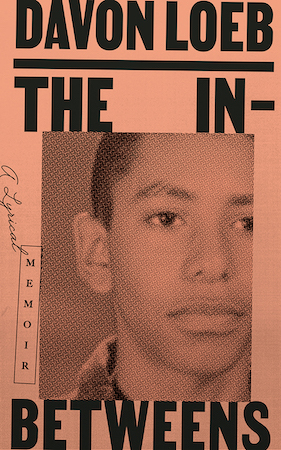
Davon Loeb’s debut memoir The In-Betweens follows the story of his childhood, adolescence, and early adulthood as a biracial young man growing up between various cultures, races, and identities. Loeb grows up with a Black mother and a white, Jewish father. In school, he is one of the few Black students in a primarily white New Jersey suburb, and at home with his mother, he’s the only one of his siblings who is half white.

Throughout the story, Loeb struggles to fit into his communities, always feeling a sense of difference and disconnect. Belonging to multiple different worlds, Loeb reckons with his family history on both sides, reflecting on his Jewish identity as well as his Black identity. As he grows, he begins to define what race, culture, and masculinity mean for him. 

Lyrical in its storytelling, The In-Betweens begins as a narrative of a young boy piecing together his childhood in a series of short, poetic essays. Loeb plays with language and memory, bringing together a tale that gets more grounded as it goes on, reflecting the narrator’s growth and assuredness as he gets older. And within Loeb’s own story, we get the stories of those who played a significant role in his life. His mother becomes one of the most important figures in the book, shaping him into a man and teaching him what it means to be Black in America.

The In-Betweens comes at a time when race and identity are fraught issues in this country, and in our political climate, where even teaching about race is becoming criminalized, a book like this is even more important. While Loeb’s story is personal, it is also highly universal, telling the stories of so many kids who have never had their stories told.

I spoke with Loeb over Zoom to talk about some of the major themes in his memoir and what he hoped readers would take away from the book.


Deena ElGenaidi: Your memoir is called The In-Betweens. Can you talk about what it means to be “in-between” and what aspects of that idea you hope readers will resonate with?

Davon Loeb: Initially, I remember thinking about the title of the book as those category boxes we had to check when we were taking a standardized test as a kid, thinking about how I’m a kid in a room, mostly with faces that didn’t look like mine, feeling like I had to pick a box. The box always said, “Check one.” You could never check more than one. There was this authority coming from whatever the standardized test was telling me, saying I had to pick a race. And as I’ve moved through my life as a Black and white, heterosexual, able-bodied man, I’ve felt more in between spaces than a part of one. 

I’m neither fully Black nor fully white. I lived in a community that was all white, and yet I was part Black, but at home, I was the only one in my family who was half white. I have always felt like I’ve never fit into one category. I think if we strip race of that idea, and we strip whatever subjectivity there is—gender, sexuality, socioeconomics, religion—in many ways, we all feel in between, depending on what it is we’re struggling to fit into. And that’s important. While I’m an in-between because of my race, my culture, and the color of my skin, so are many of us. So are all of us.

DE: Well, like you said, race plays a large role in this book, and it’s an additional way to show your in-betweenness. You talk about being mixed race and being one of the few Black students at your primarily white schools. From what you’ve seen in your time as a teacher, do you think these experiences have changed for kids today? And why is it important to write about those experiences, especially in our current political climate?

DL: I think it depends on the communities. In New Jersey, for example, the teacher population racially does not match the student population, even if you’re in a diverse community. We just don’t have many teachers of color. So I don’t think that has changed much. 

In many ways, we all feel in between, depending on what it is we’re struggling to fit into.

In New Jersey, we do have a law that you have to teach diversity and inclusivity, which is great. But the majority of that curriculum is not being taught by diverse teachers. No matter if the teacher is the greatest teacher in the world, there’s going to be a disconnect when you’re teaching about diversity, and yet not by diversity. 

Ironically, I teach in the same district that I grew up in. I love where I grew up, and you can see that so much in the book. There is this sense of duality in that I love the Pine Barrens, and I had great experiences as a kid, but I also didn’t. They had Confederate flags at our football games. Even today, not much has changed. What I do think has changed, however, and what I think is even more important, is that the books the kids read are by people of color, queer writers, writers of different religions. So while the teacher population hasn’t changed, I do think that there’s an increase in books by writers of color.

DE: Do you feel like the culture has changed with the kids since you were in school?

DL: I could say in some ways, it has changed. There is more diversity in some of the suburban South Jersey communities. But at the same time, I think because of what has happened politically in the last five to six years, you could argue that it’s almost been amplified, which is why I think books like mine and books by writers of color are even more important.

DE: There’s also a lot of scenes that have to do specifically with masculinity, and you as a child trying to fit into what other people around you think a man is supposed to be. But as the story goes on, you begin to define masculinity on your own terms. Could you talk a little bit about how the people around you defined masculinity, what you took from it, and why it was such an important theme in the story.

DL: Actually, I think I had a little criticism about the masculinity that’s been shown in the book. Part of it is when I’m a kid, the narrator almost feels complacent to the masculinity. But it’s because he’s a kid. He’s still trying to construct his ideas. The masculinity is often showed physically through fighting, through strong bodies. And then as we move through the book, the narrator is still trying to figure that out. 

There’s a chapter called “5-Series BMW,” which is really jarring. It’s about the narrator’s stepfather working on a car, and he makes a bunch of crude statements about the car being like a woman. There could be a push to pull into those scenes and really try to be more expository in the writing and really challenge it, but I don’t, in the sense that the narrator doesn’t challenge it. The narrator doesn’t understand what’s right or wrong yet. And then we move into another chapter, which is intentionally supposed to show toxic masculinity at its worst. It’s the chapter “Not the Worst of Boys,” which shows how these young boys, when they’re teenagers, have such a gross understanding of girls. I felt like it would be too easy to write myself neatly, to write myself as the narrator in a way where I look like the hero. But the narrator wasn’t the hero. The narrator did as much wrong as the other characters. That’s what toxic masculinity is, and I think it would be unrealistic for the book to arrive at what masculinity is when the narrator still doesn’t know yet. The narrator is still coming of age, and that reflects society — this is what boys are taught.

DE: That was a particularly interesting chapter because there is a sense that the writer knows the behavior is wrong, but at the time, that reflection wasn’t there for the narrator, and I think it played with that pretty nicely.

DL: It was hard. It was really uncomfortable to write that—to go back and relive it—but in no way as uncomfortable as it must be for someone to experience it on the other end. I have a chapter where I’m learning how to do manual labor by women, and I think that was my attempt to show masculinity rather than just to talk about it.

DE: That actually leads to my next question. There are a lot of women in the story that play a pretty important role. You have your mother, your maternal grandmother, and then later on your paternal grandmother, who sort of in her lack of presence plays a role. What do you want readers to take away from the role of women in the book and how those women shaped you as the narrator?

DL: In many ways, in real life, my mom has shaped me into who I am, especially because my relationship with my real father and my stepdad is somewhat and can be contentious. But I also think that it is the nature of the family in which I grew up. Sometimes, Black families have these strong women who are our narrators, who are storytellers, and who are trying to build these young men into good young men. 

I didn’t have any teachers that looked like me or any books written about stories like mine. And I think so many of us are looking for that.

There’s a chapter about my mom telling me that if I get in trouble, my white friends are going to have different consequences, and how she feels this fear every time I go out. I wanted my mother to be as much of a character as everyone else. 

I really like—and I haven’t had that conversation with anyone—how my paternal grandmother has played a role in the book. It doesn’t seem like there’s much, but I think there’s this sense of the narrator trying to find love through her, even though he doesn’t find it.

DE: Your mother also feels like such an important presence throughout the entire memoir, even when she’s not physically present. We hear her voice through the narrator. When you were writing the essays, how did you think about or envision your mother’s role as a character in this story?

DL: I wanted to show her in a way where she grows with us. She starts off as a poor Black woman who is trying to find herself and her independence. She’s this frontier woman. As we move through the narrative, her voice does get more cemented into the storytelling. She is part of the character building of herself, and also of me.

It actually wasn’t that hard to write her into a character. I think I was scared because it’s my mom, but I think I do it in a way where she is presented fully and dynamically. She’s a hard-working Black woman who did her best to raise a young Black man who didn’t know how to navigate the world on his own. And I think that she succeeded.

DE: Another interesting part of the book is when you try to connect with your Jewish identity. You come to this realization that even though your mother isn’t Jewish, and you weren’t raised Jewish, it’s a part of who you are. So for people who haven’t read your book yet, can you explain what led to that interest in that part of your identity and how that changed over the years?

DL: In storytelling, I’m always about using singular events. And sure in life, there’s more than one event that makes us think, “What’s my story? What’s my family history?” But in the book, I talk about this experience of going to the Holocaust Museum in DC when I’m in high school, and that really was a pivotal moment in my life when I felt connected to something other than what I grew up with. 

What’s interesting is that when I would go somewhere with my dad, who’s white and Jewish, I almost felt like the world looked at me differently. Navigating going to the movies or going to a diner with a man who was white and seeing how he navigated through the world felt different. But because I only saw him sparingly, there wasn’t a consistent “this is my family. This is who I am.” But going to that museum, I felt connected to something other than myself. So it really wasn’t until leaving high school and going to college, into a more diverse town, that I started to embrace my family. Then after I lost my grandmother, I felt more connected to her. 

DE: I want to go back to the beginning of the book. You start off before you were born, with your mother and father’s romance story. Why did you make that choice? And what was it like writing about this past that you weren’t a part of, but essentially was your origin story?

DL: It was uncomfortable in the sense of trying to imagine my mom and my father like that, but in a mature way. I had fun telling it, and I think the language is supposed to reflect romanticizing this relationship. But it also was hard to write because I’m shedding some serious personal experiences on the page, and I’m not only making myself vulnerable, but I’m making my parents vulnerable.

I think it’s hard to write about parents, but I felt like it was the most appropriate place to tell a story about two people who loved each other and were in an in-between in themselves and their relationship, and also as a Black woman and a white man in the ‘80s. Even then, which doesn’t seem that long ago, but I guess it is, their relationship was difficult on many different levels. So I think in order to understand who the narrator is—to really understand his identity—we have to start before he’s there.

DE: What is the biggest thing you want readers to take away from this memoir?

DL: Most of the readers right now are going to be adults, but I just think about being a kid and never reading anything like this. I wrote it for the kid I used to be. Kids of color don’t have many books written by them. And even kids who are in-between don’t have many books about their stories. I just think it’s so important to show that we’re all connected, even when we’re not. I just imagine a room full of kids reading this book and saying, “Wow, this happened to me” or “Wow, there’s a kid next to me, and this is what their life is like”—that they can develop empathy through my story. 

I really want this book to get into schools and to be able to talk to kids because I didn’t have anyone. I didn’t have any books. I didn’t have any teachers that looked like me or any books written about stories like mine. And I think so many of us are looking for that.

I Am My Best Self on Tripadvisor

“A Visit to Monk’s House” by Gunnhild Øyehaug

Alcea was the first to write on Tripadvisor. She wrote that she was planning a little visit to Monk’s House, the home of Virginia and Leonard Woolf, in Rodmell, 4.8 kilometers south of Lewes, in East Sussex, England. However, she had a bladder problem and so didn’t dare travel until she knew what toilet facilities were available at the house. Because of her bladder problem, there had to be more than one toilet, so she wouldn’t need to stand in a queue if she suddenly had to pee, but it would be worse still if there was no toilet there at all. She had read on the website that there was a toilet outside that visitors could use. Was there anyone who knew what it looked like? She imagined, as it was a house from the beginning of the nineteenth century, that it might be one of those toilets with a carving on the door, a half- moon for example, that it was low under the ceiling, and to the side of the main house, so one might have to walk some way to get there. Or perhaps, Alcea wrote, it was one of those Porta-Potty toilets that were never pleasant to use. She had watched lots of videos on YouTube where people talked about their visit to Monk’s House, ever hopeful that she might catch a glimpse of the toilet.

I ate a yogurt as I sat reading this, and I have to say, I was utterly gripped by the problem. I’ve had a bladder problem myself and know how crucial is it to have a toilet nearby if one is to venture out into the world. But it wasn’t only this identification with her bladder problem that captivated me, it was also how she described her longing to visit the house. For example, she wrote that she had seen people on YouTube walk down a road in the rain, the road to Monk’s House, they were thoughtful and reverential, with only the slightest swing in their arms. She had seen close-up shots of leaves lying in the roof gutters above the winter garden, and leaves lying on the glass roof of the winter garden, a black-and-white cat stalking across the grass. She had seen what the living room looked like, with its stone floor and armchairs and paintings, the stone floor didn’t surprise her, it was not so usual in Norway perhaps, but she had once been to Brittany and stayed in a house with a similar floor, so she was not completely unfamiliar with brown European stone floors. The floor, Alcea wrote, was often cold, so she wondered how they had heated the house, and what they had on their feet when they walked around inside, but she could learn about that later, right now the most important thing was the toilet. And the toilet was not shown in any of the videos she had seen. She so yearned, she wrote, to wander around the house and see everything as it had been when Virginia Woolf was alive. She longed to stand and look at a long-stemmed flower, for example a rose or a hollyhock, sway in the summer breeze, or the rain. It was as though the rain on the grass and Virginia Woolf’s hollyhocks meant the world to her. I’d never seen anyone write anything like it on Tripadvisor, so I was simply enthralled. She longed for the grass around the house and to come out of a room that she had seen on one of the films, and to think Virginia Woolf once came out here, in exactly this way, only now it was her. Here she was, very much alive, and walking through exactly the same door that Virginia Woolf had walked through. She might even be placing her feet in exactly the same places that Virginia Woolf had placed hers, who knew, it was impossible to know for sure, wrote Alcea. But it was the toilet that was most relevant for her, if she was going to be able to do any of this at all, and she would be desperately unhappy if it couldn’t be done, if she had to sit in her own garden all summer and only daydream about Virginia Woolf’s garden, it would just not be the same. She didn’t even have hollyhocks in her garden and she somehow envisaged that Virginia Woolf did, but, Alcea wrote, she might be wrong, as hollyhocks are biennial. And then someone would have had to plant the hollyhocks year after year, and someone else would have had to take over from them, as it was at least two generations since Virginia Woolf died, in terms of the working life of a gardener, that is, if not, the gardener who had planted hollyhocks every other year since her death would now be ancient. Alcea ended by saying: If anyone has any kind of information about Virginia Woolf’s toilet, please reply.

I was not at all familiar with that part of Great Britain, I had not read Virginia Woolf, and I didn’t know if Virginia Woolf’s house had a toilet, in fact, I had never been to Britain, but immediately started to search on Google and wrote that even though I knew the area fairly well, I couldn’t say anything about the toilet facilities, in particular, at Monk’s House, however: the building was part of the National Trust, so one could safely assume that the toilet was of a relatively good standard and not horribly primitive. In addition, I wrote that she would find the email address for Monk’s House on the website, under “Contact Us.” I wished her the best of luck.

A whole day passed before she answered. I remember the day well, nothing happened. I sat and read other posts on Tripadvisor, but it was all so uninteresting, Algarve, Pyrenees, Venice, all I could think about was Virginia Woolf’s toilet. I opened the fridge and saw that there was no yogurt left, so I went to the shop, but was impatient to get home to see if Alcea had answered. I saw some bushes swaying in the wind and thought about hollyhocks. I looked at the grass around my block in a different way when I got home: So that’s what grass looked like! But there was no answer until the next day. Alcea wrote to thank me. She had written to them, but the house was closed for winter, and she assumed that someone would be checking the email, maybe the gardener? She imagined the gardener sitting in Virginia Woolf’s living room in winter, with cold feet, answering emails. She could just imagine what he looked like. He had green Wellington boots and a sixpence cap. It was wet outside and damp inside in winter, and the fact that it was damper now than ever before, not less, was a worry. The gardener had a weathered face, and he sat with the laptop on his lap, and checked the emails that were sent to Monk’s House, and it was strange to know, Alcea wrote, that he existed at all, so many years after the people who had lived in the house had gone, that he could sit there like a point in posterity in his green Wellington boots, which perhaps left wet marks on the brown stone floor as he sat there and answered emails about what the toilets looked like. She imagined that he was thinking: “Well, I guess one can also ask what the toilet looks like,” but what he wouldn’t know was that this was of particular importance to her, to whether she would go there or not, whether she would be able to experience walking around in Virginia Woolf’s garden, and whether she would be able to see everything that she longed to see. He couldn’t know that underlying this rather trivial question about the toilets was a deep yearning.

He couldn’t know that underlying this rather trivial question about the toilets was a deep yearning.

No, I replied, as I didn’t really know what to reply. I regretted it as soon as I hit “send,” why couldn’t I answer any more than “no”? This small no bothered me for weeks, that I had not been able to give a better response, and to say that she had helped me to notice the grass around my block. It bothered me so much that I couldn’t face going on to the page to see if she had replied, but eventually, I had to check, and she hadn’t, instead there was a post with bad spelling from someone who it later transpired was called Emma:

I’ve also thought about going to Monks House, have you been there yet? Can you say a little about what it was like. But I wondered also about what and how the daybed is.

After this, I went onto the site daily to check if there were any answers, but there was nothing. However, several weeks later, there was a post from someone who later turned out to be called Samantha:

Hello, have you been to Monk’s House yet?

So I jumped on as well after a few days, and wrote:

Hello, we’re curious to know how you got on, did you find out if there were hollyhocks etc.?

But there was still no response. All was quiet for months. Samantha, Emma, and I all carried the same worry, why had she not answered? Every time I saw the bush I had noticed on the day that I went to the shop to buy yogurt, after I’d read her post, I reflected on her silence. It was as though it was her blowing from inside the bush. Emma, Samantha, and I all more or less simultaneously sent private messages to one another, where we asked one another what we thought had happened to her. And so our internet friendship began, and quickly became very intense. It turned out that we were all Norwegian, and that we all liked to daydream, which was why we were on Tripadvisor, even though we weren’t actually going anywhere. Soon we were sharing our deepest, most private thoughts and fears and joys. Emma had a death threat hanging over her, one of the students who had been expelled from the high school where she worked had sent an email to her and threatened her, but Emma wrote that even though this was a real threat, the fear that came from inside and prevented one from showing one’s true colors, or doing things one didn’t really dare, was worse. She had been so touched by Alcea’s question on Tripadvisor about Virginia Woolf’s toilet precisely because there was something fearless about it. Samantha countered that it was in fact fear that had prompted Alcea to seek more information on the internet about the toilet, after all, she feared that there was no toilet there at all. And that, in truth, is fearless, to ask for information about what a toilet looks like, said Emma, on the internet, that is, in our small chat group, and I admire Alcea for her fearlessness. I myself had wondered and wondered what she had meant by asking about the daybed, but didn’t dare to ask. Emma had also confessed that she’d been very drunk the night she sat there surfing the internet and found Alcea’s post about Monk’s House, and that was why her post had neither question marks nor periods, and the syntax was a bit odd. She hadn’t meant to get so drunk, but the wine was so good, and it was Friday and she had too many tests to correct that weekend, and on Monday she was going to meet the parents of one of the other students who had sent another death threat. We had replied to this with three laughing faces, both Samantha and I. We were all absolutely certain that if Alcea, as we called her, the Latin term for hollyhocks, was still alive, she would have written an answer on Tripadvisor and told us, because we believed, from what we had read, that she was the sort of person who liked to tell things. Let’s go to look for her, Emma wrote one day, then we can meet in real life, and then we can all go on a trip, together! Yes, wrote Samantha, what a fantastic idea. I agreed, with great enthusiasm.

So we decided to go to look for her in Monk’s House, but we got no farther than Oslo Airport.

Samantha was the first one I met, at check-in, she was wearing light blue denim and had short blond hair, and in a way, that was that. She had a light brown leather handbag and a dark pink backpack, of the Norröna variety, and a blue rain jacket, and a thin purple woolen snood instead of a scarf. Samantha was in many ways a bit like the question she had asked Alcea: direct and straightforward. “Hello, have you been to Monk’s House yet?” We spotted Emma coming toward us from the escalator, we realized immediately that it was Emma, though we of course didn’t know. She was dressed in black, black denim, black leather boots, black trench coat, and a black scarf with tassels, with thin shoulder-length brown hair and a lot of makeup. I can’t quite explain it, but I noticed that something was making Samantha uneasy, and saw the same thing on Emma’s face when she reached us, a kind of twitching in their bodies, as though they recognized each other from their daily lives as soon as they saw each other and had immediately pigeonholed each other.

But the mood was buoyant as we went through security. I hoped, as I stood there sweating in my raincoat, that nothing about me was too disappointing for the other two women, I was a very ordinary man, and I had earphones round my neck. I was wearing blue jeans and sneakers and had a green Norröna backpack, so Samantha and I were more alike on the outside. But I had felt closer to Emma, on the internet at least. I could completely sympathize with her wish to stand naked and fearless in the face of the world. To really feel that I was filled with inner calm and that nothing was dangerous. “‘But when we sit together, close,’ said Bernard, ‘we melt into each other with phrases. We are edged with mist. We make an unsubstantial territory,'” Emma had written to us, it was a quote from one of Virginia Woolf’s novels that neither Samantha nor I had read, and it was how she pictured the three of us in the chat group: we sat close together with sentences, the edges of our bodies enveloped in mist. We three were an unsubstantial landscape. And yet, Emma wrote, we were beautiful.

We were possible only as long as we were on the internet, where we were sentences and our bodies were enveloped in mist.

When I write this now, I realize that it must have been this that made her disappear. We were possible only as long as we were on the internet, where we were sentences and our bodies were enveloped in mist. She, with her black trench coat, must have reacted to our colorful Norröna rucksacks and blue denim. But still, I didn’t think that was enough to forgive the confusion and sorrow that both Samantha and I felt when we went to the duty-free to look for Emma, who we thought had gone to try a Chanel perfume, a green one, as she said she had. There was no Emma there. No Emma at Chanel, Dior, or Versace. No Emma came to the gate. We got the information desk to put out a call and ask her to meet “Elos and Samantha at Gate 23.” No Emma came. When I heard our names, that we were standing by a gate, which was here, it was as though who I really was dissolved into the mist, and I saw that Samantha was feeling the same where she stood; that we were not standing there, that we were not called Elos and Samantha, not like this. We’re not going, are we, Samantha said, and looked at me as she slowly faded into gray before my eyes. No, I barely managed to whisper before the air erased us completely and the gate personnel called for Emma one last time.

I have sometimes wondered if Emma was in fact Alcea. If it was she who wrote the first post on Tripadvisor and commented herself, after I did. If she was playing a game with us, to lure us in and then disappear twice, perhaps she wanted someone to feel that the numbing silence to be found on the internet when someone doesn’t answer is the same feeling as when a traveling companion disappears at the airport. At other times, I’ve wondered if she was killed by one of her students. Neither theory is particularly plausible. But every time I see hollyhocks swaying gently on their long stems in the wind, I’m touched by the feeling of something extraterrestrial and mysterious, as if they had been planted there only to remind me of something.

8 Action-Packed Novels About Art Heists

The fine art world is one of sophistication, wealth, and beauty, a fertile atmosphere for chronicles of intrigue— of artists who will create guileful forgeries for a price, and wealthy collectors draped in gold, who are relentless in their search for rarified artistry.

Characters unfold their easels and cultivate their collections in the most glittering metropolises- Paris, New York, and London, cities with storied histories of lofty, gilded institutions of art. But an unsightly immoral depth slithers beneath the dazzle of extravagant gallery parties flooded with frothy champagne. Beauty creates value, and value attracts thieves. Here are eight novels that follow the trail of beauty down a dark corridor of artifice.

The Goldfinch by Donna Tartt

Donna Tartt’s Pulitzer prize winning The Goldfinch is required reading in the category of stolen art novels. It begins with a 13-year old Theodore Decker taking a trip to a museum with his mother, where they both become victims of a terrorist’s attack that destroys the building and much of the art within it. Theo survives, and is able to make his way out of the rubble, clutching an art piece that he and his mother had viewed together just before the blast: a painting in muted tones of a small bird chained to its perch, called “the Goldfinch.” Theo tragically realizes that his mother hadn’t survived after waiting at home and calling hospitals around the city searching for her. The painting that he dragged from the rubble becomes a focal point of Theo’s existence as his life is ripped apart with grief. 

As Theo is dragged through a tumultuous childhood into an unstable adulthood, the painting remains his center, and he continues to hide it from the world. However, his treasured token suddenly becomes lost to him, and he is forced to follow its trail to a dark place. Tartt imbues Theo’s story with so much color, with its starkly real characters and the intense relationships between them, making it a thrilling and beautiful read.

Portrait of an Unknown Woman by Daniel Silva

Gabriel Allon is an art restorer and occasional spy who has faced many skilled assassins and terrorists throughout the 22-book long series. He has navigated a dangerous career of life and death battles often centered around stolen and forged art. In this 22nd installment of the series, Portrait of an Unknown Woman, Allon seems to have retired and settled peacefully in Venice with his family, his wife taking over his restoration business. But like many skilled spies, Allon is not allowed to remain in retirement for long. His old friend, an eccentric art dealer from London, requires his very specific skills in art restoration and spy work to investigate the rediscovery of a centuries old painting. Allon quickly finds that the painting is a very well done fake. This sets him on a trail, littered with murdered bodies, after the forger who created it, and their lucrative enterprise of deceiving the fine art world by tainting museums and art collections of the wealthy with forgeries.

As this is the latest installment in the series, some may suggest that you read all of the Gabriel Allon series before reading Portrait of an Unknown Woman in order to gain context for how the characters and relationships evolved throughout the series and culminated in this latest installation. But if you’re looking to jump in without reading The Kill Artist through The Cellist, it is still possible to understand and enjoy Portrait of an Unknown Woman.                                                                                                                                                                                                                                                                                                                                                                                                                                                                                                                                                                                                                                                                                                                                                                                                                                                                                                                                                                                                                                                                                                                                                                                                                                                                         

Portrait of a Thief by Grace D. Li

Will is a senior art major at Harvard, and the son of Chinese American immigrants. With his education, Will is aware of the colonial evils that has filled Western museums with the artistic works of his ancestors. So when a mysterious Chinese benefactor selects him to lead the heist that will return five art pieces to Beijing, he agrees to the illegal and potentially impossible mission. His team consists of four other students: Irene Chen, the fast-talking con artist and public policy major; Daniel Liang, a pre-med student with a talent for lockpicking; Lily Wu, an engineering major who car races as a hobby and is a smooth getaway driver; and Alex Huang, a silicon valley engineer who serves as the team’s hacker. They risk losing everything they have strived toward for their futures, but stand to gain 50 million dollars in reward money, and a chance to make history.

This novel is inspired by the rumors surrounding real life museum thefts in the past couple decades, where it is speculated that the Chinese government targeted large European and American museums with thoroughly coordinated maneuvers to obtain art stolen during centuries of imperialism. As Li’s research for this novel included watching her favorite movies Ocean’s Eleven and The Fast and the Furious, this novel promises to be a thrilling and wild ride.

The Art Forger by Barbara A. Shapiro

Barbara A. Shapiro’s The Art Forger fictionalizes the real unsolved theft at the Stewart Gardner Museum in 1990. A present day struggling young artist named Claire Roth reproduces famous works of art as a legal means of making a living. However, her desperation to escape a life as a starving artist makes a shady deal with a wealthy gallery owner, Aiden Markel, very tantalizing. In exchange for payment and exposure at his gallery, Claire is supposed to create a replica of a piece stolen from the Gardner Museum, one of the Degas Masterpieces. When she receives the artwork to copy, she is unable to determine if she was given the real one that had been stolen, or a very good forgery. Claire’s search for the truth leads her down a winding path of thrilling deceit and centuries-old secrets.

Stealing Mona Lisa by Carson Morton

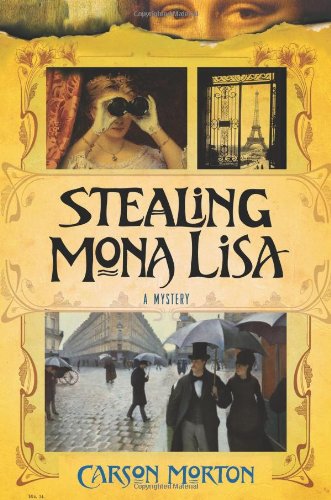
Based on the real theft of the Mona Lisa in 1911, Stealing Mona Lisa is a story of a ragtag group of con artists who set out to steal the world’s most famous painting. Eduardo de Valfierno makes a living creating forgeries for fabulously wealthy patrons in Argentina, who believe that the art are authentic pieces. He meets the beautiful and unhappily married Mrs. Hart, who sets him on a journey that leads back to Paris to lift that famous painting from the Louvre. Eduardo and his crew run into danger as they are pursued by a persistent police inspector. Casted with a crew of lovable rogues and rascals, this novel is an exciting and fun read.

Headhunters by Jo Nesbos

Roger Brown has a cushy, gold-rimmed lifestyle to maintain that his work as a corporate headhunter cannot support alone. Even with his skill in his day job, he requires something under the table to keep his wife’s developing art gallery afloat. At an art opening, Roger meets the answer to his financial problems: Clas Greve, the CEO candidate for a major company, and the owner of a priceless Baroque-era Peter Paul Rubens painting. Clas seems to present a double opportunity to Roger, who dabbles in art theft. But after breaking into Clas’s home, Roger comes to find that this fateful meeting was a devastating stroke of misfortune.

Fake by Erica Katz

Fake takes us alongside professional forger Emma Caan’s impetuous plunge into the opulent and dangerous fine art scene. Emma specializes in 19th-century paintings, taking legal commissions from wealthy collectors who have authentic art pieces to protect and keep hidden. While she is skilled at her craft, her adeptness is a constant reminder that she had the potential to realize her own artistic dreams. But she remained in her current line of work in order to take care of her family. That is until Leonard Sobetsky, a man of immense influence in the art world, appears and draws Emma into the glitz, glamor, and financial opportunity of the less legal dealings in the art world. While Emma chases stability, she quickly finds herself in over her head with what this new world demands of her.

Woman on Fire by Lisa Barr

Lisa Barr is the daughter of a Holocaust survivor, art-lover, and journalist, and she brings all of her experiences into writing Woman on Fire. The Woman on Fire painting was stolen 75 years ago by Nazi looters, as was the life of the fictional German impressionist painter who created it. Young journalist Jules Roth talks her way into working with the lead investigative reporter Dan Mansfield to find the painting. For Dan, the job is personal; his friend, Ellis Baum, is dying, and has a deeply sentimental and historical connection to the work. She wants to see the painting one last time.

The job won’t be as simple as tracking down the piece. Powerful heiress Margaux de Laurent has her sights set on the same painting, and she is used to getting what she wants. She comes from a wealthy family of art collectors, and commands the overwhelming resources that her status grants her. But Jules is determined, and ready to take on the ruthless de Laurent. Woman on Fire is a thrilling and romantic novel that showcases Barr’s passionately thorough research into art looted during the Holocaust.

My Name Is A Direct Line To A Colonizing Ancestry I Still Benefit From

About twenty pages into Sofia Samatar’s memoir The White Mosque, Sigmund Freud appears, sitting in a train compartment late at night. Up to this point, Samatar’s story has been primarily about her travels across Central Asia to study The Bride Sect, a Mennonite group who fled persecution in Russia toward the place they thought Jesus would return to usher in the apocalypse in Uzbekistan in 1889. The Bride Sect crossed the desert on Conestoga wagons. Samatar and her tour group of 21st century Mennonites follow in their footsteps by tour bus.

Then, without warning, Samatar imagines a night train, with Sigmund Freud on board. Into Freud’s compartment bursts a stranger, an old man in a dressing gown. As quickly as he comes, he disappears, because the apparition is Freud himself: his own unexpected reflection in a mirror when the moving train jolted the bathroom door open.

Freud actually told this story to introduce his theory of the unheimlich—usually translated in English as “the uncanny”—a concept that has spurred a century of thought about Self and Other. But Sofia Samatar, in a traveling state of mind, turns to Freud’s story because unheimlich, in its most literal English translation, means “not home-like.” Freud’s haunting, for her, didn’t just happen to take place on a train; it is, in its essence, a travel story, an incident made possible by the literal disturbances of travel. 

While Freud at first glance has nothing to do with Mennonites or Central Asia or multiracial identity or any of The White Mosque’s main threads, his midnight encounter with himself—and the eerie suddenness with which Samatar conjures him—is an early indicator that she is not just writing about her travels or her ghosts. She is obsessed by all the Others who burst in when we travel, with the way in which “to be very close to the very foreign is one definition of haunting.”

The White Mosque is travel literature as ghost story.


“How do we enter the stories of others?” Samatar asks, as she and her fellow Mennonite tourists rumble in a bus across the Uzbek desert. “I am thinking of bodies in motion.”  

Sofia Samatar herself is the daughter of a Somali Muslim scholar who met her mother, a German-American Mennonite, when she came to his village as a missionary. Samatar counts herself when she surveys “a world full of ethnic ghosts: the ghosts of modernity, of travel.” 

Unlike Samatar, my ancestors on both sides are white and Christian as far back as I can trace. Like her, though, my mother’s family has also made a family legacy of global missions. Both Samatar’s and my maternal families entered the stories of others burdened with Radical Protestant heritage (Calvinist Southern Baptists in my case; German American Mennonite in hers). 

My mother’s family has also made a family legacy of global missions.

My missionary heritage was the defining force of my childhood. It shapes my first name, spelled with an S instead of a Z to honor Elisabeth Elliot, who, with her husband Jim, traveled as a missionary to Ecuador in the 1950s at the same time as my mother’s parents were training to be missionaries to the Hoklo ethnic group in Taiwan. 

Elisabeth and Jim Elliot sought to contact and convert the Huaorani people, previously uncontacted by European societies. They dropped gift packages from airplanes, after which Jim Elliot and two other missionaries entered Huaorani territory on foot. The men were killed by the Huaorani people they encountered on January 8, 1956. 

Refusing to take this very obvious NO for an answer, Elisabeth Elliot, along with other widowed missionary women, persisted in contacting, and eventually converting, many of the Huaorani people to Christianity. Upon her return to the United States from Ecuador, Elisabeth became a key figure in Evangelical Christian culture wars, writing and broadcasting to shore up patriarchal, heteronormative systems that feminist and LGBT rights activists were working just as tirelessly to break down. 

Throughout my childhood, Elisabeth Elliot’s books sat on my mother’s bookshelf next to photographs of her childhood on Taiwanese mountainsides, pictures of the Baptist chapels, hospitals, and the orphanage my grandfather helped build. Elisabeth Elliot’s voice spoke from the kitchen radio every weekday morning, warning Christian women of the dangers of “perverting biblical gender roles” [sic]. 

My mother forbade anyone to ever call me a nickname that included a Z (“Liz,” “Lizzie,” etc) because that all-important S would be lost. “Never forget who you’re named after,” my mother said countless times throughout my childhood. “Never forget whose you are.”

I remain as haunted as my mother hoped, though not in the way she imagined.


The Bride Sect was one of many Mennonite communities driven out of Russia by state persecution in the late 19th century but was unique in its apocalyptic fervor. The ragged band, many of whom died in the trek across Central Asia, was led by Claas Epp, a man obsessed with a fantasy novel about the Second Coming of Jesus who reframed his community’s flight across the desert as a pilgrimage to the place where Jesus would first return to earth on March 8, 1889. 

I remain as haunted as my mother hoped, though not in the way she imagined.

As thrillingly as Sofia Samatar records the Bride Sect’s journey, she even more compellingly explores how they kept living when their travels ended but (spoiler!) that greatest of all revenants, Jesus himself, did not materialize. They built homes and a church (the building called “the white mosque” by the Bride Sect’s Muslim neighbors). They married and had children. They tried to come to terms with this life in this world.

Reflecting on this predictable-but-unprophesied end to the Bride Sect’s story, Samatar explores the wider implications of being at odds with time—whether as a small group of refugees preparing for the world to end on a certain date, or, as in the case of Calvinist Evangelicals like my ancestors, missionaries so haunted by visions of fellow humans suffering the Last Judgment, that they fled their own homes and cultures and contexts, invading the stories of others in a constant state of apocalyptic emergency. 

Samatar calls this apocalypse-panic driven invasion of other cultures “‘the missionary effect’… futurist and idealist, nothing to do with yesterday or the day before.”


Both the Bride Sect and my own ancestors (and I myself, before about the age of 18) hung their entire lives on the possibility that Jesus could come back tomorrow—this afternoon, even. Geologist Marcia Bjornerud believes it’s no accident that apocalyptic Christian worldviews are almost always held by Young Earthers: the same people who insist that the world and everything in it was created in six 24-hour days and that the world itself is just over six thousand years old. These bookended beliefs are born of what Bjornerud calls chronophobia, terror of time’s vastness, of its scale beyond not only an individual lifetime, but beyond an entire species’ existence. At this scale, time itself becomes un-home-like, other, foreign to what our body-minds can grasp. 

What better way to erase history’s guilt and future terrors than to say that time itself will end any day now?

The Calvinists who raised me taught me that, unlike those decadent Roman Catholics and Eastern Orthodox Christians who were entombed in centuries of accrued rituals and traditions, our version of Christianity was as fresh and untouched by history as it was the day Jesus left. 

This ahistorical narrative seems driven by a terror of history and the vast number of ancestral mistakes that history holds. It seems equally terrified of a human future filled with history’s consequences. What better way to erase history’s guilt and future terrors than to say that time itself will end any day now? 

No history: no ghosts. No future: no haunting.


If it is evil to refuse your own history and its consequences, I’d argue there’s even deeper evil in forcibly cutting someone else out of time’s relational fabric—taking from them the choice to know or deny their own ancestors or to shape a future that flows from knowing one’s own history. 

Saidiya Hartman writes in Lose Your Mother, her travel memoir tracing the Ghanian slave trade, that “being a stranger concerns not only matters of familiarity, belonging, and exclusion but … a particular relation to the past.” These ghosts of severed history are the ones always with Sofia Samatar on her travels, the ones she’s carried in her own mixed-race body her entire life. 

I can only guess that many of them hoped to never be hungry ghosts.

Because time is a whole, any interrupted relationship to the past is also an interrupted relationship to the present and even to possible futures. The word mulatto, Samatar writes, comes from the word mule, “because mules are sterile. This is a way of saying that mixed people have no future.” 

In a section of The White Mosque called “Stories of brown girlhood,” Samatar addresses her own history in the third person, calling herself “the child.” She brings to her experiences of mixed-race identity, Blackness, and otherness in majority-white Mennonite schools and churches the same sustained attention that she does to the Bride Sect, but also to Freud, Tamerlane, Langston Hughes, and the many other historical figures who haunt the pages of this book. She unghosts herself by locating herself in history and then marveling at the future that unfolded from “the child’s” beginnings, a future that, in the face of all white imperialism’s disruptions, is still unfolding.


I don’t have the right to say any people who still worship in the Taiwanese chapels my grandfather built (if any do; I’ve been unable to find out) are not truly at home. All of us who were Christian have ancestors who converted, always for complex reasons. 

But I also cannot avoid the truth that for some people my ancestors, in a European Christian imperialist context, were the reason. I cannot not think about the fearful and dismissive tone with which my grandmother spoke about “ancestor worship,” an umbrella term she applied to all traditional Taiwanese religions. I cannot not imagine how the ancestors of some of the people my grandparents converted probably hoped their afterlives would be. I can only guess that many of them hoped to never be hungry ghosts, neglected in traditional practice by their descendants. 


In late August of my 19th year, while trying to pray away my gay at a small Evangelical Christian community in the Swiss Alps (a few miles from the birthplace of Calvinism), I began, in dreams, to find myself at the gates of hell. 

My hell most closely resembled a city park at dusk, packed with people. I can’t remember the way these people look in my dreaming mind, but I always knew, without ever being told, that they were people whom my grandparents and Elisabeth Elliot, my namesake, failed to convert to Christianity. 

In these dreams, which I sometimes still have, I know the people looking out at me have no choice about where they go: they will be in hell forever. But I also know that I, the baptized and saved-by-the-blood-of-the-lamb lesbian woman, am a ghost who can move between worlds—but only once. I have to choose. If I so choose, I can leave my queerness at the gates of hell and turn back for heaven. 

Every time, the dream ends as I walk through the gates, joining the crowds of hell, knowing I will be there forever and that, in a sense, I have finally arrived home.


To Freud, his unheimlich encounter with himself on the night train was less about travel and more about repression. He experienced himself in that surprised moment as Other, as an “old man,” because, among other reasons, he’d been unwilling to confront how old he actually was. His refusal to acknowledge the imprint of time and history on his own body, combined with a traveler’s disorientation, made the haunting possible. 

The weird thing about the unheimlich, writes Samatar, is that “it leads you home to what you wish to forget: the revenant, the ghost.” But, she asks:

What if you were desperate to remember, in order to go on living, to be less afraid? I long to … embrace the elderly traveler who springs into the compartment, with his disordered clothes and strange, repellent face. To think with a shout of laughter, Why, it’s me!

Once, when I told someone the story of my name and my discomfort with my namesake, with all that Christian imperialist, heteronormative weight in Elisabeth-with-an-S-because-of-Elisabeth-Elliot, they asked if I’d ever considered changing my name. 

The longer I live with my name, the more I’ve come to view it as one of my most valuable ghosts. 

I knew the suggestion came from concern for the pain that my legacy causes me, and I also felt an immediate and strong objection to the idea, but wasn’t at first sure why. 

I believe in the right of each person to name or rename themselves in light of their own and their communities’ liberation. But the longer I live with my name, the more I’ve come to view it as one of my most valuable ghosts. 

Most things about the way I am in the world—my whiteness, my thinness, my Christianity, my cisgenderedness—are treated by the society I live in as givens. Alongside my “surprising” queerness (“you don’t look lesbian!”), the S-not-Z in my name is often the only thing about me that registers as other to most people. 

Every time someone asks me about the S, whether or not I choose to reveal its full meaning (I usually don’t; it’s a violent story), my ghosts are brought before me: Elisabeth Elliot of course, but beside her, my grandparents and my aunts and uncles, and the more distant ancestors who invaded and occupied. My name is a direct line to my colonizing ancestry and the colonial present from which I benefit. If I changed my name, those realities would remain real, but I think they would flash less frequently before me. 
The ghostly light that history casts onto the present might allow me—might allow us—to travel a new path: not toward prophecy, but possibility. I, along with Sofia Samatar, “long to reimagine the conjunction of close and foreign as survival strategy, illumination, and hope.”

*My deep gratitude to Akilah White whose wise guidance shaped this essay and whose brilliant work introduced me to Sofia Samatar.