The 1800s is an intriguing era to explore with fiction. It is not so far in the past as to be unrecognizable to a modern reader. And yet it is removed enough from to present that one will inevitably notice curious differences.
Among the curious yet profound differences in the 19th-century Western world is the prevalence of race-based chattel slavery. It was in this century that the institution of slavery met its end, and millions of people of African descent won the legal freedom of emancipation.
Slavery (and its afterlife) is full of narrative potential: the enslavement of one person by another is perhaps the most fundamental promise of conflict imaginable. It is easy, as a writer of fiction, to be too obvious when navigating such a fraught topic. How to tell a story about a Black 19th-century experience without resorting to uninspired plot choices, tired dialogue, and stereotypical characters?
In my own novel, In the Upper Country, I sought to imbue freshness in the genre through a variety of means, for example, by attending to the neglected history of Black and Indigenous relations of the period.
Here are seven other novels about Black folks in the 1800s, and a few words about the unique and astounding ways the authors bring their stories to life.
Atakora offers a fascinating closeup on the worlds of midwifery and conjure before and after Emancipation. Conjure Women is set in a remote and isolated Southern plantation that brims with a dark, gothic mood.
Infectious illness is a central theme of the book, and this deepens the haunting atmosphere. I had a double-take when I saw it was written pre-2020; it has a prophetic quality in that respect. Reading Conjure Women from the era of Covid, one feels a profound bond with the characters as they contend with the emotional effects of social isolation and the ways that illness can infect not only individuals’ bodies but whole communities. Atakora writes with luscious prose and calm pacing, oscillating back and forth in time to deliver an ethereal, vivid tale.
The world of Washington Black is exquisitely immersive. The attention to detail in Edugyan’s prose has a way of slowing down time. It’s like touring an exhibit at an art museum wherein one can amble through the rooms, taking long pauses to pore over the paintings—each a scene.
The novel is a true bildungsroman—one feels the indelible, slow transformation of the protagonist Wash, from his childhood on a Barbados plantation to his career as a scientific illustrator and inventor.
Washington Black brings together two moods: the romance of 19th-century science fiction, and the terror of slavery and its afterlife. It is a remix in hip-hop fashion, and the resulting rhythm is as fresh as it is classic.
Slave Old Man by Patrick Chamoiseau, translated by Linda Coverdale
Chamoiseau recalls the surreal and deeply symbolic works of Ben Okri and Ngugi wa Thiongo in this tale following the journey of an old man off the plantation and into the wilderness of Martinique, pursued by a terrifying slave-hunting mastiff.
Itis the kind of book that explodes language (in a good way). Originally written in French and Creole, the English translation by Linda Coverdale is quite successful, especially given the complexity of the prose. It is a novel that does what good poetry does; inviting readers to do some imaginative work as we are confronted with combinations of words that are as strange and unique as they are profoundly beautiful:
“Around him, everything shivered shapeless, vulva dark, carnal opacity, odors of weary eternity and famished life. The forest interior was still in the grip of a millenary night. Like a cocoon of aspirating spittle. Another world.”
The novel is unique among the others in this list, in that there are no scenes of enslavement. But despite this “absence,” Greenidge’s story is not missing anything. Libertie is avibrant coming-of-age that follows the titular character from Civil War-era Brooklyn to Haiti as she wrestles with her sense of purpose in the world.
It is a sublime story of family, nation, and sovereignty. Greenidge’s characters are enduring; peculiar as they are keenly familiar. And indeed it is the characters who carry this story. There are no villains or cliff-hangers to coerce the reader’s attention. It is the rich and particular wonders of the everyday that keep the pages turning.
The Sweetness of Water is an engrossing novel set in rural Georgia in the wake of the Civil War. When an aging white landowner finds two of his neighbor’s erstwhile slaves on his land, they strike up a friendship that throws the entire town into turmoil. The early days of Reconstruction are animated here with Harris’s powerful description.
In many ways, this novel ironically illuminates the Black experience through its white characters. Their struggles and encounters in the world serve as a constant foil to those of the Black characters. It is a subtle effect that makes the story resonate with layers of meaning.
She Would Be King braids together the stories of three people imbued with supernatural abilities. From Jamaica to Virginia to Liberia, their stories meld the fantastical with the real, yielding poignant and nuanced scenes that shed light on the politics of a unique place and chapter of history.
Moore’s style in this novel recalls Octavia Butler’s Wild Seed without being imitative—She Would be King has a distinctive flair and a setting completely its own.The narrative flows from haunting and brutal scenes of enslavement to beautifully detailed descriptions of a site of colonization not often written about; that of the formerly enslaved Black settler class who set about forming a nation in West Africa.
This bookis like a Kara Walker tableau come alive on the page. Narrated in Jamaican Patois, The Book of Night Women follows the coming of age of the protagonist Lilith as she finds herself taking up violent actions in order to survive her existence on the Montpelier estate. From the first page to the last, James relentlessly depicts the utter horror of early 1800s Jamaica plantation culture and the dark vagaries of plantation social order. The violence of James’ work here is harrowing without being gratuitous—the unglorified chaos of enslavement and rebellion is given sobering and disturbing ramifications.
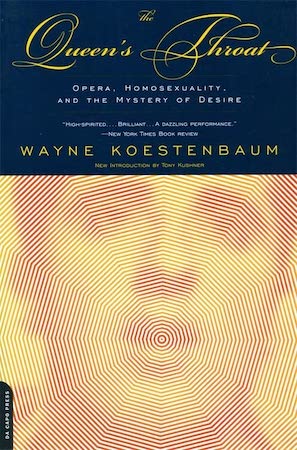
On the flap of Wayne Koestenbaum’s 1993 book The Queen’s Throat, Koestenbaum promotes the idea of an obvious connection. “Until now, silence has surrounded the long-observed affinity of gay men for opera.”
I close the book and put it back on my shelf, bewildered. What affinity? Who’s observing? As a gay man myself, I wonder where these “Opera Queens” exist, as Koestenbaum calls them. I ask my peers. My gay roommate prefers TikTok and techno to opera. I struggle to get his attention to watch most movies at home, so he firmly declines an opera invitation. I try to convince my boyfriend, Jon, that it would be a fun date idea, which he humors until he sees the price tag. He’s more interested in fantasy football than librettos. Based on my comprehensive study (N=2 white 25-year-old gay men living in NYC), I disagree with Koestenbaum. In reality, I react adversely to the idea of a monolithic gay desire that marketers can point to. To me it reeks of brands coming out of the woodwork to claim their rainbow dollars in June.
But that doesn’t mean I’m not intrigued. During undergrad, the queer writer Aisha Sabatini Sloane told me about “Papa Wayne” with reverence when I crashed her office hours, noting that he taught my favorite queer writer Maggie Nelson. Koestenbaum’s cultural criticism, most famously The Queen’s Throat, feels imbued with what BOMB called a “proclivity towards dandyism.” Susan Sontag called The Queen’s Throat a “brilliant book”. All of these overtures towards Koestenbaum as part of queer nonfiction’s canon meant I had to read him, making up for the heteronormative syllabi of my formal education. Reading has always been easy for me; going to the opera, and finding the money and desire to do so, intimidates me.
Lately, the book and opera as an art form, have been hunting me down. They track me like the assassin in Rigoletto, something I learn while googling classic plots as my own opera for dummies. I buy The Queen’s Throat at a bookstore but leave it stacked on my bookshelf underneath a watering can. Instead, I read Madame Bovaryfor a class. The hunt continues as in Part 2, Emma attends Lucia di Lammermoor, a tragic opera based on a romantic novel written by Sir Walter Scott, the same author that Flaubert implies results in Emma’s self-destructive quest for passion. Emma at least fits Koestenbaum’s declaration that “Opera has always suited those who have failed at love.” My professor, an accomplished novelist, asks the class if anyone has seen Lucia. The professor reacts with surprise when she hears that only one of us had seen any opera at all. Many of my classmates, a diverse group, will discuss in group texts after class that opera just belongs to another era and another social class, not us.
Going to the opera, and finding the money and desire to do so, intimidates me.
As we pack our bags when class ends my friend Erin confesses that she has seen the entire Ring cycle. The Ring cycle, I learn, takes 18 hours to sit through across four operas. My professor reacts with delight, and I stay silent. To me, sitting through 18 hours of singing in German sounds like the rings of Hell. But Erin dresses chicly and has cool tattoos, so I had to do what queerness has always asked of me: give it the ol’ college try.
I start with the book, pulling it Jenga-style from my stack. The Queen’s Throat is a queer investigation of Koestenbaum’s connection to opera in seven parts. They stretch from an investigation of diva culture to listening to opera at home, as Koestenbaum did growing up, to the act of singing itself and to a dialectic of the connection between music and words. There are times I notice my attention slipping (because of my relative disinterest) in the subject, not in Koestenbaum’s writing or what he finds arresting. Even when my interest wanes, I stick with Koestenbaum’s passion and his genuine sense of pleasure, which is so palpable, and almost, convincing.
Almost.
I resist, remaining not fully convinced that opera deserves my time and money. Certain highlights do reach me. When he writes “Opera queens must choose one diva”, I relate to how gay men now worship Real Housewife starlets (mine was Mary Cosby, now Meredith), pop divas (Tove Lo, now and forever), or Jennifer Coolidge on The White Lotus. I recognize the truth in his connections even if I don’t know enough about opera as a form. To judge that, I know I have to go myself. Fine.
I try to start in a position of least resistance. I decide I’ll go see The Hours, a new opera in English based on the book The Hours by the queer writer Michael Cunningham, about the queer writer Virginia Woolf and featuring a queer storyline on loss and longing. If any opera would speak to me, this would be it. I make my way to buy tickets online, only to discover they are over $200. I ask my boyfriend to call the Met for me and see if they have student tickets available, part of a program to make opera more accessible to my generation. I ask Jon because I’m afraid the box office workers will shame my cheapness in the face of Art with a capital a. Instead, they politely tell my boyfriend that they aren’t selling student tickets for The Hours because it’s too popular. Looking back, I question if my unwillingness to seem cheap reveals my overriding desire to not have to be cheap in the first place. I regress back to grade school Jack, just wanting to fit in.
I’m afraid the box office workers will shame my cheapness in the face of Art with a capital a.
Significantly deterred, I meander for a week or two in hopes that the prices will come down. Then I return to the website and find that someone hacked the Met’s website. Several days later, I see the tweet of another queer writer, the poet Jameson Fitzpatrick, which says “damn I can’t believe the met is still hacked.” Maybe it’s just not meant to be. Maybe opera isn’t for me. Maybe, this hack proves opera is an overpriced art form entrenched in the past, so much so that the Met can’t even handle a measly little cyber-attack. Besides, what would I even wear to it? I don’t have a tuxedo or a mink coat. I commit the crime of the categorization done on the book flap, lumping opera goers into a congruent blob of exclusionary gaudiness.
The quest to attend the opera and its incredulous cost reminds me of another misguided categorization, the idea that LGBTQ individuals are affluent. The Atlantic reported that 29% of LGBTQ individuals report food insecurity compared to 16% nationwide, but the myth of gay affluence persists even in the Supreme Court. Justice Scalia once said LGBTQ people had “high disposable income” and “disproportionate political power.”, which would make me laugh if it weren’t so terrifying to hear in our nation’s highest court. The poster child of the myth might as well be me, a young white cis-gendered man living in NYC. Like all myths, it reflects an illusion of truth, based on the frivolous spending that comes with Keeping Up with The Gay Joneses. This spending stems from a financial dysmorphia that I experience, lusting for Margiela pants to look cool at a gay nightlife event with ticket prices of $100. Having these places to express queer desire and community seems necessary even though I roll my eyes at the cost of the opera. In reality, as I have seen firsthand, these spaces feel even more exclusionary to my friends who don’t present as white cisgender gay men than the opera ever would.
The myth of gay affluence annoys me, but I don’t bear the brunt of the harm it causes. The harm exists in the fact that it whitewashes the lived realities of so much of our community. LGBTQ people of color, queer women, and transgender individuals live in poverty at much higher rates than their straight white cisgender counterparts or straight members of their own race. The media promotes wealthy married white gay men living in a DINK dreamland. It doesn’t show a trans woman of color trying to make ends meet to live in high-cost urban spaces with higher populations of LGBTQ individuals—and arguably tolerance—just to feel marginally safer in their skin.
The myth of gay affluence annoys me, but I don’t bear the brunt of the harm it causes.
But once again, Koestenbaum catches me off guard with his self-awareness, guiding me back on my journey. Even in 1993, Koestenbaum admits to opera’s declining relevance, and acknowledges the association of the art to privilege, “I am unhappy about opera’s circumscribed audience, its association with white privilege, but I do not feel that the only ethical response is to announce my love of opera.” Koestenbaum’s words meet me where I’m at across a thirty-year divide, and our shared queer identities help me understand retaining an appreciation for art forms even if we don’t fit within its targeted demographics or the form doesn’t fit with our perfect politics. I was engaging in gay presentism, described by the queer writer Colton Valentine, as thinking our queer present has progressed far beyond the generations before us, that we move towards an ever-liberated future. Koestenbaum reminds me of how much we already knew, how much I still can learn.
The Hours off the table due to cost, I settle for Rigoletto, the opera which I found in my quick google and is referenced in The Queen’s Throat. My mom, who has never been to an opera, recognizes the name, so I figure it must be somewhat of a classic. No student tickets are available for the night I want to go, but I buy Jon and myself an obscured view seat in the balcony box for $30 each. We’d spend the night craning our necks over the rails to spot Gilda on the stage-left corner but at least we wouldn’t break the bank. We decide to go a few days after Christmas, while we both have time off from work.
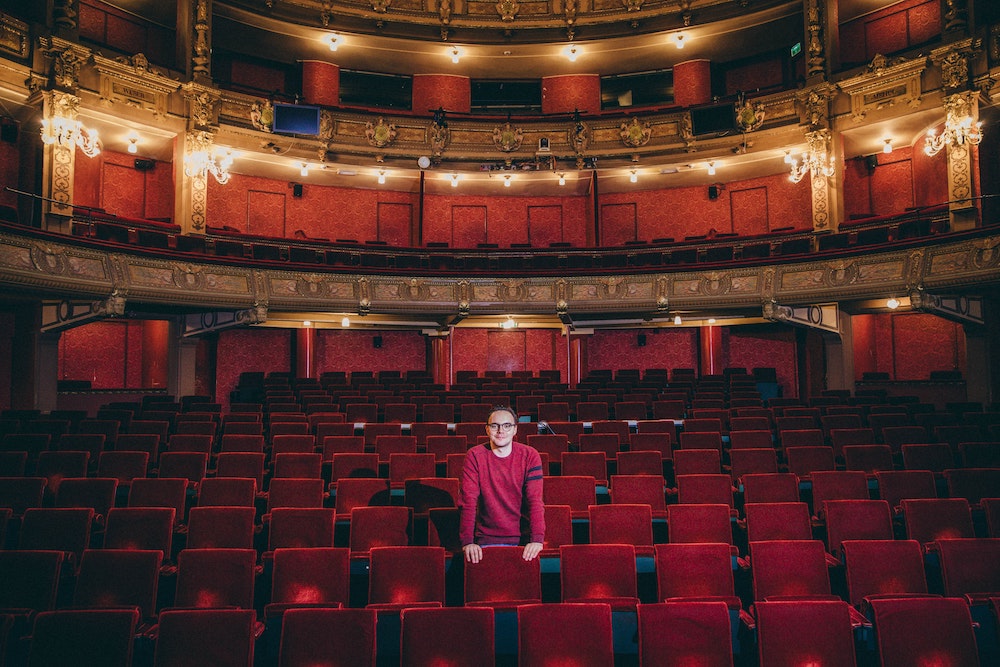
Admittedly, entering the Metropolitan Opera Hall is the best part. Spiral staircases crest up towards gold-leafed ceilings. Dazzling crystal firework-like chandeliers hang from the center, and their light shimmers and reflects like glitter on the photos everyone takes on the staircase. As opera virgins, Jon and I view this night as a special occasion, but everyone relishes in the opulence. The crowd acts as a chorus of incredible and varied fashion choices. An older woman in a floor-length fur coat cozies up to her dapper husband in a tuxedo before being asked to take the photo of a tall Black man, who dazzles in a screen-printed black and white suit, and his wife who looks electric in a hot pink ball gown. A German mother-daughter duo takes photos of one another wearing dresses paired with hiking boots. Two teenage boys wearing jeans and their college sweatshirts leap up the red-carpeted stairs two at a time.
All of it exudes glamor, and I revel in it. Jon and I rarely get a chance to look this nice together, dressed up in suits we wear maybe once a year. I’d chosen a black velvet jacket my dad handed down to me which I keep for annual work holiday parties, and which makes me feel like a movie star. We emulate our own diva moment, off-stage. I get pleasure from showing all the way out, play-acting as part of this fashionable set who goes to the opera. I wish I didn’t drool over fine garments and glamorous up-dos. I wish I didn’t adulate the grandeur of this jewelry box entrance, which steals the show from the theater itself. I feel I should know better, realizing it’s in part conditioned into me by capitalism and its hang-ups.But this game of dress-up evokes joy, even belonging. Like Koestenbaum, I don’t think the only ethical decision is to avoid these pleasures altogether. Pleasure doesn’t always make rational sense. For queer people, it rarely does.
I feel I should know better, realizing it’s in part conditioned into me by capitalism and its hang-ups.
Inside we tuck into our private box I may only be able to see half the stage, but it draws me into this historic form. I feel like Anna Karenina (before she gets slut-shamed at the opera.)
Inside the playbill, there is an ad for PrEP.
“I guess there must really be a lot of gays here,” I tell Jon.
As if their entrance was conducted, an older gay couple sits in the row below us. When they hear that Javier Camarena (a name that doesn’t register anything in me) would be filling in as the Duke, they gasp in conjoined excitement. Throughout the night I smile each time they yell “Brava!” to Gilda. The joy they experience trickles up. Though they remain strangers, I feel gratitude for opera as a form that can give someone such excitement. Ok Mr. Koestenbaum, you were right.
Another thing that Wayne gets right: though most of us can’t understand the words, we can project our own experiences onto the emotions in the notes. During the first act, I feel drowsy as the tension and world-building moves rather slowly, before I remember my favorite part of The Queen’s Throat, where Koestenbaum gives readers a “Pocket Guide to Queer Moments in Opera”. These moments don’t read as inherently queer (most are about heterosexual love), but rather Koestenbaum’s interpretations of their connection to queer experience. I try to do the same to invest myself more into the show.
Here is the straight-forward summary of Rigoletto: Rigoletto is a jester for a womanizing Duke. Rigoletto supports the Duke’s seductive antics to the dismay of the courtiers whose wives and daughters fall prey to the Duke. One courtier curses Rigoletto for it, and the rest will go further to kidnap his daughter, Gilda, for it. Gilda has been hidden inside Rigoletto’s house for months out of fatherly protectionary precautions, except she can go to church. Of course, Gilda catches the eye of the Duke at church, whose charm works on her before his courtiers kidnap her. Even after, Gilda stays in love with the Duke despite witnessing his womanizing. Rigoletto misguidedly takes out his anger on the Duke instead of the courtiers who mock him and kidnap his daughter, and the Duke just keeps playing his game.
She perfectly embodies for me the constrictions of the closet as she sings within the house that traps her.
Here is my queer-forward reading. As I watch Gilda sing trapped in her house, I stop paying attention to the English translation the Met provides. I don’t need it to understand Gilda’s longing to be permitted into the world, the desire of having and being had. She perfectly embodies for me the constrictions of the closet as she sings within the house that traps her, her voice transcending its boundary. I even relate to the fact that after she realizes the Duke’s caddishness, she remains in love. Rationality especially goes out the window for inexperienced lovers. In other scenes I relate to Rigoletto, who, borne of another station and suffering from physical ailments, remains the object of the courtiers’ contempt. He differs from them in intractable ways. Rigoletto’s anger towards the Duke feels justified when he fights against a power structure set up to crush him. The second and third acts particularly pick up, and not only because Jon and I spend $8 for a morsel of chocolate at intermission, in need of a brief sugar high. The queer reading helps me feel a unique connection to the art, the language, and the world that it turns out, I do know. The music of these acts also wows the crowd, even for someone without the technical knowledge to know what the conductors or singers are doing. I just know I like it.
After the show, I am left with more questions about my ability to connect than why Koestenbaum connects queerness to opera. Why am I drawn toward The Queen’s Throat? Why am I drawn to opera? Why must I name-drop all of these queer writers, as if I’m just part of the gang? Koestenbaum writes that queerness demands a “ceaseless work of recollection,” particularly for people like me who lacked queer role models growing up and now “must invent precedence and origin for their taste.” Many potential role models for my generation, including Koestenbaum’s peers, were taken from us by the AIDS epidemic. This includes my uncle, Randy. Instead, I must turn to the writers, and embark into the woods of their words to understand my desires, pleasures, politics, body. When I start to see the forest for the trees, I see the unruliness of its growth, the amorphous bodies of queer history and community. I love the word queer for the belief that it demands no end to this self-exploration. It grants me this communion with people whose desires may differ slightly from mine but are connected by being outside the norm. I am striving for Wagner’s connection of the aria and the recitative explanatory songs, what he called the “endless melody”, connecting individual to community, and pleasure to self-actualization.
Queerness allows me to project myself not only onto the opera, but through myriads of storylines across art forms.
When the don’t-call-me-queer David Sedaris and the decidedly-not-queer writer Pamela Paula (who has been criticized for many anti-trans articles) get promoted in The Times deriding the word queer, I have to laugh at the idea that people wouldn’t want to be part of something bigger, as large, and open as the soprano’s voice. Queerness allows me to project myself not only onto the opera, but through myriads of storylines across art forms imbued with longing and understanding identity.
I may reach in my projections like a diva does for the high note, but the term reminds me of the song La donna è mobile. At Rigoletto, I immediately recognize it despite never having listened to an opera song beforehand. I certainly didn’t know that its meaning would make me laugh out loud. Before Rigoletto’s premier, Verdi banned his tenor from evening whistling the tune outside of rehearsals. He had the prescience to know it would be a catchy tune, though I doubt he knew it would someday end up in a Doritos. Some opera purists dislike it being taken out of context, but there’s magic in how natural the tune feels regardless of the setting. Queerness carries that same melody, shifting between modes and identities, allowing many to recognize themselves in it.
As we leave in a shoal of opera goers spilling out into Lincoln Center, Jon leans over to tell me,
“I would do that again!”
Coming from someone who didn’t know if opera had a plot when we sat down in our booth, his reaction surprises me.
“I think so too,” I say.
After the opera, I do not transform into the kind of opera queen that Koestenbaum writes about. But I do gain a new understanding and appreciation for those queens, and more understanding and appreciation for the queenliness in me. Our passions, though different, soar like an aria, resonating with different notes but still part of the same melody. I realize I connect thanks to my passion for queer fiction and nonfiction that I project my own experience onto, as I did while reading The Queen’s Throat. In writing this, I hold my one note like a fermata, trying to take part in that song that queer writers like Koestenbaum have been singing since long before I was born.
I can’t remember the first time I went online, but I can remember the first time something happened online. It was during the summer holidays, and I was 12 years old. Seated at my software engineer uncle’s home computer—the first dial-up I’d ever experienced—I noticed little grey boxes popping up every so often to say, “Hello Sir”. With my heart beating as loudly as the pop-up tone, I nervously typed back into a few of them. To my delight, several conversations sprung forth. These mysterious strangers liked me! I felt tingly and joyful, and a little flirtatious. Though frustrated that they kept calling me Sir. I was a girl! Why would no one, seemingly either offline or online, recognize this?
I had no idea, of course, what MSN messenger was. Or that I was talking to young adults at the college where my uncle was a professor. And only many years down the line did I recognize how awkward this must have been for him (I took at least one conversation too far, resulting in the student typing a “fuck you” in return). All I knew was that a whole world had opened up before my eyes, and I would be lying if I said it hadn’t felt a tiny bit sexual.
Many people’s early experiences of the internet, particularly before smartphones brought the internet everywhere, were fueled by sparks of sexual desire—that’s often what made this new space exciting and full of possibility. Perhaps that’s because the internet’s own early experiences—including, sometimes, the foundations on which it was built—were sexual too.
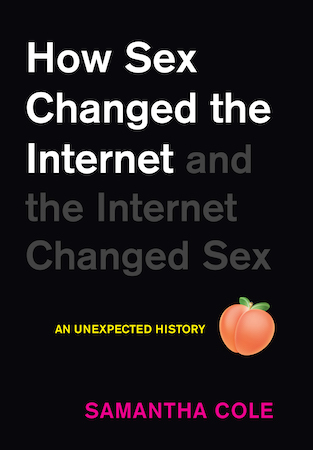
In her book How Sex Changed the Internet and the Internet Changed Sex: An Unexpected History, Samantha Cole traces the entangled stories of sex and technology, revealing them to be inextricably linked. From early Bulletin Board Services to digital data collection to webcam technology, Cole explores how, “[l]ike the source code of all computing creation, eroticism is embedded everywhere in the…internet.” This history, however, has been erased by governments and internet corporations alike; and it’s present (and presence) is being actively stamped out by them too.
What might it mean to reclaim the knowledge that sex and internet technology are intimately linked? Cole deep dives this question, bringing surprising, delightful and sometimes difficult answers back up to the surface.
Richa Kaul Padte: I’d love to start by talking about porn addiction. Despite being totally unsubstantiated by data, it continues to be a prevalent fear and belief. When I was researching my own book on internet sex in South Asia, I found so many men were worried they were addicted to porn and masturbation—because they got themselves off once or twice a day (such a small number!). You talk abut these “high levels of shame [in]…self-proclaimed porn addicts,” but you also highlight a broader danger of the porn addiction myth: it’s used by men to justify violence against women. Could you talk a bit about this?
Samantha Cole: Porn addiction as a concept is such a late 20th- and 21st-century phenomenon. People didn’t know what to make of this incredibly powerful tool in their homes when the internet arrived. [This] combined with a moral panic about porn that had already been brewing for decades. The internet brought it to a head in porn addiction. To psychologists before the internet, getting out the old Playboy or keeping a smutty VHS collection was considered a victimless behavior. But once people could access it on the computer, and upload their own—or more scandalously yet, have long “cybersex” sessions with strangers on the computer—it became a social health concern.
The internet made porn and sex easier to access, and of course, some people struggle with that ease of access, even at the expense of their offline lives. But studies show that shame makes it so much worse in many cases. And I think that shame drives people to seek out help from the wrong places, like extremist or “men’s rights” forums. The internet’s ability to connect people is a double-edged sword: some people find acceptance for who they are, and others find rabbit holes of hate and shame. The outlet for that anger is too frequently violent acts toward women. There have been multiple mass shootings in the U.S. just in the last 10 years where the gunman blamed sex, porn, or sexual rejection for his actions. That’s such an unfair, and unfounded, scapegoat. To a less extreme but still important degree, we’re seeing legislation in the U.S. enacted now that blames porn addiction for every ill in society and forces huge adult sites to put up more barriers to entry. I think that’s a very scary trend that will probably get worse if people don’t start pushing back.
I don’t want to discount the real struggles that people who feel out of control in their behaviors go through. But I think so much of it is contextual. Like you said, there are people who really feel they’re hopelessly “addicted” to porn or masturbating, when in reality, they have pretty normal sex lives. Somewhere along the way, they’ve internalized this idea—which in Western society often comes from a fundamentalist or evangelical Christian tradition, even if they don’t identify that way—that they should be ashamed of their sexuality.
RKP: It’s my dream to own an internet-connected sex toy, but I’m absolutely terrified of its possible consequences. Not only are Indian culture and law deeply intolerant of sex (thanks, colonialism), but the current regime has swerved into violent fascism. What does the data generated and stored by such sex toys mean for people living under sexually-intolerant regimes? Not to mention that any government could, in theory (and practice!), turn intolerant towards marginalized communities. The rise of homophobic governments in some Eastern European countries—or the future of queer rights in Italy—immediately comes to mind for me.
SC: People have had this desire for long-distance tech-enabled sex for such a long time, way before the internet. In the 1970’s, an inventor filed a patent for an “audiotactile stimulation and communications system” and called it the Radio Dildo, and there’s this quote from Howard Reingold that I love from his essay Mondo 2000 where he predicts, “You will not use erotic telepresence technology in order to have sex with machines. Twenty years from now, when portable telediddlers are ubiquitous, people will use them to have sexual experiences with other people, at a distance, in combinations and configurations undreamt of by precybernetic voluptuaries.” Sex across distance is something we’ve always wanted out of the internet. People roleplaying and “cybering” in MUDs, for example, were breaking that boundary in interesting, creative ways.
Fast forward 30+ years and the internet has made that more realistic—more people can order a sex toy online discreetly and safely, and a lot of those toys make the dream of distance-connected sex real. But of course that comes with some risk. The concerns about data privacy and our sex lives are real! A lot of sex toy makers skate by without strong regulations because, at least in the U.S., they’re considered “novelty” items and are made by companies that are entering the game for the first time, without a lot of experience, to try to cash in on a trend. I don’t have a ton of expertise in how this could impact marginalized people in places where queer rights are under attack, but I hope more sex toy makers take privacy policies and data storage seriously for their sake. The data privacy leakage in sexual wellness apps as it relates to Roe v. Wade here in the States comes to mind; messy privacy practices can have serious consequences.
RKP:So many (sexual) revolutions contain paradoxes, and “the camgirl revolution” is no different. Camsites allow sex workers a greater degree of safety, not only from clients (who sometimes respond to sex workers setting boundaries with violence), but also from physical threats by police and sex work abolitionists. You write: “But it’s also had a splintering effect on groups that formerly relied on close, trusting relationships with other workers”—relationships that were based in brick-and-mortar shared spaces.
To what extent have the online community forums you explore mitigated the losses of physical community? I realize there’s no cut-and-dried way to weigh this up (when really what’s needed is a societal overhaul around sex work!), but I’m still curious as to how offline vs online communities for sex workers played out in the course of your research.
The internet’s ability to connect people is a double-edged sword: some people find acceptance for who they are, and others find rabbit holes of hate and shame.
The arrival of the internet changed so much for sex workers and safety. For this book I talked to people like Kristen DiAngelo, who has seen this massive evolution in the internet and sex work: she told me about a time when working in brothels or doing other in-person work came with an expectation of physical risk that people working primarily online today sometimes can’t relate to on the same level. Being able to work independently, post your own ads, get your own clients, and vet those clients online before meeting them in person was a revolutionary shift that came with the internet. But that doesn’t mean online-only workers, like OnlyFans or Pornhub models, don’t also face risks. They’re up against things like doxxing, harassment, deplatforming, censorship, the list goes on. And this is while working 50 different roles: social media manager, booking agent, marketer, videographer, accountant, on-camera talent. It’s endless, exhausting work. Having a community of care is so important.
There are definitely unique safety concerns for workers online and off, which is why it’s important to remind people who might not be familiar with these nuances that sex work isn’t a monolith: cam models face different challenges than escorts, than dominatrixes, than strippers, and while each of these occupations have a lot of crossover (someone who dances in a club might also have an OnlyFans or see clients, for example) they’re also made up of individuals. Worker solidarity is so crucial within any workplace, but also across professions, and it’s a huge way that organizing and labor justice happens.
But when you have platforms that don’t allow people to talk about their work—like Facebook and Instagram for example, which will ban you for talking about sex work, and Twitter, which frequently deplatforms and downranks content from sex workers—it gets really, really hard to share safety information and harm reduction resources, let alone organize in a meaningful way.
But they do it! Sex workers are some of the most resilient and creative people out there. They shouldn’t be forced to constantly migrate from platform to platform online, though, and lose peer communities (not to mention clients and fan bases, which = income) along the way.
I think a lot of non-sex workers got their first taste of this recently when it seemed like Elon Musk might actually destroy Twitter. People panicked, closed their accounts preemptively, moved to other, less popular sites like Mastodon, and begged followers to find them elsewhere if Twitter went down. That’s reality for online sex workers every day they log on. It’s that precarious all the time, for a lot of people. It can be taken away at any moment.
You do such a fantastic job of exploring and explaining deepfakes, and it’s incredible how you, as a journalist, were leading the reporting on this from the very outset! I was especially interested in how debates around deepfakes largely center on “politics, global powers, and hypothetical three-dimensional chess games about whether deepfakes of politicians could start wars.” But, as you go on to say, 96 percent of all deepfakesare still “nonconsensual, face-swapped porn” — ie, sexual violations of (predominantly) women. Given that absolutely overwhelming percentage point, how do we urgently shift the conversation to “consent, bodily autonomy, and sexuality online”? Why is there such a resistance to doing so?
In a lot of cases, people just want to feel seen, so they try to get as close to that expression as they can within the limits of being on the internet.
With AI-generated art, text, and voice getting better than ever these days, and all of the pushback from AI ethicists and artists who object to work being used without their consent, I think this is a topic we’ll keep seeing. But for reasons that have to do with stigma and shame (and all of the censorship we just talked about), sexuality still gets left behind in those conversations. I think it’s at the heart of a lot of what we’re dealing with, with deepfakes and beyond: if you can grasp the concept of consent online and the ways bodily autonomy can extend beyond the corporeal, untangling these ethical issues gets easier.
Even when people talk or think about deepfakes used to make nonconsensual porn, what often gets overlooked is the theft of the performer’s work whose body is in the videos. But socially, we’ve internalized this very problematic idea of “asking for it”: that if they put their nudes online, they themselves must be for public consumption and manipulation, and must deal with the consequences without complaining. We saw this happen long before deepfakes, like with Pamela Anderson and Tommy Lee’s leaked sex tapes online (a story that recently got made into a popular TV show, allegedly without their consent — we never learn!). So it’s not a new problem, and that makes it even more frustrating, to see something like nonconsensual, sexual deepfakes continue to be an ethical quandary for people. The resistance I think comes from not dealing with basic bodily autonomy, misunderstandings about consent, and deep stigma against sex work and sexuality.
RKP: The internet often seems to me to be powered by a deep desire for authenticity. Jennifer Ringley’s 24-hour webcam feed from her dorm room, set up in 1996, was perhaps the first instance of “everyday life on display”. Today, sites like Pornhub maintain an amateurish look (despite being massively wealthy) to hold “on to [the] allure of homemade ‘authenticity’.” And it’s not just sex—even if sex was leading the way. Instagram’s massive continuing success is based on precisely this: the everyday on display, the veneer of the authentic. Why are we so enchanted by the “real”, even when we know that on sites like Pornhub and Instagram, what we’re seeing isn’t reality at all?
SC: Our craving for connection and authenticity while hesitating to be fully authentic online—whatever that may mean—is endlessly interesting to me. The popularity of the app BeReal comes to mind, too. I don’t know anyone who is really “real” on that app, but I love it. Of course, for a lot of people, being fully yourself online can be dangerous. But in a lot of cases, people just want to feel seen, so they try to get as close to that expression as they can within the limits of being on the internet.
As for adult sites and social media like Instagram, there’s a certain suspension of belief that comes with consuming media online, that’s risen from this “content creator” industry of the last decade or so. That includes sex. For example, sex workers sell a fantasy, but they also often provide a meaningful connection with their clients and audience as part of that service. I went long on this idea of authenticity in cam modeling specifically a few years ago, and found that while live streamers like Ringley and camgirls delving into more explicit streaming on the internet proved the demand for “uncensored” content (at a time when The Real World and reality TV was just getting going), performers working online today continue that tradition in a similar spirit. People love an unscripted dildo slip, but they also show up just to talk to the model or others in the audience.
There’s been a lot of criticism of the internet as a force for disengagement or dislocation, like we’re losing parts of ourselves the more online we become. And we do miss a lot of basic human social cues online—nodding, leaning forward, crossing arms, even nearly imperceptible things like a quicker heart rate or faster blinking can help us communicate in-person, in real time. But we strengthen other ties. If [people] are willing to be authentic in a vulnerable way with each other online, maybe they find other[s] like them and feel less alone. That goes a long way to dispel the shame and anger we talked about earlier. Even if they’re into, like, fart porn, or self-suck, or cosplaying as sexy airplanes. Even with all the social media monopolies and censorship, the internet can still be a wonderfully weird place if you know where to look.
For now, at least, the immigrant narrative endures as the most legible depiction of the Asian American experience. You’ve heard this one before: the first generation struggles (but mostly successfully), the next one triumphs (but mostly ambivalently, with not a few pungent lunchbox casualties). On TV and in our book clubs, we now have what can feel like such an embarrassment of this genre of Asian American storytelling that we are right to grow a little weary; it feels at times like we’ve been assimilating forever. Isn’t there more to the story?
Still, I find these narratives worthy of both our examination and a certain deal of luxuriation. If we are to understand Asian American culture as a complex, often self-contradictory project now reaching a kind of coming-of-age of its own over the past few decades, one day, it will make sense why we were first so preoccupied with these origin stories. Visibility is a tricky thing to value—you can roll your eyes at it, confuse your personal ascent with it, trot it out in boardrooms for a variety of suspect agendas—but you can’t ignore its role as a lightning rod for our sense of connective survival.
Central Places is a novel about a young woman on a return visit home to her Chinese immigrant family in midwestern America, where isolation is both a fact of life and a self-protective measure. It’s a story about the divide that exists in a first-generation family, but also between the life you might be given and the life you think you want. The following 12 books have been instrumental to this novel’s construction; I’m listing them here roughly in order of thematic life stages at play. Of course, this list leans heavily upon my personal biases toward Chinese characters, New Yorkian settings, mommy issues galore, and the general concerns of any unmarried woman considering how best to shape the chosen family to come. I hope you find them as much of a lifeline as I have.
Across seven interlinking stories of girlhood set in Flushing, New York, in the ’90s, Zhang shines an industrial-grade UV light on all of those weird parts of growing up that you’d rather not think about. When I first read Sour Heart, it felt like letting myself gorge on something deliciously rancid. Zhang gets the specificity of certain relationships just right: the rivalries between the other ABC (American-born Chinese) girls you’re supposed to identify with, the ambivalence toward reappearing grandparents, the retroactive guilt unearthed, years later, of letting your little brother down.
Wang’s memoir of the years her family spent living undocumented in Chinatown, New York, is an astounding portrayal of a childhood assembled amidst the most precarious circumstances imaginable. Honestly, it’s a painful book to read, particularly for the attentiveness with which Wang slices and separates each disappointment that her young self experienced as a fact of life. But there’s something enormously healing in the opportunity for vicarious excavation that Beautiful Country offers; to review the chaos of immigration and poverty through a child’s eyes is to consider perhaps more gently the general state of confusion that many of us have held within ourselves all these years, too.
The main character of Andreades’ lyrical ode to Queens is not one single person, but a royal we that fashions together a kind of glorious sisterhood unsung. Across the novel, we follow a cohort of girls hailing from a mix of outer borough Pakistani, Guyanese, Haitian, Filipino, and Chinese families as they navigate the requisite stages of brown girl teenagery: the classroom microaggressions, the college admissions, that first drink, those alluring flirtations from the so-called other side of the track. Relayed with exquisitely vernacular girltalk and call-outs to the take-out joints/discount stores/subway lines that make a life, Brown Girls is a perfect snapshot of coming up in one beautifully specific time and place.
From this collection of Californian Cambodian American stories, the one that’s stuck with me the most is “Human Development,” where a disaffected Stanford grad strikes up a situationship with an older, richer Grindr match who is preoccupied with their shared roots. This being set in Silicon Valley, the older guy, Ben, has an idea for an app that would boil down the ever-present minority’s challenge of finding one’s people into a codeable, swipeable solution. Uber, but for your place in the diaspora! This is what So’s stories are so good at in general: pitting the illusion of the clean, autonomous choices of an educated second-gen adulthood against the knotted tapestry that’s impossible from which to ever pull oneself entirely free.
I’m a sucker for intergenerational stories, and Lahiri’s rather comprehensive yarn following a Bengali couple’s immigration to Cambridge, Massachusetts, through to their son’s coming of age is deservedly one of the greats (though I recommend a quick brushing up on the Russian author Nikolai Gogol’s Wikipedia page beforehand if you’re reading for the first time and want the full experience). Of course The Namesake is a story about family, but I love how Lahiri particularly hones in on the mechanism of marriage— how it can both hold everything you know together while also offering a way out.
Speaking of marriage: in Wang’s wonderfully wry novel, a proposal of engagement weighs heavily on a young grad student as she considers whether or not to follow through with the predominant arc of her life toward fulfilling expectations. Sciencey metaphors about blowing things up abound, but Wang writes the narrator’s inner monologuing almost like these perfect little punchlines. Who knew quarter-life crises could be so funny?
Inextricable from the question of identity is the matter of sex: who are you attracted to and why? What myths have you been told about your desires—and which beliefs do you still carry? This essay collection mulls over the overlapping of internalized colonialism, exoticization, and masculinity against the reality of dating apps and DTRs. Ortile renders his personal encounters with the white male gaze and his ensuing consciousness of self in such earnest prose that you yourself will feel every fiber of those early twenties come rushing back, too.
Fans of Zauner’s musical talent by way of Japanese Breakfast are no stranger to the artistic irony—or perhaps transcendence is the word here—of the musician’s professional breakthrough following the death of her mother. Crying in H-Mart tells the full story of Zauner’s complicated relationship with her Korean mother using the full extent of a songwriter’s prowess for evocative imagery: I’ll be thinking about that scene where Zauner’s mother breaks in those cowboy boots for her by wearing them around the house for a long, long time.
The global pandemic at the center of Ma’s literary version of a zombie movie is one that inflicts upon its victims some seriously deadly consequences of too much nostalgia. New York is caving in from the fictional Shen Fever, but for our protagonist, Candace Chen, her world kind of already ended with the recent passing of her parents. So Candace divides her time in the apocalyptic wreckage between tending to her pointless corporate job and trying to document the strangeness of being (or at least feeling like you are) one of the last people left. Come for Ma’s unsettling pre-COVID foresight, stay for the plentiful uneasy reconciliations with the past.
I always knew I was going to love Mathews’ novel about a cynical young woman living in Milwaukee juggling millennial post-grad woes and international family obligations, but this book especially dazzles as a sociopolitical parable for the post-Recession generation. The immigrant narrative is inevitably one about filial piety, but Mathews pushes both her protagonist, Sneha, as well as the reader to have greater ambitions about the kind of bonds we could form with our communities at large. Sneha and Tig’s friendship is particularly beautifully drawn, warts and all; would that we all regularly found such extraordinary models of connection in life and in fiction.
There’s a reason this book has been everywhere, and my theory is that, particularly amongst Azn girl circles, Minor Feelings offers a litmus test for the shape of your own identity politics. It’s part memoir, part cultural criticism, and packed with observations like “Does any Asian American narrative always have to return to the mother?” or the shockingly articulated thought that all our faces look “like God started pinching out your features and then abandoned you.” You’re not not going to have a reaction! More broadly, I also found Minor Feelings helpful in situating oneself within the broader history of Asian American artistry, particularly with the life and work of Theresa Hak Kyung Cha. You always need to know who came before…
…which brings us to the 1989 novel that, in my view, endures as one of the original texts of the mainstream Asian American immigrant narrative tradition: The Joy Luck Club. When I first read this book in college, I was too distracted to keep track of a storyline that involved four sets of Chinese mothers and daughters; recently, I sat down with it again and deeply enjoyed the read. On one hand, it’s kind of fascinating to realize how tropey so much of the book feels now—it’s basically portrait of a Tiger Mom, complete with the childhood chess team pressures and phonetically spelled pinyin to boot—but the heart of it holds up. I got my mom to start reading it over the holidays, with a pro tip (Amy Tan, I’m sorry if this is sacrilege): instead of reading each chapter in order, start with the first mother-daughter pair’s stories and finish those before working your way to the next one. That’ll help keep all the backstories straight, although I can’t help but wonder if maybe that’s the point—that all these mothers and daughters are supposed to blur together after a while.
It’s January and you know what that means—a reset for your TBR pile! There are so many amazing books to look forward to in 2023, but before we get too far into the new year, I think it’s worth spotlighting some of the titles you might have missed last year. And 2022 was an incredible year not just for all books, but for small presses in particular. Awards season honored many small press authors, including new Nobel laureate Annie Ernaux, whose American publisher is Seven Stories Press. It’s incredible to see these authors and presses get their recognition for the vital work they do, bringing incredible poetry, essays, fiction, and memoir to us readers.
In the spirit of looking back at an amazing year of reading, here are 17 of the hundreds of amazing indie books published in 2022 that deserve a spot at the top of your book pile.
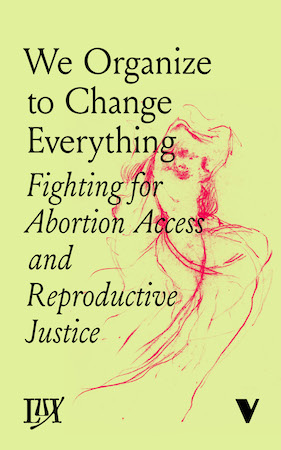
This collection felt absolutely urgent to me in 2022 and still as urgent in 2023. We Organize to Change Everything follows the history of the fight for abortion in America, centering the voices of activists, healthcare workers, and clinic defenders who help pregnant people get the care they need. The writers here consider the intersectionality of abortion access, from white supremacy to incarceration to Indigenous sovereignty, giving a clear picture of where we came from to inform where we might go next.
Coffee, Shopping, Murder, Loveplays with the tropes of crime fiction by way of two memorable narrators, Charlie and Jignesh. Their connection—at first on an unsuccessful date—is rekindled later, when Charlie is selling a freezer…and Jignesh has accidentally killed a coworker and is trying to cover it up. Allende’s novel has just what the title promises: a lot of fun and a lot of dark humor.
Ella Baxter’s slim and beautiful debut novel looks at death with a rare attention to its physicality. Amelia, the protagonist of New Animal, is left reeling when her mother dies. She heads to Tasmania to seek solace in her birth-father and ends up getting involved in the local BDSM community. It’s funny, thought-provoking, and very heartfelt. Get a taste of the novel in its excerpt in EL’s own Recommended Reading!
Seven Stories by Gina Berriault (Counterpoint Press)
I love when a forgotten writer resurfaces—and Seven Stories, the collection by the late Gina Berriault, shows us she never should have been forgotten to begin with. Her stories are sharp and leave a lasting impression. As Peter Orner writes in his introduction to Recommended Reading’s excerpt of Seven Stories, “I’ve always believed that Berriault herself was too busy vanishing into her sentences to care much about whether she was known or not known.” Enjoy the process of getting to know her work.
Amina Cain’s fiction is lovely, and A Horse at Night, her first nonfiction book, is just as stunning. She reflects on writing and how it can transform and remake a life. It’s memoir, literary criticism, and essay mixed together as Cain moves through her personal canon of writers, from Marguerite Duras to Elena Ferrante, and reckons with what writing does for us. It’s rich, meditative, and written to be savored.
I loved My Phantoms, Gwendolyn Riley’s seventh novel, for its unsentimental look at family ties and the difficult relationships between mothers and daughters. We follow Bridget, a forty-something academic, who is reckoning with her mother, Helen (“Hen”) in the novel. The book follows the awkward meetings between Bridget and Hen, showing us the ways they fail each other, the old conflicts they constantly rehearse.
Leylâ Erbil is one of Turkey’s most radical female authors, and this year brought an English translation of her debut novel A Strange Woman, the first novel by a Turkish woman to be nominated for the Nobel. A Strange Woman follows Nermin, an aspiring poet in Istanbul, whose creative ambitions are often frustrated by her family.Erbil explores creativity, sexuality, and the role of family in the modernizing world of 20th century Turkey, and it’s a treasure to get to read.
Getting Lost by Annie Ernaux (Seven Stories Press)
Maybe you didn’t miss Annie Ernaux’s Nobel Prize win, but did you know her American publisher, Seven Stories Press, released a new Ernaux book this year? Getting Lost is Ernaux’s personal diary of a love affair with a Soviet official from 1988 to 1990, and it’s thrilling to read the author’s private reflections on sex, writing, and love now public. If you’re a fan, it’s a perfect addition to the canon, and if you’re new to the Ernaux hype, it’s a perfect place to start.
The line between real and fantasy blurs in Kim Fu’s spellbinding collection of short stories, Lesser Known Monsters of the 21st Century. Each of the twelve stories are totally different, but they nonetheless share the logic of magical realism: anything is possible. A girl might grow wings by her ankles. Someone might ride a unicorn. But these stories don’t exist in the ether—their magic and surrealism make us look askance at the world we live in, our own bizarre rites and rituals. It’s breathtaking to read.
How did we get here is the central question of Lungfish, Meghan Gilliss’ debut novel. Lungfish follows Tuck, a woman squatting with her family on an uninhabited island off the coast of Maine, the former home of her grandmother. Tuck’s husband struggles to detox while they—and their daughter—live off the land. The elements are at war against them, as they try to scrape up enough money to leave before winter starts. It’s gripping, heartbreaking, and totally brilliant.
The 18 short stories in Jerks center my favorite topic to read about: desire. Even in middle-class, often middle-aged suburbia, Lippmann’s characters are memorable and their wants taken seriously. They are, as the title suggests, jerks, making their exploits even more delicious to read about. But even if they’re bad people, they teach us more about ourselves and our society than we might at first see.
Fernanda Melchor’s prose is like no one else’s: it’s a torrent of words and feelings, violent at times, and it’s impossible to look away. Paradais follows two teenagers, Polo and Franco, a groundskeeper and an outcast inside the gated community of “Paradise,” whose malaise leads them to violent schemes. Melchor chronicles the fault lines of Mexican society, showing the dreams of success that run into the realities of race and class. It’s impossible to look away.
Elizabeth Nunez’s novel Now Lila Knows follows Caribbean professor Lila Bonnard, arriving in Vermont for a teaching position. On her way from the airport to campus, she witnesses the police murdering a Black man—a fellow professor at the college—and she must decide whether to act as witness against the police and risk her position at the college. It’s a gripping story with deeply contemporary resonances, exploring what we owe to each other when we feel our own precarity.
On Not Knowing by Emily Ogden (University of Chicago Press)
This list is in alphabetical order, but I have to say that On Not Knowing was perhaps my favorite small press title of the year. Yes, Ogden is an English professor and literary critic, and yes, this book of essays is riddled with Moby-Dick references. But despite its academic nature, Ogden’s writing is personal and magically dexterous, giving the same attention to not knowing how to give birth as not knowing how to hold it together for one’s children. On Not Knowing is a meditative account of trying to live a life comfortable with the uncertainty we breathe in.
The premise of Jacinda Townsend’s searing novel Mother Country is unforgettable: Shannon, an African-American woman mourning the news of her infertility, goes on a trip to Morocco with her boyfriend, where, with the help of a bribed official, she decides to adopt a child to raise in her native Kentucky. The catch? The child already has a mother, Souria. Mother Country examines the cycles of intergenerational trauma and the complicated web of motherhood as Souria and Shannon move towards a reckoning.
Billed as a “biracial, queer, nonbinary retelling of Mary Shelley’s Frankenstein,” Addie Tsai’s Unwieldy Creatures is a riveting story of body horror that subverts heteronormative standards of beauty. Set in Indonesia and the American South, Tsai’s novel follows Dr. Frank, her assistant Plum, and Dr. Frank’s nonbinary creation. In Tsai’s hands, Frankenstein gets updated, made even more relevant. In her interview for EL, she talks about centering queer bodies and the violence of violence of toxic white masculinity.
In It Came from the Closet, queer and trans writers reflect on the genre of horror—its appeal, its empowerment, its oppression. Featuring Addie Tsai, Carmen Maria Machado, and more, these writers chronicle a complicated relationship between horror and queerness, an ode to the classic films, and a subversive reading of many more. In an excerpt from the collection, Tosha R. Taylor writes about how horror gave her power to embrace her queerness in rural Appalachia.
It took thirty minutes for the first man I hooked up with after my spinal-cord injury to say he’d come over. I was usually rejected within ten. My bad habit was to offer too much, too soon—about a haphazard gait, the brace on my left leg, anomalies I couldn’t conceal. But with practice at least came a knack for self-preservation. Because getting blocked on Grindr can swerve into you nearly with the force of a pick-up truck. I should know, since it was just such a vehicle—dark red, with an American flag decal—that disrupted my neural pathways to begin with.
I’d spent hours staging photos that hid my double chin, though when he asked for full-body pics, I confided this much at least: “I’m not what you’d call ‘toned.’” “That’s fine,” this man with dusty blond stubble and bundled biceps confirmed. “Chubs are OK.”
I might have taken a beat had certain chores not required checking off—the sort done over toilet bowls with drugstore enemas. Like a jewel thief who hasn’t been wearing gloves, I also needed to scrub any trace of, in my case, disability. An obscure corner of the closet could house my cane for one night; my orthotic was hurled into a desk drawer.
There’d be no chance for my body to reveal its deficits.
He’d walk in to find me already sprawled across the bed. There’d be no chance for my body to reveal its deficits. All the necessary accouterments were within reach, and I’d propped open the front door with a small rock.
As a glimmer of hallway light leapt across my face, and I heard the first footfalls of his steady stride, celebration seemed in order. Even more so when his hands swam down the streams of my pinkish stretch marks without flinching.
Only then did his tepid breath tickle my ear. “Kneel down.”
I hadn’t planned for this.
“Did you hear me?” he asked.
I hoisted myself up from the bed and began lowering to the floor. My knees quivered together like teeth in chilly weather; the fuzzy contours of his brow folded inward at the sight. “What’s wrong with you?” he asked, this time without the gruffness in his voice. Without tenderness, also. I was about to confess—the guilt had been getting to me anyway—when this stranger halfway apologized, “Look I don’t think this is going to work,” zipped up his pants, and walked straight for the door as if in an emergency: with neither panic nor delay.
I wish I knew then, after plopping to the floor at long last, that ideas of disability as unsexy or troublesome or infantilizing run deep in our world—more so in a community that especially valorizes fitness. But I had yet to learn of “ableism.” Too ashamed to fall asleep, I reached for a Jane Austen novel on my nightstand, continuing a trend that began during in-patient rehab. Initially, her books offered escapist pleasure, as they have for so many others, but I was soon smitten with their attention to how supposedly universal truths impinge upon our quests for love and friendship. As someone who was increasingly calling himself gay in this period, too, I related to those couples—Elizabeth and Darcy, Elinor and Edward Ferrars—that buck their society’s rigid norms.
As a twenty-something trying to conceive of his disability as something other than tragic, I likewise appreciated an aspect of Austen’s fiction much rarer in the queer memoirs I was simultaneously reading: stigmatized bodies and minds, knowledge-generating conditions, corporealities not unlike my own, from Persuasion’s Mary Musgrove and Mrs. Smith to Mr. Woodhouse, a “valetudinarian,” in Emmato the heroine of Mansfield Park (and her veteran father),as at least one scholar has argued. Before long, I became entranced by how expertly Austen—who spent the last years of her life with Addison’s disease—explores the dovetailing of embodied and minded difference with other deviations from the patriarchal standards of wealthy, white, male bodyminds. That night, I was reading about the invalids of her unfinished Sanditon and identifying with its rotund Arthur most of all. Neither of us, it seemed, were understood by—or attractive to—others.
…this past summer seemed the perfect time to revisit my admiration for the grande dame of English letters…
Over the intervening years—just shy of a decade now—Austen has proved an important, but less consistent, resource. I’ve discovered disability studies, met a chosen family unwavering on the question of my sexiness, and lost seventy-five pounds during the COVID-19 pandemic—a story for another day. But after turning mostly to Renaissance literature in graduate school—and finally meeting a man who appreciates my body rather than dates me despite it—this past summer seemed the perfect time to revisit my admiration for the grande dame of English letters. A new season of PBS’s Sanditon dropped in February. June saw the release of the feature film Fire Island (dir. Andrew Ahn), which reimagines Pride and Prejudice with five gay men subbing in for the Bennet sisters. And in July came Netflix’s critical-bust of a Persuasion (dir. Carrie Cracknell). I was glad, of course, that adaptations were foregrounding progressive aspects of Austen’s fiction, but I hoped for more: maybe they’d carve out a fuller space for her disabled characters, relieving some of the imaginative work I usually do to visualize people like me—queer and crip—finding happiness. With the help of these popular reboots, perhaps more men—like the one who scurried out of my apartment that night—might think of us as sexy too.
It was disheartening, then, to discover that all three productions rely on, and reinscribe, facile cultural narratives about othered bodies and minds. Netflix’s Persuasion cuts Mrs. Smith and plays Mary as an insufferable narcissist. Masterpiece’s Sanditon caricatures its invalids. And most confounding, none of the intersectional identities Fire Island plumbs include disability. In the process, folks like me are erased from the creative vision of a film that touts its progressive ethos.
We must mine these representational gaps to achieve a broader appreciation for disabled people moving forward.
I admit, however, that Fire Island is impressive. A critique cum celebration of gay culture from the perspective of those often marginalized by it, the film abounds with characters who resuscitate Austen’s originals without ever feeling unduly beholden to them.
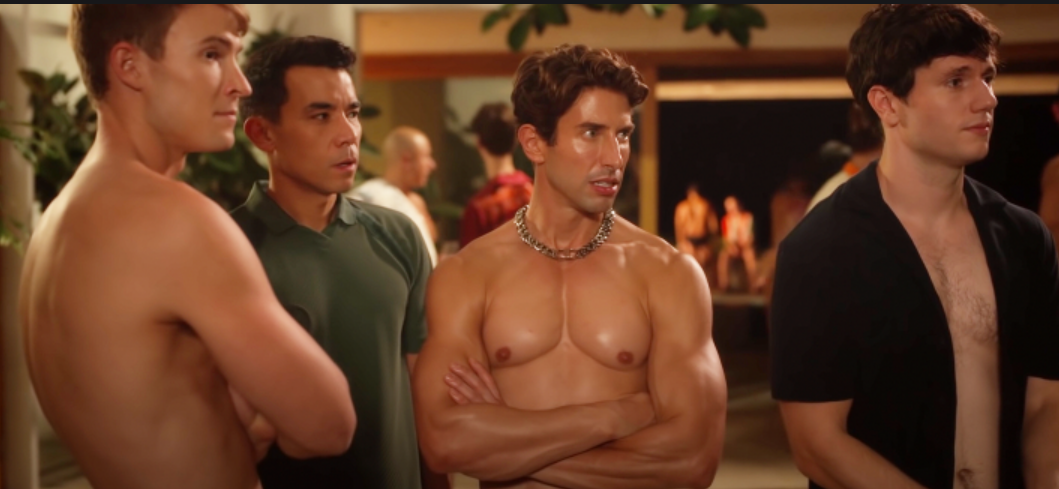
The movie revolves around Noah (Joel Kim Booster, also its screenwriter) and Howie (Bowen Yang), avatars of Elizabeth and Jane, both Asian, both gay, one toned, the other chubby. (I’m rolling my eyes.) With them are three other friends—Luke (Matt Rogers), who’s white; Afro-Latino Keegan (Tomás Matos); and Max (Torian Miller), who’s Black. Every year, they travel to Fire Island to visit their surrogate mother, the newly cash-strapped and lesbian Erin (Margaret Cho), who’s just as hilarious, and surprisingly wise, as Mrs. Bennet. Together, they dramatize how, for many queer folks, water can in fact be thicker than blood. Proxies for Mr. Darcy and Bingley enter the picture too, as Will (Conrad Ricamora)—beautifully hewn but haughty, smart but straight-acting to Noah’s mind—and the white pediatrician Charlie (James Scully)—both of whom stay with their insufferable friends (a la the Bingley sisters) in a palatial beach house.
Noah flings his shirt aside, as if the chiseled abs underneath are a statue in need of unveiling.
As the film starts, on a ferry to Fire Island, Noah flings his shirt aside, as if the chiseled abs underneath are a statue in need of unveiling. The larger, and largely underdeveloped, Max ribs them. “Why would you conform to this community’s toxic body standards?” But our hero laments, “Whatever, I’m still invisible to most of these people,” which triggers Howie’s sobering reflection, “What does that make me?” “No fatties, no femmes, no Asians,” pipes up Keegan with a familiar refrain from Grindr. His point: Noah’s still “two out of the three”—a “bitchy” but astute comment, because “[i]n our community, money isn’t the only form of currency. Race, masculinity, abs. Just a few of the metrics we use to separate ourselves into upper and lower classes.”
Staying true to these initial themes, Booster never lets us forget that part of kind, doughy-eyed Charlie’s appeal is his adherence to the regnant image of Apollonian, gay perfection: fit, able-bodied, Caucasian, masculine but smart, successful, and professional too. Though viewers learn to love him anyway, we’re still meant to feel uneasy with the culmination of his partnership with Howie, a pre-fog Rudolph by comparison. The question Booster impels us to ask: are we happy for Howie for the right reasons? This is a query with personal stakes for me, of course, as one having spent much of his out life as one of those fatties excluded by the mantra Keegan recites.
In my case, however, body size was always braided with impairment. Because though I was never slim or toned—and forever a connoisseur of my five-foot-two-inch grandmother’s Italian cooking—it wasn’t till after my spinal-cord injury, when I couldn’t play tennis or exercise as I had in high school, that I first inched into the category of “obese.” Rarely, in fact, does disability exist in a vacuum, since bodyminds that are gendered, or racialized, are often marked as aberrant—which in turn can license oppression parading as medicalized beneficence. (The category of homosexual was forged in such a crucible). What’s more, the lack of structural access to healthcare for many marginalized communities results in disabling impairment.
Given Fire Island’s interest in this kind of knotty identity formation, one might expect a disabled character to show up somewhere in the film. (Nor would it have required replotting for them to do so.) Perhaps a cane user at the underwear party, a wheelchair rolling through the Meat Rack, a guide dog marching across the boardwalk, someone with Down syndrome hanging in the crowds of people panned across, characters conversing in ASL. Perhaps Erin would live with an explicit mental disability in place of Mrs. Bennet’s “nerves.” Anything to suggest, however fleetingly, that disabled people—both of color and white—can also be queer, sexual beings. But after watching the film several times—and remembering that not all impairments announce themselves—I haven’t found anyone whom Booster means to belong to the most fluid of identity categories. (The same critique, incidentally, applies to Billy Eichner’s film Bros, though I can’t discuss it here).
…it all feels like a ploy by haughty aristos to redirect their friend’s love life into the proper tax bracket.
The closest we get in Fire Island is the vapid smokeshow Rhys (Michael Graceffa), whose Lyme Disease possibly corresponds to the ailments of Catherine de Bourgh’s daughter, the woman designated for Darcy by his aunt in Pride and Prejudice. But it more importantly (and predictably) functions as a conflict-inducing plot device, an impetus for Charlie to rekindle an old flame at Howie’s expense. We never really see Lyme Disease affecting Rhys, and it all feels like a ploy by haughty aristos to redirect their friend’s love life into the proper tax bracket. At best, then, this is an uninspired attempt to adapt one of the most underdeveloped aspects of a novel from early in Austen’s career; at worst, it reinforces typical prejudices about the ways disabled people flaunt their impairments to get ahead—snakes seducing prey with aggressive mimicry—especially since the pressure comes mostly from de Bourgh, and not from her daughter’s body, in the source material.
To be clear, though: while going so far as to make one of the revamped Bennet sisters disabled would have added an important layer to his plot, I am not arguing that Booster should have highlighted the stories of disabled queer folks in place of his revelations about gay, Asian men. What’s more, lugging around over 7% body fat is at leastsocially disabling in Fire Island’s expertly-evoked world, a kind of embodiment constructed as undesirable. Yet the movie ultimately proves unconcerned with interrogating how fatness and disability identity can become two facets of the same gem. Instead, it focuses on triangulating between class, race, and sexuality. There’s only so much that can be handled responsibly, and compellingly, in less than two hours. But while more stories should center non-normative bodies and minds, viewers also need to be reminded that psycho/somatic variation is an inherent aspect of biodiversity that doesn’t always require explanation. All the more reason why characters with disabilities could, and should, have been casually represented as part of the fabric of a Fire Island becoming more inclusive in Booster’s otherwise exhilarating film.
Fainter praise is due to Andrew Davies’s Sanditon on PBS, which follows the entrepreneur Tom Parker as he collaborates with rich Lady Denham to build seaside Sanditon into England’s greatest spa town. Only 12 chapters were written when Austen died, but it’s not a less interesting book for this brevity, especially given its anxieties about for-profit healthcare. Unfortunately, Masterpiece’s adaptation seldom dramatizes them.
More frustrating, though, is Davies’s treatment of the novel’s invalids, Diana and Arthur, two of Mr. Parker’s siblings. “Invalidism” was common in Austen’s day—associated with serious symptoms but often coded as laziness or eccentricity. So upon arriving in Sanditon, Diana solipsistically sighs that they “have all been very ill, almost at death’s door,” while corpulent Arthur confides, “I thought I’d never leave my bed.” Later in the first season, a famous German physician treats them, and the show impels its viewers to accept his diagnosis as axiomatic: “It seems clear to me, Fraulein, that your symptoms derive from a simple case of hysteria. As for you, Herr Parker, your condition is entirely the result of a sedentary lifestyle.” The prescription: “regular and vigorous motion.” But when Arthur passes out from heat stroke, the good doctor chides him. Like so many other disabled folks, the Parker siblings are blamed for failing to manage their stigmatized bodies correctly.
Culpability in Austen’s novels is rarely so straightforward, however, just as it isn’t in life. After a nasty fall broke my kneecap three years ago, a surgeon (or one of the hospitalists or medical students or residents or PAs or NPs or nurses to whom he possibly delegated the task) failed to communicate effectively, either to me or to my rehabilitation team, that certain movements might require a second surgery. Unknowingly, then, and egged on by therapists who should’ve known better, I thought it a great victory to lift my leg into the shower. Meanwhile, my quadriceps were ripping apart my patella. That second surgery was indeed in the offing.
Which is to say that I sympathize with Arthur’s plight. A good close-reader, I’m likewise rooting my critique of PBS’s Sanditon in Austen’s text, which does much more, in chapter five, to prepare us for the Parker siblings’ reunion than its small-screen counterpart. Here, Tom explains to Charlotte—the story’s heroine—that although his (proud) brother Sidney fancies there’s “a good deal of Imagination in my two Sisters’ complaints”—one of whom is cut from the show—“it really is not so—or very little—They have wretched health.” But still, Tom implores Charlotte to note “how much they are occupied in promoting the good of others!” He’s even solicited their advice about which doctor should be recruited to Sanditon. In response, however, Diana insists that they “have entirely done with the whole Medical Tribe. We have consulted Physician after Physician in vain, till we are quite convinced that they can do nothing for us and that we must trust to our own knowledge of our own wretched Constitutions for any relief.” In contrast to Masterpiece’s program, then, Austen stresses Diana’s expertise (even as it verges towards the humorously wordy) and that embodied knowledge can count for just as much as formal training, which ends up casting a pall over Tom’s project.
This passage likewise throws shade on Charlotte’s surprise at first meeting the Parker invalids a few chapters later: “these are very great exertions,” she quips, “and I know what Invalids both you and your sister are.” “Invalids, indeed,” Diana confirms, “But my dear Miss Heywood, we are sent into this World to be as extensively useful as possible, and where some degree of Strength of Mind is given, it is not a feeble body which will excuse us.” Much like the many strangers—at garden parties, across grocery aisles, between rows of airplane seats—who ask me, “What happened to you?”, Charlotte has made certain assumptions about where invalids are allowed to turn up, what they’re allowed to do. Quite obviously, these assumptions are wrong.
…it’s never a good idea to trust a Darcy-like character before he undergoes the maturation of an Austen plot.
Even as Austen pokes fun at Diana and Arthur’s peculiarities, then, she underscores that people whose bodies generally function with ease form ready expectations about—or ridicule—those who don’t, despite being warned not to. Because it’s never a good idea to trust a Darcy-like character before he undergoes the maturation of an Austen plot.
But while these missteps are disappointing, the movie Persuasion evokes something like despair: it turns us against one disabled character, Mary Musgrove, and excises another, Mrs. Smith.
It’s time, then, to claim the former as a fellow crip and reintroduce the latter. We should understand Persuasion as a novel that’s animated by competing meanings of its title: first, an argument in search of agreement; and second, a deeply held belief or understanding. Austen spotlights the difficulty of reconciling these two definitions, since the often embodied wisdom of the latter can rarely be verbalized with authority enough to persuade others of its truth.
Seven years before the book begins, our heroine Anne falls in love with Frederick Wentworth, a sailor to whom she’s engaged, until the maternal Lady Russell condemns their match for his penury and lack of prospects. Anne finally ends things—because her sense that Wentworth is the only man for her can’t compete with Lady Russell’s argumentative logic; she succumbs to resolute misery as a result. The novel will see them reunited. But meanwhile, Anne must realize that deep-seated, embodied persuasion is just as valid as its forensic counterpart. The disabled characters she comes across—Mary and Mrs. Smith—implicitly teach her this tough lesson.
First, the insufferable Mary, who grouses about her husband Charles, disregards her children, and erupts at the slightest provocation. Or so the movie, following nearly every scholar who’s written about Persuasion,insists.
At times, Austen even encourages such a reading, though she simultaneously scatters reasons for Mary’s dogged self-advocacy throughout the novel: to begin with, Charles initially wanted to marry Anne, still feels he settled, and often dictates what Mary’s body requires. During one arduous walk, he advises her to accompany him to his aunt’s home atop an incline; just a few minutes earlier, “she felt so tired.” But Mary retorts, “Oh! no, indeed!—walking up that hill again would do me more harm than any sitting down could do me good.” The general shape of this rejoinder feels familiar on my tongue, since I’m often barraged with advice—“swimming will help you walk again,” for instance—despite that what I’m doing at a given moment has typically offered the surest relief.
To make matters worse, screenwriters Ronald Bass and Alice Victoria Winslow depict him as a devoted family man, whereas Austen’s original behaves as outlandishly as Mary, so there remains grounds, at least sometimes, for siding with her. This interpretive leeway vanishes in the film. The same goes for Charles’s two sisters, the indistinguishable Miss Musgroves, who are as petty in Austen’s novel as they are affable in its Netflix adaptation. In the former, then, when they come by their brother’s home “for no other purpose than to say, that they were going to take a long walk, and therefore concluded Mary could not like to go with them,” we’re invited to sympathize with their sister-in-law, who “immediately replied, with some jealousy, at not being supposed a good walker, ‘Oh yes, I should like to join with you very much,’” though she’s previously demurred. The movie, again, forecloses any such possibility. As they painstakingly elude detection while passing behind Mary, she discovers them, and tiresomely invites herself along.
To most people, Mary’s paradoxical decisions—complaining of fatigue but shunning rest, refusing one walk and then demanding to join another—suggests a taste for malingering, but in my case at least, the tightness of a heel-cord or the pain of a knee can require caution one day that might be unnecessary the next. For those of us with especially quicksilver bodies and minds, function can never quite be counted on. Still, it’s amazing what we’ll do to avoid getting left out.
For weal or woe, Mary never tries to justify her somatic particularities, never explains more than is required.
Even if we forgive these shortcomings, however, Ross and Winslow should have at least reflected how the lived complexities of Mary’s body contribute to Persuasion’s plot. Because her (indeed, occasionally tetchy) insistence upon corporeal need leaves Anne with a model for valuing her own felt knowledge before reuniting with Wentworth. For weal or woe, Mary never tries to justify her somatic particularities, never explains more than is required. When Anne wonders how she could go to a neighbor’s house one day before falling ill the next, for instance, Mary replies that there was “nothing at all the matter with me till this morning,” without ever addressing the apparent contradiction. For her, embodied persuasion is more than enough.
Much the same can be said for Mrs. Smith later on. An old friend of Anne’s, she’s now suffering from “a severe rheumatic fever, which finally settling in her legs, ha[s] made her for the present a cripple.” Alarmed at the sight before her, our heroine can’t help but think that “[t]welve years had transformed the fine-looking, well-grown Miss Hamilton, in all the glow of health and confidence of superiority, into a poor, infirm, helpless widow.” Even so, the shut-in’s moments of “occupation and enjoyment” outweigh those of “languor and depression.” How can this be? Anne is at a loss.
Part of the secret lies with Nurse Rooke, who “besides nursing me most admirably,” Mrs. Smith reports, “has really proved an invaluable acquaintance.” Here, then, Austen begins to outline a new kind of healthcare buoyed by reciprocity and love—perhaps even queer desire bound up with physical incapacity—and enlivened by the importance of corporeal persuasion rather than perfectly-comprehensible logic.
For her, embodied persuasion is more than enough.
As such, Mrs. Smith rebuffs Anne’s attempts to disparage her body; pity is not the end-goal. Instead, what she’s after—what she licenses Anne to pursue as well—is interdependence upon those who embrace their loved ones’ persuasions rather than persuade them away. If Mary inadvertently begins to teach Anne the tune of heeding her embodied and minded wisdom, Mrs. Smith finishes the arrangement, transposing its initially querulous melody into the sonorous key of mutual vulnerability. At no moment is this clearer than when she provides essential information to confirm her friend’s suspicions about the sly Mr. Elliot (a new suitor whom Lady Russell supports). In doing so, she empowers Anne to trust her gut, to realize that should another opportunity present itself, her relationship to Wentworth must be embraced instead of bootlessly defended. In fact, this second chance does arrive, and Anne lets Lady Russel find out about their rapprochement at a card party along with everyone else. She still wants the matron in her life, desperately so, but not if it means becoming a doomed fly within verbal persuasion’s webs. Only with Mary and Mrs. Smith—their insights into embodied wisdom—doesthe novel’s culmination succeed.
Perhaps it’s clear by now that Persuasion is my favorite of Austen’s books—not simply because it’s the most “modern” or because its tone differs from her others’ (as Rachel Cohen has brilliantly shown) but because its rendering of romance feels the most capacious. The most capable of encompassing queer people whose persuasions must often submit to a bit of coercion. Or crips compelled to persuade others of their accommodation needs. Or queer and disabled folks, for whom the burden of proof can be heftier still.
Of all Austen’s novels, Persuasion claims the lion’s share of my attention for another reason too: since it consistently includes othered bodies and minds along with trenchant observations about nearly every character, adapting—and responding to adaptations of—the book presents a Rorschach test for how we understand disabled people and the supposed problems they pose. On the one hand, the source material’s wit allows revamps to foreground crip eccentricity and to downplay able-bodied counterparts’. On the other, the fact that Austen offers plenty of incision to go around means that the former aren’t so singularly egotistical after all. That is, she invites adaptors to bring the sometimes latent complexity of her disabled characters into starker relief (two-hundred years on, mind you). Of course, having the lived experience to realize that their apparent complaints are real problems many of us still deal with helps this process along.
Austen certainly faced such challenges herself; she knew something of the loneliness—and even agony—that often dogs her disabled figures. But to the discerning reader, they are not (necessarily) reduced to this alienation. The affection of Mrs. Smith for Nurse Rooke merits a spin-off. Fanny Price’s physical and mental insecurities eventually unite her to Edward rather than repel him. And I once saw an otherwise-troubled staging of Persuasion where Mary and Charles’s banter crackled with a sexual electricity worthy of Elizabeth Taylor and Richard Burton. I don’t think this is quite right either, but it does go to show: my pleading that Austen’s disabled figures be quickened with new life is borne not simply from critical projection but from a recognition of disability’s dense experiential texture in the original novels themselves.
We’d explored Boston the entire afternoon, and finally, I began to trail in the wake of my partner’s pace. No wonder; my lower half lives in endless neurological brownout. But B. falls back almost seamlessly now, which allows us to discuss his recent bedtime reading: a nod to my own research, Paradise Lost. “Who would have influenced Milton’s Satan?” he asks. Because navigating, walking, and discussing the greatest long poem in English proves perfectly manageable for the man whose right hand leads my shoulders down the shortcut he’s found. From the corner of my eye—otherwise scanning the ground for loose cobblestones—I catch sight of B.’s jawline. Unlike mine, it’s discernible even without the skin-pulling of a vigorous smile.
To say my boyfriend’s fitter than I is no exercise in false modesty. One of our first weekends together revolved around his (strange) decision to swim a mile in the Charles River at 7:30 a.m. On other mornings, with more time, I cradle my head against his taut stomach, in the space left by rib cages on either side, and think there might even be an air of the Howie-Charlie dynamic between us. Probably, this is because assembling a framework for crip beauty can be painstaking work—for disabled folks just as much as for our able-bodied peers. He is firming up its foundations.
In part, through his reaction to what happened next, in that sidestreet, on the way to dinner. Not our inaugural kiss or sexual liaison, but the first time he watched me plummet to the pavement below. Propelled by Milton’s fusion of Shakespearean tragedy with classical epic, my eyes flitted to meet his, and suddenly the ground hurtled toward me—a torpedo striking the enemy’s ship. It’s a weird phenomenon, falling, one which I’ve undergone at least thirty times since my accident, thanks to a droopy, paralyzed left ankle. But for all this, the shame, terror, and helplessness of those initial moments, as you listen for the crunch of bones and look for pools of scarlet and feel for anything out of joint, never quite abates.
Still, the experience can acquire new layers. B.’s hand envelopes mine, pulling me into him, and for a moment we stand looking at each other, till his scruffy cheek nuzzles mine, clean-shaven.
These few moments were fleeting—we proceeded to his friend’s house without another word about them.
“Are you okay,” he murmurs in the gloaming; my head nods. Language hangs back. No matter, he smiles. “You’re pretty sexy when you get worked up about Milton.”
These few moments were fleeting—we proceeded to his friend’s house without another word about them. (I arose unscathed, this time.) And even now, they remain difficult to parse. But I remember my feelings, at least: the security and trust that ascended like glass spheres in a Galileo thermometer, the intimacy of that hand clasp—which in its own way rivaled anything that can be done with genitalia—and the realization that I am more than the sum of my body’s volatilities but attractive because of them as well. For the first time, perhaps, I was assured—not simply in scholarly terms but experiential ones—that sexuality and disability can be gloriously aligned.
What would it look like for this to be the story told by another cohort of Austen adaptors, I wonder later that evening, after returning to B.’s apartment, my ear so deeply burrowed in his ample chest hair that only shards of the Keira Knightley Pride and Prejudice poke through. It was B.’s pick—an attempt at cinematic comfort food and an opportunity to revisit Austen for himself, after hearing me prattle on. But to my mind, listening for dialogue is less important than picturing what none other than Lizzy Bennet might look like with crutches. Or an interpreter. Or a caregiver, rather than a chaperone. I say she would look damn good, and the man beside me agrees—though connoisseurs of the female form we’re not—and while he drifts asleep, I consider how less devastating that night eight years ago would’ve felt had I been able to conceive of a scenario such as this one, a day like the one we just shared. More daring adaptations of Austen, our cultural queen of courtship and romance, will help other queer crips—not to mention those who assume we’re uncomely—do just that.
Adina Talve-Goodman had the kind of exuberant, playful, perfectly weird personality that made you want to be in cahoots, to follow her around town and maybe start a comedy duo or do a low-stakes heist. For me, that mostly manifested as attaching myself to her at literary parties. I remember a particular evening spent in the basement of some bar in Williamsburg listening to her tell me about the Cadillac she drove around St. Louis as a teenager. She’d named the car; I wish I could remember what. The story was hilarious and somehow bordered on physical comedy, even though she was only talking. I had met Adina many times prior—she was the managing editor of One Story—but on that night I left the bar gobsmacked, thinking, we must become great friends. (Then: maybe we already are?) We had dinner a few weeks later at a magical restaurant in the West Village, that you approached via a cobblestone alleyway strewn with fairy lights. Could it be real? Adina chose it, and I’m sure I could find it again, but I don’t want to. I prefer to think Adina conjured that enchanted place.
When we had dinner, I knew nothing about Adina’s medical history: the heart transplant she had at nineteen, which she writes about in her posthumously published essay collection, Your Hearts, Your Scars. Under romantic lighting she told me she was leaving New York to get her MFA in nonfiction at Iowa, and I thought, Damn. We were just getting started.
Adina passed due to lymphoma, an indirect complication of her transplant, in 2018. I still knew very little about her medical tribulations. We weren’t yet the great confidants I hoped we would become. At times, I’ve felt hesitation in joining her inner circle in mourning her, and honoring the enduring imprint she left on this world. Reading this essay, and the others in the collection, witnessing her enormous wisdom and talent, I again had the feeling that we were just getting started—this time with me as her reader. And I realized that even those much closer to her must have felt the same—whether they worked together every day or knew her from the moment she was born—like they were only at the beginning of something, full of joyous potential.
I wish this wasn’t the first and last book by Adina Talve-Goodman, but I am so grateful for it. Convention is such that we discuss written works in the present tense. Not, “Adina wrote.” Adina writes. Adina writes about love. Adina writes about courage. Adina writes about family. Adina writes about surviving. Adina writes.
– Halimah Marcus, Executive Director, Electric Literature
“You Should Hold Me Down (Go On Take It)” by Adina Talve-Goodman
Will I feel it?” I ask the doctor as I do a slight hop onto the operating table. He turns to me while pulling on his gloves. “Latex allergy,” I say, lifting my wrist to show him my plastic bracelet that says just that.
“What happens when you come into contact with latex?”
My eyes meet the resident’s gaze and he quickly looks away, blushing. He’s about my age, I guess, and suddenly I’m conscious of the sheerness of my hospital gown and the outline of my breasts. If he looks closely enough, he might be able to see my new heart pounding, my chest rising and falling from the beat, my skin pulled tight like a drum over the new instrument. I think about telling the doctor the truth: If I take it in my mouth, nothing happens, but if I have sex with latex condoms, it burns for days. Instead, I look at the floor and say, “Rash.”
The doctor switches his gloves and tells me to “lay down.” It’s lie, I think.
Instruments start moving, metal-on-metal sounds, and I whip my head from one direction to another, trying to see. The nurse pulls my hair back into a shower cap and tells me that I’m so pretty, she didn’t think I was a patient when she came out to call my name in the waiting room. I smile at her and resist the urge to ask what other patients look like. She means it as a kindness, I know. But pretty is the wrong word, I want to tell her. The truth is, we don’t really have a word to describe a woman who comes through something a lot like death and remains light. We don’t have it for boys, either, so we say strong for them. We say pretty when we mean you look a lot like life.
I thank her and ask, “Do you strap me in? Should you hold me down?”
“Haven’t you had a lot of these?” the doctor asks.
“I was always asleep.”
“Why?”
“Because I was a kid, I guess. Because I might try to run, maybe.” I smile at my small attempt at a joke. I smile and make jokes in these situations because I think that people, doctors, are more likely to want to keep funny people alive. The doctor laughs as he holds up the catheter, the small needle he plans to insert into the base of my neck, and then cast a thin line down into my heart. The nurse stands to my right and strokes my hair. I take a deep breath to slow my heart and I think about how biopsies used to be for me when I was younger. The walls of the lab at St. Louis Children’s Hospital were painted with stars. Maybe because it was comforting to think of something like this happening in the dead of night, when a kid could sleep through it, wake up six hours later still a little drugged, saying, And you were there, and you, and you. But inevitably, that kid would reach her hand up to the sore spot at the base of her neck and realize it had all been real, in some way, those minutes when someone was taking pieces of her heart.
I smile and make jokes in these situations because I think that people, doctors, are more likely to want to keep funny people alive.
Here, in this new hospital, the nurse tells me that during the procedure I should pick a spot on the wall to focus on. I search the wall for stars, but there are only patches of more white and less white. I choose less, just above my head.
The nurse tells me that she’s going to insert the IV now. “Better you don’t look, sweetheart,” she says.
“I’m a really difficult stick,” I say. “But this vein, this vein is good.” I point to a spot in the crook of my arm, to the veins that have held IVs successfully in the past and still retain just the faintest mark of tiny blue dots. I want to ask the nurse to count to three, to make sure I’m ready so that I can breathe deeply to try to stay relaxed to prevent the vein from contracting, and to please not dig, because, truly, it’s not the sticks that I mind; it’s only the digging around, the rooting for the vein in my skin, that sometimes makes me cry, because I had this nurse once and she shoved a needle in my arm and she wouldn’t pull it out even after I screamed, Stop. I want to give her that speech, the speech I always give nurses before IVs, but they don’t count to three here and I feel silly asking. I just point to the crook of my right arm.
“That’s the best spot,” I say. “And, if it’s okay, can I have a twenty-four needle?”
“That’s too small,” the doctor says.
“I know it’s for babies,” I say. “But anything bigger usually blows the vein.”
“I’d like to try a twenty first,” the doctor says.
“I’m sorry,” I say, “but I’d really prefer the twenty-four. You’re not giving me much, right? I’m going to be awake the whole time, right?”
The nurse laughs. “Wow, somebody’s an expert. I think a twenty-four is fine. I pulled one anyway when I saw how tiny you are.”
“Thank you,” I say.
“Are you ready, sweetheart?” she asks. I nod and the IV is inserted. I want to close my eyes, but I don’t because I’m not sure if that might be rude, and I feel like I’ve gained some clout with the needle talk. Once it’s in, I thank the nurse and tell her it wasn’t so bad.
The doctor tells me that first he’ll numb my neck using a shot. “It might burn,” he says.
The nurse holds my head firmly to the right and says, “Got your point?”
I smile and say yes, though, really, I can’t find one and all I can think is, Why did I need an IV if you’re going to give me a shot in my neck and no drugs to put me to sleep?
I focus on my breathing and think that maybe this counts as going to yoga.
The shot burns and I try to concentrate on not moving, not looking around, not thinking about the size of the needle in my neck. I focus on my breathing and think that maybe this counts as going to yoga.
“I’m going to start now,” the doctor says, “threading the catheter to your heart. You might feel it skip a few beats. You might feel it, y’know, react. Inhale deep and hold it.”
I inhale. I close my eyes.
Summer. The windows are open in the attic, where our friends decide to recreate their childhood game of turning off the lights and running around the room, leaping over furniture, and avoiding whoever is “it.” I guess it’s tag, just in the dark, and slightly more erotic because you seem to grab at one another, tackle one another to the ground, and then cry out when you’ve lost. But we’re older now and drunk, and I’d rather be out driving with you on our favorite streets with the windows down and the smells of honeysuckle, humidity, and sweat filling the space between us. Instead, we’re in this attic, trapped with other people. The sky is clear, and light from the stars comes in through the window, so that it’s not quite pitch-black. I’m by the open window, just sitting because I think this game is sort of dumb. But then you find me under the window, in the dark. You grab my ankle, wrapping your whole hand around its smallness. You drag my body down beneath yours on the carpet and I reach up to find your curls, to make sure it’s you. I know you by the way you take my fingers in your mouth when I reach up to find your face. I laugh and turn my neck to the right. I cover my mouth to stay quiet. You start to kiss a line down my neck to my clavicle. I imagine you’re drawing a clear path to my heart with the wetness of your kisses. Someone cries out that they’ve been found, and you move across the room in three strides as the lights come on. I can feel your spit drying on my skin and a faint pulse at the base of my neck from where you lingered before the lights came on. Let’s play again, I say. You look down at the dirty shag carpet and blush, your cheeks turning a pink I’ve never found so pretty.
“I’m in now,” the doctor says. “Okay?” the nurse asks.
“I thought it would be more painful,” I say.
“Nah. I’ll take a few pieces. You’ll feel a tug, though, when they come out,” the doctor says.
The nurse asks if I’m comfortable, because she’s noticed that my cheeks are warm and flushed.
“Yes,” I say, “it’s just different.”
“Think of something else, sweetheart,” she says.
In the empty bedroom in your basement, I watch you remove each piece of your mother’s clothing drying atop towels on the unmade twin bed. I mock you as you fold the clothes meticulously because you think that one tank top out of place, one wrinkled pair of Jockeys, and she might know that we had sex. When you finish, you sit on the bed. I close the door and the windowless room is pitch-black. I open it again, just a crack, so the light can get in. You hold out your hands and pull me to your chest.
We’ve already been up all night kissing, and usually it stops there, on the couch, but I want to have sex at least once with you before the transplant. My eyelids are heavy and my lips are chapped. We take off each other’s clothes with surprising ease. We lie down together, and with my arm draped across your chest and my head in the crook of your shoulder, I understand how this works so well: your bigness and my smallness, how we fit like a puzzle.
I understand how this works so well: your bigness and my smallness, how we fit like a puzzle.
You prop yourself on top of me. You kiss my eyelids. Don’t fall asleep, don’t fall asleep, you say. You continue to kiss your way down my neck to my breasts and finally to the jagged scar in the center of my chest. You trace the scar with your fingers. I like to think that your touch, your saliva, takes it all away, this boundary between my left and right breast. This part of myself I spend away from you in the hospital. You trace the line with your tongue, soft at first and then almost lapping, as if you really could lick it clean. I curl my fingers in your hair and tell you how I used to dream that a man would kiss my scars and how I never imagined licking would be better. You laugh and say, I’ll lick the new one, too.
The nurse strokes my hair. “Are you having any pain?” she asks.
“No,” I say, “not pain, exactly.”
“Can you feel it?” the nurse asks.
“Yes. When the pieces come out,” I say. “There’s a tug. It’s incredible.”
“I’ll need six or seven pieces,” the doctor says. “For accuracy.”
The nurse reminds me to breathe.
On the Thanksgiving following the transplant, after the turkey, after everyone goes around the table and says they’re grateful I’m still there, after the guests leave, I call you and ask if you’d like to come see my heart. When you arrive, I kiss you on the stoop. You swipe your thumb over my cheek. Pink, you say. I guide you inside to the kitchen. The rest of my family sits around the table, the wooden box in the center, a screwdriver beside it. My mother has covered the table in old newspapers, as if we’ve all gathered to decoupage. You give quick hugs to everyone and sit in the one empty chair. I start unscrewing the bottom of the box. One of the screws sticks and my brother asks if I want help. He finishes the rest and the bottom comes off. Inside, there’s a plastic container not unlike what soup from a take-out restaurant might come in.My mother tells me to wait, that we all need gloves if we’re going to touch it. The non-latex gloves appear on the table very quickly. The gloves are big on my hands, small on yours. Everyone holds their hands just above the table, as if they all need to stay sterile, as if the surgery has yet to come. I pop the top of the container and, to my surprise, there’s no smell. I smile and say, It’s in pieces. My mother explains that they biopsied it first. They sliced my heart up. Everyone nods as if yes, of course, of course they would slice it up. I pick up the biggest piece with my right hand, and it’s bigger than my fist. Maybe even bigger than yours. And it’s yellow, like the yolk of a hard-boiled egg, and pieces of what look like wet tissue paper coat the unclean thing. I wonder why it’s yellow, if it’s maybe from being exposed to the air, or if it was that color inside of me. My mother reminds me that the doctors had said it was done working, and I was lucky it came out when it did. That’s the color of a dead heart, she says. I pass the heart around the table, and when it comes to you, you set it on your palm and bend your neck to see inside.
“When you take the pieces,” I ask the doctor, “do they grow back?”
The silent resident furrows his brow and looks to the doctor as if, maybe, he’s just not sure.
“No,” the doctor answers to the whole room. “They don’t grow back.”
“Oh,” I say. “Just wondering.”
I can hear it in your voice: You’re the least likely to go and the most likely to be left behind.
You call me one night, walking around your cold mountain college town, and ask if we can talk. You tell me that you miss me every day but that you’re feeling lost and it’s me, maybe, how I’ve always been beautiful and you’re only now realizing your own curly hair, your own strength, your own perfect hands. You say, Maybe we should see other people. You say, I just want to be sure. You tell me that you don’t want to call each other mine anymore but that if anyone else ever did, you would die. You say, I would die lightly, as if I didn’t come so close, as if it was more than just six months ago that you sat on the edge of your college XL bed, searching for a plane ticket home at any cost while I lay in surgery. I can hear it in your voice: You’re the least likely to go and the most likely to be left behind. We hang up and a moment later my phone vibrates with your text. Please don’t forget to take your pills.
“Don’t worry,” the doctor says. “This heart is plenty big. Looks healthy, too. How old is it?”
“I guess it’s six years old,” I say. “Or, rather, I’ve had it for six years.”
“Still young,” the doctor says.
He tells me to take a big breath and hold it as he pulls the catheter away from my heart, through my chest, up out of my neck. I assume it’s safe to exhale now, but no one has told me so, and the feeling of the catheter coming out of my neck has left me breathless. The nurse is ready with gauze and presses firmly on the entry site.
End of summer. Outside of my house, we sit in the car, listening to the radio. I notice that your smell has changed. It’s been good, this time away from each other. I’ve been traveling. I’ve been happy. I think about the times I was too sick to walk up the stairs and you carried me to bed. When we were grateful just for my health. I ask how your summer was; I ask about our friends. You tell me that your summer was fine and that maybe we’ve outgrown each other. You tell me that maybe I’m just not the kind of woman you’d ever want to marry. That you hope we can still be friends. I think about all the times you’ve held me in this car with the radio playing, all the times I needed you and you carried me. I put my hand on the door handle and warn you that I’m going, the way I used to do when we were first together and I wanted you to kiss me. I’m barely breathing but ask if you’re okay. I’m fine, you say, it’s just not you. I open the door of your car.I have nothing left to say because you’re not really here. I give you one last chance to tell me that you still love me more than anything and that you’d like to lick me clean again or, rather, you’d like to try. But instead, you watch me walk inside my house, see my mother there ready to receive me with a hug, and, as you drive away, you call that girl from the summer. The girl who didn’t make you feel that when she wasn’t around, the world was fine and fun and lacking only her; the girl who didn’t make you think of all that you lack.
“Would you like to see them?” the doctor asks. “The little pieces of your heart?”
I’m surprised he asks. Maybe, like the nurse said, I’m so small and I must’ve been even smaller before the surgery (yes, I told her, eighty-six pounds), yet still such a pretty patient, and, somehow, that makes it—the scars, the flaws, the imperfections written on my body—all the more unfortunate.
I have nothing left to say because you’re not really here.
I press the gauze to my neck to help the blood clot as the doctor hands me a small container with six floating pink flecks. He shakes it a bit, like a snow globe, so that the pieces of my heart flitter about in the liquid. Ho, ho, ho, little girl, I think.
“Wow,” I say. “They’re so pink.” The doctor laughs and asks what color I thought they’d be.
“It’s just that my old heart was yellow,” I say.
A silence spreads through the room. I don’t bother looking up to comfort them.
“How do you know that?” the doctor asks.
“I kept it,” I say.
I turn the plastic over in my hands and remember the old heart, how it worked so hard to be enough, how it gave all it could, how I’d held it in my hands after it was out and had planned to thank it for all it had given me, but it was yellow and I resented it for not letting me know sooner that it was cooked.
“Pink,” I say again, almost in a trance.
“If you laugh today,” the nurse says, “keep pressure on your neck so that you don’t bleed.”
I thank the doctor, I hug the nurse, and I shake the resident’s hand, all while holding on to the container.
“I’ll need that back.” The doctor laughs. “Unless you plan on keeping everything that comes out of your body.”
I give the little container one last shake and watch the pieces float to the bottom as I hand it to the doctor. The nurse starts to escort me back to the waiting area. I remind myself: This heart is plenty big.
“Did you feel the tug?” the doctor asks as I walk out the door.
Sometimes a book comes along that’s so bracing and fresh, I feel like the writer has pushed me into a swimming pool. Rebecca Rukeyser’s debut, The Seaplane on Final Approach, is one such novel, and because the prose style is so keen, I fear it won’t be served well by my summary—but here goes anyway: Seventeen-year-old Mira has taken a summer job as the baker for the Lavender Island Wilderness Lodge, a remote homestead occupying a small island in the Kodiak archipelago. The island is populated by the original homesteaders and lodge proprietors, Stu and Maureen, as well as two other teen workers, Polly and Erin, and a cranky chef who is as guarded as Mira is frank. Over the course of the summer, Mira bakes, dutifully works, and does her part to entertain the lodge’s guests. During her free time, she imagines elaborate romantic and sexual encounters with the object of her previous summer’s affection, her step-cousin, Ed. Meanwhile, the lodge hums along during its high season, with the employees and proprietors welcoming tourists, leading fishing and sightseeing expeditions, and gathering guests around a campfire to drink cold beer and eat scorching s’mores.
All’s well until Mira—along with Maureen and Polly—notice Stu’s increasing attention to Erin. As Mira privately works out her own theories about sex, love, and the nature of sleaze, she stands helplessly by as a witness to Stu’s predation. What follows is perhaps inevitable (though it’s important to note that Rukeyser doesn’t romanticize the difficult mundanity of uncoupling, nor does she excuse Stu’s predatory behavior). What’s more surprising than the novel’s narrative turns is Rukeyser’s writing itself, which is biting and deeply entertaining, the rare kind of prose that makes a person wish the book were longer.
Nate Brown: My first question is about Mira’s voice. The novel is written in the first person, and Mira is wild and frank and very funny. She’s an odd duck, but she’s observant and wise about people. Where did her sharp and forthright voice come from?
Rebecca Rukeyser: I’ve always had a soft spot for a couple of kinds of protagonists: characters so galvanized with their own authority they make completely deluded pronouncements, and weirdos who watch events unfold from the sidelines. Mira’s a bit of column A, a bit of column B. She’s a voyeur who spends the book drawing dubious conclusions about life. I think her voice evolved from the way she delivers her conclusions. Most of the sort of large theories she makes about life are just completely skewed—there are only four real states: Alaska, California, Hawaii, and Florida; virile men prefer eating candy to meat—but she delivers them as statements of pure fact. I found a lot of narrative momentum followed from this. Mira doesn’t have time for second-guessing her views on the world; it’s damn the torpedoes, full steam ahead.
She does have time for watching people and being a little bit of a creep, though.
In the same way I wanted to push Mira’s authority into the realm of the erratic, I wanted to push her observational powers into something stickier. She overshoots “harnessing the female gaze” and lands in sweaty-palmed, Dirk Bogarde-levels of I-like-to-watch territory. This also powered the voice.
NB: Early in the novel, Mira reveals that she fantasizes about her step-cousin Ed, a fisherman living in nearby Kodiak. Attendant to her fantasies about Ed is an abiding interest in the nature of sleaze, and throughout the book, we see Mira make lists of sleazy things and come to determinations about sleaze’s relationship to love and sex and danger. Did you come to any determinations about the nature of sleaze while writing the book?
RR: My grasp on the definition of sleaze is nothing compared to Mira’s chokehold! But I think I’ve learned a lot about A) what other people consider sleazy and B) how they feel strongly that their definition of sleaze is correct. I’m fascinated by that, by the insistence with which people comment that X is sleazier than Y; X isn’t so much “sleazy” as it is “tasteless,” etc. And I love that people’s certainty exists parallel to the exceedingly mutable dictionary definition of sleaze—“marked by low character or quality” and “squalid or dilapidated.” These are both statements of opinion. You couldn’t hang a legal case on them.
I’m no different, of course. I believe my understanding of sleaze is the best one. Here’s a facet that I’m happy to go on the record with: sleaziness doesn’t thrive within an environment of pure permissiveness or anarchy. It needs to be pushing against a constraint. There needs to be a disapproving entity, some buttoned-up schoolmarm tut-tutting at sleazy behavior.
An example: I live in Berlin, a city famed for wild, no-holds-barred hedonism. For this very reason, Berlin is not sleazy. If you want a German-speaking city that’s positively leaking sleaze, however, go to Vienna.
NB: Okay, I feel like I have to push this a little bit! What’s so sleazy about Vienna?
RR: Oh, yikes, you called me on this. Vienna’s full of these details of slightly rotten grandeur: fancy suits that are getting shiny with age at the elbows and knees, worn-down velvet seats, nicotine-stained lace curtains. This is indelibly sleazy in the way rhinestones are sleazy: the nature of the thing is retained—the lace flowers are still intact and the stone is shiny—but whatever element that once marked it as grand or pure is missing. It makes you confront your understanding of purity in an uncomfortable way.
There’s also a social code of constant, elaborate niceties, but it’s always being pushed to the breaking point by unstated, pressurized emotions. There seems to be a lot of obsequiousness that’s masking disdain or rage—what seems to me, as an American, to be the Viennese equivalent of Southern women saying, “bless your heart” and having it be just the most cutting thing. Subsumed roaring emotions are sleazy and destabilize your ideas of kindness in the same way that worn velvet destabilizes your idea of fanciness.
I’m no Vienna expert. But! I have talked about Vienna being the sleaziest city to a bunch of Germans and Austrians and they’ve generally all said, “Oh yeah, absolutely true.”
NB: Because Mira is so frank with the reader, the narration comes across as utterly reliable. Of course, Mira is recounting the events of the summer from a great remove—many years have passed and the characters who lived and worked at the lodge that summer have gone on with their lives. It makes me wonder whether you see Mira as fundamentally reliable or whether, like so many of us, time has softened the harsher edges of her memories.
RR: Mira’s reliable in that she’s honest; she freely recounts what the world looks like from within her own brain. I think time has eroded her memories, but time has also done something I think is more insidious—it has encased her memories in amber.
Sleaziness… needs to be pushing against a constraint: a disapproving entity, some buttoned-up schoolmarm tut-tutting at sleazy behavior.
It’s these preserved memories that she’s most preoccupied by, examining them so repeatedly that she’s become preserved as well. She’s spent so much time trying to make sense of what went wrong for her at seventeen and eighteen that there’s a part of her that’s petrified at seventeen and eighteen. I think it’s a mild sort of tragedy, the kind that happens to all of us. Important moments become origin stories. Origin stories become mythology. Our understanding locks.
Defining moments are championed as foundational; a solid base from which our personalities and characters are built up. But I’m interested in the way defining moments can be defined in the way of a cartoonist going over a pencil sketch with lines of black ink—making it indelible. Charlie Brown forever encased within the perfect circle of his own head. Us contained within the lines of our own narratives.
NB: Of course, many writers have taken on the problem of being boxed in by the stories we tell ourselves (or that are told about us). You could call this a matter of reputation or identity or of stereotyping, and I’m curious to know: what stories define you, as a person, a writer, a woman, an American living in Berlin?
RR: My knee-jerk response is to overturn the table and scream, “No stories define me because no stories could contain all that I am!” But obviously, not only is that not true, but that impulse is one of the exact things that defines me.
The story that I’ve been telling a lot, over and over, is how I ended up in Berlin. I tell it to Germans and I tell it to Americans and I’ve worn it down to a perfect cocktail party anecdote: rent in New York was too high/felt at home in Berlin/fell in love with a German. It’s been reworked to contain the right amount of sincerity and the right amount of self-effacement and I’ve cut the parts of the story that are about grasping and loneliness and ambition, an urge to run away from my problems and my starry-eyed ideas about Berlin being a perfect place.
NB: In the book, Mira seems to think Alaska is a kind of perfect place, though it becomes clear that the lodge’s relative isolation has effectively facilitated Stu’s predatory behavior toward Erin. Why did Mira let things play out as she did? Presumably, she could’ve gone to Maureen, but she didn’t. She could’ve talked to Chef or Polly more explicitly about Stu’s creepy behavior, but she didn’t do that, either. What was she up to?
RR: A year before the primary events in the novel, Mira spent time in Alaska with her aunt and fell head over heels in lust with her step-cousin Ed. Without going into too much spoiler-y detail, Mira’s aunt noticed Mira’s dreamy, horny demeanor and got suspicious—but not of Mira having designs on Ed. Rather, the aunt suspected Mira of having captured the erotic attention of her husband, Ed’s father. This led to misery all around.
A young woman’s observations, her story are—way too often—dismissed as adorable and flimsy.
When Mira arrives at Lavender Island, she finds herself observing a funhouse mirror of the suspected events of the previous summer. It’s the same narrative: remote island, teenage girl, predatory older man. It feels too similar. This is compounded by the artifice and repetition of her work: the lodge repeats everything almost verbatim—the same stories, the same outings, the same food—but, for the guests’ benefit, they pretend it’s spontaneous and authentic every time. So Mira, hyper-confident about making proclamations about sleaze and the way the world works, is reluctant to believe her eyes.
NB: And there are real consequences of that disbelief, right? I don’t think things would’ve worked out differently, necessarily, had Mira taken some action to expose Stu’s behavior, but I do think Mira might feel differently about that summer—and herself—in the present tense had she taken some action. Is that a fair reading of Mira’s character?
RR: Totally fair. The regret that she feels—and the reason she’s stuck going over the events of these summers, more than a decade later—is not “if I knew then what I knew now,” but rather “I knew then what I know now, but then I didn’t trust my authority.”
She could have talked to her aunt. She could have taken action about Stu. She could have done any number of things but was hobbled by a learned understanding that, as a young woman, her perceptions were lightweight or ephemeral. A young man’s observations, his story, is considered urgent, vital. A young woman’s observations, her story are—way too often—dismissed as adorable and flimsy.
The caretaker calls from the cemetery to tell me Joaquin’s skull and most of his larger and longer bones are missing, but the thieves left some smaller pieces in his grave and I should come by later this morning to collect them.
He says he was the one who made the discovery at dawn.
“The police have already come and gone. They say there is nothing they can do. None of the guards saw anything and nobody knows where to begin a search for stolen bones.”
I drop the mop I’ve been pushing around the cracked floor tiles of the apartment, the peeling blue walls slashed and embered with sunlight.
“I thought my brother would be safe there,” I say. “The only way into the Colón is through the gates or over the twelve-foot wall.”
“No one is safe from this world’s horrors, mi señora.”
“But Joaquin’s grave is only a few meters from the chapel and the main guard post. How could this happen? There is supposed to be dignity in death.”
“You are right, but we should not be so surprised, mi señora. There is always a risk on this island when it comes to bones. Your brother was, after all, a holy man.”
I finish washing the floor before leaving for the cemetery. I can’t bring my brother home to a place of filth. I feel La Virgen Desatanudos watch me from the altar my mother made for her on a corner table long ago, the porcelain statue set behind a glass bowl perpetually filled with sugar water and coins, never flowers, because my mother believed flowers inside the house invite death.
I dust the Virgin off and rearrange the photos at her feet of our family’s deceased. Pray to her, and the Virgin will undo all of life’s knots, my mother would say, but it always seemed to me that miniature woman cloaked in red and blue only brought us new ones.
Tourists who’ve come to see the great tombs of Havana’s city of the dead watch me pull what is left of Joaquin from the hard soil, pushing away worms. I choke on air pregnant with dust and particles. I cover my mouth with my hand as I sift through my brother’s sarcophagus.
The caretaker, a small man of about eighty whom they call Chino, says the thieves must have come hours before first light, when cemetery guards take naps instead of patrolling. He found the stone slab shattered into three pieces and pushed off my brother’s tomb. Left behind are small bones that could be mistaken for rocks, smooth and jagged. I place them in the basket I normally use for the market along with a shred of white cloth I find in the soil from the shirt we dressed Joaquin in for his burial.
I wanted to have my brother cremated, but our mother said it went against the code of living and dying. A man as good as Joaquin should never have to face flames, she said, especially when we had a good family plot, six generations old, still carrying our last name when the revolution had erased it from everything else that once belonged to our clan. Our mother’s grave, a gray concrete sheet set between her son and her husband, is still new, yet to be stained by the coming summer rain.
A young cemetery guard comes by to offer condolences.
“I am very sorry. You must feel as if your brother has died twice.”
I recognize him by the thick beaded bracelet he wears for Changó. On one of my weekly visits to lay flowers at my brother’s and parents’ headstones, I passed a family mausoleum, its iron door propped open by a shovel. Inside, this same young guard lay stretched on a tomb as if it were a bed, taking a nap.
I remember it was on one of the slim arteries of the road to the cemetery chapel. I’d gone there looking for the statue of Amelia La Milagrosa, to touch her hand and the baby in her arms, circle her tomb backward, and ask for blessings in love.
Farther down the road I saw other open mausoleums made into storage sheds, where another two young guards sat on buckets around a raised flattened grave, using it as a table on which to have their lunch.
The year my brother was ordained, the priest at the parish at Regla was murdered for his poor box by the married couple that worked as the church’s custodians.
His replacement priest died of a heart attack shortly after his arrival.
A few months later, a Spanish priest who ministered to prisoners and the insane was burned alive in his car and left on the side of a road near Bauta.
They don’t send you to a labor camp for being religious anymore, but people still say it’s bad luck to be a priest in Cuba.
Joaquin had a career as a government lawyer until he joined the first seminary that opened since before the revolution. He was ordained at forty-five, a man of the cloth for one year until his death.
Our mother said he was poisoned. Joaquin, a child who was never sick, who resisted every virus and plague that hit the tropics, even as I lay ill for months with dysentery or infections in the bedroom we shared. He died of what the doctor called an amoeba, probably from eating dirty beans or rotten pork. His face whitened, his skin thickened, sweating so much that the sheets slid off his bed.
His voice faded, his eyes blackened, and in his last days, he could not see or speak. We whispered to him. We sang to him.
Our mother told him our father was waiting for him in heaven. He died young too, from a brain tumor that stole his memory and movement before finally taking him, though our mother said it was a gift because he wasn’t aware that he was dying.
Once home, I hold my brother’s bones in my lap and call his former parish, where he served until his death, to see if they will offer him a place of rest, but they don’t want him. The new priest says if the Paleros who took his remains find out they’re in the business of burying holy men on their grounds, the church will become a target of bone theft too.
I call a dozen more churches, some far beyond city limits. Most claim their land is already overcrowded with the dead, their plots already stacked with two or three coffins.
“I just need a corner for my brother’s bones. There’s not much of him left.”
“You have our sympathy, compañera, but there is a waitlist for every centimeter of our soil.”
“He was a good man. He did not deserve this fate. Please help us.”
Only two or three churches say they will consider my request and let me know.
The revolution created shortages of every kind: food, medicine, housing for the living and the dead, food, and, especially, a shortage of faith. But our mother said faith is a wave that recedes and returns, as sure as the tide forever threatening to swallow our island.
I place Joaquin’s basket of fragments on the altar beside La Virgen Desatanudos so she’ll look after his bones and undo the knot of finding a place to bury my brother’s remains. It’s what my mother would want. She would say there is no place for bones but in the earth.
I open a bottle of rum and pour a glass for my brother and one for the Virgin. I pour another for myself, sit on a chair across from the altar, and drink my rum all at once. It warms me, creates a buzz in my ear that echoes through the apartment, mingles with the talk and traffic rising of Calle Neptuno and the clattering labyrinth of Centro Habana.
I pour another glass. Then another.
When the phone rings a few hours later, I expect it to be a nun or a priest with news. I have not moved from the chair. If my mother were here she would be making promises, striking deals with the saints to get what she wants, perhaps offering three hours a day for the rest of her life on her knees before the altar, or volunteering me, her only daughter, to be a nun, to replace her lost son as a servant of God, the way she encouraged me to do since I gave up working because all jobs pay the same around here—essentially nothing. But I make no such promises.
“Elena.”
A male voice, as familiar to me as my brother’s.
“Yes, it’s me.”
“I know it’s you.”
He laughs soft, nervous. This is how I am certain it is Marco.
“I’m in Havana. I hoped you would see me.”
My voice has fallen far into me, blocked by the eleven years since we last spoke.
I listen for sounds behind his voice, but there is only silence. From my end, he can surely hear the noises from the street below my windows, the upstairs neighbors banging away on the barbacoa they’re constructing to make more room for their family.
“Elena. Are you there?”
“Yes.”
“It’s not my intention to disrupt your life or to cause you any problems. So many years have passed. But I want to see you, Elena. Just to talk to you. I won’t take much of your time. Will you meet me this afternoon after you finish work?”
I don’t tell him I haven’t had a job in years.
“Yes. I’ll see you.”
“Come to the Triton at five o’clock. I’ll wait for you on one of the stone benches by the water. Promise me you’ll come, Elena.”
“I promise,” I say, and pour myself another glass of rum.
The first time my brother had to preside over a funeral was at the cemetery in La Lisa. A family was burying their father in a community grave along the wall separating the cemetery from a tin and clapboard slum because there was no money for something better. Joaquin told me there were no flowers in this cemetery, no caretakers to pull the weeds and clear the garbage, and no guards protecting the graves where feuds and rivalries between families were regularly settled by vandalizing each other’s plots, revenge found in the splitting of headstones. Some grave slabs were broken, others painted with symbols, and others covered in blood or chicken bones.
The rumor was that most of La Lisa’s graves were already empty.
It was nothing like the Colón cemetery, Joaquin said. So beautiful, with its immense marble statues, soaring winged angels, mausoleums the size of houses; a concrete Garden of Eden where we’d be fortunate to be buried even though we believed our deaths a long way off.
Then he told me how Cristóbal Colón himself has never been laid fully to rest. His bones went from Spain to Santo Domingo, then here to Havana, and back to Spain, an unending international battle to claim his remains.
Nobody knows for sure where his bones are now.
In death, the great discoverer was left without country.
Joaquin and I laughed about this.
It wasn’t uncommon to hear of a grave being robbed. Sometimes entire burial plots were stolen; resold after it was determined they’d had no visitors for a decade or two. And when the descendants of the deceased returned to the patria from wherever they’d taken their exile, they’d find their names scratched from the headstones, new names and new corpses in their ancestors’ place.
But the most precious bones of all to procure were those of a man of God, especially that of a bishop or a cardinal, but since those were rare and few, the bones of any priest would do.
We also heard stories, because there were so many, of graves being ransacked by Paleros, not for whatever treasures coffins may hold but for bones; human feet to make their spells run after and catch their victims, a skull with which to give the spells wisdom and intelligence, hands so that a spell may reach and take hold with the force of a fist. The most coveted bones belonged to esteemed, wealthy, or high-ranking citizens. But the most precious bones of all to procure were those of a man of God, especially that of a bishop or a cardinal, but since those were rare and few, the bones of any priest would do.
I teased Joaquin that now that he was a priest his bones would be worth more than that of the average cadaver. Paleros and grave thieves would fight over his skeleton just like countries fought over the bones of Cristóbal Colón.
But he insisted he would be safe in the cemetery.
“No Palero with any sense would bother with bones of a late-ordained priest whose own sister falls asleep during his sermons,” Joaquin told me. “I may have been called to serve the Lord, Elenita, but I am no holy man.”
There are three hours between Marco and me. I am still filthy from my brother’s excavation. I shower, carve the dirt out from under my nails, and examine myself in the mirror to see how I have changed. Marco will compare me to the Elena he knew at thirty-three, the Elena he left. The Elena who did more with her days than sit around playing cards with herself, shuffling between the neighbors’ apartments where we talk only about those who left the island, wondering what their lives are like now. I wear the same dresses I did then, my hair in the same cropped side-part style. I wear the same jewelry; pieces inherited from my mother, left to her by her mother, among the few things our family held on to rather than sell, even during our hungriest years. But my eyes have surely dropped; my skin has certainly thinned. My body has softened, and my curves have flattened. I want to be beautiful today but even after two showers, I feel I still smell of death.
I see us there on the beach by the Tropicoco hotel, Marco’s last day in Cuba though he had not yet told me so. He’d left me for another woman two years earlier but still saw me, still told me in his heart I was the only one, and when I asked why he’d chosen another he said these were things I’d never understand because I am a woman.
And I said, “Because I am a woman, there are things I understand that you never will until it is too late. You will regret having left me. You will wonder all your life if you chose wrong. You will be haunted and unable to feel peace in your heart. The moments in which you hate your life with her will grow and multiply, and you will doubt any child she gives you because it was not born from me, from you, from us.”
We were hot on a blanket he’d brought for us, cradled by the soft sand. He watched me speak. He nodded. He said he believed me. But it didn’t change anything. He’d already decided.
The next day I wondered why he hadn’t called as he normally did. My mother said he’d finally had the integrity to stand by one woman and leave me alone. My brother comforted me as I cried. He later came to me with the news a neighbor passed on: Marco had left the island with her. They’d gone to Ecuador, where she had family, where they planned to start a new life even if it meant never coming back.
The botero ruta is congested. I have to wait for a spot in a taxi, and it takes three car changes to get me to the Triton. I see Marco, his body turned to the ocean, waves smashing over rocks and rolling onto the concrete walkway lined with benches. He turns as if I’ve called his name, though I haven’t. He walks toward me, still tall but wider and thicker than when he left. I feel I’ve shrunken when we are before each other. He leans to kiss my cheek as if we are distant cousins. I avoid his eyes. I don’t want him to see I am crumbling.
We sit on a bench. He’s brought a small bottle of rum with him and offers me some, which I take, though I am already swaying.
Marco notices. “Elena, are you drunk?”
I shake my head, then nod. “A little bit.”
I tell him the Paleros stole my brother’s bones from the cemetery last night and I had to collect the bits they left behind this morning.
“Dios santo,” he whispers. “I didn’t know your brother died. How is your mother handling it?”
“She died too. Two months after him. Pneumonia.”
“Elena. I don’t know what to say.”
He can say he is sorry to hear it. Or he can say what we know to be true: long before he abandoned me for her and for Ecuador, Marco told me he wanted to leave this island and asked if we could find a way to do it together.
I said I could never leave my brother and my mother. I didn’t believe in the fracturing of families in the name of immigration; I didn’t believe the myth that a better life awaited elsewhere. I believed we were born to our island no matter its fate and our duty was to make the best of it, offering it our lives, even if it means we are the ones who are sacrificed.
In the years since, I would look back on that conversation and blame it for our undoing, blame myself for my rigidity, then blame my brother and mother, for leaving me here alone.
Instead Marco tells me this is his first trip back since he left eleven years ago. He is a citizen of Ecuador now. He lives in Guayaquil where he manages a Cuban restaurant. He has traveled to Panama, Colombia, Argentina, Peru, and Chile.
“I wish you would get to travel somewhere someday, Elena. You’ll see any place is better than here.”
But then, as swiftly as a cloud covers the sun, his face changes from bravado to melancholy.
“I do miss this coast though. Where I live I see the Pacific, but it’s not the same. I miss our currents. I miss the beaches. I miss our place by the Tropicoco.”
He slips his hand under mine so that our palms press together.
“Will you go with me somewhere?”
“Where?”
“Someplace beautiful. Someplace you’ve never been.”
He has a car he’s rented. A modern French model with air conditioning and an electronic radio. I push the buttons while he drives down the Malecón, but all the stations play the same boring music.
“You can’t imagine how it is outside of this island,” he says. “More radio stations and television stations than a person could watch or listen to in a lifetime. You can never get bored of anything.”
He parks the car by the Parque Central and leads me to one of the hotels on its periphery, behind huge Yutong tour buses, through a lobby crowded with foreigners.
We go into an elevator and when we come out we are on the roof of the building, Havana spread out below us, broken buildings and plastered-on azoteas, mosaics of flesh tones and muted blues, an Atlantic breeze curling around us, dividing us from the noise below.
There is a swimming pool and a restaurant up here, and many foreign men having drinks with what look to me to be young Cuban women.
Marco leans against the wall, and I stand beside him.
“You look beautiful in this light. Just as I remember you.”
He touches my face, the same way he did the night we met. It
was at a party, when I used to go to parties. He found me in a corner
and asked me why I looked so serious. “I bet I can make you smile,” he said, touching my face, then lightly kissing my cheek, and before I could think to ask why he’d done that, he’d gone for my lips.
He touches my face and kisses my cheek, then my lips.
I think this cannot be. I am not here. I am still in my home, before the Virgin’s altar, staring at my brother’s bones, small and white as seashells.
“Elena, how is it that I feel no time has passed between us? I feel the same today as I did the night I met you and every day until the last time we saw each other.”
I don’t have words, only hope this is the moment I have begged for: Marco’s return to me.
“Tell me,” he says. “Do you feel the same way?”
I say yes, because a morning spent digging in my brother’s grave, beside my parents’ tombs, must mean this could be my last evening on earth.
When Joaquin lay dying, a young woman often came to see him. She sat at his side and looked at him tenderly while he could still see, and when he lost his sight, she would cry silently into his bedsheets.
“Who is she?” I asked my mother and then the ladies of the parish office, but nobody would give an answer. It was the church janitor who told me the woman, twice divorced and childless, came to my brother for almost daily counsel.
My brother’s last sermon before falling sick was about how God rewards the just. We must not give into temptation. We are sinners and by sinning we will fall.
The woman came to the burial, and before she left, I stopped her and asked her to remind me, because my memory was hazy, how it was she came to know Joaquin.
“I was in love with your brother.”
I suspected this much but was still surprised she didn’t lie to me.
“Was he in love with you?”
“I don’t know.”
I never told my mother. She wanted to believe Joaquin pious, not a new priest struggling with the worldly delights he vowed to leave behind. Joaquin is a man of divine grace, Elena, she would say. He is not weak, like you.
Marco has a room in this hotel. This is why he brought me here. He admits he has been in Havana a week and stayed with his parents. He told them he was leaving last night and even had them take him to the airport for a teary farewell. Instead he went to the ticket counter and changed his departure for two days later. When he was sure his family was gone, he left the terminal, took a taxi back to the city, checked into the hotel and waited until morning to call me.
“Why did you wait until morning?” I ask.
“I wanted to be sure.”
“And are you?”
“Yes.”
We are in his hotel room, with a small balcony overlooking the park, a room only foreign money can buy.
I sit on the small sofa near the window, and Marco, on the edge of the bed facing me.
“Come sit by me, Elena.”
I shake my head.
“You’re afraid of me.”
“A bit.”
He sips more rum and passes me the bottle.
“Have you ever been in a hotel room this nice?”
“Yes,” I say, which is true. I met a man once, not long after Marco left, a Spaniard I forced myself to sleep with on the first night as an antidote to the loss.
In those days it was easier to meet men. I was a teller at the Casa de Cambio on Obispo and just on the walk from home to work and back, I’d meet a man or two on the street. But around forty, it was as if the lipstick I put on each morning made me invisible.
I thought I would find a man to marry after Marco. Most of the women I know marry two or three times, at least once for love, and maybe again, for convenience, companionship, or opportunity. I didn’t expect my future would open wide into nothing.
Since I won’t go to him, Marco comes to me, sits on the small sofa, which is not very comfortable, sliding his hands around me. He kisses me, and I let him. We are both drunk, but it doesn’t matter.
Eleven years that felt like sleep, I think, closing my eyes, just as he tells me he has waited for this night for so long and lived it already many times in his dreams.
In bed, he is more forceful than I remember, perhaps because he is heavier now, dense and crushing as he pushes into me, yet we are familiar to each other as if we never parted, as if he were mine all along.
We lie together afterward, the bed warm as if we are still on the sand by the Tropicoco, under the summer sun, as young as when we met, still limber, still intoxicated by the uncharted future.
He speaks into my shoulder.
“Everything is as you said it would be.”
“What do you mean?”
“You said I would never be able to stop thinking of you. You said I would always wonder if I made the right choice in leaving you. You said I would love no one as I loved you. You were right about everything.
Marco’s wife has always known about me. He was careless. He left letters I’d written him around the room they shared in her parents’ house. These were letters in which I’d pleaded for him to be with only me, saying I didn’t understand why he’d decided we were an impossibility, when we agreed our connection was both primal and otherworldly. Among the papers were letters he’d drafted to me, describing nights we’d stolen away up to an azotea, or to an empty beach on the city outskirts, anywhere we could go to be alone; letters in which he told me he could not leave me no matter how hard he willed it, that even if the world saw him with her, he would always be with me.
She would not abandon him but she forbade him from seeing me. For a few months, he obeyed, and left me to wander through Centro Havana, my face the color of the peeling concrete walls, my eyes as sullen and dark as the holes through our neglected streets.
Until he came back to me.
Giving me up was the hardest thing he’d had to do in all his life, he said. So hard that he would never be able to do it again.
Until he left our island.
We are deep into the night, resisting sleep in order to keep every moment of our shared darkness alive.
“Marco. How is it that she let you come back to Cuba alone?”
It’s been eleven years, but she must have known the risk.
“She didn’t let me. She came with me.”
When they were already at the airport, about to pass the security point to wait for their flight, he begged his wife for one more night in Havana. He needed more time with his family. She had to get back to her job, so he knew she couldn’t stay too.
My brother used to say Marco was the worst kind of liar, because he manages to be dishonest even when he’s telling the truth.
“I even cried,” he says. “They were real tears. I told her to give me one more day and I would be on a plane to Ecuador tomorrow. I said, ‘I followed you to another country. Let me have one more day in mine.’ She finally agreed to leave alone.”
My brother used to say Marco was the worst kind of liar, because he manages to be dishonest even when he’s telling the truth.
In the morning, Marco and I eat breakfast together in the hotel restaurant. There is food spread along a long counter, more than I have ever seen in one place. Hot food, cold food; piles of bread, bowls of fruits, platters of cooked eggs, and every kind of cold meat.
Marco laughs at me as I take it in.
“It’s called a buffet, Elena. You can fill your plate and come back for more as many times as you want.”
We sit at a table for two by the window. At other small tables I see more foreign men with girls, faces wiped clean of last night’s makeup.
“Look at us,” Marco says. “When I left the island, it was still against the law for Cubans to stay in hotels.”
I chew buttery bread that melts on my tongue, more delicious than anything I have ever tasted.
“Things are changing,” Marco says, though to me nothing has changed.
When I leave this hotel I will be hungry again, but there will be no boundless buffet waiting for me. There will be only the food of the ration card, what is left in the markets, what I’m able to purchase with whatever little money I have.
“You can even buy and sell property now,” he says, as if I am the only Cuban at this table. “Of course few have the money for that but it’s still a big change that you now have the right.”
I bite into a piece of cooked dough with a burst of chocolate inside that slides onto my tongue, so creamy and rich I almost tremble.
“We’re thinking of buying an apartment here for ourselves to use for vacations. We can rent it to tourists when we’re not using it. It will be an investment.”
I don’t remember ever eating with such pleasure, such novelty.
He watches me. When I finish my bacon, my plate clear, and put down my fork, Marco asks if I’ve been listening.
“Of course.”
“So what do you think?”
“You watch Cuba like a movie on one of your TV channels. From far away, you see changes. If you’d stayed here, you would see life is the same as it has always been.”
“I’m trying to tell you I’ll be coming back here more often.”
“For vacations. I heard you.”
He shakes his head. “You don’t understand, Elena. It’s all for you. I have been waiting for this day. Eleven years won’t pass again. We’re not young anymore. We don’t have as much time ahead of us as we’d like to think.”
“You don’t have to tell me that.”
He insists on driving me home on his way to the airport even after I tell him I can walk. Every time we pause at a red light, he leans over to kiss me. When we arrive on Neptuno, I ask him to come upstairs for a minute. It’s been so long since he’s walked within my walls. We used to avoid my home because my mother and brother were there. He leaves the car by the curb and asks the children sitting in the doorway of a building across the road to look after it. He is no longer accustomed to the routine of climbing so many flights of stairs. His face is red by the time we reach my door.
The apartment is cast in greenish morning light, the rings of Joaquin’s and the Virgin’s rum glasses reflecting halos on the walls.
I lead Marco to the table holding the Virgin, and show him the basket containing my brother’s bones.
“May he rest in peace,” Marco says, making the sign of the cross.
“That’s a stupid thing to say when obviously he didn’t.”
“I’m sorry. I don’t know what else to say in a case like this.”
“You know, my brother never liked you. He said you have no character. He said you are incapable of being happy because you are so greedy. You want it all, but what you have right in front of you is never good enough.”
Marco is surprised but nods.
“Your brother was a smart man.”
“You had to leave your country in order to leave me.”
“I know.”
“The only reason you’ve managed to stay married is because there is a sea between us.”
“I know.”
“Aren’t you even going to argue with me? Tell me I’m wrong.”
He shakes his head. “No, Elena. Everything you say is true.”
I sit on the chair and face Joaquin and the Virgin.
I can feel my brother’s simultaneous disapproval and mercy.
The telephone rings, and I hear a woman’s voice.
“This is Graciela,” she says. “You may not remember me. I came to see your brother when he was ill. I heard what happened to him at the cemetery.”
She confesses she’s stopped going to Mass since my brother died. She’s had a crisis of faith. She doesn’t know what she believes anymore. But a woman from her apartment building works in the rectory of a church in El Romerillo, a half-abandoned and very poor parish.
“The priest says Joaquin’s bones are welcome to rest there, and they promise to look after them.”
One knot undone.
“Joaquin,” I whisper to his bones when I hang up the phone, “I’m going to drink your rum for you and then I’m going to take you to your new home.”
I take his rum into my mouth, but I don’t touch the Virgin’s.
“Tell me one last bit of truth,” Marco said to me before he left me in my doorway.
“What truth?”
“Tell me you haven’t loved anyone since you loved me.”
“If I told you that, it wouldn’t be true.”
“Then tell me you loved me best. Despite what we are. Despite what I’ve done to you.”
“I have loved you best. Despite what we are. Despite what you’ve done to me.” I separated myself from him, stepping backward into the apartment. “But Ecuador is your country now.”
He moved forward, pulling me into another embrace.
“This will always be my country. My island will always be you.”
We kiss and kiss, and I feel as if we are being buried alive together.
An old priest welcomes me into the church in El Romerillo. He is small and pale and bald, with pink spots of cancer and burned moles on his forehead and neck and hands.
Graciela is here too, slimmer than I remember her, in a long lavender dress, as if she’s here to attend a wedding.
The priest takes us to a small garden behind the church. We walk along the brick ledge where he has already made a hole and set within it a wooden box, its lid removed.
I take the bones from the basket and the scraps of cloth that remain in my hands, remembering the dirt I struggled to wash off my fingers, and regret that I didn’t let the stains wear on me a little longer.
I cover the box with the lid, and the priest recites some prayers for my brother.
Graciela weeps. I can’t help but reach for her hand.
After we cover the box with soil and the priest sprinkles it with holy water, giving the final blessing, he motions to the naked earth around us and tells us this garden looks empty but its full of the shards of bone from tombs robbed all over Havana, rescued and given refuge here.
He tells us he was ordained as a young man, before the revolution, and has seen this island through its many incarnations. He has had opportunities to leave. He has family abroad who invited him to live with them. He has traveled to Europe and all over the Americas. He has had many chances to defect, but he always returned to his country.
“Padre, why did you choose to stay?” I ask.
The priest looks to Graciela and to me, then to the ground where we’ve just buried Joaquin.
“Because I could not bear the thought of dying somewhere else.”
When I return home, I find my apartment darkened by nightfall. I think of Marco, in a place so far away I cannot even imagine it, yet somehow, still here with me, so close I can taste him, as if our night never ended and I’ve not been sentenced once again to waiting.
I think of my brother’s bones, tiny pieces in the priest’s bare garden, the rest of him likely already set in a pot, buried in a forest waiting to be put to work by his new masters.
I think of the bits of him left in this home; clothes, books, photographs, letters to our mother and me. I think of my mother, grateful that she did not live to handle her son’s bones the way I have, to feel the minerals of his existence within her fingertips.
DON’T MISS OUT
Sign up for our newsletter to get submission announcements and stay on top of our best work.
YOUR INBOX IS LIT
Enjoy strange, diverting work from The Commuter on Mondays, absorbing fiction from Recommended Reading on Wednesdays, and a roundup of our best work of the week on Fridays. Personalize your subscription preferences here.