My Pregnancy Didn’t Include a Prenatal Glow

When Frank Cotton opens the Lament Configuration in Hellraiser, he is disappointed. He was told that doing so would expose him to pleasures wholly unknown to him. Instead, he finds himself greeted by four grotesque entities—one has jeweled pins stuck at even intervals atop their head and another is later revealed to have a horribly disfigured pubic area—and suddenly this whole thing—the solving of the puzzle, his quest for unknown pleasures—all seems like a terrible misunderstanding. What Frank had expected the moment he clicked the final piece of the box into place was a woman, or rather lots of them, their bodies ready for him and him alone. But what Frank didn’t understand is that women only rule pleasure. They don’t necessarily have to always deliver it.


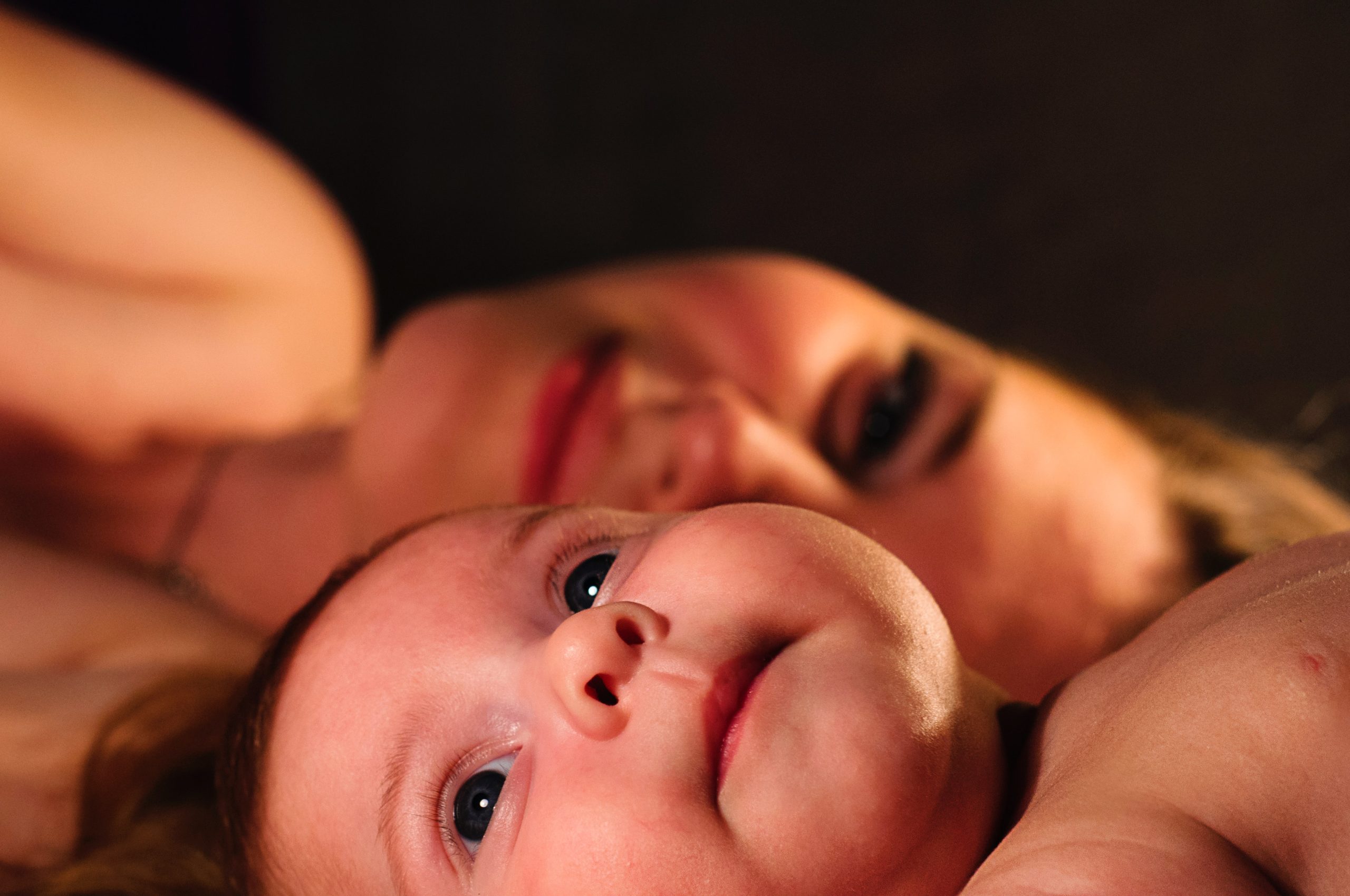
This is not an essay about the pain of pregnancy, though, to be clear, the experience is filled with a lot of it. This is an essay about all the pain that comes after. The onslaught of bleeding and throbbing and soaking and burning that washes over a postnatal body the moment when it is also asked to welcome a new kind of pleasure into the world. For me, my particular pleasure arrived last year, right on the cusp of summer, the air quietly hinting towards humidity and days when seemingly the only appropriate thing to eat are bowls of fresh, juicy, fruit. On a May afternoon, my body was forced by way of induction to bring forth what it had been carrying within, and as I roiled through the waves of labor, the promise of a healthy child and a release from the pain bolstered me through it all. What a disappointment then, to emerge from all of it in somehow more pain than when I was adrift in my own aching sea. The only difference was that this time, along with the pain, I now had by my side, a newfound pleasure to tend to.


The promise of a healthy child and a release from the pain bolstered me through it.

The thing about Hellraiser is that it is, in its own way, a love story, unfolding like a twisted, reverse telling of Orpheus traveling into the underworld to retrieve his wife Eurydice and bring her back to earth. In the film though (and Clive Barker’s novella, The Hellbound Heart on which he based the movie), Julia is the one on the rescue mission. Unhappily married to a man named Larry, really it is his brother Frank to whom she feels an overwhelming, all-encompassing passion. Before her wedding, she and Frank indulged in a brief but ravenous affair, and ever since then, he is all she thinks about. This is why she agrees to seduce and kill men for Frank who, after opening the Lament Configuration, is in desperate need of blood sacrifices to help draw him out of the realm of the cenobites so that he can return to human form. Because of this, the movie, despite being a horror film, is filled with an unexpected amount of overtly sexual passion that matches the gore shot for shot. 

Still, while Frank waits for Julia to bring him enough sacrifices to restore him to his old self, he suffers. His body buzzes with the electrifying sensation of fiery nerve pain delivered in waves straight to his brain. He has been subjected to all manner of torture and gratification at the hands of the cenobites, and he can no longer distinguish between the two feelings. At times, he regrets his decision to open the box, but for all Frank’s suffering, it cannot be denied that he asked for this. He is the one who searched for the Lament Configuration, that enigmatic object with a name that evokes the act of weeping. His desire has given way to gratification, even if it is not delivered in the way he expected.


My pain, too, was born out of a desire, and while there are many pregnancies and births that are not the result of love and choice, in my case I was lucky enough to have both. My son, in all his small, wild glory, was the direct result of consensual choices meant to deliver him from some other realm to us. Now he is here, and he demands to eat and sleep and breathe and be picked up every day. My husband and I tend to him with all the grace of two unstable but determined fawns. For me though, despite all the joy my son brings to me each day, my postnatal body has not managed to free itself from the pain. Instead, it anchors me to my daily pleasures—my son’s giggle, his milk drunk face, the joy of eating chocolate while nursing—careful to remind me of what it means to make a choice.


Still, as I inched closer to my due date, the pain kept getting worse.

When it first started, I was already in my third trimester. Slowly, I was becoming aware of a supremely irritating ache in my right leg and lower back, but, like most pregnant people who experience this symptom, my doctor casually told me this was most likely sciatica caused by the extra weight of the baby. She assured me the pain would go away as soon as I gave birth. Still, as I inched closer to my due date, the pain kept getting worse. It didn’t seem right that the only way I could walk to the bathroom at night was by bracing myself against the furniture and the walls, so strong was the pain, and so fearful was I, of falling over. But each time I asked my doctor about it, the answer was always the same. Giving birth was my only cure. I just had to tough it out until then.

In retrospect, I should have known something else was wrong. Now, when I see people walking confidently through their third trimesters, it is clear to me that what I was experiencing was not normal pregnancy pain. However, the experience of pregnancy was wholly new to me, and I trusted my doctors to know when to ask the correct follow up questions. And while it is true that the pain dissipated briefly after my son was cut from my stomach during an unplanned c-section, it was back within a few weeks, only this time, it was far worse and in direct competition with a whole new pain emanating from my c-section incision. By the time my doctor gave in to my questioning and sent me for physical therapy, I could no longer put weight on my right leg or stand up straight without experiencing an often-nauseating pulse shooting down my leg to my toes. The pain was all-encompassing at this point, paired with every one of my actions and coupled with all of my thoughts, all while my son nursed and grew and slowly woke up to the world.


There is this cultural belief I found myself facing time and again while I was pregnant that people with uteruses crave pregnancy. There seems to be this societal preconceived idea that if your body is biologically set up to reproduce, there is some innate switch that flips inside of you at some point that fills you with nothing but excitement at the thought of going through ten months of pain and discomfort in order to bring a child into the world. I had to explain on numerous occasions—usually to men—that while I absolutely wanted to have a baby, I was less than thrilled with all that my body and my psyche would have to endure to make that happen. Usually, the fact that I was not overjoyed to experience the pain of labor—or rather, that I was willing to actually voice my displeasure at the thought of it—seemed to some people to register as a sign that I was somehow not motherly enough. It’s not that I think people felt I needed to cherish the pain of childbirth, either. No, it was more they expected me to accept it as fact, a tiny annoyance I was supposed to be able to easily ignore simply because I was biologically required to experience it if I wanted to give birth.

Each of these experiences left me feeling as if pleasure and pain were to be conflated on top of one another into a picturesque vision of a prenatal woman exhibiting that tell-tale pregnancy glow. Reader, I am here to tell you that during my pregnancy I never experienced any glow, and I most certainly understood that the pain and discomfort I was enduring (and preparing to endure) so that I could gain access to my son was entirely separate from my desire to bring him into this world. 


They remind me of my son, but the comparisons to him stop there.

Cenobites must be summoned. They cannot enter the human realm without someone wanting them to do so, first. This is how they remind me of my son, but the comparisons to him stop there. Instead, it is I who relates most to the cenobite, that deliciously seductive entity that exists in a plane of reality always just out of reach. Once humans themselves, they have lost all ability to distinguish pleasure from pain, confined to an unknown realm where they await those curious enough to indulge in all manners of torture and delight. In the film, their leader Pinhead describes them as “explorers in the further regions of experience. Demons to some. Angels to others,” but just how they came to embark on this particular exploration isn’t entirely clear. They are as ambiguous as the pain and pleasure they seek to convey, save for the fact that they are eager to share their secrets with anyone able to call them. In this way they remind me of all the people who, after having given birth to a child, are determined to make their journeys into motherhood appear tranquil and carefree. Join us, they seem to beckon from beyond the muslin burp cloths. Motherhood has such sights to show you.


I am not here to trick anyone into becoming a mother. I will not lie and say that I do not remember the visceral pains of labor or even that what I did feel lying there in a hospital bed during those 23 hours wasn’t really “that bad.”  However, since my son’s birth, my body has become unable to distinguish between its pleasures and its pains simply because there has been so damn much of both postnatally.

I have endured those brutal first days of nursing where that tangy ache of raw, sucking gums placed poorly over my nipple eventually left my breasts raw, cracked, and bleeding from all of mine and my son’s best efforts. I have lain perfectly still in my hospital bed every couple of hours so that a nurse could come in and knead her fingers directly into my stomach resulting in a pain so acute that often, I almost felt as if I would begin to float away. I remember the nurse who looked startled when I told her that my first shower post-birth had been awful. “Women usually enjoy that!” she exclaimed as if the nerve pain from my c-section should have magically abated the minute I stepped into the stream of hot water. Months later, my physical therapist would tell me the key to avoiding some of the horrible scar tissue pain that comes with having a c-section is to stand tall as soon as you can after the procedure so that your scar stretches out as much as possible. “It will hurt like hell,” she told me, “But it’s helpful in the healing process.” 

And then there are the everyday postnatal pains that continue even after those first few hospital days. The relentless abdominal cramping as my uterus shrank back down to its pre-baby size, the cesarean sensation of my body somehow having been turned completely, miraculously, inside out, that spicy feeling of my milk letting down that still occurs with every feed. Even now, over seven months postpartum, my body still often feels like that of a cenobite every time my son grasps at my breasts while nursing so that his tiny fingernails dig into my soft flesh. I think about the many meat hooks cenobites love to use in their exploration of the sensual realm. Nursing comforts my son. To him, my body is a source of pleasure. Also to him though, my body is a piece of meat. 


I braced myself to waves of pain each time I carried my son from room to room.

The worst postpartum pain though has been, without a doubt, that debilitating leg and back pain that no one seemed willing to explore further. Eventually though, after many postpartum months involving long rounds of physical therapy and an extremely uncomfortable MRI, I was eventually diagnosed with a severe herniated disc—a 9.5 on a scale of 10 in terms of severity, or so my orthopedist told me. This slip up in my back meant that I could barely walk short distances without support, and I had lost all ability to stand upright, taking on a posture that left my physical therapist completely stunned at my inability to properly align my hips and my knees. Taking a shower had become unbearable, but the heat of a bath only aggravated my agitated nerve even more. However, I refused to relegate myself to a prone position, so I braced myself to waves of pain each time I carried my son from room to room, nursed him in a seated position, took the dog out to pee. The pain, then, became something that I adjusted to living with, a companion that existed with me alongside the various ups and downs of motherhood I was—and still am—learning to navigate. I began to expect it alongside everything that I did so that even in my joys, my body fervently ached. 


To be clear, my experience with pain is just one of many. There are, without a doubt, far more people, pregnant or not, living with far worse pain than mine, and my goal is not to equate one severity to another’s. In fact, each time I am asked to rate my pain on a scale of 1 to 10, I often balk at the idea that there exists a kind of universal pain scale we can all objectively use to determine each other’s suffering. How am I to put into numerical form a sensation that seems to hinge solely on bias alone? I haven’t quite figured this one out just yet, so when I’m asked the question, I do my best to give what I perceive to be an honest answer. Still, each time I put forth a number, I can’t help but feel like I’m getting the answer to the question wrong. 


I have tried many things to naturally repair the herniation in my lower back. I’ve stretched and lay prone on my stomach and bounced on exercise balls and suffered through cat cows and cobras for weeks with little relief. Often, while falling asleep, I have laid perfectly still, breathing in and out with the throbbing sensation pulsing through my right leg while my son sleeps quietly in the bassinet beside my side of the bed. If in my new motherhood haze I have the urge to get up and check on his breathing — a phenomena that occurs often — I carefully tuck my legs up into my chest before gently coaxing myself into a seated position. This maneuver is not foolproof. The pain still comes. But it’s worth it to stare down into my son’s crib and see his unblemished face in the half-light.

Recently, after two steroid shots that were meant to solve my problem but never once offered up any kind of release from the pain, the only option left to me was surgery. At this point, I had been juggling the pain for months with tediously planned out doses of ibuprofen and Tylenol, so I was ready for any option that might offer some kind of concrete release. The morning of my scheduled surgery, I lay there on the gurney in the middle of the operating room thinking about cenobites. Here I was surrounded by doctors and nurses preparing all the necessary tools to cut me open and repair me, but in order to get back to the pleasures of my old life, first I would need to wade through more pain.

I teetered there on the precipice of pain, ready and willing.

When Frank meets the cenobites, they stand before him in greeting and ask if he is ready to experience all manners of pleasure and pain. In the film, chains and meat hooks hang from the ceiling with pieces of bloody flesh dangling from their tips. A crude, wooden pillar rotates in the center of the room, a device on which many a body has no doubt been fastened. As I lay on the operating table, just before the anesthesiologist slipped me away into that other realm, I looked around at all of the surgical tools being prepared for my journey into this realm of repair. My surgeon turned to me. She smiled, and I smiled back. I teetered there on the precipice of pain, ready and willing for her to take me and tip me right over the edge.


Today, my body has two new scars. There is the long, horizontal one just above my pubic bone where they pulled my son from my body as I lay dopey atop a gurney with a large screen propped in front of my face to keep me and my husband from seeing my own insides. My physical therapist taught me how to massage this one in order to break up the scar tissue. To do so requires me to first lean into the dull ache of that particular space of my body. Every night as I lie in bed, I slip my hand beneath the elastic band of my underwear and knead my fingers into the scar tissue with deep, acute pressure. Sometimes, I worry that I am pulling myself apart from the inside. Once, I heard a story about a woman showing someone their c-section scar as proof of their postpartum status, and ever since then, I imagine myself lifting my shirt in public to some unexpecting stranger. But the gesture would be more than just an impulse to explain myself. In fact, it would require me to rotate my body to show both scars at the same time. Those sinewy silver ripples across my skin, the source of so much of my pain, the source of so much of my pleasure.

* Due to minor differences between the film and the short story, we’ve deferred to the film version in regards to certain identifying traits because the film version is more present in the popular imagination.
9 Novels About Losing (and Finding) Yourself in Work

I love reading about work, probably because it’s more fun to read about jobs than it is to actually do them. Not that I haven’t experimented with a variety of ways of earning a paycheck. I started my work-life in high school as a cart collector and grocery bagger at the supermarket in my hometown, then somehow got promoted to a role as a technician counting pills at the in-store pharmacy. From there, I landed a job as a Ferris wheel operator, which gave me the experience I needed to find another job at a different, larger Ferris wheel the next summer. When the theme park closed for the season, I found work in a button factory.

But the strangest job I’ve ever had was at Facebook. This was in 2007. I worked as a Customer Support Representative, which meant I responded to emails from people who were locked out of their accounts, usually for violating the site’s terms of service. What was strange about the job was not only the many ways people found to get themselves banned, but how I began to think about myself in relation to work. While I’d taken the job to pay down my student loan debt, I caught myself investing the work with more meaning than it deserved, nodding along as my boss, a young Mark Zuckerberg, rallied our team around his mission to “change the world.” I started to convince myself, in a way I hadn’t at the pharmacy or Ferris wheel, that maybe my life was in tech, that maybe this was the work I was meant to do.

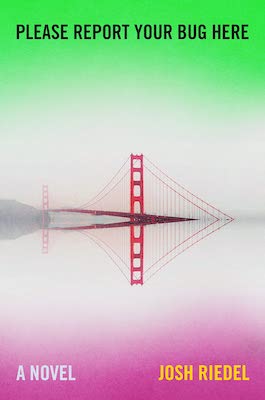
My debut novel, Please Report Your Bug Here, explores how work can warp our sense of reality. Ethan, an employee at a dating app startup, loses himself to his job—figuratively and literally—as he tries to track down the cause of a software bug that transports him to other worlds. As he navigates between these worlds, he’s forced to confront who and what he believes in.

Novels about work are never only about work. They show us characters searching for meaning and purpose, or struggling to capture their own sense of identity. They show us what it’s like to lose yourself and then find yourself again.

Temporary by Hilary Leichter

At once hilarious and heartbreaking, this slim novel follows a temp worker as she takes on a series of increasingly absurd jobs, from an assassin’s assistant to the Chairman of the Board. At some point she even takes on a job as a barnacle—yes, a sea creature—and listens to her coworker’s dream of becoming “the barnacle that rides on the back of a whale. A special kind of breed.” It’s probably the one scene that’s clung in my memory more than any other in the last five years, because it highlights the very relatable absurdity of workplace aspirations. 

Severance by Ling Ma

Released in 2018, Severance is now talked about as a book that predicted the pandemic. And rightly so: Shen Fever brings the world to a halt, and the novel’s protagonist, Candace, flees New York with a group of survivors to travel to a place called the Facility. What’s sometimes easy to forget about this novel is that Candace, a millennial office worker at a Bible publishing company, is so devoted to the routine of her monotonous job that she hardly notices when the plague hits. A predictable routine may distract you from the problems of the world, the novel suggests, but the bliss of such monotony is only temporary.

The Beautiful Bureaucrat by Helen Phillips

Part modern fairy tale, part existentialist thriller, this book lives in the same universe as the TV show Severance, though it was written several years before. The protagonist, Josephine, desperate for money, takes on a data-entry job. But it’s not immediately clear what the purpose of the work is. Only later does the truth about her work begin to take shape in her mind. A workplace novel that captures the surreal psychological isolation of the office worker. 

Omon Ra by Viktor Pelevin

Omon (“Ommy”) has always wanted to be a cosmonaut. But when he’s recruited to join the KGB space program, he discovers the life of a cosmonaut is not exactly what he’d imagined. Omon contends with absurd and nightmarish obstacles in preparation for his mission to the moon, and in the process is forced to confront the gulf between his childhood ideal and the reality of what it means to be a cosmonaut. A short, propulsive coming-of-age tale about technology that’s also a meditation on time, memory, and identity.

My Year of Meats by Ruth Ozeki

Last year, after reading A Tale for the Time Being and The Book of Form and Emptiness, I decided to skip back in time, to read Ozeki’s debut. In My Year of Meats, documentarian Jane Takagi-Little produces My American Wife!, a Japanese television show sponsored by an American meat-exporting business. But her involvement with the show is complicated by her discovery of unsavory truths about the meat industry’s use of a dangerous hormone. The stakes rise when she crosses paths with a Japanese housewife struggling to leave her husband. Ozeki worked as a documentary filmmaker before publishing her debut novel; she writes about the profession and its ethics with lived-in detail.

Friday Black by Nana Kwame Adjei-Brenyah

In his debut story collection, Adjei-Brenyah confronts the racism and consumerism that runs rampant in the United States. The title story features a department store salesman forced to deal with “ravenous” shoppers who stampede into the store hungry for “PoleStuff stuff.” In this capitalist dystopia, as a reward for dealing with violent shoppers, the store promises that the worker with the most sales can take home any coat in the store, which our narrator plans to give to his mother when he wins.

Since the collection was published, in 2018, I’ve returned most often to the opening story, “The Finkelstein 5,” in which the protagonist, Emmanuel, can dial his blackness up or down depending on his situation. The story shines light on the absurd maneuvers Black people are forced to make—in and out of the workplace—in order to survive in 21st-century America. Adjei-Brenyah’s debut novel, Chain-Gang All-Stars, comes out this April.

Days of Distraction by Alexandra Chang

A writer at a major tech publication leaves San Francisco with her boyfriend to remake her life in upstate New York. Though she plans to work remotely, the 24-year-old narrator finds it impossible to escape the drama of her toxic work environment. As she contends with what to do about her position at work, the scope of the book widens to include her reflections on race, including her role in an interracial relationship. Though her job was to report on the tech bros and billionaires of Silicon Valley, her research on Asian Americans in history helps her confront questions about her own identity.

When We Cease to Understand the World by Benjamin Labatut

Reading this novel is like going down the rabbit hole of an alternate-dimension Wikipedia. Described by its author as “a work of fiction based on real events,” the novel not only introduces us to the work of famous scientists and mathematicians such as Heisenberg and Schrödinger, it also offers a richly detailed (fictionalized) look into their lives. Unsurprisingly, there’s not much work-life balance for these luminaries, though we do see how they might have grappled with their discoveries, some of which result in unanticipated moral consequences. An extreme example of how work can become your identity and—for at least one mathematician, who decides mathematics is too dangerous to pursue—who you become when you decide to abandon your work altogether.

The Red Arrow by William Brewer

The protagonist, a struggling writer plagued by debt, takes on a job ghostwriting a famous physicist’s memoir. At the same time, he decides to undergo experimental therapy to cure his severe depression, or what he refers to as “The Mist.” But when the physicist vanishes, everything’s left in limbo. In this trippy novel about time and Italy and psilocybin, Brewer expertly illustrates the way work—both the work of therapy and of ghostwriting—can alter your way of seeing the world and shape the very nature of your reality. 

The Best Artists Are Complete Failures

Josephine

                   I ran away from home, away
from St. Louis, and then I ran away from
the United States of America, the Statue
of Liberty—I preferred the Eiffel Tower,
which made no promises.
                            One dance
made me          the most famous colored
woman in the world. I was not intimidated.
Everyone is made with two arms,
                            two legs, a stomach
          and a head.     Just think about that.
A violinist had a violin, a painter his palette.
All I had was myself.

Jasper

To be an artist you have to give up
everything,     including the desire
to be a good artist.
                           I assumed
       it would lead to complete failure,
    but I decided that didn't matter
              —that would be my life.
My experience
is very fragmented. In one place,
a certain kind of thing occurs,
and in another place, a different thing
occurs. A complaint,
               or appeasement.
                   As one gets older,
              one sees many more paths
              that could be taken. One
would like not to be led.
        Remove the signs
        of thought—
it is not thought
that needs showing.

Claude

Everyone discusses art and pretends
to understand,       as if it were necessary
to understand, when it is simply necessary
to love.     I'm not performing miracles,
my garden in a slow work. I would like to
paint the way a bird sings.
                   I must have flowers,
always, and always. I planted them
          for the pleasure of it.
Every day I discover more beautiful things.
There is enough paint here for a lifetime.
 My wish is to stay like this—living
       quietly in a corner of nature.
       Colorful silence—
                here is a little square
 of blue,   here a circle of pink,
                here a streak.      of yellow.

A Literary Guide to Antifascism

Antifascism is a social movement that seeks to push back on the growth of the far-right, to keep communities safe, and to protect progressive social movements and marginalized communities without resorting to law enforcement solutions. Antifascism is also an approach to combating the escalating rise of white nationalism, empowering grassroots organizing campaigns to disrupt fascist demonstrations in their local communities. The movement is built on the notion that these community-based solutions are ultimately more effective than simply turning to state violence, which itself has been often complicit in white supremacy.

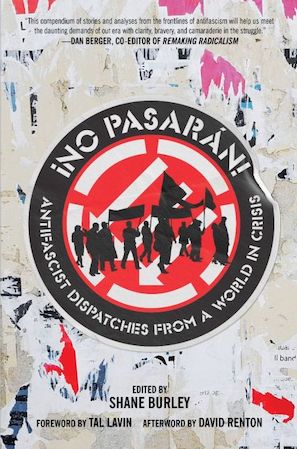
My new anthology, No Pasaran: Antifascist Dispatches from a World in Crisis, is intended to blow open our picture of what antifascism activism is, how it works, and what its future might look like as the far-right continues to surge. By highlighting underrepresented voices, issues, and experiences, the book aims to remind us that antifascism is so much more than just the caricature peddled by Fox News, and that, rather, it is a movement collaborated on by millions in an effort to divert the worst possible future. With a community connected through antifascist organizing, we know that we can remain safe by coming together and refusing to quit.

If you’re looking to see how you fit into this new political equation, you may be surprised by what you’ll find on an antifascist’s bookshelf.  Beyond just dense political agitprop, the literary world has taken on fascism from just about every angle imaginable: graphically, lyrically, and through speculative dreaming and ferocious rage.

Here are ten books to add to your own antifascist reading list to help counter the despair that white nationalists hope to impart with a heavy dose of rebellion.

As Black as Resistance: Finding the Conditions for Liberation by William C. Anderson and Zoé Samudzi

This manifesto from William C. Anderson and Zoé Samudzi stands as one of the most important books of the last decade, situating a radical identity of Blackness at the heart of the rebellion against the structural white supremacy that drives our country’s politics and economy. Building on an earlier essay that looked at the inherent “anarchism of Blackness,” the experience of African-descended people’s exclusions from systems of privilege and protection, the book creates a subaltern vision for keeping communities safe from racist violence and building a new kind of society in the shell of the old one.

Ring Shout by P. Djèlí Clark

What if we took the experiences of those facing racist violence seriously? What if the monsters hiding under white hoods and lashing out with carnivorous violence were actually, literally monsters? P. Djèlí Clark’s horror novel, Ring Shout, portrays white supremacy as a mutating virus that spreads through the white population, with Klansman enacting compulsive cruelty in a manner usually reserved for vampires or werewolves. Antifascists are the heroes of Clark’s novel, taking on the role of demon hunters desperately battling creatures who seem to only multiply and invade. Rising Shout features beautiful storytelling in a Southern narrative tradition that explores the generational history of Black self-defense against the Klan in a way that may honor reality better than journalism ever could.

Never Again: Rock Against Racism and the Anti-Nazi League 1976-1982 by David Renton

Although published by an academic press, Renton’s immensely readable history of the Anti-Nazi League and their famous musical collaborations with Rock Against Racism is among the most important stories of post-war antifascism. Renton is a venerable scholar and storyteller of this history, partially because he emerged from the same political waters as many of the individuals he explores in this book. The Anti-Nazi League came together in Britain in the 1970s to fight the rise of the fascist National Front and anti-immigrant politics that were sweeping the country. The Anti-Nazi League later collaborated with musicians like Elvis Costello to bring 100,000 people out into the streets to challenge neo-Nazis who believed that England belonged to them. Few stories are more relevant to today’s political climate as people around the world are grasping at strategies to keep their neighborhoods safe and resist encroaching fascist movements.

After the Revolution: A Novel by Robert Evans

Best known for his work as a journalist sharing the private fuck-ups of the world’s worst people, Robert Evans’ first novel, After the Revolution, is an epic speculative fiction story that feels eerily close to our everyday reality. Exploring the aftermath of the United States’ collapse in the year 2070, Evans demonstrates that the coming crisis is one where the far-right will manipulate the population’s desire for stability, making antifascism essential for those hoping to replace our decaying society with something more humane. Evans’ history as a very public antifascist and investigative journalist reporting on the far-right shines throughout After the Revolution, particularly in the book’s accuracy and covert hopefulness.

The Antifa Comic Book: 100 Years of Fascism and Antifa Movements by Gord Hill

One of the most complete histories of antifascist activism ever written comes not out of the halls of academia, but from Gord Hill, an indigenous comic artist who, with The Antifa Comic Book, has created a sweeping panorama of one of the most intense political struggles of the post-war world. Hill’s work brings these stories to life through an interlocking historical narrative, hand drawn with a vibrant touch of character and gritty comic realism. This is one of the most engrossing ways to learn the history of fascism and antifascist movements, a story whose tendrils reach from before the Second World War to the 2017 tragedy in Charlottesville.

For Antifascist Futures: Against the Violence of Imperial Crisis edited by Alyosha Goldstein and Simón Ventura Trujillo

Edited by Alyosha Goldstein and Simón Ventura Trujillo, the new anthology, For Antifascist Futures, is a necessary corrective to the largely white-centric view of antifascism that has dominated most conversations on the subject. This book looks at how anti-imperialist activism—coming from Black, indigenous, and decolonial spheres—relates to the fight against rising fascism, taking a fully intersectional perspective exploring how systems of oppression are inherently linked to one another.

V for Vendetta by Alan Moore

While famous in part for its film adaptation of the same name, Alan Moore’s V for Vendetta is one of the most challenging and bleak fictional projections of an increasingly possible future. Exploring a fascistic British society, the story centers on V, a revolutionary who does not simply want to restore the balance of liberal democracy, but instead presents anarchism as the only true solution to fascism. The graphic novel’s “battles of extremes” reflects the real-world contest of radical politics, demonstrating that (to use the fascism scholar Robert Paxton’s term) “mobilizing passions” run underneath revolutionary politics of all stripes. In Moore’s formulation, fascism is the inevitable result of the unstable and vastly unequal world we currently live in, and the only way to stop it is to tear our society from its roots and build a completely new, liberated civilization.

Culture Warlords: My Journey into the Dark Web of White Supremacy by Tal Lavin

One of the most essential pieces of antifascist journalism ever written, Tal Lavin’s intensely personal journey explores the far-right’s darkest annals as the author creates an online persona to infiltrate white supremacist message boards for the purpose of gathering intelligence for antifascist journalists and activists. Lavin’s experiences are laid bare in a portrait of how white nationalism forms a result of alienation, arguing that collective action—which puts community safety as its highest priority—is the only solution. We find strength in exactly the points of identity that racists and neo-Nazis believe are our vulnerabilities, and Lavin’s gut-wrenching prose carries us beyond the painful story of survival and explains how solidarity is the antidote to fascism.

It Did Happen Here: An Antifascist People’s History, edited by Moe Bowstern, Mic Crenshaw, Alec Dunn, Celina Flores, Julie Perini, and Erin Yanke

This book won’t be released in its print form until next year, but you can access it early in the form of a multi-episode audio documentary produced out of Portland, Oregon’s community radio station, KBOO. It Did Happen Here explores the history of the late 1980s and 90s in Portland as neo-Nazi skinheads, anti-Semites, and white nationalists were confronted by a dynamic group of activists from Anti-Racist Action, Skinheads Against Racial Prejudice (SHARP), and the Coalition for Human Dignity, the latter of which emerged from the anti-Klan movements of the 1980s. This is one of the most engaging and shocking histories of antifascism in the United States, told directly from the mouths of those who actually lived through it.

Fascism Today: What It Is and How to End It by Shane Burley

My first book was written and published at a peak of the frightening wave of alt-right violence during the Trump administration’s early rampage against democracy and civil rights. It hit bookstores a matter of weeks after the tragedy in Charlottesville and gave voice to antifascists who were charting the rise of white nationalism with few people listening until the threats were at our door. The book aims to give readers a clear picture of what white nationalism is, how it works, and how to help dig its grave. With deep research into the heart of the fascist worldview and conversations with activists around the country, Fascism Today stands as an optimistic vision for what we can achieve when we decide to come together to build a new future.

Booktails from the Potions Library, with mixologist Lindsay Merbaum

Imagine a city in the grip of a dictator, where bureaucracy is revered with religious fervor, citizens regularly disappear, and arrests can happen at any moment. Now, imagine the devil himself pops up in this city. This is the basic premise of Mikhail Bulgakov’s famed novel The Master and Margarita, where absurdity is not the exception but the rule. Here, a strange-looking foreigner with one black eye, one green, and all the trappings of wealth runs amuck, his oddball henchmen and nude witches in tow. He’s a historian, he claims, when he inserts himself into a conversation between two men of letters sitting on a bench. He also says he’s an expert on black magic. From that moment, the fates of all whom he encounters are sealed. 

Soon, more citizens disappear, or turn up in impossible places. Someone loses his head—literally. More patients are sent to the asylum and theater-goers are thrown into riotous turmoil. A pair of bereft lovers—a novelist living in a psychiatric hospital after he was rejected by the Moscow literati, and his beautiful, wealthy, yet depressed and devoted mistress—are offered a chance at an eternity together. After all, in a country governed by fear, where a man without papers is a man who does not exist, God’s omnipotence is not allowed, so the devil may merrily take his place. And who’s to say redemption is not also within his power? 

The Master and Margarita is a delightful novel, an unusual classic that offers a large, mustachioed cat who speaks and eats pickled mushrooms with a fork, but never wears pants. (“How ridiculous,” he exclaims, “cats don’t wear pants! Bow ties, yes. But not pants”). Plus a flying pig, a trip to the ball of the year in hell, and a brilliant and beautifully crafted story-within-a-story involving Pontius Pilate and the execution of Jesus Christ. There is also an abundance of champagne, caviar, and other hors d’oeuvres, flowers, assorted trees, and frequent lunar appearances.  

Much champagne is drunk in this novel, including the bottles popped at Griboyedov, the coveted residence of Moscow’s most respected writers, and a fountain of bubbly at the Grand Ball of the Full Moon. Therefore it seems fitting that this booktail recipe riffs off the classic champagne cocktail containing sugar, bitters, cognac, a lemon twist, and, of course, champagne. In this version, the sugar cube is soaked in rose water for the roses the Master and Margarita love so much, as well as those found in Yershalaim, and the roses decorating hell’s ballroom. As is traditional, cognac–a precious, golden liquor–is added, a nod to the libations drunk during a fateful conversation between the Master, Margarita, and a figure of a certain power. Lemon juice adds a sour note and botanical Velvet Falernum complements the rose water, a reference to the Falernum wine drunk by Pontius Pilate. Finally, a twist of lemon serves as a reminder of the lemon Pilate chews as he consumes his oysters. 

The drink is presented against a tableau laden with black velvet, framed by curtains of red and gold paper. The folds of the red paper mirror the flames of hell, while the material itself references the terrible trick played on Moscow’s theater-goers, who snatch at a cascade of bills only to later find they’ve turned to bottle labels and other such refuse. On the left, beside the novel itself sits a pomegranate, a symbol of Margarita’s descent. On the opposite side is an amethyst orb, which resembles the devil’s own living globe. In between is a silver mirrored backdrop, which reflects the theater patrons’ greed as they behold the performance on stage. To the left of the orb stands a tier of champagne and a shot of vodka, a liquor that makes a frequent appearance throughout the novel, usually accompanied by hors d’oeuvres. Front and center stands the booktail itself on a slab of fluorite, decorated with olives, a mushroom, soft cheese with a mustard and wine rind, and dried rose buds. Letters from the book cover behind appear to float in the glass. 

The Master and Margarita

Ingredients 

  • Champagne
  • 1 oz cognac
  • 1 tsp lemon juice
  • 1 tsp Velvet Falernum 
  • 1 sugar cube
  • ¼ tsp rose water  
  • Twist of lemon 

Instructions 

Add a sugar cube to a champagne flute. Douse it with the rose water and stir gently, as needed, so the sugar absorbs the liquid. Next, add the lemon juice, then the cognac and Falernum. Top with champagne. Garnish with a twist of lemon.

I Needed to Stop Apologizing for My Authentic Self 

My earliest memory is writing my name in purple crayon. Again and again I wrote it, kneeling on the floor with some scraps of paper. I remember the moment so vividly, not just for the writing itself, but the feeling of certainty. I knew damn well that this weirdly wonderful happening of word-on-paper was right somehow; it was significant, it made sense. It was intuitive. I was alone, and all I was doing was being myself, having fun, playing. An early time in life when nothing and no one had yet swept in and told me that what I was doing was wrong, or that I should BE anything other than what I was. The sense of self we are all born with before life comes along and shakes it up. I hadn’t yet been told to, ‘Get my head out of the clouds.’ Right and wrong were lessons about the world around me and how I worked in it; they had yet to creep into my belly, dictating what aspects of myself were permissible, and which were not. Autism was not a thing; I was the shy, frightened type. I started to write rhymes – deep in a wood, down in a hole, lived a little lonely mole – and enjoyed the smiley stickers and pats on the head from my teachers.   

No one came out as gay in the ’90s when I was in school.

Shame creeps in when we are made to feel like crap for being ourselves, an accrued sinking, deep-cringe feeling of something fundamentally wrong with us. In high school, I began to hear the smirks or frustrated sighs when I said, ‘I want to be a writer.’ My head was stubbornly stuck in those clouds; so began my angsty poetry phase, neatly colliding with puberty. While I had no idea what was going on with all these bodily changes and urges, I was well aware of my headspace growing ever stormy; it was what would become the dark in my dark comedy, from a view of the world that is both Stephen King and Beatrix Potter. I latched onto the term ‘bisexual’ in an unspoken and uncertain way, flinging words with endless, skilless energy onto the page. By university, and in true cliché writer fashion, I had taken to wine and set off as cheery and naïve as Dick Whittington, determined to get a top degree in Fitting In. 

Be fun-loving, be clever, be cool, and for the love of God, be straight. 

No one came out as gay in the nineties when I was in school. With frizzy hair and wonky teeth and skinny legs, I had wanted only to be invisible and blend in. Now with cropped hair and straightened teeth and hidden legs, college seemed the perfect place for reinvention, simultaneously exploring, and hiding, myself. 

I studied English Literature, had successfully progressed from angsty poetry to angsty first novel. In the emotionally safe, booze-addled world of college bars and parties, where everything could be brushed off as drunkenness, my sexuality began to peer out. Explore, and hide. I knew I wasn’t straight but was scared to think I might be gay, just as I wanted to write but was scared of whatever it was I had to say. Neither my behavior nor my writing were good, and I finished university with a (to be honest, miraculous) 2:1, a few hundred pages of drivel, and a deep sense of being utterly lost and alone. Being myself felt wrong, being someone else hadn’t worked, so I wasn’t sure who or what to be next. In the end, I returned to my home town, to have one of my (oh so many) ‘fresh starts.’ I stopped writing, got a boyfriend, got a job in HR, and for several years led a life in blissful, booze-fueled numbness.   

I really thought I was done with writing. After all, as I had heard time and time again, only deluded idiots wanted to be writers, the same deluded idiots that wanted to be dancers or singers or footballers. The world I inhabited was the sort that regarded artistic, creative, unusual lives with patronizing suspicion, unless you had a contract with Manchester United or The Royal Ballet, in which case you were regarded with patronizing envy. Dream-chasing was something children, geniuses, and fools did. Us – normal people – were not supposed to pursue dreams, we were supposed to pursue promotions and pay raises. After all, I was not a child nor a genius, and no one wants to be a fool. In fact, being foolish and being ridiculed were what I feared most. 

There seemed, then, to be so much fear around foolishness, fear of embarrassing oneself, that shame was used as a sort of vaccination, a preventative measure. If you were shamed into hiding your sexuality for example, well, at least it saved you, and your family, from being bullied or mocked. This approach was wonderfully effective in many ways. Shamed into ditching the dream and getting a dull office job? At least you won’t have the humiliation of answering questions about your twentieth rejection letter. There was even a neat reward at the end: When you had the house and the cars and the holidays, and your life looked like everyone else’s, nobody would ask you pesky questions about that old dream anymore. That would be long forgotten. You’d get so good at the act, you’d almost believe it yourself, and people at the barbecue would say how far you’d come, basking in the reassurance that we must all have gotten it right somehow, living as we do.   

Except, it doesn’t work like that. It can’t. We are who we are, and a dream is never forgotten, it is only abandoned. It’s as simple as that. It will rear its green head when you read, or watch the game, or see the ballet. It gnaws at you in constant reminder that it is there, unattended to, like a dying thing in need of attention. Your intuition, foolish or not, will not be silenced. 

In one short week, my relationship and career and home life fell apart. 

We are who we are, and a dream is never forgotten, it is only abandoned.

I was twenty eight. I stood by the single bed in the spare room of my Dads’ house and looked at all the books – my books, exercise books, notebooks, filled with scribbles and stories and poems – which I had just, again, unpacked, and I knew that this had to be it. It had to be writing. It was the first feeling of giving in. Not bravery, not a fist in the air as I cried, ‘I shall do this thing!’ but that feeling of failing a fight. I got a job in a factory, and I started to write again, this time with the acceptance that publication was unlikely but that I would write regardless, forever, because I couldn’t not do it anymore. Publication was still a dream to me, but writing was a necessity. And I recognized a very old feeling, of something just being right. 

Sexuality was a different issue altogether, partly because I still saw it as an issue. I wasn’t yet ready to stop questioning and denying, and despite now knowing what a ‘right’ feeling was like, I still didn’t allow this when it came to love and intimacy. I sometimes read about people coming out in huge, wild, wonderful ways, like a burst dam, and I applaud them, almost enviously. Mine wasn’t like that; many people’s coming out stories aren’t like that—more a trickle than burst dam, drying up occasionally, or filtering off all over the place. 

In parts of my twenties and thirties I sort of explored my sexuality and sort of said I was bisexual and said I sort of wrote – a bit, but nothing much, just silly stories – but I was still too afraid and embarrassed to own any of it. By thirty I was married, in a polyamorous relationship, where behind closed doors I explored and wrote and grew, quietly. 

We are not all flowers. Some of us are mushrooms. 

My first novel was a heavy erotic thriller that took two years to complete and was rejected everywhere. ‘Too dark,’ everyone said. Funnily enough, one agent responded that she liked it but, ‘…it doesn’t seem to know what it is’, which was bang on in more ways than one. The next book was a heavy psychological drama that took three years and landed me my wonderful agent, but also remained, and still remains, unpublished. ‘Too dark,’ everyone said again. Then I had a little breakdown – divorce, house moves, job moves, confusion quelled by pinot grigio, another fresh start – and wrote another book, which was also a heavy psychological drama, and also too dark. And I remember hearing this feedback, which I had heard so many times before, and suddenly I gave up.  

I big fat ugly gave up. 

I fuck-this-and-fuck-them-and-fuck-life gave up. 

I hadn’t realized it, but I was still acting; even on the page, I was acting. I was so sure no one would want to really see or hear me, so I had habitually always edited out the zany, the silly, the weird, the gay, from my writing, convinced that these were all the undesirable and wrong parts of me. I thought they were the embarrassing bits, I was ashamed of them, and I thought I had to write seriously to be taken seriously. But then, eleven years after quitting that HR job, after everything had fallen apart several times over, and after enough rejections that the word had lost all meaning (they really do just become good liners for a litter tray) I just abso-fucking-lutely gave up. Three novels, writing for over a decade. I just felt done with it. 

But, of course, I wasn’t. 

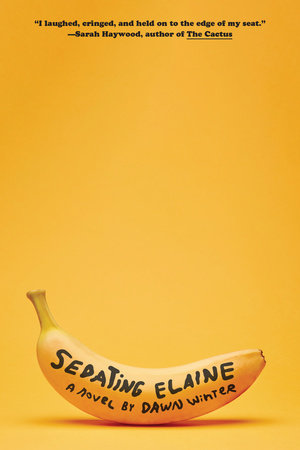
I had for months been writing a joke of a short story for a friend who was going through a break up, something silly to make her smile. Whenever I was on a break from my ‘serious’ writing, I would play with it. It was like a game, just a laugh, I didn’t take it seriously. In this moment of giving up, in a sort of hopeless ‘what about this then?’ I sent the first few chapters to my agent, who replied telling me to ‘just keep going.’ Six weeks in the first lockdown, I just wrote, like I had never written before. From absolutely ditching the effort to be anything – to be better or different or right – I wrote and wrote and wrote, so fast my fingers barely kept up. It was eventually titled Sedating Elaine, and off it went to the publishers.

I didn’t really believe that this would be any different from the times before. You come to expect your normal, which was, in my case, positive murmurings but ultimately rejections. That said, there is a tiny entry in my diary on 22nd October 2020 that reads, ‘I am almost afraid to write these words, but I have a feeling that this one may have made it.’ Still, I tried not to think about it.

I hadn’t realized it, but I was still acting; even on the page, I was acting.

 But then, it happened. Sedating Elaine sold to Knopf on a pre-empt within a fortnight, the TV rights went to ABC shortly after, and I stood around in a stunned daze, finally with a book deal, from the most ridiculous book I had ever written.

That this book – this book! The book I was writing as a joke! – should be the one to make it, baffled me to say the least. I had spent years on my previous books, I’d agonized over them; it seemed ever so strange that the one I’d just sat down and written without really thinking about, should be the one to make it. It hadn’t been difficult, it hadn’t been torturous, it had been a laugh, a breeze. It didn’t make any sense at all. 

That was, until I remembered. I remembered what it felt like. What writing it had felt like. 

It felt like purple crayon. 

It felt like doing something freely, without any shame or judgement. It was a release of unapologetic authenticity, and that is a valve that only flows one way. And I was out in more ways than one, when people who had always assumed I was straight — some who had known me all my life — read it, and it fell into place; I love who I love, it needs no scrutiny nor explanation, because intuition guides me there and as such is always right, regardless of gender or labels. It’s about time; I turn forty this year, and I have just arrived. Purple crayons and make-believe, I’ll shove my head in the clouds and be damned if anyone can wrench me down. Because this is just as it should be, just as writing should be; fun, easy, playtime. Write from the same place in you that built sandcastles and dug mud holes and played the saucepans with two wooden spoons. It will never be real if it is stifled by constrictions and rules and doubt. Ditch all of that crap, and play to your uniqueness. 

Sedating Elaine is out now. And so am I. 

I Read To My Baby About Abortion

In the winter of his first birthday, my baby’s hair grows in curled, soft brown wisps. It loops out from behind his tiny ears and swirls down the back of his delicate, ripe-peach-soft neck. His eyes are changing color, too, warm golden light and cool green shadows threading outward from his pupils, braiding themselves into the chocolate of his irises—once blue, for his first few months on earth. He loves: strawberries, fart noises, snowflakes, our ever-patient dog. He hates: the vacuum, the tiny hand-held snot-sucker designed to decongest the tiniest nasal passages. Perhaps he senses that they are cousins, the two implements—branches of the same terrible, suction-y, family tree. 

Lately, he’s taken to rocking his baby dolls, brushing his open lips so gently across their faces, carrying them from room to room under his chubby arm as if they were swaddled, bonnet-clad footballs. He doesn’t know I’m five weeks pregnant today, as we round the corner into his second year on earth. But the matter of this pregnancy—the size of an orange seed, nestled deep within the very same belly he once stretched taut with his long fetal limbs and all his extra amniotic fluid—does not remotely resemble, nor will it ever become, a real baby. Not for him to love (and also, of course, to envy, and tolerate, and collude with, and to resent long into their respective adulthoods). 

The grief that saturates this thing is deeper than that of all the others I need to acknowledge and memorialize and mourn—the potential futures, the lost and nameless other outcomes. The grief I feel for him, for this lack, for the sibling that will never be (even if, in years to come, it turns out that other siblings do arrive—through my body or otherwise). This particular grief—no baby for my baby—is bottomless.

This particular grief—no baby for my baby—is bottomless.

My baby sits in my lap, on this January morning, as I read him a children’s book about the source of this grief. It’s a source from which contentment and gratitude and relief spring, also, and abundance, and time. It’s the source of expansion, of health. Of a clarified, focused, more peaceful motherhood. I know this. This joy—his good soft weight in my lap, his chubby fingers splayed open across my forearm, the knowledge that we will keep doing this, me and him, uninterrupted for another year at least—this joy has no ceiling for me. 

Yet I’m crying today, as I turn the pages, and press my face into those curly wisps of soft hair, and read him the same words I have so many times before. The book sits open before us.

Its vibrant, colorful splashes of illustration draw him in. He grabs a page in his hammy little fist to turn back whenever he’s particularly excited about a picture. The bright pinks and yellows and green, and the simple words he knows and imitates, his tiny tongue forming sounds and chirps adjacent to their beginnings—family, grow, love, people, you. And the words he doesn’t, he listens to quietly—pregnancy, decide, procedure, medicine.

I am reading him a book about abortion. 


The majority of people who have abortions in this country do so while already parenting one or more children. And many more go on to become parents after their abortions. How many of their children—our children—don’t know this? How many think that abortion is for other people, not those who raised them, not their grandparents, not their siblings or themselves? And how many children know that abortion has played an essential part in the creation or survival of their own family, that abortion has been a chapter in their very own origin story, but receive the message that questions are not to be asked? How many, having discovered evidence of a pregnancy that did not result in a child, or having overheard whispered adult conversations or even been sat down for a serious conversation, are made to feel that the subject is, in their families, unspeakable? 

how many children know that abortion has played an essential part in the creation or survival of their own family?

I first learned of What’s An Abortion, Anyway? through an abortion doula collective which offers trainings, workshops, and international community. One of its facilitators, Carly Manes, had noticed (as had I, in my own work at an abortion clinic) that abortion patients often brought their children with them to their appointments. There are, at this moment, children and families in clinic and hospital waiting rooms everywhere; many more of them are home with parents undergoing medication abortion processes and recovery periods following in-clinic procedures.

What if, Manes wondered, there was a simple access point, for those children, to an understanding of what was happening in their family and/or their surroundings? To an inoculation against the discomfort, shame, and secrecy that is airborne on our streets, in our homes and churches and schools, the embarrassment and fear projected onto them—and onto each other—by adults? What if someone were to create, Manes thought—for kids and their caretakers—a medically accurate and non-judgmental book, a gender-inclusive book, a joyful and honest book that told children real stories about real human bodies and feelings? She knew immediately that it could, and must, be done.

Enter Manes’ friend, Brooklyn-based artist Mar (who makes art under the name Emulsify). The illustrator of WAAA? is also an abortion doula, the founder of Emulsify Design, and the creative director of Arrebato, a space for Queer Trans Black & Brown community. 

The reason there are no children’s books about abortion, no spines bearing the word or covers alluding to it among the wonderful spate of sex ed and body-focused picture books for younger readers (books like Cory Silverberg and Fiona Smyth’s fantastic What Makes a Baby?—another favorite of this baby I made) is the same reason that your OBGYN likely won’t perform your abortion, should you need one. The same reason, in fact, that 75% of U.S. OBGYN practices do not—despite the fact that abortion care is straightforward, common, and 14 times safer than childbirth

If the premise of this essay, and of the book, is a source of discomfort for you—that unease has been intentionally cultivated in you (though not by the writer of these words, or by the author and illustrator of those). What’s An Abortion, Anyway? is a rarity; perhaps the only children’s book I can think of that shares no other shelf space on its chosen subject. No other titles to offer as alternatives. This book is—for now, at least, and in the U.S.—the only one we have. Luckily for us, it’s pretty damn wonderful. 

This book is—for now, at least, and in the U.S.—the only one we have. Luckily for us, it’s pretty damn wonderful. 

Abortion has been so successfully othered in our brains—so deliberately and carefully siloed and politicized—that we can no longer place it, alongside other simple facts of human life, in our everyday conversations, on the spectrum of our routine reproductive health care and our regular old science and sex education curricula, and on our family bookshelves. 


“You grew in my belly,” I tell him, among so many other things. “Your eyes are brown and green. Oh! Look at those toes. Let’s count them. You’re so beautiful. That’s my belly. Sometimes people have babies, and sometimes they don’t. Lots of different people have abortions. Families look all different kinds of ways. I love you and I’m so happy that you grew in my belly and that you’re here now.”

These are facts about the world my son inhabits. Facts upon which he can build feelings, questions, understanding, opinions. Facts I owe him. Facts that—like the body in my lap—are his to do with what he will. 

And just like any other fact—the sound an owl makes, the sign language for “help” or “hug”, the rhythms of the sun and moon and stars and thus of the schedules we follow—someone has lovingly, intentionally, masterfully, written it down for him in a book. 

When a person gets pregnant, the book begins, many different things can happen.


A pregnancy is a fact, but it’s also a feeling. A more nebulous, temporal, personal thing. An idea, maybe. An emotion, an experience. A completely unique composition of a person’s memories, relationships, family and community norms, spiritual beliefs, wisdom, core values, and the messaging they’ve absorbed from birth about their body and its borders. It is the beginning of a new sentence, never before heard, in a language that only the pregnant person can speak. They choose its structure, its meaning, its ending punctuation. Our job is to listen, if invited to. Our job is not to interrupt or to speak our own language back.

Episodes is how my clinic’s medical software refers to pregnancies, as in: Patient is currently experiencing a pregnancy episode. There is a moment, of course, at which sperm meets egg; another in which the fertilized egg implants, silently, unseen, deep within our bodies. Then a period, minutes to months, of changing and growing. We decide if the acorn will become an oak tree. Or the acorn decides, or the squirrel, or the weather. Every episode comes to an end. 


I make a mistake, shortly after my abortion. What’s An Abortion, Anyway? has become one of the favored picture books in rotation, requested over and over by my baby alongside Brown Bear, Brown Bear and All in a Day and The Pronoun Book and Goodnight Moon. I want to share its beauty, as I know so many parents and carers and reproductive justice folks who would love an English or Spanish language copy of their own.

I tweet a photo my partner has taken, my anonymous child on my lap, the book obscuring his face, of us reading it, the greens and pinks and oranges and yellows of its floral cover bold and bright. It’s my intention to celebrate the book, to spread the word—more than one person has told me they are struggling to explain abortion to their own children, or that they wish they had resources for younger readers and learners.

more than one person has told me they are struggling to explain abortion to their own children

But Twitter, as I am swiftly reminded, is not my group chat. There are people on Twitter with whom I am not in community. People like J.D. Vance, running for U.S. Senate as Ohio’s “champion of the unborn”, endorsed by Ohio Right to Life, who shares my photo with his 300,000 followers, adding his own commentary on my mothering skills. I quickly set my account to private, protecting my tweets, but my website and email address have already spread like wildfire through whatever corners of the internet J.D. Vance fans frequent from behind their American flag and assault rifle avatars. I begin to get the kind of violent and hateful messages you’d expect from those who, above all else, they say, value mothers, children, families, babies, life.


I will speak with my child—in the evolving language of his development, his understanding, his emotional maturity, and his interest—about abortion, for the same reason I speak with him about race, about gender identity and sexuality, about disability justice and climate justice and police violence and all the rest of it. For the same reason I will listen to what he has to say, whenever he is ready to say it. Because access to information is care, too—and the denial of information is a weapon. A form of neglect, a method of control, a tool of manipulation. Because education is care, respect and honesty and trust are care, and care is what we owe our children. Because my child will not grow up with silence between him and the things he is curious about. Because the cultural forces that rush in to fill that silence, for so many kids and young adults—the street preachers waving horrifically gruesome doctored images on their janky poster boards, the pundits “just asking questions,” the self-designated leaders and influencers waxing philosophical on social media about the authority they feel they should be granted over the inner unfoldings of lives and bodies not remotely their own.

Some people have abortions because their doctors say pregnancy could make them sick, we are told by What’s An Abortion, Anyway?

Bodies are facts. I’m diabetic—look, here’s someone with an insulin pump, like mine. Here is a freckle. You have a penis, Dada has a penis. I have a vulva. I have a vagina. We all have belly buttons. We all have nipples. We all have bodies that belong only to us. Your body grew inside of mine. Then another body was going to grow inside of my body, but Dada and I decided that it wouldn’t. My body is a little bit sick. So sometimes we have to take special care of it.

Bodies are facts. I’m diabetic—look, here’s someone with an insulin pump, like mine. Here is a freckle.

Some people have abortions because they like their family exactly how it is.

Families are facts, and they’re also feelings. You and me and dada are a family, but we also love and are loved by many other people in our communities, and we may call them family, too—because we feel like they are. 

Some people have abortions because they can’t take care of a new baby right now. A smiling, long-haired parent holds their child in their arms: now that I’m scheduled for my pre-abortion ultrasound, I realize, the funding secured and my name on the clinic schedule, it could be an illustrated version of me. Of us. 

I have an abortion for many reasons: because I can’t afford another child financially; because my chronically ill and disabled body has not yet healed from my first high-risk pregnancy and cesarean section; because my family of three (+ dog) is whole and full, at this moment, and our lives are at lovely capacity. I will tell my son these things someday, when we speak about this abortion, but I will also tell him that these reasons belong to me, and everyone else’s reasons for their abortions belong to them. I’ll explain it all to him clearly, because I am not ashamed, and I’ll also make sure he knows that I don’t owe any of these explanations to J.D. Vance, or to the doctors and midwives and nurses who care for me, or to any of the people who love me and are loved by me, or to strangers on the internet who don’t speak the language of my body and therefore could never understand the words, the meaning, the cadences, the sentence of my pregnancy and the punctuation I choose for its end. I don’t owe these explanations to you.


Manes and Emulsify’s commitment to real human beings, to real and individual abortion stories, is evident in the creative choices they’ve made at every step of WAAA?’s publication. The illustrations in the book are not of imaginary characters but rather, of real We Testify abortion storytellers, and of Dr. Jamila Perritt, the president and CEO of Physicians for Reproductive Health.

Manes’ words and Emulsify’s accompanying images, though they are about a specific experience that my child will almost certainly never have himself, as someone without a uterus, can be applied to so many experiences he will have. People make the decisions about their bodies and families that belong to them; people in our communities and lives do many different things and feel many different ways, sometimes all at the same time; this does not harm us nor is it something they need to explain to us; and we respect, support, and love each other just as we respect, support, and love ourselves. Easy peasy lemon squeezy, I say to him, and he laughs and laughs.

people in our communities and lives do many different things and feel many different ways, sometimes all at the same time

I think, as I sometimes do, about an email I got from one of Vance’s followers on the day of his tweet about me. This one stood out amid the rape and death threats, the comments about my body and my physical appearance, the critiques of my baby’s nursery in the background of my photo. What kind of mother enjoys murdering her kids, you ****? It lands in my inbox on the day after I stop bleeding, a few hours after I’ve written a goodbye letter to the pregnancy I’ve released, and burn it in my woodstove, watching my love for the sibling that never was become smoke. 

Some people feel happy or calm, the book tells us, of those having abortions. I run my finger along my baby’s cheek, and he reaches up to squeeze it. 

Some people feel sad or lonely. I kiss my baby’s head, and close my eyes against my tears. 

Many people feel all of these things at the same time.

A group of five people smile up at us from the last page, arms slung around each other in friendship, in community, in love. Stars are scattered across the negative space, twinkling around the figures’ grinning faces and multicolored hair. On this page, having shared the facts and feelings, Manes and Emulsify tell my child, tell me, tell all of us:

We can never really know what it is like to be someone else. 

A Genre-Bending Thriller that Examines Mental Illness and Neurodivergence

Author Maria Dong tells me that she once pitched a fantasy novel to her agent that she describes as “a pseudo-Victorian, extra gay, old magical opera, but also suffrage.” It is an offhand remark from our conversation that I have returned to often while thinking about how to describe Dong’s debut novel, Liar, Dreamer, Thief, a story that, in many ways, defies expectations of genre; or at least iterations of genre steeped in whiteness and capitalism. 

In Liar, Dreamer, Thief, protagonist Katrina Kim leaves her hometown of Pleasance Village, Illinois for the city. There, she takes up rituals to keep herself safe—drawing elaborate shapes on her front door, finding solace in hallucinations from her favorite children’s book—and starts temp work at a predatory company called Advancex, where she soon becomes obsessed with a coworker, Kurt. While her single-minded devotion to memorizing Kurt’s movements and hobbies is deemed by others as “stalkerish,” Katrina soon realizes that her watchfulness is being reciprocated; a cryptic message from Kurt suggests that he, in fact, is watching her

Just as much as the book is a suspenseful thriller, one in which readers are keen to unravel the convoluted relationship between Katrina and Kurt, it is also an artful exploration of mental illness and the way that axes of marginalization shape reality and perception; and a meditation on the gulf that can exist between immigrant parents and their children. Dong and I spoke over Zoom about representation, the complicated weight that diagnoses hold, and intergenerational grief. 


Jacqueline Alnes: In the prologue, Katrina finds a book, Mi-Hee and the Mirror-Man, at the Scholastic Book Fair and says that it’s the “first time I’d seen a Korean name on a children’s book.” That acknowledgment of the importance of representation, felt almost like metacommentary, as we learn that Katrina is Korean American, queer, and struggles with mental health issues throughout the novel. What did you think about while crafting Katrina’s character or what did she teach you through the process of writing?

Maria Dong: I’m mostly done writing white people. I knew I wanted her to be Asian. I knew I wanted her to be queer, because I’m queer, and honestly it’s just easier. I’m mentally ill, so I don’t know if I could write a person without mental illness. I think it would be difficult. 

JA: Speaking of being diagnosed, I really enjoyed that Katrina is not diagnosed the entire book. I know diagnoses are useful. But I think there is something beautiful about letting a character be and letting a character perceive the world in the way that she is perceiving it.

MD: That was deliberate. Very early in my conversation with Grand Central, I made it very clear that no diagnosis was to appear anywhere in the book, anywhere in the materials––cover, copy, whatever. I was so lucky that, once I explained my reasoning for it, they were very supportive. 

There are two pieces behind that. The first: Katrina’s presentation is abnormal. There’s this whole fantasy piece woven in there, and I thought it would be irresponsible to name a real-world diagnosis that people today are struggling with. If I did that, I would have to explain constantly, “Well, this is not a common feature of X.” Not only do I think that would interrupt the realism of the story, but I don’t think she’s at the place in her mental illness journey where she even knows this information, so it just wouldn’t feel realistic. Real-life people don’t get to have hallucinations of their favorite childhood fantasy book. Hallucinations are not as fun, right? They’re really not.

Another part of that is I have a background in Occupational Therapy so I’ve done some research into developmental psychology and the diagnosis, like the DSM-V, they’re designed as population metrics, to basically inform research and treatment. Between the DSM-IV, which is what we used when I was a kid, and the DSM-V, which is what we use now, inter-rater reliability went down, which essentially means that if two clinicians observe the same patient and come up with a diagnosis, they come up with different diagnoses. They were trying to look at people more holistically, but diagnoses are always evolving. 

When I was young, I got diagnosed with bipolar disorder even though I don’t have any symptoms of bipolar disorder. I have ADHD and probably significant depression and a couple other things. But at the time, if you were a person who was assigned female at birth and you were struggling with certain things, they just said, “Bipolar.” You could be thirteen years old, no other features, horrible home life, and they’d be like, “Bipolar.” That kind of diagnostic process really sticks with a person, especially if you don’t know what diagnoses really mean and how to interpret that information. I thought about diagnoses a lot when writing the book. Nothing on the page is reliable. But if I give you a diagnosis for her, now you have this objective, outside frame that’s “reliable” to stick and put her into. The whole point of the book is that it’s not anchored. 

JA: It’s slippery the whole time. I was questioning whether the characters were real people. I liked reckoning with that, with her. 

MD: I wanted people to know how it feels, to not be able to trust your reality. I could say objectively, you know, you can’t trust your reality but you don’t feel that the same way I do if I construct this giant box around you to the point where you have to start doubting the box itself. That’s the way it feels.

JA: When you bring up doctors dismissing someone presenting as a woman, I think about how Katrina is dismissed by quite a few systems throughout the book. I’m not going to reveal anything, but there’s a point where it seems like it might make sense for Katrina to go to the police with information that she has. But she has been failed so much by systems that are supposed to help her, that she declines. 

MD: That’s true of every marginalized person or person on an access of marginality, but then when you start to have multiple axes, like a person of color who is also a woman who is also clearly mentally ill? That effect accelerates.

So, I love Canada. I don’t know what it is. A lot of people who like my stuff live in Canada—I guess I write Canadianly somehow? One of my best friends lives in Canada and I live in Michigan, so right nearby. I should visit all the time, but I’m actually really terrified of land crossings with Canada where I go there and then I try to get back into Michigan, and have been completely harassed by border police. I’ve been held against my will, detained and strip-searched. In retrospect, I wish I could have been braver or borne that better, but I didn’t. I was a huge mess. I cried. I stayed in bed for days afterward. 

Yeah, Katrina should go to the police, but every single day you read about police who are actively hurting people around them. 

JA: I mean, in the novel when Katrina does go to the police, she goes from someone who’s being a good samaritan to a criminal right in their office. It’s infuriating. 

And, you add on top of all these axes the fact that Katrina is working at this predatory job. She is financially precarious because she’s working this temp job that doesn’t pay enough, she’s surveilled at work, she has to pay for her own parking. 

MD: A lot of publishing comes from a very privileged place. A lot of writers are privileged, a lot of editors are privileged, and so I feel like you don’t read enough people who are dealing with those circumstances that, to be honest, are probably affecting the majority of Americans. Productivity and surveillance culture are affecting a majority of low wage jobs. That’s where I come from. I did get my OT degree, but I went back at 30. I was already married. Up until that point, I had been working shitty jobs that were precarious. Places work you 39 hours so they don’t have to give you benefits, and I feel like so many of the books I read, particularly in that mystery-suspense genre, have narrators that need a lot of time to complete investigations so the writers have given them jobs where they are really rich artists or something. Then they can conduct these investigations because they’re not going to blow their whole life up. Or, if they do blow their life up, the stakes are higher because their life is so much better than ours. I’m tired of reading people like that.

A lot of publishing comes from a very privileged place.

Both my husband and I have so much financial trauma and there are so many moments where we are about to argue and I’m like, “Whoa, whoa, whoa, are we arguing about this thing, or are we arguing because we used to be broke?” And it’s always because we used to be broke. That kind of stress changes everything. It changes your relationship with others, to yourself, the way you parent, your access to leisure, your ability to take care of your body, all of it.

JA: Katrina’s mother says, “We made a good decision, moving here,” and Katrina comments that she “was never quite sure if she meant emigrating from Korea or just relocating to Pleasance.” What was it like writing the story of Katrina’s parents, and then to think about how their grief or past, secretive lives, which they choose not to share much of with Katrina, might impact her own reckoning with identity and place?

MD: She’s the child of immigrants, and I have an immigrant parent. This relationship is so complicated. When you move to a new place, you want your child to be a part of that culture and have all of those successes that come with being a part of that culture. They have to understand the signals of that culture and the power structures. And the better they get at that, the further they get from you. If you try really, really hard, and you work really hard at it, and you’re the right kind of person to do that, you can kind of bridge that gap. But most people aren’t like that. Most people don’t have the ability to compartmentalize, verbalize, and understand all the different parts of their culture that make them them and then be able to transmit that to their child. That’s not something that most people know how to do. 

I truly love my mother and there are so many moments where I feel like I don’t understand her on this fundamental level. That level of not-understanding shifts in different contexts and situations. When I was 15 or 16, I started illegally downloading a bunch of Korean dramas because I didn’t know anything about Korea really and I wanted to know more. My mom and I started to have this weird bond that emerged from these dramas. At first, she made fun of me but then I think there was something of nostalgia there, and then curiosity. She moved so long ago and things had changed since then. That gap between us actually shrank a lot. Even if I didn’t understand her better, I had better ways of talking about the pieces I didn’t understand and she had better ways of explaining it. 

There’s this really complex, difficult work when you have a kid and you are an immigrant and particularly if you’re not of the hegemonic culture and you’re trying to bridge that gap. Korea is a culture that is indelibly marked by the conflict of the past 150 years, like the occupation of Japan, the war, U.S. colonialism, all of it. You look at Korean family history charts, and there are just these huge holes of people who were murdered, of records that were burned. I have family members in my own line that were supposedly murdered by the Japanese. There’s so much pain there that it’s hard to talk about. 

Have you heard of han feeling?

JA: I don’t think so.

MD:  Han is this deep pain and anger and grudge and sadness. It’s thought of in this very tangible way, where you could almost give it to someone else, virally almost, or it could be lodged in a place which is what makes ghosts happen. Now there are these philosophers or anthropologists who are doing these studies of third-generation han for Koreans who have emigrated to other countries and then they have children and their children have their han even though they don’t know where it comes from. It’s something I think a lot about.

JA: It feels impossible to communicate such a vast, painful history in words. When I was reading the food scene, where Katrina’s parents have saved her bottles of mung bean egg replacer for three years, I understood the ways they missed her and the ways that grief showed up tangibly in their life.

Han is this deep pain and anger and grudge and sadness… where you could almost give it to someone else, virally almost.

MD: I thought a lot about that. There’s this weird orientalist shorthand in publishing where they want to see food scenes. It’s almost pornographic, in a way. People think they understand the culture if they understand the food, but they don’t want to learn about the pieces underneath. It’s easy to understand food. Publishers love those scenes. I can think of so so many books written by Asian Americans where there is this non-stop panopaly of food. Sometimes that’s very author-driven, because we often don’t feel like we are the best people to write about our culture because we are aware of our non-Koreanness or whatever or the ways we are not like other people, so we get scared and start writing about food. There’s this whole thing. So I’m writing this food scene and I’m aware of this piece and this piece and also of the interaction between them and Katrina’s choice to be vegan and what it all meant together. That food scene probably had too much thinking around it.

JA: You talked in another interview about how some of the pacing elements are more aligned with what you see in Korean media. You talked about having to situate your story for a Western audience for your editor, and I was curious what tensions existed there.

MD: I don’t think I realized it until after I wrote the book. People were reading it and pointing out the pacing, and I was like, that’s strange, it seems like natural pacing for me. A lot of East Asian media relies on the structure where, at the midpoint, everything just goes completely bonkers. The story will change to the point where it almost shifts genres. And I think also, if you watch Korean dramas, people are very comfortable with elements from different genres just sort of floating around, jumping around, showing up randomly, and it’s not like a thing. 

There’s this drama that I recently started watching with my husband. It’s called Extraordinary Attorney Woo on Netflix. It’s about this lawyer and she is autistic and whenever she has a big legal realization, the air fills with whales. Every Korean person watching that was probably like, “Oh, she’s having a realization.” There’s no hard line between fantasy and non-fantasy. It’s not the same in every place. A lot of cultures are very comfortable with fantasy elements, magical elements, particularly I think related to ancestral magic, nature magic, ghosts, past magic in mythology showing up in contemporary contexts. 

I think also there’s just the fact of patience. I think this is a product of capitalism and productivity culture. We don’t have time, we don’t have energy. I mean, I don’t anymore! I write books and I don’t have the time or mental energy to read anymore. I have to put it in my calendar every day—30 minutes for reading —and viciously guard that time or I won’t read anything. I think because we are reading less and less, and I think because the real money is making fiction into movies and TV shows, there’s this weird, cyclical relationship where story structures have had to homogenize down into these very specific, as-fast-as-possible, no-leeway, simplified form. The problem is, I can’t write like that. Everything I write is horrendously complicated. I think part of that is cultural. 

Becoming a Woman at the Paradise Budget Hotel and Gardens

“The First Virginity of Gigi Kaisara” by Gothataone Moeng

She was a beloved girl, so she had accumulated many names. On her birth certificate: Gagontswe Kaisara, two names that had little to do with her. The first she had been given by her father, a hand-me-down, after an aunt of his who had never returned from domestic work in Johannesburg; the second was a family heirloom, belonging first to her great-grandfather, then to her grandfather, both of whom had died before she was born, so she didn’t even know them as she lugged their name around. Also, on her birth and PSLE certificates: Penelope—her most despised name, a name given to her by her mother for no reason other than its elegance and symmetry, its appearance on the page. Only her teachers and classmates at the private boarding school she attended in Gaborone used that name. They chopped it up; they remixed it as they saw fit. Penlop, she answered to sometimes, Penny, Pen, Pen-Pen, P. To her father, she was Nono, after some or other adorable thing she had cooed as a toddler, something her father clung to through the ongoing fissures of their relationship. Since the divorce, she refused to answer to Nono when they spoke on the phone, insisting she would be fifteen this year, that she had outgrown that childish babble, that her father should call her Sadi instead. Sadi was her home name, the name her mother called her, a diminutive she shared with half of the girls in Botalaote Ward, a name heralding the women they would grow into. She supposed it was sufficient, this sign of the immutable and unimaginative love her mother shared with the other mothers of Botalaote Ward.

At eight, she had spent hours with her forefingers stuck in her cheeks, a valiant effort to poke dimples into her face. What a waste those childish hours had been; her fingers were too feeble against the genetic material that had conspired to create her face. But no longer was she a child. She was rising fifteen and in possession of a new determination and a new taste for symbolism, such as: a winter break from school was a prime time for transformation, the bleakness and cloister of the season akin to a hibernation, which was basically what her school break would have been, had her mother not forced her to spend three weeks at the ploughing lands, insensitive to how her only daughter’s skin would fare under the deceptive winter sun. Sadi had worked and worked and her skin had darkened and darkened, and now, though she and her mother were returned to Serowe, Sadi had only a week in which to attend to her complexion, and so she washed and exfoliated and brightened, all an effort to molt and pupate and arrive at school sleek and self-possessed, novel and enigmatic, someone of her own invention.

She had been trying out a new name. Gigi. Call me Gigi. I am Gigi. In her notebooks: Gagontswe “Gigi” Kaisara. GG Kaisara. Scribbled in her copy of A Midsummer Night’s Dream. Her Tricolore Troisieme, her IGCSE Modern World History, 3rd edition.

Another thing: she had just finished reading Steve Biko. Consequently she sat at her dressing table, a plastic bag open on her lap, full of the hair that she had just scissored off her head.

“I must to the barber’s,” she chuckled to her new image in the mirror. “I am mighty hairy about the face.” She dusted the hair off her cheeks and her neck and her bare shoulders. Her face was big and naked and thrust into the world anew.


Her mother was pissed.

“What did you do, Sadi?” she asked, her fatigue from that morning’s shift at Namola Leuba seeming to lift off her.

The basis of her mother’s anger, Sadi understood, lay in the money her mother had spent on Sadi’s hair all these years. Hundreds. Thousands of pula, probably. On relaxers and conditioning treatments, trims and steams, braids and blowouts, cornrows.

Sadi tilted her head away from the mirror. She knitted her fingers under her chin and smiled sweetly, displaying her new face to her mother.

“Does it suit me?” she asked.

“Does it suit you? You are not supposed to cut your hair yourself, don’t you know that? It is taboo.”

It’s taboo. It’s not permitted. You are not supposed to. That is not the way of the Batalaote.

Young Sadi had believed every word her mother uttered, the words weighted with the alchemy of spells. Sadi had been terrified to walk with only one shoe on, lest she be swallowed into a clay pot. She had been afraid to push anything away with her foot lest her laziness show up as later-life barrenness. Many a time she had been coerced into public dancing lest her mother’s crops fail. Now she saw that these superstitions were her mother’s own talismans, with which she hoped to hold the disarray of the world at bay.

Sadi regarded her mother’s face: the constellation of sun moles on its surface, eyebrows knitted together in concern, dark lips parted with their next reproach. A face so known to Sadi that it had been eroded of any and all mysteries.

“Why is it taboo to cut off my own hair?” Sadi asked. What she wanted from her mother was an answer upheld by reason rather than habit, rather than a lingering fear of tempting fate.

Her mother said, “I want you to gather up every single strand of your hair and throw it down the toilet. Every single strand. You hear me? I don’t want any people lurking around to take your hair.”

It had been three years since Sadi was plucked from her government school for her academic gifts and awarded a bursary to attend a private boarding school in the city. Her mother paid neither the tuition nor the boarding fees nor the small living allowance Penny received monthly. This trajectory of Sadi’s life had been so inconceivable that her mother still insisted on a particular kind of vigilance, which included ensuring that no visitor could collect any vestiges of Sadi’s body—not her nail cuttings, not her shorn hair, not the print of her feet in the yard.

“Sadi, your hair was so beautiful,” her mother said mournfully. “Why did you do this?”

“Mama, have you read this?” Sadi held a book up. “Steve Biko said we are trying to be white women when we relax our hair.”

“O-wo-o,” her mother scoffed. “And is he going to marry you, that Steve Biko?”

“That’s what my hair is for?” Sadi laughed. “To find me a husband? What if I don’t want to get married?”

Her mother gave her the look. “What did you say?”

“Mama, Mum, Mummy.” Sadi walked toward her mother. “Mumsy. Dimamzo.”

She cupped her mother’s face in her hands, watching the dawning of a smile on the older woman’s face.

“I am just playing, Mummy,” Sadi said. “I am going to get married and give you as many grandchildren as you want.”

Her mother laughed.

“I am going to fill this house with grandchildren,” Sadi said, flinging her arms wide. “So many babies. Babies everywhere. We won’t know where to put them. We will be crushing them under our feet. There will be babies in that wardrobe, babies in the oven. Babies clinging to the ceiling, babies squirming under this bed. Babies e-very-where.”

“Dear God, for whom I do so little,” her mother said. “What kind of girl is this?”


“Penny, what happened?” The other girls in the boardinghouse shrieked, the first week of August, as they all lugged their suitcases up the stairs to move into their rooms. Gigi, she thought, Call me Gigi. But she did not say it out loud. They were not really her friends, these girls. She was not like them. She had not come from their world of exclusive kindergartens with years-long waiting lists. She had not attended the private primary schools the kindergartens had funneled the girls into, which had then funneled them into this private secondary school. The world they belonged to was rarefied and insular: last names recognizable from precolonial kingdoms and from the first class of legislators in 1965. Their parents were cabinet ministers, CEOs, diplomats, judges.

“What happened to you?” the girls asked.

Their attention was rare and Gigi was cornered in its brilliance. Their faces were stricken around her, mourning the loss of her hair more than she was. Gigi’s fingers went into her hair. This was another new feeling, the springy, spongy feeling as she patted it.

Their attention was rare and Gigi was cornered in its brilliance.

“I flushed it down the toilet,” Sadi told them.

It was into a pit latrine that she had thrown her hair, but she didn’t tell the girls that.

“It will grow back,” the girls consoled her.

“Yeah,” she said, though she didn’t miss the rituals of sitting for hours at a time, the pungent, stinging relaxer crème her legs shaking as her scalp started to sting.

Three weeks into the term, when her allowance had been paid, she took the Broadhurst Route 1 down to the Main Mall. At the table of a street vendor, she bought three pairs of gold-plated hoop earrings. Ten pula a pair. She slipped the earrings on and the vendor held a vanity mirror up to her. Gigi appraised herself honestly. Her face, framed by the earrings, was oval and dark and, regrettably, perpetually shiny. Her sebaceous glands were clearly overactive, releasing at every minute a flood of sebum that broke through layers of talcum powder and coated her face like the bottom of a frying pan. The shininess gave her a frazzled look, never cool and calm and collected. A crop of pimples bloomed on her forehead every few weeks and she mercilessly popped them whenever they ripened. There was nothing at all special about her large brown eyes. Her eyelashes could be longer and curlier. She wished her lips smaller, with a more discernible Cupid’s bow. But the real bane of her existence was her nose, which she had inherited from her father’s mother and was probably destined to pass to her own daughters one day. She regretted it, looking at herself in the mirror, how much bigger it seemed now that she had shaved her head. She tilted her head back and forth, posing for an invisible camera, finding ways to minimize her boulder of a nose.

“Thank you,” she said to the vendor, and the woman put the mirror back onto the table. Gigi paid for six wooden bangles and slipped them onto her wrists immediately. She held her arms up, twisting the stack of bangles farther down.


The exterior of the bank she walked by was covered in large panels of reflective blue-green glass, and strolling past toward the combi stop, Gigi gazed at herself, multiplied on the panels. Behind her, on the edge of every panel, a uniformed security guard watched her. The man tossed a black baton from one palm to the other. He was short and big bellied, like a toddler raised on a daily bowl of porridge and milk. In her reflection, she saw the man summon her with his forefinger.

She obeyed him.

The hand he extended to her in greeting was warm and damp with sweat and, too late, she realized what she had walked into.

“Did Uncle need help with something?” Sadi asked, referring to him in the plural.

“You are beautiful.” The man smiled at her, still holding on to her hand. “You see, me, I prefer this. Short hair. No makeup. So simple. So clean. Not these Gaborone women who want us to buy them wigs and Revlon and Sheen Strate.”

“Uncle,” she said, “I am in form three.”

“A girl in form three is a woman.” He laughed and pumped her hand, and her new wooden bangles clank-clanked together.

“It’s better that a real man teaches you before these little boys spoil you,” the man said. “Hee, moroba, am I lying?”

His bent middle finger scratched the tender flesh of her palm.

Stupid bitch, Sadi thought bitterly, of herself. She had not yet rid herself completely of her habit of obedience, her ordinary trust in those older than her. She saw that she was defenseless against her lapses in vigilance, caused by all manner of things—such as the pleasures of slipping her bangles down her arms, such as the sight of her face framed by large hoop earrings.

Two middle-aged men in business suits emerged from the interior of the bank, laughing and shaking hands. In a just world, Sadi thought, the men would look toward her and, noticing her discomfort, rush to her rescue.

“Dumelang,” she said loudly toward the men, in a way that, she hoped, would convey familiarity. The security guard let go of her hand and she ran off.


In the communal showers of the boardinghouse, she ran scalding hot water down her head and rammed her fingers through her foamy hair. She scoured her palm with a pumice stone. Her scalp throbbed and her body tingled as she dressed. Even after all that, through a supper of shepherd’s pie and green salad, through evening study, through walking with her roommate, Ipelo, to the school tuckshop, the feeling of that finger scratching the meat of her palm flared alive at intervals. At lights-out, she lay very still under the covers and listened to Mrs. Brown coming down the corridor, opening doors and trilling, “Good night, girls.” Same as every night. The second life of the boardinghouse would begin as soon as Mrs. Brown left, desk lights switched back on so the girls could read their contraband copies of Jackie Collins and Danielle Steel. Some of the form five girls gathered in the upstairs living area at night to watch blue movies; some girls snuck into others’ rooms for slivers of emergency gossip.

“Good night, girls,” Mrs. Brown said.

“Good night, Mrs. Brown,” Penny and Ipelo echoed.

Mrs. Brown switched off the overhead light and closed the door. The dark fell over the room like a shroud and, ensconced in it, Gigi felt the scratch of the man’s finger inside her palm. She giggled. She heard the telling noises of her roommate’s movements and through the cover of her sheets she saw the glow of Ipelo’s desk light.

“What?” Ipelo asked.

Penny’s roommate was a thin girl with a narrow, delicate face and almond-shaped eyes that met the world with guileless faith.

“What’s funny?” Ipelo asked.

“Nothing,” Penny said.

Ipelo switched off the lights.

Returned to the dark, Gigi imagined herself with the man. He would have a hairy torso, kinky little coils sprouting out of his chest. His face, close to hers, would smell warmly of tripe or some other glutinous animal innards.

Baby, oh baby, the man would say. He would invade her ear with the wetness of his tongue. He would enclose her breasts in his thick calloused hands.

Baby, oh baby, he would say. Except. He was old. He wouldn’t say that.

He would probably say, Moroba. Morobanyana wa me. Aah, sweetie! Aah, stirrer of my heart! Aaaaah!

And she would say, Oh yeah! Oh yeah! Oh yeah! She would cradle his belly like a baby and lavish it with caresses.

She laughed out loud and Ipelo switched the light on again.

“Tell me what you are laughing at.”

Penny sat up and told the story of her afternoon.

“Can you imagine me with that man?” Penny asked, laughing. “He was so old. Can you imagine his sweat all over me? Covering me? ‘Oh yeah, baby, oh yeah, give it to me, yeah.’”

“That’s disgusting,” Ipelo whispered. She met with the Christian Union every Wednesday night. “That’s someone’s father.”

“You don’t know that,” Penny said.

“Probably.”

“He is the one who said all those things to me.”

“Oh my God. Do you want to do that with him?”

“No. What? No.”

“I am going to pray for you,” Ipelo resolved.


By morning, Gigi had decided that she would fall in love. She chose a boy in her drama class. Although he was in her year—he was in 3K while she was 3L—she had never before taken a class with him. She had never even seen him at any of the swimming galas, the football matches, the baseball games, the athletics days, the V-shows, the Tutti e Solos, the end-of-term discos. She gathered he was a day scholar. He was gangly, with unfairly clear skin and locs just out of that awkward stage. His daily uniform was a pair of black Levi’s jeans, a white collared polo shirt, and black Converse All Stars. At the beginning of the term, in their first class together, they had been placed in the same group. Every double period of their drama class, the group sat in a little circle of chairs and brainstormed their mini productions and their sketches. But he never said anything. Whenever they had to choose roles for their sketches, he would choose the smallest possible role. A narrator, for example, who would step onto the stage and pronounce, “Three years later.” On this Thursday, the day she had decided that she would fall in love, knowing that love could confer newness upon her, that it could slough from her her origins, which were unmistakably small and rural, an unheroic lineage of farmers and maids and diamond mine laborers, on that day she watched the boy burying his fingers into his hair and twisting methodically, moving from one lock to another. He must find it all stupid, Gigi thought. He must be one of those who had chosen the class because they thought it would be an easy A, a way to avoid Chemistry or Physics or the pedantic geography teacher who was notorious for instructing students to move their chairs exactly 3.55555 centimeters away from the wall.

The boy’s name was Tabona. Gigi dreamt of getting lost with him in the velvet curtains of the theater, emerging from their thick luxury with knowing eyes and a new deportment. Between the two periods of their drama class, she followed him outside to the fountain in the walkway. She watched his locs fall over his forehead as he bent down. She watched his pink tongue dart out to touch the upward trickle of water; in and out, in and out, before closing his lips over the spout. Gigi watched his Adam’s apple ripple up and down his throat.

“I am Gigi,” she said to him when he raised his head from the fountain.

“Aren’t you Penny?” he asked.

“Oh, you know my name?”

“We are in the same group.”

“Oh yeah,” she said, as though she had only just that moment realized that. “Gigi is my other name. Call me Gigi.”


Neither Gigi nor Tabona had club or community service or sports commitments on Wednesday afternoons. They met in Geography 2, so close to the kitchen and dining hall that they could predict what her supper would be. Tabona talked about his uncle, with whom he was living while his parents were setting up a business in Mauritania. He rhapsodized about the music he was obsessed with, but never the lyrics themselves, always some esoteric component that, he was convinced, finally brought the song together. Such as the timbre of the chuckle that faded a Toni Braxton song out or the adolescent-like break in a singer’s voice. Gigi nodded and laughed at everything he said, impatient for the moment he would turn around to kiss her, the fever of his lips on her neck. When he did, weeks after they started hanging out, she plowed her hands into his hair, which was not sticky like she thought it would be but soft and dry, like an old cloth left in the sun too long.

Nights, in her room, she filled her thoughts with him. The weight of his arms, the heat of his skin and nothing else.

Nights, in her room, she filled her thoughts with him. The weight of his arms, the heat of his skin and nothing else. Even when she imagined herself on Oprah, pressing her hands to her chest as she extolled his virtues.

I worship him, she would say to Oprah.

I knew as soon as I saw him, she would say. His eyes are my only anchors to this world, and Oprah would nod knowingly, her eyes brimming with tears.


By November, Gigi had saved P350 of her allowance. Tabona knew a motel in Mogoditshane that would cost P75 an hour.

Strangely, the board outside read PARADISE BUDGET MOTEL AND GARDENS. Strangely, it was a Chinese man who opened the gate for them, glancing only briefly, without reaction, at Tabona behind the wheel of his uncle’s Mercedes. Strangely, there were no gardens, just a couple of widely spaced jacaranda trees in the yard and green netting providing shade in the parking lot, under which Tabona parked the car. The rooms were squat, gray, all connected to each other like train houses in Mogoditshane. Strangely, the woman at reception didn’t say anything to them when they paid, but her whole face, her whole demeanor, seemed a knowing wink, and Gigi crossed her arms over her chest. They walked down the corridor to their room in silence, past wide-open windows and gauzy curtains fluttering in the air. Strangely, Tabona’s hands seemed to shake as he slotted the key into their room door.

A TV was set up high across from the bed, which was made up in white linens and an orange coverlet. On the round table in the corner was a silver tray that held two glasses, two white mugs, two bottled waters. A gold-framed mirror hung on the wall.

Tabona walked into the bathroom. She heard him in there, his pee loud against the porcelain of the toilet bowl. He has his penis in his hand, she thought suddenly. She took her shoes off and slid her feet up and down the bristly brown carpeting. She lay on the bed and switched the TV on. On the Emmanuel TV channel, a row of congregants keeled over and crumpled onto the floor, kicking and screaming in ecstasy. Emerging from the bathroom, Tabona didn’t go to her. He sat on the chair, fussing with the bottled water on the table. Gigi switched the TV off and sat up on the edge of the bed.

“We have to do it on the floor,” she said.

“What? Why?”

“These sheets are white.”

“So?”

“The towels are white too,” she said. “And I am probably going to bleed.”

“It doesn’t matter,” he said. “We paid.”

“I can’t,” she said, thinking of her mother’s hands. “I would be too embarrassed.”

“The floor. How is that romantic?”

It was true that being inside the sheets might cast her into a romance, a fantasy, a deception. But she had the thought, just then, hearing him say the word, that what she really wanted was clarity. Gigi: clear of mind.

“Don’t say romantic,” she said. “We made a decision, right? To have sex. Let’s just do it.”

“If that’s what you want,” Tabona said.

“It is what I want.”

“Fine.”

“Fine.”


Gigi’s legs were open. Her legs were up in the air. Her legs met on the small of Tabona’s back. Pain crept from the insides of her thighs, slinked up to her knees. He is inside me, she thought. Pain radiated from her groin, intensifying as Tabona burrowed into her. He is actually inside me. The bristles of the carpet pierced through the coverlet into her back. Her arms lay awkward beside her hips. She lifted them and looked at her hands above the curve of Tabona’s body. Cutting clear through the fog of pain was a pitiful canine yelping, emanating from Tabona’s throat. It struck her as hysterical, as did the sweaty grimace of his face, his locs limp and stuck onto his forehead. She pressed her lips together to stop from laughing. Her eyes traveled to the window: the sluggish movements of the curtains. She listened with intention and this is what she heard: the overhead fan whirring torturously, as if it too were in pain; the receding slap-slap of the caretaker’s flip-flops as she walked past the rooms; the breathless, harried fragment of a song the caretaker was singing, Halleeeelujah, halleeee, halleeelujah; the angry honking of cars out in the streets; the tired calling out of wares by vendors. She listened hard for other secrets of the world.

In another hour, she thought, she would walk out of the room a knowing woman. She would wait outside for Tabona to return the room key to the other knowing woman at the reception. She would climb into Tabona’s uncle’s Mercedes and Tabona would drop her off outside the boardinghouse and she would carry her knowing up the stairs to her room.

Tabona grunted and she rubbed her hands in his hair. She lowered his head, his lips down onto hers. His tongue pushed into her mouth. She moved her butt up, down, up, down, up, down. His humping grew frenzied, his yelping unintelligible.

“Oh yeah,” she said, “oh yeah, oh yeah, oh yeah.”

Tabona let loose an incomprehensible sound. At its culmination, he collapsed on top of her, breathing heavily. After, he retreated into the bathroom.

Gigi gathered the orange coverlet around her and stood in front of the mirror. She studied her face, its thin film of sweat, her lips parted in a slight smile. She studied her eyes. Later, just four years into the future, going by Sadi, broke and freshly dropped out of architectural school, she spent a winter living in the luxurious house of a man twenty years older than her. Nightly, she pretended she had never before had sex, whimpering I am scared or I am not ready whenever he approached. Nightly, she laughed to herself when she saw his growing reverence for her virtue. And even much later, older and more susceptible to her mother’s superstitions, she went for years without sex, wanting to believe that her abstinence would exert some magic onto her life, turn it back on track.

In room 5 of the Paradise Budget Motel and Gardens, she let the orange coverlet fall at her feet like a soundless waterfall. She swiveled back and forth, searching for the muscles that had ached just minutes prior. Her body was still her body: the same sly stretch marks on her hips, same 32AA breasts, same triangle of pubic hair, same birthmark on the inside of her right thigh. Tabona came to stand behind her. His hands were self-assured now, cocky as he cupped her breasts and kissed her neck.

“You are not going to tell anyone,” she said.

“Why would you think that?”

“I am just saying,” she said.

“I won’t say anything,” he said. “You are okay, right?”

“I am fine,” she said with some impatience. “I am fine. I feel just fine.”

7 Thrillers That Explore the Dark Side of Motherhood

Like so many, I never truly understood the dark side of motherhood until I went through it myself. After a complicated pregnancy and a traumatic birth, my daughter burst onto the scene just a few months ahead of a global pandemic. In those early weeks and months, like so many new mothers, I found myself struggling to adapt to sleepless nights and the trials of new motherhood, and was at a loss trying to feel all the feelings I knew I was “supposed” to have. A writer through and through, I was determined to turn these feelings into my next book. After all, I write thrillers, and any mother knows that some of those raw and tender sleepless nights can be more terrifying than nearly anything we grab from the horror shelves. 

You Should Have Told Me follows Janie, who is struggling to adapt to life with a six-week-old infant. Her baby won’t sleep, she’s not feeling any of the “right” feelings, and a secret she’s keeping from her partner, Max, threatens to tear her new family apart. So when warm, doting Max helpfully offers to do all the feedings for the night so Janie can catch up on some sleep, she jumps at the chance. But at three a.m., she wakes to the sound of her daughter screaming. She finds her alone in her crib, diaper unchanged, fussing and writhing—Max is gone. As Janie cares for her daughter alone and tries desperately to uncover the secrets of Max’s disappearance, a terrifying new development shakes her world even further: a woman in town has been murdered, and the police think Max may have had something to do with it. 

To celebrate You Should Have Told Me’s release, here are some of my favorite thrillers that explore the darker side of motherhood.

The Upstairs House by Julia Fine

A ghost story—or is it?—that cuts to the very heart of motherhood, The Upstairs House centers Megan, a postpartum woman who finds herself both psychologically unravelling and guilt-wracked over her unfinished thesis about children’s literature. Struggling to care for her newborn largely alone while her husband travels for work, one day, Megan discovers the ghost of beloved children’s book author, Margaret Wise Brown, and her lover, Michael, who move into a “house” upstairs that only Megan can see. Megan’s psychological break is peppered with nods to Goodnight Moon—her first vision is that of a single red balloon in her labor and delivery room—and as we delve deeper into Megan’s psyche, and those upstairs ghosts, Fine’s superb writing and characterization forces us to reckon with the pressures we put on mothers and a horrifying lack of societal support. 

More Than You’ll Ever Know by Katie Gutierrez

A rich thriller set both in modern-day Texas and 1980s Mexico City, More Than You’ll Ever Know follows Lore, a woman who creates a complex double life by marrying Andres in Mexico City after she’s already been married—and had children—with Fabian in Laredo, Texas. When Andres comes to Texas and exposes Lore’s secrets, he turns up dead in his hotel room—and decades later, a journalist, Cassie, begins attempting to uncover the long-buried secrets. While the murder and fallout rushes the plot ahead, Lore’s relationship with her own teenage twins, as well as Andres’ children, in addition to Cassie’s pseudo-maternal relationship with her much-younger brother create the real heart of the story. This page-turning thriller is a deft exploration of motherhood in all its forms.

The School for Good Mothers by Jessamine Chan

A dystopian thriller about the pressures society—and in this case, the state—put on motherhood, The School for Good Mothers follows Frida, a Chinese American woman who is struggling to keep it together with her career languishing and her marriage falling apart. A single mistake—leaving her one-year-old daughter home alone for a few hours—turns into a Big Brother-esque nightmare when the government enrolls her in an assessment program to determine her worth as a mother—with Frida risking losing Harriet if she can’t prove her worth.

Just Like Mother by Anne Heltzel

A modern nod to Rosemary’s Baby with a decidedly feminist slant, Just Like Mother follows Maeve and her cousin, Andrea, two children raised in a bizarre cult who reunite in New York City and the Catskills as adults. Maeve is stressed-out and living in a cramped apartment, with a limited social life, a taxing job, and no family ties, and so she naturally she jumps at an invite from Andrea and her husband to spend some time in their sweeping upstate mansion. But the time Maeve spends with Andrea, who runs a fertility industry startup and is currently working on a creepy AI baby doll for prospective and grieving parents, the more she gets the sense that something is off with Andrea and her baby-obsessed friends. As we dive deeper into Maeve’s present—and cultish past—Heltzel brilliantly explores the intense pressure on women to become mothers.

Nightbitch by Rachel Yoder

Another story about a husband regularly travelling for work (a true horror with a young child!), Nightbitch follows a character only named as “mother,” an artist who gave up her career to be a stay-at-home mom and two years on is struggling to adapt as she cares for “the boy,” almost entirely on her own. When one day, she steps into the bathroom to find a dense patch of hair on the back of her nape—er, neck—she gradually comes to believe she is turning into a dog. This body-horror-cum-motherhood-thriller becomes even darker and more howlingly hysterical as we reckon with the fact that the protagonist is a better—and happier—mother as a dog, than she ever was as a human.

The Push by Ashley Audrain

The Push follows Blythe, a warm and doting woman who is set out to be the kind of mother to her own child, Violet, that she never had. But as time goes on, Blythe becomes convinced that something is very wrong with Violet. Is it all in her head, as her husband, Fox, keeps saying, or could Violet actually be growing into a dangerous and violent child? When Blythe has another child, Sam, she’s flooded with the maternal feelings she never had with Violet. But when a terrible tragedy strikes the family, Blythe is forced to confront everything she thought she knew about her own past, her daughter, and her tenuous path forward as a mother to Violet. 

Baby Teeth by Zoje Stage

Yet another tome where a mother has an intuitive feeling about her child and is quickly dismissed by her husband, Baby Teeth is a modern nod to the horror classic, The Bad Seed. The novel follows Suzette and her seven-year-old daughter Hanna, and their strained and oftentimes scary relationship. Hanna has been expelled from nearly every school she’s attended, and while she’s sweet and largely silent around her father, during homeschooling with her mother, she engages in increasingly sadistic games, to the point that Suzette begins to question whether her child wants to actually get rid of her. Is Suzette dreaming this up, as her husband seems to think, or does her own child actually have it out for her? Baby Teeth forces us to confront pressures and challenges of motherhood when the mother-child dynamic is anything but beatific.