8 Memoirs by Women About Multicultural Identity and Belonging

I was in my twenties the first time I read a memoir set in Lahore, my father’s city, where I’d spent time during my childhood. I was living in Syracuse, New York, then, and I read Meatless Days hungrily, soaking in familiar places and people, and when I finished it, I read it again. I hadn’t yet dared think of myself as a novelist, but encountering someone else’s Lahore made me think my story of belonging might be worthy of the page. My mother was Dutch, my father was Pakistani, I was born in Austria, and I now live in the U.S. The many places I come from comprise a mouthful, and until I read Sara Suleri’s memoir, I couldn’t imagine them side by side in a book that explores identity. In the coming years, I set aside a special bookshelf for memoirs that wove together different parts of the world, as if Cairo or Tehran were a talisman for the books I would one day write.

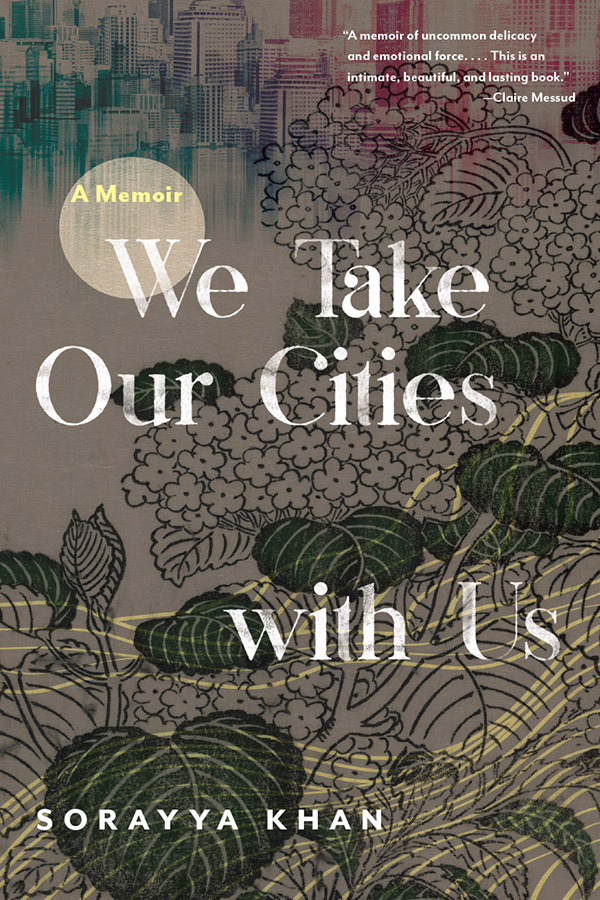
When I began We Take Our Cities with Us: A Memoir, I dusted off my shelf and devoured the collection from start to finish. I traveled to the now familiar locations of Port au Prince and Gaza while adding new destinations like Jaffna and Nsukka. For a writer, memoirs set around the world can be examples of place that is as alive as character and confirmation that place, wherever it may be, is story. As a reader, I saw authors weave their cities into stories and themselves. And as someone whose sense of belonging crosses borders, the memoirs gave me hope that I might yet find (and write) the threads that bind Maastricht, Islamabad, and Syracuse to each other and me.

Brother, I’m Dying by Edwidge Danticat

In telling a story of two brothers who are layered by history at birth and in death, Edwidge Danticat details the struggles of belonging to more than one nation—Haiti and the U.S.—at the same time. But Brother, I’m Dying is also a love story, told by a daughter who chronicles the tale of her two fathers, their distinct lives, and her journey between them. In Danticat’s hands, history is not a time or place; it is lodged in love and grief and identity, and crosses borders. Her memoir is powerful and beautiful in its ability to resurrect two men who are dead, but alive in her love.

Dark Tourist by Hasanthika Sirisena

In Dark Tourist, a collection of essays, Hasanthika Sirisena takes us on a journey of self discovery in which identity, history, and places as divergent as North Carolina and Jaffna meet. We accompany her as she revisits her relationship with her mother, who died too soon, and her father, who remarried in secret. We travel with her to Sri Lanka as she visits sites of Sri Lanka’s civil war and grapples with the haunting category of “dark tourism.” All the while, she asks us to consider the beauty of art and the possibility that it might save us.

Looking for Palestine by Najla Said

The subtitle to Najla Said’s memoir, Growing Up Confused in an Arab-American Family, captures only one side of this engaging and sometimes laugh-out-loud funny book. In the midst of a famous father and a complicated mix of backgrounds, Said’s crystal clear voice tells a wrenching story of trying to make sense of her identities (of which Palestinian is but one) while growing up in New York in private schools where kids rarely look like her. This memoir is fundamentally a story of the in-between place and for those of us who live there, it is a serious breath of fresh air.  

Persepolis 2 by Marjane Satrapi

Marjane Satrapi’s graphic memoir Persepolis 2 recounts a young woman’s struggle with belonging. Satrape is an outsider at home in Iran and, she soon discovers, in Austria where she arrives to study art. The backdrop of Iranian and global politics compounds the personal stakes in this coming-of-age story of a young woman trying to make sense of herself and the world. The voice and illustrations work hand in hand, propping up each other in a spare and sometimes funny, but ultimately devastating narrative.

Belonging by Nora Krug

Belonging, Nora Krug’s graphic memoir, uncovers the mystery of her German family’s history in World War II. The author’s vantage point as a granddaughter and New Yorker effortlessly pulls the reader into her personal journey, a painstaking investigation of the past. Although Krug’s subject is in Germany, she asks larger questions about what it means to belong to history and country. In the process, the reader is given a valuable gift; Krug unveils the mystery of research by showing us what it looks like—photographs, letters, objects, documents, interviews, handwriting, archives. 

A Border Passage by Leila Ahmed

In Border Passage, Leila Ahmed stitches together many worlds, including Cairo, her first home, and the U.S., her eventual one. Her story reminds us that immigrants have homelands that follow them wherever they go. Like all memoirs, it captures a time in the author’s life that has come and gone, but it also captures the nation, Egypt, at the end of colonialism (long before the Arab Spring) when Ahmed was a child. She writes movingly about the multiple worlds of Islam, including the one of women who raised her, and suggests we are shaped by history, as much as by people. 

Olive Witch by Abeer Y. Hoque

Coming-of-age is challenging, but rarely more than in Abeer Y. Hoque’s self-described cross-cultural memoir. Olive Witch travels three continents, moving from Nigeria to America to Bangladesh, as well as across the difficult terrain of mental illness. Hoque’s prose is luminous, interspersed with poetry and weather conditions, as if to help ground us in this struggle to belong.

Meatless Days by Sara Suleri

Sara Suleri, who settled in the U.S., had a Pakistani father and a Welsh mother, but she writes about her family and Lahore as if Lahore is the magnet that holds her world together. Her connected essays are a lesson in language and craft, while reading like stories in this elegiac book. Written in the shadow of death, it is as much about how memory works as the lives it tries to capture. Memory is story, Suleri seems to say, as she pieces things together later when mothers and sisters are dead.

62 Books By Women of Color to Read in 2023

In 2016, I compiled a list of books I’m anticipating by women writers of color because, as a reader, writer, and occasional critic, I couldn’t find many such titles. If I was having trouble, I thought, then others surely were, too. Perhaps they’d also find the list useful. The first list was one of Electric Literature’s most-shared pieces of 2016. To my joy and surprise, I heard the piece was helping inform other publications’ books coverage, educators’ syllabi, and book-prize considerations. 

Finding these books has become, in the last seven years, less difficult, and I continue to hope that American letters will become so inclusive this effort will become obsolete. But we’re still far from that point. I’ll keep hoping.

In the meantime, these are some of the 2023 books that I, personally, am anticipating. It’s one list, inevitably incomplete; I know I’m missing wonderful titles. If you see a book missing and want to support it, please consider preordering it from your local independent bookstore, requesting it from the library, talking about it to others, or all of the above. This piece is also front-loaded toward the earlier part of the year, as there isn’t as much information yet about titles publishing in the fall and afterward. And though I love and need poetry, as a novelist and essayist I’m less aware of what’s forthcoming in poetry, so here I address only books of prose. 

Notes on methodology: the term “of color” is a flawed label with ever-shifting nuances, valences, and interpretations. In the past, I’d expanded this list to nonbinary writers; Electric Literature and I then heard from some nonbinary writers that it can be preferable to avoid grouping nonbinary people with women. Accordingly, in recent years, I’ve limited this list to books by women: cis women and trans women, as well as nonbinary women who assented to having their work included in this space. An overwhelming majority of the nonbinary writers and readers we’ve heard from have continued to find this preferable. That said, when it comes to communities that are not mine, I’m strongly on the side of following the lead of people in those communities. If you feel differently, let us know. In the meantime, Electric Literature has also published a piece about anticipated books by LGBTQ+ writers

Included below are several books from HarperCollins, one of the big five publishers that collectively issue most of the books sold in America. The HarperCollins Union has been on strike since November 10, 2022 to get a fair contract for their workers. You can learn more here about how to support their fight for a fair contract.

Please join me in rejoicing over these upcoming books.


January

Black Women Writers at Work edited by Claudia Tate

Three cheers for this new edition of an out-of-print collection of Tate interviewing Gwendolyn Brooks, Nikki Giovanni, Gayl Jones, Audre Lorde, Toni Morrison and other foundational Black women writers about their work and lives. I have a deteriorating, used copy that has stayed on my bedside table for years, and am thrilled about this reissue. Angela Y. Davis says that “Black Women Writers at Work serves as a much-needed reminder that the imagination always blazes trails that lead us toward more habitable futures.”

Shubeik Lubeik by Deena Mohamed

A debut graphic novel about a fantastical alternate Cairo where wishes are sold. Involving angels, monsters, and decades of history, Shubeik Lubeik has received the Best Graphic Novel and the Grand Prize at the Cairo Comix Festival. Mattie Lubchansky says “Mohamed builds a rich and harrowing worldand finds every place a fascinating story might be hiding.”

The Faraway World by Patricia Engel

From the New York Times-bestselling Engel, here comes a collection of short stories that include characters such as a woman in Cuba who’s discovered that her brother’s bones are stolen, a couple hustling in Miami, and Colombian strangers meeting in New York. I’ve long maintained that I want to read anything Engel writes; I’m sure The Faraway World collection will further confirm this desire.

Night Wherever We Go by Tracey Rose Peyton

Peyton’s debut novel is about six enslaved women in Texas who stage a rebellion against their owners. Kiese Laymon says that “Night Wherever We Go has the potential to change how Blacknesses, Texas and the nation are written about forever.”

The Survivalists by Kashana Cauley

In this doomsday novel, a driven lawyer falls for a coffee entrepreneur who lives with a group of doomsday preppers. Deesha Philyaw says it’s “delicious, deeply satisfying,” and Jade Chang calls it “funny and deliciously unexpected—the perfect companion for our chaotic times.”

Loot by Tania James

I’ve eagerly followed James’s writing for years, and this new novel brings to life an eighteenth-century wood-carver recruited to build a gigantic tiger automaton for the ruler of Mysore. Megha Majumdar calls it “a feast—a hugely fun novel with a delicious plot that offers delights and profundities in equal measure,” offering “stunning truths about circumstance and ambition, love and sacrifice, and the fickleness of victory.”

Moonrise Over New Jessup by Jamila Minnicks

Minnicks’ first novel, winner of the PEN/Bellwether Prize for Socially Engaged Fiction, is about a woman named Alice Young who moves to the all-Black town of New Jessup, Alabama. She falls in love with an organizer engaged in work that could risk their ability to stay in New Jessup. “An immersive and timely recasting of history by a gloriously talented writer to watch,” says Margaret Wilkerson Sexton. 

Brotherless Night by V.V. Ganeshananthan

I’ve been haunted by Ganeshananthan’s fiction since I first encountered it in an issue of Ploughshares a decade ago, and can’t wait to read this novel about a woman who is a field-hospital medic for the militant Tamil Tigers. She’s eventually recruited to join a project documenting human-rights violations. “A beautiful, brilliant book—it gives an accounting of the unimaginable losses suffered by a family and by a country, but it is as tender and fierce as it is mournful,” says Danielle Evans.

Maame by Jessica George

Spending her time in London as a primary caretaker for her father and as the only Black person in every meeting at her job, Maddie Wright wishes to lead a less constricted life. Celeste Ng calls this debut novel “an utterly charming and deeply moving portrait of the joys––and the guilt––of trying to find your own way in life.” 

Central Places by Delia Cai

Cai is a senior correspondent at Vanity Fair and the creator of a beloved media newsletter, Deez Nuts. In her first novel, a Chinese American woman from Illinois brings her white fiancé home to meet her parents. I read an advance copy of Central Places months ago, and have not begun to forget its luminous depiction of the complications of relationships with friends, old and new romantic loves, and immigrant parents.

Bad Cree by Jessica Johns

A horror-inflected debut about a woman named Mackenzie who wakes up one day with a severed crow’s head in her hands. A murder of crows is stalking Mackenzie, who is grieving her sister’s death. A novel spun from alarming crows, complicated grief, and eerie dreams: yes, yes, and yes. According to Kristen Arnett, Johns “writes the world in all its messiness and terror, while simultaneously remembering to center its tender beating heart.”

Black and Female by Tsitsi Dangarembga

Dangarembga is a writer, filmmaker, and playwright whose novels have received the Commonwealth Writers Prize and been shortlisted for the Booker Prize. Black and Female, an essay collection, “blazes with her characteristic intellectual prowess, unstinting honesty, and commitment to personal and political acts of resistance and reclamation,” says Nadia Owusu.

February 

Dyscalculia by Camonghne Felix

Felix, a splendid poet and essayist whose debut poetry collection was longlisted for the National Book Award, is now publishing a first book of prose reflecting on mental health, trauma, hospitalization, and her relationship to mathematics. Raven Leilani calls it “a frank exploration of pleasure, heartbreak, and reclamation” that “rejects containment and asks instead for care.” 

Hijab Butch Blues by Lamya H

In a memoir-in-essays from a former Lambda Literary Fellow, a queer, devout Muslim immigrant juxtaposes their coming-of-age and young adulthood with stories from the Quran. I’ve greatly admired her short-form writing, and Kai Cheng Thom says the book is “sure to become a queer classic.”

A Spell of Good Things by Ayọ̀bámi Adébáyọ̀

Adébáyọ̀’s debut book. Stay With Me, was shortlisted for the Baileys Prize for Women’s Fiction, and her follow-up intertwines the stories of two Nigerian families described as being “caught in the riptides of wealth, power, romantic obsession, and political corruption.”

When Trying to Return Home by Jennifer Maritza McCauley

This collection of short stories covers a century of the lives of fictional Black Americans and Afro-Puerto Ricans, ranging from a woman trying to rescue her brother to a college student facing off with a nun. De’Shawn Charles Winslow says the book features a “cast of some of the most memorable characters and predicaments” he’s encountered in fiction.

My Nemesis by Charmaine Craig

Craig’s previous novel, Miss Burma, was longlisted for the National Book Award and the Women’s Prize for Fiction. In her new novel, a writer named Tessa clashes with Wah, the wife of a philosopher-scholar friend, going so far as to call the latter “an insult to womankind.” According to Sarah Shun-lien Bynum, “My Nemesis is an exhilarating act of defiance, a novel that lights a match and sends the whole question of female characters’ likability up in flames.” As someone who very badly wants the notion of women characters’ likability to go up in flames, I say hallelujah.

Our Share of Night by Mariana Enriquez, translated by Megan McDowell

“Reader, beware! Our Share of Night is a novel so disquieting, so unsettling that I could neither put it down nor read it late at night,” says Kelly Link. This new book from the International Booker Prize-shortlisted Enriquez is about a grieving father and son who get involved with a terrifying cult in search of immortality.

An Autobiography of Skin by Lakiesha Carr

Carr’s debut novel, which incorporates back-room parlor slots, postpartum depression, and spiritual combat, follows generations of women in the South. “Meditative and powerful in its love for the generations of Black women at its heart, An Autobiography of Skin dives body-and-soul into its characters’ experiences to explore questions about faith, forgiveness, and the fortitude that just living day to day can sometimes require,” says Dawnie Walton.

March

Ada’s Room by Sharon Dodua Otoo, translated by Jon Cho-Polizzi

Reading an advance copy of this highly inventive, unpredictable first novel from the Ingeborg Bachmann Prize-winning writer and activist Otoo, I was astonished by a narrative that jumps back and forth across 400 years and the experiences of four women named Ada trying to survive in West Africa, Victorian England, and Germany. I haven’t quite come across anything like this before. 

Saving Time by Jenny Odell

It can seem that almost everyone I know is emotionally and physically exhausted, barely getting through the ever-alarming days. (I, too, am an everyone.) In this new book from the rigorously original Odell, she explores how we experience time, reimagining the clock-based, profit-driven world in which most of us live and continue to burn out. Ed Yong calls it one of the most important books he’s read in his life.

What Happened to Ruthy Ramirez by Claire Jiménez

A Puerto Rican family on Staten Island learns that a lost sister might have been cast on a reality TV show, and they set off to bring her home. According to Jaquira Díaz, Jimenze’s first novel is “hilarious and heartbreaking,” and Jiménez “is both storyteller and cultural critic, giving us an unflinching rejection of respectability politics.”

Sea Change by Gina Chung

A relatively specific but ferocious opinion of mine is that there simply isn’t enough fiction starring jellyfish, octopodes, giant squid, and their flexible ilk. In Sea Change, which Mira Jacob calls “a wild blessing of a debut,” the narrator Ro, who works at a mall aquarium, befriends a giant Pacific octopus named Dolores. When Ro’s life as she knows it is tossed overboard, she has to find her way back to familiar shores with the octopus’s help.

The Human Origins of Beatrice Porter and Other Essential Ghosts by Soraya Palmer

Zora and Sasha Porter, sisters living in Brooklyn, are confronted with a buried family secret. Angela Mi Young Hur says the novel is peopled by “Anansi and other folkloric figures and deities of their Jamaican Trinidadian heritage” that transform “from teller to teller, from one generation to the next—at times haunting or healing, seductive or terrifying.”

Who Gets Believed? by Dina Nayeri

In what Robert Macfarlane calls “an interrogation of ‘disbelief culture’ and the injustice that both fuels it and is fueled by it, a form-shifting memoir of an already-remarkable life, and a moving, harrowing investigation of love, loss and care,” Nayeri reflects on who gets believed and who doesn’t, in contexts from asylum interviews to emergency rooms to corporate offices.

The Great Reclamation by Rachel Heng

Ah Boon, a child in a fishing village in twentieth-century Singapore, discovers a magical ability to find movable islands. The Japanese army invades, and the future of his village is in jeopardy. Heng’s debut novel was fascinating, and according to Julie Otsuka, “The Great Reclamation is both an intimate love story and an epic historical tale that is sure to be read for years to come.”

April

Ordinary Notes by Christina Sharpe

Ordinary Notes is a book comprised of 248 notes about language, the past, art, photography, beauty, and Sharpe’s mother, Ida Wright Sharpe. Alexander Chee says that “Ordinary Notes is like an intellectual ice climb―you move along a careful series of handholds to cross a terrain that might otherwise seem impassable, and afterward, you are amazed at the passage. At once an act of careful attention and a juxtaposition of observations and questions, the result is a powerful vision of American life, drawn from the Black intellectual history and aesthetics that Sharpe has cultivated as the means to her own liberation, so that she might offer it to others.”

A Living Remedy by Nicole Chung

I wept while reading this devastating, radiant memoir, which Bryan Washington calls a “bouquet of feeling” and “a groundbreaking narrative steeped in love, humor, the infinitude of memory, and the essentiality of community.” A Living Remedy is about illness, family, and the terrible losses brought on and exacerbated by financial precarity, this country’s malfunctioning healthcare system, and the ravages of the pandemic.

The Haunting of Alejandra by V. Castro

A woman named Alejandra is haunted by ghostly visions of a crying woman in a white gown, the Mexican folk demon La Llorona. As Alejandra visits a therapist, she starts learning that La Llorona connects her to her mother, grandmother, and other women ancestors, and that she’ll need her foremothers’ help to banish the ghost. According to Lupita Aquino, this novel is provocative, haunting, and packed with secrets. 

Blue Hour by Tiffany Clarke Harrison

Blue Hour is a fragmentary debut novel about a biracial photographer grieving a miscarriage whose student, a boy named Noah, is victimized by police brutality. As she visits Noah in the hospital, she learns she’s pregnant again. “A short, beautiful, intensely present work of art,” says Lydia Kiesling. 

The Skin and Its Girl by Sarah Cypher

In a hospital in the Pacific Northwest, a baby’s skin turns cobalt blue, which the family matriarch believes to be the embodiment of her family’s sacred history as prominent soap-makers. According to Laura van den Berg, Betty Rummani, “born with cobalt-blue skin, into a family rich with ingenuity and secrets,” is “one of the most memorable and original protagonists” she’s come across in a long time.

May

Quietly Hostile by Samantha Irby

The wildly hilarious Irby has written a new collection of essays about Hollywood, QVC, bathroom etiquette, and Carrie Bradshaw. Jia Tolentino calls Irby’s writing “stay-up-all-night, miss-your-subway-stop, spit-out-your-beverage funny, as irresistible as a snack tray, as intimately pleasurable as an Irish goodbye.” 

Let This Radicalize You by Kelly Hayes and Mariame Kaba

Organizers and movement educators Hayes and Kaba continue their influential, revolutionary work with this new co-authored book, intended to be a “a practical and imaginative resource for activists and organizers building power in an era of destabilization and catastrophe.” The book examines questions of mass protest, mutual aid, care, and defense, and includes insights from other experienced organizers. 

In Vitro by Isabel Zapata, translated by Robin Myers

Drawing from diary and essay forms, In Vitro is a meditation on pregnancy, motherhood, in vitro fertilization, and pregnancy. Zapata “writes with a fluidity that can only come from wisdom,” according to Alejandro Zambra. “Sometimes it feels like we’re listening to her speak more than reading her on the page; it even feels like we can speak back.”

Yellowface by R.F. Kuang

A writer passes off a dead writer friend’s manuscript as her own, a theft made all the more diabolical by the fact that the thieving writer is white, the dead friend is Asian, and the white writer takes on a new name, Juniper Song. My blood is rising already. This novel from the New York Times-bestselling writer of the Poppy War trilogy, nominated for the Hugo and Nebula Awards, promises to be a wild ride of a book.

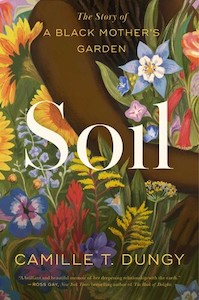
Soil by Camille T. Dungy

In this new book from the remarkable poet and scholar Dungy, she describes a seven-year endeavor to diversify her garden in a predominantly white Colorado community that restricted what residents could and couldn’t plant in their gardens. “I felt transformed by this graceful and generous book,” says Jami Attenberg. 

Horse Barbie by Geena Rocero

Rocero, a former pageant queen from the Philippines, hid her trans identity after moving to the US, and, within a few years, became an in-demand model. In time, she was increasingly pulled toward openly being her authentic self. Rocero’s memoir is described as “a radiant testimony from an icon who sits at the center of transgender history and activism,” and a story “of survival, love, and pure joy.”

Notes on Her Color by Jennifer Neal

In this debut novel, a young Black and Indigenous woman named Gabrielle learns to change the color of her skin. Her mother, who also has this ability, tells her to present as white to avoid upsetting her father, and their whole house, including the food and spices, has been bleached white. Gene Kwak says, “Read this book. Come find me and we can bond over our shared joy. Weep over what we thought we feared.”

Human Sacrifices by María Fernanda Ampuero, translated by Frances Riddle

An undocumented woman answering a job posting that leads to danger, boys drowned while surfing, and a couple trapped in a terrifying maze: this gothic story collection has been praised by Mónica Ojeda as a magnificent book, writing that is “pure horror and aesthetic joy.”

An Autobiography by Angela Y. Davis

First published by Toni Morrison in 1974, this new edition of An Autobiography covers the legendary Davis’s journey from childhood to her work with the U.S. Communist Party, the Black Panther Party, and the Soledad Brothers, to teaching at UCLA, to the FBI’s list of the Ten Most Wanted Fugitives. “Still a key work in the areas of prison abolition and feminism, this reissue of a classic autobiography deserves a place of honor in any collection,” says Library Journal.

June

Holding Pattern by Jenny Xie

I’ve followed Xie’s captivating writing for a while, and, this summer, she’ll published a novel about a graduate-school dropout who moves back to her childhood house in Oakland. Her mother, it turns out, is in love with and getting married to a tech entrepreneur, and the daughter helps plan the wedding while finding a new job at a mysterious start-up. 

Birdgirl by Mya-Rose Craig

Birder, environmentalist, and diversity and climate activist Craig has written a book that is partly a memoir, partly a bird-watching guide, and partly an account of how birding brought her family solace during her mother’s mental-health crisis. David Barrett says Birdgirl is “an essential read for a new generation of birders and environmentalists.”

Deep as the Sky, Red as the Sea by Rita Chang-Eppig

A suspenseful historical novel about a cutthroat pirate queen who, when her husband was killed by a Portuguese sailor, seized power to survive. Kirstin Chen calls Deep as the Sky, Red as the Sea “a riveting, heart-pounding exploration of ambition.” Y’all had me at the words “pirate queen.” 

Rivermouth by Alejandra Oliva

Oliva is a translator and immigrant justice activist, and Rivermouth chronicles her experiences of interpreting at the U.S.-Mexico border and working on asylum cases. The book has been awarded the Whiting Creative Nonfiction Grant, which describes Rivermouth as being “subtle, personal, and deeply informative” from a writer whose “candid, intimate voice is irresistible.”

July

Owner of a Lonely Heart by Beth Nguyen

I rush to read Beth Nguyen’s writing. At the end of the Vietnam War, when eight-month-old Nguyen and her family fled Saigon, they were separated from her mother, whom Nguyen didn’t meet again until she was nineteen. “Nguyen’s triumph of a book is forged and fed by her searing curiosity about her refugee family’s past and her jeweler’s eye for precise detail—all while navigating the geography of her Midwest roots with a big, beautiful heart. A must-read for all who struggle with or celebrate complicated family,” says Aimee Nezhukumatathil.

8 Lives of a Century-Old Trickster by Mirinae Lee

This genre-bending novel, set in the demilitarized zone dividing North and South Korea, is about a shapeshifting trickster who is a spy, lover, mother, terrorist, murderer, and escape artist. 8 Lives of a Century-Old Trickster is recommended to admirers of Min Jin Lee’s Pachinko.

August

Family Lore by Elizabeth Acevedo

Family Lore is National Book Award–winning Acevedo’s first novel for adults, about a woman who can predict, to the day, when people will die. She gathers and family together for a living wake for herself. “Make room on your shelves, readers, for this strong new voice with an old soul and a deep well of understanding of who we wonderfully are for the brief time we are beings,” says Julia Alvarez.

Forgive Me Not by Jennifer Baker

Baker, the formidable Publishers Weekly Star Watch “Superstar” and host of the Minorities in Publishing podcast, has written a book about an incarcerated teenager whose drunk-driving accident caused the death of her sibling. In this alternate world, the fate of juvenile offenders is decided by their victims and survivors, and Forgive Me Not is centered on the teenager’s quest for forgiveness from her family, as well as the costs of that quest. (Jennifer Baker is a former contributing editor to Electric Literature.)

Falling Back in Love With Being Human by Kai Cheng Thom

I first came to Thom’s work through her excellent advice column, Ask Kai: Advice for the Apocalypse. In Falling Back in Love With Being Human, this writer, performance artist, and community healer writes through a crisis of faith. The book is described both as a collection of love letters and as a blueprint for falling back in love with being human.  

Daughters of Latin America by edited Sandra Guzman

Daughters of Latin America is a collection of writing from 140 Latine writers, scholars, and activists including Elizabeth Acevedo, Julia Alvarez, Carmen Bouollosa, Berta Caceres, Naima Coster, Angie Cruz, Reyna Grande, Ada Limón, Achy Obejas, Ingrid Rojas Contreras, Cecilia Vicuña, and more. The book includes winners of the Grammy, National Book Award, Cervantes, and Pulitzer Prizes, a Nobel Laureate, and several writers being translated into English for the first time.

Every Drop Is a Man’s Nightmare by Megan Kakimoto

This debut story collection follows a cast of mixed native Hawaiian and Japanese women. Kakimoto, says Elizabeth McCracken, “gives us her Hawai’i, as bright as blood, as dark as blood: full of muscle and bone, sex, the body, corpse flowers, Night Marchers, the occasional Elvis impersonator,” in a book that “does not pull its punches; it’s altogether a knockout.”

Lush Lives by J. Vanessa Lyon

Lush Lives is one of the first books from Roxane Gay’s new imprint at Grove Atlantic, and it’s a love story about Glory Hopkins, an artist struggling to find gallery representation. Glory, after inheriting a house that contains a rare manuscript, works with an auction house appraiser to learn more about the mysterious manuscript. Lush Lives is described as “an unforgettable novel of queer love, ambition, and the forgotten histories that define us.”

The End of August by Yu Miri, translated by Morgan Giles

Yu is a Zainichi Korean playwright, novelist, and essayist who received the National Book Award for her unforgettable, eerie novel Tokyo Ueno Station. In this multigenerational epic, a marathon runner summons shamans to connect with the ghost of an ancestor who was a contender for the Olympics in occupied Korea. 

September & later

I Believe in Our Power by Raquel Willis

Willis is an activist, writer, and media strategist who has worked as a national organizer for the Transgender Law Center and the executive editor of Out magazine. I’ve followed her exceptional work for a while, and her debut memoir is about her coming of identity and activism.

This is Salvaged by Vauhini Vara

Vara’s The Immortal King Rao, a show-stopping novel about a Dalit immigrant who becomes extremely powerful, and about his child, was one of my favorite books that published in 2022, and this story collection promises to be at least as good. I first read a story from this collection, “I, Buffalo,” a decade ago in Tin House. It’s a heartbreaking, somehow very funny story about alcoholism, buffalos, and metamorphosis, one I must have reread a dozen times.

And Then She Fell by Alicia Elliott

Elliott’s bestselling debut book, A Mind Spread Out on the Ground, hasn’t left me since I read it in 2020, and her second book is about a new mother struggling to write a modern retelling of the Haudenosaunee creation story. A fictional portrayal of motherhood, mental health, threatening neighbors, surface charm, and denial, And Then She Fell is described as being poignant, raw, funny, and urgent.

The Liberators by E.J. Koh

Poet, translator, and writer Koh’s incandescent memoir, The Magical Language of Others, had me crying and crying, and her debut novel, The Liberators, spans four generations of a family haunted by decisions made in times of war, migration, and dictatorship. 

You Get What You Pay For by Morgan Parker

The dazzling poet Parker is publishing a collection of essays connected by Parker’s years-long attempt at “trying to square the resonance of her writing with the alienation that accompanies being forever single,” a question that takes Parker through American cultural history as she combines criticism with personal anecdotes. 

Evil Eye by Etaf Rum

After having been raised by a conservative Palestinian family in Brooklyn, Yara thinks she’ll free herself by marrying an entrepreneur and moving. But dissatisfaction follows, then trouble, and a curse from the past might be to blame. From the New York Times-bestselling writer of A Woman is No Man.

Magical / Realism by Vanessa Angélica Villarreal

I’m a longtime fan of Villarreal’s superb writing, and her next book is a collection of essays about grief tangled with pop culture, as well as the complicated girlhoods of being a working-class daughter of a cumbia musician. Here’s betting the collection will be outstanding. 

Land of Milk and Honey by C Pam Zhang

Land of Milk and Honey, a new novel from the Booker Prize-nominated Zhang, is about a chef who ends up in a decadent colony of the extremely rich, taking place in an all too plausible future in which food is vanishing. I had the luck of reading a draft of this novel, and can tell you it is marvelous and terrifying and will make you very, very hungry.  

What if We Get it Right by Ayana Johnson

Johnson, a marine biologist, policy expert, and writer, has written a book proposing that we ask, “What would it look like if we actually solved climate change?” Such is my emotional landscape these days that even reading that question makes me tear up. I know I’m far from alone, and What if We Get it Right is a call to action and a “vision of the new climate future we can create through community and creative problem-solving.”

Modern Afghan Lives, Across Generations and Countries

A finalist for the National Book Awards 2022, The Haunting of Hajji Hotak and Other Stories by Jamil Jan Kochai interrogates war and carnage in Afghanistan in the name of counterterrorism, and the ensuing trauma and grief that has reverberated through Afghan generations, across the homeland and the diaspora. 

The collection, a blend of surreal, absurd and photorealist narratives, opens with “Playing Metal Gear Solid V: The Phantom Pain”, a second-person narration that follows a young man who scrimps and saves for the latest video game, set during the 1980s Soviet occupation of Afghanistan, only to have his joy be short lived as his virtual avatar encounters his father and his martyred uncle, compelling him to contend with familial trauma. In “Return to Sender”, grief takes a new meaning as a young Afghan American couple, recently moved to Kabul, receive pieces of their missing son that they start stitching together. “The Tale of Dully’s Reversion” brings war and carnage into the forefront as Dully, a Ph.D. student transforms into a monkey and finds himself in Kabul leading a revolution while his mother fervently pursues the imam she traveled for, in the hopes he could spur Dully’s physical and spiritual reformation. Other narratives such as “Bakhtawara and Miriam” and “Saba’s Story” examine love and friendship in more direct light, juxtaposed against the warfare and its ghastly aftermath that thrums in the background. And yet others like “Hungry Ricky Daddy” and “Enough!” make overt statements, condemning the state of our humanity. Urgent and necessary, Kochai’s work offers a culturally rich lens of Afghans and their diaspora, deftly striving against stereotypes and monoliths borne out of the War on Terror narratives.

Jamil Jan Kochai is from Logar, Afghanistan—the place featured both in his current collection and debut novel, 99 Nights in Logar. His writing has appeared in The New Yorker, Ploughshares, The New York Times, The Best American Short Stories and other places. Currently, he is a Hodder Fellow at Princeton University. Kochai and I spoke over Zoom about Muslim representation in writing, intergenerational trauma, privilege, power and more.  


Bareerah Ghani: In Bakhtawara and Miriam, we watch Bakhtwara sacrifice herself thinking it’s her duty to save her family’s honor and reputation. Other narratives also depict this dynamic within the Afghan family where there’s an unspoken demand and expectation from children, especially sons who we see take on the role of providers. To what extent do you think this is a product of the history of war and conflict that has sapped the older generation’s capacity to return to normal life as they know it?

Jamil Jan Kochai: I think that’s exactly what it is. What I see often in a lot of families is this sort of dynamic and this is both in Afghanistan and abroad, in immigrant families, that children are tasked with becoming adults much more quickly and I think that does have exactly to do with that context of years of ongoing war, and oftentimes, intense poverty as well. So you have this situation, where from a very young age, children are attempting to negotiate their parents’ war trauma. It’s one of the things I referenced in “Playing Metal Gear Solid” as well, this feeling that the main character often feels like he’s more of a therapist than he is a son, and I think that’s a circumstance that can occur in many immigrant families, especially families where the parents or the grandparents have suffered war trauma. Your question is getting at a very important point that this isn’t necessarily something that’s sort of intrinsic to the fabric of Afghan culture, but that it does, in fact, have a lot to do with war trauma being passed down generations and with children then not being allowed to develop as children but instead, being tasked to take on these roles as providers, or even in some regards, especially if they have younger siblings, sort of being asked to become parents at a very young age. I really appreciate this question because one of the things I try to be pretty conscious about in my work is emphasizing that context of warfare. Any time I’m writing about an Afghan family, it’s important that I’m being very honest about a lot of the beautiful qualities of an Afghan family, like the love and the care but also sort of the negative aspects of that, whether that’s domestic abuse, child abuse, or whatever else, and that I’m contextualizing all that within this long history of warfare, imperialism and poverty.

BG: I think that’s one of the reasons why the collection spoke to me; at the center of every character, there’s a realness. I’m also enamored because before this, I’ve not interacted with a book or a Muslim writer who’s writing about Muslim characters in the way I perceive and experience Islam. I’d love for you to tell me any authors that have inspired you to write in this manner.

JJK: You know I had the exact same experience. I love the recent development of Pakistani literature. But a lot of it, for me, is intensely secular. Just as you mentioned, even when reading “writers from the Muslim world”, I very rarely see the grasping with the concerns of Islam in the way I view it. So often when I’m reading Muslim characters, they’re drinking beers, or are atheist and all these different things, which is totally fine. I’m not opposed to that. But it’s just different from my own experience.

So for me, in terms of thinking through how to write about Islam, or God, or theology in general, I found a lot of Christian writers helpful. Dostoyevsky, for example, some of his writings and his grappling with faith, in The Brothers Karamazov in particular, really spoke to me. Some of Graham Greene’s writing, both The Heart of the Matter, and The Power and the Glory, to different degrees are dealing with Catholic theology but again, it’s this idea of, how does one grapple with faith, suffering and with God, and religious institutions that can be exploitative, all of that really spoke to me. The book that handled this incredibly, beautifully, in regard to Islam in particular, is This Blinding Absence of Light by Tahar Ben Jelloun. It’s about these political prisoners that attempt the assassination of a king and they’re held for twenty years in this underground prison that’s four feet high, so they can’t stand up for twenty years. It’s factually based. These men are routinely tortured, they’re constantly suffering immense pain and to grapple with that, they begin to pray, one individual does the azaan, they pray in unison, and it’s this method, and they meditate into this method to try to escape their bodies, and it leads to some of the most beautiful passages I’ve ever read about Islam, spirituality, and this idea of transcendence. This was immensely helpful to me in terms of figuring out how one writes in a complicated and beautiful way not just about Islam, but everything that Islam encapsulates, you know, existence, suffering and love. 

BG: One of the strengths of your work is how it examines white privilege and association with it, especially in “Return To Sender” which highlights the social currency that comes with holding the American passport and by extension, being granted the privilege of having your life be more important than someone else’s. As a person of color with another nationality outside of being American, how do you navigate this dichotomy in privilege and access to safety based on citizenship and the feelings it engenders for those of us with loved ones living in places that don’t grant them the same privilege? 

JJK: I do feel fortunate because I’m able to put a lot of those feelings, doubts, and guilt on the page. And that’s really the main way I grapple with it; I project it onto my characters a lot of the time. It’s very important to me that when I’m writing about Afghanistan, when I’m thinking through issues of privilege, power and positionality, it goes right on the page, that I don’t try to avoid it, that I struggle with it through my characters and through the stories themselves. And that’s what I tell my students as well, because I think it’s fairly common, this feeling of guilt and this understanding that growing up in this country, and holding that all-powerful American passport comes with an immense amount of power and privilege. There are all these ways that can become very problematic when you think about a writer’s position to their subject. And so one of the things I’m doing now is that I’m traveling back and forth between the US and Afghanistan, specifically for the purposes of my writing, specifically to interview family members, relatives and people from my home village, just to sort of understand what they’re going through, their own experiences, and then using that as material for my own writings. I try to be very frank about the fact that it can be a very troubling dynamic, and for me it’s a matter of trying to be very honest with yourself about where those issues can occur, and then working through that on the page.

BG: This makes me think of your story “Hungry Ricky Daddy” which directly talks about the war in Palestine, something people are not willing to talk about. How do you contend with the frustration, heartbreak and helplessness that comes with witnessing the war crimes in Palestine and the erasure Muslims are facing around the world in Kashmir, France, and China? What role does writing or fiction in general play, if any, in all this for you?

What I see often in a lot of immigrant families is this dynamic that children are tasked with becoming adults much more quickly.

JJK: I’ve always felt like I’ve had a responsibility as a writer to make sure, as much as possible, if the circumstances allow, to shine a light upon these different war crimes, atrocities, the different erasures occurring throughout the world. It’s something I feel uneasy about sometimes like with Hungry Ricky Daddy, I’ve immense feelings of doubt and guilt. With Afghanistan, I’ve family members there, my parents grew up there, so I have more of an ability or a claim to be able to write about Afghanistan. But with Palestine that was much trickier because there aren’t those same associations. But at the same time, that was the story where I knew early on that there was going to be this Palestinian character and by having that, I knew I couldn’t then shy away from the Israeli occupation of Palestine, and the war crimes and oppression going on there. I try to be as careful and honest as I can be about making sure that I’m shining a light on those issues, and that I’m doing it in a responsible, thoroughly researched way. So, one of the things I did with that story is that I made sure I sent it to some Palestinian friends, writers, and artists, and made sure that there wasn’t anything I was getting immensely wrong there.

If there’s a political objective to my writing, it’d be rooted in an anti-occupation, anti-war position. When I’m writing about Afghanistan, I try not to shy away from the fact that I was immensely anti-US occupation, anti-Soviet occupation when that was occurring, that I’m anti-Israeli occupation. I think fiction writing has to allow for a great deal of gray area and moral complexity. But for me that ends at occupation. For me, there’s no moral complexity about an invasion, about the Israeli occupation of Palestine. To me, that’s pure, unadulterated oppression. And when you do the research, look into what’s actually going on there, that seems immensely clear to me. I remember growing up, you’d read about atrocities being committed in Afghanistan, soldiers killing civilians, and similar things occurring in Palestine and different places, I’d feel so immensely helpless. It was rage inducing. Being able to now write about those things, it’s one of my ways to work through those feelings and sort of filter it onto the page.

BG: How do you write Muslim characters who are complex individuals without worrying about them being reduced to their faith, or without worrying about portraying an untrue image of Islam in how your characters struggle with their faith?

JJK: My strategy is that I start with trying to figure out the character, their main struggles, their background. So it begins on this very personal level, and for me that makes all those other heavier, conceptual, political questions much easier to grapple with. So I’m just thinking about what this particular individual’s relationship is to Islam and I find that for most people, that question can get very complicated once you start to peel back the layers of their character. Once I sort of get the story going, that’s when I’m beginning to think about Islam on a larger level, a global level, on a more political level. And then that’s when I think it’s really important that Muslim writers, or whoever’s writing Muslim characters is very careful about the ways that varying forms of media, varying narratives have been used to demonize, dehumanize and to justify violence against Muslims, occurring across the globe. So it’s sort of this balancing act where I want to make sure that I’m staying true to the views and beliefs of the characters but as the story gets bigger and bigger, it’s also important that I’m maintaining sort of that earlier idea we were talking about, of making sure that we always have this framework of a historical context. So when I’m writing about Islam and about Muslims, I have to have the War on Terror, and the rampant demonization and violence against Muslims across the world. I have to keep that in mind, and it’s one of my issues with some of the writing that’s sort of occurred by “writers coming out of the Muslim world”. Someone, for example, like Khaled Hosseini, and his representation of Islam, of devout Muslims, it’s been used time and again to demonize, to justify violence against Muslims. Writing that sort of work is incredibly irresponsible. And it’s something I try to avoid as much as possible in my own work.

BG: I agree there’s a responsibility attached to writing about Muslim characters, but I do worry about the white gaze. Did you ever worry about that, how it would be perceived?

JJK: Yeah, absolutely. That’s something I’ve struggled with a lot throughout my development as a writer. It’s something I continue to struggle with, especially when I sold my first book, and I began to realize that the majority of my reading audience is going to be white. There’s always going to be this immense pressure just from the market itself, just the way that it’s set up to write to them, coddle them, to guide them through a country, to translate terminology for them, because everything has to be written for them. And one of the realizations that I had is that that type of writing is poor, because you have to keep making these sacrifices within the narrative. At a certain point, you get tired of it, and you’re like, I’m going to write these stories how I want to write them, my audience is going to be my family or my community, and I’m not going to have to explain things to them. At the same time, though, I do think it’s always important for writers of color, and in particular, Muslim writers to understand that as much as you can resist pandering in different ways, in the end the American audience is gonna be white readers. The entire industry is built to serve them and to sell them your work, you have to keep that in mind and understand that your writing can have a real effect upon the larger perception of the subjects you’re writing about. 

When I’m writing about the American War and Afghanistan, I know a lot of Americans are going to read this book, so it’s important I don’t shy away from things that can make an American readership uncomfortable. In fact, it’s actually very important for me that I continuously challenge my American readers to question, and ponder upon the crimes that their government and military institutions have committed in these different countries, and that largely, the media wants to ignore, and that they’re gonna want to valorize soldiers and justify these wars. And they’re not gonna want to look at the dead bodies on the ground, the dead children, and for me it’s then very important to make sure you don’t get to look away from that in my work.

BG: In Saba’s Story, we see how Mor faces judgment from Kabuli women for wearing the chador which, to me, is a product of the colonized mindset. I find that it speaks to how sometimes, it can be relatively easy to disregard the white gaze and Institution, but the hardest fight is with your own people. How do you grapple with this issue of internalized racism and how do you think we can dismantle it within our communities?

For me, there’s no moral complexity about an invasion, about the Israeli occupation of Palestine.

JJK: Well, one of the first steps is just being honest about its existence. When we look at the ways that Islam is talked about in Western cultures, and the way there’s this constant association between the more devout someone seems, the more backwards they are, that’s rooted in colonization, in these imperial fears of the mujahid figure, or the crazy mullah. I think it’s important we begin to bring light to it because often someone can be incredibly progressive and they’re rooting their critique of Islam in varying forms of progressivism, thinking like I’m progressive because I don’t wear the chador, because I’ve rejected religion. But at the same time, they’re belittling, dehumanizing and demonizing people who are devout. And people who are devout oftentimes are people coming from some of the most impoverished, war ridden areas of the world. You see this happening within the Afghan community in particular, there’s this urban rule divide that occurs with people from Kabul looking down upon people from the countryside, and then it gets even more complex because there’s ethnic, religious and sectarian tensions. So, it’s a matter of being honest about the ways that these things exist in our society and beginning to think through them, to write about them, shine a light upon them. If we don’t pay enough attention to it, at a certain point it is gonna come to a head within our cultural or literary discussions about Islam, and about how Muslims are depicted and painted within varying forms of cultural production.

It’s More Dangerous to Stand Still

Mom on the Beach

My mother, with two knee replacements, asked us to take her to the beach. She conjured for us warm, bright afternoons, salt breeze tickling skin, and starfish basking in their rocky pools. She told it like we might find deep truths in some sparkling sea foam. “I don’t need to swim,” she said. “I just want to walk a little in the water.”

With swimsuits on under our clothes, we drove down on the day we had free and found it cloudy, blustering, sixty degrees under gray sky. I scraped coarse sand off of three lounge chairs where we lay towels. But when we went to walk along the strand, when we felt our toes digging into the damp sand, we said, “It’s worth it.”

Between my husband’s and my supporting arms, my mom pressed her weight forward off of one foot to the next. Her voice changed. I heard strain. When the first wave hit our shins, she screamed mixed fear and joy, and the water rushed through our six pillar legs as if the earth was flying beneath us till its farthest point, and there that wave held briefly as still water, a lip of the great ocean lingering— 

I thought I never had seen anything more beautiful than those bubbles briefly clinging in rings around our shins. Then the wave drew out again, and beneath our feet I felt sand stripped away, the rough grains dragging, the earth shifting till I grew unstable, bent my knees to balance myself. “Mom!” I braced my own unsteady weight under her shoulder, and now she screamed real fear.

Then with new nerve she took a jerking step, the kind a baby is applauded for. One step restored her steadiness with a new plinth of sand beneath the foot. A second step reset the balance, and when I looked back at the place where we had stood, six misshapen pits yawned where we had sunk into the shingle, smoothed but not obliterated by the last streams of the dying wave. We learned we had to walk as the water pulled back out, although the world moved around us and we yearned to just stay still. Stability came in our own motion. The sea pulled its supports out from below.

She had soon had enough. We helped her back to her lounge chair where she laughed and lazed with sunglasses pressed back tight into her eyes although the clouds had deepened. She scrolled through pictures on her phone and chatted blithely with the passing families who brought kids or dogs. She watched the daring swimmers from her drier, sturdier place, and I could not stand the thing inside me sinking, that the simple pleasure that she so had craved instead had proved another thing she no longer could do, the way she once had loved to ski, play volleyball, had camped on mountainsides. Now, if she fell to the ground she could not rise. She could not put direct weight on the metal knees. I was not sure we could have lifted her to her feet if she had fallen in the sea. She would have sat still in the water, salt waves washing to her chest and streaming sand out from beneath her body till she sank.

Only in the way she kept those sunglasses pressed tight to her face, only in that hiding did I sense regret, and perhaps even that pain was imagined. Perhaps the pain was only my own, and perhaps my mother had accepted time in ways I yet had not. I left my husband and her there, walked out along the strand until their forms had vanished among the host of obstinate beachgoers. I stood against the sea and let the waves crash through my legs and draw back and I stood still till I nearly fell.

9 Books Featuring Female Villains Who Lean Into Their Wickedness

There is a point in my novel No One Knows Us Here when my heroine does a very, very bad thing. She doesn’t have to do the bad thing—it’s not one of those “steal a loaf of bread to feed her starving family” situations. She has other options and chooses to go down the dark path anyway.

I had early readers who worried that, once my heroine does her horrible deed, she becomes unsympathetic. I could have tweaked the story to make her actions more justified but ultimately decided against it—I wanted her to commit this morally dubious act. Look at famous literary bad guys like Humbert Humbert, Norman Bates, or Hannibal Lecter. A child abuser, mother/murderer, serial killer—do we sympathize with these guys? Or maybe the better question is, do we need to? At some level, yes, we can sympathize with even the most depraved characters, see their humanity despite (maybe even because of?) their wicked behavior. But really, finding a character sympathetic is secondary to whether we find them interesting. As readers, we don’t relate to Hannibal when he chows down on a victim’s brains (at least, I don’t)—we find him fascinating because of his base desires.

Literature doesn’t lack female villains—Nurse Ratched, Cruella de Vil, every wicked stepmother from every fairytale. And more recently, in 2012, Gillian Flynn’s Gone Girl, with the sociopathic Amy Dunne (and her famous “cool girl” monologue) proved that bad women can be just as devious and captivating as our Humbert Humberts and Hannibal Lecters. The contemporary villainesses on this list aren’t necessarily riding around on broomsticks, murdering Dalmations and turning them into fur coats, or locking their daughters in high towers. They are girls or women who do the wrong thing, sometimes out of malice, sometimes out of desperation, sometimes out of a very human desire to get exactly what they want, at any cost.

Baby Teeth by Zoje Stage

Baby Teeth fits into the “Is your child a violent psychopath or am I just a horrible parent?” subgenre along with We Need to Talk about Kevin by Lionel Shriver and The Fifth Child by Doris Lessing. In this case, our villainess comes in the form of a little girl, Hanna. Sweet as candy to her adoring father, Hanna terrorizes her mother the minute he turns his back. “It was hard to pour endless love into someone who wouldn’t love you back,” observes the narrator. “No one could do it forever.”

Social Creature by Tara Isabella Burton

Described as “A Talented Mr. Ripley for the digital age,” Social Creature isn’t a retelling or a re-imagination of Ripley as a woman so much as its own, original story, with its own crazy, messed-up characters and plot twists and turns. Poor girl Louise gets swept up in the party animal lifestyle of the rich and glamorous Lavinia. If you know what Tom Ripley would do in this situation, you have a pretty good idea of what happens next. If you don’t—all the better. Ultimately, it wasn’t the story that lured me in so much as the wry, detached writing style and the over-the-top depiction of the wild lives of the spoiled rich. 

An Elderly Lady is Up to No Good by Helene Tursten, translated by Marlaine Delargy

A Swedish collection of interrelated short stories with a very unsuspecting villainess, an 88-year-old woman, Maud, who travels the world and gets into a little bit of trouble—but nothing a little murder can’t resolve. A celebrity who wants to take over her apartment, annoying neighbors, or anyone else who gets in her way—no one is safe from this octogenarian serial killer. Who would possibly believe such an innocent, feeble-looking lady could be capable of such atrocious crimes?

My Sister, the Serial Killer by Oyinkan Braithwaite

Korede and her sister Ayoola have an arrangement: when Ayoola kills a boyfriend “in self-defense,” Korede will get out the bleach and rubber gloves and help her sister get rid of the evidence. That’s just what sisters do for each other, right? The tagline really sells it: “My Sister, the Serial Killer is a blackly comic novel about how blood is thicker—and more difficult to get out of the carpet—than water…”.

Eileen by Ottessa Moshfegh

By the author of My Year of Rest and Relaxation, Eileen is a creepy little book with a very creepy main character, Eileen Dunlop, who dreams of escaping her stifling life taking care of her alcoholic father and working as a secretary at a boy’s prison. She becomes obsessed with Rebecca, a counselor at the prison, and eventually gets tangled up in a strange and disturbing crime.

What Was She Thinking? [Notes on a Scandal] by Zoë Heller

It’s hard to pin down the better villainess in What Was She Thinking?: Is it Sheba, a grown woman carrying on an affair with one of her underage students? Or Barbara, a frumpy older teacher at the same school, who is writing up her account in Sheba’s defense when the crime comes to light? Here’s what Barbara has to say on the subject: “In the end, I suspect, being female will do nothing for Sheba, except deny her the grandeur of genuine villainy.” The book is much darker and funnier than the movie version (called Notes on a Scandal) starring Cate Blanchett. 

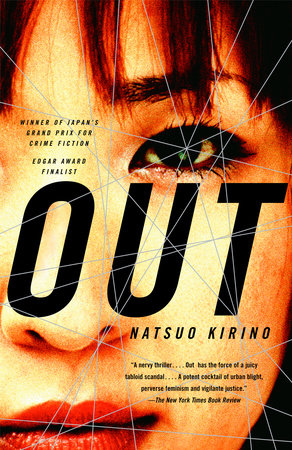
Out by Natsuo Kirino

Set in the suburbs of Tokyo, a fed-up woman strangles her husband to death—then recruits her night-shift co-workers to help her cover up the crime. I read this book shortly after the English translation came out in 2005, and I still remember some of the gruesome details of these women’s exploits. It’s not easy getting rid of a body in the middle of a gigantic metropolis, as it turns out. One of the women, Masako Katori, emerges as the leader of this ragtag group of criminal novices. A shrewd, fiercely loyal villainess to root for.

White Ivy by Susie Yang

As a child growing up in Boston, Ivy Lin’s immigrant grandmother teaches her the art of thievery, a talent she carries into adulthood, when she finds herself drawn into the world of a WASPy rich family. She then goes to extreme lengths to secure her new position there. White Ivy reminds me of other great books: Donna Tartt’s The Secret History for its commentary on social class and also White Oleander, Janet Fitch’s 1999 hit that also happens to feature an excellent female villain. At the same time, White Ivy offers a completely different take on the immigrant experience and introduces a memorable villainess who never disappoints the reader by doing the right “bad” thing.

The Perfect Nanny by Leila Slimani

Originally published in France under the name Chanson douce (Lullaby) in 2016, The Perfect Nanny is a parent’s worst nightmare. When a mother decides to return to work as a lawyer, she finds the ideal candidate to tend to her two children—meek, unassuming Louise. From the very beginning, you know how it ends—horrifically—so the tension comes in watching the tragedy unfold. Sometimes the quiet ones are the most villainous of all.

Booktails from the Potions Library, with Mixologist Lindsay Merbaum

In Neil Gaiman’s celebrated novel American Gods, we first meet the protagonist—a strong, quiet man named Shadow—while he’s in prison: “he’d plunged as low as he could plunge and he’d hit bottom. He didn’t worry that the man was going to get him, because the man had got him. He was no longer scared of what tomorrow might bring, because yesterday had brought it.” Yet, upon his release, Shadow finds his reason for being—his wife—is gone and, along with her, the world he knew before his incarceration. In its place is an odd playground for divinity, legends, and creatures, a reality revealed to him by a con man of a god who calls himself Mr. Wednesday. After Wednesday manipulates him into his service, Shadow takes everything that happens next in stride, from his introduction to old-school deities like Anansi, Kali, Horus, Easter, and Chernobog, to encounters with leprechauns, dwarves, and goblins. Because once you’ve lost everything, the impossible doesn’t seem all that surprising. 

As Wednesday draws Shadow further into his twisted plot to win the war between the old and new gods, Shadow learns he’s on a quest of his own to figure out his past, and his future. And that con men never change. 

This booktail is made with brandy infused for nine days with orange peel, rosemary, and whole cloves. These same flavors appear in a brandy-like elixir that Wednesday offers Shadow when he’s sick from traveling through liminal space and time. The infused brandy (call it Odin’s brandy, if you will) is combined with Drambuie–a honey liqueur, and a nod to fermented honey-based mead, which Wednesday calls “The drink of heroes. The drink of the gods.” Three glasses of the stuff seal the deal between Wednesday and Shadow, cementing the mortal’s fate as well. A twist of lemon adds a lovely touch of citrus to complement the other flavors—because there’s always a twist when an immortal being like Wednesday is around. 

This drink, fit for the gods, is presented in a snifter, which is as round and full as the moon Slavic goddess Zorya Polunochnaya plucks from the night sky. It sits at the center of an offering circle that includes smoking sage and flowers—for the voluptuous and divine Easter—with stones and cardamom seeds to honor Kali. Present as well are pomegranate seeds—the fruit of life—and feathers for Anubis and the weighing of the soul. The novel stands behind the circle, blue lightning crackling across the cover, complemented by the shimmering blue, purple, and silver backdrop. The boughs and trunk of a tree are visible just to the right of the book, a reference to Shadow’s vigil and the great Nordic myth of Yggdrasil, the sacred tree at the center of nine worlds, containing all life. 

American Gods

Ingredients

  • 1 cup of brandy
  • 1 ounce of Drambuie
  • Skin of one orange
  • 1 sprig fresh rosemary
  • 3 cloves

Instructions

Add the rosemary, orange peel, and cloves to a jar, along with the brandy. Seal, shake, and let sit for 9 days in a cool, dry place, shaking once per day. Once the brandy is ready, fill a mixing glass halfway with ice cubes. Add 2 ounces of the infused brandy, along with the Drambuie, and gently stir until well mixed. Don’t over-dilute. Strain into a rocks glass or brandy snifter and garnish with a twist of lemon.

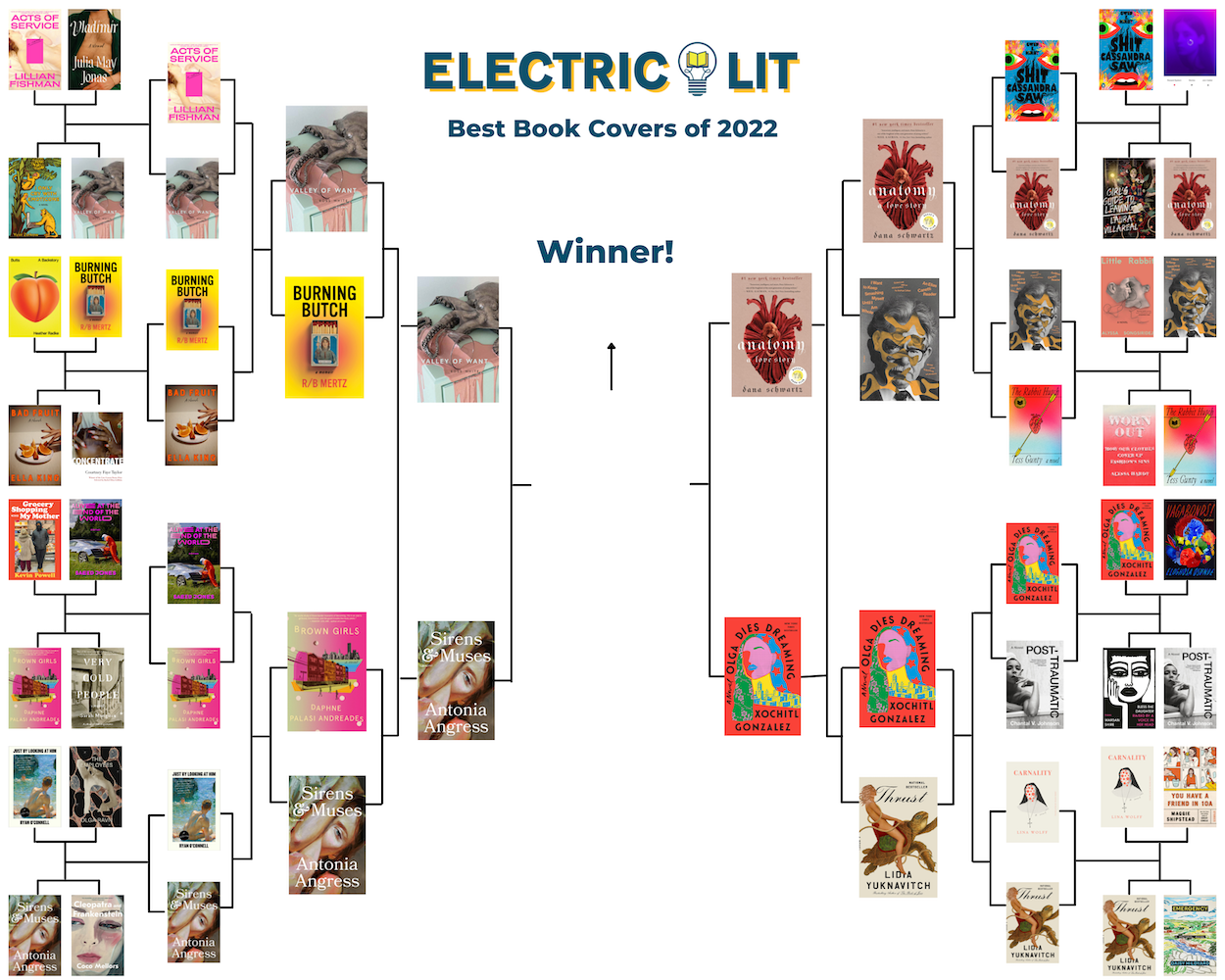
Announcing the Winner of Electric Lit’s 2022 Book Cover Tournament

Over the holidays, we asked our social media followers to vote for the best book cover of 2022 and after an especially close competition, a crowd favorite won the hearts of book lovers.

From 32 beautiful cover designs, here are the semi-finalists:

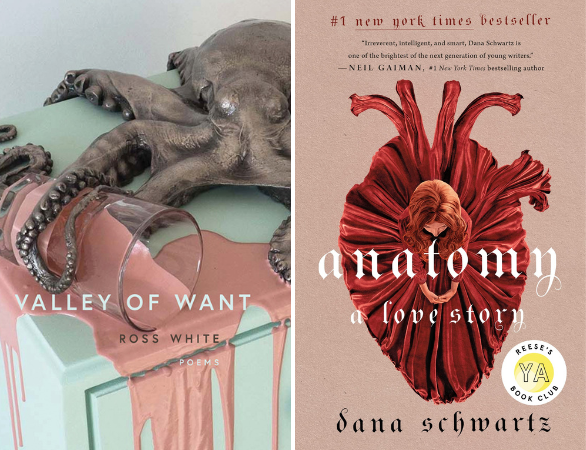
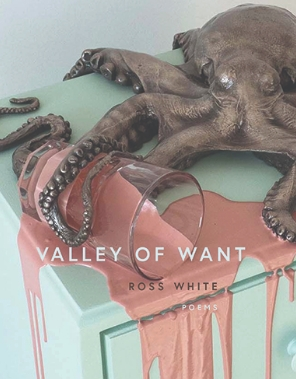
Valley of Want by Ross White, cover design by Ross White vs. Burning Butch by R/B Mertz, cover design by Robert Bieselin

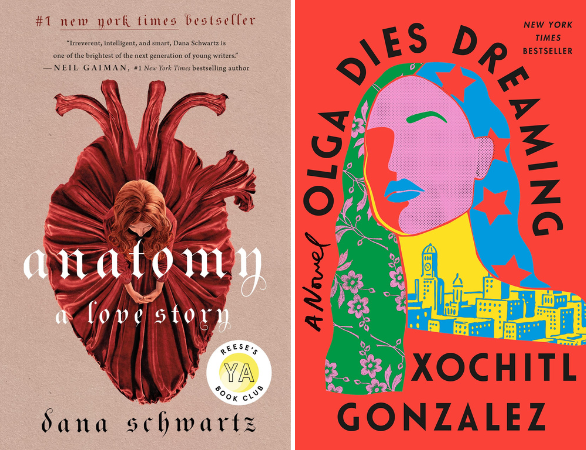
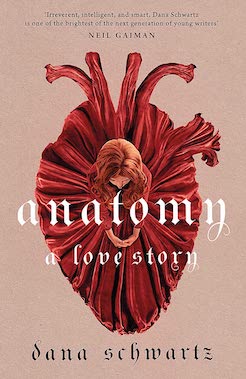
Anatomy: A Love Story by Dana Schwartz, cover design by Kerri Resnick and art by Zach Meyer vs. Olga Dies Dreaming by Xochitl Gonzalez, cover design by Lauren Peters-Collaer


From the Final Four, now we’re down to two crowd favorites:

We spoke to the designers of Valley of Want and Anatomy about creating their book covers:

Ross White, author and designer of Valley of Want:

Electric Lit: Tell us about your design process for this book cover and what you wanted to convey through the artwork?

RW: Honestly, I was blown away that Andrew Saulters from Unicorn Press would even let me design my own book. I’ve only been designing books for a few years and had no formal training in design, so there’s always a feeling that I have no business doing this work. And I’m also keenly aware that an author’s vision for their book cover is often a more private (and sometimes less expansive) perspective than what an outside designer can bring, so I wondered if I was shooting myself in the foot. So much of Valley of Want is about seeing yourself as a monster but allowing that monstrosity to be softened by love, and I was determined to find visual representation for that specific tension.

EL: Did you have any interesting false starts or rejected drafts you can share with us or tell us about?

RW: My earliest draft of the cover had several of the elements that made it into the final draft—a dominant pink, aquatic life, the textures of a sculpture—but when I wasn’t able to license the artwork for that draft, I pivoted to a whole other visual language for the book. In retrospect, there was a lot of body horror in those middle drafts, though I was only able to see that after Andrew pushed back on a few covers in a row. I was doing research for a different book when I stumbled across Bulgarian artist Stefan Ivanov‘s work, but when I saw his sculpture “Object III,” it had everything I wanted for my own book.

EL: What’s your favorite book cover of 2022, besides your own?

RW: I don’t think I can restrict myself to just one. Matthew Olzmann’s Constellation Route, Sofi Thanhauser’s Worn: A People’s History of Clothing, Rio Cortez’s Golden Ax, Ama Codjoe’s Bluest Nude, and Andrea Gibson’s You Better Be Lightning some of the books that really caught my eye this year.

Kerri Resnick, designer, and Zach Meyer, artist of Anatomy:

Electric Lit: Tell us about your design process for this book cover and what you wanted to convey through the artwork?

Kerri Resnick: Designing Anatomy was challenging but incredibly rewarding. While reading the manuscript I knew that we needed a striking image to convey both the historical and medical aspect of the book without appearing too specific or dry. We had such a strong title, so I began with many concepts using only type. I tried integrating different body parts into the letters of Anatomy but nothing felt quite right (or legible). I also tried a few options portraying the main character, Hazel, as the sole focus, but it felt looked ordinary and didn’t quite hit the mark. 

The editor mentioned the idea of an optical illusion, which sounded great but very daunting. I had never designed an illusion before and wasn’t sure how to approach it. After many hours and a lot of trial and error, the thought of a dress turning into a heart popped into my head. I remember it struck me while I was in bed, and I jumped up and doodled it out because I was so excited to finally have an idea.

From there, the process was fairly seamless. I had already known of and admired Zach Meyer’s stunningly detailed illustrations. I’d been waiting for a project that might suit him and knew he would be the perfect artist for such a complicated concept. 

Zach Meyer: Kerri Resnick approached me with a rough photo collage of the concept; having the heart concept completed, I had to recreate a drawing in my style that matched the book and character Hazel.

I ended up putting my wife in a red wig and shooting photographs of her from above. It was such a unique angle that I had to shoot my own reference. When that was completed, I began sculpting the heart shape in photoshop, utilizing fabric photos and digital painting. This was very challenging and took a lot of sketching and tinkering to get right. After this was completed, I drew the drawing in graphite and charcoal, I scanned that in, and colored it in photoshop. I had two variant covers in the end, one of which went to Barnes and Noble as a special edition red cover. 

EL: Did you have any interesting false starts you can tell us about?

ZM: One of the false starts I had was just misinterpreting the brief and making the heart initially feel more fleshy and heart-like instead of forming into a dress. Kerri Resnick gave good guidance through this process; the cover went from looking like a real human heart to feeling like a part of Hazel’s dress all in one.

EL: What’s your favorite book cover of 2022/2023, besides your own?

KR: One of my favorites is Maame by Jessica George. This cover was designed by Olga Grlic. I find it so striking and beautiful; it stops me every time I see it. 

ZM: My favorite cover is Star Eater by Kerstin Hall; the artwork is done by Sam Weber, all painted in oil paint. 


The winner of Electric Lit’s 2022 Book Cover Tournament: Anatomy: A Love Story by Dana Schwartz, cover design by Kerri Resnick and art by Zach Meyer.

Click to enlarge

How Shall I Reject Thee? Let Me Count The Ways

Oh, rejection, rejection, wherefore art thou rejection? Deny my genius and refuse my praise?

Or if thou wilt, take all myself and I’ll no longer be a writer.

At the end of the day, all writers must ask themselves: to query or not to query?

You know what they say, nothing ventured, nothing gained.


Dear Mr. Shakespeare,

Thank you so much for giving me the opportunity to consider Romeo and Juliet, I appreciate it, and apologies for taking so long to get back to you!

I had trouble staying connected with the main characters of Romeo and Juliet.

While at the beginning I was pulled into the story, which you did a nice job setting up, I had trouble staying connected with the main characters of Romeo and Juliet. I also got a bit lost during the infighting between the Montagues and Capulets. I was hoping for more of a focus on the love story, rather than the family drama.

Sincerely,

Romance Lover


Dear Will,

Thanks again for following up and giving me the chance to read your work. The dialogue is working really well in your writing, but even so, I only got through the first two acts before skipping to the end.

In your work, too much happens, too quickly. Also, Tybalt, Mercutio, and the main characters ALL die? It was too much for me, so I’m going to pass.

—Not a Fan


Hi Billy,

First, thank you for being patient with me while I took eighteen months to read your submission. Sorry for leaving you hanging!

I love the premise of this story and its unconventional take on marriage. There is also a lot to admire about your facility with language, especially the rhyme scheme, it’s impressive 😊

Romeo is such a fun character, but he’s a little too conflicted for my taste, I mean he’s a lover and a murderer? I know he had his reasons, but still. However, I’m sure the right agent will connect with him on some level, keep the faith!

Kind regards,

In Your Corner


Hi Will,

I’m sorry to be sending this on Christmas. I loved your use of iambic pentameter in the Prologue, and I’m one of those people who usually hate prologues!

My parents also disapproved of my choice of husband, so I completely related to Juliet’s point of view. I was also intrigued by your use of religion as a character and how it ultimately plays a role in the plot.

It’s always hard to make monologues as intriguing as action scenes, and while I think you have achieved it to some extent, the amount of time your characters spend addressing the audience was off-putting, and I’m going to step aside. I know you’ll find the right agent soon, and I’ll probably kick myself later.

Wishing you a joyful holiday,

Close But No Cigar


Dear Bill S.,

Thanks for contacting me. Although I couldn’t put Romeo and Juliet down, I’m not going to be signing you as a client.

You have created some very memorable characters here with the Nurse, and the apothecary-obsessed Friar, I almost wished the story was more about them!

I wonder if you might consider ending on a happier note?

Although there is lovely writing here, a lot of bad things happen, and the ending was really tragic. I wonder if you might consider ending on a happier note?

This is just the feedback from one agent so take it with a grain of salt. Good luck!

All the best,

Prefers Comedies


Dear William Shakespeare,

Thank you for contacting First Folio printing. If we are interested in seeing more of your work we will get back to you. Please don’t respond to this email as it will not be responded to.

Best,

The Editors


Good luck to all #amquerying writers in the trenches out there, hope you get a “Yes” in your lifetime.

[1] In Shakespearean “wherefore” means why, not where. I know, it’s dumb and confusing. English! 

7 Books That Celebrate Underappreciated Crafts

In 1937, on the bank of the river Ravi in Lahore, the 10-year-old protagonist of my novel realizes that he is affected by smell in a way that others are not. On that day, he is inducted as an apprentice to his uncle at the family’s perfume shop, and so begins the formal education of Samir Vij. Set against the backdrop of the 1947 Partition, he falls in love with Firdaus Khan, an illuminator of manuscripts; their days filled with perfume and paper, olfactory and amorous impulses. 

The Book of Everlasting Things is at its heart a love story, but it’s also very much about characters who continue to practice traditional crafts—perfumery, distillation, calligraphy and illumination, paper-making, Ayurvedic medicine, carpet weaving, leatherwork and tanning—in a changing world. Perhaps it is my own training as a traditional printmaker that inevitably directs my attention to these now-rare, highly intricate, labor-intensive disciplines that have sadly been swallowed by the modern and automated. And so, in an effort to celebrate underappreciated art forms, ancient traditions, and unique occupations, I present a list of books that have informed the texture of my writing.

The Earthspinner by Anuradha Roy

The Earthspinner deftly revisits the themes that Roy’s novels are well known for—history, memory, myth, and love. Elango is a Hindu rickshaw driver and potter whose dream is to create a terracotta horse, and whose crime is falling in love with Zohra, the granddaughter of a blind, Muslim calligrapher. A neighbor, Sara, becomes both witness and chronicler of his days, as she entwines herself into his life as his apprentice. One day, a lost dog, Chinna, appears, adopting the potter. With the completion of the terracotta horse, a community is enraged, and the pair of lovers flee into exile. Told in alternating first and third person, moving between India and England, the novel harnesses the elemental power of rain and fire, the strength of the earth, and the bodily nature of craftsmanship.

The Hare with Amber Eyes: A Hidden Inheritance by Edmund de Waal

British ceramicist Edmund de Waal inherits his late uncle Iggy’s collection of two hundred sixty-four nestuke, Japanese wood and ivory carvings used as kimono ornaments, none bigger than a matchbox. It is a “very big collection of very small objects,” comprising, among other creatures, a hare with amber eyes, a tiger turning to snarl, a seated man holding a gourd between his feet, rats with sinuous tails, some with signatures or bits of paper glued to the bottom, others with fading patina and dulling details. This inheritance leads de Waal from Odessa to Paris, Vienna to Tokyo. Part memoir, part detective story, it absorbs centuries of art history, state and family archive, memory and secret, as de Waal unearths how and why these ornaments came to be acquired by his ancestor, the French art historian Charles Ephrussi, in the nineteenth century, and their tumultuous journey thereafter.

Chronicle of a Corpse Bearer by Cyrus Mistry

This was the first book I read when I moved to Montreal, a city enveloped in bitter cold for the better part of the year. Despite the seemingly morbid subject of the novel, I found the deliberate quiet of its prose resonated with me enormously. In the city of Bombay, there is a near-invisible community of Parsi corpse bearers called Khandias, whose job it is to collect the bodies of the deceased from across the city on foot, perform the final rites, and carry them to the Towers of Silence. Phiroze Elchidana, son of a Parsi priest, falls in love with Sepideh, the daughter of an aging corpse bearer, and makes the decision to adopt the profession. This is one of the most noble services a Parsi can perform for his faith, an ancient profession, and yet it renders them untouchable, often ostracized, for their contact with the dead. Bringing together the landscape of pre-Independence Bombay and the lesser represented stories of priests and corpse bearers of the Zorastrian faith, Mistry’s narrative is one of intimacy and tenderness, which, on more than occasion, led me to close the book and reflect on its melancholy.

The Printmaker’s Daughter by Katherine Govier

In Japan’s nineteenth-century Edo period, when artists and writers were suppressed by the shogunate, Kastushika Hokusai, a printmaker, lives with his daughter, Oei, working on pieces like The Great Wave that will one day become legend. However, in their time, they live in poverty, traveling often to avoid arrests. Through research, Govier imagines the life of Oei, who reveres her father above all else. She works in his studio for her whole life, and may well have been the hand behind some of his most famous works. This is a novel about artistry and the ukiyo-e tradition of woodblock printing and painting, but is as much about family and loyalty, and the place of women. In the final chapters, Oei says, “I am the brush. I am the line. I am the color”—and yet this is weighed down by one final admission: “I am she, Hokusai’s daughter.”

The Lost Generation: Chronicling India’s Dying Professions by Nidhi Dugar Kundalia

From the women of the Baiga tribe in the jungles of Jharkhand who have intricate godna tattoos etched upon their bodies to the professional mourners called rudaalis deep in the deserts of Rajasthan, from the Hindu priests on the banks of the river Ganga in Hairdwar who maintain genealogical records, rolled up to resemble resplendent tree barks, to the Urdu scribes or kaatibs of Old Delhi, Nidhi Dugar Kundalia’s book chronicles 11 of India’s dying professions. Though the book is by no means exhaustive—as there are many more such professions across the country—it is a splendid starting point for any reader, written with an atmospheric delight that restores a world on the verge of extinction.

A Scented Palace: The Secret History of Mary Antoinette’s Perfumer by Élisabeth de Feydeau, translated by Jane Lizop

Élisabeth de Feydeau, a professor at the Versaille School of Perfumers, draws on the papers of Jean-Louis Fargeon, tracing his life from 1748, when he is born into a family of perfumers in Montpellier, to his becoming perfumer to the young queen, Mary Antoinette. He serves her for fourteen years until the Revolution sweeps the nation, composing luxurious and bespoke fragrances and pomades, and chronicling her extravagant expenditures. Rather than providing broad historical context, the book speaks to an intimate court life and relationship between perfumer and queen. It spends considerable time on fascinating beauty secrets, ingredients, luxury goods, and articles for grooming—lemon pomade, carnation powder, perfume sachets, and a selection of beauty spots and creams to purify and whiten the queen’s complexion. The back of the book contains notes on Fargeon’s palette and his methods of ingredient extraction. Interestingly, one of his floral formulas survived the revolution and is now called “Black Jade.”

Jadoowallahs, Jugglers and Jinns: A Magical History of India by John Zubrzycki

One of my early childhood memories in India is of the magicians, puppeteers, and snake-charmers that attended our birthday parties. There are photographs of them making eggs appear and disappear in our hands, pulling doves from top hats, finding coins behind a cousin’s ear. India’s association with magic goes back centuries, and in this magnificent book, Australian writer, John Zubrzycki explores how “magic descended from the domain of the gods to become part of daily ritual and popular entertainment.” Highly imaginative and rich in detail, the book draws on archival records, newspaper articles, interviews, and memoirs of Western and Indian magicians and illusionists to culminate in an extraordinary cultural history of oddities. 

There’s No Place Like Jersey for the Holidays

“Iceland” by Drew Nelles

After fifteen years of vegetarianism, I recently gave into despair and started eating meat. I’m also trying to quit smoking again, which means I’ve gained a bit of weight. It isn’t much—only five or ten pounds—and anyway, since I was so skinny before, I just seem healthy, like I’ve filled out. In my one concession to self-respect, I’ve been shaving every day, so my cheeks are soft and smooth, plump and pink. People tell me I look good, a decade younger. I’ve never felt worse.   

A few months ago, I told my best friend, Ezra, that I was in love with him. I hadn’t meant to. I was at a used bookstore in Madison when he called me, as he had many times before, to gripe about his girlfriend, a nervous, wide-eyed woman of whom I happened to be rather fond. This time, though, the prospect of coaching Ezra through another breakup just made me tired. I wanted to lie down, right there on the floor of the bookstore, between the Greek myths and the fairy tales, and sleep forever in a glass coffin. It also didn’t seem fair to the girlfriend.

“I don’t think I’m the person you should be talking to about this,” I said, finally, and when Ezra asked why, the implicit answer hanging in the dead air of our phones, I understood that my years of silence, of gritting my teeth, were gone. For what? In the world of my dreams, things were supposed to remain unspoken until we were older. Maybe we would be in our late forties, both freshly divorced, cleaning up after a dinner party in his too-bright kitchen, the other guests out the door. Maybe we would open an extraneous bottle of wine and, in a moment of revelation, share a kiss. Instead, we’re no longer speaking. At thirty-five, I’ve started graduate school in Wisconsin, where I don’t know anyone, and I can’t even call Ezra up to complain.

So: home to Jersey City for the holidays. Christmas has come and gone. It’s that strange week before the New Year, when time moves according to its own inscrutable logic and everyone is anxious for something to begin. I’ll go back to Wisconsin in January—back to cold pizza from the departmental fridge, back to color and selfhood in Sir Gawain and the Green Knight. For now, I have nowhere else to be. My father and sister and I lurch around the house, weighed down by sloth and gluttony. When my mother was alive, holidays were loud, with mortifying singalongs and arcane Christmas-morning rituals, but these days they’re muted. There are no husbands or wives, no children or grandchildren. Just the three of us, all adults now, in the little house we once shared. We give each other modest presents: packets of seeds for my father, something black and leather for my sister, a book about books for me. The Christmas tree is artificial, with built-in lights.

Now I have to drive my sister to the airport. She’s flying to Reykjavik to spend New Year’s Eve with her boyfriend, the first man she’s dated since her divorce. He’s quiet, with a musical Icelandic accent; I assume he believes in elves or fairies. A world away from her unnervingly chipper ex-husband. I’m happy for her, even if there’s some part of me that wonders whether she and I can be happy at the same time—if one of us has to be down for the other to be up. We get into my father’s car and head for the I-78.  

“Do you think Dad’s okay?” she asks. I shrug. Like most selfish children, I find it hard to imagine that my father has an existence independent of my own.

It’s dark out. When we were kids, Christmases had always been white, or at least they were in my memory. Now winter arrives in a torrent of mud. Fog rolls through like tear gas. Then, without warning, the days plunge into bitter cold. It feels like divine punishment—all those wonderful years, squandered. The planet trying to buck us off. I can’t blame it.

Then, without warning, the days plunge into bitter cold. It feels like divine punishment—all those wonderful years, squandered.

“This trip is a bad idea,” my sister says. “It’s too soon. I barely know Gunnar.”

“I think it’ll be interesting,” I say. “Apparently Iceland uses one hundred percent renewable energy.”

“They eat fermented shark there. They bury the shark in the ground and let it rot. Then they cut it up into little cubes and serve it on toothpicks, like fucking cheese or something. Gunnar says it smells like bleach and piss. He says I should give it a try.”

“I’d like to go to Iceland someday. While there are still planes in the sky.”

“Maybe you should go instead of me,” my sister says. “Maybe you should eat the piss shark.”

We drive past one of those trucks that transports livestock. It’s crammed with pigs, their flanks heaving against the sides. Some stick their intelligent snouts through the holes, nostrils flexing, getting a first and last taste of winter air. Even with the windows closed, I can smell them—that doomed barnyard funk.

“I guess they eat a lot of hot dogs in Iceland too,” my sister says. “But they’re made of lamb.”


The sole addition to the flock this year is my father’s miniature labradoodle, Ferdinand. I once read an article in which the creator of the labradoodle said that the breed is his life’s great regret, that he made a monster. He may have had a point. Ferdinand is odd. He hunts ghosts in the walls. His eyes are insectile. If I try to read or watch television, he sits nearby and stares at me. I don’t like animals; I’d been a vegetarian for the sake of the environment. The wasted water and grain and land, the methane clouds of cow farts, the lagoons of pig shit in which farm workers periodically drown. But Ferdinand, for all his supernatural intuition, doesn’t seem to pick up on this. At night, as I lie in bed, he whines at my door.

I’m sitting at the kitchen table, trying to do a puzzle, trying not to think about smoking. My dad wanders in, Ferdinand at his heels, and puts the kettle on. He’s sixty-seven, bespectacled and reduced. My sister and I—his alien progeny—tower over him. (We take after our mother, who stood five-foot-eleven.) A few years ago, after three decades as a public-library administrator, my father retired. He spends his days reading, gardening, sketching. At Christmas, he makes an effort, hanging wreaths on the doors and filling the house with blazing-red poinsettias. Ezra and I once tried to set our dads up as friends; they met in the city, halfway between Jersey and Connecticut, where Ezra’s father ran a hedge fund. It didn’t go well. Later Ezra told me that his father found mine sad. He added, with a meaningful look, “He’s not wrong.” Anyway, my dad has Ferdinand now. 

The puzzle is an idyllic scene of New York in the winter. There are people bustling around with gifts under their arms, shops and apartments with glowing windows, snow falling on elevated subway tracks. It makes me miss New York. I’ve pieced together the puzzle’s edges but not much else. I’m no good at puzzles.

“Your sister texted,” my father says. “She’s still on her layover in Copenhagen.”

Ferdinand puts a paw on my leg.

“I think there’s something wrong with Ferdinand,” my father says.

“Understatement.”

“Don’t you think he’s acting strange?”

“I don’t know,” I say. “He’s always strange.”

I step onto the front porch and crack my knuckles in the cold. In my jacket pocket there’s a pack of American Spirit Yellows. I’ve been keeping one cigarette in there, as a reminder or a punishment. When I open the pack, though, it’s empty.

My father follows me outside, and Ferdinand follows him. The dog sniffs the half-frozen grass, searching for the best place to pee.

“I thought you quit,” my dad says, tugging at his mustache.

“I did,” I say. “I did.” The vapor from my breath looks like cigarette smoke.

Across the street, the neighbors have an absurd Christmas display: gigantic blow-up decorations of Santa, the Grinch, Frosty the Snowman. At night, they sway menacingly, illuminated by a row of multicolored spotlights. During the day, they slump on the lawn, deflated and spent.

Inside, the kettle whistles. I worry that if I stay in the house a moment longer, I’ll do something I’ll regret, like call Ezra or strangle Ferdinand. Maybe I need a task.

“I’m going to get some Nicorette,” I say.


After my mother died, everyone in the family responded in their own unhealthy ways. My sister, three years older than me, partied in the city every weekend while still, somehow, maintaining straight As. My father filled every practical void left by my mother’s absence—he had always done the cleaning, and now, in addition to cooking, he redoubled his efforts around pickups and drop-offs and homework help—without ever actually talking about her death. My coping mechanism was this: I started breaking into houses.

I never stole anything. Not out of principle—I was just too scared. (It’s true that I sometimes raided the fridge, but I did my dishes after.) I was thirteen. I figured—accurately, as it turned out—that trespassing might be a lower-level offense than burglary. The houses in my neighborhood were simple enough to get into. People kept their front doors locked, but sometimes they left keys under fake rocks, or forgot about their back entrances. I left school during lunch time so that I could enter in broad daylight, when I wouldn’t look suspicious, and it was less likely that someone might be home. All in all, this was easier than you’d think.

Once I was inside, if I was hungry, I’d make myself a sandwich. It was disturbing, almost, how every house had some combination of the same ingredients: white bread and processed cheese and cold cuts and mayonnaise, the kind of stuff my mother never allowed us when she was alive. But now I could eat my fill. Then I would drift around, testing out the furniture, reading the spines of the books and the movies. In one house, I found a pack of Kools; when I tried one, lighting it off the gas range, it made me want to puke. In another, I discovered a cache of pornographic magazines under a bed. We didn’t have a computer at home then, so I’d never really seen that kind of thing. The magazines were full of astonishing hues of pink and white. There were winking anuses, pyramidal layers of labia, rivulets of pale semen on tanned buttocks. The women on all fours, surgical scars under their breasts, faces frozen in rictus. The men’s clean-shaven genitals. I put the magazines back under the bed; they weren’t quite what I was looking for. Mostly I just liked to touch things, to imagine other people’s lives.

At last I got caught. I was sitting in a La-Z-Boy, watching Face/Off, one of my favorite movies. Just as Nicolas Cage said, “I’d like to take his face…off,” somebody walked in.

I was arrested, handcuffs and all, and charged with breaking and entering. My father hired a lawyer for more than he could afford. I had to make a court appearance, wearing the best clothes I owned: corduroy pants, a wool sweater over a collared shirt, black sneakers that could, in the right light, pass for dress shoes. In the courtroom, trembling before the judge, it was all I could do not to cry. But later—after the judge let me off with community service and said my record would be expunged when I turned eighteen—I felt strangely disappointed. Was that it?

As we left the courthouse, my father said I could take the rest of the day off school. But I wanted to go back and be normal again.


Now dusk is falling, and I’m driving my father’s Toyota Avalon through the streets I used to prowl. The houses are mostly dark, although here and there are Christmas lights strung along the gutters, the blue-green flicker of a television, the warmth of a kitchen chandelier. I don’t feel any kinship with my old self, but, confronted with the fact of his existence, I find him hard to escape. I also want a cigarette.

I drive to the 7/11, in the sad plaza with the dentist’s office and the McDonald’s, and park out front. Through the window, I can see the rows of cigarettes behind the counter. Somewhere in there are my American Spirit Yellows, on a gradient between the Oranges and the Greens. The objectionable Native mascot will be smoking his pipe next to a warning about cancer or emphysema. At NYU, Ezra’s brand was Pall Malls. Whenever we would step out of a party or a bar for a cigarette, he would complain that I was too slow—that it took too long to smoke my American Spirits. He always wanted to get back inside, to rejoin the others, but I was never in any rush. Eventually Ezra quit, at the highly responsible age of twenty-four, and I had to smoke by myself.

My phone rings. “I hope you have a roaming plan,” I say.

“A vacation is a roaming plan,” my sister says. “If you think about it literally. Christ, I’m bored.”

“How’s Iceland?”

“We’re still stuck in Copenhagen. You wouldn’t believe how clean this airport is. It makes Newark look like—well, like Newark. What are you up to?”

I stare into the 7/11, as blindingly white as a laboratory. “Out for a drive.”

“That’s nice. Gunnar has gone to get us another round of Scandinavian pour-overs. Seriously, airports shouldn’t be like this. It’s deranged.”

An elderly woman, plush reindeer antlers on her head, shuffles to the register with her purchases: a Slim Jim, a two-liter bottle of Coke Zero. She gestures at something behind the counter.

“I’m thinking of making a run for it,” my sister says. “Maybe I should go to the red-light district and legally purchase intercourse.”

“I’m pretty sure that’s Amsterdam.”

“Whatever. If these people didn’t want us to mix them up, they shouldn’t all be so slim and attractive. Listen, Gunnar’s back. Take care of Dad, okay?”

The woman with the antlers comes out of the 7/11 and rifles through her plastic bag. I hope whatever she pulls out will be a sign that I should buy cigarettes—a pack of Camels, a can of Skoal, even a Juul—but it’s just her Slim Jim. With shaking hands, a junkie preparing a fix, she unpeels it and takes a bite. Her mouth has the caved-in appearance of the infirm.

I turn my phone off. Then I back out of the 7/11 and drive across the plaza to the McDonald’s.

My first post-vegetarian meal was easy: a few strips of bacon with breakfast. Later I had tuna fish, chicken Pad Thai, even some goat from a friend’s organic-farm basket. For Christmas dinner I indulged my father and ate a massive, Mesozoic turkey drumstick. But I haven’t done this—idled a car in a fast-food drive-thru— since I was a teenager. I try to make it feel like the forbidden luxury it once was: the golden arches glowing above me, the backlit menu glowing too, everything looking so good, so bright and so brown. Brown buns, brown meat, brown fries, brown cola. The occasional colorful pop of lettuce or ketchup. Variations on a theme. When I arrive at the tinny speaker, though, the only thing I want is a Big Mac combo.

I find a parking spot. The Big Mac tastes nothing like I remember, which makes me feel like I have no memory of it at all. The burger is oddly sweet. The patties are thin and grey, neither warm nor cold. It’s hard to believe there’s any meat in them; maybe there isn’t. The French fries are exquisite.


What can I tell you about Ezra? He’s the smartest man I’ve ever known, and also the dumbest. You should hear him defend Houellebecq or dismiss Ashbery. You should see his hands, the size of them; you should feel the mountain of his body as he envelops you in a hug. He comes from old coal money, and, although he isn’t quite proud of that fact, he seems to relish its wrongness, the discomfort it inspires in others. He used to write poetry, pretty traditional stuff, although he gave up on it before I did. He’s beautiful when he loses his temper, and when he grew his beard it gave him a look of perpetual umbrage. He has a fondness for conversational simile. A girl who won’t leave him alone is—he will say—“like Spanish moss on a live oak.” A professional quandary is like King Minos refusing to sacrifice the divine bull. When Ezra talks, nothing is ever what it is. It’s always something else.

I drive home from the McDonald’s, the tang of special sauce on my tongue, listening to a radio report about air pollution in New Delhi. The report says that dense winter air causes something called inversion, an atmospheric layer that traps particulate matter close to the ground. This means pollution has nowhere to go. Right now, it’s as if the entire city is in a dome of smog—from gasoline mixed with kerosene, from burning dung and rice straw. The skies in Delhi are gray. People walk in the haze like ships sailing through mist. This is the worst winter on record. “We’re practically smoking the air,” a Delhi resident says.

When I arrive, my dad is hovering in the doorway. “Where have you been?” he asks. “I tried calling you, but your phone is off.”

“My phone is off,” I say, pointlessly.

“Ferdinand is sick,” he says. The dog limps over and hacks at the ground, but no vomit comes.

At the veterinarian’s, my father holds Ferdinand as the dog whimpers and twitches, trying to wriggle from his lap into mine. The waiting room is full. There’s a listless Saint Bernard with red eyes and ropes of drool hanging from its jowls. A jewel-like parakeet in a tiny cage, flitting from one perch to the other. A cat—or what I assume is a cat—invisible in the darkness of its plastic carrier. On the reception desk is a little battery-operated candle and a sign. If this candle is lit, the sign says, someone is saying goodbye to their beloved pet. Please keep your voice down during this difficult time. The candle isn’t lit. Still, when my father speaks, it’s in a whisper. His voice is shaky.

“Do you think Ferdinand will be okay?” he asks.

A technician calls us into one of the examination rooms. As I pat my father on the shoulder, I imagine moving in with him, caring for him in his old age, watching police procedurals every night until I am also old. It occurs to me that this is probably the best use of my time. I might never do or be or create anything of note. Ezra might never love me back; in fact, he absolutely will not. But I can take care of my father. That has to mean something.

It occurs to me that this is probably the best use of my time. I might never do or be or create anything of note.

When the veterinarian comes in, she apologizes for the delay. There are always a lot of problems around Christmas, she says—pets getting into things they shouldn’t. She’s blunt and efficient, her hair in a practical ponytail. “I’m sure Ferdinand will be fine,” she says. She pops a tablet of apomorphine out of a blister pack and slips it into a Greenies pill pocket. Ferdinand sniffs it suspiciously but eats it anyway.

He vomits almost immediately. In my mind, I look down into the neon slime of his mess and see, bent but unbroken, a single American Spirit. The veterinarian, leaning in close, sees it too.

“One of you a smoker?” she says.

But that isn’t what happens. Instead, the veterinarian, examining Ferdinand’s vomit, asks, “Do you have any poinsettias in the house?”


The next day is New Year’s Eve. In the morning, I sit at the kitchen table, eating a bowl of Cheerios, the unfinished puzzle of New York in front of me. Soon I’ll go back to Wisconsin; I’ll reckon, once again, with the Green Knight, his disembodied head rolling on Camelot’s floor over and over. In the meantime, Ferdinand, still recovering from his brush with death, has left me alone. He’s asleep in the living room, beneath the artificial Christmas tree, and through the doorway I watch him dream. His legs jerk, his eyes flutter open and then close. Sometimes he yelps. I assume that, in his dreams, he is no longer a miniature Frankenstein’s monster but an apex predator like his ancestors, bringing down the megafauna my own forebears hunted to extinction during the last great Ice Age. In real life, though, he’s still Ferdinand. When we got home last night, my father threw out all the poinsettias.  

My phone dings; it’s my sister. She’s sent me a message, a video accompanied by a single word: “Iceland.” The black screen fills with eerie glowing curtains of green and blue. Then come reds and purples and pinks, shifting against the stars and the night sky. It’s the aurora borealis, of course. The lights are both beautiful and extraterrestrial, radioactive, like something the government wouldn’t want us to see, and I almost find it hard to believe that my sister is there, observing this with her own eyes—that this video is not part of some elaborate deception, one designed to fool me into thinking such a phenomenon were actually possible. In the background Gunnar is talking, with his funny accent, about solar wind, coronal mass ejections, the excitation of atmospheric constituents. But it’s hard to catch what he’s saying because my sister keeps repeating the same thing. “Holy fucking fuck,” she keeps saying. “Holy fucking fuck.”

My father comes into the kitchen and sits at the table. “How’s Ezra doing these days?” he asks.

I look up from my phone. My dad is blinking behind his glasses.

“I don’t know,” I say, as steadily as I can manage. “We haven’t been in touch for a while.”

“Oh,” my dad says, pulling at his moustache. “That’s a shame. So—you’re not going out tonight? You’re not going into the city?”

“It’s just New Year’s.”

My dad keeps tugging at his mustache. “You don’t want to go out with some friends?”

“It’s not a big deal,” I say. “I guess I figured I’d stay in. We can watch the ball drop.”

“Right,” my father says. “Well. I’m just asking because—because I was planning to go to a little party.”

“A party?”

“Yes, a party. I’m sure that’s hard to believe.”

“I’m sorry,” I say. “No, that’s great. A party with who?”

“With some friends,” my father says. “With a friend.” He stands up, suddenly regal. “Maybe you can keep an eye on Ferdinand for me.”

That night, a sensible green Volvo pulls up in front of the house. In a spasm of formality, I walk my father out the door, into the winter air, and, as if to reciprocate, he does something just as unusual: he tugs me down to his level and gives me a kiss on the cheek through the bristle of his moustache. Then he holds me and takes a deep breath. For a second, I feel a primordial sense of belonging, as if I were a newborn baby who smelled of milk and yeast, and the two of us stand there, in our awkward half-embrace, both slightly off-balance, until Ferdinand skips out the door, at which point my father leans down to scoop him up, and the moment passes. He deposits Ferdinand in my arms and heads across the lawn, shoulders hunched in his peacoat.

It’s only when my father reaches the passenger door of the Volvo that I realize he was checking me for the smell of cigarette smoke. By then, though, he’s lowering himself into the car, Cinderella heading to the ball. The driver—a woman I’ve never met before, with elegant silver hair and a patterned scarf—waves at me shyly through the car window. She’s trying, if nothing else. Standing in the doorway, the light from the house pooling out behind me, I try to wave back, but Ferdinand is in my arms, straining to follow my father, and so all I can manage is an awkward flick of my hand.