The resurgence of the email newsletter over the past couple of years is great news for writers. So much of our work requires probing our deepest thoughts in isolation, biting our cuticles, staring at cracked paint on the walls. Whether online or IRL, sharing insights and developing community is essential for survival. Subscribing to newsletters by writers, for writers is a way of staying in conversation with peers. Email newsletters can offer emotional support, tips and exercises for improving craft, and resources for getting published that might otherwise be inaccessible, especially to writers beginning their careers. Some even promote community-building by establishing writing challenges and providing platforms for writers to discuss their experiences. The seven newsletters below offer the best of craft andpublishing advice,writing prompts, pitch calls,and encouragement andcommiseration about the writing life.
Four years in a row, the author of eight books—most recently the novel All This Could Be Yoursand memoir I Came All This Way to Meet You—has brought tens of thousands of writers together for the #1000wordsofsummer project. Subscribers get a daily letter of encouragement from Attenberg or guest contributors, then aim to write 1,000 words a day for two weeks. $5/month or $50/year gives paid subscribers access to participant discussion threads to stay accountable. When not in #1000wordsofsummer mode, Attenberg sends a weekly email covering creativity, productivity, motivation, and publishing. The way she talks about the writing life is tender and comforting. “There’s so much value in just touching your work every day, circling it, thinking about why you started it,” Attenberg recently wrote.
In her weekly newsletter for The Atlantic, Nicole Chung gives advice for living our best creative lives, answers reader questions, engages in conversations with authors and experts, and shares beautiful essays on how issues of the moment intersect with what we’re trying to do as writers. The author of the memoirs All You Can Ever Knowand the forthcoming A Living Remedy,Chung explores these areas (some of which require a paid digital subscription to The Atlantic for $59.99/year) with great care, from interviews on the reality of being an anxious writer and tips for negotiating with editors to insights on pitching and rejection, telling stories about pain without retraumatizing ourselves, and navigating writing about living family members. I particularly love her responses to reader questions, but her essays, which explore topics such as gun violence, anti-Asian hate, and abortion, are powerful. “If I act and work and write as though a more just future will exist,” Chung writes, “perhaps I’ll be one step closer to believing in it.”
Every month, Matt Bell puts out a free newsletter featuring fiction writing exercises, thoughts on craft, and reading recommendations. The author of 12 books, including the novel Appleseed and craft book Refuse to Be Done, Bell creates fresh, specific, detailed exercises on elements like character, story structure, dialogue, punctuation, the passage of time, worldbuilding, and audience and intent. The exercises are always in conversation with at least one book, short story, or essay. They’re lengthy, but fascinating; Bell’s joy and curiosity set the tone for every email. “There’s an art to fashioning a good exercise,” he said in his first newsletter. “I love the challenge of trying to balance clarity of instructions with well-chosen examples, and of imposing just enough difficulty to make space for play and surprise.”
This one’s for writers looking for cold, hard pitch calls. Twice a week, journalist Sonia Weiser, whose bylines include The New York Times, The Washington Post, and New York Magazine, scours social media and sends subscribers a curated list of writing and writing-adjacent jobs. Weiser only lists jobs that pay, and she has a $4/month suggested rate for newsletter subscribers (otherwise pay what you can). In addition to pitch calls and jobs, Weiser’s newsletters incorporate comprehensive resources like her Reference Desk document with links to pitching help, payment support, and finding expert sources. Feel free to share this document with anyone, even non-subscribers.
If you’re seeking a comprehensive education on how to succeed as a journalist, Tim Herrera’s newsletter demystifies everything from pitching to negotiating rates to crafting essays. The former New York Times editor’s free weekly newsletter shares insights and resources on topics including finding freelance work using social media and ways to approach pitching editors. His advice is candid and practical (for example: to find an editor’s contact information, casually DM a freelancer who you’ve seen published in that outlet.) Herrera’s twice-weekly live Zoom panels with industry veterans on structuring long-form features, selling books, accelerating your freelance business, and even personalized pitch feedback roundtables, are particularly unique. For $6/month or $60/year, paid subscribers receive additional newsletters and access to recordings of Herrera’s panels.
Write More, Be Less Careful features tips in a variety of forms—essays, interviews, and even bullet points. Reddy’s digestible format, encouraging and light tone (“how to write when your brain is a fried egg”), and advice work toward her goal of helping people make writing part of their routine without dread. The author of three books of poetry, most recently Pocket Universe, Reddy sends free emails twice monthly: end-of-month intentions emails that ask writers to reflect on the past month’s work and set goals for the coming month, and mid-month pop-ins with prompts, ideas, encouragement, and links to resources. Sometimes she also spearheads initiatives like Back to Writing, an eight-week newsletter covering subjects that are hard about writing, from dealing with digital distractions to banishing imposter syndrome. If you like actionable guidance for your writing process, you’ll like this newsletter.
Jeannine Ouellette describes this recently launched project as “a newsletter for people determined to keep creating through relentlessly uncertain times.” Author of the memoir The Part That Burnsand founder of the creative writing program Elephant Rock, Ouellette lets uncertainty guide her writing and teaching. Writers will appreciate the extensive weekly prompts designed to get them out of their comfort zones and “peer over the edge of doubt” to discover new things, although some are only for paid subscribers ($6/month or $60/year), as is the community chat. Ouellette also sends monthly emails on the craft of writing, the writing life, book recommendations, author interviews, and more. Even in newsletter form, the sincerity of Ouellette’s writing tends to break your heart—in a good way.
I have to admit something: I don’t really like dark academia. As a PhD candidate in English, the reality of the academic world feels dark enough. I don’t usually want to read about murder mysteries at elite liberal arts colleges or Oxford secret societies with a shady side. Being an adjunct, worrying about health insurance, never knowing how I’ll be funded all while trying to write a dissertation…that’s enough for me. So when I reach for fiction about the academic world, I’m incredibly picky. I want to escape my reality, like fiction allows, but I also want a novel that shows the reality of higher education: the contingency, the anxiety, and the privilege of choosing something like “the life of the mind.”
Finally, Martin Riker—also a publisher at Dorothy—has written the book I’ve been looking for. The Guest Lecture foregrounds all these questions–and more–in a novel that spans one night. We follow Abigail, an economics professor who was recently denied tenure. She’s sleepless the night before giving an invited talk, sharing a hotel bed with her husband and daughter, and she embarks on a quest through her mind–and house–using the classical rhetorical device of assigning your speech to different rooms of a building you know well. Her talk is about optimism and John Maynard Keynes, and Abby’s imagination conjures him up as a character, bringing Keynes along for the insomniac ride. He’s an audience member, a supporter, and a figure for the pragmatic optimism Abby needs.
I spoke over zoom with Riker, both of us taking a break from preparing for a new semester, about the imaginative possibilities of fiction, what higher education can offer a plot, and how ideas have practical effects on our lives.
Bekah Waalkes: I wanted to start by asking you about your work at Dorothy! I’m a huge fan of Dorothy’s work and I wanted to know how your work as a publisher and editor at a small press impacted your writing of The Guest Lecture.
Martin Riker: Honestly, I’d be perfectly happy if all we talk about is Dorothy. I mean, I think Dorothy’s the most important thing I do. I think a writer’s body of work is an important thing in the culture. When you find a writer who you sort of who means something to you, that’s a very special thing. But I think a really, really good publisher is more important. Because a publishing house creates a space in the culture, which seems to me a more crucial and larger gesture than a single writer’s voice. And it’s a space that not only allows for a lot of really important writer’s voices to be out there, but also for them to sort of be meaningfully in conversation with one another. And I do think of myself as a writer, but not really. I just think of myself as having a literary life. A relationship to literature and publishing is definitely as big a part of that as anything else for me and I, with no humility whatsoever, I can say with total confidence that Dorothy is clearly the most important thing that I do in the culture. But yeah, I would say the meaningful answer to your question is having come up more through publishing than writing. I actually have degrees in creative writing and I wrote novels all along. So writing’s always been there, but I have never been a writer to the world until my first book came out. And so I think that the way the writing fits in my life is is deeply influenced by the work that I’ve done in publishing in general and maybe more in the last 12 years, since Dorothy.
BW: Fundamentally, The Guest Lecture is a book about thinking—the meandering trails we take while thinking, the pull of memory, the inability to recall some detail or fact. Why structure the novel as you do, as Abby moving through her house? Or, what does shaping thought like a house offer Abby or the novel form more generally?
MR: I think your characterization of it as a book about thinking is a very apt one. I mean, it’s like this sort of performance of thinking. And I do think of the book as a performance of thinking, not a presentation of knowledge. I don’t think of myself as someone who is teaching people things. I think of myself as a fiction writer, someone who’s creating a space in which there is a performance of how the mind works. That’s more important to me. It doesn’t mean that I don’t that I’m, like, upset if somebody says, “Oh, I learned something about empathy.” That’s great. But that’s not in any way how I think. In fact, I don’t even think of it when I’m writing. I tend to not write about things I know already. This is a little bit of a digression.
BW: Oh, I love a digression.
MR: I try not to write about things I know. I tend to write things I want to learn about. And if I knew if I just wrote to tell people all the things I already think I know, I would frankly be kind of bored. The same is true in fiction. So when I was writing The Guest Lecture, there are some discourses that I actually know a lot about already, like the history of rhetoric. But the vast majority of them are things that I was just interested in and I thought would make sense. And then as the character developed, it became things that Abby was interested in rather than because of this. I want to get back to your question because about the way that it’s written, the structure and why it’s set up this way. So for me, there’s actually sort of a philosophical reason, something about the heart of what the book’s doing for me. I mean, this is really a book about types of imagination. You know William Carlos Williams’ Spring And All is a book that is name checked in here. And it’s actually an important book for me. And he had this line about how only the imagination can save us. And as a young man, I was like, “Oh, yeah, imagination can save us.” Then it’s just like, “Well, what the hell does that mean?” And in some ways, I think that it doesn’t mean something grandiose, it doesn’t mean something about a government program or something. It means something about the moment to moment in our experience of the world and how imagining it can allow us to see past the sort of limitations of the way that we think about things. Or it can do the opposite. It can actually make everything close down and seem impossible and dreadful and horrible. And this was what I wanted to write about. And it occurred to me that a certain someone had just been elected president and and I had lost my dear Obama. And in the Obama era, imagination had possibility and versus the sort of negative imagination that happens when when Trump is elected, or when you lose tenure, where suddenly not only have you lost a sense of possibility, but the imagination is doing damage to you.
BW: So imagination was key for this book, and for Abigail.
She bet upon her ideals and it didn’t work out in a practical way.
MR: I was actually thinking on a character level of this book as being a battle of those two kinds of imaginary actions happening in Abigail’s head, in the course of the night. And the reason it’s not just like a stream of consciousness, like a big block of prose, the way that many people would write thinking is is not because not just because I like forms, I do like form, and I like playfulness, but it’s because for me, it’s actually part of the idea that Abby is trying to give form to something. She’s trying to deal with the substance of her life with imagination. Her mind moves through forms and tries to create traits that her positive imagination is trying to deal with, the things that are bothering her in a way that gives imaginative form to them rather than surrendering to the opposite.
BW: What I love most about The Guest Lecture is its insistence that ideas have practical consequences. Abby’s musing on Virginia Woolf’s A Room of One’s Own reminds us that the room is more than a metaphor: it’s Abby’s “favorite example of how a conceptual argument…can also be a practical argument”. The Guest Lecture is a personal intellectual history in one insomniac mind, but it also showcases practical rhetorical tool and a meditation. What do you see as the practical ramifications of the conceptual framework of this novel?
MR: Keynes is a very interesting mix of conceptual and practical. He had huge ideas, ideas that people who were set in their ways of thinking about the world were not ready for. But he was entirely practical about going about trying to make change in the world. And if you read his own essays or you read about him, you see he was rigorous in his practicality. And I think that I actually think you can appreciate that about Keynes, among other things. And I don’t know about the book’s politics, but I can talk about Abigail’s situation. Which is that she’s created a life for herself, in a large part out of ideals. She had ideas about what kind of person she was going to be and what that was going to mean in the world. And now, recently, the world has intervened with her plans: she bet upon her ideals and it didn’t work out in a practical way. She got denied tenure. Now, I think it’s up for debate whether she should have gotten tenure. But these ideas, about pursuing a kind of a life of the mind or an idealist agenda or choice to focus on a book that meant something to her, has had very, very practical end results.
BW: Without tenure, Abby is jobless, damaged personally and professionally. The danger and anxiety of this contingency simmers throughout the whole novel, so of course we have to talk about academia and the crisis of higher education. What kind of optimism do you have for the profession? And relatedly, if there’s no real optimism in higher education, where might your hope lie?
Hardly anybody outside of the tenure track talks about the opposite side, which is if you don’t get it, you’re kind of out.
MR: So I didn’t set out to write an academic novel. And actually, the way that academia came into the novel was actually through Trump. It occurred to me when my wife was on the tenure track. She thankfully got tenure. But I always thought that something strange about tenure was everybody talks about how it’s this thing where if you get it, you have a job for life, all this security and stability. And hardly anybody outside of the tenure track talks about the opposite side, which is if you don’t get it, you’re kind of out. And it was that dynamic that made me draw a comparison to that movement from Obama to Trump. There’s a number of different dialectics in the book. One is between the idea of security and stability and instability and fear. And from a dramatic perspective, from a writer perspective, tenure is actually a very kind of clear articulation of that. It’s like a switch that you flip between insecurity and possibility and instability and fear. Or at least, you know, it can feel that way when you’re when you’re pursuing it.
BW: My last question is maybe a cop-out, but I loved the book’s ending–there’s this bizarre sequence that seems like a dream, but also maybe it’s not. What led you to conclude in such an open-ended and surreal way?
MR: In creative writing classes, they tell you you’re not even allowed to write dreams because, you know, dreams don’t have stakes, you know? And I said to my wife, I think I’m not only am I going to write a dream, but I think the dream is actually going to end the book. Which felt totally crazy because how do you create stakes for a character in this sort of nonsense of the dream world? But I’ve always loved doing things that you’re not supposed to do. Writing’s a lot of fun for me, and one of the fun thing is taking on the challenge of doing something you’re not supposed to do and writing not only a dream, but sort of ending in a space of dream. I like your reading of it that it’s sort of crepuscular. There’s some kind of feeling that she’s in a dream and in other ways you’re not. In the dream, you know, there’s a little bit of ambiguity. And I think that tension is very important. But the texture of that language in her mind definitely shifts into something that’s much more associative. Throughout the novel, Abby does this work to sort of delineate things and hold it together. So to let her go into a space where the boundaries that she’s erected for herself in her mind all start to collapse a little bit seemed very important. And they don’t collapse in a way that actually creates chaos and they don’t collapse in a way that actually creates doom. And maybe that’s part of the accomplishment of the night that she’s gotten to a space where when those boundaries start to collapse, it’s actually not a worse space. She actually manages it pretty well. All the stuff that she was very consciously thinking otherwise is still there and she’s still processing it, but she’s processing it in a different way.
What lies in the shadows, just out of view, as we drift through the chilly pits of winter with bare trees casting their creeping silhouettes at night? As long as storytelling has existed, these same long dark nights have inspired stories to explain what ran past the corner of one’s eye, or the rustling of twigs down a long wooded path. It’s where we get our cautionary fairy tales, like The Goblin Pony and the original Goblin Marketpoem, to warn the youths away from the unknown creatures that prey upon them.Goblins have a long history of whisking unsuspecting victims into the forest to enact their evil intentions. Their methods of carrying out chaos are always compelling feats of trickery or cruel strikes of callousness which make great tales for huddling around a midnight fire. So, let us lean into our human tendency to gaze into the dark of the woods imagining the claws and teeth of what might lurk there.
Written in 1872, The Princess and the Goblin is the fairy tale that inspired the next couple hundred years of fantasy literature. Eight-year-old Princess Irene lives mostly alone in a castle secluded in a mountainous forest. She wanders the halls of the large castle one day, and finds her great-great-grandmother and namesake, who shows her how to use magical threads. On an excursion outside the castle with her nursemaid, the princess is attacked by goblins. Curdie, a young miner, saves them and befriends the princess. Curdie later finds out that the goblins, vengeful of humans, plan to flood the mines where he works, and decides to do something about it before disaster strikes.
A tried and true goblin-y classic, The Hobbit follows a small, hole-dwelling hobbit called Bilbo Baggins who is summoned to leave the comfort of his home by a wizard. Gandalf the wizard and his band of dwarves need Bilbo to be their “burglar” on their quest to reclaim their treasure, which was stolen by an evil dragon called Smaug. Even if the dwarves and Bilbo himself don’t quite believe he is adventuring material, Gandalf assures them that there is more to Bilbo than meets the eye. Throughout their adventure, Bilbo and his new party meet a number of fantastical creatures, even some troublesome goblins.
Christina Georgina Rossetti’s 1862 poem by the same name, Goblin Market was a caution to young ladies against pretty and mysterious men who bear gifts. Zahler’s modern retelling follows a similar vein, with two sisters, Lizzie and Minka, caught in a shapeshifting goblin’s snare. Minka is outgoing and cheerful, while Lizzie is quiet and pensive. Minka returns from the market savoring a plum she received from a handsome boy, and announcing she is in love. Lizzie is immediately suspicious, plums are not in season. Lizzie is too shy to go to the market herself to investigate, so she keeps her peace. But Minka soon falls ill from eating another of this mysterious boy’s fruit—a pomegranate. Lizzie is forced out of her shell to save her sister, and must keep her wits sharp so she doesn’t fall into the goblin’s snare herself.
Also inspired by Goblin Market, Molly Ringle’s contemporary romance revolves around another two sisters, Skye and Livy, who are tormented by a goblin’s curse. Kit is the local mechanic, who also happens to be the goblin liaison for the small town of Bellwater, Washington. Because of a family tradition, he has to visit the goblins in the forest to appease them with gold, but this time Kit does not bring enough. This irritates the goblins who start tormenting townsfolk. Skye—a young artist and barista, who has always been attracted to the mystery of the forest— was lured into a dangerous trap, which leaves her silent and depressed. It is up to her older sister Livy to undo the curse in this cautionary tale about why one should never accept fruit from a goblin.
“Goblin Fruit” by Laini Taylor
Goblin Fruit is one of three short stories in the award-winning collection Lips Touch: Three Times by the author of Daughter of Smoke and Bone, Laini Taylor. While goblins of medieval fairy tales have been able to whisk young women away into the forest by luring them with a tasty fruit, the goblins of the present day must be a little more creative and adapt to the tastes of modern women. Kizzy, a young woman from a superstitious family, has plenty of strong desires for a guileful and sinister goblin to take advantage of. She wishes she were prettier, that her relatives weren’t so strange, and that a certain boy at school would notice her.
In 19th-century England, sisters Kate and Emily move to a countryside residence that they soon discover is terrorized by goblins. A powerful sorcerer and king of the goblins chooses Kate to become his bride and queen. Kate refuses, but she is eventually forced to acquiesce when her sister is kidnapped. On the condition that Emily is released, Kate marries the goblin king and is taken underground to live forever. In a somewhat darker retelling of Beauty and the Beast, Kate must now survive her relationship with her new husband.
Ankh-Morpork police commander Sam Vimes is convinced by his wife, Lady Sybil, to take a family vacation to the countryside. When they arrive, he notices that the town’s people have a collective distaste for the goblins that live in the woods. Before too long a dead body is discovered and Vimes learns that the goblins are being enslaved and abused as laborers on tobacco plantations. Vimes, ever on duty, decides to investigate and bring justice to the forest of goblins.
After spending his life in exile, the youngest son of the goblin emperor returns to his kingdom. He is the last living son of the crown, meaning it is his responsibility to take over the kingdom. But the young half-goblin has no experience holding his own in a cutthroat royal court, where his father and three brothers were murdered in an “accident.” The new emperor must navigate plots to murder or depose him, while having no friends or advisors whom he can trust to guide him. Worse so, as a half-goblin he will constantly struggle with being seen as a worthy being, and as a worthy ruler.
The legacy of race and class constructs can be seen in access to education, health, jobs, and more. Race and class can intersect and compound discrimination by the mere fact that racial discrimination affects the distribution of wealth and other resources, which leads to social stratification.
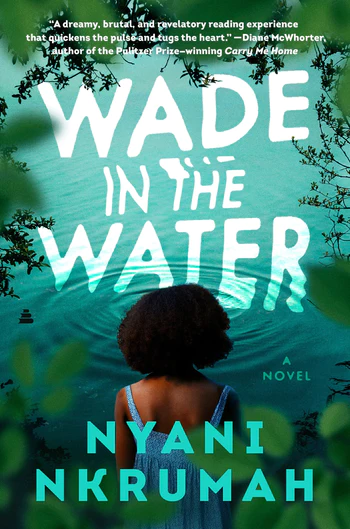
Set in 1980s Mississippi, my novel, Wade in the Water, examines the generational legacy of racism in two different families, one black and one white, within the story of an unlikely friendship that develops between a mistreated and precocious eleven-year-old girl, Ella, and Katherine St. James, a mysterious white graduate research student from Princeton. Katherine’s arrival in the black side of the still racially divided town draws suspicion, but the two embark on a friendship that drowns out the outside world- until it doesn’t, and the relationship grows more fraught as Ella unwittingly pushes against Katherine’s carefully constructed boundaries that guard secrets and a complicated past.
Here are some other diverse fiction novels that tackle the impact of racial and class injustice, told from a female perspective.
The Henna Artist is a poignant, beautifully written tale of two sisters, 13-year-old Radha and her sister, 30-year-old Lakshmi. Radha, often called “Bad Luck Girl” in her rural community goes in search of her long-lost sister Lakshmi after the death of her parents. Lakshmi has been gone for 13 years, having fled a bad marriage and now has a relatively stable job as a Henna artist in the city of Jaipur. She has saved up for a house and dreams of inviting her parents to live with her. Radha’s unexpected arrival has life-altering consequences, even as Lakshmi has to bear the responsibility, and challenge, of looking after Radha. The novel explores dimensions of caste, feminism, class, and cultural expectations, capturing the intricacies of the sisters’ relationship, rural and urban life in India, the machinations of the wealthy class, and the beauty of henna.
Liberte is set in Brooklyn after the Civil War, at a period in America’s history where there were both slaves and free Black people. The story focuses on the life of Cathy Sampson, a free light skinned Black woman doctor, and her much darker daughter, Libertie, who is also the story’s narrator. As a child, Libertie craves her brilliant yet elusive mother, wishing to be just like her, until she finds out that the pedestal she has put her on has cracks, and as she grows, so does the distance between them. One such crack is that Liberte does not admire the compromises her mother has had to make to achieve her successes. Her mother, blinded to the fact that medicine is not Libertie’s calling, exerts pressure for Libertie to follow her into this field. Yet the word Liberte means Freedom, and it takes on new meaning in this book—freedom from her mother’s expectations, but also, freedom to choose a different path from her mother, one that does not compromise on what it means to be Black and truly free.
The Yellow Wife is a story told through the eyes of Pheby Brown, a biracial girl born to a white plantation owner and a Black slave. Pheby is taught to read, play the piano and lives a relatively privileged life. However, she longs to be free and awaits her father, who promises to free her when she is 18. However, her father dies, and Pheby is pulled into the harsh realities of a life that she had not reckoned with. The author unveils the complex plantation hierarchy and the harsh realities faced by slaves, as well as the lengths Pheby will go to to protect her children. Pheby is a fictional character inspired by Mary Lumpkin, an enslaved concubine of Robert Lumpkin a white slave owner who was heavily involved in slavery.
The Night Watchman is set on a Native American reservation in North Dakota and follows the lives of several characters. Thomas (whose character embodies the author’s grandfather) works as a night watchman, and is engaged in a fight against Congress to emancipate the Turtle Mountain Chippewa, emancipation being a fancy word for removing the reservation land from the Indians. Embedded in this retelling of this aspect of Chippewa history is also the fictional story of the life of 19 year-old Patrice, whose goal is to get off the reservation to search for her sister Vera who left home years earlier. The author weaves a compelling story about the fight against loss of land, and self, within the backdrop of the hard life on the reservation, the intricacies of the Native American cultures and beliefs, the pull of alcohol, and the hope of something much better to come.
The Secrets Between Us (a sequel to The Space Between Us) tells the story of Bhima, a slum-dwelling Dalit servant working in a rich Mumbai household who, without a job, must find some way to support herself and her 17-year-old granddaughter, Maya. The other Dalit main character in the novel, Parvati, sleeps in a doorway, and makes enough food for each day by selling fruit that has seen better days. There are glimpses into how the wealthy half live, seen through her former employer’s daughter and through Bhima’s new employers, who become a new lifeline. Despite occasional help from the new employers, Bhima cannot make ends meet and decides to go into business with Parvati selling in the markets of Mumbai. The novel unveils the desperation behind poverty and explores the plight of India’s untouchable caste and lower-class underbelly.
Memphis follows the lives of ten-year-old Joan, her sister and her mother, and weaves an empowering tale across 3 generations of Black women through their tragedy, poverty, sorrows, domestic violence and injustices. The story moves through time, from the family’s flight to Memphis to escape their violent father to their lives in their new city and beyond. Over the 70-year arc of the story, we see important points in history such as the civil rights movement and 9/11 and begin to understand what lies beneath the strength and persistence of Black womanhood. It is a story of heartache, choices, perseverance, and pain, and ultimately of strength and resilience, told through unforgettable voices.
The Invention of Wings is set in the early 1800s and follows, over several decades, the lives of Sarah Grimkle and Handful, the slave girl who becomes her personal maid. We learn about slavery and resistance through the lives of Hetty and her mother Charlotte who boldly and cunningly outwits her slave masters through their own brand of resistance while Sarah grows up with an innate sense that slavery is wrong. The novel follows the growing pains of both girls, their complex relationship, and ultimately, their blossoming into who they are meant to be. For Sarah this means becoming one of the early abolitionists and champion of the women’s rights movement, and for Handful this means becoming a key part of the slave resistance movement. This is a story about the powerless, and their journey towards empowerment, and ultimately freedom, in all its forms. It is also a re-imagined story about the real Sarah Grimkle who, with her sister Angela, spoke against slavery to lawmakers as members of the American Slavery Society.
She’d planned to stay home with her mother that summer until her father and sister returned from the European Junior Table Tennis Championships in Italy. Instead she spontaneously took a bus trip to Jablanica Lake with her friend Anida. Anida’s mother was the secretary to the director of the postal service and sent them to a summer camp organized for the children of its employees. She was sixteen. She brought a two-piece bathing suit, teen angst, and the novel I, Tituba, Black Witch of Salem by Maryse Condé. She was looking forward to a perfect summer.
When she got off the bus, she realized she’d be sharing a tent with at least six other girls, which didn’t particularly please her since she’d always found it difficult to make friends. She’d spent her life training at table tennis out of emotional obligations and habits, not because she enjoyed the company of others her age. Physical exertion made her feel good, but socializing exhausted her. She tended to expect the worst of people, primarily because players from the other team would always insult their opponents during matches to demoralize and weaken them. She dreamed of fair play, an atmosphere in which she’d be less anxious about losing. She was sensitive, but not in the same way as her peers. Anida, who was slightly younger, adored the film Titanic—she’d seen it at least twenty times. But she didn’t share Anida’s tastes, or even her sister’s.
At the entrance to the camp, which was across from a lake, there were picnic tables where everyone ate. The kitchen was there, too, and next to that, a small infirmary. A hill rose above them. She knew right away that she’d spend most of her time up there; she was always looking for an isolated perch from which to study someone else’s upbringing in order to forget about her own. Hordes of children packed into the same place was not an especially pleasant scenario for the organizers either. At times the racket seemed to reach all the way to the Amalfi Coast. But that wasn’t her problem. Like any child, she needed a vacation from her own hormones, from the nightly growth of her breasts, which was driving her crazy. She loved other girls’ tits. For herself she just wanted a straight line to death.
On the first day, right after breakfast, she climbed the hill and sat in the shade. Anida was going swimming with her friends and called out to her, of course, to join them. But she turned her down. She only went swimming at dusk, when there was no one left in the lake. She’d been watching them curiously from the hill. They may have shared the same tent, but they clearly didn’t share the same thoughts: the other girls were obsessed with boys, and she couldn’t bring herself to think about them. Still, she would occasionally wonder what she might be missing out on.
It was only on the third day that she dared to go in the lake with everyone else. A boy immediately grabbed her leg, wanting to start a conversation. It was a stupid, childish move, but she laughed. He was not repulsive to her. She swam away quickly nonetheless.
She experienced swimming differently from table tennis. For her it wasn’t a sport. The nausea she woke up feeling on competition days disappeared in the lake water: she threw it to the muddy bottom with each crawl stroke. With each backstroke she unloaded the burden from her shoulders.
Shit! she thought. I’m even competitive about intimate feelings.
Everything in her world had become one big sports metaphor. Her muscular body carried her thoughts upstream, away from the tumult. She regarded the other swimmers with curiosity, like someone who had already beaten them at growing up, and at life. It was a sad gaze, but in the spirit of victory, she had to move on. After swimming, she climbed the hill more slowly than usual. She’d brought her book but she didn’t feel like cracking it open.
The reason why she hadn’t gone to the European Junior Championships was trivial: the table tennis federation couldn’t afford to pay for her travel as well as that of her colleagues. The two best teenage girl athletes had stayed home. The kids in the younger division had gone; all the boys had gone. And it would’ve been fine (she was used to not having money) had she not, to her intense regret, reached an age when she could finally perceive the connection between money and men. She didn’t want to think about it, but she had no choice.
That spring, the coach had invited her for fitness training camp. Everything that the boys’ teams did, the girls would have to do, too, except there was no financial support. But they didn’t tell her that before the trip. She ran for hours in sneakers with flimsy soles. She had blisters for days. Sometimes she squeezed her racket too hard, horrified by the thoughts that were bubbling to the surface, thoughts she couldn’t make sense of. She needed to talk to the other girls. Who was crushing on whom was, of course, a common topic in the locker room, but the girls never complained about the poor conditions because there were always boys playing in the hallway outside, at the tables in the best locations, with the best lighting. The girls trained obediently under flickering bulbs, on damaged floors. They showered and laughed together, but dreamed separately, each in her own room, steeped in lukewarm water and surging hormones. Perhaps it was then, as she watched her peers struggling to grow up, that her dissatisfaction asserted itself for the first time: Could a girl ever be important enough to be placed at the best table, beneath the best lights?
On the hill she could indulge the vice of thinking in peace. She sat up there until lunchtime, then went down among the other kids and chatted as much as she had to. Anida spoke loudly about the band The Kelly Family. She didn’t know what to say in response. She preferred old Yugoslav pop songs. She could listen to Ivo Robić and Gabi Novak all day, but how to admit such a thing?
When lunch was over, the others retreated to the tent to rest. Near the lake was a large meadow that led to an overgrown forest. She set off on a hike. She felt free when she didn’t have to watch what she was saying. She walked wherever she wanted. Just when she began searching for a spot where she could briefly lie down, she spotted in the distance the boy who’d touched her in the water. She ducked behind the nearest bush, hoping he hadn’t seen her. Once she was convinced he wasn’t following her, she got up and headed back to the camp. The kids had gone swimming. She sat by herself. Everything was all right.
In the evening she wanted to swim again. She was most attracted to water when she couldn’t see her reflection in it. She swam frantically, like she was racing. Suddenly, in the middle of the lake, someone pulled her by the leg. Twice, quite hard. She paused.
“Don’t!” she said.
But when she turned, there was no one in the water.
That night, she couldn’t sleep. She remembered her first fitness training in Hungary where, one night, in the cabin that housed all the girls, hundreds of cockroaches had fallen on their heads. Roaches had rained down from the ceiling at every angle. Wasn’t this invasion of disgusting insects the perfect herald of a dangerous adolescence? She was thirteen then and looked like a boy. Even now, three years later, things hadn’t changed that much. She hadn’t gotten her period. She wasn’t interested in boys. The picture she kept in her notebook wasn’t a photo of the famous Hollywood actor Leonardo DiCaprio, but a portrait of the Partisan hero Rade Končar.
She listened to the other girls breathing in the tent. She didn’t have a watch, but she could sense that dawn was approaching. The first rays of the sun put her to sleep. She didn’t go to breakfast. She even slept through lunch.
At the lake, she and Anida spoke briefly about table tennis. When summer was over, they’d have to start training again twice a day, sometimes for an exhausting six hours if the school allowed it. One hundred crunches, at least half an hour of running, and then stretching. She had to practice her spin and watch out for dangerous shots that opponents aimed at her torso. Her reflexes needed to be faster. Her wrists, more relaxed. She looked down at her legs: she was as agile as a cat, but twitchy. Her legs could not lessen the tension of her head. When she was depressed, not even a strong forehand could help. Her mood swings were visible to everyone. She didn’t fit in. Maybe it wasn’t such a bad thing that she played in poor lighting. Sports had sculpted her body, but the grimaces came from within, from a place she wanted to hide.
Sports had sculpted her body, but the grimaces came from within, from a place she wanted to hide.
When she swam, time stood still. She stared down at the water: the surface of the lake thickened, grew more viscous. She swam with difficulty, as if through pancake batter. She felt herself becoming gooey, like a piece of dough changing shape. She wasn’t scared; she’d always imagined growing up that way. The roar of the children around her continued unabated. She was the only one to notice what was happening. She knew such changes were necessary. In a couple of years she’d even love cabbage rolls: that’s how deep the transformation would go.
As for Tituba, the Black witch of Salem, she delighted in her character: “Out of them all, you’ll be the only one to survive.” The first part of the novel ended with these words. She didn’t dare read any further. The sun was beating down on her head. She set the book down on a towel and went back into the water. Surviving the first half of the nineties had been a real miracle. Surviving girlhood would be an even greater accomplishment. She admired herself for not bleeding. Nothing kept her from swimming. In high school, she never even missed gym class. Especially not when they were at the pool. The “women’s problems” that plagued her had to do with the plot of Maryse Condé’s novel, not with menstruation. The water didn’t completely soothe her readerly unease, but she swam and swam. Had she continued at that pace, she could’ve crossed the Adriatic and gone to the competition in Italy. She was only sixteen, but she knew her efforts were insufficient. She could try her hardest, but it wouldn’t stop her breasts from growing. She’d soon be crossing into puberty. Aging wasn’t something you could postpone.
Out of them all, I’ll be the only one not to survive, she thought.
She choked. She’d swallowed some lake water and it brought her back to reality. The young man was paddling his legs in the water. He observed her carefully. No one else seemed to pay him any attention. It was as if they didn’t even see him. She knew he wasn’t staying in the camp. No one in his family worked for the postal service. She dove down into the water. When she surfaced, he was gone. She thought of the lake fairies who dragged men under. Maybe the young man would be their first victim this year?
During the night she was awakened by a loud cry. The girl next to her had begun to bleed profusely. They helped her to her feet. Blood soaked her sleeping bag. Her sobs soon woke the rest of the girls. First they wadded some hand towels between her legs, then they switched to beach towels. Then they wrapped her in a sheet. When they saw that she wouldn’t stop bleeding, they took her to the infirmary. The woman who worked there was awful. She asked the girl whom she’d slept with, whether she was a virgin or not. She yelled and insulted her. The girl was rapidly losing blood. The doctor on duty mentioned a miscarriage, then menorrhagia, which they’d never heard of. Ultimately the girl, wrapped in a sheet like a corpse, was thrown into a car—not an ambulance—and sent home, one hundred eighty kilometers away. The doctor didn’t even bother to call her parents.
The whole tent reeked of blood. No one could go back to sleep. The girls were shuffled around to other areas of the campsite. She grabbed her sleeping bag, climbed the hill, and stretched out in the same spot where, earlier in the day, she’d sat thinking. Under the clear night sky, it suddenly occurred to her that the heavy bleeding hadn’t been a gynecological problem. Something else was going on. She would have to find out what had happened to the girl.
Over the next five days, three more girls from her tent ended up in the infirmary. They were raced to Jablanica for a blood transfusion because all three had collapsed at the same time. Swaddled in blankets, they looked like rag dolls. Their parents needed to be notified of the incident, but the trip organizer wanted to cover it all up, lying to the mothers and fathers that it was simply anemia. When the girls returned to the camp, she noticed how much they had changed. Everyone pretended that nothing strange had happened, but the girls’ faces looked different than they had before. She could clearly see the transformation. They still went swimming with Anida, but they walked strangely, as if they’d gone to a place that had turned them upside down.
Nothing bad happened to the boys in the meantime. For them, the summer was truly perfect. They played basketball and soccer. They swam, ate overstuffed bologna sandwiches, and thought about the girls—but also about the adult women who ran the camp.
“The things I’d do to her,” she heard one say.
In her mind, those “things” could only mean going to the European Junior Championships instead of her, in her place.
“Gross!” she said.
The kid turned, the first hints of fuzz erupting from his upper lip.
“What are you whining about?” he shouted. “As if you wouldn’t! Did you see those tits?!”
He thought he was addressing another boy. Then he looked at her more closely.
“I thought you were a guy,” he said, confused.
She became a piece of dough again, and the ground on which she trod turned to water. She turned and swam away. Why did she lose to men every time? She wandered absently into the field and entered the woods. She walked, contemplating her own gender. How could you beat an opponent if you started the match with half the points already decided in his favor? You play until 21, and the scoreboard says 0–11. You haven’t even taken your racket out of its case yet, and you’re already losing.
She hiked for at least half an hour. Then she heard the sound of water. No one had mentioned this at the camp. Through a thick tangle of branches she spied a low waterfall cascading into a small pool. Beneath it was bathing a young man she instantly recognized. Actually, not bathing; only half of his body was in the waterfall. He looked as if he was stuck in the water, but he wasn’t. She hardly blinked and he was gone. When she’d managed to get through the thicket, she went in the water. Unlike the lake, it was very cold. She nearly lost her breath. Not only her breath; the cold prolonged her entry into the waterfall, as if the moment when she’d stepped into the stream had been frozen. Then she felt a strong grip, like she had in the lake. This time someone seized her arm and pulled her under the waterfall. When she came out on the other side, she was greeted by an inverted image of the place she’d come from: the same stream, the same thicket. She walked through the same forest. For half an hour, just as she had on the way to the waterfall. Everything looked the same.
At the camp she saw the same people. It was lunchtime and everyone was sitting on picnic benches and eating. She looked around for Anida. As soon as she saw her, she went up to her.
“Scoot over,” she said.
Anida shifted to make room for her. When she sat down, she carefully scrutinized her friend. How well did they know each other? She wasn’t sure. Maybe she would be able to recognize the change in Anida, if only she would look her in the eye, but instead she kept her eyes on her plate, as if she knew. She chewed on the same slice of bread, it seemed, for hours.
“Are you looking forward to practice?” she asked Anida.
Her friend just stared ahead, replying, “Not really. It’ll be hard to go back to school and train every day.”
Okay, that sounded like something Anida would say. She wanted to ask her something more intimate, something that this Anida wouldn’t know, but she needed to do it without making her suspicious. “I haven’t told anyone this, but at the tournament, A. gave me his track jacket.”
“And?” asked her friend.
“I took it to my hotel room, locked the door, and put it on over my bare skin. I didn’t tell you this, right?”
She waited for Anida’s answer with great trepidation.
“No, this is the first I’m hearing it.”
Her words were reassuring. Maybe she’d just imagined that this was the “wrong” Anida. They looked identical, and their voices sounded the same. But the doubt lingered, because her friend was gobbling up food from a plate that didn’t seem to have emptied at all.
“Why aren’t you eating anything?” Anida asked her with her mouth full.
“I’m not hungry. I’m going for a walk now, so I’ll see you at the lake.”
“Okay.”
She didn’t want to put anything from this world into her mouth. She’d read somewhere that when you eat something from the underworld, you get stuck there. She wanted to make sure she could still escape. But the longer she thought about her situation, the more her discomfort subsided. She climbed the hill, almost joyfully. The landscape was unchanged. In the tent, which did not smell of blood, she found her book. Tituba bore the familiar inscription from her sister; the handwriting was unmistakable. This world was real. She felt relieved. She was not nervous about talking to others. She slept peacefully that night. In the morning she had fun swimming.
Just a little more, she told herself. An hour or two and then I’ll go back. But she couldn’t bring herself to leave.
Things were better for her here. She felt good in her own skin. She didn’t think about Italy or table tennis. It was as if she’d offloaded her trauma. The next day, without any apprehension, she started talking about music while everyone was playing in the lake.
“Do any of you listen to old Yugoslav music from the sixties?” she asked. She was proud of herself.
“Like Gabi Novak?”
“Yes!” she said. “Doesn’t she have an amazing voice?”
“She does,” someone said.
It was Anida’s turn to reply. She was expecting the same lecture she’d heard from her friend a hundred times: There was no band like The Kelly Family. Everyone else was garbage.
“I like Tic Tac Toe the most,” said Anida.
Saying this, her friend finally looked her right in the eye. A smile flickered across her lips. There was something awful about the way her mouth twisted, as if half her face were paralyzed.
Moving slowly away from Anida, she gave a laugh. Her heart was pounding in panic, but she knew that she mustn’t show any fear. This place, whatever it was, had sucked her in, and there was no need to further provoke it.
This place, whatever it was, had sucked her in, and there was no need to further provoke it.
“I’m getting hungry,” Anida said. “Do you want a sandwich?”
She wanted to slowly disappear from Anida’s sight and run back to the waterfall. She’d stayed here too long.
“I was thinking of eating too,” she said, maintaining her smile. “Can I get you something from the kitchen?”
She wouldn’t give up. She refused to let Anida come along. How would she ditch someone who was following her?
“Okay,” Anida said.
She took two sandwiches and headed back to the lake. She gave one to Anida, and then threw the other in the bushes.
“I’m going up the hill to finish my book.”
She went to the tent, grabbed Tituba, and hurried out. The book was her only proof.
“Where are you?” she heard Anida’s voice in the distance.
She was a long way from camp now and knew she shouldn’t stop. Even one step backward would be an act of insanity.
“Frieeeeeeeeeeeeeeend!”
The drawn-out crackling of Anida’s voice sounded like someone setting up a radio antenna.
She quickened her pace. “Let’s plaaaaaaaaaaaay!”
She heard the sound of a rumbling stomach. The footsteps behind her resounded more and more clearly. She ran. She shoved the book down her pants to free up her hands. She parted the branches and ran as if she weren’t a table tennis player but a track athlete. Her knees buckled in fear. She didn’t want the fake Anida to catch up with her and send a doppelgänger in her place. When she finally reached the waterfall, she turned and saw that, instead of her friend, the young man she’d seen at the lake was staring at her.
“Where are you rushing off to?” he asked.
He stood still. He didn’t go into the water after her. He figured he didn’t have to.
“You look like a guy,” he said.
“I know.”
“I don’t mind.”
“I don’t mind either,” she said.
“You’re lying.”
Before the trip through the waterfall, that would’ve been true, but she wasn’t lying now. She didn’t care what she looked like. She just wanted to survive. That was the most important thing to her. She said to him, “The fact that you didn’t know her favorite band gave you away.”
He laughed. And his stomach growled again. His voracious mouth widened into an even bigger smile.
“Do you want to eat me?” she asked.
“Just below the waist.” He fixed her with his gaze. “You have nice muscular legs. Nice thighs.”
It didn’t sound like he was describing a drumstick. Maybe his appetite was different?
“Why are you so hungry?”
The answer hung in the air. She watched his every move. It helped that she’d had practice reading other people in table tennis. She’d often seen people using their hands to hide the setup of their serves in order to confuse her. When she got back home, when she survived this, she’d train for seven hours, go running, exercise like crazy. She wanted to read her future opponents like an open book.
The young man didn’t budge. He just stood still and watched her. So she stood motionless too. She was careful not to turn her back to him.
“I wonder what you did to the other girls.”
“I made them happy, that’s all,” he said.
“I wouldn’t call bleeding ‘happy.’”
“Blood is the consequence of great fun.”
“Yours, perhaps,” she said.
“Don’t be cruel. If they weren’t having fun, they wouldn’t have kept coming back. If anyone was hungry, it was them.”
He shrugged as if indifferent, but his face twitched. This discussion was wearing him out.
“You’re stubborn. Don’t you feel relieved that you’re here?” he asked.
“I do, and that worries me the most. Problems don’t just disappear like that.”
“You sound like a precocious child,” he said. “You don’t know what you’re talking about.”
“Unfortunately I do.”
He grinned, but in agony. If he made even the slightest movement, his prey would escape, and then what would he do? Play with himself? Where was the pleasure in that?
“We can stand together here under the waterfall—we don’t have to touch. I just want to get close to you.”
A shiver passed through her. She was sure he would grab her at any moment and drag her into the woods.
“You’re different, better than the other girls,” he said.
She laughed. She knew she wasn’t better. That realization would save her.
“They were the appetizer?”
“Yes!”
Now her stomach began to growl. She had to get out of there. She was overcome with lust. Her stomach grew louder. Her knees buckled, but not from fear.
“You’re not really my taste,” she said with great difficulty, stepping back. “After practice, I could eat a whole fridge. You’re just scraps.”
“Clever!” he yelled. “This isn’t over.”
He ran into the water after her, but her athletic reflexes saved her. She ducked under the waterfall. He grabbed her by the arm, but she slipped through his grasp. She fell hard in the shallow water, breaking her nose. Survival wasn’t elegant. The book got wet. Her sister’s inscription bled across the paper like a common stain.
When she arrived back at the camp, the sun had already set. The kids were sitting around a fire. Anida was telling jokes. She looked at them all briefly and then, when her breathing had finally calmed down, she took a triumphant step toward the infirmary. She was happy there was no blood running down her legs.
The 1800s is an intriguing era to explore with fiction. It is not so far in the past as to be unrecognizable to a modern reader. And yet it is removed enough from to present that one will inevitably notice curious differences.
Among the curious yet profound differences in the 19th-century Western world is the prevalence of race-based chattel slavery. It was in this century that the institution of slavery met its end, and millions of people of African descent won the legal freedom of emancipation.
Slavery (and its afterlife) is full of narrative potential: the enslavement of one person by another is perhaps the most fundamental promise of conflict imaginable. It is easy, as a writer of fiction, to be too obvious when navigating such a fraught topic. How to tell a story about a Black 19th-century experience without resorting to uninspired plot choices, tired dialogue, and stereotypical characters?
In my own novel, In the Upper Country, I sought to imbue freshness in the genre through a variety of means, for example, by attending to the neglected history of Black and Indigenous relations of the period.
Here are seven other novels about Black folks in the 1800s, and a few words about the unique and astounding ways the authors bring their stories to life.
Atakora offers a fascinating closeup on the worlds of midwifery and conjure before and after Emancipation. Conjure Women is set in a remote and isolated Southern plantation that brims with a dark, gothic mood.
Infectious illness is a central theme of the book, and this deepens the haunting atmosphere. I had a double-take when I saw it was written pre-2020; it has a prophetic quality in that respect. Reading Conjure Women from the era of Covid, one feels a profound bond with the characters as they contend with the emotional effects of social isolation and the ways that illness can infect not only individuals’ bodies but whole communities. Atakora writes with luscious prose and calm pacing, oscillating back and forth in time to deliver an ethereal, vivid tale.
The world of Washington Black is exquisitely immersive. The attention to detail in Edugyan’s prose has a way of slowing down time. It’s like touring an exhibit at an art museum wherein one can amble through the rooms, taking long pauses to pore over the paintings—each a scene.
The novel is a true bildungsroman—one feels the indelible, slow transformation of the protagonist Wash, from his childhood on a Barbados plantation to his career as a scientific illustrator and inventor.
Washington Black brings together two moods: the romance of 19th-century science fiction, and the terror of slavery and its afterlife. It is a remix in hip-hop fashion, and the resulting rhythm is as fresh as it is classic.
Slave Old Man by Patrick Chamoiseau, translated by Linda Coverdale
Chamoiseau recalls the surreal and deeply symbolic works of Ben Okri and Ngugi wa Thiongo in this tale following the journey of an old man off the plantation and into the wilderness of Martinique, pursued by a terrifying slave-hunting mastiff.
Itis the kind of book that explodes language (in a good way). Originally written in French and Creole, the English translation by Linda Coverdale is quite successful, especially given the complexity of the prose. It is a novel that does what good poetry does; inviting readers to do some imaginative work as we are confronted with combinations of words that are as strange and unique as they are profoundly beautiful:
“Around him, everything shivered shapeless, vulva dark, carnal opacity, odors of weary eternity and famished life. The forest interior was still in the grip of a millenary night. Like a cocoon of aspirating spittle. Another world.”
The novel is unique among the others in this list, in that there are no scenes of enslavement. But despite this “absence,” Greenidge’s story is not missing anything. Libertie is avibrant coming-of-age that follows the titular character from Civil War-era Brooklyn to Haiti as she wrestles with her sense of purpose in the world.
It is a sublime story of family, nation, and sovereignty. Greenidge’s characters are enduring; peculiar as they are keenly familiar. And indeed it is the characters who carry this story. There are no villains or cliff-hangers to coerce the reader’s attention. It is the rich and particular wonders of the everyday that keep the pages turning.
The Sweetness of Water is an engrossing novel set in rural Georgia in the wake of the Civil War. When an aging white landowner finds two of his neighbor’s erstwhile slaves on his land, they strike up a friendship that throws the entire town into turmoil. The early days of Reconstruction are animated here with Harris’s powerful description.
In many ways, this novel ironically illuminates the Black experience through its white characters. Their struggles and encounters in the world serve as a constant foil to those of the Black characters. It is a subtle effect that makes the story resonate with layers of meaning.
She Would Be King braids together the stories of three people imbued with supernatural abilities. From Jamaica to Virginia to Liberia, their stories meld the fantastical with the real, yielding poignant and nuanced scenes that shed light on the politics of a unique place and chapter of history.
Moore’s style in this novel recalls Octavia Butler’s Wild Seed without being imitative—She Would be King has a distinctive flair and a setting completely its own.The narrative flows from haunting and brutal scenes of enslavement to beautifully detailed descriptions of a site of colonization not often written about; that of the formerly enslaved Black settler class who set about forming a nation in West Africa.
This bookis like a Kara Walker tableau come alive on the page. Narrated in Jamaican Patois, The Book of Night Women follows the coming of age of the protagonist Lilith as she finds herself taking up violent actions in order to survive her existence on the Montpelier estate. From the first page to the last, James relentlessly depicts the utter horror of early 1800s Jamaica plantation culture and the dark vagaries of plantation social order. The violence of James’ work here is harrowing without being gratuitous—the unglorified chaos of enslavement and rebellion is given sobering and disturbing ramifications.
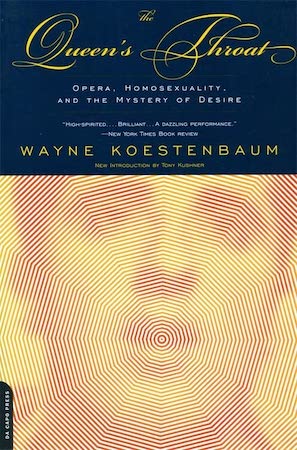
On the flap of Wayne Koestenbaum’s 1993 book The Queen’s Throat, Koestenbaum promotes the idea of an obvious connection. “Until now, silence has surrounded the long-observed affinity of gay men for opera.”
I close the book and put it back on my shelf, bewildered. What affinity? Who’s observing? As a gay man myself, I wonder where these “Opera Queens” exist, as Koestenbaum calls them. I ask my peers. My gay roommate prefers TikTok and techno to opera. I struggle to get his attention to watch most movies at home, so he firmly declines an opera invitation. I try to convince my boyfriend, Jon, that it would be a fun date idea, which he humors until he sees the price tag. He’s more interested in fantasy football than librettos. Based on my comprehensive study (N=2 white 25-year-old gay men living in NYC), I disagree with Koestenbaum. In reality, I react adversely to the idea of a monolithic gay desire that marketers can point to. To me it reeks of brands coming out of the woodwork to claim their rainbow dollars in June.
But that doesn’t mean I’m not intrigued. During undergrad, the queer writer Aisha Sabatini Sloane told me about “Papa Wayne” with reverence when I crashed her office hours, noting that he taught my favorite queer writer Maggie Nelson. Koestenbaum’s cultural criticism, most famously The Queen’s Throat, feels imbued with what BOMB called a “proclivity towards dandyism.” Susan Sontag called The Queen’s Throat a “brilliant book”. All of these overtures towards Koestenbaum as part of queer nonfiction’s canon meant I had to read him, making up for the heteronormative syllabi of my formal education. Reading has always been easy for me; going to the opera, and finding the money and desire to do so, intimidates me.
Lately, the book and opera as an art form, have been hunting me down. They track me like the assassin in Rigoletto, something I learn while googling classic plots as my own opera for dummies. I buy The Queen’s Throat at a bookstore but leave it stacked on my bookshelf underneath a watering can. Instead, I read Madame Bovaryfor a class. The hunt continues as in Part 2, Emma attends Lucia di Lammermoor, a tragic opera based on a romantic novel written by Sir Walter Scott, the same author that Flaubert implies results in Emma’s self-destructive quest for passion. Emma at least fits Koestenbaum’s declaration that “Opera has always suited those who have failed at love.” My professor, an accomplished novelist, asks the class if anyone has seen Lucia. The professor reacts with surprise when she hears that only one of us had seen any opera at all. Many of my classmates, a diverse group, will discuss in group texts after class that opera just belongs to another era and another social class, not us.
Going to the opera, and finding the money and desire to do so, intimidates me.
As we pack our bags when class ends my friend Erin confesses that she has seen the entire Ring cycle. The Ring cycle, I learn, takes 18 hours to sit through across four operas. My professor reacts with delight, and I stay silent. To me, sitting through 18 hours of singing in German sounds like the rings of Hell. But Erin dresses chicly and has cool tattoos, so I had to do what queerness has always asked of me: give it the ol’ college try.
I start with the book, pulling it Jenga-style from my stack. The Queen’s Throat is a queer investigation of Koestenbaum’s connection to opera in seven parts. They stretch from an investigation of diva culture to listening to opera at home, as Koestenbaum did growing up, to the act of singing itself and to a dialectic of the connection between music and words. There are times I notice my attention slipping (because of my relative disinterest) in the subject, not in Koestenbaum’s writing or what he finds arresting. Even when my interest wanes, I stick with Koestenbaum’s passion and his genuine sense of pleasure, which is so palpable, and almost, convincing.
Almost.
I resist, remaining not fully convinced that opera deserves my time and money. Certain highlights do reach me. When he writes “Opera queens must choose one diva”, I relate to how gay men now worship Real Housewife starlets (mine was Mary Cosby, now Meredith), pop divas (Tove Lo, now and forever), or Jennifer Coolidge on The White Lotus. I recognize the truth in his connections even if I don’t know enough about opera as a form. To judge that, I know I have to go myself. Fine.
I try to start in a position of least resistance. I decide I’ll go see The Hours, a new opera in English based on the book The Hours by the queer writer Michael Cunningham, about the queer writer Virginia Woolf and featuring a queer storyline on loss and longing. If any opera would speak to me, this would be it. I make my way to buy tickets online, only to discover they are over $200. I ask my boyfriend to call the Met for me and see if they have student tickets available, part of a program to make opera more accessible to my generation. I ask Jon because I’m afraid the box office workers will shame my cheapness in the face of Art with a capital a. Instead, they politely tell my boyfriend that they aren’t selling student tickets for The Hours because it’s too popular. Looking back, I question if my unwillingness to seem cheap reveals my overriding desire to not have to be cheap in the first place. I regress back to grade school Jack, just wanting to fit in.
I’m afraid the box office workers will shame my cheapness in the face of Art with a capital a.
Significantly deterred, I meander for a week or two in hopes that the prices will come down. Then I return to the website and find that someone hacked the Met’s website. Several days later, I see the tweet of another queer writer, the poet Jameson Fitzpatrick, which says “damn I can’t believe the met is still hacked.” Maybe it’s just not meant to be. Maybe opera isn’t for me. Maybe, this hack proves opera is an overpriced art form entrenched in the past, so much so that the Met can’t even handle a measly little cyber-attack. Besides, what would I even wear to it? I don’t have a tuxedo or a mink coat. I commit the crime of the categorization done on the book flap, lumping opera goers into a congruent blob of exclusionary gaudiness.
The quest to attend the opera and its incredulous cost reminds me of another misguided categorization, the idea that LGBTQ individuals are affluent. The Atlantic reported that 29% of LGBTQ individuals report food insecurity compared to 16% nationwide, but the myth of gay affluence persists even in the Supreme Court. Justice Scalia once said LGBTQ people had “high disposable income” and “disproportionate political power.”, which would make me laugh if it weren’t so terrifying to hear in our nation’s highest court. The poster child of the myth might as well be me, a young white cis-gendered man living in NYC. Like all myths, it reflects an illusion of truth, based on the frivolous spending that comes with Keeping Up with The Gay Joneses. This spending stems from a financial dysmorphia that I experience, lusting for Margiela pants to look cool at a gay nightlife event with ticket prices of $100. Having these places to express queer desire and community seems necessary even though I roll my eyes at the cost of the opera. In reality, as I have seen firsthand, these spaces feel even more exclusionary to my friends who don’t present as white cisgender gay men than the opera ever would.
The myth of gay affluence annoys me, but I don’t bear the brunt of the harm it causes. The harm exists in the fact that it whitewashes the lived realities of so much of our community. LGBTQ people of color, queer women, and transgender individuals live in poverty at much higher rates than their straight white cisgender counterparts or straight members of their own race. The media promotes wealthy married white gay men living in a DINK dreamland. It doesn’t show a trans woman of color trying to make ends meet to live in high-cost urban spaces with higher populations of LGBTQ individuals—and arguably tolerance—just to feel marginally safer in their skin.
The myth of gay affluence annoys me, but I don’t bear the brunt of the harm it causes.
But once again, Koestenbaum catches me off guard with his self-awareness, guiding me back on my journey. Even in 1993, Koestenbaum admits to opera’s declining relevance, and acknowledges the association of the art to privilege, “I am unhappy about opera’s circumscribed audience, its association with white privilege, but I do not feel that the only ethical response is to announce my love of opera.” Koestenbaum’s words meet me where I’m at across a thirty-year divide, and our shared queer identities help me understand retaining an appreciation for art forms even if we don’t fit within its targeted demographics or the form doesn’t fit with our perfect politics. I was engaging in gay presentism, described by the queer writer Colton Valentine, as thinking our queer present has progressed far beyond the generations before us, that we move towards an ever-liberated future. Koestenbaum reminds me of how much we already knew, how much I still can learn.
The Hours off the table due to cost, I settle for Rigoletto, the opera which I found in my quick google and is referenced in The Queen’s Throat. My mom, who has never been to an opera, recognizes the name, so I figure it must be somewhat of a classic. No student tickets are available for the night I want to go, but I buy Jon and myself an obscured view seat in the balcony box for $30 each. We’d spend the night craning our necks over the rails to spot Gilda on the stage-left corner but at least we wouldn’t break the bank. We decide to go a few days after Christmas, while we both have time off from work.
Admittedly, entering the Metropolitan Opera Hall is the best part. Spiral staircases crest up towards gold-leafed ceilings. Dazzling crystal firework-like chandeliers hang from the center, and their light shimmers and reflects like glitter on the photos everyone takes on the staircase. As opera virgins, Jon and I view this night as a special occasion, but everyone relishes in the opulence. The crowd acts as a chorus of incredible and varied fashion choices. An older woman in a floor-length fur coat cozies up to her dapper husband in a tuxedo before being asked to take the photo of a tall Black man, who dazzles in a screen-printed black and white suit, and his wife who looks electric in a hot pink ball gown. A German mother-daughter duo takes photos of one another wearing dresses paired with hiking boots. Two teenage boys wearing jeans and their college sweatshirts leap up the red-carpeted stairs two at a time.
All of it exudes glamor, and I revel in it. Jon and I rarely get a chance to look this nice together, dressed up in suits we wear maybe once a year. I’d chosen a black velvet jacket my dad handed down to me which I keep for annual work holiday parties, and which makes me feel like a movie star. We emulate our own diva moment, off-stage. I get pleasure from showing all the way out, play-acting as part of this fashionable set who goes to the opera. I wish I didn’t drool over fine garments and glamorous up-dos. I wish I didn’t adulate the grandeur of this jewelry box entrance, which steals the show from the theater itself. I feel I should know better, realizing it’s in part conditioned into me by capitalism and its hang-ups.But this game of dress-up evokes joy, even belonging. Like Koestenbaum, I don’t think the only ethical decision is to avoid these pleasures altogether. Pleasure doesn’t always make rational sense. For queer people, it rarely does.
I feel I should know better, realizing it’s in part conditioned into me by capitalism and its hang-ups.
Inside we tuck into our private box I may only be able to see half the stage, but it draws me into this historic form. I feel like Anna Karenina (before she gets slut-shamed at the opera.)
Inside the playbill, there is an ad for PrEP.
“I guess there must really be a lot of gays here,” I tell Jon.
As if their entrance was conducted, an older gay couple sits in the row below us. When they hear that Javier Camarena (a name that doesn’t register anything in me) would be filling in as the Duke, they gasp in conjoined excitement. Throughout the night I smile each time they yell “Brava!” to Gilda. The joy they experience trickles up. Though they remain strangers, I feel gratitude for opera as a form that can give someone such excitement. Ok Mr. Koestenbaum, you were right.
Another thing that Wayne gets right: though most of us can’t understand the words, we can project our own experiences onto the emotions in the notes. During the first act, I feel drowsy as the tension and world-building moves rather slowly, before I remember my favorite part of The Queen’s Throat, where Koestenbaum gives readers a “Pocket Guide to Queer Moments in Opera”. These moments don’t read as inherently queer (most are about heterosexual love), but rather Koestenbaum’s interpretations of their connection to queer experience. I try to do the same to invest myself more into the show.
Here is the straight-forward summary of Rigoletto: Rigoletto is a jester for a womanizing Duke. Rigoletto supports the Duke’s seductive antics to the dismay of the courtiers whose wives and daughters fall prey to the Duke. One courtier curses Rigoletto for it, and the rest will go further to kidnap his daughter, Gilda, for it. Gilda has been hidden inside Rigoletto’s house for months out of fatherly protectionary precautions, except she can go to church. Of course, Gilda catches the eye of the Duke at church, whose charm works on her before his courtiers kidnap her. Even after, Gilda stays in love with the Duke despite witnessing his womanizing. Rigoletto misguidedly takes out his anger on the Duke instead of the courtiers who mock him and kidnap his daughter, and the Duke just keeps playing his game.
She perfectly embodies for me the constrictions of the closet as she sings within the house that traps her.
Here is my queer-forward reading. As I watch Gilda sing trapped in her house, I stop paying attention to the English translation the Met provides. I don’t need it to understand Gilda’s longing to be permitted into the world, the desire of having and being had. She perfectly embodies for me the constrictions of the closet as she sings within the house that traps her, her voice transcending its boundary. I even relate to the fact that after she realizes the Duke’s caddishness, she remains in love. Rationality especially goes out the window for inexperienced lovers. In other scenes I relate to Rigoletto, who, borne of another station and suffering from physical ailments, remains the object of the courtiers’ contempt. He differs from them in intractable ways. Rigoletto’s anger towards the Duke feels justified when he fights against a power structure set up to crush him. The second and third acts particularly pick up, and not only because Jon and I spend $8 for a morsel of chocolate at intermission, in need of a brief sugar high. The queer reading helps me feel a unique connection to the art, the language, and the world that it turns out, I do know. The music of these acts also wows the crowd, even for someone without the technical knowledge to know what the conductors or singers are doing. I just know I like it.
After the show, I am left with more questions about my ability to connect than why Koestenbaum connects queerness to opera. Why am I drawn toward The Queen’s Throat? Why am I drawn to opera? Why must I name-drop all of these queer writers, as if I’m just part of the gang? Koestenbaum writes that queerness demands a “ceaseless work of recollection,” particularly for people like me who lacked queer role models growing up and now “must invent precedence and origin for their taste.” Many potential role models for my generation, including Koestenbaum’s peers, were taken from us by the AIDS epidemic. This includes my uncle, Randy. Instead, I must turn to the writers, and embark into the woods of their words to understand my desires, pleasures, politics, body. When I start to see the forest for the trees, I see the unruliness of its growth, the amorphous bodies of queer history and community. I love the word queer for the belief that it demands no end to this self-exploration. It grants me this communion with people whose desires may differ slightly from mine but are connected by being outside the norm. I am striving for Wagner’s connection of the aria and the recitative explanatory songs, what he called the “endless melody”, connecting individual to community, and pleasure to self-actualization.
Queerness allows me to project myself not only onto the opera, but through myriads of storylines across art forms.
When the don’t-call-me-queer David Sedaris and the decidedly-not-queer writer Pamela Paula (who has been criticized for many anti-trans articles) get promoted in The Times deriding the word queer, I have to laugh at the idea that people wouldn’t want to be part of something bigger, as large, and open as the soprano’s voice. Queerness allows me to project myself not only onto the opera, but through myriads of storylines across art forms imbued with longing and understanding identity.
I may reach in my projections like a diva does for the high note, but the term reminds me of the song La donna è mobile. At Rigoletto, I immediately recognize it despite never having listened to an opera song beforehand. I certainly didn’t know that its meaning would make me laugh out loud. Before Rigoletto’s premier, Verdi banned his tenor from evening whistling the tune outside of rehearsals. He had the prescience to know it would be a catchy tune, though I doubt he knew it would someday end up in a Doritos. Some opera purists dislike it being taken out of context, but there’s magic in how natural the tune feels regardless of the setting. Queerness carries that same melody, shifting between modes and identities, allowing many to recognize themselves in it.
As we leave in a shoal of opera goers spilling out into Lincoln Center, Jon leans over to tell me,
“I would do that again!”
Coming from someone who didn’t know if opera had a plot when we sat down in our booth, his reaction surprises me.
“I think so too,” I say.
After the opera, I do not transform into the kind of opera queen that Koestenbaum writes about. But I do gain a new understanding and appreciation for those queens, and more understanding and appreciation for the queenliness in me. Our passions, though different, soar like an aria, resonating with different notes but still part of the same melody. I realize I connect thanks to my passion for queer fiction and nonfiction that I project my own experience onto, as I did while reading The Queen’s Throat. In writing this, I hold my one note like a fermata, trying to take part in that song that queer writers like Koestenbaum have been singing since long before I was born.
I can’t remember the first time I went online, but I can remember the first time something happened online. It was during the summer holidays, and I was 12 years old. Seated at my software engineer uncle’s home computer—the first dial-up I’d ever experienced—I noticed little grey boxes popping up every so often to say, “Hello Sir”. With my heart beating as loudly as the pop-up tone, I nervously typed back into a few of them. To my delight, several conversations sprung forth. These mysterious strangers liked me! I felt tingly and joyful, and a little flirtatious. Though frustrated that they kept calling me Sir. I was a girl! Why would no one, seemingly either offline or online, recognize this?
I had no idea, of course, what MSN messenger was. Or that I was talking to young adults at the college where my uncle was a professor. And only many years down the line did I recognize how awkward this must have been for him (I took at least one conversation too far, resulting in the student typing a “fuck you” in return). All I knew was that a whole world had opened up before my eyes, and I would be lying if I said it hadn’t felt a tiny bit sexual.
Many people’s early experiences of the internet, particularly before smartphones brought the internet everywhere, were fueled by sparks of sexual desire—that’s often what made this new space exciting and full of possibility. Perhaps that’s because the internet’s own early experiences—including, sometimes, the foundations on which it was built—were sexual too.
In her book How Sex Changed the Internet and the Internet Changed Sex: An Unexpected History, Samantha Cole traces the entangled stories of sex and technology, revealing them to be inextricably linked. From early Bulletin Board Services to digital data collection to webcam technology, Cole explores how, “[l]ike the source code of all computing creation, eroticism is embedded everywhere in the…internet.” This history, however, has been erased by governments and internet corporations alike; and it’s present (and presence) is being actively stamped out by them too.
What might it mean to reclaim the knowledge that sex and internet technology are intimately linked? Cole deep dives this question, bringing surprising, delightful and sometimes difficult answers back up to the surface.
Richa Kaul Padte: I’d love to start by talking about porn addiction. Despite being totally unsubstantiated by data, it continues to be a prevalent fear and belief. When I was researching my own book on internet sex in South Asia, I found so many men were worried they were addicted to porn and masturbation—because they got themselves off once or twice a day (such a small number!). You talk abut these “high levels of shame [in]…self-proclaimed porn addicts,” but you also highlight a broader danger of the porn addiction myth: it’s used by men to justify violence against women. Could you talk a bit about this?
Samantha Cole: Porn addiction as a concept is such a late 20th- and 21st-century phenomenon. People didn’t know what to make of this incredibly powerful tool in their homes when the internet arrived. [This] combined with a moral panic about porn that had already been brewing for decades. The internet brought it to a head in porn addiction. To psychologists before the internet, getting out the old Playboy or keeping a smutty VHS collection was considered a victimless behavior. But once people could access it on the computer, and upload their own—or more scandalously yet, have long “cybersex” sessions with strangers on the computer—it became a social health concern.
The internet made porn and sex easier to access, and of course, some people struggle with that ease of access, even at the expense of their offline lives. But studies show that shame makes it so much worse in many cases. And I think that shame drives people to seek out help from the wrong places, like extremist or “men’s rights” forums. The internet’s ability to connect people is a double-edged sword: some people find acceptance for who they are, and others find rabbit holes of hate and shame. The outlet for that anger is too frequently violent acts toward women. There have been multiple mass shootings in the U.S. just in the last 10 years where the gunman blamed sex, porn, or sexual rejection for his actions. That’s such an unfair, and unfounded, scapegoat. To a less extreme but still important degree, we’re seeing legislation in the U.S. enacted now that blames porn addiction for every ill in society and forces huge adult sites to put up more barriers to entry. I think that’s a very scary trend that will probably get worse if people don’t start pushing back.
I don’t want to discount the real struggles that people who feel out of control in their behaviors go through. But I think so much of it is contextual. Like you said, there are people who really feel they’re hopelessly “addicted” to porn or masturbating, when in reality, they have pretty normal sex lives. Somewhere along the way, they’ve internalized this idea—which in Western society often comes from a fundamentalist or evangelical Christian tradition, even if they don’t identify that way—that they should be ashamed of their sexuality.
RKP: It’s my dream to own an internet-connected sex toy, but I’m absolutely terrified of its possible consequences. Not only are Indian culture and law deeply intolerant of sex (thanks, colonialism), but the current regime has swerved into violent fascism. What does the data generated and stored by such sex toys mean for people living under sexually-intolerant regimes? Not to mention that any government could, in theory (and practice!), turn intolerant towards marginalized communities. The rise of homophobic governments in some Eastern European countries—or the future of queer rights in Italy—immediately comes to mind for me.
SC: People have had this desire for long-distance tech-enabled sex for such a long time, way before the internet. In the 1970’s, an inventor filed a patent for an “audiotactile stimulation and communications system” and called it the Radio Dildo, and there’s this quote from Howard Reingold that I love from his essay Mondo 2000 where he predicts, “You will not use erotic telepresence technology in order to have sex with machines. Twenty years from now, when portable telediddlers are ubiquitous, people will use them to have sexual experiences with other people, at a distance, in combinations and configurations undreamt of by precybernetic voluptuaries.” Sex across distance is something we’ve always wanted out of the internet. People roleplaying and “cybering” in MUDs, for example, were breaking that boundary in interesting, creative ways.
Fast forward 30+ years and the internet has made that more realistic—more people can order a sex toy online discreetly and safely, and a lot of those toys make the dream of distance-connected sex real. But of course that comes with some risk. The concerns about data privacy and our sex lives are real! A lot of sex toy makers skate by without strong regulations because, at least in the U.S., they’re considered “novelty” items and are made by companies that are entering the game for the first time, without a lot of experience, to try to cash in on a trend. I don’t have a ton of expertise in how this could impact marginalized people in places where queer rights are under attack, but I hope more sex toy makers take privacy policies and data storage seriously for their sake. The data privacy leakage in sexual wellness apps as it relates to Roe v. Wade here in the States comes to mind; messy privacy practices can have serious consequences.
RKP:So many (sexual) revolutions contain paradoxes, and “the camgirl revolution” is no different. Camsites allow sex workers a greater degree of safety, not only from clients (who sometimes respond to sex workers setting boundaries with violence), but also from physical threats by police and sex work abolitionists. You write: “But it’s also had a splintering effect on groups that formerly relied on close, trusting relationships with other workers”—relationships that were based in brick-and-mortar shared spaces.
To what extent have the online community forums you explore mitigated the losses of physical community? I realize there’s no cut-and-dried way to weigh this up (when really what’s needed is a societal overhaul around sex work!), but I’m still curious as to how offline vs online communities for sex workers played out in the course of your research.
The internet’s ability to connect people is a double-edged sword: some people find acceptance for who they are, and others find rabbit holes of hate and shame.
The arrival of the internet changed so much for sex workers and safety. For this book I talked to people like Kristen DiAngelo, who has seen this massive evolution in the internet and sex work: she told me about a time when working in brothels or doing other in-person work came with an expectation of physical risk that people working primarily online today sometimes can’t relate to on the same level. Being able to work independently, post your own ads, get your own clients, and vet those clients online before meeting them in person was a revolutionary shift that came with the internet. But that doesn’t mean online-only workers, like OnlyFans or Pornhub models, don’t also face risks. They’re up against things like doxxing, harassment, deplatforming, censorship, the list goes on. And this is while working 50 different roles: social media manager, booking agent, marketer, videographer, accountant, on-camera talent. It’s endless, exhausting work. Having a community of care is so important.
There are definitely unique safety concerns for workers online and off, which is why it’s important to remind people who might not be familiar with these nuances that sex work isn’t a monolith: cam models face different challenges than escorts, than dominatrixes, than strippers, and while each of these occupations have a lot of crossover (someone who dances in a club might also have an OnlyFans or see clients, for example) they’re also made up of individuals. Worker solidarity is so crucial within any workplace, but also across professions, and it’s a huge way that organizing and labor justice happens.
But when you have platforms that don’t allow people to talk about their work—like Facebook and Instagram for example, which will ban you for talking about sex work, and Twitter, which frequently deplatforms and downranks content from sex workers—it gets really, really hard to share safety information and harm reduction resources, let alone organize in a meaningful way.
But they do it! Sex workers are some of the most resilient and creative people out there. They shouldn’t be forced to constantly migrate from platform to platform online, though, and lose peer communities (not to mention clients and fan bases, which = income) along the way.
I think a lot of non-sex workers got their first taste of this recently when it seemed like Elon Musk might actually destroy Twitter. People panicked, closed their accounts preemptively, moved to other, less popular sites like Mastodon, and begged followers to find them elsewhere if Twitter went down. That’s reality for online sex workers every day they log on. It’s that precarious all the time, for a lot of people. It can be taken away at any moment.
You do such a fantastic job of exploring and explaining deepfakes, and it’s incredible how you, as a journalist, were leading the reporting on this from the very outset! I was especially interested in how debates around deepfakes largely center on “politics, global powers, and hypothetical three-dimensional chess games about whether deepfakes of politicians could start wars.” But, as you go on to say, 96 percent of all deepfakesare still “nonconsensual, face-swapped porn” — ie, sexual violations of (predominantly) women. Given that absolutely overwhelming percentage point, how do we urgently shift the conversation to “consent, bodily autonomy, and sexuality online”? Why is there such a resistance to doing so?
In a lot of cases, people just want to feel seen, so they try to get as close to that expression as they can within the limits of being on the internet.
With AI-generated art, text, and voice getting better than ever these days, and all of the pushback from AI ethicists and artists who object to work being used without their consent, I think this is a topic we’ll keep seeing. But for reasons that have to do with stigma and shame (and all of the censorship we just talked about), sexuality still gets left behind in those conversations. I think it’s at the heart of a lot of what we’re dealing with, with deepfakes and beyond: if you can grasp the concept of consent online and the ways bodily autonomy can extend beyond the corporeal, untangling these ethical issues gets easier.
Even when people talk or think about deepfakes used to make nonconsensual porn, what often gets overlooked is the theft of the performer’s work whose body is in the videos. But socially, we’ve internalized this very problematic idea of “asking for it”: that if they put their nudes online, they themselves must be for public consumption and manipulation, and must deal with the consequences without complaining. We saw this happen long before deepfakes, like with Pamela Anderson and Tommy Lee’s leaked sex tapes online (a story that recently got made into a popular TV show, allegedly without their consent — we never learn!). So it’s not a new problem, and that makes it even more frustrating, to see something like nonconsensual, sexual deepfakes continue to be an ethical quandary for people. The resistance I think comes from not dealing with basic bodily autonomy, misunderstandings about consent, and deep stigma against sex work and sexuality.
RKP: The internet often seems to me to be powered by a deep desire for authenticity. Jennifer Ringley’s 24-hour webcam feed from her dorm room, set up in 1996, was perhaps the first instance of “everyday life on display”. Today, sites like Pornhub maintain an amateurish look (despite being massively wealthy) to hold “on to [the] allure of homemade ‘authenticity’.” And it’s not just sex—even if sex was leading the way. Instagram’s massive continuing success is based on precisely this: the everyday on display, the veneer of the authentic. Why are we so enchanted by the “real”, even when we know that on sites like Pornhub and Instagram, what we’re seeing isn’t reality at all?
SC: Our craving for connection and authenticity while hesitating to be fully authentic online—whatever that may mean—is endlessly interesting to me. The popularity of the app BeReal comes to mind, too. I don’t know anyone who is really “real” on that app, but I love it. Of course, for a lot of people, being fully yourself online can be dangerous. But in a lot of cases, people just want to feel seen, so they try to get as close to that expression as they can within the limits of being on the internet.
As for adult sites and social media like Instagram, there’s a certain suspension of belief that comes with consuming media online, that’s risen from this “content creator” industry of the last decade or so. That includes sex. For example, sex workers sell a fantasy, but they also often provide a meaningful connection with their clients and audience as part of that service. I went long on this idea of authenticity in cam modeling specifically a few years ago, and found that while live streamers like Ringley and camgirls delving into more explicit streaming on the internet proved the demand for “uncensored” content (at a time when The Real World and reality TV was just getting going), performers working online today continue that tradition in a similar spirit. People love an unscripted dildo slip, but they also show up just to talk to the model or others in the audience.
There’s been a lot of criticism of the internet as a force for disengagement or dislocation, like we’re losing parts of ourselves the more online we become. And we do miss a lot of basic human social cues online—nodding, leaning forward, crossing arms, even nearly imperceptible things like a quicker heart rate or faster blinking can help us communicate in-person, in real time. But we strengthen other ties. If [people] are willing to be authentic in a vulnerable way with each other online, maybe they find other[s] like them and feel less alone. That goes a long way to dispel the shame and anger we talked about earlier. Even if they’re into, like, fart porn, or self-suck, or cosplaying as sexy airplanes. Even with all the social media monopolies and censorship, the internet can still be a wonderfully weird place if you know where to look.
For now, at least, the immigrant narrative endures as the most legible depiction of the Asian American experience. You’ve heard this one before: the first generation struggles (but mostly successfully), the next one triumphs (but mostly ambivalently, with not a few pungent lunchbox casualties). On TV and in our book clubs, we now have what can feel like such an embarrassment of this genre of Asian American storytelling that we are right to grow a little weary; it feels at times like we’ve been assimilating forever. Isn’t there more to the story?
Still, I find these narratives worthy of both our examination and a certain deal of luxuriation. If we are to understand Asian American culture as a complex, often self-contradictory project now reaching a kind of coming-of-age of its own over the past few decades, one day, it will make sense why we were first so preoccupied with these origin stories. Visibility is a tricky thing to value—you can roll your eyes at it, confuse your personal ascent with it, trot it out in boardrooms for a variety of suspect agendas—but you can’t ignore its role as a lightning rod for our sense of connective survival.
Central Places is a novel about a young woman on a return visit home to her Chinese immigrant family in midwestern America, where isolation is both a fact of life and a self-protective measure. It’s a story about the divide that exists in a first-generation family, but also between the life you might be given and the life you think you want. The following 12 books have been instrumental to this novel’s construction; I’m listing them here roughly in order of thematic life stages at play. Of course, this list leans heavily upon my personal biases toward Chinese characters, New Yorkian settings, mommy issues galore, and the general concerns of any unmarried woman considering how best to shape the chosen family to come. I hope you find them as much of a lifeline as I have.
Across seven interlinking stories of girlhood set in Flushing, New York, in the ’90s, Zhang shines an industrial-grade UV light on all of those weird parts of growing up that you’d rather not think about. When I first read Sour Heart, it felt like letting myself gorge on something deliciously rancid. Zhang gets the specificity of certain relationships just right: the rivalries between the other ABC (American-born Chinese) girls you’re supposed to identify with, the ambivalence toward reappearing grandparents, the retroactive guilt unearthed, years later, of letting your little brother down.
Wang’s memoir of the years her family spent living undocumented in Chinatown, New York, is an astounding portrayal of a childhood assembled amidst the most precarious circumstances imaginable. Honestly, it’s a painful book to read, particularly for the attentiveness with which Wang slices and separates each disappointment that her young self experienced as a fact of life. But there’s something enormously healing in the opportunity for vicarious excavation that Beautiful Country offers; to review the chaos of immigration and poverty through a child’s eyes is to consider perhaps more gently the general state of confusion that many of us have held within ourselves all these years, too.
The main character of Andreades’ lyrical ode to Queens is not one single person, but a royal we that fashions together a kind of glorious sisterhood unsung. Across the novel, we follow a cohort of girls hailing from a mix of outer borough Pakistani, Guyanese, Haitian, Filipino, and Chinese families as they navigate the requisite stages of brown girl teenagery: the classroom microaggressions, the college admissions, that first drink, those alluring flirtations from the so-called other side of the track. Relayed with exquisitely vernacular girltalk and call-outs to the take-out joints/discount stores/subway lines that make a life, Brown Girls is a perfect snapshot of coming up in one beautifully specific time and place.
From this collection of Californian Cambodian American stories, the one that’s stuck with me the most is “Human Development,” where a disaffected Stanford grad strikes up a situationship with an older, richer Grindr match who is preoccupied with their shared roots. This being set in Silicon Valley, the older guy, Ben, has an idea for an app that would boil down the ever-present minority’s challenge of finding one’s people into a codeable, swipeable solution. Uber, but for your place in the diaspora! This is what So’s stories are so good at in general: pitting the illusion of the clean, autonomous choices of an educated second-gen adulthood against the knotted tapestry that’s impossible from which to ever pull oneself entirely free.
I’m a sucker for intergenerational stories, and Lahiri’s rather comprehensive yarn following a Bengali couple’s immigration to Cambridge, Massachusetts, through to their son’s coming of age is deservedly one of the greats (though I recommend a quick brushing up on the Russian author Nikolai Gogol’s Wikipedia page beforehand if you’re reading for the first time and want the full experience). Of course The Namesake is a story about family, but I love how Lahiri particularly hones in on the mechanism of marriage— how it can both hold everything you know together while also offering a way out.
Speaking of marriage: in Wang’s wonderfully wry novel, a proposal of engagement weighs heavily on a young grad student as she considers whether or not to follow through with the predominant arc of her life toward fulfilling expectations. Sciencey metaphors about blowing things up abound, but Wang writes the narrator’s inner monologuing almost like these perfect little punchlines. Who knew quarter-life crises could be so funny?
Inextricable from the question of identity is the matter of sex: who are you attracted to and why? What myths have you been told about your desires—and which beliefs do you still carry? This essay collection mulls over the overlapping of internalized colonialism, exoticization, and masculinity against the reality of dating apps and DTRs. Ortile renders his personal encounters with the white male gaze and his ensuing consciousness of self in such earnest prose that you yourself will feel every fiber of those early twenties come rushing back, too.
Fans of Zauner’s musical talent by way of Japanese Breakfast are no stranger to the artistic irony—or perhaps transcendence is the word here—of the musician’s professional breakthrough following the death of her mother. Crying in H-Mart tells the full story of Zauner’s complicated relationship with her Korean mother using the full extent of a songwriter’s prowess for evocative imagery: I’ll be thinking about that scene where Zauner’s mother breaks in those cowboy boots for her by wearing them around the house for a long, long time.
The global pandemic at the center of Ma’s literary version of a zombie movie is one that inflicts upon its victims some seriously deadly consequences of too much nostalgia. New York is caving in from the fictional Shen Fever, but for our protagonist, Candace Chen, her world kind of already ended with the recent passing of her parents. So Candace divides her time in the apocalyptic wreckage between tending to her pointless corporate job and trying to document the strangeness of being (or at least feeling like you are) one of the last people left. Come for Ma’s unsettling pre-COVID foresight, stay for the plentiful uneasy reconciliations with the past.
I always knew I was going to love Mathews’ novel about a cynical young woman living in Milwaukee juggling millennial post-grad woes and international family obligations, but this book especially dazzles as a sociopolitical parable for the post-Recession generation. The immigrant narrative is inevitably one about filial piety, but Mathews pushes both her protagonist, Sneha, as well as the reader to have greater ambitions about the kind of bonds we could form with our communities at large. Sneha and Tig’s friendship is particularly beautifully drawn, warts and all; would that we all regularly found such extraordinary models of connection in life and in fiction.
There’s a reason this book has been everywhere, and my theory is that, particularly amongst Azn girl circles, Minor Feelings offers a litmus test for the shape of your own identity politics. It’s part memoir, part cultural criticism, and packed with observations like “Does any Asian American narrative always have to return to the mother?” or the shockingly articulated thought that all our faces look “like God started pinching out your features and then abandoned you.” You’re not not going to have a reaction! More broadly, I also found Minor Feelings helpful in situating oneself within the broader history of Asian American artistry, particularly with the life and work of Theresa Hak Kyung Cha. You always need to know who came before…
…which brings us to the 1989 novel that, in my view, endures as one of the original texts of the mainstream Asian American immigrant narrative tradition: The Joy Luck Club. When I first read this book in college, I was too distracted to keep track of a storyline that involved four sets of Chinese mothers and daughters; recently, I sat down with it again and deeply enjoyed the read. On one hand, it’s kind of fascinating to realize how tropey so much of the book feels now—it’s basically portrait of a Tiger Mom, complete with the childhood chess team pressures and phonetically spelled pinyin to boot—but the heart of it holds up. I got my mom to start reading it over the holidays, with a pro tip (Amy Tan, I’m sorry if this is sacrilege): instead of reading each chapter in order, start with the first mother-daughter pair’s stories and finish those before working your way to the next one. That’ll help keep all the backstories straight, although I can’t help but wonder if maybe that’s the point—that all these mothers and daughters are supposed to blur together after a while.
DON’T MISS OUT
Sign up for our newsletter to get submission announcements and stay on top of our best work.
YOUR INBOX IS LIT
Enjoy absorbing fiction from Recommended Reading on Mondays, strange, diverting work from The Commuter on Wednesdays, and a roundup of our best work of the week on Fridays. Personalize your subscription preferences here.