We Need To Talk About Professional Jealousy

“I never thought I’d be one of those people,” she said.

T Kira Madden and I were sitting in the private room of a fancy strip-mall restaurant in Albany, New York, and I was eating a very expensive salad. Earlier that afternoon, we had given a reading at a local bookstore with T Kira’s then-fiancé (now wife) H. The reading was part of the book tour promoting T Kira’s memoir Long Live the Tribe of Fatherless Girls. It had been a kindness on T Kira’s part, inviting me to read alongside her and H. The other writers who would be joining her later on the tour were far more advanced in their careers than I was at that time. But it was not an altogether surprising kindness. T Kira has always been one of the most generous literary stewards I know.

After the reading, T Kira invited me to join their families for dinner. Another kindness. I sat between T Kira and H., and we caught up in the way of friends who don’t see one another often enough. Eventually the conversation turned to the subject that had occasioned our reunion. As far as I could tell, Long Live the Tribe of Fatherless Girls was already a success. It had been reviewed widely and well, and had dominated my social media feed since its release. But when I asked T Kira how she was feeling about the book’s debut, she hesitated.

“I never thought I’d be one of those people,” she said.

“Which people?” I asked.

T Kira paused.

“I never thought I’d be one of those people tracking their book sales,” she said. “I never thought I’d be comparing my sales and reviews to other people’s. I never thought I’d be—”

She didn’t finish the sentence, but I knew where it was headed.

“Jealous,” I said.

T Kira looked down. Her long hair hung over her soup bowl.

I chuckled.

“Oh, do I have a story for you,” I said.


Querying agents is a very specific flavor of hell, and it was comforting to feel like I wasn’t alone in the process.

I first met C Pam Zhang at a writers’ conference in Vermont in 2017, six months before my reading with T Kira. I had edited a story of Pam’s for a literary journal earlier that year, and I was excited when I learned we’d both be attending the conference that summer. We even conspired to enroll in the same fiction workshop. Pam is a brilliant writer, and her sly and observant sense of humor immediately endeared me to her. What’s more, we were at similar places in our careers then, both querying agents for manuscripts, Pam for her novel How Much of These Hills is Gold, me for a collection of short stories. Querying agents is a very specific flavor of hell, and it was comforting to feel like I wasn’t alone in the process, to know that Pam and I were in the same boat. Then, a month after the conference, Pam signed with an agent and sold her novel, while the prospects of representation for my own manuscript had all but evaporated. A month later, we applied for the same fellowship. Pam got it; I did not. A month after that, a pedigreed literary journal rejected one of my stories and shortly thereafter accepted a story of Pam’s. As her friend and as an editor who had supported her work, I was happy for Pam—I genuinely was—but tangled up in that feeling was something else, something that complicated it. It felt as though Pam had made it to dry land, and now there I was, alone in our boat, trying my best to row one-oared.

What is this awful feeling? I wondered.

Oh fuck, I realized. I’m jealous.

When I told T Kira this story, she nodded.

“But here’s the thing. It wasn’t jealousy,” I told her. “It was something very different.”


In Bird by Bird: Some Instructions on Writing and Life, Anne Lamott writes, “Jealousy is one of the occupational hazards of being a writer, and the most degrading.” The first time I read that sentence, my immediate reaction was relief. Oh, thank God, I thought. I’m not alone in this experience. Professional jealousy does often feel like an occupational hazard for writers, but it has been my experience that as a community we don’t really talk about it. Sure, we may voice it jokingly—“I’m so jealous!”—or indirectly, by making some passive-aggressive remark about another writer’s success, but honest and vulnerable conversations about the experience of professional jealousy generally seem to be lacking. Among writers, the subject feels almost taboo. At least, that has been my experience.

I do want to say that what we popularly refer to as “professional jealousy” might more accurately be termed “professional envy” by clinicians and emotions researchers. The distinction being that jealousy arises from the fear of losing something we have to another person, whereas envy stems from the desire for something another person has that we lack. I believe strongly in the importance of emotional literacy and granularity—the ability to accurately name and distinguish between emotions—but culturally we use the term “professional jealousy,” not “professional envy,” and in my conversation with T Kira jealousy was the word we used, so for the purposes of this essay, I’ll let it stand.

There is a degrading quality to professional jealousy because it often edges dangerously close to resentment.

Anne Lamott is not wrong. For me, there is a degrading quality to professional jealousy because it often edges dangerously close to resentment, a kind of begrudging another person their successes. This is especially discomfiting when the person in question is one’s colleague and friend. As I began to interrogate my relationship with professional jealousy, and specifically this situation with Pam, my thinking on the subject evolved. I realized that what I had framed to myself as jealousy was actually, as I told T Kira, something else entirely. Because I didn’t begrudge Pam her success; that was why that framing felt off. But an unfortunate byproduct of our reluctance to talk about professional jealousy openly and honestly, to instead relegate it to this weird cone of silence, is that it can lead to a kind of mistaken identity. Once I began to investigate exactly what I was feeling, I could see quite clearly that it was not jealousy.

It was disappointment.


I’ve been sober and in twelve-step recovery for more than fourteen years. I often joke that in the early years of my sobriety I very much wanted to be the valedictorian of recovery. I also spent a number of years teaching mindfulness practice, so trust me when I say I know myself well enough to understand that I still have a lot of ego invested in being perceived as good. And when I say good, I mean spiritual. I also know that disappointment remains one of the most difficult emotions for me to reckon with, both personally and professionally.

I hate disappointment. 

Disappointment feels simultaneously self-indulgent and lacking in gratitude for any measure of success I’ve already achieved. And when I feel disappointed, I find myself telling the story that the real issue is an overestimation of myself or the value of my work. Disappointment forces me to recognize that I really wanted something for myself, that I thought my work might be worthy of recognition, and within that framework (a framework my mind has designed for itself) desire begins to feel threatening, because to want something is to risk disappointment. And this is where my egoic mind becomes quite cunning.

My ego tells me there’s a clear solution to jealousy: cure it with gratitude and humility.

Because I hate feeling disappointed, because desire feels dangerous, my mind tells me that what I am feeling is not disappointment. It tells me I’m jealous. And the reason for this is actually quite simple, though the logic, I’ll admit, is a bit acrobatic, as so often is the case where the ego is concerned. The story I tell myself is that spiritual people do not get jealous. Spiritual people do not begrudge other people their success. The benefit of this mode of thinking is that my ego tells me there’s a clear solution to jealousy: cure it with gratitude and humility. (See: good, spiritual human being.) I then try to out-spiritualize my jealousy as I would any other character defect, and the whole process becomes a distraction from what I’m actually feeling. By engaging with it from a place of self-improvement, I get to avoid what would otherwise be an uncomfortable or painful experience, an experience I view as a threat to my well-being. I get to spiritually bypass disappointment.


When I explain this relationship between professional jealousy and disappointment, this is usually the juncture at which I am met with some resistance from those who would defend professional jealousy as an asset. They bring up the concept of literary nemeses and the benefits of competition. My response to these rejoinders is usually the same. First, I tell them that personally I choose to leave professional jealousy to those better equipped to handle it. If it’s not problematic for them, then they don’t have a problem. But I also question the designation. If another writer’s work or success—regardless of whether I care for that writer and their work or not—spurs me to devote myself more intensely to my own writing, or to strive toward excellence, then a more accurate designation for that experience might be motivation, or ambition, or—perhaps reluctantly—inspiration. Again, this is where emotional literacy and granularity are important.

For me the pitfalls of professional jealousy are too numerous. The most obvious is that it makes another human being the target of my disappointment. I tell myself that if I had what they had, I would not feel how I feel, and it doesn’t take long for that story to harden into something like resentment. I begin to blame the other person for what I’m feeling, often unconsciously. And while that might offer some temporary relief for my ego, if I’ve learned anything in my years of recovery, it’s that when I resent another person, I am the one who suffers. Which brings me back to professional jealousy as a tactic of avoidance.

When I live in the belief that if I had what another person has, I wouldn’t feel the way I feel, I am living in a fantasy, and when I live in a fantasy there is no one here—in reality—to tend to my feelings. Which, of course, is the whole point: to avoid feeling disappointed. Only now I’ve dragged another person into the pit with me, whether or not they know it. And, let’s be honest, nine times out of ten, they do not. So the only person suffering is me.

The simple answer is that disappointment doesn’t feel good.

But why this insistence on avoiding disappointment? What is it about that experience that prompts my mind to tell me jealousy would be the preferable option? The simple answer is that disappointment doesn’t feel good. The more complicated answer is that the only way through it is to feel it.


That night at the restaurant I told T Kira that four months after I’d met Pam my boyfriend had gone missing. We had met in recovery two years prior and had been dating for a little over a year. It was three days before Christmas, and he was supposed to fly into my hometown from the Southwest to spend the holiday with my family. Instead he went missing. By then I’d been sober for nine years and had been around long enough to know that when people in recovery go missing it usually means one of two things: that they’ve relapsed and are out using, or that they’re dead. After I received the news of his disappearance, I called my friend Molly, who’s one of my oldest and dearest friends in recovery, and told her what happened.

“I don’t know what to do,” I said.

“Why don’t you come over here,” she suggested.

We stood on the front porch of her house while I smoked a cigarette, the snow falling around us.

“How are you doing?” she asked.

“Well,” I said, and I gestured to my chest, where I’ve learned I carry most of my emotions, “I recognize that there’s some rage here. But I also feel totally fine, and I’m trying to figure out if this is radical acceptance or dissociation.”

Molly looked at me. “Oh,” she said, “I think you are a highly dissociated person.”

This was neither the response I had hoped for nor expected to hear.

“Really?” I said. “I feel like I usually have such a clear understanding of my emotional landscape.” 

“Yes,” she said. “But understanding is not feeling, Benjamin. Emotions are a physiological experience. We experience them in the body.”

It was a helpful and important reminder.

It’s discouraging to see the thing we want, to be so close to it we can almost touch it, and then to be told it isn’t for us.

In the weeks that followed, I began to wonder what role my resistance to feeling my feelings was playing in my situation with Pam. I realized that for someone like me—someone who is inclined to live from the neck up, to filter my emotions through the lens of my thinking—disappointment is a particularly difficult experience precisely because it requires me to get out of my head and into my body. Anyone who has ever witnessed a child throwing a tantrum in the grocery aisle understands that disappointment is a physically uncomfortable experience. It’s discouraging to see the thing we want, to be so close to it we can almost touch it, and then to be told it isn’t for us, not yet, maybe never. It resonates in the body.

But I think most parents will tell you that if you stay with that child and don’t try to cajole them out of their feelings, eventually the tantrum will pass—though this approach is often inconvenient and usually takes longer than we would like.


This all begs the obvious question: How? How do we feel disappointment without avoiding it or offloading it onto someone else? Without giving in to the story about how we’ve once again overestimated ourselves or the value of our work? Without perceiving disappointment—and, by extension, desire—as a threat to our well-being? To loosely quote Pema Chödrön, we have to stop stepping over ourselves like we’re not even there. In my experience, this has required three things.

First, I have to accurately identify my disappointment. Disappointment isn’t self-indulgence or a lack of gratitude; it isn’t a failure of character or a threat to my well-being. It is the natural byproduct of wanting something that has not come to fruition. To desire is to make ourselves vulnerable; to come up empty-handed hurts.

Then I need to support the body that houses that disappointment.

Despite having taught body-based mindfulness practice to hundreds of people and having done my fair share of somatic trauma work, it is still surprisingly easy for me to forget that when I am struggling emotionally I need to take care of my body in the same ways I might if I was sick or injured. That’s why Molly’s reminder about emotions being a physiological experience was so helpful. The basic tenets of self-care apply as much to my emotional experience as they do to my physical experience.

The areas I turn my attention to are rest, nutrition, and movement. I ask myself: Am I sleeping enough, regularly enough? Am I eating enough, regularly enough? Is the food I’m feeding myself nourishing my body? Am I allowing my disappointment to find its expression physically? Sometimes this looks like that child-in-the-grocery-store’s tantrum: a lot of stomping and shouting and crying (though personally I prefer to do these alone in my car). Sometimes it involves a walk or a workout or a solo dance party in my kitchen. Other times it means sitting in child’s pose for fifteen minutes or a couple of rounds of 4-7-8 breathing. Whatever I need to do to stay in my body, I do it, so that I can feel my feelings.

I have to share my disappointment with another person. I tell someone about it, without apology, justification, or explanation.

Lastly, I have to share my disappointment with another person. I tell someone about it, without apology, justification, or explanation, which helps me circumnavigate my tendency to shame myself for what I’m feeling or misidentify it as jealousy and offload it onto somebody else. This has required me to turn a discerning eye to my community and find the person who will be able to hold space for my disappointment without trying to absolve me of it (“Don’t be sad! You’re a great writer!”) or subtly shame me into feeling different (“But you just got that big grant! Focus on that!”). Feelings do not want to be fixed; they want to be felt.

In the months following our conversation, T Kira and I began texting our disappointments to each other:

A hard NO from Yaddo. Man, this disappointment REALLY stings. 

Every day at the airport I rush to the bookstore or newsstand and search for my book (a lifelong dream) and…DISAPPOINTMENT!

Sharing my disappointment doesn’t solve it—primarily because disappointment doesn’t need to be solved—but it does help me feel less alone in the feeling, and I have found great comfort in that.

I no longer believe that professional jealousy is an occupational hazard for writers, but I do believe disappointment is one—at least in that disappointment is a hazard of the human occupation, of being a human having a human experience. I certainly don’t do this practice perfectly, but these days I am willing to befriend my disappointment. To stop stepping over it like it’s not even there.

7 City Novels in Which Real Estate and Urban Planning Are the Heroes and Villains

From Gothic castles and country manors to idyllic cottages and childhood homes, houses in literature have helped evoke atmosphere, shape characters’ personalities, and change their lives. It’s easy to recall famous literary houses. Pemberley, Gatsby’s mansion, Howard’s End, Green Gables, the little house on the prairie, and other beloved homes are sometimes better remembered than the people who lived in them. But in the late 20th century, writers like JG Ballard moved away from the romantic, nostalgia-inducing houses to the type of real estate that characterizes modern cities. High-rises and apartment blocks began to alter the literary skyline. Contemporary novels set in large, crowded cities around the world can hardly ignore the features and effects of urban—and suburban—planning. Issues such as gentrification, displacement, and economic inequality form the backdrop to stories of individuals facing change as they are torn between past and future, tradition and modernization. In these novels, the city, with all its contradictions, is often the central character. 

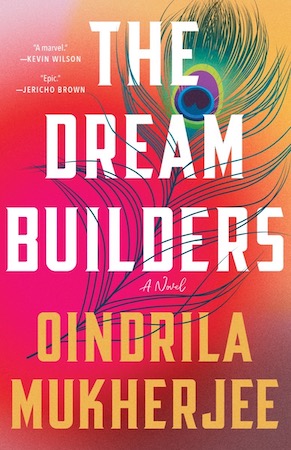
My debut novel The Dream Builders, set in a fictional city in India, follows the lives of ten different characters over the course of a single scorching summer. Hrishipur is known for its real estate developments and is dotted with upscale malls, luxury hotels, gleaming office buildings, and gated high-rise communities. Among the many constructions in various stages of completion, is a new one that is the talk of the town—Trump Towers. This particular property elicits different emotions from different people —desire, envy, wrath. At first glance, the privileged, upwardly mobile residents of Hrishipur are cocooned from the troubles plaguing the rest of the country. But they are not the only ones living there. It is the invisible working class that keeps the city functional. The relentless pursuit of material wealth and modernization has only widened the chasm between the haves and the have nots. But even as tensions rise, it becomes clear that all the characters have a few things in common. They are all keeping secrets. They all want things they cannot have. And ultimately, they are all trying to survive in this rapidly changing world.

The seven novels listed below are set in seven different cities of the world. I did not want to repeat a city (or even a country.) However, this means that I was able to include only one book written by a woman. One of the discoveries I made while working on this list is that there appear to be relatively few novels by women that deal with urban design and real estate development. As it happens, real estate developers portrayed in novels almost always tend to be male. This makes me wonder about who is drawn to write about the subject matter and why. I hope this list becomes more gender inclusive in the future. 

Mumbai: Last Man in Tower by Aravinda Adiga

In his second novel, the Booker Prize winning author once again takes on class divisions in contemporary India. The residents of Vishram Society, a venerable old apartment complex in a middle-class suburb of Mumbai, are suddenly confronted with an unexpected offer. Dharmen Shah, a powerful self-made real estate developer, offers to buy them out so he can demolish the crumbling structure to make way for the luxury high-rise of his dreams: the Shanghai. One by one we learn of the lives and struggles of the residents who have, until now, cohabited peacefully. Most of them agree to sell their flats for the fortune that is guaranteed to improve their lives. But a handful resist, including the retired schoolteacher, Masterji, who cherishes the memories of his late wife and daughter in the flat where he has lived for over three decades. But in this world of ruthless builders and redevelopment schemes, is resistance even possible? 

The clock ticks for both Shah whose health is deteriorating fast, and for the residents of Vishram who must yield before October 3 or forever relinquish their dreams of a better life. The tensions between the neighbors rise, with loyalties and old friendships being put to the test. As the deadline looms and pressure mounts from Shah and his sinister associates, Masterji is left alone to make up his mind, in a world that has grown increasingly hostile. In this grittily realistic book, every character is human, even when they do monstrous things. In the backdrop is the maelstrom that is Mumbai. Where there are few degrees of separation between mafia, businessmen, movie producers, law enforcement officials, and politicians. Where everyone wants something, where everything can be bought. Or can it? 

Instanbul: A Strangeness in My Mind by Orhan Pamuk, translated by Ekin Oklap

No one writes about contemporary city life better than Pamuk. In this novel, young Mevlut Karatas moves from his village to Istanbul to help his father sell yogurt by day and boza, a traditional Turkish drink, by night. In the city, the villagers occupy lands illegally and hastily erect houses overnight to prevent the government from seizing them. In a city where success is measured by ownership of property, Mevlut’s father only manages to build a one-room house, while his uncle and others make a fortune. We follow Mevlut through the decades as he falls in love, becomes a husband and father, and tries one job after another in the hope of one day becoming rich. 

The novel’s unique structure sets the third person omniscient sections against brief first-person accounts by Mevlut’s relatives and friends. The many political and social changes witnessed in Turkey during Mevlut’s lifetime are woven into the sweeping narrative. As the city undergoes massive development and modernization, vendors are pushed off the streets, their wares and carts rendered obsolete. The old city is erased by demolitions, buildings, billboards, shops, tunnels and flyovers. The migrant workers’ hastily built “gecekunde” homes are demolished to make way for new towers that are thirty or forty floors high and offer a view of the Bosphoros. Against this gradual transformation, the boza seller becomes an anachronism, and boza a reminder of Turkey’s traditions and history. Mevlut, a sensitive and brooding man, walks in the historic neighborhoods, past old buildings and cemeteries, yearning for the old, mossy walls, ancient fountains covered in beautiful script, and wooden homes, which have all been replaced by neon-lit shops, apartment blocks, concrete houses, and new streets. The city, to him, has become a “faithless space.” 

London: Capital by John Lancaster 

The houses on Pepys Road were originally built for working-class families, but gradual gentrification has changed the demographic and led to property values skyrocketing. Among the residents living there before and after the Great Recession of 2008-09 are Petunia, an elderly widow whose house is a relic with its linoleum floors and overgrown garden, and Roger Yount, an investment banker who needs his seven-figure bonus to help maintain his family’s lavish lifestyle. But one of the most fascinating features of Pepys Road, like much of London, is the arrival of immigrants. They include the Kamal Brothers from Pakistan, who own the cornershop, an undocumented immigrant from Zimbabwe who lives in a house for refugees, an unromantic Polish handyman who does repairs for rich people like the Yountses, and a young soccer prodigy from Senegal who has been snapped up by Arsenal. Their lives seem for the most part to be segregated, until something curious happens. The residents begin to each receive a postcard —with a photo of their front door and a simple but clear message—We want what you have. A message that sets off events that threaten to bring the property prices down, thereby forcing the neighbors to rally together. The drama escalates when a young police officer gets assigned the case of the mysterious postcards, and some of the residents become suspects. While different sections focus on different characters who vary in age, ethnicity, religious background and financial status, the overarching narrative voice provides a kaleidoscopic view of the community. We zoom in and out, getting to know the individuals who are all dealing with their own problems in this entertaining and insightful satire about capitalism, greed, and class wars. 

New York City: Neruda on the Park by Cleyvis Natera 

Natera’s debut novel is set in Nothar Park, a fictional neighborhood in Upper Manhattan and home to a community of Dominicans. The neighborhood finds itself under threat when an old tenement building is demolished to make way for luxury condominiums. The tenants next door, including the Guerrero family, are offered buyouts. Meanwhile, Luz Guerrero, an only child and ambitious Ivy League-educated lawyer, has secretly been investing all her savings in a dream house back in the D.R. for her mother Eusebia, when she suddenly loses her job. On the news the body of a young boy is reported to have been found with a message carved into his body—Go Home. The looming construction unsettles everyone in Nothar Park, but none more so than Eusebia, the stoical bearer of unimaginable losses. After an accidental fall that changes her personality, she resolves to stop the construction at any cost. What she doesn’t know is that Luz’s new boyfriend is the wealthy developer himself. And what Luz doesn’t know is what her mother has ever really wanted. What follows is a suspenseful narrative, as Eusebia’s psychotic impulses compel her to take bigger and bigger risks, escalating the level of violence in the neighborhood. The chapters alternate between Luz, her mother, and The Tongues—a trio of Dominicanas who know all the neighborhood gossip and whose Chorus-like voices provide an overview of the community. The novel explores themes of immigration and gentrification, as well as class and race divisions in New York City, not just through the dynamics of the Guerreros and their friends, but also through the romantic relationship unfolding between Luz and her white millionaire boyfriend. And ultimately it asks where home really is for immigrant families and what is truly worth fighting for. 

Seoul: At Dusk by Hwang Sok-Yong, translated by Sora Kim-Russell

Renowned architect Park Minwoo managed to raise himself out of poverty through education and hard work, to eventually own his own architecture firm. His friends and associates are wealthy, powerful developers and architects, many of whom are close to government officials. Despite his fame and fortune, Minwoo finds himself alone as he ages, after his wife goes to live with their daughter in America, with no intention of returning to him. One day, after delivering a lecture on urban design, he meets a young woman called Jung Woohee who hands him a note from his childhood love Cha Soona. An email correspondence with Cha ensues where she begins to tell Minwoo the story of her life. In the meantime, the construction industry is going through a slump, and some of the companies Minwoo’s firm is building projects for are embroiled in corruption and financial troubles. 

The chapters alternate between his account and that of Jung, a struggling young actress who works in a grocery store to pay the bills. She lives in a dreary one-room apartment with mouldy, damp walls. Her connection to Cha Soona binds her to Minwoo. The novel provides a look at contemporary Seoul through the eyes of two characters from different generations, genders, and classes. As Minwoo revisits his past, through Cha Soona’s emails, he is forced to reflect on the choices he has made. He must reconcile with the fact that he has been complicit in the urban planning and modernization process that been responsible for demolishing slums, relocating people, and destroying the past in order to make concrete and steel structures all over the city. The soullessness of Modern Seoul compels Minwoo to consider the question: Is there any humanity in architecture? 

Dubai: The Dog by Joseph O’Neill 

In this irreverent novel that was longlisted for the Booker Prize, O’Neill describes the life of the American expat in a city seldom represented in fiction. The narrator, an unnamed attorney, has fled New York to work in Dubai for the absurdly wealthy Batros Brothers. He lives in a luxury apartment complex called The Situation on an inlet of the world’s largest manmade lagoon. From his window, he can see the abandoned project that was supposed to be the tallest residential building in the world. The “desert metropolis,” he tells us, is a place where some massive structure or other is constantly being built. At work, his role is vague and includes supervision of the new intern—his boss’ young son. At home, he drafts imaginary emails to his bosses, ruminates on his failed marriage, and watches porn. Occasional forays out of his sterilized apartment involve international prostitutes and equally disillusioned fellow expats. 

The narrator’s self-deprecating humor and rambling asides conceal a keen sense of empathy. This is a person who really wanted a dog and was perfectly content with living in a two-roomed rent-controlled apartment in Gramercy. He is aware of the many social issues in the Emirates, such as the classism that keeps immigrant workers like Bidoon the valet subservient. And above all else, he is aware of the reductive stereotypes of Dubai portrayed by the Western media. Dubai’s modernity and its vulgar display of wealth feel dystopian, but both the narrator and we are forced to consider whether the New York he has left is any better. This is a study in ethics and morality, and the existential crisis that haunts people when their lives are filled with material pursuits.    

Vancouver: Property Values by Charles Demers

Comedian Charles Demers clearly knows how to make people laugh, even when he is writing about a dark and twisted suburban world. The world in question is that of Vancouver where real estate prices have escalated beyond belief. Scott Clark is faced with the prospect of his former father-in-law trying to sell Scott’s house which he half owns. Too broke to buy his father-in-law out, and worried about losing the childhood home, Scott hatches a plan. He and his best friends will stage a drive-by shooting to bring the property value down. But the plan goes horribly wrong when Scott’s heavily tattooed neighbor, a member of a motorcycle gang, discovers that his property too has depreciated overnight. Soon, Scott and his friends find themselves embroiled in fierce inter-gang rivalry. 

This short novel is a hilarious take on the crime novel genre. Not surprisingly for an author who has founded an imprint for comic writers, the dialogue is funny. The cast of characters reflects Vancouver’s diversity. The Da Silva gangster brothers are from Goa. Scott’s friend Josiah is of mixed Asian heritage, while Pardeep’s family is originally from Punjab but now owns a Greek restaurant. The friends nearly always eat ethnic food, and their dialogue is sprinkled with ethnic slang. Despite the fast-paced plot twists and absurd humor, there is an underlying poignancy throughout. The friends’ loyalty towards one another, Scott’s memories of his deceased mother, and his budding romance with a local crime reporter, all demonstrate the human side of this real-estate obsessed city. Ultimately Scott must choose between staying and moving, past and future. And surely, Demers, who is known for his political activism, should get some brownie points for beginning his book about real estate with a land acknowledgement.  

His Father’s Memories Are Not His Own

“The Good Room” by Bill Cotter

This story includes references to child sexual abuse.

On his first visit to his father at the new nursing home, Douglas Brunig was surprised to find that the elderly man, whom he had not seen in a decade, looked nothing like his old, tough-guy self, but more like the unwrapped mummy of an adolescent; his face a shallow hole, his feet boney and fuscous, his hands papery and gray. The only signs of vigor were his blue-black eyes and the florid stings on his ankles from the mosquitoes darning the courtyard where the staff wheeled the residents out every morning. Douglas’ father was strapped with leather belts to a slightly reclined wheelchair that was far too large, all the gaps around him stuffed with bath towels, his feet supported by two phone books, his head leaning against two soiled pillows.

“Dad,” said Douglas, the word cool and foreign in his mouth. “Are you feeling all right? You want me to call a nurse or something?”

Rather than answering, the old man began to explain the rules of straight pool, the game that had been his best. Partway through his father’s monologue, Douglas realized that his father thought Douglas was someone else, someone named Albie, someone from his father’s past that he’d apparently cared for but never before mentioned.

“Albie,” said his father, “you remember, right? Like always, you hear me? Remember, boy?”

Douglas assumed that his father’s addressing him as Albie was an effect of dementia, possibly the one signaling the end. But he really knew nothing about the old man. He was his father, but they had never really known each other at all. He had been married to Douglas’ mother until her death, when Douglas was eight. He searched for feelings of sadness or regret, but none came. No feelings of any kind. It was a vacancy with which Douglas was familiar. He looked down at his own body, his protruding belly, stretching tight the old yellow dress shirt he’d elected to wear that morning. Douglas wondered, for an instant, if he were here at all. He studied his left hand. A week-old cut, from the lid of a can of sardines, scribed the love line in his palm. It still ached. Douglas was alive, present. Yes. He was here with his father, the thing in the wheelchair.

The old man spoke, with a disembodied voice of youth: “Are you still my friend, Albie?”

“Yes,” said Douglas, squeezing his cut hand into a soft fist.

The old man began crying in concussive hacks. Nurses came running, filling the courtyard with fret and starched white order. The visit was over.

Douglas returned to his hotel, watched an Astros game at the bar, and thought about who Albie might be, but by the seventh inning Douglas was too drunk to do any serious thinking at all. Balls, strikes, endless foul tips, a fight at the mound. Then, the old familiar oblivion.

In the morning the old man recognized Douglas for who he was: his son. His father was stretched out on a metal-framed hospital bed, his angle of repose such that Douglas could see deep into his father’s head whenever he opened his mouth to speak.

They talked about the penny arcade in Port Aransas that Douglas had owned and managed ever since his father, who opened it with Douglas’ mother in 1964, had turned it over to him in the mid-eighties, not long after a medication had come on the market that allowed Douglas to live outside of psychiatric hospitals. Douglas married a cashier from the arcade, Donna Mott, who then took over the day-to-day attention that the arcade demanded. Douglas’ father continued to visit, spending his afternoons there watching the kids play, sometimes giving away money and free tickets, until 1990, when Douglas was thirty-one, and Donna banned Douglas’ father from the arcade altogether.

“He’s in the way there,” she’d said, standing in the doorway to the TV room, one hand on a hip, the other holding the top of the doorjamb, while Douglas sat, drinking Scotch and watching baseball. At the time, Douglas had recognized her posture, visible in the reflection of the glass hutch that held the old arcade memorabilia, as one that dared him to question her, but Douglas simply turned up the volume on the game. Her silence, behind him and to his right, was more strident than the sharp tchak of the filthy sliders landing in the catcher’s weathered mitt.


“Still married, boy?” said his father, looking up at the ceiling of the room. His skin stretched over a cleft Adam’s apple that looked as though it would collapse like a cardinal’s egg if pinched.

“Still married,” said Douglas. “Dad, who’s Albie?”

“Albie?” he said. “I don’t know a goddam Albie.”

Douglas did not know his father well enough to tell if he was lying, or if he simply didn’t remember, or if there never had been an Albie. It made Douglas tired to think about it. He ended the visit with a promise.

“I’ll bring a bottle of good single-malt next time. Okay?”

It was their connection. Scotch. A low tripwire, hidden in the ferns, taut and invisible, stretching from the root of an old oak to a bomb. Douglas thought about which of them was the oak, which the bomb.

“Good,” said the old man, seeming as separate from dementia as an old man could be. His eyes glimmered with lupine awareness. Douglas looked away.

On the eight-hour drive home Douglas stopped at a liquor megastore and spent a hundred dollars on a bottle of 18-year-old Bruichladdich, way too much considering the arcade was faring its worst since his father first opened it. His father would like this stuff. He wouldn’t know what it was, but it looked expensive and very Scottish.


The arcade’s principal draws back in 1964 were Skee-ball, fascination, ring-toss, and a few kiddie games of his father’s invention that involved baseballs; these were easy and a prize was virtually guaranteed for any six-and-under who attempted them. Douglas, five at the time, wanted more than anything to win the big kiddie prize, a three-foot papier-mâché cowboy complete with leather holsters and toy six-guns and a big black felt hat. Douglas practiced throwing baseballs at the knots of driftwood on the beach, at stray dogs growling in their packs, at the unreachable palm fronds, at the arcade itself, its back wall, behind which was the room where his father played pool while his mother ran the busy arcade. His father would sometimes invite his favorite young customers in to watch the “man’s game.” Those were the best years, when Douglas remembered seeing his mother counting stacks of cash as tall as his head, when they built a house on the beach a hundred yards from the arcade, when his father would emerge early in the morning from his pool games, rolls of ten-dollar bills stuffed in his shirt pockets, reminding Douglas of the breasts of his first-grade teacher, Mrs. Arrowsmith.

Now sixty-three, Douglas had gotten flabby and was sporting his own man-hooters, as Donna called them. As he drove, Douglas tried to flex the pectorals buried under the fat, but the exercise left him in a blue mood he felt only a drink could lift, but no store or bar appeared—he was in an ugly stretch of dry-county Texas between Abilene and nowhere. Five minutes passed before Douglas remembered the Bruichladdich right next to him on the front seat. He laughed. He opened the bottle, and drank only what was in the neck, promising himself no more, like always. The peaty burn of the golden liquid fanned out through his body while he drove towards Port Aransas, toward the same house his father and mother had built in better times, and where Douglas now lived with his wife.

He opened the bottle, and drank only what was in the neck, promising himself no more, like always.

A vast Peterbilt semi slowly passed Douglas’ Cutlass Supreme on the right. It was pulling a brand-new trailer, chrome polished to a mirror finish, stenciled with red and white lettering too large to read in the frame of the passenger window.

A man there, ghostly, familiar, drinking something from a bottle. It took Douglas a moment to realize it was his own reflection in the corrugated chromium mirror of the trailer’s shuddering wall. He laughed again, losing some of the Bruichladdich down his chin. The bottle wouldn’t fit in the drink holder, so Douglas jammed it between his legs, laughter and ethanol stinging his gums. The man in the chrome laughed, too. The truck pulled away, and the man was gone. Douglas was alone again, the coastal plains spreading out before of him like something spilt by a god.  

At the front door to his house, Donna took her husband’s near-empty bottle away, and sat him in the black leather chair in the corner of the living room that still smelled faintly of his father’s chain-smoked Chesterfields. Donna sat at the dining room table. The looked at each other. It was familiar territory, this mutual gaze in a quiet room, faint with the musk of tobacco ash and alcohol. This was their way. Douglas quiet and pretending not to be drunk; Donna divertive and verbose, ignoring her husband’s condition, and both of them fully aware of the absurdity of it all. It was their private pas de deux, and both were as nimble as deer.

Donna groused about their prize six-thousand-dollar video game that had cramped up in the middle of the afternoon with no repairman available, about the half-century-old toilet’s meager appetite, about the two menacing crustpunks that loitered in front of the arcade with their yellow-toothed dog.

“Seems like they’re only there, hanging around, when I’m working by myself. You heard me, Doug?”

“Yeah. I heard.”

The fuzzy edges of Douglas’ world had begun to resolve as the Scotch metabolized. Douglas was sobering up. He wanted to tell Donna about the chrome man, how that man was the real Douglas. Instead he told her—slowly, deliberately, conscious of the slurring that colored every word—about Albie.

“Could be anybody,” she said, quickly.

Douglas studied his wife.

“Anyone at all.”

He closed his eyes. Functionally sober now, he thought, but tired. Donna brought him six Advils and some milk, then led him to the couch, where he would sleep until eight the next morning, when he would receive a call from the nursing home informing him that his father had contracted a bladder infection which, in his condition, could be the last affliction of his life.

“So,” said the voice on the phone, “we advise returning as soon as possible.”

Which, Douglas understood, meant now.


This time, Douglas decided to fly. He was happy that the airport screeners didn’t catch the mini shampoo bottle full of Scotch in his carry-on, because it was all that was left of the costly Bruichladdich, and Douglas wanted to keep what was surely to be his last promise to his father. Douglas drank only half of it on the plane ride, leaving just enough for his father to have a sip.

When Douglas entered his father’s room, the old man was still strapped in his wheelchair. He woke in a torrent of babble. Douglas offered him some of the Scotch but the man immediately rejected the booze and began questioning in an arid whine why Albie would want to poison his old pal after all these years; had Albie also poisoned their friends, Terry and Arthur and Harold and Faron and a few others that Douglas would try, and fail, to remember after this was all over.

“Boy,” he said, in a tempered voice at odds with the confused blather of a few moments before, “do you remember coming to my dear wife’s funeral in 1967? All our friends were there.”

Douglas remembered only a few adults at his mother’s funeral. His father’s pool-room buddies mostly. However, Douglas clearly recalled the hundred or more kids that were regulars at the arcade who showed up because Douglas’ mother, Helga, had been loved and often gave away free plays, especially to the younger kids, who would never understand the ideas and actions behind suicide, like the bigger kids, who themselves simply did not understand why someone as keen and friendly as Mrs. Helga Brunig would open up her arm in a bathtub, leaving a husband and an eight-year-old son behind.

Douglas did not often think of his mother. She had left him. She had not said goodbye. His father had banished Douglas to his room while the men took her away. When they were gone, and the house was silent and empty, Douglas emerged from his room. Down the hall, in the bathroom, the carmine water was just draining away. She had been swallowed whole before she could scream her son’s name.

Douglas sipped at the Scotch remaining in the bottle, and, in the guise of Albie, told his father that he sure did remember the funeral.

Douglas had been barefoot. He had stood next to the empty bathtub, the humid linoleum sticking to his soles. He imagined roots growing from his feet and down into the floor, branching into the wood beams beneath the tiles, around the lead pipes, anchoring him there like a thistle. The drain croaked.

“But,” said Douglas, “I never understood why Mrs. Brunig killed herself, can you tell me why, Mr. Brunig?”

“Well, Albie, said his father. “I’ll tell you.”

Douglas stared into his mouth, the drain of his face.

“I had done a thing a good husband shouldn’t do, Albie, you know what I mean, and Helga caught me, and even though I tried to explain and apologize, she wouldn’t have it and so just after I refused to give her a divorce—because I loved her—she did herself in, all for spite. All she would’ve had to do was try to understand, and give me a little goddam room, but she was too selfish. You see, young man? Suicide is the great spasm of the holier-than-thou. Hell, you don’t know what I’m talking about, do you.”

A light fixture overhead buzzed faintly. Douglas looked up. The light in the bathroom where his mother had vanished was a cloudy amber globe, mysteriously dark at the bottom. Some years later, his father removed the fixture and handed it to Douglas. It was almost filled with the carcasses of hundreds of tiny scorpions. 

He asked his father if he—Albie—had been the cause of all the trouble, that he just couldn’t remember, and if he had been, that he was sorry.

“No, no, boy, you were my favorite, it had been another little friend I’d gotten caught with.”

Douglas looked down at the pale slit in the palm of his hand. He splayed his fingers, forced them backward with his other hand, pressuring the lips of the wound. His father went on.

“The door to the pool room—that was my place, our place, our good room, remember?—hadn’t clicked shut like it should’ve. And old Helga just waltzed right on in and saw our business and shrieked. She just refused to understand that this was natural to me, it was me, that I was sorry I’d never told her, and yes it had been going on since we opened the arcade, but if you tell anyone I will hurt you, Helga, but good.”

Douglas watched as his palm bloomed with a fresh dome of blood.

“Come to find out ol’ Helga beat me to it.”

The window to Douglas’ father’s room looked out onto a hazy, featureless sky the color of frostbite. Douglas studied it, this sky. He looked for his friend there, the drinking man from the Peterbilt trailer. That man understood things better than Douglas did. That man accepted Douglas’ burdens. But he was not there. Just the bloodless Texas sky.

“I knew Helga’d never tattled,” Douglas’ father said. “Because what I’d done was illegal, you know, boy, against the laws of the state, and probably still is, so I’d’ve been arrested, and the only time that had ever happened was during a pool game, when the Nueces County sheriff himself raided our good room and took all my goddam money and the rack of balls for himself.”

Douglas jammed his bleeding fist into his pocket. “How is your son Dougie doing, Mr. Brunig?” said Douglas, mechanically, watching the sky in the window. “Is he still at the arcade with his wife? Did they ever have any kids?”

“No kids,” said Douglas’ father, a renewed strength in his voice. “That flip bastard and I have not seen eye to eye since he turned delicate and moody when he was little, all those money-sucking crazy hospitals, they nearly broke me, and I finally gave him the arcade so he could ruin it on his own time. I thought the fucker’d end up like his mama but he lives on because he did visit me a little while ago, he was supposed to bring me some decent liquor but he never showed up again.”

Douglas drew the bottle of Scotch out of his coat pocket and drank down the last inch. He said: “Were you ever friends with Douglas, Mr. Brunig?”

“We were good friends for a while there,” he said.

Douglas’ fingertips tingled. He dropped the plastic bottle. It bounced and spun, rolled under a chair. The tingle accelerated to a kind of numbness. 

“I kept it a secret, you and Doug being the same age and all, I didn’t want you to have jealous feelings, Albie, you see?”

The feeling that his nerve endings were dying climbed his arms. His toes now, tingling, then insensate. It scaled his legs. Douglas felt like a vessel, a vase, a hollow doll, slowly filling with Xylocaine.

“You had a lot of friends my age.”

“Lots,” he said with a smile that reminded Douglas of the pink, ringent seashells that could sometimes be found on the shore after a storm. “Always.”

“Not just me and Doug.”

The strange, cold deadness began filling his torso, up his esophagus, to the base of his tongue. 

“I made little friends every year till Doug’s wife threw me out of the arcade, and some after, too. You listen to me Albie, I loved every one of them, but it was you I loved the most.”

His father coughed; dissonant blares. Douglas was full-body numb now, filled to the scalp with the clear anesthetic. Only his eyes felt vital. He gazed into the window of Texas sky, searching there for the good room. Darkness now. Then a curtain, which split down the middle and separated to reveal a door. Behind the door there had once been a pool table, an ornate oaken Brunswick with woven leather pockets. It had been sold years ago to a lawyer from Dallas who complained about the cigarette burns in the felt, and the room in which it had stood for years was now used for storage. It was stuffed from floor to ceiling with cardboard boxes, many filled with spent tickets, which Donna reminded her husband from time to time were a fire waiting to happen.

“One cigarette, one bad wire, one bolt of lightning,” Donna would say, “and fwooosh, all gone. Everything.”

The door to the room had been a heavy layered-steel affair, back in the old days. It was now long gone, replaced with a flimsy, hollow wooden door. The original steel door had been painted blue-green, the keyhole set into a brass panel his mother tried to keep polished but which was always smeared with fingerprints, the doorknob a pocked bronze sphere too big to turn with one hand. Douglas remembered it all now as a series of blanching, internal Polaroids: closeups of the knob over his head, the knob at eye level, the knob at his chin, the knob at his neck, the Polaroids sharper and sharper as he got older and taller, until the knob was at the level of his solar plexus. Then the pictures vanished into a smeary non-memory that brought him back to the present.

“I’m tired, boy,” said Douglas’ father. “Go home and come back tomorrow.”

His father turned his wheelchair away to face a blinking machine. Douglas waited for the liquid in his body to drain off. He took a step, then another. He left.

At the hotel, Douglas sat in the bar on the same stool he had occupied two days before. A vagal nausea had awakened deep in his chest. It was early afternoon. The television was off. The place was empty but for the bartender, a thin man generous with the bottle. Douglas’ body, especially his hands, felt as though he had survived a weak lightning strike. He dropped the first tumbler, spilling his Scotch neat onto the bar. The nausea accelerated. From a distance the barkeep tossed a stack of black napkins into the puddle and poured Douglas a new one.

“No charge.”

Douglas drank. The sick retreated. In his head he asked his mother why had she not taken her son with her down the drain. Douglas listened to the silence in his head for a while, searching the chaotic static for a signal. A ray of late afternoon light inched across the bar towards him.

. . . runners at first and third, Jake Odorizzi will intentionally walk Knizner . . .

Douglas left the bar at 7:30. He had some trouble finding his hotel room, and more trouble inserting the keycard in the lock. Once inside the over-air-conditioned room, he fell asleep on the bed, fully dressed.

Douglas listened to the silence in his head for a while, searching the chaotic static for a signal.

At a few minutes past two in the morning, the telephone rang. A man at the nursing home informed Douglas that his father was dead, and that the body must be collected in the morning and delivered to a funeral home by noon.

At nine Douglas checked out of the hotel and took a cab to the nursing home, googling funeral homes on the way. Sometime after one in the afternoon, the funeral home he’d chosen called to say they were running late. The nursing home advised Douglas that they would extend their “checkout time” to two o’clock, after which time they would begin assessing storage fees for his father’s body.

Douglas told the nurse that he’d like to see his father. Douglas was led down a flight of stairs to the morgue, through whose small viewing window the old man’s sheet-covered body was visible spread out on a white enameled table. The room was otherwise empty. The nurse left. Douglas tried the door to the morgue, and, finding it unlocked, went inside. He stood over his father’s body, considered it for a moment, then touched its shoulder. He looked around. The floor was tiled in green, the walls in white. It smelled of menthol and Play-Doh. Brown, unlabeled bottles sat on counters here and there. A makeup kit on a gurney was open to reveal brushes and colored powders. Douglas looked down again. He touched the corpse’s Adam’s apple. A surprising warmth radiated from it, and a firmness, like a microwaved Brazil nut—nothing like a cardinal’s egg. Douglas threw the sheet back. He took hold of the body by its right wrist and right ankle. He leaned back, testing its resistance, its dead gravity, the meat of the silent thing. He leaned farther back, then more, until the equipoise broke, and his father’s body slid towards its son and off the table. It landed on the hard linoleum floor, something inside it tearing or splitting. It lay there, stiff, naked, on its back. One eye had partly opened. Its scrotum was corrugated, one testicle was larger than the other. Its penis, a small, shriveled, greenish-pink wick, inexplicably erect, pointed at the ceiling.

Douglas stared. Then, the nausea, no longer in retreat, appeared in an ambush. Douglas turned away just as his body turned inside out.

When the sudden violence was over, he waited, breathless, eyes shut. He stood, and without looking down at what he had done, what had been done, Douglas left the morgue and went back upstairs.

The people from the funeral home had arrived. Douglas told the woman in charge that he wanted a plain, modest casket of their choice, no more than a thousand dollars, an equally modest funeral, at which Douglas advised them there would be no attendees. He said he wanted his father to be buried when and where they wished, please send me all necessary paperwork, here’s my address and a credit card number. The woman protested, saying that his desires were highly irregular, but Douglas waved away her words, turned, and left.


That evening at home, while Douglas was placing a small, whole chicken painted with olive oil and seasoned with salt, pepper, and paprika into a glass casserole dish, he told Donna nothing more about his father except to say that his death was in some ways a relief, which, Douglas told himself, is what one is supposed to say after the death of someone that had survived long past expectations. Douglas glanced at Donna, who was staring at him.

“Did he mention Albie again?” she said.

“No. Except to say he didn’t know who he was.”

Douglas would tell her the truth, all of it, later. Someday. He hoped she would understand why he had lied. If she didn’t, it wouldn’t matter anyway. There was not much of Douglas left now, and what did remain could see no further than the doorknobs and drains and ring-toss rings that shone on the scrim of his brain whenever he closed his eyes.

They ate in a silence. After dinner Douglas put on a light coat.

He told his wife he was going to the arcade.

“Tomorrow’s gonna be busy,” she protested. “Doug, remember—”

“I know, I know.”

Douglas walked there. It was nearly dark.

The brick-red of the boat paint on the concrete floor dully reflected the harsh fluorescents overhead. In the back, beyond the ranks of the pinball machines, on the right at the end of a short hallway, was the flimsy wooden door to the old pool room. He wondered briefly what had happened to the original metal door. Douglas opened it, turned on the single dim bulb hanging from the ceiling by a yard of zip cord, and went inside.

Douglas began to move the many boxes, one by one, out to the main room—there was nowhere else to put them. By two in the morning he had cleared most of them out except for three big, heavy boxes stacked up against the back wall, probably full of old receipts. Douglas looked around in the dim light. There was nothing remarkable here. A few water pipes ran from floor to ceiling, thumbtacks and nails stuck in the paneled wood walls, four five-by-five-inch square indentations in the old gray carpeting where the pool table’s legs had once stood. Douglas placed himself in the middle of the rectangle they formed. He sat. Nothing stirred. He tried to imagine it, but could not. It wasn’t him. If it was anyone, it was his friend the drinker who lived as a reflection in the side of a semi tractor-trailer.

At one point Douglas realized he could make extra space—for what, he didn’t know—if he moved the three big boxes against the back wall a few feet to the left into a corner. He sat down on the floor next to the wall, put his back flat against the bottom-most box, braced his feet up against a water pipe, and began to push. The boxes started to move. He pushed harder. There, they’d moved a foot, a couple more to go.

He looked to his left. A doorknob. The boxes had been hiding a door, off its hinges, leaning against the wall. A large steel door, painted blue, with a bronze knob pocked with irregular dents and set into a tarnished brass plate, right at eye level. He stared. He reached up with both hands and touched it. Humidity, sharp body odor, the bare scent of banknotes covered in sweat. Felt. Green felt, faded, cigarette-burned, mashed into his cheek.

Douglas shut his eyes and turned away. The half-memory stained the inside of his lids. He stood, grabbed a box, dropped it in front of the door, then another on top of that, and another and another, until the door was hidden. He dragged in more boxes, all of them, till the room was full again, just as it was before. The memory was slipping into impossibility, dissolving in a black liquid that slowly evaporated, its fumes accumulating just below the ceiling of the good room, roiling among the fluorescents, far out of reach.

Douglas locked the hollow wooden door to the storage room. Down the hallway, it was growing light. Outside, at the front doors to the arcade, a line of youngsters, each holding the hand of a father or grandfather, all stood waiting to get in, so they could play any games they wished.

Meet the Champion of Debut Authors

If you are a debut author or a literary fiction and nonfiction stan, you’ve likely heard of Debutiful. Adam Vitcavage launched the podcast and website dedicated to highlighting the work of debut authors in January 2019. It has since become a beacon in the literary community, helping over 100,000 readers discover debut books. It’s one of my favorite podcasts of any genre, period. Vitcavage is a nimble interviewer who is as interested in chronicling the winding journey of a debut book as he is in discussing the book itself. Debutiful is a perfect podcast if you’re into writers spilling the tea about their publication experience, their craft, and how their identity intersects with their writing, all in under 30 minutes (most of the time). Vitcavage was previously the Director of Events at Tattered Cover Book Store, and is an all-around literary mensch dedicated to helping debut books (many of them from indie publishers) thrive in our hyper-saturated attention economy.

Vitcavage has interviewed knockouts like Megan Giddings, Chelsea Bieker, Jean Kyoung Frazier, Rachel Yoder, and Jessamine Chan, among many others. With Debutiful on the cusp of entering its fifth year, I caught up with Adam over email to chat about the art of the interview, his short and long term goals for Debutiful, and the best wisdom he can impart to aspiring and forthcoming debut writers.


Ruth Madievsky: Prior to Debutiful, you did a lot of author interviews for places like Electric Literature and The Millions. How did Debutiful originate? 

Adam Vitcavage: After half a decade of writing for those outlets I realized a lot of the books I was reading and pitching were debuts. I started looking around and there wasn’t really anything dedicated to debut authors at the time. It was something percolating for a bit until one day the name Debutiful just popped into my head. I spent less than a month planning what the site would be and pitching publicists on coverage. The initial excitement and feedback I got from publicists I had worked with for years was when I felt I had something that could be worthy of joining the ranks of Electric Literature and The Millions. Debutiful launched on January 2, 2019, and it’s been a wild ride ever since.

RM: You’ve interviewed some total luminaries like Bryan Washington, Kimberly King Parsons, Brandon Taylor, and Torrey Peters. I got a little sweaty browsing Debutiful’s archives, imagining how I’d keep my cool if I was the one face-to-face interviewing an author whose work I was a little obsessed with. Do you ever get starstruck talking to an author whose book meant a lot to you? How do you deal?

AV: The most starstruck I ever got was when I interviewed Jesmyn Ward. She is my favorite writer. Salvage the Bones is easily my most beloved book and I can talk about how much her writing means to me for hours. Talking to her for Sing, Unburied, Sing was an out of body experience.

I used to get pretty amped up before each interview. It wasn’t because I was starstruck but because it’s nerve-wracking talking to someone who wrote something so beautiful. Now I have this calmness that happens right before interviews. It’s just an honor to be part of an author’s journey to their debut publication day.

RM: What kind of interview prep do you do, beyond reading the book? 

AV: Since I don’t necessarily talk about the book that much in interviews, I tend to only re-read the first ten pages and then another random ten to get a sense of the writing and then stop. I do read the acknowledgements section of each book right before every interview. Debutiful is all about the who, the why, and the how of their writing and lives.  

This doesn’t feel like prep work, but I tend to follow writers on social media that I know I plan to feature on the site and podcast to get a sense of who they are. It’s really like prepping for a first date. There’s some light internet sleuthing but I never want the conversation to feel forced. My notes for each interview are usually five to ten words that can be anything from topics I want to discuss or how the book made me feel. 

RM: It feels like Debutiful has become an indispensable part of every debut literary author’s publicity plan. I imagine you get sent a fuck-ton of books. Do you feel like, generally, the publicity teams reaching out to you have a strong sense of your taste, or do you get sent every book under the sun? How many books do you think you read in a year?

AV: I’m extremely lucky that Debutiful has become as respected as it is among writers, agents, and publishers. Because of that, I definitely feel I get emailed about nearly every debut coming out. Usually I have a sense of the books I want to cover prior to an official pitch, but there are gems that miss my radar, and I love when a publicist cuts through the mumbo jumbo and just emails, “Seriously, Adam, you need to read this.” A lot of publicists now know my taste, which breaks down to: I want beautiful writing, and I want to either ugly cry or feel cozy.

I have piles and piles (and piles) of books around my home. The pile on my bedside table is “must read ASAP.” It’s just a constant rotation of books I’m excited about. I feel I have my finger on the pulse of the debuts that are going to help shape the year, but it’s easy to miss a great one. For instance, I only just read Vagabonds! by Eloghosa Osunde, which came out in march. I’m glad I finally read it because it just blew me away. There are so many books out there that it’s easy to miss a banger. That’s one reason Debutiful exists in the first place: trying to make sure damn good debuts don’t go unnoticed.

I’ve stopped logging what I read because it made reading less fun when it felt like a race. The goal is to recommend six to twelve debuts a month, and luckily I am ahead on what I’m reading. It’s already spring 2023 in the little fantasy world in my head. I also try to read six or so books from established authors I just can’t miss per year. I will drop everything I’m doing to read a new Jesmyn Ward, Michael Chabon, Alexander Chee, Zadie Smith, Garth Greenwell, or Brandon Taylor.

RM: Outside of Debutiful, you were previously the Director of Events at Tattered Cover Book Store in Denver, Colorado and worked at Changing Hands in Phoenix, Arizona; you currently have a day job outside the literary world. I’m curious to hear you talk about how your work in these different arenas intersects.

AV: Bookstores have been an important part of Debutiful. I worked part time at Changing Hands during the site’s infancy, and my coworkers and the owners were very supportive of Debutiful. At Tattered Cover, I worked with the front list buyer to highlight debut authors and to host a few events. I find it fascinating how the different skills I learn at my day jobs translate to running Debutiful. I started the website when I worked for the government in Arizona, and the administrative skills I honed there helped me launch Debutiful.

Debutiful is all about the who, the why, and the how of the writing and lives [of debut authors]. 

I recently left Tattered Cover to work for a nonprofit. I loved living and breathing books 24/7 at the bookstore during the day and doing Debutiful at night, but having a balance between work and Debutiful is important to me. It helps keep the fire burning. That doesn’t mean I won’t return to the bookstore world eventually, but at this point in my career, I feel I need to learn different skills and take a different path.

RM: Maybe this is my lack of MFA and PhD talking, but it’s hard to imagine a better writing education than spending as much time as you do close-reading excellent books and having thoughtful conversations with their authors. Any chance you are working on a debut manuscript yourself?!

AV: As someone who also doesn’t have an MFA or PhD, I feel lucky to have chatted with some of the greatest new minds in literature. I said I don’t get starstruck but it does blow my mind that so many authors have trusted me enough to open up and share their stories with me.

I’ve learned so much, but I never considered myself a fiction writer. However, I did recently tell Isaac Fitzgerald on his episode of my podcast that if I were to write, it would be a children’s series similar to Animorphs or The Baby-Sitters Club. Those books were some of the most influential books I read, and I would love an ongoing series to help ignite a passion for reading in young children. 

RM: It’s amazing what you’ve accomplished entering year five of Debutiful. What are your short and long term goals for the podcast?  

AV: As Debutiful enters year five, the short term goal is to continue to help readers discover debuts authors. The website launched in January 2019, and the podcast came a year later. This past October, the podcast feed began First Taste Reading Series, a weekly five-minute reading from debut authors to whet readers’ appetites with good literature every Monday.

I want beautiful writing, and I want to either ugly cry or feel cozy.

I do want to start an event series but it’s tricky with my current full-time position. Luckily there’s Deesha Philyaw, Kiese Laymon, and Robert Jones, Jr., who announced an amazing new series called LIT 16. Eventually, Debutiful would have something like that out there in the world.

Long term? I alluded earlier to wanting to open a bookstore. I’ll do Debutiful until I finally open a shop. That could be when I turn 45 or maybe Debutiful will run until the day I die. I’ll always try to get good books into the hands of readers one way or another.

RM: Having spoken to so many debut writers over the years, do any particular bits of wisdom stand out as something you think would be helpful for the aspiring and soon-to-be debut writers among us to hear?

AV: I think aspiring writers need to realize that your dream first book might not be what you actually publish. So many writers have said they had to shelve books they were working on for years for one reason or another. Or that they had to take what was working and reshape it altogether. A lot of writers have shared that finding an agent and selling your book to a publisher can also be some of the hardest times of their lives. Not in hyperbole either. Laura Warrell talked about how demoralizing that time can be on my recent podcast episode with her.

Published writers who already went through that and are on the verge of publishing should know that everyone is nervous pre-pub and no one really knows what they’re doing. When I say everyone, I mean everyone from the heavy hitters the publishing industry have long dubbed the next big thing to the writers on small presses who can’t afford a publicity campaign. I think the more transparent the industry is about this, the better our collective mental health as a community will be.

My Pregnancy Didn’t Include a Prenatal Glow

When Frank Cotton opens the Lament Configuration in Hellraiser, he is disappointed. He was told that doing so would expose him to pleasures wholly unknown to him. Instead, he finds himself greeted by four grotesque entities—one has jeweled pins stuck at even intervals atop their head and another is later revealed to have a horribly disfigured pubic area—and suddenly this whole thing—the solving of the puzzle, his quest for unknown pleasures—all seems like a terrible misunderstanding. What Frank had expected the moment he clicked the final piece of the box into place was a woman, or rather lots of them, their bodies ready for him and him alone. But what Frank didn’t understand is that women only rule pleasure. They don’t necessarily have to always deliver it.


This is not an essay about the pain of pregnancy, though, to be clear, the experience is filled with a lot of it. This is an essay about all the pain that comes after. The onslaught of bleeding and throbbing and soaking and burning that washes over a postnatal body the moment when it is also asked to welcome a new kind of pleasure into the world. For me, my particular pleasure arrived last year, right on the cusp of summer, the air quietly hinting towards humidity and days when seemingly the only appropriate thing to eat are bowls of fresh, juicy, fruit. On a May afternoon, my body was forced by way of induction to bring forth what it had been carrying within, and as I roiled through the waves of labor, the promise of a healthy child and a release from the pain bolstered me through it all. What a disappointment then, to emerge from all of it in somehow more pain than when I was adrift in my own aching sea. The only difference was that this time, along with the pain, I now had by my side, a newfound pleasure to tend to.


The promise of a healthy child and a release from the pain bolstered me through it.

The thing about Hellraiser is that it is, in its own way, a love story, unfolding like a twisted, reverse telling of Orpheus traveling into the underworld to retrieve his wife Eurydice and bring her back to earth. In the film though (and Clive Barker’s novella, The Hellbound Heart on which he based the movie), Julia is the one on the rescue mission. Unhappily married to a man named Larry, really it is his brother Frank to whom she feels an overwhelming, all-encompassing passion. Before her wedding, she and Frank indulged in a brief but ravenous affair, and ever since then, he is all she thinks about. This is why she agrees to seduce and kill men for Frank who, after opening the Lament Configuration, is in desperate need of blood sacrifices to help draw him out of the realm of the cenobites so that he can return to human form. Because of this, the movie, despite being a horror film, is filled with an unexpected amount of overtly sexual passion that matches the gore shot for shot. 

Still, while Frank waits for Julia to bring him enough sacrifices to restore him to his old self, he suffers. His body buzzes with the electrifying sensation of fiery nerve pain delivered in waves straight to his brain. He has been subjected to all manner of torture and gratification at the hands of the cenobites, and he can no longer distinguish between the two feelings. At times, he regrets his decision to open the box, but for all Frank’s suffering, it cannot be denied that he asked for this. He is the one who searched for the Lament Configuration, that enigmatic object with a name that evokes the act of weeping. His desire has given way to gratification, even if it is not delivered in the way he expected.


My pain, too, was born out of a desire, and while there are many pregnancies and births that are not the result of love and choice, in my case I was lucky enough to have both. My son, in all his small, wild glory, was the direct result of consensual choices meant to deliver him from some other realm to us. Now he is here, and he demands to eat and sleep and breathe and be picked up every day. My husband and I tend to him with all the grace of two unstable but determined fawns. For me though, despite all the joy my son brings to me each day, my postnatal body has not managed to free itself from the pain. Instead, it anchors me to my daily pleasures—my son’s giggle, his milk drunk face, the joy of eating chocolate while nursing—careful to remind me of what it means to make a choice.


Still, as I inched closer to my due date, the pain kept getting worse.

When it first started, I was already in my third trimester. Slowly, I was becoming aware of a supremely irritating ache in my right leg and lower back, but, like most pregnant people who experience this symptom, my doctor casually told me this was most likely sciatica caused by the extra weight of the baby. She assured me the pain would go away as soon as I gave birth. Still, as I inched closer to my due date, the pain kept getting worse. It didn’t seem right that the only way I could walk to the bathroom at night was by bracing myself against the furniture and the walls, so strong was the pain, and so fearful was I, of falling over. But each time I asked my doctor about it, the answer was always the same. Giving birth was my only cure. I just had to tough it out until then.

In retrospect, I should have known something else was wrong. Now, when I see people walking confidently through their third trimesters, it is clear to me that what I was experiencing was not normal pregnancy pain. However, the experience of pregnancy was wholly new to me, and I trusted my doctors to know when to ask the correct follow up questions. And while it is true that the pain dissipated briefly after my son was cut from my stomach during an unplanned c-section, it was back within a few weeks, only this time, it was far worse and in direct competition with a whole new pain emanating from my c-section incision. By the time my doctor gave in to my questioning and sent me for physical therapy, I could no longer put weight on my right leg or stand up straight without experiencing an often-nauseating pulse shooting down my leg to my toes. The pain was all-encompassing at this point, paired with every one of my actions and coupled with all of my thoughts, all while my son nursed and grew and slowly woke up to the world.


There is this cultural belief I found myself facing time and again while I was pregnant that people with uteruses crave pregnancy. There seems to be this societal preconceived idea that if your body is biologically set up to reproduce, there is some innate switch that flips inside of you at some point that fills you with nothing but excitement at the thought of going through ten months of pain and discomfort in order to bring a child into the world. I had to explain on numerous occasions—usually to men—that while I absolutely wanted to have a baby, I was less than thrilled with all that my body and my psyche would have to endure to make that happen. Usually, the fact that I was not overjoyed to experience the pain of labor—or rather, that I was willing to actually voice my displeasure at the thought of it—seemed to some people to register as a sign that I was somehow not motherly enough. It’s not that I think people felt I needed to cherish the pain of childbirth, either. No, it was more they expected me to accept it as fact, a tiny annoyance I was supposed to be able to easily ignore simply because I was biologically required to experience it if I wanted to give birth.

Each of these experiences left me feeling as if pleasure and pain were to be conflated on top of one another into a picturesque vision of a prenatal woman exhibiting that tell-tale pregnancy glow. Reader, I am here to tell you that during my pregnancy I never experienced any glow, and I most certainly understood that the pain and discomfort I was enduring (and preparing to endure) so that I could gain access to my son was entirely separate from my desire to bring him into this world. 


They remind me of my son, but the comparisons to him stop there.

Cenobites must be summoned. They cannot enter the human realm without someone wanting them to do so, first. This is how they remind me of my son, but the comparisons to him stop there. Instead, it is I who relates most to the cenobite, that deliciously seductive entity that exists in a plane of reality always just out of reach. Once humans themselves, they have lost all ability to distinguish pleasure from pain, confined to an unknown realm where they await those curious enough to indulge in all manners of torture and delight. In the film, their leader Pinhead describes them as “explorers in the further regions of experience. Demons to some. Angels to others,” but just how they came to embark on this particular exploration isn’t entirely clear. They are as ambiguous as the pain and pleasure they seek to convey, save for the fact that they are eager to share their secrets with anyone able to call them. In this way they remind me of all the people who, after having given birth to a child, are determined to make their journeys into motherhood appear tranquil and carefree. Join us, they seem to beckon from beyond the muslin burp cloths. Motherhood has such sights to show you.


I am not here to trick anyone into becoming a mother. I will not lie and say that I do not remember the visceral pains of labor or even that what I did feel lying there in a hospital bed during those 23 hours wasn’t really “that bad.”  However, since my son’s birth, my body has become unable to distinguish between its pleasures and its pains simply because there has been so damn much of both postnatally.

I have endured those brutal first days of nursing where that tangy ache of raw, sucking gums placed poorly over my nipple eventually left my breasts raw, cracked, and bleeding from all of mine and my son’s best efforts. I have lain perfectly still in my hospital bed every couple of hours so that a nurse could come in and knead her fingers directly into my stomach resulting in a pain so acute that often, I almost felt as if I would begin to float away. I remember the nurse who looked startled when I told her that my first shower post-birth had been awful. “Women usually enjoy that!” she exclaimed as if the nerve pain from my c-section should have magically abated the minute I stepped into the stream of hot water. Months later, my physical therapist would tell me the key to avoiding some of the horrible scar tissue pain that comes with having a c-section is to stand tall as soon as you can after the procedure so that your scar stretches out as much as possible. “It will hurt like hell,” she told me, “But it’s helpful in the healing process.” 

And then there are the everyday postnatal pains that continue even after those first few hospital days. The relentless abdominal cramping as my uterus shrank back down to its pre-baby size, the cesarean sensation of my body somehow having been turned completely, miraculously, inside out, that spicy feeling of my milk letting down that still occurs with every feed. Even now, over seven months postpartum, my body still often feels like that of a cenobite every time my son grasps at my breasts while nursing so that his tiny fingernails dig into my soft flesh. I think about the many meat hooks cenobites love to use in their exploration of the sensual realm. Nursing comforts my son. To him, my body is a source of pleasure. Also to him though, my body is a piece of meat. 


I braced myself to waves of pain each time I carried my son from room to room.

The worst postpartum pain though has been, without a doubt, that debilitating leg and back pain that no one seemed willing to explore further. Eventually though, after many postpartum months involving long rounds of physical therapy and an extremely uncomfortable MRI, I was eventually diagnosed with a severe herniated disc—a 9.5 on a scale of 10 in terms of severity, or so my orthopedist told me. This slip up in my back meant that I could barely walk short distances without support, and I had lost all ability to stand upright, taking on a posture that left my physical therapist completely stunned at my inability to properly align my hips and my knees. Taking a shower had become unbearable, but the heat of a bath only aggravated my agitated nerve even more. However, I refused to relegate myself to a prone position, so I braced myself to waves of pain each time I carried my son from room to room, nursed him in a seated position, took the dog out to pee. The pain, then, became something that I adjusted to living with, a companion that existed with me alongside the various ups and downs of motherhood I was—and still am—learning to navigate. I began to expect it alongside everything that I did so that even in my joys, my body fervently ached. 


To be clear, my experience with pain is just one of many. There are, without a doubt, far more people, pregnant or not, living with far worse pain than mine, and my goal is not to equate one severity to another’s. In fact, each time I am asked to rate my pain on a scale of 1 to 10, I often balk at the idea that there exists a kind of universal pain scale we can all objectively use to determine each other’s suffering. How am I to put into numerical form a sensation that seems to hinge solely on bias alone? I haven’t quite figured this one out just yet, so when I’m asked the question, I do my best to give what I perceive to be an honest answer. Still, each time I put forth a number, I can’t help but feel like I’m getting the answer to the question wrong. 


I have tried many things to naturally repair the herniation in my lower back. I’ve stretched and lay prone on my stomach and bounced on exercise balls and suffered through cat cows and cobras for weeks with little relief. Often, while falling asleep, I have laid perfectly still, breathing in and out with the throbbing sensation pulsing through my right leg while my son sleeps quietly in the bassinet beside my side of the bed. If in my new motherhood haze I have the urge to get up and check on his breathing — a phenomena that occurs often — I carefully tuck my legs up into my chest before gently coaxing myself into a seated position. This maneuver is not foolproof. The pain still comes. But it’s worth it to stare down into my son’s crib and see his unblemished face in the half-light.

Recently, after two steroid shots that were meant to solve my problem but never once offered up any kind of release from the pain, the only option left to me was surgery. At this point, I had been juggling the pain for months with tediously planned out doses of ibuprofen and Tylenol, so I was ready for any option that might offer some kind of concrete release. The morning of my scheduled surgery, I lay there on the gurney in the middle of the operating room thinking about cenobites. Here I was surrounded by doctors and nurses preparing all the necessary tools to cut me open and repair me, but in order to get back to the pleasures of my old life, first I would need to wade through more pain.

I teetered there on the precipice of pain, ready and willing.

When Frank meets the cenobites, they stand before him in greeting and ask if he is ready to experience all manners of pleasure and pain. In the film, chains and meat hooks hang from the ceiling with pieces of bloody flesh dangling from their tips. A crude, wooden pillar rotates in the center of the room, a device on which many a body has no doubt been fastened. As I lay on the operating table, just before the anesthesiologist slipped me away into that other realm, I looked around at all of the surgical tools being prepared for my journey into this realm of repair. My surgeon turned to me. She smiled, and I smiled back. I teetered there on the precipice of pain, ready and willing for her to take me and tip me right over the edge.


Today, my body has two new scars. There is the long, horizontal one just above my pubic bone where they pulled my son from my body as I lay dopey atop a gurney with a large screen propped in front of my face to keep me and my husband from seeing my own insides. My physical therapist taught me how to massage this one in order to break up the scar tissue. To do so requires me to first lean into the dull ache of that particular space of my body. Every night as I lie in bed, I slip my hand beneath the elastic band of my underwear and knead my fingers into the scar tissue with deep, acute pressure. Sometimes, I worry that I am pulling myself apart from the inside. Once, I heard a story about a woman showing someone their c-section scar as proof of their postpartum status, and ever since then, I imagine myself lifting my shirt in public to some unexpecting stranger. But the gesture would be more than just an impulse to explain myself. In fact, it would require me to rotate my body to show both scars at the same time. Those sinewy silver ripples across my skin, the source of so much of my pain, the source of so much of my pleasure.

* Due to minor differences between the film and the short story, we’ve deferred to the film version in regards to certain identifying traits because the film version is more present in the popular imagination.

9 Novels About Losing (and Finding) Yourself in Work

I love reading about work, probably because it’s more fun to read about jobs than it is to actually do them. Not that I haven’t experimented with a variety of ways of earning a paycheck. I started my work-life in high school as a cart collector and grocery bagger at the supermarket in my hometown, then somehow got promoted to a role as a technician counting pills at the in-store pharmacy. From there, I landed a job as a Ferris wheel operator, which gave me the experience I needed to find another job at a different, larger Ferris wheel the next summer. When the theme park closed for the season, I found work in a button factory.

But the strangest job I’ve ever had was at Facebook. This was in 2007. I worked as a Customer Support Representative, which meant I responded to emails from people who were locked out of their accounts, usually for violating the site’s terms of service. What was strange about the job was not only the many ways people found to get themselves banned, but how I began to think about myself in relation to work. While I’d taken the job to pay down my student loan debt, I caught myself investing the work with more meaning than it deserved, nodding along as my boss, a young Mark Zuckerberg, rallied our team around his mission to “change the world.” I started to convince myself, in a way I hadn’t at the pharmacy or Ferris wheel, that maybe my life was in tech, that maybe this was the work I was meant to do.

My debut novel, Please Report Your Bug Here, explores how work can warp our sense of reality. Ethan, an employee at a dating app startup, loses himself to his job—figuratively and literally—as he tries to track down the cause of a software bug that transports him to other worlds. As he navigates between these worlds, he’s forced to confront who and what he believes in.

Novels about work are never only about work. They show us characters searching for meaning and purpose, or struggling to capture their own sense of identity. They show us what it’s like to lose yourself and then find yourself again.

Temporary by Hilary Leichter

At once hilarious and heartbreaking, this slim novel follows a temp worker as she takes on a series of increasingly absurd jobs, from an assassin’s assistant to the Chairman of the Board. At some point she even takes on a job as a barnacle—yes, a sea creature—and listens to her coworker’s dream of becoming “the barnacle that rides on the back of a whale. A special kind of breed.” It’s probably the one scene that’s clung in my memory more than any other in the last five years, because it highlights the very relatable absurdity of workplace aspirations. 

Severance by Ling Ma

Released in 2018, Severance is now talked about as a book that predicted the pandemic. And rightly so: Shen Fever brings the world to a halt, and the novel’s protagonist, Candace, flees New York with a group of survivors to travel to a place called the Facility. What’s sometimes easy to forget about this novel is that Candace, a millennial office worker at a Bible publishing company, is so devoted to the routine of her monotonous job that she hardly notices when the plague hits. A predictable routine may distract you from the problems of the world, the novel suggests, but the bliss of such monotony is only temporary.

The Beautiful Bureaucrat by Helen Phillips

Part modern fairy tale, part existentialist thriller, this book lives in the same universe as the TV show Severance, though it was written several years before. The protagonist, Josephine, desperate for money, takes on a data-entry job. But it’s not immediately clear what the purpose of the work is. Only later does the truth about her work begin to take shape in her mind. A workplace novel that captures the surreal psychological isolation of the office worker. 

Omon Ra by Viktor Pelevin

Omon (“Ommy”) has always wanted to be a cosmonaut. But when he’s recruited to join the KGB space program, he discovers the life of a cosmonaut is not exactly what he’d imagined. Omon contends with absurd and nightmarish obstacles in preparation for his mission to the moon, and in the process is forced to confront the gulf between his childhood ideal and the reality of what it means to be a cosmonaut. A short, propulsive coming-of-age tale about technology that’s also a meditation on time, memory, and identity.

My Year of Meats by Ruth Ozeki

Last year, after reading A Tale for the Time Being and The Book of Form and Emptiness, I decided to skip back in time, to read Ozeki’s debut. In My Year of Meats, documentarian Jane Takagi-Little produces My American Wife!, a Japanese television show sponsored by an American meat-exporting business. But her involvement with the show is complicated by her discovery of unsavory truths about the meat industry’s use of a dangerous hormone. The stakes rise when she crosses paths with a Japanese housewife struggling to leave her husband. Ozeki worked as a documentary filmmaker before publishing her debut novel; she writes about the profession and its ethics with lived-in detail.

Friday Black by Nana Kwame Adjei-Brenyah

In his debut story collection, Adjei-Brenyah confronts the racism and consumerism that runs rampant in the United States. The title story features a department store salesman forced to deal with “ravenous” shoppers who stampede into the store hungry for “PoleStuff stuff.” In this capitalist dystopia, as a reward for dealing with violent shoppers, the store promises that the worker with the most sales can take home any coat in the store, which our narrator plans to give to his mother when he wins.

Since the collection was published, in 2018, I’ve returned most often to the opening story, “The Finkelstein 5,” in which the protagonist, Emmanuel, can dial his blackness up or down depending on his situation. The story shines light on the absurd maneuvers Black people are forced to make—in and out of the workplace—in order to survive in 21st-century America. Adjei-Brenyah’s debut novel, Chain-Gang All-Stars, comes out this April.

Days of Distraction by Alexandra Chang

A writer at a major tech publication leaves San Francisco with her boyfriend to remake her life in upstate New York. Though she plans to work remotely, the 24-year-old narrator finds it impossible to escape the drama of her toxic work environment. As she contends with what to do about her position at work, the scope of the book widens to include her reflections on race, including her role in an interracial relationship. Though her job was to report on the tech bros and billionaires of Silicon Valley, her research on Asian Americans in history helps her confront questions about her own identity.

When We Cease to Understand the World by Benjamin Labatut

Reading this novel is like going down the rabbit hole of an alternate-dimension Wikipedia. Described by its author as “a work of fiction based on real events,” the novel not only introduces us to the work of famous scientists and mathematicians such as Heisenberg and Schrödinger, it also offers a richly detailed (fictionalized) look into their lives. Unsurprisingly, there’s not much work-life balance for these luminaries, though we do see how they might have grappled with their discoveries, some of which result in unanticipated moral consequences. An extreme example of how work can become your identity and—for at least one mathematician, who decides mathematics is too dangerous to pursue—who you become when you decide to abandon your work altogether.

The Red Arrow by William Brewer

The protagonist, a struggling writer plagued by debt, takes on a job ghostwriting a famous physicist’s memoir. At the same time, he decides to undergo experimental therapy to cure his severe depression, or what he refers to as “The Mist.” But when the physicist vanishes, everything’s left in limbo. In this trippy novel about time and Italy and psilocybin, Brewer expertly illustrates the way work—both the work of therapy and of ghostwriting—can alter your way of seeing the world and shape the very nature of your reality. 

The Best Artists Are Complete Failures

Josephine

                   I ran away from home, away
from St. Louis, and then I ran away from
the United States of America, the Statue
of Liberty—I preferred the Eiffel Tower,
which made no promises.
                            One dance
made me          the most famous colored
woman in the world. I was not intimidated.
Everyone is made with two arms,
                            two legs, a stomach
          and a head.     Just think about that.
A violinist had a violin, a painter his palette.
All I had was myself.

Jasper

To be an artist you have to give up
everything,     including the desire
to be a good artist.
                           I assumed
       it would lead to complete failure,
    but I decided that didn't matter
              —that would be my life.
My experience
is very fragmented. In one place,
a certain kind of thing occurs,
and in another place, a different thing
occurs. A complaint,
               or appeasement.
                   As one gets older,
              one sees many more paths
              that could be taken. One
would like not to be led.
        Remove the signs
        of thought—
it is not thought
that needs showing.

Claude

Everyone discusses art and pretends
to understand,       as if it were necessary
to understand, when it is simply necessary
to love.     I'm not performing miracles,
my garden in a slow work. I would like to
paint the way a bird sings.
                   I must have flowers,
always, and always. I planted them
          for the pleasure of it.
Every day I discover more beautiful things.
There is enough paint here for a lifetime.
 My wish is to stay like this—living
       quietly in a corner of nature.
       Colorful silence—
                here is a little square
 of blue,   here a circle of pink,
                here a streak.      of yellow.

A Literary Guide to Antifascism

Antifascism is a social movement that seeks to push back on the growth of the far-right, to keep communities safe, and to protect progressive social movements and marginalized communities without resorting to law enforcement solutions. Antifascism is also an approach to combating the escalating rise of white nationalism, empowering grassroots organizing campaigns to disrupt fascist demonstrations in their local communities. The movement is built on the notion that these community-based solutions are ultimately more effective than simply turning to state violence, which itself has been often complicit in white supremacy.

My new anthology, No Pasaran: Antifascist Dispatches from a World in Crisis, is intended to blow open our picture of what antifascism activism is, how it works, and what its future might look like as the far-right continues to surge. By highlighting underrepresented voices, issues, and experiences, the book aims to remind us that antifascism is so much more than just the caricature peddled by Fox News, and that, rather, it is a movement collaborated on by millions in an effort to divert the worst possible future. With a community connected through antifascist organizing, we know that we can remain safe by coming together and refusing to quit.

If you’re looking to see how you fit into this new political equation, you may be surprised by what you’ll find on an antifascist’s bookshelf.  Beyond just dense political agitprop, the literary world has taken on fascism from just about every angle imaginable: graphically, lyrically, and through speculative dreaming and ferocious rage.

Here are ten books to add to your own antifascist reading list to help counter the despair that white nationalists hope to impart with a heavy dose of rebellion.

As Black as Resistance: Finding the Conditions for Liberation by William C. Anderson and Zoé Samudzi

This manifesto from William C. Anderson and Zoé Samudzi stands as one of the most important books of the last decade, situating a radical identity of Blackness at the heart of the rebellion against the structural white supremacy that drives our country’s politics and economy. Building on an earlier essay that looked at the inherent “anarchism of Blackness,” the experience of African-descended people’s exclusions from systems of privilege and protection, the book creates a subaltern vision for keeping communities safe from racist violence and building a new kind of society in the shell of the old one.

Ring Shout by P. Djèlí Clark

What if we took the experiences of those facing racist violence seriously? What if the monsters hiding under white hoods and lashing out with carnivorous violence were actually, literally monsters? P. Djèlí Clark’s horror novel, Ring Shout, portrays white supremacy as a mutating virus that spreads through the white population, with Klansman enacting compulsive cruelty in a manner usually reserved for vampires or werewolves. Antifascists are the heroes of Clark’s novel, taking on the role of demon hunters desperately battling creatures who seem to only multiply and invade. Rising Shout features beautiful storytelling in a Southern narrative tradition that explores the generational history of Black self-defense against the Klan in a way that may honor reality better than journalism ever could.

Never Again: Rock Against Racism and the Anti-Nazi League 1976-1982 by David Renton

Although published by an academic press, Renton’s immensely readable history of the Anti-Nazi League and their famous musical collaborations with Rock Against Racism is among the most important stories of post-war antifascism. Renton is a venerable scholar and storyteller of this history, partially because he emerged from the same political waters as many of the individuals he explores in this book. The Anti-Nazi League came together in Britain in the 1970s to fight the rise of the fascist National Front and anti-immigrant politics that were sweeping the country. The Anti-Nazi League later collaborated with musicians like Elvis Costello to bring 100,000 people out into the streets to challenge neo-Nazis who believed that England belonged to them. Few stories are more relevant to today’s political climate as people around the world are grasping at strategies to keep their neighborhoods safe and resist encroaching fascist movements.

After the Revolution: A Novel by Robert Evans

Best known for his work as a journalist sharing the private fuck-ups of the world’s worst people, Robert Evans’ first novel, After the Revolution, is an epic speculative fiction story that feels eerily close to our everyday reality. Exploring the aftermath of the United States’ collapse in the year 2070, Evans demonstrates that the coming crisis is one where the far-right will manipulate the population’s desire for stability, making antifascism essential for those hoping to replace our decaying society with something more humane. Evans’ history as a very public antifascist and investigative journalist reporting on the far-right shines throughout After the Revolution, particularly in the book’s accuracy and covert hopefulness.

The Antifa Comic Book: 100 Years of Fascism and Antifa Movements by Gord Hill

One of the most complete histories of antifascist activism ever written comes not out of the halls of academia, but from Gord Hill, an indigenous comic artist who, with The Antifa Comic Book, has created a sweeping panorama of one of the most intense political struggles of the post-war world. Hill’s work brings these stories to life through an interlocking historical narrative, hand drawn with a vibrant touch of character and gritty comic realism. This is one of the most engrossing ways to learn the history of fascism and antifascist movements, a story whose tendrils reach from before the Second World War to the 2017 tragedy in Charlottesville.

For Antifascist Futures: Against the Violence of Imperial Crisis edited by Alyosha Goldstein and Simón Ventura Trujillo

Edited by Alyosha Goldstein and Simón Ventura Trujillo, the new anthology, For Antifascist Futures, is a necessary corrective to the largely white-centric view of antifascism that has dominated most conversations on the subject. This book looks at how anti-imperialist activism—coming from Black, indigenous, and decolonial spheres—relates to the fight against rising fascism, taking a fully intersectional perspective exploring how systems of oppression are inherently linked to one another.

V for Vendetta by Alan Moore

While famous in part for its film adaptation of the same name, Alan Moore’s V for Vendetta is one of the most challenging and bleak fictional projections of an increasingly possible future. Exploring a fascistic British society, the story centers on V, a revolutionary who does not simply want to restore the balance of liberal democracy, but instead presents anarchism as the only true solution to fascism. The graphic novel’s “battles of extremes” reflects the real-world contest of radical politics, demonstrating that (to use the fascism scholar Robert Paxton’s term) “mobilizing passions” run underneath revolutionary politics of all stripes. In Moore’s formulation, fascism is the inevitable result of the unstable and vastly unequal world we currently live in, and the only way to stop it is to tear our society from its roots and build a completely new, liberated civilization.

Culture Warlords: My Journey into the Dark Web of White Supremacy by Tal Lavin

One of the most essential pieces of antifascist journalism ever written, Tal Lavin’s intensely personal journey explores the far-right’s darkest annals as the author creates an online persona to infiltrate white supremacist message boards for the purpose of gathering intelligence for antifascist journalists and activists. Lavin’s experiences are laid bare in a portrait of how white nationalism forms a result of alienation, arguing that collective action—which puts community safety as its highest priority—is the only solution. We find strength in exactly the points of identity that racists and neo-Nazis believe are our vulnerabilities, and Lavin’s gut-wrenching prose carries us beyond the painful story of survival and explains how solidarity is the antidote to fascism.

It Did Happen Here: An Antifascist People’s History, edited by Moe Bowstern, Mic Crenshaw, Alec Dunn, Celina Flores, Julie Perini, and Erin Yanke

This book won’t be released in its print form until next year, but you can access it early in the form of a multi-episode audio documentary produced out of Portland, Oregon’s community radio station, KBOO. It Did Happen Here explores the history of the late 1980s and 90s in Portland as neo-Nazi skinheads, anti-Semites, and white nationalists were confronted by a dynamic group of activists from Anti-Racist Action, Skinheads Against Racial Prejudice (SHARP), and the Coalition for Human Dignity, the latter of which emerged from the anti-Klan movements of the 1980s. This is one of the most engaging and shocking histories of antifascism in the United States, told directly from the mouths of those who actually lived through it.

Fascism Today: What It Is and How to End It by Shane Burley

My first book was written and published at a peak of the frightening wave of alt-right violence during the Trump administration’s early rampage against democracy and civil rights. It hit bookstores a matter of weeks after the tragedy in Charlottesville and gave voice to antifascists who were charting the rise of white nationalism with few people listening until the threats were at our door. The book aims to give readers a clear picture of what white nationalism is, how it works, and how to help dig its grave. With deep research into the heart of the fascist worldview and conversations with activists around the country, Fascism Today stands as an optimistic vision for what we can achieve when we decide to come together to build a new future.

Booktails from the Potions Library, with mixologist Lindsay Merbaum

Imagine a city in the grip of a dictator, where bureaucracy is revered with religious fervor, citizens regularly disappear, and arrests can happen at any moment. Now, imagine the devil himself pops up in this city. This is the basic premise of Mikhail Bulgakov’s famed novel The Master and Margarita, where absurdity is not the exception but the rule. Here, a strange-looking foreigner with one black eye, one green, and all the trappings of wealth runs amuck, his oddball henchmen and nude witches in tow. He’s a historian, he claims, when he inserts himself into a conversation between two men of letters sitting on a bench. He also says he’s an expert on black magic. From that moment, the fates of all whom he encounters are sealed. 

Soon, more citizens disappear, or turn up in impossible places. Someone loses his head—literally. More patients are sent to the asylum and theater-goers are thrown into riotous turmoil. A pair of bereft lovers—a novelist living in a psychiatric hospital after he was rejected by the Moscow literati, and his beautiful, wealthy, yet depressed and devoted mistress—are offered a chance at an eternity together. After all, in a country governed by fear, where a man without papers is a man who does not exist, God’s omnipotence is not allowed, so the devil may merrily take his place. And who’s to say redemption is not also within his power? 

The Master and Margarita is a delightful novel, an unusual classic that offers a large, mustachioed cat who speaks and eats pickled mushrooms with a fork, but never wears pants. (“How ridiculous,” he exclaims, “cats don’t wear pants! Bow ties, yes. But not pants”). Plus a flying pig, a trip to the ball of the year in hell, and a brilliant and beautifully crafted story-within-a-story involving Pontius Pilate and the execution of Jesus Christ. There is also an abundance of champagne, caviar, and other hors d’oeuvres, flowers, assorted trees, and frequent lunar appearances.  

Much champagne is drunk in this novel, including the bottles popped at Griboyedov, the coveted residence of Moscow’s most respected writers, and a fountain of bubbly at the Grand Ball of the Full Moon. Therefore it seems fitting that this booktail recipe riffs off the classic champagne cocktail containing sugar, bitters, cognac, a lemon twist, and, of course, champagne. In this version, the sugar cube is soaked in rose water for the roses the Master and Margarita love so much, as well as those found in Yershalaim, and the roses decorating hell’s ballroom. As is traditional, cognac–a precious, golden liquor–is added, a nod to the libations drunk during a fateful conversation between the Master, Margarita, and a figure of a certain power. Lemon juice adds a sour note and botanical Velvet Falernum complements the rose water, a reference to the Falernum wine drunk by Pontius Pilate. Finally, a twist of lemon serves as a reminder of the lemon Pilate chews as he consumes his oysters. 

The drink is presented against a tableau laden with black velvet, framed by curtains of red and gold paper. The folds of the red paper mirror the flames of hell, while the material itself references the terrible trick played on Moscow’s theater-goers, who snatch at a cascade of bills only to later find they’ve turned to bottle labels and other such refuse. On the left, beside the novel itself sits a pomegranate, a symbol of Margarita’s descent. On the opposite side is an amethyst orb, which resembles the devil’s own living globe. In between is a silver mirrored backdrop, which reflects the theater patrons’ greed as they behold the performance on stage. To the left of the orb stands a tier of champagne and a shot of vodka, a liquor that makes a frequent appearance throughout the novel, usually accompanied by hors d’oeuvres. Front and center stands the booktail itself on a slab of fluorite, decorated with olives, a mushroom, soft cheese with a mustard and wine rind, and dried rose buds. Letters from the book cover behind appear to float in the glass. 

The Master and Margarita

Ingredients 

  • Champagne
  • 1 oz cognac
  • 1 tsp lemon juice
  • 1 tsp Velvet Falernum 
  • 1 sugar cube
  • ¼ tsp rose water  
  • Twist of lemon 

Instructions 

Add a sugar cube to a champagne flute. Douse it with the rose water and stir gently, as needed, so the sugar absorbs the liquid. Next, add the lemon juice, then the cognac and Falernum. Top with champagne. Garnish with a twist of lemon.

I Needed to Stop Apologizing for My Authentic Self 

My earliest memory is writing my name in purple crayon. Again and again I wrote it, kneeling on the floor with some scraps of paper. I remember the moment so vividly, not just for the writing itself, but the feeling of certainty. I knew damn well that this weirdly wonderful happening of word-on-paper was right somehow; it was significant, it made sense. It was intuitive. I was alone, and all I was doing was being myself, having fun, playing. An early time in life when nothing and no one had yet swept in and told me that what I was doing was wrong, or that I should BE anything other than what I was. The sense of self we are all born with before life comes along and shakes it up. I hadn’t yet been told to, ‘Get my head out of the clouds.’ Right and wrong were lessons about the world around me and how I worked in it; they had yet to creep into my belly, dictating what aspects of myself were permissible, and which were not. Autism was not a thing; I was the shy, frightened type. I started to write rhymes – deep in a wood, down in a hole, lived a little lonely mole – and enjoyed the smiley stickers and pats on the head from my teachers.   

No one came out as gay in the ’90s when I was in school.

Shame creeps in when we are made to feel like crap for being ourselves, an accrued sinking, deep-cringe feeling of something fundamentally wrong with us. In high school, I began to hear the smirks or frustrated sighs when I said, ‘I want to be a writer.’ My head was stubbornly stuck in those clouds; so began my angsty poetry phase, neatly colliding with puberty. While I had no idea what was going on with all these bodily changes and urges, I was well aware of my headspace growing ever stormy; it was what would become the dark in my dark comedy, from a view of the world that is both Stephen King and Beatrix Potter. I latched onto the term ‘bisexual’ in an unspoken and uncertain way, flinging words with endless, skilless energy onto the page. By university, and in true cliché writer fashion, I had taken to wine and set off as cheery and naïve as Dick Whittington, determined to get a top degree in Fitting In. 

Be fun-loving, be clever, be cool, and for the love of God, be straight. 

No one came out as gay in the nineties when I was in school. With frizzy hair and wonky teeth and skinny legs, I had wanted only to be invisible and blend in. Now with cropped hair and straightened teeth and hidden legs, college seemed the perfect place for reinvention, simultaneously exploring, and hiding, myself. 

I studied English Literature, had successfully progressed from angsty poetry to angsty first novel. In the emotionally safe, booze-addled world of college bars and parties, where everything could be brushed off as drunkenness, my sexuality began to peer out. Explore, and hide. I knew I wasn’t straight but was scared to think I might be gay, just as I wanted to write but was scared of whatever it was I had to say. Neither my behavior nor my writing were good, and I finished university with a (to be honest, miraculous) 2:1, a few hundred pages of drivel, and a deep sense of being utterly lost and alone. Being myself felt wrong, being someone else hadn’t worked, so I wasn’t sure who or what to be next. In the end, I returned to my home town, to have one of my (oh so many) ‘fresh starts.’ I stopped writing, got a boyfriend, got a job in HR, and for several years led a life in blissful, booze-fueled numbness.   

I really thought I was done with writing. After all, as I had heard time and time again, only deluded idiots wanted to be writers, the same deluded idiots that wanted to be dancers or singers or footballers. The world I inhabited was the sort that regarded artistic, creative, unusual lives with patronizing suspicion, unless you had a contract with Manchester United or The Royal Ballet, in which case you were regarded with patronizing envy. Dream-chasing was something children, geniuses, and fools did. Us – normal people – were not supposed to pursue dreams, we were supposed to pursue promotions and pay raises. After all, I was not a child nor a genius, and no one wants to be a fool. In fact, being foolish and being ridiculed were what I feared most. 

There seemed, then, to be so much fear around foolishness, fear of embarrassing oneself, that shame was used as a sort of vaccination, a preventative measure. If you were shamed into hiding your sexuality for example, well, at least it saved you, and your family, from being bullied or mocked. This approach was wonderfully effective in many ways. Shamed into ditching the dream and getting a dull office job? At least you won’t have the humiliation of answering questions about your twentieth rejection letter. There was even a neat reward at the end: When you had the house and the cars and the holidays, and your life looked like everyone else’s, nobody would ask you pesky questions about that old dream anymore. That would be long forgotten. You’d get so good at the act, you’d almost believe it yourself, and people at the barbecue would say how far you’d come, basking in the reassurance that we must all have gotten it right somehow, living as we do.   

Except, it doesn’t work like that. It can’t. We are who we are, and a dream is never forgotten, it is only abandoned. It’s as simple as that. It will rear its green head when you read, or watch the game, or see the ballet. It gnaws at you in constant reminder that it is there, unattended to, like a dying thing in need of attention. Your intuition, foolish or not, will not be silenced. 

In one short week, my relationship and career and home life fell apart. 

We are who we are, and a dream is never forgotten, it is only abandoned.

I was twenty eight. I stood by the single bed in the spare room of my Dads’ house and looked at all the books – my books, exercise books, notebooks, filled with scribbles and stories and poems – which I had just, again, unpacked, and I knew that this had to be it. It had to be writing. It was the first feeling of giving in. Not bravery, not a fist in the air as I cried, ‘I shall do this thing!’ but that feeling of failing a fight. I got a job in a factory, and I started to write again, this time with the acceptance that publication was unlikely but that I would write regardless, forever, because I couldn’t not do it anymore. Publication was still a dream to me, but writing was a necessity. And I recognized a very old feeling, of something just being right. 

Sexuality was a different issue altogether, partly because I still saw it as an issue. I wasn’t yet ready to stop questioning and denying, and despite now knowing what a ‘right’ feeling was like, I still didn’t allow this when it came to love and intimacy. I sometimes read about people coming out in huge, wild, wonderful ways, like a burst dam, and I applaud them, almost enviously. Mine wasn’t like that; many people’s coming out stories aren’t like that—more a trickle than burst dam, drying up occasionally, or filtering off all over the place. 

In parts of my twenties and thirties I sort of explored my sexuality and sort of said I was bisexual and said I sort of wrote – a bit, but nothing much, just silly stories – but I was still too afraid and embarrassed to own any of it. By thirty I was married, in a polyamorous relationship, where behind closed doors I explored and wrote and grew, quietly. 

We are not all flowers. Some of us are mushrooms. 

My first novel was a heavy erotic thriller that took two years to complete and was rejected everywhere. ‘Too dark,’ everyone said. Funnily enough, one agent responded that she liked it but, ‘…it doesn’t seem to know what it is’, which was bang on in more ways than one. The next book was a heavy psychological drama that took three years and landed me my wonderful agent, but also remained, and still remains, unpublished. ‘Too dark,’ everyone said again. Then I had a little breakdown – divorce, house moves, job moves, confusion quelled by pinot grigio, another fresh start – and wrote another book, which was also a heavy psychological drama, and also too dark. And I remember hearing this feedback, which I had heard so many times before, and suddenly I gave up.  

I big fat ugly gave up. 

I fuck-this-and-fuck-them-and-fuck-life gave up. 

I hadn’t realized it, but I was still acting; even on the page, I was acting. I was so sure no one would want to really see or hear me, so I had habitually always edited out the zany, the silly, the weird, the gay, from my writing, convinced that these were all the undesirable and wrong parts of me. I thought they were the embarrassing bits, I was ashamed of them, and I thought I had to write seriously to be taken seriously. But then, eleven years after quitting that HR job, after everything had fallen apart several times over, and after enough rejections that the word had lost all meaning (they really do just become good liners for a litter tray) I just abso-fucking-lutely gave up. Three novels, writing for over a decade. I just felt done with it. 

But, of course, I wasn’t. 

I had for months been writing a joke of a short story for a friend who was going through a break up, something silly to make her smile. Whenever I was on a break from my ‘serious’ writing, I would play with it. It was like a game, just a laugh, I didn’t take it seriously. In this moment of giving up, in a sort of hopeless ‘what about this then?’ I sent the first few chapters to my agent, who replied telling me to ‘just keep going.’ Six weeks in the first lockdown, I just wrote, like I had never written before. From absolutely ditching the effort to be anything – to be better or different or right – I wrote and wrote and wrote, so fast my fingers barely kept up. It was eventually titled Sedating Elaine, and off it went to the publishers.

I didn’t really believe that this would be any different from the times before. You come to expect your normal, which was, in my case, positive murmurings but ultimately rejections. That said, there is a tiny entry in my diary on 22nd October 2020 that reads, ‘I am almost afraid to write these words, but I have a feeling that this one may have made it.’ Still, I tried not to think about it.

I hadn’t realized it, but I was still acting; even on the page, I was acting.

 But then, it happened. Sedating Elaine sold to Knopf on a pre-empt within a fortnight, the TV rights went to ABC shortly after, and I stood around in a stunned daze, finally with a book deal, from the most ridiculous book I had ever written.

That this book – this book! The book I was writing as a joke! – should be the one to make it, baffled me to say the least. I had spent years on my previous books, I’d agonized over them; it seemed ever so strange that the one I’d just sat down and written without really thinking about, should be the one to make it. It hadn’t been difficult, it hadn’t been torturous, it had been a laugh, a breeze. It didn’t make any sense at all. 

That was, until I remembered. I remembered what it felt like. What writing it had felt like. 

It felt like purple crayon. 

It felt like doing something freely, without any shame or judgement. It was a release of unapologetic authenticity, and that is a valve that only flows one way. And I was out in more ways than one, when people who had always assumed I was straight — some who had known me all my life — read it, and it fell into place; I love who I love, it needs no scrutiny nor explanation, because intuition guides me there and as such is always right, regardless of gender or labels. It’s about time; I turn forty this year, and I have just arrived. Purple crayons and make-believe, I’ll shove my head in the clouds and be damned if anyone can wrench me down. Because this is just as it should be, just as writing should be; fun, easy, playtime. Write from the same place in you that built sandcastles and dug mud holes and played the saucepans with two wooden spoons. It will never be real if it is stifled by constrictions and rules and doubt. Ditch all of that crap, and play to your uniqueness. 

Sedating Elaine is out now. And so am I.