There’s a scene in Easy Beauty, one of many in Chloé Cooper Jones’ complex and exceedingly intelligent memoir, that speaks volumes. In it, the author is asked why she doesn’t write about disability. She replies, “As soon as you identify as something, people start telling you who you are and what you mean. They put you in a little box and leave you there.”
Jones is the kind of writer who defies boxes. Formally, she is trained as a philosopher—but her work as a freelance journalist covering everything from culture and film to travel and tennis earned her a Pulitzer Prize in 2020. She was born with a rare congenital condition that causes acute physical pain and manifests visually as a disability—but Jones has not written, until recently, about either chronic pain or disability. Easy Beauty, too, is a memoir impervious to categorization. Disability is one of the things it’s about—but realistically, it is about much more. Jones’ story captures the experience of moving through the world in a body that others struggle to understand; the perspective shifts that accompany parenthood; the rules and limitations we accept from others and internalize for ourselves. The narrative follows Jones into bars and Beyoncé concerts, on international trips and neighborhood walks in Brooklyn. Throughout, it delivers the story of a woman interested in interrogating herself and, by extension, everyone and everything else.
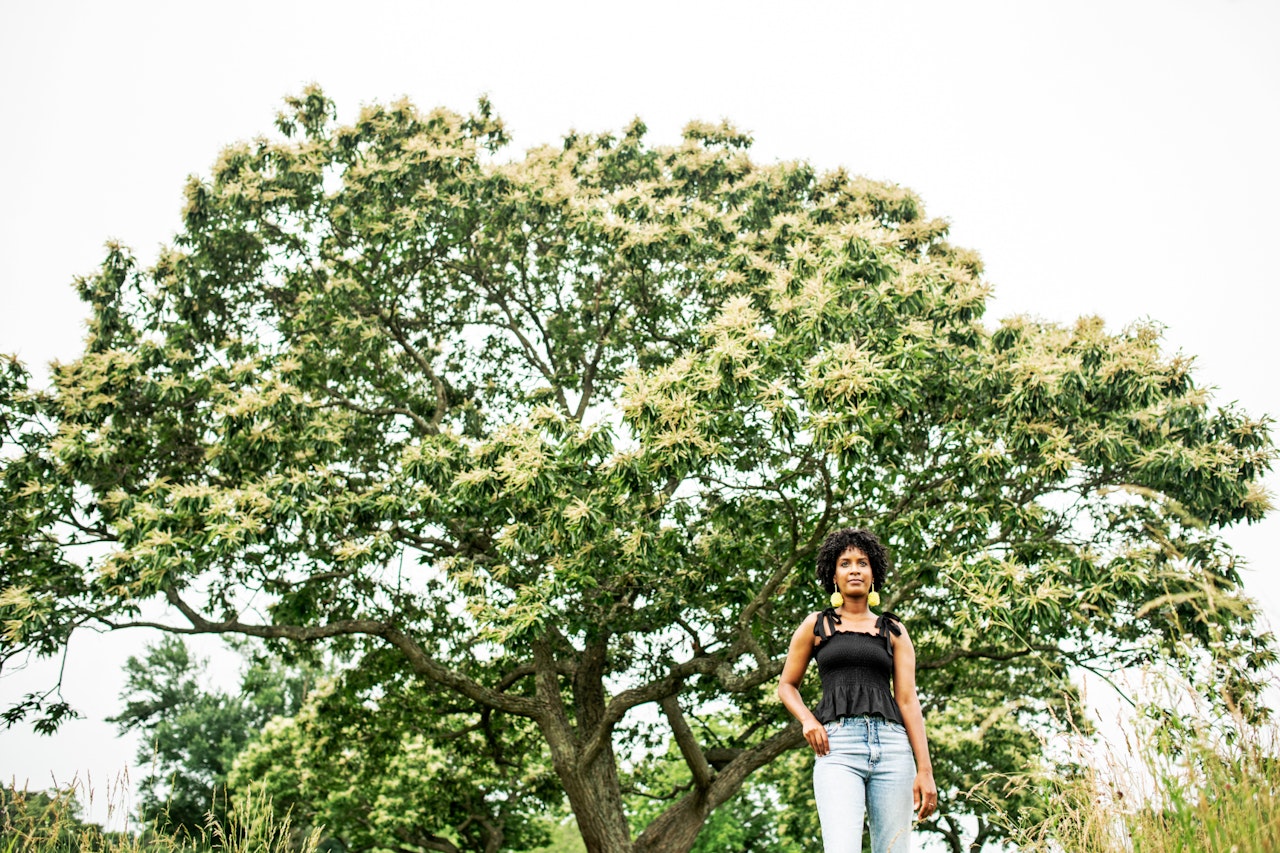
Chloé Cooper Jones and I connected via Zoom to talk about beauty, transformation, and the art of being fully present—all timeless topics covered thoughtfully in Easy Beauty.
Wynter K Miller: One of the theses underlying Easy Beauty is the belief that proximity to beauty can be transformative for the individual. Assuming that society operates on the same belief—what do you think we’re being transformed into, writ large?
Chloé Cooper Jones: I think that what’s important about this idea that beauty is transformative is that there is a threshold, in a certain sense, in which beauty can be transformative, and in a way that I would associate with positive growth. There’s this operating idea in the book that beauty can give us a chance. And this is not really my idea. It’s Iris Murdoch’s idea, that beauty can give us this chance to escape ourselves, to actually move outside of our ego or our own limited perspective, and that we can use beauty, or the aesthetic experience, or art in general, to step outside of your palace of self-regard, engage in the world, and then to return to yourself further enriched. I think there’s a lot in society that does support that aim, and I think that aim is unbelievably worthwhile and is transformative in the very best sense because it literally lifts us outside of the limits of being just one single person.
I think the other side of the threshold is that too much emphasis on beauty can produce negative results. It can make you value beauty to the exclusion of all else.
WKM: I was thinking about how there are different concepts at play when we talk about “beauty.” There’s proximity to beauty, which is what your book is primarily concerned with, but then there’s also the process of making beauty, making art, and then there’s actually being beautiful. This is probably a reflection of my worldview, but my sense is that the third concept—being beautiful—is possibly counterproductive to transformation. When you’re thinking about beauty as a concept, do you see distinctions between categories of beauty?
CCJ: One thing that gets kind of confused or sort of misrepresented about my book is that it’s really concerned with physical beauty. But it’s not, actually. It’s more interested in seeking out what beauty does in our lives and what the experience of beauty is—how do we recognize it in our lives? What is that feeling that it gives us?
The only way that you make something beautiful is if it triggers that feeling—that rush—in someone else.
I do think that there are so many messages that we absorb on a constant basis that can help us confuse the categories that you’re talking about. There are so many ways in which we can be manipulated into thinking that proximity to beauty can be a substitute for self-worth, or a substitute for self-awareness or some sort of actualization. And I think that to make something very beautiful, or to really work at the creation of beauty, is necessarily a very selfless and outward-focused act, because the only way that you make something beautiful is if it triggers that feeling—that rush—in someone else. And I think that artists who are making beautiful things are constantly in a dialogue with other people’s minds and other things in the world. As a lover of art, I have benefited so much from that.
And then I think there’s this other type of focus on beauty that’s very inward-focused. It’s also like a way of hiding, right? Like we can hide behind this idea that if my hair is the right way, or my weight is the right number, or I appeal to strangers in a specific way, then that shields me from having to become a more complex person.
WKM: I think that captures exactly what I was trying to capture: It shields you from complexity. Like if you have that part taken care of—if you look “right” to external eyes— it can be a kind of escape hatch, maybe, from working on other things.
CCJ: Totally. And I don’t want to sound judgmental, because I’ve done the same thing, but I think sometimes we reach for beautiful objects or turn beautiful people into objects and pull them closer to us to be made—and this is a line in the book—”shiny by proximity.” So, if I surround myself with the right kinds of objects that prompt that external validation, or if I date the best-looking people or my friends are the best-looking people, maybe I can soak up all the validation that I require. And, you know, having a very visual, physical disability sort of forever sets you outside of that, in a way, because it’s very difficult for you to have that sort of shield. But in some ways, that’s been the greatest gift of disability—that that’s not even an option for me. I can’t access that.
WKM: When I’m thinking about the definition of beauty—something you said just now made me think that may be part of the definition, because it’s not just a physical or aesthetic or visual thing—something you said made me think that your definition of beauty would be something like “presence in the present moment.” So, being able to experience time without too much anxiety about the future or inability to move away from the past. Does that strike you as a definition you would use?
CCJ: At the very end of the book, I give my definition of it as sort of being able to look at the dense pile of my life and of reality, which is full of good and bad things and complicated things and trash and happiness, and just sort of ask: Can I see the salient thing? Can I find the most important thing?
I think sometimes we reach for beautiful objects or turn beautiful people into objects and pull them closer to us to be made ‘shiny by proximity.’
And then at the very end of the book, I’m talking about just being able to see the most important thing on a walk home with my son—which is him, which is that moment in the present, really feeling it and being very aware of it, and then, importantly, also letting it go. Because I think that’s the one thing I also really struggle with. When I find something really beautiful, I have a tendency to want to memorialize it and freeze it and then, like, haul it off into my neutral room, into a safe space, and then analyze it from every single angle and break it down and be able to permeate it with all my ideas. And you can’t do that with people and you can’t really do that with anything in life. So, beauty is this sort of duality of both: being present enough to find the salient thing, the beautiful thing, to grasp it, to experience it, and then to let it go. And that’s really what the experience of beauty is.
WKM: If you accept the premise that the experience of beauty can be transformative, could you talk a little bit about whether ugliness can do the same thing? And I’m thinking less about aesthetic ugliness. I’m thinking about things like dark tourism or the horror genre. You have a section of your book where you go to Cambodia because you’re interested in dark tourism, and I’m wondering if fear or tragedy and despair can trigger the same kinds of transformations as beauty can.
CCJ: I think it’s a little bit different, or at least the way that the philosophers that I like talk about it is a little bit different. Aristotle says that the base thing that makes us human is our desire to know. So, we desire to know, even about the darkest cruelties that humans are capable of experiencing. We want to know about death. You know, they made like six Saw movies—why did they make six Saw movies? Because there’s a deep fascination with what cruelties we can endure as human beings. And so Aristotle says that it’s just human nature to want to know the full range of things that can possibly be known. And he says that if you experience or explore these things in art, there’s good things that can come out of that. One is that art is obviously a safer place to explore, right? Like if you’re curious about what it means to experience human cruelty, it’s better to experience that curiosity in the Saw films than to go out and experience them in real life. We don’t want to experience them in real life, but we still want to know about them.
And then Aristotle also thinks that darkness—or whatever we might call ugliness—is a realm of human experience that we are fascinated by and must understand, but that we can sort of purge our emotions, and feel the full force of them by feeling sorry for Oedipus, or feeling fear about what can happen to people in this world. And he writes a lot about how feeling pity and fear can move us to purge our emotions in a really healthy and positive way.
So, in a sense, I think that the experience of beauty can help us expand outward and connect with people. And I think the experience of dark art or tragic art can help us feel a little bit more human.
WKM: Easy Beauty is about so many things—and it’s not primarily a book about disability—but I really appreciated the way it addresses disability and chronic illness, and the simplistic and incorrect assumptions people make about those experiences, like that every person with disability would erase it if they could, and that their life would be objectively better without it.
CCJ: The narrative of my life is people putting limits on me. The most common way that other people relate to me is telling me what I can’t do or making baseline assumptions about my limitations without asking me—it’s just this constant narrative of: We see you as weak, we see you as vulnerable, we see as fragile, we see you as incapable and incompetent, less able. Like that story is just being constantly reflected back to me. So, when I do something really hard, it feels so good. It feels life-affirming in a way that’s not always, like, super mature, right? Because there is this part of me that’s just like, “fuck you, fuck everybody who thought I couldn’t do it.” I think that’s a really relatable thing for a lot of people with disabilities. I’ve talked to people who are just constantly piling on accomplishments because there is this way in which they’re not sure they’ll be seen as a real person unless they’re sort of super able in some other way.
For me, I absolutely throw myself into situations that seem untenable. I do relish being able to take on what other people think I can’t take on, or what they think they can’t take on, because when a disabled person can do the thing that the able-bodied person can’t do, then we’re really in new territory. And there is something about that. That, in a way, is the strongest assertion of myself. But also, because of the body I’m in, that comes with pain. But to not do that would feel like a capitulation to this belief that I can’t do things. So—I keep saying this—on the one hand, my disability is good. And then there’s a threshold where it’s bad, where I’m not authentically looking at what I want, what I really want, how I really want to spend my time, what would really make me happy. I’m not always looking within for those answers. In some ways I’m thinking about my sense of self in relation to the narrative that other people are putting on me.
WKM: You’re direct in the book about chronic physical pain being a part of your experience, and you say that you buy into an idea that you were taught in graduate school, which is that “truth,” whatever that is, cannot be found without the experience of pain. As someone with chronic pain, I find it incredibly tempting to believe that my pain has a purpose, that there’s a reason for it, and that, in fact, without it, I would not be the person that I am. I’m wondering, divorced from theory, what you think the purpose of pain has been in your life, or in life as you’ve observed it? Do you think that it has a purpose?
CCJ: Well, yeah. I mean, that narrative is so tempting, right? It is. I think I go back to this idea of thresholds—like, I have gotten further in life because I’m not afraid of pain and I’m not afraid of hardship. I don’t see difficulty as a negative thing. I see it as just a layer of my every day, constant, lived experience. So, when someone describes doing a difficult thing, like getting a PhD or moving to a different place or traveling around the world or working on a book or whatever, there’s no part of me that reacts in fear. I’m just like, “Yep, that’s just going to be a part of it.” And I think that’s served me very well in life.
But on the other side of the threshold is where pain can become like a myth. And sometimes there are situations in which I cling to my pain—in some ways, I will believe that I can’t live without it. Which means that if I let go of it, or if I try to improve it, I’ll lose something really essential about myself. So, I think the trick is to—and I’m not good at this—to really look at that threshold between the truth of what pain is and what pain can give you. I feel like I can embrace really hard things, and I’m really proud of that. But there is this line in which I sort of hold on to pain as almost a self-righteous thing, of propping myself up or telling myself a story that in some ways allows me to avoid getting better or feeling better. So, it has that dual purpose. Dealing with pain allows you to have a sort of fearlessness about hardship. But then at the same time, it can become a coping mechanism, or a protective way of distancing yourself from things.
Leaving home is a rite of passage. Departure stories often celebrate our origins while heralding hope for the future. But for many, leaving home is an act of survival, an exodus that requires sacrifice and sorrow. It is a search for solace despite trauma, for safety despite harmful histories. Though leaving home is prompted by a search for our place, it is ultimately a search for ourself.
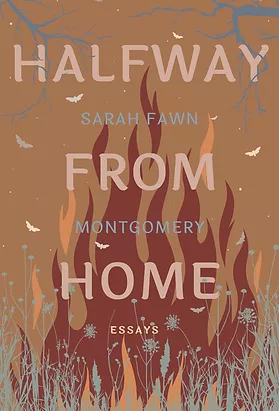
My new book, Halfway from Home, is a lyric essay collection about leaving a chaotic home to chase restlessness and claiming places on the West Coast, Midwest, and East Coast all while determined never to settle. But it is also a collection about how difficult it is to move forward when you long for the past. With my family ravaged by addiction, illness, and poverty; the nation increasingly divided; and the natural world under siege by wildfire, tornados, and unrelenting storms, I turn to nostalgia to grieve a rapidly-changing world. From the tide pools and monarch groves of California, to the fossil beds and grass prairies of Nebraska, to the scrimshaw shops and tangled forests of Massachusetts, I examine contemporary longing and sorrow, searching for how to live meaningfully when our sense of self is uncertain in a fractured world, and how to build a home when human connection is disappearing.
The seven nonfiction books gathered here offer the stories of others who have left home in search of somewhere to belong. The writers share the struggles of departing the landscapes that define them and the families that raised them, as well as the challenges that come from trying to discover who you are in a place where you are a stranger. While some return, some move between landscapes, and some embrace new places entirely, the writers on this list reveal how we often must leave in order to discover home.
When Erika L. Sánchez leaves home as a senior in college in search of a life of her own, she willingly accepts the role of outsider. Her choice to pursue an unmarried life of education and writing is unprecedented in her Mexican immigrant family. Forging a solo path around the globe in a community where girls are not supposed to stray from their homes, Sanchez takes readers along for her story of what it means to grow up in the ’90s in Chicago as a melancholic misfit, a hilarious outsider whose sharp insights about the world lead to an award-winning writing career. The best creative expression, Sánchez writes, is born of narrative tension, and this collection juxtaposes raunchy humor with unapologetic honesty in essays about sex, comedy, white feminism, and mental illness. Sánchez explores what it means to live in contradiction, to belong everywhere and nowhere at once, to become your own home after spending a lifetime searching for your place.
Danielle Geller inherits restlessness along with eight suitcases that contain the contents of her mother’s life. After her mother dies of alcohol withdrawal during an attempt to get sober, Geller begins to piece together the story of her mother’s life from what she leaves behind. Archiving her mother’s possessions—diaries, letters, photos, clothing, and other artifacts—Geller weaves images and text together in an innovative exploration of legacy and loss, given and chosen family, in an effort to understand her mother and herself. As Geller forges a life for herself, confronting her family’s troubled history and her role as caregiver, she is compelled back to her mother’s home on a Navajo reservation. Exploring matrilineal heritage, the delicate balance of sisterhood, and intergenerational trauma, Geller teaches readers how to honor the homes we have left in the past while showing us how to build a home and family for ourselves in the future.
Cade Mason’s debut essay collection is an innovative archive of stories and selves frozen in time, an exploration of whether home only exists after it is gone. Examining what it means to grow distanced from the people and place that raised you, Mason shares the story of his gradual separation from his religious West Texas home and fractured family. Mason travels through endless roads and dusty farms, weaving childhood stories with family secrets in order to piece together the story of how his family fell apart—his father struggling to forget the past in the aftermath of divorce, his mother eager to move on to her future, his sister caught up in the chaos. This is a story of queerness in the rural South, of the myths of manhood, and of the end of a marriage, a family, and a home. Mason teaches readers what it means to love a place that you must also leave in order to live.
Leaving home seems to be the only way Ashley C. Ford can escape poverty, a challenging relationship with her mother, and the isolation that comes from a lifetime of missing her father, who is incarcerated for reasons she does not know. Growing up poor and Black in Indiana, Ford spends much of her childhood worrying about safety and much of her adolescence being told her developing body is a danger. As she struggles to find connection, she dreams of a day she will finally feel sheltered in her brain and body and hopefully find unconditional love. After a relationship turns violent, Ford learns the truth about her father’s incarceration, and must reconcile her sense of safety with her shame. Leaving her family in pursuit of a life that feels like her own, Ford begins a journey to discover a body and home that feel safe, and to find out who she is outside of her fragmented familial history despite the many ways they will always be connected.
The daughter of a traveling salesman, Jami Attenberg inherits wanderlust, dedicating herself to a life on the road in the pursuit of her art. Restlessness drives her search, as she chases inspiration and experience, leading her on self-funded book tours and artistic endeavors across America and eventually around the world. Along the way she encounters artists, lovers, and friends, questioning her craft and how to build a career creating art, uncovering ideas, and understanding herself. Ultimately, it is leaving home in the pursuit of rootlessness that allows Attenberg to discover her artistry and individuality, trusting her vision and herself enough to finally claim a life and build a home.
Growing up during the early aughts in Ohio as the son of Jamaican immigrants, Prince Shakur grapples with the violent murders of several men in his family, his family’s homophobia, and the complexities of the Afro-Caribbean diaspora. Leaving home for college is just the start of Shakur’s travels—throughout the book, he journeys from France to the Philippines, South Korea to Costa Rica, coming of age as a radicalized millennial to participate in movements like Black Lives Matter and Standing Rock. As Shakur confronts what it means to be young, Black, and queer in this country, he questions life in Obama and Trump’s America, urging readers to do the same as we consider the political landscape we still have the power to shape. Though a memoir of leaving home, Shakur’s search to confront his identity, his family’s immigration, and the intergenerational impact of colonial violence ultimately leads him home to his power, his passion, and his next radical pursuits.
Leaving home defines Isaac Fitzgerald’s life and this memoir-in-essays. After his birth ends his parents’ marriages to other people, Fitzgerald leaves Boston for small town Massachusetts, his childhood defined by a sad mother and an absent father, a family dynamic of loneliness and depression, anger and disconnection. Later he leaves for boarding school, for the West Coast, for another country in search of a life away from the trauma he knew as a child. He leads many lives—altar boy, bartender, biker, smuggler—on his search for family and forgiveness, for a way to understand and accept himself. Combining gritty honesty about a violent childhood, a lifelong struggle with body image, and toxic masculinity, with humor and unabashed reflection, Fitzgerald leads the way for readers to open their hearts. While this is a story about leaving, about learning to love places and people that did not raise you, it is also about offering compassion, generosity, and forgiveness to others in order to come home to yourself.
In Glasgow, Scotland, in 1574, two women landed in legal trouble for a wild public fight: Janet Dunlop threw dirt in Margaret Martin’s window where Margaret had set out her bread, cheese, and butter for sale. Margaret, who was clearly not a woman to be played with, responded to Janet’s spoiling of her wares by throwing urine at Janet.
URINE.
This was only one of the many public fights between married urban townswomen that took place in Scotland’s streets and marketplaces in the 16th and 17th centuries, according to legal records from Scottish town courts. Hair disheveled, cheeks bloody, and clothes askew, the undignified women described in these 500-year-old cases hurled scathing sexual insults at one another—insults based on rules for sexual behavior that were created by and benefit men. This scenario of female conflict put women in the role of policing one another’s sexuality, so that men did not have to do so, and it enabled men to serve as restorers of order and models of restraint; often they broke up fights or were cited by the court as responsible for ensuring that their wives behaved in the future. Historian Elizabeth Ewan has found that women in Scottish legal records were far more likely to attack other women than to assault men. These fights happened in public with plenty of witnesses, as evidenced by bystanders disagreeing in court over details like whether one woman had called another “drunken beast, vagabond, and bitch” or simply “vagabond and whore.” The resulting punishments were equally public, with perpetrators sentenced to issue public apologies that re-articulated their nasty insults for all to hear, walk bare legged through the marketplace, or spend hours locked in the town pillory for everyone to gawk and jeer at them. Jonet Brus, for example, had to apologize to Isabel Kerrington by declaring before the townspeople of St. Andrews, “I called you a common bloody whore and said that you cheated on your husband along with various other harmful words that were not true.” As I read through these legal cases of assault and defamation from 500 years ago, I found myself having a familiar reaction of appalled, scandalized, slightly embarrassing delight. It’s the same way I feel when I’m watching a fight between women unfold on one of Bravo’s Real Housewives franchises.
I found myself having a familiar reaction of appalled, scandalized, slightly embarrassing delight.
This parallel left me wondering: why am I—and I’m sure I’m not the only one—so entertained by narratives about women expressing their anger at one another? And where, exactly, is the line between entertaining stories about female conflict and cases of dangerous criminal violence?
The enormously popular Real Housewives shows—which have aired for the last fifteen years, currently exist in eight separate city-based franchises, and are the subject of a recent book by Brian Moylan—similarly center on public catfights between women. The crew of cameramen and producers exploit every boozy dinner and cast trip for maximum conflict. The housewives express their anger at one another through table-flipping, wineglass-smashing, drink-throwing, hair-pulling, and slinging insults such as “slut pig,” “beast,” “drunken fool,” and “a slut and a liar and a hypocrite and a snake” who “fuck[s] everyone.” Like the Scottish cases, these disputes often wind up in court: Joanna Krupa sued Brandi Glanville for claiming on television that her “pussy smelled” before the two women reached a settlement, and multiple physical altercations have led to assault charges. The network knows that viewers are hungry for these narratives: the women’s feuds are teased in each season’s premiere episode, drawn out throughout the season to build narrative suspense, and explode when the women confront each other about their grievances and are encouraged by producers to apologize at the season’s end. For example, at the 2014 reunion episode for the Real Housewives of Atlanta’s sixth season, Porsha Williams told her castmate Kenya Moore, “Your vagina is so rotten that no one will claim you.” Kenya accused Porsha of cheating on her ex-husband and called her a “dumb ho,” speaking into a megaphone that she’d brought with her to amplify her insult. Porsha responded by declaring, “You are a skank from the nineties” before rising to her feet and proclaiming, “I will fuck you up.” She seized Kenya by her hair, pulling her to the ground and dragging her across the stage—echoing the 1640 Aberdeen case in which a waterman’s wife named Helen Mearnes dragged Janet Walker by her hair and threw a wooden dish at her. Bravo network executive Andy Cohen, who had just grinned gleefully at Porsha’s “skank from the nineties” insult, leapt up and shouted “NO, NO, NO” as a group of other men materialized from off-camera to help him subdue and separate the women. Porsha was later arrested on assault charges.
Cohen’s mingled glee and horror at witnessing the women’s altercation exemplifies the irresistible electric charge of titillation, drama, and spectacle central to both the Scottish legal cases and the Real Housewives “catfights”: they are at once dramatic public events featuring actual, living women and highly constructed narratives framed and filtered by men who heard testimonies, gave verdicts, and wrote down every hair-pull and scathing insult word for word. What is more, the Housewives altercations occur between women who were once friends, or at least friendly colleagues for the sake of the show. This, too, reflects medieval interpersonal dynamics, like the case where Isabelle Squyer “laid hands violently” on Helen Gilham, whom Isabelle had previously chosen as godmother to her child, in 1495. These conflicts, even though they’re separated by five hundred years, point to a common cultural tendency to allow women to fight (even while having rules against it) as a way of enforcing social codes: women confront each other for allegedly sleeping with men who are not their husbands, for spreading scandalous rumors, for being financially dishonest. One sixteenth-century Scottish poem insists that women are “downright deceitful, fickle, ferocious, and frivolous,” and these nasty fights over sex, lying, and money appear to confirm those stereotypes while also turning their punishment—in the form of embarrassing, extremely specific apologies in the town marketplace or at a Bravo reunion show—into a spectacle that encourages onlookers to react with “voyeurism and judgment,” as Brian Moylan puts it.
I imagine how the men passing judgment on these cases in Scottish town courts must have been filled with delight and disgust.
The catfight narratives surviving in dusty old court record books are thrilling to read, filled with unexpected and vivid details—such as the fact that Isobel and Bessie Kyntray attacked Jonet Reid by striking her on the face with a raw fish in Elgin in 1545. I imagine how the men passing judgment on these cases in Scottish town courts must have been filled with delight and disgust, struggling to keep a straight face when witnesses to a 1539 fight in Aberdeen’s main street testified that Margaret Porter had attacked Janet Chesame by “calling her common vile friar’s whore, saying that she was one who has a large quantity of lice between your shoulders; I shall lead you to the place where the friar fucked you, where you undid the ends of your belt.” I imagine the male court reporter’s eyes widening as he wrote down that Elspeth Clogy landed in trouble for “throwing stones at Christian Sauchie and biting her through her arm and letting the piece of flesh that she bit fall into the water” in an altercation that also involved Elspeth’s sister and mother.
I’m aware that these scenarios are shaped by long standing stereotypes that women are naturally antagonistic toward one another and that this mutual antagonism requires male intervention and discipline to restore order, making the women seem like vicious, out-of-control catfighters while the men serve as patient, rational peacemakers. And yet, I still cackled when I read that a beer-brewer named Katherine Jack called her servant Elspeth Mukkart a “common whore and thief that has lain these last nine years in the devil’s arms with another wife’s husband both by night and day.” And I’m not the only one who’s viewed these narratives of women’s conflict as entertaining drama: in a play performed for a public audience in the summer of 1552, Scottish writer Sir David Lyndsay included a scene in which two married townswomen rushed to a tavern to confront an attractive young woman who is drinking with their husbands. They called her “whore” in all sorts of creative ways and threatened to beat her with their wool-spinning sticks, echoing numerous real-life cases in which women hit each other with those very same household tools.
Like Real Housewives episodes, Scottish legal cases are filled with women expressing their anger at one another through hair-pulling, drink-throwing, and colorful insults: Margaret Ogstone testified that Janet Mawer was drunk on the Sabbath when she called Margaret “base whore, drunkard, thief-faced bitch, English jade, vagabond, queane,” using as many synonyms for “whore” as possible. Janet filed counter-charges by claiming that Margaret had insulted her as “drunken jade.” In Elgin, Margaret Froster hit Christian Vardan on the head with a pan and pulled a large quantity of hair out of her head; Christian verbally attacked Margaret as a “vile mare” (a nasty sexual insult), “common whore,” and thief. In Inverness in 1566, two female ale-brewers teamed up for a vicious attack on a pregnant woman who was drinking in an alehouse that one of them owned with her husband. Jonet Sutherland testified that she was enjoying an innocent drink at John Morrison’s alehouse when John’s wife Elspeth Barnet and her friend Marion Ogilbe “cruelly set upon her and pulled her hair, scratched her face, called her common thief’s brat, and said that her mother broke into barns and lived on cheap mollusks brought out of the sea.” Jonet claimed that the assault nearly caused her to miscarry that night, and Marion’s husband was designated as responsible for answering further charges on his wife’s behalf if Jonet experienced pregnancy complications in the coming days. And in Elgin in 1550, Jonet Maitland was sentenced to one hour of public humiliation in the pillory “for the unlawful casting of a vessel full of ale in Isobel Douglas’s face and striking her on the head with the vessel and calling her injurious and vile words.” The altercation was mutual, as Isobel was sentenced to several hours in the town jail for hitting Jonet and attacking a local town official who intervened in the women’s fight insulting him as a “penniless villain” and “beggar peasant’s brat.” Throwing a drink at someone is still categorized as assault today, and it has become a mainstay in countless Real Housewives conflicts. It humiliates the target by leaving her drenched and sticky, her hair flattened and makeup streaming down her face.
It humiliates the target by leaving her drenched and sticky, her hair flattened and makeup streaming down her face.
One particular altercation on the Real Housewives of Potomac’s latest season drew headlines because it involved vicious hair-pulling, wine-flinging, and mutually-filed criminal charges. In this conflict between two former friends, which occurred while the ladies sampled wine and cheese at a Maryland winery, Candiace Dillard-Basset and Monique Samuels continued a long-running verbal dispute from previous episodes, stemming partly from a nasty rumor that Monique’s baby son had been fathered by her personal trainer instead of her husband. Candiace taunted Monique while waving a small cheese knife. Another cast member removed it from her hand, a particularly prudent move given the fact that Candiace had threatened a castmate with a butter knife in the previous season. After Candiace repeatedly invited Monique to “drag” her, Monique finally reached across the table and seized Candiace’s wig, refusing to release her. A large white platter of cherry tomatoes slid helplessly off the table between them, ranch dressing spattering across the floor. Monique beat Candiace on the head with her left hand, her right steadfastly gripping Candiace’s hair, as a horde of previously off-scene male producers and security guards swarmed in to separate the women.
This crowd of men, who materialize on screen to impose order every time a reality television conflict between women escalates from words to physical force, is significant. Typically these men remain out of sight, but the women’s turn to physical violence—which diverges from the expected war of words that characterizes many a Housewife gathering, especially when alcohol is involved—forces the show’s gendered mediating powers to make themselves visible, reminding us that these incidents of women’s anger at one another, from Scottish streets to contemporary television sets, are both real, spontaneous expressions of rage and highly-manipulated scenes that serve particular purposes.
Both women filed criminal charges of second-degree assault after the incident, which were later dismissed after a judge determined that the altercation was “mutually consented.” The show used the fight and its aftermath, along with Monique and Candiace’s subsequent deliberations about whether to file charges, as the basis for the whole fifth season, rendering it at once a criminally violent conflict and a dramatic entertainment storyline to draw viewers and boost ratings. At the reunion marking the season’s end, Bravo executive producer Andy Cohen encouraged Monique to apologize to Candiace, serving a similar function to the Scottish town officials who sentenced women to apologize publicly to one another for their public displays of rage in addition to suffering humiliation, imprisonment, and fines.
When I first saw the fight between Candiace and Monique, I was filled with scandalized delight. Perhaps I should not admit this, but watching it unfold on television, almost a year after I read about the criminal charges in the news, was everything I dreamed it would be and more. Even though I, as a Black feminist, am intellectually aware of the pervasive cultural misogyny that shapes these types of representations, and I am also vulnerable to being viewed as an angry, out-of-control Black woman myself, I cannot deny the exhilaration I felt when the wine flew through the air, when the raw broccoli florets scattered across the floor, when all the men with earpieces rushed out from behind the scenes. While the Real Housewives shows and the Scottish legal cases were not created for the same purpose—since the former are produced for entertainment, while the latter are records of wrongdoing and punishment—they’re both “all about conflict and conflict resolution,” to quote Brian Moylan, about entertainment as well as empathy. Moylan says that Real Housewives fights give us “the thrill of vicariously doing something we want to but can’t,” and I do often find myself identifying with the motivations for the violence that the women commit against one another, even if I would never actually pull a ponytail or throw a punch: there is a perverse and shameful satisfaction in seeing Monique finally accept Candiace’s invitation to drag her after Candiace taunts and twirls in front of her, in seeing Porsha rise up and seize Kenya by the hair after Kenya has spent the whole episode obnoxiously shouting insults at everyone through her personal megaphone, in reading about Margaret Ralston hitting Agnes Allen and maliciously scattering the leeks that she was selling in the Glasgow marketplace after Agnes shoved her
I do often find myself identifying with the motivations for the violence that the women commit against one another.
In other words, these public spectacles of conflict, both then and now, do more than simply enforce social codes about female behavior; they also saddle onlookers with the messy feeling of gawking judgmentally at public misconduct at the same time that we identify with the players enacting it and the sentiments underlying it. Any diehard Real Housewives fan roots for some Housewives, even in spite of their bad behavior, and despises others; similarly, onlookers who witnessed the Scottish fights and their punishments had complicated allegiances to the women involved in them as neighbors, relatives, co-workers, or marketplace rivals. This brings me back to sixteenth-century Glasgow, where Margaret Brown terrorized her fellow townswomen over the course of several years. She shoved Margaret Craig and scratched her mouth and nose, shedding her blood. She attacked Jonet Law by striking her, pulling her hair, throwing her to the ground, and tearing her clothes. She hit Margaret Rossie’s small child, who was being held by a servant. A few years later, Margaret herself was the victim: Jonet Barde had to pay six shillings and publicly ask Margaret’s forgiveness for throwing stones at her, pulling her hair, and striking her, causing her to bleed. When Jonet voiced her public apology and listed specifically how she had wronged Margaret, the townswomen of Glasgow likely had a range of reactions: I’m sure some of them listened with horror, judgment, or disapproval. And I have no doubt that others, given Margaret’s long record of aggression against her peers, listened with scandalized delight, sympathizing all too well with Jonet’s actions even if they would not have been quite so vicious themselves.
Trees are a significant part of our cultural discourse, and humans have long had a personal connection to trees. From the centuries-old Cedars of Lebanon to the present-day Lonely Doug, a douglas fir surrounded by a clearcut in coastal British Columbia, we revere trees because they’re long-lived, majestic, and quiet companions in our yards, national parks, and urban green spaces.
For example, when the city of Melbourne in Australia, gave each of its 70,000 trees an identification number and an email address so that the public could report problems, people began sending the trees messages. According to theGuardian, “One tree fan emailed their favourite golden elm telling it to keep up the good work, while a London plane tree was complimented on its beauty. A green leaf elm was urged to stay in good shape by a wellwisher moving abroad.”
Several years ago I wrote an essay about trees and their role in our lives. As I researched my essay, I found many books by male authors, including best-selling non-fiction like Peter Wohlleben’s The Hidden Life of Trees and David George Haskell’s The Songs of Trees, and novels like Richard Powers’s The Overstory. But I didn’t come across a lot of writing by women. Perhaps they weren’t writing about trees, or maybe I just hadn’t dug deep enough to find them. As a researcher studying how trees killed by wildfire and pine beetle affected snowpack, I was one of only a few women doing this work. It seemed like I was in a world where women and trees didn’t mix.
We have recently seen a plethora of books published by women about trees that address our lives in relation to trees, rather than just trees in and of themselves. Each of the books in this list, written by women scientists, artists, and philosophers, provides a holistic perspective on trees in our society, from their role in our ecosystems to their place as a touchstone for our cherished memories and the source of creative inspiration.
Simard conducted scientific experiments to determine that trees share nutrients and chemical messages via mycorrhizal networks that connect their roots. She weaves her life story into the story of her science, from being a consultant to joining the provincial forest service, to ultimately becoming an academic at the University of British Columbia. She writes about her childhood snacking on birch roots, her marriage and family life, her struggle with cancer, and the bittersweet moment when one of her daughters tells her she wants to be a forester. Simard’s groundbreaking research has inspired many others, not just scientists, but also artists such as director James Cameron and his movie, Avatar.
In this autobiography, Lowman shares her research path, from PhD student to freelance explorer-author. Her research focused on insects that eat forest leaves. To do the research she had to access the forest canopy by pioneering a technique to bring her up to the eighth continent using a slingshot, a rope, and a hand-stitched climbing harness. After a brief stint as the wife of an Australian sheep farmer, Lowman’s career led her to become the director of a botanical garden, a tenured professor of environmental studies, the director of a new museum wing, and a senior scientist at a museum in California. At each of these positions she encountered sexual discrimination, which led her to leave her post and move on to the next one. Her work as a consultant now includes helping to build canopy walkways worldwide, and working with researchers in Ethiopia and Malaysia to protect their forests.
Holten is a visual artist and environmental activist who developed a tree alphabet, where every letter is symbolized by a tree. A is an apple, B is a beech, C is a cedar, etc. In her book, she includes excerpts from famous writers, philosophers, and scientists about trees, printing them in regular font on the right side of the page and in tree font on the left side of the page. There are excerpts about historical American trees, scientific studies of trees in the Amazon, the philosophy of how forests think, tapping into work by Ross Gay, Ursula K LeGuin, and others.
Oakes describes her PhD research studying yellow cedar in Alaska to find out why it’s dying and whether or not it can stage a comeback given its widespread decline. She details her field preparations and fieldwork, including the emotional toll of seeing nothing but dead trees, sometimes for days at a time. Her research also involves interviewing people in the region—foresters, First Nations, government scientists, and local residents—about their connection to the yellow cedar and what they think and feel not just about its decline, but about climate change in general. In between she processes the ways in which science and numbers fail to represent the visceral impact of a declining species, and how researchers keep an even keel when dealing daily with the impacts of climate change.
Roy’s book is a love letter to trees, a history of trees, and an ode to their peaceful nature and ultimate loneliness. Roy starts her inquiries by noting that she wants to live on “tree time.” As she moves forward with this wish, she writes about the various ways in which she interacts with trees, including how one might conduct a relationship with a tree. Along the way she references Indian literature about trees that isn’t widely known in the Global North, as well as thinkers like Margaret Atwood, Ovid, and others. Her book connects theology, philosophy, and botany to share with readers how they, too, can get to know trees and incorporate their experience of trees into their own life.
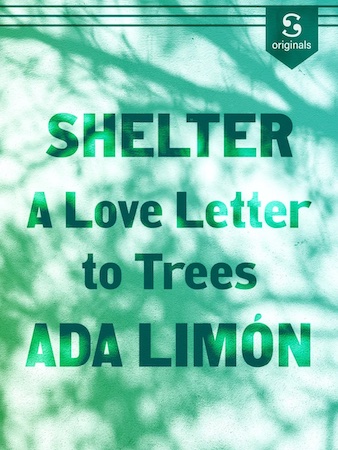
In this interconnected series of vignettes, Limón shares the trees that have affected her life and the lives of others. She recalls fond memories, and notes how having your own trees—particularly those that produce fruit—has been a lifelong dream for her parents, who now own an apple orchard. Each vignette shines like a jewel, showing the love Limón has for trees and how they mark key moments in her life.
In her book, Beresford-Kroeger recounts her summers as an orphan in Ireland, living with her extended family to learn about the land and the Ogham alphabet, which is based on trees. During the school year, she lived in England and studied biology and other fields, enraptured by tree physiology and realizing that her Irish education gave her a different perspective on trees. This led her to make new scientific discoveries, such as that trees release aerosols that have the capacity to heal, and that they are the source of many antibiotics. She also notes that planting trees, as we know, can absorb carbon and, like the Amazon, can drive local and global weather by the mass of trees that exude oxygen and water vapor into the atmosphere. Beresford-Kroeger ends with a description of the Ogham alphabet, describing each character and the tree it represents.
The Wellfleet house had been empty for nearly three months when they drove up after Neel’s accident. Mina wasn’t sure how long they were going to stay on the Cape, so they rented their apartment in Boston to some of Neel’s graduate students. She’d been like them once, one of Neel’s adoring acolytes who stayed after his graduate seminar on modern European history, then on into his office hours, and then into the evening for drinks and tapas on Newbury Street.
Summer season was over and the traffic minimal. Mina drove the whole way, missing three cops and saying one of her little prayers under her breath while she was going ninety miles per hour in a sixty. Her sister Patty had used the house last, driving up from DC, with her three kids, the new baby, their toys, and their dog. Patty had married a Hawaiian man and was one of those people who had sent an etymology of her new offspring’s name along with the birth announcement: royal child, heavenly blossom, star of the sea, beloved. Back home in Cambridge, Mina had hung the cards on her refrigerator before deciding that two weeks was quite adequate to celebrate a royal child and threw the whole thing into the trash where Neel dumped coffee grounds on it only an hour and a half later.
Signs of her nieces and nephews were scattered over the front yard. Twin dolls’ heads and matchbook cars hooked on a piece of fishing line swirled off the leafless bushes. “I asked them to tidy up before they left,” she said as she watched Neel take in the toys, the chipping paint, the overgrown lawn.
“And what about the boy you’re paying to look in on the house when we aren’t here?”
“I don’t pay him much,” she said.
“And how much isn’t much?”
She didn’t answer him but turned off the car instead. They sat there for a moment, unaccustomed to seeing their summer house in the winter, looking weathered and defeated. She brought the bags inside and put on music while Neel turned on the TV.
She made dinner and they drank wine in the living room with supper and didn’t talk, just listened to the stereo playing Billie Holiday songs about stardust and love. And while they did, Mina noticed everything that was wrong.
The pictures in the living room left by the previous owners looked more warped and cracked than they had before. Prints of butterflies, neither her taste nor Neel’s. In the past they thought they were funny and added kitsch value. Now they felt haphazard: the squirrel figurines on the mantelpiece, the spatula that was missing a quarter of its handle and the poorly painted watercolors that lined the stairwell. Why had they bought the house furnished? And why had they kept all this junk?
During other visits, there had been so much to do that the decorating had been the last thing on either of their minds. They spent their time at the pond, bought things in galleries in Provincetown, and ate Wellfleet oysters, slippery and salty.
This visit, getting the house in order felt critical. It would calm her. It would make the small cottage feel like home. Unable to stand being cooped up inside, she started working on the porch and yard. It was difficult at first. She had always depended on Neel to do everything at the Cape. He had mended the roof, patched the screen doors, and cut back the beach grass. He had never been particularly handy, but he knew enough about the way things worked to try to fix them. But now . . . well, now she had brought along a list of YouTube videos to watch and a stack of do-it-yourself books she had checked out from the library.
The first week there, she’d discovered that the books were a waste of time. They were so old there were no pictures showing her the things she was supposed to be looking for, and they used terms that Mina had no idea about. When she asked Neel, he just shrugged.
He shrugged all the time now. Shrugged when she asked him what he wanted for dinner, when she asked if he was tired, when she asked if he wanted to play cards or drive into town to see a movie. For the first time, he looked old. She noticed now that he was not thoughtful, not wise, not sophisticated. Just old. He gave up shaving and showering often, and he looked less and less like a college professor and more like the stooped and bent homeless man her parents paid to cut their grass at the community where they’d retired in Florida.
She worked all day. After they ate dinner in silence using the chipped plastic dishes that came with the house, she went walking, looking at all the other empty summer houses, waving at the locals who didn’t know her. They gave her the kind of smile she guessed they reserved for tourists. At least that was what she told herself. During the season, there were other Black people here: nannies and cleaners, employees at the oyster shacks, and out-of-towners. She hadn’t realized in the off-season how white it would feel.
Sometimes she walked until it was dark and watched the local families through the windows when the lights went on. Watched them eat dinner, or talk. Watched them turn on TVs and put away leftovers. Sometimes she would stay out until her hands got numb and her nose ached from the cold until it ran.
Then she went back to her own house where the only light she could see from the road was the eerie blue glow of the television where Neel sat, his leg raised to increase the circulation to the newly toeless foot. She waited until he went to bed. Only then did she crawl into bed next to him, his back already facing her.
Twice a week, she drove him to Hyannis for physical therapy. He switched from music to the Boston NPR station as they got down the Cape, and the voices that echoed through the car reminded them that they’d hardly spoken in days. She dropped him at the doctor’s office and then went to buy an ice cream that she ate near the bay, watching the gray-green waves hitting the dark sand.
Her father’s people were one of the first Black families on the Cape, the Jamaican grandchildren of freed slaves who came on Captain Lorenzo Dow’s banana boats in the 1870s. Who settled in Wellfleet and taught their sons, who taught their sons, to cull the fish in the northern Atlantic the way they had in the Caribbean. To make a living out of what the ocean provided. They were Cape people, locals who lived there all year-round.
Her mother’s family were those who summered there, like it was a verb. They were the white people who ate the fish her father’s family caught. They owned places—not houses—mostly in Hyannis and sometimes farther up, near her grandmother in Yarmouth. They could map back lines to England. Until her mother had met her father in the sixties, two people finding each other and rejecting the way they’d grown up. How pleased her parents had been, each in their own self-righteous way, when Neel bought her the Cape house. He’d bought it for her, yes, but also for her family, who hadn’t been able to afford their own place there anymore. When the taxes got too high, they sold their place and bought something in a gated community in Florida.
Her parents had been the last to go. Her aunts and uncle and cousins had already fled to Providence or New Orleans or Texas. Places with central heat and air where they could afford to live comfortably. The purchase of the cape house had been a way for Neel to iron over the rough edges of their seventeen-year age difference. A way to help her parents forget that before he’d been her boyfriend or her husband, he’d been her professor. The house was a promise to her parents that he would take care of her by wrapping her in real estate. And for a while they all thought it had worked.
But when she’d called them in Florida the day after the accident, her mother said, “He’s still like a child, isn’t he? Why in the world would he get fireworks? He’s a grown man for god sakes.”
“I don’t know,” Mina said. She was still stunned, unable to put together the pieces of what had happened in any logical order, even as she said the words over and over again.
Her mother clicked her tongue. “This is what happens when you marry an old man,” she said. “You end up taking care of them and wasting the best years of your . . .”
Mina hung up the hospital pay phone, laid it into the receiver, and hadn’t called back.
When her fingers felt numb, she drove back to the clinic to pick up Neel.
“How did it go?” she asked.
“Better today,” he said.
But he didn’t seem to be getting any better. In the evenings he asked her to build a fire. She dragged wood in from the small shed in the back, stacking it in the tine fireplace. Mina lit a wad of paper under the logs, hoping it would catch. He sat in front of the fire while she pretended to read in the nearby armchair. Really she was staring at the place where his foot used to be. What was left was covered in scar tissue and looked more like a leftover piece at the butcher’s. One night in bed the stump brushed up against her and she felt like her heart was going to stop, like she couldn’t breathe. She waited until he quit tossing and turning and lay still again. And then she went downstairs, feeling guilty, and made herself a cup of tea and poked the fading coals a few times.
That December, their third month on the Cape, the water heater broke and they were reduced to taking cold showers or heating water up on the stove for baths. Neel disappeared for a day with the car and instead of getting any work done, Mina paced the floor, worried something had happened. He was smiling when he came back; he’d bought a solar-powered generator and a book on water heater repair. He handed the things to her, one at a time, almost shyly, and ducked back into the house.
The silence was probably the hardest thing for Mina to take. She was a talker. They had been a couple who spoke endlessly, sometimes until late at night when they would both fall asleep in mid-conversation and wake up the next day ready to start over. He always told her that he loved the sound of her voice and she had loved his. But now words sounded unfamiliar, as if each of their voices had gone up an octave, the house filled with helium instead of oxygen.
But now words sounded unfamiliar, as if each of their voices had gone up an octave, the house filled with helium instead of oxygen.
The previous July at his family’s place in Little Compton, Neel had had the idea to get the fireworks for Bastille Day. His brother’s house in Rhode Island was always where they celebrated Independence Day. His family called the place a cottage, but the house on Beach Drive was more akin to a mansion. Neel’s brother, his wife, their three children, and an assortment of cousins who came through periodically from New York or Pennsylvania or New Jersey were always there to stay most of July and sometimes into August. It seemed like they were all medical doctors except for Neel whose PhD was the punch line of almost every joke about work.
Neel thought it funny—a historian’s idea of a joke—to celebrate French Independence Day instead of July 4th. Mina had never liked fireworks. Not since one of the boys in sixth grade had put a cherry bomb in the toilet at St. John’s Primary School and the whole toilet cracked, sending putrid water all over the floor. Anything but sparklers were illegal in most of New England and she wasn’t sure where he’d bought them. Later she learned he’d conned his eighteen-year-old nephew into a road trip while everyone else was at the beach. Four hours, through Massachusetts and into New Hampshire, the Live Free or Die state, where you could get almost anything you wanted.
He had set up the display in the center of the backyard and his family gathered around.
“I’m quite impressive with these things, you know,” Neel said, stage-winking for his audience. “Childhood expertise.” He pulled out one of the long matches they used to light the grill. “Now there, you, the stunning young girl up front. Why don’t you pick which one we do first,” Neel said, pointing at Mina.
Mina smiled, a true professional, and picked the one she knew he wanted her to choose, a collection of ten or twelve Roman candles bundled together in metallic rainbow-colored paper with the words FIVE SHOT PYRAMID POWER printed on the side and an image of electric silver flames shooting off a glowing gold cone. She would remember this later, when they were at the hospital.
“Good choice, dear. Good choice.” He set the pyramid on the ground, struck the match against the strip with a practiced hand, and lit the fuse. The paper crackled for a moment, and then Mina’s eyes followed as the trajectory of howling orbs burst into the sky and a mashup of colors exploded in the night, lighting up a haze over the wide expanse of lawn. And then Mina was startled by four or five rapid-fire explosions. She was confused. They sounded much louder than the cherry bomb she remembered. She wasn’t sure where the sound had come from, and as the color began to dissipate, she stared at the sky, still seeing the image burned into that place right above her head. She wasn’t sure if it was the wine or the colors, but she felt so calm. So calm that at first she didn’t understand that Neel was screaming, or why. By the time she did, someone had already run into the house for a towel. “My foot,” he said over and over again. “My foot.”
The towel quickly turned red and someone called an ambulance. There was screaming and crying. She knelt on the ground next to Neel and they both avoided looking down.
“It’ll be okay,” she said, stroking his back.
The sirens blared at the end of the street and she held on to Neel more tightly.
The medics came into the backyard and immediately unwrapped the towel. Red. More red. When she looked, she saw a pulpy mass but nothing that resembled a foot. Neel turned his head, gagged, and then vomited into her hair.
They loaded him into the ambulance quickly. Mina jumped in behind him and the paramedic slammed the door. She’d never seen her husband cry, but the tears streamed down his cheeks and he said “sorry” over and over again. At the hospital they rushed him into emergency. She sat in the waiting room, her tube top stained with his blood and bits of chocolate frosting. After a while she couldn’t tell the frosting from the blood and she let herself cry.
Summer was coming again, they’d been at the Cape house nearly eight months and the trees had just started to flower with tiny, tight pink buds, and she broached the subject of returning to Boston.
“How long can you continue on leave from the university?” she asked, poking at the broiled fish she’d bought at the dock that morning.
“I’m not sure,” he said. “They’ve brought in someone to cover for me while I’m recovering.”
By the start of April, the disability payments from the university had stopped. She asked if they had asked him to come back to work in the fall and he wouldn’t answer. Without discussing it with him, she dipped into their savings to pay the mortgage on the Wellfleet house and called the graduate students in the city and extended their lease. She took a job at the public library across from the pond and walked to work twice a week. She learned to bake bread, planted a garden, painted the rooms in shades of blues and greens and grays. Neel spent most of his time watching television. He had never had an interest in TV before, but now she would come in from a swim or from pulling weeds in the yard and find him perched on a stool in the tiny cubby of the kitchen watching soap operas. Every once in a while, the old tone would return in his voice when he asked her about one show or another, but when she gave him an odd look, he would shut her out again and turn back toward the television.
As the months wore on and she cleaned and she cooked, she also muttered asshole and fucker under her breath when he gave pointers while she scrubbed the bathtub and cleaned out the pans underneath the burners on the stovetop.
And just like that, it was summer again and there were tourists everywhere. The New Yorkers invaded, making their drives down the Cape to Hyannis take longer and longer. They navigated gridlocked traffic on I-195 all the way down to Providence. The town was clogged with sandy-haired families in Sperry Top-Siders and polo shirts, little Daisy Buchanans and Kennedy knockoffs everywhere.
One hot and lazy day, when neither of them seemed to be able to sum up the energy to say much to the other, they sat on the porch drinking sidecars. She felt heavy. Weighed down. Anchored.
“Where did you learn to make these?” he asked.
The politeness startled her, the way he asked so plainly.
“When I was bartending in Boston,” she said. “Right before I met you.”
“Bars,” he said, holding the glass up to the light and inspecting the liquid. “Disneyland for alcoholics,” he said with a laugh.
And she laughed, too, even though it wasn’t that funny, relieved just to laugh. “Would you like to cook out tonight?” she asked.
His face brightened. He was almost all gray now, but she could see pleasure in his smile and around the corners of his eyes. “That sounds great,” he said. “I think my mother left a recipe for her chicken in one of those boxes.”
It would be July soon, nearly a year since the accident and neither of them had talked about going out to the compound on Little Compton. Nor had he discussed the nieces and nephews who wrote emails or texted, or the brother who called every week to see how he was doing.
Eleven months, and there were still boxes stacked in every room. Things from Boston that had come out a little at a time when she’d gone into the city to get new clothes, to move their life out there bit by bit. Inside, she dug through piles of cardboard to see if she could find the recipe. It was in the second box that she opened. She stood up, clutching the tattered recipe card written in her mother-in-law’s old-fashioned slanted handwriting and saw her husband trying, futilely, to drag the grill from the garage. She was out the door before she had thought the whole thing through.
“Here,” she said, sprinting down the back steps. “Let me help you.” Her legs were lean and strong from her time outside.
He was slick with sweat and breathing heavily. “No. I’ve got it.”
She reached forward, easing the grill out of his hand. “No,” she said. “Just relax. I’ll do it.”
He let go of the tiny kettle grill and it clattered to the ground much louder than she thought it would. “Fine,” he said flatly, and went back over to the deck chairs.
She marinated the chicken and lit the coals as the whole sky slowly darkened—the sun dipping low, the night moving in, the stars glowless. Mina waited for the coals to crumble and turn red. The marinade was an odd combination of salad dressing, turmeric, and curry powder. When she pressed the chicken against the grill with the tongs, little bits of fat popped and sizzled onto her arm. “The days seem to last so much longer,” she said, almost without thinking.
“I know what you mean,” said Neel. He turned the pages of the magazine lying open his lap. “There is something to be said for winter, for being able to hide away from the day.”
“It won’t be like this much longer,” she said, and flipped the chicken. “Summer is almost half over.”
Saying that made her feel relieved all of a sudden. By the time the chicken was cooked the sun had set entirely. She mixed him another sidecar.
“Thank you,” he said without looking up. He had been staring off into the blackness of the night while she lit a citronella candle, finished the chicken, and got plates and napkins.
“You’re welcome.”
They sat in silence for a long time while she ate and while he stared down at his plate. He still hadn’t started by the time she finished eating. “When I was growing up, they tried to force you to write with your right hand,” he said suddenly. “They said it was some kind of learning disability, that there was something wrong with you if you weren’t right-handed.”
“Did that happen to you?” she asked.
He threw the fork into the yard and Mina heard it land with a soft thud on the unkempt lawn. “I used to get so frustrated, I always wanted to find some way to just make my right hand work like everyone else’s.”
Mina wanted to ask him what happened eventually, if that had changed, if it made him love his right hand all the more. But instead she stayed quiet.
He picked up the plate of food and turned toward the house. “I’m going to bed. I’ll see you in the morning.”
She didn’t turn to watch him but she listened to the thump of his heavy steps as he strained to keep his balance while he navigated the plate, the railing, the new familiarity of his body. When she finally went inside, he was asleep on the couch in front of the television. She cleaned the kitchen and then took a beer out onto the deck. The can was cool and she shivered, feeling for the first time the crisp bite of the cool summer night.
“I love this porch,” he’d said when they first bought the cottage. “It’s my most favorite thing about this house.” He pulled her close, he kissed the top of her head and behind her ear, which she loved. “Let’s make sure we sit out here when we get old and gray.”
She remembered thinking—even then—that he was already old. He’d been a teenager when she was born. And he had already started to go gray around the temples. “Let’s hope we’re not in this house when we’re old and gray,” she’d said, turning toward him.
“Hoping for bigger things?” Neel said.
“I’m not sure,” she said. And she meant it.
Later, when they talked again and again about that night on the porch, they’d said maybe that was the apex of their happiness and that things could not get better. Her parents had warned her against marrying him,
“He’s Indian,” her father had said, ticking things off on his fingers. “And he was your professor.”
“And older,” her mother added. “Much older. Three strikes by my count.”
Back then she laughed at their hypocrisy. She told them that they had no idea what they were talking about. She told them that their love was all posturing and that they were failed idealists and middle-class sycophants. But she had forgiven them and they’d never mentioned it again until that night in the hospital. But drinking beer on the porch of their Cape house seven year later, her husband inside, asleep, disfigured, and angry, she wondered if they hadn’t been right. Now she was thirty-four and that conversation seemed like a dream. She reached underneath one of the rocking chairs for her secret stash of cigarettes. She lit one and watched the smoke she exhaled billow into the night and then fade away.
She told them that their love was all posturing and that they were failed idealists and middle-class sycophants.
She spent her evening looking at her phone on the porch, reading articles about a reality television star’s divorce and what Hollywood starlets wear to the airport. She read a story about a dating site for divorcées and clicked on the link to find page after page of men who looked so much older than her. Men struggling to style lofty wisps of hair. Men posed on motorcycles or fishing boats. Men leaning on granite countertops, their shirtsleeves rolled up to expose a swath of graying arm hair. But then she realized they were all Neel’s age. This would be him when she left. That is how she’d thought it. When, not if. Not if she left Neel he would meet someone. Not if she left Neel she might end up dating those men, too. But when . . . When she left him would she still be young enough to start over? When she left would she find someone with no past, and only a future?
It rained steadily into the next day and the roof started leaking from last summer’s bad patch job. Mina collected water in the pots and pans all around the tiny kitchen as the water dripped steadily into the house, breaking the silence between them that had become the norm. She went into the basement, pushing aside the boxes and the albums, all the detritus of their lives. To remind them of happier times, Mina had brought boxes of things from Boston to the cottage. But it wasn’t ever unpacked and, like everything else, the moisture had caused the books and the photos to start to mold. Soon, they’d begin to rot. Water always wins. She sat on an old milk crate thumbing through the water heater book. She didn’t understand any of it. There was no way she would be able to finish the job on her own. She wondered how much it would cost to hire someone. Money was getting tighter and tighter.
She heard the phone ring upstairs.
“Can you get that?” she called out. She heard it ring two more times before she raced up the stairs. But the line was dead by the time she reached the phone. It had finally stopped raining, and when she looked out, she saw Neel down at the pond. His cane on the shore, he waded into the water, and her heart seized, worrying he was trying to hurt himself. She ran out of the house down to the pond and waded into the water. He knelt there, the water hitting him at his waist, and when she got closer, Mina heard him singing softly, and when she could almost touch him with her outstretched arm, she recognized it as a Whitney Houston song, one she remembered her parents singing when she was a kid:
So I’m saving all my love for you.
She almost laughed for a second. She didn’t even know he liked Whitney Houston. Who liked Whitney Houston? But when she thought about it, really, it was sad. She dropped to her knees and matched her voice to his, chiming in:
Yes, I’m saving all my love for you.
She wrapped herself around his waist, pressing her face into his back. The pond smelled stale and old. There was something dank about it, not like the liveliness and salt of the ocean.
“I love you,” she whimpered.
He didn’t answer and they stayed there like that, singing, the water gently lapping against them, until her knees got sore and she had to stand up and get out. He stayed there, though, kneeling, singing the song over again from the beginning.
That night he climbed into bed next to her and she felt his breath on the back of her neck. Mina shut her eyes tightly and heard his breathing become shallow and rapidly paced. She thought he was sleeping. But he slid his arm around her and slipped his hand underneath her shirt and cupped her left breast.
“Sing for me,” he said.
Quietly she sang a part of an Italian opera about a woman who accidentally kills her own son and takes another man’s son and raises him as her own.
“That is beautiful,” he said when she stopped. “What is it?”
“Verdi,” she said.
She wished her voice was thick and raspy instead of high and light. She thought that if she could sing Neel the blues, belt out a Bonnie Raitt song or some Muddy Waters, he would understand better what she was feeling.
Mina leaned over and switched off the lamp, and when she did, he pressed closer. After the sex, quiet and passionless, she drifted into sleep.
It was dawn when Mina realized she’d barely slept. She lay in relative darkness for a moment until the sun crept into the room, lighting up first the collection of family pictures that Neel had arranged atop their bookshelf. Their wedding picture hung next to a portrait of his parents on their wedding day. Theirs was less formal and Mina was giggling and shielding her face from the camera.
The night of the accident, the hours in the hospital waiting room crawled along. Mina spent her time wanting a cigarette, a sweater, a cup of coffee. But she stayed folded into the plastic hospital chair, waiting to hear that her husband wouldn’t die. And that was all she thought in that moment: Neel can’t die. That thought was the clearest thing in her head and she repeated it over and over again. Because she loved him, he wouldn’t die.
Hours later, after the surgery, when she had rubbed off most of her eye makeup with the backs of her hands and she was shivering, the doctors came out and told her the surgery was a success, that Neel could have lost the whole leg, but didn’t. That they had saved most of the foot was a miracle, especially with the amount of blood he’d lost. She’d kept her face still.
“Thank you,” she said to the doctor. “Thank you.”
How had she been that naive only a year earlier? How had she been so naive that when she heard “in sickness and in health” in their wedding vows, she’d thought it meant nursing each other through a bad cold or food poisoning.
The fact of the matter was that they could abandon each other in a million different ways—because of a preoccupation with work, or boredom, or an ill-timed phone call with a grad student or a flirtation with a colleague. She had thought of a million different reasons to go. And only two to stay. Love and guilt. And when she repeated these things in her head, they didn’t sound like real reasons but rather abstract concepts that had nothing to do with what she was feeling, which was that her life was over and by the time Neel did die, there would be nothing left for her. Her life was over at thirty-four, before it had even really started. And if she was honest, really honest with herself, she wished more than anything that Neel had died that night. That the blood loss and the nerve damage would have been too much. Then she could have wrapped it up neatly, grieved him, and at some point, moved on. And she hated herself for wishing it was true.
She got out of bed as quietly as she could. At first she thought she would just make coffee, maybe even eat a bowl of cereal. But instead she pulled out bread and lunch meat. She went to work assembly-line style, putting a slice of cheese, a slice of tomato, and one tender slightly wilted leaf of butter lettuce on each piece of bread. When she was done, she wrapped the sandwiches in wax paper and labeled one for each day of the week. Then she hid them behind a tub of potato salad. That way, he wouldn’t find them right away.
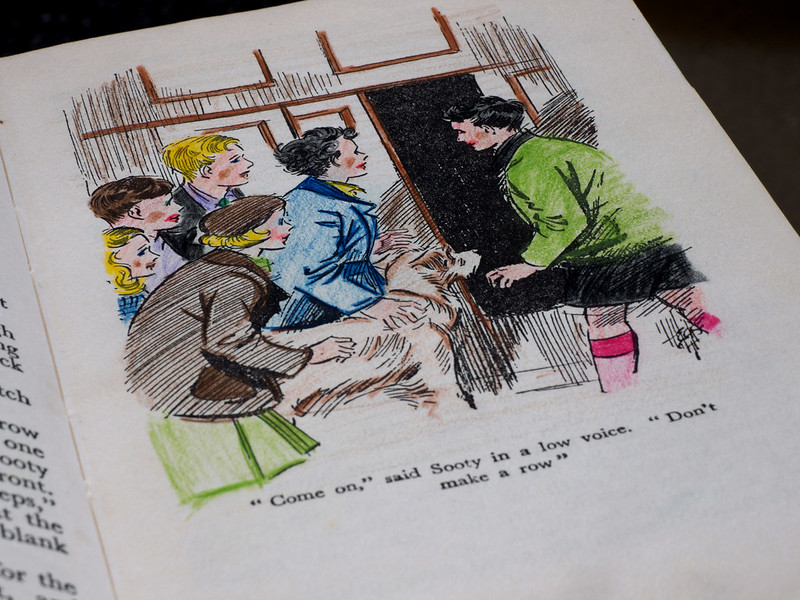
I can’t quite recall how old I was when I read my first book by Enid Blyton, though I remember the book itself: Five On A Treasure Island, the first in her Famous Five series of mystery novels which feature an eponymous group of four adventure-prone children and their beloved dog. Perhaps the best-known of her many series, The Famous Five was my introduction to the works of the British children’s author, who in 2008 was voted Britain’s best-loved writer—surpassing literary giants such as William Shakespeare, Jane Austen, and Charles Dickens. When I started reading it, I was instantly hooked, and like millions of others who had found themselves captivated by her gripping plots and beloved characters, Blyton quickly became my favorite author. From that day forward, I was rarely seen without a copy of one of her books—I carried them everywhere with me, stuffing them into my backpack before school and stowing them in the back seat pockets of my parents’ cars so that I would never find myself without a Blyton close at hand.
Like many writers, I was a reader from the moment my arms were strong enough to hold up a book on their own, and Enid Blyton’s stories marked some of my earliest forays into the world of chapter books. The charm that Blyton’s books held for my childhood self lay, in large part, in the fact that they spanned across a wide range of genres—her mysteries and adventures occupied a permanent place on my shelf right next to her school stories, with a healthy dose of fantasies and fairy tales sprinkled into the mix as well. As a child, I had always used books as a way of escaping into different worlds, and her books provided me with no dearth of worlds to choose from. Beyond their seemingly endless variety, however, her stories also tended to feature characters who were around my age. This meant that as I read, I was able to picture myself taking part in the action alongside her juvenile protagonists, sneaking out of boarding-school dorm rooms for illicit midnight feasts or rowing boats out to sea to investigate gangs of smugglers hiding in ruined island castles.
Less attention has been paid to the more insidious facet of her popularity—the enduring legacy, more than half a century on, of British colonialism.
In many ways, my childhood love for Blyton’s stories can be traced back to the fact that even her most thrilling adventures started out in unremarkable English villages that just as easily could have been my own home town, their quaint stone houses and neatly-arranged gardens closely mirroring the manicured lawns and cookie-cutter McMansions of the sleepy suburb where I grew up. These idyllic small towns were inhabited by ordinary children whose lives were no more inherently exciting than my own—save, of course, for the hair-raising adventures that they somehow managed to stumble upon whenever they came home from school on holiday. If these children could go on adventures despite their painfully ordinary lives, I figured, then there was no reason why I couldn’t do the same, and my fanciful mind quickly began to conjure up secret passageways hidden in our coat closets and fairy houses tucked away under the rose bushes in our garden. Blyton’s stories fed my overactive imagination and taught me to view the world around me with a wide-eyed sense of adventure, lending a fantastical air to an otherwise mundane suburban upbringing.
Born in South London in 1897, Enid Blyton published her first book, a collection of poems entitled Child Whispers, in 1922. Over a period of nearly five decades, Blyton published more than 600 books and quickly established herself as a giant of British children’s literature through beloved series such as Noddy, The Famous Five, The Secret Seven, and Malory Towers. To this day, she remains among the most beloved children’s authors in British history, her books having sold more than 600 million copies. In the decades since Blyton’s death in 1968, however her work has increasingly come under fire for what many perceive to be racist, sexist, and otherwise offensive attitudes, ranging from antiquated gender roles and crudely-stereotyped nonwhite characters to the casual use of explicit racial slurs—the original edition of one Famous Five story describes the character George, after climbing down a train shaft, as being “black as a n****r with soot.”
While these criticisms became much more widespread in the 1980s and 1990s, prompting publishers to begin revising subsequent editions of her books in order to remove outdated and offensive language, Blyton’s reactionary views were not immune to condemnation during her lifetime. One 1966 column in The Guardian, written by Labor Party MP Lena Jager, sharply criticized racist themes in Blyton’s story “The Little Black Doll,” in which a doll named Sambo is accepted by his owner and the other toys only after his “ugly black face” is washed off by a shower of “magic rain.” Even her own publisher Macmillan, in an internal review of her manuscript The Mystery That Never Was (which they subsequently rejected), criticized the book for “a faint but unattractive touch of old-fashioned xenophobia in the author’s attitude to the thieves,” whose “foreign” nature “seems to be regarded as sufficient to explain their criminality.”
The controversies surrounding Blyton’s work have gained renewed attention in recent years, as the United Kingdom—like the United States—has started to undergo its own long-overdue racial reckoning. In 2019, the Royal Mint scrapped plans to issue a commemorative coin honoring Blyton, fearing potential backlash over the author’s “racist, sexist and homophobic” views, and last year, English Heritage—a charity which manages over 400 historic sites across England and administers London’s famous blue plaques, which mark places that have links to significant historical figures— acknowledged Blyton’s racism for the first time, updating its website to note the criticisms that her writing received both “during her lifetime and after” for its “racism, xenophobia and lack of literary merit.” This recent spotlight on Blyton’s personal bigotry, which she did little to prevent from seeping into her stories, has sparked a debate in British literary circles over the appropriateness of her enduring popularity. Less attention, however, has been paid to another, arguably more insidious facet of her popularity—the enduring legacy, more than half a century on, of British colonialism.
Although her stories occupied an outsized place in my early childhood, not one of my American peers growing up had any idea who Enid Blyton was—nor did they care. When, in elementary school, I purchased a boxed set of the Malory Towers series during a family trip to India and proudly donated it to my school’s library—an act of literary philanthropy that, in my mind, made me the second coming of Andrew Carnegie himself—I was disappointed to watch the books remain untouched on the shelf, gathering a thin layer of dust as my classmates ignored them in favor of other, more familiar fare. I quickly realized that, as the sole Indian student in my class, the only reason I knew about Enid Blyton at all was because I had been introduced to her by my parents, who had themselves been raised on her stories while growing up in India.
I was aware from an early age that colonialism was a violent and exploitative institution which had robbed my mother country of incalculable wealth and innumerable lives.
To this day, Blyton remains immensely popular among Indians who, like my parents, grew up reading her. She consistently ranks among the top-selling children’s authors in India, and the managing director of Hachette India, which distributes her books in the subcontinent, told the BBC that “Blyton is one of the few author brands whose work remains unshakable.” Despite rarely, if ever, appearing on bookstore shelves in my hometown, Blyton’s books were always widely available in India, and whenever we visited our family in Bombay I would stuff my already-overflowing suitcase with copies of her books that I bought by the armful from the Crossword bookstore in Kemps Corner. During these outings, I never once stopped to ask how her books had gotten there in the first place.
As a child, I never gave much thought to the subtle vestiges of British influence that occasionally asserted themselves in conversations with my parents, popping up every now and again in the inflections of their accents or the way they spelled certain words. I knew that nearly every aspect of the world they had grown up in, from the trains they rode to the schools they attended, reflected similar influences in one way or another, the result of two centuries of British rule over India. The fact that they, like millions of their peers, had grown up reading British authors like Enid Blyton seemed to me to simply be yet another example of this influence, and I therefore paid it little mind. Though I was aware from an early age that colonialism was a violent and exploitative institution which had robbed my mother country of incalculable wealth and innumerable lives, my juvenile understanding of colonial violence had not yet extended to encompass its less overt manifestations—the subtle mechanisms of cultural hegemony, such as the enduring adoration of a white author by millions of brown children, that enable and reinforce the violence of a colonial regime.
Blyton’s stories presented me with a world in which I had to subconsciously whiten myself in order to fit in.
Commenting on Blyton’s lasting popularity in India, Indian journalist Sandip Roy wrote in the Times of India that “she colonised us with crumpets and make-believe.” (Note, in Roy’s description, the British spelling of “colonized”—an irony so delicious that it could merit its own essay.) Captivated as I was by Blyton’s stories, my childhood self was not immune to this literary colonization, and I eagerly devoured her sanitized descriptions of British childhood. In a haze of Anglophilia that must have caused my freedom-fighting ancestors to spin in their graves, I wished for nothing more than to have been born British, to occupy the ginger-beer-soaked world of midnight feasts and countryside picnics that filled the pages of Enid Blyton’s books.
Blyton’s was a world of prim boarding schools and sleepy English villages, where lily-white children with monosyllabic names ate meat pies and tinned sardines rather than the heavy, spice-laden Indian meals that filled my family’s dinner table each night. Even as I imagined myself growing up alongside her protagonists, it never occurred to me that I, with my brown skin and Indian name, would in all likelihood have been shunned as an unwanted intruder, or at the very least regarded with haughty suspicion for my supposed foreignness. Adding to this postcolonial irony was the fact that the England I longed to inhabit, represented so idyllically in Blyton’s books—most of which had been written nearly a full half century before I was born—no longer existed, making my misplaced nostalgia for the Britain of the 1950s not unlike that of the flag-waving, jackbooted ultranationalists who, to this day, fight tooth and nail to keep people who look like me out of “their” country. Rather than giving me a world in which I could truly see myself, then, Blyton’s stories presented me with a world in which I had to subconsciously whiten myself in order to fit in.
As a child, however, I remained blissfully (and perhaps willfully) oblivious to these uncomfortable realities. Instead, I immersed myself uncritically in Blyton’s works, allowing my love of her writing to lay the foundations for a misguided Anglophilia that lasted into the early years of high school, spurred along by an adolescent pretentiousness that equated all things British with elegance and sophistication. Enid Blyton was just the gateway drug—the floodgates having opened, I began to eagerly seek out any and all of Britain’s many cultural exports. Sherlock Holmes, Downton Abbey, Jane Austen’s novels—if it was stamped with a Union Jack, I couldn’t get enough of it.
I still can’t seem to shake the warm, nostalgic comfort that I feel when I think about those stories.
Throughout all of this, I never sought to deny the painful history of British colonialism—instead, I simply chose to look the other way, putting it out of my mind in favor of more comfortable, depoliticized aesthetics. It wasn’t until I got older, and my nascent left-wing sensibilities had finally begun to develop from an ill-defined patchwork of amorphous principles into a more coherent, systemic political ethos which held anti-imperialism as one of its central tenets, that I began to confront these questions for the first time. What did it mean that as a child, having never learned my mother tongue or expressed much interest in connecting with my roots on any meaningful level, I felt more connected to the art and literature of my people’s colonizers than that of my own culture? What did it mean that this author, so beloved not only to me but to my parents, and to millions of their fellow countrymen and women, was a household name in India solely because of colonization’s far-reaching legacies? And what does it mean, even knowing all that I know now, that I still can’t seem to shake the warm, nostalgic comfort that I feel when I think about those stories?
My feelings towards the nostalgia that Enid Blyton continues to inspire in me are, predictably, complicated—colonial legacies notwithstanding, it is highly unlikely that without her stories I would have ever developed the all-consuming love of reading and writing that has since come to define me. These complicated feelings appear in some ways to resemble those that many people who grew up reading the Harry Potter series, to which many similarly attribute the genesis of their own literary passions, have had to grapple with in recent years, as J.K. Rowling’s transphobic bigotry has become increasingly difficult to ignore. Rowling is arguably the first and only British children’s author to approach the levels of adulation and name recognition that Blyton has long enjoyed, and like Blyton, she too has come under fire in recent years for her trans-exclusionary views, forcing millions of people who grew up on her books to suddenly reckon with this newly-unearthed dark side to their childhoods.
To simply abandon nostalgia altogether in the name of dearly-held principles is far easier said than done.
The controversies surrounding Enid Blyton and J.K. Rowling, though different in many ways, both raise important questions about the limitations and pitfalls of childhood nostalgia. For most of us, immersing ourselves in nostalgic reminiscence is the only way we know how to revisit and relive the joyful simplicity of childhood, when everything made sense (and that which didn’t, we simply chose not to bother ourselves with). In the process, we tend to romanticize those touchstones of our younger days—the books we read, the movies we watched, the songs we listened to—that stick out most prominently in our memory, even years later, and we project onto them an additional (and perhaps undue) degree of symbolic significance. But what happens when these touchstones, and the people that created them, cannot easily be separated from movements, ideologies, and institutions that are diametrically opposed to everything we stand for? What happens when they cannot be separated from social ills that affect not only us, but the people we love? To simply abandon nostalgia altogether in the name of dearly-held principles is far easier said than done, and doing so does not erase the fact that, regardless of our values or principles, these touchstones played an integral role in shaping us into the people we are today.
Unfortunately, I don’t have the answer to any of these questions—I don’t think anyone does, which is precisely what makes these questions burn so intensely in the first place. The fraught touchstones of our childhoods are just one small facet of a much larger reality—the reality that we have all been shaped by a world over which we never had any real control, by people and places and cultural artifacts that may have dark sides as well as nurturing ones. Perhaps there is some comfort to be found in the apparent universality of this experience. Whether our cherished childhood memories involve reading The Famous Five or Harry Potter under the covers with a flashlight, watching The Cosby Show with our families on Thursday evenings, or listening to Michael Jackson and Eric Clapton on our parents’ car stereos, few of us have managed to come of age without having to confront, at one point or another, the painful realization that some aspect of our childhoods was not as innocent as we once believed it to be. Maybe that’s what growing up is all about.
The first time I felt possessed by a fantasy series, I was fifteen. It was 2004, and from my family’s small computer room, I spent the after-dinner hours in a web forum devoted to NC-17 Harry Potter fanfiction. This was the same room where my brother had constructed a secret liquor cabinet from the wood paneled walls, and that later witnessed my sister pulling ill-advised all-nighters on World of Warcraft.
This room knew secrets, and it held mine too: “shipping” is the act of believing in a relationship between two characters, whether or not the relationship is canon, and I was a major Drarry (Draco/Harry) shipper. I also lied about my age to strangers on the internet. “18/f/nyc,” I typed from the room that overlooked a cornfield, and later “hey I’m bi,” as I uploaded an upskirt photo to a secret Photobucket account that was intended for Steve’s eyes, an older man who never discussed Harry Potter with me. The biggest secret? I was not typing “I’m bi” for attention. I genuinely felt attraction to girls—but that attraction remained a tightly held secret for some time. A 150,000 word saga about Harry and Draco in their sixth year was the centerpiece of all the fics that consumed my emotions; in the story, the boys were bickering opposites, then lovers, and then Harry died in Draco’s arms. I touched myself during the spicy moments; I sobbed when Harry died. This fic was my ticket to the galaxy of teenage euphoria and despair—not The Notebook, which was spinning a similar emotional journey out of my peers that summer.
Unlike the heteronormative confines of the Wizarding World, the subjects of my affection appear to have the hots for each other.
I listened to “Something Vague” by Bright Eyes on repeat as I combed the final pages again and again, chasing the rhapsody that I felt during the first read. I printed it, hoping that a paper vessel would deliver Harry’s death and Draco’s love like the first time. Predictably, the high faded with repetition (as did the thrill of having Steve’s attention). I wedged the booklet in between yearbooks and forgot about it; when I searched for it before leaving for college, intending to throw it away as I had my interest in the forum, it was gone.
Eighteen years later, fantasy fandom has circled back like a moon orbiting its planet. But this time, unlike the heteronormative confines of the Wizarding World, the subjects of my affection appear to have the hots for each other.
I will admit that I have been woefully ignorant of animated series that feature queer or queer suggestive characters. I got bored during “Steven Universe.” I did not finish “Q-Force.” I have never seen “She-Ra” or “Harley Quinn” or “Legend of Korra” or “Princess Bubblegum,” and I am sorry.
But I did watch Arcane.
Arcane is an animated series based off of the League of Legends game. It was recommended to me during a work meeting by a CGI artist who called it “the greatest animated series of all time.” I have recently begun to write for a project that may evolve into animation, so I added it to the top of my watch list, for research purposes.
The camera pans to reveal more: Vi’s back, now covered in tattoos, ripples under her prison tank top with every blast of her fists.
The first three episodes explore the social dynamics of a motley group of orphan hacking it in a gritty steampunk slum known as the “Undercity.” Their leader is Violet (Vi), a resilient teenage brawler charged with keeping her little sister and friends safe from various threats. It played like a satisfyingly entertaining education that I viewed casually. I expected to finish, take notes, and forget.
I, a member of the General Audience (read: n00b), did not connect that the kids on screen would grow up to be the fighters known in League of Legends; I had no idea that the beginning of the series was just the first act, an origin story of an origin story, and I was subsequently floored by the seven year time jump introduced in episode four.
I watched on a Friday night while I had the house to myself. The fourth episode closes by following Caitlyn, a young and curious enforcer (cop) from the wealthy metropolis Piltover, as she chases a lead in prison. To her dismay, the inmate she seeks had been knocked out by another. Caitlyn pursues the offender, intending to interrogate them. As Caitlyn descends in an elevator, we look up at a pair of forearms—clearly belonging to Vi—as they punch the wall, knuckles bleeding through the boxing wraps. The camera pans to reveal more: Vi’s back, now covered in tattoos, ripples under her prison tank top with every blast of her fists. Do you see where this is going? She is combustive, angry, and so fucking hot.
I have not mentioned that this show is Euripidean in its level of tragedy and attention to female characters.
We see the full revelation of adult Vi through Caitlyn’s eyes as she approaches the cell. Vi turns to profile at the sound of Caitlyn’s footsteps, her butchy side shave catching the dim prison light. Her gray eyes smolder as she growls, “Who the hell are you?” and then the credits roll.
I did not continue watching; my wife had returned from the Bad Bunny concert, and I suddenly felt very private about the show. Vi and her tattoos burned behind my eyelids at every restful moment. We crush on actors all the time, but this was not the feeling of appreciating Rachel Weisz’s pillowy lips—I sensed that the revelation of older Vi was a gateway to obsession. Fandom was calling.
Surreptitiously I typed “vi hot arcane” into my phone and saw, first, a Reddit poll: “Is Vi in arcane hot?” The answers were mostly from guys discussing the thrill of being punched during sex. I took to Instagram with the same query and gasped: after swiping through portraits of Vi, I landed on a drawing of Vi and Caitlyn seated on a couch, depicted in the lesbian uniform of a white tank top and athletic shorts. Caitlyn cuddled in the gap of Vi’s legs, cupping Vi’s cheek and whispering a line that the artist Jun (@lettucine) had left intentionally blank.
Everything clicked in that moment. The prison scene was a meet-cute, and they were bound to be a perfect opposites-attract relationship—my favorite kind of pairing. I held back from scrolling further, sensing spoilers, but the expectation of this romance held me in a cloud of euphoria all weekend.
You’re hot, cupcake.
This is the iconic line of episode five, if not the entire season. Vi says it to Caitlyn at a brothel, officially heralding the beginning of a slow and low queer romance that bubbles like an aphrodisiac throughout the season’s drama. The pair is exquisitely matched, down to their color palettes—Vi, all reds and pinks, is the action-driven heat to Caitlyn, whose cool intellect is reflected in her navy hair and cerulean gaze. Vi fights with her fists, Caitlyn with a long range rifle. They are divided by class but united by their fighting prowess and their care for one another.
Their chemistry crackles. And they never kiss.
When I finished the final episode, my brain felt fuzzy. My stomach had dropped to my loins and my jaw was on the floor by the screen. I have not mentioned that this show is Euripidean in its level of tragedy and attention to female characters, and I was as torn up by certain character arcs as I was turned on by #CaitVi. It was the same roller coaster of emotions that I felt with my little gay wizard drama in 2004.
In the week that followed, I was plagued by constant, lusty nerves that curbed my appetite and wrecked my sleep. I was never fully present in the corporeal realm, betraying my normie façade every time I stole empty conversation space to ask a new victim, Have you seen Arcane?
As I shuffled my unrequited fervor to Archive of Our Own, I felt the thrill of having a secret, but it was not 2004. My mother would not punish me as she did when she found my purple notebook filled with my first attempt at writing smutty fanfic, she could not flip through the senseless throbbing and wet, their fingers laced on the desk, clunky sex scene smudged with pencil, would not question my innocence and sanity and determine that I needed to lose access to the internet for the rest of the summer.
This time, though, I was not fifteen and looking over my shoulder. I am in my thirties, which is more concerning. Twitter is the primary hub to participate in fandom, and I have a public facing profile attached to my job. Most people, including my wife, think of fanfiction as weirdo fodder. I hesitated to plant my freak flag publicly—how would my followers react when their timelines started populating with internet strangers slavering over a pair of cartoon lesbians?
I did not want to give in to shame, but outing myself as an extreme fangirl felt like brand diversion. I could only justify having an anonymous account if I engaged with NSFW content.
I exulted in the results.
Arcane gave queer fandom the gift of mystery. Fans have lamented that Violet and Caitlyn never shared a kiss in the first season, but I see it as a blessing in disguise that there is no canonical authority on the details of how they first get physical. Technically, homophobes can make a case that they are just “good friends,” (despite writer Amanda Overton confirming that they are queer), and, as a fanfiction writer, there is no prompt like having something to prove.
If someone asked me to choose between being a breakout star in the #caitvi circus, or signing with a literary agent, I would have chosen the circus.
Until season two of Arcane hits the screens sometime in 2023, fans get to be the authority on Violet and Caitlyn’s relationship. The show’s fanbase and I are in a golden era of waiting, existing in that sweet spot of having some information but not too much; we can paint a next chapter in which all things are plausible.
Search #caitvi on Twitter and you will be flooded with talent, renderings of the duo cuddling, ordering fast food, partying poolside, raising a child, having inventive sex, wearing matching blazers, and more. You might stumble on a retweet of a fic thread that throws “The words shock a gasp from Caitlyn’s throat,” on your phone screen before you can retreat to privacy to read the whole dribble.
To participate in fandom is to alleviate the blazing desire to be a part of the world itself. My #arcanebrain was a rotting dollhouse and I needed to make the women play together, take some ownership of the drug that was consuming me. I am a better writer now than I was at fifteen. I knew that I would need to write an Arcane fic, and it would need to be steamy, or I would never be free.
I shirked responsibility for three full days as I imagined a perfect afternoon for my beloved players, working through the logistics of their joining bodies like kneading tough dough until the sex scene rolled smoothly, elevating my own blood pressure as I read it back to myself. I published to Archive of Our Own and waited, expecting to be celebrated for my offering. It wasn’t until I noticed the attention that other fics garnered—30,000 hits, 10,000 kudos (Archive’s version of a “like”)—and compared it to my lukewarm reception that I understood the elite craftsmanship, and competition, that runs through Arcane fandom.
That day,if someone asked me to choose between being a breakout star in the #caitvi circus, or signing with a literary agent, I would have chosen the circus.
After a few weeks, I started to feel a healthy detachment from my recent infatuation. Unlike my teenage attempts to reproduce the feeling of a first read dopamine hit, I withheld from rewatching the series in one fell swoop. Having revealed the depth of my obsession to my wife, she graciously agreed to watch the show with me, but we went at her pace: low and slow, like Violet and Caitlyn. When we got to the fifth episode and the famous cupcake line, I whipped my head in her direction. “See! See! So hot. So gay.” She rolled her eyes. Dork.
To participate in fandom is to alleviate the blazing desire to be a part of the world itself.
Later, I asked who her favorite characters were. “I just love that little Powder. And Ekko,” she said, and I grinned inwardly. Powder grows into Jinx, a fan favorite antihero who processes her trauma by terrorizing the population. Ekko is also a rebel, but unlike Jinx’s proclivity for destruction, his efforts are rooted in a desire to protect his community. A whole corner of Arcane Twitter is devoted to pairing them as lovers, but I kept that information to myself. Fandom is not for everyone.
Having taken a step back, I am inspired to lean into some other sapphic possibilities now, characters with nothing but queering potential. One of Vi’s nemeses is Sevika, who is older, butchier, and meaner. Sevika was not given a love interest, save for her loyalty to her boss, the season’s villain. When Sevika and Vi beat the shit out of each other, it feels like two dykes fighting for dominance, but we can only make assumptions about Sevika’s identity.
I, for one, believe she partakes in gay sex, and I will not be free until I add another piece of blessed smut into the dirty playground that is Arcane fandom. This time, I might post the link to my regular account and, as Dido once proclaimed, go down with this ship. Why give in to shame for cultivating queer love?
“Memory is an unannounced visitor. It lies crumpled in some corner of the body, then suddenly knocks on the door of reality and makes you scream.”
So states Kyung-sook Shin’s novel, Violets, translated by Anton Hur. Violets centers on Oh San, a young woman struggling with her memories, her desires, her voice and body amidst the uncaring world of 1990s Seoul.
Scarred by a childhood intimacy gone awry, San moves to Seoul and stumbles into a job at a flower shop. There, she begins finding stability through her friendship with a female co-worker, and a sense of peace in her burgeoning relationship with plants. However, after an encounter with a flirtatious photographer, her life splinters and breaks apart. As San flips through an English-Korean dictionary, the word “violet” morphs quickly into “violator.” Violets similarly probes at the painful fissures between the internal and the invasive, desire and violence, voice and silence. Hur’s translation is sparse yet fluid, the prose evoking both the gritty loneliness of a big city and a timeless, almost surreal atmosphere.
Flowers were bursting into extravagant life all around me, as I read Violets in March. I went for a walk in the rain after I finished. When I saw violets in the cracks of the sidewalk, petals tearing up with raindrops, I started crying and could not stop. Months after March, the novel’s last image of Oh San still haunts me. Echoing what Kyung-sook Shin said in our email interview, I hope that others will also take the time to listen to San’s voice.
Translations for this interview are done by the interviewer Jaeyeon Yoo with thanks to Incheol Kwag for helping edit and proofreading.
Jaeyeon Yoo: What is the role of nature, both in Violets and in your own writing in general?
Kyung-sook Shin: Violets features a flower shop in the middle of the city and a farm in the suburbs. These two spaces are interlocked with one another. Going between the flower shop and the farm, the protagonist comes into contact with plants. I hoped that these plants would soothe the protagonist’s alienation and loneliness. In order to do that, I myself had to know the details of the farm and the flower shop; so I got hired and did some work, which was a big help. And because I spent my childhood in the country, I tend to have an affinity for nature. These [experiences] became the foundation of finishing Violets.
JY: I still feel Violets to be just as relevant today as it was at its original publication in 2001 and Oh San’s life in the 1990s. Is there something you’d like to add, when considering Violets in 2022?
To live as a woman in Korean society is to still be exposed to so many kinds of discrimination and violence.
KS: Since I’ve written this book, many things in Korean society have changed, both economically and politically speaking. The position of women has also changed, to some extent. Despite this, to live as a woman in Korean society is to still be exposed to so many kinds of discrimination and violence. They say that, comparatively, we have improved a lot from the past. But I think that society needs to change so that the daily reality of being a woman—whether it be female desire or parenting—should feel protected, instead of being discriminated against.
I [also] think the sisterhood between women is extremely important. Especially in Violets, the solidarity between women is also the solidarity of the weak. They prop up and pull on each other’s lives. Therefore, when that solidarity breaks, the damage is immense. Traumatic events happen to an individual constantly, but they are quickly swept away without being noticed [as what happens to Oh San]. I think that this is the heartless life of modern people.
JY: Given this context, I found Oh San’s desire to have a voice (through writing) all the more poignant. What do you think about the connections between language and violence, and/or language and hope?
KS: Even if you are not a writer, if you can express yourself in your own words—you start striving to protect your own language. There is probably no one who hopes that their own voice will become colored by violence. I view this, the act of protecting your own voice, as hope.
JY: Violets also reminded me of how philosopher Susan Sontag formulates photography as an inherently violent art form, in which the “camera is … a predatory weapon.” I was struck by how Oh San fell for a photographer, someone whose job it is to observe and “capture” others in pictures. I wonder if you have more to say on the everyday act of being observed, as a woman.
Memories have the ability of being transformed at will, by the person who wants to remember them.
KS:Violets is from the perspective of a camera looking down, taking a photograph from above. This was an intentional gesture. The appearance of the photographer is an extension of that perspective, as is the gaze of the construction crew observing the women playing badminton. Even Oh San’s hidden love and desire become observed by someone, and ultimately leads to violence. In the first part of Violets,I focused on the loneliness that comes when an individual’s uniqueness is not preserved, but instead subjected to scrutiny and broken down. Modern life is not made of intimacy, but of being observed by others.
JY: Memory is a noticeably unreliable concept in Violets, not only for Oh San as the narrator but also in how the verb tenses and points of view shifted throughout. Could you speak more about the role of memory?
KS: Memories have the ability of being transformed at will, by the person who wants to remember them. Each person will remember differently, depending on the mood, time, place, and position when the memory is formed. If three people went through one event together, their memories should be the same, but they are all different. Even as this liquidity causes countless misunderstandings, I think life is ultimately completed by our accumulation of memories. This is why memory is precious to me. To keep proving that my memory is close to truth, perhaps that is also what writing is.
JY: I was struck by how you imbued such vivid character into Oh San’s surroundings. The flowers and minari field felt alive, but so did Seoul—with the details of the Italian restaurant, the “long room,” the crowds at night. Could you talk more about the setting of Seoul in the novel?
KS: When I read France’s Patrick Modiano or Japan’s Haruki [Murakami], I have this urge to go see the streets where their protagonists stroll. The street featured in Violets is the street that I lived on during my twenties, and the street that leads from Samcheong-dong to Gwanghwamun [the largest gate of Gyeongbokgung Palace] Jung-dong. I wanted to make my readers want to walk this street, so I described the street that Oh San walks with great detail. Then, during this process, I started to again see the lives of the people who walked that street, and this heavily influenced the novel.
JY: The beginning of Violets is almost surreal, as if we are being told a fable we should know already. You also use the myth of Io within the novel, when describing how violets were created. And then there is the foreshadowing throughout. Do you have more to say about the idea of fate that’s invoked by this tone of fable/myth?
KS: By borrowing the myth of Io, I hoped that the anonymous life of Oh San would be expanded with different symbolism. I wanted to say that this woman didn’t suddenly appear out of nowhere, that this has been passed down through generations. “Destiny” or “fate” is what we call things that we cannot decipher. But even if it cannot be deciphered, I think that destiny is ultimately what you decide in your unconscious.
JY: Any other thoughts you’d like to share?
KS: I wrote this in the author’s note, but a violet is a very small flower. It’s a flower that you won’t even know is blooming, if you don’t look closely. The first sentence of this novel is: “A little girl.” I hope you will listen to this little girl’s dreams that could not blossom, and the broken desire that she held close.
I don’t know how long I had been dead when the girl found me. Long enough that my bones had gone dry and sunk into the earth part way; and that animals now gave me only a cursory sniff; and that my skull was white and wind-shined enough to catch her eye.
She didn’t have to dig me out, but she did. And it turned out, I still mostly fit together. At first I wobbled hopelessly, more like a newborn fawn than a long dead fellow. It made her laugh. The wind felt tickly in my vertebrae. I clinked lightly.
The more we walked, the more I remembered how it felt to stand upright. It is, after all, what bones were made for. I strode with surety. I smiled with all my teeth. I bounced my patella from knee to knee like a ball. She laughed. She held my hand softly in hers.
At nightfall, she took me to the edge of the forest, where her house stood aglow across a darkening lawn. She said I’d better not come inside, but asked if I would wait for her. I don’t think she understood how very little else there was for me to do in death. So I agreed and she nestled me back into a thicket for the night, curled up with the foxes. I did so happily; I watched the owls come and go all night and didn’t even need to dream.
The next morning she came back for me and we lay in the meadow, under a sun so warm I could almost feel it. I told her about the raccoon that had carried off my ring finger during winter—not a great story, I know, but death had been uneventful lately. She looked at me with pity and touched the nub of empty knuckle and, well, needless to say, no one had ever touched me quite like that.
She was lovely, with eyes so alive, cheeks so round and flushed with warmth. At this point, you may want to hear that she was just like a girl I’d loved a long time ago, when I was alive, but the truth is I couldn’t tell you.
When she kissed me, sweetly and clumsily, for the first time, her teeth clunked against mine. She insisted it was okay, cute even, but I was unsure of the way they wiggled loosely in my jaw. I didn’t want to scare her away. She gripped my hand and told me she had never felt this way before.
She wanted me to meet her friends. She wanted me to go to a dance. I would have to meet her parents.
The suit was borrowed from her brother. It hung loosely off of me. Her father stiffened when he saw me, shuddered when he shook my hand. “If you hurt her, I’ll . . . well . . . ” Her mother straightened my tie and pushed us closer together, camera in hand. “Smile,” she instructed. Hers faltered when I did.
We rode in the back seat of her brother’s car, our hands resting together on the seat between us. I watched out the window as the world flashed by. The speed made me dizzy.
The dance was held in a high-ceilinged gymnasium. All around us, others whispered and pointed, and her friends spoke too loud and too fast. But when we danced, her head rested warm on my clavicle and pinpoints of colored light spun across the ceiling like the greatest night sky I’d ever seen. We swayed and we swayed until her body was damp and alive with sweat against mine. Yes, I suppose I was in love then.
She wanted me to stay in the house. Her bedroom was out of the question, so they settled on a box in the garage. It was not so bad. During the day, I waited for her at the edge of the school yard. Other girls would stare at me, whisper to each other, wave hello and then giggle. She told me they were jealous, and they thought I was mysterious. Her lovely, soft face flushed with excitement as she told me. I put my arm around her shoulder and she clutched my rib cage as we walked.
After school, she’d bring me upstairs to lie on her bed while she did homework and argued with her mother about the inches in the door. She played music over the clinking of our teeth. In the evenings, I sat, upright and silent, through dinners with her family. I sat on the couch, her draped over me and a blanket draped over her, my hands laid carefully in her father’s line of sight. The television cast blue and yellow light that glinted off my carpals, her hair.
One night, at last we were alone in the house. She was flushed and nervous in the dark, her whispers insistent. I was afraid my edges might be too sharp and I tried to keep my hands still, but she pressed them into soft places. She panted and pushed against me but I was afraid—of hurting her and of disappointing her. Afterward, she lay her head on my chest and that was the part when young lovers usually talk about heartbeats, but of course, I, well. . . .
In the silence, she asked instead how I had died but I couldn’t recall. This disappointed her, I remember that much. I lay and watched the fan whir overhead and wanted to open a window, to feel the night air.
She asked me not to walk her home from school anymore. We still lay in her bed in the afternoons, or in the sunny grass in the yard. Sometimes, though, she had other things to do. Sometimes she left me for days at a time. I didn’t mind at first. It is not hard for the dead to pass the time.
But even when she let me in, it wasn’t the same. She wanted to know why we didn’t talk more, why I didn’t tell her things. I couldn’t explain how I remembered my life the way one remembers a dream, that is, hardly at all. I couldn’t explain how little I had to tell her. It may surprise you, but it’s very hard to be interesting when you are only bones.
In those days there was something living under my ribs. It kept me up at night with its scurrying. I knew that other boys had noticed her now; I could imagine how they flexed thick arms and talked among themselves, about all the things that they possessed and I did not.
And then, there was the party. She sounded impatient when she asked me. But she clutched my hand and ran her thumb over my missing knuckle, warming it as we walked. Her moon pale legs gleamed and fireflies blinked around us. I caught one in my hand like a tiny cage; its glow flared and faded, gold against my bone fingers. She kissed me—looking back, maybe that was the last time.
The sounds of the party drowned out the thrum of insects before we saw it. A boy’s parent’s lake house, she told me breathlessly, a junior. He invited her himself, during third period. Inside, the heat of young bodies pressed in like a damp August day. Music throbbed through my jaw. Her hand was still in mine; I clung to it as she led me into the pumping heart of the room and I couldn’t hear her words as she shook loose and slipped away.
Bodies bumped and jostled me and I thought my bones were unraveling then as I glimpsed her across the room with her hand on the junior’s chest. Some chattering girls pressed in. What was dying like, they wanted to know and, can I touch your skull? How old was I anyway, and how long had I been dead? They were disappointed by my answers, grossed out by my smoothness to the touch. I tried to tell the raccoon story, but they were not charmed.
How long had I been dead? How many cycles of the moon, of the seasons, of the tender cicadas burrowing into and out of the earth all around me? I missed it then, the hug of sun warmed soil, the soft silt between my bones, the stars overhead, and the semi consciousness when time became endless and also nothing at all.
I made my way somehow to the porch. Outside, moonlight fell on the lake. The woods here were thick, and comfortable, rustling with quiet, unobtrusive life.
At some point, she came out and sat beside me, briefly. She said she was going to another friend’s house and I should head home without her. I told her I was leaving, and she said that she was sorry. Then, that’s right, then was when she kissed me last, just quickly, looking over her shoulder. I know that she was lovely. Much more than that, I can’t recall.
Because this was all some time ago, a season or a snowfall at least. Now my bones feel loose and formless and I’m not so sure I would fit together again. A mouse makes its nest where my eye would be, and I can see stars and hear the loons on the lake, and the night creatures come and go, and I don’t expect I’ll be dug up again.
I have always been keenly interested in the history of folk magic, witchcraft, curanderismo, myths, fairy tales, and Jungian archetypes, but as I began earnestly researching my family’s Caribbean heritage and my curanderismo/quimbois roots in preparation to write a memoir, I did what I always do: turn to the books, follow the story. Yet it became clear that while the publishing market is flooded with fiction featuring magical characters or spell and how-to books from Wiccans, cunning folk, curanderos, brujos, and root workers, to name a few, very few nonfiction narratives trace the authors’ personal stories. If you scour the Internet for witchy or magical narratives, you’ll find lists of fascinating novels, histories of the Salem and European witch trials, or pop-culture grimoires, but you won’t find many spiritual or magical journeys in the form of memoir.
As I continue to contemplate what stories my ancestors, many of whom have been subsumed by colonial repression, its anti-Black, racist caste systems and the Catholic Church’s destruction of our African and Indigenous languages and knowledge, I am buoyed by those with the courage to write about their personal journeys, to share their roads toward decolonization and reclamation of ancestral practices as well as the determination to face this world, which our ancestors would not recognize, and make something new, and better from it. So here is a different kind of list, one featuring real magical stories to show us, individually and collectively, different ways to create a new world.
Amanda Yates Garcia’s Initiated: Memoir of a Witch is about her underworld journey toward claiming her birthright as a witch. Her odyssey begins with her childhood in California watching her mother practice her witchcraft and fighting to maintain her individuality amidst abuse and trauma to striking out on her own as an artist and dancer to her true, soul-deep initiation as a witch.
Throughout Yates Garcia’s moving story, she also shares her own hard-learned lessons and teaches us about the history and theory of magical practices and how we can incorporate the real “practical magic” in our own lives. One of the things I admire about Yates Garcia, in both the book and her social media, is how she consistently walks the walk when it comes to being an ally to Black, Indigenous, and people of color in and out of the magical world, as well as welcoming us into her own learning process, which is often a very vulnerable place. You can tune into Yates Garcia’s deep-dive tarot podcast, Between the Worlds, or book a private reading.
Originally published in 1985 and then revised and updated in 2021, Yeye Luisah Teish’s Jambalaya is a critical text for understanding pivotal syncretic religions with deep roots in African and Indigenous spiritual practices but also tracks her personal quest to becoming a priestess of Oshun (and now a respected, revered elder) from her childhood in New Orleans, living across the street from Marie Laveau’s original address, to Mississippi and then later San Francisco. Teish, whose Southern heritage is African and Indigenous, lays out a detailed roadmap to, in Teish’s own words in the author’s note, understanding “the worldview, spiritual culture, and ritual practices of the African diaspora out of the shadow of ‘spookism’ and into the light of accessible spiritual knowledge.”
Jambalaya is definitely a guide to those practices but she stresses, like Yates Garcia and every other author on this list, the need to fight and overcome systemic white supremacy, anti-Blackness, and racism to find the best path forward. Coupled with her personal anecdotes about her life, such as her Black nationalist activism in college, her struggles to practice her faith during moments of illness and doubt, and her personal search for Laveau’s Voodoo in the urban turmoil of 1980s New Orleans that truly make the book come alive and gently guides readers into believing they can be a part of this at-its-heart inclusive spirituality.
Ingrid Rojas Contreras has recreated what a memoir can be for everyone, but especially for the Latinx and Caribbean diasporas, with her stunning book, The Man Who Could Move Clouds, which traces her family’s lineage of Indigenous curanderos in Colombia. Rojas Contreras and her mother both sustained head trauma from accidents that resulted in amnesia, Rojas Contreras as an adult and her mother as a child. With her mother’s amnesia, however, came an awakening talent that traditionally was traditionally only passed through the male line. Rojas Contreras’ grandfather is a hereditary curandero, a folk healer who could move clouds, and he saved his daughter from complete disfiguration from her accident. When she woke up with the ability to talk to spirits and he reluctantly trained her in some, but not all, of their family’s secrets.
Rojas Contreras may not have come out of her own episode amnesia an espiritualista like her mother, but she is still a dream walker, whether that power was always her or awakened by her memory loss. Years later, when her grandfather visits her in a dream to ask for his body to be moved, Rojas Contreras and her mother embark on a powerful, life-changing pilgrimage to Colombia. Rojas Contreras fought to tell this story as nonfiction and with that victory, it gives so many of us in African and Indigenous diasporas a decolonized roadmap to our own stories, and the stories of our ancestors, that have been patiently waiting for a new generation of storytellers to exhume and breathe back into the world.
Though technically a guide to decolonized, activist magic, Lorraine Monteagut is concerned with amplifying the stories of contemporary brujas and brujxs, and threads her own personal story through each section. When I first began my research into ancestral folk magic/healing practices in 2020, Monteagut was one of the first people I encountered. I read an interview with her that led me to her Ph.D. dissertation, which detailed her experience growing up in Florida as part of the Cuban diaspora, her family’s roots in Cuban Espiritismo (there are different sects of espiritismo as a syncretic religion, Puerto Rico also has their own version) along with her experience with shamanic journeying, which was all fascinating and some of it made it into her 2021 book, Brujas: The Magic and Power of Witches of Color. Monteagut is focused on activism, community building, and uplifting BIPOC practitioners, with each section outlining an overarching topic (Magical Ancestry, Spiritual Activism, Bruja Life) and including Monteagut’s anecdotes along with a feature on a different bruja/x and then a how-to guide with magical tips and lists of organizations for learning more about each subject. It’s not only a celebration of individual stories and ancestral/contemporary practices but also a must-have resource guide for the decolonizing practitioner. She is also an active practitioner, tarot reader, and beekeeper.
In September, I had a dream where the spirit of serviceberry (a plant I could not recall ever consciously encountering, in person or in my reading) visited me in dream as a Native man who introduced me to his friend, an artist who works with wood and was frustrated as she attempted a new technique and my dream self knew she needed the wood of serviceberry. Mystified, I researched this amazing plant, which turns out to be indigenous to North America, abundant, and well used by Native Americans all across Turtle Island as a bountiful fruit, medicine, and also a wonderful hardwood for carving. The search led to a powerful essay on the message of serviceberry by celebrated Native botanist and writer, Robin Wall Kimmerer.
I had been meaning to read her bestselling book, Braiding Sweetgrass, for quite some time and this was obviously a strong sign from my ancestors to do so ASAP. Braiding Sweetgrass is likely the book that should begin this list, though it doesn’t simply because Indigenous wisdom, religion, and culture do not interpret the same meaning of or identify with as “magical” in the same way as others may, per se, and it’s important to be respectful. However, animism and the practice of reciprocity with the earth as mother are the foundation for any meaningful magical practice. The white-supremacist view of Native spirituality as mysticism and something to be exploited, belittled, and commoditized is always a something to be wary of, but Wall Kimmerer’s writings and work as botanist, teacher, and elder gardener, are so essential and all encompassing of how we must shift our worldviews and allow Western science and Indigenous knowledge truly marry to find the new way forward. Wall Kimmerer has spent her life listening to and learning from the plants, trees, and land, and shares through her personal life experiences what she has learned of their language, of their inherent gift giving that when we truly reciprocate back, will lead us to healing and reclaim the original instructions for all life to thrive together.
As Wall Kimmerer argues for Western botany and Indigenous knowledge/practices of land and plants, so Elena Avila argues for Western medicine and cuaranderismo practices to unite, as well. Avila, a widely known and respected curandera from my part of the world, the Southwest and Borderlands, wrote the now-canon Woman Who Glows In the Dark with Joy Parker in 1998 and I had been walking past it on my mother’s bookshelves since I was in my late teens as it called to me, always in the back of my mind, but I had other concerns, until I finally began this particular journey of my own about three years ago.
Avila grew up in El Paso and comes from a family of curandero and always yearned to be an artist but was also as a child deeply called to the spirit of curanderismo. She went to school to become a psychiatric nurse, but was called upon to teach and share her then-small knowledge of traditional curanderismo, a syncretic healing practice that combines Spanish, African, and Indigenous medicinal and shamanic traditions, and felt constrained by the strict separation of body and spirit in the U.S. medical system. Woman Who Glows In the Dark is Avila’s journey to becoming a Curandero Total, a healer who “employs all four the of the levels of medicine as described by [her] Aztec teacher, Ehekateotl: education, bodywork, medicine, and sacred tools.” It is also a comprehensive practical guide in Aztec curanderismo, complete with Avila’s stories of personal healings she had performed over nearly two decades. It is a book that requires one to approach with open mind and heart, as well as respect, for if the call to curanderismo is sleeping within you, to find your own teachers and walk the path, Woman Who Glows In the Dark will awaken it.
China Galland’s Longing For Darkness: Tara and the Black Madonna also isn’t in the most specific terms a magical narrative but I actually found it enormously helpful in my research into the divine feminine, which many magical practices hold sacred and whose histories have been subsumed by the patriarchal religions. Galland’s book, which was first published in 1990 and focuses on her experiences in the 1970s and 1980s, centers on her search for a spiritual place amongst a white-supremacist patriarchal society and its religions. A white woman from Texas, she grew up Catholic, married very young and when she inevitably needed to leave a bad situation, she faced the prospect of having to leave her religion if she could not procure an annulment, which is a very difficult thing to do in any circumstance, but especially if one has no money or leverage.
So Galland broke with the church and became a student of Buddhism but still yearned for a more feminine place in the religion, which, in the midst of battling alcoholism, she discovered the Black Tara, Buddhism’s first female Buddha. Galland then goes on an intense search that takes her from California to Tibet to India to Poland to discover why the Tara is Black and also why the Black Madonna is also a part of so many European cultures.
Galland is not only a brilliant writer and journalist but is starkly honest in her own privileges and slowly dawning awareness that white supremacy is the ultimate systemic and spiritual evil that we must battle head on if we are to find a new road forward together. For a white woman writing in the 1980s, I found her personal revelations both astonishing and comforting because it illustrates how anyone from any background, at any time, can enter the underworld for a powerful reckoning with spirit and soul, to witness and experience, and come out the other side healed and ready to battle injustice.
DON’T MISS OUT
Sign up for our newsletter to get submission announcements and stay on top of our best work.
YOUR INBOX IS LIT
Enjoy strange, diverting work from The Commuter on Mondays, absorbing fiction from Recommended Reading on Wednesdays, and a roundup of our best work of the week on Fridays. Personalize your subscription preferences here.