A Landlocked Parisian Swims in Her Fantasies

“Happiness” by Barbara Molinard

Clarisse de Karadec, née Desanges, hurried to the table; the deed to her house was there, where she’d put it the night before, amid the various papers and the enormous heap of envelopes. God, she’d been scared! Joyously she embraced the precious document and set it back down on the table. As she glanced mechanically at the envelopes spilling in every direction that all bore her name written in the same tall, dancing handwriting, she noticed with a smile that they hadn’t been opened. But when she saw that many didn’t have a stamp anymore, imagining that one of her friends must be a collector and was nabbing them while she slept, she couldn’t help but laugh. 

Waking up in her house for the first time, she was delighted to already feel at home there: “My house!” she shouted in a radiant voice, glancing around the room for maybe the hundredth time since the day before. “Ravishing,” she murmured, leaning against the wall in order to fully take in the room, “truly ravishing, a bit bare perhaps; I’ll need to buy statues, heaps of statues.” She remembered seeing some recently that were very beautiful… in a park… or in a forest. “Life is wonderful.” If she hadn’t resolved to act with the utmost discretion toward the friends she’d invited to spend a few days in her house, she would gladly have gone to say a quick hello. How astonishing life is, how surprising, wonderful, and unpredictable, she thought. Who would ever have thought, even a few weeks ago, that today she would be in her house! And the sound of the sea that would never leave her, such rapture! She ran to the window, opened it wide, and inhaled the fresh air with delight. That sea she saw stretch before her infinitely, as far as the eye could see, fascinated her. She promised herself that as soon as it was nice out, she would bathe in the sea and bathe in the sun too; her body needed it so badly! In the meantime, she would exercise every morning. She was very proud of still being able to jump like a little girl even though she was more than thirty years old, and she could also climb up a rope like a squirrel on a tree. She gasped; fully dressed people were entering the water. Eyes gazing into the distance, she saw streets, cars, haggard people walking on their own and seemingly oblivious to others. She held on to the window frame to steady herself; they advanced slowly into the open water and then, suddenly, they disappeared. Softly she fell to the ground. 

When she came to, it seemed the sun had set. The weather is turning gray, she thought sadly. I need to light a candle, that’ll brighten things up. Comforted by the idea, she got up, slowly crossed the room, and lay down on her bed. If the telephone had been connected, she would have immediately called one of her friends, anyone at all, just for the pleasure of hearing a voice. Luckily there are birds… the sea and the birds, so I’m never alone… She stretched voluptuously, a smile on her lips. Suddenly she thought of what she would have for lunch: caviar, bread, champagne; she jumped up. When she put on her gloves, coat, and hat and looked at herself in the mirror, she was astonished that the woman she saw staring back was her: Clarisse de Karadec. If not for the color of her clothes, she wouldn’t have recognized herself; she was pleased that for some time now, or even longer than that perhaps, she didn’t remember exactly, she never bought clothes unless they were black, mauve, or white. It’s not that she particularly liked those colors, but that’s what she had decided one day, she didn’t know why anymore, and when she tried to remember she couldn’t, but became infinitely sad. 

How astonishing life is, how surprising, wonderful, and unpredictable.

In the street there weren’t many people; the rare few were walking quickly through the rain. Clarisse thought they seemed tense, unhappy; that always struck her, out in the street, those faces full of desolation and sadness as though they weren’t, like her, happy to be alive. A bakery full of light and cakes wrested her from her thoughts; she paused for a moment to look in the window and entered the shop. Standing, she gulped down three éclairs, a rum baba, and two tarts. Then she paid and left. 

A formation of planes passing over the city made her jump; lifting her head she watched them set off fireworks; it was splendid! She had never before seen anything so beautiful. Alone on the sidewalk—the passersby had taken shelter behind carriage doors—Clarisse, dazzled, admired the shapes in the sky. Then abruptly it all stopped and the sky went dark again. The street seemed sad: always the same stores! the same narrow sidewalks! the same street lights! Always everywhere the same thing! But elsewhere there wasn’t the noise of the sea audible in the distance. Over there was missing that air full of salt and marine fragrance that for her was like a light perfume, a promise of happiness. She was eager now to get back home, to her house, to be in her beautiful room, but first she had to buy the champagne… the caviar… To save time she started to run. At the end of the street she took another street to an intersection; crossing it she reached the store at the corner and entered. It was packed. Waiting for her turn to be served, she examined the vegetables: they were splendid! Tomatoes fat like pumpkins with a skin so fine and soft that it reminded her of baby skin. It must be wonderful to bite into them, but she hated tomatoes. Too bad! she thought. These must be quite good… A pat of butter started to melt before her eyes, spreading over the counter and proving that it must not have been as cold as people were saying. They said it was 33 or 34 degrees—madness! And yet everyone seemed to believe it because they were all dressed in warm clothes! Fortunately she had stopped being surprised by anything some time ago! The butter was now a large waterfall; concerned about the puddle forming on the ground behind the shelves, she bent down. “Can I help you, Madame?” Clarisse jolted back up. The saleswoman, a smile on her lips, was standing next to her. As she was being served, Clarisse de Karadec was moved by how friendly the saleswoman was to her, and the owner at the register too, who, when their gazes met, flashed her big gracious smiles. To repay their kindness she decided she would always buy her groceries in this store. Without worrying about the passersby she jostled on her way and who furiously grumbled through their teeth or called her an old lunatic, she finally arrived in front of her house and felt an immense happiness upon seeing it again. “Life is marvelous,” she murmured, climbing the stairs wearily, “and everyone is so nice  …” On the second-floor landing she saw two of her friends; she would have liked to stop and say hello to them, but she didn’t want them to feel obliged to invite her to lunch or dinner, and so she simply nodded her head at them. They responded with a friendly smile and went on their way; her friends’ discreet courtesy touched her and she was glad to have invited them. 

Back in her room she saw the wide-open window and the soaked ground. I’m incorrigible, she thought, laughing and leaning over the hand rail to gaze at the sea; but she saw nothing; only the smashing sound of the waves resounding in her head proved that the ocean was still there. There was a thick fog before her, then, suddenly the sea, howling, unleashed, hollowed with grooves, bloated with waves furiously furling and unfurling. Fascinated by the deafening sight, Clarisse de Karadec kept her eyes riveted to the ocean. Body tense and heart alert, with neither a gesture nor a blink she participated in that raging, thunderous unleashing of the sea: “Men might be drowning… Men have drowned,” she murmured. “One day a man drowned… One day a man drowned,” she repeated, with the vague feeling that through these words she would remember; that she had to remember. An immense sadness invaded her heart, and for an instant she was aware that her brain was an abyss into which her thoughts were sinking irremediably. She was suddenly very cold; she left the window and on the other side of the room she lit the small gas radiator that served as her heater. 

An immense sadness invaded her heart, and for an instant she was aware that her brain was an abyss into which her thoughts were sinking irremediably.

Now sitting in a chair with a radio on her knees, she listened gaily to a song; nothing subsisted of the tidal wave that had just so deeply unsettled her. With a stunned glance around her room, she declared that she would buy statues, statues that would nearly reach the ceiling… she had seen one that day in a park… she would just find that one… and then she would throw a costume ball… all the men would be naval officers. Radiant, she stood up and started to dance. Abruptly realizing that she was dying of hunger, Clarisse de Karadec pulled out the provisions she’d bought and put together a plate with two slices of ham, a petit suisse, and an egg, then grabbed the bottle of cider and poured herself a large glass. God, it was good! She had no idea she was so thirsty! She poured herself another glass, placed it on the table without drinking it, and sunk her teeth into the ham, which was simply exquisite; she was about to serve herself the last slice when she was seized by a brusque fit of laughter thinking again of the caviar and the champagne. It was so funny, their habit of always giving her the wrong thing! She couldn’t get a hold of herself, tears were streaming down her face, she hiccupped… Once she’d calmed down, she felt a sudden fatigue. With her head hunched over her chest, she remained drooped in the chair with her eyes closed, listening to the gentle rustling of the sea. 

Although she had barely slept, when Clarisse woke up and saw that it was nice out, she jumped out of bed and ran to the window. In the blue of the sky, which she deemed as blue as the blue of her eyes, a golden ball hovered immobile in space. She was marveling at the splendor of that globe when suddenly she noticed that nothing was suspending it and that it could fall at any moment; seized with fright she shut her eyes. But suddenly realizing that she’d be able to swim, her fear vanished on the spot. She ran to the armoire, took out a cardboard box, and opened it. There was her bathing suit, wrapped in tissue paper, mauve with a white trim, it was quite pretty; she was not disappointed. She had bought it a few days earlier in Paris, although she hadn’t known at the time that she would be living by the sea. Maybe if I hadn’t bought it, I wouldn’t have come to live here, who knows? She burst out laughing. When she had put it on and looked at herself in the mirror, Clarisse couldn’t believe her eyes: could it be possible that she was this beautiful? It was inconceivable. Head on, from the side, from an angle, from behind—she was perfect! An envelope under her door that she glimpsed in the mirror wrested her from her contemplation. Her heart racing, she bent down for the letter. Maybe it was the letter she’d been waiting for? The tall, dancing handwriting reassured her. But why had she written Desanges instead of Karadec! This error, for which she could only blame herself, left her perplexed for a moment. 

It wasn’t a big deal, the important thing was to have the letter. A smile spread across her lips. 

I’ll open it with the others, later, when I’m old, she thought gaily, throwing the letter on the table with the rest. 

She was about to go out for a swim when she had the thought that it would be much simpler, and also much more agreeable, to dive directly from her window. As she admired the ocean before her eyes, gray and gleaming like asphalt, Clarisse enjoyed imagining the pleasure she would feel soon, in just a moment, as her body slipped between the waves. But was that the only thing she desired from the sea, this pleasure, this joy? Wasn’t there, down in the depths of the ocean, some hidden treasure that she had lost… A strange emotion, a wild, insane, delirious hope took hold of her. “Life is marvelous,” Clarisse mumbled. She filled her lungs with air and with a thrust of her whole body, she jumped. 


Avenue de l’Opéra, an ambulance picked up the body of a woman in her sixties, crushed on the sidewalk. She was wearing nothing but a mauve bathing suit with a white trim.

Why a Writer Continues to Tell a Devastating Story

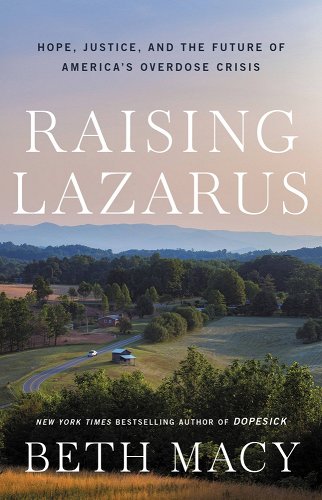
In her first book, Beth Macy chronicled how the Sackler family, through Purdue Pharma, used deceptive marketing tactics to push healthcare providers to prescribe opioids. If Dopesick, now also a Hulu miniseries for which Macy served as writer and producer, offered a gripping answer to the question of how the US was plunged into the devastating opioid epidemic that persists today, her newest release, Raising Lazarus, answers the question: What do we do now? 

In Raising Lazarus, Macy not only offers insight into the complex web of the Purdue Pharma case, but focuses attention on the efforts of activists who are forging new pathways to healing in their communities. The lack of coordinated national response to the opioid crisis, which has been magnified by the pandemic in irreparable ways, has forced individuals to shoulder the burden of care, often working outside established systems and the eye of the law to provide drug users resources and connection. With her trademark compassion and curiosity, Macy writes to destigmatize addiction and chronicle the trials—and the joys—experienced by communities in crisis as they work toward more hopeful futures.

I spoke with Macy over the phone about the importance of community in care, how she sees her role as a journalist, and how important it is for us to lift stigma from individuals and place shame where it belongs: on the Sacklers. 


Jacqueline Alnes: Your book opens with an epigraph from Ann Pancake: “In times like these you have to grow big enough inside to hold both the loss and the hope.” There is hope in Raising Lazarus, but so many weighty subjects too: the opioid crisis, the pandemic, the violent effects of climate change, corporate greed. 

Beth Macy: And there’s political toxicity. Like in Charleston, West Virginia, where it’s the worst of the worst, there’s evil on top of it. 

JA: Right. What was it like writing into those different griefs as they intersect with one another?

BM: I’ll start by saying that when I finished Dopesick, I was not going to write another book about this issue. The ending of Dopesick was so dark. The person I had followed for two years, Tess, had not only overdosed, but was brutally murdered, in part because of her medical abandonment. It was so dark and unexpected. When you gather story upon story upon story and then it ends like that, it had this build-up effect of me feeling like—and my doctor thinking—I had some kind of secondary trauma. I was like literally, for my health, I’m not writing about this again. And then as I started going around talking about Dopesick and seeing how many people were stunned, like they still didn’t know this all started with OxyContin, they still didn’t know rich kids in the suburbs were getting ahold of it, they didn’t know about fentanyl—I mean this is 2018, but this is a really easy issue not to look at unless you have to. That’s part of the problem. But then, I would hear about these amazing people doing amazing things and I would start to get an inkling. 

Like in my home city of Roanoke, Virginia, they finally got a needle exchange started, two years after the state said it could be started. I was at that needle exchange hanging out, and I had this teary moment where I thought, this is what Tess meant when she said urgent care for the addicted. She didn’t know what it was because she had never seen it, but she would have loved this place. People were there with their dogs, they were there just hanging out, some of them were applying for jobs. It was like a food pantry/needle exchange/you could go get Advil/you could sign up for Medicaid. I had that moment and I really dug the vibe. 

The second time I went, this nonbinary harm reductionist named Lil Prosperino happened to be passing through town. There’s always one anecdote with each person that just grabs me and with Lil, it was the fact that they bought this abandoned house for thirty dollars at auction and they were going to use that for a safe consumption space. It was condemned. Lil was like, ‘We’ll use it for more than just needles, in the winter we will give out coats and I give out this homemade salve I make. They call me a hill witch.’ I thought, a hill witch, that’s fucking awesome. And then I asked to come witness it and they said, sure, come on! 

When you’re with these people, you realize: no one is seeing what you’re seeing. We are seeing the unseen. 

JA: How do you write about issues that are so tangled up? 

BM: I try to keep it really people-centered, so that the amazing stories I’m witnessing ground the book and have enough narrative juice to keep it going. Also, when I get the opportunity, I can stop, digress, and explain the clusterfuck of why it is this way. I tried to digress often, when needed, but not for too long. 

JA: When you were talking about what goes unseen, some of it was yes, me not looking, but also it seemed like there is a historical narrative of shame and harm. In our current system, for example, law enforcement often turns away, because they have to in order for healing to happen; the alternative is abiding by the law, which means putting people in jail. 

BM: And oh, by the way, the jail is so far away that you are going to have to be dopesick in the foyer. I’m talking about Mount Airy, North Carolina now. That’s an unseen thing, but they let me see it. It was shocking. I was like, are they really going to let me in that jail? Someone told me, “you’re Beth Macy, you’re a bestselling author.” They are going to let you in that jail because: A) they want you to write about them, and B) because they can’t imagine that the way they’re doing it isn’t exactly perfect. They don’t see that they have their own inherent biases. That’s the way that we are trained and acculturated with Drug War thinking. 

JA: You highlight throughout the book that there’s a real lack of a coordinated national response to the overdose crisis. For me, the most hopeful moments in these pages came from places where communities are coming together, sometimes unexpectedly, to provide small slivers of relief. What were some of your takeaways from writing this? 

BM: I interviewed Dr. Jerome Jaffe, who worked under Nixon and set up this national set of methadone clinics on demand. The most useful thing he said is that it’s not easy to set up a system of care that the person or the patient is going to find acceptable, but also that the community is going to find politically palatable. 

To tell you a story to explain, I was giving a talk in Christiansburg. I’d had some [prior] experiences with harm reductionists and they usually hate law enforcement, like Lil does. But someone named Michelle was describing how she started out of the back of a pickup truck in 2009 posing as a food pantry, and then when they realized half their population was intravenous drug users, they started handing out needles hidden in granola bar boxes. I go back on my career and the best stories are always the people who think the opposite of other people in their peer group. And also, by the way, are kicking ass. What Michelle said was, you have to meet the other side where they are, too. I had never heard a harm reductionist say that. 

An example she gave was a bunch of crafters that met at a church in Hickory, North Carolina. The craft circle didn’t want to help them pass out needles, but they volunteered to crochet these bags in which to hold the needles. It reminds people who are drug users of home, because it looks like something your grandma might have made. And Michelle says, ‘Oh, by the way, I even got them to weave in iridescent thread so they could be seen in trap houses and low light areas.’ Michelle has had a ton of success in one of the most conservative areas in the nation meeting people where they are. Her group is biracial, queer, faith-based, and law enforcement loves her because she treats them like people, too. She’s able to make in-roads. 

JA: This book made me think a lot about the stories we tell about addiction, and how harmful those narratives can be, right down to the language used. Would you mind talking a little bit about your decision to replace language like “affliction” or “disease” with more person-first terms like “drug users,” “patients,” and “people who use drugs”? 

The best stories are always the people who think the opposite of other people in their peer group.

BM: I think it’s really important that we do this. Some journalists still use the word “addict.” When you ask them why, they’ll say, “well, that’s what they call themselves.” Some of them do, not all of them. They are not the ones we are trying to convince. We are trying to convince the general population that these are human beings worthy of care. I think the person-first [approach] is always going to be a better way to go with that.

JA: There’s a recurring theme of silence and gross, maybe feigned, ignorance from the Sackler family that especially enraged me when I read about Richard Sackler responding, “I don’t recall/remember/recollect,” something fifty-seven times during his first two hours of testimony. For you, is the role of journalist to bridge the gap in that absence of testimony? How do you see your role as a storyteller? 

BM: I knew the Sacklers were never going to give me an interview, right? I’m sure their lawyers would, but I don’t want to talk to them. They are being paid $1,800 an hour just to be sycophants in my view. They are recidivist criminals. Purdue has pled guilty twice in Federal Court and now they are trying to engineer this sweetheart bankruptcy deal that would allow them to walk away with a huge chunk of their ill-gotten profits. If the treatment part of the book is about the heroes on the ground, I decided that the Sackler part of the book, if you will, would be about people like Nan Goldin and Ed Bisch because they put the pressure on. I would also include Danny Strong, from the Hulu show Dopesick, because that really helped people understand who the real criminals were—and it wasn’t your cousin who got busted for holding a little bit of dope. It’s the people who did this to the country and our so-called regulators who let them get away with it. 

JA: You talk about asking your “magic wand question” to different community organizers, drug users, and healthcare providers throughout the book, so I figure it’s only right that I ask you the same: After reporting on this through the course of two books, what do you think would it take to turn the overdose crisis around? 

BM: Well that’s why I wrote the epilogue the way I did. If you notice, it’s kind of tonally different.

JA: It is!

BM: My publicist at Little Brown, she did Dopesick, too, so I know her pretty well. After reading it, she goes, “Oh, Beth was in the room for that chapter!” I was like, “Yeah, I might have dropped some f-bombs. I’m pissed off. I’ve been writing about this for a decade, off and on. I give my policy magic-wand bullets near the end, but the real magic wand is the beginning of the book, where you are in the McDonald’s parking lot with Tim and he’s meeting Sam and he’s going to give him this medical help that he has never before had. He’s going to call in this discount prescription at this one particular pharmacy, which took god knows how many steps to set up. But he wants Sam to leave the meeting with two thoughts. One is: You can get better. Sam doesn’t know that, most people with OUD don’t know they can get better. They think they can’t because they’ve been treated so poorly. Forty percent of people with OUD don’t want to stop using drugs because they don’t think they can. We are not making the treatment as easy to access as the dope. That’s one. 

And then the second thing Tim says is: Don’t disappear. And what he means is that if you relapse, even if you can’t make it back to the appointment here in this McDonald’s parking lot next week, text me, and I’ll come to you, wherever you are. I’ll come. And so this idea of not just meeting people where they are, not abandoning them, but embracing them. All that time I spent with Tess, and it still took me spending all that time with Tim before I realized that that’s what would have helped Tess. Having this person, this connection, this web of connections that would help her with her housing, help her sign up for Medicaid, all the social supports, and make sure she got help she didn’t have before. She struggled like hell to get that. And when she finally did, she slipped and smoked some weed and got kicked out of the program. We’ve gotta stop putting up so many hurdles for these folks. 

Shakespeare Already Wrote About What Happens When Women Don’t Have Bodily Autonomy

I grip the dark vial, hold the measuring spoon out in front of me. “Black Cohosh,” the label reads. I look at my laptop screen.

 Tincture: ¼-1 teaspoon, 3–4 times a day. 

The root is the part used.

My tongue recoils from the bitter taste. I put the dropper back in the bottle and set an alarm to go off every three hours, trying to distract myself from a body buzzing with anxiety. I type and scroll more, reading that despite scientific studies suggesting otherwise, high doses of Vitamin C will also work. I have some on hand, so I choke the chalky pills back in fistfuls.

Please don’t be pregnant, please don’t be pregnant, I chant until my period comes, praying to any god that will listen. 


“There’s rue for you, and here’s some for me; we may call it “herb of grace” o’ Sundays. You may wear your rue with a difference,” Ophelia says in act 4 of William Shakespeare’s Hamlet, to no one in particular. In her mad scenes, she gives away flowers: rosemary, pansies, fennel, columbines, and rue. Of them all, she only keeps rue for herself. 

According to John M. Riddle, provoking an abortion was rue’s “most recognized use in classical antiquity and the Middle Ages.”

I like to imagine that, earlier, Ophelia ran her finger down the ledger of a receipt book, coming across a recipe from antiquity under “Rue (ruta graveolens)”:

3 drachmas of rue leaves, 2 drachmas of myrtle, 2 drachmas of laurel, mix with wine.

To bring down the flowers.

A little bit of heaviness lifts, just for a moment, as she closes the book and goes out to the garden.

Please don’t be pregnant, please don’t be pregnant, she prays.


I have been responsible for my fertility since I became sexually active, before Plan B was available over the counter and Abortion on Demand began serving certain states. Unlike the early modern women Ophelia represents, I’ve been able to alter my body’s chemistry. I swallowed hormones at the same time every day. I implanted a device into my arm. I inserted a ring into my vagina. I fought to wrap guys’ dicks up in latex. 

When desperate, though, I looked up herbal remedies for fertility control and unplanned pregnancies—much like people who could get pregnant in early modern England.

I swallowed hormones at the same time every day. I implanted a device into my arm. I inserted a ring into my vagina

I am not the first to argue that Ophelia’s reference to rue suggests an intimate knowledge with fertility control and, consequently, premarital sex. There are a few notes and articles on the topic, vehemently contested by scholars who forget that, while characterizing young women in Shakespeare like Ophelia as virginal, Shakespeare himself walked down the aisle when his wife was three months pregnant. My own experiences with “rue,” however—with herbal abortifacients and the feeling of regret and repentance that accompanies them—are why I noticed that Ophelia keeps some rue for herself in Hamlet, of all her flowers. They’re why I noticed she calls it a “herb of grace,” one promising a kind of divine intervention. They’re why I noticed she says she wears her rue “with a difference.” If we read Ophelia’s trajectory in Hamlet as informed by the threat of an unplanned pregnancy, her desperation becomes more palpable, her flowers more resonant.

Attending to how pregnant people like Ophelia “bring down flowers” in Shakespeare reminds us that people have sought early and late term abortions across time, and that this search is represented in the most canonical of authors, of texts. These “historical touches across time,” to use medievalist Carolyn Dinshaw’s phrase, offer insight into what abortion might’ve been like in Shakespeare’s day. The desperate, panicked search for information, the dark vials containing the promise of a different life, the communities that harbored and disseminated this knowledge—these touches are particularly important in a post Roe v. Wade world, when pregnant people will be forced to turn to the kinds of remedies available before the medicalization of abortion. What’s more, many of us realize that overturning Roe v. Wade is an attempt to revoke people’s—especially young women’s—control over their desires, their bodies, their futures. Ophelia felt the dangers of this enterprise.


Abortion wasn’t illegal in Shakespeare’s England, like it is in some US states today. Historian Carla Spivack argues that abortion before quickening (when a pregnant person first feels their child move) was not even considered a serious moral crime. Abortion was a threat only to the extent it allowed for, or concealed, illicit sex. Alex Gradwohl argues, however, that the rise of Christianity and church teachings to channel desire through reproductive sex and marriage ended the “moral neutrality” found in classical texts regarding abortion. Still, as a method of fertility control for married women, for example, abortion was not even within the purview of the law.

The options for early modern people fearful of an unplanned pregnancy were limited, as they had no access to medical or surgical abortion. In one of the few explicit references to abortion we have from the period, Christopher Marlowe—one of Shakespeare’s rival dramatists—lists off different methods to end a pregnancy in his Elegies 13 and 14 (c.1600). In these poems, the speaker’s beloved, Corinna, “rashly” casts out “her womb’s burden.” “Why with hid irons are your bowels torn? / And why dire poison give you babes unborn?,” the speaker asks, outlining two options to do so. The “hid irons” tearing “bowels” conjures more modern images of wires and coat-hangers—the “dire poison” the herbal remedies people used in the case of an unplanned pregnancy. 

Abortion was a threat only to the extent it allowed for, or concealed, illicit sex.

Scholar Frances Dolan argues that when pregnant people in early modern England “bravely took control of their own fertility” they depended, predominantly, on “traditional knowledge of the herbs in their garden.” Herbal abortion is now steeped in stigma, as journalist Maya Lewis reports, but until the invention of hormonal birth control in the 1960s, and the increase in surgical abortions after Roe v. Wade in the 1970s, it was as good an option as any to end an unwanted pregnancy. Even before Roe v. Wade was overturned, a safe, medical abortion was never a guarantee, especially for low-income individuals without clinics in their vicinity. I certainly did not have hundreds of dollars to spend on an abortion in college. Herbal abortifacients promise a cheaper, more accessible alternative, whether they deliver on this promise or kill you in the process. These herbs—rue, black and blue cohosh root, cotton root bark, mugwort, Queen Anne’s lace, pennyroyal—have been used across time and place, before surgical abortion became legal and safe for some of us.

When I found myself fearful of an unplanned pregnancy, I turned to the internet, but early modern people like Ophelia would’ve turned to receipt books, household books that held medical and cookery recipes, for ways to “bring down the flowers.” In Ben Jonson’s play Epicoene (1609), for example, a young wife asks another whether she has “excellent receipts” to keep herself from bearing children, to which the woman responds, of course she does—how else would she maintain her youth and beauty? “Many births of a woman make her old, as many crops make the earth barren.” As Jonson represents, these recipes were often written by women, passed around within female communities.

As a kind of knowledge production women could participate in and share secrets through, receipt books were threatening to male physicians, who often appropriated knowledge from them for medical texts. Fearful of women having control over their fertility and thus sex lives, physicians like Andrew Boord refused to list certain purgatives in his treatise, The Breviarie of Health (1547), lest any “light woman” willfully use them to induce abortion. Nicholas Culpeper, similarly, admonishes readers in The English Physician or The Complete Herbal (1652), “Give not any of these to any that is with child, lest you turn murderers…willful murder seldom goes unpunished in this world, never in that to come.” 

The garden Eucharius Rösslin references in the very title of Der Rosengarten or The Rose Garden (1513), one of the best-selling gynecological manuals of Shakespeare’s time, is a reference to the “Physique” garden in which midwives grew, nurtured, and gathered herbal remedies such as rue. Rösslin chooses to frame this medical text with a (terrible) poem—a ballad entitled “Admonition to Pregnant Women and Midwives.” The poem knits the pregnant female body with the rose garden, ending with the promised “admonition”: “Such roses which your hands do take / Will come in time before God’s face.” These shrill warnings demonstrate that pregnant people taking their fertility into their own hands using herbs and plants was common practice, despite physicians’ attempts to obscure and police this knowledge.

Receipt books were threatening to male physicians, who often appropriated knowledge from them for medical texts.

In an interview with me, doula and herbalist Chelsea Wall of Black South Apothecary described male physicians’ appropriation of this kind of gynecological knowledge as devastating for patients’ autonomy and a more nuanced understanding of herbs’ relationship to fertility control. Wall had a “constellation of concerns” as an herbalist in a post Roe v. Wade America. From botched and incomplete herbal abortions to the shortage of—even criminalization of—herbs used for other ailments, such as mugwort, to the continued stoking of fears and misinformation about herbalism “planted by history, nurtured by the medical industrial complex.” But Wall was especially concerned with how herbalism continues to be discussed without nuance, either discredited or romanticized. While she unilaterally asserts that “medical abortion is still the best option available” to pregnant people looking for an abortion, Wall lamented the “compartmentalized world view” that makes it difficult for us to accept herbalism at its best, as a set of holistic practices that span history, geographical space, and practitioners who value their patients’ autonomy.

In Shakespeare’s plays, herb-women, hothouse managers, and angry mothers offer a glimpse of what role herbalists like Wall might’ve played in early modern England, those well versed in herbal medicine who valued pregnant people’s autonomy. In Shakespeare, herbalists act as foils to masculine rule—a burgeoning medical industrial complex and misogynist visions of chastity. These female communities have agency over young women’s sexuality that men struggle to match. In Pericles, for example, Shakespeare introduces audiences to a “herb-woman” who runs a brothel, a professional whom a male character says, “sets seeds and roots of shame and iniquity.” This woman is named by Shakespeare for her expertise, a particular way of managing sexually active women. In Measure for Measure, Shakespeare goes as far to name a character, an executioner, “Abhorson” and, as scholar Mario DiGangi persuasively argues, the pregnant character Mistress Elbow’s presence in a brothel that doubles as a bathhouse is especially threatening given gynecological manuals’ advice to pregnant people, then and now, to avoid extreme heat as it can cause miscarriage. Shakespeare also makes an explicit reference to abortion in act 4, scene 4 of Richard III, when Richard asks, “Who intercepts me in my expedition,” and the Duchess, his mother, responds, “O, she that might have intercepted thee, / By strangling thee in her accursed womb, / From all the slaughters, wretch, that thou hast done.” These threatening women curse the murderous male children they gave birth to, run brothels and hot houses, and offer alternate avenues away from pregnancy, parenthood, and judgmental male physicians. 

Notably, in Hamlet, Ophelia is completely bereft of this kind of community, the kind of community Wall described in her interview with me and that Hannah Matthews writes about in “Abortion Takes a Village, Too,” the “safe and sustainable communities” that “will keep showing up for one another, no matter what.” 


In Shakespeare, herbalists act as foils to masculine rule—a burgeoning medical industrial complex

In Hamlet, Ophelia’s rue is tangible, both her sorrow and her flowers—perhaps because her entire character is defined in relationship to her chastity. Audiences watch as Ophelia is discarded by the titular character and desperate, “wedged between senior males” to use Coppélia Kahn’s suggestive phrase—men who ventriloquize her desire and her sex life. Her brother, Laertes, waxes for 34 lines in an early scene on why Ophelia must not “unmask her beauty” nor open her “chaste treasure,” her “buttons” or “bud” to Hamlet. Her father enters shortly thereafter and repeats these admonitions. 

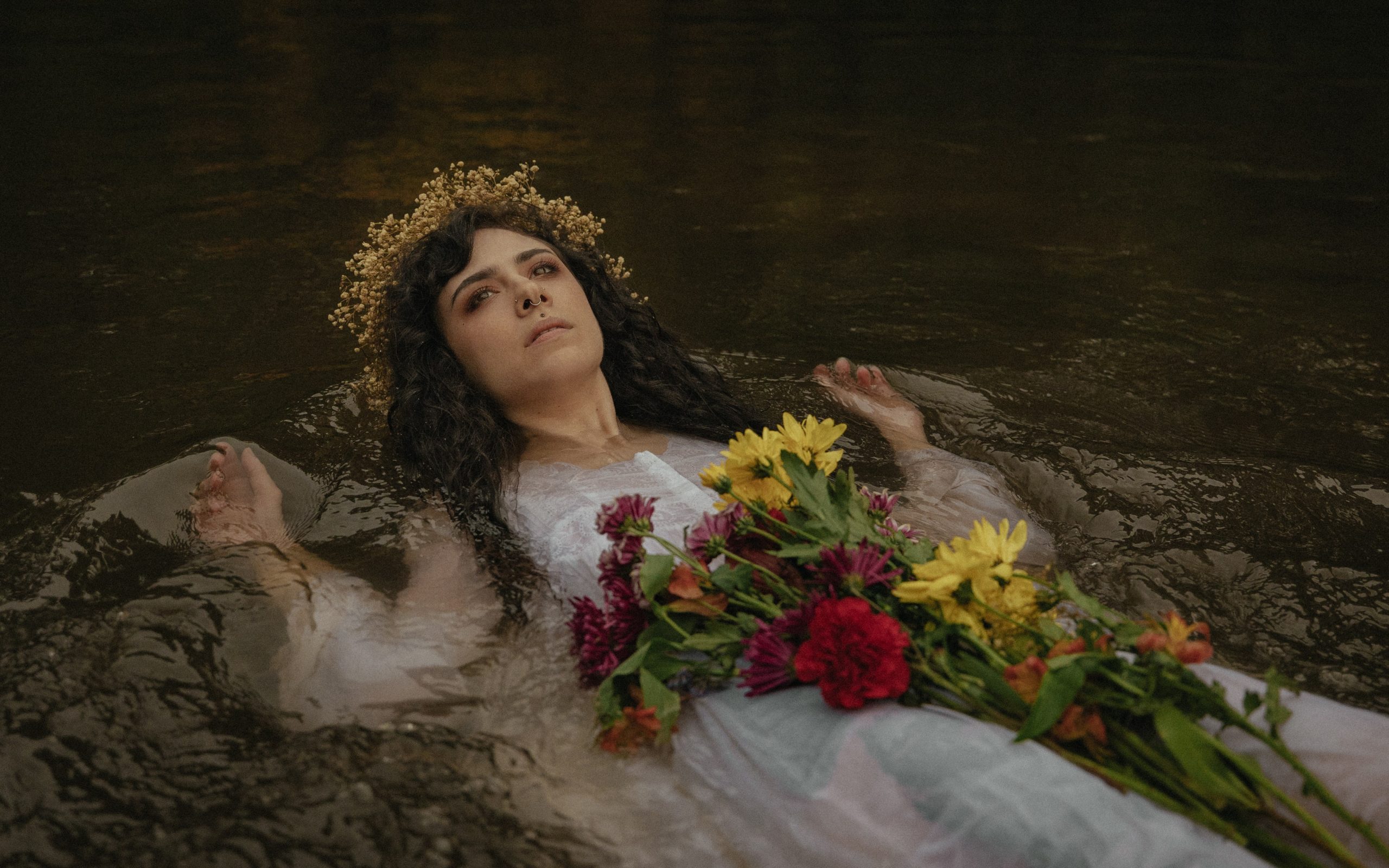
Ophelia, to her credit, responds to accusations she is having premarital sex with Hamlet not with assurance and denial, but with complaint of her brother’s hypocrisy: that he not show her the “steep and thorny way to heaven” while he, himself, treads “the primrose path of dalliance.” This wit, her exasperation, here, has been erased over time, in interpretations of her as a delicate, chaste, helpless maiden, paintings of her lily-white body floating dead in flower-filled water, productions that position her as a nonsensical, hysterical subject, an ornament to be pitied. Throughout Hamlet, Ophelia pushes back in subtle ways, suggesting she’s not as “chaste”—in all senses of the word—as her legacy implies.

“To a nunnery go, and quickly too,” Hamlet infamously tells Ophelia—places that housed pregnant maids in early modern England. “Shall I lie in your lap?” he asks her, sexually harassing her during play-within-a-play. Some of the very first words Hamlet speaks about Ophelia in the play are, “Nymph, in thy orisons be all my sins remembered,” addressing her as a sexualized mythical figure, one who’ll remember his sins in her prayers. 

My own experiences with overbearing authority figures and their hypocritical policing of my desires are how I know how ashamed Ophelia must’ve felt, picking her rue. My own experiences with self-absorbed men, boys like Hamlet—with once-affectionate-suddenly-absent lovers—help me recognize Ophelia’s attempts to deal with the consequences of misplaced trust in the play. They help me recognize her rue, her loneliness, her isolation, her desperation.

Ophelia, to her credit, responds to accusations she is having premarital sex with Hamlet not with assurance and denial, but with complaint of her brother’s hypocrisy

Because of how Ophelia is treated throughout Hamlet, Gertrude’s eventual description of her death—the way Ophelia finally does “bring down the flowers”—is especially devastating. As studies show, adolescent pregnancy is a risk factor for suicide, and though rue is, as a recent medical study by Aref Hoshyari et al. (2014) confirms, an effective abortifacient, it is less effective and far more dangerous than surgical or medical abortion—and can easily end up poisoning a person. The queen tells audiences that Ophelia falls from an “askant” willow tree from which she tried to hang “fantastic garlands.” Her garments, “heavy with drink,” pull Ophelia down to a “muddy death.” When Gertrude describes Ophelia “clambering to hang,…” there is, in this phrase that begins a new line of iambic pentameter, a pause—however brief, enough of a hint that Ophelia might’ve been clambering to hang more than her garlands. Although Gertrude claims Ophelia fell, a Gravedigger later questions Ophelia’s right to a “Christian burial” when she “willfully seeks her own salvation.” 

As Marlowe writes in his abortion poems, “tender damsels do it, though with pain; / Oft dies she that her paunch-wrapt child hath slain.” All circumstances considered, it makes sense that there is no future for Ophelia, or any child she might be carrying, in Denmark, in the poisonous, rotting world Shakespeare creates.


I have often thought about Ophelia’s rue and abortion in Shakespeare’s England in the months since the Supreme Court overturned Roe v. Wade. I’ve been thinking about fear, about feeling entirely out of control while attempting to gain what little control I could over my body. I’ve been thinking about the desperation that comes with having nowhere to turn, the desperation I hear in Ophelia’s mad speech—when she keeps some rue for herself. In a post Roe v. Wade world, these feelings will be more widespread, more palpable.

In one way or another, I’ve managed to plan my pregnancies, plan parenthood, over the course of my life.  I can’t speak to the efficacy of any attempt I made with herbs; it was too early to tell what caused the bleeding—and experts warn against these kinds of remedies—but I’ve always found a way out of pregnancy scares. I have yet to find a light relationship to my fertility, however; sometimes it feels like sex is inextricable from fear and anxiety, even if I have far more methods at my disposal than Ophelia did. One thing I know is that, since the Supreme Court overturned Roe v. Wade, my relationship to sex and desire feels heavier. It’s not just that overturning Roe v. Wade will decimate access to safe abortions—it’s that the relationship young people like Ophelia form with desire, sexuality, will be marked by fear. 

I know that the urge to make Shakespeare relevant in any given context is why he continues to take up so much undeserved space in our classrooms, theaters, and cultural imagination. This is far from the first article to put Shakespeare in conversation with the Supreme Court overturning Roe v. Wade. In a recent Hill article titled “Abortion and the Supreme Court: An American Tragedy,” for example, author Joseph Chamie stages the end of Roe v. Wade as a Shakespearean tragedy, the last act to be decided. “If William Shakespeare were alive today,” Chamie writes, “he would likely write a play about abortion rights and the Supreme Court of the United States.” Alternatively, when cast members from a recent production of As You Like It wanted to speak out outside Roe v. Wade, they received an email from university representatives instructing them not to: “We feel unplanned post-show talks on politics will detract from the work you are doing on telling the stories of William Shakespeare,” it read.

I just add to these conversations that, depending on how you read Hamlet, Shakespeare might’ve already written this play—told this story.

7 Books Featuring a Chorus of Voices of Color

One of my favorite stories about my great-uncle, Tío Roy, involves an argument he had with his first wife. (Or maybe she was his second. Or one of his girlfriends. My late tío had a long and interesting life.) Tía Whomever was complaining he spent too much time with his family and away from her—admittedly, we are a closely bound clan, a fact Tío Roy was only too happy to illustrate. “Mira,” he said, “I can’t help it that my family’s like this.” He held his hand up to her face, showing her his fingers pressed tightly together. “Yours? Yours is like this.” He spread his fingers wide as a starfish.

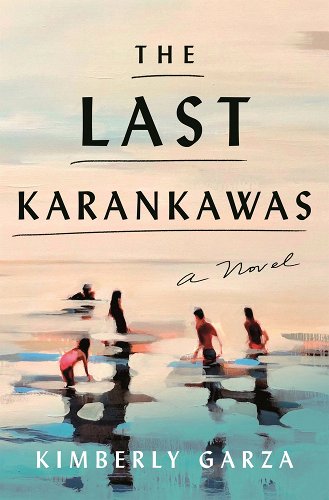
My relatives repeat Tío’s story often; we laugh and mimic the gesture that has since become family canon. But as a writer, I come back to the emotions beneath it. You are like this, but we are like this. The individualism of fingers spread, the unity of them together. Those two concepts, individualism and unity, seep into the fabric of who I am and what I write. And when I wrote The Last Karankawas, my debut novel about a close-knit community of Filipino- and Mexican Americans in Galveston, Texas, those concepts seeped into the form as well. My novel, you see, is made up of short stories. My tío’s hand with those fingers closed tight.

Linked story collection. Novel-in-stories. Story cycle. Mosaic, kaleidoscope, Greek chorus. A book comprised of multiple tales and narrators has almost as many names; I promise you I have heard and probably used them all. (White male) American writers like Sherwood Anderson and William Faulkner are often credited with popularizing the form in the twentieth century as a way of depicting places—like Winesburg, Ohio or Yoknapatawpha County—through the collected stories of the people who exist there. Even now, it’s common to see story cycles bound together by a shared place (see: my novel and Galveston). But scholar Sandra Zagarell described the nineteenth-century village sketchbook, a predecessor to the story cycle, as a “narrative of community.” To which I say: hell yes.

Narrative of community makes room for people connected by concepts other than place. Communities like my Filipino and Tejano families, whose connections exist beyond location; or those whose bonds to a place have been disrupted by colonialism or slavery or migration or disaster. What literary form can better depict the ties that bind communities like ours? A single narrator, even an omniscient third-person voice, shows only one fractal of the larger image, or it keeps us at a distance. But individual stories woven and layered—we see the whole picture, we can live within them all. A novel in many voices can show not just a place but a culture, not just a shared setting but a shared history and identity and blood. We can pass down individual tales while also telling a greater one. When my family talks about Tío Roy, we laugh; we spread our fingers wide and close them back again. We weave his story with ours, and speak them both.

Below are seven books with multiple narrators, each carrying the voices of a community of color, and, interestingly enough, each also a debut. Some are called novels, some story collections. Some have chapters or fragments that are clearly and thoroughly linked; others are bound by only the barest, Easter-eggiest thread. But each bursts out of the gate brazenly, beautifully straddling the border between novel and story collection—becoming something neither, and maybe something more.

Lot by Bryan Washington

In Washington’s searing story collection, the obvious link is place: sprawling, frustrating, fascinating Houston, Texas (nothing but love, H-town). Each story is named for a different neighborhood or street—Shepherd, Alief, Peggy Park—but the city’s hold on the book goes deeper than setting. The Houstonians depicted here are diverse, often from marginalized groups: Black or Latinx, immigrants or natives, many identifying as LGBTQ+. Though all from different neighborhoods, they navigate similar struggles with sexuality, identity, family, or circumstance. An immigrant seeking work is taken under the wing of a drug dealer; the residents of an apartment complex witness a love triangle gone wrong; two friends find a chupacabra near Buffalo Bayou. Woven through the book is a linked series that includes the titular story, featuring a young, unnamed gay man, the child of a Black mother and a Latino father, coming of age in the Houston he calls home.

There There by Tommy Orange

Urban Indians, as the opening prologue of Orange’s extraordinary novel identifies them, are the lifeblood of this book told from alternating characters’ perspectives. The dozen-strong cast includes scrappy Opal Viola Victoria Bear Shield and her newly sober sister, Jacquie Red Feather; Dene Oxendene, an artist working with a grant to record Native stories; and Tony Loneman, a young man whose life has been defined by fetal alcohol syndrome. Shifting between points of view (from limited third-person to first and even, it seems, to the voice of Orange himself occasionally), the characters weave together in surprising ways. Their lives spiral closer until they converge on the Big Oakland Powwow, and then collide in a startling climax. Through Dene, as well as the multiple-narrator form itself, Orange unflinchingly depicts the ways Native stories have been silenced or lost, and the painstaking effort it takes to bring them back to the spotlight.

Sabrina & Corina by Kali Fajardo-Anstine

Early in the first story of Fajardo-Anstine’s exquisite collection, a character tells his daughter, “Sometimes a person’s unhappiness can make them forget they are a part of something bigger, something like a family, a people, even a tribe.” He is speaking of the girl’s wayward mother, but he could be speaking of many people in these stories, or of the external forces working relentlessly against them. The mythos of the American West—fevered, flawed—looms large over the Colorado setting here, but Fajardo-Anstine’s Latina characters of Indigenous ancestry are survivors, moving forward amidst struggle and loss. An eighth-grade girl watches along with her town as Native artifacts from a nearby site are publicly unearthed; an elderly woman packs up her home after a fatal break-in and reflects on the ebbs and flows of her life; and in the title story, a grieving young woman remembers her magnetic cousin, closer than a sister, the latest casualty in a family beleaguered by violence. That family, the Cordovas, appears repeatedly throughout the book, just one of the intricate ways the women in these stories are bound together.

Homegoing by Yaa Gyasi

In eighteenth-century Ghana, beautiful Fante girl Effia marries a British governor and moves into Cape Coast Castle. In the dungeon below Effia’s new home sits her Asante half-sister Esi, a captive awaiting transport as a slave to America. Thus begins Gyasi’s blazing, many-voiced novel, tracking the sisters—unknown to one another—and their respective family lines across two continents and many, many years. The beauty and cruelty of Gyasi’s twin narratives lie in their parallels, the way the individual experiences of Esi and Effia’s descendants serve as warped reflections of each other. The stories we get—snippets of the characters’ lives—are frustratingly short, cut off by violence or staccatoed by circumstance, migration, and politics. Yet Esi and Effia’s lines continue, generation by generation, until they weave together in a present-day chance (or fated) meeting. The connections between the characters go beyond just their shared families. In brief yet rich stories, Gyasi depicts how trauma is passed down over centuries, how struggles and strengths can be inherited.

Barefoot Dogs by Antonio Ruiz-Camacho

The sudden disappearance of José Victoriano Arteaga—patriarch of a wealthy Mexico City family—is the catalyst for his family’s fracturing in Ruiz-Camacho’s electric linked collection. After horrific clues emerge about José Victoriano’s fate, the Arteagas scatter across the globe. Each story examines the ripples of that incident from a different angle, whether it is Arteaga’s grandson learning to swim and bear the new weight of grief in Palo Alto, California; his mistress, anxious and left behind in Mexico, forced to reach out to the Arteagas for news; or his son, a new father himself, wandering the streets of Madrid with his sick dog. Ruiz-Camacho plays with voice and time, as well as setting, in each story, moving around the world and across the branches of this uprooted family tree. Buoyed by their privilege yet isolated all the same, the scattered Arteagas’ unity lies in their shared unraveling, how their father’s loss defines the new lives they must build without him. 

America Is Not the Heart by Elaine Castillo

Perhaps Hero de Vera is the protagonist of Castillo’s unflinching yet tender first novel, the saga of a Filipino family forming new roots in the United States—if so, it’s simply because we spend the most time with her. The close third-person voice carries us along with thirty-something, disillusioned Hero for the majority of the book; we watch as she adjusts to Bay Area life, slips into the role of caretaker for her precocious young cousin Roni, and dodges questions and memories of her recent past in the political tumult of the 1990s-era Philippines. But two crucial segments secure this book in multiple-narrator territory, and both are in the second person. In the prologue, we learn the untold story of Hero’s aunt Paz, a feisty Pangasinense woman whose years with the de Veras and in America have sapped her spirit. (“You’ve been foreign all your life,” the narrator says of Paz, the you. “When you finally leave, all you’re hoping for is a more bearable kind of foreignness.”) And the second-person voice appears once again in a later section, this time whispering the inner thoughts of Hero’s girlfriend, Rosalyn. Even the title—a riff on Filipino native son Carlos Bulosan’s foundational 1946 text, America Is in the Heart—situates Castillo’s narrative as part of something larger, a striking and singular note in an ongoing song.

Of Women and Salt by Gabriela Garcia

“Jeanette, tell me that you want to live,” Carmen begs her daughter, who is crumbling under addiction, in the opening sentence of Garcia’s hypnotic novel. They are just two of the titular women whose lives are shaped by migration and displacement, trauma and loss. In fractured vignettes that span from nineteenth-century Cuban cigar-rolling factories to an ICE detention center in Texas, Garcia moves back and forth in time between Carmen and Jeanette, as well as three generations prior, to Carmen’s homeland of Cuba. Garcia also ties their matrilineal family to another mother-daughter pair in Miami, immigrants from El Salvador whose lives will be inextricably bound to Carmen and Jeanette in ways they can’t foresee. Deftly moving across space and timelines, Garcia depicts her characters’ complicated lives from their own perspectives as well as those of their mothers and/or daughters; she spotlights the many stories lived by Latina women, the histories spoken and the many left unsaid.

Kafka Has Nothing on the New York Unemployment Office

Initial Reemployment Services and Eligibility Assessment

At the unemployment office, we all wear heavy coats or grip them to our chests as though we’ve been instructed not to lose them. I got an email, I explain to the security guard, referencing a letter I never received. The appointment is mandatory, I tell him. The place, painted a sick green, makes me think of a hospital ward—the uniformed guards awaiting a sign like orderlies attending the newly recovered or the ones who will not be discharged. Mandatory? asks the guard.

Down the hall, past the bulletin board, a woman sits at a low desk behind a high counter. People wait in line to hand her their forms, which she assaults with a rubber stamp. Whatever else happens in this building, I believe, she is the one to authorize it. The woman gives me a form to fill out. I reach for a pen and find a tear in the lining of my coat pocket, like a worry I’d forgotten was there.

In the waiting room is a woman in a knit cap, cradling a clipboard. She wants to know whether we have the same form. Supplemental Questionnaire, I read. Additional Information in order to determine Program Eligibility. There’s a list of questions and a series of boxes: Yes, No. Check all that apply. TANF, SNAP, GA, RCA, SSI, SSDI, exhausting TANF within two years. The answers, the form says, are voluntary.

The woman has never heard of TANF, she tells me. Her whole arm disappears inside her purse while she looks for a pen. She was supposed to come last week, but she couldn’t, she says, because of her cat. She believes he heard her voice at the end, because she saw him move his mouth. Just slightly, she says. You know hearing is the last thing to go?

Someone enters the waiting room and tells us to follow her. We’re to finish filling out the forms at a table. There are others seated in this room and the sound of sniffling. There are more questions on the back of the form. Are you a Displaced Homemaker? Do you lack basic skills? I put down all shifts.

The woman returns with a man, who picks up our papers and hands out packets. She tells us we’re here because we’ve been randomly selected. There’s not a specific reason for it, she says.

She wants us to know about the resources they provide, such as free workshops for dealing with job loss. I try to think whether the term applies, like the loss of a pen from a torn coat pocket or the woman’s cat—lost!—or a child. I write down less than eleven or no larger than sixteen but I don’t catch what this refers to. Then the woman describes a program called SEAP.

In fact, I was fired. Someone from HR took me into a room and closed the door. The woman adopted a mournful expression as she talked about becoming a leaner, more efficient organization. This was a place that employed dozens, maybe hundreds of people, and I was flattered to think I’d been singled out.

Your New York number, the woman says now, which is important, I guess. She’s going to show us how to fill out the next form and the first thing she explains is the date. There’s a place to list your activities each week. You have to do three. A man on the other side of the table, drumming the air with a pencil and sniffling, says, This is every week? Every little question, says the woman, is in the handbook. Will the handbook be provided? wonders the woman in the knit cap.

These city agencies are all the same. The rooms hum with a hidden logic, the scrubbed floors and drop-ceilings only the visible signs of a far-reaching purpose. You stand in line or you sit in sticky vinyl seats, waiting for someone to call your name, waiting for someone else to find you in the system—the system, its distant, gleaming points of data like a gnostic cosmogony. I have a talent for this sort of waiting.

Years ago, I remember, I took some paperwork to the courthouse, where I went through a metal detector and up to the sixth floor, through one or maybe two intake windows. The trip took all day and I had to pay for parking, and I don’t remember now what it was all for, but I do remember the amount: two hundred eighty-three dollars. I wonder whether this is what it’s like to swoon into the arms of God.

When my name is called, I’m led to a cubicle occupied by a woman wearing a lavender shirt, which matches her lumbar pillow. Her computer monitor is propped up by a ream of paper, like her keyboard, which rests on a pack of brochures. She wonders whether I have any digital experience. What I want to know is what counts as experience. Swiping? Refreshing the feed? The long slide, at the end of the day, into sudden intimacies with strangers, swallowing their plausible fictions, offering whatever they’re looking for, broadly, online? I think of a number and say, Seven years.

There are other cubicles in this room and others with coats on their laps answering questions about how far they’re willing to travel for work. I see the woman in the knit cap talking to someone while she goes through her purse. I recognize the gesture of digging and digging for something that won’t put an end to the feeling.

She’s found something for me, says the woman in lavender. The job summary includes data metrics and producing regular traffic reports. A clear and likely internal candidate has already been identified, it says.

The woman prints out another form for me to sign. There are two of these forms—they’re the same; sign twice—that list Work Search Preparation Activities and Work Search Activities, along with Additional Next Steps. Do I have to apply for this job? I ask. If you do three things each week, she says, you’re good.

Now the woman in the knit cap across the room is standing to leave. I think of what she said—how hearing persists beyond consciousness even—and wonder what her voice meant to the dying cat. Dull comfort, maybe. Proof of endurance, like the beating of your own heart. A line dropped below the surface of the animal’s undoing, down through a narrow channel to stir an ancient, inner sea. 

The woman hands me back the form. Where I’ve written fifteen, she wants me to put down twenty-five. I tell her that twenty-five isn’t true, but she says on the paperwork you have to comply.

Is it true, I ask, that I was randomly selected to come here today? What about the people who weren’t selected? The woman in lavender can’t say. Many will be chosen, she says.

I remember a room where I waited once at a place called The Healing Project. The walls curved like the shell of an egg, and the man at the front wore white. He began by talking about taking a bath. He told us to put our hand on the center of our chest and inquired, What is your heart telling you? Then we drew large circles in the air with our arms. The arms are an extension of the heart, he said. I pictured my arms beating the air like wings that hinged from my chest. Thirty more seconds, he said. By then my arms were trembling and my shoulders felt like stone slabs. Ask your heart, the man said. I beat my arms in the air with the others seated cross-legged on the floor. I asked my heart, and what it told me was about tremendous loss.

Who is Hiding Behind the Lucha Libre Mask?

The novel Perpetual West explores how hiding our secret, most authentic selves from those we love can plunge us into a world of loneliness and precariousness. A young married couple, Alex and Elana, move to El Paso from West Virginia, neither of them quite knowing what selves they carry within. Alex, adopted from Mexico by Christian missionaries, crosses the border into Juárez, the city of his birth, to “be etched into a more precise version of himself,” and where he ultimately meets lucha libre wrestler Mateo. It may not be love, but the heat between the two men is undeniable, and the lifeblood of the novel. It is also the source of its danger, as Mateo is targeted by Neto, the nephew of the Juárez cartel who, at any cost, intends to conscript Mateo for his roster. After Alex disappears, Elana, awake to the human tendency to hold on too tightly or too loosely, comes home to find the bed as she left it, pajamas strewn. It’s obvious her husband hasn’t slept home one night since she left. Maren’s carefully placed artifacts—pajamas, a knife, an untouched hamburger—suggest not only that we hide in plain sight, but that on a long enough timeline, that sequestered self will emerge.

Lucha, like marriage, is both real and fake, entertainment and political theater. Lucha declares that “Every type of manhood is a stunt,” and watching Mateo fall in love with the sport in Juárez, despite the growing threats he faces, is one of the novel’s most vivid strains. While lucha is informed by American wrestling, it maintains distinct regional traditions; exoticos, for instance, engage in genre bending, and the rural north is desperate for a hero. The novel, in its exploration of the sub-culture, is critical of consumerist culture even as it acknowledges disparities in wealth that extend beyond the U.S. border and the ensuing human impulse for possessions, luxury, comfort (“I eat at McDonalds,” Mateo tells us, “I’m friends with cops”). 

Deeply erotic, necessarily violent at times, constantly grappling with the political and moral stakes of the U.S.-Mexico border, Perpetual West argues indifference might be a kind of cruelty, but love is willful recognition.  


Annie Liontas: I’m always curious about how secrets operate in a marriage or union, and I think you are, too. In Perpetual West, we see both Alex and Elana suffering, but separately and in isolation. Of course, the novel is interrogating how they withhold core pieces of themselves. But they’re even dishonest about small stuff—for instance, they both smoke, but each keeps that fact from the other.  How do the little omissions create the life lie?

Mesha Maren: That was specifically one of the things that realized: I was the in-between, I knew what they were both doing. They were both telling me that they were smoking but not telling the other. That’s not even something you really need to hide! 

What I became really interested in is the dishonesty between these characters. I was thinking a lot about when young people enter into a very intense relationship and don’t actually have a full sense of who they are yet—the kinds of pressures they put on themselves. It can be true of us at any stage in our life, but I think particularly when we’re in our early 20s, it’s worse. I was so hard on myself back then. I didn’t really know myself that well, but I thought I should. I would construct all kinds of artificial rules, and then break them and then have conversations with myself about it. Elana and Alex put more pressure on themselves than they do on each other, but they think the other is doing it. Elana thinks that Alex would be upset if she decided she’s not going to focus on school because in her mind that’s been the glue for their relationship. And, likewise, it wouldn’t be an easy conversation, but I think Alex could have a conversation about his sexuality with Elana, but he’s harder on himself than she probably would ever be.

AL: So what mask does Alex wear? 

MM: When we meet him, he says—somewhat to himself, but definitely to everyone around him—that he has shed his upbringing more than he actually has. He acts as if he’s moved past his very religious upbringing and has this new identity that he found in college, but I think he hasn’t actually done the work to know himself quite as well as he pretends. He wears a mask of someone who’s got it together. He excels in school and he doesn’t want to engage with the fact that he was quite damaged by certain aspects of his upbringing. He wears a mask of being in a good place.  

AL: Tell us about lucha libre. How is lucha a national conversation about power and corruption even as it is a form of sport and entertainment for the culture?  

MM: I’ve always been interested in professional wrestling. I went to a couple of really small professional wrestling events in my hometown in West Virginia when I was growing up and then didn’t engage with it a whole lot until I turned 21 and moved to the border. I had moved there to be near a woman who I was falling in love with. She ended up leaving me for a professional wrestler.  

On a surface level there’s similarities between small-time U.S. professional wrestling and lucha libre. But I think the difference is the way that the culture embraces it. What I saw in Juárez and later when I was doing research in Mexico City was that it can be so many different things for different people. It’s a national sport, but it is also theatrical. You’ll go to a small event and there will be women in their eighties, babies, people from every background there. It really is this cathartic space for people: they can shout at the bad guys, they can cheer the good guys. They can let their voices and bodies be big and loud in a way that might not be allowed for in other spaces. And the referee plays this weird role, always on the side of the bad guy but pretending he’s not.

I started to see all these parallels to political movements in Mexico and also in the U.S. Here was a way for people to engage with corruption and the faces that politicians put forward. That might be hard to do when you were literally talking about politics, but when you talked about it in terms of lucha libre, the conversations could be had. I would argue there’s a certain amount of theatrical queerness to it, too. There are the exoticos, who openly embrace that aspect more than other wrestlers. There was a period of time, probably in, the ’50s and ’60s, and maybe early ’70s, where the exoticos were more of a homophobic joke, where the audience was kind of laughing at the idea of feminine men. But I think that’s shifting. There are a lot more exoticos who are out in their day-to-day life, and who are using it as a tool to celebrate.

AL: Both Alex and Mateo feel connected to Juárez.  Mateo explains that you’re either born into it, or you’re chosen by it.  What do you think it is about Juárez that calls to them?  Do you have such ties to a place?

MM: Part of what draws people to the city has to do with it being a border space, a liminal space. It’s a space of possibility, but it’s also a space people are often told that they shouldn’t love, that it’s just a space to take things away from. After NAFTA in 1994, multinational corporations came in and said, oh this is a great space to build factories and find cheap labor but it’s not a space for the people who owned those companies to spend time. It’s not thought of as a space of culture. And so people who do grow up in Juárez, or who adopt the city or are adopted by the city and spend time in it, always come up against this question of, why do you love it? Being forced to grapple with that makes people love it more.

If I’m going to engage with a culture that I did not grow up in… then I have to be aware and very active in my empathy.

When I moved down there, I was living mostly on the El Paso side but spending a lot of time in Juárez.  I expected it to feel totally foreign to me, and it did in certain ways. I mean the landscape was very, very different from Appalachia. And I was still learning Spanish. There were these surface-level differences, but pretty quickly I saw something at the core of this place. The best answer that I’ve come up with is that it’s hard to love, but there is something very unique about it. That feels like West Virginia to me, too—a place where a lot has been extracted, a place you’re supposed to exit from. 

AL: You describe the US-Mexico border as a “moral stopping point.” What are the inherent complications of writing about Mexico as a United States citizen? What did writing this book allow you to confront in American culture and how we perceive that kind of liminal space?

MM: Even now I have a lot of questions about whether or not it was something I should even do, and how to go about writing about Mexico and Mexican characters in a way that feels right. At first, I was just going to write it from Elana’s point of view because I felt like I had more authority to write from her perspective, but her story wasn’t the only story that I wanted to tell. I kept coming back to the time that I spent in Mexico, how I was the age that Alex and Elana roughly are. Being there really opened up for me the terrible ways in which the U.S. treats Mexico and treats immigrants. But also there was something more complicated than that. There’s this way in which the communities on both side of the border are knitted together that I wasn’t aware of. I wanted to figure out how to write into that space of new awareness that opened up in me.

I read “Back to Empathy,” an essay by Kwame Dawes where he talks about empathy and imagination. And I started to think about empathy as a muscle. Like, all right, if I’m going to engage with a culture that I did not grow up in and in an area where that I came to and spent some time in but that I do not claim, then I have to be aware and very active in my empathy. And when I decided to write it from three different characters’ points-of-view, some things started to open up in my mind. 

AL: We see Elana similarly concerned with bodies. She consumes books and denies herself food. She hides her anorexia, just as Alex hides his queerness. Throughout the novel, Elana grapples with a lineage of women who are at times seen to be weak in their acts of denial and self-sacrifice, while at other times their declarations are viewed as acts of radical protest. In this framework, how can we understand Elana’s relationship to her body? 

[The lucha libre show] is this cathartic space for people: they can shout at the bad guys, they can cheer the good guys. 

MM: At a certain point, earlier in the process, my editor was really craving more of an arc where Elana would be cured or an ending where she was no longer struggling with anorexia. I didn’t feel like that would be true for her. Her relationship to her body has to do with who is close to her and who is not—her father and Alex, but also, her mother who is not there. She’s never really allowed herself to work through her emotions with her mother, and she has some anger towards her. Looking at women’s extreme relationships to their bodies as being radical is a way of beginning to engage with the questions around her mother’s own choices with her body. She can’t, at the point when we’re spending time with her in the novel, come at that head on. She struggles to think directly about her own body, but she likes to look at other historical figures or writers or artists and their relationships to their bodies, and I think that really probably is part of her healing. 

AL: Do you have a favorite lucha libre wrestler?

MM: I actually reconnected with the wrestler who stole my girlfriend all those years ago. His name is Pagano, the Pagan. He’s an incredible wrestler and he’s also just a really wonderful human being and was very generous in allowing me to interview him and spend time with him as I was working on this book. So in a personal way, but also a sportsman kind of way, he’s really fun to watch.

Choose Your Own Prison: An Interactive Princess Adventure

My third novel, The Force of Such Beauty, follows a retired athlete who marries a prince—a Common Princess, in the parlance of the quiz. Over the almost five years that I spent drafting it, I read dozens of princess stories for research, from sensationalist unauthorized biographies of real-life women like Tina Brown’s The Diana Chronicles to the classic short tales analyzed in the seminal The Fairytale as Art Form and Portrait of Man by Swiss literary theorist Max Lüthi. When I was asked to share what I’d gleaned about the harm these stories might do to women, the answer was simple—one long series of trick questions. What princess stories ultimately offer is the lie that princesses have choices, when really, they have none. Castles might look like luxury hotels, but in truth, they are impenetrable prisons designed to protect the State above all else. Princesses, bound to lives that prioritize only their reproductive labor, are their most glorious prisoners.


Princess Quiz
1. You’re standing next to your husband at a bar. Another woman—a friend, or your boss, or your mother, maybe—makes a beeline for the stool on your left. Two steps away, your husband spots her, smiles gamely, leans in, and tells her she’s about to sit on the “largest penis in the world.” She freezes, completely unsure of how to respond. After thirty long seconds of her mortification, your husband chuckles and informs her that the stool has been upholstered in the foreskin of a whale penis.
She freezes, completely unsure of how to respond.
After thirty long seconds of her mortification, your husband chuckles and informs her that the stool has been upholstered in the foreskin of a whale penis.
Do you:
You’re a Political Princess: a technically non-royal woman whose name will nonetheless forever be associated with phrases like dynasty, legacy, and icon.

2. After a painful, terrifying pregnancy, all three trimesters rife with vomiting so severe you are repeatedly hospitalized, you give birth to your first child. Seven hours later, do you:
You’re a Common Princess: a professional mother and nurturer, working in hereditary government via marriage, as you were born to a family that lacks equivalent political power. Although you’re formally educated, you’ll never be allowed to apply yourself to anything except small talk and educating your children. You’ll be mocked by the media for the rest of your life.

3. As all the women in your family have done for generations, you’ve been educated in Switzerland at a finishing school, and officially know your way around a crevette fork. After graduation, you land a job working in a kindergarten as an aide, because finishing school doesn’t issue teaching certificates. You’re nineteen years old. Do you:
Whether you choose A or B, you’ll arrive at C: Aristocrat Princess. Your prettiness, sexual availability, and potential fertility have been the focus of hundreds of years of selective breeding on the part of your ancestors, to keep your line of succession within the ruling class. As they say, class has its responsibilities; yours are to have children, support your husband and his attached military-industrial complex, and never, ever complain.
If, like Diana Spencer, you eventually tire of being an Aristocrat Princess, you’ll be forcefully ejected into a life that notably lacks trained security guards and sober drivers, ending in your tragic death. However, tragic death is not an option on this quiz.

4. You were raised in a palace to believe that you were chosen by God, a “birthright” that makes you an exemplary specimen of the human race, literally superior to others on the planet. Waited on by servants for your every need, you want for nothing, except perhaps love and affection. You rarely see your parents; when you do, they reinforce rules about presentation and comportment. You wear diamonds dug out of the ground by your great grandmother’s slaves, and you shake the hands of dictators with a smile. You love to party in SoHo. Are you:
If you chose any of the above, that’s your little secret, because you’re a Natural-Born Princess, and no one will ever know. No matter what you do, that time you took your lover to Mustique will still be used to undermine your credibility, at every turn, forever. 

While most of us likely won’t marry into hereditary governments, the princess story nonetheless finds its way into our lives, snaking under our skin, asking us to sing its catchy songs and repeat its lessons. To that end, I leave you with a final bonus question—one more multiple-choice setup, with only bad answers.

5. Bonus: Your job is sweeping coals from the fireplace. Your dad’s an inventor. You have no legs; chronic fatigue syndrome; and a boyfriend who is an OG settler colonialist. Millions of little girls wear an ugly nylon version of your favorite dress, made for pennies on the dollar in a country far, far, away, by different little girls. On the day you get your first period, do you:
Cartoon Princesses have the smallest waists, the biggest eyes—and the greatest reach, coming soon to a home near you.

7 YA Novels That Bring Color to Dark Academia

Think of a university quad crammed in the center of a huddle of gothic inspired university buildings, topped with gargoyles and arching spires. Think of roaming the dimly lit library stacks, and catching a coven of students steeped in the most expensive brown leather and tweed, planning sinister acts. A disappearance, a mysterious campus murder, ancient secret societies hiding an even more ancient magic; this is the aesthetic called dark academia.

Less of a genre and more of a theme that a reader can recognize regardless of the author’s intent, dark academia in literature can cover a variety of topics. It is often recognized in YA, as most stories typically take place on an elite high school or college campus, and revolves around a student or a group of students. The main cast can either be elites or outsiders, but are always deeply academically involved: straight “A” students with a scholarship to maintain, devoted Latin and Greek majors, or those who can and will cite Aristotle’s De Anima in a casual conversation. 

But in terms of genre, it can be a thriller, a mystery, a literary classic, an adventure, or something else entirely with no formula for how it plays out. Dead Poets Society by Tom Schulman and A Secret History by Donna Tartt are both considered dark academia classics. If you’re familiar with those examples, you might be aware that both stories are overwhelmingly white. Like academia in general, dark academia stories tend to exclude people of color, whether consciously or unconsciously. But we scholars, preppy and pedantic, are not always white. For all of the academics of color, here’s a list of seven dark YA narratives surrounding the intrigues of academic life.

Ace of Spades by Faridah Àbíké‑Íyímídé 

Feeling like the fly in the buttermilk is an all too familiar sensation to African American academics, and Faridah Àbíké-Íyímídé’s debut novel fuses the air of petty evil from Pretty Little Liars with the anxiety of being cornered from Get Out to articulate this experience. Elite, wealthy, popular girl Chiamaka, and unsociable yet talented musician from the rough part of the neighborhood, Devon are the only two Black students at Niveus Private Academy. They both have high aspirations that all hinge on the success of their final year of high school, but during the first weeks of class they are sabotaged by anonymous text messages sent to their classmates that spill secrets that can ruin their lives, or have them dead.

Àbíké‑Íyímídé addresses systemic racism in academia as well as toxic friendships, all the while drawing us in with the drama and intrigue. As a Black, queer author, she is as tired of Black and queer struggle narratives as the rest of us; we can count on her to not put us through any unnecessary pain. But Ace of Spades is certainly a thriller, and challenges two Black high schoolers to survive the racist tyranny of their white classmates all while maintaining their prestigious college prospects. 

How We Fall Apart by Katie Zhao

How We Fall Apart begins with a classic dark academia flair; the mysterious death of a classmate within a shady group of friends. Nancy Luo’s former best friend turns up dead, and with another Gossip Girl-style social media ghost called the “Proctor” incriminating Nancy’s friends, tensions begin to rise and secrets begin to come out. With comparisons to Crazy Rich Asians and One of Us is Lying, this mystery thriller is driven forth by a cast of high school students dedicated to coming out on top, even if it means betraying one another. The pressure to succeed that stems from being raised by immigrant parents mixed with the usual social stresses of high school life creates a soup of toxicity that melts through the moral limits of the teenage protagonists. 

We Set the Dark on Fire by Tehlor Kay Mejia

Daniela Vargas is the top student of Medio School for Girl’s distinguished young ladies. As a “Primera,” she is training to be the perfect homemaker so a rich young man’s family will pay her dowry. This is her path to a comfortable life. However, this life had to be stolen; she had been born in a poor, disenfranchised area and smuggled to a more privileged neighborhood as a baby in order to be accepted to the school. This life-changing secret almost comes to light on her graduation day, but Daniela is saved by a secret society that asks her to spy on her new husband. 

The book begins in the finishing school, then transitions to Daniela’s new home life. It’s full of dark imagery depicting a not too unrealistic dystopia where women can choose to be either clever social organizers or attractive yet motherly sexual objects. It draws heavily on the classism, xenophobia, and racism that resulted in inhumane conditions for Mexican immigrants at the U.S. border. We Set the Dark on Fire is the first in a fantasy series that builds up to a fascinating sapphic romance.

The Tenth Girl by Sara Faring

The Tenth Girl is a psychological thriller steeped in Argentine folklore, with a slight twist in the dark academia style using a teacher as the protagonist instead of a student.

Vaccaro School for Girls is a mansion that sits atop a dark, wooded cliff. Isolated in the wilderness, the school has few students, and it curses all who settle there. Mavi, a teacher from Buenos Aires fleeing an oppressive military regime, lands a job teaching at the haunted finishing school. Initially she is undaunted by its strangeness despite warnings from others, but things become more dire when one of her ten students go missing. 

Ninth House by Leigh Bardugo

Alex Stern’s difficult youth culminates in being the sole survivor of a brutal homicide. As a high school dropout in Los Angeles, she didn’t expect much improvement in her life from her hospital bed as she recovered from the attack. But to her surprise, she is invited to attend Yale University all the way across the country in Connecticut. She earns this free ride with the ability to see ghosts, so that she can keep an eye on the eight secret societies of Yale as part of the ninth society called Lethe. Alex uses both her street sense and her supernatural ability to survive cleaning up after the ghosts that the eight houses unleash onto the city of New Haven.

Ninth House blends darkness with an old academic setting wonderfully. It is book one in a series, with the next installment expected in January 2023. While Bardugo commonly writes YA, this is solidly adult fiction and deals with heavier themes like sexual assault.

Legendborn by Tracy Deonn

Any student’s first night on campus, away from family can feel a bit lonely. Especially for Bree Mathews who leaves home to find peace at a residential school after the sudden death of her mother. However, a violent demon attack makes the experience all the more difficult for the sixteen-year old. Legendborn is an interesting mix of dark academia and a YA fantasy adventure as Bree explores secret societies and discovers her own magic. 

The Taking of Jake Livingston by Ryan Douglass

The premise of The Taking of Jake Livingston is startling in many ways: a young Black psychic being threatened with demonic possession by the vengeful ghost of a school shooter. Jake is the only Black kid in his school who is also struggling with his closeted queer identity. The evil spirit, Sawyer, targets Jake’s emotional vulnerability to use his body to commit more atrocities. Within all of this, Jake is offered a chance at romance with a handsome new student, Allister.

While we can always tell ourselves that “ghosts aren’t real” to convince ourselves to go to sleep in the dark of night, Ryan Douglass weaves many undeniable fears throughout the narrative about how isolation can affect our psyches. Flipping through the viewpoints of Jake and Sawyer, sheds light on the differences and similarities in their experiences.

Who Committed the Murder in Apartment C4?

Tess Gunty’s debut novel The Rabbit Hutch follows the inhabitants of a low-income housing complex, called the Rabbit Hutch, in Vacca Vale, Indiana. It’s a loud novel, full of many voices, since there are many inhabitants of the Rabbit Hutch, some of whom we know by apartment number and some by name: four young people just out of the foster care system, a husband and wife and their new baby, a single woman whose job is moderating online obituary comments. Like listening in a stairwell, the novel bounces from voice to voice, letting characters tell their own stories in whatever form they like: comic, obituary comment section, stage directions. But no character is more striking than Blandine, the young woman in Apartment C4 whose obsession with female mystics offers her solace but shrouds her in a kind of mystery that will end up making her intensely vulnerable. 

The Rabbit Hutch is a searing book, the absolute perfect summer read. It’s the kind of novel I read in a fever dream, unable to put down. I brought it with me everywhere, hoping for a few moments on the train, at the public pool, waiting for a takeout order—desperate to read. The characters in The Rabbit Hutch are desperate as well: they are desperate to be known and be understood, desperate to escape their circumstances and desperate to find peace right where they are. Vacca Vale is a deeply American setting, a Rust Belt town since abandoned by the car manufacturers that put it on the map. The inhabitants of the Rabbit Hutch love it and loathe it, long to escape and can’t see a way out. 

I talked to Gunty on the phone about centering narratives in the Midwest, the challenges of a novel of this breadth, and the ways narratives about crisis and entrapment come to define us.


Bekah Waalkes: I’m from the Midwest as well—a Rust Belt town that is far past its heyday—and I really resonated with how you wrote Vacca Vale. The Midwest—especially the post-industrial Midwest—is rarely the setting for a novel of literary fiction, but it’s a perfect setting for The Rabbit Hutch, an embodiment of desperation and love and complacency, all wrapped up in each other. Why did you choose to set The Rabbit Hutch in a declining town in the Midwest, and what’s your own relationship with the Midwest like?

Tess Gunty: Well, it was for precisely the reason that you already mentioned, which is that there is a real dearth of narratives that are out there, even though it’s home to millions of people. And growing up, I loved to write fiction for fun, and I never set anything I wrote in a town like my own because I just never saw it done. And so I thought, fiction just doesn’t take place in the Rust Belt. And then as I got older, I realized that the relative lack of these narratives was a very good reason to contribute one. And I think it’s especially important to me not just because it’s underrepresented, but because I think the Rust Belt is the place where many American crises, or at least crises that we think of as American, are so visible there. And there are very few sorts of forces in place to resist them. Whereas I think in in cities like Los Angeles and New York, where I’ve lived, it’s not that those problems don’t exist, but it is true that I think there’s more structural resistance to them or even just efforts to conceal them. 

BW: I do think the way you write about climate change and the coming climate apocalypse is very spot on. Many of these forces are affecting the Midwest in ways that are so different to people who live on the coasts, who are often writing the stories we’re reading.

TG: Yes, you don’t hear about what’s going on in the Midwest. I mean, climate change is really affecting every single part of the country and the world. And yet, you know, I modeled the floods in the book on two floods that happened in South Bend, Indiana, my hometown, back to back. I think it was like a 1000-year flood and a 500-year flood that happened within one or two years of each other. And that never happened when I was growing up. And it was one of those symptoms of climate change that was kind of rarely identified as such. 

BW: Blandine is one of the most haunting characters I’ve read in a long time. The novel begins with her exiting her body, and we see very vividly how this came to pass. I’m wondering how her love of the mystics and martyred saints changes how Blandine sees her own body. Her obsession with Hildegarden of Bingen is totally a part of this, but even writers like Simone Weil and Julian of Norwich seem to be inflecting her thinking.

TG: Yeah, that’s really true. And I mean, I think maybe at the outset I should say that a lot of mystics, you know, female Catholic mystics, had very troubled relationships with their bodies. I think you can see a lot of disordered eating and kind of just hatred of flesh in their work. And so I would never lift them up as an example of what kind of relationship you should aspire to have with your body. But I do think for Blandine, who for reasons in the book, kind of suggests and then also explores a little bit more directly in some places, she has never been made to feel at home in her body. And I think it kind of relates to your question about home, because she has been so structurally vulnerable and because she’s female, she has received so much sexual and physical violence. By the time that we meet her, she feels that her body has attracted very unwanted attention from pure strangers, and from people she knows. And that kind of attention has never been welcome to her. It’s made her feel kind of horribly visible and yet totally invisible at the same time, which I think is a feeling that a lot of women can identify with, even if you haven’t had, you know, a particularly traumatic experience. And so I think for her, there’s no way. There’s no way for her. She sees no way to feel at home in her body. And so to encounter the writings and the thinking of these women who found a sort of escape hatch from the body and found some ways to transcend their physical realities. And obviously, all of their writings really vary. And in some cases, the kind of obliteration of the self requires going in deep into the self first. I think Blandine finds comfort in the idea of transcendence, of transcending the physical realm altogether. 

BW: I wondered what the character of the mother, Hope, who is afraid of her baby’s eyes is doing in the novel. The lives of everyone who lives in the Rabbit Hutch are so braided together, but Hope and her husband seems like they’re on their own little track. And it’s quite hopeful—she doesn’t intersect much with Blandine and Joan and the incident. How does her story change the trajectory of The Rabbit Hutch?

Growing up, I never set anything I wrote in a town like my own because I just never saw it done. And so I thought, fiction just doesn’t take place in the Rust Belt.

TG: So the chapter “The Flood” was one of the few that I wrote after I had acquired the book, and I was editing it with John Freeman, the editor, and he pointed out that the novel needed some more touches of light, just a few. And he didn’t, you know, he didn’t want to do an overhaul of the darkness, but he wanted a few more touches of light and hope within the book. And he was so right about that.

I mean, it’s sort of like the composition of a painting where if you if everything is in shadow, you can’t see what you’re depicting. And I do think that moments of hope and joy and pleasure end up making the tragedy more tragic. And also the darkness makes the levity more meaningful. You can have small moments of joy that end up feeling kind of ecstatic within the context of the book because it’s such a such a relief. And so I was thinking originally when I had written Hope’s character was about a entrapment, a kind of psychological entrapment. I think this is a book about various forms of entrapment. And so it was important for me to represent mental illness of various kinds. And also I was thinking a lot about motherhood and what it means to bring a life into a dying city and a couple’s world. And I think that Hope’s phobia of her baby’s eyes is sort of a manifestation of an anxiety about bringing someone into a troubled, damaged world. So when she has the scene with her husband at the motel, I wanted to show a moment of freedom and a moment of home, as we were talking about earlier. Within this sort of storm of mental illness or various other concerns that she has to deal with. You know, she’s obviously living in a low-income building. She doesn’t work anymore. You can kind of tell that they’ve been financially strained. To me, it’s important to represent these moments of love and connection within the storm. Because without them, what are you fighting for? The apocalypse is only tragic if there’s something to lose. And so it was important to me to show what there was to lose. 

BW: It’s kind of a radical model for a novel—an apartment building of people in their own orbits, sometimes coming into contact but also not. The chapters “All Together Now” and “Altogether, Now” bring every apartment into conversation, showing everyone’s little idiosyncrasies and individual loneliness next to everyone else. Your novel has its own architecture that brings people together. And yet, one of the epigraphs to The Rabbit Hutch comes from a woman from Roger and Me, detailing how rabbits have to be separated, or the males will castrate each other. How do you think about the peril and promise, even the violent potential, of being in proximity with others? Of being known?

TG: Yeah, I think that’s exactly what I was thinking about when I was writing. What is the violence of this forced proximity and what is the possibility that this forced proximity offers?

I grew up in a neighborhood in South Bend where my house was eight feet away from the house next to mine. And I was very good friends with my neighbor. We were dealt completely different hands at birth. And it always struck me, especially as we grew older and sort of apart, it struck me how you could live so close to someone whose life was so different from yours. It wasn’t a meritocracy. No one had done anything to earn their lot. We just were dealt these hands. And that struck me in my neighborhood generally, just because I think my neighborhood was full of people who came from really [different backgrounds]. It was a neighborhood full of either like people associated with the University of Notre Dame (and those people tended to have access to resources and opportunities) and then people who had been there for generations—and had been really, really failed by the economy and couldn’t just transition into a job at Notre Dame, which is now the major employer of the town after the automobile industry closed in the ’60s.

So when I heard that line in Roger and Me, it seemed to me such a poignant illustration of horizontal violence: like we really want to kill the cage that we’re trapped in, but we can’t. And so we attack each other. And this was also dramatized when I was living in New York, in Crown Heights, and in this kind of dilapidated apartment building full of people who had been really failed. A lot of people have been there for a long time and they were in rent stabilized apartments that were condemned and like catching on fire. But they couldn’t afford to have them renovated because then their rent stability would disappear. And you could hear people’s lives playing out like radio plays around you, and yet you knew nothing about them. And that just constantly struck me as so odd. And if there’s any kind of hope in the book, or even in my own psychology, it’s the immediate community. Local efforts joining forces with their community and then waking up to the fact that we’re all very interdependent is the only way to resist these colossal, unstoppable forces like climate change and unregulated capitalism. 

BW: Speaking of community, it’s striking that Blandine thinks of the contemporary mystic as someone who is fundamentally in community—she can’t get past the “fundamental selfishness” of Catholic female mystics, that they see “solitude as a precondition of divine receptivity.” She wants to break out of this model, to “break out of her solitude.” Yet Blandine does live a solitary life, especially to the boys she shares Apartment C4 with. And I was struck by how we can live so closely to people—within feet of them—without knowing them at all. What kind of world, what kind of community, does Blandine and The Rabbit Hutch imagine? What kinds of things do we owe to each other?

We really want to kill the cage that we’re trapped in, but we can’t. And so we attack each other.

TG: I think that’s the question that the book is asking, and I’m not sure if it provides any answers. But I do think that locating your faith in the sort of awareness of each other’s reality, I think that’s the first step towards any kind of change. We do live in a world where chain collisions are happening all the time on a macro scale. And you can see our emissions and industrialized countries are causing people in Bangladesh to be displaced, even though Bangladesh has one of the lowest carbon footprints in the world. I think that the kind of cause and effect and chain reactions that happen on a global scale can sometimes be so vast and so complex. They’re hard to process, but ones that you can look at and become alert to are the ones that are happening in your immediate surroundings. And so I’m not sure if the book imagines a different community. I think it what it imagines is the members of that community are waking up to each other, taking an interest in each other’s welfare, especially when that person’s welfare might require you to sacrifice something. Like the revitalization efforts that are happening in Vaca Valle funding. Blandine’s primary critique of it is that she doesn’t see her community reflected in the team that’s revisioning the city. It’s, you know, a group of white men from outside of her city. I do think if there’s any kind of hope for these for these places, not just in the Rust Belt, but I think all around the world, in the forgotten cities that have been failed over and over again, it is that any change has to be led by the community itself and by a very diverse coalition of people within it.

9 Novels That Don’t Fear the Reaper

Both of my parents died when I was in my early twenties. I was still immersed in their friend group at the time, as well as close with my extended family and two siblings, so I saw a range of reactions firsthand. It was as if the deaths happened differently for each of us. I found our experiences difficult to reconcile. Grief lay on the far edge of language, mirroring the different facets of intimacy that my parents cultivated with others. Twenty years later and I still respond to that alien quality of death.

Maybe for that reason I have an innate interest in novels that address the final stages of life, and a desire to understand what it must be like for those departing. When death is nearest, I see a taxonomy for life. I become aware of the complex intersections of power, body, external choice, and internal freedom that ultimately define the process of death, and shape the memories of those left behind. I find myself asking: Is death a talent? Can one die well? 

In my debut novel, The Healing Circle, a bad New Age mother abandons her dysfunctional family in California to pursue a miracle cure in Munich. Once she gets there, however, she wonders if she might have already died. Bedridden with a terminal diagnosis, an aloe plant called Madame Blavatsky as her primary companion, and a sense that despite all outward signs, she may in recover, she explores the memories of her life, thinking of those who have helped—and in some cases hindered—her healing.

Similarly, in the following books, characters reflect on lives lost. Main characters die or try not to die or are already dead; other characters inevitably consider the meaning of life, asking what it means to live well. Like my protagonist, Ursula, the protagonists in this list have no choice in the end but to face death head on.

If Cats Disappeared from the World by Genki Kawamura, translated by Eric Selland

Here we follow an unnamed postman with little time left alive on Earth following a terminal diagnosis. Like any good death novel, the book isn’t only about the protagonist’s impending death, but also the somewhat distant death of his mother, showing how grief and mortality are entwined with enduring effects. In a wonderfully surreal twist, the Devil shows up, offering to extend the protagonist’s life in exchange for the disappearance of objects, including the deceased mother’s cat, Cabbage.

Everyone in This Room Will Someday Be Dead by Emily Austin

In her debut novel, Austin leverages her protagonist Gilda’s acute fascination with death’s imminence through short, humorous fragments. While the form allows Austin to draw disparate meditations on death into the narrative, the book follows Gilda taking a job as a receptionist at a Catholic church by accident, concealing her own sexual identity and atheism, and carrying on the deceased former receptionist’s email correspondence. It’s not surprising that this series of decisions snarls into a mess Gilda must subsequently unravel as she grapples with her philosophy of fleeting insignificance.

My Name Is Red by Orhan Pamuk, translated by Erdağ Göknar

This postmodern detective story takes place in 16th-century Istanbul and follows a group of artists working on a secret illustrated book on orders from the Sultan. Each chapter is written from a different character’s perspective including a posthumous narrator, a dog, a coin, Satan, a tree, death, and the ghosts of two 200-year-old dervishes, through which Pamuk draws out myriad interesting themes to “solve” first one murder, then others. Comparisons between European and Islamic art, love, loyalty, and women’s rights all play a part in the evaluation of suspects.

Activities of Daily Living by Lisa Hsiao Chen

I am so excited about this book—another debut novel, this time by the author of Mouth, a poetry collection and recipient of the Rona Jaffe Foundation Writers’ Award in 2018. Activities of Daily Living explores the parallel efforts of Alice, who is Chinese American, to care for her slowly declining father—a white Vietnam veteran with dementia—and study the Taiwanese American performance artist Tehching Hsieh’s durational performance work. When Alice isn’t thinking about one man, she is thinking about the other, as though they each might reciprocally inform her understanding of the other, begging the question about private performances of care and the labor of well-being.

The Posthumous Memoirs of Brás Cubas by Joaquim Maria Machado De Assis, translated by Margaret Jull Costa and Robin Patterson

The narrator and protagonist of this book, Brás Cubas, has already died; he recounts his life while riding to the afterworld upon a hippopotamus’s back. Cubas is a Brazilian nobleman who never married or had kids. Entrenched in the ennui of class and privilege of the white upper class of Rio de Janeiro, he never loved anything passionately or succeeded at much of anything. Even if Cubas remains obtusely blind to his own condition, Machado de Assis cunningly lays it bare for readers. A mixed-race grandson of freed slaves, himself born in poverty, Machado offers a stunning portrait of a man whose reflections on life’s meaning is intrinsically bound to material social hierarchies and the subjugation of others. 

The Hole by Pye-young Pyun, translated by Sora Kim-Russel

Told from the perspective of Oghi, a professor who wakes from a car crash to find his wife dead and himself paralyzed, The Hole is a tight inner monologue of a man reviewing his life while under his mother-in-law’s care. The power dynamics of their relationship, combined with Oghi’s frustrated passivity, draws him inward, making him more aware of his deceased wife’s inner world, as he watches his mother-in-law dig up the garden beyond his window.

A Lesson Before Dying by Ernest J. Gaines

Jefferson, a young, uneducated Black man in a 1940s Cajun community, is the sole survivor of a liquor store shoot-out. Though innocent, he is convicted of the crime and given a death sentence. Meanwhile, Grant Wiggins, a university graduate, has just returned to teach at a local plantation school and wrestles with his decision, imagining he might be better off leaving the past behind and moving to another state. Upon the urging of his immediate family, Wiggins visits Jefferson and agrees to offer what lessons he can. The burgeoning friendship between these two men allows Gaines—himself born as a fifth-generation sharecropper in Louisiana—to explore questions around life, justice, the pursuit of knowledge, and the reverberations of racism.

The Death of Vivek Oji by Akwaeke Emezi

Emezi’s novel begins with the death of its protagonist, Vivek Oji, and is narrated by multiple voices—including a posthumous Oji. The book reflects upon Oji’s life through flashbacks that wrestle with and attempt to capture Oji’s impression. Oji’s mother tries to solve the mystery of Oji’s death, but instead of a perpetrator we find the violence of a society that refuses to recognize nonbinary personhood. While the book is set in Nigeria, its message is universal.

Ghosts by César Aira, translated by Chris Andrews

Ghosts is a slim book, every word in its rightful place. The novel follows a family living in a partially constructed (and so precariously unsafe) high-rise apartment building haunted by ghosts. The ghosts are a vulgar masturbatory gang, enduring primarily as a background nuisance. At first they seem of little consequence, and indeed would be entirely impotent, except for their ultimate effect on the adolescent daughter.