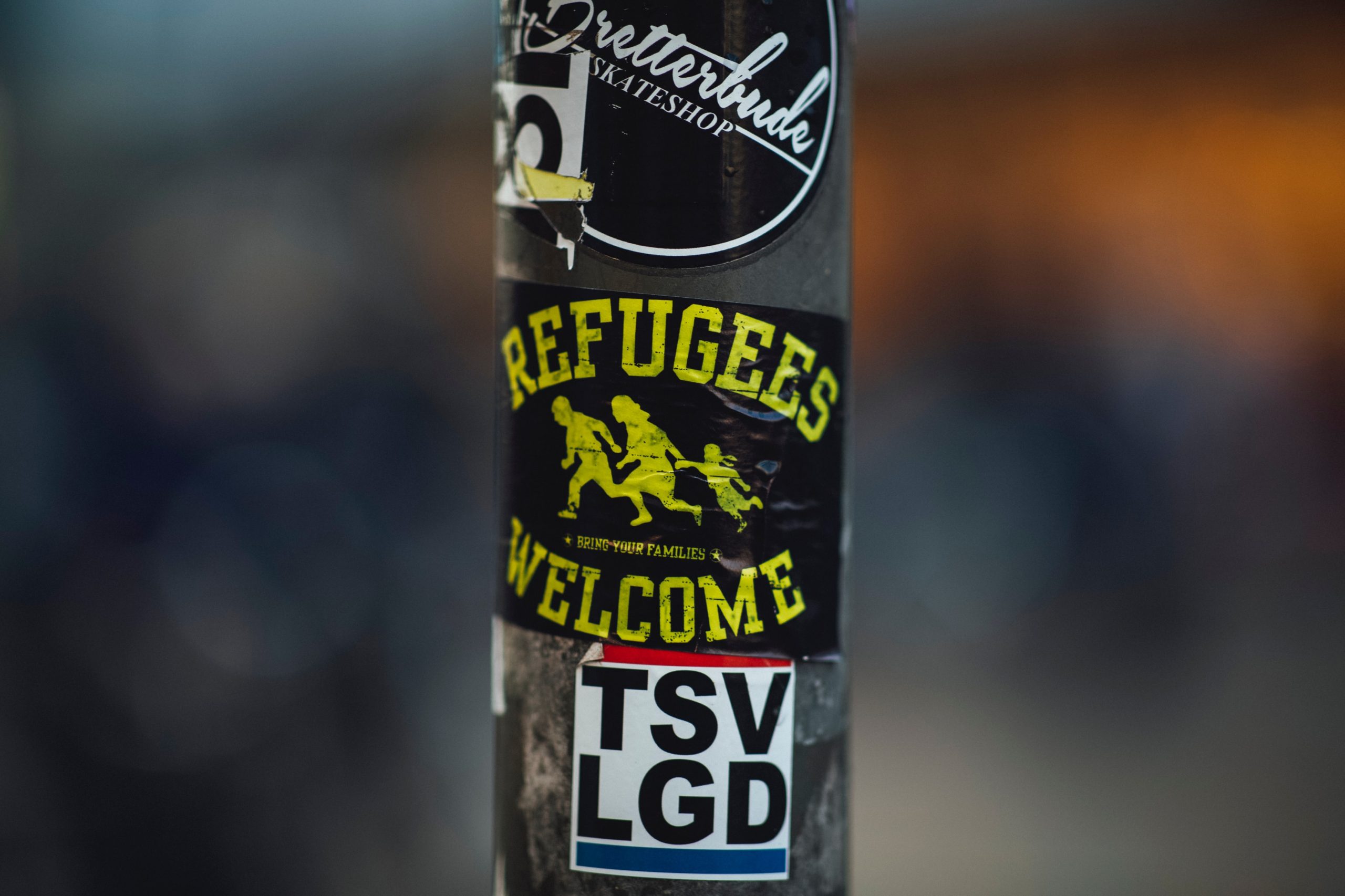
“No One Cares About Africans”

There’s a scene in Ethiopian-American writer Dinaw Mengestu’s novel All Our Names that I think back on a lot. A white social worker, Helen, living in the effectively still segregated 1970s American Midwest, has decided she is going to make a point (maybe to herself) by bringing her lover Isaac—an Ethiopian foreign exchange student—to a local diner. Isaac was not consulted, and upon arrival immediately recognizes the racism he will experience there. Yet when Helen realizes she made a mistake and suggests that they leave, he requests that they stay, that she sit through their meal (his served on a paper plate with plastic utensils, hers on china) and witness how he is treated. 

This scene is about the privilege of ignorance, a luxury much of the population doesn’t have. They are quizzed; interrogated; denied visas; held back from travel even when visas are granted. In more extreme but still common cases, they are subjected to violence, incarceration and torture for trying to reach a place of safety. If only, like Helen, the rest of us could be forced to look at racism directly; compelled to witness the brutal effects of it without the freedom to turn  away.

I sat in an airy restaurant with two former victims of Europe’s migration policy, as they explained what it feels like to starve.

In Swedish capital Stockholm, last summer, I sat in an airy restaurant with two former victims of Europe’s migration policy, as they explained what it feels like to starve. Teo, who asked that his name be changed, said his weight had risen to 67 kilograms, after dropping down to 42 kilograms when he was held in a Libyan migrant detention center nicknamed “Guantanamo.”

Fesseha, a polite man wearing a wooden cross tied around his neck with black string, now weighed 72 kilograms, up from 47. He showed me a photo of him taken then, his barely recognizable face attempting a smile that looked more like a skeletal grimace. At the time, his friends and fellow detainees had said he should be happy because he was going to be evacuated through the United Nations—a rare golden ticket to a safe country in the West. Shortly afterwards, Fesseha was told he would need to wait another year in detention, until he was fully recovered from tuberculosis. He wondered if he would die before the flight took off. 

Both men—who come from Eritrea, a notorious African dictatorship—were held in Zintan detention center in Libya’s Nafusa Mountains, where detainees died from medical neglect and starvation an average of one every fortnight. 

Most of them were originally caught on the Mediterranean Sea trying to reach Europe and locked up indefinitely, without charges or any legal recourse, in detention centers that Pope Francis, among others, has decried as “concentration camps.” Their stories are among hundreds I heard while reporting my book My Fourth Time, We Drowned.

Since 2017, when the EU began spending tens of millions of euros on training and equipping the Libyan coastguard to intercept boats, nearly 100,000 men, women and children have been caught. Many had previously escaped dictatorships in countries like Eritrea, or wars in Somalia, Ethiopia and Sudan—mostly former European colonies. This system of interception and incarceration is known by many, but goes largely unquestioned by the European public.  

The welcome received by the Ukrainian refugees has stunned experts who have been working on migration policy over the last decade. 

Similar human rights abuses have been playing out across the borders of the rich world: on the southern border of the US; in the seas around Australia. For a long time, it seemed like a more empathetic policy was not possible.

Then came the invasion of Ukraine. In the first ten days after it began, more than 1.5 million refugees crossed into Europe, according to the UN Refugee Agency—topping the 1.3 million that claimed asylum in the EU in the whole of 2015, the year of the so-called “migrant crisis”. That number is now almost at 6 million. Nothing will be easy for them—being a refugee is never easy—but at least the borders are open.

The welcome received by the Ukrainian refugees has stunned experts who have been working on migration policy over the last decade: how is it that one group of refugees are welcomed seemingly with open arms, while another are forced back to a militia-run, war-torn country where a UN-appointed fact-finding mission recently confirmed there is evidence that crimes against humanity and war crimes are being carried out against them? 

In Homegoing, her book about the legacy of the West African slave trade, Ghanaian-American novelist Yaa Gyasi writes: “We believe the one who has power. He is the one who gets to write the story. So when you study history, you must ask yourself, Whose story am I missing? Whose voice was suppressed so that this voice could come forth? Once you have figured that out, you must find that story too. From there you get a clearer, yet still imperfect, picture.”


When it comes to the plight of Ukrainian refugees, there has been a notable difference in the way they are represented and spoken about in Europe and North America compared to refugees from other countries.

“These people are intelligent, they are educated people…. This is not the refugee wave we have been used to,” Bulgarian Prime Minister Kiril Petkov told journalists, early on.

“This isn’t a place, with all due respect, like Iraq or Afghanistan that has seen conflict raging for decades. This is a relatively civilized, relatively European – I have to choose those words carefully, too – city where you wouldn’t expect that, or hope that it’s going to happen,” said CBS News senior correspondent Charlie D’Agata, speaking from Kyiv.

“They seem so like us. That is what makes it so shocking,” columnist Daniel Hannan wrote in the UK’s Daily Telegraph. 

The increase in brutality against Black and brown refugees is widely said to have been a response to the rise of Europe’s far-right.

There is a pertinent and ongoing debate in the publishing industry about who gets to tell what story, particularly when it comes to the exploited and marginalized. I was aware of this when writing my book, which details the abuse of African refugees at Europe’s southern borders. But I see this as being an account as much about white supremacy as it is about Black or brown refugees; it is a documentation of a system which has been compared to a modern day global apartheid, in which the rich (largely white) world carries with it freedom of movement, whereas the rest of the globe’s population are stuck where they are. 

“I don’t understand how people can minimize the pain many of us feel when we see how different Ukrainian refugees are being treated from other refugees,” tweeted Vanessa Tsehaye, a London-based Eritrean and Horn of Africa campaigner with Amnesty International. “It’s painful to constantly be reminded that this treatment could’ve been possible for our loved ones if only they were white… Don’t forget that the EU only treats African and Asian refugees like shit because they get away with it, because there is no real public pressure on them to stop.”

The increase in brutality against Black and brown refugees is widely said to have been a response to the rise of Europe’s far-right: a kind of appeasement, if you will. I thought about this too while reading Martha Gellhorn’s eighty-two year old novel  A Stricken Field, which is based on her visit to Prague in 1938, before the Second World War officially began.

The city was already full of refugees who had fled Germany, but remained in grave danger. Some were “new to the profession of exile” and therefore still hoping for assistance, but quickly realized that no one would help them find somewhere secure to go, and that authorities had few qualms about sending them back to their deaths.

A typical scene shows refugees huddled over a tattered geography book open on a map of the world, searching for a place they can find safety. “Has anyone ever heard of Nicaragua?” one asks. “Maybe we can live there. Maybe it is a democracy.”

“All the people ask [for]… is some ground to sleep on in a country that is safe. And they are not allowed,” another refugee, a survivor of detention, tells American journalist Mary Douglas. She wants Douglas to write articles which may sway public opinion in their favor. “After they had public opinion all properly shaped, what good did it do? It was immensely easy to make people hate but it was almost impossible to make them help,” Douglas thinks to herself, before replying “you better not count too much on the moral indignation of the world. It has not been something you can count on. And if you have it, there’s not much you can exchange it for.”

“It’s racism, no one cares about Africans,” came a recent comment from one of my Eritrean contacts, a school teacher, who nearly died from tuberculosis in a Libyan detention center. Like other survivors of Europe’s migration policy, he was struck by how Ukrainian refugees are spoken about publicly and how that contrasts with coverage of refugees from mostly non-white countries.


Literature has documented how quickly sentiment can turn even against those who once had sympathy. In Exit West, Mohsin Hamid imagines a world where doors suddenly open up between different countries, allowing people to escape war. “In their phones were antennas, and these antennas sniffed out an invisible world, as if by magic, a world that was all around them, and also nowhere, transporting them to places distant and near, and to places that had never been and would never be,” he writes. In the UK, there is a build-up of resentment among those Hamid calls the “natives”—the white, British people—against the new arrivals.

“I can understand it,” Nadia, the female protagonist says, showing an unexpected and possibly misplaced sympathy I’ve also witnessed during my interviews with refugees in Europe. “Imagine if you lived here. And millions of people from all over the world suddenly arrived.” 

“Millions arrived in our country when there were wars nearby,” her boyfriend replied. 

“That was different. Our country was poor. We didn’t feel we had as much to lose,” Nadia answers.

Whether the invasion of Ukraine will lead to kinder policies in the longer term remains to be seen.

In 2019, the European Union declared the “migrant crisis” over, ahead of parliamentary elections, but the reality was that refugees continue to be silenced and pushed out of sight into ever more horrific situations. Whether the invasion of Ukraine will lead to kinder policies in the longer term remains to be seen. Until now, the select people who make it to safety have to live with extreme trauma and the understanding that, to integrate into their new society, they must effectively forget what they have been through.

In Stockholm last summer, sitting in front of a meal of untouched injera flatbread, meat and vegetables, Fesseha looked around, calculating how many people would sleep inside the restaurant we were in if it was a Libyan detention center: around four hundred in three lines, he guessed. At one point, his eyes welled up; he said thinking about Libya made him “crazy.” I apologized and said we could talk about something else, but he countered that it was good for him, in a strange way. He had grown used to staying quiet about his past because European people had no understanding of it. “People like them, they see the glass only, they don’t look beyond,” he tried to explain to me, gesturing at a water glass on the wooden table between us.

“All my friends, they are in Libya still. It is not just my history, it is the history of refugees. I am lucky because I am…” Fesseha trailed off and gestured at the food in front of us. “Still now they are detained in the very dark jails of Libya. Even in Europe, it would not be easy to stay four years in one house. Being in Libya is like being in a morgue…you are ready to die.” 
Who Do Powerful Men Become When They Sit Down at Home?

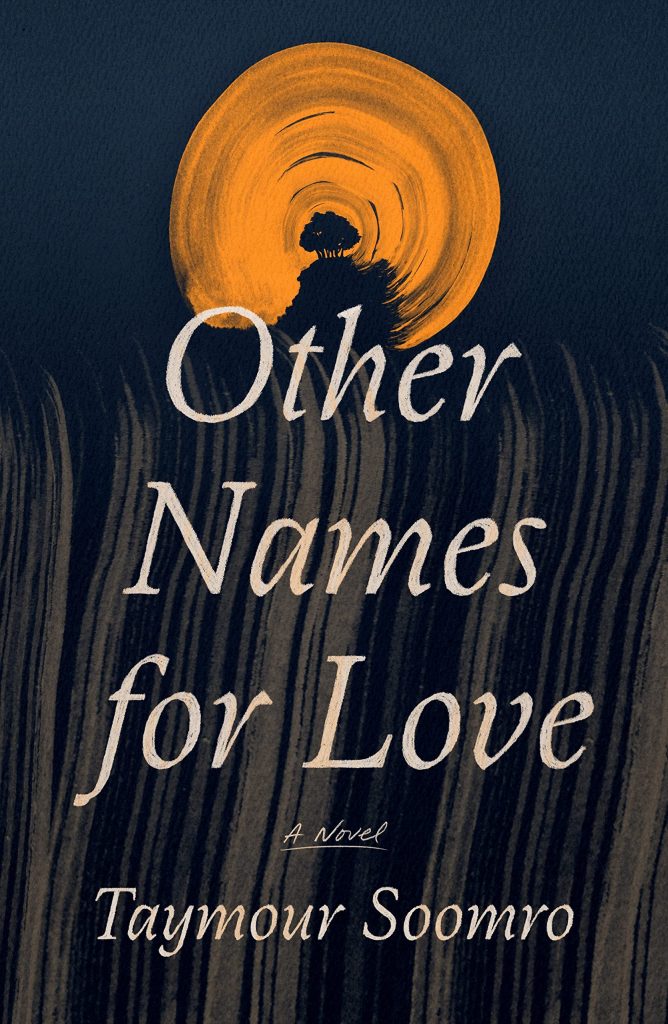
Taymour Soomro’s debut novel Other Names for Love begins with a son flinching at the sound of his father’s voice. Sixteen-year-old Fahad has been ordered to spend the summer with Rafik, his authoritarian father who manages their family farm in Sindh, Pakistan. It’s on the train ride there that Rafik offers up his animating belief: “Power is not something one pursues. Power pursues the man. And if it comes, then what?” It’s a question that haunts the rest of the novel, which begins with the summer that changes both Fahad’s and Rafik’s lives.

Other Names for Love comes out of Soomro’s own experiences on his family’s farm in Pakistan, but the world of the novel is one unto itself, one in which the land is haunted by histories of loss and full of surprising moments of beauty. A world of buffalo with wet hides “glistening like onyx,” and a moon that casts “a streak of silver like a spine.” As Fahad reckons with his feelings for Ali, the son of a local farm owner, and Rafik works to build political power in Sindh, their desires drive father and son further apart, and closer together, in unexpected ways. Soomro has written a queer Pakistani Gothic that is attuned to the shifting nature of desire, and the violent forms it can take. When, as an adult, Fahad thinks back on a student who wrote stories with “violence that shimmered beneath his prose,” I knew that Soomro was describing the particular and incredible essence of his own novel. 

Soomro spoke with me from London over Zoom about the fallible nature of storytelling, writing against tropes of queer shame, and the language of violence.


Yasmin Adele Majeed: I was curious about your choice to tell the novel from both father’s and son’s perspective. What did one offer that the other didn’t, and vice versa? 

Taymour Soomro: What happened was that I kept trying to write this story, and I kept getting stuck. One of the things that I was finding really difficult was the management of time. I would finish a chapter and then I would feel like, “Okay, this needs to pick up exactly where the last one stopped.” But once I started alternating perspectives, then the narrative started to move, because I didn’t feel so locked down by a particular timeline. 

I also wanted to resist this very easy way of saying: queer shame, the fault of it lies with parents, who end up being a metaphor for tradition, and the culture you came from and the community you came from. Fahad’s point of view is much closer to mine in a way, or at least it began much closer to mine. Rafik’s point of view was unfamiliar to me, but it felt really, really important. It was really important to me that there shouldn’t be any villains in this story, and it shouldn’t be so simple that you could just say, “Oh, he felt so much shame about his sexuality because his parents made him feel ashamed of it.” 

YAM: I have a friend who talks about their gripes a lot with queer narratives in which, especially for immigrant narratives, one must leave “home” in order to find one’s sexuality, or to express it. But that’s very much not the story here in the novel.

It was really important to me that there shouldn’t be any villains in this story, and it shouldn’t be so simple.

TS: Right. There’s this idea of the “backward barbaric place,” which you have to leave for London or New York. Or it’s the countryside, which you have to leave for the cosmopolitan, the urban space, which is much more liberal. I felt like those [ideas] were reductive and simple and not true to my own experience, or to what I’d seen.

YAM: That’s why I really love the scene where Fahad and Ali are in the car, and then they see Mousey [Rafik’s cousin] and his manager, and there’s this reflection of a relationship between men. But Ali says, “It’s like they’re friends … Like they’re boys.” There’s not quite the language there. 

TS: The first thing I published was this short story in The New Yorker, which was also about a relationship between two men in Karachi. And I felt that people were reading it as if there was only one way for men to have desire for other men, which was a very – I mean, again, these words end up being a bit meaningless – but it felt like a very Western way to understand what queerness is, or what men who like men are. Actually there’s a different language, there are different words, there are different metaphors for understanding these relationships.

YAM: One of the questions that the book considers is the idea of the “wild” and the “savage,” and civilization. As the novel progresses, we see that those who subscribe to decorum are incredibly violent. I was curious about your thoughts on this binary in the novel, especially in the context of Pakistan and the class structure on the farm.

TS: We left Pakistan when I was four, but we would go back for summers and winters. When I was in my 20s, I moved back to Pakistan for a few years and I got involved with the farm and started managing it. It ended up being this really necessarily humbling experience [that] revealed all of these prejudices to me – of self loathing, of racism, classism, which I grappled with throughout that process. 

That was something I wanted to show because I feel like it’s very true in Pakistan, but it’s also very true everywhere, right? I wanted to interrogate this idea about decorum and propriety. Whom does it serve? Sophistication is not showing your anger. It seems to me that [idea] really serves the status quo because it means that you need to keep your voice down and not fight. 

YAM: Some of my favorite passages in this book are about food, and its relationship to power and need. Ali tells Fahad that if you feed people biryani, they’ll forget everything else. I was curious about your approach to these scenes. 

TS: A very simple answer is that I’m obsessed with food. But also I feel there’s a way in which hunger or greed or interest in food—it’s a desire that reveals something. Despite what you think you want, there’s a way in which Fahad engages with these meals; he doesn’t want to be there but the food shows something else in his desire, this other way that he’s reaching toward the place. For me that hunger was analogous with other kinds of hunger. There’s a nostalgia in it, or celebration of the place.

YAM: Related to hunger, I loved your depiction of the fraught and blurry relationship between desire, especially sexual desire, and violence. What drew you to these themes?

TS: It’s really difficult to know how to engage with these questions of violence, because I’m currently editing an anthology for Random House, which is on the craft of writing, and race and culture. There’s that whole trope about the barbaric Muslim, the violent Muslim, and I was really wary of reproducing or perpetuating that. It seems like the one story that is told about Muslim men. At the same time, violence felt very relevant to me in relationships between men. They happen to be Pakistani men, but actually, it would have felt equally true to me about any man. Men don’t know how to express so much emotion, but anger and violence is the one thing that they do know how to express. We try to hold so much meaning in that violence. 

YAM: Yes, it’s a core language of masculinity. I thought it was interesting that so much of the overtly political context of the book is in the background of the narrative. The negotiations over the ownership of the farm are reported back or heard through rumor. I was curious about that choice, and how the background reflected the foreground of the narrative.

TS: I think an idea that always interested me was, “Okay, take these super powerful men who are powerful in a national or global way. How does the way that they construct their identity on that scale inform them on a personal level? Who are they when they sit down at home at the dining table? And how do those selves have a dialogue between each other? Often in immigrant novels, or in novels by writers of color, there’s this expectation that we tell the story of our country, because we’re allowed to basically tell one story—the story of our country, the story of ourselves. And I wanted to resist that. 

In novels by writers of color, there’s this expectation that we tell the story of our country, because we’re allowed to basically tell one story.

You get a sense of what Rafik is like in office, but you don’t see it. Those actions had these huge horrible effects and impacts, but I was interested in the micro effect of those behaviors and those attitudes, in the most intimate way. For these men, their masculinity is power. Who are they when it disappears or diminishes?

YM: Rafik is such an interesting character because he does hold so much love for Fahad. But it’s such a complicated love.

TS: This is something that felt so personal to me, that gender makes it very difficult for men to have any intimacy with other people because the ways we’re taught to be men make love impossible. There’s that tension for Rafiq, in particular. He has this desire for closeness, both with his cousin, Mousey, and with Fahad and his wife, and there are things that get in the way. 

YAM: What came to you first when you set out working on this project? Was it the characters, the setting of the farm? 

TS: Having spent all that time at the farm, I felt this urge to write something about that space because it ended up being a crucible for me. And now, as well, I think there was a desire to capture that moment in that time, because it felt very important to me, but it also felt like something that was disappearing from my life. In the novel, you get the sense of the farm eaten up and disappearing. I also felt that on a personal level.

I was interested to see how personal stories and histories can be mutable or as changeable. That was a seed for me.

YAM: One of the central tensions between Rafik and Mousey is that as an adult, Rafik suddenly recovers a memory from their childhood—but Mousey is like: this is a core wound that I have had my whole life.

TS: For both of them that story was so different. What was the truth of the story? And does it even matter? Can you even find out? Maybe what happened doesn’t matter as much as the effects a story has on ourselves and the people around us.

8 Zombie Stories Without Any Zombies

Zombies didn’t discriminate. Everyone tasted equally good as far as zombies were concerned. And anyone could be a zombie. You didn’t have to be special, or good at sports, or good-looking. You didn’t have to smell good, or wear the right kind of clothes, or listen to the right kind of music. You just had to be slow.”

“Some Zombie Contingency Plans” by Kelly Link

The zombie story is an analogy fitted with a universal adaptor.

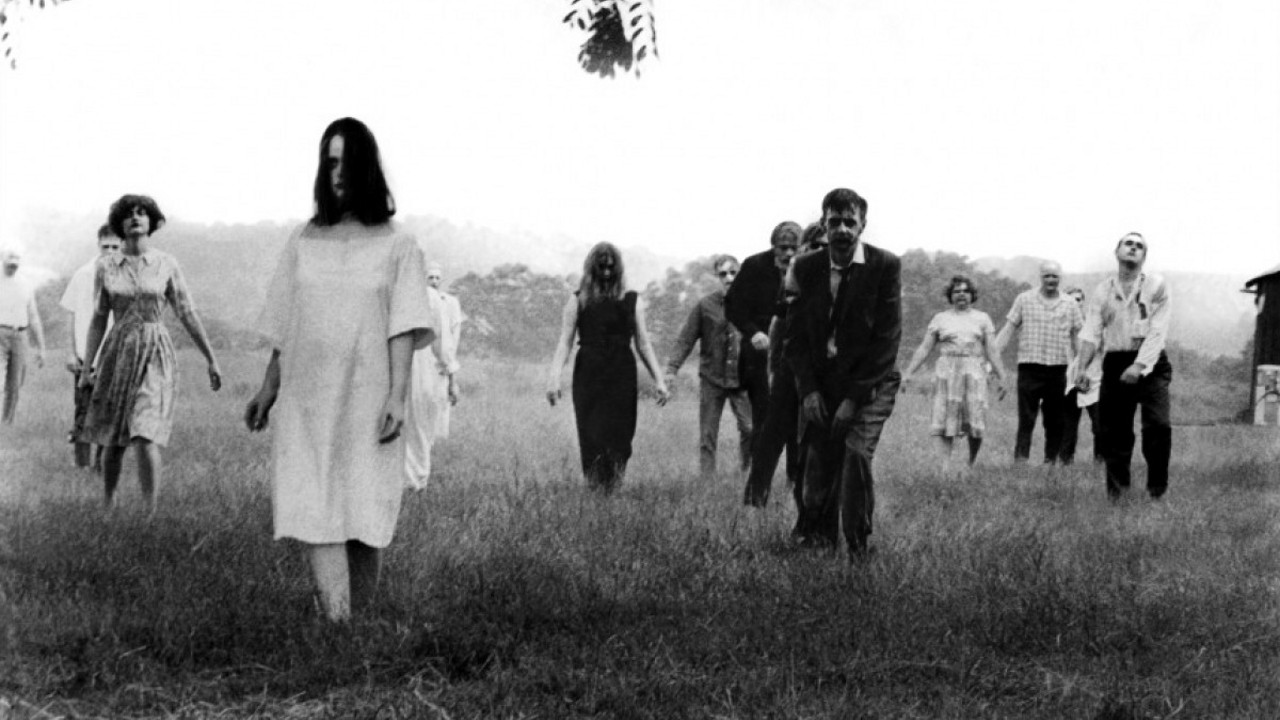
At the end of George Romero’s 1963 film, Night of the Living Dead, the apocalypse appears to have burnt itself out. A posse of good ol’ boys work their way through the countryside, picking off the remaining zombies with the brutal efficiency of a livestock cull. In the nearby farmhouse, Ben, the sole survivor of the night’s horrors and the film’s hero, risks a glance out the window as the cavalry approaches. He’s mistaken for one of the undead and shot through the head before he can say anything. His corpse is then thrown on the bonfire with the remains of the creatures who spent the previous night trying to eat him. 

Romero has argued the film was never intended to directly comment on U.S. civil rights era tensions, but the casting of Duane Jones—an African American actor—as Ben, shifts the film’s weight from what could have been a simple but inventive monster movie into something far more resonant and shocking. 

Subsequent zombie stories have explored ideas as diverse as consumerism, the military industrial complex, urban malaise, terminal illness and even putting a child up for adoption. 

Defining “zombie” in terms of the George Romero’s ravenous undead Hollywood monster rather than the Haitian mythology the term was lifted from, there are countless lists of recommendations for zombie novels where the zombie apocalypse can stand in for anything and everything. Colson Whitehead’s Zone One, Max Brooks’ World War Z, Mira Grant’s Feed novels and so many more. 

Given the monster’s origins on the screen, the genre is an inherently cinematic one too but not all zombie films are equal and sometimes the wrong metaphor can be read. To my mind, too many resort to crass survivalist fantasies where the zombie hordes represent a narratively useful subsection of society where it’s permissible for the heroes to kill with impunity.

When Kelly Link’s collection Magic For Beginners was reviewed by the New York Times, the reviewer questioned whether or not the zombies in “Some Zombie Contingency Plans” were metaphorical or not. This kicked up a brief, pocket-sized controversy in the genre world. Sometimes, it was argued, a zombie is an actual zombie and there should be no shame in that at all. All absolutely true, except of course that Kelly Link’s stories are all such marvelously slippery, wriggly things that describing any of them with absolutes feels mortifying and foolish. At a pinch, you might describe “Some Zombie Contingency Plans” as being about a doomsday prepper with a magic painting who gatecrashes a house party, but that barely scratches the surface. Link, after all, is the sort of dizzyingly accomplished writer who can have zombies both real and metaphorical and—as a lap of honor—keep both of them well off the page for the duration of the story.

My novella, And Then I Woke Up, is not really a zombie story, but it borrows the aesthetics of one and— don’t tell anyone—sometimes pretends to be. 

Just in case anyone thinks that my not-zombies are a slight against genre stories with real, actual zombies in them, I’ve taken the liberty of collecting eight stories which largely aren’t zombie stories at all and I will now try and prove they are all zombie stories at heart and thus restore balance to the world. 

The Road by Cormac McCarthy

To me, many zombie stories feel like the third act of something larger. I’ve always felt that their natural shape is lines converging to a remorseless point and this is why I think they work best in the shorter form. Zombies—traditionally at least—are slow moving and, when encountered in low numbers, easy enough to avoid even at a brisk walk, but zombie stories aren’t really about surviving, they’re about sinking to any level to avoid the inevitability of death. The zombies are not only a threat, they serve as a shuffling momento mori. The inevitability of death has been superseded by the inevitability of undeath. While you might do your best to keep them out, you will make a mistake, your defences will be flawed, and when they fail they will be there, waiting. 

Cormac McCarthy has been accused of nihilism before, so in a sense, The Road feels like a natural progression of his work. Here, the world has already ended and what remains is the lingering long tail before the lights are extinguished for good. There are no zombies here, so there’s nothing else to blame. There are no monsters to exacerbate matters except those that were here already. At risk of belittling the novel with such a lumpenly crass observation, this doesn’t mean the rest of McCarthy’s slim, devastating novel doesn’t tick almost every other checkbox on the zombie apocalypse list. Blasted landscape? Feral gangs? Cannibalism? All here, along with desperate survivors trying their best to cling to the map. That there’s beauty here too—in the spare, unsentimental prose and the desperate love between the father and son—that feels like the last magical dance of the pilot light before it goes out.

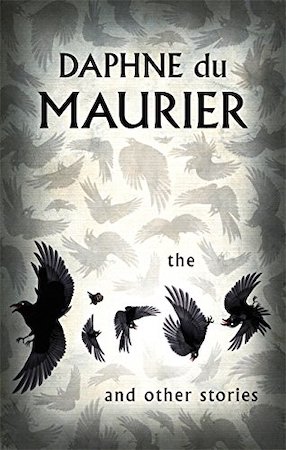
“The Birds” by Daphne DuMaurier

Daphne Du Maurier’s bleak short story was first published in 1952. Farm worker Nat Hocken witnesses nature twist, turning local birdlife violent against humankind. Nat has the foresight to batten down the hatches before the storm arrives, but again, the story ends with little hope that he or his family will survive much longer. 

Alfred Hitchcock’s film adaptation was released eleven years after the story’s publication. It begins by pretending to be a romantic comedy, but ends in a very similar place to the original. The survivors of the siege venture out during a lull and and to all intents and purposes make their escape. Famously, Hitchcock refused to include a title card marking “The End”, so how far they actually get is left to the viewer. 

Five years later in 1968, George Romero’s Night of The Living Dead arrived. The proximity of the releases of those two films has always taken me a little by surprise as there remains something so fiercely modern about Romero’s film that it still bewilders me to think of it as a near contemporary with Hitchcock’s classic. 

Moreover, Night of the Living Dead is—I would suggest—what you would get if you tried to remake The Birds but didn’t have the budget for any special effects. Both are stories in which something passive rises up against the living. In both, survivors hole up somewhere isolated and snatches of radio reports give the event a sense of scale. The phenomenon, they will learn, is going on everywhere, and then the broadcasts fall silent and then there is something at the door. 

In some respects, Romero’s version is a more faithful adaptation of Du Maurier’s story than Hitchcock’s. There’s a similar sparse desperation to the narrative, a similar hopeless cruelty to its denouement. Du Maurier’s story isn’t a zombie story in itself, but I don’t think it’s too far fetched to suggest the bones of it have taken on an undead sort of life of their own.

The Migration by Helen Marshall

Helen Marshall’s novel takes its cue from Aristophanes’ The Birds rather than DuMaurier’s. Moreover, there’s hope here—if not for us, Marshall argues, then for the generations who might follow.

In a world ravaged by climate change, a pandemic is taking the world’s young. Children are dying and to make things worse, they’re not quite staying dead. 

Zombie stories are frequently pandemic stories, and I wonder if they’ve achieved a new sort of resonance following the Coronavirus outbreak which made the world grind to a halt over the past few years. All that news footage of cities in lockdown, endless empty streets that should be bustling with life, could easily be mistaken for footage from any contemporary zombie movie. Marshall’s pandemic is even more horrifying, the victims—all children—are afflicted by some kind of toxoplasmosis, which leads them to actively facilitate their own deaths. Drifting from the safety of the path, veering into traffic or towards the relentless rising floodwaters. When the bodies start twitching in the hospital morgues, it almost comes as something of a relief. Zombies! Of course! We’re much better equipped to deal with those than whatever else is happening here!

But The Migration isn’t really a horror story. These juddering, metamorphosing corpses aren’t zombies, and although Stephen King’s Pet Sematary is invoked on the back cover, these kids aren’t coming back with a nasty look in their eye and a scalpel hidden behind their back. Something much stranger and— surprisingly—more beautiful is happening and I defy anyone to read the final chapter without choking back a sob.

(Full disclosure, Helen and I married in 2019 and have a small sprog of our own now. One of these days he’s going to read this book and I suspect he’ll have many questions.)

Earthlings by Sayaka Murata, translated by Ginny Tapley Takemori 

Zombie stories are frequently stories of betrayal. Like many classic monsters, a zombie is powerful because they can wear the faces of those you love. Worse still, if you fall to a zombie, you too will become one and now those you love are at risk from you. 

Earthlings isn’t about zombies at all. As a girl, Natsuki tells her cousin Yuu she is a magician, given powers and missions by her stuffed toy hedgehog. For his part, Yuu admits that he’s actually an alien, originally hailing from Planet Popinpobopia. All of this is delivered in the same matter-of-fact deadpan voice Murata employed in Convenience Store Woman, another short, sharper-than-you-expect novel involving a protagonist living just outside the periphery of society’s expectation. 

Natsuki and Yuu (and later, Natsuki’s husband-of-convenience, Tomoya), come to believe the real world is nothing more than a Baby Factory. The conviction that their only purpose is to breed and consume is not entirely unreasonable given how Natsuki’s family are as cartoonishly awful as any villains from a Roald Dahl novel. In this manner, Murata paints polite society as the zombie hoard that you must escape or be assimilated into. 

Natsuki’s narration is both naive and utterly confident and the effect is disorientating. The same feather-light tone she employs to outline her whimsical fantasies is used to detail her abuse at the hands of a predatory school teacher. As the ending veers sharply into gonzo delirium that would be more at home in a Lucio Fulci move, there’s a lingering sense that a parallel—more conventional story—is somewhere in the background, too heartbreaking to be fully told.

Resurrection Points” in Midnight Doorways by Usman T. Malik

I have a theory about zombie stories, that some consider them to be a genre-sequel, or a genre-progression of the traditional ghost story. Like many sequels there’s a more-is-more approach. If a ghost story asks “What if a friend you knew to be dead was standing in your room,” a zombie story would ask “What if a friend you knew to be dead was standing in your room, and what if they’re hungry?”

“Resurrection Points” isn’t quite a zombie story—not in the traditional sense. It might be said to be a prequel to an unwritten zombie story, and in those terms, to me, it reads to me as a ghost story with real flesh on its bones. Daoud has inherited his family’s remarkable gift. With the correct training from his father, he can activate certain pressure points within the human body and in such a manner, he can relieve arthritis, make dead muscles move and perhaps—just perhaps—he might even raise the dead themselves. When he asks his father if there are more like him, his father nods and adds, “the Prophet Isa is said to have returned men to life.”

It’s a dangerous name to invoke. As the neighborhood descends into sectarian violence, the violent mob burning up the edges of the story is very much alive. It becomes very clear Daoud will be using his gift before the day is done, and it’s just as clear the ramifications will be alarming.

“Resurrection Points” is an elegantly weighted story told with the measured intelligence. Malik is both a rheumatologist and a poet of darker corners, he’s adept at making the page seem alive beneath your fingertips.

Uzumaki by Junji Ito

One aspect of zombie infection stories is the idea that those afflicted find themselves at the mercy of awful, unstoppable compulsions. Driven by hunger, fury, or a senseless destruction. The zombies scour those who have been left behind.

In Junji Ito’s Uzumaki, a Japanese seaside town becomes “haunted by spirals” and before long, the residents find themselves at the mercy of compulsions they cannot explain let alone avoid. Being Junji Ito, these compulsions go a bit further than simply “becoming violent and trying to eat people.” A man bodily breaks his bones into the shape of a spiral so he can fit himself into a barrel; schoolgirls tear themselves apart trying to obtain the perfect curl of hair; people turn into snails; others eat people who’ve turned into snails, bodies twist and overextend while faces loll into expressions of whirligig delirium. 

The story is at its most zombie-ish in the final chapters, where the individual acts of strangeness tip over into the irreversibly cataclysmic. Again, we find ourselves converging to a single point before the darkness folds in. A small group of survivors bear witness to the town succumbing to its final madness, acting as one to reconfigure the streets into a single lunatic spiral made of connecting longhouses, which then flushes all inside away into a hellish vortex. The whole thing, appropriately enough, is as gloriously, dementedly twisted as you’d hope a Junji Ito story to be. 

The Beauty by Aliya Whiteley

Aliya Whiteley’s novella begins in a world where, we are told by Nate, our narrator and aspiring fireside storyteller, “all the women have died.” Nate lives in a small community of men—many closed of mind—who are clinging to the past they understood and waiting for their time to die.

So, what happens when a strange sort of fungus starts growing on the women’s graves in the village cemetery? And what happens when the fungus gets up and follows the younger men home? What happens when the younger men start to fall for the fungus creatures who might actually be the women they’ve lost in a strange new form? What happens when the status shifts for everyone involved?

As with many of the stories listed here, simply itemizing the story’s weirder avenues does Whiteley’s writing a disservice. The Beauty can be read a story of the dead coming back to life, but like Marshall’s novel, it doesn’t stop there. It’s weird, surprisingly warm, occasionally horrible and genuinely beautiful.

Crash by JG Ballard

Ballard’s characters aren’t zombies in a traditional sense, but if we’re being whimsical—and if you’ve got this far, then we probably are—they could be mistaken for them in précis. Consider that most are the victims of near-fatal car crashes—they have, if you will, survived death. Their experience has changed them fundamentally and now they see the world in a different light. The narrator spends time trying to engineer a similar accident for his wife so that she can experience the world as he does—essentially trying to spread the infection. 

But of course, Crash isn’t about animated corpses dining on the living, it’s about an underground community of car crash survivors, exploring the limits of physical experience through transgressive sex and recreations of “classic” fatal car accidents. 

The idea that Crash might be considered a zombie story might make more sense when viewed through the lens of David Cronenberg’s film adaptation. Cronenberg has a history of stories centering on closed or underground sub-cultures testing their own boundaries and his first theatrical release, Shivers (1975) is less ambiguously a zombie film. Slug-like parasites infect the residents of a Montreal apartment block, turning their hosts sex-mad and infectious with it—it’s no surprise that a working title of the film was Orgy of the Blood Parasites. It’s very much a zombie outbreak in structure. We have the exponential infection rate of a pandemic; the victims overwhelmed with new, out-of-character compulsions and a slow build towards that apocalyptic tipping point.

These threads certainly don’t map cleanly to the outline of Ballard’s novel, if they map at all (despite what the pearl-clutching sections of the British press might have said about either the book or the film, neither could be mistaken for apocalyptic), but it is fascinating seeing how Cronenberg’s concerns evolve from one film to the other. Ballard didn’t write a zombie story, but Cronenberg—perhaps already infected—might have passed on the virus by association.

White Fantasy Appropriates Stories of Oppression from People of Color

Another day, another shit show involving J. K. Rowling; I’m starting to think there’s a schedule. 

I’m not a Potterhead, so I have no skin in this game, but I’ve seen enough friends and loved ones in the last couple of months lament the loss, in their words, of nothing less than their entire childhoods—childhoods handheld by the characters in the Harry Potter universe, which (like so much of our most formative reading) taught them crucial things about difference, friendship, cooperation, loneliness, harm. I’m from the X-Men generation, myself—that classic American repository of allegories on oppression and difference, its entire narrative universe founded on the premise of marginalized people fighting for their right to exist without discrimination or exploitation; to be seen as equals, and to be loved in their wholeness. 

Some part of me will always love that universe. But I also know that so much of what makes up our mainstream contemporary fantasy narratives, utopian or dystopian, have been written by white authors, from Rowling’s Harry Potter to Chris Claremont’s run of X-Men (still its most well-known incarnation) to Margaret Atwood’s The Handmaid’s Tale and its contemporary TV adaptation. They reach a global, cross-cultural audience even while their narrative universes overwhelmingly center white protagonists, both on the page and on the screen. 

Yet all of those stories borrow freely from the histories of oppression and intergenerational trauma that have largely befallen communities of color: racial discrimination, enslavement, apartheid, mass incarceration, state disappearance of dissidents, forced pregnancy, sterilization, and state-sanctioned rape. For marginalized kids who have seen ourselves in these stories, it comes as no coincidence—those stories have literally been built off of the lives of people like us, our parents, our grandparents, our ancestors. We were constitutionally built to relate to those stories because those stories are, in every way, about us: in writing The Handmaid’s Tale Atwood has described being inspired by, among other things, the murder of dissidents in the Philippines under the regime of dictator Ferdinand Marcos and the Argentinian junta’s policy of child abduction; X-Men’s long-standing parallels to the civil rights movement have never been subtle, with fans commonly comparing Professor X to Martin Luther King Jr. and Magneto to Malcolm X. Marvel’s Stan Lee never outright admitted that the characters were intentionally based on civil rights leaders like King—nor did he deny it. It proved beneficial, both culturally and financially, to simply allow the conclusion to be drawn by a wide swath of readers and consumers. Certainly all the friends I grew up with saw themselves and their struggles in the X-Men, even as the stories themselves centered characters who rarely looked like us.

But that dynamic is endemic to white-authored fantasy: specific stories of oppression and marginalization that have been hollowed out of their historical context and replaced with white leading characters, in a kind of reverse Get Out. Apocalyptic narratives about people having to flee their homes because of climate disaster, or compete with each other over dwindling resources underneath a fascist state, or submit to a patriarchal regime that rules over their entire biopolitical reality—from The Day After Tomorrow to The Hunger Games to The Handmaid’s Tale—overwhelmingly center characters whose racial specifics have been conveniently left unspoken, neutral. This means, of course, that when they are adapted to screen, these characters are nearly always played by white stars, Hollywood’s way of saying the quiet part out loud: that neutral always means white. 

This, despite the fact that, in our own apocalyptic present, it is patently not white people who will bear the brunt of our impending climate doom, and not white people toiling at the bottom levels of our capitalist fight club. This combination of deliberate narrative withholding and the racialized assumptions it permits—which are then confirmed by Hollywood casting—tells us that stories about oppression and marginalization only become universally worthy, relevant, and relatable when the faces on the book covers and movie posters are white; when the bodies being systematically (and sympathetically) oppressed are white. 

Apocalyptic narratives overwhelmingly center characters whose racial specifics have been conveniently left unspoken, neutral.

When Rowling’s transphobia became more regularly discussed among the wider reading public (BIPOC readers have been pointing out the latent racism in the Potterverse since the books’ publication), I often saw readers and fans lament their disappointment in Rowling’s views, struggling to make those views line up with the allegories of difference and triumph that they had nevertheless found in those narrative worlds. I saw readers expend great intellectual and emotional effort to salvage what they had once treasured in her works, the characters and passages they’d been saved by—an effort I sympathize with, understand, and have gone through myself. I’ve personally never been particularly interested in separating the art from the artist, an impulse of exceedingly mild intellectual rigor, which has only ever really served the powerful and protected abusers. What I would point out, however, is that this very dynamic—taking stories of oppression and marginalization, stripping them of most of their racial and historical specificity (leaving just enough to add a frisson of exotic/erotic flavor), and recasting them with white bodies—is at the heart of most white fantasy, and thus is also the source of the incongruence that minority readers later struggle with, when those authors turn out to care little at all about the oppression they once so beautifully illustrated. 

How can a writer who wrote so convincingly about being a misfit be so indifferent to the plight of misfits in front of her? How could Marvel, home of X-Men, that supposed bastion of civil rights metaphors, be at the crux of such right-wing, misogynist, racist, homophobic fervor as Comicsgate, the reactionary harassment campaigns waged by fandoms against perceived social justice warriors—feminists, antiracists, queer artists and readers—out to ruin their precious comics? How could those fans miss the irony of attacking minorities while at the same time defending classic allegories of oppression, devoted to narratives of resistance and community-building? 

The truth is, these worlds may have only ever nominally been interested in oppression and difference—that shallow, cosplay-like understanding of oppression makes itself clear when authors like Rowling are taken to task for their actual opinions on marginalized people. I can no longer muster up disappointment when white authors whose works supposedly deal in equality and justice show themselves (and the reactionary readers who love them) to not be remotely interested in either equality or justice—not when both the origin story and the material effect of that work have been to lift from the historical struggle of racial, sexual, and economic minorities, and replace those bodies with white, cis, straight characters. Were these works ever truly concerned by justice to begin with? Or were they simply enamored with and appropriative of its language—its culture, its aesthetic, its narrative style? Oppression chic, equalitycore. 


In contrast to the limited imaginary worlds like X-Men and the Potter universe, I can think of one contemporary example of narrative fantasy storytelling that goes beyond the gestures of oppression cosplay, and deals explicitly with the unbearably intimate relationship between heroism and historical trauma: HBO’s Watchmen, specifically its first and sixth episodes. 

White American showrunner Damon Lindelof called his series a “remix” of DC’s Watchmen comics, created by white English author Alan Moore and artist Dave Gibbons. The show takes place over thirty years after the original comic series, in an alternate 20th-century universe in which vigilantes—former superheroes—have been made outlaws. A fake alien attack on New York City in 1985, orchestrated by former vigilante Ozymandias, has wiped three million people from the planet, bringing previously battling nations together against their alien common enemy; postwar Vietnam has become the 51st state, and the birthplace of our protagonist, played by Regina King. 

Taking stories of oppression and marginalization, stripping them of most of their racial and historical specificity, and recasting them with white bodies—is at the heart of most white fantasy.

That’s a lot to take in. But what I’m most interested in is how the show uses the structure of fantasy, specifically the superhero myth, to excavate the unnamed and often faceless histories hidden beneath those masks, under those capes. HBO’s Watchmen relocates the action of the story to Tulsa, Oklahoma, in 2019 (mostly). A white supremacist group called the Seventh Kavalry has been waging a war against minorities and the police after a state policy has been put in place to administer reparations for racial injustice, stemming back to a specific—and historically accurate—event that Watchmen’s first episode orchestrates with titanic clarity and commitment: the Tulsa Race Massacre of 1921, in which mobs of white residents launched a mass attack on Black residents and Black-owned businesses in the Greenwood District of Tulsa, at the time the wealthiest Black community in America and sometimes called “Black Wall Street.” 

HBO’s Watchmen imagines that most alternate of alternate universes: one where racial justice might be served—not permanently, not perfectly, but practically, and with intent. In this universe, descendants of those affected by the Tulsa massacre are entitled to reparations; a widely available DNA test determines the connection, and ancestry research is reimagined not just as a dubiously trackable data-collection opportunity for late capitalist self-actualizers, in the vein of 23andMe, but as an intimate, bodily inheritance that makes future justice possible. Here, a historical catastrophe like the Tulsa massacre is not just something we can know or unknow, something we can either be aware of or be simply, innocently ignorant of—history is a deposit in our bones, there in the blood and saliva. 

Regina King plays Angela Abar, an orphaned police detective born to Black American soldiers in occupied Vietnam, now living in Tulsa, where her extended family is from. While ostensibly now making a living as a baker, Abar also moonlights as the vigilante Sister Night, tracking down Seventh Kavalry suspects when her daylight capacity as a cop falls short. When I first started watching the show and realized that the main characters were going to be police officers, my heart sank; so many American shows are obsessed with humanizing—and justifying—the presence of law enforcement and military command, from dramas like Watchmen to comedies like Brooklyn 99 and tentpole movies like The Avengers. Try to get away from the police state in American narrative life: you won’t get far. I didn’t want to watch another show about a good cop, not in a country where you can’t turn left or right without hearing about yet another instance of anti-Black police brutality. And until I watched Watchmen’s sixth episode, I was sure that it would be the kind of show I dreaded. I was, mostly, wrong. 

Watchmen, it turns out, is entirely interested in humanizing a police officer, but not to sweep under the rug the systemic racial discrimination of our inherently broken police state: it uses the loftier metaphors of heroism and vigilantism to ask questions about how we come to shape the figure that justice takes in our imagination—who we come to imagine as our heroes, and how we come to shape ourselves in their mold. The sixth episode of Watchmen imagines that Angela has taken an extreme dose of a drug belonging to her grandfather, Will Reeves, whom she’s only just met—right after he’s seemingly murdered her close friend, the white police chief of Tulsa, Judd Crawford. The drug is called Nostalgia, a pill manufactured to contain a person’s memories, and which in the Watchmen universe has been outlawed due to its tendency to make its users psychotic. Angela takes her grandfather’s Nostalgia in order to understand why he may have murdered her friend and colleague; what follows is a journey through American history unlike any I’ve seen on television. 

Earlier in the episode, we’d opened on the conspicuously white face of the hero we’ve come to identify as Hooded Justice, a character that exists in the original Watchmen comics; the only vigilante in the original series whose true identity is never discovered. Hooded Justice is, as his moniker implies, hooded, with a cut-off noose around his neck. In the opening scene of the episode, we see Hooded Justice vigorously and bloodily applying his namesake to some homophobic policemen in an interrogation scene. Later, we realize it’s all make-believe, a TV episode aimed at a rapt American viewing public. Here the show establishes a truth, which it will gradually begin to dismantle: this white man, the one with the blue-green eyes, is what Hooded Justice looks like—at least to most Americans.

When Angela travels deep down into her grandfather’s memories, she discovers another face entirely. The show imagines that Angela quasi-becomes her grandfather, with some scenes glitching in between their faces and bodies, so the border between them dissolves; she is literally living his memories, in his clothes, in both her body and his. 

That inbetweenness brings Angela into an unbearably heightened intimacy with her grandfather, one in which she realizes how inescapably she is implicated in (and eventually, as she later learns, responsible for) events that make her life possible. In Watchmen, the violence of the vigilante isn’t left mysterious, singular, and merely “existential,” it; instead it is carefully, deliberately given all the dignity and despair of its history, fully lived. When Angela experiences firsthand the devastation of her grandfather’s life, King telegraphs that grief and rage in a way that feels at once worldweary and newborn, like someone weeping from two different people’s eyes. And isn’t that, in the end, what intergenerational trauma feels like?

I didn’t want to watch another show about a good cop, not in a country where you can’t turn left or right without hearing about yet another instance of anti-Black police brutality.

Slipping into these memories along with Angela, we meet a young boy, watching a silent movie in a Black-owned theater in Tulsa’s Greenwood District, while his mother plays the accompaniment musical track on the piano. The movie is the child’s favorite, containing one of the most formative scenes of his life: a scene in which white townspeople are saved from their corrupt white sheriff by a masked hero, a Wild West lawman who then removes his mask, to the excitement of the benevolent townspeople; the hero is a man named Bass Reeves, “the Black Marshal of Oklahoma,” who tells them their own sheriff is the villain that has been stealing their cattle. Then he intones his fateful lesson: “Trust in the law!” 

Preoccupied by the early lessons taught by his favorite hero, Bass Reeves, Will becomes a New York City police officer in an almost entirely white police force. The only other Black police officer, an older man named Sam Battle, is also the only one who agrees to pin Will’s officer badge on him during his welcome ceremony. (Battle is yet another historically accurate character, a reference to Samuel Jesse Battle, the first Black NYPD officer.) Will says that he joined the police force because he looked up to Lieutenant Battle; Battle smiles a little wearily, then whispers to him, urgently: “Beware of the Cyclops.” 

We’ll learn who and what the Cyclops is—or rather, Angela/Will will learn, up close, and in the flesh. It comes as no surprise that Will’s fellow police officers are actively and institutionally racist, undermining him at every turn and protecting white supremacists, like the one Will sees burning down a Jewish deli. Will’s attempt to get justice—to do the job he signed up for—culminates in one of the most singularly horrifying sequences on American television, in which Will’s police colleagues (the drivers of the car I described earlier) stalk, viciously beat, then proceed to lynch him. The show puts viewers behind Will’s eyes as he wakes up behind the hood his attackers have put over him, the noose around his neck dragging him up, up, and up—until, at the very last minute, they spare him, laughing, with a warning. 

It is the only example in American television I can think of that brings viewers into such profound, inescapable intimacy with one of America’s foundational anti-Black terrors, the uniquely American practice of lynching. It shares space with the indispensable compilation The Black Book, edited by Toni Morrison, as one of the few cultural instances in which the American history of lynching is presented from a Black perspective (and not just through the eyes of white writers and their protagonists, as in Harper Lee’s school staple, To Kill a Mockingbird). Will, in his dazed, broken survival, wanders the streets and randomly comes across a couple being beaten by thugs. Still wearing the noose, he puts on the hood his attackers had forced on him—reclaiming this dehumanizing anonymity for his own protection—and jumps upon the thugs, beating them back and ultimately saving the couple, who quickly thank their anonymous savior before fleeing. 

Watchmen uses the loftier metaphors of heroism and vigilantism to ask questions about how we come to shape the figure that justice takes in our imagination.

We are witnessing the birth of Hooded Justice: not a white man with blue-green eyes at all, but a young Black man, an inheritor of the Tulsa massacre, who wears the noose and hood thrust on him by his would-be lynchers. It is a phenomenally radical imagining of an existing comic book character, one that takes the heroic vigilante trope so globally beloved and uses it to ask questions about the intimate, gut- deep agonies of trauma, oppression, and justice. Will, like any number of scared, traumatized kids, watches a man who looks like him become a hero through a fantasy of law enforcement—“trust in the law”—so he, too, becomes a police officer. But his life shows him that the violence that led him to believe in that heroic fantasy is the same violence that will wake him from it. Here there are no grateful white townspeople; when you reveal the corrupt white sheriff, you get beaten and lynched. Will turns from his Bass Reeves fantasy to a grimmer identity; takes the horror that has been dealt to him, and turns it into a weapon. 

And this is where the episode finally fulfills the promise that its pilot made by centering the show in Tulsa to begin with. The episode isn’t interested just in how Will becomes disillusioned with the police state and thus steps into his true, fulfilling self as the vigilante Hooded Justice—another narrative path I was dreading. No, the show is invested in something much deeper, much harder to parse: the persistence of intergenerational trauma and its effect on a person’s physical and emotional growth; the unforgiving war of attrition that the pursuit of justice can often feel like, especially for those restlessly seeking it alone, against an indifferent world. The show is interested in how the longing for justice, unfulfilled, can literally break us down: break our families apart, break our bodies apart. It asks impossible questions, like why do people—people of color in particular—sometimes paradoxically long for the heroic validation and redemptive power promised by law enforcement, when their own histories so clearly show that law enforcement has rarely been their friend? It’s something I wonder about my own Filipinx community, one that bears the traces of having once been the fought over Pacific property in America’s colonial real estate grab, a conflict that culminated in a policy of genocide that claimed, some say (the official American documents of the period are, of course, to be mistrusted), over a million native lives. And yet my extended family is punctuated with proud US Army and Navy soldiers stationed everywhere in the world; trusting in the law. 

The show is interested in how the longing for justice, unfulfilled, can literally break us down: break our families apart, break our bodies apart.

We discover later that Hooded Justice is a closeted gay man; he has to meet his white lover, fellow vigilante Captain Metropolis, in secret. It’s not just a double life, but a triple life, a quadruple life. Captain Metropolis urges Hooded Justice to keep his identity hidden from their fellow vigilantes, who aren’t as “tolerant” (that buzzword of the white liberal racist) as he is; Hooded Justice regularly wears white makeup around the parts of his eyes visible through the hood’s gaps. Tangled knot after tangled knot weave in Hooded Justice’s psyche, there where the self meets mask, where the hunger for power and justice settles for the exhausting cycle of violence and vengeance, where the desire for true connection and sexual fulfillment settles for condescending companionship and racialized fetishizing. When Will finally stumbles upon the grand plan of the Cyclops (the obvious KKK stand-in, who are plotting to gain societal power through mind control, and whose presence in Watchmen is drawn from our own very present realities: a 2006 FBI intelligence assessment detailed organized white supremacist infiltration in state police forces, such as neo-Nazi gang the Lynwood Vikings, which thrived in the Los Angeles County Sheriff’s Department), Will asks for help from his lover and supposedly fellow masked heroes. But he soon realizes they’re not in this fight together; they’re not even in the same fight. Again, he is alone, against a group of white people not there to help him, in a hood, with a noose around his neck. 

Mainstream heroic wisdom, especially in the settler colonial American psyche, still so enthralled with its hardy independence and its pioneering spirit, asks us to worship the figure of the vigilante hero as a singular aberration and miracle—a superhero, unique unto himself. The mainstream vigilante’s spectacular acts of violence or heroism are coded as nonpolitical eruptions in the nonpolitical everyday: vigilante heroes vote libertarian (if indeed they vote at all). This vision of the vigilante is, above all, special. But in Watchmen, the vigilante’s origin story has at its foundation our inescapably political and inextricably shared everyday: the pain, violence, and grief in Will’s story isn’t an aberration at all, but the pangs of a much greater— and much more joint—malady. 

The show points to the lone vigilante in American culture and reveals that he has always been a lie: the work of justice was never meant to be solitary. We inherit that work from each other; we inherit it from people we don’t even know. Our history is in each other, like deposits in the bones, there in the blood and saliva. In this we are not special. Most poignant of all is the realization that Hooded Justice is—horrifically, historically—ordinary. He’s not just a vigilante, not just a superhero. He’s an American. 


From How to Read Now by Elaine Castillo, published by Viking, an imprint of Penguin Publishing Group, a division of Penguin Random House, LLC. Copyright © 2022 by Elaine Castillo.

7 Books That Epitomize Bookseller Noir

Noir has long been obsessed with books—books as objects, as evidence, as repositories of the past, and occasionally as glimpses into other worlds of possibility. It’s no wonder, then, that booksellers often turn up in fiction, and especially in mystery. There’s something intoxicating about the turn a story takes when the characters walk into a bookshop. It’s the atmosphere, maybe, and the promise of secrets and knowledge, possibly forbidden. Of course, there’s also that bookish smell we all know, not to mention the sensation of flipping through old, sometimes brittle pages and preparing ourselves to be transported. 

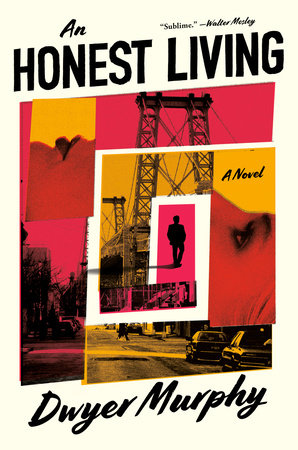
Over the years I’ve come to think of these stories as their own sub-genre: bookseller noir. When I wrote my first novel, An Honest Living, I wanted to capture some of that ambiguous magic for my own characters, so I let them wander in and out of a lot of bookstores, getting tangled up in everyday mysteries, buying, selling, stealing, and recovering a few volumes themselves. While writing, I kept coming back to my favorite titles. Some are bona fide mystery novels, others are either adjacent, or I’ve found another way to shoehorn them in. Together, for me, they make up the peculiar world of bookseller noir.

Heretics by Leonardo Padura, translated by Anna Kushner

Padura is one of the titans of Latin American noir and perhaps contemporary Cuba’s most celebrated author. His enduring creation is Mario Conde, the romantic, history-obsessed man of the people featured in one of Padura’s most ambitious works. In Heretics, Padura explores the Jewish diaspora turned away from Cuba, a looted Rembrandt painting, Miami exiles, and Conde himself, ever at work on his great novel and also hitting the pavement as a part-time book dealer. The story proceeds with the usual flights of imagination and historical interrogation, in which Conde unlocks the secrets of another community’s experience in the vast Cuban tableau. What shines through is Padura’s profound love for his culture and an eternal willingness to challenge it.

The Book of the Most Precious Substance by Sara Gran

Gran, whose Claire DeWitt series was without a doubt a high-water mark in bookseller noir, came back this year with a new protagonist, Lily Albrecht, another rare books expert who finds herself caught up in the fervor around an occult volume believed to hold the secrets to an ancient form of sex magic. Does that sound pretty wild? Good, that’s the point. Gran is one of the most surprising, effervescent novelists at work in the crime field today. Her prose is electric, her characters eccentric, and her plots unfold in strange and illuminating patterns, especially when they pertain to old books. Here the action bounces between New York, Paris, Munich, and New Orleans, cities that carry long and complicated literary legacies, plus some dark cultural secrets.

Out of the Dark by Patrick Modiano, translated by Jordan Stump

An unrelentingly enigmatic, lovely novel, Out of the Dark follows the same pattern as most of Modiano’s work: an older man looks back on some mysterious encounter from his youth and its strange reverberations across time. Here, the narrator is a young man living on the edges of Paris, making enough for food and lodging by selling old art volumes to the bouquinistes. He soon runs into Gérard Van Bever and Jacqueline, an intriguing couple who claim to be replenishing their funds with a complicated roulette scheme at casinos around France. Our narrator begins a relationship with Jacqueline; while he continues selling off books, she locks herself away in hotel rooms in a drug-induced haze. With Modiano, it’s always about questioning the past. Memories are distorted and reshaped as time passes, and his subject soon evolves into something ineffable, always just beyond reach. For those looking for an entry point into Modiano’s work, Out of the Dark is one of the best. 

Those Who Knew by Idra Novey

Novey’s powerful novel operates on so many levels. On the one, it’s a story about a woman wrestling with trauma and regret; on another, a country faced with much the same dilemma; but it’s also a story about language itself, the ways in which it channels and absorbs culture. It’s only fitting that in the kaleidoscope of perspectives and voices, Novey brings us one from a bookshop, that repository of the island nation’s post-US-dictated life. And of course, the book also has a wildly compelling plot, as a woman searches for the truth about a politician who preyed on her in the past and looks to be doing the same with other young women in the midst of his rise toward higher office. Nobody writes politically conscious literary thrillers quite like Novey.

The Club Dumas by Arturo Pérez-Reverte

Lucas Corso is a simple man. A cutthroat rare book dealer, yes, but primarily he would like to be left alone with his books, his spirits, and his re-creations of Napoleonic battles—except that he has a very particular set of skills, as they say, and also a fever for rare books. In Pérez-Reverte’s epic mystery, Corso is on the trail of certain volumes of the occult, reportedly co-authored by the devil. Corso is a professional skeptic, but soon finds himself encountering forces beyond his understanding. If all this sounds familiar, it may be that you’ve seen the 1999 film adaptation, but rest assured, you can put the Roman Polanski-Johnny Depp duo far from mind and enjoy this story on its own terms.

The Burglar Who Liked to Quote Kipling by Lawrence Block

Block is the quintessential New York City crime writer, still going strong on a decades-long run that spans series and genres. A few protagonists stand out from the pack, and first among them is Bernie Rhodenbarr, the careful thief who always seems to get tangled up with a dead body and who consistently funnels the profits of his burglaries into his Village bookshop. You can choose from just about any of the novels in the series and find the same exhilarating spirit, but I’d suggest starting with The Burglar Who Liked to Quote Kipling. In it, Bernie acquires the bookshop and starts teaching himself the trade, and also, naturally, gets drawn into a robbery requiring an odyssey across a city populated by fences, racketeers, art experts, bartenders, friends, and foes. The story includes an elaborate heist targeting a rare volume that nobody seems to think has much literary merit, another nice twist on the genre and a wry wink to those of discerning taste.

The Big Sleep by Raymond Chandler

How can you chronicle the history of bookseller noir without going to Chandler’s classic, the first Philip Marlowe novel? Marlowe is hired by one General Sternwood, whose younger daughter has been caught up with a disreputable bookstore run by a man named Abe Geiger, who Marlowe soon determines is running a pornography lending library and blackmail operation, and who, of course, winds ends up dead. It’s a wild, unruly, sometimes incoherent plot (which describes nearly all of Chandler’s work), and a completely revolutionary crime novel. Chandler’s style has been imitated but never quite equaled. Yes, there are a lot of similes, and the attitudes toward women and alcohol and the world may be outdated, but it’s the atmosphere that keeps readers coming back–that halting, dusky vision of Southern California where romance and cynicism mingle to produce something uncanny and unforgettable.

Announcing the Shortlist for the Inaugural Ursula K. Le Guin Prize for Fiction

Today, the Ursula K. Le Guin Trust announces the Shortlist for the first Ursula K. Le Guin Prize for Fiction. The prize honors a book-length work of imaginative fiction with $25,000. The nine shortlisted books will be considered by a panel of five jurors—adrienne maree brown, Becky Chambers, Molly Gloss, David Mitchell, and Luis Alberto Urrea. The winner will be announced later this year on October 21st, 2022, Ursula K. Le Guin’s birthday. 

In 2014, Ursula K. Le Guin received a lifetime commendation from the National Book Foundation. In her six-minute acceptance speech, she delivered an elegant critique of capitalism, a call for artistic action, and also a practical demand for the conditions every writer deserves. She criticized publishing houses—including her own—for padding their own pockets by overcharging libraries, for leeching power and profit from editors and writers. She pinched the capitalist thread holding the publishing and artistic worlds together and elegantly, graciously, pulled at the seam. Before receiving the cheers and standing ovation, she turned her speech away from the business of publishing and back to the work of writers. She urged them, as she did in her 23 novels, 12 short story collections, 11 poetry collections, 13 children’s books, 5 essay collections, and 4 works of translation, to remember what all of this was really about. Writing is a calling that delivers its own commendation. That “beautiful reward,” she said: “Its name is freedom.”

Downes-Le Guin acknowledged the challenge of designing a prize in honor of a writer who was outspokenly critical of them.

How does one find artistic freedom? Money, while not the source of artistic freedom, can perhaps help create the conditions for it. Since Le Guin’s death in January, 2018, her son and literary executor, Theo Downes-Le Guin has been thinking of ways to honor his mother’s work, and share her art and ideas with a new generation of readers and writers. In our conversation earlier this week, Downes-Le Guin acknowledged the challenge of designing a prize in honor of a writer who was outspokenly critical of them. And yet, a prize seemed a fitting legacy because, at the same time, Downes-Le Guin noted, “She certainly believed in giving money directly to writers, with no strings attached, for them to use however they wished to. To create the space and the opportunity to write.” 


Here is the Shortlist for the 2022 Ursula K. Le Guin Prize for Fiction, followed by a brief interview with Theo Downs-Le Guin. Erin Bartnett discussed the role of literary prizes in writers’ lives, the responsibilities of a literary trust, and how Ursula K. Le Guin’s artistic values shaped the making of this specific literary prize.


After the Dragons by Cynthia Zhang (Stelliform Press)

In a future Beijing afflicted by a climate-induced disease, two young men are drawn to each other, and to the city’s dragons. Cynthia Zhang’s debut looks at climate and equity through the lens of connection—to each other and to the creatures whose world we share. 

Appleseed by Matt Bell (Custom House)

In three braided stories, Matt Bell uses science fiction, myth, and fairytale in an exploration of how humanity moves both with and against the world. From two brothers seeding the land with apple trees to a distant future in which one lonely being crosses what’s left of North America after climate change, Appleseed is ambitious in its scope and compassionate in its telling.

Elder Race by Adrian Tchaikovsky (Tordotcom Publishing)

On a distant planet, an anthropologist in a tower has become part of local mythology—a sorcerer with seemingly incredible powers that might help a Fourth Daughter against a threatening demon. Adrian Tchaikovsky gives equal weight to the way two very different people see their world, showing that both stories—science and myth—are true, and both necessary for survival. 

The Employees: A Workplace Novel of the 22nd Century by Olga Ravn, translated by Martin Aitken (New Directions)

Olga Ravn’s novella is told in a series of reports made by the crew—human and otherwise—of an intergenerational, deep space ship. The Employees is set in a world where productivity has subsumed everything else. There is only work, and what people find in or despite of it: curiosity, attachment to strange objects, and an unsettled relationship with their humanoid colleagues. 

The House of Rust by Khadija Abdalla Bajaber (Graywolf Press)

Young Aisha sets out in the company of a talking cat and a boat made of bones to rescue her fisherman father. Khadija Abdalla Bajaber’s debut novel is grounded in a vivid sense of place and the way she continuously expands both Aisha’s world and her understanding of it—a world of leviathans, snake gods, and crows whose sharp eyes are on everyone. 

How High We Go in the Dark by Sequoia Nagamatsu (William Morrow)

In 2030, the Arctic plague rewrites the way people live. In How High We Go In the Dark, Sequoia Nagamatsu imagines what a world shaped by this plague might look like—funerary skyscrapers, a theme park for dying children, new uses for technology—and how humanity could still find love and human connection in it. 

The Past is Red by Catherynne M. Valente (Tordotcom Publishing)

Tetley Abednego lives on a garbage patch in the middle of the sea—one of the only livable places left in a flooded world. Catherynne M. Valente’s post-apocalyptic world looks like no one else’s, and despite the hard parts of Tetley’s existence, she’s resilient, wise, and full of hope that we can still make a broken world into a home.

A Snake Falls to Earth by Darcie Little Badger (Levine Querido)

A cottonmouth kid making his way in a world of spirits and monsters and a Lipan girl from our near future find their lives intersecting in Darcie Little Badger’s gracefully told young adult novel about home, stories, family, friendship, and the interconnectedness of worlds. 

Summer in the City of Roses by Michelle Ruiz Keil (Soho Teen)

In Michelle Ruiz Keil’s punk-rock fairytale, a girl goes looking for her runaway brother in 1990s Portland, Oregon. What both of them find in the vintage shops and secret corners of the city is something else: Transformation, understanding, and a world more varied and welcoming and strange than they knew.


EB: Imaginative fiction can include a swath of so many kinds of literature. I know it is intentionally a broad category, but why was it important to define the work under consideration as Imaginative Fiction? 

TDLG: Of all of the components of the program that we wrestled with, how to define eligible writing was by far the most difficult. Every foray we made into narrowing it and using terminology that might be more familiar and comfortable to people inevitably took us into genre categories that Ursula spent most of her life fighting against. She thoughtfully pointed out the limitations and the bias inherent in those terms, and how that terminology, even if it may start out as an academic or artistic categorization, becomes an ally of capitalist categorization, and therefore very much part of a set of restrictions on artistic freedom that she resisted. 

So, we were looking for terms that, if you combine them with a knowledge of Ursula’s art and oeuvre, might have meaning to people who were in the position of nominating or evaluating nominations. Which is to say, I think if you’d never read anything Ursula ever wrote, the term Imaginative Fiction might be vague at best and confusing at worst, but if you know a bit about fantasy, and science fiction in general, and if you know something about Ursula’s work, it starts to have some form. And I think the feedback loop for me was: what kind of work got nominated, and were a lot of those nominations wildly off the mark? And the answer to that was no. 

EB: This prize will be given to a writer “whose work reflects the concepts and ideas that were central to Ursula’s own work.” One of those ideas, which feels particularly vital and  central to Ursula K. Le Guin’s work, is hope. How did hope show up in the books being nominated?

Hope is very important. I would say that writers, to some degree, are struggling to find a path to it.

TDLG: You see patterns of what’s important to writers right now, of course in reviewing a large number of submissions, and hope is very important. I would say that writers, to some degree, are struggling to find a path to it. Because, it’s so easy to run in the opposite direction, and of course we are now a couple of decades into dystopian fiction’s huge influence in genre fiction and in YA. So there are commercial imperatives as well as social imperatives that can point people in the direction of dystopias or semi-dystopias. But on balance, I’m really gratified by how little of that we found. Again, that may be a certain amount of self-screening—people who know Ursula’s work, know that nominating a dystopia is probably not in the spirit of her writing. But I also think there is a larger desire to define paths forward that are, if not pragmatically feasible in the near future, nevertheless have that quality of making us think about other ways of being, other ways of living, that are different from the way of today, and may have more promise for our long-term viability as a species and for our place in the larger world. 

EB: How do you imagine and hope this prize will generate freedom for writers moving forward? 

TDLG: I don’t want to sound under-ambitious, but the older I get the more I feel that the effect I can have on anything is incredibly limited, and I’ve become more and more interested in effects that I can see and appreciate in the near term. So if the prize goes to worthy recipients—which is a foregone conclusion if we design the process well—and those recipients over a period of years are able to purchase themselves a bit of freedom, then I’m happy. And whether they write something terrific as a result of that freedom or not is really not a concern to me. I have been working in the arts, on and off, for many years now, and I have seen that the effects of a gift like that can be profound but also not immediate. If someone needs to pay off their car with that money, I think that’s great. It doesn’t tie immediately to any artistic “product” but I know that paying off a car or buying a car can be a profoundly helpful and freedom-inducing act depending on who you are and where you live, and that’s just one of many many examples of how $25,000 could be put to use. We tried to design a prize that, even if it wasn’t life-changing in the context of every individual’s circumstances, it is a significant enough amount to provide a positive disruption. 

EB: It feels so important and refreshing to acknowledge that financial stress and hardship impinges on a writer’s freedom. Because of course it does. 

TDLG: Yes. It would be very un-Ursula to rely on status to make the prize work. For example, I think the Prix-Goncourt is…10 euros? Obviously an enormously influential and important prize, but financially, it is less than an afterthought. That’s a different model. And I think it would have been very difficult to design this prize on that model. Not because her name and reputation wouldn’t uphold it, but because she would have wanted practical, tangible help for writers. And while aligning yourself with a high-status prize is a form of practical and tangible help, it’s a very specific form, and not one that seems in keeping with the way she moved through the world. 

EB: Something I’ve been struck by in our conversation is how much you’ve considered  what Ursula K. Le Guin would have wanted, and how to honor that. It makes me think about the role of a literary trust more broadly. What, in your experience, have been some of the challenges and rewards? 

She was very worried about the history of erasure of women’s writing.

TDLG: Well, I have been thinking through these questions for the past five years, and I don’t know where I am in the journey of figuring it out. One large part is trying to be imaginative myself about ways to keep her work out there, particularly, for young readers. I don’t have any real concern that Ursula’s work is not going to be read in 20 years. I think if I stopped doing everything I’m doing tomorrow her books would still be read. But she told me a couple years before she died that she was very worried about the history of erasure of women’s writing and that she felt that there was a good chance no one would be reading her books fifty years after she died, possibly less. Because of the mysterious but very efficacious ways in which women’s writing and fantasy and genre writing disappear from the canons. So I obviously heard that, and I really take that as my central mission. To do what I can to counteract those forces. I have complete confidence that her work, in an utterly fair, level playing field, will continue to be read for many generations on the basis of artistic merit. I don’t have to worry about that, fortunately. But I do have to worry about what intercedes between artistic merit and readers, the set of choices that’s put in front of them over time. 

Rachel Kincaid Believes in Writing Into Your Questions, Challenges, and Confusion

In our series Can Writing Be Taught?, we partner with Catapult to ask their course instructors all our burning questions about the process of teaching writing. This month we’re featuring Rachel Kincaid, a fiction writer, reporter, and cultural critic. Check out her 3-week online nonfiction seminar on exploratory writing. We talked to Kincaid about writing into your questions, why the concrete details are critical to the emotional heft, and the importance of busy work for a writers’ hands.


What’s the best thing you’ve ever gotten out of a writing class or workshop as a student?

I had an early writing teacher, Thisbe Nissen, who was informed by Frank Conroy’s pyramid of meaning-making in stories, the bottom base layer of which is “meaning, sense and clarity.” She was very focused in workshops on solving material problems in the text. I remember I had written a story about a mermaid who had been captured by a fisherman and kept captive in a tank in his basement. In workshop, I wanted to talk about the character and thematic stuff, and Thisbe made us focus on the tank: how big was it? What shape? Could the mermaid move around? How did the logistics work? As a 20-year-old, these felt like trivial details, but in the long term it was so helpful to be really incentivized to make sure the living world of the piece was fully airtight before you even came to the table to talk about the abstract stuff. I didn’t understand at the time, but the concrete details end up being inextricable from the “big” emotional moving parts of the work; they’re the atoms that make it up.

What’s the worst thing you’ve ever gotten out of a writing class or workshop as a student?

Without pointing fingers unnecessarily, I think the least helpful workshops for me were ones where you could see a pattern where the instructor’s suggestions clearly hewed to the instructor’s own set of interests or aesthetic preferences rather than responding to something the text or the writer are clearly trying to accomplish. Those end up being classes that are training in how to write for a certain audience, or in worst case scenarios, how to write like the instructor — which have their place if that’s what you sign up for, but is different than a workshop. To me, a workshop doesn’t answer the question “What do I, the instructor, think would make this piece better?” but “what is this writer trying to do with this piece, and how can we help them get there?”

What is the lesson or piece of writing advice you return to most as an instructor?

I often respond to questions, confusion, or challenges people experience as writers by suggesting they “write into it” or “write toward it” — I’m starting to wonder if that’s my tic in teaching situations, like the way my therapist will tell me to “notice that feeling” several times a session. Not sure whether the memory you wanted to write about actually happened to you or to your sister? Maybe that’s what the essay is about, write into it! Can’t figure out where to go in the piece after you describe your toxic college friendship? Write about why it’s hard to figure out what to say! Even if it doesn’t stay in the final piece, it will help you understand something by working it through on the page. The writing isn’t what you do after you have everything figured out; the writing is the figuring it out.

Does everyone “have a novel in them”?

Sure! I don’t know that everyone has, say, a novel that would get sold to a Big Five publisher, but I don’t think that matters that much. Writing and publication are different things that don’t necessarily have to be related.

Would you ever encourage a student to give up writing? Under what circumstances?

If it was making them miserable, of course, like anything else — if they felt like they were only still writing because they felt they had to, or they were ashamed to “give up,” or were only writing in order to be a certain kind of person. If you feel relieved at the thought of “giving up,” you should! It’s not curing cancer; there are so many worthy and valuable things to do with your life!

The writing isn’t what you do after you have everything figured out; the writing is the figuring it out.

What’s more valuable in a workshop, praise or criticism?

I’m realizing from this question that I don’t necessarily think of workshops as a place for praise or criticisms, more making observations. I was raised to see workshops as a place where you could get useful information about what readers were taking away from your work, and measure it against what you had been aiming for. I think now I hope that workshops can also be a place of collective problem-solving, where the combined insight and experience of the workshop can open up things about your own work that you couldn’t see on your own; I don’t think either praise or criticism has a monopoly on that. 

Should students write with publication in mind? Why or why not?

I think you edit with publication in mind, but don’t write that way – especially as now thinking about publication often means thinking about the internet, which is not a helpful element to have in your head with you as you write. To me, the most valuable kind of writing is the kind you’re able to do in the spirit of exploration or without locking yourself into a specific outcome, and writing for publication often precludes that.

In one or two sentences, what’s your opinion of these writing maxims?

  • Kill your darlings: Sometimes a part of the work is more for you than it is for the reader; that’s fine and part of the process, just be honest with yourself when it happens.
  • Show don’t tell: It’s not this absolute. Scene and summary/exposition both have their function; the goal is to make sure they’re working in concert.
  • Write what you know: A fair edict to keep in mind when it comes to presenting a perspective from a place of lived experience or identity; in terms of process, you do have to draw from what you know but it’s crucial to also write from curiosity, toward unresolved questions.
  • Character is plot: I hesitate to declare broadly that plot is anything in particular, but I do think that plot has a hard time succeeding without the characters really working. Historically, people have tended not to care much about what’s happening unless they care about who it’s happening to.

To me, the most valuable kind of writing is the kind you’re able to do in the spirit of exploration or without locking yourself into a specific outcome

What’s the best hobby for writers?

Something that uses the spatial & tactile parts of your brain, and ideally that occupies your hands so you can’t be on your phone: gardening, knitting, hairstyling, woodworking. Good writing thinking often happens when you’re doing something totally unrelated; nice to create those moments intentionally.

What’s the best workshop snack?

Dietary restrictions notwithstanding, I love a little cheese and crackers or charcuterie setup; I think a little bit of hands-on snack assembly helps get everyone in a constructive mindset.

White Capitalism is Destroying My Neighborhood

Gentrification takes center stage in Cleyvis Natera’s debut novel Neruda on the Park, which follows the different reactions the members of the Guerrero family have to the impending redevelopment of their predominantly Dominican New York City neighborhood.When a neighboring tenement is demolished to make way for a luxury complex of condominiums in their neighborhood, the mother, Eusebia, begins devising a dangerous plan to prevent the complex’s construction, oblivious that her daughter, Luz, a rising associate at a top Manhattan law firm, is falling for the handsome white developer.

In Neruda on the Park, author Cleyvis Natera creates an intricate portrait of a close-knit community in crisis, exploring how gentrification impacts communities and individuals, the nuances of ambition, as well as what it means to be a woman in an ever-changing world.

Natera immigrated to the United States from the Dominican Republic at the age of ten. She has won awards and fellowships from PEN America, the Bread Loaf Writers Conference, the Kenyon Review Summer Writers Workshop, and the Virginia Center for the Creative Arts, which is where we first met. 

Recently Natera and I discussed how she used Neruda on the Park to explore the violence inherent to gentrification, inter-community resentment, and what she learned from working on the same book for more than a decade.


Deirdre Sugiuchi: In the opening chapter, the main character, Luz, sees signs of impending development in her neighborhood and knows how it plays out—neon colored storefronts replaced with “yoga, juice bars, endless mimosa brunch places with lines out the front door.” Her apathetic response to the inevitability of gentrification is in marked contrast to her mother Eusebia, who goes to great lengths to protect their historically Dominican neighborhood. Can you discuss exploring gentrification and inequity in Neruda on the Park

Growing up in New York City in the late 1990s, it was terrifying to realize how quickly people are displaced by the forces of capitalism and whiteness.

Cleyvis Natera: In Neruda on the Park, we’re introduced to Nothar Park, a predominantly Dominican and immigrant community in northern New York City on the cusp of great change. The gentrification that has violently altered neighborhoods all around New York has somehow missed this community and when it arrives, we see, as you mentioned, how starkly differently my two main characters react. While Luz, a young upwardly mobile lawyer, sees it as inevitable, her mother Eusebia, sees an opportunity to stand up and fight. The roots of this interrogation began from my own lived experience.

Growing up in New York City in the late 1990s, primarily in Harlem and Washington Heights where my family still lives, it was terrifying to realize how quickly people are displaced by the forces of capitalism and whiteness. It was critically important to me to bring the fear and rage that I witnessed during the times of most change in my own neighborhood to my fictional story. Gentrification is a force of erasure and of displacement and those who are most affected are often those who already occupy the most vulnerable places in societies across the globe. I’m a big fan of books that have come out in recent years that touch on this topic. But time and time again the change was taken as a given—as an impossibility. I wanted to explore the possibility of resistance. What if there was a community that refused to give in?

DS: Luz grows up in a tightly knit community but as an adult feels alienated from community members, who she feels are suspicious of her for going to college and then law school. Can you discuss writing about resentment toward success in communities which historically have been marginalized? Have you felt similar hostility upon publication of this book?

CN: There is a great deal of tension that lies in the intersection of the pursuit of the American dream and the realities of what it costs to attain it. So often, within the context of our society and especially within marginalized communities, success is defined and measured by material possessions—the more, grander, bigger and more expensive our lives appear from the outside, the more worthy of admiration we are. Our very self worth is positioned relative to what we have to show for our hard work and it is our possessions that are often poised as the surest path to happiness and self-fulfillment. When we meet Luz, one of my main characters, she has fallen in line with this philosophy of life. But she has a nagging, persistent feeling it may be a lie. I also wanted to show how difficult it is to exist within a community where there are equal parts admiration and resentment for “making it” and use that as a vehicle for Luz’s character growth and transformation. 

I haven’t experienced any outright hostility upon the publication of my novel. Sure, some people I anticipated would come to the forefront to champion my book and help me celebrate it have not but the overwhelming reception to my novel’s splashy success has been met with love and support from those who matter most to me. I would just say, for the record, that after attempting to jump start a writing career for 15 years, I learned very early to keep my expectations low. It’s one of the best aspects of having made it so far behind many of my peers… Many have told me the support won’t necessarily come from people in our lives. Sadly, writers aren’t magicians so we can’t turn, even people who love us, into readers if they could care less about books. That’s why I am incredibly humbled when people I know as well as perfect strangers show up for me. The times we’re living through often make me want to run and hide and I don’t blame anyone for turning the world off for their own self-preservation. Do what you gotta do, people!

DS: Neruda on the Park explores the nuances of women’s ambition, particularly the pitfalls faced by high-achieving Black and Brown women. Can you elaborate? 

I wanted to explore the complications of ambition through the lens of womanhood, especially when that pursuit acts in service of the same systems that keep our communities marginalized.

CN: I find current and past feminist/womanist movements fascinating in how obvious it is that so much of what stands in the path of true solidarity and lasting advancement for women are the same factors—intersecting challenges—that get in the way of our society moving toward a fairer and more just place. In my novel, I wanted to explore the complications of ambition through the lens of womanhood and hopefully create space for dialogue around the costs to our own bodies at constantly hustling to achieve, to break ceilings, especially when that pursuit acts in service of the same systems that keep our communities marginalized. 

DS: In Neruda, you explore the way women’s bodies are perceived, by other women, by men, in different communities. Why is it important to write about this? 

CN: During the time it took me to write and publish this novel, the culture has shifted drastically around women’s bodywork and cosmetic surgery. Walk around most major cities— notably Los Angeles, Chicago, New York City, Miami— and you’d be hard pressed not to be knocked around by augmented female bodies every which way you turn. When Luz and her mother Eusebia are discussing where they each stand as far as Eusebia’s sister, Cuca, pursuit a full-body makeover (in order to still her husband’s the wandering eye), I also wanted to give room the complexity of the bind we find ourselves in as women. “We cannot win,” Luz says to her mother— voicing frustration that women are expected to conform to certain standards of beauty but then are criticized when they go to cosmetic surgery for not being “natural.” 

My main preoccupation with the persistent way in which women’s self-esteem is intentionally capsized in pursuit of a billion-dollar industry is how it metamorphoses. It grows more surreal year by year but never ceases to be centered on distraction. Who wins when we are constantly attempting to attain impossible beauty? What might happen if we ceased to be distracted by what our bodies should look like? 

DS: In Neruda, you explore the blinders of the 1% regarding sustainability. For instance, one of the central characters is a vegan due to ethical reasons but also has a private plane. Why is it necessary to explore such contradictions? 

CN: I’m often struck by how harm is done within and outside marginalized communities by people who genuinely believe their actions are in service of those same communities. In Neruda on the Park, I wanted the concept of villains or antagonists not be flattened—to provide plenty of room within a context that can be seen as humorous in its absurdity. I find it is sometimes easier to speak of difficult, weighty subjects when fiction eases the way by showing how truly incomprehensible we are as people. How often do we do the opposite of what we stand for because it is easier, or because we’ve never been forced to consider the ramifications due to our privileged place in society?

DS:  It took you 15 years to write Neruda on the Park. Can you discuss remaining committed to a project for that long?

CN: You know, it’s crazy to say this but because Neruda on the Park came at the heels of a failed book— my MFA thesis novel which I never sold—I told myself very early on that it was publication or bust. For better or worse, I wouldn’t move on to another book until I published it. I stuck to the stubborn belief that this was the book worth digging my heels in about. I also feared that if I abandoned yet another project, I would never learn the lessons inherent in taking a seed born in the imagination and turning it into a book others can hold in their hands, perhaps be moved in a meaningful way by it.

Since the book was published, I’ve been asking myself whether I might have been better off if I would have moved on to another project at some point and the truth is part of the reason it took so long is because I did—I stopped writing altogether during periods of my life for many reasons. Where I’ve landed now is that I’m grateful this story haunted me, forced me to become a better writer, helped me live a life that informed me as a human so I could rise to a level worthy of being its creator. There are several sentences in this book that survived so many revisions and edits, and when I find them, it ignites within me such tenderness for what this story and I have been through. It fills me with gratitude and, I can’t lie, a little sadness that we’ve now arrived at a point where the story will have a relationship in the world independent of me.  

There’s No Home but There Is a Family

“The Overcoat” by Gina Berriault

The overcoat was black and hung down to his ankles, the sleeves came down to his fingertips, and the weight of it was as much as two overcoats. It was given him by an old girlfriend who wasn’t his lover anymore but stayed around just to be his friend. She had chosen it out of a line of Goodwill coats because, since it had already lasted almost a century, it was the most durable and so the right one for his trip to Seattle, a city she imagined as always flooded by cataclysmic rains and cold as an execution dawn. His watch cap came down to his eyebrows. 

On the Trailways bus the coat overlapped onto the next seat, and only when all other seats were occupied did a passenger dare to lift it and sit down, women apologetically, men bristling at the coat’s invasion of their territory. The coat was formidable. Inside it he was frail. His friend had filled a paper bag with delicatessen items, hoping to spare him the spectacle of himself at depot counters, hands shaking, coffee spilling, a sight for passengers hungrier for objects of ridicule than for their hamburgers and French fries. So he sat alone in the bus while it cooled under the low ceilings of concrete depots and out in lots under the winter sky, around it piles of wet lumber, cars without tires, shacks, a chained dog, and the café’s neon sign trembling in the mist. 

On the last night, the bus plowed through roaring rain. Eli sat behind the driver. Panic might take hold of him any moment and he had to be near a door, even the door of this bus crawling along the ocean floor. No one sat beside him, and the voices of the passengers in the dark bus were like the faint chirps of birds about to be swept from their nest. In the glittering tumult of water beyond the swift arc of the windshield wiper, he was on his way to see his mother and his father, and panic over his sight of them and over their sight of him might wrench him out of his seat and lay him down in the aisle. He pressed his head against the cold glass and imagined escaping from the bus and from his parents, revived or destroyed out there in the icy deluge. 

For three days he lay in a hotel room, unable to face the two he had come so far to see and whom he hadn’t seen in sixteen years, the age he’d been when he’d seen them last. They were already old when he was a kid, at least in his eyes, and now they seemed beyond age. The room was cold and clammy, but he could have sworn a steam radiator was on, hissing and sputtering. Then he figured an old man was sitting in a corner, watching over him, sniffling and sadly whistling. Until he took the noise by surprise and caught it coming from his own mouth, an attempt from sleep to give an account of himself. 

Lying under the hotel’s army blanket and his overcoat, he wished he had waited until summer. But all waiting time was dangerous. The worst you could imagine always happened to you while you were waiting for better times. Winter was the best time for him, anyway. The overcoat was an impenetrable cover for his wasted body, for his arms lacerated by needles, scar on scar, like worms coming out, with the tattoos like road maps to show them the way. Even if it were summer he’d wear the overcoat. The sun would have to get even fiercer than in that story he’d read when he was a kid, about the sun and the wind betting each other which of them could take off the man’s coat, and the sun won. Then he’d take off his coat, he’d even take off his shirt, and his parents would see who’d been inside. They’d see Eli under the sun. 

With his face bundled up in a yellow plaid muffler he’d found on the floor of the bus, he went by ferry and by more buses way out to the edge of this watery state, avoiding his mother by first visiting his father. Clumping in his navy surplus shoes down to the fishing boats riding the glacial gray sea, he was thrown off course by panic, by the presence of his father in one of those boats, and he zigzagged around the little town like an immense black beetle, blown across the ocean from its own region. 

On the deck of his father’s boat he was instantly dizzied by the lift and fall and the jolting against the wharf, and he held to the rail of the steep steps down to the cabin, afraid he was going to be thrown onto his father, entangling them in another awful mishap. 

“Eli. Eli here,” he said. 

“Eli?” “That’s me,” he said. 

Granite, his father had turned to granite. The man sitting on the bunk was gray, face gray, skimpy hair gray, the red net of broken capillaries become black flecks, and he didn’t move. The years had chiseled him down to nowhere near the size he’d been. 

“Got arthritis,” his father said. The throat, could it catch arthritis, too? His voice was the high-pitched whisper of a woman struggling with a man, it was Eli’s mother’s voice, changed places. “Got it from the damn wet, took too many falls. Got it since you been gone.” 

The Indian woman beside him shook tobacco from a pouch, rolled the cigarette, licked it closed, and never looked up. “You got it before he went,” she said, and to Eli, “How long you been gone? A couple weeks?” 

“Sixteen years, more or less.” 

“Eli’s my son,” his father said. 

The Indian woman laughed. “I thought you were Louie. Got a boat next to ours. We been expecting him. Got to tell him his shortwave radio was stolen. Storm did some damage, too. You Harry’s son? He never told me. You a fisherman like your dad?” 

“Nope.” 

“He’s smart,” his father said. 

“Never got a kick out of seeing all those fishes flopping around in the net, fighting for their lives.” 

“Eli always saw stuff that wasn’t going on,” his father said. “That kid never saw what was real. Did you?” 

“Never did,” said Eli. 

“You want to sit?” his father asked. 

Eli sat on the bunk opposite them. 

“That’s a big overcoat you got there,” his father said. “You prosperous?” 

“I’m so prosperous I got a lot of parasites living off me.” 

“They relatives of yours?” she asked. 

“Anything living off you is a relative,” he said. 

“I’m never going to live off you and you’re never going to live off me,” his father said. 

“Right,” said Eli. 

“You visit your mom?” the woman asked. 

“Not yet. I don’t know where she is.” 

“Nobody,” said his father, “could ever figure that out. A rest home for the time being. She lived too fast and hard, got to rest for a while. What a woman. A redhead. They burn up themselves.” 

“What color’s your hair?” the woman asked. 

Eli took off his watch cap. 

“What happened to your hair? You’re kind of bald for a guy young as you.” 

“Fell out.” 

“That’s the way them punks wear their hair,” his father said. 

“I’ve been sick, that’s why,” he said. 

“Are you hungry?” she asked. 

“Can’t say.” 

“I got some beans left in the pan, would you like that?” 

“Thanks. Can’t say,” he said. 

The woman pushed herself up in stages, her weight giving her a hard time, like a penalty. She wore a mackinaw and men’s trousers and two pairs of thick socks, the holes in the top pair showing the socks underneath. Her breasts hung to her waist though she had no waist, but when she lifted her arms to light a hanging kerosene lamp he saw how gracefully she did it, her hands acting like a pretty girl’s. He could have fallen for her himself when he was sixteen. 

On the narrow table between the bunks she set down a battered pan and a large spoon. He scooped up a few beans, found them too much to deal with, and put the spoon back in the pan. 

“Guess I’m not hungry, thanks,” he said. “What I need is a place to sleep. Just for tonight. I used to sleep on this bunk when I was a kid.” 

“It’s nice you remember,” she said. “Go ahead and lie down. See if you still fit,” his father said. 

“I’ll wait ’til everybody’s in bed.”  

“The army ever get you?” his father asked. 

“Never got me, didn’t want me.” 

“That’s good they didn’t want you,” she said. 

“What’s wrong with the army?” his father said. “What the hell else did you do with your life?” 

“You talk like his life is over,” the woman said. “He’s young. He’s just a little older than my boy Nate.” “I wrecked it,” Eli said. “You detected the secret of my life.” 

“Well now you see you got sick,” his father said. “Could be you’re being punished for wrecking your life.” 

“Could be,” Eli said. 

“Go ahead and lie down,” his father said. “You look like you’re about to drop dead. What do the doctors say?” 

“Just what you said.” 

Eli lay down, wrapping his overcoat more closely around himself. 

“You want me to take your shoes off?” she asked. “I got some extra socks, they’ll keep your feet warm.” 

“No thanks, I’ll be fine,” he said, pulling his watch cap down over his ears and his eyes. 

“We sleep aft,” she said. “If you need anything, just call. My name’s Myrna.” 

Outside his cap things went dark. She must have snuffed out the lamp. He lay in his overcoat, drawing his legs up close against his hollow stomach. Then he imagined he was a boy again, home again in the house in Seattle, under covers in his own bed while his parents drank the night away, unprotected from them but protected by them from the dreadful world they said was out there. Then he thought about the strangers he’d met, out in that world. The ones who said Tell me about your parents, Eli, the ones who said they were there to help him. Smirky parole officers and smugfaced boy psychologists in leather jackets, jiving with him like a cellmate, and that female social worker in her short skirt, whose thighs he’d hope to open with the shining need for love in his eyes. In the morning of your life. That was the way she’d put it. It made him go weak in the head, he’d say anything she wanted him to say, and he’d blamed this old man on this rotting boat and he’d blamed his mother, wherever she was, for what had become of Eli. They had pried out his heart, those prying strangers, and the empty place left behind was where death got in. He knew this for a fact. 

At dawn he was wakened by his shivering body. Out on the pier, the cold salt wind stiffened him, almost blinding him, so that he wound up a few times at the pier’s edges. When you look back, he’d heard, you’re turned into salt, and that’s what was happening to him. If he fell into the sea he’d disappear faster than he was bound to already. 

For two days he wandered Seattle. Now that he was near to his mother he wanted to go on by. He had betrayed her, he had blamed her for Eli. Somebody was to blame and he didn’t know who. If his father was right, then Eli was to blame for what he’d done to himself, and proof was in the punishment. Once and for all, Eli was to blame. 

They told him at the desk that his mother was ambulatory and could be anywhere. The old women in the rows of narrow beds, and the women in their chairs between the beds, hadn’t much left of womanness in them, but their power over him was intact. He went along before their pale faces staring out at the last puzzling details of the world, himself a detail, a cowering man in a long black overcoat, who might be their long-lost father, come to visit. 

There she was, far down a corridor and out, and he followed her into a paved yard, walled in by brick and concrete. She put her hand to the wall to aid herself in open space, reached the bench and sat down, and her profile assured him he wasn’t mistaken. 

“Mother, it’s Eli,” he said, taking off his watch cap. 

She raised her eyes, and one eye was shrewdly narrowed and the other as purely open as a child’s, the blue almost as blue as ever. 

“Eli,” he said. “Can I sit down?” 

“Room enough for everybody.” He sat, and she paid him no attention. 

The day was cold, but she had come out wearing only a sagging sweater, a skirt, pink socks, and sluffy shoes. From a pocket of her sweater she took a scrap of comb and began to comb her hair. The comb went cautiously through the tangle of flame-red and gray curls. 

“Mother, I’m Eli,” he said. “Eli, your only child.” 

“You’re right about that,” she said. “Had one and that was it. Well, no. Had another but lost it in the womb. Fell down or was pushed. Things come and go. I figure they go more often than they come. Not much came my way but I lost more than I had. If you see what I mean.” 

“Mother, I wish I’d stayed around,” he said. “I wouldn’t let him hurt you anymore.” 

“Who hurt me?” 

“Dad did.” 

“Oh, him? Once in a blue moon I get a postcard. One time he visited but I was ashamed of him. He walks like an old dog with something wrong in his hind end.” 

“Mother, don’t be afraid to look at me.” 

“I don’t see as good as I used to,” she explained. “In the past I used to read the teeniest print. When I was a girl, believe me, I was the smartest in my class. The best looking, too. It wasn’t just my red hair, it was more. I was wild to begin. That and my hair drove everybody wild. It’s contagious.” 

“Look at me,” he begged. “Come across.” 

She drew the sweater over her breasts and kept her arms crossed there. “We had ourselves an earthquake today. Did you feel it? Bricks fell down. We thought the whole damn place was coming down.” 

“I wasn’t here.” 

“Were you scared?” 

“I wasn’t here.” 

“Go on. I bet you were scared.” 

“I died in it,” he said. If she wanted his company in her earthquake it was no trouble to oblige. It made no difference, afterwards, when or where you died, and it was easier to tell her he was already dead than tell her he was going to be soon, maybe even before he could get up from this bench. 

Slowly she turned her head to take a close look at him, this man who had sat down beside her to belittle her with his lie. “You never died,” she said. “You’re alive as me. I saw to it. Nothing got by me. Awful things happen to boys out there. I’d wake up in the middle of the night, sure somebody was out to harm you that exact second. I’d yell, ‘Run, Eli, run! I’ll take care of this fiend!’ And that’s how I rescued you, every time.” 

“You did. Every time,” he said. 

Off in a corner, facing the wall, he covered his head with the overcoat and in that dark tent wept, baffled by them, by the woman over there on the bench, combing her hair again, and by the old man on the rocking boat. They were baffled by what had gone on in their lives and by what was going on now and by whatever was to go on, and this was all they had to offer him, Eli, come back to them, baffled enough by his own life.