Mom Shouldn’t Have to Die for You to Enjoy Her Company

“Last Night in Ventana Beach” by Matthew Lansburgh

Two days after his mother’s funeral, forty-six hours after he put on the least baggy of his ill-fitting suits to say his final, convulsive goodbyes, Stewart stopped by the Vons closest to her condo to pick up a few groceries. He was standing in line behind a balding man with two six-packs of beer and a bag of Chipotle Ranch Cheetos when he spotted someone who looked oddly familiar: an elderly woman in a red tennis skirt with a visor and sunglasses and a hot pink warm-up jacket studying a display of discount cupcakes and donuts. 

The woman reminded him of his mother, and he found this surprising, because even in Ventana Beach, a town crawling with retirees, Heike’s look was unique; until the end, she’d remained quite vain about her figure and often wore outfits that showed off her legs and her cleavage. She favored low-cut blouses and skirts that were too short, or, if she was in the vicinity of water, her orange bikini. 

The man with the Cheetos paid for his items, and because Stewart was listening to a podcast about Kim Jong Un, he forgot about the woman in the hot pink jacket. It wasn’t until he was carrying his groceries toward the exit that he saw her again. “Stewart?” she called out. She was holding a tin of paprika and a large jar of Hellman’s and a box of week-old powdered donuts. “Is that you?” Which is when he put his bags down and removed his earbuds and looked at the person standing in front of him. “Since when do you go to Vons?” she asked, grinning. “I thought you hated Vons.”

He wasn’t sure what to say. It was true that, in general, he preferred Whole Foods, but that was beside the point. The point was the woman wearing the tennis skirt didn’t just look like his mother, it was his mother. Which was, of course, impossible since his mother was buried in a cemetery overlooking the Pacific Ocean. He’d seen the casket lowered into the earth. He’d been crying, bawling really, because, despite everything—despite the misunderstandings and recriminations—the woman in the casket had raised him, had taken care of him after his father had (as she sometimes put it) flown the coop.

“Mom?” he said, his scalp tingling,

“Don’t worry, I’m not here to make problems for you,” she replied. “It’s okay, go enjoy your carrot sticks and organic tofu. I’m busy myself. I’m making deviled eggs for the girls and ran out of mayo.” Her face had the same age spots and the little mole with the whisker on her chin. Her mottled gray hair was just as he’d remembered it. She was smiling at him, and it looked like she’d applied lipstick and rouge. The temperature inside the store felt cool and precisely modulated, and no one seemed to realize something inexplicable was taking place.

He was going to give the woman—his mother—a hug, but as he stepped forward to embrace her, she disappeared. He saw his bags of groceries on the linoleum floor, where he’d left them, and he heard the same enervating music Vons always played, and he wondered whether, perhaps, the stress of having to wrap up all of Heike’s affairs on his own had caused him to hallucinate briefly. 

Stewart felt a flash of sadness and guilt, because the last time he’d seen his mother—alive—she’d accused him of being cruel. They’d been sitting in front of the plastic Christmas tree she and her third husband, Gerry, bought decades earlier, and the condo was full of the decorations she unveiled every December: the advent wreath, and the reindeer that glowed in the dark, and the trombone-playing Santa that gyrated when you pressed the button next to his glossy black boots. “You must take great delight in making me suffer,” his mother said in reference to the fact that he’d refused to try on the argyle sweater she bought him from Kmart and the fact that he insisted on staying in a motel whenever he came to visit. “How dare you tell me my home is too dirty for you. You have a lotta nerve coming here and criticizing me so much. You better watch it or I’ll give everything to that little Honduran.” 

A few months later, when her condo, with its stained carpets and flourishing mildew, became infested with rats, Stewart felt a sense of vindication. She told him the news on the phone, admitting the rodents had been a problem for some time but had, only recently, become more fearless and brazen. “You wouldn’t believe how fresh they are. Last night I went into the bathroom, and there was a fat one on the counter eating my toothpaste. It just stared at me, not moving at all. Finally, I took the box of Kleenex to spank it away.”


Before he got the last seat on a 7:00 a.m. flight from JFK to LAX, he’d called three real estate agents to discuss listing his mother’s place. The second person he spoke to, Becky Kraybill, said she’d be happy to assist with the property, but she wanted to make sure he cleaned it first. She said she’d recently worked with a client in a similar situation who expected her to do the cleaning and staging, which unfortunately weren’t services she provided. Stewart hadn’t loved Becky’s tone, but he made an appointment for her to stop by on the seventh day of his trip; she promised him a no-strings appraisal.

Heike’s place was just a few miles from the ocean, in a community of cramped stucco homes that shared a warped ping-pong table and a pool surrounded by half a dozen rusting lounge chairs. Her condo overlooked a small lake ringed with similar homes, each with its own patch of grass on which flocks of ducks relieved themselves daily.

Stewart hired a woman with a gold tooth to help him scrub the kitchen and bathroom and remove the cobwebs from the ceilings and, during the first few days, he kept expecting to come across rat nests and piles of droppings, but he didn’t actually see any rodents until the third day—a rat the size of his largest dildo scurrying out from the closet in the bedroom when he and the woman were going through his mother’s shoes. The rat’s tail was thick and reptilian, and he let out a shriek, but the woman said that was nothing. “It was just a baby,” she explained.

She worked quickly and energetically, using a special powder on the carpets to mask the odor that permeated the house. She scrubbed the kitchen and bathroom—first with bleach and later with an organic cleaner that smelled like grapefruit. Together, they filled three dumpsters with detritus Heike had collected over the years: empty boxes from Sears and Robinsons and JCPenney, and broken clock radios, and old suitcases whose zippers no longer worked, and polyester dress shirts and slacks Gerry used to wear. They threw out four jars of half-eaten peanut butter, and strawberry jam covered in mold, and a bag full of Heike’s brushes and curlers and dried-out cosmetics. 

When Becky arrived, she didn’t resemble her photo. Online, she wore lipstick and a coral blouse, but the woman who greeted Stewart when he opened the door was haggard and flushed. She had on baggy sweatpants and running shoes and her hair was pulled back with a scrunchie. “Becky Kraybill,” she said, extending her hand. He asked her to come in and offered her a glass of water.

“That’d be great. I just got out of my spin class and forgot my cooler. Sorry I didn’t have time to shower. My ex is in town clearing some of his boxes out of the garage and the last thing I needed today was to get dragged into some shouting match.” She surveyed the kitchen, then looked at Stewart—for, he assumed, a sign of understanding or support. He smiled and nodded, certain there was no way he would let this woman list his mother’s place.

As dysfunctional as his life was, at least he didn’t make some woman pregnant before figuring out which side of the bagel to butter.

“I’m sensing a German theme here,” she said in the living room, which had large posters of the Zugspitze and Neuschwanstein and an old man in lederhosen with a pint of beer and the word “Prost” in bubble letters. “Was your mother from Germany?” 

Stewart hadn’t planned on getting into a conversation about Heike, but it turned out Becky’s ex-husband was from Düsseldorf. They’d met when she was doing a semester abroad in college, and he moved back to California with her and then, ten years and two daughters later, he woke up one morning and told her he was gay. “I’m like, fuck me—could you not have figured this out before we got married?” Becky was waving her arms for emphasis. They were now sitting outside at Heike’s little table overlooking the lake, because Stewart found stories like this interesting, and he’d invited Becky to sit down instead of rushing her out the door. He loved hearing about guys who got married, then came out later in life—stories like this made him feel marginally better. As dysfunctional as his life was, at least he didn’t make some woman pregnant before figuring out which side of the bagel to butter.

And Becky didn’t have a problem sharing the sordid details. “He was fucking bizarre,” she continued. “I’m okay with kinky, but the man was weird. I’m not saying that because he was gay. I don’t care if someone’s gay. But it got to the point where he couldn’t come unless I shoved a cucumber up his you-know-what. I am not exaggerating.” She paused and examined her fingernails. 

“Seriously?” Stewart replied.

“Seriously. I mean I guess that was a sign, right?” She picked a bit of nail polish off her left thumbnail and told Stewart she didn’t care what Uwe did with his life, wished him eons of happiness and gay bliss, as long as his child support came on time. Stewart said he understood, which he did, because Heike had also been a single mother, and he remembered how much she struggled to make ends meet. 

“Can I ask how old your mother was when she passed?” Becky said.

“Seventy-nine. She just had her birthday.”

“That’s terrible. I’m sorry. My mother died of pancreatic cancer four years ago. It was a shitshow. Let me tell you: you do not want pancreatic cancer.”

Stewart told Becky the hardest part was the fact that the last time he saw Heike, they’d had a big fight. “She always said I was a bad son, and I guess she was right.”

“Don’t be ridiculous,” Becky responded, and he started to tear up, right there in front of the lake and the geese and the Christmas tree his mother stored outside, the tiny white lights still wrapped around its wire branches. Becky hugged him and said she needed to get going, but first she wanted a quick tour of the Rec Center so she could see the amenities. They walked over to look at the ping-pong table and the pool, and the jacuzzi with the discolored tiles, and the little gym that smelled like Lemon Pledge, and afterwards she said, “I need to look at the comps, but, like I said, the place needs some TLC. I’d say you’re probably looking at three sixty? Maybe three seventy-five if you put in new carpets and give it a fresh coat of paint.”

The thought of inheriting this much money made Stewart light-headed. With even a fraction of this amount, he could pay off his credit cards and remaining student loans, which—even though he’d graduated from college twenty-three years earlier—still amounted to nearly thirteen thousand dollars. Unlike his mother, he’d never been financially prudent, and for many years he’d had to take on temp jobs to supplement his income as a freelance journalist. In addition, he tutored kids in Park Slope and the Upper East Side and TriBeCa about the difference between who and whom, and what a topic sentence was, and how to write an essay that wouldn’t require anyone’s parents to come in for a student-teacher conference.


Stewart had just managed to open the condo’s front door—which always required a good amount of fiddling with the key—when he saw someone standing in the narrow hallway near the washer and dryer. “Well, she seemed promising,” his mother said. “I liked her!”

“My God. You scared me,” Stewart nearly shouted. “What are you doing here?” He’d recently switched SSRIs, and he wondered if that had been a mistake. 

“I’m sorry,” Heike replied. She was wearing the same tennis skirt and hot pink zip-up but no longer had on the visor and sunglasses. She held a banana peel in her hand and was chewing. “I didn’t mean to scare you. I just wanted to say hi and see what you thought of the lady. Pretty fat for a real estate agent, but I thought she was funny.”

“You’re freaking me out. Aren’t you supposed to be dead?”

“I know, I know. Don’t worry—I’m not here to bother you. I know how you are about wanting your privacy. It’s just a little boring up there. I got a pass to come down and pay you a visit. I can go back if you don’t want me here. It’s okay. You did your obligation. You threw me a nice funeral and put flowers on my grave. You shed your tears. I must say I was surprised, but it seemed genuine. I was touched.”

He stared at her, not sure whether he should embrace her or call 911. He wondered whether maybe she’d changed her mind about the will and was coming back to sign a last-minute codicil to give everything to the girl in Tegucigalpa with the cleft lip. She didn’t seem angry with him anymore, but she was often mercurial.

“Don’t look so disturbed,” she continued. “I’m not here to pester you. My pass expires tonight at 9:30. I asked for an extension, but these angels are very strict. You know how it is—everything up there is by the book.” She nodded towards the popcorn ceiling.

“I’m not disturbed, I’m just surprised,” Stewart managed. “It’s not—” he struggled to find the right word “—normal.”

Normal, normal. What means normal? Nothing is ever normal. You think having me die of a stroke at the age of seventy-nine is normal? I was a very healthy woman. I played tennis every day. Look how good my figure is,” she said directing his attention to various parts of her body. “I told them my time hadn’t come yet, I said they should at least give me a few more months so I can go skiing again in Mammoth or visit my family in Germany one last time, but they wouldn’t budge.”

Stewart glanced at the banana peel. “Want me to take that?”

“I’m sorry, I hope you’re not mad at me for snitching one of your bananas. I know how careful you are with your food.”

“No, it’s fine. Jesus—eat the bananas. I don’t care. Do you want some turkey breast or an orange?” 

“Are you sure you don’t mind?” she asked. “I don’t want to eat you dry.” 

He told her she could have whatever she wanted, and soon enough they were in the kitchen and she was peeling one of the navel oranges with the little paring knife she used to use, then eating the fruit with her fingers. She hadn’t washed her hands, but he decided it didn’t really matter anymore. She wasn’t making him supper, and he didn’t think she was going to try to feed him any of the orange sections. 

“Delicious,” she said, wiping her mouth with her sleeve. “So juicy. Everything up there tastes horribly bland. You wouldn’t believe it: you’d think in heaven the food would be good, but it’s like chewing wet cardboard. They gave us a tiny bowl of fruit salad this morning and it tasted like airplane food. Little slivers of unripened tangerines and artificial peaches in syrup. I almost sent it back, but you can’t do that as a newcomer. You have to be just so or you end up getting a reputation. I can already tell there are cliques—there’s a group of women who play canasta together and refuse to make eye contact with me.”

As she continued speaking, Stewart thought about getting his phone from the dining table to make a video of her. It was something he’d been meaning to do while she was still alive, but he’d never gotten around to it. He knew everyone would think he’d lost it if he told them his mother had come back from the dead to visit him. The only way they’d believe him was if he had proof, but he worried if he walked into the other room to get his phone, she might vanish again. On the other hand, something like this would generate an insane number of comments on Facebook.

“Did you hear me?” she said. “Are you listening?”

“Yes! Canasta. You said you were playing canasta.”

“Ach, that was five minutes ago! I was telling you how constipated I was not being able to exercise and how I finally asked one of the angels whether they have any tennis courts. I went to see what they had, and it was ridiculous—two old courts with the worst nets you’ve ever seen, and cracks everywhere. It was like East Germany. I told them I can’t just sit inside all day long, listening to the radio and watching these old fogies play Bingo.” She took one of the dishtowels from the drawer. “I hope you’re not giving away all this nice silverware. That’s Grandma Müller’s, you know. It’s very valuable.”

He started laughing.

“What’s so funny? Why are you laughing?”

“It’s just so weird that you’re here. I mean don’t you think it’s bizarre?”

“It’s not bizarre. I lived through the war, I saw people starving to death, I ate grass for supper. Is that not bizarre? Now, people spend all day looking at their phones and writing texts to each other. You think that’s normal?”

“I don’t know, this is different.”

“Stop analyzing everything so much. You have me here now. Be grateful. Now you can give me a proper goodbye!”

He wasn’t sure what she meant. Did she want him to hug her? Did she want him to give her a kiss? He’d always avoided kissing her on the lips, but maybe he should stop being so squeamish. Perhaps she wanted him to take her to the Sizzler for surf and turf, and strawberry cheesecake. 

“I’m grateful,” he said. “I’m grateful. I’m glad you’re here. Let me get my phone so I can take a photo of you.” 

“No, no photos. I look terrible. My hair is a mess. You want to waste our precious time together on photos? You have a closet full of albums of me.”

 “You look great. I just wanted a photo on my phone to remember you in case you disappear again.” 

“Okay, fine,” she replied, “let me at least go to the ladies’ room first and put on some rouge.” As she walked away, he noticed she hadn’t taken off her shoes. She was wearing the Tretorns she wore when she played tennis, despite the fact that she’d always forbidden people to wear shoes in the house. 

He went back to the living room, where he’d begun filling trash bags with old placemats, along with the board games they played when he was growing up, and his mother’s tchotchkes—the carved wooden shepherd and the beer stein and the framed edelweiss she’d given him for his fifteenth birthday. He quickly rescued the edelweiss and the wood carving from the trash bag and put them back on the mantel. 

He promised not to show the video to anyone, though of course he was lying. He was always whoring around for more likes online.

When Heike came out of the bathroom, he was sitting on the couch. “I hope it’s okay I went big,” she said. “I finally had to go. The toilet paper up there is like sandpaper.” This was the kind of comment he might have objected to when she was still alive, but now, here, he said he was glad she was feeling better. He patted the place on the couch next to him and said he wanted to make a video of her. 

“A video! Why a video?”

“As a keepsake.”

“But you don’t have any children. Who are you going to show a video of your old mother to? I’m not even properly dressed.”

He promised not to show the video to anyone, though of course he was lying. He was always whoring around for more likes online. He told her he wanted her to yodel. He said he wanted to hear her tell him about the men she dated after his father divorced her, about Bob Kelly and Richard Chastain, and the artist from Encinitas who sold spray-painted thistles on the beach whenever it wasn’t raining.

Soon enough, she was recounting stories he’d heard a thousand times, telling him what it was like to grow up in Germany during the war, and how she came to the United States to work as a maid when she was just twenty-one, and about the men who tried to seduce her when she was still very innocent. Stewart held the phone up and made sure his mother’s face was centered on the screen, trying not to jiggle his hands. Her eyes, dark as scorched manzanita, seemed to glow in the waning light. He kept wanting to bring up their fight about the sweater, to apologize for not being more gracious and trying it on. He wanted to thank her for not disinheriting him, but he decided not to interrupt, because she was on a roll. 

As Heike talked, he noticed he didn’t feel the crushing anxiety he experienced around her when she was still alive. Previously, when he visited her, he always felt on edge, like a crock-pot set on high that was ready to explode, like the smallest thing would set him off and he might—if he didn’t restrain himself—say or do something terrible. Sometimes he allowed himself to admit that he hated his mother, not just the expectations she placed on him, but her neediness and pushiness and stinginess. Admitting this filled him with guilt, of course, because how could a son hate his own mother? She’d never beaten him. Never abused him. Never abandoned him on the side of the road. The feelings he held in his heart were, he decided, wicked.

Now, sitting on the couch with her, he felt something different. He didn’t find his mother’s presence suffocating anymore. For whatever reason, she didn’t hold the same power over him. Was it simply that he no longer felt indebted to her? Was it that he knew she no longer inhabited his world, that her presence here, now, would be fleeting?

Heike had been talking for close to an hour when she finally paused and said, “Okay, that’s enough. Aren’t you getting cold? It’s like winter in here.” It was dark now, except for the light in the kitchen. They were still sitting on the couch and Stewart had to pee. He stopped the recording and told her he’d be back in a second. “I’ll get you a blanket,” he said, and headed into the bathroom. He sat on the toilet, because he’d reached the age where he found it easier to empty his bladder sitting down, and he felt the soles of his feet and the crown of his head course with light. A tingling sensation filled the roots of his teeth. He wondered whether she was going to ask him what he was planning to do with the money she’d left him, and whether she might try to extract some kind of promise from him.

On his way back to the living room, he turned on the lights, took the comforter off his mother’s bed, and jacked the thermostat up to seventy-four. When he returned to the living room, the couch was empty and his mother was gone. 

“Mom?” he called. “I got you a blanket.” 

He waited for a reply, but the only sound he heard was the furnace lighting up—it was a sound he associated with wintertime and with being in bed, because his mother had always avoided turning on the heater except in the early morning in January and February, when the temperature indoors dipped into the forties. This was a long time ago, when Heike was married to Gerry, and Stewart had fewer boundaries, back when he was in high school and college, and the future seemed expansive and open and hopeful.


When Stewart returned to his motel it was already 10:30, and there was a throng of skinny girls wearing volleyball outfits in the lobby. A few of them were kicking a hacky sack back and forth in front of the receptionist’s desk, and the clerk—an African man with a British accent and graying temples who was busy checking them in—looked overwhelmed. Stewart walked up the stairs and down the hall, but even after he was in his room, he heard the girls laughing and yelling obscenities.

Stewart checked his toiletry kit to make sure he had a pair of earplugs and lay on his bed. He scrolled through Facebook and Instagram and Grindr, then looked at the photos he took of his mother. Even after he adjusted the brightness and contrast, the photos were too dark to see. He found the video he’d recorded and pushed play, but he only saw blackness. It wasn’t the blackness of Heike’s dark living room, not the blackness of shadows and night, but a more uniform blackness, something persistent and absolute. 

Still dressed, he got under the covers of the bed and closed his eyes. The image of Heike on her white couch came easily to him. Hours before, she told him that, when she was in the hospital, at death’s door, she’d been mad that he hadn’t visited her. But now that she was dead, she didn’t feel angry anymore. “What does it really matter? You’re still my son. You have your own life. When I was alive, I was scared. People are always so afraid of dying. It’s very natural—everyone struggles to hold on and the fear makes us petty.”

For the first time in years, in decades, she seemed reasonable to him. He wondered whether death had made her wiser, given her some kind of insight and perspective. He thought about things he should have said to her: that he was sorry for always getting on her case about washing her hands and for pulling away when she tried to give him a kiss.

“Mom?” he said in the room’s darkness. It felt strange to him to call her mom then. He told her he was sorry he didn’t spend more time with her. He said he was glad she visited him and hoped he’d see her again. When she was still alive, it would have bothered him if she’d knocked on his door without permission, but now, here, he decided it would be fine if she appeared again unannounced. 

People are always so afraid of dying. It’s very natural—everyone struggles to hold on and the fear makes us petty.

The next morning, a call on his cell awakened him. “Stewart? It’s Becky. Becky Kraybill. I hope you don’t think I’m a basket case. After I got home last night, I realized I shouldn’t have told you all that stuff about Uwe. He’s a good guy.”

Stewart looked at his watch. It was already 9:15. He told Becky she didn’t need to apologize. The sciatica in his left leg was acting up, and he got out of bed, thinking he should stretch.

“I hope I didn’t wake you up,” she continued. “I was just out walking my dog and I kept feeling guilty about what I said.”

He said he was awake and told her not to worry. “Can I tell you something weird?” he asked, trying to touch his toes. 

“Weirder than the cucumber stuff?”

“I think I saw my mom yesterday.” He told Becky about seeing his mom at Vons, and about Heike’s visit later in the day. He told her about their conversation on the couch and the video he recorded. As he was talking, he wondered whether Becky thought he was insane. He realized it might sound as if he were making everything up, like this was simply part of the grieving process, but he was quite certain Heike had been there, certain she’d come back to visit him.

“That’s heavy,” Becky said, launching into a story about her mother’s death. Becky’s problem wasn’t so much guilt as anger, she explained—anger at God for taking her mother away at such a young age. She told Stewart she’d looked at the comps for the condo and realized she could actually get three ninety, maybe three-ninety-five. Lying on the carpet of his motel room, Stewart pulled his knees to his chest—first the left, then the right, then both together simultaneously. For a moment, the tension in his lower back subsided.

After he got off the phone, he took a shower. He wondered whether he’d see his mother again, but Heike didn’t show up at the café where he bought his vegan three-berry muffin, or the gas station, or even back at her condo, where he continued going through her things. He kept imagining she could see him as he was buying more cardboard boxes and packing tape, and checking his email, and meticulously folding the clothes he was planning to donate. He was more careful now with the arrangement of his mother’s possessions, found himself taking his time with her Kmart shoes and her pleather jackets and the faux fur coat mailed to her for $69.99 from Wisconsin. 

In the bathroom, he examined her nightgown, which hung from a hook on the door, and the brush—thick with hair—in the bottom drawer. He considered each item, allowed himself to peruse things that, had he come across them just a few months earlier, he would have avoided. It wasn’t that he was planning to take these items back to New York. It was simply that he was in less of a rush now, that the disposition of his mother’s possessions wasn’t as simple as he previously thought it would be. 

That afternoon, he drove back to Vons, hoping his mother might visit him there, might chat with him while he was waiting in line to buy cashews and dried apricots. He walked up and down the aisles of the store slowly, taking his time. He scanned the people in the parking lot and, that night, at a vegetarian restaurant downtown, he looked up each time someone opened the door.

Over the next few days, as Stewart finished going through her dishes and her Christmas ornaments and remaining possessions, he pictured his mother watching him. He wondered whether she would approve of the decisions he was making. He packed up seven boxes of keepsakes to send back to New York, and he waited in line at the post office. 

In the end, he extended his trip by three days. He checked out of the motel and spent the last two nights in Heike’s house, thinking that maybe if he slept there, his mother might stop by to see him again. He pictured her talking to him in the kitchen and the living room and the bedroom where he fell asleep, imagined her there in the morning when he woke up, telling him about the food in heaven or the women playing cards or some distinguished-looking gentleman who recently told her she was very sexy. 

On his last night—after the carpets had been steam-cleaned and the kitchen cabinets had been scrubbed, along with the counters and tiles and grout, when the sheets on the beds had been washed with bleach and hot water, and the pillows and comforters had been replaced—Stewart lay in the bed he’d slept in growing up, in the room that Heike had always referred to as his room, despite the fact that it no longer contained anything of value to him. His hands were chapped from endless washing and sanitizing, and he felt a sense of accomplishment.

Moonlight was coming into the room through the sheer curtains, and he was just falling asleep when he heard something in the wall next to him that sounded like scratching. At first the sound frightened him, and he worried that perhaps a burglar had picked one of the locks. He held his breath and stayed still, unsure whether he should get up and turn on the light, or hide in the closet, or unplug the lamp on the desk and take hold of it in case he needed a weapon. The scratching continued, and he heard a kind of shuffling, and he realized that it wasn’t a burglar, but the rats. Before she’d died, his mother had complained to him about this noise sometimes keeping her up at night, and she said she banged on the walls to shut them up. 

He got up from his bed and pounded his fist on the wall twice, then listened. The sound stopped and, when he turned to go back to bed, his mother was standing in front of him.

“You see, I wasn’t making it up! They’re invincible.”

“Mom!” he said, full of shock and relief. 

“You did a good job,” she continued. “I’m impressed.” She was wearing an orange robe—the same robe she wore when she was alive—and her hair was in curlers. He looked at her, confused, and somewhat dazed, because the room was dark, and he wondered whether perhaps she was actually a ghost.

“With the cleaning!” she clarified. “You cleaned this place like the dickens. I’m grateful to you.”

“You don’t have to be grateful. I was just trying to get it ready to sell.”

“I see that. It looks good. You even bought nice new bedding,” she said, bending down to caress the new comforter with her hand. “It’s gorgeous. If I’d known this is what you wanted, I would have hired a cleaning lady myself. If I knew that’s what it would take to get you to come stay with me.”

“Well, I just thought it would be nice to sleep here one last time, since I’m flying home tomorrow. I thought it’d be nice to sleep in my old room.”

In the moonlight, it looked like she had tears in her eyes, and he also felt emotional then, because he knew that when she was alive he’d disappointed her, that he’d been unfair to her, that for decades he’d given in to his least generous impulses. “What’s wrong?” he asked. 

“What’s wrong? I’m dead, that’s what’s wrong. My son refuses to stay with me while I’m alive and now that I’m gone, he sleeps in my house. How do you think that makes me feel?”

“I’m sorry,” he said, crying now also, and he reached out to hug her. He could still see her there, in front of him, but when he embraced her, he felt nothing at all. He walked out into the living room, wondering whether she might be at the dining table or on the couch, but the house was silent and empty. He saw nothing but the light from the streetlamps coming in through the windows, smelled only the scent of lavender and citrus and bleach. In the morning, he would get up and pack his things and drive down to LAX in his rental car. Who knew whether he’d ever see the condo again.

7 Historical Novels Set in the Pacific Northwest

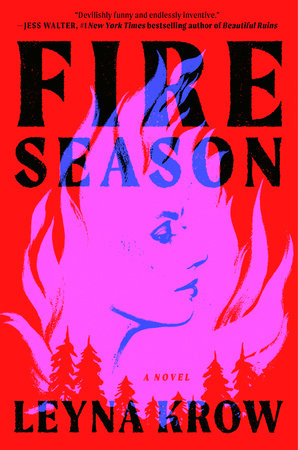
The Northwest, where I live and where my novel is set, is a big place and it is a lot of things. It is the damp, mossy woods of the coast, the high desert, and the snowy, jagged mountain ranges that divide the two. It is home to weird and real creatures like giant octopuses, and also giant earthworms. There are an unsettling number of volcanoes. Its history is, like so many places, soaked in violence, oppression, and theft. There’s a lot to contend with for any author looking to write its past as fiction. How to meld the strange with the awful with the beautiful (because the Northwest is nothing if not beautiful) in a way that is not only readable but enjoyable?

I did not realize I had written a Western until I learned my novel was going to be marketed as such. In the five years I spent working on Fire Season, I always just called it historical fiction. To me, the genre of Western was something different—stories of cowboys riding horses and smoking cigarettes and shooting guns. Fire Season has no cowboys. There is one horse, briefly mentioned. There are some cigarettes, though no firearms. But, because it is a novel set in a certain time: The Past. And a certain place: The West. Well, then a Western it is. I have come to enjoy the label. I like calling the story a feminist Western, an urban Western, a magical Western. I like the surprise of it, and the thought of people buying the book assuming it is about rugged men on the range with their guns and instead getting a future-seeing woman in a city, armed only with her considerable wits.

Here are eight Westerns… kidding! Here are eight novels of historical fiction set in the Northwest that do just that:

Washington: Sarah Canary by Karen Joy Fowler

This was Fowler’s first novel—the book that launched an unparalleled career of joyful weirdness. I mean, really, is there anything Fowler can’t do? Sci-fi, magical realism, regular realism, historical fiction, damn!

Set in the 1870s in the rough and strange land of Washington Territory, Sarah Canary follows the adventures of a woman by the same name who traipses the landscape alone and unwashed, captivating the attention of various men. But Sarah doesn’t want men. Sarah wants to do her own fucking thing. And so she does, without apology or explanation (in fact, Sarah never talks at all). Is she magic? Is she insane? Is she a figment of everyone’s imagination? Who knows! But she is awesome, and that’s all that matters. 

Oregon: Whiskey When We’re Dry by John Larison

Where does the first part of John Larison’s achingly sad, bloody, redemptive novel take place? No clue. Somewhere in the middle, I assume. Or the West-ish middle, maybe? But the rest takes place in Oregon, in 1885, mostly on the property of the governor’s mansion where the protagonist has reinvented herself as a hired gun after the death of her father. Posing as a man, 17-year-old Jessilyn secures a place on the governor’s private security team and becomes witness to the many abuses of power that shape not just her place of employment but the entire region. It is no wonder Jess quickly opts out, choosing a life of crime at the side of her outlaw brother instead. As readers, we 100% applaud this decision, proving we are all old-timey Western anarchists at heart.  

Seattle, Washington: Love and Other Consolation Prizes by Jamie Ford

This sweet and inventive novel begins with a horrifying premise based on a true event: an orphan named Ernest is auctioned off as an item of novelty at the 1909 Seattle World’s Fair. In reality, Ernest was an infant at the time he was sold, and his fate is unknown.

In Ford’s retelling, he is a twelve-year-old who had recently traveled alone to Seattle from China. He is bought by a Madame at a high-end brothel where he is to work as a houseboy, and where he ends up forming a found family as loving as it is unexpected. The novel jumps between time as adult Ernest in 1962 (the year of another Seattle World’s Fair) tries first to conceal his past from his investigative journalist daughter, then to let her into it in a way that makes sense to both of them. 

Spokane, Washington: The Cold Millions by Jess Walter

Nobody writes about my home of Spokane with as much precision, or as much glee, as Jess Walter. Walter is the author of seven novels, most of which take place in or around Spokane. The city is a setting, but also kind of a character—an inscrutable entity, simultaneously comic and downtrodden, but ultimately lovable, just like Walter’s human characters. The Spokane of The Cold Millions is no exception.

The book chronicles the free speech protests of 1909, with a pair of drifter brothers turned labor activists as its heroes. It’s a story of big action and big personalities, all colliding in a city as rough and tumble as the people who occupied it. It’s the kind of writing that can make a person want to visit Spokane, even if they’re already there. 

Spokane, Washington: The Cassandra by Sharma Shields

Another one from Spokane! My buddy Sharma Shields has the unique distinction of being both a dark and tortured genius, and also the genuinely nicest person you will ever meet.

In her second novel, Shields sets her sights on Washington State’s toxic elephant in the room: the Hanford nuclear site, which was built as part of the Manhattan Project, and instrumental in developing the bombs dropped on Hiroshima and Nagasaki. The protagonist of this harrowing story is a young woman who takes a job as a secretary at Hanford during World War II, and soon finds herself beset by prophetic visions of the damage that her colleagues’ work will unleash. This book is both a retelling of a myth for modern times and also an exploration of the cost our society pays for ignoring those who are brave enough to sound crucial alarms, particularly when the alarm-sounders are women. 

Seattle, Washington: No-No Boy by John Okada

No-No Boy follows a despondent youth named Ichiro Yamada who has just returned home to Seattle after spending the last two years of World War II in a federal prison for the “crime” of answering no, and no again, to loyalty questions posed to Japanese American men in internment camps.

Typically, historical fiction is any story that is written at least 50 years after the time it is set. But Okada wrote this piercing and insightful novel just a decade after the war’s end, at a time when most Americans were unwilling to acknowledge the horrors of the camps, or the challenges facing those returning home. The book held up a mirror most were unwilling to look into, and as a result, was panned and then forgotten. Then, in 1976, it was reissued to great critical success. Today it is considered an essential classic of Asian American literature. But sadly Okada had passed away in 1971 and never saw his book garner the attention it deserved. 

Vancouver, Canada: Five Little Indians by Michelle Good

Set primarily in the early 1970s, this novel follows five Native teens who have been released, or have escaped, from a remote Canadian residential school. The characters gamely try to build new lives for themselves in the big city of Vancouver as they struggle to contend with the abuses they suffered as kids. The subject matter is brutal and direct—Good does not pull punches about what life was like for the generations of children stolen from their families. But a stream of compassion and humor runs through the story as well, making it, ultimately, one of hope.

This book is an elegantly crafted reminder that, though its characters may be fictional, its story is not. This is a history so recent it is really no history at all, but instead an ongoing narrative as survivors of these institutions and their families fight for justice and visibility.

“Miss Congeniality” and Other Forced Femme Makeover Films Mirrored My Feminine Soul

Going through a randomized supercuts of digital home videos my parents sent me during the first Christmas season of the pandemic, I held my breath in anticipation of my “dance recital.” A 7-year-old me prances to “Pretty Woman” between sheets hung from the popcorn ceiling tiles in my parents’ finished basement, spotlit by a single flashlight placed horizontally on a lightwood side table. My sister and our next door neighbors had choreographed the routines and produced the show, so to speak. While waiting, I expected the usual dysphoria-laced sense of second-hand embarrassment I had grown to associate with the recording. Instead, I was dumbstruck by an overpowering mix of tenderness, relief, and wonder met with my own cherubic face, beaming and looking so obviously adorned in my sister’s white dress, surrounded by the three older girls fussing around me to make sure everything was perfect. Pictures from only a few years ago open up an immeasurable distance between myself and the face looking back at me, but in that moment I felt inexplicably close to the version of myself on the screen. As my face moved closer to the camera, I became arrested by my own gaze: frozen with recognition looking at the same eyes I see today in the mirror looking back at me from almost twenty years ago.

After the new year, I started laser hair removal on my face. On the way to one appointment, I stopped by McNally Jackson to pick up Torrey Peters’ Detransition, Baby which I had seen plastered up and down my Twitter timeline. At the time, I understood laser as a purely aesthetic and functional decision: I loved having smooth skin, hated the irritation from shaving and the subsequent in-grown hairs and breakouts that came with it. In the weeks after my appointments I brimmed with excitement watching the bulb-shaped follicles spread across my hands when I washed my face. My aesthetic yearnings metastasized after reading the novel’s description of facial feminization surgery. Soon after, I found myself analyzing facial structures — my roommates’, celebrities’, the few girlfriends’ I saw — and began remaking my own face in the mirror with a sense of wondrous possibility.

Detransition, Baby charts the intersecting lives of Reese, a trans woman living in Greenpoint, her now-detransitioned ex Ames (FKA Amy) and his boss, Katrina, whom he has gotten pregnant. Through Reese, Peters posits what is called “The Sex and the City Problem” wherein women grapple with the available paths for their futures: career (Samantha), relationships (Charlotte), a baby (Miranda) or expression through art (Carrie). However, as each of these possibilities is exponentially complicated for trans women, the SATC problem is largely aspirational as they default to a state of “No Futurism” brought on by the lack of blazed narrative arcs laid out before them. This informational drought not only affects how the world at-large views trans women, but also how we conceptualize possibility before and during transition. Amy considers this stereotypical portrayal as she waits to meet a crossdresser in her exploratory college years, expecting “Patrick Swayze in To Wong Foo [because] that was the best trans she’d seen on TV.” The narrator continues: “Her other options were Silence of the Lambs or The Bird Cage or maybe The Crying Game.”

Most children passively digest and incorporate schemas of gender, cis and trans, simply by existing in the world. And trans children, for their own survival, become deeply acquainted with expectations of gender performance, the rewards of staying on script and the punishments for straying beyond its allowances. Boys who become men and girls who become women are rewarded with increasing returns the more any person commits to their assigned bit. Self-preservation can then come by creating a perversion of transness to self-conceal and normalize. For me, this resulted in my gravitation toward damaged cis women characters who sought or needed transformation. When I got into Grey’s Anatomy, I wanted to be a surgeon in middle school. When I watched Dirt on FX I wanted to edit a gossip magazine. Shit, I almost went to grad school at Georgetown for public relations in the throes of a Scandal binge. The truth — obscured through the narrow view of normative desire — was simple: I wanted to be a woman. Consuming these stories satisfied a distal, directionless desire. It wasn’t until I came to stories about trans women by trans women that I could imagine closing the gap between “what can be wanted and what can be said.” Detransition, Baby made me think of my gender as something other than an island I was stuck on: as a point of relation rather than evasion, which was how I had calibrated it to keep an arm’s length away from the crushing dysphoria of masculinity.


Three months and two laser appointments later on my 25th birthday I was texting my sister about starting hormones while I waited for the LSD to hit with my friend Taylor in a rented penthouse in Sunset Park. Growing up, I spent as much time with my older sister and her friends as she’d allow. Perhaps this is why she was the first person I told. I think in some way I was telling her again that I wanted in on girl time and, this time, she welcomed me with open arms rather than closing the door in my face—as older sisters often do with younger brothers.

I brimmed with excitement watching the bulb-shaped follicles spread across my hands when I washed my face.

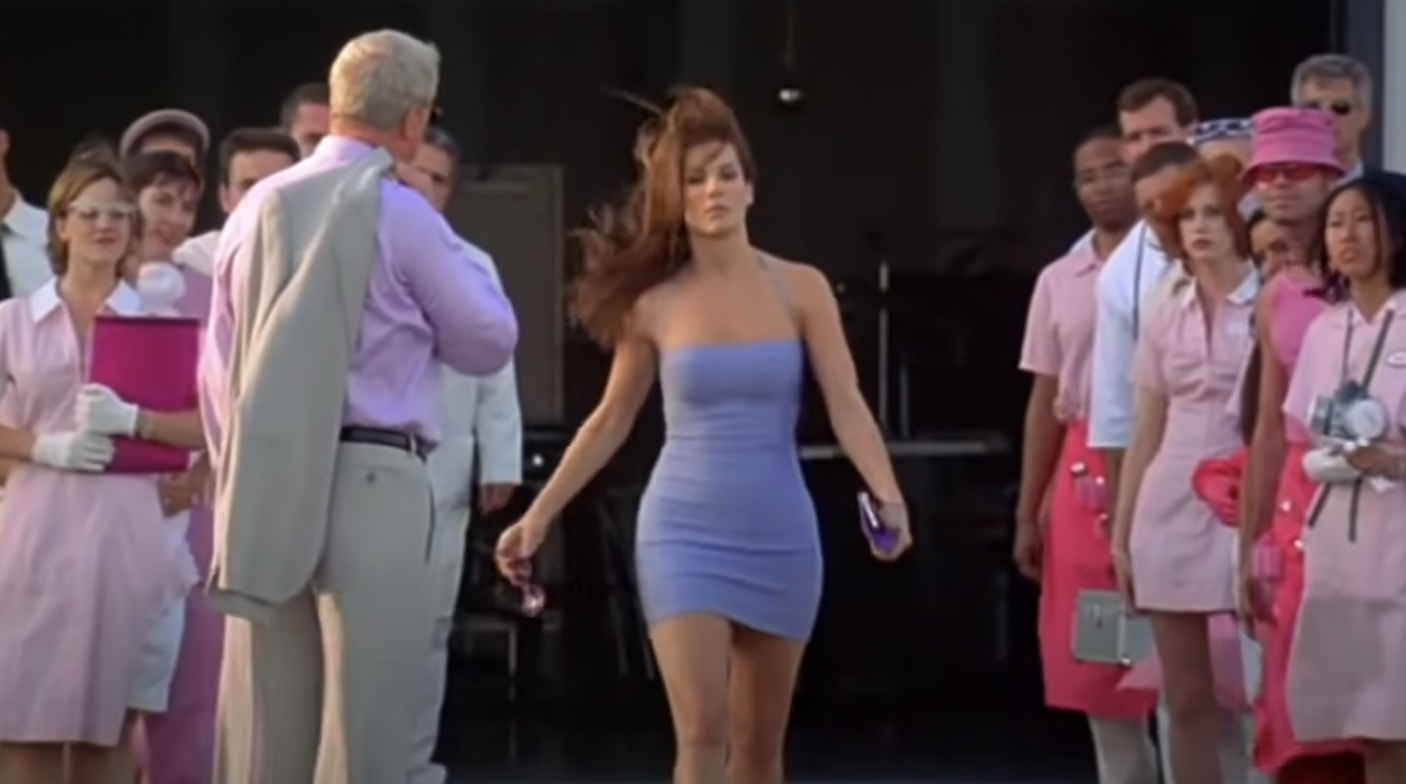
After a day of dancing to Janet Jackson on the balcony and taking a flower bath together with Mariah Carey playing in the background, Taylor and I watched Miss Congeniality while we came down. As a child, I would re-enact for comedic effect the scene where Agent Gracie Hart (played by Sandra Bullock) struts out of an airplane hangar to “Mustang Sally.” She’s waxed from head to toe, hair blown out, wearing a periwinkle bodycon dress. Her transformation into femininity almost seems too much until she trips and subsequently falls out of the camera frame. This time, I felt a twinge of sadness in the moment of her tripping: here is a woman, rarely seen as such, finding her femme legs for the first time. Her stumble is played for laughs, a script I had subconsciously internalized and regurgitated.

On this viewing I was struck by how trans the movie is: the first act when Agent Matthews (Benjamin Bratt) tells Hart that “nobody thinks of you that way,” as in not as a woman; the emotional climax when the two debate the value of “throwing out the rule book;” and Hart’s intervening acclimation to girlhood and subsequent graduation into womanhood. I mean she even gets a new driver’s license with a new name: Gracie Lou Freebush. In a scene about halfway through, Hart takes mock interview questions to prepare for the pageant. Her coach points to her lack of personal life and relationships: “You have sarcasm and a gun.”

As time goes on and my transition deepens, I continue revisiting my favorite films. I see this forced-femme reluctant cis girl makeover trope across the first ten or so years of my life, each having served me as a less potent substitute for explicitly trans narratives. There’s Tai’s red hair being washed out by Cher and Dionne in Clueless (1995). Violet (played by Piper Perabo) revamps her wardrobe with Cami by way of Lil in Coyote Ugly (2000) the same year Miss Congeniality came out. And then there are Anne Hathaway’s aesthetic transitions in the Princess Diaries (2001) and again in The Devil Wears Prada (2006). If these “failed” women could transform themselves into some glossier, feminized, more acceptable version of themselves, maybe I could too one day.


In a flashback scene in Detransition, Baby, college-aged Amy sits in the car on the way to a fetish store when the older man talks about Fictionmania, a site where thousands of anonymous writers would contribute stories of women forcibly feminizing boys through aesthetics, surgery and magic, followed by a hefty dose of humiliation and degradation. Discussing it offers Amy a sense of disclosure laced with disgust. Not until Amy is discussing outfits with the store’s trans cashier does titillation give way to something sincere through “her inclusion in that feminine rite.” The scene makes me think of the day my sister or one of her friends painted a single thumb nail of mine blue and I told people that they had bet me about how long I would keep it, all the while cradling it in my mind’s eye, basking in the energy radiating up my arm.

Boys who become men and girls who become women are rewarded with increasing returns the more any person commits to their assigned bit.

Few things feel as demoralizing as openly wanting something that isn’t in arm’s reach. It’s for this reason I will never run to catch a bus or be a contestant on Love Island; To be seen desiring so plainly is humiliating. For Amy, forced feminization at the hands of beautiful women dilutes the sincerity of her desire and preempts any external debasement by injecting it into the fantasy, allowing a safe (and secret) place to find some small release. For our 2000s made-over romcom girls, their hesitance, indifference or disdain stems from the same emotional location: they aren’t sure if they can be the woman in the “after” picture. The gap in aesthetics and, more importantly, in knowledge is insurmountable. Our shared degrees of removal from the truth of our most intimate desires — Amy’s fantasy, Hart’s cynicism and my sense of attraction to these made-over women — allowed us to inch toward the cliff’s edge without copping to the urge to jump. They allowed us, for a time, to keep our desire for transformation a few degrees removed from our persons. What ultimately shook us out of our restrictive systems of relating to femininity was making connections with actual real-life women.


Miss Congeniality and Detransition, Baby made me realize that womanhood is a gift given by women and reciprocated between them. Hart, at first, can be seen as the receiving party, accepting Miss Rhode Island’s invitation for a late night cocoa. Once her teams abandon her in the top 5 and the FBI investigation is closed, the other girls rush into her dressing room mirror to help her apply her makeup. Through her blossoming friendship with Cheryl, Hart learns that Miss Rhode Island, in her awkward sincerity, also never felt like she had access to that sense of peak femininity, represented by both the red pair of “satan’s panties” she stole from the store when her mother wouldn’t buy them and her inability to see herself as the girl doing a sexy dance with flames exploding from her batons. Hart is then able to reciprocate Cheryl’s warm welcome into girlishness when she surprises her with flaming batons before the final talent competition. This invitation into, and exchange of feminine intimacy — the sharing of knowledge and possibility, tips and tricks — happens in ways big and small, like writing a book or helping a baby trans in the dressing room at a fetish store.

Miss Congeniality and Detransition, Baby are both stories about making it off the island of rigid gender, the forging of intimacy through feminine rites of passage and articulating the potential for healing through matrilineal bonds and the isolating effects of their absence. Cultivating a relationship with the feminine allows Hart to establish romantic and platonic relationships where before they couldn’t exist. Detransition, Baby operates at the intersection of lost and found maternal lines. Katrina — whose maternal grandparents shunned her mother when she chose to marry a white man — conceptualizes her baby-to-be with Ames as “a chance to connect my mother to my child, to relink the maternal line that my birth broke”. Reese and Ames don’t speak to their mothers, but Reese is a mother figure to Ames, or rather to Amy. In an extended metaphor, Ames explains the relative location of the generation of trans girls “who basically invented screaming online” by likening them to juvenile elephants whose mothers had been shot by poachers. She articulates the impact left by the missing generation(s) of trans women lost to violence, stealth living, the closet and/or AIDS. It’s this vacuum of lived experience that sent me to Miss Congeniality, Amy to FictionMania and keeps the “Sex and the City” problem out of reach for many trans girls.

Detransition, Baby was my red pill. You could say it fully cracked my egg. In the year since I read it, I ran through a litany of other work by trans women while banking sperm, starting hormones and coming out (again) to my friends and family. It’s a testament to the infancy, importance and vulnerability of a trans canon that a single story can alter someone’s life so completely, something Peters herself knows well enough. On the backside of a galley for Imogen Binnie’s Nevada, Peters is quoted: “Nevada is a book that changed my life: it shaped both my worldview and personhood, making me the writer I am.” The two novels are intertextually connected: through their invocation of forced femininity smut, but also through their exploration of how the medicalization of trans femininity through male desire corrupts the psychic grappling of its young trans characters who don’t know they are such.

Nevada depicts a trans girl in Brooklyn, Maria, who breaks up with her girlfriend, steals her car and drives across the country with a bunch of heroin, where she meets James, an 18-year-old who jerks off to forced femme erotica. Originally released in 2014, it slowly went out of circulation after its publisher folded. What followed is a classic tale of economics: As the creation of trans stories continues to lag behind demand, the value of Nevada skyrocketed. Online the asking price for used paperbacks went up to several hundreds of dollars. In a version of the afterword for MCD’s reissue of the novel published in The Paris Review, Binnie writes that “People have called Nevada ‘ground zero for modern trans literature,’” but for a time it had literally been lost in the industry shuffle.

As the digital worlds within these novels outline self-determined trans discourse, the books themselves represent solutions to the problems they articulate.

Detransition, Baby, Nevada and the referential materials contained within them emphasize the importance of tending to our stories and communities making connections through the digital world as well as the physical one. Through the literary landscapes of Nevada and Detransition, Baby, readers can trace the digital development of communal trans culture from Maria’s blogging on LiveJournal, the roots of Amy’s awakening on FictionMania to my own which began with pictures of Detransition, Baby on Twitter. As the digital worlds within these novels outline self-determined trans discourse, the books themselves represent solutions to the problems they articulate. For me at least, these novels offered instructional information of “doing trans” rather than stalling out on the semantics of what it means to “be trans”. Maria taught me to splash super hot water on my face to get the closest shave. Amy taught me that it’s best to walk with your hips tucked under your spine, swinging them laterally. Connecting to a trans feminine creative tradition not only allowed me to more fully reconnect with the women characters I have always been drawn to, but also opened the door to more meaningful relationships to the women around me. What writing and being trans have in common are that they are, in practice, nauseatingly sincere, which might be why one naturally led me to the other. Though it started a long time ago when Gracie Lou Freebush and the girls like her taught me that femininity wasn’t something innately built into any one person, but something that can be cultivated in each of us, something that is best cultivated between us. I feel it when I’m getting a complimentary facial from the esthetician who does my laser. I feel it when my friend paints my right hand’s nails because I can only do the left. I feel it when I put on makeup in the mirror with the girls the hour before a show. This sororal camaraderie at one time existed between me and characters on film, but now it is contained between me and the women in my life, in the palm of my hand.

As I got off the highway, driving upstate to my sister’s bachelorette party six months after my 25th, there was a very light rain and the sky was a pleasant gloomy grey, with streaks of light cutting through above the green hills and fog-laid valleys. I cracked the window to feel the stream of fresh air and see if it still smelled the same. At one intersection, I saw three little girls that reminded me of my sister and our next door neighbors, who produced my recital back in the day. It was with their family that we used to travel up to Keuka Lake in the summers (where an unfilmed recital to “Smooth” by Santana had taken place). In fact, the last time we went there, and for the first time in years at that point, I had just cut my long middle school hair into a more acceptable spikey-buzzed fade for high school. I tried to slow my tears as my arrival time inched closer. My eyes were only a little red by the time I pulled up to our rented chalet.

I saw my non-blood aunts sitting at the long wood table between my sister’s bridesmaids, our friends. I turned and met my sister’s blue eyes and fell into her arms as a new wave of tears crashed into the tightest hug we had ever shared. She led me downstairs with my mother, where I did the same to her. I didn’t know what to say — I didn’t know what I was going to say — but what came out of my mouth was relational: I am your daughter.

Three Friends Are Reunited at a Wedding and Confront Their Different Life Paths

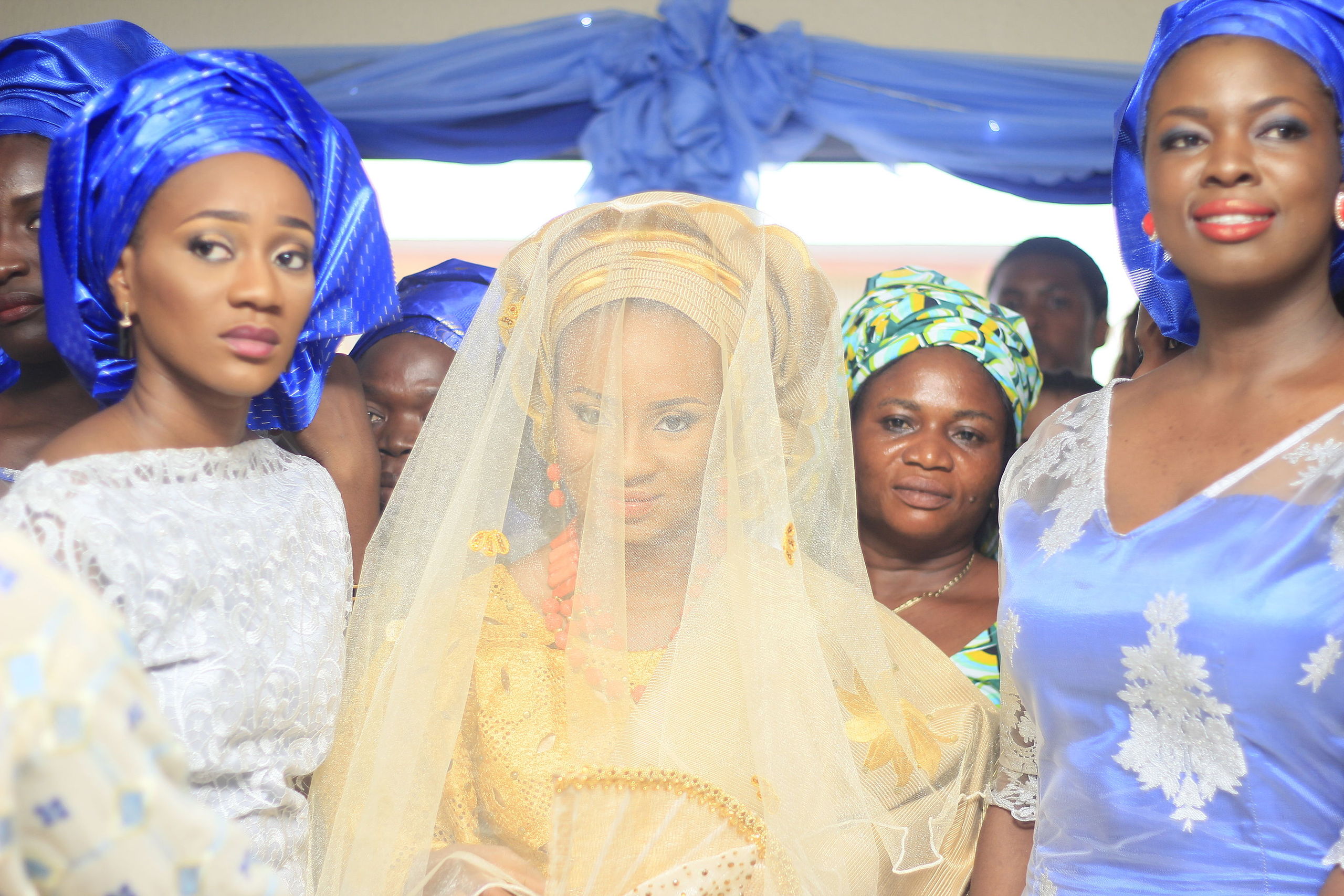
It’s 2015. Zainab, Funmi, and Enitan are reuniting for Funmi’s daughter, Destiny’s wedding. The three have grown up since their university days in Zaria where they had first met, their friendship off to a rocky start with personality clashes, Funmi stealing Zainab’s boyfriend, and Enitan always left to play the peacemaker. A bond develops over time as Funmi elicits Enitan’s help in an illegal abortion, Zainab finds in Funmi and Enitan friends who appreciate and support her writing, and Enitan discovers a family within them that doesn’t suffocate her the way her single mother did. Now, after decades, the trio is back together in the same place. Enitan, who left Nigeria after eloping with a white man, has arrived with her daughter, Remi. Zainab has endured a long, traumatic bus ride and the worry of leaving her ailing husband behind. Funmi, at her wit’s end with planning a grand wedding that’s fit for the rich upper-class she now belongs to, is ready to welcome them. Excitement, love, and laughter are in the air but so are secrets and surprises.

Dele Weds Destiny by Tomi Obaro

Dele Weds Destiny is a riveting experience of Nigerian culture and its eccentricities through a narrative focused on the enduring bond of female friendship and the turbulence within mother-daughter relationships. Tomi Obaro—currently the deputy culture editor at BuzzFeed News—is deft with her craft. There is care evident in the way the narrative is spun, and there is wit and astuteness at play in a novel that investigates the patriarchy underlying Nigerian society where norms police the choices women make. 

On a Wednesday afternoon, Obaro and I spoke over Zoom about navigating mother-daughter relationships, boundaries and social expectations in the collectivist culture, beauty currency, the immigrant experience, and much more.


Bareerah Ghani: I am fascinated by the bond between Zainab, Funmi and Enita—it’s beautiful and endures the test of time. In the prologue, you state, “their love has the makings of an ancient habit” and in the acknowledgments you reveal that their friendship is inspired by your mother’s experience with her two best friends. I would love to know more about that inspiration.

Tomi Obaro: So, in the acknowledgments I put in the word loosely to emphasize that it was just sort of an inspiration, but certainly the major plot points and the characters are different from my mom and her friends. But yeah, growing up those women were my aunts and their kids were my cousins and none of them have lived in Nigeria since college, but they’ve always stayed in touch and I always thought that that was really beautiful. 

A couple of years ago I was with my mom and my sister, we went to visit one of these aunts who lives in France. And we were looking at old photos. I was working on another novel at the time, and so I was thinking to myself like oh, this would be my second novel idea. Then I eventually realized that that first novel was not going to see the light of day and so I sort of started writing this one and just by how effortlessly I felt like it was going, I realized that there was something there. And I’ve always been interested in stories about characters over time and particularly friendships and how they evolve.

Even though I am Nigerian American, I never lived in Nigeria, and so there was a certain element of fear too in terms of thinking about and having characters who are essentially my mother’s age.

BG: The novel opens with Enitan traveling to her homeland Nigeria after years of having lived in the U.S. She’s both an outsider and a native when she arrives at the airport, so we see this nuanced depiction of Lagos and its culture. I could relate when Enitan feels the need to put up this aggressive persona so that no one would think of her as the “outsider” and take advantage of it. I am curious to know about your experience of Nigeria and if it, at all, influenced the way you wrote Enitan’s journey?

Our relationship to what home is is constantly changing and a lot of it also depends on the country itself and the progress that country is or isn’t making and how hospitable it is to live there.

TO: Definitely that scene at the airport feels spiritually true. Every time we’ve gone to Nigeria, we’re always hoping we don’t lose our luggage. Often my first memory of Nigeria is being at the airport, getting off the plane and then seeing how people change. So, I always knew—even before I knew exactly what the contours of the novel would be—that there’d be a scene, that the book would probably start with being in the airport.

I would often feel self-conscious about my Americanness when I was in Nigeria or aware of the fact that, like the way I pronounce things isn’t necessarily how a native would pronounce things. In some ways, Remi speaks to that aspect of myself. I think it’s common for a lot of immigrants—that feeling that there is something familiar about this place, but I don’t quite fit in. And I would say I feel that way in America too so it was something I was definitely interested in exploring.

BG: As an immigrant myself, I find Enitan quite relatable—she experiences this constant push and pull of home. She wants Remi to love the country despite herself having a troubled relationship with it and she also sometimes wishes she had raised Remi there. How do you contend with this idea of roots and their pull on people in a manner that is intense enough to make them consider forgetting about the very reasons that drove them away from what used to be home? 

TO: I don’t know that there’s any sort of definitive answer. Even now, given the climate in Nigeria—it’s a country that’s so volatile that sometimes I feel frustrated. It’s a place that my family is always wedded to, and so I don’t know that I have a straightforward answer to that question. I think our relationships to what home is, to our countries, are constantly changing and a lot of it also depends on the country itself and the progress that country is or isn’t making and how hospitable it is to live there.

BG: We see parallels between Enitan’s strained relationship with Remi and Funmi’s relationship with her daughter, Destiny. We also learn that Enitan had a problematic relationship with her own mother and that Funmi practically grew up without a mother figure. To what extent do you think the cycle of unhealthy communication and strained mother-daughter relationships passed down from one generation to the next can be broken?

TO: I was interested in exploring those dynamics and I think in various ways the mothers want to repair their relationships or want to build healthier relationships. It’s just hard, you know—they’re from different generations, different countries and cultures. Particularly with Funmi’s relationship with Destiny, she loves Destiny and a lot of her curtness comes from this feeling of wanting to prevent Destiny from making the mistakes that she made. And I think a common thing among mothers and daughters—parents and children of all sorts—is that disconnect between what a parent wants for their child and what a child wants and the parent often thinking that why don’t they want this thing that is clearly good for them and not allowing the child to reach their own conclusions or to come to their own realizations in their own time. Those are the threads I was interested in exploring but I don’t know if I have any solutions, necessarily. 

BG: It’s interesting that you brought up that disconnect between parents and children. We really see this with Funmi and Destiny, especially with Funmi sending her daughter to a boarding school as per the norm of their social class despite Destiny fiercely resisting the idea of it. Do you think there is a happy balance that exists in choosing to do best by your child and choosing to do what’s right according to society’s norms especially in a culture where societal expectations matter a lot?

The whole idea of having beauty currency is based on the capitalist patriarchal framework.

TO: I would like to believe that there’s a happy medium, but I think it can be hard and I think what that balance is, changes from family to family. In general, at least in my experience, I would say that there tends to be a little hardness and not over tenderness in the way that maybe white liberal Americans are used to when it comes to their relationship with their kids. And I think that there are a number of factors as to why that is. But I do think that there is sort of a growing awareness now and so it will be interesting to see how relationships between parents and children change in the generations to come among Nigerians, whether in the diaspora or there.

BG: Nigerian culture places a lot of importance on family and familial bonds which is quite similar to the Pakistani culture I grew up in. Attached to this is also this idea of pleasing one’s parents to the extent of sacrificing your own happiness. For instance, Destiny gives up photography because her parents don’t want her to pursue it. What are your thoughts on navigating this aspect of the collectivist culture without it impeding personal comfort and happiness? 

TO: I have mixed feelings. I think America is a country where we see the extremes of a kind of individualistic culture that can be very toxic. Certainly, in just the past few years, like with the pandemic, some people just aren’t willing to do anything that causes personal inconvenience and that can be detrimental to a society. But on the other hand, there’s often, particularly in cultures that aren’t American, an emphasis on the family unit or society as a whole subsuming the self and that isn’t great either. So, I think it is something where you kind of have to strike a balance and I don’t know if I’ve fully figured it out for myself. 

A few years ago, Viet Thanh Nguyen wrote an op-ed for the Times about how sometimes he lies to his parents and goes to church even though he’s an atheist. And they ask him, but he just won’t say anything and it’s sort of to honor the relationship that he has but he’s also kind of living his own life. And certainly, when it comes to incredibly personal decisions like if you want to get married or who you marry or if you want to have kids—those questions—the person doing those things will live with the results of those actions. Getting married just to placate parents or having a child just to give them grandchildren—you’ll be living with the consequences of those actions so I think it’s a balancing act between kind of figuring out what are the things I could do to make them happy and I wouldn’t be killing my own self or burying my sense of identity and then, what are the things that maybe we just don’t talk about and then, what are the things that I’m just going to do. Maybe some people are able to just cut off their families completely to do those things, but I think for folks who do desire to have a relationship, it’s a delicate balance.

BG: Right, yeah! In such a culture, speaking from my personal experience, it’s difficult to set such boundaries. What are your thoughts on how to navigate the action of setting up boundaries without hurting someone’s feelings?

TO: I think you have to accept that some people’s feelings will be hurt and that’s okay. Particularly, if it’s something that’s really important to you, and you know that doing it or not doing it would be a betrayal of your core self, you kind of have to set up the boundary and hope that they’ll eventually understand.

BG: The novel also probes the idea of chastity, sin and corporal punishment in the context of Nigerian culture. I was particularly surprised when Zainab’s father beats her after he suspects that she has had sex with the man she wants to marry. How do you grapple with this culture-specific idea of parents policing their adult child’s behavior according to values and beliefs that might not even be shared by the child?

TO: I think it’s just something that most children of immigrants or immigrants themselves have to experience and figure out on their own. Again, I think it’s a balancing act. 

The idea of corporal punishment is sort of a common expectation across most Nigerian ethnic groups—it’s something that I grew up with. It’s hard to contend with—your family tells you I love you but then they beat you and so as a child, it’s very confusing. But I think there can be, in certain more “liberal” circles, this lack of understanding about that cultural decision. It’s child abuse, yes, but framing it in that way can make people defensive. And so, it’s a balancing act. And it’s like this with any number of issues from genital cutting to a lot of contemporary African views about homosexuality, where if you dig deeper some of these ideas came over with colonialism, some of them didn’t, but I think there is sort of an inherent defensiveness. And I’m speaking very generally towards critiques from the West about some of these practices, because they do often feel rooted in condescension and in this idea that somehow the West is more evolved, when it’s not. It’s complicated. And so being able to say, there are aspects of our traditions that are wonderful and that we should continue, and then there are other things that aren’t so great, can be hard but I think it’s certainly a worthwhile cause.

BG: An interesting through line of the novel is the comparison between the three friends on the basis of their looks. Funmi and Zainab are described as the more beautiful of the three, always attracting male attention in their youth whereas Enitan is more plain-looking and often envious of the two. Years later, when Funmi meets Enitan and notices she’s remained skinny despite having aged, Funmi feels conscious about her appearance. I found this to be resonant of the competitive dynamics that manifest amongst girl-friends across cultures. How do you reckon with this idea of the world essentially making women feel like they are in competition with one another?

TO: I think having some baseline of awareness helps. But I also think it depends on who you surround yourself with. I feel like I’m pretty fortunate in life, where I don’t really have that dynamic with my friends who are genuinely conventionally attractive. For me it’s something that I try not to dwell on. But it’s something that obviously exists, and in fiction it’s fun to reckon with or acknowledge.

The whole idea of having beauty currency is based on the capitalist patriarchal framework. That was one of the things I was interested in exploring with someone like Enitan who has feelings of undesirability. I grew up in a conservative Christian environment, and so there was a lot of talk about the inherent seductive qualities of being a woman or how men were always trying to have sex with you, but then my experience living in predominantly white schools and neighborhoods was just feeling very sexually invisible. And so, Enitan’s desire to be looked at, desire to be considered desirable, those are things that I definitely grappled with on my own. And then eventually you realize that it’s kind of bullshit, and I mean– it is, and it isn’t. There are studies that show that beautiful people are treated better and there are material benefits you gain from being considered conventionally attractive. And the adverse is true too—if you’re not considered attractive, you can be discriminated against, so it’s not as if it doesn’t matter. I’ve always found that that kind of glibness like, everyone is beautiful in their own way, is materially not true.

In general, I surround myself with people where that isn’t the crux of why we’re friends. I think that there are certain dynamics where you could be friends with people who are constantly talking about their weight, or their looks in certain ways, and I feel like I’m fortunate enough to have friendships where that isn’t our primary mode of communication and I think that definitely helps.

BG: The novel deftly examines beauty standards and the social currency that comes with being a certain body type. You offer such a stark observation and comparison of American and Nigerian beauty standards. Skinny, for instance, is not perceived as beautiful in Nigeria and instead, curves have all the social currency. This is quite opposite to the world Remi is exposed to in the US. How do you think women across countries and cultures can withstand the policing of our bodies?

TO: I think it takes frank acknowledgement that these systems exist. And then advocating to shut them down. The fat liberation movement for instance—a lot of their philosophy is that it doesn’t really matter whether you love your body or not, the issue is addressing the real stigma that exists for people who are fat whether it’s discrimination with doctors or at work and how that often dovetails with disability. So frankly, a lot of it is just tearing down the capitalist and discriminatory practices that are embedded in our society.

School’s Out and the War Is On

The Hole in the Wall 

It was 1968 and three days after the Tet Offensive in Vietnam. There was supposed to be a festival for Mau Than, The Year of the Monkey. The food was prepared to welcome the New Year, where the festivities would have begun with fireworks at the zero hour of the first night of the lunar calendar. The next day families would have been busily criss-crossing the road in their new clothes to visit their elders to pay respects, but there was none of that. The dead needed to be buried. The damaged homes needed to be repaired. The adults were resigned to the fact that the war had reached a new turning point and the fighting was no longer limited to the jungle, but entering towns and cities. It could be anywhere now. 

While the adults were busy with their grim tasks, we still had not gone back to school, leaving us to seek the comfort of friends. We crawled out of our homes and assembled in groups. My friends and I decided to walk to the church on a high hill, erected for the whole village to look up to. This was where the cross was closest to heaven. The churchyard was the biggest open area of the village, and we heard this was where the most fighting occurred. It was a steep hill for small kids like us, but we walked up at least once a week for the holy mass on Sunday. When other kids saw where we were going, they joined us.

The air felt dry, with the monsoons still more than two months away. The grass was all shriveled up on the pedestrian dirt road beside the “American Route 1” paved road for military vehicles. Each step we took stirred up a cloud of dirty cement powder that stuck to the sweaty bare skin exposed between the straps of our flip-flops.

There were cartridges from spent weapons on the ground. Here and there bullet holes punctured the walls of houses. We learned to recognize the small holes shot from the ground, the bigger holes from tank guns, and the holes in roofs created from the guns in helicopters. 

We’d heard some people had died, but they were not direct relatives, so there was little concern in our young minds. No outside playtime had been enforced for a few days and this seemed like an eternity, even with all the holiday treats we enjoyed. We gathered not with the intention to play but rather, acknowledgement of the friendship that bonded us as survivors of mutual hardships. This war had been going on our entire lives, and even before we were born. 

As we walked, hands gripped hands and arms wrapped around shoulders in quiet solidarity. We listened to stories of who did what, at what time, and how we woke up to gunshots mistaken for fireworks. We only understood later it was a surprise attack.

After a while, being children, we started paying attention to the litter on the dirt road. The new litter had many more shiny objects than usual. There were copper spent cartridges of M16s and M79s and bigger cartridges from machine guns on tanks and helicopters.

Finally we reached the churchyard. There we stumbled upon an unexploded grenade from an M79. It was about the size of a mangosteen and must not have rotated enough times in the air to trigger the explosion.

We were very curious about the object but also cautious about the unknown power of any weapon. Although we’d never heard of a bullet with the ability to explode after leaving its cartridge housing, we were still careful, staying far away as we threw rocks at it.

From small rocks to bigger ones we took turns trying to hit the grenade. No one had achieved the goal of a direct hit. After a while the object presented itself as less mysterious and as my turn came again I decided to walk closer to take a look, rock in hand. As I came closer I dropped the rock, and instead of picking it back up, on a whim, I picked up the grenade and threw it. At seven years old, I threw it as hard as I could over the large cement structure of the priests’ tomb, maybe twenty yards. 

There was a flash of light, a tremendous boom, and then smoke and dirt blasted through the air. As the smoke cleared, a hole in the base of a brick wall appeared, surrounded by a burnt edge. We panicked and ran away from the crime scene. I strained to take in enough air as the hard beating of my heart cried for help on the long run home. 

Our little game became the biggest news in the village. By now all the kids had told many different versions of the event. My version was still formulating in my mind during my parents’ interrogation. I hoped to dodge responsibility for the explosion and the cost to fix the damaged wall, which happened to be my uncle’s.

My parents’ angry mood was tempered by the fact that I was still alive. Having thrown a live grenade was nothing in comparison to the Tet Offensive, and so was viewed as minor mischief. My parents smoothed out things with my uncle behind the scenes without my knowing the details.

Later, as an adult, I would think about my dumb luck: That my throwing didn’t cause the grenade to rotate enough to activate the explosion until it was twenty yards away and that the priests’ tomb had been high enough to block the fragments of shrapnel from hitting me and the other children. Whenever I search for answers to what the war meant in my own life, behind a smoke screen, the hole in my memory is like the hole the grenade blasted. It feels like nothing, a void with undefined contours and untouchable depths.

8 Books About the Odd Jobs People Do to Get By

I wanted to move to New York from the time I first learned what New York was. I grew up on a farm and dreamed about moving to the city the way some kids dream about becoming marine biologists. I wanted to be part of the city that never sleeps.

The not sleeping part can be glamorous and fun, but that lack of sleep can also be attributed to all of the wild jobs you have to take to live here. New York City is special, but it is also expensive. And, while there are lots of wonderful things you can do for free, there are plenty of things that require cash in hand. 

Over my 22 years here, I’ve met people who’ve taken on some wild gigs. I mean, where else can you go to a party and meet someone who artfully applies plaster to interiors to make them look like ancient Rome, a boutique dog walker, and an assistant for David Bryne? I myself have done a lot of jobs. Outside of my work in hospitality, I have been a receptionist at a temp agency, an ESL teacher, an assistant to a renowned psychotherapist, a nanny, and a person who trained exit pollers for the 2000 presidential election (upside down face emoji!)

Luckily, I was able to transmit some of my work experience to Jean, the protagonist in my latest
book,The Night Shift. Jean’s work as an assistant to a therapist and as a bartender are drawn
directly from my professional past. My inconsistent and unfocused work experience would raise
any resume writer’s blood pressure, but I didn’t take the jobs that made sense; I took the jobs
that would pay the most for the limited qualifications I had.

The books below explore that kind of job—the kinds that would make anyone examining a resume scratch their head. These are the jobs you hear about at the party or at the bar or on a date. They are the things people do to get by, when sometimes you need to take the work that makes the least sense because it’s something you can do and something that will put money in your pocket.

Personal Days by Ed Park

This book really took me back to my receptionist desk, it captures the graveyard of ambition tone of office life better than just about anything. The funny thing is that this book is structured particularly ambitiously. It’s smart, sharp, funny, and terrifying. Personal Days does a lot of work, but for me, the most authentic aspect is its illumination of one of the most horrifying slippery slopes, a phenomenon that still makes my blood run cold: the early 2000s NYC grad student to data entry pipeline.

Olga Dies Dreaming by Xochitl Gonzalez

Olga Dies Dreaming holds a magnifying glass over all of the different jobs people do in New York City to survive—from catering waiters to realtors to Department Of Education administrators to members of congress. Olga herself is the epitome of self-engineered professional success. Her work life is built around organizing high-end parties and events, a job for which there is no manual, only intuition. There is a lot to love in this book, but I especially admire the way Xochitl Gonzalez captures every side of what it means to take ruthless hold of your professional narrative. 

The Bartender’s Cure by Wesley Stratton

This is a satisfying tale of a young person taking a bartending job and a sabbatical from her predictable life. Wesley Stratton does a beautiful job of examining the way odd jobs begin as a placeholder in times of uncertainty, but can bloom into meaningful, permanent solutions. 

House of Sticks by Ly Tran

This is a gorgeously written memoir about immigrant life in the US. Ly Tran details the many kinds of work her family must do to survive, and, more importantly what happens when that work can’t be done. Tran chronicles her—and her family’s—journey from sweatshop sewing to doing nails to writing a book, all along the way reminding us that people are so much more complex than the jobs they do.

The Wonderful Adventures of Mrs. Seacole in Many Lands by Mary Seacole

Mary Seacole makes everyone look like a massive slouch. She traveled the world setting up various kinds of businesses drawing on her expertise as a health care provider and a hospitality expert. Mary Seacole guides us through her experience in the kinds of jobs where learning quickly and understanding the value of extemporizing are essential. A fascinating person to get to know in these pages.

There is No Such Thing as an Easy Job by Kikuko Tsumura

This strange and wonderful book is about a burnt-out woman looking for a specific kind of work: the kind that is “as close as possible to my house—ideally, something along the lines of sitting all day in a chair, overseeing the extraction of collagen for use in skincare products.” We follow her on an odyssey through jobs—from surveillance to bus advertising—that grow more absurd as the book goes on. 

The Country Life by Rachel Cusk

Some of the weirdest jobs are the ones that are chosen to obscure a person’s true self. Stella, the protagonist of The Country Life, begins her story explaining that she, a city dweller, is “embarking on a kind of life about which I know nothing…stripping myself of all that was familiar to me into the bargain.” She is moving to the country, specifically, to a farm to become a governess to a teenage boy with special needs. She writes to her family and colleagues, basically resigning from her old life. Stella begins her journey as a blank slate—and her new job is almost a disguise, a plain, innocuous sunglasses-and-moustache that conceals a strange, dark heart beneath. 

Sag Harbor by Colson Whitehead

Nothing encapsulates that first-job-because-you-need-it energy quite like Benji Cooper’s summer gig at a Sag Harbor ice cream shop. Benji calls it his “first tour of duty at Jonni Waffle and the beginning of my exile from the world of decent people.” Colson Whitehead captures the minimum wage working experience in all its glory, down to the solitary perk of eating endless ice cream: “As much as we wanted. Every shift, Whatever we could cram down our gullets.” I love this evocative portrait of the summery parts of part-time work.

9 Books About Women Who Can’t Get Out of Their Heads

I tend to overthink. At some point, I started writing my thoughts down as a way of purging them from my mind. It’s less like journaling and more like a raw, incoherent document on my desktop that functions as my own private exorcism. I think part of me also wanted proof that I wasn’t just a random collection of hormones, phobias and song lyrics playing on a loop, as I’ve often feared.  

Bad Thoughts by Nada Alic

When I started writing my story collection Bad Thoughts, I scrolled through my thoughts document (labelled “TAXES…LOOK AWAY!) in search of story prompts. It wasn’t until I completed my final edits earlier this year that I started to notice patterns emerging. This groundbreaking realization, of how writing works, helped me see myself more clearly. Major themes surfaced, like fear of motherhood, being an artist, waiting for real life to begin; also nut allergies for some reason.

I’ve always been drawn to books by writers who possess a similar compulsion to think their way out of a problem or a state of being. From lyrical essays to fiction, to experimental memoir, these are books by writers caught in thoughtful rumination, using an event or a question as a jumping off point to explore broader philosophical themes in a way that feels alive and porous and complex (also me trying to describe wine). It’s the exact opposite of being online, where everything is flattened on a screen and reduced to binary thinking, a simplistic one liner or an overly airbrushed image. 

More than anything, I love books that allow big ideas room to breathe without forcing an answer or claiming to have it all figured out. There is a courage that this type of interiority demands, which defies what Melissa Febos calls in her book Body Work, “the fantasy of toughness—the idea that lack of feeling signified mastery of it.” As someone who processes the world in an internal way, reading dispatches from the interior of someone else’s mind makes me feel less afraid of my own mind, and more importantly, less alone.

So Many Olympic Exertions by Anelise Chen 

Written in fragments, So Many Olympic Exertions makes unlikely connections between sports and the meaning of life. The book uses sports as a vehicle to unpack life itself, the absurd, arbitrary rules we inflict upon ourselves and why we keep going at all. For the narrator, Athena Chen, a former competitive swimmer and doctoral student, news of an ex-boyfriend’s suicide sets off an existential crisis and upends her already precarious internal world. The writing has a shapeshifting quality, combining self-help, obscure sports facts, dissertation and memoir, she returns to the existential questions of why we live and what for. Meaning so often feels elusive, but it forces us to search for it in unlikely places, like sports, philosophy, and other people. 

Motherhood by Sheila Heti 

“I feel like a draft dodger from the army in which so many of my friends are serving—just lolling about in the country they are making, cowering at home, a coward,” Heti writes in Motherhood. The narrator contemplates the life altering decision to become a mother in the waning days of her fertility. Motherhood threatens her freedom and selfhood as an artist, but she also considers the ways in which it could save her from the decadence and self-indulgence of her life as a writer.

Throughout the book, she engages in an ongoing dialogue with the I Ching, which she consults as a divine authority and confidant. Elsewhere, she separates her thoughts into phases such as, “bleeding,” “follicular” and also, “book tour.” The fluidity in her prose and structure mimics the way thoughts appear, with seeming randomness, but the payoff comes from witnessing the greater cosmic order to it all: that arriving at an answer isn’t always the point. That intimately wrestling with the mystery is its own reward.

Grey All Over by Andrea Actis 

Andrea Actis’ debut book, Grey All Over, which she sometimes describes as a “collaboration with my father’s ghost,” is the result of a decade’s worth of materials compiled into a poetic, funny, and deeply moving interrogation of grief. Her work is not quite memoir, not quite experimental poetry, but a living account of a daughter and her now-disembodied father, Jeff, and the generational traumas, historical contexts, and spiritual dimensions that continue to tether them to one another. Through transcribed conversations, text messages, screenshots, photographs, typo-laden dreams, and emails about her father’s paranormal encounters, Actis employs the “pragmatics of intuition” as an organizing principle. With minimal aesthetic interference, she leaves us with a raw portrait of the haunting, messy, unresolvable nature of grief. It’s one of the strangest books I’ve ever read. I loved it. 

300 Arguments by Sarah Manguso 

“I don’t love writing. I love having a problem I believe I might someday write my way out of,” argues Manguso in 300 Arguments: a slim collection of aphorisms that I find myself returning to every few months in search of wisdom and insight. In it, she takes on every kind of human experience, from art, relationships, ambition, despair, hunger, time, and cuts it right down to the bone; leaving only what is absolutely vital. In particular, the passage, “Instead of pathologizing every human quirk, we should say, By the grace of this behavior, this individual has found it possible to continue,” stuck with me while I was writing my book; so much so that I decided to include it as the epigraph. It so deftly captures our desire to reduce human complexity to an easily diagnosable set of symptoms. This impulse to flatten ourselves into fixed identities is not only dangerous, but an insult to ourselves as mysterious, divine beings. Unknowable to ourselves as much as to others. 

The Taste of a Man by Slavenka Drakulic, translated by Christina Pribichevich-Zoric

This book is a bit of an outlier, but in the spirit of first-person interiority books that aim to subvert the form, it felt important to include. My friend Bruna from Croatia recommended it to me, and it haunted me for days after reading it.

The book is written from the perspective of the narrator, Tereza, a Polish poet and grad student, and includes little to no dialogue or other characters besides her lover, Jose, a Brazilian anthropologist, and brief mentions of his wife. Tereza recounts their obsessive love affair that turns into… cannibalism! I normally have zero interest in anything horror-related, but it was the power of being inside the narrators’ deranged thoughts that tricked me into devouring it (ha ha) in one sitting.

Tereza maintains an eerie calmness as she describes her obsession in graphic detail; conflating sexual desire with a primal hunger to consume her beloved, lust with bloodlust. As her appetite intensifies, she rationalizes that faith in God and love are forces much larger than morality. Towards the end, she is remorseless, proud even, having finally accomplished the ultimate union. The Taste of a Man fearlessly confronts taboo and reminds us that the mind can be a vulnerable place, and under the wrong circumstances, it is capable of self-deception, madness and harm. 

Wow, No Thank You by Samantha Irby 

“I have been stuck with a smelly, actively decaying body that I never asked for,” writes Irby, “and am constantly on the receiving end of confusing, overwhelming messages for how to properly care for and feed it.” 

Wow, No Thank You was Samantha Irby’s third essay collection, but it was the first I’d encountered, back in the early days of the pandemic and was maybe the only thing that made me laugh out loud at the time. From her various medical conditions, true feelings about children, awkward foray into Hollywood, and domestic proclivities, Irby finds a way to laugh at the unique horrors and humiliations of being a person in a body. Her voice is manic, self-deprecating and brutally candid to the point of cringe. This has a disarming effect, and makes you feel like you’re in a private conversation between friends. In each essay, she jokes, adds long-winded asides, and doesn’t always learn a big lesson at the end, but you still come away from it feeling satisfied, and more importantly, seen.  

Me and Other Writing by Marguerite Dura, translated by Emma Ramadan and Olivia Baes

This collection of disparate pieces spanning thirty years offer something more than a coherent narrative; as a whole, they function as more of an incantation with which to conjure the spirit of Duras herself. It’s hard to describe the frenetic, libidinal, sometimes contradictory energy in Duras’ writing, which is sort of the point. Reading her work is to be in the presence of someone who is totally liberated, not bound by any canon, form or era. From her stream of consciousness journal entries and dispatches from the seaside town of Trouville in Normandy, to her devastating miscarriage, to elliptical musings on self and art, and commentary on the Polish workers strike and the Moscow Olympics; she takes on big philosophical matters of love, suffering and time.

In the essay, “Flaubert Is,” she says:

“Writing, everywhere, among all peoples, still provokes horror. Where there is nothing, there is a piece of paper. It’s the dawn of the world. There’s nothing, it’s blank. And then two hours later, it’s full. You compete with God…It’s completely terrifying.”

And yet, she continued to write throughout her life, as if each essay was an attempt to get at something inarticulable and primal beneath the words. It could read as messy and raw to the untrained eye, but those who get it, get it. 

Exposure by Olivia Sudjic 

This slim, pocket-sized book captures the disorienting, fragmenting, deadening experience of identifying as a writer. Sudjic writes in the aftershock of the release of her debut novel Sympathy, where she finds herself grappling with the anxiety that comes from being so exposed and how antithetical that feels to being an artist. In examining her anxiety, she tackles its culprits: imposter syndrome, social media, and how the work of women writers is often dismissed as diaristic and self-indulgent, whereas male writers are often seen as expressing some universal truth. In her acknowledgements, she references her “talismans” books by authors known for boldly writing about women and art: Elena Ferrante, Rachel Cusk, Jenny Offil, Clarice Lispector. In the essay, “Bubble” she includes Lispector’s apt quote, “Coherence is Mutilation. I want disorder.” 

Tonight, I’m Someone Else by Chelsea Hodson 

“Think of the electricity between two hands about to touch, the language that exists in that silence. Now, turn the camera into the face of the beloved and tell it everything,” writes Hodson in her electric, libidinal, surreal collection of essays.

Centering herself in the body, she writes about topics like love, adolescence, art, being consumed as an act of salvation, the feeling of being almost done, NASA, modelling, Marina Abramovic, and sugar daddies. Hodson’s lyrical style of writing elevated the fragmented form to high art, with great care for the language that exists in silence. In the vein of writers like Sarah Manguso and Maggie Nelson, Hodson’s writing is precise and polished, containing a concentrated wildness that is so thrilling to read. She savors desire without rushing for its completion, she prefers to make a home in all that is restless and unresolved in herself. In “The End of Longing,” a list of aphorisms, she writes, “I hope for the discovery of more truth, but not the whole truth.” 

Alice Elliott Dark Writes Women in Their 80s Like Men in Their 30s

Alice Elliott Dark’s Fellowship Point is an abundantly generous novel, rich in the love of a lifelong friendship and the beauty of Maine in the summer. It opens with a map of its titular location—a small peninsula where five wealthy Philadelphia Quaker families established summer homes decades ago. Fellowship Point is private property, a fact which drives one of the novel’s main conflicts. What will happen to this sanctuary after the point’s primary caretakers, Agnes Lee and Polly Garner—both in their 80s—die? 

I always relish a map at the start of a book, as I did this one, studying it closely, even though the word it depicts meant nothing to me—yet. But as I read each marked location grew in significance, and by the final chapter I felt as connected to this place as I do to its inhabitants.

Agnes and Polly are old women by any definition, set in their ways formed by their families, by Philadelphia society, by living through most of the 20th century, by leveraging their strengths and coping with their weaknesses. Agnes is a successful author and Polly is a homemaker—each leads a life their friend has not lived. And yet the differences in their world views and personalities spur them both to grow and to change, undergoing personal evolutions that provide the novel’s most poignant revelations.

Fellowship Point may be private property, but as a setting for a novel, it’s open to all. To be invited there, and be welcomed into this deep and lasting friendship—the likes of which many of us will never have—is a gift Alice Elliot Dark gives to her readers. 


Halimah Marcus: Agnes and Polly have been friends for their entire lives, and yet their personal lives look very different. Polly is married with children and no career, and Agnes has never been married, and is devoted to her work. This difference at times is a source of conflict. But I also wonder if it’s integral to the friendship, and in some ways allows it to function.

Alice Elliott Dark: It certainly seemed to me that they balanced each other out, and sort of made one person that we think of now as a more modern person, who has both aspects of life. The fact that they are so different from each other [keeps them] interested. Agnes thinks Polly is much smarter than Polly is treated by other people. Even though Polly is not by any stretch an intellectual sort of person, she’s so insightful and smart. I think they connect on that basis. But yes, they don’t entirely understand each other. They don’t entirely approve of each other. And I think that does compel them towards each other.

HM: There are so many books about female friendship, and maybe there always have been, but it’s a bit of a trend recently. Those books are often about how female friendship is erotic or intense or volatile. But the friendship between Polly and Agnes is much more long term, and quieter, almost like a marriage. Did you think about the ways that female friendships are represented in culture when writing this book?

AED: I didn’t explicitly think about it, but I am aware of how it’s been represented over time, especially in literature. I didn’t want to eroticize their friendship. I think there’s always an erotic element of friendship, but I didn’t want to explicitly bring that out because they wouldn’t have explicitly brought it out. They just didn’t grow up that way. 

Agnes’s sexuality is so different from most people. She never had sex in her whole life, ever. And she doesn’t feel that that sets her outside of the mainstream of human experience. She feels she’s had a very important life experience. 

At one point I really loved reading about Victorian women’s friendships, and how they were always lying in bed together, and embracing each other, and being really physically close. It wasn’t necessarily sexual, it was just very intimate. But I didn’t want to write their relationship like that. I wouldn’t say I was writing against anything. They were so real to me; I just let what happened between them be the way that it rolled out.

HM: I actually found it really powerful to realize—at the end of the book when it’s stated explicitly—that Agnes has never had sex. It’s something I could have understood previously, but I just hadn’t put a fine point on it in my mind. I found that moment moving, because I had never thought of her as a spinster, or someone who had missed out on life, or someone who had missed out on experience. To put it bluntly, I didn’t pity her in any way. I think that part of why I didn’t pity her is because she’s a writer, and because she’s a good writer, and because she’s contributed to the world through her writing. Do you think you could have written a woman like Agnes, with a full life, if she wasn’t a writer?

AED: I definitely could. I had a godmother who worked at a bank her whole life. And she had a life like Agnes. I mean, she was very popular and had a lot of friends, but she never had any kind of romantic attachment at all, ever. It just didn’t come up. When you were around her, you would have been embarrassed to even have the thought yourself, what’s her sex life? She was so complete. I was thinking of Agnes as a person like that. And no, I don’t think it has to be an artist. I think it can just be a person who has a sense of self that is enough for them.

HM: I wondered why you chose to make Polly and Agnes in their 80s, older than you are. Why not their 60s, for example? What was it like to write characters who were in a life stage that you hadn’t experienced yet?

AED: I’ve always just really loved old women my whole life, starting when I was little, and been really fascinated by them. Especially women like this—it’s kind of my fantasy life. Women alone. They’re not worried or destitute; they have money. They have freedom. They still are physically and mentally capable. I’ve known so many people like that, and they are invisible. You go to a party and no one talks to them, no one goes over to them. And a lot of times they’re the most interesting people in the room. I’m always amazed to see how shunted aside older women are, in every culture. There’s a few older cultures or smaller cultures where older women are considered wise, but that’s a rare thing. There’s like a huge wasted resource of women over 70 or over 75, as political actors, as intellectuals. I wanted to show women in their 80s that are like young men who are 30, with the same level of agency, future, potential, everything.

HM: I found the evolution of Polly’s marriage over the course of a novel to be really rich and nuanced. And that’s how her and her husband evolve as individuals, but also how their relationship evolves. And then even after his death, how her perception of their relationship evolves. What sacrifices does Polly make in order to have a successful marriage? What are those sacrifices worth to her and how does she define a successful marriage?

AED: I think she has a very old-fashioned sense of marriage being a commitment in a way that people don’t anymore. Very early in her marriage, she has a moment of real doubt, and there’s a scene where another woman expresses her doubt. Polly’s fascinated because she has feelings like these herself. But at the end of that scene, she just decides, “I’m not going to go there anymore. I’m going to just do this. I’m going to plunge ahead with this, and I’m going to have a baby, and I’m going to be a married person.”

I wanted to show women in their 80s that are like young men who are 30, with the same level of agency, future, potential, everything.

I think what she has to sacrifice is really looking at the reality of who her husband is. He’s a bit fatuous, he’s a bit self-important, he’s a bit all of these things. He’s not a bad person, but he’s not a great person either. And she has to imbue him with greatness his ego needs, and also kind of for her own needs, to be able to do the heavy lifting of a long marriage with children. She had a daughter who died and that’s very, very hard on her. I threw out a lot of pages about that. She’s in a world of men in her house. That’s another aspect of her friendship with Agnes. Agnes is the other female person that she can be with. She doesn’t have that at home.

I think that the cost to her is gross. She has a big growth spurt after her husband dies, but she also has a lot of growth just from sticking with something for a long time, which I think is what people find with long marriages. Everybody goes through a good ten, 15 years when they’re fantasizing about getting out. But if you don’t, then you start to see you’re the mirror of the other person. You see yourself in that mirror: who I am, how intolerant I am, how flexible I am. I think she’s grown a lot just from going through being in that marriage. And that is something that she values.

HM: In that scene you’ve brought up, it’s a lady’s luncheon, and one of them bursts into tears on the couch because she’s entered into this marriage basically having gone from her father’s house to her husband’s house. No one’s talking honestly to one another about what’s involved, or the shock of that. On the one hand, I was thinking, oh, thank God, so much has changed. People enter into marriages with eyes open, and so much more information. But then some of the thornier ego negotiations that happened between Polly and Dick had me wondering, is this an entrenched fact of heterosexual marriage, even today? What do you think about that, in terms of how heterosexual marriage has evolved?

AED: There’s a lot more noise around it, a lot more articles, a lot more of this and a lot more of that. But I think the reality still is that going from being unmarried to being married is a shift that you don’t really expect until you do it. I just had a student who got married this weekend, and she wrote to me the day afterwards and said, I can’t believe it’s actually different. It is like there’s a weird feeling that comes over you. And then the next feeling is, “Who the hell did I marry? I knew this person.” But, you know, you get in deeper, deeper. All those articles and everything, they’re helpful. And talking to your friends is helpful. But you’re still there on your own with someone who just becomes, you know, more strange. I think there’s a strangeness in marriage that I don’t think it’s solved by information or therapy or anything. We’re all strangers. You see the stranger in someone when you’re married to them.

HM: Agnes thinks of herself as a steward of Fellowship Point. Steward is a significant sort of Quaker word because it implies care, responsibility, but not necessarily ownership or control. Even though you are the author and the creator of this story, and therefore kind of owner of it, did this idea of stewardship resonate with you in your writing? Did you ever feel like the steward of this story?

We’re always seeking for things to make sense, for things to coalesce, for things to reveal themselves. And we can do that as writers.

AED: That’s such a beautiful question. I would say yes. What I immediately think about is the hundreds of pages I cut, and that I still feel that they’re part of the book, even though they’re not part of the finished book. The book had four male points of view, which all got cut by the end of the editing process. All of that felt really important to me. I’m thinking of the word shepherd. I felt like I was shepherding all of these pieces together into one pen, which was a book. I never felt like I’m a channel or anything like that. But I’m also not sweating over figuring everything out. Characters come to me, the situations come to me, and it is like being given a piece of land, or given a puppy, or given something where you step into a role of stewardship. You’re not forcing it. You’re not making it.

HM: Thinking about all these hundreds of pages that you cut, while I was reading the book, I would have been happy to read it forever. But there’s this sort of question of the Borgesian map. At a certain point, the novel will be the same size as the life of the characters. It has to restrict itself and put boundaries around the story that it’s telling. It can’t be the same size as a life. When the plot started to really kick in at the end, I felt the art form of the novel snap into place. A novel does have to have some artifice in order to be this thing that we call a novel.

AED: I’m a big fan of artifice. I love Virginia Woolf and I love what she tried to do with interiority. It’s actually, I think, very artificial, but intended to look like thinking and in an interesting way. I think it’s making something exactly like you’re saying. Everything comes, everything snaps together. And it’s so interesting and satisfying because we’re always seeking that in life. We’re always seeking for things to make sense, for things to coalesce, for things to reveal themselves. And we can do that as writers. We can make that happen. I love reading novels where it’s really well done, because it teaches me a little more how to think about it in life. It’s almost like a lesson in how to pull things together, how to draw certain threads of what you’re thinking and let things go. 

As a teacher, I talk a lot about how writing is valuable, whether you are publishing or not, because learning how to think this way, and how to know what to keep, what to let go, what’s important, what’s not important, what’s relevant, is really valuable to just making your life feel very rich and meaningful.

Rihanna’s Approach to Maternity Clothes Helped Me Redefine Motherhood

Before the vampire, I loved wearing clothes. I saw my wardrobe as a textile collection of myself in all my various fits and moods, and each day, my task was to find the best combination of clothing to wear that would project to the world my current state. I loved getting up each morning and putting on a new outfit, the first ritual of many rituals performed throughout my day. I believed that through my clothing, I could gain a better understanding of myself so that I could move through my days with confidence and precision. The clothing I valued most were the pieces in my wardrobe tied up with meaning. Hand-me-downs from my mother, dresses and shirts that she wore when she was my age. Blouses from my grandmother that I took after she died. Thrifted things that were clearly handmade or well-worn before they found their way to me. Flannels with threadbare patches and mismatched buttons. The pair of Dr. Marten boots my mother purchased for me at my request when I was in seventh grade and that still fit. But when the vampire arrived and my identity and body slowly began to change, so did my wardrobe, and with that change came a profound sense of loss that both startled me and sent me spiraling into a new kind of sadness I was wholly unprepared for. If I could not rely on the confidence my clothing made me feel as I navigated all the changes a body goes through when it is pregnant, what was there to stop me from feeling adrift from my own mental and physical being, swinging between two planes of existence for months on end as I carried my vampire to term?

When I first suspected I was pregnant, I remember visiting my father, spending the entire day anxiously anticipating a period that would never come. I was a few days late, and I was wearing my newest favorite pair of jeans, lightwashed denim and baggy in all the right places. I remember feeling strange in them, as if I instinctively knew this was the last time I would wear them for a long time. The sadness I felt about this surprised me. To be clear, it wasn’t so much the pants I was mourning, as it was the way the pants made me feel when I had them on. This was a me that I recognized, a body and a mental state that I felt comfortable and confident inhabiting. The pants were a reflection of my inner self, and the prospect of no longer being able to wear them symbolized for me the shift from a 31 year old woman writer to a 32 year old mother, and I did not know — and still do not know — what that looked like. The vampire had been planned, and each day my period ceased to arrive felt like inching a little closer to a miracle, but the closer I inched, the clearer it became that a wall was about to be built between the me I was then and the me I would soon become.

It wasn’t so much the pants I was mourning, as it was the way the pants made me feel when I had them on.

There are a lot of things that happen to a body when it’s pregnant. It aches and it oozes and it regurgitates constantly. It changes inwardly and those changes are noticed outwardly. It becomes a pot that’s always about to boil over. It distends. For me, those initial days of pregnancy consisted of horrible bouts of vomiting and extreme tiredness that caused me to spiral into a deep, hormonal depression. Although my physical body did not yet show signs of the belly to come, my symptoms were enough to make it very clear to me that I had entered into a transitional realm where it was necessary to check my previous self at the door if I ever wanted to emerge intact on the other side. This realization terrified me, especially when it became clear that the things I had once so loved to do were no longer of any interest to me in the current moment. One of the first things to go was my relationship to my clothes. I wore and re-wore the same few pairs of leggings and tops for days, unable to muster the strength or creativity to come up with anything else.

I have always been vocal to my husband about the importance of maintaining my sense of self after having a baby. I’ve bemoaned the image of myself as a woman eclipsed by the shadow of her caregiving, and at the start of my pregnancy, I felt determined to hold on to what I essentially think of as my essence. For me, being a writer is a core part of who I am. My days revolve around words, so much so that I am unsure of the person I would be if my relationship to my work and to my books ceased to exist. Once, when I worked in a bookstore, I was talking to a coworker about another one of our booksellers who had recently had a baby. I said they were planning on returning to work after their maternity leave, and my coworker looked at me and said, They always say that. It works for a short while, but eventually they leave. At the time, I didn’t believe them, but in the end, they were right. Motherhood has a way of shifting things, of changing all your future plans.

By the time I entered my second trimester, I was surprised and relieved to find that I was beginning to recognize parts of myself that I feared I had lost to the onslaught of the first four months. The vampire was doing well, and I was happy to feel like a person again. However, now I was starting to develop a belly, so I made the decision to commit myself to cultivating a maternity wardrobe that helped uplift me in the same way my pre-vampire wardrobe did. My logic was that if I could maintain a sense of normalcy through the clothing I wore, perhaps this would help me to cope with the drastic changes my body was beginning to show, anchoring me somehow to a sense of self, however small, that kept me from feeling completely disconnected and adrift.

If I could maintain a sense of normalcy through the clothing I wore, perhaps this would help me to cope with the drastic changes my body was beginning to show.


At first, this goal seemed easy enough to achieve. But when my mother and I went out looking for maternity clothes, we discovered two things. The first being that most stores no longer actually sell maternity clothing in the actual store — a fact that feels a bit appalling because how are you supposed to know what size you need for your aggressively changing body when there is no way for you to try anything on? — and second, everything, and I mean everything that was available for pregnant people online all mimicked the same exact style. I am sure there are pregnant people out there who are absolutely overjoyed at the options available to them for maternity wear, and to them I say, I’m happy for you. I, however, am not one of those people, and I suspect that a large number of pregnant people — most likely belonging to BIPOC and LGBTQ+ communities — feel the same way, too. As I scoured the internet for maternity wear, I found that the dominant trend for clothing seemed to reflect a type of pregnancy and a type of mothering akin to a freshly bathed, white, skinny, blonde woman about to walk naked into a dreamy field at sunrise to birth her babe alone in the presence of God and nature all while wearing a flower chain in her perfect, professionally curled hair. It should go without saying that this woman is absolutely not me.

Looking at these different maternity lines was nauseating. I felt like I was observing, single-handedly, the erasure of a woman’s sense of self before having a baby. Nothing about the clothing being offered was interesting to me. The color pallet was always black, grey, navy, and a mix of light pastels. Patterns were non-existent unless floral, and almost every woman modeling the clothing was white and skinny, projecting the image of a perfect mother-to-be with her hand placed lovingly atop her perfect, tiny baby bump. This image absolutely did not reflect my Japanese and German body that had recently gained a decent amount of pandemic weight even before the vampire and was not looking forward to wearing a floor length, tiered, ruffle sundress that looked fabulous on the website models but would look like nothing less than a tablecloth covering a watermelon on my 5’ 2” frame. I felt like I was going insane. Perhaps the biggest problem with looking at website after website selling nothing but pastel maternity dresses and rompers was that at some point, I eventually started to wonder if this really was what I should be wearing. There really was no doubt that the women in the photographs did look well dressed and put together in their pregnancies. Maybe I could become just like them if I bought a linen romper or striped shirt with elaborate peplum meant to both tastefully cover and accentuate my growing stomach. Maybe in doing so, I would discover the secret to both enjoying my pregnancy and becoming a mother. But each time I would think about giving in to the advertising, a little voice in my head would be screaming at me to stop and think again. Carefully, I asked myself, “Is this what I want my wardrobe, my visual representation of my approach to motherhood and to myself entering into motherhood, to be?” The answer was always a resounding “No.”

In our society the way a person dresses is often one of the first things we use to judge their character.

These images of a pregnant mother were not negotiable in that they only seemed to reflect a woman who is chaste in her clothing choices — which must mean she is also chaste in her lifestyle choices —without any sexuality or sense of self. So often in our society the way a person dresses is often one of the first things we use to judge their character, and so the blandness of the maternity clothes for sale only served to display society’s vision of the ideal mother as selfless, perfect, and ready for anything. What freaked me out most about this was how the maternity clothes on these sites were so one note in their styles that it was hard, at least for me, not to think of them as just another way to push a woman away from who she might have been before the baby, redirecting her to the new role of mother, as if the only way to ensure that women choosing to become mothers did not stray from the path of The Well- Behaved Mother was to strip them of any identifying characteristics by way of their clothing. It’s as if the blandness of the maternity clothes turns the pregnant body into a clean slate where the woman becomes a tabula rasa, washed of her interests and personality so that she may devote herself and her body entirely to the raising of her children.

It was also disturbing that the models were rarely representative of BIPOC or LGBTQ+ mothers, and even on the rare occasion that some of the models were Black or Asian, the main focus always seemed to be on white women. This sort of visual gatekeeping coupled with the purity of the clothing seemed to throw into question just who was most likely to achieve the coveted label of Good Mother. Big name maternity clothing brands all seemed to be suggesting that in order to cultivate that perfect, pregnancy glow not only did you have to portray an image of softness and comfort, but you also had to be a white woman, leaving out a very large portion of the population that does not identify as one or the other or both.

Coming to these realizations was horrifying for me, and each time I found myself searching for new tops to wear over my ever-expanding belly, I became filled with an untamed rage. How was I supposed to dress myself during the rest of this pregnancy, if the only things available to me made me feel like an extra on Little House on the Prairie? And even more frustrating, how was I supposed to maintain my own sense of self if the expectation was that all I could be after giving birth was a mother and nothing more? It turns out, the answer to both of these questions was Rihanna.


Rihanna has been a fashion icon ever since she came onto the music scene nearly twenty years ago. She’s wowed us with her looks throughout her entire career, and she’s created some of the most interesting fashion labels to grace the runways. Her lingerie label Savage X Fenty beautifully incorporates and includes lingerie created for people of all sizes and skin tones. Inclusivity and self-expression are important to Rihanna, so when photos of her pregnancy began to circulate on social media, it was no surprise that her clothing completely redefined maternity wear. The first photo to appear on her Instagram pictured her in a long, hot pink puffer coat and tastefully ripped jeans. The coat is unbuttoned just enough to reveal her growing belly, and strands of jeweled necklaces fall across it like royalty. In short, she looks amazing. Yes, her body has clearly been undergoing some changes, but her style and her sexiness are still 100% intact. She is the Rihanna we know, just pregnant, and she instantly became my role model.

I have followed Rihanna through her pregnancy alongside my own, and I have never been more amazed at a person’s dedication to fashion in the face of pregnancy. Each outfit she has been pictured wearing has been even more fabulous than the one before it. Her stomach is almost always on view, and nothing about her clothing screams “matronly” or “prairie chic.” There is a sense of style here, a woman with tastes and desires and emotions that want to be expressed through the clothing that she wears. In some ways even, her growing belly acts as an accessory to her already-heightened sense of powerful feminism that she has consistently cultivated and expressed throughout her career. My favorite of her outfits is probably the Dior dress she wore sans the dress’s original lining so that her entire pregnant body could be seen through a lacy frock making her look nothing short of a goddess. Recently, she told Vogue, “My body is doing incredible things right now, and I’m not going to be ashamed of that. This time should feel celebratory. Because why should you be hiding your pregnancy?”

But Rihanna is doing more for maternity clothing and pregnant people in general than just celebrating the pregnant body. She is allowing space for us to continue to dress like ourselves, to express our full personalities through our clothing like we did before our bodies started changing. Before her pregnancy, Rihanna has always been labeled as sexy, and for good reason. She has captivated the fashion industry with her bold styles and sensual clothing choices — two things that are generally absent from pretty much every line of maternity wear available today.

I have followed Rihanna through her pregnancy alongside my own, and I have never been more amazed at a person’s dedication to fashion in the face of pregnancy.

Right from the start of her pregnancy though, Rihanna rejected the typical maternity fashions and simply continued to dress as she always has. Naturally, some people on the internet were incensed — aren’t mothers supposed to be proper and decent? — but most people fell in love with her bold approach to pregnancy clothes because it also offered up a bold approach to motherhood. Here was a Black woman who was refusing to give in to the extremely white-centric idea of motherhood and maternity wear readily available to pregnant people, and she was doing it with millions of people watching her. Her choice to be a sexy mother-to-be — one who doesn’t shy away from bold colors and lace and elaborate patterns and form fitting clothes— felt so radical to me on my search for maternity wear that it began to feel deeply political. It was as if her clothing choices were single handedly redefining motherhood to incorporate more than just that perfect yet inaccurate image of whiteness, purity, and virtue, a choice that feels both necessary and radical during this moment in history where pregnancy and the right to one’s own body are dangerously close to being forced backwards in time.

In choosing to maintain her personal sense of style throughout her pregnancy, Rihanna also makes room for BIPOC and LGBTQ+ individuals to come up with their own personal maternity styles that allow them to express their true selves instead of having to choose between neutrally bland shirts and pants or pastel and light denim a-line dresses that make a person look like they are going to a country wedding. She is saying it is okay to not take on the traits of a socially acceptable mom who throws everything about themselves away so that they become nothing more than a sounding board for their children’s lives. She is saying it is okay to still be sexy, original, and maybe, even, a little bit bad. Clothing is just one creative way for a mother to express themselves, and by making the choice to use her wardrobe as a way for self- expression, she gives permission for all creative outlets to be included in the story of motherhood.

She is saying it is okay to still be sexy, original, and maybe, even, a little bit bad.

After seeing Rihanna pregnant for the first time, I realized that I didn’t have to be the blank slate popular maternity brands like Hatch and A Pea in the Pod wanted me to be. I was free to push the boundaries of what a mother, perhaps even a good mother, could wear in preparation for the arrival of her child. Of course, I am not Rihanna, and I do not have access to the designers and stylists that she does who would be able to help me achieve the look I’m going for with such ease, but just knowing that someone out there was pushing back against the legions of horrible light denim overalls and ruched maternity shirts that are either black and white striped or say horrifying things on them like, “Daddy Did it!” was enough for me. So much of a pregnant person’s time before the arrival of the baby is spent wondering about how they will be as a parent. If you are experiencing your first pregnancy, these thoughts are often wild and inescapable. I have women in my life who I can look to as role models for the kind of mom that I would like to be, but there really is no way for me to fully understand what is about to happen once the vampire is born. I’ve read books and attended classes, and though I feel slightly more prepared for my vampire’s birth than I initially did, I am still very uncertain about what I will look like as a mother and a writer, both.

Rihanna’s approach to maternity clothes has given me confidence that I just might be able to retain certain parts of my former self that I enjoyed, and that I don’t necessarily have to lose them all to the task of mothering. I can still wear my Bauhaus t-shirts with those Dr. Marten boots. I can still attend concerts and watch horror movies and write essays and read books. Yes, my life is going to change, and my time and my priorities will be rearranged significantly, but I do not have to become a tabula rasa. I do not have to give up all that I was before the vampire in order to make room for the vampire in my life. Instead, the vampire will become a part of my life, learning and exploring and sharing in the things we both find interesting, him discovering the world for the first time, and me rediscovering it again through new eyes. I’m not entirely sure what my type of motherhood looks like just yet. Until the vampire is born, I’m just going to have to wait to figure that out. But one thing is for sure, I do know what outfit I’ll be wearing when I do it.

A Novel About the Pregnancy Industrial Complex

Aviva Rosner wants a baby. She tries for two years, to no avail. She dreads the start of her monthly cycle. She gets her husband’s fertility tested. She cuts alcohol and sugar out of her diet. In her career as a singer-songwriter, she puts out an album called Womb Service which, in part, is about yearning for motherhood. She processes her feelings about it all with her shrink, the Rabbi. She gets desperate enough to subscribe to the mailing list of a self-proclaimed fertility guru, who sends messages like “Click here for my Fertile Food Five! Click here for my Recipes for Righteous Reproductive Renewal! Click here for my Fabulous Fertility Facts!” 

And when none of that works, Aviva gets angry—at the medical systems that insist she pump herself full of untested drugs that may or may not help her get pregnant. At the influencers who have children and tout them in color-coordinated, aesthetic backgrounds all over the internet. At other people, who give her unsolicited advice. At comments like, “You’re getting older, you know,” or “Your time will come, don’t worry.” At the way that her body is either viewed as something holy because of its ability to create life or a complete failure, depending on whether or not she becomes pregnant.

Elisa Albert, author of novels The Birth of Dahlia, After Birth, and How This Night is Different, brings a wealth of wit, humor, and righteous rage to her latest, Human Blues, in which she reckons with expectations imposed on the bodies of anyone with a uterus, the predatory nature of the wellness industry, and the ways in which people so often moralize fertility and conception. 


Jacqueline Alnes: Human Blues was pitched to me as being about someone wanting to conceive, but it’s about so much more than that. As I was reading, I kept trying to distill themes. It seems to be about what it means to be a woman and an artist in our time, the push to sell yourself via social media or press and the tension that can create between you and your work. It feels like it’s about the way that questions related to motherhood can be so invasive, in that they’re always focused on the body in some way. 

EA: And your worth as a person.

JA: Yeah! I thought it was hilarious when Aviva whips out the “I’m pregnant” card, even though she’s not. No one pays her much attention until she says, “I need my luggage delivered. I’m pregnant.” And then suddenly the world changes for her. People view her as worthy of receiving help and care.

In my work as a doula, over the last dozen years, I’ve learned that you cannot offer people what they don’t want.

EA: That cracked me up. That first moment when Aviva is at that literary salon and she doesn’t want a glass of wine—because she doesn’t like to drink—and it’s like, “Why aren’t you drinking? What’s wrong with you?” That’s how it started. And then I just thought it would be hilarious to have her somehow validate herself in the eyes of other people. It’s like a fuck off. When she says, “I’m pregnant,” other people go, “Oh, great then. Your womb is occupied? You are A-OK.” And then it just kept unfolding and the opportunities kept presenting themselves. I was cracking myself up, and that’s always a good sign.

JA: What was it like writing about the wellness culture surrounding infertility? The industry seems…predatory?

EA: Totally. A friend of mine had a really beautiful point, and she put it better than I could: while there is this huge, righteous mistrust of the technocratic approach and medical science approach because of all of the violations—ethical, financial, zero regulations, zero long term studies—the other extreme is also problematic, but there is less harm in trying those things. I think for Aviva, she doesn’t trust the wellness guru bullshit, culminating at the end with her mom sending her a book called “Am I The Reason I’m Not Getting Pregnant?” All the psychic stuff, it’s equally problematic, but the profit margins are smaller and the potential negative consequences are smaller. 

It’s like Scylla and Charybdis, trying to navigate and find your way and honor your own intuitive integrity or whatever. But this way feels really violating and wrong and so does the other. How do you empower yourself to inhabit that middle space and refuse either polarity? How do you carve out a space that is authentic and true and safe for oneself without being like, “Ok, I’ll sign up with you.” These are the options we are offered and they are both problematic. The idea that you simply have to decide who you’re going to hand your stuff over to, and then you abdicate and you’re like “Ok, I don’t have to think about anything anymore,” but the truth is that I think we all have to take responsibility for ourselves. That’s a lot of responsibility. It’s easier to hand stuff over to a doctor or nutritionist and close the case. 

JA: And it’s a way to absolve the guilt that is so unfairly placed on someone who is trying to get pregnant or someone who is ill. You see people stuck in these binds and it becomes less about science and the body and a physical thing, and it becomes a moral burden. People look at symptoms and think the person having them is not doing enough to “fix” themself.

Now I think it’s more apt to say [babies are] capitalist fodder. We need mall fodder. Let’s get more people in so we have more consumers… It doesn’t have to be this way.

EA: Which is such a bizarre denial of life. It’s this refusal to accept the limitations of what it means to live in a body that I just find baffling. My first novel was about a girl who was dying of a brain tumor and the whole thing was structured around this self-help book: are you the reason you have cancer?

JA: Oh my god, I have to read this.

EA: It was like, you have to forgive people, you have to let go, and she’s working through it. At the end she dies, but the whole thing is her chapter by chapter letting go. But no! That doesn’t fully work. It is nice to live in a time where there is wisdom everywhere, where trauma medicine is evolved. Like, I don’t want to pray over a gunshot wound or sing a song in place of bone-setting. I don’t want to attempt a home birth with pre-eclampsia. There is a time and a place. We’re all responsible for insisting on some middle place and picking and choosing what’s actually necessary and not letting anyone profit off of ignorance, fear, or brainwashing. 

JA: The noise can feel so loud, that voice that says, “This is how you do it. Come with me. This is how you heal yourself.” It’s so complicated.

EA: It really is. In my work as a doula, over the last dozen years, I’ve learned that you cannot offer people what they don’t want. People have to figure out how to come to some kind of approach themselves. If they seek out support, you can offer it, but you can’t tell somebody who’s been raised on a message that it doesn’t have to be that way. We have familial legacies, cultural legacies, shit held in our psyches that we aren’t even conscious of all the time, directing our feelings. I can’t even count the number of times I’ve heard a prepubescent person say something like, “Oh my god, pregnancy is disgusting.” And it’s like, wow, where did you get that? Do you know? Are you ever going to question that? Or is that going to be what directs your life? 

JA: When Aviva is kind of angry with another person in the book who doesn’t know their own menstrual cycle, part of me was like yeah, that makes sense, but the other part of me was like, wait a second? I also was never taught these things? I think at one point Aviva calls pregnant people “a holy vessel,” sarcastically, and I think imposing that extra layer of morality on people is a lot.

EA: People with uteruses are a huge commodity because we have yet to successfully grow a human being in a laboratory. That is coming. There are lots and lots of people who firmly believe that it will be a really positive step for humanity because we can separate reproduction from the body. Great, then we’re free. I personally think that when we come up with workarounds for human biology, we often create horrific problems for ourselves. Like sure, let’s go colonize Mars, let’s grow babies in labs. I’m on the edge of my seat waiting to see what happens. I don’t see that working out long term? I don’t think we are as smart as we think we are. 

People with uteruses are a huge commodity because we have yet to successfully grow a human being in a laboratory. That is coming.

As of now, people with uteruses are the creators of life and if the powers that be want to control us, as they have since time immemorial because we are such a commodity in that regard, the best way to do that is to divorce us from knowledge. If we are ignorant, we are scared. I can’t count the number of menopausal women who have said to me lately, “Oh, I think I’m menopausal. I went to the doctor to have my levels checked.” It’s like, honey, you’re fifty. You wake up soaked in sweat every night and your body is changing. Your doctor doesn’t need to check your levels. It’s so bizarre to me, the need for confirmation from an authority. To what end? Ignorance is endemic, from puberty to death. 

JA: It relates to so much of what’s going on right now with Roe v. Wade being overturned. I mean, part of what infuriates me is that we can talk about creating kids all that we want, but what happens when the kid gets here? There is no universal childcare, no parental support. You’re subject to a whole host of separate legislation that’s making parenthood even harder.  

EA: Back in the day, babies were known in this kind of society as cannon fodder, as in we needed babies to send them off to war. Now I think it’s more apt to say we need capitalist fodder. We need mall fodder. Let’s get more people in so we have more consumers. We need more eyeballs. We need more people going to the mall. It doesn’t have to be this way. It’s not like this in every country. It’s not like this everywhere in the world. There are places where birth is supported and evidence based. There are places where maternity care is humane. There are places with universal healthcare, a lot more green space, dedicated bike lanes, decent education for everybody. But this country is its own special beast. 

JA: I guess that’s why Aviva’s rage felt so right to me the whole book. She looks at every option and just thinks, that fucking sucks, and so does that, and I’m angry all the time about this system that I’m stuck in. And also recognizing that she’s extremely privileged within the system!

EA: Aviva doesn’t want to live in a world where everyone is out for themselves. She’s angry about the acquisitional, consumerist vibe. You’ve got to have it all. It’s brutal.