Stories About Growing Up on the Reservation

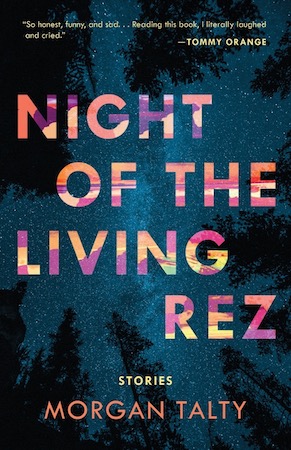
Morgan Talty’s The Night of the Living Rez is a searching and honest collection of short stories following a young Penobscot character named David and his coming of age on the rez, where community, family, and tradition are as fraught with colonial entanglement as they are forces for healing. 

With hyperreal and welcoming prose, Talty examines questions like how Natives heal from ongoing colonization, Native invisibility and family dysfunction—but what I loved most about this collection was the way it renders what it feels like to look for your place in the world and not know what it is, or how to find it. To feel like there might be no place, in fact, or at least not one that feels exactly right

In each story, I felt like I was interrogating the night with Talty’s characters, both running from and towards myself. Both surprisingly and inevitably, The Night of the Living Rez is where I found I could best meditate on the struggles Natives face today; this is because Talty writes his characters from a truly honest place.

Honesty is important to Talty, and in the following conversation, we discuss the power of honest stories to inspire transformation, from problematic medicine men to creating accurate representation of who Indigenous people are today. 

Editor’s note: Click here to watch the video component of the conversation between Chelsea T. Hicks and Morgan Talty about their short story collections A Calm and Normal Heart and Night of the Living Rez.


Chelsea Tayrien Hicks: I was delighted to find commonalities in our stories, like the way we both included notes on spelling in our respective languages, and we both also dramatized filmmakers who come in wanting to depict the culture for their own profit. I wanted to ask you about your own intentions in engaging these two areas, both the language and the attraction outsiders have to wanting to tell Native stories. Was there anything you were hoping to address, and what were you hoping to do with these inclusions? 

Morgan Talty: I also was delighted to see that! It was assuring in a strange way, like these motifs are, on a broader scale, recurring in real life and have something to say when we use them in our own work.

For me, tribal communities are dealing with internalized colonization, and we’ve moved away from that ‘us’ to ‘me’ mentality.

I was deeply interested in these characters and their emotions, and getting close to them allowed me to tease out ideas about representation and even “being.” Not necessarily what it “means to be Indian,” but what it means to be a human being who just so happens to be Native and thus the colonial history that is part of their chemical make-up. I think it would be irresponsible for me not to explore those types of intentions around language, trauma, legacy, inheritance, and so on. I will admit—there are writers out there who can do it better, but still—I felt a deep responsibility to illuminate these ideas. 

CTH: In “Half-Life,” I was fascinated with David’s growing sense of tension between personal responsibility and social pressure. I thought his transforming question about his using [of drugs] was a brilliant way to move him toward a breakthrough. He goes from asking How did we get here? to How did I get here? And how do I get out? His we-to-I reversal reminded me of this saying I’ve seen on Native beading, something like “I to we, me to us.” That saying is meant to promote the concept of decoloniality, but community-mindedness can also have a shadow side. I felt that the judgment and self-righteousness in the community contributed to David’s addiction as much as his own trauma and internal process. Did you think about shadow aspects of community as you wrote at all, and were you hoping to show some of the challenges of tight knit community life? 

MT: Absolutely, and I’m super happy to hear you saw this. For me, tribal communities are dealing with internalized colonization, and we’ve moved away from that “us” to “me” mentality. I’m speaking super generally here, but I feel like most tribes valued the collective over individuality—that, to me, is a very Western idea, even when we consider the great thinkers that shaped the West’s mind. I don’t have to tell you this, but the government’s use of colonial tools like blood quantum, for example, are sinister, and have caused so many contemporary problems, especially adding more friction between this “I” and “we” dichotomy. I feel like my drawing attention to this was important. Dee ultimately says something like, “How do we get out of here?” and maybe the question should actually be:  “How do we come back together?”  

CTH: One topic I desperately want to write about is expressions of Native masculinity—whether problematic, transforming, or healing—but I feel that I’m not the one to do so because I’m not a Native man. All through reading these stories, I was closely thinking about the different ways your characters embody ways of being a Native man. Frick, who I would call a problematic medicine man, has this line in the title story where he’s drinking and he “…had that man-stare looking down on a woman…” and Fellis treats his mom horribly, which makes David angry but he doesn’t really know what to do.

Do you have thoughts on Native masculinity, how it is transforming or not? And what do you think Native men like David did or are doing to stop cycles of abuse? 

We think about the tribes whose councils were all women, but when white men couldn’t get what they wanted, they introduced ideas of paternalism and patriarchy that completely reversed the roles.

MT: To talk about this, I have to bring up the fact that it was mostly women who raised me: my mom, my sister, my aunts. Men were there, sure, but I never really gravitated toward them. As a boy, I had a deep suspicion about men. How could I not? Having been so close to women growing up, I was able to see—and feel somewhat—the pain they experienced at the hands of men, physically and emotionally. To me, Native masculinity is a product of western masculinity—that internalized colonization. We think about the tribes whose councils were all women, but when white men couldn’t get what they wanted, they introduced ideas of paternalism and patriarchy that completely reversed the roles. Today, I feel like we’re still somewhat in that place: where Native men have taken on that patriarchal view. But then, as you ask, what do we do to stop this cycle of abuse? I feel like it has a lot to do with reclaiming not some specific gender roles, but reinventing what it means to live outside the boundary that colonialism has created, that boundary over which runs rampant the violence enacted against Native women. Men—including myself—need to be better, need to do better. 

CTH: You dramatize racism in a rez border town, from the bank that doesn’t recognize David’s tribal ID to the newspaper that maligns the rez teenagers by making the white man who harasses them into a seeming victim in a crime. For me, this brought up the fact that Native issues are either not reported on by the popular media, or these same issues are misrepresented. Would you say a bit on how you think about representation in literature, and if it can make a difference in real life issues? 

MT: I definitely think it can make a difference. I think it’s our hope that government officials or people in positions of power read, and if that hope is true, then we are exposing them to stories they may not necessarily know about, stories concerning Native issues. I feel like every President and governmental personnel should be required to read diverse literature. I’m serious! I feel like even in law programs, there has been much more emphasis placed on reading literature, which undoubtedly shapes those readers.  

CTH: We both wrote stories that engage guilt, but I was struck with the searing way you showed jealousy and denial. Fellis hates Meekew for going to college and acting white, while David’s mom can’t accept reality and both enables Frick’s abuse and neglects David, also contributing to Bedogi’s death. You depicted denial so clearly in the way she misremembers her own actions and misplaces her guilt onto David. What, in your opinion, makes for the most honest story? And do you think David achieves the honest telling he set out to? 

MT: My hope is that David does achieve that honesty! It’s certainly something I wanted to do. To me, the writing that is best able to capture that feeling of honesty is the type of writing that dares to reveal its characters’ horrible traits, and not for any shock factors. I mean, sure, from a craft point of view this seems obvious, right? Making sure our characters are flawed. But I feel like it goes beyond this simple craft element and has a lot more to do with the writer really trying to get at the heart of that flaw—again, going beyond an attempt to create a shock factor. Honest writing, to me, is writing that dares to explore the dangerous for the sake of bettering ourselves. 

CTH: There’s this beautiful line from “In a Field of Stray Caterpillars” describing Fellis’s eyes as:

“… droopy and soft yet sharply focused, as if the electrical currents searing across his brain had awoken something, something that had rested for far too long and was now awake with a dedication to look through Fellis’s eyes and relay to the brain everything as pure sparkle and gold, even if what it saw was only a cold waiting room with bland white walls and old magazines…”

You write a spectacular long sentence, and I have to tell you I am a passionate fan of this form. Do you have a particular love for the long sentence? I’d love to hear some of your thoughts, in terms of what they can do, and of course any sentence-crafting literary influences. 

MT: Long sentences are just fantastic. They’re so hard to write, but they’re so rewarding. Like, when I draft a long sentence, it’s so much fun going back through it and making sure all the details are ordered in just the right way, and making sure the sentence should even be a long sentence. I feel like long sentences somehow break rules—when reading a long sentence, I almost always feel like time no longer exists, like all that there is is right there on the page, and nothing more. I mean, this is true for shorter sentences too, but the long sentence, when it’s right, has the authority to command your attention and is basically saying, “This is important.” 

A Post-MeToo Novel About the False Promise of Female Empowerment

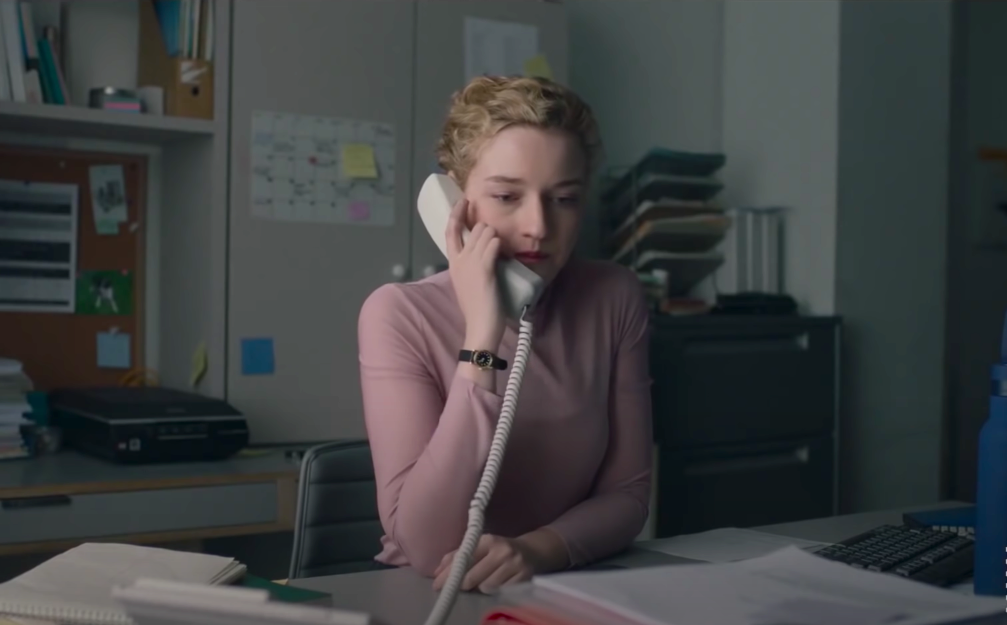
The unnamed narrator of NSFW begins her story by telling us she’s in a toxic relationship with the city of Los Angeles. She hates it; she loves it; she never wants to leave. This opening confession sets the scene for a riveting workplace drama in which the narrator attempts to climb Hollywood’s unforgiving ranks at a well-known television network. A fresh college graduate, she initially holds tight to the feminist ideals her mother instilled in her from a young age. But as rumors of sexual misconduct begin to swirl, the narrator realizes that maintaining those boundaries may not be as easy as she once thought. When her trust is broken and familial loyalties are tested, the narrator will be forced to redefine her understanding of success and decide once and for all what she is willing to sacrifice in pursuit of empowerment.

Throughout NSFW’s incisive and painfully resonant narrative, Isabel Kaplan raises crucial questions about the nature of complicity and what we are willing to do—or overlook—to get ahead. It’s also an unexpectedly funny book, given the subject matter, and features frustrating, complex, and profoundly human characters who’ll crack you up one moment and make you want to hurl the book across the room the next.

I spoke with Kaplan over Zoom about the trap of toxic relationships, the suffusive anonymity of temp work, and the slippery definition of empowerment in the era of #MeToo.


Abigail Oswald: There are a few references that ground the early pages of NSFW in late 2012—notably before the fall of men like Harvey Weinstein and Roger Ailes. What led you to set the story in that timeframe, and how did the #MeToo timeline factor in?

Isabel Kaplan: I started writing it in early 2017, and at that point it seemed to me that Trump’s election was a fundamental shift, in the sense that faith in institutions, and the ability to make change from within flawed institutions—that faith was shattered. I started questioning institutions, and also my own complicity in systems that I had thought I was fighting. #MeToo broke as I was writing the book, and I finished it, you know, “after” #MeToo, in whatever we’re calling it—the post-#MeToo era. 

I worked as a TV assistant in those years, so those were years I knew well. Broadcast networks had such dominance over the market, and this was a moment when streamers were encroaching. The idea of what is a broadcast network? An old, creaky institution? Is this the Titanic, and we’re all looking for big, exciting dramas in the middle of a collapsing system? Or is there something that can be changed and rejuvenated? And to me, that felt like a good parallel to the idea of other institutions and larger systems and longevity. And whether things can be changed, or if broken-down institutions need to just be destroyed.

AO: One of the overarching themes of NSFW is the choice (or lack thereof) to stay in negative situations. This applies not just to the narrator’s workplace, but also her codependent relationship with her mother, an unfulfilling romance. She even opens the book describing her love/hate relationship with the city of Los Angeles itself. Can you speak to why the narrator remains in these environments that increasingly take a toll as the narrative progresses?

IK: In the immediacy of living through any experience, no matter how complicated or messy it is, for lack of any other clear alternatives, it’s hard to extricate yourself.

I think of the frog in boiling water analogy—the idea that if you put a live frog in a pot of cold water, and then slowly raise the heat, it won’t jump out. I thought a lot about that, this idea that you can think that you’re doing okay, and you can think that things are better than they could be, and that you have it all under control, and that because things are better right now than they have been in the past, that means it’s okay. I wanted to play with, you know, how far can you push it until you crack? And then what? Once you crack, what are the alternatives? 

I was interested in exploring that claustrophobia and the way that claustrophobia descends, in that she’s not seeing alternative models of other ways to be. I think it’s really hard to hold onto the theory that you can have a fulfilling romantic relationship, for example, or a work life with boundaries, or an adult relationship with a parent who doesn’t recognize any boundaries. You can intellectually want that, and think that you are pursuing something intellectually, but in your actual lived experience, it is much harder to assert any of the needs you have. I wanted to really dig into the idea that we walk around doing things that are bad for us all the time, telling ourselves, “It’s not gonna hurt, I’m strong enough, I can do this.”

AO: There’s that bit about how she doesn’t like needles, but she thinks adults aren’t “supposed” to be afraid of needles, and then she starts sticking herself with needles as part of a weight-loss injection treatment. This idea that not only can you adjust to something that initially made you uncomfortable, but it can even become routine.

We walk around doing things that are bad for us all the time, telling ourselves, ‘It’s not gonna hurt, I’m strong enough, I can do this.’

IK: I think it’s an illusion of control. If she’s piercing herself with needles, she’s doing it, and she’s in control. There’s this illusion—delusion—that as long as you’re the one doing it and you’re the one making those decisions, that it’s not being done to you, you are not being oppressed or circumscribed in any way. She so deeply wants to believe that she’s claiming agency in every aspect of her life. That she’s pursuing a career, and it’s independent—even though she knows that she got her foot in the door with her mother’s help. That she’s pursuing a romantic relationship, and that’s what she’s doing as an adult—even though she doesn’t really like the guy. She’s pursuing agency, and she thinks that the injections, the workout classes, all of the things she deals with at work are in pursuit of empowerment. I really wanted to explore that idea: What does empowerment look like? Does that just trap us all? 

AO: The narrator’s mother is an interesting, complicated character. She’s a prominent feminist attorney who’s taught the narrator much about sex and consent, but sometimes in practice, her actions can be contradictory to her maternal guidance. She also arranges the narrator’s job at the network. Would you say the narrator’s mother and her influence ultimately help or hinder the narrator as she tries to make her own way in the world?

IK: What was interesting to me is that it’s both. There is no good or bad or who has the right values or the wrong values. She both helps the narrator a lot and hurts her a lot, and that’s what makes it so complicated. Because if anyone were ever only good or only bad, it would be really easy to navigate relationships. You would draw the line against anyone who’s terrible, and keep in your life anyone good. It’s really hard when the person who’s loved you so much and supported you so much is also causing a great deal of pain, and when that love feels deeply conditional in a lot of ways. 

I was interested in exploring the different generational approaches to gender and power. We’ve seen a lot written about that recently, especially as there are so many women of my mother’s generation who fought hard and made incredible progress. The question is, was it a circle? Did we just travel in a loop? And with the erosion of women’s reproductive rights, and everything horrible happening in America today, it’s increasingly clear what endures.

I wanted to show two different sides of the age and power and career-stage experience. On the one side you’ve got the narrator, who is young and in her first job, and on the other side is her mother, who’s been at this for decades and is facing different concerns about whether her best work is behind her, whether she’s still relevant, whether there’s a place for her. And I think both of those are two different ways of responding to a situation. [The mother] wants to stay in the game, and the narrator is trying to get in the game. So there’s the question of what you’re willing to do in order to play the game.

AO: There’s that moment where the narrator is recounting an overheard conversation, and she says the female network president’s sexist comments actually hit her harder than those of the male chairman. What’s at the core of the narrator’s feelings in that scene?

IK: When you’re raised to have such low expectations of men—like, the bar is on the floor for good behavior—it means that the barest courtesies read as acts of respect, and that’s really problematic. In that same scene, she hears her boss not make a sexist comment and is inclined to think, “Oh, what a good guy,” as opposed to, “That’s really the absolute least.” He didn’t call out anyone else for saying anything bad—he chuckled and said nothing—and that counts as good, because there are so many worse things he could have said.

I’ve always expected more of women. And the baseline behavior that I think of as decent—or did think, I’m trying to shift my mindset as well—for men is just so much lower, because so many of them were doing and saying such outrageous things, that just refraining from saying outrageous things comes to seem like “What a good boss! What a great boss, he hasn’t commented on your appearance! You’ve got a great boss!” 

There’s this illusion—delusion—that as long as you’re the one doing it, that it’s not being done to you, you are not being oppressed or circumscribed in any way.

And that’s terrible, and that allows a bunch of shitty men to just keep climbing up the ladder because none of them are doing things that are so bad that they seem worth calling out, and I think that’s the other problem. We’ve come up with a lexicon for discussing really bad, heinous things, but in this day and age I think it’s easier to address the issue of your boss grabbing your ass than it is to address the issue of your boss just making you a little uncomfortable all the time, but not in a specific way. And I think until we can figure out how to talk about those people, too, we’re not gonna have real change, because it’s not just the people who are actively groping you. 

I think #MeToo has affected the number of men who think they can forcibly kiss young employees in the office—I do think it’s changed that. But I think there are still plenty of male bosses who are making their subordinates feel very uncomfortable in sort of harder-to-identify ways that none of them are going to come forward about, because what would be the benefit? 

AO: There’s a running theme threaded throughout NSFW about the ways in which girls are often taught about sexual violence before sexual pleasure. The narrator notes that she understood what rape was before she even really understood sex; she also recalls taking self-defense as an elective in school. What sort of lasting effects does that have? Was your own experience of girlhood similar?

IK: The self-defense stuff is something I thought about a lot over the years, because I went to an all-girls school that prided itself on empowerment and feminism. Self-defense was the most popular P.E. class and you couldn’t take it until ninth grade, which seemed at the time like, “Oh, you’ve got to wait till you’re an older student.” And now, looking back, like, those are 14-year-olds. These are 14-year-old all-girls school girls, many of whom have not even been kissed. We did have the men who came in the padded suits, and we were videotaped every week. I found one of my self-defense DVDs and watched as I did this weird roleplay simulation of an attack in front of the parents. At the time I knew it was weird, but only now that I’m further out can I see just how wild that is, that all of the parents came to watch us be attacked, mock-attacked. It’s so strange. 

But at the same time, I don’t think it gave me any delusion of safety out on the street, you know, in dark corners and alleys. It didn’t lead me to take any other risks. I never felt safe. It did probably give me help dealing with an innocuous drunk person on the sidewalk who’s making sketchy comments, knowing what to do then. But I think what was easy about those situations is that it was always a “bad” guy, and it was always someone you didn’t care about hurting, because you were told to hurt them. You were told to throw them off you, and you were told not to worry about how much damage you caused, because they were your assailant.

I think there’s a false message being given that it’s easy if you know the moves and you know what to do, then you’ll do it, as opposed to acknowledging that, if it’s someone you know, you may not wanna heel palm them, or knee them in the groin, or grab and pull their balls, for fear of, you know, what’s gonna happen next? Is it gonna be way worse than whatever I’ve started? Or there’s a sense of, like, you don’t know how far this person is going to go, so it’d be easier to just not inflame the situation. In those classes, you’re supposed to attack right away. But in real life, you wouldn’t put your fist in someone’s eye socket right when they get a little too close to you, because then you’re the violent one. 

I think that was where the interest in that came from. It makes you hyper-aware of weird power dynamics in a way that’s not necessarily helpful. I don’t know that it was harmful, but I think if you tell girls that they’re empowered enough, they’ll think, “This is what empowerment looks like.” And it becomes much harder to untangle that really knotted ball of string where they realize, like, “This is not empowerment. I am acting exactly in the way that I was told to act within a specific set of expectations that I was told is what empowerment looks like.” And that’s just a different, kind of slightly less oppressive cage. But still a cage. 

AO: I thought it was interesting that we never learn the narrator’s name. It feels like her anonymity takes on an additional layer of meaning in a story like this—one that deals so much in rumors and whisper networks. It also speaks to the transience of temp work, which is how the narrator begins at the network—that perpetual hope that people will begin to learn who you are. Can you talk more about why you made that choice?

IK: The point you make about temp work is very, very apt. Temp and assisting, you’re not a whole person. The very definition of the job is you’re reaching out from the office of someone else, and your individual identity doesn’t matter. Any individuality or specificity to you gets subsumed and you only matter because of your boss. But also, you could be replaced immediately. It really affects the mindsets of people emerging from industry. You’re not encouraged to be a person. You’re somebody’s extra limb, and you’re supposed to be watching out for their every need, but nobody is making sure any of your needs are met. 

[Temping and assisting,] you’re not encouraged to be a person. You’re supposed to be watching out for their every need, but nobody is making sure any of your needs are met. 

I think that mirrored the experience that the narrator is having in so many different other spheres. Also, that’s not specific to her—that’s specific to anyone who has a boss and feels like less of a human. And I think the longer you do it, the more it seeps in. You can start off thinking, “I’m not gonna let my individual autonomy be compromised by this.” But if it’s what you’re doing day in, day out, it does. It becomes who you are, and I think your ability to see outside gets warped and distorted. 

Beyond that, I wanted to make it feel very intimate. I wanted to keep the reader inside her head, seeing it from the inside. The mother’s not named either—no one in the family is—and I think that gave it a sort of intimacy, hopefully. I wanted to explore who she is inside versus who she’s projecting, and who she’s trying to be, and the fact that she’s floating on different desks and so needs to be different people at any given moment, and therefore is constantly unprepared, because you can’t be. 

But we’ve designed all these institutions in a way where you’re supposed to be able to sit down and it’s, “Suddenly I’m this person today.” That’s what it means to temp, to just be someone else. And so much of what it means to temp is you’re not doing a great job—you definitionally cannot do a great job. You have no resources or knowledge that you’re coming in with, and the goal is to just not mess anything up. It limits how much you can do on your own, and you get seen differently just based on who you work for. Over the course of the book she climbs up, and she sees the difference in treatment, and I think it’s hard to navigate that without internalizing it and without taking it personally, even though it’s not personal at all. 

It sounds contradictory, but I wanted to write a funny book, and I wanted to write a funny book about sexual harassment, because I think that the line between what’s funny and what’s horrible can be fine, can be a very blurry line, and I think that humor is also a really great coping mechanism. And the fact that if you can turn something into a joke, can you make it not have power anymore? And how does that come back to bite you later? 

10 Novels and Memoirs With Recipes That You Can Cook Along To

As a teenager, I loved to hole up in my room with my mother’s back issues of Gourmet Magazine and read through recipes I had no way of making: Florentine boar ragu! Spaghetti with ramps! Vietnamese spring rolls stuffed with bean thread noodles, wood ear mushrooms, grated carrot, and ground pork shoulder! (Ruth Reichl really believed in us.) At other times, I’d read through cookbooks as though they were novels, and this at a time when the majority still came with nothing but a paltry three-page insert of the most beautiful dishes, which were somehow never the recipes you actually wanted to cook. 

Thankfully recipes are no longer a niche interest; in the era of social media, it feels like we’re all constantly browsing through and sharing recipes. Even my friends who cannot, or by some perverse principle will not, cook themselves an egg will send me links to recipes with excited emoji faces. 

I’m hoping this means we can finally embrace novels and memoirs that include recipes. Doing so has historically been seen as a little bit hokey, the purview of “women’s lit” or cozy mysteries rather than literary fiction or books by men. This view misses the point. In books like Heartburn by Nora Ephron or Fried Green Tomatoes at the Whistle Stop Café, recipes are included as cultural artifacts. They tell the story in another form. I’d argue that this is actually a more exciting and more contemporary reading experience because it allows the readers to connect with the book beyond the written text in a sensory and tactile way. 

Below, ten books that include recipes from Stanley Tucci’s memoir to Lara William’s imagined bacchanal.

Novels

Heartburn by Nora Ephron

Nora Ephron didn’t go to great lengths to hide the fact that her debut novel is a fictionalized account of her divorce from the journalist Carl Bernstein, who had an affair while she was pregnant with their second son. Ephron’s stand-in, Rachel Samstat, shares many of Ephron’s qualities—her wit, her uncanny power of observation, and, perhaps most notably, her obsession with food and cooking. “I don’t think any day is worth living without thinking about what you’re going to eat next at all times,” Ephron famously quipped.  

For Rachel Samstat, food, love, and memory are all bound up together. She makes potatoes for every man she starts a relationship with—”I have made a lot of mistakes in falling in love, and regretted most of them, but never the potatoes that went with them”—and the end of her relationship is just as productive on the gastronomic front: as Rachel’s marriage falls apart, she cooks.

Ephron included many of Rachel’s recipes, which lean towards comfort fare: there is a deep dish peach pie, buttery mashed potatoes, and bread pudding to feed a crowd. Ephron famously loved sharing recipes, and if doing so in a book was considered low-brow or silly, it’s hard to imagine she cared. 

Supper Club by Lara Williams

The protagonist of William’s debut novel is Roberta, a woman who’s internalized the societal expectation that woman should be small, quiet, and restrained in all their appetites. When Roberta meets a free-spirited artist named Stevie, they set out to reclaim their appetites by holding a supper club that quickly turns into something akin to a gorging, sweaty, drunken, bacchanal.

Food is one of Roberta’s most complicated desires. She has that kind of obsessive attention to food that often comes from starving (think of being around a slice of hot, melty pizza when you’re waiting for dinner) and so the recipes in Supper Club aren’t classically formatted but rather written as Roberta’s painstakingly detailed descriptions of how to make dishes like kimchi, sourdough, and spaghetti puttanesca. The lack of structure feels fitting for Roberta, who is trying to break free of any kind of established rules, but it’s also a nice reminder that recipes are rooted in the tradition of simply watching others cook. 

Kitchens of the Great Midwest by J. Ryan Stradal

From the time she is little, Eva Thorvald has a “once-in-a-generation palate” and a startling culinary ambition; at ten years old, she’s growing hydroponic habaneros in her bedroom and selling them to local restaurants. She prefers vegan blueberry ice cream to birthday cake. Eva grows up to become a world-class chef, and Kitchens of the Great Midwest is her story, told through the eyes of her community, with accompanying recipes. 

Given Eva’s prodigious gastronomical talents, it’s initially surprising that the dishes are unfussy Midwestern fare, the kind you’d find in homemade church cookbook. (Which is where Stradal found them; he mined a 1984 cookbook released by the First Lutheran Church in Hunter, North Dakota for inspiration.) But as we’ve come to appreciate our national canon of semi-homemade recipes (especially during the pandemic), it also makes sense: Pat Prager’s peanut butter bars—a no-bake mix of chocolate, peanut butter, graham crackers, and suga—are kind of genius. 

Search by Michelle Huneven

Michelle Huneven is both a critically acclaimed novelist and a James Beard Award-winner for feature writing with recipes, so it’s no wonder she decided to combine her two talents in Search. This warm, quirky novel is the ‘memoir’ of Dana Potowski, a restaurant critic and food writer who joins her church’s search committee for a new minister with the idea that she’ll chronical the process for a book (with recipes, course). Search feels like what might have happened if a food writer ended up in the writing room for Parks and Recreation; the oddball committee always offsets their searching with good meals, and the candidates for new minister at the progressive Unitarian Universalist congregation in Southern California include both a microbrew master and a self-professed eco-warrior witch. The recipes are as eclectic as the committee, ranging from escarole salad with favas, mint, and pecorino to wet brisket. 

Fried Green Tomatoes at the Whistle Stop Cafe by Fannie Flagg

These days Southern food is treated with respect, if not a certain cult of veneration, but there was a time when dishes like skillet cornbread, buttermilk biscuits, and fried green tomatoes were dismissed as uninteresting, unrefined home cooking. One author who challenged this view was Fannie Flagg, who included these recipes and others in her 1987 novel Fried Green Tomatoes at The Whistle Stop Café. 

The novel is primarily the story of Idgie Threadgoode, the tomboy daughter of a well-known local family who falls in love with an older woman named Ruth. When Idgie saves Ruth from her abusive husband, the two create a home together at the Whistle Stop Café. It quickly becomes a haven for their fellow outcasts of early 20th-century Alabama. There is a sense in Flagg’s novel of food as emotional nourishment but also of regional cooking as empowerment; dishes like fried green tomatoes are a way the clients of the Whistle Stop can identify as part of their broader community, even if that community doesn’t always welcome them back.

Natalie Tan’s Book of Luck and Fortune By Roselle Lim

When I lived in San Francisco, I did a lot of food shopping in Chinatown, where you could find markets that offered an unparalleled combination of freshness and price point. Take my husband’s favorite fish store, which looked more like a pet shop than a fishmonger. All the fish and a few crustacean were still alive, swimming in their tanks. You pointed to what you wanted and it was killed, cleaned, and packaged on the spot. Roselle Lim brings this neighborhood, and its dedication to good food, to the forefront of Natalie Tan’s Book of Luck and Fortune

The novel begins when Natalie returns home to San Francisco to deal with her estranged mother’s death. She learns that she’s inherited her grandmother’s long-abandoned restaurant in Chinatown and, being a chef, she decides to revive the space, though in its current shape it’s little more than a dusty, dirty relic tying her to a past. Things get a semi-magical turn when a neighborhood fortuneteller tells her she must cook three recipes from her grandmother’s cookbook for her struggling neighbors if the restaurant will succeed.  

Lim’s book is light reading, but she takes the food seriously. When, for example, Natalie makes drunken chicken to help cure her neighbor’s ailing marriage, you get every detail of the process, from the scent and texture of rubbing spices into the chicken to shredding bright ribbons of cabbage and lettuce for slaw. 

Memoirs

Everything I Know About Love by Dolly Alderton

British writer Dolly Alderton’s memoir touches on a lot of themes with intelligence and humor: growing up, female friendship, loss, and the grit you need to get through your twenties. (See also: the problem with using sex and partying as a means to find yourself.) However, her most serious point might be the importance of drunk food. 

For example, when Dolly and her friend AJ come home from the club where they’ve been kicked out for being too drunk, she makes a Got Kicked Out of the Club Sandwich, which has a twee name but—as those of us who has passed through our twenties understand—may have literally saved her life. She makes a hangover mac n’ cheese that’s an ode to cheese (or cheeses, she uses four). I love that this book won the National Book Award in the U.K., where it was also a bestseller, because Alderton is a wonderful writer who challenges the idea that young women who tell their story are navel-gazing or self-indulgent, and also because we’re finally giving drunk food the acclaim it deserves.  

My Berlin Kitchen by Luisa Weiss

If it seems obvious now that we’d be interested in following a young woman as she cooks recipes cut out of the newspaper, then one person we have to thank is Luisa Weiss. Weiss began her blog, the Wednesday Chef, in 2005, with the idea that she would chronical the dishes she was cooking for herself in her tiny New York City apartment. This seemingly simple project—and the proliferation of others like it—helped normalize the idea that young women would want to cook for themselves out of personal interest, desire, and hunger.   

My Berlin Kitchen is Weiss’s memoir; born in West Berlin to an American father and Italian mother, she grew up splitting her time between Berlin and Boston after her parents divorced. The lingering sense of cultural dislocation hounded her throughout college in the States, a year abroad in Paris, and publishing jobs in New York City. When she finally settled in Berlin, it was with a sense of coming home. Her cultural multiplicity is our gain on the culinary front. My Berlin Kitchen includes recipes from Weiss’ various homes, including braised chicken from New York and omelette confiture from Paris, but the best recipes are the classic German dishes like Pflaumenmus, a tender, yeasted plum cake. It makes you wish Weiss would write a book of Classic German Baking. Luckily, she did.

A Homemade Life: Stories and Recipes from My Kitchen Table by Molly Wizenberg

Like Weiss, Molly Wizenberg started her blog Orangette in 2004 as a way to chronical her life through the lens of home cooking. Her atmospheric writing style and frankly uncanny ability to cook exactly what you want to eat won her a James Beard Award for best individual food blog in 2015.  

Though Orangette is no longer live, Wizenberg runs two restaurants (Delancey and Essex, both in Seattle) and has written two memoirs. Her first, A Homemade Life: Stories and Recipes from My Kitchen Table, focuses on her early life, including how the trauma of losing her father to cancer led her off the path of academia and into the world of home cooking and writing. The recipes she includes are representative of her style, food that is somehow both homey and refined, like what a chef might cook on a rainy weekend morning; banana bread with chocolate and crystalized Ginger, or meatballs with pine nuts, cilantro, and golden raisins.

Taste by Stanley Tucci

In the first phase of the lockdown, Stanley Tucci became famous for mixing a negroni in his living room. Sure, we were hard up for amusement, but the pleasure he took in crafting a perfect drink radiated through his wife’s phone—she was filming him in their living room—and established him as a man who loves food. Tucci’s recent memoir, Taste, tells the story of his life through food, starting with his childhood in Westchester, where his Italian grandmother made and bottled her own tomato sauce, and through his film career, including food-focused films such as Julie and Julia with Meryl Streep and Big Night (which, coincidentally, is also a novel that pairs each chapter with a recipe.)

Tucci is a published cookbook author, so all the recipes in his memoir actually work, but, with no offense to his British wife’s roast potatoes, the most exciting inclusions are all Italian, from a light spaghetti con zucchini alla nerano from the Amalfi coast to a hearty, cheesy baked pasta called pizzoccherie from Lombardy.

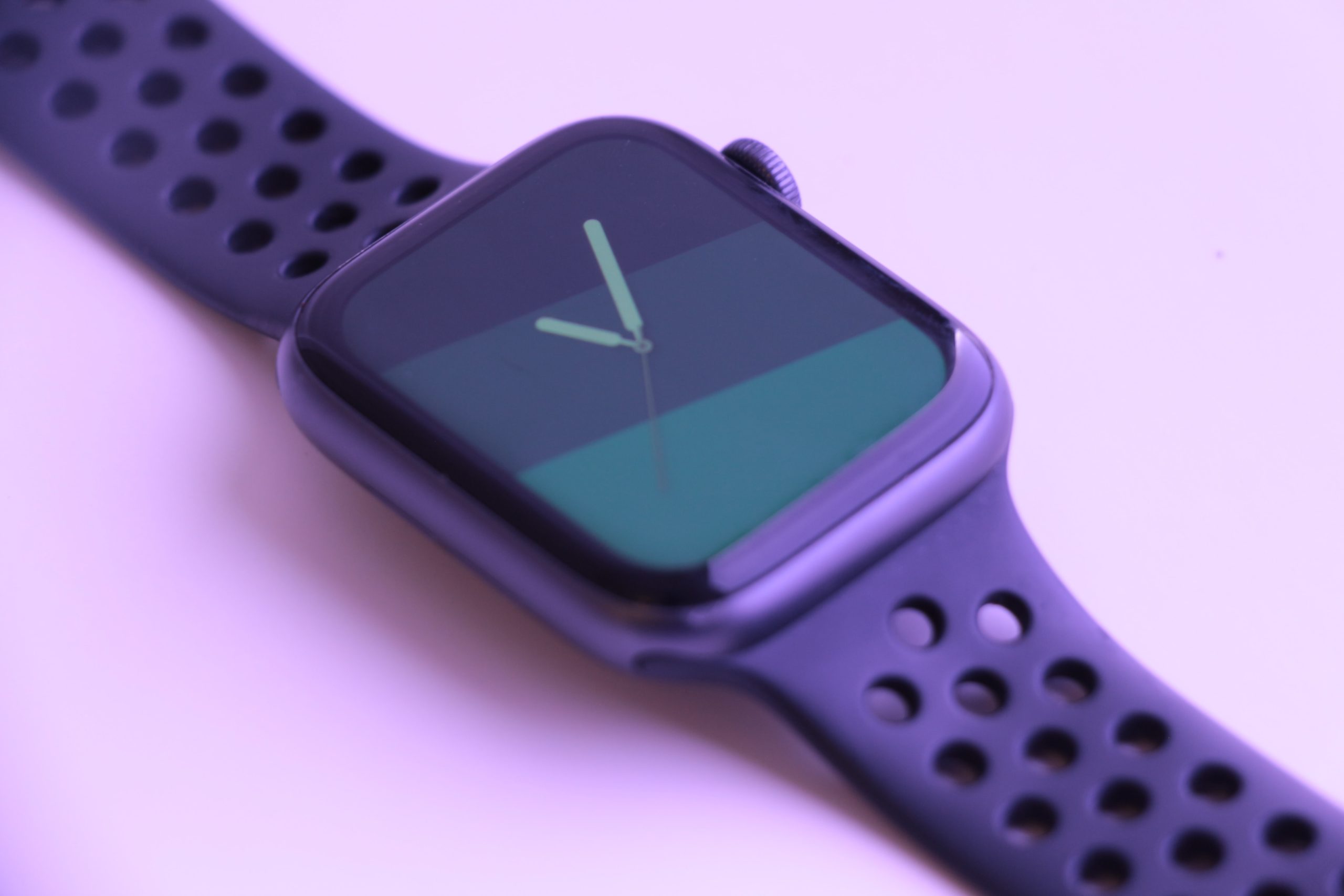
This Apple Watch Is Clearly the Boss of Me

Solo

My Apple Watch is my conductor, 
tells me to stand when I need standing, 
reminds me to breathe when I forget,  

vibrates when it’s time to turn 
on Main Street, my hands on the wheel. 
I pass Osprey nests in the Audubon. 
  
My Apple Watch is a grade-A listener, 
and I sing to it as I drive through Westport.
I am my Apple Watch’s eyes, describing 

all that I see: stone walls crumbling, 
a farmer on his smartphone, three cows 
next to a green-black barn, 

a dahlia nursery, $5 to cut your own poms. 
My Watch chirps to me. My package 
has been delivered.

While we hike 
to the graffitied World War II Lookout Towers, 
My Apple Watch counts my steps, 

and I teach it how to find the Honeysuckle’s 
sweet dew drop, how to smash a Rosehip 
to collect the seeds for tea. 

My package is a body pillow. 
We stop at an ice cream shack,
and I get two scoops of Blackberry, 

both for me. 
My Apple Watch has 5 bars,
but somebody is yet to call. 


Perennials

The winter flattened 
our flowers, leaving 
proud stalks as straws 
for Earth to suck. 
They always come back. 
Our winter gardens, 
the defrosting of frozen leaves 
like TV dinners. 
Such loyal followers, 
pushing with alacrity 
the words love me 
I’m back 
as a white crocus 
this time, like a fragile 
china cup sticky 
and filled with honey, 
though last year I thought 
you were what: a rock, 
a rose, a dewy lover 
who woke with April sun. 
Inveterate habit, 
this reincarnation, 
these perennials 
popping up through the snow. 
Don’t they know 
we abandoned them once?

8 Novels About Dealing With Difficult Neighbors

What, if any, responsibility do we have to the people who live near us? Especially the ones we don’t particularly like, those who may have insulted or ignored us, trapped us in kitchens and cocktail parties with overreaching inquiries, indulged their petty prejudices at our expense, or implicated us in their close-knit cruelties and the psychopathologies of their everyday lives. Does proximity imply duty? After all, we generally don’t get to choose our neighbors any more than we get to select our family members. This is the question I wanted to explore in my novel A Gracious Neighbor.  

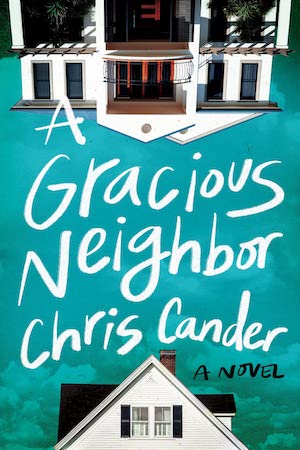
The protagonist of A Gracious Neighbor, Martha Hale, is an affable wife and mother who lives in an affluent neighborhood of well-tended lawns and high expectations. Her clumsiness at penetrating the social circles around her has made her lonely, and so she’s thrilled when the glamorous Minnie Foster, a former high school classmate, moves in next door. However, Martha’s determination to pick up where they left off becomes a preoccupation with Minnie’s life, and she undertakes a series of well-intentioned but perilous measures to save her would-be friend’s reputation.

Fred Rogers, the beloved sweater-wearing icon of the 1968-2001 children’s television series “Mister Rogers’ Neighborhood,” once said, “Imagine what our real neighborhoods would be like if each of us offered, as a matter of course, just one kind word to another person.” It’s a beautiful idea that I hope everyone adopts. But because most of us don’t live in such utopias, I think we’re fascinated by stories that remind us of home: where people often behave badly, where the grass isn’t actually greener on the other side of the fence, and where we don’t really know what’s going on behind our neighbors’ doors.

Little Fires Everywhere by Celeste Ng

Set in the author’s real hometown of Shaker Heights, Cleveland, a carefully planned idyll, Little Fires Everywhere explores how a seemingly well-behaved “progressive” community reacts when a bohemian outsider, Mia Warren, and her daughter, Pearl, move into a rental house owned by the Richardsons. The latter are the quintessential Shaker Heights family. Elena and her husband have money, successful careers, a lovely home, and four children they assume will grow up to lead equally flourishing lives. The youngest, Izzy, however, is hell-bent on destruction. “Rules existed for a reason: if you followed them, you would succeed; if you didn’t, you might burn the world to the ground.” When the Richardsons’ and Warrens’ lives begin to intertwine, they also begin to self-destruct. Thanks to Izzy, the Richardsons’ house is literally burning down as the story opens, but there are plenty of other themes catching fire throughout the novel: racism, motherhood, wealth disparity, and friendship. The narrative itself is a slow burn, but the characters are complex, well-developed, flawed, and realistic.

Ask Again, Yes by Mary Beth Keane

I devoured this gorgeous book the week it was released, and had such a desperate hangover when it ended that I couldn’t read anything else for a fortnight afterward. Along with their new wives, Brian Stanhope and Francis Gleeson, two rookie Bronx cops, move into neighboring homes in a nearby town. Two of their children, Kate Gleeson and Peter Stanhope, born the same year, become best friends, and then more than that. But on the cusp of teenagerhood, a tragic event forces the Stanhopes out of their home, and Kate and Peter out of each other’s lives. The narrative follows the two as they reunite, struggling to put the traumatic past behind them as they lean into the headwinds of the future.

Not only is Keane’s writing sublime, but she never succumbs to sentimentality. Her characters are flawed, nuanced, and relatable even at their worst. She invites us to look carefully around the low-lit corners of these families’ homes and hearts, never passing judgment, but allowing us to decide for ourselves who to root for. In the end, I rooted for them all.

Good Neighbors by Sarah Langan

I was hooked on page one by the description of the aptly-named Wilde family: Gertie, a living Barbie doll with uncool “mom-cleavage,” hot-tempered Arlo who smokes Parliaments on the front porch, and their weird kids, Julia and Larry, who cuss and fart in public. When they move into a fixer-upper on uptight, tight-knit Maple Street in Long Island, their presence begins to erode their neighbors’ fragile illusions of safety and peace in a newly unstable world. A sinkhole—both actual and metaphorical—opens up in a park during a neighborhood party that the Wildes weren’t invited to but attended anyway. This “hungry” cavern consumes a child, and with her goes the civility that had been a feature of the enclave. Suddenly, the street is awash in malicious, infectious gossip that turns neighbors against one another and propels the narrative through mob mentality, social pressure, climate crises, and the perils of American suburbia to its dramatic conclusion.

This literary thriller was riveting and unsettling in the best possible way, and I love that, like me, Langan chose to set her story in her own neighborhood. To do so is risky, because some residents of any real community would be offended by anything less than a best places to live ranking in a magazine. (One outraged reviewer said, “I am shocked by the heinous treatment this author gave to the town.”) Sorry, neighbors: writing about a profoundly familiar place is a great way to excavate the deepest truths about the imaginary people who live there.

The Ice Storm by Rick Moody

Set during a single 24-hour period in another picture-perfect and very real neighborhood, this time New Canaan, Connecticut. The area was highly desirable during the ’70s; a modernist hotspot made famous by the so-called Harvard Five, a group of architects who moved there in the 1940s and filled it with sleek, Bauhaus-inspired houses. The town is still one of the most affluent communities in the U.S. (it’s currently ranked 88th in the nation with the highest median family income). But as is true in so many wealthy areas, the happiness of its population seems inversely proportional to its opulence, and the characters in The Ice Storm are no exception.

It’s a stultifying Thanksgiving weekend in 1973, the Watergate scandal is on the color set every night, the Vietnam war is winding down, and the sexual revolution is heating up. The Hood family is simmering in individual pots of self-loathing and self-destruction: depressed dad Ben is having an affair with a neighbor, mom Elena is emotionally withdrawn, daughter Wendy has discovered the power and pleasure of drugs and sex, and son Paul hides from the world within the pages of his comic books. By the time the titular ice storm arrives, the characters are well into their familial meltdown. The writing is beautiful (if excessive), and Moody’s nihilistic view of a certain slice of American suburban life, people’s obsession with sex and status, and the breakdown of the nuclear family (and relationships in general) is searing.

The Husbands by Chandler Baker

A recent study on housework trends from the University of Michigan (the Panel Study on Income Dynamics) revealed that husbands create an extra seven hours per week of housework for wives, but wives save husbands from approximately an hour of the same. Not so in the too-good-to-be-true neighborhood, Dynasty Ranch, where the women wear the pants and their husbands wash and iron them.

Nora Spangler lives in Austin, Texas with her husband, Hayden and young daughter, Liv. Pregnant and exhausted, Nora struggles to balance her successful legal career and possible offer of partnership with domestic duties, time with her child, friendships, and whatever self-care she can squeeze in. When she and Hayden decide to look for a larger home, they discover the exclusive and intriguing Dynasty Ranch. Just how did these wives train their husbands to be so helpful and submissive? That’s the fun part. If you’ve read Ira Levin’s 1972 satire, The Stepford Wives, you’ll have an idea. The reality that informs this feminist and domestic thriller is sobering but Baker uses it to great effect imagining what it would take for women like her overworked and exhausted protagonist, Nora, to actually have it all.

The Couple Next Door by Shari Lapena

New parents Anne and Marco are invited to a small dinner party at the home of their next-door neighbors, Cynthia and Graham—but their baby is not. When their sitter cancels at the last minute, Marco persuades Anne to take the baby monitor and leave six-month-old Cora asleep in her crib, promising to check on her regularly. When they arrive home at one in the morning, the door is open and the infant is missing. Although the identity of the kidnapper isn’t well concealed, this is a compelling whodunit, and a perfect exemplar of the adage that nobody really knows what goes on behind closed doors.

A Good Neighborhood by Therese Anne Fowler

It isn’t just the setting of this book that makes it relevant to a book list about neighborhoods; it’s that the neighborhood itself—using a first-person plural POV—is the narrator. Like the disembodied group of boys narrating Jeffrey Eugenides’ The Virgin Suicides, this collective voice lends a strong, reliable perspective to a story in which one set of neighbors is pitted against another in a battle over a dying tree and a secret romance, racism and class differences.

Widowed Valerie Alston-Holt, a professor of ecology, and her bi-racial, musically-gifted son, Xavier, are living a tentative happily-ever-after in picturesque Oak Knoll, an allegedly close-knit district in North Carolina, until Brad Whitman and his wife, Julia, and their two daughters, Juniper and Lily, move in next door. Brad fells all the oak trees on his lot to build an oversized house and swimming pool, damaging the root system of the majestic, beloved tree in Valerie’s yard. Things get even more complicated when Xavier and Juniper fall in love. This novel beautifully explores  the challenges of living side-by-side when, for so many reasons, neighbors can’t see eye-to-eye.

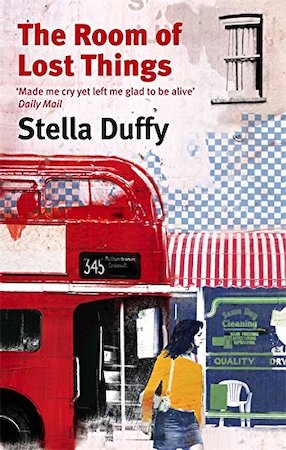
The Room of Lost Things by Stella Duffy

Set in Loughborough Junction in South London, The Room of Lost Things tells the story of an aging dry cleaner named Robert and Akeel, the ambitious young man who plans to take over the business from him, as they spend a year working together to ensure the handover goes smoothly. There’s a large cast of secondary characters, most of them Robert’s customers, representing the diverse and chaotic character of London. The narrative flows gently and poetically along, a moving paean to both the setting and to the countless people that we come into contact with on a regular basis but don’t really know.

Queer Love Poems for Wherever Your Heart Is

Love is love… is love. But that doesn’t mean “love” means or feels the same every time you experience it. Celebrating LGBTQIA+ love means acknowledging all the different types of feelings we have, whether it’s romantic love for a partner, love for our community, love for ourselves or even love for a specific place. These poems celebrate queer love, whether that love is sweet, bittersweet or somewhere in between. 

When You’re Feeling Wildly, Exuberantly in Love, Read Andrea Gibson’s Love Poem.

Love Poem contains all the agony and ecstasy of early love. From Gibson’s epically romantic declaration, “You are the moon when it blooms for the very first time” to their brutally honest line, “It’s true when we argue you make me wanna rip off my nose, bone and all,” this poem celebrates both the highs and lows of a giddy new love affair. 

When You’re Feeling Grateful for Your Lover, Read June Jordan’s Poem for My Love.

This poem tells the sweet story of two lovers, safe inside and marveling at their relationship:

I am amazed by peace

It is this possibility of you

asleep

and breathing in the quiet air

Poem for My Love showcases the gentler and calmer side of love; the poet is at once thankful for and in awe of their romantic relationship. 

When You’re in Love Even as the World Collapses Around You, Read Mark Doty’s Turtle, Swan.

Telling the story of two men in love, Turtle, Swan describes the fear of aloneness and isolation, using the example of being unable to find your partner in a darkened movie theater:

I saw straight couples everywhere,
no single silhouette who might be you…

By the time the previews ended
I was nearly in tears— then realized
the head of one-half the couple in the first row

was only your leather jacket propped in the seat
that would be mine. 

The poem, which was published in the late 1980s, also touches on the grim reality of the AIDS epidemic, ending in the urgent entreaty, “I do not want you ever to die.”

When You’re Painfully in Love, Read Carol Ann Duffy’s You.

As the narrator states, “Falling in love / is glamorous hell.” This poem is for those times when, try as though you might, you cannot get that particular someone out of your mind – and out of your heart. The narrator opens the poem by lamenting, “Uninvited, the thought of you stayed too late in my head.” You shows that love can be unstoppable and beyond our control.
                                                       

When You’re in Love from Afar, Read Donika Kelly’s Love Poem: Mermaid.

A more mysterious kind of love emerges in this poem, in which the narrator is a siren seated upon a rock, admiring the mermaid on a ship’s mast. She tells her beloved, “I have claimed this rock, / which is also your heart,” and in a true act of love, bears witness to the mermaid’s experience:

I am a witness 
to the sea and the sun, to your body 

lashed to the mast.

This surreal poem shows that love can sometimes transcend our very reality.

When You’re in Hot, Sexy Love, Read Natalie Diaz’s Waist and Sway.

This erotic poem celebrates the beauty of the female form; from “The curve and curve of her shoulders” to “hips that in the early night / to light lit up,” the narrator holds nothing back in extolling her lover’s virtues. Wait and Sway dives deep into the hot July night these lovers spend together, with the narrator making the beautifully sensual revelation, “[T]he salt of her burned not long on my tongue, / but like stars.”

When You’re Feeling Love for Yourself, Read Nikki Giovanni’s Walking Down Park.

In this poem, the subject is not altogether romantic love, but the love people have for themselves, which is especially important for queer and BIPOC individuals. The narrator reminds readers of the important lesson:

it’s so easy to be free
you start by loving yourself   
then those who look like you   
all else will come
naturally

When You’re in Love in New York City, Read Frank O’Hara’s Having a Coke with You.

Having a Coke with You is one of the most popular queer love poems, and for good reason. The narrator knows that the smaller, simpler things – such as sharing a Coke – are just as romantic, if not more romantic, than the big events and trips to scenic locations. 

I look
at you and I would rather look at you than all the portraits in the world
except possibly for the Polish Rider occasionally and anyway it’s in the Frick
which thank heavens you haven’t gone to yet so we can go together for the first time

Sharing an experience (big or small) with a loved one is celebrated in this sweet love poem. 

When You’re in Love with New York City, Read Alex Dimitrov’s Having a Diet Coke with You.

Echoing Having a Coke with You, this poem provides a modern, funny and sincere reimagining of the classic poem. The narrator admires the city while also acknowledging his own romantic mishaps (“If you look up / the billboards are sexy and American, / letting you forget all the cruel things / you’ve said to your boyfriends”):

I’ll never get over the fact
that the buildings all light up at night,
and the night comes every night
and without regret we let it go.

Just as when you’re in love with a person, being in love with a place – especially one as alluring as New York City – will keep your heart constantly blooming, again and again

When You’ve Stopped Being Afraid of Love, Read Timothy Liu’s The Lovers.

This short but powerful poem illuminates the fearfulness the narrator has about their romantic future during a suspenseful tarot card reading. 

I was always afraid

of the next card

the psychic would turn

over for us

In the end, the narrator realizes that their romantic relationship contains “every card in the deck”—or rather, it contains the multitudes of experiences and feelings that exist now that they’re found true love. 

The Best Literary Masturbation Scenes of All Time

Masturbation scenes run contrary to the standard rules of writing good fiction. There’s not a whole lot happening, plot-wise. The character involved is hardly moving, their thoughts are both incoherent and numbingly predictable. Nuance is abandoned, Gods rise from a variety of machines, clichés proliferate. What a shocker: the pool boy is sweaty and needs to take of his shirt.

But this is exactly what makes masturbation scenes so interesting: they’re evidence that desire exerts enough pressure to not only immobilize a character, but also take the narrative within their head and distort it, chop it, repeat. The pool boy, already shirtless, needs a glass of lemonade. No, now he’s clothed but oops! the lemonade spilled on his shirt!

At first glance, a masturbation scene is uncluttered: a monologue on a bare stage. A character negotiates with what they want, and how they want it. But there are always other desires caught up in the sexual and masturbation becomes an act of boredom, loneliness, depression, love, excitement, fury, sorrow, celebration, grief, insomnia—sometimes all at once. 

These scenes are ambivalent, offering evidence of our self-sufficiency and searing need for other people, our capacity for both empathy and objectification. Both the character masturbating and the reader reading are made aware—often uncomfortably—of both the locked box of their own minds and the fact that they’re participating in something universal. 

My interest in both ambivalence and desire-fueled narrative distortion is one reason I wrote a novel, The Seaplane on Final Approach, preoccupied with masturbatory fantasy. Obviously, I’m not the only one: here are ten novels with scenes that portray masturbation exceptionally well.

Lightning Rods by Helen DeWitt

“The problem with this fantasy was that it was hard to get the wall right.”

Joe is a sad-sack stuck in two repeating loops. One: he tries to sell vacuum cleaners, gets invited in for dessert, returns to his rented trailer in a sugar-bloated fugue state. Two: he masturbates imaging his ideal, deeply specific scenario.

The problem is Joe keeps getting bogged down in the details of his fantasy, constructing backstories, imagining complex setpieces. But his tendency to embellish marks him for success. Joe markets his fantasy—a kind of deluxe glory hole—as the ideal solution to workplace sexual harassment in this deeply strange, discomfiting, hilarious novel. 

Milk Fed by Melissa Broder

“Feed me, Mommy! So that I may live!”

Rachel, who struggles with disordered eating, has, on the advice of her therapist, started a 90-day “detox” from her cruel, fat-shaming mother. On day four of the detox she starts fantasizing about her boss Ana.

Rachel imagines lying bed with menstrual cramps, “Mommy Ana” soothing her by rubbing her tummy. Things progress, and Mommy Ana takes complete control. She assures Rachel that she’s innocent, and things build into a fully imagined (and very funny) scene of submission, care-giving, and filthiness.

Private Citizens by Tony Tulathimutte

“Better than having sex, you could make sex.”

Will’s girlfriend Vanya is away and he takes the opportunity to revisit his vast, lovingly collated porn collection. Will is no stranger to creatively straining the limits of porn consumption: he’s already learned to create jury-rigged 3D porn by watching two clips side-by-side with his eyes crossed. When he realizes he wants to see a representation of his and Vanya’s sex life onscreen, he turns to editing. 

In this manic, virtuosic scene, Will spends a week in a vortex of image stabilizing, compositing, carpal tunnel flares and increasingly strained orgasms. And then he’s left emptied of lust, with no friendly buffer between himself and reality.

1982, Janine by Alisdair Gray

“Most pornography fails by not being dramatic enough. There are too few characters.”

Jock McLeish, a mid-aged alcoholic businessman, is in a non-descript hotel room in a non-descript Scottish town. He’s constructed a sort of ongoing pornographic mega-novel in his head, filled with a huge cast of hotties, including Janine, who’s based on a childhood memory of Jane Russell. 

But the evening of self-love becomes a dark night of the soul, as Jock starts to realize that his fantasy babes are all, in one way or another, figures from his past. 1982, Janine unspools, from drawn-out masturbation scene to existential reckoning to regretful-yet-hopeful quietude. 

Sabbath’s Theater by Philip Roth

“He had only to drop to his knees to be as invisible from the road as any of those buried around him, and often he was on his knees already.”

This list could have contained Portnoy’s Complaint, because Portnoy’s Complaint. But in the attempt to showcase the range of masturbation scenes, I wanted to include something truly abject. And this nails it. 

Sabbath’s Theater is preoccupied with two abysses: lust and death. They’re portrayed as dual sources of murky oblivion and are treated with a lack of reverence so complete it somehow becomes reverent again—like when Mickey Sabbath, grief-stricken, ceaselessly repellent but with the same charisma as a black hole, masturbates on his dead mistress’ grave. 

The Color Purple by Alice Walker

“But when I hear them together all I can do is pull the quilt over my head…”

It’s a scene that starts full of charged optimism between two women who haven’t yet admitted that they want each other. Celie has never had an orgasm and always viewed sex with her husband as an ordeal to withstand. She reveals this to her more-than-just-friend Shug, who’s horrified and sits Celie down for a frank discussion about the clitoris.  

But then Celie gives Shug permission to sleep with her husband, and Shug takes her up on it. Later that night, Celie, listening to Shug and her husband having sex, masturbates and cries simultaneously, overwhelmed with a mixture of jealousy and yearning. 

English, August by Upamanyu Chatterjee

“From today, no masturbation. Test your will, you bastard.”

This is what Agastya Sen, nicknames “August” and “English,” writes in his diary after he gets to his swanky government post in rural Madna. But his will is broken almost immediately. Blame a combination of Madna’s infamous heat—the humidity is so powerful lizards peel off walls and land to the floor with a splat—Agastya’s daily habit of smoking heroic amount of weed, and the boredom of provincial bureaucratic life. 

English, August is filed under “coming-of-age” and “slacker” novel. And it’s both: it charts Agastya’s self-discovery, but also sees him spend a bunch of time lying around stoned and listening to music, naked except for a layer of sweat. 

Wetlands by Charlotte Roche

“I have to stop exploring the inside of my body. I need both hands now.”

When Roche talked about her ideal response to this novel, she imagined a reader alternating between arousal and complete revulsion. This was part of her project to make this book a realistic, honest book about the body, warts—or festering pustules—and all. And it succeeds. There are passages that make Ottessa Moshfegh seem like Barbara Pym. 

Wetlands’ protagonist, Helen, is in the hospital with an anal fissure but that doesn’t stop her from masturbating. A lot. And she details the minutiae (textures! movements! viscosity!) with both gleeful investigative curiosity and the dispassionate remove of an anatomist.  

Confessions of a Mask by Yukio Mishima, translated by Meredith Weatherby 

“I felt a secret, radiant something rise swift-footed to the attack from inside me.”

Kochan is flipping through art books and finds a reproduction of Guido Reni’s “St. Sebastian,” which stops him in his tracks. Reni’s Sebastian is naked except for a pale loincloth, his hands are tied above his head, and, even though he’s pierced through with arrows, he’s unbloodied and looks tranquil. And hot. 

It’s this image that spurs Kochan’s sexual awakening, and he has his first experience with what he refers to as his “bad habit.” This is scene is textbook Mishima, in that it’s weird, divisive as hell, the language is lush, and the erotic is blended with violence.

The Pervert by Michelle Perez, illustrated by Remy Boydell

“You’ve seen me do this a million times. I’m calming my nerves.”

So says the unnamed protagonist of Michelle Perez’ graphic novel, which follows a trans sex worker through the dreamscape of Seattle as she encounters a rotating cast—some despicable, some kind, almost all shattered by loneliness.

In one section, we see the end of a romance. The protagonist and her girlfriend, whose relationship has become sexless, take a weekend trip to Portland. The frustrated protagonist masturbates as a way of getting to sleep and her girlfriend gets upset. A bleak, familiar scene unfolds: a relationship’s final fight where both parties are too exhausted to be passionately angry, too exhausted to be gentle with one another. 

Sooner or Later, We’ll All Belong to the Kingdom of the Sick

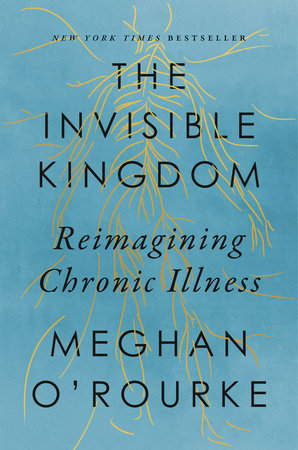
Since the late 1990s, Meghan O’Rourke battled symptoms no one, including O’Rourke herself, could explain: dizziness, night sweats, fatigue, electric shock sensations, stabbing pain, hives. When on a trip to Vietnam in 2012 a rash—seven or eight raised bumps arranged in a circle—appeared on her inner arm, she thought, It looks like Braille. But what was it trying to tell her? 

O’Rourke is one of the millions of Americans living on the edge of medical knowledge—living with poorly understood and often misdiagnosed conditions, often involving dysregulation of the immune and/or nervous system. Eventually, she would be diagnosed with both chronic Lyme disease and an autoimmune condition, but for many years, she struggled to find a doctor who would take her symptoms seriously. 

O’Rourke’s new book, The Invisible Kingdom: Reimaging Chronic Illness, chronicles her quest to heal, a quest that was often confusing, lonely, and, as she trudged from practitioner to practitioner hoping this one would finally provide answers, time-consuming and expensive. With a poet’s lyricism and precision—O’Rourke’s books of poetry including Sun in Days and Halflife—O’Rourke captures the terror as well as the drudgery of chronic unwellness. At the same time, she trains a sharp journalistic eye on a problem of staggering proportions: what she calls a “silent epidemic” of chronic illness affecting millions of Americans. These illnesses include autoimmune disease, myalgic encephalomyelitis/chronic fatigue syndrome, chronic Lyme disease, fibromyalgia, dysautonomia, mast cell activation syndrome, and now, on a scale we are only beginning to comprehend, Long Covid. 

I spoke with O’Rourke about the loneliness of being chronically ill, the need for an integrative care model of medicine, what it meant to have Covid hit as she was writing a book about long-term illness, and the challenge of finding meaning in a life that’s been turned upside down. 


CC: In The Invisible Kingdom, you write that if every age has its “signature disease,” ours is the type of chronic illness that tends to go unrecognized in tests and is often viewed with skepticism by the medical establishment. This includes post-treatment Lyme disease syndrome, which you were eventually diagnosed with, autoimmune disorder, dysautonomia, and fibromyalgia. It occurred to me that you must have been in the middle of working on this book when the pandemic hit. What role does/did long COVID have in the “Invisible Kingdom” of the ill generally, and in your writing process more specifically?

MOR: The book was almost done when the pandemic began. In January 2020, I was already speaking with immunologists and virologists around the world about chronic illness, and because of those conversations, I was one of those people who quite early on was saying, “The pandemic is coming.” I was the Cassandra in my friend group. 

Beginning in early June 2020, I started to report on people who were saying they’d gotten sick in March and still weren’t better. I had to hit pause on The Invisible Kingdom and think, how am I going to rewrite this book? I didn’t want to just stick in a mention of the pandemic. I wanted to integrate it into the book, because Long Covid made the things I was trying to explain in The Invisible Kingdom all the more urgent. By that I mean our siloed health care system; medicine’s resistance to crediting the testimony of patients with so-called “vague” symptoms; and the kinds of overly tidy containers it likes to put disease into.

In fact, before the pandemic, I had been reporting on this emerging paradigm of disease that now is familiar to many of us: the notion that infectious pathogens and organisms don’t all behave the same way in our bodies, as the 19th-century advent of the germ theory had suggested. Germ theory postulated that viruses and bacteria behave very similarly in different people, giving us this model that either you recover or you die from an illness. But as it turns out, some pathogens can trigger long-term illness in a subset of people for reasons we don’t fully understand. Conditions like autoimmune disease, myalgic encephalomyelitis/chronic fatigue syndrome (ME/CFS), and post-treatment Lyme disease syndrome can be affected by, or are thought to be triggered by, an infection that doesn’t resolve for some reason—whether because the pathogen is still there, or because the immune system has been kicked into overdrive, or because damage has been done to the body that we don’t understand. 

One of the central questions in my book is, why is it so hard for people with these kinds of diseases to get a diagnosis? One of the answers I came to was that this paradigm of heterogeneous response to infection isn’t fully understood, and we haven’t availed ourselves of the tools to diagnose, treat, and help support these patients. What’s more, basic medical tests don’t always turn up problems in these patients. And modern medicine loves to measure; what it can’t measure, it doubts.

CC: One of the outcomes of Long Covid is that there’s increasing mainstream recognition that our “siloed” health care system can be very harmful. We need integrative care models.  

MOR: For people with chronic illnesses or chronic pain, there’s just no coordination of care. In the U.S., we have a crisis care model, which is designed to avert death, or identify when you’re close to death, and take extraordinary measures to try to fix you. It’s not a true “Let’s help you thrive” system. 

And it also doesn’t recognize that patients want basic validation even if there are no treatments available to them. I interviewed close to a hundred patients. Over and over people said to me, almost verbatim, something I also said to my husband: “I actually would feel happy if the doctor looked me in the eyes and said, ‘I don’t know what’s wrong with you, but I see that you’re suffering, and I’m so sorry. I wish I could help.’” 

I finally did have one doctor do that, and it was transformative. I suspect she still doesn’t know how much she helped me. Just her saying, “I believe you, I see this. This is really hard. I have no idea what’s wrong.” But doctors are uncomfortable to be in a position of not having answers. One researcher I spoke to said that doctors are trained not to say “I don’t know.”

CC: Mysterious, unexplained illness can undermine a patient’s sense of self, but at the same time, not having answers can be threatening to doctors’ sense of who they are. I was struck by the words of Atul Gawande, which you quote: “Nothing is more threatening to who you think you are than a patient with a problem you cannot solve.” This question of “who am I?”—do you see it as one that patients and doctors must reevaluate, sort of alongside each other? 

We think of illness as a state apart from normal life, as opposed to being a part of life.

MO’R: Absolutely. Doctors and patients together need a paradigm shift. As much as The Invisible Kingdom is critical of the medical system, it’s very much in support of individual doctors. Many doctors want to help more, but are trapped by bureaucracy, paperwork, and a kind of algorithm-based medicine—as opposed to having the opportunity to use clinical judgment. When you are looking at patients whose bodies are at the edge of medical knowledge, we need a more flexible kind of medicine. That means patient and doctor alike navigating uncertainty. I think med school is the place where we have to start equipping doctors. If I had another life, and I were to design medical education, looking at the scope of Long Covid we’re facing, I would say we have to add an entire unit to our education about uncertainty, about supporting patients when you don’t know the answer. 

CC: In The Invisible Kingdom you talk about how you’ve come to see the body, including the ill body, as a site of social encounter. Can you explain more?

MOR: Certainly illness can be a lonely and isolating experience. It was profoundly lonely and isolating for me. But what I realized was that the deepest part of the loneliness was coming from our culture’s rejection of the idea that illness actually is a social experience. We’ve created a culture in which we purposely isolate sick people: when people go into the hospital they’re curtained off, they’re separated. They’re in a site of otherness. We think of illness as a state apart from normal life, as opposed to being a part of life. 

And that brought me to the poet John Donne, who during a bout with spotted fever was very ill and in quarantine. His daughter was engaged and he encouraged her to go ahead and get married, because he wanted her to be taken care of if he died. He was lying in bed listening to church bells ring. There were people dying all the time, but there were people marrying all the time, too, and bells rang for both. After listening for his daughter’s wedding bells, he wrote the very famous line, “No man is an island.” We’re all “part of the main,” as he put it: “Any man’s death diminishes me, because I am involved in mankind, and therefore never send to know for whom the bell tolls; it tolls for thee.” When you ask who’s sick, you’re not realizing it’s also you. We’re all going to have this experience one way or another, this encounter with mortality.

Even though I’m more functional most days now, that experience of intense suffering is like a set of scars that no one can see.

America has embraced a model of individualism, which we apply to illness, too, in part because we don’t like to think about mortality and sickness. If we say it’s an individual’s problem, it gives us the illusion that we have some control over it. It also frees us from the obligation to take care of one another. And yet a lot of chronic illnesses are at least partly shaped by how we live as a society: by the chemicals around us, the lack of a social safety net, the quality of health care we get, the quality of our food. We frame these as individual decisions, but we as a culture, as a society, are regulating and shaping and making things accessible or not accessible, making some people more vulnerable to illness. Many poorer communities of color—chemicals are dumped near them, for example, instead of near the wealthier white neighborhood. Proximity to these chemicals can trigger outbreaks of autoimmune disease, outbreaks of asthma. With Covid, black and brown people are dying at higher rates from the infection, and that has to do with preexisting social policy and things like the stressors of racism. 

CC: Toward the end of The Invisible Kingdom, you reference Arthur Frank’s The Wounded Storyteller. I admit I have mixed feelings about this classic text, which posits three forms of illness narrative: restitution (the body restored to its pre-sickness state), chaos (suffering without meaning), and quest (in which the sick person gains wisdom and understanding as a result of their condition). For Frank, the latter kind of narrative is the “best” one, but as Brian Teare argues in his essay for The Boston Review, the quest arguably has its flaws, too, since it suggests that “bodily suffering has a higher purpose, and that redemptive meaning not only can but should be fashioned out of pain.” Reading The Invisible Kingdom, I sense that you too seem to have mixed feeling about Frank’s quest narrative. 

MOR: In my reading of Frank, he’s trying to say the quest narrative is a stronger story, or a more desirable story, than the restitution narrative, which is what our culture really focuses on. The restitution narrative really is a redemption narrative. Frank is trying to say we need to think about a kind of story about illness that allows for change, but not necessarily recovery or redemption. But it is true there’s this slippage in there, a possible interpretation of the quest narrative where, with that change, you come out of it on the other side and find a positive meaning of some kind—an impulse I call the “wisdom narrative” in my own book. And I did want to be careful to point out that to whatever degree my story is a quest narrative, that was only insofar as I had gotten better from where I had been. In the white spaces of this book, in the margins of this book, in the section breaks and the spaces between chapters, lies all of that history of suffering without meaning. Even though I’m more functional most days now, that experience of intense suffering, and the almost complete invisibility and silence around that suffering—that experience is like a set of scars that no one can see. That is why I resist the quest narrative and, importantly, what I call the wisdom narrative.

A Definitive Power Ranking of the Sexiest Book Covers

Designing a book cover is challenging, even more so when the work contains a raunchy subject matter. How do you convey, in a single glance, that the book is sensual, even sexy, without falling for pornographic tropes? 

My debut novel, Little Rabbit, is about a sub/dom relationship between a 30-something queer writer and an older male choreographer. Working with kink made me slightly stressed about my potential cover (also, I was worried I was going to end up with a giant rabbit). I was lucky to have a wonderful team at my publisher, Bloomsbury, headed by Patti Ratchford, who genuinely wanted input from me about the face for my first book (or two faces, in the case of Little Rabbit). I immediately thought of the suspended Louise Bourgeois sculpture at MassMoCa called “The Couple.” The work features two chrome, humanoid figures locked eternally in a kiss, their arms and legs disappearing in a surreal and tangled knot. This sculpture—and all the work of Bourgeois—means so much to me that I placed the main characters below it during a pivotal scene. What better visual for the near-obsessive pull of early romance, the mess of entanglement. 

The brilliant artist Najeebah Al-Ghadban created the central image: two collaged faces pressed against each other, enmeshed but also somehow not quite matching, with dark wires wrapped around and through them. The cover is sensual, without exploiting the book’s sexuality, and deeply engaged with the books twin themes of desire and art. 

The following book covers depict lust in different ways. Certain themes appear—my book is not the only one with two faces—and certain themes have been left out (I have a personal dislike for food as visual euphemism. Sorry, eggplant emoji). I’m also, as you may note, not super interested in subtlety. I don’t think there’s any need to be abashed or coy when sex is your subject. There are ways to be both tasteful and bold. 

Here are the sexiest book covers according to ascending spiciness: 

11. The Pisces by Melissa Broder 

I like the shadowiness of the beloved fish silhouette, as well as the woman’s pulp-novel style. It does feel a little coy, though, about the fact that the book is about fish love. 

10. White Wedding by Kathleen J. Woods

The elegant bird-headed scissors act as the focal point for this densely-layered cover. The mingling of bedsheets and legs is both alluring and a little bit frightening.

9. Acts of Service by Lillian Fishman 

You look at this cover and you get it: This book’s going to have some nudes. Props to the bright pink font and the artful crop. 

8. Just By Looking At Him by Ryan O’Connell

I just think this is a lovely image—the reddishness of the swimmer’s eyes, the way the bluish shadows on the shoulders match the water. The way the two figures are looking at each other, the intimacy and distance (and extra props for more cheeky text placement). 

7. To Be a Man by Nicole Krauss

See—more mouths on a book. I love the longing that comes through these lips.

6. Terminal Boredom by Izumi Suzuki

Is it scary? Is it sexy? Or is it sexy-scary?

5. Gay Bar by Jeremy Atherton Lin

What a perfect image for this history of queer nightlife. The sweaty hair, the hand cupped around the back of the head, the moment a public encounter transitions to the intimate.

4. Future Sex by Emily Witt

This one is so risqué that I had to check to make sure it would be allowed. More props to artful title placement and the dynamic red blue colors that make the atmosphere sensual and otherworldly. My main qualm is that it does seem to imply that future sex is… electronic, which is not quite the thrust of Emily Witt’s essay collection.

3. Acts of Desperation by Megan Nolan, Polish edition

Getting deep into the foreign editions in this one. I also love the UK cover for Nolan’s beautiful and painful book about a young woman in a deeply toxic relationship, but the Polish one gets my vote. Here, the cherry outline works because of the clean, stylish design and the peaking allure of the butt cheeks. 

2. Tampa by Alissa Nutting

Do I even need to say anything? You can’t ignore a clothing euphemism this thirsty. 

1. Vladimir by Julia May Jones 

*Drum roll* Annndddd the sexiest book cover goes to Vladimir, the first book everyone said as soon as I mentioned this list. Look at the sly nod to the romance genre with the font and chest hair, the glint of gold chain and the hand resting suggestively next to the crotch. Right away, the cover signals the content while also deftly and cleverly hinting at surprises. 

My Ex Cheated, But I Outlived Him

“Phillip is Dead” by Meng Jin

Poor man. I got the news as I was coming aboveground. “Phillip is dead,” the subject line said. In the body of the email were details of the memorial. 

I was shocked. Not so much because Phillip was dead but because I had not thought of him in years. “Phillip is dancing,” the email might have said, or “Phillip is wearing a yellow hat.” It would have been news as much to me. 

Well, these words were different. Phillip had been as good as dead to me, for no pernicious reason. Just—irrelevance. Now he’d been resurrected and killed, in one swift blow. 


I went home and poured a shot of scotch. I waited for my lover to come. I was in love, oh yes. Not the rapturous kind that turns and thins your sleep, but a satisfying, contented love. I woke in the mornings well-rested and warm, like a loaf of risen bread. I was still learning how to manage myself in this state. For much of my adult life, I had been sustained by a vision of doomed loneliness, a tragic fate I could run away from and toward, simultaneously. Movement was something, drive was something. But the engine I’d relied on—my lover was rendering it false. 

He walked in the door. I kissed him on the mouth. It was sour from the long day, and so was mine. 

“You’ve ruined me,” I said. 

He laughed; I said it all the time. “What did I do now?” 

“You’ve made me so happy, I don’t feel the need to prove anything.” 

“Is it such a bad thing?” he said. He tipped the drink down my throat. I swallowed. “Not bad, no, I don’t think.” 


Which is to say I was glad it was Phillip who was dead and not me. Oh, I felt a little sorry for him, sure. But mostly I felt like gloating. “How lucky I am, I’m still alive!” If Phillip were still alive, I thought, he wouldn’t begrudge me this feeling. He had believed in pursuing victory with ruthless glee. He had fancied himself a Nietzschean. All this came rushing back to me, all the dumb things he’d said and believed. Once, I’d almost forgotten, he had taken credit for me: 

“I made you,” he’d said. Winking, but I could see he wanted to be serious. He cocked his head as if to ask, “Don’t you think?” 

I’d humored him. “Sure,” I said. “Of course.” 


My main quarrel with Phillip had been regarding the nature of humanity. To put it simply, I’d believed in goodness, and he in the opposite. Not exactly in evil—even Phillip was not so simple—but that morality, and its various manifestations, was a scam. It had been revealed to Phillip during an acid trip that the true nature of things lay in their dying. In the trees and in the dirt, in the flesh on his own hands, Phillip saw cells losing form and decaying, maggots and worms nibbling at the edges of things and bursting from their cores. He could not unsee this vision. Even when he was stone-cold sober, it would ambush him. Once, when we’d fucked, he’d looked into my face as he was coming and saw my eyes pop out, dangling from their sockets, and the edges of my mouth rotting. Phillip always kept his eyes wide open while fucking. 

Phillip’s visions played in my head like a warning reel. For years, I feared altering my sight. I accepted the tab on my tongue only much later, when I was altered already, suffering from boredom and invincibility. I braced for death. But I saw forms shimmering beyond their boundaries, every rock and plant and breath of wind vibrating with life. Colors and shapes extended their hands to make themselves known to me. Hello, I am blue. Hello, I am a line. 

“Ew,” Phillip would have said. “Your feelings,” he had said often, with disdain, of my need for beauty. He had called it my great weakness. “Your moral failing,” he’d said, “as a person and as an artist.” 

We were trying to be artists. We were very young and foolish. All of us were, but Phillip and I were the worst. We lived in the same two-story house in the southwest quadrant of the city, with the rest of the young Americans. Phillip was rich, and I was too, though once I had been poor. Young, American, idealistic, we had come to the island to take classes at the national university, which in every department culminated in theoretical forms of utopianism, theories the nation believed it was realizing in practice. Really we were enacting a shared adventure of poverty, living as the locals lived, but with our reserves of cash and our promised escape. At the end of term, our special visas would expire, and a plane would shuttle us back to America. The certainty of our departure transformed what should have been tedious into experiences of meaning: the thick heat, the crumbling infrastructure, the food and power shortages. 

I had opted out of the special classes in English created for the Americans. Instead I populated my schedule with punishing courses in which I was the only foreigner. Because I’d been poor, and because I had not always been American, I’d believed I was there for different reasons than the rest. 

To my disappointment I was not the only American in Theory and Practice of Art. I walked into the classroom and saw Phillip slumped in the back row. I had avoided him in the house and I avoided him here, easily: boys like Phillip never noticed me. I took pride in disappearing. My skin had darkened under the island sun, and a childhood of foreignness had taught me how to become invisible, picking up ways of movement and speech unfamiliar to me. I wore the local mannerisms so successfully that one day, on a teaching rampage, the professor called on me. 

“What does Nietzsche say is the difference between music and other forms of art!” he bellowed. 

“That music is the direct expression of primordial truth, a rip in the fabric of appearances,” I answered. I spoke slowly and deliberately. “Other art forms are merely representations of things as they are.” 

The professor folded his arms and squinted at me. 

“You’re a foreign student,” he said. 

I nodded. Heads in the room craned to take a better look at me. 

“Where are you from?” 

“The United States.” 

“You look Chinese! Korean? Japanese!” 

“I was born in China.” 

He nodded with satisfaction: “Your accent is Chinese!” 

“No, it is gringo.” 

“Sounds Chinese to me!” he said. He turned to another student. “Arnaldo! Is China correct, is primordial truth what separates Nietzsche’s music from other forms of art? Explain how that applies to Tintoretto’s Ascension of Christ!” 

That day after class Phillip ran after me. 

“Hey, hey!” he shouted. Phillip was unabashedly American, yellow-haired and pinking in the sun, with a loping gait that was confident and neurotic at once. “You! Wait!” 

Finally he caught up to me. “So you get that class?” he asked. Without waiting for an answer, he fell into step beside me, speaking in loud English of his failures of comprehension at the university and generally, “in this fucking place.” He was reading the texts in English and that was hard enough. He had signed up for the class thinking it was an art class, thinking we’d actually get to practice art, that was what the course name said, right? Because, he said with aplomb, quite literally puffing out his chest, “I’m an artist!” 

I must have given something away then. He stopped talking and looked at me. “What, are you an artist too?” He paused, with apprehension or with hope. “It’s okay if you aren’t.” 

“Tell me about your art,” I said instead. 

“Tell me about your art,” he shot back. I sniffed and kept walking. Phillip said, “You think I didn’t notice you, and you’re all tense with it, aren’t you? I’m not stupid, I’ve seen you at dinner. I thought you were probably boring, I thought you were a little nerd. I was wrong, okay? I was wrong!” 

Phillip waited for me to speak. 

“Sometimes I take photographs,” I offered. 

“Hmm!” He looked me up and down. “Where’s your camera?” 

I shrugged with haughty secrecy. 

“I mostly paint,” Phillip said. “I’m a painter! I’ll show you my paintings when we get back to the house!” 

His paintings were of rot. Interested in expression, but not in beauty or technique, though they were recognizable as of a piece, the palette in blues and browns with splashes of dull green and a violent, pukey yellow. The most accomplished depicted a tree growing up and down, like a rotated Rorschach, with the branches decaying and the roots flowering, the ugliest flowers one had ever seen. “Are these meant to be ugly?” I said. “Or are you just bad?” 

He shrugged. “This is how I paint.” With total candor he spoke of his hallucinations: he was trying to re-create the landscape of his other consciousness. Was the concept facile or elegant, obvious or direct? Was I impressed or embarrassed for him? I didn’t know, perhaps because in spite of myself I found him handsome and sure, made in the colors and dimensions I was trained to recognize as handsome and sure: white, tall, and boyishly grinning, looking right through me. 

“Derivative,” I said of his paintings. “Worst of all, they repulse the eye. I look at these and see, ‘I am a tortured artist,’ and that’s it. Life has beauty too, you know, and joy.” 

“Joy?” Phillip made a face of exaggerated disgust. “There is only power. 

“Now show me your photographs,” he demanded. 

“No.” 

From then on we spent much of our time together. We disagreed about everything and Phillip liked this, liked arguing. Always I won. Because I was rigorous, relentless; I wouldn’t drop it until I won. I told myself that his arguments disgusted me, that they, like Phillip, were depraved and inhumane. I construed him as an intellectual charity case, a misguided white boy I might fix or, if he was truly as hopeless as he seemed, decommission—at least declaw. But the more I went at him, the stronger he got. He liked getting flayed. He got off on the precision of my insults. When he lost, he gave exhilarated concessions, eyes wild with contempt and satisfaction, as if he had finally gained entrance into a truth of himself he knew deep down but hadn’t until then had the evidence to prove. 


It was okay that Phillip was dead, I thought at the memorial. Not many would miss him. I looked into the faces of the mourners and saw that I was right. To be sure, there was plenty of shock, among the young people especially, who stood slack-jawed and gaping in the unexpected face of mortality. But peel back the veil of appropriate grief and what remained was mostly novelty. “Can you believe it?” “I can’t believe it!” “Phillip is dead!” “My god, he’s fucking dead!” Phillip could have gone to the moon. 

The memorial was held in a cathedral, cavernous and rippled with mottled light, the kind of place you never would have guessed could exist in New York City. The location surprised me for other reasons too. Phillip had been a rabid atheist, and everything about him indicated that this position had been inherited. He’d described his mother as a bohemian occupying a shawl-draped house in Greenwich Village, the kind of mother he spoke to openly about girlfriends and drugs and sex. In the foremost pew, I saw the woman who must have been her, with papery white hands pressed in prayer and shoulders sunk in a posture of resignation. “Well, it’s happened,” her shoulders seemed to say. 

Phillip had spoken of his mother often and with adulation. Of his father he’d said only that the man was a loser and he was dead. I’d pressed him for more. I’d liked that Phillip’s father was dead; it made him more interesting. With this mote of information, I fashioned Phillip into someone I could pity and possibly save. I wound myself into a ball of his repressed suffering. I had been a very sensitive person then, my skin a tight membrane stretched thinly over gallons of fluid feeling. With just a light prod I could shape this feeling into expression. Most of the time I was too much of a coward to shape it around myself. Phillip, to my surprise, welcomed my displaced empathy. “Oh really?” he said, tantalized. He listened with interest as I described my vision of him. A boy terrified of becoming his father, whose greatest fear was dying young and nobody like the man who’d made him, whose depth of fear and grief were buried so deep they manifested as dismissal. 

To my creation he’d added his mother: 

“He wants to replace his dad—he wants to become the man worthy of dear Mommy’s love! He fantasizes that he is what killed his dad.” 

“So overtly Freudian?” I had criticized. “Is his mother beautiful? Does he wish to sleep with her too?” 

He considered my question seriously. 

“Yeah, my mom’s hot. Sure, I’d sleep with her, why not.” 

Phillip, it’d seemed, was totally unafraid. He’d do anything for extremities of experience that might be used for his art. “My art,” he called it always, whereas I spoke of Art with a capital A, something I fancied belonged only to history, or to God, dead or not. Phillip would die young, I thought often; he would get himself killed. Often I worried he’d get me killed too. 

The praying woman in the front pew turned back and stared accusingly. I clapped my hand over a gasp. She had Phillip’s face almost exactly. It was drawn and hollow, fleshless, with eyes as round as coins. Were they looking at me? 


I never wanted to take a photograph of Phillip. For weeks after we met I took no photographs at all. Intentionally, I’d left my camera packed in the suitcase pushed underneath my bed. Since I’d decided to “become a photographer” a year or so before, I’d carried a camera on my person wherever I went, and the motion of reaching for it had grown so reflexive that I felt naked when it wasn’t there. This was the problem: I’d begun to use it as a shield. Whenever I found myself looking at something I didn’t understand, I whipped out my camera and placed the lens between it and me. 

The year before I met Phillip, I had taken a class with a famous professor. Standing before a photograph of my mother, flanked by students awaiting her judgment, she had spoken gently of my precision and technique, and of my natural formal eye. “Like the camera is an extension of her,” quipped the professor’s favorite, a broody Mark rumored to be the child of a respected sculptor. “No,” he amended, “like she’s a photographing machine.” These words burrowed into me. In the photograph, which was black-and-white, my mother stood drying a bowl at the kitchen sink. The shape of my mother occupied the exact center of the kitchen window, a bright white rectangle lit by the setting sun, but this focal image was set off-center, perfect and askew. I looked away from the photograph, at window, wall, shadow, ceiling, and realized I was no longer capable of looking at something without seeing its potential for capture—imposing around it a frame. Where was my eye? I had come to the photograph with the simple but sincere desire to preserve my sight of beautiful fleeting things. Endlessly beautiful things, things I wanted to see forever, but which I’d have to give up: my mother would put down the dish, breaking her symmetry, would turn with irritation to me. 

I kept camera packed away. I challenged myself to really see what I was looking at before trying to fix it in image. Oh, I was uncomfortable all the time. In a foreign land, buried in first love, I heard constantly the whisper of “you must preserve this,” which was really the cry of “you are afraid.” 

Finally Phillip was the one who unpacked the camera. “Well, well,” he said, “what do we have here?” With wicked delight he climbed on top of the dresser, holding it beyond my reach. It was a small digital machine that I liked for its sweet spot of size and power; I could carry it and remain unseen. Phillip scrolled through the images stored on the memory card, and I watched his eyes nervously, searching for the realization that I was a better artist than he, better now and more promising. 

“You’ve taken no photographs since we got here! Zero! Nil! Zip!” 

Reluctantly I began to explain my reasoning. As I spoke my reluctance melted into eagerness. I drank his reactions thirstily—was he quizzical, intrigued, impressed? 

“Well?” I said. “What do you think?” 

He said nothing. He turned the dial to capture and hopped off the dresser. Head tilted, face screwed up in concentration, he aimed my camera at me. I protested, hiding. I was naked, as was he. He was aiming the camera at my untamed pubes, my pimply breasts. He pushed me onto the bed, pinning me down with his knees, stuck his fingers into me, and shot. Oh, he got hard. He pried me apart. He pressed the lens against my opening and shot into me—I protesting, shouting about ruining the equipment, and the dismal lighting—and then he put himself into me, and as he fucked me he shot and said, “Art, my little prude! This is fucking art!” 

After I swore not to delete anything, he returned the camera to me. I clicked through the shots. Phillip’s breath was hot on my shoulder; idly his hand tickled my clit. The hard flash, the chaotic framing, the grotesque focus: it was pornography. Did Phillip see this? The latter shots were not just ugly but indecipherable, blurs of flesh obscured by the gloss of my slime. “I feel ill,” I said, truthfully, and he said, “It’s how I see you.” 

He propped himself up on his elbows and grinned at me. 

“I don’t know if it’s true but I really want to say it,” he said. “I love you. I love you!” 

For a moment, I let myself be stunned. 

“Okay,” I finally said. 

I made an ugly laugh: “I certainly don’t love you.” 

But I was lying, it turned out, lying to squash the sick excitement kicking into realization inside me. Like any good American girl, I had dreamed of this moment—the blond-haired, blue-eyed boy, the exchange of fluids and words—as the beginning of my real life. 


Phillip went on a trip to the eastern side of the island with the other Americans, as part of his Americans-in-a-foreign-land class. I’d laughed at him until the moment he stepped out the door. “Have fun on your field trip,” I said. “Don’t forget your permission slip!” I’d been looking forward to getting some space, to the emptiness of the house, and to walking the streets of the city alone. That is, without Phillip. Phillip prodding me constantly to interpret and to dispute, to make him see things the way I thought they ought to be seen. As Phillip piled into a van with the gaggle of fair Americans, I imagined the sun, the ocean, the high limestone walls of the university, smiling broadly and beckoning to me. 

But when the door closed and the van drove away, I was hollow. Hollow and agitated, I looked out the window at the oppressive sun and had a headache. For days I was like this, my misery made worse only by refusing to allow that Phillip was the cause of it. I filled my days with exciting things that excited me because I could imagine telling Phillip: I imagined his eyes gleaming with envy. Misery made me brave. That week, I marched up to the art professor after class and asked if there was such a thing here as “office hours.” He laughed and said, “What is an office?” but sure, the hours here were plenty. We met at the professors’ lounge and had coffee on the balcony. Coffees were very small and sweet in this country, and we sipped ours slowly. 

The professor talked theatrically, with exaggerated facial expressions and gestures, waving his hands even more than he did in class. Though I did not understand much of what he said, I believed him a brilliant man. I tried to converse with him; I felt it would be a wasted opportunity if I said nothing. “What do you think drives art?” I said. “Is it emotion and expression, or a desire to capture reality?” 

“Desire?” He seized on the word and spoke rapidly and incomprehensibly, for ten or fifteen minutes straight. Finally I picked out a few words I understood: “the hours” were leaving us today but we would meet again tomorrow to discuss “desire and reality.” 

The next day I arrived to find a man sitting beside him on the balcony, a student, perhaps, from another class. Thinking I had misunderstood, I turned to leave, but the professor shouted, “Hey, China!” and waved me over. 

“This is Picasso,” he said when I sat down. 

I nearly spat out my coffee. 

“I’m an artist,” the boy named Picasso said, smiling slantly, “a painter.” 

For the remaining days that Phillip was gone, I saw this Picasso. He took me to galleries around the city, galleries hidden in narrow alleys and dark living rooms, in abandoned mansions and underground bars. He introduced me to artists and musicians and writers, invited me to open-air concerts where we danced with his friends in the warm night breeze. I was moved by the art, by the music, by the company. Everything, I exclaimed over melting strawberry and chocolate ice creams, was top-notch. Picasso explained that despite the general poverty, there was superb funding of the arts—an artist received the same monthly subsidy as a doctor or a professor or a bus driver, and besides, everyone in this country was bored to death so had plenty of time to read and ruminate and appreciate life’s higher pleasures. It’s true, his friend Michele chimed in. Michele was the son of a diplomat, a rare person who had traveled and even lived outside of the country. “I was shocked by the poverty in Buenos Aires, shocked!” Michele said. “People sleeping on the streets!” He punched the air with his finger. “Our houses might be small and crumbling, but at least they’re all small and crumbling.” 

Picasso was a gentleman. Unlike other men in this country, he respected my physical boundaries, and seemed to understand that despite my easy assimilation, my American body still possessed a solid notion of privacy. When we greeted and parted he kissed me chastely on the cheek, with a light hand on my arm. He walked me home every night, though I had never felt unsafe walking alone. He did not come to the door but waited at the gate until I was inside. He was very handsome, with the finely balanced yet seductive features of mixed-race beauty, so handsome that I was often flattened with amazement when I looked at him. Every night we walked home together, I fantasized that Phillip had returned early and was waiting anxiously for me on the porch; I fantasized his burning look of jealousy when he saw Picasso and me. 


Phillip’s class returned in the morning. The house, humid and still, chattered and clunked suddenly with English and the careless energy of the Americans. I’d had visions of being occupied when this moment came, off on some wonderful adventure—at the very least I was determined to be aloof. But excitement bubbled up in me, helpless and pure. I threw open my door and went out shouting Phillip’s name guilelessly. Happy like a girl, I saw him, walking through the front gate, and was stopped in my tracks, my body responding instantly while my mind slowly perceived. He wore a ragged tank top and a crooked, guilty smile. Scattered over his neck and chest were red-brown marks—“Are you hurt?” my mouth asked dully even as recognition arrived—on his thin white skin, the crescents of mouths, of teeth, the unmistakable marks of love. 

Later, he would describe the encounter painstakingly, and I would listen painstakingly too, with a rigid, rigorous dispassion, as if swallowing a bitter medicine I was convinced would cleanse me of something worse. He watched me with detached curiosity, observing, documenting. Was it possible he was following my lead? He told of how he had ventured out alone with his poor language skills, missing me at first, wishing I were there to guide him, and wandered around aimlessly until he found himself drinking with “some local guys.” High-spirited, friendly, the local guys warmed him up, sharing their rum, and when they ran out Phillip purchased two bottles more and sat with them on the seawall, passing the drink around, pouring straight from the necks of the bottles into their throats. All this time the guys were asking him questions, throwing out simple words like “girls” and “love,” and when the bottles were nearly empty Phillip found that he could suddenly understand them, with magical clarity: “You want some love?” they were asking. “You want some good love?” 

“Come on, I couldn’t pass it up,” Phillip said. “I wasn’t going to come all this way just to hunker down with a Chinese girlfriend! Besides, you’re barely Chinese!” 

The local guys took him to two local girls, one big and one thin. He chose the big girl because he considered her more authentic. With clinical precision, he described what the girl did to him, how she’d bitten his neck, his arm, his chest, his ass, and took him into her, the things he tried to say and the things she said that he did not understand. In the end, he said, it was more or less the same. So much for “good love”; when it came to sex, women everywhere were the same. This he proclaimed as the revelatory result of years of dedicated research. 

Oh, I suffered. Never had my mind been so certain of one thing—that I should run from this vileness, run now before its rot infected me—while another part of me ached unremittingly for its opposite. Was it my heart? I hope not. I threw myself into the streets, thoughts and emotions roiling, roiling so turbulently not a single one could form fully before another rose to smother it with equal force and urgency. On the streets I received the expected male attention, which, baffling as it had been when I first arrived—baffling because, having never received male attention before, I knew myself to be ugly, sexless at best—now soothed me. “Marry me, Chinagirl!” men shouted from the opposite end of the street, or “The most beautiful China in the world!” Though I knew these praises were sung to everybody, that even timid men whispered compliments to a passing woman as if out of obligation, the words emboldened me. “Perhaps I am beautiful,” I thought, “I am wanted, I am desired, Phillip is damn lucky!” 

I went to Picasso. I continued as I had when Phillip was gone, drinking and partying with my own locals, praising myself for how differently I acted from Phillip; I was not just seeking novelty but making friends, friends who liked my company even when I was not buying their liquor, who liked to talk passionately with me about Art and Politics and Society. I imagined we would keep in touch. I imagined Picasso was falling in love with me. Did I want him? I don’t know. Even now I don’t know. In my fantasies, the clock stopped when he leaned in to kiss me; I replayed the moment again and again with different gestures and words, deliberating how I might respond—if I would push him away or take him eagerly, if I would blink back tears or laugh in celebration—luxuriating in that delicious moment in which I possessed the power to hurt Phillip, and would choose whether to use it or not. 

To my great impatience Picasso did not try to kiss me. He did pay me special attention, acting at turns like a guide and a guard, and wouldn’t let any other men near me. I thought I saw an inner struggle inside him, a deliberation about whether and how to make a move. What was stopping him? The knowledge that I would be leaving in a matter of months? The desire to differentiate himself from the aggressive masculinity of his peers? A heightened class consciousness? Impatient, emboldened by drink, I made the first move. “I want to see your paintings,” I said. 

Picasso paused—“Oh?” He made a show of false modesty before relenting. “Tomorrow,” he said affectionately. 


Tomorrow I left the house. I told no one where I was going. Through the heat I moved languorously but resolutely, to indicate to whoever might be watching that I was headed in the direction of significance and unbothered about it. I met Picasso on the university steps, and we walked east, toward the old town, Picasso answering my inquiries about his work courteously, with extra caution it seemed: shy. We stopped before a tall building with peeling jay-blue paint. Double doors opened into a dark lobby that smelled of urine and antiseptic. “The elevator, alas,” Picasso said, “it’s always broken.” I laughed in sympathy and followed him up the stairs to the eleventh floor. The stairwell echoed faintly with laughter and music, and smelled of onions frying. Students squeezed past us with casual pardons, some turning to take a second look at me. This was a dormitory, I learned, for students from the provinces, a piece of shit but at least it was free. He hadn’t invited me earlier, Picasso admitted, for shame of its shabbiness. 

“What? This isn’t so shabby,” I said. Picasso raised an eyebrow at me. 

I thought I saw in him then something I recognized. How foolish that I hadn’t seen it before, that I hadn’t even thought to ask. Of course: for all of Michele’s talk of economic equality, his vision was also a dream. I thought of Picasso’s deference to Michele, the son of the diplomat, light-skinned easygoing Michele who in a different climate could have passed for European, like so many of the students at the university. I thought of how Picasso almost always wore the same neatly pressed red polo, and his general hesitation and politeness, his considered caution, his careful observation. Suddenly the person before me was illuminated with a clarity of vision that touched me. “I’m fine! How wonderful! They’re beautiful!” I said too effusively when I finally stepped inside his room, drenched in sweat and breathless while he looked as he always did, like he had just bathed and coifed his hair. He shared the room with five others, who were all out but for a studious engineer who sat on his bed reading and was not surprised or interested to see me. Picasso’s painting studio was a corner between his bunk and the window, one mini salon wall of small canvases, a stool and an easel made from a clipboard and a broken chair. He had asked me to come at this hour because the light was best at this time of day. 

He painted—like his namesake. Cubist portraits—mostly of women, white women, by the look of the hair—but with bright, nearly scorching colors. Colors that matched the heat, I said, that evoked it, almost as a sense memory. Collections of lopped-off body parts—a boob here, an eye there—the portraits were none theless composed; there was an appreciation in the artist’s eye for the beauty of the female form. I told him this. 

“You’re too generous.” 

Then, cautiously: “Do you want me to paint you? 

“I could paint you, if you wanted,” he repeated. “A Picasso, just for you.” 

“Oh!” Surprised, I was quickly seduced: my very own Picasso! How romantic these words sounded in his mouth, romantic and arch. It occurred to me that I might repay him, in a way, for his friendship, that I might share some of my relative wealth with my friend, and without revealing my hand—even that I might dignify him by paying him for his art. “Yes, how special! I’ll commission a portrait from you.” 

Picasso smiled. He gestured for me to step onto a small balcony. There the light was “sublime” and we could have some privacy. He positioned me beside a halved soda can stuffed with cigarette butts, leaning against the railing. He moved with the practiced confidence of one who knew exactly what he was doing. I, on the other hand, had never sat for a portrait before and must have looked very stiff. I tried to stay still. “Don’t worry about it,” Picasso said. “Be natural, change your face, move your body, whatever you like. Painting is dynamic, not like photography, freezing a moment in time”—he winked at me—“but a medium to capture the subject moving through time, caught in its locomotion.” 

We talked, he painted, slowly the sun set, and the light was exquisite, as he’d promised, the pale pulsing blue of the hot sky, the yellow haze evaporating from the horizon, the blazing white where they met: charged. When he finished he set the painting aside and scooted next to me. 

“Let me see it,” I said. 

“Let it dry.” 

“I’ve never been looked at so intensely.” 

“Did you like it?” 

“I don’t know.” 

He took my face into his hand. “I’ve painted Americans before,” he said, “but you’re my first Chinese girl.” His mouth hung slightly open, his eyelids at half-mast. “You know, sometimes after I paint for a customer, they want more.” 

He kissed me. 

Time barreled ahead, not waiting as in my fantasy. My mind lingered as it had been trained. It stopped at the kiss and replayed it, slowed it, replayed the words, picking the sentence apart. Then the body called, and my mind raced after, frantic, barely registering sensation—sensation overwhelmed every faculty. The breeze: we were out in the open, somebody might see us, his engineer roommate or a person on the street; his sighs, loud: they might hear him; then skin, the setting sun scorching the face, the dirt beneath the thighs, cutting into the flesh, so even as he pushed himself inside, I did not realize it, perceiving only coarseness, the usual pain, thinking that I should check the expiration on the condom wrapper if I could find it. His terribly handsome face, wearing an expression so intense it looked like a mask of pleasure he had pulled on, bobbed above me. I squinted and tried to see it, voicing his name, Picasso, as if to remind myself who this was, that this face and body belonged not to an animated statue but to a person I knew—and what did I know of him? My mind slammed into the present and spotted us, understanding finally that we were fucking. 

“We are known to be good lovers,” he said softly, sucking a breast, and he was right, I came violently as I pushed him off of me. 

He walked me home as he always did. At the gate he produced the small square canvas on which he’d painted me. “Oh,” I said, blinking. “I’ll—the money’s inside.” I went and got my cash. “How much?” I said. I handed it over without counting. I forgave Phillip. I went back to him. I didn’t see Picasso again. 


My lover was a good man. He loved and celebrated easily, a quality that endeared him to me. “Such a good guy,” he would exclaim about anybody, and fervently when drunk: “Truly a good guy!” 

I wondered whether, if my lover had met Phillip, they would have gotten along. If Phillip would have been deemed, in boozy goodwill, “a good guy.” No, I decided triumphantly. My lover would have been puzzled by Phillip, puzzled because he had never cultivated an ability to pin down his dislike. “What a weirdo,” I might say to goad my lover, and he would laugh good-naturedly and agree: “Yes, he really was weird!” 

How this lover had changed me. Once, I had found honor in naked honesty: if there was a wound, I pressed it. I’d taken pride in dredging up buried pain; pain was how I recognized another. With previous lovers, I’d eaten up stories of other women hungrily, hurting myself with jealousy until it felt like love. I had tried it with this one too. He’d been married before me, after all. 

“Do you really want to know?” he’d asked. 

“Don’t you?” 

“Not really.” 

I saw he was telling the truth. I saw he had no desire to hurt me, or to be hurt. His instinct to look away: it was trust. Perhaps it was a little cowardly. But once I learned to follow this instinct, to rely on it, deploying it with even greater skill than he, I was happier. 

I decided not to tell my lover about Phillip, who was irrelevant to our happiness. Just as I’d never told Phillip about Picasso, I realized suddenly. I’d told no one about Picasso. I’d not looked at the portrait and could not say what had happened to it. I was remembering it and him now for the first time. 

Of Phillip: I’d opened my mouth to speak of the news of death, and closed it. Quite literally I swallowed my words. 

“What?” my lover said. “Tell me.” 

I kept my mouth shut. Transparently I changed the subject by pouring us drinks. I seduced my lover, kissing his neck and chin, pressing vodka onto his tongue. He swatted at me—“I see what you’re doing, tell me!” Finally I said, “It’s nothing, just—” 

My lover folded his arms. 

“Oh, just that I’m not a very good person!” 

“Oh?” he said, laughing. He was always laughing at me. 

“Yes. I’m too interested in my own survival.” 

He cocked an eyebrow: “Oh.” 

“And I have no good reason for wanting to survive—” 

He wanted to laugh harder but waited for me to finish. 

“—except that I like being alive.” 

Oh, he laughed. He tackled me, folding me at the waist. The conversation was over: now we could make love. We clinked our glasses. I let him fall over me. I closed my eyes and sank into it. I felt that I was good, very good. I loved being alive. 


I thought I should pay my condolences. After the service, I joined the line of people waiting to speak with the woman who wore Phillip’s aged face. “Who are you?” she said when I got to the front. “One of Phillip’s girlfriends?” She made a noise that sounded like a scoff, like Phillip’s scoff, like she was bored to death. 

She was wearing black, of course. On her black-shawled shoulders little flakes of dandruff sat sprinkled like confetti. 

I had the urge to say, “I mostly paint, I’m a painter!” 

Or, 

“Sorry for your loss,” as I was supposed to. 

Or, 

“Don’t you know who I am?” 

Well, I wasn’t that famous. But I had become an artist after all, unlike Phillip, who had only managed to die. My modest success, I suspected, was the reason I’d been invited. Behind Phillip’s mother, the woman who’d emailed me milled about in a group of aging hipsters, trying to catch my eye. Vaguely I knew of her as the owner of a new gallery that had opened in the gentrified blocks of Chinatown, a tiny concrete box on whose walls, as far as I knew, had not yet hung a Chinese American work. I had not known she knew Phillip. But in the eulogy she’d spoken with intimacy, describing his noncareer as if it were part of some underground scene. 

I heard myself: 

“I don’t feel sorry for you. 

“That’s right,” I was saying, to Phillip’s mother and anyone else, “my well of empathy has gone dry. I’m sure as hell not reaching in there for Phillip.” 


Did Phillip want to live? Did he love life, as I did? My imagination ended at the question. The image of Phillip’s death had been fixed in me long before it came true. Perhaps I still possessed it, somewhere, in a dark storage container where I’d thrown the camera upon returning to America those many years ago, the memory card rusting in its metal cage. 

Before we left the island, Phillip and I had taken a number of excursions together to “gather material.” Noticing that I still kept the camera stashed, thinking I was stuck, or perhaps that love had overtaken my ambition and artistry, Phillip claimed that he’d conceived of these excursions for me. On one of them, we’d wandered into an old cemetery at the outskirts of the city whose iron gates had once been locked by a chain that now lay in pieces in the grass. The grounds were overgrown. Dried weeds, sprouting from the cracks of grand crumbling tombstones, crunched beneath our feet. We walked into a circle of crypts guarded by faceless seraphs and saints, garish displays of wealth and piety, the false idols of the previous social order. 

Phillip was delighted. Death, after all, was his proclaimed subject. He skipped through the graves giddily, launching himself off slabs of limestone, climbing up half the side of a marble crypt before slipping and sliding down, cracking the stillness with his laughs. “Are you getting all this?” he shouted at me. 

“Yup, yup,” I replied reflexively as the camera hung limp at my hip, wondering: Was Phillip putting on a show for me? I walked with my head down, following the edge of my questioning. When I looked up I was standing in a field of holes. Gone were the monuments, the seraphs, the shade of untrimmed trees. These graves lay open and waiting. Some of their lids had been pried off and thrown to one side; some had been smashed in and lay in a heap at the bottom of the rectangular cavity. I peered into one, unthinking. Not until after my mouth let out a gasp did my eyes name what they were seeing: bone, skull, body. 

I felt hands on my back. They pushed. I fell hard. I turned and faced a blinding sun. A figure moved over it, casting me into shadow. He was holding my camera, must have stolen it off me. He straddled the grave and shot. 

“What if you let me kill you?” he said. “I could paint your corpse.” 

He hopped down. He put a hand around my throat. I don’t know if he continued to shoot. My ears were full of his voice, narrating. How he felt: super strong, he said, like I’m having a great fuck. How my skin felt under his: soft, like putty, he said, sticky with sweat. Pretty gross, he said with a laugh, describing my face: my eyes, bulging; my mouth, open, drooling. You don’t look pretty, he said, but I’m getting hard. Say what you’re thinking, he said. 

Then it was over. I was standing and Phillip was lying down. I was holding the camera; he had shoved it into my hands. “Now you do me,” he said. “Come on!” 

For the rest of our time together, I would point the lens randomly, shooting without looking, without attempting focus or form, to prevent this urging voice—“Come on!”—from resurfacing. I already knew that whatever I took from here would have to be unplaceable, that I had neither desire nor ability to preserve any fragment of my experience to represent a “culture” or “society” or “moment in time.” Perhaps I already knew that I would never look at these photographs, and would never voluntarily pick up a camera again. 

The sun sank before us as we left the cemetery, flooding me with calm and a strange easefulness. I breathed in the hot dusk air and observed my body. Miraculously, I was not bleeding. The bruises would appear later, deep pools of blue and gray emerging beneath my scraped flesh like an alien skin. A true skin, it had felt then, and I wore it proudly. 

Beside me, Phillip twirled a femur he’d taken from the grave. 

“What if you had killed me?” I looked at him with curiosity. “What if I had died?” 

“I guess I’d go to jail? That would suck.” 

He grinned. 

“Come on, I was fully consumed in the present, I was fully spontaneous, fully alive!” 

He was. Joyful, exuberant, like a clever child discovering and testing his abilities, he pulled me to him and kissed me. “Don’t you think one moment of pure freedom is worth more than some arbitrary ideas of good and evil?” he said. I blinked back at him, examining the lines on his brow, the three bumps of his nose, the sunken curve of his cheek. If I looked for it, in the dancing blue of his sight, I could find the outline of my own face. “Oh, I’d be so sad if you died,” he was saying. “I’d be heartbroken! Yeah, I’d miss you! But I’d come out of it a better artist, wouldn’t I, my art would be so profound! 

“Wouldn’t it be worth it,” he said in all seriousness, “to die for great art?” 

At that moment I must have seen, though my vision would not clear for many, many years, how harmless I appeared. Phillip had posed for me in the grave, exposing his soft neck, oh yes: he had invited me to kill him. Yet it would never occur to him, not really, that I actually could—that I might become the artist, and he the corpse.