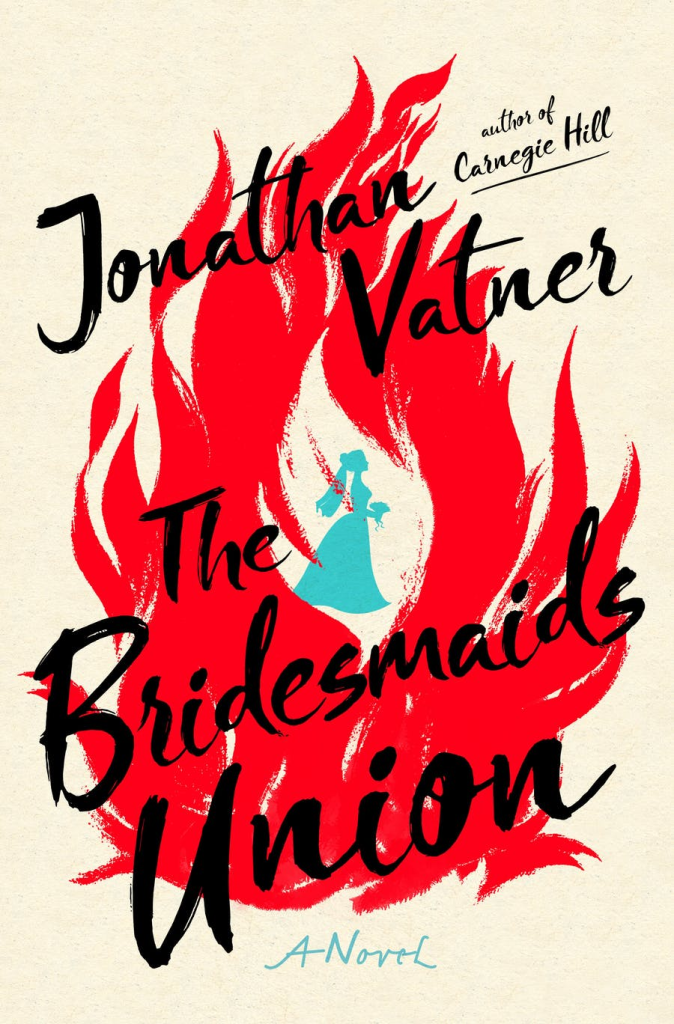
In the past few years, as I’ve been working on my own book about technology, I’ve been reading books about technology—critiques of Silicon Valley, of internet culture—and wondering: where are all the people of color? Sure, Silicon Valley is known as the home of the tech bro—a white man, probably wearing a Patagonia jacket and a pair of Allbirds. But still. People all around the globe, of all races, use the internet every day, use social media every day—where are these stories about technology?
I was thinking about other questions, too: What is the experience of a woman of color in a world of tech bros? How does the algorithm try to standardize us as people—to suggest that there’s one way to be? How does it feel to be a person who doesn’t fit into the algorithm?
These are some of the questions I grappled with in writing my debut novel, Happy for You, which follows half-Japanese half-Jewish Evelyn Kominsky Kumamoto as she leaves a PhD program in philosophy to join the third-most-popular internet company, where her team is developing an app that objectively measures user happiness. Even as she tries to convince herself that the project is worthwhile—that she is doing good—she confronts the limitations of technology in understanding the nuances of race and cultural context, and, more generally, the algorithm’s general push to make all of us conform to a single standard of success and of happiness.
For this reading list, I wanted to include books that center people of color in stories about contemporary technology, as well as books that center people of color in considering how the way we relate to technology could be different in the future.I’ve also included two books of poetry that I’ve found deeply impactful, works that defamiliarize our contemporary technologies, using programming code and Google Translate to new and surprising linguistic ends. Spanning past, present, and future, these books prompt us to consider the ways technology perpetuates racial biases and injustices—and how we might liberate ourselves from its insidious control.
Edge Case is narrated by Edwina, the sole female employee at a AInstein, a New York City startup that is developing a joke-telling robot. She is also an immigrant from Malaysia with a work visa that will soon expire. When the novel opens, Edwina’s husband—also a Malaysian immigrant, also working in tech, and also on a work visa (that is similarly about to expire)—has gone missing, and the novel follows Edwina as she tries to track her husband down and cope with the possible dissolution of their marriage while simultaneously trying to figure out how to get a green card before she has to either move back to Malaysia or remain, undocumented, in the United States.
This funny, deeply-thoughtful novel is narrated by Alexandra, a 25-year-old Chinese American writer who —at the novel’s start—works as a reporter for a prestigious tech publication in San Francisco. As she grapples with her relationship with her white boyfriend, J., she simultaneously grapples with her predominantly white newsroom and reporting on the predominantly white companies of Silicon Valley. The novel’s fragmentary narrative covers microagressions at the workplace, pay disparities, interracial relationships, and histories of anti-Asian discrimination, forming a kind of collage of thought that is always grounded in the narrator’s specific longing to find her place in the world.
This collection of poems expresses what it feels like to be an Asian American woman—to be objectified, to be fetishized—both in real life and in the virtual world. Choi writes about technology and incorporates technology itself into her poetry as a formal device; in “The Cyborg Wants to Make Sure She Heard You Right,” for example, she runs a series of tweets that were directed at her through Google Translate, showing the startling persistence of Orientalizing language even as it moves through multiple rounds of translation. Another poem inhabits the voiceless android Kyoko from Ex Machina, writing back to the film’s techno-Orientalized vision of the future and insisting on an Asian woman’s right to speak and to be heard.
In Travesty Generator, Bertram uses computer code and programming to create poetry that responds to the hidden racial biases of coding, algorithms, and digital technology and to offer new narratives for the relationship between Black lives and technology. As Bertram writes in the afterword:
“I use codes and algorithms in an attempt [to] create work that reconfigures and challenges oppressive narratives for Black people and to imagine new ones.”
Bertram uses Python, JavaScript, and Perl to produce poems about anti-Black violence, Harriet Tubman, codeswitching, and being a person of color in a zombie apocalypse. The book interrogates the relationship between race, technology, and narrative, producing iterative permutations that are sometimes beautiful, sometimes shocking, and always haunting and alive.
Originally published by Tor in 1992, this cult science fiction novel was reissued by Strange Particle Press in 2016. It’s 2045, and the journalist Xólotl Zapata is living in Tenochtitlán, formerly known as Mexico City. The U.S. is in decline while Africa and Latin America are ascendant centers of technology. The story follows Xólotl after he is infected with a highly-contagious virus that can download beliefs into the human brain; it can instill any kind of beliefs, but in Xólotl’s case, it has made him into a carrier for converting everyone he meets to the Aztec religion. Antic and fast-moving, filled with Spanish, Spanglish, and Nahuatl, the novel upends the typical U.S.-focus of science fiction and technology-driven narratives, offering a vision of a decolonized technological future.
Built on an epic scale, The Old Drift weaves together the stories of three Zambian families (Black, white, and Brown), spanning the course of more than a century (1903 to the near future) and mingling multiple genres (historical fiction, surrealism, fantasy, science fiction). The final section considers an array of technologies, both real and speculative: nanorobots and microdrones, gene-editing and CRISPR, and devices called Digit-All Beads that are implanted in users’ hands and work similarly to smartphones (with similar problems of surveillance). Serpell traces the connection between past colonialism and present-day government control, looking toward a future when technology no longer forces people to submit, but allows them to revolt.
Moving between 19th-century China and the near-future Pacific Northwest, Salt Fish Girl centers on two female characters: Nu Wa, who escapes her Chinese village after an arranged marriage goes awry, and the teenage Miranda, who lives in the corporate-controlled city of Serendipity on the coast of what used to be Canada in 2044. Dissolving the borders between myth and science fiction, Lai creates a mash-up of genetically-engineered beings, shape-shifting, creation stories, reincarnation, virtual reality, and a mysterious sickness called the Dreaming Disease, whose sufferers ultimately voluntarily walk into the sea and drown themselves. Like Serpell, Lai draws a connection between past and future, destabilizing the primacy of Western science and technology. The book is not an easy read; rather, it is poetic, mystical, and sometimes confounding, a kind of fever dream of the body, feminism, and queer intimacy. Its narrative chaos and sensory overwhelm are part of its beauty.
In the Womb I Leave Graffiti for My Younger Brother
You, lithe swimmer with feet you will use
like hands, meet me here—read what I write
on the wall of mum’s uterus the way later we
will cobalt blue spray the field to mark where
to hit, throw, catch whatever it is we try to hold—
baseball, whiffle, bug clot or frog race—here it is
dark and I have been here before you, so allow me
to give you something: she will not
ever be yours. You will break
the waves looking, breathing into the space
left by airplane, foot, abrupt hang up, memory fissures
but for now this room, cozy fluid den
of safety—see what I left behind? Words in their infancy
a blueprint we will not find until this decade but
we found it, brother! Think of it: both of us swimming
in blankness so dark no lighthouse/flashlight/torch/bonfire
can get through and yet here we are, grown and reading
and here, too, is my hand. I beg you, take it. In
the deep I will hold yours.
Sometimes I Apologize to My Children
and sometimes I break open
the pomegranate of my chest
holding each membranous seed
inside while I consider my children
and the ocean of heartache potentially
lapping at them in the future made even
colder despite global warming’s ruin
because they don’t know specifics—death
sure maybe they get that but what about loving
someone who doesn’t love you back or
hurts you or about slack misery jobs or finding
chains across your front door because of bills
unpaid and, too, the sad bright crocuses blooming
in front of that stoop, what about the getting
pregnant at the worst time or being unable
at the best? What about plain old human cruelty
boxed up in elementary construction paper
cutting or the adult-sized lunch tables from which
one might still be excluded and just what can I say
about the underground tracks of desires unmet
crossing lines with well, that’s just the way it is—
and to think I wanted to ring the bell of joy
have it sound out to each of my grown babies so
I am sorry for the splitting open of my chest and
sorrier still for the mess my seepage and the world
slops on you but still, I told you about the crocuses—
bright purple and yellow, green so alive it sews you up—
I told you that, too, right?
Returning to England after two weeks in Nigeria back in 2019, I found myself marveling at how green the grass on the side of the motorway was. The thing I love about coming home from anywhere, is the moment where you can look at everything with a fresh, often rose-tinted, perspective. Maybe it’s partly “absence makes the heart grow fonder” and partly the fact that distance allows us to drink in the details we would ordinarily overlook, but for a brief time, the familiar suddenly becomes novel.
In literature, homecomings are great because the reader begins on the same page as the narrator or protagonist, walking into the party together, so to speak. A well-written homecoming scene immediately situates a character and reveals a lot about their relationships to the place and people around them. We all come from somewhere, and our connection to that place—or the conspicuous lack of one—can quickly and succinctly, say a lot.
My debut novel, Hope and Glory, starts with a homecoming. Glory has been in Los Angeles where she’s been having the time of her life, if you believe her Instagram feed. When her father suddenly dies, she returns to her hometown of Peckham, South London, where she finds her family in complete disarray. Her brother is in prison, her once-ambitious sister is stuck in a problematic marriage, and her mother is very close to mental breakdown. Her return home is not the triumphant victory lap she once imagined it would be, but it is the beginning of her journey to reconnect with her family and herself.
Another thing that I love about homecomings in literature is that they work across multiple levels. Of course there is the physical return to a place, but it could also be revisiting something on an emotional or psychic level, reconnecting with old friends and enemies, or a re-exploration of the inner self. In my humble opinion, the best homecoming stories are mix of all of the above, and below you’ll find a list of some of my favorites.
Memphis is a lush novel that follows three generations of a Black Southern family through tragedy, the civil rights era, loss, estrangement, and reunion. It is a celebration of the bond of women, the resilience of family and the musicality and life of the city of Memphis itself. Tara’s prose is so rich I could almost feel the heat and smell the honeysuckle.
It starts with ten-year-old Joan, her mother and her younger sister returning to the house her grandfather built, escaping their Marine father and a violent home. In Tennessee, they build new lives, chase old dreams and navigate past traumas. Stringfellow writes a coming-of-age story that is filled with love and hope, as much as it challenges the darker side of humanity, and in particular, the harms that men enact on the women in their lives.
26a is the debut novel of Diana Evans, the author of the critically-acclaimed Ordinary People. It is a layered story that is all at once tragic, warm, humorous and dark.
It begins in the attic room of a residential home in Neasden, North London, where twin sisters Georgia and Bessi weave a fantasy world around themselves. They share their home with older sister Bel, younger sister Kemy, their homesick Nigerian mother and emotionally unavailable English father. The narrative moves to Nigeria, where their mother experiences a long-delayed homecoming of her own, but where her children are introduced to various terrors that will haunt them when they return to England. 26a is the story of a family that is as beautiful as it is heartbreaking.
The title of the novel is a Twi word, which literally translates to “go back and get.” It is also the name of an Adinkra symbol, which is used to represent philosophical ideas by the Akan ethnic group, who are primarily found in Ghana and Côte d’Ivoire. Sankofa is a fitting title for a novel that follows a middle-aged woman as she returns to a “home” she has never known, in order to “go back and get” an understanding of who she is at a point in her life where all that she has known is fast falling away.
When we meet Anna, she has separated from her husband, her only daughter is an adult who needs her less and less, and her mother has just died. When Anna finds her father’s diary amongst her mother’s possessions, she sets off on a journey to find out more about a man she never knew who left her mother before she was even born. This journey takes her to Bamana, a fictionalized West African country, where she discovers uncomfortable truths about her father and his legacy, but also has the opportunity to connect with a side of her heritage that has been obscured for most of her life.
Charmaine Wilkerson’s bestselling debut novel begins with estranged siblings, Benny and Byron, forced to reunite at the request of their late mother. They return to the house they grew up in to piece together the fragments of a woman they soon realize they didn’t fully know. Through a voice recording delivered by their mother’s lawyer, they unearth a family history filled with secrets and shame that casts their parents in a completely different light. Through this, Benny and Byron are also grappling with the break down of relationships—with lovers, their parents, and each other.
Black Cake is a unique story, written in fragments and multiple perspectives. It covers decades and continents, flying between a community on a Caribbean island living in quiet terror, a postwar Britain as hostile to immigrants as it is desperate for their labor and finally, modern day California. The novel is also rich in thematic significance, with motifs of the ocean and food resurfacing to provide a satisfying circularity to narrative.
The Salt Eaters starts in the middle of a healing ritual for Velma Henry, a veteran community activist who suffers a breakdown and attempts to kill herself after becoming disillusioned with her life’s work. The ceremony is overseen by Minnie Ransom, a locally famous healer who is guided through the healing by a “haint” named Old Wife, and witnessed by a variety of characters, many of whom know Velma personally.
This novel is beautifully lyrical and experimental in style, written from numerous points of view, including chapters that feature long dialogues between Minnie and her spirit guide, Old Wife. The politics of 1960s and ’70s feminist, anti-war and civil rights movements are apparent in the narrative, without being overbearing or preachy in tone. Ultimately the book is as much about collective healing as it is about Velma finding her way back to herself.
Noo Saro-Wiwa is a travel writer and the daughter of famed Nigerian writer and activist Ken Saro-Wiwa. After her father was murdered by Nigeria’s military regime in the ’90s, she stayed away from Nigeria for many years, finally returning as an adult to make sense of the country her father loved and died for.
In Looking for Transwonderland,there is a different sort of homecoming. There is little sentimentality but a clear-eyed look at a country whose greatness has arguably been squandered due to persistent poor governance. Still, it is revealed to be a country that is as beautiful as it is maddening—something that Nigerian nationals, both home and abroad, will readily agree with. So much of modern Nigerian myth revolves around Lagos, the sprawling mega city that is home to The Giant of Africa’s creative industries. But this travelogue reveals the breadth and diversity of a nation in the way only a Nigerian returning from exile can.
While it goes without saying that Toni Morrison was a writer of singular talent and significance, I feel like her second novel often flies under the radar when it comes to evaluations of her work. Sula, for me, is as much a portrait of town and a people, as it is about the titular protagonist and the evolution of her relationship with Nel, her best friend.
Sula and Nel grow up in Bottom, a fictional town up in the hills of Ohio. They both have strained relationships with their mothers; Nel secretly despises her prim and proper mother, while Sula nurses growing contempt her care-free, openly promiscuous one. A secret tragedy that they witness binds the girls even closer together, but as they get older, Nel decides to stay in Bottom, falling willingly into the role of wife and mother, while Sula leaves the town, travelling, attending college and living a life as care-free abroad as her mother did at home. When Sula returns, her presence sends ripples through the town, which will ultimately test her friendship with Nel the most.
Before starting a job as a radio copywriter, where I frequently wrote ads for strip clubs and sex shops, I worked the counter at a small bakery near a college campus. Many customers were professors who made small talk while I sliced their olive loaves. On occasion – not daily, but enough to see a theme – they would point out that my job, to serve them, was beneath the standards of respectable work. “Where did you go to college? And why are you working here?” one woman asked me after we discussed the books we were reading.
The bakery owner had offered me a job when she noticed my daily purchases getting cheaper and suspected, correctly, that I was running out of cash. The city was a place I had moved to in order to support someone else’s ambition. There I found myself friendless, jobless, and unmoored. Visiting the bakery was a bright spot in my daily routine and I was happy to work with the interesting, creative people who owned it.
Later, some millionaires wrecked my car. One afternoon, I found it had been totaled where I had left it parked near the small one-bedroom apartment where I lived with my wonderful cat and my terrible boyfriend. While I inspected the damage, a passerby told me that the couple who lived across the road had smashed into it and left without leaving a note. They were surgeons, the passerby told me before leading his dachshund away. When I knocked on their door, Mrs. Surgeon frowned at the inconvenience of my visit and remarked that I would probably be happy to take the insurance money and upgrade my twenty-year-old Honda. When the windfall—a couple hundred bucks—arrived, I used it on rent.
Not long after the car wreck, I applied for corporate advertising jobs. I was tired of the constant remarks about my job, the lack of respect I was afforded as a service worker, and even more importantly, I was tired of being broke.
The job interview was a writing test: I was put in a room with a client brief and a laptop. The brief may have been for shirts or for air conditioners: just a basic ad mentioning the client’s business, the type of product for sale, and the street address and phone number of the business. In a few minutes, I opened the door and told them I was done. They called back the next day to offer me the job of junior copywriter, starting at $18,000 per year, reporting to the sales manager.
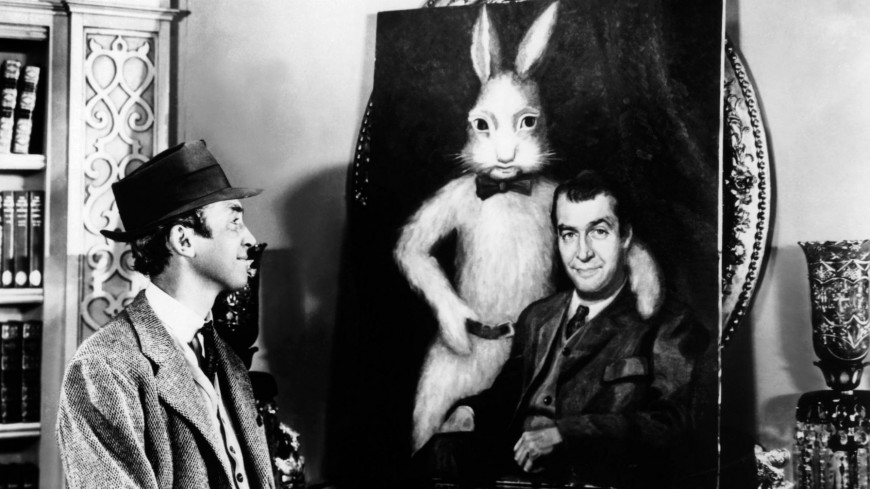
Each day, I sat in a gray cubicle next to a part-time country DJ who told me about the Vietnamese food he had once eaten in Seattle. I reviewed the briefs that landed in my inbox and typed up scripts. Five stations transmitted from antennas on top of the art deco skyscraper, which sat above an enormous lake. The clients who bought ads were local bars and clubs with themed music nights, gas marts on the nearby Indian reservation, and restaurants with discount game day menus when the local football team played.
The ads for sex shops and strip clubs aired on the station that played a “shock jock” program during morning drive time. Client briefs for touring strippers sometimes included photos, but often were a list of bullet points detailing the woman’s achievements in the previous few years: Miss Nude Miami. Miss Redhead Oklahoma. Miss Topless Atlantic City (Runner-Up). Some ads followed a template that made the job more like transcription than writing. Name the stripper, list a few titles, then mention the dates of her local performances, the venue and its address. And mention the wings. Every strip club sold chicken wings, and each club’s wings were—according to the club itself, which I dutifully repeated—famously the best in town. On a given week, I wrote anywhere from two to eight ads for touring strippers.
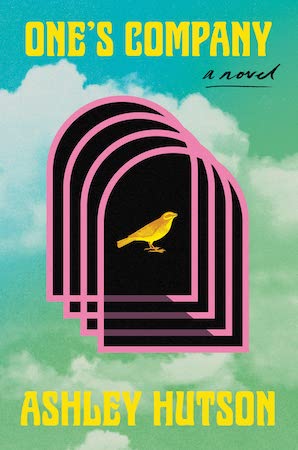
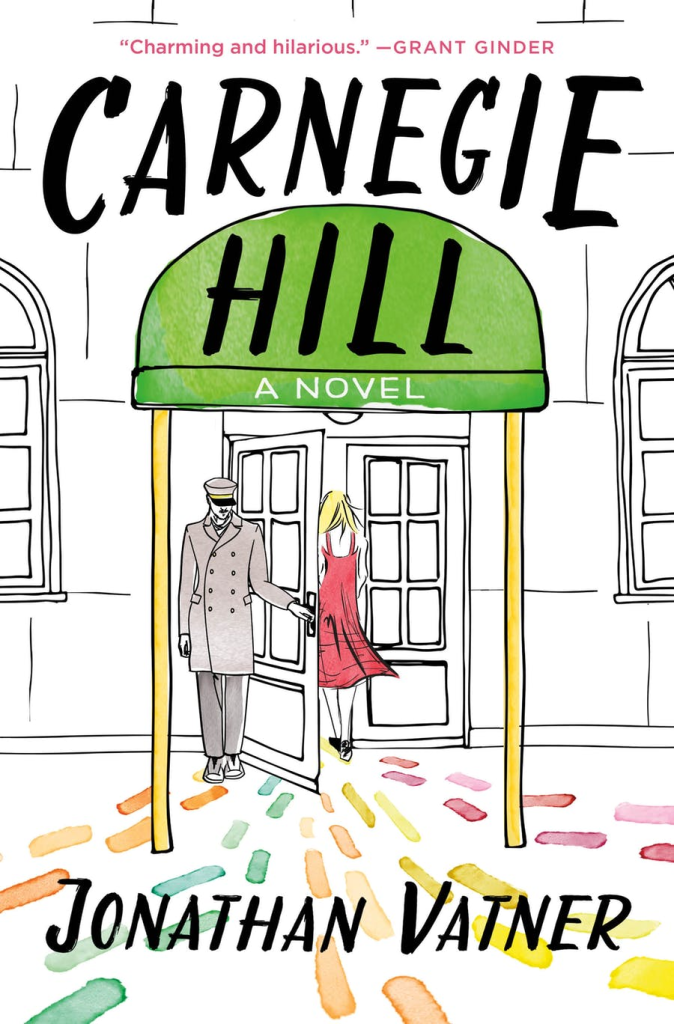
The job – both the impetus for applying, and the work itself – played into the writing of my debut novel.
Sex shop ads were looser and weirder. Often, the client would have an idea for how to frame the advertisement; for example, two friends chatting by the side of the pool and deciding to reroute the day’s events toward the dildo aisle. At no point in my position did I argue for creativity, realism, or even novelty: if Forbidden Fantasies wanted “Jessica” and “Katie” to pour a couple of white wines by the pool and then, out of the blue, agree that the best use of the afternoon would be to purchase latex outfits before the return of their husbands (who were, presumably, watching Miss Topless Atlantic City, runner-up, while eating the city’s best wings), who was I to argue?
While I was writing these ads, the job seemed like a blip on my resume that wasn’t as interesting as the trajectories of my friends who were studying in graduate writing programs or editing fiction. Now, though, I see how the job – both the impetus for applying, and the work itself – played into the writing of my debut novel, Housebreaking, which is about a working-class young woman who does something profoundly stupid, and then keeps doing it past the point of reason.
Let’s say you don’t want to earn $18,000 a year writing about Miss Redhead Oklahoma just so that you can turn out a debut novel more than a decade later. No worries: I’ll tell you what I learned.
Bringing My Worst Self to Work
Once I sat in the audience while a writer I admired said that the best writing ought to reflect the qualities and personality of the writer herself. He went on to praise a writer friend whose kindness and generosity bubbled up on the pages of her short stories. Well, I thought, slumping in my seat. There goes my novel-writing career. I knew then, as I know now, how shitty my personality actually is. I’m impatient, quick to judge, and have a remarkable ability to imagine the most catastrophic outcome of any action. As if that list weren’t long enough, beneath my smile you’ll find an underlying class resentment that would prompt the Titanic’s iceberg to float out of the way in deference.
The summer before I started sixth grade, my family was homeless for several months. During that period, we remained in my hometown, living in a kind of shadow society: my mother drove us to a different bus stop so that we didn’t board at the homeless shelter and we shopped at a different grocery store where there were no familiar witnesses to see us paying with food stamps. I didn’t tell my friends what was happening, and no one asked. I felt judged, secretive, and angry. In the cell of my brain that ought to remember to pick up eczema cream at the pharmacy, there is instead a filmstrip, on permanent loop, playing the time my high school friend’s mother called my family trash. (Fuck you, Janet.)
While for too long I shunned the idea of exploring my anger and resentment in fiction, I enjoyed the benefits of surreptitiously airing my grievances on the radio. The surgeons’ first names appeared in multiple ads: a raft of toys from the autumn sale at Sinful Sensationz might bolster Mr. Surgeon’s underperforming dick, while at dollar wing night Mrs. Surgeon’s children praised the heavens that they skipped out on another miserable, silent family dinner at home.
I shunned the idea of exploring my anger and resentment in fiction, but I enjoyed surreptitiously airing my grievances on the radio.
The advice to reflect yourself in your writing sounds a lot like the corporate maxim to “bring your whole self to work”—and in fiction, I didn’t want to. I wanted to bring the appealing parts, the traits I would have trotted out in an introductory meeting with a new boyfriend’s parents. Writing my novel though, I couldn’t help the bad parts bubbling up. My protagonist, Adela, isn’t a stand-in for me: she’s more of a loner, more stubborn, and less conventional. Her family situation is nothing like mine. But the themes of my book, the black hole at the center of her adolescence and the social failure that spins out from it, are subjects that she and I could talk about if we met for coffee (after which she’d pick my pocket while I paid the bill).
With the novel, I had a chance for context – a benefit of length, really – and a level of maturity I didn’t have as a young copywriter. My novel isn’t a burn book, nor would I want it to be. My feelings about my own childhood are more complex and nuanced than they were when I was an adolescent, and that hopefully translates when imagining my protagonist and her choices. Nevertheless, anger follows the laws of matter: it hasn’t disappeared or been destroyed, it is only rearranged. (Still, forever, fuck you, Janet.)
Cutting Out the Fat
In my undergraduate writing workshop a couple years before my radio gig, I was a perfectionist who labored over every metaphor. Zombie drafts continued to rise from the grave years later, commas spirited away, adverbs defenestrated. But there just wasn’t time for that kind of attention when I might write twenty ads in a day.
I was precious about my own writing in a way that did not matter to my audience.
The nature of a radio ad relies on brevity and compression. “Scene building” – insofar as it exists – might only be a simple sound effect laid over the background. Ads might only be fifteen seconds, especially around the election cycle when the cost quadrupled as candidates fought over airtime, and yet client briefs were never actually very brief. When client instructions were Foster Wallace, I turned out ads that were Forster: direct, simple, logical. With fiction, I had to realize that I was precious about my own writing in a way that did not matter to my audience. The information – the story – mattered. Characters mattered. The style mattered to me, and should matter, but the way I used to write, taking years to develop a paragraph while arguing with myself over each word, would have precluded me from ever writing a novel at all.
This wasn’t a decision not to care about sentence-level writing. Rather, I learned to accept the audience’s reaction to my work while being less emotionally attached to it, and to ensure that I did pay attention to those aspects that were critical to my reader but were perhaps less interesting to me. When, later, I turned the opening of my novel over to a trusted reader and she told me that it was meandering and unnecessary, I lopped it off and moved on, because she was right.
The Lady and Her Ego
Imperfection and a sense of humility underpinned my job, which I knew to be ridiculous. While I took myself extremely seriously as a fiction writer who produced little and published nothing, I was all too eager to play up the silliness of copywriting, in which I was paid to produce work that tens of thousands of people heard and with a job title that would have earned approval from the same people who thought my bakery job beneath me.
I sent my friends tapes when I incorporated their names into spots and told them about the ridiculous characters at the station, like the DJ who wore a ten-gallon hat and loved to talk about #ranchlife yet was a born-and-bred suburbanite who had never been within a thousand miles of a cowboy.
I wrote my debut when I was 39, and regularly thank the gods that I didn’t get a publishing contract in my early 20s.
The radio job also made clear that there were both necessary and unnecessary audiences. In my position, the salesperson and the client were necessary. If they weren’t happy, I had to do the spot again. Others, like the DJs or production team, were the equivalent of Goodreads or the guy in your workshop who has always hated your work: operating in the background, always opining, yet best blocked from notice.
I wrote my debut when I was thirty-nine, and regularly thank the gods that I didn’t get a publishing contract in my early twenties because I would have been insufferable. The stupidity of the radio job and seeing the disconnect between the regard that it earned balanced against what I actually did on a day-to-day basis helps me to see public validation for the trap that it is, although it’s a trap I still fall into from time to time.
Being published was very different from my expectations. The glory of signing a contract fades too easily as books are sorted out into the “most anticipated” and … everyone else. The everyone else pile is enormous. And even having a massive hit might not provide the kind of validation that I would have expected, or desired, as a young writer.
A couple months ago, I spoke to a friend who has had every type of external approval that I thought a writer could want: money, awards, famous friends, a permanent place in the public sphere. Despite all those things, it can still feel like not enough, even for people like him. Success, he told me, must be measured between the book and the reader. Whatever else you seek from the outside world inevitably feels cheap.
At the time I write this, my debut hasn’t been published yet, and I expect that it will be a modest seller. Who knows how many people will read my novel, but it will pale in comparison to the hundreds of thousands who heard my radio ads, which were neither artful nor important.
And yet.
And yet a month after I left my radio job, every trace of me had been recorded over. Who knows what will happen to my book, but I would like to imagine that whatever libraries look like in 2040, my book might be in one of them.
When I think about writing my book—with speed, with purpose, and with a sense of humor and humility about the whole enterprise—I’m taken back to that gray cubicle in the skyscraper above the enormous, frozen lake, with a brief to write a thirty-second conversation between Jessica and Katie about their unusual plans for the afternoon ahead.
A few years ago, during the initial craze of 23andMe, I received a gleeful call from my Turkish mother who had just taken the test. We have Serbian, Bulgarian, and Italian blood! Considering her deep familial ties to the Ottoman Empire, I didn’t find this particularly surprising. Rather it was her enthusiasm at the now proven connectivity to these other lands that piqued my interest. The results of this test opened up a new world of curiosity for her as she began to draw parallels between her habits and her newfound cultural roots. Everything now had a reasoning that could be traced back to an ancestor—diet, skin complexion, mannerisms, creative leanings.
But what if she were able to trace the particular family member from each country? What if she could learn about the serendipitous moments that triggered each individual to cross paths with the other and bring her into existence? How would the knowledge of their stories impact the course of her life?
In her debut novel, An Unlasting Home, Mai Al-Nakib takes us on this very journey. Through the culturally rich stories of four female characters—Lulwa, Yasmine, Noura, Maria—we venture across the globe from Kuwait to Turkey to India to America, as their tales knit together to create the fifth character and protagonist, Sara. A professor of philosophy at the University of Kuwait, Sara finds herself on trial for blasphemy after an ultra-conservative law is passed, making the act a penal offense. As Sara awaits the results of her conviction, she reckons with the stories of these four women and must now decide what her story will be.
Despite the 6,317 miles between New York and Kuwait, I sat down with Al-Nakib over Zoom. Our respective bookshelves heaving with multicolored books in the background, we spoke in depth about the Middle Eastern melting pot and finding empowerment in not belonging.
Amy Omar: Your novel is such a refreshing and eye-opening account of just how culturally connected we, in this case the Middle East, really are. In many ways, like the countries in the Middle East, Kuwait is a confluence of many different cultures, being the crossroads of trade and political turnover. There are many touching moments of ethnically different groups living in peace amongst one another. Do you think this has helped foster more of an openness to other cultures? How did this amalgamation affect your upbringing and how is this different today?
MAN: The novel attempts to capture the sense of movement and migration that has always existed in Kuwait. As a port town, pre-oil, because of maritime and overland trade, Kuwait was a crossing point, linking the Arabian Peninsula, India, Africa, Iraq, and Iran. This intersection of cultures could be experienced in the language, music, food, and, of course, the people themselves. All this encouraged an openness to other cultures, a worldliness and acceptance of difference. This sensibility lasted into the post-oil period, I would say up until the 1980s, when I came of age. After the invasion, however, Kuwait turned inward, developing a more defensive, siege mentality. This is understandable as a response to the invasion, but because as a nation we haven’t fully metabolized the trauma of the invasion or its outcomes, it has had some negative effects. An Unlasting Home attempts to deal with this through Noura’s complicated relationship with Kuwait, as well as Sara’s.
Kuwait is now going through a hyper-nationalist, borderline xenophobic moment in its attitude and policies toward migrant workers and non-Kuwaiti residents.
Kuwait is now going through a hyper-nationalist, borderline xenophobic moment in its attitude and policies toward migrant workers and non-Kuwaiti residents. The unresolved issue of the stateless bidoun population—long-standing members of Kuwaiti society who continue unfairly to be denied citizenship—is simply untenable. This all has to do with both a sense of entitlement amongst the population and their fear that by sharing rights or awarding citizenship to others, they will lose their own privileges. In my opinion, this attitude poses an existential threat to the very survival of the country. This may sound apocalyptic, but these types of social fissures tend not to end well for nation-states. Combined with our lack of concern over environmental degradation and our lack of preparedness for a post-oil economy, the future doesn’t look bright. I think all of this is reflected in the novel.
AO: On the topic of migrant workers, I’m really intrigued by Maria’s storyline. Maria sacrifices her family in India and moves to Kuwait and then to America to raise Sara and Karim while their mother, Noura works. Historically, the narrative of the caretakers has been greatly overlooked. Why was it important to tell Maria’s story alongside Sara’s other female ancestors? How does her backstory shed light on the other stories?
MAN: The stories of relationships that develop between domestic helpers and the children they care for is underrepresented in Kuwait and elsewhere too, and I felt this was an important story to tell. Maria leaves her own children behind in India to care for the children of strangers in Kuwait. She does this to ensure the survival of her children, but over time, these other children, Karim and Sara, become her children, too. Maria becomes the emotional center of Karim and Sara’s lives, filling in the gaps left by their parents.
Because Maria is a second mother to Sara, she plays as significant a role as the other women in Sara’s life. In aligning her story with the stories of the other women, it becomes clear how, as women, as mothers, they share many of the same obstacles and aspirations. It doesn’t matter where they are from—whether Turkey, Lebanon, India, Iraq, Kuwait—these women want similar things: better lives for their children and for themselves.
AO: I’d like to talk about the men in your novel. You have these characters like Dr. Sherif and Mubarak who are examples of this type of man who we don’t really talk about. They are the type of men who aren’t outwardly advocating for women’s rights, but in subtle ways, really support the women in their lives. It was really refreshing to see a non-stereotypical Middle Eastern narrative of a father figure who, for example, didn’t disallow their daughters to study or work.
MAN: It mattered to me to convey these examples of supportive fathers, brothers, even unrelated men like Dr. Sherif, who believes so much in Yasmine’s talent and wants her to succeed as a writer. It’s too easy to portray men, especially men from the Middle East, in the stereotypical, Orientalist way you mention; but the reality is so much more complex and interesting.
What holds these women back is less one individual man and more an overarching patriarchal force that structures their lives, limits their decisions, shapes their choices.
What holds these women back is less one individual man and more an overarching patriarchal force that structures their lives, limits their decisions, shapes their choices. For example, while Yasmine’s husband, Marwan, comes closest to the overbearing, sexist husband type, it is in fact the patriarchal system that enables him to control her property, to marry a second wife, to prevent her from working—in short, to keep her under his power. But Yasmine was raised by an open-minded father and she had the support of her father’s friend, Dr. Sherif; so not all the men in her life followed that oppressive pattern.
For Noura, also raised by a supportive and loving father, the social and cultural expectation is that she should follow her husband back to Kuwait. This prevents her from fulfilling her ambition of going into politics in the United States. The choice for Noura is either to divorce her husband, who she loves, or to submit to his decision for the family. And yet Tarek seems so completely oblivious of his own privilege to decide on her behalf; he takes it for granted. It’s these patriarchal forces that bind these women, regardless of the support some of the men in their lives may provide.
AO: The idea of a homeland identity has always been fascinating to me; often we end up attaching ourselves to a homeland different from the one of our birth. I was particularly interested in Noura’s detachment from Kuwait and Sara’s attachment to it. Noura clearly saw the lack of opportunities for women in Kuwait, but Sara is still hopeful. Why does she return to Kuwait?
MAN: In many ways Noura grew up in a much more hopeful Kuwait, so it’s unexpected that she would be the one to want to leave in the early 1970s, when the promise of its future was still viable and exciting. But it was her political acumen that enabled her to perceive the cracks before anyone else. Sara grows up feeling out of place in Kuwait. She wants to be American. Maybe she picks up on some of her mother’s sense of loss; and it’s her mother who decides to enroll her and Karim in an American school [in Kuwait] once they return from the United States, which alienates her from her country even further.
But once Sara moves back to America and achieves everything she thinks she wants—a great job, a nice boyfriend—it turns out not to be enough. Unlike her brother, Karim, she doesn’t feel at home there. Karim always knew, as a gay boy, that Kuwait could never be a home for him. He leaves with no regrets, no looking back. That is, I think, a privilege afforded to him as a man. He has the freedom to sever ties in a way Sara cannot. Sara isn’t forced to return, but she has subconsciously internalized the experiences of her grandmothers, her mother, and Maria, and, through them, is drawn back. She senses that it is only in Kuwait that she can piece together the puzzle of these generations of women and the effects they have had on her.
AO: One of the central themes of An Unlasting Home is lack of permanence—in the physical home, politics, relationships. For better or worse, the lack of stability forces the characters to stay on their toes. Do you think this awareness of the lack of stability actually drives the characters, by not allowing them to “settle down”?
MAN: That’s really well put. In some cases, they have to move for reasons beyond their control—to follow husbands, to escape poverty, and so on. Sometimes the move is chosen, even if circumstances force the choice—as is true for Yasmine and Maria. But for all of them, I think, a sense of being in place or of belonging is elusive. There are times or places where they seem to almost belong—Lulwa in Pune, Noura in St. Louis—but that inevitably gets disrupted. And then there are instances where they force themselves to stay put in the space of non-belonging, and it seems almost perverse, but there is something that discomfort provides to them. This is true of Sheikha, staying with her brutal husband; and of Lulwa, allowing herself to be held captive for seven years by her mother, Sheikha; and of Noura, staying put in Kuwait long after she could have gone.
There is a degree of empowerment in not belonging; it allows you to pivot and to create possibilities for yourself that are often fruitful.
There is a degree of empowerment in not belonging; it allows you to pivot and to create possibilities for yourself that are often fruitful. This is the case for Maria, moving herself from Goa to Pune and then to Kuwait, making a life for her children that would not have been possible without her capacity to tolerate non-belonging. Sara ultimately comes to this understanding of non-belonging as well. In some ways, all of the women who shaped her have made it possible for her, finally, to let go of this place that was never completely hers anyway. Sara carries her home with her in the form of the stories that she manages to rescue from oblivion and make her own. It’s only at that point that she can let go and move on.
AO: Growing up, you spent a lot of time in America. In a way you had the best of both worlds—summers in the U.S. and the rest of the year in Kuwait. Do you feel like your time in America impacted how you view the world, your career, and self in a way that would’ve been different if you had just grown up in Kuwait?
MAN: Very much so. I lived in America until I was about six, and, like Sara, it really did affect how I saw myself. My first language was English; I didn’t learn Arabic until I returned to Kuwait. We didn’t speak Arabic at home, so I learned it at school, in the one class dedicated to it. My parents spoke Arabic with each other, but English with my sisters and me. My mother grew up in India, and her first language was English, too. So, when the question of a “mother tongue” comes up, my mother’s and my own was English, not Arabic.
I attended the American School of Kuwait, which was a little American bubble in the desert. My mother really wanted her daughters to be educated in the American system, which she believed in. She wasn’t hung up on the language issue. She figured we would absorb Arabic, which we did. But all that did create a sense in me of being an outsider in Kuwait. In some ways, it’s similar to the experience of an Arab American kid growing up in the U.S. with immigrant parents, but with a twist. For the Arab American kid, the culture at school and outside the home is American and the majority language is English; but at home, the parents might be holding on to the language and culture of origin, not wanting the kids to assimilate too readily. The kids, however, tend toward that majority (though there are, of course, exceptions, and this is not to say the majority automatically welcomes them in). For me in Kuwait, the culture and language outside both home and school was different than my own. It was a majority I did not tend toward. This could be confusing at times, but it didn’t bother me much because I was in that safe bubble. In fact, I appreciated the difference, and for me now, as a writer, I appreciate it even more because I find value in that outsider position. It’s what Edward Said would call contrapuntal—it affords you a double perspective that provides overlooked insights. I appreciate being between two worlds, two languages.
AO: In what ways did you feel different than your peers in Kuwait?
In Kuwait, we tend to swing between extreme conservatism and moderate openness.
MAN: When I was a teenager, I wanted so much more freedom, a wild freedom, and I couldn’t understand the limits. To be honest, I don’t think I’ve changed that much! The things that bothered me when I was 14 still bother me now. I still have issues with many of our so-called customs and traditions, especially when they’re used to legitimate hypocrisy or injustice.
AO: I have to ask, how much of Sara’s blasphemy trial is your attempt at rewriting history, a history that could have been your personal story if an amendment to Article 111 of the Penal Code had been passed? Did it ever cross your mind that, “This could have been me”?
MAN: Yes, and in fact, when I was a few years into writing this novel, it actually happened to a colleague in the philosophy department! She was accused of blasphemy. It wasn’t a capital crime, but it was still an offense she could have been fined or imprisoned for. The case was dismissed, but it took a few months, and that level of stress is terrible.
In Kuwait, we tend to swing between extreme conservatism and moderate openness. After 2013, Kuwait seemed less conservative than it had been. This may have had to do with the residual effects of the Arab Spring, or maybe the shock of the amendment to the blasphemy law that almost passed. In any case, there was a shift away from the conservatism that had dominated since the 1990s. Now it seems like we’re swinging back again toward conservatism, and there have been several recent incidents targeting women specifically. That said, women have become more vocal than ever and are pushing back. Groups like Abolish 153 are fighting to overturn domestic violence laws, and we’ve had a #MeToo movement here also. It’s an uphill battle because the pressures against women remain entrenched, but it’s really heartening to see the increased advocacy.
“Inte hora,” a general tells his wife early on in Dalia Azim’s Country of Origin. You are free, in Arabic. The saying appears at first during a quarrel over politics in the intimacy of a Cairo home while, outside, revolts against Egypt’s then leader, King Farouk, combust the city. A saying echoed three decades later in the multigenerational story.
Who is free and who gets to be free, I wondered as I read the Egyptian American author’s debut novel. The married woman from Cairo’s upper crust society who answers her daughter’s inquiry about love with “I’m still waiting for that to happen”? The principled servant who watches over the daughter of the house and hardly ever gets to see her own kids? The teenager with a dozen suitors who must choose between her family’s support and the love of the only man she wants? The young, disillusioned officer who can only make something of himself if he leaves his country? Or the student who seeks an education in the U.K. only to be sent back over his place of birth?
Freedom—what it means to be free and what it takes to be free—appears to be a theme in Azim’s rich and intricately composed novel set between Egypt and the U.S. It’s found in the choice of words (passports are “liberated” from drawers where they are kept hidden) and symbols (chickens attempting to take flight from a rooftop and tumbling down).
Mostly though this is a story about origins and home. Origins as what’s marked in our identification papers, what runs in the family and what reveals itself through genes. Home, too, for Azim’s characters come in many forms. The family home that housed a former version of oneself. The address in a handwritten letter that may uncover family secrets. The space in a life found in arts. The safety of a love that needs neither explanation nor competition. “I just want to go home,” an ailing character says at one point in the novel, home then turning into an eternal haven for the soul.
Azim and I met on Zoom earlier in March. She spoke from Austin, Texas, where she lives with her family while I joined from Dubai.
Ladane Nasseri: You said in a recent talk that you started working on this book 15 years ago and initially wanted it to revolve around 9/11. What was it about the Arab American experience that you wanted to capture and how did that change?
Dalia Azim: I had wanted to write a multigenerational saga about an Egyptian family that immigrates to the U.S. in the middle of the 20th century, but because I moved to New York a month before 9/11 and that was so much a part of our experience then, I wanted something that portrayed positive sides of the Arab identity. I abandoned that after a year. It seemed falsely limited to focus on 9/11 when my initial impetus was to write an immigration story.
In the past few years since I found the right angle for the book, it became more about the characters and their experiences. The jumping off point is a woman who has little to no agency in Egypt in the ‘50s as she’s watching a revolution unfold outside her sheltered home. How she develops an awareness of what freedom means and trying to find out what freedom could mean to her.
LN: The novel starts at the time of Egypt’s struggle for independence. I saw parallels between what was happening at the nation’s level and at the characters level. We see a yearning for freedom politically but also in Hala’s efforts to emancipate herself. It’s about what it means to be free, and its limitation given Egypt’s politics and Hala’s emigration. Tell me more about choosing this time period as a setting, and the notion of freedom.
DA: The waning days of the colonial period and the emergence of independence in a country like Egypt is something that has always been very fraught and interesting to me. I had grown up hearing stories, my relatives had lived through that, my grandparents talked about joining the protests in the street and what it meant to come out of that moment.
I wanted to have a character, Hala’s father, be part of the inside, see these machinations and understand that it’s very orchestrated still. It’s not freedom across the board. For Hala as a woman whose life was being determined for her by her father mostly, it’s a personal awakening. She has a close relationship with the family’s live-in servant, and she also sees that there are all these ways people are constrained and the revolution is not going to change anything for them—whether it’s women or people from the serving class.
Khalil too is from a working-class background, and he doesn’t see himself having the future he wants in Egypt. There is a pivotal scene where he is part of a rally for (former president) Gamal Abdel Nasser. That’s something that fascinated me, the speculations on whether there was a legitimate attempt on his life then or if it was staged to create the springboard for him to make a bid to unseat the president and become president himself. I wanted that to be a turning point for Khalil—this sense of political corruption, that the composition of the government and who’s running the country has changed but it feels as controlled by a small group of people as always.
With Hassan, there are more obvious parallels of incarceration versus freedom, and he goes through a major transformation when he is incarcerated. For me, the most moving part to write was when he comes out of prison and tries to get his footing back in the world after so many years of not having anything.
LN: Did you want to write a multigenerational story as a way to record the evolution of Egypt over time and capture the breadth of the immigrant experience?
DA: That was a big part of it. I wanted to explore the multigenerational experience of leaving one’s home country and settling in a new place. The alienation and the disconnect from the sense of home was something I really wanted to get into emotionally with the writing.
Writing is an act of creative empathy.
Although I found that once the characters leave Egypt, I had to pare it down because there is a point where it becomes too didactic, inserting certain events in history just because they happened, not because they were integral to the story. There were other wars, other conflicts with Israel, turmoil within the country with transitions in leadership I ended up pointing to only when it was essential. Like the transition from Nasser to (former president) Sadat. You learn more about that through Hassan’s perspective in prison, the political ramifications of that with another round of people being incarcerated.
LN: Hala is the only character written in the first person. She has a strong personality, she takes certain decisions that are life changing, but she’s also fairly traditional when it comes to her relationship with Khalil, hiding things from him, or being wary of how much she shares with others. What were the challenges of writing her?
DA: Putting myself into the mindset of a woman who grows up in the ‘50s is in and of itself challenging. My experience is so different growing up with a lot of agency and freedom—my parents are Middle East, and they are very open minded compared to other first-generation Arab immigrants I have met.
Writing is an act of creative empathy. Writing about experiences that are so foreign to me is the biggest challenge but also the most rewarding. I wanted to portray her as a mix of confident and naïve. She has so little experience of the world when she does things that ultimately unseat her life. She does have a private education from the school system, but a lot of her education comes from movies and soap operas that she watches at home, so she has this silly, romantic aspect to her. She suffers when she leaves and is somebody who probably would have suffered had she stayed as well. She’s one of those people who’s always wondering what if and wonders if she made the right decisions. She has some impulse issues that come out and it becomes clearer as the book goes on. Hala was challenging but also core to the story. It was a way to narrate this background of the revolution and talk about women’s freedom.
LN: Middle Eastern women when they are represented in mainstream Western media and movies, are often so flat. They are usually depicted as victims with very little agency and some of that can be true at times, but I don’t feel that we see them as multi-layered human beings. I found that so satisfying about your female characters, they are multi-layered. What was most important to you as you were developing them?
DA: It bothers me when I encounter unidimensional characters in other stories. There’s always complexity in something that may come across as a negative trait, it usually has some sort of origin story and so to really flesh out what the backstory is, what is happening in the present, what makes a person a person is one of the reasons I love to write. It’s important to capture the good and the bad in order to make characters memorable, to make them as whole and complicated as possible.
LN:We witness external, political upheaval but also internal ones. Themental health aspect you introduced, and its impact on the characters’ lives brought an unexpected element to the story. It was a slow reveal and on the second read I could see hints I had not picked up at first.
The more Arab and Arab American writers we have who are writing complex stories not set around terrorism, the richer the field becomes and the more accurate it becomes in terms of describing a diverse community.
DA: It’s something that I have seen very little, if at all, in literature about the Middle East or from the Middle East. Mental health is something that many people deal with, and that we should all be talking about more.
I was drawn to the idea that what might have seemed like naive impulses could have been underpinned by mental health issues. Although the book changed form a lot the mental health narrative was there from the very start. It’s something I initially wanted to explore in a heavy-handed way as response to 9/11, but as the book got more mature and developed, I thought it would be more interesting to look at it—not in a contemporary character but further back—at a time when it would not have been diagnosed or recognized.
LN: In a 2018 article, you wrote about wanting to take your kids to Egypt to visit family and your friends wondering if that’s safe. When you are in Egypt, your relatives are concerned about the extent of gun violence in the U.S. Living in the U.S., we fail to see how the country can be perceived by non-Americans. What are some of the misconceptions you are trying to dispel as a dual citizen and someone who is able to have that dual perspective?
DA: It bothers me when people ask if it’s safe to bring your family to the Middle East. It’s as safe as anywhere. There’s always unknown, there’s the threat of violence anywhere you go. It’s hypocritical for Americans to say that and not be looking at what’s happening in our own country. Gun violence is insane in the U.S. In Egypt and other places, you cannot just get access to them.
I was born in Canada and raised in the U.S. I’ve spent a lot of time in Egypt, but I have never lived there. Although it’s getting better, in the 20 years that I have been a writer, it’s been challenging to find books that are either translated into English or written in English about the Middle East. That pool is growing. It’s becoming a richer area of literature with stories that do defy stereotypes. The negative stereotypes about Arabs are well known and that’s something I definitely want to counter through my own writing. That’s a lot to take on as an individual writer but the more Arab and Arab American writers we have who are writing complex stories not set around terrorism, the richer the field becomes and the more accurate it becomes in terms of describing a diverse community. We need to continually add more diverse narratives to the literary scene so that we ultimately have a more complex picture.
The theatre is a perennially popular setting for novelists and no wonder. The tawdry glamour and sense of spectacle make it a rich gift for any author, but it’s what happens behind the scenes that I find the most interesting. This is particularly true for those novels set on the 19th-century London stage or in the circus ring, where the gap between perception and reality is so acute. London was, and is, a city of contrasts and nowhere epitomizes this better than the theatre, one of the few public spaces where social classes could mix and risqué displays that fly in the face of today’s notions of Victorian decorum were encouraged.
My debut novelTheatre of Marvels is set in 1848 and opens in a variety theatre on the Strand in London’s West End. At that time, so-called “freak shows” were at the height of their popularity and the Victorian fascination with difference gives my mixed-race protagonist Zillah her big break. Though she was born and raised in London, Zillah portrays the role of an African warrior on stage. Each night, she fools the watching crowd with her performance and they find it fascinating and titillating in equal measure, but when another act—a vulnerable woman—goes missing in mysterious circumstances, Zillah must risk everything in order to find her.
While many theatre-set novels focus on the acts on stage, it can be helpful to think of the audience as a character in and of itself. In some ways they are a stand in for we readers, giving us a chance to reflect on our own response to the show and how it affects us. In this list of books set on the 19th-century London stage, we get the chance to peep behind the curtain.
Nan King is music hall star Kitty Butler’s number one fan. When they are introduced, she follows her to London and soon becomes part of Kitty’s daring act, as a male impersonator. Through her relationship with Kitty, Nan gets the chance to explore her sexuality. This novel, Sarah Waters’ debut, was also made into a BBC TV series. Both are unmissable.
In this alternate version of Victorian London, the circus appears only between sunset and sunrise. Magical and dreamy with beautiful descriptions, this novel is part fantasy, part romance; and it’s famous for the author having created a first draft during National Novel Writing month, which takes place every November.
The Somnambulist by Essie Fox
While Phoebe Turner watches her aunt perform on stage, her mother is part of a campaign to close down all the theaters in London. This novel, filled with secrets and dark truths, features Wilton’s Music Hall which provided entertainment for East London’s working classes in the 1850s and is still open today.
Two illusionists battle for pre-eminence on the Victorian music hall stage, taking more and more risks as their rivalry becomes increasingly bitter. This novel is beautifully atmospheric and has as much to say about the class system as it does about magic.
This second novel from the author of best-seller The Doll Factory is set in 1866, not long after the Crimean War. Nell’s birthmarks pique the interest of showman Jasper Jupiter who makes her a star in his traveling show. For the first time in her life Nell is loved and celebrated, but will there be a price to pay?
The Trial of Elizabeth Cree by Peter Ackroyd
This slim gothic novel features music hall star Dan Leno who finds himself implicated in a series of murders attributed to the fearsome “Limehouse Golem.” Published as Dan Leno and the Limehouse Golem in the U.K., this is a detective story that glories in its London setting with guest appearances from Karl Marx and writer George Gissing. In 2016, a film version was released starring Bill Nighy.
This novel is actually set in Paris, but I’ve included it as a wildcard because the musical adaptation is synonymous with London’s West End. The Phantom takes talented singer Christine as his protégé, but when she falls in love with a handsome viscount, the Phantom is consumed by jealousy.
My sister is in townand wants to meet. I pick Suite 100 for its wide selection of French varietals and its convenient location on the B55 People Mover. The People Mover pulls up late as usual. The seats are filled, the aisles blocked with crutches, broken sacks of clothing, and for the first time, a dog.
It’s a big dog, with a big craggy head resting like a boulder of teeth on the mat. How it got past the bus driver, I have no idea. The girl holding on to him is not blind but seems to have achieved a dazzling chemical distance from the rest of our fellow passengers. Despite her painful-looking dreads, she leans against the window, bewitched by the starless purple sky and the bright palaces of commerce that line Dimond Boulevard.
I sit down next to her, just to be closer to the dog. He is the mottled color of tortoiseshell. A strand of frothy drool dangles from his lower lip. The girl nods off and a few stops later, rests her head on my shoulder. She smells of poop and woodsmoke and sticky raspberry brandy. I breathe through my mouth and try to straighten up a little, to keep her head from lolling back and whiplashing her awake.
Her eyelids flutter. The whites are ragged with broken red.
Fred Meyer’s slides by. Then Alaskan Reindeer Sausage Factory. Las Margaritas with its thatched roof and neon FAJITAS! FAJITAS! sign. The girl smiles faintly through an opioid-flavored dream. The dog pants on my ankles. I sneak a pet on his head. A gust of diesel heat blows down the aisle. Then a silver gum wrapper.
October is a snowless month in Anchorage, but colder than anyone ever expects. People use the People Mover as a floating motel until service ends at nine p.m., which I did not know until I lost my license for a wet and reckless the previous summer. This was a lucky turn of events, Dad says, considering the current proclivity of local judiciaries to declare cases such as mine as DUIs with mandated jail time. A wet and reckless in 2014 is just not was it was back in the day, when guys used to cruise down Northern Lights Boulevard with a twelve-pack in their cab, tossing beers to promising young ladies at stoplights.
Most of the luck, however, was fabricated by his rabidly diligent lawyers. I don’t mind not having a car, not really. There is something almost cozy about being driven where you need to go, with no other responsibility except to hold up a girl’s head and push the button to get off. I would not mind staying here. It is almost tempting to. I’m a little afraid of my sister. At the old shut-down Borders I look in my purse, but there is no money—I’m not allowed money—only Mom’s Amex. I stick it in the girl’s pocket. Maybe she will find it and use it to buy herself dinner. And a bag of kibble.
Suite 100 is located in a boxy, low-rise complex next to a vision clinic and a podiatrist practice. The windows are tinted and the entrance is a hallway lined with rent-a-plants and a framed listing of professional tenants. I click past all this—pleased as always by the official sound of my heels on the tile—and pull open the door. Other than the missing treasure chest and the receptionist’s desk, the decor of the wine bar still looks like the dentist office it formerly was: a muted assortment of chairs and tables, inoffensive lighting. A few men wait at the bar peering into voluminous glasses of cabernet, as though an ancient Highlights crossword might surface from the depths.
On a hook by the hostess hangs a key attached to an awkward hunk of driftwood—presumably meant to keep you from misplacing it on the journey to the restroom. The hostess is missing and the tables mostly are empty, save for a few women with tasteful sunsets of eye shadow over each eye. They sit by the fireplace, bronzed in the clingy light. At least one is familiar to me: High school? Cotillion? Girl Scouts? Katie? Kirsten? Carleen? There is something familiar about her spray-on tan, her charm bracelet, her hesitant way of crossing her legs.
The most reassuring part of dropping out of the Anchorage elite is that you no longer have to remember who is who or the last time you forgot it. You can just smile and nod slightly, as if you are on your way to pick up your free bouquet of flowers on the other side of the room. This is my method, and tonight is easier than most. I am swaddled, head to heels, in creamy beige cashmere, stolen from my stepmother’s latest Neiman Marcus mail-order shipment.
Jamie waves me over. She has taken an expansive leather booth for six or more all for herself. She does this everywhere we meet, but this time she has a reason. She is pregnant, indisputably so, overflowing onto the table.
“Don’t get up,” I say and slide in next to her. She smells of cocoa butter and the faintest whiff of morning sickness. I can’t help it; I reach for her stomach. It is so warm, so firm. As if on command, a dense lump of baby heaves up under her skin, the size and shape of a tiny head. I follow it with my hand and meet my sister’s hand and when all three of us are stacked up like this—me, Jamie, baby—the whole world seems to go quiet, beautiful, glazed with the kind of understanding we used to have, back when we could look at each other and know, without a word or a peek into each other’s cupped fingers, that we had both chosen identical butterscotch candies from the bowl on the bank lady’s desk.
“You are amazing,” I say. “You’re going to be a mom.”
“I’m already a mom,” says Jamie, which is true but slightly painful. Her three-year-old daughter, Jude, lives with her and her wife, Flora, in Portland, Oregon. I have never met them or seen their blue bungalow covered in wild sea roses, except on Instagram. Jamie refuses to bring her family up to Anchorage and I can’t leave Mom by herself more than a few hours.
We let go hands, and Jamie begins to cry. Her tears are loose, silent, runny. They go on for a while. She doesn’t even rub them off with her napkin. According to my memory, which is not always the most reliable, Jamie doesn’t cry in front of other people. She also doesn’t eat pineapple, sleep on her stomach, or talk to Mom, except in the presence of Dad. And even then, she won’t look at her.
“I can come back,” says the waitress. She is older than us, with a faint white scar down her cheek that I like to think is from a tabby cat who did not mean to scratch her, but that is so clean, so precise on its edges it implies only a knife. My sister and I had a babysitter with a similar scar on her face. Her name was Fern. When I think of Fern, I think of Mom. When I think of Mom, I worry that she is trying to do something ambitious. Like trying to make popcorn on the stove instead of the microwave. We have an agreement about this, but it’s not as if I’m exactly stringent about rules.
“A bottle of Stag’s Leap. Nineteen ninety-seven,” says my sister, still crying. “The Cask 23.”
The waitress glances at her baby bump. “We have tests in the restroom. Free of charge.” This is the most recent idea of a local city councilman, who retrofitted the tampon machines in local bars to dispense two-minute pregnancy sticks. A record-setting number of babies are born in our state with fetal alcohol syndrome. Drunk women are supposed to go into a stall, pee, and if a plus sign pops up, stop drinking.
There are potent mysteries in this logic. Such as: what women do when panicked. I am not the genius in our family—Dad and Jamie vie for that—but I do have a terrible feeling that if you were to graph the number of Jäger shots against the number of positive pee sticks on the bathroom floor, you might end up with a data set of rapidly escalating birth defects.
“The wine is for her,” my sister says, pointing at me. “I’m not drinking.”
I look at her—again, confused. My sister never lets me drink, and besides, my license has a Do-Not-Serve line through it. One of the unavoidable downsides of a wet and reckless.
Over by the fireplace: laughter, more laughter. The waitress glances at the Sunsets, as I name the group with the eye shadow. The woman next to the woman whose name I can’t remember mouths silently to the waitress: crab cakes. Then holds up her empty glass. Merlot.
“Anything else?” says the waitress to my sister.
“Just the bottle.” She blows her nose. “And why the fuck not? A dozen oysters.”
A few things for the record that might explain how the night unfolds: The first one took place long ago, when our mother did not drink except at parties and left the house regularly for groceries and trips to stores and offices and other grown-up places. Even then, however, she pulled Jamie and I from school for “snuggle days,” during which we never changed out of nightgowns and read picture books in bed. The Velveteen Rabbit mostly. Or Sylvester and the Magic Pebble.
Mom was a loving, wonderful parent, even when she started disappearing in the afternoons. She hired a girl named Fern to babysit us. Fern was nineteen and soft in a plump, bewildered way as if she expected you to throw a can of soda at her. She had the scar, plus braces and limp, feathery hair that smelled of hot oil treatments—a ritual she completed each week with a magical little vial she heated in the microwave.
That summer, Fern also had a boyfriend named Buck, who worked at the strip mall carnival in the back lot of Fred Meyer’s. The strip mall carnival had been on our radar for most of our lives. Out it sprang each July—suddenly there on the asphalt like a little toothpick city against the mass of the mountains, each teetering, aging ride pierced with tatters of falling screams.
Of course, we were dying to go. Dying! Fern wouldn’t let us. We fought her and crushed her and hopped in the back of Buck’s eagle-hooded car for an afternoon of all-free rides and all-free games, the last of which was when Buck tried to take me into a Porta Potti and show me how to wipe his dick. I was seven. Jamie was thirteen. Jamie banged on the door, yelling she was going to puke on his boots, she was going to call the troopers. When he opened up, she grabbed my hand and ran with me to the popcorn cart, where we hid until we heard Fern calling for us.
“Guys?” she said in her helpless voice. “Come on, you guys. I’m going to tell your mom on you.”
She didn’t tell. We didn’t either. Instead Jamie made Fern make us sloppy joes every night for dinner and give us home perms in the guest bathroom. By the end of the summer, Buck was arrested for aggravated assault and rape. His victim was a sixty-five-year-old Native lady walking home from a picnic. Six months later, when Fern tried to steal Mom’s Mikimoto pearls to pay for Buck’s bail and bungled the effort, Mom fired her, then arranged a job for her as a receptionist at our father’s office. Then paid for computer classes so Dad wouldn’t fire her either.
“Imagine,” Mom told us. “Being so alone in this world.” She smiled as if a sad, old-fashioned song had just come on the radio and only she could hear it.
At the time, Dad may have applauded her efforts. No one in our family was ever denied the opportunity to self-improve. Like most people in Alaska, we had come from dirt and sorry circumstance, as he described it. Even our house was constantly being gutted and redone, with all new carpet or crown molding. He still lives there with our stepmother, though even I can hardly recognize it under the stonework and marble and acres of fastidiously painted white decking that, in the winter when Diamond Lake freezes, makes it look like a cruise ship doing a deep final dive into the Arctic sea.
A shiny flotsam of airplanes and speedboats and snow machines washes up by the dock, depending on the season. The old family Beaver changes from skis to floats and back to skis. It is an enormous plane painted the same electric green as the tractor Dad drove as a boy growing up on a dirt-floor farm in Minnesota. He bought it to fly Jamie and me out to the wilderness to fish and hunt and not turn into spoiled lake kids. To reinforce the message, he drew up homemade contracts we both had to sign: I will go to college, learn to fly, shoot a caribou, and vote in every election. Signed, Jamie (age eleven) and Becca (age six).
The order in which we were to accomplish all this was at our discretion.
Dad is an orthopedic surgeon, but only when he’s not starting corporations and shell companies in the Caribbean. He brought the first MRI to Anchorage and developed what many in the town call a medical monopoly, which includes various surgery robots and DNA centrifuges and other then-visionary diagnostic devices. He housed them in a for-profit clinic, where the majority of patients proceeded to pay their bills using an in-state subsidiary of a larger out-of-state HMO on whose board he silently serves. Some of this success was accomplished while he was sober—but not much.
Or so I’ve heard. I am too young to remember the details of parties that neighbors and various strangers bring up, still dumbfounded and nostalgic about the night in the backyard with Danny Bob: the time Danny Bob sculpted a king salmon out of ice using an electric turkey carving knife, the time he drew a drill bit for ACL reconstruction on a cocktail napkin that would go on to be patented and render all other models obsolete, the time he shot his compound bow off the roof of the house and hit a watermelon in a canoe floating in the middle of Diamond Lake.
Then there was the glacier bear, about which these people always say, “Did Danny Bob ever get that blue bear back?”
Mom has the bear, as of a week ago. Dad showed up at the door and gave it to her. She was so happy to see him and made a huge, sloppy fuss about my putting it in the living room, by the window. She asked him to stay for dinner, which at our house means take-out Siam Cuisine, a handful of Klonopin, and a vodka-blue berry smoothie. He was very kind about declining and very kind about the rotting piles of newspapers, which Mom stacks up and uses to cut out paper snowflakes. They are very worried-looking snowflakes. And there are a lot of them.
Dad picked one up and looked at me through intricate, shaky slits. Then said in a tender voice, which took me by surprise, “It wasn’t all shit and shenanigans, sweetheart. At the end of the day, we managed to end up with you.”
I stood there, letting all the little quiet bubbles of happiness fizz through me, but also wishing in a secret, terrible way that Jamie had been there to hear him say this.
I’m still not sure how memory works. Sometimes I can remember the silky rush of Mom’s dress as she walked by and the bright electric bits that sparkled off her, between the pantyhose and fabric. I can remember looking at Jamie to see if she had seen these magical fireworks and confirming by the bright brown gasp in her eyes that she had. I can remember sitting on Dad’s lap as he flew us in the Beaver, and his pointing to the sky ahead and telling me to pick a cloud, any cloud—and my believing, at this time, that they were his to give.
No one can ever understand the particulars of another person’s loneliness, but it still seems so confusing that it was Dad’s best friend that Mom fell for. Jamie says this happened the summer with Buck and the carnival, which explains why Mom was never around. She was across the lake at Will Bartlett’s “getting her rocks off,” as Jamie describes it.
According to Jamie—and Jamie is the only person who will tell me about what happened—everything came out at Dad’s annual Christmas-in-July party. I do not remember everyone leaving or Dad banging Mom’s head over and over against the edge of the mahogany credenza or Mom dragging herself and me and Jamie through the kitchen and down into the crawl space to hide. I do remember the smell, though. Most of the newish houses on Diamond Lake are built on stilts in case of flooding. Once you have spent a few hours squatting in dank salmon-smelling clay, your mother’s hand over your mouth to keep you quiet, you can’t walk across a living room—even one lined in glossy white Italian stone—without feeling at least somewhat disconcerted about what lurks underneath.
A few days later, Momloaded up Dad’s cream-colored Coup DeVille and drove us down the unpaved Alcan to British Columbia. Two thousand two hundred miles of potholes and radio static and great lush Canadian trees rushed by, as Jamie and I lay in the backseat—bickering and a little afraid. Mom refused to wear sunglasses and walked right into whatever little roadside store we happened upon with her bashed-in eyes like two burned-out lightbulbs in the center of her face.
Mom is a delicate, overly patient woman who speaks as if she is reading a good-night book while asking you to take out the garbage or go see if a man is hiding in the bushes at the end of the drive, her voice rising up at the end of every sentence the way kindergarten teachers’ do when they’re about to turn the page. Not once has she ever yelled at us. But there was a flinty, fearsome resolve she displayed during those two long weeks that I have never forgotten and never seen since. She had a plan and the plan was not what we expected from a woman who had never been outside of Alaska, except for a honeymoon to Hawaii and the tiny factory town in Ohio where she had been raised.
The plan, she told us at the steering wheel, was Montreal. They spoke French there, she said. She had always wanted to learn French. It was the language of diplomacy. And art. And culture. Jamie, to my surprise, was all for it. She wanted to see a ballet. A real one with toe shoes. Like in the movies.
We spent six hours in the suburbs of Montreal, before Mom turned the Coup DeVille around and drove us straight back to Alaska. My sister was the one who walked into our house and found it stripped empty, save for Dad’s blue bear. Everything we had owned was gone and so were most of the walls and appliances. Upstairs, she found our soon-to-be stepmother—Fern—with some tile and wallpaper catalogues.
I was asleep in the car, but I can picture it from what Jamie later described in lavish detail. Fern’s disco shorts. Her bangle bracelets. Her plastic slip-on heels. She had dropped the weight and gotten highlights and now spoke in an airy tone, with which she still addressed me as a bunny. For example: “You poor bunny, sit down and let me get you a glass of Evian.”
I say all of this only because this is where my memory fizzles out and I feel terrible for Jamie and need to recognize some of the hardships she endured.
Meanwhile, our mother was having a nervous breakdown in the driveway, from which she was never to fully recover. I say all of this only because this is where my memory fizzles out and I feel terrible for Jamie and need to recognize some of the hardships she endured. It was Jamie who drove Mom to the hospital and forced Dad to buy the crappy rancher next door for the three of us to live in after Mom was released. It was Jamie who made Dad sign a homemade contract that somehow held up in court, stipulating that he pay for a working vehicle for Mom, plus heat and electric, as well as any living expenses Mom might incur as long she provided itemized receipts.
Jamie was fifteen by then. Nobody knew it but me, but she still had the ballet tickets. She hid them in her jewelry box. Under the lining in the back of the top compartment. Les Grands Ballets. Orchestre. L33, M33, S36.
Even now, I wonder which one of us would have had to sit alone.
As it stands, Mom andI still live in that rancher. Jamie moved out a few weeks after we got settled and, without a word to either of us, moved in with Dad and Fern. For the next few years, she was either running around in a bikini with Fern across all that new white decking or racing down to the dock to jump in the Beaver with Dad and whatever captain of industry he was flying out to the wilderness to fish and cut another deal by the campfire. There were no parties. But sometimes Fern or Dad invited me over to dinner, where a chef named Ernesta made all the food—sushi hand rolls mostly. Afterward, Jamie took me upstairs to her room and told me all the old stories, over and over, plus new ones: how Fern had spent sixty thousand dollars on an opal necklace, how she drank pineapple juice to make her twat taste better, how she didn’t let Dad near any booze and he went along with it, because it turned out, “Dad was a total fucking pushover” when it came to women.
The whole time, Jamie was brushing her hair and throwing clothes at me to try on—sweaters and sequins and leg warmers. “You should move in,” she said. “We could share a room.”
I went home to Mom. Those were the years when we were reading all the James Herriot novels about his veterinary practice in the English countryside. Or playing Boggle. Mom only drank the little bottles of vodka then, and only three or four at sitting. She just didn’t like to leave the house very much. And it wasn’t that hard for me to buy what we needed or just sneak over and take it out of Dad and Fern’s cabinets.
Meanwhile, Jamie got her degree at MIT paid for and her pilot’s license. Then her PhD in biomedical engineering. She shot a bighorn sheep with Dad in Arizona and got her nose touched up with Fern in Argentina. On a random research trip to Portland, she fell in love with a kindergarten teacher named Flora. She stayed there and invented a smart-foam pad you insert in the bottoms of running shoes, which reduces your chance of knee injury by 40 percent. Despite the offers from Adidas and Nike, she produced the insert herself and it is now sold around the world, in every pharmacy and big box store on the planet. Ten percent of her profits, she donates to abused women shelters.
As soon as the oystersarrive, Jamie wipes her face, leans over and tells me that my snuggle days with Mom are over. I don’t know what she’s talking about exactly, but the oysters look like what oysters always look like—hunks of dead lung on a shell.
I look at the water glass, the little bubble of fabric where the tablecloth has bunched up. The wine is not here. Where is the wine? Jamie gives me a patronizing smile. “Miss,” she says to the waitress. “My sister needs her bottle. Right now.”
Off the waitress whisks, as people so often do around her, suddenly electrified with the desire to serve. “Have an oyster,” says Jamie. “They’re a delicacy.”
“I need to check on Mom,” I say but don’t leave.
“Look,” she says. “You’re in trouble. Do you understand that yet?”
The idea has occurred to me. I am not the best with email or voicemail or mail-mail or meter readers or people that come to the door and ring the bell.
“I’ve been telling you this day would come,” says Jamie. “Dad and Fern are overextended. He’s aging and made some risky moves that didn’t pan out. She’s spending the way she always has and won’t listen. Last year, I offered to take over Mom’s mortgage, plus both your expenses. But the more I thought about it . . .” Her voice slows, silkens. “I just feel that the situation isn’t healthy. Not for you. Or Mom.”
She stops. She looks at the oyster but doesn’t eat one. She loves oysters. For a minute, I think she’s trying to prove to me how disciplined she is—unlike my slovenly, wet and reckless self—then I remember that pregnant people can’t eat shellfish.
“And so,” she says, “I came to a decision. I will continue to pay for the house. I will get Mom a professional caretaker. Under the condition that you move out—and get a job. “
I eat an oyster. I eat another one. They taste like what oysters taste like: chilled death. I eat another. I wonder what Mom would do, but I know what she would do, make a vodka-blueberry smoothie and forget to put the top on the blender and tell me I’m her “magical baby girl” for cleaning the splatter off the ceiling.
Taking care of Mom, as much as I love her, is a lot of work.
Down in Portland, Jamie’s life is one long farmers’ market, with her and Flora and Jude running around in matching sneakers and licking Popsicles. They throw sticks for their golden retriever. They grow kale in their backyard. I see it all on the Instragram, when Flora posts the pictures.
What this makes me hope is that one day all this happiness will make Jamie happy. Last year, she tried to start proceedings to put Mom in some kind of facility. I didn’t know that a social worker could deem you unfit for wanting to stay in your own home, cut snowflakes, and drink vodka-blueberry smoothies, but as it turns out, if you are an agoraphobic alcoholic with a caretaker who occasionally takes your antianxiety meds and one night drives into a Papa John’s pizzeria, the state can mandate certain at-home visits. It has been six months since Mom and I finally got rid of Miss Caroline and her preprinted self-care checklists.
I look down at my hands. They are shaking. “Where is Flora?” I say. “Why didn’t Flora come?”
“She’s busy transitioning Jude into a toddler bed.”
I swallow the last of my oyster. The wine comes. The poor waitress doesn’t even know how to present it and improvises with a few flourishes and some clumsy drama involving a napkin. Due to the vintage, it has to breathe in a carafe for twenty minutes, during which I watch the dense velvety liquid behind the swoop of glass—along with the reflection of my stunned, stupefied face. “I thought Dad and you don’t talk anymore,” I finally say.
“We don’t. We negotiate.”
“I know how to negotiate,” I say.
“Great. I’m open. We’re at the table. What do you want?”
This takes me a minute. I want so many things. “A dog?” I say.
“Go get one,” says Jamie. “You’re not really the fuck-up in this situation. You’ll see. Once we get you away from Mom and her more-helpless-than-thou power trip.” On she goes: Mom is the problem. Mom let the world run over her and dragged me under with her. When was the last time I showered the shit off her when she messed herself? Last night? Tonight?
Though this last situation happens more regularly than I’d prefer, it’s not as if Mom does it on purpose. She always cries. She always tells me to just go ahead and leave her like Jamie did.
The only thing I know how to do when my sister is talking like this is to go into the little home movie I have in my mind of her cutting oranges on a beach. So much of my memories are gone but not this one: Jamie has a little knife. Dad is downriver fishing. Mom is lying on a blanket reading a book. Jamie takes the slice of orange and peels off all the white stringy yuck and feeds it to me—with the tips of her fingers. “You be the baby eagle,” she says. “And I’ll be the eagle.”
Even then, I thought, I want to be the eagle. But at the time, I thought the game was only going to last for the afternoon. And besides, she wanted to be the eagle so bad.
The Cab, of course, is not ready. I sit up all the same and pour myself a glass—that first sip glittering through me like melted ruby slippers. I take it with me when I leave the table. Jamie is still talking. I may be passive, as she says. And self-harming, as she says. And willfully loving to those who cannot love, as she says.
But I am not beyond self-defense.
Over at the bar, the men perk up—aware all too quickly that a woman in her late twenties is headed their way, clutching booze. They are useless to me, unrelated Jamie and what might upset her. I swerve over to the Sunsets. As I suspected, I do actually know them.
“Becca,” says the one I noticed when I entered. She smells like every scented candle in the world. The whole delicious gamut: toasted almond to Zanzibar.
“I meant to come over earlier.” I gesture vaguely, as if sweeping aside the pesky crumbs of time. We clink glasses. A name sizzles through me, as sometimes happens: Kirsten. Kristen. I mumble out some version of the two.
And her friends? Stacey, Michelle, and Dina. Which, like Mark, John, and Dave are really all the same name. All four are plastered on wine by the glass—a purchasing habit that incenses Jamie. Not just because it costs double, but because women have to stop lying to themselves about their desire to get drunk and just order a bottle.
“So you’re still in town,” says Kristen.
“Only when I’m tipsy,” I say.
She laughs.
I laugh.
“I heard that,” she says, in a kind voice. “Is there anything I can do?”
It is true that my arrest—but not the settlement with Papa John’s—made the papers. But something else lumps in the back of my mind, a crude and reptilian understanding that makes more sense as soon as Kristen looks over at Jamie.
Jamie looks down at the oysters. Because—of course as I must have known without really knowing—they were sweethearts way back when, hanging out upstairs on her white canopy bed in Dad’s all-white house, supposedly studying for a Mathtastic match.
Kristen raises her glass. Jamie nods and saunters over—as only she can do while eight months pregnant. “Are you hitting on my baby sister?” she says. Cool as mountain stream.
“I heard you were in town,” say Kristen. “Jerry and I wanted to have you over.” She looks at me. “We’d love to have to you too. I mean it’s silly, you and me living so close by and us not getting together.”
I nod, listen, weep internally for her as she continues: Jerry and her live across the lake from me and Mom. Jerry and her have two girls. Jerry and her have a chocolate Lab. Jerry loves double espressos with foam. Jerry is doing so well at Exxon. In public relations.
“Wow,” says Jamie. “Public relations.”
Luckily, one of the drunk, lonely guys at the bar comes over. “Hey, ladies,” he says, thickly. “Calamari?” He is holding a half-finished basket. I am so anxious for Kristen, for being so obviously still hung up on my sister, so anxious about whether or not my sister is about to do something cruel or kind or terrible to her. Or to me. Or worse, cheat on sweet, absent Flora back at home transitioning their toddler into a toddler bed, that I grab hold of a calamari and pop it in my mouth.
All five glossily highlighted female heads turn toward me—horrified. I have accepted something from Drunk and Lonely and because of that the odds are that Drunk and Lonely will now think that he and I are destined to leave the wine bar together. I try to spit the piece out. But it is too late. Drunk and Lonely has friends—a table full of them—they cheer him.
I have accepted something from Drunk and Lonely and because of that the odds are that Drunk and Lonely will now think that he and I are destined to leave the wine bar together.
“Thatta a girl,” says Drunk and Lonely. He puts his arm around me. He gives me a nice big squeeze, heavy on the shoulder.
I look at my sister. She looks away.
“Excuse me,” says Stacey. “Not to be rude, but my husband is in the state legislature.”
“We’re all just getting along,” he says. “We’re eating some seafood.” He sniffs my glass. “We’re having a nice glass of old-vine Cab.”
Everybody knows—with all the fear and familiarity of women in a bar alone in Alaska—where this is going. Drunk and Lonely’s friends start moving over to our table so they can try to meet all of us and we can all just get along.
The waitress shows up to try and help. “Is everybody comfortable?” she says to our table, glancing at our neighbors. “How about a crème brûlée on the house? Five spoons?”
“One more bottle of whatever she’s drinking,” says the guy, and lets his finger brush across my nipple.
“Are you sure?” says the waitress. “It’s quite pricey.”
“I can cover it.”
“It’s two seventy-five.”
He smiles, recovers. “Why not?” he says. “Worth the investment.”
It is time to leave. And it is time not to make a scene. We all laugh. Then Michelle and Dina go off to pee and never come back. A few minutes pass, during which Stacey orders a round of shots and pretends to get a call on her cell——then she goes out in the hall to pick it up. We all toss back our shots, whereupon Kristen recognizes an old friend who is really a random busboy who walks her out. I eat another calamari. And another.
Jamie looks a little bewildered now that we are alone with the guy. And his table of friends. I am not exactly sure what to do about her. She needs to get up on her swollen feet and find some excuse to leave. Except that maybe she has been in Portland for a little too long and forgotten about the sexual assault situation in our hometown, which clocks in as the second highest in the nation—and not in a roofied and raped kind of way, a bash-the-girl-and-drag-her into-the-woods-behind-the-strip-mall kind of way.
“Please,” I say to her. “If you’re going to puke, don’t do it on my cashmere.”
“Oh,” she says. “Right! I’m morning sick.” And lumbers out of there.
“I think—” I say.
“If you’re going to run off,” says Drunk and Lonely. “Run off. You don’t have to be so mean about it.” His face is hurt, puzzled.
“I’m not mean,” I say. “Do you think I’m mean?”
“Yes,” he says—in a voice so thick with hate, you can feel the spit beneath it.
I get up.
He gets up.
“Hang on, buddy,” says the bartender. “Let’s settle up for that bottle before we rush out.”
We have about three minutes to make a plan. None of the Sunsets drove. As it turns out, Stacey’s husband really is a state legislator and drops the three of them off on Fridays and picks them up at midnight. Jamie took a taxi from the hotel; her rental car won’t be dropped off until tomorrow morning. “It’s not even nine o’clock,” says Michelle. “We should go back in and enjoy our evening.”
“We could go downtown,” says Kristen, looking at Jamie. “The Captain Cook is open.” The Captain Cook is a bar. And a hotel. With the obvious hotel rooms upstairs.
“Can’t somebody call us a taxi?” says Jamie.
I am feeling a little anxious. So are Stacey, Michelle, and Dina by the looks of how they are scanning the parking lot—which is dark and full of landscaping bushes and too far from an intersection and if Drunk and Lonely and his band of merry friends shows up, it’s going to get tense and ugly quite fast. “We can always take the People Mover,” I say.
Laughter all around. Understandable. There are about four People Movers in the whole city. And in their world, who doesn’t own a car?
“I love the bus,” says Jamie, suddenly. “Why not?” The Sunsets giddy up, her and Kristen bringing up the rear. It goes without saying my sister was student government president and general king of school and that everybody saw her on the cover of Wired.
The bus lunges up. It’sempty. Save for the driver and the dog. The dog is tied to the last seat and has managed to slink underneath it, leaving only his whippet tail exposed. This is maybe why the driver has not noticed him. Either that or the driver is too afraid of getting bit. I sit next to the poor guy and try to hide him with my legs.
Dina, Stacey, Michelle come down the aisle.
“A doggie!” says Dina.
I put a finger over my mouth.
“Got it,” she says and winks.
There is a whine of machinery. The driver is lowering the handicap ramp for Jamie, who apparently looks too pregnant to mount the steps. Kristen helps her down the aisle to our seats, which is when my sister whips open her maternity jacket and pulls out the carafe of Cab.
“Party bus,” says Michelle.
Around the wine goes. Around it goes again.
Kristen turns it down. “I guess you know about Jerry,” she says, but mostly to Jamie. The other Sunsets circle around. Hugs. Toasts. Jerry is selfish. Jerry is a fucker. Jerry is having an affair with a woman who runs a natural food store. She is ten years older than Kristen, which should make it better but only makes it more humiliating.
“Well,” says Jamie. “My wife kicked me out of the house last week.”
We all swivel our heads, even the dog.
Jamie waddles over, takes a glug off the carafe. It happens so quickly, it’s almost as if she forgot she is pregnant. Then she takes another glug. Then she starts to cry. Loudly. “She says I stifle her. She says I’m overbearing.”
“I just don’t know,” says Stacey, the wife of the state legislator, “if I’m okay with this.”
“You guys are so—so American,” I say—me, whose one trip out of the country was our six-hour stay in Montreal. “It’s perfectly fine for a pregnant woman to have wine.”
They all look at me.
“It’s red,” I say, “an antioxidant.”
“I’m out of here,” says Stacey. She waves at the driver as if he is the chauffeur. And with a small, exquisite smile he ignores her. She sits back down, punches into her phone for a taxi and there is nothing but fluorescent, rattled silence until the next stop. The door heaves open, Stacey flounces toward it, Michelle and Dina follow. Then Dina hurries back. She kneels down in front of me and hands me a card. Darn Yarns, it says.
Her store, apparently.
“If you need a job,” she says, “call me. My mom always told me how your mom made her all that caribou stew when she got cancer.”
I must look confused. She brushes the bangs out of my face and says, “I was in seventh grade. You were still pretty much of a baby.”
“Of course,” says Jamie, “love on my sister. Like everybody else.”
There is so much I could say to this, but why bother? My sister is a jerk. My sister is a bag of toxic vagina. The bus lurches off. Kristen and Jamie start whispering. And I lean on the window making breath fog on the glass, until the empty carafe rolls down the aisle and hits the fare counter. The bus pulls over. The driver leans down and toes the carafe. “Off,” he says. “Use the back exit and don’t try to pretend you’re passed out.”
The dog looks at me. I don’t have a knife and I don’t know knots, I tell him with my eyes. My sister strides in and undoes the rope with the assurance of a person who has tied up a lot of turbo floatplanes and speedboats in her life. “Well,” she says. “You got what you wanted at least.”
She hands him over. He looks up at me. He has a quizzical, uncooperative look to him. This is not the dog I wanted. I wanted a golden retriever or one of those fluffy, pillow-sized dogs that sleep in your lap while you watch TV until three in the morning, Mom rambling beside you about a totally unrelated episode from Falcon Crest circa 1989. But that is my problem, isn’t it? I didn’t ask for what I wanted. Because I don’t know what I want—except not to leave Mom alone or do anything Jamie wants me to do—and so I asked in the general category of what I thought I could get.
The doors fold open and we step into the night. It is foggy. Something in the trees smells like lighter fluid and swamp. A park service sign looms by a parking bollard.
“Holy fuck,” says Jamie.
“Oh,” I say. “This is perfect.”
“Valley of the Moon!” says Kristen, with an awe that endears her to me for the rest of our lives. Valley of the Moon being a playground that every kindergarten teacher in town takes her class to on field trips, which for me transcended even the joy of visiting the downtown art museum (where we got to carve a bar of Ivory soap into a Native sculpture of a guy in a kayak) or the mile-long walk to a Quik Stop (where we all got a free pack of Twizzlers).
I can almost taste the tipsy, wrecked half-planet made of metal bars you can climb up to reign as Lord of the Universe. Or the creaky spinning wheel where you lie down—your friends running, gathering speed, jumping on at the last minute, the sky whizzing by in a puffy, peaceful vomit of clouds.
Best of all is the rocket-ship slide, which requires you to climb a rusty ladder so high up you want to climb back down but can’t— not with everyone watching—then force yourself to dive into the dark of the endless metal tunnel, at the end of which a series of painful screws erupt from the metal, followed by a pile-on of kids that try to block your high-speed exit with their bodies.
And yet, when Jamie, Kristen, and I break out of the trees that shelter the entrance, we find that everything has been replaced. There is still a planet, a spinning wheel, and a rocket-ship slide. But they are the plastic versions of the old equipment—all with the soft, molded feel of crayons. The moonlight makes them glow a little. Dully.
A fresh round of gloppy fog rolls in from the trees. “I can’t believe it,” says Kristen. “We used to get high here in high school.” “I’m doing the rocket ship,” says Jamie.
“Are you sure that’s a good idea?” says Kristen. “With your size?”
“I’m fine. Pregnant women can go down a slide.” Up Jamie goes, slowly on the plastic steps, as if accentuating the loss of our rusty ladder. Kristen jumps around in the grass, doing spritely dance moves. A leap. A twist. A split.
“Didn’t you used to be a ballerina?” I say.
“I wish,” she says. “Gymnast.”
Jamie is now sitting at the top of the slide. She waves. Kristen cartwheels through the grass. Handspring. Round off. She waves to the crowd, accepts an invisible medal.
“Becca?” says Jamie.
“I’m not going down,” I say. “This is Fern’s cashmere I’m wearing. I may need to sell it.”
“No,” she says. “It’s just—can you come a little closer?”
I come over. I look up. She has her hands gripped on either side of the guardrails. “I’m—” she says. “It’s pretty high up here.” I remember, in a dim, possibly erroneous way, she is afraid of heights. “Just come back down the steps,” I say. “You have a baby inside you.”
“I know,” she says.
“I can’t catch you. I have the dog. And you’re too big.”
“I know you can’t—”
“Then come down—”
“It’ll make me feel better,” she says. “If you’re there, at the bottom. Just in case.” Up at the top of the not-so-high slide, her face is clenched, pale, needy looking even.
This is a story she will later tell us both, I realize. Her story will be funny and self-lacerating and so horrifically precise about our love and fury for each other—that whole diseased seesaw we both dare the other to get off of. At the end, Jamie will have either shot out of the slide, landing on me and the dog and knocking us both over in the mud. Or whizzed off the end, when I stepped back from it, allowing her and her unborn child to land on her fragile, forty-four-year-old tailbone.
There is another story, though. I have almost told it to her every day of my life but haven’t, even now I am unsure as to why.
Back in Montreal, at the hotel Mom checked us into, we had to leave the Coup DeVille in a parking lot in the basement and go to the theater on a train that ran underground. It was called a metro. Metro, I remember saying to myself. Metro.
We went down some stairs and through a metal bar that spun around. Then we stood on a long cement platform, with a bunch of other people. Some of them were kids. My sister and Mom stood together, Jamie hanging on Mom’s shoulder. This was how Jamie was back then. Always trying to get Mom’s attention. Always playing with her necklace or the mole on her chin as if it were a little brown diamond, always the first to find her keys when she lost them, the first to say you’re the best mom in the world.
I was younger, slower, dumb to the race we were in. Most of time I was dawdling off in a corner, unintentionally forgotten. A few feet down from my spot by the column, a woman with long dark hair and two shopping bags waited beside me. Both bags were made of brown paper and filled with what looked like little balls of tissue paper, as if she were moving and had decided to pack up all her glasses and fancy, breakable things and take them with her.
On the top of the bag closest to me, a sliver of shiny red showed through a gap in the tissue. Everything in me longed to reach in and touch it. If only to know if it was a Valentine as I suspected. Or a bit of chocolate foil. Or something else, something mysterious and Canadian.
The cement under my feet began to rumble. The woman moved closer to the yellow line. I had never been on a subway or a train. I moved closer too. She moved another step closer. Me too. Our toes were right on the edge, which is how you got on a subway, I thought. You want to be the first one. You had to be right next to the train to get on.
The headlights roared in.
When I looked back, Mom had her hands over Jamie’s face and Jamie was screaming and everyone was screaming. Except for Mom. She was staring at me. Her eyes were huge green bruise holes. When she came over, she walked dreamily, slowly, as if underwater. I didn’t know where her purse was and I don’t think she knew where it was either or where the Kleenex were inside it, but all the pieces of tissue paper from the woman’s bag were floating by us. Mom plucked one from the air and wiped the blood and sticky other stuff off my cheeks.
Then we went back up the long dark stairs and back to the hotel and got back in the car and drove straight back home. Mom saying the whole time we were all okay. We would figure it out. We would put me in a hot bath and go to school and do our homework. Jamie was crying. “I can’t believe you,” she said. “I can’t believe you’re taking us back. Not to him.” She chanted this over and over all through the vast plains, the lakes, the forests, the cities, the gas stations, the truck stops—that whole endless foreign country speeding by us in the windows.
I was in the backseat, pulling little threads off the edge of my jeans. Mom kept pulling over and shaking me by my shoulders say ing, “Are you all right? Are you hungry? Do you want a hot chocolate? We can stop for hot chocolate if you want.” I was fine. I was tired. I leaned against Jamie, who had just begun not to talk to Mom or to talk to her as if she were a ghost with bad breath.
I was seven years old. I knew nothing, except that I was not upset the way Mom and Jamie were upset and never would be. They had seen the part on the platform that I didn’t see or didn’t remember. And I had seen what they were too busy and far away to see—how peaceful the woman looked, how happy even as a train thundered in and she jumped into the lights with both her bags, the bags exploding into hot white flowers of tissue and shattered glass, as if we might be at the ballet already where Mom and Jamie had told me beautiful, tiny ladies leapt into the air while snow fell and music played, and we all clapped to be polite and show them that we recognized how hard they had worked, how strong they were, how much we wanted them to stay in the air above us and never come down. Bravo, I was told to say. Even if I never got the chance to say it.
It seems like every day there’s a new slate of bad news for the queer community in the United States. From anti-trans legislation in Texas to the Florida governor signing the “Don’t Say Gay” bill to books being pulled off shelves—nationwide—for no reason other than who their writers are: queer authors, authors of color, and queer authors of color. It’s an unending slew of depressing headlines.
I feel helpless. When I hear the governor of Florida claim that discussion of sexual identity in school is “indoctrination,” I am filled with endless rage and sorrow. Telling kids about people like themselves is nowhere near as close to “indoctrination” as removing all other viewpoints and identities, or teaching them only one way to be good, and right, and acceptable. That’s the childhood I had, and its effects still linger.
As a teenager, I was so deep in the closet I thought I was outside it.
Having lived through actual indoctrination, and knowing first hand what it’s like not having access to books that could have helped me see myself, and the larger world, in a better light, I am passionate about making sure future generations get to see their experiences; see those unlike them; and choose to live their lives to the fullest of their own identities. This is partly why I started writing queer stories myself—books helped me see my own identity more clearly. They helped me come out to myself as bisexual, and I want my writing to give that gift to others, especially teens who are trying to figure life out. As demoralizing as it is for me—a queer aspiring kidlit author—to read these headlines, they have a different impact on me than they do on the authors whose books are currently, and routinely, in danger of being pulled off shelves.
I spoke with two kidlit authors, Mark Oshiro and Kyle Lukoff, about what it’s like to have a book challenged and/or banned. Both of these authors are award-winning and beloved, and I’ve seen them speak out on social media against book bans, as well as the distressing effects of having their books challenged.
During our conversation, Oshiro referenced an interview Amanpour & Company did with Jason Reynolds, another author whose books have frequently been challenged and banned. Reynolds said having his books questioned in this manner, “ … offends me, and quite honestly, it hurts my feelings.” Oshiro added that seeing their books on lists challenging and banning them, “sucks a lot.” They said it reminds them of their own childhood, when sex education was so frowned on in their school district that there were literal portions of pages cut out of textbooks, which teachers could not acknowledge. “It’s triggering, it’s upsetting,” Oshiro said. “I worry about the kids who are in these emotionally precarious positions looking at the adults around them who … want to treat them like they don’t exist.”
I am writing this article … because I need to do something, and I don’t have a brain that thrives in spreadsheets and confrontation.
As a teenager, I was so deep in the closet I thought I was outside it, and I also grew up in a community that frowned upon divergence in any direction, but especially in terms of sexuality and gender identity. If we talked about queerness, it was in a derogatory manner. I very much internalized this homophobia, and it took me (is taking me) a lot of work to undo those lessons. Perhaps if I’d had access to books like the kidlit being published today, I would have understood myself sooner; perhaps I would have become a safe space for others even earlier on.
Oshiro pointed out that, based on their experience, book censorship has a negative effect on kids and teens, just like it does on authors. “It’s … saying to the children who either [have] the same identity or …[are] going through experiences in these books that are being banned that ‘I don’t wanna see you,’” they said. “‘I don’t think you exist, you don’t deserve to be talked about.’ As a closeted teenager, all that told me was you can’t ever talk about this and if you try to everyone is going to ignore you.”
Lukoff has a hard time quantifying the mental health toll of seeing his books challenged, as there are moments he’s almost “fine” but there’s always the potential for greater harm later on. “It manifests as this kind of frenetic but unproductive energy where I have this desire to go somewhere and do something,” he said. “There’s also the feeling of if I was a better person I would be doing the real work.” (By “real work,” Lukoff explained he meant the bureaucratic work of tracking challenges and publicizing them.)
His words really resonated with me as I chatted with Lukoff. I am writing this article, and I’ve written others before, and I’m sure I’ll write them again in the future, because I need to do something, and I don’t have a brain that thrives in spreadsheets and confrontation, but I do have a brain that can write.
One aspect of book challenges that seems to be widely misunderstood is the idea that a banned book immediately translates into financial and future career success.
Lukoff said that his own anxiety spikes when he looks at the disconnect between the invitations he has—to speak at schools, events, and more—and the awards he has won. “People are either bigots or afraid of provoking the bigots in their community so they’re just deciding to get someone else,” he said. “I know what an author who is a National Book Award finalist and Newbery honoree should be getting, and I know what I’m getting.”
Many kidlit authors do a lot of work in school and library visits, and not just as a way to connect with readers. It’s also an income stream that’s incredibly important. So for a multi-award-winning author like Lukoff to know he’s not being asked to as many speaking engagements as others, it’s a pretty strong indication that something is wrong.
Relatedly, Oshiro said one aspect of book challenges that seems to be widely misunderstood is the idea that a banned book immediately translates into financial and future career success for the author. “It’s a narrow view, self-centered—centering the author and not thinking of their potential readers who are gonna miss out,” they said, “but it also ignores how many books are banned that aren’t … bought in droves. It ignores quiet censorship.”
Writing queer stories for children and teens is not about fame and fortune; it’s about providing hope.
Speaking of quiet censorship, Oshiro said it’s so insidious that it even affects them as they work on their new projects: “I’m starting to think, is this gonna be banned, too?” they said. “Do I have to start considering these things?”
These renewed challenges have also come at a time when I’ve just started exploring queerness in fiction myself—I keep joking that I was never able to write a satisfying romance until I started writing sapphic stories, and then it’s like a switch flipped in my brain and suddenly happy endings made sense again.
Last year I wrote my first true romance, a friends-to-lovers young adult novel about a main character who realizes she’s bisexual because she fell in love with her female best friend. I don’t really have words for the joy I felt telling that story. It felt right, I felt complete, and I was so hopeful that it would help teens feel seen and loved.
By now I’ve worked on three different f/f YA romances, and while they still act as a salve against a hurting part of my soul, there’s the fear in the back of my mind that says: What if these books, the best I’ve written, never get picked up because they’re unapologetically queer? So, I really loved what Oshiro said right after confessing their fear: “My next YA is a response in the complete opposite direction,” they said. “Let me give you a book to ban.”
In the face of a fight to create equity for all, the fear response of those in power is to silence anyone who is different.
And honestly, I think that is the energy that we need to bring to this fight. The energy that says, you may hate me and others like me, but I refuse to give in, I refuse to hate myself, and I will be a freaking beacon of hope and love for all those who come after me. If silence is the end goal of censorship, we will refuse to be quiet. Because writing queer stories for children and teens is not about fame and fortune; it’s about providing hope; it’s about showing them that they are good, wonderful, lovable, natural just the way they are. As my advisor in grad school recently reminded me, queer kidlit can be lifesaving. What is on the line is nothing less than the livelihood of queer teens. And you know what? They matter. They matter so much. They deserve to have the adolescence of their dreams. And that’s what I’m fighting for.
Of course, knowing that we’re fighting for a purpose doesn’t change the fact that the fight can be scarring and traumatizing. Both Lukoff and Oshiro said the best ways they’ve found to mitigate these mental health effects involve community. Oshiro said they make sure to remain “in community” with friends, especially other authors going through similar challenges.
“Identifying the people that I can talk to has been crucial,” Lukoff said.
Oshiro also listed therapy and pulling away from social media as self-care steps. They ended by saying, “The other thing that’s been really helpful is contacting my publishers.” Oshiro’s publishers have been helpful about ramping up promotion of their books, and, specifically, the school and library marketing teams are working to advocate for their books.
Both Oshiro and Lukoff said that activism and speaking up are powerful tools allies (be they readers or other authors) have. Oshiro mentioned #FReadom Fighters, an organization that is working to track and fight book challenges, even quiet censorship from schools and libraries who aren’t publicizing their lists.
In addition, reading and recommending the books that are challenged can be an important tool. These challenges are not new, but they do seem to be increasing in frequency and intensity lately. I don’t want to minimize what’s happening by implying it has an easy answer, but I do think a lot of this is a fear-based reaction. I have seen a parallel between the rise in efforts to diversify the publishing industry and the rise in right-wing efforts to shut new voices down. White, cis, straight, able-bodied, Christian voices have, for centuries, dominated not just American politics but also American literature; in the face of a fight to create equity for all, the fear response of those in power is to silence anyone who is different.
As kidlit writers, we recognize that young people are the future of any country; that’s why it’s so important to write conscientious stories for them that offer reflections of their own realities as well as glimpses into different ones. Of course, the people banning books also know how important it is to reach children, and that’s why they are embarking on their campaign of indoctrination, which includes challenging, banning, and even burning books that tell stories they want to erase.
Ultimately book bans are linked to the rest of the headlines—from “Don’t Say Gay” bills to Texas trying to criminalize parenting trans teens—and they all coalesce into one main agenda: extermination of the different.
“It’s hard for me to separate the bannings from the bills making healthcare illegal—and now I have to care about sports which I just find insulting,” Lukoff said. “I see these as just one prong of a much larger fight with the end goal of … genocide of me and mine, and that is hard to walk around feeling okay knowing that there are people who would un-alive you.”
I was in the first grade, age five, when I was awarded a hamper for being the “Best English Language” student. During the subsequent parents’ meeting my class teacher complimented my parents for their hard work on my language skills. Ever so proud my parents beamed, “We talk in English at home.”
Born in a small north Indian town, Kanpur, Hindi was the language in which I conducted everyday domestic life. English was the lingua franca of my school life and, by extension, my social life. The third was not so much a language but a rural dialect of my mother’s native tongue, Hindi, called Dehati. My parents were obviously lying, like any proud parents.
Hindi was the language in which I conducted everyday domestic life. English was the lingua franca of my school life and, by extension, my social life.
Discombobulated as I was by the shift in languages between home and school, I was never alert to Dehati being spoken around. As a language, Dehati had a way of coming and going from my life; the constant tug and pull of Hindi and English were sufficient to take my mind from anything that fell outside their ambit. That I started school at the age of three wasn’t of much help either. School always meant the pressure of thrusting English upon me, first thing in the morning until I returned home in the afternoon. Home meant the relative ease of functioning in Hindi. After a while, though, I began sliding between the two seamlessly.
My mother and I traveled regularly to her place of birth, a village forty kilometers from Kanpur, Amaur. These sojourns were short enough for me to not skip school, but long enough for my language skills to flit from one dwelling to the other. For these weekend getaways I would borrow a book from the school library, reading it in the car to the village, often squeezing in a few pages while lingering in a post-lunch state of nothingness. In retrospect, I realize that those Goosebumps, Hardy Boys, and Nancy Drews were a way for me to find anchor in a language I was hoping to learn the insides of. What I didn’t realize then was that it came at a cost. I was so afraid of being unlanguaged, that I couldn’t bear the thought of not being in the physical company of English. Hence kept carrying the books along.
This directly reflects on the known fact that one of India’s most incredible aspects is its wealth of languages. Academic Peggy Mohan’s new book Wanderers, Kings, Merchants: The Story of India Through Its Language delves into the early history of South Asia, revealing how migration—both external and internal—has shaped both Indians and Indian languages from ancient times. In it Mohan hints at various divergences in the Indian languages, writing about the emergence of Hindi and Urdu. She takes us through history and how the dawn of the Mughals and the rise of the British gave rise to the divide and rule policy even with language.
I was so afraid of being unlanguaged, that I couldn’t bear the thought of not being in the physical company of English.
From a very young age, these three languages subliminally became a metaphor for different parts of my life. Dehati became my past and everything from those times that was dear to me. Hindi represents my family and the connection to my emotional and moral side. In deeply emotional times, I often find myself mentally referring to Hindi. However, English is the “now” in my life, my connection to the world around me in Delhi, the world I have created away from home, from Hindi, from Dehati, in and around English. English is my life source, my life its function. I work—read, write, and edit—in English, I converse with my partner in English, and I spend my time thinking only in English.
In 2008 I left my parents’ home—first to study, then to work, both in various parts of India and then for a brief time in Cardiff, Wales. And unlike my mother who created a semblance of her parents’ house in her in-law’s home, I had little patience for anything old. The structure of my life had already been shifting, steadily if invisibly, even when I lived with my parents. And now that I was away, I was fully different. This bled into my eating habits, my approach to culture, to languages, and to the world at large. Not only did I lose immediate touch with Dehati: I also slowly started forgetting Hindi words, spellings, pronunciations.
The transition from operating mainly in Hindi to operating in English was made for pressing economic reasons—the best job opportunities were English-based. My mother spoke little English at first; my father relied on the meager word base he had accumulated during his office hours, and he mixed up tenses, pronunciations, grammar, seemingly all of it.
The intonation, aural feel, and written texture of my Hindi now stands forever altered in the face of all the English words.
Nonetheless, neither of my parents lamented the fact that thrusting a new, foreign language on a child from that young an age meant that child would drift away from their native tongue. In this way, this shift was also a marker of intellectual growth, for me. My English was a way for my parents to intermittently show the leisure and lightheartedness of my new language surroundings. I could recite poetry about strange flowers (daffodils) written by “cultured English men” (William Wordsworth). This was what educating their children was for. In a section in Wanderers, Kings, Merchants, Mohan cites a study where researchers ask a group of “Hinglish” speakers to talk only in Hindi. When none of the speakers (who claimed to be “bilingual”) could talk in Hindi without using English language words, she cites it as the basic difference between “bilingualism and diglossia.” In the former, a person is comfortable in both languages, while in the latter, there is a hierarchy, with one language being dominant—something that is increasingly happening with some upwardly mobile north Indians like me.
I am effectively unable to compose a sentence in Hindi, or Dehati, without interspersing English words into it. As a kid, we were taught to learn English in such a way as to be able to do exactly this—be unable to construct a sentence without it. But now I could feel the pang. I felt left behind, outnumbered, and out of touch. During weekly calls with my mother, as much as I try not to use English words, and to talk only in Hindi, it feels more and more impossible. In moving away from home 13 years ago, and then with the gradual decline in the number of visits I made home, I had already lost touch with Dehati. And it was almost as if it was happening all over again with Hindi. During my childhood, English was for showing off, for use outside the house. Now, it had percolated down to the daily exigencies of life. I couldn’t go a single hour in a day without thinking, speaking, or writing in it. Even while texting with my mother, I typed Hindi words using the English alphabet.
In the book Mohan finds resemblance between linguistics and genetics. She writes how over time, a language mutates when populations split up and move around. Without continuous interaction, dialects spoken by these people end up splitting to the point of no return. New languages with no way of tracing them back to their roots take birth, leaving mystifying trails behind. That’s how Latin mutated to French, Spanish, and Italian. A bhasha (language), Mohan says, will borrow words from other languages, but the base language will remain the same. Thus, English remains a Germanic language, despite the French and Latin words that perforate it. Similarly, Sanskrit transforms to Hindi, Bengali, and (almost) all the languages of the northern part of the subcontinent, even as Sanskrit common words continue to perfume each one of them.
As language has always been a stand-in for people, there is also the threat that they tend to impose onto one another. My own languages, including Hindi and its rural dialect Dehati, face this threat first from English, then Hinglish. This happens as I write, speak, even think. Mohan said in an interview, “A language dies because it gets replaced by another one that brings more benefits for the next generation.” The intonation, aural feel, and written texture of my Hindi now stands forever altered in the face of all the English words I keep peppering it with. It is freighted then, that all this conversation and thinking I’ve been doing and having with myself has been in English.
The English language endeared itself to me in its poetry and prose. I started reading it when I was hardly three and started writing soon after. Hindi poetry was rigid, it felt distant, while English was more accessible, even from a younger age. In my twenties, I did come to love Hindi-language prose and poetry, but never quite in the same way. The Hindi language that appeared in the newspapers, magazines, and advertisements, was quite aloof both from the tongue we spoke at home, and which appeared in the books I read. It was hard, and cold, and implied resistance and mythology. It felt antiquated and out of touch as I was unable to express what I felt, saw or read, in archaic Hindi words. Reading, writing in English signified a major shift generationally, while Hindi meant that I was not advancing with my age.
I was born to a reasonably middle-class family, where even in extended family English was a far-reaching afterthought. Thus learning it, belaboring through it, and eventually mastering it became my way of transcending class lines. While English was a language I heard spouted from the mouths of the more urban and well-connected people I knew even as a kid, Hindi meant a homely way of being, which in turn meant that I could take it for granted. Two degrees removed from this was Dehati. I knew no one outside of my mother’s village who spoke it—even my mother didn’t.
During weekly calls with my mother, as much as I try not to use English words, and to talk only in Hindi, it feels more and more impossible.
Mohan adds, “by the time the look of the language is affected, it is essentially dead, with very few old people still speaking it.” English has come to occupy an exalted space in the space of our culture, often given more importance than the regional languages because of the access it brings, its cultural as well as sociopolitical capital, codes, and acceptability. This has invariably resulted in a stultification of all local languages that are simply getting taken over. This is especially so in North India. Mohan explains why: “…the first languages spoken by children include large chunks from another language — Hinglish, for example. English enters the lexicon way before children have learnt their first language.” Mohan goes on to say that this kind of constant language perforation, overlapping, co-existing should not be mistaken for bilingualism.
In college I stopped writing, or even reading, English language prose and poetry. I was obviously doubtful of my talent (still am) and also found it redundant as my bachelor’s was in law. Curiously enough then, I turned my attention to mathematics, nursing it as a passion I never really had the time to delve into. It was toward the end of law school when a friend shared an audio clip of Jim Morrison’s 1978 American Prayer, when something shifted.
In my twenties, I did come to love Hindi-language prose and poetry, but never quite in the same way.
In it Morrison writes, “I touched her thigh and death smiled,” and it exemplified for me the simplicity of the English language. “The moths and atheists are doubly divine and dying / We live, we die, and death not ends it,” recites a besotted Morrison. The poem almost screamed at me like a reachable form of literature. It was laconic, plain, unadorned speech, resolutely flat. And it contained a whole landscape of meanings: of life, the medias, and existential angst. In his verité-defying style, Morrison was calling for a larger societal change, but in that he also awoke in me a lost love for the English language.
In Wanderers, Kings, Merchants, Mohan, a linguist, novelist, academic, and teacher, writes about how certain characteristics of a language can tell us about the history of its speakers. She parses languages to uncover the imprints of historical migration patterns. In that she also displays how power shifts as populations mingle. In doing so, Mohan also lays bare the astounding argument that all Indians are of mixed origins. It made me realize how my own identity, then—rooted in these three languages—is a composite, and that I am not entirely an Indian without these three.
DON’T MISS OUT
Sign up for our newsletter to get submission announcements and stay on top of our best work.
YOUR INBOX IS LIT
Enjoy strange, diverting work from The Commuter on Mondays, absorbing fiction from Recommended Reading on Wednesdays, and a roundup of our best work of the week on Fridays. Personalize your subscription preferences here.