7 Books Set During Spring Time

The magnolias are blooming where I live in Spain—big bursts of pink blossoms garlanding the streets, sprays of pastel petals on gray pavements, a twist of color among concrete. It feels like magic every time, every year: the shoots and sprouts, buds, blooms, and blossoms, that literal spring in your step as winter fades. I buy bouquets of daffodils, fawn over sidewalk tulips, and embrace with open arms the big fat cliché that this season is. A grand old flowering tree after a cold, dark winter is surely enough to warm even a cynic’s heart, no?

Perhaps you’re a cynic, perhaps a seasoned spring fiend, or ambivalent about this season that can feel in-between. Here are some reads to welcome the new season:

Sweet Bean Paste by Durian Sukegawa

Dorayaki is a delicious Japanese pancake filled with sweet bean paste. A treat that you will most definitely be craving when reading this book, so fair warning to seek out some sweet bites to snack on. To set the scene: it’s cherry blossom season in Tokyo, a disgruntled, depressed employee runs a dorayaki shop on the blossomiest street of them all, and an elderly lady appears out of nowhere and infiltrates his life with her magical bean paste. A story of friendship, loneliness, injustice, aging, and empathy.

Intimations by Zadie Smith

This is a whole different kind of spring story—a pandemic spring. Zadie Smith famously wrote this slim tome of excellent essays during the early days of Covid, reflecting on life in this strange time of ours: the miseries of lockdown and ruminations on writing, George Floyd, privilege, suffering, contempt.

In Intimations, Smith compares writing novels to baking banana bread (it’s just something to do). She sketches a few portraits of New York City with the sharpest of pencils, turning tulips into peonies and deploying memes as readily as she references Marcus Aurelius. She offers us a handful of tiny, brilliant gems—crisp, catching the light, and full of clarity. 

Anne of Green Gables by Lucy Maud Montgomery

When I think of spring in literature, the first thing that comes to mind is my childhood friend, Anne Shirley. Even though life in Green Gables moves through all the seasons, to me it seems to be always enveloped in branches bursting with blossoms, in green shoots sprouting out of fresh dirt, in birdsong and perpetual May. Spring is there on the very first page, lush and shimmery, the orchard “in a bridal flush of pinky-white bloom, hummed over by a myriad of bees.” If you haven’t met Anne yet, maybe now’s the time for a little escape into her world.

Mothering Sunday by Graham Swift

“I want to do with you what Spring does to the cherry trees,” Neruda once famously wrote in a poem. This sentiment succinctly captures the atmosphere of Graham Swift’s Mothering Sunday, which is rich with Salter-esque sensuality set against a backdrop of a blooming spring day in the English countryside, a March day that feels like June. Mother’s Day, to be precise, traditionally a day off for servants so they could return home and visit their mothers. For Jane, a maid, this is a day of celebration, a day to do what she pleases, as she has no home to return to: a day to spend with her lover. A deliciously seductive handful of hours turns out to be a turning point in her life. Moving, dreamy, and enviously crafted.

The Beginning of Spring by Penelope Fitzgerald

This is the kind of book that soaks in and settles into your corners and cobwebs. Long after reading it, I kept thinking of the windows in Moscow and their springtime opening, the unsealing of winter layers to let the fresh air in, finally.

Penelope Fitzgerald weaves a fine, elegant tale, as always, masterfully setting a scene with just a few brushstrokes. It is March 1913 in the city and Frank Reid’s wife has left him, hopping on a train with destination unknown, leaving three kids behind. He is left to pick up the pieces, to solve the mystery of her sudden vanishing, hoping for a return. The minutiae of Russian life during this era are skillfully constructed, with plenty of samovars, birch trees, and wintry scenes to make you feel fully transported. And the timing of it all, Russia on the brink of war and revolution, injects the book with an underlying haunted, electric energy.

Things I Don’t Want To Know by Deborah Levy

A compact book that I keep coming back to, this is the first part of Deborah Levy’s “Living Autobiography.” Levy has a way of crafting sentences that you both want to savor and swallow without chewing so as to gobble up the next and the next. A response to Orwell’s famous “Why I Write” essay, this is a meditation on the writing life, primarily, but also on family, womanhood, living and being and love and everything that makes a life. Levy’s spring is one of crying on escalators. The book opens just so:

“That spring when life was hard and I was at war with my lot and simply couldn’t see where there was to get to, I seemed to cry most on escalators at train stations.”

And it unfurls from there, skipping off to Mallorca, with flights of recollection to Poland, to South Africa, to England.

Spring by Karl Ove Knausgaard

Knausgaard’s Seasons quartet is dedicated to his youngest daughter, each book containing letters, essays, and diaries addressing the author’s newest child. Spring veers away from this formula and into autofiction territory, a tried-and-true comfort zone for Knausgaard. The novel takes place on Walpurgis, a big Scandinavian celebration on the last day of April, an eve of bonfires and flaming torches that herald spring.

The narrator goes through his daily motions of caring for his kids, attempting to write, spiraling into the past and into a recounting of his wife’s pregnancy. Like a bonfire, this book crackles and mesmerizes, lends itself to reminiscing and drawn-out discussions, fades and flickers a bit, drifts off into monotony, but ultimately snaps and sparks and celebrates life.

Falling in Love Is Hard When You’re the Guardian of the Dead

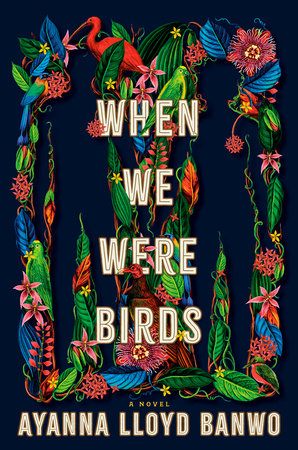
Ayanna Lloyd Banwo’s debut novel When We Were Birds begins in the time before time and follows the uneasy truce between the living and the dead. Cigarettes are offered, liquor is poured, prayers are said, all in the hope that the buried stay buried. This is the story of Yejide, a young woman who becomes the reluctant heir of a family secret that binds her to the grave, and Darwin, a man forbidden from touching the dead who will follow to the end of the earth the woman who communes with them.  

When We Were Birds by Ayanna Lloyd Banwo

All her life, Yejide has listened to her grandmother’s creation stories, never expecting that her family—a line of powerful women—are the direct descendants of corbeaux, the birds that “devour the dead” and bring balance to the world. After her mother dies, it falls on Yejide to protect the exchange between the living and the deceased, to listen to the old dead and new dead, and to be a witness to all that has been buried. She feels the dead “rub up on her like cats.” This is a heavy and lonely path, and it feels only right—part of a necessary balance—that Yejide finds Darwin, an outsider like her. 

Darwin, raised Rasta, has taken a vow never to touch the dead, never to cut his hair, and yet hunger and certain unnamed desperations cause him to break his promises, and he gets a job digging graves. Darwin is new to Port Angeles and city life, where “everybody face set up, walking fast-fast like fire ants.” He cannot hear the dead like Yejide can (“the power belong to the women”), yet he becomes a guardian in his own right.

When We Were Birds weaves story, history, place, and the supernatural. It gives us a fictional Trinidad very much alive: the fruit vendors selling juicy papaw, the fish vendors weighing kingfish on their shiny scales, customers sticking their hands through bars to collect goods from shopkeepers, heavy dance hall bass, women in heels, boys hustling loosies. This is “a place that not only wide but have all kinda layers and hidden corners and subterranean levels that you could only find if you know where to look.” The work is lyrical, at points virtuosic (“mourning…is not a rope”) and often written in a style inflected with Trini creole. It is a love story if love is remembrance, recognition, a connection beyond words and temporality. It speaks to what it means to break a promise in order to live, and how making a promise can save our very selves.  


Annie Liontas: Yejide, our guide between the living and the dead, discovers that the stories she’s heard all her life have more truth to them than she believed. What do stories help us remember or hold onto? How does myth and story shape identity? How does storytelling help us keep the dead?

We’re living on captured land. These are colonized spaces and sites of wars. We live on burial grounds.

Ayanna Lloyd Banwo: The first instruction manuals for living as a species, as human beings, are stories. The Griots, the shamans, the people that hold the history of a tribe or a community. Stories start as a way to keep us safe. You know the one that says, “If you go down by the river in the back of the house, there’s something that lives there, it’s gonna pull you under.” Stories give us a map to navigate the physical world that we live in. To give us boundaries. To tell us how to safely cross those boundaries. It’s cultural, story. It’s song. It’s poems. It’s our first books. Or it’s a rom-com meet-cute with two people who are meeting at a bar. It invokes an entire moment and experience, a place maybe they’ve never been to, or a place that they’ve been to so often that they stop seeing it.

AL: Yejide knows the buried aren’t confined to the cemeteries: 

“It is not only headstones that make a place a burial ground. Under fancy restaurants that used to be plantation houses… under the shopping malls is layers and layers of dead—unknown, unnamed, unclaimed…”

What does it mean for Yejide to feel not only the presence of the dead, but of their buried and erased histories?  

ALB: I mean, where we’re talking—you in the US, me currently in London but psychologically in the Caribbean—we’re living on captured land. These are colonized spaces and sites of wars. We live on burial grounds, and there’s no way around that. Our dead have not always been buried or remembered properly. We don’t always even know that they’re there.

The very nature of colonialism says ‘no one was here and then someone arrived.’ We know that the islands of the Caribbean have a long, long history.

In Trinidad, at the Red House, they discovered a huge Amerindian burial ground during renovation. Construction had to stop. They had to remove the bones. They had to consult with the First Peoples to make sure that these bones would be marked properly. They brought in their holy man and woman to have a ceremony to mark this thing. Because you can’t start over, right? You can’t remove the Red House and begin again. But you can operate in a way that you are respectful and are aware that there are two things occupying this land at the same time. I think it’s important for us to not pay lip service to that. We walk around having our coffees and our wedding ceremonies and collecting death certificates and in the most benign way, burying or cremating our dead, all on borrowed land. We’re sharing that land with people who aren’t here anymore.

AL: Tell us about corbeaux.  

ALB: We say “cobo.” The black vulture. You cannot see them and not think of the stories told up and down North and South America, like Oshun who turned into a vulture to save the world. The creation story in the beginning of the novel wasn’t something that I read somewhere and it also isn’t something that I made up all on my own. It’s just all these different stories kind of blended together, my years long fascination with these spectral birds. And, of course, physically how they actually operate as scavenger birds, that they are able to take in the dead because of their unique biochemistry. Not to be poisoned or killed by eating rotting flesh. They are the cleansers of space, they’re able to transform the dead into something else.

Of course, they’re seen as bad omens like any black birds, your crow, your raven.  They’re quite awkward and ungainly. You see them sitting on a line and think, what’s going on here? You can’t help but feel a little bit creeped out when you encounter them because they’re silent. They don’t have a song. These aren’t singing birds.  

AL: Time and place are elastic on the page, from the felt presence of those who are long gone, to the ways myths collapse time, to Petronella’s assertion, “Any place is ever one place?” How are you conceptualizing time and place in When We Were Birds?   

ALB: So the thing about islands is, they lie, right? They’re small places and the colonial gaze simplifies them. The very nature of colonialism says “no one was here and then someone arrived,” and this is when time sort of begins in these islands, right? This shortening of time and simplifying of space, that is the fiction. We know that the islands of the Caribbean have a long, long history. 

And for me, just the idea that death came into the world—the oldest thing that one could imagine—that in fact there was a place that predated death, was really important for me to situate. To make time extremely long. Deep time. I remember when I was first writing out the threads of the novel, I was trying to pin the individual timelines to each other in a very close way. And I was like, no, that’s actually not right. I want that feeling of this is happening at the same time. Even Darwin at Fidelis— his experience of time in the cemetery feels different from his experience of time in the city. It’s just a more realistic measure of how we experience time. Nobody can tell me these two years have been two years. We’ve lived several lives in that period.

AL: What choices were you making as you developed the novel’s style and use of Trinidad Creole?

ALB: You know, I thought I had written this weird book in Trinidad Creole and that I’d get all this push back. When I didn’t any push back, then I got even more scared. I was like, why do these white people like this book? There is something wrong with this book!

AL: Darwin pays attention to graves nobody goes to. He sits with Mr. Julius when he returns to the grave of his wife and only friend. He thinks constantly about all of the people beneath Fidelis. Darwin is an attuned and sensitive man. The power to hear the dead belongs to the women, but how might we read the gift of Darwin’s own clairvoyance?

ALB: For me, that is so in tune with him being Rastafari. The Rastaman is, for use of a better word, a mystical figure that is attuned with spirit and one who is navigating being in the world but not being of the world. As much as him having this job in the cemetery is outside of the very traditional interpretations of the Nazarite vow, it also probably makes him the most ideal person to be sensitive to that sort of death-work. He’s not gonna just tell some old man, “get out, time to close up.”  

His masculinity and the masculinity of the other men at Morne Marie was something that I was really thinking about, too. This is a community that is supporting the domestic, the running of life because half the time these women are not in the world: they’re somewhere else. So what do we need from men in these times? What is required? What is the softness that is so valuable, but which is not seen as valuable in traditional masculinity? I think the conversation is now going there for men to see. There’s so many young men who are terrible, but there are also many who are almost paralyzed. They’re crippled by patriarchy in ways that they don’t even know. They’re really asking: “How can I be a better human being? How could I be a better ally to you? How can I be a better person to myself?” For me, Darwin was an exercise in crafting a West Indian Black man who does all of those things, but who would still throw down in fights and would still wait in a cemetery with a blade. It doesn’t make him a pushover, it makes him soft in all the ways that is human and necessary.

AL: Yejide, who has a painful and tumultuous relationship with Petronella, is a daughter grieving for a mother not yet lost. Darwin must leave his own mother for the city that took his own father. What is this book saying about how we must sometimes become other people than the ones our mothers need us to be? What is We the Birds asking us to remember about the power of all the women who came before when it says that it is a daughter that makes a mother an ancestor?  

ALB: The thing is that a mother is a woman before she’s a mother. And she’s a girl before she’s a woman. She’s had dreams and goals and ideas about who she wants to be and which, for most of her life, have nothing to do with having a child or even being the matriarch of a family. 

I sometimes wonder about this role we put on grandmothers. They are the ones that hold the family together and nobody asks Granny if she wants to do that. Suppose Granny wants to run away to Paris and drink wine and go about her business. You sometimes just fall into these gender roles of caretaking, family. And somebody has to do that work. But it doesn’t mean that we all go easily into it. 

A mother is a woman before she’s a mother… She’s had dreams about who she wants to be and which, for most of her life, have nothing to do with having.

A mother is not perfect people. They were sometimes mean, they were sometimes angry, they were sometimes tormented, they were sometimes fed up. They were doing the best that they could sometimes, and other times not really doing their best at all. But you know that that legacy is also a bunch of fed up women who wish they could have been doing something else. In our own families, I’m sure we find them. They inherit a series of choices that in some ways they had no control over. How do you look at your mother’s choices and how they affected you? For Petronella, there’s stakes if she does what she wants to do, if she just says fuck it. But in a lot of ways, that’s exactly what she’s done, and her daughter pays for the fact that Petronella feels trapped. This is a spiritual story. But so many women don’t have the luxury of choice, you just have to get on with it. The children have to eat. 

There’s a lovely picture of my grandparents on their wedding day. It looks beautiful, but my grandmother couldn’t stand the photo. I always wondered why until she got ill and was really talking her business, and she told me that all she wanted was just have a picture by herself in her wedding dress but her husband said no. Back then, there’s no camera man, you go into a photo studio as man and wife, and he’s saying, maybe, listen, we have money only for one picture, I don’t know. My grandmother deeply resented that she didn’t have a photo of herself. Just one picture. In my wedding dress. Looking nice.

AL: You set When We Were Birds in a Trinidad “with the volume turned up.” How does your home country inspire the fictional island in this novel? How do secondary characters give us the island in its complexity?  

ALB: I grew up in Diego Martin, which is a suburb outside of Port of Spain, on the Western Peninsula. Where I went to primary school, all my friends were able to walk to and from school, but I lived a little bit farther out and walking wasn’t possible. Then when I went to secondary school in Port of Spain, I wanted to live in Woodbrook. It was always this kind of in-between life, not fully suburban but not in town either. My mother grew up in Belmont, which is Bellemere in the novel. She taught at a school that was seen as a sort of a “bad school”, in East Port of Spain. She was very comfortable. I’ve always been fascinated with town. It had a glamor to me, it was exciting. It was a little bit dangerous. It was places that I knew but didn’t really know. I wish I had more freedom when I was young to be able to go about on my own and jump in a maxi. I didn’t get that until I was fully in my 20s. I think a lot of my writing of Port of Spain is from that place. I almost had to imagine it. 

Port Angeles, like Port of Spain, is a city of “characters”—the street vendors, the vagrants, the shopkeepers, the maxi conductors—and none of them are secondary, they are vital and every one of them have main character energy.

My Disability Forced Me To Become More Visible in My Work as a Translator

First, I disappeared. Then I became a translator. 

It’s supposed to happen the other way around. Crawling in between the lines, you practice effacing yourself. You perfect your ventriloquism, distinguishing yourself through a vanishing act. You’re expected to slip unnoticed from one language to another, masking otherness, both the original text’s and yours. You train for years, decades, to carry the burden of transparency. Gracefully. “Fluently.” Like an actor, you artfully displace your identity, delivering lines that don’t belong to you. But your performance happens behind the scenes. You scout talent, shop projects, manage PR. A translation succeeds when the reader can’t tell it’s a translation. This, according to Lawrence Venuti in The Translator’s Invisibility, is the constraint placed on translators. The illusion he calls them to subvert.

We translators know all this; we knew it long before Venuti wrote his book. We make common cause of our invisibility. Translators, we say, are flesh-and-blood people. We say words and translators pulse with history, and it was the translator who chose the words on the page. We demand a share of the light. I confess I’ve always followed the conversation from a distance, found it important and urgent but entirely out of my reach. How can I resist invisibility, when I owe my origin story to it?     

Eight years ago, during the final semester of my Master’s in intercultural communications, my adviser urged me to drop in on a literary translation conference. It was convenient, just a three hours’ drive from my home in Fort Wayne, Indiana. She had a colleague, a PhD who’d been a fixture in the organization since the seventies. He was venerable and she would arrange a meeting. I anticipated the conference starstruck: imagine—me!—talking to people who lived off their words. You’ll never make a living off translation, the translator crowed, mid-handshake, before I’d managed to utter anything more than my name. That was three months before the symptoms began.

His pronouncement floored me, not least because there had never been any question of making a living from translation. Growing up in Indiana, books were the means to a job, never the job itself. Something to be indulged beneath blank looks and the glare of the ever-blaring TV. I thought I was fortunate, different. I could disappear into my bedroom and write thick folders of wor(l)ds for my eyes only. From books I taught myself languages. I dreamt of travel, and I did travel, briefly, in college. A month in Brazil, a month in France, that was all I could afford. No one advised me of other options. After graduation, I worked a series of jobs in manufacturing. It was a man’s world, a step above the typical Rust Belt trajectory. Customers called, all speaking Spanish, French, Portuguese; there were occasional work trips abroad; co-workers mocked me for reading books on the plane. I thought I was fortunate, different. I built the global relationships that built the company, while men took all the credit. I was no stranger to invisibility, even then—four years before my invisible disability.

By the time the symptoms hit, I’d survived the Great Recession, gone back to school, graduated, and launched into my search for a second career. I felt more old than wise. Things were shaky in the Midwest, but no shakier than they’d been for the last thirty years. I wanted to escape but didn’t know how. The isolation, the low cost of living, the mounting debt despite the low cost of living, everything conspired to trap me. That February morning, I woke up and knew, fatally, that something had misfired. The benign winter sounded different, all that white, shrill, and the deafening snow. Certain sounds lingered, repeating, I couldn’t hear my own thoughts, buried beneath the deafening snow. I struggled to read, follow conversations. The world felt too disorienting, spatially distorted and acoustically fragmented. I feared going to stores and restaurants. I stopped leaving my house. I wanted nothing to do with the light.

The world felt too disorienting, spatially distorted and acoustically fragmented.

Pursuing translation was my husband’s idea, a way to keep my languages up while I searched for answers. In truth, my symptoms were so disabling that even if I had known how to break in, I couldn’t physically translate. At least not texts. Instead, I spent the next three years finding words for the invisible. Workshopping my translations with doctor after doctor, I’d examine their eyes for some spark of understanding, anything to reassure myself that what I experienced was real. But the more I said, the more invisible I became. Never mind my carefully constructed sentences, my vivid analogies, they doggedly looked right through me, to charts and referrals and test results, always negative. I had no authority. I was a woman navigating a system whose myriad biases are well-documented. Even when reading and commiserating with the stories of women whose pain was dismissed, I couldn’t surrender that burden of bilingualism: I was the only one who spoke the language of my body. If doctors failed to understand, I told myself, confronting the translator’s predicament—foreignize or domesticate—as if it made any difference, well, that was on me.

At last, on the cusp of a diagnosis, I found myself once again tiptoeing between the lines. Why? I struggle to remember. Because translation was hard? Because everything else was harder? Because I had something to say and the invisibility helped me to say it? All I know is for me translation and disability are inextricable and have been since the beginning. I could no longer pretend that either was temporary. Yet accepting this meant making sense of the dissonance. I was a body with invisible limitations, a body that needed to disappear every once in a while. And: I was an unknown translator, working hard to make a name for herself. Even the label, emerging, hummed with impossible obligations, the pressure to appear.

I was the only one who spoke the language of my body. If doctors failed to understand, I told myself, … that was on me.

During this time, translation was experiencing an identity crisis of its own. The field had been questioning whether it could sustainably remain out of sight. The phrase I’d heard repeatedly during that first conference was “labor of love,” as though romanticizing the low pay and poor working conditions might weed out the faint-of-heart. Three years later when I returned to translation, it was still a closed profession, but the conversation had changed. Advocacy was on everyone’s lips. In theory, this was meant to bring greater visibility to the work of translators, to translators themselves, so more could afford to do it. In practice, the barriers only multiplied. Translation had always demanded reams of unpaid labor—researching markets, securing rights, pitching to editors. Now sustained presence was part of the job description. The work of activism and networking and community-building and belonging. Presence at conferences, collectives, committees, residencies, launches, workshops, happy hours, out of sight, out of mind. I lived in Indiana. I was blue-collar. I’d learned languages from books and had a combined total of six months’ travel under my belt. (Maybe.) I could feel the distance in my bones, could see crossing it would take everything I had.

I remember the sting when I introduced myself to a fellow translator and she asked, looking right through me, if I knew anything about Brazilian literature. As if to remind me I had no authority. That I didn’t belong here, any more than I’d belonged there. No one knew the negotiations required of me just to show up, the preparations made behind closed doors. How I drove ten hours to New York alone in an ice storm because my illness prevented me from flying. How my husband would drive me to and from Chicago for a bi-monthly translators’ collective, how I’d spend the return trip vomiting or reclining the passenger seat all the way down, then spend the next several days in bed. How an invitation for coffee with a distinguished translator sent me spiraling into panic—only a few days to make the phone calls, find an accessible coffee shop. I appeared and reappeared. It wasn’t enough. 

No one knew the negotiations required of me just to show up, the preparations made behind closed doors.

With difficulty, I could attend some conferences, the ones within driving distance, but once there, my symptoms sidelined me from all social activities: the lunch dates and late nights at the bar. I thought I was fortunate, different. I found the words and the nerve to ask for accommodations and felt myself coming into focus. After years of being dismissed by doctors, I believed the most radical acceptance of my invisible illness was that someone acknowledged it, deemed it worthy of the label disability. I didn’t understand that erasure can take many forms. The translators I approached were sympathetic, but their version of access merely paraphrased the status quo. Instead of re-envisioning communal spaces, they worked to shield me from them—packed me in bubble wrap, tucked me away. Those with disabilities often bear the burden of inventing their own accommodations, more so when the disability is invisible and beyond the borders of abled imaginations. For various reasons—I felt precarious, I struggled to name my needs, I didn’t want to be seen as asking for too much—I took what was offered and didn’t complain. I thought I was fortunate, different. But the performance got harder with each passing year. Why kill myself keeping up appearances, if I would be isolated no matter what?

For some, my illness might have read as privilege. I had the time for translation, because I couldn’t do much else. My symptoms were unpredictable, working outside the home out of the question. I could give two or three hours a day to my words before the cognitive effort drained my bodymind completely. I knew translators working “translation-adjacent” jobs—teaching, editing—who dug deep for those three hours, too, but at least their paid work kept them connected, ever-exposed. I was peripheral. A full-time patient: Days swallowed by phone calls, doctor’s appointments, insurance appeals, records requests, side effects, darkened rooms. This, too, is labor, as any caregiver will tell you: essential and noble but looks out of place on a CV. Medical privacy wasn’t the only reason I kept my disability hidden. The hours unaccounted for, my utter lack of income, the full reality of my situation felt taboo.

Those with disabilities often bear the burden of inventing their own accommodations, more so when the disability is invisible.

Also taboo: the fact that none of it would have been possible, without my husband’s paycheck. His health insurance. Still, we were sinking. The question was: Would we go down together, or would he toss out his burden, ballast overboard? Either way, disaster always loomed. On good days he reassured me in first-person plural. We’ll get through this, we’ll make it work. On bad days, he stewed in the singular. He felt trapped, and I was dead weight. We both knew if it came to divorce, I would have nowhere to go, my condition severely limited my options. But the thought slipped in among all the other unbearable scenarios. I’d ask myself, ask him, if translation wasn’t a selfish, untenable occupation, maybe I should bow out, fade away, find some remote work, flexible and probably low-paid, but anything was better than this. And he would say no, if I took another job, I’d never make it as a translator. And he believed in me. Despite his faith, I felt alone, perpetually close to the streets. I felt confused that translation could both give me worth and take it away.

There was no denying my chronic illness strained our resources—physically, financially, and emotionally. To have chosen a field in which eight years of spending money just to make money wasn’t uncommon—well, that made me doubly vulnerable. Sometimes, I resented translation for failing to reckon with how its prolonged invisibility impacts the disabled especially. Shortly before my diagnosis, the translators’ organization introduced a work exchange they believed would make their conferences more financially accessible. I’d spent over ten thousand dollars that year on tests and medical travel. Even foregoing the group hotel for a budget option ten minutes away (a move that isolated me further), I needed that reduced registration. Once there, I learned I’d been assigned to spaces I couldn’t go. It cost me additional labor to negotiate a workaround. The accommodation, once again, was disappearance: back rooms and far-flung corners. And then there were the panels I missed while working, and the panels I skipped after tiring myself out working. If it wasn’t for the pain, even I would have overlooked my own presence. 

In 2020, just before the world went dark, I made a New Year’s resolution. I’d been emerging since 2013, and I was exhausted. This, I vowed, would be my Hail Mary Year. I polished my CV and recommitted myself to social media. Improbable deadlines cluttered my calendar—grants and residencies and open submissions. I made my peace with failure. At the same time, I had no plan for what I’d do if I missed.

If it wasn’t for the pain, even I would have overlooked my own presence.

With Covid, suddenly the whole world understood exhaustion, the steely shiver of isolation. From lockdown I watched as an industry reeling managed to collapse its distances overnight. The adaptations looked painless. Spaces I’d long struggled to reach went virtual, now that the able-bodied couldn’t reach them either. Those first months I broke myself trying to Zoom everywhere at once. I’d gained the world in ones and zeroes, any day now it would all disappear. Sure enough, only three weeks in, the shock had worn off, everyone talked of returning to “normal.” In translation many of the same structures simply migrated to an online forum. For a year, maybe two, not to worry, they assured us, we’ll meet again. Even in our collective invisibility, I felt othered, ignored. If ever there were a season for reimagining…. The missed opportunities gaped like a wound.

Like so many spheres, the world of translation has more work to do when it comes to making space for difference. This means recognizing that unseen genres of experience count as diversity, too, and should be valued as such. Invisible disability, yes, also: class, geography, caregiving, day jobs, the totality of intersections that bring each and every one of us to this profession. After all, a translator is someone who inhabits the in-between. We are a field of misfits, our authority as translators lies in our chronic otherness. Our way of looking always from outside. Then perhaps when we talk of the translator’s (in)visibility, we might redefine the word: Let us not just advocate for translators to be seen; let’s also celebrate the confluence of identities—both visible and invisible—that allow a translator to see. It’s the end of 2021, and I’m still here. I’ve stayed connected to translation by serving as co-chair of a translators’ committee based in New York. When I joined, just before the pandemic, the organization, an arts advocacy group, was looking to widen its borders and acknowledge the barriers faced by emerging translators. They made the effort to seek out someone with my profile. In a sense, they saved me. Still, it’s a volunteer role, and the work, though fulfilling, leaves me little time or energy to translate. Over the past two years, this brave new world has dissolved boundaries between work and home. Those with disabilities feel the encroachment more acutely because our home is also our sickbed. It’s a process, learning to name your needs.

We are a field of misfits, our authority as translators lies in our chronic otherness.

But a text, at least, waits. Patiently. Mine is an experimental Brazilian novel I stumbled upon years ago. The story of a woman grappling with language after a rape, constantly frustrated in her efforts to adequately convey her pain. Would I have been drawn to this book, had I not carried a similarly invisible burden—helplessly spinning sentences as my pain was dismissed? Would I have appreciated what the author was doing—her rhythms, her synesthetic descriptions, the way she makes her protagonist syntactically disappear, swallowed by sensory perception—if I’d been anyone else? Then why doubt my authority as a translator?

There it is, written into me bone and sinew. It is my night vision, my ability to peer into the text and see what others could not. On the question of the translator’s (in)visibility, I’ll confess, I sometimes flinch; I’m still reconciling all the competing variables. But I’m beginning to think we translators have superpowers. We appear, we disappear. We bring whole worlds into the light.

7 Contemporary Horror Novels that Push Boundaries

The grocery store of all places was my initial indoctrination into the world of horror. As my father shuffled up and down the aisles, dutifully stacking groceries in the cart for our family, I would sneak away to the magazine section and my eye was always drawn to the shiny paperback display brimming with such creepy covers as Salem’s Lot, The Legacy, and Flowers in the Attic

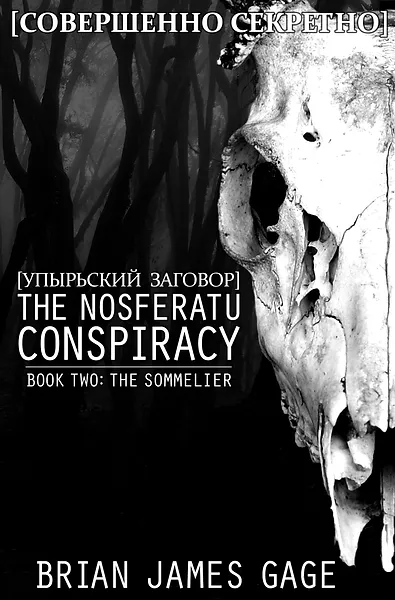
sommelier_cover.jpg

At first, I was too frightened to even touch the books. My young mind was convinced whatever horrors lurked behind those monolithic and terrifying covers would surely emerge from the pages and follow me home to stalk me at night. But as I grew older, just as Lucky Charms were a staple of my grocery booty as a kid, mass market horror novels found their way into my diet as an early teen.

My love for the genre has only grown in time, and my tastes in horror have become vast. Lately, I have been craving new voices and favoring authors who are not afraid to take risks, push boundaries, and speak bravely from their own unique perspective. 

More importantly, I enjoy reading from voices that have a unique or daring tone that breaks the mold and pushes the horror genre into interesting and new paradigms—everything from classic monster scares, to psychological horror, to shivering Gothic tales. These are my seven favorite horror novels from boundary pushing authors with bold and unique voices. 

Blanky by Kealan Patrick Burke

A quick and biting read from one of my favorite contemporary horror authors. The amount of grief, despair, and dread Burke manages to cram into 79 pages is a feat in its own right as we follow the tale of a father coping with his recently deceased infant daughter. The revelations are beyond disturbing and if you’d ever told me that someone could make a baby blanket frightening, well, then welcome to the world of Kealan Patrick Burke.

The Iliac Crest by Cristina Rivera Garza

A powerful Gothic tale that strikes at the heart of male-female binary issues. An unnamed narrator’s home is invaded in the middle of a storm as two mysterious intruders proceed to question the host’s identity. Our protagonist grows increasingly frantic as he fails to satisfy the strange intruders’ harassment to the point where his own sanity begins to crack. A stand out and original tale on the horrors of gendered violence. 

The Hole by Hye-Young Pyun

A South Korean bestseller and winner of the Shirley Jackson Award, The Hole tells the tale of a man who wakes from a coma after a horrific car accident that killed his wife and left him paralyzed and disfigured. Enter the caretaker, his mother-in-law, who is awash with grief over the loss of her daughter. This is a deeply unnerving tale that teeters between brutality and boredom, exploring themes of loss, isolation, and grief. 

The Gilda Stories by Jewelle Gomez

A Lambda Literary Award-winning novel, this vanguard of a vampire novel tells the tale of Gilda, an escaped slave who finds her way to a brothel before given the gift of eternal life. Using the vampire as metaphor we are taken on a 200 year journey as Gilda attempts to find her place in the world while exploring themes of race, family, and queer identity. 

Ring Shout by P. Djèlí Clark

Wearing its Lovecraftian influences on its sleeve, Ring Shout thrusts readers into a wild ride that includes demonic KKK members and hits all the high notes of melding metaphor and horror. Ring Shout is a fun horror romp, but it’s also far deeper in its messaging without being preachy. In addition to the subtext and symbolism, the pacing is a stand out feature in this tight 176-page banger.

Anoka: A Collection of Indigenous Horror by Shane Hawk

An excellent short story collection from an emerging Cheyenne & Arapaho author that offers a fresh perspective on several horror tropes including: werewolves, clones, witchcraft, and even bone collectors. Set in the eponymous small Minnesota town, dubbed “The Halloween Capital of the World,” the book also works as supernatural historical fiction as the author weaves in some history, making the reader question reality itself.  

Kindred by Octavia E. Butler

Kindred tells the tale of a modern-day African American woman who becomes involved in a time-loop with her past ancestors during the time of slavery. One minute the protagonist, Edana Franklin, is in her apartment conversing with her boyfriend, the next she is transported back to a slave plantation and her plight between the past and the present becomes more dangerous with each leap between time periods. It works as sci-fi due to the time travel element, but the contrast between her present day life versus the terror she must confront to aide her ancestors certainly qualifies as horror. 

Not Even This Jesus Look-Alike Can Heal My Heartache

“The Treatment” by Marcia Walker

On the second anniversary of Margot’s death I met Jesus. He was holed up in one of those furnished condos on Bolton Avenue that attract newly divorced dads and low-level executives staying in the city for less than three months. The kind of building where each door has dampeners fixed to its hinges, making them impossible to slam. That alone prevented me from living in such a place. 

Jesus didn’t seem to mind. Not a whiff of irritation or impatience came off him. He appeared in the doorway, leaning against the metal frame, with a placid expression on his face that revealed nothing about his emotional state yet also looked open and unguarded. He paused, long enough for the stale smell of brown rice and drywall dust to itch the hairs of my nostrils, long enough I had the sense this was still open to negotiation. Even though I was paying him I worried he might turn me away. Then where would I go? I had already been through doctors, therapists, social workers, support groups, naturopaths, astrologers, more than a few liquor stores. Some of them had given temporary relief to the feeling, which for lack of a better word, I called sadness. It was more like I had been underwater for too long, deep in the aphotic zone, and had forgotten where the light came from and in which direction to swim for air. I had come to Jesus, as I’d already decided to call him, for healing. I drew myself into an unsustainably perfect posture, as though my height might convince him of my worthiness. After a slow labored blink, he invited me in. 

He must have told me his real name but I didn’t retain it. I was having difficulty concentrating at that time. Thoughts flew in and out of my mind at an alarming speed and rarely related to where I was, who I was with, or what I was doing. It was only after I took off my coat and followed him into the sunlit, IKEA clad living room that I focused on what he was saying. 

“People aren’t sure what to call me.” He dropped onto the couch and his bony hips cut into the orange cushions. “If it helps, you can call me an energy specialist.”

“I will call you Jesus.” I didn’t say that out loud. 

He had all the obvious Messianic signifiers: v-shaped beard; long, feathered hair; emaciated frame. But those are a dime a dozen on the street these days. It was the immediate effect he had on my nervous system that made me think of redemption. A heavy sleepiness came over me. I had an urge to lay my head on the bones of his chest. It was also possible I was looking for a savior. 

“Energy specialist,” I eventually murmured, letting him know my hearing worked and that we understood one another. 

“What I do, Jean,” and he interrupted himself, “or do you prefer Jeanette?” 

“Jeanette.” 

He continued. “What I do, Jeanette, doesn’t follow a pattern. It is highly intuitive. Often intense. Life changing. I focus on healing.” A rise of color dotted his cheeks. “It changes peoples’ lives.” He kept speaking while my eyes flitted to the window, across the road to the deserted parking lot. His voice reminded me of public radio. I tuned back in when he mentioned Margot. 

“I understand your spouse died several years ago.”

She wasn’t technically my spouse, but I didn’t correct him. We sat in condominium silence until my purse chirped twice. Then two more times. My body burned as I thought of the incoming texts. Then I thought of Margot. Then I thought of thoughts which I can’t pull or access. Lost thoughts. 

We scheduled three “healing sessions” over the following three weeks. I labeled them in my calendar as “personal trainer—J.” I opened my purse and took out the seven hundred- and fifty-dollars cash he had asked me to bring and placed the fifties in a stack on the glass table. The money reminded me of the pink sticky notes Margot used to pile on top of one another on the kitchen counter, each with its own task, a random to-do list of sorts that she rarely, if ever, completed. I expected him to glance down at the payment but his eyes remained on my face and I thought, Jesus, just take the money, you’re not fooling anybody. Charlatan. Quack. Fake. I didn’t have the heart to look him in the eye as I thought these things. 

He told me that was it for the day. The first meeting was just to explain the procedure and to make sure we were a good fit, “energetically speaking.” He followed me to the hallway and helped me with my coat, a gesture I’ve noticed happens to me more and more as I get older. Now that I’ve stopped dying my hair I’m everyone’s grandmother. 

“One more thing,” he said, as my hand turned the cold stainless-steel handle. “Are you okay with me touching you during the treatment?”

Trying to think of something funny to say, I blew the air out of my cheeks. Margot used to warm her hands under my bum in bed at night. She waited until she thought I was asleep and slid her icy fingers between the sheet and the slack of my skin.  

“Touching’s okay,” I said.  

“Is anywhere off limits?”

“It’s fine. It’s all fine.” I needed to leave immediately. Had it really come to this? Paying a Jesus-look-alike $750 to touch me? I peeled out of his condo, leaving him standing by the closet, and hurried into the stairwell before his controlled door had a chance to seal shut. 


Olga, the real estate agent I’d used to sell our place, had recommended him. I wasn’t getting an unbiased opinion; they were lovers. They had met at a wellness retreat near his cabin on Saltspring Island, where he lived year-round. Taking on clients in Toronto was a way to help pay for his visit to see her. I knew the intimate details about their sex life and the handful of cross-country rendezvous she’d funded over the past four months. She told me they liked to trim each other’s pubic hair. She told me he once got off while he watched her eat roast chicken with her fingers. Other things I knew: he rarely slept more than five hours at a time, was allergic to walnuts, and had dropped out of university to join a folk band that toured the West Coast. But I did not know his name. To Olga he was Croz. It was an album they both loved and became her pet name for him. “Call Croz,” she had said the third time I’d started crying for no reason. “He’ll fix you up.” 


I tried listening to the album and didn’t get past the second song. I preferred to call him Jesus. I thought about Olga and Jesus, their unlikely couplehood, as I began the two-hour walk home to the west end of the city. In my pocket my hand gripped the slick casing of my phone but I did not check the texts. I wanted to wait until the privacy of my home. A cold November wind ripped through my thin wool coat. The fall had been unusually warm and when the frost came, a few days earlier, hard and sudden, the leaves froze on the trees and blew off in clusters, clapping against one another as they fell. The branches around me, stripped of their leaves, reminded me of naked arms with innumerable fingers.

Within half an hour, Olga called me for an update.

“What did I tell you? He’s amazing, right?” Her voice roared in my ear buds and I adjusted the volume. “This is going to change everything for you, Jeanette.” Then she had to go. That was Olga. She never stayed in one place, or one conversation, for long. 

Most, if not all of my friends, our friends, Margot’s and mine, had dropped off over the past year. My fault entirely. There’s only so many times you can act like an asshole without actually becoming an asshole. They’d understood and tolerated my distant behavior after the funeral, but after a year, I knew my sadness had become excessive. No doubt I was supposed to do something and hadn’t. Showing up to a wedding or a sixtieth birthday, even keeping lunch dates was too much effort. Gradually they stopped calling and texting. The only friend I had left was my real estate agent. 

So, you see, I was not completely alone. 

I kept walking. Several pumpkins remained on porches, more gruesome now as squirrels mangled and chewed the remnants of their carved faces. Black rot was beginning to settle into the edges of their orange skin. It was difficult not to check my phone, to read the texts. I increased my pace. 

Walking, I had discovered, was an excellent way to kill time. I used to hate that phrase, but that’s how I’d come to feel about time since I’d been on my own, and that’s how I treated it: not exactly as an enemy, but something unwanted and needling, something I had to exterminate. I knew at each point in the day or night, almost down to the second, without looking at my watch, exactly what time it was. At night I felt the carnage of hours and minutes piling up. 

When I arrived home, three bags of groceries were waiting outside my door. I had forgotten I’d ordered them. They were an automatic refill that I had set up when I first moved in a few months ago and had not gotten around to canceling. Dozens of eggs piled up in my fridge. Rotting plums lay at the bottom of the crisper. Occasionally a delivery boy carried the paper bags into my kitchen but he had come and gone. I lugged each bag onto my counter and methodically put everything away. Often an additional item appeared in the bags that was not in my order. Stems of organic bananas. A package of granola. Once a bag of giant chocolate covered raisins. They never charged me for these. This time it was figs from Egypt. I had never been to Egypt. Margot had, once, before we met.  

I bit into the tough, purple skin. The seeds scraped along my tongue. I remembered reading that female wasps crawl inside figs to pollinate their eggs. Once the wasp has burrowed she dies, whether she lays her eggs or not. Figs have an enzyme that digests the wasp’s body completely. It was possible that I had fossilized remnants of a wasp in my mouth. That was the kind of thing I used to store up to tell Margot. 

I plated quarters of fig with two thick slices of cheese and sat in the chair next to the window to read the texts. They arrived daily, for the past month, always around noon, from the same unknown number. 

I want you to beg me to fuck you more 

Ill cum inside your pretty little mouth and your going to swallow every drop

I scrolled through the ones from previous days. 

Take it deep

I want to cum all over your face

Hows your gag reflex?

I closed my eyes and thought of Margot. 

Grieving has not taken the form I thought it would. 


The following Wednesday I was back in Jesus’ condo. He asked me if I wanted a glass of water and I declined. For a few minutes he spoke of Olga and how much he enjoyed being in Toronto. I was impatient to start the treatment and didn’t say anything more. My phone chirped and he suggested I turn it off. I muted it. I feared missing the texts if I powered it down entirely. Then Jesus told me to lie down on my back with my knees bent and open. I paused, muted phone in my hand, pretending I hadn’t understood him. 

In a gentle voice, he said, “We can stop at any time. If you are uncomfortable.” 

I surveyed the yellow rug, placed my phone on the table, and tentatively lowered down to my knees. After rubbing my thighs several times, I wobbled onto my bum and from there had a clear view of three dust balls under the TV stand. I scootched away from them and gradually laid back. 

“Let your knees open to the sides,” Jesus said. 

I sucked in my upper lip. I could still leave. Instead I splayed my knees as though I was giving birth. 

“I want you to know you’re safe.” He watched me from the nearby couch. “Close your eyes.” 

I kept my eyes strained on the dimmed pot lights. 

“It’s okay if you don’t want to close them, but as we go along they may get heavy. Feel free to close them at any time.” 

I blinked in response. 

“Take a deep breath,” he said. 

I thought about what kind of training Jesus had for this kind of work and what Olga saw in him and the texts and Margot and what I was doing here and how much I wanted to tell her about Jesus. I forgot to breathe deeply until he said it again and I was back in the condo, trying to breathe deeply. 

“Slowly,” Jesus said. “Draw your knees together.” 

I drew my knees together.

“No, not so fast. Much, much slower.” 

I flopped them open again. Something poked from the rug into my shoulder blade. When my knees were half-way lifted Jesus told me to hold them there. 

“What do you feel?” he asked. 

“Nothing,” I said, but my voice was tight in my throat.

“Whatever it is, you can feel it.”

He shifted from the couch to my side, kneeling, and the faint scent of cannabis oil wafted from his body. That brought Margot sharp into my mind, the CBD mouth spray she carried, supposedly to help with the vomiting. My knees sagged. 

“Draw your knees together,” he said.

Too tired to hold them any longer and not seeing the point, I let them drop.

“Slowly draw your knees together,” he repeated in a little over a whisper. 

I knew, on some level, I was failing the exercise. When I no longer responded to his voice, he stopped instructing me and got up to make some tea. I lay on the floor, discouraged. 

He offered me a mug of swampy-looking tea and left it on the table between us. I wanted to leave the room but I felt unusually weak, and after managing to roll up off the floor, I sunk into the armchair. Jesus appeared younger in front of me now as he blew the steam off his own mug. 

“How are you feeling?”

“Fine,” I said, by which I meant I felt nothing. 

“You may not notice anything. Or it may be subtle. And that’s okay too.”  

After that we spoke for a little while. I told him how I had worked in TV but had been unable to continue my work as a producer after Margot died. I couldn’t to do much. I was living off the sale of my house. I felt the need to explain how I lived. He began to speak of small inconsequential topics, the city, the price of coffee, and then shifted to his relationship with Olga. He had never felt anything like this before. He told me he wanted to move to Toronto to be closer to her. 

“That’s a big decision,” I said.

“I am dedicating myself to love.” 

Yes, he spoke like this, I wanted to tell Margot. She would think I was exaggerating, but I wasn’t. And his face, such optimism; he really believed his own words. 

“What does that mean?” I finally asked. 

“Only those things which you can’t define are worth dedicating your life to.”

I sipped my tea in tiny increments and thought: how dare you say such things to me. 


That night, when I could not sleep, I imagined Margot cheating on me. Unwanted, fabricated, uncontrollable scenarios. All the reassuring memories of her had faded and I was left lonely and insecure. Her lovers were all men. I saw her fucking them. In each vision she looked terribly alive. She was Margot in a fullness she never had been with me. I imagined these men attending her funeral and approaching me one by one. When I asked how they knew Margot, they all gave the same response, “We’re old friends,” and each time they said this I worried about the parts of Margot that I never knew, would never get to know.  

To make it worse, I pictured finding the evidence of these lovers on her phone. Not photos, but emails and texts. A staggering number of each. Her words were eloquent and expressive, nothing like what she’d ever written to me. I could not stop my mind from the cruel place it rushed to in the solitary darkness. I heard her mocking me to her lovers. Then, to make my thoughts worse, I had her never speak of me at all. She never mentioned she had a girlfriend, except to say meeting at her place was not an option. Her phrase was: I am unable to host. I said that out loud in the night. I wanted to hear her whisper it to me. I wanted to hear anything at all. On my own, I was ruining us. Eventually I got out of bed and got my phone.


“How are the sessions going?” Olga linked her arm through mine as we made our way to the booth at the trendy upscale bar Olga frequented. The clientele was much younger than me, or if they were my age they took great pains to look younger. Trays passed by with foamy pastel cocktails. Olga knew the wait staff by name. People liked to be close to her. When she zoned in on you it was like the past and future didn’t exist; there was only now, and now, and now. I swore people bought houses from her just to feel that quality of focus.  

“I’m not doing it right,” I said. “My first session didn’t go very well.”

“It’s only been one. Keep going. What do you have to lose?”

I wasn’t sure what it was, but I knew I had something to lose. I held the stem of my martini glass. I thought of telling her about the texts I’d received over the past month. That someone was cyber-stalking me. That I thought it was Margot. But I held back. I knew what she’d say: it’s not Margot. Or: just block the number. Why don’t you block the number? Why, Jeanette? 

“How’s it going with the two of you?” I asked her instead. 

“Good. Yeah.” Her eyes darted to the door. He was expected to join us any minute. “Now that he’s in town…” Her voice trailed off. 

Olga’s heel tapped under the table. “My freedom is important to me. We’ll see.”

I thought about Jesus, his open expression, and knew his days were numbered with Olga. He had no idea. My phone chirped. My hand reflexively moved to my coat pocket, but I didn’t take out the phone. 

“Do you want to check that?” Olga asked. 

“It’s nothing.” Clearly my face said otherwise, but Olga didn’t force it. “He told me he is dedicating his life to love.”

“What?”

“That’s what he said. Are you? Dedicating yourself to love?”

The skin around Olga’s eyes tensed. “I’m dedicating my life to pleasure.” 

At that point Jesus showed up and sat next to her in the booth. He reached for her hand on the table. She smiled noncommittally. He said he had been looking at apartments in the city that afternoon and thought he might have found something. He squeezed Olga’s hand. How foolish he seemed in that moment. He was so deliriously happy. I had to look away. I went to the bathroom and while in the stall I checked my phone. 

I want to fuck you hard

I texted back. 

I miss you  


The next day, after more groceries arrived that I still had not canceled, I checked for the latest text. 

Spread your legs wide and wait for my big hard cock to fill you up 

Oh, that’s a good one. I laughed as I patted my hands to my face. Margot, that was a good one. 

I began to type back. These coded messages. These love letters from beyond. I had energy for the first time in months. It was like she was saying, Jeany, it’s okay, all those parts we both hid from each other, that we never wanted each other to see, we can love them now. Every flash or buzz or chirp made me feel near to her again. Physically, her body came back to me, a stray eyelash under my tongue.

Sometimes, in my bathroom late at night, after giving up trying to sleep, I reread the texts. I imagined her saying them to me and the two of us laughing and then touching each other like something new and vulnerable to this world. I pressed my fingers against the words as though they were her mouth. First her upper lip, then her lower. Then in between, the place where her mouth opened. My finger between her teeth as she pressed down, just hard enough to leave an imprint. Minutes passed in the darkness before I realized it was my own finger in my mouth. It had not been hers for a long time. 

I typed back: I want to see you


At my next session Jesus no longer felt like Jesus. He had turned into a regular person, someone who was about to have his heart broken, and this made me like him more. It also made me afraid for him. And angry with Olga. I’d been wrapped up, against my will, in their love affair. Why did she not return his affections in the same way? Why did she not take better care of him? I wanted to tell him to leave her, to find someone who treated him better. He deserved to be loved.

Before we began we sat down opposite one another in the living room. I asked him about his apartment hunt and he told me he was going to sign the lease that afternoon. His cheeriness as he wagged his bare feet side to side astonished and chastised me.  Before I had the chance to ask him more about Olga he grew calm and serious and asked me if I was ready to begin. I told him I was. I lay on the floor again and repeated the same exercises from the previous week. Almost immediately my legs began to shake. Embarrassed, I tried to stop them; however, the harder I tried to control them the more they shook. 

“Let your body go,” he said. “It’s okay. I’m here. Whatever happens.”

I did not want him here. I wanted him to leave the room, to stop staring at me. My eyes closed. The shaking in my legs traveled to my hips, spreading to my stomach and shoulders. My jaw vibrated. 

“Your body may do things that you’re not used to. Let it happen. I will make sure you are okay.”

Stop talking, I wanted to say, but I could not form words. I pictured Margot laughing at me. I did not want her to see me like this. Stop talking, I tried to say but it came out as a moan. Stay away from me. Thoughts of hurting Jesus flooded my mind. I imagined kicking and thrashing him, tugging at his beard, his long hair, scaling my fingers down his face, scarring him. This terrified me and yet, like the shaking I could not stop my violent thoughts. They became more brutal. Not merely to hurt but to really harm him. I wanted to puncture his lungs. Then I saw Margot again. Her hair gone. Her tired, used-up body. I kicked her. My body kept thumping on the ground, a thing possessed. Then her face changed and it was my mother, though I had not seen her in over thirty years. My hands squeezed around her neck. As I did this, her expression, one of calm disdain, did not change. Until she was almost out of breath and it was my face I was looking at. My own face turning red, then deep purple, as if taunting me. “Go on, do it. I can take it.”

“Jeanette.” The voice was next to me but felt distant, as though from across a field. “Tell me what you see.” 

I shook him away. His voice. His interruption. I sputtered to breathe. 

“I am going to touch you. This may hurt. I will make sure you are okay.”

Despite his words of warning, his weight startled me. He laid his chest over me, not lover-like, but across, perpendicular. His heart pushed against my breast bone. Despite his leanness, his chest was heavy and the unexpected weight made it even more difficult for me to breathe. It felt like an unbearable burden. Yellow and orange stars burst under my eyelids. I could not get enough air. I coughed, choking on whatever air I could grasp. Once. And again. Dry heaves, lengthening. He pressed down harder. I thought he would crack the bones protecting my organs. Someone was yelling, moaning. A sound so honest it could only come from the insane, the untethered. I had stopped shaking. The sounds kept coming. He remained on my chest, his heart directly over mine, beating. My mouth remained open. Cold tears leaked from my eyes and clogged my ear canals. Then I drifted off into something not unlike sleep. 

When I woke, Jesus was sitting back on the couch, watching me attentively. He gestured to a glass of water. I drank the tall glass in one long gulp. He refilled it. As I gulped the second one, the water spilled over my chin. Jesus sat, in complete stillness. He looked exhausted. My body felt lighter, while he rose from the couch like an old man, pressing his hands into his thighs for leverage. He told me to stay for as long as I wanted. He’d make tea.

“I don’t know what happened,” I finally said.

“Don’t be in a hurry to understand it.” We waited together in silence, slowly drinking our tea, as dim November sunlight faded into night. When he flicked on the side table light, I managed to stand and put on my coat. 


The following day I went to Starbucks at the appointed time to meet the texter. I cruised the room shamelessly. No one had long curly hair. Not even close. I’d known Margot would not be there, but I’d also hoped. For what? For her to rise from the dead? To haunt me? It wasn’t clear: I hoped without a goal. I ordered a cappuccino from the barista and waited at the bar for my drink. The barista took off his apron and asked his co-worker if he could take a break which I knew meant my drink would take twice as long. I shifted for him to pass by, but he stopped in front of me and handed me my cappuccino. A delicate rose and two leaves bloomed in the foam. His mouth twisted to the side, accentuating the pock-marks on his right cheek. Then he said, “Hi, it’s me.”

He could not have been more than twenty-two years old. So thin. Like Jesus. All these half-starved young men. He did not resemble Margot in the least. Of course. Of course. Of course. Of course, he didn’t. Of course. 

I sat down and began to cry. 

The boy apologized and left the table. He returned with several napkins. He returned with a fudge oat bar. He returned with a glass of water. He apologized again. 

“You need to stop texting me such things.”

“Okay,” he agreed, without any hesitation. “It was just meant to be fun.” 

“I am a person.” I rubbed the wetness of my face into my hands. “I am a person,” I said again, with emphasis. I realized I had never said this before. It seemed important for me to hear. Like something Jesus would say. 

“Were you making fun of me?”

“No! It wasn’t meant like that.”

“I’m fifty-seven years old.”

“I like older women.”

“I’m gay.” I leveled my watery gaze at him. It was difficult for me to see him as a man, not as a boy, not as a child who might have been born from my body had I made different choices. “Are you looking for a mother-figure? Is that it?”

He flushed and I realized I had hit on something. 

“How did you get my number?” I asked, finally. 

“I deliver your groceries.”

I sat back. The delivery boy. I had never looked at his face. 

“Did you get the figs?” he asked. 

“You must stop. You must stop now with the texts.”

A long line had formed and his coworkers were getting impatient. “Tim, we need some help back here,” one called. 

Tim stood up and put his green apron back on. “I thought you were into it.”


That week I canceled my recurring grocery order and emptied out my fridge. I deleted all the texts. Even the real texts from Margot. The old ones which I’d kept for years. Often they were logistical. 

Be home soon

Do we need milk?

Where are you parked? 

I can’t see you

Are you still here?

I had held onto these like they were poetry, like they were her body. What did that say about me?


Jesus rescheduled the third session. He was leaving town earlier than he had planned. He didn’t say it, but Olga had ended things. When I arrived, a battered duffel bag slouched beside the door. “I leave on a flight this afternoon,” he admitted. He appeared smaller, shrunken, since I’d seen him last and he told me he didn’t think he would have the energy to do the final session today after all. He said he was sorry for wasting my time and tried to refund me the money. I refused to take any of it back. It made me feel abundant to let him have it, like I was investing in something. I wondered if he was still dedicating his life to love. He offered me tea as he usually did and we sat in the room together without speaking. Hip hop music from the condo next door filtered through the wall. I told him I had made plans to begin a new project, a new documentary I was helping to produce. I had called my old production partner to work together again and she agreed. “It’s a small project,” I said, to clarify. 

“That’s good news, Jeanette.” The beads on his wooden bracelet shifted and settled. I wanted to say something to soothe him. I wanted to say it’s okay to love someone that doesn’t love you back. I wanted to lay my heart on his. Instead, I smiled in embarrassment down at my mug, apologized, and asked him to tell me his name.

Gabrielle Octavia Rucker Says Every Writer Should Be Resting as Often as They Can

In our series “Can Writing Be Taught?”, we partner with Catapult to ask their course instructors all our burning questions about the process of teaching writing. This month, we’re featuring Gabrielle Octavia Rucker, a poet, writer, and asemic artist whose debut collection Dereliction is forthcoming from The Song Cave. Check out the 5-week online generative workshop Rucker is teaching that focuses on ecopoetic practices as a means of personal and psychic liberation. We talked to Rucker about discarding “good” advice, making rest your hobby, and critical generosity.


What’s the best thing you’ve ever gotten out of a writing class or workshop as a student?

Friendship! Even if we’re not the type of friends that constantly chat, I’ve come to meet so many brilliant, talented, kind souls in workshops and I value those connections very much. I’ve also gotten to meet a lot of writers outside of my generation via writing classes and I’ve come to learn a lot from both their writing and personal insights that has really helped me understand and work through some of the insecurities one can encounter as a young writer with dreams. They helped me age gracefully in my artistic practice and better manage, if not eradicate, a lot of my expectations.

What’s the worst thing you’ve ever gotten out of a writing class or workshop as a student?

I’ve come to find that every now and then there are people who will read your work and immediately project all kinds of things onto it/you, rather than reading the work in an open-minded way. Some people have no curiosity towards anything save for themselves and this creates, in my opinion, very rigid readers and students who are only looking to prove what they saw in the writing rather than focus on what might potentially be most helpful for the writer. For example, I once shared a poem that was about a flock of ancient, magical ibis’ reborn as a young girl. In the google comments, a fellow classmate wrote this lengthy thing about daddy issues … I was like, huh? I vividly recall that it was the only comment I got that week that I found to be wholly unhelpful.

What is the lesson or piece of writing advice you return to most as an instructor?

You don’t need to be an expert. You don’t need to know every technical device, you don’t need to follow the elements of style, you don’t need to have read whatever books/authors so-and-so literary authority says you need to have read to be seasoned. You only need to do and read what feels good and purposeful to you, however you find it. Writing is about style (read: voice) and style is like personality, it grows over a long stretches of time and is influenced by a myriad of interests and experiences. I’m not saying actively ignore good advice but accept that not all good advice is gonna agree with you. In sum: fuck it, we ball. 

Writing is about style (read: voice) and style is like personality, it grows over a long stretches of time.

Does everyone “have a novel in them”?

Everyone? I don’t know … possessing an internal narrative or a ripe imagination doesn’t automatically translate to one being a storyteller or poet. That’s like asking can everyone sing. Like, yeah I can sing, I can even write a little diddy out but can I hit the notes? Let’s not pretend talent has nothing to do with it.

Would you ever encourage a student to give up writing? Under what circumstances?

I consider writing a vocation—a calling. No one, at least no one with common sense, writes for any other reason but the fact that they feel called to do it. I mean, it’s not inherently lucrative, and it’s an extremely time consuming if not downright haunting practice to dedicate oneself to. Saying that, if someone wanted to quit because their heart was not in it, because they realized that this was not their calling and they would prefer to dedicate their time toward something else then yes, I would absolutely encourage them to quit if they knew it wasn’t right for them. For those who write because they are called to, because they literally can’t fathom doing anything else I would encourage them to slow down when things get overwhelming or frustrating (which they will). Writing will never abandon you. It is patient. It waits.

What’s more valuable in a workshop, praise or criticism?

I recently took a workshop led by Tiana Reid and in class we made a collaborative list of workshop guidelines, a practice I’ve adopted in my teaching. One of the guidelines we all agreed on was “critical generosity”. I loved that idea so much, that one can simultaneously be both generous and critical, that feedback can live outside of the good/bad right/wrong  valuable/nonvaluable binary. In practice, if one is being mindful, as one should always try to be, this concept of critical generosity facilitates a really pleasant roundness to workshop. It breaks down the cycle of fear or hubris critique often inspires and roots praise into something tangible and intentional. It encourages both kindness and honesty, all in all, an easier pill to swallow. 

If one is being mindful, as one should always try to be, this concept of critical generosity facilitates a really pleasant roundness to workshop.

Should students write with publication in mind? Why or why not?

Having the goal of publication and actively working towards it is fine. Knowing you would one day like to publish is fine but if you’re picking up your pen or sitting down at your computer having already calculated how publishable a poem or story or whatever is then I would seriously encourage you to pause and reflect.

In one or two sentences, what’s your opinion of these writing maxims?

  • Kill your darlings: Honestly, I had to google what this lil adage even meant so I could answer this because every time I previously encountered it I would cringe, it sounded so corny and I’m often suspicious of corny shit so it never got incorporated into my belief system. Now that I’m in the know I can say my instinct was correct: it’s silly and counterintuitive.
  • Show don’t tell: This won’t always work or be the best practice. For that reason I also tend to discard this as a whole and just do me.
  • Write what you know: This has gotten to be a little too rooted in identity for my taste. Outside of the representational, I think writing about things you don’t know or only have some kind of orbital or abstract and incomplete knowledge about is a worthwhile venture. The Passion According to G.H. by Clarice Lispector is a whole book about not knowing or, better yet, sensing that leads to raw knowledge (Truth). Maybe it’s my inclination toward poetics but I would throw out this rule too.
  • Character is plot: This is the most interesting of the four to ponder because it’s really more like a koan to contemplate the heavy lifting of world building. Feels sorta like a prism, lots of angles to look through. No comment.

What’s the best hobby for writers?

Rest. I believe every writer should be resting as often as they can. Indulge in it and if inspiration strikes while you are resting pull out your notebook or your phone to make notes you can revisit later. Also stretching. I believe genius unfurls in stretching.

What’s the best workshop snack?

Seedless red grapes.

Searching for Eurydice in Pandemic Brooklyn

I first read Carley Moore’s Panpocalypse while in line to get a COVID test during the early days of the Omicron surge. I had expected the wait to be long, but not four hours long, and the book kept me excellent company: both riveting and poignantly, painfully apt. If the long wait felt like a temporal wormhole, a reversion to pre-vaccine times, Panpocalypse clinched the time slip, capturing as it does that early phase of the pandemic with astonishing acuity—the upset and bewilderment, the grief and despair, the sense of indefinite, interminable hiatus. “The pandemic, the Trump presidency, everything that’s happened this year, my medicine,” observes Moore’s protagonist. “They have all disrupted my notions of time”. 

Moore’s third novel (after The Not Wives and The Stalker Chronicles), Panpocalypse was conceived as a partially serialized novel. The first half documents the events and mood of pandemic-era New York from May-June 2020, as Moore’s autofictional narrator Orpheus (aka Carley) bikes the city in search of her ex-girlfriend Eurydice. When she gets invited to a secret party called Le Monocle in the backyard of a Brooklyn garden apartment, the novel’s rules suddenly, deliciously change—and we find ourselves transported to Paris in 1935.

“I’m logging into the autofiction archive,” Orpheus/Carley tells us. “I bring solitude, disability, illness, love”. The novel is shaped by Moore’s long history with disability and chronic pain. Written in part with the support of transcription software, it offers incisive critical commentary on disability and pandemic time in the COVID era.

My test results from that day never came back. (That urgent-care clinic ended up shutting down temporarily due to understaffing). Moore herself contracted COVID a few weeks later. I interviewed her in late January, as Omicron waned and her cat Pippi did her best to destroy my book. 


Megan Milks: What’s it like releasing this book into the world now?

Carley Moore: Like everybody, I didn’t think we’d be in this third wave. I really thought when Panpocalypse came out that COVID would be over in some way. I want COVID to be over completely. But I hope that if it’s not—which seems likely because it seems like it’s just going to be a virus that we live with in various forms for a long time—that [Panpocalypse] is a comfort to people or else just helps them see the different places we’ve been in terms of this virus. 

[The novel chronicles] the first wave of COVID when we were in total lockdown in March 2020. Orpheus is looking for some kind of community and wondering if she’s ever going to be able to have sex again, and she’s also looking for her lost love Eurydice. There’s a lot of that early anxiety. The city’s empty, and there are morgue tents everywhere. Now it’s such a different version of things, although an equally difficult and challenging one—maybe not equally, but still very hard. 

I’ve also now had COVID, which I had three weeks ago. And that is really different from what happens in the book. The book is autofiction, but it has lots of fantasy elements, and I didn’t imagine that. It’s not that I didn’t think I would ever get COVID, but I was writing it from a place of like, the privilege of not having had COVID. Now there’s a whole other layer for me. 

MM: Orpheus doesn’t get COVID, but throughout, she is commenting on and thinking through her experience of pandemic time, especially as it relates to sick time, which she describes as characterized by drag and disruption, by slowness and loops. The book is structured in this way too, as a form of what you later describe as disabled narrative. Did the structure emerge organically? 

CM: I had written a lot of the first half before we started publishing it in the summer of 2020. I wanted it to be diaristic and just kind of everyday, much in the way that autofiction sometimes is. Especially queer autofiction. I wanted it to be a chronicle of what was going on in New York City during lockdown. But I also wanted it to be fiction. The character is Orpheus, but also Carley and then occasionally Charley. I’ve always loved that myth. Orpheus’s challenge to get Eurydice back from the underworld is that—he’s allowed to take her but he can’t look back at her until they’re outside of hell. Because he loves her so much, it’s impossible for him to do that. He looks back and then she’s gone from him forever. I’ve always loved the impossible challenge of that story and also just the cruelty of the story. I liked the “don’t look back” as a circular gesture too—like, how are we to ever understand history if we’re not looking back? And also we look back and then continuously don’t understand history, even though we’re looking back at it. 

I think I got the bike before I had the idea for the for the book. The bike is right there, Lana. 

MM: That’s a great looking bike.

CM: I love her so much. I got her in April before everyone was buying bikes. I was really lucky. I was living in Manhattan then and all my friends are in Brooklyn—and I was like, “if I don’t find some way to move myself, I’m gonna go crazy.” So that was a way of creating movement too. 

I’ve thought a lot about how as a disabled person, I’ve always been kind of resistant to narrative and things moving forward and having resolution and like the whole dramatic arc thing, the Aristotelian arc. As a child when I was very sick and not really able to walk or not able to move forward in the ways that people wanted me to—I think there’s something important about thinking about narrative differently for different groups of people. Why do all narratives have to have such a forward momentum?

MM: Late in the book, you acknowledge the way that you’ve used the bicycle as a plot device. 

CM: That was another way to trick myself, or to trick the character into having to move around the city and have interactions—and also to be looking for Eurydice and going to Brooklyn and then eventually going to the club Le Monocle—this special queer club where people will be able to dance and touch each other. I didn’t realize how much the bike would actually do that, but I think it really did. I needed that help. I’ve never had a wheelchair, or a motorized wheelchair or anything. I’ve not needed it since I started taking medication, but I definitely think I needed it for a couple years in my childhood and didn’t have it. I’ve thought of Lana, the bike, in some ways as some kind of disability vehicle for me. Even though most people would say, “well, if you’re disabled, how can you ride a bike?” I do have a lot of mobility and balance now that I didn’t have when I was much younger.

MM: One of the things I love about the book is all the different rhythms that show up: the daily records, the weekly reports.

CM: There’s a lot going on in the news and protesting that becomes a historical record of some kind. 

MM: And then we get this plunge into the past. When did you know the novel would become a time travel narrative? 

COVID has [required] a giant attempt to work around reality. We’ve been able to sometimes, but also a lot of times haven’t.

CM: One of my favorite books of all time is [Octavia Butler’s] Kindred. It starts so quickly. The protagonist Dana’s in her living room. And then she’s pulled back—because of [Rufus], who’s the son of a plantation owner. They have some kind of historical cosmic connection, and he’s about to drown. She’s pulled suddenly, almost instantly back to this plantation to save him. That book has made me want to play with time travel. I admire the speed at which she does it—it feels like a confidence thing like for me, because I’m such a realist in my writing. 

I don’t know when I decided to do time travel. But it made sense because I had based the contemporary queer club that Orpheus gets to go to on this famous 1930s Parisian bar called Le Monocle, which was an underground bar for lesbians primarily. We mostly know about it because the photographer Brassaï did a whole book of photographs of these women, these beautiful black and white photographs. It suddenly started to make sense that the character would actually go back in time through the portal of Le Monocle, which was happening in a garden apartment in Brooklyn. 

I made the portal in Prospect Park underneath one of those wooden bridges. And I had a character from the past come through first, Charley. Who is also Carley, who is also me.

MM: And they’re both Orpheus.

CM: And then they go back and have sex and then turn into one being.

MM: I really salute you on that excellent doppelbanging scene. It seems really important that pleasure is what opens up the portal. 

CM: That’s true. It is different than Kindred in that it’s trauma and fear that pull Dana back in. This is very much about pleasure and orgasm.

MM: Yeah, and community – through this opening up, becoming part of this community based on touch which Orpheus/Carley’s been looking for the whole book. It’s such a powerful, astonishing moment. It’s really wonderful to read and experience.

There’s a line in Panpocalypse describing novels as “a work around reality,” and the portal is one of the ways that idea appears. A workaround is enabled through this magnificent opening.

One of the things that disabled people fear the most is being institutionalized and having our rights taken away.

CM: COVID has [required] a giant attempt to work around reality. We’ve been able to sometimes, but also a lot of times haven’t. As a person who has been single for a lot of COVID—in the beginning, it was like “Okay, you’re not allowed to see anyone, you’re not allowed to touch anyone. It doesn’t matter if you’re single, that’s just too bad.” I did that for six months, but then single people and queer people in particular started to have more nuanced conversations about it. Queer people have already been through HIV and AIDS and had to come up with different ways to think about how to live in the midst of a virus. It couldn’t all be like, “Okay, I’m never going to touch anyone again.” I was trying to do a lot of workarounds. 

MM: In the 1935 section, there’s a kind of jailbreak scene where Charley is part of an effort to support two queer women who are escaping an asylum. That scene seems to highlight a shared history of queer and disabled oppression via institutionalization. Why was it important to bring that history into that book?

CM: A couple of sites in Paris have been interesting to me—another (in addition to Le Monocle) is the [clinic] that probably the most famous neurologist of all time, [Jean-Martin] Charcot, created [at the Salpêtrière asylum]. It was a huge sensation, a phenomenon that had never really existed before. Within that space he institutionalized—I don’t actually know the numbers, but probably thousands of women who were hysterics, who were nymphomaniacs (these are all the old terms, obviously), sexual deviants. People who genuinely had neurological disorders would also wind up in there. 

I’ve always been interested in that place as a person with a neurological disorder, because one of the things that disabled people fear the most is being institutionalized and having our rights taken away. I had a very formative experience as a little girl of going into the hospital for a week when I was 10 and going through all these tests. I convinced myself that I was going to be stuck in the hospital for the rest of my life. 

I wanted to think about [the hospital] as a place of captivity. And where I live—you can see through my window the beginning of the SUNY Downstate Hospital complex. This actually goes on for ten to fifteen blocks. Further away, like ten blocks away, are some of the old mental illness facilities that are now abandoned. 

I’ve always been obsessed with abandoned hospitals and institutions. I think of them as haunted places that have unique histories to tell. Somehow those things kind of merged when I got the characters to Paris, and I was like, “Well, what are they going to do here?” It didn’t feel right to go to Paris and only have fun. Like, “Okay, you can have fun, but you also have to do some work.” These things actually go together. 

MM: Were there any particular parallels you were hoping to highlight between that period and today?

CM: I was thinking about all the people in hospitals, dying alone because of COVID and not having access to their families. Hospitals are places of healing, but so much of my experience in medical situations has been having to explain oneself. I have had amazing neurologists my whole life—unlike many people, especially women, who are disabled, I’ve had to explain myself a lot less. I had this really extraordinary neurologist when I was a little girl, who didn’t know what was wrong with me. This was before the internet, and she basically went to conferences for three years and talked about me and finally met a doctor in Toronto who was like, “Oh, I think I know what she has.” 

We’re all disabled now. The country’s having to grapple now with all of these disability issues that nobody really had to before.

We were talking about time and loops. You can get trapped in these loops of never getting the care that you need, especially when you have chronic conditions where you’re searching and searching and just looping around. I also have stomach issues and for the last five years I’ve been treating it with diet stuff. I just got a diagnosis and I can’t believe it took five years. That’s such a common thing—to get trapped in these systems. 

I was thinking about that in terms of COVID too, especially people who have long COVID. Like I say in the book, we’re all disabled now. The country’s having to grapple now with all of these disability issues that nobody really had to before. 

MM: You note in the book that Orpheus is your first disabled character. Why did it seem important to center disability so much in this book? 

CM: The question for me is also “why did you finally do it, Carley?” Because I didn’t do it in The Not Wives. I didn’t do it in Stalker Chronicles. 16 Pills, my essay collection, has a lot of disability stuff, but I have lots of other novels that have never been published and none of them has disabled characters either. It just felt like time to come out about that in a fictional form, especially if I’m doing autofiction. I was tired of not writing about it. 

MM: What did you learn about writing a novel by approaching this one as a serialization?

CM: I wanted to trick myself into writing another novel because I was having such a hard time with second novels. I thought, if I have readers waiting for something, it will force me to actually keep going. There is this weird, productivity kind of anti-disability time thing that I created for myself, in a way, now that we’re talking about it

I’m not a Dickens fan, but I romanticize that time in publishing where writers would get paid for every word. It’s just how magazine publishing used to be. There was a desire to romanticize past times in publishing. And to be part of a weird group of writers who had serialized things. 

It was also a way to keep myself moving forward without actually looking back. That’s been important for me to learn how to do because usually when I look back is when I get muddled or like, “Oh, this isn’t working,” or I start tinkering with stuff, when I really need to keep going. 

MM: So this credo of Orpheus—the “don’t look back”—was operational for you as a writer.

CM: Yeah. [Laughs] If you want to have a book or if you want to have a girlfriend, you can’t look back.

What to Read When You Feel Uprooted

Mine is the story of the woman who thought she was making a book about others; realized only as it was about to be published, that she was the broken one the book talked about. The fragmented, the dispersed, the uprooted. 

When I was editing the anthology Home in Florida: Latinx Writers and the Literature of Uprootedness, I read and reread the stories of immigrant and bicultural displacement of great writers such as Richard Blanco, Jennine Capó Crucet, Patricia Engel, Amina Gautier, Achy Obejas, Ana Menéndez, Alex Segura, Reinaldo Arenas and Judith Ortíz Cofer but thought,This isn’t me. I was born a citizen of the country I live in (the circumstances of that, a story for another day), and I’m fortunate to own my home steps away from the foods and language I grew up with.”

But now I know. You don’t have to be an immigrant to know the fear and loneliness of uprootedness. Sometimes life, your own, kicks you out of it. What you had built with so much sweat and love, gone in seconds. An illness ends in loss and suddenly the walls of your own home sport strange shadows. Your company merges with another and you are out of a job, missing the watery coffee you’d drink with a side of gossip in the office cafeteria. Or you divorce and lose everything that was life, even those friends you thought you’d grow old with. Sometimes, tired of choking in your sleep, you do it: uproot yourself, pack up, and go where you don’t (yet) belong. But nobody stays a stranger to their surroundings forever. Here are 7 books about uprootedness: 

Infinite Country by Patricia Engel

Infinite Country is a love poem to the bravery of choosing uncertainty, of choosing the possibility of life even when chasing it might also bring death. Engel writes the brisk, humorous, heartbreaking mutigenerational saga of a Colombian American family learning the role of love when all—family, land, home, and even country—is threatened.  

On Earth We’re Briefly Gorgeous by Ocean Vuong

On Earth We’re Briefly Gorgeous follows an immigrant Vietnamese boy who grows up loving the monster that life and his own culture made of his mother; the most important person in his world. To survive he will write a long letter, through it, rebirthing himself by unflinchingly rescuing the pieces of himself.

We, the Animals by Justin Torres

We, the Animals is also a coming out and coming of age story with an immigrant family at its center, but here what threatens to uproot is family. It’s a home so infested with the culture of toxic masculinity that it kills its own. Yes, you will cry a little, curse a lot, but the way in which the narrator emerges from it all, will have you reading and rereading it for years to come. 

Ordinary Girls by Jaquira Díaz 

Ordinary Girls is a fantastic memoir of second chances for those uprooted again and again. The uprooting agents here are drugs, mental illness, racism, poverty and Puerto Rican colonization. Read to find out how this girl so many times left for dead in glamorous glitzy Miami Beach, lives to love and forgive. Her story is for anyone who has moved so much and done so much that they are ashamed and doubt they will ever be home in themselves again. After you read it, you will know without a doubt that we are all snails, carrying home with us wherever we go. 

Floaters by Martin Espada

Floaters is a sketchpad of Latino immigrants whose lives the author witnessed through his father, a civil rights and community activist, and a talented photographer. Espada himself creates word pictures in the form of prose poems here, or rather word films, his clear gaze and empathy for the sacrifices of people forced to live between borders, as a subset of the country they’ve brought all their hopes to, is as inspiring as any daily prayer. 

Women Talking by Miriam Toews

In the novel, a group of women violently betrayed by the men who were supposed to love them must choose a new way to be women in a world of men. Inspired in the real life case of the “ghost rapes” that occurred within a remote Mennonite community in Bolivia in the mid-2000s, it is uprootedness at its most gripping, written as if transcripted from a trial. I remember reading it with baited breath; Toews’ dialogue is better and more suspenseful than the most popular of crime thrillers. The gift of it? It left me feeling more rooted for reading it; more strongly belonging, claimed by the global country of women. 

The Twilight Zone by Nona Fernández

The problem with revolutions is that some people will lose their country, and sometimes that will be you. In this masterpiece of an I-novel, the unnamed protagonist—a woman much like author Fernández—has grown up uprooted by the trauma of the dictatorship that throttled her country for decades. Now working on a documentary about the torturers of Pinochet’s government, she writes to the one who populated her nightmares. In gathering his story, and confronting it with her own memory of events, she will come to a redefinition of the executioner, finally face the collective guilt displacing her from her own country.

Do You Have the Right to Justice? Take This Quiz

Miranda

Author's note:

Reader, I was tired.

So tired of seeing the same patterns play out with people of color in the justice system, over and over; and so tired of railing against it in the same way, over and over again. I find that when I'm no longer able to respond in words, I turn to forms. Constraints. I'd read Isle McElroy's piece in Diagram "The Death of Your Son: A Flowchart" months before, and had been wanting to try that format, but hadn't been able to think of something that wouldn't feel gimmicky. Well, turns out that 1) anger is a motivator, and 2) a problem of patterns and constraints found its match in a format consisting of patterns and constraints.

I originally wrote this piece as a static decision tree (see here). I was thrilled to see how Electric Lit turned it into a dynamic, interactive hybrid poetic piece. The final format just underscores the notion that although each individual in a system thinks they're making their own choices, they're only seeing a fraction of the whole, and the eventual outcomes won't change until the underlying structures change.

Miranda by Tara Campbell
Someone's getting arrested. Is it you?
Are you white?
Are you or your parents rich? Is your name Richard, or perhaps Edward?
Are you or are your parents rich? Did you go to a good school?
Are you upper middle class? Is your name Rick or Ed? Are you generally a decent guy who gets pretty annoyed when guys like Richard or Edward pull out their fake British accents to impress the ladies?
Then don't worry: you don't have to drive Uber/Lyft/both to make ends meet, so you won't wind up getting mixed up in this mess with the missing young woman, even though you fit the description.
Still, watch your back. You always fit the description
Do you dress well? Do you work in finance? Do you have the slightest bit of a British accent, gleaned from your year studying abroad at Oxford?
Have you lately found yourself floating back to that halcyon year in your mind during times of particular stress, such as the night your wife confronted you over lobster thermidore at the Club about your special friend. The special friend who went missing?
Did you find that your accent became more pronounced when the police called? Will you put it on even more thickly when the officer shows up to escort you discreetly from your home?
Don't be silly, they won't come for you. They never come for men like you.
You have the right to remain ██████████ you ██ can and will ██ used ███████ a court of law. You have the right ██████. █ you can█ afford ███to█████ be provided for ████ you ██████████ have █████████ the█ rights █████████████████
Still, do you feel a little twinge of guilt when you hear about the guy they did arrest?
Can you still go on about your day as though everything were resolved?
Is that justice?
Is it really though?
Maybe it's time to talk to someone. Do you have anyone you can talk to? Someone you can trust?
█████████████████████████████████████████████████ █████████████no█████████ one █████████████████████████████████ █████████████ ██████████████████
Except sometimes...
Sometimes..
Do you sometimes hear voices late at night...
A whisper..
Don't worry, you're free to go, this story isn't about you.
Do you have the misfortune of being a woman in this story? Specifically, a woman in Richard/Edward's orbit?
Had you originally come to the city intending to be your own woman, make your own way, live your own powerful, fabulous life?
Did you have the feeling, even as you swooned to the sound of his accent promising you the world, that you would someday regret it?
How long ago was this?
Did you know he was married?
Did you ever at any point imagine--perhaps back when you sat at the dining room table finishing your AP calc homework, or in the shower scrubbing off the stink of the fryer from your weekend job, or maybe later, while rushing to your college internship at Habitat for Humanity, or sitting up late in the university library to finish your organic chem assignment (you didn't need to take organic chem, you know?), or even later, perhaps when you finally threw that mortar board up into the air at graduation, or maybe on the train into the city when you started your first real job, one that didn't involve grease or mopping bathrooms--did you ever, at any point, imagine it would wind up like this?
You ████████ remain silent. █████████████████████████ ████████████████████████ ██████████████████████████ █████████████████████████ ██████████████████████████
How did this happen?
You weren't really going to tell anyone about the affair, were you? You just said that because you were angry, right? At being secret? At being used?
After the fight, did you feel the need to go for a walk in the park to clear your head from that last glass of wine, those bitter, gritty dregs?
Do you remember anything after that?
How many times had you already regretted marrying him before the police came to question you about the missing woman?
How many times had you already decided the money was worth it?
Who are you to judge me?
During your heated discussion at the Club, did you just want to throw the goddamn lobster thermidore in his face and scream and scream until you got those 20 years back?
You have ████ to remain silent. ████ you ██████ will be used against you ██████. You have ████ to █████████████████████████ be provided for ██. Do you understand the rights ███████ to you? With these rights in mind, do you wish to speak ███?
Might you be the unfortunate Uber/Lyft/both driver in this question of the missing young woman? Did you have a bad feeling about this pickup from the start? Or was it only when you drove up to find her crying in the park?
Does that really matter now that the officer's slapping the cuffs around your wrists in front of your whole family?
████████████████ ███████████████████████████████ ███████████████ If you can█ afford an attorney, █████████████ █ you ██████████ have ██████████ the█ rights █████████████████
████████████████ ████████ can █████████████████████ ███████████████ █ you ██ afford an attorney, █████████████ ████████████████████████ █████████████████████?
████████████████ ██████████████████████████████ ███████████████ █ you cannot afford an attorney, █████████████ █████████████████████████████████████████████?
You have ████ to re███lent. Anything ███ can ████ be used against you in a court of law. ██████████ an attorney███ can█ afford an attorney, █████████████ Do you understand ███████████████? With these rights in mind, do you wish to speak ██?
████████████████ ████ you █████ will be used █████████████ ███████████████ ████████████████████████████ ████████████████████ █████████████████████████
Do they find it "suspicious" that the girl didn't make you drive her all the way home; that she just said at some random street, "Here's fine"?
Don't worry: eventually, lacking sufficient evidence, they'll release you. Eventually.
Shouldn't you be grateful?
Do you disappear into divorce/ obscurity/penury/depression? Or simply disappear?
Is this justice?
█████████████████ ███████████████████████████████ ███████████████ ███████████████████████████ ████████████████████████ ██████████ do you wish to speak ███?
Do you sometimes whisper late at night? What about?
Wrong story, try again.
You have the right to ███████ ███████████████████████████████ ███████████████ ███████████████████████████ ████████████████████████ █████████████████ speak ████
█████████████████ ███████████████████████████████ ███████████████ ███████████████████████████ Do you understand ███████████████ ████████████████████████?
████████████████ ███████████████████████████████ ██████████████ ██████████████████████████████ you ███████████ have █████████ the█ right██████████████████
████████████████ █████████████████████ ████████████████████████ █████████████████████ ██████████████████the right██████████████████████ mind, ██████████████████
████████████████ ███████████████████████████████ ███████████████ ████████████████████████████ █████████ the rights ██████████ ████████████████ to speak ████
█████ the right to ██████ Anything ██████████████████████████ ███████████████ ███████████████████████████ █████████████████████ to you███████████████████████████
███████████████ ████████████████████████ ███████████████████████ ███████████████████████████ Do you understand the rights I have ████ to you? █████████████████████████
Listen
████████████████ ██████████████████████ ██████████████████████████ you ██████████████ will be provided for ████████████████████████████ █████████████████████████
████████████████ ███████████████████████████████ ███████████████ ███████████████████████████ █████████████████████████████ ███████████████████


10 Novels About Art and Artists

It was February of 2014. I had recently finished my debut novel, I Love You More, which would be published that summer. I was in the early phase of formulating a new novel in my head, a shadowy and jumbled process. I kept seeing a mother and daughter on the run from a phantom man, but they felt more like fugitives than mere runners, two innocent souls that through no fault of their own needed to hide or fade from life to survive. As both a writer and artist, I knew of the little-known art term fugitive pigment, paint that fades over time due to light and atmospheric conditions. I was feeling that this term might define their experience. But I wasn’t certain.

Scarlet in Blue by Jennifer Murphy

At The Chicago Art Institute, while strolling through works by Van Gogh and Matisse and Seurat, I came across an ancillary exhibit entitled Renoir’s True Colors. The exhibit featured duplicate paintings of Pierre Auguste Renoir’s Madame Léon Clapisson. The canvas to my left was noted as the original painted by Renoir in 1883. The one to the right was a digitized reproduction. I was struck by how much brighter the reproduction was. Confused, I began reading the explanation of the exhibit displayed on the wall. When removing the canvas from its frame to clean it, conservators discovered that the painting had significantly faded over time as a result of the artist’s use of fugitive pigments. A few months later, my new novel, Scarlet In Blue, began to take shape.

There is a long tradition of writers exploring art in literature. Why they choose art as a focus is different for each of them. But based on my findings and the ten novels I’ve included below (in publication order), there are also similarities. For readers, there is a hint of synchronicity in these novels, a feeling that we’ve happened upon them for a reason. There is also an eerie fascination, a hope that we will be entering a world that is exotic, that offers the voyeur in us an opportunity to safely watch characters engage in situations that are both beautiful and dangerous. But mostly, these novels do what art itself does best. They intrigue. They seduce. They grab our attention and pull us inside.

Laura by Vera Caspary

Laura Hunt, a successful and alluring young advertising professional, and femme fatale, has been murdered, shot when she answered the door to her apartment. Set in the sophisticated world of New York journalism, the novel has been described as both a detective story and a love story. Told in alternating viewpoints, it begins with the first-person narration of Waldo Lydecker, a prominent journalist and friend of Laura’s, followed by Detective Mark Mcpherson, and then two witnesses. During the investigation, McPherson becomes obsessed with a painted portrait of Laura, falling prey to her wiles even in death. Critics praised the story’s surprising twist ending, and Caspary’s use of multiple perspectives as a device to create unreliable narration. And many, including me, were most drawn to Caspary’s use of a painting to seduce McPherson, and thus readers.

Cat’s Eye by Margaret Atwood

Cat’s Eye tells the story of Elaine Risley, a fictional painter, who returns to her home in Toronto, Canada for a retrospective exhibit. The novel’s title comes from a cat’s eye marble, a special possession Elaine kept from her childhood of playing marbles with her brother. The cat’s eye is a continued motif in her paintings, and she isn’t sure why. Soon after her return to Toronto, lost memories begin to surface of a girl named Cordelia who led a group of girls that treated Elaine cruelly. In honest and elegant prose, Atwood probes the psychological ramifications of bullying on Elaine’s life, from her childhood through her successful painting career, but also, in true Atwood form, uses fiction to deliver timely social commentary. I am a huge Margaret Atwood fan, and this novel doesn’t disappoint.

Girl with a Pearl Earring by Tracy Chevalier

Girl with a Pearl Earring is a historical novel about the Dutch painter Johannes Vermeer, and his painting of the same name. In 1664, following an accident that leaves her father blind, 16-year-old Griet leaves her family home to earn money as a maid in Vermeer’s household. Griet becomes increasingly interested in Vermeer’s paintings and begins mixing and grinding his pigments. Griet soon finds herself mingling with Vermeer’s wealthy patrons… with no way to escape given her status. Chevalier’s reimagining of the story behind Vermeer’s most recognizable painting is a joy to read and offers a look into the art and social structures of the Baroque period.  

The Goldfinch by Donna Tartt

Winner of the 2013 Pulitzer Prize for Fiction, The Goldfinch is primarily a coming-of-age story about 13-year-old Theodore Decker whose mother is killed in a terrorist bombing at the Metropolitan Museum of Art, which he survives. Just prior to the bombing, he was fixated on an old man and red-headed girl. On his way out, he comes across the old man, who is dying in the rubble. The man gives him a ring he is to give to a man named Hobie, and points toward The Goldfinch painting, prompting Theo to grab it on the way out. We follow Theo in the years following the bombing, and the hidden theft, which weighs on him more and more heavily as the years go by. Tart’s novel is a complex examination of how tragedy and loss, and one painting, effected the trajectory of a boy’s life.

The Painter by Peter Heller

Peter Heller tells the story of successful fictional painter Jim Stegner, whose life takes a turn when he shoots a man in a bar for making lewd comments about his daughter, a scene which he later paints in an “explosion of colors.” His marriage has also ended. He leaves New Mexico and starts a fresh life in Colorado where he attempts to lose himself in his paintings and fishing. Heller does an amazing job of using his protagonist’s paintings to reflect the violence of his life. The prose has a clean, hard-boiled detective edge to it, instilling the novel with mystery and urgency.

Station Eleven by Emily St. John Mandel

Station Eleven chronicles the effects of a pandemic on the world. The story begins with the death of a famous actor named Arthur Leander who has a heart attack on stage during a production of King Lear. Shortly after the play, a deadly flu ravages the entire globe, killing almost everyone. Fifteen years later, we follow a group of traveling Shakespearian actors, performing around Lake Michigan in the aftermath. The groups’ motto is a line from Star Trek: “Because survival is insufficient.”

Mandel weaves together several seemingly disparate story lines, each with their own cast of characters. While the entire journey is compelling, what I find most extraordinary about this novel is Mandel’s assertion that in a time of unimaginable destruction and loss, it is art that ultimately restores hope. 

Georgia by Dawn Tripp

Tripp reimagines the relationship between actual painter Georgia O’Keefe and photographer Alfred Stieglitz. Tripp’s imaginings feel so real that I—a painter and student of art history, who is familiar with the affair between O’Keefe and Stieglitz—believed, or at least wanted to believe, it all to be true. An author’s note prefaces the novel, explaining the detailed research Tripp did in portraying the artists’ relationship and lives. The second paragraph of the novel reads, “This is not a love story. If it were, we would have the same story. But he has his, and I have mine.” These words set the tone for the relationship itself: the initial attraction between O’Keefe and Stieglitz, their passion and turbulence, and their lifelong affair. And along the way, through sheer grit and undeniable talent, Georgia O’Keefe becomes a strong, independent woman and renowned artist. This story and its authoritative prose at times left me breathless. 

Little Fires Everywhere by Celeste Ng

The story begins with a house on fire. The house belongs to the Richardson family. The year is 1997. They live in Shaker Heights, an actual neighborhood in Ohio, chosen by Ng because, as Cosmopolitan magazine said (in a quote Ng uses in the book), it is “utopia,” and its residents are well-to-do and “happy.” The story backtracks to a time before the fire. A photographic artist named Mia Warren and her daughter, Pearl, are moving into a rental property owned by the Richardsons. We learn that Mia and Pearl move a lot, for inspiration.

Before long, the Warrens and Richardsons become intertwined in each other’s lives, which leads to strained relations. Tensions escalate when friends of the Richardsons attempt to adopt a Chinese baby that belongs to a friend of Mia’s. And all the while Mia is keeping a big secret. Ng’s characters are so well drawn, we believe they could be our neighbors, and her story of a community divided by opposing beliefs is both heartbreaking and timely.    

Still Lives by Maria Hummel

Hummel introduces us to the L.A. art scene and fictional, avant-garde feminist icon Kim Lord, whose new exhibit features compelling and disturbing self-portraits of herself as famous murdered women such as the Black Dahlia, Chandra Levy, and Nicole Brown Simpson. All of L.A. is abuzz with the exhibit’s opening and Hummel’s appearance. But the artist doesn’t show.

The story is told in first person through the eyes of Maggie Richter, who works at the financially struggling Rocque Museum where the exhibition is taking place. What follows is an engaging whodunnit-type mystery surrounding Lord’s disappearance, a commentary on society’s attraction to violence, and the money and secrets inherent in the art industry.

Hummel tells a convincing story of the L.A. art world, grounding it with references to actual famous artists and their art styles. Her bio indicates that she worked as a writer and editor at the Los Angeles Museum of Contemporary Art. 

The Silent Patient by Alex Michaelides

Alicia Berenson is a painter, who generally takes painstaking time sketching the images in her paintings beforehand. Out of nowhere, at least that’s how it appears, Alecia brutally murders her husband. Alecia is silent when the police arrive on the scene and doesn’t speak thereafter. She is sentenced to a mental institution where her paintings become more expressive and spontaneous.

Over time the initial sensationalism and interest in the crime fades. But forensic psychotherapist, Theo Faber, remains fascinated by both the crime and the woman. When a position becomes available at the institution where Alecia was sent, Theo applies for the job. The story is told in first person through Theo’s eyes, interspersed with diary entries Alecia made before the murder. The Silent Patient is a compelling account of violence and obsession with a surprising and memorable twist ending.