Who Gets to Have Gut Instinct in Big Screen Action Movies?

It was my gut, not my mind, that first suggested to me that the films I was consuming represented less a leap for womankind than an interminable box step routine. My feminist hackles had been, for a time, smoothed by the presence of preternatural beauties with STEM degrees in even the silliest movies, like Dr. Jane Foster in Thor, Dr. Grace Augustine in Avatar, and Dr. Carol Marcus in Star Trek: Into Darkness. Indeed, women onscreen are respected for their intelligence and permitted to inhabit leadership roles more than ever. But somehow, I still felt nauseated when I watched these movies because I realized that while women are portrayed as smart and competent onscreen, it is only men who get to have gut instinct. Franchises like James Bond, Indiana Jones, Batman: all revolve around indispensable male leads saving the day—and one is more likely to encounter a franchise based around undead Egyptians (The Mummy) than around actual mothers. Consequently, while Hollywood would like to believe that it is making progress through its representation of smart women, what it is actually doing is presenting a smokescreen that continues to posit the ability and intelligence of men as distinct and superior.

This storytelling trend is particularly apparent in blockbuster films across action and adventure genres, which have grossed over 100 billion dollars between 1995 and 2021. These genres’ broad cross-sectional appeal is largely due to them reflecting commonly held social values back at their audiences—and in turn, effectively helping generate these values—which makes them telling barometers of social beliefs and progress.

Take action spy film Mission Impossible: Fallout (2018). Sixth in the Mission Impossible franchise, it stars Tom Cruise as Ethan Hunt in yet another installment of Tom Cruise running, Tom Cruise shooting guns, Tom Cruise leaping off buildings, Tom Cruise driving very fast, and Tom Cruise practicing parkour in scenic locations. Some missing plutonium and biological weaponry also feature. Tom Cruise jumps from building to building, from success to success. When asked on multiple occasions how he will achieve the impossible, he answers simply “I’ll figure it out!” to the point that it becomes a catchphrase. And we, the audience, trust that he will.

While women are portrayed as smart and competent onscreen, it is only men who get to have gut instinct.

Herein lies the catch. Tom Cruise’s character is the story’s hero because of his skill, his intelligence, and his intuition. He gets things right and is ultimately the only one who can save the day because of something instinctual and in-built rather than learnt. Granted, there are seemingly powerful female characters in his story. There is British spy love interest Ilsa Faust; CIA Director Erika Sloane; black market arms dealer Alanna Mitsopolis; and the protagonist’s ex-wife Julia Meade, who is a doctor rather than a spy, but who still helps defuse a bomb. Yet for all that these women’s professions and witty repartee do to signal them as being intelligent and self-sufficient, they lack the gut instinct that effectively confers upon the male protagonist the role of real leader and hero. Each woman (barring perhaps the arms dealer) finds herself hoodwinked and in need of help.

Take CIA Director Sloane, played by Angela Bassett: she is shown to be a leader, yes, but a cold and rigid one who is surprisingly easily manipulated. It is as though the moment she was written in as a leader, the film’s creators had her exchange any and all stereotypically feminine qualities—many of these useful in leadership roles—for a tailored jacket and an empathy deficit. The film could have made Sloane’s storyline more complex through subtext interrogating why she behaves as she does. Perhaps her rigid attitude stems from the pressure that follows women in leadership roles; the pressure to embody less flexible and more hard-line, stereotypically masculine traits. Regrettably, however, no such subtext is explored. 

As for the film’s other female characters, Julia the ex-wife (Michelle Monaghan) is lured into a trap, and although Ilsa the British spy (Rebecca Ferguson) is highly competent, she still finds herself tied to a chair while Tom Cruise engages in a gun fight helicopter chase. The movie tells the audience that these women are competent authority figures, yet its story shows them as lacking the intuition to get themselves out of trouble without a man’s help.  

The movie tells the audience that these women are competent authority figures, yet its story shows them as lacking the intuition to get themselves out of trouble without a man’s help.

This pattern is evident across a wide range of action films. The classic starting point for American disaster films, for example, is that of a male protagonist in a strained relationship with a typically ex-partner (female) who experiences a call to action as a cataclysmic event threatens human life and the world. Throughout the film, he will lead his family through various near-death experiences, clutching a blonde primary-schooler to his chest and sprinting towards conveniently abandoned off-road vehicles. When disaster strikes, he knows what to do—making evident that he is not merely the dysfunctional, disenchanted suburban dad presented at the film’s start (and reflected unflatteringly in his estranged female counterpart’s eyes). Rather, the film’s events make clear that he is instinctively and inherently heroic, and that he always had it in him to be a hero, if only given the chance.

The above paragraph broadly describes the emotional plotlines of Greenland (2020), Extinction (2018), San Andreas (2015), 2012 (2009), War of the Worlds (2005 – hello again, Tom!), and The Day After Tomorrow (2004), among others.

The narrowness of this pattern is striking, as is the message it subliminally reinforces. Of course there is value in creating escapist fantasies that help celebrate the protective dad qualities and buoy the egos of the straight, typically white men who might identify with the male protagonists of these films. However, the straightness, whiteness, and maleness of these lead characters shows either a lack of imagination in storytelling or an unwillingness in Hollywood to create much-needed variety in action films. 

Moreover, the near-identical man-woman relationships central to these films illuminate significant biases underpinning portrayals of gender, gut instinct, and heroism onscreen. Take 2012, where John Cusack plays Jackson Curtis (henceforth Hero Dad), a struggling writer living in a gloomy bachelor pad littered with Herman Melville novels. His former wife, Kate Curtis (Amanda Peet), is polished and put together and operates as the primary child carer. Hero Dad is a mess by comparison, and his ex appears concerned about his parenting skills and general capacity to be a responsible, functioning adult.

The film’s plot makes Hero Dad integral to his family’s survival. He is even rewarded by the film’s end with (spoiler) the rekindling of his romantic relationship with his ex-wife, whose sweet-natured boyfriend is auspiciously crushed to death by heavy machinery at the film’s ¾ mark. The implication is that although his ex-wife appears to be the family lynchpin at the film’s start – to the extent that she could be read as “mean” or “nagging” in her concerns about his abilities, “making” him look bad by comparison – she is ultimately a less valuable parent than he is, particularly during crises. The film also implies through the couple’s romantic renewal that she either failed to see Hero Dad’s true qualities or made a mistake in ever daring to replace him with a new beau. 

The irony here is that of all individuals likely to survive an apocalypse, the highly organized, “household manager”-type mother would surely be a strong candidate. Were I in an end-of-the-world scenario, I would be inclined to follow the person who keeps a running list of essential items in her head as opposed to the Hero Dad who can admittedly break road rules with panache, but who fails to notice when food in the fridge has expired. Then again, perhaps that is simply my supposed lack of gut instinct talking. 

If you’re a woman, you’ll still be tied to a chair while the man is flying the helicopter.

Whether the action movie protagonist is Tom Cruise in Mission Impossible, the Hero Dad of one’s choice, or various other male leads, heroism and leadership are attributed in large part based on gut instinct—a quality these male characters almost always possess. In a field of highly competent female supporting characters, the hero of Mission Impossible is marked out as such because of his intuition. “I’ll figure it out,” he says, and he inevitably does. He does not have a plan; plans are for second-rate heroes and leaders – like women! Because no matter how much you work or train, or repeatedly prove your intelligence, or climb the ranks of the CIA as a Black woman, or go through rigorous training to become a British spy … if you’re a woman, you’ll still be tied to a chair while the man is flying the helicopter. I – a woman, unsurprisingly – do not make the rules. 

The association of gut instinct and raw talent with leadership, heroism, and men is yet another sexist barrier repeatedly raised in film and television, as well as in real life. Consider the framing of competence, skill, and intelligence in some of our most famous and prolific film franchises. James Bond can fail physical, medical, and psychological examinations in Skyfall (2012) and still be the only agent who can save the day. Indiana Jones is elevated from “intelligent academic” to “hero” through his devil-may-care attitude and the fact that he is not just some bookish wonk: he is out there learning in the field and exploring (and exploiting) the world! Luke Skywalker spends far less time learning fighting skills than Princess Leia, but for all her training as a warrior and a diplomat, it is she—and not brash, impulsive, preternaturally skilled Luke—who is chained half-naked to Jabba the Hutt. 

This pervasive notion that women get to be smart but not natural, instinctual heroes, is perhaps most clearly visible in cultural products such as action films, where heroism and leadership tend to be macho. Women may be present; however, they are usually leather-clad, gun-toting, highly sexualized team members: competent, but not enough to dominate the storyline. Nevertheless, this trope – the downplaying of women’s intelligence and leadership – exists across other genres as well. Think of how in the Harry Potter series, it is second-fiddle Hermione who is book smart, whereas Harry, the hero, gets to have gut instinct. Dig a little, and it becomes clear that the association of leadership with gut instinct and maleness is entrenched across myriad stories. 

Indeed, women in stories are allowed to be book smart. They are allowed to be competent and bold: training hard, besting the male protagonist in a duel, then whipping off their helmet to reveal a mane of hair so lustrous it could make a Pantene commercial cry. They are allowed to be indispensable to the hero’s success. But rarely, very rarely, are they seriously considered for the hero or leadership role themselves. They are always a touch off center screen, voicing the narrative prompt “What will we do?” 

Women, men, and leadership operate similarly in stories as to how they do in reality. In real life, women with straight A’s earn less than men with a C average, and men apply for a job or promotion when they meet only 60% of the qualifications while women apply only if they meet 100% of them. And in stories, women are hitting the books and jumping through training hoops while the male hero, confident in his own exceptionality, simply walks around obstacles with a narrative free pass. We are told these women are the brightest witches of their age or the sharpest spies in MI6 – but direction will inevitably be granted ultimately to the action man hero and his trusty gut instinct. 

At this point, one might ask: but what about the women depicted as intelligent, competent leaders? Wasn’t James Bond’s boss played by Judi Dench? 

At this point, one might ask: but what about the women depicted as intelligent, competent leaders?

It is true that the representation and presence of women in leadership roles has indeed improved over the past decade in particular. If I want to watch female love interests successfully pilot submarines, for example, I can sacrifice my last brain cell to either Aquaman or The Meg. We feminists love choice. Nevertheless, I would argue filmmakers are often still limited in how they conceptualize female intelligence and leadership. Intelligent female leaders and heroes are too often portrayed as cold women (Judi Dench as James Bond’s superior; Kate Winslet in the Divergent films), highly sexualized women (Lara Croft in Tomb Raider; Irene Adler in Sherlock Holmes adaptations), or both (Milady in The Three Musketeers; Elizabeth Debicki in The Man From U.N.C.L.E). Either one is a femme fatale – written not least as a sexual object for the straight male gaze – or a cold #bossbitch archetype; namely, a woman leader who is so powerful and competent that she can only be a rigid, emotionally stunted control freak. 

It is interesting to note how real-life prejudices against women leaders are replicated onscreen. Rarely are women allowed to be perceived as both competent, effective leaders and emotionally intelligent humans not blinkered by their lack of traditional feminine virtues, such as empathy and people skills. It is almost like such stories are suggesting female leaders are inherently non-maternal and unnatural, and can only retain power by being horrible bitches! Crazy!  

When a story shows a woman as being either cold and powerful, powerful but titillating, or emotionally intelligent and a second fiddle, it reinforces real-life sexist double standards. Even in fantastical scenarios invented for the big screen, we cannot seem to imagine women leaders who are not fundamentally lacking or deficient in some way. Even in storytelling, women are not allowed to have it all. As in real life, the perception in stories that women leaders are fundamentally flawed leads to an erosion of trust. Women leaders cannot be relied upon to save the day. They tick all the professional boxes but there is still something missing. Tom Cruise is chosen to star in an action spy film, again

As in real life, the perception in stories that women leaders are fundamentally flawed leads to an erosion of trust.

It is rare to see competent, intelligent, center-screen women in film and television. It is rarer still for them to reach the story’s end without being repeatedly sexualized for the male gaze; made hyperbolic and two-dimensional in their cold intelligence; or belittled by being sidelined during an action sequence. Onscreen depictions of women leaders in particular risk typifying a sort of faux feminism: these women are competent, but inflexibly so – a rigidity that often leads to their downfall.

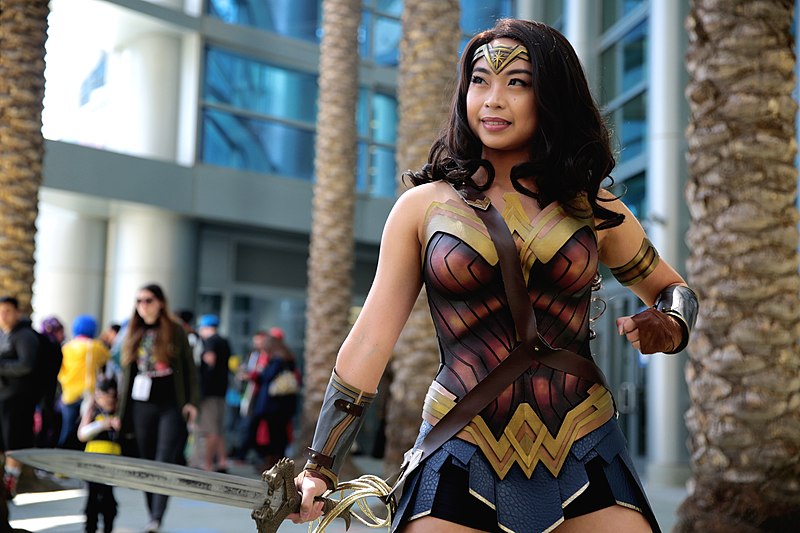
For this reason, it merits highlighting positive examples of women heroes and leaders who take up space onscreen, especially in contexts historically associated with men; who behave effectively; and who are never shamed, beaten, or degraded by their storyline. 2017’s Wonder Woman, for instance, was refreshing in its depiction of a woman in a style reminiscent of classic male hero: protagonist Diana stars in a war narrative, inhabits a highly masculinized hero role wherein she is physically invincible, and is never narratively “put in her place.” Other examples of smart, competent women permitted to unapologetically own their screen time include the eponymous Xena (Xena: Warrior Princess, 1995-2001) and, more recently, the strong-willed Anne Lister of Gentleman Jack (2019). Such characters are noteworthy for being shown as confident and powerful without being punished for it, or at least not in a manner presented as justified – and if they do suffer censure, they always get the final word.

It is also worth noting that these three women characters are all either queer or queer-coded, suggesting greater liberty is permitted to female characters who already canonically exist mostly beyond the male gaze (or at least, beyond the male reach). Given film and television’s increasing acceptance of queer identities, this correlation suggests more effective female heroes and leaders could be coming to our screens. Nevertheless, a limitation of this trend is that these women are potentially “permitted” stereotypically masculine qualities – like heroism, physical strength, and gut-based intuition – in part to uphold heteronormative standards sometimes imposed over queer relationships. Indeed, while these characters’ masculinity offers much-needed positive depictions of masculine women, the emphasis on it simultaneously reinforces butch/femme dichotomies between these characters and their love interests. Such dichotomies can be read as compulsorily heteronormative for implying that in queer relationships in particular, one partner must always embody the stereotypical role of “the woman” and the other of “the man.” I would also argue that storytelling continues to operate within the bell jar of patriarchy if women characters must embody traditionally masculine traits in order to be allowed to lead and succeed in their stories.

That said, although these characters are often recognized for their masculinity, they also exemplify a healthy blend of masculine and feminine qualities – perhaps even providing an alternative template for action films’ hyper-masculine male heroes and leaders. While Diana, Xena, and Anne spend the bulk of their time striding purposely, getting tasks done, and refusing to be belittled or sidelined by other people, their emotional journeys are central to their storylines without detracting from perceptions of them as competent, effective heroes and individuals. They are respected and shown to be both strategically and emotionally intelligent. Barring the fact that two of these women are to varying degrees immortal, and one is a snob: could this be closer to the incarnation and behavior of truly aspirational, human female heroes?

Writing competent female heroes and leaders for the screen should not be mission impossible.

Writing competent female heroes and leaders for the screen should not be mission impossible. If you tell your audience your character is competent and intelligent – perhaps even more competent and intelligent than the brawny two-dimensional action man – then show her leading, being listened to, and getting things right. Have her win the way angsty male, alcoholic test-failing secret agents are regularly allowed to win. Because at the end of the tale, this trend of associating women with book smarts and training smarts – but not instinctual smarts and born-leader smarts – ultimately implies that the place of women really is always one step behind the male hero. Their depiction onscreen suggests their intelligence and skill are learned rather than innate, and therefore quietly lacking and inferior to those of men, and their leadership secret sauce of pure masculine instinct.

Funnily enough, in the months following the emergence of the coronavirus, it was women leaders who were especially praised. What do Denmark, Finland, Germany, Iceland, New Zealand, Norway, and Taiwan all have in common? Proactive government responses to the coronavirus; low pandemic-related death rates; and female leaders. Granted, it is simplistic and essentialist to conclude that female leaders are effective by virtue of gendered attributes: after all, these countries also benefit from being developed and relatively egalitarian, which fosters women in power. Yet, at the very least, this pattern suggests women leaders deserve to be up there with the boys—”born-leader” mentality and gut instinct irrelevant. Indeed, it is almost as if the leadership secret sauce that so many male heroes and leaders possess onscreen is really just an excuse to belittle competent women, and to keep them one step behind a mediocre man.  

Women have long shown that they have what it takes to lead, both onscreen and in real life, if only they are respected in their leadership roles as men would be. One does not need the gut instinct of Tom Cruise to recognize it is time we stopped patronizing them.

Mami’s Gone, Let’s Ditch the Babysitter

rosie the robot

While Mami works the hotel rooms, Susana, la vecina and our babysitter, talks mad shit, says Dad doesn’t pay child support because of what a banshee Mami’s become, says Mami doesn’t know how to Mami, “Look at how she doesn’t even comb your pelitos,” “Look at how she lets you paints your fingernails like a girl,” “Look at how you can still see the dirt under your nails como un cochino,” says Mami is built like a garbage dumpster and how she and I need to stop eating and talking all that junk. 

I tell Susana her face and hairdo are como un Chow Chow, and her face snarls and she bares her teeth, proving me right, and she yells for me to get out of her house. On all fours, I bark at her, pant, and skedaddle.

I don’t tell Mami because she has enough to be mad about and plus I want my eleven-year-old freedom. Nobody notices when I stop going over and Gull starts coming over.

Like Pig-Pen from Charlie Brown, my buddy Gull slouches everywhere covered in grease, Dorito crumbs, and probably piojos. He smells like socks. Gull’s his name because of an eye that wanders around birdlike. He strays the streets like the holy callejeras of La Virgen de Guadalupe Avenue. Swishing them bird hips. I want that type of freedom: to be a gull. 

On the nights Mami has no mornings to wake up for, she brags about her body to the phone. 

“I’ve got that Coca Cola bottle shape,” she whispers to a man, who is not Dad, who is not the man who called me a faggot when I was eight and then never returned.

I wonder if she measures herself in ounces or liters as she sardines her body into a dress fashioned from Goodwill curtains. Rhinestones trace the floral pattern. Mami presses on lashes, paints her lips and lines her eyeballs but honest to God no matter what she puts on she always looks like big-butted Rosie the Robot to me. Mami’s government name is Rosalinda. She glides out of the bathroom, out of the living room, out of the house. The screen door slaps, and I look out to make sure wheels haven’t replaced her feet.

Gull and I turn to each other. We make robot noises and giggle and kiss and fly away.

9 Novels With Narrators Retelling Stories They’ve Heard

Remember My Dinner With André? Wallace Shawn and André Gregory sit down for a dinner during which, among other things, André Gregory opines at length about his weirdo experiences at the radical fringe of experimental theater. 

Now imagine, if you will, a film called My Dinner With My Dinner with André’s Wallace Shawn, in which someone—let’s say me—has dinner with Wallace Shawn, and Wallace Shawn proceeds to tell me everything André Gregory said to him in the original film. 

Would it be a celebration of the ways in which stories are transmitted through our culture, or would it be an unhinged mess, hovering on the edge of madness? We’ll probably never know. (On the off chance Wallace Shawn is down for it, I’m available.)

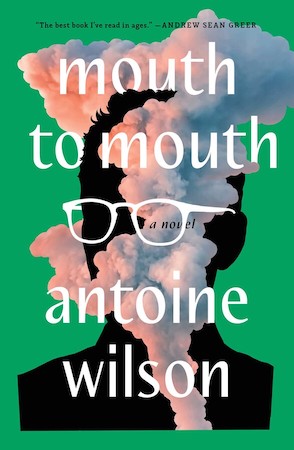
Years ago, I was on the verge of abandoning the draft of what would become my novel Mouth to Mouth. I’d been wrestling for a long time with the idea of a relationship between a drowning man and his rescuer, but I kept hitting dead ends, unable to settle on the right point of view. Then I reread one of the books on this list and it cracked the whole thing open for me. The way forward, I realized, was to embed the act of storytelling into the story itself. And so, in Mouth to Mouth, the successful art dealer Jeff Cook unspools the story of his rise to our unnamed narrator, a former college classmate he hasn’t seen in almost two decades, thereby transforming a first-class lounge at JFK into an impromptu confessional.

Nested narrators have been around since the dawn of storytelling, one storyteller passing on a story they heard from another, mixing direct and indirect dialogue as they repurpose it second-hand, but the following books take the technique to a whole other level, whether to splinter the idea of a central voice, question the nature of storytelling, rupture the forms we’ve become accustomed to, or, as it were, to make the novel novel again.

Pedro Páramo by Juan Rulfo

Juan Preciado, the narrator—initially, at least—of this surreal masterpiece, comes to the town of Comala in search of his father, Pedro Páramo, having promised his mother that he’d make the journey after she died. He finds the town abandoned. A straightforward opening belies the narrative complexity that follows, as the book shifts from Juan’s narration to another “I” (Pedro Páramo himself, in the past, which is not immediately obvious), and then into a third-person omniscient that lets everyone in the village, past (inhabitants) and present (ghosts) have their say. Rulfo claimed that the novel’s structure was “made of silences, of hanging threads, of cut scenes, where everything occurs in a simultaneous time which is a no-time,” which while likely confounding the casual reader, yields sublime rewards for the dedicated one.

Gargoyles by Thomas Bernhard

This second novel from Austria’s pre-eminent rant-meister is narrated by a doctor’s son following his father on his rounds through the gloomy and treacherous countryside, calling on one patient after another, all of whom suffer from various horrible ailments. For 80 pages or so, it’s a parade of grotesques, then doctor and son arrive at the local castle, Hochgobernitz, where they encounter the suicidal insomniac Prince Saurau, whose unhinged philosophical monologue dominates the next 80 pages. How unhinged? At one point, Saurau quotes, verbatim, passages from a dream in which he watches his son writing. The debut of what would become Bernhard’s trademark style, Gargoyles answers the question: What would Heart of Darkness be like if Conrad had let Kurtz take over halfway through?

Life of Pi by Yann Martel

Opening with an author’s note which declares that Pi Patel’s survival narrative will be told in the first-person, but that “any inaccuracies or mistakes are mine,” Life of Pi announces itself from the start as an act of literary ventriloquism. Martel deploys his frame narrative paradoxically, both to buttress verisimilitude—as many novelists have done before him—and to undermine his protagonist’s narrative. In doing so, he spins an old-school tale for modern times, one that reminds us that some fictions are worth believing.

Austerlitz by W.G. Sebald

Jacques Austerlitz, transported as a child from Prague to England in 1939, raised as Dafydd Elias by a Welsh couple, recovers his identity and comes to terms with his past, including the fates of those who were left behind, in this atmospheric and meditative masterpiece from the late German writer. The nameless narrator, a contemplative and diaphanous figure, encounters Austerlitz several times over 30 years and listens to his harrowing story. In summary, indirect dialogue, and direct dialogue, Austerlitz’s voice and experience permeate the book and—crucially—the narrator as well. Why Sebald uses a narrator rather than letting Austerlitz tell his story directly is a question without a simple answer, but the narrator’s somewhat permeable presence is integral to this unique novel.

Infinity: The Story of a Moment by Gabriel Josipovici

A chronicle of the personal and creative evolution of Tancredo Pavone, an aristocratic Sicilian avant-garde composer, Infinity consists entirely of an unnamed narrator’s interview with Pavone’s former manservant, Massimo. Pavone’s eccentric soliloquies, faithfully recreated for the narrator by the unflappable Massimo, shine with profundity and humor as we bear witness to a guy bearing witness to a guy bearing witness to them.

Flights by Olga Tokarczuk

An encyclopedic patchwork of fiction, essays, and meditations, Nobel laureate Tokarczuk’s co-called “constellation novel” is narrated by an unnamed Polish writer averse to putting down roots anywhere in particular. Reading the first chapters, one might expect Flights to develop as an extended autofiction or a memoir-a-clef, but it isn’t long before the form ruptures and admits a panoply of narrative modes. Some chapters are thick with indirect dialogue, others are written entirely in first-person from different characters’ perspectives. The writer-narrator reappears throughout, but it’s Tokarczuk’s twin themes of travel and wonder that make this wild miscellany cohere.

Outline, Transit, & Kudos by Rachel Cusk

Faye, the narrator of these three novels—Kudos to Cusk for breaking the nameless narrator mold—is a recently divorced writer and mother of two boys about whom we don’t learn much in the way of biographical detail. She proceeds through the trilogy as a kind of non-detached oral historian, taking in the stories of the regular people she encounters and relating them to us, verbatim at times, indirectly at other times, always with a piercing attention to detail and a generous intelligence. More than any author on this list, Cusk commits to passing the mic, and the result is stunning. It’s not hyperbole to say that she’s discovered a new way forward for the novel.

62 Books By Women of Color to Read in 2022

In early 2016, I started compiling a list of books I was anticipating by women writers of color because, as a reader and occasional critic, I was having trouble finding such titles. If I was coming up short, I thought, then others surely were, too, and maybe it would be useful if I published my findings.

That first list became one of Electric Literature‘s most-shared pieces of 2016, and before long, to my surprise, I heard it was helping inform other publications’ books coverage, teachers’ syllabi, and book prize considerations. Since then, I’ve put together such a list every year with Electric Literature; meanwhile, I continue to hope that publishing and American letters will become so fully inclusive as to render this effort obsolete. We’re not there yet.

About the methodology: these are some of the 2022 books that I, personally, am anticipating, and the list is front-loaded toward the earlier part of the year, as there isn’t as much information yet about books publishing in the fall and later. The term “of color” is a necessarily flawed label with ever-adapting nuances and interpretations. And though I love and require poetry, as a novelist and essayist I’m less aware of what’s to come in poetry, so here I address only books of prose.

If I’ve missed a title you’re excited about, please consider supporting it by preordering it from your local independent bookstore, placing a hold at your library, telling others about it, or all of the above. These are difficult times for so many people, very much including writers, booksellers, librarians, and the bibliophiles who work in publishing. 

In a lifetime of loving books, I’ve perhaps never been as thankful as I have in recent years for the light that books can provide. Please join me in celebrating the books coming our way.

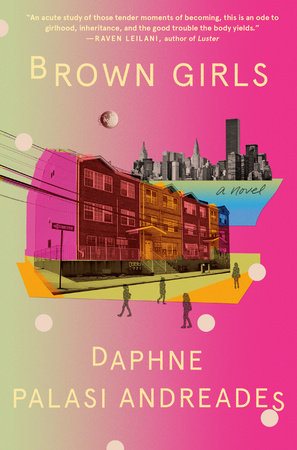
Brown Girls by Daphne Palasi Andreades (Jan. 4)

This debut novel about a group of young women of color in Queens is narrated in the bravura, underused first-person plural. Alexandra Kleeman says Brown Girls is “seething with raw, exuberant life,” “an epic told in the register of the yearning, vivid experiences of its characters.”

The School for Good Mothers by Jessamine Chan (Jan. 4)

Chan’s debut is about a Chinese American mother placed by the state in a government reform program for “bad mothers.” Carmen Maria Machado says it’s a “terrifying novel about mass surveillance, loneliness, and the impossible measurements of motherhood.” I initially heard about this novel in Midtown Scholar, a gorgeous bookstore in Harrisburg, Pennsylvania, and have looked forward to reading it ever since.

Olga Dies Dreaming by Xochitl Gonzalez (Jan. 4)

In the months following Hurricane Maria, a Puerto Rican radical who’d left her children to be raised by their Brooklyn grandmother returns to their lives after they’ve become adults: one child a beloved congressman, the other a wedding planner for powerful people in Manhattan. Jaquira Díaz calls Olga Dies Dreaming “an unflinching examination of capitalism, corruption, gentrification, colonialism, and their effects on marginalized people.” 

Fiona and Jane by Jean Chen Ho (Jan. 4)

I have long maintained that there aren’t nearly enough books centered on the intricate, fascinating complexities of close female friendship, and I’m so glad to learn that Ho’s novel Fiona and Jane follows a deep friendship between two Taiwanese American women. I must read this book. Publishers, please give us more books about friendship.

People Change by Vivek Shraya (Jan. 4)

The author of I’m Afraid of Men, The Subtweet, and God Loves Hairall three of which are Lambda Literary Award finalists for, respectively, transgender nonfiction, transgender fiction, and children’s books—returns to nonfiction with this meditation on change. Elliot Page praises the book as “a deeply generous and honest gift to the world.”

The Year We Learned to Fly by Jacqueline Woodson, illustrated by Rafael López (Jan. 4)

I’m fairly new to being an aunt, and, unsurprisingly, one of the great pleasures of aunthood has been finding and buying books for my little niece and nephew. This children’s book from the marvelous Woodson, illustrated by Rafael López, is about siblings who, trapped inside on a dreary day, use their imaginations to fly. 

This Boy We Made: A Memoir of Motherhood, Genetics, and Facing the Unknown by Taylor Harris (Jan. 11)

Harris is another writer whose insightful work I’ve followed for a while, and I’m thrilled that her debut memoir, This Boy We Made, about motherhood, racism, and disability, will be here soon. Nicole Chung says, “My rule to read everything Taylor Harris writes has never failed me.”

To Paradise by Hanya Yanagihara (Jan. 11)

The many admirers of Yanagihara’s previous novel, A Little Life, will be delighted about the advent of this new novel, which Michael Cunningham calls “a transcendent, visionary novel of stunning scope and depth.”

Manifesto by Bernardine Evaristo (Jan. 18)

Manifesto is a memoir from the formidable, Booker Prize-winning Evaristo that addresses her childhood as one of eight siblings, experiences with Britain’s first Black women’s theater company, and queer relationships. In The Guardian, Kuba Shand-Baptiste calls the book “a rallying cry.”

Fresh Banana Leaves: Healing Indigenous Landscapes Through Indigenous Science by Jessica Hernandez (Jan. 18)

Hernandez is a Maya Ch’orti’ and Zapotec environmental scientist, and in Fresh Banana Leaves she discusses and contextualizes Indigenous environmental knowledge and land stewardship practices, alternatives to the ongoing eco-colonialist destruction of this earth, our only home.

You Don’t Know Us Negroes and Other Essays by Zora Neale Hurston, Henry Louis Gates, & Genevieve West (Jan. 18)

This is the first comprehensive collection of the titanic Hurston’s essays, criticism, and articles—at last and hallelujah!

Admissions: A Memoir of Surviving Boarding School by Kendra James (Jan. 18)

James, a founding editor of Shondaland.com and a former prep school admissions officer, has written a memoir of her experience as a Black student at a mostly white prep school. R. Eric Thomas calls Admissions “a crucial account for our moment—asking and answering the question of how power is held, shifted, and grasped after by even the youngest in our society.”

For Laika: The Dog Who Learned the Names of the Stars by Kai Cheng Thom, illustrated by Kai Yun Ching (Jan. 18)

Thom’s advice column in Xtra, “Ask Kai: Advice for the Apocalypse,” is rich in grace and wisdom, and now she has a children’s book, For Laika, illustrated by Kai Yun Ching. The picture book is about an orphaned stray dog who ends up traveling toward the stars. 

Joan is Okay by Weike Wang (Jan. 18)

When I read Wang’s first novel, Chemistry, I was on a plane ride, sitting in a middle seat, and I had no tissues in my handbag. I remember all this because the book moved me so profoundly that, stuck in that middle seat, lacking tissues, I couldn’t stop crying. Her new novel is about an ICU doctor, and Sigrid Nunez says it’s “incisive yet tender, written with elegant style and delicious verve.”

Violeta by Isabel Allende (Jan. 25)

The exhilarating Allende has written a historical saga in epistolary form, and it takes place during the upheaval of the First World War, the Spanish Flu, and the Great Depression. 

South to America: A Journey Below the Mason Dixon to Understand the Soul of a Nation by Imani Perry (Jan. 25)

I fervently love Perry’s writing, and if you’ve had the luck of reading her brilliant work, you probably do, too. If anyone can help us better understand the soul of this heartbreaking nation, it’s Perry, and I can’t wait to read South to America. 

Lesser Known Monsters of the 21st Century by Kim Fu (Feb. 1)

Fu’s fiction is mesmerizing, and her new book is a collection of fantastical tales featuring sea monsters and haunted dolls. Lucy Tan says “each story is spectacularly smart, hybrid in genre, and bold with intention.”

Jawbone by Mónica Ojeda, translated by Sarah Booker (Feb. 8)

Novelist and poet Ojeda’s Jawbone takes place at an elite Catholic high school, and incorporates a secret society, a hostage situation, and dangerous rituals. According to Andrés Barba, Ojeda “has at her disposal the most enviable combination I can imagine, and she has it in spades: a lucid mind, an exacting language, and a wild heart.”

Reclaim the Stars: 17 Tales Across Realms & Space, edited by Zoraida Córdova (Feb. 15)

An anthology of otherworldly, speculative, and ghost-filled stories from Latine writers including Lilliam Rivera, Claribel A. Ortega, Daniel José Older, and David Bowles.

When I’m Gone, Look for Me in the East by Quan Barry (Feb. 22)

A monk and his twin travel across Mongolia to try to find the reincarnation of a great lama in this new book from the novelist, playwright, and poet Barry. 

The Lost Dreamer by Lizz Huerta (Mar. 1)

I first came across Huerta’s writing in 2009, and have since eagerly anticipated her debut book. The Lost Dreamer is a fantasy inspired by Mesoamerica, and is about seers resisting an ancient patriarchal state. 

The Last Suspicious Holdout by Ladee Hubbard (Mar. 8)

Here is what Toni Morrison said about Hubbard’s previous book, The Talented Ribkins: “for sheer reading pleasure Hubbard’s original and wildly inventive novel is in a class by itself.” I mean, damn. Hubbard is now back with a story collection centered on a Black community in a southern suburb. 

Red Paint: The Ancestral Autobiography of a Coast Salish Punk by Sasha LaPointe (Mar. 8)

Red Paint is a miraculous book,” says Elissa Washuta, and Melissa Febos calls it “an ode to healing and to healers, told by someone who intimately knows both.” This autobiography by LaPointe, a Coast Salish author from the Nooksack and Upper Skagit Indian tribes, incorporates punk rock aesthetics, spiritual practices, and a search for home.

When We Were Birds by Ayanna Lloyd Banwo (Mar. 15)

Robert P. Jones says that this debut, a mythic love story about outsiders who meet in a Trinidadian cemetery, “more than sings, more than beams,” “the kind of story that makes you want to spread your arms open wide, embrace the sky, and take flight in your own little way.”

A Ballad of Love and Glory by Reyna Grande (Mar. 15)

In 1846, during the Mexican-American War, a Mexican healer named Ximena Salomé finds passion with an Irish immigrant, John Riley, who is fighting on the American side of the conflict. A story of dangerous attraction from the splendid Grande. 

Vagabonds! by Eloghosa Osunde (Mar. 15)

Vagabonds! takes place in Lagos, among people and spirits whose existence is outlawed. “A feast of a book, a marvelous ode to spirits and outsiders that is irreverent (and painfully funny) while being serious enough to drill a hole in one’s chest. There is nothing in the world like this book,” says Lesley Nneka Arimah. 

Disorientation by Elaine Hsieh Chou (Mar. 22)

Chou’s campus satire about the misadventures of an anxious Taiwanese American PhD student has been praised by Raven Leilani for addressing “the private absurdities the soul must endure to get free, from tokenism, the quiet exploitation of well-meaning institutions, and the bondage that is self-imposed.” Alexander Chee says, “I often held my breath until I laughed and I wouldn’t dare compare it or Chou to anyone writing now.”

The Return of Faraz Ali by Aamina Ahmad (Apr. 5)

A father calls his son to Lahore to cover up the violent death of a girl, but the son finds he can’t obey his orders. “Ahmad has managed to meld fast-paced, intelligent noir with a devastating portrait of the true costs of ambition and desire,” says Maaza Mengiste. 

Probably Ruby by Lisa Bird-Wilson (Apr. 5)

A Métis woman adopted by white parents goes in search of her history and birth family. “Probably Ruby reminds us that our stories are acts of survival,” says Kelli Jo Ford, and that “grief, too, can be a gift.” 

Post-Traumatic by Chantal V. Johnson (Apr. 5)

Vivian, a lawyer who advocates for mentally ill patients in a psychiatric hospital, starts unraveling after a family reunion. The novel is “violently funny,” according to Myriam Gurba, and Deesha Philyaw says it’s a “raw, brilliant, and unforgettable” debut from a Center for Fiction Emerging Writers Fellow.

If an Egyptian Cannot Speak English by Noor Naga (Apr. 5)

Winner of the Graywolf Press African Fiction Prize, If an Egyptian Cannot Speak English takes place between an Egyptian American woman and a man from the village of Shobrakheit. They meet at a Cairo café and fall in love, and then violence irrupts into their romance. 

Four Treasures of the Sky by Jenny Tinghui Zhang (Apr. 5)

A Chinese girl named Daiyu is kidnapped and smuggled across the ocean to the American West of the 1880s. Anti-Chinese hatred is sweeping the country, and she has to learn how to survive. 

A Tiny Upward Shove by Melissa Chadburn (Apr. 12)

A young woman named Marina Salles wakes up dead, transformed into an aswang, a creature of myth out of her Filipina grandmother’s old stories. This cast-off woman can now access the hearts and memories of the people she’s known, in a debut that, according to Sarah Shun-Lien Bynum, is “fueled by a wild, jagged energy and an exuberant mixing of cultures and a narrator whose frank, poignant voice will keep echoing in your head.”

Take My Hand by Dolen Perkins-Valdez (Apr. 12)

Take My Hand is the third novel from the New York Times-bestselling Perkins-Valdez, and it begins in Montgomery, Alabama in 1973 with a nurse who works at a family-planning clinic. Celeste Ng says the book “is an unforgettable exploration of responsibility and redemption, the dangers of good intentions, and the folly of believing anyone can decide what’s best for another’s life.”

Forbidden City by Vanessa Hua (Apr. 19)

I’ve waited impatiently for this novel since hearing Hua read from it more than a decade ago. A village girl named Mei who becomes Mao Zedong’s confidante and lover finds herself playing the role of a Cultural Revolution hero. “How to negotiate the maze of the Forbidden City? How to escape? An intriguing and suspenseful story,” says Maxine Hong Kingston.

Happy for You by Claire Stanford (Apr. 19)

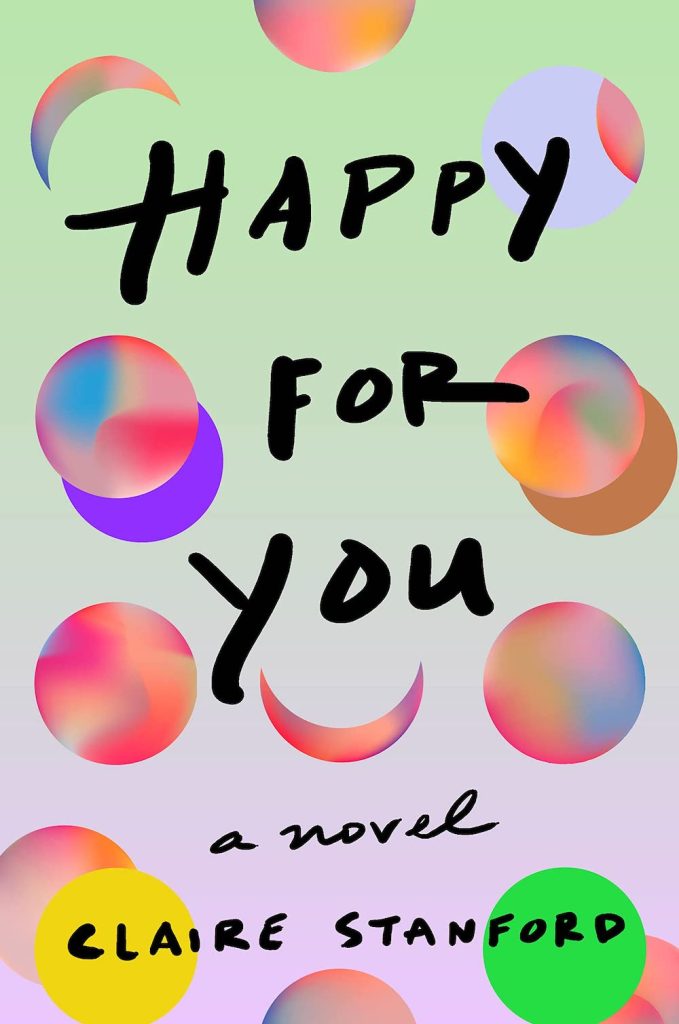
A biracial philosophy student reluctantly takes a job at an internet company in Silicon Valley. I’ve been curious about this book for years, and Rachel Khong praises it as “the optimal novel for the strange times we find ourselves in … droll, incisive, and moving.”

Shine Bright: A Very Personal History of Black Women in Pop by Danyel Smith (Apr. 19)

A history of Black women’s music as the foundational story of American pop, starting with Phillis Wheatley and continuing through Dionne Warwick, Aretha Franklin, Mariah Carey, and other musical luminaries. 

By the Book: A Meant to Be Novel by Jasmine Guillory (May 3)

Guillory, whose books are unfailingly a delight, has reimagined a tale as old as time, in this case with a novel about an overworked junior employee in publishing who travels to the house of a prominent, jaded writer—a beastly writer, one might say—to convince him to deliver his long-delayed manuscript. Difficulties ensue, then comes an unexpected love.

Little Rabbit by Alyssa Songsiridej (May 3)

A queer woman writer meets an older man, a loud, domineering choreographer, at an artists’ retreat in Maine and has sex with him. She keeps seeing him, and her desire intensifies, perhaps to excess. A debut exploring questions of agency, lust, power, selfhood, and art. (Alyssa Songsiridej is the current managing editor for Electric Literature.)

The Immortal King Rao by Vauhini Vara (May 3)

This is another novel I’ve awaited a long time, and it is indelible, a brilliant epic about a Dalit immigrant who becomes terribly, unimaginably powerful, and about what happens to his child. The Immortal King Rao is something new, and it astonished me.

Bitter Orange Tree by Jokha Alharthi, translated by Marilyn Booth (May 10)

In Bitter Orange Tree, Man Booker International Prize–winning author Alharthi alternates between the life of Zuhour, an Omani student at a British university, and Bint Amir, the woman Zuhour has thought of as her grandmother, and who has recently died. James Wood says Alharthi has “constructed her own novelistic form.”

Essential Labor: Mothering as Social Change by Angela Garbes (May 10)

Essential Labor is a manifesto and reflection on the emergency conditions of caregiving in America, an emergency whose magnitude and importance should be, but isn’t yet, plain to every person in this country. Garbes, author of the excellent Like a Mother, interrogates and reports on what mothering is and what it could be.

A Down Home Meal For These Difficult Times by Meron Hadero (May 10)

This debut story collection about immigrants and refugees includes stories that have received a Caine Prize for African Writing and appeared in Best American Short Stories, McSweeney’s, and Zyzzyva

Breathe and Count Back from Ten by Natalia Sylvester (May 10)

Verónica, a high school student with hip dysplasia, auditions to work at the Mermaid Cove, a kitschy attraction where mermaids perform in giant tanks. Her plans change when she learns what her parents have been hiding from her about her body. Sylvester has deservedly received an International Latino Book Award for her previous work. 

Neruda on the Park by Cleyvis Natera (May 17)

Natera’s debut follows a Dominican family in New York City contending with the gentrification encroaching on their neighborhood of twenty years. Angie Cruz says, “Neruda on the Park is the book we need and the reason I read.” 

Nightcrawling by Leila Mottley (May 24)

From a previous Oakland Youth Poet Laureate, a first novel about a Black woman who stumbles into a scandal in the Oakland police department. According to Ayana Mathis, the book is “fierce and devastating, rendered with electrifying urgency by this colossal young talent.”

The Evening Hero by Marie Myung-Ok Lee (May 24)

For fifty years, Dr. Kwak, an obstetrician and Korean immigrant, has worked at a hospital in a small Minnesota town. One day, a letter arrives that upends his entire life. From the trailblazing author of Finding My Voice and Saving Goodbye, among other books.

Counterfeit by Kirstin Chen (June 7)

A pair of old friends, both Asian American women, turn a counterfeit luxury handbag scheme into a spectacularly successful global business, a success threatened when one of the two women vanishes. Longstanding friendship, fake luxury, and elaborate theft, in a novel Claire Messud calls “sly and thoroughly compelling,” and from a writer whose previous novels have been utterly captivating—yes, please. 

Woman of Light by Kali Fajardo-Anstine (June 7)

A novel with vast reach, spanning five generations of a family living in the American West, from the acclaimed Fajardo-Anstine. Emma Straub says, “this indelible novel shines its big light on the Lopez family so brightly that I could draw a map of their breath.”

Dele Weds Destiny by Tomi Obaro (June 28)

Three formerly tight-knit college friends reunite in Lagos for an important wedding. In the intervening years, there have been ruptures, distances, and other significant changes, and the days before the wedding build to a crisis. “The bonds between women—as friends, and across the generations—are the jewels that make this story shine,” says Tayari Jones. I would like to read this immediately.

The Leaving by Jumi Bello (July 12)

Having read an early excerpt of The Leaving, I found Bello’s writing to be lyrical and potent, a feat. In this novel about a legacy of trauma and mental illness, a woman records messages for her unborn child. 

Body Language: Writers on Identity, Physicality, and Making Space for Ourselves, edited by Nicole Chung & Matt Ortile (July 12)

Chung’s writing and editing are a great gift to us all, and in Body Language she teams up with the also wonderful Matt Ortile to edit an anthology about embodiment, race, desire, illness, and more, with essays from some of the most exciting writers publishing nowadays.

The Man Who Could Move Clouds by Ingrid Rojas Contreras (July 12)

Of the books mentioned here, The Man Who Could Move Clouds is the only one I’ve already had the great luck of reading twice. This is a virtuosic, groundbreaking memoir of Rojas Contreras’ tremendous family history of curanderos, ghosts, powerful women, and healing abilities, and it has shifted my understanding of perception and loss. It is also often wildly hilarious.

Crying in the Bathroom by Erika L. Sánchez (July 12)

From the bestselling writer of I Am Not Your Perfect Mexican Daughter, a memoir of growing up as the daughter of immigrants in Chicago, and about everything from a childhood as a pariah to white feminism to loving comedy.

How to Read Now by Elaine Castillo (July 26)

The author of the magnificent America Is Not the Heart has written an exploration of the ethics and politics, especially the racial politics, of our reading cultures. I want to know everything Castillo has to say about this, and her wide-ranging book includes deep reads of anime, Peter Handke, and the art of the mixtape. 

Animal Joy: A Book of Laughter and Resuscitation by Nuar Alsadir (Aug. 2)

Subtitled as a book of laughter and resuscitation, this associative book has at its center the author’s relationship with her daughters, in a debut described by the publisher as an ode to spontaneity and feeling alive.

The Women Could Fly by Megan Giddings (Aug. 9)

The Women Could Fly is a dystopian novel in which women, especially Black women, can be tried for witchcraft and must either marry by the age of 30 or sign up to be officially monitored. A book with echoes of Octavia Butler and Shirley Jackson.

Year of the Tiger by Alice Wong (Sep. 6)

A memoir from the phenomenal Wong, a disabled activist and director of the online community Disability Visibility Project. The book will be a collage of essays, conversations, graphics, and commissioned art by disabled and Asian American artists.

The Furrows by Namwali Serpell (Sep. 6)

During her childhood, Cassandra Williams’ little brother disappears in an accident, and as she grows older she starts seeing her brother in her everyday life. I’ll jump to read anything Serpell writes, and all the more so with a novel about grief and memory and longing.

On the Rooftop by Margaret Wilkerson Sexton (Sep. 6)

I’ve loved everything I’ve read of Sexton’s intricately nuanced, large-hearted work, and this National Book Award-nominated, NAACP Image Award-winning writer is back with her third book, this time a retelling of Fiddler on the Roof. Having had the chance to see part of it in advance, I’m deeply excited to read the rest of it.

Forgive Me Not by Jennifer Baker (Oct. 4)

Baker has been named a Publishers Weekly Star Watch “Superstar” because of her extraordinarily generous work “championing diversity in publishing.” She has also edited Everyday People: The Color of Life, a short story anthology, hosts the podcast Minorities in Publishing, and edits for Amistad Books. In August, she will publish a debut novel that takes place set in an alternate version of Queens, where the fate of juvenile offenders is decided by their victims and survivors.

8 Novels About Surviving in the Wilderness

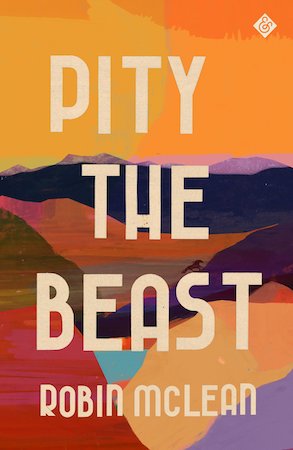
Though I am not a horse woman or cow person, I recently found myself writing an American Western. Pity the Beast started innocently enough—as a short story unfolding on a ranch in the northern U.S. Rockies with people in cowboy hats and boots, horses and cows. Westerns are fun to write, and I was hooked, ignorant though I was. As the short story moseyed toward novel length, and as the characters packed a mule train and saddled up and out into a huge imagined mountain range on horseback, I started reading books about survival journeys through a variety of harsh and wild places. Many were American Westerns too, some very new.

These books were, of course, useful to me in thinking more deeply about landscape, the cold-hot-hungry-thirsty smallness-of-self realizations that actual wilderness imposes. I knew some of this already. I’ve lived in very wild places for most of my adult life. I walk alone in remote desert canyons every day now, mountain lions certainly-sometimes looking on from cliffs, bears in Alaska before that when cell phones weren’t a thing. But the excellent fictions I’ve listed here were even more helpful to me in how they explored internal wildernesses, mappings of psychic and spiritual paths from Lostness to (some kind of) physical, moral or existential Foundness. 

You’ll notice that many of these books, like mine, center around orphans, widows and widowers, the abandoned, the dazed, the shunned, the outcast, and lots of women folk. The physical and moral stakes are high in all. As in all great journey literature of the past (think The Odyssey, Alice in Wonderland, Lord of the Rings), the travelers in these books must all navigate landscapes and mindscape through confusion, despair, rage mixed with love, elation and terror in order to live.

Ceremony by Leslie Marmon Silko

If you don’t know Ceremony by Leslie Marmon Silko, you should find this classic. Tayo is a WWII vet who returns to his New Mexico pueblo, ruined by modern existence and war. Across a devastated desert landscape, Tayo’s psychic journey weaves over mesas, into canyons and caves and through uranium dumps. Via myths, poems and witches’ songs, the book asks how did Eden die? And how can we live on if or when we see the truth?

In the Distance by Hernan Diaz

In the Pulitzer finalist In the Distance, a young Swedish immigrant arrives on the American West coast alone and in search of his brother lost in transit. In a meandering path across the west on horseback, on foot, sleeping under rocks, Håkan ricochets through a labyrinthine landscape peopled by the bizarre and audacious, quick-on-their-feet con-men (and women) all striving for their daily bread and more by any means necessary, perhaps the most enduring of American credos. I like to think Diaz’s characters could be the great grandparents of the characters in my novel. 

Battleborn by Claire Vaye Watkins

In the Story Prize winner Battleborn, Claire Vaye Watkins’ modern-day Nevadans (I am one of them these days) are the true inheritors of the Old Wild West. In the short stories they populate, her characters are adapted to the harsh landscape. They are misfits, Manson followers, and missing persons. They inhabit brothels, dig desert debris of auto accidents, are quasi-prisoners in desert hideouts, seek out sparkling high rise casinos in Vegas where bad things happen. Watkins writes controlled chaos, dread and hope with the same virtuoso lines, wit and boldest of all feminist vantages.

Wyoming Stories by Annie Proulx

In Wyoming Stories, Annie Proulx can achieve more in three pages than other writers can do in a book. Beware. These stories are such impressive feats, they can prevent one from putting pen to paper. Proulx loves windy, hot, frigid Wyoming, portrays the West and its stoic inhabitants lovingly in her razor sharp prose. Here’s part of her love, though: she draws the ugliness too, the stupidity, blindness, roughness, the down-and-out stench of cow hands, the wink and cheap perfume of barmaids with the very same immaculate slicing edge. 

Train Dreams by Denis Johnson

Train Dreams follows the life of an orphan (turned almost-murderer, turned childless widower) across America in the 20th century post-Wild West. He wonders if he is cursed as he lives hand-to-mouth, wandering the western states his whole hardscrabbled lifetime as a railroad worker, a bridge builder. The novella captures American history through one man’s typical and (mostly) non-self-pitying experience. Johnson’s elegant prose is worth the read, while the content makes one scratch her head about the American Dream.

Outlawed by Anna North

Outlawed is a genre-busting, gender-busting, Wild West myth-busting story, wherein the famed Hole-in-the-Wall Gang of the Powder River Basin in Wyoming are all actually a bunch of barren women. They’ve been “outlawed” by their communities and families back home for the sin of being childless. They seek a Utopian home of diversity and acceptance. They will gunfight if they must. They seek science over myth as North turns the Western on its head, as well as the telling of history itself.

The Night Watchman by Louise Erdrich

In The Night Watchman, the families on the Turtle Mountain Cherokee Reservation of North Dakota attempt to hold on to their lands, homes, community and culture as Congress seeks to nullify their treaty, terminating their band. Their journey is to Washington and back. Based on actual legislative and activist events, the characters must maneuver through a wilderness of hostile federal bureaucracies, unfair working conditions, poverty and bigotry. It’s a David and Goliath fight, guided by the wisdom of traditional myths, helpful magical beings, hard work, boxing fundraisers, babies, friendship and deep faith in themselves. 

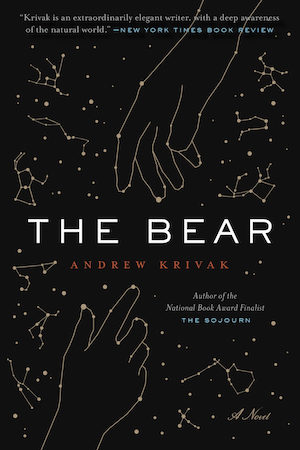
The Bear by Adam Krivac

I loved The Bear for its planetary scale and fairy tale vibe. I thought of a mythic, feminist version of Cormac McCarthy’s The Road—a last man standing story, but the last man is a girl. 

A Turkish American Novel About A Melancholic Young Woman in Istanbul

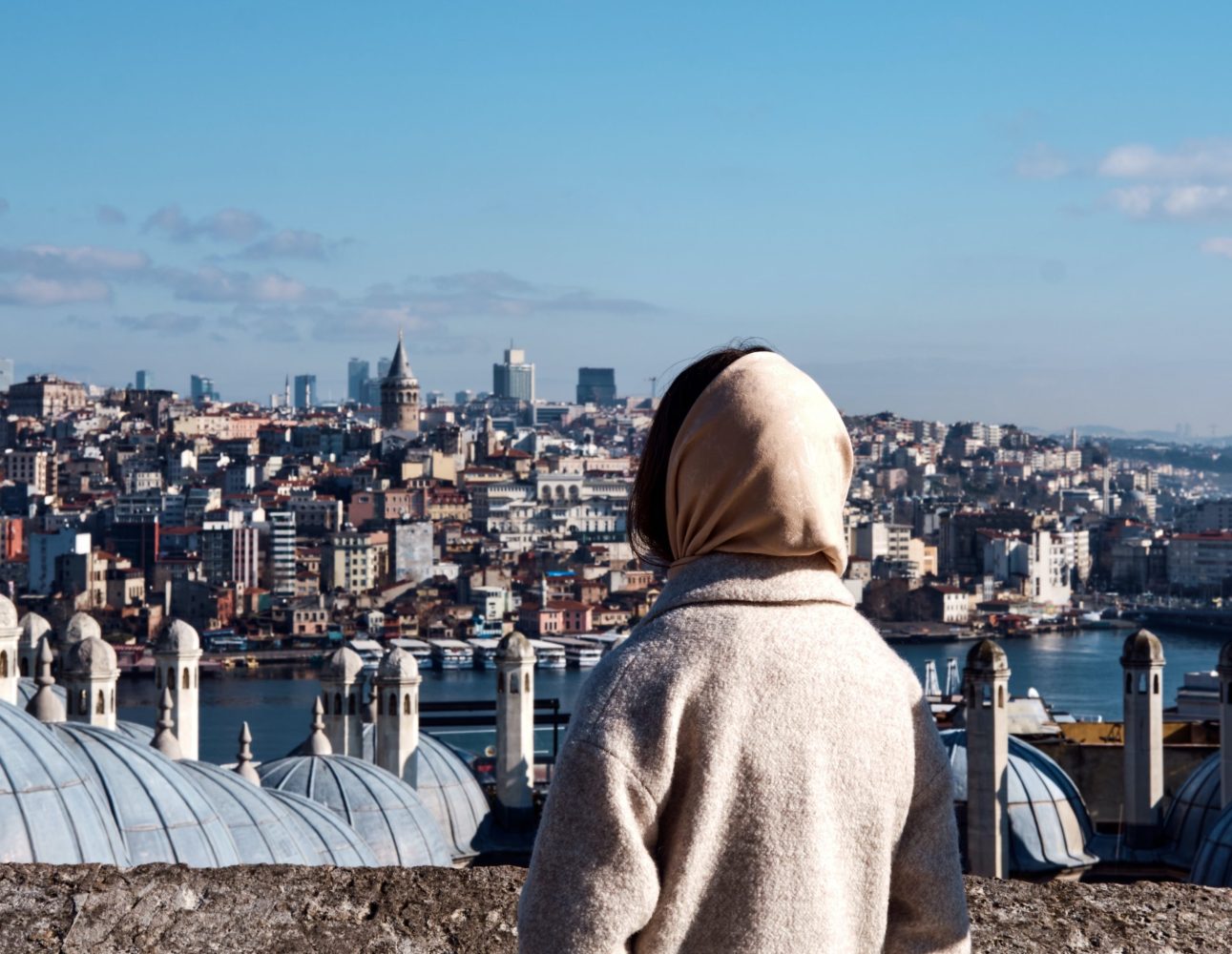
Growing up, once a year my anneanne (maternal grandmother) would visit my family in our suburban home in Ohio. Before returning to Istanbul, she never failed to stock our fridge with sigara börek, a puff pastry filled with cheese and rolled into the shape of a fat cigarette, as its name suggests. For months after, we cherished those treats made with love, savoring each crunch. The longer we could make them last, the longer we could hold onto a culture we struggled so hard to maintain in the Midwest. 

Fellow Turkish American Mina Seçkin captures this third culture sentiment in her captivating debut novel, The Four Humors. Within the first few pages, I flashed back to my own summers spent in Istanbul. Once again, I was 18 years old sipping on black tea while taking the ferry across the Boğaz to go shopping for towels at the bazaar with my anneanne. For the first time, I felt seen in a piece of literature. 

The Four Humors transports you into Sibel’s summer full of simit, cigarettes and secrets. A year after her father’s sudden death, Turkish American Sibel comes to Istanbul with the intention of visiting her father’s grave and caring for her babaanne (paternal grandmother) who has Parkinson’s. However, burdened with a chronic headache, she avoids grieving her father’s death by instead fixating on the Hippocratic theory of humorism and watching soap operas with her grandmother. 

When her grandmother reveals a secret about her father, Sibel dives headfirst down the rabbit hole of her family’s past. Coated in endearing wit, Sibel takes us on her journey of catharsis as she begins to process her father’s death with the help of the rich oral storytelling of the women in her family. 

On a chilly Sunday morning, I met Seçkin for Turkish breakfast at Antique Garage in Soho. Over sucuklu yumurta (eggs with spicy sausage), black olives, sour cherry jam and, importantly, thick sesame bread, we spoke about the unique Turkish identity, crafting authentic immigrant narratives and our grandmother’s remedies we just can’t seem to shake off.


Amy Omar: At what age did you first start writing? What did you write about? Were you always influenced by your family’s history and stories? 

Mina Seçkin: I started writing in high school in an incredibly supportive poetry class. My early poetry mostly revolved around the female body, sexuality, and consumption. It wasn’t very narrative, but there was a lot of body and a lot of eating, two backbones of The Four Humors. But I never addressed a cultural and ethnic identity in these poems.

When I started undergrad at Columbia, I took a fiction workshop for the first time, but even then, I was still in this exploratory process where I began writing narrative fiction, but focused mostly on themes surrounding alienated, gently manic white American women with names like Annabelle and Macy. I was introduced to many incredible short story writers like Mary Gaitskill, Lorrie Moore, George Saunders and Denis Johnson. The narrative voice in these was so zany, fun, and entirely human in their exposition of the strange, but the characters were far and away from my experiences growing up and those of my friends, many of whom are also kids of immigrants.

I had trouble finding that voice in novels that were about the immigrant experience or stories about people of color. It was like white authors were allowed to employ this zany voice, but other groups didn’t have that liberty. Their stories were expected to revolve around hardship and trauma. I was also wary of writing a story where, by emphasizing the otherness of the character, I would further other, exotify, and alienate my characters.

Around my junior year of college, I started writing a story about a Turkish American girl trying to lose her virginity, and I knew, as I began writing, that I could tell this story without making such a big deal about the ethnic identity of the narrator. I did receive pushback—comments like, there’s too much going on here with ethnicity and culture on top of this plot and complicated character—but I kept going. I began writing about Turkish American characters then and haven’t looked back since. I don’t know if I ever will, to be honest. 

AO: I know you started writing The Four Humors in 2014 on a trip visiting your grandmother in Istanbul. What was the initial spark and how has the story evolved since then? 

MS: This novel started as a short story. I wanted to tell the story of a girl and her grandmother, specifically focusing on how the older generation, especially grandmothers, insist on taking care of the younger generation—even if they have life-threatening illnesses. During the summer of 2014, I was staying with my grandmother and my great grandmother, who was 96 and had Alzheimer’s and dementia. It was the three of us staying in my grandmother’s apartment in Istanbul and my grandmother was not only caring for her mother but also for me; I had a chronic headache all summer that proceeded to last a year and my grandmother was more worried than I was. 

AO: Why was it important for you to focus on the oral history of your female characters, rather than male characters? 

MS: It’s not about the men. 

For a long time, and even now, women in Turkey and the wider Middle East were not customarily able to tell these stories because they weren’t given a platform that allowed preservation. Many of these women were not literate and whenever they did tell their stories, they were rarely documented or preserved. The reality is that history has always been written by men, so many of these female stories get buried within families and never get published.

It was like white authors were allowed to employ this zany voice, but other groups didn’t have that liberty. Their stories were expected to revolve around hardship and trauma.

The oral tradition is so prevalent in Turkey. I can’t even count the number of times the elders in my family have sat me down and told me dramatic stories of their past. This is why I needed the narrative frame in The Four Humors to be the grandmother and Refika sitting down and telling their stories directly to Sibel.  

I knew I could have written a much easier book by not going into the past, but I felt I had to; I had a responsibility to give these women the chance to tell their stories. An easy story is also not interesting to me, and it would not have suited a setting as complicated as Turkey. At one point, I even considered writing the novel entirely in the past and from the point of view of the grandmothers, but ultimately, I wanted the novel’s emphasis to be about how receiving a family story can change you, and can make you, in the youngest generation, choose to live differently. 

AO: You do a beautiful job of interweaving bilingualism into the novel, diving into the cultural meaning behind various phrases as a mechanism to show the presumably non-Turkish reader the cultural relevance each phrase holds. What role did bilingualism play in your development as a writer? Did your ability to speak in two tongues impact your English writing style? 

MS: I’m obsessed with this topic because as soon as I became aware of the power of language, I realized how much people would make fun of my family’s English—including my own. I began to notice how my father, who can’t really speak grammatically correct phrases, has his own way of expressing himself in English. By not knowing the correct grammar or cliché phrases, he instead reaches for things with a different sentiment and tries to get to the root of the original communication. He’ll use a different word that conveys the sensory experience with even more precision and raw feeling. He ends up a poet! I’m really grateful for this—it’s always made me see the power and the fun in breaking the rules of language.

In high school, I read Pnin by Vladimir Nabokov, a novel about exactly this topic. I think Nabokov didn’t write in his native tongue and that’s why he uses surprising words that a native speaker wouldn’t necessarily use. 

AO: What’s amazing is that modern Turkish is not inherently “Turkish”; it’s an amalgamation of Arabic, Farsi, Urdu, French, etc. 

MS: Exactly! I’m really against the idea that language isn’t meant to change or that there is one way of expressing yourself in a language.

AO: Going into your novel, I knew very little about humorism. However, growing up in a Turkish household, I could especially relate to the bits of eating yogurt while on your period and the garlic concoction grandmother makes for Sibel’s headaches. In contemporary times when there is so much science around healing, why do you think these non-medical practices still persist? Why are they so comforting? 

MS: When I first started reading about the four humors, I saw how they are still alive and well today, but in two different ways. One is the potions our grandmothers still make. The other is the more notorious wellness industrial complex, which takes the same narrative crafted by our grandmothers and packages turmeric for $80. Fundamentally both methods are not at odds with the other—the meaning of wellness has just become sullied. 

The reality is that history has always been written by men, so many of these female stories get buried within families and never get published.

Wellness is actually about taking comfort in something, not about becoming your best self. It’s about whatever taking care of yourself looks like for you and finding comfort and joy in that routine, not perfection. For Turks and so many others, it’s about trusting your grandmother’s remedies, regardless of the lack of scientific data. I’m still convinced that I feel sick after going outside with my hair wet, so yeah, I often make sure my hair’s dry before leaving the house.

AO: There are several parts of the novel where Sibel, a Turk raised in America, is subject to a certain level of disconnect to Turkey and her relatives there.  Sibel, like you and I, can be categorized as “third culture kids” not necessarily American nor Turkish. Could you speak to how this concept affected your identity as both an American and a Turk? 

MS: I feel like when you’re a kid of immigrants, you have this second coming of age and that’s when you start reckoning with where your family comes from and how you fit into that world. I always think about the privilege of having American citizenship and being able to just go to Istanbul for vacation, but also feeling the effects of what is happening in Turkey because your whole family is there and is living under sometimes conditions that are difficult in various ways. 

A few years ago, I was in Istanbul for the summer and my immediate family was about to return to New York a month earlier than me. I was initially excited to be on my own, but then I had this moment when I was in a cab with my sister and the driver started questioning us about our accents and where we were from. I was so overwhelmed—about my stay, about my relationship to the country, I started crying in the cab. What am I doing here? I remember asking my sister, why do I love this place so much when we’re not really from here?

One of the reasons I set my book in 2014 was because that was the first summer I was in Turkey going places by myself via public transportation. During earlier trips, I would be in a car with my family and recognize everything around me, but I didn’t have to use my own map and compass. That was the first summer I began to understand the city on my own terms.  

A few years later I was in a translation workshop, and I stumbled across this writer Leyla Erbil in the library. She was one of the founding members of the socialist group, Workers Party of Turkey, and her novel, A Strange Woman, was nominated for the Nobel Prize in Literature in 2002, but few family members and friends knew of her (they were not engaged with literature, to be fair). I was so struck by the voice of the protagonist who speaks her mind and who wants to do good, but also wants to talk about sex and is trying to fight her parents to let her do what she wants. Why weren’t more people talking about this woman?!

I’ve always been grappling with the fact that so much art and intellectual discourse is actively buried in Turkey, especially if that art is political or grazes against any taboo. And there are deep taboos in Turkey’s history, especially as it relates to how minorities within Turkey have been stripped of their rights and their lives. Over the years, my understanding of Turkey became different from my family’s—at least, I wasn’t as wary to engage with the country’s history critically because, in a sense, I had the freedom to. I also questioned whether I had the right. And I understood that within this, my being Turkish went hand-in-hand with my being American. That was the second coming of age for me.

AO: I find that Turkey is still a mystery to Americans. Are Turks European or Middle Eastern; religious or secular? Why do you think this is still the case? 

MS: It’s funny—a few days ago, I looked at how readers had digitally “shelved” The Four Humors on Goodreads and I was both shocked and not at all surprised; the various shelves perfectly encapsulated the Turk’s ongoing racial identity quandary. It was shelved most as “Middle Eastern.” It was also shelved as “Eastern Euro,” “Asian lit,” and “Western and Central Asian.” Then there was both “BIPOC” and “non-American white fiction.” I say this as an example of how impossible it is to answer this question without diving into a long essay on identity, Middle Eastern history, and Western power—an essay I’ve been attempting to write for quite some time. For now, I’ll say that I do believe that the Turk has always been Middle Eastern, or, to be more specific, Western Asian, and the desire to be seen as European—which not every Turk has had—has only ever been an aspirational glimmer. 

I’ve always been grappling with the fact that so much art and intellectual discourse is actively buried in Turkey, especially if that art is political or grazes against any taboo.

But for now, a little more about deluded Western aspirations and how they relate to assimilation, there’s this dish called manti, tiny meat filled pieces of dough served with a garlic yogurt sauce. Growing up, whenever my parents would describe manti to non-Turks in America, they would compare it to an Italian dish of ravioli or tortellini. I’d heard many other Turks in America describe it this same way, too. In reality, manti is a tiny dumpling—and the dish came from Central Asia. The meat is spiced. It tastes nothing like Italian pasta, and a lot more like East Asian dumplings. But Turkish Americans would insist on identifying it with a Western dish, perhaps aspirationally, but also perhaps because they thought that white Americans would like the dish more if it seemed Western. Many immigrants do this—I feel it’s Assimilation 101 to attempt to draw parallels with the racial group in power and not with the groups that are also new to the country and standing on undefined, shaky ground. 

Anyways, it’s my dream to host a “dumplings of the world” dinner party and make manti! 

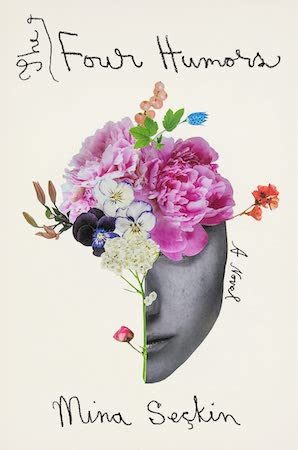
AO: The jacket of the novel was designed by Na Kim and illustrated by Ekin Su Koç. Can you elaborate on the significance of the cover and how you chose this design? 

MS: Ekin Su Koç is a Turkish artist based in Germany. About six years ago, I randomly came across her artwork online and fell in love. I felt like her art visualized everything I was interested in writing about. Her style is very collage oriented and features maps, women of all ages and generations, body parts, and geography in this way that summons history. Her themes summoned everything in The Four Humors. I told Catapult about her work, and Na Kim, who designed the cover of The Four Humors, featured a piece of Ekin’s. I couldn’t be happier with the result. 

AO: Why do you feel like this book is important to share in 2021? 

There are still not enough Middle Eastern stories in America and the region remains vastly misunderstood, especially from a female perspective.

MS: In jest, my mom once said to me, “Middle Eastern girls don’t get to be depressed.” I wanted to write toward what is considered ugly in both body and mind, an ugliness that my narrator manifests as an American kid of immigrants spending the summer in her parents’ country, where expectations are both different and familiar. Melancholy, otherwise known as black bile, has been around for centuries: it’s mood disturbance, it’s depression, it’s something we all grapple with—either often, or at certain times in our lives. I wanted to represent this mental state as it would affect a child of immigrants, a woman, a person ethnically from the Middle East but American, too.

There are still not enough Middle Eastern stories in America and the region remains vastly misunderstood, especially from a female perspective. And I wanted to be honest and realistic—I did not want to create an entirely “good” character. I was very intentional about crafting a protagonist who was a young woman who is “unlikeable.” In many ways, Sibel is a disaffected millennial, who isn’t doing what she is supposed to be doing throughout the novel. She isn’t caring for her grandmother. She’s outspoken and also entirely in her own head. She’s a secret smoker. She doesn’t care for the shame that is typically associated with the female body. It’s still not common to see these sorts of female characters who are Middle Eastern and I hope to read many, many more.

The Thin Line Between a Drill and an Emergency

Lockdown by Mark Jacquemain

to Caity P.

When it happens we’re in drama class, still caring about stuff that doesn’t matter. Like Final Project. It’s nearly the end of semester, so we’re in that stretch that’s all about Final Project. Which is why Yasmin wants to get right to it. Our group is miming an erupting volcano, and she thinks that gives us so much to work with. All week she’s been saying: “Guys, come on, we have so much to work with.” Yasmin’s like that, grade-crazy, and expects it to come out like Shakespeare or whatever. So she’s all frantic cause it’s due in a week and we don’t have much done, other than some lava dances and some screaming and freaking out. And those parts are really lame. She’s started calling it an actual natural disaster.

We don’t care like she does, but “getting right to it” means skipping Miss Janetti’s warm-ups, so we have Yasmin’s back. Paige tells Miss Janetti, “Seriously, we’re so far behind.” Jacqueline says, “Please, Miss Janetti, please!” Because Miss Janetti’s warm-ups are sadistic. Every class she has us do burpees and squats like it’s gym class. No one complains anymore cause if we do she’ll just do the whole warm-up herself, right in there in front of us, in double time—which is amazing, this round lady with her pixie cut just crushing it—and then make us do warm-ups again, while chirping us for being slackers.

But sometimes, if we’ve been good or we’re under the gun or whatever, she lets us not warm up. So now we get down on our knees and grab Miss Janetti’s flappy hippie pants, and beg her, being silly in a way we couldn’t with other teachers. And she laughs—she has one of those bouncy, silent laughs that turns into wheezes when it slows down—but then says, “No, come on, girls, we’re warming up.”

And Paige says, “Oh, fuck.”

The thing is, a war’s been brewing about warm-ups between Paige and Miss Janetti since Powerball. We used to do Powerball for warm-ups when Mr. Lesnick from Guidance subbed for Miss Janetti, cause the boys love Powerball and he always lets them do whatever they want. The boys were joyful about it. Scrambling around all sweat-shiny and b.o.-smelling, taking these huge run-ups and pelting us. Sam Couvrette and Jake Grey made grenade sounds; that kid Ryota gathered the balls for them like a beagle. But last time Jordan Kloostra smoked Cheyenne in the face (they were wheeling back then), and they sort of wrestled, and Cheyenne sprained her ankle. All the parents got a letter; and after that Paige insisted her mom was going to write her a note excusing her from warm-ups. Except the note never materialized, and that was the last time Mr. Lesnick subbed, and Miss Janetti never does Powerball. 

So she keeps making Paige warm up. 

“Oh, fuck,” Paige says and Miss Janetti says, “What did I hear?” 

Paige grumbles out another: “Fuck.” 

“Paige,” Miss Janetti says. 

“You asked what you heard,” says Paige. “You heard fuck.”

“PAIGE!”

Yasmin says, “But, Miss Janetti, we actually are behind.” 

“And whose fault is that?” says Miss Janetti.

“Not ours,” says Yasmin.

Someone hasn’t been here,” Paige says, “for like ever.” 

“Is she even still in our group?” says Jacqueline.

We mean Cheyenne. She is in our group, but we aren’t speaking to Cheyenne, because of what she did to Jacqueline. 

What happened was this. A couple weeks ago Jacqueline started posting how she was “super low” and that things felt, like, dark. We were worried about her, obviously, told her we got it and we loved her and we were there for her. And that was it for a couple days. Then she wrote that she took a bunch of pills. And we were like, Oh, shit. Whoa. Most of us. We messaged her, and called her, and even called her landline, and she told us the pills didn’t work. 

We didn’t stop and think, Wait, was she bullshitting?

Not most of us, anyway. But Cheyenne did. She didn’t come right out and call her on it. The first couple things she put up were mostly funny—You must still be around cause you just liked this—and it seemed she just meant to cheer Jacqueline up. Except then she wrote that Jacqueline had been posting about offing herself for years, since before the rest of us knew her. 

Jacqueline and Cheyenne have this history. They’ve been pals since Grade One or something. And when they got in with the rest of us it was like a package deal. But Paige, who’s a total Mama Chicken, she took to Jacqueline—cause Jacqueline’s got this Baby Bird thing going—but not to Cheyenne. So it was probably just a matter of time. 

And then Cheyenne wrote to Jacqueline, You don’t even have anything to be sad about. 

Which was kind of the last strawberry. Yasmin said Cheyenne was bullying Jacqueline. Paige asked her what her fucking issue was. Cheyenne wrote back that we were all making it way worse and Paige wrote, WE? 

So we’ve basically been giving her the shoulder since then, and she’s been ditching a lot, and when it comes to Final Project she’s been totally M.I.A. The worst part, though, the part that’s just not fair—like, karmically—is that when Cheyenne does show up for class, she doesn’t even have to do warm-ups, cause of her sprained ankle. She’s allowed to just chill on her phone. And seeing her texting or whatever while the rest of us hustle and grind really makes you realize how fully cruel the world is. Or, when Miss Janetti told her no phones, and Cheyenne just stuck her phone in the rip in her jeans and had a nice lil’ chit-chat with Sara Zilinski (who’s got some auto-immune deal and shouldn’t sweat)—a chat about the ass-selfie Sara Zilinski got from some boy she met in Niagara Falls or whether Mr. Lesnick’ll be fired, or whatever—while we’re literally cardiac arresting over here. 

Then again, none of us is going to push it much further than Paige already has, cause we don’t want to be on Miss Janetti’s shit list. She has a crazy side. After her boyfriend dumped her, back in October, she turned up to school all weird-eyed in stained jeans that should have got her dress-coded, and made a gun with her hand, and picked-off all the boys in class along with her student teacher Mr. Van Schubert, who we called “Mr. Handsome.”

So, unfair or not, we know it’s over when Miss Janetti brings out her icy voice and says, “Girls, we’re warming up.”

Paige mutters one more “fuck” but only loud enough for us to hear. 

And we warm up.


Cheyenne shows up while we’re doing our burpees. She limps in, a bit later than usual, and sits on the volcano we’d made out of blocks, at the back of the stage. She hovers there like she wants to be sure we know she’s finally ready to get to Final Project; except then she seems to have second thoughts and retreats to the door, just as we’re finishing up. 

Paige breaks off early (like she always does) and heads for the volcano herself, her t-shirt sweat-pitted, her furry chin glistening—but then Cheyenne calls to her, with this dumb look on her face like she’s ready to grovel. And Paige goes over to the door; and they get into it. 

Cheyenne says, all sugary, “I just meant she shouldn’t make shit like that up—you know, just for attention. Cause some people really are in, like, crisis and really do need help.”

And we could see it: that Jacqueline might have done it for the attention. She’s a pretty insecure person. She has body image issues, definitely. She’s been dress-coded for really small tube tops and cut-offs cut to the back pockets and she always jokes about how fat she is. And she does, like, crave attention. But you can also tell Jacqueline really thinks she is fat. But she isn’t. 

“Okay,” says Paige, “but so why do you think she wants attention? Maybe cause she’s messed-up and sad?”

That’s when Jacqueline hears them and realizes they’re talking about her. She’s halfway to the volcano and stops and stares at them, and even though she’s already red from the burpees, she gets even redder, sort of glows, like she’s pleased. And we wonder about this, but before we can wonder very long, her face changes—gets all sort of crazed—and she gives Cheyenne this die-stare, and yells, “What do you know?” and marches out into the hall.

Paige looks at Cheyenne and says, “Happy?”

Cheyenne hisses, “What?” like she doesn’t get it. But then, even with her bad ankle, she goes out after Jacqueline. 

Miss Janetti asks Paige what’s going on, and Paige, in a kind of I-told-you-so tone, tells her Cheyenne just bailed on class. Then she sits with Yasmin, and says, “Quit breathing so loud.”


When Jacqueline gets back, just her, Yasmin tries to get us going. She’s always choreographing us, boom boom boom. (She’s a Highland dancer.) But all Paige wants to do is complain about Cheyenne. And Jacqueline shows us this super unflattering pic of Cheyenne limping after her in the tech hall, and then posts it with a caption that says, “Thanks a lot, FOUR BY FOUR” (meaning Cheyenne’s wide thighs), and Paige says, “I’m so sick of that bitch.”

It’s not totally Cheyenne’s fault. Her parents have split and her stepdad’s this creep. He’s super short with a buzz cut, and loves hunting, has these guns. One time we were in Cheyenne’s basement and he came downstairs and he was literally carrying a bunch of guns. We were like, “Oh my God, this is where we get shot.” 

Plus she has OCD. She’s actually on medication for OCD. 

But we don’t disagree with Paige. We’re sick of her too.  


This is when it happens. 

A recording of the secretary Mrs. Martell’s voice over the PA: 

EMERGENCY, EMERGENCY, INITIATE LOCKDOWN

We know the chant, there’s already been three lockdown drills this semester. It’s been the big thing this year, what with all the stuff that’s happened at other schools: preparation

So it’s not like there’s even that second of like uh-oh. Like maybe this one’s real. We’re just annoyed. There’s groans and stuff. We don’t even stand up until Miss Janetti starts barking at us, “Okay, okay, you know the drill. Into the costume room.” And that says it all. Drill. And she’s just so calm and so on-it that it’s pretty clear she knew this was coming. The monthly tune-up or whatever. 

“Let’s go, people,” says Miss Janetti, and, “Slow it down, boys,” cause they’re all giddy about it, giddy at the break in having to do work. Like puppies. They’re jumping over blocks, and laughing behind curtains, and trying to spook us with shouts of “Oh, God, they’re coming!” Until Miss Janetti corrals them and we’re finally all squeezed in the costume room together. 

It is a bit eerie in here, once we’ve quieted down, just real still for a second in the dark, every face lit by a phone. But the quiet makes us giggly. The closeness, the smells—dried glue and dust. Pirate cloaks and ballroom dresses tickle our necks. There’s no window, so—except for our phones—the dark’s real intense, and we feel claustrophobic. But it’s funny. 

Someone makes a farting sound and the boys laugh. 

Paige says, “Ugh, is that someone’s feet?”

Miss Janetti whistles at us to shut up four or five times, and finally we do. And then the only sound is Mrs. Martell’s voice: EMERGENCY, EMERGENCY, INITIATE LOCKDOWN.

Three minutes in, we’re already bored. Ten minutes and we’re back to annoyed. There’s too many of us in here to even sit down. The whole class, plus Miss Janetti, plus a Grade Twelve who’d been hanging his paintings in the hall outside the theatre for Art Night. 

Except…where’s Cheyenne? Is she in here? 

We’re not sure. 

Jacqueline whispers, “Cheyenne?”

But there’s no answer.

Fifteen minutes and we’re pissed. This is the kind of thing they do to us. They make us ask to go to the bathroom. They give us assignments they gave us last year and even when we say so they tell us we have to do them again. They don’t care if we don’t have a lunch or money for one. If we’re done our work or say we’ll do it later, they still say no phones. 

Twenty minutes and some of us are trying on hats from the hat bin. A joke goes around that we’ll all die of carbon dioxide poisoning (if that’s even a thing) or Jordan Kloostra’s b.o. And it’s not just feet and farts and b.o., now, but breath. Everyone’s breath on everyone else. And our legs are tired, our backs itchy. Our mouths start to go dry, and we’re all thinking it’s gone on a little long for a drill. We’re wondering: what’s going on out there? 

A text from Destiny, who’s in Math on the second floor: Why is it taking so long? From Kennedy, who’s also upstairs, in Spanish: Hear anything? 

So it’s almost a relief when Destiny texts back that she heard someone attempted suicide in one of the portables. 

Who?

?

Some kid tried to kill himself. Portable 7.

Who was it?

Heard it might be Chris Sneyd.

I hate that guy.

A relief, even though we feel bad about it. 

But the lockdown chant keeps going.

And a few minutes later Sara Wu (who we call Wu) gets a text that says there’s a gun on the property. Or at least a knife. Then we all see this, except Jake Grey and Ryota, who are at the back of the costume room near the swords, staring at some game on their phones, and laughing. Miss Janetti shushes them.

We text Destiny: Hear anything about a weapon?

Josh says air rifle.

Some of us know an air rifle’s different from a real rifle and tell the ones who don’t. And this is a relief too. It’s just an air rifle. It’s just a suicide.

Then a text circulates claiming that the cops are here.

Yasmin shows it to Paige. Paige shows it to Jacqueline. 

“But…why?”

“Cause of the gun.”

“I thought it was a suicide.”

“Suicide attempt.”

“They’d come for that, too.”

“Would they?”

A text saying there’s cops in the football field. Another claiming they’re by the portables. Another insisting they’re in SWAT gear. 

“Which is it?”

“What’s SWAT?”

“That can’t be right.”

The Grade Twelve says, “Quiet.”

Jacqueline says, “Shit, for real, guys, anyone seen Cheyenne?” 

And now we’re sure we haven’t. We whisper her name again, and again no response.

“Cheyenne’s fine,” Miss Janetti insists, “everything’s fine.”

So we’re not worried, not really. We trust Miss Janetti, from those scenes she makes us do that sort of pull out our feelings. Paige did a scene about her dead labradoodle, Angel. In Sam Couvrette’s, he pretended he was back at his old school in Windsor, where his dad lives. Plus sometimes Miss Janetti has us lie on the stage and imagine a violet light coursing through our bodies, healing us, making us beautiful and powerful, which gets us so relaxed we almost fall asleep, but not quite. 

So if she says everything’s fine, it must be.

Except the chant goes on. EMERGENCY, EMERGENCY… 

And Miss Janetti’s cool doesn’t last. Her face in the light of her phone looks squeezed. Jake Grey laughs and she hisses at him: “Jesus, shut up, Jake!”

Then Paige leans close and shows us texts: 

A woman cop yelled ANOTHER ONE IS RUNNING BACK IN THE BUILDING. 

Not a lie.

My friend heard it.

“Shit,” says Yasmin. 

“What’s it mean?” says Paige.

And then all of us are thinking maybe it isn’t just a suicide attempt. 

Maybe it’s more than that. 

“What’s it mean?”

“I don’t know.” 

Jacqueline says, “Seriously, guys, where’s Cheyenne?” 

This time we don’t just whisper Cheyenne’s name but sort of bark it, and still she doesn’t answer. And when she doesn’t answer we imagine her out there, alone. 

Maybe knowing more than we do, or less. 

“What’s it mean?” Paige asks again.

Yasmin says, “Is someone actually out there?”

“I don’t know, I don’t know,” says Jacqueline.  

The Grade Twelve cries, “Shut UP!” 

Miss Janetti muscles into the middle of us, knocking Jordan Kloostra into the Grease rack. “All right, everyone, we’re going to try to keep quiet,” she says, in her violet-light-voice. And we do quiet down. For a minute there’s just the chant and the hard-to-breathe air and our phones. 

Then Yasmin whispers, “Uh, guys?”

“It says shooters,” we whisper. 

“There’s no shooters,” says Miss Janetti. “We don’t know that.”

But everything we’re reading says: Five shooters.

“No,” Miss Janetti says, staring at her own phone, “no.” 

“Guys, guys,” cries Jacqueline, “Cheyenne isn’t texting me back!”

“Jesus, I can’t get through to my mom,” says Paige.

“No phone calls right now, Paige.”

“Shit, guys, we’re on the news.”

Around the costume room ripples a screen-shot from some news site: cops in SWAT gear walking by what looks like the smoking area near the portables.

“God,” says Yasmin. 

Instead of making it sort of cool, this just makes it real. And now we’re wondering how sturdy the costume room door is. And thinking about our moms and dads, our big sisters and little brothers. Thinking about everyone out there. 

Destiny & Kennedy. 

Mr. Lesnick, in Guidance. 

Cheyenne.  

Thinking about crashing out of here, running out the side doors.

“Oh my God,” Jacqueline says, but she doesn’t say why. 

Soon we all read it: Shots in the guidance office. And again we think of Mr. Lesnick—how he always wears shorts, even in winter. How he jams his thumb between our shoulder blades on our way out of class and says, “Stand up straight!” And his stupid licence plate: L. Nick.

Then, from Kennedy: Someone says a math teacher was shot.

“Oh my God,” Jacqueline says again. “Oh my God,” says Yasmin. Paige flaps her hands in a panic. Jacqueline says, “Guys…Cheyenne…where is she?”

Maybe cowering in a stairwell.

Maybe hiding in a bathroom stall with her feet pulled up onto the toilet.  

We imagine it. We imagine it. 

That’s when the chant stops. The silence is horrible. This horrible not-silence.

“Is it over?” says Jake Grey.

“SHUT UP!” says the Grade Twelve.

“It’s not over,” says Miss Janetti. “It’s on a loop. It must have stopped on its own.”

“Unless someone stopped it,” says Yasmin. 

“Like who?” says Paige. 

“I thought it was a suicide,” says Jacqueline.

Without the chant, we can hear things. Noises through the vents, bodies shoved against the costume racks. We listen for someone coming. 

And there are other sounds muffled by the door. Faint poppings, scattery footsteps.

Sara Zilinski says, “Do you hear that? Do you hear that?”

“Oh, God…Jesus,” wails Jacqueline. 

And we feel something now that we hadn’t quite, not fully. Not until now. Not wanting to, in front of everyone. Not wanting, desperately, at the corners of our minds, to go there. 

We’re scared. 

So scared. 

All of us, together, so scared. 

But together doesn’t matter now. You can only be scared alone. 

Jacqueline’s scared.

Paige is scared.

Yasmin’s scared.

I am.

This can’t really be happening.

Isn’t happening. 

It’s a drill. A suicide. A prank. A false alarm. 

Can’t be. 

I am. 

Isn’t. 

Is.

“Let me out of here,” says Paige, in a terrible voice, a baby bird voice, like maybe not sure she wants it.

Sara Zilinski screams, “Let us out!”

“Just quiet!” barks Miss Janetti, all her cool gone. “QUIET!”

Other sounds: wild thrown voices, slapping steps approaching fast, a crazy rattle like someone’s working the theatre door.

“NOW, NOW!” cries Sara Zilinski, meaning we don’t know what. 

Jake Grey whines, “When’s it going to be over?” 

Paige gives up on the door and staggers to the back of the costume room, trips over the hat bin, sinks right down into it. 

The chant starts up, ten times louder, it seems. 

EMERGENCY…EMERGENCY…

Jake Grey whines again, his voice rising over it, “When’s it going to be OVER?” 

From the hat bin, Paige shrieks at him, “FUCKING SHUT UP!”

She looks insane. She wriggles to climb out of the hat bin, face flushed like after the most sadistic warm-up ever. She gets to her feet finally and shushes us all like a freak. “Shush, shhhhh, shush-shush-shush, shhhhhhhhhhhhh!” 

We all shift to one side of the room, away from her. 

“What?” she hisses. “What? What what?”

And then, so quiet it’s almost a mime: “ARE YOU FILMING ME?”

Cause we were. 

The chant stops again. We listen, like holding our breaths. It’s one of those times when you’re fully, truly, you know, there. Like wide awake. Ready to break out into who knows what. To shove each other against the door like shields.

The principal, Mr. Hardwick, speaks into the P.A. “The lockdown is finished,” he says, “and since it’s almost final bell, we’re going to cancel last period.” 

And we know it’s over, it’s over this time for real. 

Still no one moves. 


Then we’re laughing, but only sort of laughing, and shoving hard against each other to get out. 

“Be safe,” Miss Janetti says as we pass into the cool air of the theatre, “be safe.” 

We burst into the hall, all of us as one. The school pouring out around us, gathering in groups, sharing theories. Later we find out that that kid Chris Sneyd did have a gun—a real gun, not an air rifle—in his locker. And when he was caught with it, by Mr. Hardwick or whoever, he took it to an empty portable and locked himself inside. No one could agree on whether he tried to kill himself in there (or at least threatened to); and no one knew where the idea of five shooters came from. Cause a kid with a gun locked in a portable was plenty enough. 

Right after it happens we know none of this. But we don’t care. At least for now, at least for a little while, we’re not thinking about things that don’t matter. Only things that do.

We were stuck in the costume room so long we totally missed Fifth Period and the home bell’s gone and some of us run to get our buses, which’ll take us home. We go looking for friends, call our parents. Jacqueline sobs, or pretends to sob. Paige demands that she stop. Yasmin walks off, to nowhere really, wondering what it would have been like. Imagining it. And then—at last!—here’s Cheyenne—okay, alive—and we feel not just guilty but gross about what we did, especially when she acts like everything’s good between us, everything just as it used to be, and hugs us and hugs Jacqueline, and they really do sob. 

This is how it is. 

Later, near Guidance, we bump into Owen Mawbey, and ask how he’s doing. We don’t know Owen Mawbey that well, we’ve never really given much thought to him being happy or sad or anything. But we stop when we see him standing there by the water fountain cause he looks sort of dazed, and say, “Hey, Owen, you okay?”

He looks up like he doesn’t recognize us and then shakes his head. “Yeah, yeah,” he says. “I’m okay, I’m good. But that was crazy. I heard one of them had a Glock.”

10 Poetry Collections From 2021 That You Might Have Missed

Poetry has always existed as humanity’s port in the storm and the keeper of our histories, before and after we began putting language to stone and pulp. I have always been drawn to the lesser known, and even yet-to-be discovered, poets, perhaps because in my mind, poetry encompasses so much more than simply its dictionary definition. To me, and many others, the creation of poetry encompasses infinite possibilities and, just each of us, holds a multitude of truths.

As the past two years have dumped an endless deluge of fear, sickness, anxiety, and grief upon the world, the poets march steadily forward. Even among a time when so many have had to temper their joy at their first books arriving in the world, or those who put out a new book with the nostalgic-sad tinge of reading tours past, we kept writing, publishing, adapting to virtual events, and amplifying each other’s successes. So many books, no matter how unsung by an industry machine designed to swallow all but the most known of the mainstream, are lost to the din. The small presses are often those who make the most daring decisions and publish the most diverse array of poetic voices, but whose reach is much narrower, so let us celebrate this—very small—sampling of brilliant collections you may have missed this year. 

Gumbo Ya Ya by Aurielle Marie

If the ghost of Zora Neale Hurston could haunt a poetry collection, it would be Gumbo Ya Ya, which won the Cave Canem Poetry Prize in 2020. Obvious homage is paid to Hurston, especially Mules and Men, with the raucous chatter of Black voices and folklore bursting from Marie’s poems, placed firmly in the Deep South and all its dangers, glories, and inherent contradictions for a queer Black femme who must navigate the choppy waters of racism and patriarchy while so full of a love for her people that can so often lead to an even deeper grief as this country steals their lives. But this collection is, like Hurston herself, a loud, audacious celebration of Black people, no matter who is looking.

If God Is a Virus by Seema Yasmin

Perhaps you caught Dr. Seema Yasmin on CNN or you may know her from her award-winning collaborative book Muslim Women Are Everything. You might have missed the Emmy-award winning health journalist and epidemiologist’s first full poetry collection was acquired by Nate Marshall at Haymarket. The ironic part is Yasmin’s public success helping disseminate the factual information about the coronavirus’s effects likely overshadowed her poetic work based on her research on the Ebola epidemic in the U.S. and West Africa. The poems are often narrative, and spare, but cut as deeply and cleanly as the scalpel in a steady hand. Also encompassing the experience of a modern Muslim British Indian woman scraping up against patriarchal expectations of her culture, this collection is not to be overlooked.

Baby Axolotls & Old Pochos by Josiah Luis Alderete

Nothing is better than discoveries in bookstores, especially those founded by poets, but when coming upon Josiah Luis Alderete’s debut collection at City Lights in San Francisco, I was delighted to find out he was also worked as a bookseller at the store. The collection itself defies definition as the poems embody the ethos of sin fronteras that many Latinx poets from the Southwest/West work within and around. From the tangle of Spanish, English, and Spanglish to Indigenous religions to his Northern California city home, Alderete digs into every part of his cultural inheritance and identity with playful wit and welcome. 

It Was Never Going To Be Okay by jaye simpson

A deeply tender collection, It Was Never Going To Be Okay is Two-Spirit Oji-Cree poet jaye simpson’s pilgrimage to collect and intentionally arrange the pieces of self left fragmented by a lifetime of marginalization by family, religion, country, and colonial cultural expectations. Loss is a constant theme and keens throughout the book: loss of friendship, loss of their people’s historical embrace of Two-Spirit individuals, loss of their home, their people’s land, of tribal memory. Using language like the thinnest, sharpest needle upon metal, simpson etches an eloquent elegy of individual and collective grief.

808s & Otherworlds by Sean Avery Medlin

Rappers ascend into capitalist gods and crash back to Earth as burnt-out stars and the Arizona suburbs rise up like a Mesoamerican Valley of the Kings in Sean Avery Medlin’s trap opera poetry collection, where he conducts the becoming/making of his Black and gender-fluid identities, assembling and disassembling inherited mythologies of Black masculinity from a history of the U.S. slave trade, the performance of hood narratives in rap, and observing his own immediate family. Their poems take on a range of pop culture from Kanye West’s betrayal as a Trump supporter to a lecture on the Middle Passage delivered by X-Men’s Storm and keep you riveted from start to finish.

Philomath by Devon Walker-Figueroa

It’s been a strong year for Latinx poets writing about growing up in rural small towns (re: Even Shorn, Isabel Duarte-Gray’s collection about rural Kentucky) where the collective American imagination sees only as white spaces, a level of erasure and ignorance that our white supremacist systems would rather keep firmly in place. Luckily, the poets will not let us forget we exist everywhere.

In Philomath, Devon Walker-Figueroa maps out a journey beginning in the Oregon town of Philomath and its inherent small-minded, small-chance, small-town traps. Amongst the pressing need to escape, Walker-Figueroa sets her poems with the beauty of the land against the brutality of the people who now live there. 

Iron Goddess of Mercy by Larissa Lai

Collections centered on modern anti-colonial retellings of mythology and subvert traditional forms are hands-down my favorite poetic genre (Is it even a genre? Who cares, I’m making it a genre). Larissa Lai’s Iron Goddess of Mercy uses a hybrid epistolary and haibun, a Japanese form of travel writing/prose poem ending with a haiku. If you’re confused, it’s basically poems written as letters ending in haikus told from the point of view of the Furies, who are, of course, furious about everything from the violent decay of colonial capitalism and its wars, the unwanted and refused refugee’s journey, whiteness, patriarchy, all the good stuff. But wait, there’s more! The collection is comprised of 64 “fragments” to correspond with the 64 hexagrams of the I Ching. Lai is a wildly inventive and uncompromising poet.

Field Study by Chet’la Sebree

Chet’la Sebree’s Field Study is unexpected in the way that a book-length lyric poem comprised of broken segments based on a Black woman’s exploration of self after the end of a years-long relationship with a white man would be. Sebree’s integral question is an important one: how, exactly, have Black and Brown people have been so conditioned to seek out whiteness in all aspects, especially romantic love? It brings into question what about our most intimate selves is truly us or instead a mere reflection of our racial conditioning. Sebree uses pieces of anecdotal narrative interspersed with quotes from writers and intellectuals and seemingly disparate asides to probe at how an identity is formed and with a single action, swiftly unformed.

Mother/land by Ananda Lima

We need more Brazilian poets to be recognized in the U.S., so Ananda Lima’s first full-length collection, Mother/land, is a welcome addition. Interrogating the liminal space of place as both mother and immigrant, Lima’s poems are full of the many small, but dear, longings and confusions of mentally existing in two countries at once and the separations between familiarity, families, and new experiences. She is masterful at tasking us look more deeply at the seemingly mundane, from making a peanut butter and jelly for her son to cutting her hair too short. Lima writes in a variety of forms throughout the book, giving the overall effect of nonstop movement, which pairs well with the almost-dreamlike tone of the subject of travel.

All the Given Names by Raymond Antrobus

The relationship between mother and son is a subject not often found in poetry in any great depth, but Jamaican British poet Raymond Antrobus gives it his due in All the Given Names, knowing that even though the more-absent and sometimes unlikable father is who men are supposed to base their identity on but it is the mother who is much more present and alive throughout the collection.

While many of the poems also ably tackle the ever-thorny question of identity when one is of mixed heritage, both culturally and racially (Antrobus’s father is Jamaican, his mother English), he comes back to his mother in a varied spectrums—as a petulant teenager testing boundaries, as a young man trying to bridge the distance between her love and adulthood, and as a grown son who can see and appreciate her for all she is and won’t be. 

What Happens When Withholding Empathy Becomes Routine?

Five years ago, on a brisk September morning, I was having breakfast when I smelled smoke. Suddenly, those ubiquitous New York City sirens seemed unusually loud. I checked the hallway outside my apartment; the air was hazy. Frantic, I woke my husband. We evacuated from the sixteenth floor down to the parking lot, now crammed with fire trucks and ambulances. Slumped outside the lobby, amid a sparkling pile of broken glass, was a charred mattress. I looked up at my building—the windows to a third-floor apartment were missing. I could see its blackened interior. The next-door neighbors, who had sheltered in place, poked their heads out from their apartment’s window, craning to see. That evening, I learned that an elderly woman had been smoking in bed. Her cigarette started the fire in which she died.

The Dangers of Smoking in Bed by Mariana Enriquez

I remembered that half-forgotten day as I read Argentine writer Mariana Enríquez’s short story collection The Dangers of Smoking in Bed. When my local Latinx book club selected her work, I was thrilled. After more than a year of the pandemic, I was ready for a dose of escapist horror, a hand-railed journey into a nightmare from which the author would ultimately wake me. But I soon realized that at the end of an Enríquez story, there is no relief.

In the eponymous short story “The Dangers of Smoking in Bed,” a depressed woman named Paula witnesses a fire in a nearby building. She later learns a woman has died. Paula has never met the deceased, but she gathers enough details to describe her: “a paralyzed, bedridden woman who had fallen asleep in bed with a lit cigarette between her fingers.” Paula, already on the brink, finds strange comfort in imagining “a vaguely soothing world of burnt old women.” Unable to summon sexual desire, her skin roughened by keratosis pilaris, she recasts herself as kindling—”everything dry, so dry.” She toys with lighting her sheets on fire, and the story ends.

Defamiliarization, as a literary device, can snap us awake to the world around us. As Enríquez told LitHub in 2018, “When fiction does the trick of moving people, it’s like they can look at it again.” The horror genre can likewise bring us to familiar places to unveil the bloodstains on the floors, the monsters in the walls, the killers in the mirrors. How many times have I fled, giddy with fear, from the shadows in my own basement? This particular story unsettled me with its déjà vu—the unknown woman, the burning cigarette, the impulse to interpret the experience, the desire to be transformed by it. Broadly speaking, I empathized with Paula, having struggled with my own anxiety and feelings of worthlessness. But when Paula interprets her neighbor’s tragedy as “a relief,” I cringed. Paula was rewriting her neighbor’s story; the new story Paula created gave her permission to be reckless with her own life.

The horror genre can likewise bring us to familiar places to unveil the bloodstains on the floors, the monsters in the walls, the killers in the mirrors.

Spurred by my distaste for Paula, I revisited the fire in 2016; I wanted to believe I’d been a better person than her. That day, I’d been chillingly practical. After the firefighters gave us the all-clear, I hurried back inside to shampoo the smoke from my hair. I had to get to work. Freshly showered, I felt as if the fire hadn’t happened. When I told coworkers about it, I observed their reactions carefully. What did they think? Should I have been transformed by what I’d seen? They saw what I had recognized in the mirror: I was fine, untouched. And yet—as I later learned—a woman had died.

At the time, I withheld my empathy to protect myself from conjuring her humanity: her loves, fears, needs, pain. I wanted to believe I would not die that way—alone, and seeking one last comfort before sleep. To me, this woman was not a neighbor, with all the feelings of friendliness and community that carries. She lived twelve fire-resistant floors away from me—our building omitted the unlucky prime—and I behaved as if she’d lived in another city.

Half a decade later and now living in Massachusetts, I felt belated guilt. How quickly I’d moved on from the fire. How quickly I’d forgotten that woman. In fact, like Paula, I had overwritten her story. I saw my neighbor’s death as avoidable, inconvenient, even selfish. For a cigarette, she had died; for a cigarette, her neighbors could have been seriously injured; for a cigarette, here I was still trying to understand her death.

Now, I was ready to give my empathy. I looked through the obituaries posted online by local funeral homes. I submitted a FOIL request to the city for the fire incident report. I confirmed the time, location, and cause, but I kept searching for the woman’s name, her family. The least I could do, I thought, would be to have a memory, to be a witness, to hold some part of her story. I wanted a second chance to be human.

The least I could do, I thought, would be to have a memory, to be a witness, to hold some part of her story. I wanted a second chance to be human.

I found nothing, and rightfully so. I had waited until I could do this on my own terms, and that was too late. But in seeing the hundreds of fires listed in the city’s database, I remembered just how  many there were. I had lived one block from Harlem Hospital and Engine 39, and two blocks from the 32nd precinct. Every day and night, I heard the ambulances, fire trucks, and patrol cars that clamored down our street on their way to Fifth Avenue. How safe had I been, really, from the stray spark, the unwanted ignition? The city was always on fire.

Reading Enríquez, I didn’t go to bed worried about zombies and ghosts. Though she often evokes the truly grotesque—unafraid of decapitation, dismemberment, and disembowelment—Enríquez creates long-term destabilization in her readers by reacquainting us with everyday horror. She wakes us to the nightmare we’ve been living all along.


To be familiar and to be normal are not the same. What is normal carries an air of naturalness, the imprint of the status quo. What is normal isn’t frightening. It feels safe. It even feels right. The day of the fire, I searched my colleagues’ faces for a sign: Was it normal for my building to catch fire every now and then? Was my reaction to it normal and, therefore, right? Faced with discomfort, I longed for the cozy simplicity of normality.

Enríquez is keenly aware of how we normalize, and even at times romanticize, our violent world. In “The Dirty Kid,” from her collection Things We Lost in the Fire, the narrator—a privileged middle-class woman—has purposefully moved to one of the most dangerous neighborhoods in Buenos Aires. She touts her address like a badge of honor. “[Living there] makes me feel sharp and audacious, on my toes. There aren’t many places like Constitución left in the city … [it] isn’t easy, and it’s beautiful.” Her smugness embarrassed me. Like the narrator, I was proud—arrogant—about having lived in New York. “There are certain tricks to being able to move easily in this neighborhood, and I’ve mastered them perfectly …” Knowing how to survive creates a sense of control and safety for the narrator. She has figured out the rules, but she hasn’t questioned the game.

As the story progresses, the narrator recognizes the limits of her perspective. One night, she invites a homeless child out for ice cream. “I realized, while the dirty kid was licking his sticky fingers, how little I cared about people, how natural these desperate lives seemed to me.” When the boy disappears without a trace, the narrator fears he has been murdered. Only then does she come to a greater realization—that she could have offered him safety. Or, at the very least, a bath. But she had accepted his dirtiness as part of the status quo; it was his epithet. She wishes the “dirty kid” would come back “to ask me, again, to let him in.” She wants a second chance.

De-normalization demands that we reflect on, question, and name the features of the status quo. De-normalizing horror can be uncomfortable. As we come to see the cruelty of the system we reside in, we must recognize our complicity in its perpetuation. As I dug further into my unease with Enríquez’s stories, I reckoned with the many other “fires” I’d seen—the scraps of bedding tucked under the sidewalk shed on Sixth Avenue, the man digging for an evening meal in the Port Authority trash can, the woman who had been bathing herself in the restroom before the police escorted her away. Instead of overwriting their many stories, I had focused on my own, telling myself I was an upstanding citizen and—given more chances, given more resources, given greater knowledge—I’d prove it. How many times did I stride past that same cardboard sign that asked for help? Enough that it became familiar. Enough that walking past it became normal. Once I learned to navigate the streets, I lost the desire to remap them.

To a certain extent, we normalize to protect ourselves. As Enríquez said in her LitHub interview, “I normalize [everyday horror] too of course: you can’t empathize all the time; you’d go crazy. So I guess I write to de-normalize it for me too.” I experienced normalization as a coping mechanism that allowed me to go from one day to the next without weeping. The longer I normalized horror, the longer the oppressive system benefited from my inaction.

In Enríquez’s stories, her characters do act against horror, but their response can be just as disturbing. In “Things We Lost in the Fire,” the women of Argentina respond to the ubiquity of domestic abuse. After a football player burns his girlfriend to death, women begin burning themselves. “They have always burned us,” one says. “Now we are burning ourselves. But we’re not going to die; we’re going to flaunt our scars.”

De-normalization demands that we reflect on, question, and name the features of the status quo.

But the patriarchal system resists change. Instead of empowering women, the state simply polices them more. “The judges expedited orders for raids, and in spite of the protests, women who didn’t have families or who were simply out alone in public fell under suspicion. The police would make them open their purses…. The harassment was getting worse lately …” The system absorbs their self-destruction into its greater narrative: that women must be protected from themselves. By the story’s end, the protagonist, Silvina, realizes the fires may not stop until thousands are dead.

In 2020, there was another fire in my former apartment complex. A woman gripped a sixteenth-floor window ledge as a firefighter rappelled off the roof to rescue her. Watching the footage, I felt déjà vu. Because the complex buildings are identical, her apartment layout was the same as my own. One newscaster even reported the same apartment number: 16D. All that was missing from the footage was my sun-bleached furniture on the balcony, our blue curtains in the smoke-filled bedroom window. I felt as if a ghost had touched me.

Later, as I was drafting this essay, yet another fire struck my former apartment complex, this time tearing through the commercial businesses on Lenox Avenue. I saw Manna’s—with its yellow awning, the signpost that meant I was nearly home—charred. And my little tale—that I was special, that I was safe—evaporated.


Enríquez grew up in Argentina during the dictatorship—often called the “Dirty War,” a misnomer, as she told Electric Lit—which lasted from 1976 to 1983. She writes about that era as well as the long shadow it casts. In “Back When We Talked to the Dead,” for example, a group of teenagers uses a Ouija board to search for the gravesites of the disappeared-dead. In “Kids Who Come Back,+ children re-appear unchanged years after having disappeared, in what Enríquez has admitted was an unintentional—though certainly subtextual—echo of the children who were kidnapped by the Argentine government.

In reading her work, I felt the impulse—which I speculate was both very American and very human—to protect my psychological safety by viewing her stories as about an “other.” An Other Place, an Other History, an Other People. This couldn’t happen to me—it happened to Them. And, as American exceptionalism has taught me, it is normal for these things to happen to Them.

But as a daughter of Chilean immigrants to the United States, my identity already muddled, I regularly practice flipping that Us/Them perspective. Like Enríquez, my parents lived through a brutal Latin American dictatorship (1973-1990). And Enríquez’s writing inescapably summons up for me the face of Carmen Quintana, who was viciously burned by the Chilean dictatorship in 1986. The dictatorship formally ended in 1990, but I’ve seen how normalization can extend horror—and prevent a nation’s reckoning with it—when people stop seeing human rights violations as aberrations. At best, regime apologists see violations as one-offs, the mistakes made by bad apples; at worst, they see them as necessary to maintaining law and order. I cannot avoid the parallels in the U.S., where exhausted activists call on us yet again to reckon with our foundational systems, to remember that even our constitutional pillars were built with the buy-in of slaveholders. To see again and act.

The reader must decide how deeply to engage with the ramifications of their discomfort.

Enríquez acknowledges her writing as political, but like all good fiction, it avoids being prescriptive. “That’s my way of not being romantic: I don’t preach,” she told LitHub. The reader must decide how deeply to engage with the ramifications of their discomfort.

Now that we’ve looked again, what do we do? What can we do?

Today, Chileans are drafting a new constitution. The 1980 constitution established by the Pinochet dictatorship may finally crumble away.


My answer to Enríquez’s work is not romantic or earth-shattering. I think, for me, de-normalization, and responding to the truth it reveals, is a forever process. At the time of the 2016 fire, I had started working alongside the facilities team at a medical center. Among them were fire safety officers and others whose job it was to respond to fires and floods. I had unwittingly joined a culture of “see something, do something.” Day in and day out, for months and then years, I was among experts who were showing me that I had the judgment—even if I felt alone or inexperienced—to notice when something was wrong, and then do something about it, however small.

In the summer of 2017, I was crossing our apartment complex on my way home from work. I smelled smoke. Habit told me to ignore it. Someone was probably barbecuing on their terrace. I had to force myself to stop walking. Feeling foolish, I looked back. Beyond the parking lot, a line of smoke rose from some decorative bushes. I ran to inspect it. A fire was catching, flames licking at the dry twigs. (Another stray cigarette?) I unscrewed my water bottle and put it out.

A Novel About Brown Girls Coming of Age in Queens

Written from the perspective of a choral “we,” Brown Girls captures a sense of solidarity among these women, who Daphne Palasi Andreades follows from childhood, into their adulthood as some leave their borough, and eventually the city they first called home. But Queens is always with them, and in the novel’s vignettes, Andreades explores the specific experiences of these girls: childhood summers spent sunbathing on concrete and singing Mariah Carey, teenage nights spent sneaking out to house parties, and the quiet, painful realization that your youth is not forever.

Brown Girls by Daphne Palasi Andreades

My first encounter with Brown Girls was three years ago, in Manhattan Chinatown, at a reading where Andreades read from the manuscript that would become her novel. I still remember the rhythmic beauty of her prose, which captured all the small glories and pains of immigrant girlhood in Queens. It’s a world I’m familiar with, but not one that I have encountered in literature, and I knew, then, that this was a writer whose work I wanted to follow. 

Andreades has said that she started the novel after Toni Morrison’s often-quoted instruction: “If there’s a book that you want to read, but it hasn’t been written yet, then you must write it.” The novel reads, in that spirit, like a literary re-mapping—from its first lines, Andreades reorients the reader: “We live in the dregs of Queens, New York. Where airplanes fly so low that we are certain they will crush us.” This is our destination, this is the new center. Look here at these girls, she says, and listen to the stories they have to tell.


Yasmin Adele Majeed: There are so many novels set in New York, but very few that show the New York of Brown Girls—“the dregs of Queens,” as you put it. Your Queens is one I’m familiar with—from Northern Boulevard, to Rockaway Beach, to Flushing Avenue—and is so lovingly and vibrantly brought to life in the novel. What did it mean to you to center the borough in your fiction? 

Setting my novel in Queens, my hometown, has helped me understand what a unique privilege it was to grow up in the most ethnically and linguistically diverse place in the entire world.

Daphne Palasi Andreades: It meant everything. Setting my debut in Queens, my hometown, has helped me understand what a unique privilege it was to grow up in the most ethnically and linguistically diverse place in the entire world. This meant that I could walk down the street and hear different languages being spoken, attend public school where my friends, like me, were second-generation immigrant kids who were also trying to navigate the different cultures and values we were raised in. Queens, as a result of all these mixings, is such a beautiful and complex, yet underrepresented, place. In Brown Girls, I wanted to give readers—if I may be so bold to phrase it this way—the privilege of entering into this place and community.

I was drawn to Queens because it’s a place that—unlike Williamsburg in Brooklyn, or Chelsea in Manhattan—isn’t particularly glamorous, affluent, or white. Instead, it’s a place that is figuratively and geographically on the margins, similar to the immigrant communities who live here. It was really cool to place Queens—I’m thinking of Elmhurst, Jackson Heights, Woodside, to Jamaica and the Rockaways—front and center.

YAM: I was amazed by the scope of the novel, which depicts these characters from childhood through late into their adult lives. I loved how the novel shows how girlhood and Queens always stay with these women, even as they grow old and move far away from where they grew up. Why did you decide to follow these women long past girlhood, and travel with them beyond the borders of Queens? 

DPA: Much of the novel, to my surprise and delight, evolved organically. It wasn’t a conscious decision to follow these characters from childhood to adulthood and beyond. But I was drawn to finding out where they would be at different points in time: as young women, as partners, as friends who drift apart, as women who travel to ancestral lands, as parents. So much of writing, for me, is this thrill of discovery. I was interested in how these characters’ upbringing in Queens, as immigrant children from lower-middle class backgrounds, would shape them, especially as they ascend in the world. I was interested in how their pasts would impress upon their present—no matter how hard they sought to re-make themselves, which feels distinctly part of the American mythology of the construction of self—as if a person wasn’t also shaped by their family, and historical, political, and economic forces. I wanted to illustrate how, in reality, their girlhood and Queens was always a part of them. 

YAM: Julie Otsuka described the first-person plural as a “capacious and infinitely expandable voice” that allowed her to tell a much larger story than she would have been able to otherwise. It’s a bold POV choice for a novel, and one that you use alongside the vignette form to explore sisterhood and solidarity, and also express the immense diversity of Queens. How did you settle on these formal choices, and how did they shape the story you wanted to tell? 

DPA: When I started writing Brown Girls, I found myself drawn to these unconventional choices—the “we,” or what I prefer to call the choral voice, as well as structuring the story through vignettes. My fiction workshop teacher at the time, the author and co-founder of Tin House, Elissa Schappell, really encouraged our class to take risks in our work—formally and thematically, yes, but also in terms of emotional vulnerability. Hearing this helped me feel free to experiment, take risks, and be completely honest on the page. This was the spirit in which my book was born. 

I was interested in how these characters’ upbringing in Queens, as immigrant children from lower-middle class backgrounds, would shape them, especially as they ascend in the world.

By using the “we” point-of-view, I definitely wanted to capture the sisterhood, solidarity, and diversity of Queens, as you described. I wanted a chorus of women’s voices, specifically immigrant women of color, from this particular place to narrate the story. I also wanted the “we” to encompass women across different diasporas. My best friends growing up were Chinese, Dominican, Bangladeshi, Panamanian, Haitian, to name a few—I noticed, despite our differences, that we had these shared experiences of how, for example, colonialism and imperialism impacted our families; we had to navigate with our families’ gender and cultural expectations that conflicted with the western culture we were also raised in; we felt a deep obligation to our communities, but longed to make own way, too. As young women of color in America, we also encountered various forms of sexism, prejudice, and marginalization. My unconventional formal choices—the use of the “we” point-of-view, blurring poetry and prose, and how it’s structured using vignettes—are merely extensions of the book’s themes in that, there’s a hybridity to the text that reflects the hybrid identities of these characters. 

YAM: There are so many funny moments in the novel, especially when you skewer microaggressions in [academia,] the workplace, and corporate diversity, [romantic relationships], and also an insistence on capturing joy and hope in the lives of these women, despite the losses, grief, and pain that affects their lives. Can you talk about how you balanced and brought together these threads as you were writing the novel, and the importance of your attention to humor and happiness? 

DPA: This is such a great question. I would say that, for the characters in the book, I wanted humor to function in different ways. For instance, in the face of the degradation that stems from racism, humor and laughter are a refusal, on the characters’ parts, of allowing their spirits to be crushed. Other times, the characters laugh because people are simply ridiculous, the world is absurd, or the characters themselves make absurd decisions. Humor is sometimes a shield against the deeper emotions that they feel: sadness, alienation, anguish, and above all, rage.

I like to think that humor can charm readers—This is a fun story, come follow me! If you lull the audience in with humor and gain their trust, then you can then wield it like a knife later on, too: humor can be cutting and truthful, it can expose what’s beneath the surface: injustice, for instance. I love stand-up comedy. My favorite comedians are sharp observers and social commentators of our times: they lull audiences in, make them laugh, and also discuss deeper issues about our society with honesty and a deft, seemingly “light” touch.

My favorite authors who wield humor like a knife, include Paul Beatty—I love Slumberland, and of course, White Boy Shuffle and The Sellout, all of which examine racism in contemporary America in such a brash, bold, IDGAF way. Anna Burns’s Milkman is also brilliant, in terms of humor. Like Brown Girls, it’s also about girlhood, set in a very specific locale, Belfast. I love how she critiques received ways of thinking and exposes various hypocrisies within this insular community. I love the voice and language of both Burns’ and Beatty’s work.

YAM: As a Filipino American writer, there is such a rich literary history that Brown Girls is joining, and I would love to hear about any Fil-Am or other Asian American writers who informed this work, and your depiction of immigrant daughterhood. 

DPA: You quoted the author Julie Otsuka above—Otsuka’s second novel, The Buddha in the Attic, was incredibly formative to my debut novel. The Buddha in the Attic was the first novel I read narrated from the “we” point-of-view. It centers a group of Japanese “picture brides,” from the early twentieth century, who travel from Japan to San Francisco, and follows them through early marriage, motherhood, the start of WWII, and the prejudice they must deal with throughout. The way Otsuka uses the “we” is so incredibly deft—I was inspired by the elasticity of her “we,” how she allows her characters to come and go as they please: sometimes they appear for one paragraph, re-appear in other scenes, or an entire life is expressed in one sentence, and we never hear from them again. I was also inspired by the poetry of her language. I first read The Buddha in the Attic when I was eighteen, and it has always stayed with me. Brown Girls is an homage to Otsuka’s novel, too. 

I also really admire Anelise Chen’s So Many Olympic Exertions. It’s a book that is unafraid to blur genres, and combine disparate elements—photography, sports writing, self-help, philosophy—to create something that feels fresh, innovative, and exciting. Mia Alvar, Lysley Tenorio, and Elaine Castillo are all Filipino American authors who helped me see myself reflected in literature. I also admire Alexandra Chang’s Days of Distraction. Cathy Park Hong’s Minor Feelings has, I’m certain, sparked a whole generation of writers, as well as Ocean Vuong’s On Earth We’re Briefly Gorgeous, both of which I loved. Bhanu Kapil’s poetry collections, Humanimal and The Vertical Interrogation of Strangers, gave me freedom to be strange, even difficult, on the page. Lastly, I am a Katie Kitamura stan; her latest novel, Intimacies also touches on immigrant daughterhood, in some ways.

YAM: How did you sustain yourself creatively over the course of writing a longer project like this, and do you have advice for other writers at a similar stage?

DPA: I started writing my debut novel during a presidency that felt soul-crushing, through grad school, various day jobs, and finished it during the second wave of the pandemic, a time where I felt incredibly fearful for the world and my loved ones who are healthcare workers.

There were so many times it was hard to keep going and to believe in my work. The pandemic, and all the uncertainty and grief it brought about in the world and my own life, made me question what the purpose of pursuing art was. It seemed like a morally and ethically useless pursuit, one that was unhelpful to society, and financially precarious, this was what I thought on my darkest days. But I realize now that, creating art, for me, is an act of insisting upon my own voice, of claiming space for myself, of not participating in my own erasure, and saying, I’m alive, I’m alive, I’m alive.

YAM: One of the questions these characters wrestle with is how to be a good girl, or a good daughter. It’s a question that many immigrant daughters face, and has been explored in a lot of Asian immigrant fiction. You depict this struggle with both humor and a lot of grace for your characters, and I would love to hear about what interested you about daughterhood when writing the book, and if there were tropes you wanted to write against or break open. 

Creating art is an act of insisting upon my own voice, of claiming space for myself, of not participating in my own erasure, and saying, I’m alive, I’m alive, I’m alive.

DPA: To be honest, I really didn’t have these tropes in mind—although I recognize that childhood, and one’s duty to one’s family and community are often explored in narratives written by and about immigrants.

This fall, I read Ghost Forest by Pik-Shuen Fung, Beautiful Country by Qian Julie Wang, The Four Humors by Mina Seçkin, and Dava Shastri’s Last Day by Kirthana Ramisetti—all of which examine, to some extent, how first and second-gen immigrant children navigate the various cultures, languages, beliefs, and values that they lay claim to—and that lay claim over them.

I think daughterhood is often explored in immigrant fiction because larger forces—such as colonialism, imperialism, immigration, assimilation, policy, and capitalism—impress upon the lives, and personhood, of people of color and recent immigrants, in ways that are visceral and enduring, as they are ever-present. These forces manifest and shape a person and community in myriad ways and are a challenge to capture in fiction. From my observation, although each of the books mentioned above, including my novel, explore daughterhood and family, and we part of a literary lineage, as well as a historical one, of people of color and immigrants in America—what’s important is that each story is specific: specific to the storyteller, specific to the character; as a result, each story is unique.