My Roadmap to Fatherhood Is an Impenetrable Maze

An excerpt from Only Son by Kevin Moffett

Father and son loading the car at dawn. Father loading the car, son in the passenger seat wedging a pillow against the window in hopes of salvaging a few more minutes of sleep. Father notices a red-tailed hawk in the park across the street, strutting in the grass, scrounging for bugs like some common yardbird. It fills him with a muddled feeling he isn’t sure what to do with. Bury it then, pray it stays in the ground. Mother in the window waving goodbye.

The morning air smells liked burnt fruit. Fire danger: extreme. Traffic: backed up near Azusa by a jettisoned mattress. News helicopter: stalled aloft like a dragonfly in a jar. The mountains glow orange as if lit from within. The effect of the morning light on the mountains, the glow, is called alpenglow. Father can’t remember if he’s told his son this. Should he now? Should he point it out as if he’s never told him, or phrase it like a question, or make a joke of it? Well, son, you’ve reached the age when you’re ready to know the German words for things. Seems like only yesterday when my own father sat me down and told me about the zeitgeist . . .

Son slumps in the passenger seat, earbuds in, eyes closed. He stirs awake every few minutes and types something into his phone. Father wants to imagine him keeping a detailed log of what he’s thinking and remembering but he’s probably texting his ex-girlfriend how much he misses her already.

The blitzkrieg? The schadenfreude?

Who is this? son says, removing one of his earbuds and nodding to the radio. Father tells him the Kinks. Sunny Afternoon. It was one of the son’s favorite songs when he was very young, before he had favorites of his own, but father knows it’s tedious to remind sons how much they used to love certain things.

Sounds like circus music, he says, replacing the earbud.

You used to love this song, father says.

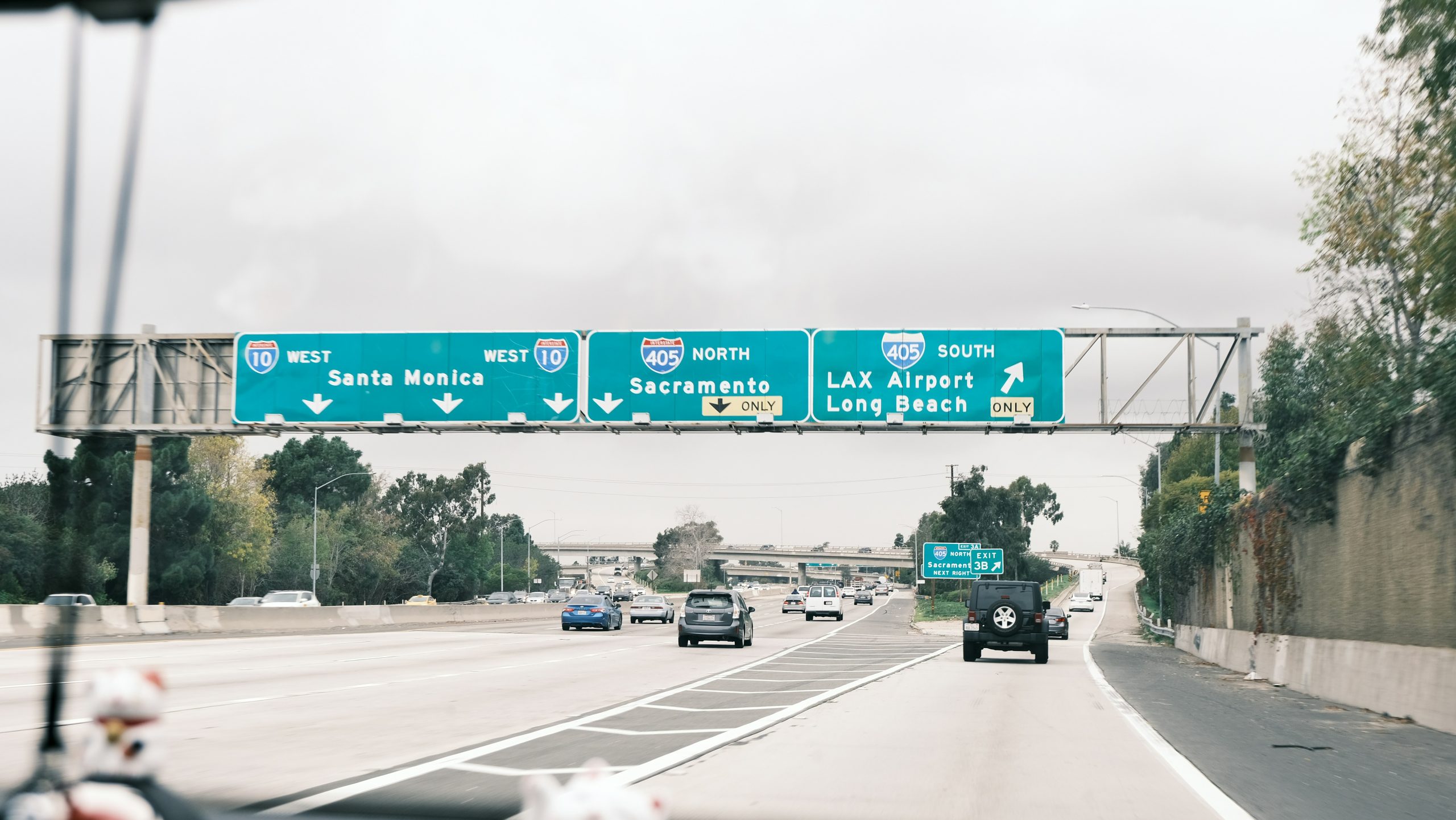
They’re driving to Los Angeles. After Los Angeles they’ll head north, like father’s father did forty years ago, following his path, city by city, step by step.

I probably used to love clowns too, son says.


Between them in the center console sits the gray book, palm-sized with a laminated cover and lined paper yellowing at the edges. Father’s been the keeper of it since that night in Kentucky when he and Rusty parted with a clumsy hug and he read it under the dome light in his rental car and again in the motel.

March 1978. His father flew from Florida to Los Angeles alone, drove up the coast, waded in the ocean, visited a castle, drank beer, met people, ate dim sum, went to Alcatraz, and returned eleven days later. The gray book is a record of that trip, a letter from the grave in meticulous block letters.

A letter from the grave? That sounds promising! It’s full of advice then? And fatherly wisdom?

No, neither. The notes are cryptic, perfunctory, repetitive, obsessive about driving times and how much things cost. The father—the son, that is, the father’s son . . . I mean me—I can’t even decode a lot of it.

Landed in LA. Haze. Thrifty, Ford Granada, $116. Pear in the GC.


I’ve had it three years. I’ve shown it to family and friends hoping they’ll see something I don’t. They leaf through it and hand it back with a shrug. I asked my mother about it. I brought it to my creative writing class. I read the first entry and asked, What’s the story here? No response. What can we deduce from his notes?

A man flew to Los Angeles, a student said.

And rented a car, another added. For a hundred and sixteen dollars.

A torpor fell over the room. Spontaneous protective hibernation. It happens when they sense that my point is not going to be worth the work it takes to arrive at it.

The pear in the GC? I said to the only student looking at me. Thoughts on the pear?

No one had thoughts on the pear. Then Jimmy Escalera raised his hand to tell us that his grandfather kept a journal in Vietnam. There were Bible verses and parts of it were written in code. Certain pages had tally marks at the top and these, Jimmy was pretty sure, stood for the people his grandfather killed.

Vietnam, secret code, tally marks. Everyone agreed there was a story here.

When you can’t decipher a sound you move closer to it. That’s my thinking. Plus my son leaves for college at the end of summer. The road is where fathers and sons bond. It’s where they stare meaningfully into the horizon and think things and say them.

He sits around all day watching cartoons, Jimmy Escalera said in class. Without the journal we’d never know he used to be a killing machine.


I couldn’t sleep last night. I never can before a trip. I lay in bed trying to arrange my feelings into something like a viewpoint as coyotes yipped and yawped outside. My wife tries to temper my expectations. Focus on him, she says, meaning our son. Keep it fun. Don’t get all impatient or morose. Her advice is reasonable. This isn’t a quest. I have a route, hotel reservations, six apples, my son in the passenger seat. I have ideas, cobbled from movies and books and pharmaceutical ads, about road trips, fathers, sons, the ocean, self-discovery, messages, buried in notes and letters, hidden for years. I fell asleep charting our route, conceiving scenarios sentimental enough to make a pig blush. Standing atop a cliff in Big Sur and hearing his voice, driving up the coast and finding closure, et cetera. I dreamed of running through the woods toward a faraway light. I woke up before reaching it. Cotton-mouthed, legs sore from the idea of running. I studied myself in the mirror as I brushed my teeth: droopy eyes, sharp nose. Face of a steamed turtle. Still hazily devising scenarios: touring Alcatraz and realizing things, eating dim sum and coming to terms. Yearning for something big and decisive, knowing it’s a deluded feeling and yet feeling it strongly.


Santa Anita: infield passes, pond oysters. Drunks from Phx. Mutual man says GR way up.

My son reads this aloud as we approach the exit for Santa Anita Park. We pull off and drive along streets lined with towering palms and into the racetrack parking lot, which is empty. The gates were supposed to open a half hour ago. I flag down a woman in a golf cart and ask her what’s going on. She says she isn’t sure. She has no connection to the track, she’s just driving her golf cart through the parking lot.

On his phone my son discovers Santa Anita closed after the twenty-seventh horse died this racing year. People are sad, people are angry, but no one can agree on why the horses died. It could be simple negligence. Or drugs. Or rainfall from an atmospheric river that flooded the turf. It could be a man named Felix Concepción, who trained eight of the fallen horses.

That place sucks, my son says as we merge onto the highway. I hope it stays closed.

I make affirming noises. I tell him people are predicting the death of horse racing. Like dog racing and indoor smoking and the set shot in basketball. I imagine my father, ninety years old this year, sitting in his faux-leather recliner, watching the things he knew so well wink out of existence. I know horse racing is inhumane, unnecessary, and I doubt I’ll ever visit another track again, but I’ll be sad to see it go. Tolerably sad, like when you find out someone you thought already died has died.

I tell my son what I remember about the track where my father worked: gamblers and their morning cigars, shredded bits of money on the floor of the betting windows, from cashiers pulling the rubber bands off the bundles. My father gave them to me. Old pennies too. I collected pennies and torn bits of money. It sounds like a Depression-era childhood. Your grandfather fell in love with horses and numbers in college, I say. It’s where you get your talent for math.

What’d he do with numbers? he asks.

Calculated odds, I say. Or payouts based on the odds. He calculated something.

Didn’t they have calculators?

You know, it’s possible he didn’t calculate anything, I say. Maybe he just liked being around them. Numbers.

A few years ago I found out my father needed just one elective class to graduate from college but never ended up taking it. I tell my son this and he says, That’s cool.

You would’ve liked him, I say. Another bland, untrue thing. I want to strike it out the second it leaves my mouth.

What’s seventy-seven times seventeen? I ask a few miles later.

I’m tired, Dad. Then, a minute later: One thousand three hundred and nine.


I was five when my father flew to California. I have no memory of him being gone. I shouldn’t be surprised that he doesn’t mention me in the gray book. What would he have written? There wasn’t much to me at age five. I liked garbage trucks. I liked candy. Most of my dreams were about animals.

He doesn’t mention any trees or birds or premonitions or songs. Or his wife. So I shouldn’t be surprised. But it bothers me. I’ve flipped through the book a hundred times and I still catch myself hoping to find something that’s not there.


GP Observatory. James Dean, planetarium. Barely see Hollywood sign. Oxygen balloon, stepped in gum.

That’s it? my son says after I read the entry. We’ve parked and walked up the hill and are standing outside the Observatory. 

Yeah, I say. That’s all he had to say about Griffith Park. 

Basic, he says.

Miles south, patches of smog shroud the downtown skyline like scum on stew. Hollywood sign. Planetarium. It’s all here. Even James Dean’s seductive head, mounted to a pillar in bronze. We’re near the spot in Rebel Without a Cause where Plato asks him, You think the end of the world will come at nighttime, Jim? And he answers forlornly: At dawn.

My son asks why my father came to California alone. I wondered the same thing, I tell him. My mother said it was probably a work trip. Plus, she added, families didn’t fly cross-country willy-nilly back then. At least ours didn’t.

Could be he had a second family, he says.

Could be, I say. Oxygen balloon. What’s an oxygen balloon?

He types it into his phone. He scrolls and scrolls, looking for a satisfactory result. He probably meant helium, he says.


He wanders off to the gift shop to buy his ex-girlfriend a souvenir. A young couple asks if I can take their picture next to James Dean’s head and I oblige. I rarely feel as useful as when I’m taking a stranger’s picture for them. I zoom out and zoom in, milking it longer than I need to. When I’m done the man extends his fist, and I bump it with mine and return his phone with the other hand, and our exchange happily concludes.

My son and wife and I used to visit the Observatory once a year. I don’t remember why we stopped—whether we got bored of it or he did. We should’ve continued coming here, I think. We shouldn’t have let boredom stop us.

He returns with a solar system bracelet for his ex-girlfriend. Seeing all those hopeful colored orbs dims my mood.

Nice bracelet, I tell him.

Are we done? he asks.


A lap around the planetarium, another stop at James Dean’s head. A passable likeness but up close I notice he has no eyes. It ended with his body changed to light, says the inscription. I like that. I write it down. I look west. I think about oxygen. I scan the ground for gum. I open the gray book and read the entry one more time. Anything? Anything? Nothing. I might as well try to manufacture a sneeze. I take another lap and head back to the car.


We used to park by the zoo and see the koala before P-22, the wild mountain lion living in Griffith Park, mauled and ate him. Maybe that’s why we quit coming. We visited the koala then hiked up to the planetarium and reclined and watched a light-show rendition of the birth of the universe with disco sound effects. The universe was created in 1977, my wife would say, and I would laugh and he would laugh because I laughed. We’d walk out giddy, veneered with sound and light. We’d eat potpies at a Vietnamese restaurant in Glendale. I don’t know why it served potpies but everyone ordered them. We brought colored pencils with us because the potpies took forty-five minutes to make. He’d draw on his place mat and then ours, whatever heroic figure he was obsessed with at the time: Apollo, Peter Pan, Didier Drogba. He could busy himself for hours conjuring and reconjuring it. We still have giant plastic bins full of his drawings in our garage. And those intricate handdrawn mazes he made after he stopped drawing—he’d give me one and I would work my way in and out of it before realizing there was no solution. Getting lost was the point, or there was no point. The only way to solve it was to turn back around and exit the same way you entered.


We drive in silence, into the smog and stew. I try to quiet my mind. Nature preserve, I say when we pass a nature preserve. Motivate Hollywood, I say when we pass a sign that says MOTIVATE HOLLYWOOD. I point out the site of the hotel where Bobby Kennedy was killed, now a twenty-four-hour gym. There’s Forest Lawn, where Michael Jackson and his chimpanzee are buried. I tell him that the man who built Forest Lawn wanted to make a cemetery like a beautiful park where families would picnic and frolic around their dead loved ones. He thought cemeteries were too sad.

Getting lost was the point, or there was no point.

My son scrolls through his phone. He says it’s true that Michael Jackson is buried there, but Bubbles the chimpanzee is still alive and living in Florida. Is he happy? Does he miss Neverland? It doesn’t say. But you can visit the sanctuary where he lives, about an hour’s drive from where I grew up.

I’m sending Grandmére a link, he says. She loves stuff like this.

Really? I thought animals annoyed her.

Don’t you remember the nest cam? The dolphins behind her condo?

Yeah.

The panda cam.

Okay, you’re right. (I forgot about the panda cam.) She’s an animal lover.

It says he goes totally berserk if he hears a Michael Jackson song. Even someone humming it. It’s too painful. He doesn’t want to be reminded.


My wife had to talk him into coming on this trip. I didn’t hear the conversation but I can imagine—I’ll spare you the reenactment. I don’t blame him. I haven’t been good company lately. I’ve been fretting over my own extinction again. Blood tests, midnight trips to the emergency room, the whole opera. One of my tumors turned out to be a sinus infection. Another was a hernia. I can hardly look my doctor in the eye anymore. There’s pity in her gaze, sure, and something truer and meaner, beneath pity.

I see what she sees: craven insoluble fear. I can marinate in it or try to dull it with a glass of wine or two, usually two, maybe three, rarely four, sometimes four, never five, almost never, and how much is a glass anyway?, it’s an arbitrary measure, and then I’m playing photo roulette on my computer again—think of a date then find a picture as close to it as possible—January 25, 2006, deep winter, Iowa City, our son and a friend bundled up on a freezing train ride by the river, him in his tiny red snow boots, studying the picture then spelunking into the garage through plastic bins to find the boots, I want to hold them for a second, and my son opens the garage door with the remote to pull the car in and sees me, playfully taps the horn, and says, What are you doing, bro?, yes, here he is in the flesh, out of the car, taller than me even though he’s two inches shorter than me, and I feel so chaotic and stilted around him sometimes, like now, and I say, The garage is filthy, bro, and he heads inside without us saying a single meaningful thing to each other, I know I can’t go on like this, and I keep looking for his boots but can’t find them. Instead I content myself with his Peter Pan costume. I don’t caress it against my cheek with tears in my eyes or anything. I’m not a sociopath. I just look at it. I’m spiraling. I have to do something. Which is as close as I have come to a plan. Stop spiraling, do something. So something is exactly what I’m doing.


My reenactment involves my wife detailing all the reasons why he should join me, then offering to pay him, and him holding out for more money. I have no evidence, just a gut feeling. Something about how he sits next to me in the car, biding his time like he knows the meter’s running.


My mother calls. The phone rings in a different language when you know you’re not going to answer it.

Why aren’t you picking up? he says.


My mother cut back on her drinking in her seventies, read a book a week, went to New Zealand, gave away any possession she didn’t use at least once a week except for a grapefruit spoon and a black clambroth marble that reminded her of one she had as a girl. She started fostering retired racing greyhounds. She fostered three of them until she realized it made her too sad. Not parting with them but the dogs themselves, their spindly bodies and meek sensitive faces, which seemed to exude judgment by withholding it. They were like hobbled horses, pinioned birds. She bought two feeders instead, filled them with nectar, hung them on her back porch.

She entered her eighties bright and lucid but now, four years on, she’s begun to flicker. She’s drinking in the mornings again. When we talk on the phone, especially after she’s had a few glasses of wine, we end up arguing over some stupid point of fact. The specifics aren’t important, she tells me when I correct her for confusing the recent past and the distant past. I know I should stop correcting her. She still has her hair done once a week. She still gets annoyed when someone doesn’t bless her after she sneezes. And recently she met a man in the retirement home. His name’s Elias Parker. They eat dinner together every day, then watch old movies in the TV room. She thinks they’re in love. She says they went to high school together, but he looks about ten years older than her and has a vaguely Hungarian accent.

The other day she called to ask if I remembered the girl who lived next door. Not next door to the town house where I grew up but next to the beachside duplex where my mother grew up. Beautiful jet-black hair down to the small of her back, she said. Her father punished her by cutting it off. Remember? Remember how we all cried?


When I read to her from the gray book or ask her about some name, she tells me to quit interrogating her. He’s been dead longer than he was alive, she says.

Not yet, I tell her. Four more years.

See, I don’t think it’s normal that you know that. She no longer thinks about him like she used to. She allows herself to remember him while waiting for a bag of popcorn to finish in the microwave. Three minutes and forty seconds, she says. The perfect amount.


Hollywood Blvd.

Addict on sidewalk

Lady with dummy

Chinese preacher

Sax player in diapers

Met people


The Vietnamese restaurant in Glendale is sorry but it’s closed for repairs. We go to Philippe’s instead where my father might well have eaten forty-five years ago after he went to the Observatory. He might’ve met people here. We order French dips from a guy with a carving knife, who deftly slices meat onto a hoagie roll. We sit at a long table and eat without talking, father, son, and meat. Next to us two old men are talking about something one of them read in the newspaper. A mall Santa in Upland claims he visited the hospital room of a boy whose last wish was to die on Santa’s lap. He held the boy in his arms and described how nice heaven will be, and the boy died right there in his arms. That’s what the man alleges. But now no one in the hospital can corroborate his story. So wait, says one of the men in the restaurant. Did Santa Claus kill that boy?


Hmm, my son says, scrolling as I drive.

What? I say.

Nothing.

Tell me. I’m bored.

Ian posted an old picture of a bunch of us at Poods and Benji commented.

The casket kid?

Nobody calls him that anymore. We look at the world once, in childhood. That’s what Benji wrote. It’s probably from a song.

It’s from a poem. The rest is memory.

What?

That’s the next line.

Yeah. Benji’s pretty fried now. He usually just comments with fire emojis. Beach picture, fire emojis. Your dad died, fire emojis.

I bet he enjoys the ambiguity.

Benji forgot his own birthday last year, he says.

When he scrolls through his phone his face bears the expression of someone in love.


Twelve miles west of Burbank, I try to figure out a way to initiate conversation that isn’t burdensome or annoying. Combing my brain for scraps of poems to recite and remembering only the one about your mum and dad fucking you up. They may not mean to, but they do. Realizing that the degree to which they fuck you up can be measured by how often you think about them once you’ve left home. Something just north of never is ideal. Parents are booster rockets, I think, necessary for takeoff but a burden at higher altitudes. I’m starting to wish we were following our own path. Retracing my father’s is too literal, like in movies when people talk to tombstones. A high school quarterback in West Texas who just won state wants his father to know, so he leaves the game ball next to the tombstone and says, I hope you’re proud, because dead fathers are able to hear you only if you’re within five feet of their graves, and sons can’t celebrate with their teams like normal sons when there’s a dead father somewhere to commune with.

I could ask him to look up what happens to them after takeoff, booster rockets. How are they retrieved, reused? I could ask him to look up the Challenger explosion, Russian space dogs, the Golden Record.


It’s the earbuds. If earbuds weren’t plugging his ears I could remind him how we used to drive around with him in his car seat until he fell asleep and one time as he nodded off a pair of fire trucks overtook us, sirens blazing, and he stirred awake and my wife followed them for miles and when she lost them he said again, again, which he always said when something pleased him or amused him. Once was never enough. I could ask if he’s seen any good movies. I could point to a red Triumph Spider Coupe and say look. It wouldn’t be like talking to a locked door, fashioning sentences into keys.

Then he takes out the earbuds and nestles them into their charger. The silence abides. We could talk about the guys in Philippe’s arguing about the boy who asked to die atop Santa. I could ask him if he remembers when he realized Santa didn’t exist.


He was seven. He read Santa’s letter thanking him for the cookies and noticed it was in my handwriting. He almost admitted he knew but stopped himself and feigned belief for two years because he thought we’d be disappointed he found out. I want to remind him but I won’t. He thinks my wife and I mythologize his childhood—we’ve built a shrine out of only what is sweet and pleasing to us. We forget our experience of his childhood is secondary to his. We have our bouquet of salient moments and he has his. The winter the whole town froze over and I dropped him onto the ice. He swears it’s the first time the world came into focus for him. After that he started having dreams I was a werewolf, which he only recently told me. He had them for years. He said he never actually thought I was a werewolf, but I did act strange sometimes. More like an older brother. Those pressure points you taught me? What was up with that?

The Shah? The Crab Claw? You loved it.

Not really. You told me you knew one that would make somebody instantly shit themselves.

I never said that.

You did.

I probably said crap themselves.

It was weird, Dad.

Those were fake. I made them up.

I know.

I took you fishing. Camping. Remember? Trips to skate parks. Managing your soccer team. Typical dad behavior.

Okay, okay.

Parent-teacher conferences. Career day. Thanksgiving fun run.

I’m not saying you were a bad dad.

But.

But . . .

But what?


Amusing myself at his expense. Pretending I had a second family in Baja California. Going down to Baja, I’d say when I left the house. Embarrassing him accidentally. Embarrassing him on purpose. Standing with other fathers on the touchline of a soccer field, dispirited by the proprietary way they watched their offspring. Praising each other by praising each other’s sons. He loved soccer but hated running. He loved the idea of soccer. Sometimes he’d stop playing altogether to stare off at something only he saw.

A father in a pristine salmon polo kept calling him dude: Get back on defense, dude. Win the ball, dude.

A tidy jolt of rage each time he said it. At halftime I asked him if he played. He said, Soccer?, and I shook my head and pointed to the polo logo on his shirt. His tongue darted in and out of his mouth as if it were a separate creature, something trying to hide and advertise what was inside.

My son was mortified when he found out. He told me to try to be like other dads: happy, neutral, normal. He said whenever he looked over at me watching him play I was always scowling.

That’s just how my face is, I told him.

Being too rigid and too lenient. Saying one thing and doing another. Telling the truth. Telling lies.


Stuck in traffic I think about the graffiti we saw in Oslo: You aren’t in traffic. You are traffic. I want to adjust it into a mantra. I’m not in line. I am line. I’m not in Taco Bell. I am Taco Bell. My son’s at the wheel. I admire his driving style: periodic glances at the rearview and side mirrors, earnest grip on the steering wheel. Because he’s driving I feel like I can say anything, so I’m babbling. That’s the Greek restaurant where Mom talked to Tom Hanks while in line for the bathroom. Huge asshole, I say.

Because he’s driving I feel like I can say anything, so I’m babbling.

Really? he says.

No, just making sure you’re listening. There’s Moonshadows, where Mel Gibson got hammered before his anti-Semitic tirade. That’s where we met the real Gidget.

I ask about the game he and his friend Justin used to play in the car. Where they’d wave to people and try to get them to wave back.

Oh god, he says. Sweet and sour.

If they waved back you’d say sweet. If they didn’t you’d say sour.

I remember.

I wave to a woman with hair the color of antifreeze, who glances over and then stares rigidly ahead. Sour, I say. I wave to a man in a red Toyota. Sour, I say. To a man in a delivery van. Sweet.

Are you going to be like this the whole trip? my son asks.

I’m not sure, I say. Possibly. I wave to a woman on the back of a motorcycle, who waves back. Sweet.


How does that other poem go. Lose something every day. Accept the fluster of lost . . . houses? Cities? Keys? I should’ve memorized more poems when I was younger. I should’ve learned Sanskrit and cultivated an aura. I’m thinking about poor Benji: seventeen years old and already fried and wistful for childhood. I drove him home from the skate park years ago. He seemed like a sweet kid. His parents ran a mortuary business out of their house, or they lived in an apartment connected to the showroom. I asked if he ever got spooked being around so many coffins. Coffins? he said. What’s a coffin? He’d never heard the word in his life. My family sells caskets, he said.


Los Angeles to Santa Barbara: about 100 miles. Free ice.

Yes, Father, you are correct, the distance between LA and Santa Barbara is about one hundred miles. What about the ocean? Cliffs curving and jutting over violet water? Velvet mesquites, wild bougainvillea? Firepits and rainbow-patterned umbrellas? Any messages from the grave? Thoughts on the future? What about your wife at home drinking afternoon wine with her friend Bunny, wistfully reading out itineraries from cruise brochures, all those ports of call they’ll never see?


She calls me ten miles outside Santa Barbara. I let it ring. I’m thinking about a friend whose father taped a list of rules to their refrigerator. No singing in the house was at the top. My mother made no rules or demands. When I behaved badly she would say in an aggrieved voice, You need to act like somebody. She never said who. Again she calls as we’re entering city limits. I pick up this time. Finally, she says, fumbling with the phone. She waits for me to say something. How’s it going? I ask. Not good, she tells me. She’s in the lobby of the wound clinic waiting to see a doctor. How come you didn’t return any of my calls? she asks. Everyone’s hiding from me.

I ask why she’s at the wound clinic but all she wants to talk about is Elias Parker. Why hasn’t he called her back? What’s his problem? His niece thinks I’m after his money, do you believe that? Guess what she does for a living?

Nuclear physicist, I say.

She sighs and says, Where do you come up with this stuff? Most people would say teacher. Lawyer. You like putting knots in everything.

What’s his daughter do for a living, Mom?

Niece. She owns her own business. She makes internal organs out of cloth. Little stuffed animals. Except organs.

How would I have guessed that?

You’re supposed to guess something normal, then I tell you what she really does and we laugh. She releases a long beleaguered breath. The niece, she says, weighs three hundred pounds.

I let her vent. My son is asleep in the passenger seat, missing Santa Barbara’s holy afternoon light. Pale gulls drift above the beach. They make flight look like a sad, heavy talent. I tell her I have to go soon and she asks if I’m writing and I say yes, not right this second, but yes, and she says she’s been meaning to tell me that she tried to start a book club at the retirement home as an excuse to get everyone to buy my book—she even promised they could meet the author—but no one signed up for it.


Finally she tells me why she’s at the wound clinic: walking to the bathroom in the middle of the night, she sliced her shin on the planter in her bedroom. That stupid cactus, she says. Why’s it there? Looking at it gives me such a terrible feeling.

I ask how serious the wound is and she says, Serious enough to end up at the wound clinic. Wouldn’t you think a wound clinic would be nice, by the way? This place is not nice. They don’t even have a TV.

Hold on, she says. The nurse is calling me. I’m gonna act like I don’t hear her.

Talk to the doctor, I say. Call me when you’re back. She sighs and says okay . . . but can you please answer my calls from now on?


When Rusty gave me the gray book I read her one of the entries: Below Presidio. Helped dig. Candy. Good egg.

No idea, she said.

Helped dig?

Not ringing any bells.

What about good egg?

Yeah. That sounds like your father.

How?

He always liked eggs.

I haven’t told her about the trip. She’d say the idea of following his route is kind of morbid, or at least bad luck. She’d say why not visit her instead. Florida has two coasts. We could visit the beach where she saw Elvis. We could see a colony of displaced wolves.


My son opens his eyes and asks where we are. He says he was dreaming about skating in a contest. He kept messing up and could hear me in the crowd, sighing. We’re driving up a mountain and I’m watching the road but out of the corner of my eye I can see him staring. Wonder what it could mean, I say. He isn’t smiling. Can’t be mad at me for something that happened in a dream, I say. Right?

I heard you sighing as you were talking to Grandmére, he says. I think I brought that into sleep with me. He asks, not for the first time, if I’m mad at her and I say no. Then why do I sound like I am?

Long story, I tell him, and he says, Longer than this drive?


We pull off at the Cold Spring Tavern, an old stagecoach stop. The air is cool and clear and it smells like creosote or sagebrush, some nice chaparral smell. We share a basket of fries and watch a woman painstakingly tuning a Dobro. A single metal crutch leans on the chair next to her. If we don’t leave now, I say, we’re going to have to sit through at least one song. My son shakes his head and says, I knew you were going to say that.

As a punishment for saying something predictable I make us sit through a song. A man in electrician boots joins her and they cover a song I can’t place—the O’Jays maybe, or the Isley Brothers. The woman has a lovely voice, but my inability to place the song prevents me from enjoying it. I know there’s a lesson here, one I should heed, about dwelling in the now and the potter becoming his pot, et cetera. Instead I let the displeasure fester until I can’t stand it anymore. I search a lyric on my phone and find the song: You Are Everything by the Stylistics. Covered later by Diana Ross and Marvin Gaye. They’re covering the cover. The relief of not having to think about it anymore is close enough to pleasure. I pay our bill and we drive down the mountain.


Late afternoon and the day’s talent fades as we listen to You Are Everything on repeat. I’ve got nothing incisive to say about it except that it’s perfect. Better than Beowulf. Better than key lime pie. My son fiddles with the solar system bracelet in his lap. I remember I used ask him what he was thinking and he’d tell me without hesitation. He scrutinizes each colored orb. After some false starts and throat clearing, phrasing and rephrasing it in my head to make sound as neutral as possible, I ask him why he bought the bracelet for his ex-girlfriend.

Because I love her, he answers instantly.

The song finishes and begins again with Marvin Gaye and Diana Ross addressing each other with the blissful intimacy of a couple in bed.

That’s beautiful, I say.

He waits for the punch line. I tell him I’m being serious.

After a while he says, Can you play something else?


Near Santa Maria the palm-tree cell phone towers turn into evergreen cell phone towers. We enter a valley of bone-white turbines. Towering erratic clocks counting wind. At a gas station the clerk bangs a roll of dimes against the cash register and deftly guides the contents into the drawer. The dimes are shiny, newborn. I accidentally open the door to the beer cooler when I mean to open the door to the bottled water. Right church, wrong pew, she calls out. I make a note in my notes app. We head north.


The world’s deadliest animal, he says, looking at his phone. Guess.

Man, I say.

Nope.

Hippo.

It’s not a mammal.

Some type of spider.

Closer.

Wild dog with a toothache.

Not a mammal.

Crow with an ice pick.

Dude.

Cat with the nuclear codes.

Come on.

Just tell me.

Keep guessing.


Mosquito, he says a few miles later.

That was my next guess.

Is this about what you were expecting so far? he asks.

Sure. Maybe. I don’t know. I’m just glad you came. Really.

He nods. Here’s another, he says, by the time a child leaves for college ninety percent of the time they’ve spent with their parents is over.

He shows me the post on his phone: These Fourteen Facts Will Blow Your Mind! Even though I doubt its veracity, it still stings.

I emit a mumbly noise that means that’s interesting and that hurts in my own secret tongue.

The color orange was named after the fruit, he says.

We’ll just make the most of the time we have left, I say.

Sharks are older than trees, he says.


Conversation forensics. Parsing lines like an actor. Mulling volume and inflection. Watching fathers on TV and realizing much of what I know about fathers comes from TV. How they hold the morning paper. How they pause for the laugh track. Realizing all my stories about him are retellings of truer stories. Hearing the ticker ticking. We’re almost at 90 percent. Ruing how gleeful it makes him to be in possession of such a fact, deadly as a mosquito.

Read me another, I say.


Everything’s fine, the other voice says. The quiet voice, the one that rarely speaks unless spoken to.


North to SLO, beautiful country, beautiful hotel called Earl Brown, he blabbed about JC, drunk, elevator door slammed on head.

We search for a hotel in San Luis Obispo called Earl Brown but there isn’t one. So concludes the case of the missing comma. The most beautiful hotel in San Luis Obispo, according to the internet, is the Arroyo Grande. Rooms start at $398 a night so instead we stay at the Madonna Inn, a sprawling stone-and-stucco chalet off the 101. Hundreds of disconcertingly themed rooms. China Flower, Krazy Dazy, Sir Walter Raleigh. Ours is Antique Cars. Some rooms have gold-filigree ceilings and massive sleigh beds and fireplaces in walls of uncut stone. Ours has two double beds side by side and a few paintings of antique cars on the walls.

My son dumps his backpack on the bed and walks off to call his ex-girlfriend. I head to the pool, order a drink, and sit at the edge with my legs in the water. I send my wife the few pictures I’ve taken: scenery, our son biting into his sandwich, the singer’s metal crutch, my legs in the water. Cars whir up and down the 101 and I try to imagine my father staying here, using the ice machine, pouring himself a plastic cup of scotch. Sitting on the end of his single bed, smoking menthols, and watching TV. Calling up Earl Brown. Talking about horses. My father making a mildly clever comment like I don’t like being drunk . . . but I do like getting drunk. Earl Brown agrees with a grunt, then starts blabbing about JC—Jimmy Carter or Jesus—and my father hangs up and goes to pee and at the bowl realizes he’s crossed the line between getting and being drunk, so he walks out into the night, into terrain so unlike Florida it may as well be Mars. Beautiful country, he thinks. He’d like to spend the rest of his life here. He’s forty-five years old. The end is near—he could hear its approach if he listened closely. But he isn’t listening. He’s thinking about astronauts playing golf on the moon, wondering if it happened or if he dreamed it or saw in a movie. He thinks, A day comes when a man is no longer welcome company for himself. Then, Jesus, I’m drunk. He wanders off in the direction of an elevator and I let him go.

7 Books About the Power of Political Imagination

In July, as Israel carried out its “Final Solution,” an operation aimed at the physical destruction of Palestinians through mass starvation, I was invited to take part in a panel that imagined the future of a liberated Palestine. The event was polarizing: For some, it was ill-timed; for others, it offered a glimpse of hope. For me, it was a tsunami of emotions by the quiet sea where I spent my summer. There was grief, there was doubt, but there was also a calling to lift my head and look toward a horizon; to see through despair and find a way forward.

I had to remind myself: I am no stranger to such undertakings. My memoir, I Can Imagine It for Us, envisions a home and a homeland I have never been to. It is born of the belief that political imagination is a free space that no one can occupy, where alternative futures can still take root. It can challenge dominant realities, transform the abstract into a lived experience, and evoke empathy across borders. 

I credit the seven books on this list with showing me a way through the darkness—confirming that, as a writer, I possess no tool more powerful than the ability to envision how things can be otherwise. Like I Can Imagine It for Us, the works on this list return through narration to ravaged homes and stolen homelands, in Iraq, Libya, Lebanon, and Palestine. They return to assert presence through stories that refuse to be overlooked.

Gate of the Sun by Elias Khoury

My father rarely spoke to me about his life in Palestine; it was too painful a subject—but this seminal novel did what he never could. It reoriented me toward my roots and revealed how ownership can be recovered through a story. In Gate of the Sun, Khoury moves from town to town, detailing life before and after the Nakba of 1948. He names streets and people and recounts battles fought for love and for land. I remember sitting quietly in bed, reading it, when I reached the battle for al-Kabri, my village in Acre, and saw my grandfather’s name on the page. On page 166, I read, “If we fought throughout Palestine the way al-Kabri fought, we would not have lost the country.” I learned that my grandfather was an influential political leader, and that the entire village was stationed around his home, which, in many ways, served as Acre’s command post. I remember my head buzzing with a profound sense of discovery. I made a pact with myself that night to never stop writing toward a free Palestine, until it comes to be. 

The Return by Hisham Matar

Jaballa Matar, a prominent Libyan diplomat-turned-dissident after the rise of the Qaddafi regime, was Hisham Matar’s father. In 1979, the family fled persecution and relocated to Cairo. In 1990, Jaballa was abducted by the Egyptian secret police and handed over to the Libyan authorities. He was imprisoned in Abu Salim prison, and following a mass killing there, the family never heard from him again. The Return traces Hisham Matar’s journey back to Libya in search of answers about his father’s fate. Like I Can Imagine It for Us, it is a story of fathers, fatherlands, and returns. It mirrors my own desire to register presence, even in absence, and to seek recognition, if not on the ground, then through the literary imaginary. I would also say that his vulnerability, and the grace with which he reveals it, gave me permission to get personal and to recognize the value in doing so.

No One Knows Their Blood Type by Maya Abu Al-Hayyat

This exquisite novel was longlisted for the 2025 Palestine Book Awards and, in my view, deserved to win. Abu Al-Hayyat’s narrative centers on Jumana, a woman struggling with the recent death of her father. After his passing, she discovers that her blood type does not match his, which casts doubt on her biological connection to him and, by extension, to her Palestinian heritage. The father, once a freedom fighter, is a deeply flawed character, much like mine. He is no perfect victim, and neither are the other characters. But it is precisely this complexity that brings them to life in dazzling, unforgettable ways. Hazem Jamjoum puts it beautifully in his translator’s afterword, noting that, unlike much of the literature that emerges from communities marked by dehumanization, this is not a story that pleads for the humanity of its characters. It does not appeal to a colonial gaze; instead, it centers us, our voices, our freedom to tell our own stories, and our authorship over our own narratives.

House of Stone by Anthony Shadid

This memoir caught me off guard. I began reading it at Beirut airport and was in tears within the first few pages. Leaving Beirut is always emotionally charged for me. It’s my family’s adopted home following their exile from Palestine, the city of my father’s youth, and where my aunt, the last surviving member of our Nakba generation, still lives, though she now has dementia. In this elegantly written memoir, Shadid returns to his ancestral home in Southern Lebanon, once a splendid Ottoman structure, now destroyed by Israeli bombardment, to rebuild it. The act of rebuilding becomes a meditation on memory, ancestry, migration to America, and the destruction wrought by occupation and war. In my memoir, I too rebuild my ancestral home, word by word, as a way to meditate on loss and return. Like Matar, Shadid showed me how a sentence can carry grief, and still land in grace. 

Minor Detail by Adania Shibli

Minor Detail showed me how to hold witness. How to be uncomfortable in my witnessing and still not be able to look the other way. I read this painful account of a Palestinian girl being raped and murdered by Israeli soldiers in a natural reserve in Oman, of all places. I skipped the hike through mountains to read it in a single sitting, heart racing through every page. The novel recounts a real story within a fictional framework. Years later, an imagined woman from Ramallah becomes haunted by this “minor detail” in history and journeys across the occupied territory to confront the forgotten site of the crime. Through this fictional treatment of a real event, Shibli both records and reclaims the story. Her narrative demands that you keep looking, even if, in looking, you are imagining.

Men in the Sun by Ghassan Kanafani

Ghassan Kanafani was foundational in harnessing literature as a political tool. He transformed Palestinian realities, whether under occupation or in the diaspora, into stories that emphasize the transformative power of narration. Men in the Sun explores the harrowing dangers of forced mobility. It tells the story of three Palestinian refugees who die while hiding in a water tanker as they attempt to cross secretly from Basra to Kuwait. By the end, the reader is left with a haunting question: Why didn’t the men knock on the walls of the water tank? Their silence becomes a stark metaphor for voicelessness born of fear, and a missed opportunity for rescue, but also, a wake-up call to the reader who bears witness, yet does nothing to help.

I Saw Ramallah by Mourid Barghouti

I Saw Ramallah is a cornerstone of Palestinian literature. On a personal level, it moves between my motherland, Cairo, and my fatherland, Palestine, tracing an emotional journey through a vanishing landscape. The book recounts Mourid Barghouti’s return to Palestine after decades of exile following the 1967 Six-Day War, when Israel occupied the West Bank. It is only after the 1993 Oslo Accords that he comes back. There is much to admire in this memoir: its lyrical prose, its intimate voice, and its powerful humanization of the Palestinian experience. Yet what strikes me most is its title. It is deceptively simple—to see, despite erasure, is itself an act of defiance, agency, and authorship.

10 Books Featuring Devils, Doppelgängers, Ghosts, and Creepy Dolls

Like many new writers, I fell into the trap of believing that serious literature meant realist literature. I toiled away for years, trying my best to write in a style that doesn’t suit me, until one pivotal class at the 2018 Kenyon Review Writers Workshop when Caitlin Horrocks assigned Karen Russell’s “Engineering Impossible Architectures” and Carmen Maria Machado’s “The Husband Stitch.” Russell’s is a craft essay that introduces the “Kansas:Oz Ratio” to guide a writer in effectively juxtaposing realistic (Kansas) and fantastic (Oz) details; Machado’s is a short story that’s more astonishing with each read. What struck me most was how these and other genre-bending authors tackled very human subjects—family, relationships, mental health, motherhood, growing up, belonging—and used some sort of presence to heighten the effect. Introducing speculative elements into fiction such as devils, demons, dogs, doppelgängers, or any number of non-human or superhuman entities is a great technique for underpinning characters’ psychological states, flaws, and behaviors. It’s also a strategy that can be used to reach toward the inarticulable messiness of the human condition. Each of us contains entire worlds—how do we contend with a truth that large?

My debut novel, Sister Creatures, follows four women from the same small town in Louisiana and a supernatural entity that haunts them. The story begins with my protagonist, Tess, working as a live-in babysitter to two kids in an isolated house and is way too irresponsible for the job—she spends her time day drinking and reading horror novels. In from the woods comes a strange teenager, Gail, who lives off grid with her religious zealot family. The single day they spend together informs the rest of the book, which spans three decades and various locations. The novel contains a doppelgänger, sinister triplets, dark things happening in dark woods, and an entity that appears at various times as a creepy doll, a snake, and a demon. Adding these speculative elements helped me achieve a deeper level of truth and meaning than I was able to reach through a realist approach. They were also a lot of fun to write and provided the spark I needed to sustain me through an entire novel. The following ten books, all published within the last decade, feature some sort of entity or presence that looms over the lives of their characters, and they’re all incredibly enjoyable reads.

The Hounding by Xenobe Purvis

The citizens of Little Nettlebed are more enlightened than the witch-hunting generations that preceded them. Or so they’d like to think. When the five Mansfield sisters act outside of societal norms, defying the rules in place “for their protection,” they are looked upon with suspicion. After wounding the feelings of the town ferryman (and town drunkard) and inciting his rage, rumors swirl: the devil has touched these girls and bestowed upon them the ability to transform into dogs. Many villagers, already stressed by heat, drought, their river drying up and their crops failing, are more than happy to have an object of blame. Purvis demonstrates the ways that gossip and resentment can catch fire, spreading through a community and leading to mob mentality. With glimpses of devils, angels, and supernatural dogs, Purvis explores the horror of our inability to simply exist freely.

Hellions by Julia Elliott

Monsters, beasts, creepy dolls, a mystic manuscript, a Swamp Ape, a Wild Professor, and Pazuzu, the demon from The Exorcist. The eleven stories in this collection have it all. Through the use of myriad fantastical elements, Elliott explores the clashing worlds of children and adults, and how one can never fully understand the other. Much of the collection is set in small-town South Carolina, where the children are hellions, left to tear it up in their wild and swampy environment. In their eyes, the adults are stuck, static. They stay indoors, drinking too much while the world spins around them. From the adult perspective, the children are feral, strange creatures that evoke suspicion and even fear. Rendered in hyper-specific prose, Hellions evokes an underlying tension and uncertainty that feels very true to the human experience. I recommend this book to everyone.

Mystery Lights by Lena Valencia

This story collection is a must-read for the increasingly weird times in which we’re living. These ten strange, dynamic stories feature several close encounters, sometimes with the supernatural and the alien, but also with the sinister forces of our real world and even our own worst tendencies. Many of these stories take place in stark U.S. desert landscapes, where people visit to experience the unexplainable and to infuse some mystery into their lives; where dangers lurk around every corner and cultish figures thrive; and where someone can simply walk out into the surrounding vastness and disappear. Valencia does a masterful job at exploring female relationships, power dynamics, rage, and the vulnerabilities of inhabiting a female body. The stories, though unconnected (except for a wonderfully surprising turn at the end), build upon one another and reach toward the sublime.

Craft: Stories I Wrote for the Devil by Ananda Lima

Lima imbues the pages of this innovative story collection with pieces of her very soul. One of my favorite reads of last year, this book is difficult to summarize. The nine fantastic stories in Craft are separated by interstitial 3rd-person sections following “the writer” and the Devil whom she encounters many times throughout her life. This meta framing makes for a playful, smart, fun, and weird read. It also gave me the rare experience of considering the author herself while reading. This book is full of mischief, and the addition of the Devil makes it richer. The Devil—magnetic, sad, misunderstood—is the first to recognize our protagonist as a writer, the one to help her understand the nature of stories, time, the human condition, and life’s complexities. The Devil made the writer’s life richer, just as Craft has made my life richer.

Ghostroots by ’Pemi Aguda

“Let the past stay there, abeg. There are stories we leave buried so our children can move without weight,” a woman warns her niece in the opening pages of Ghostroots. Well, I’m here to tell you: in the twelve stories of this dark and absorbing collection, the children are burdened; the past will unearth. Set in Lagos, much of the horror in this book arises from the characters themselves, from their situations, their inheritance, their own flawed natures. Though every single story merits an entire essay, the final one will stay with me forever. It’s about a ten-year-old boy who encounters three intricately-costumed, impossibly tall, and incredibly uncanny magical masked dancers—Aguda refers to them as “masquerades”—who gift themselves to him. This story, like much of Aguda’s writing, is a great example of how adding an eerie entity can articulate the inarticulable. In this case, Aguda puts her finger on feelings of intense desire, of familial obligations, and of how we take from those we most love.

Upcountry by Chin-Sun Lee

One of my all-time favorites, Lee’s novel is the ultimate gothic read. This is a fast-paced book with big, surprising moments of action that are hard to pull off (though Lee nails them), and an ever-present undertone of dread and unease thrumming below the surface. Set in the Catskills during the Great Recession, Upcountry is the story of three women in conflict with each other: April, a down-on-her-luck local forced to give up her family home in foreclosure; Claire, the comparatively well-to-do Manhattanite who buys it in an attempt to make a fresh start with her increasingly-distant husband; and the very pregnant Anna, a member of a nearby cult-like religious group who becomes the object of Claire’s husband’s obsession. This story of calamity and resilience takes place under the specter of a presence that’s unknown until the wholly satisfying end that I won’t spoil but very much encourage you to discover for yourself.

Little Eyes by Samanta Schweblin

There are two types of people in the world of Schweblin’s captivating novel: keepers & dwellers. Either you keep a Kentuki—a toy of uncannily janky quality, made to resemble various animals such as crows, moles, and pandas—or you dwell in one, surveilling your keeper through a concealed camera and microphone. A keeper and dweller are paired together randomly, from any place on the planet. A keeper might want a companion, or maybe a captive audience for their exhibitionist tendencies, or perhaps simply the newest product on shelves. A dweller might be experiencing a crushing loneliness, or they may be a pedophile hoping for a victim, or they’re someone who needs a means of escape from their sad reality. Whether the technology corrupts or simply exacerbates human flaws, with the help of these creepy little inanimate animals, Little Eyes—translated by the great Megan McDowell—explores the dark corners of human psychology.

The Need by Helen Phillips

I have a theory that every one of us contains a doppelgänger story, and Phillips’s is one of the best. Molly, a paleobotanist and mother of two small children, works in a fossil quarry called the Pit, where, in addition to ancient plant life, they discover objects that are just slightly…off: a Coca-Cola bottle with the wrong font, a plastic toy soldier manufactured with a monkey’s tail, a wrongly-shaped Altoids tin, a Bible with one conspicuous alteration. The Bible in particular brings more visitors and more funding to the Pit, but it also brings a fair share of hostility. These work stresses bleed into Molly’s home life, where an unwelcome presence enters and threatens the wellbeing of her children. With one of the tensest openings I’ve ever read, The Need explores the bewilderment and dread of motherhood, of caretaking, of being responsible for such tiny, vulnerable bodies.

What Is Not Yours Is Not Yours by Helen Oyeyemi

During Talia Lakshmi Kolluri’s brilliant 2023 Tin House lecture on writing non-human consciousness, she referenced an Oyeyemi short story about sentient puppets that’s part of this collection. I immediately knew it was a book for me. This nine-story collection is uniformly excellent, brimming with stories within stories within stories, found letters, various locked doors, and mysterious keys. “Is Your Blood As Red As This?” (the sentient puppet story) is a standout. It’s never quite clear whether people are using the puppets or vice versa. Sure, people manipulate puppets to make them perform. Yet a puppet’s lifespan is considerably longer than a human’s, and it uses people’s hands and voices to express itself and to exist fully. Puppetry is an art that can foster lifelong play, yet in this story about power dynamics and shifting allegiances, “play” can quickly morph into manipulative little games.

Mr. Splitfoot by Samantha Hunt

In one of the most charming literary moments I’ve ever encountered, Charlotte Brontë, speaking through a medium, blurbs this book…and you absolutely need to read it for that to make sense. Ruth and Nat, two orphans closer than sisters, emancipate themselves a year early from the Love of Christ! foster home and attempt to make a life for themselves by contacting people’s dead loved ones for money. Fourteen years later, Ruth’s niece Cora finds herself pregnant by a married, sadistic man. The two women set off on a journey, on foot, to take care of some unfinished business. Set in upstate New York and alternating between these dual timelines, Mr. Splitfoot features cults, sinister folk, mothers both good and bad, and the thin veil between what we can see and that which lies beyond. This book is strange, thrilling, and remarkably touching.

Vampires Wreaking Havoc on a Queer Cruise

Imagine a cruise ship, one of those multi-tiered, wedding cake ones that knifes through crystal blue waters to the thumping beats of EDM, sparkling with diamond-clear swimming pools, laden with endless buffets of delicate morsels, and stuffed to the brim with glittery queer humans who are pumped and primed and primped for all manner of decadence. Now imagine your sunstruck cruise ship is sailing through amorphously dangerous waters while harboring two vampires and one extraordinary, indefinable, supernatural being. This is Lindsay Merbaum’s Vampires at Sea, a luscious mouthful of a novella that begs to be savored like a bite of tagliolini with white truffles, even as you’d like to slurp it quick and cold like a Kumamoto oyster.

I am not one given to cruise shippery. I can’t cope with claustrophobic surroundings, intimacy with strangers, or mandatory “fun.” I can, therefore, relate to Merbaum’s incipient horror of a cruise ship, as paradoxical as it might seem. When I consider it, of course, vampires would love a cruise ship: all that delicious humanity packed together like briny tinned anchovies, dangling like bait. But Merbaum’s vampires are not your ordinary, run-of-the-mill, bloodsucking creatures of the night, and Vampires at Sea isn’t your customary rehash of stake-through-the-heart vampire lore. Unfazed by sunlight, vampires Rebekah and Hugh are special, unique, and only as horrifying as they are relatable. As for Heaven, the supernatural being: they’re something completely different than what their name implies.

I sat down with author Lindsay Merbaum to talk about her novella, discuss her creative inspiration, and dish the dirt on creating—and destroying—eternal beings. I’ve never before read anything like Vampires at Sea, nor, I would guess, have you. It’s smutty, funny, quirky, and altogether unforgettable.


Chelsea G. Summers: First, I’d like to congratulate you on writing a funny, sexy, smart, and sophisticated vampire tale. Now, I’d like to ask: what drew you to vampires? 

Lindsay Merbaum: The vampire is such a fascinating, malleable figure. Does it suck souls, or blood? Is it a ghoul, a child of Lilith, a demon? Or something else? 

And then there’s the vampire’s nature. I wanted to explore the dynamics between a contemporary, moralized vampire alongside the more traditionally confident and unrepentant vampire. Turning my characters into emotional vampires, where they feed off certain flavors of feeling, made things even more fun and flexible.  

CGS: Let’s talk about the setting. I find cruise ships to be innately terrifying, but there’s also the cognitive dissonance of a bright, sunny, tropical cruise and some dark, creature-of-the-night vampires. What made you decide to put a pair of vampires on a cruise ship? 

Cruises horrify me. They’re floating shopping malls with a cult-y culture.

LM: Cruises horrify me. They’re floating shopping malls with a cult-y culture. They go around expelling waste, over-working and under-paying staff. There’s also something nightmarish about being trapped in this huge but very confining ship. What an odd place, I thought, to find vampires. Then again, there are sea voyages in several classic vampire novels. Traveling to a new place and bringing their vampirism with them is a motif of vampire fiction. Some strains of vampirism spread like sickness. In any case, a vampire aboard a ship usually means danger for the passengers, and this story is no different, but the vampires are also trapped in their own way. The horror of the ship extends to all. 

CGS: Vampires at Sea has a very mysterious, very magnetic non-binary character, Heaven, who is more than a little supernatural. I have to ask, why “Heaven” and what was the impetus to create a very powerful non-binary supe?

LM: I wanted Heaven to have a chosen name that was also a real word, and I wanted it to be completely over-the-top. “Heaven” being a perfect place is also an ironic nod to the “unicorn,” the mythical third partner who can magically solve a couple’s problems.  

Heaven was always non-binary, but I didn’t know they were a “supe” until later in the writing process, after I determined Hugh and Rebekah were emotional vampires. I think Heaven’s powers complement their identity, or maybe it’s the other way around. In any case, they embody multitudes.  

CGS: How did you come up with your two main vampire characters, Rebekah and Hugh? Did you draw on any specific inspirations, whether from real life, page, stage, or screen? 

LM: I wanted to write a book about a couple who’d been together a long time and meets a third partner. I was inspired by the relationship dynamics at play in Chris Kraus’s I Love Dick

I confess I also imagined early on who would play these characters in the film/tv adaptation. Hugh is a slimmer, less scruffy Pedro Pascal while Rebekah resembles a young Anjelica Huston. And Heaven would be played by Johnathan Van Ness. 

CGS: Forgive me, but I’m going to take a turn into the academic. Nina Auerbach, one of the great Dracula scholars, famously said that “every age embraces the vampire it needs.” Why does our current age need Rebekah and Hugh?

LM: I want to point out psychic vampires/emotional vampires are “real” in the sense that these terms characterize the behaviors of some actual humans who will bleed you dry, so to speak. Like these human vampires, who can control you and exhaust you, Rebekah and Hugh hide in plain sight. They live openly as the monsters they are, that no one believes in, which is a big part of how they get away with it. And then they manipulate your emotions, control your behavior without a single touch. (They will touch you, of course. But they don’t have to.) 

Ours is a monstrous age. An age of freakish technology and large-scale emotional manipulation, where no one can agree on what truth is. Everything is big and fast and the everyday terrors are so much more than we can process. Rebekah and Hugh aren’t trying to process it, they aren’t concerned with the moral crises of our age. Though they don’t understand social media very well, they’re the most perfectly chic narcissists—beautiful monsters who are so well suited to survival in this world of ours that they don’t truly inhabit.  

CGS: While your book skirts the graphic gore that most readers associate with horror, it still holds notes of the uncanny and the fear-inspiring. How does this novella explore or expand contemporary ideas of queerness and horror?

These characters are not good people—that’s part of the fun.

LM: It’s a queer book in many ways: It inverts expectations regarding what a vampire is, and how a female figure is supposed to feel about herself. Rebekah is free of self-doubt, self-loathing—all these very “feminine” traits. She is attracted to humans, vampires, and other beings of any gender; her palate is refined yet broad. Meanwhile, there’s Heaven, who’s the villain or the hero, depending on how you look at it, who’s also non-binary. 

I want to create complex, entertaining queer characters who are also magical and who do not succumb to the pressure to be queer role models. These characters are not good people—that’s part of the fun.  

CGS: When you talk about Vampires at Sea, you often call the book “smutty.” What’re the challenges of writing about sex, and how do you understand the connection between vampires and sex?

LM: I like to give people an idea of what they’re in for. 

Writing sex scenes and sexy characters comes naturally to me. My first book is also sexy and while it’s very serious, I still managed to work in a room full of dildos. 

I’m interested in the vampire as a sex symbol who exists on the edge of creepy and thirst trap. Just look at Dave Egger’s Nosferatu. The vampire is about taboo desires: to have sex with a non-human, to experience pain, and/or bleed, to cross barriers around what is sanitary and “normal.” The vampire makes these deep-seated, taboo fantasies possible, often via total surrender.

In Rebekah’s case, her victims fall under her spell; they’re hypnotized. Her sex appeal is reminiscent of Carmilla, with the snobbish pride of Count Dracula.  

CGS: I know that you’re a mixologist and you enjoy crafting bookish cocktails. What’s the ideal companion drink for readers of this novella who are not themselves vampires?

The vampire makes these deep-seated, taboo fantasies possible, often via total surrender.

LM: I actually crafted a set of “Signature Drinkies” to accompany Vampires at Sea. My favorite is probably the Lilitu mocktail, which is made with elderflower tea, yuzu juice, and jasmine green tea syrup. 

CGS: Finally, when readers close the last page of your deliciously twisted and funny Vampires at Sea, where should they turn for their next book, movie, or television show? In other words, what’s the perfect chaser for Vampires at Sea?

LM: White Lotus, of course. A lot of people have compared the vibe of that show to Vampires at Sea. Though I confess I haven’t seen the latest season yet. 

The film Triangle of Sadness features a model, his influencer girlfriend, and a bunch of filthy rich people on a yacht. Conspicuous consumption at its most grotesque. 

What We Do in the Shadows the movie, the film that started it all. 

For more weird, sexy fun on the page, I recommend Sara Gran’s The Book of the Most Precious Substance, which does feature witches and sex magic, though no vampires. 

Fresa Can Mean Many Things

“That Mexican”, an excerpt from Poppy State by Myriam Gurba

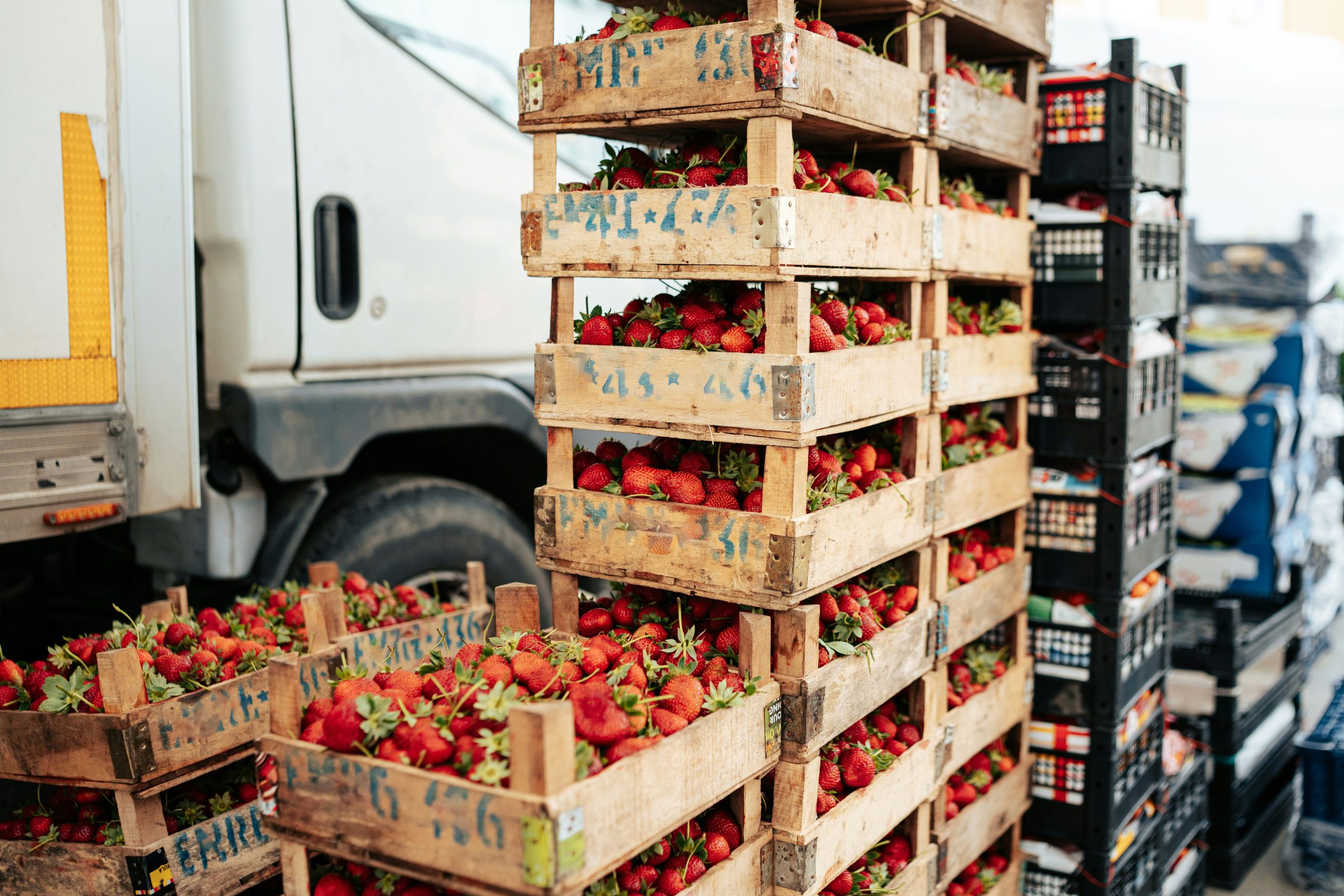
If you open a standard Spanish-to-English dictionary and look up the word “fresa,” it will likely offer strawberry as the fruit’s English equivalent.

If you open a Mexican Spanish-to-English dictionary and look up the word “fresa,” it will give you a different equivalent.

“Stuck up bitch.”

“Rich girl.”

“Middle-class brat.”

If you ask me to define “fresa,” I’ll answer that strawberries were the ushers who led us to the hill.

My father and mother taught the children of farmworkers who harvested strawberries and other crops in the Santa Maria Valley.

Like Ida Mae Blochman, my father left the classroom to become an administrator.

First, he was chosen to be the director of bilingual education for the school district.

Then, he was chosen to be the director of the Migrant Education Program.

The program’s slogan alluded to our valley’s crop yields.

“A harvest of hope…”

We moved to the house on the hill after Dad began directing the Migrant Education Program.

The job came with a raise.

When I explained my dad’s new job to my girls-only club members, I told them what he had told my brother, sister, and me.

My father had his enemies. Teachers who didn’t refer to him by name.

Dad said that it was the responsibility of every single teacher in this country to give kids a good education. He said that some teachers were assholes, that they didn’t want to give a good education to all kids. He said that these bigots discriminated against the children of migrant farm workers and that it was basically his job to force these racists to do their jobs.

My father had his enemies. Teachers who didn’t refer to him by name.

They called him “that Mexican.”

I thought of my dad as a local celebrity.

Everywhere we went former students chirped, “Hello, Mr. Gurba!”

Sometimes he had to ask their name. Once he got that, he always remembered them.

Some of Dad’s students became strawberry sharecroppers.

One of these students would climb our steep driveway lugging crates of strawberries.

Dad sheepishly accepted these gifts.

My brother and I baked pies.

During the 1980s, most of Santa Barbara County’s strawberry production took place in Santa Maria.

In 1987, Santa Maria’s strawberry production was valued at $60.8 million.

A report prepared by the California Institute for Rural Studies in 1988 found that a significant number of farmworkers in and around Santa Maria lived in “substandard housing.”

I didn’t need to read a report to know these things. I lived in Santa Maria. I saw it.

When it fully dawned on me that strawberries and racism had brought us to the house on the hill, I felt weird.

As I got older, I felt even weirder about it.

As my father climbed the administrative ranks, I became fresa, a very privileged girl.

My dad’s workaholism partially led to his success.

Though he worked hard, farmworkers work harder.

Harvesting strawberries is a labor-intensive task.

It breaks backs.

It seemed unfair to me that I should live in a big house paid for by my father’s advocacy.

Why was he receiving this money?

Couldn’t that money go directly to farmworkers?

To better understand what was happening with strawberries and wages and sharecropping and funding and school segregation in Santa Maria, I paid close attention when Dad held meetings with farmworkers and labor organizers and rural legal-defense attorneys.

I became fresa, a very privileged girl.

Books helped me too.

In our garage, I found a copy of The Communist Manifesto.

I read it.

In our garage, I found a copy of The Pedagogy of the Oppressed.

I read it.

In our garage, I found a copy of Savage Inequalities.

I read it.

These three books brought into focus what my dad was doing.

I still felt weird about our big house though.

Was I supposed to thank the strawberries for bringing me to the hill?

Naomi, the member of our girls-only club who introduced me to her dad’s pornography collection, was descended from Japanese strawberry-farmers.

Amber, the member of our girls-only club who sang  “In the Pines” acapella at the school talent show, was descended from an English settler who died of a spider bite.

While the US waged war against Japan, white farmers usurped evacuated farms.

Japanese farmers brought strawberries to the Santa Maria Valley.

By the eve of the Second World War, Japanese farmers had become the primary strawberry-growers in the United States.

White farmers envied this success.

In 1942, President Franklin Roosevelt issued Executive Order 9066, forcing people of Japanese heritage to leave their homes, caging them in internment camps.

While the US waged war against Japan, white farmers usurped evacuated farms.

Due to Executive Order 9066, white farmers are now the primary growers of American strawberries.

According to the United Farm Workers, the piece-rate earning for strawberry harvesters is $2.50 per box.

According to the Santa Barbara County Agricultural Commissioner’s Office, strawberry sales generated $775 million last year.

That’s more than enough to buy everyone who harvests this fruit a house on a hill surrounded by beguiling oaks and sleepy bees.


Excerpt taken from Poppy State: A Labyrinth of Plants and a Story of Beginnings by Myriam Gurba. Copyright © 2025

Published by Timber Press, Portland, OR. Used by permission of the publisher. All rights reserved.

A Novel About Migration and Morality During Climate Collapse

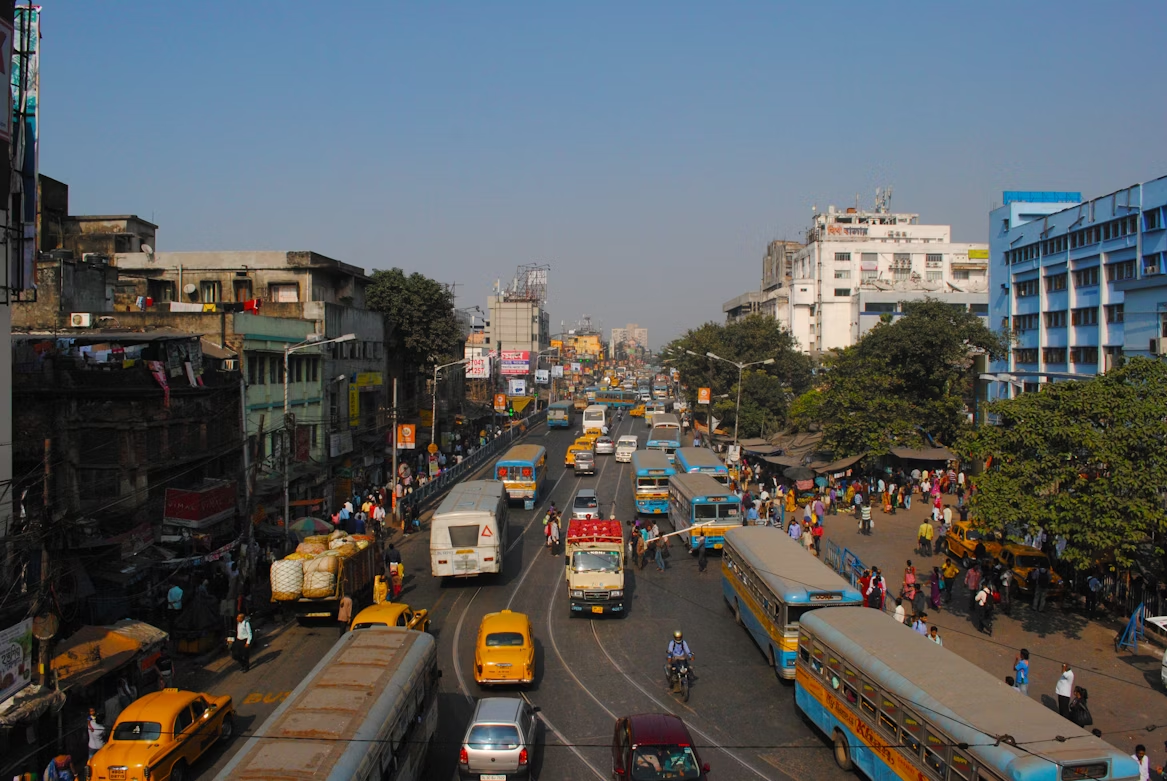
What does it mean to survive when survival itself comes at the expense of others? That’s the central question explored in Megha Majumdar’s sophomore novel, A Guardian and a Thief. The story is set in a crumbling, near-future Kolkata grappling with environmental disaster and food shortages. It follows the intersecting paths of two families: Ma is preparing to flee with her daughter and elderly father to join her husband in Ann Arbor, Michigan—until their passports are stolen. The thief, Boomba, a father himself, is desperate to provide food and shelter for his family as both run scarce. Over one tense week, both families are pushed to their limits in an unraveling city.

A Guardian and a Thief, already on the longlist for the 2025 National Book Award, represents a dynamic shift forward for Majumdar. Where her first novel, A Burning, which saw success as a Read with Jenna Pick, was precocious and scrappy, A Guardian and a Thief is sharp and expansive. Its maturity and richness allow Majumdar to tell a stirring story about the sacrifices required for survival and our own frailty in the face of societal collapse.

We spoke about the inexorable tension between individualism and collectivism, the usefulness of the label “climate fiction,” and the role of art in times of crisis.


Marisa Wright: I was struck by the opening scene where Ma sees someone riding a bike, carrying fruit, and singing, and immediately labels them a thief because she assumes such ease and nonchalance could only come from wrongdoing. We later learn Ma has been siphoning food and money from the nonprofit shelter she runs, but she is also the victim of a burglary by Boomba. How do you think about the psychology of rationalizing one’s own choices when facing exigent circumstances while condemning others?

Megha Majumdar: You’re right that the book is so much about questioning the gaps between our ideal ethical selves and who we might become in a time of scarcity and crisis. The book is very interested in this notion that we might identify acts as villainous or harmful when others perform them, but we might perform them ourselves and see them as necessary manifestations of our love and our hope for the people that we love. I wished to complicate the idea that there is a binary between something like hope, which must be noble and pure and unassailable, and something like harm or violence. How do we live when a community’s collective hope clashes with what an individual sees as their own hopeful act for their children?

MW: Even after Boomba engages in another wrongful act, you write, “Boomba was no monster. All Boomba was, was a man whose moral compass pointed toward the north of his own family. Wasn’t that the most ordinary thing in the world?” On one hand, I totally sympathize with prioritizing one’s family over others, but on the other, it makes me very sad about the nature of humanity and our inability to think collectively on a broad scale. When you wrote this, were you aiming for a fundamentally optimistic or cynical reading? 

MM: That’s a great question. I’m thinking about your framing of optimism versus cynicism, and that’s part of what I was thinking through in this book. I was reading a lot about climate change, and one thing that I encountered over and over was declarations of hope. It put me in this space of thinking about what we mean by hope. Being optimistic is perhaps one thing for nations and systems, and quite another for individual, ordinary people. How will we live with ourselves if we find that for an ordinary person, what comes to the fore is their wish to protect their own loved ones, even at the cost of others? Is that a kind of love or hope that we can be proud of? Is that still a form of love that we feel able to get behind? I feel like I don’t really have answers, but the book helped me ask the questions with the rigor and intricacy that interested me.

MW: It seems to me that as the effects of climate change become more and more a part of our everyday lives, climate fiction is no longer really a distinct genre; it’s sadly more like realism now. Do you think “climate fiction” is still a useful label, or has it transformed into something that makes a distinction without a difference? 

The book is so much about questioning the gaps between our ideal ethical selves and who we might become in a time of scarcity and crisis.

MM: Well, I think that label has a kind of useful identifying function for a reader who’s looking to think through questions of climate change, but I wonder if there’s also a certain distancing, as if this is fiction, which is apart from fiction about family or fiction about love. As you’ve pointed out, that’s simply not true. It felt very personal writing about this because my hometown, Kolkata, India—where I’ve set the book—is one of the cities in the world that is most vulnerable to climate change. It has already grown hotter and will be affected by sea level rise in the Bay of Bengal. It is predicted to endure more frequent and more severe storms in the coming 50 years or so. My parents live there, and my extended family lives there. What is this place going to become? It’s kind of frightening and sad and alarming to think about the future of this city. So in some ways, I’m glad for the label of climate fiction because it tells a reader there’s a category of books where one of the primary goals is to think about this future. But it is not apart from thinking about love and hope and community and morality and all of these things that so many other novels do as well.

MW: Both of your novels unfold with the momentum of a thriller. As a reader, you want to find out what happens; in A Burning, whether Jivan will be declared innocent, and here, whether Ma will recover the passports in time to leave for America. But unlike a conventional whodunnit or will-they-or-won’t-they narrative, the endings are left more unsettling and unresolved. How did you think about pacing in these novels? 

MM: It gives me such a thrill to hear you say that it made you think in some ways of a thriller, because I love thinking about plot. I knew that I wanted A Guardian and a Thief to be set at the edge of something. I knew that it couldn’t be too long. I needed them to be on the cusp of a big change. I needed a moment where I could sustain the pressure of something going wrong. I love putting pressure on every word and every sentence to tell us something meaningful, and so I’m glad the pace worked for you. 

I think a lot about the act of migrating because it has shaped my life so profoundly.

It’s funny because so much of the process of writing a book for the first however many years is about telling the story to myself, and figuring out the story for me, and then at some point, my perspective shifts. I start thinking about how do I invite a reader in? How do I guide a reader through this world? What do they need to move in the way that I want them to move through this world? I find thinking about the reader’s experience of the story really invigorating. It’s a really fun challenge to figure out how I can plant the questions that are meaningful and urgent to me in their mind as well.

MW: The precarity of reaching America and the idea of the “American Dream” loom over the novel. Your own immigration experience might be seen as embodying that idealized vision of the “American Dream”—you went to Harvard, became a successful editor and novelist, and now have a lovely family. But the novel repeatedly interrogates and complicates that idea, revealing its fragility and the challenges beneath the promise. If you’re comfortable, could you share how your personal experiences shaped your exploration of these themes and informed the ways the story questions the myths about America? 

MW:  You’re right. I moved to this country to go to college, and one of the things that the book grapples with is how moving away from home, and I think specifically, moving to this country, can be such a point of pride, such a thing of accomplishment, but also a wound that you bear for the rest of your life. You’ve torn yourself away from the place you know. How do you reconcile those two elements of being proud of the life you have here and also bearing sorrow for what you left behind? 

Art is not activism.

I also wanted to think about that through the lens of class, which I’m very interested in. One of the families in the book is middle-class with plenty of resources, and they’re planning to move to the United States. The other main family is struggling to find a foothold in the city and does not have that level of resources. There are also secondary characters in the book who question that privilege; there’s a barber who runs a little shop on the sidewalk for whom it is unimaginable to move to another country. It’s a thing of great luck to be able to move away from where you were born at all. I moved in far more peaceful circumstances, but I think a lot about the act of migrating because it has shaped my life so profoundly.

MW: There’s a lovely moment where Dadu is rushing through town to buy food for his granddaughter, Mishti, when a street painter approaches him. At first, he wants to save his money for essentials, but then he pauses and reflects: “As a participant in the city he loved, it was up to him to insist on the value of a painter’s work—not the value of a famous painter’s work, the kind of work now being traded for rice and sugar—but the value of an unknown painter’s work. It was up to him to secure the meaning of the kind of work that exists not for investment potential but only for the eye’s momentary pleasure, only for the mind’s door to be left, for a small while, ajar. What was the value of that?” 

I, probably like a lot of people, have been struggling with the role of art in our current political moment, whether it’s time to double down on its role in our lives or to focus on what might seem like more exigent concerns. How does this scene read to you now? How do you grapple with this balance? 

MM: Art is not activism. Art has its own place, but I don’t think there can be any form of crisis where the value of art becomes diminished. Art is our mode of living with attention, right? Art is our mode of living with inquiry, living with curiosity, living with devotion to what’s around us, living with very close attention to elements of our lives which are not logistics or immediate needs and worries and questions. That mode of attentive living feels like an artist’s mode of living, and it feels vital for having a life that cannot be narrowed and cannot be squeezed dry of everything that makes it beautiful. 

It’s not like a novel can feed anybody or provide anybody shelter or provide anybody money. In many ways, a novel is very impotent, and I recognize the limits of the novel. But I also want to think about how there is a more vast kind of life awaiting us if we do pay attention to fiction or painting or music or dance or any form of art as a mode of living—the wealth that it introduces to us, the way in which it allows us to access a deeper present beneath our own recognizable present. I think about that a lot: what can art do, and what can it definitely not do?

Psychoanalyzing Desire With a Spam Bot

Psychoanalyzing Desire With a Spam Bot

After Frantz Fanon

The Spam bot enters my message requests
with a sober existentialist interest in me.

I came into this world anxious to uncover the meaning of things. . .
Hey, I am kinda interested in everything that is unknown to me.


Interest piqued. What does it mean that this
phishing scheme mirrors my last attempt at

Dating? Hey, I want to meet new people, tell
me all (about yourself).
I proclaim I am an open

book. This bot is similarly interested and yet
I charge this inquiry fake. How can I call this

spam bot’s desire false? Desire always
reveals. Here I am an object among other objects.

I respond to this relatable call for connection.
I receive an Invoice for my interest. Yearly

subscription to security software for my heart.
It goes into effect tonight unless you call and

install this malware of heartworms. Spam
bot reminds me my worldviews and intelligence

are artificial. I was programmed to destroy all
I set my heart on. Laptop humming hot, I blush

knowing love was just transferred through fiber
optics. What a Kinky way to jump in an inbox.

I explode

Against Comfort

After Danez Smith, less hope

How many times will consent be 
manufactured with our names
on it? Coke can candidates get you
free entry into the amusement park

of political theater. A rigged game is
worth it when the ante is somebody
else’s body and the teddy bear prize
smiles so sweet. How many elections is

too many elections to bank our hope
on? Burning buildings done personified
themselves into people demanding loyalty
via kinship. A whole imagination auto drafted

and preloaded in the cortex of American free
thinkers. How many self-care days until
revolutionary conscience arrives? Check
the code, the programming—the proof

is in the Java/Script. What isn’t comfort
affording? What lies in a turn away from
the individual luxury of a life well lived
without others in mind? It is afterdeath,

a future of multiverse lighthouses
where we keep the light /
energy bouncing where /
when it is needed.

A Graphic Novel That Exposes the Failures of the American Experiment

In Mattie Lubchansky’s comic strip Please Listen To Me, she straddles the line between being a political cartoonist and a cartoonist of absurdity—which, some days, are the same thing. Simplicity represents a departure from her previous work. Set in 2081, it tells the story of an ethnographer named Lucius who leaves New York City for the wilds of the Catskill mountains and a small 1970s commune named Simplicity that has managed to survive for more than a century.

What follows is a story about identity and political engagement, wrestling with questions that have been—and continue to be—central to the American experiment. It’s a lot of weight for a book involving a monster and ecstatic visions, a cult whose “mutual rite” is an orgy, and oligarchs so cartoonishly evil they appear to have stepped out of the news. This is Lubchansky’s most ambitious project to date, and it is as fun and wild as it is thought-provoking. It’s also a hard book to describe easily, but Lubchansky and I talked recently about the book, separatism, museums, Upstate New York, and what the Shakers did right.


Alex Dueben: Mattie, Simplicity is, I think it’s fair to say, a bigger book than you’ve ever done before. On every level.

Mattie Lubchansky: It’s the most complicated work I’ve ever done, both writing and visually. It’s the longest book I’ve done. I think I just had a lot more to say. The whole time I was making it, about a year and a half, I was really nervous because it was such a departure in terms of what readers expect from me and what I’ve done in the past in my published work.

I knew that this was going to be a little dreamier, a little weirder.

I think it aligns with the work that I’ve always been trying to do, which was genre fiction with a lot of ideas. Boy’s Weekend was lightly autobiographical. It was this thing that happened to me in search of what a story could be around that. So much of the work on that one was spinning out the world and characters and motivations from this plot that I already had. This book was much more of a journey, writing-wise. I had this character, and I had where he came from. I had these ecstatic visions. And every other thing was not settled until it was on the page. The plot of this book changed like twelve times while I was writing. The characters changed a lot. The settings changed. This was a much more complicated process of writing. I did research, which I don’t normally do. There was a lot more that went into it, and it’s a lot less straightforward in its ideas and its plot and its execution. 

AD: I was curious about how much of that ambition was you consciously trying to do something bigger and different and how much was telling the story in a way that needed to be told.

ML: It was a little of both. I knew that I wanted to do something different. I knew that this was going to be a little dreamier, a little weirder. The beginning of it was literally Lucius’s first encounter with the big monster. That was the thing I started with. It just came to me—almost like one of the visions in the book. I don’t normally work like that. I normally have an idea, and I’m like, how do I go about doing it? [laughs] I had this idea that someone was visiting a cult in the countryside. I was talking to my friend about it, and he recommended a book about 19th century pre-Marxist socialist communes all over the Northeast and into the Midwest right around the time of the Industrial Revolution. Paradise Now by Chris Jennings. Then I started thinking really heavily about political separatism and utopian communes and it turned into a different book.

AD: The group has its origin in the back to the land movement and really touches on all those groups and that history. The town of Simplicity began when a guy bought a summer camp in the Catskills in the 1970s.

ML: The Spiritual Association of Peers, as I call them in the book, are basically a mashup between some of those groups from the seventies and two groups from the 19th century. One is the Shakers. The thing everyone knows about the Shakers is that they didn’t have sex, and they built chairs and brooms and stuff, right? But the thing that people kind of forget about them is that they used to go crazy and take off their clothes and run around screaming naked in the woods.

The other group started as settlers in the late 1800s, following a French thinker Etienne Cavet, who had written a book about this guy traveling in a utopia called Voyages in Icaria, which is the worst written book ever. It’s awful because it’s written like a travelogue, but it’s a guy turning to the camera, and basically saying “here’s how I think society should be arranged.” It’s a really stolid book. But all these people tried to create that one guy’s utopia in America, first in Louisiana and then Texas and then Ohio and then Illinois. They were trying to create Icaria for real. Which included stuff like people being conveyed around by small packs of dogs, things of this nature.

AD: So the Mutual Rite in the book came from the Shakers—and making it a very un-Shaker-like ritual?

ML: I think the Shakers would have worked out had they simply allowed people to have sex. They had it all figured out. There were people coming to live there just because it was a solid place to live and not have your life completely demolished by the Industrial Revolution. So many of the ideas in the book are me thinking about why separatism would flourish and during what times in human history. It’s always during these great turnovers of society. 

Upstate New York was called the Burned-Over District. Somewhat derogatorily because it was so lit with religious fervor that was spreading like wildfire. That was the birth of modern capitalism. People’s lives were getting upended in a really serious way. They were getting moved around. The US went from being mostly agrarian to being industrialized. People are moving into cities to work in these horrible factories. Labor conditions only got worse because basically modern capitalism was being invented around them.

All of a sudden people were going to live with the Shakers. They called them Bread and Butter Shakers because they would go there because they knew they would get three square meals a day. There was no crime because everyone got along. There was a lot of communication. There was a mission. The Shakers failed for a lot of reasons. All these groups failed for different reasons. What’s interesting to me is, what if one succeeded? What would happen? In this book, these guys have been there for a hundred years. None of these communities have ever lasted a hundred years. Not really. Not hewing so close to their original mission. If one worked, does that do anything? What’s the efficacy of that?

AD: I’m curious how you describe the main character of the book, Lucius. Especially knowing the book started with an image of him.

ML: It was this guy having an ecstatic vision. He was always a trans guy. It just always came to me that way. One, I just think trans people are more interesting. Because we are. There is a way in which as a trans person, you will always feel alienated from society in some way that is interesting to me as an author. I would describe him as organized to a fault. You could call it a little OCD, but in a way that is truly deleterious to his own mental health. Sexually closed off and mentally closed off from his own body in a way that I think can be a common experience amongst trans people generally. But a lot of people have this issue where they’d rather be a brain in a jar. 

He wants control over everything around him. He lives in a world where everything is controlled, but not by him. He refuses to engage with a structural understanding of the world around him. He knows things are not great, but refuses to see why. In a way that I think once you’ve glimpsed the superstructure, it is easy to remember how things were before, where you are alienated and you just don’t understand where you are. 

AD: Lucius is a part of this tradition of academic characters who don’t know or understand the rest of the world much.

ML: The funny thing about Lucius to me is, as I was working on it, I realized he’s not even that good at what he does. He’s bad at being an anthropologist or an ethnographer. I was like, should I stop and go talk to a bunch of ethnographers, read a bunch of academic books, maybe take a class? But I realized that Lucius was not good at what he did, and I think that works better because he’s way out of his element in almost every regard. It works in the story for why the people that hired him would hire a guy that doesn’t know what he’s doing.

The idea of building the shining city on the hill is such an American idea. It was right there at the inception of settler state America.

I think [there’s] an interesting parallel in the way that a lot of these utopians would function. It was all about theoretical understanding of things and less about practical understanding of things. Which is never to say that I’m politically a pragmatist. I think it’s insulting to dismiss radical movements that way. But in this exact instance, these communities would seal themselves off and only see that stuff as theoretical. A very common thing that people in all these groups in the 1800s would do is call society “the world”, and they thought they lived outside of it. That’s simply not true. You live in the world. We live in society.

AD: There are groups that still do that in different ways, but at the heart of the book is this question of separatism and this realization that there is no such thing as leaving the world.

ML: So much of this book was me struggling in the intellectual sense of why would somebody think that this is the answer? It is an impulse I understand. I think we all know—I’m talking about myself and my friends—we all know people that have gone upstate to start a farm and sort of hide out because things are bad. Or people that flee the country. I’m always like, where? Because you and your friends could go start a farm upstate, but global warming will render it useless in forty years. I just don’t know what the end game of that is.

The idea of building the shining city on the hill is such an American idea. It was right there at the inception of settler state America. That idea—that we will build a society and everyone will see how cool we are and they’ll want to imitate it—is, I think, a poor understanding of power and how it functions. People don’t just change their minds that way when they see how cool it is in other places. We can’t even get rapid bus service implemented because we saw it was cool somewhere else. And I think that kind of rhetoric could easily be co-opted for more nefarious means.

AD: The book touches on the cyclical nature of things. Upstate New York was the Burned-Over District, but the eruption of Tambora destroyed agriculture and the economy of the Northeast in the early 19th Century, which really helped to inspire the Second Great Awakening, Western expansion, and industrialization. Then starting in the 1970s through today, upstate New York has become a region of rebirth and change. And eventually that’s going to change.

ML: And that was only because it was the closest wooded area to New York City. That’s why people went there. I think the Hudson Valley is beautiful, but it’s not unique among the world for its beauty. People went there because it was easy to get to from New York City. It’s on the train. It’s on the bus. That stuff matters. To not think of yourself as subject to history that way, I think, is irresponsible.

AD: It’s a very American idea, though. 

ML: It is a very American idea. I’m coming at it from the perspective of: This country is cursed. It was born soaked in blood and it will always remain that way. I think the state as it is currently conceived, no good will come of it. 

AD: The title page of the book reads: “In the land of Simplicity, a novel, an account of the unusual peoples of the former United States and a sojourn through the exurb suburbs and other unsecured territories by an intrepid explorer for the Coalition of Secured City States.” Which I loved and kind of goes back to those 19th century ideas you were talking about.

ML: Every book from the late 1800s has the longest subtitle in the world. I was really enamored with it. That mode of travelogue storytelling is very interesting to me.

AD: I thought of Washington Irving’s A History of New York. I don’t know if you’ve read that. It’s a fictional history of New York written in the 19th Century. I think he used some actual details, but it was also a satire of what was happening at the time.

ML: It’s funny that you say that because one of the other forty ideas I tried to cram into the book was, who is in charge of history? Who writes it? Who reads it? Who’s it for? Who’s doing the telling? Who’s it being told to? I wanted to present it like it was a true story, despite it taking place in the future, and it being not real.

AD: You touched on that in using the museum visit as the framing. Which is different than an account, but it’s a constructed narrative.

ML: The museum framing came to me—have you ever seen Kelly Reichardt’s First Cow? The first scene of the movie is Alia Shawkat and she’s on the beach and she finds two skeletons. And then the story is about the two skeletons. It just puts you in this mindset that these guys are going to get buried by history. And it looms over the whole movie in this way that I think is so effective and cool. I just loved that idea: This is just one thing that happened and it is not the end of the world. It’s not the beginning of anything. It is on a continuum of our understanding of history. 

I was at the Natural History Museum in New York. I don’t know if you’ve been recently?

AD: Not recently. 

ML: If you’ve been, you know, it’s all dioramas, and they’ve been redoing a lot of the historical ones. Specifically around Native Americans and Native cultures around the world. They’re making an effort. Whether or not it’s perfect is not up to me to decide, but they are trying to change up what was there. 

I started thinking a lot about museums and how they disseminate information.

One diorama they’ve had up forever, The sale of Manhattan by the Lenni Lenape. Dutch settlers on one side, Native Americans on one side, and they’re trading the string of wampum for Manhattan, right? Famous founding of New York story. Instead of getting rid of the diorama, the diorama is now covered in stickers that say what we got wrong. It’s like a pop-up video with little dots and lines pointing to different things saying like, this is wrong. This is wrong. This person wouldn’t have dressed like that. The landscape wouldn’t look like this. This is not actually what happened. It’s apocryphal. The Native American understanding of ownership is very different.

And now the diorama is part of history. It’s all this one big, balled-up thing that’s getting impossible to understand as one cohesive thing. I started thinking a lot about museums and how they disseminate information. The framing of the book was maybe the last thing that came to me and put the POV of the reader in a place that works pretty well, I think.

AD: I think it works, too. Also the museum was originally this Imperial project which sets up perfectly how you use it. Similar to visiting a museum, we’re talking about individual elements of the book, but the experience of visiting it and walking around is very different. Simplicity is hard to describe, but it is such a rich journey. 

ML: Thank you. I’m having a hell of a time with the elevator pitch for people. I hope that describing the ideas of the book and what happens in the book is different than the reading of the thing.

AD: Even spoiling the book, it’s hard to describe in a short pithy way.

ML: This setup of the book is pretty inspired by The Wicker Man. You watch that as a teenager, and you’re like, damn, they killed that guy. How evil of them. You watch it as an adult, and you’re like, this guy sucks ass, actually. They were kind of correct to kill his ass.

The twist is that the cult is fine. They’re not evil. They’re not stupid. But they’re also not perfect. They’re not smart. They figured out something that works for them. But it doesn’t work for anybody else. I wanted to play with the reader’s expectations a little bit.

7 Books About the Precarity of Urban Life

A single neighborhood can be a microcosm of a city at the breaking point, showing how disparate lives brush up against one another, exposing the fault lines of the present moment, how perhaps our starkest divide is between those who own property and those who can’t. 

In my novel, Property, the residents of an uneasily gentrifying Toronto neighborhood cross paths over the course of a single day. Nat, a middle-aged queer mother of two, frets about her isolated son, locked in his room upstairs. Her fellow parent and unlikely friend Maddy, a failed actress, obsesses over her missed opportunities and her marriage. Next door, Ilya, a young construction worker grappling with the aftermath of a terrible industrial accident, listens to their conversations as he struggles with the flooding basement of a derelict house. An old woman watches the street through the gap in her curtains. A lonely man wanders. Children observe adults without the adults noticing. Along the network of interlocking streets, small tensions and seemingly inconsequential exchanges accumulate, until tragedy strikes—by evening, someone has died. The novel looks at the complex and contradictory life of cities, the thorniness of class and privilege, how neighborhoods shift: who gets priced out of the places they’ve made their lives in and how we struggle to understand the spaces we share. 

This is a list of some of my favorite books that are situated in the local and the question of money, that ponder the apparently unsolvable problem of how to understand the lives that run close to our own, and how we fail to, even with the best intentions. 

Howards End by E. M. Forster

This novel, published in 1910, remains the model (with a few significant reservations) for how to write about the collisions of opposites and the way that the well-meant interference of the haves on behalf of the have-nots can destroy a life. The Schlegel sisters, cultured and idealistic, tangle with the Wilcox family, who believe in money and the vigorous defense of convention. The families become directly and indirectly involved with Leonard Bast, an impoverished bank clerk who dreams of a wider life. Tragedy and comedy unfold from there, always returning to what it means to have a house and what our houses mean to us, including those of us for whom a house is a rented basement we might not afford to keep. I reread this book every few years, and my wife and I have only connect engraved on our wedding rings. 

Wellwater by Karen Solie

This collection feels like proof that Solie is not only one of the finest living poets in North America, but also one of the finest in the world. Solie commands the telling detail, the small thing that breaks apart through close observation. The poet considers rats, pesticides, housing prices, the catastrophic increases in rent and the widening gaps in Toronto, where Solie and I both live. She tells what she sees, bluntly incredulous at her continued yet increasingly precarious life in a city where some people buy nine dollar loaves of artisanal bread while their neighbors can’t afford basic groceries, where if you don’t already own a house, you will never own one. Wellwater is a masterpiece for the present moment. 

The Natural Hustle by Eva H. D.

In this collection, the poet walks the streets of Brooklyn, alone and with others, talking, arguing, looking closer, looking away. Relentlessly caustic, she plucks associations out of the air, the accidents and the darknesses of history compressed inside her brain and simultaneously present in the cacophony around her. The Natural Hustle is like walking along a frenetic and busy and interesting city street in the evening, in an unstable summer heat. Noticing the world coming at you in pieces, the juxtaposition of beauty and violence, the small saving grace of a place setting on a restaurant patio or a vivid shade or the way that personal history and the history of a place can collide in the mind so everything is linked, just for a moment. These poems notice the tension and catastrophic potential in every interaction, in a city in which obscene wealth sits uneasily alongside deep poverty. 

On Beauty by Zadie Smith

This book is explicitly a reworking of Howards End, with the Schlegel sisters represented by the interracial Belsey family, of impeccable and slightly smug left wing politics, who are thrown into confusion when the eldest son becomes a born-again Christian and falls under the spell of the Kipps family, conservative British-Trinidadians. The Belseys become involved with Carl, a working-class Black man, whom they treat as a symbol of social injustice. As in Howards End, the book chews on class and friendship across what seems (and sometimes is) unbridgeable distance, what a house means, and how our lives are shaped by property and place, even as we struggle in good faith with questions of goodness or justice. It is also a very funny book, both a riff on a beloved classic and an achievement all of its own. 

The Incident Report by Martha Baillie

A lonely Toronto librarian, mulling over her childhood, her father, and the strangers she interacts with every day, fills out a series of numbered “incident reports,” which make up the novel. Behind her desk, she is at once on display and erased, observing the people who have come to the library for assistance, for company, and for shelter. This is a book about cities, about the people the city renders invisible, about libraries as a place of refuge even as other institutions fall apart. Each night, the librarian goes home to her small apartment, lost in the city. Each day, she tries to help as best she can, encountering people no one else will help. This is a quietly radical experimental novel about people who are in danger of displacement and disappearance. And it’s a love story too.

Denison Avenue by Christina Wong and Daniel Innes

This book tells the story of an elderly widow in Toronto’s Chinatown/Kensington Market neighborhood. At a loss after the death of her husband, she drifts through the streets, collecting cans, watched by her neighbors, encountering friendliness, hostility, and sometimes incomprehension, as if she were already a ghost. A young and untrustworthy real estate agent hopes she will sell her house. An entitled white woman menaces her with a garden hose and treats her as less than human. She tries to get a job, but no one wants to hire an old woman. She moves through memories of her husband, of migration, of meals she’s cooked, of the house she’s lived in and now might not be able to keep. Christina Wong’s meticulously observed narration is amplified by exquisite pen and ink drawings by artist Daniel Innes, showing the streets the old woman walks, in the past and in the present. A portrait of a city in flux, a beloved neighborhood rendered unrecognizable by the real estate boom, and a life in danger of slipping away unseen. 

The Lodgers by Holly Pester

This book convinced me that we are on the brink of a new literary form: the novel about precarious housing, and rent. A woman returns to her hometown to live in a dingy, impersonal sublet. She’s on all kinds of edges: in a state of suspension, thinking about the space she’s in that will never be hers, the rented room she’s just left behind in another place, now occupied by someone else, awaiting a reunion with her difficult mother, awaiting a visit from the landlord, awaiting the arrival of an unknown roommate. And she’s on the literal edge of falling off the map, as the lives of the renting class become more tenuous. This is a book about the impossibility of putting down roots when you never know how long you will be able to stay.

Their Unbearable Whiteness Blots Out the Light

As far as American literature goes, an all-white cast of characters is unexceptional and routinized to the point of banality. However, in the fourteen satirical short stories from Mark Doten’s Whites—each centered on a character who is…well, white—Doten does something unexpected. In mordantly comic prose, they write a whiteness that is sharpened to a point and deployed as a precise weapon, skewering white people at their most vulnerable angles. Take the title story, where a nonprofit manager working with unhoused people sees her career unravel after a video surfaces of her harassing a Black man. The internet backlash is swift, and she ends up, of all things, without a home. Her response to the controversy is a familiar white guise—not guilt or accountability but obfuscation, scapegoating, and self-pity. When she finally musters a shred of compassion—“I am so sorry that any of this had to happen to you”—it is directed only to herself. If Whites is about anything, it’s about self-adoration disguised as empathy. 

But Doten doesn’t just target “woke” liberals, there’s a wide range of whites in Whites: from a QAnon crank to a workplace Karen, an anti-vax nurse to a nonbinary sneaker podcaster—even Elon Musk. What do they have in common besides their UV-sensitive skin? They’re all a bunch of losers. The biggest loser of all might be the gay white supremacist featured in Banana Bunch Challenge.” After murdering his parents, he plots a mass shooting at his school, only to have his plans inadvertently thwarted by Gen-Z students filming viral banana stunts for their YouTube channel. The shooter slips on a banana peel and blows his own face off—a grim relief. 

Slogging through this parade of white people behaving badly, even reprehensibly, requires a reader both generous and masochistic (we get enough white depravity IRL). While the book opens with a series of epigraphs in red-pilled Boomer-speak that insists these fictions “SPREAD LIGHT INTO DARKNESS,” the reverse may be true: the unbearable whiteness of the characters threatens to blot out all light. But it would be too convenient to castigate Doten for daring to inhabit the peepers of alt-right killers, mothers guilty of filicide, and serial-killer CEOs. Far more intriguing is the way laughter troubles easy judgments, disrupting our urge to categorize who is good and who is bad. Doten’s dark humor forces us to contend with the contradictions and absurdities between each narrator’s self-image and their ridiculous, often horrifying actions. Stick with Whites and you’ll be rewarded with savage, riotous comedy. And what better reprieve is there than to revel in the wreckage of white pieties?

Doten and I spoke over Zoom about mad monologues, white mass shooters, Trump, how to write the internet, and more.


Evander Reyes: What drew you to center this collection on white people?

Mark Doten: When the stories were starting to come together, race kept coming up as an explicit topic across the various narrators. White privilege, “wokeness,” white supremacist ideology. There’s a whole range of ways in which white people were kind of…navigating their whiteness. And I’ve always admired story collections that have a unifying theme. A big influence on this collection is David Foster Wallace’s Brief Interviews with Hideous Men. That book has a theme, but it can also do many different things and incorporate many types of narrative textures. 

I considered a different version of this book where it’s not all told from the point of view of white people. But at the time I started this book, it was a very stay-in-your-lane era of who gets to tell whose stories, and, of course, there are a lot of good arguments for white people to not write, for instance, Black protagonists. So I decided to run with that, to have the narrators or protagonists be all white people, and to try to push them towards various types of confrontations, often with race and their ideas of race. I’m interested in the places where these white people get hung up on race, get stuck, lose sight of themselves. I wanted to bring these characters, who have very different backgrounds and politics and ways of seeing things, to places where they were forced to think about race, engage with it, or obstinately do their best not to engage with race or think about it—which is never possible, at least not in the ways they want it to be.  

ER: That’s something I noticed about your collection—the many kinds of white characters that inhabit it and the ways they approach race. And while the white far right is a clear target, you don’t spare white liberals either. I was really struck by how your liberal characters respond when their whiteness is called out. They are often, as you said, stuck. They do not meet the moment with reflection or change, but rather with shame or anxiety, and a moral performance that mostly just recenters themselves. How do you think about writing the white liberal versus the white far-right characters? Do you approach them differently, or are they more alike than we might assume? 

MD: There are definitely ways in which they’re alike. In “Banana Bunch Challenge,” the story is mostly from the perspective of a gay incel white supremacist. He’s able to articulate his feelings about race in a way that feels direct and clear, at least within his worldview.

The first-person monologue imposes limits but gives freedom to move quickly from idea to idea or scene to scene.

By contrast, in the title story, the protagonist works in nonprofit housing and sees herself as doing good. She talks about race superficially, gestures toward contemporary discourse, but isn’t really honest with herself or the reader. When she confronts a Black teenager she believes stole her iPad, her recognition of race doesn’t meaningfully shape the encounter. I think both characters could become less clear-sighted if challenged, but while the supremacist narrator controls the story and acknowledges race, the woman in the title story seems to wish race didn’t exist at all.

ER: While you approach “Banana Bunch Challenge” and “Whites” differently in terms of race, stylistically they are written in a similar way, using these intense first-person monologues. You put readers in close, often uncomfortable proximity to abhorrent characters. Can you talk about why you chose these kinds of mad monologues?

MD: “Mad monologue” is a good term for it. I’m very influenced by writers who work in that zone. One early model is Dostoevsky’s Notes from Underground. I’ve always been drawn to spiraling first-person narrators who overwrite, contradict themselves, and shift positions as they go. You see it in Kafka’s short stories, like “The Burrow” and “Josephine the Singer, or the Mouse Folk,” which use that kind of narrator. Thomas Bernhard is another key influence, with his intense, often unhinged first-person narratives, and Wallace Shawn’s The Fever shows how the form works in plays.

The appeal of the first-person monologue is that it imposes limits but gives freedom to move quickly from idea to idea or scene to scene. You can show self-contradiction, elaboration, or elision in real time. The performance of the monologue tells you a lot about the character in ways a close third-person narrator cannot, since third-person narration creates distance and doesn’t allow the narrator to undermine themselves in the same way.

ER: I thought a lot about elision while reading your stories. Every character seems to be hiding something from themselves and the reader, and each story contains surprising swerves.

MD: One fun thing about this type of first-person narrator is the flexibility it offers. In “Lord Wumpa,” the narrator is a Gen-X white man who owns a cookie factory in Minnesota. His monologue is addressed to a young, Black podcaster investigating decades-old murders of the company’s employees. By the end, you realize she isn’t conducting an interview at all. She’s tied up; the factory owner is wearing a disgusting old costume of the cookie brand’s mascot, and he either is—or believes he is—channeling an ancient demon from hell.

I enjoy playing with when to reveal information and when to keep deferring it, dropping little breadcrumbs that let attentive readers think, “Wait, what?” For me, it’s fun to have voices mutating and unraveling in the moment as they speak. By contrast, with third-person narration, there’s often more attention to stage-setting—dialogue tags, gestures, people moving and glancing at one another. A first-person monologue lets me skip all that and focus on voice, contradiction, and surprise.

ER: I could tell you were having fun writing it, and it was fun to read—I laughed a lot. Your stories produced many kinds of laughter: chuckling, LOLing, the hand-over-mouth kind. I also laughed when I was uncomfortable, which made me more aware of the thin line between humor and unease. How do you approach humor in satire?

MD: Almost all of my favorite writers are funny, often in a dry or darkly humorous way. Humor in my work often comes from observing how people deal with race—for example, the performative allyship of white people. But more broadly, we live in truly ridiculous times. The Trump administration, for instance, is absurd and terrifying, but Trump himself can be funny. Sometimes on purpose, sometimes not. That half-joking, half-serious mode gives him incredible freedom to disclaim things or change his mind, and I think it’s part of his success.

More generally, we live in a time when almost everyone senses that much of what we see is absurd or bullshit, just in different ways. People on the right and left perceive different truths and falsehoods, but everyone knows that half of everything is performative or nonsensical.

ER: To me your humor excels at handling that kind of absurdity. For example, in the first story, “Even Elon on Human Meat,” you’ve got Elon Musk literally walking on the body of a person while railing against wokeness. It’s such a grotesque image. And, you know, writing satire about people like Musk or Trump is tough because they already are self-parodies. But your story goes further, outpacing their already absurd realities in these really disturbing ways.

MD: I think with both Musk and Trump, if you just transcribe one of their speeches, or in Musk’s case, string together a bunch of his tweets, it already comes out strange and funny. There’s this sense of, how is this the richest man in the world? How is this the most powerful man in the world? That’s also why Trump impressions are so hard. He’s so bizarre and unpredictable that even great impressionists can’t quite capture him.

The challenge is how to depict ideologies without reinforcing them.

So if you’re going to write a monologue from Trump or Musk’s perspective, both of whom are already these weird, funny, infuriating voices, the question becomes: What can fiction do that they can’t do on their own? For me, one answer is the “time-freeze” moment. I love the way Thomas Bernhard does this in his work, where entire pages can unfold in the span of someone walking through a doorway. That’s something books can do that reality can’t.

In my story, Musk is literally walking on a person after a shuttle explosion. Then I freeze that moment for several pages. On one level, the drama is: will he get off this person? On another level, we’re in his head as he fixates on whether the person might be Black, what that would mean, and how the internet would react. He blames “wokeness” for making him think about race at all instead of actually helping the person. That layering—external action paused while the mind unravels—is the kind of thing fiction can do that real life Musk could never pull off.

ER: It’s one thing to be in Musk’s head, but going back to “Banana Bunch Challenge,” we are placed in the mind of a white supremacist killer—someone immersed in white nationalist ideology and white-genocide conspiracy theories. How do you write this kind of character in a way that doesn’t reinforce those ideas? How hard is it to write from the perspective of someone so unbearably negative?

MD: Since the early stages of this book, I knew I wanted to include a story about a mass shooting—not because I’m drawn to the subject, but because it’s been such a central, violent political event over the last twenty-plus years. Real mass shooters often have specific racist or incel ideologies, and my character combines elements of both. The challenge, of course, is how to depict these ideologies without reinforcing them. It’s tricky. What unlocked the story for me was Donna Minkowitz’s Slate article, “How the Alt-Right Is Using Sex and Camp to Attract Gay Men to Fascism.” The article is about gay white supremacists. That contradiction fascinated me and allowed me to explore a more niche ideology within white supremacy. My character imagines his worldview to be intellectually sound—though of course it isn’t. One way to write this so it doesn’t appeal to white supremacists or their sympathizers is to make it funny in a way that ridicules that ideology. The book has a narrow audience, and the readers I imagine will presumably understand that it is satire. I don’t think many incel mass shooters would find my character’s portrayal of that ideology appealing. But of course, you can’t fully control how people interpret it.

ER: Who is your ideal reader for this book and what impact do you want these stories to have on them?

MD: That’s another tricky question, because I don’t really think about reader response or imagine an ideal reader when I’m writing. I know some writers use that as a strategy to drive their work, but that’s not how I approach it. A short story collection I absolutely adore is Tony Tulathimutte’s Rejection, which engages with a lot of similar topics like very online culture, questions of race, and characters with weird, fucked up sexualities. I’d say readers who connected with that book might want to give this one a try.

Fiction has always been great at showing the individual in confrontation with vast systems of information.

As for effect, I don’t think most fiction is likely to have any direct, real-world political impact. There are certainly cases where fiction has done that, but for me the goal is different. In this very busy, overstimulated, seven-screens-on-at-once world we live in, I hope that my book can offer readers space to slow down, give their attention fully, and find something rewarding, pleasurable, and surprising.

ER: I thought about Tulathimutte’s book a lot as I read Whites. I saw many similarities, especially the way you both write about the internet. Similar to Rejection, your characters often feel deeply shaped, even warped, by their immersion in online environments. Their politics are influenced by the internet, whether through radicalization into white nationalism or the performance of liberal virtue. How do you think about the Internet as a structural force in your work?

MD: The internet is obviously a huge disaster and a nightmare—politically and in our day-to-day lives. It has its good aspects, sure, but what fascinates me is the shift from the idealism of the ’90s and early 2000s, when people believed in the internet’s democratizing power, to how radically that view has changed. Back then, you’d hear calls like “log off and go protest” during the Iraq War or even Trump’s first term, but the internet was already decisive in shaping politics. The toxic effects were undeniable—it skewed things just enough for Trump to win, which is remarkable. No one really doubts anymore the power of the Internet, of Facebook, or of Mark Zuckerberg.

One book I highly recommend is Careless People: A Cautionary Tale of Power, Greed, and Lost Idealism by Sarah Wynn-Williams, a memoir of her time as a Facebook executive. It gives a fascinating inside look at Zuckerberg’s politics and Facebook’s role in Trump’s victory. And as with any memoir, there’s the unreliable narrator element. She’s casting light on things we didn’t know but also burnishing her own reputation and minimizing her role in the harm. From a fiction writer’s perspective, that’s a really compelling kind of voice.

ER: How do you approach representing the internet stylistically in your fiction?

MD: I think fiction is especially well-suited to engage with it. Fiction has always been great at showing the individual in confrontation with vast systems of information. Charles Dickens did it in Bleak House with the thousands of pages of a lawsuit; David Foster Wallace tackled processing overwhelming flows of information; Joan Didion did it in her political novels, with individuals up against large amounts of information from government and intelligence agencies. Looking at how these writers dealt with pre-internet information overload can help us figure out how to do it now.

The challenge today is that the internet is designed to be compulsively distracting, to keep you hooked. Fiction doesn’t have to compete with that speed—it can sometimes do the opposite: slow you down, capture the weird state of doomscrolling for hours. That’s a very contemporary mode of being, and one I think fiction can uniquely capture.