When Your Father Is a Man of God, But Also an Adulterer

Caroline Nolan is frantically finishing preparations for her sister Abigail’s bridal shower at their family ranch house, when she finds a gold-packaged condom underneath her grandmother’s old bed.

For many families, this might be a slight embarrassment or fodder for jokes, but Caroline is the daughter of Luke Nolan: pastor of the third largest Evangelical Christian church in Texas, renowned in Evangelical circles across the country for his “Hope for More” abstinence campaign. 

Caroline simply slips the condom into her pocket. A few hours later, she will use it herself. 

Both Caroline and Abigail are about to leave the nest, though their plans have varying degrees of approval from the church. Caroline will attend a state college in the fall (not the expected Bible school) and 24-year-old Abigail is getting married (to a boy who’s perfectly nice but Caroline isn’t convinced Abigail really loves). The day of Abigail’s bridal shower, a scandal breaks: their father has had an affair. As further deception comes to light and upends their community, the distant sisters unite to find their way forward. 

As a woman who came of age in an Evangelical church, I felt like Kelsey McKinney wrote God Spare the Girls just for me. There isn’t much fiction that portrays Evangelical communities, despite it feeling like only fiction could capture the complicated nature of Evangelicalism, the emotional cost of maintaining the perfect public image coupled with the supportive community of the church, the reductive teachings alongside beliefs about grace and forgiveness. McKinney—raised Evangelical in Texas—renders these complexities beautifully in her debut novel. 

Via the magic of Google docs, McKinney and I chatted about purity culture and women’s selfhood, power dynamics within Evangelicalism, and the pain of questioning everything you’ve ever known.


Melanie Pierce: What motivated you to write about this world? Did you see a gap in fiction and set out to fill it, or did the setting of an Evangelical Texas community lend itself well to the themes you wanted to explore?

Kelsey McKinney: The story I wanted to tell—one about faith and power and what it is like to question everything you’ve ever known—fit best in the Evangelical Texas culture. I wanted it to feel like a real place and a real family and a real problem, and so I dug into Evangelical Christianity and specifically white Texas Evangelical Christianity.

I didn’t realize that there weren’t many other stories like this. But of course, I knew it in my soul, right? I knew that the culture I grew up in wasn’t common in fiction because I grew up reading everything I could get my hands on. Once I became aware of that, it became even more important to me to get it right. I wasn’t writing for people who don’t know about the church. I was writing for people who grew up Evangelical. I wanted to get it right for them, for us. 

I’ve spent many, many years in therapy and I’ve come to realize that when I was reading (especially as a young teen) I was subconsciously looking for other ways to live. I didn’t see a life I wanted anywhere around me. I didn’t see any women I wanted to grow up to be like. And in books I did. I found people, if not with my same problem, with solutions I might copy. 

MP: Abigail and Caroline Nolan grapple with the complexity of Evangelicalism: they uncover layer upon layer of institutional manipulation going on within the Hope Church and the claustrophobia of living within this rigid belief system (especially for women), while also valuing the community and the sense of purpose the church can offer, too. Did writing this book affect how you think about Evangelicalism—both in terms of the religious institution and as a personal faith? 

KM: Yes, absolutely. When I started working on this book, I set several google alerts for terms like “pastor sex” and read absolutely everything I could find. I talked to people who have been whistleblowers in their own churches. I’m a reporter by trade, and I couldn’t help myself. I think I grew up—as is the nature of being the daughter of a youth pastor— a little more disillusioned with the church as a structure than many, but that reporting forced me to think hard about structures and power dynamics I had always accepted as “good.” 

When I lost my faith, I had a really hard time. Sloughing off an entire culture is painful and realizing the ways in which that culture hurt you and treated you poorly is also painful. I started working on the book after I was well into processing that hurt, and I think it was really good for me. Fiction allowed me to hold up a lot of things to the light and say, you know what, this was bad, but I think it also gave me the space to acknowledge that the church was this beautiful, supportive space for me for a long time. It’s hard to hold both of those truths in your hands: that the white Evangelical church can be hateful and harmful and ignorant, and that it can be supportive and caring. I hope I’ve done that in the book. I did really try. 

MP: Another way I think the book complicates Evangelicalism is by dramatizing one line of reasoning behind purity culture, particularly how Luke Nolan’s abstinence campaign encourages young people to “hope for more” than a series of meaningless relationships. This focus on self-respect versus shame almost sounds like a positive spin on purity culture, except…still no! What were you hoping to point to regarding purity culture? 

It’s hard to hold both of those truths: that the white Evangelical church can be hateful and harmful and ignorant, and that it can be supportive and caring.

KM: The first scenes I had of this book took place way earlier, during the early 2000s True Love Waits era. But even Evangelicals turn their nose up at that kind of rhetoric today, and as I worked on Caroline in particular, I wanted to make that conversation more nuanced. I wanted to focus on a purity culture that was aware of its status in the world and of external perception, but that hasn’t changed much more than the branding.

People who didn’t grow up Evangelical and have read this book thought this part was a kind of absurdism. They don’t really realize how pervasive this kind of narrative is in Evangelical communities. And that has been a really enjoyable reaction to me, because that’s part of what I was trying to toy with: the idea that Luke Nolan is infinitely aware of how Christians believe they are being perceived and how he manipulates that awareness to gain power. It doesn’t matter, really, that the outside world couldn’t care less about his movement if everyone participating in it believes that the secular world hates them for it. 

MP: This is so interesting. Evangelicals are supposed to be in the world and not of it, and yet, the church still exists in exchange with the world. I like what you’re saying here, that the church both considers how it presents itself to the world and pits itself as being against the world, and how Luke Nolan’s character captures that.

KM: Something I thought so much about after I left the church is how Evangelicalism separates itself from “the world” and demands its believers do the same, but what that looks like is trends that are mainstream hit Evangelicalism ten years later. People were still wearing fedoras in megachurches in like 2019! It’s not a clean separation as much as it is a delay. Luke Nolan, because he is brilliant and because he’s manipulative, knows that and uses it to his advantage. 

MP: Shifting gears here, the novel’s epigraph is an excerpt from the story of Lot:

“Look, I have two daughters who have never slept with a man. Let me bring them out to you, and you can do what you like with them. But don’t do anything to these men, for they have come under the protection of my roof.”

Genesis 19:8—NIV

The way Lot treats his wife and daughters becomes a breaking point in Caroline’s and Abigail’s questioning of their faith, and the epigraph feels foundational, so key to the thematic underpinnings of this story. Why did you select the epigraph? 

Both girls are looking at the whole world through [the lens of the patriarchal church], which value ‘submission’ and ‘meekness’ and ‘modesty’ over almost everything else.

KM: At the height of my faith, I could not parse the story of Lot’s wife and daughters. It’s such a small part of the Bible, but the imagery is immense and the consequences worse. I always knew that story would haunt this book, that it would be the driving wedge between Abigail and her father, and that it would be a parallel for the betrayals happening at The Hope: this ugly, confusing thing that no one wants to look too closely at because the repercussions could be infinite. 

MP: The last line of the novel slayed me. Which I think speaks to your intention to write this book for people who grew up Evangelical. You detail the story of Lot’s family and its emotional impact on Caroline and Abigail, so readers certainly don’t need to be familiar with the story to understand how it undermines the girls’ faith. For readers like me, though, who’ve grappled with the meaning of the story ourselves, the last line packs a punch. 

How Caroline and Abigail interact with the story of Lot’s family also dramatizes a complicated theme that you mentioned, both as a fundamental piece to the book you wanted to write and your personal experience: what it’s like to question everything you’ve ever known. This strikes me as a theme that speaks to a wider audience than Evangelicals, as it feels like every day we’re asked to question what we believe is true about the world. 

KM: Right, so I’m glad you picked up on this because to me, that is the heart of the book. That question of “what is it like to question you’ve ever known?” is universal. I think that can happen because someone you loved turns out to be bad, or because you need to question the faith you believe in, or because something you thought would make you feel a certain way didn’t. I hope it will be a bridge. I hope that there are pieces of this book (like that question) that will resonate for other people. For Caroline Nolan, that question is one she avoids for a long time. Part of its purpose as a narrative device, though, is to show that even in their moments of greatest questioning, the only way they know how to consider what to do is to turn toward God. They don’t have other ways to process. It’s painful to realize you don’t believe something and also to not know how to not believe it. 

MP: In Abigail and Caroline’s world, rebellion can take many forms. Caroline appears to be the “rebellious” sister, but Abigail defies her father’s teachings too, albeit in quieter, subtler ways, like getting a tattoo. Perhaps the particulars of their rebellions are specific to Evangelicalism, but claiming agency over one’s body and ambition is a struggle common to many young women. Could you talk about using the lens of a patriarchal church to examine female selfhood?

KM: So it’s interesting you use the word “lens” here. As a book, I don’t think God Spare The Girls is told through that lens. I think it’s more focused on these girls without the kind of judgement of that culture. Or at least, I hope it is. But both girls are looking at the whole world through those lenses, which value “submission” and “meekness” and “modesty” over almost everything else. Their rebellions are small, right? If at a party in college Caroline confessed these “sins” to anyone not raised in this culture, they would probably roll their eyes. But that’s part of the point. These girls have to fight so hard against this culture to make space for themselves within it. Inside, these girls know they are constrained and they push against that. The lenses are the constraints. 

MP: Right, I appreciate the way you clarify the lens of your book, and from my perspective, the book does exactly what you describe. I feel like even outside Evangelical circles, selflessness, submission, and meekness are expectations society puts on women. “She doesn’t spend enough time with her family/kids, she wears the pants in her relationship, she’s too loud”––these are mainstream criticisms of women that stem from a similar root. But these expectations for women are amplified in Evangelical circles, by nature of them being Biblical teachings. 

Women are the ones who pass on faith to their children, organizing bake sales and planning Bible studies. They have this kind of soft power that no one recognizes.

KM: Yes, of course. These standards for women aren’t specific to Evangelicals, but there are higher stakes in an Evangelical church. In “society,” your failure to comply is what? A menace? An annoyance? It might ostracize you. But in a faith group, your rebellion is a reason to stage an intervention. At its height, your rebellion may even be taken as a sign that you never believed in the first place. It’s your standing in the community that’s at stake, but (depending on your theology) it might also be your eternal life. Those kinds of stakes are so hard to rebel against. It’s a little off-topic, but that’s why I really admire the work that artists like Semler and Lil Nas X are doing right now in music. They’re asking questions about why those stakes are so high and who benefits from there being such dire consequences? Their art is trying to push back from that damnation to ask who gets to decide whether or not you’re damned. Because in a lot of Evangelical churches in this country, it doesn’t feel like God is making that choice––it’s being made by the people who uphold these standards. The Luke Nolans of the world, it often feels like, get to decide how you feel about yourself and your standing with your god. That’s a lot of power they’re hoarding!

MP: Okay, I want to talk more about the idea of “women’s spaces.” The book opens with Abigail’s bridal shower, where her fiance, Matthew, makes an appearance. Before he’s allowed entry into the shower (with all women attendees), he’s instructed what to say, how to act, even which flowers to present his bride-to-be. The scene depicts the pressure placed on Luke’s family to project the perfect public image, but it’s also a scene of Caroline (with Abigail pulling the strings) asserting herself over a man—someone who holds power over her in Evangelical culture. 

This got me thinking about the spaces Evangelical women often carve out in their churches: bridal and baby showers, ladies’ Bible studies, etc. The nature of those spaces still reveal the limitations placed on Evangelical women, but women are protective of them––if men are granted entry, as Matthew is, they must do what the women say! It’s sort of a permitted exertion of power over men. I’m wondering what inspired you to write Mathew into the bridal shower scene?

KM: Oh, this is so interesting because I didn’t even think about it this way, but that’s absolutely true. I inserted Matthew into the bridal shower scene because I wanted to show how clueless he is, how little he has to think about any of this shit that Abigail and Caroline have spent their whole lives worrying about. Most of the men in this book are meant to be these loveable dummies who exist in their world without thinking about it. Much of that is based on what I saw with my own eyes in the church. Faith is—statistically and culturally!—something women care more about. They are the ones who protect it, who pass it on to their children, who organize the bake sales and plan these Bible studies. They have this kind of soft power that no one recognizes. 

A great example of this is Beth Moore—she is a fucking titan of Biblical teaching. As a reader, she’s one of the smartest literary analysts I’ve ever encountered. But what’s fascinating is only recently did Beth Moore break from the formal belief of Complementarianism, which is this idea that women and men have separate but equal purposes. She came out and said you know what, I was wrong on that. I really admire that ability to stand in your own failure, but it’s also stunning because Beth Moore has been PREACHING for years! She was already pushing that standard. But she did it within the guidelines of her faith, right? Men don’t watch Beth Moore videos. I don’t know what they watch. She was only teaching women so it was an exertion of power that was permissible. Like Abigail, she found places where she could do what she wanted to do.
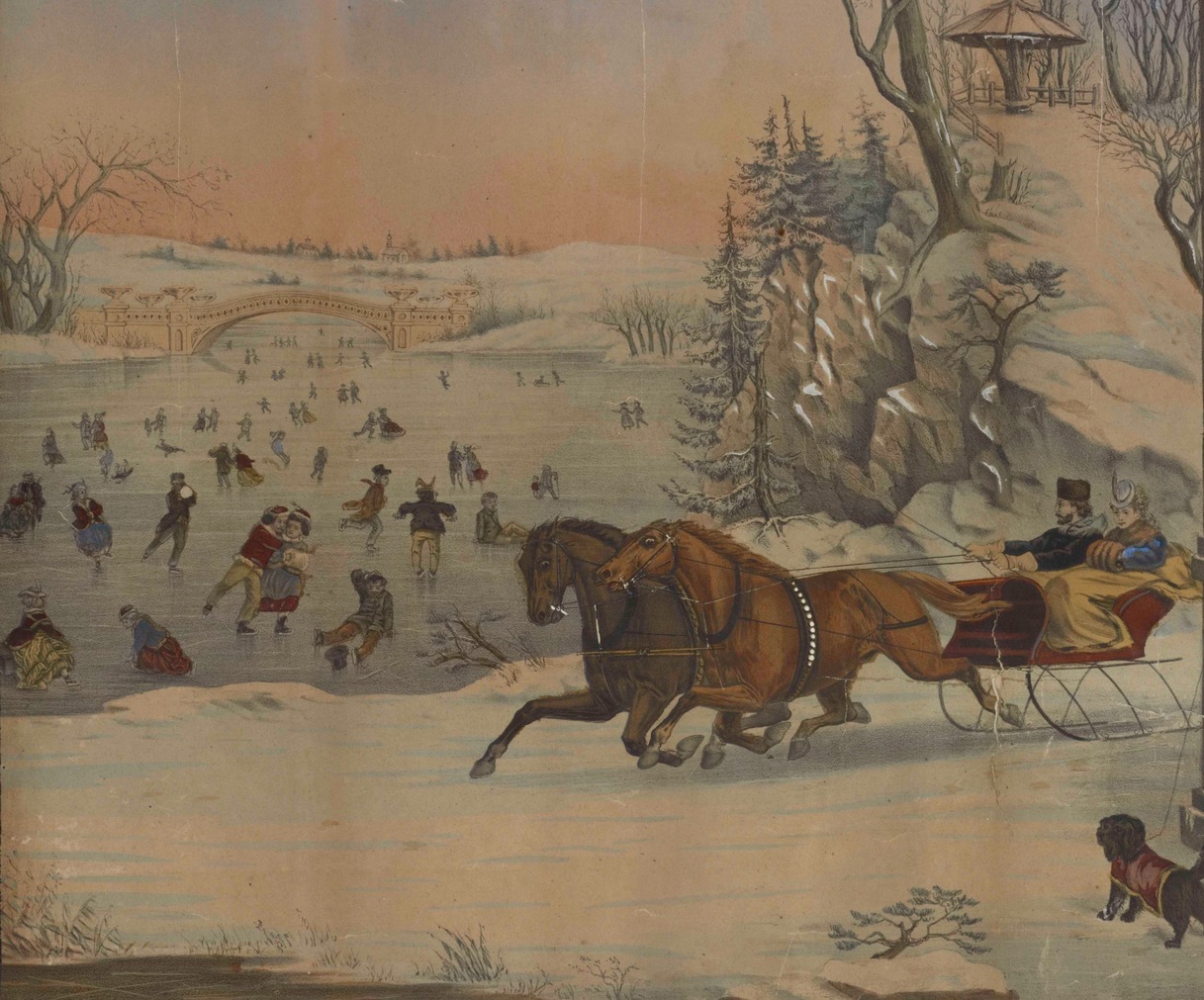
Edith Wharton Was Mom’s Love Language

“Mom’s Ashes” by Robert Travieso

At first I thought I was the one that killed her. In the hospital, they couldn’t get her nose to stop bleeding, so they made her stay overnight. And there were all these nurses taking turns coming into the room, and she had an IV, and my dad was holding an ice pack under her nostrils, and her eyes were already black. And nobody was saying it but I’m looking at my mother and she’s barely conscious and sort of babbling and pushing the little red button for more pain relief and I can feel a bruise on my forehead that’s the exact shape of her nose bridge, so…yeah, I thought I’d made it all happen, somehow. Even later on, I thought that, for a while. And I kept thinking all these stupid thoughts that anyone would think, if they’d done what I’d done, like, How badly did I really need that glass of water? Or, What if I’d just allowed myself to be parched for a little while longer, or just waited to see if my thirst went away, or, if I was still thirsty, just gotten up to get myself a drink after everyone else had gone to sleep? The sort of run-on thoughts where you stay inside each one for as long as you can because you don’t want to go on to the next one.

And she was just trying to give me a kiss goodnight. And it must have been a million-to-one shot. And she went down so hard, and by the time I sat up to look at her, she was already on my bedroom floor, with her chin pointed up at me and blood pouring out of her nose. And the only way I can describe it is, not real seeming. It was like—I think I literally said “Jeez” out loud. Like, “Jeez.”

“Mom?”

“She’ll be fine,” my dad said, sitting there across from me at the hospital, because what else could he say? You get on the train, you make your stops. Most conversations are predetermined in some way. People say the thing they have to say when they have to say it, and you’re supposed to believe them, even though you know they’re just saying what they’re saying because they have to. And even if you don’t believe them—and I only half-believed my dad—you can’t even be mad at them for lying. Because they have to.

Like, how could someone be two different people at the exact same time?

But in that moment, just because of the way my dad was looking at me and trying to be all strong and dad-like despite his own probably super-concerned feelings, I could sense my eyes welling up like I was about to cry and I did that thing where you just go, No! No! NO! internally until the feeling goes away, like you’re scolding a bad dog. We were sitting on either side of the bed and my mom was sleeping between us, and her feet were making these identical skinny triangle peaks under the covers. I reached out and gave one of the peaks a little squeeze and a shake, I guess just to make sure it was really her in there, and she made a little noise in her sleep, like, ahhhhhhllright sweetie, or hooooookay darling, something like that, a typical mom noise, I think she was just even in her sleep trying to be like, I’m here, I’m here for you, don’t worry, don’t worry, which just made me feel even worse.

And then I looked over and my dad was holding her other foot in exactly the same way. And I mean exactly the same way, same hand placement and everything, like our hands were positioned on her feet at DNA-levels of exactitude. And normally I’m against that sort of thing, I don’t even like it when two people pet a dog at the same time, it’s creepy, it’s like you’re double-teaming or molesting the dog—but this time I liked it, or, it felt good. It’s not that I liked it, it just felt like we were all connected somehow, I guess because we literally were connected. Me, her, him. Kid, Mom, Dad, connected. And I thought, Okay, here’s Mom. Good old Mom. And here’s her foot. But then over there, there’s Dad, and that’s a wife’s foot he’s holding. And I can’t really explain why that felt like such a big discovery, but it did. It really did. Like, how could someone be two different people at the exact same time? And not just two. Four, five, six, twenty different people. I had this urge to say something, to see if the math was the same out loud as it was in my head, but the only one there to talk to was my dad, and I didn’t really want to get into it with him, not with the lump still in my throat, and not with him looking so increasingly trembly-chested and whatnot, so we just sat there and held her feet without talking.


After two nights in the emergency room, the doctor said we could take her home, and thank heaven for thirsty sons and all that, or else they’d never have found it, and so we set up the pull-out downstairs and dragged the TV in and got all her books and things, and she got into bed and then…just kind of never left. It was weird. For a while I wished we’d never put her in there. I thought if we hadn’t put her in the pull-out, if we’d just sent her back to work or asked her to cook us dinner, it would have been different, she would have worked her way past it and recovered, which I knew was crazy even as I thought it. Or if I’d never head-butted her. That whole thing again. But I guess it was just hard to accept the inevitability of the pull-out, the fact that she would have ended up on that pull-out no matter what we did.

Anyway, she had her books and her tissues and her phone and the TV and everything was in piles, and everything was organized in and around the pull-out; that’s where we had dinner, where I did my homework, everything, and it was like our house was down to just that one room, and Mom was in the middle. And Dad was on the landline nonstop, and we didn’t even really use the landline at that point anymore, and then we started getting lasagnas and seven layer dips from neighbors and people I hadn’t seen in years—all Dad’s college friends, and all the ladies Mom went to book club with. And that’s when I basically knew. Like if you’re a sick little kid and Lebron James stops by the hospital while you’re getting your blood drawn just to hang out and maybe give you a balloon, that’s when you know it’s over. I always wondered about those guys, those Make-A-Wish guys. Didn’t they ever feel like they were just harbingers of death? Or maybe at that point everyone has already just accepted it. But I always wondered, even the dying kid? Did he accept it too?

After a while my mom’s book club friends dropped off, because there wasn’t really that much for them to do, they mostly just sat around talking with themselves around the pull-out, like a book club where my mom just happened to be asleep the whole time. But my dad’s friends kept coming, at night now when Mom was asleep, and they’d sit in the backyard on fold out chairs and you could tell they didn’t really know what to do or say so they just drank, like, so much beer, and they set up a projector to watch sports on a sheet strung up between two trees, and my dad would sit out there with his friends watching basketball and they would drink and drink and he would get drunker than I’d ever seen him before. And that sounds so maudlin—that’s a word I just started to use, I looked it up and it was perfect, the perfect word I was looking for—but it wasn’t maudlin, not at first, because at first actually it was sort of fun, they set up a cornhole and started using the grill or else brought Mexican food and it was like a little party at our house every night. I’d stay out there for a while and then it would be my bedtime. But my window looked right out into the backyard and I’d stay up late, looking at them talking and roughhousing and acting like kids, getting beers from the cooler, laughing, yelling, hugging each other, peeing in the bushes, tossing a football around in the little half circle they’d arranged in front of the projector, and then when it was basically totally dark except for the porch lights they’d leave, one by one. And then it would just be my dad out there, drinking, sitting for a while and then getting up and going to the cooler, and me, at the window, watching him. And yeah, that was a little maudlin. But it felt all right, I felt okay with the maudliness of it all. And then in the morning even though I always fell asleep at the window, I’d wake up in my bed. And that was that for actually a pretty long time. Like most of the summer, I guess.

But then in the fall truly the weirdest thing happened. It was just me and Mom one day, so it must have been a Saturday, or else I’d have been at school. And I had this sort of niggling feeling in my head, like something was increasingly wrong, or just not right, but I couldn’t put my finger on exactly what it was—like there was an absence, or something I couldn’t see, like a buoy clanging in the fog. You can’t see the buoy, but you can hear it, that’s the point of a buoy, it tells you where it is, that’s what it’s for. We were watching Grantchester. “Mom,” I said. “Hey, can I ask you something?” And it was just this funny feeling I had, this hunch. It’s not like we’d even spoken that much. She’d gotten almost spookily into Grantchester. Looking back I guess she was just trying to stay calm, trying to find a way to breathe for a while inside the least rapey police procedural she could find. “Hey, Mom,” I said, and tapped her on the shoulder. “Look at me for a sec.”

And so she looked at me. She hit pause on her show, and I can still see the face of the guy from Grantchester, this very handsome vicar guy who solves crimes. His mouth is open like he’s just hit upon this huge case-breaking discovery, which was weird because that’s exactly how I felt.

“Hey,” I said.

“Uh-huh,” she said. She put her thumb on the play button.

I didn’t know how to say it, so I just said it. “Hey Mom,” I said. “What’s my name?”

She was just staring at the paused screen. I could see her heartbeat in her neck veins. The vicar guy was standing in front of one of those perfect gardens with bridges and little stone pathways that you only see in TV shows set in England. “Yeah. You know,” I said, trying to find a casual way to slide into my next thought, “Just because, you know, I just kind of want to hear you say it.”

Honey,” she said. But then she didn’t say anything after that. It was pretty late in the afternoon. I have no idea why we were the only ones home, why I was just sitting there watching the beeb with my mother. That’s what we called it, the beeb. I could have been anywhere, doing anything. I was eleven. I should have been outside building a fort or something, but I wasn’t, who knows why, it’s not something I really feel like I need to investigate. And then I heard Dad pulling into the driveway, turning off the car, and it was like I felt we had to hurry up and finish our conversation before he walked in the door. His car always made a kind of rumbling sound before it totally shut down, like when your dog does a tight little lap before lying down, and it made that rumbling sound and then went quiet, and I knew he was getting out of the driver’s seat, putting his feet on the driveway, hoisting himself out the way he always did, both hands curled around the roof, like he was jumping out of a plane, and then Mom and I just sat there for a little while, listening to his steps crunch up our driveway.

“Mom?” I said again. She wouldn’t look at me. “Mom?”

“Hold on,” she said. “Just hold on and let me think.”


And so then yeah, we had to go back to the hospital. And it turned out she needed to have the big surgery, the one they were hoping to avoid, and the panel said it needed to be now, which I thought meant like, they were going to pull the curtains around and get right to it, but now turned out to mean in two weeks, which was the earliest they could schedule it. So for those next two weeks I was just hovering around her trying to get her to say my name, and she couldn’t, and I knew it was making her upset—how could it not have?—and it was making me upset too—but I just couldn’t stop myself from asking. I can be really persistent, which is usually a good thing, but it’s also actually one of the things about my personality that I’m a little bit ashamed of or annoyed by.

At this point in my life I don’t really care about dogs, almost to an unusual extent, like people notice it, but when I was really young, like six or seven, we had a dog named Bonzo who I pretty much loved the same amount as I did any human, and it was my job to walk her every afternoon. But one day when she’d finished doing her thing and it was time to turn around and go home, she wouldn’t go. She just sat there and wouldn’t move. And this is what I mean about being annoyed with myself; I was this little kid, but I could feel this weird sort of anger bubbling up inside of me, because Bonzo wouldn’t do what I wanted her to do. And before I knew it, I was pulling and pulling on Bonzo’s leash, and basically dragging across the sidewalk, just a little way at a time, and then eventually I just got super mad and pulled her really super hard, until I was basically choking her, and she’d scoot a few feet forward for half a second and then sit down again, and I’d just pull harder and harder and harder and Bonzo would scoot and then sit down, scoot and sit down, and it was dark by the time we finally made it back to the house, and I was sweating like crazy, and my t-shirt was all drenched underneath the jacket I was wearing.

And that’s sort of what it was like with my mom. I wasn’t angry, I wasn’t enraged, exactly, the way I was with Bonzo, that’s not why it was the same, it was more just, I could feel myself entering a place where I was going to get her back to the house any way I could, even though she wasn’t moving, and we were really far away. I’d hold up these old phonetic flashcards we still had, I’d quiz her on famous people with my name—I have a pretty stupid name for a kid, and there’s really only like one famous person who has it, and he’s pretty stupid himself, and it used to make me self-conscious, but it doesn’t anymore—but it was just like, there was this roadblock. She couldn’t do it. She could say everyone else’s name—I tried, she could—but she couldn’t say mine. And I wondered why. And I still wonder why. On a synapse level, I wonder why. It almost made me feel special, you know? Hurt, obviously, but also, special. Because I was the only one. And I wondered, was there some specific thing going on between us that I didn’t understand? I felt like I knew her pretty well, but maybe I didn’t. She was just a mom to me. I don’t mean just. How do I say it. She was a mom to me. She was Mom to me. And that’s a pretty big deal, especially for a kid, she was like, my whole world, she was the most important person in my life by far, but you also couldn’t really say that I actually really knew her.

She was a mom to me. She was Mom to me.

So the two weeks came and went and then she had the surgery, and the doctor said it went well, but when she came out, her eyes looked really funny. I guess they’d been weird for a while, especially right after I head-butted her, but this was totally different. This was her actual eyes that were weird. Like, her eyeballs themselves. They were glassy and the gray parts—my mom had gray eyes—it was like she couldn’t really control them anymore, and they’d just start drifting toward her nose or up into the top of her head, or down and to the side, like she was trying to look behind her. And she wouldn’t look at me either, when I was talking to her, and I kind of started to take it personally, because she seemed…I guess mad would be the word? At me, specifically? It could have been a trick of the light, or just the way her eyes were setting, but it didn’t feel like it. It felt like she was blaming me, like it had just started to occur to her to blame me, and I don’t know if it was just my own guilt or whatever or if she really felt that way, or if it really was just her eyes, but she had to know that I regretted head-butting her, right? It didn’t need to be said. But I said it anyway. She was on the pull-out, reading a book.

“What did you say?” she put her book down.

I said, “You know, sorry, Mom. I’m sorry.” I hadn’t actually expected her to answer.

“For what?”

“For hitting you. You know. For…the head-butt.”

Honey,” she said. But then she just went right back to reading her book. Classic Mom. But I wouldn’t let it go. Classic me. She’d been reading the same book for the last few weeks, but it was really short, so she must have been reading it over and over again, or else she was reading it super slowly. “What’s it about?” I asked.   

“What’s what about?” She actually turned all the way to face me.

“Your book,” I said. I picked it up. On the cover there was a picture of a toboggan lying sideways in the snow, and the legs of two people you couldn’t see the rest of, wearing duck boots. “What’s it about?”

“It’s about love,” my mother said. “And cruelty, and isolation. And sacrifice. And desperation. And duty, and fate, and winter.”

Which was a really weird thing to say. And I kind of felt it right in my chest, or my back, or sort of where my ribs curl around from back to front. Just the sound of her voice. Her explaining voice, not her asking me for something voice. It was different. And she hadn’t been talking very much since the surgery, so I wanted to keep it going somehow, hold onto or get out of the way of it, or do whatever I could to make or allow it to happen, or keep happening. I said, “No Mom, what’s it about?” And I turned to a random page and said, “Like, here—what’s happening on this page?” And I could see her eyes, I don’t want to say lighting up, because I know that probably isn’t true, but that’s what it felt like. It felt like her eyes were lighting up. She leaned over and looked at the page that I’d picked. She licked her finger, what I think of as her reading finger, and found a spot she wanted to talk about.

“This is where Mattie is dancing with Denis Eady,” she said, “and Ethan is outside, looking in through the window.” She smiled and put her finger on the paper and traced along underneath a little sentence, a little shadow of spit that evaporated almost instantly. “He tries to get Mattie into his carriage after the dance, but she won’t do it.”

“Who does? Who won’t?”

Denis Eady.” Her voice was like C’mon, keep up. “And Ethan is in the shadows, watching, and listening to her say no.” She closed the book and turned to me. I looked down at the bed and saw that she was holding my hand. But it was so light I couldn’t feel it. “Why don’t I just tell you the whole thing? Okay?”

“Okay,” I said. “Okay.” She wasn’t in space, she knew where she was, there, on the pull-out, talking to me, but I also think on some level she didn’t care who she was talking to—she just wanted to talk, in this weird brief moment of her being able to, and I just wanted her to talk too, so I didn’t interrupt, except to say Ok, uh-huh, right, I get it, ok, wherever and whenever those words seemed to fit, and she worked her way through the whole thing, back to the beginning and then right up to the end. Ethan and his limp at the start, and then the flashback, and Zeena in her bed, and Mattie looking after her, and the farm, and the jug of milk, and the pickle dish, and Harmon Gow, and the wind and the cold, and the hill on Corbury road, and she didn’t explain a single thing, she just told the story as if I’d heard it all before and she was just reminding me, and I could just about hold on to the whole thread of the plot, but then when she got to the end, she stopped, and wouldn’t go on, and said I had to read it for myself.

“Aw c’mon Mom.” It was dark in the house. I hadn’t noticed. I had no idea where my dad was. He could have been anywhere.

“I’m sorry, I just can’t,” she said. “It’s too much. It just kills me, every time. And I don’t want to cry. And I’m tired. Okay? I’m sorry. Maybe in the morning.”

I could tell what kind of look I must have had on my face by the way she was looking at me, but I couldn’t let it go. “Mom, c’mon. What else are we going to do? Come on.”

I could see her doing that mental calculation thing I’d seen her do all her life, which she probably didn’t even know I knew about, where she’s trying to figure out if the thing I was asking her to do was worth it, if her suffering or exhaustion was worth my subsequent joy or even just worth my not throwing a fit, if she was up for one more story, if she could physically push her way through, if she could do one more spiders down my back, one more hold me on the monkey bars, another race me around the playground, one more listen to my song, one more watch me jump, watch me swim, film my dance, help me draw, one more airplane, one more horsey, one last kiss goodnight.

“Fine,” she said. But she wasn’t happy. Or maybe she was. I don’t know. She was somewhere in between. And she had this kooky look on her face, like she was almost about to laugh. She scooted up a little in bed and took a sip of water. Her eyes were still pretty glassy, but her voice was strong. “Okay,” she said. “Remember how Mattie and Ethan walked home together, in the beginning, after the dance, in Chapter One? After she tells Denis Eady to buzz off? We need to go back there or else the end won’t make any sense. So they’re walking arm-in-arm as slowly as they can, and they’re under a bright winter moon, and they can’t look at each other or else they’ll explode, and you know how you can transmit feeling through just a knuckle or wrist bone against a ribcage, or just the inside of your elbow against the inside of another person’s elbow, just that little insistent pressure, even through winter coats? That’s what they’re doing. And it’s erotic, actually, if you want to know the truth. The way they’re just making little blinkings of nothing small talk, while their bodies are pressing together under their overcoats. And Ethan’s got those wrinkly eyes, and Mattie’s so sweet and full of light. And it’s not wrong but it is wrong. You know? And then they pass Corbury Road, which is this steep and icy lane, with a big tree at the bottom, and they see all the marks of the sleds, the little cuts that a flexible flyer would make, thin blades cutting into the ice, people going fast, feeling alive, and Ethan asks Mattie if she’d like to go coasting with him some night. That’s the word he uses, coasting. He’s feeling very bold. And she says, ‘Oh, would you, Ethan? It would be lovely!’ and he says, ‘We’ll come tomorrow, if there’s a moon.’ But of course they never get there. Or, they do, but…well, now here we are at the end. And there they are, back on Corbury Road, at the end, at the top of the hill, and they’re all hemmed in. They can’t be together, and they can’t be apart. They can’t run away and they can’t stay and wait. They can’t do anything. They’re stuck. And they can’t even stay stuck—they’re animals, and they’re trapped, and they’re scurrying this way and that way, in their hearts, in their bodies, and in their souls, and they’re on this little sled that isn’t even theirs, just some old sled they found under a spruce tree, and Mattie says, Take me down, Ethan, take me down so ‘t we’ll never come up any more, that’s what she says, and just before they push off Ethan shouts, Get up! Get up! Get up! and he says he wants to switch, can she sit in the back, and he sit in the front, and she asks him why, and he says, he says—he says I want to feel you holding me. And it just kills me! Every time! It kills me!” And she let out a sob. “It just does, I don’t know why, but it kills me, oh, I can’t take it.”

I just wanted to understand. “Do you really not know why?”

And then she laughed, and it looked like maybe she did know. “Regret, I guess.”


The thing about Bonzo was that it turned out she had something seriously wrong with her hips. They were paralyzed, or not paralyzed, but almost paralyzed, and she was in so much pain, the doctor said. Major pain. That’s how he put it. And I still feel so bad, pulling her leash like that, choking her, making her scoot all the way home, and she was yelping the whole time, and I was yelling at her to shut up, which I didn’t mention because sometimes I just don’t mention that part. A lot of times I just leave that part out. And then they laid her down on her side on the gurney so that she was facing us, and we all petted her and gave her little hugs, and my mom had brought all these candles so we started lighting them and putting them all around the room, which was probably not even really legal but nobody stopped us, and then we all gathered around inside the circle of candles and turned the lights out, and it was so dark in there, and the candle flames lit up our faces, and we could see Bonzo breathing in and out on the gurney, and there were these tiny threads of smoke rising from the candles we’d already lit, and my mom has a candle in her hands and she’s lighting another one that’s right next to all the rest, and then she’s putting her candle in the candleholder, and the last candle’s light seems to be so much brighter than the rest of the candles combined though I know that’s not actually possible, and I see Mom’s face flickering in the shadow and the light. I’m eight years old. My mother is forty. She’s so beautiful. And Bonzo is lying there on her side and everyone is petting her and scratching between her ears and saying all her favorite phrases that make her feel happy and safe, like my brother is saying, Toast is coming, toast is coming, which is what we used to say when we were making her toast, because she was crazy for toast, but I just can’t get into the mood or think of anything comforting to say. I can’t even touch her. I have this feeling like, if I touch her, I’ll burn my hand or something. And then the doctor comes in with the nurse, and the nurse hold her legs down while the doctor puts her to sleep.

And now I’m holding my mom’s hand, and we’re back in the living room, on the pull-out, and I don’t know why but it’s important to me now to try again, one last time, even though I know she’s tired, and we’ve been through a lot, and she’s almost already asleep. I have my flashcards right there by the side of the bed, and so I pull them out and I hold them up right to her face, just before she falls asleep, and I say, Just say it with me now, Mom, just say it with me now, that’s all you have to do, I really don’t want you to fall asleep without saying it, and I hold up the one that’s just the letter D, just a big D, and then I hold up the other one that’s just the word No. There’s one for Yes, and one for No. And I keep showing her the two cards over and over again, and I know she’s trying to sleep, but I won’t let her, I keep showing her the cards and she keeps shaking her head, and she says she’s in a forest, and I say, No, no Mom, you’re not in a forest, you’re here with me, can’t you see? And she says she’s in a forest and there’s a demon and I say, No, no, there’s no forest, there’s no demon, it’s me, your son, I’m here, and she says she can feel it getting closer and closer, and she whispers, I’m scared, I’m scared, and I’m almost a little angry, and I say, C’mon Mom, please, and I show her the cards, and she says, No, no, no, and I hold up the first card and she says, D, just like that, and I hold up the second and she says, No, no. And that’s almost it, and I hold up the first card and she says D, and then I hold up the second and she says, No, and then she looks at me, and I can see her, like, I can see her in there, I can almost see past her being my mother, right into her eyes, right before she closes them, and she says, Sweet boy, sweet boy, sweet boy, and I lean in so she can hold me and then she whispers into my ear, she says, Deano, Deano, Deano, over and over again until she dies.

A Queer Indo-Guyanese Poet’s Postcolonial Memoir of His Search for Belonging

I first came to poet Rajiv Mohabir’s work through his cutting meditation on why he will never celebrate Indian Arrival Day, which Guyana celebrates on May 5th to commemorate the arrival of indentured Indian workers in the Caribbean. In the essay for the Asian American Writers Workshop’s The Margins, Mohabir uses his family’s migration story to unpack the brutal lingering legacies of Indo-Caribbean oppression, or as he writes “a postcolonial fallout,” which includes domestic violence, diabetes, racism, and homophobia. 

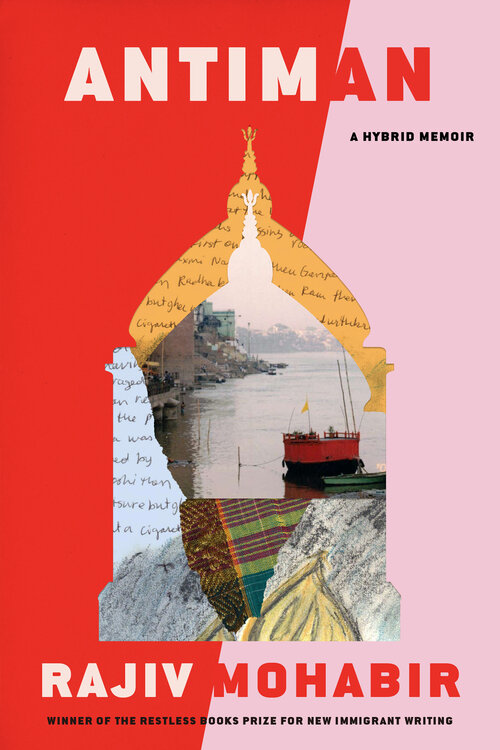
Antiman, by Rajiv Mohabir - 9781632062802.jpg

In his hybrid memoir Antiman, winner of Restless Books Prize for New Immigrant Writing, Mohabir reflects on his life as a queer Brown man with a complex lineage: he was born in London to an Indian Guyanese family who later moved to Toronto, Canada, Richmond Hill, New York (also known as the Little Guyana of Queens), and the white working-class town of Chuluota, Florida. Through his genre-blurring writing that combines prose, songs, poetry, vignettes, and translation, he takes the reader into his grandmother’s songs, his search for community, and his experience of love as a queer man of color.

I spoke to Mohabir about the phrase “We’re not that kind of Indian,” the ghosts created by diasporic communities, and why South Asian aunties can be such haters.


J.R. Ramakrishnan: I can’t imagine how reliving some of the episodes of trauma must have been like in the writing process. I know you mentioned therapy in the memoir, but really how did you survive putting the words down? 

Rajiv Mohabir: I come from a family where ancestral traumas are stifled, though their apparitions startle us awake in the middle of the night. The more I have tried to ignore them, the more they open my locked doors and peer down at my sleeping body. They teach me that their genealogies are my genealogies.

I come from a family where ancestral traumas are stifled, though their apparitions startle us awake in the middle of the night.

Writing the stories was a way that I tried to make sense of these particular traumas in that by writing them I could have control over them—at least this is what I thought. After drafting certain episodes in cafés from Koko Marina to Kailua, I would have panic attacks when I returned home. My doctors at the time prescribed anti-anxiety medications that I took for years that helped to settle the upset but did not completely quell the searing pain of reliving these moments. No haunting is so easily remedied. I had a queer therapist of color in Hawai‘i that really helped me to examine my own need to write these stories, which he said were important to understanding who I am. 

In the drafting stage I took long swims in the ocean at Kaimana Beach and drove long loops around the island. I didn’t know it then but my strategy for dealing with this stress also included making myself feel small against the largeness of the sky, the mountains, and most definitely the Pacific Ocean. The smaller I felt, the more space I gave myself to tell these stories with the hope that there is someone else out there like I was once, who I could reach.

JRR: You have a very mixed South Asian background (caste, North-South), and being queer, and then you have all these places. I want to ask you about this determination to pinpoint identity, particularly within the Indian diaspora. I am thinking about the incident when you are told your fridge is not very Indian. What does that even mean to have an Indian fridge? 

RM: One of these ghosts created by diasporic communities that harmed my family’s consciousness was the lack of recognition that my parents’ generation felt when they left Guyana for the United Kingdom. An uncle of mine was not allowed to marry a particular South Asian woman because, from what is told in our stories, he was the wrong kind of brahmin—that diasporic brahmins from the Caribbean were not really South Asian afterall. It’s from this scarring that my parents schooled us in our own apartness, always brandishing the phrase “We’re not that kind of Indianas a protective shield. 

A high school friend told me that my fridge wasn’t that Indian, I heard that as some kind of generational echo of what I assumed her parents must have been thinking about my own family. With time and distance, I have a different read of the situation, though it is still very impactful. I see this as another diasporic South Asian identifying with their own ideas of what makes them culturally South Asian. We did indeed have the things in most West Indian kitchens: pepper sauce, achaar, sour, day-old bhajee, milk, and bread. 

I write about all of these places in my history as a way to show the specific diaspora I come from—and how displaced my own understanding of this distance is really. All of the places we have lived have marked us culturally, that when I say I am anything, what I mean is that I am that by way of everywhere else I have been “from.” We are Indian, yes, and we are Caribbean. We are immigrants to America, yes, and our history is of British colonization. My family is complicated and multifaceted, that resists easy categorization. What I’m finding now is that ethnic categories are important, but so are these other histories that we bear inside of ourselves. 

JRR: You really throw the family’s dirty laundry out in the open. In the book, you mention that some of your family were annoyed at your making money from your earlier chapbook of your grandmother’s songs. I am wondering how you think they might react to this one? Do you care? It seems that you (as it happens sometimes that one person in a family has to take this role) are this mirror to all of their prejudices, self-hate, and discomforts, including around Indian identity and language. I wonder if you agree with this?  

RM: This is something that I struggle with given my own position in my extended family. I was the one who learned my grandmother’s songs and stories and in some ways, I think that any contempt that I felt from them is a result of this and how it queered me. The chapbook incident is certainly regrettable, on some level I understand it when I’m being my most magnanimous self. Maybe they wished that they could know my Aji’s interiority as I learned it—I’ve stopped trying to guess about what they feel about me.

We are Indian, and we are Caribbean. We are immigrants to America, and our history is of British colonization. My family is complicated and multifaceted, resisting easy categorization.

All my life I was taught to keep myself in hiding—that darkness was the only real friend I could count on. I was terrified that if people knew me, really knew me, that they would be disgusted. What will so-and-so say? What will aunty’s husband’s mother’s brother’s son’s grandchild think? What if I could secretly give permission to a closeted cousin to no longer fear? Even with this memoir I’m worried about what people will think. I am taking steps to befriend this worry, to make it sing me its ballads so that I can understand why this survival mechanism still is vestigial inside of my psyche.

I suspect that what you say about being the mirror is right. I showed people the parts of my Aji that were least respected: that one could be unlettered, but also have one’s poetry be valuable. Their reactions will be their own, I am not in control of them, or how they feel about me or my own brother and sister and our immediate families. It has taken me such a long time to be able to say this, finally. We all have these family secrets—things we shouldn’t tell anyone and it builds up like laundry, to use your metaphor. Healing deep ancestral shame requires starlight and music. What happens when we all acknowledge that we are carrying these burdens and show one another ourselves and we realize we are similar? Maybe they will begin asking themselves about how this opened up the possibility for healing our lineage. 

JRR: You also don’t hide your family’s fetish for assimilation. I think few South Asian immigrants (or even their woke children) will admit to this as fully as you do in this book. You, on the other hand, were radicalizing young immigrants in the New York City school system with a different point of view of American history. Would you talk about this contrast, and this time of your life teaching young children? 

RM: I think that shame is powerful but so too is the afterlife of shame. It manifests in so many ways. One of which is my own reaction to familial shame: to learn as much as I can about the parts of my own history that have caused my family silences. One of the major silences that still wounds me is the loss of Guyanese Bhojpuri and Tamil in my immediate family when this was the language of most of my grandparents. English language, the language of our colonizers, was a thunderstorm in previous generations and now treated as a beloved guest in our mouths. So venerated was it that we stopped singing our songs to one another. How many forests died from the embrittlement of the root systems? What kinds of losses are we currently suffering that we have no idea about?

I taught this history as an ESL (English as a Second Language) teacher in New York City as a way to pay forward the anti-colonization work that I was doing for my own self. I wanted to bind that ghost that begs for assimilation into the United States that causes us to change our ways of thinking and speaking. I wanted my proper English to be my code-switched language and my mask—or at least since it was too late for me, I wanted it to be an option to others in precarious relationships with Empire in general and the Empire State in particular. 

Assimilation was a survival strategy for my Brown family in the UK and in the US. Adapting to the colonizer’s expectations of the Coolie was our ancestors’ strategy. I am grateful for their cunning in keeping themselves alive, allowing me to survive to write this story. I no longer need these strategies to live in me. 

JRR: In India, during an audience with a pandit, you question him about the patriarchy of the Ramayana as it relates to the hideous (and mostly, totally unquestioned) treatment of Sita. He says, “We cannot understand the entirety of the lila, the play of the gods.” And you write: “I wanted to believe but could only see metaphor.” I feel we could talk for hours about this line. but I am curious as to how this episode has shaped your beliefs as a human but also a storyteller. 

RM: That was a particularly fraught moment for me in that the Ramayana was important to my grandparents’ diasporic consciousnesses. The story of Sita’s plight was in constant iteration whenever my Aji told the story. It was subversive and also her acknowledgment of her own plight. As for the narrative itself, my family carried it into the diaspora and drew our names from it. It’s been important and our histories have been written by it. This said, I must also note that this story has inspired tremendous violence on the subcontinent that people have perpetrated taking the names from the Ramayana in their mouths. Hindu extremists continue to destroy the lives of Dalits and Muslims across South Asia. For example: with the burning of the Badi Masjid in Ashok Nagar (2/2020) the desh-bhakts flew high the flag of Hanuman which read Victory to Lord Rama. This most certainly is no victory, but a shame and bigotry which must be denounced. A stain that will endure lifetimes coded in the epigenetics of survivors.  

Why is it that the previously colonized colonize, in turn, the even more vulnerable? The metaphors are remarkably available in mythology and the ways in which mythology-based worldviews extend their interpreted actions into the world.

For this pandit, he was trying to show me that I have a long way to go—and indeed my questions did change from the easy into the nuanced. Here instead of using the available mythos to sympathize with the oppressed and make efforts to right the countless injustices, people would rather save cows than human beings. Seeing this unfold has shaped my own understanding of the power of story for evil in the earlier mentioned case, and so has the ways in which I saw my own Aji enlivened the Ramayana by using it as a way to convey her own interiority to me. 

A particularity of that song that I heard performed includes a special attention to the woman’s role in the house vis-a-vis Sita and her role as either by her husband’s side or in the kitchen as the song goes. When my Aji sang it, it was in lamentation, but slyly so in that her singing was her own intervention to point out how ridiculous it was. My Aji was widowed at 44 and never remarried, unlettered, and fed her children and grandchildren.

JRR: I laughed at the part when you return from India and you write that even though you are “parasite thin,” your aunts would comment on weight gain and that you’ve become “dark.” I feel like, to varying degrees, this is true, all across the diaspora (and maybe for all communities): Why are Indian aunties such haters? 

RM: This is the million-dollar question. Even the title Antiman hearkens back to this idea of the aunty at least as a double entendre. My experience of aunties has not been one of guidance or concern, but rather critique devoid of nurturing. I have come to understand this to be a way of their own survival. Being too North American is threatening. I mean specifically, displays of queerness, marrying against the anti-Black racism in the family, and being an artist, are all examples of what challenges the very core of their own self-understandings. I get why they are threatened. The world has suddenly increased in size. There is a need to know if gravity still works—if there is anything to bind us together. Aunties don’t know our worlds and cannot control them. 

It used to be that gossip could distill social boundaries of what is acceptable and what is not. In my mind, it’s in-group/out-group performance meant to reify the connections between siblings by showing everyone involved who the closest kin actually are, as if to point out who does not belong. But more importantly the standard of who does belong: which cousin, friend, whomever fits the mold of what we should strive to be. For example, “Did you know that Aunty X’s son wrote a better memoir about Y and has an interview published in Z magazine—so much better than your own, na?”

But maybe this is too jaded, too cynical. I want to believe in a redemption plan as well. Or maybe I have misread intentions and responded as an insecure young Brown queer could. I reserve the right to be wholly wrong in this analysis and the right also to amend my answer as much as I want to. 

The performer and academic at Northeastern University, Kareem Khubchandani, has spent a lot of time thinking about aunties and how they work in the family. He organized an asynchronous symposium called “Critical Aunty Studies” that has been wonderful to engage with. Here is a link to this brilliant work.

JRR: No one escapes your examination (including yourself!). I really appreciated the list of “Islamophobic Misreading.” Could you talk a little about why you decided on this form for this aspect of the memoir? Post-9/11 was obviously a formative moment of Brown identity in America. My favorite of these vignettes is the New York therapist who says, “You deserve a family that supports you despite what Allah thinks” and the one where you tell your sister to cover her arms in a conservative neighborhood and she tells you that since “this is America. I thought I was free.” 

RM: The major problem with having this kind of eye means that I interrogate myself as well! Of course I’m a terribly flawed person capable of Islamophobia, anti-Black racism, misogyny, etc. you name it. I wanted to have parts of my memoir show this. We are all complicated people complicit in the suffering of others. I am living in a white supremacist nation—one that is operational because of stolen land and stolen labor. Everything that I do is complicit. How can I work toward an anti-imperialist end if I do not consider my own culpability here?

The form was from a writing project that I gave myself in 2010 in which I kept a journal of my thinking through Islamophobia in my interactions with the people around me. Sometimes it was directed at me as my Brown body is often misread as “Muslim,” a word misused by Americans for “threat.” I wanted to regard my complicity as a way to move from being an accomplice to a non-Muslim, misogynist oppressor to thinking of ways to become an accomplice to those who survive and who are made to feel as though they transgress by simply surviving. 

For me there was no escaping this post-9/11 reality given the “right” answer to this question is never “I’m not a Muslim” but rather “you’re profiling me is racist.” This and identities in the Caribbean communities that I’m from are not so easy. There are many Muslim people in my family and, according to familial stories, may have Muslim ancestors as well.

Twitter Doesn’t Want to Let the Poets Find Out About Science

Ask a group of poets what their least favorite subjects in school were and it won’t be long before they start listing scientific disciplines. Whether it’s math, physics, chemistry or biology, historically, the perception—both within and without literary culture—has been that the artsy-fartsy minds of creative writing types just can’t hack the left-brained fields. 

And while it’s neither universally true nor especially useful, it persists as a perception. So it’s interesting to note that, in the space between poetry and pop science, a new joke has emerged. Now the gag is that poets cannot be stopped from converting scientific facts into verse—they can only be contained. Lately on social media, it seems like every time there’s a discovery about the moon, or trees, or a particularly strange kind of animal, someone says “don’t tell the poets!”

On Twitter, for instance, you’ll find variations of that phrase used in tweets about: a newly discovered species of fish; a picture of a book whose pages have all crystallized; a fire raging inside a tree that had been struck by lightning; a Wikipedia page saying that elephants have been observed engaging in “moon worship”; an article with the headline “Your Brain And The Universe Are More Similar Than Previously Thought”; and a video of a chunk of forest moving back and forth as though the ground beneath it were breathing in and out. 

Now the gag is that poets cannot be stopped from converting scientific facts into verse—they can only be contained.

It’s unclear to what degree any of the above discoveries has led to actual poetry, but clearly science is a common enough source of inspiration that everyone’s worried they might. To a degree, this is just a case of the poet as omnivore, a sort of textual magpie making a nest out of the shiny things it comes across, and where better to come across new and shiny things than the never-ending waterfall of a social media feed? As a poet friend of mine named Jake put it, in his work, “literally anything is fair game—a song lyric, a meme, a headline.” Why shouldn’t science facts fall under that rubric? 

Still, it seems to me that there’s something unique about the relationship between poetry and science facts. Laura Mota, another poet I spoke to, referred to the “don’t tell the poets” genre of scientific marvels as “things that make my brain tickle,” and that rang true to me. Did you know that—as Twitter user @dgt211 put it, joking about the phenomenon—stars are “the past rendered visible”? 

How could you not see the poetry in that? And then, how could you not put it in a poem? 


That stars tweet was penned in response to poet Hannah Cohen’s exquisite lachryphagy tweet, perhaps the best example of the form: 

For Cohen, there’s an aspect of poetry to some of these pop sci tidbits. “Being a writer on a social media platform intended for small bites of (sometimes dubious) information, it takes the right sequence of words to stop your endless feed scrolling and engage with the topic,” she explained. “How weird science or pop science tweets are worded absolutely applies to the poetry craft. It makes you double-blink and reread it again.”

Sometimes, the thrill is in explaining a scientific concept in the poet’s own language; for others, all it takes is a particularly apt name for a term, where the STEM community has landed (deliberately or not) on a kind of poetry of their own. In poet Patricia Lockwood’s 2021 debut novel No One Is Talking About This, for instance, she mentions the medical term “fluid shift,” which she describes as “one of those accidental diamonds of hospital language that sometimes shone out from the dust.” 

When I polled poets I knew about science facts that had made their way into poems, I got a veritable smorgasbord. 

I recognized exactly what she was talking about. I’d recently come across the term “rain shadow”—the term for a region that receives little precipitation by virtue of being just on the other side of a mountain range—and had vowed to work it into a poem. I wasn’t sure how or where, or even why, really, but I knew that the name itself felt like it held a kind of poetic energy. 

I was far from alone. When I polled actual poets I knew—not just the broad-strokes idea of them from people’s joke tweets—about science facts that had made their way into their own poems, or that they’d at least recognized as poem-worthy, I got a veritable smorgasbord. 

They mentioned beautiful new cloud types, the mechanics of how light works, the development of black-hole photography. I heard about a whole zine about deep-sea fish, and a book named after an obscure marine worm that bores into the bones of whale carcasses. They mentioned studies where scientists got cuttlefish to wear 3D glasses, the Latin name for the reflective tissue lining behind the retina in cows, a viral story about a case of live bees living in a woman’s eye, the role of mycelium networks in plant wellbeing, the reality of arctic marine ecosystems existing at sub-zero temperatures, and storm clouds on Jupiter. 

All stacked together like that, the mix of entomology, astronomy, physics and biology started to take on the resonance of Harper’s magazine’s Findings column, a last-page feature in each issue that packs together recent scientific discoveries at a rapid-fire, ratatat pace, that blurs the line between journalism and conceptual poetry. Take this representative sample from the May 2021 issue: 

Rivers of gold in the illicit mining pits in Madre de Dios were observed from space, and exploding craters were proliferating in the Siberian permafrost. The trunks of ancient kauri trees indicated that the Laschamp Excursion caused major extinctions. Humans and woolly mammoths coexisted in Vermont.

It’s a mish-mash of unconnected factoids so diverse and decontextualized that it verges on the perverse, and the wildest part is there’s a new litany of these every month, a relentless churn that over time sort of desaturates the beauty of any single finding. 


Which, of course, is exactly the danger with turning science facts into poetry: One implication of the “don’t let the poets see this” framing in particular is that we just can’t help ourselves. As Cohen put it, following the appearance of any sufficiently juicy science tidbit on the timeline, there can be a sense of “Oh boy, here’s some weird thing in nature that we’ll all want to write about because it could be applied to any sort of personal subject in our poems.” 

A host of overly online writers will pop up, each of them eager to use the detail to help the writing pop a little bit more, lending a veneer of the natural to their poems about their feelings, a sort of literary greenwashing. That’s not just conjecture—per Cohen, “there are at least five poems out there on the internet describing lachryphagy and other symbiotic animal behaviors.”

There is a real appetite for this kind of stuff in contemporary poetry, but it’s one that rarely seems to go past the surface.

There is a real appetite for this kind of stuff in contemporary poetry, but it’s one that rarely seems to go past the surface, a trend of scientific discoveries, jargon from various scientific fields and and other sort of shallow science-y ephemera becoming easy fodder for contemporary online-facing poetry as a kind of vague gesturing towards the natural world, for a culture of poetry mainly written by people who may have no special relationship to it, and who may not even like science, either. 

Typically, the primary sources for such poems, real or imagined, are merely headlines from scientific journals, screenshots of small bits of contextless text, or worse, tweets from accounts like @Weird_Animals or @ScienceIsNew, whose sole raison d’être is to use pop science to work the levers of online virality, a process so close to antithetical to that of actual natural sciences that it borders on self-parody. In short, you tend not to see the poet poring over the raw data. 

(That’s not to say this relationship never goes deeper—Jake noted he felt there’s “an entire contingent of annoying Science Bros in poetry,” who he characterized as “almost always white and male,” using deeper investment in science as a bulwark against the criticisms lobbed at softer poetry, describing it as an ethos of “‘this is poetry about Real Stuff, not Feelings.’”)

The shallowness of most contemporary online poetry’s engagement with the natural world may give rise to a pleasing-feeling poetry in a world where the reader, too, craves a connection to a natural world. But the sheen can wear off pretty quickly, as one tweet I saw recently suggested: 


On the other hand, when our existing models for education feel like they’re staggering through the last days of an empire that can no longer sustain itself, without a real successor poised to replace them, it seems crass to mock or belittle any source of investment in learning about the natural world and how it works. 

Shouldn’t we be exalting art that translates potentially dry science courses into the language of wonder—or at least suggests that such a transliteration is possible? Most people are not going to devote themselves to entomology, but these days, you might find insect facts in a poem about racist violence (“what the cicada said to the black boy” by Clint Smith), or in a poem about faith (“Praying” by Noor Naga, which mentions the fig wasp). It’s a reminder that scientific discovery is an access point to the natural world, not a boring category set apart from it.

Shouldn’t we be exalting art that translates potentially dry science courses into the language of wonder?

Certainly the opposite trajectory—our current education system convincing curious and passionate kids that science is too dull or too hard—is more common, and worse for science and poetry alike. For her part, Mota described to me a childhood marked by fascination with the natural world (“when I was a child I would take National Geographics about cute animals and try to absorb all the information. I wanted to know everything about the pandas!”) and a complete 180 when it came to similar content within an academic setting (“It’s hilarious—I was always awful in biology, I could never memorize those things, which always made me frustrated”).

Creative writing about science could inspire excitement (or at least the possibility of excitement) around these subjects, which might open them up to students as worlds to get lost in. As Mota told me, “When I was learning about speed and physics and electrical things, I didn’t really connect to that, but now when I hear about or read about people being passionate about scientific things, I approach them in a different way.” 

Would working poems about science into a physics course’s curriculum function as a teaching aid, or would it only serve to hinder the students who thrive in those settings but founder in the humanities? I know it would have helped me get excited, but then again, I myself am a poet. 


In February of 2020, over my last sit-down restaurant dinner, a few weeks before the pandemic hit Canada, a friend of my partner’s told me about young beavers raised in captivity using baseboard wood for nests and I rushed to get it down on my phone for later use. It wasn’t my first brush with injecting a ~science fact~ into my work. Years earlier, I’d stocked a poem about an ex with things I’d read in science articles: how all the gold on earth was implanted under its surface via meteor crashes, and how some scientists were reconsidering whether the speed of light really was the fastest that things could travel. 

The sexy throuple of the highly personal, the historically curious, and the obscurely scientific seemed to evoke some Platonic ideal of somber and meaningful poetry.

Most recently—in fact, between pitching this piece and delivering my first draft—a poem of mine called “Aeroelastic Flutter” was named a finalist for Canada’s 2021 National Magazine Awards. Commemorating the infamous Tacoma Narrows Bridge collapse in 1940, the poem explores the titular phenomenon—where wind can cause an otherwise static object like a bridge to literally undulate—as a sort of metaphor for gender, while also exploring whale evolution, dog neurology, artificial reefs, and the general infallibility of physical laws. 

Writing it, I was conscious that it felt like a “prize poem,” in some sense, though I had no aspirations or expectations that it would be a finalist for anything at the time. But the sexy throuple of the highly personal, the historically curious, and the obscurely scientific seemed to evoke some Platonic ideal of somber and meaningful poetry. In a sense, after I got over the initial shock of seeing my name on the finalists list, it sort of made sense. Science poems were all the rage these days, after all.

7 Books About Exile and What We Leave Behind

In my novel, Catch the Rabbit, I have tried to write about that hazy landscape made up of words and nothing more, which we call our past.

Catch the Rabbit — Restless Books

It is a very fragile thing so the writer has to support it with the iron scaffolding of fiction. In the end, the scaffolding might be the only thing that’s left, but its shape might tell us some little truth about what is left behind. 

I wanted to find such a shape for what I consider my country: Bosnia—a place where several versions of the past exist simultaneously and seem to clash every 50 years only to create new pasts. I was not interested in what any one of you might easily find on Wikipedia—information about the physical place—but rather what stays within us after we abandon our home and our language. 

Memories

Memories: From Moscow to the Black Sea by Teffi, translated by Robert Chandler

In 1918, Nadezhda Alexandrovna Lokhvitskaya leaves Moscow for what was supposed to be a short book tour in Ukraine. However, the famous Russian humorist will never return to her motherland as the news of censored artists and murdered colleagues reach her on the way. Narrated with refreshing humor so rarely found in stories of exile, Memories is not only an account of an artist disenchanted with Bolshevism, but also a beautiful eulogy to the lost ideals of youth. What I loved about this book was how precise it is in its portrayal of war as sheer madness, which always starts with a loud philosopher and ends with a pile of corpses. 

Where You Come From by Saša Stanišić

I’m really trying to sound eloquent in this article, as eloquent as a non-native speaker can pretend to be, but the only thing I want to say when it comes to this title is I LOVE THIS BOOK. Not only because it tackles issues so close to my heart—Bosnia and its never-healing wounds—but because of the way it does so, questioning language, memories and the power of fiction to preserve both. The narrator leaves his hometown of Višegrad as a teenager and moves with his parents to Germany. As he is struggling to build a new identity in a new language, his beloved grandmother back home is losing hers to dementia. The magical last chapters turn this beautifully woven bildungsroman into an emotional gamebook, thus offering both the reader and the narrator an escape from death and oblivion—a superpower which only storytelling can generate. 

The Suitcase: A Novel: Amazon.ca: Dovlatov, Sergei: Books

The Suitcase by Sergei Dovlatov, translated by Antonina W. Bouis

This wonderful novel is, indeed, a suitcase packed with the stories of eight items that the author brought to the US in 1978 when he fled the USSR. It is an account of exile as an ongoing exercise in storytelling—what is left behind is turned into memories through the alchemy of language alone. It is not in human nature to leave one’s home, yet leaving is what can make us see beyond the confines of one context. The very few objects we choose to take along are usually of no great objective value. It is the story that makes them precious and thus transforms them into little vessels of time lost. Dovlatov doesn’t do nostalgia, nor does he indulge in futile lament – he looks at the human condition with heart, humor and honesty. 

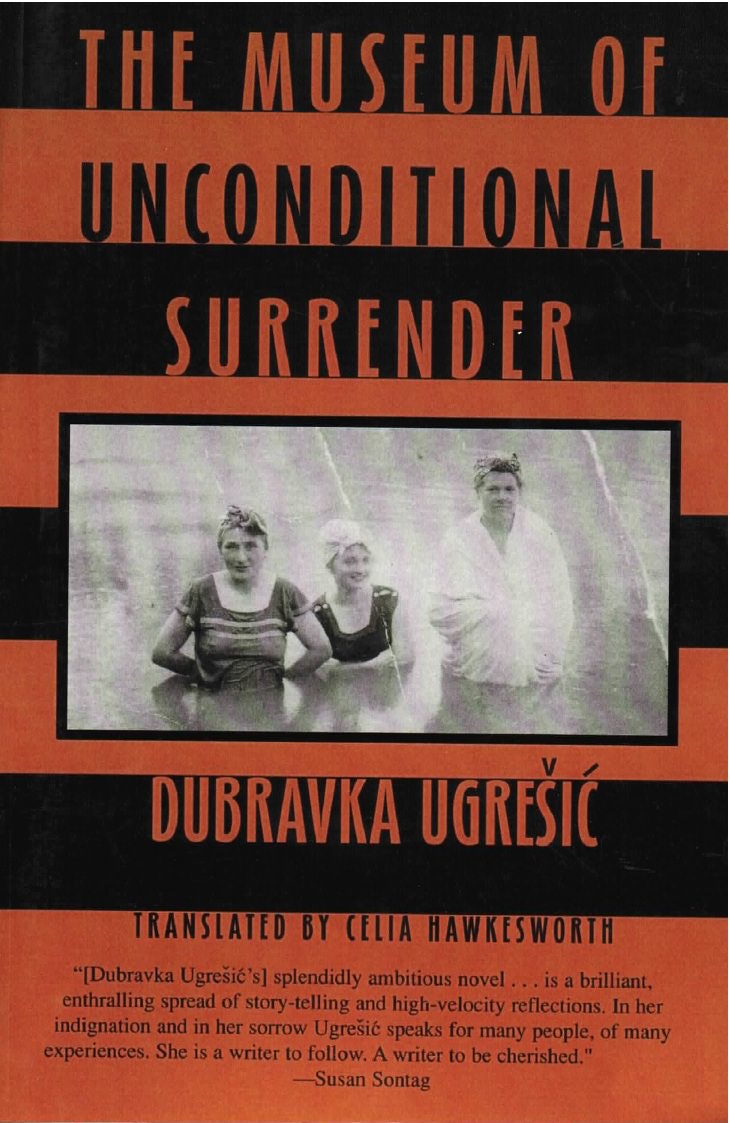
The Museum of Unconditional Surrender by Dubravka Ugresic, translated by Celia Hawkesworth

The Museum of Unconditional Surrender is a novel that starts as an essay and turns into a masterly intricate mosaic made up of bits and pieces of different moments, memories, and lives. It is, among other things, a story of exile and the paralytic forces of nostalgia. But although Ugrešić is a writer of great stories, it is her acute awareness of form that makes her stand above her contemporaries. She questions exile as a narrative genre that cannot be shoved into a linear cause-and-effect chronology told from a single all-knowing perspective. The very condition of exile is one of fragmentation, and it is precisely by refusing the position of the novelist-in-charge that Ugrešić manages to truthfully portray this persistent liminality. Read her, and read her again. 

Amazon.com: A Novel of London (9781944884666): Crnjanski, Milos, Firth,  Will: Books

A Novel of London by Miloš Crnjanski, translated by Will Firth

I want to try and persuade everyone to read a very sad 600-page book. You can thank me later. It is the forgotten masterpiece of European modernism, written by our greatest poet in exile and translated into English only last year. It tells the story of a married couple, Repnin and Nadia, two Russians exiled in London. The neighbors don’t speak their language and often think the couple is fighting, whereas—as the narrator puts it—we simply loved each other in Russian. Repnin, carrying the heavy tag of a displaced person, is struggling to obtain a work permit, while his wife learns to sew and tries to sell her dolls to Londoners. In one of the many heart-wrenching passages of the book, the fate of these dolls beautifully mirrors that of exiled Eastern Europeans at the dawn of capitalism:

“He knew that those dolls—rustic, Russian, and primitive—were being bought less and less, although they were colorful and pretty. New, lovelier dolls, more attractive for children, had begun to arrive from Germany and Italy, although they were products from former enemy countries. Now the war was over, and dolls were in demand. The American ones were even able to say: momma, mommy!”

Not available in English

I’m Not Going Anywhere by Rumena Bužarovska 

You want to learn about the Balkans? You can’t. It’s vast, it’s complex, it’s deeply unreliable, and only exists in the many different versions of its own fairytale. But luckily for us there is literature—some of it exceptional—and through it, you can at least follow a few threads of the complex tapestry known as the post-Yugoslav condition. Nobody does it like Bužarovska—her short stories depict the social paralysis of post-transition North Macedonia with precision and simplicity so rarely found in contemporary post-Yugoslav literature. Her characters are stuck inside their own logic – even those who have managed to leave the Balkans physically, are never truly free of its influence. The humor is found in their unawareness of the petty patterns their lives follow, but the author is not a judge here, only a master observer of her own society. This collection is a true literary gem and I hope English readers will soon be able to enjoy it as well. 

This Time Now by Semezdin Mehmedinović

By now it must have become apparent that I am using this article for shameless Yugoslav propaganda, furthering my agenda of making everyone read our literature. Because you should. 

Because it’s really good. 

Sem—and I am privileged to get to call him by that name—is one of my favorite living Bosnian authors. Perhaps this feeling is made stronger by the fact that we share a mutual obsession—the question of time and how to narrate it. On its surface, this remarkable novel tells the story of leaving and coming back, but its real power lies in the in-between—all that which is lost, remembered, fabricated, regained, and sometimes lost again. The Sarajevo of this book is perhaps the closest a contemporary writer has come to depicting the pain, the elusiveness, and the unyielding beauty of that city.

Lackadaisical Does Not Mean Lack of Daisies

Diary

I was not able to hear whispers well as a child and I worried this would cut short my friendships.
 
At that school a teacher let us do creative assignments about the origin of our ten weekly vocabulary words.
 
It seemed important not to ask another child more than once or twice to repeat their secrets.
 
I wrote about dire as coming from a town that punished residents 
with an offering: die or consequence?
 
Many ESL programs uses cognates as a bridge, a strategy mostly relevant from European languages.
 
Everyone picked consequence and eventually the question became dire consequence?
 
Children of parents born elsewhere sometimes overcorrect for their parents’ pronunciations.
 
The consequence was comparable to death so it could be assumed to be always dire.
 
A Spanish-speaking child might mentally remove their parents’ e sounds before s at the beginning of a word.
 
My mother’s wedding dress was rented and her mother made Christmas trees of umbrellas.
 
Or a Korean-speaking child might mentally trade their parents’ l’s and r’s in the middle of a word.
 
Another fable I wrote, for the word lackadaisical, had to do with some lack of daisies.
 
The two children would then overcorrect establish to “stablish” and overcorrect establish to “estabrish.”
 
I first learned the English language at a pre-school whose blue nap cots and wide slide I remember.
 
Hypercorrection reveals an anxiety around the appearance of knowing and belonging.
 
There are distinctions that are difficult to learn about a language from textbooks, manuals, and calendars.
 
I was competent, teachers assured my parents, just silent as I socialized with the other toddlers.
 
For example, it is not obvious that “I lie like a semi-colon across the white bed” presents two meanings.
 
To tell that story, I first had to tell the schema of daisies and what they represented.
 
When I wore my shoes on the wrong feet for my knock knees, classmates followed in reciprocal silence. 
 
Reading when language is vehicle will rarely indicate that “lay” presents two tenses.
 
When I started talking after several months of teachers’ concern, they say I spoke paragraphs.

Moss and Marigold

My country is broken, is estranged, is trying, we write,
as though there is such a material as a country, as
though the landlord doesn’t charge rent for life lived
outside the house. When it comes to survival there is no right
 
way but there’s no wrong way either. The country is
a construction, with each writing becomes more made.
I am making it now, here, to you—to say my country
provides an illusion of synthesis, as my landlord supplies
 
a fantasy of individuality. When I picture a country,
the ground is newly stormed—the snow a kind of revision
in its refusal of fission. But when I imagine the suburbs,
it is always sunny, with caution tape around oak trees,
 
landline lights blinking, and pictures of parents laid
as bookmarks. My name is the city and the city’s in my name:
I floss in the dark and write on icicles. The only borders
are my body’s, my counted and settled and made state.

What Does It Mean to be a Social Outcast in South Korea?

The thread that ties Choi Eunyoung’s short story collection together is the unlikely, tenuous friendships that form between various social outcasts—like Shoko, a troubled young Japanese exchange student, and an elderly Korean grandfather in the title story. Another through-line is Choi’s exploration of gender, particularly what it means to grow up, survive, and grow old as a woman in South Korea. Through these stories, Choi deftly shows how the political dynamics of the world and social injustices enmesh themselves into the personal lives of her female narrators. Amidst this pain, Choi makes sure to emphasize the human connections that both sustain and trouble us. 

Shoko's Smile

Shoko’s Smile is filled with a tender vulnerability, presented simply in unadorned prose. “I didn’t want to stage a protest about my pain to other people,” the narrator states in “Hanji and Youngju,” a novella about a Korean woman negotiating a complicated relationship and quiet heartache. There is nothing staged or forced about Choi’s stories, which are filled with understated tragedy. Rather than focusing on the drama of the event itself, they reflect the nuances of the grieving process, and what it means to continue living with trauma—such as the violent repercussions of the Vietnam War or the repressed aftermath of the Sewol sinking. 

I corresponded with author Choi Eunyoung and translator Sung Ryu over email, where we chatted about female self-scrutiny, how to represent violence, and the difficulties of translating Korean linguistic hierarchies into English.

Translations from Korean to English in this interview are done by Sung, the translator for Shoko’s Smile and a member of “Smoking Tigers,” an acclaimed collective of Korean-English translators. 


Jae-Yeon Yoo: Shoko’s Smile—as well as your other works—call attention so poignantly to the margins of society; in one way or another, your narrators are all somewhat misfits, outsiders, and/or loners. Could you speak about this focus, and why it’s important to your work? 

Eunyoung Choi: Korean society underwent rapid economic growth, instilling in people a hypercompetitive, materialistic mindset. The country may be wealthy but it struggles with rising inequality and lack of adequate safety nets for minorities. There is a dominant narrative that poverty is “the individual’s fault,” along with a growing insensitivity to human rights violations and discrimination against minorities. I think the biggest issue in this sort of climate is our tendency to identify with the strong: a worker might think like a capitalist, for example. Such a society is bound to have widespread hate toward its weakest members. Social media, the most accessible media to us, functions as a space to exhibit versions of ourselves we want to show off. In a culture of flaunting “mainstream” images of ourselves, it’s easy to empathize with the mainstream and see the world from the mainstream’s perspective. I think it’s important for outsiders, people who’ve been pushed out of the world, to claim their own voice and gaze as a subject rather than an object. Because hate and violence are apt to occur against people who are objectified and flattened. 

JY: A deeply humanizing element in your collection was its depictions of friendships between the various social outcasts, like Shoko and the grandfather. These relationships are often complicated and painful, while simultaneously life-giving and crucial. Could you speak more about your focus on friendship?

EC: I try not to idealize or exaggerate human relationships in my stories, preferring to paint them in the most realistic light. I’m particularly interested in friendships, which often take a back seat to romances in fiction. What Grandpa and Shoko have is a friendship, as you said, and it is friendship in its various forms that connects our lives. I don’t think there is success or failure in a relationship. In “Xin Chào, Xin Chào,” the friendship between Mom and Mrs. Nguyễn looks broken, but has it failed? A relationship can’t be fully explained by duration or outcome alone.

Korean society underwent rapid economic growth, instilling in people a hypercompetitive, materialistic mindset. The country may be wealthy but it struggles with rising inequality.

The narrator of “Xin Chào, Xin Chào” gets the chance to rediscover and understand her late mother as she looks back on her mother’s relationship with Mrs. Nguyễn. Observing, appraising, and understanding another person is like looking into a mirror. A relationship is really the process of observing, appraising, and understanding yourself through others. In that sense, all of the relationships portrayed in this collection are linked to the process of self-understanding. 

JY: I was very struck by how the stories highlight moments of quiet trauma, of what it means to live with painful memories. For example, two of the stories are centered around the tragic Sewol sinking, in which 304 schoolchildren and teachers perished. However, the stories never directly show or address the sinking; the focus is instead on the grieving process, sometimes through a narrator who has not realized what happened. Was it an intentional choice to have the actual act of violence or tragedy happen “offstage,” so to speak? 

EC: The Sewol sinking has numerous existing victims and is an ongoing incident that hasn’t even been fully investigated. Many people were scarred by the incident when it happened in 2014 and still are. To fictionalize such great pain of others is a scary, delicate task, as you run the risk of objectifying and othering real-life victims. But when I wrote those two stories in 2014 and 2015, there were calls to “bury the past and move forward” and to “stop raising a fuss.” I felt strongly that the incident shouldn’t be intentionally forgotten and, as a writer, I had to write. There were attempts by certain people to corner and isolate the victims’ families by spreading the framework of “us vs. them” and “over-demanding surviving families vs. ordinary citizens.” I felt such distinctions were violent and wanted to ask these people if they truly, hand on their heart, thought they had nothing to do with the incident. My portrayal of the sinking is cautious, and never direct, to avoid objectifying the suffering of others in a rough manner, and to show that even people who appear to be unrelated are, in fact, connected to what happened as members of a shared society. 

JY: In your interviews, you’ve mentioned how female artists undergo intense self-scrutiny, particularly how you’re “cold and cruel” about your own art. I’m curious at how this plays out within the world of Shoko’s Smile, where all the narrators are female. Could you talk more about the role of women in your writing? How do you think this intense self-doubt affects your work?

EC: Growing up, I was seldom praised by my parents. I didn’t fare much better in school and my ineptitudes were always criticized. Deep down I dreamed of becoming a writer yet didn’t have the courage to even admit it. I believed I wasn’t good enough and didn’t dare think I could write. One reason for my thinking might be that I was born and raised a woman. Because I had to be perfect and irreproachable in everything I did, my self-censoring instincts were strong and kept me from ever finishing the first draft. Thoughts like I’m no good, I can’t do this were a tall barrier, but my buried passion finally erupted in my late 20s, overtaking my fear. I was completely crazy with the passion to write, at which point the self-censorship and the uncertainty lost their power. I agree with the saying that love is stronger than fear. I went on to publish my book, found readers, and was even received favorably. The response was hard to believe at first (that’s how little I believed in myself) but two years of therapy and studying my mind have given me the assurance that I definitely have something in me. Now I have the strength to not criticize myself, to believe in my ability even when the writing isn’t going well.  

JY: Your writing achingly shows the many ways in which we, from one human to another, keep hurting each other in our society. Are there ways in which you think we can help lessen this overarching pain and cruelty?

One small thing we can do is to call out people who, in our everyday interactions, try to joke about or justify discrimination.

EC: On the news I see anti-Asian hate crimes cropping up all over the world. Considering that only the most egregious cases make it onto the news, how many “lesser” hate crimes and discriminations are happening? Some people choose to blame, target, hate, and dump their rage on those who are weaker instead of fighting their powerful oppressors. How were such people raised and educated? Their values had to have been planted in them originally—no one is born a bigot. That’s why we need to educate children painstakingly on human dignity. One small thing we can do is to call out people who, in our everyday interactions, try to joke about or justify discrimination, and make it very clear to them that their thinking is harmful. And when we ourselves start to feel prejudiced against a certain group or entity, it’s important that we introspect, interrogate our emotions, and reflect on why we’re projecting our problems onto another person or group. 

JY: In that vein, I deeply admire how your work is very politically-conscious yet not didactic. Stories center around both national and international events (like Korea’s participation in the Vietnam War, the Inhyukdang Incident, the Sewol sinking). Have social issues and writing always been linked for you? 

EC: I’m very interested in modern and contemporary Korean history. I think that the country’s long dictatorship and militaristic culture have affected me even though I’ve never lived through a dictatorship myself. I’ve still experienced an intensely hierarchical society and military-like schools. The oppressive atmosphere that silences the weak. Where did all this come from? In Korean we have the word “hwatbyeong,” or “anger-sickness,” and we say that “There isn’t a soul who isn’t angry-sick.” Looking at the lives of my mother’s or grandmother’s generation, I realized people were driven sick with anger by extreme injustices and cruelties that were rooted in the times. A deeply violent history was bound to impact individual lives. I came to feel that the telling of a person’s story was incomplete without telling their lived, historical truths. So when I write, the historical circumstances surrounding a character is important to me whether I depict them directly or indirectly. 


Jae-Yeon Yoo: As the translator, what drew you to Shoko’s Smile? I know translating an entire manuscript is an investment, and I’d love to hear more about why you chose this collection. 

Sung Ryu: I’ve had a somewhat nomadic existence since childhood, moving between languages and lands every couple of years, meeting and parting with people, constantly, inevitably. So I’ve ended up with an oversensitivity to the ever-changing distance between two people, and with the memories I cradle of everyone who has come and gone in my life. There is a lot I love about Shoko’s Smile, but its articulation of subtle, private feelings born in shifting relationships is what probably hit me hardest.

JY: Shoko’s Smile constantly draws attention to the alphabet it’s written in, as well as the limits of language. For example, “Hanji and Youngju,” a story about international monastery volunteers in France, has scenes of the characters talking about Youngju’s journal and includes their letters, written in faulty English. In other cases, Eunyoung discusses the visual image of certain hangeul characters (the Korean alphabet), which is included in the English manuscript. What was it like, to translate text that is already marked as “translated” in the original? 

SR: Although Shoko’s Smile features a fairly international cast, none of them are fluent English speakers and many of them, according to the source text, converse in broken English with each other. How stilted do I render their English then? What registers do I use? For the most part, I followed the author’s lead. Wherever she used noticeably stilted Korean, usually in dialogue, I did the same in English; for narration, critical segments of dialogue, and letters, I prioritized their emotional flow over all else, which is what I think the author also did. One unexpected upside to having the Korean alphabet show up conspicuously throughout my translation was that I felt bold enough to insert the Korean spelling of obscure band and song names mentioned in “A Song from Afar,” in brackets right inside the text! I get a little kick out of knowing that interested readers will be able to look up the songs Meejin Sunbae sings, such as “Mung Bean Flower” [녹두꽃] by Nochatsa [노찾사], and the history behind Korean protest songs

JY: What would you say is distinctive about Eunyoung’s prose, and how did you try to achieve a similar effect in English?

Honorifics reflect and dictate the distance between two people—their hierarchy and intimacy—and this is true in Korean society, where honorifics often stand in for names.

SR: Choi Eunyoung and I did a bilingual reading once and I remember trying to consciously lower my natural volume to match her soft-spokenness. The translation process was similar. Her prose is quiet. She never shouts or gushes, keeping her syntax simple, her rhythm like that of slow, careful chewing. Her characters are always chewing over emotions and memories. Many Korean readers have said that reading Shoko’s Smile feels like reading their own diary. At times I’d be tempted to “punch up” the prose, but I resisted the impulse because I felt that her artistry lay in its artlessness, the stripped-down honesty that goes straight to the heart. My key task, then, was to catch and match the intense emotional undercurrents of her quiet sentences. 

JY: More generally, what were some of the biggest challenges in translating this collection? Any surprises?

SR: Because the collection revolves around various types of relationships, it turned out to be a minefield of Korean honorifics. Not just the usual Unni or Oppa, but male honorifics used atypically by women to reject their femininity (Hyung), Jamaenim and Hyungjenim between Korean Catholics, Sajang and Yeosa between proprietor and patron who are also frenemies… I translated most, transliterated some, and likely omitted a few, because how do I carry over the passive-aggressive politeness and tense power dynamics of the term “Sabuin” without at least listing some k-dramas about feuding in-laws? (I settled for the disappointingly less colorful, but courteous “Mrs.”) Honorifics reflect and dictate both the vertical and horizontal distance between two people—their hierarchy and intimacy—and this is especially true in Korean society, where honorifics often stand in for names. I translated rather than transliterated honorifics where I felt it was important for the reader to process these social and emotional cues—all valuable information—immediately and intuitively. 

I’m the Telephone in “Goodnight Moon”—Why Didn’t I Get Wished Goodnight?

Good morning, little bunny. I hope you had a good night’s sleep. Oh, me? Funny you should ask. I did not sleep that well because I was up all night pondering a question: Why is it that every night you spend an hour and ten minutes wishing goodnight to a frankly not-that-crowded room, but can never bother to wish me goodnight?

As a bunny, your eyes are located on the sides of your head, which means you literally stare at me on your bedside table throughout your entire bedtime routine.

I’ve been trying to comprehend this hurtful slight. I know I’m not invisible; I am the first object mentioned in the so-called “great” green room. Plus, as a bunny, your eyes are located on the sides of your head, which means you literally stare at me on your bedside table throughout your entire bedtime routine. And don’t even try to pretend you’ve never noticed me—with those large ears, I know you hear me ring.

Am I that insignificant to you? 

Imagine what it’s like to be me—staring at the tiger skin rug every night at bedtime and listening to you say your goodnights. Expecting my name to come up at any time and then it never does. You say goodnight to “nobody”? Nobody!? That doesn’t even rhyme with mush or brush! Am I supposed to be the nobody here? 

The final straw was last night when I even heard you tell the socks goodnight! Have socks ever helped you schedule a playdate with your friend Cinnabunny from Hare Scouts? Have socks ever been a lifeline in an emergency? (Speaking of emergencies, is anyone going to put out that log fire?)

And look, I get it—we all get sleepy when nighttime comes. I’m not a heartless monster. I just can’t stop thinking about how you always get into bed at 7:00 pm (according to the two clocks in your weird bedroom), begin wishing the room goodnight at 7:16 pm, and you continue until 8:00 pm, with one last goodnight at 8:10 pm. In 70 minutes, a typical speaker can say 9,100 words. That’s a lot of missed opportunities to acknowledge me.

You know, out of all the objects in the room, I am the one that is specifically designed for talking! Me! The telephone! When you talk through me but never to me, it makes me feel used.

When you talk through me but never to me, it makes me feel used.

Here’s another thing: As a telephone, I hear tons of words all the time: Carrot. Whiskers. The annual bunny hop. I’ve even heard the old lady who was whispering hush say a lot of other words, like, “Little bunny is finally asleep—took him long enough! Want to come over and watch a movie?” So you can see why it pains me to hear the same goodnight message repeated 20 times. Maybe try varying your word choice? Here are some other options I’ve overheard in my many years of facilitating calls:

  • “Sleep well”
  • “Sweet dreams”
  • “Nighty night”
  • “Hope you don’t have any nightmares about jarringly bright green rooms”

Here’s another idea:

  • “Goodnight telephone”

I hope you can take some time to consider who you will be wishing goodnight to in the future. The slippers, tiger-skin rug, and I will be busy commiserating tonight from 7:00–8:10 pm. Don’t bother trying to reach us.

And one last thing: Maybe put the mush away before you go to bed? I think it’s not supposed to be out overnight.

Cinelle Barnes Doesn’t Care If You Think She’s Soft

In our series “Can Writing Be Taught?” we partner with Catapult to ask their course instructors all our burning questions about the process of teaching writing. This month we’re featuring Cinelle Barnes, author of Monsoon Mansion: A Memoir and Malaya: Essays on Freedom. Barnes is a regular instructor at Catapult, teaching seminars on various aspects of memoir and nonfiction writing; check out her profile to see her upcoming classes. She talked to us about cheese boards, “soft” writing, and why all the go-to advice is so condescending.


What’s the best thing you’ve ever gotten out of a writing class or workshop as a student?

Writer friends who read my work and let me read their work, and who are practicing their craft in ways that have informed and inspired mine.

What’s the worst thing you’ve ever gotten out of a writing class or workshop as a student?

He didn’t say what could be done, why ‘soft’ was apparently bad, or what he even meant by the word.

In an MFA workshop with a guest editor from a literary magazine, I was told by said editor that my writing was “soft.” This person was a cisgender, straight, white male who I can only guess was more interested in seeing imprints of his perceived self in the works he was reviewing than he was about assisting someone in their craft. He didn’t say what could be done, why “soft” was apparently bad, or what he even meant by the word. Not even when I asked for him to expound. I learned from that experience who or what I did NOT want to be as an editor or teacher.

What is the lesson or piece of writing advice you return to most as an instructor?

I tell writers all the time, as I do with my child and myself, “Practice does not make perfect; practice makes practice.”

Does everyone “have a novel in them”?

I’ll get back to you when I actually finish mine, ha.

Would you ever encourage a student to give up writing? Under what circumstances?

If it’s harmful to them or others, yes. And “harmful” can be many different things. Luckily, I’ve never had to say this to anyone.

What’s more valuable in a workshop, praise or criticism?

We all need praise and encouragement, so I lavish people in my classes with these. I don’t really give criticism as much as I ask questions, offer solutions or alternatives (sometimes in a visual or animated way!), or suggest that someone let the work and their mind rest prior to revisions. I want to be helpful as much as my bandwidth, schedule, and boundaries will allow, and I think whether it’s one-sentence or one-page feedback that I give, I give it AFTER I’ve established trust. Just with any relationship, the basis of it are attunement (verbal and non-verbal understanding of motives and feelings), containment (respecting, making room for, and carefully holding someone’s ideas and personhood), and repair (assisting someone as they reconstruct or deconstruct however necessary). 

Should students write with publication in mind? Why or why not?

All these maxims have been used as tools for oppression, so no wonder they all sound so condescending and limiting.

I think that depends on who the person is, where they are in life and in their career, and what energizes them. I am very entrepreneurial, so it’s energizing for me to imagine where I could place an essay and who might read my work. I guess, for me, publication isn’t so much about the byline but knowing and examining who my audience is. That’s maybe the only reason why I would tell someone to imagine publishing their work somewhere—ask yourself who you are writing to and why.

In one or two sentences, what’s your opinion of these writing maxims?

  • Kill your darlings: I’ve never killed anyone or anything, except a few plants… so I can’t recommend the killing method.
  • Show don’t tell: I show AND I tell now, which I wasn’t taught to do early on at school… I wish I was more explicit in my earlier writing.
  • Write what you know: Writing is a discovery for me and I’m a very impatient and easily bored person, so the unknown is so much more interesting to me.
  • Character is plot: Character can be plot but it doesn’t have to be… the world is so big. The imagination is too.

All these maxims have been used as tools for oppression, so no wonder they all sound so condescending and limiting. They’re all about elimination.

What’s the best hobby for writers?

It’s not really a hobby, but I highly recommend breathwork. Walking, too.

What’s the best workshop snack?

IRL, anything that has no allergens and that can be consumed by all. But in my perfect world, a cheeseboard…preferably one created by the poet Tiana Clark, who has a knack for them. 😉

I Married Jordan Catalano

While we were walking home from dinner one night, my mother asked, “Why did you marry him?” No name, no context, as if she’d been stewing on it for blocks. 

I said, “He asked me to.”

In most conversations, this would lead quite naturally to follow-up questions: sure, he asked, but didn’t you think about what you wanted? Did you have a plan for where you would live? What about money? He had no job and you were a student; how on earth were you two going to support yourselves? But my mother remembered the man, remembered the relationship and the way I was in his thrall. All she could do was change the subject. He asked me to marry him, and I did it, because he asked. 


I came of age during the supremacy of the teen melodrama—think Skins, or Degrassi. Very Special Episodes ruled the day, whether they were about drugs or sex or, very rarely, a third thing. Ensemble casts were a must, the better to inflict the widest possible range of traumas on a show’s characters. Visiting such a range of trials on a single central character would have strained credulity, but spreading those trials around the show’s cast made their relentlessness more believable. Overall, the shows were riveting but hard to take seriously, even then. My fondness for them stemmed from my general inclination towards campiness. I liked big hair, big style, big problems.

I missed the show’s understanding of youthful romantic agony, the way those early miseries echo off the walls of your life forever.

As such, My So-Called Life didn’t appeal to me much. Oh, I’d watch it if it happened to be on, and I accepted Jared Leto as a heartthrob with the grace of any teenager who understands what she’s supposed to find attractive. (He wasn’t my type, but that didn’t matter—he only needed to be a man over whom I could ostensibly fawn. The particulars were unimportant.) But I had missed the boat on the show in minor but unignorable ways. It had aired for only one season in 1994, and it looked very ‘90s in a way that I couldn’t ignore from my vantage point in the ‘00s. The episodes were longish, an hour apiece, and moved much more slowly than did my beloved Degrassi. And the overall tone was subtle. On early viewings, I missed a lot, looking as I was for soap-opera splashiness. I missed the show’s understanding of youthful romantic agony, the way those early miseries echo off the walls of your life forever, dampening in intensity over the years but never really going away.

Now, of course, we’re so familiar with the timbre of prestige television that we expect realism from everything we watch. But in 1994, realism in TV for teens was a rare thing. The era’s critics adored protagonist Angela Chase, played to brooding perfection by Claire Danes, for her introspectiveness and her slangy teenage wisdom. (Sample line from Angela’s narration: “What I, like, dread is when people who know you in completely different ways end up in the same area. And you have to develop this, like, combination you on the spot.”) They’d never seen those massive teenage feelings demonstrated with such verisimilitude before. But I, full of massive teenage feelings myself, couldn’t relate to those feelings when they were demonstrated so subtly. I didn’t have an ear for the quietude in the show’s depiction of  heartbreak, isolation, heartbreak, longing, heartbreak, heartbreak, heartbreak.


The moment I met the man who would eventually become my husband, I was smitten. I’d been waiting for him at the top of the Woodley Park Metro escalator, watching the clusters of people emerging from the trains unloading at the station. He was five minutes late, then ten; more and more trains disembarked without him on them, and I was about to leave when I heard a deep voice say, “Rax?”

Red flags abounded: he already had a girlfriend, he began borrowing money from me immediately without ever paying it back, he was interested in nothing except sex and partying. But I felt there was nothing I couldn’t conquer. The redder the flags, the richer the terrain in which they were planted, or so I thought. I was 19.

The redder the flags, the richer the terrain in which they were planted, or so I thought.

Part of me was just plain stubborn about our problems—the classic “I can fix him” attitude of beleaguered lovers everywhere. He was a fixer-upper in every sense, and I always did like a challenge. But also, he seemed utterly devoted to the art of being a boyfriend. I hadn’t seen anything like it since high school, when an early relationship feels so destined to end in marriage that its participants throw themselves into it with destructive gusto. Nobody has ever brought me as many flowers as he did; nobody has ever given as many gifts. When we weren’t fighting, he was so complimentary and adoring that it became embarrassing, which of course only made his ardor all the more charming…when we weren’t fighting.

At the time, our fights felt very adult. I’d had boyfriends before, but none who had cared so much about whether I spent time with my male friends or what I wore out of the house. I liked the monitoring at first. It felt like care. Plus, of course, the surveillance never stood alone—he always sandwiched it between gift-giving and ostentatious date nights at places we couldn’t afford. When he picked fights with me, the foundation supporting those fights was always his love for me, and my inexplicable need to reward his devotion by wearing too-slutty outfits to class. 

Some part of me has always been good at being bullied. I like the sense of order inherent to the relationship between bully and target. I learned the rules, ironically enough, from the anti-bullying craze of the late ‘90s—every school assembly, every Very Special Episode in which a bully faces his comeuppance. Following rules suits me, and he rewarded me handsomely for following his rules, at least at first. By the time his behavior escalated enough that I was comfortable calling it abuse, I had nowhere to go. 


Whenever we had sex, he’d burden my body with the entire weight of his much bigger and heavier one. Early into our relationship, I said, “Can you prop yourself up on your elbows or something? You’re crushing me.”

He laughed and said, “No, I’m not.” And from then on, when I felt crushed under him, I’d tell myself that it wasn’t because he was crushing me.


After a year or so, my father and I devised a way to buy me some time away from my husband. My father was already sick and, though he was too ill and broke to offer much material help getting away from my husband, had given me blanket permission to blame his illness anytime I needed to escape. “Tell him you need to take care of me and come over,” he said often. “We don’t have to talk about it. We’ll eat whitefish salad and watch TV.” As the months dragged on, I needed more and more whitefish salad and TV, until whitefish-and-TV time far outweighed the time I could force myself to spend in my marital home.

I was sleeping on my father’s living room sofa. The coffee table was littered with the debris of my temporary freedom: weed baggies containing only seeds and stems, empty contact lens cases from which the saline had long evaporated, crumpled up deli paper from the Jewish deli whose wares my husband had proscribed from our household for being too stinky and fattening. My father’s Shih Tzu kept ambling past this disaster zone and gazing up at me balefully. I didn’t know how to explain to him that I didn’t like the way I was living, either.

When my mother and I watched TV together, it was a loose, communal activity, full of chatter. Not so with my father. His hearing had gone, to the point that he kept his TV at wall-rattling volumes; he could abide no distracting chitchat. So when I came home from the grocery store one day to find him watching My So-Called Life, I knew to wait until a commercial break before offering commentary.

At the break, I said, “I used to watch this in high school.”

“What? You hated this show. You made me watch that other thing all the time. Degrassi something.”

“I didn’t hate this show,” I said. “Just thought it was boring.”

“Boring?” he said. “It’s wonderful.”

Every dismissive thing that the emotionally unavailable Jordan said or did was almost identical to something my husband had said to me.

I’d walked in on a great episode. Jordan Catalano, played by Jared Leto, is supposed to swing by Angela’s house to pick her up for their first date but stands her up, displeased at the thought of meeting her parents before being permitted to go to the movies with her. Angela bustles about her house in her date outfit as the minutes drag on, never doubting him for a moment. Her parents know what’s happening before she does. Her excitement ferments into humiliation as she realizes he’s not coming.

The next day, Angela’s friend Rickie asks Jordan why he didn’t even bother to call her to tell her he wasn’t coming. His response was, “She just makes too big a deal out of everything. She makes everything too complicated.”

She makes everything too complicated. It was, word for word, what my husband had said about me when he realized I was angry at him for staying out all night with “just a friend” without calling.

The channel was running a marathon of the entire show. My father and I watched it into the wee hours, and when it replayed from the beginning, I watched it again. Every dismissive thing that the emotionally unavailable Jordan said or did was almost identical to something my husband had said to me. Not in the early months, when he showered me with flowers and gifts and adulation. Jordan Catalano was a variation on a more recent version of my husband, the guy who looked at my date night outfits and said, “You’re wearing that?”


When I returned to my marital home after my visit, I watched my husband with new eyes. I noticed the way he slouched around the house, his inability to pass a mirror without scruffing and re-scruffing his hair to his preferred degree of insouciant moppishness. His voice was low and forever unsure of itself; his insults all seemed to end in a question mark. I kept calling him out on his all-night visits to Just Friends, not because I still hoped to repair our marriage, but in order to dissect his reaction. It was always the reaction I predicted: flamboyantly astonished any time I made clear that I expected to be treated with a modicum of respect.

He’d always bestowed teenage love on me, youthful in its scale and intensity despite the fact that he was six years older than I was.

He’d always bestowed teenage love on me, youthful in its scale and intensity despite the fact that he was six years older than I was. At 19, I’d wasted years on guys who couldn’t even be bothered to text back half the time. My soon-to-be husband’s devotion felt so much like what I’d been searching for that I didn’t consider whether I should have been searching instead for something less consuming.

It was teenage love, and also teenage hate. As skilled as he was at showering me with affection, he was twice as skilled at despising me. He targeted my insecurities with laser precision. When we married, he immediately adopted the position that I’d let myself go since we’d begun dating, and that he was engaging in a remarkable act of charity by remaining married to me. I’d gained too much weight, I let too many days pass without shaving. Tantrums along these lines would continue for a day or two, only to suddenly course-correct if it seemed that I might leave him: he was sorry, he was so in love with me, he didn’t deserve me, and wouldn’t I pretty please consider giving him another chance?

When I’d met my husband, the order of operations had been clear. I complied with his rules, and was loved for it; any time my compliance budged an inch, the love went away. Over time, as the circumference of my life shrank more and more, compliance became not only the key to keeping his love, but also the only option. By the end, it didn’t matter how well I complied. The love had become unavailable. 

One day at school, Angela and Jordan are leaning against some lockers when Angela’s narration begins. “It’s such a lie that you should do what’s in your heart. If we all did what was in our hearts, the world would grind to a halt,” she says. “Because in that moment, I would have done anything, I wanted him so much.” My marriage lived in that realization—a two year relationship that proceeded entirely within the moment of wanting to do anything for this person you want so much. 

Teenage relationships obviously aren’t all abusive, but abusive relationships do have a hint of the teenage to them. To be a kid in love is to joyfully abdicate power to another person—you simply haven’t learned moderation in romance yet. Youthful relationships are based on little more than the sudden hormonal need to experiment with love. My first boyfriend was a kid with whom I had nothing in common, who happened to show interest in me. I was fortunate that the first person to show interest in me wasn’t much more objectionable. I would have tolerated anything if only it meant I could finally funnel all my hormonal churn into a willing receiver.

To be a kid in love is to joyfully abdicate power to another person—you simply haven’t learned moderation in romance yet.

I joyfully abdicated power to that boyfriend and to my husband, too. And for months, it felt like I’d made the right choice. In any event, he rewarded me for making it so often that I ignored the nagging voice in my head telling me it was the wrong choice. It was only once he grew comfortable enough to stop rewarding me that I could see the relationship for what it was: a mean kids’ relationship, inhabited by two people who were, among other things, too old for such behavior. A middle school bully and a kid coughing up lunch money to him.

My husband could drive me to wail, to beat my chest, to rend my garments—in short, to throw temper tantrums like a child would. I’ve never had another adult relationship so focused on the act of provocation. Sometimes he’d poke and prod at me until I burst into tears, and then watch me loudly crumble in satisfied silence. Those moments are my only memories of him looking unmistakably happy.

In one episode, long after Angela and Jordan have broken up, Angela wakes up one morning to realize that she no longer has romantic feelings for Jordan. And her response is to dance across her bedroom to the song “Blister in the Sun” in a performance of unmitigated glee. Months after I finally left my husband, I woke up one morning to the same realization. What else could I do? I honored the realization with a tribute dance of my own, feeling like a kid again, but in a nice way this time.