The word divorce is never far from our consciousness. There are the celebrity divorces that constantly loop in the news cycle, and marriage counselors all over social media offering tips and tricks to maintain a healthy marriage and avoid divorce. Now, more than ever, we also have divorce memoirs, a subset of which, written by women prioritizing happiness over staying in bad marriages, are hitting best-seller lists.
When I was going through my own divorce, I was desperate to read real-life stories of women like me who were leaving their marriages to find their own version of happiness, control, and empowerment. I read all the self-help books, I vented to my therapist and friends, and I journaled all my fears and anxieties about what life on the other side of divorce would look like for me. Yet somehow, I was unable to find memoirs I could relate to, memoirs I could see myself in, memoirs that offered a sense of hope that I would not simply survive divorce, but thrive. It wasn’t until I started writing my military divorce memoir, Camouflage, that I stumbled upon the books I was once searching for. Their backdrops and circumstances vary, but each book includes universal truths, emotions that mirror my experiences, provide a sense of community, and validate all the reasons I chose to walk away from my marriage.
The following reading list includes books I wish I’d had access to throughout my divorce process. These authors tell deeply personal stories in gorgeous prose, and in some cases, turn to research and interviews in order to connect their own experiences to broader cultural issues. They all offer hope for women that divorce isn’t a life-altering ending, but a beginning, a path to a new life, a chance at reinvention and endless possibilities. For these women, life after divorce is empowering.
In her memoir, You Could Make This Place Beautiful, Smith uses her skills as a poet to pen lyrical vignettes describing how her marriage ended in divorce and she was thrust into the role of a single mother to her two young children. Her story starts with a pinecone her husband brings home from a business trip, which leads to the heartbreaking discovery that he’s keeping secrets. Smith uses an unconventional structure, sometimes addressing the reader directly, to reevaluate red flags throughout her marriage, such as her husband’s resentment toward her professional success, and ultimately arrives at a fresh, cathartic perspective. Infused with commentary on gender roles, family, and work, You Could Make This Place Beautiful isn’t simply a divorce memoir, but a relatable and hard-fought journey about coping with unexpected life events and rediscovering ourselves.
After moving with her artist husband from New York City to rural Pennsylvania, having children, and opening a bookstore, McMasters discovers that her life isn’t as picturesque as it seems and decides to end her marriage and start over in the suburbs. In this memoir in essays that uses setting as a character, McMasters writes introspectively about her crumbling marriage, her divorce, parenthood, ambition, and identity as she nears middle age. As its title suggests, McMasters highlights a variety of types of leaving: leaving a marriage, leaving a home, leaving a location, leaving a job, leaving people. Filled with reflection on what home means and hope for the possibility of endings transforming into beginnings, The Leaving Season nurtures the idea that renewal and rebuilding a new life for ourselves is possible.
One look at the cover of Lyz Lenz’ This American Ex-Wife leaves little doubt about her tone: a wedding dress in flames. After Lenz reaches a breaking point, she decides to end her twelve-year marriage. As she escapes her unhappiness and embraces her new life on her own, she realizes there are advantages to getting divorced. This fierce memoir details the lead up to Lenz’ divorce, while flipping the script on the common narrative that divorce is synonymous with failure. Instead, Lenz makes a case for the power of divorce, the taking back of women’s control and equality as they put their own happiness first. Hers isn’t just a memoir, it’s a manifesto that incorporates research, statistics, and interviews, a cultural critique of the institution of American heterosexual marriage that urges readers to understand that divorce “requires learning to reimagine happiness beyond what everyone told you it should look like.”
In her debut memoir, Jamison writes with wisdom and graceful prose about the end of her marriage, her life as a single mother to a toddler, her career ambitions, and dating in the aftermath of divorce. As she faces this new stage in her life and focuses on her intense love for her young daughter, she also examines her parents, motherhood, and the complicated nature of romantic relationships. Jamison explores these and other themes, including finding joy after loss, the struggle of starting over, and grappling with a sense of self when that self seems to be splintered off in too many directions. As she so eloquently writes, “If you ever feel like you’re in the wrong story, leave.”
No relationship or friendship is perfect. Sometimes love runs its course. Sometimes we outgrow people. In Hannah Pittard’s case, everything happens all at once. This genre-bending memoir cleverly combines fact and fiction as Pittard tells the story of her discovery that her husband is having an affair with her best friend, which results in the end of her marriage and her long friendship with a woman she trusted. With humor and candor, Pittard shares real exchanges and fills in the blanks of her knowledge with speculation as she analyzes what went wrong. We Are Too Many pulls readers into a fast-paced, time-jumping narrative about the demise of a marriage, betrayal, broken trust, and starting over while coping with heartbreak. The fact that this memoir is told through dialogue creates the illusion that we’re part of the conversations, experiencing the emotions right alongside the author. But even as it shows how complicated relationships and female friendships can be, this book also reminds us that it’s possible to find humor in dark times.
This Story Will Change tells the story of Crane’s marriage and its end with humor, wisdom, and a unique stream of consciousness style that blends short vignettes and a third-person point of view. When Crane’s husband of fifteen years unexpectedly confesses that he’s unhappy in their marriage, she suddenly finds herself in couples counseling and living in an apartment with a friend, searching for answers amidst confusion and deep-diving into what went wrong in order to heal. Crane’s nonlinear method of storytelling mimics the nonlinear nature of breakups and the disorienting, discordant, often confusing blend of messy emotions associated with divorce and heartache. The title itself is the ultimate chef’s kiss, because as anyone who has gone through a divorce knows, the story, the lessons learned, the takeaways, and the big feelings will all change with the passage of time.
After her divorce, Anelise Chen’s mother makes a texting typo, telling her to “clam down.” As a result of this unintentionally humorous advice, Chen transforms herself into a “clam.” What follows is an investigation through introspection and research into what it means to withdraw, hide, remain silent, and protect ourselves. Chen uses experimental and various points of view, including different types of clams and interviews with her immigrant father who disappeared earlier in her life, to create a memoir that reads like fiction while also giving readers the sense that maybe the author felt safer telling her story in someone else’s voice. Incorporating threads of art, history, literature, and science, Clam Down brings novelistic breadth to discussions of family dynamics and forgiveness, adaptation and survival, transformation and connectedness, and learning from the past.
Blow Your House Down is an unapologetically honest personal story threaded through with cultural criticism. Despite appearing to have the perfect family, Gina Frangello’s realization that she’s unhappy in her marriage pushes her to a secret life—a passionate extramarital affair. As the affair destroys her marriage and leads to divorce, Frangello also finds herself grieving the death of her best friend, struggling with chronic illness, caring for elderly parents, and parenting three children of her own. Frangello doesn’t hold anything back as she details her path to living an authentic life that’s paved with the exploration of female sexuality and rage. The resultant memoir dives into feminism, love, motherhood, pain, self-discovery, and what it means to be good.
When her long marriage abruptly ends, Florence Williams employs her skills as a journalist to search for the scientific meaning behind heartbreak, grief, and loneliness. The result is a hybrid memoir that brings together personal introspection, social commentary, and science journalism. It all starts when Williams lands herself in the hospital with unexplained weight loss, lack of sleep, and ultimately a Type 1 diabetes diagnosis. She then goes on a quest to understand and heal the physical effects of divorce. Her methods are wide ranging and unorthodox. There’s bloodwork to find genetic markers of grief, meditation, spending time in the wilderness, and psychedelic drug therapies. At its core, Heartbreak reminds us that grief and trauma affects our body in more ways than we may think.
The debut novels we are featuring this fall are remarkably different in almost every possible aspect. One, Underspin, is a polyphonic novel that roves across perspectives surrounding a circuit of competitive table tennis players in the 2000s. Another, Boy from the North Country, moves between the present in a pastoral house in the Hudson Valley—where the narrator is raised by his mother—and the 1970s in a rent-stabilized Manhattan apartment frequented by Bob Dylan. The third, The Endless Week, is a novel immersed in the dialogue of thought that focuses on two siblings in search of their lost mother—while a slipstream of phrases, aphorisms, and proverbs left by their father follows them through an estranged language of ghosts and the internet.
Despite structural, tonal, thematic, and stylistic differences, these three authors share a great appreciation for harmonizing their characters’ voices and a fascination with the way the counter-experiences of play and grief can resonate and ricochet off of one another. From table tennis to painting to poetry, the characters in these novels demonstrate a deep need and desire to become almost child-like in their creative or competitive natures. By returning to a place of innocence and curiosity, they ask what it really means to win and whether there is an absolute purpose to art-making. In different ways, each author’s exploration becomes a source or path towards healing, remembering, and honoring a loved one. Ultimately, across their many divergences, these authors do seem to overlap in one instance. Through the interweaving of voices, ideas, egos, and personalities, they have each developed a plurality of narrators that come together to create a coherent and glistening web: the book.
This fall, E.Y. Zhao, author of Underspin; Sam Sussman, author of Boy from the North Country; and Laura Vazquez, author of The Endless Week are our craft interview debut novelists. In our discussions, we touched on the initial inspirations behind their projects, the many different consciousnesses a narrator embodies, and the idea of revision as a construction site.
Kyla D. Walker: What was the research process for the novel like and have you ever been involved in the competitive table tennis circuit?
E.Y. Zhao: I trained and played competitively in American tournaments from the ages of 9 to 15, then basically quit because school took up too much time and I’d burned out. I played freshman year of college and the second year of my MFA, competing in the National Collegiate Table Tennis Association with my club teams, but since then the most I’ve played is for book-related research and events.
At its most intense, my training looked like twelve combined weekly hours of group sessions, private sessions, and competition time at the St. Louis Table Tennis Club, and two months over the summer when I’d train six hours a day. My coach ran a practice out of her basement in Chesterfield, Missouri, and my parents would drive me an hour’s round-trip after dinner. I’d compete in tournaments once every third month, probably, a lot around the Midwest, and twice a year at the big national tournaments in Vegas and Baltimore. But compared to kids who were at the top, that’s nothing. So I brought all that lived experience and my general sense of inadequacy to the novel.
To write the book specifically, I traveled to Düsseldorf, one of the world’s table tennis capitals, and interviewed players and managers at the Bundesliga team Borussia Düsseldorf. I also played in the amateur clubs at Borussia Düsseldorf and TTC Champions Düsseldorf. I wanted to understand pros better, their psychologies and concerns; turns out they’re beyond my imagination. I asked Dang Qiu, who I remember being just outside the Top 10, what he needed to improve to break through, and he kind of gave me a blank stare. Because at that level there are still technical tweaks, sure—see Coco Gauff changing her serve, for example—but everyone is fast and consistent with sufficient technique; so much of it is psychological, tactical, philosophical.
Returning to table tennis ten years after I quit competing has been fascinating and emotionally charged, to an unexpected degree. I’m more mature, but the feelings of insufficiency welled up faster than I’d expected. It’s given me a chance to refine and reexamine those feelings on the page. On the other hand, the community aspect, which was always my favorite part and not fully in my control when I was a kid who couldn’t drive or dictate her time, has deepened in a poignant way. I’m writing to you from Paris, where I spontaneously met the founders of Ping Pang Paris, a ping-pong social space. They range in background from national team players to newbies, but—unlike when I was a kid—their place in and love for the sport is not contingent on skill level. There was so much pressure to perform when I was younger, and now I finally savor the enjoyment and freedom I observed in table tennis-playing adults around me. It’s really bittersweet.
KW: Admittedly, table tennis is a very different sport from tennis. However, there are similarities and overlapping philosophies, and recently it feels as though pop culture has been fixated on tennis as well as the personalities behind the players. How has this and previous art around tennis (such as Luca Guadagnino’s Challengers or David Foster Wallace’s Infinite Jest) affected or influenced the novel, if at all?
EZ: One of my early influences was tennis star Andre Agassi’s memoir, Open, which came out in 2012. What struck me about Open was Agassi’s doubt and abjection. I first read it when I was twelve and already behind where I felt I should be as a player. There were no table tennis novels or memoirs accessible to me (and very few in general), and it was comforting to recognize myself in Agassi’s depiction of himself as a scared, lonely, bullied pre-teen. Even when he wins majors, he kind of glosses it by; as he writes, losses are more memorable and striking.
Beyond Agassi, art about tennis didn’t influence Underspin all that much. Maybe because I haven’t read Infinite Jest, but also because tennis is the “more winning,” the more glamorous, and the ethos of American table tennis to me was its grunginess, scrappiness, and outsiderness. I know there’s plenty of that on the tennis challenger circuit, for example, and those aspects of Challengers the movie resonated, but part of my motivation to write Underspin was portraying this underdog atmosphere.
A bit more on David Foster Wallace: It’s not just that I haven’t read InfiniteJest, but his general orientation toward tennis (in his essays) feels different than mine toward table tennis. He’s writing with not just belief in genius and transcendence, but belief (or delusion?) that he can somehow describe or analyze his way into it. Underspin depends on a few postulates: 1) The spectators who narrate the book can’t understand their idol, Ryan Lo, 2) the idol is enthralling for being flawed, 3) table tennis is a bit abject. So the pure, deranged, worshipful excess of the Federer essay did not belong in my writing universe.
Even now that table tennis has gained some standing after the Paris Olympics, you can glean the vibe from the fact that current World No. 1, Wang Chuqin, is lovingly called “Big Head,” and the World No. 1 before him, Fan Zhendong, was known as “Little Fatty.” No god-like nomenclature here.
KW: What was your favorite part of the writing process for this project?
EZ: Underspin is a bit of a tribute album. Every chapter recognizably calls on at least one writer. Herr Doktor Eckert’s chapter is Ishiguro. Susanne and Kagin borrow from A Visit from the Goon Squad. Kevin and Co. are from Mariana Enríquez. Kristian emerges from Adam Johnson’s “Dark Meadow.” I won’t generate the whole list, I want people to identify their own beloved writers as well, but I loved paying homage to the geniuses who made me a reader and writer.
KW: In Underspin, each chapter shifts to a different character’s perspective—sometimes in 3rd person POV, sometimes in 1st, even once in collective 1st—what was the most difficult part about this? And how did you decide on the style of POV for each character/chapter?
EZ: Here’s my shorthand for POV:
Present tense: The consequences of the moment are not yet available within the story.
First person: The motor / heart of the story is dramatic irony, tension between what the reader can understand and what the narrator is willing to say.
I drafted POVs instinctively and my first choice was correct for everyone but Kristian, which could either mean I did all right or I’m too stubborn to revise POV and you shouldn’t listen to anything I say. For Kristian, I initially jammed him in a shifting third-person story because I was afraid of what I’d have to write if I got “into his head.” Interestingly, I learned through writing Underspin that first-person can be the more “distant” point of view because of what the narrator withholds. As the writer, you ostensibly understand on some level what they are withholding, but you also participate in their self-occlusion.
It wasn’t hard to “switch,” per se; the most difficult aspect was probably finding an agent and editor who’d take a book switching POVs every twenty pages. But I did have a writer who read the manuscript for a contest say I didn’t really know how to write close-third. That stung, but hopefully it’s gotten better since then…
KW: How has your writing process or relationship to your writing evolved over time and especially after finishing Underspin?
EZ: I wrote twice as much material as made the final cut, and as a stubborn person with a fragile ego, it’s made me so much more comfortable with revision. I go into a draft knowing I’ll rewrite it at least a couple of times and trying to cherish that first-draft encounter for itself. Every round of revision brings something different and to get through the querying, submission, and publication process, I had to learn to enjoy that.
Kyla D. Walker: When was the moment you felt ready to begin writing Boy from the North Country? And what was that initial spark—such as an opening sentence, scene, or possibly the end—that kicked off the novel?
Sam Sussman: Boy from the North Country is a tribute to my mother. After her death, I knew that I needed to write about her life. It took years for me to begin. Around the one year anniversary of her death, I decided to take seven days away from the world. I read, wrote, painted, meditated, reflected on her life and mine. This became an annual tradition for me. Every year, between September 9 to 16, I would take off from work, power down my computer and phone, and spend those uninterrupted days at home, in the house where I grew up, outside Goshen, in the Hudson Valley. I found this time restorative and healing. One afternoon in the third year of this ritual, in September 2020, I was painting outside. The easel was set on the hill, overlooking the valley. As I moved the paintbrush across the canvas, I thought of a story my mother once told me about something that happened to her in a painting class when she was a young woman. I set down the brush, walked inside, and began to write.
KW: How did the settings of upstate New York and Manhattan help sculpt the story or shift the prose?
SS: Places are archives of memories and meaning. I was lucky to write Boy from the North Country in the two places in which it is set, the house in the Hudson Valley where my mother raised me, and the rent-stabilized apartment in the Yorkville neighborhood of Manhattan that my mother lived in beginning in the 1970s, and in which I now live. Each of these places are part of me, and I knew that Boy from the North Country would be a more powerful novel if I could capture their magic. The swaying pine trees. The howl of the coyote. The echo of the freight train that runs along the tracks down the valley. This is the soundtrack of my life in this home. My memories of childhood, of my mother reading to me on warm summer afternoons, of the last weeks of her life, which we spent here; all this I wanted to raise out of the landscape, the hills, the floorboards, and set into the book.
The apartment in New York has its own majesty. My mother lived in that apartment when she was pursuing her own life as an artist, before she was my mother. I felt us living here together, our lives in parallel, decades apart. Writing about that period of her life made me feel closer to her. Then there’s the added detail that her romantic relationship with Dylan began when she lived here, and he wrote part of Blood on the Tracks in this apartment. So on those nights when I wrote the chapters centered on their relationship, here in the apartment, space, time, and memory all seemed to come together.
KW: Evan’s mother plays such a huge, poignant role in the novel. This goes even further in the mesmeric Chapter Eight, where the novel’s consciousness belongs to her. What were some of the things you did to capture her voice and perspective on the page?
SS: The concept of “autofiction” is often invoked to describe a writer transferring her life into literature. For me, the “auto” has to be larger than the self. We are all the people we have loved and who have loved us. For me, writing a novel about my life meant writing a novel that draws on my mother’s life and wisdom. After her death, I learned that loss brings us closer to people in unexpected ways. She wasn’t here to speak to me, so I had to think more deeply than ever before about her choices and values. I had to become a more careful student of her life. Writing a novel drawn from our lives was a way of spending more time with her. She was also a writer, and had spent the last decade of her life writing a column for the regional newspaper. I reread her essays, and in some cases even wove her written words directly into mine. You could say there are parts of Boy from the North Country that we wrote together.
KW: Through writing a novel that so deeply explores the ideas of memory’s reliability and the stories that get passed down to us about who we are, do you feel you learned more about truth, beauty, and/or your own self in a significant way?
SS: My mother used to say, “There are two stories to every life.” She meant that our lives become the story that we tell about ourselves. This isn’t about the facts of our lives, or the reliability of memory; it’s about how we relate to facts and memories. We can tell the story of our life with love or bitterness, resentment or redemption, anguish or faith. That choice becomes who we are. My mother suffered many difficulties in her life. She used to say, “We are here to take the pieces of the universe we have been given, burnish them with love, and return them in better condition than we received.” Her death was the most difficult piece of the universe that I have received. Writing this novel was my way of burnishing her death with love and returning this devastating experience to the universe in better condition than I received it, with the hope that it finds other people who have lived through their own grief and feel uplifted by a story in which love is greater than loss. Of all the stories we can tell of our lives, that is the one by which I choose to live.
Kyla D. Walker: What was the genesis of or inspiration for The Endless Week?
Laura Vazquez: La semaine perpétuelle is a book I began writing during a residency at the Fondation Jan Michalski in Switzerland. It originates from several distinct figures, a young boy in his bedroom watching internet videos, a very old woman, bedridden and obese, who can no longer speak, a man living alone, obsessed with cleanliness, a young girl who sings in online videos, and a young man living in a water-damaged shared apartment, using drugs. Each of these figures possesses a voice. I simply had to follow each of these voices—they intertwined and created the book.
KW: How did you decide on the structure for the novel?
LV: The structure was imposed by the text itself, by the interweaving of voices. It resembles the root system of trees, it unfolds in branches, these branches intersect, touch one another. As always in my books, the structure imposed itself naturally, through the text, through the voices in the text, through their particular rhythm, their musicality, their movement.
KW: What did revision look like for this project?
LV: An immense construction site. In reality, when I write a book, there’s a first draft that follows, that attempts to follow all the paths, all the writing directions. This first draft is about one and a half to two times longer than the final text, that’s what happened for this book. So I reread and corrected this text dozens of times until reaching the final form. I know the final form is there when my corrections risk damaging the text and when I myself decide the orientation of things, when it’s no longer the text that decides. It’s a subtle moment to pass through, very subtle, but ultimately you just have to listen to the text. It’s the text that knows.
KW: How has your previous background in poetry influenced your prose?
LV: I think poetry can do everything. It makes poetry, books of poetry, but it also makes novels, narrative texts, it also makes theater, it can make investigations, documentary texts. Poetry is capable of taking on all forms, and it’s only poetry that interests me. My first books were identified as pure poetry books. It was later that I began writing narrative texts. It’s always poetry I’m seeking in writing, it’s all that interests me in a text.
KW: What was your favorite part of the writing process for The Endless Week?
LV: I don’t really have a favorite, but there are some parts I felt more deeply than others. I believe there are two parts that had a concrete and powerful effect on me. First, the sorts of songs, prayers that Sara makes to the grandmother who is bedridden and cannot speak. These sorts of prayers, love songs to the grandmother, have at moments an almost carnal sensation. Then, the grandmother’s monologues—she’s in dialogue with the past and the future. She hears the past and the future in her body. And then there’s this moment where the grandmother sees pain and the pain leaves her body. And then she has pity for the pain. That was a very intense writing moment.
The truth is that I have always been impatient with real life, with its tedium, and its pettiness, its flossing and flushing, its what’s-for-dinner, and how-you-doing [. . .] It is why I was not so good at marriage, and better at having short affairs. You got the passion and the yearning, the magic and the mystery, the heightened emotion, and the febrile love-making, without garbage, dishes, or casual flatulence. Perfection and transcendence, in so far as these things are achievable, (and, of course, they are, by their very natures, not), is what I craved. The sublime, in all its swirling, cloud-lit, overwrought, mountain-top, Gothic ruination, with all its silliness and pretension, its awesomeness and sentimentality—I wanted more of that, please. And, never mind its ridiculous, adolescent jerk-off tendencies, I never really outgrew it.
–Mom, aka Katherine Min, from her essay “On Being a Sprinter”
Mom loved pork sausage, ice cream, high-fat foods that my health-obsessed dad—a former tennis star—looked upon with a pained-saint face. (“Think about your arteries,” he’d say). Every time Mom and I went grocery shopping, we stopped at McDonald’s for milkshakes and French fries, with the tacit understanding not to mention it to my dad, throwing our trash in the bin in the garage, low-key hiding it, not because he would be angry but because his sad disapproval with martyr undertones was unpleasant to behold.
Mom would take me out to lunch at our small town’s one deli and we wouldn’t mention it to my dad, coming home heavy with salami grease, buoyant with root beer bubbles. Meanwhile Dad would eat leftover beans he made for lunch, to save both money and his arteries.
Mom would take me clothes shopping and say “fuck it” and buy the two of us fun and beautiful outfits that I suspected we couldn’t afford. Mom would say “Don’t you worry about that” in a warning tone on the few occasions when I asked if an item was too expensive.
I mostly felt like this was all fine: My dad enjoyed his frugality and health-nut-ness; Mom and I enjoyed our indulgences; everybody won. Except when I got older, Mom confided in me about credit card debt. I thought the concept of debt sounded scary—wasn’t that how people lost their cars and homes?—but I didn’t really know anything; Mom didn’t share specifics. I should’ve been more vigilant, I thought, should’ve said no to more outfits. I did my best to repress my feelings of guilt and fear. (Not to brag, but I’m pretty good at repressing feelings). I kept going with Mom to restaurants and clothing stores. It just felt heavier, more complicated, than before.
In my adulthood, I have always had a gut reaction to credit card debt the way some people might feel about, say, ebola. Horrifying, intolerable, to be avoided at all costs. This feeling came from my early experiences with Mom, yes, but also, I suspect . . . from Madame Bovary.
Mom and I used to read novels out loud together, on evenings and weekends, from when I was little until I left for college. We read Madame Bovary (in English) when I was fourteen or so.
In my adulthood, I have always had a gut reaction to credit card debt the way some people might feel about, say, ebola.
As I remember it: Madame Bovary is married to a man whose biggest vice is being kinda boring. Monsieur Bovary works as a doctor. She stays home, as one did in the 1800s. She has a baby girl named Berthe. She’s irritable, finds the baby annoying, finds her duties taking care of the home annoying. She’s bored. An unctuous moneylender talks her into buying luxurious clothes and fancy curtains and other home decorations on credit. This eases her boredom somewhat. She enters into a passionate affair with an aristocratic fuck-boy, which also helps ease her boredom. Eventually, her debt moves past the point of no return. The moneylender informs her that unless she comes up with an impossibly large sum of money in a few days, Monsieur Bovary’s home and business will be repossessed—or something. The family is ruined. She really doesn’t want to tell her husband this. She asks the aristocratic fuck-boy for the money; he declines. [Spoiler alert!:] She kills herself.
I could hear the tenderness, the reverence, in Mom’s voice as she read aloud. We’d stop here and there to discuss. As I remember it, Mom’s authentic gut reaction to the novel was along the lines of: Hell yeah! Fuck the patriarchy, fuck living the small-town housewife life that everyone expects you to live. Go ahead and buy those fancy curtains! Sleep with that sleazy aristocrat! Get it, girl! Who cares if you look ridiculous, if the moneylender and the aristocrat and the townspeople make dismissive comments about your stupidity behind your back. Who the fuck cares? Life is dreary; get your kicks while you can! She saw in Madame Bovary a kindred spirit.
As for me, at age 14 or so, my authentic gut reaction was three-fold:
I’m surprised Mom feels the way she does. I want to learn from her reaction. It seems like she’s saying we must not sneer at people for being impractical, or unsatisfied with the status quo, or unwilling/unable to play by the rules, people who do extreme, ridiculous, unwise things motivated by an unruly yearning for more. (More of what? It doesn’t matter, just more.) It seems like she’s saying we should respect words like ‘transcendence’ and ‘longing,’ respect impulsivity and throwing caution to the wind. Ok, interesting; message received. I agree that let’s not sneer at Madame B the way some of the townspeople in the novel do.
But also . . . I’m supposed to connect with someone who’s brought down by curtains? I want to see myself in Madame B—as Mom clearly does—I want to believe I’ll become like her, like both of them, when I grow up, but . . . curtains? Isn’t yearning for fancy curtains simply materialism? What’s so lofty about that? And it hurts my budding feminism the way the moneylender and the aristocrat and the townspeople laugh at Madame B for being stupid. How horrible not to be seen as smart! She makes it too easy for them. If she had acted more intelligently, she could’ve commanded their respect, or at least avoided their derision. (Like me in our small New Hampshire town, in high school, assiduously demanding my classmates’ and teachers’ respect by getting impeccably good grades and carrying myself with impeccable aloof dignity. 14-year-old me felt it was very, very important to be respected.) And what’s so great about Madame B’s grumpiness and brutal disregard for her husband and child? Why couldn’t she have just, I don’t know, spent less money and found a more sustainable way of living?
Uh oh. Why is my authentic reaction so different from Mom’s?
Mom divorced my dad when I was in college, when she was a couple years into writing her novel The Fetishist. Mom was single for a while, bouncing around having bad experiences on dating apps. Then she met my stepdad and they lived happily ever after, as it were, until her death from cancer ten years later.
I recognize both Madame Bovary and Mom in the character of Emi from her novel, The Fetishist. Emi is a Japanese American classical violinist. She plunges into an affair with a sexy, emotionally unavailable fellow musician. The sex is transcendent. Emi divorces her husband of many years (who, like Monsieur Bovary, is a minor character in the background of his wife’s story), so she and her lover can be together. When the lover subsequently rejects her, Emi is so heartbroken she descends into alcoholism and, despite her daughter’s efforts to care for her, ends up killing herself.
When I read the scenes of Emi wasting away in her nightgown before her suicide, with her mug of Bailey’s, wailing about how she is no longer beautiful, as her daughter strokes her back and murmurs to her, I can’t help imagining that Mom was imagining an alternate ending to her own story—the worst-case-scenario of impulsivity and a divorce in middle-age.
Despite what some might call Emi’s abject pathetic-ness (actually, because of it), we feel the author’s tender connection to her character. Similar to Flaubert, who is rumored to have said “Madame Bovary, c’est moi.” Emi, c’est Mom. (Though of course it’s not a one-to-one, and Emi isn’t the character from The Fetishist who Mom most resembles.) Both Mom and Emi possess that itchy incurable dissatisfaction with being cautious, the impulse to pitch oneself headlong into the pursuit of pleasure and transcendence, come what may.
Except Mom didn’t have a tragic suicidal ending. She had a different tragic ending.
In the hospice center at the end of her life, she said she wished she had more money to leave me, but she was proud to have gotten out of consumer debt before she died, and to have a 401k to split among her loved ones. “Don’t save your share for retirement!” she said. “Spend it on something fun!” She was completely serious and a little indignant, probably sensing that my frugal ass would not obey.
She hugged her polite, studious teenage nephews. She whispered her deathbed wisdom/advice/command into their ears: “Party more.”
It’s spring of 2025, and I’m in the Philippines visiting a dear writer-friend who I met in my MFA program. I bought the flights before I found out I was being laid off from the teaching job that I’ve had for 12 years. When I found out about the layoff, I panicked, checked if the ticket was non-refundable (it was), tried to crunch numbers, chastised myself for being irresponsible. My fear was disproportionate; I have enough savings to cover it. My fear was about losing more than money—it was about losing self-control, perhaps, or safety. I soothed myself by saying: Everything will be cheap once I get there.
My friend and I spend a few days on a small island a couple of hours south of Manila. We write in a cute little coffee shop across from our hotel each morning, then explore the island by motorbike each afternoon, zooming past lush tropical foliage and befuddled cows and dogs with proudly dangling nipples.
It’s hard to remember when she first disclosed this or that, what age I was. I don’t remember when she first told me she struggled with suicidal thoughts.
“I started a new essay!” I tell her excitedly over matcha lattes at the end of a writing session. “It turns out I have a lot of thoughts about Madame Bovary!”
There’s a silence, then we both burst out laughing at my earnestness, at how unintentionally pretentious I just sounded. “I have a lot of thoughts about Madame Bovary!” one of us trumpets to the other at random moments throughout the rest of our stay, our giggles dissipating in the salty humid air.
Mom confided in me about a lot of things, starting when I was a child. It’s hard to remember when she first disclosed this or that, what age I was. I don’t remember when she first told me she struggled with suicidal thoughts. I remember rows of prescription pill bottles lining her bedside table, the same one where our stack of books awaited us, picked out lovingly by her, the primordial TBR list.
I remember her telling me frankly and unselfconsciously about her depression and anxiety, about taking/needing high levels of mental-health medication, and about the niggling, tingling little thought that sometimes glittered and pestered in her mind—the knowledge that she could end her life by taking more than the prescribed amount of these pills.
I don’t remember feeling upset with her for having suicidal thoughts, or for sharing this fact with me. (Do you trust me when I say this? Should I trust myself?) What I remember is feeling special, chosen, touched that she trusted me with a sensitive secret. I felt respected.
I don’t remember consciously fearing Mom would leave us via suicide—though I must have. When I think of my deep fear of overspending, I suspect that in my mind, credit card debt became sneakily tangled up with losing my impulsive, extravagant, not-so-practical Mom. Madame Bovary wove a string of equivalences in my mind: pursuing pleasure = becoming broke and getting laughed at = death. The fact that Mom was so sympathetic to Madame B was another strand in the tangle. Mom took pride in being similar to Flaubert’s protagonist, in not being satisfied, in not accepting drudgery or living at a cautious pace. Of course I must’ve feared losing her to her row of pill bottles, even if I suppressed this fear.
As an adult, I have always been extremely frugal. I struggle to be less frugal. Sometimes I put off grocery shopping; I eat canned tuna or eggs or ramen for just one more day, just one more, because less-frequent grocery shopping means a lower monthly expenditure. Sometimes I go to great lengths to walk, bike, or take inconvenient public transit when my (used, 250k miles, twenty-year-old) car is in the shop, to avoid spending money on Lyfts. I regularly wear clothes and make-up that I’ve owned for ten or even twenty years.
So far I’ve always been a low-earner—the only jobs I’ve had for sizable lengths of time are waitress and ESL teacher. But still. I am more frugal than I need to be. The idea of spending too much, of one day finding myself destitute, of having to admit my destitution to others, of one day having someone smart with money like Madame B’s moneylender make a derisive comment about my stupidity, fills me with panicky shame and oceanic fear. A shadowy corner of my mind still associates overspending with humiliation and death.
In the café in the Philippines, as I turn Flaubert’s story over and over in my mind, I think I am writing an essay about Madame B. I think about how much sympathy Mom had for her. Then something clicks in my mind. If you consider the story from another point of view: Monsieur Bovary marries a young woman, treats her kindly, trusts her with the household finances, works to provide for her, and returns from work one day to learn she has ruined him financially and offed herself, leaving him impoverished and alone with their kid.
We feel sympathy for this guy, right?
Except Flaubert doesn’t seem to. The novel’s lens stays zoomed in on the enormity of Madame B’s emotional experience. Monsieur B skulks around in soft focus in the background, hardly more than an extra. We don’t hate him; he isn’t interesting enough to hate. He is simply, devastatingly, unimportant to the author. And to most readers. It’s taken over two decades since first reading the novel for me to even consider, and only because I’m writing this essay (“I have a lot of thoughts about Madame Bovary!”) that maybe one ought to, I don’t know, have some sympathy for the guy. When Mom and I were reading aloud, I don’t remember her sparing any thoughts for him.
Therein lies a dark side to Mom’s reaction to Madame Bovary, which I absorbed at 14: We don’t care about the suffering of Monsieur B or Berthe (the unfortunate daughter, whom Madame B finds so tiresome for having normal baby needs). They are civilians. They are boring. Madame B is Interesting. We care about the lofty suffering of the Interesting. We don’t care about boring civilians. Their suffering doesn’t really matter.
As I observed and learned from Mom’s reaction to Madame Bovary, I developed a fear of one day proving to be a boring civilian myself.
Mom divorced my dad when I was 22. As I observed the slow-burn leading to the divorce, in my late high school through college years, as Mom confided in me about it, it was impossible not to notice that Mom saw my dad as a civilian. Like Monsieur B, he was patient and kind. He let her spend their communal money even when it resulted in credit card debt, with little more than a disapproving tut-tut. (Not a perfect analogy, for many reasons. One is that Mom worked full-time, whereas Madame B did not.) Like Monsieur B, my dad’s suffering didn’t seem to matter much.
We care about the lofty suffering of the Interesting. We don’t care about boring civilians.
“Maybe there are two kinds of people in this world,” Mom said once, in a dreamy thinking-aloud tone, “the really interesting ones and the others, who are just lucky to get to be around them.”
She said this when I was a teenager, when her marriage to my dad was at a particularly rocky moment. (The general picture was always the same: She was dissatisfied; he urged her to stay. She disrespected him; he still urged her to stay.) I knew she was talking about herself as one of the really interesting ones and my dad as one of the “just lucky to be around them” ones. I felt a full body disgust and a hot pressure-building sensation that I couldn’t name back then, couldn’t recognize, as anger. That’s gross, I thought but didn’t say, opting instead for a sullen nod. I wasn’t sure why I thought it was gross. That’s part of why I didn’t try to voice it. Instead, I suppressed it and filed the moment away in my mental filing cabinet, in the bulging folder marked “To Brood Over in Silence.”
So many moments in my life when I’m angry and can’t even name it and am actively suppressing it because I’m scared to hear what the anger might want to tell me. Because I’m worried someone I love will see the anger as a sign that I’m boring and conventional, I’m not one of “the really interesting ones.” I worry the anger means I’m tiresome and predictable—snot-nosed baby Berthe howling for milk. I worry if I admit I am suffering, I will learn that my suffering doesn’t matter. I worry I’ll lose Mom’s trust, her respect, our closeness—my most prized, most beloved treasures.
I explain to my friend over juicy glistening tocino with rice and egg that in my Madame Bovary essay, I am exploring a binary in my mind: between the Really Interesting Ones (a special group I count myself among but am scared of being cast out of) and Boring Civilians.
“I know this binary is immature. It’s juvenile to think of the world this way,” I tell my friend. “And therefore the essay is better if I can end by saying, ‘I don’t think that way anymore. I’ve evolved past it. I love myself now.’” I shovel a bite of sweet pork into my mouth, flushing from more than just the weak A/C of the coffeeshop.
“Have you?” my friend asks. “Or, I mean, do you?”
I use chewing as an excuse not to answer.
I still don’t have enough sympathy for Monsieur B. It took me over two decades to even consider that maybe I should. I know intellectually I should feel bad for him, but I don’t feel it in my dark pulsing hot-blooded heart. Or rather, I don’t let myself feel it.
Maybe I’m still a confused fourteen-year-old, scared that if I feel sympathy for him, then the “cool kids,” the Interesting Ones, my mom, will write me off as being similar to him. There’s an element of schoolyard cruelty in this: Children often opt not to show sympathy for an ‘uncool’ kid for fear of being seen as less cool by association.
I don’t want to still be a fourteen-year-old. Maybe one day, when I love myself more, I’ll be less afraid of being similar to Monsieur B. I’ll be able to muster more hot-blooded sympathy for him.
Perhaps it goes without saying?—I am afraid of resembling my dad. I like to notice the ways we are different, and I tremble with cringing shame at the ways we are similar. Like my dad, I often make a pot of beans because it’s a cheap and healthy meal. Like my dad, I favor old used cars and can go years without buying myself clothes. Unlike my dad, I indulge in frequent casual splurges when in the company of others. (Frugality is a dish best served solo; frugality in front of witnesses, frugality that affects others, is called stinginess). When I’m with friends, I eat out if they suggest it, I insist on buying them a drink if they’ll let me. I act unconcerned about money, breezy, knowing I’ll take it out on myself later with my cans of tuna. And I tell myself, proudly, that I’m not that similar to my dad, I’m definitely so much less frugal than my dad.
Surely, he, like me, was pushed toward caution in counterbalance to Mom’s excesses. Perhaps he, like me, was moved by subconscious fear that she would go too far into debt and kill herself. But I don’t like to write about how he and I are similar. I tend to keep him in soft focus in the background, a minor character. I’m reluctant to adjust the lens, to sharpen his image. It’s a lifelong habit, seeking to align myself with Mom and not with him.
On some level, Madame B’s story terrifies me. I’m supposed to relate but instead I recoil. Maybe I’m scared of pleasure. Maybe I’m afraid of my desire for more. (More of what? Anything really. More sex and restaurants and killer outfits and insouciant spending and a life of luxury and artmaking.) Afraid if I embrace my desires too much, I’ll drown.
Maybe one day, when I love myself more, I’ll be less afraid of being similar to Monsieur B.
Does this fear make me less of an artist? It’s true I’ve lived a small life so far, in some ways. Like sticking with full-time ESL teaching for over a decade, despite not loving it, despite wishing I had more time to write. Fear held me back from quitting. Fear of financial instability, leading to death, yadda yadda . . . by now you know the tune.
Before leaving for the Philippines, I decided I won’t look for another full-time job after my upcoming layoff. Instead, I will patch together months of house-sitting and visiting friends and family so I can live cheaply and focus on writing for a while. I’m excited, full of yearning. I’m also, of course, scared. But I’m trying to re-wire some things in my brain. I want to teach myself that I can take measured risks, financial and otherwise, and not die.
My friend and I are having matcha lattes for the last time, at the lovely but weakly-air-conditioned coffee shop on the small island. Tomorrow we’ll pack up our salt- and sand-crusted possessions and make the motorbike/ferry/airplane/car trek to her family’s home in Manila.
“I tried ending the essay with, like, I can be both extravagant and frugal, both artistic and practical. I can be both my mom and my dad, Madame B and Monsieur B,” I say, my voice an auditory eye roll. “But I don’t know, it feels too tidy and uplifting.”
“Right,” my friend says, in a slow thinking-aloud voice. “And also, it’s not like you’re equally both things, right?”
Something deep and primal in me clenches. I start babbling, holding forth on other essays I’ve read with overly tidy endings. I change the subject, essentially, not letting her finish her thought.
I’m nervous that what she means is: “You’re more like Monsieur B than Madame B.” I don’t want to hear her say it, because it’ll hurt me.
It takes an hour or so before I consider that maybe she meant the opposite? Even here in the fun and safety of conversation with a close friend, on a literal tropical island vacation I’ve been un-frugal enough to treat myself to, I’m scared of being called out as Monsieur B. The dynamic feels familiar. I love that Mom never said or did anything to suggest I was boring; in fact she vehemently denied it, and scolded me for even thinking it, on the few occasions I told her I worried about this. Her reaction soothed me. And yet, I always felt on some level like I was pulling off a con. Like I could be found out at any moment—a dramatic irrevocable reveal: “Wait, you’re not one of us interesting ones,” Mom and Flaubert sizing me up, disappointment in their discerning eyes. “You’re a Monsieur B.” You’re someone who can remain in soft focus in the background and be abandoned without a second thought. You’re someone whose suffering doesn’t matter.
I’m not fully there yet, but maybe I’m slowly circling closer to having sympathy for Monsieur B. For my dad. For myself.
Earlier this year, I met a very nice author at a book festival who, upon learning what I did for work, leaned in and asked me apologetically, “Didn’t Electric Lit close?”
“Not on my watch!” I responded, possibly yelled. I like to think that my tone was defiant, even triumphant, but I may have sounded deranged.
Though the author was misinformed, I couldn’t take offense. The survival of all literary magazines, especially magazines like Electric Lit—an independent, nonprofit publication that is completely free to read—is far from guaranteed; every year is a gift.
Because fear is a powerful motivator, I have occasionally pictured a world without Electric Literature in order to pump myself up to write a letter like this one. Electric Lit publishes over 500 writers per year. Their important, moving, funny, weird, and incisive work is read by over three million readers annually, many of whom make visiting our website a daily practice. Where would they go if we pulled the plug? And what would happen to the tens of thousands of short stories, essays, poems, and interviews—from award-winning to viral to niche to classic—championed and preserved by Electric Lit?
Just this year, the NEA was gutted, and grant funding for the arts continues to diminish. Yet with your support, Electric Lit persists as a home for human stories in a country that is increasingly inhospitable to art. While AI is churning out slop, we are one of the few venues that pair emerging writers with experienced editors. And as free speech is under threat, as books are banned and protestors are arrested, we are proud to be a platform for writers of all backgrounds, beliefs, and identities to speak openly, to critique, to create, and to hone their craft.
Simply put, Electric Literature is a gift. A gift to me, who has devoted my adult working life to EL’s mission; a gift to our small but mighty staff, who get to make their passion their vocation; a gift to our dozens of eminently employable interns who gain valuable professional experience; a gift to the thousands of writers who have launched and grown their careers at EL; and a gift to the millions who get to read free, world-class literature every day of the week. Supporting writers and readers costs money—$500,000 a year, to be precise—and we need your financial help to sustain this gift.
Today, I’m asking you to give Electric Literature the gift of another year. We need to raise $35,000 to get us through 2025 and balance the budget for 2026. This is the largest goal we’ve ever set for a campaign, but in these challenging times, we need our community to step up. The world is a better place with Electric Lit in it—let’s fight to keep it that way.
Electric Literature is pleased to reveal the cover of Place Envy by Michael Lowenthal, which will be published by Mad Creek Books on February 6, 2025. You can pre-order your copy here.
Growing up in places where his family had no past, and met mostly with silence from his Holocaust-refugee grandparents, Michael Lowenthal longed to be from somewhere. Then he realized he was gay and felt displaced from his own displaced family. Place Envy—his first book of essays after five acclaimed books of fiction—chronicles his quest for orientation in the world: as an agnostic Jew, as a queer traveler and lover, and as a writer who can tell or twist the truth. Yearning for a queer lineage, he obsesses about an uncle who perished at Bergen-Belsen but then finds, in his grandmother’s German hometown, a more surprising legacy. He lives with a Pennsylvania Amish family; accompanies blind gay men on a Mexican cruise; plays jazz with Sun Ra, the Afrofuturist who claimed to hail from Saturn; and pursues a clarifying love affair in Brazil. Collectively, these essays recount Lowenthal’s many journeys of dislocation and relocation: to foreign countries and subcultures and to the riskiest shores of family and self.
Here is the cover, designed by Adam Bohannon:
Michael Lowenthal: As a kid, I attended a summer camp whose highest achievement rating, awarded for mastery of various survivalist skills, was called the Pathfinder. The orienteering test involved being blindfolded and then driven miles and miles from camp, where you were deposited deep in the Vermont woods and challenged to hike home—alone—aided only by a compass and half a dozen topographical maps. (How, how, did the camp ever secure insurance coverage?) In prep for the test, I spent hours poring over topogaphical maps, until eventually they seemed a kind of holy scripture, imbued with both terror and the prospect of salvation.
When I saw Adam Bohannon’s early iteration of the Place Envy cover, featuring a map—albeit one of a different sort, more mythological and almost campy—that old, charged image of a topographical map came immediately to mind, and I asked if we might explore it as a design element.
Because Place Envy takes a broad view of the idea of place—as a matter not just of geography but also of identity, belonging, and sexual (as well as spiritual and familial) orientation—the publisher and I worried that a map might come across as too literal and limiting. It was thrilling, then, to see Adam’s savvy, expansive, and visually upending treatment of the element.
By revealing the map only through unevenly spaced cutouts (I think of them as peepholes through which we glimpse a mysterious and fundamentally unknowable terrain), the design suggests that place is often difficult to see and conveys the challenge of orienting ourselves in relation to the world. It’s not just summer campers who struggle to be Pathfinders.
I love especially how the glimpses of the map that we do see reveal so little about their real-world location. Where is this a map of? I have no idea. The one visible word, in the upper left-hand corner, is not legible to me. Its second and third letters suggest a language other than English, and I’m not even sure how I’d google the word, if I wanted to (which I don’t).
Beyond all this high-concept stuff, I also find the design simply beautiful to look at. I’ll be so proud to see it on my shelf.
Adam Bohannon: First off, the title is really great: evocative and open to different interpretations and “readings.” The subtitle does a really great job of supporting that and also providing focus. From my “designer’s view,” the text is about journeys + diaspora + queerness + finding + return. And, every cover design is its own journey, so off we went. This one started out in some completely different places in the first round. Compass roses, uncanny architectures, disruptive imagery, and a 1920 imaginary map called the Anciente Mappe of Fairyland were all starting points.
Like a lot of things in design life, that map ended up being a point of departure. The map was interpreted as being a little too vintage + maybe giving too much J.R.R. Tolkien. But, still, the treatments I gave to that opened up the author’s mind and gave us the idea of topographical maps, which could serve as stand-ins for “place.” Layering pieces of the topographical maps on different textures and colors gave us some options. And we went from a purposeful flatness in those designs to the layered “eye fake out” that we see in the final design.
I was revisiting Klaus Theweleit’s Male Fantasies when I stumbled upon Adam Farrer’s memoir, Broken Biscuits and Other Male Failures. I had been looking for a way to come to grips with U.S. politics, particularly with young males who are attracted to the ideology of the far-right. You can find me reading a memoir about as often as it snows in Miami, yet something in the description of Adam Farrer’s book spoke to me. Growing up, I too idolized an older brother and felt pressured by others’ notions of manliness—such as on the day my father asked a teenage me to choose between working with my hands or with my head. So, I ordered Broken Biscuits—unpublished in North America until this November—from a UK outlet.
Adam chronicles his struggles as a young, working class man finding his place in his family, in his town, at school, and at work. There were people in his life who expected Adam to conform to their image of the world, and when he bucked those presuppositions, even in benign ways, Adam endured significant resistance. The simple act of needing glasses to see “placed me among the ranks of the helpless. I may as well have been fitted with a back brace and a note around my neck asking everyone to be kind to me about my chronic bed-wetting.” Or, male students at school hitting him with paper airplanes, one that included an “angry scrawl” that read “fucking queer.”
As the saying goes, I laughed; I cried. Adam’s openness about his life in Broken Biscuits captured my attention as did his literary craft. Rather than unpack his story in a diaristic mode, he takes an episodic approach, focusing each chapter on an event or topic, such as the unflattering encounter with a sex shop clerk when he, in his sexual and social naivete, walked in the front door. Via email, Adam and I discussed his humorous approach to storytelling, his take on memoir—even though Adam thinks of himself more as an essayist than a memoirist—how stage writing influenced his prose, the fact that he didn’t want this book to become what in the UK is called a “misery memoir,” and much more.
Bruce Krajewski: In an interview on Paul Cuddihy’s podcast, you mention admiring Sedaris’s Dress Your Family in Corduroy and Denim, in part because of Sedaris’s ability to make the reader alternately laugh and weep, a quality you’ve captured in Broken Biscuits. Does a person ever grow weary of being called “the David Sedaris of the UK”? Why did comedy become an important part of your storytelling?
Adam Farrer: I guess the foundation of it would be that I’m from a family that has always floated through any kind of trauma on a carpet of humor. During difficult times we look for those moments where we can make each other crumple with laughter, which gives us a necessary release and makes enough room for us to talk about the difficult stuff. I wasn’t conscious of this until I started examining my life through writing, at which point it became obvious. The desire for comedy also comes from the way that I established myself as a writer, which really happened through Manchester’s live literature scene. When I began to break through in the mid-2010s, there were live lit nights all over the city where I could grab a 4-minute open mic slot and try out bits of my life writing. I’d get up on stage, tell a story and, to make sure it engaged the audience, engineer a few comic beats. Essentially, I was doing open mic standup bits while hiding behind a Moleskine. That goes some way to explaining it. I got into writing to entertain people and have them feel something. Over time I refined this, tackling more complex ideas. Humor has become my default delivery system for the more challenging ideas. After one of my open mic readings, someone told me “you always bring me right to the brink of tears, then somehow save me with laughter” and I’ve never let go of that idea.
Humor has become my default delivery system for the more challenging ideas.
I crave laughter in particular. During signings on my book tours, one of my favorite things to hear is that someone read one of my books in bed and laughed so much that it shook the mattress and woke their partner. There’s nothing quite like knowing your words are powerful enough to rattle beds across the nation.
BK: You write: “Grown-ups are the great forgetters. Between work, bills, and the varying bullshit that children are trying to tell them, they barely have enough time to eat before they fall asleep in front of the TV and everything starts all over again. So I wandered the countryside for twelve hours a day without them ever stopping to wonder if I’d been abducted or murdered.” Given that you were not the offspring of what are called helicopter parents, did you have a sense that you were, in a way, abandoned as a child? That you wanted more adult attention, less freedom?
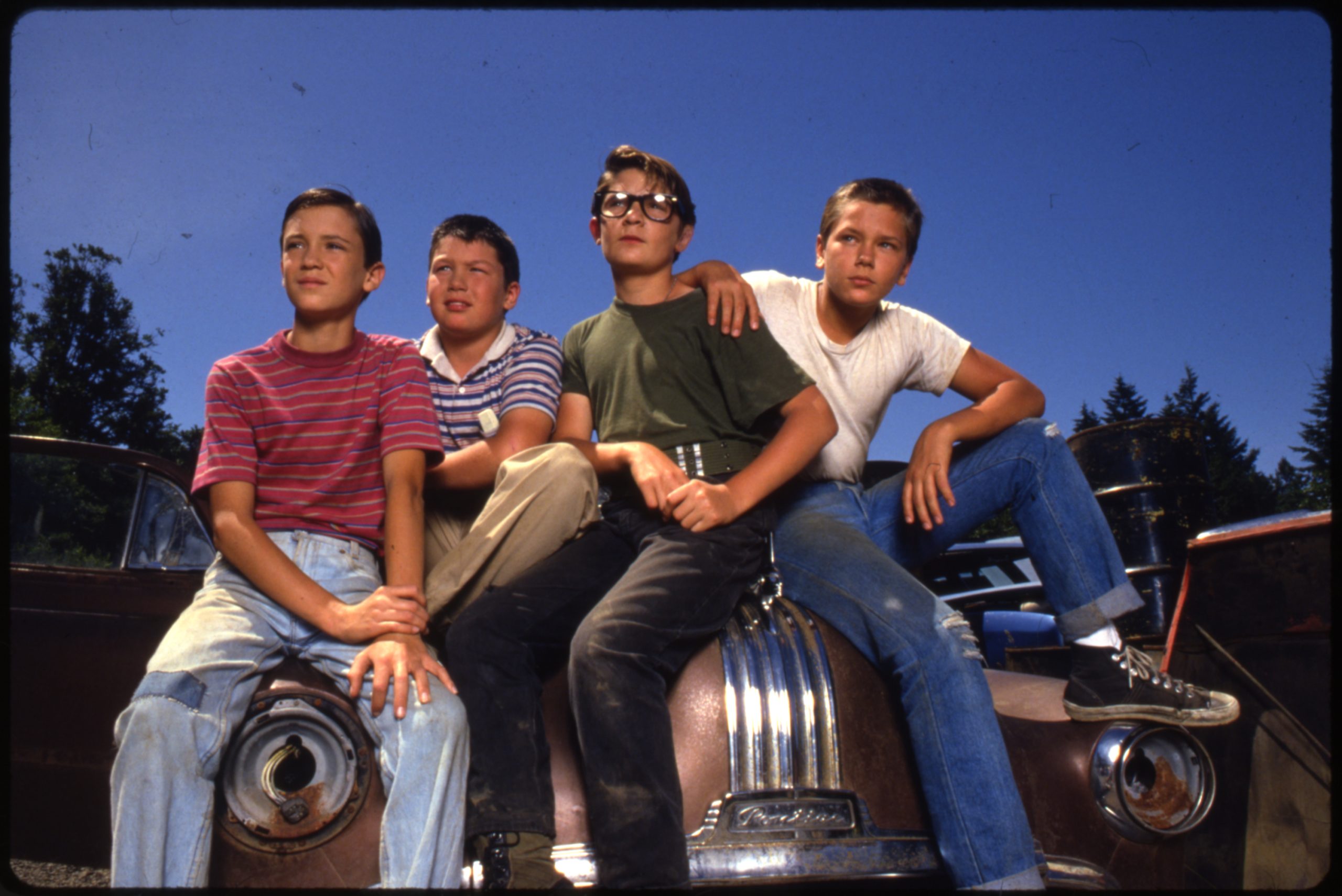
AF: The freedom I write about in that part of the book was very much of the time and location, and it wasn’t peculiar to me. Mid-eighties Suffolk offered a very Stand By Me kind of childhood with a wild and open environment to disappear into. When we saw that movie, my friends and I all recognized our lives in it. The difference was that the kids in Stand By Me all seemed to be suffering some form of neglect. My friends and I were all loved and cared for as far as I could tell. We were just given a long leash. I suppose you could say we were free range. Perhaps feral. During those times when I headed out of the house alone though, it was much more about my need for space and distance rather than anything else. I was part of a large, noisy household and occasionally it’d become too much for me. The fact that I could just head out of the house and into the countryside, where I could climb a tall tree or go wading through a river was a gift. If anything, I abandoned my family rather than the other way around. The chapters/essays that bookend Broken Biscuits each look at that same escape impulse but during two different times of life; my childhood and my forties. That youthful freedom to disappear was liberating but looking back it makes me shudder. No one I know would now let their kids have the kind of childhood I enjoyed. The world is probably no scarier now than it was when I was a young, but we know more about it now. By 2025 standards, I could be seen as a neglected child, but it was never that way.
BK: In “The Beautiful Ones” chapter, you tell the reader that your brother Robert said, “You know that if I found out you were gay, I’d disown you,” and one of the book’s epigraphs from your father reads, “I just don’t know why you want to tell people all these personal things”? At that stage in your life was verbal intimacy with other males possible?
We live in a time when standards of masculinity are being dictated to us by deeply problematic men.
AF: That essay focuses on my early teens, a time when I would never have dared discuss anything like that with other men or boys. I had a lot of behaviors and interests that saw me labeled as gay, and in a small rural town back in the eighties that made things particularly tough. My lack of inclination towards sports, my passionate interest in the music of Prince, my multiple platonic female friendships, all this was used by the people around me to question my sexuality. In time, I started to question it myself. I wondered if everyone else was right and they could see things in me that I couldn’t. As far as I was concerned, discussing it would have only made things worse. So, I just held it in until the point during my late thirties when I began writing about my life. Once I started doing that, articulating it, the dam broke. Everything came out. I went from being someone who wouldn’t openly discuss this stuff to being almost unable to stop. It was liberating and curative in that way. If I hadn’t discovered life writing, I think holding in those thoughts would have poisoned me.
BK: Broken Biscuits is, in large part, a meditation on masculinity, arguably working-class masculinity. In “It’s the End of the World as We Know It,” you question your masculinity in relation to survival skills. You write, “I’d likely be dead fifteen minutes into the end times.” What do you hope readers will learn from your conjuring of the end times?
AF: Through so much of Broken Biscuits, I compare myself to Robert, who, for many years, was my masculine ideal and I was desperate to emulate. That chapter is the final example of this comparison. Robert was a biker, a street fighter, and as much of a hunter as you’ll find in the UK. He was fearless. Never evaded combat. Felt alive in a fistfight. I could easily imagine him during the collapse of civilization fighting to the death over a can of expired kidney beans. I thought of him as the kind of man I could be if only I was tougher and better. In this part of the book, I’m really poking fun at myself for what I lack based on my definition back then of what a man was. I wanted to kick against that definition. We live in a time when standards of masculinity are being dictated to us by deeply problematic men whose notions of what a man should be are broadly bullshit. There is no typical man, no masculine standard that we should have to live up to. We’re told that men should be bold, resilient, strong, that they should be providers, but based on those standards, my mother is one of the toughest men on the planet. She’s also a great storyteller and, at 75, still works as a part-time burlesque dancer. If I’m trying to emulate anyone these days, it’s her.
BK: How did you decide on the 12-chapter, episodic structure for Broken Biscuits rather than, say, a single chronological narrative?
I tell my friends I love them all the time. With my brothers though, it’s still taboo.
AF: It comes from years of working in the essay form. I started off blogging short personal essays that looked to explore ideas within a tight framework. Later, writing for the stage demanded the same concise thing. When I finally decided that I wanted to work on something longer form with my first book, Cold Fish Soup, I always knew it was going to be a memoir of linked essays. The craft then becomes about sequencing those essays, identifying and amplifying common themes that run through them and adding in callbacks. When Cold Fish Soup won an award, I felt like I was onto something so I stuck with the same format for Broken Biscuits. It’s the perfect form for me because it allows me to explore an idea in a focused way then move on to the next without taking up too much of a reader’s valuable time. All I’m asking of them is “Please give me your attention for a max of 10,000 words. If you don’t like it, maybe you’ll like the next one.” I always liken essay collections to the circus. You may not like the trapeze artist, but maybe you’ll like the clowns or the acrobats. I can’t envision a time when I’m going to ask a reader to suffer through 85,000 words of my clown act.
BK: In “An Inside Job,” your brother Ben goes to prison and tells you, “There are people you instinctively know not to mess with. You have to bite your tongue with certain things. But I know how to play people like that. I know to not push people too far.” This idea of limits haunts the chapter’s conclusion when you write, “I wanted to tell him that I loved him.” But you didn’t, you tell the reader, “because we’ve never been those kind of brothers and we’re not going to start now.” What prevents you, or the rest of us, from being “those kind of brothers”?
AF: I can’t speak for everyone, but for me it’s probably down to a lack of inclination to make myself truly vulnerable. Growing up, the times when I did allow myself to be like this were pounced upon as a weakness, so I learned to hide that side of me. Now I’m older, have lost a few people I was close to, and care less about how I’m perceived. I tell my friends I love them all the time. With my brothers though, it’s still taboo. I was too late with Robert, who took his own life in 2008. Through writing about him in my books though, I learned to better understand and love him. I regularly mention this at my book events, and appreciate having the opportunity to give voice to an idea that, were he around to hear me speak this way about him, he’d likely respond by putting me in a headlock until I apologized. I suspect he knew though. He certainly knew how much I admired him. But I’d have never come out and said it to him. Likewise, I would never tell Ben how much he means to me and how proud I am of him. He only knows I feel this way because I wrote an essay then sent it to him for editorial approval before publication. The last time I visited him at his restaurant, I learned that he’d shown the essay to all his colleagues. So, he knows I love him, his coworkers all know that I love him, but for some reason I can’t bring myself to say it to his face. Instead, I’ve placed myself in the absurd situation where I will tell my siblings that I love them, but only in writing that’s published globally.
BK: You’ve made numerous appearances connected to the publication of Broken Biscuits. What question hasn’t been asked yet that you wish had been?
AF: A lot of friends and reader reviews mentioned particularly enjoying “Exposures,” the chapter/essay that deals with my years running a photo lab, so I expected more questions about that. Maybe they were worried asking about it would appear too voyeuristic because it involves writing about the very private moments of strangers. I thought it could have brought up some interesting discussions about the morality of life writing, the act of making real people into characters and where one should draw a line. Questions about whether writing a story is worth the damage it could do. If it’s going to hurt someone, I’d say not. It’s the kind of thing that crops up a lot in my teaching and I think people who write in a memoir or creative nonfiction form should be doing their best to navigate it ethically. I can’t say I’ve always got it right, but it’s not through lack of trying.
Besides death, being canceled might be my biggest fear. Like with death, I navigate this fear by thinking about the concept pseudo-academically, following the case studies as they emerge from my algorithm. I am of two minds when it comes to canceling. One, I am happy when people I think deserve it are canceled. Two, I am uneasy when I’m unsure if they deserved it.
When it came to writing my novel Lucky Girl, tracing a young dancer’s tumultuous relationship with an embattled pop star, I knew my main character would get canceled. An ardent and pseudo-academic fan of reality television, especially Dance Moms, it would be disingenuous to not include the looming threat. I especially wanted to explore how canceling counteracts and complicates coming-of-age narratives. Many coming-of-age stories involve mistakes, but always the kind of mistakes one recovers and learns from. Often, this is not the case with canceling. The subject defends, apologizes, vanishes, and sometimes returns, but never the same and seemingly always for the worse. What does restorative justice in a canceling life cycle look like?
Really, my unease about cancel culture is my unease with the internet, with social media, with being perceived by strangers online. It is why I find fiction a useful tool for exploring this concept, and why I developed this list. Some of these books view canceling as a societal warning while others position canceling as a moral consequence. In novels that center revolting characters like Yellowface’s June and My Dark Vanessa’s Jacob Strane, I am rooting for the Greek chorus of cancel culture to beam the everlasting shit out of them. In other stories, cancel culture is the boogie man behind the unwitting yet likable character, making the reader shout “look out!” down into the pages. All, I hope, add nuance to this tired dialogue. I know, we’re so tired! But it’s worth having this conversation about how we strike a balance between calling out harm and accepting when accountability goes too far. Fiction remains an important way to interrogate the limits and possibilities of public discourse.
Written in the 1950s as allegory for McCarthyism, Arthur Miller’s The Crucible is a high school curriculum favorite, and I love teaching it to my freshmen and sophomores. The first act sees Puritan girls desperately trying not to be canceled—they’ve been caught engaging in some non-Puritan activities—and they manage to evade the snare by accusing maligned community members of witchcraft. Soon, Salem is undone by a spiral of allegations. Our “hero” is John Proctor, striving to free his accused wife while battling his own moral shortcomings; the protagonist is further condemned in Kimberly Belflower’s 2022 play John Proctor Is the Villian, following high school girls reading the play while an accusation of sexual assault rocks their small Georgia town.
After an affair with a college professor leaves her pregnant, penniless, and alone, single mom Margo turns to OnlyFans. It seems a perfect work-from-home solution for her childcare dilemma; Margo can remain anonymous and make enough money to get back on her feet. But she learns that sex alone doesn’t sell. Margo must devise a compelling alt-ego to attract more viewers, so she taps her ex-pro wrestler Dad. As it turns out, the pro-wrestling world and this new frontier of digital sex work both depend on crafting enticing storylines for viewers. Thorpe does a masterful job comparing these two mediums: Both rely on using your body, yet one is celebrated while the other shamed.
In Lydi Conklin’s debut novel, the canceling comes down swiftly. Set off balance from her eroding career and personal relationships, folksinger Joan Vole goes overboard—to put it lightly—during a performance on stage, causing her to flee New York before the vultures come for her. Joan sets her sights on a remote writers’ camp in Virginia, where it just so happens the students are not allowed access to their phones. Betting that news of her poor actions have not reached the school, Joan weasels her way into teaching, allowing her to lick her wounds before she plans to find permanent refuge on some Arctic island, where she’ll renounce music and live out her days. And yet, her time at the camp with her students and a fellow younger counselor challenge how she exists as both an artist and a person.
Rebecca Makkai’s novel tackles our obsession with true crime podcasts as filmmaker Bodie returns to her alma mater to teach some media courses on films and podcasts. Years ago, the campus was rocked by a shocking murder of Bodie’s roommate, a murder she finds herself unpacking with her plucky students. These Gen Zers cannily intuit the police were quick to condemn athletic director Omar, one of the few people of color on campus. The kids get to crafting a podcast that seeks to crack the case open. In the background, Bodie contends with a more personal issue: Her amicable ex-husband has been accused of sexual misconduct—his culpability is fuzzy, think Aziz Ansari-level fuzzy—but the online discourse seeks to quickly dismiss him, and Bodie along with it. Makkai uses this B-plot to interrogate the main focus of the novel, illuminating the dangers of certainty.
My sister described listening to the audiobook of Yellowface to me as “being on FaceTime with your terrible friend justifying themselves when they’re clearly the bad guy.” It’s tough (yet hypnotizing) being in June Hayward’s head. Sole witness to literary wonderkid Athena Liu’s choking death, June steals her friend’s manuscript on the plight of Chinese laborers in World War II, edits it to completion and passes it off as her own. Over the course of the novel, June conducts Olympian gymnastics to both assuage herself of guilt and evade condemnation from the Twitter mob, serving as the canceling Greek chorus. Oddly enough, I describe watching June’s plight as sublime—evoking both awe and terror. As a reader, you root for these Twitter handles to uncover the truth, and, trapped in June’s head, you squirm.
Kate Elizabeth Russell’s debut opens with a social media storm—it is 2017, and Vanessa’s former high school teacher has been accused of grooming students. This incites Vanessa to reflect on her relationship with Jacob Strane, beginning in a boarding school classroom and turning into what she thought at the time was a storied love affair, one that has colored every aspect of her adult life. The novel jumps back and forth in time, but the 2017 sections I found the most vexing, with Vanessa torn between a fellow victim asking her to come forward and Strane himself, appearing in the present neutered and meek by these accusations. I hoped that as his canceling gained momentum, it would bring justice and peace for Vanessa—but Russell deftly demonstrates how canceling is much more complicated than a deus ex-machina.
Isabel Banta’s debut novel reminds us that canceling existed in the early aughts too. Tracing Amber Young’s rise to fame as a Britney-esque pop star, we see Amber leap from local talent show to girl group and beyond. Meanwhile, Amber navigates real friendships and crushes, complicated by false relationships drummed by tabloids. When Amber is caught in the middle of this, she becomes a lightning rod for the public’s ire. What especially struck me throughout the novel is how, though we didn’t have the term in the 2000s, canceling was a feminine issue—and as a feminine issue, it was generally accepted as the way culture worked. It is Amber’s body and hyper-sexuality broken down by chatrooms and media when she’s caught engaging in bad behavior, not the boyband dreamboat she’s doing it with. Oh—you almost want or hope to say—how times have changed. Have they?
This dark comedy debut by Isle McElroy tackles influencer culture as well as the alpha-male epidemic sparked by Andrew Tate when two friends seek to create a cult that reforms problematic white males. Sasha’s once successful wellness influencer platform dissolves when a guy publicly blames her for his viral suicide. She has little other choice but to say yes when her best friend Dyson asks her to be the figurehead for this cult he’s starting. In The Atmospherians, canceling serves as Sasha’s catalyst into the zany world where man-hordes will either trip over to help or rob you blind, depending on the way the wind blows. Sasha’s task becomes how to influence these men to become, in her own words, more human. Much of the novel explores how we perform, both in social media and real life, and how this performance invents the self.
Alejandro Varela’s Middle Spoon is an epic page-turner narrative structured around emails (72 in total!) to an ex-boyfriend. The story takes us on a deep dive into the corners of a heartbroken mind while simultaneously negotiating mental health and polyamory. After Ben breaks up with our narrator, a public health worker in New York City, he is bewildered, grieving, searching for ways to make sense of his pain and loss. The context behind this loss deepens its force: the narrator’s husband of 20 years, their two children, the two therapists receiving the avalanche of emails and the backdrop of a contemporary New York City.
In Middle Spoon, we get a close view of the anxious mind at play: the imaginative leaps of jealousy, the intellectualization of feelings, the obsession over details. Navigating this specific breakup for our narrator also means dealing with his own mental health, people’s views on polyamory, his own ideas [of/about] gay men’s sluttiness, as well as the social and political ramifications of structural inequalities as they manifest themselves in New York City. Yes, there’s an obsessiveness in this epistolary saga, and that is its strength: The obsessiveness sizzles with humor and honesty. The pull of the text is visceral because it deals with the very human ways we want to be seen, witnessed, and loved in our pain.
Varela and I spoke about anxiety, being gay while heartbroken, and the very strong desire to be witnessed while we experience loss.
Julián Delgado Lopera: How’s your heart?
Alejandro Varela: Exhausted, frightened, happy, you know. Thanks for asking.
JDL:I loved your book. I was trying to figure out, what is it that I really love about this book?The voice of the narrator is smart, sassy, very self-aware, anxious and, at times, absurd. How did you arrive at this voice,and why is it the best one to tell this particular story?
AV: The book is a love story, a heartbreak story, a poly story. It’s all those things. But it’s also a mental health story. I had this feeling as I was writing it, that I was trying to transcribe an anxious mind—I can’t say that’s super different than what I do in my other books—but the character in Middle Spoon is grappling with mental health issues. And I thought this was a great way to communicate the intensity of the experience, both the heartbreak, but also the way his brain processes emotions and life. The voice is then aided by the structure, because the letters allow him to be . . . I don’t use the word manic here, but he is in a high energy.
JDL: That anxiety to me is an emotional engine for the narrator and also for the piece. What keeps the momentum going is the fueling of this anxious mind.
AV: I think anxiety, which I have dealt with in my life, can be very debilitating and scary and frustrating. But when you’re writing it, and maybe even when you’re reading it, there’s a humor there because the anxious mind, or at least this narrator’s mind, is such a gloom and doom, like worst case always. Everything for him is intense and urgent and scary. But, in the end, it’s just heartbreak. I mean, it sucks, but it is just heartbreak. When I’ve been through this process of heartbreak, all I need is to talk to a few people in my life, and I can see and hear in their voice that they feel bad for me, but they’re also like, okay, and what are we making for dinner? Which could be callous and is actually very grounding because it’s a reminder this is going to pass, I’m not dying. But the anxiety communicates something different. When I was writing Middle Spoon, I wanted so badly for how terrible heartbreak feels to come across. This is heavy, this is real, but then also the fact that the narrator loses control over himself is fascinating to me. I wanted to intellectualize the pain away, because I knew it was not going to be there forever.
JDL:Why is the epistolary form the best way of capturing heartbreak here?
I wanted so badly for how terrible heartbreak feels to come across.
AV: The age gap between the narrator and his ex is almost a decade. The narrator has been out of the dating pool effectively his entire life because he married his husband very young and has been with him a long time. In addition to feeling this pain, he is also trying to navigate the rules of breakup. As he says in emails, he just wants to reach out to Ben. He thinks it is ridiculous that they’re not talking. I mean, even if they’re going to break up, they should talk about it, they should process it. At no point does Ben say, “never contact me again.” But our narrator is held back by this idea of boundaries. He could have been reaching out to Ben the entire time, but he’s like, No, I’m going to be strong, and I’m not going to break these rules, I don’t want to be seen poorly.
That is a preoccupation of mine in this life, in this moment. I’ve been young for so long, and I’m no longer young, and I forget that. I could imagine being in a scenario in which I reach out to someone who’s dumped me, who’s younger, and them being like, what you’re doing right now is such an infringement on my safe space and my boundaries. Our narrator has that sort of self-awareness and always wanting to be a good guy, which can be really annoying. The letters were a way to get it all out. And they never affect anyone because they only go to the therapists. And I liked this idea that they were unsent, because then he could write as many as he wanted, and then I could write as long as I wanted to, because they are never going anywhere. So there’s no danger of like, abusing anyone or mistreating anyone. He’s just getting it all out for himself in a way.
JDL:There’s something really interesting that happens with time in these emails that feels very loopy to me. Time is circular here. Towards the beginning of the novel, the narrator writes how he doesn’t want to forget how he’s feeling, the pain he’s experiencing. There’s this constant back and forth between wanting time to pass quickly while simultaneously not wanting to forget. Wanting to dig and unearth memory after memory. The act of trying to both remember and forget, this push and pull, is an obsessive way of keeping Ben alive inside him.
When you are feeling that sort of pain and grief, it’s very easy to feel absolutely alone, like you are in a dream.
AV: There was a very brief moment in the writing process where I wasn’t sure what the time span was going to be for the book. What if this were all one day? What if I really magnified his OCD and his anxiety? What if I just said, this is what happens when you cannot be left in the dark? One of the pillars of OCD is needing all the information at all times to feel safe. But here, there’s uncertainty. The narrator just doesn’t know. He doesn’t really understand why the relationship ended. He doesn’t know what Ben is doing. I could imagine those 72 emails being easily written in one day, but I didn’t want that. I don’t know if I was talented enough to do that. I thought it was important to show a little bit of growth and process, and then you have to acknowledge time. But you’re right. The writing was a way to keep Ben alive. At the beginning, he says he didn’t just love Ben. He loved loving Ben. That whole experience, he didn’t want it to disappear. For the pain to be over, he’d have to stop loving Ben. And so it’s almost like, let’s keep feeling the pain because at least that keeps Ben alive.
JDL:This gets to the strong desire to be witnessed by the therapists, by his friends, his husband. I felt very tender about his need to be seen even though he knows everybody gets a little bit annoyed of constantly witnessing him. The emails are not meant to be read by Ben but there’s an entire audience—the readers—who are witnessing and seeing his pain.
AV: There’s a scene in which he’s in the farmer’s market, and all he wants is to connect with a complete stranger, someone who didn’t know anything else about him, but who knew the experience of heartbreak and could comfort him. When you are feeling that sort of pain and grief, it’s very easy to feel absolutely alone, like you are in a dream. You know people are out there but there’s no way to break out of your haze, and so you feel even more alone. And then it’s scary. I remember once talking to a therapist at the height of grief, we were ending the call and I said, I’m really afraid for the call to end because then I’ll be alone again so I would love to just talk to you for the rest of the day. He started to cry and said, you’re going to be fine, I promise you. And then the call ended. But it was like that feeling, just please someone see this, because if you see it, I’m not alone. I don’t have that particular trait in common with the narrator. When I am going through something, I email everyone in my life, and I say, please come over for dinner every day this week, I need someone. I will cook dinner. Because for me, community is incredibly healing. Writing the book was a way to connect with a lot of people at once. Like you said, it’s a little meta, he’s writing these things that none will see, but I’ve written it as a book for everyone to see.
JDL: Sometimes the narrator would start talking about Ben, but then it would lead into gentrification, and we zoom out and discuss that, and then we come back to bed with Ben. There’s the backdrop of New York, which is where it all happens, and the aspect of public health and social justice claiming space into his memory. How does public health and social justice intersect with heartbreak?
Everything I write, I realize after the fact, is questioning conformity.
AV: It’s twofold. On a very personal level, my background is in public health. I consider myself a public health worker, and my medium is fiction. I see the matrix clearly after studying public health, in a way that makes me so much more empathic and understanding and creative. I’m thinking constantly about how us individuals fit into a larger system. I like to give perspective, but I want to connect with humans on an individual level. I want to constantly remind myself and others that we are part of this grid, like we’re much bigger than this moment. When I’ve been in pain or sad about something, I’m still thinking about what the hell is happening in the country and in Gaza, they’re on my mind all the time. I wanted that to come through in the writing.
JDL:There is so much gay culture, especially gay male culture, that our narrator is constantly negotiating. For instance, his unwillingness to fuck around or have anonymous sex as the gay-male way of forgetting Ben. How much he’s pressured to do it, how much he is constantly thinking Ben is using Grindr to forget him. And one of my favorite parts are the pages we spend talking about top/bottom power dynamic. All of this takes up so much space in his head.
AV: Everything I write, I realize after the fact, is questioning conformity. It’s like I’m constantly wondering what systems are in place for a good reason, and which ones are in place for a bad reason, and which are just lazy because we haven’t questioned them. And the narrator has been in a relationship for 20 something years, has been primarily monogamous, and so he doesn’t have a lot of experience fucking around. He’s questioning a lot of his own preconceived notions around sex and health and probably religion, and he’s feeling envy. It’s funny, only this moment of heartbreak could drive him to question his values.
JDL:Why is that?
AV: He’s so desperate to feel something. He’s willing to be like, the last 40 years I’ve been afraid of casual sex, so I’m just gonna give it a try, right? I like that we follow someone who can be so closed-minded or conservative about this sort of thing, and then see him change and witness what it takes for him to change. It was kind of fun to break apart his life a little bit, not in a masochistic or sadistic way. I mean seeing a life change because of the circumstances, the dire sort of straits he’s in, emotionally lead to life changes.
JDL: The way you’re dealing with polyamory here is very interesting. I noted how people’s reactions to this relationship structure in the narrator’s life were playing out in the narrative. The way, for instance, that Ben was having to be kept a secret, but also how people’s reactions to this structure were affecting the narrator while he simultaneously carries all this guilt with his husband for being such a wonderful supportive man while he is a mess heartbroken over a boyfriend.
AV: When I started writing the book, I didn’t intend for it to be poly. But while I was editing it, I embraced it. I’m very happy to talk about it, but it really was so focused on the grief part. You’ve heard of peps? Progressives except for Palestine. Well, I would add, I know a lot of progressives, except for public school and except for polyamory. For some people, the discomfort with polyamory is around them immediately putting themselves in the place of someone left behind. People that I’ve encountered who are opposed to polyamory [are opposed to it] because they see themselves as being mistreated. As in, in this situation, they identify with the husband immediately and say, well, there must be something wrong. They can’t even imagine being comfortable or safe enough in a relationship or with yourself for this relationship structure to be okay. It’s so foreign. And, in a way, the narrator is having trouble with it, but he’s justifying it to himself. The narrator didn’t decide he wanted a poly situation. What he decided was that he wanted Ben to last, and then it was suddenly like, oh, this is poly. He should have read the book first, but he didn’t. And so he’s figuring it out as he goes. And in his way of trying to fit in, which is back to the conformity, he’s like, Well shit. Now I’m going to be in this unorthodox structure that makes me stand out. So he’s making a case for why it’s normal and healthy, like he’s selling it to the reader because the logic is, if you accept this, you accept me.
JDL: Why is the humor so important for this book?
AV: Because he can get professorial. Also, yes, respect to OCD and anxiety, but it can still be annoying on the page. So the humor, which, by the way, comes naturally to me. Someone asked me the other day if I do a humor pass on my writing, and I don’t, but I think the humor makes the rest palatable. The narrator first disarms you, and then annoys the hell out of you, and then he’s endearing. I believe, I hope, because he’s not easy to tolerate. But it becomes easier if you can laugh, right? If you can laugh a little bit while this is all happening, I think it makes it much easier. We’re talking about reparations in one chapter and then sexual assault in another, and it goes down a little bit more smoothly with humor.
An excerpt from Terry Dactyl by Mattilda Bernstein Sycamore
The first time I met Sid she was on the dance floor in a silver and gold tube dress pulled over her head except it wasn’t just a dress because the fabric went on and on and somehow she knew the exact spot on the dance floor where the light would shine right on her or that’s how it felt when she was writhing inside this tube of fabric, pulling it up and down, a hand out and a hand in, and then her face exposed in harsh white makeup and black lipstick with long glittering eyelashes and then she rolled onto the floor, she was crawling or more like bending but also she was completely still in the bouncing lights and all this was happening on a crowded dance floor at the Limelight while I was sipping my cocktail and I didn’t know what I was seeing I mean it felt like this went on forever, how many songs, it was like there wasn’t even music anymore just my body inside the fabric peeking out and then she pulled the dress up around her neck like a huge elegant collar, and underneath she was wearing a gold bodysuit with a silver metallic skirt that flared out, with ballet slippers also painted gold and she walked right up to me and said what did you think.
And I had no idea how she even saw me but I must have mumbled something because then she took my hand and said let’s go upstairs, honey, and I thought we were going to the balcony but we went up the stairs in the back, and at the top she kissed the door person on both cheeks and then we went inside.
And there was a whole other dance floor there, the club inside the club, and she guided me over to the bar and said: I can’t believe she’s gone.
And then she said it again: I can’t believe she’s gone.
And then she looked up at me and started laughing—oh honey, she said, I totally thought, I totally thought.
And then she just stopped right there. I didn’t know if she thought I was someone else, or if she thought—I really just didn’t know.
She said what are you drinking, honey, but she didn’t wait for my answer she just ordered two vodka sours with grenadine, I loved the color and after I took one sip I knew this would be my drink from then on. She poured some coke out on a coaster and then handed me a straw, and I made sure just to snort half but she motioned her hand like you take the rest, and when I was done she handed me a big flat round pill and I swallowed it with the vodka sour.
I was a little worried because I was already a bit coked up and alcohol and coke mess with ecstasy but I definitely knew not to turn down free drugs, I mean wasn’t this what was supposed to happen in New York?
Sid, she said. Sid Sidereal.
Terry, I said. Terry Dactyl.
And she touched my back, and said: Where are your wings?
I could feel them right then. It was the way she touched me. Like she was drawing my wings on.
One by one, the others came upstairs and took their magic pills—I didn’t know anyone yet, but when they saw me with Sid it was like we were old friends.
Sid was so high that her eyes would roll back whenever she wasn’t speaking, and I was ready to go there. Jaysun Jaysin kept petting her coat like it would take her to heaven or maybe she was already in heaven. Bleached curly hair with dark roots, eyebrows dyed green, and she was wearing a big ratty faux-fur coat and maybe nothing on underneath and she touched my nose and said: Twins. I looked at her nose, and noticed her gold septum ring did match my silver one, and everything in her eyes. And then String Bean arrived in clown makeup and ruffles, platforms that made her so tall that everyone had to look up to her. And CleoPatrick, with a giant red Afro and tattered ball gown. And then Tara and Mielle, in matching suits and bleached hair with spit curls like Jazz Age style-dyke twins.
And eventually Sid said: Is everyone ready? And we all went downstairs to the coat check and Sid picked up a box with her coat, and then we went outside and jumped in two cabs—I didn’t usually take cabs in New York because I was still in love with the subway but here I was with Sid, Jaysun, and Cleo, all of us squished together in the backseat and Sid said Christopher Street Pier and then soon enough we were there, one cab and then the other like we were in tandem.
And I’ll be honest here and say that I hadn’t even been to the piers before, I mean I saw Paris Is Burning in high school when it played at the Egyptian, and then of course everyone started lip-synching to Madonna and practicing those moves, but that was about all. It was late, and I didn’t see anyone voguing, but there was music, and just as we started walking out onto the pier this queen ran up behind us and said Esme!
And Sid turned, and this queen said girl, I thought you were dead.
And Sid said: I thought I was dead too.
And this queen said: Oh honey I’ve missed you and your messy makeup.
And Sid said: My messy makeup can’t compare to you.
And then she put her box down, and opened her arms, and the two of them were jumping up and down and Sid said oh Monique. And right about then I started to feel this pounding inside and I looked around to see if everyone else was feeling it too, and Monique said so are these your children or did someone get lost on the way to the circus.
What was I doing wasting my time with the dead white men of the Core Curriculum when I could be so alive right here with tranny shoulders.
Monique was ready to read each one of us, and we just stood there in the way it takes a while to react when the X is really kicking in and when Monique got to me she said girl, you’re as tall as me and you’ve got them tranny shoulders so why the freakshow makeup—and it felt like I’d been waiting for someone to say tranny shoulders all my life, yes, what was I doing wasting my time with the dead white men of the Core Curriculum when I could be so alive right here with tranny shoulders the air on my skin so much air and that current going through my body my eyes yes my eyes and lips yes lips and tongue, and there it was, language, when I said: Takes one to know one.
And Monique shrieked, and held out her hand, and I got on my knees and kissed it, and she said oh honey I’m not a lezzbian but I do like the attention. And then when she was done clocking all our outfits, she said: So what’s in the box.
And Sid said JoJo.
And Monique gasped, and stepped back, and she was so dramatic about it that at first I didn’t realize what was happening, but then she and Sid hugged again, and this time there were tears, and I got a chill up my back even though it wasn’t cold, not really, was it, I mean a second ago I was sweating and now I was cold and I knew this X was going to be good but also I felt like this wasn’t what I was supposed to be feeling, even if I could tell we were all feeling it, and maybe that was the point.
And Sid said I came here to tell Estella, and Monique said she’s with a date. And Sid said JoJo wanted her ashes in the river.
And Monique said that bitch stole a hundred dollars from me, twice, and then paused, and said: Not that I hold it against her.
And Sid said could you tell Estella for me. And Monique said what’s in it for me?
And Sid pressed something into her hand, and Monique held a baggy of coke up to the light and said oh honey you know me, you know me too well, and then she kissed her on both cheeks and we were off.
And when I say we were off, it wasn’t exactly runway it was just the only way to walk, all together now, walk, and at this point my eyes were rolling back and I was licking my lips and holding someone’s hand, feeling that clamminess, we were all bodies and wind and the cars going by—me and Jaysun, String Bean and Cleo, Sid and TaraMielle—they went by one name together I didn’t get it the first time but I got it now.
We walked down the West Side Highway until we got to another pier, I don’t know how long we walked and I don’t know which way because I’ve never found that pier again or maybe I found it but it didn’t look the same so all I know is when we got there it was just us, just us in the sky, the sky and the air, the sky in the air in my body inside this coat and we walked out to the middle of the pier, and Sid opened the box, and I’d seen this before, the ashes in a box like this or a big glass bottle or a beautiful urn or sometimes just a bowl so you could touch with your fingers, yes there were chunks of bone but on ecstasy it felt like I was part of this ash, this water, this bone, this air, the sky, this breath, it was all of us.
Sid handed out paper cups and maybe I was thirsty but the cups were for the ashes, each of us filled one up and we walked out to the end of the pier, the thing about the Hudson is it’s always wider than you think and you’re looking out at the skyline but it’s Jersey. The lights, I said, look at all the lights and everyone nodded their heads, we were there, in the lights, I could feel it.
And Sid said before we get this party started, I want everyone to know one thing, and we all turned to face her, and she said: Don’t ever call me Esme, okay? Sid, Siddhartha, Sadie, CeCe my Playmate . . .
And Jaysun said: Come out and play with me.
And Cleo said: Do you know what that bitch said to me? She said . . . No, never mind.
And Jaysun said: What.
And Cleo said: No, no, I don’t even want to say it . . . Okay, she said: you look better as a boy.
And we all gasped. And then String Bean hurled her cup of ashes way out into the water just like that, and then she did some kind of om shanti thing, blessed be, she kept saying blessed be blessed be blessed be, and I definitely didn’t believe in any kind of blessing but my eyes were open wide. Cleo said JoJo’s the bitch who taught me to walk, and she turned to show us, and so we all turned and there it was, New York, New York—New York, New York and JoJo I mean Cleo was walking with New York, she was walking with New York but leaning to each side because New York was heavy in those big platforms that weren’t tapered so they looked kind of dangerous and right then I realized I needed to get the ones like String Bean’s with the wedding-cake effect, and when Cleo turned she almost tripped but what was wrong with falling, we were all falling another way to fly and some of the ashes flew out of her cup and when she got to us she said see, I still don’t know how to walk, and we can all blame JoJo. And you could really see the glitter in her eyes—I tried to hear the ashes land but what do ashes sound like, just the water and the cars and the music, I mean it was the sound of the water against the piers or maybe metal slamming a buoy but it was music now.
TaraMielle sat down on the ground and we sat down with them and that’s when Jaysun started crying and Sid put her arms around her and then we became one big mass of breath and oh and oh and ohhhhhhhhhhhhhhhhhh and I wanted to say this is the best way to celebrate death. But I couldn’t say that, could I? And just as I was thinking how did we even get here, when we were at the Limelight, suddenly it was like we were at the Limelight again because Sid pulled the tube dress over her head and down to the ground, there was so much fabric she was in the tube and I realized that earlier was a rehearsal because here it was again one hand out of the fabric toward heaven, and one foot out of the bottom toward the water beneath the pier and the way she could roll over herself, twisting around I mean everything was fluid and brokenness and this was a dance for death, I knew it now.
And then String Bean started waving her arms and Cleo was twirling around and around and then I threw my ashes into the air and they fell down on us as Sid was pulling one arm in and then pushing one arm through, like each part of her body wasn’t connected to anything, just floating on its own, her face peeking out, just one of those gold eyelashes and then back into the fabric, it was like we were all in the fabric we were inside we were inside we were inside we were inside-out.
In ninth grade, we had an AIDS awareness assembly and I was prepared. My mothers were dykes and most of their friends were fags who had been partying at our house for my whole childhood and now they were dying, one by one they were dying I mean one day they would be dancing with that disco ball and the mirrored walls in the living room and then we’d be at a memorial at the park or the Arboretum or at someone’s apartment where I’d never been before.
When I was five, my grandmother died of brain cancer, but I’d only met her once when we flew out from Seattle to visit her, and when we were getting ready to make the trip from Boston to Nantucket my mothers said let’s play dress-up. I already knew they weren’t going to let me wear my favorite pink dress because they wouldn’t let me bring it, and they said I couldn’t even wear my hair in pigtails, not until we got home, so I watched them get dressed instead. They were wearing wigs and makeup that made them look kind of like Charlie’s Angels and I knew Eileen didn’t really like that show but we watched it every week at Jack and Rudy’s and all the queens were obsessed. Eileen and Paula looked at each other and then at me and said isn’t this fun but I could tell they were tense. When we got to my grandmother’s house, she didn’t look scary like I’d expected she just looked like an old lady who pinched my cheeks and said my my isn’t he a beauty, just look at those curls.
I was focused on the glass panda sitting on the table in the entryway, I’d always loved pandas and my grandmother noticed and said Melody, please wrap this up for my grandson, isn’t he a prize, and she took my head in her hands and said oh, let me get a good look at you again, my my isn’t he magnificent.
That panda is the one thing I have of hers—a clear glass paperweight with those dark panda eyes, and pink and red and blue flowers growing inside its belly, it looks like there’s water in there too but I guess it’s just glass. I still love that panda, the feeling of its weight in my hands, but now I know we were visiting my grandmother to prove that her dyke daughter was worthy of an inheritance, I was the proof that she had finally done something right. We got the inheritance, which paid for us to move out of the Biltmore and into our new house on 12th right by Volunteer Park and when I had an asthma attack on the first night and had to go to the hospital we moved back into the Biltmore while all the carpets were torn out, the floors stained, and the walls bleached and repainted and the windows replaced and I even got to choose the colors for my bedroom walls—bubblegum pink, with lavender trim—so when we got back a few months later it was a whole new place.
So my grandmother was the first person I knew who died, even though I didn’t really know her, but she was the only grandparent I ever met—my grandfather died before I was born, and I never met my other grandparents because they kicked Paula out of the house when she was sixteen after she got caught making out with her friend in bed and that was the end, just like that, when I was little I didn’t understand how parents could be so mean when they were supposed to take care of you, and probably I didn’t understand death either, but when my mothers’ friends started dying in the ’80s I understood more.
They just got really skinny and their eyes got scared and then they were gone.
There were no platitudes about heaven or a better place or anything like that, they just got really skinny and their eyes got scared and then they were gone, like Peter who was standing on the card table in his gold platforms and gold pants with matching gold bomber jacket unzipped to show off his muscly chest, holding the disco ball and saying I’m Atlas, I’m Atlas, and Paula who was DJing said Peter get down. And then I heard he was in the hospital, he had thrush and pneumonia and maybe shingles, I would hear the words and look them up in the dictionary I mean I knew what pneumonia was but I didn’t know why.
So I was ten or eleven when it all started, and then it didn’t stop.
They kept dancing, though, and I kept coming down from my bedroom in the early hours of the morning to sit on the sofa and cuddle with these dancing queens and their cocktails and pills and visits to the bathroom to powder their noses. My mothers gave me my own cabinet full of potions in the kitchen so I could join everyone, and I would make elixirs out of pomegranate juice and St. John’s wort tincture or damiana and kava kava and lemon balm and lemon juice, and I would sip my potions in sparkling plastic cocktail glasses with all these queens dancing in the living room while Paula reigned from her DJ table, hair dyed and spiked out or permed and asymmetrical, makeup in bright colors forming shapes across her face or swirls and curls around her trademark cat eyes. When I was a kid I thought Paula was the rich one because every day she came home with a new hairstyle and some wild shiny outfit, but that was just because she was the receptionist at the hair salon so she was the in-house hair model, and after work she would stop at Chicken Soup or Value Village, and Eileen might have looked plain in her burlap or denim or cotton jumpsuits, dark curly hair pinned back with barrettes, but everything was Liz Claiborne and she shopped at the Bon although it didn’t seem like anyone noticed the difference in those spinning lights with Paula playing Donna Summer or Nina Hagen or esg or Kraftwerk I mean everything felt like magic except when someone suddenly looked sad on the sofa all alone staring at the lights and I would go over and we would stare at the lights together.
I still remember the first time some girl at school said everyone had a mother and a father, not two mothers, and when I asked my mothers about this Paula just laughed and said oh honey that’s nonsense, you have two mothers and a whole roomful of fathers, don’t you. So when I was little my fathers would hold me in their arms and tickle me and lift me up to the spinning lights and I would get giddy until I fell asleep on the sofa and someone would carry me up to my bedroom and I would sleep for the rest of the night. When I got older I would go to bed like usual, but as soon as I heard the music I would run downstairs in my favorite silky robe and a tiara, and everyone would call me their little princess, so I was a princess among queens.
Technically maybe they were my fathers, even the ones who didn’t seem like men at all, they were somewhere in between or beyond but that’s how my mothers got pregnant, it was their sperm in the turkey baster—did all those queens get together for a sex party first, or maybe just one by one jerking off in the bathroom, of course it wasn’t just one time I mean the details of the story changed but what didn’t change was that all the sperm was mixed together so if this worked out then no one would ever know who the father was.
When I was little, my mothers told me they both got pregnant together, no men involved, but once I realized half of me couldn’t have come from one mother and half from the other they told me it was Eileen who gave birth to me but they were both my mothers and I could tell they were nervous about this but I was relieved because I thought they were going to say Paula, there was something about our connection that felt more physical, but once I realized it wasn’t her this kind of balanced things out.
So by ninth grade it already felt like all my friends were dying, like this had been going on forever and it would never stop, and I know they were my mothers’ friends but I grew up with them way more than with other kids. I didn’t understand kids, so I would climb trees, I liked the way you had to really focus to get somewhere but once you were there you didn’t have to focus at all, and at the AIDS awareness assembly I thought we would all share stories of friends we’d lost, so I was surprised when it was just about which bodily fluids contained HIV and how we were all at risk so here’s how to put a condom on a banana and I knew all that, I mean there were condoms and pamphlets about safe sex all over our house. But at school everyone laughed at the banana and then their questions were weird like can you get AIDS from kissing someone on the cheek or what if you cut yourself and no one was around and you only had a dirty sock to wipe it off, could you get AIDS from a dirty sock that really really smelled and then someone said I feel sorry for the AIDS victims but it isn’t their fault, and that’s when I raised my hand.
I said I have something to share, and the teachers nodded, and I took out a list that I’d prepared ahead of time because I didn’t want to get nervous and forget anyone. I started with Peter, and how he used to shake the tambourine—he would run all over the house singing shake shake shake and I would run after him. And Marty, who used to cut my hair at home because of my asthma so I didn’t even have to go to the salon we would do it in the kitchen and he specialized in curly hair so he always got it right. And then his boyfriend Tommy who didn’t look sick but then I started seeing the sores on his neck and wrists and back, my mothers said they weren’t always painful but they really did look like they hurt. A lot of my mothers’ friends had the sores, some of them would try to cover them up with makeup but you could still see. Like Cammy who taught me the eyebrow trick and the secret ways to do contour and how to always use lip liner if you wanted your lips to stay that way. Or Ansel who used to wear the prettiest dresses and hold her hand like a microphone and do these elaborate dance numbers while I would try to learn the moves but I just couldn’t keep up.
I wanted to say more, but the bell was ringing so I looked up to see if it was okay to keep going and the first thing I noticed was that everyone was completely quiet, I mean not even the boys in the back were making jokes anymore, and as soon as I stopped I could tell there were kids who were about to cry or maybe they were already crying and the teachers looked shocked too, especially the PE teacher who everyone said was gay, so she must not have been gay or why would she have been shocked, and I didn’t know what to do so then I stopped talking.
DON’T MISS OUT
Sign up for our newsletter to get submission announcements and stay on top of our best work.
YOUR INBOX IS LIT
Enjoy strange, diverting work from The Commuter on Mondays, absorbing fiction from Recommended Reading on Wednesdays, and a roundup of our best work of the week on Fridays. Personalize your subscription preferences here.