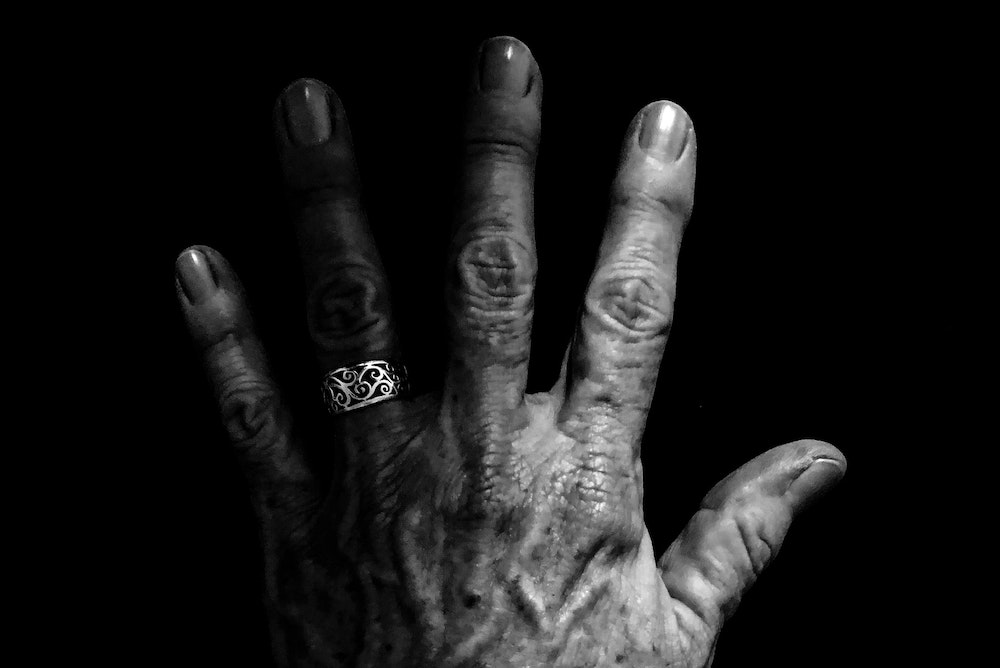
Adin Dobkin Admits He’s in the Pocket of Big Sandwich

In our series “Can Writing Be Taught?” we partner with Catapult to ask their course instructors all our burning questions about the process of teaching writing. This month we’re talking to Adin Dobkin, author of the forthcoming book Sprinting Through No-Man’s Land: Endurance, Tragedy, and Rebirth in the 1919 Tour de France. Dobkin is teaching an open-genre workshop about developing a research toolkit for writing, learning to find and use factual information to support both nonfiction and fiction work. We talked to him about photography, sandwiches, and how a writing workshop is not a zero-sum game.


What’s the best thing you’ve ever gotten out of a writing class or workshop as a student?

The best workshop participants wade through the muck of an early draft to understand what you’ve put on the page but haven’t realized, and what you haven’t put on the page but which you should. The most meaningful gift workshops have given me, however, is a better understanding of the constellation of works a given piece is in conversation with. They inevitably expand our conception of what a work is and could be and what avenues future works can travel down.

What’s the worst thing you’ve ever gotten out of a writing class or workshop as a student?

In nonfiction workshops, I’ve sometimes encountered the privileging of self-revelation over intellectual inquiry. If wielded by a workshop leader, it can turn into a cheap method of writing a piece that’s successful in the classroom but doesn’t accomplish much. I’ve also seen people treat the workshop as a zero-sum setting. It’s not! Writing is not! Every person in a workshop is a custodian of a common literary community whose limitations are created by market forces and those individuals in power, not by other writers. It’s shitty for everyone–the person who thinks like that and the persons who must bear it—when that environment exists in the room.

What is the lesson or piece of writing advice you return to most as an instructor?

I have a contentious relationship with writing advice. It only works when it’s explicitly, “Here’s how I did it. You can try and see if some version works for you,” which is the lesson I return to: one should learn how to not accept things in the classroom. I entered my first creative writing class wildly intimidated. If you’re in a conventional workshop, as I was, you’re encountering feedback that appears like dicta passed down from up high. It’s not. And the more confident that person is while saying it, the less you should trust them. *

* except when they’re right

Does everyone “have a novel in them”?

Cosmically, yes. Writing is great and far better than most other sorts of work if you have the personality for it. It can be miserable if you don’t. But people see the output and not the labor required. Anyone can sit down and start writing: many people do, some smaller number continue, and some even smaller number—but not so small—finish. Then there are those who relish everything that comes after. Others don’t enjoy it but recognize its importance and are willing to put up with it. And some don’t and aren’t and that’s why my cosmic answer isn’t of much use in practice.

Would you ever encourage a student to give up writing? Under what circumstances?

I can’t imagine the circumstances in which I’d give that advice. I don’t even know what it means to give up writing, except in some melodramatic, monkish way. Writing is trying and failing and aspiring to some ideal and not reaching it. I’ve told people they should stop researching and move onto writing, or they should think about a work differently, or consider the reasons they’re choosing to write something, but to just give it up? No.

What’s more valuable in a workshop, praise or criticism?

The short answer is both. I’m against false praise or feeling as though you must make it through praise to get into the meat of a workshop, which is one limitation of the conventional model. With that said, a trusted reader who is genuinely excited about something I had maybe toned down in an early draft is often more meaningful and revelatory than someone taking issue with some element they’ve found. In other words: average criticism is more valuable than average praise, but good praise is more valuable than good criticism. 

Should students write with publication in mind? Why or why not?

I’m someone who considers the structure, shape, and object of the work at an early stage. Sometimes, the first thing I look at after an idea plants itself in my mind is what mode will come closest to consummating that vision. Part of that thinking can be publication. We’re writers because we want our work out there. And there are practical constraints, too. We’re so quick as writers to ignore them, to say in the classroom, “don’t worry about all that.” Well, if an outlet pays for expenses, I can maybe travel and visit a place I’d like to write about. If I have an advance of some size, I can set down other projects, I can buy more books for research, I can not worry for a moment. If you remain flexible and keep your allegiance to the story and the mode which helps you reach those creative aspirations, I don’t see anything wrong with considering the publication of a work. 

In one or two sentences, what’s your opinion of these writing maxims?

  • Kill your darlings: Was it Kingsley Amis who talked about finding the perfect word, moving onto the next one, finding the next perfect word, and so on? In any case, the aim of a writer should be to make every sentence as close to a darling as possible, which makes the massacres less emotionally taxing.
  • Show don’t tell: Interesting and legible telling is more rewarding and difficult than interesting showing. But it requires the writer to have something they really want to say, on a deep intellectual level, which is unfortunately a different matter than writing.
  • Write what you know: I never liked it. A better construction is “write what you genuinely want to know,” which I think covers the misstep of talking out of your ass while leaving open room for discovery.
  • Character is plot: I like the sound of it! I don’t know if it’s true. Characters–if they exist in real life–will always be more complex and unknowable than they are on the page. They should be allowed to make decisions that go against everything they’ve done before. Maybe it’s more accurate to say plot is the child of character?

What’s the best hobby for writers?

Something mechanical if you’re asking me to institute my way of life on anyone else. I like photography as one that’s mostly rote processes with a single moment of inspiration. The process of developing and printing is nicely mindless once you understand basic procedures. I can listen to music, stare off, so long as I keep track of time; all things I can’t do while writing. It also lets me consider the ways in which another creative medium can convey images, ideas, stories better and worse than my chosen one.

What’s the best workshop snack?

I’m in the pocket of Big Sandwich.

Five Years of Marriage Threatened by One Line of Poetry

“Mrs. Spring Fragrance” by Sui Sin Far

I

When Mrs. Spring Fragrance first arrived in Seattle, she was unacquainted with even one word of the American language. Five years later her husband, speaking of her, said: “There are no more American words for her learning.” And everyone who knew Mrs. Spring Fragrance agreed with Mr. Spring Fragrance.

Mr. Spring Fragrance, whose business name was Sing Yook, was a young curio merchant. Though conservatively Chinese in many respects, he was at the same time what is called by the Westerners, “Americanized.” Mrs. Spring Fragrance was even more “Americanized.”

Next door to the Spring Fragrances lived the Chin Yuens. Mrs. Chin Yuen was much older than Mrs. Spring Fragrance, but she had a daughter of eighteen with whom Mrs. Spring Fragrance was on terms of great friendship. The daughter was a pretty girl whose Chinese name was Mai Gwi Far (a rose) and whose American name was Laura. Nearly everybody called her Laura, even her parents and Chinese friends. Laura had a sweetheart, a youth named Kai Tzu. Kai Tzu, who was American-born, and as ruddy and stalwart as any young Westerner, was noted, amongst baseball players, as one of the finest pitchers on the Coast. He could also sing “Drink to me only with thine eyes,” to Laura’s piano accompaniment.

Now the only person who knew that Kai Tzu loved Laura and that Laura loved Kai Tzu was Mrs. Spring Fragrance. The reason for this was that although the Chin Yuen parents lived in a house furnished in American style, and wore American clothes, yet they religiously observed many Chinese customs, and their ideals of life were the ideals of their Chinese forefathers. Therefore, they had betrothed their daughter, Laura, at the age of fifteen, to the eldest son of the Chinese Government schoolteacher in San Francisco. The time for the consummation of the betrothal was approaching.

Laura was with Mrs. Spring Fragrance, and Mrs. Spring Fragrance was trying to cheer her.

“I had such a pretty walk today,” said she. “I crossed the banks above the beach and came back by the long road. In the green grass the daffodils were blowing, in the cottage gardens the currant bushes were flowering, and in the air was the perfume of the wall-flower. I wished, Laura, that you were with me.”

Laura burst into tears. “That is the walk,” she sobbed, “Kai Tzu and I so love; but never, ah, never, can we take it together again.”

“Now, Little Sister,” comforted Mrs. Spring Fragrance, “you really must not grieve like that. Is there not a beautiful American poem written by a noble American named Tennyson, which says:

‘ ’Tis better to have loved and lost,
Than never to have loved at all?’

Mrs. Spring Fragrance was unaware that Mr. Spring Fragrance, having returned from the city, tired with the day’s business, had thrown himself down on the bamboo settee on the veranda, and that although his eyes were engaged in scanning the pages of the Chinese World, his ears could not help receiving the words which were borne to him through the open window.

“ ’Tis better to have loved and lost,
Than never to have loved at all,”

repeated Mr. Spring Fragrance. Not wishing to hear more of the secret talk of women, he arose and sauntered around the veranda to the other side of the house. Two pigeons circled around his head. He felt in his pocket for a lychee which he usually carried for their pecking. His fingers touched a little box. It contained a jadestone pendant, which Mrs. Spring Fragrance had particularly admired the last time she was downtown. It was the fifth anniversary of Mr. and Mrs. Spring Fragrance’s wedding day.

Mr. Spring Fragrance pressed the little box down into the depths of his pocket.

A young man came out of the back door of the house at Mr. Spring Fragrance’s left. The Chin Yuen house was at his right. “Good evening,” said the young man.

“Good evening,” returned Mr. Spring Fragrance. He stepped down from his porch and went and leaned over the railing which separated this yard from the yard in which stood the young man.

“Will you please tell me,” said Mr. Spring Fragrance, “the meaning of two lines of an American verse which I have heard?”

“Certainly,” returned the young man with a genial smile. He was a star student at the University of Washington and had not the slightest doubt that he could explain the meaning of all things in the universe.

“Well,” said Mr. Spring Fragrance, “it is this:

“ ’Tis better to have loved and lost, Than never to have loved at all.”

“Ah!” responded the young man with an air of profound wisdom. “That, Mr. Spring Fragrance, means that it is a good thing to love anyway—even if we can’t get what we love, or, as the poet tells us, lose what we love. Of course, one needs experience to feel the truth of this teaching.”

The young man smiled pensively and reminiscently. More than a dozen young maidens “loved and lost” were passing before his mind’s eye.

“The truth of the teaching!” echoed Mr. Spring Fragrance, a little testily. “There is no truth in it whatever. It is disobedient to reason. Is it not better to have what you do not love than to love what you do not have?”

“That depends,” answered the young man, “upon temperament.”

“I thank you. Good evening,” said Mr. Spring Fragrance. He turned away to muse upon the unwisdom of the American way of looking at things.

Meanwhile, inside the house, Laura was refusing to be comforted.

“Ah, no! no!” cried she. “If I had not gone to school with Kai Tzu, nor talked nor walked with him, nor played the accompaniments to his songs, then I might consider with complacency, or at least without horror, my approaching marriage with the son of Man You. But as it is—oh, as it is—!”

The girl rocked herself to and fro in heartfelt grief.

Mrs. Spring Fragrance knelt down beside her, and clasping her arms around her neck, cried in sympathy:

“Little Sister, oh, Little Sister! Dry your tears—do not despair. A moon has yet to pass before the marriage can take place. Who knows what the stars may have to say to one another during its passing? A little bird has whispered to me—”

For a long time Mrs. Spring Fragrance talked. For a long time Laura listened. When the girl arose to go, there was a bright light in her eyes.

II

Mrs. Spring Fragrance, in San Francisco on a visit to her cousin, the wife of the herb doctor of Clay Street, was having a good time. She was invited everywhere that the wife of an honorable Chinese merchant could go. There was much to see and hear, including more than a dozen babies who had been born in the families of her friends since she last visited the city of the Golden Gate. Mrs. Spring Fragrance loved babies. She had had two herself, but both had been transplanted into the spirit land before the completion of even one moon. There were also many dinners and theater parties given in her honor. It was at one of the theater parties that Mrs. Spring Fragrance met Ah Oi, a young girl who had the reputation of being the prettiest Chinese girl in San Francisco, and the naughtiest. In spite of gossip, however, Mrs. Spring Fragrance took a great fancy to Ah Oi and invited her to a tête-à-tête picnic on the following day. This invitation Ah Oi joyfully accepted. She was a sort of bird girl and never felt so happy as when out in the park or woods.

On the day after the picnic Mrs. Spring Fragrance wrote to Laura Chin Yuen thus:

My Precious Laura,—May the bamboo ever wave. Next week I accompany Ah Oi to the beauteous town of San Jose. There will we be met by the son of the Illustrious Teacher, and in a little Mission, presided over by a benevolent American priest, the little Ah Oi and the son of the Illustrious Teacher will be joined together in love and harmony—two pieces of music made to complete one another.

The Son of the Illustrious Teacher, having been through an American Hall of Learning, is well able to provide for his orphan bride and fears not the displeasure of his parents, now that he is assured that your grief at his loss will not be inconsolable. He wishes me to waft to you and to Kai Tzu—and the little Ah Oi joins with him—ten thousand rainbow wishes for your happiness.

My respects to your honorable parents, and to yourself, the heart of your loving friend,

Jade Spring Fragrance

To Mr. Spring Fragrance, Mrs. Spring Fragrance also indited a letter:

Great and Honored Man,—Greeting from your plum blossom, who is desirous of hiding herself from the sun of your presence for a week of seven days more. My honorable cousin is preparing for the Fifth Moon Festival, and wishes me to compound for the occasion some American “fudge,” for which delectable sweet, made by my clumsy hands, you have sometimes shown a slight prejudice. I am enjoying a most agreeable visit, and American friends, as also our own, strive benevolently for the accomplishment of my pleasure. Mrs. Samuel Smith, an American lady, known to my cousin, asked for my accompaniment to a magniloquent lecture the other evening. The subject was “America, the Protector of China!” It was most exhilarating, and the effect of so much expression of benevolence leads me to beg of you to forget to remember that the barber charges you one dollar for a shave while he humbly submits to the American man a bill of fifteen cents. And murmur no more because your honored elder brother, on a visit to this country, is detained under the roof-tree of this great Government instead of under your own humble roof. Console him with the reflection that he is protected under the wing of the Eagle, the Emblem of Liberty. What is the loss of ten hundred years or ten thousand times ten dollars compared with the happiness of knowing oneself so securely sheltered? All of this I have learned from Mrs. Samuel Smith, who is as brilliant and great of mind as one of your own superior sex.

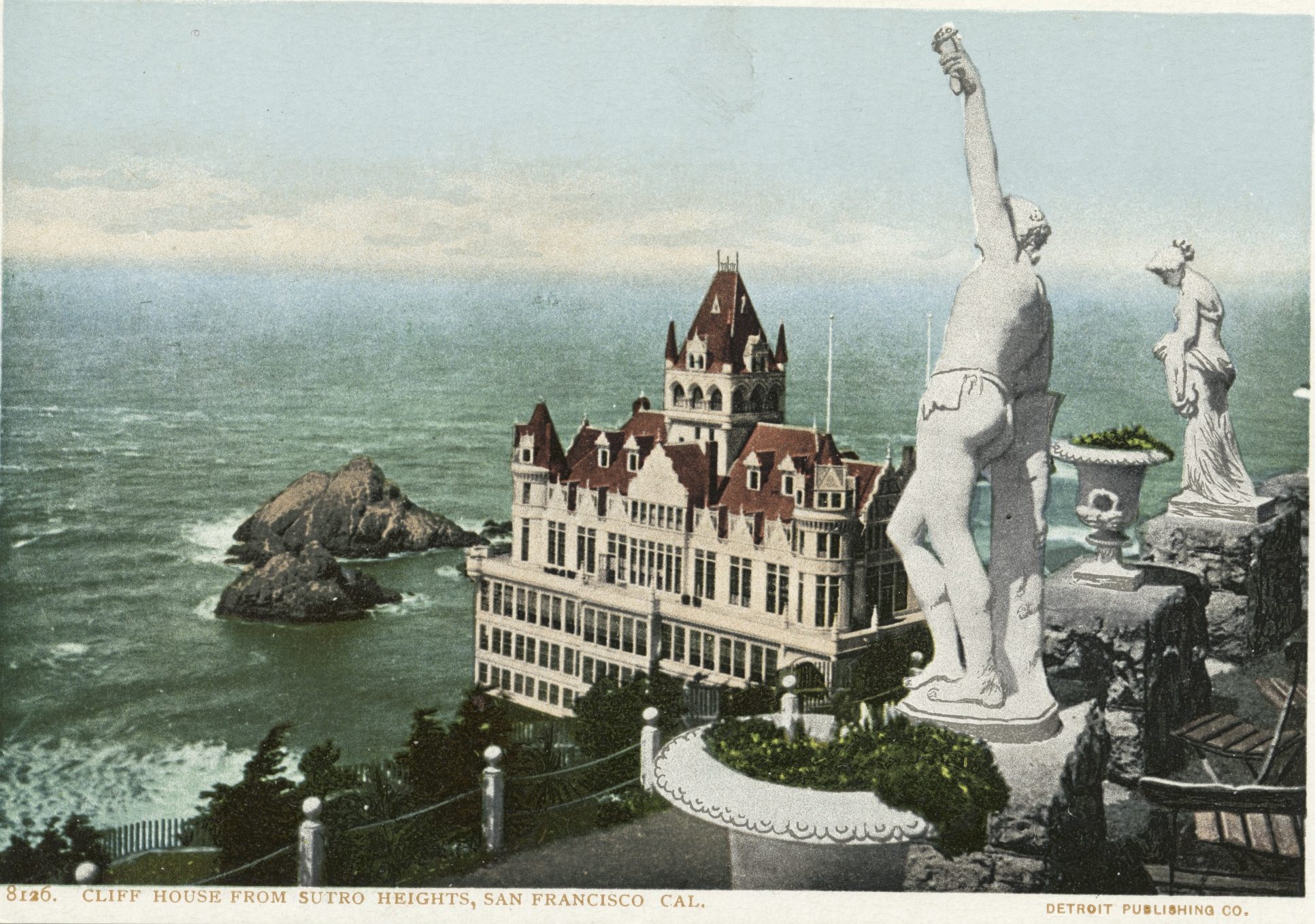
For me it is sufficient to know that the Golden Gate Park is most enchanting, and the seals on the rock at the Cliff House extremely entertaining and amiable. There is much feasting and merry-making under the lanterns in honor of your Stupid Thorn.

I have purchased for your smoking a pipe with an amber mouth. It is said to be very sweet to the lips and to emit a cloud of smoke fit for the gods to inhale.

Awaiting, by the wonderful wire of the telegram message, your gracious permission to remain for the celebration of the Fifth Moon Festival and the making of American “fudge,” I continue for ten thousand times ten thousand years,

Your ever loving and obedient woman,

Jade

P.S. Forget not to care for the cat, the birds, and the flowers. Do not eat too quickly nor fan too vigorously now that the weather is warming.

Mrs. Spring Fragrance smiled as she folded this last epistle. Even if he were old-fashioned, there was never a husband so good and kind as hers. Only on one occasion since their marriage had he slighted her wishes. That was when, on the last anniversary of their wedding, she had signified a desire for a certain jadestone pendant, and he had failed to satisfy that desire.

But Mrs. Spring Fragrance, being of a happy nature, and disposed to look upon the bright side of things, did not allow her mind to dwell upon the jadestone pendant. Instead, she gazed complacently down upon her bejeweled fingers and folded in with her letter to Mr. Spring Fragrance a bright little sheaf of condensed love.

III

Mr. Spring Fragrance sat on his doorstep. He had been reading two letters, one from Mrs. Spring Fragrance, and the other from an elderly bachelor cousin in San Francisco. The one from the elderly bachelor cousin was a business letter, but contained the following postscript:

Tsen Hing, the son of the Government schoolmaster, seems to be much in the company of your young wife. He is a good-looking youth, and pardon me, my dear cousin; but if women are allowed to stray at will from under their husbands’ mulberry roofs, what is to prevent them from becoming butterflies?

“Sing Foon is old and cynical,” said Mr. Spring Fragrance to himself. “Why should I pay any attention to him? This is America, where a man may speak to a woman, and a woman listen, without any thought of evil.”

He destroyed his cousin’s letter and reread his wife’s. Then he became very thoughtful. Was the making of American fudge sufficient reason for a wife to wish to remain a week longer in a city where her husband was not?

The young man who lived in the next house came out to water the lawn.

“Good evening,” said he. “Any news from Mrs. Spring Fragrance?”

“She is having a very good time,” returned Mr. Spring Fragrance. “Glad to hear it. I think you told me she was to return the end of this week.”

“I have changed my mind about her,” said Mr. Spring Fragrance. “I am bidding her remain a week longer, as I wish to give a smoking party during her absence. I hope I may have the pleasure of your company.”

“I shall be delighted,” returned the young fellow. “But, Mr. Spring Fragrance, don’t invite any other white fellows. If you do not I shall be able to get in a scoop. You know, I’m a sort of honorary reporter for the Gleaner.”

“Very well,” absently answered Mr. Spring Fragrance.

“Of course, your friend the Consul will be present. I shall call it ‘A high-class Chinese stag party!’ ”

In spite of his melancholy mood, Mr. Spring Fragrance smiled. “Everything is ‘high-class’ in America,” he observed.

“Sure!” cheerfully assented the young man. “Haven’t you ever heard that all Americans are princes and princesses, and just as soon as a foreigner puts his foot upon our shores, he also becomes of the nobility—I mean, the royal family.”

“What about my brother in the Detention Pen?” dryly inquired Mr. Spring Fragrance.

“Now you’ve got me,” said the young man, rubbing his head. “Well, that is a shame—‘a beastly shame,’ as the Englishman says. But understand, old fellow, we that are real Americans are up against that—even more than you. It is against our principles.”

“I offer the real Americans my consolations that they should be compelled to do that which is against their principles.”

“Oh, well, it will all come right someday. We’re not a bad sort, you know. Think of the indemnity money returned to the Dragon by Uncle Sam.”

Mr. Spring Fragrance puffed his pipe in silence for some moments. More than politics was troubling his mind.

At last he spoke. “Love,” said he, slowly and distinctly, “comes before the wedding in this country, does it not?”

“Yes, certainly.”

Young Carman knew Mr. Spring Fragrance well enough to receive with calmness his most astounding queries.

“Presuming,” continued Mr. Spring Fragrance—“presuming that some friend of your father’s, living—presuming—in England— has a daughter that he arranges with your father to be your wife. Presuming that you have never seen that daughter, but that you marry her, knowing her not. Presuming that she marries you, knowing you not.—After she marries you and knows you, will that woman love you?”

“Emphatically, no,” answered the young man.

“That is the way it would be in America—that the woman who marries the man like that—would not love him?”

“Yes, that is the way it would be in America. Love, in this country, must be free, or it is not love at all.”

“In China, it is different!” mused Mr. Spring Fragrance. “Oh, yes, I have no doubt that in China it is different.”

“But the love is in the heart all the same,” went on Mr. Spring Fragrance.

“Yes, all the same. Everybody falls in love sometime or another. Some”—pensively—“many times.” Mr. Spring Fragrance arose.

“I must go downtown,” said he.

As he walked down the street he recalled the remark of a business acquaintance who had met his wife and had had some conversation with her: “She is just like an American woman.”

He had felt somewhat flattered when this remark had been made. He looked upon it as a compliment to his wife’s cleverness; but it rankled in his mind as he entered the telegraph office. If his wife was becoming as an American woman, would it not be possible for her to love as an American woman—a man to whom she was not married? There also floated in his memory the verse which his wife had quoted to the daughter of Chin Yuen. When the telegraph clerk handed him a blank, he wrote this message:

“Remain as you wish, but remember that ‘ ’Tis better to have loved and lost, than never to have loved at all.’ ”


When Mrs. Spring Fragrance received this message, her laughter tinkled like falling water. How droll! How delightful! Here was her husband quoting American poetry in a telegram. Perhaps he had been reading her American poetry books since she had left him! She hoped so. They would lead him to understand her sympathy for her dear Laura and Kai Tzu. She need no longer keep from him their secret. How joyful! It had been such a hardship to refrain from confiding in him before. But discreetness had been most necessary, seeing that Mr. Spring Fragrance entertained as old-fashioned, notions concerning marriage, as did the Chin Yuen parents. Strange that that should be so, since he had fallen in love with her picture before ever he had seen her, just as she had fallen in love with his! And when the marriage veil was lifted and each beheld the other for the first time in the flesh, there had been no disillusion—no lessening of the respect and affection, which those who had brought about the marriage had inspired in each young heart.

Mrs. Spring Fragrance began to wish she could fall asleep and wake to find the week flown, and she in her own little home pouring tea for Mr. Spring Fragrance.

IV

Mr. Spring Fragrance was walking to business with Mr. Chin Yuen. As they walked they talked. “Yes,” said Mr. Chin Yuen, “the old order is passing away, and the new order is taking its place, even with us who are Chinese. I have finally consented to give my daughter in marriage to young Kai Tzu.”

Mr. Spring Fragrance expressed surprise. He had understood that the marriage between his neighbor’s daughter and the San Francisco schoolteacher’s son was all arranged.

“So ’twas,” answered Mr. Chin Yuen; “but it seems the young renegade, without consultation or advice, has placed his affections upon some untrustworthy female, and is so under her influence that he refuses to fulfil his parents’ promise to me for him.”

“So!” said Mr. Spring Fragrance. The shadow on his brow deepened.

“But,” said Mr. Chin Yuen, with affable resignation, “it is all ordained by Heaven. Our daughter, as the wife of Kai Tzu, for whom she has long had a loving feeling, will not now be compelled to dwell with a mother-in-law and where her own mother is not. For that, we are thankful, as she is our only one and the conditions of life in this Western country are not as in China. Moreover, Kai Tzu, though not so much of a scholar as the teacher’s son, has a keen eye for business and that, in America, is certainly much more desirable than scholarship. What do you think?”

“Eh! What!” exclaimed Mr. Spring Fragrance. The latter part of his companion’s remarks had been lost upon him.

That day the shadow which had been following Mr. Spring Fragrance ever since he had heard his wife quote, “’Tis better to have loved,” etc., became so heavy and deep that he quite lost himself within it.

At home in the evening he fed the cat, the bird, and the flowers. Then, seating himself in a carved black chair—a present from his wife on his last birthday—he took out his pipe and smoked. The cat jumped into his lap. He stroked it softly and tenderly. It had been much fondled by Mrs. Spring Fragrance, and Mr. Spring Fragrance was under the impression that it missed her. “Poor thing!” said he. “I suppose you want her back!” When he arose to go to bed he placed the animal carefully on the floor, and thus apostrophized it:

“O Wise and Silent One, your mistress returns to you, but her heart she leaves behind her, with the Tommies in San Francisco.”

The Wise and Silent One made no reply. He was not a jealous cat.

Mr. Spring Fragrance slept not that night; the next morning he ate not. Three days and three nights without sleep and food went by. There was a springlike freshness in the air on the day that Mrs. Spring Fragrance came home. The skies overhead were as blue as Puget Sound stretching its gleaming length toward the mighty Pacific, and all the beautiful green world seemed to be throbbing with Springing life.

Mrs. Spring Fragrance was never so radiant.

“Oh,” she cried lightheartedly, “is it not lovely to see the sun shining so clear, and everything so bright to welcome me?”

Mr. Spring Fragrance made no response. It was the morning after the fourth sleepless night.

Mrs. Spring Fragrance noticed his silence, also his grave face. “Everything—everyone is glad to see me but you,” she declared, half seriously, half jestingly.

Mr. Spring Fragrance set down her valise. They had just entered the house.

“If my wife is glad to see me,” he quietly replied, “I also am glad to see her!”

Summoning their servant boy, he bade him look after Mrs. Spring Fragrance’s comfort.

“I must be at the store in half an hour,” said he, looking at his watch. “There is some very important business requiring attention.”

“What is the business?” inquired Mrs. Spring Fragrance, her lip quivering with disappointment.

“I cannot just explain to you,” answered her husband.

Mrs. Spring Fragrance looked up into his face with honest and earnest eyes. There was something in his manner, in the tone of her husband’s voice, which touched her.

“Yen,” said she, “you do not look well. You are not well. What is it?”

Something arose in Mr. Spring Fragrance’s throat which prevented him from replying.

“O darling one! O sweetest one!” cried a girl’s joyous voice. Laura Chin Yuen ran into the room and threw her arms around Mrs. Spring Fragrance’s neck.

“I spied you from the window,” said Laura, “and I couldn’t rest until I told you. We are to be married next week, Kai Tzu and I. And all through you, all through you—the sweetest jade jewel in the world!”

Mr. Spring Fragrance passed out of the room.

“So the son of the Government teacher and little Happy Love are already married,” Laura went on, relieving Mrs. Spring Fragrance of her cloak, her hat, and her folding fan.

Mr. Spring Fragrance paused upon the doorstep.

“Sit down, Little Sister, and I will tell you all about it,” said Mrs. Spring Fragrance, forgetting her husband for a moment.

When Laura Chin Yuen had danced away, Mr. Spring Fragrance came in and hung up his hat.

“You got back very soon,” said Mrs. Spring Fragrance, covertly wiping away the tears which had begun to fall as soon as she thought herself alone.

“I did not go,” answered Mr. Spring Fragrance. “I have been listening to you and Laura.”

“But if the business is very important, do not you think you should attend to it?” anxiously queried Mrs. Spring Fragrance.

“It is not important to me now,” returned Mr. Spring Fragrance. “I would prefer to hear again about Ah Oi and Man You and Laura and Kai Tzu.”

“How lovely of you to say that!” exclaimed Mrs. Spring Fragrance, who was easily made happy. And she began to chat away to her husband in the friendliest and wifeliest fashion possible. When she had finished she asked him if he were not glad to hear that those who loved as did the young lovers whose secrets she had been keeping, were to be united, and he replied that indeed he was, that he would like every man to be as happy with a wife as he himself had ever been and ever would be.

“You did not always talk like that,” said Mrs. Spring Fragrance slyly. “You must have been reading my American poetry books!”

“American poetry!” ejaculated Mr. Spring Fragrance almost fiercely. “American poetry is detestable, abhorrable !”

“Why! why!” exclaimed Mrs. Spring Fragrance, more and more surprised.

But the only explanation which Mr. Spring Fragrance vouchsafed was a jadestone pendant.

7 Uninhabitable Houses in Fiction

I have only lived in two places that were difficult to inhabit, but both are still very vivid. The first was when I was six, and my family lived in a static caravan (or trailer in the US) for six months. I can’t claim that we were living there because of any kind of hardship, but I clearly remember the ice on the insides of the windows in the mornings, having to wash at the sink with freezing water, and a very particular smell of damp cardboard walls. The second place was a squat when I was an art student. Living there was my choice, although money was tight. This house was damp too: a 1950s bungalow with no central heating and single-pane windows. It sat in the middle of an overgrown garden, isolated, despite being near the center of town. One of my clearest memories from that time is one night when someone outside—an unidentified stranger—moved around the perimeter of the house tapping on each of the windows in the dark. 

I am still drawn to places that don’t welcome humans, places where people have once lived and now have left. I am curious about the objects they leave behind, and the bare minimum a person needs in order to make a house a home. Or, sometimes, the maximum. 

In my novel Unsettled Ground, the main characters Jeanie and Julius live in what might appear to be an idyllic home: an English thatched cottage. But the reality is very different to the vision. There are mice in the thatch and holes in the ceilings which let the rain in. When Jeanie and Julius’s electricity goes off, they have to use oil lamps and candles, and cook on an old range. They have no central heating and an outside toilet. And the next place they try to make home is a dilapidated caravan on a piece of wasteland. But they are resourceful people and make the best of what they’ve got. 

What kind of place could you tolerate if you had to?

Here are seven novels I love with houses that most of us might consider uninhabitable:

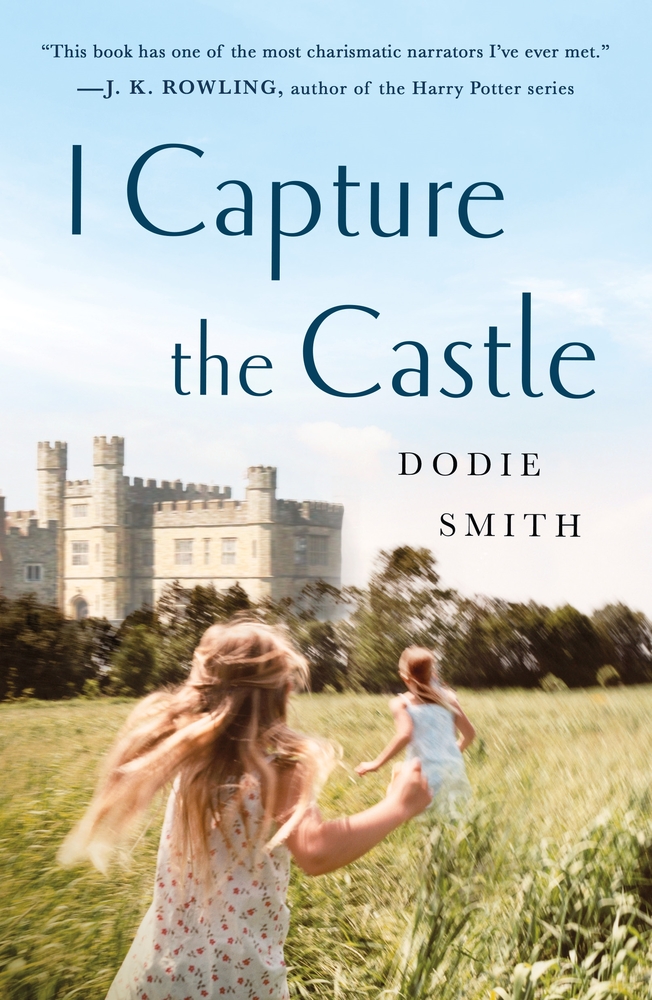
I Capture the Castle by Dodie Smith

Cassandra lives in a crumbling castle with her father, sister and stepmother. At some times of the day, especially in a dusky kind of afternoon light when it can’t be seen properly, the castle appears romantic and beautiful. But in her diary, Cassandra wittily records the reality of the place: the icy draughts, how her father has sold off most of the furniture, the smelly, muddy moat, and how she has to take a hot brick to bed to keep warm at night. 

The House of Paper by Carlos María Domínguez, translated by Nick Caistor

A Cambridge academic is killed by a car while walking and reading Emily Dickinson. Her successor receives a cement-covered book intended for his late colleague. Intrigued, he travels to Uruguay and eventually to a remote and desolate beach. There he finds a ruined house made of books. Whose crazy idea was that, anyway?

“What remained of the walls were bowed, jagged fragments, and in among the clumps of cement, tiny seashells, and dark lichens, I could make out pages of books baked in the sun then soaked, glued together like cuttlefish beaks, the type bleached and illegible.”

Burning Bright by Ron Rash

In this book of a dozen short stories, there’s just one with a house I wouldn’t want to live in, but a year after reading it, the place is still in my head. In “Back of Beyond,” Parson, a pawnbroker, goes out to his brother’s place because he knows that his nephew, Danny, has been selling stolen items to fund his meths habit. But it’s not until Parson gets there that he discovers his brother and sister-in-law huddling in a freezing trailer and Danny living in the family home:

“The room had been stripped of anything that could be sold, the only furnishing left a couch pulled up by the fireplace. Even wallpaper had been torn off a wall. The odour of meth infiltrated everything, coated the walls and floor.” 

Blue Book Balloon: Review - Resin by Ane Riel

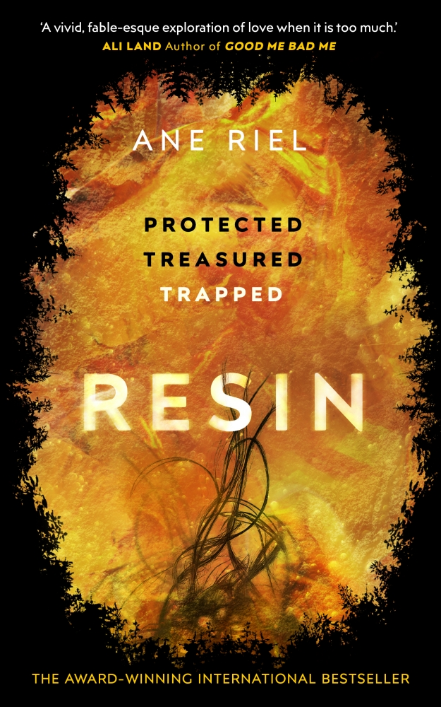
Resin by Ane Riel, translated by Charlotte Barslund

Jens Horder is literally a hoarder—his house and outside yard are filled with stuff, so that it is almost impossible to move safely between the piles. Jens reports to the authorities that his six-year-old daughter, Liv is missing presumed dead, even while he knows she is hiding in a container in his yard. Liv sometimes goes inside the house to visit her bed-bound mother who has also become part of the junk and mess:

“Shiny blue-green flies buzzed around open cans. Faded butterflies bashed their brown wings against the windowpanes somewhere behind all the stuff…. Small mice and much bigger mice with very long tails. Something was always scratching, grunting or squeaking somewhere. At times it would be Mum.”

Page 75 – Electric Literature

Severance by Ling Ma

After a virus wipes out much of the world’s population, Candace—alone in New York but feeling she should still go to work—moves into her company’s office on the 31st floor of a skyscraper. She takes food from the employee’s vending machine and smashes her way into her boss’s office to sleep on his Mies van der Rohe sofa. It almost sounds idyllic: she sees a horse trot down Broadway and the stars in the night sky for the first time… if it weren’t of course for the plague and being all alone.

Medicine Walk

Medicine Walk by Richard Wagamese 

Sixteen-year-old Franklin doesn’t really know his father Eldon, but when he is called to visit the dying man, and ultimately help him make a final journey to the backcountry, he goes. Eldon is living in the most evocatively described flophouse:

“Clothes had been flung and were scattered every which way along with empty fast-food boxes and old newspapers… the hot plate was crusted with grease and dribbles, and a coffee can overflowed with butts and ashes and a few jelly jars stuffed full of the same.”

A place not even Eldon wants to die in. 

Image with no description

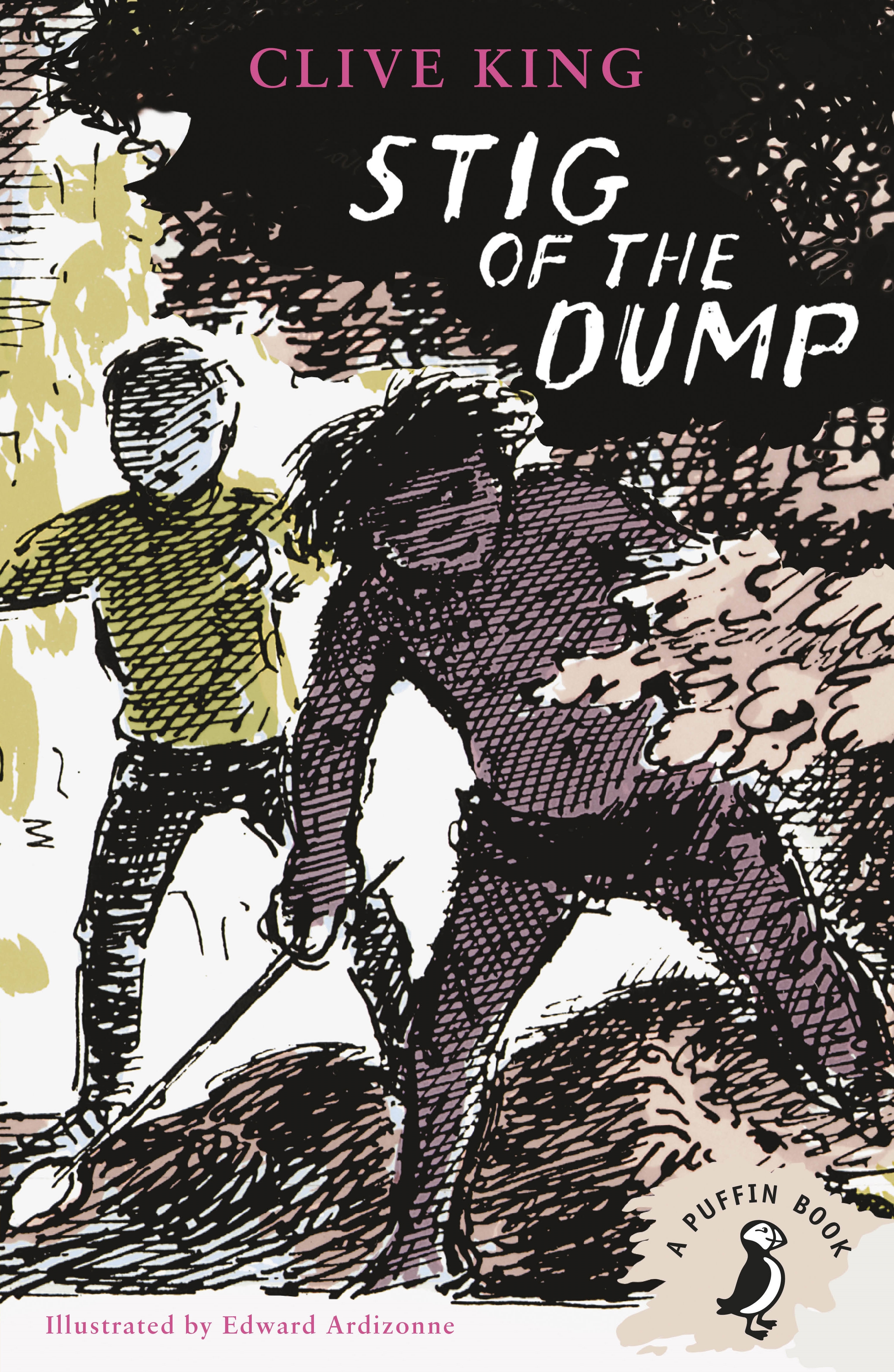
Stig of the Dump by Clive King

One day at the end of his grandmother’s garden, Barney falls into a disused chalk pit where he meets Stig, a caveman. Stig, well ahead of his time (this children’s novel was first published in 1963) reuses old junk to make his “cave” house: “There were stones and bones, fossils and bottles, skins and tins, stacks of sticks and hanks of string.” Stig of the Dump is one of my earliest memories of owning a book, and I still have a copy. 

The Unvarnished Story Behind the Most Controversial Group in AIDS Activism

When was the last time you cried? 

That question appeared on a poster in 1993 by Gran Fury, a collective of 11 artists and AIDS activists. The poster is strikingly simple, nothing but a blank, crinkled sheet with small text centered vertically in the frame: Do you resent people with AIDS? Do you trust HIV-negatives? Have you given up hope for a cure? When was the last time you cried? The piece—titled plainly, deliberately, The Four Questions“—confronts the trauma of the AIDS crisis through alternating perspectives of positive and negative people, as though the artists are inviting us into their ruminating thoughts. All questions, no answers. 

I learned about Gran Fury from Sarah Schulman’s latest book Let the Record Show: A Political History of ACT UP New York, 1987-1993. This tour de force narrates the early years of the New York chapter of ACT UP (AIDS Coalition to Unleash Power) as told to Schulman and documentary filmmaker, Jim Hubbard, through 188 recorded interviews with surviving members. (Full interview transcripts are archived and available for free at the ACT UP Oral History Project.)  

The book is full of fascinating people and events whose history would be common knowledge if our public schools were less homophobic and better funded. I never knew, for example, that until ACT UP pressured the CDC, women were categorically excluded from the definition of AIDS; or that they staged demonstrations at the New York Stock Exchange, St. Patrick’s Cathedral, Guantánamo Bay, and the NIH headquarters. Like most people, the bulk of my AIDS education comes from movies and television—Philadelphia, Angels in America, Dallas Buyers Club, and more recently, Pose. Schulman dispels myths about AIDS history found in these pop culture representations. She tells the truth.   

The last time I cried was during the conclusion to Let the Record Show, when I encountered an unexpected moment of intimacy in the cancer unit of a hospital between an ailing writer and her nurse. Upon learning the writer is an AIDS historian, the nurse begins sharing memories of treating AIDS patients in the 1980s and then suddenly chokes up. The writer and nurse sit for a moment in quiet remembrance. “This, I know, is the enduring relationship of AIDS,” Schulman writes. 

I spoke with Sarah Schulman over Zoom about AIDS narratives, grassroots organizing, the political use of anger, and more. 


Zach Shultz: I sort of read your title as having a double meaning. On the one hand, you’re referencing the art installation by Gran Fury at the New Museum in 1987, where they took the names of certain politicians and put them on tombstones with the photographic stills of the Nuremberg trials in the background. And that was an ironic way of trying to call for this justice that never actually happened, to hold these people in power to account. But also, this book is seeking to correct certain narratives out there. What is it that you want the record to show about ACT UP and about AIDS history more generally?

Sarah Schulman: Well, most importantly, that in America, change is not made by heroic individuals. It’s made by groups and coalitions of very diverse kinds of people, usually working in some kind of silo with like-minded people but standing together in a way that their work resonates with each other. 

The second thing is that this movement was really the last social movement in America that was to some degree successful. And it’s very important to look at why and also to see what its limitations were. I think the biggest takeaway is that it was not a movement that worked on consensus. It was a big tent movement that had a lot of flexibility. There was a statement of unity, which was: “Direct action to end the AIDS crisis.” That meant direct action, not service provision. And if that’s what you were doing, you could do whatever you wanted. There was a kind of radical democracy that we’re very far from now, and that is really important to remember.

ZS: It seems like another thing you’re doing with this work is counteracting an image of ACT UP as only gay, white, middle-class men. You’re showing all these other different types of affinity groups and other actors that were important within the movement. Can you talk about why that image is out there and how much more diverse the movement actually was? 

SS: One thing that’s very hard to remember now is that in the 1980s, the media, the government, and the corporate sector were almost all white males. And gay men who were in those sectors were closeted, for the most part. So, when the media looked at ACT UP, they saw other white males, and that’s who they interviewed and that’s what they represented. 

But you know, it turns out there’s a very big difference between an exclusively white male movement and a predominantly white male movement. Because when women and people of color participate, they have enormous influence. And I really am very specific about that—about which ideas, which individuals brought from previous movements and which previous experiences, so that you can see ACT UP would not have succeeded without the influence of women and people of color.

ZS: Right. This reads almost like a handbook for people who want to do grassroots organizing. You mentioned that it wasn’t based on consensus. That there was a very radical democracy model in the Monday night meetings. So, can you talk about ways that [model] worked and ways it created some challenges for accomplishing your goals?

SS: Well first, the Monday night meetings were like a nexus. People who work in ACT UP were also involved in lots of other communities… working with homeless people, with Haitians, with prisoners, with mothers, with drug users. Then the Monday night meeting was a predominantly white gay male, but also female, gathering. If you only look at the Monday night meeting, you don’t see where ACT UP actually was. 

In America, change is not made by heroic individuals. It’s made by groups and coalitions of very diverse kinds of people.

A really great example would be, there was no legal needle exchange in New York City. Mayor [David] Dinkins opposed it, even though he was African American and more progressive. So, people in ACT UP decided to do the civil disobedience of breaking that law, getting arrested, and having a trial. They won and made needle exchange legal in New York. But if you thought that that was a terrible thing, and you didn’t want to be part of it, you wouldn’t try to stop them from doing it. You just wouldn’t do it. 

If you wanted to go interrupt mass at St. Patrick’s Cathedral and somebody else didn’t want to, they just wouldn’t go. And I quote people in the book saying, “Well, I didn’t go to that,” or “That wasn’t where I put my energies.” But this idea of stopping other people from doing what they needed to do, that just was not operative.

ZS: And did this just come about organically? Or was it a conscious, strategic decision? 

SS: It was not conscious. In fact, it was never overtly stated. It’s something that I cohered by listening to everybody and sort of setting the period. Because ACT UP never theorized itself. A lot of things that it did, it just did. And it never decided to do them, never commented on them, because people were dying, and there was really no time for any of that. 

Let me give an example: Somebody from the front of the room would say, “We need someone to write a letter to this person.” And someone else would say, “I’ll do it!” And no one would ever check on them. No one would re-read the letter or try to control it. You just let people do what they said they were going to do. They wanted to live. They were going to do it. And it just went on like that. 

The biggest example I give is at the St. Patrick’s demonstration, December 1989, when the organization decided to do a silent die-in inside the church. So, we all went in there with 7,000 people screaming outside, but Michael Petrelis jumped on the pew, blew a whistle, and screamed at [Cardinal] O’Connor, “You’re killing us! Stop killing us!” And you know, chaos ensued. But it turned out to be for the best. 

But at the meeting, nobody said to him, “You went against us, so we’re throwing you out!” Never. No one was ever thrown out. Because in order to do that to somebody, you had to have a sense of supremacy or elite-ness or superiority. These were people who didn’t have basic legal rights. Gay sex was not legal nationally until 2003. It just wasn’t like that. 

When I interviewed him years later, I was like, “So Michael, why did you do that?” And he said, “Well, I was really angry because no one would let me be in their affinity group.” It’s a very human, messy thing. And a lot of things in ACT UP were like that. I mean, people OD’d and died, people stole money, people pretended they had HIV. I mean, it was messy and very difficult. But these are real people. They’re not clean, and they’re not pure. 

ZS: One thing I find so fascinating about this is the idea of anger itself. We often associate that with something negative… or destructive. Especially in the Trump era, we’ve seen how anger can be wielded by the Far Right and manifested violently, like in the attack on the Capitol on January 6th. But your work is shot through—not only in Let the Record Show, but also in other books I’ve read of yours—with a sense of anger and rage and indignation. So, I’m wondering: How can anger animate politics and art in ways that affect positive social change? And how might we distinguish between rage that is generative or destructive? 

Anger, when it comes from a place of being oppressed, is different than anger that comes from wanting to protect a place of supremacy. They use the same word, but it’s not the same experience.

SS: One thing is that ACT UP never committed an act of violence, which is very interesting considering that people knew they were going to die… ACT UP had violence done against them. People were beaten. There’s a guy, Chris Hennelly, who’s had permanent brain damage from police violence. But ACT UP never committed an act of violence. And interestingly, they never voted to be nonviolent. They always kept the option open, but they never exercised it. 

Because anger, when it comes from a place of being oppressed, is quite different than anger that comes from wanting to protect a place of supremacy. They use the same word, but it’s not the same experience.

ZS: So, going back to St. Patrick’s Cathedral, the Stop the Church demonstration on December 10, 1989. There was a part in the book where you talk about how this demonstration has been represented recently on the television series Pose. And when ACT UP members saw [the show], there was some anger about that portrayal being inaccurate. I don’t know if you’ve also watched another television show that recently came out called It’s a Sin

SS: Yes, I saw that. 

ZS: There’s one scene where they go to an ACT UP protest to lie down in the streets… But they never mentioned the name “ACT UP.” It’s all decontextualized and depoliticized. What do you think about these narratives being told about AIDS and about ACT UP from within certain dominant cultural institutions? Like, what’s missing from the stories that we’re telling? And what are people getting wrong? 

SS: Well, they’re getting everything wrong, and it’s always been that way. Representations of AIDS have never accurately represented the mass political movements that forced change in this country… If you pretend that it’s individuals who cause social transformation, it’s much more acceptable for corporate film studios. Corporate culture likes that message, but it’s not true. 

The issue with Pose was that there were, of course, people of color in ACT UP, but [the show] didn’t represent them. They ignored them and then created people who were not there, by creating Black trans women who did not get arrested at St. Patrick’s Cathedral. One trans woman did get arrested, but she was white. Kathy Otter, who was the elected facilitator of ACT UP, actually. So why not tell her story, too?

ZS: What did you think of It’s a Sin

SS: Well, It’s a Sin is kind of at the end of the old way of telling [the story] … What I think they captured that was accurate was how young everyone was, how fun it was, how great it was to get away from homophobic families and have that freedom… But the fact that everyone who was positive died is absurd and not helpful to anybody. That the only woman they focused on was asexual, apparently, had no personal life, and her whole life was serving people. I mean, it was kind of crazy. It’s so far from reality that hopefully after my book comes out, that kind of thing won’t be possible again.

ZS: One thing you mentioned that [the show] got right, and I saw in your book as well, is this idea of activism as being fun, or being charged with erotic energy. Like people would go to ACT UP to meet partners or hook up, and they would go to a zap in the morning, and then a party at night, or go straight from the clubs to a shift at the hospital to watch somebody. And that piece gets lost in the ways we think about politics as something very serious. 

Just because you’re alive doesn’t mean that you’re fine.

SS: Well, most political movements have to be things that make the lives of the people in them better. Otherwise, they don’t work. And this was a movement for people’s lives by very, very young people who had been really excluded and marginalized from their families, from the places they were born. They did not have loyalty to the system. They had much more loyalty to each other. And so, they had to live their whole lives by the time they were 25 or 26. They had to live everything because they were going to die. 

So, it was fun, and it was bold, and it was sad, and it was frustrating. And people shared apartments and helped each other get jobs and spent a lot of time together. I mean, so many people that I interviewed said their whole lives were ACT UP. They stopped their careers, they dropped out of school, and they got alienated from people who weren’t doing anything. It was a way of life.

ZS: But the flip side of that, especially when you’re dealing with a movement where the stakes are so high, where people are dying so quickly, is: How do you avoid burnout? [When] dealing with such overwhelming grief all the time, how did you get up every day and keep doing it? 

SS: People didn’t deal with it. You were all in it together, and every time somebody died, you were with other people who also shared the loss. And then you turned that into action. 

When I interviewed people 15 or 20 years after the events, I would ask them about that. And people would say, “We just kept fighting.” But then I’d say, “Do you remember one person in particular who died?” And that’s when the tears would come.  

A lot of it is unprocessed, and that’s something that César Carrasco talked about in the conclusion and why I use it as a conclusion. He was a refugee from Latin America during the fascist period, and he became a psychiatric social worker as a result of his activism. And he’s talking about my generation, a little older. Men who [survived], they’re not resilient… Just because you’re alive doesn’t mean that you’re fine. And all of the loneliness… and that first generation, the people who survived have had a lot of drug problems. [César] goes really into that, you know, the long-range consequences. So for many people, it hasn’t been dealt with.

ZS: I actually underlined part of your interview with him that really hit me in the heart. If you don’t mind, I’ll read: “When you are left with a whole bunch of people, but neither you or your friend has a narrative, then you don’t want to talk… You just stay isolated. So developing a narrative for what happened afterwards, I think that would be very useful.” 

So, what is that narrative? Is this what you’re doing with the book? 

SS: I hope so. 

“A Clockwork Orange” Made Me Long to Be a Monster, But It Only Saw Me as a Victim

Let me crack open a time capsule for you: it’s 2001 and I, a Catholic, 16-year-old high school dropout, have just walked to Blockbuster in my billowing JNCOs to rent a VHS tape of A Clockwork Orange. I will watch the film on the upstairs TV while Fox News blares on the downstairs TV. I am unaware of the fact that the movie received a “C” rating (for condemned) from the National Catholic Office for Motion Pictures, which means I’m committing a mortal sin by watching it—and because I don’t know, I won’t mention it when I go to confession. 

Something else I don’t know at this time: on the other side of the country, The Boston Globe is investigating the systematic cover-up of child sexual abuse by Catholic priests. Their bombshell report will spark similar investigations all over the world, and one of the findings of these reports will be the fact that previously, the Church’s system for dealing with pedophile priests was to quietly send them off to addiction rehab centers before reassigning them, because that’s what Church hierarchy believed sexual abuse to be: sexual addiction. It wasn’t abuse and trauma; it was out-of-control desire and a failure of willpower. This general narrative isn’t unfamiliar to anyone who’s grown up going to confession, where you’re told that you were born with original sin and you’re doomed to spend your whole life in a Sisyphean fight against your monstrous nature. You’re going to slip up, and that’s okay—that’s what confession is for. You start over with a clean slate and get back up on that horse and try to be better (or try not to be a sexual predator anymore). 

But, for me, The Boston Globe report will uncover more than the Church’s refusal to protect children. It will erode my religious narrative of sexuality as a struggle between repressive will power and monstrous desire—a narrative that presupposes sexual violence as an inevitability. It’s this narrative that A Clockwork Orange will invert but not destabilize when I watch it on its 30th anniversary.

Given the choice between sexual repression and sexual monstrosity, Alex chose to be the monster.

This year marks the movie’s 50th anniversary, and when I watched it 20 years ago, I did so with no awareness of the fact that I’d spent my whole life steeping in the conservative Catholic language of monstrous sexuality. I was dazzled by the surrealist interplay of lighting and music, the alternating wooden and over-the-top performances, and the incomprehensible teen slang that was both playful and dangerous. More than anything, I was dazzled by Alex. Who was this dark, complicated boy for whom Beethoven and sexual violence came together as a synesthetic high art? In the language of destructive sexuality, Alex was someone who wasn’t trying to rein in his desire. His violence wasn’t a failure of self-control; it was an abandonment of any pretense of restraint. Given the choice between sexual repression and sexual monstrosity, he chose to be the monster. 

Around this time I was also chatting with adult men on AIM and ICQ. I’d been receiving messages from men since I was 14 and I thought that it was because they’d read my profile and found in me an intellectual equal. I even had a running joke with them: when they told me how old they were (34/m, 36/m, 39/m), I said, “you’re the same age as my mom,” regardless of what number they gave me. It was important that I address the elephant in the room, which allowed me to believe they wanted to talk to me because I was clever. They sent me pictures of themselves. Some weren’t bad looking, but there was the occasional horror movie sequence of a slow-loading picture revealing first a shining bald scalp, followed by gray eyebrows, and finally bearded jowls. Sometimes they asked me for pictures of myself, but I didn’t have any because I didn’t have access to a scanner. There was the occasional request to “cyber,” for which I was always game. (I never thought of this as a breach of the purity pledge I signed in my catechism class when I was 13 because it wasn’t real sex, so I never mentioned it in confession.) The chats gave me a secret backchannel through which to explore sex, desire, and power. When the men pursued me despite my joke about them being the same age as my mother, it fulfilled the narrative I’d contrived of a failure of willpower in the face of monstrous desire: unable to control their desire, they became monstrous. I reveled in the power this afforded me while identifying with the men who had failed to stay on the path of righteousness.

A Clockwork Orange offered an alternative narrative. Instead of a failure of self-control, there was agency: a choice to be monstrous. In identifying with the men I talked to online, I also identified with the frustration of trying and failing to be good. The concept of choosing to be bad was exhilarating, and I read the book along with every scrap of trivia I could find. I learned that the author, Anthony Burgess, had also grown up Catholic and was an extreme political conservative who fled the U.K. to avoid paying taxes on his considerable wealth. For Burgess, the story of Alex and the post-capitalist Russo-British near future was a story of the State versus free will. As he explained in a 1986 introduction to the novel:

By definition, a human being is endowed with free will. He can use this to choose between good and evil. If he can only perform good or only perform evil, then he is a clockwork orange—meaning that he has the appearance of an organism lovely with color and juice but is in fact only a clockwork toy to be wound up by God or the Devil or (since this is increasingly replacing both) the Almighty State. It is as inhuman to be totally good as it is to be totally evil. The important thing is moral choice. 

Stanley Kubrick’s summary of his film adaptation was less focused on the moral implications of the story, but rather the political implications; he explained it as “a social satire dealing with the question of whether behavioral psychology and psychological conditioning are dangerous new weapons for a totalitarian government to use to impose vast controls on its citizens and turn them into little more than robots.” Is it? Watching the movie, one might notice the directorial choice to center the straightjacket and eye prongs as the true dystopian horror—the image of tears running down Alex’s cheeks while wires and electrodes spill out of the halo on his head foregrounded as the real violence of the story. But this is after we’ve just watched several grisly yet playful and balletic scenes of sexual violence—the implication being that the suffering of Alex’s victims is bad, but the suffering he endures at the hands of the State is worse. The question Burgess pursues, and Kubrick underlines, throughout the story is whether a person (specifically, a man) can be truly “good” if he has no choice. In other words: the individual soul’s journey to moral righteousness is more important than a functioning society where women can live free from sexual violence. Art factors into this equation as well, as the aversion therapy that Alex endures, the Ludovico Technique (Ludovico being Italianate for Ludwig), is underscored by the music of Beethoven. In killing his violent compulsions, the State also kills Alex’s artistic compulsions. The argument Burgess and Kubrick seem to be making, then, is that women’s suffering is necessary for both the moral and artistic triumph of men’s souls. 

The argument Burgess and Kubrick seem to be making is that women’s suffering is necessary for the moral and artistic triumph of men’s souls.

I sensed dishonesty in the centering of the straitjacket and eye prongs the first time I watched the movie. If Kubrick was going to ask me to revel with him in the playful scenes of violence against women, I didn’t see how he could then ask me to be horrified by the State’s violence. But I understood fear of the State as I read the novel with the ambient chatter of Fox News in the background. As in A Clockwork Orange, the narrative on Fox News, as I understood it then and as I understand it today, was that the State was the enemy; collectivism was the enemy; pro-social policy (from the diaphragm: socialism!) was the enemy. I was already primed for the zero-sum world of A Clockwork Orange before I started writing fanfic about the fourth droog (a girl—me—obviously). In draft after draft, I crafted a world in which a girl could be chosen to join in the ultraviolence because she wasn’t like other girls. I wrote within the same zero-sum logic in which Alex goes directly from perpetrator of violence to victim of violence, with nothing in between—because in his world and mine, there was no third option. It was the same zero-sum logic in which I understood a dollar for one person was a dollar out of another person’s pocket; in which good was equaled and opposed by evil; in which I could be the target of predatory men online or I could get in on the joke. 

The year after I rented A Clockwork Orange for the first time, my best friend’s mom found out that her husband was having sexually explicit chats with teenage girls on the Internet. They got a divorce, and I stopped responding to messages from men. That might have been the moment I realized I had never been in on the joke. Or maybe it was the following year, when my 65-year-old boss started sexually harassing me on the day of my 18th birthday. Or maybe it was the day a man followed me home from work. Or the day a man followed me in a cemetery and raged when I asked him to leave me alone. At some point along the way, it became clear that I could never be the fourth droog. In the epic battle between good and evil for the fate of the soul, I had never been the soul in question; I had always been the stumbling block on someone else’s journey. 

I don’t know if A Clockwork Orange would’ve appealed to me at all if I hadn’t been ready to recognize the narrative of the struggle between moral control and monstrous sexuality. And I don’t know that I would’ve truly recognized how problematic that narrative was if I hadn’t learned about the Catholic Church’s sexual abuse cover-up, predicated on that very same binary. But both A Clockwork Orange and the sex abuse scandal employed the same intellectual dishonesty that troubled that sexual narrative. In A Clockwork Orange, it was the centering of the straitjacket and the eye prongs as the true violence. In the Catholic sex abuse scandal, it was the treatment of pedophilia as an addiction. In both cases, the implication was that the suffering of the victims was not the focus of the story. 

There is a picture on my grandparents’ wall of the beloved family priest who baptized several of their children and grandchildren, myself included. He died in the late ‘80s, but a few years ago my mother learned that he had been accused of molesting a five-year-old girl back in the ‘60s. In the picture on my grandparents’ wall, the priest is sitting on the couch with one of my aunts—six or seven at the time—on his lap. I can look at that picture and imagine what he probably saw: a moral man in control of his monstrousness. The head controlling the heart. The superego controlling the id. I wonder if anyone saw the little girl in danger. 

Death Comes for the County Auctioneer

Kenny Bond Shot My Dog

“Well. Kenny Bond is dead,” Mom says over pie. “And I, for one, am not sorry.” She lays her fork down in a satisfied way. 

Kenny Bond was a celebrity in our town. He owned the biggest auction pavilion in Green County. When someone in your family died, Kenny Bond auctioned off their furniture.

He looked like a news anchor. He was tall and blonde, and when all the other men in Green County were hard-pressed to produce a decent-fitting suit even for a funeral, Kenny Bond wore one every day, looking down from his billboard on State Road 47.

Our family had a long-standing feud with Kenny Bond. He shot our dog.

Personally, I didn’t really even like the dog all that much. He was fat and mean and he never would play with you. But he was our dog anyway, so everyone was bent out of shape. Especially Owen.

Kenny Bond’s step-grandkids told us on the playground, “Our stepgrampa shot your dirty old dog.”

Owen was only in the first grade, and he took the news badly. When Dad came home from his shift at the hospital lab, Owen had wedged his head under the cushions of the sofa and wouldn’t let up crying till supper.  

The dog had been let run, and he ended up on Kenny’s perfectly green lawn chasing one of his prized peacocks. I’m guessing I don’t have to mention that Kenny Bond is the only person in Green County who owns peacocks.

So Dad comes up with what he calls his Plan of Ultimate Retribution. Owen asks what that means—retribution, and Dad says, “Never mind what's retribution. Are you sad?”

Owen doesn’t answer, but that doesn’t matter to Dad, who keeps talking. “Your dog’s dead—of course you’re sad. Well, you just stay sad till Saturday, you hear?”

Saturdays were auction nights. Back then, on auction nights, you could hardly back out of the driveway for the traffic, everyone parking their vehicles along the side of the road. Kenny Bond had built his auction pavilion smack between his house and ours. We’d run off to play after dinner, and Mom would call after us, “You kids be careful—it’s auction night!”

Saturday night was going to be Kenny Bond’s auction of old Ms. Kerrick’s estate. Kenny Bond always called it an estate sale, even when everyone knew you’d lived your whole life in a run-down three-room trailer at the end of East Southwest Pike.

Mom knew all about the Kerricks, as they had come into the emergency room under what she called “suspicious circumstances.” She said they were trash. But the whole county would probably show up to the auction anyway to see what was what. Folks would line up outside the refreshment stand Kenny Bond had built just off the side of the auction pavilion, where his mom sold chocolate pie and hot dogs. She was a mean old lady who pretended not to hear kids when they spilled their change out on the counter and asked what they could get for it.

Saturday at 4 p.m. prompt, Dad put Owen in the car and drove him just down the road to the entrance of Kenny Bond’s auction pavilion. 

“Son, here’s where you get out,” he said. “Remember. Your dog’s gone. And he ain’t never coming back.” Dad patted Owen hard on the back once and said, “I’ll be waiting right over there.” Then he hammered a big wooden sign into the ground beside Owen. Kenny Bond Shot My Dog, it read.

Owen was pretty much over the dog by then, but upset enough about having to stand in the hot sun as a steady stream of cars kicked up the dust and gravel of Stop 11 Road that he started right back up with the crying. The line of cars slowed down as they passed. Dad, across the road, leaned against his car, nodding in satisfaction.  

Kenny Bond did poorly that day, though really it was the Kerricks’ “estate” that took the beating. Everyone underbid. Kenny Bond made only a hundred and fifty bucks in commission that weekend, and everyone knew it. Dad felt victorious. “You see, kids,” he told us, putting his feet up on the coffee table and opening a beer with his pocketknife, “that’s what you do when people are assholes to you.”

Later, Dad, never one to waste good lumber, used the sign as a lid for the toy box he built for Owen. Poor kid—every time he got told to put away his basketball, he’d open up the toy box and there’d be that sign: Kenny Bond Shot My Dog.

Mom tells me three different stories about how Kenny Bond died. 

“It was hot out and he come in for a cold drink. Tia, his third wife, was right there in the kitchen handing him the glass, and damned if he didn’t up and die right there in her kitchen.”

“Mom. That’s not true,” I say.

“I know,” she says. “It was because of the booze. He was a drinker, you know.”

“No, he wasn’t.”

And all she says is: “Well.”

In the end, the story she settles on, and which is mostly true as far as I can make out, is this: Kenny Bond went into the hospital with chest pains. He sat down in the ER waiting room while Tia filled out the paperwork, and right there, before she could even finish, he was dead. 

We know this is true because Dad said he heard it over the intercom in the lab that someone was coding in the ER. He just didn’t know it was Kenny Bond. 

“Which is a good thing,” he says later, “cause I would have gone in there and given him something to tangle with."

“But, Dad,” I say. “He was already—”

“I know.”

It's not long before Kenny Bond’s house, the auction pavilion, even the refreshment stand, all go up for sale.

“Looks like his wife is fixing to hightail it out of here about as quick as she can,” Mom says, as though this is to be expected.

The last auction will be for all the stuff Tia doesn't want in her new condominium up in Indianapolis. I picture a tall, shiny skyscraper looking out over the city.

On Saturday, the traffic is busier than ever. Everyone’s comes out to see this—Kenny Bond’s estate auctioned off at his own pavilion. After supper, Dad trots us all over to have a look, Owen slow-poking behind us. Dad shouts over his shoulder, “Let’s see some hustle, son!” and Owen reluctantly picks up the pace.

The pavilion’s filled with people, but no one’s bidding. Up on stage there’s a six-foot-tall oil painting of Kenny Bond. The auctioneer’s standing at the podium, holding his gavel like any minute now someone’s going to jump in with a decent bid. 

Over at the refreshment stand, Kenny Bond’s mom looks heartbroken. She leans over the counter, feeding chocolate pie and hot dogs to the peacocks, who probably don’t know they’re about to be auctioned off just like everything else.

“All right,” Dad says after a while, and we head back home, Owen racing ahead, jumping up and over the spot at the property line Dad marks out with a can of orange spray paint every time it fades out. He doesn't really need to, though. From here you can see plain as day where Kenny Bond’s perfect green lawn stops and our patchy scrub-grass takes over.

7 Novels About Running Away From the Past

I wrote large chunks of what would go on to become my novel, Highway Blue, whilst leaning against the windows of various moving trains, buses, cars, and planes. I remember in particular one evening half-curled on the seat of a train carriage as it moved through the darkness of a January night along the German-Austrian border with the arm-rest of the next seat digging into my side, feet up on the little prop which ran along beneath the black window and the small table on the seat-back in front of me folded down, tapping away at the keys. It was 3 a.m. or 2:30 a.m. or something like that, my eyes were hurting and the plump sleeping woman in the seat beside me kept slipping slowly over onto my shoulder. The train compartment smelled faintly of stale bodies and cigarettes and coffee.

Highway Blue by Ailsa McFarlane

The book that I went on to write is the story of Anne Marie and Cal, a young couple on the run from their own past in a beaten-up old car, moving through a mythologized landscape towards an unknown future.  

I have always gravitated towards the image of the character on the run, whether in literature or film or music, the person with that certain something in their past or their own psyche that for whatever reason prevents them from living within the parameters of the day-to-day. 

The character on the run is the misfit, often hyper-romanticized (whether intentionally or not), enshrined in the smoke-wreathed, sun-faded, stylized imagery of pop culture.  

The writers I’ve included in this list have created what are, for me, some of the best examples of those figures—figures who look in at society from their own strange and sometimes shocking perspectives, yielding material that can be uncomfortable, beautiful, or chilling, but one way or another is hard to forget. 

What follows are some of my personal go-to picks about people on the run from their own troubled pasts, whether physically or emotionally. From the deluded, the insane, the lost, the healing, to the passionate—here are a few of my favorites, along with the characters that make them great:

The Frolic of the Beasts by Yukio Mishima

The Frolic of the Beasts by Yukio Mishima:

In the opening pages of Mishima’s novel, Koji looks back from the deck of a moving ship as it leaves the town of Numazu behind him on the shore. The ship is a prison boat, and Koji has just been discharged from the penitentiary where he has served out his sentence for attacking his lover’s husband with a metal wrench. Waiting for him on the other side of his journey are Yuko, his lover, and Ippei, her husband and Koji’s victim, whose life has been irrevocably changed by his injuries.

The narrative is punctuated regularly by Mishima’s often-startling, bad-dream imagery that sometimes borders on the surrealistic—pale fetuses, wilting lilies, the shadow of a rat thrown across a face. In many places, this imagery is linked to regression or stilted growth, as ideas of the traditional loving, respectful man-woman dynamic—so important to the Japanese society of the time—are twisted out of shape, refracted through the panel of dark glass that Mishima holds against them. 

Thérèse Desqueyroux (Penguin Modern Classics) [ Language:English ]: Mauriac,  Francois: 9780141394053: Amazon.com: Books

Therese Desqueyroux by Francois Mauriac, translated by Raymond N. MacKenzie

At the novel’s opening, Therese Desqueyroux sits in a carriage traveling down a dark road. The carriage is taking her away from a trial, at which she has just been acquitted of the attempted poisoning of her husband. At this point, as she makes her way towards her family estate, Therese is not so much running from a troubled past as moving towards a troubled future—she is going home, to face her husband and young child, and the emotional punishment that she knows is waiting for her there. 

Through Therese’s memories, we see her existence leading up to the trial, trapped in a marriage that is not only loveless but also abusive. The people who surround her are obsessed only with maintaining the tight social rigors of the day, unable and unwilling to offer help.  

Therese fantasizes of making her escape to the longed-for crowds and conversations of Paris. She is razor-sharp, complex, literate, constantly chain-smoking—her hands stained yellow with nicotine—a walking subversion of the docile ideal held up by her rural society as the epitome of female beauty in early 1900s France. Mauriac’s portrait of a complicated woman making her way from an abusive past to a place in the world where she can live with autonomy is written with a raw grace.  

All the Pretty Horses by Cormac McCarthy

All The Pretty Horses by Cormac McCarthy: 

The first novel in what would go on to become McCarthy’s Border trilogy, All The Pretty Horses is a lyrical ode to the loss of innocence; a book about the conflict between romanticized ideas of adventure and the American West, and their violent reality. McCarthy eschews traditional Western punctuation and instead writes in a lilting, hypnotic stream-of-consciousness. 

After the death of 16-year-old John Grady’s grandfather, he learns that his beloved family ranch, where he has been raised, is to be sold. Faced with the prospect of moving away from the ranch into the local town, John Grady and his best friend Rawlins instead decide to take off on horseback, making for Mexico to find work as cowboys. There they encounter the true realities of the violent border world into which they’ve stepped. 

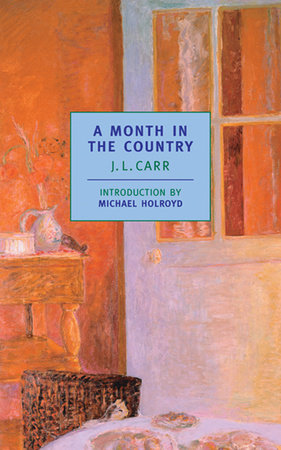
A Month in the Country by J.L. Carr

A Month in the Country by J.L. Carr

Tom Birkin leaves behind the horrors of World War I, and memories of his recently broken marriage, to travel to a small village in the English countryside in which he has been commissioned to uncover and restore a mural hidden under whitewash on the wall of the village’s old church. As he begins the work, Tom meets Alice Keach, wife of the local reverend, and they begin to form an emotional bond that teeters on the edge of being called love, both of them knowing that if they ever choose to do so it will break the idyl in which they’re living.

A Month in the Country is told with aching nostalgia for the memories of a lost summer. This is a quiet book whose beauty lies in its subtlety, its emotional nuance. Its impact is all the greater for it. 

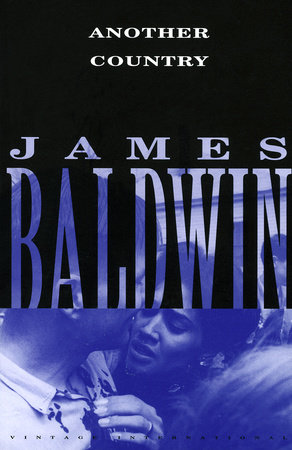
Another Country by James Baldwin

Another Country by James Baldwin

In Baldwin’s masterpiece, a group of young, Bohemian friends—living to the insistent jazz beat of Greenwich Village and Harlem in the 1950s—are each running in their own physical or emotional ways: Leona is escaping a broken marriage and separation from her child in the South. The beautiful, brilliant jazz musician, Rufus, grapples with the heart-breaking self-destructiveness that has grown within him as a consequence of his struggle against his societal position as a Black man in the New York of the ’50s. Eric is returning to New York, after many years in Paris, to face the memories of his complex relationship with Rufus. 

Baldwin writes about race, sexuality and loneliness with such unflinching viscerality, always looped around by the sensuous, unrelenting rhythm of late-night jazz clubs. The humanity and the rawness of Another Country are, for me, unparalleled. 

We Have Always Lived in the Castle by Shirley Jackson

We Have Always Lived in the Castle by Shirley Jackson:

An emotional running from the past here, in Jackson’s pitch-dark gothic mystery.

After the unsolved poisoning of the entire rest of their family, the two surviving Blackwood sisters withdraw from the outside world into the environs of the family home. The love between the two sisters is simultaneously beautiful and chilling—unconditional and completely without blame, no matter what one or the other of them may have done.  Their relationship is all the more complicated for its simplicity.  

The novel’s central theme is one recurrent in many of Jackson’s novels—the persecution within small-town communities of those who appear to be different. The village in We Have Always Lived in the Castle bears a strong resemblance to the small Vermont town in which Jackson and her academic husband lived, themselves encountering strong anti-Semitic feelings from the townsfolk, as well as a general mistrust of the couple’s intellectualism.

Strange, unapologetic, full of savagely dark humor, at its heart We Have Always Lived in the Castle is a fierce protestation against those who attempt to push others who show difference onto the margins of society. 

The Rum Diary: A Novel: Thompson, Hunter S.: 9780684856476: Amazon.com:  Books

The Rum Diary by Hunter S. Thompson

In an attempt to escape the suffocation of his life in New York, Paul Kemp boards a plane to Puerto Rico to take up a post as a journalist at the chaotically dysfunctional Daily News. Kemp’s fellow journalists at the paper live in varying degrees of physical and mental degeneration, as they swill rum in the humid oppression of mosquito-laden nights.  

Written while Thompson was in his early 20s and unpublished for years, The Rum Diary resurfaced amongst some of his old papers, was brushed off before finally being put out into the world in 1998. The book is permeated throughout with the anxiety of growing old, the fear of succumbing to the suffocation of the day-to-day, and the need to kick out constantly against the looming threat of the unremarkable. Thompson’s writing is blunt, brutal, ragged, wild, redolent with a thirst to wring what’s there to be wrung out of life.  

Ben Philippe on Being the Black Friend

In the spring of 2020, Ben Philippe was in the middle of drafting a book on “the quirks and maybe the light trauma of having been the Black friend in white spaces” all his life. It was supposed to be a conversational, gently satirical take on the things white people should and shouldn’t do if they aspire to have a Black friend: Don’t touch the hair. Don’t ask if Black guys are bigger “down there.” Don’t say that you “just really don’t think about race” because you’ve never had to. Don’t claim white privilege isn’t a thing because the term “implies a boat full of Leonardo DiCaprio clones and a seven-digit bank account” and all you have is a stack of unpaid bills and a backache. 

Sure, I'll Be Your Black Friend: Notes from the Other Side of the Fist  Bump: Amazon.ca: Philippe, Ben: Books

And then last summer happened. As if the coronavirus pandemic weren’t enough, Black people kept dying at the hands of police and the pattern stood out to the world in a new way: Ahmaud Arbery, Breonna Taylor, George Floyd. If 2019 was the Hot Girl Summer, thanks to an eponymous song by rapper Megan Thee Stallion, 2020 became the summer of Black Lives Matter. 

Ben describes the experience as “a software update being added to my Blackness in real time.” It’s a transformation that comes through viscerally in the final essays of his new book, Sure, I’ll Be Your Black Friend: Notes from the Other Side of the First Bump

Having known Ben for almost a decade and enjoyed his two young adult novels, The Field Guide to the North American Teenager and Charming as a Verb, I couldn’t wait to take the plunge. What I discovered was a book—part literary memoir, part study guide, and part sardonic etiquette primer—as deep, probing, humane, and, yes, funny, as the man himself. 

Ben was born in Haiti and raised in Montreal, Canada, where he was often the only Black kid at school. He grew up speaking French at home and learned English by watching shows like Gilmore Girls on the WB (he still can’t go the length of one interview without mentioning the show. See below. I did not bring it up. He did!). Eventually, he moved to New York to go to Columbia, and then to Austin, Texas to attend the Michener Center for Writers, where we met.

I talked with Ben—one of the warmest and wittiest people I know, with the wholesome good looks of a Disney Channel kid—over email about the beauty of friendship when you’re young, being Black in three countries, and coming out the other end of the Trump era. 


Greg Marshall: Why do you think friendships in our youth are so formative?

Ben Philippe: It sometimes feels like the number of people we can say “I love you” to gets smaller as we get older. Your partner, your immediate family, your kids. There’s something sad about that to me. In elementary school, your best friend being seated 20 feet from you felt like a canyon! I used to use my friend’s deodorant stick on road trips. In college, my best friend would just sleep in my unmade bed. Now, friends get hotel rooms when they visit and we have dinner together, talk about mortgage rates. It’s part of growing up and I don’t need to use another 32-year-old man’s deodorant, but there’s also something sad about that distance to me. Something was lost there. I think that’s why adult friendships are no longer sacrosanct spaces that allow for political discourse and fraught conversations. They’re not magic anymore, lame as that is to say.

My friend has a line that I love and that I wish I could have shoehorned into the book: “Anyone who thinks you’re friendly is probably not your actual friend, Ben.” My few friends are the first barrier to all my, err, for lack of a better word, bullshit. The rage, the whininess, the moodiness, the insecurity, the dark memes…there’s an intimacy that comes with that. I love reflecting on that.

GM: Why were you interested in explicitly addressing white readers? What are you hoping they take from the book?

It sometimes feels like the number of people we can say ‘I love you’ to gets smaller as we get older.

BP: I did want the reader to think of me as a friend. I tried to artificially create that comfort level on the page, starting with blunt questions you might ask a Black friend who you know will not hold them against you—and then said Black friend goes on 20-page tangents about his childhood here and there because he’s kind of a narcissist.  

Friendships are uneven constructs. You talk about heavy politics one moment, about pop culture the next, about your bad dates the moment after, and your friend might just angrily vent at you about the state of the world. Sometimes, you simply throw book recommendations at each other. I wanted the book to hit a few of those notes all at once.

I think coating everything I wanted to say in the highs and lows of a friendship made it easier to write without pretending to know more than I do. I have no grand thesis about the diaspora of Black America or the Haitian-Canadian-American migration narrative, just my thoughts as your Black friend Ben.

GM: Did writing about your life make you see it differently?

BP: Well, life doesn’t always have a satisfactory resolution. It’s a life lesson I had to learn; narrative closure is a lie taught to us by [beloved Michener instructors] Jim Magnuson and Elizabeth McCracken. If you’re very lucky, life just kind of goes on. You keep waiting for the dust to settle—work, romance, friendship, family, racial discourse, politics—but then you realize the unsettled dust is just life happening… I got that last line from an X-Men comic! Boom!

GM: You have some incredible Black women in your life, starting with your mom, Belzie. In the essay “Sister, Sister,” you reckon with your male privilege. Was that a tough thing to do?

BP: I need to stop writing about my mom. She Googles herself now. I’ve created a monster.

Honestly, I don’t think anyone likes to “wrestle with their privilege” or even interrogate it. It doesn’t feel good! So you can’t “tsk-tsk” white people for their privilege if you’re not willing to at least acknowledge your own. I’ve had plenty. The one I’ll never shake off is male privilege.

You can’t ‘tsk-tsk’ white people for their privilege if you’re not willing to at least acknowledge your own.

The essays where I gripe about my love life felt like the setup to a punchline where you widen the shot to reveal a row of exhausted Black women side-eyeing me, and wondering if this fool is serious. (That might still happen.) I’ve had enough Black women in my life to at least glimpse this massive chasm and it felt wrong not to at least mention it.

GM: 2020 was one hell of a year. What has writing about that journey been like for you? 

BP: Groan. Exhausting! I’m sure a pithier version of the book would exist if the summer of 2020 didn’t happen in the middle of my writing it. It was overwhelming in a lot of ways. For a while there, I was just looking to burn bridges, ha. On paper, via email, in person. I wanted to yell at someone. Anyone! Like, please, tell me you’re calling the cops on me, Amy Cooper, watch me emotionally eviscerate you into a puddle. 

But while anger is fun to ride (and write), it’s not very productive beyond the immediate catharsis. It’s kind of like putting any underlying thought in bold+underline+italics. It just covers the content you’re trying to get across. I couldn’t write an Angry Book—it would desiccate me—but I did manage to write a book with a couple of angry chapters in it.

GM: You describe the book as a “tell-some, not a tell-all.” In this book where so much about your life is on the table, what were some of the things you wouldn’t write about? 

BP: Hmm. My current relationship. My last conversation with my dad. Trying to make it as a screenwriter. (I’m not coy about it; it just felt like a massive tangent.) Some racist encounters that were just kind of boring. Some bridges were too dull to even bother burning. How terrified I am that this, writing as a career with a credit score of three digits, is all going to go away in the blink of an eye. Snakes.

GM: What’s your take on social media as a writer? We should note that you are verified on Twitter, you bastard.

BP: That blue checkmark both means nothing and people are despondent when it goes away, ha. I probably would be too, to be honest. But I at least try to remember that it’s all just 1s and 0s in our phone and not to take it too seriously? My followers count also plateaued at around 6K, so luckily the publisher never puts too much weight into it when they buy one of my books. This guy ain’t no influencer, thank God.

I don’t think social media has changed my writing habits too much beyond the absolute cringe of mandatory self-promotion. I block liberally; I only engage if I feel like it; I tell Ted Cruz he sucks regularly. It’s all about striking that healthy balance.

I remember making a joke about Rory Gilmore from Gilmore Girls being a literal bastard once and a very nice mom replied something like, “What does this say to the single parents of your readers?” I blocked her right away. Like, no. I’m not getting into a serious exchange about this because you process jokes from the great internet abyss as commentary on your life, Helen. You live inside my phone; I don’t live inside yours.

GM: I know a lot of the book was written during the Trump era. Are you feeling more optimistic now that we have Biden in office?

BP: I am! I am feeling more optimistic with Biden in office than Trump. It feels like the least controversial statement in the world but people get mad about that sentiment, too!

“The Democrats suck, too!” “Now’s not the time to get complacent!” It’s like going “Hurray! My arm isn’t on active fire anymore!” and having someone answer, “Ok, but have you even checked your cholesterol lately?”

8 New and Forthcoming Books by Writers from the Indian Diaspora

I’ve always been a prolific reader, but until the year I graduated from college, I hadn’t read a single book by an author of Indian origin who’d grown up, like me, in America. Year after year, I searched for authors from the Indian diaspora whose work had something to do with my own life, until eventually I realized several years ago that, for me, the descriptive term “Indian” feels flattening and false. “India” is a nation; it’s a national identity, not a culture, nor an aesthetic. There are too many distinctive cultures, languages, faiths, castes, customs, practices originating within the boundaries of India, all of which affect the materiality of people’s lives, the material of their storytelling. 

So why a list of diaspora novels? 

There’s long been a danger within the ethos of “multiculturalism” that one vision of a nation or diaspora will stand in for the whole. A reader from another country might read a single book by an author of the Indian diaspora and feel that’s enough, now I know, in spite of the cultural heterogeneity of the nation and the diaspora. This year is a banner year for inventive and stirring and memorable books by us, the diaspora. It might be the most exciting year so far for Indian diaspora books within my lifetime. 

Books can feel like doors, permission, freedom. This list of the 8 books from the Indian diaspora that feel new and thrilling is a starting point, not the last word. There are more of our stories coming, I know.  

The Good Girls by Sonia Faleiro

Sonia Faleiro’s The Good Girls is one of the best works of narrative nonfiction I’ve read. I’m pretty sure, by the end of the year, it will be one of this year’s best books, period. It’s the true crime story of two girls in an Uttar Pradesh village who are found hung from a mango tree. It’s also a feminist work about the girls’ death and the murder investigation that follows. The book unearths the way power works in an Indian village, and how that power is upheld and reproduced, not only by the legal system, but also by ordinary people who don’t believe they’re doing anything wrong. What sets it apart for me is that even though it’s highly particular and specific, it reflects a much larger story about how power works in insular communities to disadvantage and harm girls, especially poor ones that nobody shelters, everywhere around the world. This power can be as simple as rabid gossip. More importantly, perhaps, this power works through the emotion of shame, and that’s an insight of which everyone should be aware.   

Gold Diggers by Sanjena Sathian

Gold Diggers by Sanjena Sathien

Sanjena Sathien’s debut novel Gold Diggers is magical realism about striving upper-middle-class Indian Americans. Told in first-person, the protagonist is a hapless teenager in Georgia with second-hand ambitions. He’s surrounded by academically achieving Indian Americans and other Asian Americans. He longs to be as talented as them, and one night, when he sees his beautiful neighbor—the object of his lust—drinking gold, he figures out how he might do it. There are scenes in this novel that so accurately reproduce the affluent Indian American experience of the aughts, I wondered if it was really intended as satire. Around halfway through, the novel breaks open. There’s a scene—and speech—that made me recognize just how brilliant this book is. The second half, in particular, is a dazzling gold heist story. Mindy Kaling is adapting this book, which makes perfect sense, but get in on the ground floor. 

China Room by Sunjeev Sahota

China Room by Sunjeev Sahota

Sunjeev Sahota’s China Room is the diaspora novel I most anticipated this year. His first book, the unsettling Ours Are the Streets, is about a young man of Pakistani origin who grew up never belonging in England and returns to Kashmir and Afghanistan where he is radicalized. His second book The Year of the Runaways is phenomenal, detailing caste and racial discrimination in India and Britain’s Sikh communities. The China Room is utterly different, but it did not disappoint. It’s a dual narrative of a young bride in rural Punjab prior to Independence who is trying to figure out which of three husbands is hers, as well as the story of her great-grandson. Her great-grandson comes back to his uncle’s house in Punjab from a racist small-town in England, in hopes of shaking his addiction. It’s intimate and startling. 

Whereabouts

Whereabouts by Jhumpa Lahiri

Jhumpa Lahiri’s Whereabouts is a departure but retains her usual grace and close attention to moments. Told in brief chapters, Lahiri wrote the novel in Italian and then translated it into English. It’s a subtle, unadorned story in small movements, but less culturally-situated than her other fiction. A solitary narrator wanders around a European town and makes observations and thinks about her life. In another writer’s hands, this might be dull, but she somehow makes it a luminous consideration of estrangement. The narrator says at one point: “Solitude: it’s become my trade. As it requires a certain discipline, it’s a condition I try to perfect. And yet it plagues me, it weighs on me in spite of my knowing it so well.” 

Dear Senthuran by Akwaeke Emezi

Dear Senthuran: A Black Spirit Memoir by Akwaeke Emezi

Akwaeke Emezi’s work has genius in it. I’ve never seen anything like what they do to bind language to their identity as a Black trans person of mixed Indian Tamil and Nigerian Igbo descent. Their language also expresses an overlapping reality as an ogbanje, or spirit who looks like a human.

In Dear Senthuran, Emezi writes their memoir in letters. Each letter is addressed to a different person in their life, but together the letters form a narrative about growing up trans in Nigeria, transition through two surgeries, gender identity, relationship struggles, an MFA program, the experience of writing and publishing their innovative debut novel Freshwater, and the aftermath of that publication. As they put it, “What words do you chant into the space between spaces, to bend your desires into reality?” This is language that stuns, rather than aims for pretty construction, while also revealing so much of a brilliant inner life. It’s a must-read, perhaps especially for experimental writers or artists of color who are trying to figure out a place for themselves in the existing market.

Antiman, by Rajiv Mohabir - 9781632062802.jpg

Antiman by Rajiv Mohabir

Rajiv Mohabir’s Antiman is a hybrid memoir about coming of age as an Indo Guyanese queer poet. It’s striking in its play with genre, and vivid in its imagery and metaphor. Mohabir weaves together fragments of his grandmother’s Bhojpuri songs with his own poems and prose about growing up queer—first in Florida with his family, and then his later coming of age in Queens, New York City. His family, which has coolie, mixed-caste ancestry and a history of indenture in Guyana, converted to Christianity. Mohabir sees in his father’s resistance to Hinduism a kind of self-hatred; he attributes this to colonialism.

The memoir is an unusual, lyric glimpse into Mohabir’s perspective, as well as a window onto a world that is severely underrepresented in English letters. It’s artistically unique, although it shares a bit of background with Gaiutra Bahadur’s earlier Coolie Woman, which is a well-researched family history and narrative of indenture. In contrast, Mohabir takes a personal, confessional approach, fusing poetry and fragmented memoir together to tell the story of a sexual and political coming of age.

Southbound

Southbound: Essays on Identity, Inheritance, and Social Change by Anjali Enjeti

Anjali Enjeti’s Southbound is a thoughtful essay collection about growing up multiracial and Indian American in America and her journey of activism. Like Sejal Shah’s collection This is One Way to Dance, it brings to light nuances of growing up in America as a person of Indian ancestry. It pays particular attention to hybrid or mixed-race identity—Enjeti is of Indian, Puerto Rican, and Austrian descent. She has a talent for illuminating personal transformation. Repeatedly, she writes about starting out with one view and then transforming her outlook based on lived experience and learning more. She writes essays about the complexity of experience and belief. For instance, she writes about the distinctions in feeling between her support for women who choose abortion before having children, and her view afterward. It’s important in these next several years to stay involved in activism and the political process, to build a better America, and to avoid a repeat of the last four years. Southbound is timely, speaking to this need.

Radiant Fugitive by Nawaaz Ahmed

I’ve never read a novel like Nawaaz Ahmed’s Radiant Fugitive, and, I kid you not, I’ve been waiting for this tremendous, complex, moving novel for years, but never expected to receive it. It’s the inventively-told story of three generations of a Tamil Muslim family in Chennai, San Francisco, and Texas. Two Tamil Muslim sisters take different approaches to their faith and lives before and during the Obama years. Seema is a lesbian Muslim activist in San Francisco who gets pregnant with a straight-edge Black lawyer she met at a protest. Her sister Tahera is orthodox, working and raising children in Texas, while struggling with Seema’s sexual orientation. Memorably, gorgeously, parts of the book are narrated by Seema’s baby in a direct address to his grandmother as he’s being born. I cried. There is so much of life in this book. 

Is “The Hearing Trumpet” a First-Person Story About What It’s Like to Die?

The 90-minute drive from my childhood home to visit my grandmother necessitates passing a pair of gigantic road signs written in all-caps white lettering on a black background. “IF YOU DIED / TODAY,” the first inquires, “WHERE / WOULD YOU SPEND / ETERNITY?” The second advises that “HELL IS / REAL.” The “H” in that one gets its own special red color to signify how seriously the sign wishes itself to be taken. This is some biblical shit, some hefty contemplation for the cars trundling innocently toward the nearby outlet mall. 

My brother and I have always loved these signs. We chuckled at them growing up, snarkily admiring their confidence with the self-satisfied glee of children who have recently discovered irony. What, exactly, was ironic about the signs we surely could not say, not then. Recently it has been much easier. In part this is because we have learned the definition of irony; mostly this is because the sicker Grandma got the more likely it became that, as we sped toward her condominium and then nursing home and then funeral site, contemplations of eternity had filled the vehicle long before the signs appeared. 

The conversations about my grandma’s future had started around the time I moved home, early in the pandemic. Grandma isn’t doing so well, we were told in low, pained tones. Grandma doesn’t know how poor her health is, Grandma needs help, Grandma might have to move. She’ll be better off in a home, we agreed, agonizing over logistics. Then, later, when she began her quick descent, the conversations grew vaguer, more equivocating. Grandma was slipping away and Grandma forgot things and Grandma couldn’t eat or walk or speak but it was okay, really, because now she is in pain but soon she won’t be, and that will be a relief, really, actually, if you think about it. 

I understand that life’s value derives from its finiteness, but I find nothing inherently beautiful about the dying itself.

I do not and have never liked death. I understand that life’s value derives from its finiteness, and that dying imposes such a necessary truncation on existence. But I find nothing inherently beautiful about the dying itself, not conceptually and certainly not in practice. There was no glamor in watching my grandmother’s brain disease spread into her synapses, eating through her memories, dulling her opinions, depriving her of the ability to rearrange her pristine collection of antique cow figurines or dress herself in colorful beaded sweaters. Her impending death seemed manageable when we talked of it in abstractions, when my parents fed us sinewy assurances crowded together in the kitchen. It seemed okay until I had to think about it in any substantive, material way. When I tried to envision what went on inside her head, all I could picture was a white noise machine with the volume all the way up, drowning out everything that comprised her selfhood, making the world look like a staticky television. 

In the dead of the pandemic winter, I drove past those two prosthelytizing signs to visit my grandmother for what I did not yet know would be the last time. My family stood awkwardly in the soil of a dead garden and waved to Grandma in her wheelchair through a looming picture window in the hospice unit. We spoke across the glass through a phone whose corollary a nurse held to my grandma’s ear. That woman’s arm must be getting sore, I kept thinking, watching it slowly start to quiver, though she never once complained. My mother kept motioning me to talk—she responds to your voice, she whispered—but the words stuck like too much peanut butter down my throat. I imagined how lonely it must feel for her, straining through the brain fog toward people who seemed to slip further and further out of reach. She pointed to her chest and then through the window, toward my father, her son. She groaned and hummed and repeated the gestures. We know, we said each time, as she pointed and shrieked, pointed and let out a horrible, high-pitched scream. We know you love us, we kept repeating, but she couldn’t make the noises into words. Her body was tired, the nurse was saying, but I could see her eyes and they didn’t look sleepy at all. I’ve watched horses’ eyelids stretch open in a lightning storm; this looked like that.

Whatever I had told myself about the gentle transition from life to death seemed belied by the obvious pain she was in.

The nurse told us, after, that we shouldn’t worry about the noise grandma was making, the horrifying screeching that sounded to me like some staggering blend of fear, frustration, and pain. “She’s developed her own language,” the nurse explained calmly, warmly. It’s a common symptom of dementia, apparently, this sort of nonverbal communication. I didn’t know whether to believe her; I still don’t. Whatever I had told myself about the gentle transition from life to death seemed belied by the obvious pain she was in. What I heard sounded to me like a primal distillation of human suffering. It seemed ludicrous to pass it off as an alternate means of conversance.

No one commented on the road signs that day on our drive back home. Frankly, I found their scare tactics unconvincing. I didn’t so much fear what came next for her; it was the getting there that troubled me. 


“We have all agreed,” announces Marian Leatherby’s son early on in The Hearing Trumpet, “that she would be much better off in a home.” The “she” in this edict is Marian, the 92-year-old protagonist of Leonora Carrington’s 1974 surreal novel about a home for elderly women that becomes the epicenter of the apocalypse. The pronouncement is news to Marian, who has lived peaceably with her family in Mexico for the past fifteen years. “She would be much happier in an institution where there’s proper help to take care of her,” Marian’s daughter-in-law continues. “She ought to be dead,” concludes the grandson. “At that age people are better off dead.”

I felt ashamed to envision how she might feel, hearing us speak about her like a child.

Marian’s family speaks about her callously, unaware that Marian is now equipped with the eponymous hearing trumpet, which makes their conversation discernible. They say things no reasonably empathetic person would say about the elderly, but the first time I read The Hearing Trumpet, about a month after my grandmother passed away, this scene elicited in me a trickle of guilt, a rising heat around my neck. It recalled those pained conversations in my parents’ kitchen when we articulated, however kindly, a similar sentiment: this woman does not understand the reality of her suffering. I imagined with a pang that my grandma, like Marian, crouched nearby, jotting down notes as we spoke. I felt ashamed to envision how she might feel, hearing us speak about her like a child. But as I pictured her scoffing at our sighs about her future, I was surprised also to feel a thrill of satisfaction on her behalf, imagining that where we perceived a senile brain draining of consciousness there was, instead, an astonishingly colorful internal life. 

Marian’s family soon recedes from the plot of The Hearing Trumpet, and their early remarks serve mostly to establish a contrast between the drab world Marian inhabits at the beginning of the novel and the resplendence of her inner life. Most of the narrative, in fact, focuses on Marian’s adventures upon arrival at the Well of Light Brotherhood, a home for elderly women. Here, Marian witnesses a murder and prevents another, leads a coordinated hunger strike against the home’s tyrannical religious leaders, and uncovers and then enters into a centuries-old mystery. Though early sections of the novel are written in a quirky but plausibly realistic style, its central portions consist of an increasingly fantastical story about a heretical nun who acquires sinister, supernatural gifts on her quest to find the Holy Grail. Apocalypse descends, heralding catastrophic climate change, Marian’s rebirth via pot of boiling stew, the arrival by ship of a wolf-woman, and a composite queen made of bees. The novel culminates in a dreamlike haze, gloriously liberated from the bounds of earthly logic.

The Hearing Trumpet

Most critics have framed the novel’s construction this way, anyhow: as an ascent toward surreality, and a triumph of that form—delightfully absurd, inventive, cannily psychological, without the Freudian phallocentrism of much traditionally male surreal writing. But encountering this novel as I did in the immediate aftermath of my own grandmother’s death, I found a complementary storyline buried within The Hearing Trumpet’s surrealism. 

Reading that early scene wherein Marian’s family sends her away, I wondered if the family, however selfish and unkind their remarks, had gotten something right. Perhaps they were watching a very old woman approach death; perhaps that very old woman narrating the novel did not and could not know this. Perhaps that family conversation is the last trace in the book of a world external to Marian’s narration, one watching warily as Marian’s formidable soul outgrows its container. And perhaps in addition to all the reasons I admired the book—its feisty, feminized surreality, the droll wit of its nonagenarian narrator—it might do something else less glamorous, which is to tell a first-person story of someone dying. Marian, after all, begins the story clinging to the last vestiges of her human sentience. She transcends reality through the apocalypse. I wondered if she might simultaneously transcend life through, well… death. If this is so, the vision it presented was, for me, a revelatory one. The Hearing Trumpet replaced my claustrophobic imagining of my grandmother’s death with a lavish narrative of adventure and cataclysmic triumph. In doing so, the novel presented a liberating framework for envisioning her passing, one that granted it a semblance of beauty. 

If this is indeed death, the process seems remarkably pleasant.

The conversation among Marian’s family was the first clue that I might read an end-of-life story within Marian’s narration. Others followed. Despite the acuity of Marian’s observations and the prowess with which she unravels the mystery set at the elderly home, she admits occasional lapses in lucidity. “Sleeping and waking are not quite as distinctive as they used to be,” she reflects at one point. “I often mix them up.” Even before the book has departed from its early realistic portions, Marian refers to a geographically distant living mother. Marian is ninety-two; a living mother would have to be well over 100, but Marian never acknowledges this preternaturally advanced age. Could this detail, I wondered, present merely an early suggestion of the surrealism to follow in later portions of the novel? Or might the reference to a living mother signify a fracture in Marian’s cognizance, a hint that she was not, after all, gripping so tenaciously to her consciousness? As the novel’s plot accelerates, logical barriers slip away. The world seems to bend to Marian’s will; every barrier to her aims resolves with a curious neatness. When the weather grows ice-cold, for example, Marian’s friend drops by, announcing herself newly a millionairess, and distributes fur coats and provisions to the women. Marian, it seemed to me, might well be losing hold of reality just as the book does, inserting her own fanciful narrative in its place. 

If this is indeed death, the process seems remarkably pleasant. Marian’s passing does not seem to deprive her of any capability. In fact, the book offers a touchingly humanizing, invigorating portrait of old age. Marian and her peers are liberated from the norms that confine younger people, especially young women, within prescriptive social boundaries. As the residents begin their rebellion, one of the other elderly women delivers a rousing speech. “Although freedom has come to us somewhat late in life,” she informs the home’s matron, “we have no intention of throwing it away again.” She continues:

Many of us have passed our lives with domineering and peevish husbands. When we were finally delivered of these we were chivvied around by our sons and daughters who not only no longer loved us, but considered us a burden and objects of ridicule and shame. Do you imagine in your wildest dreams that now we have tasted freedom we are going to let ourselves be pushed around once more?

The old women in this novel are not enfeebled by their proximity to death, but seem freshly aware of their worth. As the writer and activist Olga Tokarczuk reflects in the afterword in the New York Review of Books reissued version, out this past January, there is an inherent feminism in writing such a protagonist. “In old age a person becomes eccentric,” Tokarczuk observes. “This appears to be a natural law of development, once adapting to society is no longer essential, and the paths of the individual and the community start to diverge. Perhaps old age is actually the only time in life when we can finally be ourselves, without worrying about the demands of others or conforming to the social norms that we have been constantly instructed to follow.” That the book proves legitimately empowering of Marian and her fellow elderly women presents a vision of old age and even death that seemed exhilarating. In this way, The Hearing Trumpet gave me a story about my grandmother’s passing in which the world inside her head grew more vibrant, not less, as I had imagined.

The Hearing Trumpet gave me a story about my grandmother’s passing in which the world inside her head grew more vibrant, not less.

Crucially, though, the novel doesn’t make death seem desirable, the way troubling narratives that romanticize suffering sometimes can. Marian seems to relish being alive. “With age one becomes rather less sensitive to the idiosyncrasies of others,” she reports early on. “For instance at the age of forty I would have hesitated to eat oranges in a crowded tram or bus, today I would not only eat oranges with impunity but I would take an entire meal unblushingly in any public vehicle and wash it down with a glass of port which I take now and again as a special treat.” She seems amused by the increasingly turbulent turn of events, responding with as much composure to her friend’s makeover in a matching lilac wig and lilac limousine as to global climate destruction and famine. The Hearing Trumpet counsels not that death is good but merely that death will come, and that when it does, it might do so gloriously. 

My father spoke even less than I did at that final visit to my grandmother’s nursing home. The last thing he said came out quiet and strangled, slipped in as we were saying our goodbyes. “Don’t be afraid, ma,” he managed, and then he was trampling flower stems in his haste to return to the car. I didn’t ask, because I didn’t want to know, whether he said this in the hopes that she understood, or with a prayer that she was already beyond comprehending that there might be anything to fear. 

I don’t know what it felt like for her, those final months, weeks, and days, that slipping away from here toward elsewhere. I cannot possibly know if it was pain and fear and then a sea of blackness, the way I imagined it went. It doesn’t make a difference, in any case; the period of her life that we termed the dying part is finished. But the dead remain in memories, in the stories we tell of them. And the story I choose to tell of my grandmother, the one I hope for though may not entirely believe in, is one in which the end felt like or perhaps consisted of a harrowing, glorious adventure. A cabal of fearsome old ladies swaddled in furs, sharing a tin of biscuits, sailing home.