As a country, we seem far from acknowledging that slavery and racial violence have consequences in present-day for living Black Americans. Despite new focus on long-term material and psychological costs of slavery and its aftermath, for most Americans, lynching exists in a Coen Brothers movie or a middle-school history class. But lynchings lasted well into the 20th century. For some Americans, it is tangible family history.
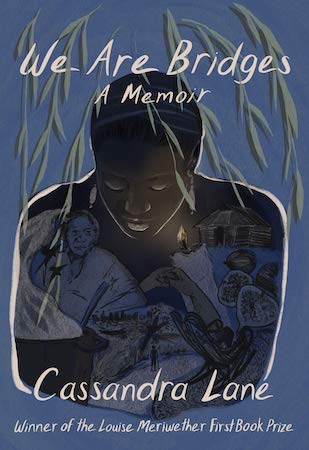
Cassandra Lane grew up knowing her great-grandfather, Burt Bridges, was lynched. When she found herself pregnant, she began to research family history for the sake of her son. Her debut memoir We Are Bridges shuttles between contemporary Los Angeles and the South, recounting the grief and terror experienced by survivors and reclaiming family history from violent erasure.
Winner of the Louise Merriweather First Book Prize—praised by Jericho Brown as “a love story, a book of how,” by Dana Johnson as “a blazing kaleidoscope of legacy and memory”—We Are Bridges explores how lynching ended the life of Burt Bridges and changed the lives of his widow, child, grandchildren, and great-grandchildren, who survived in a haunted border between silence and whispered fact. An exploration of both national and personal history, this book insists that enduring is a fervent wish, the only option, and a heavy burden.
Debra Monroe: Cassandra, tell us how did you first begin thinking about this book.
Cassandra Lane: Years ago, I set out to center this book on my great-grandfather, Burt Bridges, because I became obsessed with the fact that this kind of racial violence had happened so close to my generation. As a kid, I would sit and watch my grandfather crying about his “real daddy,” and it baffled me, but I see now that trauma that happened to his father was something I could have touched simply by touching his skin, or hearing him in a deeper way.
DM: And yet in the final version, the most compelling threads of the story are the lives of the female descendants. What did you discover about Black women’s lives?
CL: Yes, while his pain and loss were the impetus, it was the women—my grandmother, my great-grandmother, and my mother—who started popping up in, first, small ways, and as I continued to write, as the focus. I felt I knew them so well. Their working and cleaning and child-rearing. Their romantic pain and disappointments—all that I wanted to be free from. But what I hadn’t considered was their strength, their survival, and their creativity for survival.
DM:Psychologists have posited the idea of intergenerational trauma—that hypervigilance our ancestors cultivated—is, for us, learned, reflexive. Recently, epigenetic studies have found that parental trauma leaves a mark on genes. Can you talk about this research?
CL: It was already something many of us sensed when we thought about ills in our families. We’ve all talked about family “cycles.” Growing up in a deeply religious family, I remember being fascinated by that scripture that talks about the sins of the father and considering all the “begats” and how histories connect. An emotional breakdown I had over race while on a visit to a nightclub in NYC when I was in my 20s caused me to want to examine the rage I felt inside. It felt ancient. I knew it was bigger than that moment. When I saw my first article about epigenetics, it felt so affirming.
DM: In what way?
CL: In a I’m-not-crazy way. It connected me to the pain of my ancestors, but also to their resilience. It was more eye-opening when I worked for a time for an early education nonprofit and learned about ACES.
DM:ACES, or Adverse Childhood Experiences, which makes people more likely to develop depression, risk-taking behavior, even reduced life expectancy. Right?
CL: Yes. Learning how we carry invisible baggage was freeing. Biology mirrors the emotional experiences. Science gives it a why.
DM:I think Isabel Wilkerson’s The Warmth of Other Suns is important because many people know about American slavery but little about the decades after, when thousands of Black Americans were lynched or fled the South to escape lynching. White people tend to draw a line under 300 years of slavery in 1865—done, over. Wilkerson’s book is about slavery’s aftermath, Jim Crow. Your book is about Jim Crow’s aftermath. If there’s one insight about your book you hope readers take away, what is it?
When I started writing about my family’s lynching story, it seemed that so many had moved on from these issues, because so many Black families physically moved.
CL: The Warmth of Other Suns is brilliant, revelatory. I only wish I’d had a book like it when I was growing up, when I was in college and, later trying to find my way in the world as a young Black woman newspaper journalist. My family was one of the ones that stayed. For the most part, they did not migrate to the West or North. I moved out of Louisiana for the first time when I turned 30, a kind of modern-day migration. When I started writing about my family’s lynching story in the early 2000s, it seemed that so many had moved on from these issues, because so many Black families physically moved. I remember a young white writer coming up to me after a reading in our MFA program. Her eyes were wide and full of something I couldn’t quite name. “That couldn’t have happened to your great-grandfather,” she said. “I had family in the South. I can’t believe it.”
DM:What did you say?
CL: I wanted to say, “I wish I were making it up, but I’m not!” I was taken aback by her shock. We were part of a group of writers and artists getting to know each other through literary events and hanging out, laughing it up, sharing our hopes and dreams. Little did they know I was harboring this past. But artmaking is going beyond the surface of what is pleasant and comfortable and bringing it to light, crafting it to present as connection and conversation. I turned that lens on my family, and that made that friend uncomfortable. There was a Filipino friend, too, and I know Black people who say: we’re more than that now. And throw around phrases like “pain porn” and “struggle porn.” More silencing.
But we carry this baggage. People feel a safe distance looking at slavery artifacts in a museum or watching a film about slavery. But when you think about blood that was shed in the 20th century, we’re not talking about ancestors we cannot name. We’re talking about living, breathing people. My mother and grandmother. Other people’s mothers and grandmothers. My mother was born in 1953 and never attended a school that was not segregated. When my family gets together, we have in the same room someone who couldn’t drink from a white-designated water fountain, and my brothers who are in their 30s and were some of the only Black kids in their suburban schools. When you go back one generation beyond my mother’s, there is my grandfather, who never met his father because his father was lynched. As a kid growing up in the 70s and 80s, I was fascinated and repelled by his pain. I was nursing my own absent-father wound. I’d think: why hasn’t this old man gotten over this?
DM:It takes a big cognitive shift to get past our experience and understand someone else’s.
When you think about blood that was shed in the 20th century, we’re not talking about ancestors we cannot name. We’re talking about living, breathing people.
CL: Yes, and as a culture, we’re like I was back then: Why can’t they/you/we get over the past? This question is asked a lot about Black stories. But you can’t without acknowledgement, reparations. What I think my papa wanted was for someone to listen. This book is my reparation—an offering to my ancestors. In attempting to listen to my grandfather, to each of my elders, I started hearing myself. I then cleared a passageway to listen to my unborn child. And to other people’s children. I hope never to silence or shame anyone. My great-grandfather was lynched, Grandma Mary said, because the white folks thought he was too “sedity” or “uppity.” When I think about how a lynched person is cut off at the throat, the vocal chords, I think the murderer is intentionally squeezing the life out of that vessel of expression. He had a right to live, to not be silenced. The implication in telling Black writers to get over the past because there’s some exploitive or sensational form of pleasure in pain couldn’t be farther from the truth.
My grandmother used to say: “I pray for my children and my children’s children and my children’s children—that none of these evil things come in their day.” What we call evil keeps coming, but we keep praying. And writing. Highlighting what’s wrong—in us and around us.
DM: You feel tacit pressure to stay affirmative in a phony way.
CL: Yes. But writing about my great-grandfather’s lynching doesn’t take away from #BlackBoyJoy or even my own #BlackGirlMagic. In considering Burt Bridges as a flesh-and-blood human being, I found a young man full of hopes and dreams as well as a murder victim. I tapped into his joy and desires and my own. The full spectrum is sometimes light, sometimes heavy.
DM: You’ve been immersed in your family’s darkest history a long time. Did you ever feel an estrangement from the present that seemed like too big a risk?
CL: The first thing that comes to mind is a conversation I had with my mom. She never seemed too thrilled that I was obsessed with Burt Bridges. I remember her gently egging me to write about her mother’s side of the family. I was taken aback. “That’s not the story I’m trying to tell right now,” I said. She wanted to leave the past in the past, perhaps. I wondered, “Should I?” But my ancestor’s tragedy led me to understand my issues. Eventually, the story became about so much more than Burt. Motherhood—mine with my son, my mother’s with me—became a counterweight to the heaviest parts of the story.
DM: Do you feel any closure after years of exploring this subject?
This question of ‘why can’t they/you/we get over the past?’ is asked a lot about Black stories. But you can’t without acknowledgement, reparations.
CL: I had to narrate the book to record it as an audio-book. I had to read it aloud in front of strangers start-to-finish, with all the feelings that came with that process. It was hard. It was also cleansing. I still plan on seeing a therapist again, just to work with me through the process of bringing this long-held story out into the public. I don’t believe anyone is ever completely healed.
DM: Can you describe how you could tell when you were on the right track, following your instincts to tell this family history?
CL: Debra, those old Southern women who raised me went so much on whether things were “sitting right.” Today, we call that “energy” or “vibes.” I grew up in a household where there was always talk of visions and prophetic dreams and sightings of ghosts and spirits, so there is nothing strange about those other worlds to me. We were also surrounded by nature—trees of all kind, nearby woods, and all the sounds that come from the woods—so I get quiet and listen for all of that even in my super urban neighborhood in Los Angeles. I am always listening for sounds of the past.
DM: It’s not much of a leap to say that violence inflicted on Black men’s bodies a century ago has evolved into violence against Black Americans today. We still don’t talk about survivors. They appear in news stories as the person who recorded the video, the person telling us what happened. Has your understanding of survivors changed?
CL: The survivors! It was one thing to relive the lynching of Burt, but once I turned my lens onto Mary, I began to wonder what the day of lynching was like for her. Was she a witness? Did she find out later? Yet Mary went on to live for another eight decades. She farmed. She raised Burt’s child. She fed people who were poorer than she was. She repressed what happened by not talking about it, and yet when she was on her deathbed in her 90s, she reminisced and wept about his beauty and his spirit and how much she loved him. We talk about how strong Black women are, and that trope can be too much. We should not have to carry the weight and make it look easy. I admire survivors, but what more can we do as a nation, as communities, to give survivors what they need? Back then, there was faith, the church family, but not the kind of psychological supports that encouraged talking about trauma. What I learned about the survivors is the damage that silence inflicts on a person, a family. We need to tell more survivor stories. We do.
The baby arrived as all babies do: screeching and struggling from within a duffle bag carried by a deliveryman from City Hall. When Brian opened the front door that Monday afternoon, the deliveryman thrust the thrashing bag forward with a relieved grin, as if he couldn’t wait to get the carrier as far away from his body as possible.
“Congratulations,” he said. “It’s a boy.”
Brian tried to peek at the baby through the mesh ceiling of the bag, but the creature was wriggling around too frantically to settle into any single shape. For a moment, Brian thought a fire alarm had gone off somewhere, but he quickly realized that this was only the sound of the child’s cries, as rhythmically desolate as an air-raid siren and just as distressing. He felt the distinct urge to run for cover.
“He’s a feisty one,” the deliveryman said, pushing his way past Brian into the house. “I think you have an athlete on your hands. A wrestler, maybe.”
It was still snowing—had been snowing, in fact, for days, the street a cluttered labyrinth of gray slush—and the deliveryman shook the gathered flakes from his hair with the good-natured vigor of a golden retriever. He looked like the sort of person who loved his job, which made things considerably more awkward when Brian fluttered a hundred-dollar bill in front of him and said, “It is indeed a lovely child. It would be a shame if something were to happen to it.”
Pity arrived on the deliveryman’s face like an old friend; it was clear he’d heard this request many times before.
“First kid?” he asked. “Everybody’s nervous their first time. But raising a baby is easy. It’s like jumping into a cold lake. Things go pretty much like you’d expect once you take the plunge.”
The deliveryman seemed so proud of the metaphor that Brain refrained from telling him he didn’t know how to swim.
‘A baby is not an idea,’ the deliveryman said with great conviction.
“The baby was my wife’s idea,” he said instead, which was a lie. The baby was entirely his idea. Patricia had only agreed to parenthood, he was sure, because their marriage had been careening towards failure, and the baby had struck them both as a straightforward and diplomatic way to nudge their relationship back from the brink.
“A baby is not an idea,” the deliveryman said with great conviction. He removed a small package of vacuum-sealed gray squares from the side of the duffle and handed it to Brian. “Food for the first week. Just soak them in water.”
Then, the deliveryman gestured at the bag, still rocking from the baby’s frantic efforts to free itself. “I’ll let you do the honors,” he said.
“Couldn’t I just keep it in there for a while? Until it settles down?”
The deliveryman elbowed Brian toward the bag. His voice grew soft, almost grandfatherly. “This is one of the most important moments of your life. Getting to hold your child for the first time? You’ll never forget it.” He glanced back through the door at his brown van, humming tuffs of exhaust into the cold air. “Also, I need the bag for my other deliveries.”
Brian, who shuddered at the thought of all the other babies prowling around their cages in the van, unzipped the duffle with shaking hands. The baby settled for a moment, as if calmed by the promise of escape, and Brian was able to get a good look at it: the smushed pig nose, the tiny fangs, the tufts of fur that sprouted erratically from its flabby pale skin. The baby’s eyes, two dark coals pressed into the folds of its snarling face, met Brian’s, and for an instant they seemed to glitter with some recognition, father and son united by their mutual understanding of this ancient pact. Then, the baby reared back, hissed, and sunk its teeth into Brian’s hand.
Brian jerked away, stumbling over his feet. The baby bolted free and slunk into the shadows beneath the living room couch.
“That thing isn’t human,” he said, suckling the blood that dribbled from the two puncture wounds on his thumb. The deliveryman gathered up the bag and headed for the door.
“Of course it isn’t,” he said over his shoulder. “It’s a baby.”
Brian tried to call Patricia to tell her the news, but she was in meetings all day, so he spent the next hour trying to coax the baby out from its hiding place. While he cooed and clucked on his knees in front of the couch, the baby just stared at him, pupils reflecting the beam from his phone’s flashlight like silver coins in the dark.
He took one of the food squares from the package and dunked it into a bowl of water, just as the deliveryman had directed. The square evaporated in the liquid, melting into an ashy smudge that smelled like mulch. He placed it on the carpet in front of the couch, hoping food might coax the baby out, but the creature didn’t budge.
Brian was ready to wait beside the bowl for as long as it took, already feeling a vague glimmer of pride at this proof of paternal commitment to his child. Then he heard the electronic chime from his laptop, a signal that a customer was trying to get in touch with him.
Brian worked as an online “building consultant” for a remodeling company. This mostly involved answering frantic messages from people trying to renovate their kitchens who’d somehow installed their cabinet doors the wrong way or torn down a wall in their bedroom without checking to make sure it wasn’t load-bearing. Today, the little text box on the webpage read SINK LEEKING PLZ ADVIZE, and Brian went about the mind-numbing work of getting the make and model number of the submitter’s utilities so that he could type out a step-by-step guide on how to rectify the problem.
He used to do this work in person, and he’d enjoyed it—the simple pleasure of encountering a problem and knowing exactly how to solve it. Day after day, he drove around the city with his partner Clay, entering people’s homes with all the pomp and confidence of Valkyries descending to the battlefield to collect the dead. There was something heroic about showing up at a young couple’s first home to replace the ugly teal carpet with wine-dark floorboards after they’d tried and failed to do it themselves or installing a screened-in porch for a widowed old woman who wanted to drink margaritas outside at night without worrying about mosquitos.
Most of their customers treated him and Clay with a sort of awe—these men who could step through the thresholds of their lives for a few hours and then exit, leaving sturdy granite counters and polished water fixtures in their wake. This was mostly on account of Clay. The man struck an imposing figure: just a little over six foot with the muscled arms and the potbelly of a silverback gorilla. There was something comical about watching the customers take him in when he and Brian first arrived—their eyes running fearful circuits over his greased-back mullet and the bestiary of tigers and serpents tattooed on his biceps—a terror that lasted only as long as it took for Clay to begin speaking. He had the gentle, innocent voice of a choirboy, and his insistence on ending every sentence with “sir” and “ma’am” put even the most suspicious homeowners at ease.
They’d been working together for nearly four years when, the previous winter, they’d been in a car accident, their truck slipping on some black ice, and Clay died. Brian had been at the wheel. As the truck swerved, he overcorrected and sent it spinning into the freeway’s shoulder. A rod of steel piping in the back of the truck pierced the back window and plowed straight through Clay’s head, killing him instantly.
After a few days off for his own minor injuries—a sore back and a cut on his forehead—Brian was expected to return to the houses alone, to tear up unwanted carpet and swap out old bathroom faucets as if nothing had happened. Except, when it came time to leave, Brian found himself struggling to open the front door. And when he’d finally forced himself out of the house and into his truck, he sat there for what felt like hours, hands clenched tight around the steering wheel, unable to move. That night, he asked the company if he could work from home.
The problem, he thought, was that he could no longer think about his work without immediately returning to that night and the unceremonious way in which Clay was transformed from a living, breathing human into a skewered cadaver. Though they weren’t very close, Brian had liked him. Their relationship was free of the insecure jostling he’d encountered with other men in his profession: the embarrassing tales of sexual conquest, the sad pride in one’s drinking prowess, the complaints about every unforeseen setback. In fact, they barely spoke to one another on their jobs, operating together with the silent, optimized efficiency of machines. On the few occasions when they stopped for a beer on the way home, Clay, who was in his early thirties, dropped ambiguous references to the time he’d spent in prison—never going so far as to explain what he’d done—and how his wife, a local veterinarian named Barbara, had helped set him on the right path. His quiet voice, and the slow, deliberate way he moved his hulking body, as though perpetually afraid of hurting those around him, struck Brian as the qualities of a man who’d just barely survived his own life and was thankful for whatever extra time he’d been granted.
Halfway through his reply about the sink, he heard a slurping sound behind him. When he turned, he saw his baby squatting on its haunches over the bowl of gruel, its snout stuffed deep in the sludge.
“You’re eating,” Brian said. “My son is eating!” He stood quickly from his chair, fumbling with his phone to take a photo for Patricia. But the baby, frightened by his sudden movements, squealed and tipped the bowl over, splattering food all over the carpet as it retreated beneath the couch.
Later that night, when Patricia finally Facetimed him, Brian brought the phone down under the sofa and turned the camera toward the baby.
“Are you sure it’s ours?” she said.
“Look at the face. Those are my eyes,” he said. “And those hands. Builder’s hands. Nice and strong.”
Only after he said the words did Brian realize that connecting himself to the baby—and its unquestionable hideousness—might not be the most successful tactic for putting Patricia at ease. When he flipped the phone around, he found his wife frowning at him from the little screen. Even now, with her face weary and worn at the end of another long day, the sight of her unmoored a tender vessel within him.
“You look beautiful,” he said.
“I feel like a toilet.”
“Meetings went well?”
“Who knows. These people carry themselves like Grecian friezes. Totally inscrutable.”
Brian didn’t understand Patricia’s job. He knew that it involved large sums of money and companies so massive their financial maintenance required more bureaucracy than most small nations. She’d tried to show him once, presenting him with a dozen or so Excel spreadsheets on her laptop, each page stuffed with numbers which added and subtracted and divided themselves when she pressed different keys. It had only served as further proof to him that he’d been lucky to marry her—that fate had dealt him a fortuitous hand four years ago when he arrived to install a new shower head in her old apartment. After he’d finished, she slipped him her phone number along with a check, as if romance were as straightforward a transaction as any other.
He refrained from mentioning that he’d offered the deliveryman a bribe. This, he knew, would not inspire confidence.
“Have you decided on a name?”
“I was thinking Clay.”
Patricia looked at him as though he’d recommend Adolf or Lucifer. Brian wasn’t surprised. Clay’s death, after all, was the primary reason they’d decided to get a baby. After the accident, some fundamental mechanism within Brian gave way, and he’d found himself incapable of talking or thinking about anything else. For weeks he wouldn’t even leave the house; the outside world seemed suddenly full of incalculable danger. Even a brief trip in the car filled him with white-hot dread, every curve and bend in the road a possible disaster.
And then there was the matter of Barbara. He trembled at the thought of running into Clay’s wife while he was at the post office or waiting in line at the movie theater. Though she had been kind enough to send him a note after the funeral—which Brian had been too much of a coward to attend—thanking him for the flowers he’d sent along, and lamenting the fact, with excruciating politeness, that he’d been unable to come, he was still terrified at the prospect of seeing her in person.
After a month Brian noticed that whenever he mentioned Clay’s name, Patricia’s eyes glazed over, not from cruelty, but from exhaustion. She’d heard him describe dozens of times how different the day might have been if he’d taken another route home or tied down the pipes more securely. She had said all the things one might expect a good partner to say—allotted him the largest possible parcel of her care and attention—but eventually she’d been reduced to platitudes: It’s not your fault. There’s nothing you could have done. You have to keep living.
Grief, he learned, was like a two-way mirror: you could peer out at someone else, gesturing frantically to convey your own unraveling, but after a while all they saw was their own frustrated reflection.
Patricia started traveling again, her time away from the house lengthening from a few days to a week at a time. At a certain point it became clear to Brian that a crisis was imminent. So one night, after yet another of Patricia’s short, joyless visits home, he asked her if they should get a baby.
“I think it would be good for me,” he’d said. “To have a project.”
She’d never shown any interest in children—neither of them had—and he’d expected the question’s outlandishness to be the terminal crack that sent their whole marriage careening down the hillside. But she’d surprised him by agreeing that, yes, a baby might be a good idea. She treated the suggestion with the same matter-of-fact certitude with which she treated her business dealings—she would not change her work schedule, she said, so the day-to-day necessities of child-rearing would be left to him.
“If you can agree to those terms, I’m game,” she said. “We certainly aren’t getting any younger.”
After they filled out the paperwork, hope tentatively roosted in their lives. They went for long walks around the neighborhood, discussing who their baby might become once its fur turned to hair and its fangs plopped out of its mouth. Would it have Patricia’s confidence? Brian’s eye for detail? Would its little muzzle grow to resemble its mother’s aquiline nose, its bushy brow sloping into Brian’s handsome forehead? Their dreams gurgled and giggled with hypothetical babies. Baby politicians and baby poets and baby submersible pilots.
But the border between dreams and nightmares is a tenuous one, and it wasn’t long before Brian was imagining the baby’s body crushed under falling bookshelves, smothered by pillows, pierced by clumsily dropped knives and scissors. He’d never considered himself an anxious person—had always been a bit proud of how easily he fell asleep each night, freeing himself of the day’s worries as easily as he kicked off his boots at the front door. Yet after he and Patricia decided to become parents, he kept himself up late thinking of all the ways a baby might be murdered—how, even after it had grown up, danger would skulk at the edge of every action. A bullet for the baby politician. A heroin addiction for the baby poet. A slow, drowning demise for the baby captain in his underwater tomb. By the time he realized the baby had only exacerbated his new anxieties, it was too late. They’d signed all the necessary documents.
Naming the child Clay, then, was perhaps not the best way to extricate the baby from thoughts of death. But it was the first name that came to Brian’s mind.
“Maybe,” he said. “We could name it when you get home? Which is when, again?”
“Should be soon,” Patricia said. “This weather is cause for concern.”
Brian looked out the window to the backyard, where the snow continued to pile itself into sloping hillocks, their curves burnished to gold by the porch lights. The sight might have once elicited feelings of homey comfort if not for the miles of iced runways and clogged airports it now implied, the hours Brian would have to spend alone with the baby.
“Well, don’t take too long,” he said, adding with an attempt at conviviality that sounded only a little deranged, “Your family misses you.”
“I’m sure you two will do just fine without me,” she said.
“We can handle a few days to ourselves,” Brian said, trying not to put too much emphasis on “days.”
Patricia sighed. “I’ll probably be back by Friday. I need some sleep before I face the friezes again tomorrow. Not that they’ll be able to tell the difference. Best of luck.”
Brian turned the camera to face under the sofa again. “Say goodnight to Momma!”
The baby, still coiled in the corner, bared its teeth.
“Right,” Patricia said. “Love you too, kid.”
Brian swiveled the camera back to himself. “A real firecracker.”
“Please get your baby into a normal bed tonight.”
“Our baby,” Brian corrected. But Patricia had already ended the call.
Brian used a pair of rubber oven mitts to extract the baby from under the couch. It struggled in his hands, gnawing and clawing at the gloves, but the material was too thick to pierce. Brian rocked him at arm’s length, a movement which only increased the baby’s rage, its wails growing so loud Brian’s temples began to throb.
“It’s alright,” he whispered.
He carried the baby down the hall to the nursery. The room was unfinished, it’s half-painted walls and piles of stuffed animals a pitiful echo of his early weeks of preparing for the infant, when he’d decided to convert the office into a playroom. As his fears proliferated, he’d spent less and less time on the room’s aesthetics and turned his attention instead to building the crib: a hulking structure of plywood and plastic, with heavy legs bolted to the floor so the baby couldn’t knock it over in the night, and an interior puffy with padded walls and cotton blankets. He’d even installed a latticed lid that could be clasped shut to stop the baby from escaping at night, when it would presumably try to drink all the chemicals under the kitchen sink.
The baby didn’t like the crib. The moment Brian set it inside, it began to scramble up the walls, its claws surprisingly proficient at climbing. When Brian shut the lid, the baby gripped the wooden bars, a jeering prisoner.
“Wonderful climbing, Baby,” Brian said.
The baby, as if sensing the sarcasm in his tone, launched a glob of spit upward, the sticky fluid striking Brian in the cheek.
“Great aim,” he said, gagging.
The baby continued to cry. Brian tried a number of different tactics to make it stop, singing “Old McDonald Had a Farm” in a cracking falsetto and dropping colored foam blocks into the crib for him to play with. The baby refused them all: drowning out Brian’s voice with its shrill squeals, tearing apart the blocks with its teeth until they resembled curdled wedges of feta cheese.
“Sleep,” Brain pleaded. “Please sleep.”
The benefit of slumber, Brian realized, was a lesson he would have to teach the baby. The thought overwhelmed him; he’d forgotten just how much rudimentary knowledge was required to become a functional human being. Before the baby learned language, or math, or geography, it would first need to be taught how to properly wield utensils, how to stand upright, how to keep one’s eyes averted from the sun. If Brian failed to impart the importance of these things, the baby would remain feral. He would end up like one of those parents who is awoken in the middle of night to find a tiger-sized child on their chest staring at their soft bodies with hungry curiosity.
He’d forgotten just how much rudimentary knowledge was required to become a functional human being.
He stayed up for hours trying to calm the baby down. He walked to one corner of the room and ignored the baby, thinking it might wear itself out, only to find that it was capable of a constant pulsating scream not unlike the screech of some terrible predatory bird. After a while, the noise was so loud Brian worried that the baby’s little vocal cords would snap, and he hurried back to the crib, removing the baby with the gloves and rocking it again. He repeated the process more times than he could count, until he and the baby seemed locked in a delirious dance, time passing like a tarry sludge, slowing and calcifying in places and dripping with unexpected speed in others.
Before long dawn peeked under the blinds. Brian marveled at himself for having passed this test—already, he could hear himself explaining to Patricia over the phone how, despite his exhaustion, he kept watch over their child all night. He opened the shades and let the morning light flood orange warmth into the room. “Look, Baby,” he said. “Your first sunrise.”
The baby, though, had finally gone quiet. Brian’s mind cycled through all the violent events that might have silenced the baby: a heart attack, an aneurism, a screw Brian hadn’t properly secured, which the baby had choked on while its father admired the dawn. Brian flung open the crib’s lid, already expecting to find a tiny corpse. Instead he found the baby squatting in the center of its sheets, a wet stream of shit piling up between its legs.
Brian told himself the baby’s disposition would improve. This was, after all, what he’d been expecting: the sleepless nights, the endless crying, the time spent untangling dried feces from the fur around the baby’s ass. It’s no different than fixing a house, he told himself. Hard work, certainly—but once it was all over, you could step back and admire what you’d built with your own hands.
But if the child was a house, it seemed always on the precipice of collapse. It proved itself an endless reservoir of stinking excretions: mucus dripped from its weeping nostrils, forming a glistening mustache above its sneering lips; urine spurted forth at random and inopportune times from the frightening device between its legs. Diapers proved laughably ineffective. The moment Brian secured one around the baby’s waist, it wiggled free, an act of contortion Brian might have been impressed with if it didn’t mean he’d spend the afternoon on his knees spraying the rugs with carpet cleaner.
Worse than the baby’s behavior, though, was Brian’s growing disdain. He expected to become weary with the child—it was the much-beloved lament of every parent, how tired it all made them—but he didn’t expect to hate it with such visceral conviction. He found himself glaring at it all afternoon, gritting his teeth as it gobbled up its food, burning with the knowledge that it would wait until the moment Brian picked it up later to puke the meal’s sloppy remnants onto his shirt. This was the only time, vomit strung about its lips, the baby did anything like smiling, contorting its features into an unpleasant smirk and burping in a manner that suggested wet mirth.
He scoured parenting forums online, typing out questions with the frantic urgency of his own customers. BABY WON’T SLEEP. BABY WON’T BE QUIET. BABY CLAWING THE FURNITURE. His pleas for help, if they were answered at all, elicited condescending responses from people who told him this was all part of the process. No one said raising a child would be easy, they wrote. Others reminded him he should be grateful, that not everyone was lucky enough to qualify for a baby.
During his nightly Facetimes with Patricia, Brian tried to mention these problems in a casual way that might suggest—though he was handling things just fine on his own—he needed her help. But while he recounted his harrowing episodes with the baby, she only nodded her head absently, as if listening to a song she found increasingly annoying despite its catchy tune.
“I’m just not sure what to do with it,” he said Wednesday night, gripping the baby firmly in his lap with gloved hands. “I’ve tried playing, and singing, and watching TV. It just cries. I think it hates me.”
“Why don’t you go for a drive? Maybe it has cabin fever.”
“You know I can’t do that,” Brian said. He hadn’t driven a car since the accident. Every time he got behind the wheel, he froze. He couldn’t even turn the ignition. It felt as though someone had carefully scooped out the section of his brain responsible for tricking him into believing that controlling an explosion-fueled death trap was just another mundane human activity, no more suicidal than brushing one’s teeth.
“So, what, you’re just never going to drive again? What happens if you need groceries? What about soccer practice, parent-teacher conferences? Will you just keep it locked in there with you until I get home?”
“We can go for a drive when you come home,” he said. “Friday, right?”
“Yeah, Friday’s looking good,” she said. “Though, with this weather, it’s hard to be certain.”
“It’s just a little snow.”
“Right. But you never know.”
“Never know what?” Brian made a sound like laughing. “If you’re coming home?”
“All I mean is that you need to get used to operating without me around. That was part of our arrangement, as you’ll recall.”
“I know that. But aren’t you excited to meet your baby?”
Brian held the baby aloft, hoping this might be the moment it chose to reveal some hidden grace—that it might stare at Patricia with surprising candor, or murmur the word “Momma.” The baby showed no interest in helping him, though, choosing instead to unleash a particularly powerful belch, the smell of which made Brian wonder if fish was the primary ingredient in its food squares.
“Not really,” Patricia said, grinning. Brian laughed. It felt good to hear her say it—to know he wasn’t alone in his distaste for the baby. Maybe, he thought, this was how parenting really worked: a mutual loathing that slowly blossomed into something like love.
All Thursday, he thought of Friday. He repeated the word in his mind as he struggled to wash the baby in the sink, suds splashing into his eyes. He chanted it like a mantra while he typed answers to customers’ questions about sagging floorboards and slanted porches, turning his head every few seconds to ensure the baby hadn’t spontaneously combusted.
On Friday all of this would become manageable. Patricia would return and set things straight. She was not one to be bullied.
When Patricia was fifteen, she’d been in a bicycle accident. As a result, she spent an entire year wearing a rigid plastic brace around her torso. Her parents were in the midst of a grueling divorce at the time, a separation that reduced Patricia’s role in the house to another possession over which they might ruthlessly struggle for ownership. She’d explained this all to Brian on their second date.
People started to treat her differently around this time, she said. They tempered their expectations, talking about her future like it was a crystal figurine so delicate it might break if handled too long.
She told him about the pain of that year, how it stalked her so doggedly that it seemed to imbue certain objects—a yellow rubber ball in the backyard, a pair of raggedy sneakers beside the door—with a kind of resonant hostility, as if the objects were directing a pulsing, red hatred in her direction.
“That’s terrible,” Brian said when she told him this.
“No, it isn’t,” she replied. “It taught me a very valuable lesson.”
Her unwillingness to elaborate on this lesson had lent it, in Brian’s mind, even greater authority. He’d faced no such formative trials in life, gently ushered into the world by kind, affable parents, who nurtured his love of building by allowing him to tackle odd jobs around the house, even if this often meant hiring an actual professional later on to fix the damage he’d done installing crooked flood boards or failing to reassemble the AC unit after taking it apart. He had spent so many years certain that every problem had a workable solution that when he met one that didn’t—Clay’s death—he’d crumpled with all the grandeur of a papier-mâché sculpture left out in the rain.
He asked Patricia once why she’d chosen him—why she, whose mind was as sleek and decisive as a fighter jet, had spent five years married to a clumsy handyman who still used his fingers to count.
“You’re dependable,” she said without a trace of irony.
Since then, he’d clung to that verdict. He tried to be, above all else, dependable. When Patricia was away, he kept the house in working order, installing stainless steel appliances, replacing the shingles on the roof, oiling hinges and swapping out lightbulbs. He made certain that she returned to a home free of all evidence of decline, as if the structure’s sturdiness might remind her of their own firm foundation.
He’d stopped doing these things after the accident. While Patricia was away, their home fell into disrepair: the door leading to the garage began to creak, a lip of water dribbled from the bathroom’s faucet, one of the burners on the stove took longer and longer to reach optimal heat. Patricia pretended to ignore these things, but Brian knew she must be keeping track, tallying up the home’s imperfections so she might one day present them all to him in a laminated folder.
Which was one of the reasons why he’d asked to get a baby. What better way to prove his dependability than to raise a child? Yet here he was, terrorized by a creature barely bigger than his foot.
Patricia would not be intimidated. He knew that once she arrived the baby would civilize itself whether it wanted to or not. Brian would help her drag it, snarling, into the realm of childhood, where they’d shape it into a bright, beautiful boy who knew the difference between right and wrong, who said please without being prodded, who understood that the world, though beautiful, was also painful and arrived at sorrow with all the necessary protections.
That night, when he called Patricia and listened to the phone ring, he found himself so overwhelmed by the image of their child, cherub-faced and docile, returning from school with macaroni paintings and report cards praising his good behavior, that when the ringing ended and Patricia’s voicemail began to play, he started talking immediately. It was only when he finally stopped speaking and was met with silence that he realized she hadn’t answered the call.
Brian reminded himself that this wasn’t the first time Patricia had missed one of their evening check-ins. Some nights she was simply too exhausted to talk. Brian made three more calls, just to be sure, and then texted her a series of question marks. When she failed to respond, he put the baby to sleep—or rather, its approximation of sleep, which involved an hour or two of hostile silence in the crib, followed by an eventual outburst that would bring Brian sprinting into the room—and tried to go to bed.
Patricia was due to arrive in the morning. Daybreak brought nothing but a glittering landscape of ice outside. She didn’t call or text to tell him she’d be late. Maybe her phone had died, he thought, or she’d accidentally left it in her client’s office. There were all kinds of reasons she might not arrive on time, all of which avoided the awful possibility swirling in Brian’s mind: that Patricia wasn’t coming back at all.
Brian often had this thought when Patricia left for one of her trips, especially in the months following Clay’s death. It was an unfortunate side effect of what he loved about her: the sense that he wasn’t essential to her life. He found it deeply romantic that she—whose wardrobe was composed of four or five formal outfits she could easily fit in a carry-on, who sometimes even forgot to unpack between trips—had decided Brian was worth settling down for, however briefly.
Even after they got married, she insisted on keeping her own bank account. She’d seen how disputes over money turned her parents’ divorce into a bloody campaign, where every fork and spoon, every roll of toilet paper, was accounted for and divvied up. “Better to keep certain things separate from the start,” she told him, and he found no reason to disagree. Only later did he consider the broader implication of her words: how she took for granted that sometime in the future they’d need to disentangle themselves.
Now, he imagined her dipping into that account to prolong her stay at the hotel. He thought of her taking careful stock of their relationship, running her algorithms, with their vague numerical mysteries, to decide just how high her marriage measured up in the balance sheet of her life.
As the hours passed and she failed to walk through the door, he began to wonder if the baby had been his final test. His chance, after the accident, to prove he was capable of self-sufficiency. Perhaps that’s why she’d agreed to it so readily. She’d watched him floundering through the week, heard the baby waling on the other end of the phone, and realized her husband had changed. He was no longer a dependable man.
While Brian paced through the house, the baby mimed his anxiety, sprinting from room to room, scrambling up onto counters and knocking off everything that wasn’t screwed down. Eventually it bumped Brian’s cup of coffee off the kitchen table, sending scalding fluid and shards of ceramic across the kitchen floor. Brian grabbed the baby, not even bothering with the gloves, and hurried it out the front door.
Brian tried to tell himself he fled the house because he needed to get the baby away from danger. Some other voice inside him, though, suggested a more disturbing explanation: that the moment the coffee cup shattered against the floor, Brian wanted to harm the baby, hurling its body against the wall or stuffing it in the trash. He’d felt some primal need to silence the baby at any cost. So he’d escaped, terrified of what he might do if they stayed inside any longer.
A cold gust buffeted Brian and the baby the moment they stepped outside. The street sparkled with fresh powder. Standing there, gazing up at the clouds, as gray and unyielding as cliffs, Brian felt strangely at ease. He hadn’t left the house all week—hadn’t smelled anything but bodily stink, hadn’t squinted his eyes at the bright reflection of sunlight on the icicles hanging from the edge of the roof. He stood there, overwhelmed by the silence of this crystal world, the only sound the quiet shuffling of the snow that crested, in lacey wisps, off the lips of the dunes in the front yard.
The baby, he realized, had stopped crying.
When he looked down, the baby’s dark eyes stared skyward in wide astonishment. A snowflake slowly drifted onto its snout. The baby snorted softly to dislodge it.
“Outside,” Brian said. “We’re outside.”
Patricia, even from afar, had known exactly what to do. All the baby needed was a walk.
He carried the baby down the street, his crunching footsteps plowing a path in the unblemished sidewalk. They crossed over the road into the park, where the boughs of the pines bent stoically beneath their snowy burdens. While they walked, Brian whispered words to the baby: tree, sky, bark, stone. The baby peered up at him, as if in understanding, and Brian wondered if it could be this simple; if just a few monosyllables were all the baby really needed to know.
When they came to a bench, he wiped the snow off its iron seat and sat down. He watched the flakes gather in the baby’s fur, caught in the thick follicles like tufts of cotton.
“I don’t think I’m very good at this, Baby,” Brian said.
He was struck, now, by how foolish it was that the baby still lacked a name. He watched the slow rise and fall of its naked chest. “Maybe I’ll call you Snow,” he said. “Can you name a baby Snow?”
The baby responded by curling in his lap. Seeing it there, eyes closed, a single claw tucked tenderly into its mouth, filled Brian with sudden warmth. He didn’t even feel the cold wind anymore, just a flash of heat. Odd, given how much his arms were shaking.
“Clay loved the snow,” Brian said. “On the night he died, he was talking about the snow. When he was a kid he used to drive up to a cabin with his mom every winter. She’d try to get him to go outside and play—to build snowmen with the neighbors or sled down the driveway—but all he wanted to do was sit inside and watch the snow fall.”
Brian stared at the trees while he spoke, pondering their sturdiness—how defiant they appeared, bark stark against all the white. “He wanted to build a cabin just like that out in the country and fill it with babies. He wanted a bunch of kids. Talked about it all the time.”
Someday, Brian thought, he would tell the baby about Clay. About how his death proved that the world was not a solid thing—not a rigid bit of plaster or wood one could repair at the first sign of failure—but something far more unstable. Something you could drown in, if you didn’t have the foresight to learn how to float.
And maybe, when enough time had passed, and Brian could talk about it without feeling like the ground was crumbling beneath his feet, he would tell the baby about that night. The way Clay’s blood pooled dark on the dashboard, as if impenetrable to the light. How the steel pipe was lodged so deep and firmly in his head that it looked like it had always been a part of him. Brian could tell the baby what it felt like to sit there, the world so quiet he could hear the snow plinking down on the hood of the smoking truck, and realize that he’d passed a certain threshold; that he would never feel safe again.
The snow was falling so heavily that the trees had transformed into vague shadows in the distance. Brian didn’t know how long he’d been sitting there, but the baby’s body was swaddled in a few inches of powder. When Brian went to wipe it off, he discovered the baby’s body was cold. Much colder, in fact, than he thought a baby’s body should ever be.
He gave the baby a nudge, but it didn’t move. He shook the baby, but it remained still.
An immense calm settled over Brian. The baby was dead. In a way, he was relieved. The worst possible thing had happened, and it felt like proof of a fact he’d known since Clay’s died: that he could no longer be trusted. He did not deserve the responsibilities that came with being alive.
Then, he felt the baby’s heartbeat. It was weak, but it was there—a faint pulse beneath its thin skin. Brian rushed to his feet but lost his footing almost immediately, slipping to the ground. His legs were unnaturally clumsy, as if they were receiving signals from his brain one second too late. He fell two more times before regaining his footing.
“Jesus, Brian.”
A figure was marching towards him through the snow, arms crossed in a puffy blue parka. Brian briefly wondered if it was god, or maybe one of his angels, the disappointment in their voice the final sound he would hear before he was consigned to hell. But then the figure stepped closer, and he saw that it was Patricia, frowning from underneath a knit cap.
“What are you wearing? It’s freezing.”
Brian looked down: he’d left the house in nothing but his thin pajama pants and a t-shirt. He hadn’t even bothered with boots. The soaked gray fabric of his socks clung to his toes.
“The baby,” he said, holding its limp body out before him. “It’s freezing to death.”
Just as he spoke, the baby began to cry. Loud, horrible sobs that blended with the howling wind, as though the baby had hijacked the atmosphere to give voice to its displeasure.
“Sounds alive to me,” Patricia said. She reached out and plucked the baby out of his hands, stuffing it under one arm and hooking Brian’s armpit with the other, like her husband was an elderly woman who needed to be escorted across the street. “Let’s get you two back inside.”
“Where have you been?”
“Flight was delayed.”
“You didn’t return my calls.”
“Forgot my phone charger at the client’s office. Didn’t think you would go all Jack London on me if we didn’t speak for a few hours.”
They trudged back to the road. Brian couldn’t feel his feet.
“You came back,” he said. “You actually came back.”
Patricia stopped and looked at him. Brian thought of what she saw: her husband, drenched and trembling beside her, eyes sunken from lack of sleep. He’d barely made it a week without her, and he could tell, from the question struggling on her face, that she was performing her private equations, adding and subtracting the variables, estimating the odds of whether she might raise a human being with this man. But then her expression changed. Brian was wrong: there was no calculation there. Just disappointment. And hurt.
Their child wrestled in her grasp while they stood there, desperate to flee whatever these two people planned to do with it.
“Of course I came back,” Patricia said, her voice weary with all the miles she’d crossed to arrive here, at her home. “Where else would I go?”
Every love story is built with inherently high stakes. After all, a heart can be the ultimate prize, and courtship a most dangerous risk. And love, as we all know, won’t stop for much. Our hearts pay no attention to timing or impediments, and logic falls by the wayside as we feel the anguish of lost love, or the triumph of love realized.
All by itself, love is tense and wondrous. But add in war, the threat to our very existence and humanity, and those stakes fly through the roof. For me, novels that explore love affected by war are the ultimate page-turners; books that might break or—surprisingly —mend your heart. After all, when the world is bleak and harsh, and a heart still finds the ability to soar, what could be more beautiful?
In my novel Take What You Can Carry, an American woman and her Kurdish boyfriend visit Kurdistan of Iraq in 1979, a time when the government tried to break the Kurds and their will, when friends and neighbors were pitted against one another, and a simple night out could end in devastation. I knew from the politics and the setting that the struggles would take them to the brink, and either make or break their love.
This World War II novel captures the heart-rendering love of a couple in Nazi-occupied Poland who are not only trying to survive, but are striving to make a difference. Split between two time periods, World War II and modern-day, we also see the result of their story decades later and the secrets they carried silently through the years.
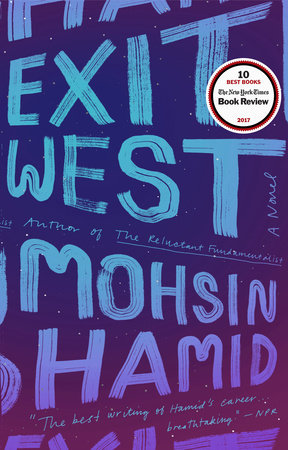
A nameless place under siege, and a love story amidst the chaos. Exit West is about two students who fall in love and try to find refuge through a series of magical portals that transport them to various locations around the world. In spare, exquisite language, this book shows the horrors of war and the refugee crisis, yet manages to be surprisingly hopeful.
It’s the end of World War II and a mystery beckons: Who is the burned “English Patient” and what is his story? What unfolds is a beautifully written exploration of the aftermath of doomed love during war-time.
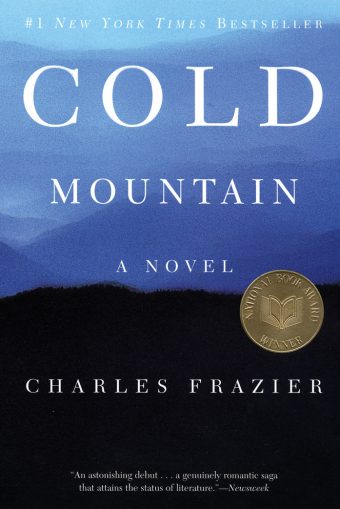
At the end of the Civil War, an injured soldier, who has just deserted the Confederate army, makes the dangerous journey home by foot to reunite with his love. But what changes have they endured in their separation, and what toll has life taken?
In 1942, Lale Sokolov, a Slovakian Jew, is forced into the role of tattooing his fellow Jewish prisoners in the Auschwitz-Birkenau concentration camps. When he meets Gita, Lale discovers a new purpose and a reason to survive. Based on a real story, this is truly love against all odds.
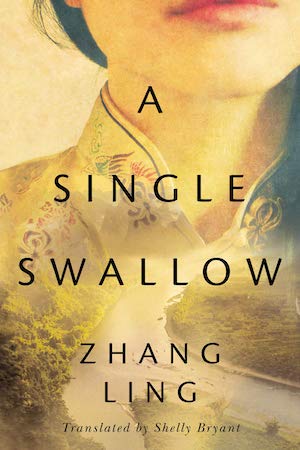
A Single Swallow follows three men—a missionary, an American soldier and a Chinese soldier—during the Japanese occupation of China. The men all have starkly different viewpoints, allegiances, and lives, but one thing binds them together: they loved the same woman.
Set during World War I, This is How I’d Love You is about a young woman who takes over her father’s mail correspondence with an American soldier abroad.
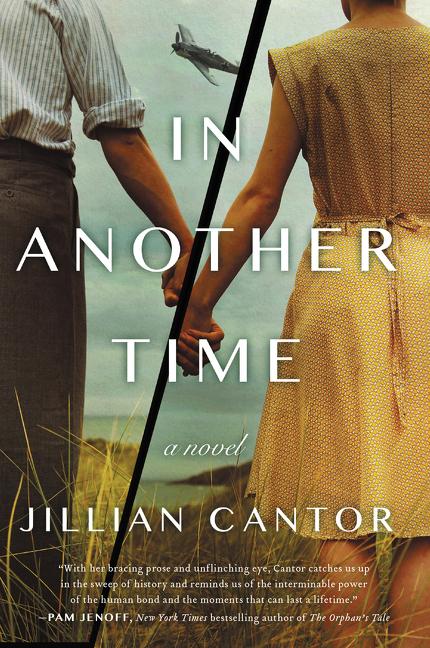
Told in alternating viewpoints and timelines, In Another Time is about an enduring love between a bookstore owner and a Jewish violinist in Germany whose relationship is imperiled with Hitler’s rise.
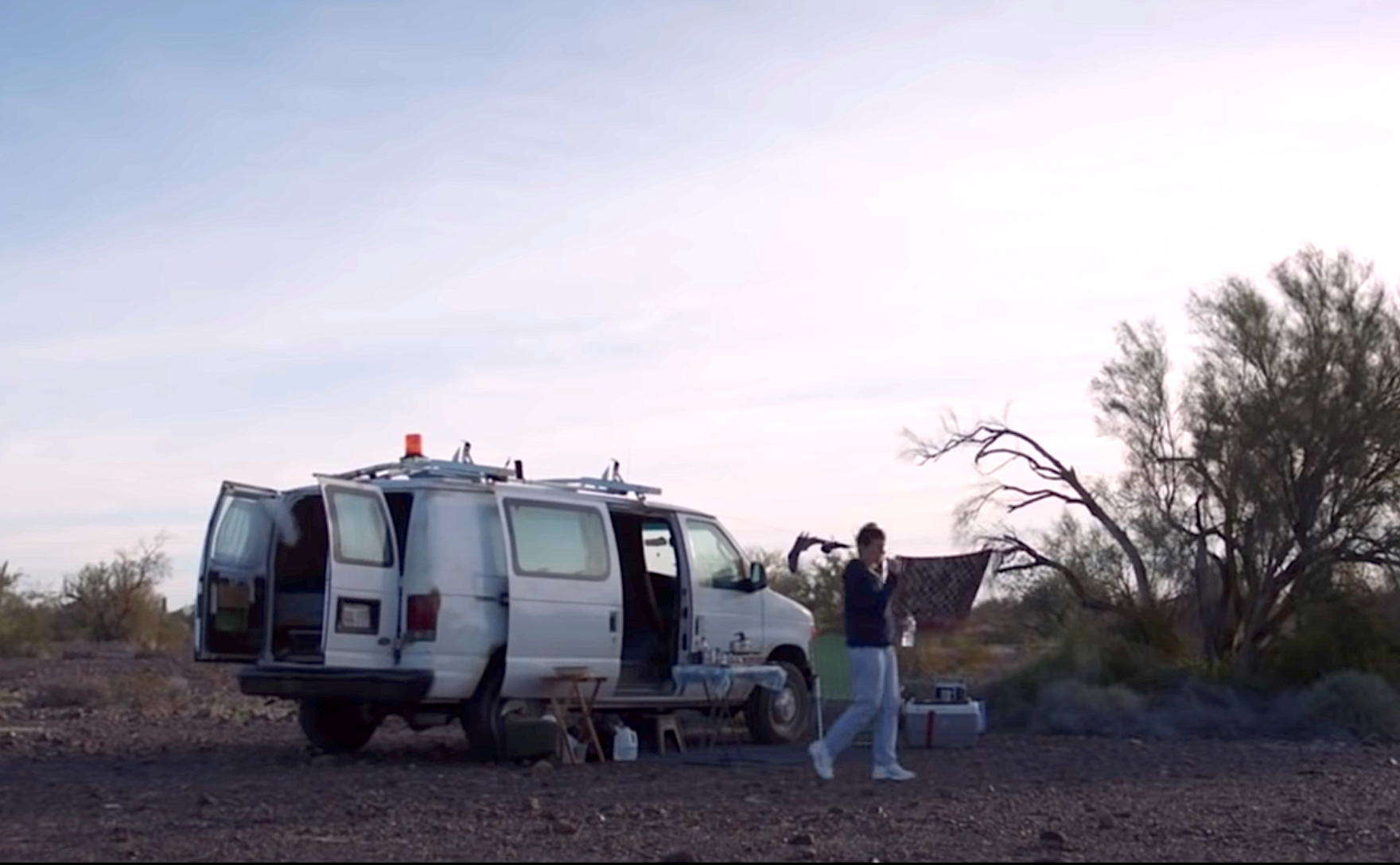
I set a calendar reminder for the day Nomadland would be available to stream. My anticipation came partly from the chatter of film nerd friends, but mostly because I knew this was a film about people living in nontraditional housing—vans and recreational vehicles—just like I did as a kid. Though I had no idea the film would eventually win Best Picture—it wasn’t being heralded as the “one to beat”—I was not going to miss my chance to see a story that reflected my own experiences growing up. It had the arthouse promise of characters, not caricatures, living in homes that sit on wheels instead of foundations.
Nomadland, written and directed by Chloé Zhao, tells the story of Fern, played by Frances McDormand, who has recently lost her job and decides to live a nomadic lifestyle in her van (which she names Vanguard). The film is based on Jessica Bruder’s book detailing the lives of a real subculture: older adults who travel together in vans and RVs to find opportunity and community. In an early scene, Fern bumps into a family she knows from her life before Vanguard. After some pleasantries, the young girl that Fern used to tutor hangs back to privately ask Fern if she’s homeless like her mother says.
“I’m not homeless,” Fern says. “I’m just… houseless. Not the same thing, right?”
In her reluctance to accept the term ‘homeless,’ Fern echoes the broader cultural antipathy towards anything that looks like failing—or opting—out of capitalism.
In her reluctance to accept the term “homeless,” Fern echoes the broader cultural antipathy towards anything that looks like failing—or opting—out of capitalism. (Even as a nomad by choice, Fern’s life is dominated by work.) For many of us, “homeless” is a word that first brings to mind sleeping on the street, the literal opposite of the American Dream, a failed state of being. In the game of American capitalism, being homeless is the blinking red and large font, punctuated by aggressive sound effects: YOU LOSE. Rarely does one get to play again.
Fern skirts the deeper shame for a more palatable, perhaps even aspirational, terminology: houseless, as in not constrained within walls. But the audience can see through this semantic trick—and for me, a question was already reverberating. My body tensed. I couldn’t concentrate on the story. My ears rang dully and my abs contracted in pulses like they were reacting to electronic stimulators.
Is it possible, although it surely can’t be, that I grew up… homeless?
From kindergarten to middle school, I lived with my parents in a 200-square-foot “fifth wheel” towable RV parked on a piece of Florida scrubland between my aunt and uncle’s small ranch-style house and a wall of oak trees. I’m not sure why it’s called a fifth wheel—it sits on four wheels and is meant to be towed by a truck, which would make it eight wheels. I never saw ours towed.
Only recently did I start talking about growing up in an RV. I was already married when I told my wife. School friends and college friends, people I’m close to even today, still don’t know. I lived in England for six years, a country where hiding the class you were born into means completely changing your accent, and sometimes your mannerisms and clothing. The amount of work to “play it posh” isn’t worth it, for most people there. But in the United States, a country that struggles to agree on whether class is determined by birth or bank account, it is easier to hide your roots. I don’t recall ever being asked what type of house I grew up in, so I didn’t have to lie—I just chose not to offer the fact that my home wasn’t a house.
In America, shame for being poor, for not being able to take advantage of the promised Dream, quells our chance at building a culture of working-class collectivism and pride.
But not talking about the home I spent many years growing up in made it too easy to stop thinking about it. When you don’t share your memories, even with yourself, you risk losing them; certainly you crush the opportunity to find pride in them. In America, shame for being poor, for not being able to take advantage of the promised Dream, quells our chance at building a culture of working-class collectivism and pride in what is, over what could be. Just because you can hide it, doesn’t mean you should.
I was prepared for Nomadland to force me to confront this chapter of my life. In fact, I wanted it to. In the past couple of years, I’ve tried to use my experience as a personal tool for building empathy with others from working-class backgrounds, without generational wealth or financial privilege. I’ve mostly shaken off the shame of growing up in a situation outsiders might consider “poor white trash.” But homeless? If I was once homeless, surely it would be a defining chapter in my life—and besides, could I identify as “homeless” when other unhoused people clearly had it worse? I didn’t sleep rough or live in a car. I always had access to a bed and a shower with warm water. Then the shock turned into more questions. If I had written about this in my college essay, would I have been accepted to a better school? Will my friends resent that I never told them this crucial nugget of backstory? If I was homeless, why wasn’t my family allowed to access social services?
Since my Nomadland-triggered confrontation with my past, any traces of shame have metamorphosed into nostalgia. I am letting my memories in, at last. When I think about that RV, I think about who may have lived in it before me, using it for recreation as intended. The mustard-and-rust ribbed plastic exterior hinted at a 1970s past life: perhaps a beautiful family with a mustached dad, trying to hit all the national parks, or a newly retired and fully pensioned couple who drove it down to sunny Florida and left it parked next to their new house, unused, when they accepted their declining bodies couldn’t handle the work of hitching and unhitching and climbing the two steps inside, two steps to the bathroom, and two more steps to the half-bedroom.
I say half-bedroom because that’s how I think of it, but that sounds like it means “half as much square footage as a standard bedroom.” The room—the only bedroom in the RV—is in fact small in floor space, but more importantly it’s half as high, designed to hover over a truck’s bed like the head and neck of a dinosaur. It’s smart design for a traveler, but for the stationery resident it’s waste, a shadow-giving overhang for snakes to retreat from sunlight. My parents let me have that bedroom, the bedroom, which I like to think is something most parents wouldn’t do. I don’t think the height of my bedroom ever entered my mind, even though in the pre-pubescent later years there I wasn’t able to stand up straight.
A wood-colored (everything had a “wood look”) sliding door, expandable like a xylophone, separated the bedroom and the bathroom, the central of the three divided areas, which was small but could almost pass as a house bathroom except for the toilet. In lieu of flushing, you stepped on the lever by the floor that released water into the bowl and slid open a hole as your shit trap-doored into a holding tank. Over time, you learned to do this quickly so the stink from the tank was minimal, but too fast and your shits got decapitated on the way down, and you had to do it again.
A couple steps down from the bathroom put you in the main body of the RV, with the kitchen on the right, a diner-style booth on the left, and a sofa bed just beyond where my parents would sleep. I remember racing in from an hour or two of humid outside play to grab a Sunny-D or to suck frozen colored punch from long plastic sleeves. Like most families, we never sat at the booth, preferring to squeeze in tight on the groovy-patterned sofa bed and watch the small TV my dad was able to force into the built-in bookshelf with some minor carpentry.
My eyes widened at the families living in big, beautiful homes on the morning cartoons and daytime soaps and evening sitcoms. Although I was a young child, I should have been able to notice my own experience in the white working-class shows of the ‘80s—The Simpsons, Married… with Children, Roseanne—but instead, I saw these families as aspirational: two-story homes, moveable furniture, bedrooms tall enough for wall posters, and an address.
Late that night, after the Nomadland credits and union logos scrolled their way up my screen, I typed words into the search bar expecting a clear answer: does living in an RV make you homeless?
Result 1: “RVs are indeed not fixed and we do park them at campgrounds. You could make a good argument that we are homeless.”
Result 2: “A person with an RV is considered homeless if they don’t have amenities that make it a suitable place for habitation.”
Result 3: “If they are living in an RV, they are one step from probably being homeless.”
Result 4: “Technically yes, but it’s a few steps up from living in a tent or in a car.”
Result 5: “So the local government says it’s illegal to live in an RV permanently, but being totally homeless is perfectly okay with them.”
Then the algorithm started to bring in articles from the “tiny home” community and traveling retirees. Not the same thing. I found out that the government defines homelessness, and classifying a child as homeless falls under the guidelines of the McKinney–Vento Homeless Assistance Act of 1987. Although the law doesn’t specifically say “RV = Homeless” in a large font, it draws lines between those living in an RV to travel, and those “stationary” living in an RV due to financial problems. That was us. My dad was finding any pilot work he could while studying for expensive commercial flying licenses that might have given him access to fancier jobs in fancier planes, while my mom was temping as a secretary at a cancer hospital. The serious money problems came when my mom—who, like all the family, had no way to access affordable health insurance—needed emergency sinus surgery. Outside of our home, we probably passed for middle-class, but inside the RV, we were a legally homeless family who didn’t even know it.
If my parents had been able to move past their own shame and ask for help, would we have received assistance?
Trying to figure out whether I would be considered homeless if I lived in an RV today was almost an intellectual exercise. More important was the question of how my childhood could have been different if I, or someone, had been willing to accept that designation at the time. Maybe my family could have been supported better? If my parents had been able to move past their own shame and ask for help, would we have been flagged in the system to receive assistance with living expenses, medical care, food subsidies? To get the answer, I sent an email to the homeless liaison of my old public school system, the person tasked with identifying students who might qualify as homeless, determining their homeless status, and offering support to the student with reduced or free lunch programs, free transportation, and other social services. I explained my childhood housing situation, and asked: would I have been considered homeless?
Her response came back: “the short answer is yes.”
So there it was. Throughout the period of my life where The Letter People taught me the alphabet, where I peed my pants during Duck Duck Goose, saw creased Playboy centerfolds in the bathroom, sat with a class full of shocked children watching a Space Shuttle explode, daydreamed during the repetitive orders to “just say no,” refused to give the Pledge of Allegiance because my family was Jehovah’s Witnesses, debuted on a lunchroom stage in a white Benjamin Franklin wig, and where during homeroom my co-host and I would go live on closed circuit television with a “Welcome to W-G-A-T-O-R,” I was also homeless.
The homeless liaison also sent me a few links so I could do more research. These helped me understand a few things. It isn’t easy to get parents to admit to homelessness, so much of the language of these pamphlets is there to ease the shame and help a parent to understand that it’s okay to accept help. It feels like a very American problem to have to convince a struggling family that it’s okay to accept government aid. This was the 1980s and Reagan was still ranting about “welfare queens” while successfully dismantling the social safety net. I expect my parents were not desperate enough to accept financial assistance which came with even more shame. I vaguely recall a childhood conversation:
“Do you want me to apply for a lunch card?” said my mom.
“No, it’s embarrassing,” I said. “Everyone sees you take it out in line.”
I’m not sure how most schools logistically handle food assistance today, but I hope for the sake of all those children that they never have to pull out a brown card printed with the bold and all caps FREE LUNCH CARD, holding up their hungry classmates as a cashier hunts for the stamp.
Also in the email: a link to a video called “Elmo’s Message to Children and Parents Experiencing Homelessness.” This was clearly meant as a way to communicate with children on their level, but to me it was a belated reckoning with a past I never confronted. Elmo explained to me that no matter where I lived, I deserved an education. Elmo said that Elmo is thinking of everyone out there that’s having a hard time. Elmo blew me kisses.
One outcome of this period of poverty is that I don’t have any videos of me as a child—video cameras were expensive. To verify and stir my memories, I turned to the street view function of digital maps. I went on a virtual walk around where the RV used to be parked. I was hoping to see at least a small patch of off-white sand peeking from the grass, a legacy for the home that kept my family sheltered. I wanted to find anything that proved my experiences were real, that I didn’t dream it. Maybe four little marks of discoloration where the tires once rested, a monument to the good times spent there, like the dance parties where we stuffed pillows in our pants to poke fun at the large butts we all had in common. But the grass was thick and emerald and there was nothing.
It feels like a very American problem to have to convince a struggling family that it’s okay to accept government aid.
A few feet away, across the property line, there used to be an infinite open field with a handful of horses. Now the barbed wire fence has been replaced with a tall wall on the periphery of a new housing development of squeezed-in McMansions with Spanish tile roofs. Zoning laws pushed poor white people into this semi-rural area, where they could find land that allowed trailers.
Now, the growing middle-class subdivisions, filled with young families yearning to be commuting-distance to the city, are eliminating one of the few advantages my family had to living here: space. But even worse for those on the wrong side of the wall, those ugly, hulking houses are now an unavoidable reminder of what isn’t, and may never be, attainable.
I heard that when the McMansionistas go into their backyards, only a few feet from the dividing wall, my aunt and uncle get a kick out of mocking them in loud, posh British accents. It’s endearing to me that to them the young, middle-class family walking into their ratio of an acre, is deserving of the vaudevillian accent for “rich.”
I’m not Fern. I may have lived it, but she lives it. She is working class. She is homeless.
Nobody who met me would assume I was working-class, and they might be surprised to learn I once was; the New York City media world is not assumed to be spilling over with the formerly homeless. But I think it’s important that people like me tell their stories. Even if the United States does, finally, create a strong safety net that can help people struggling financially, it will still be one of our nation’s great challenges to convince those in need to raise their hands and ask for help. My family was able to hide our homelessness, after all—and we hid it because we felt like we had to. We need to educate citizens that the American Dream is now the American Illusion: it’s not true that anybody can achieve a middle-class existence just by working hard. “Grit” and “bootstraps” are false narratives. We need authentic working-class stories to unshackle us from shame, and undo the damage of Reagan’s nonexistent “welfare queens.”
Sharing our stories of poverty doesn’t just help society. It helps us as individuals. I’ve been able to forgive my parents for the shame that kept them from seeking help. That little camper was regularly filled with joy. By remembering being homeless, I’ve recovered memories almost lost. Joining them on the annoying errands of RV living–trips to the hardware store with my dad to refill propane tanks, doing loads at local laundromats with my mom–gave us routine bonding times where we could talk and tell our stories of the week. They worked hard and did everything they could to give me some normalcy, and it breaks my heart that they’ll probably never stop thinking it was somehow their fault. America.
Sharing our stories of poverty doesn’t just help society. It helps us as individuals.
I don’t know where the RV is now. But I miss it. It wasn’t a house, but it was my home.
After we left it, an uncle towed it 30 miles away to the country’s most popular skydiving center, at an airport in Central Florida, amongst various other RVs. In Nomadland, a group of nomads travels together from town to town, taking up odd jobs to get by, while still taking advantage of the mobility inherent in mobile homes. The skydiving center housed a similar group: adrenaline junkies who traveled around to find work as skydiving instructors, videographers, and jump pilots, moving from airport to airport in order to afford to do something they loved. I’m happy to know the RV had another chance to travel, fulfilling what it was born to do.
As I was entering middle school, my dad was getting regular pilot work dusting crops for farmers and towing banners for the beachside sunburned. My mom’s temp job turned into a full-time job—with health insurance for the entire family. We emptied and locked up the RV. We drove a rented moving truck a few miles away to a double-wide trailer, in a small trailer park full of mostly single-wides, across from a large open field that now is a Walmart. Finally, we climbed our way up to “trailer trash.”
When I first stepped into the thousand-plus square feet of double-wide, I just ran. I ran down the hallway, in and out of the four bedrooms and two bathrooms, through the separate kitchen and the separate dining area. After years in the RV, I was thrilled to live in a trailer. I finally had an address. I finally had a bedroom that let me stand up straight.
My experience with Nomadland is an example of the importance of storytelling that has specificity—specificity that can only come from lived experience. Sure, the creative team of the film is not made up fully of people who escaped poverty; director Chloé Zhao is the daughter of a steel executive and step-daughter of a famous comedic actress. But I believe actress and producer Frances McDormand was able to pull from her proudly self-described “white trash” upbringing: abandoned by her birth parents and adopted by an ultra-religious couple that lived a nomadic lifestyle moving from church to church. Nomadland would not have been possible without the real stories from the book it’s based on, including those of the film’s cast members and real-life nomads, Charlene Swankie and Linda May. Because of Nomadland, I was inspired to share my own story—but more than that, because of Nomadland, I finally understood what my story was.
When I was a little girl, I spent hours upon hours reading fairy-tales and folktales, and as I grew older, I turned to fantasy novels. I read numerous renditions of European tales and milieux, of Celtic fairies and their doings. I loved them then, and I still love them now. As a white, Jewish girl growing up in New York City, it was easy for me to read European fairy tales and folktales without realizing that the clever sons and beautiful daughters, the spinners and millers, were never meant to include me. But I ran up against that reality as an avid reader and scholar of fairy-tales when I ran into some of the now lesser-known antisemitic stories, and it led me to wonder, if that magic, that fairyland was not originally meant for me, what magic was? Where was my fairyland? Where is Jewish magic to be found? Can the protagonists of fantasy, the magic workers, the magic itself be Jewish? And what would that look like?
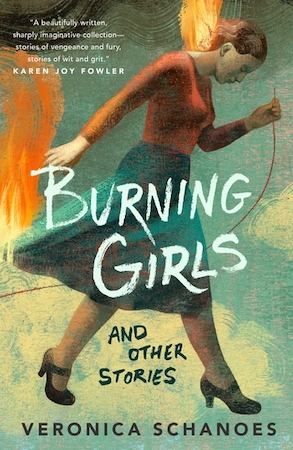
When I began writing the stories that are collected in Burning Girls and Other Stories, I did not have those questions in mind. I was interested in writing feminist revisions of fairy tales, punk-infused, grimy, New York City stories—and I think I did that. But Jewishness crept in, in unexpected ways. One early story, “Lily Glass,” is very much about (re)naming, a staple of the Jewish magic tradition, and at one point the protagonist reaches for the malakh ha-mavet, the Jewish angel of death. When I wrote a roman a clef about Nancy Spungen, the very young and self-destructive girlfriend of the very young and self-destructive Sex Pistol Sid Vicious, I indicated her Jewishness in a couple of lines referring to rugelach and what it means to be a “nice Jewish girl.”
And then I had an idea for a short, light-hearted, comic retelling of “Rumpelstiltskin” set in one of the sweatshops on the Lower East Side at the turn of the century (the last one, not the most recent one). I had a decent amount of background knowledge, and thought I could quickly acquire what more I needed. That idea evolved into the dark, tragic narrative of “Burning Girls” itself, with its protagonist Deborah, a Jewish witch who must survive a pogrom, immigration, and the attacks of a demon on her family. With “Burning Girls” behind me, I decided it was time to take the most antisemitic fairy tale I know of head-on, and wrote “Among the Thorns” as a response to the Grimms’ “The Jew in the Thornbush.” It’s a simple story, really, of a young Jewish woman coming back to the town in 17th-century Hesse that killed her father and with the help of a long-neglected Hebrew mother-goddess, wreaking revenge.
Where is Jewish magic to be found? Of course, I’m not the only one answering this question. On this list are authors exploring the intersection of magic and Jewishness, and just as for every two Jews, there are three opinions, the magic is in the multiplicity of answers.
Kicsi is an eleven-year-old girl living in a small Jewish Hungarian village on the eve of World War II when a strange magician named Voros arrives, prophesying the horrors of the Holocaust. The village’s wonder-working rabbi doesn’t believe him, but Kicsi does.
A series of connected short stories that begin when two girls, one from Germany and one from Russia, meet in a clearing in an enchanted woods at the beginning of the 20th century. They promise always to be friends, and their lives and families continue to be intertwined, even with the shocks of the following 100 years.
Daniel Fisher learns that he is one of the Lamed Vav—the 36 righteous souls who uphold the world—only when the demon Ashmodai kidnaps him on his wedding day because the demon king has been dethroned and needs help. Another demon Mashit is hell-bent on killing the 36, destroying not only Earth, but also the billions of shattered worlds called Shards that rely on the sustenance of Earth to survive.
The Torah of a small Polish village destroyed by the Nazis finds its way to Rabbi Rebecca Nachman, and she begins to receive visitations from the spirits of its dead. After a visit, they bring to her a Hebrew manuscript claiming to be the autobiography of God.
Miryem is the daughter of the local moneylender, and her father is terrible at his job, so bad that the family barely has anything to live on. Miryem takes over the business and proves herself to be so adept that she tells her mother she can spin silver out of nothing. Unfortunately, the local fairy-folk are listening and decide to take her up on her boast…
This study, published in 1939, is the essential reference work for anybody interested in the history of Jewish magic. Divided into sections based on topics such as amulets, divination, dreams, and names, the book begins with a discussion of Christian beliefs about Jewish magic, before delving into the magic traditions that Jews actually practice(d) and believe(d) in.
The beauty of this book lies in its gorgeous descriptions of two turn of the 20th-century communities in New York City: the Lower East Side, its streets teeming with Ashkenazi Jewish immigrants, and Little Syria, a community at the southern tip of Manhattan. The female golem, whose master died en route to America, and the jinni find themselves adrift from everything they know, trying to make their way in New York.
This novel is about three magical sisters, descendants of King Solomon, working wonders in the Hungarian woods. Facing rising antisemitism, they are forced to flee their village and leave behind their traditions. But danger has followed them to Wallachia and their new names won’t keep them protected for long.
Ballad and Dagger by Daniel José Older
This isn’t coming out until May 2022, but I’m already excited. It concerns two teenagers in New York City, both part of a diaspora from a sunken Caribbean island (and one a rabbi’s daughter), who acquire magical powers when gods and magical creatures appear at their neighborhood’s annual party, and must use those powers for the common good.
In the window of my grandfather’s corner store,
a cat dressed in my hijab. I feed her titans
of war, pluck Muhammed Ali out her chest wound,

sharpen her a legend in the lake at midnight.
Outside, a wave of Yemeniyat beat a man

after he gropes someone’s daughter
in the crowded street. They do it all in abayas.
Full-veiled niqabs. Unstoppable ninjas with

a hundred power-ups. And I know each one
had a bodega cat as a sibling. We learned

the ecology of courage, how to weave one
into our biology, the kind with a third-world
gut and claws out for the cops. What’s the word

for a bodega cat’s disciple? Vroomed exhaust,
indecent daughter, gray impression on the grid,

ruthless? We keep our scars. They throb
when we pass their glowing eyes, invasive
as a second language. If anyone has taught us

to fend for ourselves, it’s the cats on Tremont Ave.
The cats here are made from nothing. One day,

nameless limbs, small square of sidewalk, like a fig
fallen too soon. The next, a gang member’s mascot,
beast born from an Arab’s love and coked-up rats.

A woman in tragedy also grows that fast,
turns from whimpers to wind in seconds

with the right kind of violence, and after,
makes herself a home for the lost who look
for it. Even the drunks that enter can sense

these cats are off-kilter. They take her on anyway,
leave with one less eye and night terrors.

She gobbles the glass bottles they swing, spits
them out as bullets, laps their blood like
a creature of darkness. She conflates the brute

with the hero. She kills her kids with calmness,
knows how these streets latch on to anything

too green. Bodega Cat Sensei doesn’t give a single
fuck. What is there to fear when you’ve already
licked the edge? I want to be that baddie.

That bitch. That witchy intuition wrung tight
as my braids. Won’t find me frozen in the woods

with my scarf stuffed in my mouth. Won’t find me
as a scraggle scaled salmon swimming upriver,
flung into a muddy ditch and left to rot. I’ll be funnel

of yellow heat who goes running into a field.
All I want is to be an adequate ancestor

to the Yemeni women who come after. Who visit
my grave with bundles of nut meat for their great-
auntie with the immortal hips, that, myth says, broke

high facility fences and let out all the paperless.
Future long-haired girls gliding above all

that had happened before them. Who will salt
their stories with my own living and become
part of it. So after this lunch break, I’ll head to work

and whistle back at the guy who shouts, Nice tits
because it’s true. I do have nice tits. And a nice

peach emoji, and a birth story, a Khaleesi
walking out the fire. Let them find me dressed
only in leaves, bathing with bodega cats

and their panther mothers, breasts wagging
akimbo. I can’t forget those women who clapped

back. Who did not wear worry with each black
layer. Did not let things happen as they usually do
then drop like rotted fruit when it was over.
When I came out as a lesbian at nineteen, I had never kissed a girl. My only representation was pirated streams of movies and shows like Carol, The L Word, and the uber-popular Orange is The New Black. In these (mostly mediocre) forms of media, I envisioned my future, filled with a large sapphic friend group and love that would hopefully transcend the cheating, violence, and death that followed every fictional lesbian.
Now, only five years later, I am in awe of the beauty and creativity that stems from the lesbian community. Being a lesbian has been an overwhelmingly rewarding and fruitful experience that I’ve shared with such diverse and incredible people from varying cultures and with differing relationships to their gender.
Lesbians, bisexual women, and queer women share so much experience and history, and I’m grateful to be living in a time where we can support each other while telling our own authentic stories. From the revitalizing of The L Word to shelves upon shelves of realistic and award-winning lesbian and queer tales, the broader queer community has showed up for the next generation in miraculous ways.
Sexuality is a unique and sometimes fluid experience, but the authors below have referred to themselves as lesbians in interviews, bios, or tweets. As a lesbian writer, I find that these books and authors make my world brighter and less lonely. So for Lesbian Day of Visibility, a day I will be spending happily in love with my girlfriend and surrounding by the queer friendgroup I once imagined, cozy up with these tales of lesbians discovering themselves, their bodies, and their futures.
This rich and luxurious novel follows three generations of women from a Tawainese-American family. The majority of the book is from the Daughter’s perspective, as she navigates her relationships to her Mother and Ama, as well as her own body (that is growing a tail) and her enchanting neighbor, Ben. Daughter and Ama begin communicating via letters that emerge from holes in the yard. It is easy to get lost in K-Ming Chang’s intensely lore-driven prose that reveals family secrets, desires, and histories.
Forthcoming this June, Kristen Arnett’s new novel follows a married lesbian couple with a troubled son. Sammie is a stay-at-home mother who has rearranged her career to take care of her son, Samson, even though she is not naturally very maternal. Her wife, Monika, is emotionally distant and doesn’t provide much reprieve to Sammie’s monotonous and silently growing fear of her son. The book begins when Samson is a toddler and jumps to his teenage years, where their problems are still ever-unfolding and growing. A crooked portrait of dysfunctional partnership, parenthood, and resolution within oneself.
In the pristine tourist paradise of Montego Bay, Jamaica, lies a sordid reality for the natives of the island. Delores is the mother of Margot, a hotel worker by day and a sex worker by night, and Thandi, a precocious student who her family will do anything to support. Although Margot is potentially a lesbian, she uses her managerial position at the hotel to gain clients so she can send Thandi to a private school. Thandi, however, feels desperately out of place at the primarily white school. Nicole Dennis-Benn’s use of native dialects and dynamic characterization make her world feel dazzlingly haunted.
Set in post-apocalyptic Vancouver, Kirilow lives in an exiled community of women, some of whom can clone themselves (“doublers”) or regrow their organs (“starfish”). Then a mysterious flu sweeps through the town and her lover, a starfish with terminally ill clone sisters, dies. Kirilow, eager to save her community, leaves and finds a new starfish. But before they can save anyone, they’re kidnapped by a group of powerful men who are being detrimentally impacted by the new flu. In this cyberpunk novel, Lai creates a fever dream of a world made from the remnants of the one we know.
When Wendy, a trans woman with a group of trans friends and a Mennonite family, discovers evidence that her late Opa might have been transgender, she ignores it. Between her recently deceased Oma, and her and her friends’ addictions, dives into sex work, and mental illness, there is plenty on Wendy’s plate. This novel looks unflinchingly into the breadth of experiences trans women can and do face, while never losing sight of the love within their community. Plett’s new collection of short stories, A Dream of a Woman, also focused on queer trans women, is forthcoming this September.
A hybrid memoir of essays and poems, Funeral Diva mourns for a generation of gay Black men and queer people who died during the AIDS epidemic. Looking back to New York City during the late 1980s, Sneed reflects on coming out and losing so much of the Black queer community, as well as focusing on today’s crisis of police brutality and the Covid-19 pandemic. With other prose tackling her childhood, commentary on media, and navigating the world as a Black lesbian, this collection is concentrated and devastating.
The daughter of two addicts in a tumultuous marriage, Madden recounts growing up as a lonely Jewish, bi-racial, gay girl in the late ‘90s Boca Raton, Florida. With a captivating voice and gravity, this memoir in essays brings you into her world at full speed, complete with the trauma, confusion, and heaviness of addiction and assault. Years later, when her father dies, Madden reckons with how to grieve someone you never fully had.
In this collection of poems, Mukomolova explores her identity as a Russian Jewish lesbian New Yorker through the folk tales of Baba Yaga and Vasilyssa. While some poems embody the woods and lore, others are grounded in a fast-paced New York with Craigslist missed connections and lots of lesbian sex. Sometimes these worlds meet and cross over each other in outstanding ways.
In an early essay in Girlhood, Melissa Febos describes a pond that she used to frequent as a child: “Despite its small circumference, our pond plummeted fifty feet at its deepest point.” This could be a metaphor for female adolescence, the overarching theme of Febos’s book. Through the interconnected essays of this collection, she reveals the seeming small circumferences we often place on our girlhoods or those which are imposed on them. As she plumbs the depths of her coming of age, we see horrors more ordinary than we think, pleasures less desirable than we might realize.
The author of Whip Smart and Abandon Me, Febos is both an essayist’s essayist and a writer who transcends the very concept of genre. Girlhood’s researched reportage is intimate, poetic, and revelatory as the personal narrative itself. The book seems to listen as much as it talks. In this way, Girlhood does what an essay collection should do at its best: offer the reader a companion, fellowship beyond the aspirational profit economy models of self-care. Girlhood is our girl, there for us, sincerely and enduringly, as we begin to reconsider the circumferences we may place on the stories we tell of ourselves.
Febos and I talked via email about opening up closed cases, writing as an act of appreciation, and what we really mean by care.
Nina Sharma: I remember hearing you at AWP DC 2017 at “Candlelight Vigil for Freedom for Freedom of Expression,” fifty or sixty writers speaking up just as darkness of night was settling over DC. We were processing Trump’s inauguration, all the feelings of grief and helplessness that came with it, and you said, “then I woke up the next day and I realized I am not a child.” This makes me think about how being a child, being a girl child, is something that, even as a woman grows from girlhood, is a label or script she is asked to never outgrow. What was it like to be in touch, if not in conversation, with your girl child self continuously through the course of working on this collection?
Melissa Febos: Oh, it was so uncomfortable! In many ways, this book is an anthology of the girlhood experiences that I sought to exile for many years. Not in a deep, repression kind of way, but just in a this-case-is-closed kind of way. I had a story about what happened and how it affected me, and I didn’t really want to reconsider it. Except it wasn’t the true story, or at least the whole story, and so I kept circling back to that time, like picking at a loose thread. I had already learned that the only way to be free of the past is to face it, but I still sometimes return to the hope that there is another way. It was painful to go back to that younger version of me and really listen to her—sometimes it did feel like an actual conversation!—but the reward has been so profound. It was through writing this book that I became more able to love that young self, acknowledge the full breadth of her experience, and respect the ways that she’d succeeded at surviving.
It was painful to go back to that younger version of me and really listen to her—sometimes it did feel like an actual conversation!
NS: We have a guiding Febos-ism in our two-writer household. My partner often references a lesson you offered your students: “the story you told yourself to get through it may not be the story you need to tell on the page.” This sentiment crops up in “Kettle Holes”: “We don’t need the truth to survive, and sometimes our survival depends on its denial.” Can you talk about the process and perhaps pleasures of cracking into those things which we have survived?
MF: Ha! I love that. What an honor, to get quoted regularly in a household of two other writers. This sentiment has proved true for me, over and over, and this book is certainly no exception. “Kettle Holes” was the first essay I wrote of this collection and in a way it was a catalyst for the rest of the essays. I had this experience of remembering a terrible experienc of being bullied as a kid, and then went and found my description of it in my childhood diary and saw that I had rewritten the experience as totally benign, as if I had been playing with a friend. It was chilling, and heartbreaking. I knew that I had done a similar revising on a lot of the hardships of my girlhood, and basically decided to go find those revisions and undo them.
There was a moment while writing every one of these essays when the familiar narrative of an event—that I wasn’t bullied, it was no big deal, it didn’t affect me much, etc.—cracked under my closer examination and the truth spilled out. It was always a bit chilling, but also so satisfying, because in that moment, the truth that I’d been carrying inside me all of the intervening years was finally acknowledged.
NS: I really loved the ways your partner, Donika, comes into the narrative. Donika holds up a mirror for you but not in the “mirror test” way, nor the testing that follows through girlhood. It’s more like Velvet Underground’s “I’ll Be Your Mirror:” “I find it hard to believe you don’t know the beauty you are but if you don’t let me be your eyes and your hand to your darkness so you won’t be afraid.” As someone who writes about their beloved a fair amount, I really appreciated the ways you did.
I think we need people to serve as mirrors in order to build a more accurate and generous picture of ourselves.
MF: I love that song so much! Nico’s little husky voice—I’m going to have to listen to it after this. And yes, I think there’s a lot of belief out there that we have to love ourselves in order to love well, and while I get the logic that undergirds that thinking, it also hasn’t really been borne out by my experience. Being loved by folks who know how to do so well—my mother, Donika, many close friends of mine, even dogs!—has taught me how to love myself. I think we need people to serve as mirrors in order to build a more accurate and generous picture of ourselves. It’s not sustainable to depend on others entirely for our self-esteem, of course. We have to be willing to step up to do that work in ourselves, but to have someone there to model it for us is so precious. Maybe one of my secret (or not so secret) hopes for this book is that it models a path to self-love, functions as a kind of mirror that shows how the pains of the past can exist on the same continuum as a more generous relationship to self.
NS: Something I always think about is the more I write into the realities of my relationship with my partner, the more, paradoxically, we become characters on the page, telling a story both about and beyond us. How do you think writing into personal relationships informs a narrative of personal growth? And how might the story of you and Donika outsize that work? In other words, how does personal becomes political?
MF: I relate to that a lot. It’s funny, because you’re right that when I write about us, we become these characters, playing out a single story or set of stories, with a weird kind of integrity that is distinct from that which we have as actual people. But also, it’s through writing about us that I more closely examine our interactions and relationship. Externalizing the familiar can make it more visible, you know? Over the course of the day we might have any number of interactions that are sweet or challenging, or whatever. Like, there’s a scene in one essay where Donika compares me to a baby tiger, sort of reframing my view of my body in a different, more positive way. In the moment, I was like, aw, thank you, but also a little dismissive, maybe, because it felt too vulnerable. But when I wrote about it, I was basically bawling. To see a moment like that located in the structure of a particular narrative, in this case that of my relationship to my body, it suddenly becomes clear how meaningful it is. I could give so many examples like this! Of all kinds of relationships, too. In this way writing is really a practice of appreciation, of truly looking at the people and experiences that are so familiar we can neglect to see them fully.
NS: While your essays always feel intersectional, differences within girlhood were made explicit in this collection. There is attention in particular to differences of racial and cultural backgrounds throughout the narrative. I notice Girlhood uses the term “collaborate”: all the various collaborations we engage in throughout girlhood and how they may follow, and revise, as we grow. Could you speak a bit about what “collaboration” means to you and the power of interracial collaboration in particular?
MF: It’s such a big job, undoing the harms of patriarchy and white supremacy! I don’t think we can do it without immense collaboration. It was really important to me when writing this book that I didn’t neglect to acknowledge the variations in experience for women of different races (along with other kinds of difference), when we are talking about everything from slut-shaming to consent. I also didn’t want to speak for anyone else’s experience. That’s one of the reasons why I brought so many other voices into these essays. In terms of interracial collaboration, well, I believe we need it and that it’s possible. I grew up in an interracial family, have a multi-ethnic background, and also identify as white, so I’ve always had an awareness of it.
At this point in my life, care is really an action more than a feeling. Care is the work of love.
When we are talking about feminism, I think it’s entirely the work of white feminists to address their own whiteness and internalized racism so that we can become safe collaborators for BIPOC feminists. This goes back to the suffragists, right? Further, even. Audre Lorde famously said, “I am not free while any woman is unfree,” and it’s an attitude that still needs to be taken up by folks of all kinds of privilege who call themselves activists or leftists or liberals or whatever. For me, this work has meant taking on the lifelong project of understanding how racism and white supremacy have informed my own consciousness and behavior, and undoing it so that I can be a better collaborator.
NS: Something I always have to remind myself is that there is no being “good at” healing but this book feels like a sincere act of healing, for oneself and as an offering to the reader. Maybe it’s because you don’t make a catchword out of healing. What does care mean to you?
MF: I’ve thought a lot about this. I have had a thorny relationship to receiving care for a lot of my life, and have also sometimes thought that feeling a sense of care was enough to call love. At this point in my life, care is really an action more than a feeling. I can have affection or sympathy for someone, recognition of their situation, but if it stays in me, a passive experience, it isn’t care. Care is the work of love. It is the conversation, the gesture, the march, the cooking, the play, the work of art, the slow building of a consciousness that holds all of myself, and more than myself.
What would the world look like without men? How would countries function with governments led by women? Would workplaces become less toxic and hostile? What would the cultural shift in what we read, watch, and listen to look like? The speculative exercise of imagining the world with only women made me think in a different way about the gender dynamics at play in our patriarchal society today.
My debut novel The End of Menexplores a world in which a pandemic quickly kills 90% of the world’s male population while women are immune. Set between 2025 and 2031, the book follows Amanda Maclean, the Scottish doctor who treats Patient Zero and is trying to keep her husband and sons safe; Catherine Lawrence, an anthropologist who is determined to tell the stories of those who are lost and left behind; and Lisa Michael, a virologist trying to create a cure.
Truly memorable speculative fiction blends the practical and the emotional. In The End of Men, I wanted to show a hyper-realistic speculative vision of a world in which only 10% of men survive and the world must reshape and rebuild in a totally different way. But I also wanted to dig into the emotional ramifications of this new society. What does it feel like to be widowed or lose your partner when almost every other woman in a straight relationship has also experienced that loss? How do you recover from the loss of sons and brothers and fathers and friends?
Here are seven books that show, in some way, what a world could look like without men.
This short, perfectly-plotted novel follows Ada as she is forced to leave her town and becomes an outlaw. Set in the 1800s, decades after a plague has killed the majority of the population, it’s a woman’s ability to bear children that determines her value and safety in this new world. Ada finds a gang of outlaws—all women and non-binary people—who have created a safe oasis for themselves outside of the confines of this dystopian world.
This intensely creepy YA novel follows a core trio of three friends at a school taken over by “the Tox,” a terrifying disease that causes their bodies to break apart. The three main characters— Hetty, Reese and Byatt—have lived like this for two years. Their girls-only boarding school is on an island, with only a few female teachers to keep them sane and safe (or so you would hope). When Byatt goes missing, Hetty does everything she can to find her. Men are introduced later in the book, but the central core of a group of women—physically falling apart, isolated, but with close, twisty, dark friendship bonding them—is what drew me in.
This isn’t technically a book showing a reality without men, but it is an extraordinary piece of non-fiction that shows how different the world would look if it wasn’t built by and for men. Covering everything from the lack of testing of drugs on women which puts our health at risk to how cars are more dangerous for women to the fact that entire cities are designed without women’s needs in mind, this book both enraged and galvanized me.
After a storm kills the grown men of a Norwegian island, Vardø, only women and 13 boys and elders are left. From the first pages of this gorgeously written historical novel, my heart was in my mouth. The gripping aftermath of the storm shows how the women have to reform their identities and relationships that have been defined by their husbands, fathers, and sons. The exploration of women’s power and resilience is brilliantly done, and its intersection with witchcraft and indictment of men who fear women make it one of my favorite novels.
Three sisters live on an eerie island, looked after by their parents in a world that is post-apocalyptic and unexplained. After their father doesn’t return from a supply trip, the girls start to break apart their mother’s explanations and things become stranger. An insular, claustrophobic novel in which the few men who appear are out of place and unwelcome in this female world, The Water Cure is an exploration of control, sisterhood, family, and what it means to be “safe” as a woman.
A sci-fi classic, this weird and spiky novel uses multiple, parallel universes to explore gender, reproduction (children are born through the merging of ova), and radical ideas of childcare. One of the four worlds of the novel, Whileaway, is a female-only utopian society in which men supposedly died many hundreds of years ago (starting in “PC 17,” PC being Preceding Catastrophe) from a plague to which women are immune.
It would feel remiss not to include the ultimate, fantastical women-only world. Wonder Woman’s homeland—Paradise Island, also known as Themyscira—is an island from which men are banned under the penalty of death. The comic, a favorite of mine, follows Diana’s first year protecting the earth.
At some point in the past few years, I’ve noticed that a certain kind of wildly popular self-help guru—male, young, obsessed with optimizing one’s life—has gotten particularly intense about reading. James Clear, the author of Atomic Habits, reads 20 pages of a book every morning and maintains several “Best Books of All-Time” lists, including a list of “Books with the Most Page-For-Page Wisdom.” Mark Manson, author of The Subtle Art of Not Giving a F*ck, lays out in one of his blog posts how to read faster and remember more of what you read. “Scan for important words only,” he advises. “You get 90% of the meaning with about 50% of the words.” Manson, too, maintains his own lists of “Best Books of All Time.”
The king of reading as a form of self-improvement, though, is undoubtedly Ryan Holiday, the author of Ego Is the Enemy, The Obstacle Is the Way, and Stillness Is the Key, as well as books on marketing, “media manipulation,” and the trial that ultimately took down Gawker Media. He’s also a vocal proponent of Stoicism—as in, the ancient Greek school of philosophy. He runs a website called The Daily Stoic, which publishes articles on “How to Plan Your Day Like Marcus Aurelius,” and from which you can buy a pewter bust of Seneca or a medallion that says “Memento Mori” on it. Holiday writes about his own reading habits with messianic fervor. He advocates reading extremely long books, buying books over borrowing them from libraries, and taking extensive notes by hand on index cards, which he then files away into categories. “Wisdom, not facts,” he writes. “We’re not just looking [sic] random pieces of information. What’s the point of that?”
What would I be like when I emerged from this 13-day course a fully optimized reading bodhisattva capable of absorbing a book’s infinite wisdom with a single glance?
Ryan Holiday is also the creator of Read to Lead: A Daily Stoic Reading Challenge, a $50, 13-day course developed in 2019 whose promotional page promises that the course will teach me how to “Remember more of what you read to reach your true potential” and “Make more time for reading by replacing dead time with reading.” The page features no less than four red “Buy now” buttons. Months into a pandemic that seemed to have no end, I stumbled across this course and wondered: How exactly would a self-help bro teach me how to read better? Might I gain some clarity on what life-improving benefits we actually derive from reading? And what would I be like when I emerged from this 13-day course a fully optimized reading bodhisattva capable of absorbing a book’s infinite wisdom with a single glance? I got out my credit card.
Day 1: Start A Commonplace Book
You may be wondering what on earth I—someone who, insofar as I’ve made a professional name for myself, has done it as a book critic—was even doing in this part of the internet. Mostly, it started with a bad relationship. Circa 2017, I spent day after day reading shitty blog posts that doled out relationship and self-improvement advice—guiltily, by myself, and in an incognito tab, the way most people consume porn. Eventually, I stumbled across a whole ecosystem of self-help bros telling me how I might fix my life, and started reading them religiously. Something about the way they looked at life resonated with me, probably because I was dating an extremely troubled tech bro who was also constantly telling me how I might fix my life (and his).
Back then, in those miserable days of 2017, I had also started writing book reviews. Maybe if I just read more, I thought then, I might get closer to figuring out what it is I actually wanted to do with my life, or at least more closely align the disappointing external trappings of my life with what I felt inside (sad and literary).
If the purveyors of self-help are talking about something, it’s a good bet that the subject has become a source of guilty, deep-rooted despair.
These days, I no longer read articles dispensing relationship advice in a private tab on my phone late into the night, but the way gurus like Ryan Holiday think about reading—as a “habit” to be “optimized”—has lingered. If the purveyors of self-help are talking about something, it’s a good bet that the subject has become a source of guilty, deep-rooted despair in American life. And the way Holiday has talked about reading for years now seems to have been prescient: he, and this course, tap into the fact that reading is something we’re now all deeply anxious about.
Consider that the internet now seems to be filled with advice on how to read (more mindfully, more diversely, more quickly, more lengthily, more weekly, but mostly just more), and with people writing about their monumental pandemic reading projects and far more people beating themselves up because they can’t bring themselves to read anything at all, which means they’ve failed in some vague but definite way. All these lists and tips—“Read during commercial breaks!”—don’t make sense unless we’re haunted by an ambient conviction that however much we’re reading, it’s not enough. (Unless you get to 100 books a year, upon which I hear you instantly attain enlightenment.)
And there are all those vexed questions about format: do audiobooks “count”? Do e-readers “count”? Despite the lists’ assurances that actually there are no rules when it comes to reading, we can’t shake the feeling that there’s something simply more virtuous about glue bindings and dog-eared pages. That reading is now an oddly sanctified and protected activity, something that exalts and improves the person who can muster up the willpower to crack open a book.
I consider myself an earnest book-reading type as much as anything else, but something about this blunt insistence on reading as an undifferentiated good doesn’t quite sit right with me. Isn’t it an oversimplification to say that reading any book, regardless of its content, is a good thing—and even, as these tips suggest, the best thing one can do with one’s time?I worry that the way we talk about reading now has taken a turn for the sentimental: it’s reading as lifestyle signifier or personality indicator, reading as a fetishy idea, instead of something that people just, you know, do.
I suppose what I’m skeptical of is the notion that the mere act of reading can “improve” anyone. It feels a little more complicated than that. Back in 2017, I started reading books for money out of a vague sense that I might gain a clearer idea of myself and my own mind—that I might, in some way, become better. So, if anything, I’m the perfect counterexample: If reading a lot is really supposed to improve and exalt us, why do I still feel totally inadequate all the time?
I get an email from “Read to Lead: A Daily Stoic Challenge.” It is festooned with pithy quotes, generic book-themed line drawings, and illustrative anecdotes about great men of history, a regular sausage-fest: Ronald Reagan, Marcus Aurelius, H.L. Mencken, Charles Darwin, Beethoven, Mark Twain.
The email itself provides unobjectionable advice: start taking notes on the books you read and collect those notes in a single place (your “commonplace book”) for easy reference. I do this already—I’ve developed a byzantine yet highly technological system that involves the notes app on my phone, my email, and an inordinate number of text files—and so the email tells me I should “make a commitment to refresh how you use your commonplace book.”
“If you don’t find anything in your current book multiple days in a row,” the email continues, “consider discarding it and picking a new book, one that you’ve chosen specifically because it promises to impart lessons. Think of specific topics you want to cover: devote the next ten pages of your book to leadership, or examples from history, or the price of arrogance.”
There’s something off to me about the idea that anyone would choose a book “specifically because it promises to impart lessons,” as if the keys to life could be neatly extracted, lifted clean out of a book’s pages to be dutifully copied down. Obviously books can teach us things, but it seems to me that often this type of learning—“wisdom, not facts,” as Holiday himself puts it—is a slower, more difficult process, one where insights arise from the way a book’s language and plot and grammar act on your mind. I think of that highly-shared Lauren Michele Jackson piece about anti-racism reading lists, which themselves are explicitly compiled to “impart lessons.” These reading lists, Jackson writes, fail the very people who ask for them, “for they are already predisposed to read black art zoologically.” In a very real sense, actively looking for “lessons” might fail precisely because of how ham-handed the looking is.
Day 2: Calculate How Many Books You Have Left To Read in Your Life
After answering questions in a handy worksheet about whether anyone in my family had heart problems before 50, and whether I know my blood pressure, and whether I always buckle my seatbelt, I am given an estimated life expectancy of 90 years. That means, given my current rate of book consumption (around 60 books a year, if you must know), I have about 3,720 books to read before I die.
Counting the number of books one reads has always felt like a bookworm’s version of a dick-measuring contest.
This number is supposed to frighten me into reading more—it’s a “Stoic memento mori exercise,” Ryan Holiday tells us in an accompanying video. Looking at it, though, I don’t really feel much of anything, though I also sincerely doubt my 89-year-old self will be reading 60 books a year. Counting the number of books one reads has always felt beside the point and slightly suspect to me, like a bookworm’s version of a dick-measuring contest. It’s what you do with the pages that counts.
Day 3: Re-Read a Book You Love; Day 4: Read a Work of Fiction; Day 5: Read a Banned Book
Day 3’s email tells me I need to pick a favorite book and give it another go. (“It’s only through true study and depth of knowledge that one builds expertise and mastery.”) Day 4’s email is about the benefits of reading fiction—gaining insight into the human condition, understanding other perspectives, empathy, etc.—and it includes a quote from Adolf Hitler: “I’ve never read a novel. That kind of reading annoys me.” Day 5’s challenge is to read a banned book. Or rather, it’s to “pick a book that has been banned, and ruminate on its ideas. Take notes on the messages its author intended to send. Absorb its knowledge, knowledge that was forbidden by certain people; fight back against their censorious urges.”
I’ve decided to reread Madame Bovary, which checks all three boxes. When I first read the novel, I was subletting a dingy but incredibly cheap room in a Chicago apartment the summer after graduating college, with no real plans for the rest of my life. Every night before I went to sleep I’d lie on my thin, lumpy mattress and crack open Flaubert. I might have been paralyzed by the thought of my own appallingly vacant future, but my problems paled in comparison to Emma Bovary’s. I read with delight as she marries a disappointing man, takes two very different but equally disappointing lovers, and then—after some mind-blowingly gorgeous passages about the nature of fantasy and reality—dies.
When the novel was originally published, it was considered obscene enough by the French government to be put on trial in 1857, mainly for its frank, impersonal depiction of adultery without helpful moralizing from the narrator to show readers the errors of Emma’s ways. (Flaubert was eventually acquitted, and he dedicated the novel to his lawyer.) As a fallen denizen of the 21st century, I find it easy to dismiss this attempted censorship as futile pearl-clutching. What I’m more interested in is that Madame Bovary is just one of many instances of literature that plays on the dangers of consuming literature. Along with books like Don Quixote and Northanger Abbey, it gestures towards fears that novels were in fact so seductive that they could seriously confuse a person, render them incapable of discerning what was real and what was fantasy. Which stands in stark contrast to the soft-focus image that “reading is our compass, our guiding light” and that “it’s what we owe our ultimate devotion.” Which are actual quotes from a “Read to Lead” email.
Day 7: Review A Book Like A Critic
I am, for better or for worse, a professional book critic, and today I received a worksheet that renders my profession obsolete.
Each little sheet—which prints four to a page and looks a bit like the tiny surveys you get at fancy restaurants asking how the service was—says “Read Like a Critic!” in flowy script at the top, flanked by two drawings of open books. There are spaces to fill out the book’s title, author, and genre. The question afforded the largest amount of space (four blank lines) is: “Sum up the book in one or two sentences.” Below that is “Do you agree with the author’s thesis?” with two Scantron-type bubbles labeled “YES” and “NO.” Then there are questions about what the author’s strongest and weakest points are, and what they got wrong, and what they could’ve improved. On the very bottom is “Rating:” and five blank stars you can color in. I can’t decide if I find the whole thing adorable, as one would a child’s crayon rendering of the interior of the Sistine Chapel, or appalling, as one would if everyone thought that was actually what the interior of the Sistine Chapel looked like.
Mostly my notes are me copying out deliciously snarky or luminously precise passages and writing ‘whoa’ next to them.
To be fair, it’s not like reading as an actual critic is particularly glamorous. Certainly not the way I do it. I have finally begun to reread Madame Bovary, and mostly my notes are me copying out deliciously snarky or luminously precise passages and writing “whoa” next to them, or recording brilliant witticisms of my own devising, like “if I ever became a rapper my rapper name would be Flow-bear.”
But I also have a lot of unresolved questions bouncing around in my head. What’s with that weird first person plural the book starts out with, and why does it just fade away? Why does Emma’s perspective start so late; why do we get the life story of her boring husband in so much detail first? There’s page after page of description so crystalline that everything else I read feels vague and baggy for a while, but why is it written that way? Does it have anything to do with the act of looking or seeing (“His own eye would lose itself in these depths, and he could see himself, in miniature, down to his shoulders, with his scarf on his head and his nightshirt unbuttoned”)?
What I’m mostly trying to do is figure out what exactly Flaubert is up to, to try to understand the novel’s language and plot and grammar. Simultaneously, armed with index cards, I’ve been dutifully scanning Madame Bovary to extract “information that strikes you, quotes that motivate you, stories that inspire you for later use in your life, in your business, in your writing, in your speaking, or whatever it is that you do,” as I was advised to do in that first email about commonplace books. But I’m not quite sure what to write down to save for myself for posterity. Every sentence seems both incredibly stylish and completely meaningless taken out of context. Flaubert isn’t going to come out and drop some hard-earned truths on us outright, it turns out. Whatever lessons there are, they seem baked into the style itself—and nearly impossible to articulate on a worksheet.
Day 8: Replace Screen Time with Book Time
Today’s task is: read all the goddamn time. “When you sit down with your coffee and some breakfast, don’t watch the news. Read a book. When feel [sic] the urge to reach for the phone, don’t open Twitter. Open the kindle app. When you’re commuting to the office, or you’re at the gym, or you’re on a run, don’t listen to music. Listen to an audio book. When you’re eating lunch, don’t catch up on your social media feeds. Read. When you’re waiting at the airport, waiting at the gate, waiting to takeoff, waiting for the pilot to permit electronic devices, don’t just sit and kill time. Read. When you get home from work or when you have spare time on a weekend, don’t binge-watch Game of Thrones. Binge-read it.”
We’ve agreed that reading is categorically better than the way we’re actually spending our time, which is mostly dicking around on social media.
In some respects, this email directly addresses the main reason we’re so anxious about reading: because we’ve agreed that reading is categorically better than the way we’re actually spending our time, which is mostly dicking around on social media. Reading is “hard” now, something we have to convince and/or trick our lazy animal selves into doing instead of shopping online or looking for fulfillment at the bottom of an endless newsfeed or letting the “Next Episode” button on Netflix fill rightward with unstoppable speed. Reading is now seen as precisely the opposite of dicking around on social media, something that might just save us from the forces of the corrupting internet/everything that makes us dumb. It’s the argument Nicholas Carr articulated a decade ago in his book The Shallows: that we’re slowly forgetting how to read and grapple with difficult texts, and that our dwindling attention spans put us at risk of losing a grand but infinitely fragile intellectual tradition at the core of everything that makes Western civilization great.
When I was a kid, I would have made Ryan Holiday proud. I read on the toilet, I read in the moments immediately before and after showering, I read while I was supposed to be practicing the piano (I’d put my book in front of the sheet music), I read during meals. My sister and I even brought books to restaurants to read while our parents talked to each other, and it took me a long time to realize that this was something other people didn’t do. I did become a very good reader, but I was also an awkward shy kid who remained completely clueless about the state of the actual world well into my twenties.
Which is why I’m not convinced that reading is strictly more valuable than, like, the vast breadth of all other human activities. How exactly is reading better than staying informed or listening to music or talking to your friends or parents or a stranger or just having a silent moment to yourself? It makes no sense to consider reading the “opposite” of any other activity; doesn’t it all depend on the experience of what you’re actually doing and what you’re getting out of it? Exclusively exalting one category over another means ceding your own judgment to mere differences of form—and I’ve seen TikToks that contain more poetry than some books. I get that mindlessly scrolling through Twitter or watching people yell at each other on cable TV can corrode one’s soul. But surely you need some sort of healthy mix. The ancient Greeks were always going on about moderation.
I’m not convinced that reading is strictly more valuable than, like, the vast breadth of all other human activities.
“You’ve converted minutes and hours that you used to spend passively into something else: time spent acquiring wisdom,” the email says. But this line of reasoning presumes that there’s only one correct way to read, i.e. to acquire wisdom, instead of perhaps to experience beauty or joy or a certain heady pleasure, which I’m beginning to realize is why I read. (And anyone who thinks all books are founts of wisdom clearly hasn’t read enough books.)The aggressive pursuit of “wisdom,” in fact, strikes me as a distinctly unwise, almost naïve way to go about your life. Aren’t there profound truths you can’t glean from books, things you can really only learn from experience and the passage of time? I think of a line I read once in a Geoff Dyer book: “How can you know anything about literature if all you’ve done is read books?”
Day 11: Read A Book That’s Above Your Level
“You’re here because you’re a good reader,” today’s email begins, encouragingly. “But you want to become a great reader. Well there is a harsh truth at the center of all improvement: you will not get better by doing what is comfortable and convenient. Progress demands conquest.”
That “conquest” is triumphing over books we’re intimidated by because we think they’re intellectually over our heads or too long to actually make it through. I decide to read Edward Said’s Orientalism, a book that’s been on my list for years, and then I feel extremely uncomfortable about the notion of “conquering” Orientalism.
I’ve been thinking, in any case, about reading not as conquest but as something quite the opposite: freedom. I find it depressing that so many people feel a sense of obligation about reading—something they “should” do because it’s “good for them”—because part of reading’s appeal to me is that it feels fundamentally not coercive, an escape hatch from social pressures and other people’s expectations. Reading lets me make my own quiet decisions about whether I agree with an idea or not; I can vacillate in indecision (my typical state) for as long as I need to without anyone demanding that I come down on a side. Forcing yourself to read almost feels like destroying the spirit of the whole enterprise. Read hard books, by all means, but do it because you actually enjoy it, not because of some underbaked sense that it will turn you into “a gladiator of the written word” (gross; actual quote).
Day 12: Build and Organize Your Library; Day 13: Start Your “Anti-Library”; Wrap up Day (plus bonus content)
The email helpfully suggests a list of books that are designed to be worked through one day at a time, starting with two books by Ryan Holiday.
I organize my books (“You want everything about your library to facilitate your future use of it as a developmental tool”), buy ten more books on the internet (“An anti-library ensures that our weaknesses, our island of ignorance, is always in plain sight”), and the course is over. The next day, I receive an email that contains three extra, longer-term challenges, one of which makes me roll my eyes so powerfully that I’m in danger of pulling a muscle. It’s to “pick a book of wisdom and read one page per day.” The email helpfully suggests a list of books that are designed to be worked through one day at a time, starting with The Daily Stoic: 366 Meditations on Wisdom, Perseverance, and the Art of Living by Ryan Holiday and Stephen Hanselman and The Daily Stoic Journal by Ryan Holiday and Stephen Hanselman. The Daily Stoic consists of quotes and themed meditations for every day of the year, with headings like “Be Ruthless to the Things That Don’t Matter” and “Cut the Strings that Pull Your Mind.”
“One of the reasons we wrote The Daily Stoic,” reads the email, seamlessly transitioning into an advertisement, “was that we thought it was pretty remarkable that despite more than two thousand years of popularity, no one had ever put the best of the Stoics in one book for ease of study.” The idea is that day by day, the reader focuses on integrating a tiny aspect of Stoic philosophy into their own life. If that works for you, great! Meaningful direction on how we should live our lives is hard to come by nowadays. But I find it hard to accept that wisdom is simply a series of injunctions that sages came up with thousands of years ago, a list of “do this, do that” that can be catalogued in what is essentially a desk calendar masquerading as a book. If wisdom were that easy to access and simply difficult to put into practice, why struggle through War and Peace at all?
I have finally finished rereading Madame Bovary. I didn’t remember it being so accessibly funny, nor so dark at the end. I also didn’t remember identifying with Emma quite so much, which says something about how I’ve spent the six intervening years between readings. When I read it for the first time back in 2014, I saw a clear-cut distinction in the novel between fantasy (bad) and reality (good), and was astonished by the way Flaubert used the way he was writing, his style, to make his point. But now I kept noticing that coexisting with the narrator’s scathing irony was sympathy and identification—I got the sense that Flaubert was able to so completely skewer Emma’s delusions because he had experienced them, in some form, himself (“Madame Bovary, c’est moi”). The descriptions of Emma’s pastoral surroundings, the ones she scorns, are crisp where her fantasies are vague, but they now seemed to me tinged with their own kind of romance.
What reading-forward self-help gurus miss is that reading great literature is perhaps the least efficient thing you can do.
But I still feel like I’m barely scratching the surface of this novel. What reading-forward self-help gurus miss, I’ve come to conclude, is that reading great literature is perhaps the least efficient thing you can do. I keep coming back to the word “discernment.” Unlike self-improvement books, literature isn’t full of common sense injunctions that get straight to the point, that give you the answers outright, that tell you exactly what you need to do to change your life. The books I love the most don’t give you very much direction for your own life at all. They show you different ways of looking at human problems—they teach you how to see. That’s the lesson I’ve taken, at least, from the clear and unforgiving narrator of Madame Bovary, who fillets every character and presents them to us for our own judgment. And through that, through a long period of slow discernment that might take as long as life itself—and might, in fact, be life itself—is how I think you might gain wisdom.
Which, it occurs to me, is also why I still feel totally inadequate all the time, despite all my reading. Because honing your capacity for discernment actually requires that you feel totally inadequate most if not all of the time: because what you’re doing is a ton of self-questioning, constantly reevaluating what you think you know, existing in a state of doubt that might let the nuances in. It was an old Greek dude, after all, who noted that true wisdom means realizing that you know absolutely nothing.
DON’T MISS OUT
Sign up for our newsletter to get submission announcements and stay on top of our best work.
YOUR INBOX IS LIT
Enjoy strange, diverting work from The Commuter on Mondays, absorbing fiction from Recommended Reading on Wednesdays, and a roundup of our best work of the week on Fridays. Personalize your subscription preferences here.