My Heart Is a Dark Gash Oozing With Desire

“Wound” by Sammy Stevens

After the car accident the titanium rod they put in my leg got infected. The infection went into the bone. Osteomyelitis. There were twelve surgeries, multiple hospital stays. I lost my job, broke up with my boyfriend, moved back to Texas to live with my brother Jason. I’d just turned thirty-seven, and Jason was forty-two. He’d moved out of our parents’ house after they died, three years ago, Mom of pneumonia and Dad of a heart attack. 

I was glad they never had to see me like this. It would have disturbed them, their daughter adrift. They would have wanted to take me in. I probably would have let them. Of course, if they hadn’t died, Jason would still be living with them, so it would have been the four of us together again, surrounded by framed pictures of us as much younger people.  


Every Monday and Friday, I rode the bus downtown to the wound clinic of the county hospital, the only place in Austin that would treat people without insurance. There was a wound technician assigned to me named Luka. “Does it hurt?” he asked, kneeling before me as I sat on a chrome chair. 

I’d taken my pain pills. I said, “Not too bad.”

When he leaned over me, Luka’s scrubs were loose enough that I could see his chest, which was mostly smooth, only a weedy patch of black hair bridging his pecs. He unwrapped my leg, then fired what looked like a clear water gun with a rubber dish at the tip. It was like a high-pressure car wash. The gun spit and sucked at the same time, through two different barrels. “Look,” said Luka. “That’s granulation tissue. Your wound is healing.”

Was there a tiny, hopeful island of pink in the dark gash of my wound? Maybe so. Maybe not. My brain was blurred by insomnia, my senses blunted. I felt half dead on my best days. I had dark rings under my eyes, bony arms, flabby muscles. The antibiotics loosened my bowels. My periods were long and heavy. Everything tasted sour. I smelled like old banana peels, like wet trash. “Healing” seemed like fantasy-talk, like a fake word.

“You’ll be back on the dance floor in no time,” he said. 

I smiled at his little joke. 

My wound was red and weepy after the wash-and-dry. “We’ll go for the silver nitrate,” Luka said, rubbing his hands together. He was peppy that way. I could tell he had a robust personality, a strong engine. He wore blue high tops. His biceps flexed as he maneuvered cotton-tipped applicators. His body seemed overengineered for such a detailed and fussy profession. I pictured him working on a dock somewhere, lashing giant metal contraptions together. 

After the silver nitrate, he wrapped my leg in medicated patches and gauze. His hands were warm. I closed my eyes and saw purple and red shapes bloom and fold into themselves. Like cigarettes, Luka’s hands kept me going. 

I’d read that a severe injury with a prolonged recovery might cause hypnagogic hallucinations—odd sounds, bizarre associations, or, in my case, expansive and shifting images when I closed my eyes. But when Luka touched me, the images changed in a way I can’t explain. Instead of holding me apart, the shapes pulled me toward them, until I became, for long moments, vividly part of them. 

Dr. Peters, the rehab doctor who oversaw the wound clinic, walked through the privacy curtain. She had the pale, yellow complexion of a grub worm. She grasped my knee and rotated my hip in its socket, perhaps in order to save herself from having to squat. The way she handled me with her fat fingers made me think of my leg and myself as distinct entities, the former requiring attention and assessment, the latter—the me attached to my leg—superfluous. “Fine,” she said, then swept the curtain aside, left us alone.

Luka looked over his shoulder, adjusted the collar of his scrubs. “I know hospital insurance only covers two visits a week. Three visits would be ideal for this kind of wound. If you want, I could come by in-between.” 

“Come by where?” I asked. 

“Your place.” Luka clicked a pen and handed me a gauze wrapper. “Why don’t you give me your number?”

I have no idea what my facial expression must have communicated. 

“I like to help people,” he said. 

I felt a little pang at being lumped in with “people,” though he’d given me no reason to suspect I was dear to him.  

I wrote down my number and gave the wrapper back to him. He slid it into his breast pocket. I had a sudden sense of being swallowed by that pocket, which was deep and directionless, an ocean. The baby blue material of his scrubs was so thin and pliable, I thought I could see it shudder with each beat of his twenty-something heart.

We said goodbye, and I limped toward the exit on my crutches. Behind me, Luka greeted a mute obese man in an electric wheelchair. The man grunted. He was a regular, with a fungal infection that turned the skin of his calves to bark. “Incurable,” Luka had once told me, his face boyish and bright, the face of a star pupil. 


“Here? He’s coming here?” Jason asked. We sat on my bed, his living room couch in the daytime. In his ratty basketball shorts and yellowed undershirt, his thin hair swept up over his forehead and temples, Jason looked like a blond, washed-up Elvis. Wild gray hairs on his Adam’s apple caught the light from two windows that looked over a small park where a lady with pink hair sometimes cursed at me. 

I told Jason that Luka probably felt sorry for me. A normal brother might have taken the opportunity to ask questions about my treatment, how I was doing.

“How old is he?” Jason asked. He had a tendency to fixate on age.

I shrugged. “Young. Twenties?” 

His eyebrows shot up. “Sounds like cougar activity,” he said.

“Have you seen my crotchless panties?” I asked, trying not to let him get under my skin. 

“That’s disgusting, Maureen.”

“That’s what cougars wear,” I said. “Crotchless everything. No crotches allowed.” 

Jason scowled. “Stop saying crotch.”

I rolled my eyes. If I had likened myself to an animal, it would’ve been something less aggressive, more cerebral. Like a praying mantis. The quizzical stare, the bad posture, the pointy elbows. 

“I don’t know,” Jason said, as if it were his decision.

“It’s not up to you,” I said.

“This is my apartment.”

I pretended to take this as a threat, though I knew he would never kick me out. “Maybe I’ll leave,” I said. 

“You can’t leave, Maureen. Why do you say things like that?”

I felt no shame in threatening Jason. If anything, his anxiety at the idea of my leaving amused me. I was a child.

“Then it’s not up to you,” I said again. 

“What you’re telling me is concerning.”

“He’s coming to clean my leg. It’ll take thirty minutes.” I was hoping for more like an hour, but it had been so long since I’d been touched outside the wound clinic, I’d take whatever I could get. 

“Where is he getting the supplies?”

“Maybe from the hospital?”

“If he’s stealing them, you’re implicating me in illegal activities by using this apartment.” Jason lived in fear of the law, though I don’t think he’d ever broken it.

“The only way you’d be implicated is if you’re gaining something through the transaction,” I said. “But I’m completely freeloading off you.” I hoped abasing myself would guilt Jason into capitulating, though, of course, what I said was true; in addition to free room and board, Jason gave me a weekly allowance. Usually around one hundred dollars.

“Well, that’s true,” he said. “But what exactly is the transaction?”

“He cleans my leg. That’s it. I’m not paying him.”

“A transaction is a give and take. What does he get?”

“I don’t know,” I said, pretending not to understand. 

“What does he want?”

I laughed nervously, surprising myself. “What do you mean? Maybe he just likes to help people.”

“What if he has an expectation, Maureen?” Jason sounded genuinely anxious. I wondered if he’d ever had anyone else in his apartment besides me. Probably not. I’d bought and stashed some new white towels because his had crusty, yellow patches that reminded me of eczema. The toilet hissed day and night. Half the electrical outlets refused to charge my phone. 

“Expectation?” I asked. “That’s impossible. Have you looked at me lately?” I spread my arms and tried to rotate on my working leg, picturing a ballerina in a snow globe, but after a quarter-turn, I was completely exhausted. “And anyway, you’re here to protect me.”

“What am I going to do?”

“Kick some ass. Whatever older brothers do.” I smothered a laugh at the thought of Jason protecting anyone.

“This is ridiculous.” Jason got up and went to his room, paused in the threshold for a moment, as though balanced between his world and mine. Behind him, there were piles of poker books stacked nearly floor to ceiling. Three large computer monitors glowed. Pokémon, ninja turtle, and K-pop paraphernalia lined the walls. A life-size model of Beetlejuice stood by the bedside, with a hairstyle very similar to Jason’s; Jason had draped a pair of underwear over its outstretched fingers. 

The door clicked behind him. 

I had the same feeling watching him disappear that I’d had as a little girl in our childhood home. After all these years, his room was still his sacred place, a replica of the room he’d lived in with our parents for nearly four decades. Why didn’t he ever invite me in?


Luka called on Wednesday, and we agreed on five-thirty. I watched him exit his red coupe from our third-story window. He loped around to the driver’s side to pick up a lumpy bag. I hustled to finish my cigarette, then sprayed air freshener around the room and took a swish of mouthwash. I waited for him to knock before opening the door. 

“Hey,” he said, flashing a smile and walking inside. The smell of the wound clinic followed him. He was in his scrubs. I wondered if I’d get to see that patch of chest hair. “Nice apartment,” he said with intimidating ease. 

“It’s my brother’s. He’s in his room. Thank you for . . . ” I motioned to the bag. 

As he hoisted it onto the hallway table, his sleeves rode up, and I caught the briefest glimpse of those biceps. “They throw out the expired stuff, but it’s still good,” he said, “and I brought the portable suction machine from the storeroom.”

“Aren’t you afraid of getting caught? I mean, if you do this regularly?” I asked, hoping he’d reveal that he’d never actually done a home visit before, that I would be his first. 

“It’s a county hospital,” he said.

“Right.” I nodded, though I didn’t understand what he meant. Something about poverty, or waste. The moral underpinnings of social programs, etcetera. His politics didn’t interest me at all. I smiled. “I guess I should change?” I asked.

Luka produced a stack of hospital gowns from the bag. “I’ll set up in the bathroom and you can come in whenever you’re ready.” 

I pointed him to the bathroom, and Luka went in and closed the door. There were four gowns, an auspicious number, suggesting multiple visits. I found myself remembering the moment I’d received a promise ring, pink with tiny plastic diamonds in the shape of a heart, from a middle-school crush. 

I draped a gown over my shoulders, snapped three buttons, then stepped out of my sweats. I wore my newest underwear, faintly lilac and shimmery. I’d checked to make sure there were no stains. It felt important to keep this part of myself wrapped neatly, almost like a gift.    

It was petty, but it felt nice to bring them back and then let them die again.

Jason turned up his music, the same way he had as a kid whenever I’d had friends over, or when our parents were trying to come to terms with each other. I could almost hear them now, yelling about my “defiance” or Jason’s “social problems.” 

Sometimes I indulged the strange belief that they had died expressly to forget me and that by reliving some difficult part of our relationship, I could wake them from death, if only long enough for them to acknowledge me. It was petty, but it felt nice to bring them back and then let them die again. I liked that I could still be a daughter whenever I wanted. 

I opened the bathroom door. Luka had set up the suction machine and attached the water gun. “Sit on the toilet,” Luka said. I admired the way he was wielding his authority: firm, but with a light touch.

He kneeled on the floor and unwrapped my leg. I’d hoped he’d do it more slowly without the pressure of a full day of patients, but he moved as efficiently as always. Perhaps he couldn’t shake the feeling of Dr. Peters supervising over his shoulder. 

“Things are looking good,” he said. “I think the new tissue is a little shinier than last time. Can you see that?” He glanced up at me, full of juvenile enthusiasm. I shrugged. Somewhere down the line my leg had stopped feeling like my own. 

I closed my eyes and felt his hands poking, patting, caressing. I willed time to slow down, to move with the same torpid pulse as the shapes that unfolded behind my lids. The whir and slosh of the gun. The crinkle of gauze wrappers. Luka’s breath, low and even. His soles squeaked once or twice as he shifted position. Even Jason’s music couldn’t break my reverie. My mind calmed. I wondered if by cleaning my leg in my bathroom, Luka was in fact claiming me. I opened my eyes in time to see him apply the adhesive tape. 

My leg throbbed under its new wrapping. Womp-womp-womp, it went, echoing my heart. I had forgotten my pre-cleaning pain pills, but so what? Not even pain could interfere with this moment.  

After bagging up all the trash and equipment, Luka turned and opened the bathroom door. “I’ll drop this in the dumpster on the way,” he said.

With no forethought, I sprung up on my crutches, lurched after him, and grabbed his shoulder. He seemed startled and spun around. It wasn’t something I would normally do, but maybe the pain made it seem like an acceptable act. I pressed myself against him and nestled my head under his chin. His neck was hot. Had I licked him, I was sure he would have tasted wonderful. I clasped my hands behind his back, pushed my face into his chest, and took a deep breath. He smelled like raw biscuit dough and lime zest. I wanted to clean him like a newborn kitten. 

He dropped the bag, which hissed, releasing the scent of my used bandages.

Jason’s door opened and he appeared in wrinkled chinos and a button down, his hair combed and parted on the side. I’d never seen him like that. “Everything okay out here?” he asked. 

I backed away from Luka. I felt ashamed, then furious at myself. Was I not allowed to experience desire? “Jason, what are you wearing?” I asked.

Jason’s face turned red. “Regular clothes,” he said. We stood there in uncomfortable silence.

“Jason, this is Luka, from the wound clinic,” I finally said.

Jason stuck out his hand and Luka pumped it a few times. Their bodies making contact disturbed me, as though Jason might leave some kind of disgusting residue on Luka. “It’s so kind of you to help Maureen,” Jason said. 

Luka pointed toward Jason’s room. “Hey, is that Beetlejuice?”

The underwear was gone. How odd. Beetlejuice’s naked hand looked like a tree that had lost its leaves. Jason made a weird expression with his eyebrows, like a crime scene investigator in a movie, someone who ponders unforgivable mistakes, coldly stitching them together using bloody clues as thread. “I invest in collectibles,” he said. “I’m a Tim Burton fan, hence Beetlejuice over there. This is my home office.”

Home office? Hence? How long had he rehearsed this speech? And why?

“What a coincidence,” Luka said. “I’m a huge Tim Burton fan. I’ve always had a thing for the Corpse Bride.” Jason snorted, then they both looked at me at the same time, and for a reason I couldn’t quite parse, I felt out of place. Jason’s stare had a particular intensity. 

Luka held up the bag of trash. “I guess I’ll head out.”

“You’re leaving?” I asked. He didn’t seem to hear me. I glared at Jason, who followed me with his eyes. At the front door, Luka and I waved at each other, and then he turned awkwardly away. Before I knew it, he’d disappeared down the stairwell. 

I closed the door and turned on Jason. 

“Why are you doing that?” I asked.  

“Doing what? I’m just standing here,” he said. “I was trying to be nice.”

“I can’t believe you would just jump out of your room like that, dressed like that. It feels like I’m in high school and Dad just busted in.”

“Well, to be honest Maureen, it looked like something was going on out here. It looked like you were . . . .”

“Nothing happened.” I located my pill bottle in the abandoned sweats lying crumpled on the floor and shook some out, then swallowed them dry.   

“I’m pretty sure something happened,” Jason said. 

“Forget it. Stop. Why are you wearing that?”

“Do you have a problem with my clothes?”

“You look just like Dad.” It was meant to be an insult, but Jason seemed oddly immune. Or maybe that been his intention, to look like Dad. The thought made me want to scream.

“I thought you’d like me to meet your friend in some clean clothes,” he said. “Was I wrong?”

“Stop being a meddling dick head!” I shouted. The volume made me feel slightly better. 

Jason spread his hands. “What’s going on here? Do you have a problem?” 

“Do I have a problem?”

“You’re hurting my ears.” He actually covered them. 

“Stop, Jason. Stop being weird. A fucking weirdo.” 

“Whatever, Maureen.” 

Sensing a slight quaver in his voice, I felt inspired to hurt him even more. “Are you going to cry? Why don’t you cry right in front of me?”

He spun back into his room, slammed the door, and shouted, “Next time forget about me checking up on you! You and your friend can do whatever you want! In my apartment!”

“I know that,” I yelled back.

It was good that we were yelling again. We still had plenty of things to yell about. Since I’d come to live with him, I realized, we’d been pretending to be adults. Maybe now that we were finally yelling again, we could start being normal with each other. 


“Sorry about what happened,” I told Luka at our next clinic visit.

“Don’t be,” he said. I waited for more, but he seemed absorbed by my leg. The damn leg always upstaged me. Or maybe he was afraid of being overheard. I strained to listen for the sounds of someone on the other side of the curtain; Dr. Peters usually announced herself with mouth breathing.

“Living arrangements are tricky in times of transition,” I said, hoping to draw his attention toward the rest of me. 

“Makes sense,” he said, looking up briefly. 

Something about his response and demeanor told me I should give him a little space, but I wasn’t about to heed this sort of intuition now when I had never heeded it before in my life. No, I was going to press Luka, compel him to react. Forcing a negative outcome would at least circumvent the nightmare of uncertainty.  

“My brother came out of his room at exactly the wrong time,” I said. 

Luka laughed and seemed to concentrate harder on his handiwork, rolling out moist pink gauze that he tightened around my calf in even, overlapping spirals.

What exactly did I want from him at this moment? Humor? Acknowledgement? I felt ravenous for emotional connection of any kind. “Things were just getting interesting,” I said.

He ignored me and instead looked very seriously at my leg. “Let’s talk about your leg,” he said.

“My leg.” Of course. What else would we talk about? 

“Are you smoking?”

“No.” Smokers were always being forced into these situations where they had to come clean, but I wasn’t going to buy into all that. 

“Are you eating a healthy diet? The one on the nutrition papers we gave you?”

Crackers. Half a can of beans sometimes. Coffee. Some stale candy corn from the laundromat. Were any of these staples allowed in the exclusive company of the four food groups? Probably not, but my stomach hadn’t been able to handle anything else. “More or less,” I said.

“The tissue doesn’t look healthy today. It’s grayer than we like. It feels like we’re backsliding. And if you’re not smoking, and you’re eating a good diet, we need to know what’s causing this.” 

He left and came back with Dr. Peters. “We’ll need x-rays and some new lab work,” she said. “Lucky for you, your charity insurance pays for it.” She depressed my eyelid with her thumb, then lifted my hand and pressed my nail. When I yelped in pain, she smiled. “You’re anemic. You might need a transfusion. Transfusions carry risk.” She seemed to have decided to teach me a lesson. “And if you can’t stop smoking,” she continued, “we can’t guarantee your treatment at this clinic. Do you understand?”

I nodded. 

“I’m going to need you to tell me you understand.” 

Furious, I blinked away tears. “If I don’t get treatment my leg will rot off, and I’ll die,” I said.

“Is that what you want?” 

I tried to empty my face of anything resembling emotion. “To clarify, you’re asking if I want to die?”

Her mouth twisted and she straightened her back. “Is this a joke to you? Are you a teenager? Look around. Everything here costs money. Do you get it?”

I imagined stabbing Dr. Peters in the stomach with a scalpel, sewing her lips together, smothering her with saline-soaked gauze.

He needed to understand just how messy I was. Not just my leg, the whole me.

 “I’ll talk to her, Dr. Peters,” Luka said. He sounded like a child redirecting an angry parent. 

“I’ve heard a lot of talking in here, Luka,” she snapped. “Too much talking.” 

She left. Luka handed me a tissue. I let the tears coat my cheeks, the snot congeal between my lips. It was good for Luka to see me like this. He needed to understand just how messy I was. Not just my leg, the whole me.  

“I’m sorry,” he said, smiling weakly. 

“It’s not your fault,” I said.


On Wednesday evening I took a shower and sat on the corner of the couch, watching the street. No red coupe. No knock on the door. Jason came out in his chinos and button down and stood there like an idiot—saying nothing, thank God—then went back in his room. I chain-smoked half a pack, dumped the rest into the garbage disposal, and flipped the switch. But the disposal only hummed. I’d forgotten it was broken. I found a green rubber glove and extracted the cigarettes, then squeezed them into a clump and threw it in the trash. I heard the thunk as it hit the bottom. 

When I lay down for bed, Luka texted. 

“I’m downstairs. Do you mind if I come up?”

I jumped up and limped into the bathroom to assess my appearance.   

“I’m not really dressed,” I wrote, then erased it. “Sure. Give me five minutes.” I downed a couple pills, splashed water on my face, rubbed my armpits and crotch with a soapy washrag, and brushed my teeth. He knocked. For some reason, I wanted to cry, so I slapped my face a few times until the urge passed, put on a bathrobe, and went to answer the door. 

Luka stood there with a little bouquet of blue flowers held together with a twist tie. “Dr. Peters found out I took the portable suction machine and I almost got fired. It’s locked in her office. I drove around to the medical supply stores but I couldn’t find the right kind.”

It had been a while since anyone gave me flowers. They were wilted, but so beautiful, with silky petals, bright yellow stamens. “I stopped smoking for real this time.”

“That’s great,” he said. 

“I mean, I think I stopped. I smoked half a pack earlier, actually, but I put the rest down the garbage disposal.”  

“Stopping smoking is one of the hardest things anyone can do.” He sounded like an honor roll student parroting some Reagan-era D.A.R.E. commercial, but I supposed it was true enough. I had stopped smoking hundreds of times. 

“Do you want to come in?” The flowers seemed like a good sign, but I felt like I needed confirmation. My heart paused as I asked the question. He nodded. It restarted. 

In the apartment, I put the flowers in a glass of water and took it with me to the bathroom. Maybe it was sentimental, but as I sat next to them on the toilet, those flowers made everything around them prettier. 

As Luka cleaned my leg, I remembered that I used to think I had nice legs, a long time ago. Now even the good one didn’t look great, its muscle gone to fat. And yet, what did it matter what I thought of myself? I closed my eyes. What did it matter?

“Can you slow down a little?” I asked.

“Sure,” he said. His voice sounded round and deep in the cramped room. 

“Even a little slower?”

He slowed.

The temperature in the bathroom rose. The humidity skyrocketed. It felt like a sauna. My pits and crotch were all wet. 

Then, right outside the door, Jason cleared his throat. I imagined what he would think of the expression on my face if he opened the door, and I kept my eyes closed, hoping he would disappear.

“Come in,” Luka said. 

The door handle rattled and the cool air from the hall touched my face. “Hello,” Jason said. “I was wondering if Luka would like to stop by my room for a few minutes.”

I opened my eyes. Jason had that ridiculous side-part again, a smug look on his face. “Go away,” I told him. 

“I’d be happy to visit,” Luka said, putting the finishing touches on my new bandage.

“Only if I can come too,” I said.  

Jason pursed his lips and then, in a tone suggesting I lacked the grown-up capacity to reason, said, “This is more of a guys-only hang out, Maureen.”

“Oh? What are you guys going to do in there?”

Jason ignored me. I picked up the trash, and we all walked to Jason’s room. They went inside and Jason closed the door, leaving me standing there holding the trash bag. “Hurry up in there,” I said. In a moment I could make out Luka exclaiming over something. Who knew what Jason had shown him. 

I opened the trash bag and sniffed—a whiff of dry sweat and death. I put my face inside it, sealing the edges with my fingers so fresh air wouldn’t interrupt whatever it was I thought I wanted. What did I want? I didn’t really know. The smell seemed to want something from me. I breathed deeply until there was no difference between the air in my lungs and the air in the bag. Perspiration, blood, rot, loneliness, and shame: everything equilibrated. I took the elevator downstairs, hobbled outside on my crutches, and arced the bag over the dented lip of the dumpster. 

Luka’s coupe was parked nearby. It was so small and red that it looked like a toy. What was it with men and toys? I tried the handle. It opened. I dropped my crutches, bent down, and collapsed into the passenger seat. I closed the door and listened to the sound of my breathing, which seemed too fast. I opened the center console, turned around to survey the backseat. I tried to see everything, memorize it. I closed my eyes, felt the pull of the revolving, the collapsing, the dilating. I felt tired, but I resisted sleep. I would never fall asleep in a car again, I told myself, if only to hold it over the head of the self who had fallen asleep in a car once before. I’d been driving home after a waitressing shift. I had no memory of the accident. I’d ended up in a ditch, apparently, upside down, bleeding from a lacerated liver, ruptured spleen, shattered tibia. 

I opened the door, but I didn’t get out of the car. “Fucking bitch,” someone yelled. I jumped. It was the pink-haired lady sitting on a bench across the street. I flipped her off. She seemed surprised to be acknowledged. Maybe she’d thought her voice existed only inside her head. I felt a horrible impulse to cross the street, but then she smiled, and I was afraid that she might see me as a friend.

I sighed and let my head fall back against the headrest.


“Hey,” Luka said. He was kneeling beside the car.

“What is it?” I asked.

“Maureen,” Luka said. “It’s me.”

“What is it?” I repeated. I was still half-asleep. “What time is it?”

“Almost midnight?”

I sat up.

“I haven’t played video games in years,” he said, looking back at the apartment. “I wanted to come out, but I could tell he really wanted me there. What are you doing down here?”

I shrugged. “Looking for a cigarette,” I said. “It’s all I can think about.” It wasn’t really a lie. I was always looking for a cigarette. 

“Stopping smoking—”

“Is one of the hardest things anyone can do.” I mimed sucking a cigarette, blowing air in his face. 

“That’s right,” he said. “And you were looking in my car?”

“It was unlocked.” 

“Did you find any?”

“Not yet. But I haven’t checked the backseat.” A silence passed between us. I let my eyes and shoulders relax completely. I forced myself to keep looking at him. He gulped, held out his hand, and helped me up. He popped the front seat, revealing a tiny compartment, hardly big enough for us both. I followed him in and closed the door. I let him put his hands wherever he wanted. His tongue was hard. Our skin stuck together. 

“Hey,” I said. “This isn’t serious.” It was a pathetic reflex, this declaration of non-seriousness, but he didn’t even seem to hear me. He pulled off my clothes, my bandages. 

“Is this okay?” he said. He was in a kind of trance. Was it okay? Of course it was. He owned this leg. 

“Yes,” I said. 

He had so much energy, a sprinter at the starting line. His sweat dripped into my eyes, my mouth. I wondered if he could crush me. How would that feel? Out of nowhere, I made a noise like a dying cow: guttural, unattractive. I couldn’t remember ever having used my vocal cords so honestly. Was this my mating call? When it ended, Luka had stilled. He palmed my face on both sides and smashed his nose against mine. His eyelashes poked the fleshy corners of my eyes. “Can you pretend you’re dead?” he asked. 

I could have asked: what? Or maybe: why? What came out of my mouth was: “How?”

He traced a scar on my side with his index finger. “I don’t know,” he said. “I just want you to pretend.”

For the first time, I remembered the accident—really remembered it, not just as a thing that happened, but as a thing that happened to me. I remembered the sound. A roar. I rolled my eyes back, opened my mouth. My body felt very light. Waves of electricity moved down my inner arms to my wrist and the tips of my fingers.

“That’s good,” he panted.  “But not just dead—undead.”

Undead. What did he mean? I scratched his chest, yanked his little black patch, hissed and growled. “Like this?” I asked. 

“Yes,” he said. 

Drool ran down my cheek as my head hit the door rhythmically. I forced my eyes to stay open. I didn’t want to think at all.  

Afterwards, we tried to find our clothes. Everything was slimy and smelled like half-price produce. I could barely move. “Can you pull up my underwear?” I asked, weakly lifting my pelvis. With one hand he stabilized my hips in the air, with the other he worked my underwear up my legs, carefully untwisting the material. 

We crawled out of the car, and I stood up slowly, trying to straighten myself. Luka handed me my crutches. He seemed to be searching my face for clues. 

Back upstairs, I sat on the couch and he rewrapped my leg. He looked uneasy. “That wasn’t too weird, was it?” he asked. 

“No,” I said. I felt protective of him. “People are weird,” I said, raising his chin with my finger. I thought maybe I’d say something else, but that was it, all I had, the full extent of my wisdom.

He leaned forward and kissed my knee, turned his cheek and rested it there. 


From the window, I watched his taillights blink on and off down the road.  

I limped to the kitchen, got on my knees, and reached down into the bottom of the trash, past the coffee grounds and banana peels, and pulled up a dense, damp clump the size of a fist. I only wanted a smoke, but there on the kitchen floor, I held the decomposing heart of a zombie woman. My heart.

I pulled it apart, separating out the wet cigarettes, ordering them from most to least disgusting. I chose the last one, heated it in the microwave until it was dry, then lit it. I inhaled until my lungs hurt, opened the window, stuck my head out, and blew the smoke as far as it would go. 


When I woke, Jason was making pancakes. I pulled up a stool. He dropped bits of fruit into each cake as it sizzled on the pan. He sprinkled powdered sugar on a healthy stack and handed me the plate. 

“So, I guess you had a lot of fun with Luka last night,” I said. 

“It was fine,” Jason said. He flipped a pancake. His tone seemed to indicate he had something more to say. 

“Did you like him?”

“We were mostly playing video games.”

“What did you think?”

“I could tell he knows I have a lot to teach him.” 

“About what?”

“Life,” Jason said, gesturing to his room.

“He’s not going to come over and hang out with you all the time.”

“You’re not his parents.”

“You’re not his brother.”

He shook his head. “I need to get to work.” He went to his room and shut the door. 

He’d left a white envelope in the same place he always put it. I picked it up, opened the flap, and counted the money. I needed a haircut. I needed to go to the laundromat. Maybe I’d buy some new jeans. Some new shoes. Something nice. 

I caught the 10:20 bus downtown. The pink-haired lady was on it, and I walked past her and sat a couple rows back. As the bus started again, she turned and said, “Hello.” Her voice sounded completely normal. I thought about whether or not to say hi back, and we looked at each other for too long, as though we had some sort of actual relationship. Finally, I looked away.

A group of girls in school uniforms walking on the other side of the street caught my attention. They were swinging their arms, laughing, dancing. Suddenly, one of them tripped and stumbled toward the curb. I felt sure she would fall into traffic. She would be killed. Her parents’ lives would be ruined. It seemed horrible that I would be the person with this last glimpse of their child. 

But just in time, the girl caught herself, and stood perfectly still, her arms spread behind her with their fingers splayed, her toes jutting past the lip of concrete. Then the bus moved forward, and I lost sight of her.  
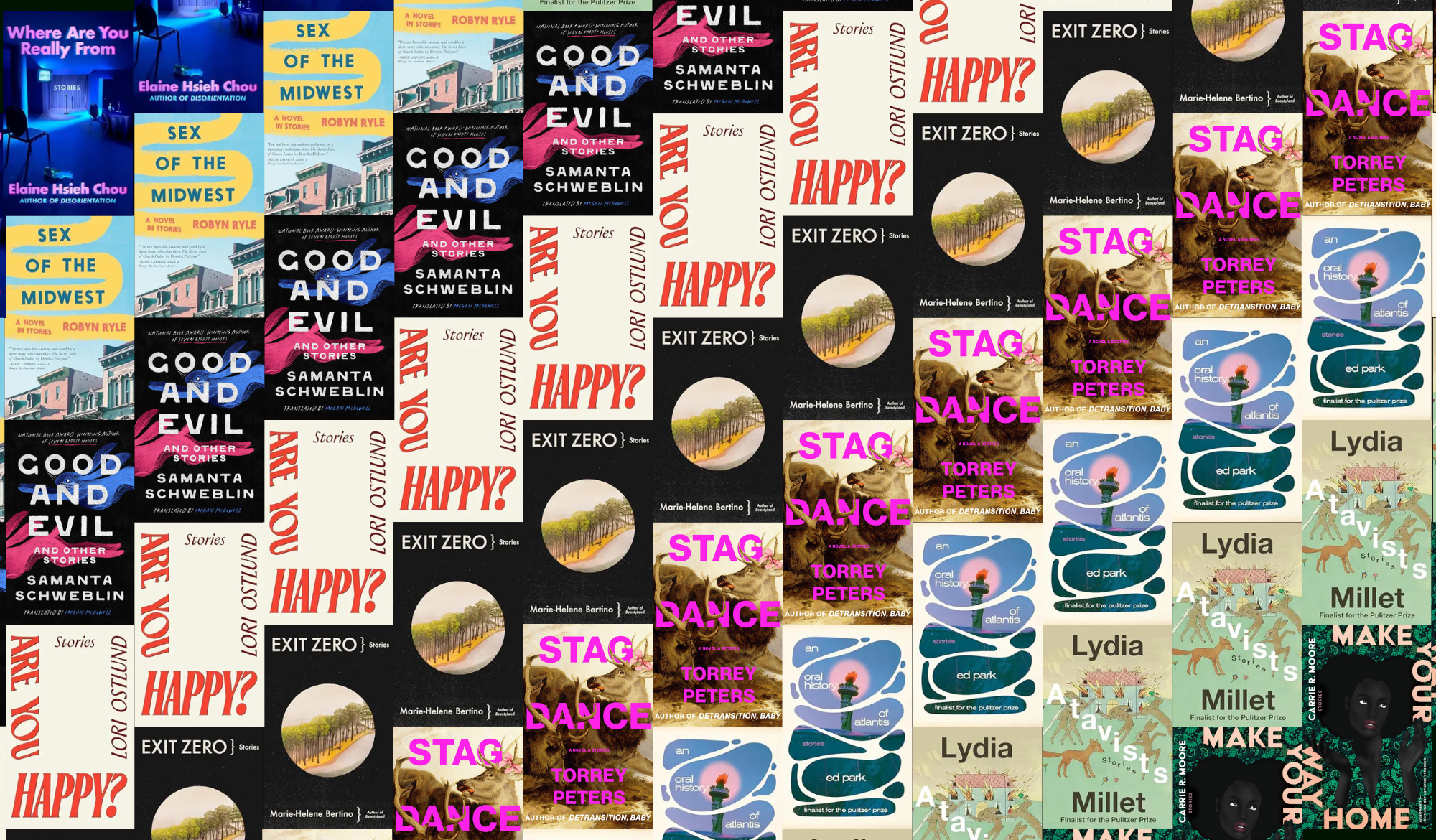
Electric Lit’s Best Short Story Collections of 2025

Electric Literature is one of the only—if not the only—publications that puts together a best of the year list dedicated to short story collections, the commercial underdogs of the publishing industry and perhaps my most favorite literary form.

I love short stories for their efficiency and precision, for the way they contain an entire world in a mere few pages. Sometimes they are funny, enlightening, strange, or surprising. Often they are devastating. This year, it’s especially fitting that the EL staff and regular contributors selected Marie-Helene Bertino’s collection Exit Zero as our favorite collection of the year. We first published Bertino in Issue No. 3 of our weekly fiction series Recommended Reading, fourteen years ago. Recommended Reading recently published its 700th issue, adding to a completely free archive composed mostly of short stories. Bertino’s most recent novel Beautyland was voted EL’s best novel of 2024.

Bertino is an example of the many writers whom Electric Literature has invested in long term: Lydia Millet first appeared in our pages in 2014, Samanta Schweblin in 2012. The list below is wide-ranging, and includes relative newcomers, as well as masters of the genre, like Richard Bausch, Paul Theroux, Lynne Tillman, and Jonathan Lethem. The enormously influential Osamu Dazai, who lived from 1909 to 1948 is featured, as is the contemporary Tamil author Jeyamohan, translated into English for the first time. Wherever you dip in, a world awaits.

— Halimah Marcus, Executive Director, Electric Lit and Editor, Recommended Reading

Top 5 Short Story Collections of the Year

Exit Zero by Marie-Helene Bertino

Many great writers are recognizable, even without a byline, at the line level—in the cadence of their sentences, the structure of their plots, the voice of their characters. Marie-Helene Bertino’s work is unmistakable for its intelligent charm and startling originality. A unicorn appears in a backyard in New Jersey. An escaped tiger visits a department store. A vampire navigates eternal middle age. In one particularly endearing story published in Recommended Reading, a 70-year-old woman spends her first day post divorce with a stolen painting of Cher. In Exit Zero, Electric Literature’s favorite collection of the year, Bertino asks her readers to suspend their disbelief and step into a brighter, if sideways, world. We suggest you do.

Stag Dance by Torrey Peters

Readers of Torrey Peters know her for her distinct voice, and for writing that excavates the depths of trans identity and longing. In her newest book, Stag Dance—comprised of three short stories and a novella—Peters’s voice careens towards both intimacy and cruelty: “Infect Your Friends and Love Ones” tracks a virus released by a group of trans women; in “Stag Dance,” a lumberjack dismantles and then reconstructs his gender through the duration of an isolated winter in the wilderness. Equal parts vulnerable and remarkably weird, Peters transcends the binaries of language to focus on the underlying feelings that inform identity, shame, and connection—themes she discusses in her interview with EL.

Are You Happy? by Lori Ostlund

In her introduction for “The Gap Year,” a story from Are You Happy? published in Recommended Reading, Kristen Arnett discusses a phenomenon she credits with attracting readers to Lori Ostlund’s work. In book reviews, critics unintentionally circle the same phenomenon, describing Ostlund’s stories as worlds “not comfortable to inhabit,” “where devastation stands at attention” and “happiness is elusive.” In “The Gap Year,” a couple navigates the death of a child. It’s a story about grief—it is, absolutely, yes, devastating, not quite comfortable, suffused with sadness. And yet, the reader can’t—does not want—to turn away. This is, of course, the Ostlund effect, and not only can it be found in every story of the collection, it’s also on display in EL’s interview with the author.

Good and Evil and Other Stories by Samanta Schweblin

Samanta Schweblin’s work can be accurately described as equal parts uncanny and hyperreal. In Good and Evil and Other Stories, Schweblin’s characters grapple with the very real terror of occupying a human—and therefore inherently destructible—body. In one story, a child swallows a battery and the tracheotomy that follows punctures the connection between father and son. A woman drowns herself only to discover that suicide is not an escape from life. A writer flees her husband’s illness but finds herself stymied by writer’s block in a world without him. All of Schweblin’s stories, like all of her fiction, irradiate our deepest, slipperiest fears without once losing purchase in the “real world.”

An Oral History of Atlantis by Ed Park

In his recent 23 Questions Interview with Electric Literature, Ed Park shared his penchant for surrealism and unlikely sources of narrative energy. His newest short story collection reflects these preferences: In the title story, one man’s isolation compounds an apocalyptic, pandemic-struck New York City; another imagines a university course on aphorism as an allegory for fragmented connections. Park approaches the mundanity of contemporary life with humor, absurdity, speculation, and nods to his genre influences. 

Electric Lit’s Additional Favorite Short Story Collections

Atavists by Lydia Millet

If there’s one thing that characterizes Lydia Millet’s work, it’s her unwillingness to look away, to return to business-as-usual in a continually disturbed (and disturbing) world. In “Therapist,” published earlier this year in Recommended Reading, the titular character is plagued by the neuroses, climate concerns, and maladaptive coping mechanisms of her patients, unable to shrug off a mounting sense of disquiet. Millet’s attention to contradiction, denial, and palliative responses makes Atavists a deeply human exploration of our most base impulses, and the role they play in shaping our surroundings.

Sex of the Midwest by Robyn Ryle

Robyn Ryle is a self-described “lover of small towns,” but even if you didn’t know this about her, you would feel it in her prose. All of the stories in Sex of the Midwest orbit a mysterious survey—“Sexual Practices in a Small Midwestern Town”—sent to the inhabitants of Lanier, Indiana. The characters’ reactions to said survey, though varied, consistently push against any assumptions you might have about small towns. In one bracingly funny story published in Recommended Reading, small town denizen Loretta steadfastly ignores “the stupid sex survey” and confronts instead the encroachment of the outside world into her hometown, beginning with the wiener vendor. She isn’t interested in the survey, isn’t interested in change, isn’t interested in the hot dog guy’s mystery meat. “There were no hot dog carts when she was growing up and there would be none now.”

Where Are You Really From by Elaine Hsieh Chou

In Where Are You Really From, Elaine Hsieh Chou takes a familiar, reductive phrase and turns it on its head, returning the question to the reader with a philosophical bent. Chou’s characters encounter doppelgangers, covet (and plot to cook) their neighbors, and transact with the currency of identity. She is interested in the conflict and jealousy that arises in dyadic relationships, infusing her stories with honesty, aspiration, and what it really means to grow up and assume responsibility for one’s place in the world.

Make Your Way Home by Carrie R. Moore

These eleven stories consider the reality of living, connecting, and searching for home as a Black American in the Southern United States. In conversation with Rickey Fayne, author Carrie R. Moore spoke of her struggle to convey multiple ways of being, and her approach to imbuing each character with a particular emotion. The result is a series of fully-populated stories: a sensory landscape that captures the conflicted intimacies of place, and attends to both the historical ley lines and resilience that accompany being Black in the South.

Extinction Capital of the World by Mariah Rigg

Mariah Rigg’s debut collection is an ode to the legacy and impact of place. Born and raised in Hawai’i, Rigg brings her own personal and ecological knowledge to these stories, deconstructing the all-too familiar history of destructive tourism, displacement, and imperialism. These stories treat Hawai’i as a living entity of its own, with care and intense feeling for the many species and communities under threat, and recognition for the challenges that come with adapting and forging a path into the future. 

No Ones Knows by Osamu Dazai

Osamu Dazai’s work is bleak—there’s just no other word for it. His protagonists are embedded in worlds characterized by despair and alienation, possessed of perspectives that might generously be called pessimistic. The narrators in No One Knows are self-pitying and self-absorbed. “Chiyojo,” featured in Recommended Reading, begins with a declaration embedded in a monologue: “I’m a stupid person. Genuinely stupid.” And yet, like Dazai’s prose itself, his characters are also decidedly compelling, even charming.

Stories of the True by Jeyamohan

Originally published in 2011 and translated from the Tamil by Priyamvada Ramkumar for the first time, Jeyamohan’s Stories of the True feels as poignant and prescient as ever; these twelve stories excavate the class, caste, religious, and gender issues that characterize Indian life, with a resounding, hopeful voice. “The Meal Tally,” featured in Recommended Reading, follows a young man who finds literal and spiritual nourishment with a man named Kethel Sahib, whom the boy calls a djinn—a resourceful spirit—for his unbidden kindness. This encounter, amongst many others in the book, reveals an undercurrent of idealism set against the fraught context of Indian society, and speaks to the transfigurational power of care and connection.

God-Disease by an chang joon

Selected as the winner of the 2023 Mary McCarthy Prize in Short Fiction by Manuel Muńoz, an chang joon’s God-Disease is a haunting collection that turns darkness into an irresistible indulgence. Through five stories set in an otherworldly Korea, joon’s debut contemplates identity, mortality, and denial with a deftness both rare and shocking. Best described as “Southern Korean Gothic,” God-Disease unnerves, rattles, and curses characters and readers alike. Challenging and unsentimental, joon’s stories enlighten us by probing the sharpest horrors of being alive.

Beyond All Reasonable Doubt, Jesus Is Alive! by Melissa Lozada-Oliva

Body horror is all the rage in 2025, but rarely is it juxtaposed so elegantly with humor, surrealism, and the buoyant force of faith. Melissa Lozada-Oliva’s characters are on the hunt for meaning amidst uncanny forces: One character grows a tail with a mind of its own; another reckons with a recent cancellation at a haunted punk show. These stories remind us that the body is a stage for our most gruesome psychic conflicts, and the systems of belief we develop to surmount them. 

Long Distance by Ayşegül Savaş

Ayşegül Savaş is a master of displaying the intricacies and follies of human connection. Like her 2024 novel, The Anthropologists, which followed a couple building a new home together in a country far from their families, Long Distance reckons with the effects of chosen separation. Across a series of relationships fractured by space, characters must consolidate a complex network of loss alongside the igniting pursuit of new life. 

A Different Kind of Tension by Jonathan Lethem

The newest collection from literary giant Jonathan Lethem offers seven newly published pieces, and several more short fiction triumphs from the past three decades of his career. Lethem consistently subverts genre, distorts the real, and elevates the everyday. His unique style and speculative play on themes of mortality, relationships, and technology makes this one of the most surprising collections of the year. 

Sympathy for Wild Girls by Demree McGhee

Demree McGhee’s debut, Sympathy for Wild Girls, reconsiders the meaning of girlhood for Black and queer women and girls. These fifteen stories explore intimacy, belonging, and ferality as a response to internal and societal subjugation. For the women in McGhee’s stories, wildness is a tool to reshape a world that has fought to flatten them. With a strong, poetic voice—attuned to the potential for magic in a world ruled by realism—Sympathy for Wild Girls contends with yearning, asymmetrical opportunity, and a premonition-turned-actual apocalypse.

The Vanishing Point: Stories by Paul Theroux

In his introduction to Paul Theroux’s “First Love,” published in Recommended Reading, Ryan Murdock describes Theroux’s archetypal character as “usually male, often a writer—trying to solve a problem.” One could go further to say that in The Vanishing Point, Theroux is less concerned with the solution than with the circumstances that bring a character up against a problem in the first place. “First Love,” explores the relationship between an estranged grandfather and his eleven-year-old grandson, Ben, upon whom he projects his own experiences, “reminded of the habitual evasions of my younger self.” We come to understand the distance from his son and daughter-in-law through omission, through what the narrator does not seem to realize about himself. This is Theroux’s written gift: The careful placement of empathy, the ability to lift the blinders of ego, and the careful detailing of how life emerges in response to love.

The Fate of Others by Richard Bausch

Richard Bausch is concerned with the most cruel and remarkable moments that define us. Recently featured in Recommended Reading, Bausch’s short story “Blue” follows a painter who witnesses a horrific car accident and lives with a mosaic, image-driven recollection of the event: A web of burst capillaries are described as “one night-dark shade of blue, the skin itself a purplish midnight blue.” The narrator resumes his day with an overwhelming sense of displacement; “It’s a warm, sunny morning on Earth,” but the peace of his former reality is irrevocably fragmented. Bausch’s ability to marry the truth of unprecedented loss with mundanity is what makes him one of the greatest contemporary fiction writers, and what makes The Fate of Others one of the most notable collections of 2025.

Thrilled to Death by Lynne Tillman

A collection of selected stories from eminent novelist and essayist Lynne Tillman, Thrilled to Death captures Tillman’s serrated edge and eye for mundane discomfort. The tonal and formal variation in Thrilled to Death is astonishing: Tillman revives and inhabits old Hollywood stars (Clint Eastwood, Marilyn Monroe, Sal Mineo); unwinds the self into menu courses; deconstructs her identity as merely a pen name. With Postmodern inventiveness, Tillman’s collection teems with wit, prescient social critique, and a voice that abstracts itself. 

Whites by Mark Doten

Whites offers both an ethnography and evisceration of white hegemony: from white supremacist school shooters and Q-anon conspirators, to white liberals in denial about the violence they perpetuate. In the title story, a seemingly beneficent nonprofit manager is publicly skewered when a video surfaces of her accusing a Black teenager of stealing her iPad; in another, a chronically online white supremacist teen plots a school shooting, only to die by his own hand (by literally slipping on a banana peel). Doten’s searing critique is sharpened by humor, internet fluency, and self-awareness, which he discusses in a recent interview with EL. He positions whiteness as a condition of obliterative self-pity, one that cannot be expunged through efforts to be labeled as “one of the good ones.”

My Prisoner and Other Stories by Tyler McAndrew

My Prisoner and Other Stories takes a personal interest in the inhabitants of late stage capitalism and the systems in place to perpetuate it. In one story, a girl sees a prisoner’s arm waving from a cell, and attempts to piece together his life; in another, a man writes letters to his cousin, who is incarcerated for murdering several of their family members. The Rust Belt, where many of the stories are set, is the perfect setting to unravel the isolation, carceral superstructures, and systems of violence in our country. With empathy, tenderness, and specificity, McAndrews not only excavates a framework of systemic adversity, but the complicated individuals who inhabit it.

Hurricane Envy by Sara Jaffe

Sara Jaffe’s sophomore work hints at some of the writer’s perennial preoccupations—if one looks closely, for example, music and musicians permeate more than one story. The narrator of “My Sleep,” published in Recommended Reading, is a guitarist struggling to stay awake long enough to make it through band practice, and through the minutiae of her life. Ada, the main character of “Ether” is haunted by a song she has only heard once; the titular Arthur of “Arthur Why” is a musician obsessed with gamelan; Helen from “Earth to You” is transfixed by a musician she can hear but not see. Sara Jaffe has said she wanted to write a collection that focused less on theme and more on a cohesive aesthetic. She succeeded; Hurricane Envy reads like a post-punk mixtape.

Crawl by Max Delsohn

In this debut collection from Max Delsohn, a series of young trans characters traverse the superficially liberal, discreetly hostile landscape of 2010s Seattle. Delsohn’s characters come of age for the first (or second) time and navigate newfound desires and responsibilities, all while interfacing with a complex system of structural and interpersonal aspersions. A young trans man is asked an invasive question by a work superior; a comedian—drawn from Delsohn’s own comedy ventures—parses the unexpected effects of starting T. Unabashedly funny, honest, and nuanced, Crawl depicts a multitude of trans experiences with startling authenticity.

Guatemalan Rhapsody by Jared Lemus

Guatemalan Rhapsody considers the duality of a place marked by both beauty and suffering. Jared Lemus writes to capture the complicated reality of his ancestral home, consolidating the warmth and community of his childhood visits to the villages of his parents, with the violence and systemic oppression found in the cities. Lemus’s characters are diverse, coming from different social sects, education backgrounds, and belief systems. It is through these closely-inhabited perspectives that we come to see the intense beauty—and deep scars of imperial subjugation and Indigenous deracination—that characterize Lemus’s Guatemala.

Electric Lit’s Best Poetry Collections of 2025

2025 has been a year of contradictions: hyperconnectivity and loneliness, political theater and private reckoning, a collective desire to scream without forgetting how to whisper. Each collection on this year’s list speaks to that tension. 

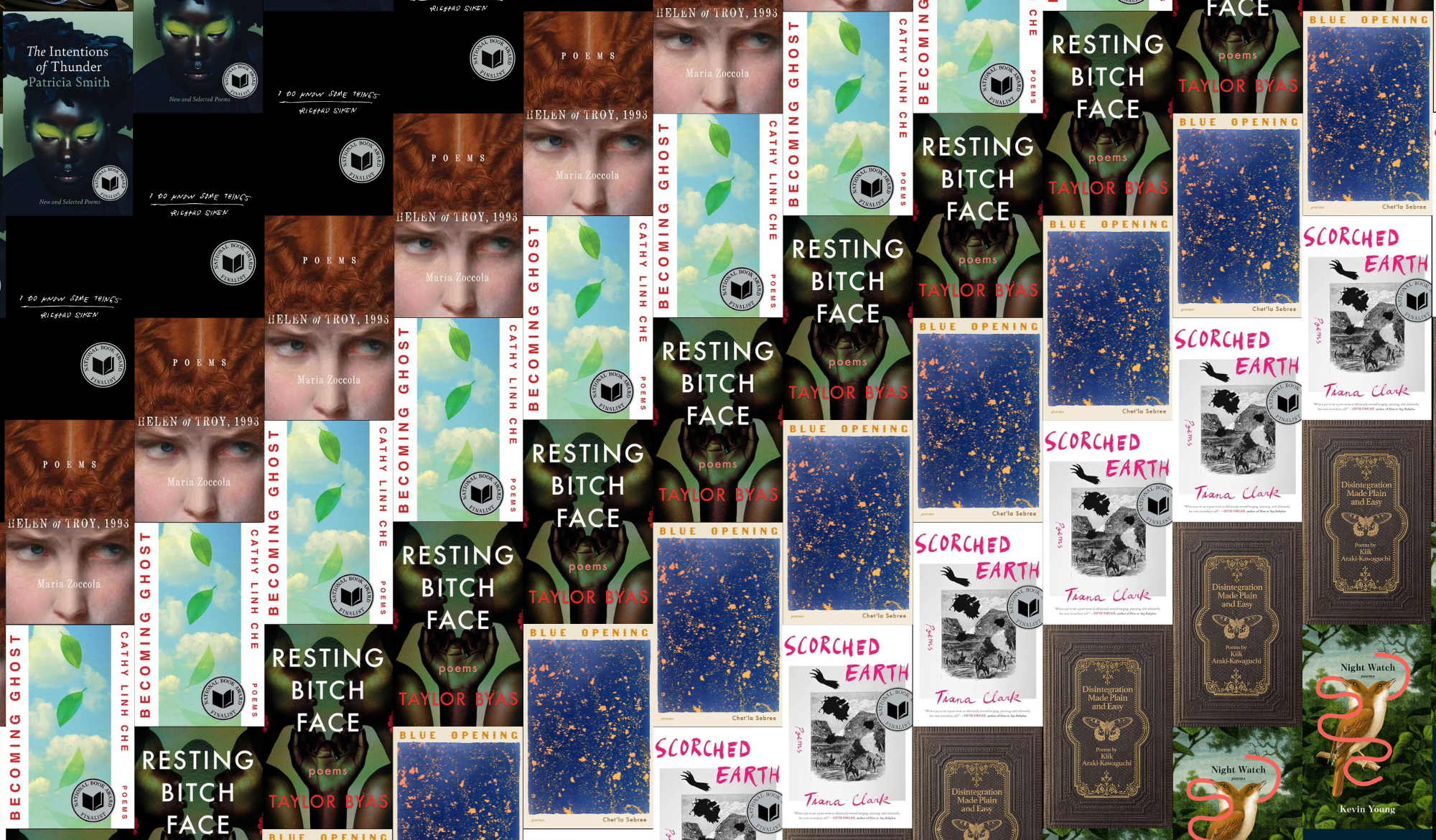
In Taylor Byas’s Resting Bitch Face, anger threads through joy and poems continually return to the charged moment when honesty becomes a superpower. The poems in Blue Opening by Chet’la Sebree are about being and beginnings: chronic illness and motherhood, where we all came from, where we might go. Tiana Clark’s Scorched Earth tackles heat in all its prickly forms—political, personal, or atmospheric—and examines what happens after something essential goes up in flames. Helen of Troy, 1993, Maria Zoccola’s debut, reimagines The Iliad‘s heroine as a 90’s Tennessee housewife to brilliant and hilarious effect. And Cathy Linh Che’s Becoming Ghost gives us infinite, global layers of context to what might first seem like a simple family drama. 

In a moment when everything is compressed, accelerated, or fed through an algorithm, these poets insist on depth. The insistence on messy humanity feels like resistance. These books remind us that where we place our attention is still a personal choice, and that language can slow the world’s turning long enough for meaning to appear.

– Kelly Luce
Editor, The Commuter

TOP 5 POETRY COLLECTIONS OF THE YEAR:

Resting Bitch Face by Taylor Byas

Taylor Byas’s sophomore collection interrogates the relationship between Black feminine bodies and artistic creation across media that range from the classical to the pop cultural. In sections named for stages of the painting process, Byas considers the violence of male artists capturing muses in ways those muses may not have consented to, and the power of Black women artists to turn their own critical gazes back on that history. 

Blue Opening by Chet’la Sebree

In Blue Opening, experiences associated with Black womanhood and motherhood inform discussions of origins, beginnings, and creation. Throughout the poems, Sebree attempts to get to know the unknowable by looking at her past, peering into the universe, and shaping and re-shaping language. Readers will be enthralled by the array of forms and modes of communication utilized in this collection.

Becoming Ghost by Cathy Linh Che

In her sophomore collection, Cathy Linh Che recenters Vietnamese experiences in the story of her parents, who fled the Vietnam War as refugees only to be cast as extras in Francis Ford Coppola’s film about the conflict, Apocalypse Now. As contributors to the film, they were denied both dialogue and credit. Writing in her own voice and those of her parents, Che also grapples with the pain of telling family stories after being disowned by her father. 

Scorched Earth by Tiana Clark

A collection that rises from the ruins of divorce, Scorched Earth brims with deeply intimate and romantic poems that explore themes relating to Black womanhood, sensuality, and queerness. Clark’s meditations on possibility and hope ring clear and true throughout this stunning, intricate collection.

Helen of Troy, 1993: Poems by Maria Zoccola

Maria Zoccola’s debut collection reimagines the Homeric Helen of Troy as a larger-than-life housewife struggling against the strictures of small-town life in early-nineties Sparta, Tennessee. She marries a man she calls “the Big Cheese,” has a daughter she isn’t ready to parent, and embarks on a chaotic affair, giving the chorus of Spartan women who voice some of the book’s poems plenty to gossip about. Two poems in the collection, “helen of troy makes peace with the kudzu” and “helen of troy feuds with the neighborhood,” were originally published in The Commuter.

Electric Lit’s Additional Favorite Poetry Collections: 

Disintegration Made Plain and Easy by Kiik Araki-Kawaguchi

Disintegration Made Plain and Easy, the funny and surreal debut collection of frequent Electric Literature contributor Kiik Araki-Kawaguchi, explores themes of nudity and death because, as the poet puts it, “Death is the soul getting naked.” A series of “about the author” poems allows the author’s humor and identity to shine throughout. 

The Intentions of Thunder by Patricia Smith

Winner of the National Book Award for Poetry, this collection of career-spanning poems is a striking addition to Patricia Smith’s oeuvre. The collection embraces the many possibilities of poetry, amplifying neglected voices through rich storytelling and boundless language. Oscillating perspectives on beauty, race, conflict, death, belief, and deceit turn these poems into reservoirs of knowledge and insight. After experiencing The Intentions of Thunder, it will become clear to readers why Danez Smith refers to Patricia Smith as the “greatest living poet.”

I Do Know Some Things by Richard Siken

I Do Know Some Things, a National Book Award Finalist, is Richard Siken’s searing collection of 77 prose poems written in the aftermath of his stroke. Abandoning traditional line breaks, Siken lets the text unfurl in dense prose blocks that mirror the fractured cognition and halted speech of his recovery. The result is a raw, autobiographical reckoning with childhood trauma, loss, and the fragility of the body, delivered in a stark and unornamented voice.

Night Watch by Kevin Young

Night Watch by Kevin Young is a deeply elegiac collection that explores personal grief, collective memory, and American history. Its four sections move through meditations on the moon and birds, Young’s Louisiana roots, the story of the enslaved conjoined twin singers Millie-Christine, and a Dante-inspired descent into the underworld. Through rich, musical lines, Young blends lyricism and existential inquiry into a powerful meditation on loss and meaning.

The New Economy by Gabrielle Calvocoressi

In The New Economy, meditations on desire, change, and adaptation result in poems that speak to the most secret parts of ourselves. Fans of Calvocoressi’s exuberant poetry will fall in love with this newest collection and its meticulous unravelling and reorganizing of aging, death, grief, joy, and gender.

Agrippina the Younger by Diana Arterian

In Agrippina the Younger, Diana Arterian excavates Agrippina, a lesser known Roman empress from a powerful political family, to reveal the structures that inform our present world. In pursuit of detail, Arterian plumbs historical accounts and museums for relics of Agrippina, haunted by the fact that Agrippina’s own son ordered her execution. Arterian’s poems imagine lost moments from Agrippina’s life, offer prose snippets of the immersive research process, and meditate on the elusive nature of power. She dove into the books and historical legacies that inspired her writing for EL here

New and Collected Hell: A Poem by Shane McCrae

New and Collected Hell: A Poem is a book-length poem that reimagines Dante’s underworld through a contemporary lens, complete with HR-style intake interviews and hellish fax machines. Modernity aside, McCrae charts a man’s descent into an unrelenting hell of suffering, eternity, and demons. The poem takes readers to deeper levels of eternal damnation than they can possibly imagine, delivering an unforgettable, blood-soaked reading experience.

Algarabía by Roque Raquel Salas Rivera

Algarabía is an epic poem following Cenex, a trans being living on a colony of Earth in a parallel universe. Cenex undertakes a transformative journey to find a new body and a place to truly call home. The edition presents two texts, one in Puerto Rican Spanish and the other in English, exploring the complexities of language, identity, and colonial legacy. These dualities are also captured in the collection’s gorgeous cover, which Salas Rivera discussed with EL.

Cold Thief Place by Esther Lin

Cold Thief Place by Esther Lin is a debut poetry collection that draws from her experiences as an undocumented person. It reimagines her parents’ precarious journey from China to Brazil to the United States and explores growing up in a Christian fundamentalist household. Lin’s poetry is written in a confessional style that blends intimate reflection with sharp observations about displacement and exile.

Cosmic Tantrum by Sarah Lyn Rogers

Cosmic Tantrum, Taylor Byas writes, is a collection of poems that “…reminds us that a tantrum is often a result of our own inattention and neglect.” With its curated array of cultural touchstones, fairy tale tropes, and pop culture icons, Sarah Lyn Rogers’ first full-length collection coalesces into a clear criticism of a transactional and oppressive world. Rogers gathered the astrology symbols and books that occupied her mind as she wrote these poems and discussed the process with EL.

We Contain Landscapes by Patrycja Humienik

Patrycja Humienik’s new poetry collection maps the experience of immigrant daughterhood through place, ecology, and the language of the body. The central motif of this collection is the river, weaving readers through themes of disrupted lineage, the precarity of beauty, and the relationship between memory and migration. Check out our interview with Humienik, where she discusses process, place, and the key themes of the collection. 

Terror Counter by Fargo Nissim Tbakhi

Fargo Nissim Tbakhi’s debut collection TERROR COUNTER takes the Gazan tunnel as its own invented visual form. It engages with imperialist legal texts in order to decompose their words and narratives, opening up space for new meaning and visions for the future to burst forth. “If poetry is anything,” says Tbakhi in his interview for EL, “it might be a way of acting like a termite and moving through the foundations of this colonial language we live inside of.”

We Had Mansions by Mandy Shunnarah

In this debut collection, queer Palestinian diaspora poet Mandy Shunnarah blends archival research with their family’s personal experiences—from their grandparents’ displacement in the Nakba to their father’s opioid addiction and their own search for community and belonging in Appalachia. Shunnarah’s poems reclaim a Palestinian identity that often felt contingent to them growing up, while also interrogating and rejecting Western media biases to assert the wholeness of Palestinian humanity. In their interview with EL, they shared their process of writing and working through questions of identity. 

murmurations by Anthony Thomas Lombardi

In murmurations, Anthony Thomas Lombardi traverses themes of addiction, sobriety, grief, and the liberation of surrender. Many of the poems explore an alternate reality where Amy Winehouse made a successful attempt at sobriety. In an interview with EL, Lombardi describes his process: approaching Winehouse through second-person, transmitting her stepwork journal, and imagining quarantining with her during the COVID-19 lockdown. With care and attention to the cacophony of voices and spirits that inspired each poem, murmurations is honest about how both loss and the potential of alternate endings might haunt us.

Wildness Before Something Sublime by Leila Chatti

Language is defined by inversion and duality. In Wildness Before Something Sublime, Leila Chatti juxtaposes imagery and emotion with their opposites, rendering a sensational landscape that invites reflection. Whether drawing on a long tradition of women poets or plumbing the body’s potential for loss, Chatti approaches loss with patience and an understanding that there is a vast measure of light behind the darkness. That light comes through in these poems, like pinpricks of distant stars.

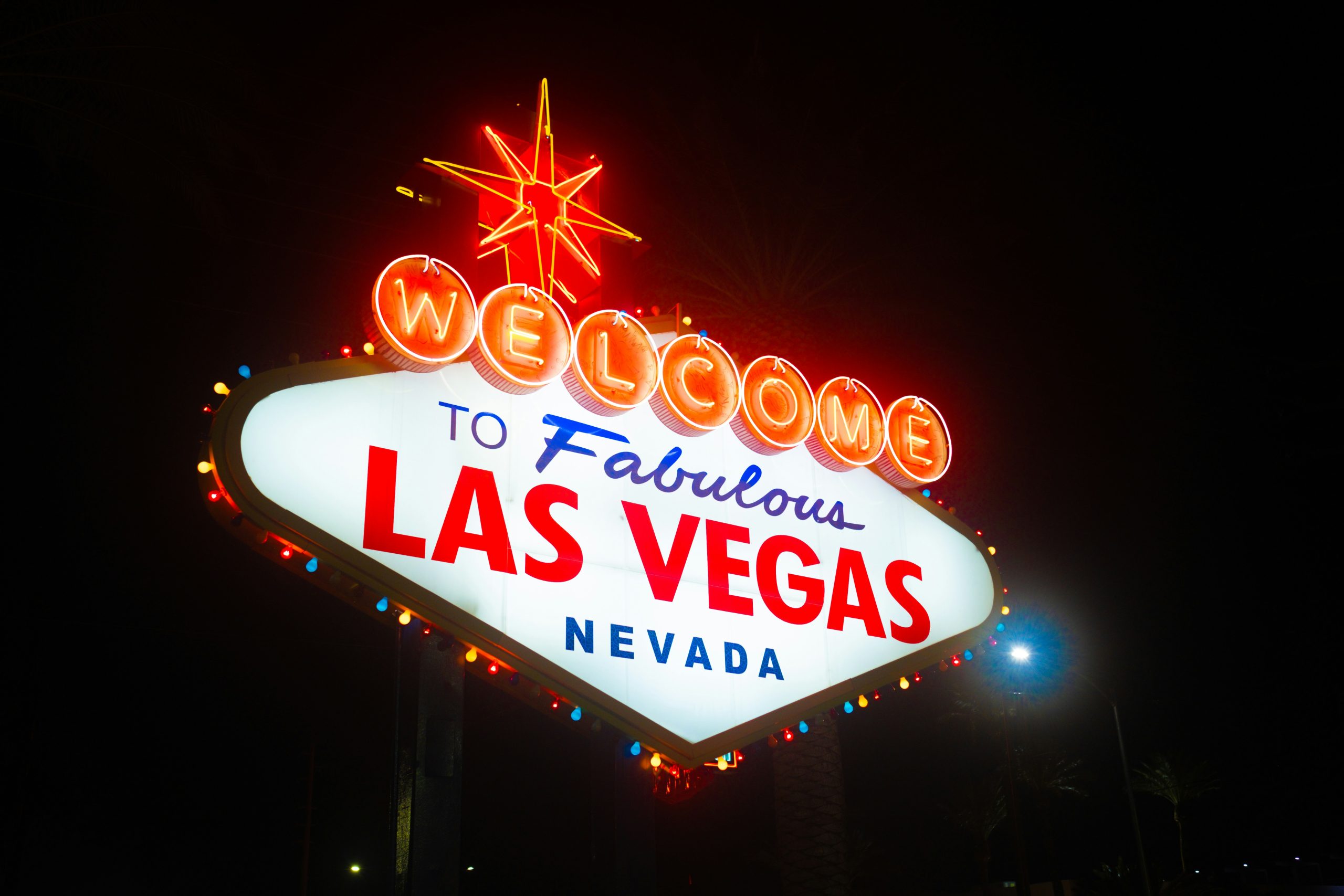
Reckoning with the American Dream in Las Vegas

Las Vegas, Before an Election by Monica Macansantos

On my first trip down the Strip, while sitting inside the car of my mother’s friend, I find myself performing the futile activity of counting hotel room windows floating above me at night. My imagination does the work of multiplying the number of people inside their climate-controlled rooms switching on their faucets, taking showers, and disposing their take-out containers, as though to punish my mind into acquiescence. In the daytime, the land is bone dry, floating upwards and sticking to the soles of my shoes, the membranes of my nostrils. And yet this city maintains a boundless faith in what many have called the American Dream, bullying the land into supporting an illusion of limitless resource and wealth.

“Welcome to Las Vegas,” my mother’s friend says behind the wheel.

I let go of a chuckle, allowing my apprehensions to fade beneath these blinking lights. 


A few weeks later, on what I’ve been told is an unusually warm October evening, I follow a new friend’s lead through a maze of gambling tables and slot machines, guided by signs that direct us to the casino’s back garden where a circus tent takes shape behind a decorated archway. We step outside the casino’s air-conditioned air into the Las Vegas heat, and weave through a crowd of tourists before walking beneath the archway where guards check our IDs. A large fake tree invites me and my companion to take a selfie together beneath its neon canopy, before we claim an empty table. We wait for my companion’s friend, an acrobat who performs for Absinthe, a show that takes place nightly beneath the circus tent. He can get us in for free, according to my companion, a writer who’s doing research on Chinese acrobats in Las Vegas. I notice the softness of the plastic turf beneath our feet, how it sinks under my heels like an indoor carpet. A few days later, while I listen to the local NPR station, a man begs Las Vegans to stop using artificial turfs—they contain carcinogens, he says, that float into the air as the plastic material disintegrates in the desert heat. But on this evening, I have no clue about the carcinogens I may be inhaling, and my cluelessness allows me to be simply astonished by this fake garden in the desert, as I stare at this tree that glows instead of providing shade.   

Like many new migrants to the city, I came to Las Vegas to chase an opportunity made possible by its wealth.

My companion’s friend materializes in a t-shirt and jeans, and insists on putting our dinner on the company tab before disappearing into the tent to fetch us bottles of water. When he returns, he sets down the bottles in front of us with a proud nonchalance before taking his seat, leaning back in his chair while the broad muscles of his torso push at his t-shirt’s material. He and my friend have spoken before, and they speak to each other in a mixture of English and Mandarin before my friend turns to me and shares that her friend has worked as an acrobat since the age of ten. Apparently, this isn’t unusual for Chinese acrobats who perform in numerous acrobatic shows across the Strip: They are initially recruited by the Chinese government to train in state-run acrobatic troupes, before eventually being lured to Las Vegas with the promise of better wages. For our acrobat friend, it all worked out. “They pay me well and I get to choreograph my own routines,” he tells us, eager to share his immigrant success story. “I bought my own home, and I brought my mom to this country. She’s an American citizen now, and she’s very happy.” He possesses the athletic grace of a ballet dancer as he matches his fluid gestures with the limpid resonance of his words. Speaking in English, perhaps for my benefit, he talks about investing his money because, as he says, “Taking risks is the only way you can build wealth.” I think about the gamblers we walked past on our way to this artificial garden, cloaking themselves in cigarette smoke while sliding dollar bills through slot machines and slapping them onto tables laden with chips. The glowing tower of Ceasar’s Palace looms above us, pushing itself into the darkening sky with an audacity that doesn’t surprise me in the slightest.

Later that evening, my companion and I are sitting inside the circus tent, watching our acrobat friend and his female partner holding each other by the hand while forming various shapes and lines in the air. I find myself holding my breath while they catch and release each other, their bodies in perfect sync as they flow as one. How many accidents have these acrobats had in their years of training, before finally pulling off these feats without distrusting themselves, their partners, or the air in which they rise and fall? The pair ends their routine, rising through the air and through the tent’s eye to the sound of our clapping, and I ask myself why I’m here, in this tent pulsating with lights and music, surrounded by drunk tourists who scream and cackle at the bawdy jokes of a bowtied emcee.  


Like many new migrants to the city, I came to Las Vegas to chase an opportunity made possible by its wealth—though in my case, it’s a writing fellowship hosted by UNLV, offering me support for a new book I’m writing, and not a job in a casino or in the city’s various resorts and restaurants. This isn’t my first time in America, since I have been to this country for graduate school, as a visitor on writing fellowships, and during my childhood, when my family accompanied my mother while she pursued her PhD on a Fulbright. I navigate my new home with a mixture of familiarity and a newcomer’s wariness. My first few days in Las Vegas have me pulling out the accent I acquired during my graduate school years in Texas, and performing day-to-day tasks with the feigned confidence of a newcomer who nervously awaits the inevitable mistake that will lead to their exposure. I know the assumptions Americans make of people with foreign accents who don’t have the usual catchphrases at hand when purchasing an item or talking to someone on the street: these are assumptions my own parents have had to deal with during their own visits to America, cementing their status as outsiders when navigating the most quotidian of interactions. 

My accent gives me a tentative pass, but also creates confusion: My chatty Uber drivers are in disbelief when I tell them that I came here straight from the Philippines. I fill the uncomfortable silences that follow with convenient explanations: that I’d lived in Austin, and had spent my childhood in Delaware. “So you’re from the East Coast,” one driver says, which seems to make him feel better. He then tells me about the other cities where he has worked as an Uber driver before finally ending up in Las Vegas: Like many Uber drivers I’ve talked to, he’s a fellow traveler, finding a home in this city that welcomes more than its fair share of drifters. “The money’s good, but you wouldn’t believe how many weirdos I’ve picked up,” he says, steering us down the sinuous, illuminated curves of Paradise Road. “Two weeks ago, I picked up a guy who’d completely forgotten his name.”


I knew there were Filipinos in Las Vegas, as there are in other cities outside the Philippines where I’ve lived—we are a nation of voyagers, bravely packing up our lives and chasing opportunities in far-flung parts of the world. Throughout my own travels as a writer chasing grants and fellowships to support my writing, I’ve met Filipinos at ice cream parlors in Austin, inside restaurant kitchens in rural Maine, and in thrift stores in Nashville. But I didn’t expect to encounter the largest Filipino community I’d find abroad in Las Vegas until my program director took me to Seafood City, a Filipino grocery chain in the US, after picking me up from the airport. I didn’t quite know what to feel when I saw a country I had left behind nearly twenty-four hours before represented in nearly identical form as I stepped into the supermarket’s entrance, spotting familiar chain restaurants and bakeries before taking a cart and pushing it down aisles stocked with familiar products. I’d run into Filipinos in the days and weeks that followed, at the fitting rooms of clothing stores and inside a crowded bus, at restaurants and pharmacies where I found myself blurting out words in Tagalog to cashiers and waiters, who’d likewise respond in kind.  

Back in the Philippines, I’d sometimes hear of Filipino immigrants going straight to Las Vegas to find work at the casinos upon their arrival in America, and as I walk across casino floors, I see Filipinos, mostly women, stationed behind gambling tables in their regulation bowties and black vests. I do not get the chance to talk to these dealers since I’m not a gambler, and usually just find myself in these spaces because of a restaurant or show inside a casino that I want to get to. But during one of my Uber trips, I get the chance to talk to a Filipino driver who worked at a casino upon his arrival in Las Vegas in the early nineties. “The money’s good, and the benefits are also good,” he tells me in Tagalog. “I had a friend who was a journalist back home, and came here looking for work before becoming a dealer. He went up the ranks very quickly and is now a cash manager at a casino.”

“And so you can just go in with zero experience,” I say, while we make our way from Seafood City. I have been in town for about two months by now, and taking a bus to Seafood City before returning home in an Uber with my bags of groceries in its trunk has become a regular routine for me. This grocery run, however, has been made surreal and dream-like by the shock of meeting Bill Clinton and shaking his hand while waiting for my Uber beside a cartload of groceries.

“All of us had zero experience,” my driver continues, steering us past rows of orange cones sweeping across Maryland Parkway, the same way he steers clear of Bill Clinton’s visit to Seafood City with a deftness that I nonetheless notice. “And that’s the beauty of working at a casino. They don’t expect you to know anything, but they know you can pick things up on the job.”

“Did your friend ever practice journalism here?” 

After a short pause, he says, “No, as far as I know. But he was a journalist back home.”

It’s one thing I notice about Filipinos overseas, whether I meet them at a party or at a store, in the dry, open landscape of Austin, Texas or in the lush, rolling hills of Wellington, New Zealand: an eagerness to name the occupations they once held in our motherland, or else a curiosity in regards to the roles I once occupied in a country they also unhesitatingly call “backward,” “corrupt,” and “poor.” Sooner or later, their criticisms of our shared homeland fall away, revealing a sentimental attachment to the lives they left behind and the identities they shed to survive in a land that promises new beginnings. They may be Uber drivers or salespeople in this new country, but in the Philippines, they were engineers, accountants, bankers. Those who tell me, “Pride can’t feed you,” when they begrudgingly learn that I’m an artist in this country, and not a nurse, will also randomly mention the prizes they won for their research back home and the businesses they helped start from the ground up, their eyes turning wistful as they stare into a past that remains invisible to other people’s eyes. If they’ve resigned themselves to taking their pride down a few notches in these faraway lands, their memories of their past selves remain intact, waiting to be pulled out like museum pieces preserved in glass when they meet a fellow countryman who carries a similar burden of memory, and knows the full weight of their loss. 

All the Trump signs I’ve seen behind car windows and draped on fences won’t disappear, even if I close my eyes.

My Uber driver then says, “You’re a writer. I assume you’re good at giving speeches, that kind of thing.”

“I get by” I say, unprepared for this sudden turn in the conversation. 

“It’s just that I want to improve my public speaking skills,” he says, while turning into my downtown neighborhood. “Do you have any advice as someone who’s good at that?”

Amused by his overestimation of my skills at public speaking, a task I often loathe, I tell him about my experiences as a college instructor in the Philippines before mentioning Toastmasters, a group I’m hoping he joins to get the answers I cannot provide. “It’s a skill you get better at over time, just like driving. At some point, it becomes second nature to you,” I say, as we approach my building. 

“And it’s a skill all of us should have,” he says, before pulling up in front of my building’s entrance. “Who knows,” he adds with a smile, “It might come in handy when we decide to run for president.”


I try to stay calm when I’m walking with two writer friends down Fremont Street and we see a large mural with Trump’s face rising, God-like, from an ocean wave of stars and stripes. “Don’t look,” a friend says, and I turn away, but not without stealing a quick glance at the mural. I tell myself that the mural will still be there even if I look away, and that all the Trump signs I’ve seen behind car windows and draped on fences won’t disappear, even if I close my eyes and pretend they’re not there. I am afraid when I see these signs, but I must also acknowledge this hate and fear when it makes itself clear to me.  

My cousin, her husband, and her childhood best friend fly in from the Bay Area for a weekend getaway. While my cousin’s friend feeds hundred-dollar bills into a slot machine at the Venetian, my cousin complains about her parents, lifelong Republicans who have been sucked into conspiracy theories about vaccines and the federal government. 

“This is what makes me scared,” I say, as I watch the dollar amount at the bottom of the screen slowly rise to the tune of a button push. “Normal people believe these things.”

“I’m hopeful,” my cousin’s friend tells us, pivoting on her swivel chair to briefly face us while images of fruit, treasure chests, and gold numbers cascade down neatly drawn columns on a screen. Her words give me some hope, even if she eventually loses all the money she has fed into the slot machines. She proceeds to lose even more money at craps before staying on to recoup the money she has lost. 

I attempt to live frugally in this city of many temptations, having witnessed how one’s luck can easily run out.

My cousin and I leave her, finding our way toward the elevators in this maze of gambling tables and slot machines. There’s nothing about her friend’s losses that makes me doubt her optimism for the elections, which I find slipping from my mind amidst the cheery, jangling sounds and bright, colorful lights. After taking the wrong elevator that takes us to the wrong set of floors, we take another elevator back to the ground floor and get onto the right elevator, which takes us back to my cousin and her husband’s hotel room. I take a seat beside a window that offers panoramic views of the Wynn’s golf course thriving in the 100-degree heat, and I listen to my cousin as she reports her friend’s losses to her husband. It’s only later, when I’m back at my campus office, regaling officemates with this anecdote about my weekend on the Strip, that I begin to wonder if this woman may have wound up losing more money. “There’s a point where you just have to cut your losses and walk away,” the director of my program says, and I agree with her. 


The promises of this city remain glimmering in the distance, out of reach but never quite out of sight, as I sit in my bus heading back to my apartment from the university, watching the towers of the Wynn and the Encore turn gold in the waning afternoon light while blue collar workers, some still wearing their company uniforms, settle into the seats around me after their daylong shifts. Maryland Parkway runs parallel to the Strip, a row of imposing casinos and resorts that rises from the city’s flatness to slice through the sky with its gleaming metallic lines. Along that thoroughfare, I see run-down strip malls, trash-strewn bus shelters, and men and women who drag scuffed, dirty suitcases containing their life possessions like travelers with nowhere to go. A woman in shorts and tank top crosses the street in front of the bus like this, her pale skin clinging to her bones while the wheels of her suitcase judder across the sidewalk, sending quivers through her skeletal face. A woman I’ve come to know as a regular on my bus line bobs up and down over the handle of her metal cart, her wrinkled mouth twitching helplessly over her toothless gums. I tell myself that turning away is a form of respect, and that these people with visible markings of drug abuse on their bodies do not want their own degradation to be turned into spectacle. I’m like others in this bus who stare outside the window or at their phones as we sit and stand beside everyday signs of despair. For many of us, we have our own personal struggles to grapple with, leaving us with little energy to contend with the sufferings of others. I hear a man seated behind me mention to his friend that he has just been released from prison and is looking to start over, while I overhear from another man in a blue Greyhound uniform, who has offered his seat to me before spending the rest of his trip standing, that he hopes to hold onto his new job for a while because he has three kids to feed. When fights break out at the back of the bus, many of us keep our gazes fixed ahead, sharing the implicit knowledge that the shouting will ease before one or both participants voluntarily get off at the next stop, if the driver doesn’t kick them off. Some of us are simply more vocal in our frustrations, and this, too, we learn to accommodate in this cramped, shared space. 

I can afford to buy a car with the money my host organization pays me, and even have a parking spot delegated to me in the gated apartment complex where I enjoy free housing. And yet I choose to take the bus to campus for my weekly office hours, ever mindful of the money I’m able to save while taking public transportation. This is the most I’ve made as a writer, and I attempt to live frugally in this city of many temptations, having witnessed how one’s luck can easily run out. If I were driving a nice car past the many homeless encampments that dot the streets outside the Strip, I wonder if I’d merely be deceiving myself about the invisible line that supposedly keeps many in this city safe from the bad fortunes of others.


I begin taking early morning walks around my neighborhood, getting my body to move in the open air before the intense desert heat begins to beat down on the pavement. I am warned by people working at my host program, as well as by locals I meet, that the neighborhood in which I live isn’t the safest, but I cannot stand the sense of disconnection I have from my new surroundings when I keep myself sequestered inside my apartment. 

The building is new, the neighborhood is generally quiet, and my fully-furnished unit contains all the conveniences of first-world living, making housework easier, even soothing, when I take breaks from my writing to cook, clean, and do laundry. There are trees in the complex’s fenced courtyard and a bookstore downstairs, inviting me to peruse its shelves for books that are hard for me to find back home in the Philippines. It feels like a far cry from the dangerous neighborhood I can already see another new friend visualizing with slightly narrowed eyes, when I mention where I live at the tango festival where we meet a few weeks after my arrival in the city. “Are you sure you feel safe there?” she asks me, while pairs of dancers swirl past us beneath low lights. “Because it’s not the safest neighborhood.” 

The usual morning hush envelops the streets when I step outside for a walk, and I am comforted by the sight of trees and manicured bushes planted in the front lawns of law offices occupying what were once residential homes. That they’re almost all accident and injury law firms amuses me: one wouldn’t suspect, by the emptiness of these streets, that it’s a city where their services are needed. Perhaps it’s the deceptive sense of safety I draw from the law’s heavy presence in this neighborhood that helps me briefly forget the troubles of this place. When I see traces of unhoused lives on these streets, like an empty plastic tray and dirty fork tucked beneath a manicured bush, or a pile of clothes hastily shed, I remind myself of what a friend whose brother was unhoused for some time told me: The vast majority of homeless people aren’t violent, but are simply forced to live out the most private aspects of their lives in the open. 

It’s when I come across an abandoned encampment with an assortment of glass bottles and needles that I put a halt to my morning walks. “You should find a gym,” the assistant director of my program says, when I tell her what I saw. 

I feed my body’s hunger for movement at the university pool when I’m on campus, and at a pilates studio in the arts district where I seem to be the only student who doesn’t drive to class. I pump my muscles and strain my lungs to the sound of energetic pop music issuing forth from stereos tucked away from sight. I grow addicted to this rush of endorphins as I push my body towards an invisible goal, in this country of enormous swimming pools and cheerful pilates instructors who gently prod me past my limits. As I float on my back at the university pool, darting through the water with every kick and stroke, I can almost feel my spirit pulling my body toward a future that this country, with its seemingly infinite possibilities, has opened up for me. 

I carry this optimism with me when I come home to my apartment and return to my desk, no longer feeling like that version of myself from my graduate school days who felt watched and monitored when I sat down to write. I have moved past that, or at least this is what I believe while I sit in an apartment I could have only dreamed of living in when I was younger. I slowly come to accept this apartment, my position, and the respect people have for me as a power I now hold. I am reluctant to call it this, but it’s the only word I can find that describes my newfound confidence in what I do. While I watch the afternoon light sharpening the fringes of the mountains beyond from my window, I feel a renewed hope in myself, in this country that has allowed me to harbor this hope, in this city that, for all its nauseating excesses, has thrown some of its luck at me. Is it possible to share this luck with everyone, including the people who sleep rough right outside my apartment when I slip into my warm, comfortable bed at night? I struggle to reconcile what I want to believe with what I have seen, though I want to convince myself, based on what America has been willing to provide to a foreigner like me, that this country is also capable of shining its grace on those who have rarely felt it. 


I’m not sure if I should be reassured or frightened by the veneer of politeness that Trump supporters maintain while openly wearing the codes that communicate their spite. Nonetheless, I am shocked when the friendly, chatty Black man seated at the back seat of my shared Uber gets off at a Trump rally, which is the first time I see the red hat he’s wearing. 

Then again, don’t I have Filipino relatives and family friends who are Trump supporters, who justify their political leanings by launching into rants about “illegal” immigrants sitting around and getting free housing, healthcare, and education, while they sacrifice everything to reap these benefits for themselves and their children? I have seen this selfishness before, from people who haven’t necessarily been left untouched by the munificence of the American Dream—I’ve sat inside their large houses as a welcome guest, while they complained about how unfair it was that they’ve had to pay such steep a price for the life America has given them, while others, by virtue of their disadvantage, have it easy. 

Must the fulfillment of a dream come at the expense of other people’s happiness?

I’m reminded of a visit I once paid to a family friend in the Houston suburbs more than a decade ago, during which she complained that her son’s high school classmate could go to college for free, “just because his mother’s a drug addict,” while her son had to take out onerous loans from Sallie Mae. “I’ve been a law-abiding citizen throughout my life here, and this is what I get,” she said, while we sat inside her high-ceilinged living room. I remember its windows above us letting in so much light, it almost felt like a church, though I hesitated to ask what god this was all dedicated for. 

Though I’ve tried to reason with my countrymen who complain about the sacrifices they’ve made to give themselves and their children a fair shot in this country, I’m unable to get past their unwillingness to see past their own struggles. When they think about America, they don’t think about the people they share this country with, but about the promises this country has made to them that have only been half-fulfilled. They left behind careers, friendships, and possibilities in the old country to chase a dream America promised them from afar, and so I understand their disappointment when America extracts even more from them to make a fraction of its promises come true. But must the fulfillment of a dream come at the expense of other people’s happiness, those who can only afford to catch glimpses of that dream while struggling to get by? 


Thanks to someone who works at my host program, I get tickets to another show on the Strip, and I bring along another new friend, a Filipina I met at a book club I am organizing as part of my fellowship. I wait for her at a busy alleyway beside the Linq Hotel on the evening we’ve chosen to see the show, and just as the sun is beginning to set, I see her striding toward me, past a tall topless woman with tasseled pasties on her nipples, who asks us if we’d like to take a picture with her while my friend and I embrace. We ignore the topless woman while we turn in the direction of the restaurants lining the alleyway, and we exchange the usual pleasantries, asking each other what we want for dinner and how our day has been. With the elections a few days away my friend mentions seeing AOC at the university museum where she works. She knows I shook hands with Bill Clinton the previous week at Seafood City, and we talk about our shock when meeting these stars of the Democratic Party in the flesh—with the polls being so close, though, we understand why they’re flying across the country to talk to people and get out the vote. We talk about this before conversation inevitably takes us down another route, in the direction of what we hesitate to say aloud. 

My friend is afraid, and so am I; while we walk past twinkling restaurant signs toward a giant Ferris Wheel that dominates the sky, I tell her about a scene in Buster Keaton’s One Week where he and his new wife cover each other’s eyes while a train rushes toward their portable prefab home. “That’s how I feel,” I tell her, as the evening deepens and the lights around us shine brighter. She seems distracted, and I can’t fault her: I, too, find myself distracted by the cheery music floating toward us, the sound of laughter, the smell of food.  

At the restaurant where we choose to eat before the show, I complain about the size of the quiche I’m served, which was an item I chose from the menu because it was listed as an appetizer. “You’re not used to the sizes of the servings here?” my friend asks me, a question I get asked no matter how many times I visit the US. It’s true that I can never get over the portion sizes here: It’s as if they’re made intentionally to taunt the capacities of our stomachs. The portions are impossible to consume, and we’re made to accept this excess as a fact of life as our leftovers are carried away and disposed of far from our sight.

My new friend trained as a folk dancer in the Philippines before putting her training on hold when she immigrated with her family to America. She’s excited about this show’s unique premise as we make our way to the entrance and I pull up our tickets on my phone, because it will give her the chance to dance on an illuminated floor, alongside the show’s regular performers. Disco music from the ‘70s pulses around us while we walk up a glimmering staircase that takes us to a ‘70s-themed bar. While we look for a spot in the room to get settled, performers on roller skates begin encircling us, performing tricks on a spot on the floor that the audience obediently vacates, before they guide us toward the dance floor at the other end of the hall. But we aren’t allowed to walk through its doors before a drag diva extends us a formal invitation. While I listen to her profanity-laced spiel, I tell myself that the world will be all right, as long as we keep telling each other jokes and laughing at the people who attempt to stamp out our joy. With a glittery swish of her gloved hand, the diva proclaims that disco’s not dead, and we loudly give our assent before she leads us inside. 

After the performers retreat to the corners of the square stage that surrounds us, I try to match my friend’s fluid moves with whatever I can think of, while the dance floor continues to flicker and pulsate beneath our feet. My friend shows no signs of fatigue as other audience members begin their shy retreat to the door, and I try to match her energy with mine, moving with the music while I go through my limited repertoire of moves. We dance like no one else is watching us, like the DJ will never run out of songs to play, like the illuminated squares beneath the glass floor will never stop coaxing our bodies into joyous movement. I hold onto this moment for as long as I can, before my friend yells, through the music, if I’d like to get dessert at the restaurant outside. 

Blood and Guts Were Our First Language

what i can teach you

for dr. amy

in grade school we dissect, this time 
store-bought chicken wings, uncooked pounds
our teacher brought in for science.
boys grimace. we girls peel skin back, seeking
sleek, slim bones inside. laughter, none of us phased—deeper and deeper
we go into slimy flesh though no one has given us the talk yet,
about getting used to insides coming out each month,
sometimes in clots.

twenty-two years later, a therapist proclaims
don’t let it define you. about my illness. as if it does not already,
as if it would not, even if i tried listening to her. she is chicken,
it turns out, afraid of the word sick. but open a dictionary,
and words have many definitions. the best trick: hold onto them all
in the same sentence. the confusion of that, an MRI, the reading
of a body flooded blue with contrast, when not all organs are shaped
the way of textbook drawings.

there is more to you, therapist says,
than sick, as if sick—my blood leaving
a pretty pink oval in a toilet seat, my hair dropping from my scalp
in fistfuls of question marks, my skin stretching into long fissure-like striae,
a record of what has been—is not reverence in the worst of it.
as if sick—my husband offering to sink needles into my skin
if need be, my doctor tender behind the stethoscope,
my vegetarian mother serving chicken from her own stove
if it’s all i can eat—is not love, more forgiving
than anyone imagines it to be.

in grade school, we learn how best
to shed medical gloves. one off, inside out,
the other, tucked into that one. the pull of it,
skin slipping off wing meat. simple, clean. a method
i will use, after finishing a stool test at home. but we girls can’t foretell
the use of such skills. giggles echo in a taupe bathroom.
we wash our hands of stray chicken fat. the boys
threw out their raw experiments early but we sank
our fingers in, begging for more time. if only
because we sensed we were understanding something.
on our way, unafraid to see it all.

The Queer Club Culture Novel We Didn’t Know We Needed

Mattilda Bernstein Sycamore is the author of multiple novels and memoirs, including Touching the Art and The Freezer Door. She is also the editor of a wide range of books including Why Are Faggots So Afraid of Faggots?, Between Certain Death and a Possible Future, and Nobody Passes. Her new novel, Terry Dactyl, is the story of a trans woman who grew up during the AIDS crisis, looking back on those years while going through the COVID pandemic in 2020. Both take place during formative points in Terry’s own life, moments when ordinary behavior suddenly means something very different.

Reading about Sycamore’s activism, one often finds phrases like “anti-assimilationist” thrown around for how she writes about gender nonconformity. Those ideas are a part of the novel, in particular adult Terry’s relationship with her two moms, but Terry Dactyl is a work of art above all, one that is epic and personal in equal measure. Just as it toggles between the AIDS pandemic and the COVID pandemic, the book is about the club scene and the art scene. About gender freaks and assimilationist respectability. About New York and Seattle. About activism and acquiescence. About how there is always more than one choice. Terry Dactyl is a book that understands that family and friendship change over time in unpredictable ways, that we are shaped by and tethered to the past in inescapable ways, and that survival can mean many things.

It is a book about queer joy and possibility that got me emotional when reading it, and got us both emotional talking about it. We spoke by phone about how we deal with the contradictions of our lives, club culture, and how no matter what our childhoods were like, they’re always normal to us.


Alex Dueben: Where did the book begin? How do you typically work as far as writing fiction?

Mattilda Bernstein Sycamore: It began with the character. It was in 2020 or 2021 and I was going on a lot of walks. Somewhere at the beginning of the COVID-19 pandemic I just thought of this character and I kept obsessing. I would find this house and I’d think, okay, that’s where Terry Dactyl grew up. Or I would imagine different scenarios. I was still finishing Touching the Art. I was like, I can’t work on this now, so it just kept spinning in my head for months and went in all these different directions. I started thinking about things that I wanted to include in Terry Dactyl’s life. That’s where it started. Because I had so much in my head when I started writing, the process was very organic. What ended up on the page wasn’t necessarily what was in my head, but it would come from that, I had all the background information.

AD: It’s interesting that it began with Seattle and was so place-based. She spends the first half of the book in New York before moving back to Seattle during Covid.

I wanted to show the contradictions of the club world, of the art world, of survival.

MBS: The first half of the book is looking back, so it’s in past tense. It’s 2020 and Terry has been working at this gallery in New York for more than twenty years. During Covid lockdown in New York, she’s ruminating on her formative moments. I wrote it in the order that it’s written. I think my writing in general is very place-based. I want that sensory aspect, that multi-dimensionality of place, to come through in the writing. 

AD: Terry is this club kid and uses a lot of drugs and partying.

MBS: Terry is living in the reverse reality of club culture where everything takes place at night. Also in the reality of: You create your own self on your own terms. Her world for about fifteen years from the early ‘90s on is fueled by drugs—her immersion in drug culture and club culture and the pageantry of getting dressed up and going out. Also in this chosen family of gender freaks who are living outside of conventional norms of gender and sexuality and refusing the terms of the nine-to-five world. Even though she ends up working in a gallery, to do that she has to stay up all night in order to get to work. It becomes the continuation of her nightlife during the daytime.

AD: I wish the novel had more scenes between Terry and Sabine [the owner of the gallery where Terry works] because they understand each other and don’t understand each other in a way that was very interesting.

MBS: I always love when people say they want more of something because that means that I’ve succeeded. I think that relationship is a really interesting one because here’s this art world insider. She’s a Rothschild who changed her name to Roth so that no one would know she was a Rothschild, and therefore everyone knows her as the Rothschild who changed her name. She’s been in this art world for so long and has played by the rules, but is ready to do something else. She offers Terry a structure that allows her to play and create these really over the top shows that become the toast of the art world almost accidentally. Accidentally to Terry, not accidentally for Sabine.

What Terry knows about is club culture. She knows about getting dressed up and creating some outfit that is so mesmerizing and scary that you can’t possibly avoid being mesmerized. She’s applying that skill to the art world by bringing club kids who also have these wacky ideas and allowing them space to create. The first show, which she calls Club Kid Diaspora, happens when all the clubs are being shut down by Giuliani so she brings the club into the gallery. Instead of white walls, she takes every piece of garbage she can find at the thrift stores and glues it all to the walls. There are these neon installations by another club kid who’s in her circle. There’s a DJ playing essentially a loop, just taking the music and breaking it down to the elements, fracturing the sound into abstraction. Club Kid Diaspora becomes a sensation and then Terry has her own space in the art world.

AD: The book is titled Terry Dactyl, but it’s defined by her relationships with people and about this large community and family over time.

MBS: I think friendship is the defining theme of the book. There are a lot of people that Terry loses. There are a lot of people who die of AIDS or people who disappear or people who abandon her, but there are other friends that remain. Sometimes the ones who remain aren’t the ones you would expect. She has a line where she says sometimes the most selfish people are the most generous. This is a theme in the book, all the contradictions that form a life and can even sustain you.

It’s not a linear narrative—it starts in 1991 on the dance floor at the Limelight; in the next chapter, Terry is in high school in Seattle; the chapter after that, she’s at the gallery in the present-day of the book, which is 2020. It’s moving around very fast, and this is because of panic. Terry’s panic at this new pandemic and all of her formative experiences of growing up in the midst of the AIDS crisis and being in these worlds where she’s lost so many people. Even though in reality she’s by herself for so much of the book, so much of it is about those relationships. She’s 47 in the present day so it’s going from childhood to 47. It’s this narrative about a trans girl who survives, and the people around her who also survive, and what happens when you survive.

AD: That idea of who survives and who stays, and that it’s not always who you expect…

There’s a lot of pageantry in the book, a lot of glamour, but there’s always an undercurrent of grief.

MBS: I wanted to show the contradictions of the club world. The contradictions of the art world. The contradictions of survival. And also of friendship. The person who, in the present day, is Terry’s closest friend is Jaysun Jaysin, another club kid. Jaysun ended up moving to Seattle with a boyfriend who got him a job at Amazon. In the book it’s never named, it’s always the Evil Empire. [laughs] Jaysun became the embodiment of bougie gay consumerist culture. At the same time, Jaysun has a critique. It’s complicated. Their relationship is based in the awareness of these contradictions that Jaysun actually flaunts.

AD: It’s a very emotional book, a book where you look at grief in a lot of different, interesting ways. The AIDS assembly at school where Terry starts talking about people she knew who have died. The long scene after Sid dies and you detailed the days that followed when Terry is lost in that sort of numb haze. You have a line that’s specifically about COVID but it describes grief in many ways too: “The way time broke open and closed open and closed and you had to figure out how to do the things you’d always done but with all the risks that before weren’t risks.”

MBS: The book is structured by emotion, emotion is what drives it. That generational aspect that you’re pointing to. Terry grows up in Seattle. Her mothers are dykes, they’re party girls, and all their friends are queens. They have after hours parties at their house when Terry is like three, four, five, six, seven. She wakes up in the middle of the night and goes downstairs and dances with these queens. Then when she’s about 10, 11, 12, 13, all these queens start dying of AIDS. That’s her formation. Because it happens when she’s so young, she doesn’t know anything else.

The assembly you mentioned is when she’s at school and they’re having an AIDS awareness assembly—she thinks an AIDS awareness assembly means talking about all the people you know who died. Everyone else thinks it means how to put a condom on a banana. When she starts talking about all the queens she knows who have died, everyone is shocked. It separates her from everyone else. That separation from the world is a different generational experience than you expect. The experience you expect is the experience of all these dancing queens. Not that of a child in those worlds, realizing she’s a trans girl through her relationships with her mothers, and all these queens. For me, that relational aspect is both generational and about the ways that different kinds of friendships form you. Also the ways that trauma forms you. These larger structural experiences that are very felt. There’s a lot of pageantry in the book, a lot of glamour, but there’s always an undercurrent of grief.

AD: There’s a scene towards the end of the book where one of Terry’s moms says, “Sometimes I regret that we didn’t provide better role models.” Terry says, “Don’t say that—they were perfect. Those were the girls who taught me how to live.” Terry’s other mom says, “but they didn’t live.” It’s just one of the most heartbreaking lines in the book.

I don’t believe in resolution in writing. Our lives might have resolution when we’re dead, but they don’t tend to be resolved before then.

MBS: Thank you. You’re making me emotional. I really wanted that intergenerational experience. Also that experience of addiction. Her mothers are addicts when she is a child. One of them ends up going to rehab. That’s their response to seeing all their friends dying. Terry just grows up with it. It doesn’t bother her to see a bottle of liquor on the table or to see everyone drugged out in the morning because that’s literally what she grows up with. She doesn’t feel like she was ever in danger. The book tracks the mothers’ trajectory too because they were party girls. In a way they were a model for what Terry becomes. Terry as a child realizes that she’s a dyke. Her mothers are like, that’s not possible. [laughs] She’s like, but you taught me. How could you tell me it’s not possible? The mothers response once they get sober is to assimilate into the lesbian and gay power structure.

AD: They become very “respectability politics.”

MBS: Exactly. They become entrenched in that world. It’s a world that Terry does not understand, and doesn’t want to understand. She’s shocked by it. So there is this tension and this different way of experiencing personal history and legacy and the AIDS crisis, and queerness as well, that always is present in their relationship and becomes more pronounced as Terry gets older.

AD: The book opens on the dance floor and closes with Terry dancing. You write these long sentences that run the length of a thought. You wrote it in a way that is all about the constant present that Terry lives in.

MBS: I want the language to shift with the emotion. Dancing is a place of freedom, and a place of escape. For Terry, the dancing at the beginning or in the clubs is fueled by drugs. Later on, it’s Terry really dancing by herself, in the world. Again, as a kind of survival mechanism amidst this new trauma, this new pandemic, where now it’s dangerous to be together. Terry has saved herself by being together and also by being very solitary at different times. Both of those things seem unworkable in the context of this new pandemic. When Terry moves back to Seattle, within a month or two there are the protests after the murder of George Floyd, Breonna Taylor. She’s in this world that allows her to self-actualize politically in a way that she did not have access to before because club culture is so depoliticized.

AD: In Terry Dactyl, and I feel this is true in some of your other work, there is this tension between place and community and family and belonging. There’s never really a resolution, but that’s one of those themes that runs through so much of your work.

MBS: I agree. I don’t believe in resolution in writing. It’s something that I’m desperate to find in my life, but in writing, I think resolution often ruins it. Because it doesn’t feel organic. It feels like it’s being imposed by an outside force. I want the writing to really have its own pulse. Our lives might have resolution when we’re dead, but they don’t tend to be resolved before then. [laughs] I want to keep all of the loose ends, all of the questioning, all of the brokenness, all of the searching. Terry is always searching, right? Searching for a way to survive, searching for intimacy, searching for a way we can hold one another, a way to grow in a world that isn’t really offering that. You have to make it. I write into the gaps. I’m not writing into the gaps to close them, I’m writing to open them up more and see how that opens up experience. I think it’s that openness that really allows for everything to come through.

As Artists, We Are in a Fight For Our Lives

Dear Reader,

Last night I visited an MFA program to speak about literary magazines. As I chatted with students, I thought about the security I felt fifteen years ago when I was a student myself. I would graduate, continue to hone my craft, and when I was ready, submit my work far and wide. Eventually I would be published, find an agent, then finish and hopefully publish my novel. While I understood that none of this would be easy, it all felt wonderfully possible. 

But yesterday I was struck by the insecurity many of these students seem to feel. I was asked, quite seriously, if literary journals would continue to exist. I was asked about the impact of AI on writers and literary magazines, the dissolution of Twitter—which I’ll never call X—and where writers can build community. I was even asked by one student if serious artistic pursuit can exist under late-stage capitalism. “Are we all doomed?” he said. I did my best to assure him that while the landscape might be more treacherous, we are not doomed, at least not yet.

Resistance adds fuel to our fire, but Electric Literature has recently faced some unprecedented challenges. The NEA has been effectively destroyed, free speech is no longer protected, and grant funding for the arts is drying up. As artists, we are in a fight for our lives, and we must continue that fight. Electric Literature costs about $500,000 a year to run. We need to raise $35,000 to get us through 2025 and balance the budget for 2026. This is the largest goal we’ve ever set for a campaign, but difficult times call for greater ambition. We need our community to stand strong by our side.

Electric Literature remains committed to being a home for writers of all backgrounds, beliefs, and identities. This year we published our first book, Both/And: Essays by Trans and Gender Nonconforming Writers of Color, combatting increased attacks on the trans community by amplifying their voices. By December, we will have published over 500 writers whose work—brilliant, funny, and moving—we are honored to platform. And once again, we will have supported over three million readers this year, many of whom visit Electric Literature daily.

To be clear, Electric Literature is not backing down. We will continue publishing groundbreaking writing for our readers, knowing that literary pursuit in the face of rising facism is righteous, noble work. And we will continue being a home for emerging writers and essential new voices. Please join us in this work by supporting EL today. 

Gratefully yours,

Denne Michele Norris
Editor-in-Chief

8 Poetry Books That Distort and Manipulate Time

Time is absurd. It can be blissfully light, and crushingly endless. If it’s the latter, you might find yourself drowning in hours, suffocated by swelling moments and the past leaking and everything too much everywhere. But mostly, time is structure. It’s how you meet your friend for lunch before the café closes, count the days until that Special Event, or consider your ancestors from centuries ago. So, what does it look like when time loses its form? When linearity crumbles and its boundaries dissolve?

I began writing my debut poetry book, Sticky Time, during a month that felt like it might never end. I was in the throes of a depressive episode and the worst eczema flare of my life. So, I wrote to process, to control. I ate hours and spat them back up—through the absurdity came some calm. I also became obsessed with “eternalism,” a concept that past, present, and future all happen at once, but our consciousness only has access to the present. Much of Sticky Time explores the psychic implications of this idea, as well as the aforementioned blending of temporal sensory experiences. I picture time as this web-like filter over reality, glistening with my past and future selves. I hold a piece of the web in my hand, and it tells me truths and lies and laughs and the smell of rain takes me to summer camp and a Fleetwood Mac song takes me to that roadtrip and it’s all divine. Because it’s all here, in time, begging to be written.

The eight poetry books below similarly experiment with time. They take back control by distorting its rules, highlighting its subjectivity, and reducing it to a fragmented putty. Poetry gives us the power to play, and through this manipulation, conjure a little temporal synesthesia. Each of these books holds a crooked mirror to the infinite ways we experience time, reconciling what it means to exist in and exert agency over its wobbly bounds.

Here in the (Middle) of Nowhere by Anastacia-Reneé

Resurrection, reincarnation, reinvention, revisitation. In Here in the (Middle) of Nowhere, Anastacia-Reneé gives us a multi-dimensional tapestry filled with Black woman gods, time-jumpers, and parallel universes. This is an “everywhen” book. We meet lovers communicating across lifetimes; we enter the Atlantic Apartments, where access to the year 1984 is granted through a sign that reads, “where’s the beef?” We even hear from one speaker about “The Museum of a Long, Long, Time Ago,” where they experience love, joy, anxiety, and fear through pills from a distant era—our present. With metaphysical composition, Anastacia-Reneé contorts linearity beyond recognition, creating a stunning, surreal collection of boundary-pushing Afrofuturism. Mystical and inescapable. 

Crush by Richard Siken

Crush is a tragic, liminal space. In it, Siken constructs a timeless reality as the speaker panics through grief and fantasy, yearning for his dead lover. This heartbreak manifests in his tireless manipulation of time as a wish to reunite with his beloved. Over and over, he grants himself the role of director for the scenes in his life, craving the ability to pause, replay, and change his fated path. In “Litany in Which Certain Things Are Crossed Out,” Siken writes, “You see, I take the parts that I remember and stitch them back together to make a creature that will do what I say.” This obsession bleeds through the collection, building to a psychedelic trip in “You Are Jeff.” There, we are transported to a dreamlike scenario that iterates, looping backwards and sideways until landing in a dark car with a beautiful boy. All throughout Crush, time runs, slips, and disintegrates under Siken’s pen as the speaker moves closer to acceptance. A gut-wrenching, beautiful read.

The Past by Wendy Xu

With experimental flare, The Past stretches and folds memory through intergenerational narratives. The collection opens with the poem “Coming to America,” where Xu writes, “They spoke to me in heavy abstraction / My tongue fading out / Sometimes a mouth is lost to slow time.” Underlying these poems is a fraught attitude towards the temporal. She describes time as boring and violent; she “decapitates” the past, refusing to be limited by its restraints. Rightfully so. In portraying her family’s immigration, she uses censorship-inspired styles that reflect the Chinese government’s surveillance. And in “Tiananmen Sonnets,” Xu conceals the massacre’s date within each poem, accompanied by symbolic visuals. The complexities of heritage are on full display here, as she grapples with personal, familial, and historical strands of time. In “Why Write,” she asserts “I am not writing to photograph the past. I am writing to sit inside the pauses of Uncle’s sentences, the commas of the dead.” So in those pauses we will join her.

disgust by Emji Saint Spero

disgust spins our speaker through a week of degradation orchestrated by an unseen dom figure. Born from an audio transcript of a performance piece, the book is an epic, grotesque confessional poem. The text is split into seven days, each with a varying number of intervals. The result is a hyper-present, hyper-immediate narrative. But distorted. Each day, quotidian acts like opening a door, cooking, and dressing are disrupted by the mounting limitations of “d’s” protocol. These limitations also contort the speaker’s concept of time. They lose track of the days and, dislodged, say, “I am can hardly remember anything. Everything is getting lost. I have no writing. It’s hard to speak my mouth isn’t working. I’m tired. Everything in reverse.” The form of transcription, with its stutters, misplaced punctuation, and indistinct muttering, creates an overflowing world of distress. In disgust, Saint Spero envelops us in this one, suffocating week, with little room to escape.

The Snakes Came Back by Lora Mathis

In Lora Mathis’ The Snakes Came Back, the speaker embarks on a profound journey to heal the self, connect with the infinite, and transcend the temporal body. Many of the poems take place in 2020, a year notorious for its disorienting time. Mathis captures the sensation of days blurring and nights looping as the self longs for the past. Each section of the book is separated by the alchemical symbol for “hour,” as personified figures like Dawn, Tomorrow, Day, and Night pull the speaker through her healing journey. And the snakes. They’re everywhere, slithering through the hours, shifting in meaning as the speaker explores the complex interplay between spirit and body. Mathis asks us to reflect on why, if the spirit knows it’s infinite, the body still craves permanence amidst the one-way flow of time. 

The Rupture Tense by Jenny Xie

Jenny Xie’s The Rupture Tense ripples us through time. The book begins with ekphrastic poems that invoke Li Zhensheng’s haunting photographs of the Chinese Cultural Revolution. In that past, the speaker finds traces of the future—indicating Xie’s examination of “postmemory,” the concept that trauma can leak through generations. At its core, The Rupture Tense navigates this melting of past, present, and future. With sharp metaphors like, “My present tenses are just basins / where endings approach room temperature,” Xie guides us through a reckoning with both personal and cultural histories. Her fragmented memories of childhood displacement from China, retold in layers, reveal an ungraspable truth left to the past. And through surreal imagery like “Memory pulls the past out of its outlines and stuffs it back in all the wrong spaces,” Xie beautifully manipulates the language of time, exhibiting the visceral weight of history.

A Duration by Richard Meier

Comprised of long, stream-of-consciousness poems, A Duration is concerned with the integration of past selves with the present, nature with humanity, and body with spirit. The poems serve as portals into countless beginnings, each thread evading its end by dropping off mid-sentence and picking up without pause. Meier meditates on rivers, animal tracks, his childhood, his friends, and King Lear, breathing life into temporal abstractions with lines like, “‘Hours hold days in between trees,’ the evening said.” The effect is one of being held by a master storyteller. And the pervasive interplay between time and its subjects suggests the eternal possibility for rebirth. “No self is in control of everything in the body. Nothing happens again. Things again. Things begin,” he writes. A Duration reminds us that time is both linear and fractal, but writing gives us access to everything at once.

pleasureis amiracle by Bianca Rae Messinger

Like playing a song on repeat, Messinger’s pleasureis amiracle seeks infinity in narrow, contained spaces. Here, linear time is repressive, and our speaker is plagued by chronophobia—the fear of time passing. In the face of depression, she crawls into moments in search of pure pleasure, frustrated with time itself and believing that reliving memory is the antidote. Many words are merged without spaces, perhaps indicating a rushed dissatisfaction with the present. In “though it feels like a very long time ago,” Messinger writes, “it’s about free time, some people call it newtime. kinds of waiting go on forever. I call that fading.” The book also experiments with form, using shapes, epistolary poems, and sound to illustrate this concept of betweenness. As this battle with the temporal contends with compression, Messinger continually asks how the speaker can escape her narrow path to finally transcend the crowded moment.

Bryan Washington Wants You to Write Toward Your Obsessions

I was introduced to Bryan Washington’s writing in grad school. It feels important to note that I met my spouse in that class. In their presentation on Lot, being a Texas native, my spouse taught the class the geographical map of Houston as drawn through the stories in Washington’s collection. The two of us could be characters in a Washington story. 

Washington writes evocative love stories, set in modern times and filled with longing. Across his oeuvre, Washington maintains a consistency represented through his fiction’s themes and characters: queer Black and Asian people, moving through life, fucking other queer people to find a form of connection, friendship, community, and love. One could argue that Washington is obsessed with writing many versions of the same character, each more poignant than the last. Then is it surprising that the writing advice he gives all writers is to “write towards their obsessions?” 

On the occasion of his third novel Palaver—currently a National Book Award Finalist—being published, I had the opportunity to talk with him for Electric Literature’s 23 Questions and get a peek into the writer’s life.

– Apoorva Bradshaw-Mittal
Editorial Intern


1. Describe your publication week in a six-word story.

Bryan Washington: Moving along nicely.

2. What book should everyone read growing up?

BW: Kitchen by Banana Yoshimoto.

3. Write alone or in community?

BW: In community.

4. Describe your ideal writing day.

BW: Writing for about three hours in the morning, taking a break for lunch and coffee, editing something else for two or three hours, then spending the evening with friends.

5. If you were a novel, what novel would you be?

BW: Almond by Sohn Won-pyung.

6. What’s a piece of writing advice that you never want to hear again?

BW: Any advice that said something isn’t possible.

7. What’s a piece of writing advice that you think everyone must hear?

BW: Write toward your obsessions.

8. Realism or surrealism?

BW: Realism, but my favorite realism is a little bit surreal.

9. Favorite and least favorite film adaptation of a book?

BW: My favorite right now would be Ryusuke Hamaguchi’s Drive My Car. My least favorite would be most, honestly.

10. Fair. What’s your favorite comfort snack?

BW: Oh, radish cakes. Pan-fried radish cakes. 

11. Write every day or write when inspired.

BW: Every day—treat it like a workday.

12. Book club or writing group.

BW: Book club. 

13. The writer who made you want to write.

BW: Mat Johnson.

14. Three presses you’ll read anything from.

BW: Tilted Axis Press, Feminist Press, and Yen Press.

15. How do you know if an idea is a short story or a novel?

BW: If I’m still thinking about the characters in the world after I’ve completed a short story, there’s a chance it might be a novel.

16. How do you know when you’ve reached the end?

BW: When I no longer have any questions about the characters or their world.

17. Writing with music or in silence.

BW: Music.

18. Describe your writing space.

BW: It’s a desk in my living room, where I have a lot of CDs and model figurines and good sunlight. Or cafes in Shinjuku.

19. What’s the last indie bookstore you went to?

BW: In Tokyo, Loneliness Books in Higashinakano, and then in Oakland, East Bay Booksellers.

20. Activity when you need to take a writing break.

BW: Walking my dog or getting coffee with friends.

21. What kind of dog do you have?

BW: Shiba Inu.

22. What does evolving as a writer mean to you?

BW: Approaching your structural challenges.

23. Outside of literature, what are you obsessed with?

BW: Queer spaces.

In My Homeland Memories Are Forbidden

“Where Memory Meets the Sea” by Laia Asieo Odo

There is sea and there is land and there is the place where the two meet. They slip and slide into each other, a shuddering of sunlit sprays and burnished pebbles. It is the place where change is constant, where we can lay our bodies down and feel the commingling of two forces tugging the sand out from under us, land-dried fecundity reentering the wet. Our skin is scraped raw and clean. The salt mattes everywhere.

It is impossible to block memories on the ever-shifting shoreline, and that is why so many of us come here, through summer and winter, for the relief of unfettered remembrance. Standing in the flushing tide we are able to see the faces of our lost loved ones, to recall their embraces, in some cases to remember their violent deaths. There are many who refuse to come here, afraid of the ragged holes of love they will find, while those of us who do, come with the rhythm of ritual, ready for the complications of grief renewed. We grow to recognize one another, sometimes holding each other through the spasming of sobs or listening while someone recounts a story, a smile, a laugh, or a fight. “Hold this memory with me” we tell each other, “for in a minute we will walk back inland, and the memory will be gone. Bear witness to my grief, so that I may know that it is real.”

And then we turn back. Walk across the sand to the road where our cars are parked. Dry ourselves off. Already, the memories have faded. Already, we do not know what we remembered on the shoreline, in the grit sand that dragged under our toes. But we feel it in our bodies, that we have cried or been elated or mourned. We feel the soft imprint of a fellow rememberer’s hand on our shoulder and know that we took part in something strangely collective and human. And we go home. Our bodies relieved by the reprieve of connection.


When I return home, it is to a different collective. My partner of five years, Mark, washing dishes at the sink, and my ten-year-old daughter, Stella, pirouetting in the kitchen, no doubt avoiding a chore.

“How was it?” asks Mark.

“I don’t remember,” I say lightly.

Stella pulls me into a dance spin and I, in turn, pull her in for a hug. She’s grown, growing, always growing. Long legs and arms on a short torso, dark curly hair falling over her eyes because her ponytail’s come loose again. She smells like dirt and soap rubbed together, of a kid both looked after and let loose.

“Okay, let go, Mama,” she muffles into my shoulder.

Mark dries his hands and rolls his eyes at us jokingly.

“My turn,” he says as he comes up close to hold me. His words are warm in my ear. “You were safe?”

“I was,” I say to him.

I squeeze him back. He’s tall and fair and foreign, but our relationship has been working like nothing ever has for me before.

Later, when Stella is asleep in a sprawl on her bed and it’s just me and him idling in the living room, I tell him what I’ve been thinking about.

“I think it might be time to take Stella to the shoreline with me.”

Mark stiffens. But he keeps his voice measured.

“She’s your daughter,” he says. “I can’t tell you what to do.”

“You don’t approve,” I say.

“She’s only ten,” he says. “Who could she possibly have to remember? And if there is a loved one to remember, it will be a brutal loss that she witnessed at a young age. Why would you want her to know about it?”

“You don’t know what it’s like,” I say, “to be disconnected from your own history. To not even know which parts you’re disconnected from. It isn’t healthy, Mark.”

“I’m not looking to argue, Ariadne. I just think Stella can wait a couple more years.”

“And you’re saying this as her stepfather or as a therapist?”

“Both.”

A silence flickers under our dimmed lamps.

“All right,” I say. “I’ll wait.”


I park my car on the road by the shoreline and get out. There is an eerie stillness in the wind that blows in with the waves. A dozen familiar faces are lined up on the road, all standing in front of their cars, none moving to the beach. The wind sucks at their hair and clothes but they are all, as one, looking in the same direction toward the sea.

Down on the east part of the bay, there is a large military truck, khaki green, canvas, and steel, laden with building materials. And around the truck are maybe seven or eight soldiers building a barbed-wire fence across the sand, a few feet from the tide line. They have big rolls of concrete, which they bury in the sand to hold the metal fence poles up, the wire all snagged and sharp rolling out between each pole. The sound of wind and waves mutes whatever sounds the soldiers are making, though they seem to be in conversation, gesturing this way and that about how best to build this fence, how best to block our access to respite. They pretend not to notice us.

“I heard this might happen.”

Defne, a regular, stands next to me. Her voice is flat. I reach out for her hand and she offers it willingly. I slip my fingers through the thick, wrinkled joints of her own. I feel her silver and gold rings, as immovable as she is.

“Whose military are they?” I ask. I don’t add the obvious “yours or mine” to the question. Here on the shoreline, neither of us have allegiances to any army.

“Does it matter?”

Her voice is brittle with the decades of conflict.

It feels like we are watching a theatrical play. The soldiers are badly dressed for the sand. They slip into the soft, unpredictable mounds, are confused by and kicking at the protected turtle nests. A younger one forgets himself and moves closer to the waves washing up onto the beach. The moment he enters the block-free zone his body contorts in unexpected horror. We can’t hear him scream at first, but his wails grow so frantic they perforate the wind, shrill and frenzied like an abandoned infant’s. He looks too young to be remembering someone he killed himself, and is more likely grieving a loss of his own, but the tenor of his terror is hard to discern. Two of his fellow soldiers reach for his flailing arms and pull him away. He falls to his knees on the dry sand, gasping and flustered.

He looks too young to be remembering someone he killed himself, and is more likely grieving a loss of his own, but the tenor of his terror is hard to discern.

“Cowards,” mutters Defne.

The word ricochets through me and I peel off my clothes down to my swimsuit. I put my mesh water shoes on and walk down toward the sea on the west edge of the bay. It will take the soldiers a couple more hours to build the fence all the way across, and I intend to do what I came here to do. The others follow me down. As if all we needed was one person to begin the familiar trajectory down to the water, to break the spell cast by the interlopers on our beach.

Now the roles have reversed. The soldiers have stopped working and they are staring at us as if we are an ancient chorus harbingering doom. But our show will be different from theirs. It’s been a long time since one of us has panicked in the thrust of grief like the young man did. Our bodies are long accustomed to the acute pain of loss. Each visit has lessened the sheer shock of our remembrance. We enter our memories together, ready to sit in our salt-watered hurt.

I am not in there long when someone grips hold of my arm to pull me out of the water. I stumble and fall, the pebbles scratch up against my body, and my head hits a rock, hard. Water goes up my nose as I am dragged, a thumb is pressed ruthlessly into me. I can hear someone screaming but it’s not me; maybe it’s the person dragging me. The screams stop and I am beached on the dry land catching my breath. The sand is sore on my skinned knees. I touch blood dripping from the back of my head. Around me are more of my peers, lying stricken on the sand, each of us shocked back into blockage, gulping air and coughing. The soldiers surround us, their black laced boots ugly and wet. They are shouting.

“What are you doing? What the fuck are you doing?”

I can see now, from up close, that they’re not military. They’re police special forces. Their logo is emblazoned on their camo-shirts. I spit grit out of my mouth. One of the men in our party yells back at them.

“You have no business taking us out of the sea. This is our right, we are allowed freedom of movement.”

The young policeman who’d been in the water just moments earlier is here, too, and his terror of us and the shoreline is clear to all. His eyes are wide and rolling, he keeps fumbling at his baton.

“You’re heretics!” he shouts. “This is not of God. You are engaging in devilry. The shoreline is where the devil lives. I saw it. I saw it.”

If he wasn’t armed, if my head wasn’t aching, I would laugh.

One of his colleagues tries to calm him, and behind them I see Defne rising from the ground and determinedly walking back to the sea. Others rise and follow. They look like Nereids, I think, with the sun emblazoned behind them, the sand granules on their wet bodies glittering. But the young policeman has lost himself to his fear; he escapes his colleague’s platitudes and instead runs after Defne to stop her. His baton comes out, once, twice, against Defne’s head and I see Defne fall, the fall of someone who won’t get up again, and I see others tackling the man to the ground, I see more batons come out against the bare, lovely bodies of my friends, and all the while I think, will this memory be erased, can I hold it, please, please, don’t let me lose it don’t let me lose Defne don’t let me lose this shoreline too.


I get home and the memory of what has happened down at the shoreline is still fresh, but I know it is only a matter of time before a block is placed on it. I try to tell Mark as much as I can but I mostly weep, my head throbbing around the sting of my open wound, and he brooks no discussion but takes me straight to the hospital.

In the waiting room I scream-whisper at him, “Mark, don’t let me forget it, don’t let me. Write it down for me, I have to remember it, to remember her, Defne, I have to.”

The writing-down of a memory about to be blocked isn’t allowed. We know this. But Mark sees my despair and ultimately has no compunctions about breaking the laws of a country he does not belong to. He finds pen and paper and takes me to the quietest spot he can find. He turns on the audio recording on his phone.

“Go,” he whispers.

I spit my words out, repeat myself, backtrack, try to remember the faces of the policemen, but Mark keeps me focused on the people I was with, the people I am worried I have lost, their names and how they fell. It takes half an hour and my name has been called by triage twice now. I ask Mark “Is it done?” And he says yes. He takes photographs of his notes and then uploads the audio and the images to the cloud, sends them to friends abroad. He marks the subject line with “for safekeeping” and I am struck by how absurd that phrase is, how today I was reminded that we can keep nothing safe or safely.


A week passes. I remember nothing despite the pain pulsing in my head. I was away from home and I fell and hit my head and now have short-term memory loss. The nurses looked tired when they told me this. The doctor was nowhere to be found.

Stella is at school today and I’m home, editing a client’s latest report, rewriting entire sentences to make them make sense. And Mark walks in, his face so serious it looks like someone has died.

“What happened?” I ask.

He’s wordless, just pulls up his laptop, opens his email. There’s a message from a friend of his from abroad, Mette. She lives in Copenhagen. I vaguely remember that she does something like humanitarian law. I lean toward the screen to read her missive.

Dear Mark,

It’s been a year now since you sent me the first email of horrors. It was a recording of Ariadne, speaking about the violent loss of her ex, of Stella’s father. You had gone down to the beach with her and she remembered it all, told you everything. You stood in the sea with her looking for a 3G signal so you could upload the recording and send it to me. When I called you the next day you had no memory of it. I didn’t press you. I was concerned that if I forced you to remember against the power of the memory blockers I may cause you permanent damage. Besides, Stella’s father’s death was six years ago now. It seemed too long ago to be worth upsetting you. I did ask you to stop going to the beach. I made up some scientific-sounding research that proved it could be bad for you. I think it convinced you, but not Ariadne.

You sent me another recording, some eight months later, about a patient you were concerned about. She hadn’t turned up to her sessions and had told you she was worried that her work would get her killed. I called you again. Again, you had no memory of sending me your recording. Again, I didn’t push, though I extrapolated what had happened.

But last week you sent me something too close for comfort. Ariadne speaking of witnessing a murder that very day, on the beach. Ariadne injured so badly she was lucky to be alive. I’m sending it back to you. I don’t know if you will be able to listen to it. I don’t know how the block works, if it will even allow you to read and retain this email. But Mark, make no mistake. Ariadne is probably under surveillance now. Your family is no longer safe. You need to leave. You know my family will always welcome you here. I will buy you your tickets in an instant. Please say yes, Mark. Please tell Ariadne to say yes. We can keep you safe. We can help. Come to Copenhagen.

—METTE

I stare. I move the cursor to open the recording attached in the email.

“Don’t,” says Mark. “It doesn’t work. It just sounds like scramble and it gives you a migraine.”

I ignore him and press Play. I hear my voice, in tears, for a split second.

“Don’t let me forget—” And then it turns into a muddle of screeches and high-pitched buzzings that scream as if the dead are drilling through my head. I hurriedly push the laptop away from me. Mark reaches out to save it from tumbling onto the floor and turns the volume off.

My head is vibrating with pain but from the inside out. I touch the healing wound on the back of my skull. How did I get it? I wonder. Was I bludgeoned? Who tried to kill me? My pain and fear careen into fury and anger. Who tried to kill me? I will find them. I will force them to speak the truth to me until their teeth are ground down to dust from fighting against their own memory blocker.

“Ariadne, we should leave here,” says Mark.

“Not until we uncover what these monsters have done to me,” I say.

I can’t believe he wants to leave, when we should stay and fight.

“I’m not doing this,” he says. “I’m not staying here to watch you die and not even have the dignity to remember it. I’m not looking after Stella without her mother, without even the full memory of her mother.”

His words are like corrective lenses to my rage. But everything in me wants to reject them.

“We can shame them. We can ask Mette to send the recordings to international media—”

“We can do that when we are far away from here. Somewhere where we have the right to memory. Somewhere where you will not be imprisoned or worse.”

I will not leave my beach, my sea, my home, my olive groves, my clementines, my friends, my chaos of singing muezzins and priests.

I cannot. I will not leave my beach, my sea, my home, my olive groves, my clementines, my friends, my chaos of singing muezzins and priests. I will not leave it for the cold, smooth-edged, organized towns of Scandinavia. I cannot, I say to myself. I cannot. And then I cry, long wrenching sobs pulsating with goodbye and grief and loss because I know that I will leave. That Mark is right. That by the end of the week, he and Stella and I will be on a plane. That my life has endured as much chaos and violence as it was able and that the only option now is to stay and die or leave and thrive.

Mark is already replying to Mette. He is already booking our tickets. He is already calling our friends to tell them that we are leaving. He is looking around our house to see what we need.

“Can I go to the beach one last time?” I beg.

“No,” he says. “No. We will go to a multitude of other beaches in our life. But I will not let you go where you were injured.”

Less than ten days later, we arrive in Copenhagen, never to return home again.

And just like that an entire part of my self is brought back into memory, and another part, the part that belongs, is ablated.


Our friends in Copenhagen are friendly and caring enough. It takes us months to accustom ourselves to the influx of violent memories. Some arrive piecemeal, others in one long shock of body horror that resembles a panic attack, only more immersive.

It is most upsetting to watch Stella remember her father. She was so young when she lost him that it is hard for her to understand if what she remembers is something from a childhood now fully unblocked or just her own mind playing tricks. She asks me for details, asks me to witness with her, asks me for confirmation. I answer as best I can, grateful that she was, at least, not present when he was shot, clean through the head, in the car seat next to me. Grateful, at least, that she has been spared both that memory and its reemergence.

I can tell that I have remembered his death over and over again. My body responds to it with a knowing, expectant grief. This was the work I did in my sea. It is different to hold the memory now in my every day, in my every breath, but I am not run ragged by it. It has been under process. Unlike the memory of Defne’s death, which still hangs raw and bloody in me. I wake from nightmares. Sometimes I wake from them and realize I wasn’t even sleeping, just standing in Mette’s kitchen trying to make coffee or buttering toast and I am stiff, unable to move.

Mark does what he can. Mette, her husband, and their two college-aged children do what they can too. We have been told multiple times that we can stay in their home as long as we need. But I can hear Mark and Mette talking about Denmark’s zero-asylum-seeker policy. The rise of the right-wing party here. They talk of other options, like Canada or the USA, or me and Mark marrying, Mark adopting Stella as his own. Sometimes they ask me what I think. I reply thoughtfully, I remain engaged, but I am not sure I will ever be truly present again.

And then there is the anger and the rage and the strategizing. I send the recordings to journalists and editors across the world. They reply, eager to take up our cause. I have lawyers from all over calling to see if I want representation in international courts. Mette helps me navigate through most of the legal things. I appreciate her fierceness, how she does not waste time pitying me, how she does not mince her words to spare my feelings. She respects me and expects me to know my situation better than anyone else.

But then the turn comes that I should have foreseen but I did not. Stella comes home one day from the school she is enrolled in, where she is having trouble making friends even though she never had such troubles in the past. She tells me she’s been online for months now, has made social media accounts without my permission. She’s been talking to other kids like her. Refugees, she calls them and herself. I cringe at this. She tells me there is a weekend-long event, in Brussels, for refugee families like ours, from countries that employ memory blockers. That we’ve been invited. She wants to go.

When she is asleep I tell the others. They think it’s a good idea. I think that it’s not something I can do. I cry through the soft Danish bedsheets and pillowcases all night. Forever cushioned in memories and foreign fabrics, never able to return home. Mark lets me grieve but he doesn’t let me refuse Stella. He says Stella and I should go to Brussels. And so I pack. I steady myself. And together, my daughter and I leave to meet more people like us.


It is raining in Brussels. It feels like it is always raining everywhere in continental Europe. I don’t understand how people live here without the sun. Stella and I enter an enormous conference space that looks more like a ballroom. It is teeming with people. There is a long table covered in food and drink. We are given name tags and shown where the people from each country have been designated to sit, if we so wish. We stand, a little overwhelmed, not yet moving to our designation. Stella is excited. She can barely stand in one place, pivoting on her toes and then her heels looking for the kids she found on social media.

Someone comes barreling into her shrieking, “Stella!” and tackles her with a big hug. It’s a teenage girl, maybe thirteen or fourteen years old. She’s wearing a brightly patterned hijab, a long-sleeve shirt, and jeans. “Sara!” Stella shrieks back. They hug and break apart and laugh and cry and hug again. They barely say any words. I can’t help but laugh, too, at their unmarred joy and love. Mark was right that Stella needed this. I can see in her face that she feels like she is allowed to grieve here, with kids her age who understand her. Sara pulls her toward a group of kids who are sitting on the floor yelling joyously at each other and playing games. Stella looks back at me and I nod. I smile. I am, genuinely, happy that she has found this for herself.

Mark said I needed this, too, but I’m not yet convinced. I make my way toward my people. I don’t know who or what to expect there. It seems like many of them already know one another. They are talking, laughing, making jokes. I stand there awkwardly. I see that some of them are reading my name tag. It is only then that I realize that I might be famous. That every one of my people who lives in exile has probably heard the recording of me recounting Defne’s death, as it went viral through the media.

The first person to approach me is a young man, who thanks me. And then his voice cracks. He tells me he lost his parents, didn’t know what had happened to them. That his uncle and aunt who lived abroad sent for him. And that the shock of remembering how his parents died led to him to depression and ideation for years. Hearing my voice, he says, reminded him that he wasn’t alone. We are tied together in the horror of our losses.

I don’t know what to say. I stutter something about not having considered anyone in that moment other than my own selfish anguish but I am glad that it provided him with some solace.

A woman approaches. She is older, hair silvered, carries a weight and confidence to her even though she is shorter than me. There is something about her that is familiar, like home, like an aunt from childhood.

“Ariadne,” she says, as if she’s known me my whole life. She reaches for my face and cups my cheek in her hand. There are rings on her fingers. Gold and silver. I reach my hand up to pull her hand away, to look at it.

“For months now I thought about reaching out,” she says. “And then I saw your name on the list. I thought it might be better in person. To talk about her in person.”

“About Defne,” I say, slowly realizing who this woman might be.

“She was my sister,” says the woman simply.

I feel the sea bursting my heart open. It rushes through me. I hold hands with Defne’s sister. She holds hands with me. Together it feels as though we are holding the sea, and Defne, her life and her death. We hold the place of shifting sands and waters where she would go to remember. We remember for her.