In addition to all the other crises happening everywhere, we are in the midst of the worst refugee crisis in history. Many refugees have fled countries that, as Americans, we have been in conflict with for entire generations, but they’re fleeing for the same reasons anyone leaves their home—fear and desperation. And while many other countries have stepped up and taken in refugees from Iraq, Syria, Yemen, and Palestine, our former president implemented a Muslim ban that has only been lifted in the past month of a new administration.
As millions of displaced people search for a safe place to land, I hope they will once again find a haven in our country.
Many Americans have hardened their hearts to this crisis by seeing Arab peoples only through a lens of 9/11, our invasion of Iraq, or their confusion over Syria’s civil war. They forget that Arab culture is and has been a part of American culture (hummus anyone?) and that most Americans probably already have a neighbor or two that can trace their ancestry back to one of the oldest regions in the world. Arab peoples are complex and varied. Even in the category of religion, there are those who define themselves as Palestinian Christians or secular Syrians or Lebanese Muslims or Iraqi Jews. Or there are the Arab people who, like me, have ancestry from several places and see themselves as Palestinian Syrians or Lebanese Egyptians first before any other identifier.
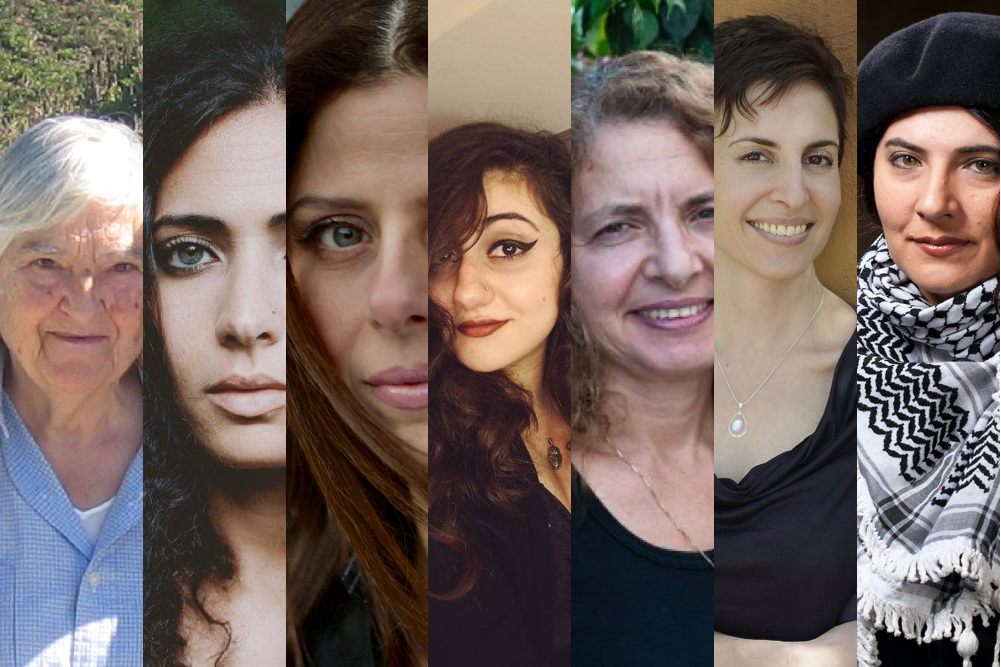
As millions of these displaced people search for a safe place to land, I hope they will once again find a haven in our country. These seven Arab American poets will introduce you to a piece of the Arab diaspora and the Arab American experience. I’m excited to share the Arab American women I regularly share with my daughter. These poets embody the characteristics you want in a new neighbor and friend. They, like me, are strong, committed to their own troubled, but beautiful history, and are ready to roll the welcome mat out to refugee women suffering around the globe, ensuring everyone has a future.
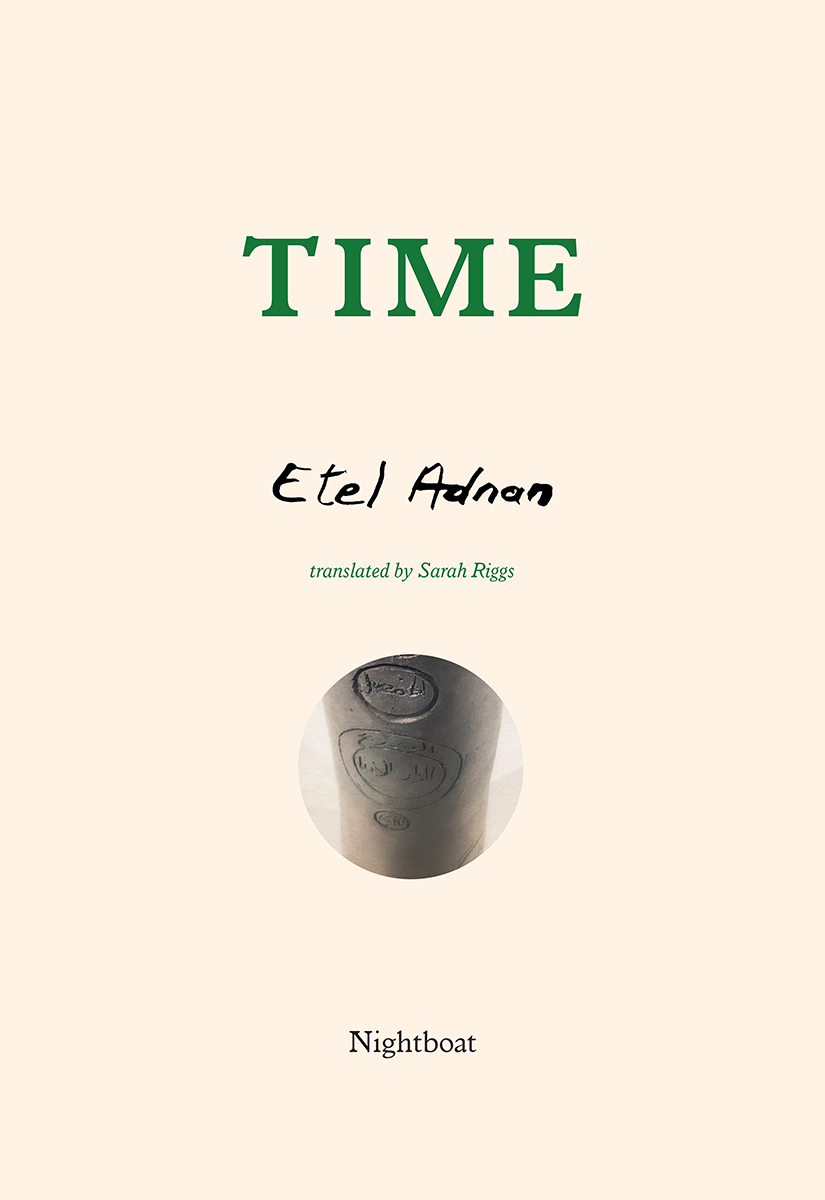
Adnan writes: “writing comes from a dialogue with time.” She should know. Now in her mid-90s, she captivated me first as a painter, then an activist resisting the Vietnam war and the civil war in Lebanon. All her art reflects her sense of displacement and duality and she’s lived a very full life. Her partner, Simone Fattal, published many of her early books. Any book by Adnan is worth it, but I adore Time as a rumination about the ways countries and people break our hearts and put them back together. In her poem, “Friday, March 25th at 4PM,” she says: “there are wounds / that wait for the heart / to dress them.”
Alyan’s wonderful novel Salt Houses, about a multigenerational Palestinian family, won her a Dayton Literary Peace Prize and an Arab American Book Award. But it was her book Hijra, focusing on the stories of Arab women, war, and selfhood, that made me a fan for life. These are not emotionally easy poems. In “Amna” she writes: “Love is filching/ your child’s air from her white throat,/ feeding her to the river before/ the army arrives. Ask any woman.” These poems will break you, then make you sing.
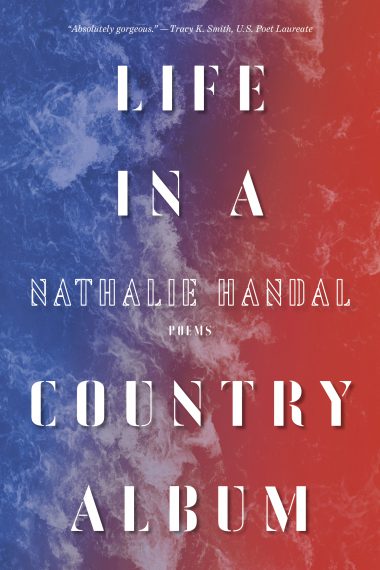
Nathalie Handal considers herself French Palestinian American and has written many books and plays. There is nothing of hers I’ve read that hasn’t made me want to read it aloud. Her latest book is Life in a Country Album and, as with much of Handal’s work, is lush, mind-bending, and multi-lingual. In “Les chemins lumière,” she says: I have to carefully / choose my words, / to keep my wounds / and love apart.”
Rizkallah says all the things I feel as a fellow Lebanese American woman at this moment in America’s history. She won the Etel Adnan Poetry Prize for the magic my body becomes. This collection contains one of my favorite poems: “if teta never had to leave lebanon I wonder if she would make preserves,” where she writes: “they tell me to be less Poetry about my rage…sometimes there is only the bubble on the job applications / where you fill in a circle because you’re working hard you’re a good / American today / you get to be white as long as you’re behaving but you’re a liar…” In her interview in 2017 in the LA Times Review of Books she said, “viewing your body however you choose is revolutionary.” Her book is a testament to Arab American women being unapologetic about their stories.
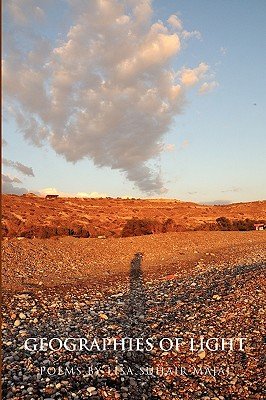
Majaj’s poem “Guidelines” is the kind of poem I wish I’d written about being Arab American and the stereotypes that follow that assertion. “If they wave newspapers in your face and shout, / stay calm. Remember everything they never learned. / Offer to take them to the library…. If they ask you if you’re white, say it depends…. If they ask how long you plan to stay, say forever.” Majaj is a Palestinian American poet and scholar. Though she’s only written one book of poems, Geographies of Light (which won the Del Sol Press Poetry Prize), all the poems satisfy her belief that poetry can “bear the longings of individuals, and of nations…[as well as] give us something to hold onto in the midst of despair.”
Camp’s father escaped Iraq after the Farhud (the genocide of the Jewish population of Baghdad), but he never talked about his life there. Her third book, One Hundred Hungers (winner of Tupelo Press’s Dorset Prize), pieces together her family’s unspoken history. The book is one part ancestry reconstruction, one part searching for self, and many parts homage to those who perished. It is filled with family and shared meals. Camp is a master of the luscious line, as in “Variation: Let’s Pretend”: “Let’s agree that you’ll tell me the details./ Please. You have to remember every flake/ of the air and the furrows of danger.” It is one of the most sensuous books you’ll ever read and characteristic of the gorgeousness of her work.
In every list helping with despair, it helps to have an activist who can still find joy in the world. If you need to laugh through your tears, Syrian American Kahf is your woman. A professor, poet, and member of the Syrian Nonviolence Movement, Kahf’s strength is her ability to be outrageous, satirical, and lyric all at once. I’d recommend her book Hagar Poems because it has one of my favorite sequences and is a good introduction to Kahf’s humor, “Little Mosque Poems:” “My little mosque offers courses on / the Basics of Islamic Cognitive Dissonance. / ‘There is no racism in Islam’ means / we won’t talk about it / ‘Islam is unity means / shuttup.”
My family has established a post-dinner routine ever since I’ve moved home during the pandemic: clear the table, wash the dishes, turn on our latest Korean entertainment binge. One night, we decide to watch Minari, Lee Isaac Chung’s film about a Korean American family that moves to a mostly-white Arkansas town so the father, Jacob, can pursue his dream of starting his own farm. Monica, his wife, is his reluctant counterpart.
The director based the story on his own childhood in 1980s Arkansas. His character, David, is six years old in the movie, around the same age I arrived in America. Anne, the older sister, is his responsible, mature babysitter. As I watch the film with my parents and my little brother, I see myself in both characters—the wide-eyed boy excited about the move, and the sister who tries to keep the family together.
I see myself in both characters—the wide-eyed boy excited about the move, and the sister who tries to keep the family together.
The eccentric maternal grandmother flies in from Korea to live with the family on the farm. Monica is immediately overcome with emotion when she sees the black plastic bags of chili flakes and dried anchovies her mother has packed.
“It’s so hard to get this here,” Monica says, wiping away her tears.
The scene reminds me of my mother’s own tear-stained greetings at the airport whenever my grandmother came to visit us during the holidays. She bore overflowing boxes of kimchi, dried squid, and soybean paste packaged under layers of bubble wrap to entrap the pungent fermented scents.
My grandmother would boast. “Customs? Aigo, not to worry! We just shook our heads and strolled past them—I deserve an acting award.” I always suspected an alternative truth—Customs agents probably sniffed the acridity from a mile away and left my wizened grandmother alone rather than deal with the hassle.
The most heart-wrenching scene of all is one where we glimpse the depth of Monica’s desperation. The family is on the verge of bankruptcy. Monica pulls Jacob away from the children to announce she’s leaving him and taking the kids to California.
“I can’t bear it,” her English subtitles read. “I’ve lost my faith in you.” In reality, the words translate more accurately to something like this: I can’t keep holding on anymore just by looking at you. I’m too tired for this.
The line hits me like deja vu—something I’ve heard my own mother say in the distant past. I steal glances at her out of the corner of my eye. Her laughs are bittersweet and filled with a kind of remorse. I can tell by the way they catch in her throat that she is Monica. I wonder if my parents have ever had conversations like Monica and Jacob’s out of my earshot.
The next evening, when I complain about entering my mid-20s, my mother sighs. “When I was your age, I was getting engaged.”
“When you put it that way, umma… I can’t even imagine.”
Why did they stay? Was it out of love? And will we ever truly know what lies in their hearts?
My mother is a little drunk from the soju we’ve had along with our bossam. “I wasn’t supposed to leave everything behind. I regret it all.” My father winces while avoiding her gaze. I pat her on the back and cluck gently, at a loss for words.
I toss and turn that night haunted by questions about Monica and my mother. Though Minari is centered around Jacob’s quest of staking out his own land, my dreams drift to Monica and her untold motivations.
Why did they stay? Was it out of love? And will we ever truly know what lies in their hearts?
My first memoryin America takes place in a preschool office—my small hand transferred from my mother’s coarse palm to pale smooth skin.
I remember peering up at the teacher’s face. She was young and white—the first white person I had seen so up close. The sunlight reflected off her blonde hair from behind her, creating a dizzying halo. Her sharp features were bizarre to me. How is her nose bridge so high? I wondered.
“Don’t worry,” my mother stated firmly. “You’ll have fun.”
“Where are you going, umma?” I shifted my feet nervously.
My parents grinned at me and retreated from the teacher with slight bows, the Confucian method of greeting instinctual in their stooped bodies. My eyes welled up with tears, realizing that they were leaving me alone with this unfamiliar woman. I watched silently through the window as they left down the exit ramp and climbed into our Toyota minivan.
The teacher led me to the back of the building, where a group of children were shrieking in a tanbark lot. Beaming, she kneeled down to reach me at eye level and said something unintelligible while pointing in their direction. I reluctantly shuffled over to the corner of the playground. No one took notice of me cowering on the swing set.
After school, I ran to my mother, who stood waiting for me by the manicured front lawn. She wore a red wide-brimmed visor to protect her flawless Seoul skin from the harsh California sun. It cast an elongated shadow over her face, obscuring her eyes from my vantage point.
She reached out and stroked my hair. “See, that wasn’t so bad, was it?”
I shrugged. “I guess. I didn’t really understand anyone.”
“Let’s go look at some English books,” my mother said, waving goodbye to the teacher.
We walked across the bridge to Cupertino Library, a massive two-story glass structure. Row upon row of arched fountain water scattered through the sluggish afternoon heat as diapered toddlers squealed and splashed around. In the hallway before the children’s section, we stopped before the enormous floor-to-ceiling aquarium. I was awestruck—everything was so big in America. Throngs of children sat cross-legged in front of the blue glass, riveted by the clownfish and blue tangs floating by. Lying beside me on the dusty carpet in the children’s section, my mother traced the large-print words with her forefinger.
“The cow–jumped—over—the—moon,” she slowly sounded out. “Now, you try.”
I chanted back. “The cow jumped over the moon!” Memorizing my mother’s recitations was a thrilling—but feasible—challenge. It was easy enough to recall her strings of nonsense based on the illustration on the page.
“Good girl. Let’s check out the rest of these books.”
We trekked back across the bridge to our new apartment, the newly-acquired picture books stacked into my mother’s backpack. I sing-songed at our second-floor doorstep while swinging my mother’s hand back and forth. “The cow jumped over the moon, the little dog laughed, to see such a sport, and the dish ran away with the spoon…”
She looked crestfallen. ‘I don’t understand anything they’re saying. It’s too fast. How am I going to live here?’
Once inside, my mother set the books aside and turned on the TV. The news blared across the boxy screen. I stared, mesmerized by the fast-paced dictation and the slate of faces that looked so unlike the anchors back in Seoul.
“W-a-r. What does that mean, umma?” I spelled out the shortest word I saw on the fixed caption below. My mother didn’t respond, so I turned to prod her arm.
She looked crestfallen. “I don’t understand anything they’re saying. It’s too fast. How am I going to live here?”
Eventually, my brain soaked up English like a sponge. It was only weeks before I went from the lonely outsider on the playground to giggling during naptime with my new friends and volunteering excitedly to read aloud during storytime. The shock from being dropped into the middle of an English-speaking world is retained only in that single memory from that first day at preschool. I have no other recollections of struggling with the language, only a period when I didn’t know English at all, then suddenly, afterwards, when I did.
My mother, at age 32, began a more painful parallel process. Despite her master’s degree from a prestigious women’s college and her former coveted government position at Korea’s National Forensic Service agency, her credentials were wiped clean in America. She had to re-earn her pharmaceutical license in the States. She studied fervently during those first few years, her slight frame burrowed amongst binders. When I kissed her goodnight, I found her hunched over, furiously marking up stacks of textbooks. The fluorescent kitchen lights glinted off the wet highlighter ink on the page.
My mother passed the technical exams on her first try. She had always been a gifted student and it only took her a few months to refresh her memory. Medical terminology, universally in English, allowed for a smoother transition.
It was the Test of Spoken English that took years to crack. The TSE was an oral test designed to measure the communication ability of non-native speakers. After she learned to drive, our car audio alternated between my library audiobooks and her TSE English tapes. We listened to a chapter of Dear Mr. Henshaw by Beverly Cleary, then a recorded textbook conversation of native English speakers discussing the weather and odd hobbies. At traffic stoplights, we made sure to practice along with the tapes.
“I like to fix cars in my spare time,” the speaker said. “Now, repeat after me.”
My mother and I dutifully obeyed. “I like to fix cars in my spare time.” The instructors spoke in calm, soothing voices. In my head, I envisioned nice white ladies like my preschool teacher strolling around a Sesame Street neighborhood on a lazy afternoon. Their sentences curved upwards into smiles.
The tape fed us prompts—strangely philosophical ones, such as “Do you believe childhood to be the happiest time in life?” or, “What does it mean to acquire knowledge?” then allotted 15 seconds to prepare, 45 seconds to respond. My mother, fumbling her nascent vocabulary, recorded herself haltingly.
“Aish!” she fumed as she replayed her stilted English responses. Oftentimes there were more pauses than words in her practice answers. She rewound the tape and started again.
“Childhood is most happy time because…”
I envisioned nice white ladies like my preschool teacher strolling around a Sesame Street neighborhood on a lazy afternoon. Their sentences curved upwards into smiles.
The day my mother passed the TSE on her third try, I was elected to the 3rd grade student council. We feasted that night, my father bringing home king crabs and a cheesecake from Ranch 99, a treat reserved only for birthdays and special occasions. My parents danced around the living room, tipsy and in love for the night. I imagined there could be no happier family in the world than the three of us together in our small townhouse. I drifted off to sleep dreaming of the second Harry Potter library book my mother had just checked out for me.
The Bay Area eventually welcomed many more of my mother’s classmates from Ewha University—other young Korean mothers who had followed husbands chasing their Silicon Valley dreams. Scores of them attempted the TSE test, and one by one, all of them gave up. There was only one other ahjumma who passed the exam a few years after my mother did. Citing the difficulty of adjusting to an English-speaking role, she quit her job after a few months.
My mother was finally hired at a large pharmacy chain after years of competing against younger applicants. Her joy was a short-lived one, as the reality of the workplace hit.
“They call me, speak so quickly, and then hang up!” she complained. “What am I supposed to do if I can’t catch what they said in time?” The TSE tapes hadn’t prepared her for the rapid English spoken over the phone when doctors and patients called to fill prescriptions.
I was always embarrassed by my mother’s loud announcement of our foreign presence.
In public spaces, seeking refuge from the discriminatory workplace, my mother refused to address me in English. I was always embarrassed by my mother’s loud announcement of our foreign presence. I was painfully aware of the way gazes swiveled and fixated on us at the neighborhood Safeway when she addressed me across the aisle in Korean. It seemed that she always drew unwanted attention to ourselves by bellowing a few decibels louder than necessary.
“Quiet down,” I whined in English, embarrassed that others might be watching.
My mother replied even more loudly in Korean, as if to teach me a lesson. “What, you’re ashamed of me? You mannerless wench. I raised you wrong.”
Sometime during Minari, I break out of a dreamlike trance.
My family is sitting in our darkened living room, the light from the TV screen illuminating my parents’ shiny foreheads. My father and brother are seated on the rug as they crack roasted peanuts onto a snack tray, and my mother sits beside me with a quilt draped upon our laps. We bicker throughout the nightly entertainment as usual—my father taps my brother’s hand to remind him to cluster his spilled shells together, while my mother complains of a chill and tugs our quilt over to her side.
The Minari family, too, is mundanely going about unpacking their moving boxes in their dimly-lit living room. Monica checks David’s heartbeat with a stethoscope. “I want to listen,” he says.
“You do? Put these in your ears,” she instructs.
My mother chuckles and nudges my brother. “You used to ask me that all the time when you were little, too!”
Onscreen, Jacob suggests a move-in celebration. “Let’s all sleep together on the floor since it’s our first night.”
“No, appa! You snore,” Anne retorts.
Jacob lunges for her. “Eesh, when did I ever?” They fall over in a tickling bout.
Watching Jacob’s denial, my brother and I burst into giggles, poking my father’s side. “See, appa? He snores, like you.”
My father snorts and rolls his eyes. “Who, me? I never snore.”
More than our shared Korean resemblance, it’s the way they seamlessly code-switch back and forth between the two languages that directly reflects our own family dynamics.
Why does this all feel so familiar? Though we are both first-generation Korean American families, the similarities end there; in fact, there are some glaring differences. The Minari family is in a Arkansas farm trailer in the 1980s, and my family is in the Bay Area suburbs in 2021. But it still feels like I’m observing an uncanny mirror image on the screen.
With a jolt, I realize—it’s because they’ve been speaking in Konglish, the hybrid language that mixes Korean with English. It beams from their living room to ours, lulling me into a haze of snug intimacy. More than our shared Korean resemblance, it’s the way they seamlessly code-switch back and forth between the two languages that directly reflects our own family dynamics. Their conversation could be our family’s, no matter the time or place—or any Korean American family’s I know.
I am cloaked in the vernacular of my youth. My family’s lingering laughter fades away as I slip back into the calming rhythm of a language that conjures a sense of home.
Now, many years later, my mother has graduated from TSE tapes to religiously following the NPR evening news during her commute home. At the dinner table, I bring up the political headlines of the day, and she waves her chopsticks in my face.
“I know that already. I heard that in the car. How do you spell in-sur-rec-tion? What does that mean?”
“In. Sur. Rec. Tion.” I snap in English, refusing to list out the letters. “You can figure it out.” I’ve been spelling words for her my entire life, and it irritates me to define words for her even at this age. It’s much too easy, in moments like these, to willingly forget that she guided my pointer finger to trace words like l-i-o-n and s-u-n on the Cupertino library floor.
My family’s lingering laughter fades away as I slip back into the calming rhythm of a language that conjures a sense of home.
My mother slaps my hand. “You-this. You-that. English is so disrespectful. Speak in honorifics to us.”
After dinner, we Kakaotalk videochat my grandmother in Korea. My mother has a habit of shifting to Konglish even when we are on KakaoTalk with my grandparents, not realizing her subconscious mistake—my grandmother does not understand any English whatsoever.
“Woorihealth insurance cost wanjun meechutsuh!” Translation: Our health insurance costs are crazy high.
“Stop your Konglish,” my father and I hiss under our breaths. “You know she can’t understand.”
“How is our Yi Youn-ee doing?” my grandmother asks. We discuss recent Korean political scandals, American two-party dysfunction, and the status of my graduate school apps. She gasps incredulously at the news scenes she sees of American carnage. “America is a developing country compared to Korea. Such violence. Also, we have better healthcare here.”
“I know. Halmoni, I miss you. I’ll come and see you soon,” I promise near the end of the call. My voice breaks as she hangs up, knowing that soon could mean anywhere from a few months to years.
My mother starts streaming our nightly Korean drama episode. I struggle with a word I’ve never heard before. “What does boojil-updamean?” I ask her.
“For something to be pointless,” my mother explains patiently. “Meaningless.”
I wonder if this is how my mother feels—constantly frustrated at the defunct machine sitting in her throat, between Korean thoughts and English words.
Moments like these are frequent these days. Am I losing my Korean? I worry. I feel like a child again at times, asking my mother questions about a language I hold onto dearly. What sounds like eloquent English in my mind will often be spat out as garbled elementary Korean instead. My brain wearily protests the effort it takes to juggle two different languages. I wonder if this is how my mother feels—constantly frustrated at the defunct machine sitting in her throat, between Korean thoughts and English words.
I turn my attention back to the screen. Beside me, my mother hums along happily to the OST. She marvels that these days, we have so many K-drama options to choose from even in America.
In Minari’s final scene, Monica and Jacob grasp a squared rock as they trail the water-witcher’s dowsing stick. They have decided to start anew after losing their harvest to an accidental blaze. Monica smiles softly at Jacob. The water-witcher points to the ground, and they set the rock down to mark a spot for their well.
I can’t help but see my mother’s story in Monica’s—that of mothers who sacrifice all that is familiar to become transplants in America. Some chase their careers. Some follow their husbands. Others, like my mother, are not sure looking back why they came at all.
But they are here, whatever the reason may be. They have chosen to stay. With all the strength they can muster, they set their rocks down, and draw what water they can from the foreign soil.
Gabriela Garcia’s debut novel, Of Women and Salt, opens with a heartfelt lament from Carmen to her daughter Jeanette who has long struggled with addiction. “I was afraid to look back because then I would have seen what was coming,” Carmen says. “The before and the after like salt whipping into water until I can’t tell the difference… Every story that knocked into ours.”
It’s these stories that shape the novel, and Jeanette’s life. In one, she must decide what to do when ICE takes her neighbor in a raid, leaving behind the woman’s daughter, Ana. In another, she travels to Cuba to search for clues about her family and the painful history her mother cannot share. Miami is awash with memories of clubbing, department store jobs, her fraught relationship with her mother. But there are also the stories she doesn’t know.
With lyrical prose and haunting storytelling, Garcia explores the lives of five generations of Cuban women and a mother-daughter pair from El Salvador who are all impacted by immigration policies, political violence, and the intersection of class, race, and oppression.
I chatted with Garcia over email about how endemic racism shapes both the carceral and immigration systems, the racial and class divisions of Florida, and why timeliness is a false label for novels about immigration.
Christopher Gonzalez: Sometimes I think that all families really leave us or pass down to us are their stories—the stories we’ve told ourselves based on those stories, and the messy larger narratives patched together from what is lost in between. What were you exploring about the idea of family through the book’s structure?
Gabriela Garcia: You’re right about the way we understand ourselves through story. We are born into a story about ourselves, and mythologies that are passed on to us by our families, by society, by the other stories we consume. And I wondered what it would be like to tell a character’s story through some of the stories she doesn’t see. Jeanette doesn’t know the backstory of her ancestors, doesn’t know all the backstory of the people who come into her life, doesn’t actively think of all the historical and political forces that shape who she is in the world and the actions she ultimately takes. But in many ways, she is more the stories she doesn’t know or understand than her own story about herself. And the novel is full of characters like this, people who don’t see their own privilege or racism or power and dangerously/violently live in their own mythologies instead.
We are born into a story about ourselves, mythologies that are passed on to us by our families, by society, by the other stories we consume.
Also at the center are books and words that are passed down through generations. The idea for the chapter set in the tobacco factory came from encountering those actual letters from Victor Hugo to Cuban independence fighters at a museum in Cuba and researching the books that lectors read to workers. I was fascinated by the way these stories shaped actual political movements—and the connection between story and revolution—but also by what it meant for workers to hear perspectives from only European white men, and whether reclamation of some of those words is possible or will always be shaped by the forces that ensure some stories are told and some are not. I wanted the novel to end on a question about stories.
CG: That idea of dangerously and violently living in one’s own mythology—is it continuing a cycle of violence against others, one’s self, or both? Is there a point at which buying into mythology feels like an act of survival?
GG: I think it can be both. This is certainly true of generational trauma and violence that isn’t spoken about, as happens in the novel. But I think it can also be dangerous not to locate ourselves in historical or political context, when we don’t question the mythologies that serve us. I think those mythologies can be about survival, but they can also be about power. For example, Carmen buying into her own “immigrant success story” and not wanting to engage on what it has meant that Cubans of her generation had an easier path to migration and resources that ensured that success when Jeanette brings this up. And what that results in is taking actions that put lives at risk.
CG: I was fascinated by the parallels between Jeanette and her cousin Maydelis. With Maydelis, we’re given a snapshot of what life might have looked like if Jeanette had grown up in Cuba. That’s a topic often explored by writers across the diaspora, the idea of going back home to a place that isn’t actually home, “a tourist in one’s own land,” etc. I am probably guilty of similar scribblings about Puerto Rico. But we first see Jeanette visiting Cuba through the eyes of Maydelis, on their trip to La Habana, which turns the trope on its head by filtering Jeanette through a local’s eye. Can you speak more about this decision? And about writing about a place that feels like home but maybe isn’t?
The same endemic racism that shapes our carceral system and policing shapes detention and deportation.
GG: That’s true. It’s a common trope, and I examine that often problematic outsider gaze in various forms throughout the novel—there is also the U.S. white woman who lives in Mexico and is welcomed in a lot of spaces in ways other “outsiders” are not, etc. Maydelis’s perspective is really just reflective of many of my conversations with Cubans on the island and observing some of the ways Cuban Americans and other tourists interact with Cuba and Cubans. I’m lucky in that I’ve spent a lot of time in Cuba and traveled there since I was young and talk to my friends and family in Cuba on a daily basis—I never had the friction that someone like Jeanette has with her mother about traveling to Cuba. But having this kind of relationship with Cuba and with Cubans on and off the island, let me see a lot of the ways Cubans and Cuba and the US exist in the imaginary on both sides. I think a lot of people in the diaspora want to imagine we can never be the Ugly U.S. American Tourist or the Naive Outsider because we have a particular connection to the place, but I wanted to gesture toward the ways Jeanette is different and not all that different from the German tourist who behaves in abhorrent ways while with Maydelis.
CG: You are very conscientious about writing against the idea of a Latinx monolith and an immigrant monolith. There’s a brief, pertinent moment in the chapter “An Encyclopedia of Birds” where Gloria, a Salvadoran woman taken by ICE to a detention center in Texas, describes the women she sees: other Salvadorans, Guatemalans, Haitians, and Chinese. In the United States, the mainstream image of an undocumented immigrant is one who is Brown and Mexican, erasing Central Americans, Black, and Asian immigrants from within and outside of Latin America. How did your work in immigrant rights organizing and detention centers influence your writing?
GG: I started writing snippets of what eventually became that chapter while I was working on deportation defense and visiting people in detention centers so it’s definitely colored by the actual reality of what I saw and what, at the time—and still, to a large extent—received so little media attention. Today, the largest group in detention is Black Haitian immigrants and they also face disproportionate rates of asylum denial. The same endemic racism that shapes our carceral system and policing shapes detention and deportation.
And the problem with flattening Latinx or immigrant identity is that we get this really dangerous narrative that there is such a thing as “the immigrant experience” and that it is not shaped by race or class or gender. I am the daughter of Cuban and Mexican immigrants who were treated very differently by this country and had very different paths to immigration. And I wanted characters who reflected that reality—Jeanette’s Cuban mother, for example, had a very privileged and easy path to immigration shaped by class and race and has no qualms about pushing her daughter to turn over a child to the police and does not see any solidarity with other immigrants when Jeanette somewhat pushes her about it. And that lack of solidarity is true to my experience in movement work.
CG: Building off of that, I want to talk a bit about Florida. Your novel has two very iconic scenes—one where a dead woman’s body is washed ashore and one with a panther in a neighbor’s home. These both strike me as Extremely Florida, though I am not a Floridian. They feel like the Florida I’ve read in fiction by Kristen Arnett and Jennine Capó Crucet.
I am curious what you think people get wrong about Florida and if fiction is able to illuminate some truths about the state. To that end, why do you think Florida is the subject of such strong stereotyping and caricature? I also can’t help but think about the recent election and this false idea of “the Latinx vote” and which way it was expected to swing. All of these things seem to be related.
GG: I, for one, wasn’t surprised about voting patterns at all. I think I write Very Florida because it is the place I know best and it’s true—it’s swampy and hot and perhaps an amalgamation of a lot of this whole country’s weirdness. Though I’ve always been less interested in the Florida Man caricature of Florida because it feels like a particularly anglo white imaginary. Like my Florida was far more Puerto Rican and Dominican Orlando, U.S. Black Jacksonville, Latinx Miami with all its fucked up racial and class divisions.
What does whiteness, and aspirational whiteness and proximity to whiteness, do to people?
And it’s true—I grew up in a city where bodies and cocaine bundles washed ashore regularly and where wild-animals-as-pets was probably born. But in many ways, this part of the country is just a reflection of the rest of the country in technicolor. It becomes an easy scapegoat. Malcolm X’s “everything south of Canada is the South.” It becomes easy to say, “I’ll disown these white Latinx voting for Trump” and “there goes Florida being Florida” and harder to say, what does anti-Blackness look like all across Latin America and in a U.S. context? What does whiteness and aspirational whiteness and proximity to whiteness do to people? I’m interested in characters that implicate all of us.
CG: Relatedly, when Yosmany appears in “People Like That,” he’s one of the only prominent Black Cuban characters in the novel. His introduction reveals some of Jeanette’s abuela’s racism and allows Jeanette to reflect on the whiteness of Cubans in Miami and anti-Blackness on and off the island. But then later, when her grandmother accuses Yosmany of stealing her book, Jeanette stays silent about the fact that she is the one who takes it. It’s a moment where Jeanette is shown as not being absolved of her own anti-Blackness just because she can identify it in others. For white and non-Black Latinx readers, we’re definitely implicated, right? But how do you thread the needle in showing examples of anti-Blackness in fiction and not further perpetuating it?
We were working so hard to get attention on the Obama administration’s record deportations and the birth of family detention, but came upon a media landscape that wanted nothing to do with it.
GG: I was thinking a lot about innocence and who it’s conferred upon. In that chapter, Jeanette also reflects on stealing from a Victoria’s Secret as a teenager, and other than her mother being called to the store, she’s let off. Which is in stark contrast to what would’ve happened if her grandmother denounced Yosmany as she threatened to do. In many ways, Jeanette is allowed room to mess up and try to find her way while other characters around her, such as Ana and Gloria, are expected to live these paper-perfect lives to even claim a right to live in peace, and this has everything to do with race and class and status. And as much as Jeanette can identify racist behavior in others and position herself as above it, when that moment arrives with her grandmother and Maydelis, she falls back on that innocence, she instinctively knows–even if it’s not a conscious decision–that she can weaponize that presumed innocence. And I think that relates to the second part of the question, too. I’m always thinking about subject position. If, as an author, I position myself and my readers as inherently innocent and my characters as one-dimensional pawns then that’s when the writing becomes about absolution or saviorism, and ends up perpetuating the very same dynamics it seeks to denounce. I think about James Baldwin’s controversial essay “Everybody’s Protest Novel” in which he wrote about the “thrill of virtue” of reading literature that does not implicate the reader or the author but rather positions them on a comfortable moral high ground, and how this kind of writing “so far from being disturbing,” offers a kind of bland reassurance that is morally dishonest.
CG: We’re now living at the start of the Biden administration. Gloria’s deportation takes place during the Obama administration when deportations were ramping up [The Obama administration deported more immigrants than any other administration]. I’ve been really sitting with the reality that for many Americans, deportations and anti-immigrant policies might be seen as a lesser sin depending on which party is in the White House. Perhaps hagiography will be the thing that prevents us from true progress.
What kind of influence, if any, did the shift from an Obama to a Trump presidency have on how you approached revisions in the novel? Has your other writing and advocacy work experienced a shift?
GG: I wrote most of the book before I had any inkling that Trump would ever be president. Which is what makes it even weirder when people talk about how those parts of the book feel very “timely” or whatever. And I’m like, to who? Those of us in the movement were working so hard to get any kind of attention on what was happening under the Obama administration with record deportations and the birth of family detention but came upon a media landscape that wanted nothing to do with it. And now we are in a dangerous moment when that could happen again, and, if recent news is any indication, is happening again.
One of the greatest thrills of reading a first-person story is in the tension between what the narrator understands about themself and what we, the readers, understand about the narrator. But in these first-person stories of self-destructive women, the lies are so thin, the self-delusion and denial so absurd, the jokes so dark or so dead-pan or so sarcastic, that we get the sense the narrators, at least on some level, know they’re wreaking havoc on their own lives. Perhaps the obfuscation isn’t about how they’re making messes of their lives, but why, what pain those messes hide.
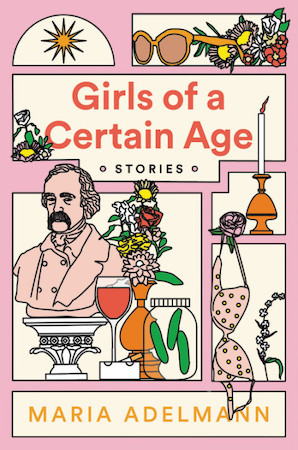
Many of the narrators in my short story collection Girls of a Certain Age behave self-destructively as a means of coping with circumstances beyond their control. In “First Aid,” the main character makes a case for self-injury. In “Human Bonding,” a college student is thrilled to be punched in the face. In “None of These Will Bring Disaster,” an unemployed binge drinker purposefully picks up smoking and keeps finding herself in unfulfilling relationships. “If you keep stepping in the same ditch over and over,” she says, “people stop feeling sorry for you because you’re either an idiot or a masochist.”
Maybe I’m the idiot or the masochist, because no matter what the women in these stories and novels do—no matter how blatantly they lie, how many mind-altering substances they consume, how easily they turn on their loved ones—I find I am rooting for them, holding out hope that they might change.
When the 23-year-old Black narrator of Luster is fired from her job, she ends up moving in with her older white boyfriend, his white wife, and their adopted Black daughter. “I creep around the house and try to be racially neutral,” she says. What ensues is cynical, hysterical, and occasionally absurd. As Gabino Iglesias writes in his NPR review, “Leilani writes as if she’s stabbing the keyboard with scalpels made of class resentment and memories of racism and misogyny.”
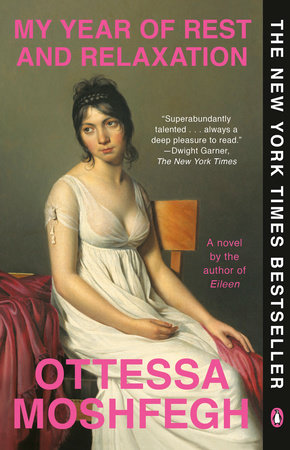
The wealthy, depressed WASP narrator of this novel decides to use prescription meds to sleep for a year. The novel takes place mostly in her memories and hazy moments awake. “I can’t point to any one event that resulted in my decision to go into hibernation,” she says. “Initially, I just wanted some downers to drown out my thoughts and judgments, since the constant barrage made it hard not to hate everyone and everything.”
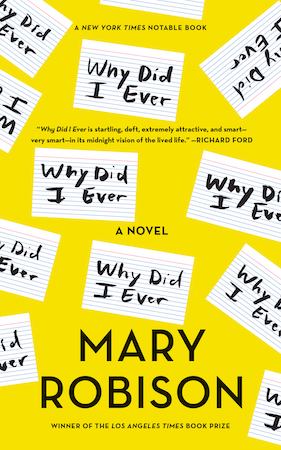
The narrator of this fragmented novel is a hilarious script doctor with depression, ADD, insomnia, three ex-husbands, a drug-addicted daughter, and a son who’s been the victim of a violent sex crime. The narrative unfolds in tiny moments that range from the profound to the mundane. “I feel around in my handbag, extract something, use it, and put it back,” she says. “Later on I might need something else. This is my life, what my life is really made of.”
“According to www.firstborns.com, firstborns are alike in that they’re bastards, or more often, at least,” says the obnoxious narrator of “The Toast,” who lies to get out of attending her kind, older sister’s wedding, only to be tasked with delivering a toast in absentia. The story, which cheekily borrows its structure J.D. Salinger’s “For Esme—with Love and Squalor,” is ultimately a heart-wrenching exploration of sisterhood.
We are somehow charmed by this adjunct teacher who passes time by drinking with her adult education students while challenging them to tell their worst stories. “I was depressed as hell and wanted to share my bad news,” she admits in the first paragraph, a paragraph which ends with this relentless sentence: “In those days I felt most of the time like someone had knocked me in the head with a brick, and even though I had stopped drinking, I had started again, and the way I saw it, a real brick in the head would have been okay because then I’d be dead or at least unconscious.”
Among Black Light’s many beautiful and gritty stories is this gem, which took Parsons 12 years to write. In it, a mother drinks as her young daughter tells a fairy tale that illuminates family dysfunction. “I try to keep tabs, but I am never drinking from a can,” says the mother. “I keep track in my own way. Am I blinking regularly? Can I feel my mouth? Sherry is a pretty drunk that warms up the light around your face. No harm can come, I remind my daughter.”
“I’m riding up an escalator with Roxy explaining how she’s the worst mother in the world. Some of my students, I say, have really bad mothers, but she takes the cake. Roxy, who’s a real cunt, says something along the lines of ‘you ungrateful whore’ and storms off to Ship and Shore, which is retailese for Fat and Ugly.”
So begins this very ’90s story, which starts out at a shopping mall with its requisite Sunglasses Hut and food court and ends not so long after in the middle of a desert, where the narrator clings to the hope that the students to whom she owes drug money won’t actually kill her.
This narrator gets things started with a few white lies:
“I’d just moved back to the city, having been away for a long time during which I’d accomplished quite a bit of work—I’m no judge of the quality—and was crashing at the apartment of a friend I’d run into at Borders bookstore after two weeks of hapless wandering.”
The “hapless wandering” turns out to be homelessness. The “quite a bit of work,” she later admits, brings “to mind a row of walls with vague, poorly executed scrawls.” The story, which is ultimately about grief over a lost, drug-addicted son, plays on themes from the eponymous fairy tale by H.C. Andersen.
“I was at home, not making spaghetti,” begins this story of absences and aimlessness in which the unemployed narrator slowly ambles her way through a day comprised mostly of not doing things. By the end of the story, we begin to question her reliability, as does her husband. Yet she enjoys his litany of accusations, smiling as all of her “vague and shifting self-loathings are streamlining into brightly delineated wrongs.”
Glimmers of hope shine brighter from the darkness, which is why I love this line, from a woman at a methadone rehab clinic in the middle of a desert: “The world just goes along. Nothing much matters, you know? I mean really matters. But then sometimes, just for a second, you get this grace, this belief that it does matter, a whole lot.”
The Girl Detective reads about her death on Twitter. She is surprised. She doesn’t remember much from the night before — a bar with Bess and George. A man. A drink. A struggle. A stumble home in the dark—but she is The Girl Detective. She can’t be dead. She has hamburgers already pattied for dinner tonight. She has a case to solve after putting the kids to bed. The Girl Detective holds up her hand. She can see right through it, just like Marty McFly could see through his own hand on that stage at Hill Valley High School. She wiggles her fingers.
Do dead people still drink coffee? she wonders.
The Girl Detective listens to the radio talk show hosts murmur about the rumors of her death while she drives the kids to school.
Her boy says, Mama, is that you they’re talking about?
The Girl Detective says, shhhh, love, there are lots of Girl Detectives. Her girl says Mama that’s not true. You know there’s only one.
The Girl Detective catches the eyes of her children in the rearview mirror.
Do I look dead to you? she says.
You look the same as always, says the girl. Mostly.
Yeah, says the boy. That’s what worries us.
Back home, The Girl Detective examines her face in the bathroom mirror. She is ninety, but somehow her face is unwrinkled, her skin as supple and dewy as if she is still eighteen. What will she look like in the coffin? Will they write the truth of it in her obituary? Will they say she lived long and stayed young because of coffee and Chinese food and bourbon at strip clubs and illicit sex in the back of her ancient blue roadster? Will they say she aged in reverse after her divorce?
In the mirror, the wallpaper is just visible through the skin of her cheek. She puts her fingers to her cheek, presses. How long before she is a character in the Gilman story, blending into the wallpaper itself, circling the room repeatedly on her hands and knees, invisible? How long before she disappears completely?
A partial list of The Girl Detective’s talents:
The Girl Detective is a skillful oarsman.
The Girl Detective speaks fluent French.
The Girl Detective runs a bakery out of her kitchen and a chop shop out of her garage.
The Girl Detective has summited Mount Everest twice, once while pregnant, once blindfolded.
The Girl Detective is a crackerjack shot.
The Girl Detective fucks like Grace Kelly and dances like Fred Astaire.
The Girl Detective pulls up WebMD. There is no medical advice, unfortunately, about what to do when you’ve been murdered. There are no helpful tips on how to bring yourself back. She contemplates her bookmarks, as a little treat. She begins with a ghost story by Maggie Smith. When she gets to the part about how the death of a marriage turns the spouse into a ghost, about how Maggie floated, invisible, through room after room of her house, The Girl Detective whispers yes oh yes: it happened to her too.
She forced herself back to life once.
She can do it again.
Last year, right before she threw her husband’s belongings onto the lawn and set them all ablaze, she felt herself ripping seam by seam away from her body. She haunted her neighborhood for three solid months before she returned to find her body where she’d left it, sitting on the couch with her hands folded in her lap. She remembers cracking open her jaw and forcing her way back in. She remembers it was as hard as birthing her children, as hard as being born, but after a while, the pain was worth it, after a while, she came back into her body and into the world, screaming, sweating, panting with rage, her fingernails digging into the palms of her hands like shovels into the earth.
She remembers.
She forced herself back to life once.
She can do it again.
From Variety: Poll: Who Should Be Cast As The Girl Detective In Her Biopic? a) Scarlett Johannson b) Emma Stone c) Scarlett Johnannson as Regina King as The Girl Detective d) Regina King e) Sofia Vergara
The Girl Detective gives The Boy Detectives a little ring-a-ling.
I know you’ve got my body, she says. But I’m not dead yet.
Half an hour later, they show up on her doorstep. She opens her screen door to them, pushes her hair out of her face, leaving a small comma of flour on her translucent cheek. They are, to be honest, a little starry-eyed. Until now, she has only been a name that’s a constant ripple in the fan threads online and a shining set of features: The Girl Detective With The Satin Hair, The Girl Detective With The Silken Grin. She is smaller than they imagined in real life, but she is bigger too. She is baking something; they catch the warm smell of cinnamon, nutmeg, a hint of banana. Her mother’s secret recipe. In the background, the low hum of a voice on the television. She welcomes them inside.
Boy Detective Number 1 isn’t surprised that The Girl Detective is in front of him, a bit pale, but still intact. Somehow, that seems like a thing she’s capable of. But she looks so much like his mother/the woman across the hall with the abusive husband/the lady they found dead in the alley last week. Funny how they all look alike, he thinks as he takes a seat.
In the background, someone is murmuring that the The Girl Detective has been murdered.
We’re so sorry this happened to you, says Boy Detective Number 2, and he takes her hand in his. How pale her skin is, how cold, how much it feels like the hands of all the other dead girls in the morgue. But when he looks at her hand, he realizes she isn’t pale at all. In fact, he can see his own skin shimmering just beneath the surface of hers, as if she can take on any cast. He thinks of all the pictures of her projected on the sides of buildings, all the sketches and the stickers, all the wholesome pinup posters they’ve made—our heroine, the gumshoe white girl, blonde-haired, eyes as blue as the car she drives—and how his mind filled in that likeness as if it was for real, the same way he always fills in the end of his wife’s sentences. The coldness of her hand has sunk beneath his skin, slid along an icy thread into the pit of his stomach. He takes his hand away. He shivers. Funny how on top of it all, she’s also a master of disguise.Funny how she could look like anyone.
In the background, a voice, incredulous: The Girl Detective did not go gentle into that good night. She raged, raged, raged, against the dying of the light.
What can you tell us about your attacker? he says.
I remember nothing, says The Girl Detective. But I’ll find out. The lamp behind her shines through her face like light through a fog.
Be careful, he says. This is dangerous business.
I promise to be as careful as a pussycat walking up a slippery roof, she says.
In the background, a voice mocking: The Girl Detective thinks there’s no teacher likeexperience, Player, and you’ll know that when you’ve logged a little more.
What can we do to help? he says.
You can tell me where my body is.
City morgue. Drawer B5.
Boy Detective Number 2 will not meet her eyes.
You looked at me naked, didn’t you? In the morgue.
He pulls at his collar.
I remember nothing.
The Girl Detective sighs. Things might have been different if she had been killed in the Pacific Northwest, left on a riverbank, wrapped in plastic like some delicate-crumbed pastry. But her body was shoved behind a dumpster in Illinois, so she is left with these two delicate-crumbed pastries of men. She crooks a finger at the first one, leans in, pushes a lock of nearly invisible hair from his cheek and whispers into the pale pink whorl of his ear: Go on home now. I’ve got a handle on this.
In the background, a voice enraged: The Girl Detective knows that the ability to tell your own story, in words or images, is already a victory, already a revolt.
What are you going to do? says Boy Detective Number 1.
The Girl Detective leans back and wipes her hands on her apron. She traces her finger along the creep of ivy that sprawls across the fabric and remembers how her mother used to trace her finger exactly the same way. The leaves spiral away from their vine like a dozen different possibilities, like a dozen different lives. She remembers how she looked at herself in the mirror in the bathroom at the church just moments before she married, a woman in white like a million women before her, and the words rose up in her: we are a legion of ghosts. For a moment, she looked past herself and saw the ghost of her mother there too, standing just behind her, wearing this apron, tracing her finger along the thin line of vine that runs through the center. She used to think all of it began that day she was married, that finger on the vine, the fragment of skin that kept her there. But gradually they crept in: the moments before the marriage, the big ones and the little ones that led her there.
There was no neat little fix for a death like this.
She will have to reach back and back and back to the moment when she became a person in order to truly become a person again. This time, she will have to rupture something to animate herself. And again, the memory, like a vine stretching itself toward the sunlight: the mirror, that moment before her marriage when she thinks the ghost of her mother is mouthing something, but the ghost isn’t there. It is only The Girl Detective, whispering to herself in the mirror, alone: Chaos killed the dinosaurs, darling. Everything that rises must converge.
There was no neat little fix for a death like this.
The Girl Detective smiles a smile that says something, if you’re the kind of person who can read it.
I’m going back to the beginning of the story.
From reddit.com/r/book/thegirldetective/legends-and-rumors
Pinned by Moderators Posted by thelegitcarolynkeene 206 points *1 day ago Who is The Girl Detective? Everybody knows her face, but I keep hearing all these rumors about her real identity and idk, it all feels like speculation but does anybody know what her actual name is? Like who she is and where she lives? Cause I would really just like to take her out for coffee and like pick her brain, you know?
morale666 42 points * 8 hours ago You know she’s just one of those women with a true crime obsession who sits around eating full fat ice cream.
Booyakasha 655 points * 7 hours ago Somebody told me she runs a podcast and likes to wear caftans.
Vertical inverter 134 points * 7 hours ago Aw, sweetie, no. She’s the one who took down the woman who wrote that shitty romance thriller about the Mexican cartels. She wears a mask like a fucking superhero.
Souperstarsfastcars 83 points * 7 hours ago Naw, she writes a Black Panther spinoff for Marvel.
ElectricYouth7753 65 points *6 hours ago My sister met her. She lives in Florida with her girlfriend. Eats at Olive Garden constantly.
Bebeboi 533 points * 6 hours ago I think she’s probably just a divorcee with a couple of kids.
Tinymurmur22 74 points * 5 hours ago Isn’t she the one who caught The Golden State Killer?
To travel back in time, you don’t need a flux capacitor or a DeLorean. You don’t need a door in a cave underneath a nuclear power plant in Germany or a portal in the back of a diner’s pantry in Maine. All you need to do is crack the spine of the right book.
In the library, here they are: all the books of her life, a hundred little doorways into the past. The Girl Detective ties an arm’s length of black ribbon to her wrist and runs her hands along their spines—Carmen, Kelly, Octavia, Ursula—until she comes to the one where everything started. She opens it. She places her finger on the first words in the first chapter—The Rescue.
Like crawling through a sewer shaft of shit and emerging into the thunder and the rain, she is there again: in the crisp, cold air of River Heights, 1930, in the deep green grass on the side of the road. She closes the book around her hand and ties the length of black ribbon around it, because once she removes her finger from the page, she’ll be sucked back into the library. Thank God for the little fragment of skin still solid enough to keep her here, thank God for the loaf of banana bread, still warm, under her arm, because now she feels fully like a specter, now she feels so faint that without these things, she is sure that she would just float away, and at that moment, she needs something to remind her that some part of her somewhere is still alive.
But careful now, duck, because look, there she is, The Girl Detective At Eighteen, driving along in her ancient blue roadster, distracted by the little girl running into the road and the van that nearly clips her, and The Girl Detective Who Is Dead But Not knows she has just enough time to complete her task before her younger self makes it home. Quiet now, through the soft shush of the grass, through the chattering cloud of insects that dip and dart all around her in the evening light, she makes her way homeward, her coat striking her ankles like the clapper of a bell and ringing something deep down inside her again and again, and then, up on the hill, the house of her childhood, its one lone porch light beaming out into the gathering dark.
From the-girl-detective-slaps-blog.tumblr.com:
THE DEFINITIVE quiz on our favorite female sleuth! See how you stack up!
Fill in the blank: The Girl Detective is a) good, clean fun b) dying of dysentery c) as cool as Mata Hari and as sweet as Betty Crocker d) in danger, girl
The Girl Detective Who Is Dead But Not climbs the stairs of her childhood home quietly, quietly. A breeze drifts down from somewhere above her, a breeze that she knows is from the window she left open at eighteen, the very morning her life first became a story, and she creeps toward that slow seep of air.
Opening the door is like opening a locket with a photo of her mother inside. There is something precious about every placket on every shirt in her closet, every particle of dust. She wants to swallow it the way a snake swallows its own tail. But there isn’t time. Out the window, the buildings of River Heights are scattered across the hillside like stones, and that glimmer of blue there, that one traveling like a beetle along the arching gray branch of the road is The Girl Detective At Eighteen, her car just minutes away. The Girl Detective Who Is Dead But Not takes the banana bread from under her arm, unwraps it, places it on the desk. She picks up a sheet of paper and pen, and using the handwriting she memorized years ago so she could forge her mother’s signature on every school permission slip and report card, she writes:
Dear one,
Stay alive.
And just as she hears the key in the door, just as The Girl Detective At Eighteen makes her way into the house and drops her bag and coat and calls for her father, The Girl Detective Who Is Dead But Not unties the ribbon—she opens the book—she lifts her finger—and she is back in her library again.
From graffiti on the side of Los Arrieros Restaurant, Roosevelt Ave. and 76th, Jackson Heights.
The Girl Detective can mimic any bird call. She can bring forth the flocks of ravens and crows and seagulls and sparrows faster and with more force than Hitchcock on Bodega Bay
For a moment, it is as if she can almost see it, the new memories rewriting the old. Each image, each thought, each word she knew is scratched out and a new one carved in its place: The Girl Detective now remembers walking into her bedroom at eighteen and finding the note, the banana bread, still warm, on her desk. She remembers she could feel it in the very roots of her teeth: her mother had been there. Stay alive. And it was as if her mother had reached inside her and turned up a dial: the world became brighter and sharper and slightly more terrifying. From that moment on, every man she’d walked past, every dark alley, every honk of a horn was a warning.
Now she knows that memory is faulty. There was no mother. She’s been her own mother all along. And in the moments it takes for history to rewrite itself—for it doesn’t happen in an instant, as she had assumed it would, it is instead like the long, slow pull of a rubber band before it is released to snap back into place—while the world shimmers and quakes in the gap between the before and the now, she can hear it: the creak and slide of the morgue drawer. Her body, loose-limbed, pale as a corn husk, drawing itself up off the metal. Her naked corpse with its dark, dead eyes, its limp limbs, marionetting its way up the stairs and out the door and across the city toward her, one plodding step at a time.
She waits, thin as a reflection in the glass, in the dark of the library, for her body to come back to her. She can feel each step as it gets closer, the way you can feel it in your feet when a door slams somewhere in the depths of your house. As it grows near, she can still feel the letters of her story being rewritten, the memories retooled, until she comes to last night, sitting at the table in the bar with Bess and George and their round of drinks.
Bess, with her typical sweet cheer, Bess drinking her Cherry Coke without a hint of remorse, and George, all angles, all snark, all bourbon neat as always. The Girl Detective steps away from the table for a moment, laughing, to get another drink at the bar. A man is there, a drink before him, pushing one toward her. He is tall and slender. He is wearing a sweater vest like her father’s (she can hear the dragging of her corpse’s feet across the concrete, the screams of the passersby as they clear the street in front of it). His smile is infectious, and she takes the drink from him absently and thinks how lovely you are but before she touches it to her lips, she remembers: stay alive.
Would you mind, she says, buying drinks for my girlfriends too? She points over his shoulder, and he turns to look at Bess, who waves at him, and George, who rolls her eyes, and while he’s looking at them, (she can hear the manufactured shutter click of the phones as people snap photos, stream video, the gasps and whispers as they recognize her face) she switches their drinks. He turns back.
Sure, he says. He waves his fingers at the bartender, two more, and when the bartender brings them over, she takes them, and she smiles at the man, balances all three drinks in her hands. She returns to the table and (already the first video is up on YouTube—HoLy ShIt THE GIRL DETECTIVE IS A ZOMBIE!—and now she cannot just feel, but see it: her slack-skinned body is here, it is staggering across the concrete walkway and up the stairs to her house and somehow, it is herself but even she is scared) she tells Bess and George what she suspects.
If you’re wrong, says George.
Then nothing will happen, says The Girl Detective.
But in half an hour, he is nodding, sliding off the stool. She and Bess and George look at each other. They get up off their stools. They walk across the room and slide his arms around their shoulders.
We’re going to get him a Lyft, The Girl Detective says to the bartender.
Outside, Bess puts her head in her hands.
What do we do now with 200 pounds of self-roofied white guy? says George.
The Girl Detective is about to say, fuck him. The Girl Detective is about to say, let him sleep it off in a pool of someone else’s piss. But then the guy moans and grabs her wrist (and there is a knock at her door, and she walks over slowly and opens it, and there she is, looking at herself, her eyes hooded, drool dripping down her chin, and she feels sorry for this thing, this body, because all it has are its urges, its desires, and she feels the sudden need to love it) and it is as if the memory of what happened in the other timeline was so terrible that it is still imprinted somewhere in her skin. She has nothing but vague impressions—an arm around her waist, dragging her behind a building, a momentary flutter of surprise and desire as the man cups her breast, the quick liquid rush of terror as he takes her by the neck and begins to squeeze—and this is where she leaves that memory, because she refuses to be the audience to her own death—but then it comes to her: just before she blacked out, just before he was about to squeeze her life away, she pulled herself away (and so she reaches out and cracks her jaw open just like last time, but instead of forcing herself back inside like she did before, she whispers let me love you back to life and she can feel her body jump under her touch as if her fingertips are electric). But instead of pulling her neck from his hands, she’d ripped herself away from herself again just like after the divorce, seam by seam, and then she’d been standing there all of a sudden next to her slack body, marveling. It wasn’t him who had killed her. It was her who had saved herself. She’d taught herself a glorious trick, and now it was sheer willpower that was keeping her here. She can feel her body open itself to her, and she slides down inside and saturates every space and suddenly, she is home and staring out of her own eyes again.
It wasn’t him who had killed her. It was her who had saved herself.
She wonders if the memory of her death will be erased, but she thinks not. The timeline is too strong. There will be too many videos, too many photos, too many stories to erase them all. Something will survive that erasure just like she did. Something will persist.
The Girl Detective remembers. Go ahead, she says to Bess and George. I’ll see him home. And once they are gone, she takes out his wallet, and she tucks them both into a Lyft. They go to his apartment. She draws him a bath. She strips him of his clothes and she helps him into the water. And then she presses his groggy head under the surface, gently, gently. He doesn’t struggle much. When he stops sputtering, when he is still, she lifts her hand away.
It is this—the sound of the man taking water into his lungs, like water passing a slow drain—that will for The Girl Detective forever be the sound of time correcting itself, the sound of the two timelines of her life seaming themselves together again into one.
The Girl Detective picks her kids up at school. The girl throws herself into her arms.
You look better, she says. More solid somehow.
I feel better, says The Girl Detective. What do you think? she says to the boy.
He hugs her around the waist. You’re all right.
The Girl Detective helps her children with their homework. She makes them hamburgers for dinner. She draws them a bath. She strips them of their clothes and she helps them into the water. She presses their giggling heads under the surface, gently, gently, and after a moment, they pop back up again. While they’re splashing in the tub, she goes downstairs to the kitchen to pour herself a glass of wine. There, on the counter, is a loaf of banana bread, still warm, and a note in her mother’s handwriting. It says:
Dear one,
Keep safe.
The Girl Detective pours her wine. She cuts herself a slice of bread and eats it. This time, at least, she understands what it means.
Once the children are settled in bed, surrounded by stuffed animals, she asks them what story they want. Make one up, they say, patting their blankets the way the men at the cemeteries pat the dirt down on top of newly-filled graves.
The Girl Detective is silent for a moment. Then she says, Once upon a time, in a great dark room lit only by candlelight, a man wrote the final words in the very first book. And he sent the book out into the world under the cover of darkness to another great, dark room, where it was copied by another man twice. And this went on and on and on in more great dark rooms and in some small ones, with more men, and with women, and with more books.
Sometimes, people wrote new stories alongside the old ones. Sometimes those stories were long enough that they spilled over into books of their own. And after a while, there were millions and millions and millions of books, and it was good.
Once upon a time, in a small, bright room, someone began to write a story, and I was born. I pondered. I hunted. I loved my parents. I listened to my friends. I poked around in tunnels and old houses and in the innards of clocks. And slowly, slowly, all the stories about me began to fill a book, and then another, and then another, until there was a collection and then a shelf and then an entire library. And I knew all the secrets. And I was the mystery and the resolution. And I was The Girl Detective, and it was good.
And once upon a time, on a night like this one, a woman went into a bookstore and found the first of my stories on the shelf. She took it home. She stuck it under the covers with her child, and in the low light of the nightlight, under the beam of the flashlight, in the pale yellow light peeking in from the hall through the cracked bedroom door, the child opened the book and was behind the wheel of my ancient blue roadster, driving toward River Heights, 1930, rushing to save a girl, and it was good.
The Girl Detective smooths the hair of her children. They are still and silent in their beds.
And what, my loves, do you make of this? she says.
There is no death, says the boy.
There will always be a Girl Detective, says the girl.
From the two-story billboards in Times Square.
From the ticker at the New York Stock Exchange.
From the script scrawled on the chests of all the steel-eyed girls on TikTok.
From a hundred thousand flyers thrown out of a thousand different planes.
THE GIRL DETECTIVE IS RISEN THE GIRL DETECTIVE LIVES MAYBE NOW WE CAN SAY HER NAME
Inspired by the true story of the first Black woman doctor in New York, Libertiefollows Dr. Cathy Sampson and her daughter Libertie as they explore the meaning of freedom in Reconstruction-era Brooklyn. Dr. Sampson, a light-skinned woman who looks white enough to pass, is ambitious in her medical practice and only wishes for her daughter to one day follow in her footsteps. However, Libertie’s reverence towards her mother falters as she grows older and she becomes adamant about her desires and craves autonomy on her own terms. When both mother and daughter begin to reckon with their discernments and expectations of each other, distance propels them apart and brings them back together.
Greenidge deliberately moves readers from Weeksville—the free, working-class Black community in Central Brooklyn—to Jacmel, Haiti—the first free Black Republic—in order to recreate spaces for Black communities, by Black people. Yet the issues of colorism, gender roles, and creed continue to prevail in these collective sanctuaries.
Kaitlyn Greenidge is a historian, writer, and the award-winning author of We Love You, Charlie Freeman. Her writing has appeared in The New York Times, Glamour, The Believer, Vogue, Harper’s Bazaar—where she is currently the magazine’s features director—and other places.
I spoke with Kaitlyn Greenidge about reimagining what freedom looks like and writing about a mother who gets to have wider world ambitions while still being a parent.
Kukuwa Ashun: In preparation for our chat today I revisited your debut novel We Love You Charlie Freeman, before reading Libertie. I was drawn to the prevailing theme of motherhood and the mother-daughter relationships in these novels, especially since we see two instances of daughters examining and being in close proximity with the work their mothers have pride in. How important was it to reveal the complexities behind these relationships in your work—to create fissures and profound bridges—between these generations of women through their chosen professions?
Kaitlyn Greenidge: What often gets explored is a mother giving up, or subverting her life, for her children—which, historically, makes sense. This decision is the likelihood for a lot of people, but I also know the likelihood for other people is that motherhood is a part and parcel for their wider ambitions for the world. I wanted to write about mothers who do have wider world ambitions, who try to do both, and hopefully aren’t too terribly punished for it. They get to live complicated lives where the love that they have for their children is still palpable.
A lot of the discourse between motherhood is black and white. The thing that everybody likes to say is, “No one tells you that mothers are unhappy!” That’s all we ever hear about mothers and it really fucking sucks! I’m more interested in the grey areas where people try to bring their whole selves to motherhood, instead of this dichotomy of either “Everything is great,” or the Suffering Wife (which I don’t think is true for anybody anymore), or the “I’m the wine mom and I’m getting drunk at 3:00 p.m. because my baby is bothering me, and it’s cool, and I’m self-medicating.” I know those realities are true for a lot of people, but that’s not necessarily what I’m interested in. I like writing about ambitious women. I like writing about how that ambition can both be curtailed in the world and also find fulfillment and serve unexpected places.
KA: There’s a sense of community and community-building preserved within these pages, whether we’re in Weeksville or whether we travel to Jacmel. In both locations, there are people intent on changing their communities, on their own terms, for the better. Can you talk about what it meant for your characters to be in these burgeoning, free Black spaces during this time in the 19th century?
KG: Libertie’s life takes place from right before the start of the Civil War through Reconstruction. Black people had just lived through probably the most traumatizing experience on earth while being enslaved in the United States and still had the wherewithal and desire to create these incredibly vibrant communities. It blows my mind that within a year or two after slavery ended, people were setting up their own newspapers, schools, hospitals, churches, and communities. The drive to do that is so interesting.
When I’m talking to people about this book, they’re often like, “It transcends race” because white people aren’t in it. But I don’t know many types of people who could’ve lived through slavery and two years later say, “I’m starting a newspaper.” And not only am I starting a newspaper, but I’m also going to include a primer to teach people how to read because I have the foresight to understand that not everybody in my community knows how to read and I want them all included. That is some genius level thinking that comes from us, from Black people! Oftentimes, because it comes from Black people, it’s like, “Oh, anybody could’ve done that.” No. Not everybody could’ve done that or else they’d be doing it—and they don’t, and they didn’t. One of the joys of writing this is to be able to explore that and to explore that love of community.
KA: We can’t talk about this novel without talking about freedom and liberation, especially since each character has their own individual idea about what this looks like for them. From Mr. Ben Daisy to Ella—everyone’s idea of free feels dissimilar. What were some of the central questions around liberation that you wanted readers to take away when they finished this novel?
KG: I wanted to think about other ways to define freedom outside of the dominant American narrative. In the U.S., freedom usually means I’m free to dominate someone who has less power than me and if I don’t have that freedom, somehow, that means my freedom has been taken away. If we can think of a freedom that doesn’t include domination of another gender, of your children, of the land, of someone who you think is lesser than you—what does that look like? The people who are often being dominated, the people who are at the bottom of society, usually have a grander understanding and vision for what freedom could mean because they’ve been enacted upon as part and parcel of how much we’ve missed.
In the U.S., freedom usually means I’m free to dominate someone who has less power than me and if I don’t have that freedom, somehow, that means my freedom has been taken away.
As a dark-skinned Black girl, Libertie has some privileges because she’s “free born” in New York, but she’s essentially at the bottom of the hierarchies of most of the societies she’s moving through. It’s through her that I hope the reader can expand what their ideas of freedom would look like. Oftentimes Black people, especially in the U.S., tend to think that all we would need is an all-Black country, state, or place and then freedom would automatically follow. Libertie goes to Haiti and she sees that that’s not necessarily the case. Often times the response then is to pathologize Blackness and to say, “Well, that’s not the case because Black people can’t handle freedom.” In fact, that’s not the case.
Unless we come up with a better definition for freedom, we’re just going to repeat the same violence that went into the making of the Western world that we are products of. It’s become en vogue, and I’m very glad that it has, to talk about freedom dreaming. Tourmaline talks about freedom dreaming a lot in her work and I love that phrase—the idea that we have to sit down and do the deep, imaginative work of what freedom would actually look like if we didn’t just take the things that the wider culture has told us is possible. For Black people that could mean a society and community that is truly interested in serving and giving voice to all of us, not just some of us—even those who we disagree with.
If you look at something like queer identity, it’s very difficult because queer identity is chimed into how Blackness is read in the United States. But there are loud voices in our community who say, “That’s not what Blackness really is” or “We don’t have to listen to that segment because we should be focusing on x population instead.” One way towards liberation is to get rid of zero-sum thinking. That’s one of our biggest challenges right now.
KA: I was also really captivated with the way songs and extended silences are portrayed throughout this novel. I was in tune to these moments of silence, like Libertie’s silence towards her mother, in the same way that I tuned into these harmonious songs, like the music from Fèt Gede. Was it intentional to have these intense silences between characters juxtaposed with these soulful melodies?
KG: I think a lot about silence and silencing. To borrow from the Oprah meme: Were you silent or silenced? In areas that are silenced, of course, there’s a lot to learn in the things that we don’t voice. I’m not Haitian, or Haitian American, or part of that culture. When I knew that I wanted the novel to go to Haiti, I started to read as much as I could about both the history and the culture. One of the ins for me as a writer is figuring out how important the music, songs, and sayings are to that culture. You can say music is important to every culture, but I think some cultures value that ability to quickly make up music and to continually innovate on music more than others. Haiti is one of those cultures that value that ability. Once I figured out that, I thought, okay, this could be my in.
Music makes my research easier as a writer because I can find these songs and musical traditions and listen to them when I can’t actually physically travel there. I don’t speak or read the language so I’m very limited to images and sound. Because we are part of the diaspora, there are so many ways that the musical traditions in Haiti echo our musical traditions here in the U.S. That was another way to define Libertie’s world for a reader, in a way that could be really immediate, and not necessarily like, “In 1873, such and such was happening in the U.S. legislator…” What could be an immediate way for the reader to feel like they were in a room with Libertie and not reading this through the sickness of a historical novel trying to historize things?
KA: I’m switching gears real quick. Toni Cade Bambara’s essay “What I Think I’m Doing Anyhow” was transformative to me as both a reader and writer, and, of course, you pay homage to it through your newsletter. There’s a line where she says, “I am concerned about accurate information, verifiable facts, sound analyses, responsible research, principled study, and people’s assessment of the meaning of their lives. I’m interested in usable truths.” How do these lines from Bambara resonate with you and inform the stories you bring to light, the ones that don’t often get told?
KG: I love that essay too. An ex-boyfriend sent it to me when I just started working on this book. I had read Bambara’s fiction and non-fiction, of course, but that essay had escaped me, so it was wonderful to read it. I think about it a lot. In the essay she asks, what do you give breath to? What do you give utterance to? That’s a really sacred thing. What you give breath to shapes your reality, so you should be really conscious and aware in general, and even more so as an artist and creator about what you are giving creative energy to. I’ve always instinctively felt that, but it meant something to read that written down on the page by someone who is so smart and who I admire so much.
When your art stops asking questions and starts to become ‘Everything sucks and I’m the smartest person in the room because I’m telling you everything sucks,’ that’s a huge turn-off.
I was drafting Libertie for the last four years, over the course of our last presidential administration. While engaging with the wider world during that time, I had to remind myself that it’s so easy to go down the “Everything is fucked. We’ll never be better. We are terrible. Nothing will ever be good again. Everything is awful. You will never have happiness. No one will ever be able to do anything, so let me tell you all the different ways we are fucked!” I’m a historian. I also read a lot of political news, so the idea that we’re in a terrible place is not a revelation to me but I don’t think it’s a revelation to a lot of people. In the last four years, I did notice how many people engaged with the wider world speaking in those terms. The “You think it’s good? Well guess what?! It’s terrible. You’re thinking about this terrible thing that could happen? Well, this happened.” I have that impulse. I know where that impulse comes from, but ultimately, it’s not helpful. If our goal in liberation is to change things, that is the least helpful thing to do.
Like Tourmaline says around freedom dreaming, as an artist particularly, what is the most helpful thing to do? One of the more helpful things to do is to start asking the questions that could lead us to something better. When your art stops asking questions, when your art starts to become “Everything sucks and I’m the smartest person in the room because I’m telling you everything sucks” that’s a huge turn-off. I see so much stuff written and so much art done around that. People do it because during the Obama years so much of art was like, “Don’t worry about it! It’s fine!” So, I understand the impulse to overcorrect, but both of those things are not helpful. The questions you’re asking about liberation and community—these questions are so much more generative than either of those approaches to the world.
KA: Libertie is full of so many themes: misogyny, trauma, desire, race, love, grief, class, religion, colorism, freedom, spirituality. Of course, this is not a comprehensive list, but Libertie does feel very much in conversation with a lineage of Black historical, archival texts, and art forms. I just wanted to share that I threw on Nina Simone’s I Wish I Knew How It Would Feel to Be Free and saw Libertie riding into the sunset.
KG: I tried to listen and watch things across genre and time, things that I felt could be in conversation with Libertie. When I was working on this novel, I saw a screening of Cane River. It’s a really wonderful lost gem on the Criterion Channel by this Black filmmaker from the early 80s. It was re-released in 2018 and they had a screening at the MoMA. Anyway, it’s a beautiful movie and it’s beautifully shot. It’s about a Creole community in New Orleans and this light-skin guy from the city falls in love with this dark-skin girl in town. They have this beautiful love affair. At the very end, she’s like, I have to go to college, and he says okay. She goes to college and he stays home. She writes him a letter that says, I’m in college and I’m free but I still love you. And I was like, this is great! It’s so revolutionary and beautiful. I think it ends on this moment with him fist-pumping or whatever. It’s just really lovely. I wanted Libertie to end similar to that. I wanted it to end in a way that you know this relationship has issues, flaws, and Emmanuel maybe needs help. But they still have affection for each other, and they still love each other. There’s a way, once they figure it out, for them to figure out how they come back together again. I found liberation in that.
One of the things I kept thinking about was what stories do we have about romantic love? I’d never written a long-form novel like this where romantic love was going to be one of the focal points. I didn’t want their relationship to be really cookie-cutter; I wanted it to feel real and I wanted their tensions to feel real. In the course of their lives, you could potentially want their interactions to continue. Seeing Cane River, seeing how that director solved that problem for his characters and was able to make a movie so wedded to place, and to talk about colorism, specifically, in a romantic relationship between a light-skin man and a dark-skin woman is super rare. I just wanted to do that. I’m so glad you said you listened to Nina Simone at the end. Yes! It’s the biggest compliment to hear that the work can be in conversation with that, so thank you.
In his new book Troubled: the Failed Promise of America’s Behavioral Treatment Programs, investigative journalist Kenneth R. Rosen follows four adolescents through the multi-billion dollar troubled teen industry (TTI), the largely unregulated network of wilderness survival camps, residential treatment centers, and “therapeutic” boarding schools which claim to use “tough love” to rehabilitate so-called troubled youth. In Troubled, Rosen explores how many adolescents are subjected to systematic physical, sexual, and emotional abuse designed to break their will in the guise of treatment.
Rosen, a contributing writer at WIRED, the journalist-in-residence at the Washington Institute for Near East Policy, and author of Bulletproof Vest, among other accolades, isn’t just reporting on the TTI. He is also a former client investigating the story he’s been obsessed with since 2007 when he entered the industry and was sent to three different programs in New York, Massachusetts, and Utah. While reporting Troubled, Rosen interviewed more than 100 TTI clients, as well as their parents, psychologists, educational consultants, and other health care professionals, ultimately focusing on four individuals.
Like Rosen, I am a survivor of the TTI. I too have spent a portion of my adult life driven to investigate and share my story in order to protect kids currently enrolled in the TTI.
Rosen and I discussed investigating the story you have been obsessed with for most of your life, why society doesn’t trust survivors, and the struggle to dismantle a multi-billion dollar industry.
Deirdre Sugiuchi: The troubled teen industry damages a lot of people. Why do you think it has survived for so long?
Kenneth R. Rosen: The only change that is going to come is if the survivors and the people who want to change these programs have an equally strong lobby with deep, deep pockets.
One of the talking points I have been pressing is reforming the family, reforming the institutions back home, because the undertaking of dismantling a multi-billion dollar industry that has been thriving—not because they are good at what they do, but because they have predatory practices to reel in unsuspecting parents—means that we are against something much larger than a hashtag can handle.
It would be very nice if we could get regulation to shut down all the programs, if there is a solid movement, if there is cohesion together and moving towards state and federal legislation. Barring that the best thing we can do to keep these programs from harming children is to work on the family unit and say these alternatives are not alternatives. The best we can do is say the parents could use a little bit of help too. The kids may not be the whole issue here.
We need to look at putting all that money back in the community. Rather than putting $40 grand a year in tuition out-of-state, why don’t we start investing that in local hospitals, outpatient programs?
DS:In the book, you discuss how you began writing this in 2007, when you entered the program. Did you understand your problems as a family issue then? I remember being 15-years-old, and sitting at the table at my program, and looking at the different girls, thinking: “your parents divorced; your dad died; you were raped,” thinking that all of our problems are so much bigger than us.
KR: Even in the wilderness, a fundamental treatment plan, I remember thinking “that guy, his pupils are dilated really bad, and you’re just going to drop him in the woods? With some kids? That’s not something you treat that way. That requires some medical supervision or something that is not available in wilderness.”
From the beginning, it dawned on me that there were issues, that there was no way these kids were going to be treated properly. I identified the people who had real struggles back home, but then you’re sitting in a group of 20-25 kids and the therapist goes, “Why don’t you tell about the time your uncle raped you?”
And I remember being mortified for that young woman, [asked] to sit there and talk about that [issue] which she doesn’t want to talk about, so she never gets to really address it, she just pushes it down to get through the program, and it’s apt to explode later. It’s terrible.
DS: The troubled teen industry is a for-profit system, and, as a rule, is paying the staff the least amount of money possible. Often staff are adults in their early 20s with no experience in childcare or with mental health. How does this impact their clients?
KR: I’m trying to be as even-handed as I can about everything. There is something to be said about the staff who are meant to handle the kids throughout the day, the residential staff.
The dismantling of a thriving multi-billion dollar industry means that we are up against something much larger than a hashtag can handle.
Unfortunately, they step into this role, the Stanford Prison experiment ideology, or these ad-hoc therapy sessions, or these restraints that end up killing people. They’re not supposed to be intervening. They’re underpaid and they’re not trained well because they’re not supposed to interventionists. I just looked at a bill that Oregon State Senator Sarah Gelser sent me, a draft bill, asking for my thoughts, and it noted that anyone seeking a referral to a program should also be made aware of the qualifications of the therapeutic staff and to know how often the residential staff is on shift in comparison to the therapeutic staff. I think that’s a fair look, because parents aren’t supposed to be concerned with the guy that’s taking the kids to class or watching the kids play and make sure they don’t hurt themselves, but eventually, you are worried about that person because they intervene.
I was talking to a parent in December, before the book was published, wanting to know where she should send her kid and I was like, “You’re looking for the wrong information from the wrong guy. You have the resources to finance a program like this for your child outright—it paints a picture that to me says you want the best for your kid. You want your child to succeed. So what is it about sending your kid three hours south of Salt Lake City, Utah, in the middle of nowhere makes you think you are getting in any way near the type of treatment in your metropolitan city?”
That’s the disconnect. There’s some thinking that the beauty of remove—this nature, that people will appreciate—is indicative of therapy or beneficial to emotional growth. We see it’s beneficial for veterans, for people with Alzheimer’s, but for children who are going through a difficult time, to put them with unqualified people in the middle of nowhere where there isn’t supervision for the supervisors, which we know time and again is necessary, you’re apt to not get good treatment, plain and simple.
DS: The other night when I was updating my Good Reads account, I noticed on a review of Troubled that someone wrote that because you were a client, you’re biased. What does this type of logic reveal about the way our society doesn’t trust victims and survivors of trauma?
For children going through a difficult time, you’re not getting good treatment by putting them with unqualified people in the middle of nowhere.
KR: I think it would have been unbiased for me to not have disclosed that I went through these programs. I went out of my way to consider everyone’s perspective and to include everyone’s perspective. I’ve heard that people have said that by virtue of me being a survivor or having gone to these programs that I shouldn’t be listened to. Those are the same people that are saying invariably, “Look at him and how great he turned out. He should be an example of why these programs work.” So it’s a cop-out, but it’s also an easy way for them to engage in conversations which are uncomfortable by knocking me down, by knocking the stories down of people who suffered traumatic experiences in these programs. If you don’t engage, you’re always right.
It’s been tough to hear that feedback because I worried I was going to undermine the four main stories I focused on in the book. But I think that I succeeded in a lot of ways by saying this is how everyone felt, by providing a counter-narrative.
DS:I was so heartbroken when I realized you were bearing witness to the stories of kids you went to school with. What was that like to write this as a journalist, to work with subjects you knew personally?
KR: That probably was one of the easiest things I ever had to report. I hugged everyone when I saw them. I thanked them. Oftentimes it was easier to chat than it was in a normal interview. I didn’t feel like I had to worry about where my narrative was. They turned over all their notes. Everyone has saved everything—intake records, psych evaluations, letters with their parents and their grandparents, their caregivers. They turned over their personal journals.
That made my job super easy, but when I sat down to write, I’m looking at these people’s intimate notes on their lives as kids and I have a stack of marble notebooks of my own. I’m just comparing the two and everyone was suffering in their own way and then somehow miraculously we came and met each other every day in the program and would just be these cordial people, but in these notebooks, we would just be these devastated teenagers who wanted everything to go right but nothing was. We wanted to get out and we were trying to get out, but the next day would begin and then we would go to a therapy session. It became our normal vernacular but we were hiding our truest selves.
The writing itself was really difficult because I was living through all these memories again. I was a professional. I was writing so many words a day and then at times I was sort of stepping back and asking my wife to come visit me because I was at a residency. There was one night she came all the way, two hours, to visit because I called her and said I was having a tough time. She came over and I just cried for most of the night. After reading through all the notes and my own personal journals and the stories of these kids—all these things flooded in and I felt that I had not changed. I felt like I was still broken. I felt like I couldn’t tell these stories because I hadn’t grown past them at the end of the day. I do feel like I have a lot of the tendencies I had as a teenager, but I feel like I have been able to compartmentalize them better now.
I hope that all these efforts now— #BreakingCodeSilence, #ISeeYouSurvivor—everyone who is telling their stories and giving their testimonies, I hope they find some solace in that too. I want everyone to know that if offering your testimony and telling your story is the last thing you want to do (to fight) the troubled teen industry, that’s fine. It’s more about you than it is about the industry, because if you can survive and you can move on and become a better person than the person you were 20 years ago, that’s a win, and that means that the program’s lost.
My journey as a literary translator began three years ago, whereas I only started constructing crosswords in the early months of quarantine. But it didn’t take me long to discover that literary translation and crossword construction share many qualities. Both are puzzles with particular rules and constraints: translators move the meaning and culture of a text from one language into another, and cruciverbalists populate grids with words that translate into a set of clues. When I translate poems and construct crosswords, I often find myself asking the same questions: What does this word mean? Will others understand? And, of course, how can I have fun with this?
While working on translations and crosswords concurrently, I have thought a lot about how the two crafts illuminate the complexity of language and the joys of wordplay. The process of creating these puzzles is enlightening, self-referential, and playful. They thrive by challenging the boundaries of what we know and don’t know. And perhaps the most rewarding lesson I’ve learned from them is that art creates community. As much as working on translations and crosswords can feel like a solitary task, it is thanks to these puzzles that I’ve watched my world expand, even as I now spend all of my time at home.
David Bellos argues that the question we should ask about translation is not what it is, but what it does. The same can be said for crosswords. And what these puzzles do so well is uncover the multiple meanings of a word and the richness of language. When I translate a Chinese word into English, I have to choose between different synonyms and consider which word would best reflect the effect of the original text. The word 繁殖 (fán zhí) may be “breed” or “multiply,” for example, but “breed” may be more appropriate if I want a one-syllable word, while “multiply” may work better if I want a word that isn’t as strongly associated with biology. A similar train of thought follows me when I write crossword clues. SWING can be clued as “playground fixture” or “music from the 1920s,” but the playground clue may be more fitting if SEESAW also appears in the puzzle, while the music clue may ultimately be my preferred option since I, the constructor, like swing dancing. Both crosswords and translations encourage me to consider the universal and personal layers of meaning tucked away in a single word.
Both crosswords and translations encourage me to consider the universal and personal layers of meaning tucked away in a single word.
It is because of this multiplicity that we often see the same words clued differently across various crosswords or encounter new translations of the same text. One word can inspire many meanings, just as one text can spawn varying interpretations. On wordplays.com, a website aptly named, you can even search up the different clues that have been used for the same word. For instance:
Fleetwood ___, rock group
Big ___ (burger)
It has no Windows?
It may be obvious from the first, second, or third clue that their common denominator is MAC. Is it necessary to debate over which clue is better? It seems strange to apply the notion of superiority here, since the experience of playing crosswords can be so subjective. A Fleetwood Mac fan would like the first clue, while a McDonalds regular may prefer the second. But no clue is inherently “better” than the others (although the third may get extra points for being a pun). After all, how a word is defined does not only depend on its dictionary definition—it also depends on how you want to define it.
Just as one word can be clued in a myriad of ways, it is valuable to have different translations of the same text. Different readers have different takeaways from the same book, so it makes sense that no two translations are identical. There are around 60 translations of Homer’s Odyssey, and Emily Wilson made headlines in 2017 for becoming the first woman to translate the epic into English. Much has been written about her take on the opening line, “Tell me about a complicated man,” which differs from the translations offered by predecessors such as Robert Fagles in 1996 (“Sing to me of the man, Muse”). In an interview with Vox, Wilson explains that she described Odysseus in plainer terms to challenge the idea that Homer has to sound “heroic and ancient.” Throughout her translation, she pays close attention to minor characters and refuses to gloss over the epic’s references to slavery. As such, Wilson’s translation has been praised for the ways in which it invites contemporary readers to think about how the Odyssey resonates with society today.
Crosswords and translations tell us about a word’s relationship with the world around it over time.
How a translator approached a text in 1996 will differ from how a translator interprets the same text in 2021, just as how the most common clue for a word today may differ from how a constructor would have clued it two decades ago (contemporary clues for ELSA, for example, almost always reference Frozen). Like textual time capsules that track our ever-evolving relationship with language, crosswords and translations tell us about a word’s relationship with the world around it over time.
Although translations and crosswords can feel like intimately personal projects, however, they eventually face an audience. Both the translator and crossword constructor must ask themselves: will my reader or player understand? When making crosswords, I want clues and answers that will make sense to the player, just as when translating, I want to produce a translation that my target readers can access. This means that my clues should correspond to my crossword fill (which ideally shouldn’t be too obscure, unless I am making a cryptic crossword), and my translation should bring as much of the source language into the target language as possible. Of course, all this is easier said than done, and these challenges are often laid bare on the page for strangers to see.
Translators are sometimes criticized for “translatorese,” a term used to describe translations that don’t read fluently in English because they render the original language too literally. But for many translators, being told that their translation reads as if it were “originally written in English” may not be the highest compliment. When I translate the term 茶餐廳, I do not opt for “diner” or “tea restaurant.” Instead, I leave it in its transliterated form, cha chaan teng, whichis so quintessentially Hong Kong that I doubt an English name would work as well. The rest of my translation should capture the feeling of the place—which, more so than its name, is what defines a cha chaan teng. I want my readers to know that what I present to them is a translation—notan original English text—even if it means that they might encounter something unfamiliar as they read.
Similarly, when constructing and playing crosswords, it is common to encounter words we don’t often use in everyday life. There aren’t many three letter words that begin and end with “O,” which is why ONO (as in Yoko Ono) shows up in many crosswords. So do directions, such as NNE (North by East) and Latin words (ETTU, as in Et tu, Brute). “Crosswordese” has become its own language, and the best solvers are intimately familiar with its lexicon. Yet crosswordese is sometimes frowned upon because it suggests that the constructor has a hit a dead end when filling in their grid and has resorted to using unoriginal words to pull their puzzle together.
The task of the translator and cruciverbalist is to choose the words we want to see in the world.
In my crosswords, I do try to avoid crosswordese, just as I try to avoid translatorese in my translations. But when I play crosswords or read translations, it is precisely when I stumble across new or foreign words that I remember I am engaging with a medium in which meeting the unfamiliar is part of the package. In fact, coming across words you don’t know in a translation or crossword is what makes both such excellent learning resources. Lately, both translation and crossword worlds have seen a rise in discussions about how to create more inclusivity in their communities. These conversations are not only about who gets published, but whatgets published, and how. Many translators advocate for retaining non-English words in their translations without having to italicize them to signal “foreignness,” or “otherize” them for an English readership. Many constructors are championing efforts to reference more women and people of color in their puzzles, avoiding clues that have traditionally catered to a white and male audience. Platforms with high visibility and significant resources, such as the New York Times crossword or Poetry Magazine, have a responsibility to spotlight underrepresented voices and listen to them as well. The idea that reading makes one more empathetic or educated will only remain a platitude unless publishers take concrete steps to ensure that more diverse voices are being heard. The task of the translator and cruciverbalist is to choose the words we want to see in the world; we hope that editors can meet us there, too.
I would be remiss if I didn’t mention technology in this essay, for I sometimes wonder whether my work as a translator or constructor would be possible without it. For instance, a telltale sign that I’m working on a translation or crossword is the millions of tabs that I have open on my laptop. While translating, I’ve had to embark on rigorous Google searches to learn about sustainable fishing practices, the names of various trees, and Hong Kong’s complicated relationship with chickens. When I construct crosswords, I often look up words to consider their various definitions or verify whether they are words at all. Thanks to technology, resources such as online dictionaries, thesauruses, and the OneLook search engine make it easier for me to find the words I need. They also help me think more deeply about how to define a word, which is at the heart of translating and clue-writing.
At the same time, I have learned that it’s crucial to take a step back from Google and focus on my instincts. As useful as dictionaries are, searching up endless synonyms for “vault” didn’t help me translate a line about the sound of chopsticks returning to their container; it wasn’t the shape of the vessel that was important, but rather the “clang” of the utensils. Similarly, looking up whether IWIN is an acronym (“Interactive Weather Information Network”) once stalled me from realizing that IWIN can also be interpreted as “I win,” a “victor’s cry.” As much as translation and crosswords ask us to play by the rulebook, they also encourage us to go rogue and have fun. After all, the most delightful element of a crossword is a clever theme that incorporates wordplay, or a chaotic clue that defies our expectations of how a word should be clued (Paolo Pasco’s “Cookie sometimes dunked in orange juice (4)” may be the most-talked-about clue of 2020. The answer is OREO).
As much as translation and crosswords ask us to play by the rulebook, they also encourage us to go rogue and have fun.
The internet does a thorough, albeit biased, job of showing us how a word has been clued or translated in the past. Yet while search engines are crucial tools for translators and cruciverbalists, it’s often by thinking outside of the (search) box that we get to the playful heart of these puzzles. There are many established ideas about what a crossword should look like, for example, and a quick Google search will show you that rotational symmetry has long been an important component of American-style crosswords. As such, it’s refreshing to see how (and why) constructors break this mold. The black squares in Soleil Saint-Cyr and Ross Trudeau’s “Wakanda Forever,” published on Rossword Puzzles, form a heart, a fitting shape for a tribute puzzle to the late Chadwick Boseman. In Elizabeth C. Gorski’s New York Times puzzle from October 18, 2009, the black squares form a spiral shape that alludes to the puzzle’s theme: the Guggenheim Museum, famous for its iconic spiral staircase.
Then there’s Kameron Austin Collins’ May 14, 2015 puzzle, also published in the New York Times, which asks its solvers to also think outside the grid. The answer to 1-across, “Flag position,” is HALFMAST, but only LFMAST appears inside the grid. 13-down, “Idyllic, like a past time,” is HALYCON, but the grid can only accommodate LYCON. In both instances, HA appears outside the grid. The words of the puzzle, as its revealer suggests, literally “burst out laughing.”
Click to enlarge
Breaking rules is an essential part of experimental translation, too. Brice Matthieussent’s Revenge of the Translator, translated from the French by Emma Ramadan, is narrated by a translator (“Trad”) who eventually enters the text he translates. Toward the end of the novel, Ramadan has the opportunity to step into the novel herself—and she does, inserting herself into the narrative just as Trad did. As Arshy Azizi writes in LARB, “perhaps Ramadan’s translation is her own form of revenge against a discourse that, riddled with sexism, has little concern for not only the female writer but the female reader, as well.”
In 2011, five years before she would go on to win a PEN Award for her translations of Sagawa Chika’s poetry, Sawako Nakayasu published Mouth: Eats Color, a collection of “Translations, Anti-Translations, and Originals” that reimagine ten of Sagawa’s poems. Thebook experiments freely with multilingualism, includes multiple translations of the same text, and challenges preconceived notions about what a translation should look like. Even the publication of the book was unconventional; Nakayasu published it herself through the aptly-named “Rogue Factorial Press.”
By transgressing in translation, Ramadan and Nakayasu both went “rogue” to produce translations that expand the possibilities of literary translation itself. Despite all the rules that dictate how one should construct a crossword or translate a text, it’s often by going against the grain that we tap into the creative wellspring at the heart of these crafts.
Crosswords, translations, and other puzzles push you to make the best of a confined space by exploring the limitless options within limited boundaries. At age six, I experienced my first lockdown in Hong Kong when schools shut down during the 2003 SARS outbreak. I don’t remember much about the epidemic itself but have fond memories of piecing together jigsaw puzzles and making crafts with my mom at home. So perhaps it is only fitting that I started constructing crosswords during this quarantine while wondering how to live fully as my radius of daily activities began to shrink.
Crosswords, translations, and other puzzles push you to make the best of a confined space by exploring the limitless options within limited boundaries.
Playing with words through crosswords and translation has become my favorite way to spend my time, especially because I know that I am not alone when I translate or construct. Last June, my husband Kevin and I started a website called Crossworthy for publishing original crosswords. We send out a 15×15 puzzle every Sunday to a group of subscribers, mostly friends and family, and often bounce ideas off of fellow constructors on Twitter. Moreover, while translators often work independently, I treasure moments where I get to share work with fellow translators, learn from their expertise, and mull over translation problems together. When I chat with the writers I translate, who live on the other side of the world, I’m reminded that translation—even in times of quarantine—does not happen alone. Rather, it cannot exist without collaboration.
Translation and crosswords have much in common, even after they are published and in the hands of critics. Just as translations are sometimes unfairly reviewed on the basis of a single word, crosswords can sometimes be picked apart by players who disliked a single word or clue. But many people also give these puzzles generous time and attention—there are blogs dedicated to reviewing crosswords, journals that exclusively spotlight works of translation, and groups set up to support emerging translators and constructors. People from around the world gather annually, in-person and virtually, for translation conferences and crossword tournaments. When I work on translations and crosswords, I know that I am part of something larger—a community of people who love to spend time with words. At a time when the world can appear indecipherable, I find solace in searching for the right words, imagining possibilities within constraints, and creating works of art to send into the world.
for Sonny

If I was in love with you for no reason,
I would die in the road waiting for you

to scratch my head before school. I would have

           too many tapeworms. So many
you could scratch their heads.

So many they would help you

on the bus because of all your crying.
 A witness sees inside & says aloud.

If I was in love with you for one reason,

it would be the way you carry your cage
  around. You look like a loaf of bread

with a life knifed into it. If I was in love

with you for money, I wouldn’t be me,
           now would I? I would

be a hairy train—you could hear me

   crying all the way to heaven.
      You could hear me dying

all the way to loving how you let me

 slobber on your face
like a decent sacrifice.
Meanwhile on the Moon
Over Mare Imbrium basin,
birds are bland, diamonds
with boiled wings, bullet

holes valued higher than our very
breath. Even here the downpours
come to party, leave with empty

lungs. We bob for bloodshot
eyes in buckets of buttermilk,
these our current incarnations.

Every year the fragments of worship
from centuries before finally arrive,
full of soft light, wave admiration.

We feed the world these words
& take the forms of frightened
horses like a dark glitch, drain

your language of love & leave
our bodies long enough to lick
your sightless lives once more.
Italians lived under fascism for over two decades; long enough to shape the lives of multiple generations, long enough for it to feel normal. Mussolini assumed power in 1922, and the violence that followed began with the repression of the free press, the mistreatment of those deemed political enemies, and the cruel neglect of many unindustrialized parts of Italy, especially in the South. In 1935, aspiring to a colonial empire to rival the other European powers, Italy invaded Ethiopia, a sovereign nation, and three years later, the country, now allied with Nazi Germany, passed racial laws which ultimately culminated in the Holocaust. Italian fascism, with its violently imperialist aspirations, did not only affect Italians, or the Italian peninsula: in addition to Ethiopia, it invaded or occupied (including but not limited to) Somalia, Libya, Greece, Albania, Yugoslavia, Egypt, Tunisia, and, for good measure, part of France. And after the Allied invasion in 1943, Italy endured what was essentially a civil war, and by the end of World War II, its mostly conscripted army was scattered into POW camps across the globe.
When I started writing The Vietri Project in 2015, I knew the novel would take the shape of a narrator’s attempt to trace a stranger’s life in Italy, a man encountered while working in a Berkeley bookstore, and that it would be a long life, one spanning the last century of Italian history. This, of course, meant researching and writing about the fascist period, an often panic-inducing activity during the Trump years, as my search mirrored my narrator’s.
These novels, set during the Italian fascist era, have characters whose dilemmas and heartbreaks take place against an ominous—but in some cases only occasionally intruding—political background. They have wordplay and long meals and trips to the mountains, soulful dogs and unhinged landladies and complicated fathers who are adored or despised, academic struggles and young people arguing about politics over drinks late into the night. They also have abject cruelty, vanished worlds, semi-mythic islands, prisoners, communists, socialists, memorable graveyards, villages forgotten by the outside world, and neighbors turning into strangers or the people who will send you to your death.
There is a character based on Carlo Levi in my novel, and I found myself frequently needing to change his story to make him less interesting; what was true seemed outlandish when fictionalized. This memoir covers the three years of his exile in a small village in the desiccated Basilicata region in the mid-1930s, a common punishment at the time for opposition to the fascist regime. A doctor, painter, journalist, and poet, he is a lonely, observant, deep-souled guide to the quiet violence of the lives of the peasants of Italy’s unindustrialized South, where children beg in the streets not for money or candy but quinine pills to alleviate their malaria, and villagers are allowed to die painfully and preventably from broken bones and burst appendices, their families unable to afford the useless, nearly blind village doctor. The character sketches are unforgettable: his landlady, a known witch, her lover, a violent albino, the painter himself, who wanders the town and naps in open graves, the only source of shade in the deforested landscape.
Calvino’s first novel is, surprisingly, a work of realism, but it is a deeply strange and imaginative book in its own way. It follows a young boy who runs away after stealing the gun of a German soldier and joins a band of partisans living in the woods, part of the resistance against the fascists and occupying Nazi soldiers. Though often violent and out of control, our narrator is still a child, unable to fully comprehend the adult intrigues, romances, and risk of death his companions face. What he longs for, ultimately, is a true friend to show the discovery of his young life: the place where spiders make their nests.
Bread and Wine by Ignazio Silone, translated by Eric Mosbacher
I first read this book in high school, when I picked up a used copy at a bookstore in Oakland. I had almost no context for my read of it, but I was interested in Italy, I loved bread, and I had the feeling that when I was old enough, I would like wine. But a cheery novel about the simple pleasures of Italian food this is not. The novel follows a young communist who goes to a remote village in the Abruzzo region disguised as a priest, both in hiding and hoping to rally the peasants against the fascist regime. He falls in love, a tough break when you’re supposed to be a priest, but even that is no comfort; its chilling ending has stayed with me in the decades after.
Family Lexicon by Natalia Ginzburg, translated by Jenny McPhee
I was about ten pages into this book when I knew I was reading something truly great, a book that would become one of my favorite novels. It’s a masterpiece of forceful language, featuring a specific delight immediately familiar to those from big families, of wordplay, inside jokes, and the changing and shifting allegiances among siblings. It’s also a guide to the major figures of the Italian intellectual and political left of the ’20s and ’30s, names unchanged; the portrait of a tyrannical but mostly nonviolent and rather ineffective father; and an elegy for the costs, almost unbearable, of being a family of antifascists who oppose a violent and mostly effective regime.
A kaleidoscopic novel of the walled city in the Emilia-Romagna region in which our narrator slowly emerges as a character himself, one of the members of Ferrara’s Jewish community, “a great number of whom, within a few years, would be swallowed up by German crematoria ovens”. The destruction of this community, witnessed and aided by former friends and neighbors, is viewed and reviewed through a series of indelible characters. We meet the one Ferranese Jew (out of 183) to return from the German death camps; a beloved doctor, gay and tolerated until he is no longer; lonely siblings raised behind the walls of a villa; and our narrator’s father, an early member of the Fascist party who is ousted from the group 20 years later.
The author’s History is much more explicitly about the horrors of the fascist regime, specifically the wartime years, but the shadow of living under fascism is present in this novel as well, though no political figures or events are mentioned until “the war” happening off-stage is acknowledged in the final chapters. Instead, this is a coming-of-age novel, with frequently perfect and astonishing sentences, narrated by a young boy growing up mostly alone on an island in the bay of Naples. Arturo worships his mostly absent father and adopts his disdain for women, the island’s other inhabitants, and anything not heroic and masculine according to the naïve code he develops for himself in the absence of any other family, teachers, friends, or guidance (Rule One: THE AUTHORITY OF THE FATHER IS SACRED!). His lonely world is disrupted when his father marries and brings a step-mother, just two years older than Arturo, to live with them.
Beyond Babylon by Igiaba Scego, translated by Aaron Robertson
This is a beautiful, forceful novel, but I am cheating a bit by including it on this list; only one scene is set in Italian fascist-occupied Somalia. However, it is a harrowing, brutal scene that echoes down through the generations of all of the other characters in the book, whether they are aware of it or not. Primarily this is the story of two mothers and two daughters—set across Somalia, Argentina, Tunisia, and Italy—connected by a past they can only partially understand.
This is the best novel I know to reckon squarely with the aftermath of Italian fascism and the violence of the war that resulted. Set in Albania after WW II, the main character, a general, is sent to recover the bodies (now only bones) of the Italian soldiers sent there by the fascist regime, in order for the remains to be reinterred in Italy. Accompanied by a priest and encountering the generals of other nations in search of their own dead, their circumstances become stranger and more claustrophobic as they traverse the Albanian countryside. The final mystery, the location of a Colonel whose well-connected widow insists he be found, circles a violent story that the narrator, by the end, and unlike the reader, is mostly able to forget.
DON’T MISS OUT
Sign up for our newsletter to get submission announcements and stay on top of our best work.
YOUR INBOX IS LIT
Enjoy strange, diverting work from The Commuter on Mondays, absorbing fiction from Recommended Reading on Wednesdays, and a roundup of our best work of the week on Fridays. Personalize your subscription preferences here.