Fiona Mozley’s sophomore novelHot Stew focuses on the unlikely intersection of a whole cast of diverse characters whose lives constitute the hustle and bustle and grit of contemporary Soho in London. There are homeless communities, there are old drunks, there are young businessmen, there are sex workers, there are developers, there are those who resist. The “big bad” is gentrification: developer Agatha wants to get the sex workers out of one of her Soho properties so she can better monetize it. This is a novel about solidarity among the dispossessed, and about holding on to what is good about the old when the new threatens to paint over everything with its matte, rich gloss.
English writer Fiona Mozley triumphantly emerged on the literary world stage at the age of 29 when her debut novel Elmet was short-listed for the 2017 Man Booker Prize. Elmet is a “northern Gothic” set in rural Yorkshire, and focuses on the claustrophobic relationship between a father and his two children, and their disputes over land and property. Hot Stew is an entirely different kettle of fish, but Mozley’s concern with property, place, and development remains central.
I talked with Mozley over Skype, she in Scotland, and me in Australia; neither of us in Soho.
Madeleine Gray: You’re a white woman who is Oxbridge educated, and one of the main characters, Precious, is a Black woman, not tertiary educated, and a sex worker. What are your thoughts on what authors can and can’t do with characters whose experiences they do not share?
FM: So, the first thing was, because it’s a multi-voice narrative set in London, it would have been beyond bizarre for all of those characters to be white. So after I’d made that decision, I decided, okay, well, I didn’t just want the peripheral characters to be people of color. So I decided to make some of the more integral characters people of color. Then I just focused on the things about them that I felt able to describe and imagine. Precious doesn’t face issues of race in the book because when you write characters, you only ever write a bit of them, don’t you? There’s never a complete story. So I just focused on the bits which I felt pertain to the novel in a way that I could get to grips with—and the parts of those characters’ lives with which I didn’t feel able to get to grips with, I didn’t write about. I suppose I felt I would have written about them poorly.
I find these questions and these conversations so interesting and so important, but I think part of it is actually just trying to make the best of it, try to do what you can, try to take on board these valuable points and try to be aware that you may fall short and that there may be criticisms and those are valid and potentially part of the conversation.
MG: Okay, so as you said, you don’t do the bits of the characters that you feel you can’t access. For Precious, who is a Black sex worker, this means you don’t paint her Blackness as something that detrimentally affects her in this line of work, like she doesn’t experience any racialized objectification or violence. And for the other sex workers in this book, too, they seem to have no problems apart from development and gentrification.
FM: I wasn’t really interested in showing the sex work per se, because it’s not what the book’s about. I didn’t want to gloss over the fact that a lot of sex workers have a really, really hard time, but I also didn’t want these sex workers, these characters, to experience the hard times. I wanted these women to have a really good situation and for their main difficulties to be socio-economic and their main struggles to do with money and housing.
I felt that it was necessary to mention other set-ups, like how a lot of sex workers in the UK are trafficked, but again, this novel is all very artificial, this is a fictional vision. For me, it was first and foremost about treating the characters as human beings, working out their lives in terms of their relationships, not their work. We don’t focus very much on Bastian’s work, for example. So, again, the thrust of the novel was property, this dispute and the struggle over a piece of land.
MG: Why did you choose Soho as the setting?
Of all the cities that I’ve ever inhabited, it had to be London because London is the place where I’ve seen the most profound divisions between rich and poor.
FM: I thought about setting it in a bunch of different places, but it just seemed to me of all the cities that I’ve ever inhabited, it had to be London because London is the place where I’ve seen the most profound divisions between rich and poor. And it’s a place in the UK where those forces are happening most frenetically, where gentrification is at its apex, and particularly Soho, because it has this history of being this Bohemian quarter and it’s been various things over the years. It’s been a place where immigrants have gone in the 19th-century, it’s got a lot of political connections, Karl Marx lived there, and it’s also been the center of the theater district, a food district, and sex work district. It’s a real melting pot, I suppose, for want of a better word. So it seemed like a really good place to set it. Also I ended up living in London for four months in 2013 in an illegal sublet, kind of like Glenda, and that was when I was writing Elmet and thinking about Hot Stew.
MG: The character of the Archbishop, the ringleader of a group of homeless people in Soho, is very interesting to me. If you wanted the sex workers in your novel to have a generally good time because you wanted gentrification to be their only problem, then your decision to characterize the “leader” of a large homeless population as pretty much evil is an interesting move. He’s almost Trumpian in his illogical rhetorical sway. What was going on here?
FM: I wanted him to represent almost the spirit of London, but not in a good way. I wanted him to be this demon at the heart of the city. And he talks about how he claims to be 300 years old and it’s all very surreal. He claims to have lived in connection with all these historical characters and he’s given Karl Marx his best ideas and he sat for Joshua Reynolds and all of Casanova’s stories are actually the Archbishop’s. So I wanted a sense of this demon at the heart of the city that’s been living there for centuries and who’s been whirling various forces around him and he now finds himself in this basement preying on vulnerable people trying to collect them together and whip them up into a frenzy. In some respects, I saw that as the play within a play, even though it’s not a play, it’s a novel. There is no play.
MG: Yes, you wrote a novel.
FM: But there’s this extra layer of artifice, I suppose. The homeless community finds this crown in the rubble, which turns out to be a theater prop but they don’t know it’s a theater prop. And so I wanted this connection to an almost Shakespearean tragedy figure, who is whirling these forces around him and then he comes to his ultimate demise. And I suppose I’m really interested in the pettiness of power. With the Archbishop we can watch him doing his thing and just think, “Oh, what’s it all for?” And I think that always applies, whether you’re in charge of a Soho basement or whether you’re in charge of the United States of America. I mean, I wasn’t actually thinking of Trump but it works, doesn’t it? The same pettiness, the same pointlessness to it all, the same dark energy.
MG: Absolutely. But then for Agatha, the developer who wants to get the sex workers out of her building, her want of power comes from a similar but also such a desperate place. Tell us about what motivates Agatha’s desire for power.
The whole novel is about being slowly eaten alive whilst you’re trying to also consume.
FM: I don’t even think she necessarily wants power. I think she’s terrified. I think she’s terrified of other people, she’s terrified of being found out or cast out. I mean, her own sisters are after her. She’s really worried about revolution and rioting. She’s incredibly lonely, but I think her desire for power and is a desire for control. I’m quite interested in the role that fear has in that mindset. She’s definitely the arch villain but I suppose when there were moments when I wanted to humanize her, I wanted to present this idea of terror and fear and loneliness, which, I suppose, is a well-trodden path when we’re thinking about what makes powerful, rich villainous people tick. There is this idea that we can come back to the place of vulnerability. But I am genuinely interested in that because I’m interested in the way that it might be possible to get through that, rescue those people from themselves even if they don’t really deserve it.
MG: Evil people are going to read your book and then change their minds because they’ll understand their own vulnerability.
Moving on! Hot Stew is very plot-y but it also plays so much with language and metaphor and simile, and on this note: I’ve noticed that you’re obsessed with snails. There’s this bit that I liked when Bastian’s putting in his AirPods and your narrator says, “The earphones fit snugly. The plastic beads like tiny snails curled in their shells.” I love that image. But the novel also begins with a snail, and then there are snails all throughout it. What’s with the snails?
FM: I wanted to start the novel from the smallest character and then let it all unfurl. And, of course, the snail is a curly thing, isn’t it? So it has this idea of slowly unspooling, and that snail there was about to get eaten and the whole novel is about being slowly eaten alive whilst you’re trying to also consume. So it’s about, I guess, the “autophagy” of capitalism. [Fiona here wanted me to make clear that she was using air quotes and making fun of herself when she used the word “autophagy”. She was, this is true.]
And snails obviously carry their homes on their backs and so much of the novel is about home. In a lot of medieval books, people used to write in the margins, and one of the recurring motifs are snails and snails get up to all sorts of things. There are snails who joust each other and are dressed up as knights. People have tried to work out why the snail is such a motif in the marginalia but snails have this association of being in the margins and I suppose I wanted to evoke that.
MG: Speaking of movement from the margins: your first novel was shortlisted for the Booker Prize when you were 29 and it hadn’t even been published yet. How did that experience shape the trajectory of your career but also your attitude to writing? And, as a follow-up, what are your thoughts on literary prizes: good or bad?
FM: So, it had a profound effect on me. It meant that I just had a career overnight. Elmet was never supposed to do that. So it completely changed my life! But I really wanted to make the most of the platform that Elmet gave me.
And in terms of literary prizes, it’s a difficult one for me because I would be nowhere without them. Elmet was nominated for quite a few other prizes as well and it completely projected me into a world that I wouldn’t otherwise have inhabited. Do I think that literature should be about competition? No, I don’t, but I can’t detach my own good fortune from the prizes that Elmet was long listed and short listed for.
There are no ethical choices in capitalism. You have to be absurdly successful or from a rich background to be in a position to refuse prize money.
That being said, it’s also really funny when I think about where the money for prizes comes from. But it’s this thing, isn’t it? There are no ethical choices in capitalism. You have to be an absurdly successful author or someone from a really rich background to be in a position to refuse prize money. And with the Booker particularly, you find yourself rubbing shoulders with all sorts of people at those dinners, and I’m very much one for making the most of all encounters and all conversations. So if I happen to be sitting next to a hedge fund manager or, indeed, a Tory peer who sits in the House of Lords, then I’m going to subtly make the most of that conversation. But it is always strange looking at the authors and their politics and then the people who are also sitting at the dinners and funding the prize and their politics.
MG: What do you hope to have done with this book? What do you want readers to take from it?
FM: I mean, I’d love it if people did more reading around the politics of sex work and the politics of gentrification. If you’re someone that already knows a huge amount about gentrification and the politics of sex work, you may find this book totally bland and uninteresting. But I think, I hope, that there will be lots of people who read this book who are interested in the world around them but maybe haven’t really thought about some of the themes that it explores. And I do hope that they maybe think about it more.
In fact, I have actually already had that response from readers who’ve said it really made them think their own assumptions about sex workers. And I think that’s a good thing. I just think that novels are important in exploring human connections and human motivations and extending empathy.
MG: Yes! You can often feel like a bit of a humanistic loser for having that view, but I believe it too.
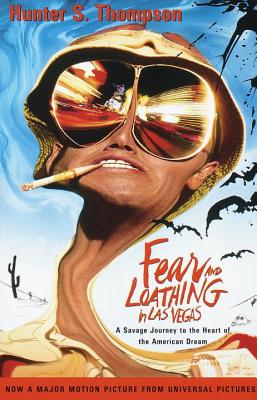
Hunter S. Thompson’s Fear and Loathing in Las Vegas stumbled into the public consciousness in 1971. Cementing Thompson as the purveyor of a new style of journalism, the book is the best-known piece of literature about the titular city. The book’s entrenchment in the canon of pop writing was further perpetuated by a big-screen adaptation replete with all the by-now-familiar images from the book: over-the-top drug usage, outlandish tourists coming to race through the desert at the sporty Mint 400, and the author’s aggressive mumbles on all things right and wrong in the world.
If there is one theme in his surreal journey at the start of the 1970s, it’s Thompson’s alternately grandiloquent and bizarre assessment of where America landed after the turbulent 1960s. He chooses Las Vegas as his setting and portrays a gaudy, greedy, and garish city as both magnet and maker of the worst triumphs of capitalism.
Determining whether this work has earned its literary standing is something that can benefit from the local voices not represented in the most famous book about their own city. Now, 50 years later, three Vegas writers examine the text against a backdrop of tourists cosplaying Thompson’s fantasy and parachute journalists attempting to report on “the real Las Vegas.” Spoiler: they come away with very different opinions.
Veronica Klash
It’s the middle of summer. As a docent at the Neon Museum, I spend most of my time in the Boneyard, the outdoor display area featuring over 200 Las Vegas signs in various stages of life. The thermometer one of the other docents snuck in has broken from the heat. The backs of my knees are sweating. That’s when the bachelorette party in matching outfits shows up. They’re wearing white bucket hats, white tank tops beneath open floral short-sleeved button-downs, beige shorts, and oversized aviators with yellow lenses. One of them has a cigarette holder poking out of her mouth. As they start posing in front of the massive Moulin Rouge sign, mimicking influencer affectations, I thank God it’s time for my break. I go inside for the cold kiss of air conditioning and to wipe down the backs of my sweaty knees.
What I see, as a former hospitality worker in Las Vegas, is a series of scenes where the narrator and his ‘attorney’ are obnoxious assholes to hospitality workers in Las Vegas.
The singular imagery and rhythms of Fear and Loathing in Las Vegas may be compelling. However, labyrinthine prose and exciting illustrations do nothing to mask the staggering array of inexcusable transgressions Thompson revels in as a pseudo-protagonist and author. The characters have all the depth of a drug-filled bathtub. The plot isn’t a plot. It’s a manic, circular anecdote that leads nowhere. What I see, as a former hospitality worker in Las Vegas, is a series of overdone scenes where the narrator and his “attorney” are obnoxious assholes to hospitality workers in Las Vegas. On the page is the same entitled, rude at best, threatening at worst behavior that is often displayed by visitors in this city. The narrative rewards disgusting actions toward bartenders, front desk staff, and waitresses. And let’s not forget the violent badgering and traumatizing of a housekeeper. Is that the exciting Las Vegas experience that bachelorette party was hoping to recreate after their photoshoot at the museum?
This book is fun like holding back your friend’s hair while she’s puking is fun. The party is over. You’re there, you’re present, but all you can think about are the horrible decisions that have led you both to this moment. I made the horrible decision of reading Fear and Loathing interwoven with Battleborn by Claire Vaye Watkins. I don’t know if Vaye Watkins loves this city in the way that I do, but I know she’s lived it. Her stories are evidence of experience. Of sneaking in under the slippery, translucent skin of a place and making a home of the spaces in between. By contrast, Thompson drops on Las Vegas like a cartoon anvil dripping with toxic masculinity.
In a telling section of chapter 10, the narrator, more a paranoid mess than a person, discusses interviewing and scrapping a story about Nevada’s inmates.
Why not? They asked. They wanted their stories told. And it was hard to explain; in those circles, that everything they told me went into the wastebasket or at least the dead-end pile because the lead paragraphs I wrote for that article didn’t satisfy some editor three thousand miles away—some nervous drone behind a grey formica desk in the bowels of a journalistic bureaucracy that no con in Nevada will ever understand—and that the article finally died on the vine, as it were, because I refused to rewrite the lead. For reasons of my own… None of which would make much sense in The Yard.
This condescending and arrogant paragraph is as revealing as the book gets. The reader is not privy to these “reasons of my own”; we’re meant to trust that the unreliable narrator’s reasoning for killing the story wasn’t pride or ego, but some sort of nebulous, righteous motivation instead. This throwaway sliver is a clear portrait of the author’s attitude. Hunter S. Thompson, obnoxious asshole, gonzo journalist, iconoclast, symbol of the martyred uncompromising writer, looms larger than any of the works he produced—an image furthered by Johnny Depp’s exhaustive embodiment of the author as character in two movies. In that sense, Thompson and Las Vegas live parallel lives, their portrayal grand, exaggerated, and unnuanced, leaving behind a myth most won’t distinguish from the truth.
Rare is the occasion when anyone deems the city worthy of further exploration. They would rather rehash clichés about gamblers and neon glow.
Reporting about this town (and that’s what this book is, after all, a reporter’s take on Las Vegas) consistently replays Thompson’s narrative of wild exploits in a desert oasis. Rare is the occasion when anyone deems the city worthy of further exploration. They would rather rehash clichés about gamblers and neon glow. Don’t get me wrong, I could write a whole essay on neon glow, I love neon glow, but there’s more here. There are unique neighborhoods like the Historic Westside, recently highlighted for Thrillist by local writer Soni Brown. There are unique people, like the ones featured in Amanda Fortini’s essay for The Believer. But you wouldn’t know that from Thompson’s book or the multitude of media that followed it.
There’s no interest in telling a new story; it’s far easier to emulate one already told, to build on the familiar fiction that’s been reinforced and accepted. This is fiction that prevailed in large part (with some help from tourism campaigns) due to the reverential treatment Fear and Loathing has received and its ongoing popularity. The fiction is that Vegas is a shallow, hollow place and the Strip is the worst example of depravity and consumerism. In actuality, Vegas is an inspiring city, with folks like Kim Foster single-handedly starting a free pantry to help feed people during a pandemic. It’s a city with a pulse-hastening culinary scene that celebrates talent like Jamie Tran’s, first honed on the Strip then shared with locals on the chef’s own terms. It’s fertile ground for a creative community that refuses to be confined and defined with artists like Vogue Robinson and Q’shaundra James. It’s home to organizations like Gender Justice Nevada, that fight to provide support and build change.
I’m convinced that love for Fear and Loathing in Las Vegas is love for the fantasy and shadow cast by its legacy—and author—rather than any of the book’s merits. Whereas love for Las Vegas can only be conjured by the reality of the place itself.
Dayvid Figler
My family moved to Las Vegas in the Spring of 1971 from Chicago. It was a cross-country trip in a rented station wagon, decidedly drug-free beyond some industrial strength Dramamine and copious amounts of Benson & Hedges hard pack cigarettes. Once arrived, we temporarily stayed with my Uncle Izzy, a flamboyant gambler who worked days at Caesars’ Palace spinning the sucker-bet BIG 6 wheel. My dad got a job dealing a game called “Pan,” favored by older Jewish ladies, at the Sahara Hotel. This is where my folks decided to live and raise their 3-year old.
Around age 14 or 15, I remember picking up Fear and Loathing in Las Vegas at the main branch of the Clark County Library for the first of what would come to be at least a dozen reads. Had I kept a diary then, the review would have been concise:
Lives up to the hype. Of course, the guys like it—so many drugs (boring)! I love it way more because he’s right about Vegas….it totally sucks! Also, Circus-Circus…YES!
This would have been around the book’s tenth anniversary, but by then, it was already the most essential book about my hometown—at least in my small circle of friends. Reading it was mandatory. In fact, some 40 years later, there are only limited new entries in the Las Vegas literary canon, and Fear and Loathing still comfortably rests near or at the top of any serious list. Most of the others (but thankfully not all) are by visitors who seemingly dropped in for little more than a bender or to confirm their presupposed notions. Hunter S. Thompson was no different—a tourist on a mission. Still, SOMEONE wrote about us and hit all the spots I knew well from my own adventures with my family. That’s awesome!
Now, 50 years after a station wagon came from the east and a red convertible came from the west (is it possible we both arrived in town the same day?), I no longer think Las Vegas totally sucks. Indeed, I’ve become a fierce defender of my city. And if you’d assume I’ve grown weary of the countless parachute journalists who choose to only write about the “reptilian” bombast and mostly stick to the tourist-laden Strip to support their pre-ordained narratives, you’d be right. But somehow, Thompson gets a pass from me even with his distracting, surreal hyperbole; details missed or chosen to be overlooked; and the shamelessly sparse mention of locals (apart from mocked casino workers).
I like to write about my hometown, but I also know Las Vegas as two cities. One is ours and one is theirs, and they outnumber us manyfold.
I like to write about my hometown, but I also know Las Vegas as two cities. One is ours and one is theirs, and they outnumber us manyfold. The visitors have every right to their take on a city that invites, lures and challenges them to find an experience worth their cash and repeat business—but their idea of what the city means or represents is necessarily very different from the one those of us who live here experience. Since we encourage it all to fuel our economy and repeat business, though, we are rightly stuck with the consequences, literary or otherwise.
In Fear and Loathing, I’ve come to find that the subtitle grounds the work: “A Savage Journey in the Heart of the American Dream.” As evident in the text, Thompson likely feels the dream is already dead. Died at Altamont or Vietnam or pop music or Spiro Agnew’s front pocket. He thinks Richard Nixon would make a good Mayor of Las Vegas. He stands on a steep hill in the city and laments “you can almost see the high-water mark” of the failed revolution of the free-thinkers, the explanation of which is the core of this book. And he chooses to pontificate upon all this from Las Vegas while admittedly indulging in its many offerings. Thompson, as skillful fish-taler, looks for answers to a puzzle he already solved before hitting Barstow, but damn, if it doesn’t serve as a valuable glimpse of the world at an important time from an important vantage spot.
It’s a book still worth exploring.
When Thompson calls Las Vegas “the American Dream” he does it with a sardonic howl. He revels in his fellow visitors who, maybe more like him than he’d care to admit, come here and engage in what they think is hep but is in fact old and stale and exploitive and corporate and controlled. He thinks of himself, perhaps, as the last free spirit in the playland of the intellectually dead, but misses the point that Las Vegas made a space for him, too. (I still giggle when he puts a 2-dollar bill down on the Big 6 game). He’s savage all right, skewering heartless casino executives and their dutiful goons, patsies, and shills (including the cops). It’s verifiably a true thread of Las Vegas, yet not a fully-fashioned yarn. Obviously, there’s more to Las Vegas than what Thompson “reported” in his week-long journey, but he does a memorable job at taking some unflinching snapshots through a free-thinker’s lens.
When Thompson calls Las Vegas ‘the American Dream’ he does it with a sardonic howl.
The book has value because Thompson was spot-on in choosing Las Vegas to observe America transitioning out of the hopeful ‘60s, Las Vegas as stuck in ‘50s, Las Vegas as place where Americans come to merely “hump the American Dream.” Intuitively, but not comprehensively, he catalogues Vegas’s sexiness as “bush-league,” its rebranding of hackneyed entertainment as hot, its promise of freedom coming with Draconian laws. In other words, he landed, like so many others from elsewhere, in the melting pot of our country’s Melting Pot. And like a Gonzo Jeremiah, he’s compelled to tell us that we should be very fearful (or is it loathing?) that we’re actually in a stew.
He hits the nail on the head that Las Vegas has somehow marketed its way into a genius compendium of artifice, hope, risk, opportunity, growth, disappointment, mundanity and resonance. And those are the keen and important insights this local Las Vegas lover needs in a book about Las Vegas. Because the two cities co-exist, the chronicle remains an entry in answering the important questions of how and why—even if it’s sometimes opaque through the comical haze of all those drugs (boring!).
Krista Diamond
At the Tin House Summer Workshop in 2020, we began our first day with a caveat: Consider that you may not be the reader for every story.
I had never thought of this, but it seemed obvious. Of course! If you have a pervasive fear of the ocean, you may not be the reader for a novel set on a ship. If you are in the midst of a painful divorce, you may not be the reader for a love story. Realizing you are not a story’s reader can inspire growth: You deliberately open yourself up to a literary experience you might otherwise disregard. Or, it can be practical: It saves you from wasting your time.
Who is the reader for Fear and Loathing in Las Vegas? I have read this book twice at different points in my life and as such have been two different readers for it.
I first read this book when I was 13 and living in New Hampshire. A boy I had a crush on said it was his favorite. He seemed so worldly for a 14-year-old at a Catholic school—he smoked weed, drank alcohol, kissed lots of girls. The book seemed similarly wild. Wanting to impress him, I read it. I found it terrifying and incomprehensible. I had never left New England, so Las Vegas and the Mint 400 went over my head. I had never so much as sipped wine during communion, so the lengthy descriptions of drugs made no sense. And Ralph Steadman’s illustrations gave me nightmares. “I liked the part with the hitchhiker,” I told my crush after finishing it, and he chuckled and nodded—my first taste of a guy conveying now here’s a girl who gets it in response to my saying something generous about art depicting violence towards women.
The second time I read Fear and Loathing in Las Vegas was at 32 after five years of living in the city. Five years of tourists dressed in Raoul Duke’s signature bucket hat/Hawaiian shirt/yellow sunglasses ensemble for Halloween. Five years of Instagram posts with the caption We were somewhere around Barstow on the edge of the desert when the drugs began to take hold. Admittedly, I wasn’t looking forward to rereading Thompson’s famous text—I already bathed in its cliches every time I walked the Las Vegas Strip—but I felt I owed it to this city that I love so much, and perhaps to Thompson too. After all, everyone around me seemed to have a parasocial relationship with the idea of guy; maybe it was time to let his work speak for itself.
Before I embarked on this second reading, I took inventory of myself as a reader: I am a woman who lives in Las Vegas and mostly enjoys literary fiction. These three facts about me became the biases (if you want to conflate identity with bias) I ran up against again and again throughout the story.
There’s a case to be made for Fear and Loathing in Las Vegas as a critique of masculinity. But to me, it just reads as the literary equivalent of every drunk man on Las Vegas Boulevard who has groped me and called me a bitch.
As a woman, it is difficult to be this book’s reader. Certainly, there’s a case to be made for Fear and Loathing in Las Vegas as a critique of masculinity (and believe me, I’ve heard it from men in my own life, usually prefaced with a hearty, “Actually…”). But to me, it just reads as the literary equivalent of every single drunk man on Las Vegas Boulevard who has groped me and called me a bitch. Like those drunk men, there is no examination of male violence; there are just jokes about sexual assault. During the chapter in which Raoul Duke watches his attorney threaten a waitress with a knife, there is the beginning of a realization that could be followed by introspection (“The sight of the blade jerked out in the heat of an argument, had apparently triggered bad memories. The glazed look in her eyes said her throat had been cut.”), but it is quickly abandoned.
As a Las Vegas resident, it is also difficult to be this book’s reader. Fear and Loathing in Las Vegas is a tourist’s perspective of Las Vegas. It is a preamble for “what happens here, stays here.” This is a book that gleefully tortures locals and treats the city like a lawless wasteland where the only people who matter are the ones who visit. For this reason, I’m kind of glad that none of the tourists I see dressed as Raoul Duke for Halloween in Las Vegas have ever read the book.
Lastly, there’s the writing itself, the part that those who only know the myth of Fear and Loathing in Las Vegas are willfully deprived of. Thompson’s prose can be beautiful on the occasions he takes a break from long lists of drugs the characters have consumed/are consuming/want to consume—god, “the womb of the desert” is such a melancholic descriptor. In the final chapter of the book, when Raoul Duke limps onto the plane away from Las Vegas feeling like he might “either cry or go mad,” there exists a rare glimpse of vulnerability in the writing. At last, here it is, a toehold into our narrator’s heart: the morning after the night out when one wakes up, sober, and looks inward. But Thompson doesn’t give us that—won’t give us that, can’t give us that.
And that brings us back to “us.” The readers. The perennial question: Who is the reader for Fear and Loathing in Las Vegas? I don’t think Thompson wrote this book for women. I don’t think he wrote it for Las Vegas either. I am not this book’s reader—and honestly, that’s fine. I don’t want to be.
When I was a kid, I used to love going to friends’ houses to play, and I could be pretty shameless about finagling invitations. My friends had TVs and better snacks, yes, and some even had trampolines, but these were just fringe benefits. Mostly I loved going because I was fascinated by their families. I loved seeing how my friends and their parents interacted, whether they ate dinner separately or together, whether the mother reprimanded us for our misbehavior herself or phoned the father at work to really lay down the law. Half-Catholic, half-atheist, with a complicated custody situation with my alcoholic biological father, I was an outlier in my mostly Mormon elementary school, and I studied my friends’ families like an anthropologist. On Monday nights, especially, when I knew it was Family Home Evening at my best friend’s house, I’d call and casually inquire about maybe coming over. I relished sitting in the living room with her and her brother and parents, answering questions about Choosing the Right and the Pearl of Great Price, and watching how the parents and kids spoke to each other, looked at each other, how they expressed encouragement or displeasure or love.
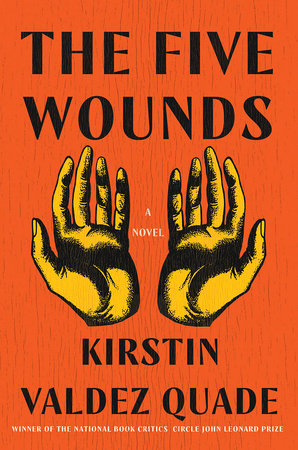
Each of my characters in my debut novel, The Five Wounds, is profoundly aware of their dual roles as child and parent. After a fight with her mother, 15-year-old Angel shows up at her estranged father’s house enormously pregnant and looking for support. Amadeo, for his part, is stuck between childhood and adulthood, between his role as Angel’s father and as a son still dependent on his mother. When Angel’s baby is born, the whole family must reconsider what it means to care and to accept care. Separately and together, in their halting ways, they attempt to parent children they do not feel equipped to save.
Here are eight books about the power dynamics between parents and their children:
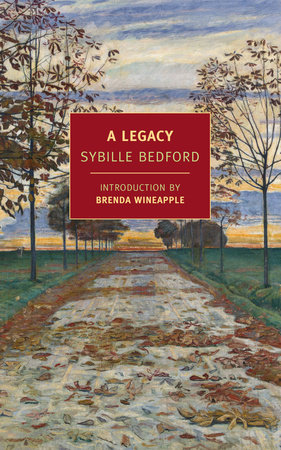
I plucked Sybille Bedford’s semi-autobiographical novel from a giveaway box. I’d never heard of her, but I was instantly entranced by the tone, by her evocation of Europe before the Great War. The narrator, Francesca, is raised in part by the parents of her father’s first wife, members of the Berlin Jewish upper-middle-class, in their insular and heavily carpeted home. Her father’s family, by contrast, is located in the chilly countryside, Catholic, aristocratic and brutal. There is urgency in the way Francesca pieces together all the strands of family history, secondhand details and half-told stories—every detail from the past bears on the present and on Francesca’s understanding of herself. Writing about her long-dead uncle, she writes, “The memory of the boy who was a man and died before I was born, and of the school I never saw, were part of the secret reality of my own past.”
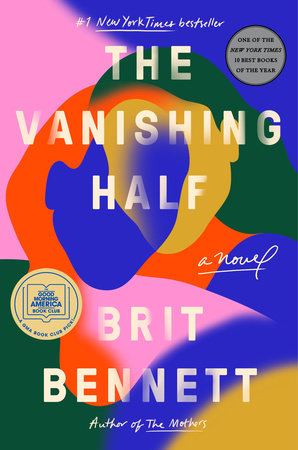
Brit Bennett’s excellent second novel follows the diverging paths of Desiree and Stella, twins who were once inseparable, but whose choices lead them to occupy completely separate worlds. The sisters are born in a town where Black inhabitants define themselves by the lightness of their skin. One sister marries a much darker man and, before she flees from her violent marriage, has a child. The other sister runs away with her white boss and marries him, passing as a prosperous white housewife. Both sisters have daughters, and the story plays out in parallel as we follow these mother/daughter pairs through the decades. The daughters’ lives are shaped by their mothers’ choices and hopes and shames, and they must confront their histories when, inevitably, their paths cross. Bennett’s insightful exploration of family, betrayal, love and race in the second half of the 20th century is moving, entertaining, and full of heart.
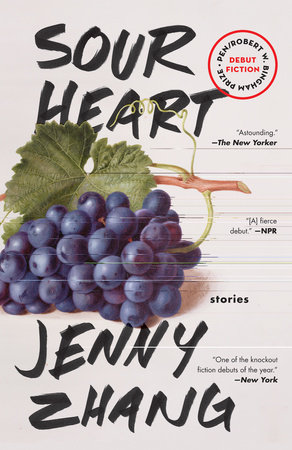
The stories in Sour Heart are loosely connected, spiraling out from a single apartment in Washington Heights where five families, newly arrived from China, sleep in a single room on mattresses on the floor. These families, forced into such close quarters, absorb and resent each other’s stories, and, though the families go their separate ways and fulfill separate destinies, they become forever linked to each other. From the first propulsive paragraph, a breathless two-page account of a family’s perpetually clogged toilet and the ordeal of running in all weather to the Amoco station across the street, I was hooked. These stories overflow with joy and rage and yearning. I was moved by the depiction of intimacy between parents and children in these stories. Nowhere else have I seen such tender expressions of a child’s ardor for her parents, and the pain of the inevitable ripping asunder.
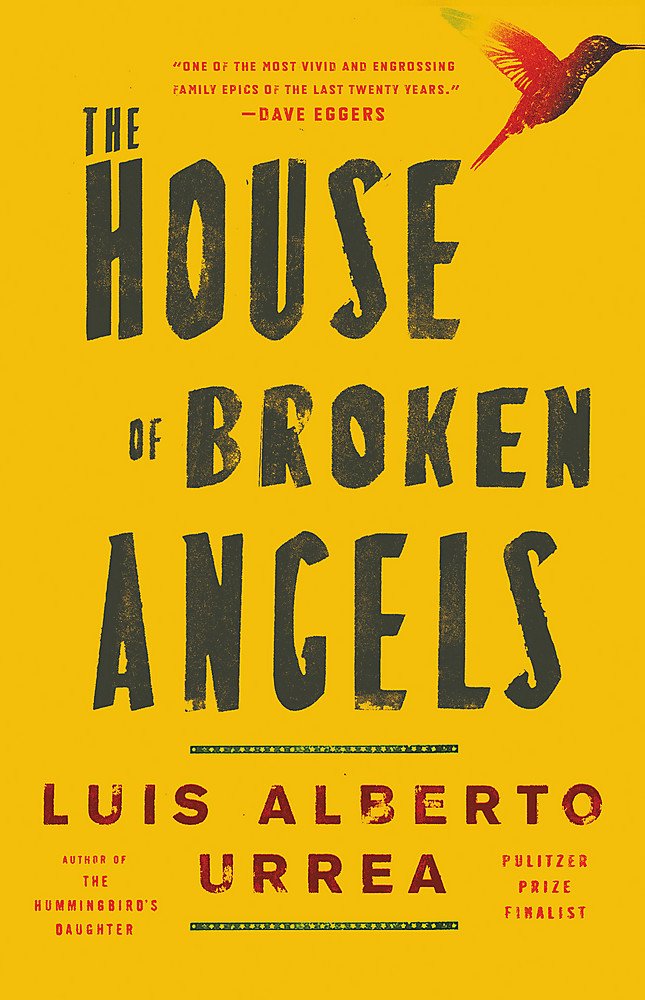
Some characters take up residence in your heart. The House of Broken Angels is overflowing and joyful and expansive while also dealing with incredibly painful material, which is to say that it is about the experience of living in a family. The novel follows Big Angel and Little Angel, the oldest and youngest brothers in a family that sprawls across borders and languages and generations. Both Angels live in the shadow of their formidable father, Don Antonio, who shaped their lives with his gusto and abandonments. Big Angel has, his whole life, prepared himself to be a different kind of patriarch, loving and supporting his wife and children and vast, vibrant circle of relatives; by contrast, Little Angel, the much younger half-gringo half-brother, is alone, and approaches his past by studying it academically, as an outsider. Urrea captures how even in the same family, each child inhabits a different country.
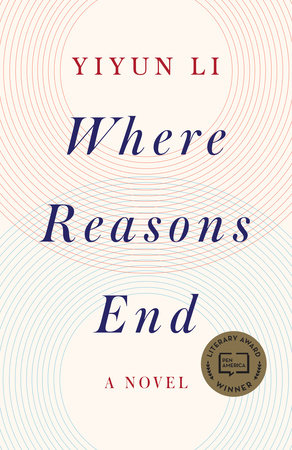
This perfect short novel is a conversation between a grieving mother and her teenage son Nikolai, who has committed suicide. The dialogue takes place in a kind of timeless liminal space between this world and the next, between the concrete world and the disembodied interior world of the imagination and the heart. The intimacy between mother and son reaches across these divides. As a reader, I am constantly aware that I am listening in on a conversation that is private and tender and of the utmost importance; yet, alongside the sense that I am intruding on this deeply personal grief, I feel absolute gratitude for the chance to get to know this boy who has been lost to the world. The premise is sad, of course, but the novel is shot through with joy and humor, and Nikolai’s wit and vivacity are unchanged by death. The teenager joshes his mother as teenagers do, gives his writer mother a hard time for using clichés, and they spar playfully with puns and metaphor. This novel is a heartbreaking gift.
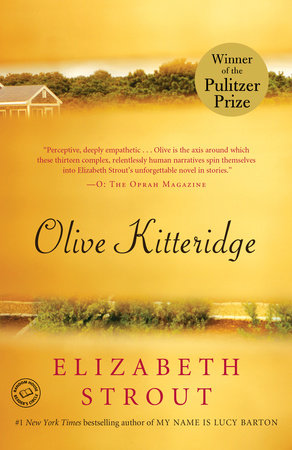
Set in a Maine town, these linked stories center on Olive, a prickly retired teacher whose care and disapproval have shaped the generations of children that have passed through her classroom. This book is about many things—about marriage, about community, about grief, and about what we owe each other. But the element that moves me most is the depiction of Olive’s relationship with her son Christopher. She was hard on her sensitive boy, trying to toughen him to face a world that she fears will crush him, and she is bereft when, inevitably, he turns away from her, finding healing and acceptance clear on the other side of the country.
In my favorite story, Olive stands alone in a bedroom at her son’s wedding, eavesdropping as she is being talked about by his bride. Her dress is mocked—a dress she loves, printed with giant geraniums—but what stings most is her daughter-in-law’s discussion of how hard Olive was on her son. Olive argues in her head. “…deep down there is a thing inside me, and sometimes it shoots blackness through me. I haven’t wanted to be this way, but so help me, I have loved my son.” But the argument isn’t enough, and Olive is left alone with her hurt and shame and her understanding that love that cannot be expressed warps and injures.
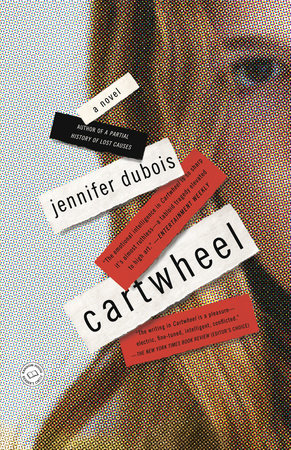
What do you do when you get a call informing you that your bright, independent daughter, who is spending her junior year abroad, is in jail for murder? Jennifer duBois’s Cartwheel is a compassionate and insightful exploration of a ripped-from-the-headlines nightmare scenario. When the story opens, Andrew Hayes has just landed in Buenos Aires, ready to rescue his daughter and sort out the situation, but already the tabloids and internet sleuths have begun to comb through Lily’s online presence and form their narratives, and he must confront the many versions of his daughter sweeping across the internet. Jennifer duBois’s subject is how we reveal ourselves in the stories we tell, and how in the search for truth, truth can become ever more elusive.
The premise of this marvelous novel may seem familiar—four adult children return to their childhood home and their ailing mother, possibly for the last time—but Anne Enright’s prose is so precise and gorgeous, her characters so closely observed, that the situation feels completely fresh. The novel centers on Rosaleen, the prickly matriarch who plans to sell the family home, and her relationship to each child. Every chapter is as complete as a short story, and we get to know each family member deeply. In one of my favorite chapters, the eldest daughter (and aptly named) Constance—prosperous, matronly, and beleaguered—takes an epic trip to the grocery store while her siblings converge on the house. With wit, restraint, and unsentimental frankness, Enright captures the bristling rage and tenderness in this family. In my margins I wrote, I wish so much to write something like this!
I loved him for a very long time; in fact I love him still. I was happy to be in the same room with him, the same bed; I loved his smell and his small idiocies, all of it. Yet I’ve been feeling, lately, distant. Observant. Watchful. I think something about him has changed.
It’s because of this conviction that I spend time looking at him; just looking. When he reads or watches TV, I’ll sit next to him and touch his cheek, his arm, lift his fingers, touch the skin on his neck. I feel experimental when I do this; scientific.
I spot a little thread in his hair; it is almost exactly the same color as his hair but it is a different weight and consistency. It’s not from the sweater he’s wearing; I can see that. Nor the one I’m wearing.
I pluck it. My fingers are poised to flick it away, the thumb, index finger and third finger all arced and ready. Pinch, lift, examine.
But it’s longer than I thought, very long.
“What is it?” he asks, only glancing sideways while he watches TV.
“Stay still,” I say, and I pull on it a little bit more. He brushes my hand aside briefly, quickly, so I stop and then I wait until he’s absorbed again in his program, and I pull some more.
I don’t let him see it. I pull more and more of it, lifting it to drape behind the sofa. I stop, and I lean over, and I give him the briefest kiss on his neck and then bite the thread off. He doesn’t know. He turns his head and smiles at me, that lazy smile I love.
My hand still holds the thread I just bit off. I pat it to the back of the sofa.
When he falls asleep, I get up and collect the thread, which is continuous and fine. I wind it around my two fingers, around and around, and the last (or first) of the thread I use to wrap it up and tie it. I put it in an empty tin in the kitchen.
The next night I put a pair of cuticle scissors between the cushions to make it easier to cut the thread, which again is very long. He turns to me when I touch his hair to cut the thread, and he smiles again, and I smile back.
“Sweetie?” he says in a puzzled voice when he gets out of the shower the next day. “Look at this. My toe. It looks different. Smaller. Does it to you?”
I study it seriously. “It’s a little smaller. Did you cut the nail or something?”
He brightens. “Oh, the nail! Perhaps the nail fell off! I bet I stubbed my toe or something!”
He is easy to please.
And the next night, and the next, there is always that thread, and I always pull it, saving it, rolling it up. I place it in a second canister, there is so much, and he says, “I think there is something wrong. There is something wrong,” and I remind him, he lost his foot in an accident, he only dreamt that he was whole, there is no reason to fear I will leave him as he is, and one by one, inch by inch, he unravels.
And I save the thread, which gathers in bowls and tins and finally in a heap on the floor. He unravels from his toe up to his head and then down the other side, and I pull the string faster once his grin disappears; he is gone in all but spirit.
I let the threads rest in their heaps for a day or two. He is nowhere now; the seat next to me is empty; his smile is gone.
Which is, in fact, okay. I remember him.
Then I gather the threads together, and a thimble and needle, and I take it all outside into the yard. I thread the needle and begin to sew the thread into the rest of the thread and into irregular grooves, making a trunk. I stick it in the dirt, and go inside and get more thread, from which I sew branches, and then with more thread, I sew leaves and buds.
It’s a young tree. I water it and watch it, and it takes a strong hold in the earth. Which is satisfying, I feel it has something of the presence of my boyfriend, some satisfaction in its form, but maybe that is something a little bit like grief.
I am tender to the earth around its roots. I water it and soothe it.
A month or so later, I snag my arm on a broken twig on that tree; it is almost as sharp as a thorn. It leaves a mark and then a bruise. I rub it occasionally without thinking.
When I look at it in a day or two, I see that the skin is frayed and loosening in the center. It is weeping a little, too. I tell myself I have to stop touching it, or it will spread and worsen.
I go out to the tree I’ve sewn, which is bearing tender flowers. I bend down one of the leaves and snap it off, and separate the fragile veins of the leaf into threads.
There are other trees nearby that stand silently, watchfully.
I let the threads dry slightly, and then I thread a needle with them, and carefully sew together the frayed patch on my arm until it is firm again. It will last, I am sure. This has happened before.
I put the thread and the needle back into the case, and go to the door. The wind is barely rising, but I can hear the leaves out there, rustling and whispering. The trees all stand in their own moods, watching each other and watching me. Sometimes I think they call my name.
When my grandmother was a child, she and her family fled Ukraine to spend the war in a factory town in the Ural Mountains, where her father, an engineer, made tanks for fighting the Nazis. Though she never sat down and told me the story in one go, bits and pieces always floated around my consciousness, from the story of my grandmother and her family hiding under a train during a Nazi bombing to the moment when her own grandmother fell under a train to her death while holding her hand. These stories seemed to point to why my grandmother was so tough and resilient, and to make me wonder what to make of my modern, significantly more cushy life in the United States.
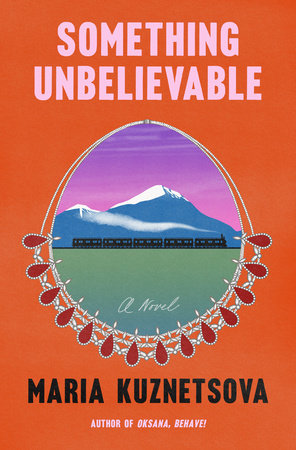
In my sophomore novel, Something Unbelievable, Natasha, a struggling thirty-something actress and new mom, asks her own Kiev-born grandmother, Larissa, about her World War II story so she can put it on stage and jumpstart her career and outlook. Though the story Larissa tells is much more salacious and offbeat than my grandmother’s, revolving around a love triangle and a beloved bobcat, I found Natasha asking herself the same questions I asked myself when hearing my grandmother’s story: what has the older generation passed down to me, willingly or not? Will I ever fully understand my elders or my native land? How can I pass my family’s history and culture down to my American-born child?
It’s no wonder that many of my favorite books feature a complicated story that is passed down from one generation to the next. It’s often the younger person, the child or grandchild, who is left with the story, trying to make sense of it. Whether these narrators just want to make a record, to figure out their own lives, or even to use the stories to make some money, here are seven books that meditate on the burdens and blessings of the inherited family story.
David Benioff’s City of Thieves begins with a frame of the writer-narrator, David, preparing to write down his grandfather’s story of surviving the devastating Siege of Leningrad during WWII. As the story goes on, the reader can’t help but wonder which love interest from the past is the current grandmother from the present—after the story is over, the reader finally learns who is who, though what matters more is how the narrator will make sense of his family’s story. At first, the narrator is concerned that his grandfather doesn’t remember every part of it because he wants to make sure he gets it right. But his grandfather doesn’t care. “You’re a writer,” he tells him. “Make it up.”
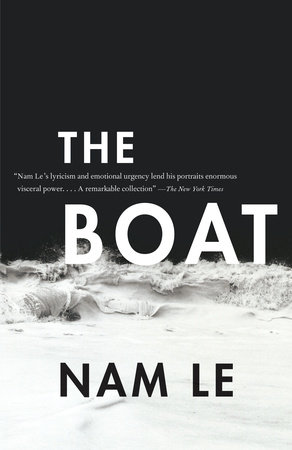
The first story of Nam Le’s story collection,“Love and Honor and Pity and Pride and Compassion and Sacrifice,” is also about a young writer who wants to hear his father’s story of being in a massacre during the Vietnam War, but his father burns the story he writes about it on his typewriter in the garbage at the end. “Why do you want to write this story?” his father asks him. Eventually, the writer lands upon an honest answer: “If I write a true story…I’ll have a better chance of selling it,” he says. Yet the rest of the eclectic and moving collection is a testament to the fact that the author (and the narrator of the first story, one can’t help but think) is more than just an “ethnic lit” writer trying to sell out his family, but one who is capable of telling the stories of a girl who narrowly escapes the Hiroshima bombing, a Colombian hitman, and Vietnamese refugees alike.
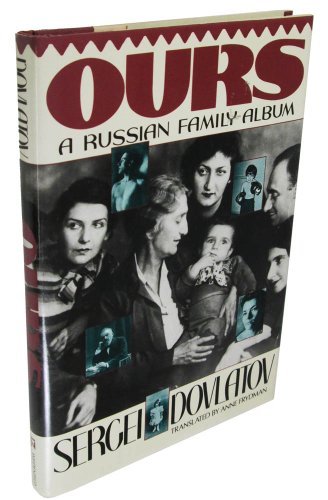
Sergei Dovlatov’s Ours: a Russian Family Album is a humorous chapter-by-chapter biography of several members of the author’s family, starting with his grandfather, moving on to his wife, and ending with the birth of his son, Kolya. The album, read together, tells one family story of which Dovlatov is only a part, even if he sees himself in every character. It begins with his Grandpa Isaak, a Jewish peasant from the Far East whom he had never met. He writes, “ ‘I often think of my grandfather, though I never knew him.’ For instance, if one of my friends says in surprise, ‘How come you drink rum out of a teacup?’ I immediately think of Grandpa.” Later he says, “When my children leaf through the family album, it won’t be hard to mistake us for one another.” Though the book digressed and entertained and affected our narrator along the way, at the end of the book, with the chapter about his son, Dovlatov writes, “I hope it is clear to everyone that this has been his story.”
In Octavia E. Butler’s time-traveling tour-de-force Kindred, Dana, a Black woman in 1970s California travels back in time to the Southern plantation where Rufus, one of her white ancestors, is a small child, and rescues him from drowning, and saves his life over and over again as she continues to return to the plantation against her will, escaping danger every time. She realizes that his problematic family story is her own, and that the two are bound together for life, even if she is fundamentally opposed to his way of living. At the end of the book, Dana seeks closure with her family story and travels to find records of her family with her husband. “Why did I even want to come here,” she asks. “You’d think I would have had enough of the past.”
Wallace Stegner’s Angle of Repose is the story of the ailing and embittered retired historian, Lyman Ward. Ward is delving into the art and correspondence of his grandmother, Susan Burling, a renowned artist and author, and his less-refined mining engineer grandfather, Oliver Ward, to write his own dramatized version of her life. As the story unfolds, the reader learns that it is much more than a biography, and more of a search of where her marriage went tragically wrong as a way for the narrator to understand the disillusion of his own marriage, and to see if there’s any hope on the horizon. “She had rooms in her mind that she would not look in to,” he writes of his grandmother, and yet, through the writing, he tries to turn on the lights in these dark, unknowable rooms. He writes about his grandparents, “What really interests me is how two such unlike particles clung together, and under what strains, rolling downhill into their future until they reached the angle of repose where I knew them. That’s where the meaning will be if I find any.”
The Nesting Dolls chronicles the lives of several generations of courageous women in one Russian Jewish family. The novel begins with Zoe, an American-born child of Soviet heritage preparing for her great-grandparents’ anniversary party. It transitions to the story of her great-grandmother Alyssa’s own mother, who was in a Soviet gulag in the 1930s, where she found herself in a surprising romantic entanglement after her husband was allowed to leave. Present-day Zoe is trying to find herself in her career and is torn in her affections between the more suitable man and the one her heart really wants; as Zoe makes her decision, it’s obvious that her great-great grandmother’s story of heartbreak and survival resonated with her.
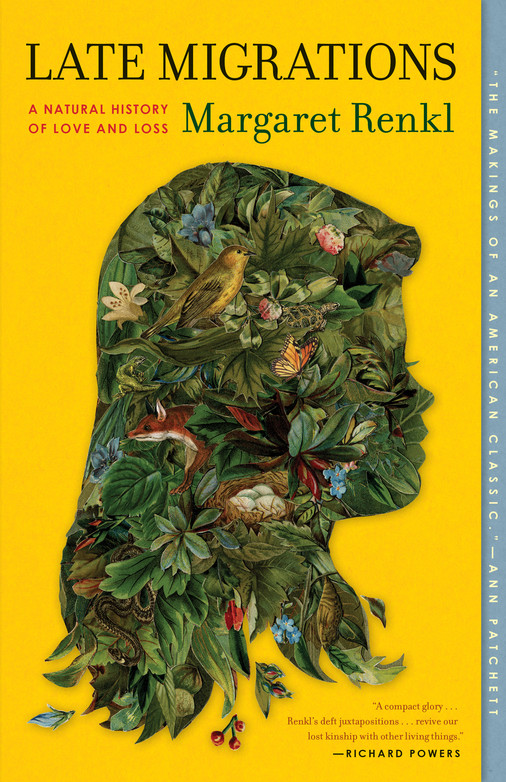
Margaret Renkl’s Late Migrations covers the author’s trajectory from child to caregiver for her parents, while also exploring the natural world and her grandparents’ lives in Lower Alabama. The memoir begins with the story of her mother’s birth as narrated by her grandmother, in 1931, and the weight of history hangs heavy throughout the wondrous book. Several chapters begin with the title, “In Which My Grandmother Tells the Story of My Grandfathers’ Death/the Day She Was Shot/Her Mother’s Death” and describes the lives and deaths of the author’s relatives in heartwarming and heartbreaking detail.
While our lives are transient, the author takes comfort in both the predictable changes and permanence of the natural world. She writes, “…but still the snow moon rises between the black branches in our postage-stamp yards, as lovely as it has ever been, untouched by all our rancor, unmoved by our despair.” This is sound advice for anyone out there who is soul-searching through the past or worried about the future.
When the internet first became part of human life, it began to appear in literature as a source of paranoid anxiety (think Pynchon). For “digital natives” who have grown up online, though, the internet is no longer really alarming (even when it should be)—it’s just a fact of life. As more and more of life takes place online instead of IRL, it’s not surprising that the internet is transcending that original paranoia, and moving into a terrain of alienation, acceptance, resignation, possibility, or simple indifference.
All of which, I think, is seriously fascinating. We now devote windows of time to scrolling, watch people become brands, bond with strangers online, or tragicomically Google things like medical symptoms or “how to console friend after breakup.” And fiction is catching up with us. Last February, two new releases, Patricia Lockwood’s No One Is Talking About This and Lauren Oyler’s Fake Accounts, gave rise to discussions about what constitutes an internet novel. Because the internet is our real life, though, the genre of “internet novel” is actually much larger than these explicitly Very Online new releases. Whether you’re completely new to the notion of internet fiction or seeking more perspectives after reading Lockwood and Oyler, the books below offer an exciting range of strategies for representing the present literary moment.
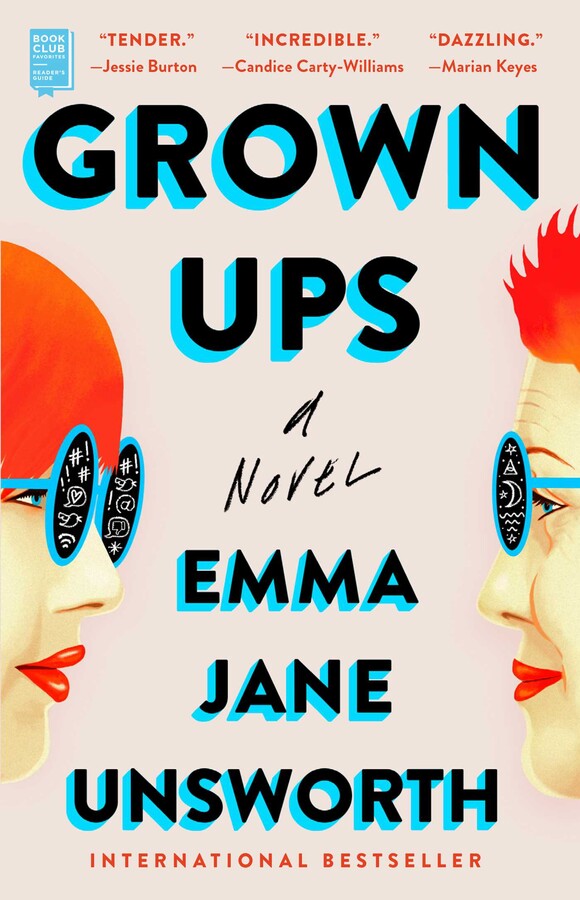
Jenny McLaine’s life is a mess, and she knows it. Exasperated by her lukewarm and precarious career as a columnist, sharing her London house with unamused lodgers since her ex moved out, failing at friendship, and ambushed by her mother, Jenny feels cornered into inaction—all she does is idolize (read: stalk) flawless women on Instagram. Grown Ups is the hilarious and heartbreaking account of what happens when she begins to lose control. Bonus points for the all-around pissed off energy.
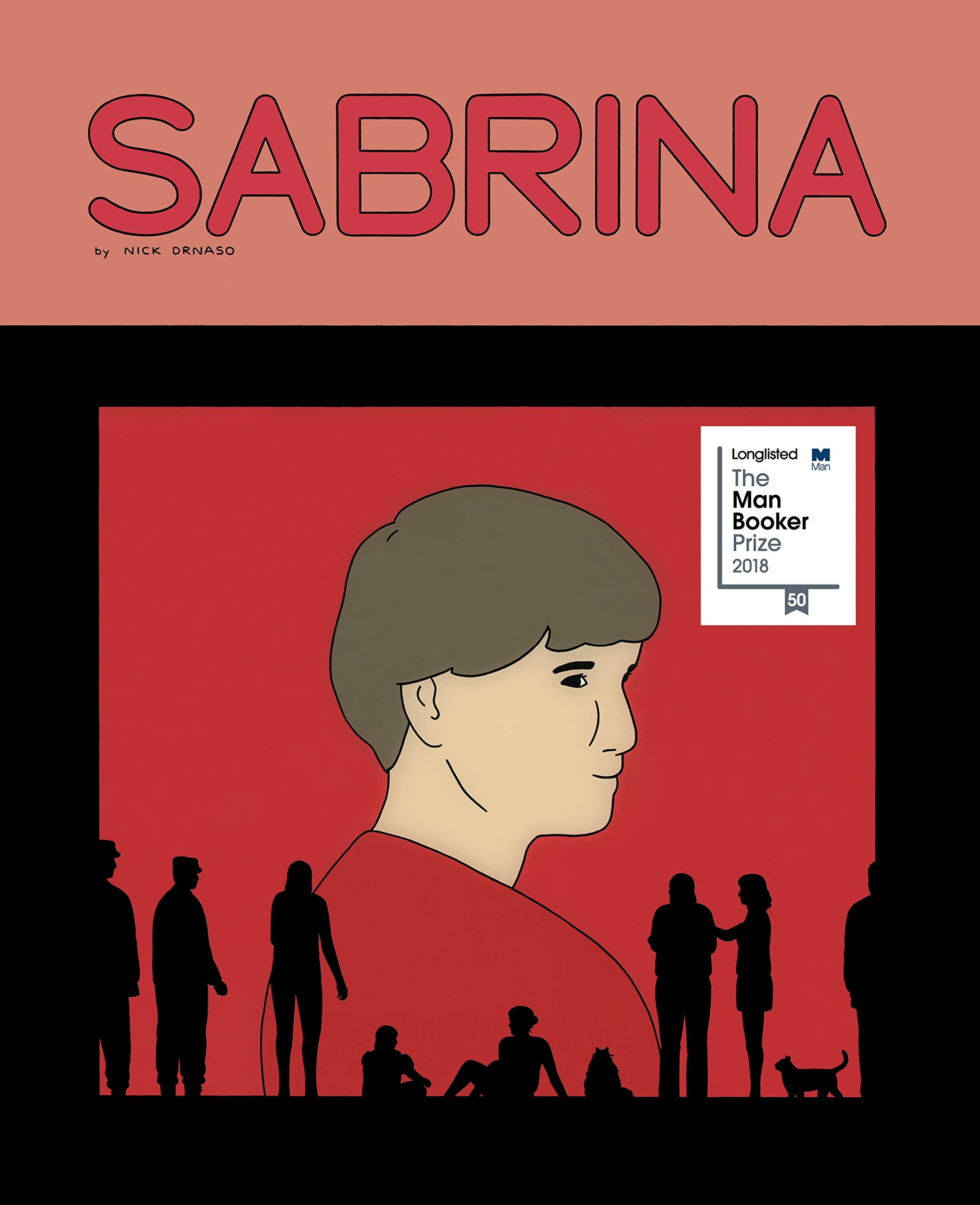
This graphic novel begins when a woman called Sabrina disappears in Chicago, launching her boyfriend Teddy and sister Sandra into media scrutiny. When footage of Sabrina’s murder is shared online, conspiracy theories that warp events beyond belief complicate Teddy and Sandra’s grief and destabilize the truth. In this bleak story of numbness and anesthesia mediated by screens, the real and the surreal bleed into each other.
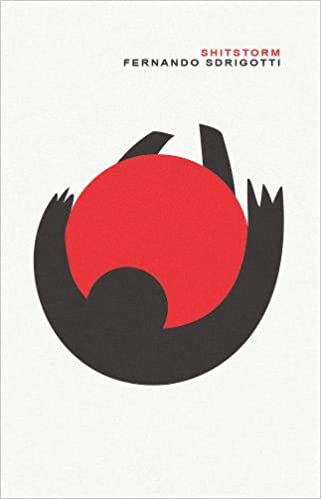
Shitstorm is a novelette about, well, the various shitstorms that happen as a regular part of the news cycle. An excruciatingly accurate satire of the repeated virality-outrage-oblivion model, it traces a spiraling series of events that spark online controversies. The narrative begins with an American dentist killing a protected lion in Africa, but soon enough the world’s attention has moved on to another crisis of the moment, and the next, and the next, in a relentless cycle.
And of course all of us are now policing people’s reactions to an atrocity, as is the tradition these days. Why do we care so much about London when last week bombs went off in x or y? ask some of us. Why don’t people care about London when they cared about the bombs that went off last week in x or y? Why do we only care about terrorist attacks when they happen at our doorstep? Why do we care about all terrorist attacks except for those that happen here?
While visiting New York, Alice Hare becomes obsessed, via Instagram, with Mizuko Himura, a Japanese writer living in the city. Noting the parallels between them (and fashioning some where needed), Alice is increasingly convinced that she and Mizuko are “internet twins,” and so arranges a not entirely serendipitous chance meeting. Reflecting the web’s overload of information, this unsettling and complex novel shows the online self at its most alienated.
When we met, we were both online constantly. In fact, I would say I was online constantly because she was, and I was monitoring her usage. For her, the Internet was primarily a tool of self-promotion and reinforcement for her multiple selves while for me it became a tool designed for the sole purpose of observing her.
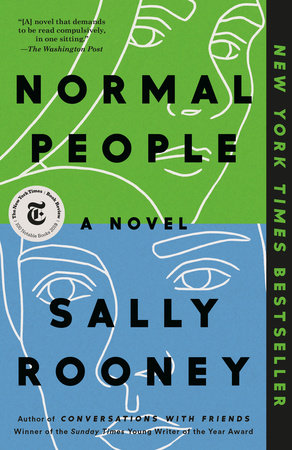
Normal People stars Marianne and Connell, two Irish teenagers navigating social and class tensions. Charting the shifting dynamic between the two as they graduate from school and move to Dublin for university, this taciturn novel examines all the things that pull them together and draw them apart. While their new lives unfold, the internet remains a constant and natural presence as they exchange texts and emails—here, an awareness of surveillance is present not as a source of paranoia, but as an amusing fact: “I feel like the NSA agent reading these emails has the wrong impression of us,” observes Marianne.
This is a warm-hearted, metafictional novel that hovers between two narrative planes: one follows an author named Ruth, living in British Columbia, and the second a Japanese schoolgirl named Nao. The two are connected when Ruth discovers Nao’s diary beached near her home, and suspects it was brought to her by the movement of ocean gyres in the wake of the 2011 tsunami. This non-linear, formally flexible book involves emails, diary entries, letters, and Google searches. In the world of A Tale for the Time Being, the internet is simply one of many things that connect human beings in an already global whirlpool of flotsam and jetsam.
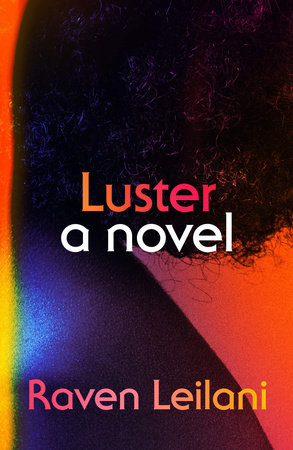
Luster is not self-conscious about involving the internet in its narrative—the web is there as an unquestioned part of contemporary reality. The protagonist, a young Black woman named Edie, meets Eric online. According to his dating profile, he’s in an open marriage; he’s 23 years older than her; white; an archivist. What starts as an episodic and feverish sexual relationship assumes a new momentum when Edie, suddenly unemployed, is forced to move in with Eric. Touching on racial tensions, class, and loneliness, Luster is a magnetic novel about the uncertainty of youth, firmly rooted in the technological wackiness of the present.
In between these texts, I want to ask him what he’s eating. I want to ask him why he is awake. But then I worry he’ll remember I’m on the other end and the texts will stop. This is the way it was when our relationship only existed online.
Dana Spiotta’s Stone Arabia is a novel concerned with the act of chronicling. It takes the form of a “counter-chronicle” written by Denise, whose musician brother, Nick, has always documented his (often imaginary) career as an artistic and performance project. Denise’s acute self-consciousness makes for an unreliable narrative steeped in identity anxiety. Her inability to knowingly contribute to the all-chronicling web will ring true to anyone who’s ever discovered scraps of themselves on Wayback Machine (blog you wrote when you were 13, anyone?)—and anyone who’s ever felt a little existential about the way they present themselves online.
I just couldn’t say something spontaneous and pithy and then have it hang there for all eternity. Those are opposite pulls—eternity and pithy—and if I thought at all about what to say, it was even worse.”
How the Light Gets In, like several of the books above, does not explicitly thematize life on the internet. This collection of flash fiction offers a vision of modern life in Britain—and some of that happens to take place online. In “blip blip blip,” Skype starts buffering mid-call, hurtling lost meaning between two screens. In “midday in my mind,” the buzz of a phone interrupts the narrator’s thoughts of romantic joy, prompting them to conclude: “I’ve found the answer to modern life—the way to be everywhere at once. Everything would be much easier, for you, for me, for us, if I just turned into your phone.”
I spent my childhood wondering what I was. I grew up in the ’90s in a sheltered evangelical home in Portland, Oregon, so I didn’t know trans women existed until I was 15. I was not like some other women, the ones who know from an early age who they are, trying on Mom’s pearls and pumps, begging for Barbies instead of Transformers. I did not understand what my gender was or how to perform it at a young age. I knew the way I was supposed to be (boy, sports, short hair, go run around outside) but I couldn’t make it fit, and I had nothing to replace it with. It was an emptiness. My body was like a floating amorphous blob with no ground to tie to and no form to fill. There was no Laverne Cox or Pose or Hunter Schafer or Transparent or Janet Mock or SOPHIE or Steven Universe or Teddy Geiger or Jen Richards or even Caitlyn Jenner to show me the way. All I knew was the ogre who lurked behind me and whispered into my ear, “Something ain’t right.”
I made it my mission to figure out what I was.
The trans person as a monster is a tired trope, foisted upon us by society—but there is a reason I gravitated towards these types of stories.
I read comic books and sci-fi novels in order to go someplace else (anywhere else) but also as research.Every movie I watched and book I read was a possibility. Maybe I was an alien. A mutant a la X-Men. Possibly a fifth Ninja Turtle. Might have been a mermaid who’d lost her tail. I thought for sure I was something monstrous. The trans person as a monster is a tired trope, foisted upon us by society—we are not monsters, we are simply humans with a complex and dynamic relationship to our gender—but there is a reason I gravitated towards these types of stories. When I was young and saw no one like me, when I had no idea who or what I was, when I thought I was the only one who felt this way, I did feel monstrous.
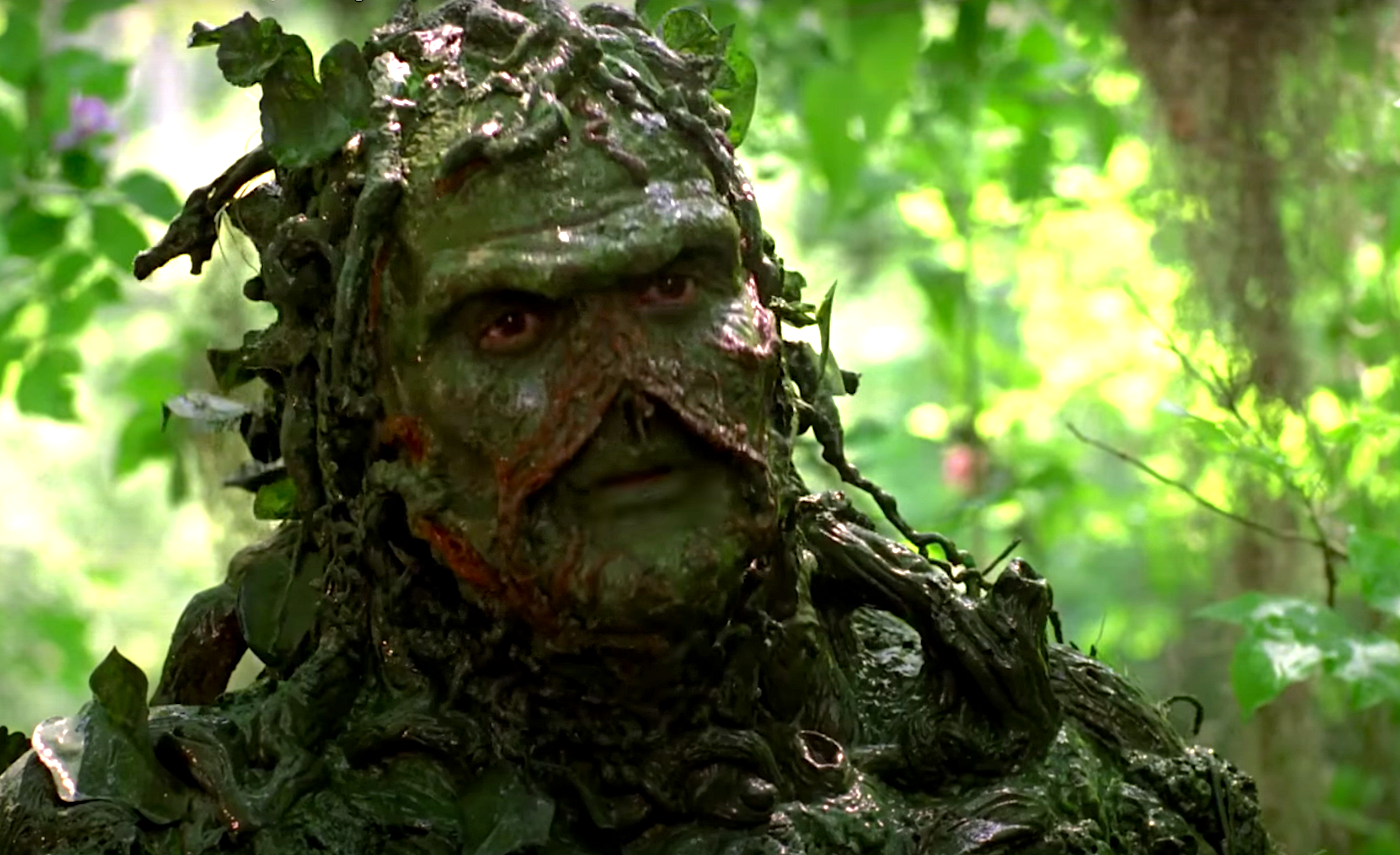
I don’t remember the first time I watched The Return of the Swamp Thing. It’s one of those movies that seems like it’s always been in my life. My parents recorded it onto a blank VHS tape for me when a local TV network ran it one night. I watched it so many times I still remember many of the commercials that aired during the ad breaks (including a terrifying trailer for one of the Chucky films). To me, the movie always felt like it was made for people who feel monstrous, a portrayal of a monster’s survival and eventual happiness.
The sequel opened the possibility that my parents’ home under evangelical rule wasn’t where I was meant to be. I wondered if there was a place that could be my swamp, the place where I belonged. Swamp Thing fits perfectly in the bayou, like they were made for each other. (He is, after all, half-swamp.) The bayou is otherworldly: murky water, vines descending from trees, and moss painting every surface. Here, Swamp Thing seems like the most natural thing in the world. His body made of twigs, moss, roots, vines, leaves, and grasses blends into the dark browns and greens of the swamp. In the bayou, it’s the humans that are out of place.
I turned to these stories to confirm that if I did turn out to be a monster, everything would still be okay.
I wasn’t interested in Swamp Thing’s origin story, so I never cared for the original Swamp Thing, a movie with barely any connection to its sequel. In fact, I was never interested in the origin story in any of the monster/alien/superhero books or movies. I didn’t care about how the creature became monstrous. I wanted to know about the After. I turned to these stories to confirm that if I did turn out to be a monster, everything would still be okay. For me, the most interesting parts of these stories were the moments between the fighting, when the monsters were back on the spaceship making tea or lying in bed in the lair. I wanted to see how Alec Holland lived once he became the half-human-half-plant bog monster known as Swamp Thing. I wanted the intricacies of it. Did he build a home in the swamp? Did he befriend other swamp creatures?
How does he make a life for himself as a swamp thing?
I can see now why young Emme was obsessed with a movie where a monster is the hero and most of the humans are monsters. The villains are all straight, cis, and rich, and so what is typically heralded as the default becomes the monstrous. The Return of the Swamp Thing was my introduction to the notion that being the default does not automatically mean you are good and that being different doesn’t make you a monster. The most grotesque of the villains is Anton Arcane, the mad scientist from the original Swamp Thing. He is tan, hair turning dark gray, handsome. In another movie, he could be the striking lead, but those are only appearances, which, in my 8-year-old mind, did not matter in The Return of The Swamp Thing. Dr. Arcane seeks immortality. He splices the genes of humans with creatures from the swamp, transforming humans into half-human-half-cockroaches, humans with trunks for noses, and other monstrosities. Occasionally, the mutated creatures escape the lair and terrorize the swamp, but even then, they are not the true villains. They are more the victims, unsure of what to do with their newfound monstrosities. Dr. Arcane is the one who uses gene splicing to destroy their human form, and to this end, the man is the monster.
What I truly loved about The Return of the Swamp Thing, the thing that fed my obsession, was the love story between Swamp Thing and Abby Arcane, Dr. Arcane’s stepdaughter. We first meet her in Los Angeles, worlds apart from the swamp we see in the opening scenes. Abby mists the leaves of her indoor plants and laments her dating life, wondering, “Why can’t men be more like plants?” The camera pans to show the name tags she’s written for each of her potted plants: Jimmy. Annette. Murray. Tommy. Abby determines that she’ll never find love until she confronts her stepfather about what happened in her mother’s mysterious death. She goes to the bayou for answers. When she is attacked one night in the swamp by moonshiners, it is Swamp Thing who saves her. At first sight, Abby is slightly repulsed by Swamp Thing. When we encounter the unknown it is often repulsion or fear that finds us first. Swamp Thing towers over her, his body made of plant matter, but there is a glint in Abby’s eyes. Right away, we know they’ll be in love soon. The next day when Swamp Thing saves her for a second time, she announces he is her boyfriend. Who can be surprised? After all, he is the manifestation of her desire just days before. A man who is more like a plant.She doesn’t find him attractive despite the fact that he is half plant, half human. It is exactly the half-plant aspect that she desires. Swamp Thing offers her a vegetal pod from his hip. They each take a bite. The camera lens shifts into soft focus. Light glitters on the edges of the swamp. Swamp Thing has disappeared, and now, it is Abby Arcane and a handsome blond man. What is happening is not exactly clear, but I think they hallucinate that Swamp Thing is in his human form so they can have sex.
It’s perfect.
The notion that someone like Swamp Thing could find love and build a home fed me so much hope as a child. It didn’t matter that some people found him monstrous.
The notion that someone like Swamp Thing could find love and build a home fed me so much hope as a child. It didn’t matter that some people found him monstrous. Swamp Thing was far less monstrous than most of the humans in the movie. He was caring and delicate at times. It was the After I had been craving. The part post-mutation, where we see he has carved out a home and finds love. He is revered.
The Return of Swamp Thing didn’t show me who I was. How could it? I am not a monster. I am not a mutant. I am not a science experiment gone wrong. In fact, with HRT, I am science doing what it was intended to do. But The Return of the Swamp Thing did teach me that no matter what I discovered about myself, there was a place for me on this planet and there would be people who loved me for my swampiness.
In the end, Anton Arcane does not become immortal. Instead, he is betrayed by his scientist/lover and dies in a fire in his lab. Swamp Thing and Abby return to the bayou together. Here, a lesser movie would have removed Swamp Thing’s monster status, but Swamp Thing does not revert back to his human form. There is no curse to be lifted, because being half human, half plant is not a curse. It simply is. Nor does Abby convince Swamp Thing to return with her to Los Angeles. Why would she? His home is in the swamp. Rather, she stays with him. They embrace on the marshy floor. The camera pans down to show a flower bloom growing out of Abby’s left foot.
So many of the monster movies of my youth ended with curses being lifted or lovers parting ways because love between a monster and a human is not supposed to work. But in The Return of The Swamp Thing, not only does Abby join Swamp Thing, she becomes something like him—not because she has to, but because she wants to. The two lovers could eat another vegetal pod and hallucinate Swamp Thing in his human form, but in this movie, it is better to be half-swamp than it is to be human. The last image is of two swamp things’ silhouettes walking arm in arm into the sunset. When I watched the movie for the first time in 20 years, this image was one of my most salient memories from watching it as a kid. It is clear. Happily ever after.
In this movie, it is better to be half-swamp than it is to be human.
Watching the movie now, a part of me is sad this was the representation I gravitated towards. But what other option did I have? I was so sheltered in a home ruled by an evangelical church that nearly nothing got in. Sometimes I’m surprised The Return of the Swamp Thing made it through. How would something with queer characters or trans women even make it into a house like that? Impossible. So I watched The Return of the Swamp Thing over and over again. I watched him make a home and find love in the bayou. I watched it because it helped me understand a little bit about myself, made me understand that someday I’d know what the ogre meant when he whispered, “Something ain’t right,” and no matter what I was, someone out there would love me for it.
In the 30 years since The Return of the Swamp Thing was released, I have ended the search for what I am, coming to understand my gender and sexuality. I have found my form to fill, have tied myself to the ground. I have a community of friends who surround me like family, who love me not despite my gender but because it is a part of who I am—not all of who I am, but a part. We meet at the park or bar or bookstore or my living room and we laugh and we cry and hold each other. We are each at home in our swamp, our bodies overrun with vines, roots, and moss, and gradually, we burst into bloom.
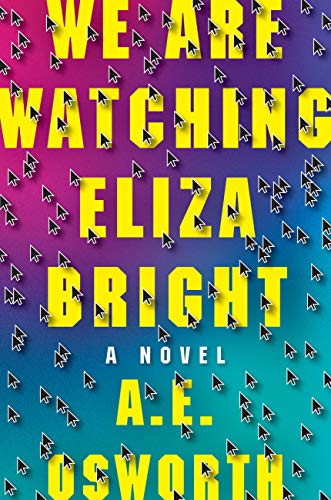
I read A.E. Osworth’s debut novel, We Are Watching Eliza Bright, very quickly. The novel is fast-paced, but I couldn’t put it down because the story felt so familiar—and relevant to anyone who’s ever used the internet. Sometimes I fell asleep reading and had anxiety dreams about being online, but this didn’t stop me from passing out with the book on my face every night until I’d finished.
The heroine, Eliza Bright, works as a coder at a gaming company, and is the only woman in such a high-level position. When she reports workplace sexual harassment, she’s dismissed. She then talks to a reporter, whose story about sexist culture at the companygoes viral. Eliza is fired from her job, and then doxxed by superfans of the game she worked on, a game she herself loved. The more Eliza tries to hide, the more the gaming community’s harassment escalates—both on- and offline (in “meatspace”).
The novel is narrated by two collectives: the first, a subreddit of angry online gamers who believe their “world is being invaded,” rails against the changing culture of games. The second, a clandestine group known as the Sixsterhood, lives relatively off the grid in a Queens warehouse. The groups’ differences are perhaps best encapsulated by the way they deal with anger. The subreddit: “we love when anger bubbles up, floods the landscape like lava. Explosive at times, slow and crawling at others. But as transformative. As destructive.” The Sixsterhood: “the way We deal with Powerful Anger is to call a Powerful Anger Circle in the silks studio and participate in a Group Primal Scream.”
Over the phone, Osworth and I discussed unreliable narration, meta-narratives, and how the pandemic has changed general perceptions of “real life.”
Deirdre Coyle: The story is told from the perspective of an ever-shifting online collective, a subreddit. How did you decide to narrate the story from this kind of hive mind?
A.E. Osworth: I’m trying to remember the nexus of it, the genesis of it. I don’t know that I have a particular moment that I decided this. I’m not sure I can pinpoint the exact moment, but I can tell you that when I think of the internet, that is how I think of the internet, as this sort of connected collective, this hive mind. [The narration] went through a couple of iterations. There was a time I was trying to make it whittle down to one person at the end that was narrating, and that didn’t feel right, because that’s not what I think of the internet. So it remained this collective narrator. It was almost not a decision. If I can sound a little mystical, it almost was something I did not think about. It just happened.
DC: Did you always have these dueling collectives with the Sixsterhood and the subreddit, or did that change forms as you were working?
AEO: No, the Sixsterhood is the newest part of this book. It was in the last year that the Sixsterhood became my second narrator—which is hilarious, because the Sixsterhood as a voice and as a community is closer to how I spend my time. It’s closer to how I live my life. I am queer and trans, and my people kind of do sound like that—and yet I had not written in that voice, and I had to back into it. Originally, the Sixsterhood wasn’t a part of [the book] at all. I changed the back corridor of the book before it even went on submission, and that’s when the concept wasborn, when I edited right before submission.
What’s interesting is that I could not figure out a way to make the Reddit narrators’ concept of the Sixsterhood make sense. Because they wouldn’t know, right? This is so far outside of their idea of what people are like. It was my editor who was actually like, “Can the Sixsterhood narrate the parts where [Eliza is] in the [warehouse]?” And I was like, “Yes, absolutely, I am going to change it completely. That’s absolutely what’s going on here.” I changed it, and then I got edits back that were like, “Cool, they still sound the same.”
My editor, Seema Mahanian—she’s a damn genius—and I got on the phone during lockdown, and we sat there and analyzed all of the things that I had osmosed from reading a lot of Reddit to make the Reddit voice, but that I hadn’t actually crystallized into, like, “Here is how these sentences work.” Then I sat there and drew lines from them and I was like, “What is the complete and total opposite choice?” Not just in terms of point of view, but in terms of constructing sentences. And that’s how the Sixsterhood—the really big, expansive sentences, and no punctuation—got born.
I had to back my way into the voice that was closer to my community and to the way that my people speak.
What I was able to articulate after having done that, and why I was able to go back and rewrite the Sixsterhood to have the voice that they have, is that in many coding languages, there are a bunch of operators that you can essentially [use to] make the computer do stuff for you. In this particular case, the ‘or’ operator and the ‘and’ operator. The “or” operator is the Reddit voice: they think that one thing happens, or another thing. They operate from this place of scarcity. The Sixsterhood is the “and” operator. They think one thing is true and also another thing is true. They operate from a place of abundance. And that is my community, that’s my people. I don’t quite know why it was my inclination to do the Reddit voice when it is not how I live my life, and I had to back my way into the voice that was closer to my community and to the way that my people speak, but that is what happened.
DC: Speaking of the “and” and “or” operators, I also want to talk about the unreliability of the narration. Particularly in the subreddit-narrated chapters, this unreliability manifests in many often surprising ways. Hopefully this isn’t too much of a reach, but what was it like writing that unreliability during an era where journalists’—and really everyone’s—credibility is so frequently called into question by people in power?
AEO: It’s not a reach, but it’s not something I would have articulated before today. I think probably the very fact of truth being constantly assailed is part of how this book turned out. I started it before—we’re talking about the Trump presidency, right? That’s what we’re referencing?
DC: [Laughs] Yeah.
I write fast and then draft over and over and over again, like a 3D printer.
DC: There’s a meta-narrative about the collective narrator(s) arguing over what Eliza’s Gchats mean, and whether those documents should be taken at face value. The Gchats and emails are the only things that we, as readers, know to be objectively “true.” As a reader, this all felt very coherent. But as a writer, how did you keep your brain from turning to mush while holding all of these threads together?
AEO: I started it before the Trump presidency, and I rewrote the whole thing after the election to set it directly after the 2016 presidential election, in the December after. Because I have to. Because exactly what you just said—the relationship to truth has been so murky. What’s interesting about, for instance, the juxtaposition between these two narrators is that one believes only one thing can be true and everything else is false, and one believes that a lot of things can be true at the same time. Obviously there are instances where each one of those worldviews will work better, and I was just trying to explore what those are and what those could be.
AEO: So as a practical thing, I think of it kind of like—have you ever seen a 3D printer operate?You print one layer, and then you print another layer, and then you print another layer. You watch it essentially build up and up and up and up. So I started with one [thread], and then I went back and did another one, and then I went back and did another one. I iterate a lot. I write fast and then draft over and over and over again, like a 3D printer, in this way. In the middle bit where we have to wonder if [Eliza] and Preston are sleeping together, those three chapters present three different ways that that night could have gone. That part was also a late addition where I went through and did three very different storylines that could all be true, or some of them could be mixed, or one of them could be true. 3D printer.
DC: You’ve also done a lot of online reporting and writing about technology, and referred to the GamerGate/alt right subreddit, KotakuInAction, as “the butthole of the internet” (I need to start using this). How did your experiences writing nonfiction about those communities affect the way you wrote about them in fiction?
AEO: So I’ll push back on journalism—I’m not a journalist. I don’t consider myself a journalist. It’s not as though I’m not, you know, what I usually call “committing acts of reporting”; it’s not as though I’m not calling upon some of those skills. It’s that I do not ever want to mess with the idea of objectivity. I am not objective. Ever. And so I will not call myself a journalist, because I don’t even want to think about it. I am a writer; I have a lot of opinions. I try to make sure that when I am committing acts of reporting, that they are solidly based in fact, but I am not objective at all. So I just want to push back on that, just a little bit.
This is the way people behave. It’s not about it being on the internet; all the internet does for us is make us faster and bigger.
Anyhow, so how does the nonfiction inform the fiction? [The nonfiction I wrote about GamerGate] got me obsessed with it. Truly, madly, deeply, that is the one thing it did for me, is that I couldn’t stop thinking about it. I love games, I love playing games—I’m not particularly good at videogames; my heart’s actually in tabletop—but because this is not how I live my life, when I can’t stop thinking about it, I have to expand beyond what I am given. That’s why fiction. It lit the fire. It got me angry, because it’s nothing new, right? This is the way people behave. It’s not about it being on the internet, we just are now faster and bigger; all the internet does for us is make us faster and bigger. So it got me mad at things that were not just. And especially when anything messes with play? I love play; it is my number one value as a person. The ability to learn through play is truly my jam, and when something fucks with play, I get mad. And of course it’s not just fucking with play, it’s fucking with women, it’s fucking with objective truth, it’s fucking with a lot. So it got me obsessed, and it got me mad. Those are the two things it did for me. But the rest I made up, because I couldn’t stop thinking about it.
DC: At one point, Eliza says “the virtual world is just as ‘real’” as meatspace. How would you define the “real world”—if you would at all?
AEO: I think about it a lot. It’s all the real world. That is something I believe. This and digital space together—and with other kinds of worlds—comprise reality. That’s the short answer. I feel like before the pandemic, this was the hill I was going to die on by myself. Other people, maybe, are starting to agree with me. We’re living our whole lives right now in digital space—and what, are you just going to say it’s all fake? The consequences of every interaction we have in digital space are real consequences. That is how I define reality, are the consequences real? Do the consequences matter, do they affect you, do they come for you in every aspect of your life? Yes, they’re real. Okay, great. If the consequences were imaginary, it wouldn’t be real.
Around 11:00 a.m., slack-limbed and sighing on the toilet seat, eyes closed, Javed heard a rap on the bathroom door.
He opened his eyes to the broken first flood of daylight. It was typical of the cook, these days Javed’s only house help, to disturb his delicate morning routine.
“Ye-es?” Javed said, his voice neutral, as if speaking across a glass door in an office.
“A gori madam is at the front door,” the cook mumbled.
As his fingers unclenched from the Muslim shower he was holding, Javed gulped back his sleeping breath. He’d gone to bed at 5:00 a.m., after recording a special report on the state of Pakistani democracy in his studio at Jeet TV.
“Show her to the drawing room. Use your common sense. And don’t disturb me in the potty next time.”
Javed had become even more of a workhorse six months before, after a raw and, he thought, unnecessary divorce.
He peeled the night shirt off his chest and let it fall to the floor. He looked in the mirror and breathed deliberately: once, and twice, three times, four times. These days a little meditation went a long bloody way. He brushed his teeth and walked back to his swampy bedroom. The bedsheets were soft with humidity. Javed threw on a clean kameez over his shalwar and sprayed Issey Miyake on his neck.
As he walked into the drawing room, Javed smiled to buoy his own confidence. “Aha! How nice to see you.” The good thing about being a television personality was that even in his gloomiest moments he could transform his mood at a moment’s notice. Tone of voice, steadiness of gaze, the spring in his smile: these aspects of himself now operated without effort, with the cold autonomy of need. Marianne Almond, an economic officer at the American embassy, had set foot in his house for the first time, but he knew her. He knew she lived in a house across his street; he’d seen her jogging in the neighborhood several times, a police officer always sprinting behind her.
“Sorry to have barged in,” said Marianne, a pale hand raised, as if testing for rain. “I figured you’d be home today.” She was wearing brown linen trousers and a black T-shirt. She had clear green eyes, and Javed saw that she was almost as tall as he was. Her eyebrows were so sparse light bounced off them.
She sat down on his plastic-covered sofa. “Do you have time to chat?” she asked.
“Absolutely,” Javed smiled, sitting on the sofa in front of her. “There’s an insect on your knee—”
“I’m having a party at my house tomorrow—”
“Go on,” she said. She swept a hand into her hair with the studied patience of a foreign dignitary. Then she cupped the beetle in her palm, set it on the floor.
“Would you like something to drink?” asked Javed.
“Oh, it appears your drinking pipes are leaking. My staff noticed the leak. You might want to get that checked.”
“I have bottled water. I’ll bring you a fresh bottle.”
To his relief he found two small bottles of Nestlé in the fridge. He grabbed a clean glass from the cabinet and brought the items to Marianne on a tray. He removed the cap in front of her.
“That’s very kind of you,” she said. She took a sip from the bottle and placed it between her feet.
That’s very kind of you. People in Pakistan had stopped uttering statements such as that’s very kind of you. No one said that’s very kind of you when you brought them water. The utterance reminded Javed of the photos he’d seen of Marianne at the launches of restaurants, boutiques, movie premieres, and inaugurations. In each photo, she had a that’s-very-kind-of-you air about her: eyes beaming with apology, face bashful with delight. That people invited her to cultivate proximity was obvious enough: Marianne Almond could always help in the facilitation of a visa. But they also jostled around her to inhale the source of her pristine foreignness, her teasing jokes, her voluminous brown hair that shone brassy in the Islamabad sun.
“Anyway,” said Marianne, interrupting Javed’s reverie. “I’m having a party at my place tomorrow. The guests will be a smattering of journos and diplomats. Join us if you can. I’ve been an appalling neighbor. Goodness. I’ve been meaning to extend an invitation for a long time.” And she rolled her eyes at her own unearthed delinquency.
“Don’t be silly,” said Javed. “It’s so nice that you came here. I will certainly try. I have a prior engagement,” he fibbed. “But it’s not so important. If I get done early I’ll be there with bells on.”
“Wonderful. I look forward to seeing you then,” said Marianne. She got up and smoothed the pleats of her trousers.
Javed couldn’t think of anything more to say, and she was already on her feet and waving goodbye with a twirl of her long fingers.
From the moment Marianne Almond had arrived in Islamabad two years before, during which time Javed had gotten married and divorced—his infant daughter lived with his ex-wife— he’d been reassured by an American presence across the road. Marianne had broken with tradition and chosen to live outside the Diplomatic Enclave—the sprawling complex of houses, gyms, grocery stores, tennis courts—where most ambassadors and embassy officers resided. Her decision was sanctioned by the Embassy, if unusual. The security architecture installed by her team had upgraded Javed’s neighborhood. Once a dusty expanse of eucalyptus-shaded bungalows, Green Acres now looked like the suburb of a spotless city: steel barriers, spikes, ramps, and towers padded by sandbags dotted most streets. The black-and-yellow concrete barriers had turned the roads into go-kart courses. “No security issues,” Javed would say to his friends. “Amreecans live here. Security is outstanding.”
Javed had switched to political commentary after fifteen full years as a television actor. He’d been a graceful presence on the screen, his gaze touched with roguish charm. When his first movie came out, in the early nineties, he’d had a business card emblazoned with the words Film Star. His friends had sniggered, and he’d burned all two hundred cards. A few years later Pakistan’s national channel had approached Javed to consider hosting his own talk show: he was selling himself short by being just an actor. He had more to offer the world, the producer said, like his wit and charisma. Javed had turned down the proposition. He had been, at the time, unsure of his ability to discuss, cleverly, culture and politics for a whole hour. Television had a way of revealing the inner truth of the host.
By the time privately funded channels came around, in the 2000s, Javed was in his late thirties, at the peak of his acting career. Umeed TV lured him with a package he couldn’t refuse: co-anchoring a news show with his then-girlfriend of three years. They were a power couple, beloved, on the verge of marriage. His girlfriend, a lawyer, had said the opportunity was the culmination of everything she had dreamed of. Javed’s analyses—critiquing the corruption of the ruling party, India’s belligerence, American interference in global affairs—had been widely praised on TV. What most people didn’t know was that Javed typed out his bare thoughts into bullet points; his girlfriend spun them into stunning discourses.
After a year of sitting next to each other four days a week behind a long red desk—of Javed occasionally pinching his girlfriend’s thigh behind it—she’d told him she was having an affair with the owner of the channel. Her expression was one of flat, unerring conviction, the same look she emitted to her viewers during a broadcast. She didn’t know where the relationship with the boss would go, she said, but she was certain she wanted to pursue it.
It was around this time that Javed, stricken, presented himself as a sacrificial offering. His parents reminded him he was approaching forty, that he was mad to still be single, so he said yes to his mother and his father. Actually what he said was yes—yes—yes, find me someone and I shall marry her. Then came Sameena, a marriage, a child, a rapid divorce.
After Marianne left, Javed fidgeted with his wristwatch and looked around. The torpor within him had been dislodged. Now that he was awake, he wondered what he would do for the rest of the afternoon. He said, “Allah ho Akbar,” with a long exhaling sigh to relieve a peculiar mounting restlessness. Though Javed lived alone, he’d observed that silences unsettled him: they rang in his skull, set his nerves on edge.
He walked around his house with curiosity, poking his head into dirty corners—behind the fridge, over the soot-stained wall above the oven—in astonishment at how seamlessly the order in his home had collapsed in the absence of his ex-wife. He didn’t miss Sameena, but his home had looked and smelled pleasant while she’d been around. These days going back to sleep often seemed like a sensible choice—if only he could truly sleep. He touched the blackened wall above the oven and looked at his smeared finger. Why had Marianne come bearing the invitation for the party? She could have sent a card; she could have asked any of her friends in the media for Javed’s phone number.
He meandered back to the drawing room to see it anew through her eyes. The walls were covered with framed photos of his parents and siblings and daughter. The room wasn’t sumptuous, but it was a picture of restrained dignity: a large red carpet bathed in afternoon light, sofas covered in plastic like expensive new cars.
He wondered if he should go to the party the next day.
He knew from experience that a little withholding went a long way.
For now, he would drive to the home of his former in-laws to see his daughter, Inaya. Before the divorce Sameena had complained that Javed’s working hours left him no time for their small family. She’d texted him verses from Rumi, urging him to realize the wound was where the light entered.
He hadn’t responded. Not once.
One day, she’d returned to her wealthy parents.
As Javed held his daughter in Sameena’s home, he was relieved to see Inaya gurgling with laughter at the slightest provocation: when Javed widened his eyes, when he touched and withdrew his hand from Inaya’s leg in repetitive fashion. His own face was thwacked with tiny hands, his chin streaked with spit. Sameena didn’t so much as offer him a cup of tea.
The next day, as a sound technician pinned a microphone inside Javed’s shirt, he thought of the way Marianne’s smile had lingered as she’d said I figured you’d be home today.
He resolved to skip her party.
On his way back from work he stopped at the supermarket and bought three crates of Nestlé bottled water. He bought bags of ice. He called up a friend to procure the number of a bootlegger, and ordered from Vicky Boot—the name under which his friend had saved the contact—bottles of red wine, scotch, and vodka. On the phone Vicky Boot spoke in a guarded tone; the indolence in his voice annoyed Javed until he realized that Vicky’s lagging manner was its own learnt protection.
Marianne’s party came and went. When Javed didn’t hear from her the day after, he curled under a cotton sheet and watched his most-viewed clips on YouTube.
Three days later, around 10:00 p.m., Javed heard the doorbell ring. He’d just gotten home from work, and his heart sped up as he switched on the air conditioner in his bedroom. He took off his white dress shirt and put on a white linen shirt. He spat in the sink and rushed to the door.
A police officer was standing next to Marianne. He was tall and square-jawed; a black handgun jutted from the holster around his waist.
“Any problem? Everything okay?” asked Javed.
“Jaav-ed!” said Marianne. “He’s here for my security. Nothing to worry about. May I come in?”
“Of course.”
Javed invited the officer in but he said he’d prefer to stay outside.
Javed led Marianne to the drawing room. “One moment, please.”
He returned with a bottle of scotch, a juice jar full of water, a bottle of wine, and a bucket of ice. Some spicy peanuts in a bowl.
“What would you like to drink? What may I pour you?”
“You’re all so frantically—adorably—hospitable.”
“It’s in our genes.”
“But just a tiny bit.” She raised her index finger. “Red, please. Won’t you have any?”
“I don’t drink. Sadly.” And he shrugged.
“Why not?”
“Don’t like the taste. Honestly.”
“How come I didn’t see you at my party?”
“I was with my daughter,” said Javed, fibbing, since he’d seen Inaya the day before the party. “She lives with her mother and I get to see her once a week.”
“Ah, right,” said Marianne. “The American ambassador asked after you. She was complimenting your show on the recent case of land grabbing in Karachi.” She took a sip of wine from the glass, looking at Javed over the rim. “ ‘Brave of him to do it,’ she said.”
“The channel wasn’t happy. They say I ‘cost’ them too much.” He took a deep breath. “But that’s jolly nice of the ambassador,” he said, and felt the intrusion of “jolly”—a word unpracticed on his tongue—hang awkwardly in the air.
He said, “The three of us should do dinner soon. InshaAllah.”
“That would be great. It seems you’re busier than ever.”
“Not really.”
“Oh good.”
Then swiftly, but smoothly, Javed reached for the tips of Marianne’s fingers and kissed her hand. It was an old trick, the gesture courteous, restrained, poised on the edge of chivalry—or possibly something more. When Javed lifted his eyes to observe Marianne’s face, she was staring back at him, dumbly stunned, as if what he had done was strange yet somehow acceptable. Her lips were neither open nor sealed, but set in an uncertain moue. It was as if she was about to whisper, That was very kind of you.
She cleared her throat. “How do you think the government is doing these days?”
“Completely clueless.”
“It’s a nightmare, isn’t it.”
“Everyone in the world should have a right to vote in the U.S. election, however,” said Javed.
“That’s interesting.” She was smiling. “But what a relief. For us, I mean. Anyway, I should get going,” she said and put her glass down. With her fingers she raked her hair into a crinkled bun. “I hope you managed to get those pipes fixed.”
“Not yet. The leak isn’t so bad. Let me show you out.”
After she’d gone, Javed stared at himself in the mirror for a long time. He saw a divorced workaholic who could, if he really wanted, seize happiness at this late, wrecked stage in his life.
Marianne did not return the next day, or the day after. Javed had recorded a two-day segment on the energy crisis in Pakistan. He’d said solar-driven energy was the way forward, that the American government was going out of its way to provide Pakistan with sustainable solutions. It didn’t help to be pro-American these days, but he’d slipped in a compliment, and he wondered if she’d seen the show.
He saw a divorced workaholic who could, if he really wanted, seize happiness at this late, wrecked stage in his life.
He rushed home as soon as he finished recording in his studio. He lay on his bed, slightly red in the face when he didn’t hear from Marianne. The ceiling fan whirred. He told himself not to worry. He would have to be patient.
Or he would have to be proactive.
He picked up his phone. He told his research assistant to comb Google for the words “Marianne Almond.” He wanted all the information, especially the stuff that seemed irrelevant.
The next morning his assistant dropped off a file at Javed’s house. Javed spent the morning huddled in his bedroom, orange highlighter in hand, going through a stack of printouts. He smiled as he highlighted the word “divorce” in a Saturday profile of Marianne. He noted her decision to retain her ex-husband’s last name—it was easy to pronounce in the parts of the world in which she worked, she’d said: Almond, just like the nut.
Around noon Javed showered, changed into blue jeans and a lilac polo, and walked across to Marianne’s house.
“I’d like to see Marianne,” he told the officer outside her gate.
“All right,” said the officer. “You have an appointment?”
“Just tell her Javed is here. From that house.” He pointed to his wrought-iron gate.
“Like I asked, sir, do you have an appointment?”
“It’s Saturday!”
“I’m sorry, you can’t go in without pre approval.”
“If you tell her my name, she’ll be okay with it.”
“Let me see what I can do.” As the officer crackled his walkie-talkie, Javed heard a familiar voice: “Jaav-ed!”
He turned around. How pretty she looked.
“It’s okay.” She waved to the officer. “Let him through.” She was standing by the main door in jeans and a loose faded T-shirt printed with the words Yes We Can. Her feet were bare and her T-shirt dug a sharp V into the surf of her breasts. Three bars of sunlight pooled over her face, and seeing her framed in the doorway in her shoeless feet, her décolletage shimmering in the sun, Javed felt a tingle of delight at the sudden hidden provocation of the afternoon.
He was led through a hallway, patted down, his shoes, wallet, and keys put through an X-ray scanner, then handed back to him by a younger-looking security official.
Marianne laid a hand on the officer’s shoulder. “Thanks, Imran.”
She pointed to an open door. “I’ll be with you in a second, Jaav-ed.”
He walked into a vast, gray-carpeted, bureaucratic-smelling room. Plaques of Plexiglas lined the main shelf to the side of her desk: an award from the Pakistan Greens recognizing Marianne Almond as an environmental leader, another from the Government of Pakistan lauding her efforts to push renewable energy in the Punjab province, and one from the State Department honoring her commitment to public service. Behind her desk, a framed map of Minnesota—a cartoonish profile of a man with a long beak—hung next to a framed map of the Punjab.
Marianne walked into the room, a soccer ball in her hand. “Made in Sialkot.” She smiled.
She breezed past him like a headmistress inspecting the lineup for morning assembly.
“How are you, by the way?” she asked.
“Very well, thanks.” He paused. “All the better for seeing you.” He motioned with his hands that she should throw the ball to him, and she lobbed it.
“The soccer World Cup balls are all made here,” said Javed. “I mean in Pakistan.”
“I’m not a bad player myself,” she smiled.
“Are you not!”
“What would you like to drink? Lemonade?”
“That would be lovely.”
Marianne placed the order on the intercom in Urdu—“Dou nimbu paani shukria”—the words stacked together as if shukria were part of the drink. Her identity fragmented for a moment into that of a child in a foreign land.
She took three scarves from the top drawer of her desk and laid them out. “This one”—she trailed a finger over an orange scarf—“is from Larkana.” She looked up. “And this is from one of the Afghan shops in Jinnah Super. And this, oh, my favorite, a woman at Faisal masjid just gave it to me. I said no but she insisted I have it. Isn’t it beautiful?”
The words—Larkana, Sialkot, masjid in lieu of “mosque”— slipped from her mouth like air. Her pronunciation was far from perfect, but what a thing her confidence was!
“Frankly, I’m quite amazed by you,” said Javed. “By your resourcefulness, your positivity, your decision to live here. God knows this country is neither safe nor easy. I’m amazed by your courage—worn so lightly. It’s a hard place in which to plant roots.”
Marianne looked at him. She was quiet. She met his gaze. “I appreciate that.”
She knotted the orange scarf around her neck. “I wanted to live outside the enclave to experience the real Pakistan. It’s important to me. It’s important to immerse oneself.”
Javed strode across the carpet and kissed her on her hair. He’d meant to kiss her lips, but her height unsettled him, and the gesture spilled into solemnity. The blinds in the room were drawn. At first, Marianne didn’t respond. She stood stiffly erect, as if up against a wall. Then, she placed a palm on his cheek, and brushed her lips against his.
Javed could hear his heart thrashing inside his ears.
She led him to the sofa, where she shifted her buttocks deeper into the creased leather upholstery. She touched Javed’s nose. “You’re sweet.”
He blushed and looked at the carpet. “You don’t watch my current affairs show?”
“My Urdu isn’t that great.” He laughed.
“I’m sure it’s brilliant,” she said. “But, listen. This”—she pointed a finger at Javed, at herself—“is tricky.”
“I understand. Of course.”
“You’re not in the government, so it’s technically fine, but we have to be careful about this kind of thing. Only for security purposes. As I’m sure you understand.”
“You shouldn’t have to worry about anything. I’ve lived across from you for two years.”
“This reporter at my party—when I brought you up she said she was engaged to you at some point. She didn’t say more.”
“She left me. For the owner of the channel where she and I used to work.”
Marianne’s eyes softened. “Sorry, Jaav-ed.”
“Soon after she ditched me I got married very quickly. That too was a disaster.” And he laughed wearily.
“Oh dear.”
“She wanted to make it work but I was too busy getting my show going.”
“Sorry to hear that.”
“You don’t have to be sorry.”
Marianne fidgeted with her opal drop earring. She had beautiful fingers, long and clean, like a librarian’s. Then briskly she got up from the sofa, her arms crossed over her chest.
Javed didn’t want to sink the mood. “I’ll check in with you soon,” he said, standing up. He kissed her shoulder and walked out the door, past the security scanner, past her guard—whose stare he ignored—and onto the barricaded road, where he breathed a sigh of complicated relief.
When the map on the wall confirmed what he’d read of Marianne, that she was from Minneapolis, Javed set about reading everything he could about the city. He memorized the names of its historic sites of protest, its most famous parks—Minnehaha Park, Chain of Lakes, St. Anthony Falls—the names of renowned politicians who’d come from the city. The next time he saw her it was at his home, two days later.
The formality of their last encounter had disappeared. She rang a triple chime ding-ding-ding, and as soon as Javed opened the door she leaned in to hug him. He noticed that she’d ditched her security guard.
Javed handed Marianne a glass of wine as he sat beside her on the red damask sofa in his living room.
The TV screen was split into three: a male anchor with coal-black hair to the left, Maulana Amin of the Islamic Board in the middle, a female anchor to his right. The Maulana was asked his opinion on the recent talk on social media of reviving Basant, a kite-flying festival that had been banned by the government several years before. The government had argued that the string attached to kites was coated with glass: as the kites fell from the sky they often landed on the necks of cyclists and motorcyclists, leading to instant death. Dozens died every year. And since the illegal manufacturing of glass-coated string could not be halted, Basant would remain banned.
Maulana Amin rubbed his eyes, his stomach a gushing sack in the center of the screen. “Basant is a Hindu festival,” he said. “It was never part of Pakistani culture. That is why it should stay banned.” He raised a finger. “Today I hereby issue a fatwa against all those Pakistanis who are promoting this Hindu festival—”
“Sir,” the lady interrupted. “Public opinion shows that most Pakistanis miss flying kites.”
“I will give a fatwa.” He hiccuped. His speech was slurred. The anchors cast their gaze downward. A moment later they cut him off.
“Oh, Maulana sahab!” said Marianne. “He came to the Ambassador’s house recently and guzzled half a bottle of Black Label.”
“Openly?”
“Of course. With us they’re open.”
“God, the hypocrisy. He wants to prove his moderate credentials to you,” said Javed.
“There are, like, fifty liberals in this country and I’ve met all of them.” Her mouth was slack, in exaggerated disdain, like that of a comedian. “The ‘silent majority’ isn’t interested in secularism or liberalism or for that matter fundamentalism.” She took a big gulp of the wine. “Folks just want economic uplift.”
Javed took a sip of his soda. He was listening.
“The conservative elites are definitely my favorite,” she chuckled. “At least they’re consistent: no sleeveless, no sharaab!” She tapped her finger against her wine glass. “And what about you?”
“What about me?”
“Leftist? Bhuttoist? Closet Islamist?”
“That’s right: you don’t watch my show. How would you know?”
She flared her nostrils.
She grazed her lips against his.
He led her to the bedroom, where she drank, slowly, another glass of wine. With her toes she peeled off the back straps of her sandals and climbed into his bed, cool in the vacancy of the afternoon. Their clothes were off before Javed could get nervous. He was astonished at the ease of the process, at Marianne’s instinctiveness guiding his own. He was accustomed to more tortured maneuverings, conversations held in codes of innuendo. He buried his face in her chest, scented like cake. He tipped her left breast upward with his fingers. “Mini apple,” he said. “Mini apple being the nickname of Minneapolis.”
Her face collapsed into laughter. Javed saw crow’s-feet, elegant in their translucence, in the corners of her eyes.
“You’re supersweet,” she was saying.
Afterward, she asked him about his daughter. He said Inaya was just under a year old, that she was a piece of his heart. His ex-wife, when they were still married, had wanted him to leave his job on TV, he told Marianne. He’d declined to do so, and, soon after, she’d left him, saying his career in the media had ruined him, that he acted like he was still a bachelor. He hadn’t at all, he said. He missed his daughter dearly.
Javed laid his head on Marianne’s chest, feeling the rise and ebb of her breath.
“Why didn’t you have children,” he asked.
“I never wanted kids.”
“And your ex-husband?”
“He was happy to go along with what I wanted. He’s all right. We talk sometimes.” Her green eyes flickered. “He worries about me.”
“Why does he worry?”
“Because I’m in Pakistan, of course.”
Javed sat up. He held her shoulders. “You shouldn’t worry. Pakistan has embraced you. And you fit in so well.”
She brushed her thumb against Javed’s eyes. “It’s nice here with you.” She looked down at her bare breasts. “Mini apples, eh?”
“Would you prefer another, more obvious, fruit?”
She laughed. “I like mini apple. How clever of you. It can be our little secret.”
Javed and Marianne saw each other twice a week—in the afternoons or at night, depending on their schedules—once at his house, once at hers. They made love right away, and talked afterward. Javed longed to know the names of the journalists and lawyers and politicians with whom she frequently dined. Once he knew he could decide whether or not to feel anxious. It was too early in their relationship, if he could call it that, to ask her. Marianne shared select details of her social life in Islamabad, and Javed was smart enough not to prod.
One evening, as Marianne was standing in the kitchen of her home making an avocado sandwich, Javed asked her what Minneapolis was like. She said quickly and flatly that she disliked it. She was wearing billowy white pajamas and a white tank top. Her hair had been hurried, without a pin or a clasp, into a bun. Her parents had not gotten along, Marianne told him, and going back to Minneapolis filled her with a nagging sadness. That was one of the reasons why, she said, she’d taken a job that enabled her to see the world. She couldn’t stay in one place for too long; she became restless. Pakistan was not without its share of troubles, she said, but it was “resilient as hell.” Javed told her she seemed comfortable in Islamabad and she agreed.
“By the way,” he said. “When you came over to invite me for the party: Was that a pretext?”
She raised an eyebrow. “For?”
“This. Us.”
A ringing laugh, at once wild and surrendering, and a toss of her head that sent her hair cascading onto her breasts.
Another weekend rolled along, and Javed canceled his social engagements. Instead, he went shopping for snacks. He bought artisanal cheeses, hummus, crackers, lime cordial, soda water, tonic. He bought hand towels and arranged them in his bathroom. He sponged the sooty wall behind the kitchen stove. With a thistle broom he swept behind the oven, scraping out burnt matchsticks, Cheerios meshed with human hair, a cracked tennis ball. He scraped out a couple of dead roaches from under the sink cabinet, flicked them to a corner.
When the cook said he felt embarrassed watching Javed clean, Javed looked him dead in the eye. “The only thing permanent in life is change,” he divulged.
He gave the cook two weeks off.
Javed arranged a list of songs on his phone—Nusrat Fateh Ali Khan, the Beatles, Abida Parveen—waiting for the moment when Marianne would ring the bell, and he’d rush to the door, the silence between them a promise of things to come. He chilled bottles of beer and wine, bought air fresheners and new underwear. He felt comfortable walking around in front of Marianne in his underwear, a hand patting the flatness of his stomach, as if the action ensured slimness. Marianne laughed at him, told him he was image-obsessed. “The camera puts on fifteen pounds,” he told her, grudging the fact as much as he was transfixed by it.
Marianne liked red wine, and Javed made sure he had a new bottle for her every week, though she never drank more than two glasses. He admired her discipline, and tasting the sour wine on her mouth made him stiff with desire.
She asked him, while they were sitting on his bed, what the real reason was for his abstinence. He told her his father had liked his drink a bit too much.
“We have more in common than you realize,” she said, stretching her legs. “My mother was an alcoholic. I went through a period in college when I didn’t drink. Then I realized how stupid that was: a reaction. You should try it sometime.”
He said he would, if they traveled abroad together.
On an overcast April afternoon, as Javed and Marianne sat on a glazed wicker settee in her veranda looking out at the garden, Marianne asked Javed if he wanted to go for a drive in her SUV. A light rain had begun to fall, and the raindrops trickling into the two-tiered stone fountain in the garden created a feeling of nostalgia, as if it were a scene from one of Javed’s old films. It occurred to him it had been nearly three weeks since he’d seen Inaya. He longed to introduce his kid to Marianne, perhaps take them to a restaurant. He could imagine a life in which Marianne encouraged him to be a better father. He could imagine accomplishing quite a lot with her at his side.
“I know how much you love cars,” said Marianne, trailing a finger across her chin.
“Will you drive?” he asked.
“Not allowed, I’m afraid.” She exhaled, leaning her head back.
“Don’t you miss the freedom of your old life?”
“I miss walking. Like literally walking to the supermarket to pick up a toothbrush. The U.S.? Not so much. I’m big on adventure.” She got up and stretched her arms.
“How much longer are you here for?” he asked.
“Could be a day, could be a decade! Not up to me.”
“I’ll drive your car, if it’s okay with you. Just this once.”
“Hmmm.”
“That buffoon guard of yours can follow us.”
“Mmmmm,” she said, twirling on her feet. “Do I detect a hint of jealousy?”
“He’s very protective of you.”
“He’s here for my security. That’s all.”
“Are you sure?”
“Of course!” She pulled him by the hands. “Let’s dance.”
“Stayin’ Alive” had begun playing on Marianne’s phone. Javed stared at her.
Then his shoulders shimmied while his feet remained perfectly still. His forearms flicked and unlocked. The right hand rose skyward, finger erect, his hip thrust gorgeously to the left. He danced a pointy-finger dance. He spun on his feet and landed on a seamless toe stand.
Marianne grabbed him and kissed him on the lips. “Spend the night today. I don’t know when we’ll get the chance again.”
“What do you mean?”
“I’m really happy to be with you and I want you to stay. And I want to be able to say that.”
“Of course. I’ve always wanted that, Marianne.” He pulled her by the hands beyond the veranda and into the rain, where her face, streaked with rain, flushed a sultry freckled red.
On Sunday afternoon as Javed was shaving shirtless in front of the sink, his phone vibrated on the terrazzo countertop.
“Haan jee!” Javed pressed the speakerphone button.
His producer said he wanted to talk to Javed about something important. It would be best, he said, if they met in person. Javed said he would be happy to meet immediately, since he was busy in the evening.
Javed showered and changed and drove, his car zigzagging through the black-and-yellow concrete barriers, onto the main road, and on toward the studio headquarters of Jeet TV. He walked into a harshly lit meeting room with yellow chairs and a long beige table. His producer, Ahmed, in khakis and a denim shirt, met him inside. They hugged, and Ahmed tapped his hand to his heart. After asking Javed how he was, and whether he’d like some tea, he told Javed that the rating of Javed’s show had dropped. He wasn’t sure why, he said: the channel had monitored the rating for a month, and instead of climbing up, it had dipped. He told Javed, taking long pauses in between his words, that the channel had decided to shift Javed’s show to the 3:00 p.m. slot.
A wave of distress plowed into Javed. The 3:00 p.m. slot was given to second-rate anchors and watched by housewives. He recognized a demotion when he saw one.
“I see,” said Javed. “This is news to me.”
He knew it would make no sense to share his concerns with a junior producer—a twenty-seven-year-old kid—like Ahmed.
To register his displeasure, which he knew would be reported to senior management, he added that the decision felt very sudden, and strange. He told Ahmed he would get back to him.
When Javed told Marianne the news over dinner at a Chinese restaurant, she tipped her head. “How do you feel?
“Bloody upset,” he said, sliding to one side the chopsticks he couldn’t use. “Feel cheated.”
The restaurant was small, bathed in red and black tones. The ceiling was strung with illuminated red lanterns.
“Ask them to show you the numbers,” she said. “Don’t leave the slot without having seen the numbers.”
“It’s so bizarre. My show is one of the most popular. There’s something fishy going on.”
“Are you surprised?” she asked. “Did you have a sense of how the show was going?”
“Absolutely fine,” said Javed. “As far as I know. My interview with the Chief Minister had the highest rating recently.”
She placed her hand over his. “You’ll be fine.”
“I want to get to the bottom of this,” he said.
“You absolutely must. And I’m here for you. Let me know how I can help.” From the small bamboo steamer she pinned a dumpling between her chopsticks. “Try this, they’re so good.” Javed leaned over and she slipped the dumpling into his mouth.
Two days later a sanitation team in white uniform arrived to fix the pipes in Javed’s house. Marianne had sent three Pakistanis, and an American supervised them. Javed was touched by the gesture. It hinted at a subtle intimacy, one that asked no questions but took liberties with its love.
Javed watched the men as they went about their work soundlessly. When he offered to pay, the American supervisor said the bill had been taken care of.
Javed went to the local florist and bought a large bouquet of imported lilies. He picked up a bottle of wine from his house. He’d never anticipated responding so readily to a woman’s needs.
At the gate, the guard stopped him. “You should know me by now, buddy.”
“How can I help you?”
Javed told the guard to pat him down quickly so he could see Marianne.
A pink-orange sky stirred behind rows of swollen cloud. The guard said Marianne Almond had left.
“What do you mean left?”
“She’s gone back to the U.S.”
The guard said she’d left Pakistan the night before. A new officer was due to move in.
Javed stood still, not sure if he had heard right. He knew he had heard right. A hot rushing pressure rose in his chest.
“But why?” he finally asked.
“You’ll have to ask her that.”
Javed stood on the pavement, trying to suppress the panic lashing inside him.
“I see,” he said, and turned back.
In his bedroom Javed opened up his laptop and wrote Marianne an email. He typed an anguished note—How could she just leave without saying goodbye? What was going on? Was she planning on returning?—and deleted it. He typed a cooler note—Why had she left? Had something happened?—and deleted it. With a woman like Marianne, confrontation would not get him far. In the few weeks he’d known her, he’d learnt that resolute cheerfulness and candor—a strange combination— worked best with Marianne. Her own temperament was a mix of the two, and she’d demanded the same of her lover. As he fought back his tears, he thanked her, first, for having had the pipes fixed. He told her he’d walked over to her house to find her gone. He said he missed her terribly. He said he wished she’d told him about her departure. Why hadn’t she told him?
Was she planning on returning?
As soon as Javed sent the email, he received an automated reply. Marianne Almond, the text said, would be away from her email for the next two weeks. It was her personal email address. The message didn’t say more.
Javed coiled onto his bed, summoned by a sticky ache in his heart. A gusty rain swept Islamabad, showering leaves in his driveway. It carried away dust, glittering the trees and bushes. Marianne had told him that rain in Minneapolis made her blue, but the thundering Islamabad rains always gladdened her. It was impressions like these, so removed from his expectations of a foreign sensibility, which made her unique. He had marveled at her ease, her interest in his land and his people. Or perhaps she had said these things to impress him. Well-traveled people made masterful liars. As the rain slashed against his window, Javed imagined being killed. A scenario composed itself in his head: a group of terrorists would get past the barricade while Javed was out for a walk. They would kill him, and the Americans would retaliate. Javed would become a martyr, and Marianne Almond, cut up by relief that she’d escaped, and a very American guilt that Javed had not, would start a fund in his name. Old clips from his show would be played on TV. “A crusader on the screen. A hero in life.” Marianne would feel wretched for having deserted him.
Javed looked out the window; the sky was a glinting pane, blue-gray, after a storm.
Without feeling coerced or pressured, he’d fallen in love.
He wished desperately to cover the ground of his pain as fast as his body would allow. To muffle the wound for the time it took to forget it. It was how someone like him got by.
That night, Javed emptied a bottle of wine in the kitchen sink and watched with grim focus as the liquid slunk down the drain. The splash of red-purple filled him with despair. Without feeling coerced or pressured, he’d fallen in love. It wasn’t an idealized past he missed, but the real encounters of intimacy—the jointly created jokes in which they’d sought sanctuary, the exchanging and shedding of vulnerability in their homes. She’d managed to pull him up from above, helping him become a more secure version of himself, at once holding him, comforting him from below.
He wished Marianne were standing next to him, pleading with him to not break the bottles. She would hold his arm and he would prop her up on the sink and fuck her.
From the kitchen window, Javed saw a new officer, perhaps Marianne’s replacement, getting out of a black bulletproof SUV. She was a small woman with a mousy face and small shoulders. She tottered on high heels. She didn’t touch, in passing, the hands and shoulders of her colleagues, as Marianne used to do.
He sprinted out of his kitchen, toward the gate, and up to the SUV.
“Javed Rehman.” He plunged his hand forward. “Your neighbor.” He pointed to his house.
“Hello, Javed. Vicky Shields.”
“Welcome, Miss Shields. Excuse the intrusion, but any idea why Marianne Almond left so suddenly?”
“Not at liberty to say. I’m sorry.” Her face froze. And she turned on her heels.
“One moment!” said Javed. But her security guards indicated, their palms out, that he should stay away.
Though Javed had retreated to the sofa, to the churning darkness offered by his eyes, sleep eluded him. He flipped and tossed. No matter how hard he pressed his eyes shut, the mind chugged. Javed ignored the many phone calls from his producer asking him where he was, what he’d decided, and, finally, if he was alive.
When he arrived at the home of his former in-laws to meet Inaya, Sameena came by to say hello. Javed apologized for not having shown up for four weeks.
“We were wondering what happened,” said Sameena, a hand on her hip. “Bachelor life too hectic?”
“I’m sorry,” he said. “I’m really sorry.” His voice was rough, dispatched from a place deeper than his vocal cords.
He placed his phone on the table in front of him. He picked up Inaya, inhaling her tart, powdery scent. Sameena sat down on the sofa next to the door.
“I need to see Inaya more often,” he said.
“Just look at the bags under your eyes.”
“I just. Please. Twice a week.” He kissed Inaya’s belly.
“Once a week is more than enough if you can be bothered to make it.”
“You can send her to my house if you prefer.”
“Absolutely out of the question.” Sameena flicked the hair out of her eyes. “Your house is a hovel. Just stepping inside gives one depression.”
“I promise it’s clean now. I clean it myself sometimes.”
“If you’re going to lie about stupid things, I’m not letting my child near you.”
“I’m not, but fine. I’m really not. I’ll come here to see her.”
His phone lit up. The locked screen showed the first line of the email. Javed heaved himself toward the phone, handing Inaya to her mother.
Hi—great to hear from you. Sorry for late reply—just arrived in Sierra Leone. And sorry not to have said a real goodbye! Left in a rush. Am working in the countryside, not checking email regularly. Yrs, MA.
He read Marianne’s email twice. The first time his heart surged so loudly he could barely focus on the words. He read it again, taking in the more helpful aspects of the information she’d provided. He imagined Marianne in a green field, brushing hair off the foreheads of strangers’ children. The thought of her walking around in her cotton tunic, her breasts safe and fragrant, steadied him. He read the email for the third time, registering her heartbreaking reserve. He wondered why she had signed off so formally, with her initials.
His eyes mapped the text.
Yrs, MA
Yrs, Mini Apple
He looked up from the phone and saw Sameena staring at him. He sat down next to her and, his hands hanging by his sides, gazed blankly forward.
Anjali Enjeti’s essay collection, Southbound: Essays on Identity, Inheritance, and Social Change, is a discerning look at how to come to terms with the question “Where are you from?” It’s such a complicated discussion and Enjeti unearths the answer through her essays focused on her childhood in the South, her reckoning with racism, and her efforts as a social justice activist.
In the book, Enjeti writes “I am half Indian, a quarter Puerto Rican, and a quarter Austrian. I am an immigrant’s daughter and also a daughter of the Deep South. Despite an ever increasingly diverse United States, I remain a perpetual foreigner.” While her mixed-race identity became an easy target for racism and contributed to her feelings of otherness, she is also aware and confronts her personal complicity of not providing allyship to other marginalized voices. This is the strength of Enjeti’s collection—she is comfortable pointing out her flaws and showing how she chooses to learn and grow to offer support to those who need it the most. Her essays confront difficult subjects like white feminism, abortion, sexism, racism, the AIDS crisis, and the 2020 election.
As a South Indian girl who grew up in Texas, I found myself nodding my head at many of the essays in Enjeti’s collection. Enjeti and I conversed over Zoom for a few hours about our South Asian identities, what it means to define heritage, and the impact of this discussion on social justice and activism.
Rudri Bhatt Patel: The epigraph for Southbound is from Arudhati’s Roy My Seditious Heart: “Either way, change will come. It could be bloody, or it could be beautiful. It depends on us.” These particular words set the tone for your essay collection. Can you tell me about the choice to have this particular epigraph and its impact on how you examine identity, inheritance, and social change through your essay collection?
Anjali Enjeti: That quote in particular focused on the process, the sort of evolution of social change work, which was a really good analogy I thought for my own evolution. I talk a lot in the essay collection about how for a long time, I was very complicit in the oppression of other minority groups and I was not conscious of how I was complicit. I didn’t have the critical eye I needed to look at myself and my own actions until I was much older.
I thought about my own personal journey to trying to be more aware of how other people suffer, the ways that I contribute to that suffering and the ways that I’m working on myself to do better and I loved how that quote encompassed movement work in general. The process of building the coalitions and moving to a place of less harm and more love and more justice.
One of the things that I like to say is that a lot of the work we do is a verb tense, right? Solidarity is a verb and the work that one does to engage in solidarity is a verb.
RBP: In the chapter, “What are You? Where are You From?,” you carefully distill your identity in the following quote, “For others, my racial and ethnic identity is oftentimes a Rubik’s Cube to be solved. I am half Indian, a quarter Puerto Rican, and a quarter Austrian. I am an immigrant’s daughter and also a daughter of the deep South. Despite an ever increasingly diverse United States, I remain a perpetual foreigner.”
You end your collection with the essay, “Identity as Social Change,” and answer the question, “Who am I? I am a woman of color. I am brown. Mixed race. Indian. Austrian, Puerto Rican. I represent multiple souths — South Asia, southern India, and the Deep South. I am an immigrant’s daughter.” In this particular ending, you’ve made peace with your multifaceted identity.
Is this an epiphany that arrived as you were writing the collection? Was it a natural progression to end your collection with this particular essay?
AE: I started realizing that our identities are kind of our superpower. We have various perspectives and histories that are really intimately entwined with who we are, and this illuminates for us ways to help other people and ways to understand their struggles. I began quieting the trauma and looking externally, instead of thinking, “oh gosh, this is such a terrible experience and I don’t want to talk about it and don’t know what to do with this pain.”
This helped me shift my focus to the ways that I’ve been harmed because of my identity, to engagement with a wide coalition of communities, many of whom are far more marginalized and oppressed than I am. I feel like because of my background, I have a perspective that helps me to see where I can be most useful when it comes to social justice: Where I can be effective? How do I comfort people? How do I amplify their voices?
RBP: That’s commendable, Anjali. It’s vulnerable to transition personal pain into wanting to help others. When do you think this started happening for you?
Maybe I can use this pain for good: to get people in my community to the polls to vote, to really hear what other people are trying to say.
AE: Most of this started jelling for me, not necessarily in writing the book, I think it started probably a few years earlier, even before I knew this book was coming to be. I thought maybe I can use this pain for good. Maybe I can use this pain to get people in my community to the polls to vote. Maybe I can use this pain to really hear what other people are trying to say, who aren’t writers, who don’t have the platform, who are oftentimes erased from narratives. I wanted to take that energy, which is negative, and shift it into a more healthy, more positive, more empowering one where I’m not just alone on this island, but I am part of a coalition that actually goes far beyond even Indian identity and South Asian identity, a part of a group of people who are working to dismantle white supremacy, the patriarchy and fight bigotry. And how beautiful and wonderful this is, instead of me just thinking about all the ways that I’ve been traumatized.
RBP: Two vulnerable points of your personal trauma stand out for me in your collection regarding your willingness to call out your complicity. First, you lament that you didn’t do enough to defend fellow National Organization for Women intern, E., who was fired. And second, you’re haunted by your dentist, Dr. K’s suicide and that you didn’t do enough to be a better friend to him. Can you talk about how you were able to relive these moments and be vulnerable enough to point out your flaws?
AE: This took a lot of emotional work. Because when I feel guilty about something and when I feel ashamed about my behavior, my natural instinct is to be defensive and to justify it. In the case of the essay, “Fraught Feminism,” I was only 20 years old and the whole office leadership at the National Organization for Women, everyone in power, was white. So it was too intimidating at the time for me to say something publicly to defend my co-intern E. I had a mentor named Faith who taught me what to do in situations like this and it was my decision to ignore his teachings. I knew that I did the wrong thing pretty much right away. I realized I didn’t have to do anything bad to be complicit. Silence is complicity.
I had to do the work on myself in order to write the essay right. I had been carrying that guilt for so long and my complicity in it for a really long time.
My complicity in Dr K.’s situation, that I write about in the essay, “Treatment,” was more subtle. I loved him. I made it very obvious to him that I loved him, that he was important to me. And it took me writing that essay to really come to grips, to evolve enough as a human being, to ask myself why didn’t I ask him about his partner. Why didn’t I ask him about what they did for fun?
I could have very subtly opened the door, especially when dentists were being so scrutinized during the AIDS epidemic. To be a gay dentist must have been a really tough thing. So, it took me longer. It took me years as an adult to realize that kind of complicity is a lot more subtle but still harmful.
RBP: What do you hope readers take away from you calling out your complicity?
Understanding complicity is knowing that nothing bad has to happen for you to be complicit. Silence is complicity.
AE: I have learned that understanding some of the shame we feel about what we did actually can have some kind of productive use. It can have a value to it. Because once we share the ways that we feel like we’ve completely messed up and we’ve harmed people it allows us to grow, but it allows other people to grow. I’m hoping that other people reading it can sort of reflect on the ways that they have fallen short and engage in that grueling interior, mental, and psychological and emotional work. I feel like maybe me saying it first makes it safer for them to confront it themselves
RBP: In your need to be completely honest with yourself, I thought it was interesting you attributed your shift to social activism to your father’s compassionate treatment of HIV and AIDS patients. When did this realization arrive?
AE: I knew all along how difficult it was to be in that space in that time with other healthcare workers who were not as open to treating AIDS patients. From the beginning, I was in awe of my father. I was proud of him. I was in my pre-teen years during the early part of the epidemics. I didn’t understand the breadth and the depth, but I heard about it certainly on the news. You would hear about all the horrific discrimination that AIDS patients were experiencing and the horrible things that were said about it being a gay disease.
I understood the magnitude of the work he was doing at the time. What I did not put together until years later was that the work he did was another way of being an activist.
I had to step back from my own prejudices about who is an activist and who is not an activist, and what it means to engage in activism. I had to have this process where I removed my vanity as an activist and really looked at what it was that he did in order to appreciate that his treatment of AIDS patients early in the epidemic was also activism and that his work modeled activism for me.
RBP: Speaking of activism—and given the recent win of John Ossoff in Georgia’s recent runoff election—have you considered penning another essay reflecting on your experience in campaigning and how this has further impacted your conversation with identity and social change?
We have this romantic notion of publishing that if you work hard enough, you’re gonna get your day and I feel like that’s sometimes a disservice to writers.
AE: I am still processing that win to be quite honest. I sometimes text my fellow organizers and I’m like, isn’t this amazing? We won because we were so invested in the election. My whole life was that election. I was teaching in an MFA program. I was reporting on the runoff election. I was organizing for the election. I was canvassing and making phone calls. But I am still too close to it to write about it in the current moment.
RBP: A common theme seems to have developed in your activism and writing. Your perseverance is palpable.
AE: I’m lucky I have the support. I often say that I would not have persevered if I didn’t have a really strong support system. The majority of that strong support system comes from Black and Brown women and femmes, and they are the ones who are like, “we know it’s bad out here, keep going.” They cheer me on, let me cry on their shoulder, hear me out when I say, “I’m done, I’m giving up. I can’t do this anymore.” So if I had not had that support network, I wouldn’t have lasted as long in this industry because it’s too brutal, especially when you’ve been trying to get a book published for so long and you just can’t get your foot in the door. And I know too many amazing writers who are not writing or submitting anymore and it makes me so sad because this industry really does break people. It really does keep them from writing. We have this sort of romantic notion of publishing that if you work hard enough, you’re gonna get your day and I feel like that’s sometimes a disservice to writers because for a lot of people, it’s not true.
.
DON’T MISS OUT
Sign up for our newsletter to get submission announcements and stay on top of our best work.
YOUR INBOX IS LIT
Enjoy strange, diverting work from The Commuter on Mondays, absorbing fiction from Recommended Reading on Wednesdays, and a roundup of our best work of the week on Fridays. Personalize your subscription preferences here.