How to Write About Kink Without Going Full “Fifty Shades”

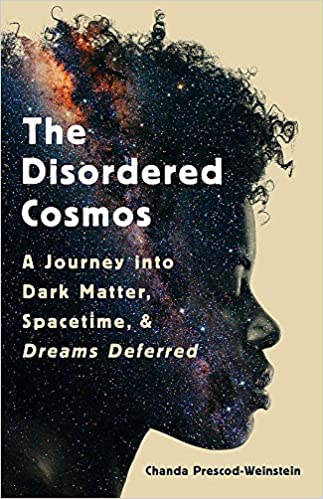
It is hard to talk about sex and literature without making some sort of Fifty Shades of Grey reference. But where Fifty Shades shows a caricature of S&M, the new anthology Kink is a celebration of the range of human desires. From the power of control and the titillation of voyeurism, this collection is a toe in the water that is sexuality. 

With Kink, editors R.O. Kwon and Garth Greenwell sought to gather a diverse collection of stories which speak to the complexity of kink and human interactions. With stories from Brandon Taylor, Carmen Maria Machado, Alexander Chee, and more, this collection shines in its moments of small intimacy, especially in a time when touch and connection are so hard to find. 


Parrish Turner: What does it mean to center kink when having conversations about sex, especially in literature?

R.O. Kwon: I have trouble answering that question in part because I have been just shying away from definitions of kink. I think especially with an anthology it does feel important for the definition to be as open as possible to however people want to define it. 

Garth Greenwell: It’s definitely true that from our first conversations, Reese and I were both really clear that the last thing we wanted to do was start drawing lines and saying “this is kinky and this isn’t.” We made it really clear that we were interested in work that writers felt was centered on kink, whatever that meant to them. 

I too really shy away from trying to define what “kink” is. Whatever definitions I find myself reaching for are objectionable for different reasons. Like, if I say “non-normative sexual practices,” then that falls into the trap of a paradigm I don’t really believe in. I do think that something that is true about kinky practices is an understanding that sex is something that is staged and can be negotiated and potentially theatrical or have elements of ritual. Just that sex is something that doesn’t just happen. It is something that we are agents in staging and negotiating. 

ROK: One result of centering kink maybe can help demonstrate something that I very much believe, which is that there is no such thing as normative sex and that the norms are bogus and largely harmful. 

GG: And community that forms around certain sexual practices and that that was something that was interesting to us. Seeing those communities on the page was exciting to us. 

PT: Part of what interests me about centering kink in sex is that I see this as part of a  shift in the way that we talk about sex in literature. What we define as pornography or erotica is kind of shifting. How did that impact how you approached an anthology of sex stories? 

ROK: I feel as though Garth will have a closer viewpoint on this. I do feel as though there has been and continues to be more pushing back against the idea that there are any genres at all and the idea that genres have to be separate. It feels as though Garth’s writing is very much a part of this as Garth has been such a stalwart and eloquent defender and champion of the place sex has in literature. And it’s wild that anyone thinks it doesn’t have a place. 

Centering kink can help demonstrate that there is no such thing as normative sex. 

GG: One of the things I find myself pushing back a lot is against easy notions of pornographic as a term of derision. That supposed dichotomy. That there is something about serious literature that prevents putting sexual bodies graphically on the page is something that I think is dumb and I utterly reject. 

PT: Tied to that is the impact that having so many queer perspectives in the anthology. Part of what you are referencing is what is “okay” to portray and as a wider variety of queer lives are being portrayed in “mainstream” literature. I often felt as a teenager that anything I did was kinky just because I wasn’t straight. 

GG: We’ve been fielding a lot of questions about an overlap of kinkiness and queerness, which clearly there is no easy identity between the two, but I think it is true historically that queer communities have been amenable to kink practices and kink communities have been amenable to queer people. One thing I hope the anthology does is multiply our sense of what both of those terms mean. If someone has an easy idea of kink as just bringing whips or handcuffs into the bedroom, which is certainly part of kink, but the anthology makes clear that’s not the only way to think about what kink is. And I hope the anthology also makes clear that there is not just one paradigm for what queerness looks like either. 

ROK: The anthology is predominantly queer. Which I love. I think it’s so queer that at some point Garth and I were looking at our list like “Wait, do we even have a single straight person?” We ended up with one or two, but barely any. It was really important to us that the anthology be as inclusive as possible. It happened so organically too, it just happened.

PT: That makes sense when trying to get a variety of perspectives on kink and sex, of course queer people are going to be involved with that. I am also curious about the range of ethnic identities represented in this collection. That diversity should be standard practice, but I am wondering the impact that had on the specific stories in the collection, especially given the intersection of race and sexuality. I am thinking along the lines of stereotypes about various groups and their sex lives. 

ROK: A general rule for myself is that, when I’m spearheading a project or event, I try to never have more white people than people of color involved in a project or event. 

Instead of generalizing, I will speak for myself. I didn’t read any Korean writers until after college and I didn’t get serious about it until after graduate school. A large part of it was that I didn’t know there were any of us out there. And when I was getting out of college, there were far fewer of us than there are now. There is always that consciousness that, in putting out a story with S&M with a Korean central character in it, I haven’t read much of that so there is always that doubled consciousness. That said, I know when I’m writing, I try to never think about stuff like that. I try to never wonder about the weight that that puts on the story that I’m trying to make. For me, I’m conscious of it, but I try to not let it bother me. 

Great writers of sex have always recognized that bodies are situated in history.

GG: That’s so smart. Part of my proselytizing about what good sex can do in literature, I think it’s a really powerful way to talk about history and cultural situated-ness. Great writers of sex have always recognized that bodies are situated in history and much of the meaning of our bodies and therefore ourselves is not made by us but assigned to us. One of the things that kinky sexual practices can do, and several of the stories in the anthology show them doing, is try and take some of that assigned meaning, by making it theatrical, making it something that one has some control over. To sort of make that assigned meaning visible and therefore negotiable and a source of an assertion of agency. I also think that you see if you read Toni Morrison, who is a great writer of sex, James Baldwin, Raven Leilani… A characteristic of great writing about sex is an awareness of  the fact that sex is historical and the meanings our bodies make is always historically and culturally situated. That is part of the pressure put on the scene just by the scene being fully written. 

PT: So your book is coming out during Covid. Have you see the way that Covid has changed the way that we talk about sex and how this book might be talked about differently when it comes out? 

ROK: Yes, the book comes out February 9, five days before the most wretched Valentine’s Day in the history of Valentine’s Days. I saw someone said on Twitter that the great thing about this book is that, because there are so many kinds of desire portrayed, a really fun thing to do is to underline passages with interests of your own and you could hand it off to somebody you might be getting involved with. This is glorious.

GG: That is a great idea. I am really shocked at how much the affective emotional power of literature has shifted for me. I was on a book tour for Cleaness when everything shut down. Cleaness became a radically different book after Covid for me. The idea of touch, the idea of intimacy. That is true of this anthology too. It is such a difficult time. This is true for a lot of queer people, [but] so much of my erotic life relied on the free circulation of bodies. That part of my erotic life has just shut down because it’s hugely unsafe. It’s not as though anything on the page changed, but the meaning of the book changed for me. 

PT: I listen to Dan Savage’s podcast and early in the pandemic, he talked about the rise of financial doms post the 2008 financial crisis. He speculated on how the pandemic would affect fetishes. Like how will our fetishes change to respond to our tramas?

GG: Will there be coughing fetishes? There probably already are. Anything you can imagine, someone is probably turned on by it. It both horrifies me and gives me hope about humanity. 

ROK: Years and years ago, I read this column by Dan Savage and someone wrote in to tell him about their specific scuba diving fetish and they just wanted to have sex in scuba diving gear. They were so ashamed and didn’t know how to bring this up. And there were so many lovely replies of people being like I would be so down, it sounds so nice and chill. 

GG: It sounds great. Nobody gets hurt! 

ROK: It warmed my heart; I almost cried. All these people saying “You’re fine.” I wish we lived in a world where people could experience more of that openness and far less of the shame and the punishment and sorrow and loneliness. 

There are so many things that people are ashamed of that do no harm. I love the idea of a world that is more accommodating to those things.

GG: Queer writers have been aware of the ways promiscuity and kinky practices are a practice in humanness. T Fleischmann talks about this kind of promiscuity as a kind of practice of sociality. I feel very grateful for promiscuity for that. There have been so many tender moments. There have been so many moments where a stranger has said to me “I’m into this weird thing.” And there is this kind of vulnerability and fearfulness in that, but it calls such a tenderness from me. I feel very grateful for moments when it has been possible to say yes to these things. There are so many things that people are ashamed of that do no harm. I love the idea of a world that is more accommodating to those things. 

PT: Anthologies function as part of a conversation in and of themselves. What are your hopes for how this book fits into the narrative in ten years?

ROK: I can speak to one of my hopes. I personally am exhausted beyond belief by the ways that kink and S&M are portrayed in movies and TV shows. There are so many serial killers! The percentage of kinky people who are serial killers is just wild to me. There aren’t that many serial killers and there are so many kinky people. That kind of stereotype is incredibly harmful. I just think of the 11-year-old who thinks “the only thing I know about people that want the things my body seems to want is that they are serial killers.” I would love for that caricature to be gone. 

This is only one book and we wanted the book to be as inclusive as possible, but there is so much that isn’t in here. I would love if in ten years there is nothing remarkable about this book being centered on kink. 

PT: I feel like if people were given spaces to be honest about what they want, they would be way less likely to be a serial killer. Tina Horne has a podcast and she talks about how you can work through your shit through kink in this safe environment and if you need it to stop it can stop. And you can push yourself and you are better prepared for the real world. The therapeutic nature of being on good terms with your desire. 

ROK: Oh, being on good terms with our desires. I wanna get there. 

Everyone Else Is in Love and I’m Just Listening to Taylor Swift

When I think of Taylor Swift as a foundational part of me—and like so many others, I do—I think of the blanket on my bed in seventh grade, which was a bright gingham pattern in purple and lime green. My bus driver liked playing the pop station while we zigzagged through the woods, and after I’d heard that day’s iteration of “You Belong With Me” (or “Replay,” or “Use Somebody,” or “Your Love Is My Drug”), she’d drop me off and I’d walk home and sit on my bed and do homework, and play more Taylor Swift.

Spanish homework was my favorite, because it was exciting to know I was getting better at another language every day. Math was a close second, because I was still in those fun pre-algebra stages where they just ask you to do the same thing over and over again.

I know the point of this story isn’t my homework. But my homework feels crucial to the story—felt crucial to the story, even then. Because it was all part of the scene. Two years shy of high school, I wanted to be that typical teenage girl, as I’d constructed her from movies and music videos: dreamy, in her room but lost in her own world, lying on her bed with her feet kicked up behind her like in the movies, listening to music and doing her homework. Sometimes I’d get up and grab my hairbrush and sing along to really feel like I was completing the image—as if anyone else could see me here, and as if the image of me doing this might prove something to them.

A lot of what I thought it meant and would mean to be a teenager came from Taylor Swift songs. In “Fifteen,” she sings from the perspective of a high school freshman: taking a deep breath, walking through the doors of the big high school, sitting down in class next to her future best friend. Sharing secrets and heartbreaks, staying up late, dancing around her room. And falling in love for the first time.

I wanted to want something, and a romance with a boy, for a while there, felt like the most obvious and easy thing to want.

I cared about these songs deeply, and I therefore expected that in time, my real life would echo them. I exuded no real romantic energy into the world, yet at sleepovers I’d guess which boys might have crushes on me. I was afraid of the idea of actually kissing anybody—more than afraid, at times I felt actively resentful of it—but I sang about kissing in the rain, because I liked doing literally everything else in the rain, so it only made sense. I figured soon it would happen for me, like a kiss in the rain was the sort of thing that just arrived at one’s door. I wanted to want something, and a romance with a boy, for a while there, felt like the most obvious and easy thing to want.


It’s eerie to think of the ways in which music worms itself into our own personal expectations. As a child I tried mustering up a crush on a neighbor because I thought girl-next-door love sounded sweet—“Mary’s Song (Oh My My My)” is a classic example of this, the story about two small-town lovers growing up together that always used to make me cry. I saw it also in the “You Belong With Me” video with the neighbors holding up signs in their windows for each other to read, and in the opening scene that “I’m Only Me When I’m With You” effortlessly sets: “Friday night beneath the stars / In a field behind your yard / You and I are painting pictures in the sky.” To be in love, in these songs, was to have a best friend—one single presence you could count on.

But I’ve caught myself framing my expectations around song lyrics since then, too, with other archetypes—searching for the kind of love that looks like “dancing around the kitchen in the refrigerator light,” or the kind of love that never goes out of style, or the kind of knee-jerk affection at the beginning of “Paper Rings” (“Went home and tried to stalk you on the internet / Now I’ve read all of the books beside your bed”). Cold-wine love, cardigan love, haunted love.

The love is the common strand here, but it’s also where things usually stop for me, real-life-wise. I am all about starry nights out in fields, and long, hilly autumn drives. But give me these things and I’ll feel full and happy already; eight or nine times out of ten, add a person who wants to kiss me and all I’ll want to do is roll my eyes. Ask any of the few lovely people who have sincerely tried to begin something with me, and been met in return with awkward silences, feigned misunderstandings, and a resistance that neither of us quite understand.

The idea of being in love, the way it’s presented to us, is the idea of being relaxed, of being understood.

It could be the idea of love I’m attached to—because the idea of being in love, the way it’s presented to us, is the idea of being relaxed, of being understood, of being happy and newly interested in the world around you. Pop culture teaches us, consciously or inadvertently, that finding a partner is the best, easiest, or even the only route to these feelings. But I have been all of these things, sometimes even all at once, and I have never been in a romantic relationship.

One of the first times a friend told me they were asexual, they said, “I don’t know if I will be a year from now or two years from now, but right now I am.” Something about this made some essential part of me relax. I hadn’t thought of labels as things that could change with time, but in retrospect it felt obvious.

This is what I want, I knew then. This is what the point is: not defining oneself, but taking power over the ways one is defined.

I steer away from calling myself asexual or aromantic, because I’ve had sexual and romantic encounters before and enjoyed them. But it’s also not overall a very consuming part of my life or something I usually feel proactive about. I also hesitate to label myself as anything at all, in any context (particularly in a place as permanent-feeling as the internet). It feels odd, now, to be writing these things and simultaneously not quite wanting people to know them, which may be why I usually stick to forms of writing that are not personal narrative. I don’t want anyone to know what I consider myself (but I still want everyone to know what I consider).

This—this constant refocusing, this power over definitions and definition—is one of the things Taylor Swift does so well. She defines herself more deftly than anyone else can—and in doing so, she makes it not mean anything. She’s innocent but also mature, wronged as well as culpable. In “Blank Space,” she took the persona the press had given her at the time—“crazy but seductive but glamorous but nuts but manipulative”—and embodied it so thoroughly that no self-serious person could really feel smart applying it to her again.

She wants us to see many sides to her and therefore not quite believe any of them: how she can be forgiving but also vengeful, self-conscious but also unrepentant. All people are homes for these sorts of contradictions. Her hits when I was in high school were love songs, but I also used to love the cold blame inherent to songs like “White Horse,” and the barely-contained, trembling anger that arrives late and victorious in “Dear John,” every word of it marvelously felt: “Don’t look now / I’m shining like fireworks over your sad, empty town.” Even in “Ours,” a sweet, simple song, the line, “Life makes love look hard,” used to lift a feeling of contempt in me: How dare life make love look hard? What kind of a vicious lie is that?

I’m used to loving her music in all sorts of ways that don’t make immediate sense. In high school, she was the only current pop artist I listened to (my other obsessions were Bob Dylan, The Beatles, and, somehow, Beck). Sometimes when I was feeling rageful, I’d turn up the volume knob all the way and rock out with my door closed, reassured by the idea that my parents likely wouldn’t think I was rebellious or at all troubled because it was Taylor Swift I was listening to.

If this is true, love might not be an answerable thing—which would make it okay that I have never had an answer for it.

One explanation for liking these songs and stories could be escapism—but to bring in the word escape sounds like it implies a lie, and the route down which music leads you is anything but a lie. What I feel like it offers me personally is less a way out of something I want to avoid, and more a way of directly accessing something better. What I initially thought I was accessing was some experience I lacked: flirting with a cute boy through a window (or being attracted to a cute boy, period), getting swept off my feet at a dance, spending the same four years at one high school. The breakups that first tore me in half were not with people but with cities; my first love affairs were platonic. It would take me years to understand that what I loved in Swift’s music was less to do with the central relationships I felt so pressured to emulate, and more to do with the music’s changing narratives and textured trajectories of understanding—from track to track, from album to album. The way retrospective love operates in “Tim McGraw” is different from the way it operates in “The Way I Loved You”; the way love works in “Mine” is different from how it works in “Lover.”

If this is true—if love has many sides to it, none of them the most real or the most actualized—there might be no moment at which we understand love most fully. If this is true, love might not be an answerable thing—which would make it okay that I have never had an answer for it.


To grow up loving Taylor Swift is to grow up having Taylor Swift define, at least in some way, what love means for you. In the beginning, that was the fierce attachment that comes with knowing someone who understands your childhood, at that crucial point in life when so far your childhood is all you have to share. This attachment is glaringly bright in “Mary’s Song (Oh My My My)”—“Take me back to the creek beds we turned up / Two A.M., riding in your truck and all I need is you next to me”—and in “Our Song,” with the “slamming screen door / Sneakin’ out late, tapping on your window.”

These trappings have evolved with subsequent releases, as Swift’s own life has evolved—country roads replaced by the High Line and Sixteenth Avenue, fairy-tale daydreams solidified into literal mansions. And her representations of love have shifted, too—through the vengeful Reputation and the lighthearted but mature Lover, most recently into Folklore and Evermore, which use made-up stories and half-forgotten personal legends to craft mellow, tormented snapshots of characters caught up in the dreams of each other. Folklore insists so firmly on its own fictionality, even in its title, and yet how could its lyrics—“Your integrity makes me seem small / You paint dreamscapes on the wall / I talk shit with my friends / It’s like I’m wasting your honor”—be anything but some form of truth?

To grow up loving Taylor Swift is to grow up having Taylor Swift define, at least in some way, what love means for you.

What all these records share is Swift’s insistence upon carving out her own definitions of love, and her struggle to maintain the power of defining what love means for her (as well as what life means for her, and her own ambitions and surroundings) in spite of an outside world that thinks it knows better. This, she proves, is the thing to insist upon: not to love love in a singular way but to reconsider it, all the time, in each stage of one’s life—and in reconsidering it, love it and experience it anew.


I know I mentioned the math homework, the bus rides and the gingham blanket. But my first experience with Taylor Swift—maybe the first time I ever heard her music—came earlier. I was at a friend’s birthday party in fifth grade, in her basement, and someone gave her Taylor Swift’s self-titled debut, at that time her only album out, as a present. The birthday friend knew what it was by the CD shape before she even unwrapped it. “Is this—?” Immediately she put it in the CD player and—urged on by the friend who’d given it to “put on our song!”—skipped ahead to what I learned was actually titled “Our Song.” The two of them had made up a dance to the chorus, and we all watched as they performed it, thrilled to share this with the rest of us.

It feels like a betrayal of them in a way, writing about it. It’s hard to write about other people without feeling like I’m betraying them, especially if the experiences I share with them are ones I cherish. There must be a part of me that feels like cherished things should be the most secret of all. But “to betray” can also mean to tell a secret, or to accidentally let one’s true self show. And that means we betrayed ourselves to each other first of all, and in truer ways; what I’m putting here is only an echo, a reproduction designed to be both true and understandable, when the real self-revelation only needed to be true.

I say all this, but really there’s not much way around this messiness; it’s hard to get away from betrayal in writing, in part because writing, after all, is spending time with the things you cherish and telling the secrets of them. I write about love and I risk betraying love; I write about the tree outside my window and I risk betraying the tree outside my window. I take this very seriously. I write about anything important and I risk getting it wrong, losing its trust. This applies to myself, too: Maybe all writing is a necessary self-betrayal. And since I think of writing as love and love as writing, maybe all love is a necessary self-betrayal, too. Can a betrayal also be true to something? I’m not sure, but sometimes I think betrayal is the truest thing, and not even in a bad way. Betraying our past selves, our past lives, is the whole essence of growing up and of the changes we move through all the time.

Betraying our past selves, our past lives, is the whole essence of growing up.

What I do know is that Taylor Swift knows how to write about the absolute closest things to her heart without letting go of them—she betrays everything, but gives up nothing. This, more than the images of stolen kisses and little black dresses, more than feeling like I have one specific role to fulfill, is the relationship I want to have with love.

A little time has passed and I’m not trying to fill a typical teenage scene anymore; I might be trying to fill a “typical young adult” scene if I could firmly decide on what that looked like, but it’s probably a blessing that I can’t. I am still attempting to dream, recreationally but also professionally, and I still have not been in a long-term relationship.

There is a self somewhere, deep within me, that is unafraid of anything. I believe that because I know how big the world is, even if I can’t internalize the meaning of it, and because if I can believe in aliens and ghosts and whatnot (hell yeah), I can believe that about myself. There is a self in me that is exasperated at every single thing it comes across—but there is simultaneously a self in me that wants love, in an exciting, “Fearless” way, in a wrenching “All Too Well” way, in a developed “Lover” way that speaks of friendship and companionability. But my heart only talks to this self from time to time, and there are other selves in me too. Part of me recognizes it as odd that I’ve found my way to embracing the coexistence of all my possible relationships to love—whether I’m ace or aromantic, gay, bisexual, or something I have yet to consider (or all of the above!)—through the music of someone who has so consistently written about the experience of definitely being straight. But there you have it—there’s more to it than that.

I have always been skeptical of defining myself, partly because I don’t find it the most interesting, but also because the idea of defining feels linked to the definitive, the finite. Finishing. I do not think of love as something that finishes. Love, as an experience, does not end with riding off into the sunset, or a marriage proposal—nor does it quite begin with a step through the doors, or a Wednesday in a cafe. It is a fluid thing, constantly finding new formations and expressions and moving between people, constantly being rediscovered. Our selves are the same way.

I do not think of love as something that finishes.

This state of change, this questioning that is an always-shifting mix between hope and doubt, isn’t happenstance. It isn’t something that occurs in the background, along the journey, cropping up as a link between the real times when we understand ourselves. It is the entire point, the state in which we understand ourselves best.

In the title track of Evermore, the resolution Swift reaches is a turning-away from the idea of forever: “This pain wouldn’t be for evermore.” It’s parallel to a move she made in Folklore, titling a song “peace” and then making its central question a negation of the idea: “Would it be enough if I could never give you peace?” Her two quarantine albums resist conclusion in newly explicit ways. Things that die don’t stay dead; speakers upend other characters’ happy endings by adding their own sides to the story. They eye the roads not taken, they cast off closure, and they force confrontation with a lack of clear answers. The next time I find myself loving someone, I will too.

“100 Boyfriends” Is Scripture for Gay Dysfunction

Transgressive, hilarious, and lewd in all the best ways, 100 Boyfriends by Brontez Purnell is scripture for the dysfunctional homo—a testament to queer men’s oftentimes losing battle to self-sabotage. From soliciting sex on lunch breaks, to sleeping with satanists, co-worker’s husbands, and white boys with dreadlocks, and concluding with a debaucherous tour of Europe, Purnell’s characters are a manic melee, each flirting with disaster, each resplendent in their own magnificence.

This short story collection is glorious in its messiness, splattering desire, loneliness, and desperation onto a canvas of vulnerability. Dispatched from the queer nadirs, it is, above all else, an irreverent gift.

There are triple-threats and then there’s Brontez Purnell, a writer, musician, dancer, filmmaker, and performance artist with accolades to boot: he is the recipient of a 2018 Whiting Writers’ Award for Fiction and was named one of 32 Black male writers of our time by The New York Times Magazine. Sorry for sounding like a cheesy infomercial, but that’s not all: he’s also the author of a graphic novel, a novella, a children’s book, the novel Since I Laid My Burden Down, and now, the short story collection 100 Boyfriends.

Two weeks before its official release, I caught up with the Oakland-based polymath to talk about the collection whose residue I’m reluctant to rub off. 


Greg Mania: I mean, is there anything more evergreen than gay dysfunction?

Brontez Purnell: CHILLLLLLLLLLLE, the MANY-headed hydra of gay dysfunction. If it wasn’t for dysfunction I wouldn’t have any functioning at all. 

GM: SAME. I think dysfunction just has bad PR, you know? What are some advantages to yours?

BP: Mostly weariness. And, to be quite honest, weariness is a great defense mechanism in side-stepping a bunch of bullshit. My lack of weariness has certainly fueled a lot of economies of me joining cults and jumping off (metaphorical) bridges. But now I’m older and my goddamn back is tired. So basically, it’s weariness for the win.

GM: Same goes with self-sabotage, something I personally have a lot of experience with. A lot of my queer friends do, too. Do you think that, as queer men, we harbor more of a propensity to react that way than non-queer folk?

BP: Not at fuckin’ all. There are cis women who are, like, the most reckless cum dumps I know, and I applaud them for it. At the end of the day—as with most things—I think we should just all hold hands and blame the patriarchy. Basically, perfectionism and professionalism are patriarchal concepts and it’s from these flawed viewpoints that too many navigate romantic relationships. I look back on mistakes I’ve made and they seem less like “self-sabotage” and more like unavoidable structural landmines that, even with the best of intentions, are detonatable. Even under the best of circumstances most people are wildly incompatible. When choosing to love another person, the only thing we can really hope for is that both people are really, really, really hoping for the best.

GM: I’ve never thought of it that way—just goes to show how nefarious patriarchy is. What do you think about non-toxic romantic relationships in this regard?

BP: Even in the most “non-toxic” of relationships—the ones where two people are not actively trying to fuck each other up—it’s still WORK: it is a constant and active thing to make sure you and another person are on the same page about hopes, goals, timelines, and also if things should not go well, the most reasonable and dignified way in which to drift apart. Essentially, I feel like relationships are always living documents.

GM: I’m obsessed with this collection. There’s kind of a punk attitude, almost like it’s rebelling against traditional short form. Does this come from your other life as a musician? How often do your other roles—filmmaker, performance artist, dancer—influence your fiction?

At the end of the day—as with most things—I think we should just all hold hands and blame the patriarchy.

BP: I mean, I’m always trying to find a flow or a pattern or a melody that strikes me, even in my writing. As much as I do it, the process of creation is still a mystery where I’m always crossing out and re-drawing lines in the sand. Even the anti-formulaic can become a formula if you’re not careful. I’m way more interested in things that work for all the wrong reasons or completely fall to hell for all the right reasons.

GM: The title comes from a line of dialogue in the story “Mountain Boys.” What about that line encapsulates the collection the best?

BP: The book isn’t really about 100 dudes—maybe in a tongue-in-cheek anti-rom-com way, sure—but ultimately it’s more about the residues left. The whole collection of stories are actually called “The Boyfriends” cause they all sit in relationship to each other. The accumulation of men sometimes feels less like individuals and more like this one big body or entity that you have to start dealing with.

GM: So this collection is less about the boyfriends and more about how to examine yourself in relation to them. Was writing this collection a way for you to metabolize past relationships?

BP: Not really. This is where I have to go into the part about how this book is not really a memoir—or really that it’s not its highest aim—it’s a composite and more of kind of a survey of all the ways communication can break down in navigating the really tumultuous terrain of emotional attachments people have—both for better and for worse. It’s a brave thing to love.   

GM: The line, “‘Where god closes a door, he opens a window,’ but in this particular case the window was on the fifth floor and the house was on fire,” appears in two different stories. Why did you decide to include it twice? Why is it significant to you?

BP: I like callbacks a lot—it’s akin to early battle rap and also some punk songs where lines from other songs are repeated and the writer is making an allusion to themselves. Or whatever it’s called.

GM: Geographic location plays a strong role throughout the collection. How does place inform what you’re writing about?

Anytime you’ve been in a place a long time and see it gentrifying, if you’re any form of lower-class person, there’s always this stopwatch in your head that’s like, ‘When will I be next?’

BP: Overpopulated cities or sparse farm towns just really have a solid and informed sense of place, right? I think the landscape around us informs a lot of feelings—in one sense though, most of the action in the book need not be located anywhere geographically specific, as most the interchange happens between two people in very secular spaces: mainly bedrooms. But I do have this kind of sense that when location is involved in a collection it feels like flying in an airplane at night and going over cities that look like one big light grid. You look at it and think, how many people are down there fucking in their bedrooms, like RIGHT NOW. It gives you a more 3D vision of time and space in this abstract way. I have definitely been accused of being an elitist coastal gay, but whenever I write stories about the South I remember that, the South is in fact a coast, too, so then I feel like an elitist coastal gay 2.0. Basically, it’s good to be king.

GM: There are some nods to gentrification, though, that I feel play a significant role in this context. Like, it just feels like there are less places to make bad decisions because of it; gone is the gay bar of yore where there’s a tub of Crisco at the door and no one asks any questions. What was your intention with including it in this collection?

BP: I don’t think it was like a super “intentional” choice—like what ISN’T gentrified these days? I just think when writing about general landscape or painting life in any urban setting, it almost feels like not describing it feels negligent, or like the writer who wouldn’t even think to describe it is probably the type of dude I’m taking the piss out of in the book. I think anytime you’ve been in a place a long time and you see it gentrifying or clearing out an older era of itself, if you’re like any form of lower-class person or artist, there’s always this stopwatch in your head that’s like, “When will I be next”? It’s almost like the city can become a metaphor for another boyfriend.

GM: Has writing 100 Boyfriends changed you in any way? If so, how?

BP: Well, it’s always good to watch a child be born. I think making art at its most pragmatic is a way to mark time. Plus, it was like this kind of marked ending to all the questions I’ve ever really had about men and my relationality to them vis-à-vis myself. From this point on, I think I’m either gonna be the best boyfriend that’s ever-walked earth or totally and proudly single the rest of my life. We’ll see.

Don’t Let Anyone Know Mom Ran Away

An excerpt from American Delirium by Betina González

Her first night alone in the apartment on Edmond Street, she made sure to turn on the television and one of the lights. She fell asleep on the couch. Morning came, and her mother still wasn’t back.

The second night was the same.

So was the third.

For three days, she ate leftover chicken and slept on the couch, not wanting to upset the delicate balance of a life Emma Lynn might return to at any moment. She went to school, trying to act normal and not think. Whenever her doubts crept up on her in the middle of class or a conversation with her classmates, she’d cage them inside a battle cry, a sharp twist of her neck, a tug on her hair. Some of the kids probably saw her bite her arm or mutter a few words into the wind, but she was sure none of them suspected she’d become a left-behind.

The dropouts abandoned their children in public places, sometimes without warning; sometimes they planned it out. It was part of the call. It was happening less and less, but it still happened. They left the children in front of churches or schools. Or, more often, in front of city hall. They never considered leaving their children with relatives; that would undermine the gesture. Part of the idea was that they were rejecting the duty of parenthood and returning the children to their rightful guardians. Mothers and fathers were going on strike. They cursed the day they had agreed to participate in this crumbling society by bringing more people into it, and hoped that their withdrawal would overwhelm its institutions, speeding its collapse.

But that day never came. The government found ways to deal with the left-behinds. At first, they sent them to orphanages, but people started to complain that the regular orphans were being mixed in with the children of those maniacs. A special shelter was set up for them. Farms and factories, too, so the older ones could be used for manual labor. This may have taken a toll on the opposition; it showed them that the system had a thousand and one strategies for turning their protests into production. Their numbers dwindled and they kept to the margins. They began to celebrate social invisibility as a form of resistance, though they sometimes intervened in the urban landscape with art designed to wake the city from its “deadly capitalist dream.” Rumor had it that only the original group remained, ten or twelve people at most. It was easy for them to avoid the police, who were busy dealing with the everyday crimes of a city where unemployment was on the rise and one in every three homes stood empty.

Government statistics showed a decline in the number of left-behinds, but a few sensational cases still made it into the papers, mostly because the dropouts had lost their revolutionary sheen and everyone now saw them as a misguided sect led by a Finnish mystic and a graffiti artist who refused to give up the lies of the sixties. One especially famous case was a boy left in a little wooden boat with a sign that said: “History does not repeat itself.” The child—not a baby at all, but a chubby kid around seven years old—was ceremoniously adopted by the mayor’s family in an attempt to usher in a time of reconciliation between society and those who had gone on strike.

Mothers and fathers were going on strike.

At least her mother hadn’t done anything as dramatic as that, or left her in a public place like Jimmy B.’s father, who tied him to the statue of Förster. Berenice knew all too well what would happen if anyone figured out she was a left-behind. The image of Jimmy B. standing in a corner of the gym with paint all over his face, glue and colorful tempera paint running down his shirtless back, was enough to convince her that she needed a plan.

At noon on the fourth day, she managed to find one last hope that had survived her earlier fears: her mother must have gone to visit Dorotea, that friend she talked about all the time. Dorotea lived in Guatemala and was very, very rich. Berenice imagined her sitting on stacks of money in the shade of a palm tree. She and Emma Lynn had gone to school together a long time ago. It was hard to visit her, though, because she was always traveling. It was more likely that her mother had gone to visit the man with the carnation. Berenice could have called him “the man from the museum,” since that’s where she first saw him, but then he showed up at the auction not long after that and bought the Gloria artificialis, so she associated him more with the flower. He was tall and thin with white hair. He’d been calling the store nonstop ever since. And her mother had gotten at least two postcards beginning “Dear Celeste,” followed by one or two lines of “please” and “still holding on to hope.” Maybe she’d decided to go see him after all. But if she had, why wasn’t she back yet? No, she’d probably gone to visit one of her friends.

But when Berenice reached the top of the stairs, she remembered that all of her mother’s clothing—even her yellow dress—was still in the closet by the front door. As hard as it was to admit, deep down she knew Emma Lynn Brown would never have gone on vacation without her lucky dress, or abandon the plants in her shop. She wasn’t there, either; Berenice had checked on the first day. She’d gone over that first afternoon, certain that her mother was just working late on some experiment. But all she’d found was the dark order of the flowers.

The wrinkle creams were all still lined up on the bathroom shelf, too. Emma had spent nearly half of what she’d made off a commission from city hall on those little magic jars. She’d lined them up according to use: first, the under-eye serum, a must for every woman who didn’t want to hit forty looking like a used dishrag, and then the day cream, which worked best in the morning but left Emma’s face sticky and shiny for a while, like she’d rubbed it with lard. Last came the night cream, the strongest of the three, which women who were too old to have children needed to apply with special care because they’d gone to a place of no return, a zone some people called the golden years and others just old age, and which Emma called the land of the walking dead.

The first thing Berenice did when she got back to the apartment that Thursday was lower the blinds: she had to take inventory and didn’t want the neighbors to know. Especially not Mr. Müller, who could show up at any moment asking about her mother. She stood on a chair and started pulling the cans and jars from the cupboards and setting them on the kitchen counter. According to her calculations, she had enough food to last her several months. At least through the winter. She found some money under the mattress of the pullout couch where her mother slept, along with a gold ring she’d never seen before. Emma kept her jewelry in a heart-shaped box, and Berenice had always helped her pick what looked best with the dress she was wearing. She was sure her mother had never worn that ring, a thin gold band with a sad little diamond straining up from it. She sat there for a long time, turning it over between her fingers. This, she could live on for a while.

As quick as the thought, her hand closed in shame around the ring and made it disappear behind her back. Hysterical laughter bubbled up from deep in her belly and Berenice cackled, with closed fists and dry eyes, rolling from side to side on sheets that smelled of hair spray.

Another important part of the plan was to keep talking. No one would believe that an apartment like theirs, where the banging of pots and pans normally competed with shouting matches and running feet, would suddenly fall silent. Berenice stopped laughing; she wrapped the ring in a red handkerchief and put it back under the mattress. She stood there with her hands on her hips and her eyes on the place her body had just occupied, and began to scold herself in a deep, angry voice. She made sure to call herself a “degenerate” and a “little whore,” “degenerate” and “whore” being two words she’d needed to look up in the dictionary that afternoon Emma caught her playing her water game.

If it had been the summer, she could have gone outside right then to play it. No one was there to stop her. She could have let the hose tangle around her like a boa constrictor, and soaked herself from head to toe in the sweeping cascade that watered the little yard behind their apartment. She’d recently discovered how good the spray felt between her legs and had started aiming it there, holding it so close the water would hit her like a hard, sweet hand, and Berenice would fill that hollow with laughter and twistings that almost managed to propel her out of her body, out of her story, out of the world. Until Emma told her she wasn’t allowed.

Berenice believed in water. Her idea of heaven was a tumble of waves and foam. But instead of dreaming of a lake or a house by the sea, she dreamt of a flood that would transform the city into an aquatic labyrinth that people would have to navigate in canoes and steamboats. Or, better yet, a city where everyone lived on boats. A houseboat was definitely her ideal home. It didn’t even have to be big: the sumptuous movement of the waves would be enough to make it seem like a palace. The rain, bath time, and the water game were substitutes that held her over until that magnificent moment arrived, and whenever things didn’t turn out the way she wanted, she opted for one of those forms of happiness. But it was already fall—a cold one, at that; she didn’t feel like a bath, and Celeste had been missing for four days.

Her mother hated it when Berenice called her Celeste. She said no one was allowed to use that name. Not even the man with the carnation.

“Dear Celeste!” Berenice shouted in the empty apartment, “Dear Celeste!” as she ran toward the closet, where she buried her face in her mother’s dresses and coats. “Dear Celeste!” Gloves and shoes, balled-up socks and shawls went flying, even the old fur coat with its mothball smell. She even tossed a few silk scarves high in the air, where they writhed briefly, like melancholy streamers. “Celesssssste!” she yelled with the little bit of breath she had left, and raced across the room. She reached the safety of a nook behind the chest of drawers just moments before the imaginary hand closed around one of her braids.

The laughter returned with her triumphant escape. And in that dark corner, hugging her drool-damp knees, Berenice fell asleep.

She woke up almost immediately. A shaft of afternoon sunlight was coming in through the window. She’d only been asleep for a few minutes, but she had trouble returning to the present of her plan. If it had been up to her, she would have turned on the TV and forgotten about the whole thing. But there was no time to waste if she didn’t want to end up like Jimmy B. Anyway, there was nothing good on at that hour.

She left the apartment, careful not to be seen. She decided not to try the cemetery. She didn’t want to use up her limited resources in one day. The cemetery wasn’t as easy as the survival game, where you had to go a whole week without spending the five-dollar bill you had in your pocket. She had to overcome all sorts of tests and temptations (the bakery, the ice cream shop, the candy store) before the bill met its destiny in something new, not those old crutches of chocolate and sugar. The cemetery was like the water game: you had to save it for when things got really bad. And with the sun falling soft between the treetops as she walked along the avenue, wrapped up in her green coat, things didn’t seem so bad.

The only thing Berenice really needed was a relative who would show up at the apartment every so often and say they were taking care of her while her mother visited her dear friend Dorotea.
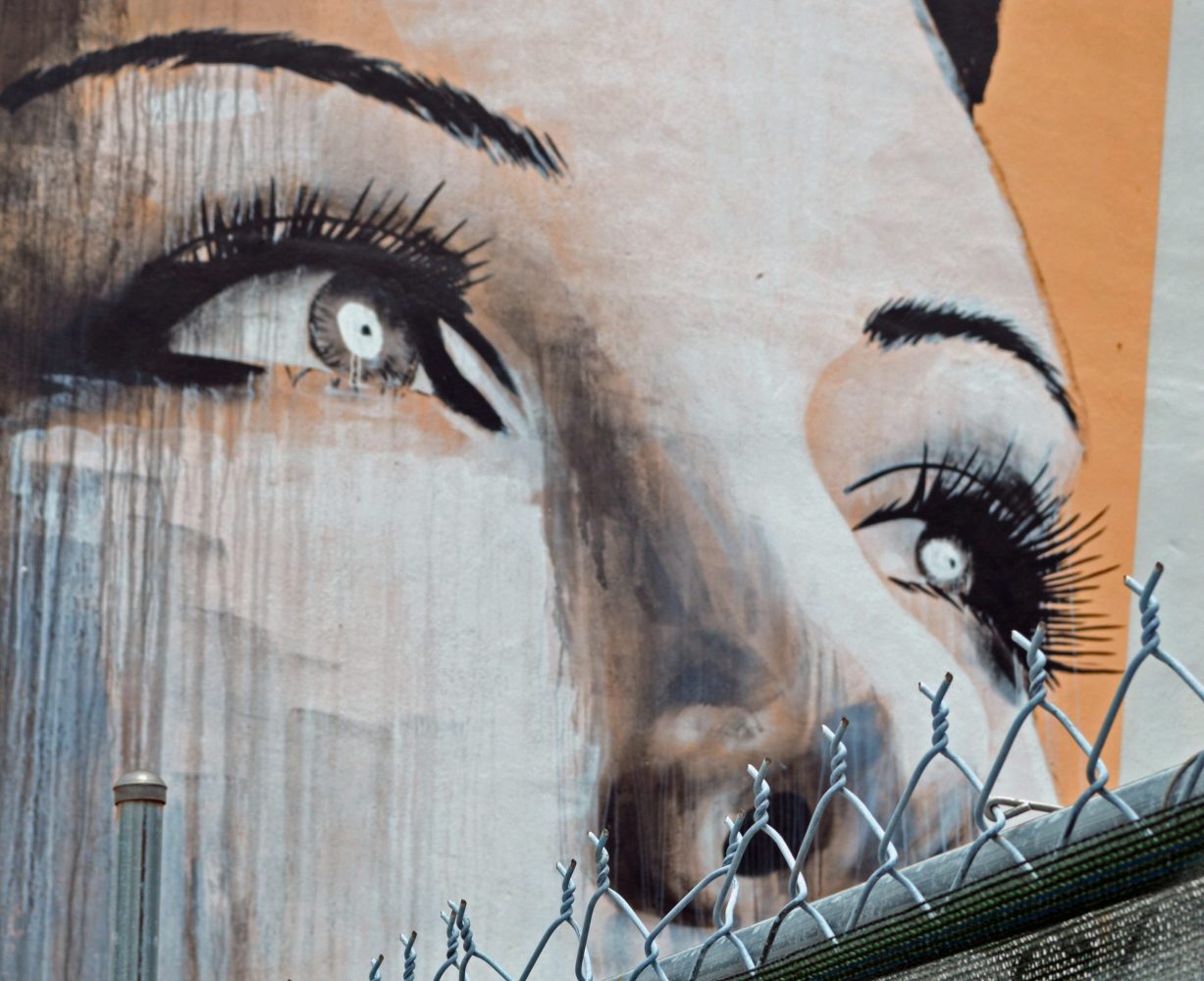
A relative was easier to find than a father.

Than a mother.

Than a five-dollar bill.

And the street was full of possibilities.

“Lupin” Is a Family Saga Dressed as a Heist Drama

I’ll admit it: I watched all of Netflix’s new series Lupin in less than 24 hours. (In my defense, there are a mere five episodes in the first chapter.) And I’m not alone—the show has surged into the top 10 in countries all over the world, and Netflix projects that over 70 million people will watch Lupin within 28 days of its release. It’s their most successful French program ever.

Critics are loving Lupin, too. They praise the show as “stylish” and “slick,” compare it aptly to the Ocean’s 11 series, and celebrate Omar Sy’s “charismatic” performance. But in limiting their scope to the show’s success within the ever-popular heist genre, they fail to note the real reason Lupin is such a triumph. While the show works as a delectably binge-able mystery, on a deeper level it is about intergenerational family trauma. It’s the story of a man who lost his father and in turn risks losing his son.

While the show works as a delectably binge-able mystery, on a deeper level it is about intergenerational family trauma.

The series is inspired by the fictional thief Arsène Lupin, hero of a series of 19th century novels by Maurice Leblanc (and later loads of spinoffs, from television series to anime). Lupin is an icon, the Sherlock Holmes of French culture.

Lupin follows Assane Diop (Omar Sy). When Assane was an adolescent, his father Babakar, a Senegalese immigrant chauffeur, was falsely accused of stealing a necklace once belonging to Marie Antoinette from his wealthy Parisian employers, the Pellegrinis. After a forced confession, Babakar (Fargass Assanded) hung himself in prison. Twenty-five years later, the show opens as Assane begins to enact vengeance, modeling himself on the “gentleman thief” Lupin and plotting to steal the Antoinette necklace from the Louvre on the night it goes up for auction. 

The story toggles between adult Assane’s capers and critical scenes from his past. The flashbacks follow an orphaned teenager who navigates his grief by compass of the last book his father gave him, a Leblanc novel he reads again and again, filling the margins with notes. The book is his last shard of a parent, and he uses it to raise himself into its hero.

Grown-up Assane is the living incarnation of his idol. He pulls off seamless deceptions with what Adrian Horton in The Guardian called “the illusion of dauntless competency under pressure.” Without breaking a sweat, he leaps between rooftops, befuddles detectives, and literally slips the prison noose. 

Yet there’s a crack in the veneer. By becoming a criminal, even the noble Robin Hood type, Diop risks being caught and imprisoned for real. If that happens, his son will suffer the same loss that wrecked Assane’s life. And — without dropping too big a spoiler — in the final scene of the fifth episode, that nightmare seems about to come true (though it’s a cliffhanger, so who knows). 

If disaster is inevitable, why do it? Why steal the necklace and take on this life of crime? Diop wants to avenge his father, sure. But he might have become a lawyer and pursued exoneration by legal means. He didn’t do that, because justice isn’t all he wants. He also, however unconsciously, wants to heal the unresolved wounds of his childhood. 

Justice isn’t all he wants. He also, however unconsciously, wants to heal the unresolved wounds of his childhood.

This is what people do. We replay family patterns in the hope that one of these times, we’ll break the cycle. The outcome will be different, the story rewritten with a happy ending. You marry a meth addict, just like your mom (yes, but this time you can save her!). You work for a man as self-absorbed as your dad (yes, but this time he’ll really see me!). You find a best friend as needy as your OCD sister (yes, but…). Or, to avenge the father you believe was not a thief, you become a thief. It’s not irony. It’s family.


When I was 18 months old, my father left. He didn’t become an alcoholic until years later, but by the time I could form a memory I’d preserved the smell of him, like something tenderly pressed between sheets of wax: Kessler’s whisky and Marlboros. 

When I visited him and his new family for a week each summer, my dad and I sat together under a cone of lamplight. He talked, his Louisville accent sweetening each story of loss. I come from nothin’, went his blue-collar refrain. He was a builder, and I studied his broad, callused hands with awe. Smoke spiraled up into the darkness. A melting ice cube knocked softly against the side of his glass, watering down a drink I couldn’t yet name.

The pattern took a minute to set in. In high school I dated nice guys from solid families, guys who grew into trustworthy men with respectable careers. I broke up with them. In college, I found the real kryptonite: exciting, dangerous, very handsome men. They were artists or musicians, intellectuals and dreamers, working class underdogs with a poetic brilliance no one else could see—and, more often than not, they were addicts. 

Unfailingly I found an alcoholic, a pothead, or some subtler form of the Man Who Cannot be Counted Upon. I loved them, craved them as voraciously as the father I’d never gotten.

I kept it up for a decade or two. Unfailingly I found an alcoholic, a pothead, or some subtler form of the Man Who Cannot be Counted Upon. I loved them, craved them as voraciously as the father I’d never gotten. Some I even allowed to leave me first.

After years in therapy and various support groups, I thought I’d broken the cycle. Finally, I had a partner who checked the right boxes: no notable addictions, great job, divorced-but-nice parents. He was a homeowner, gentle and kind, with the ability to discuss feelings. He had an inflatable kayak. My dreams had come true! Not just the fantasy of some ideal guy—the dream of outrunning a pattern that had kept me from things I dearly wanted, like a family. At last!

And yet. Around the same time I met Kevin, I became a wildland firefighter, the first and only woman on a hotshot crew with—wait for it—20 men. The job required me to spend six months a year on the road with these guys, who quickly became my buddies, my source of safety in a dangerous line of work and, in an emotional sense, family.

These dudes are diverse. Some of them are classic Good Guys with passels of children and sober lives in the ‘burbs. Some are Bay Area foodies or sensitive mountain bachelors teaching themselves to play the banjo. But a good number of them, per the stereotype, are hard-drinking rogues with a wad of chew perennially tucked in an upper lip. 

One of their reliable sources of amusement is to talk me into taking a Zyn (a white, tobacco-free nicotine pouch). I’m such a baby that a single one of these pressed to my gum goes straight to my head, giving me the spins like two shots on an empty stomach. The guys hoot as they watch me stumble out to the fireline muttering, Oh god, I’m drunk! Can I take this out yet?

“One of us,” they chanted after they’d talked me into Zyn for the first time. “One. Of. Us!” 

There was no greater high than feeling like I belonged with them. 

So have I broken the cycle? Yes, and no. Beyond working with versions of my dad, or becoming him (who has the callused hands now?), there are other problems common to drinkers’ children: low self-esteem, martyrdom, approval-seeking, emotional numbness… the list goes on. My effort to heal these things isn’t a one-shot deal; it’s a slow unfolding, a life’s work. I’m getting there.

My effort to heal these things isn’t a one-shot deal; it’s a slow unfolding, a life’s work.

My father’s father was a traveling salesman who left all his wives and children behind. My father, wounded irrevocably by that abandonment, proceeded to abandon many of his own children. But he did a little better, didn’t he? He provided for us financially, off and on. He stayed in the house with my half-siblings until they were teenagers, even if his version of “in the house” was shutting himself in his office to drink. Lucinda Williams’ voice poured from his stereo, the forlorn wail slipping under the door along with a whiff of smoke.

Trauma isn’t an exceptional human experience; it’s an all too common one. Reading about trauma, I’m humbled by the smallness of my issues. I’ve just got your run-of-the-mill absentee drunk dad, whereas others have outlived unthinkable pain. 

There’s the PTSD common among combat veterans and prisoners of war; the trauma of oppression that has affected generations of indigenous people; the trauma of slavery and continued discrimination that causes endless suffering for Black communities; deep trauma among the survivors of the Holocaust and the Rwandan genocide, and that’s to say nothing of the acts-of-fate trauma endured by survivors of natural disasters, who see their homes and loved ones destroyed by fire, flood, storm, or famine. There is birth trauma and the trauma of death—even expected, natural death from old age. Maybe trauma is just part of being human.


Interestingly, researchers posit at least two mechanisms by which trauma responses are passed down from one generation to the next. Our behavior changes in response to painful events — for example, mothers who’ve been through a genocide tend to teach their children not to trust anyone, or never to ask for help because it isn’t safe. 

Trauma is also handed down through epigenetics. In response to extreme stresses, our genes are altered. Certain genes are turned on or off, and these changed genes are passed on to subsequent generations. Researchers studying Civil War survivors learned that the children of Union prisoners of war who had endured especially harsh conditions died sooner than the children of non-POW’s. Psychologists from the Icahn School of Medicine at Mount Sinai in New York found “that Holocaust survivors and their children showed changes in the same location of the same gene—the FKBP5, a stress-related gene linked to PTSD and depression—while controls did not.”

Epigenetics is a relatively new field, so I imagine that in the coming years we’ll learn much more about the myriad ways we carry the genetic marks of our parents’ and their parents’ suffering.

Our longing for a positive resolution for the characters is rooted in a yearning to be free from our own pain.

It seems reasonable to assume that many or even most of us feel the effects of intergenerational family trauma, whether we’re aware of it or not. Watching Lupin, then, we see ourselves in Omar Sy’s beautiful, flawed Assane. Yes, an engrossing plot and the thrill of an underdog’s comeuppance are fun. But the feeling of recognition—the sense that this could be me or this is me or this is all of us—is why we really love the show. 

Our longing for a positive resolution for the characters is rooted in a yearning to be free from our own pain. We don’t just sink into that couch on winter nights hoping to numb out with a bowl of popcorn (although, sure, that too). We compulsively take in stories, hungrily bingeing on narrative, because it gives us reason to hope.

We’ll see where the series goes. I’m hopeful that Assane Diop will pull it off, change the ancestral narrative, and save his family. If so, the message of the show would align with my deepest beliefs about trauma: that in time, and by helping each other, we can all be healed.

The Gay Bar Is the Wardrobe Into Gay Narnia

Chances are you probably remember your first gay bar—especially if you’re someone who identifies as LGBTQ+. If not in detail, you at least probably remember its name or the city it’s in. You may have jumped at the chance to enter its space, or maybe you hesitated, not quite ready to cross the threshold just yet—curiosity ultimately ushering you inside. Either way, you recall the feeling that comes from entering a place created and claimed by those who came before you. 

Jeremy Atherton Lin can’t remember his first gay bar, and it is from this absence of memory that Gay Bar: Why We Went Out is born.

Mining the haze of memory to embark on a transatlantic investigation into the fraught history of the renowned and contentious establishment, Lin uses the bars he frequented as anchors to take a closer look into its past. The London-based writer and editor delivers a full sensory experience: from the discos of yore in Hollywood, to the gay mecca of San Francisco, and the off-the-wall neighborhood staples in London—the whiff of poppers faint from the turn of a page.

This collection also looks beyond Stonewall—the iconic Greenwich Village bar claimed as the ambassador for gay liberation—into the myriad ways this institution has served as the battleground in the impetus for communal space. It travels back even further, to London in the 1770s, mapping the cruising tunnels built beneath the city, and amalgamates this history with the fluid queer places of present day. At the center of it all lies one beguiling writer’s story.

To absolutely no one’s surprise, Lin answers my questions from across the pond with reverence and grace, a mind impossible not to swoon over.


Greg Mania: There’s a lot of history in this book, both researched and personal. What was the process of starting to organize all of it into a book like for you?

Jeremy Atherton Lin: Daunting. Unwieldy. A lot of pieces of paper on the wall. I knew the book’s structure would be based around bars I frequented or lived near. I am an essayist, not a historian, and my primary strategy, you could say, is memoir, so to essay in this case meant thinking about what these different places represented, or their impact, including their toxicity. But I was totally unprepared for the rich histories of each place that I stopped. And that’s ultimately how it’s organized—like a bar hop or cruising the street. So the reader encounters Sylvester because they once performed at the bar I sulk past having just been insulted by an elder gay man at the post office. It’s geographical. 

GM: This book made me remember my first gay bar—shout-out to Woody’s in Philly—in vivid detail. You, on the other hand, struggle to remember your first. How did that lead to writing this book?

JAL: There is this narrative you get a lot: I nervously passed the unmarked bar with the darkened windows, circled the block, couldn’t bring myself to enter, but the next night I did, and a handsome man took my hand and a drag queen smiled at me, and I was transformed into gay. Like the gay bar is the wardrobe into gay Narnia. Now the border of gay is much more open. So, what does it matter if gay bars are closing? As they were shutting down rampantly in London a few years back, there was this message in the media: our places are being demolished, and they made us who we are. And it became a question of: did they? How does that pertain to me?

The gay bar is the wardrobe into gay Narnia. Now the border of gay is much more open. So, what does it matter if gay bars are closing?

Like most people, probably, I have a conflicted relationship with group identity. Looking back on these bars was a way to situate those conflicted feelings. And the memories are going to be blurry. The book is an awakening — to how I didn’t realize the history of a place, what may have been hidden in plain sight.

The first club, I think, that I went to with any regularity, I thought was so basic. It turns out to have an incredible, also problematic, history through the disco era, and before that, it was an industrial site. By my time there in the ’90s, it had come to be generic, chichi, characterless—but that’s a part of the story, too: how did the ways that gay men and gay bars present themselves in the ’90s fend off the stigma of AIDS? All I saw was a slickness, which turned me off. Yet I wanted in, too. If that was gay, at least it provided something I could be. That struggle, on the one hand, it’s an obvious narrative, but perhaps one that isn’t actually out there so much in the stories we receive, Brokeback Mountain, Call Me By Your Name, Moonlight, where’s there’s no coming out, just staying in: sex in isolation, not a cultural and social process.

GM: Gay bars are closing, fast—especially now. A couple weeks ago the West Village staple Julius organized a GoFundMe to help it survive the economic fallout from the COVID-19 pandemic. Of course, they’re not the only ones; small businesses everywhere struggle to stay afloat. But the gay bar has been in danger even before. Do you think as spaces become more fluid and inclusive by doing things like hanging a rainbow flag out front to signify that it’s queer-friendly—like you observe in this book—the intention of a gay bar is diminished?

JAL: It can be tempting to lament the loss of furtiveness, the mess, the insiderness, all stuff that can result from horrible social oppression. And the rainbow flag, it used to be: that’s not my nation. But now I kind of want it back, now that it’s a banner for upbeat pre-teens. It’s undeniably sad to hear Julius is struggling. That’s the favorite gay bar of friends of mine in Manhattan. It’s one of those that came out over time rather than being marketed as the best gay thing ever. As these spaces disappear or change, I do think they reflect shifts in gay identity. It’s about being in those spaces together, but it’s also about their presence on the street. They’re like markers, representing. Like the title of your book, Born to Be Public. Homosexuality may occur in private, but gay is public-facing. Homosexuality may be a solo pursuit, but gay is a group activity. 

GM: You referenced the sociologist Erving Goffman once earlier in the book, but I couldn’t help but recall his theory of the presentation of self in a number of parts, perhaps most strongly when I read this line: “There was an agency in the retelling, in the self-deprecation and of course self-mythologizing. Memoir is how you groom yourself. Memoir is drag.” I mean, I screamed at this, because this is very much how I approached writing my own memoir. Tell me more about how you arrived at this conclusion.

JAL: I think as soon as you’re selecting details, you’re performing. And that’s a relief, because if you can’t show everything—the memoirist’s curse—at least you can put on a show. Isn’t it Wayne Koestenbaum who writes about how he intends to seduce the reader, or endear himself? And Foucault was basically like, I write to get laid. Also, I regularly think of this melancholic author who wanders alone, ruminating through bleak wintry landscapes, but then I heard a rumor he’s dropped off and picked up by his wife in a sensible sedan. I had to accept at some point that when I narrate it is not some essential me. I have to hone a craft, and that includes establishing the first person, even in “non-fiction.”

Homosexuality may occur in private, but gay is public-facing. Homosexuality may be a solo pursuit, but gay is a group activity.

That passage you quoted arrives in a period in San Francisco when I was living loosely, then writing it down in blogs and zines, and a couple of times a boy would know my name, and approach and say we should kiss, or that I should kiss my boyfriend for him to watch, so that the performance of writing spills into the experiences that are meant to inform the writing. The cruel irony is, my own form of memoir drag isn’t self-protective. I inhabit an uncertain, uncomfortable position, curious, possibly mistaken. Therefore I certainly feel no less vulnerable.

GM: I want to talk to you about your relationship to the word “community,” which you note, “consistently failed [you],” a “failure of vocabulary.” I’m assuming you’re familiar with the German sociologist Ferdinand Tönnies and his theory of gemeinschaft because you’re definitely smarter than me—I’m pulling this from the recesses of my mind that contain the shred of sociology I remember from my sophomore year of college—but I thought about him when you opted for cosmic jargon like the gay bar as a galaxy you miss orbiting. Gemeinschaft basically describes a community wherein the social ties are held together by emotion and sentiment, without using the word community. I can’t help but feel nostalgia come through as a dominant emotion. Does this and/or this theory resonate with you in any way? 

JAL: Greg! Ha, gemeinschaft and gesellschaft. Very that. Really I had to put the theory aside at a certain point and be present in these places. It’s very perceptive that you sensed the ghost of theory beneath the gay bar galaxy metaphor. I’d been thinking about Agamben’s The Coming Community, in which he talks about language and identity—how we say tree to designate a huge range of species. Is that a failure of language? Proof there can be no group identity? Or do we need the terms tree or gay?

Anyway, to your question: gay culture loves a bit of nostalgia. In London, the drag queens don’t lip synch, they sing. And they throw in sentimental old ballads. And we go for it. I guess it’s a form of suspension of disbelief. If you were to look at that scene from some hard Frankfurt School point of view, it would be a subservience to social oppression, what I describe in the book as the circus of “bread and circuse.” As these gays all gather to get drunk and indulge archaic myths of resilience. But can you reason away the visceral feeling of fellowship—or release, or joy—that comes when the drag queen hits the key change?

GM: One of my favorite things about this book is that you explain Stonewall as not just a singular event of gay bar liberation, but as part of a larger movement, a web connected by other places and events impacted by state-sanctioned violence against queer people. Why do you think Stonewall became the go-to historical reference in this context and not any of the other landmark events whose outcome yielded a similar sociopolitical impact? 

JAL: New York City PR skills! Stonewall was commemorable, and the New Yorkers could spot that. A story builds the movement. Plus, the name. Just a thought, but, Stonewall sounds fortified, and names are important. When she first rose to fame, my dad used to say, you know why people like Lady Gaga? Because they like saying gaga. My dad also calls squirrels rats with good PR. Ok, but Stonewall: of course, the timing was right in various ways — but these things don’t just exist in time, but in space, and it does also have to do with a form of word-of-mouth particular to Manhattan.

GM: Something I’ve been thinking a lot about—especially after releasing my own memoir, a large chunk of which contains New York City nightlife—is grief. I grieve what once was, and sometimes I wish I could go back, just for a night. Is grief for some of the places you write about a part of your emotional repertoire? If you’ve even thought of it in that way, that is.

JAL: Well, one thing that was really challenging with this book is that these are businesses. So I may grieve for an era or a scene, represented by or given shelter by these venues, but on another level they are enterprises that monetize and reframe the scene, which may have existed in some other form anyway. I bet an argument could be made that in Gay Bar, the sense of loss actually permeates most the passages set in bedrooms, in parks, on the road.

GM: I love that you write about the gay bar as home, especially when it’s the only gar bar as town. I think a lot of queer people—especially now in this age of isolation—not only miss it, but also depend on that kind of space as a matter of survival. What would you tell those queers who don’t have access to that space right now, who need it more than ever?

JAL: Oh, my god, I don’t know. Everybody’s so isolated from one another. Online, I dwell in an echo chamber centered on and controlled by me. It’s pretty terrifying. The home that a gay bar could provide was as dysfunctional as any, and that’s the point: you’d participate in or observe constant tiny relational quandaries. Online, we become less porous beings. We’re not breathing one another’s air. At the first lockdown, I was right away thinking about students returning home, possibly to less safe environments or unsupportive towns, and wanting to be available to them on video or however. But what could I possibly say to them? I can only listen, right? Everyone’s situation is unique, plus now quarantined.

I Had to Apply to MFA Programs in Order to Believe in a Future

For nine years, I’d worn the same watch every time I went outside. The heft of the metal rose-gold Fossil watch on my left wrist felt like a part of me, grounding me into something secure, as if I’d fly away without it. Sometime around March last year, I noticed the watch had stopped. I made a mental note to replace the battery at the next opportunity, at the mall I visited many times before. A few days later, San Francisco issued the shelter-in-place order to curb the spread of coronavirus. Malls closed. Fear of the virus settled. I never got to replace the battery, the watch frozen in time.

Arguably, I no longer needed a watch on my body with the new pandemic lifestyle I adjusted into. All activities moved to the front of the screen, a clock visible on the upper right hand corner. I rarely went outside, if ever, and was never in a hurry to come back home to anything. Around the same time, I quit my office job to make more time for my writing, and I lost the external structure that had helped plan my days. I lived watchless, timeless, groundless. As I feared, I was floating along in life, anchored to nothing, anticipating nothing. Almost a year of living like a jellyfish, I desperately sought out rock to anchor onto. So, as one does, I applied for an MFA.

I already know graduate school will not solve all my problems. But it does solve one crucial problem: it gives me something to look forward to.

The “graduate school will solve all my problems” thought process is not unique to my personal situation. By this point, it’s almost a trope. As someone who already has a Master’s degree, I already know graduate school will not solve all my problems. But it does solve one crucial problem in my current life: it gives me something to look forward to. In fact, it makes it possible to look forward at all. Applying to MFA programs means I somehow, inherently, must believe in a future.

Having something to look forward to is important to our sense of well-being, and as many others have noted before, the pandemic has canceled so many of our rituals and plans, leaving many of us with nothing to look forward to. I must have instinctively known this to be the case. I started taking on hobbies that take a long time to finish. The ones that stuck were the ones that required initial momentum followed by a lot of waiting and watching. I learned how to bake bread for the first time. I started planting seeds and tending to seedlings until they grew to adult plants. I finally used the slow cooker that was collecting dust in my cabinets. Kneading a lump of dough on the counter provided me with the sense of anticipation that I’d have a fragrant loaf of bread in a few hours, maybe the next day, at most. Seeds planted with the right care would sprout in a week or so. Though brief, I was buying myself moments of anticipation, constantly baking a new loaf every week, trying to feel those moments all the time. Other hobbies I picked up that only served to pass the time, such as embroidery or coding, did not stick as much as bread baking or gardening, likely because they provided less of a sense of anticipation.


Right out of college, I moved to Houston, where I got my first job. It was the first time I’d lived in a subtropical climate all year round. Before, I’d only lived in places with four distinct seasons: slogging summers, piercing winters, and brief, brilliant springs and autumns in between. I hadn’t thought of myself as particularly attached to seasons as a concept, but it was disorienting to lose them. Seasons in Southeast Texas existed, albeit subtle; locals differentiate time through minute differences in humidity, the lack of hurricanes for a few months, the few shades of green changing throughout the months. But not knowing how to feel these changes, I felt like time had stopped completely. I couldn’t sense the moving of time at all.

I recall one September coming home to find an ad in the mail from a pet supply store featuring puppies in sweaters frolicking in fallen, colorful leaves. I was taken aback by the reality that it was fall. I clutched the pamphlet to my chest and cried.

I’d learned the importance of measuring time with that experience. I planned out little trips throughout the year to commemorate the changing of seasons and experience the passing of time, especially now since I moved to Northern California with its temperate weather throughout the year. Every spring we drove to see wildflowers painting the hills in bright yellows and purples. Every fall we drove to the Sierras to see leaves turn yellow and orange. Every winter we camped in the desert to experience the piercing wind and cold, the barren landscape, the jackrabbits leaving footprints in the snow.

All these, too, stopped with the pandemic, much like the watch I never wore.


My seasonal road trip schedule meant that I spent some time somewhere other than my home at least four times a year, which involves planning, logistics, and anticipation. Depending on the size of the trip, I was constantly looking forward to something for a few weeks to months at a time—markers of the season, of times passing by. In the early pandemic, I was able to find markers of time to measure hours to days ahead, stretching it to a week at most. In order to keep up the anticipation, I needed to constantly work, constantly plan my next loaf, constantly worry. This was a short-term solution that was perhaps not a solution at all, at least not for a pandemic that would stretch into a second year

As I submit my applications in the winter, I am anticipating a future where the following fall exists.

Hence, the MFA applications. As I researched, I envisioned my future, thinking of where I could live, browsing photos and profiles of professors and alumni. I imagined myself trudging through snow, or living in a house with a yard, maybe another cat, definitely more plants. As I submit my applications in the winter, I am anticipating a future where the following fall exists. I’m believing that the next few years will exist, not one in which I’ll just mindlessly float, but will actively participate in. Even the Spanish Flu only lasted two years, I tell myself, as I try to stay optimistic about a future in the arts, about the U.S. The vaccine is coming, there’s a new president in office. But all those are still vague for someone cooped up in a one bedroom apartment like me. This MFA thing, this is concrete. This could be real. With these applications, I bought myself a few years of anticipation, and I’ve never felt better during this entire pandemic. It’s helped me fight the urge to succumb into hopelessness to feel like the next few months will matter. If those endless loaves of bread baked and eaten were what was needed for me to make this jump, so be it. It led me to this jump and leap of faith where I finally feel a little bit more secure. I might even buy a new watch.

Whisking Butter with the Best of Them

Butter

Do you remember play dough, cookies, clogged sinks,
water and corn starch; water and flour? My point is –
do you remember sinking in hands and teeth?
do you remember kneading, like dough, like biscuits
like rolling cookies?

Do you remember whipping cream by hand?
No idea when to stop, trading off the
whisk; we never could make a decent pie crust
either of us, but we could whisk butter
with the best of them –

effort without end. My point is remembering
is like that: you scrape up the cream and you beat
and you beat and you beat and you beat and you beat
you remember over and over and over till
you get butter.

Looking at the horizon, when I see mountains,
stiff white peaks, I see you there
at the precipice, the perfect whipped cream –
The rest at the top, the effort that stops, the cream
before the butter – no whey, no curds, just light
and airy. Rich and barely there, I see you
everywhere there’s effort.


Cream

A dozen suns like little oranges,
fish-scale clouds in early morning filter
soft light through powdered milk:
cataracts in the eye of memory.
looking back at patterned silk pathways,
lactose sensitivity, your skin like cream.
you skimmed off the best for me, the rest for her:
full price fruit bottom yogurt with the fat on the top – cream of the crop;
fresh milk in the glass bottle; fruit of the loom multipacks
in fatter stacks of twelve and twenty – land of plenty;
cottage cheese, warm sheets, corn and peas,
curry, beans; coffee with cream.

Food bankers often enough,
but good thankers; plate-cleaners all of us –
penny-pinching, penurious; hearty and hale.
I take my coffee pale.
clutterers of rooms, halls, cloisters,
stoop doctors, steps-cloyers,
real estate lawyers.
couch-crowders and porch-goers,
stayers-up-late.
grind the beans, wash the filter, wait.

Get Yourself A Nemesis

There’s nothing more thrilling than a good nemesis. A bad nemesis is like a bad bagel—better not to have one at all, than have one that falls short of the mark. But a good one shines a spotlight on your deepest fears about yourself. A good nemesis is a mirror for your aspirations, since whatever qualities you’ve given this person are markers of what you value. If someone’s very name inspires in you nauseating self-loathing tinged with ecstasy—congrats! You have a nemesis. In due time, a proper nemesis may even spur you on to acts of insanity revealing your long-buried desires—for example, if you’re Patricia Highsmith, killing your wife. (Somehow Patricia is always killing the wives.)

We Play Ourselves by Jen Silverman

In my novel We Play Ourselves, Cass is a playwright who finds herself obsessed with Tara-Jean Slater, a playwright a decade younger who is sweeping up awards and acclaim with nonchalance. Tara-Jean exists as a focal point for Cass’s hungry jealousy, as she provides a window into what Cass believes she wants—in fact, believes she deserves. More than that however, Tara-Jean becomes a shining example of what cultural gatekeepers so often require of a woman before they let her succeed: bare your soul, sell us your trauma. Don’t tell us what you think, tell us what you’ve been through. Tara-Jean is more than willing to weaponize her trauma, whereas Cass—who often has a hard time articulating her own pain to herself—is electrified by a grotesque mix of resentment and admiration. Cass’s relationship with Tara-Jean catalyzes the career-ending scandal that drives Cass from East to West Coast, but also—when they meet again—jump-starts a series of revelations. Cass must begin to acknowledge the machines of culture that are behind which stories get told—and how, and to whom, and in what way. 

In writing this book, I’ve been asked a number of times if I have a nemesis. To which I can only reply: Shouldn’t we all? Below are some of the books and plays that show how deliciously shattering a good nemesis can be.

Mr. Fox by Helen Oyeyemi

Mr Fox by Helen Oyeyemi

This book is mesmerizingly strange, a fragmented landscape of reinventions across which two nemeses chase each other: Mr. Fox and the witchy, uncanny, possibly-unreal Mary Foxe. With sly wit and a mind like no other, Helen Oyeyemi manages both a ruthless investigation of gendered violence, and an upending of all those old and-then-she-gets-killed stories as Mr. Fox and Mary get closer to something new and true.

Amazon.com: Strangers on a Train (9780393321982): Highsmith, Patricia: Books

Strangers on a Train by Patricia Highsmith

Patricia Highsmith has no use for humans, but she does love their weaknesses. Also she used to store snails in her bra so she could carry them across international borders, but that’s an obsession for another day. Look, you have to read this book. There’s a train. Two men meet and make an unspeakable pact. And things just get worse from there…

The Treasurer by Max Posner 

An elegant, wry and constantly surprising play in which a man’s nemesis is his aging mother—and he feels terrible about it. But also, she’s making his life a living hell. Produced by Playwrights Horizons and published by Dramatists Play Service, this is as much a beautiful read on the page as it was a beautiful production. 

Wild Seed by Octavia Butler

You know what’s worse than a regular nemesis? An immortal one. Doro pursues shape-changing Anyanwu across countries and centuries, as their relationship shifts from lovers to enemies to something more familial and complicated. This book is not a comfortable read (cue: consent issues, slavery, and weird body-snatcher sex), but let me put it this way: during the week I read it, I was fully captivated by something other than rising COVID numbers…

Red Pill by Hari Kunzru

Red Pill by Hari Kunzru

I read this book like falling down a well: quickly, and with a great fear about what was waiting at the bottom. An American writer-in-residence at an increasingly bizarre German arts institution develops an unsettling obsession with a far-right cop show… and then with the man who is making it. Smart, scary, and compelling.

The Skriker by Caryl Churchill

For my money, Caryl Churchill is one of our greatest living playwrights—and this play is pure Churchill, a blending of genres that redefines both style and language. The play is about an ancient and malevolent fairy pursuing two teenage mothers in 90s London, and it manages to be funny and chilling at the same time. 

The Garden of Eden by Ernest Hemingway

The Garden of Eden by Ernest Hemingway

Oh listen. Whatever you’re going to say about Hemingway, I know, and you’re right, and I would never have dated him. That said, this book is the trashy seaside love-hate threesome you always wished would transport you far far from reality. Is it problematic? Sure! Is there a great nemesis? More than one! Do I feel like, as a queer woman, I got something very different from this than what Hemingway intended? Absolutely. And therein, my friends, lies the power of literature.

Calling a Wolf a Wolf by Kaveh Akbar

This collection of poems is searing, riveting, and deeply human. The nemesis is alcohol. Or it is God. Or it is the poet himself, who comes up against his own limitations again and again; who sees both his divine potential alongside the brutality of his failures. A line from the poem “Exciting The Canvas” is both in the front materials for We Play Ourselves, and a good summation of 2020: “Odd, for an apocalypse to announce itself with such bounty.”

An American Goes Abroad, Chaos Ensues

“I won’t say where I am in this greatish country of ours,” begins Tiller, the 20-year-old narrator of My Year Abroad. Tiller views himself as an utterly mediocre college kid, one who grew up in the affluent suburbs of New Jersey and is about to start his semester studying abroad. However, he finds himself swept up by Pong Lou, a Chinese immigrant entrepreneur that takes Tiller under his wing for a whirlwind business trip around Asia. My Year Abroad juggles two narratives: one of Tiller’s globe-trotting adventures with Pong, and one showing the aftermath of those adventures, as Tiller finds himself settling into a suburban American lifestyle with Val, an older woman with a questionable past, and her young son Victor Junior.

My Year Abroad by Chang-rae Lee

Reading My Year Abroad feels like watching a master juggler at work; Lee, the author of five other novels, highlights his accomplished literary skills within this kaleidoscopic, dynamic narrative. He tackles 21st-century “hot button” topics with aplomb, often within the span of a paragraph: globalized consumerism, class systems in the US, mixed-race identities, Western perceptions of the East, the constant commodification of culture—like our obsession with “healthy” lifestyles, wellness drinks, and yoga—and mental health issues, only to mention a few. Not only that, Lee’s prose is a similarly high-powered balancing act, alternating between anything from laugh-out-loud satire to intense emotional pathos. My Year Abroad plays on the traditions of past canonical American writers and adventure novels, while also re-defining and making fun of what it means to be an “American” traveling abroad in the 21st century.


Jae-Yeon Yoo: While reading, I kept picturing Tiller as a “millennial Holden Caulfield” figure, with his balance of flippancy and vulnerability—except, of course, that My Year Abroad deals with race, consumerism, and globalization in a way that Catcher in the Rye does not. How did you decide this was the voice to tell this particular story? 

Chang-rae Lee: Well, I’m glad you mentioned that, because Tiller’s narration was something that was actually a secondary conception. You know, my original idea was to tell the story either through third person narration or through Pong’s voice. Pong was the character I started out with, and he was the inspiration for the book. His character is loosely based on an acquaintance of mine, and other newer immigrants that I’d met, people who are very resourceful—a lot of pluck, brains, entrepreneurship, all that kind of stuff. But after a while, I asked myself: why am I so interested in Pong? I guess I was equally interested in my appreciation of someone like Pong and, in some ways, my desire and need for someone like Pong. I came to this country when I was three years old; but even though I started out as an immigrant kid, of course I’ve settled—over the years, I’ve become established, I work at these long-standing cultural and academic institutions. I kind of lost that… I don’t know, that verve or zest, that kind of yearning and ambition. So, maybe that’s why I was enraptured by the idea of Pong. 

So I sort of fell back on the idea that, no, I need to tell someone else’s story, who’s trying to break out of a rut. Someone who’s trying to live life a little bit more on a larger scale, and to feel that pop and spark about life again. Just describing that, I immediately thought, “Oh, would it just be a contemporary, middle-aged person?” But then I thought, “No, actually I think I’d like to tell the story of a kid, maybe a millennial, or just on the cusp of that.” Who is himself feeling very stuck in ordinariness. And so I decided, okay, I’m gonna let myself try. I always try things before really committing to them with a novel, and I tried out his voice for a couple of chapters and I liked it. So I thought, “You know what? I’ll just go with it.”

Then the other thing that probably influenced me is that I have two daughters in their early 20s. I’d just been seeing them and their friends hanging out. I picked up a lot of certain kinds of mannerisms, styles of thought, and expression. And I thought Tiller’s 20-year-old voice could maybe keep up the energy of the novel, rather than telling the story of some middle-aged guy who’s down on his luck. [At the same time,] I hope that he’s got enough sense of reflection about him that it’s not just all “push push push, energy energy energy!” I didn’t want it to be a straight-up adventure story or picaresque story. There are elements of that, but I had no interest in just writing that kind of story. I thought, okay, maybe I could come up with a strange little combination here of a coming-of-age story, but also maybe kind of a midlife crisis story. 

JY: The satire in this book was so smartly done. How was it to write an intentionally “funny” book? Do you think satire and humor are integral to this narrative? 

CL: In my other books, I have not been funny at all. But I think my wife will tell you that I’m actually a fairly humorous guy, and maybe this is the first book in which I kind of let that part of me come out. In my life, not as a writer, I would say I’m much more like Tiller and always have been. And it always surprises people, because my other books are focused on fairly serious themes. [Readers] would always be surprised that I wasn’t, you know, really stern and brooding and ponderous and all that, because I’m not really that way at all. I don’t know why it’s taken me this long to write like this, but (laughs) I found my voice, I guess. 

JY: Actually, I know you said that My Year Abroad doesn’t deal with as serious of issues as your other books, but I thought that Tiller’s satire allowed the novel to tackle some really serious and problematic issues in our world today. American consumerism and capitalism, obviously, but also various stereotypes like this privileged college kid’s “year abroad,” or this white American guy who teaches English all across Asia. Some of the novel’s satire is very funny but also some of it’s pretty horrifying; I’d love to hear more about the stereotypes and cliches you were thinking of as you wrote this piece.

CL: I was definitely trying to look intentionally at certain stereotypes, the ways we look at each other and make assumptions. [One of the characters] Pruitt, for example, is sort of that classic white guy backpacking through Asia. But at the same time, I didn’t want him to be a total caricature and just a target. I did want him to have his own humanity, desires, and consciousness, even if he’s trapped in a lot of tropes. Tiller also talks about his own part-Asianness, the way people treat him. The book is not centrally focused on that, but I definitely wanted certain strains of a certain kind of worry and anxiety, through Tiller, about his hybridity. I wanted him to reflect on his privileged place in the world, his lackadaisical attitude—a sense of comfort and security, or wanting nothing bad or wild to happen in his life.

I didn’t want the book to be only satirical, because I do think that with Tiller there is a deep, deep core of this affection and sadness in his life; [Tiller’s] yearning isn’t just about wanting crazy experiences. And obviously, there’s satire about consumerism. I guess I wanted Tiller to be caught up in a lot of the things that are going on today, in my view, that are kind of backward and wrong—to poke fun at, you know, like the whole “wellness” trend. But I also wanted to recognize these are things that we need, or at least live within. Even if you know they’re 70% kind of silly, or wrong.

JY: Speaking of satire about consumerism, I was fascinated by the book’s take on our current societal obsession with “wellness,” such as how you make yoga and jamu [a health drink], central plot points. Could you elaborate more on what you were hoping to critique?

We tend to go overboard in our hope that [wellness] can save us, make us whole, when it’s systemic stresses and deficiencies in our society that are the root causes of our ills.

CL: Well, it’s not a huge concern in the novel, but I did want to poke gently at how furiously we in industrialized nations pursue “wellness” and “calm”; of course it’s inevitable, given how infirm our modern lives are, overtaxed as we are with information and consumerism and junk diets. It’s not that yoga and health drinks are silly pursuits—they’re perfectly wonderful and worthwhile, but I think we tend to go overboard in our hope that these things can save us, make us whole, when it’s systemic and structural stresses and deficiencies in our society that are the root causes of our ills, and why we need all these supplements.

JY: In that vein, globalization, late-era capitalism, and thoughtless consumerism are themes that clearly drive these characters and plot. I’d love to hear if you had any more thoughts on how we’ve come to commodify and fetishize certain cultures, identities, etc. in our era of globalized capital. 

CL: Globalism has given all of us incredible reach, as we can access an almost unlimited range of cultural information and production, but I’m not sure that capacity has really translated into more sense or wisdom. Especially about an originating culture, even if we think we know something more about it, say, through an “authentic” curry recipe. It’s so easy now to sample, to taste, and yet I wonder if it’s all surface, a kind of costumery to don, for shallow pleasures. I suppose I wanted my hero Tiller to have to endure his travels as much as delight in them, in the hope that he’d find out something deeper about the world at hand and himself. 

JY: Absolutely. I think these ideas of shallowness versus depth really come across in the novel. Could you talk more about the societal representation and vision of “culture”—both American and Asian—in My Year Abroad

CL: In Tiller, who is “1/8 Asian,” I felt I had a protagonist who could function as a kind of go-between for East and West, as he could bring up as well as engage and embody all sorts of cultural types and practices. He’s not sure himself, of what he is, where and how he fits, but like all of us he’s heavily larded with positive and negative stereotypes about business-savvy Asian men, “seductive” Asian women, Westerners in Asia, et cetera. I enjoyed putting him and us through the paces, however cringy or retrograde or weird they were, in the hope of some little bit of enlightenment at the end.

JY: One throughline in both narratives was the importance of food; food, of course, is also an integral part of the “wellness” lifestyle we were just discussing. I’d be curious to hear more why food plays such a crucial role in tying this novel together—between Pong’s fro-yo shop, which is how Tiller initially gets involved with Pong’s enterprises, and Victor Junior’s burgeoning chef career. 

We’re food for fate and history. We like to think we have control, that we are the ones tasting, choosing, curating. But in fact, it’s really much the other way round.

CL: I was thinking about what kinds of things Tiller could get interested in. In my conception, he starts out as, frankly, a little bit flavorless. He doesn’t have this urge to savor things, and everything’s kind of vanilla for him. Pong literally introduces him to flavor. I originally thought food was just one part of Pong’s businesses—the fro-yo shop, the hot dog shop, whatever. But then I realized that I wanted to get into the corporal experience of what Tiller’s gonna go through. Because to me, it’s so important—not just with Tiller and Pong, but in general—that life’s not just intellectual, even for those of us who spend all day trying to think cerebrally. It makes no sense to me. Maybe it’s the way I grew up, maybe it’s my own love and associations and connections with food, but I cherish life so much when I can taste things—literally and figuratively. That’s when I feel most alive, that’s when all the cognitive stuff, intellectual stuff, and everything else all seem to fall into place. Otherwise, it’s kind of airless and bloodless; it just doesn’t feel real to me.

I wanted something there for Tiller to sink his teeth into. Then, at the same time, have that sink its teeth back in. So he does have to taste the world, but there comes a responsibility with that, and a maturation process. The world wants to taste you back—what are you willing to risk, how far are you willing to go? Maybe that’s the more philosophical side of food for me. Aside from just liking food, it’s the idea that we are food for the gods; we’re food for fate and history. We don’t like to think of it that way. We like to think we have control, that we are the ones who are at the helm. We are the ones tasting, choosing, curating. But in fact, it’s really much the other way round.

JY: Yes. I think if this past year has shown us anything, it’s that we’re still figuring a lot of things out, and we’re at the mercy of a lot of different things outside our control. 

CL: Right, exactly. And so I thought that this [cooking and eating] could be a way not just for fun and crazy stuff to happen [in the novel], but also of learning, a way of understanding who we really are. So it made sense to me to make Victor Junior this prodigy child chef. And I just like the flow and the energy of them being so Epicurean.

JY: Jhumpa Lahiri writes about how your work has continued to re-define the “Great American Novel.” To conclude, do you have any thoughts on how My Year Abroad engages with—or subverts—this idea of the “Great American Novel”?

CL: Certainly My Year Abroad could be read as another “American innocent heading abroad” novel, to discover “newness” and exotic peoples and practices to thereby force a reckoning and gain a deeper measure of “wisdom.” Yet all along, I think the novel also can’t help but question that enterprise, lampoon it, and maybe enact its own destruction, just as what nearly happens to Tiller. So maybe this is where we are now, when things have shifted, the privilege of perspective most of all, so that he’s the one being examined, he’s the object of inquiry.