It’s a truism that historical fiction reveals more about its own age it than the one it portrays. We can’t escape or even perceive our own biases, the reasoning goes, so we end up helplessly projecting them onto a past where they don’t belong. But the past is not a museum, and contemporary perspectives don’t necessarily distort historical subjects.
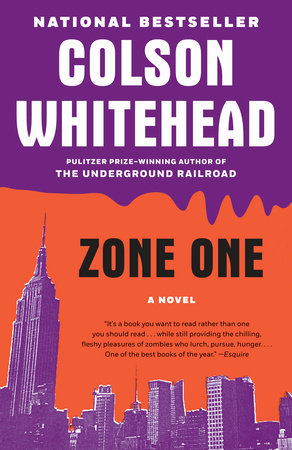
And to state the obvious, historical fiction isn’t history. Accuracy and authenticity are not the same things, and “distortion” is a loaded term to begin with. In The Underground Railroad, Colson Whitehead interleaves the archival ephemera of slavery with his own dystopian imaginings. That the two are often indistinguishable shows that narratives need not be strictly historical to be fundamentally truthful. Art is supposed to transfigure human experience, to make it newly meaningful. That’s what it’s always done. That’s what it’s for.
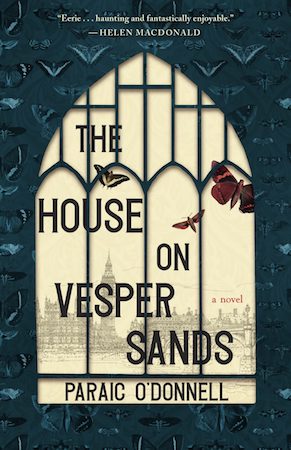
Of course, novelists don’t always begin with such lofty intentions. In writing The House on Vesper Sands, I began with no intentions at all. At the time, though, the U.K.’s Tory government was diligently stripping the vulnerable of what meager protections they depended on. Their souls, I remember thinking to myself. They’re devouring people’s souls. And since I found myself with one foot in Victorian London, where such notions were taken pretty seriously, I began to see new shapes in its familiar gaslit fog.
As important as representation may be, gay characters don’t need to appear in fiction for any particular reason. Waters describes her own sexuality as “incidental,” and in her Victorian England, lesbian women are naturally just present. Like everyone else in Fingersmith, though, they’re also schemers and strivers. Waters renders their erotic encounters with dependable virtuosity, only to use them as a fulcrum for one of the most breathtaking double twists in all of fiction.
In historical fiction, verisimilitude isn’t always your friend. The line between authenticity and pastiche is vanishingly fine, but although Catton assuredly knows the risks, she bets the farm in this novel anyway. The Luminaries might be compared to an immaculately crafted piece of reproduction furniture, but one whose intricately inlaid surfaces conceal all manner of arcane inscriptions and secret compartments.
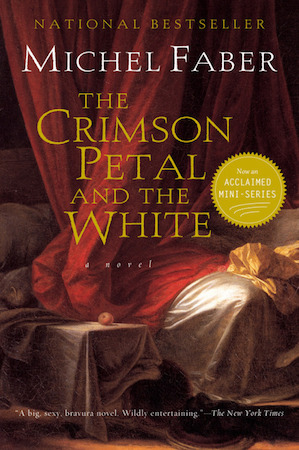
Faber’s revivification of Victorian London is both exquisitely wrought and magnificently coarse. Although his embrace of all social classes invited comparison with Dickens, he has more in common with Chaucer, whose democratic instincts were much less hampered by paternalistic illusions. The only illusions here—as Faber reminds us in sly metafictional interjections—are our own: “You are an alien from another time and place altogether.”
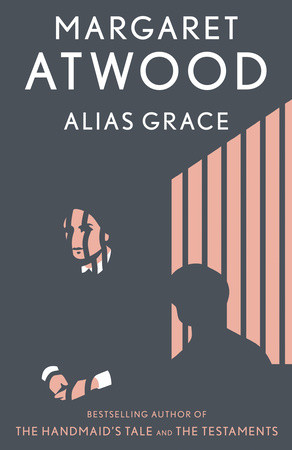
In Atwood’s best-known fictions, for all their undisputed merits, character is often subservient to some overarching schema of ideas. Based on real events—involving an Irish maid implicated in a brutal double murder—Alias Grace provides a counterpoint in a character study as enthralling as it is forensic. It also demonstrates the necessity of revisiting grim historical realities, like the coercive medicalization of femininity, that have never quite gone away.
Like Eleanor Catton, the Australian novelist Peter Carey shows how Victorian certainties tended to dissolve at the periphery of their empire. When he undertakes to transport Lucinda Leplastrier’s glass church to the remote Outback, inveterate gambler Oscar Hopkins seems to embody Pascal’s conception of religious belief as a momentous wager. The same might be said of this novel’s unlikely but indelible love story, in which everything and nothing may be at stake.
Byatt might be unlikely to use the term herself, but in Possession she proves that you can be formidably erudite and also, well, extremely meta. True to form, she styles it “a romance” in the strict literary sense—that is, a quest narrative in which defining values are tested. But as its fusty Victorian scholars unearth a love affair between Victorian poets, they discover hesitant passions of their own. Think Inception, but with tweedy academics and polite rapture.
Bram Stoker hadn’t written Dracula when he left Ireland for London, but he had begun to feel its dark stirrings. There, he managed the Lyceum Theatre and began a lifelong entanglement with Henry Irving and Ellen Terry, giants both of the Victorian stage and of egotistical excess. In O’Connor’s wholly masterful recreation, we also see him wander the Ripper-haunted streets, contemplating an era in decline and the monsters it might harbor and bequeath.
In our series “Can Writing Be Taught?” we partner with Catapult to ask their course instructors all our burning questions about the process of teaching writing. This time we’re talking to Abeer Hoque, author of the memoir Olive Witch, who’s teaching a two-week seminar on one of the most challenging forms of writing in existence: the artist’s statement. (Please note that there will be one full scholarship for this course awarded to a Black writer—the deadline to apply is Jan. 25.) We talked about how editing relies on empathy.
What’s the best thing you’ve ever gotten out of a writing class or workshop as a student?
I am continually amazed and inspired by how some readers can deliver feedback in a way that energizes and excites rather than enervate and depress. I know some of it has to do with that workshop mantra which I recite to my own students: focus on getting the writer to the best version of their piece. But it’s a gift of empathy and compassion and kindness, as well as a skill of reading and analysis and craft. And it comes in handy not just in writing, but in life. I aspire to be better at it as I go, and luckily, teaching is a great way to learn.
What’s the worst thing you’ve ever gotten out of a writing class or workshop as a student?
I started my MFA program around the same time my sister was doing her M.Arch and her accounts of their “crits” not only sounded horribly cruel but her fellow students all internalized their “value”—as if it weren’t a good critique unless it made you cry. There’s a lot of that in MFA school, and while my particular program wasn’t that bad, there was still a huge focus on looking for things to fix or expand. I fall into the same track myself sometimes but I want to learn how to teach (and learn) through positivity rather negativity.
I think it covers so much ground if you start from kindness.
What is the lesson or piece of writing advice you return to most as an instructor?
Another Catapult instructor, the brilliant and funny Sofija Stefanovic, asks her students to agree to be extremely kind to each other. I love this so much I adopted it for my own classes. I think it covers so much ground if you start from kindness. The screenwriter Jacob Kreuger is one of my favorite teachers and he warns against prescriptive or negative feedback. He starts workshops by asking people to shout out only what they love and sometimes he stops there too. Because if you know enough about what your readers love, then you might know what to keep and what to change. Either way, only you know how to write your story.
Does everyone “have a novel in them”?
A la Elizabeth Gilbert’s Big Magic, I think everyone has a creative drive. How that plays out could be a novel or a poem or a painting or a song or a dance or a garden or some combination or interstice of art forms. I think it’s more important to make time for that creative impulse, to honor its meaning, and capacity for connection and joy, than wonder if you should write a novel.
Would you ever encourage a student to give up writing? Under what circumstances?
No. Choosing writing as an art form is a big deal, especially for BIPOC, immigrant, poor, undocumented, queer, disabled, and other marginalized communities. We need to read these stories as much as we need to write them. I recognize how much of a privilege it is to be an artist when you’re likely to make little money from making art. I’ve always had another job to pay the bills, but I’ve always worked part time so I’d have time to write. Some hardy full-time-job-having friends of mine have written whole novels in 15-minute chunks, or on weekend/summer breaks. In that vein, I love Audre Lorde’s assertion of poetry as the most essential and economical art form because it requires little in the way of materials (unlike visual art) or labor or time (unlike novels).
What’s more valuable in a workshop, praise or criticism?
You can probably guess by now that I’m gonna go with praise!
I actually had to pretend my first book would never see the light of day to keep going.
Should students write with publication in mind? Why or why not?
I suppose it depends on what you’re writing. I have a successful YA author friend who once shifted the plot of her novel because the editor thought another ending would sell better. Journalists and essayists might have to conform to a certain style or angle or pitch. That said, my first book project was a memoir, and there was no way I could have started or finished it if I had thought about its publication. It would have been way too stressful imagining what my family might think. I actually had to pretend it would never see the light of day to keep going. I also think it lets me play more with form and meaning, if I don’t have to worry about who will publish it. However, once I have a solid draft done, I’m more than happy to take cues from interested editors or beloved readers or themed lit mag calls in order to revise.
In one or two sentences, what’s your opinion of these writing maxims?
Kill your darlings: I just save them in another file.
Show don’t tell: I lean towards more show, but love a good tell.
Write what you know: Sure, but if you know why you want to write about what you don’t know, I think it’s a great way to learn about yourself and the world.
Character is plot: It can be! But plot can also just be plot and glorious for it.
What’s the best hobby for writers?
There is no right answer to this question! I have a zillion hobbies (scrapbooking, dancing, hiking, organizing, cooking, gratitude journaling, gossiping with friends) and I can’t separate them from self-care let alone self-actualization.
What’s the best workshop snack?
I’ve sometimes brought in samosas and empanadas (I live in Queens after all) and people have loved it. But frankly, it’s kinda greasy for your papers and keyboard. At home while writing, I love to eat popcorn with chopsticks!
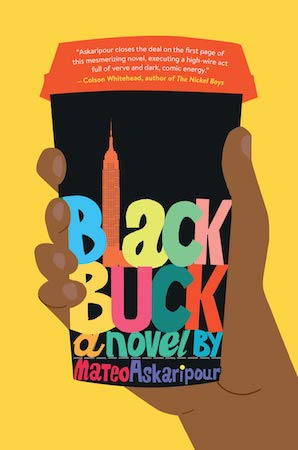
It’s no secret that the tech world has a troubling track record with diversity in the workplace, especially with the dearth of Black and Latinx employees in key roles. Author Mateo Askaripour confronts the lack of diversity within the workplace with satire in his debut novelBlack Buck. Some critics have been describing Black Buck as Sorry to Bother You meets The Wolf of Wall Street, but if you ask Askaripour he doesn’t seehis novel as similar to Sorry to Bother You but has compared some elements of it to Death of a Salesman.
Black Buck follows an almost two-year journey in the life of Darren Vender, a young Black man from Brooklyn’s Bed-Stuy neighborhood. The valedictorian of his high school who is now working at a Park Avenue Starbucks, Darren is smart and full of potential but isn’t realizing it until a life-changing opportunity manifests in the form of a coffee order for Rhett Daniels, the white CEO of Sumwun, a powerful sales start-up. On his way up and after a tragic incident, Darren begins to realize he was simply a pawn in Sumwun’s affirmative action game and sets out to lift up his own people. But of course, challenging the racial politics of Sumwun and bucking against the system leads to consequences.
Askaripour and I, two Black men from different parts of Brooklyn, conversed about what’s really going on with race in the workforce as presented through Black Buck.
Kadeem Lundy: Black Buck follows the idea that in order to succeed in business a Black man must change his identity, in a sense. So can you talk a little bit about why you feel like that might be the case where a Black man has to potentially change his identity in order to succeed in business?
Mateo Askaripour: So I don’t believe that a Black man has to change in order to succeed in business. That’s a personal belief that I don’t hold. However, when it comes to the book, I believe that Darren, that specific Black man, had to change in that specific business, being someone at that startup in order to survive and then thrive there. Darren didn’t have to change if Darren went in there and he was like “yo, I don’t like how this is white guys talking to me. I don’t like how these white people are looking at me. I don’t like them calling me every, you know, popular Black person from MLK to Dave Chappelle.” You know, he could have stuck to his guns. But what would have happened in an environment like Sumwun is Darren would have experienced probably even more hell and then either left or just been fired.
A place, a company or an organization like Sumwun is predicated on a certain amount of assimilation. Not all startups, not all companies, but that’s how many companies thrive. They believe that there is a culture that they need to establish: a culture that binds all of the employees together, typically with a common mission or goal in mind for them to achieve, whether that is going public, getting more funding, beating out the competition, creating something truly innovative. The goal is constantly changing, but within that culture that they established, there are norms. There are even sometimes ways of speaking, dressing, and so forth.
So, Darren, being the only Black person in the entire company, if he went in and said you know what, I’m not going to switch it up—and he wanted to remain as true to at least the beginning iteration of himself when we started in the book—I don’t think it would have worked out. But that doesn’t mean that he could have gone to another business with white people or Black people or non-Black people and remained who he was and thrived. He definitely could have done that.
KL: Yeah, I definitely get that, I understand that. When you think about that and when you talk about his transformation as well, he gets the nickname of Buck. So when you talk about the nickname of Buck itself, it kind of serves as a symbol beyond just the obvious of working at Starbucks. But it seems like it also has a deeper symbolic meaning. And so when you think of the nickname specifically and you think about how maybe the historical connotations of what buck meant for a Black man. Can you speak a little bit about that idea?
MA: I’d say there are three or four meanings to Buck. There’s the fact that right, he’s a dude who gets the name Buck and he’s Black. That he worked at Starbucks is number two. Number three, it’s a representation of Black wealth, Black bucks, you know, obviously talking about cash and bread and the idea that what Darren does and how he changes the game, even if only for a moment in time, will help more Black and Brown people make money and hopefully uplift their families and their communities. And this is obviously bold, but maybe beyond the way to be attaining some real wealth. And then the fourth way is the historical meaning of Black buck, right? What it means to be a Black buck. As you know, they were the unruly, big, wild, enslaved people who these white masters, these enslavers, believed were going to burn down the plantation, steal their wives, kill the animals, kill them.
And when I thought about that and I meditated on it deeply, I said, you know what, that’s the energy that I’m bringing to this book as the writer and the energy that Buck is bringing to the world of Black Buck himself and especially the world of these startups, which are overwhelmingly white now. Buck’s not going in and burning them down, but he’s changing them from the inside out in a very, I’m not going to say aggressive, but in a very intelligent way that these people at the top—I don’t want to call them enslavers. I don’t want to call them masters. That sounds like way, way too dramatic, even though shit, some people would call them that—but even without the people at the top, who are typically white, knowing what was going on right before their eyes. So I’m happy that you asked that question, Kadeem, because it’s at the core of this book. And sorry, the last thing I’ll say is we see that Buck pays for it, for bucking against the system. And we see how that plays out.
KL: But there’s also kind of a situation that arises that where it ends up being, you know, there’s a saying that when you help your own people, sometimes it’s your own people that actually go against you. So if you could talk about how you dealt with that and is it really to be expected that it can always be your own people who will be the ones that can be your downfall?
MA: Wow, this is a type of question that I live for, a question that only the interviewer can ask me, and I haven’t heard this one before from anyone else. So thank you. And you’re asking me about my personal beliefs, so I can’t hide behind the fiction. And I wouldn’t even want to.
Personally, I’m not one of these people that are of the mind that when you give back to your own community, they will end up being your downfall or it’ll be detrimental to you. I don’t believe that. I don’t want to believe that. And I don’t believe it at all, you know, on a molecular level or a spiritual level.
Any Black and Brown people who read this book and have been in these situations will know that they haven’t been alone, will know that they don’t deserve to be made to feel less.
I wrote this book for many reasons, but the second reason specifically was so that any Black and Brown people—and obviously Black people, first and foremost—who read this book and have been in these situations will know that they haven’t been alone, will know that they don’t deserve to be made to feel less. They will know that they have the same rights just as much as anyone else to chase their dreams, that’s what I wanted. And this is to serve people who look like me now.
Right now, I’m wearing a hoodie from The Marathon Clothing (Nipsy Hussle’s brand) and Nipsy could be evidence of what you’re saying. Nipsy stayed basically in his hood. He did a lot for his community. He promoted a lot of Black entrepreneurship. And then he gets shot and killed right outside of his own store by another Black man. Right. And this is conjecture, I didn’t know the man, Nipsy. I know what he means to me, but I feel like if someone were to say a couple of years ago, Nipsy, this is going to be your life and then you’re going to get killed, would you still help out your people? Would you still stay in your neighborhood in terms of giving back and doing all of these things? I feel like he still would have done it. So that’s my personal belief.
KL: A big theme in the book is about sales and the idea of sales. And I noticed in the book, it is noted that sales isn’t about talent, it’s about overcoming obstacles, beginning with yourself. And so to go a little bit further about overcoming obstacles, how can you say a person can work through those obstacles if they can’t seem to fully understand what the internal obstacles actually are?
MA: If someone’s walking through the forest and they have bad eyesight and then all of a sudden they miraculously find a pair of glasses, they will then realize how much they couldn’t see before. It’s the same type of thing. It’s like I’m bringing up a bunch of analogies, just that people who are close to me and who inspire me, right. When Malcolm X was in jail, then he gets put on to the Nation of Islam and he changes course. You oftentimes need help. Almost always. You need help from somewhere, another person, a book, another form of art, just hearing a conversation in order to have your eyes opened or to be “awoken,” which is the term that a lot of people use today. Just years ago, it was conscious. Now it’s woke. So I think that someone is set on the path of liberation from the help of someone else usually. Self-liberation. I don’t know if liberation happens in a vacuum. We all need help. No one just all of a sudden wakes up and says, oh, I need to be free if they don’t know what freedom actually looks like. You need to realize those internal obstacles with the help of something or someone else to then surmount them. I think that so many of us who wake up to certain shackles in our own lives do it with the help of others.
KL: You just mentioned what you were embedded in the world of start-ups. Can you speak a little bit about how your experiences influenced the direction of the book?
It’s easy to post a black square. It’s harder to speak up. It’s harder to actually enact change: the changing of heart, then the changing of law, the changing of systems.
MA: I was able to write the book because of my experience, Darren and I actually had pretty different experiences within the workplace. I noticed things related to race, of course. Did I experience paranoia and anxiety, and sometimes think I may be overly sensitive about things dealing with race? Of course. I know how these startups function from the inside out, extremely intimately, even after I quit my job in 2016. I was traveling and I was writing, but then I began consulting with startups across North America, you know, again, very intimately. So I got to see how many startups work. So I was drawing from everything from personal experience, from the things that I felt. Every single character in the book, I feel as though I’ve felt every emotion that they felt, like I needed to feel these emotions in order to imbue them.
But in terms of the wild racism that Darren experiences within the workplace, I didn’t experience it like that, because I was on a different trajectory than Darren coming in as an entry-level salesperson. I started out in a startup for around four years, I came in as an intern then I did social media community management, then started a sales team, and then very quickly right within like a year or two, I was one of the top leaders within the sales organization. So that power incculated me from a lot of things that I could have experienced because I was one of the people at the top. Now at the same time, a lot of what Darren experiences within the workplace, the wild racism as I called it, I’ve experienced outside of the workplace. I’ve experienced it in high school, I experienced it in middle school, I experienced it on sports teams, I experienced it in social groups. So I translated a lot of those experiences while they’re not one for one and the same things aren’t happening, I translated the severity of those experiences and how I felt about them and how I felt during them into what happens in the workplace with Darren.
KL: And so my last question to you is actually going to be with your experience in sales, where do you see the future of sales going, specifically for people of color and Black people in positions of key roles of executives?
MA: Well, I’m not sure where anything is going, to be honest. I think about this specific moment that we’re living in even though it’s connected to a string of other moments. Related to the past few decades and hundreds of years and not just in America but around the world. And I think that this specific moment, especially after the murder of George Floyd, in the wake of these protests about Breonna Taylor, Ahmaud Arbery, and Elijah McClain, that there’s hope that real change is going to happen. I’d like it to happen no matter what but I don’t know if it’s actually going to happen because a lot of people who post these black squares are really fairweather friends. It’s easy to post a black square. It’s harder to speak up. It’s harder to actually enact change, that change I was talking about before the changing of heart and then the changing of law, the changing of systems.
So I don’t know what’s going to happen. And it’s the same in the world of sales. I’d like to say that more Black and Brown people will become sales-people especially in tech startups and that they will rise up and hire more people of color and Black and Brown people, and educate them. But it’s really important to note that—at least in the world of this book—the end goal isn’t just for these Black and Brown people to work for white people. Like that’s not it. I would hope that many of you Black and Brown people who work for these white companies, excuse me, white-owned companies and white majority companies, change them from the inside out, put other people on to get their paper, and then maybe start their own things if they want or find other ways to create spaces by Black and Brown people for Black and Brown people. I think that will be the true definition. At least one definition of freedom and liberation.
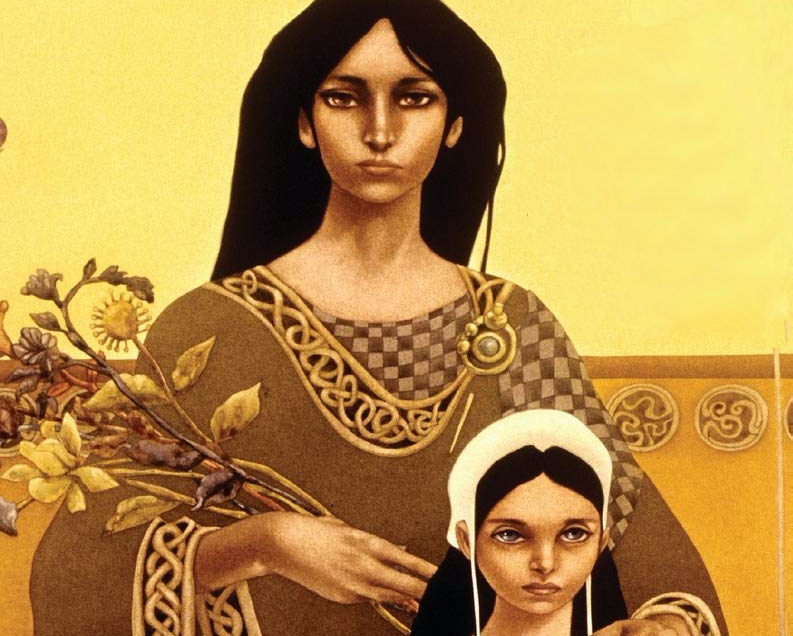
Monica Furlong’s Wise Child was the first time I ever saw a mother that I wanted to be. I was ten or eleven the first time I read it, and I didn’t think about mothers much beyond the fact that they were just sort of there—often harried, overworked, and tired, but useful if you needed a meal or a hug. Although I had a vague sense at the time that I wanted to have kids one day, none of my concrete experiences of what motherhood looked like made it seem all that appealing. Even in books, mothers were mostly just background noise; fathers were at least allowed to be funny or have quirky hobbies, but mothers rarely seemed to have inner lives. Furlong’s Juniper, an independent-minded woman with supernatural healing skills living in a dream cottage full of magic, was different.
The term “voracious reader” is clichéd, but it’s the most accurate one to describe what I was like as a kid. I had a bottomless appetite when it came to reading materials, by which I mean that if I didn’t have a book nearby I would resort to the backs of cereal boxes or the weird ads in the yellow pages. I also read literally all the time: at breakfast in the morning, on the school bus, under my desk instead of listening to the math lesson, in the bath. I once got in trouble during gym class for sneaking a book into the outfield during baseball (I’d hidden it under my shirt when we were changing). It wasn’t just that I loved the stories (although I did), but also that my brain craved that specific stimulation, and without its constant input I felt tortuously bored. It was a lonely way to be, not because I was teased for my reading or anything—I had plenty of friends, and I was so cavalier about my obsession that I don’t think it occurred to them to make fun of it—but because I never had anyone to talk to about the fictional worlds that felt at least half real.
I didn’t know anyone who read like I did, least of all my own mother—she had some Danielle Steele books lying around, and at least one installment of the Outlander series, but I’m not sure that I ever actually saw her sit down and crack any of them. Sometimes when she saw me sprawled out on the couch with a book she’d say, “I used to be a reader before I had kids, but now I don’t have the time.” The comment didn’t have any particular layers of meaning to it—other than I should have been helping out more around the house, probably—but I saw dark undercurrents in it: a hint that motherhood thwarted intellectual pursuits, and a threat that if I ever became a mother, I, too, would have to stop reading.
I didn’t have anyone around me to whom I could recommend Wise Childand its prequel Juniper, even though I desperately wanted to talk about them. When my middle sister was old enough to read them, I bought her a copy of each, and she loved them as much as I did. But other than her, I didn’t meet anyone else who had even heard of them until I was an adult, at which point I met a whole bunch of other people—mostly women—who had read and loved those books. They became a sort of password, a shorthand for seeing that someone else had been the kind of kid you’d been: bookish, witchy, often wanting something that you couldn’t quite put into words. I get a quiet thrill every time I meet another Wise Child reader, like I’m meeting members of an extended ersatz family. When I had my own kid, one of the things I wanted most was to shape him into that particular kind of weirdo, too—or, at least, provide the environment in which that kind of weirdo would thrive. I just sort of assumed that any child of mine would inherit this thing that seemed so essentially a part of me that I couldn’t imagine not passing it on.
The hero of Wise Childis a nine year old girl named Margit, although that name is used only once in the book. The rest of the time she’s referred to by her nickname, though as she explains, “Wise Child” is not exactly meant as a compliment—in her language, it’s a term used for children who “used long words, as I often did, or who had big eyes, or who seemed somehow old beyond their years.” Wise Child, who lives on a remote Scottish island in some nebulous Medieval era, finds herself suddenly homeless after the death of her grandmother, with whom she’d been living; both her parents are still alive, but her glamorous mother has run off to live a life of luxury on the mainland, and her father is a sea captain off on some voyage. With nowhere else to go, Wise Child winds up living with Juniper, a mysterious woman who lives in a house on a nearby hill and is widely regarded as a witch. The village priest especially seems to fear and dislike her.
I wanted Wise Child’s life, and by extension the attention and care she received from her guardian and mentor.
As it turns out, Juniper isa witch, although she says that’s a vulgar term—instead, she calls herself a doran (the italics are Furlong’s), which she describes to Wise Child as being someone who has found a way of perceiving “the pattern” and as a consequence “lives in the rhythm.” The rest of the book is more or less Juniper teaching Wise Child how to be a doran, punctuated by run-ins with Wise Child’s mother, who is up to no good, and the village priest, who thinks Juniper is in league with the devil. Although parts of Wise Child’s journey to becoming a doran involve magic and spells and thrilling rituals, most of it is more prosaic: memorizing herblore, learning Latin, trekking through the countryside to gather ingredients for the healing ointments and poultices they make. But somehow the descriptions of those day to day chores interested me just as much as the chapters about flying on a broom. I loved all of it; it was the kind of book that made me want to step into it and live inside its story. I wanted Juniper’s house with its hearth and its garden and its stone dairy. I wanted her life. I also wanted Wise Child’s life, and by extension the attention and care she received from her guardian and mentor.
Reading Wise Childfor the first time made me feel the way I knew I was supposed to feel in church—that sensation of goosebumps mixed with something unlocking inside out and expanding outwards and outwards and outwards. It’s a moment of touching the infinite unknowable, I guess, or a moment when you know that magic or God or whatever is real. Given all of that, maybe it’s not surprising that Monica Furlong devoted most of her life to religious writing, much of it, like Juniper herself, both subversive and progressive. She was particularly interested in the ordination of women in the Church of England, a context in which Wise Childmakes perfect sense, since it’s a fantasy about a quasi-religious order in which women are autonomous and powerful spiritual teachers. It’s also a book about religious men who react violently to women who challenge the status quo, and it’s a book about motherhood, or at the very least a book that’s deeply concerned with mothers, biological and otherwise.
Juniper wasn’t just the kind of mother I aspired to be—she was first the kind of mother I wanted to have.
Juniper was the first mother-figure I saw who genuinely seemed to love every part of parenting, who approached it as an interesting and interactive project, who felt like she got as much out of it as she put into it. She also had a real life outside of taking care of Wise Child, with friends, travel, interests, and, of course, plenty of time for reading. I loved the way she took Wise Child seriously, listening to feedback and admitting when she was wrong; I still remember the sense of injustice I had as a kid about grownups not understanding that I was a fully-formed person with opinions and feelings of my own. But Juniper’s softness didn’t make her a pushover and, even though respectfully listened to Wise Child’s complaints about her chores, she never let her get out of doing them.
Juniper wasn’t just the kind of mother I aspired to be—she was first the kind of mother I wanted to have. Not exactly in a parenting sense—my own mother was and continues to be wonderful—but almost in a religious sense. I longed for someone who could induct me into the great mysteries of life, who could make me feel a sense of sustained awe about the world, who could teach me to “live in the rhythm” the way Juniper did. I suspect that this was what Furlong had wanted throughout her life too: some kind of spiritual foremother who could model the divine feminine for her. (She even called the goddess Juniper worships “the Mother.”) Wise Child was my introduction to the idea that faith doesn’t have to be prescriptive or dry, that it can be full of that dizzy, expansive joy that I sometimes felt flashes of but could never hold onto for very long. That catch-your-breath goosebumps that I would, later, associate with falling in love.
My nine-year-old son and I have been reading Wise Child at bedtime for the past few weeks. We make a whole ritual out of it, putting a log in the fireplace and getting our pajamas on and generally letting Furlong’s words and the flickering snap of the fire transport us back to Medieval Britain. I’ve been wanting to read this book to him for ages now, but I’ve held off, partly out of selfish fear: what if he doesn’t like it? What if he just doesn’t care? It felt oddly vulnerable to offer this piece of myself up for his judgment.
There is a part towards the end of the book when Wise Child tells Juniper that she is done chasing her biological mother’s love, and that she wants Juniper to be her new mother. I was surprised when my son laughed out loud, saying “that’s not how it works, you can’t choose your mother.” We argued back and forth about the idea of chosen family, but I understand to a certain extent what he means: at nine years old, he doesn’t get to choose much about his life.
But while he might not have chosen me, I chose him, or an idea of him, when I decided to have a kid. Because of that, I gamely worry that I am not living up to that choice, that I am not a good enough mother, that I am not Juniper-caliber. Sometimes motherhood seems both too big and too small. I will never be enough to fill this outsized role, but I also feel confined by it, a sensation that’s been exponentially heightened this year when my son and I have literally been confined together for ten months. I have no problem extending grace to other mothers, quick with a glib “they’re only human” and “we’re all just doing our best,” but there are moments when I know I am not doing my best. Some days—more days than I would like to admit—I am just trying to make it until bedtime.
Then again, life is basically a string of bedtimes, some more anxiously anticipated than others. What I mean by that is: you don’t really get to know the overarching narrative until later, if ever. Juniper takes things hour by hour, for the most part, and then season by season. When Wise Child first comes to live at her house, Juniper’s focus is first on caring for her body: feeding her, washing her hair, giving her a warm nest to sleep in and a chair by the fire. It’s not until Wise Child is physically stronger—like The Secret Garden, one of the pleasures of this book is that it equates eating and gaining weight with happiness—that she can be nurtured in other ways
Sometimes motherhood seems both too big and too small. I will never be enough to fill this outsized role, but I also feel confined by it.
And even though my son believes that you only get one mother in life, the reality is that his life is full of mothers who fill in where I fall short—his aunts, his grandmothers, the summer camp director whose every word he hangs on, the handful of teachers who have seen him for the quirky little joy he is, a constellation of mothers of all genders. If motherhood seems too big sometimes, that’s probably because our modern be-all-end-all conception of what a mother should be describes a role that takes multiple people to fill.
My son likes Wise Child well enough, I think; he reacts, he asks questions, he offers analysis. I don’t know if he’ll ever be the bookish weirdo—he likes being read to, but he’s still not too keen on independent reading—but that’s all right. I didn’t turn out to be much like my mother, but the parts of her that I see in myself are gifts that I appreciate very much. What matters most is that she was present, that she made sure I was clean and fed and had a warm place to sleep and outlets for my interests, even if they were not hers. She was the one who took me to the library and helped me check out stacks of books, who paid off the fines I racked up as my Christmas and birthday presents, who scoured my grandparents’ basement to find the paperbacks she’d loved as a kid. And really, if she didn’t have time to read, whose fault was that? It belongs at least partly to the kid who spent so much time sprawled on the couch with a beat-up Judy Blume instead of doing the bare minimum to help out around the house.
My mother gave me the gift of accessing the enchantment of books; I hope that I help my son find a gateway to a similar feeling, through whatever medium. Even if books aren’t what takes him there, the moments when we read together are still a communion of sorts. We come together and share in this moment, and then we separate. It’s a pattern that will only grow broader as he gets older; the separations will be wider, punctuated by, hopefully, moments of the same old wonder of joining. Maybe that’s living the rhythm, or at least a part of it. Maybe it’s as easy as that.
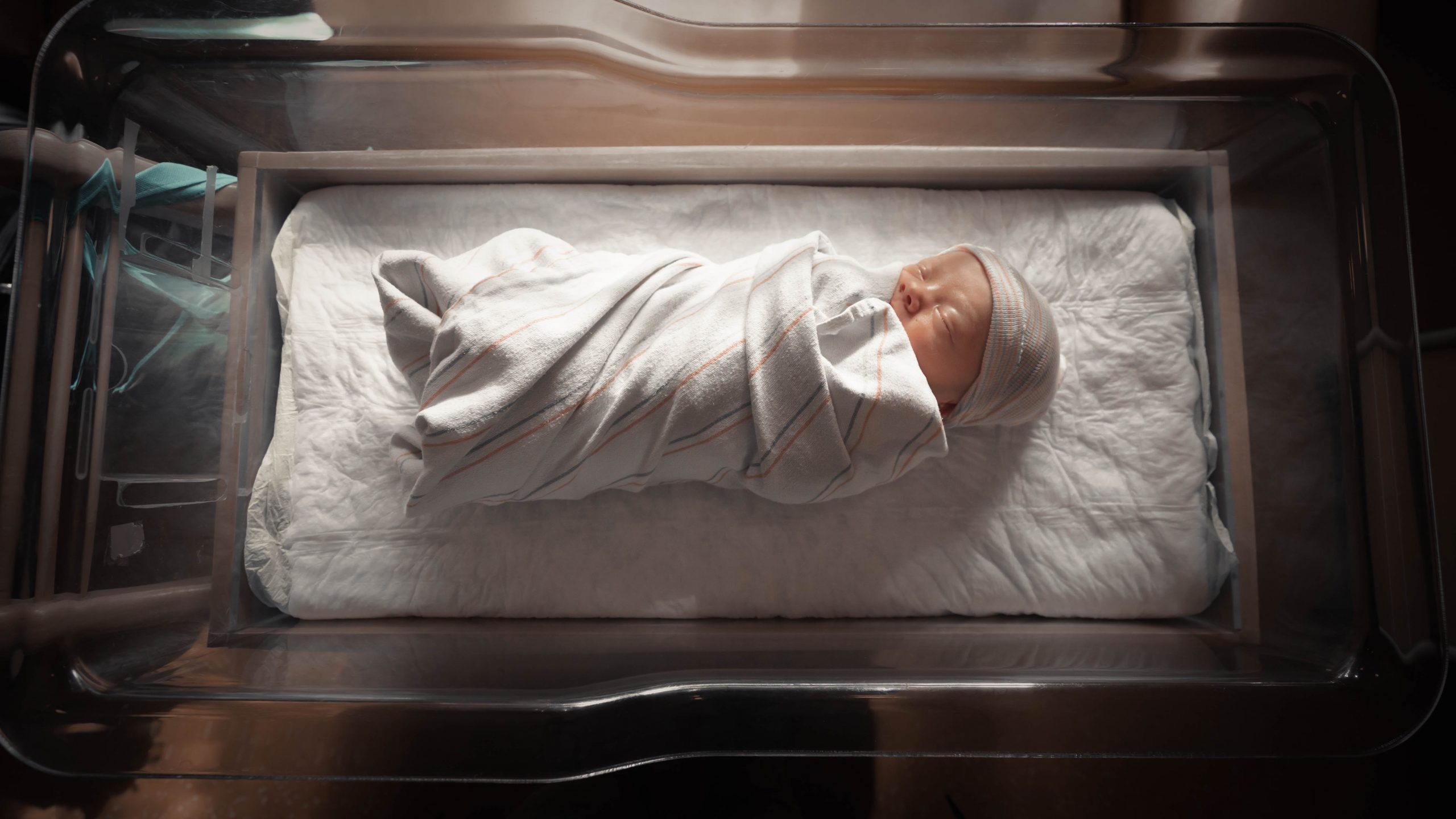
My wife gave birth at exactly 0400 on a Tuesday. She noticed the clock as she pushed our daughter into the world, which should tell you everything you need to know about my wife. She is immaculate. She misses nothing. Our child was issued in confused terror as I began to cry.
“Maybe he wanted a boy,” whispered one of the scrubs.
After stitches, after clean-up, after measurements, the staff gave us one hour alone. We were in awe. Awe felt oddly like incomprehension. Pictures, a lullaby, and phone calls came of their own accord. My wife’s parents insisted via video that our baby was the image of their daughter. The new baby, they squealed, like our old baby. They assumed her, which made me jealous. They were certain of her and themselves and knew the next time they’d sleep. The jealousy increased.
Once our hour was over, the labor nurse told us to pack up, fetched a wheelchair, and escorted us from the scene of contest. The recovery floor was older, dimmer. The paintings in the gray hallways were all the same colors as each other, in the same teakwood frames. Even the faces were softer than labor and delivery, the nurses clustering at their desks socially. Their counterparts upstairs huddled too, but with an air of war.
Every RN shoved a pacifier into our daughter’s mouth with verve—stirred, moved, manipulated. Our daughter’s mouth was often open, was not always crying, was searching with small aperture movements, narrowing, widening. I couldn’t describe her to you. She was eyes and lips and nose all topped with wild, dark-brown hair. A baby. Absolutely individual.
Each recovery room contained two beds, but they tried not to double-book so that Dad could have a place to rest. And everyone said “Dad” just like that. Universal Dad, a Platonic oomph in the phrasing, Dad as a form that Moms might invoke, a wandering accessory all Moms could contain. If she was lucky. One nurse said Partner. There was a TV we didn’t expect and uncomfortable chairs, one of them wide enough we assumed it had something to do with nursing. It was too small for two people, insulting for one large person. We tried to ignore it, but it was always in the way. They’d thought in excess of the things we might need, and it annoyed us. A medium-sized, small-city hospital. What there was of downtown pressed at the drafty window.
The weight of our half-used blankets, the streetlights’ sour glow, even the splay of my wife’s hair, its vitality and near-agency—there was more I remember. But we must get to the story.
I took the baby from my wife, the morning still dark with winter clouds, and walked the cold linoleum in overused socks. Our girl, her cone head, the joints at elbows and knees loose, pliable. I still didn’t recognize her, which surprised and slightly worried me, but I was drawn by her. I could feel myself circling and circling her, our living gravity well. She’d come out crying and staring. When she closed her eyelids something seemed to shut off in the room, and still we orbited. We warped around her mentally and physically and were distended with new paradigms of self and meaning. It was that quick.
One day, I realized, I wouldn’t be here. I would die. The proof was in my arms.
Mammals abounded as comparisons. Her mouse hands. Her marmot tummy.
As I paced, she cried more loudly. I bobbed on the balls of my feet, imitating Dad bounces and Dad noises. She’d eaten, she’d been changed. I focused on her weight in my arms. There was not a next, simply a hope she might respond favorably to my performance. There was step after step after step.
One day, I realized, I wouldn’t be here. I would die. The proof was in my arms. After a time, the proof fell asleep.
My wife jerked awake at the silence. I whispered my epiphany.
“That actually makes a lot of sense.”
“She wasn’t here before.”
“Exactly.”
“People can not be here.”
“Yes, yes. Exactly,” said my wife. We’d never done drugs, but we figured this was about the gist of it. Everything was irradiated and unspeakable. We fell asleep looking at each other across the visage of our invented, incarnate mewling. I was in the second bed parallel to hers, the baby in the rolling carrier between us. A plastic tub on a makeshift dresser, with wheels. Her first home. The sun still wasn’t up but I could see the reassuring lines on my wife’s forehead in the blue light. When the baby didn’t cry out for half an hour, I woke and stared at her chest. It rose. It fell. I drifted uncertainly.
We were roused at eight or nine o’clock in the morning by a new nurse. She was a middle-aged, middle-heavy woman with a reassuring mien. Her hair was nurse-tight, her shoes nurse-practical. She spoke nursely.
She bathed our daughter, talking the whole time. “I always give one piece of advice because parents these days are so focused on experts and opinions and all that. Oops”—to the baby—“did that surprise you? Anyway, I like to remind everyone that there is still such a thing as instinct. I had my dad living with me, and he’s older. A few years ago he gets a fever, he’s got some belly pains. So I call the doctor, right?”
My wife gripped the sheets as the nurse submerged our daughter beneath a faucet.
“We gave my dad some acetaminophen to lower his temperature, and because the temperature comes down, the doctor says give it some time. Well, I know it’s probably nothing, but I have this bad feeling. I lean into this feeling. And I swear, I don’t know what you believe, I don’t know what you think, but I heard a voice. A man’s voice spoke right to me, and said, ‘Go now.’ I got my dad in the car and we raced to the ER. What do you think? Diverticulitis, and it was bad. He probably would have died.”
“What, what did the voice sound like?” I asked.
“It saved my father’s life.”
“‘He,’ you said. ‘A man.’”
“Oh, it certainly was.”
We watched our daughter as she was enfolded by the nurse’s towel, her squirming limbs, her voice cawing with uncertainty. Ten months ago there wasn’t a baby who shared my genes and now there was. Zoom out. There wasn’t, and now there was. The nurse never told me how the voice sounded. The nurse, with one aside, began this whole tale for me. She left, and I took our daughter into my arms.
We didn’t have any family in town, but friends were expected. When they arrived we played hosts for our own comfort. Drinks? You must try the ice. Nothing like hospital ice. I pushed the ice too hard. We kept the door open for some reason. Sarah was my closest friend from college, and she’d come with her husband. As with serial killers, so with baby lovers: Sarah cataloged body parts.
“Look at her toes. Her hands. She grips so well! And those feet. They keep folding in prayer. I want to eat them.”
“And all she needs is breast milk. Can you believe that?” said Micah, her husband, who had no children or even the ability to lactate.
We made small talk and batted about innocuous predictions for our daughter’s life. I can’t remember any of them. I wish I could, but that conversation was built on somnolent good manners, and blurs into what comes next.
This, finally, is the story.
Outside our room, there was a sudden shift in the white noise, as if someone changed the channel. Pressure built in the air from unseen, frantic movements. I was alert to sounds in crescendo, one voice calling to another. An aide rushed past. Then three nurses.
“Oh my God,” said my wife.
Our daughter began to cry in Sarah’s arms. Stunned, we asked each other urgent, obvious questions. “Has something happened?”
Micah assumed the role of common sense. “It’s probably nothing. Something in the nursery maybe. A scared parent.”
“I kept waking up this morning, just to see if she was still breathing,” I said.
“Exactly. The staff is just being safe.”
Doctors appeared as well, jogging the way all doctors jog, hands clapped on their writhing stethoscopes.
Go. Now.
A voice spoke to me. A Voice.
Go. Now. I shivered.
I didn’t, however, listen. I nodded in concert with Micah to calm myself, to ensure proper reaction. “Everything’s fine,” I told my wife. “Don’t they announce a code if something goes wrong?”
“Code Pink, I think,” said Sarah. “Like, if a baby is stolen.” I acted as if, yes, that’s exactly what I meant.
“That’s exactly what I meant,” I said. “If we even get on the wrong elevator and have her with us, they announce Code…Kidnap. They shut the hospital down.”
“And wouldn’t there be more people?” said Micah. “There weren’t that many nurses.”
Our daughter kept crying in Sarah’s arms, but with less vigor.
Someone screamed. An animal noise. Not a child.
The scream sounded a second time and my wife asked to have our daughter back and as Sarah handed her over she said, “We should see what’s going on,” and I said, “We’d get in the way,” and Micah said, “Maybe we should close the door. We don’t want to be insensitive,” and I thought, great, even Micah realizes something awful has taken place. He was balding. The Voice remained silent.
“Go see what it is,” said my wife, and the Voice, it said nothing, but I remembered the tone, it seemed embedded in her words. Careful and practical and insistent, she nodded at me again. “Go see what it is.”
Go. Now. So I went.
Other patients and their families were poking their heads from behind doors, but no one ventured forth. A conspiracy of Dads nodded me along the corridor but stayed in their rooms. I was walking in the correct direction without thinking. There was a small crowd of medical professionals at the end of the hall, instruments lifeless. An otherwise empty desk was crowded by two janitors and their carts. They must have already been on the floor. I could hear sobbing, but no more screams.
A security guard rounded the corner and stopped me before I reached the hidden spectacle. The sobbing grew distinct. The guard put his hand in the air to cease and desist me, and I agreed with him. I wanted to stop.
“Unless there’s a problem, sir, please stay in your room.” He was short and very fat. All the worst of me was bubbling to the surface. I stared past him, down the antiseptic corridor, all the heads of the other Dads behind me, and I knew I shouldn’t go any further.
“What happened?” I said.
More sobbing. The two janitors were pushing their mops back and forth, idle. The wheels on the buckets squeaked.
“Sir, please return to your room.”
There was the sound of feet walking on glass mingled with great blubs of emotion and urgent conversations in the hall. Nurses speaking to nurses speaking to doctors and the doctors shaking their heads, clueless, without any answer. The sobbing continued as I turned back toward my room. My daughter was in this hospital. A Dad.
A man named Greg pulled me to his doorway. We’d met and quickly bonded at the ice machine. He was burdened with multiple kids and wore a face that said as much, a manager at a car dealership who played music in clubs on the weekend. He guided my arm before I understood what was taking place, his six-year-old son hanging on the door beside him.
“Did you see anything?” he whispered.
“No, the guard asked me to turn back.”
“Awful. It’s awful.”
“What happened?”
“No, it’s better not to know. You can’t control these things. Some things are better with blinders, New Dad.”
“Hey,” I told him. He was older, pudgy in a confident way, his knit polo battered but expensive. “What the hell happened?”
Greg bobbed his head, leaned closer. “A baby died.”
I swayed. Sometimes Dads sway. Sometimes they reach for the doorframe and picture their daughter’s silhouette stilled, still.
Greg kept speaking, was electrified to finish what he’d been allowed to start.
“Okay, but that’s not the worst of it.” He shooed his son back from the door. “I mean, I guess the father about bum-rushed the nurses’ desk and said their baby wasn’t breathing, I don’t have a lot of details on that, but then all these people started rushing toward the room. I went there myself. The mom’s crying, okay? The father was holding his head and the mom was crying and the father started banging his head against the wall and wailing and, well, they told him to stop. I was still in the hallway, you know. No one could have guessed what was going to happen. No one. He stopped banging his head and so I turned away.”
“He was just banging his head?”
“Yeah, but as I’m walking away I hear glass break, shatter I mean, and so I hurry back. They have the door open, you know. No HIPPA in an emergency, I guess. Nobody’s thinking. There’s a dead baby, isn’t there? That should be enough, right? But the guy jumped, apparently. I saw a lamp on the floor, that wide-ass chair turned over. I dunno. It was chaos. People were rushing around, others were kind of stunned. No one was ready for that. But yeah, somehow he broke the window and jumped. He killed himself, the coward.”
Oh, I thought. Coward. I was swallowing a lot and not speaking. Greg patted my shoulder and I hurried back to my own wife, my own child, Sarah and Micah waiting for news, police surging out of the elevator, sirens outside, but then this was a hospital, there’d been sirens all night. Coward. Greg was already summarizing, narrating, drawing moral conclusions. I saw nothing, not even the aftermath, and I was blank. I could barely remember the words. He broke the window and jumped.
“Down that way!” someone directed the police, uniforms who jingled deadly metal.
Positions in our room had remained the same. My wife clutched our daughter, Sarah sat on the windowsill, her finger clasped in our newborn’s fist, Micah in the too-wide chair at the base of the bed. I saw his serious face, his slow-blinking eyes.
“It’s not good.” I felt embarrassed but continued. “Very bad. A baby, I guess, I mean, a baby died just down the hall.”
“Holy hell.”
“I knew it,” said my wife, whispering into our daughter’s back. “I knew it. I knew it.”
She moved our daughter from one shoulder to the other. Babies were transferred like that. They were carried through the world and bobbed outlook to outlook, their vantage adjusted, predetermined.
Micah became aggressively reasonable. “So why are there police?”
I didn’t know how to deflect, how to massage the information.
“The, the father jumped,” I sputtered.
“Like, out the window, jumped?” said Sarah.
“Oh my God. I knew it. I knew it.” My wife eyed our window, studied its latch.
Sarah shifted her weight, wanted to reach for my wife, our baby, me, to comfort us, I assume. She grew fidgety. Micah began pacing, filling the room with his purposeful reflection. I tried not to recall the Voice and watched my wife. She wanted to be alone, wanted to turn off the lights, probably, to simulate a cave of primordial solitude where she could hold our child in private. I wanted the same, but neither of us was capable of saying so.
“He must have already been very unstable,” said Micah. “Mentally, I mean.”
“He was banging his head against the wall, I guess, and then, yeah, he jumped.”
“And no one stopped him?”
“They tried, I think. There weren’t enough of them, maybe.”
Micah paused. “Or he just surprised them. Who expects something that bad to get worse?”
I hadn’t, and I told myself I hadn’t, and I repeated such to the doubts in my head that remembered and rehearsed the Voice’s command to Go, now. The doubts were trying to calculate the exact timing of my inaction.
Two police officers escorted a crying nurse past our room. I recognized her. The nurse whose father had almost died from diverticulitis. But he hadn’t. She’d saved him.
Time passed. Probably. Some aide asked if we needed anything. There was the back and forth of many official-looking persons, not only medical or police but business suits, probably the hospital administration, maybe its lawyers. At some point, an officer came by and Micah stepped forward, taking control, the type of civilian who nods at soldiers in uniform and the soldiers nod back. He told the officer we hadn’t seen anything, and the officer wanted me to confirm this, mentioned a security guard who’d made a note of my room number, who’d managed to describe me, as if I’d been in a lineup, as if there was something to accuse me of, and there wasn’t. I concurred with Micah and said I’d done nothing. I said, with anger for some reason, “I didn’t even see the guy jump.” Everything I told him was true and innocuous, but it felt like a lie.
“Your baby is beautiful,” said the officer. Then he left.
Sarah and Micah settled on the other hospital bed, Micah with his hand on his coat, Sarah inching away from it. Our daughter was asleep in my wife’s lap and my wife was staring out the window. She couldn’t take her eyes from the glass, her ghost in its image, her own features of soft, quiet uncertainty. My wife folded the tips of her fingers into our daughter, talon-like, fierce.
“No more police,” said Micah.
“So quiet,” said Sarah.
They’d stayed here much longer than they planned, but they didn’t know how to escape.
I suppose we heard the group before we saw them. An entourage wheeled the bereaved mother through the hallway toward the elevators. She was younger than I wanted to know and slumped in her wheelchair. Someone had to place her arm back in her lap. Drugged, I guessed. The hospital didn’t have a psych ward, but maybe she was being taken to the morgue for the father, or for the baby.
I searched for a small package, for I didn’t know what. A box. A bag. A doll’s form trailing in the grip of some orderly. There was a presence on the mother’s knees, a glimpse, and then they were gone. She, like a negative of ourselves, was also never going to sleep again. I played out strange scenarios where I wrestled the father to the ground, possibly beat him as a way to save him. I hurt him and tied him and consoled him and yelled at him to look at his wife, to witness her, and he lived, he was alive because of me. Go. Now.
Tomorrow, they were sending this baby home with us forever.
This is the fifth year I’ve put together a list of books I’m anticipating by women writers of color, a catalog I started assembling because, in 2016, I found I had trouble finding such upcoming books. It occurred to me that if I published this list, others might find it useful.
The list turned out to be one of Electric Literature’s most shared pieces for the year, and, to my surprise and delight, I’m often told it helps inform school syllabi and other publications’ books coverage. My extravagant hope is that, one day, publishing will be so inclusive, so much more reflective of an increasingly and splendidly diverse country, that we’ll have no need for such a list. Today, plainly, is not that day; as recently as 2018, white people wrote 89 percent of the books published by major publishing companies.
One day, publishing will be so inclusive that we’ll have no need for such a list. Today, plainly, is not that day.
A few words on methodology: this is one list, necessarily incomplete, of books I’m personally anticipating. If you see a book missing and want to support it, a good way to do so is by preordering it from your local independent bookstore, requesting it from the library, shouting about it from social-media rooftops, or hey, all of the above.
In the past couple of years, I’d expanded the list to nonbinary writers; this year, though, I’ve increasingly heard from nonbinary writers that it can be preferable to avoid grouping nonbinary people with women. Accordingly, though I’m eagerly anticipating 2021 books from nonbinary writers of color including Akwaeke Emezi, Rivers Solomon, and Emery Lee, this year I limited this list to forthcoming books from women. The term “of color” is also a flawed, complex label with ever-changing valences—one increasingly replaced by the more specific “Black, Indigenous, and of color,” or BIPOC—and I imagine these categories will keep adapting to better suit our rapidly shifting world.
Please join me in rejoicing over these 43 upcoming novels, memoirs, and collections by women writers of color: though the year ahead looks terribly uncertain, we’ll have these books, and hallelujah.
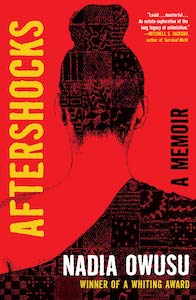
I’ve been looking forward to this awhile: a memoir and first book from the Whiting Award-winning Nadia Owusu, one that traverses countries and languages. Nana Kwame Adjei-Brenyah says Aftershocks is “a majestically rendered telling of all the history, hurt, and love a body can contain.”
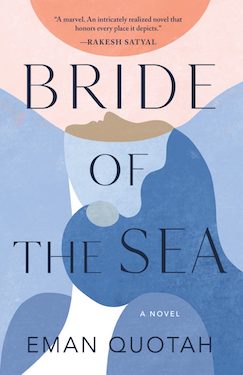
This debut novel is about a newlywed couple in Cleveland whose marriage ends shortly after their first child is born. When the father returns to Saudi Arabia, the mother, afraid of losing her daughter, disappears with their child.
I first read Geller’s work in a striking New Yorker piece in which she annotated the first page of the first Navajo-English dictionary with her history. In this memoir, Geller returns home after her mother dies, finds eight suitcases filled with her mother’s life, and sets out to better understand her family history.
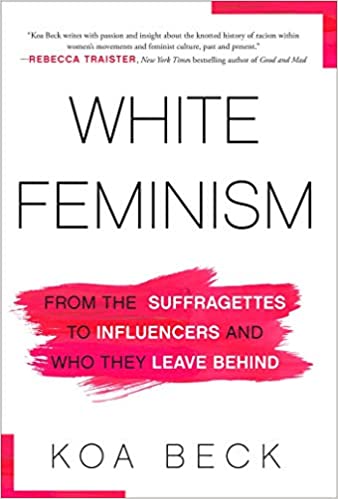
From the former editor-in-chief of Jezebel, this book examines the history of feminism. Patrisse Khan-Cullors—cofounder of Black Lives Matter—says Beck “illuminates the broad landscapes of systemic oppression and demands that white feminism evolve lest it continue to be as oppressive as the patriarchy.”
O, The Oprah Magazine says that, in this debut story collection, “like Danielle Evans and Lauren Groff, Moniz is unafraid to expose the darkened corners of the Sunshine State, and of female desire.” Moniz’s work has appeared in The Paris Review, McSweeney’s, and elsewhere.
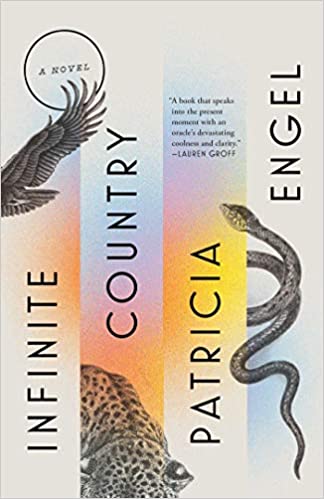
I’ve admired Engel’s writing a long time, and her new book deepened that admiration. An exquisitely told story of family, war, and migration, this is a novel our increasingly divided country wants and needs to read.
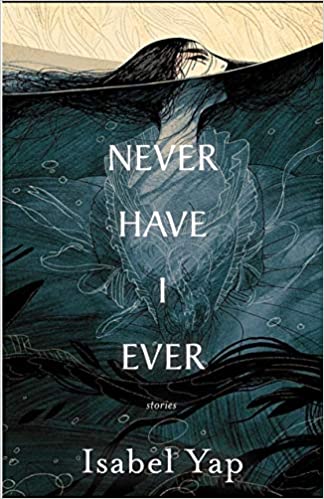
A debut collection from Small Beer Press, Never Have I Ever combines fabulism, horror, and science fiction. Charlie Jane Anders says that “these gorgeous stories will help you to glimpse a world that is both stranger and more immense and varied than any you’ve visited before.”
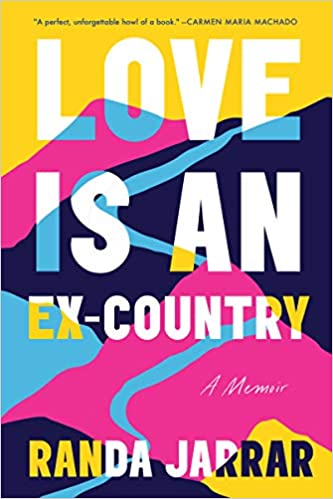
I love Jarrar’s writing, and Love Is an Ex-Country is a memoir about a cross-country road trip inspired by an Egyptian belly dancer’s 1940s journey across America. The book is also, wonderfully, about claiming joy. Carmen Maria Machado calls it “a perfect, unforgettable howl of a book,” and Myriam Gurba says Jarrar is “the Arab femme daddy” of her dreams.
This Close to Okay is about two strangers, a therapist and a man on a bridge, who share a life-changing weekend. Cross-Smith’s writing is reliably a delight—Roxane Gay has called her “a consummate storyteller”—and in a time of such isolation, a novel about strangers coming together seems especially appealing.
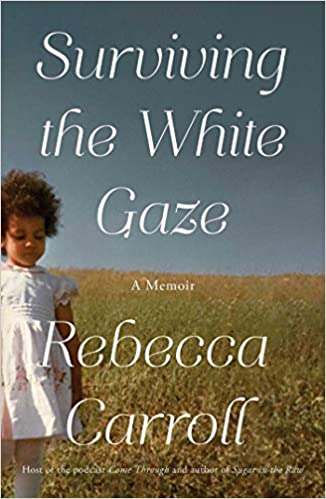
Carroll, a WNYC cultural critic and podcast host, has previously published interview-based books; now, she’s written a memoir about growing up as the only Black person in her New Hampshire town, and about adoption, belonging, and racism. I would pick this book up based on the title alone.
A debut story collection about people in China as well as the country’s diaspora, from a Wall Street Journal reporter who was previously a correspondent in Beijing and Hong Kong. Madeleine Thien says that “Te-Ping Chen has a superb eye for detail in a China where transformation occurs simultaneously too fast and too slow for lives in pursuit of meaning in a brave new world.”
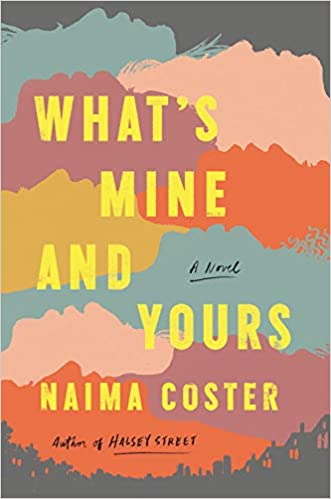
From the author of Halsey Street comes an explosive saga about two North Carolinian families on different sides of a high-school integration initiative. An unfailingly generous and compassionate novel.
In my household, we are such admirers of Choi’s fiction that we tussle over who gets to be first in reading advance copies of her books. Yolk is about two sisters carving out lives in New York City, and about the evolution of their complicated relationship after one of the sisters receives a cancer diagnosis. Moving and funny and trenchant.
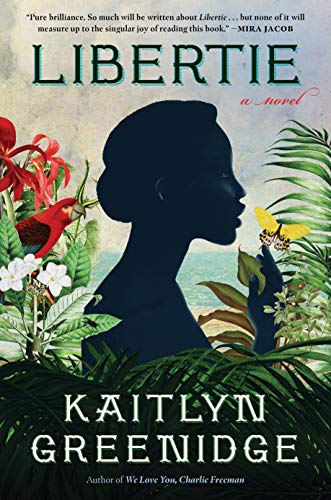
If you’re not already reading Kaitlyn Greenidge’s writing, you’re missing out. I remember first hearing Greenidge read a decade ago at the Sunday Salon reading series in New York, and knowing I had to keep following her work. Libertie, Greenidge’s second novel, is inspired by the life of one of the first Black woman doctors in the U.S. during Reconstruction-era Brooklyn.
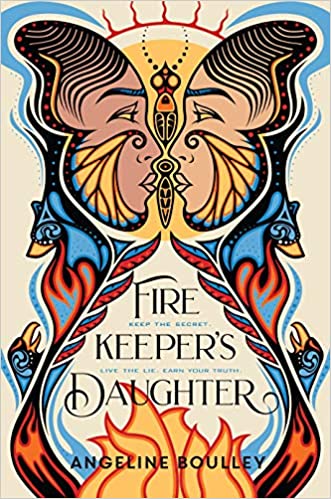
A young-adult thriller about an Ojibwe teenager who becomes involved in an FBI investigation of a lethal drug, Firekeeper’s Daughter has drawn comparison to books by Angie Thomas and Tommy Orange.
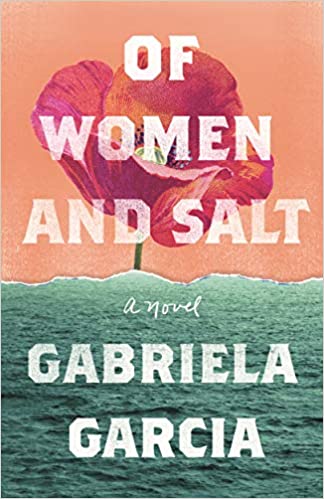
Another book I’ve anticipated for a while, Of Women and Salt is a debut novel about the daughter of a Cuban immigrant, Jeanette, who takes in the daughter of a neighbor detained by ICE. Garcia has worked as an organizer in migrant rights movements, and Terese Marie Mailhot says Garcia’s novel is a “true and profound work on migration, legacy, and survival.”
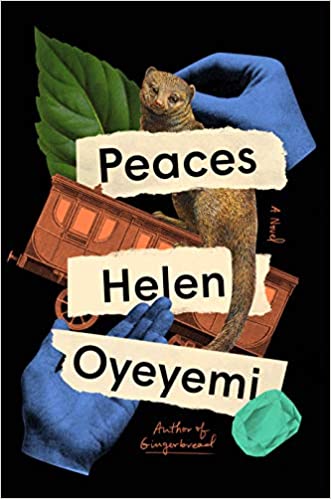
In Oyeyemi’s new novel, a couple and their pet mongoose get on a sleeper train called The Lucky Day, and it seems as though they’re the only people on the train. Mysteries and improbabilities abound; if you’re familiar with Oyeyemi’s wildly inventive fiction, you know it’s impossible to know what happens next.
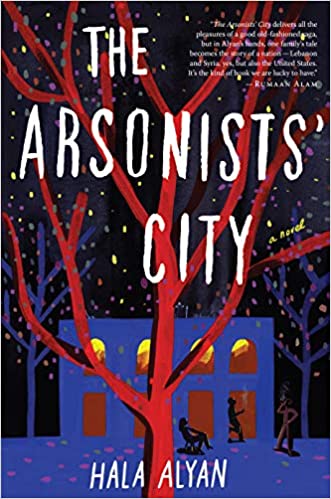
I’ve been on the lookout for Hala Alyan’s work ever since I read an unforgettable poem of hers last fall. From the winner of the Dayton Literary Peace Prize and the Arab American Book Award, The Arsonists’ City is a story of a far-flung family that returns to Beirut when the patriarch decides to sell their ancestral home.
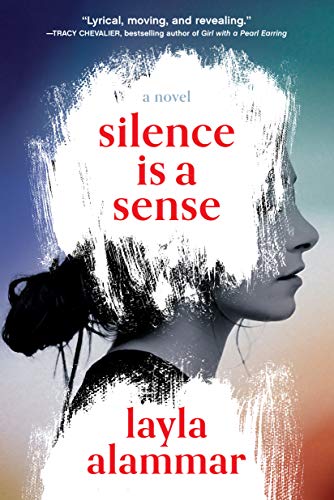
Silence Is a Sense is a novel about a Syrian woman left mute by the trauma of war and migration. She leads an isolated life in an English city until she begins writing for a magazine and venturing into surrounding communities.
A ghost-beset, angel-haunted novel, Brother, Sister, Mother, Explorer is about a woman trying desperately to help her sibling. Tiphanie Yanique says the book “begins in prayer and does what prayer does–gives us hope, reveals our deepest griefs, and sometimes even redeems.”
Set in a fictional town in Africa called Kosawa, Mbue’s expansive, suspenseful new novel is about a community that fights back against dictatorship and environmental pollution. A saga told from the perspective of a generation of children, as well as the family of a girl who grows up to become a revolutionary.
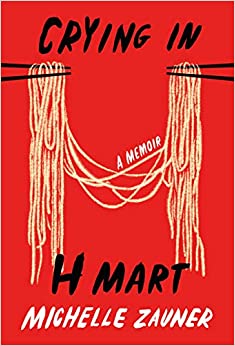
I’ve been waiting for this book since reading Zauner’s incandescent short piece about grieving her mother’s death. Zauner, who is also known as the indie rockstar Japanese Breakfast, has written a memoir about food, mourning, race, music, and Koreanness.
You might have seen a lot of Enjeti’s name lately, as she’s the co-founder of They See Blue, a grassroots organization focused on South Asian American voters. They See Blue has been heavily involved in the elections in Georgia, and a good way to thank Enjeti for her work would be to preorder her first book, Southbound, a collection of essays about social change and identity. She’s also publishing her first novel, The Parted Earth, in May.
A new book from the formidable Elissa Washuta, this time an essay collection about land, colonization, and witchery. Melissa Febos says it’s “a bracingly original work that enthralled me in a hypnosis on the other side of which I was changed for the better, more likely to trust my own strange intelligence.”
I’ve loved Quade’s writing for years, and her first novel, Five Wounds, is about five generations of the New Mexican Padilla family and a new baby. “All the fabulous mess of humanity is, somehow, in these pages,” says C Pam Zhang.
In this graphic nonfiction book, subtitled as “An Illustrated Oral History of Queer and Trans Resistance,” queer and trans organizers, artists, leaders, and others speak in their own words about their experiences with resistance and justice.
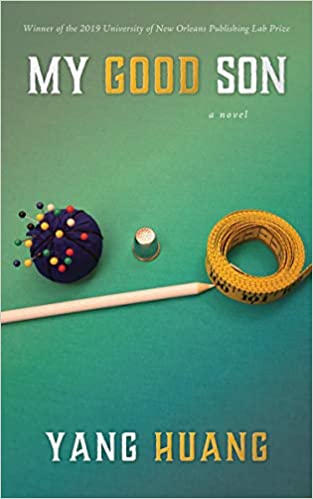
Huang’s second novel is about a tailor living in post-Tiananmen China who hopes to send his son Feng to the U.S. to study. He asks an American customer for help sponsoring Feng, and what results for the tailor and his family shines a light on vast, abiding disparities in opportunity.
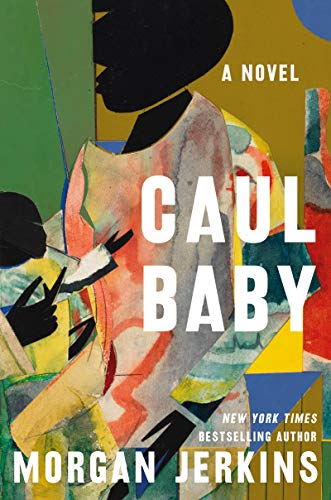
A woman who desperately wants a child, and whose previous pregnancies have ended in sorrow, turns to magic in the form of a powerful family’s healing abilities. Caul Baby is a debut novel from Jerkins, who has written two previous nonfiction books and is a contributing editor at Zora.
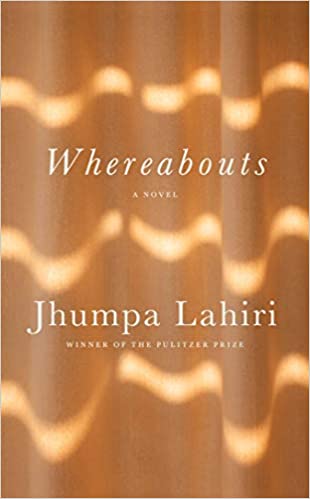
Whereabouts is the first novel in almost a decade from the Pulitzer Prize-winning Lahiri, and it’s about a woman who both wants to belong and has trouble forming lasting ties. Intriguingly, Lahiri first wrote this book in Italian—a language she started learning relatively recently—then translated it into English.
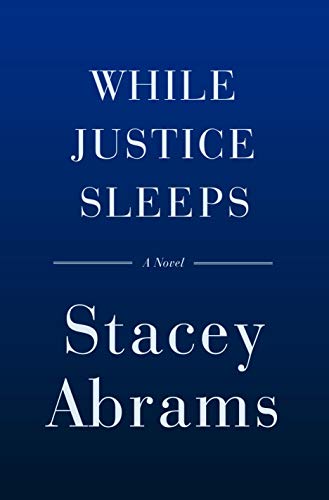
The incredible Abrams has not only devoted herself for years to voting rights in Georgia and elsewhere, but she also has written nine romantic-suspense thrillers under the name Selena Montgomery. While Justice Sleeps will be the first novel she’ll publish as Stacey Abrams, and the book is centered on lifetime appointments to the U.S. Supreme Court, and on what can happen when one person has too much control over the country. May this book absolutely thrive.
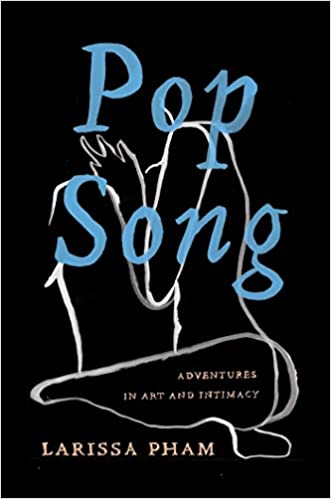
A debut memoir-in-essays about love and art, featuring the work of Anne Carson, Frank Ocean, and Agnes Martin, among others. “There are so many times in my past when reading Pop Song could have saved my life,” says Esmé Weijun Wang. “It may very well save yours.”
Feng’s debut is about a ten-year-old girl in a small Chinese village in 1986 whose parents live in America and have promised to return by her twelfth birthday. A novel about longing and secrets and immigrant compromises, one Garth Greenwell calls one of the most beautiful debuts he’s read in years.
I’ll jump to read Ford’s writing, and this is her first book, a memoir about her childhood with a father in prison. Her writing shines with extraordinary insight and grace, and Somebody’s Daughter is a book so many of you will want to read.
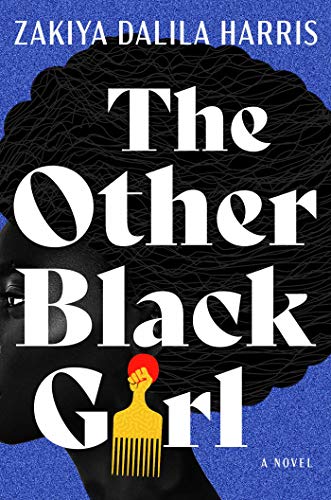
A debut novel about two young Black women who meet in the predominantly white world of publishing in New York, from a writer who’s worked as an editor at Knopf. Attica Locke calls The Other Black Girl “the funniest, wildest, deepest, most thought-provoking ride of a book.”
This is another book I’ve been anticipating for years, as I’ve long admired Kat Chow’s work with NPR Code Switch. Chow’s memoir is a debut centered on her mother’s death, and Jacqueline Woodson says it’s “a love song to loss, to family, to the power of writing things down and remembering.”
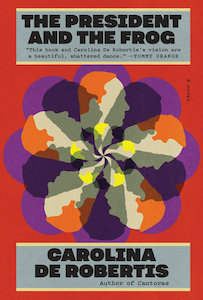
The President and the Frog is about the former president of an unnamed Latin American country, and a long conversation he has in his lush presidential gardens with a journalist. De Robertis’s large-hearted fiction is always a boon, and I’m so glad we’ll have more of it soon.
In this debut memoir, Qu tells the story of how, as a teenager in Queens, she was sent to work in her family garment factory, and was punished for doing her homework. Qu alerted the Office of Children and Family Services, and what resulted had lasting consequences she explores in what Alexandra Chang calls “a sympathetic, brave portrayal of the confusions, difficulties, and hurts that come with growing up between worlds.”
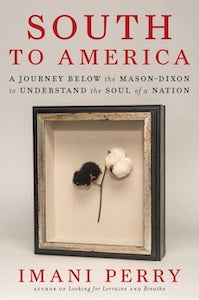
Perry is another writer whose work I’ve loved following for years. She is the Hughes-Rogers Professor of African American Studies at Princeton University, and her remarkable writing and scholarship mostly focus on Black thought and imagination. The nonfiction South to America takes readers on a trip through the American South, which, Perry argues, is the American heartland.
Transitional is the first book from the groundbreaking Black trans activist and model Bergdorf, who was named Changemaker of the Year by Cosmopolitan. Described as a gender manifesto arguing that everyone experiences transitions of many kinds, Transitional also examines the history of gender throughout the world.
NAACP Image Award Nominee Natashia Deón’s first novel was a revelation, and she returns with The Perishing, a portrait of a Black immortal woman in 1930s Los Angeles trying to save the world.
This collection of essays by culture writer Blay celebrates influential Black women throughout history, including Josephine Baker, Rihanna, and Cardi B.
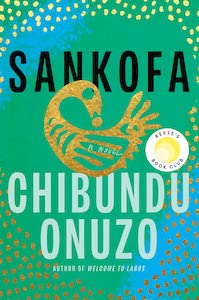
From the writer of the moving Welcome to Lagos, this novel follows the life of a biracial woman who learns that her father was a radical who became a controversial leader of his West African country.
I was 23 the first time I saw Children of Men. I had graduated from college and was working an administrative job and trying to figure out how to be a writer. I lived in a little house with my boyfriend; we had a clothesline and a garden; sometimes I felt very old, but I was very young.
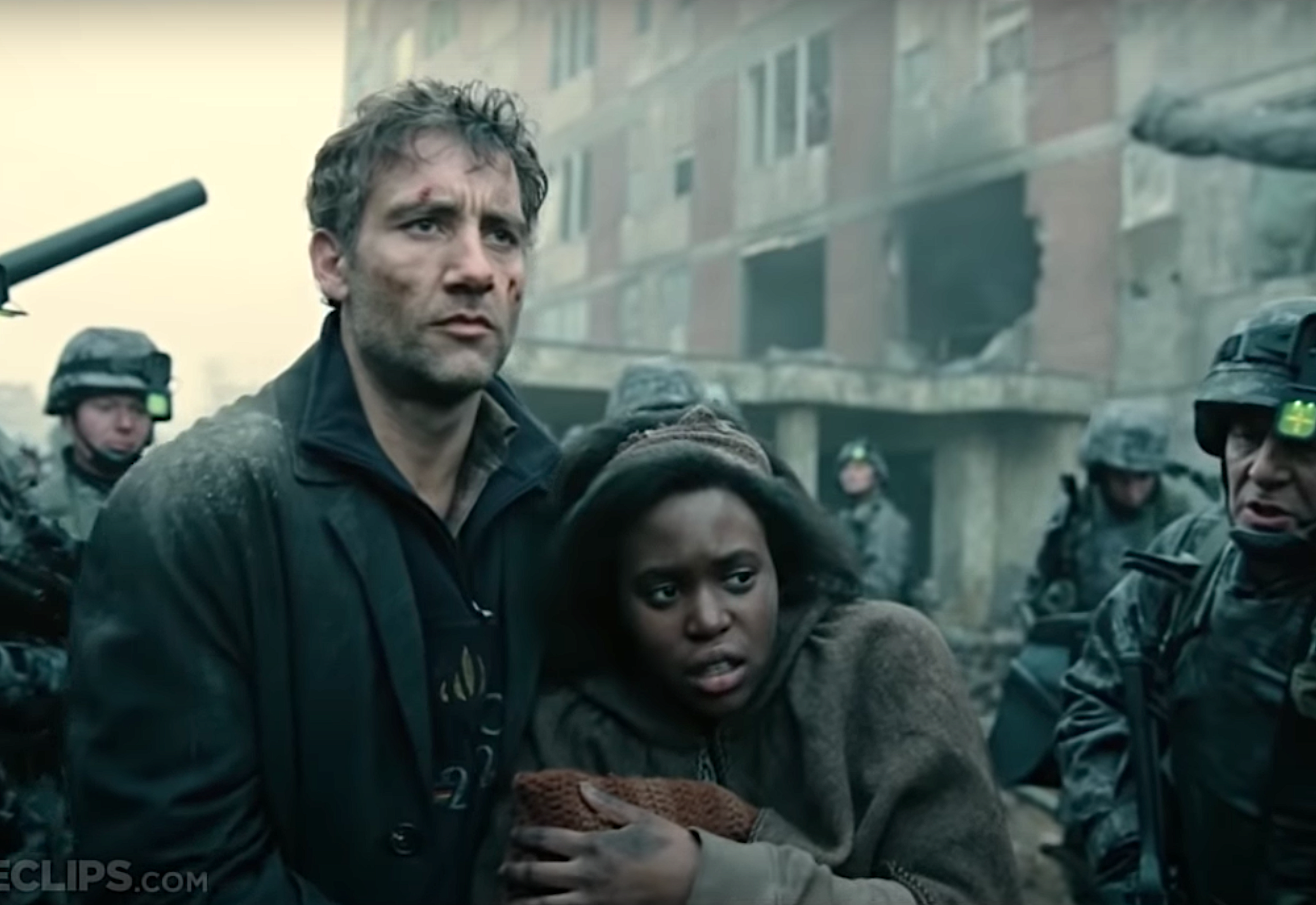
For those who haven’t seen it, Children of Men is about the end of humanity. Women have become infertile, so no new children are born; as the human race ages into obsolescence, society breaks down. Misery reigns and a suicide drug called Quietus becomes a popular way out. Amid all this, Clive Owen’s character, a disaffected former activist named Theo, takes on an impossible task: shepherding a young pregnant woman—the first in decades—past phalanx after phalanx of men with guns to a ship off the coast of Britain that will take her and her baby to safety. Along the way, nearly everyone he has ever loved is killed before his eyes.
It’s a dark film, to say the least. But I left the theater with a sense of lifting joy.
The apocalypse was a crucible, I felt, for heroism. I loved to write stories about ordinary people showing extraordinary strength at the end of the world.
Why did I love the end of the world so much? Part of it was the privilege, surely, of growing up white and middle-class in pre-9/11 America. I was safe in my home and my city as a child, my life was orderly, and so I had the luxury of seeing danger as excitement.
But there was also something specific about stories of apocalypse that appealed to me, starting when I was very young. When asked to explain it I would say that when civilization begins to fall, when humanity itself is on the brink, that’s when we will be morally tested as people. The apocalypse was a crucible, I felt, for heroism. I loved to write stories about ordinary people showing extraordinary strength at the end of the world. These people were always girls: girls riding through ruined cities on horseback, or captaining boats across a poisoned ocean.
Now I think those girls were the heroes I thought I could be, if called upon. Some part of me thought it would be thrilling to be called.
That thrill sizzled in my brain as I watched Children of Men in the fall of 2006. It was around that time that I began to write my first novel, about a girl who becomes a leader in a world ravaged by climate change.
I knew the climate was already changing. That same year, I visited a research station in the rainforest and listened to a scientist talk about the trees he measured. As the nights grew hotter, the trees shrank, and as the trees shrank, the nights grew hotter. I asked him what he would say to people who didn’t believe in climate change. He looked at me like I was from outer space.
“I live in the rainforest,” he said. “Everyone believes in climate change here.”
But I did not live in the rainforest. I believed, but that belief was abstract to me. I went to graduate school. I wrote and dreamed and marched with the rest of humanity towards our end.
I can’t tell you exactly when I started being afraid. Maybe it’s not interesting: the moment when someone who’s felt safe all her life realizes she’s just the tiniest bit unsafe.
Maybe it’s not interesting: the moment when someone who’s felt safe all her life realizes she’s just the tiniest bit unsafe.
But what I can say is there came a point when my dreams of the end of the world began to change. A few years ago—it’s almost embarrassing to talk about 2016 but sure, around then—I started writing about farmers.
These farmers lived at the edge of the forest, in quiet country. Far away, the cities lay empty, the highways overgrown. Sometimes my characters made mention of a great war. Other times the tragedy went unnamed.
But whatever had happened in their past, these people were not fighting any longer. They were growing vegetables and canning them for the winter. They were raising sheep and goats. Sometimes they had a dance with dandelion wine.
My farm stories were post-apocalyptic in a sense. But they were not dystopian. They described not a hell on Earth but simply an Earth, a place where, after terrible pain, people go on living.
After a while I started writing a novel from those stories. As happens, almost everything I started with, I later winnowed away. But what I kept was an idea about fiction in dark times, or fiction about dark times—that it can serve as a laboratory of different ways to be. After the world ends, before it became the way it is. The infinite variety of ways to make a life, a town, a world’s worth of lives.
There’s a girl on horseback in my novel—old habits die hard. But I don’t know if she’s a hero. I’m older now and I’ve been, as have we all, morally tested by a pandemic and an administration that separates parents from their children and sends troops in unmarked vans to hunt down Black people in American cities. I don’t know how well I’ve done on any of these tests, and I’m certainly not excited for more of them, though they come every day. Living in what can feel like the end of the world, I have no illusions about my own heroism.
Living in what can feel like the end of the world, I have no illusions about my own heroism. But I do want to think about how we will survive together.
But I do want to think about how we will survive together, and how we humans might care for each other after modernity, or late capitalism, or whatever you’d call the blasted era in which we live. These are the stories I want to tell now, not dystopias but simply topias, stories of people making a place for one another in the world.
I rewatched Children of Men the other day. I’m 37 years old now; I have a two-year-old son. We put him in a little mask when we take him to the park, so he doesn’t give or get a deadly virus. My appetite for dystopia has never been lower—at night I want cooking shows, or dramas about the English landed gentry. Still, I was curious. I wanted to see how the end of the world hit me now.
Turns out I’d forgotten almost everything about this movie. Spoilers follow: the world’s youngest person, age 18, dies at the very beginning. His baby pictures, splashed across TV screens within the TV, nearly destroyed me. Also, the main character has lost his only child, a little son, to a flu pandemic. Upon learning this I had to disengage and look up biographies of the actors on Wikipedia. Clive Owen, it turns out, is a fan of the soccer team Liverpool FC. Julianne Moore writes children’s books.
As I acclimated, I could see glimpses of what I’d loved so much back in 2006—the intrigue of the plot, the code names, the way Theo makes contact with the underground through posters reading “Have you seen this dog?” I remembered the humor and ease with which Clare-Hope Ashitey plays the pregnant Kee, a light in the darkness.
And then there were things I’d never seen. I’d always thought of Children of Men as a movie about Theo and Kee, persevering against all odds, heroes saving a fallen—or at least falling—world. What I saw this time was the way that world comes toward them, gathering around them and embracing them, even and especially when the danger is greatest.
What I saw this time was the way that world comes toward them, even and especially when the danger is greatest.
There’s the old activist, Jasper—Michael Caine in long hair and a Fair Isle sweater—who gives his life to save Theo and Kee. There’s the midwife, Miriam, who cares for Kee and ends up giving her life, too. There’s Marichka, the woman in the refugee camp who helps Theo, Kee, and Kee’s tiny baby get into the rowboat that will take them to safety.
And then there are the men who pause in their shooting and shelling to let Kee and her child go past. The refugees who reach out to them in adoration even as a battle rages. The animals—cows and sheep and, in particular, dogs—who seem to draw near to them as though called.
Children of Men is a hero story, sure. And it’s a dystopia, most definitely. But it’s also a story about community—people who come together, even if briefly, to protect those among them most in need of protection.
I’m not going to be naive and say this kind of community is going to protect us, in the real world, from what’s coming or what’s already here. But it’s where my eye goes, as a writer and a person, at this time in my life and the life of the world. It’s what allows me to look at all that’s falling and try to see what might rise.
Truth be told, I loathe re-imaginings of myths. The impulse feels reformist rather than revolutionary. I find these renderings on the whole stale and striving, hubristically clever, empty adaptations overly attached to their sources. They trip over their own longing for narrative’s initial hit of euphoria or devastation and slip misty-eyed into nostalgia. Maybe that makes my list invalid, or maybe that makes the books on it exceptional, which they all are.
With that out of the way, I’ll start all over. At the end of story-telling is myth-making: exhausted, stripped down narrative, pure grammar crystalized into affect. And when it’s good, it’s very-very good, a risk with the added danger of feeling safe. Myth-structure holds the power to awaken us to our own history and also to make ourselves into strangers. In Saturation Project, I adopted myth in the first section as a way of finding a repressed girlhood. The story of Atalanta, broken and re-set askew in tiny cages of self-conscious self-mythologizing, led me into my own memory and located a specialized knowledge that accommodated both unruly wildernesses and intense interiorities.
Though my book is memoir, fiction immediately comes to mind for the epic task of feminist re-mythologizing. Margaret Atwood, Pat Barker, Madeline Miller, Sarah Ruhl, Natalie Haynes, and Emily Hauser, for instance, all retell the Trojan War from the perspective of the women in the background. Hashtag we love to see it. Moving in and out of myth though offers writers a little more room to play and to surprise.
I exchanged letters last year with a writer incarcerated in Texas (through Deb Olin Unferth’s marvelous PenCity Writers Program) about Salvage the Bones by Jesmyn Ward. He was especially vivid at accounting for the way Ward uses fractured and recombinant myth (ancient Greek, biblical, American South) to pick up narrative speed.
My students in a text image class gravitated to a breath-taking moment in Namwali Serpell’s “Triptych: Texas Pool Party” that adopts the Perseus myth briefly to economize the narrative. The piece—a three-part fictional re-telling of news story captured on video of a Texas pool party in which a white police officer assaulted a 15-year-old Black girl in 2015—shifts point of view midway, pivots into heroic rhetoric, its tyrannies and fallacies, to reveal the real monsters in our midst (despite the grand jury declining to indict the offending officer).
Two weeks before the end of 2020, I listened, rapt, to a bilingual choral zoom reading of Sara Uribe’s Antígona González by Rosa Alcalá, Susan Briante, giovanni singleton, Carmen Giménez Smith, and Anna Maria Hong. Antigone is already feminist, but this updating of her story concentrates thousands and decades of missing bodies, missing family and friends, in Mexico into a singular grief, a singular search and standing before the law. I rely on communal contexts because they signal conversation like a counterpunch that explodes into a contrapuntal extended dance remix. In other words, these books, equal parts inventive and disruptive, aim to take back patriarchy’s tools in order to dismantle its house (versioning Audre Lorde, an autopoetic myth-maker herself).
Daisy Johnson’s Under Everything hijacks the Oedipus cycle with fairy tale riffs and fingerings. Her Jocasta-figure steps from the shadows into a visceral presence; her Oedipus is trans. The novel’s gorgeous prose immerses us in fluidity—gender, sexuality, memory, language—yet that very mutability, its queer, abolitionist currents, determines “everything” eternally.
All of Anna Maria Hong’s books feature fabulous feminist retellings—I name her Queen and King of the genre! —that disenchant narrative form as a vector of cultural myths. Her latest, Fablesque, features détournementsof Siren, Ouranus, and Kronos, from the Greco-Roman tradition, along with fairy tale and fable refigurations. This book and her sharp, animist Age of Glass share a poetic interest in mythological beasts, human monsters, and mutated half-gods with Donika Kelly’s delicious debut Bestiary, marvelously questioning the shapes our identities take.
For Her Dark Skin, Percival Everett’s satirical treatment of the Medea myth adopts a common enough idea, that myth is always related to questions of origins: how, why, and what things are the way they are, but renders it terrifyingly hilarious and cruel. When Everett turns this idea on gender and race, he refers us back to our linguistic and narrative frames, which become an endlessly reductive and recycled fate. We live in myth/language because it lives in us. If I’m making it seem more like an argument than a joyride that unexpectedly overtakes us, I’m Deadalus wrong.
While the re-activation of specific myths gathers tension in the distance between the contemporary world and the ancient one, the opposite is also true, often simultaneously. Christa Wolf, Sharma Shields, and Christina Milletti give the best voice to Cassandra, whose story seems especially resonant right now. Cassandra prefigures our current gaslighter-zeitgeist and instantly imbues it with tragedy. Women, especially Black women, are mocked, belittled, and ignored for speaking the truth—about sexual violence, racism, the climate crisis, and the pandemic. Sharma and Wolf focus their warnings on the industrial military complex. Milletti’s Choke Box: A Fem-Noir is a more subtle, inter-textual retelling than Wolf’s Cassandra: A Novel and Four Essays and Sheilds’ The Cassandra. And Milletti catches us in half-complicity, stuck between sympathy and judgment. We question both the Cassandra-figure’s reliability as a narrator and the over-confidence of male authority, undermining her at every turn.
If climate catastrophe is our present and apocalypse is our future, Rebecca Roanhorse’s Trail of Lightning makes vivid that the end of the world is also our colonial past, where America’s beginning was the Dinétah’s (traditional homeland of the Navajo tribe) demise. In this heart-racing, Navajo-myth-meets-urban-post-apocalyptic-fantasy, however, the badass protagonist makes clear “This wasn’t our end. This was our rebirth.”
In terms of helping people throw out unnecessary shit before a big move, my father’s my crowning achievement. His garage. Ziggurat of yogurt containers. Six-foot pyramid of Folgers cans. Worm farm. Dollhouses, boxes of bullets with no gun, three passenger doors (all different colors) for a 1993 Toyota Camry. No need for the full catalogue.
He cried when I held up can after can and pronounced them dead, things devoid of spirit and history. Like a plastic surgeon wielding a scalpel, I excised his memories from the objects I’d excised from his garage with an expressionless slash.
My amateur diagnosis, unkind: You have succumbed to the capitalist nightmare—prevented from earning anything of value, you cling to the useless like a child to its reeking security blanket.
As a child, he lived in a shack on stilts, near a reeking shore in Hong Kong, sharing canned corn with six siblings. Now he is an auto mechanic in the state of Maine who eats seconds for every meal and eats too many meals besides. It’s that old saw, the immigrant story.
The muchness is the problem, I try to explain. Listen it’s sad about the corn and the filthy water, but if you carry that everywhere, you’ll die of sepsis. Corn does not digest in the human stomach. Realize you can’t strap stability to your back. You can’t trade Toyota doors for a new house when yours gets ruined in a flood. You can’t pack your wife’s clothes into yogurt containers after the chemo stops working.
I’m ruthless because I’ve seen the other way of doing it. My (white) friends’ parents never hoarded cans, car parts. The stability is invisible. How much space does a bank account occupy? A will? A trust?
Make friends! I say. A friend at the movie theater can get you a ticket. A friend in the police can erase your tickets. Friends store themselves, very space efficient. Call them with your expensive string-and-can and ask them for a favor. If they’re rich (the right kinds of friends) they’ll give you what you need. Everybody I know who’s anybody (and that’s everybody because I make the right friends) has friends and their friends have friends and they’ve all got money.
Please meet these kinds of people? Before you’re too old to be conveniently stored.
When I finally throw everything out and drive the moving truck to the new house, I give him commandments: Keep the garage clean. Inside of it, store a new-used (Volvo) sedan. Smile at passersby from your driveway. Accept invitations to drink at the Irish bar with your co-workers. Yes, it starts with drunks. Even drunks have connections—the right kinds.
Despite all I’ve done, tried to do (for him!), he slumps his shoulders at me.
“How did I make you so ashamed?” he asks.
I can only cluck my tongue:
Not shame. I know I’ve told you things like the air we breathe is commodification and the water we drink, Eurocentric hierarchy, but I learned that in my liberal arts college. Our president wore a bowtie. My roommates’ grandfather invented the fucking barcode! I nearly lost my scholarship money for mispronouncing Goethe, but I endured such humiliations to get here, this level of clarity. If only you could see the cornlessness of my digestive tract.
Where I live, the auto shops are tucked tastefully away. Where I live, they don’t sell canned vegetables at the grocery store, never mind corn.
No, no shame on my end. Only care. A desire to see you…progress.
Go now. Was that a Lion’s Club bumper sticker on your neighbor’s Volvo? And the name of the little pub on the corner? O’Sullivan’s? You are the horse and this neighborhood, your water. I can’t do it for you. The point is, these people will be here when I can’t. And I don’t mean it cruelly, but I will not be here.
I also migrated. And like you, I’m lucky if I make it back on holidays.
Hope is irresistible. A dozen years ago hope got us a president, and against all logic we’ve continued hoping ever since. But Colson Whitehead’s 2011 novel Zone One dumps a bucket of ice water over those who dare to hang on to hope as a pandemic unfolds around them. The denizens of the zone live minute-to-minute dodging zombies, securing rations, and scouring Manhattan to find an abandoned pied-a-terre in which to crash, just as we’ve all been living minute-to-minute in the face of indifferent leadership, traumatic grocery runs, and the endlessly punishing newsfeed of our own catastrophe. Whenever humans are in constant peril, hope is a life-threatening distraction.
Mark Spitz, Zone One’sprotagonist, loves to call himself “mediocre,” the consummate B-student—but Spitz (a sobriquet, and the only name we ever get for him) is first and foremost a survivor. The central command he has for us is to stop dreaming of a better tomorrow. No one knows when or if the plague will end, and the sooner Zone One’s residents accept that situation, the better equipped they’ll be to put their heads down, kill the “skel” in front of them, power through their night terrors, and do it all again in a few hours. You don’t waste precious mental resources reliving the glory days of punching a time card, eating at chain restaurants, or commuting to Chelsea, because even a moment’s distraction can make you a victim.
In the old world, Spitz’s mediocrity took the forms of doing lame jobs in lieu of having a career, ducking out of relationships at the slightest hint of vulnerability, living with his parents, and maintaining a social schedule consistent with these life choices. It’s fitting that Spitz spends his last night before the monsters come in the most humdrum way possible—playing table games in Atlantic City, then enduring hours of traffic to return to his Long Island home. When, post-zombie apocalypse, Spitz and his fellow grunts are tasked with clearing the undead out of New York City, he finds that his previous indifference to his own future makes him enormously qualified to succeed in pandemic life.
The central command he has for us is to stop dreaming of a better tomorrow.
There’s a name for those in Zone One who, against all odds, continue to believe that the zombie apocalypse will soon disappear: “pheenies.” As in “phoenix,” as in oh yeah, we’re definitely going to rise from the ashes and get everything back the way it was. Better to fall in line and be content with the “MRE bacon-and-eggs paste” in front of you. The novel tells us point-blank that “you never heard Mark Spitz say, ‘When this is all over’ or ‘Once things get back to normal.’” As someone accustomed to getting by on the bare minimum, Spitz quickly learns the only lesson he’ll ever need: “If you weren’t concentrating on how to survive the next five minutes, you wouldn’t survive them.”
Most of the zone’s zombies are of the usual raving brain-eater variety, but roughly one percent are “stragglers.” These poor saps spend their undead days haunting the mundane places of their former lives, silent and immobile. Even with their entrails dangling or jaws missing, Mark Spitz can’t help but look upon these macabre flesh sculptures and see his former elementary school teacher, his old drinking buddy, an erstwhile lover. In these moments, Spitz comes as close as he ever gets to experiencing nostalgia, and thus he is nearly eaten. Our past is just as dangerous as our future. For my part, I don’t dwell on the hugs I used to give, or how the air around me used to be breathable without a cloth filter, and Spitz doesn’t dwell on the friends and relatives he’ll never see again, or how losing money at blackjack might not have been the best choice for a final blowout blast. But memories persist, perhaps more so than fantasies, and even the best of us can have lapses.
When I caught myself trying to conjure up a nation where we lived up to barely acceptable standards, it seemed so utterly impossible that I only got more depressed.
I reread this novel for a book club a few months ago, in the doldrums of the Trump presidency as COVID continued its national assault on prisons, on nursing homes, and on some of our most vulnerable citizens. At the time, the specter of a permanent authoritarian regime perpetuating these conditions forever seemed very real, and Spitz’s never-look-forward mantra spoke to me. Indeed, it was the only advice that made any sense. What else was there to do? Pretend that not only would we defeat the virus but also stop locking our fellow humans in cages, start giving everyone health care, and restore science to its proper place as one of the foundational pillars of our society? Please. How could I negotiate hand-washing, mask-wearing, social-distancing, and pretend enthusiasm for Zoom calls while deluding myself in this way? Maybe imagining a better world constituted self-care for some people (vaccinies?), but when I caught myself trying to conjure up a nation where we lived up to barely acceptable standards, it seemed so utterly impossible that I only got more depressed, more likely to say screw it and invite 20 of my closest friends over for karaoke.
But a few scant weeks later, I don’t know what to think. Just when I had trained myself to be content only getting through this, my one lifetime, all of a sudden the usual doomscrolling turned into the end credits of our horror movie. While I remain in mortal fear of experiencing anything that could be called joy, now COVID’s number one abettor will be removed from office on January 20, and an effective first-generation vaccine is already finding its way into our immune systems. Even as we set the record for new cases of the virus, the urge to smile has fought its way back from the brink, bubbling up in my gut and threatening to appear unannounced instead of restricting itself to a prearranged digital happy hour. I can’t help it—I’m turning into a pheenie after all.
DON’T MISS OUT
Sign up for our newsletter to get submission announcements and stay on top of our best work.
YOUR INBOX IS LIT
Enjoy strange, diverting work from The Commuter on Mondays, absorbing fiction from Recommended Reading on Wednesdays, and a roundup of our best work of the week on Fridays. Personalize your subscription preferences here.