Who Has Better Book Covers, the US or the UK?

Battles were fought. Book covers were judged. Voting buttons were clicked. And ultimately, select winners prevailed.

We know you all worked long and hard in this year’s Battle of US vs UK Book Covers. It was a tough one. So many colors. So many themes and narrative details sought to be captured in just a couple images. And so many questions dared to be provoked. Realism or surrealism? Photography or impressionistic painting? Text heavy or face-based? And where do animals fit into all this?

In all the years we’ve done this, this battle proved to us that US book designs are getting better! With 17 wins, the US designs beat out their UK counterparts by a landslide this year, making the US our overall winner. Given that our voters were primarily US-based, maybe this shows that publishers are starting to get to know their audience a tad more—at least as far as visual art/design goes.

So, did your favorite book covers come out on top? Place your bets now, and scroll below to find this year’s results.


Winner: 🇺🇸

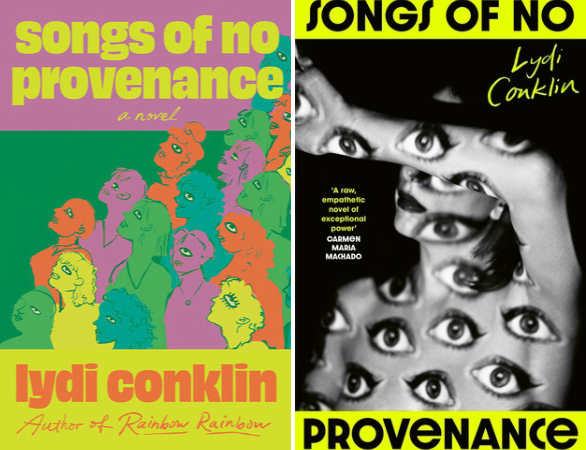
Songs of No Provenance by Lydi Conklin

Kicking off the competition is the great Lydi Conklin’s Songs of No Provenance. Though neither aim to capture the main character’s music career explicitly, both covers capture the novel’s themes of identity, appropriation, fame, and secrecy on a metaphorical level—with vastly different approaches. Featuring a colorful, cartoonish crowd, the US cover leans into the comedy that Conklin is known for. Meanwhile, the UK cover goes for a more edgy approach, with its realistic black and white image of a person covered in eyes, hinting at Conklin’s daring prose and the feeling of being watched while in the spotlight. Voters largely preferred the US cover, perhaps hinting at an early inclination toward  striking pops of color.

Winner: 🇺🇸

Stop Me if You’ve Heard This One by Kristen Arnett

Only in the second round, and we already have an extremely close call. With Kristen Arnett’s Stop Me if You’ve Heard This One, the US cover won by a margin of only 5 votes. For a book about clownery, it makes sense for y’all to try to play tricks on me—I really thought UK was gonna win with its silly clown face! But our audience preferred the slightly more abstract clown approach on this one, and like with Conklin’s, it looks like once again bright colors prevail.

Winner: 🇺🇸

Julie Chan is Dead by Liann Zhang

The voting for Liann Zhang’s Julie Chan is Dead was a clear knockout—a whopping 82% voters chose the US cover.  Though the bright yellow and hint of violence in the UK cover is definitely intriguing, you can’t help but admit that the US cover brings out more of the mystery of this novel: Who is the girl covering her face with her phone? Why is she the only brunette in this sea of blondes? The duplicity and interrogation of fame, identity, and technology are front in center here.

Winner: 🇺🇸

Blob: A Love Story by Maggie Su

Another knockout, Maggie Su’s Blob: A Love Story pitted realism against surrealism: 73% of voters rooting for a literal blob on the US cover, versus 27% of voters for the UK’s balloony lettering alluding to the blob. And though the lettering of the UK’s balloons are brighter and more eye-catching, the literal blob is frankly super fun and hilarious. I want to know what the blob is doing. And the way that the blob warps the subtitle? With the US cover, it’s all in the details.

Winner: 🇺🇸

Open Wide by Jessica Gross

Jessica Gross’s Open Wide was a close call! It was nearly a 50/50 split amongst our Instagram voters for the two very different covers, but our web voters swayed the decision, and the US cover won out by a margin of 20 votes. The unique drawing on the UK version is cheeky and humorous, but the suggestive imagery on the US cover is both provocative and captivating. A slash of bright pink amongst the grey combined with the man’s ambiguous, though clearly worried expression shows why the US cover pulled through. 

Winner: 🇺🇸

Nesting by Roisín O’Donnell

Tense and beautiful, Roisín O’Donnell’s Nesting tracks a woman bidding to start over, breaking free from her husband’s control. Though the UK cover was beautiful in its own right, featuring a woman with her two daughters by the ocean, it seems our readers slightly preferred the metaphorical imagery of freedom that the bird on the US cover represents. With a title like Nesting, you can see why voters appreciated  the parallel being explicitly made on the cover. This marks yet another win for the US.

Winner: 🇺🇸

Soft Core by Brittany Newell 

With a title as suggestive as Brittany Newell’s Soft Core, you have no choice but to have a cover that matches that risqué energy. And though both covers definitely accomplish this in their own right, readers had a clear preference for the US cover’s pop of color, and the sensual nature of the leather gloved hand, front and center. Though the UK cover offers us another sensual portrait, it isn’t quite as explicit as its US counterpart, which seems to capture a hand reaching toward a crotch—much more racy than a hand moving through strands of hair. The US won with a significant 63% of the votes.

Winner: 🇬🇧

Swallows by Natsuo Kirino

Once again, our voters were confident. Though I could see an appeal to the minimalism featured in the US cover of Natsuo Kirino’s Swallows, the UK cover is both chicly minimalist, as well as fun—we have a pink and orange egg opening up! How cute. And the pops of color once again seemed to hold sway with our voters. Nearly 70% of the votes went to the UK cover here, in the UK’s first win of the competition!

Winner: 🇬🇧

Katabasis by R.F. Kuang

The cover of R.F. Kuang’s highly anticipated Katabasis was tasked with incorporating the multilayered nature inherent to Kuang’s storytelling. Both the US and UK covers feature a complex labyrinth—the US cover giving us a more distant and three-dimensional view, while the UK cover immerses us deep into its running staircases. I’ll have to agree with the voters, who found the more immersive perspective of the labyrinth to be more exciting. 61% of voters selected the UK cover over the US cover, in the UK’s second win.

Winner: 🇺🇸

Endling by Maria Reva 

Finally, we’re getting back into some closer calls! Both covers for Maria Reva’s Endling feature large expanses—the US cover with a van traveling set against a stark red sunset and a black-and-white striped road, and the UK cover giving us a realistic portrait of a single cloud, reminiscent of a snail. Though the snail-cloud of the UK cover is both fun and artistic, I can see why the US cover slightly won out, with 55% of the votes—the contrasting colors are just so brash and unique. The US cover will definitely stick out on a bookshelf.

Winner: 🇺🇸

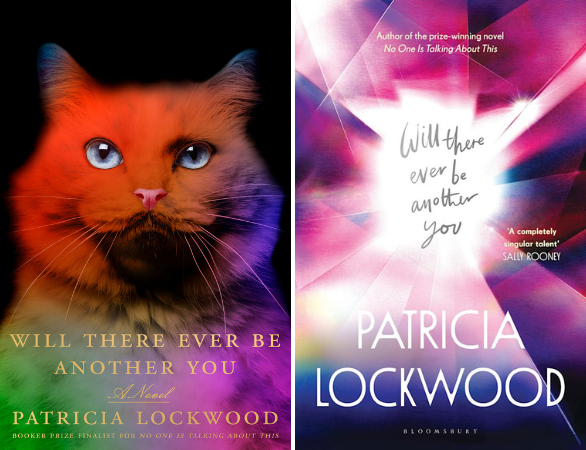
Will There Ever Be Another You by Patricia Lockwood

Patricia Lockwood’s WIll There Ever Be Another You has two very different covers, both irresistibly iridescent—just like the prose found inside of this novel. And though the split glass and fractured light shining on the UK cover is elusive, who could possibly say no to the cute cat on the US cover—especially anyone familiar with Patricia Lockwood’s classic tweet about her cat, Miette? With a whopping 72% of the votes for the US cover and its cat, it looks like Electric Lit readers might all be cat people.

Winner: 🇺🇸

Flashlight by Susan Choi 

With the covers for Susan Choi’s Flashlight, we pit photographic realism against impressionistic painting. I personally thought the bright yellow of the UK cover fit the title better, especially in contrast to the darkness of the path featured here as well. But voters would confidently disagree—75% preferred the more painterly approach of the deep orange sun setting on the US cover, featuring a silhouette disappearing in the distance. 

Winner: 🇺🇸

The Dream Hotel by Laila Lalami 

Interestingly, the outcomes for our web votes and our Instagram votes were vastly different for Laila Lalami’s The Dream Hotel. For our web votes, the outcome was pretty close, with the US winning slightly, 38 to 34.But on Instagram the difference was drastic. 176 votes went to the eerie darkness heavily featured on the US cover, which perhaps better captures the feeling of being trapped when compared to the literal barred off window shown in the UK cover, which only received 105 votes.

Winner: 🇺🇸

The Antidote by Karen Russell

Both versions of Karen Russell’s The Antidote feature a cool gradient of color, paired with sepia toned imagery. The US version features a lone house, looking awfully isolated, while the UK cover features a lone woman—and a hare perched on the lettering! I thought maybe the hare would win over the voters, especially given their proven love for furry creatures on covers, but turns out the more flashy color gradient won us all over, with nearly 60% of the votes.

Winner: 🇺🇸

The Pretender by Jo Harkin

If my time working in social media has taught me anything, it’s that people (and algorithms) prefer faces. So it makes sense that, when comparing the two covers for Jo Harkin’s The Pretender, the people preferred the cover with not just a face, but two of them, each fit with their own mysterious, Mona Lisa-esque smile. 75% of votes went to the US cover, over the UK cover’s 25%.

Winner: 🇺🇸

Helm by Sarah Hall

The trend of “more color = more votes” continues, with Sarah Hall’s Helm. Though the muted grey contrasting against the small, orange sunset in the UK cover is beautiful in its own right, there’s just something so immediate about the bright green of the US cover, complete with its falling yellow letters. The US wins once again, with 67% of the votes.

Winner: 🇺🇸

Evenings and Weekends by Oisín McKenna

In my experience going out for many many evenings and weekends, it’s that shining city lights are a precious and beautiful sight that everyone loves to stare at. So even though the UK cover of Oisín McKenna’s Evenings and Weekends is brighter with its shocking pink and orange, I too couldn’t help but adore the portrait of a city’s evening, given to us with the US cover, which won with 69% of the votes.

Winner: 🇺🇸

The South by Tash Aw

The US cover of Tash Aw’s The South won here with a staggering 74% of the votes! I find the UK cover to be magnificent—the neon green is eye-catching in the best way, while the portrait of a man looking wistfully to his side is a gorgeous image. But it stood no chance against the massiveness of the US cover, which gives us an expanse of the southern landscape behind sharp, delicate lettering. As the saying goes, bigger might just be better, at least when it comes to images on a book cover.

Winner: 🇬🇧

Absence by Issa Quincy

Another nailbiter! Both covers for Issa Quincy’s Absence heavily feature black and white photography set between bold colors. And though the US cover had more photographs featured, the UK cover had two things going for it:  brighter colors and wacky shapes. I don’t think I’ve ever seen those shapes on a book cover before. Maybe that’s why the UK edged this one out, with 51% of the votes.

Winner: 🇬🇧

Vanishing World by Sayaka Murata 

I was very surprised by this one! The US cover of Sayaka Murata’s Vanishing World is a gorgeous blue, featuring lots of tiny toy babies. So cute! But maybe a choking hazard—voters clearly preferred the flat, 2D drawing given to us in the UK cover. There’s something very reminiscent of the story of Adam and Eve there, a nod to a reference in the novel, which perhaps our readers picked up on.

Winner: 🇬🇧

The Book of Records by Madeleine Thien

Both versions of Madeleine Thien’s The Book of Records heavily feature flowing bodies of water. The US version gives us waves drawn onto a black backdrop with a chalky material, and a lone figure below a tiny setting moon. But the UK cover, on the other hand, completely washes over us, with a shiny gloss of bright blue snaking down the center. The UK cover is brighter, glossier, and feels slightly more immersive—like I’m about to be lost in a sea of records myself, rather than watch someone else be lost there. The UK wins with 54% of votes.

Winner: 🇬🇧

Beartooth by Callan Wink

The face of a bear is still a face, so it may be no surprise that voters greatly preferred the UK cover of Callan Wink’s Beartooth, featuring a bear baring (excuse the pun) its teeth over the more minimalist US design. There is a violence suggested in all that red of the US cover, but sometimes you really can’t beat a good face card. Especially if it’s a good bare face card. The UK wins here once again, with 71% of the vote.

Winner: 🇬🇧

The Bridegroom Was a Dog by Yoko Tawada

The US and UK covers of Yoko Tawada’s The Bridegroom Was a Dog are both fun and playful, cluing us in on the dreamlike, humorous quality to the narrative at hand. The former gives us a dog holding hands with a gloved hand, fit with a dainty wedding ring. But the latter—and our winner here—gives us a person whose face is being licked by this ridiculously long, pink tongue. 61% of voters went for the tongue-in-cheek option here, making the UK cover the winner for the fifth time in a row.

Winner: 🇬🇧

The Wax Child by Olga Ravn

Olva Ravn’s The Wax Child is represented in the US by a smoking crib, and in the UK by a woman with a wad of bright orange wax covering the entirety of her face. These similarly grim portraits are effective in communicating the eerie horrors that await readers just behind these gorgeous images. Maybe the presence of wax on the UK cover was enough to win more hearts, though—the UK comes out on top, with 54% of the votes. There’s only one more round, and the UK has won six times in a row! Get up, US! 

Winner: 🇺🇸

A New New Me by Helen Oyeyemi

The covers for Helen Oyeyemi’s A New New Me feature bright colors that pop. The US cover gives us seven watercolored teacups reminiscent of the Mad Hatter’s Tea Party, alluding to the split personalities featured for each day of the week in this novel. Meanwhile, the UK cover offers us a groovily painted button, showing the beginnings of its unraveling. Closing out this year’s Battle of US vs. UK Book Covers, the US finally returns for one more win! 64% of the votes, against the UK’s 36%. It’s like we’re new again!
This Memoir Is a Bridge to Iranian Solidarity

For The Sun After Long Nights is an unflinching record of Iranian women’s resilience and strength against their country’s oppressive regime. The authors, Nilo Tabrizy and Fatemeh Jamalpour, are Iranian journalists who corresponded and—in Jamalpour’s case—reported from the ground as the largest uprising in the history of the Islamic Republic unfolded. 

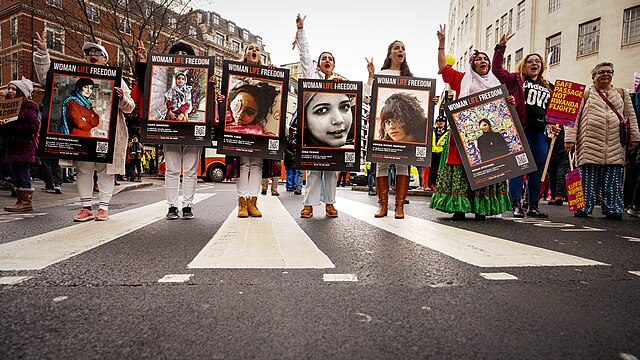
The book centers the revolutionary moment when the “Woman, Life, Freedom” movement erupted in 2022 after a young Kurdish woman, Mahsa Jîna Amini, was arrested and beaten to death by the city’s morality police for not adhering to Iran’s hijab rule. Suddenly, at least two million Iranians, led by young women and members of Gen Z, took to the streets to express their outrage.. These young women, Jamalpour included, exchanged notes with poetry and slogans that fueled the resistance even as the regime cracked down with arrests, tear gas, and rubber bullets. Miles away in self-imposed exile, Tabrizy started covering the protests for The New York Times, analysing video and images shared by Iranians on social media. Caught in the cascade of events, Jamalpour and Tabrizy started exchanging emails despite the risk to Jamalpour, who could be imprisoned for communicating with a Western journalist. Together, they bore witness to young girls and elderly women standing up to police; young women cutting their hair; Iranians chanting “Death to the Islamic Republic.” This book captures that moment and then expands outward, recounting stories from the authors’ lives and those of the women who came before them. Together, Tabrizy and Jamalpour unveil the role of women in Iran’s revolutionary past, and deftly illuminate the blurry line between the personal and political.

 I spoke with Fatemeh and Nilo via email about poetry as reclamation of Iranian identity, honor under patriarchy, the western gaze on Iran, and more.


Bareerah Ghani: It was fascinating to learn about the role of poetry and music in Iran’s revolutions. What are your thoughts on poetic expression as reclamation of land and identity, particularly in connection with Iranian women and their revolutionary spirit.

Nilo Tabrizy: Like many Iranians, I grew up in a home filled with the 14th century poet Hafez’s words. I wrote about the intersection between Persian poetry and Iranian identity for Guernica in 2020. Language is such an important point of connection to identity. For the many of us who can’t return to Iran, poetry is a lifeline to our land and history. When my parents recite classic Persian poetry for me, or when I hear lyrical protest chants, I can almost see and feel myself there. It’s the strongest way that I can connect with Iran from afar. The long history we have, dotted by many social movements and political upheaval, the way that our people always find hope after the darkest nights, all these moments being captured in verse is so very moving. It may seem impossible now to imagine a country where Iranians can live peacefully, journalists can report without state pressure, and people like me can return safely, but if Hafez’s own turmoil with hypocritic religious rulers moved and made way for important poetry, then Iranians can also find a path beyond this system that harms so many of its own.

Fatemeh Jamalpour: Poetry has always been political for us Iranians. For centuries, we’ve used literature and verse to challenge authoritarianism. Words have long been our weapons—more enduring than bullets, batons, or tear gas.

For the many of us who can’t return to Iran, poetry is a lifeline to our land and history.

During the One Million Signatures campaign against discriminatory laws in 2006, Iranian women introduced one of the first feminist anthems, with lyrics like: “I sprout on the wounds upon my body, Simply because I am a woman, a woman, a woman.”

During the “Women, Life, Freedom” uprising, lyrics and performances embraced a new language of agency and defiance. The protest songs, slogans, and symbols show how much ordinary Iranians are moving away from theocracy and toward secularization. This is no longer a nation passively waiting for change and a good day to come—it’s one rising to create it. In Iran, poetry is never just art. It’s survival. It’s rebellion. Its identity reclaimed.

BG: Beyond systemic oppressions like the hijab law, you also mention honor killing, domestic violence and forced marriages. As a Pakistani, I witness this in my country too and continue to be baffled by such mistreatment of women. How do you deconstruct the concept of honor as it’s defined and applied under a patriarchal regime?

NT: This is such a moving question, thank you. To me, honor is a communal concept. To define and redefine it, all members of a society need to be involved in its shaping, not just the few men in power. Women during the “Woman, Life, Freedom” movement challenged it by taking back their streets and voicing a refusal to let the Islamic Republic govern their dress and their society. To me, that’s exactly what honor and a feminist movement are—not just toppling a current system of power but envisioning something new in its place.

FJ: I came terrifyingly close to being killed by my educated father and older brother—an experience that, tragically, is not uncommon for women in Iran. Like you, I’ve seen firsthand how the concept of “honor,” shaped by patriarchal and religious ideologies, is used to justify violence and control over women’s bodies and lives. Yet a growing grassroots feminist movement—particularly in provinces like Kurdistan and Khuzestan—is challenging this brutal status quo. Local Kurdish and Arab NGOs and activists have been at the forefront, documenting honor killings, naming victims, sharing their photos, and demanding public attention. Their work has pushed both domestic and diaspora Persian-language media to cover these tragedies with greater empathy and urgency. And domestic journalists like Niloufar Hamedi have played a vital role in bringing these stories to light. She reported extensively on the murder of 16-year-old Romina Ashrafi, who her father beheaded with a sickle in northern Iran— in the name of honor. He was released just months later, protected by legal loopholes that grant leniency to male relatives under Iran’s Sharia-influenced penal code. In a system governed by deeply patriarchal laws, justice for victims like Romina is rare.

BG: As you two reflect on the revolutionary legacy of women in your own family, a chapter ends with this verse from Nigerian writer Ijeoma Umebinyo, “Nobody warned you that the women whose feet you cut from running would give birth to daughters with wings.” I would love for you two to talk about what inheritance means to you as Iranian women.

NT: I feel so grateful to have a strong connection with my family, and to have spent time with my grandparents before their passing. This is not always the case for immigrants who resettle to a faraway second country. I was perhaps the closest with my maternal grandmother whom I called Mamani. She was always incredibly independent. She lived with us for years at a time in Canada, going back and forth to Iran while being primarily based in Tehran. Widowed at a young age, she always reminded us that we need to carve our own paths and be able to face anything in this world. There was also an emphasis on education for the women in my family. My maternal and paternal great grandmothers were educated at a time when most girls didn’t know how to read. 

In short, those are the two things I carry with me—independence in the sense of self-sufficiency and of creating one’s place in the world, and education, constantly being curious and learning as an endless life project.

FJ: That verse has always been deeply inspiring to me, because, as I wrote in the book, my mother was a professional sprinter before the 1979 Islamic Revolution. She dreamed of becoming a champion, but the revolution and the restrictions it placed on women’s lives stole that dream from her. Still, she never stopped encouraging me to pursue mine. Unlike many women of her generation, she never pressured me to marry or have children.

To me, that’s exactly what honor and a feminist movement are—not just toppling a current system of power but envisioning something new in its place.

I also learned the importance of education, independence, and self-reliance from my illiterate grandmother. I still hear her words in my head: “As a woman, your hand must be in your pocket.” But the fight for liberation is a collective one. We are the inheritors of that ongoing struggle, and it’s our responsibility to carry this unextinguished flame forward. It is the legacy of women who, even when bent under the weight of religious patriarchy, did not break. Instead, they sprouted again from their wounds.

BG: While discussing the killing and mistreatment of Balochis, a minority in Iran, an eye-witness notes that their marginalization continues because of a lack of media coverage. How can independent media help Iranians, especially minorities, achieve justice?

FJ: One of my most unforgettable memories as a journalist was the day I traveled to Ahvaz, in Khuzestan Province, to cover the spring floods of 2019. I went to the NGO coordination center to join volunteers heading to flood-affected areas. But no one was going to the Arab-majority neighborhood of Malashieh, on the outskirts of the city. No aid had reached them. No media had covered their plight. I was told, “They are Arab and Sunni and angry, it’s not safe to go there!” So I went there alone, with my camera rolling. I saw men, women, children, and older people—everyone—filling sandbags with their bare hands, building makeshift levees to protect their homes from the rising water. When I approached them for interviews, they told me they would only speak in their mother tongue—Arabic. Though I don’t know Arabic, I agreed immediately and later added Persian subtitles to the interviews. I respected their language, they trusted me. And then something beautiful happened—they began to dance the traditional Yazleh, jumping rhythmically on the levees while singing in Arabic, “this is our homeland and we protect it”. It was a decisive moment. These weren’t “minorities.” They were a united people facing a disaster with nothing but courage and bare hands and triumphing.

To me, this is precisely why we need local media that publishes in the native languages of Iran’s diverse communities—media that amplifies their voices. But for 46 years, the Islamic Republic has systematically denied such platforms. The regime’s policy has been consistent: suppress minority voices and erase their presence from the local and national narrative.

BG: You note that The New York Times, when covering women’s protests, would publish pictures of only those with their heads covered which was “the antithesis of the women’s stated values and beliefs.” What are your thoughts about the Western gaze on Iran? How have you navigated working for western media outlets?

NT: Since immigrating as a young child to Canada, I’ve gotten very used to living in an explanatory mode—always having to give detail and context about my culture and where I come from. This has served me quite well in the different newsrooms I’ve worked in because I’ve had to get comfortable with thoroughly explaining news stories about Iran and making the case for why we should be covering them. I was reluctant to cover Iran for years as it would mean living in self-exile. But when President Donald Trump first took office in 2017 and rolled out the Travel Ban which barred many Iranians from entering the US, I felt it was my duty to start reporting on my country. Especially when I looked around and saw that I was one of the only Iranian reporters at The New York Times. I realized that if I wanted the coverage to be more reflective of what my fellow Iranians were experiencing, I had to start meaningfully contributing to the report. Many editors that I spoke with were eager for nuanced views of Iran as it’s a difficult country to access language-wise and unsafe for journalists. I’ve been lucky to have many supportive and empowering editors who have pushed me to share my expertise on Iran. 

FJ: While the Islamic Republic’s regime silences us, we are often erased by Western media as well. Many editors are more interested in numbers than names—statistics rather than stories. We’ve been asked by our American editors: “Were there more than ten casualties?” As if only when a body count crosses a certain threshold does it become newsworthy. That kind of framing reduces human lives to headlines. Even when Western journalists do cover Iran, the representation is often flattened. Iranians—and more broadly, Middle Easterners—are depicted as veiled, devout, anonymous figures, rarely afforded full complexity. After years of contributing to Western outlets, I’ve realized this isn’t simply a byproduct of censorship—it’s the legacy of a colonial gaze that continues to shape how our region is portrayed.

BG: The memoir mentions impartiality and journalist-activist binary as a central tenet in Western journalism. Both of you approach this aspect of journalism differently, can you elaborate on your approaches?

NT: Part of the reason why I moved to almost exclusively covering Iran using open source reporting methods in 2022 is because I want to work with digital evidence, which is much more irrefutable than traditional reportage. The latter type of reporting often relies on interviews and unnamed government sources. Open source reporting means using available material such as videos uploaded to social media, satellite imagery, ship tracking data, etc. It’s an accountability-based reporting. This is how I’ve navigated impartiality. Impartiality doesn’t mean that one has to be a robot. We’re all humans doing this work. Of course I have feelings about covering Iran, and indeed my compassion and empathy make me a stronger reporter who can connect with people in sensitive situations. Centering on a visual documentation approach is what keeps the reporting fact-based—I’m limited by the evidence at hand and therefore don’t inject opinions into investigations.

FJ: I don’t believe the core issue is impartiality—it’s about the dignity and responsibility of doing honest, responsible journalism. The kind of “impartiality” emphasized by Western editors tends to be selectively applied for their national coverage. For instance, during the recent Israel-Iran conflict, major outlets like CNN devoted airtime to regime-approved rallies, amplifying state narratives. Meanwhile, just blocks away, anti-war protests—where ordinary Iranians risked everything to voice dissent—went completely unreported. Where is the impartiality in that? Who is given visibility, and who is systematically erased?

As an Iranian journalist, I don’t see neutrality as a viable or ethical stance when we’re reporting on state violence, censorship, or human rights abuses. We’re not observing from a distance—we live with the consequences of the repression we report on. There’s no illusion of balance when you’re facing a regime that jails, tortures, and kills its critics. We don’t have the luxury of standing in the middle. In this environment, so-called “objectivity” can become a tool of erasure. For me, the priority isn’t detachment—it’s truth, integrity, and bearing witness. I’m not neutral in the face of injustice. I stand beside my people. 

BG: What impact do you hope this book will have on Iranian community and solidarity?

NT: What’s beautiful and freeing for me is thinking about how from the moment the book is out in the world, it no longer belongs to Fatemeh and me. It belongs to our community. Our diaspora includes many resilient people living in exile. I immediately think of the Paris-based Kurdistan Human Rights Network that documents injustice against Kurdish people in Iran, or Haalvsh which does the same for Baloch people in southeastern Iran. I hope that by reading our reporting and personal narratives our wider community can connect with the resilience and strength of our people, both in and outside of Iran.

FJ: My hope is that this memoir sparks awareness and opens a space for empathy, not division. That it can serve as a bridge—just as Nilo and I found each other across the regime’s walls—especially between generations of Iranians. I deeply believe in the power of honest storytelling to remind us of what connects us, beyond fear or suspicion.

In a time when the regime has worked so hard to fracture our communities—at home and in exile—I hope this book helps rebuild a sense of solidarity. That it invites us to imagine and work toward a shared future, much like the vision of justice and freedom that Narges Mohammadi and so many of our sisters continue to hold onto, even from behind prison walls.

Navigating My Mother’s Eviction, and My Own

Writing Home by Meg Doyle

I.

I’m carrying my mother’s guitar and her dead boyfriend’s clarinet as we walk down the hallway to storage unit CB09. Much of the morning had been spent deliberating what to take—a Santa Claus mug (leave), her father’s framed portrait from the New York State Supreme Court (keep), a set of camping chairs (leave), an air conditioning unit (keep). We leave behind the ashes of three dogs, but the musical instruments make the cut. 

I’d been receiving the same texts from her landlord for over a year: “No rent paid.” “Ambulance in front of house; mom found unresponsive.” And I’d spent the last two months driving from my apartment in Brooklyn to the east end of Long Island to move her belongings—first, to the back garage that the landlord let her use to temporarily store her things and now to a 5’ x 5’ storage unit (“Closet Plus”) at Westy’s Self Storage on Jericho Turnpike. It was October and the eviction was official. We needed to get together what she wanted to keep of her life and find a place for it. 

We needed to find a place for her, too. 

On the drive from the state-funded physical rehabilitation center where she had been since her last overdose, Mom tells me Westy’s is stunning. “People want to get married there,” she says between drags of her cigarette. “No orange metal doors!” She repeats this unattractive detail of modern storage unit facilities like Faye Dunaway in Mommie Dearest: “No wire hangers!”

I’d been receiving the same texts from her landlord for over a year: ‘No rent paid.’

We pull up to what could be a Holiday Inn or a penitentiary. A large multi-story building with few windows, overly landscaped bushes and gated access. Westy’s logo is a sketched portrait of a West Highland White Terrier, its head cocked slightly to the right. I stare at the dog’s open mouth, tongue playfully hanging out, as Tim has us sign paperwork for the moving truck and the unit. Tim loves my mom’s Grateful Dead sweatshirt and tells us not to worry about refilling the tank. He’s got it covered. I can’t tell if this is a normal policy or if he’s being kind, but I choose to believe the latter. When in need of a sign of humanity or goodwill, I am capable of believing a lot of things. 

II. 

My husband and I witness a stranger abandon a bag of five-week-old kittens on the sidewalk while walking through a graveyard in Brooklyn. We hold their tiny bodies against ours and walk to the local shelter, but it is May and litter season and there is no room for them. We communicate to each other with a look that has been ours since the start and know they will be coming home with us.

Neither of us are good at saying no, but when our concerned family and friends see photos of the kitten’s faces covered in food and watch videos of them playing on our living room floor, even they agree that they would have kept them. 

We learn things about kittens: how their eyes are blue at birth and change over time. We hold them up to the light and watch the pigmentation of their irises morph. Blue becomes green becomes yellow. We weigh them to make sure they are gaining enough body fat: 70 to 100 grams each week. 

In bed at night, my husband and I discuss the practicalities of what we are taking on. We imagine the five of them at their full adult size, lounging on the couch or stretching on a windowsill. The inevitable stench of the apartment and the bulk purchasing of lint rollers. 

But there is comfort in doing the absurd together. 

III.

When I pull into the driveway of my mother’s house, the dilapidation is staggering: empty boxes line the driveway; the lawn is filled with trash and broken glass; the buckling floorboards of the front porch have corroded. It’s not the first time I’ve seen it like this, but it manages to surprise me every time. The inside of the house is uninhabitable—a historic signature of my mother’s addiction, which spiralled out of control again after the death of her boyfriend. They met in an addiction program, and while they never stayed sober, they were each other’s last remaining companions.  

I had, months prior and after serious reflection (ignoring that Al-Anonic earworm “detach with love”), offered to hire a cleaning company. But when they arrived at the house, the cleaners called to inform me that it was not possible. The state of the place was beyond the level of services they provided. A still life of the moment before another ambulance would take her to yet another ICU. The kitchen counters were littered with the debris of addiction: half-empty pill bottles, a box of Sweet N’ Low resting against molded slices of bread, insects methodically crawling along the lip of a can of Diet Coke. Unopened bags of long-expired prescription medication could be found on nearly every surface of the room. The door to the pantry lay off its hinges, and a dried brown liquid ran down the panels. Exoskeletons of tiny beetles gathered in dusty corners, frozen in their final moments.

In between filling up bags of trash, I sit on the edge of the couch and take long, deep breaths—the kind I have my tenth-grade students do when I’m deescalating a classroom crisis. The task of going through all this stuff is impossible to complete between the two of us and after a few hours of coming to terms with this, we haphazardly comb through the remains.  

We do not mention the amount of drugs in the house. We do not hold up the needles and pill bottles to shout, “KEEP?” or “TRASH?” from the top of the staircase. We just move around them, as if they are not the most important objects in the room, as if they are not the reason we are here doing this in the first place.  

IV.

In September, my husband falls in love with a woman whose name is Peril. “It writes itself,” I tell a friend, knowing that eventually I will write it too. By December, I am moving out of our home of five years. 

Divorce can be a kind of eviction. 

On nights when he is out with Peril, I write and pack boxes. I turn my feelings into paragraphs, give them form, shape, a home. Madness becomes metaphor. Sometimes it floods out of the margins, off of the page entirely. On those nights, I focus on the packing. I pull books off the shelves, remove jackets from their hangers, wrap mugs in honeycomb paper. The candle we bought in Woodstock (keep), the guest book from our wedding (leave). 

It is not the same as moving my mother. Things here are organized, though there is a similar sense of urgency. The house has become uninhabitable in a different way. 

Divorce can be a kind of eviction. 

I come across one of the boxes that I had taken back with me from my mother’s house. It contains Christmas miniatures for a village her father had made for her as a child and that she made for us every year until she lost custody. Some of the figurines date back to the 1940s—the paint having chipped from the hat of a caroller, a missing limb from an ice skater or branch from a tree. The more recent additions to the village feature an LED fire that lights up and a skating rink with magnetized parts that move the skaters in figure eights. I unwrap the Lemax resin houses from their bubble wrap, and notice tiny white pills scattered all over the bottom of the box. I almost mistake them for snow. 

When I grant myself a break from packing, I press my flushed body against the yellow wall my husband and I painted together during quarantine—when home became a harbor for us, a hideout from the pandemic. When we became a team against the spread of an infection that would, it turns out, not be the cause of our marital demise. 

It takes a few months, and somehow no guarantor, but I finally sign a lease for an apartment in a three-family house in Kensington. My students ask how the kittens are doing and I tell them, relieved that they are not inquiring the same from me. Boxes pile up as I remove the familiar objects and place them in their new home. 

I light the candle from Woodstock.  

I break the boxes down, but some are oversized, too unwieldy, and refuse to be held together by twine. I pull them out to the front of the house and try to fold them, but they are stubborn. I let out a loud sigh that is meant to be a scream. 

Secretly, I admire their resistance. 

The front door opens and my elderly landlord runs out. I am a person who always assumes I am in trouble and so for a second, I hold my breath. I notice, though, that she has on her winter coat, her house slippers, and before I can say hello, she is bending over to hold a flap of the cardboard down. Her hands remind me of my grandmother’s—sturdy and storied. She looks up at me and yells, “Get on!” Soon enough, the two of us are standing atop the obstinate boxes, jumping up and down. It is the first time I have laughed in weeks. The double wall of paper fiber gives way. We grab the rope and wrap it around the sides, our hands meeting in the middle to tie it together. A high five signals our success. 

Winded and out of breath, my landlord says, “You can’t do everything alone.” 

V. 

I am on the phone with a social worker at the New York hospital that is trying to discharge my mother on the day that Jordan Neely is killed. Neely, a 30-year-old Michael Jackson impersonator and unhoused man, was strangled by a white United States Marine Corps veteran Daniel Penny on a Manhattan bound F train. 

Mom had been detoxing in the hospital for two weeks but was physically well enough to go home; there was, however, no home for her to return to. I ask the social worker what our options are. He tells me there is a seven-year waitlist for the Section 8 housing in Suffolk County, and a four to five year waitlist for mental health housing in upstate New York. A silence ensues as I wait for more options that do not arrive. 

I ask, “And until then?” 

“She enters the shelter system.” 

There is a lump blooming in my breastbone that I recognize as panic. The first time I noticed it was during tenth grade Earth Science. I spent the earlier years of my education in Catholic School and had not ever considered the formation of celestial bodies, fossils marking the passage of time, the Big Bang Theory—my first existential crisis. Here it was again, that tightness growing somewhere near my sternum, as the social worker compiled a list of available shelters. 

Although the New York City Housing and Vacancy Survey shows that the city’s vacancy rate has dropped to 1.4 percent—the lowest it has been since 1968—the affordable housing shortage is still dire. Rapidly increasing rent, the defunding and gutting of social services, continues to put low-income individuals and families at risk. 

Graffiti appears on subway platforms: “Justice for Jordan”. Friends on the internet share statistics of how many vacant apartments and office spaces there are in New York, criticize the housing crisis and criminalization of homelessness under Mayor Adams. The New Yorker publishes a profile piece on Neely, highlighting the fact that he spent most of his childhood in shelters and transitional housing, his own mother brutally murdered when he was only 14-years-old. 

There must be room for us all in this expanding universe. 

I am transferred to a nurse at the hospital who informs me that when my mom woke up, she was confused and agitated. They had given her a sedative, an injection of Haloperidol, to calm her down. She had to be physically restrained. When I see her next, a Milky Way of bruises adorn her wrists.  

Before Neely was killed, witnesses report he had been screaming that he was hungry and thirsty, that he had been asking for a job. Penny was charged with manslaughter and criminally negligent homicide, but the state determined that it was justified for Neely to have been physically restrained—a six-minute chokehold that would end his life. 

Textbook images of galaxies and nebulae flash before my eyes and I think: There must be room for us all in this expanding universe.  

VI.

I remember the contradiction of the scene at my mother’s home after the eviction: She kept so much of the life she was trying to leave. I wondered if these objects—a Celtic cross that had been hung up in every place she’d ever lived (there were many), a pair of work heels (she had stopped working years ago as her addiction became less of the functioning kind), even her parent’s bed sheets—were tethering her to this life, were her attempt at staying. Hoarding as survival mechanism. 

And what was my own survival mechanism? The writing of this, the getting it down? Even as I write and re-write the eviction and the divorce, I delete some scenes: the human details of my heartbreak, the initial hysteria of losing a home you thought was yours forever. I do not say, for example, that one day a few weeks after moving out, I returned to the house and cut up the art my husband hung on the walls that Peril had purchased for him (leave). 

Or I do say it (keep). 

What do we do when we keep losing home? We write ourselves one. 

Home is a cardboard trampoline. It is a storage facility with no orange metal doors. A Christmas village or a subway car performance or a hospital bed. It is the place we make for ourselves when love has failed us.

We break and make it where we can: my mother in the shelter, the street kittens brought inside, and a room of my own on the top floor of a house in Brooklyn where I write about it all. 

Searching for the Humanity, No Matter How Good or Evil, of Every Character

When the 20th-century Black intellectual and organizer W. E. B. Du Bois set out to rescue the Reconstruction era from the slander it had suffered, he felt the weight of the historical baggage confronting him. Across more than 700 pages of lush prose-poetry that composed Black Reconstruction in America (1935), Du Bois rewrote the story. He centered the agency of the recently emancipated – the Black men and women who threw off the “chains of a thousand years.”  

Twenty-first-century historians have vindicated Du Bois’s take, with recent studies exploring Reconstruction as the nation’s second founding and a testimony of Black survival amid the campaign of white terror that ultimately ended the experiment in multiracial democracy. Yet Du Bois, who also wrote fiction, has found fewer followers among contemporary American novelists, who have more often trod the imaginative terrain of the run-up to the Civil War rather than its long aftermath. Toni Morrison’s Pulitzer Prize-winning Beloved (1987) represents an exception: even as we think of it as a story about slavery, the novel actually takes place in Reconstruction.

In the work of Nathan Harris, the 33-year-old Chicago-based writer with an MFA from the Michener Center at the University of Texas, that literary landscape is beginning to shift. His Booker Prize-longlisted debut The Sweetness of Water (2021), told the tale of recently emancipated brothers, Prentiss and Landry, as they imagine a world for themselves amid a Reconstruction Georgia occupied by US troops, hostile white Southerners, and the husband and wife pair who befriend the siblings. Amity, Harris’s sophomore novel, out this month, chronicles the relationship of brother and sister Coleman and June, who are legally free but must traverse boundaries and borders both personal and political to realize that freedom, reclaim their relationship, and construct a world for themselves without any guarantees of legal rights or protection. 

Last month, I interviewed Harris via a shared Google Doc. It certainly outpaced the handwritten missives that 19th-century Americans sent to one another from the battlefield to the homefront. We spoke about narrative craft and historical content, Toni Morrison’s legacy for writers of Black historical fiction, and the links between the past and present US at a moment when news reports about ICE raids and legal challenges to birthright citizenship emphasize the abiding stakes of Reconstruction today.


Gregory Laski: Amity, like The Sweetness of Water, takes place in the Reconstruction era. What made you decide to stick with this historical period for your second novel?

Nathan Harris: Honestly, I never intended to return to this period. Part of me even wanted to avoid it. The postbellum South is so steeped in horror that, during research, there were times I felt like quitting. But there are two sides to that coin, because it was also the research that kept me going, kept highlighting parts of the past that just felt captivating to me. In this instance I came across stories of Confederate loyalists who fled to Mexico after the war, hoping to recreate the lives they’d lost. It was a kind of fantasy, this belief that they could reclaim their independence and find refuge from a United States that had rejected them. Alongside them were many of their formerly enslaved people, effectively marooned in Mexico. I had never seen that story told in fiction before. I thought maybe I could shine a light on that specific window in time, in that particular place, and that it might resonate with readers. Amity is what came out of that.

GL: You’ve mentioned, in other interviews, that you’d not been exposed to much fiction set in the immediate aftermath of the Civil War, and I wonder if that’s partly a function of how few contemporary novelists have grappled with the Reconstruction era?  

NH: I have no idea. Maybe I’m just not seeing it! There’s so much great historical fiction being published these days, and I know I’m missing some incredible work. It’s certainly rich terrain to explore for novelists, and a very formative time in our nation’s history.

GL: Yeah, I hear you. I mean, Jayne Anne Phillips’s Night Watch (2023) is set in the 1870s, but in terms of books focused on the Black freedom struggle, I could only think of Beloved (1987) by the late, great Toni Morrison. I actually took to Bluesky to check myself, asking folks to name 21st-century novels set in Reconstruction, and a famous scholar of African American literature replied with a plot summary of a book whose title she couldn’t recall offhand. Turned out, it was The Sweetness of Water. I think that exercise confirmed my thesis! Do you have any ideas about why we don’t have more contemporary fiction set in this era? 

It was a kind of fantasy, this belief that they could reclaim their independence and find refuge from a United States that had rejected them.

NH: Far be it from me to pathologize why authors might gravitate towards any time period, genre, subject. What I know is that Toni Morrison was there early on, as you said, and she made space for the rest of us. Nowadays, to our great fortune, there are an unending number of Black authors inventing their own fiction based on our collective pasts that might not be set in that particular moment in time but certainly are in conversation with it. We’re all working along the same historical continuum, and that sense of interconnectedness is what feels most powerful to me.

GL: Who are your models for writing historical fiction about this period, or historical fiction in general? 

NH: There are many, but I’ll give you one to start, Edward P. Jones. My first editor, Ben George, gave me a signed copy of The Known World when my first novel was published. I couldn’t think of a better gift. He actually visited The Michener Center when I was in school and I was too terrified to take his workshop. Probably for the best; having my early work in front of him might have been a death knell before it had time to mature.

Another influence, especially on Amity, was Ishiguro’s The Remains of the Day. Mr. Stevens was a guiding light when I was shaping Coleman’s character. Both are dealing with repressed emotions in very fascinating ways. I can’t say I managed what Ishiguro did, not by any stretch, but that novel was a touchstone and an inspiration nonetheless.

GL: I’m curious about the creative timeline of the two novels, whose publication dates span four years. Was The Sweetness of Water already out in the world when you began what would become Amity? Or were you working on both simultaneously?

NH: My first novel took a rather slow road toward publication, and I used that time to start in on Amity. Nothing truly creative with The Sweetness of Water was taking place then. So there was definitely some overlap but it wasn’t like I was writing two novels concurrently. I’ve had other authors tell me that the best thing to do to get your mind right when you’re enduring the stress of publication is to write something fresh. The early pages of Amity were exactly that for me.

GL: In the acknowledgements to Amity, you cite a number of scholarly works on 19th-century US and Native history, calling the studies “instrumental in the writing of this novel.” How do you draw on facts from these historical sources to fuel the creation of fictional figures and worlds?

NH: I just try to immerse myself in the time period and use what I learn to enhance my work. The research shapes the language, the sense of place helps ground scenes. My novels would be impossible without the true scholars who came before me. I’m really indebted to them.

GL: You also mention that you did research at the border. Tell us about what that process looked like, and how it informed Amity’s concerns with geopolitical questions of territory and land rights, between Mexico and Texas in particular?

I’ve had other authors tell me that the best thing to do to get your mind right when you’re enduring the stress of publication is to write something fresh.

NH: I felt I needed to see the region firsthand. I had a wonderful guide who showed me around, took me on a tour of Big Bend, and shared, with me, the history of the area. It was such an intriguing melting pot, shaped by so many different indigenous tribes, settlers, nations, and shifting borders. But mostly the trip gave me the sense impressions I needed to imagine what it was like for my characters. It’s a very unique area. I can only imagine how daunting it must have been for someone encountering the desert for the first time.

GL: How did the physicality of Big Bend, and also its history, shape your portrayal of Amity as a place in the novel? As I read, I sort of had Morrison’s chronicle of all-Black towns in her brilliant novel Paradise (1997) in the back of my mind, and because you mentioned maroonage earlier, I am now thinking of it as maybe a maroon colony too.

NH: Regarding Big Bend, it was a very unique mix of tranquility – the absolute quiet at night was a sort I was not used to, having spent a great portion of my adult life in the city – alongside that daunting feeling I spoke of earlier, brought on by the epic scale of the mountains, the vastness of the desert. I could go on but suffice to say you’re hitting on exactly what I felt. That this was a place someone could escape to and find peace; a place where someone giving chase might have second thoughts.

I’ll just add that the Black Seminoles lived side by side with the Seminoles. They shared a great deal culturally and had a strong allegiance, but it was a complex social relationship that sets their communities apart from the all-Black towns I was used to reading about.

GL: When Publishers Weekly announced the deal for Amity, the book’s title was The Rose of Jericho. Both have rich symbolic meaning in the narrative, for June’s arc especially. Who made the change, and when?

NH: It was a mutual decision made fairly early on. 

GL: Did you encounter Rose of Jericho, the tumbleweed that your characters call a “resurrection plant,” during your visit to Big Bend?

NH: It’s funny you ask, as I actually bought some! They sell Rose of Jericho as a souvenir around Big Bend. I still have it stored in the desk where I write. I had absolutely no idea you could bring some home with you but it’s sort of the perfect little memento of the trip and my time writing the novel. 

GL: As I read Amity, I also was rereading Sweetness. What struck me was how sensitively you depict such complicated relationships between Black and white characters. In Sweetness, for example, the formerly enslaved brothers Prentiss and Landry should have little reason to desire any interaction with the white characters George and Isabelle Walker, much less to trust them – yet the story repeatedly underscores moments of “sympathy” among the cohort. As a writer, how do you craft relationships that at once recognize the historical realities that would close off routes to cross-racial alliance and reveal opportunities for unexpected openings?

NH: One reason I enjoy writing into the past is that I have these opportunities to play around with class and racial politics during very heightened moments between a diverse cast of characters. Prentiss and Landry might not desire to have interactions with George, or any white characters, but what choice do they have, really? The world they inhabit is a white one. They must navigate their newfound freedom amid the very people who once enslaved them.

I approach these relationships as I do any other. You search for the humanity in every single character, no matter how good, how evil, and relay it onto the page. As I delve further and further into the characters’ psychology, what comes to the surface is often unexpected even to me. When it’s pat, or if it feels like I am only doing what I want the character to do, as opposed to what they would do, is when the work becomes routine, and I know I need to dig deeper.

GL: Staying with questions about technique, Sweetness deploys close third-person narration spread across the book’s multiple characters. By contrast, Amity shifts to the first-person perspective of Coleman for the bulk of the chapters, but retains close third person for June’s story, which appears in intercutting sections. How did you arrive at that structure?

Prentiss and Landry might not desire to have interactions with George, or any white characters, but what choice do they have, really?

NH: The narrative dictates the requirements of the form. Coleman needed to tell his own story. There was no getting around that. To filter him through a third-person perspective would have diluted something essential about his person and something essential about his story. It didn’t feel as necessary for June, and I was able to explore her inner life with a bit of distance. The contrast also creates a dynamic element to the novel, more texture and breathability.

GL: I understood Amity as a bit of a supplement to – or maybe a refraction of – the more hopeful vision of Reconstruction that Sweetness offers, with the possibility of Black-white cooperation and economic equality. Amity trains its sights on the characters of color, especially the interiority of June and Coleman’s sibling relationship, and near the end of the novel, you write that June’s “store of sympathy” for the family that enslaved her “had gone dry.” It’s as if the two books, read together, chart various historical paths that Reconstruction might have taken – and, at least in terms of its defining ideal of interracial democracy, still might take. Does that reading resonate at all with you?

NH:  I really do find it gratifying when people arrive at such articulate and thoughtful interpretations of my work! It resonates, yes, though it wasn’t something I consciously set out to do when writing Amity. Still, I love that there’s now an opportunity to consider the two novels side by side, and to see them in conversation with one another.

GL: You said in a 2022 interview that the Reconstruction era “reflects” current conflicts about race and class, and even contending ideas about “our nation.” Revisiting that statement now, and having published Amity, do you view the links between this particular American past and our present in 2025 similarly?

NH: Absolutely. If anything, those links feel even more urgent now. Which is a bit depressing. Nonetheless, authors like me keep reaching toward the past to try to make sense of the present climate. I will say there’s something grounding in it too, almost therapeutic, which is also perhaps why readers keep returning to historical fiction as well. The country endured then, with all its flaws and divisions, and somehow found its way to this moment in one piece. We have to hold on to some sense of hope, some belief that we can keep going. I think of Coleman or June on their journey, which feels endless, with so many obstacles, and yet they persist. That’s what we all must try to do. Persist in the face of so much darkness.

Exclusive Cover Reveal of “Replica” by Lisa Low

Electric Literature is pleased to reveal the cover of Replica by Lisa Low, which will be published on March 24th, 2026 by the University of Wisconsin Press. You can pre-order your copy here.

Stand-up comedy, a celebrity non-apology, observations of racism, and the slipperiness of nostalgia underpin Replica. In poignant, witty poems, Lisa Low navigates the tensions of solidarity and hostility in white spaces as she sets out to write differently about race.

“The problem of being with a white man is also a problem of writing,” Low states in a prose poem that turns writing about identity on its head. She peers in from the outside, as if through an open ceiling: “Like any good girl, / I became good / at watching myself.” The poem itself becomes a site of investigation, reimagined as a dollhouse, a stage with props, an image the speaker wears like a bodysuit. These powerful and direct poems offer a counterpoint to constricting narratives about Asian American identity.

Sure to appeal to readers of Monica Youn and Claudia Rankine, Replica asks what it means to represent yourself and your experiences in a world where you are indistinguishable from the others.


Here is the cover, designed by adam bohannon, with original artwork by Yuqing Zhu:

Lisa Low: While searching for cover art, I stumbled on an old listing for a workshop led by Yuqing Zhu in 2021 in Chicago. I immediately loved the description—“Yuqing Zhu creates self-portrait collages to uncover a personal mythology, channeling her family’s past into an allegory to the future”—and all of her work I found online. Even though the workshop probably showed up in my searches because I live in Chicago myself, the geographical connection made it all feel a little meant to be.

I love Zhu’s “Celadon, Porcelain” and how it makes self-representation playful, surreal, even wistful, yet also an act of strength—mixed feelings that I also want to convey in my poems. In Replica, sidestepping readers’ racial expectations while writing about yourself becomes an impossible task. This alternative self-portrait—the jade green that makes me think of sickness (nausea, envy) and alienation, the nod to blue-and-white ceramics like dishes I grew up using, the open mouth—accomplishes so much of what I hope to do in Replica in creating new ways to be seen. I absolutely love the scale and off-centeredness in adam bohannon’s design that also adds to the tension. I’m so grateful to both Yuqing and adam for this cover that contextualizes my book!

adam bohannon: well, what a gift to be presented with the piece of art we’re using for the cover. i kinda couldn’t stop staring at it, which is always a good sign. several ideas immediately presented themselves. and the path to the final design was pretty quick, which i think is thanks to the fabulous art. like a lot of things in life, less seemed like more: simple type, work the color palette, enjoy the directness and intrigue of the one-word title.

i’m so happy that we went with the added visual hook of having our title type peek out + wrap around the art!

one of my favorite designs ever. and one of the happiest journeys.

Yuqing Zhu: I completed this piece, “Celadon, Porcelain,” back in 2017 when I was just a college student beginning on her artistic journey. I never imagined it would receive a second life on the cover of a poetry collection, and I’m so deeply grateful to Lisa for selecting it. Like most of my work, this piece is a self-portrait that taps into my cultural heritage. The title and imagery reference the two most enduring forms of earthenware originating in China — celadon, which is glazed in a jade green color, and blue-and-white painted porcelain. I adore how bowls and other vessels are means of asking for and receiving, and also of offering. Here I depict myself as a vessel with the capacity to hold anything the world has to give and also perhaps offer something in return.

The Unpredictable Choreography of Marriage, Identity, and Ambition

In Little Movements, debut novelist Lauren Morrow delivers a deeply felt, emotionally intelligent story about the quiet ruptures that reshape our lives through dance and desire. At the heart of the novel is Layla Smart—a Black choreographer in her thirties who temporarily leaves behind her life in Brooklyn, including her husband, to accept a prestigious residency at Briar House, an elite arts institution nestled in a predominantly white, rural Vermont town. What unfolds is a layered exploration of what it means to pursue artistic fulfillment while navigating systemic bias, personal transformation, and the unpredictable choreography of marriage, identity, and ambition.

Morrow’s prose moves with the same deliberate grace and tension as her protagonist’s work. Through Layla, she captures the nuance of being a Black artist in a space not built with you in mind, and the toll of constantly having to prove your value—on stage, in institutions, and in love. As Layla wrestles with microaggressions, institutional expectations, and the surprise of pregnancy, Little Movements doesn’t offer easy resolutions. Instead, it opens up space for vulnerability, questions, and the many ways ambition and intimacy can coexist—or collide.

Morrow, herself trained in dance, brings a rare physicality to the page. The novel’s central dance—both literal and emotional—is about how to keep moving when the ground beneath you shifts, and how the smallest choices can lead to the most profound changes.

Morrow and I corresponded via email about the novel’s genesis, writing across race and class, how choreography shaped her approach to fiction, and why Little Movements is, above all, a story about agency, embodiment, and the courage it takes to step into the center of your own life.


Cherry Lou Sy: One piece of advice I heard growing up was not to marry an artist. I was reminded of this at the beginning of the book, when Layla steps away from her marriage with Eli, a white man and an unfulfilled artist, in order to pursue this lifelong dream long delayed. What drew you to write about ambition and its conflict with intimacy, especially with another artist who is unable or unwilling to pursue their own aspirations? Do you agree with the advice of not marrying or dating a fellow artist?

Lauren Morrow: Advice is a tricky thing, particularly when it comes to art and relationships. I’ve started to avoid giving and taking it, because everyone’s experience is completely different. I certainly don’t think any rules blanketly apply to everyone. No doubt, there is something romantic and bohemian about the idea of an artistic partnership, and there are so many examples of successful creative couples (and just as many failed; same as couples who aren’t creative). For Layla, though, her desire for comfort and her passion for art have been at odds for her entire life. There are times when the need for financial stability is strong enough to overtake her artistic drive, which I think is a common experience for many, particularly those who don’t come from privilege. Of course, someone with different circumstances or simply a different mindset might be able to dedicate herself to art without hesitation.

Money and love and ambition are such complicated bedfellows.

And, if Eli’s creative pursuits were more promising, that would change things quite a lot too. One issue is that they’re both starting from the lowest level and trying to work their way up, and her gains, incremental as they are, quickly surpass Eli’s. Plenty of people build successful lives as artists, but I think the struggling artist idea is one that Layla fears.

Money and love and ambition are such complicated bedfellows. There was a time when I envied my artist friends who had partners with high-earning jobs who could support them. I thought that allowed them a freedom that was quite distant from my own experience—particularly over the past five years, as a single person—of hustling and grinding to make it all work. But I’ve come to understand the freedom of being a single, childless artist as well. Your time is your own, to an extent, and if that’s not a privilege, not an opportunity to pursue your ambitions, I don’t know what is.

CS: Another of the oft-repeated words of advice I’ve heard from writing professionals was not to write a prologue. I actually love prologues even though I myself have been advised against them. What made you decide to begin the novel with a prologue? Was it always there?

LM: Ha! Funnily enough, I think I was given the opposite advice (hence my rejection of the idea of advice). The prologue was not always there, and it was not always the prologue that’s now in the book. An early draft began with a scene that takes place in the middle of the book, when the character is back in her Brooklyn apartment, and she’s considering where things are now as compared to when the novel/the residency began. I thought it was interesting, but I don’t know that it worked. A big part of writing (and editing, and editing, and editing) this novel was distinguishing between the two. The current prologue offers a very quick snapshot of where Layla has come from, why she functions in a very particular way, and I hope that makes for a smooth onramp into the narrative. I considered cutting it at a certain point, but so much would need to be changed and explained in order to account for that removal that its value became quite clear.

CS: In many ways, this is a novel about dreams and how expansive or restrictive they can be, depending on whether they are perceived in a positive or negative light. Layla’s mom tells her to “dream medium” after all. But the kind of desire that Layla has—to make it as a Black choreographer on her own terms—means that she has to not only dream big, but negotiate relationships along the way. How did you approach writing relationships between characters, especially Black characters, that are layered, imperfect, and not always about shared identity?

There can be a knowingness involved with being one of just a few Black people within a white space.

LM: No two humans have the same life experience, and that’s what makes this place interesting (and often terrifying). I knew there needed to be tension moving in all directions, especially between Layla and her dancers, and between the dancers and one another. The dancers are younger, and they’re all from different parts of the country with different backgrounds in every way. So, while they’re all Black, each of them has a different view of the situation they’re in and how they should move forward, which complicates things even more for Layla, who sees them as allies in this isolated Vermont town. It was crucial to have tension and conflict between the various members of the group, to highlight the complication of their situation. There’s no universally right answer, and that’s okay. 

CS: There’s a moment in the book where Layla meets Marcus, a Black journalist from the NY Times who’s at Briar House specifically to interview her. He’s doggedly pursuing uncomfortable questions until she confronts him about his race baiting. He shrugs and says—I’m paraphrasing here—that it’s part of the game. Do you think this type of encounter happens often when Black artists and professionals encounter each other in white spaces? 

LM: This is a particularly challenging moment for Layla, and I don’t know that this exact exchange is something that happens often. But, I think there can be a knowingness involved with being one of just a few Black people within a white space. I’ve been at events or activities where I find myself walking up to another Black person, and we’ll blatantly say, “Hi, couldn’t help but notice you’re Black!” Then we laugh, and introduce ourselves, and learn what brought us here. I’ve also been in situations where there is an assumed connection—on our part or, sometimes quite clearly, by the non-Black people present—but then it’s a flop. You either do the head nod and they don’t, or you start to talk and realize you have nothing in common, nothing at all to talk about. As I mentioned when speaking of the dancers, every single person on the face of the planet is different from the next, and assumptions can sometimes lead us in an uncomfortable direction. 

Regarding that first encounter with Layla and Marcus, that sort of confrontation probably happens on occasion, but it might be somewhat rare in person. I’d bet this sort of thing probably happens a lot online. 

CS: Often, Black art glorified by institutions tends to be trauma-filled and is expected to be so, just as the Board of Briar House expects from Layla in your novel, even though her work doesn’t address racism and trauma directly. Do you see this ever changing?

LM: I do see this changing! There’s been so much conversation around this very issue in recent years that I think it has to. One of the sparks for the book was Erasure by Percival Everett, which I read in 2019 and sort of blew the lid off what I thought I knew about writing. That, of course, became [the movie] American Fiction, which was huge, and I hope between that and [Everett’s latest novel] James, that people are going back to Erasure, because it’s so big and bold. It puts the publishing industry on blast in the most brilliant way, and I think publishing through a small press is how he got away with it (in 2001, no less). This is a roundabout way of saying that a book like that being turned into an Oscar-winning film feels like an indication. And of course, we’re seeing lots of great Black art in every medium—and it’s not just addressing the peaks and the valleys. So many great TV shows, films, plays, dance works, that aren’t rooted in historical trauma—some of these are smaller projects, but I hope their quality and beauty will lead to more resources being put into these works. There’s space for all of it, of course. We can’t deny the past and how much incredible art has been created from unthinkable tragedy. Some of the best art, in fact. But it’s really nice to see the Black mundane being celebrated too.

CS: As someone trained in dance, how did your background in movement shape your writing process—on a sentence level or in terms of structure?

It’s really nice to see the Black mundane being celebrated.

LM: I think about rhythm a lot when I write. Sometimes, I’ll write a sentence that contains the right ideas but isn’t rhythmically aligned with what I had in mind. I like long, run-on sentences followed by fragments and dialogue that sort of leapfrogs. I try to read out loud, though I don’t do it as much as I should. When I do, I hear what’s working and not. This doesn’t always work. Occasionally a more reasonable figure (agent, editor, copyeditor, etc.) will encounter something that feels like a perfect combination—to use a dance term—to my ear. But it actually makes no sense. It takes a village!

CS: You work as a senior publicist for one of the Big Five imprints. How has this informed your own work as a writer? Do you think they complement each other or do they clash?

LM: The big reveal! Yes, after a decade in performing arts publicity, then running off to get my MFA in creative writing at the University of Michigan, I started working in publishing just over three years ago. I like to think I’m good at compartmentalizing, but my innie and outie are not totally divorced from one another. I hope, and believe, these two parts of myself complement each other. I find it so fulfilling to work with other authors, and I think the fact that I’m a writer myself often allows me to understand their perspective—questions, anxieties, etc.—at least to some extent. On the reverse side, I think my role in publicity has been helpful in understanding how to position the book within the larger publishing landscape. 

I began the book while in my MFA program and so wasn’t thinking about the industry side of things yet. When I started in my role, I was in the middle of, probably, the third big revision and beginning to query agents. Being immersed in books—specifically the types of books I might not ordinarily pick up—unlocked something for me. I’ve read more thrillers over the past three years than in my entire life, and I started to see how the authors propelled the reader forward. My natural tendency, at the time, had been a quieter, subtler style, but in one round of revision, I remember tasking myself with ending every chapter in such a way that the reader had to keep going. Not a cliffhanger, necessarily, but a moment that sort of made it impossible to turn away. I certainly think that added challenge—inspired by what I was newly encountering—pushed me forward. 

Also, I think working in this industry has prepared me for what it’s like to be a debut author, which is a strange place to be. There are so many expectations, and because people in your life are excited, they can plant so many ideas in your mind about what life as a debut author is supposed to be. Because I have a pretty clear view of the realities of what it means to be a debut author, I think I’m moving forward with a calmness I might not have if I hadn’t made this career shift. I know what might happen and what might not, and all of it is okay. I’m crossing my fingers but not holding my breath. I’m sleeping pretty soundly. 

CS: What do you hope readers carry with them after finishing the book?

LM: I hope readers leave this feeling like it’s okay to take a big swing. It’s okay to step out on a limb and go for whatever it is you want—or to step away from the thing that isn’t serving you. Change is hard and scary, but what are we doing if we don’t honor who we truly are?

Vote in the 2025 Battle of US vs. UK Book Covers!

We’re all in the business of judging books by their covers. Admit it — when you’re in the throws of writing your novel (or short story collection, or poetry collection, or memoir, etc. etc.), you too spend your breaks daydreaming of a beautiful, captivating cover that will capture the essence of your book perfectly and also convince every single passerby in the bookstore to purchase their own copy. But had you ever thought to dream up two different versions of it?

Love it or hate it, the publishing world has decided that book cover styles should vastly differ, depending on what side of the Boston Tea Party you were on. Now is your chance to help us find out whose taste is better! We present to you: The 2025 Battle of US vs. UK Book Covers!

Voting starts NOW. Vote for your favorite covers before Wednesday, September 9 at 12pm Eastern to have your vote counted!


US vs. UK cover: SONGS OF NO PROVENANCE

Which cover do you prefer?

Voting has closed.


US vs. UK cover: STOP ME IF YOU'VE HEARD THIS ONE

Which cover do you prefer?

Voting has closed.


US vs. UK cover: JULIE CHAN IS DEAD

Which cover do you prefer?

Voting has closed.


US vs. UK cover: BLOB: A LOVE STORY

Which cover do you prefer?

Voting has closed.


US vs. UK cover: OPEN WIDE

Which cover do you prefer?

Voting has closed.


US vs. UK cover: NESTING

Which cover do you prefer?

Voting has closed.


US vs. UK cover: SOFT CORE

Which cover do you prefer?

Voting has closed.


US vs. UK cover: SWALLOWS

Which cover do you prefer?

Voting has closed.


US vs. UK cover: KATABASIS

Which cover do you prefer?

Voting has closed.


US vs. UK cover:ENDLING

Which cover do you prefer?

Voting has closed.


US vs. UK cover: WILL THERE EVER BE ANOTHER YOU

Which cover do you prefer?

Voting has closed.


US vs. UK cover: FLASHLIGHT

Which cover do you prefer?

Voting has closed.


US vs. UK cover: THE DREAM HOTEL

Which cover do you prefer?

Voting has closed.


US vs. UK cover: THE ANTIDOTE

Which cover do you prefer?

Voting has closed.


US vs. UK cover: THE PRETENDER

Which cover do you prefer?

Voting has closed.


US vs. UK cover: HELM

Which cover do you prefer?

Voting has closed.


US vs. UK cover: EVENINGS AND WEEKENDS

Which cover do you prefer?

Voting has closed.


US vs. UK cover: THE SOUTH

Which cover do you prefer?

Voting has closed.


US vs. UK cover: ABSENCE

Which cover do you prefer?

Voting has closed.


US vs. UK cover: VANISHING WORLD

Which cover do you prefer?

Voting has closed.


US vs. UK cover: THE BOOK OF RECORDS

Which cover do you prefer?

Voting has closed.


US vs. UK cover: BEARTOOTH

Which cover do you prefer?

Voting has closed.


US vs. UK cover: THE BRIDEGROOM WAS A DOG

Which cover do you prefer?

Voting has closed.


US vs. UK cover: THE WAXCHILD

Which cover do you prefer?

Voting has closed.


US vs. UK cover: A NEW NEW ME

Which cover do you prefer?

Voting has closed.

8 Books That Explore the Love Letters of Literary Icons

Love letters are a romantic gesture that are disappearing from our relationships. Today, we can shoot a text or an email within seconds, and we don’t have to think about the language we employ or the sentiment we’re trying to express. Emojis do all the work. But for centuries, we wrote letters to our loved ones. And because these letters could take weeks or even months (especially during wartime) to arrive, lovers had to use every word and sentiment at their disposal. They’d write on both sides of the page, up the margins, and even on the envelope, to let their lover know the depths of their heart and affection. When it comes to the love letters of famous authors, we can get a glimpse into the secrets of our favorite novelist’s heart. Was Franz Kafka as misanthropic as his Metamorphosis protagonist Gregor Samsa? Did Jack Kerouac really believe in the free love/zero attachments romantic style of the 50s and 60s? 

I’ve always been a collector of old love letters. Before writing my forthcoming historical fiction novel, Letters to Kafka, I was known about town as the gal who bought old love letters. I bought stacks of them at flea markets in Europe, had them framed, and hung them with pride on my bedroom wall. In Canada, I bought a stack of love letters sent during the Second World War from a Royal Canadian Air Force officer stationed overseas to the sweetheart he left behind in Toronto, and was so besotted by their story, I tracked down a living relative to learn the rest of the story. When I came across the love story of famed 20th century author Franz Kafka and his first translator, Czech writer Milena Jesenská, I thought to myself, “Wow, someone should write a novel about this.” And then I realized, “Wait a minute … I’m someone.”

Kafka, although from Prague, wrote exclusively in German. Jesenská, also from Prague, wrote to him seeking permission to translate his works into their native Czech. Their letters quickly turned romantic, and despite his frequent illness and her marriage, they met twice for lovers’ trysts. Kafka’s letters to her were posthumously published in the 1950s in the book Letters to Milena. However, Jesenská’s letters to Kafka were never found; they have been lost to time. In my novel, Letters to Kafka, I imagine what her letters to him might have said, and what might have happened on those trysts. Old love letters aren’t just full of saccharine sweetness and misguided devotion (although those elements are fun), they are also a snapshot into a time period long gone. For Kafka and Jesenská, theirs was a time of telegrams and inkwells, Poste Restante addresses, and horse-pulled carriages outnumbered the motorized vehicles. Like an eyewitness news report from the front lines of today, old love letters can give us a window into the particulars of a world forgotten.

Kafka and Jesenská’s epistolary love affair exists amongst great company; many literary icons of the past have pursued the object of their desire through the written word. If you’re jonesing for more historical letters from literature’s finest, here’s a list of my personal faves.

Letters to Milena by Franz Kafka, translated by Philip Boehm

Beginning in 1920, Kafka’s letters to Milena very quickly become amorous, and the frequency at which they’re sent is fast and furious. In his letters, Kafka is consumed by her charm, wit, and intelligence, but also petrified she might reject him because of his illness, his small frame, and because he is Jewish. His words are so passionate, it’s easy to see why she was willing to risk her marriage for him. Some of the most famous declarations of love are found in his turns of phrase, including “You are the knife I turn inside myself. That is love. That, my dear, is love.” 

Door Wide Open by Joyce Johnson and Jack Kerouac

The “greats” of the 1950s Beat Generation, like Jack Kerouac, Allen Ginsberg, and William S. Burroughs are all notably men. Before Kerouac made it to the big time with his book On the Road, he had a love affair with one of the women populating the scene in Greenwich Village: Joyce Johnson. As Johnson reflects in this epistolary memoir, she was a young 21 year-old trying to learn how to love in an era of emotional detachment ruled by men, while also figuring out her own voice and style. Their relationship was marked by passion but also distance as Kerouac was a largely peripatetic waif before On the Road hit the bestseller list. Their endearing and intimate letters capture both the thrill and the pain of a young affair but also how Kerouac, bit by bit, became more restless, more booze-dependent, and refused to commit to a besotted Johnson.

So Long, Marianne by Kari Hesthamar, translated by Helle V. Goldman

In the 1960s, before famed Canadian folk singer Leonard Cohen became a household name, he was a down-and-out writer and poet of universally ignored books like Beautiful Losers. He had taken up residence on the Greek island of Hydra to focus on writing when he met Norwegian author Marianne Ihlen, and embarked on a tumultuous, bittersweet love affair that lasted a decade, and is memorialized in “So Long, Marianne” and “Hey That’s No Way To Say Goodbye.” The eponymous book draws on the pair’s intimate love letters to tell their story.

A Literate Passion by Henry Miller and Anaïs Nin

An ocean of ink has been spilled trying to dissect the turbulent love affair between these two literary icons, but “dissect” might be the tamest word possible to describe the NSFW erotica their letters contain. You don’t have to take my word for it. Take Miller’s: “I love your loins, the golden pallor, the slope of your buttocks, the warmth inside you, the juices of you. Anaïs, I love you so much, so much! […]I am sitting here writing you with a tremendous erection.”

Yours, for Probably Always by Janet Somerville

Martha Gellhorn was one of the first women war correspondents of the 20th century. She roughed it out in the trenches of the Spanish Civil War and was on the ground during the liberation of the notorious German concentration camp, Dachau. But when it came to love, her affair with literary giant Ernest Hemingway, which resulted in a doomed marriage of less than five years, takes the cake. Canadian author Somerville incorporates not only Gellhorn’s love letters to Hemingway (via ongoing access to Gellhorn’s restricted papers located in Boston), but also, quite often, his responses. It’s an unfiltered glimpse into their love, their marriage, their struggles, and ultimately, what separated them.

Letters to Felice by Franz Kafka, translated by James Stern and Elisabeth Duckworth

In order to understand the true nature of Kafka, one must look to his intimate letters to the women he loved. Kafka was famously engaged three times—twice to the same woman, Felice Bauer—however he never married. In a letter to Milena Jesenská, he once claimed that he loved Bauer because she “was good at business.” But his letters to her reveal much more. There is nothing Kafkaesque here—his letters convey a relationship that is sensitive and sweet. Readers may not associate Kafka with a wicked sense of humor, but his self-deprecation in these letters even veers into slapstick.

So Bright and Delicate by John Keats

When famed director Jane Campion released her John Keats and Fanny Brawne biopic Bright Star in 2009 (which you must watch), she also released this book which compiles some of Keats most lovelorn letters. Despite the fact that Keats died at the age of 25, his letters to Brawne have been canonized as the gold-standard of epistolary love. “You are to me an object intensely desirable—the air I breathe in a room empty of you is unhealthy.”

Furious Love by Nancy Schoenberger and Sam Kashner

In the weeks leading up to her death, Elizabeth Taylor granted access to the love letters she exchanged with Richard Burton for this book. The two had famously caused an adulterous scandal on the set of Cleopatra as co-stars, and ultimately married, and divorced, twice. Although neither were writers, their love letters are second to none. Burton wrote to Taylor, “I am forever punished by the Gods for being given fire and trying to put it out. The fire, of course, is you.” And later, “My blind eyes are desperately waiting for the sight of you.” Taylor wrote in return that Burton “was magnificent at making love… at least to me.”

The Sadomasochistic Chain of Post-Soviet Society

In 2020, Nino Haratischwili was nominated for the International Booker Prize for The Eighth Life, an almost 1000-page-long historical epic telling the history of the twentieth century in Georgia. For her follow-up, The Lack of Light, she turned to a period closer to her heart: the wake of the collapse of the Soviet Union in 1990s Georgia. As Haratischwili, who lives in Germany and writes in German, told me, “It was very difficult to explain my youth and my childhood to friends here, because when they talked about the nineties, they were talking about MTV and going out. For me, the nineties were Kalashnikovs and civil war—very harsh times.”

The Lack of Light is told through the eyes of four close female friends who live in the same apartment complex in Tbilisi: Keto, the narrator, whose brother Rati becomes involved in organized crime; Dina, her best friend, an iconoclastic photographer who is romantically involved with Rati; Nene, the daughter of the city’s leading crime family; and Ida, a closeted lesbian who pines for Nene but can never express her feelings due to the period’s regressive politics. In the first pages of the book, we learn Dina has died by suicide, and the three surviving friends have reunited after decades of separation at a retrospective honoring her work. Over the course of the book’s 700-plus pages, Haratischwili lays out the complex relationships between the girls, their families, and the men they love, who are doomed by corrosive masculinity and organized crime.

“At some point I felt, Okay, this is a little bit bigger than I may have planned in the beginning,” Haratischwili tells me of her epic novel. “But for me as a reader, it really doesn’t matter how long the book is, as long as it is good.” The Lack of Light is more than good, it’s a universe in and of itself that captures the nuances of a society that led the young men to violence and forced women to contend with that brutality. As the book makes clear from the beginning, not everyone makes it out alive.

In our Zoom conversation, Haratischwili and I discussed nostalgia for hard times, post-Soviet corruption, the novel’s reception in her native Georgia, and more.


Morgan Leigh Davies: You use a framing device of the surviving friends reuniting at an exhibition of Dina’s photography throughout the novel. How did you decide to structure it that way and use photography as the center of the book? 

Nino Haratischwili: I was looking for a structure that would help me to get some distance. I always need distance—in time or geography—to be able to write. It’s a fictional book, but a lot of things in it are very personal to me. So I needed the distance.

I decided to structure the book so it has two timelines. It felt more natural to describe the nineties from a distance. I thought about using a funeral, but then I thought, they would just go there, say hi to each other, and then separate. I had already started that book, and one day, I had the idea of this exhibition where they would be forced to remember.

I was looking for a structure that would help me to get some distance. I always need distance—in time or geography—to be able to write.

I really do like photography as a medium. So I thought, Okay, let’s try to invent some photos. I was inspired by the nineties: we had a lot of great photographers. I tried not to copy them, but to get inspired by their aesthetics—I had fun creating the photographs. After I had this idea of exhibition and the two timelines, the writing process became much easier. It was like a puzzle that came together.

MLD: Reading the book, there’s such a feeling of nostalgia, but also a strong feeling of ambivalence—a lot of what happens is horrible and traumatic. But I think it’s hard for anyone to look back on the past without some form of nostalgia coming up.

What was the process of conjuring this place you love while writing about really violent and complicated things that took place?

NH: You’re right, of course—I’m not really sentimental about that time because it was too harsh, too dark. I was lucky enough to be younger than the girls in my novel, so I was not really aware of what was going on. I was just a kid, I still felt protected by my family, by my parents. As a kid, you can easily get used to things. You don’t have anything else to compare it to, so it’s easier. For the older generation, like my parents, it was terrible. It’s a nightmare imagining being as old as I am right now, having kids and responsibilities, and living back then.

Some years ago, before writing this book, I went to see a great film from a female Georgian filmmaker, called In Bloom. It’s about two girls growing up during that time. I was invited to a preview during a festival here in Germany. It was a very nice summer night in Hamburg, and we went out in the yard afterward. There were some tables and wine, and there were a lot of Georgian women between 30 and 50. I hadn’t met them before; we didn’t know each other. 

Everybody was inspired by the movie. Everybody was remembering, talking, and sharing their experiences. They started saying, Oh, do you remember this and that? Do you remember the lack of electricity? Do you remember the violence? Do you remember the tanks? Do you remember the robberies? It got more and more terrible somehow. Very violent stories. I was observing and listening more than sharing my experiences, and I was observing the faces of the Germans. I realized, Okay, they’re shocked and becoming more and more shocked. But the very funny thing—I mean, not really funny—was that all the Georgian women were talking with excitement, with smiles on their faces, laughing a lot. It was like, Yes, yes, you remember, yes, I remember, and do you remember? If you didn’t know what they were talking about, you could think it was a party.

Then I realized, they’re talking about their childhood or youth. This period of life shapes you so much. Everything happens for the first time. None of the other phases in your life are as important. The first disappointment, the first excitement, the first love—first, first, first. You have this one childhood, this one youth—even if it was terrible and dark and violent—and you kind of miss the way you were back then.

The Germans were like, Oh my god, they all need therapy. I think this describes the mixed feelings I have about that time. I do remember a lot of very, very good stuff from the nineties, like empathy, being together, helping each other. I never experienced that later. I think everybody was aware we were depending on each other so much. Maybe because you never knew what would happen tomorrow, or if tomorrow would even come. You long for this feeling of being alive and being together and sharing things. I remember a lot of friends of my parents came every evening, and each of them would bring some food. They were drinking wine, laughing a lot, telling jokes, even singing, sitting with candles like they were in the eighteenth century. Of course it was a little bit absurd, but it’s a very human condition. When you feel in danger, you start to become more and more aware of things that you appreciate.

MLD: To that point, the relationships between the girls are so beautiful and moving, but at the same time there is always the weight of violence pushing down on them. It’s from their neighborhood but also from the unfurling national crisis. How did you write that conflict?

NH: It’s easier for me, as a reader, to understand huge political, historical stuff when I focus on characters. It’s easier to understand when it’s not a statistic. When you read, “20,000 people died,” it’s unimaginable. If I can follow a character, experience what he or she is experiencing, it becomes touchable.

You have this one childhood, this one youth—even if it was terrible and dark and violent—and you kind of miss the way you were back then.

The other thing that was really important to me was telling the story from a female perspective, because that period was very masculine—there was this toxic, mutated, degraded masculinity myth. When I think about it in hindsight, I really feel pity for them. They were very young guys. I was surrounded by them at my school, and a lot of them didn’t make it; they’re not alive anymore.

During that period, a lot of men had drug problems, went to war, had this criminal stuff going on, and didn’t survive. Women had to hold everything together. A lot of them went abroad to survive. They could not afford to be depressed. Men like Keto’s father were paralyzed for years because they could not cope and could not adjust, but women couldn’t afford that. For me, it was a tribute to tell this story from a female perspective.

Now, when I go to Georgia and meet teenagers, they’re so Western-orientated and open-minded. For them, it’s unimaginable that we had these values back then. In writing this book, I understood that these values were mutated and degraded because the whole society was. Everything collapsed and nothing worked, it was completely anarchistic.

MLD: In the book, you draw connections between larger problems in Georgia and these smaller instances of male violence. How were these things connected?

NH: Back then, I was not thinking about this—I had no space for empathy for the men. But while writing, I realized that a lot of them were victims of that system. I don’t think everyone who ended up in the criminal world was born a criminal; they were totally normal guys from totally normal families. 

It was a sick time, a sick environment, a sick society. That is what happens when people don’t fear any kind of consequences for their behavior. It was rooted in the Soviet system, which was so corrupt that nobody had any kind of trust or belief in it. Everybody knew the state was stealing. You could buy everything, diplomas, status, whatever. So the thinking was: The biggest criminal is the state. When something bad happened, nobody would call the police because they knew they would get in much bigger trouble.

A parallel system arose where you had to steal. It was presumed to be better because it was a Robin Hood thing. Okay, you steal, but you steal from the biggest monster, you steal from the state and you share it with poor people, or you help somebody. This kind of thinking was already in their bodies and their flesh and their bones. They were completely used to it. It had started long before and climaxed in the nineties.

MLD: Women who are related or romantically involved with these men are treated like objects, yet still have emotional attachments to the people hurting them. The conflict really destroys these women; we see Keto self-harming, and Dina eventually dies by suicide. How does that dynamic work and what are the ways out?

NH: It’s a sadomasochistic chain. I know a lot of families in Georgia who lost everything due to their drug-addicted sons; who sold houses, apartments, even jewelry to rescue them. There was no rehab, no awareness. This was combined with shame. Somebody died at 23, 24, 25 and it was always, Oh, it was a heart attack, but everybody knew exactly what happened—it was heroin and so on.

Keto and Dina realize there is no healthy reaction. There cannot really be harmony in that kind of relationship, because there is hierarchy and they are objects. Even if these guys are in love, still, the system does not allow them to be free and to live the lives they want to live.

It’s impossible to do the right thing as long as you stay inside the circle. It was like a curse, and it lasted over a decade. I really do know a lot of people from my school and neighborhood who experienced these stories, lost their kids, lost everything. In our society, family is so important—you have to do everything for them. If your family member is jumping into the abyss, you’re following him. Mostly, of course, you couldn’t rescue them.

If you examine this from the point of view of love, it becomes clear that the women end up the way they do with these guys because the environment is a jail. You can only break out by leaving. There’s a scene where Dina is saying to Keto, just leave the country, go, because I cannot, but you can. Keto gets angry and asks why, what’s the difference between me and you. And Dina says, I cannot overcome this. She feels a duty. You cannot say she’s only a victim. I follow you, even if you jump. That is what happens to her. 

MLD: One of the most interesting moments in the book is when Ida goes after the whole system in her role as a prosecutor, and her friends treat her like a traitor. Decades later, in the frame narrative, they make peace. Why did you decide to end the book on this moment of hope?

NH: That’s a very good example of what I meant about the system being so damaged and sick that it’s impossible to do the right thing. The different reactions I received about Ida and her decision from Georgians and Germans were very interesting. Of course, the Germans were all like, it’s like the best thing she could do; but a lot of Georgians were wary. It’s still kind of a betrayal. 

Because there is so much suffering in the book, so in the end, I thought, we need some hope. As a reader, if I read this book, I would need, not a Hollywood-style happy ending, but the kind of hope that allows you to think, This is something and it’s over. It’s really over. At the end, it’s up to the women to see if they can reinvent their friendship and somehow stay connected. There is a moment… I felt huge relief while writing it, and it was very emotional for me. The women are sitting in a bar, drinking and talking, and Keto starts observing them. She says that they share this dinosaur love and that the way they loved and lived is not possible anymore. Nobody else really understands—after Keto moved to Germany she expected sympathy and wanted to be liked, but never expected love. At that moment, she feels a really strong connection to Ida and Nene. I think it is the beginning of her starting to let go of the past.

MLD: What has the reception been like in Georgia in general?

NH: I often get feedback like, It’s about me, it’s about my youth, it’s about my neighborhood, it was how I grew up. Not from my generation, but my parents’. They often mention that it’s too painful and they had to put it away for a while. One thing that my mother said after she read it was, Oh, how I hate remembering that time. I think the book feels very personal to some Georgians. It makes me humble if they feel represented by it.