The recent controversies and occasional toppling of Confederate monuments indicate, yet again, that the U.S. never really settled the conflict over slavery. Historian Eric Foner called the Civil War and Reconstruction “the unfinished revolution,” suggesting that the 19th-century promise of interracial democracy has never quite come to fruition. If this is true, Americans don’t even know how to make good on the ideas about equality which are supposed to form the core of our national identity.
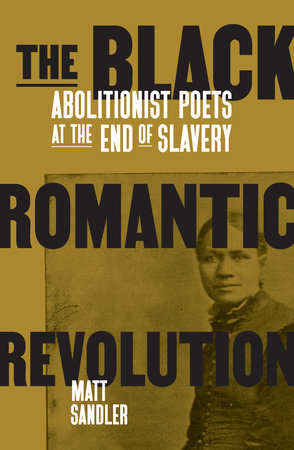
My book, The Black Romantic Revolution, finds prophetic visions of the end of slavery among the Black poets of the abolition movement. Frances Harper, James M. Whitfield, and Albery Allson Whitman wrote poetry as a part of their work as activists. Working through the international movement in art and philosophy known as Romanticism, they represented abolition as a revolution. They saw the end of slavery as a chance to rethink problems which still bedevil American life today: the distortions of racism, the misuse of land and nature, the inequities of capitalism, and the brutality of sexual violence.
Below I’ve listed some books in which you can find examples of Black Romantic depictions of slavery and abolition. Because the Black Romantics wrote in prophetic terms, their premonitions of eternal consequences resonate eerily in our moment, with its resurgent white supremacy and imperious violence against Black communities. Abolition was always about more than just putting an end to slavery in the narrow, legal sense. Abolition in these visions is a living dream.
Monica Pelaez’s handy anthology makes an excellent place to start, with its contents organized into sections of poems about themes like fugitivity, death, motherhood, and atonement. The anthology includes a number of poems which appeared in Black and abolitionist newspapers, often by anonymous authors brimming with political feelings too risky to publish under their real names.
George Moses Horton lived for most of his extraordinary life near the campus of University of North Carolina, Chapel Hill, where he “hired out” his time from his enslaver with money he earned writing poems. Two collections of his poems appeared while he was enslaved, and a third while he was living in the “contraband camps” of the Union Army as it passed through North Carolina. His poetry is intensely symbolic; he hoped to “rise sublime/ On wings of liberty.”
James Monroe Whitfield worked as a barber while organizing for abolition and Black nationalism in upstate New York and California. He also wrote the most psychologically complex and historically sophisticated poetry of his day. His 1853 book America and Other Poems sets the “impending crisis” around slavery in the U.S. alongside contemporary revolutions in Europe, and describes his own temperament as a poet: “From earliest youth my path has been/ Cast in life’s darkest, deepest shade[.]”
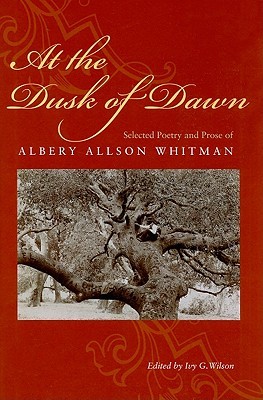
Albery Allson Whitman was freed from slavery by the Emancipation Proclamation as a teenager, and went to school at Wilberforce University in Ohio. He became known as the “Poet Laureate of the Negro Race” for his epic poems about life on the frontier. In depictions of Black and Native people fighting white settlers and falling in dangerously fugitive love, Whitman sought to instigate an “apocalypse of sentiment.”
Frances Ellen Watkins Harper had been writing and working as an activist in both the abolition and temperance movements for decades when she published her best-known work Iola Leroy in 1892. She was first known as a poet in the abolition movement before the war, but this late novel, here meticulously edited by Koritha Mitchell, is the easiest way to access her work in print at the moment. And its language is that of a poet, for instance when its heroine describes her contemporaries as a “living argument” for Black liberation.
This award-winning recent history of the abolition movement centers the work of Black abolitionists in the struggle to end slavery. It also emphasizes the continuous, international scope of abolition across the Atlantic through the late 18th and 19th centuries. Sinha makes clear that abolitionists were not “single-issue” thinkers, but instead integrally linked to the activism of Native people, the working class, and women.
This anthology surveys a range of fiction, prose, and poetry written in service of anti-slavery from the 17th to the 19th century. It follows the movement from the spiritual deliberations of the Puritans like Samuel Sewall to the reasoned arguments of Enlightenment-era founders like Benjamin Franklin, culminating with the stormy Romantic language of Frederick Douglass, Harriet Jacobs, and Ralph Waldo Emerson. Take note of Emily Dickinson, thinking like her Black contemporaries in prophetic terms: “Color—Caste—Denomination—/ These—are Time’s Affair—”
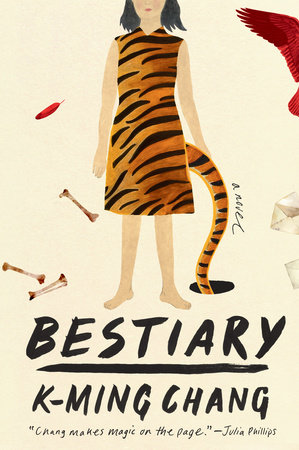
Before writing my debut novel Bestiary, I began a year-long process of translating letters written by my grandmother, many of which were addressed to people I didn’t know. While attempting these translations, I realized the impossibilities and possibilities of the task—the losses and gaps and misunderstandings that were embedded in my translations, as well as the moments of hybridity and discovery, where my own language layered over hers, hinging it open in strange ways and creating new meanings.
In Bestiary, the narrator also translates a series of letters from her grandmother that are spat out by sentient holes in her backyard, and these translations are a deeply embodied experience, a process of reliving and birthing. My novel is also about translation between generations, and how memories are mutated or transformed through the process of being inherited and re-embodied.
Throughout my writing process, I returned again and again to novels in translation from Chinese, both their translations and their original texts. I immersed myself in the process of translation as inevitable change and alchemy, and was especially drawn to novels in translation about queer life in Taiwan and China that explored the themes that compel me to write: exile, tenderness, violence, queerness as possibility and transformation.
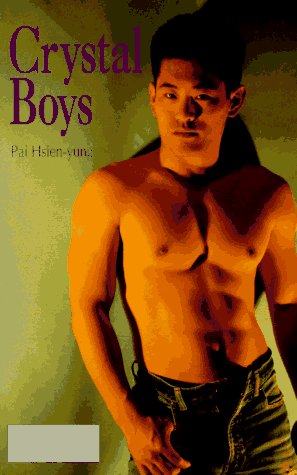
Crystal Boys by Pai Hsien-Yung, translated by Howard Goldblatt
Published in 1983, Crystal Boys is often credited as the first gay novel written in Chinese. Whether or not this is true, it is a deeply formative novel in the Chinese-speaking world, and has taught me so much about subverting ideas of nation and citizenship. Set during the period of martial law in Taiwan, the book follows Ah-Qing, a young Taiwanese man who is brutally exiled from his father’s home after being caught having a romantic tryst with a fellow student. He flees to Taipei, where he discovers a community of gay men in New Park, creating a new home and sense of belonging among them. Crystal Boys is full of humor and love and desire and pain and myth—it’s not only about forging a new space of possibility, but about the limits of that process, too. It highlights the cyclical nature of generational violence and the enduring love between friends.
In the Face of Death We Are Equal draws upon the legacy of Crystal Boys. Many of the main characters share the same names as the boys from Pai Hsien-Yung’s novel, though the historical context is entirely different, and the language of this novel is compellingly strange, creating a surreal world that is more reflective of reality than more typical literary realism. Mu Cao’s innovative, non-linear novel follows Ah-Qing, a migrant worker from Henan Province who leaves his village in order to work in the city. Mu Cao centers the lives of gay, working-class Chinese migrant workers as they navigate a world of exploitation and precarity. This novel is observant and bizarre and humorous, completely unique in its narrative structure.
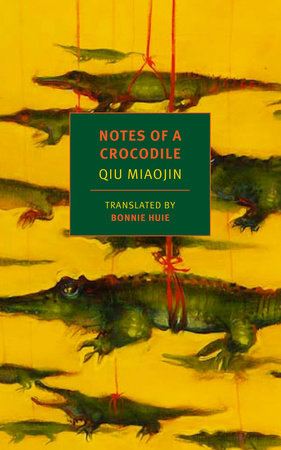
Qiu Miaojin is an iconic Taiwanese lesbian writer, and her novel Notes of a Crocodile is a brutal and beautiful book. It’s the kind of book that feels like it’s swallowing you whole with its language and characters and self-destructive voice. The novel follows Lazi, a young Taiwanese lesbian who falls in and out of love with an older woman in the most all-consuming ways. Her friends similarly fall into intense, destructive relationships. Spliced into the book are allegorical vignettes about crocodile people who are exiled and othered in society. This classic novel draws from bildungsroman traditions, but it’s also formally innovative and regenerative, incorporating diary entries, scripts, vignettes, and obsessive monologues.
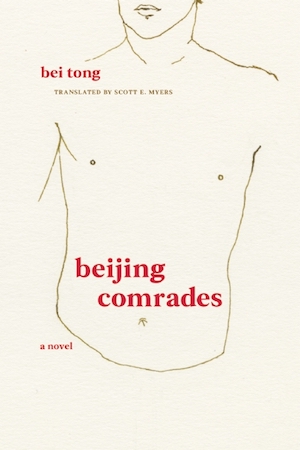
Written anonymously and posted online, Beijing Comrades is an all-consuming novel that features one of the most frustrating narrators I’ve ever encountered. Set in late 1980s Beijing, the novel follows Handong, a seemingly cold-hearted businessman who picks up Lan Yu, a university student newly arrived to Beijing from Xinjiang. Lan Yu is vulnerable, naive, and sometimes elusive, while Handong can be incredibly cruel and obtuse. This is a novel about money and power that shrouds the possibility of romance, and though the ending feels unnecessarily tragic and sacrificial, it’s the kind of book that haunts you in your dreams after you read it in one sitting.
The title story of this collection of stories by Yan Geling features a lesbian retelling of the classic White Snake legend in Chinese folklore. Yan Geling’s writing is fluid, seamless, and beautifully understated in many moments, and the White Snake legend has always had subterranean queer undertones, which Yan Geling brings to the surface. The story switches between different narrative voices but is cohesive in its gorgeous, subtle use of language.
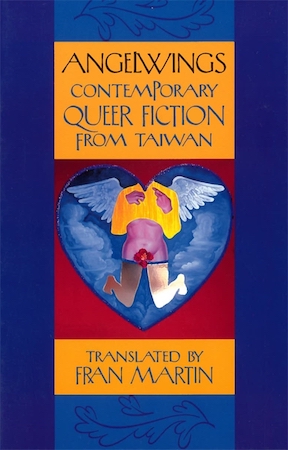
This anthology of queer fiction from contemporary Taiwan is an endless offering. The genre of tongzhi wenxue, or queer fiction, became especially prominent in Taiwanese literature during the 1990s. Featuring iconic women writers such as T’ien-Wen Chu and Qiu Miaojin, this anthology features a broad spectrum of styles and themes that incorporates mythology, religion, and daily life, and it’s worth reading for Qiu Miaojin’s story “Platonic Hair.”
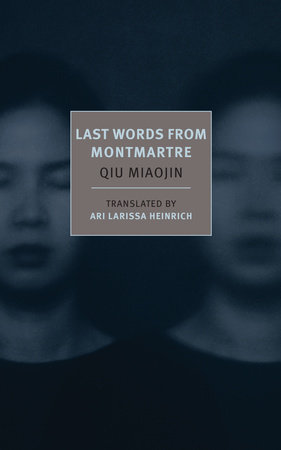
This innovative, visceral novel is written in letters and vignettes that can be read in any order. Qiu Miaojin’s work is brimming with emotional intensity, self-obsession, and desire. I often compare reading her work to being possessed—it feels like being haunted and absorbed. This novel—which feels also like an archive and artifact of a destructive relationship—is akin to being consumed by your own psyche and appetite. There is an immediacy and poetry to all of Qiu Miaojin’s writing, and this novel is unlike anything I’ve ever read.
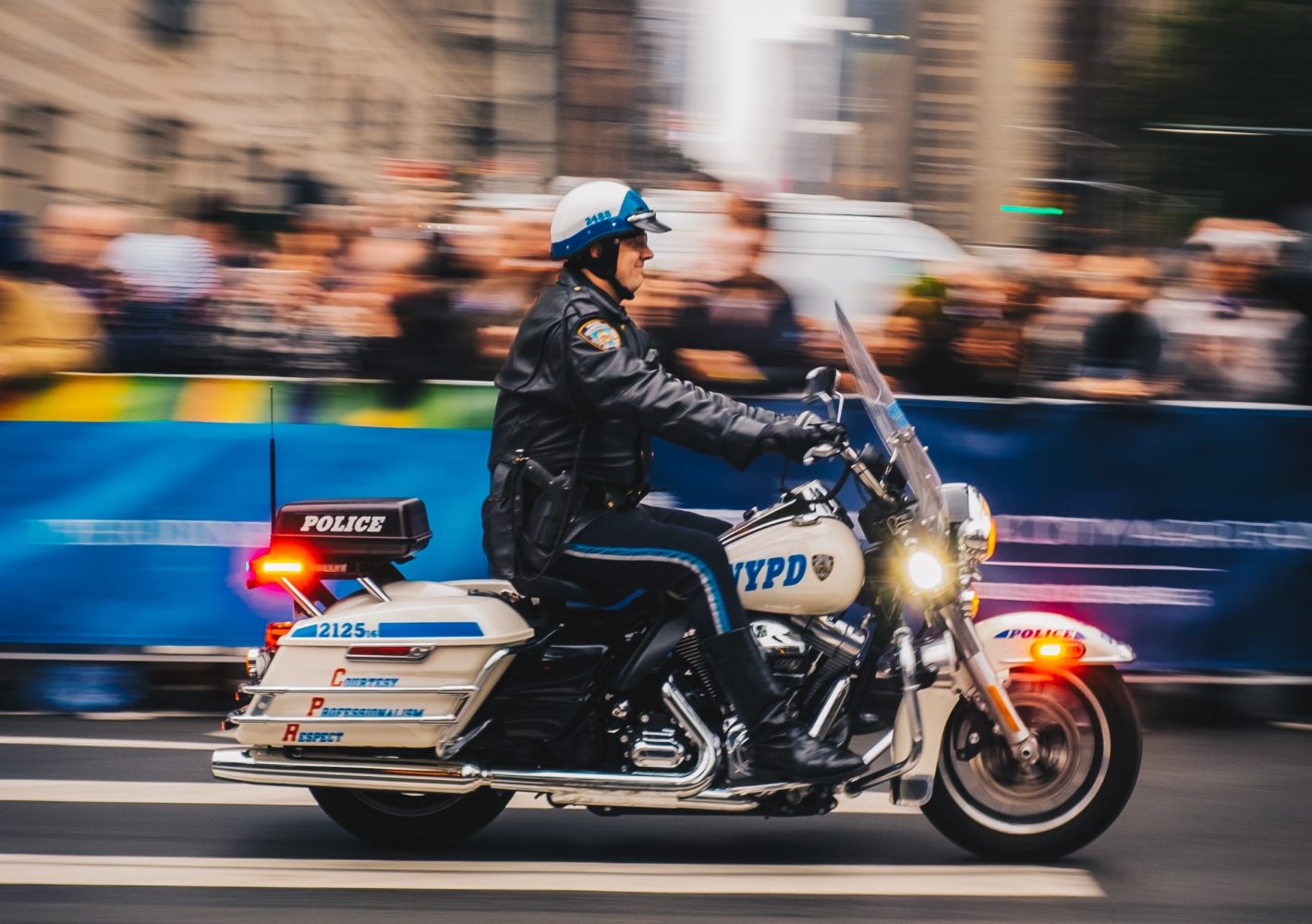
When Hari Kunzru finished writing Red Pillin early 2020, he had no idea that the summer leading up to its release would see the uprisings that followed Derek Chauvin’s murder of George Floyd and other instances of police brutality against Black people, widespread calls to defund the police, or broader conversations about the history and present-day role of policing in American society.
Circumstances have made the fictional police drama Blue Lives that he includes in the novel, and his narrator’s concerns about the cultural power wielded by its alt-right showrunner, all the more prescient.
In the second of my two-part interview with Kunzru (you can read the first part here), we discuss cultural myth-making around state violence, whether TV audiences want police to break the rules, how to effectively push back if they do, and the ways in which American policing is and is not unique in the world.
Preety Sidhu: In the wake of the uprisings against police brutality and systemic racism, there’s been renewed criticism of the role of TV procedurals in shaping public perceptions of policing. Your fictional show Blue Lives takes it even farther, showing more extreme brutality than is the norm on American TV. Your narrator becomes convinced that the man behind it has tremendous power to shape the future. How potent do you think this type of cultural myth-making around state violence is?
Hari Kunzru: I think it is quite potent. One thing I wasn’t expecting to feel so very topical was the stuff about Blue Lives. We’ve been living through the most sustained, and actually broadly supported, civil rights movement since the 1960s. I think the vast majority of Americans want to see some sort of change. And it has been interesting to me that there has finally been a focus on the portrayal of law enforcement in television.
In the olden days it was very simple, the copaganda. The noble policeman, the terrible criminal. But we’ve got something very interestingly cynical that has happened. It’s been happening since the 70s. You might point to the Dirty Harry movies and remember Clint Eastwood as a sort of maverick cop in 70s San Francisco. He basically opened the lid on the idea that actually what people want is for the police to break the rules. They want the police to go beyond what they’re allowed to do in order to take revenge or keep us safe. The “us” being a very interestingly defined character. Who is the “us” who is being kept safe and who is the “them” that we are being kept safe from, is the big question in all of these obviously. Culturally, there’s the enduring interest in the lawman who breaks the rules, who goes beyond what’s acceptable and makes himself a kind of terrifying executioner figure. This is where I use this slightly obscure 18th-century character, the Comte de Maistre, who was an ardent opponent of the French Revolution and believed very much in state power. I think he’s very weirdly relevant to this moment.
Who is the ‘us’ who is being kept safe and who is the ‘them’ that we are being kept safe from?
I mean look at 24. I think for Brown people in America, the success of 24 has been a very weird and troubling thing, amidst its glorification of torture, its contempt for procedure, and its presentation of any kind of oversight as being something that just hampers the movement of justice. So all those kinds of things are in the mix.
There’s also just the straightforward thing about cable TV, you can do more and show more stuff on cable TV. I mean Game of Thrones would look very different had it had to abide by broadcast rules. So there is this edging towards an increasingly graphic portrayal of violence, and particularly torture. And there’s this interest in good characters who represent the law doing bad things, and their suffering from doing bad things. This is the interesting twist on it all, the shows are often very interested in the moral cost to the person who’s committing this violence, because they’re doing it for the “us.”
Yeah, I took this further. And I imagine, what does it actually say? What is the cynicism at the heart of this, about the possibility of having justice without torture and without the use of vigilante violence? And it’s coming really right to the fore. We’re speaking to the events in Kenosha. We see a 17-year-old boy who was apparently very infatuated with the police, and had been trained in some way by his local police force, some sort of course. Then he takes it upon himself to illegally acquire a weapon of war and insert himself into a very tense situation in another town and then—it seems very predictable that that kind of thing would happen. I don’t have particular sympathy for him, but I can understand how those events transpired. I think this culture of Blue Lives Matter, he’s part of that.
PS: I was absolutely thinking of 24 as I read this, because I had watched that when I was around undergrad age, about 15 years ago, and I was a big fan at the time and I did not think very critically about it. If I pull up an episode now, I’m sure that my response would be pretty different. At the time it was quite seductive to see what he’d do for the greater good.
Cop shows provide a kind of a supplement or substitute for a sense of closure or justice that real life doesn’t give us.
HK: People wanted to have the rebalancing that they felt was not being given them by real life. One of the ideological things these shows do is that they provide a kind of a supplement or substitute for a sense of closure or justice that real life doesn’t give us. Plot always is about the reduction of life’s complexity to a kind of simple structure and, if you plug in this deep desire for justice that people have—you know, off you go.
PS: Given that these narratives are so compelling, do you think that there are effective ways to push back, in a narrative sense or culturally?
HK: The way to push back is to seize control of the means of production. It’s for other people to be allowed to tell stories, for other people to be elbowing their way into the writers’ room, into the director’s chair. It’s great that we’re very, very belatedly seeing a recognition on the cable shows that Black stories are commercial. We have Watchmen and Lovecraft Country. These kinds of shows are turning up, and they’re wildly popular, and they are entertaining, and they center very, very different stories and perspectives than before. I think things are very different from what they were five years ago, in terms of the media landscape. When I look back to the kind of crumbs that we used to be satisfied with—when I was coming up and then in the 90s, we were just super excited if we saw a Brown face or a Black face on the screen.
PS: How do you think the contemporary American attitudes and media messaging about policing that inspired Blue Lives compares to other cultures and time periods you’re familiar with? Is there anything unique in the way that some parts of American society valorize the police these days?
HK: I mean, in every society there is a sort of standard right-wing law-and-order position. The idea of policing by consent, which is supposed to be the foundation of modern civilian policing, is less fictional in some places than it is in others. I think that the two unique American factors which make the situation much more volatile and much more urgent are—one is guns. I mean, just purely and simply police procedures. When the police go to do traffic stop here, they are trained to deal with the possibility that there will be a gun in this situation. Where it just wouldn’t occur to a British cop in a traffic stop that that might be a possibility. It would be a once in a lifetime—I mean many, many British cops will never encounter a person with a gun. Many British cops will never carry a gun. And because there’s so many guns in American life, all situations are potentially situations of armed violence. We’ve all watched endless depressing and sometimes very scary videos of these police stops where people are brutalized and the police are clearly in a sort of trance of tension. It’s very often because they’re extremely afraid and they’ve also been trained to think of themselves as a sort of militarized force.
One phrase that keeps coming to mind is “bringing the war back home,” which was associated with the left in the Vietnam era. It was the idea that they would try and make the Vietnam War visible to ordinary Americans as a way of stopping the war. What’s happened since Iraq and Afghanistan, 20 years of these conflicts, is that we’ve got a huge pipeline of veterans and military equipment. The militarization of the police is an important part of this, using people who have a military mindset, who are equipped as soldiers and who treat the streets of the city they’re supposed to be policing as a battle zone. So in a very direct sense, the war has come back home and what we’re seeing right now is partly to do with that.
But if you look further back, I think the second factor that is uniquely American has to do with the history of American police forces as slave patrols. Also, weirdly sort of revenue generating operations, if you look at Ferguson. Part of the roots of the Ferguson uprising, it was that the police gave a lot of quality of life tickets to a mostly Black town. The police, as they do in so many places, didn’t live in Ferguson. They live in white cities neighboring Ferguson. They use jaywalking, broken tail lights, incorrectly stored vehicles on your property. All these things are used to extract revenue from the residents and the police are acting as predators because they’re the only revenue generating operation that Ferguson really had. The city government wasn’t going to run unless they managed to extract a lot of money from people that way.
Of course, we’ve got thousands of different police departments in the U.S. and they have different histories, but to broadly generalize, there’s never been a sense that these police departments grew organically out of the communities they’re policing. There’ve been many attempts in recent years to make them fit better in that way, but the notion of who’s getting protected and who they’re getting protected from is highly racialized, has this particular history, and is only really being interrogated now. I mean the call to defund and abolish police departments seems, I would imagine, almost incomprehensible to a lot of people in other countries. And of course to many white people in America, who imagine that this would mean anarchy. But it makes sense in this history of abolitionist tradition, which is a counter tradition to the tradition which comes out of slavery. So there’s such a particular history of police in the U.S. and it is not a happy one.
PS: Possibly because police appear so embattled here, they may get valorized, as a response from the people who feel they are being protected or they fall in the “us.”
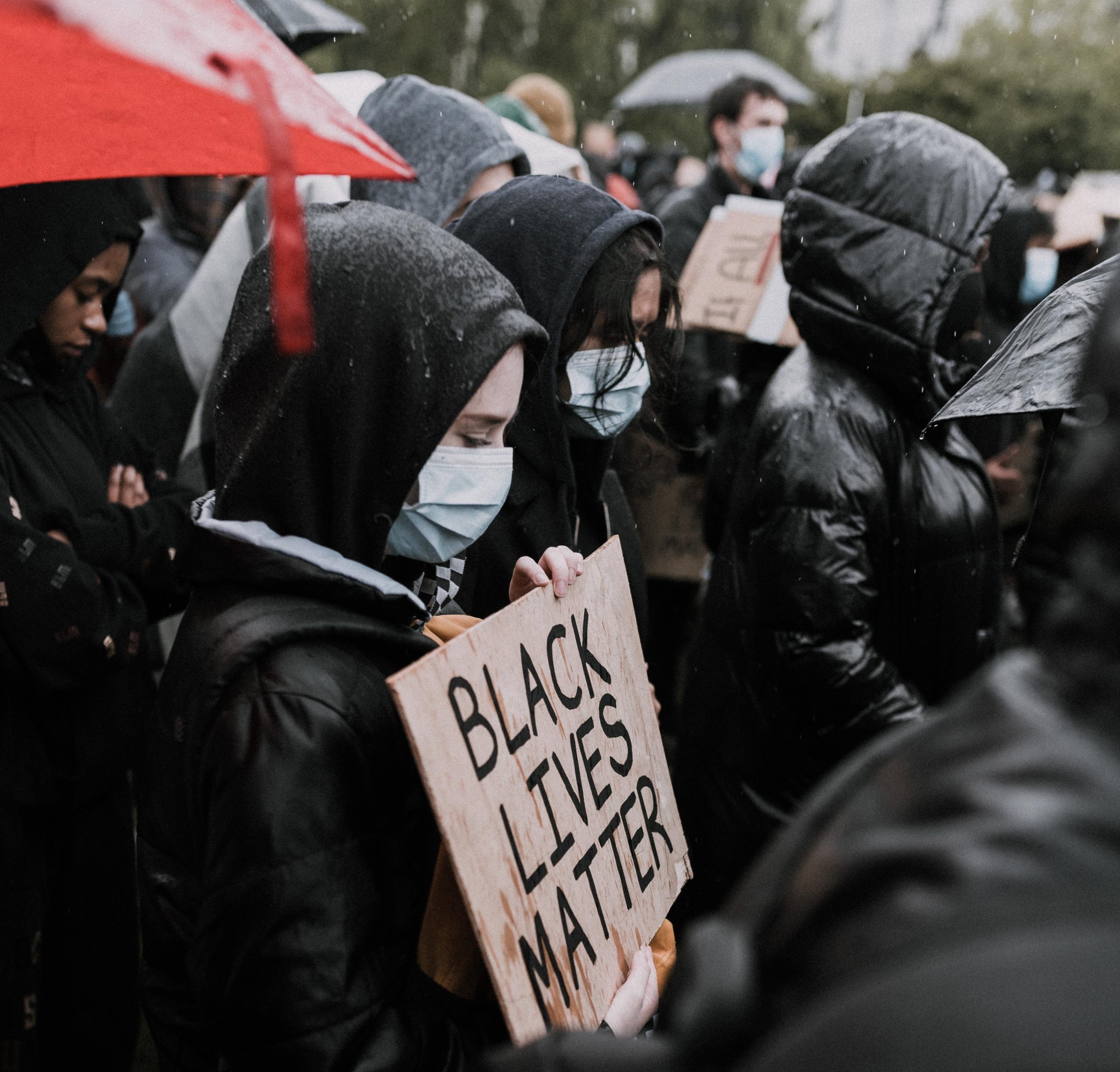
HK: There’s a Blue Lives Matter protest for every Black Lives Matter protest. You can see the history in the fact that those two groups coalesce around the issue of policing.
In our series “Can Writing Be Taught?” we partner with Catapult to ask their course instructors all our burning questions about the process of teaching writing. This month we’re talking to Rax King, who’s teaching a six-week nonfiction workshop on the personal essay. (Rax’s excellent Electric Literature essays on teen romance novels and Meatloaf should convince you she knows what she’s talking about!) We asked her the same ten questions we always ask, and she favored us with some gems about when to take a break from your writing, when to send in the Catholics, and when to eat an entire loaf of bread.
What’s the best thing you’ve ever gotten out of a writing class or workshop as a student?
I took the excellent Tony Tulathimutte’s CRIT workshop, and I can’t recommend it highly enough. Tony is a hardass Virgo and will not let you get away with any of your shit, writing-wise, and also he gave me a sick coffee table once. But the most eye-opening thing he did for me was point out that when I don’t know what to make a character do, I always have them smile. Like, I was devoting hundreds of words of fluff to people’s smiles, and I had no idea! Stuff like this is the best use of a writing class or workshop for adults who know basically what they’re doing, I think. Of course, there are lots of useful lessons about craft and writing practices that teachers can impart, but students will get the most use out of a good teacher’s experienced close reading of their work.
What’s the worst thing you’ve ever gotten out of a writing class or workshop as a student?
We leave all these narrative stones unturned, because we’re still stuck on the story we thought we were telling about ourselves.
I took a real weird writing workshop when I was in high school. I was the youngest student in the room by a country mile. The teacher was this pipe-smoking Robert Frost devotee who wore a lot of tweed—it was like he’d Googled “retired poet outfit.” And I’ll never forget that his big piece of advice for us, this advice that he teased us with week after week but never actually revealed until the last session, was “send in the Catholics.” As in, if a piece of writing isn’t working as is, make it a Gothic-type story about Catholicism instead. It was the worst thing I ever heard in my life, and to this day, anytime I’ve hit a wall with a piece of writing, I hear that smug mutherfucker in my head saying “send in the Catholics.” I hope that guy’s having a bad day, if I’m honest.
What is the lesson or piece of writing advice you return to most as an instructor?
If you’re stuck, don’t keep hammering away at whatever section is stumping you. Go do something else for half an hour and then look at the piece holistically. Grant yourself entry from another angle. I’ve never had any luck pushing through writer’s block with sheer brute force, but by focusing my effort elsewhere in the piece, I can usually open it up for myself that way. I think this is especially useful advice to my fellow personal essayists, because we fixate on the memoiristic precision of what we write—we struggle with structural or narrative overhauls. We pick and pick at the sentence level and leave all these narrative stones unturned, because we’re still stuck on the story we initially thought we were telling about ourselves.
Does everyone “have a novel in them”?
I’ll put it this way: I’ve written a novel myself, and I in no way “had a novel in me.”
Would you ever encourage a student to give up writing? Under what circumstances?
To give it up outright, probably not. To come back to it some other time, yes, absolutely. If your manuscript has stopped being a labor of love and is just unceasing thankless drudgery, put the damn thing down before you hurt yourself. And if all writing has started to feel that way, again, put the damn thing down before you hurt yourself.
What’s more valuable in a workshop, praise or criticism?
It does nothing for me to tell me my story sucks shit if you’re not going to help me fix it.
They’re equally valuable! It is, to me, of exactly equal value to know when some aspect of my manuscript is working and to know when it isn’t. What isn’t valuable is nonspecific praise or criticism—it does nothing for me to tell me my story sucks shit if you’re not going to help me fix it, and it does nothing for me to tell me it’s perfect when we both know I hate myself far too much to let you blow smoke up my ass.
Should students write with publication in mind? Why or why not?
Absolutely not. For many reasons, but practically speaking: you’re going to hate everything you publish five years after it’s published anyway. So you might as well write stuff you’re proud of, not stuff that you think is going to make some slush reader cream their jeans.
In one or two sentences, what’s your opinion of these writing maxims?
Kill your darlings: As advice, this has some value, but I always get stuck on the fact that it sounds so goddamn good to say out loud! “Kill your darlings” is the “cellar door” of tired writing advice.
Show don’t tell: If I never hear this shit again, it’ll be too soon. What does it even mean?! You want I should draw you a little picture so you don’t have to read my book? Is that it? A little diagram?
Write what you know: I’d amend this to: write ideas and perspectives that you’re confident you understand. Don’t talk out of your ass. Know when to cede the microphone.
Character is plot: I never heard this one before! It sounds silly as hell, though.
What’s the best hobby for writers?
I don’t know how to even begin to answer this, so I’m going to make something up. Embroidery. All writers should do embroidery.
What’s the best workshop snack?
An entire loaf of bread, consumed over the course of the workshop with butter. And I won’t share.
Autumn means changing leaves, apple-based baked goods, decorative gourds, pumpkin spice lattes—and an avalanche of literary award longlists. If you’re feeling overwhelmed by all the must-read National Book Award nominees you’re now realizing you didn’t read, why not base your TBR pile off of your favorite fall food? If nothing else, it’s an excellent excuse to go out and restock your pantry, so that you’ll have reading snacks on hand.
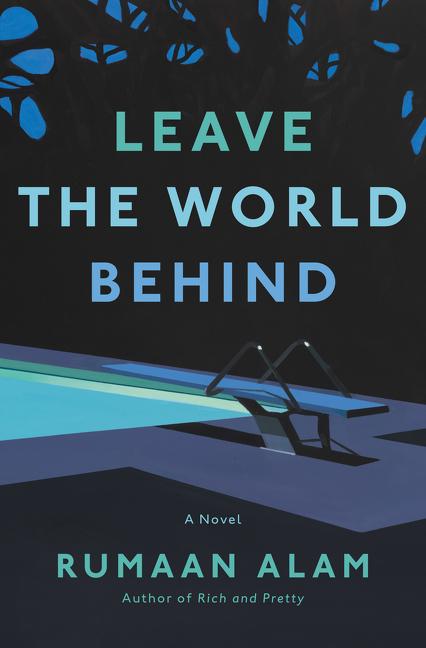
You can’t get more American than apple pie, so they say—which means that a deconstructed version is the perfect pairing for Alam’s provocative novel about a crumbling vision of the American Dream. A white Brooklynite couple plans a summer getaway to Long Island; however, their idyllic plans are shattered when an older Black couple shows up, claiming to be the owners of the house. They have evacuated New York City due to a sudden blackout. Amidst global catastrophe, the tensions between the two different families escalate and the very idea of safety itself is questioned.
Are you one of those that reject the stereotypical pumpkin pie/apple pie binary, opting for dark horse candidate pecan as your fall pie of choice? If so, try Yu’s ambitious novel about Willis Wu, a self-identified “Generic Asian Man” who acts in bit roles for a never-ending cop show—the most Willis can hope for is to achieve the status of “Kung Fu Guy.” Structured as a screenplay itself, Interior Chinatown is a deft satire of Hollywood stereotypes. Like a pecan pie’s darkly spiced, sweet filling, Yu’s dark humor pervades the narrative, as does his lingering, poignant questions about representation and racism. Plus, rumor is that Chinese five spice powder makes for a killer secret ingredient in a good pecan pie.
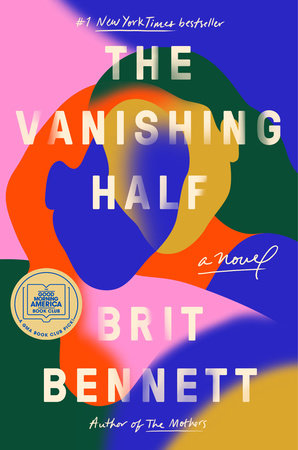
Pumpkin spice lattes have become synonymous with “basic” whiteness. So why tie them to this bestselling novel by a Black author about family and racial identity? Hear me out: “pumpkin spice” has taken on a set of connotations that are wholly divorced from actual pumpkins or even pumpkin pie; one could argue that pumpkin spice is a construct (check out this image for a better explanation). Bennett’s novel helps illustrate how race, too, is a social construct. The Vanishing Half is centered on two identical twins, whose lives take very different paths—one chooses to pass as white, the other does not. Through the twins’ family saga that spans multiple generations, Bennett explores the American question of “passing,” while also probing at the tension between individual choice and societal responsibility. And all constructs and symbolism aside—there’s no denying that both pumpkin spice lattes and Bennett’s prose are addictively good.
(Bobbing for) raw apples: Shuggie Bain by Douglas Stuart
Nothing tastes as memorable or as uncomfortable as an apple that you’ve managed to finally catch, after many minutes of dunking your head into dirty, cold water. Stuart’s much-acclaimed debut (it is also a Booker Prize finalist) is just as unforgettable—and equally unsettling. Set in an economically destitute Glasgow in 1981, Shuggie Bain centers on a family struggling with alcoholism and poverty. Shuggie, a lonely but sweet boy, is the only child that will not abandon his alcoholic mother, Agnes. Warning: Like bobbing for apples, Shuggie’s heartbreaking story about the consequences of addiction and the tenuousness of familial love may leave your face wet.
As Kirkus Reviews notes, this short story collection is “mouthwatering and matter-of-factly haunted.” What better book to read as you traipse through (potentially) haunted orchards, munching on an apple cider donut? If I Had Two Wings explores life in Tims Creek, a fictional small town in North Carolina, through ten stories. Kenan, a beloved author who passed away this August, masterfully blends the line between the mundane and the unearthly; his collection includes both river goddesses and small town diners, ghosts and retired plumbers. Kenan’s collection so masterfully explores the idea of appetite—as sexual desire, as hunger, as reveling in a feast—that having a delicious snack on hand is a must.
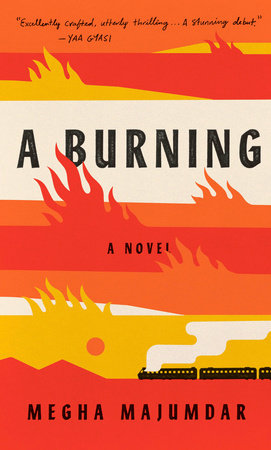
If you’re into the vibes of chestnuts roasting over an open fire, seeing the charred skins crackle open, try Majumdar’s equally-heated debut novel about power and corruption in modern-day India. A Burning begins with a terrorist attack that burns many to death; Jivan, an innocent observer, is thrown into jail when she posts a careless comment about the attack on Facebook. Jivan’s fate gets wrapped up with two other city residents: PT Sir, a PE teacher, and Lovely, a trans woman and aspiring actress. As all three characters aspire to achieve their version of power, they run into questions about morality and justice. Majumdar crafts a thrilling narrative that moves at a breakneck pace and plays with high stakes—one moment later, someone may end up destroyed, like a chestnut left too long in the flame.
Cranberry sauce conjures up memories of Thanksgiving dinner—and the accompanying family drama—like no other food except turkey. If you’re looking for a book that’s equally vivid, flavorful, and prone to messy drips, try Beha’s family saga. A young journalist, Sam, becomes acquainted with the Doyles, an affluent family in New York City. Frank, the patriarch, is a baseball writer who is in hot water for making racist remarks. Over the course of one baseball season in 2009, Sam witnesses the disintegration of the Doyle family’s established empire. Like a sauce that has been simmering on the stove for hours, Beha’s narrative smushes a variety of themes and characters into a cohesive, sweeping portrait of one family and New York City.
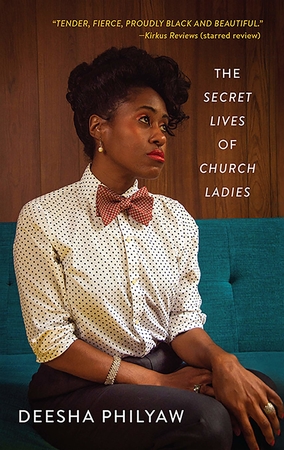
It is a well-known fact that you can put a hot toddy in a mug, and no one will ever be the wiser. Philyaw’s debut collection of short stories explore the lives of churchgoing Black women that are similarly secretive and gently spicy. In one story, a teen girl has a crush on the preacher’s wife; in another, a woman refuses to go to church because she will no longer wear a girdle. Philyaw’s characters explore, in various ways, what it’s like to publicly follow the rules of the church whilebreaking them in private, discovering new truths about themselves. Warm, intimate, and filled with verve, this short story collection will give you a wholesome buzz with or without the booze.
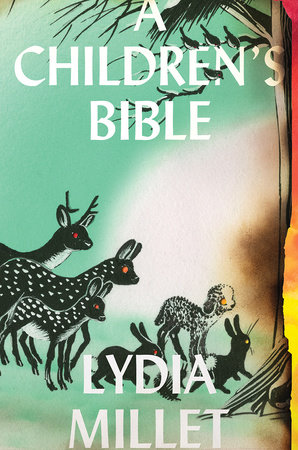
If this is your favorite fall food, I am genuinely confused—but there is a perfect book pairing for you. Millet’s tale starts at a lakeside summer resort (think: sticky-sweet caramel exterior), where a group of families are vacationing. However, things take more of a turn towards Lord of the Flies when a storm hits, leaving the adults apathetic and the kids to fend for themselves (cue: the mealy, bland apple interior). As author Jenny Offill notes, Millet offers a “cozy catastrophe” with a climate change twist; her narrative is both apocalyptic and allegorical, filled with pressing questions about responsibility, environment, and civilization. As a kid, I remember finding caramel apples to be consistently disappointing—but that disappointment does not hold a candle to the crisis-ridden, ecologically-devastated world that is fast becoming the legacy for kids today.
Arguably one of the best snacks for a fall road trip, pumpkin bread is a twist on the usual pumpkin pie. With a mix of spiced humor, reinterpretation of “family,” and dense, interlocking narratives, The Great Offshore Ground may be the book for pumpkin bread fans. Set in the Pacific Northwest, the novel centers on two sisters, Cheyenne and Livy, and their adopted brother Essex. At their father’s remarriage, Cheyenne and Livy reconnect with one of their biological mothers, Kirsten—who raised them, but only gave birth to one of the girls (and refuses to specify which). This triggers a road trip to find their other birth mother, who lives across the country in Boston; meanwhile, Essex enlists in the Marines for lack of anything better to do. Veselka draws a sharp family portrait of contemporary American poverty, one that’s both rich and thought-provoking.
On March 23, 2020, in the midst of a rapidly escalating pandemic, Seattle officials announced the sudden closure of one of the city’s most highly trafficked bridges. In an emergency virtual press conference, the Mayor pronounced the West Seattle High-Rise Bridge cracked, deteriorated, structurally unsound—a road to certain catastrophe. Closure was imminent, and possibly permanent. They gave residents three hours’ notice.
This bridge was the “high road” between West Seattle and Interstate 5, the fastest route between the city’s largest neighborhood and the world beyond. Over 100,000 cars and 25,000 transit passengers crossed it daily. Commuters, cargo, school and metro buses sped high above the shipyards—a land of grain silos and shipping containers, a history of industry at the nation’s northwestern edge, where the shimmering Duwamish Waterway empties into Elliott Bay and flows to the Pacific. Crossing the bridge on a clear day, Mount Rainier rises like a pale god on the southern horizon, foregrounded by a fleet of orange steel cranes.
We took for granted that the bridge would suspend us, that the center would hold.
The moment Seattleites learned of the closure, we made a mental calculation about the last time we’d crossed it, and how soon we’d need to make the trip to West Seattle again. We took for granted that the bridge would suspend us, that the center would hold. And why not? Why not trust the DOT and your own two eyes? On the surface, the bridge looked like a good bridge. But now, we think of all the times we sailed across mindlessly, never questioning the road beneath our tires, not knowing or even seeing the structure that upheld us.
On Friday noon, July the twentieth, 1714, the finest bridge in all Peru broke and precipitated five travelers into the gulf below. This bridge was on the highroad between Lima and Cuzco and hundreds of persons passed over it every day…
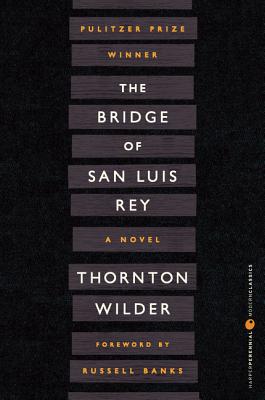
So begins Thornton Wilder’s 1927 Pulitzer Prize-winning novella, The Bridge of San Luis Rey, a slim moral fable that takes as its central question nothing short of the whole meaning of life. The story, echoed above, is set against a backdrop of colonialism and the Spanish Inquisition; its characters are well acquainted with disaster. Yet, “[t]he moment a Peruvian heard of the accident, he signed himself and made a mental calculation as to how recently he had crossed it.” People “had the hallucination of seeing themselves falling into a gulf,” and “there was a great searching of hearts in the beautiful city of Lima.”
There’s no formula for moving a person to care. But Wilder, a dramatist at heart, and the only American writer to win Pulitzers for both fiction and playwriting (twice, for “Our Town” and “The Skin of Our Teeth”), offers two reasons why this particular breach held sway over the national conscience.
One is the act of witness. A Franciscan missionary named Brother Juniper “happened to be in Peru converting the Indians” when he saw the bridge snap. Brother Juniper undertakes to learn every detail about the fallen, to document his findings in a book that will prove a divine intention behind the accident, and God’s reason for choosing those five—three adults, two children—whose stories occupy the bulk of the novel.
But Wilder also points to the bridge itself, a man-made construction we imbue with near-invincible properties. It’s a kind of suspension of disbelief, a psychic control we surrender in order to get through our days, a dream of stability we occasionally startle from. “The bridge,” he writes, “seemed to be among the things that last forever; it was unthinkable that it should break.”
Before barricading the bridge, Seattle recruited international “structural experts” to monitor the damage. Interior cracks accelerated two feet in two weeks, an aging process that typically takes years. The Department of Transportation acknowledged mistakes; the media detailed them. How the DOT had defied logic to add a seventh lane in 2013. How band-aids to the problem—increased inspections, fastened gauges, epoxy—failed to stick.
The metaphor is obvious, but it was the spring of Ahmaud Arbery, Breonna Taylor, and closer to home, Manuel Ellis—he, too, could not breathe. It was the spring of Christopher Cooper attempting to birdwatch in Central Park, an otherwise peaceful pastime. It was the spring and then the summer of warlike death tolls, ugly projections, grim facts of Black lives lost at a rate of three to one, a pandemic statistic that mirrored the disproportionate rate of Black death by lethal force at the hands of law enforcement. Protesters and counter-protesters clashed on the Brooklyn Bridge. Chicago drew its bridges as a medieval castle might, “the city of big shoulders” raising its arms. Portland’s historic Burnside Bridge was paved with bodies, thousands of them, on their backs for 8 minutes and 46 seconds. It was the summer of George Floyd.
Protesters and counter-protesters clashed on the Brooklyn Bridge. Chicago drew its bridges as a medieval castle might.
Those 8 minutes and 46 seconds were like a reverse moon landing. Months, years, decades led to one fateful film clip; Americans at home, paying attention because the cameras were on and we could not look away, could not make the old excuses, no time, gotta run, not today. The world tuned in with us to witness the man in uniform take the fateful step, an act at once inconceivable and inevitable, fundamental and antithetical to our species—and our nation, as the architects of the Constitution designed us. If the decimation of Native peoples is America’s original sin, a knee on the neck of Black man—more weight than any load-bearing back was built for—is our core wound. The wound cracked open.
Perhaps it always goes back to the fathers, the founding.
In recounting the origin story of The Bridge of San Luis Rey, Wilder said, “the central idea of the work […] stems from friendly arguments with my father, a strict Calvinist.”
Wilder did not share his father’s faith, or absolutism. (In one of Wilder’s journal entries, he defines an American as “a man who has outgrown his father,” according to Penelope Niven’s biography Thornton Wilder: A Life.) In contrast, The Bridge is riddled with “perhapses.” It boasts no heroes. And much to Brother Juniper’s dismay, the lives lost to the bridge don’t add up to easy answers, not a saint among them: the Marquesa de Montemayor, a wealthy drunk who becomes famous for sentimental letters penned to her estranged daughter; Pepita, an orphan and the Marquesa’s maid; Esteban, a reticent scribe; and Uncle Pio, trainer of Lima’s most famous actress, who crosses the bridge with the actress’s son in his charge.
The book offers no obvious villain, either—except, perhaps, for the Inquisition itself, a headless horseman stampeding in the background, cowing citizens through a campaign of terror fueled by rumor, suspicion, and dehumanization, both targeted and free-wheeling. Even Brother Juniper isn’t immune; the monk spends his days calculating points of good and evil, only to die quite pointlessly, burning at the stake at the hands of that monstrous outgrowth of Catholicism, his own religious parentage.
We prefer the safe ground of this side or that, good or evil, with us or against us, lock her up or set her free.
This liminal space between black-and-white binaries is not a comfortable place for humans, or readers, to be. We prefer the safe ground of this side or that, good or evil, with us or against us, lock her up or set her free. Perhaps it’s surprising, then, that Wilder’s novel sold out immediately, went through seventeen printings in its first year, became an American classic and required reading. Why this book?
In a letter to a former student, Wilder wrote, “People who are full of faith claim that the book is a vindication of this optimism; disillusioned people claim that it is a ‘barely concealed anatomy of despair.’” In other words: literary confirmation bias. In a story of ambiguity, we see what we want to see.
To the many readers who wrote demanding Wilder choose a side, the author invoked Chekov’s line that “the business of literature is not to answer questions, but to state them fairly.”
The Bridge, Wilder said, was also inspired by a fair question, one that Jesus poses in the Gospel of Luke, which seems as relevant to the events of 2020 as any: “Or those eighteen upon whom the tower of Siloam fell and killed them, do you think that they were worse offenders than all the others who dwelt in Jerusalem?”
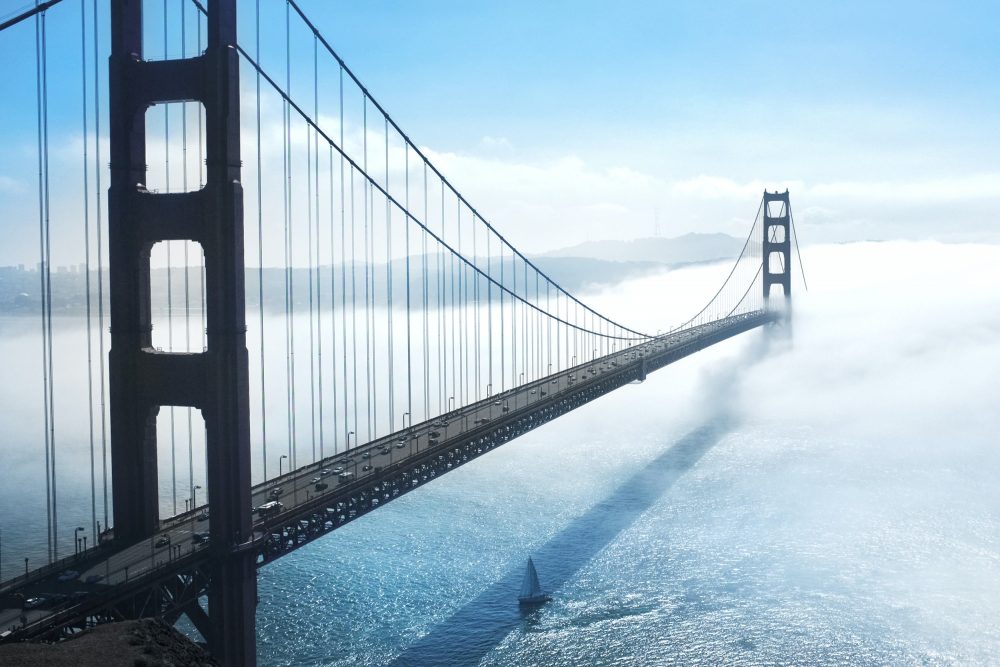
It must be said: it was not a beautiful bridge. This was no Golden Gate, no Brooklyn, no London Bridge we’ll sing about. It was not vying for design awards, trading in art or poetics, padlocked hearts and marriage proposals. We’re talking seven lanes and 590 feet of pre-stressed concrete, cement grey and steel, buttressed by concrete box girders. Bridges are inherently vulnerable, at-risk, defying gravity with a sleight of engineering hand. But the West Seattle bridge cried bull. It was a stocky-legged freeway, functional until it was dysfunctional.
We weren’t in the room, but let’s imagine the bridge was built by good engineers with good intentions. Let’s give them that 21st-century benefit of the doubt, assume they were “doing the best they could with the information they had at the time.” Maybe someone phoned it in one day. Maybe they had a colicky newborn, or a dying parent, or the flu. Maybe a bit of ego got in the way, or the pressure of a deadline. We are human. We break down, crack up. Fault lines run through us, run from us, baked into the earth beneath our feet and all our creations.
At any rate, the bridge was fundamentally, categorically unsafe, in a way citizens would never see. The trouble ran below the surface.
The bridge was fundamentally, categorically unsafe, in a way citizens would never see. The trouble ran below the surface.
If the West Seattle Bridge were Wilder’s Marquesa de Montemayor—a woman “who had never brought courage to either life or love”—she might resort to rhetorical flourishes and deflections: sing London Bridge is falling down, or cry, “What about the dams? Nobody’s even talking about the dams!” Then she would pen a gushing, desperate letter: “Cover me in Band-Aids. Patch me over with denial. I was trying. It was the Nisqually Earthquake’s fault, in 2001, remember? Please love me.”
The Marquesa’s story highlights the human tendency toward a shame response in the face of rejection or perceived judgment. In a desire to elicit love from her daughter, the Marquesa resorts to self-pity, blame, and avoidance, behavior which achieves the opposite result. Finally, just before her fateful trip across the bridge, a declaration of bravery by her young maid shocks the woman awake to her own dishonesty. She could not rewrite letters past, “but she could write some new ones, free and generous.” She cleared the table, and “wrote what she called her first letter, her first stumbling misspelled letter in courage.” This letter becomes famous throughout Peru and beyond, a modern Second Corinthians. “No one else has regarded it as stumbling.”
Or take Esteban, the silent scribe, who attempts suicide after his twin brother dies, just before he’s meant to leave on a voyage with Captain Alvarez—a man who is no stranger to loss, and overhears Esteban in his room.
The Captain stood on the stairs, trembling: “Perhaps it’s best,” he said to himself. “Perhaps I should leave him alone. Perhaps it’s the only thing possible for him.” Then on hearing another sound he flung himself against the door, fell into the room and caught the boy. “Go away,” cried Esteban. “Let me be. Don’t come in now.”
Esteban fell face downward upon the floor. “I am alone, alone, alone,” he cried. The Captain stood above him, his great plain face ridged and gray with pain; it was his own old hours he was reliving. He was the awkwardest speaker in the world apart from the lore of the sea, but there are times when it requires a high courage to speak the banal. He could not be sure the figure on the floor was listening, but he said, “We do what we can. We push on, Esteban, as best we can. It isn’t for long, you know. Time keeps going by. You’ll be surprised at the way time passes.”
Love, sometimes, sounds like apology. Stumbling, sometimes, looks like courage. Broad shoulders, sometimes, tremble and bow before the banal.
Maybe the uncertain present has me turning to the past, to Wilder, to a story built on “perhaps.” Maybe the hope I feel is contextual: a higher hope amid the public rallying cry for Walls! Walls! Walls! Is it passé, in 2020, to talk bridges instead?
Now, the conversation turns to a way forward. Uphold and repair the current structure, or dismantle and rebuild with the information we have now. Emphasis on the “R” words. Repair, Rebuild. Without the bridge, we cannot get across, cannot reach the places we want to go.
We have a history of this in West Seattle. Four failed former structures—three variations on a swinging gate bridge, in 1900, 1910, and 1918—followed by a low-level bascule bridge that eventually caused one of the city’s worst bottlenecks. By mid-century, the West Seattle Bridge was mired in a 20-year replacement saga so replete with political corruption that it landed the Head of the Washington House Transportation Committee (HTC) and his conspirators in prison. The project was dead until an 81-year-old sea captain smashed his cargo ship into the bridge, earning the city federal replacement funds. (In a final twist, the captain retired in disgrace, and fearing bankruptcy, transferred his assets to his much younger wife, who blew through the cash, blew his head off with a shotgun, chopped up his body with a butcher knife and buried him in the backyard. She joined the head of the HTC in prison.)
It took a century’s drama and a cool $150 million to build this bridge. Initial SDOT estimates put the cost of rebuild between $50 and $150 million. They projected a timeline of one year. In a city notorious for protracted permitting and deliberation—the “Seattle process,” described in a 1983 Seattle Weekly editorial as “seeking consensus through exhaustion”—that date rang like a punchline. The media reported two years, then four, then six.
In the meantime, nearly 80,000 residents are marooned, stuck at home, stuck in traffic, bottlenecked along a snaking two-lane highway known as “the low road.” That’s not including residents of Vashon Island or the Kitsap Peninsula who ferry through West Seattle. Without the bridge, West Seattle is itself a kind of island. One woman I spoke with, whose daily two-hour round-trip commute has more than doubled, was on the verge of tears, unsure how she could keep her job and maintain her family.
Others, perhaps, have greeted the news of the bridge closure with indifference, even glee. Politicians eager to dethrone the mayor. City councilmembers: same. Developers, contractors chomping at the bid. A group of West Seattleites eager to “free West Seattle” from the city. Loners loathe to venture beyond the neighborhood. The grumblers who grumble, “Why should MY tax dollars pay for it? What about the pothole in MY road? If West Seattleites weren’t so busy complaining, they’d be halfway to work by now.”
This is America; we have our share of conspiracy theorists. Those who believe the city was in on it, the mayor was in on it, the conservatives or the liberals were in on it. Some saw the bridge’s near-collapse as an act of God. Some saw it as an act of Russia. What about the fact that the bridge was built in 1984? Coincidence?
Some saw the bridge’s near-collapse as an act of God. Some saw it as an act of Russia.
You could trace a line from these voices to the London Bridge of antiquity, where a prevailing conspiracy theory held that the bridge would fall unless a child sacrifice was captured and cemented in the foundation. It sounds preposterous today, but history lives like song inside us. “Lock her up” is catching because it’s an echo—take the keys and lock her up—so familiar we forget we committed that verse to memory before we left the nursery.
You could trace a line from Manuel Ellis to Chief Seattle, from Seattle’s racist redlining to Ordinance No. 5, which passed easily among white settlers, and called for the removal of all Indians. They were already removed onto reservations, but the law would keep them from coming back for work. The view from the West Seattle Bridge could serve as a retrospect. The Duwamish River was once home to the Duwamish First Nations tribe, led by Chief Seattle, for whom our progressive city is named. Today, the Duwamish Longhouse sits amid shipping containers. Tribal lands run beneath Amazon’s headquarters. In 2001, the glimmering Duwamish River, a repository for 150 years of toxic industrial waste, was declared a Superfund site. Cleanup is like the democratic process: slow, messy, and if you believe in it, worth every effort.
For years, scientists have predicted impending doom for Seattle in the form of the really big one, a tectonic clash that would rattle our homes and infrastructures, turn whole swaths of apparent solid ground to liquid beneath us. I almost never think of this unless I see a headline or pass tsunami warning signs at the beach—human stick figures scrambling for higher ground, the Sound a roaring monster at their heels—or until I am inching in traffic across a bridge. Suddenly, I’m reminded of my precarious place on the planet. Suddenly, I wonder if the Department of Transportation is paying attention, if the center can hold us all. I imagine myself a victim, like one of Thornton Wilder’s random chosen, who according to a Brother Juniper looked like “gesticulating ants” flung into the rift.
Some days, it feels as if the Big One is upon us. Some days, it feels as if we are peering over some dark edge, gesticulating ants flung about by fate and folly as we march the earth together for the briefest while: a colony. In the canyon of my mind, I hear the echo of my public schoolteachers across decades and miles. “Mira, mira—” says my Spanish teacher, a former priest who taught me about the Inquisition. Look, pay attention. “If we’re not careful, history repeats.”
Like a chorus. Like a bridge.
In the midst of a public health crisis, a reckoning on race in America, and partisanship that threatens to snap us in two, the West Seattle bridge fractures. A fateful reminder or a meaningless coincidence that we were founded upon lofty ideals but inherently flawed designs. The Duwamish Waterway. The Dred Scott decision. Selma: a peaceful march met with state-sanctioned violence on the Edmund Pettus Bridge. These failings are our past and future, no matter how sound they seem on the surface, or in name, no matter how wishful our thinking or willful our forgetting. Like the Marquesa, we cannot revoke those pages from our history. But she could write some new ones, free and generous…
These failings are our past and future, no matter how sound they seem on the surface, no matter how wishful our thinking or willful our forgetting.
At the time of this writing, a petition is underway to change the name of the Edmund Pettus Bridge to the John Lewis, after the U.S. representative and Civil Rights leader who led the march across it. The current structure is named for a U.S. Senator, a general of the Confederate Army and a “grand dragon” of the Ku Klux Klan.
In Seattle, the Mayor has convened a task force, and for the second time in the bridge’s forty-year history, issued a request for federal funds. The West Seattle Chamber of Commerce has started its own committee. At least one new community coalition has formed, its name full of optimism: West Seattle Bridge Now.
Story is, as the writer Brian McDonald calls it, “survival information.” Life or death. If we are to look to literature for insight, then—in this case, a classic novel about a bridge collapse—we might turn to The End, to Wilder’s famous final lines: “[S]oon we shall die and all memory of those five will have left the earth, and we ourselves shall be loved for a while and forgotten. But the love will have been enough….”
The tense—future perfect—was no accident on the author’s part. But as the story of The Bridge makes excruciatingly clear, love alone will not cure our suffering. We get closer through the operative “be,” love as transitive verb, in direct relationship to others, activated and made known through courage, no act too small. Call it connection. Call it common humanity, or beloved community, this invisible structure we spend our lives working and mending on our way to a more perfect union. We know this: how love degenerates along the low road of shame, greed and fear. We know this: the restorative power of apology, humility, and grace. We forget this: we have always known the way across.
It’s early 2016 and the unnamed narrator of Hari Kunzru’s latest novel, Red Pill, feels a dread of something coming that he can’t quite explain or convince others to take seriously. Perhaps his fear is tied to the American election, but it is also much bigger than that.
Without reading the fine print, he accepts a three month residency at the Deuter Center in Wannsee, near Berlin—a town with grim resonances of Nazi history. There, he encounters an eerie emphasis on transparency, public workspaces, and surveillance. He befriends a cleaning woman who offers a detailed account of how she was set up by the Stasi and wonders if his own family might someday face the fate of the Syrian refugees wandering the streets. Retreating to his room, the narrator grows obsessed with streaming an exceptionally brutal American police drama called Blue Lives. When he encounters the showrunner at a party, he becomes convinced this man has enormous power to influence the culture with his alt-right worldview, kicking off a cat-and-mouse game between the two that leads them across Paris and Scotland. Is he losing his mind or can he do something to stop the ideologies of the far right from going mainstream?
In the first of my two-part interview with Kunzru, we talked about whether 2020 fulfills his narrator’s disastrous fears, how white supremacist ideologies are no longer necessarily about race, and dangerous failures of political imagination.
Preety Sidhu: Throughout this book, which is set entirely in 2016, your narrator dreads some coming disaster, a surprise Black Swan event that will have a major effect on the world, that is tied to but much bigger than the results of the American election that year. Did you complete the manuscript before the pandemic hit? Can you speak more to the relationship between what your narrator is dreading and the events we are experiencing in 2020?
Hari Kunzru: Yes, it was complete before the pandemic hit. It’s strange. When the pandemic started and I just started to realize that this book was going to arrive in the middle of this situation, I began to wonder whether it would feel relevant. But the pandemic aside, the larger feelings of anxiety, and the idea that certain kinds of social and political givens are not so certain as they may have felt a few years ago, I think that’s only intensified. As you say, it is bigger than the election. This isn’t a Trump Apocalypse book. It’s about much larger things to do with how we feel about things like human dignity and how we feel about value, more generally. You know, even the narrator’s anxiety is very—his problem is that he can’t really give it a name. That’s the first problem, is that he hasn’t got to, oh well, this is wrong with my life and so I can go about solving it. He has a kind of general fear of disaster.
At certain points I have found myself wondering how far things will slide and how quickly they will slide. I was thinking a lot when I was writing, which was 2015–2016, the height of the refugee crisis in Europe. I was in Berlin and we talked about the refugee situation there. Realizing that there are other people who had their lives and their houses and their children and their hopes for the future, and found themselves absolutely destitute, in rubber boats. There’s a complacency that people in rich safe places have had. But the cold breath of disaster is beginning to play on the backs of the necks of a lot of people in America or in Western Europe, because we’re not sure that things will stay how they used to. You used the phrase Black Swan event, and that’s a good way of thinking about it.
PS: Your narrator is biracial, half Indian and half English. Anton, who is after all a white supremacist, does not come for him because he’s not white, but rather attacks the foundation of his liberal beliefs, his assumption that human beings deserve human rights, that cosmopolitanism is good, and so on. To what extent is Anton’s brand of white supremacy more focused on ideology rather than personal identity?
HK: That’s a very interesting question. There are plenty of straight-out racists in the mix, that’s very true. But it would be a very easy story to tell if our poor Brown narrator—if the nasty white supremacists are nasty to him for the thing he can’t change, the color of his skin. But especially on the intellectual end of this constellation of broadly white supremacist thinking that’s there on the right—which has really had a renaissance in the last few years, they have become much more sophisticated and powerful—for the more sophisticated of them, it isn’t based on race. They’ve got plenty of atavistic feelings about not wanting to be around Black and Brown people, but they do have this ideological hatred of cosmopolitanism and globalism, which some of them see as a tool of an elite, perhaps even a Jewish, cabal to impose an economic and social system which benefits them at the expense of a white indigenous population of wherever we’re talking about.
Also there’s an interest in “intelligence,” which is usually coded racially and is a way of justifying various measures intended to suppress Black people specifically. But the ones who are interested in intelligence are forced to admit things like that Ashkenazi Jews and South and East Asians score very well on the tests that they believe show your intrinsic worth. So there’s an end of this far right culture which is not very racially obsessed. It’s a mistake of mainstream liberals to assume that if you show that race is a fiction—here’s my book demonstrating that biological race is not a real thing—that’s going to get to the heart of it. It is much more complex and insidious than that.
I don’t think Anton is a—he’s clearly Islamophobic. The milieu they’re in, in Germany at that moment, the anxiety is all around new Muslim immigrants and there’s all this stuff about the gates of Vienna and the Ottomans coming to the very door of Europe and being pushed back. Is this going to happen again in this insidious way, through migration? You’re probably familiar with the idea of “the Great Replacement,” that’s French theory that comes from this old racist git called Renaud Camus, the idea that this migration is going to replace indigenous French people with an alien Brown and Black race. But yeah, it’s not primarily race-based. I think that’s quite hard for a lot of people to grasp. It’s often questions around whether they think democracy is a useful thing. In the book I get very interested in what they believe about democracy and what democracy actually represents. Is democracy the mass rule of the stupid people over the few intelligent people? That would be very much the frame that these rightists have.
PS: As I was reading the kebab scene, I couldn’t remember whether I had read the narrator’s racial identity earlier in the book. I do feel that Anton might have treated a white liberal this way.
You should be able to write characters who have particular racial identities without a book having to be about those racial identities.
HK: Yeah, absolutely. It’s interesting that Anton doesn’t immediately say, well you look like these Turkish people that we’re in the restaurant with, so therefore you must be the same. To me, it’s a point of principle, as a South Asian or as anybody, you should be able to write characters who have particular racial identities without a book having to be about those racial identities. I wanted this character to be a visibly brown-skinned man going through this, but his range of cultural interests are very European. He rarely mentions anybody who’s not from this Western canon that he’s interested in. The only point where it becomes significant, there’s a little tiny scene at a bus stop where he sees the refugee dad and the little girl. He and the dad make eye contact in—I call it something like the Freemasonry of Brown men who meet in white spaces. So there is that kind of moment which I’m sure you know very well, you scan the room and you’re like catching their eye. Whether you actually have anything else in common, you notice.
The director vaguely asks him what he thinks he can bring to the study of German poetry, but I wanted that to be not the axis around which the book turns. Because the worlds I live in, I could have an evening talking about Goethe or whatever and my South Asian identity would not come up. I’m trying to open up a space for everybody to not have to constantly bang on about identity and diversity. When I was starting out as a writer in the 90s in Britain, we had this new wave of visibility of the second generation, children of immigrants, and we were doing all these cultural things. But every time I spoke to anybody, it would be like, can you talk about identity? How does your work deal with identity? And I’d eventually be like, please. Yeah.
My experience of being in Germany in the first half of 2016, when there were all these new immigrants around, was that very frequently I was mistaken for a refugee. Germans would treat me in various ways, ranging from a very exaggerated hospitality to demonstrate that they were friendly and welcoming to a couple of times when people wouldn’t serve me in shops. That’s another flickering of identity which I gave to this character. He’s in the same position I was in, a prestigious fellowship at an institution, and not somebody who’s living in a communal accommodation and trying to make his way in this new country. It’s another dimension of that question.
PS: While we see several ordinary 2016 Democratic voters towards the end of the book, we never encounter ordinary Republican voters. Can you speak to your decision to make the danger internal to the narrator and his opposition embodied in only one other man, rather than millions of voters?
HK: At one point he talks about there being two tracks to his life. There’s the normie track which has to do with electoral politics and his wife fundraising for Clinton. And he has the second track, which he considers this almost unsayable secret life, where he’s looking at the Internet and the way he sees the world going and imagining some terror coming down towards him. At the very end, he has a sense of these two tracks touching and somehow through him the secret apocalyptic worldview has affected the real.
So my concern wasn’t really with the logic by which American voters would vote Republican or Democrat. It’s supposed to be a critique of a certain complacent elite liberal mindset, which has been very largely responsible for getting us to the mess that we find ourselves in, which is imagining that the horizons of the world go no farther than your very bland imagination of it.
If Trump wins this election, I straightforwardly believe it will be the end of America as a democratic state. And I don’t like being proved right, there’s no fun in that at all.
The process which gave us Hillary Clinton as a candidate seemed almost willfully blind to what was actually going on. And again, the ticket we have this time is not a ticket that really addresses any deep issues. Maybe tactically it’s enough to get the current occupant out of the White House. I’m shocked by the lack of political imagination that some people have. I was very scared in 2015. The book is an outgrowing of that, a big bucket for me to put all that anxiety and fear in. And yet, we’ve had mainstream commentators saying well he’ll govern as the Republican. No, don’t be silly. The pandemic came along, it was alarmist to mention 200,000 people will die in it. Now we’ve seen the space of possibility open up and open up and open up.
I hope that many people now understand that there is no magic guarantee that American political and cultural life will carry on as it has done. America’s as vulnerable as anywhere else to a hostile takeover by authoritarianism. We are at a turning point. If Trump wins this election, I straightforwardly believe it will be the end of America as a democratic state. I think that’s still unthinkable for a lot of people, but it’s been where I am mentally for five years now. And I don’t like being proved right, there’s no fun in that at all.
PS: The idea that this narrator gets fixated on, that maybe he can track down and talk sense into this one man who seems to have influence over what’s happening—why crystallize it into this one man that he can play this cat-and-mouse game with?
HK: It’s absurd, he’s chosen a TV showrunner as the source of all ills. Anton has a cultural power that the narrator says he’s not jealous of, but he’s clearly jealous of. Anton is smart and may have some sort of agenda, but he’s not the cause of any of this. It’s that parable of the drunk man looking for his house keys under the streetlight because that’s where the light’s best. We go for a detailed plot-like solution for these very complex … it’s very hard to put your finger on what the thing you would change is, that would make it all better.
Look at QAnon. I think QAnon is the mirror version of the things happening to the protagonist in this book. The QAnon people have invented a fairy story about a small number of very evil people who are in charge and a hero who’s going to overthrow them and restore justice and order to the world. It’s the most ancient narrative structure imaginable and yet it’s playing out in these very modern ways through social media and so on. It’s comforting to imagine that things have plots, and the real horror is that they don’t, that life is formless and life has a complexity that’s ungraspable and that we’re the playthings of fate.
PS: I love this quote, from the narrator’s stint at a New York City mental health facility: “My doctors were fundamentally servants of the status quo. Their work was predicated on the assumption that the world is bearable, and anyone who finds it otherwise should be coaxed or medicated into acceptance. But what if it isn’t? What if the reasonable reaction is endless horrified screaming?” What were you hoping to convey or explore about the narrator’s mental health, whether a justified response to the world or otherwise?
HK: I think he’s correct to say that the reasonable response to the world is endless horrified screaming because the world is unbearable. The world contains every imaginable horror and it’s amazing that we can carry on in the midst of that. But we do and we have to, so some sort of accommodation with that is necessary.
The QAnon people have invented a fairy story about a small number of evil people who are in charge and a hero who’s going to overthrow them and restore justice to the world.
The slightly different stuff about his … I think the technical terms are depersonalization and derealization, which are very common experiences for people having mental breaks. The idea of the thinness of reality has always interested me, the moment where you look around and you realize that the world is a stage set in some sense. It’s simultaneously literally not true, but in some other ways is true. Many aspects of our world are constructed and could be different.
I think the sense of the thinness of reality is where we are now, because we’re asking ourselves what other political arrangements could come out of this situation? Could we end up in an authoritarian state? Who has to be taken away to the camps for it to start feeling real to ordinary people? The lesson from history is that you can go all the way through without it feeling real. You can be a good German and have the concentration camp outside your town, and you can still not feel that’s something connected to you. So that sense of thinness is a real political experience that we’re having at the moment. Having a narrator who’s experiencing that in a literal mental health way, I feel he’s the sane one and the Hillary people are not.
PS: Anton’s real name is Gary Bridgeman, and Bridgeman is a name you’ve used a few times for characters in previous books. Is there a story behind this?
HK: You’re the first person to ever actually ask me that. Yeah, there’s a Bridgeman in each book. They’re always ambiguous characters, they are “bridge men,” the kind of people that connect things that otherwise wouldn’t be connected. In The Impressionists that’s the guy who’s passing. There is always something shady about a Bridgeman, when you meet one in my head.
PS: How far back does that go for you?
HK: It was the obvious name for the character in The Impressionists, and then it was just a private joke to myself. Waiting for people to say hang on, you use this name frequently. It’s a constellation or a family resemblance rather than it meaning one thing.
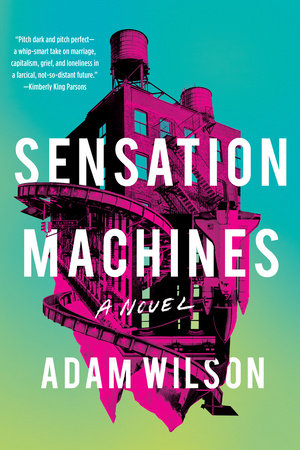
I started writing my new novel, Sensation Machines,during a moment of social upheaval—the rise of the Occupy movement—and completed it in the wake of what felt like the ultimate symbol of that movement’s inefficacy, the election of Donald Trump. Perhaps inevitably then, the final product presents something of a jaundiced worldview. The book’s protagonists, Michael and Wendy Mixner, are married Brooklynites who work in finance and marketing, respectively. They see themselves as people with progressive values, but when those values are tested, they learn that they would rather be complicit in an unjust system than risk their class status and disrupt their comfortable lives. In many ways it is a book about the lengths we go to achieve cognitive dissonance. The novel’s satirical takes on technology, marketing, finance, and criminal justice are intended to be comic, but the satire is also meant to reveal the ways that the rooted imperatives of American capitalism act as structural impediments to progress.
Of the responses I received when the book went out on submission, one in particular gave me pause. The reader liked my writing, but suggested that, in this bleak moment, fiction should offer at least a glimmer of optimism, and my novel did not. I agonized over this response, worried that this reader was correct, that my novel’s vision of America was too cynically bogged down in despair. But the more I thought about the satirical novels I admired, the more it seemed to me that the satirist’s job isn’t only to hold a mirror up to society, but also to warp its reflection so that readers must uncomfortably confront our own grotesquerie.
Though tonally and stylistically varied, the books below all revel in this brand of discomfort. They are funny novels, some uproariously so, but they are also books that push us out of complacency by prying our eyes open and forcing us to stare at our ugliest selves.
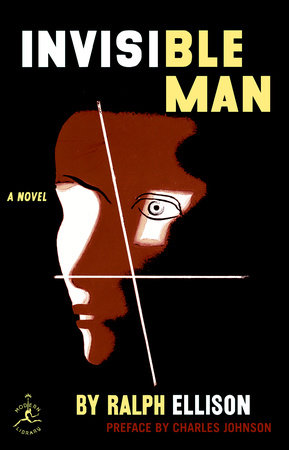
Invisible Man came out in 1952, but I can’t think of a text more relevant to the current moment than Ellison’s trenchant examination of racial injustice in America. From the absurdity of college admissions to the internal politics of protest movements, nothing evades Ellison’s satirical crosshairs. Returning to the novel twenty years after first reading it in high school English, what strikes me most is how boldly it defies classification. Combining comic farce with psychological realism, and moving fluidly between tonal registers, Ellison expertly manufactures readerly discomfort by refusing to signal when or if it’s appropriate to laugh.
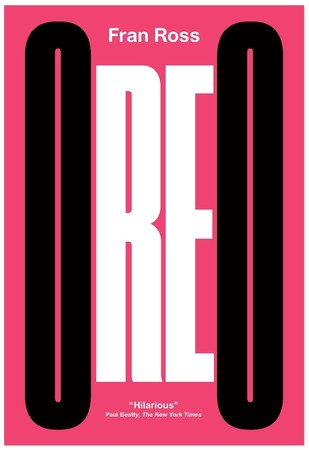
Oreo was all but ignored upon its original publication in 1974, and I can see why. Published at the peak of the Black Power Movement, this experimental novel about a biracial woman on a Homeric quest to track down her Jewish father intrepidly pushed against the grain of the zeitgeist. As Mat Johnson explains in a 2011 NPR piece:
“A novel about a biracial woman’s search for her Jewish identity, complete with Yiddish word jokes and a structure based around Greek mythology, was about as far away from what was expected of a black writer as possible.”
On top of that, Oreo is one of the most stylistically unorthodox books I’ve ever read; the closest comparison I can think of is The Crying of Lot 49, but reimagined as a Richard Pryor routine. It also happens to be one of the funniest, a novel whose very subject—cultural admixture—fuels its virtuosic joke-making and feverish wordplay. Ross draws from Yiddish and Black Vernacular English, but also from academic jargon, hippie slang, restaurant menus, and mathematical notation to produce a sui generis carnival of diversity.
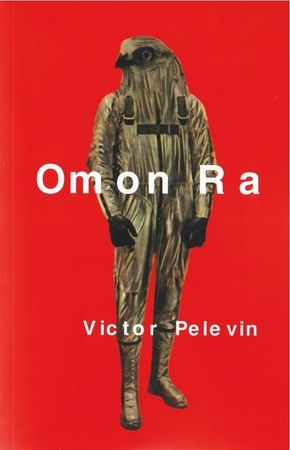
A Cold War-era sendup of the Soviet space program, this short novel is difficult to discuss without giving away spoilers, as it hinges on a shocking plot twist that radically alters the reader’s understanding of the story. What I can say is that I’ve never quite read anything like it, a political parable that is not only scathing in its critique of Soviet nationalism, but is also both hilarious and improbably poignant.
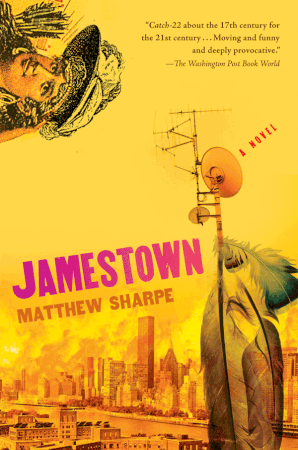
In this wildly imaginative novel, Sharpe flips America’s foundational myth on its buckle-hatted head. Set in a “post-annihilation” future, Jamestown is less a reimagining than a straight-up remix, and its Pocahontas is like nothing we’ve seen, a cellphone-savvy, unapologetically foul-mouthed 19-year-old who spends her lonely evenings writing blog posts in a cornfield “under the twilit sky that looks like a day old bruise on the thigh of a woman whose body is five hundred times bigger than the world.” Sharpe’s masterful fusion of the poetic and the vulgar is what carries the novel through its heights of absurdity. The result is irresistible, social commentary wrapped in riotous comedy.
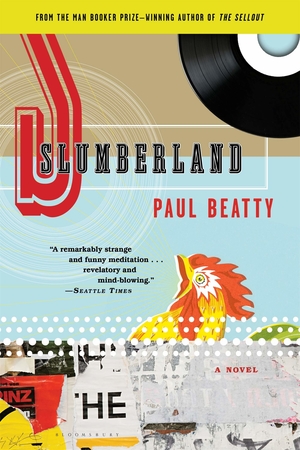
Paul Beatty is best known for his Booker Prize-winning 2015 novel, The Sellout, and his cultishly admired 1996 debut, The Whiteboy Shuffle. Both are great, but so are Beatty’s other novels, Tuff and Slumberland. I’m especially fond of the latter. Set in Berlin just after the fall of the Wall, Slumberland chronicles the adventures of a “jukebox sommelier” in search of a lost avant-garde jazz musician. The novel opens with what is certainly the funniest riff on tanning salons ever put to print, and keeps moving with the speed and precision of a NASCAR racer navigating the Autobahn. Beatty’s prose is pyrotechnic, and the joke-to-page ratio is unprecedented, but Slumberland also offers profound insights on expat culture and the end of The Cold War.
I resisted this novel when it first came out. I thought the title sounded corny and the book seemed overhyped. I’m glad I eventually gave it a chance. Not only is Fountain’s novel a) an absolutely vicious skewering of the mass infomercial that is NFL football, and b) the best Iraq war novel I’ve read, and among the best war novels I’ve read, period, but it’s also c) the only novel I know of in which Beyoncé appears as a character. Quite frankly, more novels should feature Beyoncé as a character. Fountain offers a master class in how to write humanely—tenderly even—without dulling one’s satirical teeth, and his novel gives new life to that dusty bromide about opposing the war but supporting the troops.
At first glance, Sarah Schulman’s near-future New York is not dystopic, but utopic. The city is affordable ($50-60/month for a studio, $200/month for a 4-bed), homelessness has been eradicated, and Staten Island has been annexed to Texas. The tradeoff for this apparent paradise is compulsory allegiance to a media conglomerate that offers citizens the illusion of freedom while it sells them homogeneity at irresistible prices. This is Brave New World for the Internet era: instead of drugs to keep us complacent, we have Instagram, Facebook, and Amazon Prime. As Schulman explains,
“Sometimes, come the revolution, we all eat strawberries and cream. Sometimes, come the revolution we only eat strawberries and cream. What if you don’t like strawberries and cream? Sometimes, come the revolution, we have to eat strawberries and cream.”
The first novel in this fantastic trilogy follows a diverse array of Parisians—film execs, bounty hunters, musicians, and sex workers—as they search the streets for our eponymous antihero, a former record store proprietor reduced to homelessness now that his sole marketable skill—selling vinyl—has been rendered obsolete. Despentes’ tracks Gen X’s descent into cultural irrelevance to both comic and tragic effect. In doing so, she paints a politically nuanced portrait of a Europe in flux. It’s the book Michel Houellebecq might write if he were a woman and had better politics.
It takes serious guts—and serious chops—to open a novel from the perspective of our current president as he floats over America in an “ultraluxury zeppelin”, dropping nukes left and right. Mark Doten has both, and Trump Sky Alpha—which jumps ahead into the post-apocalyptic future where a journalist attempts to uncover the final memes before The Cloud went dark—is quite a feat. A mimic of the highest order, Doten has an impeccable ear, not only for Trump’s tics and tautologies, but for the vernacular of online culture, its strange, associative logic. Doten takes a premise that sounds like an SNL skit, and turns it into so much more, a book as terrifying as it is hilarious in regards to both our current moment and our prospects for the future.
“Pink Mountain on Locust Island” by Jamie Marina Lau
STREET
Santa Coy is Chinatown’s most glamorous little prince. We’re sitting outside this yum cha place and a man in a short chef’s hat is pouring sappy oil in the gutter. He turns around, looks at us for a while. When Santa Coy and me stare back the man winks at Santa Coy. Santa Coy raises his eyebrows and says good gracious. Should I go flirt with him? he asks.
I roll my eyes. Santa Coy thinks he’s an edgy prince.
He offers me a cigarette. It’s in close range to his body so that he seems reluctant about it. I take it and smoke it like the world is closing in on us. When I’m with Santa Coy we never talk about my dad. So I ask him if he likes my dad and Santa Coy says that he’s nice. I tell him that Dad put on an entire exhibition for him, that of course he’s nice. Santa Coy pulls his mouth to his nose.
He says, cool it dinky.
I stamp the cigarette a few times.
Alright, alright, says Santa Coy. It’s out.
He takes a huge, long drag.
It’s a blue and pink light paradise in Chinatown tonight. Laundry from windows and signs with writing about a fish heads sale. I want to get a job here, I tell Santa Coy. I’m grown up now, I need a job here. He asks if I mean here in Chinatown. I tell him exactly, right here, where it smells like dried-up fish and people are eating sea life. There are more ramen joints here than there are hot and sour soup joints, even though this is Chinatown. There’s always the sounds of Chinese opera no matter which laneway you walk. Of course here, in Chinatown. He is not any kind of prince.
Santa Coy tells me he doesn’t believe in jobs. I tell him this is 100 per cent because he’s got people helping him out. When you’ve got no one helping you out, you need a job. He doesn’t say anything and offers me another cigarette instead, reaching right out to pass it to me. The chef from the yum cha comes out into the laneway again with the plastic rubbish of udon packets. He winks at Santa Coy again and Santa Coy yells, piss off!
Santa Coy gets his thick marker out and starts drawing hieroglyphics on the wall of the yum cha. We’re trying to show that rubbish man that we’re better than his wink.
We buy wine from the grocery store and the man asks where Santa Coy got his big long coat from. Santa Coy says from the Philistines. The grocery man nods quickly, out of politeness, he asks: where is that?
We leave.
We drink wine leaning against shutters of a store which sells fabric imports from Hong Kong. We are a sort of Holmes-Watson situation. A considerable biography happening of one of us, I don’t know who—but Santa Coy thinks it’s of him. The sound of the pots and pans drummer a block away is just phantom.
Is not one of us the other’s apostle, one of us the other’s messiah.
PHARAOH
A woman gets into a cab with a man wearing sunglasses. They’ve come up from the mahjong club underground. I look down inside and see a table of four women. They’re queens, but they scowl at each other.
Outlaw Star is playing on the television in my neighbor’s apartment. An intergalactic space shuttle of the 1970s.
In the corridor Santa Coy jumps back and forth between narrowly spaced walls.
Once we’re inside I run hot water from the kitchen sink to rinse mugs left with color stains from Santa Coy’s brushes. This is a tomb. I am washing the dead artist’s loin cloths. Santa Coy claims his work is about death, even though he has never died. And maybe he’s being ironic. He brings me more mugs to wash.
He says, thanks dinky.
LATE NIGHT
They keep playing No Wave while I’m trying to play some damn bebop in my room.
It’s a Dizzy spell.
I smack the door against its frame ten times in a row and nobody hears. Santa Coy bumps into me in the skinny hallway holding a charcoal stick on the edge of his fingers. He’s got yeasty breath. I ask him to turn the music down or off. He jabs his hands into his pockets.
He says, ask your dad to. Then shrugs. Santa Coy is now playing a clarinet and the windows are open and the slight wind outside whips the plastic jungle plant in the corner of the lounge room. When it stops Santa Coy will stop. He is playing along with the wind, or he is controlling it.
SWIMMING POOL
If you stay in a swimming pool too long your fingers will prune. But if you stay out of a swimming pool too long they forget the sweetness of chlorine.
The swimming pool is a late night hub for people with firm abdominals. It opens ’til 11pm and Yuya has been coming here with her dad for the last two weeks. Her dad swims laps in the medium lane and Yuya swims laps in the fast lane. I swim in the slow lane because Yuya has told me that’s where she started. Breaststroke is a meditation but then Yuya tells me that it’s only for old ladies.
We’re sitting on the edge of the pool, drinking out of recyclable mini water bottles that Yuya’s dad bought us from the supermarket.
Yuya tells me: never drink while eating, I saw you can actually get cancer from it.
We swim another three laps and Yuya’s dad is sill going when we finish. She tells me that he is just showing off to me. She’s chewing on the spout of her bottle. She says that her ma doesn’t give any more love to him since she started her new healing business.
Our ankles are being kissed with little pecks by the water.
In Yuya’s car I ask if I can sleep over please? I tell them, my dad keeps playing these idiotic songs too loud.
Yuya’s dad says as long as it’s okay with my parents. I correct him and tell him it’s just my dad and that he’s pretty much okay with anything.
Their house is the smell of steamed rice. Honey is in the kitchen bowing her head a bunch of times, pecking it against the kitchen countertops. We ignore her and sit at the circle table. She bows for another twelve minutes, then gives us little cups of white rice and some sauces in shallow trays. We pray between clasped hands, all four of us.
I tell everyone that my aunty Linda took me to church last weekend. Yuya and her dad and Honey look at me all together. Yuya clears her throat. She says that I have to respect the food in front of me. I tell her that I am, I’m very thankful for it. I know that not everybody gets food. I don’t know why I get food and other people don’t. That the hungry are kind, and the full are guilty. Yuya clears her throat again and tells me I have to respect the food by not talking. I ask if God doesn’t want us to talk. Nobody says anything.
When we are in Yuya’s bedroom she apologizes that we can’t talk around the dinner table. I ask again if God asks them not to talk. Yuya still doesn’t answer. She’s already got her second chocolate bar open and anointed around her chin and almost up one nostril.
In here it’s a greasy intergalactic mission. The walls are white with nothing on them, and Yuya is holding up side-by-side two photographs from runway catalogues. She asks me without looking up which one I prefer. I point to the one with the big red flare pants. I tap her on the shoulder and whisper if God asked her personally not to talk.
Yuya holds up the next two photographs. I point to the one with the white jumpsuit and a big yellow headpiece. The model is from Spain. I ask Yuya again if God asked her not to talk. This time she presses her palm against my mouth. It tastes like salt. She tells me okay, and she tells me to shut up. She holds me against her bed frame, leans in close, says that I can’t tell anyone. I nod quickly. Yuya breathes in deep and says okay, and sighs, and tells me that her ma has powers to talk to the Spirit. She’s whispering. Her words trip over themselves.
You can’t tell anyone.
She takes her palm off my mouth. Her eyes are glossy black coils. She wipes chocolate away from around her mouth using the inside of her wrist.
JOB
Honey rehearses in the living room the next morning, screaming at the television: “It collapsed on them and they are dead, and I am the only one who has escaped to tell you!” “It collapsed on them and they are dead, and I am the only one who has escaped to tell you!” “It collapsed on them and they are dead, and I am the only one who has escaped to tell you!” “It collapsed on them and they are dead, and I am the only one who has escaped to tell you!” “It collapsed on them and they are dead, and I am the only one who has escaped to tell you!” “It collapsed on them and they are dead, and I am the only one who has escaped to tell you!” “It collapsed on them and they are dead, and I am the only one who has escaped to tell you!” Her face is pressed against the screen.
A country pop star on the early morning show with a guitar, next to him a barista with a fedora slapping a tambourine, making the tambourine palpitate.
An hour later, Yuya and me eating rice for breakfast in front of the television watching CatDog. Honey is wrapping a wholegrain sandwich for the father’s lunch. When she isn’t screeching she has a voice like plump cushions. She asks Yuya’s father if he wants seed mustard or normal mustard. When Yuya’s father leaves for work and Yuya’s in the shower, I am quiet at the circle table. Honey is spitting out cherry pips into a tissue, red pulp between her front two teeth.
I whisper to Honey across the table: Honey, excuse me, could I ask you something?
Yuya’s shower is on full blast.
HERMENEUTICS
All during Yuya’s twenty-minute shower, I devise a recipe to consider. Honey listens as I tell her about Santa Coy throwing paints in the living room and Dad asking me to get the washcloth and telling me hurry up, to stop standing around—that there’s art to be made, that this is a no-standing area. You can never tell what’s on Honey’s brain because when she’s not screaming, her only expression is a stiff smile. You can tell she was beautiful once but her face has lopsided a little in various slumps. She sits and thinks for a long time and then looks at me funny. She tells me she might be able to figure something out, to do something to help my situation. She puts a long red fingernail to her lips and says that it’s not that simple.
I tell her, I know how you have powers; special gifts.
She tells me then about how someone named Reverend Bugsy took her gifts away because of his jealousy. She says that if I help her out, then she might help me out, and to call her on her business number if I decide we should help each other.
A cold sun today. I’m wearing yesterday’s clothes and one of Yuya’s beanies. She fixed it on my head and told me I can come by anytime, but that I must remember not to talk during dinner.
STRING INSTRUMENTS
Our lounge room is Santa Coy, a slimy fish across one brown couch, and Dad, a grumpy strap of leather on the other. There is no more politeness about smoking in here, or television etiquettes. The TV plays only infomercials. I change it to the jazz station and it’s pan flute and orchestration.
I sit on the floor with a box of cornflakes and watch the radio station logo rebounding off the screen’s edges. No one’s listening but still I ask: when was the last time you considered the fact that you are not kings of the world?
ITALIAN FOOD
I’m here on this website about the most popular Italian dishes for dinner parties in autumn. I’ve asked my dad if I can cook when his art colleagues come over. They’re visiting because he’s now becoming successful. It’s good, this is working—something I heard him say to Santa Coy.
He’s asked my sister to cook instead. But I’m a chef and no one can stop me.
My big sister is wearing an apron when I open the front door. She tells me: I think it’s good Dad’s seeing his friends again. Her husband is a red fluster behind her, carrying a slow cooker and the slow cooker recipe book on top.
I’ve spent the last nine hours memorizing an Italian recipe so that I can tell her that I don’t need a recipe book. I tell her that it’s all in here like a real chef. I point to my brain.
My big sister sets up her slow cooker, an aluminum mammoth, where the toaster’s supposed to go. I tell her a real chef doesn’t need a slow cooker.
My sister’s best friend is this slow cooker.
She wipes it down before beginning. I sit on top of the bench until Dad comes out from his shower, his greying beard half shaved off. My sister tells him that he looks great. He ignores her and points at me, swiping his finger in downwards motions.
Sitting on the bench is dangerous, get off, he orders.
At five o’clock my sister is on her phone, waiting for the slow cooker to do all the work.
DON’T MISS OUT
Sign up for our newsletter to get submission announcements and stay on top of our best work.
YOUR INBOX IS LIT
Enjoy strange, diverting work from The Commuter on Mondays, absorbing fiction from Recommended Reading on Wednesdays, and a roundup of our best work of the week on Fridays. Personalize your subscription preferences here.