9 Books About Living in Parallel Realities

I have been asked a lot about autofiction with my latest novel, which is about a Korean American adoptee named Matt who finds out that he has a doppelgänger, also named Matt, who has lived a much more successful life but has disappeared. Autofiction is not the genre for Disappear Doppelgänger Disappear, yet there is no mistaking the theme of multiple selves.

The genre Disappear Doppelgänger Disappear belongs in is Parallel Realism. Parallel Realism is fiction that represents the (real) experience of living in multiple realities through the fictional use of parallel universes. Lived reality for many people means being treated as if they are not themselves, or feeling like a different person than the person they have to be to survive. Parallel realism is not in the realm of science fiction or alternate histories. It is fiction about the multiplicity of now. I am partial to what Julio Cortázar said about his work—that he did not write magical realism; he wrote fiction more real than realism. Fiction’s real advantage is that it can explore experiences that can’t be explored via the dry facts of observable life. 

Here are nine parallel realist books I highly recommend, a list to which I would gladly, humbly, add my own.

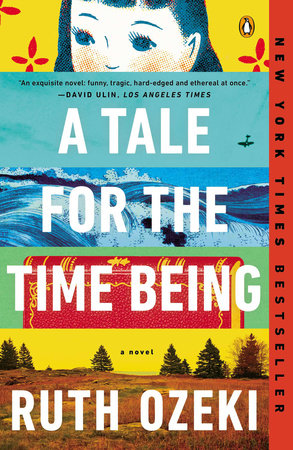
A Tale for the Time Being by Ruth Ozeki

A Tale for the Time Being by Ruth Ozeki

In Ruth Ozeki’s masterpiece, an author named Ruth discovers, washed up on the Canadian shore, a diary written by a girl in Japan. Ruth becomes more and more immersed in the troubles of the suicidal girl, until the diary entries, of course, eventually come to an end. It takes a connection across these two separate realities and times for these two very different characters to teach each other something about what it means to live.

A Murakami Fan Blog | Haruki murakami books, Haruki murakami, Murakami

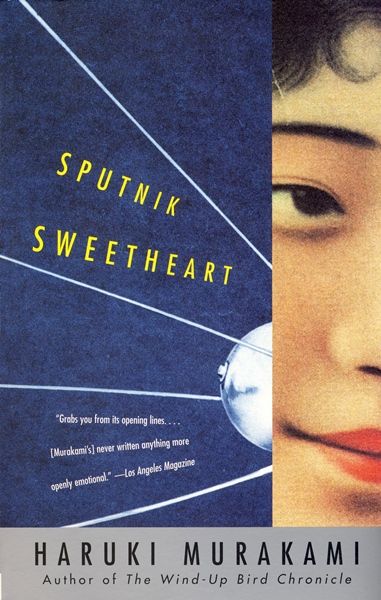
Sputnik Sweetheart by Haruki Murakami

This is not Murakami’s best book, but it contains the scene I remember best from all of his work. A woman at the top of a Ferris wheel sees into her own window below. In her apartment—is her. She watches herself do something she would never do, and she can do nothing to stop herself. The entire novel is worth it for this one scene, I think, which is what the book turns on.

New Directions Publishing | Fiction

All Fires the Fire by Julio Cortázar, translated by Suzanne Jill Levine

In particular, from this story collection, one should read the story “The Island at Noon,” in which a man takes a particular flight over a particular island again and again and finally decides to give up his life and move to the island. From the beach, he sees the plane he used to ride—suddenly it crashes into the ocean. An islander jumps into the sea and pulls out a man—who is the protagonist—from the wreckage and onto the empty beach.

Mr. Fox by Helen Oyeyemi

Mr. Fox by Helen Oyeyemi

A novel about the multiple lives we live through stories—both the stories we tell others and the stories we tell ourselves. Multiple characters who are also the same characters live and die, as an author trades stories with his imaginary—or is she real?—muse. Most fun is when the author’s wife gets involved in the story/self-making. Love always complicates what is real.

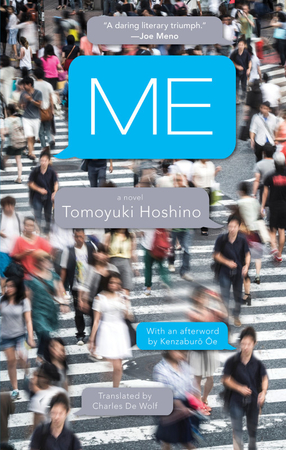
ME by Tomoyuki Hoshino, translated by Charles De Wolf

The narrator of ME comes home one day to find himself already inside. In other words, there is another version of him there with his wife. Soon, versions of the narrator are everywhere. Are these multiple realities or the reality of a person’s identity being an iteration one can’t control?

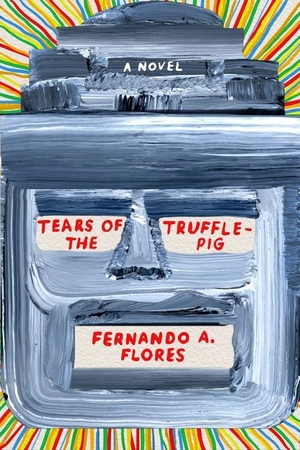
Tears of the Trufflepig by Fernando A. Flores

Rather than an alternate past, this novel depicts a parallel universe present. In South Texas, drugs have been legalized and the new contraband is “filtered” animals brought back from extinction. Arbitrary borders of all kinds are represented here. Flores’s novel is a great example of how parallel realities makes our reality even more clear.

Manazuru | Ingram Academic

Manazuru by Hiromi Kawakami, translated by Michael Emmerich

This might be fudging the rules a little, but this is my favorite of Kawakami’s books and it features a woman who feels someone—people? spirits?—following her, though no one else can see them. She is drawn again and again to Manazuru, which is where these two worlds seem to meet. On one trip, she is almost lost to this other world, these other beings, among whom may or may not be her missing husband.

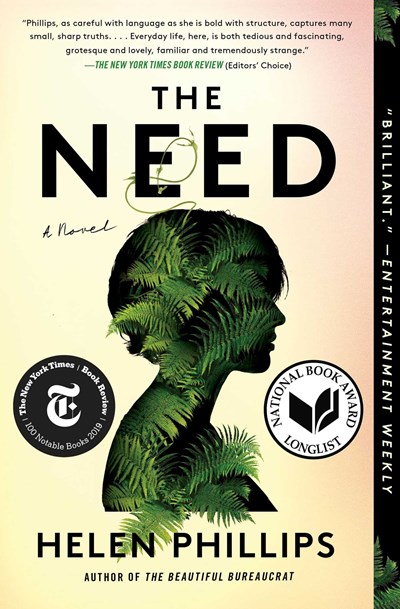
The Need by Helen Phillips

The Need by Helen Phillips 

One of the best books of 2019, The Need explores the multiple realities of work and parenthood, of love and grief, as a young archeologist discovers objects from a parallel universe in which, among other things, God is female. But along with the objects of another universe come the people and attachments of the other. Parallel realities here help depict the reality of how difficult it is to meet the expectations of being so many things to so many people at once.

Collected Fictions by Jorge Luis Borges

The Garden of Forking Paths by Jorge Luis Borges, translated by Andrew Hurley

Of course, this list could not be complete without The Garden of Forking Paths and especially its title story, in which the narrator meets a scholar of his eccentric ancestor-author, who apparently locked himself up in a garden labyrinth and wrote a final, sprawling book. The labyrinth was never found, and the book was a mess of contradictions. The scholar, however, explains that the book is the garden and is not contradictory but a representation of many realities at once. Borges’s story itself is an exploration of many possibilities and ends with the narrator’s choice to close off all other possible paths by following the one he least wishes to take. 

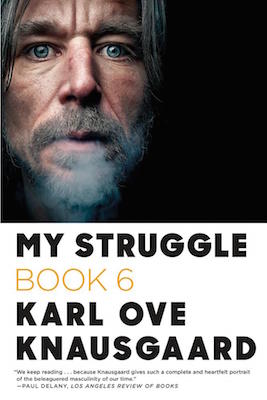
Karl Ove Knausgaard and Kim Kardashian Are More Similar Than You Think

About a week after the New York City coronavirus quarantine measures were announced, I knew the time had finally come: I had to stop melting my brain with Keeping up with the Kardashians marathons and use this strange break from reality to do something that felt “productive.” Yes, it was time to pick up the daunting, 1,152 page The End: My Struggle Book 6 that had been accumulating dust in my bookshelf ever since Archipelago Books published the English translation in September of 2018; it was time to finally finish reading the self-told story of Norwegian author Karl Ove Knausgaard’s life. 

I’d torn through the first five volumes of My Struggle, but cowed by its prodigious size, I’d been letting The End languish since 2018. I bought the book the day it hit shelves, read the first five pages in my bed, then put it away next to the rest of the series with a vague commitment to “read it later.” This March, unemployed and surrounded by reports that we were not to leave our homes for the foreseeable future, it appeared “later” had finally arrived. As I embarked upon my “big quarantine project” of merely getting through this gargantuan novel, I began to realize that perhaps reading Book 6 and binge-watching Keeping up with the Kardashians were not so different after all.

At eighteen seasons (and counting) and 3,600 pages in their respective mediums, I can think of no two personalities who have been so devoted to faithfully capturing every moment of their lives—no matter how painful, private, or mundane—as Kim Kardashian and Karl Ove Knausgaard. Conventionally, society mandates that only those who have already reached widespread acclaim in their area of expertise deserve to write autobiographies, while only celebrities who have become famous in their own right deserve to have television crews chronicling their lives and the lives of their immediate family members. After all, why would we find it interesting to invest ourselves so deeply into the personal lives of those we don’t and will never know, unless we stand to gain something by it? Yet Kardashian and Knausgaard flip the very concept of “deserving” such fame on its head. Both Kardashian and Knausgaard became famous by acting as if they were already famous. 

When Kim Kardashian began filming Keeping up with the Kardashians in 2007 and Knausgaard commenced writing the “My Struggle” series in 2008, both enjoyed a small amount of fame—but nothing remotely near the astronomic level of celebrity they would achieve after establishing their respective franchises. As we all know, Kardashian’s father was the now-deceased Robert Kardashian, an attorney infamous for successfully defending O.J. Simpson in his trial for the murders of Nicole Brown Simpson and Ronald Goldman. In the early 2000s, Kardashian (fille) worked as a personal assistant for Paris Hilton, appearing alongside Hilton on a few episodes of The Simple Life and in countless paparazzi shots. Kardashian worked for a few other celebrities in ensuing years (most notably as a stylist for Lindsay Lohan in 2004) and, in 2006, opened clothing boutique Dash with her sisters—but what placed Kim most staunchly on the radar was a leaked sex tape featuring Kardashian and former boyfriend Ray J. Curiously, while Kim was at the time only a B-list celebrity at best, Vivid Entertainment—who bought the rights to the tape for $1 million and released it on February 21, 2007—chose to title the tape Kim Kardashian, Superstar

Both Kardashian and Knausgaard became famous by acting as if they were already famous.

Prior to the release of Kim’s sex tape, Kris Jenner—Kim’s mother, who has since trademarked the phrase “momager”—had discussed the potential of creating a reality show centered around the Kardashian and Jenner families with Ryan Seacrest, who had just created his own production company, Ryan Seacrest Productions. Seacrest was put in touch with Kris through a casting director as he sought to create a reality television show centered around a unique family (Seacrest was inspired by The Osbournes, the MTV series which centered around Ozzy Osbourne and his family). Seacrest delivered a test tape to E!, a network that at the time focused mainly on entertainment news. Capitalizing upon the intrigue generated by Kardashian’s sex tape, E! picked up the series. In August of 2007, E! announced that a new “non-scripted family sitcom” focusing on the Kardashian and Jenner families was in the works. By October of that year, the first episode had aired, and the world of media was changed forever.

Across the globe, Norwegian author Knausgaard had made somewhat of a name for himself in the world of fiction. After working a number of odd jobs throughout Norway (including such stints as assisting patients in a psychiatric hospital and pouring concrete on an oil platform), Knausgaard relocated to Sweden and published his first novel Out of the World in 1998, at the age of 30. The novel, which centers around the life of a 26-year-old substitute teacher disgraced for his relationship with a 13-year-old female student, went on to be the first debut novel from any author to win the Norwegian Critics Prize for Literature. Six years later, Knausgaard published his second novel, A Time for Everything, the narrator of which is a man who is writing a book about the history of angels. The book was again received generally warmly by critics and earned Knausgaard a nomination for the Nordic Council’s Literature Prize. Still, Knausgaard was not yet a global household name. In 2008, frustrated with attempts to fictionalize his tumultuous relationship with his father, Knausgaard decided to abandon fiction and traditional narrative forms altogether and write, in painstaking detail, about what he knew best—his own life. 

In linguistics, deixis refers to a word or expression whose meaning is dependent on the context in which it is used (for example: here, you, me, that one there, or next Tuesday). Deixis is inextricable from individual experience—when I say that “I am sitting here writing this piece now,” the reader will never know exactly where I mean by “here” or what precise moment I mean by “now” unless I provide them with additional information. Both Keeping up with the Kardashians and My Struggle have captured the collective consciousness as embodiments of deixis; by so painstakingly presenting us with each mundane detail of their lives, Kardashian and Knausgaard provide us with the intoxicating illusion of living in someone else’s “now.” The embodied deixis of Keeping Up with the Kardashians and My Struggle connotes a sense of urgency—the “here” and “now” are always changing, and as the very title of Keeping Up with the Kardashians reminds us, it is our duty as readers and viewers to keep pace.

Kardashian and Knausgaard provide us with the intoxicating illusion of living in someone else’s ‘now.’

Yet, while the central conceit of their projects is actually quite similar, the public could not perceive Kardashian and Knausgaard more differently. Where My Struggle has earned Knausgaard acclaim as a champion of the modern autofiction movement, Kardashian is generally viewed as vapid and superficial, undeserving of her fame and success. Apart from the obvious roles that gender or race (Kim is half-Armenian) might play in this disparity, perhaps one reason for this difference in public opinion are the diametrically opposed attitudes Kardashian and Knausgaard hold towards their own work. While Kardashian, at least on the surface, appears to unapologetically revel in her fame, Knausgaard repeatedly reminds us that he feels shame about his project, and remorse towards all those he hurt in his quest to write honestly about his life. This, however, raises an important question: if you feel ashamed about your work, why publish it? Why write it in the first place?

Knausgaard is more candid about his motives for writing My Struggle in Book 6 than ever before. “There is something all of us experience, which is the same for all human beings . . . but which nonetheless is seldom conveyed apart from in the private sphere,” writes Knausgaard in “Part One” of Book 6 (185). “All of us encounter difficulties at some point in our lives, all of us know someone with a drinking problem, mental issues, or some other kind of life-threatening affliction . . . these things are not represented and thereby seem not to exist, or else to exist only as a burden each of us must bear on our own . . . [in the newspapers and the media, death and sickness are] presented as facts, described from a distance as a kind of objective phenomenon. . . what kind of society are we living in, where everything that is sick, deviant, or dead is kept from sight? . . . I could have written an article about all this,” admits Knausgaard, “but it wouldn’t have said much because arguments have got to be rational, and this is about the opposite, the irrational, all the feelings we have about what it means to confront what has withered away into death, and what that actually is.”

And, for all of the shame Knausgaard expresses throughout the first five volumes of My Struggle about exposing those closest to him, he flips the script in Book Six and asks the reader to consider why we have built a society that causes us to feel this shame in the first place. “Some people are of the opinion I had no right to do what I was doing because in doing so I was involving other people besides myself. And this is true,” writes Knausgaard plainly. “My question,” he continues, “is why we conceal the things we do. Where is the shame in human decline? The complete human catastrophe? To live the complete human catastrophe is terrible indeed, but to write about it? Why shame and concealment when what we are dealing with here is basically the most human thing of all? What’s so dangerous about it that we cannot speak of it out loud?”

While news outlets, as Knausgaard mentions, share tragic stories of death and destruction, such reports are typically delivered in a distant monotone; whether the medium is a news broadcast or a written article, it is typically the job of a reporter to state the facts unemotionally, to appear objective and unbiased in their depictions of reality. Thus, it is not through the news, but through fictional protagonists that we are most often given a glance into the subjective, that we come to understand the unique emotional toll that death and destruction can take on a person. Nevertheless, no matter how meticulously authors render their fictional protagonists, they lack the element that Knausgaard brings to the table in My Struggle: veracity. By delving into his own, very real feelings about his father’s death—and, in “Part Two,” the most gripping section of Book Six, his then-wife’s bipolar disorder—Knausgaard merges the roles of journalist, author, and protagonist into one. For Knausgaard, writing about his life is a means through which to acknowledge the base aspects of reality, the sides of existence we’d rather gloss over—and the shame he feels about exposing those closest to him in the process is ultimately outweighed by his desire to faithfully depict “the complete human catastrophe,” to grant the reader unfiltered access into his “now.” 

While Knausgaard provides us with his ‘now’ as catharsis for reality, Kardashian’s ‘now’ is the ultimate escapist retreat.

And, if what Knausgaard advocates for is a shameless embrace of the “now,” no matter what hardships might arise, what better example do we have to turn to than Kim Kardashian? While Knausgaard provides us with his “now” as a cathartic means through which to absolve us of our own shame surrounding the darker sides of reality, Kardashian’s “now” is the ultimate escapist retreat—in her world of glamour and exorbitant wealth, the problems that do arise may feel so untethered to our own so as to appear totally minuscule and inconsequential by comparison. However, if we take a closer look, Kardashian’s problems aren’t so different from Knausgaard’s after all.

Much as we watch Knausgaard react to his father’s alcoholism in Book One, so too do we get to see Kim and her sisters react to the drug and alcohol abuse which their brother Rob Kardashian, Kourtney Kardashian’s on-again-off-again partner Scott Disick, Khloe Kardashian’s ex-husband Lamar Odom, and more side characters all struggle with throughout Keeping Up with the Kardashians, and it is Disick whose descent into alcoholism gets the most screen time. Scott’s alcohol abuse rears its head throughout much of the series, but perhaps never with more intensity than on Season 4’s aptly titled episode “Blame It On the Alcohol.” The episode, which aired in February of 2010, depicts a belligerently drunk Scott at Kim’s 29th birthday dinner. As Scott grows increasingly inebriated throughout the course of the dinner, their server refuses to provide him with more to drink. In a now-infamous act of disrespect, Scott, demanding more alcohol, eventually stands up and shoves a hundred-dollar bill into the server’s mouth.

In moments like these, Keeping Up with the Kardashians veers away from deixis as escapism and towards Knausgaard’s understanding of publicized deixis as universal catharsis. Knausgaard challenges us not to conceal the toll a family member’s mental illness might take on us, and “Blame It On the Alcohol,” which was broadcast to millions of viewers worldwide, certainly rises to the occasion. Like Knausgaard, the Kardashians here expose the ugly truth of a family member’s alcoholism and the distressing effect it has on their own psyches. No matter how much time we may spend watching Kim prepare for the Met Gala or jet set across the world in private planes, Keeping Up with the Kardashians would not feel honest without moments like Scott’s alcohol-fueled outburst; after all, there is no individual “now” that exists completely devoid of pain. 

After all, there is no individual ‘now’ that exists completely devoid of pain.

Academics or literary scholars who commend Knausgaard but are quick to dismiss Kardashian fail to recognize that, while their day-to-day experiences and the mediums through which they share their lives with the public are different, both figures’ commitment to embodied deixis is the same. Indeed, in a Season 17 episode of KUWTK entitled “The Show Must Go On,” Kim and her younger sister Khloe grow frustrated that their oldest sister, Kourtney, has grown increasingly guarded about sharing her personal life on camera. As Kim expresses her exasperation in a confessional scene, she astutely states, “All of the days that Kourtney isn’t filming, Khloe and I are having to pick up the slack and share more. Cause if we’re not sharing our lives, then what is the show?”

Kardashian and Knausgaard both understand that to create a successful reality television franchise or autofiction series—to allow the viewer or reader to completely lose themself in someone else’s “now”—moments of catharsis and escapism must act symbiotically to evoke a feeling of unfiltered honesty. If too much of one element exists without the other in either of these genres, critics may deem the work overly “scripted” or “fictionalized,” or just plain boring. If Knausgaard never spoke of simple happy moments with his family and only dwelled on his father’s death and his wife’s bipolar diagnosis, or the Kardashians never shared heated family fights or break-ups alongside all of their lavish fashion appearances and decadent vacations, neither project would feel “real.” And if the illusion of honesty disappears, the magic of embodied deixis—and, consequently, readers’ or viewers’ interest in your work—dissipates along with it.

There has perhaps never been a more relevant time than 2020 to heed Kardashian and Knausgaard’s message to embrace and publicize the “now,” even when that “now” is seemingly full of darkness. In the years leading up to this one, many readers and viewers may have felt a degree of resentment towards Kardashian and Knausgaard, no matter how much they indulged in or admired their work. How did these people gain international acclaim merely for publicizing their own mundane lives? we might have thought, with envy, on the way to our dreary nine-to-five office jobs or labor-intensive, underpaid shifts in the service industry. However, as the pandemic rages on and over 30 million Americans have lost their jobs, we have been forced to define ourselves not through our careers, but through a deeper understanding of who we are in stillness, who we are when we are forced outside of a capitalist framework. In accepting such stillness, the same mundanities that Knausgaard and Kardashian document begin to inform our own identities. 

In accepting such stillness, the same mundanities that Knausgaard and Kardashian document begin to inform our own identities.

No longer do Knausgaard’s long passages describing a simple family meal or even Kardashian’s hours spent trying on clothes and planning every detail of an outrageously expensive children’s birthday party feel quite as tedious. For many of us who are privileged enough to have kept our homes and remained in good health this year, similar small events have taken on a larger degree of importance as the pandemic has stripped our careers and favorite leisure activities away from us—take the bread baking trend or the collective obsession with Tiger King, for example. And, as the video of George Floyd’s horrific murder at the hands of the Minneapolis police made clear to us all, capturing “the complete human catastrophe” in real time can awaken a nation to long-standing injustices and inspire great societal change. 

We don’t have to agree with Kardashian or Knausgaard’s lifestyle choices or values—I often find Knausgaard to be a cold and unfeeling protagonist in his own novels, and as a democratic socialist, I believe that the Kardashians’ obsession with material goods represents pretty much everything that is wrong about a society built upon wealth inequality. Similarly, we don’t have to document every moment of our lives for public consumption; some of us may be more private than others, and you can share as much or as little about yourself with the public as you feel comfortable with. But we do need to recognize that there is merit in accepting Kardashian and Knausgaard’s premise: that every single moment of your life—even the darkest moment, even the most “mundane”—is important in its own right, and worthy of sharing, if you so choose.

Little Cousins Make Bad Third Wheels

An excerpt from The Death of Vivek Oji
by Akwaeke Emezi

Osita

Vivek chipped my tooth when I was eleven years old. Now, when I look in a mirror and open my mouth, I think of him and I feel the sadness crawling through me again. But when he was alive, when it first happened, seeing it just used to pump anger through me. I felt the same after he died, that hot anger, like pepper going down the wrong way.

When we were small, he and I were always getting into fights. It was mostly nothing, scuffles here and there. But one day, we were pushing each other in his backyard, our feet sliding in the sand under the plumeria tree, both of us angry over something. Vivek pushed me and I fell down against a concrete soakaway outside, splitting my lip, and that was when my tooth chipped. I cried, then was ashamed of crying, and refused to speak to him for a few days. He was about to leave for boarding school up North—some military academy that De Chika had insisted on, even though Aunty Kavita begged him for months not to send Vivek. But my uncle wanted him to toughen up, to stop being so soft and sensitive. I wanted him to stay, but I was too angry to tell him. He left and I stayed behind, nursing an injured pride that prompted me to fight anyone who brought up the missing corner of my tooth. I fought a lot in school that term.

By the end of the year, I missed him terribly and I started to look forward to when he would return home to Ngwa during the rainy season on holiday. It was during one of those long breaks that Vivek’s mother convinced mine to enroll us both in SAT prep classes.

“It’ll get the children ready for American universities,” Aunty Kavita said. “Then they can get scholarships and an F1 visa. Think of it as straightforward.”

She and De Chika expected Vivek to go overseas for university, with a certainty they passed down to him—a knowledge that his time here at home was temporary and that a door was waiting as soon as he was done with his WAEC exams. Later I realized that it was the spilling gold of the dowry that funded this belief, but back then I thought they were just being optimistic, and it surprised me, because even my own mother who believed in thick prayers had never mentioned me going overseas. The gold was a secret door, a savings account that could buy America for Vivek.

I didn’t want to take the test prep classes, but Aunty Kavita begged me. “Vivek won’t do it unless you do,” she said. “He really looks up to you. You’re like a senior brother to him. I need him to take the classes seriously.” She patted my cheek and nodded as if I’d already agreed, giving me a smile before she walked away. I couldn’t say no to her and she knew it. So every Friday and Saturday during the holidays, Vivek and I took a bus down Chief Michael Road to the test center. I got used to spending the weekends at Vivek’s house, to the Saturday breakfasts when De Chika would detach the cartoon section of his newspaper for Vivek and me, when Aunty Kavita made yam and eggs as if she’d been doing it her whole life.

She had learned to cook Nigerian food from her friends—a group of women, foreign like her, who were married to Nigerian men and were aunties to each other’s children. They belonged to an organization called the Nigerwives, which helped them assimilate into these new lives so far away from the countries they’d come from. They weren’t wealthy expats, at least not the ones we knew. They didn’t come to work for the oil companies; they simply came for their husbands, for their families. Some knew Nigeria because they’d lived here for decades, through the war even; others spoke Igbo fluently; between them, they taught Kavita how to cook oha soup and jollof rice and ugba. They held parties for Easter and birthdays, and when we were little, I used to follow Vivek to attend them. We would line up for the photograph behind the birthday cake; we dressed up as ninjas for the costume party and spent weekends in the pool with the other Nigerwives’ kids at the local sports club.

One year, when we were all around thirteen or fourteen, there was a potluck at Aunty Rhatha’s house. She was from Thailand and had two daughters, Somto and Olunne, roundfaced girls who laughed like identical wind chimes and swam like quick fish. Her husband worked abroad, but Aunty Rhatha seemed to get along just fine without him. She made pink and yellow cupcakes, fluffed with air and sugar, decorated with carefully piped designs and sugar decorations, birds and butterflies in startling colors. Though he had a bit of a sweet tooth, Vivek hated the cupcakes, but he took his share anyway so he could give it to me. We walked around the house as wings melted in my mouth, our bare feet against the cool marble tile. Aunty Eloise was pacing in the back parlor, on the phone with someone, probably one of her sons, who had already left for university in the UK. Eloise was short and plump, with thick sandy hair and a perpetual smile. She and her husband, a doctor from Abiriba, both worked at the teaching hospital, and Aunty Eloise liked to host dinners and parties at her place, just to get some sound back into the walls now that her children were gone.

“Why doesn’t she just go and join her kids?” Vivek wondered aloud.

I shrugged, peeling a cupcake wrapper off. “Maybe she likes living here? Or maybe she just likes her husband.”

“Please. The man is so dry.” Vivek looked around, at the other Nigerwives clustered in the dining room, arranging pans of curry and chicken and rice along the table. “Besides, most of them are only here because of their children. If not, they would have left from since.” He snapped his fingers for emphasis.

“Your own mother, nko?”

“Mba now, her own is different. She was already living here before she got married.” We heard the front door open and Aunty Rhatha’s high voice, shimmering as she greeted the new arrival. Vivek cocked his head, trying to hear the guest’s voice, then smiled wickedly at me. “I think that’s Aunty Ruby,” he said, wagging his eyebrows. “You know what that means—your girlfriend is here.” I was grateful he couldn’t see me blush through my skin, but his eyes were laughing at me anyway. Aunty Ruby was a tall woman from Texas who owned a daycare center; her husband owned a carpet shop, and her daughter, Elizabeth, was one of the most beautiful girls I had ever seen in my short life. She was a runner, lean and longboned, with a swaying neck. I once tried to beat her at a footrace but it was useless, she moved like the ground was falling away beneath her feet, the future rushing toward her. So I stood back and watched her race all the other boys in the area who thought they could take her on. Elizabeth always won, her chest high and forward, sand flying behind her. Most of the boys were afraid to even talk to her; they didn’t know what to do with a girl who was faster than them, but I always tried to chat with her a little. I think it surprised her, but she didn’t seem to like me the way I liked her. She was always nice to me, though, if a little quiet.

“Leave me alone, jo,” I said to Vivek. “Is it because Juju is not here?”

Vivek colored immediately, and I laughed in his face as Somto and Olunne came around the corner with a bowl full of sweets.

“Do you want?” Somto asked, her voice bored as she held out the bowl. She hated when her mother hosted things, because they always had to help set up and serve and clean afterward. Vivek shook his head, but I rifled through the bowl, picking out the Cadbury chocolate eclairs that were my favorite.

Olunne stood next to her sister, twirling the white stick of a lollipop around in her mouth. “What were you talking about?” she asked.

“His wife,” I said, grinning. “Juju.”

Somto kissed her teeth. “Tchw. Please. I don’t have energy to waste on that one.”

“Ah‑ahn,” Vivek replied, “what’s your own?”

“She never comes to these things,” Somto complained. “The rest of us have to attend, but that one just lets her mother come alone. Who does she think she is, abeg.” Somto was right:  Jukwase, who we all called Juju, didn’t like to come to the Nigerwives’ events. Her mother was Aunty Maja, a nurse from the Philippines who was married to a much older businessman. I’d watched Vivek pine after Juju for years, but the girl was too somehow, a little strange.

“Maybe she thinks she’s too janded to be here,” Olunne said, shrugging. Juju had been born overseas, even attended school there for a few years before her parents moved back to Nigeria. She’d been very young at the time, but her voice still kept an accent that was different from ours. It was too easy to gossip about her, especially when she avoided the rest of us.

“Don’t mind her, she’s there forming fine girl because of her hair,” Somto said, her lip curling. I bit my tongue; this hair thing was a sore point for Somto, who’d had to cut hers the year before when she started secondary school. Juju’s mother had enrolled her in a private school that didn’t require mixed girls to cut their hair, so Juju got to keep hers long, curling down her back. Vivek frowned, but he knew not to push Somto or defend Juju too hard. It wasn’t until we were on the way home that he lowered his voice to complain to me.

“The girls don’t give Juju a chance because they’re so jealous. It’s not fair.”

I nodded, knowing how it had cut at him to hear them talking about her. “It’s not,” I agreed, mostly for his sake. He just liked that girl too much. She lived down the road from De Chika’s bungalow, at the end of a quiet street near Anyangwe Hospital. We used to ride our bicycles up the street all the time, slowing down when we passed Juju’s house. Aunty Maja loved flowers, so their fence was covered with piles of pink and white bougainvillea.

“Go and knock on the door,” I told Vivek. “See if she’s home.” “And say what?” he replied, pedaling in slow loops in the middle of the road.

I shrugged, confounded by the intricacies of wooing a girl in her father’s house. We pedaled home, leaving our bikes next to the swing set in the backyard. There was a cluster of bitterleaf bushes in front of the boys’ quarters, fighting with an ixora hedge for space. Aunty Kavita and De Chika used to have a househelp who lived there, but she returned to the village after a year or two—a death in the family, I think—and they never replaced her. Vivek and I took over the housework; we would sweep her old room in the boys’ quarters as if someone still lived there, dragging the broom under the metal frame of the bed. We stayed there when we wanted to be away from the grown‑ups, our bodies sprawled over dusty‑pink bedsheets, eating boiled groundnuts and throwing the shells at each other. Aunty Kavita left us alone there, only shouting from the back door of the main house if she needed anything. De Chika never even set foot inside. All of this made it a little easier for me to hide Vivek’s thing from them when it started.


I don’t know how long it had been happening before I noticed. Maybe someone else noticed first and just didn’t say anything, or maybe no one did. The first time I saw it with my own two eyes was the year after he chipped my tooth, on a Sunday after I had gone to Mass with them. It was afternoon, and Vivek and I hadn’t even changed out of our church clothes. We’d eaten lunch, cleared the table, then escaped to the boys’ quarters with a small stack of Archie comics that Aunty Eloise had brought back from her nephews on her last trip to London. I had one splayed out on the cement floor, my head and one arm dangling off the edge of the bed, my feet propped against the flaking wall. Vivek was sitting cross‑legged on the mattress beside me, his comic in his lap, spine curving forward as he bent his head over the pages. The day was hot and quiet, the only sound the rustling of thin paper and an occasional cluck from the chickens outside.

Vivek’s voice broke into the silence, low and rusty. “The wall is falling down.”

I lifted my head. “What?”

“The wall is falling down,” he repeated. “I knew we should have fixed the roof after it rained last time. And we just brought the yams inside.”

I closed my comic and sat up. His head was still bent but his hand was unmoving, resting on a half‑turned page. His fingernails were oval, cut short down to the beds. “What are you talking about?” I asked. “Are you all right?”

He raised his head and looked right through me. “You don’t hear the rain?” he said. “It’s so loud.”

There was nothing but sun pouring through the glass louvers and old cotton curtains. I stared at Vivek and reached my hand out to his shoulder. “There’s no rain,” I started to say, but when I touched the cotton of his shirt and the bone of his joint underneath, his eyes rolled up into white and his body flopped sideways, falling against the mattress. When his cheek hit the foam, he jerked as if he was waking and scrabbled his arms and legs, pushing himself back up and gasping loudly. “What? What happened?”

“Shh! You’re shouting,” I said. I didn’t touch him because I was afraid of setting him off again.

His eyes were wide and jittery. He looked around the room, his gaze brushing past me as his breath settled. “Oh,” he said, and dropped his shoulders. Then, almost to himself, “This thing again.”

I frowned. “Again? Which thing?”

Vivek rubbed the back of his neck, looking uncomfortable. “It’s nothing. Just small‑small blackouts. Forget it.”

I kept looking at him but he wouldn’t look back at me. “You were talking about rain,” I said. “And yams.”

“Ehn?” he replied, cramming an is‑that‑so into one sound. “I don’t remember. Biko, fashi the whole thing.” He picked up his comic and lay on his side, turning away from me. I didn’t say anything, because that’s how he was: when he wanted to stop talking about something, he stopped talking about it, shutting down like metal protectors had fallen around him. But I watched him, after that—I watched him to see if it would happen again. 

There were moments when he would become very, very still,  just stop moving while the world continued around him. I saw it happen when we were leaving class one evening: Vivek stopped walking and our classmates jostled and pushed him as they filed past. I was a few people behind him but he still hadn’t moved by the time I caught up. The others were glaring at him, sucking their teeth as they shoved past. He was walking as if he was drunk, staggering and stumbling, his lips moving slowly and soundlessly. I grabbed his elbow and propelled him forward, pulling him against me so he wouldn’t fall. As the stream of people continued out of the compound—JAMB exams were coming up, and the test center was full of students—I got Vivek through the gate and pushed him out of the way, up against a fence by the roadside gutters. Finally, he shuddered and came back. “Are you all right?” I asked, letting go of his elbow.

He looked at me and the protectors fell over his face. “I’m fine. Let’s go.” I followed as he strode toward the bus stop, wary but silent.

Somehow it became like that whenever he was back from school, even when we went to the village house over the holidays, me watching him close and intervening when I could and Vivek never really telling me what was going on. If I stepped in like I had at the prep center, he just thanked me and we’d continue as if nothing had happened. I got used to it.

None of our parents noticed, maybe because he was always so controlled around them, never as relaxed as he’d been in the boys’ quarters. To them, it just looked like he had quiet spells. Aunty Kavita would assume he was tired and tell him to go and sleep. My mother told her to check if he was anemic, and Aunty Kavita fed him large portions of ugu for a while, just to be on the safe side. He and I still read our comics and ate boiled groundnuts in the boys’ quarters of his house when I was in town; we still rode our bikes down the street; we still knocked down guavas and mangoes with a hollow bamboo stick, then lay on the bonnet of De Chika’s car to eat them.

We were young, we were boys, the years rolled by in the heat. Later, much later, I wondered if I should have told his parents what was going on, if that would have helped him, or saved him a little.


Two years before I finished secondary school, I finally gathered enough courage to approach Elizabeth. She was taking the SAT classes with us and I toasted her the same way we all toasted the girls we liked—I bought her FanYogo after class and escorted her to the gate when her driver came to pick her up.

Vivek watched me and laughed. “You’re finally chyking this girl?” he said. “Thank God. At least you didn’t wait until graduation.”

After a week of sending her letters and carefully writing down the lyrics to the hottest love songs for her, Elizabeth finally agreed to be my girlfriend. She saved the letters, all written on sheets of foolscap paper torn out of my exercise books, and wrote me notes telling me how romantic I was. I visited her house in Ngwa a few times—I already knew I could never bring her to Owerri.

One weekend, she suggested traveling down with me when I was going home.

“I have an aunty who lives there,” she said. “And my parents know your aunty, so they’ll allow me to go with you. You know how the Nigerwives are.” She was starting to get excited about the idea. “We can take the bus together!”

I refused. I didn’t want to chance anyone seeing us together at the bus stop in Owerri and reporting me to my mother. She had already warned me about having girlfriends during a rant about the sins of the flesh, when she told me that if she ever caught me masturbating, she would throw me out of the house. I couldn’t believe she was the one talking to me about that instead of my father, but my mother didn’t care. By then, she was a hardened pillar of religious fervor and prayerful discipline. When De Chika told me stories about the cheerful young woman my father had married, the one he used to sit and gist with in the kitchen, I couldn’t recognize her as my mother. The mother I knew was a straight‑mouthed person who held nightly prayer sessions, always kept her hair wrapped in a scarf, and quoted her pastor in every second breath.

Meanwhile, my father was staying longer each day at the office and I was spending more weekends at Vivek’s house, even when we didn’t have SAT classes. My mother noticed this immediately, of course. How could she miss it when we were all she had? She complained to my father about his absence, and when he continued to stay late at work, she decided he had a mistress. It was a fear fed to her by the women in her church. Why else, they reasoned, would he stay away from his family? No, he had to be keeping some girl in a guesthouse somewhere. On the nights I was home, I sometimes heard the shouting from their room as she threw accusations at him in tight, balled‑up words.

“You think you can just go and take another woman, ehn?! And me, I will fold my hands and allow it? Tufiakwa! You will tell me who she is, Ekene—today today! You will not sleep until you tell the truth and shame the devil!”

“Mary, lower your voice,” my father said, his voice tired and level. “The boy is asleep.”

“Let him hear!” she said, her voice punctuated with claps. “I said, let him hear! Is this how you want to shame me in front of everybody? Oya now, let us start with our son!”

I covered my head with my pillow to block the sounds. “Your mother wants you to spend more time here,” my father told me the next morning over breakfast. “This is your home. Not your uncle’s house.”

I kept my mouth shut and ate my cornflakes, even though I wanted to tell him that he was just as guilty as me. He was never there. He was the one leaving me alone with my mother, who felt like a hammer instead of a person. So I stayed away from home when I could, making up an impressive roster of excuses: De Chika was sick and they needed me around the house. The road from Ngwa to Owerri was plagued with armed robberies and it wasn’t safe to travel. If my mother had simply told De Chika that she wanted me home more, he would’ve sent me along immediately, but she never brought it up and he didn’t notice how often I was around. I think my mother kept quiet because she didn’t want it to look as if she and my father couldn’t handle me.

Aunty Kavita had told me once that my mother had wanted more children, but that she’d stopped trying after several miscarriages. I couldn’t imagine what she’d gone through—how much of my mother’s life I missed because I was a child—but I wondered if that was what changed her. She must have prayed so much in those years. Maybe that’s where the bright, high‑spirited woman De Chika talked about went; maybe she’d been sanded down into dullness by grief and prayers that went unanswered.

Instead, she held on to her faith with a stubborn kind of bitterness, as if it were all she had left—a trapped and resentful love. Who could stay bright and bubbly after losing baby after baby? What do you do when you’re not allowed to be angry at God? I could see why she made everything so heavy, but I still ran from her, all the way to the boys’ quarters at De Chika’s house and to Elizabeth, who made me never want to go back to Owerri.

“I don’t like to be in my house either,” she told me. Her family didn’t have a lot of furniture, and although Elizabeth said it was just the style, I had heard my aunt and uncle talk softly about her father. He was a quiet man, gracious, always with a handkerchief in his suit pocket, but from what I’d overheard, he was also a drunkard. His carpet store was always in danger of closing—he spent their money as if it was water—and Aunty Ruby had to hide what she made at the daycare center from him. Elizabeth never talked about it and I never asked her. She let me come over when he wasn’t home, but she preferred to visit me at De Chika’s house, in the boys’ quarters.

“I like it here,” she said, twirling around the room. “It’s like our own little world.” My heart pounded as I gazed at her arms and legs, so long and brown, sticking out from her clothes, ending in narrow hands and sandaled feet. There had been one or two girls at school that I’d knacked before, but Elizabeth was the first girl I’d brought there, to that small room and the dusty‑pink bedsheets. She never stayed more than an hour or two; Vivek came looking for me there after his piano or French lessons, and she would always straighten her clothes and leave before he returned. I spent what time we had in disbelief that this person—the same one I used to watch as she cut through the air running—was here, choosing to be with me. I remembered in exquisite detail how, each time she won a race, her face would light up, her lips parted as she panted for breath, her eyes bright with victory. I wanted to re‑create that look. I wedged the door to the boys’ quarters shut and pushed up against her, and she giggled under my hands and mouth. “Don’t stop,” she sighed, as I kissed her neck. Her skirt was starched and green and pleated. I slid my hands up her thighs, but she pushed them away, so I just held her waist instead.

One afternoon we were making out on the bed, our hips grinding through layers of clothing, when Elizabeth pulled her head back and searched my eyes with hers. “Touch me,” she whispered, and I froze, wondering if I’d heard her correctly. She let her legs fall open and arched her hips up toward me. “Touch me,” she said again, and I obeyed, reaching under her skirt. We fucked right there on the mattress—the sweat of her body against mine, her legs around my waist—and it was like a better life. My hair was short then, but I kept it in little twists like I was trying to start dreadlocks. She slid her hand into my hair and tugged on it, and the pain in my scalp was electric and perfect. I had to strip the sheets afterward to hide where I’d pulled out and spilled all over them.

Two hours later, I lay on the bare yellow foam of the mattress and told Vivek about it, about the noises she made and how she felt inside. He was standing by the window in a green T‑shirt, leaning on the wall, eating chocolate Speedy biscuits from a purple packet he held tight in his hand.

“You didn’t use a condom?” he asked, making a face.

I shrugged. “Abeg, I wasn’t prepared. How I fit know today was the day the babe go gree?”

“That’s stupid,” he said, his voice flat.

“Small boy,” I sneered, a little stung by his comment. My cousin was a virgin and I knew it. He scuffed his foot and looked out of the window. There was a dark bruise around his right eye. I sighed and changed the subject, gesturing at his face. “Oya, who was it this time?”

“That Tobechukwu idiot from next door. Feels he can just open his mouth anyhow and talk rubbish.” He flexed his skinned knuckles and ate another tiny biscuit. It had been years since he’d chipped my tooth, but Vivek still fought a lot, just with other people now. He had a temper like gunpowder packed into a pipe, a coiled‑up strength that had developed with time, and because he was thin and quiet, no one expected the violence to explode out of his frame the way it did. I had seen a couple of his fights, and they were worse than when he used to fight me. At first, I’d tried to break them up, but I stopped after I arrived late once and saw Vivek beat the living hell out of the other boy. He didn’t need my help.

“Where did the two of you fight?” I asked, surprised he hadn’t gotten into trouble.

“Down the road.”

“You’re lucky his mother didn’t see you. What did your mumsy say when she saw your face?” I knew Aunty Kavita would have been upset.

“She hasn’t seen anything,” he snapped. “Fashi that one. Gist me about Elizabeth. How many times?”

I grinned. “Back to back,” I boasted. I didn’t tell him how it had felt when she gasped my name into my ear, her fingers digging into my back—like in that moment I was a whole entire world.

Vivek rolled his eyes. “It’s here you’ve been bringing her?” 

“Yes, but it’s just today we did that,” I said.

He glanced down at the speckled foam of the mattress. “Is she going to come here again?”

“Maybe. What’s your own?”

Vivek ran a hand over his shaved head, the skin like burnt gold. “I want to watch next time,” he said, lifting his chin at me.

I sat up on my elbows, my chest bare, still smelling of her and sex. “Wait, wait,” I laughed. “Repeat yourself.”

He raised an eyebrow and kept quiet. I flopped back down on the mattress.

“You dey craze,” I said, looking up at the popcorn ceiling. “Watch for where?” I sucked my teeth.

“I’m serious,” Vivek said. “Unless you want me to tell my father what you’ve started doing back here.” I sat up fully and stared at him, but he was holding back a smile and laughed when he saw the alarm on my face. “I’m not going to report you, abeg. I’m just saying you should include me small.”

“Why do you want to watch?” I asked. “Is it that you like her or what?”

He scoffed. “I just want to see what all the noise is about. You people that keep talking about this knacking, knacking, every time knacking.”

“Ehn? So you want to just collect a chair and sit in a corner folding your hands while you watch us?”

He gave me a sneering look. “Nna mehn, don’t be stupid. I can just see through the window.”

“And if someone catches you standing outside, nko?” 

“Who’s going to see me with all those bushes outside the window? I can just stay behind them.”

Vivek ate another handful of biscuits casually, as if he was suggesting something normal. I lay back and stared at the discolored walls, trying to imagine Elizabeth being there again, her short hair rubbing against the mattress in rhythm with my thrusts, except this time with a pair of eyes pressed against the torn mosquito net of the window.

“It’s not as if you’ll see me,” Vivek said impatiently, as if he’d read my mind. “Just pretend I’m not there.”

I gave in. I actually knew some friends who did things like this. They’d rent a hotel room and some of them would sit and drink on the room’s balcony in the dark, watching as the girl got fucked inside, laughing quietly behind the glass of the sliding door, hidden by sheer curtains and the lack of light. We were men together and we liked to show off, so I agreed.

The next week, Elizabeth came back. We sat together on the mattress, my back sweating. Her collar was unbuttoned, showing the stretch of her neck.

“How are you?” I asked, stroking the palm of her hand with a finger.

She smiled at me. “I’m fine. Happy to see you.”

“I wasn’t sure if you would come back after last time.” 

Elizabeth laughed. “Why not?”

“Maybe I didn’t do a good job.”

She gave me a look, and in that second, I saw that she was nowhere as innocent as I’d imagined. I had assumed she was a little inexperienced because she was quiet and played hard to get, so it had felt satisfying to be the one with her on that mattress when we fucked. Like I was accomplishing something. But the way she looked at me made me think maybe I knew less about what was going on than she did.

“If you didn’t do a good job, you think I’d be here?” she said, and gave me such a cocky smile that my voice left me for a few minutes.

“So you’re just using me for my skills, abi?” I managed to joke, and Elizabeth laughed, throwing her head back.

“Don’t worry yourself,” she said. “Just enjoy. What’s your own?” She leaned in and kissed me and I stopped thinking. I unbuttoned the white cotton of her shirt with my pulse pounding, not looking at the window in case I’d see Vivek’s face behind the thin curtains. He’d insisted I replace the sheets on the bed (“Are you mad? You want to fuck her on just foam?”), and that I use a condom (“I don’t care if it makes her think you’re expecting sex. You are expecting it. And what if she gets pregnant?”). So we washed the pink sheets and dried them out on the clothesline, and now my palm was pressed against them as I tugged at Elizabeth’s underwear with my other hand.

She sighed and threw an arm over her face, turning it away from me. I kissed her neck and a breeze from the window made the curtains flutter. I focused on the curve of Elizabeth’s ear and her hand came up to grasp the back of my neck, her palm cool and dry. The sounds she was making must have carried through the spaces between the glass louvers. I briefly wondered what Vivek was doing out there. Was he touching himself or what? Isn’t that what someone would do? And what if De Chika or Aunty Kavita caught him behind the bushes exposed like that?

Elizabeth wriggled a little under me, dragging my attention back to her open shirt and small breasts cupped in a lace‑trimmed cotton singlet. I pulled the neckline down and put my mouth on her nipple, fumbled between our legs, ignoring the condom in my pocket as I pushed and sighed my way into her.

“Nwere nwayọ,” she warned.

“Oh!” I braced my hands against the bed and pulled back a bit. “Ndo.”

She smiled and kissed me, then wrapped her legs around my waist, her skirt falling up to her hips. We moved gently, and when the pleasure started to get too sharp, I pulled out to catch a breath. Elizabeth laughed and touched my cheek—but then she glanced past my shoulder and suddenly screamed, scrambling to cover herself and pushing me away. I turned around and there was Vivek, standing in the doorway, looking over the room, his eyes hooded and unfocused.

“Jesus Christ!” I leaped off the bed and pulled up my trousers. “What the fuck are you doing?”

He held on to the door frame and didn’t reply, his fingers digging into the wood. Elizabeth was crying, pulling her clothes back together, her hands shaking. I shoved Vivek and asked again, louder, but he just rocked backward like rippling water, then flowed forward, staggering a little.

“What is he doing here?” Elizabeth shouted, between sobs of rage. “Get him out!”

I pushed him harder, then again, out of the room, and he just kept taking it, his mouth slightly open, looking like a fucking mumu.

“Chineke, what’s wrong with you?” I knew he was having an episode, I knew he was sick, but I didn’t care. I was tired of covering up for him, tired of him being sick or strange or whatever was wrong with him. I really liked Elizabeth, you know, and now she was there, angry and crying in a corner of the bed, after he’d been standing in the door watching us for God knows how long. So I pushed him with all the anger I had and Vivek fell off the concrete landing, two steps down onto the ground. He broke his fall as if by reflex, twisting so that his hips and shoulders hit the sand, but his head still rocked from the impact, his eyes were gone, he still wasn’t here. Elizabeth screamed and I ran back into the room, terrified that Aunty Kavita would hear her from the main house, terrified that I’d hurt Vivek by pushing him so hard.

“Shh—it’s okay,” I said, climbing back on the bed and wrapping my arms around her. “It’s okay.”

“I want to go home,” she sobbed.

“No wahala. Come.” I took her hand, then led her off the bed and through the door. Vivek was curled up on the sand below, with his hands pressed to his face, hyperventilating. “Don’t mind him,” I said as we passed. “His head is not correct.” I escorted her out to the main road and she entered a taxi without looking back at me, slamming the door so hard that the frame of the car rattled. I watched it drive away, spluttering black fumes from the exhaust. She was never coming back, I thought in that moment; our relationship was over. I dug my hands into my pockets and walked back to the house, dragging my feet.

When I got back, Vivek was sitting on the landing, his back propped against the door frame.

“I’m sorry,” he said, as soon as he saw me, trying to stand up quickly. “I don’t know what happened—”

“You know what happened,” I said. “I don’t even care again. I’m tired. Every time with this your thing.” 

“Osita, please—”

“I said I’m tired.”

He ran a hand over his head, distressed. “What do you want me to do? Should I go and say sorry to her?”

“Don’t fucking talk to her,” I snarled, and Vivek flinched. I shook my head and raised my palms, backing away from him. “It’s enough,” I said. “It’s enough.” I didn’t look back as I walked away. I threw my clothes into a bag, then caught a bus back to Owerri, knowing I’d miss the SAT class the next morning. I didn’t care.

My mother stared at me when I walked into our house. “You’re home,” she said, frowning. I hadn’t been back in a while. Usually she would shout at me for being away so long, but this time she just looked up at me, her shoulders rounded and tired. She was sitting in the parlor with a tray of beans in her lap, picking out the stones, and she looked like maybe she had been crying.

I put down my bag. “Yes,” I said. “I’m home.”

A Novel About Rebelling Against Toxic Positivity

Janet, the acerbic narrator of Lucie Britsch’s debut novel Sad Janet, is a resister. She’s sad—has been for most of her life—and doesn’t want to take the pills that big pharma, her mother, and the culture at-large is pushing on her to “fix” her. She’s content with sadness, and she’s not into the “h-word”—happy—and taking pills to be that way, a new normal she wants no part of.

Sad Janet by Lucie Britsch

After an intervention orchestrated by Janet’s mother, probably with the support of her boyfriend, Janet breaks up with him, reclaiming her ability to eat pizza and watch bad TV alone. She works at a dog shelter, a job that was supposed to be temporary, but she doesn’t want to leave because of the dogs, who make her the closest to happy she’s ever been, and because of her strong, unsentimental boss, Debs.

The toll of Janet’s sadness shows, despite her sarcasm and humor mixed with a dash of vulgarity and quips like “When life throws you lemons, remember there are dogs.” It’s the Christmas pill that finally gets Janet, a pill specially designed for people like her who can’t stand the hype and family drama of Christmas. Just resolving to take the pill makes her feel lighter.

Sad Janet feels like it could be set anywhere through Britsch’s wry capturing of drug advertisements, the pervasiveness of medicating, and the Christmas-fueled capitalism that feels more draining than depression. Janet’s world rings true for anyone who takes pills, has seen a drug commercial, or been alive during the holidays.

Britsch and I exchanged emails about big pharma, Christmas spirit, kooky families, just being you, and—of course—dogs.


Sarah Appleton Pine: What is it like to release a book so of this moment in the world?

I joke that I wanted the world a bit sad for my book but not this sad.

Lucie Britsch: It’s so long between when you write a book and when it comes out, so I wanted to sneak a few current references in there and hope they were still current. I love it when you read something and there’s actually a reference you get like that, like a song you were actually singing the other day, so it’s more relatable. I didn’t know of course just how of this moment Janet would be. I joke that I wanted the world a bit sad for my book but not this sad.

SAP: Can you say more about this moment and how Janet is a part of it?

LB: She would see all this sadness and anger now and be hopeful for real change. I didn’t know the world would be like this when I wrote it and it would be as apt and we’d all be struggling more than ever to feel happy about anything, but life is hard and being human is hard, being sad is a fundamental part of it. I remember on The Good Place Janet said something about humans are ultimately sad because we know we’re going to die, that about sums it up. 

SAP: For the most part, Janet describes herself as being sad—not depressed, not a goth. It seems like sadness and depression (and being goth) often get conflated. How do you distinguish between them? 

LB: I think it’s just she doesn’t want to be labeled and doesn’t identify with any group, it’s just who she is. Depression is something clinical that can be treated whereas sadness is a feeling, for Janet it’s a natural one we should embrace. There’s this idea of the happy existentialist, someone who sees the void at the heart of existence but accepts it and is free, that’s something I’ve always been interested in and strive for. For Janet goths are part of something and she doesn’t feel part of anything.

SAP: Janet is okay—happy even—with her sadness and doesn’t view it as a problem like just about everyone else does. Does sadness serve a purpose?

Life is hard and being human is hard, being sad is a fundamental part of it

LB: Sadness definitely serves a purpose, it’s a cliché but without it how would we know what’s good. You can’t only feel the things you want to feel, you should feel the whole spectrum of human emotion. I always say if you don’t feel every emotion in one day are you even alive? Everyone knows a good cry is cathartic, we need to feel these things not block them.

SAP: Janet’s sadness has a grunginess to it, which I think contrasts to a glamorized sadness we sometimes see, especially in drug advertisements, like Janet points out. If anything, Janet’s life is the opposite of glamorous.

LB: Yeah I definitely wanted to move away from glamouring depression, I think we’re all bored of these pretty sad people manipulating us to sell stuff.

SAP: And big pharma seems especially eager to sell us stuff. “There’s a pill for that” feels like a mantra throughout the book, like pills are the only answer—some people are pretty quick to take them, then take more of them, which doctors encourage. Janet pushes against the efficacy of that. Fortunately, her dad and a couple of other people in her life embrace Janet’s sadness rather than see it as something that needs fixing, with pills or otherwise. There’s just such a push for one-dimensionality, eradicating sadness and feelings on that end of the spectrum. Is there ever a point where we have an obligation to encourage treatment? I think this sort of comes up at the end of the book, but I don’t want to give that away here.

LB: I think you have to find what works for you, Janet is just trying to find what works for her and stay true to herself, she accepts other people’s choices and just wants people to accept hers the same. She wants people to know you don’t always have to take a pill, there are other options, you can tell your doctor to fuck off, you can work it out yourself, but if you can’t, that’s ok too. It’s this monetising of normal feelings in a sad world Janet is against.

SAP: Besides sadness, I notice other emotions in Sad Janet—the occasional laugh, fury, jealousy, sarcasm (is that an emotion?)—but, of course, sadness is so essential. How would you describe this sadness?

LB: Janet’s can’t believe everyone isn’t sad or mad all the time. I always say that if you’re not a difficult woman, you can’t be living in the same world as me. Life is difficult, especially for women.

SAP: I think about that all the time, like all the little ways and big ways the world is more difficult for women. And Janet deals with some of that, too, like her mom wanting her to be more feminine, or at least brush her hair, and her ex-boyfriend’s expectations.

Her mom is perpetually locked in a mid-life crisis and (mostly successful) attempts to foist her ideas on the people around her, and meanwhile, Janet’s brother seems like an immature 12-year-old boy rather than a grown man with a family. These family dynamics are hilarious.

You can’t only feel the things you want to feel, you should feel the whole spectrum of human emotion.

LB: I love books about dysfunctional families too, I mean for me that’s what family is. It’s messy. We all have our sadness and we all cope with it differently, some can’t cope without medication and some can’t cope with the thought of being medicated, we’re all just muddling through. People have to let people do whatever works for them, in a family, in the world, we all want the same things, to not feel so shitty all the time.

SAP: Janet’s family seems especially messy at Christmas, particularly with her mother’s obsession with it, so Christmas seems like the perfect choice for the pill forced on the Sad Janets of the world. Your description of the Christmas obsession is so vivid. You really capture the capitalist spirit of the early build up with carols and cookies and mall Santas to the insistency on it being this big, dramatic day and how tough that is for some people. 

LB: Yeah, I think we’re not far off this sort of pill to be honest—it’s coming, you wait. People would want it, that’s the problem, there’s already a market.

SAP: Janet’s doctor hones in on the Christmas pill being a perfect pill for Janet, even though he hasn’t succeeded in getting her to take anything in the past. He even tricks her into coming into the office to sell it to her. It’s kind of surprising given all of Janet’s skepticism about doctors and big pharma that she has zero concern about health insurance. A lot of Americans deal with insurance hurdles to see doctors, get medication, etc. Does the difference in British versus American healthcare factor in at all here?

LB: Thankfully here in Britain, we have free healthcare in the NHS, and when it’s working it’s brilliant obviously. And just seeing the amazing efforts through this pandemic has made me very grateful we have it. I know it’s different in America and I hope one day you guys get the health care you deserve, I mean it should be a basic human right. I think if you don’t have a problem with big pharma though, you don’t see what’s going on.

SAP: I think a lot of Americans are envying universal healthcare right now—whether they want to admit it or not.

I also found Janet’s tendency to label herself (and others) interesting. She splits herself up—Sad Janet, New Janet, Old Janet, Bad Janet—and the tension between a unified self and a self with separate parts feels notable.

Fuck being happy, be you.

LB: She can be kinder to herself maybe, like she can be outside herself and see she’s complex, changing, growing; she isn’t this fixed thing she has to hate always. We aren’t just one thing, we have all these versions of ourselves we have to live with.

SAP: Janet classifies dogs, too, so your cover caught my eye—a dog in a “stupid outfit,” as Janet would say. Did you have a hand in the design or any thoughts you’d like to share about it?

LB: The first cover they sent me didn’t feel right at all so I asked them to come up with something else and this one just felt right. I had rescue greyhounds a few years ago myself and they didn’t know this so it just sort of felt like fate. I don’t know anyone that’s immune to a dog in a sweater.

SAP: I still have a burning personal question: do you have a dog?

LB: I don’t have a dog right now, but soon hopefully, and it will be a rescue greyhound for sure. They’re the best.

SAP: Anything else you’d like to add?

LB: I have bi-polar but choose to not be medicated, and it’s fucking hard but it’s just who I am. I’m always open about it and if people can’t handle it, it says more about them. I don’t know who these people are that have good mental health?

Being human is the hardest thing we’ll ever have to do. The more people talk about mental health, the more people realize having mental health problems is the norm, not the other way round. I just hope people read my book and know they can be whoever they are and I’m rooting for them. Fuck being happy, be you.

9 New Translated Books by Women

August is Women in Translation month, dedicated to works of literature originally written by women in languages other than English. As we explained in our 2018 version of this list, such works make up a tiny percentage of the books published in the United States each year, though with increased attention and dialogue around them, publishers will have an incentive to put out more. Consider this your excuse to tour the globe, absorbing its richly varied stories through the eyes of women whose first language is Korean or Polish or Arabic or French. Below are nine translated novels that first appeared in English in 2019 or 2020. (If graphic narratives are more your speed, there are also many wonderful women authors on our recent list of translated graphic novels.)

That Hair

That Hair by Djaimilia Pereira de Almeida, translated by Eric M. B. Becker

Half-Angolan, half-Portuguese Mila moved from Luanda to Lisbon at the age of 3. As an adult, she makes one demoralizing visit after another to Portuguese salons that have no idea what to do with her “rebellious mane,” applying abrasive chemicals and time-consuming weaves that soon fall apart. Mila sees this tale as a geopolitical one that spans continents, and in an associative style, tells it through memories of her parents and grandparents, interrogating even her own compulsions to notice and want to police the behavior of other Black people.

In This Korean Best Seller, a Young Mother Is Driven to Psychosis ...

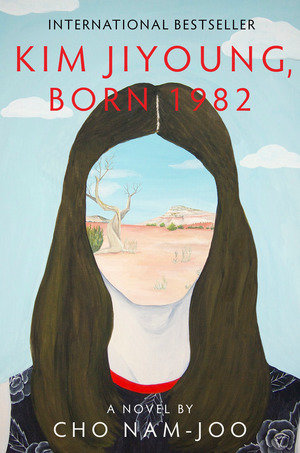
Kim Jiyoung, Born 1982 by Cho Nam-Joo, translated by Jamie Chang

Millennial Kim Jiyoung experiences rampant patriarchy at every stage of her upbringing in contemporary South Korea. As a young wife and mother, she finally snaps in front of her in-laws and questions the expectation that she must bend over backwards to serve them. Apologizing that she must be ill, her horrified husband ushers her to a male psychiatrist, whose notes constitute the novel. Jiyoung even starts to dissociate, believing that she can seamlessly transform into other women. Though in some ways a relatively straightforward catalog of relentless patriarchal pressure, Jiyoung’s critiques are also anti-capitalist, as she wonders who could possibly be happy even if they were the last person standing in a world with today’s priorities.

Little Eyes by Samanta Schweblin

Little Eyes by Samanta Schweblin, translated by Megan McDowell

In Argentine author Schweblin’s latest novel, a tech craze for cute, furry robot animals is sweeping the globe, dividing the world into “keepers” and “dwellers.” Keepers purchase a camera-equipped kentuki—which come in a range of species, from crows and dragons to rabbits and moles—while dwellers purchase a remote controller that pairs them with one kentuki elsewhere in the world, allowing them to interact with and peer into a stranger’s life through the robot. The novel runs through many vignettes of such pairings. From displaced maternal feelings to disturbing sexual demands, kentuki prove to be just the latest vehicle for anonymous connection and digital intimacy in our increasingly networked yet still frequently lonely internet age.

Tropic of Violence by Nathacha Appanah, translated by Geoffrey Strachan

Mauritian-French author Appanah tells the story of Moïse, a boy growing up in the postcolonial chaos of Mayotte, an island in the Mozambique channel and neglected department of France. When Marie—the white nurse who adopted him as an abandoned baby—dies suddenly, 14-year-old Moïse falls in with the brutal gang leader whose child soldiers run a nearby slum. Different characters narrate the many short, vivid chapters, some like Marie speaking helplessly from beyond the grave about the devastating yet inevitable events that ensue.

The Frightened Ones by Dima Wannous

The Frightened Ones by Dima Wannous, translated by Elisabeth Jaquette

In recent-day Syria, Suleima and Naseem meet in their therapist’s waiting room, leading to an intense affair that ends abruptly as Naseem flees Assad’s dictatorship for Germany. However, he soon sends Suleima an unfinished manuscript that contains a close fictional double of herself. Suleima, who escapes to Beirut herself, struggles with her mental health as she looks back on her family’s difficult history in Syria, her narration interspersed with chapters narrated by her fictional version in Naseem’s unnamed book.

Drive Your Plow Over the Bones of the Dead by Olga Tokarczuk

Drive Your Plow Over the Bones of the Dead by Olga Tokarczuk, translated by Antonia Lloyd-Jones

Nobel laureate Tokarczuk sets this mystical murder mystery in a Polish village near the Czech border that contains a few year-round locals and many second homes for city dwellers. Older English teacher Janina Duszejko is one of the former; she spends her free time translating Blake with former student Dizzy and drawing up horoscopes using elaborate astrological charts she believes in fervently. When local men, many of them hunters who mistreat animals and dismiss the eccentric Janina, start showing up dead and surrounded by animal artifacts, Janina believes said Animals (she, like Blake, prefers to capitalize the word) are finally exacting their revenge and is determined to convince others of the same.

The Girl in the Tree by Şebnem İşigüzel, translated by Mark David Wyers

In the wake of Turkey’s violent 2013 Gezi Park protests, a 17-year-old girl sits in a tree in Istanbul’s Gülhane Park, reading Italo Calvino’s The Baron in the Trees (of which this novel is itself a sort of update). Aware that she might appear like she’s lost her mind, she chats with a bellboy from a nearby hotel who brings her food and water for weeks. She reflects on various heartbreaks, from an aunt who disappears to friends who were killed in a bombing and a teacher who ridiculed a deeply personal story she wrote, until her reasons for the arboreal campout finally emerge.

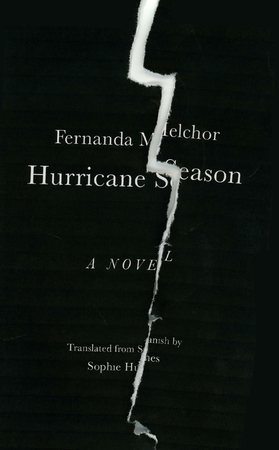
Hurricane Season by Fernanda Melchor, translated by Sophie Hughes

In a provincial Mexican town, boys find the local Witch dead in a canal under a mass of black snakes. She was known for furnishing the women of the town with spells and cures, the men with orgiastic parties. Each of the chapters, which often contain pages-long sentences, provides a window into the consciousness of a different townsperson, showing how the Witch became the scapegoat for all the shames and desires they would have preferred to keep hidden.

The Lying Life of Adults by Elena Ferrante, translated by Ann Goldstein

Set in a more privileged neighborhood of Naples than the Neapolitan Quartet, Ferrante’s latest novel centers 12-year-old Giovanna, who comes to the story a good student and loyal daughter of progressive, educated parents. When her father makes a mean remark about how she looks like his estranged sister Vittoria, Giovanna sets off through the city to find her troubled aunt, forging a relationship and slowly untangling generations of family history that her parents had covered over with convenient lies, which leads her to new understandings about how she wants to conduct her own budding young adult life.

7 Books About Being Young and Messy in New York

My memoir is not unique. But only in the sense that my story unfolds with New York City as the backdrop, where so many other stories have unfolded and will continue to unfold long after I’m gone. That’s the beauty of this multilayered city: it unravels you, and no one’s unraveling is alike. Yes, there are common denominators: exorbitantly priced breakfast sandwiches, not batting an eyelash when Jessica Lange is dining one table over, crying on the subway—but all of these elements leave a different imprint on a person.

I was lucky enough to experience NYC nightlife in the early 2010s, the tail-end of an era that I was fortunate enough—with the help of a fake ID—to experience. Don Hill’s was still around. You could catch a show at Trash Bar. You could grab a nightcap at St. Jerome, where my nightlife friends-turned-family spent many-a-night. I go-go danced at Nurse Bettie, a burlesque joint a few blocks over on Norfolk Street, for a few months during the spring of 2013. I’ve bumped into Debbie Harry at a party. I’ve spilled a drink on Lady Gaga (sorry, girl!). I could still wander into Trash & Vaudeville and get a hug from Jimmy Webb

After graduating from Hofstra—which is only forty minutes east of Manhattan—I made the move to NYC a year later, in 2014. Nightlife faded into the background while I worked on my master’s at The New School, interned at various online and print magazines, and tried to carve a space for myself as a writer. 

Below are seven books that helped me carve that space.

Don't Worry, It Gets Worse by Alida Nugent

Don’t Worry, It Gets Worse by Alida Nugent

My first apartment was in East Harlem. I’d take long walks to the Barnes & Noble on 86th Street and sit my broke ass down to read whole books from the humor section. Don’t Worry, It Gets Worse was one of those books. Like Nugent, I, too, was a 20-something college graduate navigating adulthood with the same finesse I would possess at pole vault. Did the employees at the Upper East Side Barnes & Noble start to recognize me and cast looks of pity in my direction? Yes. But it was worth it, because this book made a confusing time in my life a little less lonely. 

Intimacy Idiot by Isaac Oliver 

My pursuit of love and intimacy in NYC was, more times than not, misguided at best. Crying in a subway stairwell at four in the morning with a sad hashbrown in my hand at worst. I am approaching three years of being in a loving and healthy relationship somehow (witchcraft), but before I met my current partner, every relationship (which, by the way, is a generous term) I was in crashed and burned. No one gets it more than Oliver, who is able to articulate the ups and downs of emotional turbulence in a city notorious for its dating woes with heart and humor. I slept with this book by my side in between each terrible dude I boned.

The Colossus of New York by Colson Whitehead

The Colossus of New York by Colson Whitehead

If you could describe a book as a love song to the city that never sleeps/charges no less than $14.99 for a salad bowl the size of your fist, The Colossus of New York is that book. Few are able to capture the frenetic nature of this multifarious city with lyrical mediation and keen observation, forming an impenetrable bond between city natives and longtime dwellers. Every sentence from Whitehead’s fingertips is a full sensory experience. Swoon!

M Train by Patti Smith

M Train by Patti Smith

Just Kids is the Gideon Bible of coming-of-age in NYC memoirs, but M Train, to me, is a beautiful testament to the ordinary, a place we always return to. In Smith’s case, it’s that one tiny corner table in the West Village where she penned most of this book. Even though this book is woven with collections of her travel abroad, it is, at the end of the day, an ode to a first love. 

Out East by John Glynn

This is a question for any writer: do you ever read a sentence that is so good that you want to throw all of your possessions into the sea and start anew somewhere far away? Because that is every third sentence in this book. JOHN GLYNN HOW DARE YOU. Glynn has this uncanny ability to capture that feeling of your heart and mind being trapped in a viscous dipping sauce, unable to strike a balance, while everyone around you seems to have their shit together. It celebrates the complexities of queerness beyond crossing the threshold from private into public, all to the tune of one Montauk summer. This book is my jam.

Face It by Debbie Harry

I mean, is anyone more New York than Deborah THEE Harry? My love for Debbie Harry contains multitudes beyond being a Blondie superfan. Like yours truly, she also grew up in New Jersey, and she tells a lot of stories about getting in her car and driving to the city at night to hang out with her friends in the Lower East Side, which is literally what my life looked like after I graduated from Hofstra and moved back in with my parents for a year. Face It also captures the Golden Age of New York City, when you could stroll into a bar and bump into a Ramone, see bands like Television perform on a random weeknight, and/or share a cigarette with a Warhol superstar. Also, this book is extra special to me because if you had told 18-year-old Greg that he would one day interview Debbie Harry, he would have hurled a box of Clairol frosted tips at you. 

Do You Mind If I Cancel? by Gary Janetti

My heart will always beat for a fellow Hofstra alum. Yes, he’s the writer and producer of some of the most iconic television comedies of our time, but Janetti’s catalog of his twenties in New York—from trying to find a job before the internet to working at a hotel with an ornery bellman to a tale of soap opera addiction, all wrapped in a bow made from the finest observational humor—is a puzzle piece of universal fit. Also, please note that Lisa Rinna’s blurb for this book is just, “Gary.” Engrave that on my tombstone, please. 

The Bourgeois Romance of Pandemic Isolation

The lizard that lived around my apartment and popped up every once in a while died today. Found dead, cause unknown—the way they report it on the news. I burst into tears without quite knowing why. Perhaps because it too was a lone traveler within these walls, or because I had been rooting for it, as much as I have for myself, to survive this indefinite lockdown. If I were in the millennial habit of celebrating monthly markers, today would be the four-month-versary of my isolation. Not a particularly cheery thought: a hundred and twenty days since I have seen a familiar face, my nagging memory reminds me (somehow, video calls don’t feel like they count). I try to quell the burgeoning self-pity by skimming through the daily news, a concoction of public despair that leaves a bitter but less personal aftertaste. People would switch places with you in a heartbeat, I chide myself. The thought doesn’t really help. 

When an acquaintance recommended May Sarton’s Journal of a Solitude to me, I’d already spent nearly two months at home. The beginning of the lockdown, as far as beginnings go, had been quite comfortable. I procured enough supplies to get by, avoided the toilet roll mania and cooked healthy meals five days a week. I sent out an email newsletter for 40 consecutive days, for friends and acquaintances who were struggling to adapt to the new circumstances. I thought I couldn’t be more pandemic-ready. After all, wasn’t solitude the fuel to creativity?

I’ve lived alone in this apartment for the better part of two years, studying and working from home. Everyone who knows me knows how much I enjoy being on my own. Until recently, my version of solitude was the epitome of a comfortable existence. Much like the life Sarton describes in her journal, my schedule was interspersed with weekend trips and walks around town, weekly teas and lunches with friends, visits to relatives and social obligations twice a month. My meetings with people were intimate enough to refresh the soul and challenge the intellect, yet not so much as to intrude into my space. I relished my independence and indeed, fiercely guarded it. But as Sarton wrote, sitting alone on a freezing February day, “At what price would total independence be bought?” In retrospect, what I was thoroughly unprepared for was the actual solitariness of prolonged solitude, when it becomes imposed instead of chosen. 

In A Room Of One’s Own, Virginia Woolf points out, with due apology for her bluntness, that a woman, in order to write or create, must have a certain financial standing. Wordsworth, in Daffodils, reflects a bourgeois sentiment in evoking the pleasures of leisure. Solitude, and the enjoyment of it, comes inherently imbued with a notion of class consciousness. I daresay if I found myself sharing a room with five other people, with interrupted supplies of water and power, struggling to put the next meal on the table, I would have time for neither solitude nor loneliness. There is nothing romantic about poverty, except when the affluent write about it. 

Solitude, and the enjoyment of it, comes inherently imbued with a notion of class consciousness.

Even as I record my own reflections in a journal, I wonder what right I have to write about the nature of solitude. Living in an upscale urban neighborhood that borders India’s capital, equipped with the gift of the internet and a slew of social media apps, I have the ability to pick up my smartphone and see any one of my friends who live thousands of kilometers away. I have been home-bound, but I own the roof above my head, a sophisticated high-rise apartment roof with electricity and water, a well-stocked refrigerator, a weekly walk to the nearest supermarket for groceries. I can open my wallet without worrying, and can afford to casually buy a poor woman (or two) a liter of cooking oil that she will make do with for an entire month. After the third person peers hopefully at me, I can (not so) casually convince myself it’s all I can afford to do. I can come home and write an angry article about the government’s inadequacies and sign a few petitions. I can afford to put my upper-caste, majority-religion last name on them without fearing an arrest (yet). 

But I am also the person who drifts around in an empty house quiet enough that you can hear the air displaced by whirring fan blades. A house that I have deep-cleaned like a crime scene, where dust still accumulates daily on chairs that no one sits on. I exchange pleasantries with a potted areca palm, leave the TV on for no reason, and assign names to stray reptiles that die on me. There are days when I successfully adhere to the “inexorable routines” that Sarton calls a necessity for surviving tempestuous upheavals, and then there are days when I succumb and lie on my bed for hours at a time—I have nearly decoded my crying schedule. I am half-sick of oblique gazes on electronic screens; more and more, I find myself wanting to turn off my phone and write a letter. I am not struggling as much as many others—but it matters that I too am struggling. 

For a while now, I have dreaded reading the newspaper because I feel accountable to innumerable, nameless people for the luxury of my bad days, and even more for my good, peaceful ones. When people were walking hundreds of kilometers to reach their homes and collapsing on the way, I was dancing in my kitchen whilst cooking pasta. Even as  a security guard reached home after a two-day shift, only to leave in a couple of hours again, I woke up fresh from eight hours of sleep, and went about watering my plants. A fire, literal and metaphorical, rippled across the world as I received a much-awaited acceptance letter for a poem I’d submitted. At what point in a dystopian existence do you stop celebrating your own little joys?

At what point in a dystopian existence do you stop celebrating your own little joys?

Growing up, my solitude was a comfortable given. The only child of working parents, I could amuse myself for much of the day with little trouble. As I went out into the world and learned how to share a room, I also discovered how rare my childhood usual was. Sarton describes the responsibility that an independent existence burdens a writer with: a noblesse oblige of sorts, to dive deep into oneself and cast a wider net, to raise a voice for the stories so often  brushed under the carpet.  Despite the difference between my time and hers, I find myself agreeing. My autonomy—financial, sexual and social—is a gift I did little to earn, one that is denied to a majority of my country’s people, and a majority of the world. I owe it to them to be as unpretentious as possible, to at least face, without any hypocrisy, my life’s reality.  

I speak to a friend who has moved back with her family, who tells me about how they frequently interrupt her work. Another’s friend’s anxiety chronically gets triggered in close quarters, as she grapples with the uncertainty of her professional life. Many are suffering toxic domestic situations that they don’t want to stay in, but cannot completely abandon. Months ago, when I decided not to return to the house where my parents live, I agreed to pay a much smaller, albeit significant, price for my independence and solitude: periodic, debilitating loneliness. On my bad days, I try to remind myself of the good ones. 

On my good days, even as I lift my pen to traverse narratives of discrimination, political censorship, sexual violence and feminism with relative ease, I falter, unlike Sarton,  when it comes to a quietly confident exposition of my daily life. In her journal recorded over a year, with great self-assuredness, she touches upon several knotty subjects including racism, homosexuality, and patriarchy, but mostly, she writes at length about herself and her everyday struggles. What is of essence here is not so much what she narrates, but the fact that she chooses to say it at all—a confidence I and most women of my acquaintance sorely lack, a confidence hitherto the monopoly of white male writers. But truly, if alcohol can be the motif of Bukowski or Hemingway, why can’t Sarton’s gardening be hers? 

From time to time, it becomes essential to find something that pulls you out of yourself, and reminds you of your place in the grand scheme.

The extraordinariness in her journal is its attention to the ordinary: the changing flowers, the antics of the parrot Punch, the turn of seasons, the visit of a feral cat or a boisterous raccoon—the kind of minutiae that might be termed mundane, privileged and irrelevant by critics, but that she seldom apologizes for. At one point, she questions herself: “What do you want of your life?” and realizes that all she wants is the same, but “to handle it all better.” From her isolation to mine, perhaps just as she intended, this has been the connection forged: an appreciation of one’s life as it is, without an inner voice intermittently wondering if this is how it ought to be. 

In the interests of efficiency, solitude requires that one assume a certain weight of the world on one’s shoulders—in Sarton’s words, “think like a hero.” But here’s the catch: most heroes that populate history and literature are terribly self-absorbed. From time to time, it becomes essential to find something that pulls you out of yourself, and reminds you of your place in the grand scheme. Over these weeks, I am learning to transition from someone likely to blame herself for the death of a cactus, to someone who spends an hour each day pruning, re-potting, fumbling her way through the language of the soil, accepting alike the delight and disappointment. As I read about a garden in bloom in a patch of countryside half a century and half a world away, gazing out at my own backyard, it becomes increasingly lucid to me why nature is the unifying metaphor for human existence. There is nothing to be done, says Sarton, but to go ahead with life moment by moment and hour by hour. Today marks four months of my isolation. As I hum to myself while tending to a plant with curling leaves, I have finally stopped counting. 

Stories About the Worst Things Possible

In one of the stories in Shruti Swamy’s debut collection, A House Is a Body, the main character says this about her own state of mind:

“The screen dropped from my self in those moments without me even realizing it; the terror came later, when I noticed it had fallen, when I was trying to gather myself up in raw handfuls, but I was like sand all over.”

The woman is, interestingly, a professional laughter artist for hire. To a large extent, the stories here are about exactly such singular moments in their protagonists’ lives when that inner screen drops and they perceive their own deep vulnerabilities.

Swamy examines these moments and vulnerabilities in her characters with language that is both precise and moving. Whether the character is a mother, a father, a sibling, a lover, a re-imagined mythical demon’s wife, or a contemporary version of a Hindu god, each is trying to occupy the various spaces they’re allowed with a self-awareness that isn’t insular but all-encompassing. Swamy’s narrative style gives their musings a dream-like intimacy so that we, as readers, do more than bear witness; we find ourselves, much like the dog with the cobra in “Night Garden,” in thrall.

Shruti Swamy and I exchanged emails to discuss how motherhood became a dominant theme in A House Is a Body and why space—physical, emotional, intellectual, or liminal—features so frequently, especially for mothers who are also women of color.


Jenny Bhatt: Several of the stories here feature mothers of various stripes trying to balance motherhood with their other relationships and their own physical and/or emotional needs. The struggles create various layered tensions that then play out in myriad ways. You’ve also written briefly elsewhere (a Catapult essay on learning to swim, which was my first introduction to your writing) about your relationship with your mother and your grandmother. To be clear for our readers, I’m not suggesting the entire collection is about motherhood narratives but that it is one of the main themes. What fascinates or draws you to explore the mother-child relationship throughout the collection?

Shruti Swamy: None of these stories are about my own mother, at least not directly, but I remember something that happened first as a young adult, when I looked at a familiar picture of my mother as a young woman and realized with a shock that she had been a person before me, not defined by me at all, with her own moods and thoughts and desires. I was around the age she was when the picture was taken, and I wondered, what was she like? Would we have been friends? The glamour of your mother, as soon as you can see her like this, an adult looking at an adult, and the mystery of her—I find these aspects very compelling. 

On a more simple level, the mothers (and father, in the case of “Didi”) are mostly the parents of young children. During the time I wrote these stories, I was not yet a mother—fiction was a way for me to try that identity on, to play with the what-ifs.

JB: I agree. Whether we’re mothers ourselves or not, the mother-child relationship is a fascinating one to explore in fiction because it’s such an elemental one. We all have mothers, whether we’ve known them or not, loved them or not. That said, less than a decade ago, if there was a short story collection or a novel that honed in on motherhood as one of its major themes, it often did not get its due respect, got shelved under “women’s fiction” (which, as a genre label, is ridiculous, I know), did not receive much airtime from book critics or major literary awards, and more such. There are now, relatively speaking, more works centering on motherhood. Do you believe much has changed in the publishing world and among readers to make this a subject worthy of more respect and attention?

SS: I don’t think I’m qualified to comment on the publishing world! I can say that as a reader, I have always been hungry for stories about motherhood. It does seem like there were a great many books that were published all at once right around the time, coincidentally, I was pregnant with my daughter, and which were overwhelmingly written by white writers. There is room for many, many more stories still.

JB: Yes, I was thinking the same about how there have been a lot of recent books by white women writers exploring motherhood. They’ve been very good. I’m thinking of the most recent Want by Lynn Steger Strong (which, of course, is about more than motherhood but that’s an important aspect of the protagonist’s identity.) And, yes, we need more such from women writers of color.

Coming back to the mothers in these stories. One of the notable struggles they face is how to be a “good” mother. Certainly, it’s a rich vein to be mined because it’s not simply about living up to socio-cultural expectations or conditioning but also about figuring out and coming to terms with how motherhood fits in with a woman’s own sense of her identity and femininity. Could you talk a little about how you’ve worked, through these stories, to examine the ever-evolving alchemy of motherhood, how a mother’s relationship with a child is both draining and fulfilling, and how the intersections of race, culture, and class define “good mother” differently for all of us?

Culturally, we have an idea of who is a mother—whose bodies and bonds should be protected—and who is not.

SS: As a mother, I’m interested in what it means to be “good,” or at least, “good enough”, but in these stories, I was more interested in the opposite. I wanted to loose my characters from those neat scripts of motherhood and let them be human, to really fuck up. There was something exhilarating about letting them be “bad.” In the title story, for example, I was after this terrifying, giddy feeling I got when I read The Days of Abandonment [by Elena Ferrante]—what can go worse, how can things get even smaller and tighter around the neck of my character, what wildness will that provoke? Many of these stories, though, are interested in the worst thing that can happen, in motherhood and otherwise.

JB: Could you elaborate a bit more on the “neat scripts of motherhood” bit, please?

SS: To me, it’s less about the different definitions of “good” mothers across race, class, culture, etc, and more about visibility—who do we see

I had this weird experience when I was pregnant: literally into the final week of my pregnancy, most people, like people on the street, or colleagues at work, didn’t notice I was pregnant. I was like all on guard about strangers trying to touch my belly or whatever, but it never happened, the flip side of that, of course, was that people rarely offered me their seat on the bus or even just smiled beatifically at me like I saw them do at other pregnant women. The weirdest part was that, almost down to the one, the people who did notice I was pregnant were people of color. Once, in my 38th week, standing on BART, a Chinese auntie (who, as a senior, should have also been offered a seat) shamed these two white girls into getting up for me. My pregnancy was a strange, temporary condition, so these incidents were disconcerting, but not wrecking. Still, it was a taste of what it feels like to be, I think, so outside of someone’s narrative of what a mother looks like that you become invisible.

It’s not a controversial statement that mothers are treated like shit in this country, some more than others. A couple examples: Black women are dying in or after birth at far higher rates than white women, for example. We are persisting in separating mothers from their children at the border. The people who are contracting COVID on the front lines as essential workers are disproportionately Latinx and Black, many of them mothers. We allow these things to happen, culturally, because we have an idea of who is a mother—whose bodies and bonds should be protected—and who is not. I don’t want to put too much on books; I don’t think a story should have to, or even can, prove someone’s humanity. But I do think that books by and about mothers of color, especially Black women, should be uplifted and read with gratitude and care. Black feminism has so much to teach us all about how to be better citizens and mothers.

JB: The idea of “space” shows up both explicitly and implicitly in several of these stories. Whether it’s “The Neighbors,” where the protagonist, a mother, asks her new neighbor, also a mother, about how she finds the space to do anything else. Or, “The Laughter Artist,” where the protagonist muses on how a woman walking on the street is so self-aware of the physical space she’s occupying. Or, in the title story, where the mother feels as if her parenting takes up all her space and time, where she sees the house as not just a space to occupy but as a body that holds souls. There are more such examples. Why does the idea of space—physical, emotional, intellectual, or liminal—feature so frequently?

SS: Most of my life as a writer has been about trying to strike a balance between the time and space needed to do writing and the time and space to do everything else—to love people, to go grocery shopping, to make money. There was a terrible year when I had a terrible job that made me grind my teeth in my sleep. Which was ironic, because I had taken that job with the idea that the schedule and the relative simplicity of its tasks would allow me to write. I didn’t really write. I read slowly and tried breathing exercises and cried in the park on my lunch breaks and tried not to lose all faith in myself. But I had intense, vivid dreams, some of the most beautiful of my life. That year was very cramped for me, emotionally if not temporally, but even still, my subconscious was reminding me lovingly of the vast terrain always available to me, the richness and wildness of my consciousness. Any explorations of space in my work come from honoring that inner space.

JB: A number of women in your stories are dealing with depression, anxiety, and/or pathological worry. And these stories were written in times different from the one we’re currently living in. Given the global pandemic causing even more life-threatening dangers and fears, how have your thoughts changed on these issues and the ways that mothers, like the ones in these stories, might be coping, choosing, prioritizing?

I don’t think a story should have to, or even can, prove someone’s humanity.

SS: I wrote these stories in slightly less apocalyptic times than the one we’re living in now, but only slightly. In my city, Alex Nieto was killed in 2014. Every year, “wildfire season” stretches longer, and California burns for months and months on end. As a resident of the Tenderloin, and then the Mission, walking down the street is a daily reminder of the human suffering caused by the homelessness crisis and income inequality. We are absolutely at an extreme moment right now, but this crisis has deep roots. That anxiety, the feeling of being on the edge of collapse, thrums beneath the feet of many of my characters. One of the questions I am asking in this collection is about that: how do we live here at the edge? How do we find meaning? Unfortunately, I don’t think that my thoughts have changed, maybe just intensified.

JB: Yes, that sense of living on the edge of collapse came through frequently for me in these stories. It made me appreciate how your language truly immerses us in the interior landscapes of the main characters. They’re very self-aware, these women and men, of what they’re experiencing both emotionally and sensorially. I’ve always thought this kind of deep immersion is good for both the writer and the reader because, if done with due care and attention that’s not merely navel-gazing, we both come out of the writing and reading experiences having learned something about our individual selves, not simply about the characters. That’s my take and you don’t have to agree with it. But I’m curious to know how you think such immersion helps you as a reader, first, and then as a writer.

SS: I love the feeling of swimming in language, the feeling of living through language in someone else’s body and mind: more than plot or even character, it is this quality that offers me the greatest pleasure as a reader. Proust looks at flowers, at the brilliant sheet of sea at Balbec, revels in clothes, and music, and conversation. When you look up, you see it too: how exquisite the flowers are on your own kitchen table! The clarity of your lover’s eyes! The feeling of your hair against your cheek as the breeze blows into it! This is why I come to books, to tune my eye to the writer’s so I can look with it at my own life. And it is my goal as a writer: to offer the best of my vision to my readers.

Grandma’s Bones Live In My Mouth Now

Teeth

When my grandma left me her teeth I had no choice but to take them. They were a bad fit, riddled with cavities, and I was sorry to see my own teeth, white, healthy, plucked loose from my mouth and stored in a glass display case until such time as I might bestow them on someone else. Not that I would. It’s some real fucked up nonsense, inheriting someone else’s teeth, carrying their bones in your mouth, sharp little marbles of memory.

Ever since the transplant I’ve gone mute. My grandma Helen was a dancer. The language inside her body was movement, and now the language inside mine is unrecognizable even to me. I was never an athlete. I was never an artist. There is no way for me to externalize these internal currents, so I don’t.

At night, my dreams are filled with Helen’s memories. It’s a second life for her—her memories reincarnate in my body—but it’s me who’s living it. She’s as dead as she was before the surgeon buried the roots of her teeth into the fresh craters in my mouth.

My mom calls to ask how I’m doing even though she knows I can’t answer. She was sad when her mom skipped her and went straight to me, but she was also relieved, and I can tell she feels guilty that I’m the one carrying this ancestral burden instead of her. Nana was never that nice in the first place.

“Is your mouth sore?” she asks me. “Are you eating?”

Inside my body I feel what it felt like to carry her as a fetus. I feel the deadweight of her girlbody asleep on my chest. I feel insurmountable anger when she calls after months of not calling to say she’s pregnant, not because she’s pregnant, but because I’m the one who’ll have to take care of the baby while she finishes school, builds a life, when all I want to do, all I’ve ever wanted to do, is dance, and this is the second time this girlchild has stolen that from me.

“You sound good,” my mom says, even though I haven’t said anything, and my body is all flex and angles, all hard-lined accusation. “Let me know if you need anything,” she says, because she knows I can’t.

I cook Campbell’s tomato soup on the stove, and while it cooks, I choreograph a dance that perfectly expresses all of my fury and sadness. When I try to enact it in the living room, I am a pre-lingual baby, imitating sounds without understanding their meaning, and it makes me feel like tearing the limbs from my body and replacing them with another, more fluent set. I leave the soup on too long and it burns a thick layer of sludge on the bottom of the pan, which I leave in the sink for someone else to clean.

My mom comes by with Tylenol and coffee. Her eyes roam my untidy apartment and land briefly on the display of teeth that have been extracted from my mouth. I have made an altar for them on the coffee table—votive candles, Hershey’s kisses, peppermints. When I eat, I set aside a little food for them. When I drink coffee, I pour them a small cup and sit with them and tell them what I am feeling without using words or movement and it is no small miracle that they understand me. They offer suggestions. They ask for a refill. These enamel rocks that want what they want and aren’t ashamed to ask for it.  

“Are you having second thoughts?” my mom asks me, nodding towards the teeth which are no longer mine.

All of my thoughts are second thoughts, having been thought once, already, by Helen, but how can I say this? There is a body enacting breath, billowing up and down, up and down, repeated ad nauseum, and for once I try my hand at performing this speech-act in front of another human, in front of my mom, but it comes off spasmodic and weird and I want to grind my fists into my eyes until I see stars. I have a feeling that my teeth are laughing at me from their coffee table shrine, and I want to knock their socks off, metaphorically speaking.

“Maybe this wasn’t such a good idea,” my mom says, as if I had some choice in the matter. “No one would blame you for reversing the procedure.”

The teeth go sharp in my mouth, the roots clinging to my jaw like tentacles. How do I say I’m not alone? How does a body dance haunted? I remember the adrenaline rush of being backstage before a performance, the pulsing dark, the incipient light. I roll my head in a large, slow circle. I hunch my shoulders. My mom backs out of the apartment still holding both coffees, hers and mine.

I dream I’m dancing for an audience of Gaba girls. I dream about sex. The teeth want to keep dreaming, so I stay in bed all day, dozing through the morning, the afternoon, only rising at nightfall to pour some water on my extracted teeth, the poor thirsty darlings, before falling back into my bednest where I’m shaking cocktails for someone named Alfonse. When my mom calls, I send her straight to voicemail. When she calls again, I turn off my phone.

I am lying on a dance floor, watching other women leap over me. I am in a nude leotard on a rooftop slow-stepping in geometric patterns with women whose shoulders I never touch. I am good at this. I am the best.

In the bathroom mirror I meet a stranger with my teeth and someone else’s nose. First there’s fear, then panic, then the numbing sensation of a word repeated too many times, and a face is a face is a face and that’s not what’s important anyway.

In the living room, I move the furniture to the walls to make room for the words my body wants to say, but a full set of teeth, not mine, are shrieking for crusty bread and milk. They are desperate, these teeth, and I don’t truck with desperate. I unwrap a Hershey’s kiss and eat it, watching the teeth vibrate with envy, and then I eat another. When I’m finished with the chocolate, I eat the peppermints, and when I’m finished with the peppermints, I lick my finger and thumb and extinguish the candle’s flame.

I carry the teeth to the window—the night is balmy with spent rain—and I pluck them, one by one, from their setting until all that’s left is thirty-some empty cavities, a glass palate, a speechless tongue.

10 Books About the Importance of the Postal Service

Given the recent news, we’ve been reminded just how vital the postal service is for our everyday life. With the June 2020 appointment of Louis DeJoy as the new Postmaster General, the USPS has seen a sharp decline into crisis; with the November presidential election rapidly approaching, many are concerned at what this means for mail-in ballots. Furthermore, for many indigenous, rural, and/or low-income communities, as well as incarcerated folks and people who need medication delivery, the USPS is often the only reliable source

If this sobering turn of events has got you ruminating on the importance of mail delivery, below are ten books in which letters and the postal service—or lack thereof—play a crucial role. Ranging from academic studies about the diverse history of the USPS to a novel with original postcard artwork, these are books to write home about. (You should write home about them, and don’t forget to mail the letter!)

DeJoy now promises to suspend his mail-delaying shenanigans, but only because there’s been so much hue and cry. If you’d like to get in on that action, there are a number of ways to help support the USPS. Texting “USPS” to 50409 is an easy and time-efficient way to contact your representatives; here is a list of compiled resources of petitions and action items; and, of course, I firmly believe that one can never own too many stamps

The Postman by David Brin

In Brin’s dystopian vision for America, the USPS is painted as the only source of hope. In The Postman’s post-apocalyptic world, a man puts on an abandoned USPS uniform and tries to barter mail for food. However, his initial fraud snowballs, as he claims to work for the “Restored United States of America” and civilians cling to the idea of a centralized government’s return. Meanwhile, the U.S. is ravaged by bio-engineered plagues and a group of white supremacist, misogynist, and hypersurvivalist militia. The Postman, AI scientists, and other opposition groups must band together to fight for the future of civilization. Originally published in 1985, Brin’s sci-fi novel resonates uncomfortably true in our current-day society. 

All My Mother’s Lovers by Ilana Masad

In Masad’s debut novel, a woman does her own postal delivery (as we’ll probably also be forced to if things don’t improve). When Maggie’s mother dies abruptly in a car crash and leaves behind five letters, Maggie is determined to hand-deliver the sealed envelopes to each address. Although Maggie always thought her mother, Iris, had the picture-perfect marriage, she realizes there was much more to Iris’s past than she ever dreamed of. All My Mother’s Lovers is a warm-hearted and intriguing exploration of family, the imperfect nature of relationships, the intersections of sexuality, gender, and identity—and how much five letters can change someone’s life. 

There’s Always Work at the Post Office: African American Postal Workers and the Fight for Jobs, Justice, and Equality by Philip F. Rubio 

The Postal Service was the first public service to hire women and Black workers, and continues to have one of the most diverse workforces today. There’s Always Work at the Post Office highlights the stories of Black postal workers, and the ways in which they fought for a more equal work environment. A history professor and former postal worker, Philip Rubio shows how civil rights movements and Black labor protest traditions combined to help establish postal unions in 1971. For another analytic look that discusses how gender, race, and class play out within the USPS, try Linda B. Benbow’s Sorting Letters, Sorting Lives: Delivering Diversity in the United States Postal Service

Possession by A.S. Byatt 

Byatt’s Booker Prize-winning 1990 novel is all about the paper trail we leave behind, and what others may make of it later on. Two scholars’ paths converge through letters, as they uncover a potential love affair between two famous fictional poets. Poring over drafts and getting tangled up with academic power struggles, the scholars make it their quest to find out the truth behind the letters. Byatt highlights our society’s obsession with written “truth” and explores what it means to collect historical artifacts, challenging the reader to ask questions about a text’s authority and the concept of possession itself. 

Going Postal by Terry Pratchett 

Feeling like our news is getting rapidly more absurd every day? Try Pratchett’s satiric take on the mailing system, set in his fantasy city of Ankh-Morpork. Moist von Lipwig, a con man, is forced by the city’s ruler to take over the decrepit Postal Service (for context: his other alternative is death). Faced with piles of undelivered mail, Moist must step up to his position to invent postage stamps, hire golem messengers, and fight off the monsters of communication monopoly. (And if you’re interested in Pratchett’s anti-capitalist take on banking, follow along with Moist’s further adventures in Making Money!) 

Griffin and Sabine: An Extraordinary Correspondence by Nick Bantock

If you’re looking for a hands-on, fantastical adventure involving letters, Griffin and Sabine is the perfect interactive read for you: author and illustrator Bantock crafts a book where you can directly take letters out of colorful envelopes. Griffin Moss is a card designer in London living a lonely and bland life, until he receives a congratulatory (albeit mysterious) note about one of his postcards from a stranger in the South Pacific Islands. The stranger, Sabine Strohem, is a postage stamp illustrator. The two start up a correspondence, showcasing their personalities through their heavily-illustrated missives. The lovers’ story is part of a trilogy, continuing on in Sabine’s Notebook and The Golden Mean

84, Charing Cross Road by Helene Hanff 

Before email and the Internet, the postal service was also the sole means of international communication. This 1970 classic is formed of real-life letters between Helene Hanff, a writer in New York City, and Frank Doel, an antiquarian bookseller at Marks & Co., 84 Charing Cross Road, London. The two bond over obscure British literature and their friendship blossoms into a twenty-year correspondence. Adapted into a popular play and film, Hanff’s collection of letters show both the literary and personal value of having a pen pal. 

How the Post Office Created America: A History by Winifred Gallagher 

Did you know that the Founding Fathers established the postal system before signing the Declaration of Independence? Gallagher tracks why and how the development of the U.S. Post Office was crucial in binding the individual colonies into a centralized United States, and grew to impact every branch of American life as we know it today, such as industrialization, consumerism, migration, and settler colonialism. Public postal services have been a cornerstone of U.S. democracy since the beginning, and will continue to be vital in 2020’s upcoming presidential elections. If you’re interested in further reads that contextualize the historic significance of the USPS, check out: Neither Snow nor Rain: A History of the United States Postal Service by Devin Leonard.

Post Office by Charles Bukowski

Yes, I know. Bukowski. But listen: Post Office, the autobiographical work that catapulted Bukowski to national fame in the 1970s, is an extremely apt fit for this list. The book describes the day-to-day drudgery and debauchery of Henry Chinaski, who works as a mail carrier and sorter for the USPS. Between escaping guard dogs and dealing with hangovers, Bukowski’s anti-hero provides a biting look at America and the Postal Service. 

The Postal Service Guide to U.S. Stamps, by the United States Postal Service

Lastly, if you want a book by the USPS (who knew they wrote books!) and/or are an avid stamp collector, consider flipping through The Postal Service Guide to U.S. Stamps. Starting from the 1845 Postmasters’ Provisionals to today’s stamps, this vividly-colored guide documents every single kind of U.S. stamp. Perhaps a good addition to your coffee table, while you sit there writing letters?