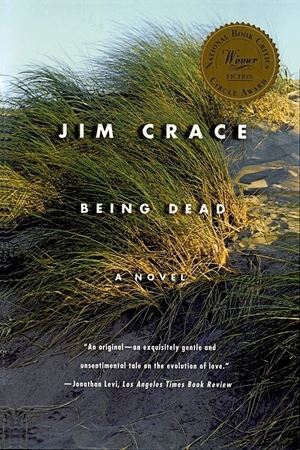
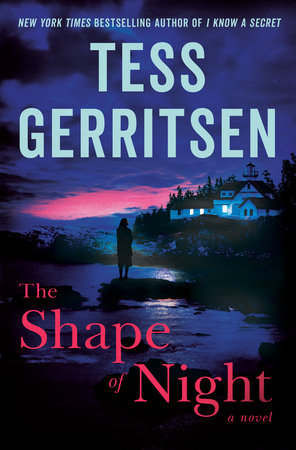
Lesbian Pulp Novels Made Me Feel Normal

Growing up I was obsessed with monsters. 

I was obsessed, specifically, with becoming one. When my friends and I were younger we would terrorize everyone into leaving us alone; we would growl on the playground, eat tanbark while crawling on the ground on all fours. When I went to sleep I would dream about changing, and I dutifully made sure this dream-change would be reflected somehow the next day: I dressed up in paper fur, I made my own claws. I would get upset, and instead of restraining myself I would immediately let it out on my surroundings — my parents patiently but fruitlessly dealt with broken furniture, with torn up rugs. I was uncontrollable. 

When I was eleven my friends began to nervously apply makeup, go to dances, tentatively care about looking pretty. I, on the other hand, began to look monstrous to myself in a way that made me feel ill. I started to stare long and hard in full-length mirrors, my body roiling in a way that felt malicious. I stopped being feared, and instead, I was watched. My peers watched me, my parents watched me, and finally, I watched and watched as my feelings and my body escaped from my control. 

I was uncontrollably angry, but not in a way that felt victorious. I got angry in the way that would end with me in tears. When I was eleven, I started to wear bigger shirts. I started to hide. I went from screaming my head off at anything that upset me to intensely quiet. And more importantly, I started to make more frequent trips to the library. 

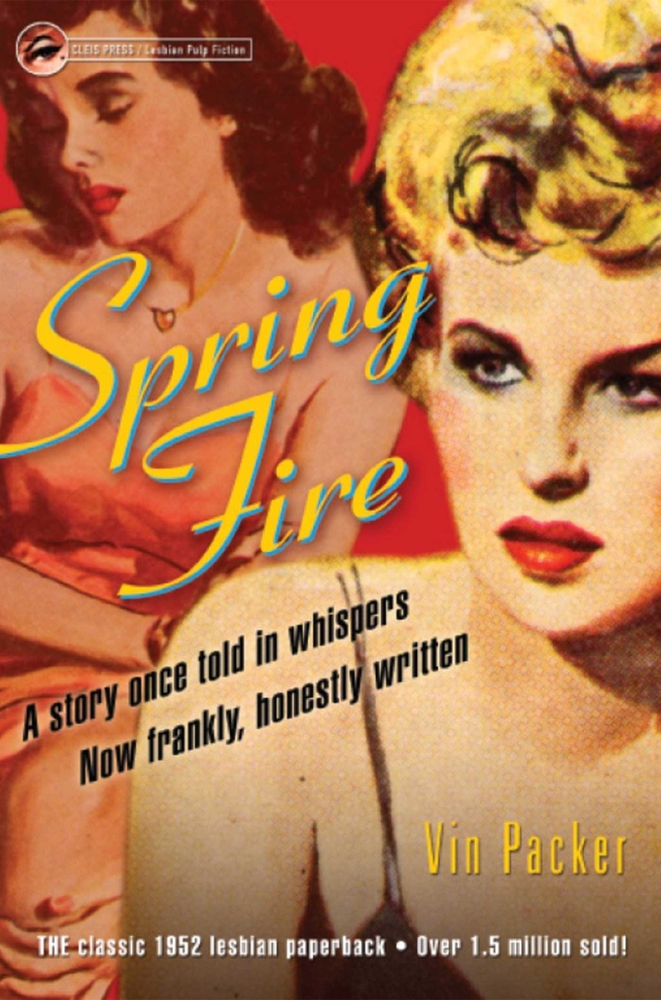
This is where I was, the summer before I would start 7th grade, bored as dirt, mindlessly flipping through the 50 cents bin in the library, when I saw Spring Fire by Vin Packer. The cover had the two female leads, scantily clad and falling demurely into each other’s chests. 
I wasn’t clueless about the source of my feelings. I was old enough to understand the very fundamental binary: I wasn’t feeling any attraction towards boys, and I heavily valued my friendships with girls, arguably more than they did. I was an outcast at school. If I wasn’t one I had to be an Other.

The marketing for lesbian pulp fiction like Spring Fire, especially from a modern vantage point, is a horrible kind of funny. Ann Bannon, the author of Odd Girl Out and the Beebo Brinker Chronicles, tells me the covers for lesbian pulp reflect the way gay life was seen at the time: salacious and forbidden. 

Pulp fiction revolutionized the publishing industry: printed on cheap “pulp” paper, the genre made an unprecedented amount of creative writing accessible to the public. Under-paying writers and publishing on inexpensive media meant that the genre had a low bar to entry, which allowed writers to be experimental. Science fiction covers, detective series — all had eye-catching subtitles, with portraits of pretty women, crazy monsters, and handsome men to get people to the cash registers. 

At the start, the books were mainly targeted towards men. But there are a few reasons to believe that lesbian pulp wasn’t limited to the male gaze. For one, the books had a largely female readership, regardless of orientation. And the writers of lesbian pulp were, in fact, primarily gay women, who were able to use the genre not only to jumpstart their writing careers but to depict authentic lesbian experiences without the constraints of the more “traditional” publishing industry. 

While it was fully okay to capitalize on moral outrage, the books inside those salacious covers couldn’t actually validate gay life.

Many of these books were written right during or after the McCarthy Era, so while it was fully okay to capitalize on moral outrage, the books inside those salacious covers couldn’t actually validate gay life. Bannon recounts that for the lesbians in most of these stories, “In order to shut up Senator McCarthy and all of the morality cops, they had to be punished … The Post Office would not deliver the books unless one of the women had committed suicide, gone nuts, or been killed.” 

Lesbian pulp thus became a Frankenstein genre: an imperfect, unsure vocalization of identity. Spring Fire, for example, featured two women, Leda and Mitch, who genuinely loved each other, the wakings of gay consciousness. Then, all of a sudden, the story veers off course. They are discovered, Leda goes crazy and is institutionalized, and Mitch changes her name to Susan and goes to a doctor to become heterosexual. The conclusion was very clean: being gay was monstrous, and amoral. 

Vin Packer (real name Marijane Meaker, as I later found out) hated the imposed ending so much that she wanted the book all but buried.: “I still cringe when I think about it. I never wanted it republished. It was too embarrassing,” she states in a new 2006 introduction. 

Horror and a lot of lesbian pulp bank on the same titillation: the idea of a desire that is fundamentally perverse. Like many gay women, I did not immediately understand my fascination with girls as attraction. And so before I had lesbian pulp fiction, I started to read more and more about male serial killers, and the awful things they would do to the young women they talked to on the street. 

My friends started dating. I, on the other hand, became moody and hard to look at. As I directed my anger more pointedly within myself, I forewent loud and unnervingly ugly monsters in favor of the monsters who were observers — monsters that breathe quietly on phone receivers, monsters whose fearsomeness only comes from the fact they are never truly shown. 

My obsession with women became just one of the long list of things that confirmed my own ugliness; I would look at girls in the corner of my eye in the locker room, I would avert my eyes too late when my friends would change in front of me; I watched women on the street from coffee shops and car windows. And when I did I would think about Ted Bundy, Andrei Chikatilo, how they hid their monstrosity deep inside. 

My obsession with women became just one of the long list of things that confirmed my own ugliness.

Morality, beauty, and evilness were, to me when I was younger, very black and white. I knew that I was evil, and my parents and my friends were not. I fell in love with a girl when I was a teenager; I was watching The Descent with her on the couch, and while I realized I loved her I simultaneously fell in love with the main female antagonist, Juno, played by Natalie Mendoza. And as she was torn to pieces by crawlers, covered in blood, I kept imagining the walls pressing into me until I couldn’t breathe. When I went back home that night, I still heard the crawler’s screams, the scratching of their nails. I could imagine the surety all the girls must’ve felt in their untimely deaths. 

It can be easy, now especially, to laugh or to pick at some of the derogatory tropes found in a lot of these books. But so many of these books were these women’s actual lived experiences —Bannon wrote Beebo Brinker Chronicles as a hopeful tribute to her “dream woman,” and 

Spring Fire was based on Meaker’s actual life. For Meaker especially I can’t imagine what it is like, having to tack on an ending like that to a book about your life. 

Before lesbian pulp, I thought this vulnerable, awkward, transitioning phase where I existed as a girl yet as something much worse was something only unique to me. I don’t know who I thought I was when I watched The Descent. To some degree, I was the girls in the cave, and me being torn apart by something horrible was a rightfully deserved ending for someone like me. 

But when I shoved Spring Fire to the bottom of my bag, I felt the same way I felt watching Juno get torn apart — when I stole the book I fully expected to turn into a crawler myself, and ran down the street laughing when I got away with it.

As Bannon said, in the early 1950’s there was this pressure to sell lesbian pulp, but also make it adhere to a well-understood morality. Anyone who’s read Spring Fire can see where the story Meaker wanted to tell ends. The rest is a tacked-on moral, a typical horror shocker, as the two women are torn apart from each other. 

But what I think the censors couldn’t really catch was that vulnerability and bravery that achingly real is hard to disguise. Because unlike when I watched horror movies, I was able to understand that Leda and Mitch, the characters I identified with, were not the monsters. The monster was the fear of being discovered. 

What shocked me about lesbian pulp was this open celebration of being unsure.

What shocked me about lesbian pulp was this open celebration of being unsure. For many of these authors, these pulps acted as their vehicle for coming out, their tentative, and imperfect coming to terms of a potential autonomy that existed outside of what these authors have been told. 

And reading the book, I realized that autonomy only seems monstrous when it is so breathtakingly unfamiliar. 

I finished Spring Fire in a park two blocks from my house, with the cover dutifully taped over with red construction paper. And as I read the ending, with Leda being taken away, I felt for the first time that I was being recognized. Not just in the superficial aspects of sexuality, but by this vocalized embracing of ugliness. 

Many of these books were treated as perverted. Not only in terms of what their content was actually about but how their expression was literally perverted or manipulated by publishers. Yet, this immediate indictment of morality and monstrosity imposed onto some of these books didn’t dishearten me. Instead, I found that there was something strangely heartwarming at the time about seeing how two characters love despite all narrative attempts to keep them apart. 

Because as horrible as the ending may seem, there is nothing more exciting and horribly, horribly scary than finally being able to see yourself yearn in Mitch and Leda’s tender eroticism, in Leda so gently and lovingly embracing Mitch for the first time. 

It should be said that not all lesbian pulps ended badly, or were manipulated against their will to change their manuscript; that would do a disservice to the genre. Bannon, Artemis Smith, and Valerie Taylor were prolific authors who published multiple pulp stories in which the two women were able to end up together. Meaker, after Spring Fire, published multiple books of acclaimed lesbian fiction, minus any tropes. The history of lesbian pulp fiction is hard-fought: many saw the books as disposable, so while some of the bigger titles like Women’s Barracks, Spring Fire, Odd Girl Out can be found pretty easily through most online booksellers, I had to find others through torrents or pdfs on a blog of a blog of another blog. 

Much of the restoration is also done by the gay women who grew up with these pulp works. Bannon received academic acclaim decades after her career with pulp fiction ended. Forrest’s anthology, and her profuse thanks for the authors that came before her, was the closest thing to LGBT history I had when I was a teenager. 

It was two years and thirty pulp books after I read Spring Fire alone in a park. I had just finished Forrest’s anthology, and for the first time, I realized I was scared. 

Lesbian pulp is so divisive possibly because it manages to be both brave and embarrassing.

As I read more lesbian pulps, my obsession with horror quieted. I stopped punishing my friends for nervously daydreaming about boys in our class. Instead, I obsessively turned inward, obsessing in the ways I could be seen as sick, contradictory, and more importantly vulnerable in a medium that I always saw as reflective of who I was. 

Putting these books in context with Spring Fire, I realized that I deserved to be loved, and that I wanted to be loved in that way. And that if I were to finally accept that love, I would become a monster, in the proudest proclamation possible. 

And sitting on my pile of hoarded books, I also realized it would take a very long time for me to finally have the bravery to become one. 

When you are a preteen girl about to hit puberty like an SUV charging toward a brick wall at 100 mph, you dream about something either destroying you or destroying the quiet life someone else has built for you. Lesbian pulp is so divisive possibly because it manages to be both brave and embarrassing: for some, the genre may be too harsh of a reflection of shame. 

Most of all, like many LGBT works, it thrives in contradiction, in confusion. And going beyond just sexuality, I think reading that confusion for the first time was when I started to forgive myself for a lot of my own failings. 

All the Men I’ve Slept with at Work

Chapter 2, Excerpted from Luster
by Raven Leilani

On Thursday morning the hot water isn’t running and there is a new mouse caught in the trap. My roommate and I have been supporting a family of mice for six months. We have gone through a series of traps and yelled at each other in Home Depot about what constitutes a humane death. My roommate wanted to bomb the place, but none of our windows open. So we have these plain glue traps which are engineered to smell like peanut butter. The thing is, to unstick the mouse I have to go outside and pour canola oil on its feet. Yes, there are always tunnels in my bread. Yes my landlord, a twenty-three- year-old, Flat-Tummy-Tea, Instagram shill who inherited the building from her grandfather, is ignoring my emails. But we are all trying to eat. So when I’m outside trying to release this distressed, balding mouse while the fat calico is watching from the deli across the street, it’s like this mouse infestation and I are in it together. When I go back inside, I think about how little the mouse wants. I think about the chicken grease and peanut butter. I think about how before lunchtime, one of the bodega cats will rise from a crate of Irish Spring and welcome the mouse into its jaws.


I go back inside and throw on my least wrinkled dress. I look into the mirror and practice my smile because they moved me to a desk where my manager can see my face, and I have noticed her growing concern. Management claims they moved me so that I am more accessible to staff, but I know it is because of Mark. My first year two years on the job, I sat in the outer limits of the office, where the children’s imprint transitions into epub-only romance. There, I was fortunate enough to face a wall, where I could blow my nose privately. Now I am social. I show my teeth to my coworkers and feign surprise at the dysfunction of the MTA. There is a part of me that is proud to be involved in these small interactions, which confirm that I am here and semi-visible and that New York is squatting over other people’s faces too, but another part of me is sweating through the kabuki, trying to extend my hand and go off script.


I have about ten hours until my date with Eric, which means I have to eat as little as possible. I cannot anticipate the overreactions of my stomach, so if I think there is even the slightest possibility of sex, I have to starve. Sometimes the sex is worth it and sometimes it’s not. Sometimes there is a premature ejaculation and it is eleven pm and I have twenty minutes to make it to the closest McDonald’s with an intact ice cream machine. I pack a can of black olives for lunch. I roll on some lipstick, hoping the maintenance of the color will make me less inclined to eat.


By the time I push my way onto the train, the sun is nuking all the garbage in Manhattan. We stall for traffic at Montrose, Lorimer, and Union Square, and the dark tunnel walls make mirrors of the windows. I turn away from my reflection and a man is masturbating under a dirty velvet throw. I almost lose a seat to a woman who gets on at 23rd, but luckily her pregnancy slows her down. I arrive at work eighteen minutes late, and the editorial assistants are already directing the wave of phone calls to publicity.


I am the Managing Editorial Coordinator for our children’s imprint, meaning I occasionally tell the editorial assistants to fact-check how guppies digest food. I call meetings where we discuss why bears are over, and why children only want to read about fish. The editorial assistants do not invite me to lunch. I try to be approachable. I try to understand my group of pithy, nihilists who all hail from the later end of Gen Z. There is only one EA I try to avoid, and this is the one who comes first thing this Thursday morning to my new, centrally located desk.

“I don’t know how these reporters are getting our direct lines. Have you seen Kevin?” Aria is the most senior editorial assistant. She is also the only other black person in our department, which forces a comparison between us that never favors me. Not only is she always there to supply a factoid that no one knew about Dr. Seuss, she is also lovely. Lovely like only island women are; her skin like some warm, synthetic alloy. So she’s very popular around the office with her reflective Tobagonian eyes and apple cheeks, doing that unthreatening aw shucks schtick for all the professional whites. She plays the game well, I mean. Better than I do. And so when we are alone, even as we look at each other though borrowed faces, we see each other. I see her hunger, and she sees mine.

“I don’t know, maybe Kevin was finally beamed up by the Heritage Foundation,” I say, taking my coffee into my hand.

And as you are wont to do—having always been the single other in the room, having somehow preserved hope that the next room might be different—she looked around, searching for me.

“This isn’t a joke to me,” she says. For the most part I’ve stopped worrying that she is compiling a list of reasons she should have my job, because now it is not a question of whether she will take my job, it is a question of when. The only thing that bothers me is that I still want to be her friend. On her first day, she came into the office meek and gorgeous, primed to be a token. And as you are wont to do—having always been the single other in the room, having somehow preserved hope that the next room might be different—she looked around, searching for me. When she found me, when we looked at each other that first time, finally released from our respective tokenism, I felt incredible relief.


And then I miscalculated. Too much anger shared too soon. Too much can you believe these white people. Too much fuck the police. We both graduated from the school of Twice as Good for Half as Much, but I’m sure she still finds this an acceptable price of admission. She still rearranges herself, waiting to be chosen. And she will be. Because it is an art—to be black and dogged and inoffensive. She is all these things and she is embarrassed that I am not.


I’d like to think the reason I’m not more dogged is because I know better. But sometimes I look at her and wonder if the problem isn’t her, but me. Maybe the problem is that I am weak and overly sensitive. Maybe the problem is that I am an office slut.

“They’re never going to give you the power you want,” I say because I’m jealous, and it is interesting how she wavers between her mask and this offering of conspiracy.

She leans down and there it is, that sweet, copyrighted black girl smell—jojoba oil, pink lotion, blue magic.

“How would you know? You’re still a managing editorial coordinator, and you’ve been here three years,” she says, and I could assert my seniority, but that would be embarrassing. The difference in our entire yearly salaries is one monthly student loan payment.

“We just got a bunch of proofs for that series we’re doing on bath time. Can you take care of those?” I say, turning away from her. I check my phone, hoping there might be a text from Eric. Some reassurance that our first date truly went well, or some indication that he is excited about tonight. I think about sending him a comprehensive list of things he is allowed to do to me, so that we are on the same page, but when I have a draft, it has kind of a boiled rabbit vibe. I try my hand at it a few more times before I give up and go to find Kevin, who has acquired the book at the center of this PR nightmare, an illustrated history for the conservative child, a lyrical meditation on the radicalism of the liberal media and the martyrdom of rural states.

What they say about not shitting where you eat only holds if they pay you enough to eat. For the most part, this has been the best part of the job.


If I have to be objective, the art in this book is something. The moody gouache sunsets over confederate camp. Lincoln’s saggy thought bubble as he looks into the future, disappointed by the state of his party. The photorealistic depictions of urban crime. I find Kevin walking around his office in one sock, talking on the phone as this G-rated agitprop flies off the shelves. And then I see Mark. I’m not proud of what I do then, which is duck into the stairwell and hold my breath. Of all the men I’ve slept with at work, this is the one who cost me the most. What they say about not shitting where you eat only holds if they pay you enough to eat. For the most part, this has been the best part of the job.


Onboarding with Mike, his little fingers and junior human resources lingo as I cajole him out of his pants. Jake from IT coming up the stairs at 6pm with his key fob, breathing on my neck about admin privileges while he addresses the service desk ticket about my broken monitor. Hamish from contracts in the nursing room with that blue streak in his hair and his hairy thighs asking me so sweetly if I could call him Lord. Tyler, Managing editor of Lifestyle and Self Help, his fanned glossies and sock garters, pushing my head down while he’s on the phone with the Dublin office. Vlad from the mailroom with his broken English and all the packing peanuts around us on the floor. Arjun from the British sales group with his slick black hair and cartoon villain forearms, all riled up by Scholastic poaching high performers on his team. Jake from IT, again, because these computers are shit and he has the prettiest dick I’ve ever seen. Tyrell from production with his halfway smile in the bathroom stall at the office Christmas party, string lights a fractal echo in his dark, reflective eyes. Michelle from legal sitting on the copier, nylons slung around her neck as fluorescents flicker overhead. Kieran from bodice rippers taking me from behind and going on and on about severing my body from my limbs and the whole time I’m laughing and I don’t know why. Jerry who is acquiring all the cancer- centric YA, making bank and soft love to me in the conference room with the aerial view of 30 Rock and I’m crying and I don’t know why. Joe from True Crime who doesn’t read at all and who comes loud and quick and calls me nigger and then mommy. Jason from STEM textbooks who wants me to cry just like I did for Kieran, which is an experience I do cry about, at home. Adam from Christian erotica coming on my face and I feel nothing. And then Jake, one more time, because my keyboard is on the fritz, but it isn’t Jake but John from IT who comes, sliding his hand beneath my shirt, telling me that Jake was in a bad car accident and it isn’t looking good.


And somewhere in between, Mark. Mark, head of the art department, where the air smells like warm paper and everyone is happy. Where there are silky sheaves of sixteen by twenty four and the printers are sighing in self-generated heat, churning out deep blacks and high whites like clockwork, panels as clear as water, so saturated that if you touch it fresh you can feel the wet. The people in the art department move around the building in smiling clusters, concept work cradled in their arms. They have passionate debates in the elevator about embossing and verdana and courier new. They have their own hours and their own dress code, each in that chic, dorky limbo that is the domain of the old art school kid. And all I want is to be one of them. I want to order takeout from the dumpling house across the street and stay in the office until ten, revising the vista behind Frank the Fox from ultramarine to cerulean to cyan. I have applied three times. I have interviewed twice. And in both cases they have asked me to do more work on my basic figure drawing skills. Mark told me that they would keep my resume on file, and so I went and flunked some night classes I could not afford, thwarted by the dimples in human muscle and especially by the metatarsal bones in the foot. I stuck to graphite and paper, hoping that unlike paint, the medium would afford me more control, but my figures kept blurring under the heel of my hand.

I am good, but not good enough, which is worse than simply being bad. It is almost.


When it comes to this, I cannot help feeling that I am at the end of a fluctuation that originated with a single butterfly. I mean, with one half degree of difference, everything I want could be mine. I am good, but not good enough, which is worse than simply being bad. It is almost. The difference between being there when it happens and stepping out just in time to see it on the news. Still, I can’t help feeling that in the closest arm of the multiverse, there is a version of me that is fatter and happier, smiling in my own studio, paint behind my ears. But whenever I have tried to paint in the last two years, I feel paralyzed.


And Mark is not exactly pressed against the chapel ceiling or projecting this bleached, Warholian cool. He is a grown man in a duster who keeps fresh orchids in his office, collects polymer toys, and does Groening-esque renditions of The Dream of the Fisherman’s Wife. And one day it was raining and 8pm, and he and I shared an elevator. He showed me panel of a cunnilingual octopus and the care he had taken to render this piece knocks me right over and onto his cock. But it isn’t like the others—the ecstatic rutting and cushy ether of the void—it is like I really need him. Because there are men who are an answer to a biological imperative, whom I chew and swallow, and there are men I hold in my mouth until they dissolve. These men are often authority figures. And so Mark was very kind, taking me out and deepening my palate and ordering all the wine. He took me back to his apartment, the sort of New York Real Estate that seems impossible, lousy with light and square footage like some telegenic Hollywood lie.


The sex is okay but sort of beside the point, because in his drawing room there are buckets of prismacolors, copic markers, and oils. Rolls of raw canvas, cans of lumpy gesso and turpentine. Filberts, brights, and flats bound with soft camel hair. And while he has a light taste for libertarianism, he doesn’t ask me to do outdoor activities, so it kind of squares. We spend weekends in bed, moving quickly out of the first nervous touches into the realm where we are undeterred by the odd turns of the id. But of course, my failure is hanging between us. He is infinitely more talented in the thing I most want to do, and he seems to prefer it that way. It is silly how late this occurs to me, the carrots he dangles in his boredom, how casually he reaches for the stick. I see myself in the women who trail him, the moony typographers, the perky-breasted RISD grads. Still, eventually I go over to his house and beg him to look at my work. I get on my knees, offer up my sketchbook, and say goodbye to his apartment and the sinewy watercolors he sometimes shows me at 3 am. There is a painting that I love by Artemisia Gentileschi, Judith Slaying Holofernes. In it, two women are decapitating a man. They hold him down as he struggles to push away the blade. It is a brutal, tenebristic masterpiece, drenched in carotid blood. When Gentileschi painted it, she was seventeen. She painted it after her mentor, Agostino Tassi, was convicted for her rape. As I am working on a piece inspired by this painting, my father dies. I bury him next to my mother, and for weeks I don’t sleep and the mice eat all my fruit. Mark sends his condolences in a card, but then he stops returning my calls. He sends the drawings I left at his house in an envelope simply labelled stuff, and I leave him some voicemails which mostly boil down to him being a hack who only draws four- fingered hands, to how he is an impossible dweeb who needs to be kept away from women and shot into space, and a few times, yes, I stand in front of his house in the middle of the night. I draft some emails I don’t send and wander the halls of the office with all the things I want to say to his face. But when I see him now, when I go back into the stairwell next to Kevin’s office and see how Mark has remained unchanged, how he is flanked by two women and proceeding gaily about his life, I lose my nerve.

7 Books About Coming of Age in a Small Town

It can seem like there’s a checklist of growing pains to be endured as we edge our way towards adulthood; overbearing parents and nuisance siblings, unrequited love and friendship fallouts, and these are often the least of our troubles. It’s a time when we’re wising up to what’s really going on around us, learning that the authoritative figures that surround us are flawed, and even hypocritical. Furthermore, they don’t understand us, want to control us, and they’re doing weird things. If all that wasn’t enough, we’re being increasingly exposed to the world’s slings and arrows, and there’s not a lot we can do about it. 

If you think about it, adolescence is a time and a place, and many a beloved bildungsroman features a small town as its backdrop. According to the canon, coming-of-age in a small town is quite the absorbing experience; there’s a ready-made cast of players and the novelty of local color, life lessons aplenty, and unregimented summers spent pondering the big questions (in addition to hanging out with the people our parents warned us about). These safe havens, stagnant backwaters, and one-horse towns can influence our life’s trajectory in ways we may not become cognizant of for many years into the future. 

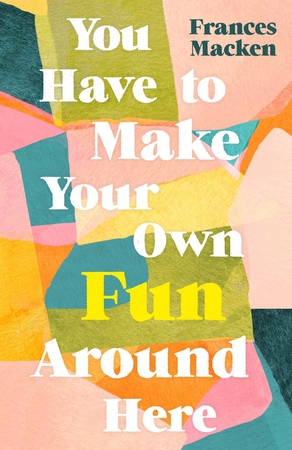
My novel You Have to Make Your Own Fun Around Here is set in the fictional Irish town of Glenbruff, and tells the tale of two precocious girls, Katie and Evelyn, who have grandiose dreams of becoming filmmakers and artists, but an all-consuming rivalry overshadows their friendship. As with all small towns, there’s a lot going on beneath the surface in Glenbruff, and the people living there embody the spirit of the place. While it’s understandable for a young person to want to move on from their hometown and see what the wider world has to offer, there’s always one last adventure waiting for us before we leave, and inevitably, things are about to get pretty interesting…

Brooklyn by Colm Tóibín

Eilis Lacey is a smart young girl working in a grocery store in an insular Irish town. Her sister Rose is her closest confidante, and has higher hopes for her. The influential Father Flood encourages Eilis to travel overseas to Brooklyn where he says she’ll find more satisfying work and a better quality of life. 

Eilis emigrates and takes a position in a department store while undertaking bookkeeping classes in the evening. She begins venturing out to dances at night, and that’s where she encounters Tony, an Italian American plumber. She and Tony fall in love and begin making plans for their future, but then the shocking news arrives from Ireland: Eilis’s beloved sister Rose has died from a heart condition. Eilis is forced to come back to Ireland to grieve for Rose and to support her devastated mother. To make matters all the more discombobulating, local publican and eligible bachelor Jim Farrell begins showing a romantic interest in her. 

Eilis is consumed by inner conflict, torn between the simple, familiar life she might lead in her hometown, and that which beckons to her from America, full of love and excitement. To whom, and to where, does her heart belong?

Tiger Eyes by Judy Blume

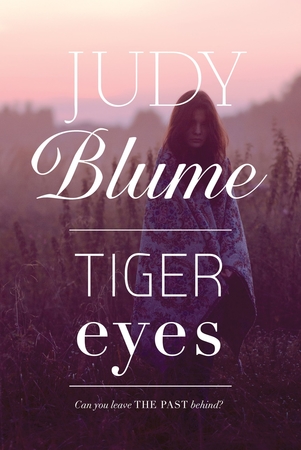
15-year-old Davey Wexler loses her father to a shooting death at the scene of the family’s 7-11 convenience store in Atlantic City. Understandably devastated, she begins suffering from panic attacks and disordered eating. Her mother Gwen opts to whisk the family away for a change of scenery, and they go to the small town of Los Alamos, New Mexico for an extended trip. 

Davey spends time alone in Los Alamos, exploring the locale on her bicycle, hiking, and hanging out by a canyon where she encounters a boy named Wolf. Wolf passes comment on Davey’s palpable sadness, but she finds herself unable to share the story of her father’s passing with him. 

Through becoming a candy striper volunteer at a nearby hospital, and attending counselling sessions with Gwen, Davey gains the strength to face up to her traumatic loss. Her sojourn in the small town will end up creating multiple healing experiences, including the ceremonial burying of the bloodied clothing she was wearing on the night of her father’s murder.

A Prayer for Owen Meany by John Irving

The coming-of-age story genre has introduced us to Anne of Green Gables, Tom Sawyer, and Scout Finch. Have you heard the one about Owen Meany? 

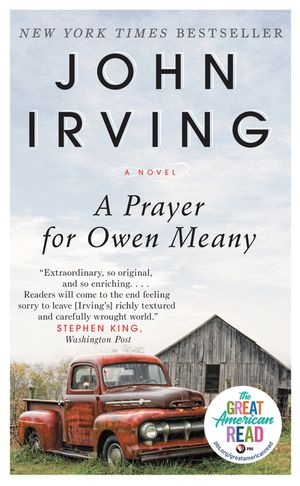
A Prayer for Owen Meany is set in Gravesend, New Hampshire, an echo of the author’s own hometown of Exeter, New Hampshire. The fictional Gravesend is representative of small-town America in the 1950s and captures the zeitgeist of the wider social history of the times.

Narrator Johnny Wheelwright comes from a wealthy background, where his eccentric, peculiar friend Owen Meany is the son of a quarry owner and working class. When the boys are aged 11, a Little League baseball game upends their lives when Owen strikes a baseball and hits John’s mother Tabitha in the head, killing her.

This affecting, expansive novel incorporates a wide cast of memorable Gravesend locals, copious reflections on and moments from small town life, and explores friendship, morality, and destiny with great aplomb.

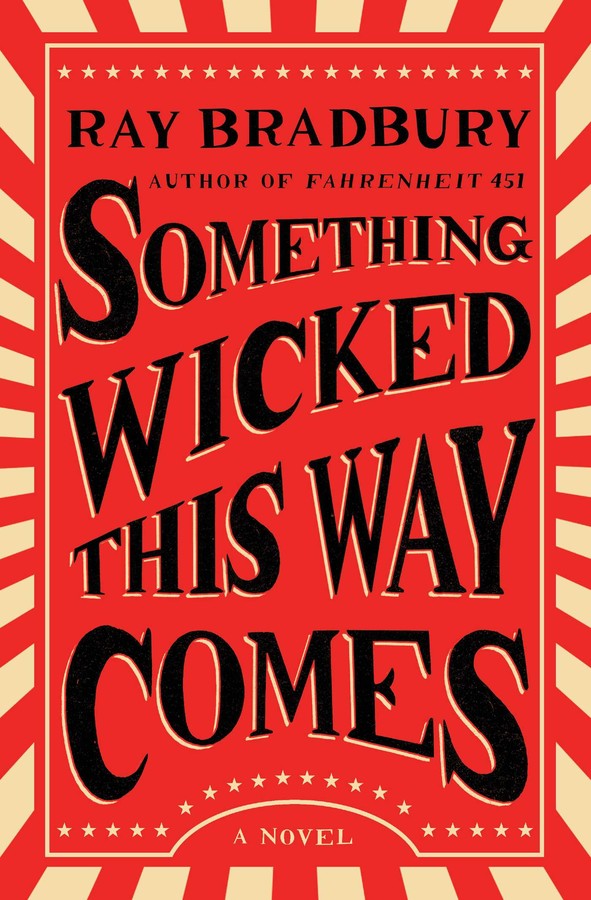
Something Wicked This Way Comes | Book by Ray Bradbury | Official ...

Something Wicked This Way Comes by Ray Bradbury

It seems that we’re always waiting for something dramatic to happen when we’re young and living in a small place. Something Wicked This Way Comes is a fantasy novel penned by Ray Bradbury about two 13-year old boys, Jim Nightshade and Will Holloway, and the coming-of-age journey they undergo when a malevolent carnival arrives in their hometown of Green Town, Illinois. The novel’s sense of place lends an evocative backdrop to a chilling, yet charming tale.

The attractions of the carnival have the power to alter a person’s age, changing them both physically and mentally. At first, Jim and Will are intrigued by the carnival’s transformational powers, tempted to ride the carousel and become fast tracked to adulthood. Before too long, their lives and the lives of the townspeople of Green Town will be turned upside down by Cooger & Dark’s Pandemonium Shadow Show, and the friends will be forced to develop the courage and maturity to go to war against the carnival’s evil forces. 

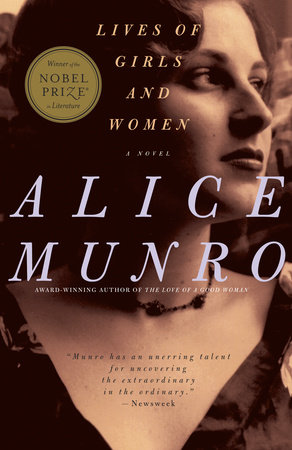
Lives of Girls and Women by Alice Munro

Lives of Girls and Women by Alice Munro

Lives of Girls and Women by Nobel Prize winner Alice Munro was first published in 1971. The novel comprises short stories chronicling the life of Del Jordan, a girl growing up in small-town Jubilee, Ontario in the 1940s. Del learns about womanhood from the women she observes in her surroundings, including her mother Addie (with whom she has a strained relationship), various female relatives, and her mother’s boarder Fern. Several feminist themes are explored, including female self-actualization, the relationships between mothers and daughters, and women’s role in society. Del’s formative love relationships also feature, though male characters are only lightly drawn. 

Having always felt like an outsider, dissatisfied with small town life and continually seeking meaning, Del will leave Jubilee behind in order to further her own development. The novel is considered to contain several autobiographical elements from Munro’s own life; at the very least, the author grew up in a small town in Ontario, and became a writer, as her lead character Del intends to.

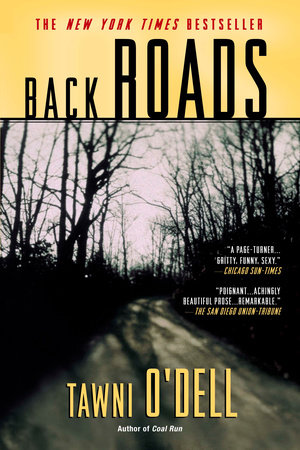
Back Roads by Tawni O'Dell

Back Roads by Tawni O’Dell

As in life, coming-of-age is no cakewalk. In Back Roads, Harley Altmyer bears a heavy weight of responsibility on his teenaged shoulders. His mother is in prison for killing his abusive father, and he’s trying and failing to raise his three younger sisters singlehandedly. There are limited prospects for Harley in the isolated coal town of Laurel Falls, Pennsylvania, and life takes a dramatic turn when he encounters an attractive married mother of two, Callie, living close by. Harley’s mental stability is rocked as his affair with Callie turns perilous, and his troubled sister Amber begins acting out in an extreme fashion. This is a coming-of-age story that doesn’t pull any punches, a gritty narrative about a young man feeling hemmed in by his bleak surroundings and circumstances. 

Brown Girl Dreaming by Jacqueline Woodson

Brown Girl Dreaming by Jacqueline Woodson

Jacqueline Woodson was born in Ohio in 1963, but raised between New York and the small town of Greenville, South Carolina, where her mother’s parents lived. Brown Girl Dreaming is a memoir told in verse, detailing Woodson’s childhood and her growing awareness of adult relationships, racism, and the emerging civil rights movement. The memoir also concerns the effect of our surroundings and community on our lives, and the real-life education it can offer to a young person.

When Woodson’s parents separate, she and her siblings move in with Grandpa Gunnar and Grandma Georgiana in Greenville. Though she feels content and secure with her grandparents, racism is rife in the town, and she observes her grandfather being disrespected by his coworkers, segregation on buses, and sit-ins taking place in the locality. 

Having witnessed the suffering of her loved ones as a consequence of prejudice, Woodson develops an interest in the Black Panther movement, and becomes inspired by activist Angela Davis. Brown Girl Dreaming is an emotional and impactful piece of work about the shaping of our drives, and how an individual becomes motivated to be a part of the solution.

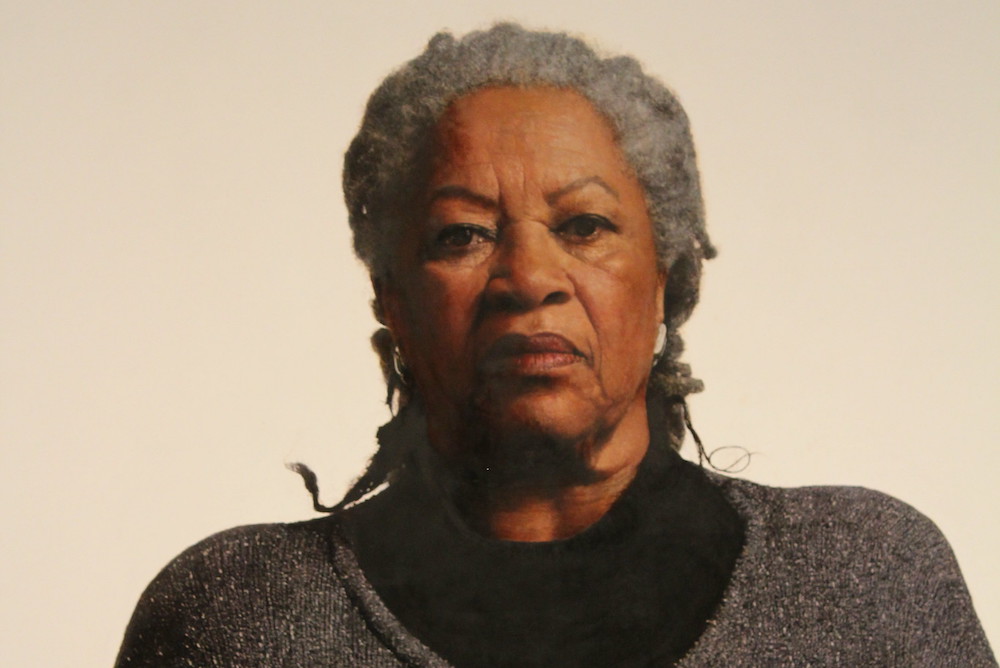
Toni Morrison Let Us Know We Are More Than the Work We Do

Adapted from remarks given at the Toni Morrison Festival in February 2020. 

About three years ago, Toni Morrison wrote a short and, as is her style, superlative essay in The New Yorker titled “The Work You Do, The Person You Are.” At a young age, Morrison delineated an understanding of the fear of losing the power of a dollar while also recognizing the burdens of employment even with the financial reward. Morrison didn’t reveal the race of the person she worked for, but the power dynamics beyond employee and employer were clear; the status was clear. The piece concludes with her translation of a quick response from her father when she bemoaned how she was treated as an employee. Morrison condensed her father’s response to the following tenets: 

1. Whatever the work is, do it well—not for the boss but for yourself.

2. You make the job; it doesn’t make you.

3. Your real life is with us, your family.

4. You are not the work you do; you are the person you are.

I have worked for all sorts of people since then, geniuses and morons, quick-witted and dull, bighearted and narrow. I’ve had many kinds of jobs, but since that conversation with my father I have never considered the level of labor to be the measure of myself, and I have never placed the security of a job above the value of home.

When we think about Morrison, we most prominently, and for good reason, dissect the writing she’s gifted us, material we can turn to weeks, months, years after her sunset. The New Yorker essay also bestows an understanding of her work ethic—though it’s an ethic we could have intuited from how methodical and responsible she was with the written word. When I read Morrison I don’t only take in the work of a magnanimous writer; I also consider how clearly her editorial framework comes through the control and distinction she pays to text, in pieces and as a whole. The impact she had as an editor further curated her love of books and at the same time distilled how she lived her life, how she represented herself, who she represented. (See Contemporary African Literature, Corregidora, The Black Book, to name a few.) 

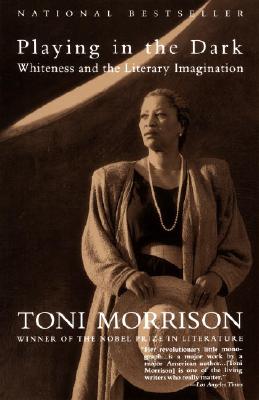
In the first chapter of Playing in the Dark: Whiteness and the Literary Imagination, Morrison conveys her early way of reading, when she presumed that Black people were of no consequence in the white American literary imagination. She digs into how Black people were erased in the white-dominated “canon,” and investigates white Americans’ willful refusal to read books about or by African Americans. And if white Americans weren’t reading those books, how could the white literary establishment publish them? “But then,” Morrison writes, “I stopped reading as a reader and began to read as a writer.” By altering her viewpoint, Morrison better informed her reading and empowered herself to acquire more books by Black writers. From the start of her time in publishing, this perspective allowed her to magnify the gaps in contemporary literature celebrated by white audiences, and to elevate books deserving the same shelf space. (See Tenet 2: “You make the job; it doesn’t make you.”)

Earlier this year I became an employee within a division of the publishing house where Toni Morrison once worked. Her name is inextricably linked with this press, due to her publications and the impact she had as an editor in the scholarly and trade divisions. There are many, though trust me not enough, hard-working and dedicated Black women in publishing. Recently, new names are being added to the roster, which we can hope is a lead-in for many more to come. Pre-quarantine we walked the halls and sat in conference rooms. Nowadays we enter virtual rooms where we are still one of a few if not the only. We speak our truths or hold our tongues, all in the name of a larger strategy to see and make a difference. We stay because we love the work and because we want to showcase the intrinsic dedication and brilliance of those of our ilk. We do the work because the work needs to get done. The navigation of being “the only” or “one of the few” requires a singular focus and a clear strategy to keep going. This is not just about the industry, it’s about our belief and love for what we bring to it. 

Morrison more than likely fought in ways subdued, calculated, and blatant when she entered the office environment.

It may not be a surprise that Toni Morrison was one of the first Black women editors at Random House during her 19-year tenure. It may not be a surprise that she was one of the first Black women in this space with acquisitions power. It may not surprise you that she was one of the first Black women in this space to enter a “boys club,” a club I guarantee didn’t know how to recognize her as an equal, even when they shared the same title—though not the same salary. (To this day her adamance of “head of household” in the documentary The Pieces I Am rings true of the battle cry to make a proper and equitable wage to men.) What we can ascertain from this is that Morrison more than likely fought in ways subdued, calculated, and blatant when she entered the office environment as editor and then again outside of it, or adjacently as author when discussing her work again and again and again. Imagine the strength of mind and character it takes to be on both sides of the coin, to uplift Black people in your work each and every day when people don’t always see them the way you do, most notably as equals and most derogatorily as people. Imagine the love for the people one has to pursue this work as adamantly and precisely as she did and bring it in all ways to a deep admiration and honesty day in and day out. (See Tenet 1: “Whatever the work is do it well—not for the boss but for yourself.”)

Black publishing professionals continue to navigate working within the system while also trying to combat an industry that continues to provide roadblocks to access let alone retention, even when it purports to value Black lives. There’s no easy or singular answer to maintaining your own values in a space that does not value you as a person, let alone the work you’re producing or helping to produce. Like Morrison did in these same spaces, we may assert or negotiate or magnify the larger importance of the content and creators we support, not just for the company but for the nation. These may be seen as negotiations and yet they’re also part of the fight. At some point we all come to terms with the fact that negotiation can no longer be about what we will tolerate, but what we will not accept. 

We know how much Morrison achieved—it is worth repeating and the right way to speak of someone who achieved so much. But alongside the achievements we know of, there are many that we do not know about. Ones that may seem small but are monumental in getting through each day. Ones in which we defend and deflect, be it ourselves or whatever opposes us. The ways of navigating what may not, outwardly, appear to be a hostile environment, but one that will not acknowledge that you deserve more. Having experienced this in ways both aggressive and passive-aggressive, I continually think of those who are the sole (or rare) entity carving out a way to be seen and, unintentionally and often unwillingly, representing so many others. As Hilton Als noted in his New Yorker profile on Morrison, she “preferred to publish writers who had something to say about Black American life that reflected its rich experience.” This is the way she published, wrote, and read. This is who Morrison was and how she exemplified an eternal love for Black people. This is who she prioritized in the roles she held and I can only imagine the ways she fought for them in these same halls/rooms/spaces. 

This is who Morrison was and how she exemplified an eternal love for Black people.

This year, at the height of the George Floyd protests, many businesses designated June 2nd as Blackout Tuesday, a day of (optional or enforced) mourning. My company gave me the option to take that day off. I performed my job functions anyway because my grief didn’t start or end on that Tuesday. In the afternoon, I sat at a desk in the corner of my living room. I spoke calmly into a headset for a video conference in recognition of this moment. I spoke into what has felt like a void in quarantine, even more so due to the intense quiet and periodical appearance of teary-eyed/somber faces on my screen. I had no video, so my Blackness was not on display in the way it would be if we all still shared office space. Pledges to be conscious, to be more aware, to make more efforts in the content published and the people present on the line were made. My headphones pulsed with the repetition of how valued Black people were especially as we kept producing. I talked to other Black writers and publishing professionals and we spoke honestly and with uncertainty. At the end of the day several people said to me, “All we have is us” and “Keep doing what you’re doing because it’s important” and “We see you.” The power of those words from those you know beyond a moment makes us take a breath, and a break, before we resume. (See Tenet 4: “You are not the work you do; you are the person you are.”)

I began with a quote from Morrison, so it makes sense to end with one: “Being a Black woman writer is not a shallow, but a rich place to write from. It doesn’t limit my imagination, it expands it. It’s richer than being a white male writer because I know more and I’ve experienced more.” To be a Black women editor in a large publishing world, who you are has to be as distinct as how you read and discuss what you read. Morrison has written extensively of that awareness in her reading, and how it led her to prioritize who she was always trying to reach, and allowed her to broker past the issues of “what could sell” to land on what is needed and desired. It may come as no surprise her contextual awareness of being, not just as writer but as a Black woman, also allowed Morrison as editor, as teacher, as speaker, as observer to conquer the world at large and recognize, as well as continually illustrate, that we could too. (See Tenet 3: Your real life is with us, your family.) 

An Unconventional Love Story, Told In Trinidadian Dialect

Ingrid Persaud made the grandest of debuts in the literary world by winning the BBC Short Story Award in 2018 with “The Sweet Sop,” the first short story she ever wrote. After this extremely auspicious beginning, the Trinidad-born writer, whose resume includes stints in legal academia and art school in the U.K., publishes her novel, Love After Love

Love After Love by Ingrid Persaud

In Love After Love, Betty takes in a lodger after the death of her handsome, brutal husband. Betty and her young son, Solo, grow close to Mr. Chetan, a queer man navigating the homophobic island landscape. One night, Solo overhears Betty confess a secret to Mr. Chetan. The revelation throws Solo into despair and exile to New York where his father’s brother lives. Solo remains in touch with Mr. Chetan but he refuses to speak to Betty until a tragedy strikes and Solo has to come home. 

The novel, told entirely in the lyrical dialect of Trinidad, offers a close-focus picture of the island’s Indo-Caribbean community, as well as the diversity of Trinidadian culture, traditions (like Carnival), and life. The unconventional trio, who narrate the novel in turns with their distinctive voices and perspectives, endear absolutely with their desires and flaws. By the novel’s end, I felt so close to them, mostly because their voices shine—and I felt like I could hear them. I spoke to Persaud about her winning debut, multiple diasporic movements, and her favorite Caribbean storytellers. 


J.R. Ramakrishnan: I would love to start with your BBC National Short Story Award. You won this in 2018 with your first ever story! How incredible? Can you tell us about this? 

Ingrid Persaud: Things were rough. Within twelve months father dead, father-in-law dead and two uncles gone and dead. Grief caused all kinds of things to hold me—love, memory, regret, anger, redemption. How to write about this without depressing people? While I was there scratching my head, I came across a set of stories where people dead from eating chocolate. Yes, one of the essential food groups: chocolate. Next thing I know the son in my story was dealing forbidden chocolates to his estranged father. Look, it takes all kinds. Some deal in crack cocaine and some deal in KitKat. I had plenty fun writing “The Sweet Sop.” Chocolate was the answer to some of life’s harrowing questions. Remember what the Trini people say, laugh and cry does live in the same house.

JRR: When did you begin this novel? Tell us how you imagined this family, who is quite far from the heteronomative model. Also the title, is it a reference to the Derek Walcott poem?

For so long the literary establishment treated our dialect like bad English we were forever apologising, explaining, translating. Them days done.

IP: You know Walcott’s poem, “Love After Love”—but the rest of all you who don’t better hurry up and read it now for now. It’s a masterclass in accepting ourselves as we are: “Sit. Feast on your life.” Betty, a widow, Solo, her son, and Mr. Chetan, their lodger form an unconventional family torn apart by secrets, and we follow them as they trip and stumble towards self-acceptance. See why I had to thief the man’s title? 

The book started with a short piece about a young man who deals with his emotional pain by self-harming. In that scene, he visits a sex worker. As she puts down a set of licks in his tail, the physical pain eases up his psychological anguish. Writing that scene was like posing myself a question. The rest of the novel evolved as I kept asking myself how the poor fella reached this circle of hell, and how I was going to free him. 

JRR: You write about a very specific Indo-Caribbean community–in dialect. You’ve explained very little to those who might not be familiar with Trinidad or the Indo-Caribbean community. 

IP: You’re talking truth. Not many writers use Trini dialect in a sustained way. And because for so long the rest of the literary establishment treated our dialect like bad English we were forever apologizing, explaining, translating. Them days done. Go through hard. Do your thing with confidence. Excellence will shine through no matter what. I bet you five dollars all them fellas from Shakespeare come down didn’t spend a minute worrying if readers would get their use of dialect. Mine is no different. Take an example: 

I was liming in a Carnival fete last month and I met a real hot man. Straight away I gone bazodee. I can’t think eat. I can’t sleep. All I thinking about is he.

I’m sure as God make Moses I don’t have to translate “liming” or “bazodee”.

Of course every language has its gatekeepers and Trini dialect is no exception. Next to my laptop are no less than four dictionaries of the English/Creole of Trinidad—just in case a little doubt catch me. It’s worth taking the time to get it right. This is my love song to the place and language of my childhood.

JRR: Your background is of multiple diasporas. You were born in Trinidad, spent a lot of time in the U.K., and had a stint in Boston. I see you live between Barbados and London right now. It made me think of other writers from the Caribbean who’ve made similar journeys (V.S. Naipaul and Sam Selvon, to name just two). In your book, Mr. Chetan and Solo (as well as others like Mr. England) both leave and return to Trinidad. I was wondering if you could talk about this going and coming (back) in general, in your book, and how it has impacted you as a writer? 

IP:  In Love After Love, Betty cooks a special fish called cascadoux. Once you get past how ugly it is, you’re in for a treat. That fish sweet. And watch me—Trinis believe that if you eat cascadoux, no matter where you go in the world, all England and America, you will always return to Trinidad. No spoilers, but if you’re born on a small island sometimes the only way to flee your demons is to physically ups and leave. The trick is finding your way back and making peace with yourself.

This is my love song to the place and language of my childhood.

I’ve licked down my fair share of cascadoux and hope to end my days right where I was born. But, assuming Covid-19 spare life, for now I remain in self-imposed exile, a perpetual insider/outsider. I don’t know if it’s because I am used to being in this liminal space that I have finally embraced it. I step outside the agonizing questions of identity and nationality to belong to that non-belonging. Maybe this is how we might build a place called home—as something we can carry with us. 

JRR: I see that you trained as a visual artist. I wonder if you could meditate on how this visual background has influenced your writing? 

IP:  I was raised in an ordinary middle-class Trini home where there were three career options: doctor, lawyer, or failure. I read law at LSE and for a good long while I was an academic. But something was missing from my life. I left academia and went off to art school. I had the best time ever and learned to only wear black. Seems I am a visual thinker and although the novel is character-driven, I was always drawn back to working and reworking my descriptions—especially when Mr. Chetan or Betty were cooking. 

JRR: The domestic violence that Betty experiences at the hands of her husband, Sunil, results in more violence, and manifests again with Solo’s self-harm. I was wondering if you would discuss this a little? 

If you’re born on a small island sometimes the only way to flee your demons is to leave. The trick is finding your way back and making peace with yourself.

IP: You catch me here. See, I thought I expressly didn’t make the violence cyclical. But maybe a different truth comes out in the book. Sunil was a nasty wife-beater who should have made a jail. Rather than dwelling on the violence, his wife Betty moves on. Those who are harmed can break the cycle and lead fulfilled lives. Solo’s self-harming is something different—partly his father’s legacy, but the boy had plenty other things on his mind. I can’t say what or I will give away the whole story.

JRR:  I was very struck by the character of Solo and how his innocence is shattered by the overheard revelation. I felt like you rendered his response to this betrayal so acutely. Could you talk about Solo’s creation? I see you have sons. The mother-son relationship in it seems very real. 

IP: I ain’t lying. Bringing Solo alive on the page was real pressure. Anxious, teenaged boys don’t like to talk about their feelings and the only tools I have are words. Luckily, I’ve been keeping a close eye on our sons—nineteen-year-old identical twins. They are wonderful and I hope not traumatized like Solo but I’ve learned a lot from being their mama. Family attachments and how we make those systems work when things rough—that is a minefield. I’ve only scratched the surface.

JRR: Who are your favorite Caribbean writers?

IP: What happen, like you want to put me in the bamboo? If I say Naipaul, people go bawl he’s a traitor and a misogynist. If I say Sam Selvon, people will want to know if I don’t read all the new talent around. If I say Claire Adam, people will say the women them sticking together. Mention Marlon James, Kei Miller, and Lorna Goodison and people will say I favoring the Jamaicans them. Nah. You can’t trap me so. 

Langston Hughes Knows You’re Tired—But He’s Not Letting You Off the Hook

My friends and I discuss the news once a week during our Zoom calls. The conversations are a mix of sympathy, frustration and opinions, but all I can bring myself to say is, “I’m tired.” Apparently, I wasn’t alone. It’s a sentiment reflected by Langston Hughes in a poem that has been posted all over Twitter and Tumblr since late May, in response to the resurgence of the Black Lives Matter movement. In simple words that clearly resonates—I found a Tumblr post with 20,000 notes, and a tweet with more than 28,000 likes—Hughes describes our shared exhaustion: 

I’m so tired of waiting 
Aren’t you,
For the world to become good
And beautiful and kind? 

In this poem, Hughes reflects our feelings of being buried  in injustice. There are moments where we can feel like we have no power over what’s going on. We’re just waiting for something to fall out of the sky and make the world good again. We acutely feel the time pass as we’re waiting. We answer, “Yes, I am tired of waiting.” 

It can be exhausting trying to stay optimistic while hearing the news of people dying from disease and murder and countless other atrocities. Between the relentless news cycle, easy access to social media, and rampant burnout, it can feel like the bad news just piles on, leaving no time to process. It can make a person bone-weary. I read a news headline, and I feel like I’m melting into my bed and becoming a puddle. “Tired” encapsulates this puddle feeling.

Between the relentless news cycle, easy access to social media, and rampant burnout, it can feel like the bad news just piles on, leaving no time to process.

Hughes’s career took off during the Harlem Renaissance. A lover of jazz, he used the music’s rhythm and diction to shape his poems, creating a song and word mix. Jazz poetry suited him as he rejected the classical approach to poetry, instead using common words and simple structures that almost anyone could read. That easygoing beat makes it quick to latch on to his words. Sometimes his poems even sound like comforting nursery rhymes. 

Hughes’s words are simple—“beautiful,” “kind,” and “good”—but they also convey a romantic air. There’s a soft mood to his words, despite the horrors he alludes to. The reader can imagine looking out at the world’s troubles, huddled inside a bubble, disappointed and wondering when things will look less bleak. Hughes’s words can decorate this little bubble creating a tragic but beautiful scene. After all, we all feel tired once in a while. 

There’s a version of this poem for everyone. A serene mountain backdrop to Hughes’s words make a great wallpaper or Facebook post in tough times. You can find beautiful calligraphy of his words on Pinterest to add to an Activism or Altruism inspiration board. There’s always Tumblr accounts filled with black text, white background quotes where “Tired” makes regular appearances.

But the words they’re sharing are only the first half of the poem. The second half is less romantic. 

Let us take a knife
And cut the world in two—
And see what worms are eating
At the rind. 

Hughes wasn’t exhausted. He was fed up. He implores the reader not to wallow in exhaustion but to take action, and not just a performance of action but something deep. He wants action that cuts the world in half, slicing down to the foundation of our beliefs and institutions, so we can recognize what is souring the world. 

With his “Let us,” Hughes invites others to join in improving the world. Though the Harlem Renaissance is marked as a celebration of Black culture, it was also a time of race riots and lynching, and the art of the time often reflected the inequality Black people faced. Themes like institutional racism, Black identity, and the after effects of slavery  were extremely common. Amongst these themes, Hughes specifically championed unity among all those of African descent. With this invitation he recognizes that change of any amount does not happen singularly but as a joint effort. This is not only a poem for staying in and peering at the trouble from a safe distance. 

We all have times when we feel exhausted, but when a Black man speaks of being tired you cannot ignore his call to action.

When only half the poem is presented, the context of this piece is completely lost. We all have times when we feel exhausted, but when a Black man speaks of being tired you cannot ignore his call to action.  

It’s easier and more comforting to focus on the first half of the poem. It’s easier to stay in the comfort of being tired, to use it as an excuse, rather than taking a brief rest before continuing the fight. We may not want to hear that change might require rioting, shouting, violence. At the very least it certainly isn’t comfortable. The knife and the worms are not #aesthetic.

A poet of the people, I suspect Hughes would have loved seeing his poem shared all over social media to thousands. Hughes found great success with the average Black reader. His reach was so great Hughes may have read his poetry to more people than any other American poet, according to scholar Donald Bernard. Those audiences meant Hughes was the first Black American writer to live off his earnings from writing alone. He aimed to reach the masses of the Black community with his work either in his jazz poetry or work for the famous Black newspaper the Chicago Defender. He often celebrated the diversity of Black people, hoping Black artists would find inspiration within the community rather than looking to white creators. Dedicated to democratizing poetry for his people, we can imagine Hughes would be ecstatic to see his work shared to friends and followers online. He wanted his work to be easily consumed and shared, taking art out of the formal classroom and into the lives of people. 

Hughes saw the beauty and romance of his people, but his frustration with how Black people were treated is clearly evident in his work. And yet we repay him by taking a knife and cutting “Tired” in two—keeping the romantic portion, but not the poet’s ideas for change. We can swallow the emotion but not the action Hughes calls for, informed by his years living through a time of riots, lynching, and segregation.

We need the second half of the poem to remind us to keep fighting.

Cutting the poem is a disservice to Hughes and the struggles he endured and witnessed. They were struggles not unlike what we deal with now. As history circles back we’re left with people who will step up and work for something better and those who’ll let the world rot. Hughes didn’t want us to drop everything because we felt exhausted. And after picking ourselves up he didn’t want us to stop and stare at the worms ruining the world.  Acknowledging the fatigue is only the first step, and seeing the problem is only the second. We need the second half of the poem to remind us to keep fighting.

In cutting the world in half we can see past surface-level actions and demolish the core systems that are built with racism embedded in them. 

Loften Mitchel, a mentee of the poet, described Hughes’s legacy of creating a, “standard of brotherhood and friendship and cooperation.” Hughes wanted better for Black people, but we can’t achieve that by looking out at the world, content to feel the exhaustion of the movement but not participate in it. Don’t stay a puddle. 

Two Poems by francine j. harris

The Meek

It’s Election Day. It’s the finest day in history. The air
is crisp and the tone is full of hope. My party is weighing in early.
There are victory flags in the sky. And the whole morning I am haunted
by the memory of a lover who at the end of everything
told me I had no ass.

I cleaned the house.

I moved the bookshelf from the radiator.
I put my brown things in boxes.
I threw away the cardboard.
I scrubbed the stove. and dried it with a black towel.
There is no more fray coming from under the area rug.
Broke a glass while doing it. and swept the glass. and wiped the glass.
I wiped the glass. And I looked for glass, stray in the break of the wood flooring.
Moved the couch and tried to find the glass heating its way into a wedge.
I imagined the foot on glass at some worst time: a phone interview.
a lovemaking. a day of the flu. I took a magnifying glass
to the glass. I thought there were strands of slivering into a splinter
so thin so thin you couldn’t see. I imagined the glass elongating.
I imagined the glass cooling too quickly and snap. I threw away
the glove I used to look for the glass and wiped my knee with a white
towel. I shook the towel over the trash and wiped the floor
where I shook the towel and washed the towel and then washed
the sink where the towel stank. A woman came home and said
she was moving out. I put that dinner on a plate and slid it
beneath the glass bowl covering a salad on the second shelf
which upon its second onceover with a fork, has lost its verdant leaf.
In the bowl, through the glass, it’s all trunk. The beet is sparse, the avocado
soggy and browning. Lettuce stalk is bitter and watery and hard.
In that distortion, I found a sharp tongue. And I knew I would stab it.
And I knew it would be so only delicious, to me.

Viet Thanh Nguyen and Phuc Tran On Being Vietnamese American Weirdos

I love alternate takes and extended scenes on DVDs.  

It’s a chance for me to see what the movie or show might have been like and to understand the effect of the director’s choices: camera angles, tweaks in the dialog, actors’ performances. The deleted scenes from The Office, for example, are as hilarious as (if not better than) the broadcast versions.  The extended scenes for The Lord of the Rings add so much depth to the characters’ relationships. The deleted scenes from Return of the Jedi add a layer of conflict between Vader and the Imperial guards that make him (and the Imperial bureaucracy) more sinister. Outtakes give us a little peek into the shoulda-woulda-couldas of a cinematic universe. 

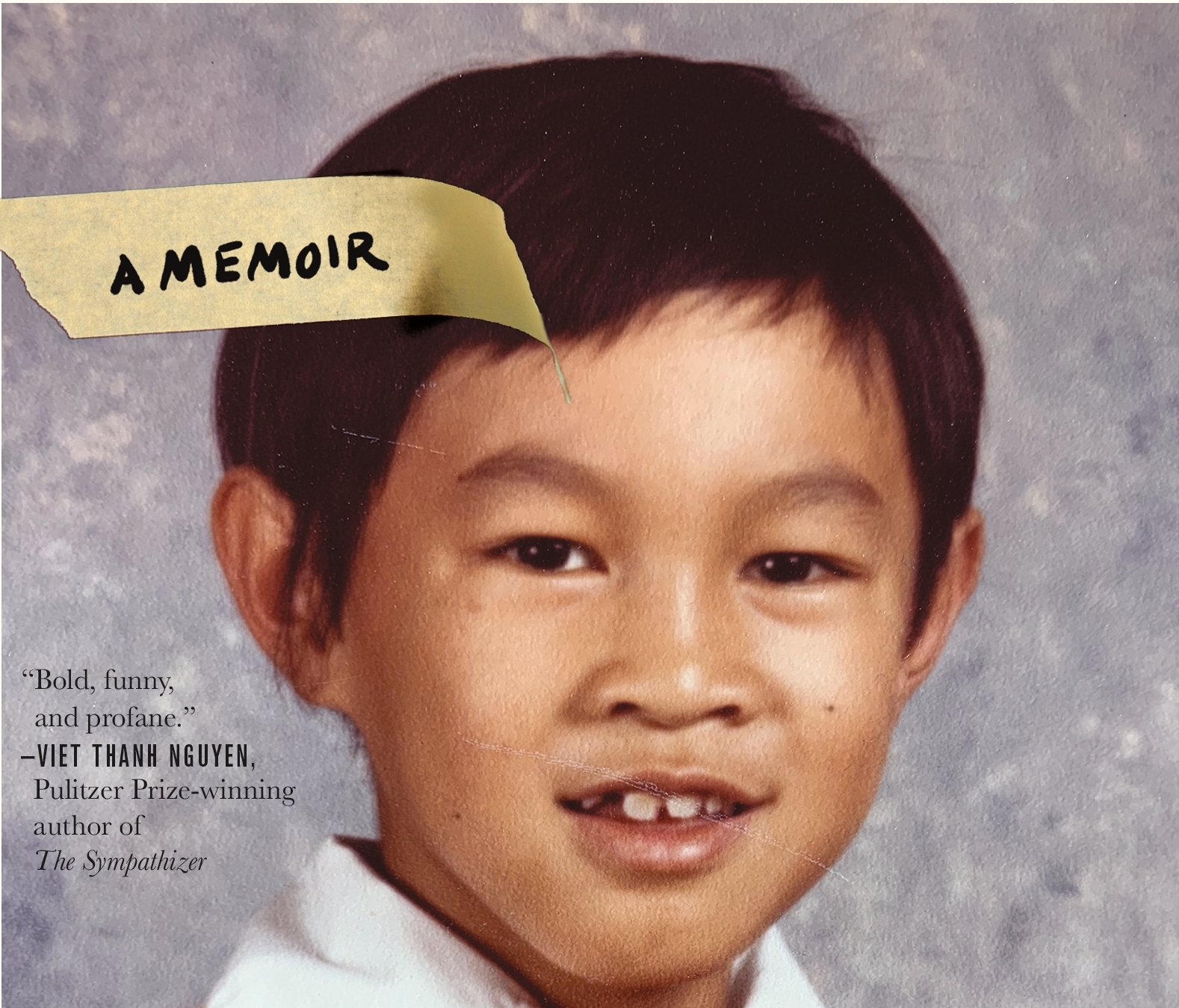
The alternate take rarely happens in real life, but from time to time, you’re lucky enough to see another version (or at least to imagine that you’re seeing another version). This past April, I had the distinct pleasure and privilege of sitting down and chatting (over Zoom) with Viet Thanh Nguyen, Pulitzer Prize-winning author of The Sympathizer. It was the day before my coming of age memoir’s publication, Sigh, Gone: A Misfit’s Memoir of Great Books, Punk Rock, and the Fight to Fit In, and I had a realization: one of us was the alternate take.

You see, Viet and I are both refugees and our families escaped South Vietnam in 1975. Both of our families ended up at the same relocation camp in Fort Indiantown Gap, PA that summer (along with 20,000 other Vietnamese refugees). Once they left the relocation camp, Viet’s family stayed in Harrisburg, PA for three years before moving to San Jose CA in 1978.

My family was sponsored by some magnanimous Lutherans in Carlisle, PA who helped all twelve of us as we started our lives over. The Trans stayed in small-town PA for two decades, living out the federal government’s deliberate dispersal of Viet refugees to avoid ethnic enclaves. According to the Refugee Dispersion Policy, our separation from other Vietnamese people would accelerate our assimilation (lawmakers specifically talked of avoiding Vietnamese ethnic enclaves). Within a decade, despite the dispersion, many refugees found each other in California, Texas, and Virginia to establish expatriate communities. This was what the federal government was trying to prevent: delicious banh mi and fragrant pho.  Hello, Little Saigons! Vietnamese people found each other.

But not the Trans. We grew up without any larger Vietnamese community besides our immediate family, and our Americanization was as swift as it was relentless. In the grand experiment of acculturation and assimilation, we were the control group. Or were we the experiment?  

When Viet read an advanced copy of my memoir, he wrote to me: “You gave me a glimpse of what my life could have been like if I had stayed in Harrisburg.” Was I the ghost of Christmas Could Have Been?

As Viet and I spoke in April, I noted that we had scattered from Ft. Indiantown Gap in ultimately opposite directions (I’m in Maine and he’s in California). And that disparateness may illustrate our life’s directions, too: I went to a small liberal arts college, majored in Latin and Greek, and then served a tattoo apprenticeship in New York City. I’ve been teaching Latin and tattooing for 20 years. And Viet? He went to Berkeley, earned his PhD, and won a Pulitzer, so you know…

In 2016, I began writing a memoir about growing up in Carlisle, a project that was ignited by my 2012 TEDx about language and identity. I wanted to present the complexity and contradictions of my experience both within my small town and within my family. I survived (maybe even thrived) with the discovery of both the ‘80s skate punk scene and great works of literature—two seemingly paradoxical guides. But then again, I’m also a Latin teacher and a tattooer.  

I may not contain Whitman’s multitudes, but at the very least, I’ve got a duality. I’m the final cut and the alternate take.

—Phuc Tran 


Viet Thanh Nguyen: Even before you became a writer you had found other artistic pursuits, like tattooing, which I find completely terrifying. I assume there’s a relationship between your creative interest in tattooing, and your creative interest in writing.

Phuc Tran: Yeah, I suppose so. I’ve been trying to sort of right those two angles—two facets of myself—but other than being deeply grounded in self-expression, I’m not sure if they make a lot of sense, if they’re co-planar. I think they’re facets of myself, and I think I’m okay with that. I love the question, but I haven’t come to a satisfactory arithmetic for how those things connect. It makes me think about Steve Martin and his banjo playing; I wonder what he says when people ask him, like, “Tell us about being a master banjo player and an amazing stand-up comedian—how do those interconnect?”

VTN: I’m actually much more pissed off that he writes books.

We’re complicated people, and there are parts of us that are paradoxical.

PT: Yeah, amazing, right? And then he does the narration for it. You know my thought, Viet, is that we’re complicated people, and there are parts of us that are paradoxical, or not co-planar, and at least part of my writing of the memoir is an invitation to the reader, as well as to myself, to sort of constantly churn in that paradox of who we are.

VTN: So, the memoir, it’s very much a memoir about, you know, being Vietnamese in America, Vietnamese American, Asian American, whatever you want to call it. But, inevitably, there are very explicit markers of identity, subjectivity, and experience in the memoir, about yourself and your family, and so on. The tattooing, from what I can see from your Instagram, is not necessarily related to those autobiographical or personal things. And I’m interested in that because, for those of us that are classified, whether we like it or not, as Vietnamese or Asian American writers or minority writers, the questions of our autobiography and our identity are imposed on us all the time, even if we may sometimes want to deal with them. When you get to visual arts and cultures, of which tattooing is a part, that autobiographical link can be severed. I wonder if that’s true for you, if people see you as the Vietnamese American tattoo guy, or they think, the tattoo artist?

PT: That’s a great question. Tattooing is so interpersonal, since my clients are coming to me with the subject matter that they want already. If they say, “I want a tattoo of a mallard duck,” there’s not any part of my persona, or at least my personal history, that I’m imposing onto that execution of a tattoo of a duck, let’s say.

VTN: So, I’m curious about your relationship to these two kinds of experiences. Not just that they’re very different kinds of creative practices, but that they’re also very different—I assume—psychic spaces, in that sense, with Sigh, Gone, you really had to go deeply into your autobiography, your identity, and all that. Is being a tattoo artist more freeing, or are these just completely different?

PT: I think both. The visual arts are very different from the literary arts, but then also I think it is generally freeing. I think also because Vietnam doesn’t have a long history of contributing to the tattoo aesthetic as much as, let’s say, Japan does. People are coming to me and asking me to do what they want. It’s like being a house painter and you ask me to paint your kitchen purple; I don’t really have a say in that. I just say, “Okay, Viet, I’m gonna paint it purple,” and do the best that I can. It’s a craft, I guess.

VTN: No one ever just comes up and says, “Hey, I want you to do your version of the Sistine Chapel on my body.”

PT: It’s very rare. It’s not, like, omakase.

VTN: (laughs) That would be an interesting concept.

PT: It does happen, and I often will put it back on my client. I take the tattooing very seriously, and I feel like it’s so much responsibility for me to craft something that someone will have to wear forever, in which they have zero input.

VTN: I would find it hard to believe someone would just let you do it without even having an idea, but saying, “Sketch me something, and I can see whether I would want it?”

PT: Yes, for sure, and I always say, “Okay, give me like your top five things that you like, and then I’ll sort of look at that and cull that down to something that I think might be workable.”

VTN: With writing, of course, we learn how to be writers by writing, and we make a lot of mistakes and we graph and all that in the privacy of our own minds, it takes years and years…in your case, it only took four years, so you know…

PT: (laughs) No no, there’s a lot of bad writing in there too.

VTN: But with tattooing, how does it work? The drafting part, like, where does the learning part come in? Who do you work on? Who’s going to let you experiment on their bodies?

PT: Yeah, I mean, it’s very gradual, you start off with simple, foolproof designs, where the margin of error is much wider, and then as you get much better, you take on more complex projects where the margin of error is much smaller. And it’s cyclical; you do a great tattoo and then two weeks later you think you could have done something better. The drafting process happens in the drawing phase of it, really. To me, that’s the most important part of it. You can correct a great drawing that’s been tattooed badly, but you can’t fix a bad drawing once it’s been tattooed, or it’s harder to. When I had an apprentice, I always emphasized that the drawing part was more important for her to learn than the tattooing part. You can’t unlearn bad drawing, I guess.

VTN: Is there a book on tattooing in your future?


PT: (laughs) I don’t know, I’m open to it. I didn’t expect at my middle-age to be writing a book. Would you like to read a book about tattooing?

VTN: Well, of course, I mean it all depends on whoever writes it and does he know how to write a book. Whether that’s an autobiographical book about tattooing or profiles of tattoo artists…isn’t there a bestselling novel called The Tattoo Artist of Auschwitz out right now?

PT: Yeah, that’s right, and John Irving just wrote a book about tattooing also—fiction.

VTN: And now, of course, everybody and their grandmother has a tattoo, so…

PT: Except for you, apparently.

VTN: Did you know that you wanted to write a book, could write a book, or was it just a decision that you made right then?

You can correct a great drawing that’s been tattooed badly, but you can’t fix a bad drawing once it’s been tattooed.

PT: No, I had thought about it… I thought when I retire from teaching and tattooing, I’ll write a book, you know, 30 years down the road. So, there was an idea there. And when I embarked on writing the book, I thought a lot about E. B. White’s injunction to writers, you know: you’re writing for an audience of one. If I’m writing for myself, then the work is going to be more authentic to who I am. I wanted to write the book that I would want to read, and if people get it and they appreciate it, that’s great, and if they don’t, I think that’s okay too. Right out of the gate, I wrote the prologue of the book almost exactly as it is, and I thought, if the agent says, oh this is great I wanna go for it, great, and if not, then that’s okay too. I was fully prepared to not be the right person to tell my story, and I think many people are in that position, as you’ve said, for whatever reason.

VTN: I think a lot of writers, aspiring writers, don’t get that. They want to tell their story, but they have so much anxiety about who they’re telling their story to, or who might be listening in on their story, whether it’s the agent or the editors or whatever, but also if they’re writing a memoir, their own family and friends. Did you feel trepidation about that other audience? You include them in your story, it’s not just your story, it’s the story of all these other people.

PT: I did. I think having a tenuous relationship with my parents gave me, not in a callous way, some freedom and license to be more honest to myself and to my reader than someone else would have. And it’s not that I’m disregarding how they’re going to receive the book, but I’m not as afraid.

Who’s your audience? Do you subscribe to that idea of the audience of one with your writing as well?

VTN: Well, our trajectories are different, because I wanted to be a writer for a long time; I set that goal for myself. I’m the person I describe, who was anxious about my work, and “will I get published, will I get famous, will I get the recognition that I so truly deserve?” Those were disabling thoughts, and so it took me 20 years to get to the moment of simply saying, I’m going to write for myself. I literally thought, fuck it. I’ve written 20 years for other people, and now I’m just going to write for myself. And that was really liberating. I’m not as well-read as you, I haven’t read E. B. White. But every writer that I know, who I think of as having written some kind of important work, has reached that moment, where they decided, the hell with it, I’m just going to say exactly what I want to say, and deal with the consequences later. And that’s a very liberating kind of moment.

PT: And one of those consequences could be not getting published, right, like you’re too weird, or ahead of your time, or out of your step. And that’s okay too.

VTN: I think that’s okay too, it’s easy for me to say, but, for the people who want to be published, it’s pretty hard to live with. And the number of people I’ve met who I would describe as being genuine artists, in the sense of doing exactly what they want to do, and not care about getting published or exhibited or whatever, it’s a very small number of people.

PT: I think for so many people, you’re threading the needle between being true to yourself in the process, and not thinking about your audience in the creative process. But then at some point, there’s a reckoning when you release it to the wider world, and now all of a sudden you’re dealing with the interface of the thing that you created and the audience. I think about the inherent irony to what Thoreau was doing, where he was writing this total loner manifesto, Walden, and then he publishes it! It makes sense, in a larger way, in that he’s talking about this social contract that we need, that we are all interconnected, even if you are an artist and your manifesto is, “I don’t need people, and I’m gonna go live in the woods in this shack…but then, also, I’m gonna publish this book and I really hope people read it.” It’s this paradox that you have to reconcile.

VTN: We’re all stuck in it. For most of us, there’s no way of getting around that. So, the book is gonna come out tomorrow. What are you feeling about it, right now?

I was wracked by this question, ‘Who the hell am I to tell this story? Who the hell am I to be writing this?’ and I figured I’d just go for broke.

PT: I feel really excited. I’ve been in my own echo chamber for so long, with so few readers, and going back to what we were saying about the solitary nature of writing, and then the idea of being able to interact with your readers…I think for better or worse, the Internet has made that interaction with readers so low-barrier now. Anybody can go on Goodreads or Twitter and just tell you what they thought about your book. And, yeah, what little feedback I’ve gotten has been really moving, from people who’ve just said, “I’m so touched by the book,” or whatever.

I think even five years ago when I thought, “Who wants to hear my story?” I had no idea. I don’t want to sound cavalier—I was sort of wracked by this question, “Who the hell am I to tell this story? Who the hell am I to be writing this?” and I figured I’d just go for broke. If my agent and the publisher thought I had a reasonable crack at it, why not? I’d much rather regret having tried to do it, right?

VTN: I’m thrilled to have it. I think that what struck me in reading the book was, from the very first pages, its energy, its unique perspective—which is a polite way of saying that you’re a weirdo.

PT: I appreciate that!

VTN: I read a lot of books by Vietnamese and Vietnamese American writers, and it’s always refreshing to find people who don’t conform. And most of the people who write books don’t conform—but to go way off…

PT: (laughs)

VTN: This book could just be described as a tangent, by most Vietnamese American people. You know, all the wrong things with your life, basically, but it worked out. We need more stories like that, to inspire other Vietnamese Americans—among others—to be weird, to do exactly what they want to do. I go around the country giving lectures, and I meet so many Asian American students and young people who say, “I really want to do something that my parents don’t want me to do. How do I do it?” And I’m always at such a loss to tell them what to do, it’s such a difficult situation to find yourself in. So, books like yours, I think, help to give people permission and an example, not that they want to do exactly what you’re doing, but to break conventions, and to break that family mold.

PT: Which is painful, and there’s a loss there, that’s part of the reckoning, I think, in writing the book—the things you lose in the process of being your own person. That individuation is painful. Thanks for acknowledging that I’m trailblazing for Vietnamese weirdos.

A Queer Memoir About Navigating Toxic Masculinity

I met David Adjmi at a fancy writing residency. The kind of place where you work all day alone and then eat dinner together, have a drink in the parlor afterwards. I remember a night when someone suggested watching a movie. As people were perusing the house copy of the criterion collection people began offering their favorite films. What’s your favorite film, Diane, someone asked. Film? I didn’t really watch films, I watched movies. And at that point, I wasn’t sure what the Criterion Collection was. Stunned, I said, E.T.? David was there and he looked at me playfully. He’s brilliant and he had already offered a proper film to the conversation. But in that mirthful look he gave me, I felt, as they say, seen. It wasn’t until reading his debut memoir Lot Six that I fully realized how literate he was across the breadth of culture and subject—from Montaigne to Three’s Company. And it makes sense why.

In Lot Six, he tracks his increasing alienation within the small, insular Brooklyn community of Syrian Sephardic Jews community (known colloquially as SYs) he was born into and eventually fled. As he moves from one environment to next, Adjmi develops what he calls “an experimental self,” trying on radically different roles with the hopes that he can build a “new self” and escape his past. Nothing is off limits in this quest. The book is everything David embodies; it’s hilarious, meditative, knowing, inquisitive, experimental, artistic and a little heartbreaking.

We chatted over Skype about Ricky Schroeder’s breakdown in The Champ, cowboy hats as gay kitsch, Derrida, and more.


Diane Cook: You write about taking trips into Manhattan with your mother when you were a kid, and how culture becomes your outlet. You have these epiphanies at a young age—not just in theatre and with art, but also with slightly trashy or melodramatic TV movies and soap operas. I was really interested in how the lowbrow and highbrow inform your development as a person and a writer. 

I was such a faker and a liar, but so much of what I faked ultimately helped me to peel back something true.

David Adjmi: I am naturally pretty omnivorous in terms of the culture I consume, and I can trace this back to my childhood. My parents were both high school dropouts, so growing up there was no concept of highbrow art, or like, even a definition of what culture was. So when it came to this very nebulous sphere of “culture” everything had equal valence—TV, theatre, visual art, books—these were my links to life. I was a very lonely, sort of depressed kid, and I was something of an outsider in my own family, so I needed something to fill in my inner experience and give it more context. So yeah, watching Ricky Schroeder deal with his alcoholic father in The Champ and experience intense anguish when his father dies caused a huge psychic shift in me. I was able to trace my own experience of life against those contours. And the soap operas were trashy, but I saw them as expressionist melodramas—not that dissimilar to Fassbinder’s take on Sirk in films I watched much later, like Martha—which I write about a little. And maybe Falcon Crest doesn’t have the depth or acuity of Ovid or whatever, but it is still a delicious artifact of the human experience. 

DC: So much of your book is devoted to this very elaborate project of you recreating yourself.  In high school you begin adopting a bunch of roles. At one point you write that a self was like a garment you could “wear and remove at will,” and at another point you talk about yourself as if you were a drawing in pencil, and wonder if you could simply “erase it and start over.” One thing I loved about your book was how the line between artifice and reality is incredibly blurred and unclear. And you do really transform over the course of your college years, and part of this transformation is due to the many roles you try on. Like, not all of it falls away, some of it stays with you. 

DA: Yeah, that’s true. I mean, I was such a faker and a liar, but so much of what I faked ultimately helped me to peel back something true. In some way, these roles I tried on were a way for me to build a relationship with myself. It’s like any relationship, you need to experiment with it to understand when it feels good, and when it doesn’t, and in the process you go through uncomfortable phases. So, like, no, I do not speak with a French accent anymore—which I did for a full year when I was 18—but I’m sure there’s stuff I tapped into during that year that I’m sure is still part of me. But I don’t know what’s innate about me, exactly. I can’t even speak with a Brooklyn accent anymore—isn’t that crazy? I tried the other day, and it sounded fake. Montaigne has this idea that there’s a social self and a “true” self, and that the true self is like a “room behind the shop.” That like, hidden under all the layers of social pleasantries and affectations is the quote-unquote real you and the only way to become conscious of who you really are is to retire from society and remove the mask, but I don’t believe this. I don’t know what the “real you” is and I don’t know how to separate the social self from the private self—or, like, the artificial from the “real”. That feels very knotty and unknowable to me. 

DC: Can you talk about the Keanu Reeves shrine in your bedroom? 

DA: (laughs) Um, it wasn’t a shrine

DC: Well, don’t you call it a shrine in the book? Shall we call it a monument?

I wanted to adopt every patriarchal heteronormative standard because I was terrified of being cast out of society. So I kept trying to make myself toxic so I could fit in.

DA: I cut out a photo of him from a Rolling Stone fashion issue and kept it over my bed. I guess in the book I compare it to keeping an icon of the Virgin Mary. That was the photo with the cowboy hat. I was completely obsessed with Keanu Reeves and with that hat, and I ended up buying it. There was this whole cowboy theme in the late eighties. So I got this cowboy hat and I started speaking with a Southern accent and pretending I was a cowboy, because it made me feel macho or something. Of course, I had no idea I was doing gay kitsch. I was so naïve—I couldn’t read how Gaultier was coding sexuality and gay archetypes into his clothes. All that was lost on me.  

DC: You just mentioned wanting to be perceived as macho. Reading the book, I was really interested in how you talk about masculinity. How do you think your ideas about gender evolved into your twenties and thirties? 

DA: I mean, I didn’t understand gender as a construction when I was younger, because, you know, they weren’t really teaching Judith Butler at the yeshivah. (Laughter) But I grew up in Brooklyn in the 1980s, and what we’re calling toxic masculinity now was the mold for manhood, so I wanted to adopt it. I wanted to adopt every patriarchal heteronormative standard because frankly I was terrified that I would be cast out of society if I didn’t. So I kept trying to make myself toxic so I could fit in. 

DC: I loved when you talked about forcing yourself to listen to a Bad Brains album someone gave you in college, even though you hated that band. You called it a form of homeopathy, “a bit of poison to cure me.” And there’s that great scene where you’re a closeted undergrad at USC, and you’re trying to lose your virginity to a woman, and you get wasted and take her back to your dorm room, and you go through all this choreography in your head—you’re trying to go through it the way you imagine a straight guy would do it. 

DA: Yeah, like “Oooh, I should squeeze her neck—maybe she’ll think I’m straight if I do some neck squeezing!” (laughter) Yeah, that was awful. I felt like I was wearing steel armor and it was like 100 degrees and inside I was suffocating. And I was so wooden and scared to move my arm or smile in a way that might reveal me as gay. It was a moment to moment deeply arch, painfully self-conscious performance. I was miserable, but I thought I deserved to be miserable.  

DC: When did that change for you? 

I was miserable, but I thought I deserved to be miserable.

DA: Well, so, in the book, I chart my little sort of Candide-like journey through toxic masculinity, and all the really lame and very laborious efforts I made to be a macho man. I laughed writing it all down—these crazy scenes with me wandering around with packs of straight boys and playing frisbee and wearing tie dye… It was—I mean if you know me—It is so ridiculous to think of me that way. But at some point I got tired of exerting all this effort to fit in with groups of people I didn’t like. I became more academic, and I actually did read Judith Butler, and Foucault, and a lot of other writers who freed me up. And I transferred to Sarah Lawrence, which is this amazing, very progressive place, and I was surrounded by queer people. I just started to relax a little bit. 

DC: I’m really interested in the way you crafted your book around identity and taste and sexuality. They all helix and wrap around one another. 

DA: But these are all linked, though. It’s all about desire. How can I come to express my desire when I’ve been encouraged to believe I’m shit, and anything I like is shit? In many ways the book is exploring this tension between accepting one’s desire and becoming civilized—because desire is messy and maybe disgusting to other people, and one wants to be part of the world, right? So what’s that unbalancing act like? What does it mean to be civilized, and whose norms are you adopting to do the so-called civilizing of oneself? What’s a legitimate object for desire? What’s a legitimate subject for art? For a long time I believed that I could slink unobtrusively through the world. I wanted to camouflage myself. I wanted to find a cloud of signifiers that would camouflage me. I thought I could just decide “Ok, so I’m going to like this thing, and that’s going to be my taste.” But human beings aren’t just endlessly moldable—I mean yes, we are moldable, and we have to be for our survival, but there is a stubborn little nucleus of every human self that is resistant to change. That’s both a good and bad thing. 

DC: And when you’re at Juilliard that stubborn part of you—which I guess is the artist in you, right?—that becomes an obstacle to your survival in the program. Like, you’re incredibly protean and able to shift and change, but when it comes to your writing, and your artistic core, you can’t figure out how to adapt or protect yourself. To me, it’s one of the most moving parts of the book. Like when you force yourself to see a commercial Broadway musical because you think you and this will finally give you something in common with a professor who hates you, and her response is sort of like, “Ew, who would ever want to see that play?” (laughter) And you describe the look your teacher gives you, and how in taking in that gaze you felt almost poisoned. 

DA: It’s funny, there’s a lot of poison imagery in the book. It was all unconscious—but I think in any bildungsroman, or any story where a person leaves home to tarry with the big bad world, there is always a threat of death hovering over that person. And I really believe that to come into one’s self, one has to experience a psychic murder and be in some way reborn. But what if you’re not reborn? What if there’s just a death, and you can’t come back from it? That’s the fear I tap into in that Juilliard chapter. Change is always invasive, because to change, one has to let something into the very fragile ecosystem of a human psyche. That doesn’t come without risk. But I was basically optimistic, and I believed the poison would ultimately heal me. And I think it did heal me, actually. My year at Juilliard shattered me, but the shattering forced me to put myself back together in this new way, and that changed my writing and ultimately it changed my life. 

DC: Near the end of the book, you write that being a Lot Six–which in the SY community is slang for queer—that this was your redemption, that it “turned your nightmare into dreams.” And it feels like accepting your queer self and your artist-self feel very linked, which is so interesting. Do you think being closeted for all those years and making these attempts to erase your identity and start over—like, were these consciously linked for you at the time? 

How can I come to express my desire when I’ve been encouraged to believe I’m shit, and anything I like is shit?

DA: Yeah. I deeply believed that everything I liked was somehow wrong, and would relegate me to some abject terrible existence I didn’t want. So I was running away from that. But at the same time—and it’s so complicated—but at the same time that I was hiding and camouflaging myself, and pretending to be all these people I resolutely was not, I was also building myself, I was building a vocabulary for who I could one day become. Some of the fake stuff became activated and real. 

DC: Did you ever, through all of this shifting and self-creation, did you ever think, like, “I miss my Arab roots?”

DA: No, because I felt very deracinated as a kid, and my heritage never felt like it belonged to me. Derrida once wrote—and I’m probably gonna mangle this but it’s something like: “I speak only one language, and it’s not my own.” And I completely relate to that. Nothing from my past felt native to me. And the Arab sensibility wasn’t ingrained in me, or—I mean, it was very diluted and mixed with this Brooklyn mall culture. I never really got it. And this community, the SY community, didn’t exactly want me. It was sort of like a super capitalist Little House on the Prairie, and when I left the prairie, they were like, “Ok, bye!” I knew there was no future for me there. But I didn’t just ditch my past—I abandoned it but then I returned to it, and found a way to embrace it in my work. 

DC: Once it no longer threatened you. 

DA: Right. Once it evaporated into nostalgia—or maybe that’s not the word, but once my past wasn’t hurting me anymore; once the nightmares stopped. Nabokov has this great line in Speak Memory, he writes that a spiral is the “spiritualized form of a circle,” that it “frees the circle from its vicious containment.” I love this image—there’s an implied return to the origin, but at the same time you’re moving away from that origin. It’s both at the same time. That’s what art makes possible, that double movement. That’s why it’s magic. 

8 Books That Will Make You Glad You’re Not at the Beach

Although socially distanced outdoor activities are certainly safer than indoor ones, this year a lot of people will be avoiding crowded beaches and packed seaside bars out of fear of COVID-19. But the beach was fraught with peril anyway. From gulls attacking your sandwich to jellyfish stings to undercurrents that could drag you out to sea, many things can go wrong to interrupt an idyllic beach vacation in even the best of years. If sprawling out on the sand with a typical beach read is not in the cards for you this summer, consider diving into one of the following books that might make you glad to be far from the shore after all.

Index of /wp-content/uploads/2020/03

Creatures by Crissy Van Meter

Evie, the bride-to-be protagonist of Van Meter’s debut novel, prepares for her wedding on a fictional island off the coast of southern California. However, the festivities are overshadowed by the presence of a malodorous beached whale carcass, the uninvited arrival of Evie’s long absent mother, and the fact that the groom (a fisherman) might be lost at sea. Circumstances prompt Evie to confront the topic she’d most like to avoid: her unstable upbringing and complicated relationship with her charismatic, drug-dealing father.

Here Comes the Sun by Nicole Dennis-Benn

30-year-old Margot works as a desk clerk at a Jamaican beach resort frequented by wealthy white tourists. Pimped out by her abusive mother at a young age, she now has sex on the side with white men who visit the island looking for poor women to exploit. While she does this to pay her younger sister’s tuition at a private school, her romantic inclinations tend toward a wealthy local lesbian who has been branded a witch by their village.

They Are Trying to Break Your Heart by David Savill

Human rights researcher Anya travels to a beach resort in Thailand for Christmas in 2004, hoping to track down a presumed-dead brigade commander who may have participated in the gang rape of a Bosnian woman during the war a decade earlier. She also hopes to reconnect with an old boyfriend teaching English in Bangkok, but the imminent Boxing Day Tsunami threatens to engulf her in another horrific international crisis.

Being Dead by Jim Crace

Middle-aged zoologists Joseph and Celice, who have been married for 30 years, revisit the sand dunes of Baritone Bay, where they first met and made love while researching their doctoral dissertations. There they are surprised, robbed, and murdered, their bodies left to return to nature in the dispassionate manner they themselves used to teach about. Chapters about their shared history and their daughter’s search for them are interspersed with chapters narrated by their decomposing corpses.

Sex and Vanity by Kevin Kwan

Sex and Vanity by Kevin Kwan

If you’re looking for a more light-hearted beach disaster, consider the latest release by Crazy Rich Asians author Kevin Kwan. In this updated twist on E. M. Forster’s A Room with a View, half-Chinese half-WASP Lucie meets George, an attractive boy from Hong Kong who has spent years surfing in Australia, at an over-the-top wedding on the Isle of Capri. Though the two have instant chemistry, a drone-related PR disaster forces them apart. By the time they reconnect at the Hamptons years later, Lucie is freshly engaged to a terrible, social media-obsessed nouveau-riche white guy.

The Last Night at Tremore Beach by Mikel Santiago, translated by Carlos Frías

In this debut novel by Spanish writer Mikel Santiago, creatively blocked composer Peter rents a secluded seaside house in County Donegal, Ireland. His only neighbors are an older couple who live down the beach. Returning from dinner at their house one night, Peter is struck by lightning and begins to experience violent headaches and visions of disasters befalling his children, girlfriend, and neighbors. Are these a mere side effect of the lightning strike, or is Peter now able to see the terrible things that may be lurking in his future?

Jaws

Jaws by Peter Benchley

In this 1974 novel that inspired the hit Spielberg film, the fictional seaside resort town of Amity, Long Island is plagued by a great white shark. After the first victim’s body is found, the local police chief attempts to close the town’s beaches, but the mayor—worried about lost tourism revenue and declining real estate prices—overrules him and beachgoers flood into town. More attacks ensue, until a trio of shark hunters set out by boat to solve the problem once and for all.

The Shape of Night by Tess Gerritsen

The Shape of Night by Tess Gerritsen

In this supernatural thriller from the author of the Rizzoli & Isles series, Boston food writer Ava escapes to the coast of Maine after a tragic incident, renting the house of a 19th-century captain who was lost at sea, where she hopes to finish a cookbook project in peace. However, she soon discovers the captain’s ghost stalks the house, looking to seduce her. Then a dead woman’s body washes up to shore, and Ava learns that the previous tenant left in a hurry, the townspeople may be covering up a longer list of dead women, and a killer—human or ghostly—might even now be on the loose.