A “New Yorker” Cartoonist Untangles His OCD Through Comics

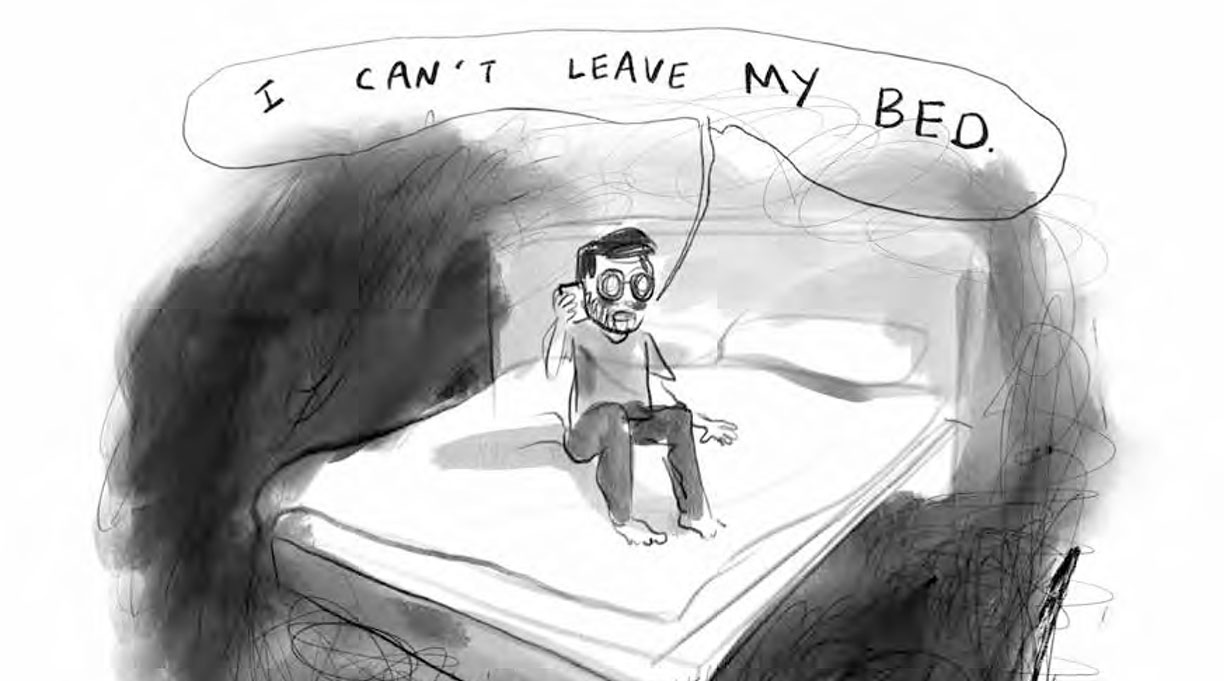
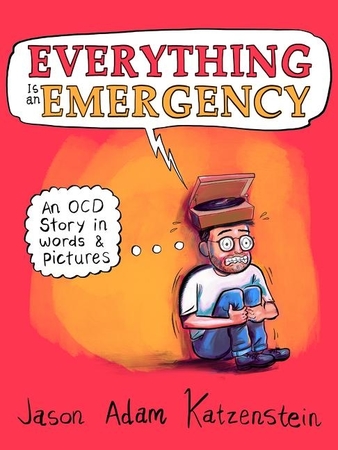
When Jason Adam Katzenstein, a cartoonist at The New Yorker, was first diagnosed with obsessive compulsive disorder as a preteen, there weren’t many resources available to help him understand what living with OCD would look like. Almost everything he read presented a pessimistic picture of what his outlook should be. That’s one of the reasons he decided to write his graphic memoir Everything is an Emergency: An OCD Story in Words in Pictures. Using humor and metaphor Katzenstein tracks his illness from being a nebulous collection of fears that ordered his life to a treatable disorder which could be managed with medication and therapy.

There are many memes that joke about “the mortifying ordeal of being known” but with OCD, nothing rings truer. I endured five years of intrusive thoughts before receiving my own diagnosis. It mainly took so long because I was terrified to speak about my experience out loud. I had no reference points on screen or in literature to understand what was occurring in my brain. I didn’t have Katzenstein’s book. If I did, I think I would have been able to speak—and joke—about what I suffered through much earlier. (Though I probably still couldn’t draw it.)

Much of Katzenstein’s book details what it’s like to have contamination OCD, a specific subset of the anxiety disorder where sufferers become preoccupied with being infected by germs or getting sick. We talked about what it’s like to manage those fears during a pandemic, how his story came to be, and why OCD sufferers like us are skilled at finding hope in the small things. (Short answer: because we have to.) 


Alexa Abdalla: I haven’t personally experienced contamination OCD but I have so much empathy for those who have, especially right now when the exposure therapy process is being put to the test. A major component of it, as you lay out in your book, is refuting the idea that washing your hands constantly is a matter of life and death, but now, we’re all being told that it is. 

Jason Katzenstein: It’s probably a very challenging time to do contamination exposures. Weirdly, my contamination stuff has not really flared up too much. 

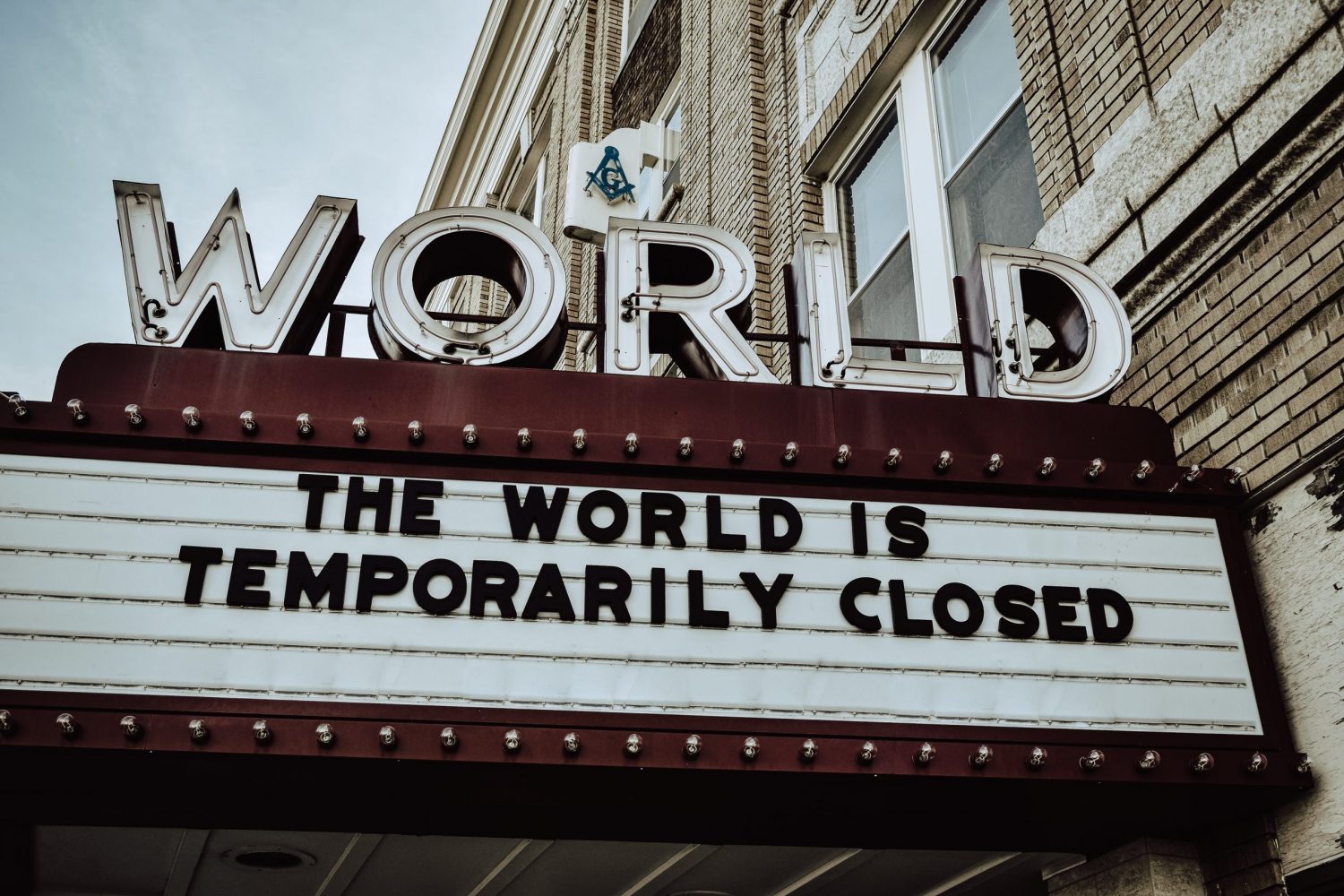
The fact that everybody’s wearing gloves and masks and being freaked out about getting close to each other and touching each other, there’s this perverse quality to that where it feels like people are responding in the real world to a situation similar to how the contamination OCD brain has always thought of the world. But I guess the fact that it is really happening also makes it difficult to leave room for OCD? I don’t have time to have contamination OCD because I actually have to put on my mask and my gloves and sterilize my groceries. That’s real shit that everybody’s doing right now, so I can’t even think about OCD responses because I just have to be a person actually living in the actual world right now. 

Alexa: There are so many reasons why I’m excited your book exists.  The fact that it’s a visual representation of OCD is awesome because it is such a visual illness. It seems like accurate representations of this illness are pretty scarce, and you even mention this in your book how all the books you were able to get your hands on when you were younger make it easy for people to get it wrong. When I started telling people I had OCD they were like, Oh, so you wash your hands a lot like Howie Mandel? 

I don’t have time to have contamination OCD because I actually have to put on my mask and my gloves and sterilize my groceries.

Jason: I think Girls did a good job with it. I’m trying to think of some others. As Good as it Gets, I think, is okay. It does an okay job. Also, Alison Bechdel in Fun Home

Alexa: Oh, really? I haven’t read that.
Jason: She has OCD. And writes about it very well. 

Alexa: I feel like there might be a lot of overlap with artists and OCD tendencies.

Jason: I think comics, specifically, is a medium where there’s some overlap. The language of comics is the juxtaposition of words and images next to each other and they form relationships the same way that  you have a thought that feels like it has a relationship to another thought or another action, something like, “step on a crack, break your mother’s back.” Readers read comics and they make meaning from the relationship between the panels so it’s like, this happens, then this happens, so I conclude based on these two pieces of information that this is the meaning of the thing, which is absolutely how OCD works, too. 

Alexa: What did you read that helped you tell this story better? 

Jason: Fran Lebowitz. I mean, there are a lot of memoir comics I love and Liana Finck makes great ones. Gabrielle Bell. Some Daniel Clowes comics I read as a kid. But Fran Lebowitz really felt like the template for somebody who could be funny and also clearly not okay. And Vivian Gornick, who’s so great at writing about being in New York and is really a great curator of the subtle detail of an interpersonal relationship. I guess my book is more Fran Lebowitz-y in that I’m often alone and hanging out with my own brain. I just think she’s so funny, and can also paint like an unflinching portrait of unhealthy habits, so I took a lot from her essays. 

These are the versions of these stories that are my version, and I’m sure that somebody else would tell it a different way.

Alexa: Was there a reason why some people had human faces and some people had animal faces? 

Jason: That was a draft one million epiphany and I think it has to do with my ambivalence about some of the conventions of memoir storytelling, because this is, I guess, a memoir? But also, large swaths of my life and important people in it are left out and I also never wanted to depart from the fact that reality is distorted through the medium of my outlook, which is in flux. I think that when you’re looking at a talking animal, it’s hard to forget that this is coming out of someone’s brain. Rather than try and pretend to know the full lives and outlook of these other characters, I wanted to emphasize that this is a very myopic, hermetic account that comes from my brain. These are the versions of these stories that are my version, and I’m sure that somebody else would tell it a different way. 

Alexa: In your book, you mention a common refrain in OCD therapy which is, “It’s not me—it’s my OCD.” At the same time, your memoir is subtitled “an OCD story.”  How do you make the distinction? 

Jason: I’m 29. I was 28 when I finished this. I don’t think that my life story is done. I hope not. I feel pretty young to be writing about my own life.  I feel like the story of my relationship to OCD is something that moves around enough that I can visit over the course of the book and tell that story and it can start when I’m little and end in my late 20s but it will still feel like a full story where things happen and things change. 

I think the story of my relationship to OCD is untangling what is OCD, how intrinsic some of these qualities are.

I also think the story of my relationship to OCD is untangling what is OCD, how intrinsic some of these qualities are, and what’s more malleable and negotiable. A thread throughout is creativity and trying to sort of navigate the relationship between creativity and anxiety. There are a lot of unsettled questions for me there, but the answers I know are not simple. Certainly, I don’t suffer and that’s why I create art. Nor do I feel like I can completely extricate the way my brain thinks about things from the way I make things. Part of editing is that desire for control. Or like, fear. Fear is not exactly OCD, but fear is one of the engines of OCD so the story doesn’t begin with OCD but it begins with fear because I think that it’s relevant. 

Alexa: Your book is broken up with these images of yourself as Sisyphus, perpetually pushing a boulder up a hill, which I think is a great metaphor for the chronic nature of OCD. The reader sees you improving, but still, you write toward the end, “Somewhere, friends of mine are angry with me. I may have left the oven on, and the door unlocked.” The thoughts are still there, they’re just not as loud, and it makes clear, there’s no end to this for you, or for me, or for anyone suffering from OCD. But I think there’s still hope in that.

Jason: What freaked me out when I was first diagnosed was the “it never goes away” thing. But I guess I also felt pretty inspired going to an AA meeting with my friend who’s in the program and just a room full of supportive people dealing with a similar thing where it’s like this doesn’t go away. You show up every day and choose, and it can be easier sometimes and sometimes it’s more difficult. The first version of this book ended on more of a note of everything feeling settled and tied up in a way that rang false. And also, that doesn’t actually feel like hope because if hope can only exist when all of the questions have been answered and all of the worries have been whisked away, none of us are ever going to be able to feel any sort of hope. Being clear-eyed about tiny victories is the only hope I know. 

What If a Pandemic Killed All the Men?

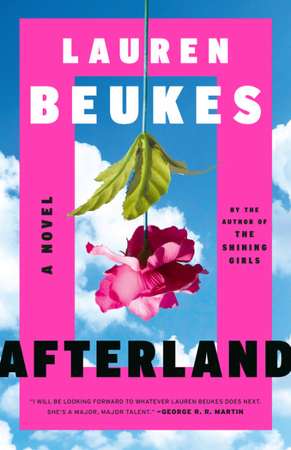
Imagine a world where reproductive rights are heavily restricted, hand sanitizer is sold out everywhere, and a pandemic has disrupted people’s lives in unforeseen ways. Sound familiar? In Afterland, Lauren Beukes brings to life a reality eerily similar to the one we are living––but in her newest novel, 99% of men are dead. 

After a fictitious human culgoa virus, a flu that morphs into an aggressive form of prostate cancer, sweeps across the globe, few men remain. One of them is twelve-year-old Miles, who escapes with his mother, Cole, from a facility that monitors his reproductive capability. The pair are being pursued by the Department of Men and Cole’s sister, Billie, who has insidious intentions for Miles. They make their way across an America that is both recognizable to readers and new all at once. As the landscape––one dotted with bombed-out cities, a group of traveling nuns named after the feminine virtue they most wish to emulate, moms who dress their teenage daughters as babies––grows increasingly bleak, Miles and Cole struggle to stay connected to one another, which threatens their chances of survival. 

Lauren Beukes, prize-winning author of The Shining Girls, Moxyland, and Broken Monsters, is no stranger to imagining surreal futures. While the prose in Afterland is playful (think puns and pop culture references), Beukes utilizes the characters’ milieu to explore climate change, police brutality, and violations of bodily integrity. Born and raised in South Africa, Beukes, a witness to the evils of apartheid, is concerned with intersections of race and gender, as well as the ways in which our current social structure perpetuates systemic violence. 

Over Zoom, I spoke with Lauren Beukes about the ways that dystopian fiction can illuminate truths about reality.


Jacqueline Alnes: I’ve been strangely drawn to pandemic novels during this time. I’ve read Severance by Ling Ma, which I was obsessed with, and Station Eleven by Emily Mandel. What has it been like releasing this book right now?

Lauren Beukes: I spent five years engaged in this fictional pandemic and now I’ve kind of emerged, blinking into the light, into a real one. It’s pretty awful. But does mean that I took it much more seriously than people around me when we first heard about the outbreak.  I bought the masks before other people did and social distanced. At the time I looked paranoid, but now? Now, unfortunately, I’m justified.

JA: Fiction can reflect our current reality as well as help us imagine different future possibilities, both good and bad. Have you seen elements of your novel represented in our current reality? Or ways we’ve veered away from what you envisioned?

LB: I think there are a lot of things that I didn’t anticipate. I didn’t predict people hoarding toilet paper. All these people demanding not to wear masks is baffling. I didn’t anticipate the level of stupidity, not listening to scientists. That’s been frustrating and weird. I have an eleven-year-old, just as sassy as Miles, queen of the sick burn, and I didn’t anticipate how hard homeschooling would be. It has been difficult managing the anxiety of all that without realizing how important other people would become. 

What’s been important about the pandemic is realizing how much we need each other and how social we are as animals.

That’s part of the reason the novel was set in America with a South African heroine: I needed her to be isolated. I needed her not to have friends and family that she could turn to. While I was writing it, I was imagining that if I were on the run, my friends would help me, my editor would shelter me and hide me under her compost heap, I would have endless opportunities and a lot of people would have my back. 

I think what’s been important about the pandemic is realizing how much we need each other and how social we are as animals. I am reminded of that very South African concept, ubuntu, which gets dragged out as a cliché, but it essentially means that people are people because of other people. I think I really felt that when I wasn’t able to see my people, my friends, not being able to have that connection. Zoom doesn’t cut it.

JA: When I was reading, I found myself amazed by the world building––you so thoroughly imagine the virus, the way the geography of the land has been altered through checkpoints, and the ways in which an array of people react to their new reality. What was the research process like?

LB: I’m laughing because doing all that research and doing all those interviews is a great way to avoid the actual writing.

JA: I’m laughing too –– I’m currently in a YouTube spiral of my own right now.

LB: Imagining the manpocalypse and how it would unfold in various sectors, came out of a lot of interviews with economists and programmers and genetic scientist Dr. Janine Scholfield, for example, who helped me design a more plausible virus. And the fluke of genetic immunity is x-linked, in case you were wondering why it’s so rare and there has to be a global reproductive prohibition.   

It would often just come up in conversation. I was working on an interesting project with Cape Town’s Metro Police, doing a ride-along with two senior officers, a Black woman and a white man, through some very hectic areas of the Cape Flats, which are still part of the ongoing spatial apartheid of the city and are stricken with violence, gangsterism, drugs and poverty. I asked them, what would happen with gangsters and drug addicts if all the men disappeared tomorrow? They both laughed at me. They were like, are you kidding? When one of the local gangs, The Americans, had a woman take over, she was more ruthless than her predecessors because she had more to prove. 

Visiting a container ship, I raised the question with the captain and he said well, these ships basically autopilot themselves, but where you would be fucked is when you come into port. There are pilots, all men, many of them total cowboys, sometimes drunk on the job, but they’re the only ones who know how to get a ship safely into port. If those men died you’d have a real problem. It’s a very hypermasculine industry and they pass that down from father to son. 

It’s fun exploring other people’s minds, and it becomes collaborative play as soon as you bring other people into it.

JA: For some reason, and this is probably my own implicit bias, when I read that 99% of men perished, I just started to imagine a sort of utopia.

LB: We’d all be able to walk by ourselves at night!

JA: Right. The amount violence in this novel really stood out to me. I think there are a lot of books and TV shows and other forms of media that show men as being violent, but it was different to read a long series of events in which women were violent and comfortable being violent with one another in some ways. 

It seemed, in some ways, like the roles of soldier and police officer –– those systems, which we all are thinking a lot about right now –– perpetuate violence in the novel. 

Why can’t we [women] be the assholes, the jerks, the evil villains, the power-hungry despots?

LB: The reason I set it only three years from the present day is because I still wanted us to be dealing with the systemic issues that we have right now. Although it is a radically changed world, it is still recognizably our world. Those power systems are deep and powerful, and the patriarchy is a very comfortable pair of shoes. It’s very easy to slip into. Reading Zimbardo’s book, The Lucifer Effect, on the Stanford Prison Experiment, for example, shows how desperately people want to step into those roles and the book also digs into the women involved in the torture in Abu Ghraib or the female leaders who played a major role in the Rwandan genocide.  

I was at a FanCon in Cape Town a couple years ago, and there was a comics writer from America and he was talking about how his female characters are always the best people in the room. And I was like, why? It’s another kind of sexism. We have this idea that women would be more nurturing and kind and warm and lovely and motherly, but amazingly, we’re full, complicated people. We are capable of all the great evil in the world as well as the good; we are susceptible to all the same weaknesses. Why can’t we be the assholes, the jerks, the evil villains, the power-hungry despots? 

JA: It was interesting to have to engage with my own expectations as I read, and ask myself why I was resisting at times. 

This book does such a good job highlighting systemic racism, gender issues, reproductive rights, climate change—nothing goes unspared. While reading and thinking about these issues, I wondered: what do you think fiction can do for us?

LB: It’s a really difficult question that I find myself struggling with. Should I quit and get a medical degree and join Doctors Without Borders? Should I be on the ground making a difference? But I feel art is the fire we light against the darkness. It’s how we find meaning, it’s how we understand ourselves and the world. I don’t know if my book is going to change anyone’s mind about anything, but fiction allows us other ways of thinking, of being able to explore other people’s minds in a way that’s deeply intimate, a conversation between the book and the reader. Reading is this act of imagination, this act of empathy and compassion, and also escapism. It’s a way of speaking truth and maybe that’s all we have as humans, is to try and make meaning and to try and speak an array of subjective truths and figure out who we are and where we are. 

JA: Miles, one of the main characters, is a biracial teenager in America. While reading, I found myself thinking of Alexander Chee’s three questions he suggests writers ask themselves before writing the other: Why do you want to write from this character’s POV? Do you read writers from this community regularly? And why do you want to tell this story? 

As a white woman, how did you grapple with some of these questions when writing his character?

LB: That’s something that I’m really, really sensitive to. Zoo City, which won the Arthur C. Clarke award, is told from the first-person perspective of a Black woman. For that book, I paid a Black friend to be my cultural editor. After reading, she gave me a seven-page report. A lot of it was stuff about Joburg. I got to the end of the report and I phoned her and I was like, you haven’t really answered my big question. And she was like, what’s your big question? I was like shit, is Zinzi Black enough? She laughed. She said, what is “Black enough”? She asked me if I’d written the character as being fully informed by where she grew up, her skin color, her gender, her sexuality, and told me that I had nailed it. The character felt like a real person. 

I don’t want to just write about white people. White people are boring. Race as a systemic issue is something I’m very interested in, especially growing up in South Africa, especially growing up under apartheid where I had all the benefits. I grew up in a utopia for white people, but it came at such a terrible cost. I see that every day, living here, and the ongoing shadow of that system, the entrenched poverty. I see the violence that you guys are enduring in the U.S.A. with police brutality, it’s just horrifying. On our side, we’ve got police brutality and terrible gender-based violence. 21 women have been murdered since the first of June, and in just the most horrifying ways. I’m aware of this intersectionality and I wanted to address some of that through the book and through Miles. 

There’s that line where Cole is talking to the immigration agent and she is so used to everyone asking her “How can you live in Johannesburg when it’s so violent there?” And she wants to throw back at them, how can you live here, where your Black son might get killed walking to buy skittles? South Africa’s not perfect, it’s really not, but it may be a safer place to raise a Black son.

JA: Belief systems can be such a form of comfort for people and they can also be harmful in the way that we see Miles being so impressionable that he can listen to a podcast from a religious leader on a bus and his whole worldview shifts. All of the nuns, too, suppress parts of themselves that are totally normal and human. Why did writing about a religious group interest you? 

LB: It was a play on gender and expectations about roles for women, which unbelievably is something we are still coming up against now, not just through religion but through society. It’s omnipresent, the weight of patriarchy. I wanted to be able to explore the idea of women being complicit in this. For example, female genital mutilation in Kenya by the Maasai. The mutilators, the people who wield the razor blades are older women. It’s another way that women uphold violent, systemic horrors that are meant to suppress women’s sexuality in particular. It’s this terrible fear of women’s sexuality. 

I don’t want to just write about white people. White people are boring.

I think something we’ve all experienced through COVID-19 is this terrible uncertainty and not knowing. The church, in the book, offers Miles certainty and rules and meaning. The nuns say to him, if you do these things, you will be loved and held and contained. Religion feels like a place of safety and control. He wants answers and the church has them.

JA: In that interlude section, you write about conspiracy theories related to the origin of the virus, and I felt like that resonated right now too (and not in a great way) because people are wanting to find their own meaning.

LB: Right. 5G? Bill Gates? What?

JA: Yes! Your satire of conspiracies would have been funny if not so close to reality.

LB: I did get one thing really wrong in the book, about pandemics, which is that the WHO doesn’t name them for their point of origin. It wouldn’t have been called human culgoa virus (named in the book for a town in Australia) because the WHO wants to avoid racism and xenophobia. I’m like damn it, I wish I’d known that before; that’s a point of inaccuracy.

JA: Throughout the book, the world is fairly bleak. There are regions that have been bombed and there are extreme disparities in wealth, but I felt throughout that you maintained some level of hope. We have Miles who escaped, for example, we have a mother who cares, and a friend halfway around the world who is going to great lengths to save someone she loves. In some ways, this novel is a commentary on patriarchy and all of the ills that plague us, but are there glints of hope in our world that you find yourself writing about?

LB: I think about myself as a pragmatic optimist humanist. I know the world is crap. Systemic violence is terrible. The things that we endure and the things that we do to each other are terrible. If you just look at the Facebook Moderators who have to delete all of this horrifying content like animal abuse and rape videos and the stuff that people post all the time through to funny Reddit threads about the worst thing to happen to you in your retail job, like somebody taking a shit in the changing room, you’re like what is wrong with us? Through to genocide and Trump and denying trans rights and all the rest.

It’s the human spirit that endures, and all the good that we are capable of as well. I think that’s what’s so interesting about us is that we have the capacity to be all the good in the world or all the evil, or any kind of very deeply confused and anxious mess in-between. I think that’s what makes the world interesting to me, and what makes writing fiction interesting to me, is trying to play with those textures of what it means to be human, and trying to be better humans. I’m also lucky to have a group of very warm and compassionate friends who really care about the world and are engaged with the world. I think my books are always going to be a bit dark, but it’s teasing the light through that.

9 Translated Graphic Novels About Inequality

Comics aren’t what people usually think of as revolutionary texts–but, in reality, many graphic narratives are deeply rooted in political movements and social commentary. Whether it has been war propaganda that caricatured the “enemy” (such as Dr. Seuss’s racist cartoons) or graphic novels that were banned for speaking out against the government, the combination of word and imagery has proven to be popular, powerful, and often political. This isn’t a coincidence; the genre’s so-called “triviality” can help it to escape censorship. 

So how does this tie together with translation? Translator Genevieve Guzmán writes that translated graphic texts offer a chance to “communicate cultural awareness to a global audience,” as well as “highlighting the political and cultural questions a more autocratic government may wish to keep buried.” Translation is also a way of controlling literary power, as writer Jen Wei Ting notes; it’s a choice to decide what stories to put on the global stage. Translated graphic narratives can help illustrate (we can’t ignore the pun here) a fuller picture of nations, histories, and cultures beyond a snappy headline. 

Translated from many different languages, these recently published graphic novels below all call attention to—and speak out against—various systems of inequality. With that said, there is a vast range: some are more focused on social issues, such as humorous takes against the patriarchy or stigmatization of depression. Others offer a sobering look at human rights violations, such as human trafficking and genocide. 

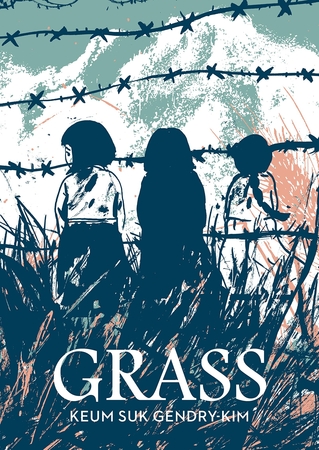
Grass by Keum Suk Gendry-Kim, translated from Korean by Janet Hong

The issue of Korean comfort women—those who were forced into sexual slavery for the Japanese Imperial Army during WWII—continues to be a point of contention between Japan and South Korea. Based on Gendry-Kim’s interviews with survivor Ok-Sun Lee, Grass is a powerful non-fiction graphic narrative of the nation’s historical trauma. Lee was born into a poor Korean family when Korea was annexed by Japan. When Lee was 15, she was kidnapped to become a “comfort woman” and provide “service” for the Japanese soldiers—or, euphemisms aside, forced through numerous sexual abuse. Done in black ink, which ranges from thick brushstrokes to depict traumatic memories and detailed landscapes of Korea, Grass is an adamant testament to the horrors of war. 

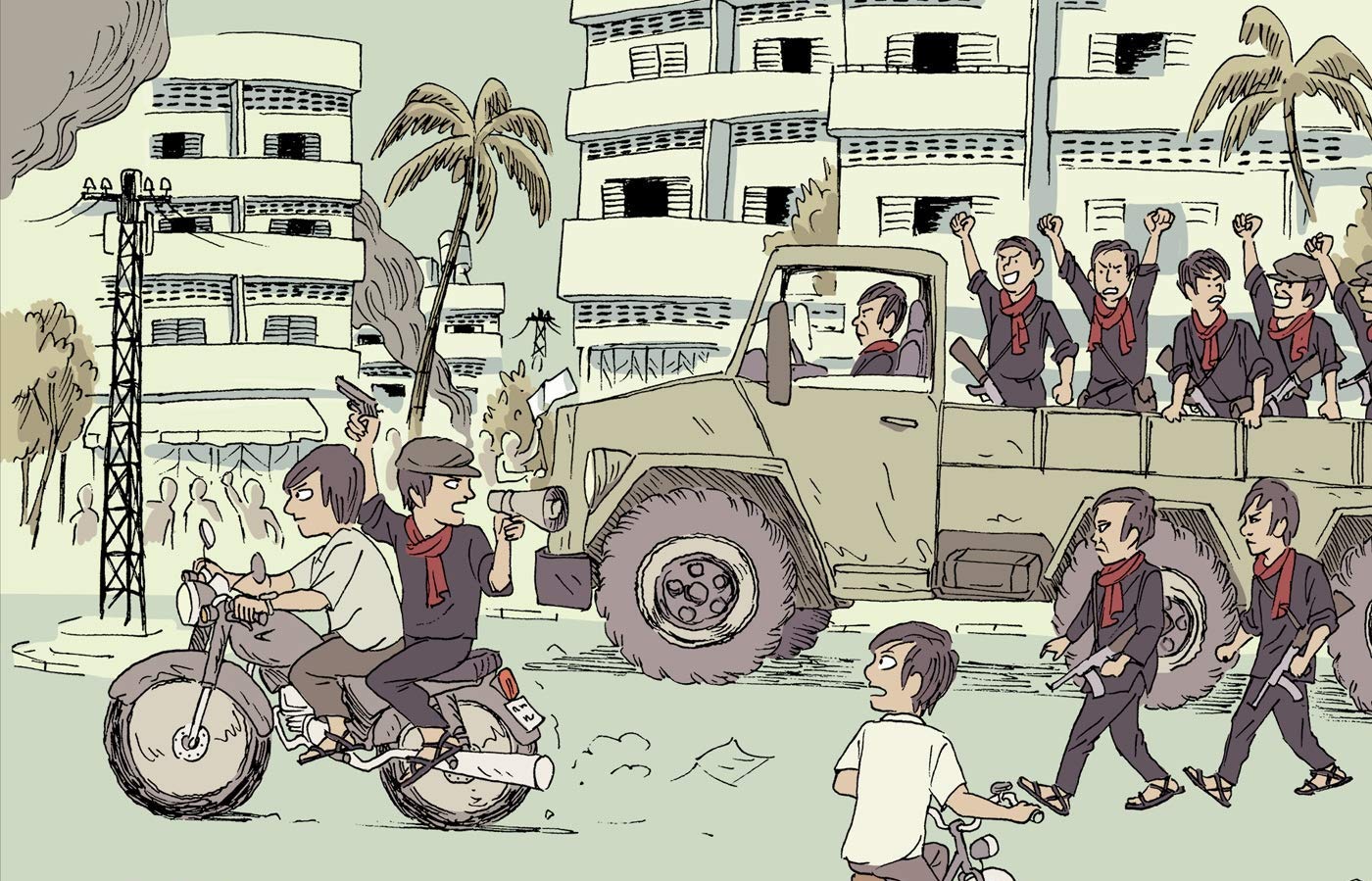
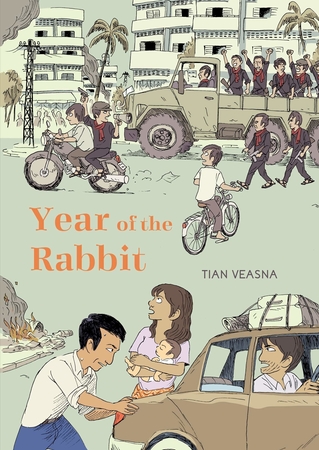
Year of the Rabbit by Tian Veasna, translated from French by Helge Dascher

Tian Veasna was born three days after the Khmer Rouge seized power in 1975, unleashing a genocidal reign of brutal work camps, mass murders, and human rights atrocities—leading to the deaths of nearly a quarter of the Cambodian population. Veasna interviewed his parents and relatives for first-hand accounts, and forgoes first-person narration in the book. Drawn in muted colors and loose lines, the book focuses on a chronological account of the various family members’ struggles, interspersed with short historical contextualizations about the Khmer Rouge’s regime. Veasna’s family, originally affluent before the takeover, is sentenced to labor camps; eventually, they must flee Cambodia. A decades-spanning saga, Year of the Rabbit is a harrowing, personal look at the lingering effects of the Cambodian genocide.

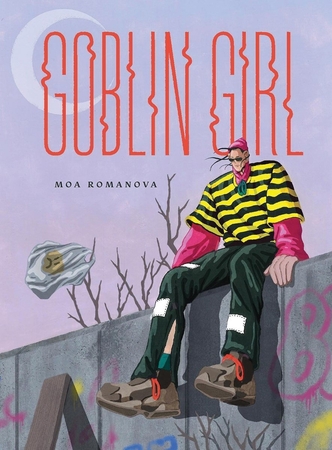
Goblin Girl by Moa Romanova, translated from Swedish by Melissa Bowers

Bad Tinder dates, failed ghosting attempts, and abuse of power: Romanova’s autobiography provides a spiky and darkly humorous snapshot of uneven gender roles today. Her narrator—a young female artist struggling with depression and panic attacks—attracts the online attention of a wealthier, older, and well-established celebrity; he offers to be her emotional and financial “patron,” an initial source of stability for the narrator. Drawn in a semi-surreal, retro style with elements of the absurd, Goblin Girl is a relatable exploration of mental health issues and toxic power dynamics. 

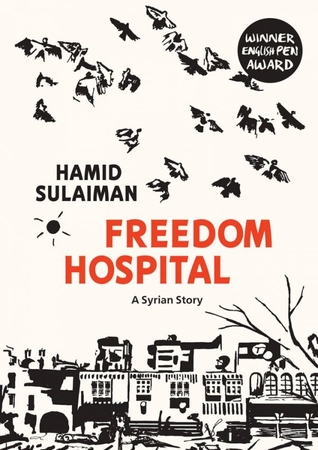
Freedom Hospital: A Syrian Story by Hamid Sulaiman, translated from French by Francesca Barrie 

Yasmine, who lives in a small town in northern Syria, starts running an underground hospital with a group of doctors, supporters, and patients. As Bashar al-Assad’s reign becomes increasingly violent and erupts in civil war, things get complicated for the “Freedom Hospital” and its community. Sulaiman’s illustrations—done in black and white with bold, stark lines—don’t hold back from extremely detailed scenes of human suffering (as this depicts a makeshift hospital in a war-devastated land, be prepared for graphic violence), but there are also burgeoning romances and soccer games. Sulaiman offers a portrait of Syria that moves beyond simply condemning Assad’s brutal regime; rather, Freedom Hospital attempts to show the complexity and nuanced personal tragedies of the Syrian civil war. 

Fruit of Knowledge: The Vulva vs. The Patriarchy by Liv Strömquist, translated from the Swedish by Melissa Bowers

Did you know menstrual blood was used as a love potion? Are you curious about modern-day labial surgery? Strömquist’s lively, X-rated graphic novel blends feminist theory with a biting sense of humor. Fruit of Knowledge zeroes in on female genitalia–and its stigmatization from ancient times to today; through clunky line drawings and occasional photographs, it entertainingly depicts the ways in which vulvas, vaginas, clitorises, and menstruation have been addressed by society. The most engaging part of this feminist discourse is Strömquist’s cartoon avatar, who sports a wiry ponytail that defies gravity and provides endlessly clever narration.

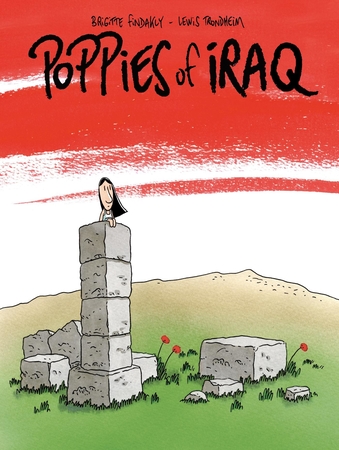
Poppies in Iraq by Brigitte Findakly and Lewis Trondheim, translated from French by Helge Dascher

If you loved Marjane Satrapi’s poignant take on her Iranian childhood in Persepolis, Poppies in Iraq is another tale of growing up under an oppressive regime in the Middle East. This much-acclaimed graphic memoir depicts Brigitte Findakly’s childhood and was co-written and illustrated by her husband Lewis Trondheim with whimsical, rounded watercolors. Findakly grows up amongst the increasingly brutal changes in Mosul under Saddam Hussein’s reign; eventually, her family decides to immigrate to Paris. Findakly and Trondheim are adept at depicting nostalgia for family events–like picnics by archaeological sites–while recognizing that many of these previous childhood haunts have been destroyed. Amidst its historical context, Poppies in Iraq is a touching family portrait and an exploration of one’s connection to their childhood home.

My Lesbian Experience with Loneliness by Kabi Nagata

My Lesbian Experience with Loneliness by Kabi Nagata, translated from Japanese by Jocelyn Allen

An internet cult hit, Nagata’s autobiographical narrative is about a young Japanese woman’s struggles with her mental health and sexuality. Kabi has dropped out of university; amidst eating disorders and depression, she struggles to find a purpose in life. As she reads erotic manga for boys, she comes to realize that she is attracted to women (despite same-sex marriage gaining more support in Japan, it is still illegal and societal views often remain restrictive on LGBTQ+ movements). With minimalistic artwork—spindly characters, little background, and sparse shading—Nagata leaves ample room to explore the convoluted, agonized journey of her narrator’s headspace. Kabi’s heartfelt story continues in sequels, My Solo Exchange Diary

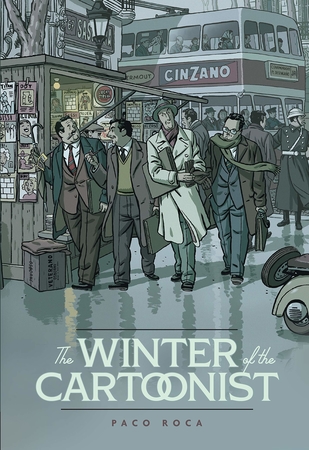
The Winter of the Cartoonist by Paco Roca, translated from Spanish by Andrea Rosenberg

Roca’s well-researched graphic novel centers on a real-life group of five cartoonists in 1950s Spain, as they fought to protect their rights as artists and workers against Editorial Bruguera, one of the largest publishing houses in the country. Instead of staying under restrictive conditions at Editorial Bruguera, these cartoonists choose to start their own magazine, dreaming of creative freedom. Drawn in a detailed, pseudo-realistic style, The Winter of the Cartoonist poses thoughtgul questions about labor conditions, artistic agency, and licensing rights.

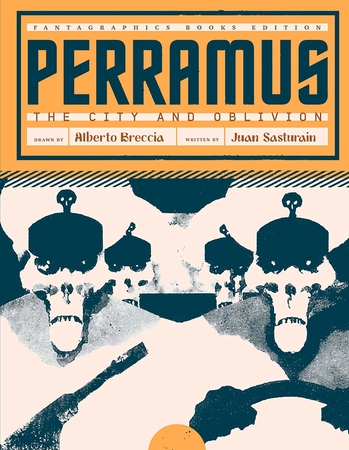
Perramus by Alberto Breccia and Juan Sasturain, translated from Spanish by Erica Mena

The winner of an Amnesty International Human Rights Prize, Perramus was an act of rebellion when it was first created during the Argentinian military dictatorship of the 1980s. The protagonist, Perramus, is a political dissident who joins forces with a gruff Uruguayan, a foreign pilot, and Jorge Luis Borges (real-life author of The Library of Babel fame). Add in encounters with a circus guerilla movement, a Henry Kissinger stand-in, and a tango singer’s skull—Perramus is both a call for revolution and a masterpiece of dark humor. Through the absurd adventures of this ragtag team, Breccia and Sasturain acutely satirize Argentinian politics and U.S. imperialism.

The Mortal Perils of Being an Instagram Influencer

The Blue Room

The Blue Room is lit with a cerulean light. With the exception of a narrow, elevated walkway and a pillow for visitors to sit on, its walls, floor, and ceiling are covered in blue soundproofing foam. In the middle of the floor, halfway sunken into the foam, like something washed up on a beach, is a 1994 Gateway 2000. It pulses the same cerulean, as if breathing. This is where the demon lives. 

Fern has been waiting to see The Blue Room for two hours. Normally, she’s able to cut these lines. Fern is a successful art world influencer. Tens of thousands follow her account. But not even she can convince the gallery assistant to let her get any closer to the latest Josephine Fibonacci installation—likely the artist’s final work. Fibonacci has been declared missing as of last Tuesday, causing a stir in the art world. No doubt the reason for the line, which now snakes behind Fern through the streets of Chelsea. Finally, she gets to the front, where a large sign conveys the rules of the exhibition to visitors. No shoes. No jackets. No bags. No more than one person allowed in the room per session. And then: The Blue Room is a device-free space for contemplation. In order to fully experience the anechoic chamber and the demon that inhabits it, the artist requests that you surrender your electronic devices at the entrance. 

Fern ungracefully removes her platform combat boots, shoving them into the provided locker along with her purse and phone. She’s prepared for this. She’s hidden a second phone—her real phone—in the pocket of her billowing silk pants. 

There is some debate among critics as to whether the demon is real. Some say it’s just a metaphor for our obsession with screens, some say it’s a sophisticated optical illusion. Others have reported feeling an unexplained static electricity clinging to their skin after leaving the installation. Everyone wants to see for themselves, which is why Fern is about to do what no one has yet done: capture the demon on video. 

Fern enters The Blue Room. She sits on the pillow, positioning her body so that the security guard can’t see her midsection, and pulls out her phone, slouching awkwardly to conceal it. She starts filming. For the first few minutes, there’s nothing but the blue pulsing. It’s silent. Fern hears her stomach gurgle, her breath, her heartbeat, and feels overcome with restlessness. She wants to check her notifications, but she is filming. The whisper-hum of the computer’s fan grows louder. 

The demon takes shape on the screen. It’s roughly the form of a woman, face and body pixelated. It steps out of the screen and grows larger, until it towers over her. It’s wearing a long white dress, its sapphire hair blowing around its face, though there is no wind. Fern gasps. The demon opens its mouth to speak, but its voice is obscured by the computer’s fan, now loud as a train barreling through the room. Somewhere she smells burning plastic. The demon begins to twirl. Fern grows dizzy watching it. She puts a hand on the floor to right herself. 

A chime goes off. The demon disappears in a flash of blue. Fern’s time is up. She stands, concealing her phone in her pants, and shakily exits the room. 

Outside, Fern watches the video she’s taken. On the phone, the demon looks unremarkable: vapor, a puff of steam, but on closer inspection she can still make out the face, the dress. Her ears ring. She’s lightheaded. Perhaps this is the effect of true genius. Her phone seems to grow heavy in her hand. She realizes she’s late for drinks with her friend Amir. 

Amir is drunk by the time she arrives at the bar. He thinks that The Blue Room is totally derivative, though he admits he hasn’t seen it. He’s into more transgressive stuff, she knows—Fibonacci is too tame for him. Still, she tries to explain her experience. The words come out as platitudes: the energy of the room, the strangeness of it. Amir doesn’t seem to care. 

This will be the last time anyone sees Fern in person. 


Back home, Fern posts about her day: selfies in line for the installation; Amir drinking; a sidewalk stencil reading “Never give up on beauty”; the video of the demon. Views and messages begin to roll in. Then, without warning, her phone dies right there in her hand. She groans and plugs it into the wall to charge. 

Fern tells people that she’s able to fully support herself through the endorsements she gets on Instagram but the truth is her brother Ricardo, who works at a hedge fund, pays her rent and her phone bill. The endorsements can pay for groceries on a good week. Mostly the companies just send her free clothes and jewelry to wear and post about. 

She lives in a loft above a steakhouse with a roommate who is never home. The aroma that lingers in the airshaft means Fern is always hungry for meat, though she’s been vegan for years. She’s spooning leftover takeout rice into her mouth when she hears a moan. She peeks out the kitchen window, expecting to see a cat in heat. All that’s there is a cook having a cigarette. 

On her bed, the phone has switched on again. It’s frozen on a light blue screen. Fern realizes with a little shiver that it’s the same color as the Fibonacci installation. Then she hears it again: a guttural moan, low and drawn out. 

It’s coming from the phone. She tries to stop it, frantically pressing various buttons, but the blue remains and the moan grows louder. She flings the phone onto the hardwood floor. This doesn’t do any good either. A crack has formed in the screen. Smoke curls from beneath the glass. Fern smells the burning plastic from the installation. She gags. 

The vertigo sweeps over her and all she can see is blue. 


For the second Thursday night in a row, Fern isn’t at the gallery openings, which is unusual. Amir has wandered through all of them, refilling a disposable plastic cup with bourbon from his flask. It feels weird to be here without Fern. Her Instagram hasn’t changed since he checked on it a few days ago. She’s deleted all the content, save for a single video of her twirling around in endless circles. Or is it her? It seems the longer he looks, the more her features begin to alter.  

An arm creeps around his waist and he jumps. It’s one of Fern’s friends, a willowy art critic whose name he can’t remember, drunk. 

“Amir!” she exclaims, shoving a strand of platinum hair away from her face. “Can you explain this pretentious crap to me?” On her phone is a tiny twirling Fern.

He takes the phone from her for a closer look. The pursed expression on Fern’s face, which he’d originally thought was concentration, turns wilder, more panicked, each time it meets the camera. It occurs to him that wherever she is, she doesn’t want to be there. 

 “What the hell?” the critic whines, her face a lipsticked mask of indignation. He’s been staring at the video for too long. The art critic wants her phone back. He hands it to her, dazed, and she disappears into the crowd.

“The Blue Room” will be collected in Tiny Nightmares: Very Short Stories of Horror, forthcoming from Catapult in October.

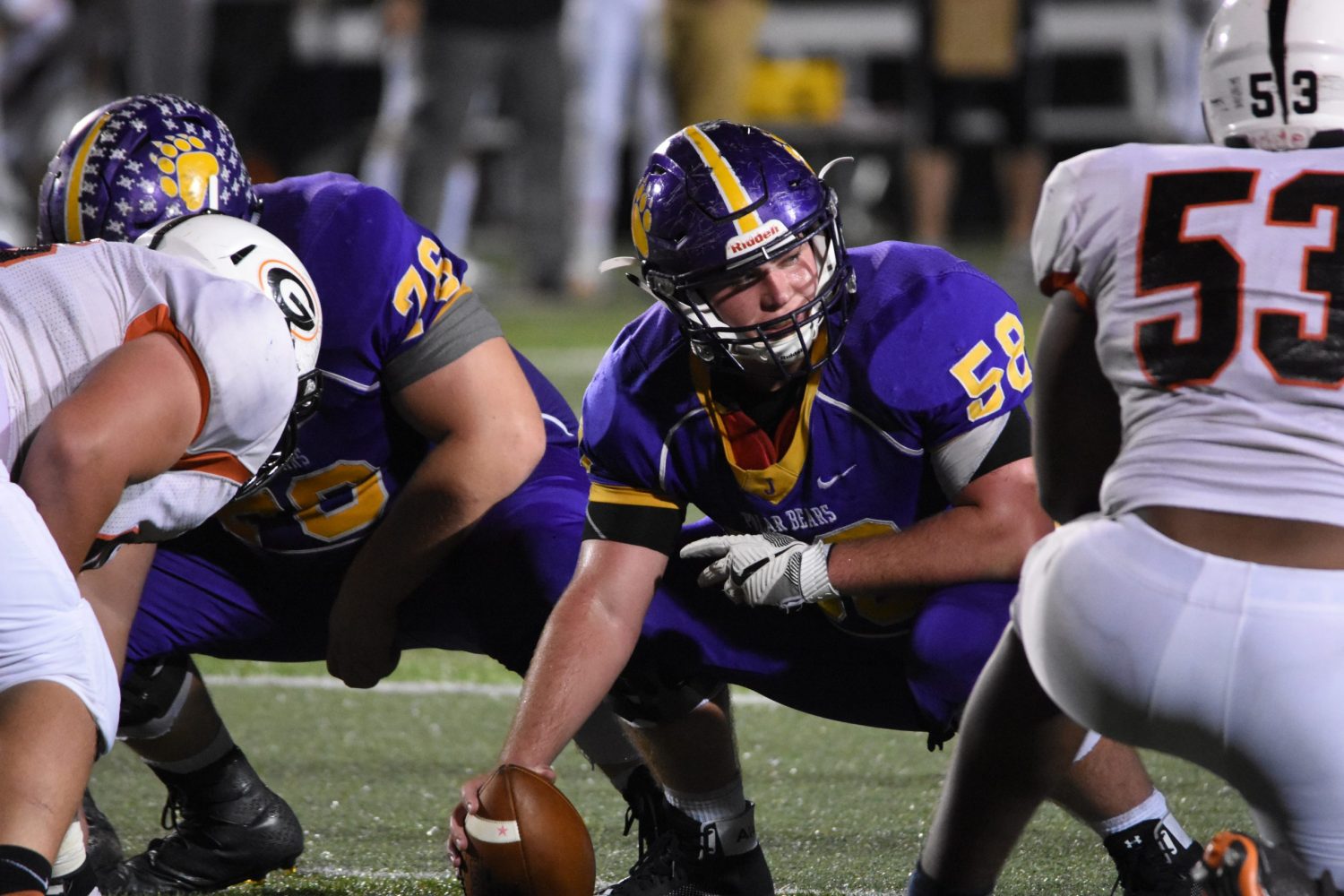
A Suspense Novel About the Queerness of American Football

Displayed upright on my desk, as if it were a work of art or a rare book, is a cheap one-subject notebook with men playing football on its cover. I somehow ended up with it in a back-to-school haul in 1995. In third grade, I didn’t know the rules of football—and I still don’t—but I found the cover artwork irresistible: the players in red-and-white and gray-and-blue team colors popping off the green fieldscape, the classic, reassuring, masculine Americana sensibility. A little closeted gay boy, I was both petrified of all football fields yet taken in by this vision of boyishness as a style. The idea of football somehow enchanted me and horrified me. For 25 years, I’ve held onto that notebook, and now I consider it a haunted, prized possession, a weird, alluring ghost.

This is how I consumed The Bright Lands, John Fram’s savage, gorgeous debut novel about football, Texas, queer men, and their secrets: in three wild sittings, alternately gazing up at the specter of football in my own bedroom. Fram presents football as a queer phantom, a menacing force that pervades—invades—the outward heteronormative peace of Bentley, Texas. What initially looks like the picture of healthy teenage masculinity becomes a violence so dark it threatens to eliminate anyone who steps in its way. The Bright Lands is a surprising, disturbing, illuminating picture of American manhood.

Recently, I had the pleasure of talking to Fram about the queerness of football, Southern white hypocrisy, and the sometimes bleak, sometimes galvanizing cynicism of Gen Z.


Logan Scherer: On its surface, The Bright Lands is a thriller with the disappearance of a small-town Texas high school’s star quarterback launching the novel’s increasingly unsettling events. As the off-kilter, subtly disturbing threats of this place seep into the reader’s consciousness, it becomes clear that there aren’t just sinister things going on in this town, that the novel itself is uncovering deeper truths about queer sexuality and repression. What made you turn to Texas football as a site for thinking about repressed sexuality?

It baffled me how a sport this homoerotic would be the centerpiece of all culture in Texas, a state that’s so afraid of queerness just crossing your legs the wrong way can get you crippled. 

John Fram: God, I wish I had a smarter answer to this, but ever since I was young I was fascinated by football because it was so damn erotic. It’s a tug of war between men in the best shape of their life, all of it punctuated by bodily collision and fueled by an intense, private energy on the field that us spectators see only flashes of in our seats. Even as a kid, it baffled me how a sport this homoerotic would be the centerpiece of all culture in Texas, a state that’s so afraid of queerness just crossing your legs the wrong way can get you crippled. 

I knew for a long time that I wanted to write a suspense novel with a queer hero at its heart, if only to fill a hole on my bookshelf where no such novel existed. However, in the course of writing it, I discovered that Joel, my protagonist, found the sport equally confounding. By allowing his point of view to inform the book—which is to say, by allowing a queer male gaze to notice the things most people choose to ignore about the sport—a wealth of material just started to bubble up.

LS: Which texts influenced you most—in both your setting up of this football backdrop and then total reimagining of it?

JF: If we’re talking about specific texts, H. G. Bissinger’s Friday Night Lights occupies a curious place in the imagination. While it’s primarily remembered as the basis for a (very good) soap opera, the book is actually a very angry autopsy of a toxic system and its traumatic effect on young men. The feature film adaptation comes closer to capturing some of this ambivalence, but nothing can quite prepare you for the rage that steams off the page. Bissinger clearly loves the boys at the center of his story, and the way the institution of the Permian Panthers sets them up and knocks them down is one of the great tragic arcs in American sports writing. 

So that was probably the most important text, in the sense that it validated my suspicions about the sadness and waste that seemed to haunt the teams where I grew up. Past that, I pulled on all sorts of Americana, both recent and older, always trying to capture that feeling of being trapped in a tiny town with too much sky: The Killers’ Hot Fuss, everything from Explosions in the Sky, and long hours with the great country stars of the last generation. Name me a better embodiment of Southern sadness and white hypocrisy than Kenny Rogers. I’ll wait.  

LS: Okay, you’ll definitely be waiting forever! I want to talk about the people of Bentley, Texas. Your novel has many memorable, nuanced characters who satisfy and totally subvert the expectations readers might have of the football-obsessed, demon-ridden townies, but the central character is Joel, a gay man who grew up in Bentley, moved away to Manhattan after being shamed for his sexuality, and now must come back to rescue his brother. How did you create Joel? 

JF: As I mentioned earlier, I’d always wanted to write a queer hero, and I realized that my memories of growing up in Texas could serve me plenty of material. However, I didn’t want to write an auto-novel, mostly because I’m not as smart as Rachel Cusk or Garth Greenwell and not as vapid as, well—you know who I’m talking about.

I wanted to write a suspense novel with a queer hero at its heart, if only to fill a hole on my bookshelf where no such novel existed.

So in terms of pure craft, I started giving Joel character traits that were the opposite of me. When I was writing this book, I was dangerously poor, so I made Joel comically rich. Because I never really had the money to cultivate a body, I gave Joel an Equinox membership and the chest to prove it. I found that by giving Joel just a touch of the Instagram life, I could get to something honest in him that I’d finally figured out about the glossy men who inspired him: he’s doing his best, just like the rest of us. By sinking him into an increasingly dangerous situation, he could turn all of the ambition and intellect necessary to cultivate a boutique New York existence onto a tiny town with lots of secrets. 

Of course, being who he is, he’s naive enough to think he can handle what he’ll find. 

LS: Your book at times feels hardboiled, revealing (no spoilers) a violent undercurrent of this strange small town, but amidst that violence is a tenderness that often moved me. There are so many heart-wrenching revelations around the frustration and tragic impossibility of queer male relationships in a rural place like Bentley. “Shame and love, while one might breed the other, could never truly be felt at the same time,” you write. For all its violence, to what extent, if any, is your book actually about lovefailed, doomed, unreciprocated (or unreciprocable) love? Is there any possibility for happy queer love in Bentley, Texas?

JF: To give you a short answer: no, I don’t think it is. Bentley is (perhaps literally) rotten to the core, but it’s no different than plenty of places in this country. Queer love terrifies much of this country because it’s demonstrable proof that the old modes of living—wives under their husbands, childrens subsumed by their parents, whites over everyone else—can be broken and done without. 

Of course, certain people in Bentley, like everywhere else, recognize the way their neighbors would be mortified if they discovered who they are, so they hide their need. We die without contact, without honest connection; even a repressed queer person will search for an accidental brush with a nice arm, a drunken lull where the borders get blurry. So often, when we’re in the closet, this hunger for tenderness can quickly spill over into predation.

LS: So is escape the only option for people like Joel? 

While there’s a room for a certain type of homosexual man in rural America, he’s often expected to be a cartoon, to play up his queerness until he is so camp he is so alien, that he poses no tangible threat to that society.

JF: I think it is, yes. While there’s a room for a certain type of homosexual man in rural America, he’s often expected to be a cartoon, to play up his queerness until he is so camp he is so alien, so clearly differentiated from the society at large, that he poses no tangible threat to that society. Not that queens shouldn’t live their fantasy! But someone like Joel—someone who slips along the spectrum of sexuality—is too dangerous to ever find acceptance there. 

It’s funny, in researching this book, I followed the Instagram accounts and YouTube vlogs of a good two dozen football playing kids in Texas and discovered that Gen Z is both much savvier than us Millennials ever were and also far more cynical. Many of them are already worrying about money, hustling for opportunities, making plans and talking like characters in a rap (though it was a little disconcerting to speak with these same kids and realize that they were far from woke.) I think there’s something tragic about this: we Millenials at least had the pleasure of hoping for something great—the election of a black man, the curbing of the banks, a re-imagining of our role in the world—only to watch all of that be crushed.

These Gen Z kids, they know better. After growing up in the wake of the financial collapse, they know they’re on their own. It was fun to see the way that infusion of cynicism darkened my characters and gave everything in the text a nice noir edge, but man—I wish they weren’t so fucked. 

LS: Whereif anywherecan this cynicism take us?

JF: I mean, zooming out a little, I think we need to be honest about the fact that our current political crisis is deeper than some spat about expanding Obamacare or asking citizens not to own military-grade weaponry. Large swathes of this country are still deeply in shock over a simple fact: a black man—the single most disposable type commodity in American history—was raised up over their white heads to become President of a country founded on slavery. I was in Waco, Texas on the day President Obama was elected and I remember the way memes of old lynchings were being passed around as palliatives.  

The immense upheaval since President Obama’s election is not some temporary indigestion. His election showed America that the old modes aren’t just fragile, but actively crumbling. This is terrifying to whites—especially poor whites—because they understand, perhaps better than anyone, that capitalism is a zero-sum game. This thought is anathema to liberals, but you simply can’t advance the economic and cultural interests of one group without circumscribing those of others. The old system was the only way these poor whites felt they could maintain a toe-hold in our society, and with that system crumbling, well: it’s a disaster for them, and they’re making sure it’s a disaster for us.

Crime Fiction Is Complicit in Police Violence—But It’s Not Too Late to Change

When Derek Chauvin knelt on George Floyd’s neck and murdered him, many white people said they were shocked. Perhaps they are shocked because they are used to seeing a different version of that scene: they are experienced in watching fictional portrayals where white law enforcement uses deadly force, the white officer is sympathetic, and the killing is always justified.

Every genre has its preoccupation, and the central preoccupation of crime fiction is justice. But in this moment of political upheaval, where our notions of justice are subject to intense scrutiny, we must ask what role has crime fiction played in getting us here. 

In a traditional mystery, the plot begins with a crime and we follow a character seeking to find out what happened. We are satisfied when we finally find out who did it and the guilty party gets their comeuppance. This effective plot structure has time-tested stakes and conflicts. We can explore political issues that drive or motivate individual acts of violence or law-breaking. Cops, private eyes, FBI agents, amateur detectives, attorneys, forensic scientists and others can all get in on the action. 

Crime fiction has also been a site to explore the shadow side of the law: corruption, brutality, and misuse of authority. Many endings are not so neat, with ambiguities and gray-area solutions. 

The genre has validated the underlying assumption that police are the good guys, and if they’re not, they should be.

Yet overall, the genre has validated the underlying assumption that police are the good guys, and if they’re not, they should be. There is no widespread critique or questioning of the whole paradigm of police and prisons as a system. And even less envisioning of any alternatives. 

The typical perspective of police procedurals has helped create the myth of police as heroes. White male police have dominated decades of crime literature, TV, and film, with Black people and people of color stereotyped as violent criminals. Since the first half of the twentieth-century, our popular culture has shown the world of crime from a white male perspective and has validated white male characters’ right to use violent and deadly force according to their own judgment.

Intentionally or unintentionally, crime fiction has been a propaganda machine of fictional stories to back a central lie of our culture: that police are here to protect and serve everyone. In the current political moment, when this myth has been exposed, TV shows are being cancelled. Unscripted TV shows like the COPS and Live PD are being taken off the air, despite their success, because the producers know they are heavily edited narratives that manipulate viewers. 

In a recent New York Times op-ed titled “How White Crime Writers Justified Police Brutality,” author John Fram traces how fictional police shows, from the ‘50s to the present, have had to be produced in partnership with police departments. Show creators were keenly aware that they would need to provide an overall sympathetic portrayal of the police in order to survive. Yet as Black people have been saying for a long time, the good guy vision of police is a cultural myth. And the latest police murders of Black people are not an aberration, they are a natural consequence of the systemic racism embedded in the institution. George Floyd’s death actually means that the system is working as it should. 

Intentionally or unintentionally, crime fiction has been a propaganda machine for a central lie of our culture: that police are here to protect and serve everyone.

Recent calls to defund police are asking us to completely rethink public safety. Part of this process must include interrogating how crime fiction has contributed to the idea that we need police to defend our safety in the first place.

One of the biggest myths of crime fiction is that most police officers are fighting dangerous criminals all the time. Journalist Alyssa Rosenberg argues that crime fiction, TV and film routinely over-represent incidents of police shootings. And most officers have maybe one felony arrest per year. They spend the bulk of their time responding to calls that would be better served by a social worker or counselor. 

But beyond selling the myth of police as good guys chasing down dangerous criminals, crime fiction has also been selling the myth that most crimes are mysteries that require police to solve them. If we look at crimes that involve gender violence—crimes that mostly target women—there is rarely any mystery there. Women know exactly who is beating them, who has sexually assaulted them. These cases are not a whodunit. If statistics show that one in three women is raped in her lifetime, and one in two will experience some type of relationship violence, then the logic of our system should dictate that a much larger percentage of the male population would be incarcerated for gender violence. 

Here, too, crime fiction has propagated the myth that women need police to save them from sexual violence. Yet statistics show rampant patterns of law enforcement officials using their status to sexually assault women who are detained or incarcerated, particularly sex workers. Off the job, there are high levels of domestic violence in police families. 

More to the point, the issue isn’t that these women need help solving the mystery of who raped or brutalized them. They—like African Americans—have had no effective recourse when the institutions of law enforcement are more sympathetic to the perpetrators of violence against them.

Crime fiction has also been selling the myth that most crimes are mysteries that require police to solve them.

The “crime” in crime fiction usually refers to instances when poor and working class people break the laws that are more likely to be enforced. Stories about crime and punishment of the wealthy are often boring. “The Wolf of Wall Street” was the exception—the rest of these stories are just rich people, paying lawyers and financial consultants to rip off the public and avoid any consequences. There’s no pulse-pounding action in watching lawyers write up long briefs. Ethics hearings don’t make good TV. The privileged are rarely prosecuted for their crimes, because other privileged gatekeepers let them get away with it. 

But more traditional cops-and-robbers are ultimately working class and poor people who get pitted against each other. Crime fiction is where we all get to watch them fight it out to the death—gladiator style.

And if the guilty party doesn’t die, they “go directly to jail.” This further feeds the myth that locking people up is justice and will keep us safe. Our nation’s current reality is that we have achieved mass incarceration of people of color as the supposed solution to crime, and yet our society isn’t any safer. When we accept incarceration as necessary, we subscribe to an ideology that national safety depends on the segregation and violent suppression of the part of the population that is Black, of color, and/or poor. Police violence is also part of this ideology, and crime writing has always supported these underlying values.

White people don’t need to stop writing crime fiction. But white people who want to be allies need to start writing books that challenge the status quo of policing instead of validating racist police mythology. We can write about people on the police force and other law enforcement confronting these realities and having crises of conscience. 

White people who want to be allies need to start writing books that challenge the status quo of policing.

The first novel in my “Justice Hustlers” series, Uptown Thief, is a heist story about a Puerto Rican former sex worker. Her love interest is a Puerto Rican ex-cop. Her hatred of cops from her days in the sex industry is a significant romantic obstacle. But it eventually comes out that he left the force after watching his colleagues shoot an unarmed young Black man. Those colleagues retaliated against him when he wouldn’t observe the cops’ code of silence and told the truth about what he saw. In December, my first standalone novel comes out, A Spy in the Struggle, about an FBI agent who is sent to infiltrate an African American eco-racial justice organization. The protagonist goes into her assignment believing that the FBI is on the side of justice, and then finds herself with divided loyalties when she realizes that the government is engaged in violence against the Black community. My work is part of a long tradition of books written by people of color that reflect our difficult relationship with law enforcement.

There are many individual police officers who mean well, who care, and who do not want to be violent. But when the Minneapolis City Council voted, in a veto-proof majority, to end the Minneapolis Police Department, they ushered in a new reality of defunding police. Meanwhile, cities like Los Angeles have started to cut their police budgets to move resources to other social services that could more effectively respond to crises or even prevent crime. 

I hope this political moment will usher in a wave of very different books by authors who previously subscribed to the myth of the police as a benign public safety institution. Literature is always changing. I believe white authors can do the painful work of self-reflection in order to find a new core of truth in their characters. 

I hope that crime fiction—as a genre—can evolve and respond to this new moment. This would also mean ending the domination of white male authors of the genre, and creating a publishing landscape where the books published—including “big” books—reflected the percentages of people of color in our society. My greatest hope for the genre would be that—as a whole—crime fiction can become a literature that supports this powerful moment of racial reckoning in our country and can evolve into a literature in support of racial justice. 

8 Books About Cross-Generational Friendships

When I was a young adjunct, I bonded with a student in my class over our shared experiences of grief. A decade separated us in age, but we seemed to understand each other by the timeline of our lives. If you plotted our experiences on a line—the first death of a loved one; the first experience of trauma; the first time we ventured out on our own; the first experience of depression—our bubbles on that timeline all seemed to match up.

The All-Night Sun by Diane Zinna

In my novel, The All-Night Sun, I write about how a similar friendship begins for 28-year-old college professor Lauren and 18-year-old Siri, how it buds in the light of sharing truths and how it crumples up when lies start to leak in. They are each at an age when people make decisions about the parts of themselves they want to carry forward in life and what they wish to shed. It’s only when Lauren impulsively decides to accompany Siri home to Sweden for a summer trip that the awkward, motherly conversations Lauren attempts with Siri’s friends make their age difference feel stark. “What a lifetime you can live—or not live—in ten years’ space,” Lauren says. It feels at any moment the other person could slip away, back into her own time. But their early story-sharing and the ways they’ve been honest with each other have made double knots all along their timeline, and that bond is strong.

What does it mean to have a true friendship with someone of a different age? I think the authors of the books below show us it’s about sharing our stories in honest ways. It’s about being present with another person in a way that feels like being present to yourself—as you knew yourself once, as you might be someday.

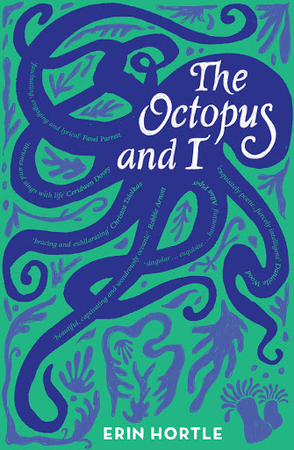
The Octopus and I by Erin Hortle

In this 2020 debut novel, Lucy is recovering from breast cancer when she becomes friends with two older women who gather and preserve octopuses that swamp the Tasmanian coast. While saving an octopus that is pulling itself across a road dividing the ocean, Lucy is hit by a car, and her injuries force her to come to terms with her body all the more. As she heals, Lucy has a tangle of octopuses tattooed across her scarred chest, and her relationship with Flo becomes a shared respite from loneliness and loss. With emotional and rhythmic sections written from the perspective of octopuses and seals, this novel shows us all searching for connection while unknowingly being carried along by the ever-present current of it.

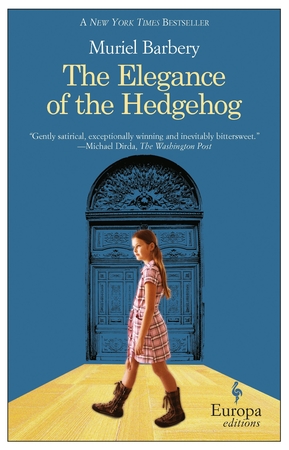
The Elegance of the Hedgehog by Muriel Barbery

Set in an opulent Parisian apartment building, this novel’s narration alternates between that of a distraught and precocious 12-year-old named Paloma and the building’s concierge, a reclusive autodidact named Renée. As they share with us the day-to-day of their isolated existences, the things that bring them small measures of happiness, and their shared love of Japanese culture, we are convinced of how good they would be for each other if only they knew each other. It is a joy then, when Paloma finally befriends Renée and we see their spirits expand in each other’s presence. (This novel also includes the most exciting and frightening argument against comma splices I’ve ever read.)

The Summer Book by Tove Jansson

The Summer Book by Tove Jansson

I loved this book especially for its short stories of young Sophie and her grandmother, a real friend who quietly honors the ways Sophie shows unconditional love. They are each other’s only companions in the world, a world that stretches in all directions around them from their secluded cottage on a tiny island in the Gulf of Finland. When I was reading this book, I repeated the stories to my daughter each night before bed. I thought they were sweet, but she said they made her sad. I think she was picking up how much goes unspoken—about the way they wound up together on the island after the mother’s death, and how Sophia’s pain comes out of her in little bursts.

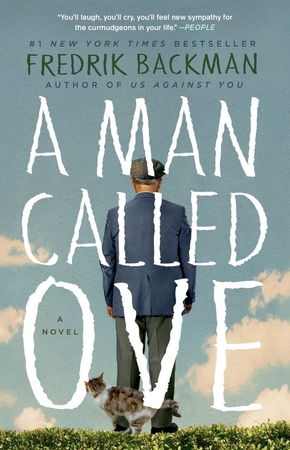
A Man Called Ove by Fredrik Backman

Ask people for a book about intergenerational friendship, and they will shout the title of this beloved book at you, or else the title of his novel My Grandmother Asked Me to Tell You She’s Sorry. Backman regularly gifts us with stories of people of all ages putting in effort to be truly present with one another. I especially found the story of stubborn Ove and strong-hearted Parvaneh to be a call to love. It made me feel empathy for a person in my life I didn’t realize I’d been holding it from.

Image result for lost book of adana moreau"

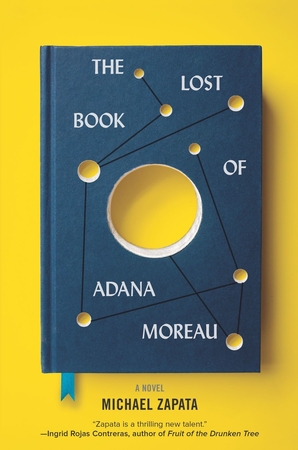
The Lost Book of Adana Moreau by Michael Zapata

In this deftly conjured novel of bubble universes and dopplegängers, people are united by a beloved lost manuscript in post-Katrina New Orleans. I felt deeply for Saul, who we see at the start mourning his grandfather Benjamin’s death. While trying to piece together an understanding of his grandfather, Saul discovers his own best friend, Javier, had a deep relationship with him of his own. When his grandfather met Javier for the first time, he called Javier a “luftmensch,” a Yiddish word for someone who lives in “a cloud of possibility.” Saul is jealous of that but comes to understand that his friend and grandfather were drawn together because they were people insistent on hearing and saving people’s complicated stories.

Author Michael Zapata shared with me that he wrote this novel for a dear friend of his, Matt Davis, who passed away in 2003. Matt was a seminal figure in the Afro-Punk movement and the first person Michael ever knew to be a true artist. He was also the only reader Michael ever had in mind for this novel, and hearing that made the friendships on the page feel all the more poignant.

The Story of Arthur Truluv by Elizabeth Berg

The Story of Arthur Truluv by Elizabeth Berg

Maddie is an isolated, bullied teenager yearning to break away from her father’s dark cloud, a girl whose “hope has gotten tired.” Arthur is a recent widow who visits the graveyard every day at lunchtime and insists on seeing the best in people, even inventing detailed, compassionate stories for the people buried near his wife’s grave. When Maddie and Arthur come together, the novel becomes a story about loving people well in life and also after death. It’s a meditation on the mysteriousness of how one becomes an outsider and the beauty of found families.

Augustown by Kei Miller

Augustown by Kei Miller

In a poor Jamaican town, an out-of-control teacher, believing himself disrespected, cuts off a young child’s dreadlocks in front of the class. Back in town, Ma Taffy, the child’s great aunt, can feel that something terrible has happened, and soon the whole town is electric with demanding justice. Miller’s poetic language and assured structure allow us to float back and forth in time and connects us with the stories of this Rastafarian community over generations. Long after I finished the book, I found myself thinking about the friendship that develops between Miss G and Mrs. G. They are two very different women who believed in each other but never had the chance to share their most meaningful connections aloud.

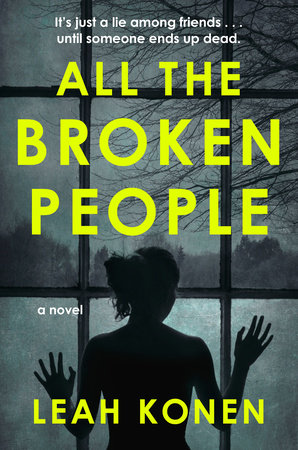
All the Broken People by Leah Konen

All the Broken People by Leah Konen

No book list about friendship is complete without the story of one that goes terribly wrong. In this thriller, Lucy flees her old life in Brooklyn for the small town of Woodstock to put distance between herself and her abusive partner. Like my character of Lauren in The All-Night Sun, Lucy has long been grieving the deaths of her parents alone, and when a kindly older couple, artist John and his wife Vera, befriend her, her fast devotion makes her far too willing to look past the cloud of suspicion that follows them.

How Fantasy Literature Helped Create the 21st Century

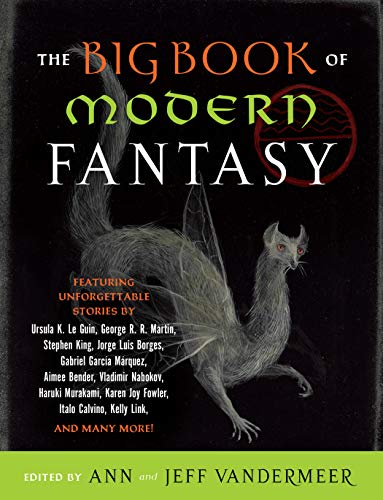
The following is the introduction to The Big Book of Modern Fantasyedited by Ann and Jeff VanderMeer, to be published by Vintage Books on July 21, 2020. Introduction copyright (c) 2020 by VanderMeer Creative, Inc.

Fantasy is a broad and various category that on the one hand can feature fire-breathing dragons and on the other can be as quiet as a man encountering a strange plant. As with The Big Book of Classic Fantasy, we have worked from a simple concept of what makes a story “fantasy”: any story in which an element of the unreal permeates the real world or any story that takes place in a secondary world that is identifiably not a version of ours, whether anything overtly “fantastical” occurs in the story. We distinguish fantasy from horror or the weird by considering the story’s apparent purpose: fantasy isn’t primarily concerned with the creation of terror or the exploration of an altered state of being frightened, alienated, or fascinated by an eruption of the uncanny.

Argument over the details of this broad definition could go on for hours, days, lifetimes. Only the most narrow and specific genres can be defined with precision, and fantasy is one of the broadest genres imaginable, if it even qualifies as a genre and not a mode, tendency, tradition. But every anthology needs criteria for selection, for inclusion and exclusion. For us, the defining moment of fantasy is the encounter with the not-real, no matter how slight, and what that moment signifies. Sometimes it is the entire world and sometimes it is the slight distance from reality that allows a writer to bring our reality into focus in a meaningful way.

The defining moment of fantasy is the encounter with the not-real, no matter how slight, and what that moment signifies.

We defined classic fantasy as stories from the early nineteenth century up to the end of World War II in 1945. Modern fantasy, then, begins with the end of the war. There are practical reasons for this separation: we knew it would require two books to offer an acceptable selection of the body of work we wanted to draw from, and we wanted those books to be balanced in size and scope. However, the separation also makes sense in the context of what was happening culturally in the middle of the twentieth century.

Soon after 1945, fantasy solidified into a publishing category. In 1939, two pulp magazines were established that helped readers see fantasy as its own category, separate from both weird/horror and science fiction: Unknown, edited by John W. Campbell, and Fantastic Adventures, edited by Raymond A. Palmer. Campbell and Palmer were quite different as editors, but they created markets for stories that were lighter or less horrifying than those in Weird Tales and its imitators, and not beholden to pseudo-scientific rationalizations that grounded the science fiction in Astounding and Amazing magazines. Nineteen forty-seven saw publication of the first Avon Fantasy Reader, edited by Donald A. Wollheim, and then in 1949 The Magazine of Fantasy, retitled The Magazine of Fantasy & Science Fiction, reappeared with its second issue and continues to be published up to this very day. F&SF (as it is known) lived in the liminal space between the pulps and the commercial slick magazines, publishing writers who had established themselves in the pages of Weird Tales and Unknown alongside writers like Shirley Jackson and James Thurber, familiar to readers of The New Yorker. While the popularity of these publications varied, they had a strong effect on English-language writers in particular, creating a sense of a type of fiction called fantasy that was different from other types of writing. F&SF in particular is heavily represented in this volume.

Just as fantasy was beginning to become a recognized, separate type of writing in U.S. magazines, the postwar boom in paperback publishing opened up new opportunities for writers and readers both, creating a space for the phenomenal success of Tolkien’s Lord of the Rings novels in paperback in the mid-1960s, and leading to countless imitators, some of them also bestsellers. The next decade saw the rise of the Dungeons & Dragons role-playing game, the conception of which was influenced not only by Tolkien but also the writing of well-known genre fantasy writers such as Fritz Leiber and Jack Vance (plus unjustly lesser-known ones, such as Margaret St. Clair). D&D would go on to influence not only the structure and content of other games (including computer games) but also many works of fiction, including television shows and movies. By the 1980s at the latest, fantasy, as a marketing category, was a significant part of most media. Today, it is arguably the dominant category of pop culture.

To some writers, fantasy is an element in a wider set of tools that can be taken out and used for a particular story or novel. Other writers are born with a worldview that skews toward fantasy or become steeped in the non-real and it becomes part of their core identity. Neither approach is inherently better than the other, but for the purposes of post–World War II fantasy it often signified a continuing widening of the breach between the real and the non-real in terms of what most general readers think of as “fantasy” and what kinds of fantasy have been most accepted by genre communities. At times, fantasy has become “that which is produced by a fantasy writer” or “that which I recognize as fantasy because of pop culture.”

The power of pop culture to familiarize readers with the fantastical cannot be overstated. Inherent to popularity is a tendency to render key elements familiar and conventional, even safe. Marketing categories let you know what to expect. (While this can create cliché and generic qualities, they also allow subversive and genre-defying material to reach a wider audience, by allowing “mimics” of a kind to infiltrate the mainstream. The cuckoo’s egg that cracks open to reveal a fairy.)

After 2001, pop culture and fantasy were nearly synonymous.

In a purely technical sense, until recently, sophistication in movie and television versions of fantasy has lagged behind the sophistication of even the most generic Tolkien-derivative fantasy. Thanks to Arthur C. Clarke and Stanley Kubrick, the year 2001 has a mythical science fiction meaning, but the actual year itself proved to be one of the most important in the history of pop culture fantasy, because it was at the end of that year that the first Harry Potter and Lord of the Rings movies were released, having an effect on the popular imagination of fantasy comparable to the effect of Star Wars on the popular idea of science fiction in 1977. Before 2001, the influence of written fantasy and Dungeons & Dragons made it a major source for much pop culture; after 2001, pop culture and fantasy were nearly synonymous.

Yet to this day, despite any amount of commercialization of fantasy, the short story remains a wild and unpredictable delivery system for unusual and bizarre fantastical ideas, images, and  characters. Sadly, the depth and breadth of this wildness often remains half-unseen. The post–World War II split between fantasy and literature, while hardly as deep as that between science fiction and literature, effectively rendered certain types of writing invisible to large groups of readers. For instance, The New Yorker’s long history of publishing fantasy stories has often been obscured by the magazine’s reputation for publishing slice-of-life stories. Even in the 1980s, when the craze for “dirty realism” was at its height among the English-language literati, all but the most puritanical literary magazines and journals still published stories with fantastical elements (often calling them “surrealism,” “fabulism,” or “magical realism” to distinguish them from genre fantasy). These days, we’re used to seeing fantasists such as Steven Millhauser and George Saunders appear in both The Year’s Best Fantasy and Horror and The New Yorker.

Because of the opposing poles of ubiquitous pop culture and literary movements like Magic Realism in Latin America, “fantasy” as a concept found favor in the mainstream, encouraging many writers who didn’t identify with the fantasy genre, or had been scared away from the fantastical by its genrefication, to employ fantasy as a device or idea in their fiction—including and up to a point where it is fascinating to discover that some stories that are clearly fantasy, coming from the mainstream side, have been ignored or dismissed as “not really fantasy” by the genre side. Conversely, on the “mainstream” side fantasy is often seen as referring solely to some bastard child of Harry Potter and Tolkien, with Borges or Calvino, for example, not fantastical at all—ironic, since Borges appeared more than once in F&SF and had little patience for the division between “popular” and “literary” fiction.

The post–World War II split between fantasy and literature rendered certain types of writing invisible to large groups of readers.

As ever in our anthologies, we seek to repatriate these “sides” because they are, in fact, closely related on the page, as opposed to their position on the map out in the world. That a kind of not-seeing occurs in both directions might best be exemplified by our experience of a major SF/F editor calling Jorge Luis Borges, derisively, “small press,” while the editor of a major mainstream literary market for fiction once in front of us fiercely denied that Borges and Calvino contain any trace of fantasy. Fantasy was wizards and, oddly, zombies.

In The Big Book of Classic Fantasy, we introduced the concept of “the rate of fey” as a barometer for fantasy, providing for fantasy what “sense of wonder” provides for science fiction and “the uncanny” provides for the weird—the fey is an otherworldliness, a strangeness emanating from the kinds of associations generated by elements like fairies, elves, and talking animals rather than from ghosts or monsters. With popular culture making many elements of fantasy so familiar as to be clichés, rates of fey diminish, just as in science fiction the sense of wonder diminishes with the umpteenth invocation of a conventional faster-than-light drive. The ubiquity of fantasy throughout post-1945 culture provides different challenges to writers who seek originality and otherworldliness. That struggle can be productive. For the period we cover in this volume, 1945 to 2010, readers will find a wonderful chaos of different approaches from writers with vastly different points of view and heritage, and often they will find those writers extending and wrestling with traditions and creating unpredictable new styles from old.

Organizing Principles and Process

Modern-era fantasy fiction poses a challenge related to organization, in that the wealth and variety of material can make a mockery of process. Indeed, most such collections trend toward the realm of “treasury” rather than “anthology.” The material, in a sense, demands it, because too narrow or too tight a focus risks leaving out many treasures. Whereas with our anthologies The Weird and The Big Book of Science Fiction there were definitional exclusions that made the task easier, in fantasy the wild, broad nature of the fiction makes that impossible. However, we have come to accept over a career of editing anthologies that no anthology can be perfect and that the best way to come close is to let your reach exceed your grasp (as Angela Carter liked to say).

Perhaps the most important idea in compiling this anthology was simply to make sure that no matter how surreal the fantastical elements, they are present throughout the story. These elements might be quite normalized or presented as normal, but whether it’s a person transformed into an animal or the effects of magical systems, the story is permeated by the fantastic.

We also found it worthwhile to think about organization in terms of how writers draw ideas from each other. The networks of influence linking many of the writers through this volume are not always predictable or well-known. For example, Vladimir Nabokov and Jorge Luis Borges stand out as having helped stimulate creative energy in many different writers, including writers on both sides of the post-war literary/genre divide. Borges, for instance, reoccurs as a clear and stated influence in the work of Angela Carter, Michael Moorcock, and Antonio Tabucci, to name just three. Often, also, fairy tales and folktales provide the foundation from which these writers launched their stories, but not in any simple way—the various crises, technological developments, and social changes of the twentieth century ended any possibility of serious writers just reiterating the tales of the past. Instead, for example, we get Abraham Sutzkever using a kind of folktale idiom to express what realism feels wrong for: his experience of the liquidation of the Vilna ghetto. Fantasy becomes something of use to a writer to make a political or social statement. It’s not just a mode, it’s a tool allowing conversation with predecessors and conversation with an often bewildering and sometimes horrifying world; it’s no surprise that absurdism and surrealism arose when they did. While in The Big Book of Classic Fantasy, we found few out-and-out surrealist stories that fit the book’s goals, with this volume we find numerous and diverse writers claiming surrealism as an inspiration as a movement and a valuable technique for writing about life when the “real world” feels far from real.

To select the stories in this book, we sought out previous anthologies to analyze existing canons—canons seen as “literary” and canons seen as “genre,” canons national and international. We evaluated individual stories in those canons to see how they held up for us as readers today. We looked for stories that seemed to use fantasy in ways that transcended pastiche. We looked for productive connections. We did not worry overmuch about including any particular individual writer, but sought more to show the diversity of approaches possible.

We chose a rough end date of 2010 to maintain the decade-long “exclusion zone” we feel is important for objectivity, and which we have used in our other anthologies. Several anthologies, including various annual best-of-the-year collections, already cover the past ten years in fantasy fiction. But this exclusion did mean that some emerging writers of note from the past decade had only published a few stories by our cutoff date and could not be included herein.

On a higher level of hierarchy, our process and thought process was informed by, as previously noted, ignoring where a story came from or how an author self-identified (genre or mainstream); repatriating the fringe with the core (turning a spotlight on forgotten writers); articulating the full expanse (including non-Anglo stories).

International Fiction

English-language modern fantasy could itself fill a five-hundred-thousand-word volume. For this reason, we have included fewer translations than in some of our prior anthologies. However, we have still provided a robust selection of international fiction, much of it little known or in English for the first time.

We, in English, still cannot see the entirety of world fantasy, which is both depressing and a challenge for future editors.

First-time translations include bestselling Swedish author Marie Hermanson’s “The Mole King,” Polish writer Marta Kisiel’s “For Life” (a writer never before published in English), Mexican writer Alberto Chimal’s “Mogo” and “Table with Ocean,” and the amazing “The Arrest of the Great Mimille” by French author Manuela Draeger. Other highlights of translation include Silvina Ocampo’s major long story “The Topless Tower,” Abraham Sutzkever’s “The Gopherwood Box” in a new translation, Czech writer Vilma Kadlečková’s “Longing for Blood” (her only story in English), and Intizar Husain’s “Kaya-Kalp,” rescued for this volume from obscurity in a long-forgotten journal from the 1960s.

It is worth noting that if an English-language modern fantasy volume could fill five hundred thousand words, then so, too, could, for example, “Latin American women writers of fantasy,” if only more was available in translation. We, in English, still cannot see the entirety of world fantasy, which is both depressing and a challenge for future editors to rectify more fully.

Emphasized in This Anthology

Whereas our prior classic fantasy volume featured many fairy tales with actual fairies and general uses of magic, this volume focuses more specifically on dragon stories. Something about the ferocity and versatility of the idea of “dragon” appears to have allowed these beasts, once at risk of extinction, to flourish into the modern age of fiction. Or, perhaps, we as editors were just much taken with them. (Certainly, here in Florida the proliferation of iguanas and other giant lizards due to climate change can have serious and important effects on one’s subconscious mind.)

As in classic fantasy, there are also many stories involving quests and swordplay. How could there not be? The people involved are not the typical heroes, however, and their atypicality seems more emphasized in these stories than in the classic tales. We also see more heroines, as in Joanna Russ’s story “The Barbarian” and in Jane Yolen’s “Sister Light, Sister Dark.” And unlikely heroes, such as in Fritz Leiber’s “Lean Times in Lankhmar” and Jack Vance’s “Liane the Wayfarer.” Leiber is featured in the classic volume with his first Grey Mouser tale from the 1940s, and it is striking to see how the earnest innocence of that yarn had given way to an altogether more realistic and jaded view of humanity and of our two heroes in “Lean Times.”

In 1939, Unknown and Fantastic Adventures magazines sought to bring more lightness and humor to fantastic fiction, and that effort had a lasting effect. Humor plays a large role in many of these stories, from David Drake’s “The Fool” to Terry Pratchett’s “Troll Bridge,” showing the versatility of fantasy as a genre. Sometimes, this humor has a satirical edge, as in our excerpt from Bulgakov’s The Master and Margarita (which we chose to place by its date of translation into English, given the novel was still very relevant to the Soviet condition at that time).

Fantasy has long been associated with kingdoms, and in this volume you’ll see that royalty, and attitudes to it, has changed in fantasy stories after 1945. For example, in “The Mole King” by Marie Hermanson, the reluctant King would prefer to live underground, like a mole, rather than face up to any royal responsibilities. In Sylvia Townsend Warner’s “Winged Creatures,” a sad little kingdom is undone by plague, and love is thwarted by time and chance. The prince in Intizar Husain’s story “Kaya-Kalp” decides he likes being a fly, after the princess changes him nightly in order to escape detection by the evil giant who has imprisoned her.

When reality itself often feels unbelievable, fantasy may allow the most perceptive portrayals of the real.

Metamorphosis is a subject of fantasy going back at least as far as Ovid, and perhaps best represented in the twentieth century by Kafka’s famous story. Modern fantasy features many highly unusual transformation stories. Qitongren’s “The Spring of Dongke Temple” includes a protagonist who wishes to become a bird, like the monks that preceded him. Stephen King’s “Mrs. Todd’s Shortcut” is a transformation story of sorts, in that Mrs. Todd becomes younger and younger each time she takes that shortcut. Gabriel García Márquez celebrates an old man’s transformation in “A Very Old Man with Enormous Wings.”

As urbanization has progressed, fantasy has also accommodated it, leading to inanimate objects as sentient beings, such as trains, sheds, and even cities (Sara Gallardo’s “The Great Night of the Trains,” Victor Pelevin’s “The Life and Adventures of Shed Number XII,” and Tanith Lee’s “Where Does the Town Go at Night?”). Even in urbanized modernity, talking animals abound, not to mention the talking plants and insects in Edgar Mittelholzer’s wonderful and newly discovered “Poolwana’s Orchid.”

Also, in a definitely modern and “relevant” vein, fantasy with a social message has flourished, allowing the distance from reality to be effective and sometimes biting. Examples include Alasdair Gray’s “Five Letters from an Eastern Empire,” Rachel Pollack’s “The Girl Who Went to the Rich Neighborhood,” Haruki Murakami’s “TV People,” Shelley Jackson’s “Fœtus,” and Sumanth Prabhaker’s “A Hard Truth About Waste Management.” When reality itself often feels unbelievable, fantasy may allow the most perceptive portrayals of the real.

The Gray Lands

We would like to end this introduction on a rare personal note. For more than thirty years, we have each of us edited fiction magazines and anthologies. We have had successes and discoveries beyond our wildest dreams. Our joy has existed in championing new and unjustly obscure voices, and, somehow, this quixotic quest has been rewarded beyond hope. It is unbelievably satisfying, but it also takes a toll. As importantly, we believe it’s vital to make space for the next generation and to encourage the upcoming, diverse future of anthology editors. For these reasons, The Big Book of Modern Fantasy is our last anthology together. We hope you enjoy it, and we hope you understand how much we love fiction and how much we love storytelling, and what satisfaction it gives us to present some new gems to readers that were once lost to the world.

Thanks to Matthew Cheney for his contribution to this introduction and our invaluable conversations about the history of modern fantasy.

Thank you for reading.

A Town Taken Over by Children from the Rainforest

In lucid prose, Spanish novelist Andrés Barba transports the reader fully into San Cristóbal, a city on the edge of a rainforest somewhere in Latin America, and into its daily life, petty politics, and societal fissures. A Luminous Republic cuts close to this pandemic moment in the fear, paranoia, and questioning that throbs through its pages. The novel recounts of an episode when an outside menace ravaged the city. The tormentors? A gang of 32 children, who appear to be from the jungle and speak an unfamiliar language. At first, they scavenge and commit minor theft but then their mischief grows violent, and San Cristóbal’s own children start defecting to join them. The adults have to take drastic action to stop the onslaught. The novel, slim at under 200 pages and utterly disconcerting to its very last sentence, also contains a period of quarantine. 

The novel takes the form of a testament offered after the incident, which might soothe and remind that this, too, shall pass. Barba’s narrator, a social worker who dealt with the debacle, reconstructs the incident (and its startling end, to which the novel’s gorgeous, enigmatic title refers) and its repercussions—personal, psychic, and public—well after the chaos has ended.

 A Luminous Republic, originally published in Spanish in 2017 to great acclaim, debuted in the U.S. with Lisa Dillman’s translation in mid April. I spoke to Barba about considering his novel right now, what childhood really means, and how we might narrate this time in a future one.


J.R. Ramakrishnan: It’s been an interesting, and perhaps an extra-chilling, experience reading your book right now. The town’s paranoia of the outsider children who cause havoc mirrors a bit of what we are going through globally with the pandemic. You also have a sort of quarantine in it too. I wonder what you think of this, and of how your novel reads now?

Andrés Barba: It’s true that there’s a strange parallel between what happens with these children and the Coronavirus; they come from somewhere else and “colonize” an environment, change the order of everything, force us to examine whether all of the old words we’ve long been using to describe our world still have the same meaning in the “new world.” I suppose that, in a way, is what literature in general tries to do: explore whether the language we’re using fits the world we’re living in, that the words we’re using are the right ones for the moment, or whether there are certain values or concepts that have become obsolete, that are no longer applicable to the feelings and concerns of a new moment.

JRR: When did you start thinking of childhood and related ideas of innocence? There is a gap between the innocence of the town’s own kids and other children in the book. But even before the outside children arrive, you note the pre-existing divide between the town’s children and the indigenous Ñee children, who can be ignored. It seems that this othering of children (who are not the same as “ours”) is especially intense, perhaps because of this idea of childhood purity? Could you talk about this aspect of the book and how you considered it?

AB: Yes, that’s right. In this novel, there are basically three groups of children: the “normal” children, the ones from the city, who live with their families and adhere to the adult conception of childhood; the Ñeé children, who are indigenous, and as such are seen as outsiders within the city, though they’ve been accepted by the paternalism of society; and the “wild” children, who appear suddenly and change the old conception of childhood entirely. 

These three types of children are also three fictions, made by adults to interpret a reality that, at its heart, is unreachable to them: childhood. Our concept of childhood—you can trace how it’s changed over time—is a fiction that has adapted to our needs: from the incarnation of innocence to the representation of the lost paradise, through the “good savage” or the “divine animal,” we’ve always determined the nature of childhood based on the needs of the present moment. But childhood itself, the true heart of what a child is, is out of our reach. It resists our fiction, our kitschy sense of what it should be. 

JRR: Your main narrator is a social worker who deals with the crisis of the children but you also have the perspective of one of the town’s children, Teresa Otaño, who writes an Anne Frank-style memoir about the time. How did you imagine this part? It seemed extremely real to me.

The dynamics of desire, envy, and fascination between children is incredibly rich as literary material, but I’ve rarely seen it addressed in literature.

AB: I needed a child’s or semi-child’s voice (Teresa is almost a teenager) to complete the picture. We needed to have a sense, even if it was very approximate, of how the group of “civilized” children looked at the group of “wild” children. I think the dynamics of desire, envy, and fascination between children is incredibly rich as literary material, and I’ve rarely seen it addressed in literature. When children speak in first-person in novels, it’s often kind of corny; but a child’s gaze, in reality, is always quite sharp. There’s nothing corny about it. Children are much less sentimental than we want to believe. We’re more sentimental when we observe children than they are when they observe us. 

JRR: From my understanding, the setting of the town of San Cristóbal is wholly made-up. The rainforest seems a little tricky to describe because its monotony but you captured its layers. I especially enjoyed this part: 

“The green that devours everything, an enormous, thirsty, mottled, stifling, powerful expanse in which the strong are sustained by the weak, the great steal light from the small and only the microscopic and diminutive can stagger giants.”

Have you spent much time in the rainforest? 

AB: Yes, you’re right, it’s a total invention; it could be many countries in Latin America, but it isn’t any in particular. The only rainforest I know well at all is the rainforest of Misiones, in Argentina, at the border of Brazil and Paraguay, a place that shares a lot with the place in the novel. But the fact that the place is anonymous is deliberate.

JRR: You also translate English and Italian novels. Did you consider doing this translation yourself? I imagine this is not customary. How do you think this work reads and feels in English? In recent years, I have acquired Spanish and it seems the gulf with English is so large—especially the million-syllable words, sentence lengths, nuance of the subjunctive, etc.

AB: No, I would never translate my own books. I think you have to translate into your mother tongue, never into a second language that you’ve acquired, no matter how well you speak it. You need a knowledge of the language you’re translating into that isn’t just lexical; it has to be sentimental and intuitive as well. You have to know by intuition how to respect the spirit of the book you’re translating. 

In this case, I couldn’t have asked for a better translator, Lisa Dillman. We’ve been good friends for many years, we’re almost like a literary couple. I wouldn’t think of any other English translator but her.

JRR: The novel is narrated as a reconstruction of the past, as well as its haunting of the present. I suppose this structure also made me think of the question of how we will tell this pandemic story once it’s long over, and especially how we think/thought and talk/ed the events then v. now. I have a question related this:

What do you think books have to offer in this time of panic? It does seem that many people are opening books for the first time in a long time since they can’t leave the house.

I don’t think books necessarily have the capacity to do ‘good.’ Reading can also make you more stupid.

AB: I don’t think books necessarily have the capacity to do “good.” Adolf Hitler was a great reader. It’s not so much that people read for the sake of reading, but that they read “well,” which is to say that they read books that take them out of their preconceived ideas about the world, that help them think about the world from new perspectives, think critically about what’s going on around them. So I’m not sure we can know if the fact that people are reading more is also helping them to “read” the world more intelligently. Reading can also make you more stupid.

JRR: As a novelist, who obviously considered this structure (with a fantastical episode as a plot), have you perhaps begun to think of how this episode and its many stories might be narrated in the future? I’m not sure if it’s a reasonable or realistic question but it certainly occupied me as I read your book, especially its last line. Any general thoughts?

AB: That will be very interesting! I think it will happen a bit as it does in this novel. The order in which we hear testimonies of this moment will be a reflection of how our society is composed: first will come white men from rich countries, then women, then people of color and racial minorities, then sexual minorities, then children, then whites from poor countries, and so on. 

You Can’t Just Take Things That Don’t Belong To You

“Absences”
by Mary Jones

The summer my father left my mother and moved to California to find himself, my mother rented an apartment in a small Upstate New York town called Rome, where she was born, and where her sister and her mother still lived. She wanted us to be closer to people who could help with us as she got back on her feet. She took a job as a waitress at an Italian restaurant on Dominick Street and worked very long and very late shifts. After work she’d come home and soak in a steaming hot bath then go into her room and lock the door and cry until the grey hours of morning. We’d sleep late, often until one o’clock in the afternoon, right around the time when Days of Our Lives would start, then we’d sit around the kitchen table and stare at the little black and white TV on the counter while we ate Captain Crunch, and my mother smoked her cigarettes, and drank her black coffee. This was classic Days of Our Lives; Days of Our Lives that had never been better. It was the summer Hope almost married Larry Welch, when Bo, wearing a black leather vest, drove in on his motorcycle to Bonnie Tyler’s “I Need a Hero” and rescued her from the wedding. We all stood and cheered and hugged as Bo drove Hope away on the back of his motorcycle in her giant white wedding gown. There was no one in the world we loved more than Bo. 

I didn’t understand what it meant that my father had to find himself. To me he seemed to be right there. I didn’t know why he left us. My sister and I were good kids and we got along with each other. We spent our days that summer lying in the sun in the back yard, or talking to our old friends on the phone. Sometimes we walked to our grandmother’s house, or rode our bikes to see our aunt. We didn’t hear from my father at all during this time, except for a single picture he sent of himself on a beach in California. In the picture the sky was pink and the low clouds in the distance looked like ghost ships. My father’s blond hair was reddish in the setting sun. He was wearing a white t-shirt, faded jeans, sneakers, and sunglasses. My father was a tall, good-looking man—I understood from a young age that he was the kind of man who was hard to hold down: women wanted him, they went after him, and they didn’t care about my mother, or about us—and here in this picture, he could have been a movie star. On the back he wrote the words, just, “wish you were here.” My sister and I were baffled by this sentiment and it took on an enduring importance in our young hearts. Did he mean he wished we, my sister and I, were there, or did he mean my mother? And if he did mean my mother, did that mean he still loved her, that one day he might come back for her and take us all away from this dreary town to a life that was warm and bright.

That fall I was starting the sixth grade. I hated my new school and all the dumb, dirty-haired kids who went there. My best and only friend was Jessica, a chubby girl who had frizzy red hair, squinty green eyes, and freckles. Physically, we were opposites; I was tall and thin with dark hair and dark eyes. She had some kind of seizure disorder, a condition I’d never seen before or since, and sometimes, right when you were in the middle of talking to her, she’d slip into one of her spells. Her eyes would roll into the back of her head and the muscles in her face would freeze and twitch, then, seconds later, just like that, she’d pick up with whatever she was saying like nothing had happened. Sometimes this would happen over and over while you spoke with her. She said the little seizures were called “absences.” She had no memory of them, and while she wasn’t exactly sure what triggered them, she assured us that it was absolutely no big deal at all and that we should just ignore it when it happened. 

The other kids at school seemed to like me well enough, but this was not the case for Jessica. They were not exactly nice to her to her face, but behind her back they were downright vicious: they called her Beef Jerky and did hideous impressions of her as she passed them in the hallways. If she knew about this, she never said anything about it, and she didn’t seem to really care. She had been held back in second grade and she’d started school a year late so she was older than everybody else by a mile. She’d already turned thirteen. She already had her period and had boobs and wore a bra. She’d already been as far as third base with her boyfriend, Tom, who was sixteen, and who owned his own car, which he picked her up in every day from school. She smoked Marlboro Reds, had tried pot, and even had her own favorite drink, Southern Comfort and lemonade, which we drank at her house some Friday nights when her mother was at work.  

On the way to school she liked to stop at Midnight Pharmacy, a small everything store, right next to our school. It was owned by a very old man named Mitch whose back was hunched at an unnatural angle. He wore a white button-up shirt, a black tie, and thick glasses. He did crossword puzzles at the cash register and never looked up unless someone stood right in front of him. Mornings, Jessica would get to the playground wild with excitement and we’d run to the school bathroom and she’d show me all the things that she stole that day, always giving me the things that I wanted most. I’d put on the black eyeliner, rub the strawberry lotion over my arms. “Come with me next time,” she’d say, laughing. “It’s so fun. You have to try it.”  

I’d been taught that it was a sin to steal, but I met her there one morning before school anyway. I was afraid we might see a teacher, or someone else from school, but we didn’t. We went into the make-up aisle and pretended to be talking about an assignment. I picked up a lipstick, examined it closely, then let it go up the sleeve of my white winter coat as I reached for another. The second one I made an elaborate show of putting back. After that, I slid a black eyeliner into my pocket. My heart pounded and blood rushed to my head. We walked out slowly, still talking about our schoolwork, then we hugged with happiness and ran all the way back to the playground. Before long, we were bringing our backpacks to Midnight Pharmacy, tossing in all the little things that we loved, mostly beauty products and candy. Then we moved on to Great American, a grocery store just down the block from the school, and to the 7-Eleven on the corner of James and Sycamore. It went on for months. I kept the stuff we took at my house—no one went into my room, or looked at my things. 

My mother still worked late nights at the restaurant but now she’d made friends with a few of the other waitresses, and after work they all went out for drinks. I was usually still awake when she got home. I’d hear her coming in, her body knocking into the table and chairs, glass bottles clanking in the refrigerator, then the click of her lighter, the smell of cigarette smoke, and she’d make her way into her room and fall onto her bed. Only an hour or so before her next shift would she rise to take her shower. I stood in the doorway of the bathroom and quietly watched as she put on her make-up. She sucked her cheeks in to get her reddish blush just right. She used a brown pencil to darken her eyebrows, then heated the tip of a black pencil with a lighter and lined the top and the bottom of her lid, turning the streak upward at the end to make her eyes look like a cat’s. She wore red lipstick, always blotting some onto a tissue which she left on the sink, and which I saw every time I used the bathroom for the rest of the day until I went to bed. 

One morning in January, Jessica and I were at Great American before school filling our pockets with tiny bottles of shampoo and mouthwash from the sample aisle. I saw a man coming toward us from the front of the store. He walked slowly up our aisle looking carefully at all the items on the shelves. He was a skinny man with thick blond hair, dressed neatly in a tan jacket, jeans, and sneakers. When he came along to where we were standing, he looked quickly at us. He seemed to be somewhat young. He turned the corner and was out of sight, but a moment later he was back again. 

This time he stopped in front of us, “Girls,” he said, “do you want to come with me?”

I lost my breath. “For what,” I said. 

“For all the stuff you’ve been putting in your pockets,” he said plainly. He looked around. No one else was in the aisle. Aside from a few cashiers, the store was mostly empty in the early morning.

Jessica took a few steps back and glanced over her shoulder, and for a second I wondered if she might try to make a run for it, but then her skin reddened and she started to cry. I tried to inhale but barely got anything in. I thought of my mother’s face, the shame she’d feel when she found out what we’d been doing. She didn’t need this, not now, and I felt sure it would be the thing that killed her. “Here,” I said, handing the man a crinkled ten dollar bill from my pocket. My aunt had given it to me for Christmas. I carried it with me in case we ever got caught. I knew it would not be enough to cover even half of what I’d taken that day alone, but it was all I had. “We were going to pay for it,” I said. When he looked at me doubtfully I added, “I swear. We were.” Then, “Please,” I said.

The man shook his head. He took a few steps away from us. For a moment I thought that everything would be okay. But then he turned and said, “Come on now, girls. Put the stuff back, and follow me.” He walked a few feet ahead of us. We looked at each other, emptied our pockets, then followed him down the aisle, and past the row of cashiers at the front of the store. There was a swirling feeling in my head and I thought that I might pass out. When he walked through the automatic doors and out of the store, Jessica and I both froze. “I’ll just have to take you to the station for a bit to fill out some paperwork,” he said. His face was expressionless. In the store, a young woman in the checkout line played peek-a-boo with a baby who was fussing in the front seat of her cart. “My car is right here,” he said, walking toward an old maroon sedan. He unlocked it. When we didn’t move, his tone deepened. “Come on now, girls,” he said. “You don’t want to make a scene for all your little friends to see.” Jessica’s face was wet with tears now. When we started moving toward the car, the man said very softly, “Good girls. That’s good girls. Good girls.”

I got in behind the driver’s seat, and Jessica got in behind the passenger seat. I knew she must have been thinking of her mother, a woman who was prone to fits of rage. She’d scream at the top of her lungs sometimes, the slightest things setting her off. I saw her punch through a wall once. Another time, when Jessica forgot to empty the dishwasher, she whipped a glass across the room. It hit the wall just behind where Jessica was standing, and shattered. Jessica had to clean it up. 

The car smelled of vanilla air-freshener and cigarettes. A crystal prism hanging from the rearview mirror shot tiny rainbows everywhere; they flickered and shimmered on the wood paneling of the dashboard. The leather seats were torn in places, the crusted foam leaking through. The engine was loud when he turned the key. Ice cold air blasted from the heater. The man lit up a cigarette, and unrolled the window a crack before pulling away. The sharp air from outside sent chills through my spine as his smoke blew into my face. “I saw what you girls were doing,” the man said after a few moments. “Not just today,” he said. “I’ve been watching you for a while.” 

“What do you mean,” Jessica said. “This was the first—”

The car was stopped at a red light a few blocks from where I lived. Flurries of snow sat almost motionless in the air. The man turned and looked at us. His eyes were light blue with flickers of darker blue. “Don’t lie to me,” he said. “Lie to your mommies all you want,” he said. “But please don’t lie to me.” He turned and looked out at the road. Joey Russo’s grandfather was crossing the street with his shopping cart full. When he got safely to the other side the man started driving again. He was quiet for a few minutes. Out the window kids were heading toward the school. There’d been a heavy snowfall the night before, and all morning we had the radio on praying they would announce a snow day. It was good packing snow, and some kids were having snowball fights as they made their way down James Street toward the school. In a few minutes, the bell would ring, and everyone would pour inside, change their wet boots to sneakers, go to their seats, say the pledge, and start their day. “You girls have to learn that you can’t just take things that don’t belong to you,” the man said. 

We drove along Black River Boulevard until it hit Mohawk Drive, then turned on Mohawk Drive, past the air force base and the row of abandoned factories, and a few minutes later, took the exit for Route 49. The car was big, and Jessica seemed small and far away on her side of the back seat. She rubbed her finger along the stiff edge of a rip in the leather. “Where are you taking us?” she said. I reached for her hand and squeezed hard.

The man didn’t respond. Instead he started talking about how he read that it was going to stay cold for a very long time this year. He said that one year, when he was very young, it snowed all the way through to the end of May. He went on about his childhood for a while, his life with his grandmother and his younger brother. He said there was nothing in the world he would want more than to be back there with them again.

I looked out of the window and kept silent as he talked. 

After a moment, he said, “How old are you girls, anyway?” He made eye contact with me through the rearview mirror. “Aren’t you a little young to be shoplifting?” he said.

“Twelve,” I said, though I was still eleven.

“Thirteen,” Jessica said. 

He shook his head, looking disappointed, then lowered his voice. “You’re very beautiful girls,” he said gently. He was looking at me again in the rearview mirror. I felt the skin on my face burn under his stare. I kept my head turned away. After a while he added, “I can see that you’re smart too.” He was quiet for a moment, then he said, “That’s what matters. Your beauty will fade someday when you’re older and all that will be left is what’s up here.” He tapped his head. He checked for cars before pulling away from a red light. “You girls can do great things with your life,” he said. “You can do anything you want to do.”

I felt a peace come over me. I liked him very much. I started to imagine that maybe we could keep in touch after all of this was over. Maybe he could be like a big brother, or an uncle who comes over on Sundays for dinner. I thought my mother would probably like him too. I caught his eye in the rearview mirror and smiled and he smiled back at me. 

Jessica was still crying. “It’s okay,” I said to her. “Don’t worry,” I said. 

“You’re not bad girls,” the man went on, looking out at the road. “You’ve just done a bad thing,” he said. “There’s a big difference there,” he said. “It’s a very important distinction.”

I felt a wave of shame for what Jessica and I had been doing, and I promised myself I was done with all that, that I wouldn’t take things that didn’t belong to me anymore. 

Jessica started to breathe harder. “Come on,” I said. “Calm down,” I told her. “It’s going to be okay.” The man looked pleased. I went on. “He just has to take us to the station to fill out some paperwork.” 

The busy road had given way to the country road. I looked out of the window and saw barns go by. I’d never been on this road, or anywhere near here. We were getting far from town, far from everything that was familiar. I wondered, then, why he wasn’t wearing a uniform. Why he didn’t have a police car. 

“Hey,” I said softly. “Are you really a cop?” 

“That’s a weird question,” he said, sort of smiling. His face reddened and he looked around. He lit a cigarette. His forehead twitched. “What else would I be?” he said.

His blond hair was thick and chopped looking. He had cut it himself. Staring into it, I suddenly felt very dizzy.  

“I want to get out of this car,” Jessica said, then. “Let me out of this car,” she said.

The man stayed calm. “That’s not what’s going to happen,” he said. 

It was still snowing. The snow was coming down hard now, just pouring out of the sky, being dumped out of the sky, and all along the road in front of us, in the car, everywhere, the bright whiteness was a blur. I put my head into my knees, pushed against the pulling. I felt as if I might be sucked out of the car and into the sky.

I caught Jessica’s green eyes and held on. She was breathless now, sweating. She tried the door but it wouldn’t open. “Mom,” she started to say. “Mom,” she screamed. “Mommy.” The sound poured into me, filled the car, echoed out into the snow-covered fields all around us. 

My heart pounded. 

Jessica slipped down in her seat, then, and her body became rigid. She started to jerk and twitch. When we first became friends, her mother had warned me that she might have a seizure like this one day. She’d told me what to do to keep her from hurting herself. She said it would only last a few minutes, and that Jessica might be a little confused and weak afterwards, but she’d be okay. I pulled her head onto my lap, turned her sideways so she wouldn’t swallow her tongue.

The man kept glancing at us through the rearview mirror. “What the fuck,” he said. “What the fuck is going on,” he said. “What’s wrong with her,” he said, screeching his car to the side of the road. He turned and looked at me, his lips curled with disgust. “Is she some kind of retard,” he said. “Is she some kind of fucking freak.”

“She’s having a seizure,” I said.  

What happened next happened very fast. He got out of the car and went around to Jessica’s side. He opened the back door, yanked her out of the car and let her fall, still convulsing, into the snow bank on the side of the road. I was still. My legs were heavy. I looked up at him and for a second I thought that he would slam the door shut, and drive off with me. Instead his face scrunched with anger. “You too,” he said. “Get the fuck out,” he said through closed teeth. “Get out of my fucking car right now you freaks.” He grabbed my arm and yanked me from the back seat. I stumbled onto the ground next to Jessica. He got back in the car drove away. I pulled Jessica’s rigid body far away from the road. We had been taken. But now we were free. A man had us. But now he let us go. A surprising feeling passed over me, then, almost like sadness: he didn’t want us. It was a quick, sickening impulse, and I recognized it as strange as soon as I felt it. I turned and vomited into the cold white snow. When I was finally done, Jessica’s body had softened.  

We were far from anywhere, all around us just snowy fields. The cold air stung my face, my hands. I worried about frostbite, amputation. When Jessica got enough strength back we started walking. Just about a half hour down the road was a house. The woman inside was kind. We told her we were lost, and she let us use her phone and her bathroom.

When Tom got there a little while later, he wanted us to call the police and report the man who he was sure would have raped and killed us, but we reminded him that we’d been stealing, committing a crime, and we all agreed that the man would probably go free, if they ever found him at all, while the two of us ended up in juvy. We all promised to never tell anyone about it, and we never did, not even our mothers. I got a trash bag, a big one, a lawn bag, and filled it with every single thing we ever stole and threw it in the dumpster behind the school. Jessica and Tom broke up not long after that, and in junior high, I got in with another crowd, girls who were on the cheerleading squad, who read books for fun, and worked on the school newspaper. Before I knew it, Jessica and I had completely lost touch. When we’d see each other in the hallways we’d say hi, but that was all. You would have thought that what we’d been through together would have brought us closer, that we’d share some special and unbreakable bond, but it was the opposite: In my mind the whole thing was so intricately connected to her that even a glimpse of her green eyes in the hallway could make me get physically sick.

My father eventually found himself. He came back to New York looking tan and gorgeous just over a year after he first left. His hair had turned completely blond from the sun. He’d had a girlfriend in California, but it didn’t work out, and somehow that experience, him having and losing this other woman, made him realize that it was us he’d loved and wanted the whole time, and he didn’t want to miss out on any more of our growing up. That was all well and good, except for the fact that he was too late. My mother had a boyfriend now—they were thinking of moving in together—and whatever love she’d held in her heart for him all those nights crying in her room had hardened into something that was more like hate. I didn’t blame her: I hated him too. He’d left us for dead. Some absences you can’t make up for, and more often than not, walking away from love means walking back to hate. There’s nothing you can do about that, except to move on, and try to do better the next time. Or the time after that.