A Ghost Haunts the Tokyo Olympics

“I used to think life was like a book: you turn the first page, and there’s the next, as you go on turning page after page, eventually you reach the last one. But life is nothing like a story in a book. There may be words, and the pages may be numbered, but there is no plot. There may be an ending, but there is no end.” 

Yu Miri begins her exploration of the life of Kazu, a manual laborer from the country’s Fukushima prefecture, with this meditation from him as he walks the afterlife, which turns out to be exactly the (homeless) life he left behind. Yu Miri chills the reader’s blood over and over with lines like this: “I did not live with intent, I only lived.” 

Tokyo Ueno Station by Yu Miri

Kazu came to Tokyo to build the city for the 1964 Olympics, the games which delivered a gleaming Tokyo, a mere two decades after World War II, to the world’s eyes. Kazu’s story is the backstory of the city’s builders, invisible and marginalized. He experiences the untimely loss of his son, and later his wife, and ends up in the homeless village in Ueno Park. Kazu’s fate is contrasted by a series of connections with the imperial family, who exist in a much loftier realm. 

Tokyo Ueno Station’s final scene devastates in a dream-like fashion. Without totally giving it away, the crescendo involves the 2011 tsunami in Kazu’s hometown. The 2020 Summer Olympics, which was scheduled to begin in July but has been postponed to 2021 with the global pandemic, shadows the book. Kazu’s contemporary counterparts toiled as he did to enable the games. 

With the gracious assistance of the novel’s translator Morgan Giles, I interviewed Yu Miri—who is a part of the country’s Korean minority population—about listening to the dead, her personal (and political) history with the Olympics Games, and what pandemic life is like in Fukushima, which is still recovering from the 2011 nuclear accident’s devastation. 


J.R. Ramakrishnan: “I thought that once I was dead, I would be reunited with the dead…But then I realized that I was back in the park.”  In terms of afterlives, this seems like the worst. How did this novel begin for you? 

Yu Miri: The truth is, Tokyo Ueno Station is the fifth in my series of novels involving the Yamanote Line [a subway line in Tokyo]. In the first in the series, the short story “The Inner Loop of the Yamanote Line,” which was published in 2003, a woman who’s thinking about jumping in front of a Yamanote Line train goes into a bathroom in the station and masturbates, then gets on the train, gets off at another station and masturbates again. I depicted the destinationless impulses toward sex and death (eros and thanatos) of this protagonist who is shut out from life. And in this story, the protagonists of the four other novels in the series that I went on to write make their appearances. 

I’ve depicted the directionless lives and deaths of characters whose diverse lives radiate out from the ticket gates of Yamanote Line stations, who get knocked out of life and, passing through the gates heading toward the center of the circle, find themselves standing on a precipice—the edge of the station platform.

The second in the series, Goodbye Mama, is about a mother who has separated from her husband and is raising a preschooler on her own (set at Takadanobaba Station, Toyama Entrance). The third, Gotanda Station, East Entrance is about a man who works at a securities company; he and his wife do not speak to each other at home. The fourth, Meeting, is about a high school girl who runs a website recruiting people for a group suicide. And the fifth is Tokyo Ueno Station, with a homeless man from Fukushima as the protagonist.

The Yamanote Line is a loop line that runs around the center of the capital, Tokyo; it’s a double circle, actually. The circle that runs clockwise is on the outside and is called the “Outer Loop,” while the line that runs counterclockwise on the inside is the “Inner Loop.” At the center of this double circle, right in the middle of the donut hole, is the palace where the Emperor lives; it is surrounded by moats, a construction that makes it impossible to approach it or look inside.

There are two themes that deeply influence my Yamanote Line series. The first is suicide, which every year over 20,000 Japanese people lose their lives to. The other is the multiple spheres that arise from the Imperial system, and from the Emperor himself who is designated in the first article of the Japanese constitution as “the symbol of the State and of the unity of the People.”

Japan has one center and multiple spheres, which creates a huge gap between rich and poor, fortunate and unfortunate. Tokyo Ueno Station is the story of the suffering and death of a homeless man, born in Fukushima on the same day as the Emperor, who had to leave home for work as a young man due to poverty, losing his home and family.

The four protagonists in the earlier works in my Yamanote Line series all stand on the platform, a precipice between life and death. I didn’t write scenes where they are hit by trains. In the few moments while the train is approaching, they might hesitate and be pulled back toward life. I decided to let the reader’s imagination guide what happened to those characters next.

JRR: You begin the novel, as you end it with sound. In between, there are snatches of overheard conversations, sounds of the rain, the station’s sonics, and then finally the sirens and roars of the book’s ending. As a reader, I could hear so much! 

YM: It makes me very happy to hear someone from a different country who speaks a different language say that they could hear so much.

Japan has one center and multiple spheres, which creates a huge gap between rich and poor, fortunate and unfortunate.

I think that the role of a writer is to listen to the voices of the voiceless. It’s my job to listen to the voices of the spirits of those who die in the midst of discrimination, poverty, and loneliness, unable to bring anyone’s attention to their suffering.

We can’t save the dead, but by listening, we can give comfort to their spirits. By listening to their suffering, we can bandage their burning, bleeding skin, no matter how many tears that bandage might have or how patched together it might be.

JRR: You take us to Tokyo’s fringes. The homeless community has work, interests, pets, and suffers threats of crime. How did you imagine these characters? 

YM: What first inspired this novel was seeing a homeless man in the bathroom at Ueno Station 18 years ago. Afterwards, when I’d talk with the homeless men living in Ueno Park, one of them told me this: “You have a house. We do not. The haves don’t understand how the have-nots feel.” 

I couldn’t find any words to say back to him.

Since then, I kept going back to Ueno Park and listening to the stories of the homeless men living there, but those words—the haves don’t understand how the have-nots feel—stuck in my heart like a thorn I couldn’t remove.

Then, on March 11th, 2011, the earthquake, tsunami and nuclear disaster happened. I started visiting the area around the reactor a month later, in April. From March 2012, I hosted a radio show on the emergency radio station in Minami-Soma, Fukushima, an area which was part of the designated evacuation zone due to the nuclear disaster; on my radio program, I interviewed 600 local people about their experience of the disaster.

Through listening to the stories of people who had been forced to evacuate due to the tsunami and nuclear disaster, I was again faced with “the difference between the haves and have-nots,” with the issues of poverty and discrimination that exist in Japan, known globally as a rich country.

“The haves don’t understand how the have-nots feel.” That certainly might be the case, but the pain of those who are discriminated against isn’t something that can be gained as information from the outside; actually feeling that pain in your own body and to live (and die) with it is something that can be made real through writing a novel or reading one.

I think if you read Tokyo Ueno Station and it feels to you like the lives and struggles of the homeless are incredibly real, then that’s because I’ve written a novel not as one of the haves but as one of the have-nots, that I was brought up in poverty with discrimination, and this novel is based on empathy with the homeless.

Right now, we’re all told to “stay at home” as one of the measures touted to prevent infection during this pandemic—indeed, this has become a keyword globally—and I just think, well, you’re only speaking to people with homes. These words must sound awfully cruel and ironic to those without.

JRR: Kazu works as a laborer on the sites for the 1964 Tokyo Olympics. The world would have been cheering the start of the 2020 Olympics this July—without much thought to the people like Kazu who did the work this time around—if it were not for the global pandemic. How do you feel about the event’s cancellation? 

YM: In Japan, it was presented not as a “cancellation” but as a “postponement” to 2021. I’ve been opposed to Tokyo holding the 2020 Olympics from the beginning.

It’s my job to listen to the voices of the spirits of those who die in the midst of discrimination, poverty, and loneliness, unable to bring anyone’s attention to their suffering.

This is because the demand for building materials for the Tokyo Olympics and the construction of infrastructure such as roads have caused the price of construction materials to jump throughout Japan, and this has also resulted in a shortage of construction workers for civil engineering projects. And as a result, the recovery and reconstruction of the Tohoku coastal area, which was the area affected by the earthquake and tsunami, has obviously been delayed.

To start with, the official name of the nuclear power plant that caused the accident in Fukushima on March 11, 2011 is “Tokyo Electric Power Fukushima Dai-ichi Nuclear Power Station.” As the name implies, all the electricity generated by the nuclear power plant was supplied to the Tokyo metropolitan area and was not used in Fukushima Prefecture. The cause of the accident lies in the way people live in the metropolis of Tokyo—it’s clearly there, in the lifestyle of urban residents who use electricity like hot water, but even when such a serious accident occurred, Tokyo still looked at Fukushima’s reality as somebody else’s problem. And unfortunately, very few Tokyo residents know that, as of January 2020, there are still over 41,000 evacuees from the nuclear accident.

I would like to see the huge amount of money that we plan to invest in the Tokyo Olympics be spent on the reconstruction of the Tohoku coastal area, as well as for the tsunami victims and  those displaced by the nuclear accident.

JRR: The last time a Tokyo Olympics was cancelled was in 1940. I read in an interview with (the novel’s translator) Morgan Giles that your grandfather was a marathon runner who might have participated in that event and that your next novel to be translated into English, The End of August, is based on your family’s history in Korea and Japan. Could you give us a brief preview of it? 

YM: My grandfather was born and raised in a small town called Miryang in Gyeongsangnam-do, South Korea. He was a long-distance runner on the Japan National Team in Korea, which was then a colony of Japan. He was likely to get a spot on the team for the Tokyo Olympics, which was scheduled to be held in 1940, but then the Olympics was canceled due to World War II.

The Korean Peninsula was liberated from colonial rule by Japan’s defeat in the war, but the joy of independence was covered over by ideological confrontations. Due to the Korean War that broke out in 1950, Miryang, where my grandfather’s family lived, became a battlefield where residents informed on and killed each other. My grandfather’s 23-year-old brother, who was a leader of the student movement, was hit in the leg while running in the schoolyard and taken away by the police; his whereabouts are still unknown.

My grandfather was also accused of being a communist and was imprisoned, but just before his execution he broke out of jail and escaped to Japan on his own. My grandmother boarded a small fishing boat with her four children, including my mother, and smuggled them into Japan as refugees.

When my grandfather, who due to the war ran off with just the clothes on his back and lived a life with what seem like constant emergency crash landings, realized that he had cancer and was going to die soon, he went back to the small town in Korea where he was born, and he died there at age 68.

The End of August is a long novel that follows in my grandfather’s footsteps throughout his life as an unknown long-distance runner. I am convinced that my grandfather’s difficult life is tied in the present day to the hardships of many who are almost crushed by the struggle between countries.

In the conflicts created by the innumerable differences of religion, race, ethnicity and ideology, we are letting go of the ideal senses of freedom and equality.

Do we go from this enclosure out into the light, or do we choose to strengthen the walls of our enclosures and live in the dark?

JRR: You live in Fukushima. Would you tell us what life is like there right now? I can’t begin to imagine how the pandemic must feel to survivors of the nuclear disaster. 

YM: I live in a town called Odaka, part of Minami-Soma, Fukushima. Odaka is about ten miles north of the Fukushima Dai-ichi reactor that caused a level 7 nuclear accident on March 11, 2011, in the former “exclusion zone” where, due to the accident, the population once dropped to zero. The evacuation order was lifted on July 12, 2016, but only 3,663 inhabitants have returned (from a population of 12,842 before the nuclear accident).

I’m running a bookstore for the locals in a part of my home, located a 2-minute walk from Odaka Station on the Joban Line. In the area where I live, even before the coronavirus, I rarely pass by others when I’m walking or running.

However, even in the areas affected by the nuclear accident, there are repeated announcements from disaster preparedness loudspeakers installed around the town, telling us we should refrain from going out to “to protect your own life and the lives of your loved ones” and to spend time at home. When a person whose connections with others were cut off by the nuclear accident loses their few points of contact with others, what happens to them?

The most unbearable suffering is loneliness.

In the emergency public housing where the elderly people who lost their homes in the tsunami and nuclear disaster live, the daily exercise they look forward to in the courtyard every morning, the tea times in the common room, and the individual visits by social workers have all been canceled. 

An act “to protect your own life and the lives of your loved ones” is to have contact with others so that you do not feel isolated, in my opinion.

The most unbearable suffering is loneliness.

The magic phrase “stay at home” is correct when it comes to preventing the spread of coronavirus. But when I imagine the insides of all the homes where residents of the area affected by the nuclear accident are staying, I wonder if that phrase might be inappropriate.

Because in this town, filled with empty houses and vacant lots, there are lots of people isolated in the houses they returned to. On April 8 this year, in the midst of the pandemic, an 87-year-old man and his 58-year-old daughter’s bodies were found in a house not far from mine. Their cause of death wasn’t coronavirus. According to the police report, they both died of suffocation. The house was locked from the inside, no evidence of a third person’s presence was discovered, and inside the house there was a suicide note, they said.

Fukushima is currently facing the issue of these solitary deaths and suicides. As of May 31, there were 2,307 deaths in Fukushima Prefecture related to the disasters, far exceeding the 1,830 direct deaths due to the earthquake and tsunami. Among the related deaths, 115 people committed suicide; 12 people took their own lives last year. 

I am depressed and frightened.

In Fukushima, the recommendations to “stay at home” and practice “social distancing” may put people in mental and economic distress, and might cause more “related” deaths than direct deaths due to the coronavirus.

The human soul suffocates without interaction. Interaction means being acted on by others, or acting on others. There is no greater joy than making others feel joy, enjoyment, and healing with your own words and actions.

This is an “intimate” experience in which one responds to the call of others by leaving the self, interacting with the souls of others, penetrating the depths of each other’s emotions, and breaking the boundary between oneself and others.

Before the second wave of the pandemic locks down cities around the world again, we have to think about how we can build “intimate” relationships with people who are isolated.

What to Read After Bingeing “Indian Matchmaking” on Netflix

In mid-July, Netflix dropped the 8-episode series Indian Matchmaking, which follows Mumbai matchmaker Sima Taparia as she travels around the United States and India, attempting to find true love—or at least acceptable compromises—for the marriage-seeking young people who can afford her services. “Arranged marriage” for Taparia’s clients often means little more than having family and a hired consultant heavily involved in a process that otherwise looks a lot like online dating.

To non-Desi audiences not already familiar with the shaadi scene, it might come as a surprise to see how considerations like skin color, socioeconomic status, and height—prejudices that are often kept more covert in Western dating—are explicitly and unapologetically baked into this centuries-old tradition. The show also completely fails to acknowledge that queer people exist, that not every boy is looking for the perfect girl and vice versa, and that non-binary people might want and make great partners.

Despite these very valid caveats, there is something undeniably compelling about the idea of a dedicated professional who learns as much as possible about your preferences and then criss-crosses the globe in search of your soul mate. Perhaps someday we will see more inclusive and progressive versions of this service. In the meantime, if Indian Matchmaking—which ends with most storylines unresolved—has left you craving more tales of young South Asians balancing traditional marriage expectations with contemporary romantic aspirations, check out any of the following books.

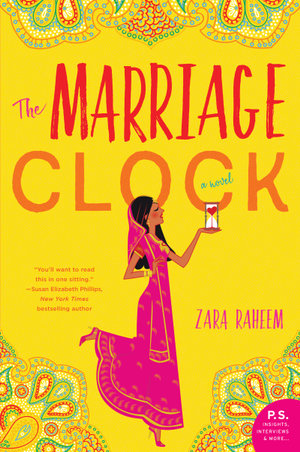
The Marriage Clock, A Novel eBook by Zara Raheem | 9780062877932 ...

The Marriage Clock by Zara Raheem

Leila Abid is a 26-year-old American-born Muslim from Los Angeles. When her Indian parents, whose happy arranged marriage has lasted three decades, decide to find her a match because of her “advancing age,” Leila negotiates a three-month reprieve to try and find a suitable Muslim man for herself. Unwilling to compromise her independence or her desire for a Bollywood-style love story, Leila goes on a series of awkward dates before accompanying her mother to India for a cousin’s wedding and recognizing at last what she must do.

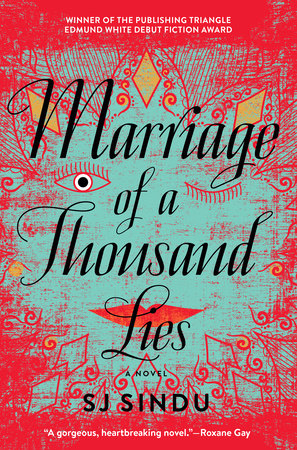
Marriage of a Thousand Lies by SJ Sindu

Marriage of a Thousand Lies by SJ Sindu

Genderqueer Tamil author SJ Sindu’s debut features Lucky, a second-generation Tamil Sri Lankan from Boston who meets Indian student Kris at their elite college. Recognizing each other as the only other South Asian queer students on campus, they decide to marry to get Kris a green card and placate their parents while continuing to pursue their own affairs in private. However, this plan is thrown into disarray when Lucky travels home to care for her grandmother and reunites with her high school lover Nisha, who is facing her own arranged marriage to a man she’s never met.

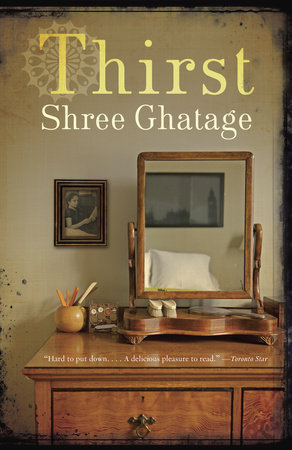
Thirst

Thirst by Shree Ghatage

During World War II, intelligent but sheltered Vasanti is thrown into an arranged marriage with wealthy and accomplished Baba. Though neither particularly wishes for this, they work their way from tolerating one another to falling deeply in love, in a narrative that moves between India and London during the Blitz as it hurtles towards a shocking conclusion.

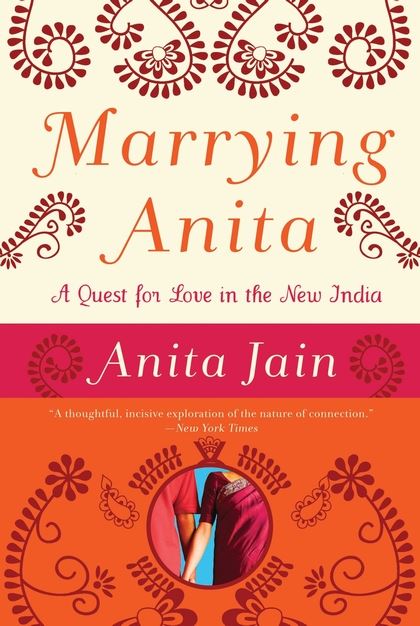
Marrying Anita

Marrying Anita by Anita Jain

In her 2008 memoir, Harvard-educated journalist Jain recounts her 2005 move to Delhi after she grows weary of the dating scene in New York. Though she has long resisted her parents’ interest in arranging a marriage for her, she now permits her father to put a matrimonial ad in the Times of India. However, dating in a rapidly modernizing Delhi in which technology and tradition mix and Western values begin to take hold, proves to be no less confusing than New York. The traditional doctors and engineers she meets on the arranged marriage circuit don’t quite live up to the ideal of the literate, feminist-minded, well-traveled man she hopes to meet, but Jain enjoys playfully analyzing the situation and the forces that give rise to it nonetheless.

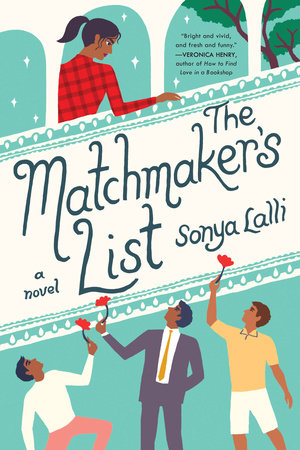
The Matchmaker's List by Sonya Lalli

The Matchmaker’s List by Sonya Lalli

Raina’s grandmother is horrified that she hasn’t found a nice man and settled down yet. Raina, a 29-year-old who works at an international bank in Toronto, agrees to look at the men her nani has picked out for a possible arranged marriage, though the globe-trotting banker she had previously fallen in love with is back in the picture and still perfectly noncommittal. As she prepares for her best friend’s wedding to a white fellow pediatrician, Raina permits her grandmother to believe she is a lesbian to ease the matchmaking pressure, but suffers backlash for this as well. Even while navigating their stifling expectations and pressure, Raina appreciates the strength of her community and how they support each other during difficult times, and works to claim a life of her own within it.

The Heart is a Shifting Sea by Elizabeth Flock

PBS NewsHour and Forbes India Magazine reporter Flock tells a story of marriage in modern India through the lives of three Mumbai couples—two Hindu and one Muslim—whom she came to know well. The couples navigate getting to know online matches as they prepare to wed, marriages arranged in the wake of unrequited love, infidelity, strict laws preventing divorce, infertility, and tradition-defying adoption, against a background of Bollywood-influenced expectations and the rise of the far right in one of India’s most progressive cities.

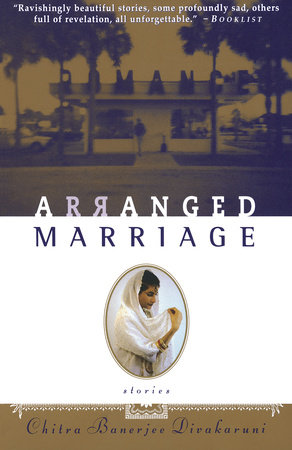
Arranged Marriage by Chitra Banerjee Divakaruni

Arranged Marriage: Stories by Chitra Banerjee Divakaruni

This 1995 story collection from Indian-born, U.S.-based poet Divakaruni centers young Indian women—mostly students and brides—attempting to navigate the demands of traditional parents and husbands and often alienating middle-class American culture, while creating independent and fulfilling lives for themselves.

Modern Romance by Aziz Ansari and Eric Klinenberg

Modern Romance by Aziz Ansari

Comedian Ansari’s own parents had an arranged marriage. As his father tells it, one prospective bride was too tall and another too short, but Aziz’s mother was a good height so he chose her. Inspired by his own romantic woes and the tyranny of choice in modern dating, Ansari teams up with sociologists to conduct a survey of modern dating practices, including a cross-cultural look at the scenes in Tokyo, Paris, and Buenos Aires, and a historical look at how the classified ads and video dating of the 1980s gave rise to dating industry giants like Tinder today.

The Trouble With Hating You by Sajni Patel

Liya Thakker, a biochemical engineer from Austin, Texas, is perfectly happy being single. When her conservative father surprises her at dinner with a nice Hindu boy from a respectable family he’s hoping to set her up with, Liya sneaks out the back door. However Jay soon turns up again, as the lawyer who is bailing her company out of a legal mess, which means the two will have to work together closely despite the awkwardness between them.

Marriage Material - Sathnam Sanghera

Marriage Material by Sathnam Sanghera

Arjan, the only child of Sikh immigrant parents who run a convenience store in a crummy town in the West Midlands, U.K., works as a graphic designer in London and is engaged to a white woman named Freya. When his father dies from a supposed heart attack, he hurries back to help his mother, once again dealing with all the indignity and racism of standing behind the counter for long hours at the store. He grows increasingly appreciative of his parents’ generation, whose story of leaving India in turmoil also involves a nontraditional marriage, while growing more apprehensive about whether he and Freya are truly right for each other.

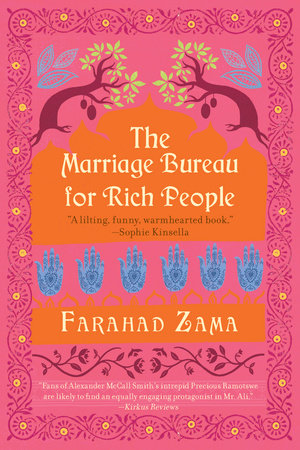
The Marriage Bureau for Rich People

The Marriage Bureau for Rich People by Farahad Zama

In an effort to stay out of his wife’s hair, retired civil servant Mr. Ali starts a matchmaking service on the veranda of his South Indian home. Business thrives and he is able to hire Aruna, who has an aptitude for this line of work but has given up hope of marrying herself because her family cannot afford a lavish wedding and dowry. When a handsome doctor and his family walk in looking for potential brides, he and Aruna take a liking to each other, and it’s up to Mr. Ali to see if it is possible to find a solution that will make everyone happy.

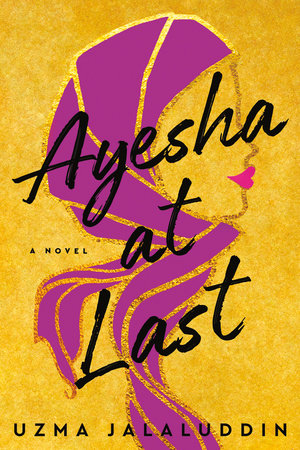
Ayesha At Last by Uzma Jalaluddin

Ayesha at Last by Uzma Jalaluddin

This list would not be complete without at least one Desi Jane Austen retelling (there are plenty). Jalaluddin’s novel is a Pride & Prejudice adaptation set in a Toronto Muslim community full of scheming aunties. As the first chapter states, “while it is a truth universally acknowledged that a single Muslim man must be in want of a wife, there’s an even greater truth: To his Indian mother, his own inclinations are of secondary importance.” High school teacher and aspiring poet Ayesha first assumes that handsome Khalid—with his traditional beard, flowing white robes, and disinclination to challenge his overbearing mother—is too conservative for her tastes. However, as the two must work together to plan a conference, it becomes clear there is more to both their stories than meets the eye. 

9 Books About Being Homesick for A Place That Doesn’t Exist Anymore

Gov. Pritzker issued a stay-at-home order for Illinois starting on March 21st. Ever since then, I’ve been watching Chicago out of my third-floor apartment window, walking the streets of Chicago with my daughter (both of us masked, edging around others at a six-foot distance), and all the time, missing Chicago. It’s right there, out my window. It’s right there, on Clark Street, Broadway, Devon. But it may as well be 2000 miles away.  

COVID, I know, will change my city, has already changed my city. I’m afraid to imagine all the ways it will change my city. Will my favorite restaurants, bars, bookstores make it? Will I still get to make a wish on a gingersnap at Simon’s Tavern over a mug of glögg in the implacable Chicago winter?  What about Ravenswood Used Books, where I could ask—mustering my courage, controlling my blush—the shop owner, a titillating cross between Rupert Giles and the Outlaw Josey Wales, for some obscure bit of fiction, and he’d always know whether he had it and where in his teetering piles to find it?

What will be left when all of this passes? It makes me gut-wrenchingly homesick, just thinking about it.

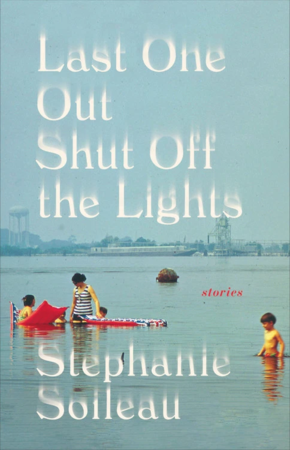
I’m not from Chicago. I grew up in Louisiana, raised by a Cajun French family whose language may not see another generation of speakers, in a state that has been losing a football-field size plot of land to coastal erosion, on average, every hour since 1985. Preemptive nostalgia is a way of life. I can’t remember a time when I was not aware that home would not always be what I knew it to be, that it would, both figuratively and literally, disappear. My story collection, Last One Out Shut Off the Lights, is about the damage done to the spirit by a dying homeplace, but it’s also about the awful yearning you feel when you’re homesick for a place that does not exist anymore—and maybe never did exist as you imagined it. That loss may be due to climate change, gentrification, war, or even a change in oneself—a growing up or a growing away. In 2020, it’s due, at least some, to pandemic. 

Here are some of my favorite literary expressions of that peculiar brand of homesickness.

Fiction

This image has an empty alt attribute; its file name is 1*KGhfZI1bqeu6wKhBfW870Q.jpeg

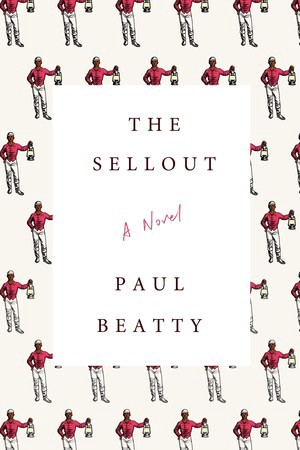
The Sellout by Paul Beatty

With satire that will singe your eyebrows, Paul Beatty tells the story of Bonbon, a young Black man raised in Dickens, an “agrarian ghetto” on the outskirts of Los Angeles. After racially profiled and much maligned Dickens is removed from the California map, Bonbon campaigns to redraw the borders (literally, with white paint, but in other ways too) of a home that is oppressed, oppressive, and still, despite that, home.

Inheritors by Asako Serizawa

Inheritors by Asako Serizawa

The interwoven stories in this new collection by Asako Serizawa follow a Japanese family through 150 years of history. In a kaleidoscope of places and points of view, Serizawa explores the lives of characters whose sense of home and history is disrupted by war, imperialism and migration.

Pin on ✒Wordy

Severance by Ling Ma

Ling Ma’s Severance is a literary zombie-apocalypse novel, irresistible as a stack of sugar cookies but packing a wallop of heartbreak. A mysterious illness transforms its victims into walking dead, doomed to act out repeating loops of nostalgia until they waste away completely. Meanwhile, the central character Candace Chen photographs devastated, empty New York, her adopted home, reluctant to leave even as her world is falling apart around her. 

Poetry

Books To Watch Out For: August 2019, Guest Edited by Krystal Languell

Losing Miami by Gabriel Ojeda-Sagué

The bilingual and prose poems in Losing Miami reflect on Gabriel Ojeda-Sagué’s Cuban American upbringing and the potential loss of his home city to rising sea levels. Ojeda-Sagué wonders “what it would be like to be exiled from Miami, to have the city be an effect only of memory and simulation as Havana is for the Cuban exile generation, to have any description of the city be a dangling modifier.”

Image result for poster

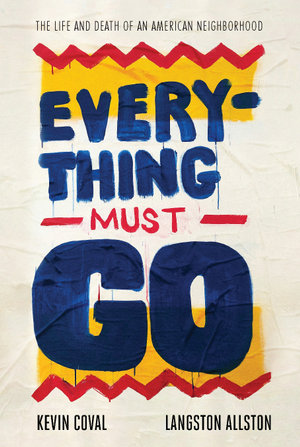
Everything Must Go by Kevin Coval & Langston Allston

In this collection of poems and illustrations, poet Kevin Coval and artist Langston Allston take on the gentrification of Wicker Park and Humboldt Park in Chicago. “Humboldt’s beautiful,” Coval writes, “& changing like all / the neighborhoods / for how long / we will live / here / how long / will we call / this / home.”

Flood

Flood by J. Bruce Fuller

My Louisiana Cajun compatriot J. Bruce Fuller’s poems place two floods in counterpoint:  the Mississippi River Flood of 1927 and the deluge that followed Hurricane Katrina. Drawing on family stories, survivor accounts and personal experience, Fuller reveals how tenuous a home the Mississippi Delta is. In the title poem, he writes of the river, “If she dries up / changes course / we wilt and brown / like chaff / And if she is angry / her belly constricted / by our levees / she will erupt / silt like ash.”

Non-Fiction

The Yellow House by Sarah Broom

Sarah Broom’s memoir The Yellow House explores a family’s long relationship with a beloved but decrepit shotgun house in the forgotten neighborhood of New Orleans East. When Hurricane Katrina wipes away the house and neighborhood and scatters her family across the country, Broom faces a reckoning. “The Yellow House was witness to our lives,” Broom writes. “When it fell, something in me burst.”

Strangers in Their Own Land by Arlie Russell Hochschild 

Berkeley sociologist Arlie Russell Hochschild ventures into my hometown of Lake Charles, Louisiana, to make sense of the “Great Paradox,” far-right political activists’ opposition to the federal help they seem desperately to need. With astonishing empathy, Hochschild describes the exasperating, often misguided perspective of people whose home and health have been destroyed by the same petrochemical companies that keep them afloat.

1939453

A Month and a Day & Letters by Ken Saro-Wiwa

Before he was executed under Sani Abacha’s military dictatorship in 1995, Nigerian writer and activist Ken Saro-Wiwa led a peaceful movement to hold foreign oil companies like Shell accountable for the destruction of the Ogoni people’s land and waterways in the Niger Delta. A Month and a Day is a record of his detention in 1993 and of his fierce love for a homeland turned wasteland by the callous indifference of the oil industry and the complicity of the Nigerian government.

The Long, Fraught History of Outlaw Translation

Two hundred meters beneath a chateau in the Italian countryside, eight people stand trembling in a bunker, backs against the concrete wall. Apart from expressions of panic, they’re wearing only underwear, having been stripped down as part of a search. This eclectic group, assembled from all corners of the globe, selected for their complementary skills, had been enticed by a special mission. But over the course of the operation the project unraveled. Now two guards train guns on them while a man in a designer suit, seething with quiet rage, warns, “I know it was one of you.” Something precious to him has been stolen, something he values a great deal more than the lives of the men and women in front of him. 

This scene is the climax of director Régis Roinsard’s latest film, a thriller released to French theaters in January of this year. Though it features familiar tropes, the film is surprising for a couple reasons. First, the casual American filmgoer’s vision of French cinema entails more languid cigarette smoking and tasteful nudity than it does bunker capers. Second, the target of this heist lies not in a hardened vault, as the genre might lead us to expect, but between the soft covers of a manuscript. These scantily-clad hostages are translators, brought together by a publisher intent on a global release of the next installment of a best-selling series. As pages of the manuscript begin slowly leaking onto the internet, along with demand for payment, they become the prime suspects for the increasingly unhinged publisher. 

Though seemingly far-fetched, this tale is, as the saying goes, stranger than fiction. In 2013 Roinsard had to look no further than the pages of his daily paper for inspiration for his film, Les Traducteurs (The Translators). There, he would have read about two rather prolific French translators, Dominique Defert and Carole Delporte, and their recent working conditions in Italy while translating Da Vinci Code author Dan Brown’s latest novel, Inferno. The translators described being confined to a basement conference room for a month and a half, without phones or internet, with even their bathroom breaks logged by armed security guards. Though their experience wasn’t quite as high-stakes as the film’s plot (spoiler: there was no blackmail and they kept their clothes on), Roinsard remains faithful to the setting details, using them as a jumping-off point for his thriller. 

Dan Brown’s manuscript, along with the drafts of the translations, never ventured outside the underground bunker or the watchful eyes of armed guards.

What Defert and Delporte describe is one publishing house’s attempt to solve an age-old problem. For as long as our modern notions of copyright have existed, publishers have attempted to slay the multi-headed beast of leaks and outlaw translations, which can be financially disastrous for highly-anticipated new releases. Brown’s Italian publisher, Mondadori, devised an intricate solution entailing collaboration with the American publisher Doubleday to fix a global release date with simultaneous publications in English, French, German, Portuguese, Spanish, Italian, and Catalan. Eleven translators, under strict confidentiality, worked long hours over the course of two months in an underground bunker in Milan. Brown’s manuscript, along with the drafts of the translations, never ventured outside the room or the watchful eyes of the armed guards. Comings and goings were recorded diligently and access to the internet was restricted to a single computer provided for double checking vocabulary. The translators were advised to keep a low profile when outside and to have an alibi for being in Italy, as journalists were reportedly attempting to track down scoops on the novel. These harsh conditions proved successful for the publishers who, in May 2013, released the book simultaneously in dozens of national markets. 

Were such tyrannical measures really necessary against such an unassuming group? If we asked, for example, Benjamin Franklin’s grandson, perhaps with the help of a time machine or ouija board, the answer would be an emphatic yes. Franklin first began working on his autobiography while sojourned in England in 1771. The book was ostensibly meant to relate the story of his life to his son and future descendants—“Dear Son,” it begins. Hectic decades of scientific discovery, nation-building, and generally being a man about town left long gaps in the composition of the four parts of his autobiography, leaving him in a rush towards the end of his life to complete the work, probably dictating aloud the final pages to his grandson, to whom he would leave the rights to the manuscript. Upon his death, newspapers from Philadelphia to Vermont began publishing excerpts of the book, gleaned from drafts circulating among Franklin’s friends, in an attempt by publishers to satisfy demand for the complete story of the famed patriot. 

In 1793, frustrated publishers in England published an English translation of the French translation of the autobiography.

But the American reading public wouldn’t get their hands on the whole book until well after Franklin’s other biggest fans: the French. Franklin’s fame extended to Europe, where he was mostly celebrated as a man of science—and in 1791, just a year after Franklin’s death, a shady outlaw translation meant that France had the first opportunity to read what was believed to be his full autobiography. “I will not go into detail, surely of little use for my readers, on the manner in which the manuscript copy of this memoir, which is in English, landed in my hands,” wrote the publisher, slyly, in his preface to the edition. A lack of rigorous intellectual property law—a bit of an anachronism in the 18th century anyway, and complicated even further by the upheaval of the French Revolution—meant that booksellers, authors, and publishers often found themselves in a bit of a free-for-all. As Franklin’s grandson took his time to correct and polish the manuscript, it leaked—no, gushed—throughout the newly-formed United States and across the Atlantic. Based on the French translation, German and Swedish editions were quickly printed. In 1793, frustrated publishers in England, still without an authorized edition and following the lead of their peers, went forward with the publication of an English translation of the French translation of the autobiography. Americans would have to wait another quarter century before they could read Franklin’s original words, and still then it would be incomplete. In 1828 French publishers would again beat American presses to the punch by publishing the complete edition of his text, again in translation. 

The history of Ben Franklin’s autobiography, the story of a story, is hardly unique. As long as written words have circulated, we have copied, translated, parodied, and shared them—often with little regard for whose chisel, pen, or keyboard they may have come out of. It is not until rather recently, considering the long view of writing, that we have become caught up with who owns which words; or perhaps even more precisely, who owns which words in which order. Further complicating things is that in the case of translation, we are concerned not with who owns the words but rather who owns their meanings. Claims are staked not on the surface but in the essence, a notoriously slippery creature. The history of translation attests to the possibility of words finding their afterlives in a new language, but as we see in the case of Franklin’s autobiography, occasionally it’s the ghost who shows up first.   

In the case of translation, we are concerned not with who owns the words but rather who owns their meanings.

Owing to the massive and almost instantaneous reach of the internet, publishers have nowadays become increasingly more careful to protect their manuscripts from leaks, which can result in outlaw translations. More than 200 years after Franklin’s time, but again in France, a similar rogue translation caused a stir. It was 2007, and millions of fans were eagerly waiting for the July release of Harry Potter and the Deathly Hallows. The publisher, Bloomsbury, was jealously guarding the manuscript, careful to avoid any leaks or Franklin-like blunders. There were even reports that GCHQ, one of Britain’s surveillance and intelligence services, was keeping a digital eye open for any errant pages. All this protection paid off handsomely as when the novel hit stores it shattered records: over 10 million copies sold in the U.S. and U.K. in just the first 24 hours.

But the sword Bloomsbury used to guard the manuscript turned out to be double-edged. Keeping the circle as tight as possible meant that no translator had even a peek at Rowling’s novel before millions of Anglophone readers were spending a sleepless night buried under their Gryffindor comforter set with a flashlight. To the chagrin of French fans, the release date for the translation was set three months later. Then a hero, or villain depending on your perspective, emerged in the form of a 16-year-old in the southern French town of Aix-en-Provence. Within days of the book’s release, the teen feverishly translated all 759 pages and posted it on a popular French internet forum. The French publisher, Gallimard, quickly alerted authorities, who jumped into action, arresting and jailing the teen overnight—but not before the translation had been viewed and downloaded thousands of times. This prodigious creation, not without a certain magic of its own, even elicited positive reaction from the French law enforcement, who were quoted as qualifying it as “quasi-professional.” No financial motives were found and in the end no charges were filed. Perhaps the publishers recognized that suing a teen might cast a damaging spell on the franchise’s reputation. 

What these examples of outlaw translation show is that the scene of translating deserves our attention.

Stories, seemingly by their own volition, resist containment. As Les Traducteurs shows, publishers’ most recent effort to think outside the box resulted in putting translators literally inside a box—but no box is completely impermeable. And what these examples of outlaw translation show, and what the film dramatizes, is that the scene of translating deserves our attention. This is despite the fact that the translator’s profession is, almost as a point of pride for some, largely invisible. Scholar and translator Norman Shapiro analogizes translation to a pane of glass: “You only notice that it’s there when there are little imperfections— scratches, bubbles. Ideally, there shouldn’t be any. It should never call attention to itself.” A film like Les Traducteurs attempts to focus its gaze on this pane of glass between viewer and story: a pane like that through which we first read Benjamin Franklin’s autobiography, or like the one hastily constructed by a French teenager to look into a magical realm. Roinsard’s film brings our attention to stories like these, the stories of the telling, all born of the same desire: to share with the reader something that mattered to the translator. 

Despite the intensified focus on protecting copyright and controlling the dissemination of intellectual property, these vagabond translations are almost certainly here to stay. Vouloir, c’est pouvoir: where there’s a will, there’s a way. But the point of bringing together Benjamin Franklin, Harry Potter, and Les Traducteurs is not to argue against the importance of copyright law or to hammer a Barthesian nail in the coffin of the author. Instead it is to help us to appreciate the glass, how it was made, and to understand that the story of translation itself is often just as interesting and exciting as the translated story. 

Confessions from the Stranger at the End of the Bar

An Excerpt from What Happens At Night
by Peter Cameron

The lobby was deserted; the woman behind the reception desk was gone and the lanterns the gryphons held no longer glowed.

Because it was now darker in the lobby, the light in the bar that lit up the red glass beads of the curtain seemed brighter than before. The man crossed the lobby and paused for a moment just outside the entrance to the bar, and then pushed his hands through the hanging beads and lifted away a space through which he entered.

The bar was as small and intimate as the lobby was cavernous and grand. It was a long, low-ceilinged wood-paneled room, and for a moment the man felt himself back on the train, for in shape it was exactly proportional to the carriage. The bar itself, which stretched across the length of the room, was inhabited by two people, one at each end, as if carefully placed there to maintain balance. At the end of the bar nearest the door the bartender stood, leaning back against the dimly illuminated shelves of liquor, staring far ahead of himself, although the room was very shallow and there was no distance to regard unless it was inside himself. At the far end of the bar, at the point where it curved to meet the wall, at that last and final seat, a woman sat gazing down into her drink in the same rapt way the bartender looked ahead.

The placement of these two people at either end of the bar made clear the position the man should take, and so he sat on a stool midway between them. For a moment neither of them moved, or responded in any way to his presence, and he felt that by positioning himself so correctly he had not upset the equilibrium of the room, and they would all three continue to maintain the quiet stasis he had feared to interrupt, as if he had assumed his given place in a painting, or a diorama. This notion affected him with a debilitating stillness, as if one’s goal in life was simply to find and occupy a particular ordinate in space, as if the whole world were an image in the process of being perfectly arranged, and those who had found their places must not move until the picture was complete.

He gazed through the regiments of bottles that lined the mirrored shelves behind the bar at his reflection, which peered back at him with an intentness that seemed greater than his own, and for a second he lost the corporeal sense of himself, and wondered on which side of the mirror he really sat. In an effort to reinhabit himself he reached out his hand and patted the copper-topped bar, and the touch of the cool metal against his fingertips flipped the world back around the right way, but the bartender interpreted this gesture as a summons and unfurled his leaning body away from the wall, walked over, and placed a napkin on the bar in front of the man, in the exact spot he had patted, as if he were applying a bandage to a wound.

The bartender was a young man, tall and dark, vaguely Asiatic and remarkably stiff, as if he had been born with fewer joints than normal; he seemed unable, or unwilling, to bend his neck, so he gazed out over the man’s head and spoke to the alabaster sconce on the wall just behind them. The foreign words he uttered meant nothing to the man; in fact they did not even seem like words. He remembered how for a long time as a child he had thought there was a letter in the alphabet called ellemeno, a result of the alphabet song slurring L M N O together (at least in his mother’s drunken rendition).

He assumed the bartender had asked him for his order, but what if he had not? Perhaps he had told him the bar was closed, or insulted him, or was merely inquiring as to his well-being. The idea that language worked at all, even when two people spoke the same one, seemed suddenly miraculous; it seemed like an impossible amount for two people to agree upon, to have in common.

The idea that language worked at all, even when two people spoke the same one, seemed suddenly miraculous; it seemed like an impossible amount for two people to agree upon, to have in common.

It was the woman who saved them. She abruptly looked up from the depths of her drink and said, quite loudly: English, English! No one speaks your bloody language, you fool.

The bartender flinched, and waited a moment before speaking, as if he wanted to put a distance between the woman’s admonition and his words, and then said, in perfect English: Good evening. What could I get you?

The man was unsure of what to order. The constellation of bottles was arranged on the glass shelves of the bar in a pattern that seemed to him as intricately undecipherable as the periodic table, and to choose a liquor seemed as daunting as picking one element out of the many that comprised the world. The man shifted his head a bit so he could look around the bartender at the bottles behind him, hoping one bottle would call out to him—he wanted scotch, a large glass of scotch, neat, that he could warm between his palms and sip, he wanted the liquid gold of scotch, the warmth of it, but he had lost some fundamental confidence in himself over the course of the journey that made it impossible for him to ask for what he wanted—but once again, the woman at the end of the bar, apparently displeased with his indecision and the bartender’s inertia, apparently wanting to make something, anything, happen, said, Have you tried the local schnapps? It’s made from lichen, which sounds horrible I know, but it’s not, I promise you, it’s one of the loveliest schnapps I know. Lárus, give him some schnapps, let him see if he likes it. I think he will like it.

The bartender turned around and selected a large, squared, unlabeled bottle half full of clear liquid. He pulled the silver stopper, which resembled a stag’s antlered head, from its mouth and poured a dram into a large snifter, which he set before the man, who realized the liquid was not clear, but tinged with the silvery blue glow that snow reflects at twilight. He picked up the snifter and swirled the liquid up and around its glass walls, aware of both the bartender and the woman watching him, waiting, and then lifted it to his mouth and smelled the clean bracing smell of institutionally laundered linen and poured a little into his mouth, and let it pool there for a moment, cool and aromatic, tasting faintly of bleach and watercress and spearmint and rice.

He slowly lowered the glass to the bar and said, It’s lovely.

I knew you’d like it, said the woman. Lárus, pour him more.

The bartender once again removed the stopper from the bottle’s throat and held its open mouth above the man’s glass and, when the man nodded, he poured another dram of schnapps into the snifter. He then walked to the far end of the bar and poured more into the woman’s glass. She raised her glass to the man and looked into his eyes. She was old, the man realized, probably in her seventies, but there was something overtly and disconcertingly sexual about her. She wore a tight-fitting black gown adorned with iridescent sequins that reminded the man somewhat of fish scales—he thought of the prismatic bellies of fish lifted out of the water, how their flexing struggle made them gleam—and her long silvery-gray hair was swept back from her face and coiled atop her head in an intricate, antique sort of way. Her face was lean and strong, her eyes dark, her nose sleekly formidable, and her lips polished a deep wine red that separated them irrevocably from her pale skin. Her eyes were large and seemed to be set a fraction too far apart, as if some constant eagerness to see both what was in front of her but also beside her had caused them to become unfixed and migrate to either side of her face.

One shouldn’t shout in bars, she said, especially this late at night. I’m an actress, my voice is trained to project, but allow me to come sit next you, for I know you won’t come sit next to me, and it’s really too ridiculous to have this distance between us.

Without waiting for his reply, she stepped down off her barstool and picked up her drink and walked around the corner of the bar and reseated herself on the stool next to the man. She carefully placed her glass on the bar at the same latitude as his and then looked not at him but at their reflection in the mirror, through the interruption of bottles. Their eyes met and held there in the mirror, and the man felt the strength of the schnapps like electricity coursing through his body.

Are you here for the healer? the woman asked him. Or the orphanage?

The orphanage, said the man. There’s a healer?

Yes. Brother Emmanuel. Surely you’ve heard of him.

I haven’t, said the man. A healer? How do you mean? 

How do I mean? What do you mean? He’s a healer. He heals people. 

For real?

They say he does. I, myself, have not been healed by him—at least not yet—so I can give you no definitive answer. But why do you ask? Are you looking to be healed?

No, said the man. But my wife is ill. Very ill. 

Incurably ill?

Well, said the man, I suppose it remains to be seen.

Of course, said the woman. Everything that’s coming remains to be seen.

Of course, said the woman. Everything that’s coming remains to be seen.

The man realized that the bartender had somehow floated back to his original position at the end of the bar and was pretending he could not hear them, or see them, was pretending that he was alone onstage in some different play, a one-man show. The woman sighed and touched her hair, first one side of her head and then on the other, and the man realized she wore it as intricately coiffed as she did so that it could occupy her at moments like these; it could always be attended to, adjusted, primped.

It can work, she said. I’ve seen people arrive here at death’s front door—in the vestibule, even—and a few days later skip merrily away.

The man did not reply.

But I think for it to work you have to believe. Do you believe in that kind of thing?

I don’t know, the man said.

Then you don’t, said the woman. If you did, you’d know. What about your wife? Does she believe in it?

I don’t know, said the man. I doubt it.

Well, I don’t suppose it can hurt her to see him, so you might give it a go, since you got yourselves here. People come from all over the world to see Brother Emmanuel. Fortunately, I’ve never been ill a day in my life. My eyes are fine, my teeth—everything works fine. Knock wood. She rapped the underside of the bar with her knuckles. I don’t know why. I drink. I smoke.

You’re very fortunate, said the man.

Yes, she said. About that. My body has never failed me. Everything else, yes—but my body, no. I wonder how I’ll die. I am Livia Pinheiro-Rima. Do you mind if I smoke a cigarette? It makes me nervous to talk and a cigarette calms me down.

The man shook his head, indicating that he had no objection to the woman smoking, and she fished a silver cigarette case out of her bag and sprung it open and slid a cigarette out from beneath the clasp. She held the cigarette between two of her fingers, and with her thumb she flicked it cartwheeling up into the air and caught it neatly by the filtered end in her mouth.

That’s a trick from my circus days, she said. She bent her face down and stuck the tip of her cigarette into a candle and sucked at the flame and then raised her head, exhaling smoke through her nostrils.

I really was in the circus, you know, she said.

What did you do? the man asked.

I swung from the trapeze and rode atop an elephant. This was centuries ago, of course. But some things last.

It’s a good trick, the man said.

I know, she said. That’s why I’ve kept it. There are certain things I do every day, and that’s one. If you do something every day, you’ll never not be able to do it. People give up too easily in this regard. You, for instance.

What? the man said.

I can tell. You’ve given up, let go of certain things. I’ve had this dress since I was twenty-seven. And do you know, I was one of the original Isadorables.

You mean the children who danced with Isadora Duncan?

Yes. Although she didn’t think we were children. She thought anyone over the age of three was autonomous.

I don’t see how that’s possible, said the man. You’d be one hundred years old.

Perhaps I am. But don’t you know it’s rude to talk about a woman’s age?

I’m sorry, said the man. You’re remarkable.

Yes, but a lot of good it does me. It’s like a tree in the forest falling: if there’s no one there, who cares if it’s remarkable or not? I used to spend a lot of time in forests, waiting for trees to fall. It happens, you know—they suddenly just let go and crash. It’s the most intimate thing I’ve ever witnessed. And I’ve witnessed an awful lot of intimacy, believe me. Oh dear God the intimacies I’ve witnessed! By rights I ought to be blind. Do you believe in that?

What?

Hysterical blindness. The optic nerve ceasing to function as a result of a shock to the psyche.

I don’t know, the man said. I suppose—

I don’t want you to get the wrong impression, the woman hurriedly continued. I wasn’t in the circus for long. You see, I wanted to act, I wanted to be in the theater, and you’ve got to start out however you can. Wherever you can. So I started out dangling upside down from a rope and doing the splits atop an elephant. I don’t know if it still happens, but once upon a time there were people who were born to be on the stage. I was. They say I got down from my mother’s lap and crawled up the aisle towards the stage of the New Harmonium Theater when I was one year old. Who’d want to sit in the dark when they could be up there in that gorgeous light?

I would, said the man. Lots of people.

Yes, and God bless them! It’s the beauty of the world, isn’t it, that there are both kinds. The ones who will sit in the dark watching the ones on the stage. The ones who like to feel pain and the ones who like to give it. I’ve never believed in God because I think men’s and women’s anatomy is all wrong. The invariability of sexual intercourse, of men penetrating women, is amateurish; it wasn’t created by a God. I think homosexuality is proof of this. And my God, in the insect world, the horrible things that happen! Traumatic insemination! Postcoital chomping! I was once married to an entomologist.

It doesn’t sound very pleasant, said the man.

Being married to an entomologist?

No, said the man, the trauma and chomping.

Oh. No. Well, neither was being married to an entomologist for that matter. Have you heard of Kristof Noomeul? 

No, said the man.

I was married to him too. He was a theater director. The last really great theater director. I’m talking about real theater, pure theater, of course. It’s how I ended up here, at the end of the world. Of course, it being round, it doesn’t really have an end, but you got yourself here, so you know what I mean.

The woman looked down into her drink.

The bartender once again lifted himself away from the wall. He selected the schnapps bottle, uncorked it, and stood before them. Another? he asked.

The woman looked up from her drink, turned, and looked at the man. She saw that he was crying, silently, the tears on his cheeks. She nodded at the bartender and he poured some schnapps into both their glasses. He corked the bottle and left it on the bar in front of them and resumed his post at the far end of the bar.

You’re thinking about your wife, aren’t you?

Yes, said the man.

That you may lose her.

Yes, said the man.

After a moment the woman said, It’s startling for me, to encounter such depth of feeling. Of love, I suppose. Perhaps it’s not love, but to be moved to tears . . . When one stops feeling, one forgets that feelings exist, that other people actually do feel them. Like love. Perhaps it’s simply a result of aging—perhaps feelings, like muscles, atrophy. I’m sure it’s so, at least for me—it’s why I keep performing, even though hardly anyone comes to hear me—I play the piano and sing for my supper in yonder lobby five nights a week and Sunday afternoons. I do it, you see, because it’s the only way I can feel anything these days, even if they’re not real feelings, only facsimiles of facsimiles of facsimiles. And here you are feeling something real, right beside me. I’m ashamed. And privileged.

And here you are feeling something real, right beside me. I’m ashamed. And privileged.

The man crossed his arms on the bar and then leaned forward, so his forehead rested on his arms. I’m so tired, he said. The schnapps has made me tired.

No, said the woman. It isn’t the schnapps. She placed her hand gently on the center of his back. The man felt the pressure and warmth of her large hand and was afraid she would take it away.

Your hand is so warm, he said.

It isn’t either, said the woman.

It feels warm, said the man.

That’s something else entirely, said the woman. 

No one comes? asked the man.

Occasionally there’s someone, said the woman. She carefully did not move her hand, carefully did not increase or decrease the pressure of it against the man’s back.

But most nights the lobby is empty, she continued. Or there’s a few businessmen chatting up whores. But I don’t let that deter me. Anyone can perform for an audience, can’t they, for that warm welcoming murmur out beyond the footlights that’s so often mistaken for love? Other people go on doing other things, so why shouldn’t I? It doesn’t hurt anyone, as my mother would say. Five nights a week, as I told you. Do you know, I’ve never understood why there are seven days in a week, it seems such an odd number, why not ten or five? It’s another reason to doubt the existence of God, for wouldn’t he have divided up time more neatly? It’s all rather a mess, it seems to me.

She gently removed her hand from the man’s back and said, Are you still weeping?

No, said the man. He sat up straight and wiped at his wet face with his hands. Then he lifted his glass of schnapps and drank it all down like a child swallowing nasty medicine as quickly and neatly as possible. He placed the glass back upon the copper surface of the bar and smiled wistfully at it. He reached out and touched its rim with his fingertip. I’d like you to come hear me sing, the woman said. I think it might do you good. It might take you out of yourself.

Can that be done? asked the man.

What?

I’d like to be taken out of myself. And put away in a drawer somewhere. A drawer you open in a dream when you’re packing in haste at the end of the world.

Oh, that dream! exclaimed the woman. That drawer! Well, I can only take you out of yourself. Where you go then is up to you.

Now I shall go to bed, said the man. He looked at the bartender. What do I owe you?

Don’t worry, said the woman. He’ll charge it to your room. It’s the beauty of hotel bars. It’s time I left, too, but I’ll let you go first. It would be unbearable to leave with you and say good night in the hallway.

Do you live in the hotel?

I do. I had a sweet little house but I didn’t take good care of it, in fact I didn’t take any care of it, and so it fell to pieces, it really did, you’d think houses would last, at least I did, but they don’t. Especially here, with all the cold and the snow. Things expand and contract, and then collapse. So now I live in the hotel. Go, just go! I’m going to return to my original place over yonder and finish my drink.

The man stood up. Good night, he said.

Oh, don’t say good night. Just go! I’m going back to my place. See.

Livia Pinheiro-Rima stood up and walked back to her seat at the end of the bar. She sat and placed her glass on the bar in front of her and gazed down into it. The bartender stood in his original place at the other end of the bar, gazing implacably in front of him.

The man dove back through the red beads, which trembled ecstatically behind him, but after a moment they hung straight and perfectly still. 

9 Books to Read If You’re Missing Olympic Gymnastics

With the cancellation of the Summer Olympics this year and a pandemic continuing to rage on, most of us are stuck at home watching grainy YouTube videos of old gymnastics competitions—or “Athlete A,” the new Netflix documentary on female gymnasts.

“Athlete A” highlights the costs of being an Olympic gymnast to the forefront, explicitly addressing the widespread sexual and emotional abuse that runs rampant in the community. Although we see immaculately poised athletes with gleaming smiles on screen, it’s important to remember that these young women grapple with physical danger and intense emotional pressure on a daily basis. Similarly, the books below offer multiple perspectives on gymnastics that extend beyond a 45-second bar routine. They cover a wide range of what it means to be a competitive gymnast, whether through details of minutiae like blistered, chalky hands or a comprehensive documentary of multiple gymnasts’ lives. They provoke the reader to look beyond the oh-so-satisfyingly timed flips, and challenge us to think about the systems of power, inequity, and (often) abuse that govern the world of competitive gymnastics. 

So, the next time you find yourself missing the Olympics and perfect gymnastics routines, try reading one of these books. Perhaps we can welcome the 2021 Olympics (pandemic permitting) with a new fuller understanding of the sport, and better recognition of what being a gymnast entails. 

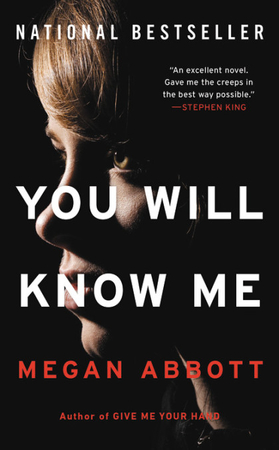
You Will Know Me by Megan Abbott

Forget soccer moms; Abbott’s critically-acclaimed novel takes “gymnastics mom” to a whole new level. Centering on a talented gymnast’s mother, You Will Know Me is a thriller examining the psychological toll of competitive gymnastics within the family. Katie and Eric Knox have dedicated all resources possible to support their daughter’s gymnastics career. But when someone in the gymnastics community is suddenly killed, Katie herself is not sure how far she’ll go to make her daughter into a star. Abbott’s unreliable narrator amplifies community hysteria and parental ambition in the gymnastics world. 

Chalked Up: Inside Elite Gymnastics Merciless Coaching, Overzealous Parents, Eating Disorders, and Elusive Olympic Dreams by Jennifer Sey

It’s impossible to talk about gymnastics without talking about bodies; female gymnasts are often described as “racing against time” to claim fame, before their bodies give way. Sey, a former U.S. National Champion gymnast, writes in her memoir about constantly trying “to beat the menacing development of my own body… before puberty and curves and weight made it nearly impossible for me to fly through the air.” Chalked Up plunges readers into the mindset of a young female gymnast, and explores the extent to which she tried to control her body into perfection. 

Letters to a Young Gymnast

Letters to a Young Gymnast by Nadia Comaneci

It is just as impossible to talk of gymnastics without running across the legacy of Nadia Comaneci, the Romanian gymnast that first scored a perfect ten from judges. Framed as a series of letters to an inquisitive younger gymnast, this memoir is a clear-eyed, no-nonsense look at stardom. “Perhaps you expected short and simple answers,” Comaneci writes, “My life, like your own, is much more complex than a simple list of failures and accomplishments, and I will not cheat you of your answers despite some discomfort on my part in the telling.” Comaneci writes frankly about her experiences as a world champion, as well as her motivations for her career decisions.

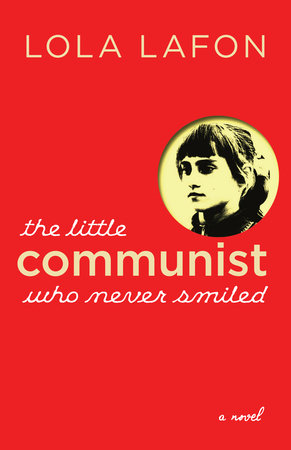
The Little Communist Who Never Smiled by Lola Lafon

The Little Communist Who Never Smiled by Lola Lafon, translated from French by Nick Caistor

While Comaneci frames her career in her own words in Letters to a Young Gymnast, Lafon’s novel highlights the political context of Comaneci’s career, exploring the intersections between gymnastics and global power struggles. Comaneci constantly made headlines not only for her perfect routines, but also for her eventual defection from then-Communist Romania. A re-imagining of Nadia Comaneci’s life that blends together historical research and fiction, Lafon shows how the Cold War affected Comaneci’s individual story, making her into a political symbol. 

What is a Girl Worth?: My Story of Breaking the Silence and Exposing the Truth about Larry Nassar and USA Gymnastics by Rachael Denhollander

As “Athlete A” shows, Denhollander was the first to speak up against U.S. Gymnastics doctor Larry Nassar’s sexual abuse. This recent memoir by the former gymnast (now attorney) similarly exposes the corruption and power abuse of gymnastics officials. What is a Girl Worth emphasizes that this is not an individual problem of one abuser like Nassar; rather, it is a systematic, national issue of injustice. Denhollander also speaks up against the abuse she faced in her church community, and her memoir intertwines her experiences with religion and forgiveness alongside legal battles. 

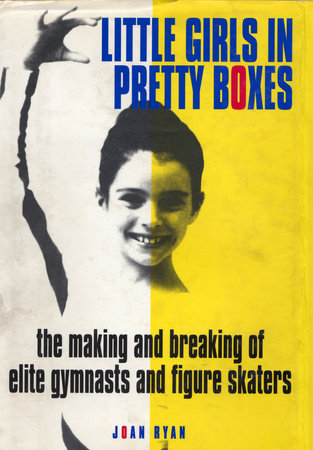
Little Girls in Pretty Boxes by Joan Ryan: 9780307828552 ...

Little Girls in Pretty Boxes by Joan Ryan

Published in 1995, this non-fiction book shows that the system of gymnastics has been off-kilter for decades. Sportswriter Ryan analyses the abuse of gymnasts and figure skaters, recording a range of issues from eating disorders to psychological abuse; with Little Girls in Pretty Boxes, it’s all too easy to see how the world of gymnastics allows abusers like Larry Nassar to continue working. Ryan’s book also poses a question about the sports industry, one that seems resonant for Americans at large: at what cost must we pursue this idea of “winning”? 

The End of the Perfect 10: The Making and Breaking of Gymnastics’ Top Score—from Nadia to Now by Dvora Meyers

Have you also been confused why undeniably stellar gymnasts today—like Simone Biles and Aly Raisman—never get that “perfect” score, ending up with minuscule point deductions? In Meyers’s non-fiction study, she meticulously tracks why the current scoring mechanisms do not allow for numerical perfection. The system of gymnastics scores have changed from a 1.0-10.0 system into a convoluted matrix of scores; since 2004, we are a far cry (or leap) away from the time when Nadia Comaneci scored a perfect 10. A former gymnast herself, sportswriter Meyers draws upon extensive interviews and research to explain a seemingly random process. 

Head Over Heels by Hannah Orenstein 

If you’re looking for a more feel-good narrative that still deals with the tensions of modern gymnastics, Orenstein’s rom-com novel hits that mark. Avery, a former competitive gymnast, is struggling to recover from a disastrous performance and injury—but things start to change when she starts co-coaching a younger gymnast. Head Over Heels acknowledges the deep systemic failures of competitive gymnastics; Avery struggles with a chronic injury and depression, as well as an abusive former coach. However, as Orenstein wrote for Lit Hub, her gymnasts “defend the sport’s beauty while striving to make it a safer place for the next generation of athletes.” 

Tumbling by Caela Carter

Tumbling by Caela Carter

Before dismissing Tumbling as “just” a YA novel, think again. Given that so many star gymnasts are themselves young teens, the YA genre offers acute insight into the emotional roller-coaster of competitive gymnastics. Imagine puberty, but then add on Olympic levels of stress. Alternating between five girls’ perspectives, Tumbling takes place over the two days of the U.S. Olympics Gymnastics Trials. While the girls compete for a spot, they also struggle with personal sacrifices and secrets of their own, from burgeoning sexuality to family pressure. 

A “New Yorker” Cartoonist Untangles His OCD Through Comics

When Jason Adam Katzenstein, a cartoonist at The New Yorker, was first diagnosed with obsessive compulsive disorder as a preteen, there weren’t many resources available to help him understand what living with OCD would look like. Almost everything he read presented a pessimistic picture of what his outlook should be. That’s one of the reasons he decided to write his graphic memoir Everything is an Emergency: An OCD Story in Words in Pictures. Using humor and metaphor Katzenstein tracks his illness from being a nebulous collection of fears that ordered his life to a treatable disorder which could be managed with medication and therapy.

There are many memes that joke about “the mortifying ordeal of being known” but with OCD, nothing rings truer. I endured five years of intrusive thoughts before receiving my own diagnosis. It mainly took so long because I was terrified to speak about my experience out loud. I had no reference points on screen or in literature to understand what was occurring in my brain. I didn’t have Katzenstein’s book. If I did, I think I would have been able to speak—and joke—about what I suffered through much earlier. (Though I probably still couldn’t draw it.)

Much of Katzenstein’s book details what it’s like to have contamination OCD, a specific subset of the anxiety disorder where sufferers become preoccupied with being infected by germs or getting sick. We talked about what it’s like to manage those fears during a pandemic, how his story came to be, and why OCD sufferers like us are skilled at finding hope in the small things. (Short answer: because we have to.) 


Alexa Abdalla: I haven’t personally experienced contamination OCD but I have so much empathy for those who have, especially right now when the exposure therapy process is being put to the test. A major component of it, as you lay out in your book, is refuting the idea that washing your hands constantly is a matter of life and death, but now, we’re all being told that it is. 

Jason Katzenstein: It’s probably a very challenging time to do contamination exposures. Weirdly, my contamination stuff has not really flared up too much. 

The fact that everybody’s wearing gloves and masks and being freaked out about getting close to each other and touching each other, there’s this perverse quality to that where it feels like people are responding in the real world to a situation similar to how the contamination OCD brain has always thought of the world. But I guess the fact that it is really happening also makes it difficult to leave room for OCD? I don’t have time to have contamination OCD because I actually have to put on my mask and my gloves and sterilize my groceries. That’s real shit that everybody’s doing right now, so I can’t even think about OCD responses because I just have to be a person actually living in the actual world right now. 

Alexa: There are so many reasons why I’m excited your book exists.  The fact that it’s a visual representation of OCD is awesome because it is such a visual illness. It seems like accurate representations of this illness are pretty scarce, and you even mention this in your book how all the books you were able to get your hands on when you were younger make it easy for people to get it wrong. When I started telling people I had OCD they were like, Oh, so you wash your hands a lot like Howie Mandel? 

I don’t have time to have contamination OCD because I actually have to put on my mask and my gloves and sterilize my groceries.

Jason: I think Girls did a good job with it. I’m trying to think of some others. As Good as it Gets, I think, is okay. It does an okay job. Also, Alison Bechdel in Fun Home

Alexa: Oh, really? I haven’t read that.

Jason: She has OCD. And writes about it very well. 

Alexa: I feel like there might be a lot of overlap with artists and OCD tendencies.

Jason: I think comics, specifically, is a medium where there’s some overlap. The language of comics is the juxtaposition of words and images next to each other and they form relationships the same way that  you have a thought that feels like it has a relationship to another thought or another action, something like, “step on a crack, break your mother’s back.” Readers read comics and they make meaning from the relationship between the panels so it’s like, this happens, then this happens, so I conclude based on these two pieces of information that this is the meaning of the thing, which is absolutely how OCD works, too. 

Alexa: What did you read that helped you tell this story better? 

Jason: Fran Lebowitz. I mean, there are a lot of memoir comics I love and Liana Finck makes great ones. Gabrielle Bell. Some Daniel Clowes comics I read as a kid. But Fran Lebowitz really felt like the template for somebody who could be funny and also clearly not okay. And Vivian Gornick, who’s so great at writing about being in New York and is really a great curator of the subtle detail of an interpersonal relationship. I guess my book is more Fran Lebowitz-y in that I’m often alone and hanging out with my own brain. I just think she’s so funny, and can also paint like an unflinching portrait of unhealthy habits, so I took a lot from her essays. 

These are the versions of these stories that are my version, and I’m sure that somebody else would tell it a different way.

Alexa: Was there a reason why some people had human faces and some people had animal faces? 

Jason: That was a draft one million epiphany and I think it has to do with my ambivalence about some of the conventions of memoir storytelling, because this is, I guess, a memoir? But also, large swaths of my life and important people in it are left out and I also never wanted to depart from the fact that reality is distorted through the medium of my outlook, which is in flux. I think that when you’re looking at a talking animal, it’s hard to forget that this is coming out of someone’s brain. Rather than try and pretend to know the full lives and outlook of these other characters, I wanted to emphasize that this is a very myopic, hermetic account that comes from my brain. These are the versions of these stories that are my version, and I’m sure that somebody else would tell it a different way. 

Alexa: In your book, you mention a common refrain in OCD therapy which is, “It’s not me—it’s my OCD.” At the same time, your memoir is subtitled “an OCD story.”  How do you make the distinction? 

Jason: I’m 29. I was 28 when I finished this. I don’t think that my life story is done. I hope not. I feel pretty young to be writing about my own life.  I feel like the story of my relationship to OCD is something that moves around enough that I can visit over the course of the book and tell that story and it can start when I’m little and end in my late 20s but it will still feel like a full story where things happen and things change. 

I think the story of my relationship to OCD is untangling what is OCD, how intrinsic some of these qualities are.

I also think the story of my relationship to OCD is untangling what is OCD, how intrinsic some of these qualities are, and what’s more malleable and negotiable. A thread throughout is creativity and trying to sort of navigate the relationship between creativity and anxiety. There are a lot of unsettled questions for me there, but the answers I know are not simple. Certainly, I don’t suffer and that’s why I create art. Nor do I feel like I can completely extricate the way my brain thinks about things from the way I make things. Part of editing is that desire for control. Or like, fear. Fear is not exactly OCD, but fear is one of the engines of OCD so the story doesn’t begin with OCD but it begins with fear because I think that it’s relevant. 

Alexa: Your book is broken up with these images of yourself as Sisyphus, perpetually pushing a boulder up a hill, which I think is a great metaphor for the chronic nature of OCD. The reader sees you improving, but still, you write toward the end, “Somewhere, friends of mine are angry with me. I may have left the oven on, and the door unlocked.” The thoughts are still there, they’re just not as loud, and it makes clear, there’s no end to this for you, or for me, or for anyone suffering from OCD. But I think there’s still hope in that.

Jason: What freaked me out when I was first diagnosed was the “it never goes away” thing. But I guess I also felt pretty inspired going to an AA meeting with my friend who’s in the program and just a room full of supportive people dealing with a similar thing where it’s like this doesn’t go away. You show up every day and choose, and it can be easier sometimes and sometimes it’s more difficult. The first version of this book ended on more of a note of everything feeling settled and tied up in a way that rang false. And also, that doesn’t actually feel like hope because if hope can only exist when all of the questions have been answered and all of the worries have been whisked away, none of us are ever going to be able to feel any sort of hope. Being clear-eyed about tiny victories is the only hope I know. 

What If a Pandemic Killed All the Men?

Imagine a world where reproductive rights are heavily restricted, hand sanitizer is sold out everywhere, and a pandemic has disrupted people’s lives in unforeseen ways. Sound familiar? In Afterland, Lauren Beukes brings to life a reality eerily similar to the one we are living––but in her newest novel, 99% of men are dead. 

After a fictitious human culgoa virus, a flu that morphs into an aggressive form of prostate cancer, sweeps across the globe, few men remain. One of them is twelve-year-old Miles, who escapes with his mother, Cole, from a facility that monitors his reproductive capability. The pair are being pursued by the Department of Men and Cole’s sister, Billie, who has insidious intentions for Miles. They make their way across an America that is both recognizable to readers and new all at once. As the landscape––one dotted with bombed-out cities, a group of traveling nuns named after the feminine virtue they most wish to emulate, moms who dress their teenage daughters as babies––grows increasingly bleak, Miles and Cole struggle to stay connected to one another, which threatens their chances of survival. 

Lauren Beukes, prize-winning author of The Shining Girls, Moxyland, and Broken Monsters, is no stranger to imagining surreal futures. While the prose in Afterland is playful (think puns and pop culture references), Beukes utilizes the characters’ milieu to explore climate change, police brutality, and violations of bodily integrity. Born and raised in South Africa, Beukes, a witness to the evils of apartheid, is concerned with intersections of race and gender, as well as the ways in which our current social structure perpetuates systemic violence. 

Over Zoom, I spoke with Lauren Beukes about the ways that dystopian fiction can illuminate truths about reality.


Jacqueline Alnes: I’ve been strangely drawn to pandemic novels during this time. I’ve read Severance by Ling Ma, which I was obsessed with, and Station Eleven by Emily Mandel. What has it been like releasing this book right now?

Lauren Beukes: I spent five years engaged in this fictional pandemic and now I’ve kind of emerged, blinking into the light, into a real one. It’s pretty awful. But does mean that I took it much more seriously than people around me when we first heard about the outbreak.  I bought the masks before other people did and social distanced. At the time I looked paranoid, but now? Now, unfortunately, I’m justified.

JA: Fiction can reflect our current reality as well as help us imagine different future possibilities, both good and bad. Have you seen elements of your novel represented in our current reality? Or ways we’ve veered away from what you envisioned?

LB: I think there are a lot of things that I didn’t anticipate. I didn’t predict people hoarding toilet paper. All these people demanding not to wear masks is baffling. I didn’t anticipate the level of stupidity, not listening to scientists. That’s been frustrating and weird. I have an eleven-year-old, just as sassy as Miles, queen of the sick burn, and I didn’t anticipate how hard homeschooling would be. It has been difficult managing the anxiety of all that without realizing how important other people would become. 

What’s been important about the pandemic is realizing how much we need each other and how social we are as animals.

That’s part of the reason the novel was set in America with a South African heroine: I needed her to be isolated. I needed her not to have friends and family that she could turn to. While I was writing it, I was imagining that if I were on the run, my friends would help me, my editor would shelter me and hide me under her compost heap, I would have endless opportunities and a lot of people would have my back. 
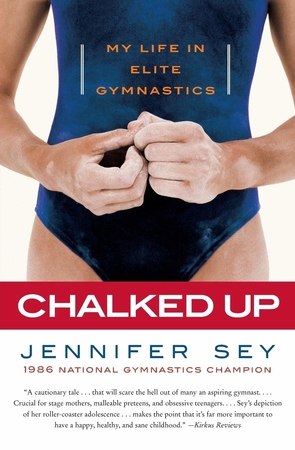
I think what’s been important about the pandemic is realizing how much we need each other and how social we are as animals. I am reminded of that very South African concept, ubuntu, which gets dragged out as a cliché, but it essentially means that people are people because of other people. I think I really felt that when I wasn’t able to see my people, my friends, not being able to have that connection. Zoom doesn’t cut it.

JA: When I was reading, I found myself amazed by the world building––you so thoroughly imagine the virus, the way the geography of the land has been altered through checkpoints, and the ways in which an array of people react to their new reality. What was the research process like?

LB: I’m laughing because doing all that research and doing all those interviews is a great way to avoid the actual writing.

JA: I’m laughing too –– I’m currently in a YouTube spiral of my own right now.

LB: Imagining the manpocalypse and how it would unfold in various sectors, came out of a lot of interviews with economists and programmers and genetic scientist Dr. Janine Scholfield, for example, who helped me design a more plausible virus. And the fluke of genetic immunity is x-linked, in case you were wondering why it’s so rare and there has to be a global reproductive prohibition.   

It would often just come up in conversation. I was working on an interesting project with Cape Town’s Metro Police, doing a ride-along with two senior officers, a Black woman and a white man, through some very hectic areas of the Cape Flats, which are still part of the ongoing spatial apartheid of the city and are stricken with violence, gangsterism, drugs and poverty. I asked them, what would happen with gangsters and drug addicts if all the men disappeared tomorrow? They both laughed at me. They were like, are you kidding? When one of the local gangs, The Americans, had a woman take over, she was more ruthless than her predecessors because she had more to prove. 

Visiting a container ship, I raised the question with the captain and he said well, these ships basically autopilot themselves, but where you would be fucked is when you come into port. There are pilots, all men, many of them total cowboys, sometimes drunk on the job, but they’re the only ones who know how to get a ship safely into port. If those men died you’d have a real problem. It’s a very hypermasculine industry and they pass that down from father to son. 

It’s fun exploring other people’s minds, and it becomes collaborative play as soon as you bring other people into it.

JA: For some reason, and this is probably my own implicit bias, when I read that 99% of men perished, I just started to imagine a sort of utopia.

LB: We’d all be able to walk by ourselves at night!

JA: Right. The amount violence in this novel really stood out to me. I think there are a lot of books and TV shows and other forms of media that show men as being violent, but it was different to read a long series of events in which women were violent and comfortable being violent with one another in some ways. 

It seemed, in some ways, like the roles of soldier and police officer –– those systems, which we all are thinking a lot about right now –– perpetuate violence in the novel. 

Why can’t we [women] be the assholes, the jerks, the evil villains, the power-hungry despots?

LB: The reason I set it only three years from the present day is because I still wanted us to be dealing with the systemic issues that we have right now. Although it is a radically changed world, it is still recognizably our world. Those power systems are deep and powerful, and the patriarchy is a very comfortable pair of shoes. It’s very easy to slip into. Reading Zimbardo’s book, The Lucifer Effect, on the Stanford Prison Experiment, for example, shows how desperately people want to step into those roles and the book also digs into the women involved in the torture in Abu Ghraib or the female leaders who played a major role in the Rwandan genocide.  

I was at a FanCon in Cape Town a couple years ago, and there was a comics writer from America and he was talking about how his female characters are always the best people in the room. And I was like, why? It’s another kind of sexism. We have this idea that women would be more nurturing and kind and warm and lovely and motherly, but amazingly, we’re full, complicated people. We are capable of all the great evil in the world as well as the good; we are susceptible to all the same weaknesses. Why can’t we be the assholes, the jerks, the evil villains, the power-hungry despots? 

JA: It was interesting to have to engage with my own expectations as I read, and ask myself why I was resisting at times. 

This book does such a good job highlighting systemic racism, gender issues, reproductive rights, climate change—nothing goes unspared. While reading and thinking about these issues, I wondered: what do you think fiction can do for us?

LB: It’s a really difficult question that I find myself struggling with. Should I quit and get a medical degree and join Doctors Without Borders? Should I be on the ground making a difference? But I feel art is the fire we light against the darkness. It’s how we find meaning, it’s how we understand ourselves and the world. I don’t know if my book is going to change anyone’s mind about anything, but fiction allows us other ways of thinking, of being able to explore other people’s minds in a way that’s deeply intimate, a conversation between the book and the reader. Reading is this act of imagination, this act of empathy and compassion, and also escapism. It’s a way of speaking truth and maybe that’s all we have as humans, is to try and make meaning and to try and speak an array of subjective truths and figure out who we are and where we are. 

JA: Miles, one of the main characters, is a biracial teenager in America. While reading, I found myself thinking of Alexander Chee’s three questions he suggests writers ask themselves before writing the other: Why do you want to write from this character’s POV? Do you read writers from this community regularly? And why do you want to tell this story? 

As a white woman, how did you grapple with some of these questions when writing his character?

LB: That’s something that I’m really, really sensitive to. Zoo City, which won the Arthur C. Clarke award, is told from the first-person perspective of a Black woman. For that book, I paid a Black friend to be my cultural editor. After reading, she gave me a seven-page report. A lot of it was stuff about Joburg. I got to the end of the report and I phoned her and I was like, you haven’t really answered my big question. And she was like, what’s your big question? I was like shit, is Zinzi Black enough? She laughed. She said, what is “Black enough”? She asked me if I’d written the character as being fully informed by where she grew up, her skin color, her gender, her sexuality, and told me that I had nailed it. The character felt like a real person. 

I don’t want to just write about white people. White people are boring. Race as a systemic issue is something I’m very interested in, especially growing up in South Africa, especially growing up under apartheid where I had all the benefits. I grew up in a utopia for white people, but it came at such a terrible cost. I see that every day, living here, and the ongoing shadow of that system, the entrenched poverty. I see the violence that you guys are enduring in the U.S.A. with police brutality, it’s just horrifying. On our side, we’ve got police brutality and terrible gender-based violence. 21 women have been murdered since the first of June, and in just the most horrifying ways. I’m aware of this intersectionality and I wanted to address some of that through the book and through Miles. 

There’s that line where Cole is talking to the immigration agent and she is so used to everyone asking her “How can you live in Johannesburg when it’s so violent there?” And she wants to throw back at them, how can you live here, where your Black son might get killed walking to buy skittles? South Africa’s not perfect, it’s really not, but it may be a safer place to raise a Black son.

JA: Belief systems can be such a form of comfort for people and they can also be harmful in the way that we see Miles being so impressionable that he can listen to a podcast from a religious leader on a bus and his whole worldview shifts. All of the nuns, too, suppress parts of themselves that are totally normal and human. Why did writing about a religious group interest you? 

LB: It was a play on gender and expectations about roles for women, which unbelievably is something we are still coming up against now, not just through religion but through society. It’s omnipresent, the weight of patriarchy. I wanted to be able to explore the idea of women being complicit in this. For example, female genital mutilation in Kenya by the Maasai. The mutilators, the people who wield the razor blades are older women. It’s another way that women uphold violent, systemic horrors that are meant to suppress women’s sexuality in particular. It’s this terrible fear of women’s sexuality. 

I don’t want to just write about white people. White people are boring.

I think something we’ve all experienced through COVID-19 is this terrible uncertainty and not knowing. The church, in the book, offers Miles certainty and rules and meaning. The nuns say to him, if you do these things, you will be loved and held and contained. Religion feels like a place of safety and control. He wants answers and the church has them.

JA: In that interlude section, you write about conspiracy theories related to the origin of the virus, and I felt like that resonated right now too (and not in a great way) because people are wanting to find their own meaning.

LB: Right. 5G? Bill Gates? What?

JA: Yes! Your satire of conspiracies would have been funny if not so close to reality.

LB: I did get one thing really wrong in the book, about pandemics, which is that the WHO doesn’t name them for their point of origin. It wouldn’t have been called human culgoa virus (named in the book for a town in Australia) because the WHO wants to avoid racism and xenophobia. I’m like damn it, I wish I’d known that before; that’s a point of inaccuracy.

JA: Throughout the book, the world is fairly bleak. There are regions that have been bombed and there are extreme disparities in wealth, but I felt throughout that you maintained some level of hope. We have Miles who escaped, for example, we have a mother who cares, and a friend halfway around the world who is going to great lengths to save someone she loves. In some ways, this novel is a commentary on patriarchy and all of the ills that plague us, but are there glints of hope in our world that you find yourself writing about?

LB: I think about myself as a pragmatic optimist humanist. I know the world is crap. Systemic violence is terrible. The things that we endure and the things that we do to each other are terrible. If you just look at the Facebook Moderators who have to delete all of this horrifying content like animal abuse and rape videos and the stuff that people post all the time through to funny Reddit threads about the worst thing to happen to you in your retail job, like somebody taking a shit in the changing room, you’re like what is wrong with us? Through to genocide and Trump and denying trans rights and all the rest.

It’s the human spirit that endures, and all the good that we are capable of as well. I think that’s what’s so interesting about us is that we have the capacity to be all the good in the world or all the evil, or any kind of very deeply confused and anxious mess in-between. I think that’s what makes the world interesting to me, and what makes writing fiction interesting to me, is trying to play with those textures of what it means to be human, and trying to be better humans. I’m also lucky to have a group of very warm and compassionate friends who really care about the world and are engaged with the world. I think my books are always going to be a bit dark, but it’s teasing the light through that.

9 Translated Graphic Novels About Inequality

Comics aren’t what people usually think of as revolutionary texts–but, in reality, many graphic narratives are deeply rooted in political movements and social commentary. Whether it has been war propaganda that caricatured the “enemy” (such as Dr. Seuss’s racist cartoons) or graphic novels that were banned for speaking out against the government, the combination of word and imagery has proven to be popular, powerful, and often political. This isn’t a coincidence; the genre’s so-called “triviality” can help it to escape censorship. 

So how does this tie together with translation? Translator Genevieve Guzmán writes that translated graphic texts offer a chance to “communicate cultural awareness to a global audience,” as well as “highlighting the political and cultural questions a more autocratic government may wish to keep buried.” Translation is also a way of controlling literary power, as writer Jen Wei Ting notes; it’s a choice to decide what stories to put on the global stage. Translated graphic narratives can help illustrate (we can’t ignore the pun here) a fuller picture of nations, histories, and cultures beyond a snappy headline. 

Translated from many different languages, these recently published graphic novels below all call attention to—and speak out against—various systems of inequality. With that said, there is a vast range: some are more focused on social issues, such as humorous takes against the patriarchy or stigmatization of depression. Others offer a sobering look at human rights violations, such as human trafficking and genocide. 

Grass by Keum Suk Gendry-Kim, translated from Korean by Janet Hong

The issue of Korean comfort women—those who were forced into sexual slavery for the Japanese Imperial Army during WWII—continues to be a point of contention between Japan and South Korea. Based on Gendry-Kim’s interviews with survivor Ok-Sun Lee, Grass is a powerful non-fiction graphic narrative of the nation’s historical trauma. Lee was born into a poor Korean family when Korea was annexed by Japan. When Lee was 15, she was kidnapped to become a “comfort woman” and provide “service” for the Japanese soldiers—or, euphemisms aside, forced through numerous sexual abuse. Done in black ink, which ranges from thick brushstrokes to depict traumatic memories and detailed landscapes of Korea, Grass is an adamant testament to the horrors of war. 

Year of the Rabbit by Tian Veasna, translated from French by Helge Dascher

Tian Veasna was born three days after the Khmer Rouge seized power in 1975, unleashing a genocidal reign of brutal work camps, mass murders, and human rights atrocities—leading to the deaths of nearly a quarter of the Cambodian population. Veasna interviewed his parents and relatives for first-hand accounts, and forgoes first-person narration in the book. Drawn in muted colors and loose lines, the book focuses on a chronological account of the various family members’ struggles, interspersed with short historical contextualizations about the Khmer Rouge’s regime. Veasna’s family, originally affluent before the takeover, is sentenced to labor camps; eventually, they must flee Cambodia. A decades-spanning saga, Year of the Rabbit is a harrowing, personal look at the lingering effects of the Cambodian genocide.

Goblin Girl by Moa Romanova, translated from Swedish by Melissa Bowers

Bad Tinder dates, failed ghosting attempts, and abuse of power: Romanova’s autobiography provides a spiky and darkly humorous snapshot of uneven gender roles today. Her narrator—a young female artist struggling with depression and panic attacks—attracts the online attention of a wealthier, older, and well-established celebrity; he offers to be her emotional and financial “patron,” an initial source of stability for the narrator. Drawn in a semi-surreal, retro style with elements of the absurd, Goblin Girl is a relatable exploration of mental health issues and toxic power dynamics. 

Freedom Hospital: A Syrian Story by Hamid Sulaiman, translated from French by Francesca Barrie 

Yasmine, who lives in a small town in northern Syria, starts running an underground hospital with a group of doctors, supporters, and patients. As Bashar al-Assad’s reign becomes increasingly violent and erupts in civil war, things get complicated for the “Freedom Hospital” and its community. Sulaiman’s illustrations—done in black and white with bold, stark lines—don’t hold back from extremely detailed scenes of human suffering (as this depicts a makeshift hospital in a war-devastated land, be prepared for graphic violence), but there are also burgeoning romances and soccer games. Sulaiman offers a portrait of Syria that moves beyond simply condemning Assad’s brutal regime; rather, Freedom Hospital attempts to show the complexity and nuanced personal tragedies of the Syrian civil war. 

Fruit of Knowledge: The Vulva vs. The Patriarchy by Liv Strömquist, translated from the Swedish by Melissa Bowers

Did you know menstrual blood was used as a love potion? Are you curious about modern-day labial surgery? Strömquist’s lively, X-rated graphic novel blends feminist theory with a biting sense of humor. Fruit of Knowledge zeroes in on female genitalia–and its stigmatization from ancient times to today; through clunky line drawings and occasional photographs, it entertainingly depicts the ways in which vulvas, vaginas, clitorises, and menstruation have been addressed by society. The most engaging part of this feminist discourse is Strömquist’s cartoon avatar, who sports a wiry ponytail that defies gravity and provides endlessly clever narration.

Poppies in Iraq by Brigitte Findakly and Lewis Trondheim, translated from French by Helge Dascher

If you loved Marjane Satrapi’s poignant take on her Iranian childhood in Persepolis, Poppies in Iraq is another tale of growing up under an oppressive regime in the Middle East. This much-acclaimed graphic memoir depicts Brigitte Findakly’s childhood and was co-written and illustrated by her husband Lewis Trondheim with whimsical, rounded watercolors. Findakly grows up amongst the increasingly brutal changes in Mosul under Saddam Hussein’s reign; eventually, her family decides to immigrate to Paris. Findakly and Trondheim are adept at depicting nostalgia for family events–like picnics by archaeological sites–while recognizing that many of these previous childhood haunts have been destroyed. Amidst its historical context, Poppies in Iraq is a touching family portrait and an exploration of one’s connection to their childhood home.

My Lesbian Experience with Loneliness by Kabi Nagata

My Lesbian Experience with Loneliness by Kabi Nagata, translated from Japanese by Jocelyn Allen

An internet cult hit, Nagata’s autobiographical narrative is about a young Japanese woman’s struggles with her mental health and sexuality. Kabi has dropped out of university; amidst eating disorders and depression, she struggles to find a purpose in life. As she reads erotic manga for boys, she comes to realize that she is attracted to women (despite same-sex marriage gaining more support in Japan, it is still illegal and societal views often remain restrictive on LGBTQ+ movements). With minimalistic artwork—spindly characters, little background, and sparse shading—Nagata leaves ample room to explore the convoluted, agonized journey of her narrator’s headspace. Kabi’s heartfelt story continues in sequels, My Solo Exchange Diary

The Winter of the Cartoonist by Paco Roca, translated from Spanish by Andrea Rosenberg

Roca’s well-researched graphic novel centers on a real-life group of five cartoonists in 1950s Spain, as they fought to protect their rights as artists and workers against Editorial Bruguera, one of the largest publishing houses in the country. Instead of staying under restrictive conditions at Editorial Bruguera, these cartoonists choose to start their own magazine, dreaming of creative freedom. Drawn in a detailed, pseudo-realistic style, The Winter of the Cartoonist poses thoughtgul questions about labor conditions, artistic agency, and licensing rights.

Perramus by Alberto Breccia and Juan Sasturain, translated from Spanish by Erica Mena

The winner of an Amnesty International Human Rights Prize, Perramus was an act of rebellion when it was first created during the Argentinian military dictatorship of the 1980s. The protagonist, Perramus, is a political dissident who joins forces with a gruff Uruguayan, a foreign pilot, and Jorge Luis Borges (real-life author of The Library of Babel fame). Add in encounters with a circus guerilla movement, a Henry Kissinger stand-in, and a tango singer’s skull—Perramus is both a call for revolution and a masterpiece of dark humor. Through the absurd adventures of this ragtag team, Breccia and Sasturain acutely satirize Argentinian politics and U.S. imperialism.

The Mortal Perils of Being an Instagram Influencer

The Blue Room

The Blue Room is lit with a cerulean light. With the exception of a narrow, elevated walkway and a pillow for visitors to sit on, its walls, floor, and ceiling are covered in blue soundproofing foam. In the middle of the floor, halfway sunken into the foam, like something washed up on a beach, is a 1994 Gateway 2000. It pulses the same cerulean, as if breathing. This is where the demon lives. 

Fern has been waiting to see The Blue Room for two hours. Normally, she’s able to cut these lines. Fern is a successful art world influencer. Tens of thousands follow her account. But not even she can convince the gallery assistant to let her get any closer to the latest Josephine Fibonacci installation—likely the artist’s final work. Fibonacci has been declared missing as of last Tuesday, causing a stir in the art world. No doubt the reason for the line, which now snakes behind Fern through the streets of Chelsea. Finally, she gets to the front, where a large sign conveys the rules of the exhibition to visitors. No shoes. No jackets. No bags. No more than one person allowed in the room per session. And then: The Blue Room is a device-free space for contemplation. In order to fully experience the anechoic chamber and the demon that inhabits it, the artist requests that you surrender your electronic devices at the entrance. 

Fern ungracefully removes her platform combat boots, shoving them into the provided locker along with her purse and phone. She’s prepared for this. She’s hidden a second phone—her real phone—in the pocket of her billowing silk pants. 

There is some debate among critics as to whether the demon is real. Some say it’s just a metaphor for our obsession with screens, some say it’s a sophisticated optical illusion. Others have reported feeling an unexplained static electricity clinging to their skin after leaving the installation. Everyone wants to see for themselves, which is why Fern is about to do what no one has yet done: capture the demon on video. 

Fern enters The Blue Room. She sits on the pillow, positioning her body so that the security guard can’t see her midsection, and pulls out her phone, slouching awkwardly to conceal it. She starts filming. For the first few minutes, there’s nothing but the blue pulsing. It’s silent. Fern hears her stomach gurgle, her breath, her heartbeat, and feels overcome with restlessness. She wants to check her notifications, but she is filming. The whisper-hum of the computer’s fan grows louder. 

The demon takes shape on the screen. It’s roughly the form of a woman, face and body pixelated. It steps out of the screen and grows larger, until it towers over her. It’s wearing a long white dress, its sapphire hair blowing around its face, though there is no wind. Fern gasps. The demon opens its mouth to speak, but its voice is obscured by the computer’s fan, now loud as a train barreling through the room. Somewhere she smells burning plastic. The demon begins to twirl. Fern grows dizzy watching it. She puts a hand on the floor to right herself. 

A chime goes off. The demon disappears in a flash of blue. Fern’s time is up. She stands, concealing her phone in her pants, and shakily exits the room. 

Outside, Fern watches the video she’s taken. On the phone, the demon looks unremarkable: vapor, a puff of steam, but on closer inspection she can still make out the face, the dress. Her ears ring. She’s lightheaded. Perhaps this is the effect of true genius. Her phone seems to grow heavy in her hand. She realizes she’s late for drinks with her friend Amir. 
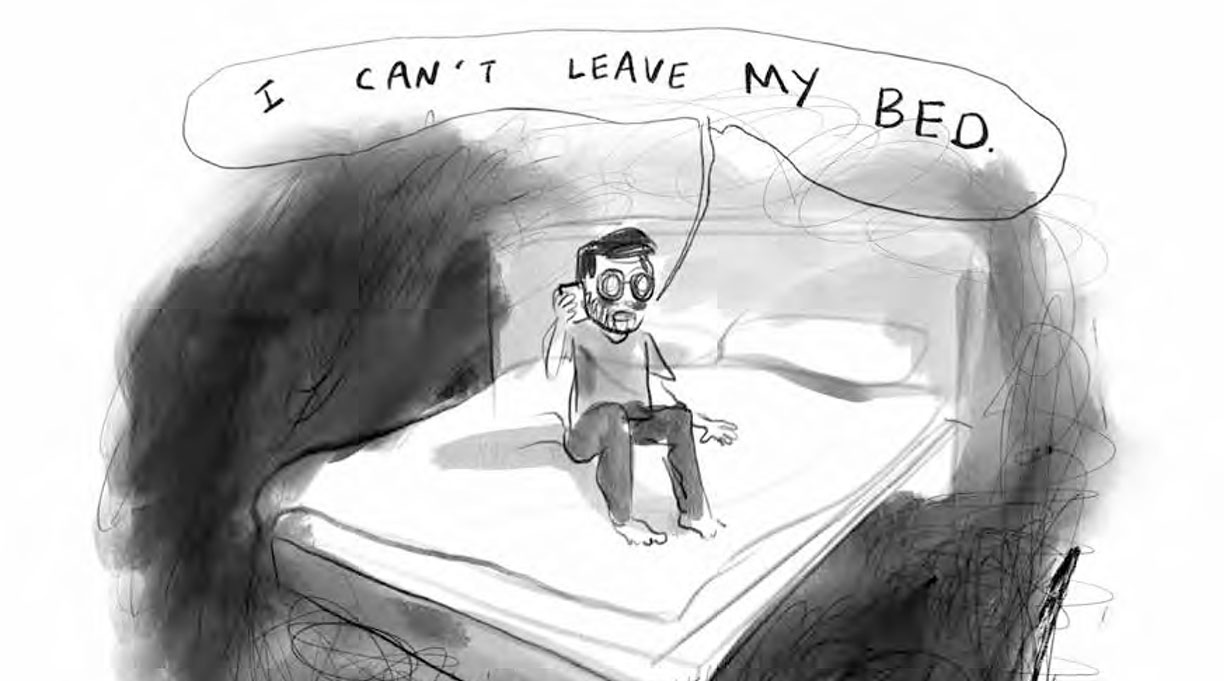
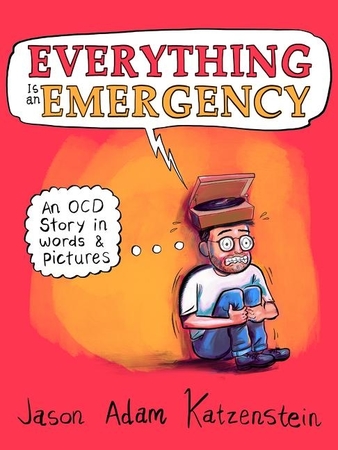
Amir is drunk by the time she arrives at the bar. He thinks that The Blue Room is totally derivative, though he admits he hasn’t seen it. He’s into more transgressive stuff, she knows—Fibonacci is too tame for him. Still, she tries to explain her experience. The words come out as platitudes: the energy of the room, the strangeness of it. Amir doesn’t seem to care. 

This will be the last time anyone sees Fern in person. 


Back home, Fern posts about her day: selfies in line for the installation; Amir drinking; a sidewalk stencil reading “Never give up on beauty”; the video of the demon. Views and messages begin to roll in. Then, without warning, her phone dies right there in her hand. She groans and plugs it into the wall to charge. 

Fern tells people that she’s able to fully support herself through the endorsements she gets on Instagram but the truth is her brother Ricardo, who works at a hedge fund, pays her rent and her phone bill. The endorsements can pay for groceries on a good week. Mostly the companies just send her free clothes and jewelry to wear and post about. 

She lives in a loft above a steakhouse with a roommate who is never home. The aroma that lingers in the airshaft means Fern is always hungry for meat, though she’s been vegan for years. She’s spooning leftover takeout rice into her mouth when she hears a moan. She peeks out the kitchen window, expecting to see a cat in heat. All that’s there is a cook having a cigarette. 

On her bed, the phone has switched on again. It’s frozen on a light blue screen. Fern realizes with a little shiver that it’s the same color as the Fibonacci installation. Then she hears it again: a guttural moan, low and drawn out. 

It’s coming from the phone. She tries to stop it, frantically pressing various buttons, but the blue remains and the moan grows louder. She flings the phone onto the hardwood floor. This doesn’t do any good either. A crack has formed in the screen. Smoke curls from beneath the glass. Fern smells the burning plastic from the installation. She gags. 

The vertigo sweeps over her and all she can see is blue. 


For the second Thursday night in a row, Fern isn’t at the gallery openings, which is unusual. Amir has wandered through all of them, refilling a disposable plastic cup with bourbon from his flask. It feels weird to be here without Fern. Her Instagram hasn’t changed since he checked on it a few days ago. She’s deleted all the content, save for a single video of her twirling around in endless circles. Or is it her? It seems the longer he looks, the more her features begin to alter.  

An arm creeps around his waist and he jumps. It’s one of Fern’s friends, a willowy art critic whose name he can’t remember, drunk. 

“Amir!” she exclaims, shoving a strand of platinum hair away from her face. “Can you explain this pretentious crap to me?” On her phone is a tiny twirling Fern.

He takes the phone from her for a closer look. The pursed expression on Fern’s face, which he’d originally thought was concentration, turns wilder, more panicked, each time it meets the camera. It occurs to him that wherever she is, she doesn’t want to be there. 

 “What the hell?” the critic whines, her face a lipsticked mask of indignation. He’s been staring at the video for too long. The art critic wants her phone back. He hands it to her, dazed, and she disappears into the crowd.

“The Blue Room” will be collected in Tiny Nightmares: Very Short Stories of Horror, forthcoming from Catapult in October.