8 Poetry Collections on Blackness

Times like this come every few years. The summer begins, and so do the Black deaths due to state-sanctioned violence. But this time, the corporations and publications say they want to change. They finally admit—if they hadn’t already done so in the past—that Black Lives Matter, and so do Black writers. 

At a time where each week, we are fighting for a new Black person’s justice, I turn to Black poetry. At a time where I cannot be in physical community with the people I love, poetry reminds I am not alone. I have the company of those who are also resisting, whether it be in their joy or pain, their fight or struggle to fight. 

And even when we’re not out protesting each day, even when the world seems to be peaceful, I lean on other Black poets for understanding of this life. Of this skin. Of this America. Here are ten poetry collections by Black writers to turn to during any moment, but especially this one: 

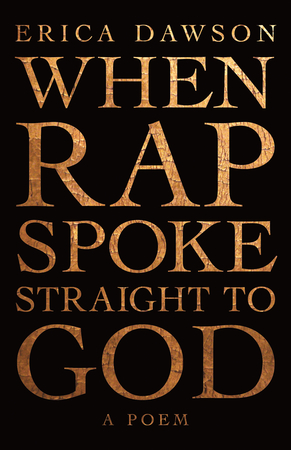
When Rap Spoke Straight to God by Erica Dawson

This book-length poem combines some of the most celebratory elements of Black culture: music and faith, but more specifically, Christianity. Dawson interrogates what it means to be a Black woman, what it means to be Black during the Trump era, and how rap can help us navigate this life. With each line music itself, I turn to this collection of poems to remind myself of the joy of being Black, despite the struggles. 

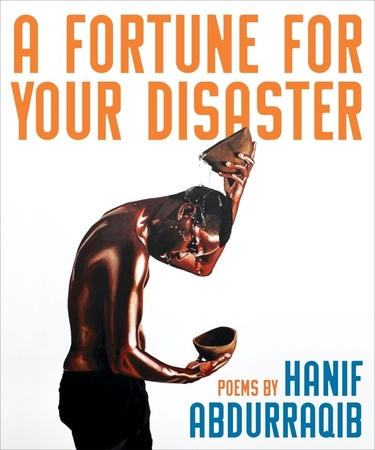
A Fortune for Your Disaster by Hanif Abdurraqib

The poems in this collection explore how to live and celebrate when other things—even Black people—are being grieved. One of my favorite poems from this collection is one that has a recurring title, “How Can Black People Write About Flowers at a Time Like This,” which I have hanging on my wall. This collection, and this poem in particular, reminds me that we deserve to write about flowers and all the other things we sometimes don’t have the capacity to focus on. 

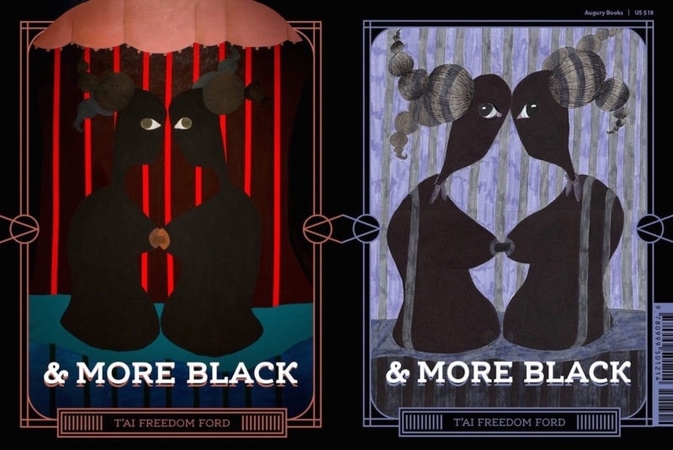
& more black by t’ai freedom ford

& more black, a double-sided poetry collection written mostly in sonnets, rejects and resists systems that don’t love ford’s Black, queer body. This collection also celebrates Black experiences—speaking in ebonics, not being able to double dutch, and more. ford calls on Black cultural icons and artists to rejoice in being Black, even when our neighborhoods and our lives are being stolen. 

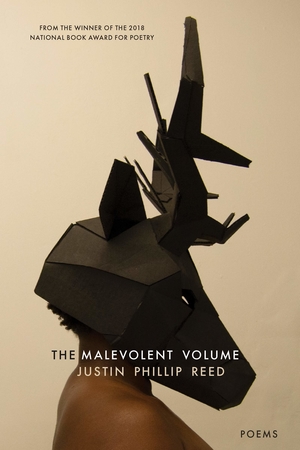
The Malevolent Volume by Justin Phillip Reed

Justin Phillip Reed’s second poetry collection uses myth and monsters to explore Blackness and the violence (of all kinds) imposed on Black people. The Malevolent Volume allows a “collective Black spirit” to revolt against all people and things that have wronged us. In inverted poems on black pages with white text, Reed engulfs you in darkness. This poetry collection is one I turn to when enraged, when I am seeking a world that will give us more — even if we have to take it. 

Magical Negro by Morgan Parker

These poems reckon with the word “magic” in relation to Black lives. With wit and humor, Parker explores the histories of our ancestors and interrogates our oppression. She critiques whiteness while praising Blackness, and explores politics and celebrity status side by side. When I can’t put words to the racism and sexism I’m experiencing, I turn to Magical Negro.

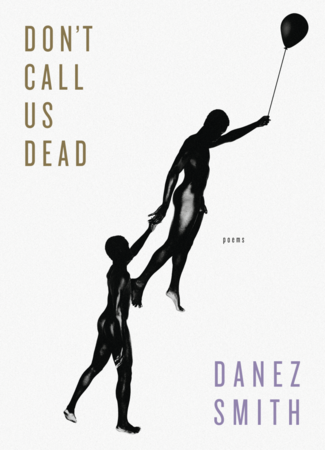
Don’t Call Us Dead by Danez Smith

The poems in this collection navigate being Black, queer, and HIV positive. In the poem “every day is a funeral & a miracle,” Smith brings it all together—Black people’s fear of the police, their own reckoning with HIV, and the miracle of staying alive despite every weapon formed against them. This collection also delves into desire—in spite of and despite the systems that continue to harm Black people. But still, it is a collection that is both elegy and hopeful. 

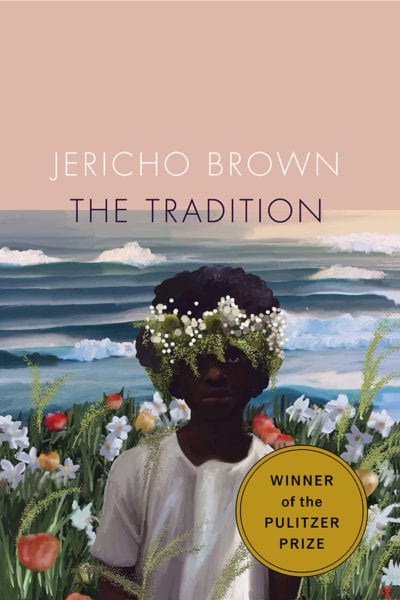
The Tradition by Jericho Brown

Winner of the 2020 Pulitzer Prize in poetry, Jericho Brown’s The Tradition grapples with the terrors of this world and calls out society’s harmful traditions while creating his own rituals. Brown relies on the body as a garden, examining how it either blooms or dies—or brings itself back to life through desire. He examines whiteness and Blackness in this collection, our card tables and historic deaths, and white people’s desire to be seen as “good.”

The BreakBeat Poets Vol. 2: Black Girl Magic edited by Mahogany L. Browne, Idrissa Simmonds, and Jamila Woods

I turn to this anthology when I want to feel like I am experiencing life with a sisterhood of Black women. This anthology celebrates Black womanhood, questions the patriarchy, mourns our lost Black women, and tells us that we matter. All in all, it reminds me that we’re magic, despite the violence we endure.

My Son the Medium Can’t Even Tell Me Why We’re Here

“The Country”
by Joy Williams

I attend a meeting called Come and See! The group gathers weekly at the Episcopal church in one of the many, many rooms available there but  in  the way these things are it’s wide open to everyone—atheists, Buddhists, addicts, depressives, everyone. The discussion that evening concerned the old reliable: Why Are We Here? And one woman, Jeanette it was, offered that she never knew what her purpose was until recently. She discovered her purpose was to be there with the dying in their final moments. Right there, in attendance. Strangers for the most part. No one she knew particularly well. She found that she loved this new role. It was wonderful, it was amazing to be present for that moment of transport. It was such an honor being there and she believed she provided reassurance. And she shared with us the story of this one old girl who was actively dying—that was her phrase, actively dying—and at one point the old girl looked at Jeanette and said, “Am I still here?” and when she was told yes, yes, she was, the dying woman said,“Darn.”

“She was so cute,” Jeanette said.

My fellow travelers in Come and See! listened to this with equanimity. Jeanette was as happy as I’d ever seen her—she doesn’t come every week—and enthusiastic as she shared with us how positive and comforting it is to witness the final voyage. She’s affiliated with the church somehow, she studied chaplaincy services or something, so she has a certain amount of access to these situations; that is, she’s not doing this illegally or inappropriately or anything.

I sincerely cannot remember the circumstances that brought me to Come and See! for the first time and why I continue to attend. I seldom speak and never share. I sit erect but with my eyes downcast, focusing on a large paper clip that has rested in a groove between two tiles for months. Surely the chairs must be folded and stacked or rearranged for other functions and the floor swept or mopped on occasion, but the paper clip remains.

Beside me, Harold—he’s sixty-three and the father of two-year-old triplets—says, “I believe we are here for the future, to build a better future,” blandly cutting off any communal amplification of Jeanette’s deathbed theme.

My eyes lowered, I stare at the paper clip. I dislike Harold. Triplets, for god’s sake. One day I will no longer come here and listen to these wretched things.

After Come and See! there is a brief social period when packaged cheese and crackers and cheap wine are provided. There is always difficulty in opening the cheese packets. Someone always manages to spill wine.

Jeanette appears before me. After some consideration, I smile. She says,“I’m sorry, I’ve forgotten your name.”

“That was my best wintery smile,” I say.

“Yes, it was quite good.”

I hope she thinks I would be a challenge, an insurmountable challenge.

Poor Pearl limps up. She has multiple sclerosis or something similarly awful and she begins talking about being with a number of her cats over the years as they died and it is not something she would wish on her vilest enemy and how she never learns from this experience and how it never becomes beautiful.

I leave the ladies to thrash this one out and exit through the courtyard, which is being torn up for some reason of regeneration. Or perhaps they’re just going to pave it over with commemorative bricks. Last year, Easter services were held in this courtyard because the sanctuary had been vandalized. Worshipers arrived for the sunrise service and found the sound system ripped out, flowers smashed, balloons filled with green paint exploded everywhere. Teenagers going through an initiation into some gang, probably. Several goats in some fellow’s yard were beaten and harassed that morning as well, the same group most likely being responsible, although the authorities claim there are no gangs in our town. No one was ever charged. The church would forgive them, that’s the way the church works, but the man who owns the goats is still upset. Perhaps the poor creatures were meant to be scapegoats in the biblical sense, cast into the wilderness of suffering with all the sins of the people upon their heads.

There is such evil in the world, so much evil. I believe Jeanette is evil, though maybe she’s more like one of those medically intuitive dogs they’re developing or exploiting. The dogs don’t suffer from their knowledge. That is, empathy is beside the point here; they can just detect that illness is present in a body before, sometimes long before, more standardized inquiry and tests confirm it. In Jeanette’s case, though some groundwork is undoubtedly required, she’s honing her instinct of arrival, appearing just before another is about to enter the incomprehensible refuge. She’ll be writing a book about her experiences next. I leave the courtyard and commence my walk home. It’s not particularly pleasant but there is no alternative route, or, rather, the alternatives are equally dispiriting. Highways are being straightened and widened everywhere, with the attendant uprooted trees and porta-toilets for the workmen.

I navigate my passage across the first monstrous intersection, where a sign announces the imminent arrival of a dessert parlor named Better Than Sex. I would like to move to the country but the boy refuses. Besides, “the country” exists only in our fantasies anymore. When I was a child, the country was where overly exuberant family pets often found themselves. One of our dogs, Tank, who liked to wander and eat clothes and the dirt in flowerpots, was dispatched to the country, where he would have more room to run and play and do his mischief under the purview of a tolerant farmer. When I returned from school that afternoon, Tank was settling into his new home. My parents’ explanations and assurances became so elaborate that I knew something terrible was being withheld from me.

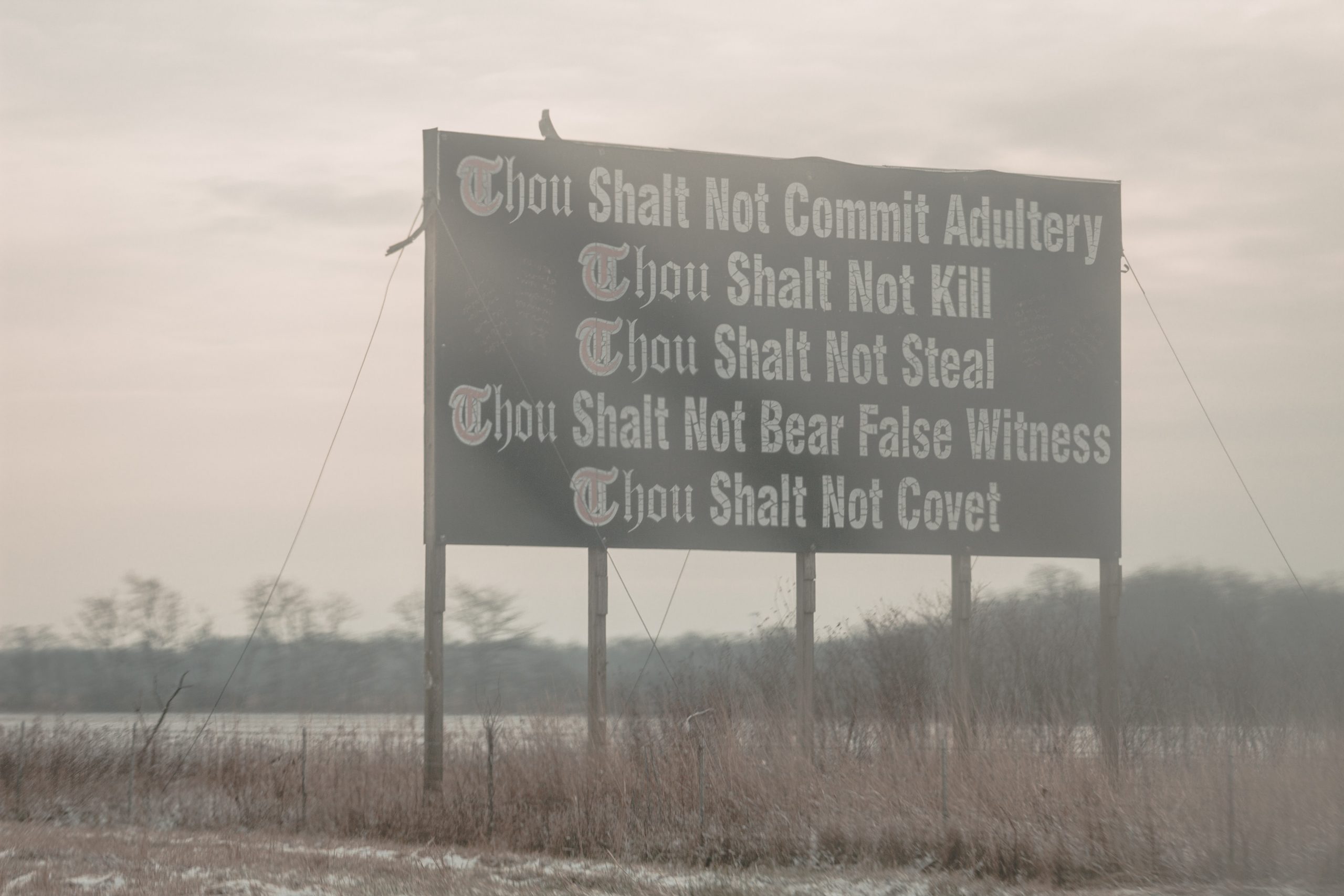
Above me, billboards advertise gun shows, mobile-telephone plans and law firms that specialize in drunk-driving cases. I looked into renting a billboard recently but my application was rejected.

THE GREATEST PROSPERITY COMES TO ITS END, DISSOLVING INTO EMPTINESS; THE MIGHTIEST EMPIRE IS OVERTAKEN BY STUPOR AMIDST THE FLICKER OF ITS FESTIVAL LIGHTS
— Rabindranath Tagore

it would have said.

The billboard people told me they didn’t know who Rabindranath Tagore was and could not verify anything he might have thought. He was certainly foreign and his sentiments insurrectionary. As well, what he was saying wasn’t advertising anything. This night I see that space I tried to claim depicts black-and-white cows painting the words eat more chiken on the side of a barn.

I could far more easily drive to church and spare myself the discomfort of walking through this wasteland but I am in no hurry to reach home. I never know whom I will be coming home to, whether it will be mother, father, wife or son. Often it is just my son, my boy, and matters are quite as they should be, but since the end of school things have become more volatile. We live alone, you understand, the child and I. He’s nine, and the changes in this decade have been unfathomable. Indeed, it’s a different civilization now. My parents, with whom we were very close, died last year. My wife left in the spring. She just couldn’t feel anything for us anymore, she said, and was only trying to salvage the bit of life she could.

Dusty pickups speed by, gun racks prominent. Gun racks in vehicles have surged in popularity. Even expensive sedans display cradled weapons, visible through lightly tinted windows. People know their names and capabilities like they used to know those of baseball players. Not my boy, though. He doesn’t know these things. He knows other things. For example, we planted a few trees in the yard after his mother left, fruit trees, citrus. The tree that bears the fruit is not the tree that was planted. He knows that much, it goes without saying.

It’s almost dark now as I turn down our street. It’s garbage day tomorrow and my neighbors have rolled their vast receptacles to the curb. The bins are as tall as the boy and they contain god knows what, and over and over again.

The door is unlocked, the lights are on. “Hi, Daddy,” Colson says. He’s in the kitchen making sandwiches for supper.“Daddy,” he says,“we have to eat soon because I want to go to bed.” I’m not disappointed that he’s himself tonight, though more and more, given the situation, that self seems imaginary. He likes to play the Diné prayer songs tape as we eat, particularly the “Happy Birthday, My Dear Child” track. The chants are unintelligible but then the words Happy Birthday Happy Birthday to You arise in this morose intonation and he never tires of it.

In the morning my wife is in the yard, cutting back the orange tree. We rush out and prevent her from doing more. Summer is not the time to prune anything of course and we just planted the trees, they haven’t even adjusted to being in the soil yet with the freedom of their roots to wander. She dismisses our concerns but flings down the little saw, which I have never seen before, and leaves, though were you to ask if we actually saw her leave we would have to say no. The tree looks terrible and with small cries we gather up the broken buds and little branches. Still, it will survive. It has not been destroyed, we assure each other, at least not this day. There is no question of our planting a replacement. This would not be a useful lesson to learn.

Perhaps she is annoyed because, since her absence, Colson has seldom tried to invoke her except in the broadest terms. That is because, he explains, she is only gone from us, not from the world she still inhabits. I think her arrival this morning was a shock to him and I doubt she will visit us again.

I pick up the curved saw. It looks new but now blond crumbs of wood cling to its shiny serrated teeth.

“Should we keep this?” I ask Colson.

He frowns and shakes his head, then shrugs and returns to the house. He’s through with her. I wonder if somehow I have caused this latest unpleasantness. I have never known how to talk about death or the loss of meaning or love. I seek but will never find, I think.

I toss the saw into the closest container at the very moment I hear the trash truck moving imperiously down the street. It’s garbage day. Garbage day! The neighborhood prepares for it with joy. Some wish it would arrive more than once a week.

Later I bring up the possibility of moving. We could have an orchard and bike trails and dig a pond for swimming. We could have horses. “You can pick up horses these days for a song,” I say.

“A song?” the boy says.“What kind of song?”

But I can’t think of any. I gaze at him foolishly.

“Like the Diné prayer songs,” he suggests.

“Yes, but we don’t even have to pray for horses. We can just get them.”

Immediately I realize I have spoken infelicitously, without grace. He doesn’t say anything right away but then he says, “You have to be here to prepare for not being here.”

The voice is familiar to me because it is my mother’s voice, though I find it less familiar than it once was. She’s been in a grave for over a year now, my father with her. They’d been working at an animal sanctuary in their retirement and were returning home from a long day of caring for a variety of beasts. They had borrowed my car, as they were getting new tires for their own. I had planned to drive them home that night but the arrangement had been altered for some reason. We still don’t know exactly what happened. A moment’s inattention, possibly.

The sanctuary that was so important to them was controversial, as the animals were not native to this region, though the natives hardly enjoy grateful regard here, being considered either pests or game. It has since closed, the animals removed to what are referred to as other facilities, where some of them can still be visited. In fact, Colson and I went out to see one of the elephants my father was particularly fond of. There were two in the original preserve—Carol and Lucy—but they were separated, which seemed to me a dreadful decision. We visited Carol, who is an hour closer. She has some disease of the trunk that makes it difficult for her to eat, but someone was obviously still taking care of her. It wasn’t a good visit, not at all. We felt bad that we had come. Knowing what we now know would break my parents’ hearts, I think, but when Colson talks on their behalf they do not speak of elephants, those extraordinary beings. They do not speak of extraordinary matters. Colson does not bring them back to perform feats of omniscience or magicians’ tricks. I don’t know why he brings them back. I tried to prevent him at first. I appealed to his reasonableness, though in truth he is not particularly reasonable. I threatened him with psychiatric counseling, hours of irrelevant questions and quizzes. I told him his performances were futile and cruel. I teased him and even insulted him, saying that if he considered himself gifted or precocious he was sadly mistaken. Nothing availed.

When he enters these phases I become exhausted. Sometimes, I admit, I flee. He doesn’t seem to need me to fulfill his conversations with the dead, if indeed they are conversations. They seem more like inhabitations. And  they’re  harmless  enough, if  disorienting, though this morning’s remark disturbs me, perhaps because his mother, my wife, had just made her unnecessary appearance. Really, why would she return only to hack wordlessly at our little tree? It seems so unlikely.

“Sorry?” I say.

“We are here to prepare for not being here,” he says in my mother’s soft, rather stroke-fuddled voice.

It’s as though he is answering the very question posed at Come and See! I took him there once. Sometimes someone brings a child or grandchild, it’s not unheard of. He listened attentively. No one expected him to contribute and everyone found him adorable. “Don’t ever take me into that stupid room again,” he later instructed me.

He may be right that it is a stupid room and that of all the great rooms he might or will enter, attentively and with expectation, it will on conclusion be the stupidest.

I study Colson. My dear boy is skinny and needs a haircut. He rubs his eyes the way my mother did. Don’t rub your eyes so! we’d all exclaim. But I say nothing.

Colson says, “Then you’re in the other here, where the funny thing is no one realizes you’ve arrived.”

He sits down heavily at the kitchen table.“Would you like a cup of tea,” I ask.

“That would be nice,” he says in my mother’s voice of wonderment.

But I can’t find the tea. We haven’t had tea in the house since they died. We’d keep it on hand just for them when they visited.

“I’ll go out and get some right now,” I say.

But he says not to bother. He says,“Just sit with me, talk with me.” I sit opposite my boy. I notice that the clock on the stove reads 9:47 and the stovetop is dusty, as though no one has cooked on it for a long time. I vow that I will cook a hot, nourishing and comforting dinner tonight. And I do, and we talk quietly then as well, though nothing of import is being decided or even said.

I find it easier to be with my father when Colson brings him. Though he always seemed rather inscrutable to me he now doesn’t sadden me so. He would not accept an offer of tea that he suspected was unlikely to be provided. He was able to confer with the animals in a way my mother couldn’t, and felt that great advances would soon be made in appreciating and comprehending animal consciousness, though these advancements would coincide with the dramatic worldwide decline of our nonhuman brothers and sisters. Once, I’m ashamed to say, I maudlinly brought up the Tank of my childhood, and my father said he had been shot by a sheriff ’s deputy who thought he was a stray, and that the man had also shot a woman’s horse in winter, making the same claim, and that he had been reprimanded but neither fined nor fired. Yes. And that they had lied to me, my mother and father. It was Colson who told me this in my father’s voice, Colson, who had never known Tank or felt his “happy fur,” as I called it as a child. Bad, happy Tank. He ate his dinner from my mother’s Bundt pan. It slowed him down some, having to work around the pan. He always ate his food too fast.

But this was the only time a disclosure occurred, and I am more cautious now in conversation. I find I want neither the past nor the future illuminated. But my discomfort is growing that my boy will find access to other people, people we do not know, like the woman the next town over who died in a fire of her own setting, or even one of Jeanette’s unfortunate customers. That I will come home one evening and that Colson will be not himself but a stranger whose death means little to me and that even so we will talk quietly and inconsequentially and with puzzled desperation.

The week passes. Colson has a tutor in mathematics for the summer who is oblivious to the situation and I have the office I’m obliged to occupy. Colson wants to be an engineer or an architect but he has difficulty with concepts of scale and measurability. The tutor claims he’s progressing nicely but Colson never talks about these hours, only stubbornly reiterates his desire to create soaring nonutilitarian spaces.

At the end of the week I return to Come and See! My passage through the construction zone is much the same. I suppose change will appear to come all at once. Suddenly there will be a smooth six-lane road with additional turning lanes and sidewalks with high baffle walls concealing a remaining landscape soon to be converted to housing. The walls will be decorated with abstract designs or sometimes the stylized images of birds. I’ve seen it before. Everyone’s seen it before.

Jeanette is the only one there. I feel immediately uncomfortable and settle quickly into my customary chair. There is the paper clip, as annoying and meaningless a presence as ever.

“There’s a flu going around,” she says.

“The flu?” I say.“Everyone has the flu?”

“Or they’re afraid of contracting the flu,” she says. “The hospital is even restricting visitors. You haven’t heard about the flu?”

“Only in the most general terms,” I say. “I didn’t think there was an epidemic.”

“Pandemic, possibly a pandemic. We should all be in our homes, trying not to panic.”

We wait but no one shows up. There’s a large window in the room that looks out over the parking lot, but the lot is empty and continues to be empty. The sky is doing that strange thing it does, brightening fiercely before dark.

“Why don’t we begin anyway?” she says. “‘For where two are gathered in my name . . .’ and so on. Or is it three?”

“Why would it be three?” I say.“I don’t think it’s three.”

“You’re right,” she says.

She has a round pale face and small hands. Nothing about her is attractive, though she is agreeable, certainly, or trying to be.

“I’m not dying,” I say. God only knows what possessed me.

“Of course not!” she exclaims, her round face growing pink.“Goodness!”

But then she says,“On Wednesday, Wednesday I think it was, it was certainly not Thursday, I was in this woman’s room where the smell of flowers was overwhelming. You could hardly breathe and I knew her friends meant well, but I offered to remove the arrangements, there were more than a dozen of them, I’m surprised there wasn’t some policy restricting their number, and she said, ‘I’m not dying,’ and then she died.”

“You never know,” I say.

“I hope they let me back soon.”

“Why wouldn’t they?”

“Thank you,” she says quietly.

“I meant to say why would they?”

She stands up but then sits down again. “No,” she says, “I’m not leaving.”

“It’s disgusting what you’re doing, you’re like the thief ’s accomplice,” I say. “No one can be certain about these things.”

Suddenly she appears not nervous or accommodating in the least.

We do not speak further, just sit there staring at each other until the sexton arrives and insists it’s time to lock the place up.

At home, Colson is watching a television special on our dying oceans.

“Please turn that off,” I say.

“Grandma wanted to watch it.”

He has made popcorn and poured it into a large blue bowl that is utterly unfamiliar to me. It’s a beautiful bowl of popcorn.

“You have another bowl like that?” I ask. “I want to make myself a drink.”

He laughs like my wife might have when she still loved me, but then returns to watching the television.

“This is tragic,” he says.“Can anything be done?”

“So much can be done,” I say. “But everything would have to be different.”

“Well,” he sighs, “now Grandma and Poppa know. She wanted to watch it.”

“Have you heard anything about a flu,” I ask. “Does anyone you know have the flu?”

“Grandma died of the flu.”

“No. They died in a car accident. You know that.”

“Sometimes they get mixed up,” he says.

Colson’s the age I was when I was told about the country. Ten years later I’d be married. I married too young and unwisely, for sure.

“Do they sometimes tell you stories you don’t believe?”

“Daddy,” he says with no inflection, so I don’t know what he means.

We finish the popcorn. He did a good job. Every kernel was popped. I take the bowl to the sink and rinse it out carefully, then take a clean dish towel from a drawer and dry it. It really is an extraordinarily lovely bowl. I don’t know where to put it because I don’t know where it came from.

A few days later my father is back. He was a handsome man with handsome thick gray hair.

“Son,” he says,“I don’t know what to tell you.”

“It’s all right,” I say.

“No, it’s not all right. I wish I knew what to tell you.”

“Colson, honey,” I say.“Stop.”

“That’s no way to have an understanding,” he says.“Your mother and I just wish it were otherwise.”

“Me too,” I say.

“We wish we could help but there’s so much they haven’t figured out. You’d think by now, but they haven’t.”

“Who’s they,” I ask reluctantly.

But Colson doesn’t seem to have heard me. He runs his fingers through his shaggy hair, which looks damp and hot. My boy has always run hot. I wonder if he’s bathing and brushing his teeth. My poor boy, I think, my poor dear boy. Someone should remind him.

The following afternoon when Colson is with his tutor, who, I think, is deceiving both of us, though to all appearances he is a forthright and sincere young man, I drive almost one hundred miles to see Lucy, the other elephant. She is being sponsored by two brothers who maintain the county’s graveyards, some sort of perpetual care operation, though to be responsible for an elephant is quite another matter, I would think. The brothers are extremely private and shun publicity. It was only after great effort that I learned anything about them at all or the actual whereabouts of Lucy. Someone—though neither of the brothers, a friend of the brothers is how I imagine him—agreed to show me around the grounds that she now occupies, but I find that once I reach the gate I cannot continue.

I turn back, ashamed, and more estranged from my situation than ever.

When I return home the tutor has left and Colson is putting his drawings in order, cataloging them by some method unknown to me. When my mother and father were taken from us so abruptly I knew that Colson was terribly bereaved. Still, he did not want my father’s safari hat or his water-bottle holster. He did not want his watch or his magnetic travel backgammon. Nor did he want my mother’s collection of ink pens, which I suggested would be ideal for his drawings. He wanted no mementos. Instead he went directly to communication channels that are impossible to establish.

“Where were you, Daddy,” Colson asks.

“Why, at work,” I say quickly.

Surely I am back at my usual time. I seldom lie, indeed I cannot even remember the circumstances of my last falsehood. Why would he ask such a question? I kiss him and go into the kitchen to make myself a drink but then remember that I have stopped drinking.

“A lady came by today but I told her I didn’t know where you were.”

“What did she look like,” I ask, and of course he describes Jeanette to a T.

I am so weary I can hardly lift my hand to my head. I must make dinner for us but I think the simplest omelet is beyond my capabilities now. I suggest that we go out but he says he has already eaten with the tutor. They had tacos made and sold from a truck painted with flowers and sat at a picnic table chained to a linden tree. I have no idea what he’s talking about. My rage at Jeanette is almost blinding and I gaze at him without seeing as he orders and then reorders his papers, some of which seem to be marked with only a single line. I feel staggeringly innocent. That is the unlikely word that comes to me. Colson puts away his papers and smiles, a smile so radiant that I close my eyes without at all wanting to, and then rather gently somehow it is day again and I am striding through the bustling wasteland to Come and See! The reflection concerns Gregory of Nyssa. He is a popular subject but I am forever having difficulty in recalling what I already know about him. Something about the Really Real and its ultimate importance to us, though the Really Real is inaccessible to our understanding. Food for thought indeed, and over and over again.

When the meeting concludes and we are dismissed I practically hurl myself on Jeanette, who has uncharacteristically contributed nothing to the conversation this night.

“Don’t ever come to my house again,” I say.

“Was I really there, then? I thought I had the wrong place. Was that your son? A fine little boy. He can certainly keep a secret, can’t he.”

“I’ll call the police,” I say.

“Goodness,” she laughs.“The police.”

It sounded absurd, I have to agree.

“I was concerned about you,” she says. “You haven’t been here for a while. You’ve been avoiding us.”

“Don’t ever again . . .” I say.

“A delightful little boy,” she continues.“But you mustn’t burden him with secrets.”

“. . . come to my house.” I couldn’t be more insistent.

“Actually,” she says,“no one would fault you if you stopped attending. How many times must we endure someone making a hash of Gregory of Nyssa? People are so tenacious when they should be free. Free!”

I begin to speak but find I have no need to speak. The room is more familiar to me than I would care to admit. Who was it whose last breath didn’t bring him home?

Or am I the first?

11 Thrilling Procedurals That Don’t Involve Police

Amidst nationwide protests against police brutality and systemic racism in policing, the role of crime writers in shaping public perceptions of the police has also been called into question. Police procedurals are among the most ubiquitous programming on television and almost always center the perspectives of the cops, often depicting acts of brutality as the necessary tactics of heroes who are seeking justice on the public’s behalf. Crime fiction, one of the most popular genres in the world, similarly centers the work of cops, ex-cops, and private detectives or amateur sleuths whose ultimate goal is to identify the correct perpetrator and hand them off to the police.

Of course, there is pleasure in watching experts do their work or passionate amateurs race to solve problems and achieve something—but the thing they achieve doesn’t have to be an arrest and conviction within our current system of policing and punishment. Perhaps in the future we will have crime fiction that envisions justice beyond arrest and incarceration. For now, if you’re looking to defund or abolish the police from your own reading list, consider swapping in one of the following nonfiction tales of heroes who are not cops or ex-cops, fighting to achieve something other than putting people in jail. 

Hidden Figures by Margot Lee Shetterly

The heroines of Shetterly’s book are the Black women mathematicians — Dorothy Vaughn, Mary Jackson, Katherine Johnson, Dorothy Hoover, and others — who work for the precursor agency to NASA during World War II. In the newly (somewhat) desegregated defense industry, they serve in the computing pool, operate state-of-the-art calculating machines, question their superiors, catch errors, author research reports, hold or earn graduate degrees, and devotedly support each other’s work. These Black women win recognition and respect in a Jim Crow-era world as they perfect airplanes for the war effort and help to launch the nation’s burgeoning space program.

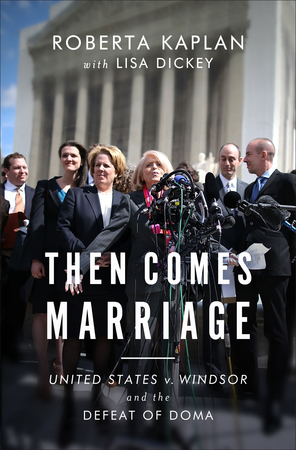
Then Comes Marriage by Roberta Kaplan

The heroine of this story is Jewish lesbian civil rights lawyer Roberta Kaplan, who represented Edie Windsor in the landmark Supreme Court case United States v. Windsor, which ultimately struck down the Defense of Marriage Act and made LGBTQ+ marriage equality the law of the land in 2015. Kaplan details her strategies in the lower courts and in focusing the case on Justice Anthony Kennedy’s jurisprudence, while also describing the “rainbow coalition” of LGBTQ+ legal advocates and other cases that paved the way for this victory. Through it all, she interweaves her own story of coming out to a homophobic family as well as her compelling personal relationship with Edie Windsor’s late wife, who had been her psychotherapist when she was younger.

The Scarlett Letters by Jenny Nordbak

Nordbak’s memoir details her time working as a dominatrix in a Los Angeles dungeon. It has a case-of-the-week procedural feel as she learns the ropes of her new trade and puzzles out how to cater to each client’s fantasies while staying true to her own boundaries and comfort levels. She investigates new kinks at the conferences and festivals she attends with her colleagues, all while living a double life as a healthcare construction supervisor by day. If you like the idea of sex worker procedurals replacing cop procedurals in your life, this book is a fine place to start.

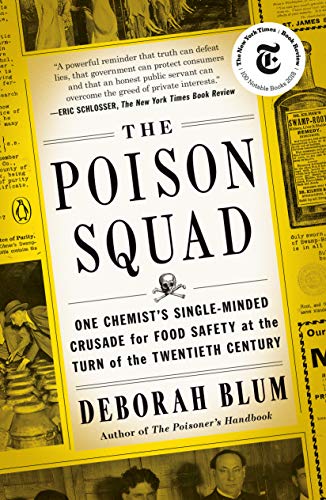
The Poison Squad by Deborah Blum

The hero of this tale is pioneering scientist Harvey Washington Wiley, chief chemist at the Department of Agriculture in the late 19th century. In a world where cakes are colored with lead and arsenic, milk is preserved with formaldehyde, and poisoned bread and dead rats from the slaughterhouse floor get thrown into meat processors, Harvey leads the fight for food safety. He performs experiments, writes articles, delivers speeches, and joins forces with muckraking journalists and the nascent pure food movement to battle an obstructionist Congress and secure passage of the Pure Food and Drug Act of 1906.

The Queen of Katwe by Tim Crothers

The heroes of this story are Phiona Mutesi, a young Ugandan girl from a poor neighborhood, and Robert Katende, the program outreach coordinator who introduces her to chess and trains her to play. Written by a sports journalist, the book follows Phiona as she competes in national and international championships (including in Siberia), and gains the respect of older players who think she might just be a budding grandmaster.

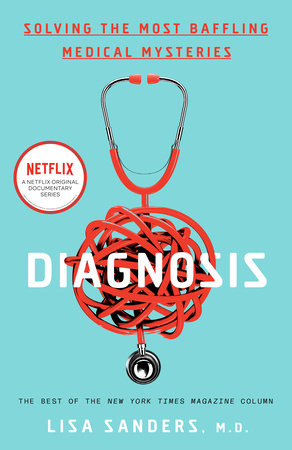
Diagnosis by Lisa Sanders

Diagnosis by Lisa Sanders, M.D.

Physician Lisa Sanders, who worked as an advisor to the TV show House, M.D. and graduated from the Yale School of Medicine, offers up a collection of real life medical puzzles, from stomach pains following a barracuda dinner to perplexing full body rashes to headaches induced by a zebra attack. She illuminates the combination of expertise, careful procedure, and luck that it takes for doctors to successfully diagnose and treat their patients, inviting readers to share in the confusions experienced along the way and the thrills of finally hitting on the right solution.

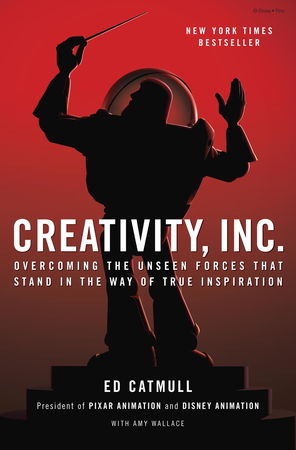
Creativity, Inc. by Ed Catmull

Follow the quest of programmers in the 1980s and early ’90s as they race to bring the first fully computer animated feature length film (Toy Story) to the big screen. Written by a co-founder of Pixar, this book goes on to detail his subsequent mission as well: to create a sustainable culture that would allow the studio to produce hit after hit for years to come, at a time when many comparable tech companies and studios were flopping after putting out one or two big hits. Catmull reveals both the processes of trial and error and the principles underlying the creatively generative culture that ultimately developed at Pixar.

The Great Pretender by Susannah Cahalan

Cahalan, a journalist who was herself misdiagnosed with schizophrenia, dives into the story of Stanford psychology professor David Rosenhan, who in the early 1970s sent seven sane people into psychiatric hospitals to investigate diagnostic criteria and treatment conditions for the mentally ill. At first the researcher and his team would appear to be the heroes of this tale. After telling doctors they were experiencing auditory hallucinations, the undercover subjects endured isolating and dehumanizing treatments, resulting in a Science article that prompted a revision of the DSM and helped revolutionize the mental healthcare system. However, Cahalan’s investigation uncovers numerous red flags in Rosenhan’s work, raising the possibility that the experiment’s results and even many of its subjects were fabricated. Cahalan digs deep and illuminates the mysteries surrounding this fraught yet influential study.

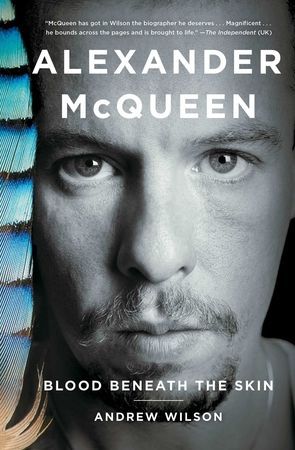
Alexander McQueen: Blood Beneath the Skin by Andrew Wilson

Follow McQueen, a gay man with a troubled working class upbringing, as he launches a career that takes him to the heights of the fashion industry, where he produces haunting and stunningly beautiful designs. The young McQueen talks his way into a bespoke tailoring job on London’s Savile Row, then a graduate course in fashion design at Central Saint Martins. As creative director at Givenchy, he produces six collections a year, while insisting that none of them can be a normal catwalk show, each needs to be amazing. McQueen eventually launches the fashion house that will design Kate Middleton’s royal wedding dress, though his struggles with mental health lead to his own suicide the year before.

The Immortal Life of Henrietta Lacks by Rebecca Skloot

Policing isn’t the only institution that has systematically exploited Black people. Medical research has been using cervical cancer cells from Henrietta Lacks, a Black woman, since 1951; the cells were harvested without her knowledge or consent, and though they played a pivotal role in medical breakthroughs for decades to come, the Lacks family was never credited or compensated. In what can only be called a journalism procedural, Lacks’s family and a science writer work to uncover the truth about this medical exploitation—and move a little closer to justice.

Two Trees Make a Forest: Travels Among Taiwan’s Mountains and Coasts in Search of My Family’s Past by Jessica J. Lee

Two Trees Make a Forest by Jessica J. Lee

After discovering her grandfather’s fragmented autobiographical writings, Lee — who has a doctorate in environmental history — travels to the island of Taiwan to hunt down lost parts of his story and attempt to reconnect with distant relatives. She offers a poetic tour and anti-colonial reclamation of the island through her descriptions of its flora, fauna, natural disasters, and political history. This title is due to be released on August 4, 2020.

Sharlene Teo Thought Writing a Book Would Be More Like a Bjork Video

In our series “Can Writing Be Taught?” we partner with Catapult to ask their course instructors all our burning questions about the process of teaching writing. This month we’re talking to Sharlene Teo, who’s teaching a six-week workshop on building and maintaining emotional suspense in fiction—a technique she uses to great effect in her novel Ponti. Teo talked to us about the problems with the ideas of “good” and “bad” writing, putting your darlings in a graveyard, and why not everyone will do a twirly dance when they read your book.


What’s the best thing you’ve ever gotten out of a writing class or workshop as a student?

Don’t be too precious about cutting things that multiple people have flagged as awkward or confusing. You’re not a genius, it’s just not clearly written enough. The best feedback and advice is often the most specific. Not everyone is your type of reader; treasure the ones that are, but also listen open-mindedly to the critiques of those that aren’t your type of reader, their critiques could be valuable too.  

What’s the worst thing you’ve ever gotten out of a writing class or workshop as a student?

Being confronted, at times, by the historical limitations of the space. Diverse representation in both the workshop and reading syllabus is very important. If not, it just becomes an echo chamber of Anglo-American literature and the specific orientations and limitations of that perspective. Most notably, what connotes “good” or “bad” writing: we’ve all heard of the tropes of Carveresque minimalism and the Hemingway style. I’ve often heard the argument, also in regards to publication diversity statistics, that if the work is “good enough” it’ll be published; that’s simply not true. There’s a whole variety of ways of telling stories and representing reality that hasn’t fully been covered in and out of the classroom.  

What is the lesson or piece of writing advice you return to most as an instructor?

There’s a whole variety of ways of telling stories and representing reality that hasn’t fully been covered in and out of the classroom.

I always tell my students writing a novel is like stringing pearls on a necklace. Each chapter or scene should gleam and pass muster (luster?) in its own self-contained way. It’s lazy/no excuse to say that readers in your workshop group don’t “get” the brilliance of this chapter because it’ll be explained later etc. There are no shortcuts. If it doesn’t stand up on its own it is not doing enough work for itself. 

Does everyone “have a novel in them”?

Everyone who is passionate about reading, and stories, and expressing their compost heap of imagination, emotions, memories and views of the world in writing has some kind of novel in them. Other people have other forms of art in them. We all have our own mediums. People at parties who don’t read for pleasure often make the assumption that you can churn a novel out if you have the time simply if you are literate. (Maybe I need to start going to better parties.) That’s a gross but common oversimplification of the existential and intellectual effort that goes into the process. If you are “too busy” to read or don’t enjoy reading and just want to be famous for being clever then no, you absolutely do not have a novel in you, and u are also not that clever, haha.

Would you ever encourage a student to give up writing? Under what circumstances?

I would never encourage anyone to give up writing—that strikes me as an arrogant and pernicious thing to do, taking someone’s creative life into your hands. I think, if it really pained a student of mine to write, and they hated every second of it, I’d encourage them to take a break and recharge their imaginative well with other forms of art and relaxation before starting again. It is never too late to start writing. Writing is not a race, it’s a life-long marathon and a spiritual practice for some. Hello Julia Cameron! There shouldn’t be any prescriptive rules around it, although solicited advice can be helpful. Just do whatever works for you, and that includes fallow periods, breaks, times when you feel disenchanted/frustrated with writing. It takes a long time to get better at writing—most days, I feel despairing of the limits of my own ability and articulacy. But the key thing to me is remaining energized and curious about stories: why they matter, how they work or don’t work. I take my own creative failures (so many!) as lessons/ research.  

What’s more valuable in a workshop, praise or criticism?

Constructive criticism. It’s good to know what is working but even better to know how you can make it work even better.

Should students write with publication in mind? Why or why not?

Put your darlings in a blank word document so they can hang out with your other shelved darlings, not dead, but soon forgotten.

It depends on what motivates them to finish a project. I think expecting or feeling entitled to publication and glowing success sets one up for disappointment and potential bitterness if reality doesn’t meet expectation, but at the same time, having the goal of publication is fine too. I used to dream when my book came out it would be like an IRL version of the Bjork “Bachelorette” video where everyone reads it and does a twirly dance etc. but I was sorely disappointed that this is not the case, but also relieved as well! Many books get published, life goes on, it’s all about keeping going, not the immediate highs of external validation. That isn’t as sustaining as the solace and surprise you get from reading and writing stories and trying to make sense of the world in words. 

In one or two sentences, what’s your opinion of these writing maxims?

  • Kill your darlings:  Put your darlings in a blank word document so they can hang out with your other shelved darlings, not dead, but soon forgotten. A darling graveyard you can revisit in a few years and either feel inspired to start something new, mystified you wrote that, or relieved they didn’t see the light of the world.
  • Show don’t tell: Sitting hunched over her laptop, she considered this truism through narrowed eyes and a coffee-addled brain and concluded that sometimes over-description is over-written, annoying and slows the pace down. SO, I mean, it depends. Sometimes, just tell us what happens! Lol
  • Write what you know: I HATE the literal interpretation of this, it leads to the reductive assumption (more for female and POC writers, I’ve observed) that their fiction is a thinly veiled narrativization of their immediate experience. It’s dismissive of the strange and transformative powers of imagination, how memory, creativity and subjective interpretations of the world combine to form a different beast than the sum of its parts. I believe in writing from a place that feels emotionally and intellectually true to you and what you’re fascinated/frustrated by. I believe every writer has thematic territories and wastelands they keep returning to inexorably and oftentimes unconsciously throughout their work. I think writing into the unknown from a place of known curiosity is more apt. 
  • Character is plot: What is plot? Is it characters moving through time, actively making decisions that advance or altar their view of the world? I feel tired trying to parse this right now. Ask me tomorrow or something. 

What’s the best hobby for writers?

Physical exercise of some sort, we’re in our heads so much.

What’s the best workshop snack? 

Humble pie. 

9 Books About Misfits and Weirdos

When the going gets weird, I look to the weird to help me keep going.

I Keep My Worries in My Teeth : Anna Cox (author) : 9781542044530 ...

The three women in my novel, I Keep My Worries In My Teeth, are all misfits. Ruth is a widow who steals photographs and hoards time because she’s trying to bring back her dead husband. Esther only understands the world when she bites it. While her dental proclivities make dating difficult they make her the most successful MouthFeel™ tester the pencil factory has ever had. Frankie is a teenage punk who secretly loves soap operas and only communicates in military code and tap shoes. These women didn’t start out as kooks but a town tragedy forces them to recreate their lives so they do what freaks and misfits do best—cleverly adapt in order to thrive in lousy situations.

The word “misfit” implies the lack of a proper fit and while some people might see misfits as unfit, my novel and the following stories and poems prove the opposite. Through break-ups, housekeeping hacks, tiger teeth mishaps, extreme vowel restriction, and pestilence-based assignation attempts, these characters turn normalcy on its head. In the best of times, life is weird but especially right now, when everything feels all wrong, let these freaks and misfits make you feel all right.

Phyllis Diller's Housekeeping Hints by Phyllis Diller

Phyllis Diller’s Housekeeping Hint by Phyllis Diller

Unexpectedly out of work, Esther, the pencil factory’s MouthFeel™ Tester, has no way of calming anxious teeth so she frantically searches for biting substitutes, toothing her way through her apartment’s hard inventory of toilet plungers, table legs, and wooden hangers. Phyllis Diller didn’t have to gnaw on faux colonial table legs to make people laugh. As one of the first female comedians to be a household name, she built a career pointing out the rigidity and ridiculousness of female domesticity. 

Published in 1966, her housekeeping hints are a timely antidote to Instagram’s filtered-perfection whack-o influencer culture plus they’ll make you laugh as you’re working from home, Zoom-ing, home-schooling, hating Zoom but doing it anyway while trying to remember what day it is, and cook, cook, cooking, again. Diller offers child-rearing advice like, “Remember my tranquilizers are coming out of your allowance” and cooking tips such as, “Don’t spend too much time planning meals. You don’t want a charge of premeditation.” 

If you can’t find your own copy, I read it on YouTube as a way to laugh during the pandemic. 

No One Belongs Here More Than You af Miranda July som e-bog

“The Swim Team” from No One Belongs Here More Than You by Miranda July

My novel has three main characters but photography is a kind of fourth character, a silver nitrate trickster mucking with everyone’s understanding of memory, reality, and time. “The Swim Team” has nothing to do with photography but every semester I read it to my photography students anyway because the great thing about photography is you can create your own reality and the terrible thing about photography is you can create your own reality. In July’s short story, the swimmers never dip into a pool, but they bond as a team, breaststroking and executing perfect dives on a dry kitchen floor. 

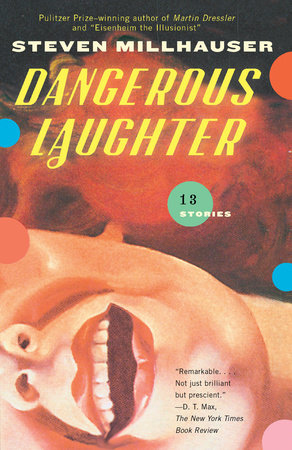
Dangerous Laughter by Steven Millhauser

Dangerous Laughter by Steven Millhauser

What happens when laughter goes rogue? This story follows the delirious rise and deleterious fall of laughter clubs, “those half-real, half-legendary places where laughter was rung out of willing victims by special arts.” When the laughter craze falls out of fashion, it is replaced by weeping cubs, but when the most gifted laugher refuses to stop laughing, she faces unexpected consequences. 

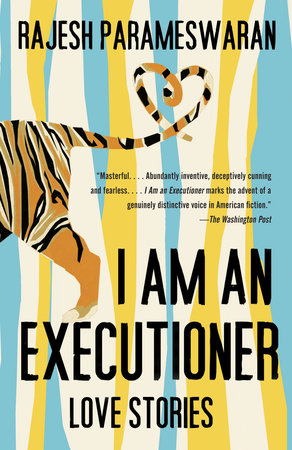
I Am an Executioner by Rajesh Parameswaran

The Infamous Bengal Ming” in I Am An Executioner: Love Stories by Rajesh Parameswaran

It’s tricky to express affection with your teeth. After a long dry spell, Esther finally has a date and at the end of the night he invites Esther back to his apartment. She’s excited and tequila brave but her teeth are bossy drunks and it has been too long since they’ve sunk themselves into anything hard… 

Attempted dentinal affection doesn’t end well for Esther nor for the tiger in “The Infamous Bengal Ming.” This wickedly funny story is told from a tiger’s perspective and shows how love redeems and destroys.

The Girl in the Flammable Skirt by Aimee Bender

“The Rememberer” from The Girl In The Flammable Skirt by Aimee Bender

Some couples split because of infidelity while others break up because one of them can’t keep their teeth in check, but in “The Rememberer” a woman breaks up with her boyfriend because he is “experiencing reverse evolution” at the rate of about a million years a day. One day she returns from work to discover he is an ape. A few weeks later, he’s a sea turtle. Like all the stories in this collection, Bender combines absurdity with emotional acuity. Who hasn’t wondered if their ex was regressing right before their eyes? 

Sum by David Eagleman

Sum: Forty Tales From the Afterlife by David Eagleman

Throughout I Keep My Worries In My Teeth, Ruth talks to her dead husband as if he’s still alive. She asks him what it’s like wherever he is and while Ruth never receives an answer, David Eagleman’s fantastic and bizarre afterlife scenarios might just change how you live.

One of the forty tales imagines the afterlife as a kind of terrible sitcom where you’re forced to confront all the irritating versions of how your life could have been. Another story imagines that in the afterlife, life is reordered and relived according to categories of activity. So, you spend “eighteen months waiting in line, nine days pretending to know what is being talked about, six days clipping nails, six months watching commercials and you take all of your pain, all at once.”

Eunoia - The Upgraded Edition

Eunoia by Christian Bök

Frankie, the teenage punk, spends most of my novel communicating by wearing tap shoes and using a military code. This unwelcome limitation expands Frankie’s appreciation of her speech. She learns to loves how her words echo on concrete and hates how carpet swallows her voice. 

Speaking in tap shoes seemed like a clever restriction until I read Eunoia, a book of poetry where each chapter only uses words that contain one type of vowel, like in this stanza from the E chapter:

Westerners revere the Greek legends. Versemen retell the represented events, the resplendent scenes, where, hellbent, the Greek freemen seek revenge whenever Helen, the new-wed empress, weeps.

Best read out loud, the book’s restrictions showcase the flexibility of language and reveal each vowel’s quirks.   

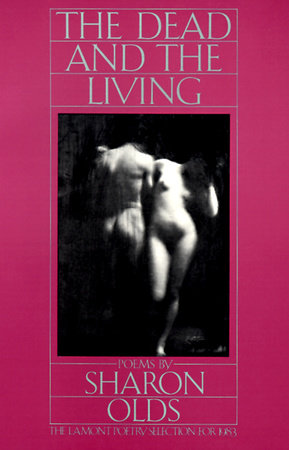
The Dead and the Living by Sharon Olds

The Connoisseuse of Slugs” from The Dead and The Living by Sharon Olds

And now, I must apologize to all the poetry readers in the small Ontario town where I live. If you’re wondering who checked out every single Sharon Olds book from the library—right before the library closed for months—it was me. I’ve used my long quarantine nights to contemplate erecting a shrine to Sharon Olds, but her poems deserve better than the cat-hair-clump-duct-tape disaster that I’d erect. And speaking of erect, this poem is also about slugs.

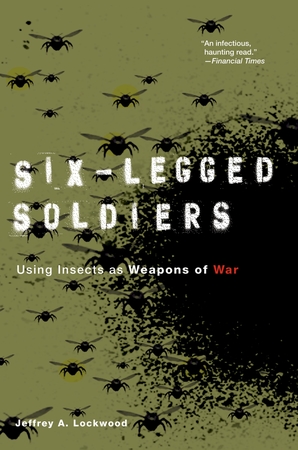
Six-Legged Soldiers: Using Insects as Weapons of War by Jeffrey A. Lockwood

This nonfiction history of militarized entomology is so enthralling, comical, and preposterous it should be fiction. Did you know someone tried to assassinate President Lincoln by sending him a louse-infested military uniform? 

Read it for the fascinating historical and contemporary explorations of world-wide weaponized insects but also read it as a reminder that the freakiest people are the ones who act the most normal and seem the most in control. Better to put down that Colorado potato beetle bomb and let your freak flag fly. 

Ottessa Moshfegh’s New Novel Explores the Dark Side of Social Distancing

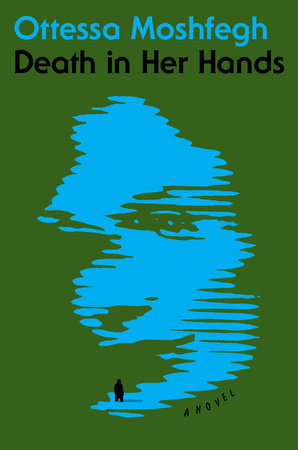
Ottessa Moshfegh can write about cynicism and vice in a way that is at once dangerously validating and innocuously readable. Her characters are young, prideful, verbose, and hate the world just enough more than they hate themselves to make room for an inventive plot every time. Death in Her Hands, Moshfegh’s latest, is a little different. On page one, a lonely old widow named Vesta finds a mysterious note. The rest of the novel follows her spiraling obsession with the anonymous message, resulting in comically extravagant theories that anxiously trouble the line between reality and delusion. The only other character is a dog. 

Death in Her Hands

In light of the current pandemic, Death in Her Hands feels eerily clairvoyant. It’s a deeply internal thriller about what the mind can convince itself when left truly alone—the potential ramifications of what we now call social distancing, written years before it became a practice that defined our daily lives. And the predictions are grim!

I spoke to Ottessa Moshfegh over the phone about her new book in early March, back before its release date was twice postponed, along with a brief follow up mid-May. We talked about alienation, genre conventions, and what it means to get older, among other things. We also spent the first five minutes of our call chatting about the then-burgeoning pandemic, an eerily clairvoyant discourse in and of itself that I had to cut off to start our interview (Her take? “The timing of this outbreak is so creepy to me. Like, is this on purpose?”). But with Ottessa Moshfegh, what else can you expect?


Verity Sturm: What’s the story of its genesis?

Ottessa Moshfegh: I was living in Oakland. I had finished my short story collection (Homesick for Another World) and was waiting for it to come out, so I had this limbic period of not knowing what to do next. Like, I knew that a lot of things were going to happen—I was going to move, my book was going to come out. But I was done writing short stories, and I desperately needed a creative project. So I told myself that I would write 1000 words a day, without looking back at what I had written the day before, until I reached the end of a novel. And everything that happened was a discovery. It was like an exercise in being present, and I think that became what the book was about—the character being led in the present moment by her imagination. 

So it worked. I mean, I wrote it and I put it away. I went on book tour for Eileen and then started revising it when I was living in a cabin in the woods on a lake, kind of the place that I had been imagining while writing the story, so that was really cool to get to go there. It’s a family place in Maine but I tried to avoid specifically naming the town in the book because I didn’t want it to seem like Maine exactly. But back to the question of where it started, I have no idea. I have no idea about how Vesta, like… I don’t know. It just kind of appeared on the page and became a book.

VS: Death in Her Hands is packaged as a traditional thriller, it’s got the classic title and cover design and old lady/death note imagery. Your first move into genre fiction was with Eileen, and in an interview with Vintage Books you mentioned that it was a “creative decision, not a commercial one” meant to bring attention to the limitations of systems, whether social or narrative. How does Death in Her Hands work within this genre-system?  

OM: I’m fascinated by how the genre becomes institutionalized. That happens because of the books, not because there’s some preexisting idea of what a mystery novel should be. Nobody said, “okay this is the genre and now you have to write books in that genre.” I’m thinking, what would my version of that be? And what I find interesting is playing and toeing the line between expectation and the unexpected. I’m not interested in reading novels that could have been written by some computer program, you know? There should be some overriding element of human intelligence and some form of expression rather than another thing in a series that’s exactly like the last book that you loved. But I think it’s exciting when books can be placed side by side with other books of a particular genre and defy expectations around that genre.

VS: Speaking of defying expectation, your previous protagonists have been mostly young people disgruntled with life before they’ve seen half of it. What moved you to approach Death in Her Hands from 72-year-old Vesta?

OM: I was interested in a character who had already had a life, and the question of what we do at the end. Like, we’re completely alone, we’re no longer planning for the future, and we’re not even trying to really understand what’s happening in the world around us anymore. I mean, I don’t know, I’m 38, I’m not 70. My parents are in their 70s now and I wouldn’t say they have opted out of life at all, they’re both completely awake. But I was interested in a character who would be isolated physically, and also kind of spiritually. Her husband had died and she never really had a life of engagement because it was only through her husband that she really engaged in society. So what happens when you try to know yourself when you know that your life is almost over? I guess I was thinking a lot about death. It is called Death in Her Hands.

VS: Although older, Vesta speaks with an insular contempt not unlike that of your previous protagonists. You now have multiple books steeped in the first-person depths of a highly critical, often retributive perspective. Why write from a place of such bitter judgment?

OM: Probably because that’s what I was doing. I felt really, really alienated, and pretty tormented by my internal life. Although things have changed significantly in the last five years, for the better. Hmm. I want to answer this in an interesting way.

VS: There is NO pressure.

I’m not interested in reading novels that could have been written by some computer program, you know?

OM: I guess I’ve been interested in how a character in isolation can try to make sense of the world around her without actually interacting with it. Because in some sense that is what fiction is — it’s creating a world in the fortress of a two-dimensional page, an illusion in the mind of the reader that feels real enough that you can understand it. And I feel like that’s exactly what people do when they’re alienated. They have a version of reality within the fortress of their own mind. The way that we build worlds is that we see, we take evidence of things, and we make a judgment of them. And then that’s how we ascribe meaning, that’s how we build a value system and a belief system. For me, that’s essentially what fiction is.

VS: You’ve been pretty open about the torment of your internal life, often referring your 20s as some derivative of hell in interviews and profiles. But you’ve also said “I have an unflappable belief that my future is bright and that I’m blessed.” I’m wondering if you recall when or how in the past five years, as you said, your life began to change significantly for the better. And since so many of your followers are young people familiar with the cynicism of your characters, do you have any advice to junior writers or artists along the way?

OM: I think that my life actually took the turn before I started to feel the effects of it, and I also think it’s partially just a matter of getting older. This sounds weird, but when you’re in college, you have this manufactured society around you that consists of your fellow students, faculty, staff, whatever. And when you leave that system you are suddenly confronted with the world at large and you have to fit your life into it accordingly unless you want to live in a hole or never have relationships outside of college. I think the process of becoming an adult is maybe a little bit delayed in our society since the middle class has this pathway that has been kind of paved for you. There’s an expectation that you will graduate from high school, go to a four-year college, graduate from that, and then be in a career. 

That didn’t happen for me, thank god, and part of that was because I knew that I was a writer. I think that the turn happened for me psychically when I realized I had reached a certain point of independence—I felt confident enough in what I was doing to reject the principles of my institutions from my path and really live according to my own compass. And by “institutions from my path,” I mean my family, my education, the region on earth where I was brought up. 

So, I don’t know, I think independence and self-reliance are really important in beginning adulthood according to what you want rather than what anyone else is doing or what anyone else thinks you should do. And I think I got really lucky that what I wanted to do ended up being the very thing that was going to get me to that point. I mean, I don’t know. Is this making any sense?

VS: Yes! So much, you have no idea. Now, if your life has changed so much in the past five years, can we expect your writing to change too?

OM: Oh, yeah. Definitely. Always. 

VS: Death in Her Hands seems to grow more prescient with every day that passes in the COVID-19 pandemic. What’s it like to publish a book about isolation at a time when it is so widespread and normalized, if not mandated?

I’m interested in how a character in isolation tries to make sense of the world around her without actually interacting with it.

OM: The pandemic and consequent quarantine has definitely distanced me from the experience of publishing the book: I usually go out with the book on tour, and I get to interact with readers and deliver my work to the world in a way that feels personal. I’m grateful that the book will be available this summer so that people who are still isolating, or recovering from isolation, can read it if they want.

VS: A difference between our alienation (in quarantine) and Vesta’s is that she voluntarily elects hers, stating that she’s “pleased with [her] decision” to start an independent life in the removed woods of pseudo-Maine upon the death of her husband. Vesta’s isolation precipitates the paranoia that drives the darkness of this novel, but it also seems to empower her. Do you think that being alone is always this double-edged sword? What is there to gain from gap between what it giveth and what it taketh away?

OM: I do think it’s a double-edged sword. Depending on your personality, isolation can have varied effects. For Vesta, her isolation gives her access to herself on her own terms. She lives according to her own whims and rules. But it’s also a self-reflective universe, and that self can feel like a trap for her sometimes. Having time to be alone with myself is crucial. Privacy and silence are the conditions for me to write, attune to the pace and movements of my own mind. Forced isolation can feel very different, of course. 

VS: You have now written multiple books both in isolation and about isolation, and have recently identified yourself as an “isolator” in a piece for The Guardian. The evidence suggests that you’re kind of an expert in the art of being alone. Any tips for the rest of us? 

OM: I don’t mean to boast that I have mastered isolation, or that my life is intrinsically better because I’m an isolator. It’s just my habit, what I’m accustomed to. It helps to have a project, some sense of duty or purpose.

In “All My Mother’s Lovers,” a Mother’s Secret Letters Reveal Her Secret Life

Not to sound like an assistant district attorney from SVU, but it is beyond a shadow of a doubt that acclaimed essayist and book critic Ilana Masad has carved a prominent space for herself in the realm of mother-daughter literature with her debut novel, All My Mother’s Lovers. It sits upon a throne of 2020 Most Anticipated lists and has charmed its way into the hearts and minds of readers and critics alike, marking it as one of this year’s most memorable debuts.

All My Mother's Lovers by Ilana Masad

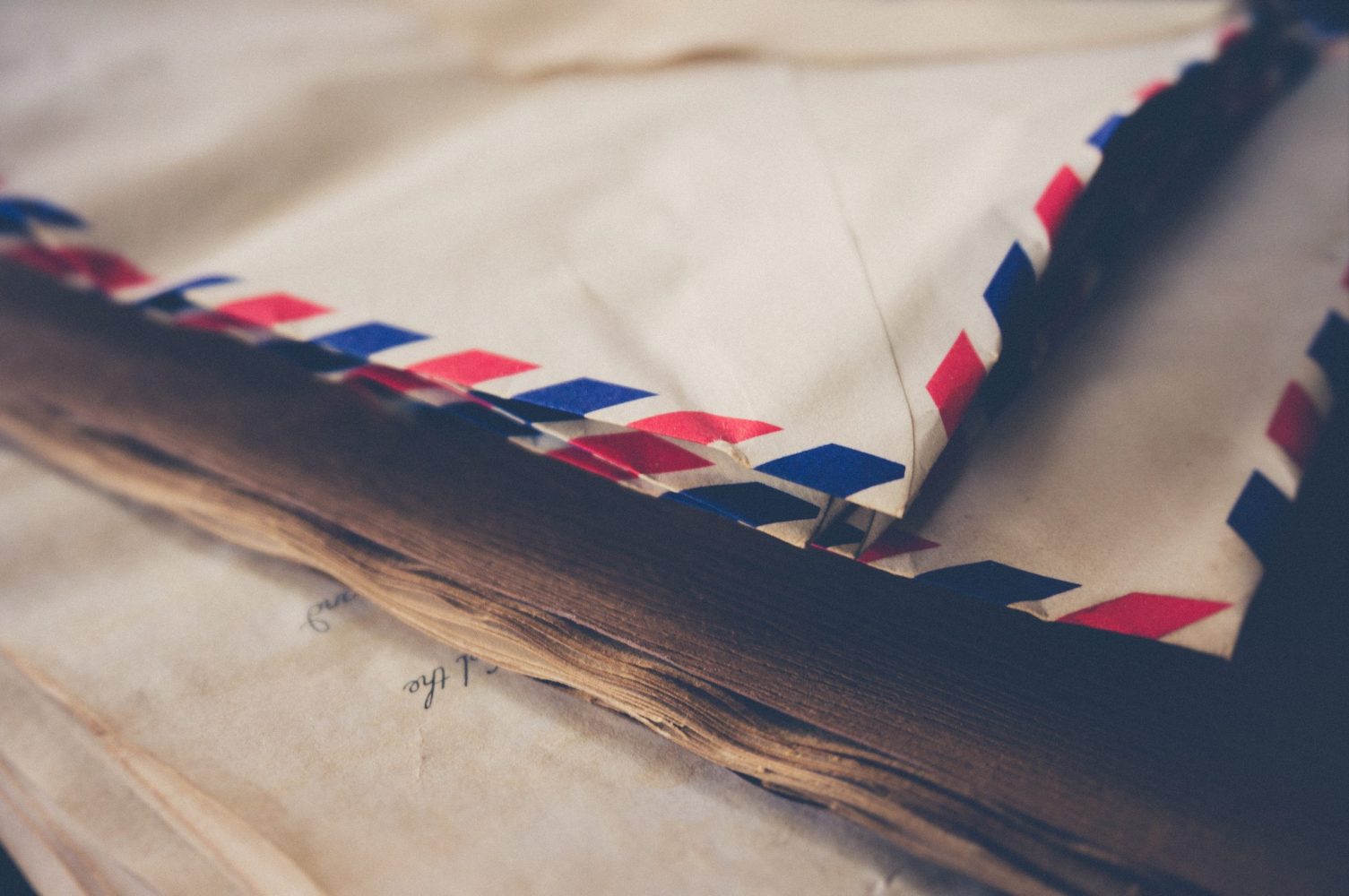
When her mother dies suddenly in a car crash, 27-year-old Maggie Krause returns home to find a devastated father and brother and, while going through her mother’s belongings, five sealed envelopes—each addressed to a mysterious man she’s never heard of. In an effort to learn the truth about her mother, Maggie opts out of shiva to hand-deliver the letters herself. What unfolds is the secret life her mother, Iris, kept from her family, forcing Maggie to reconcile herself with the mother she thought she knew, and didn’t know at all. 

Told from the perspective of both Maggie and Iris, All My Mother’s Lovers is a poignant examination of intergenerational relationships, grief, and identity—all while trying to navigate selfhood through it all. It asks us to honor the relationships we have with the people we grew up around, and reminds us that our connection to them isn’t temporal, but a lasting imprint that never changes even when we do.


Greg Mania: This novel was born from a single line that kept you awake one night when you were in the first semester of your PhD program at the University of Nebraska-Lincoln: “Maggie is in the midst of a second lazy orgasm when her brother, Ariel, calls to tell her their mother has died.” What was it about that particular line, which is the first sentence of the book, that you just couldn’t shake?

Ilana Masad: I think most writers have come up with endless lines in the middle of the night when they couldn’t sleep, and those of us who, like me, can’t be bothered to get up and write them down nine times out of ten, usually lose those lines to the ether (and let’s be honest, most of them probably aren’t really as brilliant as we think they are in the wakeful exhaustion of the moment anyway). But for whatever reason, this one was still there in the morning, and I really have no idea why! Something I liked about it that night, and still enjoy, is the sonic quality of some of the words: “lazy orgasm” for instance, the “z” sound of both the zee and the soft ess. I guess I also like the existential neatness within it, this push and pull between sex and death.

GM: How has being a book critic helped you write this book?

IM: Indirectly, I can see it having helped this way: being a critic means keeping up with contemporary fiction, or trying to. I didn’t purposefully set out to write about the genre that I also tend to write fiction in most often (and yes, contemporary general/literary fiction is a genre), but it’s kind of what happened as time went on. In that way, reading, and reading closely, became part of my job, and I’m sure I internalized elements of structure, plot, and pacing that were successful as well as marketable in some way, even though I wasn’t doing so consciously. That is, when I read as a critic, I’m reading differently as I would as a fiction writer trying to learn from the form, but that doesn’t mean that I didn’t learn things by some kind of osmosis, if that makes sense.

GM: Were there any specific challenges when shifting to the role of novelist? If so, how did you contend with them?
The only thing that feels different to me about books and culture criticism is their increasing unsteadiness as a career.

IM: This isn’t the first novel I’ve written, or even the first I’ve sent out (it’s the seventh of the former, fourth of the latter) but it’s the first I’ve sold, and so I really appreciate your framing of the question here, because it’s true that I’ve really never been in the role of the novelist before, certainly not in any public way like this. One of the biggest challenges has been being on this end of things—the A rather than the Q, the guest and not the host, the subject of the review rather than its byline. It’s surreal, after having spent years being on the other end, and (knock on wood!) having no plans to stop that anytime soon.

GM: Conversely, do you think your approach to book criticism will change now that you’re a novelist yourself?

IM: I really don’t think so! I first started publishing criticism in 2013, and fiction in 2012, and have kept writing and publishing those simultaneously ever since. It’s the ratio that’s changed, really, and that was largely due to the fact that over time, as I developed my skills in both areas, I learned that I potentially could make a career in criticism, while the fiction side of things was still much less clear to me. At this point, the only thing that feels different to me about books and culture criticism is their increasing unsteadiness as a career as well.   

GM: The mother-daughter relationship is a bubbling cauldron in literature. Is there a text in this regard that had a profound impact on you and, if so, how?

IM: You know, I’m trying to think of whether there was one like this when I was younger and I can’t think of that many. So many of the books I read as a kid featured orphans or children whose parents were just sort of mysteriously absent from their everyday lives, and later, when I was trying to read all these classics that I thought everyone in the U.S. had read in high school, so many of the mothers were dead, and if not dead, then silly and sort of unimportant. It’s only in recent years that I feel like I’ve been reading a lot of books that dive deeply into this particular relationship, really, which makes me so glad.

The one book that I can think of as being formative when I was younger, and which also included nuanced and complex mother-daughter relationships is Little Women. I’ve read that book so many times, and each time I do, I find something new in those relationships. Marmee tries to respect her daughters’ decisions but also attempts to impart some of her own wisdom. She’s not perfect—sometimes she’s pushy, sometimes she’s holier-than-thou, occasionally she’s furious or exhausted. She’s human, in other words. And her daughters don’t always recognize her as a person who existed before they did, as a woman who is not solely a mother but also an individual with her own thoughts and desires and dreams; but sometimes, in glimpses and moments, they can and do, and that’s always felt so powerful and beautiful to me, and so rare for literature of the time, too.

GM: Iris is a character rich in dimension, and that is something Maggie discovers about her mom throughout the course of the book. What do you want your readers to take away about parents, specifically? 

IM: I want readers to take away whatever it is they need to from the book—it’s not for me to say what that’ll be. (I know this sounds cheeky, but I mean it sincerely!)

In terms of how I think about parents: they fascinate me. This is probably partially because my own dad died when I was a teenager, and one of the things I started to mourn very early were all the things I’d never know about him, the conversations I’d never get to have with him, the stories that I’d never get to hear.

The older I get the more I think about how adulthood is this bizarre social construct that we all participate in, and how our parents must have felt just as confused and strange and out of control as so many of us do at various points in their lives, even as they presented whatever façade it is they presented to us when we were young. And that makes me think a lot about the distance between how children perceive their parents—which can be in a variety of ways, of course, from all-knowing and benevolent to dangerous and unpredictable and, most likely, somewhere in between—and how adults perceive their parents. The thing we have as adults is both our own life experience through which to read our parents and the capacity to learn more about them, to ask them things, to find out more. That doesn’t mean they’ll respond, or tell the truth; it doesn’t mean we’re required to ask or that all of us even want to. But that potential for communication is there, and I wonder how many of us don’t take advantage of it because of how deeply prescribed our hierarchical roles are. 

GM: This is also a story of intergenerational relationships. How does identity, for you, unfold when presented in the context of different generations?

The older I get the more I think about how adulthood is this bizarre social construct that we all participate in.

IM: What a wonderfully complex question! I think that the specifics depend very much on the identity, but more broadly speaking, I think a few key things change and evolve over time that create these seeming gaps between generations: social and political contexts (by which I mean things like what is normative or accepted on the one hand, and what laws and rights have been created under whatever political system one lives in) and, alongside that, language. So, to take Maggie’s identity as an example: she uses the words gay and lesbian to describe herself but identifies most often as queer, because that word describes not only her sexual orientation but also an identification with a kind of umbrella-term (that some object to) for the LGBTQ+ community, and also, in addition to that, a kind of way of being in the world that implies a political stance. On the other hand, women of Iris’s generation might identify much more strongly with the word lesbian because of the kind of stigma it carried when they were coming of age and coming out and the political implications of identifying with it.

When I think of the various intersecting identities we all carry, I like to think of the time periods where we came into or became aware of particular aspects of our identities as well, because I think that our terminology is often bound up with it in ways that are deeply emotional and difficult to shake.

GM: Grief is another major theme. You remind your reader that there is no one way to grieve, no wikiHow on how to deal with the frenetic emotions that run through you like slides on a projector. Did you learn something new about grief while writing this book?

IM: I learned how Maggie grieved, and how Peter grieved, and Ariel and Iris as well. All of them grieve in different ways in various moments in the book. Grief, unfortunately, has been in my life for very nearly as long as I can remember myself—it’s something I feel a strange kinship with. I have for some years now only experienced it second or third-hand, via the grief of those close to me, which scares me, a little, because for a good portion of my life, grief arrived like clockwork every four or five years. Part of me, I think, wrote this book with some bizarre and totally irrational superstitious idea that it would be a delay tactic, that by writing out all this grief I’d delay it entering my life directly again. I’ve been thinking about that a lot recently, for probably obvious reasons.

GM: Has writing this book helped you reconcile with any grief in your life? Is so, how?

IM: I don’t think so, but only because I’m not sure I conceptualize grief that way—I don’t know if it’s something I can reconcile with. If anything, I think writing the book let me admit how much grief still lives in me and just how uncomfortable it still is, and probably will be for a long time.

Visiting the Local Greasy Spoon with an Actual Saint

The following story was chosen by Nicole Chung as the winner of the 2020 Stella Kupferberg Memorial Short Story Prize. The prize is awarded annually by Selected Shorts and a guest author judge. The winning entry receives $1000, a 10-week writing course with Gotham Writers Workshop and publication in Electric Literature. In lieu of a live performance at Symphony Space in Manhattan, Selected Shorts has arranged for the winning story to be recorded by Emily Skeggs, which you can watch here.

Prayer for the Ides of February

Winters, my hands become geological. First they chap, then fissures open in the webbing between each finger, then granules surface from within. This year, the granules have begun aggregating into complex structures. I sand down the pale, coral-like extrusions with a nail file or discreetly snap them off. In the privacy of my apartment, I tweeze out the roots. It’s hard to keep up, and leaves my hands prone to bleeding and my mittens bloody.

What do I do, I ask my mother. From far away, she consults the Harvard pathophysiology guide that’s always lived on her nightstand, thousands of pages thick with all the very best ailments. But that’s no help, so she dredges up her catechism and suggests petitioning Saint Lucy.

Although I’m thoroughly agnostic, ambivalent to the bone, you descend from the heavens right away, halo blazing. You gently take my hands in your own, diagnosing it as a bad case of longing, something within me yearning beyond.

Can you make it go away? I ask.

Are you sure you want me to? you ask. It’s really quite lovely.

I’ve fallen behind on pruning, and latticework, admittedly charming, now encircles my knuckles. I imagine letting it grow out, myself as art installation. Then, when no gallery can contain me, lowered to the seafloor, generating much-needed habitat for eels and cephalopods.

But it’s rendered my hands useless, I object. And I’m too young to become a full-time monument to my own solitude.

With an air of approval, you loop your immaculate arm carefully through mine for a stroll to the famous local diner. They’ve decorated with red cutout hearts and cupid garlands. You get the grilled cheese, I get an egg cream, we share a platter of fries. I couldn’t remember which one St. Lucy was; you are, of course, the one always depicted with her eyes both in her face and on a plate, which we make space for by the jams. You also doff your halo, wedging it between the ketchup and the napkin dispenser, where it dims. You seem much more approachable now that I can stop averting my eyes.

After we’ve finished, the waiter sweeps up my sloughings and clears the dishes as well, we realize belatedly, as your eye-plate. I rush to save the eyes before they get thrown out, but you catch my elbow and pull me back. We never learn what becomes of them.

I do not ask if you regret your virgin martyrdom, if wedding Christ was really an excuse to rebuff mortal men, if you respond so readily to all your supplicants. You do not point out my hypocrisy, resorting to religion only when science fails me. We linger long after the bill is settled, speaking of thoughts and feelings and other womanish trifles, voices low, for no one but each other. “Only the Lonely” plays on the jukebox but for once does not apply. 

7 Revolutionary Anthologies by Black Women Writers

I once took a course called “Modern American Literature” in college. The syllabus didn’t include one single Black female author. Every author we read was a white guy. I wondered why the works of Maya Angelou, Toni Morrison or Alice Walker—voices that turned the pretentious, white male-dominated literary canon on its head—did not qualify as Modern American Literature. As the lone Black female student in this class, I couldn’t help but feel that the lesson here was that I didn’t belong. My blackness, my womanness, was not American Literature. As I grew older and delved deeper into diverse literature, I discovered that Black and brown women were not superfluous or alien to Americanness, but essential to the story of the United States, and as long as our voices are suppressed, the story would never be complete.

The struggle for racial equality is far more than a moment in time—it’s a movement, one that Black women and women of color have been documenting for decades.

As we observe a wave of protests across the world, demanding justice for George Floyd and the countless other black people killed by police brutality, it’s increasingly important to understand the Black experience in order to be an ally for racial justice. Although the conversation on racial justice is often centered on Black men, we must not forget the names of the Black women who have recently been killed by law enforcement and racist vigilantes: Breonna Taylor, Oluwatoyin Salau, Rekia Boyd, Sandra Bland, and countless other voices that were silenced. In their honor, we celebrate Black female voices from across the diaspora through literature. 

One of the most powerful things people can do right now is to educate themselves by going directly to the source, that is, #ownvoices texts and literature that speaks directly to the impact of racial injustice in the United States. It’s important to note that the struggle for racial equality is far more expansive than this troubling moment in time—it’s a movement, one that Black women and women of color have been documenting for decades. The following anthologies capture the voices that always existed but were often shunned, ignored, or silenced altogether.  

Sisterfire: Black Womanist Fiction & Poetry edited by Charlotte Watson Sherman

The Sisterfire anthology came as a response to troubling times. Editor Charlotte Watson Sherman writes: “Shortly after the Rodney King Uprising, I woke from a dream with a voice telling me to ‘do the anthology.’” The anthology features writers such as Alice Walker, Bell Hooks, Ntozake Shange, Lucille Clifton, and more. The book is divided into nine parts, beginning with “Becoming Fluent: Mothers, Daughters, and other Family” and “Night Vision: Crack and Violence Against Black Women,” with each part alternating between poetry and fiction to paint a landscape of the issues heavy on the minds of women writers at the forefront of the Black womanist thought movement.

Well-Read Black Girl by Glory Edim

Well-Read Black Girl: Finding Our Stories, Discovering Ourselves by Glory Edim

This book is the ultimate ode to Black women writers. A collection of essays written by the most prominent Black women writers of our time reflecting on the role literature played in their own coming of age journeys. The collection includes essays by Jesmyn Ward, Jaqueline Woodson, Gabourey Sidibe, Tayari Jones, and others. With this anthology, Edim sends a clear message, “The essays in the following pages remind us of the magnificence of literature; how it can provide us with a vision of ourselves, affirm our talents, and ultimately help us narrate our own stories.” 

This Bridge Called My Back: Writings by Radical Women of Color edited by Cherrie Moraga and Gloria E. Anzaldua

Through personal essays, criticism, interviews, testimonials, poetry, and visual art, this collection (edited by Chicana writers, but including work from women with a range of racial identities) explores, as coeditor Cherríe Moraga writes, the “complex confluence of identities—race, class, gender, and sexuality—systemic to women of color’s oppression and liberation.”

Home Girls: A Black Feminist Anthology edited by Barbara Smith

This collection of essays and poetry by Black feminist and lesbian activists is one of the leading texts in the field of women’s studies. Editor Barbara Smith brought together Toi Derricotte, Audre Lorde, Patricia Jones, Jewelle L. Gómez and many more. Since its initial publication in 1983, it has become an essential text on Black women’s lives and writings. 

New Daughters of Africa edited by Margaret Busby

New Daughters of Africa spans a range of genres—autobiography, memoir, oral history, letters, diaries, short stories, novels, poetry, drama, humor, politics, journalism, essays, and speeches—demonstrating the diversity and extraordinary literary achievements of black women who remain underrepresented. The anthology includes work from Margo Jefferson, Nawal El Saadawi, Edwidge Danticat, Zadie Smith, Chimamanda Ngozi Adichie, Imbolo Mbue, Yrsa Daley-Ward, Taiye Selasi, and Chinelo Okparanta. Each of the pieces in this collection demonstrates an uplifting sense of sisterhood, honors the strong links that endure from generation to generation, and addresses the common obstacles female writers of color face as they negotiate issues of race, gender, and class and address vital matters of independence, freedom, and oppression. 

The Black Woman: An Anthology edited by Toni Cade Bambara

The Black Woman is a collection of early, emerging works from some of the most celebrated Black female writers. First published in 1970, The Black Woman introduced readers to groundbreaking original essays, poems, and stories. The anthology features bestselling novelist Alice Walker, poets Audre Lorde and Nikki Giovanni, writer Paule Marshall, activist Grace Lee Boggs, and musician Abbey Lincoln. These legendary voices tackle issues surrounding race and sex, body image, the economy, politics, labor, and much more.

Color of Violence

Color of Violence: The INCITE! Anthology edited by INCITE! Women of Color Against Violence

Color of Violence addresses the pervasive issue of violence against Black and brown women. With social media being more accessible than ever, we are seeing an endless stream of names turned into hashtags after violent encounters from police brutality to domestic and sexual violence. One in five women will experience sexual violence in their lifetimes and these numbers increase significantly for women of color, immigrant women, LGBTQIA+ women, and disabled women. The volume’s 30 pieces—which include poems, short essays, position papers, letters, and personal reflections—ask one haunting question: “What will it take to stop violence against women of color?”

You Should Have Been Listening to Octavia Butler This Whole Time

COVID-19 and the Black Lives Matter protests across the U.S. and all over the world have drawn our attention to systems of inequality that sustain white supremacy, racism, and anti-Blackness as well as the wealth gap, lack of social security, and inefficient health and education systems. We are recognizing and naming  injustices, but we also need to organize ourselves for collective action and sustainable community building. In their boundless wisdom, Black women like Octavia Butler have given us the blueprint. Butler’s Parable of the Sower is an excellent example of the work Black women have done to prepare us for this moment and the movement it is creating. Through her protagonist Lauren Olamina, Butler has been telling the world for decades that it was not going to last in its capitalist, racist, sexist, homophobic form for much longer. She showed us the way injustice would cause the earth to burn, and the importance of community building for survival and revolution. Through Parable of the Sower, we had a better future in our hands, but we did not listen. 

Butler’s Parable of the Sower is an excellent example of the work Black women have done to prepare us for this moment and the movement it is creating.

Published in 1993, Parable of the Sower warned us of the effects of climate change, disease outbreaks beyond our control, and an egotistical white-wing president backed by racist religious fundamentalists. Still, we were not ready. This is an indictment on us and our failure to listen to Black women. It need not render us immobile, though; instead, it calls us to act. If we did not know before, it is now clear, through speeches, poetry, music, and works of fiction, that Black women are powerful beyond measure. This power is not limited to knowledge and foresight, but extends to our thinking and attention on the way forward that has already, at least in part, been charted for us.

Consider—
We are born
Not with purpose,
But with potential.

We meet Lauren Olamina as a teenager with a sense of knowing. She quietly rejects the religion of her father, a Baptist preacher and the religious leader in their community of less than two dozen families in the fictional city of Robledo, California. It quickly becomes clear that Lauren is not only a hyperempath, feeling the observable pain and pleasure of other people, but a thinker and a strategist with a deep understanding of risk assessment, timing, and holding knowledge until the appropriate time. She learns, at the behest of her parents, to control herself so that no one can detect her hyperempathy. At the hands of her own brothers, she experiences the danger of her vulnerability in much the same way that Black women experience pain and learn to protect and heal ourselves from pain inflicted upon us by our kin. We use the same skills to shield ourselves from a world intent on eradicating us.

Parable of the Sower

Lauren spends time in deep thought and preparation. She knows the time will come when she will have to escape. She will need skills and supplies as a refugee. When her brother expresses his desire to leave, she tries to stop him, but she can’t make him understand timing. She is left to wait for news of his death. There is no celebration in the confirmation of her knowing because knowing is not the goal. Her vision is greater than her own exaltation and it is linked to the survival of her community so that it can one day thrive. She seeks liberation.

Through her observation of the world around her and her instinct, Lauren creates her own belief system—Earthseed. The scripture itself is about the changing nature of the god and, by extension, the world. It speaks to the power of the individual to affect change. Though it is never explicitly stated, it becomes clear that people—individually and in community—are god, shaping and reshaping the world through responses to what we have already created. It places responsibility on people themselves and calls on us to be attentive to our visions, understanding every decision as a move toward or away from it. Through it, Butler calls us to action.

All that you touch
You Change.
All that you Change
Changes you.
The only lasting truth
Is Change.
God
Is Change.

When the community is invaded and destroyed and most of the people murdered, Lauren is forced to leave. She scavenges with strangers in her own home for whatever might be of use and, when it is safe, unearths the stash she has prepared. The work of Black women—and girls—has always involved being hundreds of steps ahead, to see what is invisible, and to push past fear, grief, and exhaustion. This is what keeps Lauren alive and helps her to save others—another role Black women consistently hold. With the principles of Earthseed as her anchor, she embarks on a philosophical and physical journey toward a better world with societal destruction, violence, and crises of leadership at her heels.

The work of Black women—and girls—has always involved being hundreds of steps ahead.

Strong, highly skilled, armed, and androgynous, Lauren could easily move with speed and stealth toward her own safety and comfort—but neither she or Earthseed is singular in purpose. Black women have, for decades, committed to community and refused to leave anyone behind. In our move toward Black liberation, we know that we need people to believe and work with us to create it, but we also know that the people who don’t join us deserve it too, and we will have to carry them. It is much easier, however, if they come with us. Earthseed was about getting people to a place where they are willing to join the journey. 

Embrace diversity.
Unite—
Or be divided,
robbed,
ruled,
killed
By those who see you as prey.

One of the most difficult lessons from Lauren’s leadership of the Earthseed community is her insistence on making space for people in the face of great opposition. As they journey, the group members—previously saved and supported by earlier members—take great exception to Lauren’s openness. They do not understand her commitment to growing the community. She welcomed people without indoctrination. The understanding was that they had to work and contribute to the wellbeing of the community. It did not matter whether or not they came with skills. She was prepared to teach if they were prepared to learn. She built trust and dedication. She nurtured a solidarity that cannot be forced upon people. Lauren viewed diversity as survival and a pooling of resources, and understood that acceptance and care would bring people into the practice of Earthseed which was more important than debating dogma.

Kindness eases Change.
Love quiets fear.

The survival of the individual in Parable of the Sower is tied to the commitment and care of the community. Lauren never promised her followers an easy journey. She assured them that there would be work and everyone would have to carry their own weight. 

We depend on the power of community and the wisdom of Black women to transport us to our home among the stars.

Today, as Black Lives Matter protests take place across the U.S. and all over the world, we have confirmation that the communities Black women have been building and nurturing are critical to the liberation project. Adaptation and acceptance of our roles in this work move us toward the “new normal” that was elusive during the time of COVID-19, but is within our reach thanks to Black visionaries. Lauren used people’s need to survive to bring them to Earthseed. Black women are doing the same work now — pointing to the lived experiences of vulnerable people to recruit people to the revolutionary work ahead.

There is no end
To what a living world
Will demand of you.

As with Earthseed, we depend on the power of community and the wisdom of Black women to transport us to our home among the stars. May we listen, may we learn, may we touch, change, and be changed. Change is god. God is change. Black women are still changing the world.