7 Books About Living Between Languages

Nothing defines the immigrant, mixed-race, or otherwise multicultural experience better than having to navigate between two or more languages. It’s not just about what languages you speak; it’s about how you speak—what accents and dialects you use, what slang words you can throw around on a night out. Language can provide crucial insight into how a community or relationship functions; at the same time, it can be the very thing that marks you as “different.” 

“Lost in translation” has long become a trope. But in our rapidly globalizing world, perhaps it’s time to turn the cliché on its head and ask: what is found in translation? How can we value translating—the state of being suspended and traveling between multiple landscapes, headspaces, and languages—as its own entity? What can we learn from the boundaries of language, and how do we blur those lines? Ultimately, the issues of translation and language point to an overarching question about the human condition: can we ever truly understand one another? Here are seven books that explore the limits of language—from playful to poignant, each has a unique take on what it means to live in (or between) multiple languages and continents.

99 Nights in Logar by Jamil Jan Kochai

99 Nights in Logar by Jamil Jan Kochai

In Kochai’s debut novel, twelve-year-old Marwand, who has grown up in the U.S., returns with his family to their hometown in Logar, Afghanistan. Kochai’s prose is scattered throughout with various dialects and languages, such as Farsi and Pashto, some of which are left untranslated. Through Marwand’s eyes—and headspace of fluctuating languages—Kochai concocts a tale that is both a youthful adventure and a heart-wrenching look at Afghanistan’s war-torn history. 

A Concise Chinese-English Dictionary for Lovers by Xiaolu Guo

A Concise Chinese-English Dictionary for Lovers by Xiaolu Guo 

Zhuang, or “Z,” is a young woman from rural China who has just moved to London for her studies. She falls rapidly into a relationship with an older British bachelor, and is thus inspired to write her own “Chinese-English Dictionary for Lovers.” Guo’s book, formatted as Z’s diary entries, begins each chapter with a new English word that Z has learned. While Z’s English grammar and vocabulary improve throughout the course of the novel, Z learns that speaking the same language as your lover does not always lead to better understanding. 

Stubborn Archivist by Yara Rodrigues Fowler

A young British Brazilian woman’s navigation of her mixed identity, Fowler’s debut novel merges poetry and prose, Portuguese and English, oral and written traditions. Fowler’s nonlinear narrative follows her narrator through her adolescence in South London, interspersed with trips back to Brazil, her mother’s homeland. The narrator—indeed a stubborn archivist—looks for, excavates, and grapples with her family heritage, while trying to gain a better understanding of her own body and dual cultures. 

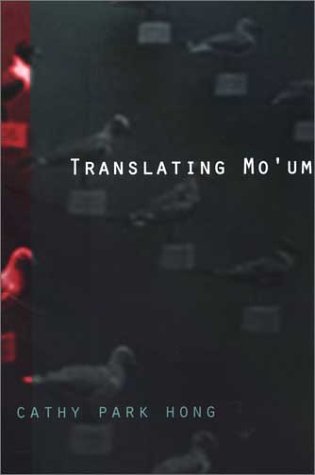
Translating Mo’um by Cathy Park Hong

This debut collection of poetry is a searing reflection on language as a visceral experience, contorting both English and Korean. Hong writes, “The mute girl with the baboon’s face unlearned / her vowels and cycled across a rugged phonestic map.” The phonetic map created in this collection travels through many eras and places—ranging from an immigrant family’s home in the U.S., the Chos’on Dynasty, New York streets, and 1800s London. Throughout, Hong rejects sentimentality and explicitly calls out Oriental fetishism; she emerges with a fragmented, multilingual exploration of Korean American identity. 

The Idiot by Elif Batuman

The Idiot by Elif Batuman

No reading list about the limits of language would be complete without The Idiot. In Batuman’s bestseller, Selin, a Turkish American student at Harvard, becomes obsessed with what we can and cannot convey through language. Through a series of cryptic emails, Selin falls in love with a boy from her Russian class during her freshman year. He convinces her to teach English abroad in his home country, Hungary, for the summer. Sprinkled with eccentric Russian textbooks and semiotic lectures, Selin’s coming-of-age story inextricably connects first love with linguistics.  

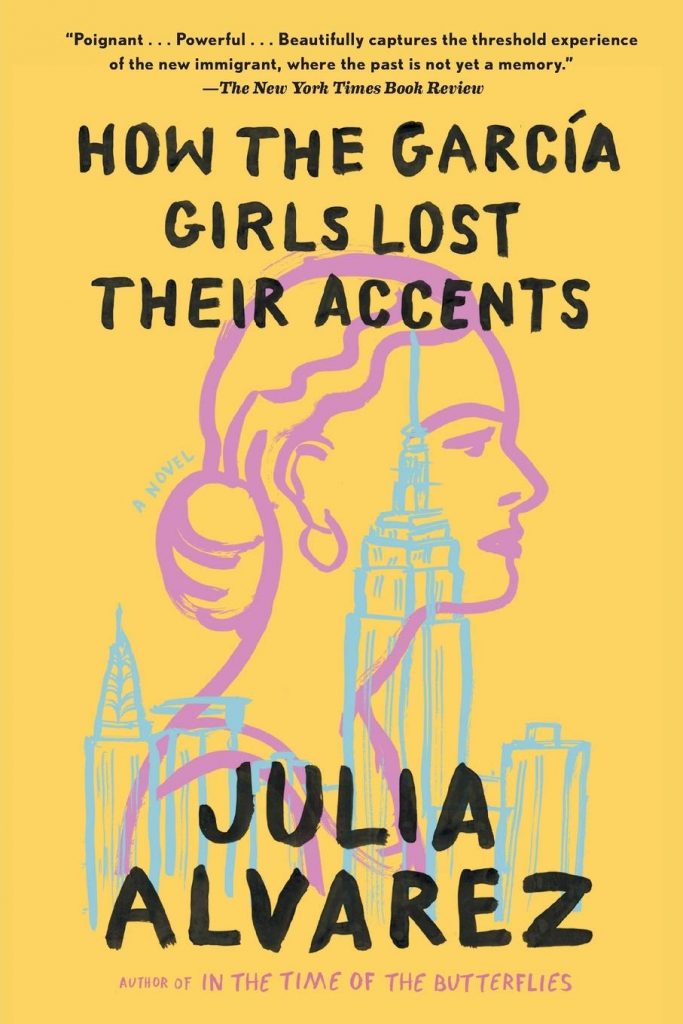
How the García Girls Lost Their Accents by Julia Alvarez

Alvarez’s debut novel tells the story of the four García sisters in reverse chronology and shifting perspectives, as they immigrate from the Dominican Republic to the U.S. Their attempt to assimilate into American society is deeply connected to language; for example, Yolanda García tries to “perfect” her English as a way to form a new identity. As the sisters navigate religion, tradition, and sexuality, Alvarez raises thought-provoking points about the globalization of English, and the cultural capital that it holds.

In Other Words| Penguin Random House Higher Education

In Other Words by Jhumpa Lahiri, translated by Ann Goldstein

A series of personal essays entirely in Italian certainly wasn’t the next work expected from Jhumpa Lahiri, a prizewinning author of Anglophone novels. Lahiri traces the journey of her love affair with Italian, beginning with a pocket-sized dictionary and resulting in a cross-continental move to Rome with her entire family. She not only documents the exhausting process of learning a new language, but also reflects on the linguistic tensions of being an immigrant, growing up in a Bengali-speaking household in the U.S. “No one, anywhere, assumes that I speak the languages that are a part of me,” Lahiri writes. Finding a new voice takes on a new meaning, in her memoir that is formatted in both Italian and English.

Before and After She Fell Down the Stairs

“Moments Earlier”
by Kate Doyle

Kelly lands in a heap when she falls down the stairs—she falls half a flight at least, hits the entryway tile. 

Daniel says he can’t remember screaming. Owen tells him that he did scream, a shout that echoed in the stairwell. 

Owen, for his part, keeps his cool. He always tries to be the sort of person who can do this, remain composed, unflappable. Owen is someone who would coolly say to someone else, in the hours after she flew back from Greece, in the moments before she fell down his stairs, “Do you think posting so many photos affected your ability to actually experience Athens? Didn’t you feel not entirely present? Is it okay to ask you that?” 

“Ask me anything,” Kelly told him—affectionate but also like try me. She sipped water from a coffee mug (it was all they’d had to offer her) and leaned against the fridge, her suitcase in the corner. Daniel was looking for his wallet. Owen was picturing a photo he’d seen on the internet: Kelly at the Parthenon, arms thrown wide in sheer delight. On the fridge behind her, postcards she’d sent them were taped up next to Daniel’s teaching schedule, plus a photo from college at an off-campus bar, Ria and Kelly’s shared birthday party, the four of them all drunk and hugging.

Kelly put down the mug and started putting on her lipstick. She said, “Will Ria be extremely mad we’re late?” Owen said, “No question,” and Kelly laughed and said, “Oh well, I’ll text her.” Daniel ran his hands through his hair—he needed a haircut, Owen thought. “Did I have my wallet when we left the laundromat?” Daniel was saying, and he started lifting up the couch cushions. Owen said he can’t remember, sorry, and then he said to Kelly, “What?” “Nothing,” Kelly told him. “Just, I’m glad to be here.” Owen felt restless then; he stuffed his hands into his pockets. “Hey Daniel?” he said. “Listen, I’ll spot you, we’re really very late.” 

It was unkind, what he said about her photos—that’s what Owen remembers thinking as they went into the hall, as they went down the stairs. He regretted having said it, he felt suddenly queasy. He decided that later, he’d say he was sorry. They were on their way to meet Ria downtown. The four them would have a drink, they would trade strong opinions about where to go to dinner, this was the plan: a reunion. All week Kelly had been emailing, Can’t wait : ) and, How has it been six whole months! and, See you very very soon, etc.

Then Kelly fell. Then Daniel screamed. Now Owen is calling an ambulance, looking down at Daniel bent over her, Daniel telling her, “Don’t worry you’ll be fine.” Can she even hear him? The dispatcher says to Owen, “Sir, it’s critical she doesn’t move.” It doesn’t seem to him this needs ensuring; she’s lying very still. Daniel’s frantic, his fingers pressed to Kelly’s wrist, her neck. “Age,” says the dispatcher, and Owen says, “Um, um, twenty-two?”

The EMTs arrive, they say Owen and Daniel should come to the hospital. They say cardiac episode, though Owen thought she only lost her footing when, below him on the stairs, she dropped away. Instinctively he reached for her, succeeded in catching briefly at the shoulder of her coat. Afterward, inanely, he keeps thinking: almost. From the hospital waiting room, pressing his forehead to the glass of a window, watching car headlights swim past below, he calls Ria. She picks up, annoyed. “Are you just ignoring my texts? This is late even by your standards.” And he tells her. “Wait,” she says. “Wait please slow down.” He says, “Come here, you need to come here. We called her parents—they’re getting on a plane, somehow. I mean they’re coming.” 

Ria shows up at the waiting room thirty minutes later, still dressed for dinner—heels, blazer. “Oh no,” she says. “Look at you, both of you.” Daniel starts crying. Owen says, “Um so, they’re telling us brain damage, maybe her brain is damaged. Not from the fall, from this cardiac episode, from loss of air to, well, but they say that there’s no way to know until she wakes up.” Ria is taking off her scarf. She says, “But then falling down the stairs, what about that?” Owen says, “We don’t know. They don’t know. They’ve got her in this coma—induced, no, maintained—they’re watching her. They have her in a kind of cooling bed, and they said it’s what you do, um, when you’re worried about a brain, because scientifically, it’s that near-victims of drowning, they apparently have better outcomes when it happens in cold water.” 

Daniel takes a wavering breath. He fiddles with the zipper on his jacket. He says, “She’ll be in that for twelve hours, in this deep freeze, then they’ll bring her out of it, and then.” Owen says, “No actually, not a deep freeze. Not freezing: cooling.” Daniel says, “Oh, true, that may be the wrong term.” He scratches vaguely at his ear as Owen says, “It is, yeah, it’s wrong.” 

Ria presses both her hands together, draws them to her throat. “Okay,” she says. “Well, we can’t think about this, not until we know more. Right?” A flicker of panic moves over her face, but then she gives them each a perfunctory hug and says, “Have you eaten? I haven’t eaten.” And she goes and buys three bags of cheesy popcorn from a pair of snack machines across the room. So they end up sitting in blue vinyl chairs, quiet, chewing, their fingers accumulating pale cheese film. Ria brushes crumbs from her coat, her hands sort of shaking. She says, “I’m trying to understand, could fright in the moment of falling lead to a cardiac incident? Or would it only ever be cardiac incident first?” Owen says, “It must be genetic, her grandmother, remember that story?” Daniel has his head down on his knees, has laced his fingers over the back of his neck. Then Ria says, “Think of the odds. After all those months traveling, of all places she’s standing on your stairs.” But Daniel lifts his head and says: “I don’t think we should pursue this kind of thinking, I don’t feel that we should do that.” 

Then comes another call from Kelly’s parents, and Owen unfolds out of his chair, pacing in front of Daniel and Ria, nodding and nodding his head, feeling himself becoming glazed and disoriented. Her parents are getting on a plane from LAX to JFK. An aunt, who lives in Gramercy, is on her way to the hospital.  This aunt has Owen’s phone number, as does Kelly’s brother who will stay in California, and Owen should keep these two updated while her parents are in flight. 

“I will, I will,” he tells them, but then can’t find what to say next, so he lets Ria take the phone. Daniel pats the chair beside him; Owen sits. Ria is saying to Kelly’s father, “The three of us are here, Daniel and Owen and me, and when you get here, we will be here, I promise, and we’ll find your sister, too.” Ria hangs up; she frowns, gives a brief twist of her head like an animal shaking off water. She says in a very small voice, “Now they have to shut off their phones. Can you imagine?” 

A feeling of confinement comes over Owen then, stealthy and crushing—he’d like to be out of this room, be somewhere else, alone. But Daniel beats him to it: running his hands through his hair again, bringing them down over his temples, looking from Owen to Ria, Ria to Owen. He says, “I maybe just need to go for a walk. I think I have to walk around, would that be okay?” He bounces a little on the balls of his feet. He’s always had this instinct, this nervous energy. It gets under Owen’s skin; it always has. Studying, in college, Daniel would pace the hallways of their freshman dorm, habitually roving, French vocabulary flashcards in hand. Murmuring “Je voudrais un café” and whatever, intermittently appearing in the open doorways to the room Daniel shared with Owen and, across the hall, the one that Ria shared with Kelly. 

They would listen to his approach, his muttered French verb conjugations, then listen to him fade away. Whereas Ria did her homework in the library—usually completed in the precise amount of time she’d allotted—and Owen might go hours without moving from the place on his bed where he liked to sit and read, his back against the cinderblock wall. Kelly, for her part, sat on the floor, her novels and notes spread around her. With both their doors propped open, Owen could see Kelly from where he sat, and they’d wave at each other, a well-worn joke. Kelly had to shield her eyes at certain times of day to see him, because of the way the light came in behind him through the window. “That,” she said once, “plus your general personal radiance,” and Owen rolled his eyes. 

Now, he says abruptly, to Daniel and to Ria, “Do you know, earlier tonight, I was criticizing her social media feed? I mean what the fuck is honestly actually wrong with me?” He stands suddenly, as Daniel looks away and balls his fists, but Ria says, with an adamant, desperate waving of both hands, “No, stop. Because maybe she is going to be fine, so you don’t have to, like, let’s not. Okay?” 

She looks from one of them to the other. Daniel says, “Look I can’t sit here like this. I’m going to go. I’m going to go walk around.” He gets up, the sliding doors part for him as he leaves. Ria watches him until the doors seal up again behind him, and then she looks back at Owen, almost dazed, as if she’s only now remembering she knows him. 

“What story?” Ria says, and it takes him a moment to realize what she’s asking. “Oh,” he says, “Kelly’s grandmother, you remember.” But Ria only looks at him. “I never heard it,” she says, “I don’t know what you mean.” 

Years earlier, when Kelly told Owen this story, she was writing about it for freshman comp, a required course. The two of them were in the same section, Tuesdays and Thursday at noon. “The horror,” he remembered Kelly would say darkly, anytime someone mentioned the class, which both of them detested. All semester she would cross the hall to lean against his doorway and read, with indignant relish, the most extremely boring sections of the Academic Writing textbook. Then she’d flutter the pages of that week’s reading and say, “Can you believe they get to make us do this?” It made Owen jumpy and impatient, the way Kelly liked to talk. The way she sometimes said things, just to hear the way they sounded. “Look,” he said, “I dislike the class too, but yes it is credible to me we’re required to take it.” Kelly exhaled; she covered her face with the book. She said, “But Owen I can’t do it. I just can’t.”

One week they were assigned to write on the subject of “family.” It was the only assignment of interest to either of them. “My grandmother died very young,” Kelly told him, her voice unusually measured. She was sitting on his floor in a white square of sunlight, her back against Daniel’s desk. She’d lost her computer charger somewhere on campus, it could not be recovered, so if Ria was out then Kelly would cross the hall to charge off one of theirs. She said, “I’m writing about this more from an imaginative position, like what would have happened if she’d lived, how life might have been different than it turned out. Because I did think that was interesting, what the TA said—about how it can be as truthful if you tell what might have happened, as it is to tell what did. More so, maybe, even. I mean I know you don’t like that TA, but.” 

Branches shifted in the window, their shadows moved along the floor, and from somewhere out on the quad a strange noise rose up. Owen couldn’t identify it, but right away it faded. He wasn’t sure what to say then, so he asked her, “Which grandmother?” “Oh,” Kelly said, “My father’s mother. My father was six, and if you can believe this, he was in the car. My grandmother drove their car off the road, and she died. But my father was fine. Of course, it was 1965, there was no autopsy, they’ll never know the reason. And there are times I’ve asked my father, don’t you want to figure out what happened here? But he says no. I think, you know, he feels he shouldn’t be affected, because all this time has passed. I mean this happened to my father when he was six, but here he is always saying: My sister has had a very hard life. My sister lost her mother at the age of two.” 

Kelly seemed to take interest in the tops of her knees then, which were bent to her chest. It must have been spring, the window behind her was open. Owen said, “That’s really, I mean,” and clicked his pen a few times over. Kelly looked up; he was sitting there with a draft of his essay open on his lap. She said, “My father doesn’t know that it’s okay to grieve for things that might have been. Anyway, what about you though? Are you still writing yours about your cat?” 

He felt uneasy, he had an impulse to sit next to her. He said, “Uh, now I’m not. Now that idea is sounding really kind of stupid. Thanks for coming over here, and taking our electricity, and putting things in horrible perspective.”

Kelly laughed as she reached to unplug her laptop. He thought she was going to say more, but instead they both heard Daniel intoning vocabulary down the hall—“La gare, le billet, se dépêcher”—and maybe those were Ria’s footsteps on the stairs. Owen looked out the window; in the wind the branches moved like waves. Anyway, Kelly was saying, “Thanks for the charge. I think this will be enough to tide me over.” Then Ria came around the corner—she was standing in his doorway, alert, her smile fading. She seemed to react to something in the air. What did she see in both their faces to make her ask: “What happened here?” 


In the years after the night Kelly falls down the stairs, only Ria keeps on living in New York. “I like my job so much,” she insists to Owen. “So I’m fine.” 

Daniel moves to Utah. He seems to feel the same as Owen, like he needs to make a change. He starts teaching high school French and—he tells Ria, who tells Owen—he takes up hiking in a serious way, he just wants to walk and walk. 

Owen relocates to DC. He takes this internship, then a PR job that turns out be okay. He gets into yoga, indoor rock-climbing, half-marathons; he goes running for miles along the Potomac. Then one day, when he’s been living there a couple years, he takes out his phone and starts reading, compulsively, his whole email history with Kelly. 

“Well, I bet that’s pretty normal,” Ria tells him. They try to catch up when they can on the phone. He gets bad cell reception at his place, so he sits on the building’s front stoop while they talk, as people go past him running, or on bicycles, with strollers and dogs, in fading light. 

“I think I disagree,” Owen tells her. “It doesn’t feel normal. I’m not so sure it’s healthy.” He tells Ria it’s unplanned, it just happens, but often: waiting for toast in the morning, or just having taken a shower, or walking from the elevator to his desk. He’ll just search Kelly’s name in his phone and start perusing, lose all track of time, the toast going cold, work emails left unopened, whatever. “It feels out of my control,” he tells Ria. “It makes me feel crazy.” “Well, no, I’m certain that it’s normal,” she insists, and he can hear the New York street noise in the background: clamorous voices, the growl of traffic, an MTA announcement as Ria descends into a subway station. She seems only to call him if she’s walking from one place to another, when she needs to fill the time. 

For several months that year Owen dates this med student, Natalie. He likes her; he isn’t sure why he goes and tells her everything he does, in so much detail. “I’ve heard of it,” Natalie says when he blurts some of this out, about Kelly, one night over dinner at Natalie’s apartment—he’s brought wine and she made pasta. “Congenital,” Natalie says. “Usually, there’s family history, right?” 

He says, “I have always felt guilty, to be honest. I was the one behind her on the stairs. Later, I found out I was the only one of us who knew this thing about her grandmother. Not that it changes anything, but. I always felt sort of responsible for her—well no that’s not the word. I felt, I don’t know what. I’m sorry, do you want another glass?” Natalie says, “Yes, sure, I’ll have another.” She reaches to take his hand, but it only makes him feel numb, and he wonders should he change the subject. The next day he deletes some emails, an effort to be present, stop dwelling, but then he arrives at this one that he really likes, with its total exuberance—Hello look at this photo, isn’t Sweden BEAUTIFUL, I’m never leaving—and he decides he won’t delete them after all. 

In the months when he was first receiving Kelly’s emails, they had just graduated from college, and she had begun her trip through Europe. The rest of them were brand-new transplants to New York—he and Daniel rented a U-Haul in June to move their things from Massachusetts. In September, Ria moved into a place downtown and started coding software for a startup, whose cutesy name Daniel and Owen mocked gently behind her back. Daniel was in his first semester of a PhD in French. Owen was tutoring to supplement, in theory, his freelance writing. And Kelly was sending them all these group emails, Hello from Copenhagen, Normandy, Berlin, etc, and mailing them postcards they taped to the fridge. All of this is strange now to remember. Owen and Daniel shared a one-bedroom far uptown—they were trying to save on rent—so Owen would email her back from his futon bed in the living room, his laptop open on his stomach, while Daniel paced a short loop from the front door into his room and back again, making notes in the margins of books or grading quizzes. 

Owen wrote, You will be glad to know the change in location has changed Daniel not at all. Kelly wrote back, Sigh of relief! She added, Stop being so gloomy in your emails, you can stop hinting how it’s going to be. Europe is beautiful, everyone I meet is wonderful. Let me have this before I join you in a lifetime of English-major underemployment. I’m totally realistic about my prospects and expect to spend my life inhabiting a series of increasingly expensive couches belonging to Ria. You can tell her I said so, xox. 

When he read this aloud off his phone in a dark East Village bar, Ria laughed and put her hands over her face. Daniel polished off his beer and said, “Too true. Ria makes much more money than any of us.” She elbowed him, he pretended to be injured. It was November, and Kelly was in Dublin. Her latest email described Trinity College, the Book of Kells, a bridge over the Liffey that she particularly liked. Owen said, “I miss her,” but it didn’t seem like either of them heard him. Ria was finishing her drink, Daniel waving down the bartender, joking that Ria would have to pay for the next round to make up for his bruised rib, seeing as she could afford it. 

Outside, an early snow was falling thinly on the sidewalks. Owen had not expected to feel Kelly’s absence on nights like this: the three of them without her in New York. When she first announced her plan to go away and travel, over Chinese takeout senior year, it had been a curious, small relief, and Owen left the feeling unexamined. Instead he’d stirred his noodles in their paper takeout box and listened to her chat, rhapsodic, about the profound and ancient beauty of the Greek language. All through college he would have said there was this space between him and Kelly—so much of what she said to him seemed inexcusably frivolous. “Proust,” she once told him appreciatively, from across a table in the library, “just knows how to write such a beautiful sentence.” She thumbed at the pages; they made a zippering sound on her skin. He stayed quiet and did not suggest that this was no observation of staggering insight. 

That was senior year, back when the four of them could spend whole Sundays around a table in the library, a little hungover from whatever party they’d been at the night before. He still recalls one morning, cold and bright, Kelly lifting her sunglasses away from her face on the library steps. “I just want to be enthusiastic and express how I love library Sundays,” she said. “I love them extravagantly and with abandon. I wish they didn’t have to end in May.” Owen, freezing, hugged his coat closer. He said, “Sure, agreed. Are we going inside?” Another time, at an after-party for a play that Kelly starred in, he recalled her dancing across the room to the place where he was leaning, ill at ease, against the wall. “I’m having so much fun,” she said, and he was possessed by a bottled feeling, like this moment was passing him by; he could not find the words to answer her. 

He wished he understood her better, he wanted to. He and Daniel were a solid match, the kind of roommates who could pass hours in the dorm in easy silence. Owen liked the way, if they ran into each other in another part of campus, Daniel brightened visibly. Then Ria was this intent, productive presence—she had, Daniel said once, an actually terrifying administrative drive. She would come home from class, from jazz ensemble, from her internship, she’d put down her bag and propose they all go to dinner now, or they should come with her to X lecture or Y film screening tonight, it was going to be excellent. Ria was the one who’d molded them all into a shabby, sudden whole, appearing in their doorway hours after move-in freshman year to ask would they like to go with her and her delightful new roommate to the ice cream social? Her dark hair was pulled back from her face, the roommate behind her wore a yellow shirt. They had honestly been thinking they might not even go, it sounded stupid, but Daniel said, “Why not, we’ll come along.” Owen remembered Kelly, the invoked roommate, sort of in the background, smiling too much.

Of course he always cared for her, it was just that something changed—once Kelly was traveling he depended on her emails in a way Daniel and Ria seemed not too. “Well sure,” Ria tells him on one of their phone calls, and in the background a car honks, someone starts shouting. Ria says, “I mean that much was clear. And so what? So you were always hard on her. Like what can you do? Be kinder to yourself.” Of late, Owen’s mostly been reading and re-reading one email from Kelly’s first week away: Dear O, Hi from Paris! Hard to believe you’ve now written back a third time. Don’t take this the wrong way, but it’s thrilling to see you break character. I’m flattered, though should note we’re in danger of establishing a healthy pattern here. What did I do to provoke this—or does it have nothing to do with me? Is real life agreeing with you, softening your edges? Or is real life just the worst, and you’re pining for the past? 

He remembered lying on his back on the futon, as he read it for the first time. Daniel was at the kitchen counter eating cereal, formulating a shared grocery list out loud. The light through the room’s single window streaked into the room, over Owen’s shoulder and on to the floor. His cursor blinked feverishly in the corner of a fresh email, re: What have you done with Owen. Daniel was saying they were out of paper towels—“Oh and orange juice,” he said. “Is that it? Anything else you need?” 

“No,” said Owen, “No nothing else, totally set, thanks.” To Kelly, he typed: Dearest K, No comment

All these things he says to Natalie in these months—over the course of so many dinners at her place, breakfasts at his, long runs together, and movie dates, and drinks in bars—it feels good to tell her, a kind of offloading sensation that both frightens and relieves him. Like something opens in his chest and the contents slide away. How after Kelly fell, after the hospital, after the funeral and everything, Owen and Daniel had arguments, raging fights about nothing: unwashed dishes, expired whatever in the fridge. How it had never been that way with them, how they started going crazy over old things from college, stuff they’d never talked about, things that hadn’t seemed to matter at the time. How Daniel started staying at his office later and later, even sleeping there some nights. How when their lease was up they said it might improve things if they lived apart. How Owen made the excuse that he was sick of the futon—he said a year was about as much as he could do, living that way. They moved out, Daniel went home to his parents’ in Boston, saying it would just be for the summer, he’d see them in the fall. And Owen lived on Ria’s couch for those three months. “We drank way too much,” he tells Natalie, who looks troubled but puts her hand on his. He says, “Just me and Ria at home, or we’d go walking blocks and blocks around New York at night. It was terrible, we didn’t know what to do with ourselves, we were always crying. I remember Ria would say, ‘We just can’t think about it, we just have to find things to do with our time.’ She called Daniel almost every day, but I never did. She’d sit on the fire escape and talk with the window closed. And then instead of coming back to the city Daniel takes this high school teaching job, he tells us he’s going on leave from the PhD. He says he just has to process things alone, he’ll just do this for one year and then he’ll be back, he promises. He came to the city once more before he moved out west, I think it was August, the three of us had a drink. Margaritas, on some rooftop, awful. We tried to talk about her, about what happened, but it was like, I don’t know. I remember Ria said, ‘Okay enough, let’s get the check, I can’t, I want to go home.’ I remember hugging Daniel, I said, ‘Good luck and let us know how you are there,’ and he said, ‘Definitely I will.’ But actually we don’t keep up at all, it’s only Ria who’s in touch with him, and rarely to be honest.” 

The night he says all this to Natalie, they’re walking to a restaurant for dinner. They meet up when she finishes class, she comes out of the front door buttoning her jacket, putting papers in her bag. She kisses him hello, her hand on the side of his face, and they go for a drink at a bar down the block, catch up about her day. Then she is talking about anatomy lab, and out of nowhere he is saying all of this. “Let’s walk,” Natalie says, “let’s walk to dinner.” She grasps his arm and then lets go. The light is all but faded as they come to Dupont Circle, the windows have a dusky shine, cars in the roundabout whirl violently, and he wishes Natalie would take his hand again, he has the impulse to reach for her himself, press the bones of her wrist, the length of her fingers. Instead he stuffs his hands down in the pockets of his coat and wishes for another way things might have been. He feels sorry for getting into this at all, and when they pause at a crosswalk he can feel Natalie look over at him—curious, gentle, just a little alarmed. In the dark, his face warms. 

He has never forgotten all those sensors, wires, taped to Kelly’s face. Taking the pulse of her brain. It was a smaller room than you’d expect, the lights off, everything sort of purple. The better to get at her forehead, someone had gathered her long hair away, piled in a twirl on the pillow, like dry seaweed strewn on a beach. 

He and Daniel and Ria stood there, shoulder to shoulder. Early hours of the morning, pre-dawn, her parents had arrived, and somewhere they were off conferring hopefully with doctors. It would be another hour before they tried to wake her, but a nurse came to check on all the charts and screens and fluid bags, and he said it was perfectly all right to take her hand if they would like to do that. 

In Owen’s memory, Ria straightens up, as though it’s clear she must go first. The hand sanitizer, in the corner, is automatic, it gurgles when she puts her palms out. Then she goes and links her hand in Kelly’s, looking stiff and anxious, her eyes fixed down. Daniel hesitates, then he goes to the hand sanitizer too. The machine growls briefly, and when Daniel turns back he meets Owen’s gaze, gives a small choked cough, and nearly laughs. Bleakly, Owen tries to smile, but Daniel looks away. The last time they are all four together in one place. Owen is bewildered, he takes Daniel by the elbow, knowing this is helping nothing. Ria takes a long unsteady breath, she lets go of Kelly’s hand, she lets it stay there on the blanket, her own hand hovering above it. “I don’t know what to do,” she says, in a voice that’s rising, verging panicked. She puts her hand up to her forehead, says, “I think maybe we should go now, should we go now, do you think?” She looks at Daniel, looks at Owen, like one of them is meant to tell her what to do. And then Owen can feel something between all of them, coming undone. Neither he nor Daniel answers, and everything is quiet, there is only this repeating beep, beep, beep, as Natalie turns in the crosswalk with an inscrutable expression. The crossing light flashes, Owen stands at the curb, his heart is racing. “Are you coming?” Natalie says, and puts out her hand. The dry leaves turn over in the wind, and over and over.

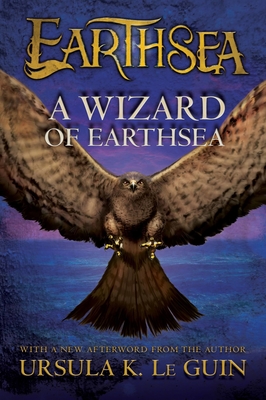
There Has Never Been a Better Time to Read Ursula Le Guin’s “Earthsea” Books

It didn’t start with George Floyd, but his death was the shock that brought thousands of heroic Black people from out of pandemic lockdown to fight back against systemic forces of death. The moment felt supernatural, like a scene from an Ursula K. Le Guin fantasy novel.

Le Guin, who passed in 2018, was a brilliant science fiction and fantasy writer who built entire worlds based on concepts of Taoism, feminism, and transformation. She loved color and trees, but mostly she loved subversive ideas.

Though the city backdrop of most high-profile protests is at odds with Le Guin’s lush settings, this moment in 2020 feels like something she might have imagined: Black and brown people banding together to uproot an inequitable system built by hordes of pale brutes. And then, as if by magic–just like the penultimate scene in one of her final books–a coalition of people of all hues and ideologies unite to rework society in the name of equilibrium. One thing that remains true, both in her vision and in our world, is that this magic originates with Black people.

That’s the brilliance of Le Guin’s Earthsea Cycle, one of the first fantasy series to cast dark-skinned people in protagonist roles. Normally, each autumn I immerse myself in all six of the books, but with the rise of a new Civil Rights movement, I’m moving that schedule up to summer, and I think now is the perfect time for everyone else to follow suit.

I stumbled upon A Wizard of Earthsea, the first book in the cycle, as a twelve-year-old. Bored with the Agatha Christie mystery my class was reading—And Then There Were None—I decided to skip through my literature book instead. Turning past pages of characters who had nothing in common with me, I settled into a cozy yet rustically sparse yarn about an adventurous adolescent who calls and commands hawks and apparitions of mist with equal aplomb. Using these gifts, he saves his home from “a savage people, white-skinned, yellow-haired, and fierce,” who liked “the sight of blood and the smell of burning villages.” 

Reading that line filled me with dread; the bad guys in this book were like the bad guys in my own life. I was the only Black kid at an all white school, and my classmates’ monolithic disregard for my being was appalling. But in this story was an unremarked-upon truth that I thought no one else knew: being white did not make you virtuous. Everything else I read at school taught me that being Black made me inferior. With A Wizard of Earthsea, I was more than equal. People who looked like me were not only the majority, they were the heroes. 

Everything else I read at school taught me that being Black made me inferior. With A Wizard of Earthsea, I was more than equal.

Sure, I’d read a couple of stories with Black superheroes before—Black Panther and Luke Cage—but their compressed, one-and-done storylines left me wanting more. With Earthsea, my brain was satiated by complicated concepts that extended beyond 24 pages. 

I spent the remainder of that day reading the book, ignoring every other lesson, even skipping P.E. and lunch until I’d made my way through all 200 pages. Whenever my teacher called on me, I replied without caring whether I was correct or not, so long as I was able to return to my adventure. In Earthsea I met a boy who receives his true name (Ged), rejects patience, is scarred and humbled yet grows up to slay a dragon, and finally embraces the shadowy aspects of his soul. 

I marveled that during these adventures, the writing refused to equate evil with blackness, even when Ged worked forbidden necromancy. “Evil” in Earthsea was abusing the world’s natural order. Yes, magic allowed one to summon rainstorms, but that water had to be taken from somewhere else; cause and effect with a dash of chaos theory.

Ged is responsible for the evil that occurs in the first book, when in an act of youthful boasting, he opens a portal to the land of the dead. What comes out is a shadowy, substanceless unbeing. The only way for it to continue to exist is by consuming his life force; Ged gave the world his shadow and now it will take over his entire being. This shadow pursues him across the world, becoming more distinct, and looking more like Ged anytime they come into contact. This unbalanced attempt to consume life manifests in different forms as the great evil in almost all of the Earthsea books.  

In Earthsea, the villains are not Black—but the protagonist is.

Contrast that with the dark—and frankly, racist—orcs of Tolkien’s tomes or any other de facto black evil. The elder gods who collapse the temple in the cycle’s second book, The Tombs of Atuan, or the vacuum that is devouring the world’s magic in the third book, The Farthest Shore, are bad because they take without giving anything in return and because they want to eliminate Ged. They are neither dark sorcerers, savage ethnics, nor brutal simians out to overthrow the white man. In Earthsea, the villains are not Black—but the protagonist is. This iconoclastic vision of who was allowed to be the hero did more to bolster my self esteem as a child than any prize I ever won. 

Le Guin was clear that the colorism in her work was a well-crafted decision. Her oft-cited essay on the matter from Slate is too delicious not to quote: 

My color scheme was conscious and deliberate from the start. I didn’t see why everybody in science fiction had to be a honky named Bob or Joe or Bill. I didn’t see why everybody in heroic fantasy had to be white (and why all the leading women had “violet eyes”). It didn’t even make sense. Whites are a minority on Earth now—why wouldn’t they still be either a minority, or just swallowed up in the larger colored gene pool, in the future?

In this same essay she dropped the mic on assumed privilege in our country: 

I think it is possible that some readers never even notice what color the people in the story are. Don’t notice, don’t care. Whites of course have the privilege of not caring, of being “colorblind.” Nobody else does.

The daughter of two prominent anthropologists, she began the Earthsea books in 1968 because her publisher wanted something that would sell to adventure-minded boys. Using the books, she built a world with solid rules that evolved and shifted to bring on new considerations. The Black majority of Earthsea weren’t pious characters concerned with respectability politics. Like Ged, they were allowed to be selfish, complicated, and beautifully disastrous. The antagonistic white savages from the Kargad Empire turned out to have their own equally developed system of beliefs. Neither side was perfect, but the Black majority led the story.

All of this came out over the span of 33 years as Le Guin dug deeper into Earthsea’s culture to comment on our own. Without starting over, or burning everything down, she used her final book to remake the system that readers thought they understood. Centuries before—according to Earthsea lore—the Black people used their magic to colonize the realm of dragons in order to create an afterlife. “The Dry Land” meant that Black people could exist even after death, but without any purpose. The white people rejected this system, banned magic, and reincarnated after they died. The dragons were pissed off and eager to reclaim their stolen dominion, while the dead wanted to end their eternal existence and rejoin the cycle of life. In The Other Wind all four sides unite to dissolve the Dry Land and create a re-balanced system.

The Earthsea cycle offers a world where the Black people who are at the center learn to expand their circle in order to construct a new social compact.

As fantastical as this is, the idea of giving up something as valuable as life after death in order to bring the world into balance can offer us a model as we reimagine a world without police. Like the Dry Land, the police force is founded on injustice and exists to perpetuate injustice—it protects white people at the expense of Black lives, as the Dry Land protects Black lives at the expense of everyone else. Pre-Civil War slave patrols transformed into a constabulary that enforced Jim Crow. Our country eventually passed legislation to abolish discrimination but without properly recreating the system. Previous injustices—like the idea that Black lives matter only three fifths as much—will continue to be reinforced in idea and practice until the institution that arose from them is dissolved. 

Emmett Till, Rodney King, Tamir Rice, Eric Garner, Breonna Taylor, George Floyd, Tony McDade, and too many others to name: their lost lives are proof that our system does not work. The Earthsea cycle offers a world where the Black people who are at the center learn to expand their circle in order to construct a new social compact.

To white protestors and accomplices, who say that they want to listen but are fearful of giving up some power so that we can all heal, I suggest you read the Earthsea cycle. You will need to learn to step away from the center to build a new world, and the Black majority in this fantasy series offers a better model than any white history. I encourage Black people to read Earthsea too, if only to remind yourselves that once upon a time a white woman in Portland saw us, recognized us as beautiful, and built an entire world where we had the privilege to decide that we could share our power.

Let’s make our new reality an even better world than Le Guin’s.

7 French Books About Family Secrets

I always knew there would be an explosive family secret at the heart of my novel, just as there was in my own life—my father hid a second family from my mother and me, and its discovery forever changed our relationship. It’s no surprise, then, that I’ve often recognized myself in tales of secrecy and betrayal, especially those that take place within a family. 

The Margot Affair by Sanaë Lemoine

In The Margot Affair, 17-year-old Margot Louve is the hidden daughter of an affair between a politician and a stage actress. It is a secret she is forced to guard fiercely, and only a small inner circle knows that her father is married to another woman with whom he has two sons. One hot summer afternoon, a chance sighting of her father’s wife crystallizes Margot’s position as the other child, on the wrong side of his double life—and in that moment she feels an intense desire to claim her own legitimacy. What follows is the aftermath of Margot telling the truth about her father. I wanted to explore the consequences of setting a secret loose. 

While writing my novel, I turned to books about French families, though soon I noticed a common thread in the ones I’d chosen: Secrets were withheld and revealed. It’s a cliché to say that all families have secrets, and yet I was fascinated by these double lives and intricate lies, the silences that implied something beneath. Most of all, I loved seeing what happened when those secrets inevitably surfaced. Even if the release was cathartic, it could come at a great cost. Here are the seven books that most nurtured my curiosity for the hidden.  

The End of Eddy by Édouard Louis, translated by Michael Lucey

I tore through this book in one sitting on a train ride from Paris to Brittany. Édouard Louis writes about being raised in a small village in post-industrial northern France. His family is poor and lives in a culture of male violence, alcoholism, and repeated humiliation. Eddy knows from a young age that he is gay. For years he seeks to hide his desire, pretending to be a “tough guy.” It is a childhood shrouded in shame. In private, he’s violently beaten by his classmates for being different. His first sexual encounters take place in a shed with his cousins. In an unspoken pact of sorts, they are never discussed, not even when his mother catches them mid-act. He finally flees to a boarding school in a nearby city, then Paris. The novel is a radical coming-of-age with a literal shedding of his name: Eddy Belleguelle becomes Édouard Louis. Even so, for a long time he conceals where he comes from, the past a shameful secret. 

The Lover by Marguerite Duras

The Lover by Marguerite Duras

Marguerite Duras was 70 when she wrote The Lover, an autobiographical novel set in prewar Indochina that recounts an affair between a 15-year-old French girl and a Chinese man. Through fragments that weave in and out of chronology, we see the young girl beaten by her mother and older brother. We see her step into the private space of a black limousine to meet her lover. She refers to him as a lover, to the relationship as an affair. Her mother would kill her if she ever found out. But the mother suspects it or perhaps already knows. Regardless, the truth remains a fragile secret until the end. In one scene, mother and daughter skirt around its edges, perhaps knowing that the affair can remain beneath the surface as long as the daughter stays silent. The experience of reading The Lover reminds me of the mother and daughter in that scene, circling around a truth that feels both vivid and elusive.
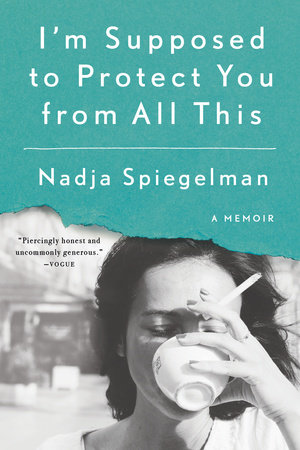
I'm Supposed to Protect You from All This by Nadja Spiegelman

I’m Supposed to Protect You from All This by Nadja Spiegelman

At the heart of this remarkable memoir is the brave act of imagining one’s mother as a girl, long before she became the woman who birthed and raised her. Nadja Spiegelman, who is half French and writes in English, probes into her mother’s and maternal grandmother’s pasts. For most of her childhood, Spiegelman couldn’t imagine her mother’s interior life: “The past was always there on her body, but I couldn’t see it.” What was inside, beyond the scars? Where did those wounds come from? As we enter the intimacy of her mother’s memories, secrets fall away, and we discover three generations of French women who shaped each other. Silences are replaced with vibrant recollections. But memory is subjective and unpredictable, so the remembrances of grandmother, mother, and daughter often collide. We never quite know who to believe. And yet, I ardently believed in the mother and daughter as a unit able to withstand just about anything. 
Nothing Holds Back the Night by Delphine de Vigan 

This powerful memoir opens with a suicide: the author’s mother has taken her life at age 61. So begins the exploration of a mother’s life, recreated from hours of interviews with family members. Like Nadja Spiegelman, de Vigan endeavors to imagine her mother as a young girl. We find again the push and pull of maternal love and neglect, the hope to capture the mystery of a woman who was plagued by manic episodes. But how to form a complete portrait when the mother is no longer there to tell her story? The brilliance is in de Vigan’s boundless empathy as she searches for the origin of her mother’s suffering. The revelations are devastating—a rape within the family, a hidden illness. Though what brought me to tears was the mother’s love, hiding in plain sight, always there. 

Adèle by Leila Slimani

Adèle by Leïla Slimani

Adèle, the protagonist of Slimani’s first novel, leads a double life. She is married to a doctor and together they have a three-year-old son. Most of her energy goes into concealing her sex addiction. She repeatedly lies to her husband as she seeks out increasingly dangerous and degrading sexual encounters. Terrified of being found out, Adèle meticulously organizes her life to hide her compulsions. Slimani is a master at writing about the daily travails of domesticity with precision and fierce directness. There is a slight moment of reprieve when Adèle hopes that motherhood will act as a remedy, but as a reader, we know it is only a matter of time before the finely tuned tale gives way, and even as Adèle barrels towards that precipice, we cannot look away. Not even the reader is spared. 

Bonjour Tristesse by Françoise Sagan

Published in 1954, this slim novel takes place at the height of summer. 17-year-old Cécile and her widowed father have rented a grandiose villa on the Côte d’Azur. Cécile’s father has brought along his latest conquest—the young Elsa—whom she sees as innocuous. However, the sudden arrival of her late mother’s friend, Anne, threatens the equilibrium. Anne is beautiful, elegant, and older than Elsa, and before long, she and the father fall in love. Eager to regain her independence and her father’s undivided attention, Cécile constructs an elaborate plan. It is a web of lies and secrets with Cécile at the center, though our young protagonist fails to anticipate how her duplicitous game might harm those involved when the truth is laid to bare. Whenever I read Sagan, I’m stunned by the precociousness and energy of her writing—it lights up even the darkest moments of the book and leaves me wholly unprepared for a tragic outcome. 

Incest by Christine Angot

Incest by Christine Angot, translated by Tess Lewis

I first encountered this feverish, maddening book in my early twenties. From the beginning Angot subverts our expectations by focusing on an obsessive relationship with a woman. We expect her to write about an incestuous relationship, but it seems to be an afterthought, withheld until the last section of the book. (Most readers will know that Angot was born out of wedlock; her father was married to another woman, with whom he had two children.) When mentions of the incest appear, a sentence here and there, they rattle us. When the narrator declares: “I wanted to be a writer, I wanted a powerful start, I seduced my father,” we are grasping for explanations. When she finally writes about the incest, we are torn up, caught in that tense space of bearing witness to her past and wanting to un-see its violence. Not only does her father initiate sexual relations with his daughter, he keeps her very existence hidden. Even when she’s a grown woman, he refuses to publicly acknowledge her. No one in the village knows about his illegitimate child. But with this book, Angot flips the tables: “He is my incestuous father,” she says. “I acknowledge him.”

Essential Workers Are the New “Magical Negro”

In the 1999 incarceration fantasy drama The Green Mile, Paul Edgecomb (Tom Hanks) is a despondent prison warden suffering from a chronic bladder infection that frequently incapacitates him and impedes his ability to effectively police criminals in the Depression-era South. In one pivotal scene, baritone-voiced inmate John Coffey (Michael Clarke-Duncan) dwarfs the prison bars that enclose him and lures Paul Edgecomb toward his cell. At once, John Coffey reaches for Edgecomb’s crotch. Rather than inflict violence or sexual assault, however, John Coffey heals Paul Edgecomb of his bladder disorder in a flurry of magical realism and billowing musical score. 

Prior to this miracle, the white warden viewed Coffey’s hulking black 6’5’’ frame with suspicion, believing that Coffey deserved his death sentence for the sadistic violence he had allegedly wrought within the community. At the moment of Coffey’s supernatural healing, however, Edgecomb undergoes a change of heart. Coffey’s mystical ability not only proves his worth in Edgecomb’s eyes, but underscores his innocence. Although he is mild-mannered and lovable throughout the film, it isn’t until John Coffey demonstrates his “value” and transmutes from criminal to shaman that his metamorphosis as a Magical Negro is complete. The super-humanization of black characters to propel the moral arc of white protagonists is a commonly used cinematic and literary device, and today, in the era of COVID-19, the Magical Negro reappears on the news and in mass media as an economic and moral foil otherwise known as the Essential Worker. 

The Magical Negro is at once a super-humanization and dehumanization of the black individual.

Paradoxically, the Magical Negro is at once a super-humanization and dehumanization of the black individual. The trope positions blackness at the intersection of two apparently contradictory qualities, reliable strength and agreeable meekness. These are services that the Magical Negro dispenses to white characters because the Magical Negro exists only to serve. In the 2018 Academy Award-winning film Green Book, Mahershala Ali’s Dr. Donald Shirley exists as an ancillary prop for the deeper development of a caricatural Italian-American working-class man. Hardly any effort is made to explore how Shirley’s queer identity—compounded by his blackness—informs his worldview, his mental health, and his lack of safety while traveling across the United States. It is almost comedic how Shirley’s musical genius, despite being the primary driver of the film’s plot, is deployed as a method for the rehabilitation of Frank “Tony Lip” Vallelonga (Viggo Mortensen). 

Vallelonga is introduced as a brutish yet likable “paisan,” a man who disregards decorum and gentility at every turn. In a poorly-crafted attempt at racial subversion, it is Vallelonga who is the simpleton and Dr. Shirley who is the cultural savant. And yet, Vallelonga’s middle-aged bildungsroman is the focus of the film. Dr. Shirley’s magical music converts Vallelonga into an attentive husband, a patron of classical music, a LGBTQ+ “advocate,” and most importantly, a black “ally.” Since the film’s release, Dr. Shirley’s real-life family and estate have condemned the film and the portrayal of his relationship with Vallelonga as false. 

In these two films, as in countless others, the psycho-emotional and physical trauma that the black characters endure, the intricacies of their own personal histories, and the exploitation of their labor are regarded as mere footnotes. We never see these black characters substantially interact with members of their own communities, or even demonstrate an iota of distrust toward their white charges. The spell that the Magical Negro casts is an abracadabra of autophagy. Blackness is swiftly muted and perfunctorily eulogized as the camera pans to the apologetic and “well-meaning” white hero. 

The Magical Negros of cinematic lore, those black sacrificial super-humans appropriated for the advancement of white people, have emerged as our essential workers.

With the advent of COVID-19, the celluloid eulogies have transformed into ritual evening shouts and clangs of pots and pans. The Magical Negros of cinematic lore, those black sacrificial super-humans appropriated for the advancement of white people, have emerged as our essential workers. Once it became clear that lockdown would not be a temporary inconvenience, essential workers were catapulted onto a pedestal of national esteem; their existence became a salve of instant-gratification, providing counterfeit normalcy amidst a growing tempest. One need merely examine the language used to describe essential workers to observe their glorification into superheroes, fighting for our survival against a villainous disease. They are always on the “front lines,” “in the trenches,” or “on the battlefield.” Yet our society willfully refuses to acknowledge their vulnerability and systematically denies them sufficient safeguards. 

Our essential workers are overwhelmingly black and brown individuals who have been neglectfully underpaid, unprotected, and subjected to the racial inequities that have always existed in our white supremacist nation. Capitalism has consistently demeaned our cashiers, grocery workers, delivery persons, sanitation departments, custodial workers, medical assistants, and public transportation employees. However, in our national moment of crisis, their service has been rendered critical—and their compliance imperative. Under the watchful eye of technocrats and governmental autocrats parading in democratic regalia, the essential worker is extended sufficient compassion so as to ensure their continued service, and not a drop more. The essential worker is bound to their labor through financial imperatives and ideological coercion thinly veiled as “professionalism.” They are thrown in harm’s way, risking their lives, the lives of their families, and the lives of their communities at the nation’s behest. In The Green Mile, the risk that John Coffey takes to save two white children costs him his life. At the moment of his electrocution, John Coffey sends mythical sparks throughout the execution chamber, yet there is no retribution for this punitive injustice. There is just a scene of a grief-stricken and healthy Paul Edgecomb looming over Coffey’s dead body. 

This version of the Magical Negro is not a fantasy, but the real-life manifestation of these sanitized and feel-good stories.

Our profit-driven institutions have been failing the essential worker long before the threat of a pandemic, but unlike their cinematic counterparts, this version of the Magical Negro is not accompanied by a romantic score or Best Supporting Actor Academy Award. This Magical Negro is four times more likely to die from COVID-19 complications, has a doubled risk of unemployment, and is disproportionately represented among the unhoused and displaced. This version of the Magical Negro is not a fantasy, but the real-life manifestation of the sanitized and feel-good stories that the history books and the movies have constructed. We must not allow their pain to be reduced to “resilience,” because what we are witnessing is a spell of structural subjugation. 

How can this sorcery be broken? An incantation is only as strong as the words used to conjure it, and therefore the language used to describe essential workers must transform. Essential workers are not “miracle workers”; they are “at-risk workers”; they are “vulnerable workers”; and the dangers they face warrant recognition. Their service is not always voluntary, and a true understanding of this dynamic approximates the vulnerable worker to the individual. A 7pm applause is not the only way to demonstrate gratitude; lobbying, donations, and calls demanding personal protective equipment, hazard pay, legislative protections against deportations, access to free childcare and healthcare are just a few tangible demonstrations of structural gratitude rather than performative allyship. 

The next step is to divest power from the growing technocracy, privatized companies, and governmental institutions, and siphon it back into the hands of the laborer. Reagan-era de-unionization cemented a culture of consumerism that survives today, establishing a climate of fear in which workers are unable to mobilize against dangerous working conditions and unjust remuneration. The vast majority of today’s essential workers are hourly employees or members of the gig economy. Rather than admit that this new capitalistic trend devalues labor, our societal rhetoric elevates the grim reality of economic survival as demonstrations of “heroism.” In order to address the precarity of this underlying insecurity, worker’s rights and protections must return with a vengeance.

The ‘magic’ of the negro is simply a derivative the negro’s service. What if that service were reclaimed?

Eventually, there must be a national capitulation of the anti-black, anti-indigenous, and xenophobic foundations of the United States. The rhetoric of “liberty” and “freedom” is a smokescreen that has obfuscated the lived experiences of poor and working class people of color, since the same falsely meritocratic legacy that suppresses the Magical Negro is the one that kindles police brutality against marginalized communities. In fact, the very definitions of “men” and later “women” as detailed in our constitutional framework only retroactively include black and brown individuals. Even despite these revisions, heedless nationalism continues to prevent honest discourse. Only when this discussion is had in the open can the country progress. In order to fully shake the shackles of exploitation demanded by a capitalist system, all nations must begin imagining post-work and anti-work futures. In order to humanize the essential worker, the United States must recognize the intrinsic value of its denizens independent of the labor they provide. 

This will require a paradigm shift that divorces one’s perceived utility in society from one’s profession. The concept of “hard work” that “builds character” must be reexamined as capitalistic propaganda that reifies white supremacy. If hard work creates honorable citizens that are worthy of praise, why are the hardest-working in our societies the least respected? Considerations like Universal Basic Income are just the beginning of ways individuals can self-actualize beyond the confines of productivity. The “magic” of the negro is simply a derivative the negro’s service. What if that service were reclaimed? Not in the form of black-owned business, entrepreneurial ventures, or visions of “black excellence” framed by monetary advancements, but rather as the right to flourish as essentially human? Magic indeed. 

The Queer Slacker Pizza Delivery Novel We’ve Been Waiting For

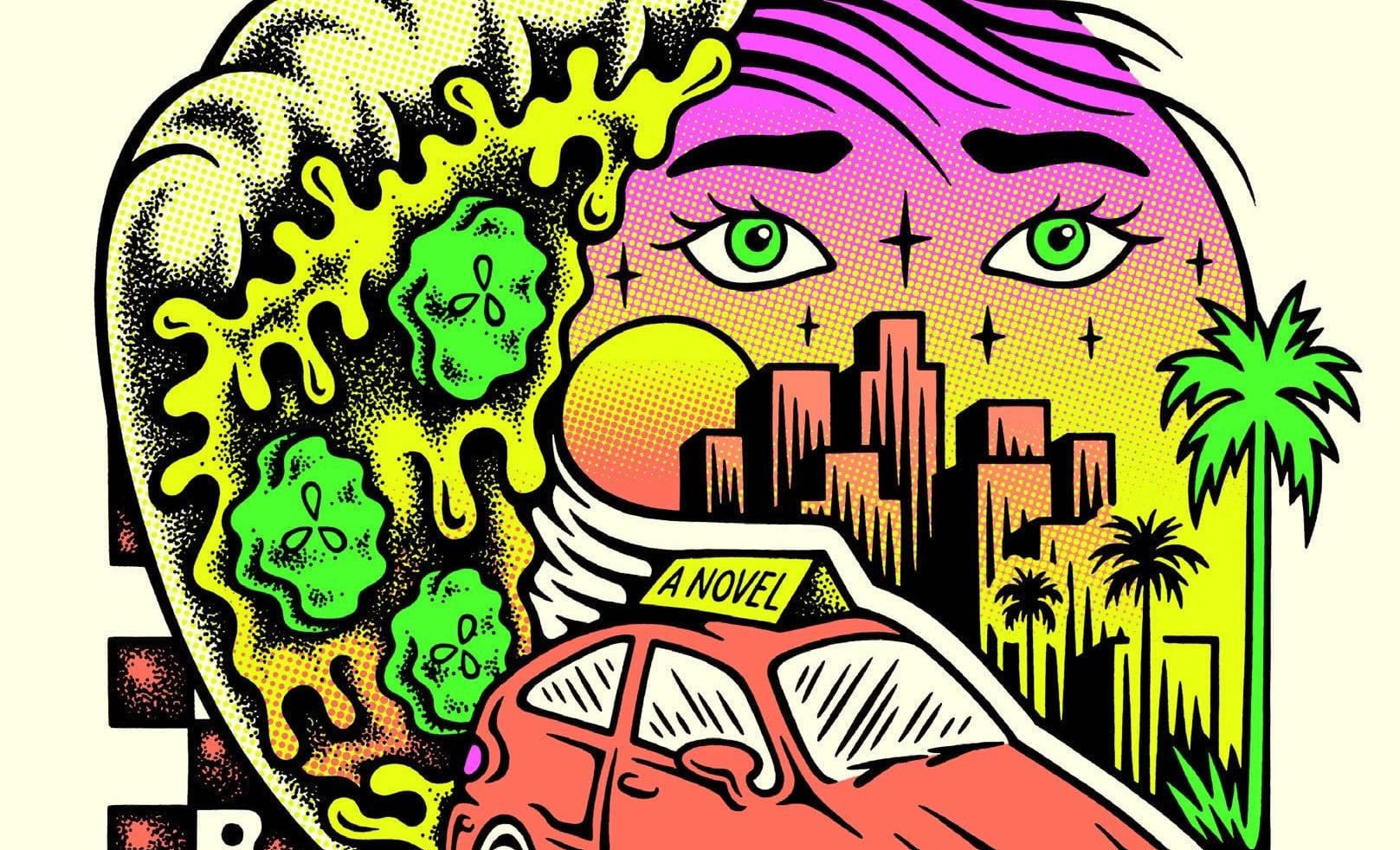
The anti-heroine of Pizza Girl—pregnant and 18 with an I-don’t-give-a-fuck attitude—reminded me of a younger sister I wanted to grab by the shoulders, shout, “Stop it, you’re ruining your life!” only for her to respond by slinking away. She reminded me of a younger sister I trailed furtively behind through the palm-tree lined streets of Los Angeles, where this story takes place, in order to find out what she was really up to—but when I glimpsed, in these private moments, her loneliness and pain, my heart broke for her. 

Pizza Girl by Jean Kyoung Frazier

That’s the kind of protagonist Jean Kyoung Frazier—whom I first met when we were fiction students at Columbia—has crafted in her tender, sharply observed debut, lauded by authors such as National Book Award Finalist Julia Phillips, and listed in Electric Lit, LitHub, and Poets & Writers’ “Most Anticipated Debuts of 2020.” 

Specifically, our narrator’s world is disrupted when she receives an intriguing phone call from a customer at work, where her job is to deliver pizzas. “Have you ever had the kind of week where every afternoon seems to last for hours?” the stranger asks. It’s the kind of question that pierces our narrator, who feels suffocated by her mother and boyfriend, and the grief she won’t admit about her alcoholic father who’s recently passed away. Pepperoni-and-pickles pizza in hand, the narrator meets Jenny Hauser. Jenny is whimsical, refreshingly honest, and married with a kid. Our narrator quickly falls in love—or obsession—with her. Through the lens of a young, queer, biracial woman of color, Pizza Girl explores what it looks like to feel lost and desperately long to escape from your own life, as well as the idea that what you see is not always what you get. 


Daphne Palasi Andreades: One aspect I thought you captured so beautifully was how the narrator uses fantasy as a way to cope with the painful parts of her life—her dissatisfaction, rage, and, above all, her loneliness. Her fantasies are full of longing and lighthearted until, over the course of the story, they grow more destructive and veer into delusion. This idea of escaping into fantasy also resonated with me; as a fiction writer, imaginary worlds are our fucking playground. What role would you say fantasy plays in your book, as well as in your own process?

Jean Kyoung Frazier: What I love about the word “fantasy,” is that its weight and shape varies person by person. Some might fill their days with fantasies of grandeur, conjuring lives greater than their own, while others might only do it passingly, the height of fantasy to them is sitting down somewhere, alone, eating a medium rare burger and a Coke, i.e., what’s sexy to you may not be sexy to me.

In writing Pizza Girl, I was thinking a lot about when fantasy can go wrong. Especially as a writer, I have to believe it’s possible to have a healthy relationship to fantasy. There’s nothing wrong with a day-dreaming or even trying to find concrete ways to make your fantasies into realities. That being said, what’s the line? How do you know when you’re just being delusional and seeing what you want to see? When does fantasizing become harmful? I wanted to explore that weird line within my novel.

DPA: Pizza Girl falls into the so-called genre of “slacker fiction.” I’m thinking of novels like My Year of Rest and Relaxation by Ottessa Moshfegh. The narrator avoids facing her problems and doesn’t necessarily know what she wants to do with her life. Instead, she copes by choosing not to deal. I adore slacker narrators because they don’t give two shits about social norms and, through their inaction, critique received notions of how we’ve been taught to exist in the world. Also, narrators who don’t give a damn, like in Pizza Girl, are hilarious and insightful. How did this character and this world come into being for you? And why was it integral to have a “slacker” narrator tell this story?

JKF: Gosh, I just really fucking love that there even exists a genre called, “slacker fiction,” and that my novel is a part of it.

So, slackers have existed since the dawn of time (I like to imagine a Cro-Magnon cave bro telling his buddy, “Eh, I don’t really want to hunt and gather today, yafeel?”), but I do think there’s something unique about being a slacker in the 2010’s, particularly a teenage one. There’s social media feeding our natural inclination to judge and compare combined with conventional views of the progression your life is supposed to take—get good grades in high school so you can go to a good college and get more good grades so you can graduate and get a good job where you can make good money and just keep being good, so good, until you die, hopefully before then marrying a good person so you can produce good babies who will begin the cycle anew—it’s enough to make anyone a little crazy, especially those who don’t or just can’t follow this one-size-fits-all life instruction manual.

Even the term “slacker” is often used a little reductively since its connotation is negative and used synonymously with laziness. I think it’s more like, for whatever reason, slackers just can’t bring themselves to care about what they’re being told to care about. While sometimes that reason is founded in laziness, it’s usually more complicated than that. Slackers slack because something or many somethings have happened to them that’ve made them believe their efforts won’t produce anything of value or yield a better life situation.  

For Pizza Girl, having the narrator be a slacker was key since so often in stories with teen pregnancy there’s a lamentation about what the young woman is losing out on by choosing to have a baby at that age. However, I wanted it to be clear that even if she hadn’t gotten pregnant, her life would still be a mess. She’s an adult only by the simple fact of her eighteen years. She’s still really just a child whose emotional wounds and upbringing have made it difficult for her to gain a sense of self or to plan.

DPA: These are all such great points. I loved that you turned the teenage pregnancy narrative on its head, too—with or without the baby, the narrator would have still been just as lost. 

But your novel does a ton of things differently. For instance, slacker fiction often features men—specifically, straight white men. Conversely, Asians and Asian Americans have been depicted in contemporary literature, TV, and movies, as the nerd, the programmer, the doctor—all tropes of the “model minority.” However, what’s interesting in Pizza Girl is that the narrator doesn’t fit neatly into any of these categories or stereotypes. What, in your view, is the value in resisting these tropes and stereotypes?

JKF: In conceiving Pizza Girl’s voice and character, I was thinking a lot about what you brought up—slacker fiction being dominated by the white, straight, cis-male. Let me assure you, as a queer, bi-racial woman, I have wasted countless hours slouching away from responsibility. If being a fuckhead was an Olympic sport, nothing but gold would be hanging from my neck. DM me for references.

If being a fuckhead was an Olympic sport, nothing but gold would be hanging from my neck.

I’m being funny, but resisting stereotypes and tropes matters, even when it’s for something as inconsequential seeming as who is being shown slacking in fiction. It may seem like no big deal, but by having slacker fiction be male-dominated, it’s perpetuating the idea that aimlessly fucking around is a specifically male thing. Even if it’s not outright saying it, what it translates to is that women are held to different standards—they exist to watch men fuck around.

When Asian people are portrayed in books or on the screen so sparingly and rigidly, as a kind of punchline, an entire group of people is made to feel small, told that they can only be relevant by acting a very specific way. 

Unfortunately, for a lot of people, stereotypes and tropes are the only references they have. As a regular-ass person, this bothers me. As a writer, this motivates me to both tell stories that challenge people to think beyond what they’ve been accepting as the reality/norm and also, to make those who’ve felt lonely, a little less so.

DPA: Early on, we learn the narrator’s mom immigrated from Korea to Illinois when she was 17, met a white American Midwestern dude, fell in love with him, and had a daughter—our narrator. I thought it was a cool choice to show that, although immigration and the narrator being a mixed-race kid, as well as queer, are parts of her identity, her sexuality and her racial/ethnic background aren’t central conflicts in the story that she wrestles with. Instead, her sexuality and ethnicity are textures that enrich her character and this world.

Because of this choice, I felt Pizza Girl expanded representation for marginalized groups in art and fiction: not all POC, mixed-race, and/or queer characters have to be conflicted about their identity—they can just be. Just like how POC and queer authors can simply be. What are your thoughts on this?

JKF: Well, first off, thank you. That’s very generous of you to say and, as someone who is both queer and half-Korean, that means a lot to me.

While it’s obviously incredibly important and valuable to have fiction where racial, ethnic, and sexual identity are central conflicts, I do also think there’s value to be had in casualness, to, as you put it, let things just be, and explore the issues POC and queer people have beyond the ones that stem from their race and sexuality. 

Basically, if you want to write a coming-out story, if you want to write about the unavoidable difficulties of being a POC, do it! Fuck yeah! There’s always more of that needed. But if you also don’t want to do either of those things, that’s awesome too. Just be cool and kind and write good shit.

DPA: But why, exactly, do you think there’s “value to be had” in casualness? In people who are POC and queer who choose to write about characters that extend beyond grappling with identity?

Male-dominated slacker fiction perpetuates the idea that aimlessly fucking around is a specifically male thing. And that women exist to watch men fuck around.

JKF: I just remember the many years I spent in the closet, feeling sick with shame about myself, wishing I could just be “normal.” I put normal in quotes because obviously I am normal, among other things—beautiful, awesome, cool, kick-ass, worthy of love, etc.—but I didn’t always feel that way and I wonder if a lot of that’s because for so long, mainstream media made me feel like queerness was only acceptable and digestible in very specific ways, and even then, even if I was palatable to the heteronormative masses, I would still be viewed as other, my queerness my defining characteristic.

While casualness in writing doesn’t erase, nor is it meant to, the struggles that come with sexual and racial identity, I do think it can serve as a kind of gentle reminder that you are more than just those struggles—you are a person, who like most everyone else, is just doing their best.

DPA: Let’s talk about the family dynamics in the story. As the novel progresses, we see the narrator’s increasing reliance on alcohol to cope with her problems. We learn about her father’s addiction to alcohol, and we piece together that a huge part of her despises her dad precisely because she sees so much of him in herself. I found your handling of difficult, heavy topics like addiction to be so powerful. You show how trauma, pain, and ways of coping are passed down in families. How did you approach writing about these challenging motifs?

JKF: I just approached it with honesty and with a determination to not make any character a villain. Generally, no one wakes up one morning thinking, “How am I going to ruin the people I love?” yet they still find unique and fucked up ways to do so. The children of those people would never want to make someone, particularly their own child, feel the way they were made to feel, yet, children of addicts and abusers are at increased risk to become ones themselves.

DPA: Pizza Girl shows how people, in the end, really don’t know each other as well as they think they do. For instance, there are characters who the narrator thinks she knows and proceeds to write off, and characters who she swears she understands, but are really people whom she projects her desires onto, like a Rorschach inkblot. Through this first-person narrator, you show the limitations of our own perceptions, and how our perceptions can change dramatically if we view people from a different angle, a different context. Were these dynamics ones you were always interested in exploring when you started the book or did they come about organically? Why did you choose to write from the first-person point-of-view?

Asian people are portrayed in media so sparingly, as a punchline, told that they can only be relevant by acting a specific way.

JKF: It’s something that I’ve always thought about and still continue to think about—how difficult it is to know anyone. 

At the last bartending job I had, I remember there was this couple that came in all the time that my co-workers and I adored—they were hot, charming, and tipped well. One day, I was cleaning underneath the bar and I overheard her ask him, “Where does your wife think you are right now?” 

It was shocking to hear this, but also not, since ultimately, what did I really know about these two people other than their drink orders? We’re always saying things like, “They seem like a good person,” “I like their vibe,” “I trust my gut,” but it’s easy to be your best, most charming self for two to five minute increments.

With all this in mind, writing Pizza Girl in first-person seemed only natural. I wanted the reader to firmly see everything through her eyes, to like, drown in her POV so that even when you had a sense that things weren’t as they seemed, you still understood her and where her delusion was coming from.

DPA: Why did you choose to set the novel in Los Angeles? 

Personally, I felt Los Angeles most viscerally in moments when the narrator is driving in her car, going on secret, midnight drives to clear her head or sneak off to catch a glimpse of Jenny, in addition to delivering pizzas for work. Something about seeing that car culture really reminded me of Los Angeles, in particular. Not to mention the narrator’s laid-back and chill attitude. I’m curious to know if and how Los Angeles, as a city, with its particular culture and sensibility, made its way into your novel.

JKF: I wanted it to Los Angeles to be this constant, but subtle presence, felt even when it wasn’t being talked about.

Like I love that the city came alive to you in the car scenes. Driving really is so inherent to living in Los Angeles since it’s just so huge, all sprawl, an urban planning nightmare. I’ve always loved that it’s not a typical city, that the very fact of its layout, the lack of a sensible one, showcases the surprise of its development—no one pictured it becoming as big or as populated as it did.

This sort of car culture made it the perfect city to set a pizza delivery novel in. Since you’re driving everywhere, you cover ground quickly (if traffic is chill.) Neighborhoods blend and transform in what can feel like the blink of an eye. Add to the fact that the weather is near perfect year round, it can feel like you’re driving through a surreal, dreamscape.

DPA: I don’t know if you remember but, a few months after you sold your novel, you and I went out to dinner in Morningside Heights. We got Thai and caught-up, and you told me about the night you finished your novel, sending it out to your soon-to-be agent the next morning. Do you mind telling that story?

JKF: Of course I remember! It was a lovely dinner!

Generally, no one wakes up thinking, ‘How am I going to ruin the people I love?’ yet they still find unique and fucked up ways to do so.

So, I’d finished most of novel’s last pages on my mom’s couch over the holiday break (Mom, thanks for those two weeks, sorry I ate all your Hot Pockets). It was my first night back in NYC, though. It was 2:00 AM and I was a little delirious—I couldn’t bear to look at my manuscript anymore so I guessed it was done. I poured myself a glass of this Johnnie Walker Blue I’d been saving for the occasion. My roommate, Evan, came back from a night out. We chatted—“Dude, my novel’s done,” “Dude, that’s sick,” “Yeah,” “Okay, goodnight.” I listened to him pee. I went to bed. The next day, I woke to a dead fly in my unsipped glass of whiskey, ignored the bad omen vibe of that, sent my novel out to a few agents, immediately regretted it. My agent later told me it was one of the worst query letters he’s ever read. Luckily, he still read my novel and even more improbably, liked it.

DPA: I love this crazy, hilarious origin story. But what stands out to me is how Pizza Girl was written with a real urgency, a real fire. Where did urgency come from? Do you think that sense of urgency is important for writers?

JKF: I think it’s important to feel like whatever you’re writing about is urgent in a kind of “I need to talk about this. Can I talk to you about it?” way. But I think, at least for me, it was easy to confuse that pure urgency for the story itself with selfish urgency, a desire to just be published and read ASAP.

I had this misguided goal to sell my first book no later than the age of 25 and it’s almost like I bullied myself—hurry up, you dumb fuck, why isn’t this done yet, why did you even think this was something you could do, you dumb fucking fuck—into completing Pizza Girl. The novel was sold a couple months before my 26th birthday. 

While I think my novel would’ve felt urgent regardless of the amount of pressure I put on myself to finish it since I did and still do genuinely care about the subject matter, I do wish I had been kinder to myself. I don’t know if it would’ve made my novel better, but I don’t think it would’ve made it worse, and I would’ve just felt a lot better day to day. I’m doing my best to practice what I preach as I work on my second novel, and it’s mostly working.

I Am the Faceless Woman on the Cover of Your Novel

POC Book Cover Model

I feel the most brown facing
a solid, bright background
that seduces preteens
at the Scholastic fair. My long
black-as-licorice braids with their
sweet virginal shine beg for
pity, are maybe a metaphor
for tradition, repression, machismo,
all the miserable Mexican girls that need
to be saved from Mexican men.

I’ve portrayed all kinds
of Mexicans: Puerto Ricans,
Guatemalans, Peruvians, and even
a few Chinese. It’s easy when you’re
faceless: all smooth, tan skin
and thick hair, for a few blue
moon romance novels,
a wide set of hips.

Most days are great.
My fiance says I’m effortless
to love, the way I am
modest and mute and not
too dark, how when he presses
his palm to the plane
of my skin, its indent
remains like modeling clay.

Other days, all I know
are the eyes burning
through the back of my head,
and for a sure second, a pair
of my own burning within
it. If I were to tear
away this caramel-colored
membrane to find those
eyes blue and lashes pale or
to find just orificeless pulp,
I might just keep digging.

In my country

the streets are paved in gold-
plated hoops taken out,
tossed aside the night before.
The sea shimmers like glass
shattered out of windshields.

Here, acrylics only come stilettoed.
Here, mamacitas only come mercurial.

In my country, there is no night
without a thousand slashed tires
and there is no morning
without deflated women
asking you to fill them.

Where I’m from, we have no need
for the sun or the moon because
the women are always burning
some cabron’s shit in backyard bonfires.

The women are always burning
and begging to be held,

but don’t all white boys have a bit
of a pyromaniac streak?
And don’t we make you feel brave?
And don’t you think
It’s better that way?

Electric Lit Seeks a Part-Time Assistant Editor for Our Literary Magazines

Electric Literature hosts two weekly literary magazines, Recommended Reading and The Commuter, and seeks one assistant editor who will serve both of these publications. Recommended Reading publishes longform fiction—a mix of original work and excerpts—with personal introductions by top writers. The Commuter publishes brief, diverting flash fiction, poetry, and graphic narratives. With over 540 issues combined, work published in Recommended Reading and The Commuter has been recognized by Best American Stories, Poetry, and Comics, Best Canadian Stories, the Pushcart Prize, the Best of the Small Fictions, and the Wigleaf Top 50. 

The assistant editor will work closely with the editorial teams of both Recommended Reading and The Commuter to execute the following responsibilities.

  • Manage submissions sent through Submittable and assign them to volunteer readers.
  • Evaluate submissions approved by readers and determine if they should be passed on to senior editors.
  • Prepare issues for both magazines in WordPress, which includes selecting images and writing headlines.
  • Prepare weekly newsletters in Mailchimp.
  • Proofread issues.
  • Send contracts to contributing writers.
  • Help prepare grant proposals.

This is an entry level position with significant administrative responsibilities. However, the position offers many opportunities to gain editorial experience by working closely with a small team of experienced editors. The assistant editor will also play a key role in determining which submissions advance to the next round of consideration, and help shape how the work in our magazines is presented.

Qualified candidates will:

  • Be well read in contemporary fiction, including the work of other literary magazines.
  • Be confident in their tastes, while remaining open to the opinions of others.
  • Believe in Electric Literature’s mission to make literature more exciting, relevant, and inclusive.
  • Be organized, patient, and attentive to detail.
  • Be closely familiar with the archives of Recommended Reading and The Commuter
  • Have at least one year of professional editorial experience. Applicants who have gained editorial experience exclusively through internships will be considered; however, they should have at least one year of professional/administrative experience in another field. 
  • Grant writing experience is a plus but not a requirement.
  • An educational background in literature, journalism, or creative writing is preferred, but not required. 

Preferred skills:

  • Mailchimp
  • WordPress
  • Sourcing creative commons images
  • Submittable
  • Copyediting and proofreading

This is a part-time, 12 – 15 hour per week position with a $900 monthly stipend. Remote applicants will be considered, but must be able to work during EST business hours. If the assistant editor is local to NYC, they will be required to come into Electric Literature’s office in downtown Brooklyn when it reopens. However, the ability to come into the office is not a requirement and remote applicants will not be penalized.

To apply, please send the following via Submittable by 11:59PM on Sunday, June 28:

  1. Resume
  2. Cover Letter
  3. Review recent headlines in Recommended Reading and The Commuter and write a headline and dek (aka subhead) for the following story: https://electricliterature.com/neighbors-anthony-tognazzini/

12 New and Forthcoming Graphic Novels for People Who Are Too Tired for Text

Like many people who identify strongly as readers, I’ve been having trouble with focus lately. While I yearn for the brain engagement that a good reading session can bring, I find my eyes skimming over words, my mind skipping like a broken VHS tape over images and emotions that keep me perpetually distracted. Some days are better than others, but many days, reading text-only books—a thing that used to light me up—feels almost impossible. However, there’s solace in the fact that I’ve found graphic literature more accessible to my flighty mind right now. Something about the combination of words and images, the pace of it, is a welcome barb that my mind can get caught on. There’s something soothing about the visual aspect, even if the content itself isn’t all that soothing. Beyond that, visual art is its own full-body experience, and sometimes it’s good to be reminded of that during this time of screen-overdose, anxiety, and grief—and especially in the midst of a world in which we are constantly perceiving the threat against our physical beings.

If you’re looking for engaging graphic literature, whether because you’re struggling to read text-only or not, here are twelve new and forthcoming adult graphic books that are worth picking up.

Apsara Engine by Bishakh Som

This gorgeous graphic short story collection from mega-talented illustrator Bishakh Som is funny, heartbreaking, and incisive, following women and gender-diverse characters on strange but familiar emotional journeys. The art is stunning, with full color and sepia tones, and different text styles in each story. There are dark moments here, but it’s a transporting work of fiction, rooted in South Asian myth and in the corporeal. 

I Know You Rider by Leslie Stein

Leslie Stein is the author of three previous books, and her work has appeared in multiple prestigious places inlcuding The New Yorker, and Vice. In this new memoir, she chronicles a year of her life during which she had an abortion. This event serves as a jumping off point to explore what it means to make choices across our lives as humans, how we build families, how art and humanity are inextricable, and what it means to love. It’s a broad story that encompasses so much about life and joy, yet it’s a fast and totally resonant read.

Making Our Way Home by Blair Imani

Making Our Way Home by Blair Imani, illustrated by Rachelle Baker

Blair Imani is a prominent activist, speaker, and historian whose work (which includes a previous book, Modern Herstory: Stories of Women and Nonbinary People Rewriting History) centers global Black and queer communities. Making Our Way Home chronicles many aspects of the Great Migration from the perspective of several prominent figures like James Baldwin, Ella Baker, and Malcolm X, and shows how that time period continues to influence American culture, economy, labor, segregation, activism and civil rights. Beautifully illustrated by Rachelle Baker, this book is not only a great primer but a nuanced synthesis of American past, present, and future that centers social justice.

The Gay Agenda: A Modern Queer History & Handbook by Ashely Molesso & Chess Needham (aka Ash + Chess)

The successful social media duo Ash + Chess have made a name for themselves selling stationary and posting great photos on Instagram, and now they’ve brought their artistic prowess to a very sweet little book that serves as a colorful and joyous history of prominent LGBTQ+ figures and events, mainly in the west. It’s far from comprehensive, but it’s impossible to make anything about queer history comprehensive, for a myriad of reasons, not least because LGBTQ+ people are not a monolith. However, the book is quite diverse and a light read, perfect for a mood boost, especially if you need some queer joy.

Nori by Rumi Hara

This delightfully illustrated, heartwarming story of precocious four year old Nori and her grandmother is perfect for when you just want to remember what childlike innocence and wonder felt like. It’s not a children’s book, but rather a portrayal of early childhood (not to say kids can’t read it; this one is great for all ages). As Nori and her grandmother spend time together, the book weaves tradition, nature, and adventure into a story that is all but guaranteed to lift your spirits, and makes a perfect read for a long summer afternoon.

Parasite by Bong Joon Ho

This one is pretty self-explanatory. For anyone who watched and loved the hit movie Parasite, this companion book is a frame-by-frame storyboard illustration of the movie that correspond to the script, plus behind the scenes production notes and stills. Bong Joon Ho is already revered as a visionary artist; this high-quality book is one more drop in that bucket.

Sweet Time by Weng Pixin

Weng Pixin is a Singaporean multimedia artist whose work includes zines, textiles, and paintings. In this book of sweeping, colorful, totally gorgeous images, she explores human relationships, loneliness, memory, and beauty. A bound series of vignettes, Sweet Time is perfect for dipping in and out of — if you want to dip out, which you probably won’t.

Celebrate People’s History ed. by Josh MacPhee

In this second edition of vibrant posters, out in August, editor Josh MacPhee assembles a compendium of art for justice, resistance, and revolution. There’s something visceral about the art of liberation, one part of an ongoing struggle to unite against power, greed, imperialism, and other oppressive forces. Color-coded to indicate themes such as Environmentalism, Racial Justice, Anti-Fascism, Labor, Health, and Socialism (among others), this book serves a resource and inspiration. With forewords from both Charlene Carruthers and Rebecca Solnit, it’s a great reminder of some of the paths taken, and a fire-starter for the roads we must make going forward.

The Contradictions by Sophie Yanow

Speaking of radical politics, this one is all about grappling with how messy they are. Originally a webcomic, The Contradictions won the Eisner Award, and is now being released in September as a single volume. It follows a fictionalized version of the author’s young self—a queer, feminist, American student in Paris who falls for a girl named Zena, an anarchist vegan shoplifter. As they travel European cities, experimenting with drugs and ideologies, Sophie must come to terms with the complexity of politics and societies. This is perfect if you want to dive into a youthful existentialism that’s also quite moving and full of high-contrast, striking black and white illustrations.

The City of Belgium by Brecht Evens

Perhaps the most colorful volume of any on this list, this saturating graphic novel, dropping in September, will remind you what it’s like to go out in the city (remember that?). Following three 20-somethings as they go out for a night on the town in Belgium, Evens’s darkly funny story comes to life in hypnotizing watercolor that feels like the most fitting possible medium for the swirling, bleeding days of being 20ish in a city at night.

I Want You by Lisa Hanawalt

Fair warning, this one is gross. But if gross-out humor is your thing, and/or if you’re a Bojack Horseman fan, and/or you don’t mind lots of bodily fluids and bacteria, I Want You is for you. As the production designer/producer of Bojack Horseman, the creator of the Netflix series Tuca and Birdie, and the author of three previous books including bestelling Coyote Doggirl, Lisa Hanawalt has made a big name for herself in the comics/illustration/animation world. In this September release, she returns to her roots, collecting her first minicomic series into one volume. With lists like “Mistakes We Made at the Grocery Store” and “Top Causes of Freeway Accidents,” as well as the (mis)adventures of He-Horse and She-Moose, Hanawalt dives all the way into taboos with biting humor and excellent, sometimes too-good drawings. (See also: bodily fluids and bacteria.)

Nineteen by Ancco

This highly anticipated short story collection illustrates the cusp between childhood and adulthood in Korea. Ancco skillfully renders this in-between, confusing time with the commanding illustrations that have earned her a loyal following since she began publishing diary comics in 2002. This collection is often dark, but it’s also bright in that way that youth can’t help but be. This is sure to be an ideal fall afternoon read when it drops in October.

Why Shirley Jackson Is Everyone’s New Favorite Author

Susan Scarf Merrell is the author of Shirley: A Novel, which has just been adapted into the new film Shirley, written by Sarah Gubbins and directed by Josephine Decker. The film stars Elisabeth Moss as Shirley Jackson and Michael Stuhlbarg as her husband, Stanley Hyman, each delivering unforgettable performances. Aided by the rich research and lyricism of the original novel, which runs skeletally throughout the story, the movie is a sharp, creepy delight—whether you are a Shirley Jackson fan (yet) or not. 

The film released on June 5th, and is available to rent and buy on platforms like iTunes, Amazon Prime, and Hulu. Select drive-in theaters are also showing the movie, according to the film’s producers at Neon.

Both Merrell’s novel and the film bring to life the Vermont home of Shirley Jackson and Stanley Hyman. The stories are told through the eyes of the young Rose Nemser, whose husband, Fred, is joining the faculty at Bennington College. Rose’s fascination with Shirley Jackson grows ever more complicated as the two women forge a dynamic and nerve-racking friendship. The novel takes place in 1964, as Jackson begins work on her final, unfinished novel Come Along With Me, which I had written about previously for Electric Literature.

I spoke to Merrell about her book, the new film, and why she thinks Jackson’s work is striking such a powerful chord with today’s readers: psychologically deft, deliciously perverse, filled with weird, surreal magic that makes us questions all our assumptions about reality—or whatever of those we have left, these days.

Merrell also co-directs the Southampton Writers Conference, and is program director of the novel incubator program, BookEnds. She teaches in the MFA in Creative Writing & Literature at Stony Brook Southampton.


KJ: So, thanks so much for talking with me about Shirley. It was fascinating to read your novel after seeing the movie. They’re both so beautiful, and also very different.

SSM: So very different but, at least to me, very much on this sort of continuum, beautifully honoring where Shirley came from and her interest in folklore and mythology and the way that she was always really turning to material from our literary history. 

I fell in love with her and had this response to her work, and then [screenwriter] Sarah [Gubbins] had the same thing happen, and [director] Josephine [Decker] even more, and the actors… it feels very much as if the imagining, and reimagining, and reinterpreting, all has this beautiful lineage. It feels kind of perfect to me.

KJ: If I can back up a step, how did you first find your love for Shirley Jackson?

SSM: I had written two books, and I was sort of at a stalled place. I really didn’t know what I wanted to do, and I decided to go to graduate school. And because I had small children at home, I ended up at the Bennington Writing Seminars, which is a low-res program. 

I went home and started reading Jackson and by the end of the semester I had read absolutely everything she had ever written. 

On the first day that I was there, I was talking to my instructor for the semester and she said, “Well, what do you think you want to do?” and I said, “Well, I’m really interested in domestic stories but kind of magic… that’s really where my heart is,” and she said, “Well, have you ever read Shirley Jackson?” and I said, “I think when I was a teenager I read We Have Always Lived in the Castle. I should go back and look at it.” And I went home at the end of the residency and I started reading Jackson and by the end of the semester I had read absolutely everything she had ever written. 

The next semester, I went back and I had a new instructor and he said, “So, what did you do last semester?” and I said, “I became obsessed with Shirley Jackson,” and he said, “Well did you know that she lived here for her entire adult life?” and I felt like I had almost been punched, it was so powerful. 

During the course of that week, I realized that I have been walking past her house every day, that I had been buying coffee at Powers Market, where she got the idea for “The Lottery.” I had really been in all the places that she had been. I had been soaking her up without realizing it. When I went home that semester, I went down to the Library of Congress and spent a couple of days going through all of those papers. I just knew I wanted to do something with her, but I didn’t know what. 

In the beginning, I started writing these little monologue-y things that were in some voice like hers, but I could never really be her. And then I thought, “Oh, maybe I’ll write a biography of her,” and I went out to California and I met Lawrence, the oldest son, and he said, “You know there’s already somebody who’s writing a biography. A woman named Ruth Franklin. You know, but you could do it too.” And then I met Ruth and I thought, “This is crazy. This is not really what I should be doing.” 

In any case, I started writing a “looking for Shirley Jackson in my own life kind of thing” and that wasn’t it… this is now years and years. 

And one day I was walking in the woods near my house with a writer friend of mine and I said, “I just don’t know. What if somebody went to visit Shirley and Stanley, and I could tell the story from that point of view?” and it just was like everything clicked.

I think my obsession started in 2007 and this was probably 2010, maybe even maybe even later. 

And I knew exactly who Rose was from the get-go. I just knew everything about her. She just came to me and so that was it. And from that point the story just flew out. I knew so much about them. And I knew what I wanted to say but I finally had found the way.

KJ: Yeah, I was going to ask. I sort of assumed Rose was a fictional character, but I wasn’t sure if maybe she was based on somebody real from Shirley’s life, or if she was your own way into the story.

SSM: Somewhere in the journals, which are pretty sparse, there is a country that says, “c. came to stay.” And, and that was kind of it. And then I called my mother that same day and I said to my mom, “I want to base a character on you and your life,” and she had grown up very poor in Philadelphia. And she said, “Oh, you could do whatever you want! Don’t worry!” And there’s maybe three words, because she gave me that permission. Not one vowel more than three words are about my mother’s childhood, which was that she grew up in a very poor family, but just getting that permission was somehow was grease—and then Rose just came alive as her own person.

KJ: It’s a beautiful way into the story and I found myself as fascinated by Rose as I was by Shirley.

SSM: I think for me, one of the things that was always very important was that Rose’s viewpoint, as Rose herself got crazier, had to be the viewpoint—because I knew I was imagining a story about real people. 

I love what the filmmakers did with that obsessional connection. It was an extraordinary interpretation of all the valences of love.

One of the things I really love in the movie is that the question of whose mental health is more at risk is very clear, and maybe more ambiguous than in the way that I saw it. Because I really saw Rose’s need for the connection with Shirley and Rose’s need to have a maternal figure… you know that was really the driving force. Her competition to be the best child. And I love what the filmmakers did with that obsessional connection. It wasn’t the way my brain went, but it was just this extraordinary interpretation of all the valences of love.

KJ: In your novel, Rose comes to see Shirley in 1964, which is just a year before her death, when she was writing her unfinished novel, Come Along With Me.  (The movie takes place earlier.) What drew you to that year late in her life? Was it the unfinished novel?

SSM: So, I was stuck on two things: the agoraphobia which was so much worse in those years right after The Haunting of Hill House and that are sort of manifested in Castle. And so, I was stuck in that time period the whole project. And the idea that Sarah looked at the cinematic logic and decided to connect Paula Weldon, Hangsaman, and that time period was just—I just thought it was so brilliant because within the constraints of film, it just had to be that way. But I was always locked into the agoraphobia and the writing of the last novel.

KJ: It’s fascinating. Shirley was going through all of that, but in Come Along With Me, the protagonist, Angela Motorman is so free—her husband has died and she’s let loose on the world.

SSM: You know, I think Ruth has this in her book. It’s quite powerful when you look in the journal notes. Among the many things that she’s typed on one piece of paper is, “writing is the way out writing is the way out writing is the way out” and no punctuation. And you just know that for this person, that was it. This was the only way to come back to life.

KJ: Another really wonderful part of both your novel and the movie is the treatment of the complex layers of her marriage to Stanley Hyman and how they worked off each other, intellectually and romantically, and I was curious how you came to understand that relationship while working on the novel?

SSM: Way before I had even the slightest idea of how the book would manifest, I gave a lecture, as part of my graduation at Bennington about Shirley and her work and her life. And Susan Cheever asked from the audience, “Do you think it would have been better if they hadn’t met?” And the big question was always what kind of life would they have had without each other? And would it possibly have been better to not have made this work, and to not have had what I think was such an incredibly supportive intellectual connection? All the other shit, you know, notwithstanding. 

Their brains were connected as if they had wires between them and so, you know, that’s one of those questions that I think only an ethicist could answer. 

For me, without that connection between them, I’m not sure that either of them would have become the great artists that they became. I mean Stanley also was just a brilliant writer. He has this one book on all the different ways that you can interpret Iago… different literary theories and the book is just mind-blowing. The guy is so smart, and they were just feeding off each other, back and forth. So, I mean, selfishly, I am very glad they had this life together.

KJ: Is Shirley Jackson coming into some kind of moment? In the last few years we’ve seen more film adaptations, and there’s a Netflix version of The Haunting of Hill House… why now are people discovering and reconnecting with her work after all these years?

SSM: There are two things. The reason that writers connect with her work is that it’s extremely tautly structured, and when you start pulling her stories or the novels apart, you see that the work is so consciously made that there’s a lot to take from it artistically. It has a look of a spontaneity and it’s not spontaneous at all. 

And then the other thing that has to do not just with writers, but also with readers, is that she really was able to capture a way that we need to laugh at the darkest places in ourselves in order to make sense of them. 

There’s this kind of humor underlying everything, that is a relief and a release, but she’s also really acknowledging—both with the magical stuff and with the non-magical stuff—she’s really acknowledging the truth of living inside of one’s head. Sometimes you hear a voice, or sometimes you imagine there’s something under the bed, but you’re still a regular person who has to get up and get dressed every day.  She hits both the reality and the imaginative richness of regular life. 

And then I also think she understands something about women that women know, which is that no matter how domestic a woman’s life is, there is this role and place where imagination and the creative soul are always present. And I’m not at all saying that men don’t do this as well, but I think it’s a kind of a secret of being a woman that she tapped into at a pretty early time. She was saying, “Oh yes you can do this.” 

I think she really resonates for people who are striving to be both normal and not normal at the same time.

There’s a scene in the book where they’re talking about Betty Freidan, and she had really tapped into that idea, in the same way that Phyllis Schlafly had a really big job, being a person who said, “Stay home,” Shirley Jackson had a really big job, saying, “Hey, I get you. I get what it’s like. I can do it; you can do it. You can do both these things.”

And the part of her that told everyone that she was a witch, I sort of buy it. I mean, part of it was just that they were so immersed in all of this folklore and mythology and stuff, but there was a way in which she had some ability to sort of see, and maybe imagine her future. I think she really resonates so much for people who are striving to be both normal and not normal at the same time.

It’s wonderful to me that she would be having a day, or a decade or more would be quite nice.

KJ: Yeah, I found myself finishing the movie hoping that a lot of people will be discovering her work, if they hadn’t before.

SSM: Somebody said to me the other day that they hope this movie sells the hell out of her backlist. You know, I wish everybody would read her. I wish everybody would read The Sundial right now, which is all about the end of the world and rich people and poor people and regular people and all of the issues. She just was tapped into everything, you know?