As a little girl, I was that kid mashing up plants I found in the garden to make potions and using marbles as crystal balls. My mom, always eager to encourage my interests, even bought me a pocket book of spells from Barnes & Noble. But then a rumor spread around my very conservative, very Christian town that I was a witch. My best friend at the time pulled me aside in school one day to ask in hushed tones, concern and worry etched across her face, if it was true.
I wish I could say I had the moxie back then to proudly confirm their suspicions. Instead, I tucked that side of myself away in the broom closet, channeling my spooky energy into more acceptable outlets like Halloween and scary movies. It wasn’t until the year after I graduated college when I was gifted a tarot deck that I began opening myself back up to witchcraft. And it was another six years until I finally came out of that broom closet and declared myself a witch.
While writing my debut poetry book, I was thinking a lot about the figure of the witch and the ways in which she’s been identified (and so often maligned) in our culture. To me, the witch is the perfect symbol for anyone who’s been persecuted for existing outside the norm—whether because they refuse to uphold the role society dictates for them or because their traditions, language, clothing, body, art, lifestyle buck against convention. I wrote To Love a Fierceness so Brightin response to this, using the witch—as well as many other prominent female figures from history and religion—to explore themes of womanhood, identity, and reclamation. My poems wrestle with the names we’re given, the roles we reject, and the power in re-authoring our own stories.
The 7 poetry books you’ll find below all blur the line between poem and incantation. They resist the mainstream and carve out a space for the mystical, the feral, and the sacred on their own terms. Whether you identify as a witch, resonate with her archetype, or just want something a little spooky to read this Samhain, this list of witchy poetry books is the perfect familiar.
Thera Webb’s The Witch, A Play may open with a “Cast List,” but between its pages you’ll uncover a feverish collection of sparse, evocative poems told through the voices of characters we think we know: the Mother, the Beast, the Children, the Hero, and the eponymous Witch. But don’t let these familiar fairytale archetypes shape how you see them here. In Webb’s hands, the Mother understands that all lions have human faces; the Children arrive bleeding and already covered in the scars of their ancestors; the Hero is lost; the Beast is more prophet than monster; and the Witch just wants to be left alone. Like truths divined from a crystal ball, these poems speak to the wildness, the unknowable, the hunger, the hurt, and the need for resolution within all of us while offering no clear allegory or lesson learned. Like the archetypes themselves, Webb’s poetry shimmers in a liminal, dreamlike space that is both window and mirror.
There is sorcery at work in Kiki Petrosino’s Witch Wife, which delves deep into what it means to live in a body, especially a Black, female body. Through traditional and invented poetic forms, Petrosino weaves together memories, personal histories, myths, and dreams into an incantation to summon the dead and conjure the self. Filled with magical tokens and talismans, these poems explore all stages of womanhood—from the darkly magical times of childhood to the emergence of self in young adulthood, and its quiet erosion in marriage and motherhood. Petrosino’s writing is lyrical and expansive, blunt and concise, and faces issues of generational trauma, body shaming, and cultural violence to “wrangle life from the dirt.” These poems are not for the faint of heart. But for those willing to face the dark, Witch Wife offers light and the knowledge that you are not alone.
This one’s for the eco-political witches. Infused with verve and heart, the electrifying poems within Chelsea C. Jackson’s All Things Holy and Heathen will ignite the pyre of resistance inside you. Broken into four sections—Life, Death, Violence, and Resurrection—Jackson’s searing verse is both an attack on man-wrought violence and an invocation for us to reconnect with the earth that birthed us before it’s too late. For Jackson, this means beginning at the beginning, by rewriting the Christian myth of creation. In her telling, Eve is not a sinful creature, but a holy, natural being. It is mankind, the so-called “divinely chosen, [who has] breathed hot air onto glaciers / bled oil into oceans / burned holes into the heavens.” But Jackson knows the antidote. If we are to heal Gaia, we must “open [our] palms to what the sediment is saying”—we must commune with nature, follow our intuition, and remember the beauty and knowledge inherent within every body.
Woe to any man who tries to control this ferocious witch. With a freedom and fierceness that won’t be cowed, India Lena González’s fox woman get out! demands attention. Like a true witch, she bucks convention, letting these poems rage in all caps, simmer in fractured lines, and call across time in long, sweeping verses. The wanton abandon and feral power of these poems evokes skyclad witches dancing around a bonfire, howling at the full moon. González struggles to pin down her mixed identity in a world that glorifies whiteness and conformity. But like the poems themselves, González is expansive. With deep heartache and profound insight, González carves her indelible image onto the page. In poem after poem, she asserts herself as something larger, deeper, wilder than the structures of white society have laid out. She reveals herself to possess a truer knowledge of self and humanity, which she prophesizes like the Oracle of Delphi. This one’s for the witches who refuse to be silenced or forgotten.
Any good witch knows that healing is one of the oldest forms of the craft. In Rose Quartz, Sasha taqwšəblu LaPointe channels that power into the page. Under her pen, the past and present exist simultaneously—a sensation that is heightened by the absence of any punctuation. These poems, like time, are fluid, shifting, unstable. Here, the everyday is transformed into something magical, though it is a dangerous magic that could wound as easily as it heals. Yet healing is what LaPointe seeks—through color magic, tarot cards, herbs, crystals, moon water, salt baths, and even flying ointment. In these “spells of survival” she attempts to mend the wounds of her inner child, the scars of ancestral trauma, and the violence done to her body, while confronting the contradictions born of her Native American heritage, American culture, and the narrow expectations of womanhood. “Sometimes,” LaPointe writes, “to remember a wound is the way of healing.” And special shoutout to Fumi Mini Nakamura on the bewitching cover art!
If you’re in the mood for something darker, Hannah V Warren’s Slaughterhouse for Old Wives’ Tales delivers. In Warren’s words, this book is “gruesome and seductive.” Here you’ll find ghosts and skeletons, insects and rotting things, and an entire section devoted to apocalypse poems. Warren explores the unnaturalness of life, the monstrousness of our bodies, and the way those bodies continue to fracture and influence the earth’s story after death. Like a true necromancer, she divines meaning from remains, whether she’s stealing bones from the dinosaur exhibit at the Natural History Museum or reckoning with the South’s violent history. There’s something Frankensteinian in the way these poems are stitched together, an ongoing attempt to reanimate flesh in a decaying world. In the end, we’re left to confront and “live with the horrors of our own bodies.”
No list of witchy poetry is complete without Diane di Prima’s seminal work, Loba. This epic poem spans the ages as it conjures up the wolf goddess, drawing on female figures from historical and religious texts, as well as classic literature. She is Loba, but she is also Athena, Isis, Aphrodite, Nut, and Inanna. She is Eve and Lilith; Guinevere and Morgan le Faye; Helen of Troy and Mary Magdalene. In this way, Loba marks herself as ever-present and eternal. She is not one divine female, but all divine females that have been or ever will be. Di Prima’s goddess will hunt you down in the pages of this book, patiently following you “like some / big, rangy dog” until you turn to confront her. For those brave enough to do so, you won’t find the kindly mother figure of the patriarchy. More akin to Kali, Loba does not offer a refuge from tears, but what she does offer is protection and fierce loyalty. Loba stands “strong patient / recognizably / goddess. / Protectress / great mystic beast of European forest. / green warrior woman, towering. / kind watchdog I cd / leave the children with.”
I grew up in an all-girl household. Five girls in close quarters! Five girls in the bath. Five girls in matching dresses at holidays. Our identities were shaped in relation to each other. Over the years, we alternately despised each other and adored each other, we fought and reconciled, we were cruel and then compassionate. With five girls, there’s plenty of drama.
The first story I ever wrote was, not surprisingly, about rage: Two sisters have a physical altercation over a blob of mayonnaise purposefully spilled on the table. When I showed the story to my parents, they huddled in their room, mumbling as if concerned. In my story, the younger sister pins the elder to the slate floor, holding her by the hair, and bashes her head into the tile. Blood is spilled. Stitches are required. As I said: rage.
When I was ready to write Hello Wife, a novel about sisters, I realized that despite my ample personal experiences, I needed material from other sources. What is the nature of the intimate bonds between sisters? I did a deep dive into current novels that featured women and girls in various stages of development. I noticed some interesting similarities. Intimacy in fiction is often shown in distinct moments of grief, trauma, loyalty, resentment, longing, and dependency. The nature of those bonds, however, is harder to discern. How do sisters relate to one another psychologically? What is the unique dynamic that defines each sisterly bond, and how can we understand the process of creating passionate sister relationships in fiction?
Stories about sisters abound, but few capture the base, emotional nature of those relationships. The sisterly bonds in these nine novels explore the intricacies of trauma, love, conflict, and support between sisters; each story enhanced my own writing and expanded my understanding of sisterhood.
This novel follows Lucy, the younger of two sisters who grow up in an unstable and often chaotic household. Both sisters carry deep emotional scars, yet their bond remains true. Lucy tries to connect with her throughout their young adult years while Bea, fiercely independent, is drawn to danger. Bea’s recklessness is in contrast to Lucy’s need for stability. The intimacy between Bea and Lucy is based on kept secrets and unspoken understanding. The nature of their bond is fractured. Their lives diverge and then reconnect repeatedly. No matter the conflict, these sisters find their way back to one another. The relationship endures.
When her erratic sister disappears, the narrator in this story is unable to thrive on her own. She spirals into drugs, sexual experimentation, and crime. Before that event, the sisters share an adventurous and daring lifestyle, and their shared exploits create a sense of complicity between them. Debbie, the elder of the two, is especially reckless, while the younger sister, the narrator, feeds off of that magnetic energy. Like many younger sisters, she craves Debbie’s approval and attention. She admires her sister, and she also realizes that Debbie may well bring them both to disaster. The nature of their bond is toxic and magnetic and has a push-pull effect: The narrator is aware that the bond may, in fact, destroy her. And yet, she is unable to disconnect.
Enduring love is the nature of this sisterly bond. When her younger sister Julie dies suddenly, Kit’s sense of reality is fractured. She turns to drugs and self-destructive behavior to dull the pain of her loss. Kit wants only to regain the closeness she once cherished. She soon finds that closeness in memory. In fact, Kit is haunted by the memory of her sister. She revisits their stories, their invented worlds, remembering their jokes and the rhythm of their voices. This is a bond unbroken by death.
Elf and Yoli are sisters who exist in the shadow of their father’s suicide. Elf is a superstar concert pianist plagued by depression—she wants desperately to die. Her younger sister, Yoli, is devoted to her sister and to the intellectual and spiritual closeness they’ve created together. She will do anything to save her sister, and she also respects Elf’s wishes. This conflict is evidence of an extraordinary love that must span the divide between sacrifice and support. The nature of this bond combines nurturing and anguish. Also, check out Miriam Toews’s new memoir, A Truce That is Not Peace, and her latest interview in EL.
After their mother attempts suicide, sisters Edie and Mae are sent to live with their estranged father. While Mae clings to their father, Edie rebels against him, and against their new life. The sisters are pulled in opposite directions for the first time in their lives. Their allegiance is repeatedly tested: to their parents and to each other. Throughout the story, Mae and Edie remain connected, tethered through trauma and despair. The nature of the bond between them is based on loyalty. It can be twisted and bent, but it never breaks.
When June is diagnosed with cancer, her younger sister Jayne must come to her aid. Theirs is not an easy relationship: it is full of long-honed rivalry, judgement, and old resentments. But illness forces them together, and they find common ground in their Korean American upbringing and experiences. Caregiving solidifies their love. The differences between them recede, and a new closeness forms—one that embraces their imperfections and celebrates a newfound intimacy. This is the story of their sisterly reconciliation.
This is a psychological drama of twin sisters who are so enmeshed in each other’s lives, they cannot see outside of their own microcosm. Dara and Marie share a business, a dance academy they inherited from their deceased mother. Like ballet dancers in training, their relationship is about control: control over the body, control over the business, and control over each other. The story is rife with tension and kept secrets, and shows the deep emotional conflict of women in competition. The nature of their bond is characterized by intensity and claustrophobia.
Amy, the narrator of this novel, lives in the shadow of her sister Ollie, whose mental health is unstable. Amy is quiet and obedient, focused on academics and navigating the crises that Ollie brings to the family. The bond between them is very strong, and exemplifies the compassion and steadfastness they have toward one another. Amy’s devotion to Ollie is fierce even though her own life is often sidelined by her sister’s erratic behaviors. Hers is a story of endurance, understanding, and extraordinary patience. The bond between these sisters orbits around hope and duty.
When Jude returns home after the sudden death of her mother, she is forced to grapple with long-kept family secrets and face the unnamed tension that drove her siblings apart. This family drama examines how grief has the capacity to unite and also alienate family members. Theirs is a multi-faceted bond that is complex and strained. The narrator, Jude, reveals layers of discord from within their shared memories, and identifies sources of estrangement between them. The family dynamic in The Float Test is presented as a tapestry of opposites: closeness and estrangement, success and failure, impulse and purpose, intimacy and privacy. Love and tension are woven tightly together.
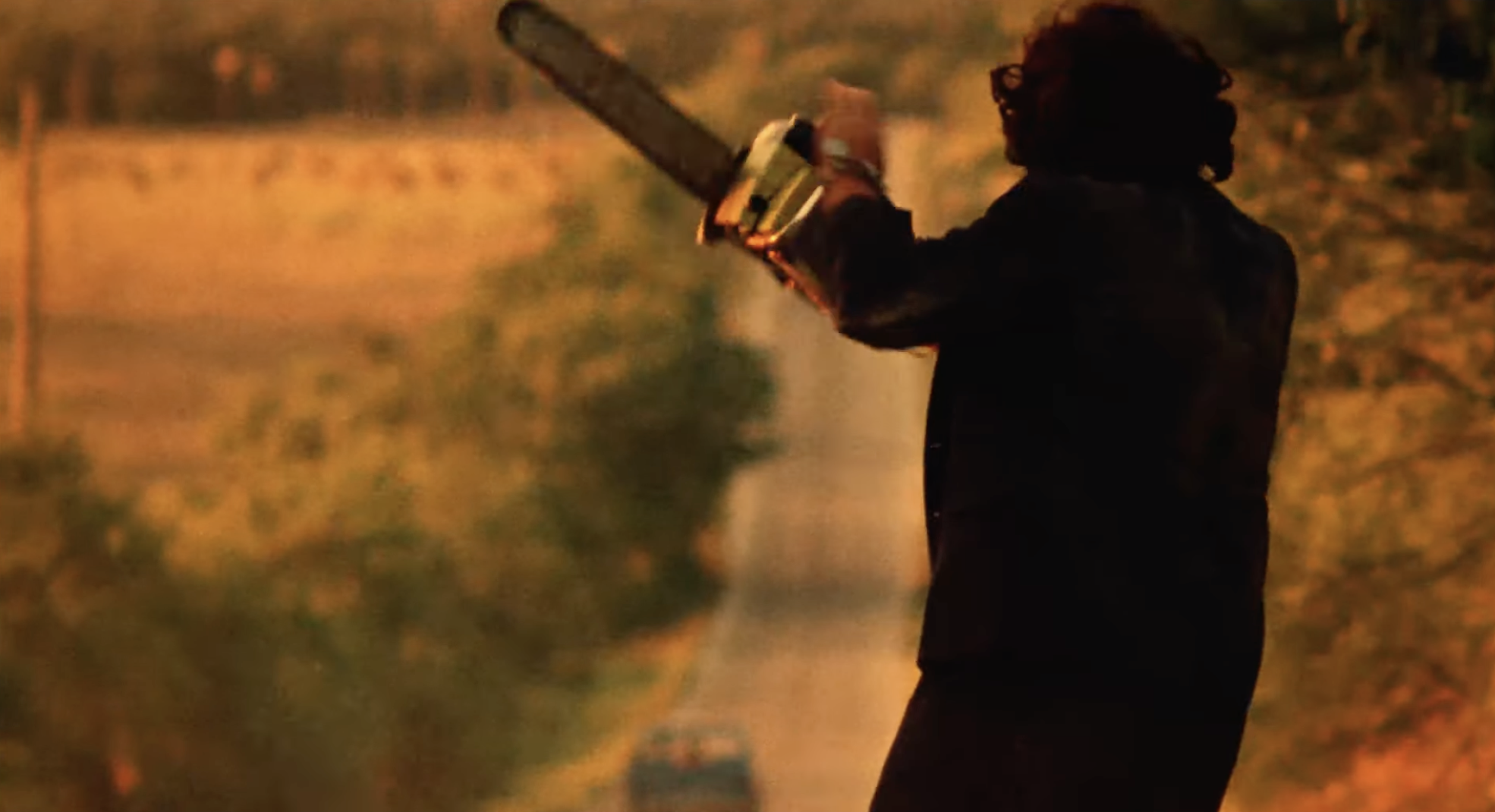
Zefyr Lisowski’s Uncanny Valley Girls is an urgent, complex debut pulling at the threads of horror, trauma, care, and ultimately the endurance of trans women and queer people at large. Lisowski uses horror films as a prism through which to interrogate her own history and culture—both popular and underground—as well as the intersecting systems that create and crush us. Whether she is reconsidering her feelings about her hometown and its history through Scream and The Texas Chainsaw Massacre, fleshing out our cultural appetite for torture porn as it pertains to the Iraq War, or thoughtfully arguing about why maybe trans women are more like werewolves than we think, Lisowski’s debut collection of autobiographical essays never shies away from the messiness of its subject matter or the complexities inherent in fleshing it out.
Uncanny Valley Girls is deftly tuned to our cultural moment, never missing the opportunity to name the greater systems that shape and impose upon our lives. At every turn, she highlights the nuances of her analysis, looking at its limits and applications across identity, time, and location. That said, these essays are as emotionally-charged as they are astute. Lisowski makes a fervent argument for care, kindness, and understanding between every bloody, hard-to-look at moment of hurt and pain. Through her meticulousness comes a clear, resounding message reminiscent of the horror movies she pulls from: Stay alive.
In the month leading up to the publication of Uncanny Valley Girls, I had the opportunity to speak to Lisowski on Zoom about psych wards, the Southern United States, and “Crazy4Crazy” relationships.
Christ: You do such a wonderful job putting your personal relationships in the context of the movies discussed in the book, and also in a grander socio-political context. Was that something that happened naturally?
Zefyr Lisowski: I was interested in first tracking these movies socially and interpersonally, and of course the interpersonal is always framed within the context of the political. So, the politicality of these relationships, especially relationships across intersections of difference, class, ability, and saneism, were all pushed intuitively to the foreground. As the book is fundamentally oriented around themes of survival—our motivators in relationships, and in the movies that I chose to discuss—the ways those show up became more pushed to the surface as well.
C: So many of these essays are viewed through your affinity for horror movies. Can you talk about your relationship to the genre?
ZL: I had an interest and fear and anxiety around horror films from a very young age.These movies became [a] way to contextualize an oft-fractious childhood, tensions of grief, and self-actualization that I didn’t know how to articulate. [They] became a way for me to see reflections of parts of myself that I didn’t always know how to express. Like a lot of people who are interested in horror movies, I was an incredibly nervous and fear-ridden child, and they became a way to externalize and build a container for those fears, even as that container was a little bit intense or activating in its own way.
C: One of my favorite essays in the collection is about Scream and the evolution of your ideas of home. Early in the essay, you bring up relating to films either by reflection or aspiration, and the inevitable disappointment of trying to run away from yourself. Could you talk about the emotional arc of that?
I had an interest and fear and anxiety around horror films from a very young age.
ZL: So much of this book is centered around the fear and anticipation of finding these modes of salvation, this thing that will save or redeem us, and then realizing the self and these patterns of behavior are fundamentally inescapable. Being forced to reckon with these ideas of escape as someone who grew up white with some class mobility in the rural South is a very particular set of experiences. It was important to think of how I was fed this narrative of escape, of moving out of the South, which is a very common story for a lot of queer people in rural areas in particular. Throughout, I was interested in tracing these throughlines of what it means to want to leave a place. The flip side of that is: Who’s able to leave the place? What does it mean if you are being forced out of a place? What does it mean to assert your role there anyway?
C: The essay on Texas Chainsaw Massacre follows that essay really well, because it’s about the flip side of rediscovering the beauty of where you’re from.
ZL: I really wanted to put those two things in conversation, and I’m glad that you picked up on that. There is a tremendous amount of beauty to the Southern United States, to North Carolina in particular, and while I really wanted to leave and have left—I’m speaking to you from New York City, where I’ve been the past decade—there still is a tremendous amount I miss about the South, a tremendous amount about the South that is really beautiful and commendable from a political, interpersonal, and geographic perspective as well.
C: So much of the book is about home and family. How did that come to be?
ZL: Like a lot of queer and trans people, I have a complex relationship with my family of origin and the idea of home. Moving a lot as a kid and then settling in this small rural town shaped my understanding of what could or couldn’t be a home. It became this place that was really marked by instability and violence, but also in the wake of that there was a tremendous amount of care and bonding that happened, whether in a more positive or negative valence. I was interested in talking about my own experience because of a simple question of representation. I haven’t read any writing by a trans woman from the rural South, certainly not with a major press, and that’s something that I don’t take lightly in terms of a responsibility. It is also something that reflects the stories that are told, right?
The majority of the trans perspectives that we see highlighted in mainstream publishing are white, typically from urban areas, adhere to these conventional beauty standards, and often have [a] middle to upper-middle class positionality or the ability to present that way. I, on paper, match all of those criteria, but I also have experience in a more rural area in having a Southern-grown childhood. It was important to me to think through those points of reflection where I align with the hegemonic norms of what publishing prioritizes, but also to push back and think about the ways in which my story, while adhering to these super-structural schemas, opens up the space hopefully for more counter-hegemonic narratives to come through as well, which connects back to home and family. All of these things are related to places of origin, how we relate to those places, and are the throughlines of an entire system of order.
C: Films in the book are not only tools for the interrogation of history, but also relationships from your youth that are characterized by longing. Where do you think that sense of longing is born from?
I was interested in using horror movies to talk about hunger for connection.
ZL: There are a couple of directions that longing comes from. One is this sense of isolation that you get growing up “other” in a community that doesn’t seem to welcome you. There is a long history of writers, especially queer writers from the South, who really engage with this otherness. Beyond the superstructural loneliness, I was interested in using horror movies to talk about hunger for connection. A lot of these movies are fundamentally social encounters. We typically watch horror movies with odd dates or with friends or in this myriad array of contexts, and it became this intuitive counterbalance for these questions of longing and connection. If we watch a scary movie with other people, what are the ways that already prefigure a desire for connection? What are the ways watching these movies together assumes a longing for that togetherness?
C: It makes me think about how, as kids, before we have the opportunity to bond with people by experiencing hard things together, horror movies can be a facsimile for bonding through adversity.
ZL: Yeah, I love that framework: a kind of proto-trauma bonding through watching, like, Willem Dafoe’s dick get crushed by a millstone.
C: You don’t shy away from offering complex depictions of trans women who not only endure harm but have perpetuated it themselves. What considerations did you make when writing that history?
ZL: That’s something that I’ve thought about quite a bit as we’ve been emerging into this even more hostile environment for trans people and trans women in particular. We’ve seen time and time again [that] the political strategy of sanitizing one’s queerness and presenting oneself as a perfect being that is incapable of harm is fundamentally deleterious to larger social movements. This idea that queer people can’t hurt each other, or trans people can’t hurt each other is doing a disservice to the fact that we’re all human, and we have complex relationships with harm done and received. I was interested in laying out some of those complexities as a counterbalance to the impetus to present ourselves as unimpeachable. At the same time, that’s a risky proposition in these times, right?
So much of this essay is grappling with the framework of the trans woman as a sexual assailant and the idea that trans women are going to hurt you. That’s counterbalanced by the fact that I did experience sexual violence from someone who later transitioned. I was interested in presenting that narrative to think about what if that does happen in a discreet instance. What are the ways we can still form community and assert the importance of our lives despite that harm? That’s really rooted in abolitionist politics. Having an understanding of harm done without ceding ground is incredibly important in this particular moment. Nevertheless, there are still existing ways that I tried to frame this: pushing back that this isn’t a universal narrative and having this emphasis on still forming community and sisterhood with these people who hurt me, even despite that hurt.
C: In the book, you flesh out a similarity between transness and werewolves that grapples with the complexity of that comparison. How does the concept of a werewolf begin to reveal the complexity of trans people—the harms we endure and the harm we can commit?
ZL: When I was six or seven, one of my favorite movies was The Wolf Man, and I dressed up as a werewolf for Halloween. I obsessively drew and thought about werewolves. The start of the essay was asking: Why was this so appealing to me? Werewolves have this ambiguous relationship to change. It’s not fully volitional, but something they can find themselves within. There’s a tremendous amount of strength, self-resolution, and self-autonomy that’s required to transition, but nevertheless there is a sense of yielding, of subsumption to something more extensive than you: either the long history of trans people existing against a society that is frequently hostile, or the disproportionate violences that trans people and especially trans women are exposed to, especially Black and Brown trans women. I was interested in using the werewolf as a way to tease out not only those violences but also the unexpected joys of transition.
This idea that queer people can’t hurt each other or trans people can’t hurt each other is doing a disservice to the fact that we’re all human
There’s a tremendous beauty in the figure of the werewolf: this figure that’s covered in hair, like us but not like us, loping across a field. I had seen this quite lazy formulation, a viral tweet that became this folk-saying: “Trans women are vampires, trans men are werewolves.” What if we complicate that more? So much of werewolves are rooted in this fear of masculinity, of becoming haired, violent. At the same time, it has the counterbalance: It’s not becoming a man, not becoming a woman, but becoming something else. So if we become something else, how can that mirror or challenge existing transition narratives as well?
C: Despite the book’s subject matter, how is there always a turn toward hope and care at every turn in these essays?
ZL: As Mariame Kaba said famously, “hope is a discipline,” right? It’s really important for me to think towards these moments of connection throughout the work because of the larger argument. It’s a book about intimacy, relationships, and horror movies. Most fundamentally, the biggest takeaway of the book is an argument against suicide. It starts at this nadir that I experienced entering the psych ward, feeling this intense overwhelm of suicidality. What follows is an effort to claw out of that space and assert the meaningfulness of our lives as trans people, in community with other queer people. It would be deeply irresponsible for me not to loop towards hope. I also don’t want to sanitize the complexities of that: The ways in which we are hurt and the ways we hurt others isn’t mutually exclusive with the importance of continuing to stay alive.
C: Typically when an author enters a psych ward, it is characterized as a low point. In Uncanny Valley Girls, it’s a moment of love and ultimately freedom. Can you talk about how that section of the book is incorporated thematically and structurally?
ZL: I had a very particular experience in the psych ward. Understanding it as a site of pain, violence, carcerality, was palliative for me. I wanted to capture that tension. The psych ward itself wasn’t this site of healing, but the people I met there, the ways in which I delved into what I was reading, the relationship I built with myself, and the way that experience necessitated redefining my relationship to care was profoundly transformative. I wanted to respond to and play with the larger tropes of psych wards that you see in horror movies, which is this place of intense violence, abject psychic states, and profound terror. There was a sadness and a loneliness to the ward, but there was also this sense that I had to find ways of changing. While I wanted to highlight the ward itself as this place that facilitated the change, it’s significant that the book doesn’t end in a psych ward. It ends at a writing residency, which is this place of community. Having that counterbalance hopefully mirrors a larger structure the book makes from a place of confinement to a place of expansiveness.
C: You also talk about what you call “crazy for crazy” relationships in that essay. Why are those important?
ZL: It ties into what we were talking about earlier around refusing to sanitize these dynamics within the queer community. Finding places of connection with others who have been pathologized and have experiences of trauma and instability is actually a site of profound social and political power, even as it can also be a place where harms are perpetuated. I’m drawing on concepts from the disability justice movement, from the Mad Pride movement, but I also am interested in thinking through connections forged in similarity and solidarity. Finding connection with those like you, especially those whose lives have been deemed less livable—whether that’s because of ableism, because of saneism, because of transphobia or trans misogyny—can be a pretty profound space of change and reflection. I wanted to assert a counter argument to this larger history of someone entering a more normative relationship and becoming saved. That’s something that I reject with every fiber of my being.
C: In the essay about the artist Greer Lankton, you talk about how often trans women’s art is pigeonholed into the genre of autobiography. In your own words, what is the aim of Uncanny Valley Girls beyond self-explanation?
ZL: In a lot of ways, the history of trans women’s memoirs, which this book broadly is, is a complex history of disavowal, of market forces, and of subversion. There are a number of collections—Janet Mock’s Redefining Realness is foremost among those—that are responding to market pressures, but also asserting the importance of lives lived and the complexity of those lives in ways that I find fascinating and complex. I was interested in this book fitting into that tradition. An essay collection by a trans woman, a series of autobiographical writing, is perhaps a little bit easier to sell or promote than these more complex or heterodox forms. If we are working within that framework, what spots of subversion are there? What ways can this personal narrative hopefully serve as a larger microcosm that argues not just to a cis audience about the importance of our lives lived, which many of these books do and is an important thing to do, but also what are the ways in which this can speak to subcultural, inter-community readers? In that way, while this is a book about horror movies and about love, the throughline of the anti-suicide message is aimed directly at other trans women and is trying to make the text, and the texts within the text, readable to a more particular audience. Hopefully this is a form of solace or community building for that audience as well.
A man has died. The girl knows this because the news has spread through the kampung the way a snake makes its way through the lalang. She had heard it first that morning, smashing her teaspoon against her egg at the table, her parents murmuring over their coffee. They had balik kampung for the holidays, departed from their home in the city almost immediately after subuh, the sky still dark but streaked with dawn light already. She had fallen asleep again once in the cool cocoon of the car, awoken just as they broached the outskirts of the kampung. The familiar rise of the foliage, the press of the thinning jungle. Not even a jungle properly, she knew—just clusters of pokok pisang that grew this way and that, a gnarl of trees and brush.
They had done all the proper things upon their arrival at her grandmother’s house, the expected things. The girl putting her forehead to her grandmother’s trembling hand. The greetings and bestowing of gifts from the city, the visiting of the neighbours and the catching up on news and gossip. She had joined her grandmother and mother in the rest of the day’s prayers, her forehead to the mat, turning her head afterwards this way and that. Syukur Alhamduillah, her grandmother said when she had seen her again, clasping her face between her hands. Syukur. Her voice trailing in a request for the girl’s good health.
So far, things have gone as they always had. As they have for years—as many years as the girl has been alive. But today, she is hearing these whispers that arrived that morning about the death of a man, whispers that spread after the dawn prayers. What she can glean from her parents’ voices is that he was an old man, that her grandmother had known him. The other elders in the kampung had known him too. Might the dead man, the girl wonders, be an old friend of her grandmother’s? If so, she should think of a way to comfort her, but even as she is thinking this they hear the door of her grandmother’s room open, the stuttered cadence of her gait against the floors.
Her parents fall silent as her grandmother enters the kitchen. Her father reaches forwards at the table to prise the lid off a new can of condensed milk for her, her mother gesturing for her to sit. Her grandmother sits next to the girl and leans forward, placing her hand against the girl’s cheek. They look into the others’ eyes, and the girl notices how bright her grandmother’s eyes are this particular morning. She can see her reflection in them.
“Mak—” her father begins, “about . . . about what you said to us this morning . . .”
Her grandmother turns her head. “There is nothing more I have to say.”
The news continues to spread. The girl knows this because she hears more rumours when she walks over to the kedai runcit for a Paddle Pop, the bloom of a rainbow left behind on her tongue afterwards from the stain of the food colouring. An old man has died. He had not been living in this kampung, but he was from here. It is a pakcik standing at the kedai runcit counter who is saying this; the girl interrupts the conversation he is having with the shopkeeper, her hand outstretched with the shilling to pay.
They want him buried here, in the kubur. Where we have been burying our dead for so long.
They fall silent as she stands at the counter, switching the conversation to remark on how tall she has grown and to ask about her parents. But the girl wants to hear more, and so when she gets out of the kedai runcit, she circles it and crouches by the window behind the counter where she can still hear the voices of the men if she concentrates.
So he wants a burial? she hears the shopkeeper say. I thought he might have wanted to be cremated—like the Hindus are, like the Chinese. She hears the pakcik’s voice rise in response; she is taken aback by the emotion that is in it—No! They want him here, they want him to come home . . .
The girl saw a Hindu funeral once, saw the flames leap against a white shroud. The smell of incense rising through the smoke, the cloying perfume of jasmine. A body in there. A person. A body. She imagines this old man, who for some reason she thinks of as her late grandfather, a man she has only seen in photographs, smiling placidly next to her grandmother, his songkok at an angle. Suddenly she does not want to hear any more. She stands up and walks away.
When she arrives home, her parents’ car is no longer in the driveway. She climbs the set of wooden steps to her grandmother’s house and sees a cluster of slippers. Opening the door, she sees a group of makciks whose heads rise to meet her. Her grandmother sits in the middle of them, and for a moment there is silence; she knows instinctively that she must have interrupted some talk. She remembers what she heard earlier: So he wants a burial? Her grandmother calls out to her, and she knows what she must do. She wipes her hands—still sticky from the ice cream—on her baju before she goes around the circle of makciks, her forehead to their hands, and when the greetings are done, her grandmother says to her: Sayang, perhaps it is time for you to take a nap? Perhaps you should leave us for a moment—we are only old women, there is nothing that interesting going on here.
The afternoon is long and hot, and the girl tries to go to sleep. For a long time, she is in that strange place between sleeping and waking, where she is not fully conscious but is also aware that the world is continuing to revolve around her. She can see everything, sense it—as if she is merely on the cusp of this reality. She hears voices through the plank walls but cannot understand what they are saying. In the afternoon heat she feels the bedclothes, her hair, stuck to her damp skin. And somewhere in the midst of this all, she is aware that she is dreaming.
Eventually, she does fall asleep, and when she wakes the sky is heavy with the light of the late afternoon. After a while she peels herself off the mat and makes her way into the living room. Her parents are back. She hears her mother talking on the phone in the kitchen, her voice fussy and precise. She walks out into the living room and does not see her grandmother. Perhaps she is sleeping in her room too. When she was younger she would crawl onto the mat with her, be lost to the world as they slept. Now the thought of that old man rises to her again.
She walks to the window and sees her father fiddling with the car engine. He turns back to look at her and makes a face. She makes one back and feels calmed, emerging briefly from the fog of the day. With a renewed sense of purpose she leaves the window and heads to the door, barrels down the steps and into her father’s arms.
“What is it, sayang?”
She closes her eyes. She is not sure how to say what she wants to say—not sure that she even wants to say it.
“Is there something wrong?”
She unlatches herself from her father, takes a breath.
“An old man has died,” she says. She watches her father’s expression, observes how there is no shock on his face, only a sort of resignation. “I don’t think he is from here, but everyone seems to know him.”
She watches her father’s expression, observes how there is no shock on his face, only a sort of resignation.
Her father does not speak for a moment, only raises his eyes briefly to the open window above them before coming to settle on her. He crouches down so they can speak face to face.
“Yes,” he says, “That’s true. A man has died, and he was from here.”
“Will he be burnt, like a Hindu or a Chinese?”
“Burnt?” Her father is shocked now, she can tell. “What have you been hearing?”
She shrugged. “I went to the kedai runcit just now only, and I heard . . .”
Her father shook his head.
“He will not be cremated, sayang. He will be buried as is usually done.”
“Who is he?”
“He was just a man. His parents were from here, his family. Just like me, like your grandmother. Like your grandfather and her parents. Like everyone who came before them.”
She presses her heel into the dirt.
“Why did he leave?”
“Why did I leave?” her father asked. “Many people leave. It is normal to leave and come back. Dah, perhaps you should go back up—your mother told me just now she wanted you to help with something, go and find her.”
The girl understands that she is being dismissed, even if not unkindly. Her father turns back to the car, and she knows that what he has told her is not the entire truth, but there is nothing she can do.
Her mother has nothing for her to do in the kitchen. She is still on her call. And so the girl decides that she will go out and find someone to play with, perhaps one of the other children in the village. She says this to her mother who bites her lip and peels the phone off her ear for a moment. She has a city-dweller’s mild distrust of the kampung, having not grown up in one herself.
“You will be back before dark, okay? And use the bicycle. And don’t talk to anyone you don’t know. And don’t—”
“Mak . . . I know everyone here . . .”
“Wa, so smart, is it? Okay, go ahead . . . make sure you’re back before dark. If you end up at someone’s house get their mother to call, okay?”
“Okay.”
With that, her mother nods and the girl sets out. She takes the bicycle and makes her way down the dirt path leading off from the side of the house. This is her bicycle, and her father had tied some streamers to the handle for her the last time they had visited. Although the colour has faded from them over time, they still glitter now, pink and blue, beneath the last of the day’s sun.
The girl makes her way around the kampung, calling out to the people she recognises as she passes them by. The wind is in her hair, and the faces are familiar to her after so many years. It is still quiet in the day, and she wonders how many houses the news of the old man has travelled to. Who will tell her what she needs to know? Not one of the makciks or pakciks. This is not the kind of news she can get out of any of the adults her parents’ age. But then as she rides down a slight slope, parallel to a field from which a startled flock of birds now emerges, she sees yet another familiar face—a girl a couple of years older than her, a friend. This other girl is standing at the side of the path, holding a plastic bag that must have come from the kedai runcit.
The girl wheels her bicycle to a stop.
“You’ve come back already,” her friend says.
“Ya. You are going home now?”
“Ya. My mother needs these for dinner.” Her friend lifts the plastic bag, in which the girl can see some eggs.
“Do you want to get on my bike? I can send you home.”
The other girl clambers onto the bicycle, and together they cycle slowly towards her house so as not to hurt the eggs. The light is now turning fiery but soft—evening soaking into the sky.
“Kak,” the girl says—for her friend is a little bit older than her—”have you heard what everybody has been saying today?”
“Everybody?”
“Yes, wherever I go today I’ve been hearing about this old man . . .”
“Oh, the one who passed away.”
“Ya.” The girl feels a thrum in her chest. “The one who used to live here. Do you know who he was?”
“I can tell you,” her friend says, “But you are not allowed to say it, or to tell anyone I told you. Understand?”
“Understand.”
“He left because he was an unbeliever.”
“An unbeliever?”
“Ya. That is what my grandmother said. He was a young man when he left only. Still during British times.”
“What else?”
“I know this only.”
“That’s all?”
“Ya. That’s all.”
The girl drops her friend off and then cycles back home, feeling suddenly weary. The sky is a dusty blue now, and, sure enough, she hears the azan for maghrib wind through the air, wrap itself around the trees, rustle through the grass, dance with the last of the light on a stream she is passing. Her mother usually does not say this prayer as she typically makes her way home from work at this time, but the girl knows that she will be praying next to her grandmother now, just as her father would have gone to the surau for this particular one.
She arrives home as the azan trickles to a close, leaning her bicycle against the wall and running up the steps. The light has been turned on already, a sizzling strip of white fluorescence, but it is still bright outside. She has obeyed her mother’s instruction, to return home before it is dark. She wants to bathe before dinner, and while her mother and grandmother are closing the prayer, she rushes to the outdoor washroom, dousing herself in pail after pail of water. The water is shockingly cold, which makes it pleasant afterwards to wrap herself in her clothes that are somehow warm. She is still shivering when she returns to the house, where her mother and grandmother are puttering about in the kitchen. Her father has said he would buy nasi lemak from outside the surau for dinner, so they are only preparing the drinks—coffee for her parents, and searingly hot, milky milo for her and her grandmother.
She helps them pull out the plates and answers their questions. No, she did not go far. Yes, she met so-and-so and greeted them.
“That’s all?” her mother says, placing the drinks on the table.
I heard about the unbeliever who still wants to be buried, she wanted to say. But of course she does not.
I heard about the unbeliever who still wants to be buried, she wanted to say. But of course she does not.
Her grandmother settles down on the chair next to her and pulls her glass of milo towards her. The girl has seen one photograph of her grandmother as a young woman. She is wearing lipstick that is dark grey in the photograph, and her eyes are gleaming—her youth preserved on the photograph paper. She thinks now about that young woman laughing with a young man. Because she has seen a picture of it once, in a school textbook. She imagines the Union Jack rising from a schoolhouse. Maybe the man was a teacher, she thinks, when he was younger—when he had lived here. A teacher like her grandmother had been. She imagines him walking through the streets she had ridden through earlier, imagines him watching the light play on the water like she herself had done, feeling the evening wind blowing his hair back, his hand raised to greet whoever passes him on his way.
Her father comes home, and they unwrap the nasi lemak, digging in with their hands. He puts the television on in the living room, but only at a low volume so that the sound of strangers murmuring is comforting without being obtrusive.
“How were things at the surau?” her mother asks as her father tears off a chunk of his chicken for her.
“Same only.” He pauses for a moment and then raises his head, looks up at all of them, then at his daughter. For a moment, it appears as if he is thinking of something. The girl watches him, her hand hovering over her rice.
“But they were talking about whether they want to bury the old man—”
The girl sweeps her eyes across the table. Her mother looks wary; her grandmother’s expression has not changed, but she opens her mouth and says:
“It cannot be done. He was an unbeliever.”
“Mak . . . he was not an unbeliever. Until the very end he was a believer. He said his prayers five times a day. He has never touched pork, not a bite—”
“How can you know?”
The girl sits there, not daring to move, not daring to breathe, worried that anything she might do, any sound she might make, would betray her presence there—would break this bond that seems now to exist only between mother and son, the two at this table who knew this kampung most intimately. Just as the old man, the dead man, must have once had.
The girl’s mother now looks askance at her, but something in her face has changed. Her mother will not ask her to leave the table. She will let her hear everything. And in so doing, she will allow her to understand more fully the land and the history from which she comes. This is the pact they are making. There is a bond here now, between mother and daughter. An understanding that something is going to be revealed at this table that there is no turning back from. That even if this knowledge has nothing to do with her, it will change everything.
“He was not an unbeliever, Mak. I knew him. You knew him.”
“What was he doing in the jungles? You think we forced him to leave? He left us first. He allied himself with those who wished to take our God away from us.”
“Mak, that was not what he was doing. That was not what he was fighting for. He was not an unbeliever. I remember being a boy, I remember seeing him at every prayer.”
“That means nothing.”
“Mak, if it means nothing, why does it make you happy when I go to the surau for maghrib?”
“Will you ask me to let my granddaughter marry an unbeliever next?”
The girl holds her breath.
“Mak . . . that has nothing to do with anything. We are talking about this one man, this man whom we knew—whom I have prayed with, celebrated with . . .”
“How can you say it has nothing to do with anything? You unravel a thread, and the whole cloth falls to pieces.”
“Mak, his son came to the surau today.”
“His son. So he has a son.”
“He is a young man, still. Not yet married. He came to the surau and he said maghrib with us. And afterwards, he asked us—”
“I can imagine what he asked you!”
The girl swallows. Her grandmother’s voice is sharp, in a way she has rarely heard, but she can hear it trembling, like her hands are now trembling, like there is a waver in her eyes, her throat.
“It is a small request, Mak. It is only for a man who has died and who wants to come home. All we have to do is spare a bit of earth. You know the time for burial is short; we have only a little time left.”
“There are certain things you cannot turn away from.”
“Mak, I do not believe this is true.”
“He betrayed us.”
“How did he betray us?”
The girl’s mother reaches over and touches the girl on her shoulder. Her father’s eyes follow that movement between his wife and his daughter, and for a moment his expression, too, wavers. But when he speaks, his voice is strong.
“He betrayed no one in this kampung, Mak.”
“He was working with the Chinese. He turned his back on God.”
“Just because that is what you have heard—just because that is what you have chosen to believe—does not make it true.”
“He will not be buried here. I hope that is what they decided at the surau just now.”
“It was what they decided,” the girl’s father says. “It was not my will, but it was what they decided.”
With that, he finally turns his gaze away from his mother, and in silence, aside from the hum of the light and the low rumble of laughter from the television, the meal continues.
After they have washed up, the girl expects that her mother will prepare her for bed, but instead her father asks her if she wants to go for a drive. He asks her mother if she wants to accompany them but she shakes her head, says that it is a good idea that someone stay here with the grandmother, even though she has already retired for the night.
And so the girl and her father get into the car. The radio comes on almost immediately after he switches on the engine, some silly pop song to which he turns the dial so that the volume is reduced—like the sound of the television earlier—to a mere hum. He flicks his eyes to the rearview mirror as he reverses out onto the road, the gleam of headlights thrown back briefly into the car, against the tasbih that has been looped around the stem of the mirror.
“Shall we open the windows? The air is fresh here.”
“Okay.”
He turns off the air-conditioning and pulls down the windows. A rush of wind enters the car, and the girl has to brush her hair off her face. The darkness outside is gelatinous, aside from the flare of the headlights, the occasional streetlamp. All this makes the night—where the light falls away—even more intense. Although this place is familiar to her, it seems vaguely different now, as if it were wearing a different skin.
“I need to explain to you,” her father is now saying, “what all that was about. Because one day you will attend history lessons, and you will open the history books, and you will have to be prepared that not everyone understands what has happened here the same way.”
“Okay.”
“Sayang, you are familiar with the story of Si Tanggang, kan? About that man who left his kampung and became a prince. He came back with a princess for a wife, but he would not recognise his mother; he turned his back on all he had known. And so for this betrayal, he was punished with a storm and turned into stone. Sayang, I promise you that this is not that story. One day, you might remember that you were sitting here in this car, that I was telling you this, and you might want to come to me to ask me again about what I cannot tell you now. And when you are older, I will tell you everything.
“But what you need to understand tonight is this: A man from this kampung will not be buried in this kampung. He will be turned away from us in death for fighting for us in his life. Even though his son came back and asked it of us. I am telling you this story because I do not know what else I can do to make up for a sin such as this. I am telling you this story because this is all I can do.”
The next morning, the girl hears her parents wake up next to her for subuh. It is still dark outside, although there is a faint glance of the oncoming day’s light. She will be allowed to sleep for this prayer as her parents and grandmother unroll their mats. Later on, she knows, her mother will want to fry some keropok, and so she will help. She will not be allowed to touch the stove yet, the belly of hot oil, but she will look at what her mother is doing and perhaps learn from it. So that one day she will be able to do it on her own, without supervision.
The day will continue just as the days have always continued here. But she will know that something has changed, even if she cannot now understand precisely how. The girl wipes the sleep from her eyes and looks outside the window. It has begun to rain. A very faint rain that will churn the earth and make perfume out of the soil. Somewhere, she knows, a son will bury his father, and although it will not be in this very soil, it will be a burial too, in the earth. And no matter where that would be, the rain would come, and it would drench the earth, melting into the soil, becoming a part of it, and this would repeat itself—on and on, until the end of time.
Literature and film are replete with characters living double lives, and no wonder: Who among us doesn’t muse upon the road not taken? Whether it’s a character making a detour from one life to live an entirely different one, a con artist pretending to be someone they’re not, or a sci-fi heroine swept up in an alternate timeline, there is huge appeal in watching a character reinvent themselves and make a leap most of us are unable or unwilling to do.
I didn’t set out to write about double lives when I started my novel Last Night at the Disco. My initial interest was to explore a time and place—the late 1970s in New York City—that was a nexus for many different forms of music: glam rock, disco, early punk. As I created characters who were part of these different music scenes, I realized that most of them turned to clubbing at night as an escape from day jobs, families, or even personas they wished to leave behind.
It quickly became clear that my grandiose narrator, Lynda Boyle, would have to live a double life to tell the story I wanted to tell. This headline, from a fictional 1980 New YorkMagazine article mentioned in my book, sums young Lynda up: “New Jersey junior high school teacher by day, coke-fueled disco queen by night.” In developing Lynda’s retrospective narration—she tells the story of her youth from the vantage point of 2019—a double life emerged in the 2019 time frame as well. As Lynda herself would be quick to tell you, she contains multitudes.
One of the benefits of working with a character who leads a double life is the inherent increase in stakes and tension. The climax of most double life plots is when the two lives intersect or the hidden life is revealed and the character is forced to make a choice—or, in a third option, walk away from both lives. The female protagonists in the following seven novels are all very different characters, but the one thing they share is being trapped between two worlds, even if that trap is of their own making.
Grace Jefferson, a highly educated and deeply unfulfilled stay-at-home mom, begins laying the groundwork to pursue a new life shortly after she and her family move to an upscale Boston suburb for her husband’s new job. I could leave them. Grandmother did, she thinks in the opening scene of this unflinching look at the sacrifices of motherhood and exploration of the continuing legacy of slavery. Grace is haunted by thoughts of Rae, the grandmother who abandoned her family, and whose story is woven throughout the novel. As Grace tests out a life free from family obligations, leaving her daughters and husband for increasing periods of time, Rae’s story so consumes Grace that she sets out to find her. McLarin sustains the tension so well that I truly did not know which life Grace would choose until the final pages.
Third grade teacher Nora Eldridge announces her duality on the very first page of The Woman Upstairs, in a voice that’s a masterpiece of female rage: “It was supposed to say ‘Great Artist’ on my tombstone, but if I died right now it would say ‘such a good teacher/daughter/friend’ instead; and what I really want to shout, and want in big letters on that grave, too, is FUCK YOU ALL.” Having long ago sublimated her desire to be an artist, Nora finds that life re-emerging as she gets to know the mother of a new student: Sirena Shahid, an acclaimed conceptual artist. When Sirena suggests they rent a studio together, Nora starts a new project, feeling alive and inspired by her double life as an artist and by how deeply that life is enmeshed with her growing feelings for the Shahids. Stumbling deeper into her new life, Nora crosses boundaries with both Sirena and her husband, leading to betrayals involving her two greatest passions: love and art.
A common trope in mysteries and thrillers is the imposter: a character pretending to be someone they’re not, living a double life by stepping into another’s identity. Often these imposters are criminals, but The Likeness approaches the genre in a different way: the imposter is Dublin police detective Cassie Maddox, who bears a startling resemblance to a young murder victim and slips into her life to try to solve the crime. As Cassie gets drawn into the young woman’s tight-knit group of college friends—one of whom she suspects might be the murderer—she develops feelings that threaten not only her ability to solve the case, but her own life. Much more than a standard detective story, Cassie’s yearning for this other life of closeness and camaraderie is deeply moving to the end.
The demands of motherhood and the trap of the heteronormative family are central themes in All Fours, July’s novel about a 45-year-old artist who takes a detour on a road trip and never quite goes back to her old life. As the book’s narrator transforms first the shabby motel room she stays in, and later her sexual life, she is finally able to confront the traumatic birth of her child, Sam, who survived a condition that is often fatal. After examining and discarding all of her beliefs about limitations in the kinds of lives women can lead, the narrator tries to construct a new life that is not so much a rejection of her first life, but rather a revision.
A harrowing birth is also at the heart of The Possibilities, in which a new mother sees disturbing images of what might have been, and to save her son must confront not just a double life, but a multiverse of outcomes. Eight months since the difficult birth of her son, Jack, narrator Hannah can’t shake the feeling that her thriving infant might not have survived. As visions of this other life where she loses her baby destabilize Hannah, Jack disappears from his crib, and Hannah must tap into an ability to visit alternate worlds in order to save him. I loved the way this novel flipped the script on the double life plot: Instead of making a permanent shift into a different version of her life, Hannah has to fight for the life and child she already has.
“Everyone who is born holds dual citizenship, in the kingdom of the well and in the kingdom of the sick,” Susan Sontag famously wrote—and in All’s Well, college theater professor Miranda Fitch experiences both worlds. When the novel opens, Miranda lives with chronic pain from an accident that ended her acting career. She uses opioids to cope with pain and loss, and to help her face a cohort of students she considers beneath her. When Miranda meets three mysterious men at a local bar, she makes a Faustian bargain to rid herself of her pain and regain her old life. As Miranda shifts between two versions of herself in this novel, the book’s play-within-a-play structure—Miranda is mounting a student production of All’s Well That Ends Well—mirrors her doubling.
Predators lead double lives by necessity. Celeste Price, the sociopathic narrator of Tampa, uses her job as an eighth-grade teacher as both cover and hunting ground for her sexual obsession with fourteen-year-old boys. Unlike Lolita’s Humbert Humbert, Celeste doesn’t offer justifications for her actions. She knows she’s a monster, but that knowledge doesn’t stop her from pursuing her horrific double life. Because of the disturbing subject matter, Tampa might not be for everyone, but it has important things to say about the impact of sexual abuse on its victims, and how predators are often able to keep their double lives going for far too long.
Disability is serious…or so we’re told. We are supposed to expect stories of disability to be tragic, sad, sentimental, or inspiring. No laughing allowed. It’s not funny! We’re supposed to want “lived experience” without the indulgence of imagination or invention. No fiction. No joking around in disability stories. Get real.
But comedy—specifically the comic novel—can be a powerful lens to represent the disabled experience. It celebrates play, incongruity, and contradiction. The subject matter might be depressing—illnesses and hospitalizations, altered embodiments and losses—but the comic tone is buoyant and dynamic. Comedy is a survivalist aesthetic. It highlights how life after a diagnosis doesn’t end but keeps going. Comedy can disarm ableist prejudices by making people more comfortable imagining lives they previously thought were tragic. It’s also the best genre for writing into discomfort, exploring the anxiety and confusion of how to feel about something as complicated as disability.
My novel, Range of Motion, is a comic novel about disability. It follows twins Michael and Sal as they grow up in suburban Ohio. Like my own twin brother, Sal has cerebral palsy, intellectual disabilities, and can only say a few words. He is also funny, charming, mischievous, and loves to give his brother crap. Part of my goal was to dramatize the surprising ways people like my brother show their sense of humor, whether it’s mediated by family members or even transmitted nonverbally. I wanted to reflect the comic rhythm of caregiving: the silly songs, the banter while feeding or showering, the bathroom humor. I wanted to show disabled people and caregivers not as angels and saints but as complex and flawed human beings…who are often hilarious.
The novels on this list are all comedies about disability. While there are comic memoirs, I lean toward the novel because it’s a form that allows the writer to escape the narrow road of “what really happened,” and use the full force of their imagination to reach beyond literal truth and find emotional, dramatic, and comic truths. Each author on this list has lived experience as either a disabled person or a caregiver—and each chose the novel and the comic mode to tell their tales.
The Magic Kingdom is the fearless comic masterpiece about disability that you need to read first. Elkin explored his multiple sclerosis in The Franchiser, but it’s in this epic novel that Elkin takes on American sentimentality, eugenics, telethons, death, and the very idea of “normal.” Englishman Eddy Bale, insane with grief from the tabloid-covered death of his only child from cancer, plots a Make-a-Wish-Foundation-like trip to Disney World for seven dying children. Once in Florida, chaos ensues. Bale’s four chaperones all have ulterior motives—one nurse wants to steal Disney’s animatronic technology. Another, in order to calm her nerves, keeps slipping off to a secret hotel room for bouts of self-pleasure. These adults have no idea what their disabled charges actually want. The real heroes of this book are the disabled kids, who are all dying of absurd diseases but still thrum with life. Most don’t even want to go to Disney World. They want to go shopping, cause some mischief, and hang out in that secret hotel room. With his full-throated, language-drunk voice, the maximalist Elkin makes a profound case for disabled quality of life.
Longlisted for the Booker Prize and winner of Japan’s prestigious Akutagawa Prize, Ichikawa’s Hunchback tells the story of Shaka Izawa, a wealthy disabled woman in her early 40s who lives in a care home outside Tokyo. Like Ichikawa herself, Shaka has myotubular myopathy, a rare genetic disorder that causes severe muscular weakness. She uses a power wheelchair and ventilator to survive. She is also hilarious and possesses a mordant wit and perverse imagination. Shaka writes erotica and anonymously tweets transgressive thoughts, such as a wish to get pregnant so she can have an abortion like a “normal woman.” When a male aide reads her tweet, Shaka offers him a sum he can’t refuse to impregnate her, provoking a sexual encounter that will change both their lives. Filled with strikingly vivid details of embodied self-care, Ichikawa defies expectations of pity and sentimentality in this dark satire about the erotic power of imagination.
Jillian Weise’s The Colony is a sharp, inventive dystopian satire on eugenics, medical ethics, and mixed-up love. At Cold Spring Colony (named after America’s real life eugenics center…look it up), five people with “renegade genes” are paid to live on site and undergo genetic experimentation to cure their defects. The narrator, Anne Hatley, is a congenital amputee like Weise herself. She was born with a gene that caused her leg to stop growing at the knee and uses a computerized prosthetic leg. Anne is witty, sexy, and sarcastic…and she doesn’t really want to be cured. She falls for a bartender with a “suicide gene” and eventually consents to stem cell treatment to grow a missing limb. But the experiment goes awry with surreal side effects. As Anne’s leg starts to grow, Weise grapples with the cost of cure, the legacy of eugenics, and unintended consequences. While the satire is thrilling, my favorite sections are the whimsical chapter digressions, like a treatise on phone sex and Anne’s conversations with the ghost of Darwin at Applebee’s. Spoiler alert: he’s still got the beard and he’s not happy about the whole eugenics thing.
You don’t find much fiction narrated by Direct Support Professionals, a job Jonathan Evison did while launching his writing career. In this 2012 buddy comedy, former stay-at-home-dad Ben Benjamin is reeling from his impending divorce after a tragic accident kills his two children. He begins caring for Trev, a foul-mouthed, sex-obsessed 19-year-old with muscular dystrophy who has been coddled by his overprotective mother. Ben pushes Trev out of his comfort zone and encourages him to explore the world. They embark on a cross-country road trip to visit Trev’s hapless and estranged father. Hijinks ensue. A cast of misfit hitchhikers come along for the ride, including a sarcastic and spunky runaway who falls for Trev. There’s rich caregiving details ripe for awkward comedy: lifting, showering, and assisting with bathroom functions. But what I love most about this sardonic and big-hearted novel is the laugh-out-loud banter between Trev and Ben.
Plotwise, this 2020 novel sounds like a tough sell: a young Australian woman in Melbourne gets ready for a Christmas party, goes to the party, observes people, meets a cute guy near the bathroom, and goes home with him. But Ryan’s narrator, who is on the autism spectrum like Ryan herself, is well-worth following into the night. Written in 60 short chapters, the novel’s special pleasure is the comic digressions that follow this neurodivergent character’s thoughts on everything from Heath Ledger to rules for witches. She feels disconnected from her own species, prone to getting overwhelmed, and more at home alone or with animals (especially her cat, Porkchop). Ryan’s character is a Allistic anthropologist, dissecting “normal” social situations with observations that are acerbic, whimsical, and profound. While Ryan dramatizes its social challenges, autism is not a pathology in this novel. It’s an alternative way of thinking—a vehicle for revelation and, yes, humor.
Written in a tragicomic minimalist style that evades sentimentality, Akhil Sharma’s semi-autobiographical Family Life is the rare book about a family member who requires total care. Eight-year-old Ajay moves from India to America along with his father, mother, and older brother, Biju. Early comedy comes from encounters with cultural difference as Ajay flounders and Biju shines. But soon, Biju suffers a severe traumatic brain injury that requires 24/7 nursing care. Ajay is a sharp-eyed witness as his family struggles with their new reality. They care for Biju at home and navigate the absurdity of America’s broken social safety net. Even as the father descends into alcoholism and the mother goes to surreal lengths to “wake” Biju to his former self, comedy arrives in how people bizarrely respond to Biju and his family’s caregiving, and how Ajay confuses love with the performance of it.
Aaron John Curtis blends humor and pathos in this inventive tale of self-inflicted wounds, colonialism, healing, and returning home. Like Curtis, the book’s central character, Abe Jacobs, is an enrolled member of the Saint Regis Mohawk Tribe and, like Curtis, he has a rare autoimmune disease that creates sores all over his body. In Jacob’s case, the prognosis is fatal. He returns to his Rez on the Canadian border and starts “healing” sessions with his Uncle Budge, a foul-mouthed recovering alcoholic who wears punk rock and Taylor Swift t-shirts. The novel is narrated not by Jacobs, but by his more provocative alter ego, Dominick Deer Woods, who mixes in poetry, history, bitter jokes, profound meditations, and gleeful asides. Is Jacobs healed in the end? I won’t spoil it but Curtis certainly dramatizes the absurdity of suffering, how a body and culture can turn against themselves, and how language and humor might repair it all.
In Brad Listi’s 2022 autofictional novel, a writer and father named Brad Listi attempts to come to terms with his son’s cerebral palsy diagnosis while trying and failing to write a novel. He goes on a trip to Israel for research but realizes midway through that the novel won’t work. He ruminates on his past and the absurdity of modern life while trying to be a good father and husband. Told in the sharp meditative monologues that he is known for on his Otherppl podcast, Listi dramatizes the absurd in-process thoughts of a special-needs parent: the despair, the self-conscious guilt about the despair, and the waking up to the marvelousness of your own child. Knowing that his grief is ridiculous, the protagonist embarks on a surreal and bracing psychedelic experience that transforms his perspective. Listi portrays grief as a material thing—there one moment, gone the next—spotlighting the tender moments that appear in its shadow.
In Will There Ever Be Another You, Patricia Lockwood (author of one of my favorite memoirs,Priest Daddy) writes a hilarious and surreal autofiction of disability arriving in mid-life. At the beginning of the pandemic, a writer on a family trip to Scotland comes down with long COVID. She develops mind-altering brain fog and loses the ability to write, yet chronicles her thoughts anyway with fragmented, absurd entries in what she calls the “mad notebook.” She feels alien to herself, cleaved between “I” and “she,” and hears the song “What is Love” emanating from her floorboards. She attempts to relieve her migraines by taking mushrooms and tries to recover her reading ability with deep and hilarious meditations on Tolstoy. This is also a caregiving novel: the writer’s husband develops an intestinal blockage and requires open surgery, creating a wound that they refer to as “the vagina.” Lockwood’s character takes us along for the ride as she is altered by this journey into illness. Few writers are as sharp line-by-line or as funny.
23 Questions is EL’s new interview series aimed at getting to know established authors as people, thinkers, and creative practitioners, while having fun along the way.
I found Brandon Taylor’s work three years ago, when he wrote in his Substack about trauma plots and the controversial, oft-discussed (brace yourself) A Little Life by Hanya Yanagihara. While we didn’t agree on whether the book was good or not, what we shared was both a frustration with certain, eclipsing preoccupations swirling around the literary world—the supposition that minority (particularly queer) writers were being forced to cull to the “TenderQueer” aesthetic concerns of a select few—and a willingness to talk about such hard stuff (even if it meant biting the hand a bit). Following his Substack and researching his career thereafter, I found more similarities between us: both Black and gay, and writing about it. Both enjoy our own contrarianism. Both worked/still work for Electric Literature. Both really enjoy museums, sweaters, tennis. All this to say—yes, Taylor’s writing is cool, but I’ve also long thought the person behind it was too. He won’t know this until he reads this introduction, but Brandon Taylor has always been a leading example of the type of writer I strive to be.
I was excited to sit down and talk with him ahead of the release of his latest novel, Minor Black Figures, for Electric Lit’s 23 Questions to get to know more about the author behind the book(s)!
– Jalen Giovanni Jones Social Media Editor
1.Describe your publication week in a six word story.
Brandon Taylor: Hope I don’t miss my plane.
2. What’s one book everyone should read growing up?
BT: The Redwall books. It’s amazing. Feasts. Battles. Animals talking. Conquest. Arthurian legends. It has everything.
3. Write alone or in community?
BT: That’s very tricky. If I’m writing actively, alone, preferably behind the door so no one can see all the weird faces I’m making. But writing as a practice? Always in community, for sure.
4. How do you start from scratch?
BT: I make a list of things I want to do. It always starts with making a list. Every single time, make a list. When you’re overwhelmed, boom, it turns out a list solves everything.
I do that too! Literally everything has a list: each setting, every character—
BT: That’s how I wrote my first book—made a list, made a bunch of lists, and then just like rub them together. You crank that out quick—five weeks. That’s the power of a list.
5. If you were a novel, what novel would you be?
BT: Right now, this book called The Tennis Handsome by Barry Hannah, which I just found out about. It has a gay tennis coach in it, and that’s really my aspiration in life at just this moment.
6. Describe your ideal writing day.
BT: 11:45am: A huge cup of coffee. Like huge, comically large. Every device on Airplane Mode. Wi-Fi off. A cool 68 degrees. Open window. And I’m good to go.
7. What’s a piece of writing advice you never want to hear again?
BT: Make it weird.
8. What’s a piece of writing advice you think everyone needs to hear?
BT: It’s just a draft.
9. Realism or surrealism?
BT: Realism all day long. Get that surrealism out of here. Get it out of here. Mm-mmm—grow up. We’re done with that! Realism.
Didn’t you just recommend books with talking animals a minute ago?
BT: Well, yeah, but that’s different. It’s in a deeply realist historical mode.
I see.
10. Favorite and least favorite film adaptation of a book?
BT: My favorite is The Age of Innocence. Martin Scorsese’s—perhaps the best movie adaptation of any adaptation ever. Worst? Probably Jane Campion’s Portrait of a Lady. It’s so bad, it’s sooo bad. You wouldn’t think it would be, with Nicole Kidman, but it’s sooo bad. And yet I watched it all the way through.
I mean, Nicole Kidman’s in it.
BT: It’s a crazy movie, it should be so much better than it is.
Worth the hate watch?
BT: I think it’s worth watching. I just think it’s a bad adaptation of that novel, and it’s a bad movie—but it does have its charms.
11. Edit as you go, or shitty first draft?
BT: Oh, shitty first draft. I always tell my students, draft by any means necessary.
12. How did you meet your agent?
BT: At one of those five or ten minute speed-dating rounds at Tin House.
13. Best advice for pushing through writer’s block?
BT: I struggle with this myself, but whenever I have writer’s block, I just tell myself nouns and verbs. Just keep it super simple—write some nouns, write some verbs, short declarative sentences, until you get going again.
14. What’s your relationship to being edited?
BT: I love being edited. Please edit me. Get in there. Just tear it apart. Let’s go. I’m not precious. I love it. I need it. I crave it.
15. Write every day, or write when inspired?
BT: Listen, if I had my pick, I’d write every day. I love writing. I’m never happier than when I am writing. But often these days, it’s more write when I sort of have a critical mass of time, and also the impulse to write.
16. What other art forms and literary genres inspire you?
BT: I love procedurals and procedural crime dramas, specifically British ones and French ones, and Irish small town shows. They’re so atmospheric. And then the usuals: French film and painting. I love painting, and classical music.
I was on the lookout for painting. That’s what Minor Black Figures has throughout.
BT: I love nothing more than going to museums and just staring at huge Turners, or Caravaggios, or small little Bertha Morisots or whatever. I love paintings, but I mostly spend my time watching procedurals. I love a procedural. It’s the atmosphere, the coats.
Favorite procedural, and favorite painting?
Favorite painting, probably Ivan the Terrible and His Son Ivan by Ilya Repin. I just ordered a phone case with that painting on it that should arrive sometime today. Favorite procedural—I don’t know about favorite, but one I am thinking about the most right now is this one called Unforgotten, about cold cases in Britain. The Brits called it historical cases, instead of cold cases. It’s so good.
17. Book club or writing group?
BT: In my heart of hearts, book club. And the best writing groups are book clubs. So book club, for sure, I’m a book club girly. I love to read and gossip about made up characters.
18. The writer who made you want to write?
BT: Pat Conroy is responsible for that. He wrote this book called The Prince of Tides, which was sort of like the Anna Karenina of the South. It’s so sweeping and beautiful and lyrical and lush and gorgeous.
19. How do you know when you’ve reached the end?
BT: When I’m just moving commas and periods around, and just, like, deleting things. And also, when the most useful drama is over and I’m just dragging it out.
20. How do you know when an idea is a short story, versus a novel?
BT: When it’s just one idea, it’s a short story. You can’t write a novel with one idea. A novel needs many different ideas at many different levels, different registers. When there’s only the evolution of one situation, as opposed to the situation giving birth to many different situations and scenes and dramas, then it’s a story as opposed to a novel. I’ve seen many people try to turn stories into novels not knowing that, and it just is one long short story. And I’m like, why have you written a 400 page short story? Ideally, an editor will stop you from doing that. But some editors don’t.
21. How do you keep your favorite writers close to you?
BT: Constantly rereading. I’m almost always rereading Edith Wharton or Jane Austen or Henry James or Tolstoy. Lately, I’ve been rereading Faulkner. And I have certain of their quotes that I look up and look at again, and I always know where they are. It’s always rereading and revisiting.
22. Go-to activity when you need to take a writing break?
BT: Tennis all day, every day. I’m playing six days a week. It’s endless. Although right now, I’m playing a video game that one of my students recommended called Disco Elysium, because they figured out that if they make recommendations to me, I’ll feel so moved that they did it that I will take the recommendation.
23. What does evolving as a writer mean to you?
BT: Surprising myself as much as surprising my readers, but surprising myself and finding new questions, new styles, new techniques, or new voices. Being receptive to the world and changing as I grow as a person.
Sex Writing: the Good, the Bad, and the Assault by Sam Herschel Wein
1.
You are 30 and driving through Florida; a long, long state. In Orlando, you pull into a cul-de-sac where they are living, briefly, with their mother. You put water to boil to make tea but hours pass while it gurgles, thrashes. You are thrashing too. Your bodies, less clothed with every twenty minutes, the time it takes you to feel, squeeze, lick, smell, get lost in the smell. Every step forward, you both get a little more nervous. You feel their body mildly, almost invisibly, shaking.
But you know shaking. You have been/still are a sex shaker. You drop their legs, lay on top of them, make a joke. The two of you giggle, and kiss, roll around laughing. You can feel relaxation spread through them, like the color returning to a body that’s been holding its breath. You wait for them to reinitiate the sexy out of the laughter. You squeeze their body against yours and remind them they feel so, so good. And, after a short break, they kiss longer, more ferocious, start gripping with hands, and the bodies get sweatier.
2.
You realize as you drive away from their house how much growing you’ve done. How you’ve waited your entire life for someone to notice you are shaking. How, instead of that, you have just learned to notice it for someone else. But never for you. You’ve been flipped over and over, like you’re basting. Like someone is preparing you for a feast.
3.
A body can bend with its legs in the air but the mind is traveling to the kitchen.
A body can feel far away. A body can bend with its legs in the air but the mind is traveling to the kitchen, trying to turn the burner off. A body can slouch on the couch while a slimy boy dances on your lap, pulls off jockstraps to thongs, but your brain is back on the street, thinking how he said, ew, you have anxiety about sex? Sex is so fun. Don’t you just like, have fun?
4.
For a year, your body was in the swim team locker room, naked high school boys jaunting around, peeing on each other, making butt jokes, and then they all went home, and it was you and the football star. From there, a habit developed.
Except, like all habits, you couldn’t decide if you wanted it. You couldn’t decide if you enjoyed how his soap tasted in the back of your throat, if you liked how he’d cum on the floor or on your face, then tell you if you ever told anyone, he’d ruin your life. And he’d leave you, naked on the bench, the showers still running on the yellow, tetris floors.
5.
You kept a Super Secret Binder as a kid, where you wrote thoughts that were even more secretive than your regular diary. And the main thought, one of the few things you wrote in there, was that you liked to “SPB,” an acronym that you somehow came up with at age nine.
But your sisters found the Super Secret Binder, and one of them sat on you while the other read its contents aloud for your entire bedroom to hear. “SPB?” She asked the room, looking at you. Which followed a monthlong onslaught of different possibilities. “See People’s Boobs!” “Sex Porn Basement!” “Suck Pubic Bush!” “Sticky Peanut Butter?”
And the game went until one day she said, “Smell People’s Butts?” which is, in fact, what it stood for. That, at nine, you loved to shove your face in other boy’s butts, and inhale, and smell, and smell, and smell.
6.
In your early internet years, on the dial-up, most of the porn websites were blocked, so you would read erotica on various “children-safe” forums. You learned to sexy chat with strangers at fourteen, your friend signing you up for a website with little sims that get taken by older men to private rooms. You learned to get naked on Skype for people you never heard from againafter they finished, called you a good boy, clicked the video chat closed.
7.
It is fun to write sex scenes. The horny, young person inside you smiles wider with every line. Every tug, the nipples. Every tongue, the toes. Have you ever described the way you can get lost in the huff of an armpit, shoving your entire face there, inhaling like you’ll never breathe oxygen in this life, ever again?
8.
In Brokeback Mountain, famously, the cowboys eat beans and then use nothing but spit to shove it in before the camera cuts. But in real life, the camera doesn’t cut. In real life, your insides feel on fire while he holds his hand over your mouth, grunts that you are being too loud, slamming an entire world inside of you. He whispers you know you love it into your ear, which he begins to nibble. No, it isn’t a nibble. He begins to bite. And he leaves marks.
9.
The marks on your brain, for weeks after. You end up at stop signs you’ve never seen before. You don’t remember what you ate for lunch. You can’t recall if you paid your rent, and it is already the 11th, even though yesterday was the 3rd.
You turned to writing when you got like this: your best poems written in crisis, in emotional havoc. In altered mental states. The feelings bursting out from you. You didn’t know how to outlet. You didn’t talk to a soul about it. But the poems saved you. They’re saving your life, you would think, in your room. Alone.
10.
You have normalized this, your longtime therapist finally says, after five years of working with you. You are twenty-eight years old and about to move into your third Chicago apartment. This being the anxiety that swallows you whenever you tried to have sex. This, being the four-way stops, your dinners with parents, the stressful work meetings; all the places you would freeze, couldn’t speak, couldn’t think.
It isn’t normal, you said back. So why would I normalize it? And that question hung in the air for minutes of silence, no, for months after, no, for the rest of your time working together, patterned onto pillows, blocking light from windows, suffocating the air.
You learned to get naked on Skype for people you never heard from again.
11.
You try group therapy—queer group therapy specifically for trauma involving sexual assault. Once a week, you and six others meet in a room with markers, colored pencils, two facilitators, essential oils, lit candles, and a giant tray of snacks. You had been writing about sexual assault for years, but you had not yet learned the power of your voice in a room. You say out loud that you didn’t realize how bad it was, how everything in your life was just what other people wanted, in every avenue. Your career. Your sex. Your relationships. You made yourself have sex with so many people, for so many years, because you thought you had to. Because you didn’t realize you were allowed to want something different.
But you want to change. You want to be something that is only for you. Something that can only be shared when you decide to share it. You name this want, out loud in that room. And briefly, it feels possible.
12.
But the group therapy shuts down early. After five weeks out of the intended ten, the pandemic arrives in the US like a burning truck through a factory of mines, setting off explosives everywhere around you. You had just started to understand what healing could be. You had just begun to name it, speak it out. You had the best sex of your life in the three weeks before you were shut in. But, as life goes, there is little time to process a trauma before the next trauma comes rumbling through, barreling, bringing down every house.
13.
Two years pass, slowly. You are on your computer, on Zoom, in your little bedroom. An interviewer calls you a sexy writer. You work up a nervous laugh. You are always charming. You are always charming even when you are so uncomfortable you want to die.Your poems are sexy, sure, but they are also deeply traumatic. You try to reason with yourself; the trauma doesn’t detract from the sexiness, but is it fair to mention the sexiness without the trauma?
You swirl in your head about this for days. Justin Torres says, “To comment is not necessarily to compliment,” which feels like it relates to this and every part of you, all this unturned skin, all those gums above teeth. You feel like an internet comment section. You feel like you’ve heard it all. Everyone puts their fingers in your mouth, placing comments down your throat.
14.
You had one person, right before the pandemic. He saw in your eyes that you had vanished while he was inside you. He called for you, like you were stuck in a forest. All the world, silence. Then, slowly, your name, repeated and repeated. Sam, Sam are you there? Sam, Sam my love. It is just you and me. It is just you and me. It is just you and me as if to say, everything before you doesn’t have to come with you for this. Everything before doesn’t have to be in this penetrative place. Everything before is not in the pressing of his penis into you. And it worked. And it brought you back, back to yourself, a body beneath him. You said, please, you need to stop. The first time you had said that out loud, during sex.
15.
You cried during the second season of Fleabag, when the priest looked into the camera. Asked, who are you talking to? Like, for the first time, you watched something that happened in your life happen on a screen. You didn’t realize you’d been turning to the camera your entire life. You’d kept everyone, everything away from you. At least you tried to, until someone understood you well enough to look at your fourth wall, to break into your audience. To tell all the people in your mind, hey, I’m going to save this person. I’m going to stop them from being so fucked up.
16.
But he couldn’t save you from being fucked up. He helped you trust him enough, helped you feel safe enough to start unfurling. He pulled out forks that were stabbing in arteries. All those sacred, scary thoughts, bubbling out.
But the problem was, once they came out, he didn’t know what to do with them. It was too, too much for him. Which is ok. He didn’t have to be everything. He just wanted to be.
17.
Eve Sedgwick writes about her constant anxiety about childhood spanking and relates it to her obsession with enjambments. Your fiction class friend said every therapist she met with didn’t believe her, that she couldn’t remember her entire childhood. You spent your childhood keeping every part of yourself a secret. Your sexuality. Your sadness.
You take a purple crayon and you draw the line; as an adult, you could not tell men no. You could not talk about your assaults. But you could write about them, somehow. It was your only avenue out. But still, people would read your poems and they wouldn’t bring them up. How could they? “Hey, that poem about getting raped! Pretty cool, right!”
You realize you had spent all your twenties waiting for this. Instead, you had to say it out loud. You had to say, “I am really not ok, about any of this.”
18.
Right before you road-tripped through Florida, you spend two nights with a cutie you met at a karaoke queer baby fundraiser. They are up front with their preferences: They simply want to jack you off, but take their time, and get as many loads from you as they can. They spend nearly an hour smelling the small patch of hair between your balls and your asshole, the magical taint, they huff between inhaling. You feel immediately safe with them, and you realize, it’s because the limits were clear from the beginning.
You want to think of yourself as someone who can set limits like this. Like sex can be measured, a formula. You try it with a chunky babe who talks in a thick southern accent. You say, we aren’t having anal sex. And you feel calm, while you undress him, while you lick his belly up to his nipple, to his lips, kissing him. But when he feels your bulge pressed between his legs, he keeps guiding it to his ass, keeps begging, every five or so minutes, please, just push it in. And even though you don’t, you still feel like you lost something. You still feel like you were trying something new and he threw it out the window.
19.
You keep trying. Back to the Florida babe. You take so many breaks in the sex: to laugh, and check in, and make sure everything is at a place that feels comfortable for both of you. You start to recognize that the communication helps you stay level, helps you stay in your body, instead of flying away.
20.
What do you want to write about? a lover asks you. You had just said you’ve been writing the wrong poems. All the poems you write escape from you like they’re allergic to your skin. They are wild and untamable. You don’t necessarily want to write something controlled. But you want to write something you’ve decided on. You want to think over what to say for weeks and then sit down to orchestrate its shape.
You made yourself have sex with so many people, for so many years, because you thought you had to.
In your graduate class, a peer asks how you decided on your line breaks, whether it was based on some rule or just intuitive genius, which feels like the kindest thing anyone has ever asked. The class has already made it clear: this poem is a knockout. This poem is a first draft. You say intuition, that you were trying to focus on where the lines felt finished as you wrote. That you listened to the sound of their endings.
You get quiet. You realize, though you didn’t say it to the room, that you were conscious while writing the poem. That you had decided what the poem would say, and you wanted to assist it getting there, with every winding line.
21.
The boy who taught you how to open, the first one you asked to stop, during sex, wants to fly to Tennessee to visit you. He says, we need this, to have sex freely again. But sex with him wasn’t free, it was just wild and passionate, which are feelings you don’t want with him anymore. And the breakthrough happens: You want sex that is regimented. Sex that is overly discussed and very clear. You convinced yourself that super emotional sex would save you from your anxiety but actually what saves you is firm, crisp boundaries. Very clear rules. A line so sharp you could file your nails with it, and do, preparing your little toes for a mouth.
22.
In the final episode of I May Destroy You, Michaela Coel as Arabella lives out, in her mind, three alternate endings of a book she is writing, writing and rewriting in her mind what she would do if she found her rapist, returning over and over to the scene of his crime, looking, obsessively, for some kind of ending. The obsession. The looped ending of possibilities. The forever this and that of how you will confront them, of how someone else will respond once you do. You understand this episode because ever since you were raped, all you do is play different scenarios in your mind. You know exactly what you’ll do when you run into him, BIG him with purple curtains, college him, high school football star him, early 20’s him, writing mentor him, and so many other hims at parties, one plan for each of them. What you could’ve said to get each of these hims to go slower on you, or get off you like you wanted. You are sure you tried to give some bodily signal. You wonder if people don’t understand the language of your limbs.
And just like that, you’ve entered the spiral again. You are throwing yourself into spheres. The brain is never quiet like this. Eventually, you have to decide to jump. To become a splat mark on the moon. It takes a mega-engine to break a cycle. You need so much acceleration, you must become a confident moose, smashing your way through an ice bank. You have to believe in the grass that arrives when the snow melts. You have to believe you’ll survive to see it.
23.
You are scared you will freeze under someone’s body, won’t have the voice to say stop, wait a minute, you need a minute. That you’ll disappear into your mind, never come out.
You are scared you will never write the projects you dream of. That you’ll be stuck, forever, in what comes out from within you whenever you ache. Do you actually know how to tell a story? Or are you just trying to gargle your painful bits, spit them up?
You wonder how long you can be scared before you must, simply must live anyways. You wonder and wonder and wonder. And the answer doesn’t fall from a single tree, from a single living thing.
24.
You spend more time with the living, with your body that is a dense little beast. Your poems can’t be the only way out. You must also talk with people about your assaults.
You try to stay in your body when hard things happen: when you confront people and say what you need, when people demand things that you won’t, just won’t do. You practice this in your room. You decide ahead of time what your poems do, try writing in form, ask for little controlled exercises. You write sixty pages of your novel, even create this essay, an idea you wanted to share. Like your voice was always there but it was beyond your reach. Like your fingers are getting closer, ready to grab it.
25.
You wonder if people are at fault for assuming you knew how to stand up for yourself. You try to take accountability that you didn’t tell a lot of people how you felt. How could they know? How could they know they were hurting you? Did they pay enough attention? Or were you so good at hiding, no matter how much they noticed, it would never be enough?
How could the poems know where to break themselves? How does the subconscious know anything? You realize it knows a lot. But still, it’s stronger, that it’s mixed with your consciousness. That you are decisive in how you are portrayed, in how you are treated. You have a role in your own life, which feels completely brand new. Which makes you start to cry, as you type it. And you type it here, as a little boost.
26.
You are ten. You and a boy, your family friend’s son, lay awake at 1 a.m. in his basement, both his parents asleep. “It’s called a blowjob, I think?” he says, explaining what you should do. You put your child mouth around his semi-hard penis, and you blow, and you blow, the air bursting out the bottom, like you’re filling up a beach ball, like blowing strawberries is the world’s fruitiest gift, like you could do this all day, and still, you’re not finished until you are empty.
Jaquira Díaz’s debut novel, This Is the Only Kingdom, begins with an epigraph drawn from Aracelis Girmay’s poem “Elegy”: “Listen to me. I am telling you a true thing. This is the only kingdom.” Girmay’s “kingdom” is not the afterlife or some promised utopia but the world as it is—the one we make and unmake together. The line is a plea to recognize the reality in front of us, the life we can touch, shape, and be held accountable for. Díaz makes this idea the moral engine of her novel, portraying characters who, despite living in a world steeped in tragedy, choose to inhabit it with the fullness and attention of those who understand how fragile it is to be alive.
The novel follows Maricarmen and her daughter Nena across decades as they reckon with loss, violence, and the harsh realities of life in a working-class barrio of Puerto Rico. Split into two parts, the first half focuses on Maricarmen and her forbidden love affair with the neighborhood’s Robin Hood-like figure, Rey. When he is killed by the police, Maricarmen is left to raise their daughter Nena alone. The second half, set fifteen years later, finds Maricarmen and Nena reckoning with the fallout of another brutal act of violence. Nena is forced to flee to Miami, where she must grow up fast and come to terms with her queer identity against the backdrop of the AIDS epidemic. Despite the weight of her circumstances, Nena begins to carve out a life of her own, finding in Miami’s queer community a model of care and connection that redefines what family means for her. Through all the grief and upheaval, Díaz’s streets and neighborhoods are alive with music, celebration, and the messy, often painful rhythms of life. This Is the Only Kingdom is an audacious debut that weaves intimate stories into the raw histories of homophobia, racism, poverty, and state violence.
I spoke with Díaz via Zoom about truth-telling, colonial legacies, queer family, and more.
ER: Your novel takes its title from a line in a poem by Aracelis Girmay, which serves as the book’s epigraph. What drew you to that line, and how does the idea of the “only kingdom” shape the world and the lives of the characters you inhabit on the page?
JD: I returned to this poem after having read the poetry collection years ago. I came back to it after my mother’s death, which happened as I was writing this book. I was thinking a lot about interconnectedness and what it means to be alive and embodied, to have a physical body that we can touch and feel and embrace. That’s what we’re really grieving when we lose someone. That’s what I was grieving when I lost my mom: that I could not hug her, that I could not talk to her, that I could not be in her presence anymore. Our protagonist, Nena, is grieving someone she loves and is feeling that painful moment of I will never get to touch them again. I will never get to be in their presence again.
That moment of understanding—of seeing something the government or the book banners have tried to hide—is the beginning of freedom.
But the phrase also takes on other meanings. One has to do with the Catholic Church and how much it uses the word kingdom as a way of controlling people—explicitly telling queer people they’re not going to make it to the kingdom of heaven. The other has to do with colonialism and the U.S. relationship with Puerto Rico, and how the U.S. has become this power that controls Puerto Rico. People talk about Puerto Rico being a territory of the U.S., but this is all a myth. Puerto Rico is controlled by the U.S.
This book isn’t just about this family and these relationships; it’s also about the colonial relationship in which the U.S. controls Puerto Rico and every system within it, including the colonial project of el caserío—the housing projects in Puerto Rico—and how this system of poverty was designed and controlled by the U.S.
ER: In both your memoir and this book, you often return to the question of survival within broken systems and colonial legacies of poverty, family violence, structural violence, and displacement. In many ways, your work refuses the myth of escape from those realities—again, recalling Girmay’s line, “this is the only kingdom.” Instead, your work insists on staying with the truth of lived experience—no matter how difficult—and on finding beauty and meaning within it. What allows you to keep writing toward that truth, even when it’s painful?
JD: Writing has been a way of freeing myself. Rejecting the publishing machine’s ideas of what I should be writing has also been freeing. It’s been a way of knowing myself and navigating the world. Ordinary Girls and This Is the Only Kingdom have forced me to look at myself with curiosity and humility, at how I exist within my own family, within these systems, and in the world. I’ve had to acknowledge the ways I’m complicit in these things: the way I live in the U.S., get to return to Puerto Rico, and spend time with my family who have to live with the real-life consequences of colonialism. I get to return to my home in New York and write about it. I acknowledge all the ways I have more power and more resources than they do. Yes, it’s a privilege. But I also don’t want to be in the U.S. I want to live in Puerto Rico. I want to make a living and raise a family there. Displacement is very real for me. It feels like a kind of exile. Even though I can return, the life I want isn’t the one I have here. I want the life my family has over there and to live fully in my community. And yet I don’t feel like that’s possible. For many of us in the diaspora, there’s always this longing, this nostalgia to go back. I’m always contending with that as I write.
The work itself, particularly This Is the Only Kingdom, which is mostly set in Puerto Rico, feels liberating. It’s a kind of compromise: I can do work that’s meaningful and important to me and write about things that matter to my family and community. It allows me to create something real and honest. For now, while I can’t fully be there, that must suffice. But even when I’m writing about Puerto Rico, a place I love and adore, I’m critical of certain systems. I’m writing about how colorism and racism are very real, even if we’d like to ignore them. I’m critical of the Catholic Church, which occupies so much space in Puerto Rico. There’s a Catholic Church in every town, often at the center of the town, around which everything revolves. I’m being honest about systems of power and the ways they hurt all of us. That’s the lens I try to bring to this work.
ER: Your work analyzes these systems of power across decades. Your novel captures violence, police brutality, poverty, and homophobia from the 1970s to the 1990s with an unflinching gaze. We’re still seeing these systems at work today: from ICE violence and deportations to the ongoing targeting of queer and trans communities. What do you hope readers take away from seeing these realities set in the past? How can that perspective help us recognize or challenge the structures that still harm our communities today?
JD: I think it’s part of my job as an artist to write about this—to create space within a work where a reader might recognize something and think, Oh, wait a minute. I understand something about this that I didn’t see before. Maybe a reader sees themselves in a character or finds themselves rooting for a queer person when they never thought they would. Art has incredible power. Books have so much power. They can change the world, start conversations, and immerse readers in cultures and lives they might never otherwise encounter. I think that’s why books are being banned, why there are efforts to silence writers. They know books are powerful. There’s a reason they don’t want children reading books about queer people, or books by BIPOC people. And when readers come to a book and begin to understand something about the world that they didn’t before, that’s where liberation begins. That moment of understanding—of seeing something the government or the book banners have tried to hide—is the beginning of freedom. That’s why this is my most important job, and I will keep doing it forever. This is my life’s work.
ER: That idea of books as revolutionary feels deeply hopeful to me. And while your novel grapples with trauma and violence, I ultimately found it very hopeful. Was that something you set out to achieve?
JD: In 2019 and 2020, I was living in the UK. Watching the U.S. from abroad was enlightening. Getting out of the U.S. and seeing it from afar was a turning point for me. I could begin to write without feeling like it was a sacrifice, without driving myself into the ground, without taking a toll on my mental health and my body. I could just write and experience joy—the joy of writing and making art. Everything didn’t have to end in disaster. There could be some joy in the end.
Writing changed for me after that—I realized I had things to say. I stillwanted to address these systems and talk about homophobia, transphobia, racism, and colorism, but I didn’t want the machine to steal my joy. I wanted to continue to be someone who experiences joy and centers joy in her life. I thought, if that is real for my life, why can’t it be real in the book for these characters? I wanted my characters to strive for something better than what they had before. Even when I was writing about violence, I wanted to show the ways Puerto Ricans celebrate each other and celebrate in community. When we were struggling, because we were poor and over-policed, we still had a party for everything. Parties were never just inside people’s houses. They were always communal. They were outside—block parties, street parties, barbecues—and the whole community participated.I wanted to capture how, even when we are failing, struggling, and being targeted, we still take time to find joy.
ER:For me, Nena embodies the book’s hopefulness. She’s able to find solace and belonging through her chosen family and queer community. Could you talk about what that idea of chosen family means to you in your writing and why you chose for Nena to find this community in Miami?
JD: Community and chosen family are always in my work. As much as I love my family of origin, and as much as we’ve evolved and gotten to a place where we can now love without hurting each other, I don’t know that I would have survived if I hadn’t had my chosen family. That has a lot to do with all the things I was struggling with as a young person—mental illness, addiction, and queerness. I grew up in Miami Beach, in a community that was about 95 percent Latinx, and yet the one thing everyone seemed to have in common was that they were hella homophobic and hella transphobic. Even though Miami Beach itself was a place where queer and trans people came to find community in the middle of the AIDS epidemic, the broader community around them made it clear they didn’t want them there. The homophobia and transphobia were explicit, and I lived that. I felt that.
I wanted to capture how, even when we are failing, struggling, and being targeted, we still take time to find joy.
When I wrote the pharmacy sections of This Is the Only Kingdom, I had to think deeply about that time in my life. Those sections came directly from my own experience. I worked in a pharmacy that primarily served queer and trans people, most of whom were living with HIV. Over two or three years, many of them—if not most—died. I had to live through that as a sixteen-, seventeen-, eighteen-year-old and somehow make sense of how it was possible that queer people I saw every day, just trying to live their lives, could be ignored by the government and denied the help they needed.
And yet, within that small community in Miami Beach, there was so much love and connection—so much chosen family. That’s one of the reasons I wanted to write about that experience. I finally felt like myself there. I didn’t have to come out or explain who I was.I didn’t have to say, “Hey, I’m queer, I hope that’s okay.” I was simply seen.
ER: In order for Nena to find her chosen family, she first has to experience abandonment by her mother, Maricarmen. Abandonment recurs throughout the book—Maricarmen is abandoned by her mother, Blanca, and later Nena is abandoned by Maricarmen. What draws you to exploring this pattern across generations?
JD: I struggled with the idea that Nena’s mother could abandon her. Maricarmen loved her so much. I didn’t think it was realistic. I wouldn’t abandon someone I love that much, at least not without saying, “I have to go for a while,” or actually having the conversation. Then I thought, well, that’s exactly why she can’t say it. For Maricarmen, it’s so impossible that she has to leave that she can’t even put it into words. We fail and fail again, and I wanted a character who embodied that.
Nena had a journey like her mother’s when Maricarmen was left behind. Maricarmen’s abandonment taught her how to live in the world, how to be a mother, and how to do all the things her own mother hadn’t done. For Nena, the same was true. She found herself and her strength because her mother wasn’t there. She had to become a different person or maybe grow into the person she was always meant to be.
ER: Sticking with Nena—she holds many identities. She’s Black, Latina, queer, and comes from a poor background. How did you think about her negotiating all these aspects of herself, especially in contrast to her mother, who is white?
I didn’t have to say, “Hey, I’m queer, I hope that’s okay.” I was simply seen.
JD: I wanted it to be clear that Nena understands something about the world that her mother doesn’t, even though she’s very young. A lot of mixed kids, a lot of Black children with white mothers, grow up in a very different world and their mothers don’t realize it. I have a Black father and a white mother, and I understand now that there were things my mother could never teach me. I realized as a kid that there were things about the world she had no clue about. I wanted to speak to that experience.
ER: Both Maricarmen and Nena have to deal with so much death and violence. What made it important for you to confront these forms of violence directly in your storytelling, rather than soften or obscure them?
JD: While I was writing, I was looking up how many instances of homophobic or transphobic hate crimes had happened in the U.S. and in Puerto Rico, and the numbers are staggering. It’s shocking to think that this is still happening, and that the people who are supposed to protect us often do not. Queer and trans people today are still feeling the effects of this violence. Even though we like to imagine that things are better than they were in the 1990s they really aren’t. Some people may be more accepting, but for queer and trans people, particularly trans people, things don’t feel safer or easier. I wanted to confront this reality directly. I didn’t want to sanitize it. It was important to have the violence right in our faces and say, this is real. In fact, what happens in the book is not even as violent as what actually happens to queer and trans people in real life. In many cases, reality is far worse.
ER: The book feels attuned to questions of what we leave behind, especially through art. What do you hope someone takes away from your work?
JD: I hope readers see that we are real people, neither heroes nor villains, capable of both cruelty and compassion, and shaped by the systems around us—the systems that create poverty, despair, and crime. My work focuses on working-class communities, and I hope it prompts people to think about dismantling these systems, about how poverty is not inevitable, and how people can be given resources to move beyond it. In terms of literature, I hope what endures is a Puerto Rican literature that engages people both emotionally and intellectually, and that readers approach it as literature—not just a book on an airport shelf.
Electric Literature is pleased to reveal the cover ofNight Owl by Aimee Nezhukumatathil, which will be published on March 21, 2026 by Ecco. You can pre-order your copyhere.
From the New York Times bestselling author of World of Wonders and Bite by Bite, Aimee Nezhukumatathil’s fifth collection of poetry explores love, nature, and the transformative powers of the night.
In her latest poetry collection, Aimee Nezhukumatathil plumbs the depths of nighttime, crafting a series of nocturnes that explore the magic, sensuality, and life that emerge as the rest of the world goes to bed.
Night Owl navigates questions and concerns for the environment that envelops us. It meditates on our connections to family and beloveds, and explores our position within the broader beauty of the planet. Just as the night transforms how we see things, so too does love in its many forms transform our understanding of togetherness and the natural world. And these poems are deeply suffused with love—each an expression of Nezhukumatathil’s captivating responses to the animals, plants, and people who have her heart and enliven her world.
Night Owl presents a dazzling vision of nature that celebrates the beautiful noises and silences of this planet, as well as its many complications. Nezhukumatathil provides a singular contribution to writing on the natural world, calling up our sense of love—even in the face of increasing violence to one another and the environment—by focusing on the transformative impact of the dark.
Here is the cover, painted by Charlie Buckley:
Aimee Nezhukumatathil: Our sleepy little college town of Oxford, MS, boasts a bounty of artists and writers. I’ve been a fan of Charlie Buckley’s landscapes for years, often staring perhaps uncomfortably long at his magnificent and giant paintings that are wider than my outstretched arms. But it was always his paintings of night time landscapes that I found especially moving and ethereal.
I simply don’t know another artist who can paint the stars so they seem bright-hot, shimmering off the canvas, you’d almost swear the paint was still wet. I chose his painting, “Flooded Nocturne,” (48”x41”) and when I first saw this cover from the design team at Ecco, I gasped. The painting feels like a secret kept between sky and water, where dusk leans into darkness and a whole new world of possibility begins to hum and chirp with cricket and frogsong. I love how the trees stand both rooted and reflected—echoes of themselves—suggesting the way our inner lives often double and deepen when the sun slips away. That wash of color at the horizon seems to me is neither day nor night, but the charged threshold between, a space where transformation can take hold, much like in the poems and myths of ancient Greece.
The mirrored trees, doubled and glowing, carry the same tenderness and mystery I hope these poems hold: how the world shifts when most are asleep, but for night owls like me, that’s when I work. And of course there are so many plants and other animals that really come alive at night too, so it’s another reminder— especially during these trying times— we’re not alone.
My poems in Night Owl circle around what it means to be a woman with brown skin, a mother, a daughter, and someone who loves the outdoors, especially at night. I also never saw too many poems about the outdoors featuring a woman who cherishes the outdoors and who actually enjoys spending time with their children and/or with their husband. Who is a daughter who loves spending time with her parents. And has her own communities of friends too. I wanted there to be something positive shown about these kinds of relationships. We see so often publishers churn out these books featuring awful family members, and those are important, but dang, it’s also important to show happiness and love and desire and contentment sometimes too, no?
The stars scattered across the sky remind me that what glitters in the dark is not absence but presence, like a chorus of ghosts and memories and wishes waiting to be faced and considered. I wanted to include curiosity and wonder about the night sky. I wanted to showcase that the night is not something to be afraid of, that it could be a place of transformation and wonder. That’s what the ancient Greeks viewed it as before it became associated with criminal activity and scariness. It was actually a place where metamorphosis happens. This is exactly the kind of magic—the kind of noticing and listening— and the kind of astonishment I hope readers will bring with them into these poems.
Allison Saltzman: The cover process started in a very different direction, with me creating a cut-paper owl. I was inspired by several of Aimee’s poems, whose lines were arranged to form animal shapes. I also experimented with images of climbing vines, because one of her poems described her love as leaves that continue to “grow and grow.”
Aimee was enthusiastic about all the covers we shared, but then she visited an art gallery in her hometown, saw this gorgeous painting by Charlie Buckley, Flooded Nocturne, and knew she’d found her ideal book cover. I was unfamiliar with Charlie’s work, but grateful for her introduction. The painting is a perfect match for the wondrous mood of Aimee’s poems.
DON’T MISS OUT
Sign up for our newsletter to get submission announcements and stay on top of our best work.
YOUR INBOX IS LIT
Enjoy absorbing fiction from Recommended Reading on Mondays, strange, diverting work from The Commuter on Wednesdays, and a roundup of our best work of the week on Fridays. Personalize your subscription preferences here.