The Queer Slacker Pizza Delivery Novel We’ve Been Waiting For

The anti-heroine of Pizza Girl—pregnant and 18 with an I-don’t-give-a-fuck attitude—reminded me of a younger sister I wanted to grab by the shoulders, shout, “Stop it, you’re ruining your life!” only for her to respond by slinking away. She reminded me of a younger sister I trailed furtively behind through the palm-tree lined streets of Los Angeles, where this story takes place, in order to find out what she was really up to—but when I glimpsed, in these private moments, her loneliness and pain, my heart broke for her. 

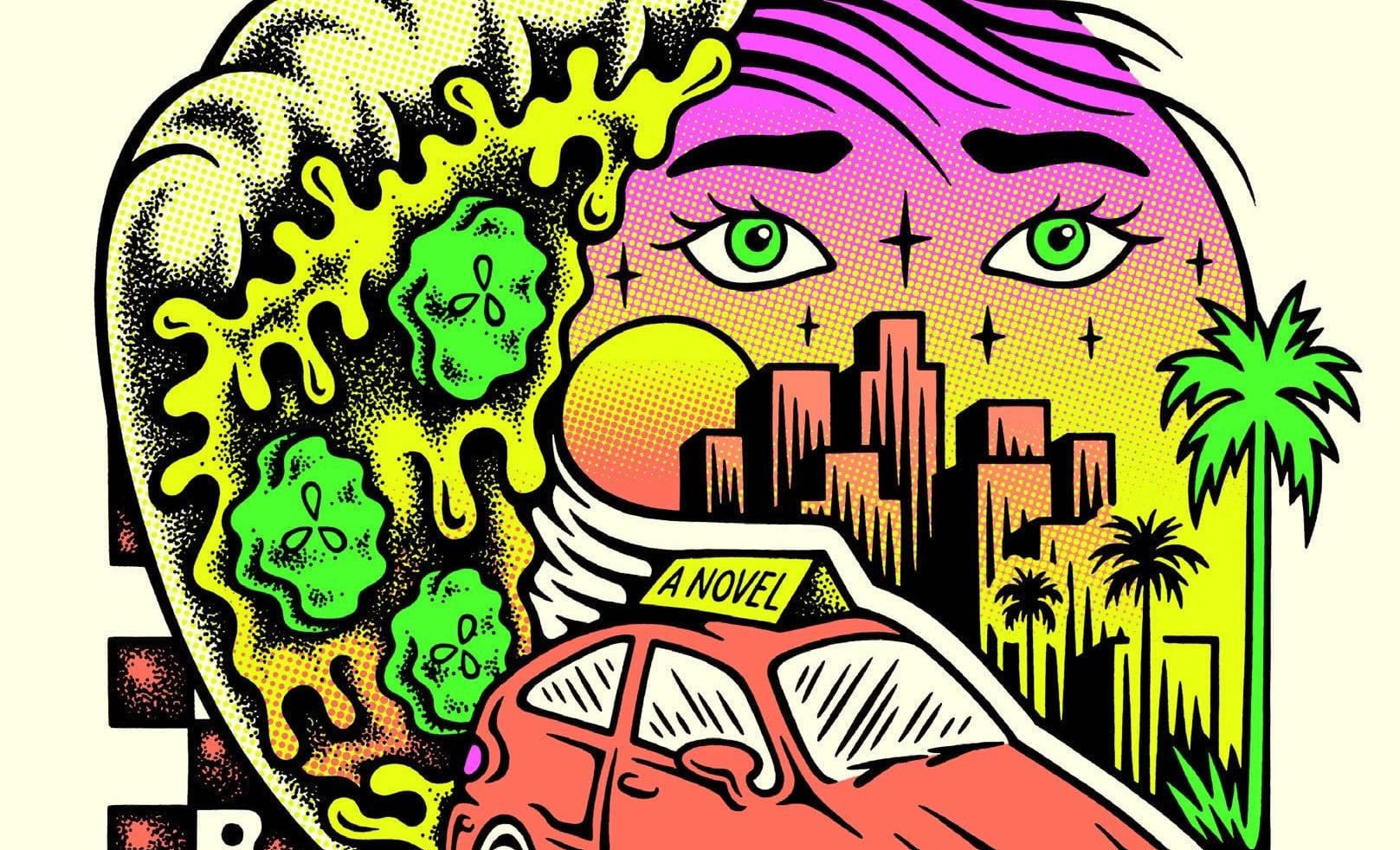
Pizza Girl by Jean Kyoung Frazier

That’s the kind of protagonist Jean Kyoung Frazier—whom I first met when we were fiction students at Columbia—has crafted in her tender, sharply observed debut, lauded by authors such as National Book Award Finalist Julia Phillips, and listed in Electric Lit, LitHub, and Poets & Writers’ “Most Anticipated Debuts of 2020.” 

Specifically, our narrator’s world is disrupted when she receives an intriguing phone call from a customer at work, where her job is to deliver pizzas. “Have you ever had the kind of week where every afternoon seems to last for hours?” the stranger asks. It’s the kind of question that pierces our narrator, who feels suffocated by her mother and boyfriend, and the grief she won’t admit about her alcoholic father who’s recently passed away. Pepperoni-and-pickles pizza in hand, the narrator meets Jenny Hauser. Jenny is whimsical, refreshingly honest, and married with a kid. Our narrator quickly falls in love—or obsession—with her. Through the lens of a young, queer, biracial woman of color, Pizza Girl explores what it looks like to feel lost and desperately long to escape from your own life, as well as the idea that what you see is not always what you get. 


Daphne Palasi Andreades: One aspect I thought you captured so beautifully was how the narrator uses fantasy as a way to cope with the painful parts of her life—her dissatisfaction, rage, and, above all, her loneliness. Her fantasies are full of longing and lighthearted until, over the course of the story, they grow more destructive and veer into delusion. This idea of escaping into fantasy also resonated with me; as a fiction writer, imaginary worlds are our fucking playground. What role would you say fantasy plays in your book, as well as in your own process?

Jean Kyoung Frazier: What I love about the word “fantasy,” is that its weight and shape varies person by person. Some might fill their days with fantasies of grandeur, conjuring lives greater than their own, while others might only do it passingly, the height of fantasy to them is sitting down somewhere, alone, eating a medium rare burger and a Coke, i.e., what’s sexy to you may not be sexy to me.

In writing Pizza Girl, I was thinking a lot about when fantasy can go wrong. Especially as a writer, I have to believe it’s possible to have a healthy relationship to fantasy. There’s nothing wrong with a day-dreaming or even trying to find concrete ways to make your fantasies into realities. That being said, what’s the line? How do you know when you’re just being delusional and seeing what you want to see? When does fantasizing become harmful? I wanted to explore that weird line within my novel.

DPA: Pizza Girl falls into the so-called genre of “slacker fiction.” I’m thinking of novels like My Year of Rest and Relaxation by Ottessa Moshfegh. The narrator avoids facing her problems and doesn’t necessarily know what she wants to do with her life. Instead, she copes by choosing not to deal. I adore slacker narrators because they don’t give two shits about social norms and, through their inaction, critique received notions of how we’ve been taught to exist in the world. Also, narrators who don’t give a damn, like in Pizza Girl, are hilarious and insightful. How did this character and this world come into being for you? And why was it integral to have a “slacker” narrator tell this story?

JKF: Gosh, I just really fucking love that there even exists a genre called, “slacker fiction,” and that my novel is a part of it.

So, slackers have existed since the dawn of time (I like to imagine a Cro-Magnon cave bro telling his buddy, “Eh, I don’t really want to hunt and gather today, yafeel?”), but I do think there’s something unique about being a slacker in the 2010’s, particularly a teenage one. There’s social media feeding our natural inclination to judge and compare combined with conventional views of the progression your life is supposed to take—get good grades in high school so you can go to a good college and get more good grades so you can graduate and get a good job where you can make good money and just keep being good, so good, until you die, hopefully before then marrying a good person so you can produce good babies who will begin the cycle anew—it’s enough to make anyone a little crazy, especially those who don’t or just can’t follow this one-size-fits-all life instruction manual.

Even the term “slacker” is often used a little reductively since its connotation is negative and used synonymously with laziness. I think it’s more like, for whatever reason, slackers just can’t bring themselves to care about what they’re being told to care about. While sometimes that reason is founded in laziness, it’s usually more complicated than that. Slackers slack because something or many somethings have happened to them that’ve made them believe their efforts won’t produce anything of value or yield a better life situation.  

For Pizza Girl, having the narrator be a slacker was key since so often in stories with teen pregnancy there’s a lamentation about what the young woman is losing out on by choosing to have a baby at that age. However, I wanted it to be clear that even if she hadn’t gotten pregnant, her life would still be a mess. She’s an adult only by the simple fact of her eighteen years. She’s still really just a child whose emotional wounds and upbringing have made it difficult for her to gain a sense of self or to plan.

DPA: These are all such great points. I loved that you turned the teenage pregnancy narrative on its head, too—with or without the baby, the narrator would have still been just as lost. 

But your novel does a ton of things differently. For instance, slacker fiction often features men—specifically, straight white men. Conversely, Asians and Asian Americans have been depicted in contemporary literature, TV, and movies, as the nerd, the programmer, the doctor—all tropes of the “model minority.” However, what’s interesting in Pizza Girl is that the narrator doesn’t fit neatly into any of these categories or stereotypes. What, in your view, is the value in resisting these tropes and stereotypes?

JKF: In conceiving Pizza Girl’s voice and character, I was thinking a lot about what you brought up—slacker fiction being dominated by the white, straight, cis-male. Let me assure you, as a queer, bi-racial woman, I have wasted countless hours slouching away from responsibility. If being a fuckhead was an Olympic sport, nothing but gold would be hanging from my neck. DM me for references.

If being a fuckhead was an Olympic sport, nothing but gold would be hanging from my neck.

I’m being funny, but resisting stereotypes and tropes matters, even when it’s for something as inconsequential seeming as who is being shown slacking in fiction. It may seem like no big deal, but by having slacker fiction be male-dominated, it’s perpetuating the idea that aimlessly fucking around is a specifically male thing. Even if it’s not outright saying it, what it translates to is that women are held to different standards—they exist to watch men fuck around.

When Asian people are portrayed in books or on the screen so sparingly and rigidly, as a kind of punchline, an entire group of people is made to feel small, told that they can only be relevant by acting a very specific way. 

Unfortunately, for a lot of people, stereotypes and tropes are the only references they have. As a regular-ass person, this bothers me. As a writer, this motivates me to both tell stories that challenge people to think beyond what they’ve been accepting as the reality/norm and also, to make those who’ve felt lonely, a little less so.

DPA: Early on, we learn the narrator’s mom immigrated from Korea to Illinois when she was 17, met a white American Midwestern dude, fell in love with him, and had a daughter—our narrator. I thought it was a cool choice to show that, although immigration and the narrator being a mixed-race kid, as well as queer, are parts of her identity, her sexuality and her racial/ethnic background aren’t central conflicts in the story that she wrestles with. Instead, her sexuality and ethnicity are textures that enrich her character and this world.

Because of this choice, I felt Pizza Girl expanded representation for marginalized groups in art and fiction: not all POC, mixed-race, and/or queer characters have to be conflicted about their identity—they can just be. Just like how POC and queer authors can simply be. What are your thoughts on this?

JKF: Well, first off, thank you. That’s very generous of you to say and, as someone who is both queer and half-Korean, that means a lot to me.

While it’s obviously incredibly important and valuable to have fiction where racial, ethnic, and sexual identity are central conflicts, I do also think there’s value to be had in casualness, to, as you put it, let things just be, and explore the issues POC and queer people have beyond the ones that stem from their race and sexuality. 

Basically, if you want to write a coming-out story, if you want to write about the unavoidable difficulties of being a POC, do it! Fuck yeah! There’s always more of that needed. But if you also don’t want to do either of those things, that’s awesome too. Just be cool and kind and write good shit.

DPA: But why, exactly, do you think there’s “value to be had” in casualness? In people who are POC and queer who choose to write about characters that extend beyond grappling with identity?

Male-dominated slacker fiction perpetuates the idea that aimlessly fucking around is a specifically male thing. And that women exist to watch men fuck around.

JKF: I just remember the many years I spent in the closet, feeling sick with shame about myself, wishing I could just be “normal.” I put normal in quotes because obviously I am normal, among other things—beautiful, awesome, cool, kick-ass, worthy of love, etc.—but I didn’t always feel that way and I wonder if a lot of that’s because for so long, mainstream media made me feel like queerness was only acceptable and digestible in very specific ways, and even then, even if I was palatable to the heteronormative masses, I would still be viewed as other, my queerness my defining characteristic.

While casualness in writing doesn’t erase, nor is it meant to, the struggles that come with sexual and racial identity, I do think it can serve as a kind of gentle reminder that you are more than just those struggles—you are a person, who like most everyone else, is just doing their best.

DPA: Let’s talk about the family dynamics in the story. As the novel progresses, we see the narrator’s increasing reliance on alcohol to cope with her problems. We learn about her father’s addiction to alcohol, and we piece together that a huge part of her despises her dad precisely because she sees so much of him in herself. I found your handling of difficult, heavy topics like addiction to be so powerful. You show how trauma, pain, and ways of coping are passed down in families. How did you approach writing about these challenging motifs?

JKF: I just approached it with honesty and with a determination to not make any character a villain. Generally, no one wakes up one morning thinking, “How am I going to ruin the people I love?” yet they still find unique and fucked up ways to do so. The children of those people would never want to make someone, particularly their own child, feel the way they were made to feel, yet, children of addicts and abusers are at increased risk to become ones themselves.

DPA: Pizza Girl shows how people, in the end, really don’t know each other as well as they think they do. For instance, there are characters who the narrator thinks she knows and proceeds to write off, and characters who she swears she understands, but are really people whom she projects her desires onto, like a Rorschach inkblot. Through this first-person narrator, you show the limitations of our own perceptions, and how our perceptions can change dramatically if we view people from a different angle, a different context. Were these dynamics ones you were always interested in exploring when you started the book or did they come about organically? Why did you choose to write from the first-person point-of-view?

Asian people are portrayed in media so sparingly, as a punchline, told that they can only be relevant by acting a specific way.

JKF: It’s something that I’ve always thought about and still continue to think about—how difficult it is to know anyone. 

At the last bartending job I had, I remember there was this couple that came in all the time that my co-workers and I adored—they were hot, charming, and tipped well. One day, I was cleaning underneath the bar and I overheard her ask him, “Where does your wife think you are right now?” 

It was shocking to hear this, but also not, since ultimately, what did I really know about these two people other than their drink orders? We’re always saying things like, “They seem like a good person,” “I like their vibe,” “I trust my gut,” but it’s easy to be your best, most charming self for two to five minute increments.

With all this in mind, writing Pizza Girl in first-person seemed only natural. I wanted the reader to firmly see everything through her eyes, to like, drown in her POV so that even when you had a sense that things weren’t as they seemed, you still understood her and where her delusion was coming from.

DPA: Why did you choose to set the novel in Los Angeles? 

Personally, I felt Los Angeles most viscerally in moments when the narrator is driving in her car, going on secret, midnight drives to clear her head or sneak off to catch a glimpse of Jenny, in addition to delivering pizzas for work. Something about seeing that car culture really reminded me of Los Angeles, in particular. Not to mention the narrator’s laid-back and chill attitude. I’m curious to know if and how Los Angeles, as a city, with its particular culture and sensibility, made its way into your novel.

JKF: I wanted it to Los Angeles to be this constant, but subtle presence, felt even when it wasn’t being talked about.

Like I love that the city came alive to you in the car scenes. Driving really is so inherent to living in Los Angeles since it’s just so huge, all sprawl, an urban planning nightmare. I’ve always loved that it’s not a typical city, that the very fact of its layout, the lack of a sensible one, showcases the surprise of its development—no one pictured it becoming as big or as populated as it did.

This sort of car culture made it the perfect city to set a pizza delivery novel in. Since you’re driving everywhere, you cover ground quickly (if traffic is chill.) Neighborhoods blend and transform in what can feel like the blink of an eye. Add to the fact that the weather is near perfect year round, it can feel like you’re driving through a surreal, dreamscape.

DPA: I don’t know if you remember but, a few months after you sold your novel, you and I went out to dinner in Morningside Heights. We got Thai and caught-up, and you told me about the night you finished your novel, sending it out to your soon-to-be agent the next morning. Do you mind telling that story?

JKF: Of course I remember! It was a lovely dinner!

Generally, no one wakes up thinking, ‘How am I going to ruin the people I love?’ yet they still find unique and fucked up ways to do so.

So, I’d finished most of novel’s last pages on my mom’s couch over the holiday break (Mom, thanks for those two weeks, sorry I ate all your Hot Pockets). It was my first night back in NYC, though. It was 2:00 AM and I was a little delirious—I couldn’t bear to look at my manuscript anymore so I guessed it was done. I poured myself a glass of this Johnnie Walker Blue I’d been saving for the occasion. My roommate, Evan, came back from a night out. We chatted—“Dude, my novel’s done,” “Dude, that’s sick,” “Yeah,” “Okay, goodnight.” I listened to him pee. I went to bed. The next day, I woke to a dead fly in my unsipped glass of whiskey, ignored the bad omen vibe of that, sent my novel out to a few agents, immediately regretted it. My agent later told me it was one of the worst query letters he’s ever read. Luckily, he still read my novel and even more improbably, liked it.

DPA: I love this crazy, hilarious origin story. But what stands out to me is how Pizza Girl was written with a real urgency, a real fire. Where did urgency come from? Do you think that sense of urgency is important for writers?

JKF: I think it’s important to feel like whatever you’re writing about is urgent in a kind of “I need to talk about this. Can I talk to you about it?” way. But I think, at least for me, it was easy to confuse that pure urgency for the story itself with selfish urgency, a desire to just be published and read ASAP.

I had this misguided goal to sell my first book no later than the age of 25 and it’s almost like I bullied myself—hurry up, you dumb fuck, why isn’t this done yet, why did you even think this was something you could do, you dumb fucking fuck—into completing Pizza Girl. The novel was sold a couple months before my 26th birthday. 

While I think my novel would’ve felt urgent regardless of the amount of pressure I put on myself to finish it since I did and still do genuinely care about the subject matter, I do wish I had been kinder to myself. I don’t know if it would’ve made my novel better, but I don’t think it would’ve made it worse, and I would’ve just felt a lot better day to day. I’m doing my best to practice what I preach as I work on my second novel, and it’s mostly working.


I Am the Faceless Woman on the Cover of Your Novel

POC Book Cover Model

I feel the most brown facing
a solid, bright background
that seduces preteens
at the Scholastic fair. My long
black-as-licorice braids with their
sweet virginal shine beg for
pity, are maybe a metaphor
for tradition, repression, machismo,
all the miserable Mexican girls that need
to be saved from Mexican men.

I’ve portrayed all kinds
of Mexicans: Puerto Ricans,
Guatemalans, Peruvians, and even
a few Chinese. It’s easy when you’re
faceless: all smooth, tan skin
and thick hair, for a few blue
moon romance novels,
a wide set of hips.

Most days are great.
My fiance says I’m effortless
to love, the way I am
modest and mute and not
too dark, how when he presses
his palm to the plane
of my skin, its indent
remains like modeling clay.

Other days, all I know
are the eyes burning
through the back of my head,
and for a sure second, a pair
of my own burning within
it. If I were to tear
away this caramel-colored
membrane to find those
eyes blue and lashes pale or
to find just orificeless pulp,
I might just keep digging.

In my country

the streets are paved in gold-
plated hoops taken out,
tossed aside the night before.
The sea shimmers like glass
shattered out of windshields.

Here, acrylics only come stilettoed.
Here, mamacitas only come mercurial.

In my country, there is no night
without a thousand slashed tires
and there is no morning
without deflated women
asking you to fill them.

Where I’m from, we have no need
for the sun or the moon because
the women are always burning
some cabron’s shit in backyard bonfires.

The women are always burning
and begging to be held,

but don’t all white boys have a bit
of a pyromaniac streak?
And don’t we make you feel brave?
And don’t you think
It’s better that way?

Electric Lit Seeks a Part-Time Assistant Editor for Our Literary Magazines

Electric Literature hosts two weekly literary magazines, Recommended Reading and The Commuter, and seeks one assistant editor who will serve both of these publications. Recommended Reading publishes longform fiction—a mix of original work and excerpts—with personal introductions by top writers. The Commuter publishes brief, diverting flash fiction, poetry, and graphic narratives. With over 540 issues combined, work published in Recommended Reading and The Commuter has been recognized by Best American Stories, Poetry, and Comics, Best Canadian Stories, the Pushcart Prize, the Best of the Small Fictions, and the Wigleaf Top 50. 

The assistant editor will work closely with the editorial teams of both Recommended Reading and The Commuter to execute the following responsibilities.

  • Manage submissions sent through Submittable and assign them to volunteer readers.
  • Evaluate submissions approved by readers and determine if they should be passed on to senior editors.
  • Prepare issues for both magazines in WordPress, which includes selecting images and writing headlines.
  • Prepare weekly newsletters in Mailchimp.
  • Proofread issues.
  • Send contracts to contributing writers.
  • Help prepare grant proposals.

This is an entry level position with significant administrative responsibilities. However, the position offers many opportunities to gain editorial experience by working closely with a small team of experienced editors. The assistant editor will also play a key role in determining which submissions advance to the next round of consideration, and help shape how the work in our magazines is presented.

Qualified candidates will:

  • Be well read in contemporary fiction, including the work of other literary magazines.
  • Be confident in their tastes, while remaining open to the opinions of others.
  • Believe in Electric Literature’s mission to make literature more exciting, relevant, and inclusive.
  • Be organized, patient, and attentive to detail.
  • Be closely familiar with the archives of Recommended Reading and The Commuter
  • Have at least one year of professional editorial experience. Applicants who have gained editorial experience exclusively through internships will be considered; however, they should have at least one year of professional/administrative experience in another field. 
  • Grant writing experience is a plus but not a requirement.
  • An educational background in literature, journalism, or creative writing is preferred, but not required. 

Preferred skills:

  • Mailchimp
  • WordPress
  • Sourcing creative commons images
  • Submittable
  • Copyediting and proofreading

This is a part-time, 12 – 15 hour per week position with a $900 monthly stipend. Remote applicants will be considered, but must be able to work during EST business hours. If the assistant editor is local to NYC, they will be required to come into Electric Literature’s office in downtown Brooklyn when it reopens. However, the ability to come into the office is not a requirement and remote applicants will not be penalized.

To apply, please send the following via Submittable by 11:59PM on Sunday, June 28:

  1. Resume
  2. Cover Letter
  3. Review recent headlines in Recommended Reading and The Commuter and write a headline and dek (aka subhead) for the following story: https://electricliterature.com/neighbors-anthony-tognazzini/

12 New and Forthcoming Graphic Novels for People Who Are Too Tired for Text

Like many people who identify strongly as readers, I’ve been having trouble with focus lately. While I yearn for the brain engagement that a good reading session can bring, I find my eyes skimming over words, my mind skipping like a broken VHS tape over images and emotions that keep me perpetually distracted. Some days are better than others, but many days, reading text-only books—a thing that used to light me up—feels almost impossible. However, there’s solace in the fact that I’ve found graphic literature more accessible to my flighty mind right now. Something about the combination of words and images, the pace of it, is a welcome barb that my mind can get caught on. There’s something soothing about the visual aspect, even if the content itself isn’t all that soothing. Beyond that, visual art is its own full-body experience, and sometimes it’s good to be reminded of that during this time of screen-overdose, anxiety, and grief—and especially in the midst of a world in which we are constantly perceiving the threat against our physical beings.

If you’re looking for engaging graphic literature, whether because you’re struggling to read text-only or not, here are twelve new and forthcoming adult graphic books that are worth picking up.

Apsara Engine by Bishakh Som

This gorgeous graphic short story collection from mega-talented illustrator Bishakh Som is funny, heartbreaking, and incisive, following women and gender-diverse characters on strange but familiar emotional journeys. The art is stunning, with full color and sepia tones, and different text styles in each story. There are dark moments here, but it’s a transporting work of fiction, rooted in South Asian myth and in the corporeal. 

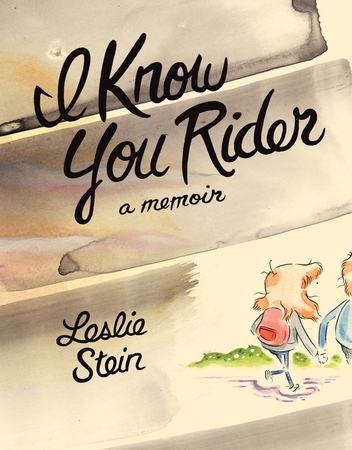
I Know You Rider by Leslie Stein

Leslie Stein is the author of three previous books, and her work has appeared in multiple prestigious places inlcuding The New Yorker, and Vice. In this new memoir, she chronicles a year of her life during which she had an abortion. This event serves as a jumping off point to explore what it means to make choices across our lives as humans, how we build families, how art and humanity are inextricable, and what it means to love. It’s a broad story that encompasses so much about life and joy, yet it’s a fast and totally resonant read.

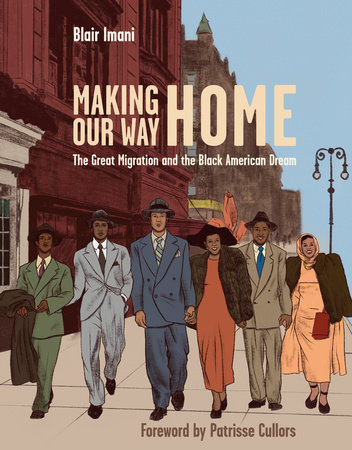
Making Our Way Home by Blair Imani

Making Our Way Home by Blair Imani, illustrated by Rachelle Baker

Blair Imani is a prominent activist, speaker, and historian whose work (which includes a previous book, Modern Herstory: Stories of Women and Nonbinary People Rewriting History) centers global Black and queer communities. Making Our Way Home chronicles many aspects of the Great Migration from the perspective of several prominent figures like James Baldwin, Ella Baker, and Malcolm X, and shows how that time period continues to influence American culture, economy, labor, segregation, activism and civil rights. Beautifully illustrated by Rachelle Baker, this book is not only a great primer but a nuanced synthesis of American past, present, and future that centers social justice.

The Gay Agenda: A Modern Queer History & Handbook by Ashely Molesso & Chess Needham (aka Ash + Chess)

The successful social media duo Ash + Chess have made a name for themselves selling stationary and posting great photos on Instagram, and now they’ve brought their artistic prowess to a very sweet little book that serves as a colorful and joyous history of prominent LGBTQ+ figures and events, mainly in the west. It’s far from comprehensive, but it’s impossible to make anything about queer history comprehensive, for a myriad of reasons, not least because LGBTQ+ people are not a monolith. However, the book is quite diverse and a light read, perfect for a mood boost, especially if you need some queer joy.

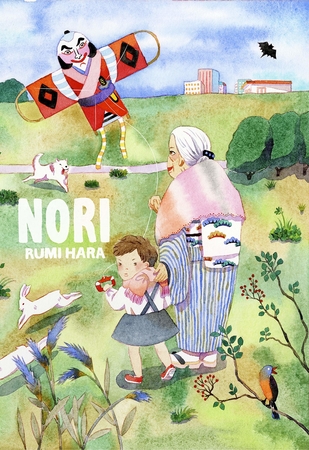
Nori by Rumi Hara

This delightfully illustrated, heartwarming story of precocious four year old Nori and her grandmother is perfect for when you just want to remember what childlike innocence and wonder felt like. It’s not a children’s book, but rather a portrayal of early childhood (not to say kids can’t read it; this one is great for all ages). As Nori and her grandmother spend time together, the book weaves tradition, nature, and adventure into a story that is all but guaranteed to lift your spirits, and makes a perfect read for a long summer afternoon.

Parasite by Bong Joon Ho

This one is pretty self-explanatory. For anyone who watched and loved the hit movie Parasite, this companion book is a frame-by-frame storyboard illustration of the movie that correspond to the script, plus behind the scenes production notes and stills. Bong Joon Ho is already revered as a visionary artist; this high-quality book is one more drop in that bucket.

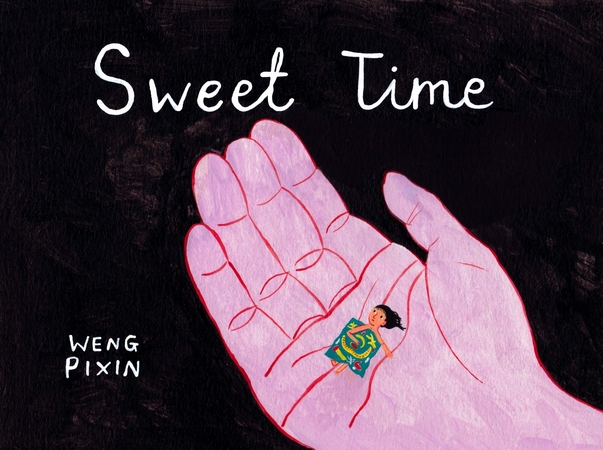
Sweet Time by Weng Pixin

Weng Pixin is a Singaporean multimedia artist whose work includes zines, textiles, and paintings. In this book of sweeping, colorful, totally gorgeous images, she explores human relationships, loneliness, memory, and beauty. A bound series of vignettes, Sweet Time is perfect for dipping in and out of — if you want to dip out, which you probably won’t.

Celebrate People’s History ed. by Josh MacPhee

In this second edition of vibrant posters, out in August, editor Josh MacPhee assembles a compendium of art for justice, resistance, and revolution. There’s something visceral about the art of liberation, one part of an ongoing struggle to unite against power, greed, imperialism, and other oppressive forces. Color-coded to indicate themes such as Environmentalism, Racial Justice, Anti-Fascism, Labor, Health, and Socialism (among others), this book serves a resource and inspiration. With forewords from both Charlene Carruthers and Rebecca Solnit, it’s a great reminder of some of the paths taken, and a fire-starter for the roads we must make going forward.

The Contradictions by Sophie Yanow

Speaking of radical politics, this one is all about grappling with how messy they are. Originally a webcomic, The Contradictions won the Eisner Award, and is now being released in September as a single volume. It follows a fictionalized version of the author’s young self—a queer, feminist, American student in Paris who falls for a girl named Zena, an anarchist vegan shoplifter. As they travel European cities, experimenting with drugs and ideologies, Sophie must come to terms with the complexity of politics and societies. This is perfect if you want to dive into a youthful existentialism that’s also quite moving and full of high-contrast, striking black and white illustrations.

The City of Belgium by Brecht Evens

Perhaps the most colorful volume of any on this list, this saturating graphic novel, dropping in September, will remind you what it’s like to go out in the city (remember that?). Following three 20-somethings as they go out for a night on the town in Belgium, Evens’s darkly funny story comes to life in hypnotizing watercolor that feels like the most fitting possible medium for the swirling, bleeding days of being 20ish in a city at night.

I Want You by Lisa Hanawalt

Fair warning, this one is gross. But if gross-out humor is your thing, and/or if you’re a Bojack Horseman fan, and/or you don’t mind lots of bodily fluids and bacteria, I Want You is for you. As the production designer/producer of Bojack Horseman, the creator of the Netflix series Tuca and Birdie, and the author of three previous books including bestelling Coyote Doggirl, Lisa Hanawalt has made a big name for herself in the comics/illustration/animation world. In this September release, she returns to her roots, collecting her first minicomic series into one volume. With lists like “Mistakes We Made at the Grocery Store” and “Top Causes of Freeway Accidents,” as well as the (mis)adventures of He-Horse and She-Moose, Hanawalt dives all the way into taboos with biting humor and excellent, sometimes too-good drawings. (See also: bodily fluids and bacteria.)

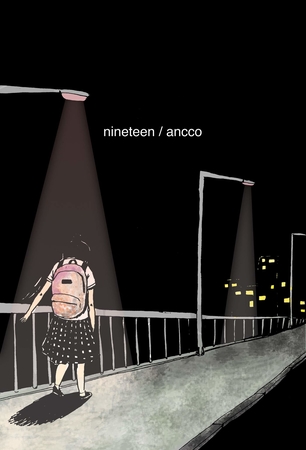
Nineteen by Ancco

This highly anticipated short story collection illustrates the cusp between childhood and adulthood in Korea. Ancco skillfully renders this in-between, confusing time with the commanding illustrations that have earned her a loyal following since she began publishing diary comics in 2002. This collection is often dark, but it’s also bright in that way that youth can’t help but be. This is sure to be an ideal fall afternoon read when it drops in October.

Why Shirley Jackson Is Everyone’s New Favorite Author

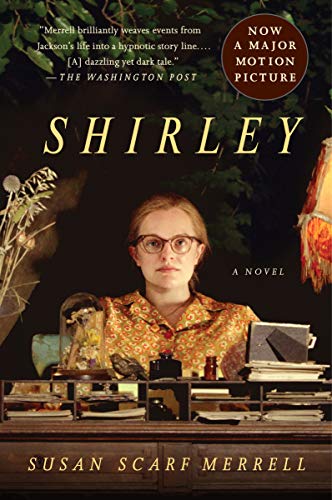
Susan Scarf Merrell is the author of Shirley: A Novel, which has just been adapted into the new film Shirley, written by Sarah Gubbins and directed by Josephine Decker. The film stars Elisabeth Moss as Shirley Jackson and Michael Stuhlbarg as her husband, Stanley Hyman, each delivering unforgettable performances. Aided by the rich research and lyricism of the original novel, which runs skeletally throughout the story, the movie is a sharp, creepy delight—whether you are a Shirley Jackson fan (yet) or not. 

The film released on June 5th, and is available to rent and buy on platforms like iTunes, Amazon Prime, and Hulu. Select drive-in theaters are also showing the movie, according to the film’s producers at Neon.

Both Merrell’s novel and the film bring to life the Vermont home of Shirley Jackson and Stanley Hyman. The stories are told through the eyes of the young Rose Nemser, whose husband, Fred, is joining the faculty at Bennington College. Rose’s fascination with Shirley Jackson grows ever more complicated as the two women forge a dynamic and nerve-racking friendship. The novel takes place in 1964, as Jackson begins work on her final, unfinished novel Come Along With Me, which I had written about previously for Electric Literature.

I spoke to Merrell about her book, the new film, and why she thinks Jackson’s work is striking such a powerful chord with today’s readers: psychologically deft, deliciously perverse, filled with weird, surreal magic that makes us questions all our assumptions about reality—or whatever of those we have left, these days.

Merrell also co-directs the Southampton Writers Conference, and is program director of the novel incubator program, BookEnds. She teaches in the MFA in Creative Writing & Literature at Stony Brook Southampton.


KJ: So, thanks so much for talking with me about Shirley. It was fascinating to read your novel after seeing the movie. They’re both so beautiful, and also very different.

SSM: So very different but, at least to me, very much on this sort of continuum, beautifully honoring where Shirley came from and her interest in folklore and mythology and the way that she was always really turning to material from our literary history. 

I fell in love with her and had this response to her work, and then [screenwriter] Sarah [Gubbins] had the same thing happen, and [director] Josephine [Decker] even more, and the actors… it feels very much as if the imagining, and reimagining, and reinterpreting, all has this beautiful lineage. It feels kind of perfect to me.

KJ: If I can back up a step, how did you first find your love for Shirley Jackson?

SSM: I had written two books, and I was sort of at a stalled place. I really didn’t know what I wanted to do, and I decided to go to graduate school. And because I had small children at home, I ended up at the Bennington Writing Seminars, which is a low-res program. 

I went home and started reading Jackson and by the end of the semester I had read absolutely everything she had ever written. 

On the first day that I was there, I was talking to my instructor for the semester and she said, “Well, what do you think you want to do?” and I said, “Well, I’m really interested in domestic stories but kind of magic… that’s really where my heart is,” and she said, “Well, have you ever read Shirley Jackson?” and I said, “I think when I was a teenager I read We Have Always Lived in the Castle. I should go back and look at it.” And I went home at the end of the residency and I started reading Jackson and by the end of the semester I had read absolutely everything she had ever written. 

The next semester, I went back and I had a new instructor and he said, “So, what did you do last semester?” and I said, “I became obsessed with Shirley Jackson,” and he said, “Well did you know that she lived here for her entire adult life?” and I felt like I had almost been punched, it was so powerful. 

During the course of that week, I realized that I have been walking past her house every day, that I had been buying coffee at Powers Market, where she got the idea for “The Lottery.” I had really been in all the places that she had been. I had been soaking her up without realizing it. When I went home that semester, I went down to the Library of Congress and spent a couple of days going through all of those papers. I just knew I wanted to do something with her, but I didn’t know what. 

In the beginning, I started writing these little monologue-y things that were in some voice like hers, but I could never really be her. And then I thought, “Oh, maybe I’ll write a biography of her,” and I went out to California and I met Lawrence, the oldest son, and he said, “You know there’s already somebody who’s writing a biography. A woman named Ruth Franklin. You know, but you could do it too.” And then I met Ruth and I thought, “This is crazy. This is not really what I should be doing.” 

In any case, I started writing a “looking for Shirley Jackson in my own life kind of thing” and that wasn’t it… this is now years and years. 

And one day I was walking in the woods near my house with a writer friend of mine and I said, “I just don’t know. What if somebody went to visit Shirley and Stanley, and I could tell the story from that point of view?” and it just was like everything clicked.

I think my obsession started in 2007 and this was probably 2010, maybe even maybe even later. 

And I knew exactly who Rose was from the get-go. I just knew everything about her. She just came to me and so that was it. And from that point the story just flew out. I knew so much about them. And I knew what I wanted to say but I finally had found the way.

KJ: Yeah, I was going to ask. I sort of assumed Rose was a fictional character, but I wasn’t sure if maybe she was based on somebody real from Shirley’s life, or if she was your own way into the story.

SSM: Somewhere in the journals, which are pretty sparse, there is a country that says, “c. came to stay.” And, and that was kind of it. And then I called my mother that same day and I said to my mom, “I want to base a character on you and your life,” and she had grown up very poor in Philadelphia. And she said, “Oh, you could do whatever you want! Don’t worry!” And there’s maybe three words, because she gave me that permission. Not one vowel more than three words are about my mother’s childhood, which was that she grew up in a very poor family, but just getting that permission was somehow was grease—and then Rose just came alive as her own person.

KJ: It’s a beautiful way into the story and I found myself as fascinated by Rose as I was by Shirley.

SSM: I think for me, one of the things that was always very important was that Rose’s viewpoint, as Rose herself got crazier, had to be the viewpoint—because I knew I was imagining a story about real people. 

I love what the filmmakers did with that obsessional connection. It was an extraordinary interpretation of all the valences of love.

One of the things I really love in the movie is that the question of whose mental health is more at risk is very clear, and maybe more ambiguous than in the way that I saw it. Because I really saw Rose’s need for the connection with Shirley and Rose’s need to have a maternal figure… you know that was really the driving force. Her competition to be the best child. And I love what the filmmakers did with that obsessional connection. It wasn’t the way my brain went, but it was just this extraordinary interpretation of all the valences of love.

KJ: In your novel, Rose comes to see Shirley in 1964, which is just a year before her death, when she was writing her unfinished novel, Come Along With Me.  (The movie takes place earlier.) What drew you to that year late in her life? Was it the unfinished novel?

SSM: So, I was stuck on two things: the agoraphobia which was so much worse in those years right after The Haunting of Hill House and that are sort of manifested in Castle. And so, I was stuck in that time period the whole project. And the idea that Sarah looked at the cinematic logic and decided to connect Paula Weldon, Hangsaman, and that time period was just—I just thought it was so brilliant because within the constraints of film, it just had to be that way. But I was always locked into the agoraphobia and the writing of the last novel.

KJ: It’s fascinating. Shirley was going through all of that, but in Come Along With Me, the protagonist, Angela Motorman is so free—her husband has died and she’s let loose on the world.

SSM: You know, I think Ruth has this in her book. It’s quite powerful when you look in the journal notes. Among the many things that she’s typed on one piece of paper is, “writing is the way out writing is the way out writing is the way out” and no punctuation. And you just know that for this person, that was it. This was the only way to come back to life.

KJ: Another really wonderful part of both your novel and the movie is the treatment of the complex layers of her marriage to Stanley Hyman and how they worked off each other, intellectually and romantically, and I was curious how you came to understand that relationship while working on the novel?

SSM: Way before I had even the slightest idea of how the book would manifest, I gave a lecture, as part of my graduation at Bennington about Shirley and her work and her life. And Susan Cheever asked from the audience, “Do you think it would have been better if they hadn’t met?” And the big question was always what kind of life would they have had without each other? And would it possibly have been better to not have made this work, and to not have had what I think was such an incredibly supportive intellectual connection? All the other shit, you know, notwithstanding. 

Their brains were connected as if they had wires between them and so, you know, that’s one of those questions that I think only an ethicist could answer. 

For me, without that connection between them, I’m not sure that either of them would have become the great artists that they became. I mean Stanley also was just a brilliant writer. He has this one book on all the different ways that you can interpret Iago… different literary theories and the book is just mind-blowing. The guy is so smart, and they were just feeding off each other, back and forth. So, I mean, selfishly, I am very glad they had this life together.

KJ: Is Shirley Jackson coming into some kind of moment? In the last few years we’ve seen more film adaptations, and there’s a Netflix version of The Haunting of Hill House… why now are people discovering and reconnecting with her work after all these years?

SSM: There are two things. The reason that writers connect with her work is that it’s extremely tautly structured, and when you start pulling her stories or the novels apart, you see that the work is so consciously made that there’s a lot to take from it artistically. It has a look of a spontaneity and it’s not spontaneous at all. 

And then the other thing that has to do not just with writers, but also with readers, is that she really was able to capture a way that we need to laugh at the darkest places in ourselves in order to make sense of them. 

There’s this kind of humor underlying everything, that is a relief and a release, but she’s also really acknowledging—both with the magical stuff and with the non-magical stuff—she’s really acknowledging the truth of living inside of one’s head. Sometimes you hear a voice, or sometimes you imagine there’s something under the bed, but you’re still a regular person who has to get up and get dressed every day.  She hits both the reality and the imaginative richness of regular life. 

And then I also think she understands something about women that women know, which is that no matter how domestic a woman’s life is, there is this role and place where imagination and the creative soul are always present. And I’m not at all saying that men don’t do this as well, but I think it’s a kind of a secret of being a woman that she tapped into at a pretty early time. She was saying, “Oh yes you can do this.” 

I think she really resonates for people who are striving to be both normal and not normal at the same time.

There’s a scene in the book where they’re talking about Betty Freidan, and she had really tapped into that idea, in the same way that Phyllis Schlafly had a really big job, being a person who said, “Stay home,” Shirley Jackson had a really big job, saying, “Hey, I get you. I get what it’s like. I can do it; you can do it. You can do both these things.”

And the part of her that told everyone that she was a witch, I sort of buy it. I mean, part of it was just that they were so immersed in all of this folklore and mythology and stuff, but there was a way in which she had some ability to sort of see, and maybe imagine her future. I think she really resonates so much for people who are striving to be both normal and not normal at the same time.

It’s wonderful to me that she would be having a day, or a decade or more would be quite nice.

KJ: Yeah, I found myself finishing the movie hoping that a lot of people will be discovering her work, if they hadn’t before.

SSM: Somebody said to me the other day that they hope this movie sells the hell out of her backlist. You know, I wish everybody would read her. I wish everybody would read The Sundial right now, which is all about the end of the world and rich people and poor people and regular people and all of the issues. She just was tapped into everything, you know?

The Novel That Shows Us How to Face Our Past to Change Our Future

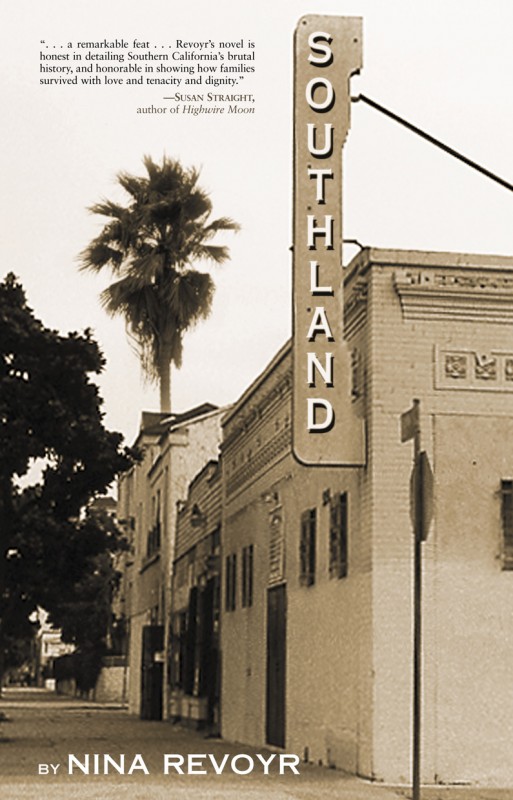
After several grueling hours of protesting against systemic injustice (no one can prepare you for long hours on your feet, long hours screaming for recognition of your humanity), we stood with our signs tucked safely under our arms as the organizer introduced some parting words. The speaker was an older Black man, the weariness of the movement evident in his face and in the way he leaned against a streetlamp for support. But his passion was clear in his speech as he declared that we were not the first to fight for our rights, and we will not be the last: he was protesting in the streets back in his early adulthood, the same way we were today. It was then that I looked at the faces of the people around me; some couldn’t be older than sixteen, and some as old as the speaker, or older. It was in the aftermath of being surrounded by these people, all aligned in our goal for the abolishment of the systemic injustices that cause Black oppression, that Nina Revoyr’s literary crime novel Southland came to mind.  

I first encountered this sweeping tale of past and present iterations of Los Angeles, of riots, looting, and the reincarnations of allyship, in my Asian American Literature class, junior year of college. My professor had casually remarked that it was her favorite novel of all the ones we read; I was too awash in pre-finals anxiety to give her remark a second thought. It wasn’t until I came home from the protest that I gave the text the attention it deserves. A story about injustice dressed up as a detective novel, Southland reminds us that activism is both an ongoing project and a deeply personal choice.

The pathway to justice in Southland is a quiet storm, at odds with the loud righteous moment going on today—but the unity in creating genuine change remains the same, predicated on the past. Southland draws on Los Angeles’s history of activism—the Watts riots of 1965 and the Rodney King riots of 1992—but also shows how that hunger for change can manifest in isolated actions, in individual lives. Today, we take to the streets, we sign petitions and start hashtags that address the various inequalities Black people face in the workplace. We are very loudly and openly discussing the systems that have led to decades long, ongoing oppression. These open discussions are no longer isolated to a single March on Washington, or even a city-localized riot: this is a national conversation gone worldwide. Southland reminds us that it must become personal, too.

‘Southland’ shows how the hunger for change can manifest in isolated actions, in individual lives.

The protagonist of Southland, Jackie Ishida, discovers in reading her grandfather’s will that he played a role in a multiple homicide decades earlier, during the Watts riots. Jackie and her acquaintance turned friend, James Lanier, a cousin of one of the victims, look into the murders and fight for a legal investigation. Along the way, Jackie learns more about her grandfather, and about the history of Los Angeles through the eyes of those she encounters along her journey. The journey Jackie Ishida goes through in uncovering her grandfather’s past, and the important weight his corner store holds to the surrounding Crenshaw community, means so much more to me now in the wake of the media’s spin on rioting and the national attention on the police state we live in. 

Jackie Ishida, a second generation Japanese American, is, like so many of us, comfortably enveloped in privilege. Much of the conversation lately has shined on the workings of white privilege and the ways it bleeds into every aspect of our livelihood, but it’s important to speak on the ways we as black and nonblack people of color have privilege, too. In order to truly dismantle systemic injustice, there must be a dedicated effort to address the variant intersections that allow for some of us to be ahead of the curve, while others struggle to even see where the curve is. One of those privileges often, is silence: the ability to not speak up on the sufferings of others worse off than you because you are doing fine. For Jackie Ishida’s family, though, this silence became a double-edged sword. 

In so many ways, Jackie Ishida’s family suffered: internment, forced participation in World War Ⅱ, constant mistreatment from white people due to their being Japanese. But rather than address the systemic injustices they faced, they secured higher positions (and profit), letting their silence wrap around them like a noose. “Her family didn’t talk,” Revoyr writes. “None of them, including her grandfather. No words laced together into a chain of intertwined stories that connected her to anyone’s past. More than gaps in the narrative; there was no narrative. Whole years, like the years of World War Ⅱ, dropped cleanly from their collective history.” This silence eventually disconnects Jackie Ishida so much that she is uncomfortable addressing race or racism in any way, which is its own privilege. If you cannot speak up for others, how can we all dismantle the system?

If you cannot speak up for others, how can we all dismantle the system?

This silence is also the reason why she knows nothing about her grandfather, or the shocking scene that lies at the core of Southland’s intrigue: four Black boys found dead in the freezer of his store in the aftermath of the Watts riots. No one cared enough even to report it. Jackie’s inability to reconcile her grandfather’s past with her concept of him is how the tale begins, but it expands into an investigation of what it means to renounce the privilege of silence and ignorance. The novel is a love letter to Los Angeles, but also a gentle takedown of Jackie’s assumptions and judgmental nature, the legacy of growing up enveloped in privilege and a genuine lack of awareness. 

Discovering the bodies is the catalyst for Jackie to start filling the silence with noise, creating a narrative with pieces of the past: through constant discoveries, old and new, of her grandfather’s role in Crenshaw and the homicides. Jackie’s insistent probing into the multiple homicide becomes her connection to a history of oppression and activism; despite his silence in life, she feels her grandfather “practically willed it.” Like myself when I stared into the eyes of the people protesting with me, Jackie feels the totality of the past, long ignored in her family, and uses her privilege to bring it to light.

The past is always rearing its head and making itself known in the present, in the future.

Perhaps it is Jackie’s recognition of her grandfather’s loneliness, or her desire to piece together the bits of noise amidst the silence, but she does everything in her power to give the murdered Black boys justice — and in doing so, discovers her family’s past. Her family’s past, the history of Frank’s store, is simply the beginning. The past is always rearing its head and making itself known in the present, in the future. Jackie’s reflection on how the Rodney King riots of 1992 were portrayed in the news, as the media described the looters, rings true to today’s 2020 media coverage: “’it’ was coming closer to ‘us’; telling their viewers —as if they couldn’t see and smell for themselves—of the smoke that hovered over the city.” The media has a history of taking whole swaths of people (often people of color) and painting them as the Other, a dangerous conglomerate threatening any source of normalcy. This “it” versus “us” dynamic echoes today as we see people who riot and loot are called “outside agitators,” as people discuss looting with more care than the fact of Black people losing their lives to police every single day.

One of my favorite moments in the text is when Jackie finally steps foot on the ground where Frank’s store used to be, though it suffered damage after the aforementioned Rodney King riots of 1992. 

Her grandfather’s money had been made and lost here. Four teenage boys had died here. It seemed to Jackie that if she could just get inside, beyond the boards, the answers would all be available to her, scattered among the ashes. … Her past was like this neighborhood—still there, intact, but she had never bothered to visit.

Frank’s store’s existence, standing through riots, looting, and death, is what drives Jackie. Frank’s store is a piece of history; a chance for Jackie’s redemption and her ability to restore a narrative otherwise lost to her. Jackie’s past, her grandfather’s past, the history of Crenshaw, is only the beginning. I spent some time protesting in the neighborhood I grew up in—the place I hung out with my friends after school, the place I grew into the steadfast woman I am today. Bringing the fight for our rights to such a local place has changed me forever, in ways I’m incredibly proud of. The same sentiment stands for Jackie, who is driven to change her present after setting foot in her grandfather’s past.

The past is prologue. The Black Lives Matter movement has existed for going on a decade, and yet it is only the beginning, a continuation of the work done by civil rights activists of the ’60s, of the Watts riots of 1965, of the Rodney King riots of 1992. We are standing on the backs of those who have fought long before us, and we all would be better if we remembered that. The news is telling one story of rage, looting, and woe, but as in Southland, we must create our own story.

Poetry Collections About Being a Queer Person of Color

Encountering racism from other gay men when I came out caused me to interrogate my own identity, questioning what I’m able to become if a lot of the world told me “no.” The more I thought on this, over time it eventually sank in that the answer was (and always has been): anything I wanted to be. 

My debut poetry collection Mythical Man is made up of poems spun from my experiences as a gay Asian man in the 21st-century, and it explores this journey of identity-making through love, lust, and heartbreak, while reflecting on my ancestral roots. The collection challenges ideas of male beauty, gay sex, and toxic masculinity in contemporary gay culture.

From writing my book, I’ve come to learn that as a gay man of color, navigating queer spaces is oftentimes a tricky experience to do in order to feel safely seen and confident in who I am as a minority. Below are nine other poetry books that also explore what it’s like being a queer person of color, each looking at the intersections of race, sexuality, and identity-making.
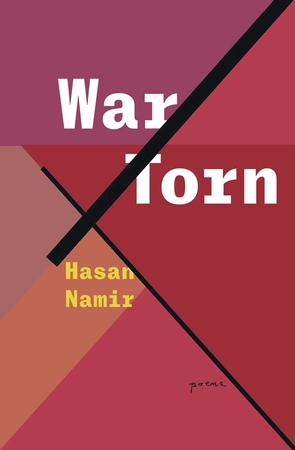
War / Torn by Hasan Namir

The poems in Namir’s War / Torn explore what it truly feels like to belong, and what it means to create an identity. The tenderness in these poems is as poignant as the violence Namir invokes throughout the collection, both working in tandem to interrogate the nuanced identity of existing as an Iraqi-Canadian in queer spaces.

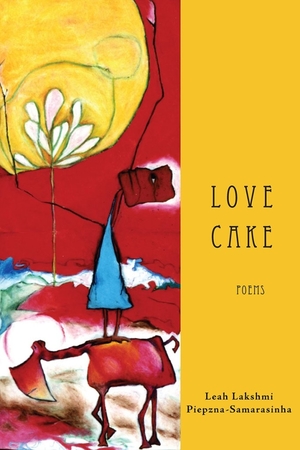
Love Cake by Leah Lakshmi Piepzna-Samarasinha

In Love Cake, the poems ask, “What happens when we encounter unsafe spaces in queer communities as a person of color?” And they do so with a profound voice that draws you in and doesn’t let go. This collection is a memorable exploration on how queer people of color utilize love and desire to transform violence.

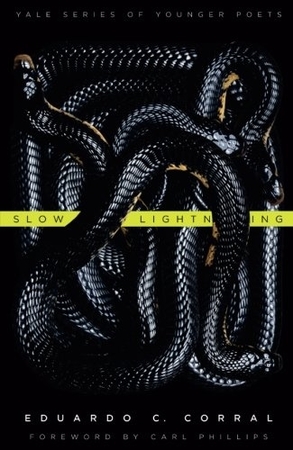
Slow Lightning by Eduardo C. Corral

Corral seamlessly blends English and Spanish together in meticulously crafted poems to convey his experiences as a gay Chicano man. Slow Lightning is a collection that captivates you with unexpected imagery, forms, and phrases that establishes Corral as a masterfully formed poetic voice.

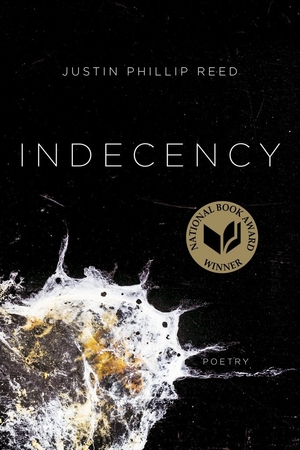
Indecency by Justin Phillip Reed

In Indecency, Reed boldly explores the inequity and injustice in his critique of white supremacy culture. These poems unashamedly push the boundaries of social order while unpacking personal intimacies and exploring topics such as masculinity, skin, culture, and sexuality.

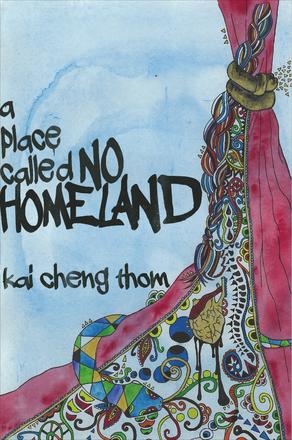
a place called No Homeland by Kai Cheng Thom

When you enter a place called No Homeland, the poems captivate you with a spoken-word quality, echoing Thom’s history as a performance artist. Spinning together folklore, magic, and trans feminism, these poems urgently question how we define inclusiveness. 

This Wound is a World by Billy-Ray Belcourt

The beautiful poems in Belcourt’s breathtaking collection don’t shy away from sex and love to explore the intersections of being gay and Indigenous, while looking at how Indigenous people stay positive. It’s a powerful debut that is full of hope for a decolonial kind of heaven where “everyone is at least a little gay.”

Disintegrate/Dissociate by Arielle Twist

Twist’s debut is a powerhouse of poems exploring complicated human relationships. Written with a tender rage, this collection speaks to what it means to exist as an Indigenous trans woman, carrying a thread of hope throughout for a better, softer future through sparse but poignant poems.

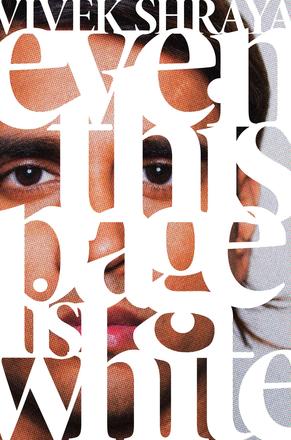
even this page is white

even this page is white by Vivek Shraya

Bold and provocative, Shraya’s poems don’t hold back to tear down understandings of what it means to be a racialized queer person. They are intelligent and beautifully stark in how they illuminate everyday racism.

Slant by Andy Quan

In this compelling collection Quan asks, “How do we belong?” through poems that explore race, gay sexuality, and the Chinese diaspora. It’s a witty book that really gets to the crux of being a gay Asian man.

A Rally for the Right-Wing Cult of Personality

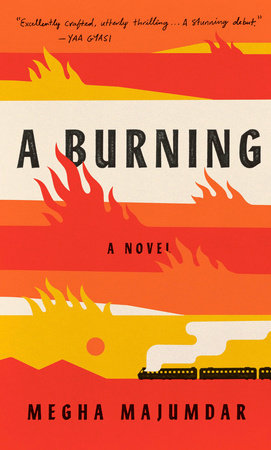
An Excerpt from A Burning
by Megha Majumdar

At the end of a school day, when the bottoms of his trousers are soiled, PT Sir holds his bag in his armpit and exits the building. Outside, the narrow lane is crowded with schoolgirls who part for him. Now and then a student calls, “Good afternoon, sir!”

PT Sir nods. But these girls, to whom he taught physical training just hours before, have hiked up their skirts and coiled their hair into topknots. Their fingers are sticky with pickled fruit. They are talking about boys. He can no longer know them, if he ever did.

When the lane opens up onto the main road, PT Sir is startled by a caravan of trucks roaring past. Three and four and five rush by in a scream of wind. Young men sit in the open truck-beds, their faces skinny and mustached, their hands waving the saffron flags of ardent nationalism. One young man tucks his fingers in his mouth and whistles.


At the train station, PT Sir stands at his everyday spot, anticipating roughly where a general compartment door will arrive. He is leaning to look down the tracks when an announcement comes over the speakers. The train will be thirty minutes late.

“Thirty minutes meaning one hour minimum!” complains a fellow passenger. This man sighs, turns around, and walks away. PT Sir takes out his cell phone, a large rectangle manufactured by a Chinese company, and calls his wife.

“Listen,” he says, “the train is going to be late.”

“What?” she shouts.

“Late!” he shouts back. “Train is late! Can you hear?”

After the terrorist attack, just a few days ago, the word “train” frightens her. “What happened now?” she says. “Are things fine?”

“Yes, yes! All fine. They are saying ‘technical difficulty.’”

PT Sir holds the phone at his ear and surveys the scene in front. Passengers arrive, running, then learn about the delay and filter away. To those who spread out the day’s newspaper on the floor and relax on it, a girl sells salted and sliced cucumber. In his ear, PT Sir’s wife says, “Fine then. Can you bring half-kilo of tomatoes? There is that market just outside your station.”

A spouse always has ideas about how you should spend your time. Couldn’t he have enjoyed thirty minutes to himself, to drink a cup of tea and sit on the platform?

PT Sir goes to look for tomatoes. Outside the station, on the road where taxis and buses usually honk and curse, nearly scraping one another’s side mirrors, all traffic has halted. Motorcyclists use their feet to push forward. PT Sir learns, from a man who grinds tobacco in his palm, that there is a Jana Kalyan Party rally, a rally of the Wellbeing for All Party, in the field nearby. It is the biggest opposition party in the state. Film star Katie Banerjee is speaking at the rally.

Katie Banerjee! Now, PT Sir thinks, is it better to spend twenty minutes looking for tomatoes, or catching a glimpse of the famous Katie? Tomatoes can be found anywhere. In fact, tomatoes can be bought ten minutes from his house at the local market—why doesn’t his Mrs. go there?

So he follows the street, which opens up onto a field, trampled free of grass. The crowd, a thousand men or more, waves the familiar saffron flags. They whistle and clap. Some men cluster around an enterprising phuchka walla, a seller of spiced potato stuffed in crisp shells, who has set up his trade. The scent of cilantro and onion carries. On all the men’s foreheads, even the phuchka walla’s, PT Sir sees a smear of red paste, an index of worship—of god, of country. The men, marked by the divine, wear pants whose bottoms roll under their feet, and hop up now and then to see what is happening. The stage is far away.

“Brother,” he says to a young man. He surprises himself with his friendly tone. “Brother, is it really Katie Banerjee up there?”

The young man looks at him, hands PT Sir a small party flag from a grocery store bag full of them, and calls a third man. “Over here, come here!” he yells. Soon that man rushes over, holding a dish of red paste. He dips his thumb in the paste and marks PT Sir’s forehead, drawing a red smear from brow to hairline. All PT Sir can do is accept, a child being blessed by an elder.

Thus marked, party flag in his hand, PT Sir steps forward to hear better. On stage, it is indeed movie star Katie Banerjee, dressed in a starched cotton sari. She, too, is marked by holy red paste on her forehead, PT Sir sees. Her speech drawing to a close, she raises both hands in a namaste. “You all have come from far districts of the state,” she says, “for that you have my thanks. Go home safely, carefully.”

The microphone crackles. The crowd roars.

When the star leaves the stage, her place at the microphone is occupied by the second-in-command of the party. Bimala Pal, no more than five feet two, arrives in a plain white sari, her steel wristwatch flashing in the sun. The crowd quiets for her. PT Sir holds the flag above his head for shade, then tries his small leather bag, which works better.

In the microphone, Bimala Pal cries, her words echoing over the speakers: “We will seek justice (ice)! For the lives lost in this cowardly (ardly) attack (tack) on the train (train)! I promise you (you)!”

After a minute of silence for the lost souls, she continues, pausing for the echoes to fade, “Where the current government (government) is not able to (to) feed our people (people)! Jana Kalyan Party (party)—your idle government’s hard-working opposition!—has provided rice (ice) to fourteen (teen) districts (icts) for Rs. 3 per kilo (kilo)! We are inviting plastics and cars (cars), factories which will bring at least fifteen thousand jobs (jobs)—”

While PT Sir watches, a man wearing a white undershirt pulls himself up, or is pushed up by the crowd, onto the hood of a jeep far ahead of him. PT Sir had not noticed the jeep until now, but there it is, a vehicle in the middle of the field, still a distance from the stage. The man stands on the hood of the car, surveying the raised arms, the open mouths and stained teeth. Then he climbs a step up onto the roof of the car, the car now rocking from the crowd shoving and slamming, their fury and laughter landing on the polished body of the vehicle.

“Fifteen thousand jobs!” they chant. “Fifteen thousand jobs!”

Whether they are excited or merely following instructions from party coordinators is hard to tell. A few TV cameras will pick this up, no doubt.

“We know (know) that you are sacrificing (ficing) every day!” Bimala Pal calls, shouting into the microphone. “And for what? Don’t you deserve (serve) more opportunities (ies)? This party is standing with you to gain those jobs (obs), every rupee of profit (profit) that you are owed, every day of school (ool) for your children!” Bimala Pal pumps a fist in the air.

PT Sir watches, electricity coursing despite himself. Here, in the flesh, are the people of the hinterland about whom he has only seen features on TV. He knows a few things about them: Not only is there no work in their village, there is not even a paved road! Not only is the factory shut down, but the company guard is keeping them from selling the scrap metal!

“Remember that this nation belongs to you, not to the rich few in their highrises or the company bosses in their big cars, but you!” Bimala Pal wraps up. “Vande Mataram!”

Praise to the motherland!

The man at the top of the car repeats, screaming, “Vande Mataram!”

PT Sir might have thought that this man, along with hundreds, has been trucked here from a village, his empty belly lured by a free box of rice and chicken, his fervor purchased for one afternoon. He might have thought that, for these unemployed men, this rally is more or less a day’s job. The party is feeding them when the market is not.

But the man’s cries make the hairs on PT Sir’s arm stand up, and what is false about that?

The man on the car lifts up his shirt and reveals, tucked in the waistband of his trousers, wrapped in a length of cloth, a dagger. He holds the handle and lifts it high in the air, where the blade catches the sun. Below him, surrounding the car, a man dances, then another, and another, a graceless dance of feeling.

The dagger stays up in the air, itself a sun above the field, and PT Sir looks at it, frozen in alarm and excitement. How spirited this man is, with his climb atop a jeep like a movie hero, with his dagger and his dancing. How different from all the schoolteachers PT Sir knows. How free.


When the men begin to tire, a coordinator announces, “Brothers and sisters! There are buses! To take you home! Please do not rush! Do not stampede! Everyone will be taken home free of charge!”

PT Sir returns to the train station. He has missed the delayed train, and when the next one comes, he finds an aisle seat, tucking his behind, the fifth, into a seat meant for three. The soles of his feet itch, reminding him they have been bearing his weight for much of the day. Somebody shoves past, dragging a sack over his toes. The person is gone before PT Sir can say anything. A woman then stands beside him, her belly protruding at his ear, and her purse threatening to strike him in the face at any moment. In this crowd, a muri walla, a puffed rice seller, makes his way. “Muri, muri!” he calls. The coach groans.

“Today out of all days!” comes the woman’s loud voice above his head. “First the delay, now there is no place to stand, and you have to sell muri here?”

“Harassment, that’s what this is,” says a voice from somewhere behind PT Sir. “This commute is nothing less than daily harassment!”

“Here, here, muri walla,” somebody objects. “Give me two.”

“And one here!” someone else calls.

The muri walla mixes mustard oil, chopped tomato and cucumber, spiced lentil sticks and puffed rice in a tin. He shakes a jar of spices upside down. Then he pours the muri into a bowl made of newsprint.

PT Sir’s stomach growls. He lifts his buttocks to try to reach his wallet.

“And one muri this way!” he says. “How much?”

The muri walla makes him a big bowl, heaping at the top.

“Don’t worry,” he says, handing the bowl to PT Sir. “For you, no charge.”

“No charge?” says PT Sir. He laughs, holding the bowl, unsure whether it is truly his to eat. Then he remembers: the red mark on his forehead, the party flag in his lap. PT Sir feels the other passengers staring at him. They must be thinking, who is this VIP?


At home, after dinner, PT Sir sits back in his chair, gravy-wet fingers resting atop his plate, and tells his wife, “Strange thing happened today. Are you listening?”

His wife is thin and short, her hair plaited such that it needs no rubber band at its taper. When she looks at him from her chair, it appears she has forgiven him for the forgotten tomatoes.

Something has happened at the school, she thinks. A man teaching physical training to a group of girls, all of whom are growing breasts, their bellies cramping during menstruation, their skirts stained now and then. A bad situation is bound to arise.

“What happened?” she says fearfully.

“There was a Jana Kalyan rally in the field behind the station,” he begins, “then one man climbed on a car—understand? climbed on top of a car—and took out. Tell me what he took out!”

“How will I know?” she says. When she bites into a milksweet, white crumbs fall on her plate. “Gun, or what?”

“Dagger!” he says, disappointed. The truth is always modest. He goes on, “But Katie Banerjee was there—”

“Katie Banerjee!”

“Then Bimala Pal also was there. Say what you like about her, she is a good orator. And she was saying some correct things, you know. Her speech was good.”

His wife’s face sours. She pushes back her chair and its legs scrape the floor. “Speech sheech,” she says. “She is pandering to all these unemployed men. This is why our country is not going anywhere.”

“They are feeding a lot of people with discounted rice,” he says. “And they are going to connect two hundred villages, two hundred, to the electricity grid in two years—”

“You,” says his wife, “believe everything.”

PT Sir smiles at her. When she disappears into the kitchen, he gets up and washes his hands clean of turmeric sauce on a towel that was once white.

He understands how his wife feels. If you only watch the news on TV, it is easy to be skeptical. But what is so wrong about the common people caring about their jobs, their wages, their land? And what, after all, is so wrong about him doing something different from his schoolteacher’s job? Today he did something patriotic, meaningful, bigger than the disciplining of cavalier schoolgirls—and it was, he knows as he lies in bed, no sleep in his humming mind, exciting.

A Palestinian American Story About Loving Too Much

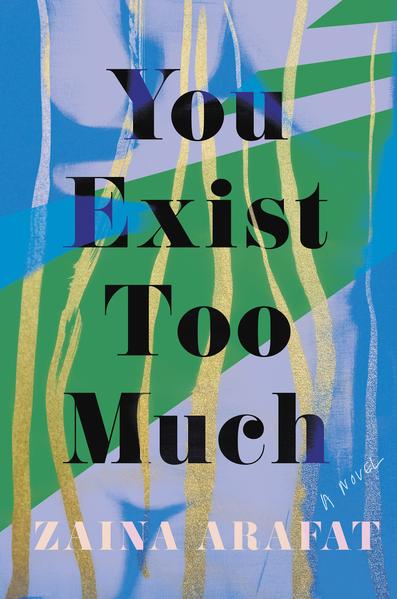
Zaina Arafat’s debut novel, You Exist Too Much, follows a Palestinian American teenager as she becomes an adult, navigating her queerness and love addiction. It follows her romantic relationship as well as her recklessness on the side, and where that may have come from. Finally, she admits herself to a treatment center that will make her question her need for what she considers to be love.

You Exist Too Much: A Novel by Zaina Arafat

The novel is told in vignettes, moving from the girl’s childhood in the Middle East to her adulthood in various cities. You Exist Too Much asks what the difference is between desire and addiction and obsession, and what it means to question love because of family and religion. 

Zaina Arafat is a Palestinian American writer. Her work has appeared in The New York Times, Granta, The Believer, The Washington Post, and others. She holds an MA in international affairs from Columbia University and an MFA from the University of Iowa and is a recipient of the Arab Women/Migrants from the Middle East fellowship at Jack Jones Literary Arts. She grew up between the United States and the Middle East.

I spoke with Zaina Arafat about how childhood memories affect adulthood, desire and insatiability, and overcoming trauma. 


Arriel Vinson: The protagonist is very consumed, for good reason, with her mother’s opinion of her queerness throughout You Exist Too Much. Her mother is worried about how their culture will judge her, how the Quran will judge her. Tell me more about why her mother’s shame was so prominent in this novel.  

Zaina Arafat: The mother is mostly concerned with how her daughter’s queerness reflects onto her, more than with her religious convictions or cultural expectations. The protagonist’s humiliation and shame are so prominent in the novel because she sees herself through her mother’s eyes; it’s her mother’s approval that defines and drives her behavior.  

AV: Early in You Exist Too Much, we learn about the protagonist’s struggle with anorexia, and later put a name to her love addiction as well as see her in a treatment center for it. Why was it important to explore all of these struggles? 

ZA: The protagonist’s eating disorder and her love addiction are related insofar as they both entail shame when it comes to appetite, along with restricted desire and insatiability. They both stem from a place of great pain, longing, and unfulfilled need, and each exists as a form of control. In the case of her anorexia, food is the central instrument of control, and in love addiction, it’s her romantic obsessions.

AV: Desire and obsession are at the core of You Exist Too Much. We move through each of the protagonist’s affairs and obsessions in the novel, her making the same mistakes and being left in ruins. Why did you choose to display recklessness and lack of self-care in relation to showing desire? 

ZA: I wanted to illustrate how internalized homophobia can lead to destructive behavior and self-sabotage. This protagonist’s desire has been consistently shamed and deemed unacceptable throughout her life, and though she tries to suppress it, it still seeps through and manifests in unhealthy and harmful ways.

AV: You Exist Too Much is written in vignettes—-moving between the protagonist in the U.S. as an adult and in the Middle East (Jordan, Lebanon, and Palestine) as a child/adolescent. Tell me more about that decision. 

The protagonist’s eating disorder and love addiction stem from a place of great pain, longing, and unfulfilled need, and each exists as a form of control.

ZA: I wanted to use involuntary associative memory to show how seemingly insignificant moments in one’s past, especially one’s childhood, can have great bearing on one’s adult self, their behavioral patterns, and present-day reality. I leapt between these vignettes to illustrate how the protagonist’s responses and actions in the present are influenced by the past, be it her own personal memories or collective cultural ones.

AV: There’s a moment where the protagonist says she was loved from a distance, and that’s the safest way to be loved. How does grappling with loneliness, even with lovers around, play a part in this novel? 

ZA: The protagonist puts herself in situations where love is “safe,” which means she doesn’t risk being seen too closely and rejected. She pours attention and affection into people who can never really know her, and who she can’t really know, for that same self-preserving reason. Of course, when you’re in a relationship with someone and loving at someone outside of the relationship who doesn’t love you back, it’s very lonely. But she’s willing to trade the risk of being seen and potentially hurt for loneliness.

AV: The protagonist in You Exist Too Much often reflects on her parent’s abusive relationship and realizes that her mother had trauma of her own. It takes the entire novel for her to make sense of that trauma and how it shows up in her life. What about her mother, and how she deals with relationships, does she see in herself?  

The protagonist puts herself in situations where love is “safe,” which means she doesn’t risk being seen too closely and rejected.

ZA: Recognizing her mother’s past traumas allows the protagonist to forge empathy for her. She sees her mother’s wounds as being integral to the way she exists in the world, and recognizes her mother’s patterns in herself. She realizes that she is destined to repeat these patterns if she doesn’t change.

AV: Towards the end of the novel, she realizes she felt fulfilled by dating someone who was just like her—emotionally unavailable, addicted to loving others who weren’t her. Someone encourages her to find healthy love. Why is this an important note to end the novel on?

 ZA: When faced with decisions throughout the novel, it was often painful to watch the protagonist continuously choose such destructive options. I felt it was important that she eventually make progress toward less harmful behavior, even if she slips along the way, especially since we’ve followed her on this path of trying to heal. She may never fully overcome her traumas and her demons, but she can identify that by choosing healthy love, she is also choosing to love herself.

“Wanting a Better Life Is an Act of Resistance”

In November 2012, the founder and figurehead of a regional rightwing party died, and to mark his passing, Bombay city went into a complete, daylong shutdown. Shops, markets and roads were ordered to close without notice, and people largely stayed indoors—a combination of acceptance and fear. In response, a young woman posted a comment on Facebook criticizing the shutdown, and her friend liked the comment. Both were arrested. Later that day, a group of men vandalized a medical clinic belonging to the girl’s uncle. 

I remember sitting in my dad’s Bombay flat, feeling utterly, deeply shocked. She was arrested? For a Facebook post? Eight years later, six of which have been governed by an increasingly genocidal government, what surprises me most when I look back at that incident is my shock. Since the Hindu nationalist BJP came to power in 2014, arrests for “anti-national” speech, actions and protests — both online and off — have practically become par for the course. In 2018, a news report found that of the people arrested for online speech, many were recent smartphone owners, over half were Muslim, and almost all were incredibly poor. 

A Burning by Megha Majumdar

Jivan, the young woman who opens Megha Majumdar’s debut novel A Burning, perfectly fits the bill. She is arrested in the opening pages, swept into a system explicitly stacked against her. Set in the Indian state of West Bengal, Majumdar’s taut, sharp narrative intimately follows three individuals living amidst the rise of fascism—a setting that deeply shapes their lives, and yet is so violent and pervasive that comprehending it is an impossible task.

Instead, the paw paw of autorickshaws and the gheu gheu of street dogs draws us into a sampling of small lives that are made, bolstered, crushed and silenced by a violent state. A Burning has all the page-turning qualities of a thriller, and as I tore through its three central storylines, I found myself echoing Jivan’s question: “If she had received a chance to tell her story, how might her life have been?”

I spoke to Megha Majumdar about shame, freedom, the limits of fiction, and what hope in the face of profound injustice can look like.


Richa Kaul Padte: A Burning begins with Jivan, a young Muslim woman who lives in a slum, watching the aftermath of a terrorist attack play out online:

“I admired these strangers on Facebook who said anything they wanted to…Whether it was about the police or the ministers, they had their fun, and wasn’t that freedom? I hoped that after a few more salary slips…I would be free in this way too.”

Elsewhere in the book, a middle class PE teacher finds himself at a Hindu nationalist rally, witnessing a man standing on a car, thrusting a dagger in the air. He thinks: “How spirited this man is…How different from all the schoolteachers PT Sir knows. How free.” The central characters in your book are all in some way driven by a desire for freedom. So I’m curious to know: what you think it means to be free? 

Megha Majumdar: Hmm, I think freedom has a great deal to do with having the opportunity to pursue a meaningful life. So it’s a profound injustice when that opportunity is denied—when a person like Jivan spends her energies on trying to save her home from being demolished and securing a reliable water supply to her apartment. Or when PT Sir feels that his life as a schoolteacher fails to have the kind of vigorous impact on the nation that he might have dreamed of for himself. Who could they have been? What might they have achieved? That’s where the pain of being denied freedom makes itself felt.

RKP: One of the central threads winding its way through your novel is shame, experienced in different forms. Lovely, a trans woman from the Hijra community, teases a group of boys who are openly staring at her until they begin, instead, to stare at their feet. She tells us: “In this life, everybody is knowing how to give me shame. So I am learning how to reflect shame back on them also.” 

Elsewhere in the book, Jivan narrates: “My head feels drawn to the earth, incapable of raising itself. I listen to [her] scolding in this posture of shame, until the posture is all I am.”

Megha, I think I’ve asked every South Asian woman I’ve interviewed over the years about shame, because it’s a theme that keeps surfacing in their work. Why do our societies steep women in so much shame — and to what effect? 

MM: Your question urges me to think harder about this, and I am grateful to you for that, Richa. Shame operates as an oppressive force, a way to keep certain people from aiming too high or reaching for things that the rest of society doesn’t think they deserve. So it’s rich for storytelling, because right away you have people who push back and resist and assert their right to dream. And perhaps it surfaces in our work because we have grown up, as you say, steeped in forms of it.

An experience that my friends and I shared in our teens was being groped on buses and autos—first there was confusion and shame. Then we began talking about it among ourselves and pushing back. We encouraged each other to loudly protest when it happened; we learned to shout, “Keep your hands to yourself! Don’t you have any shame?” to these grown men on crowded buses. We learned to throw this shame back at them, and it was what they feared. They stopped as soon as you raised your voice and shamed them. It was our triumph. 

RKP: One of my favorite things about A Burning is also the thing I found the hardest: the way you demonstrate the crushing weight of violence borne from inequality and prejudice—a weight that’s so terribly heavy that understanding it seems futile. As Lovely says of police brutality:

“Many years ago I would have been asking why is this happening? But now I am knowing that there is no use asking these questions. You might be begging on the train and getting acid thrown on your face. You might be hiding in the women’s compartment for safety and getting kicked by the ladies…In life, many things are happening for no reason at all.” 

This sentiment is echoed throughout the book, and wherever a character does try to wrest reason from senselessly oppressive circumstances, it only seems to lead to further devastation. I tend to believe that the best way to overthrow a system is to name it, to understand how it works. But does this perhaps have more to do with my own privileges than with the capacity of knowledge itself? 

Wanting a better life is an act of resistance, and an act of hope.

MM: That randomness is so hard to deal with. I wanted to confront it in the book, and explore how even though a novel needs to make a certain kind of sense and follow a narrative logic, life is full of random injustices and instances of violence. Perhaps these characters have lives outside the margins of this book, and perhaps that’s where the imposed logic of fiction fails them. 

RKP: Could we talk about belief, please? You do a wonderful job exploring not just what it means to tell one’s own story (an experience routinely denied to your characters) but also what it means to have that story believed. In your novel, which of course reflects a ground reality, belief is often manufactured as a means to preserve or garner power—whether it is belief in someone’s guilt, the belief that certain “types” of people are a threat to “the nation’s future,” or even the fervent belief in a powerful majority religion. What, according to you, is belief contingent on? 

MM: An author I’ve had the great luck of working with in my role at Catapult is Dina Nayeri, who wrote about this question in her book The Ungrateful Refugee. When refugees and asylum seekers face certain expectations of what their story and suffering are supposed to look like, what do they do when their story deviates from that expectation, when their true story is more complex or surprising? The stakes for them couldn’t be higher. It’s such an intricate, profound question.

In my book, belief in someone is perhaps another way of asserting who has the right to speak, and who doesn’t. All the lines of class, education, privilege, gender, and so on—all of these lines converge upon this question: Who is considered worthy of our trust?

RKP: A Burning is set in a country teetering on the edge of fascism, and yet, by intimately inviting us into the lives of your characters, you make it difficult for the reader to parse out clearly demarcated “sides.” Instead, you present to us a deep fear—of the state, destitution, violence, and rejection—that engulfs people in a society marked by tremendous inequality.

PT Sir’s journey from disgruntled schoolteacher to Hindu nationalist is, for example, driven by the same sort of fear that he eventually inflicts upon others. There’s a moment when he reflects: “The Muslim man’s family perished, nobody is denying that, but he himself will be all right. Maybe that is all that can be salvaged.” I was really scared in this moment, Megha, because I felt myself almost empathize with a person who is bolstering the most vicious government I have ever witnessed. And while you never condone this violence, you do invite us into the interiority of its making. Is there something you wanted readers to take away from this? Something other than fear? 

Shame operates as an oppressive force, a way to keep certain people from aiming too high or reaching for things that the rest of society doesn’t think they deserve.

MM: I wanted to write complex, full people. I tried hard not to write flat characters or simple villains. I wanted to show what an ordinary person—driven by a glimpse of what it means to have a little bit of power in a society with huge power differentials—will do. Will they hold on to their personal ethics? Will they adjust their moral compass? Will they seek security for themselves or justice for another person? And I hope the reader sees themselves in these characters, and feels close enough to them to wonder how they would act.

RKP: There’s a moment towards the close of the book where Jivan thinks, “I don’t know what this means, this matter of hope. Moment by moment, it is difficult to know whether I have it, or not, or how I might tell.” This is often what I felt while reading A Burning: is there hope? is there none? and for these characters, what might it look like? 

This also makes me think of Lovely’s reflection on the ending of a beloved relationship:

“My love for Azad…is existing in some other world, where there is no society, no god. In this life we were never getting to know that other world, but I am sure it is existing. There, our love story is being written.”

Is this, finally, where true hope lies — in a world without society or gods? And if so, how on earth can we get there? 

MM: I think there is great hope in all the different forms of resistance we’re seeing, whether it’s in women-led activism or a character in this book taking matters into their own hands. There is great hope in every act of ambition and dreaming and striving, right from every kid going to school so that they can have a better life than their parents did, to every grown-up who says: you know what, this secret dream of mine might sound wild to you, but I’m going to chase it. Wanting a better life is an act of resistance, and an act of hope. That’s a big part of what I wanted to write about—yes, there are systems and social institutions that challenge you and sometimes defeat you, but you still live with defiance and joy and humor. You never stop working toward the life you want. That’s what it means to live with hope.