Ottessa Moshfegh’s New Novel Explores the Dark Side of Social Distancing

Ottessa Moshfegh can write about cynicism and vice in a way that is at once dangerously validating and innocuously readable. Her characters are young, prideful, verbose, and hate the world just enough more than they hate themselves to make room for an inventive plot every time. Death in Her Hands, Moshfegh’s latest, is a little different. On page one, a lonely old widow named Vesta finds a mysterious note. The rest of the novel follows her spiraling obsession with the anonymous message, resulting in comically extravagant theories that anxiously trouble the line between reality and delusion. The only other character is a dog. 

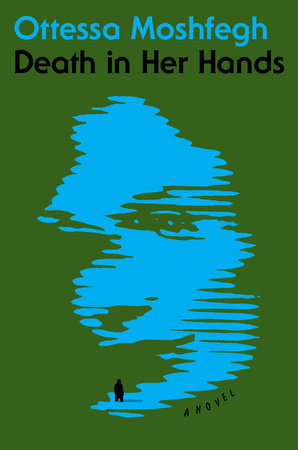
Death in Her Hands

In light of the current pandemic, Death in Her Hands feels eerily clairvoyant. It’s a deeply internal thriller about what the mind can convince itself when left truly alone—the potential ramifications of what we now call social distancing, written years before it became a practice that defined our daily lives. And the predictions are grim!

I spoke to Ottessa Moshfegh over the phone about her new book in early March, back before its release date was twice postponed, along with a brief follow up mid-May. We talked about alienation, genre conventions, and what it means to get older, among other things. We also spent the first five minutes of our call chatting about the then-burgeoning pandemic, an eerily clairvoyant discourse in and of itself that I had to cut off to start our interview (Her take? “The timing of this outbreak is so creepy to me. Like, is this on purpose?”). But with Ottessa Moshfegh, what else can you expect?


Verity Sturm: What’s the story of its genesis?

Ottessa Moshfegh: I was living in Oakland. I had finished my short story collection (Homesick for Another World) and was waiting for it to come out, so I had this limbic period of not knowing what to do next. Like, I knew that a lot of things were going to happen—I was going to move, my book was going to come out. But I was done writing short stories, and I desperately needed a creative project. So I told myself that I would write 1000 words a day, without looking back at what I had written the day before, until I reached the end of a novel. And everything that happened was a discovery. It was like an exercise in being present, and I think that became what the book was about—the character being led in the present moment by her imagination. 

So it worked. I mean, I wrote it and I put it away. I went on book tour for Eileen and then started revising it when I was living in a cabin in the woods on a lake, kind of the place that I had been imagining while writing the story, so that was really cool to get to go there. It’s a family place in Maine but I tried to avoid specifically naming the town in the book because I didn’t want it to seem like Maine exactly. But back to the question of where it started, I have no idea. I have no idea about how Vesta, like… I don’t know. It just kind of appeared on the page and became a book.

VS: Death in Her Hands is packaged as a traditional thriller, it’s got the classic title and cover design and old lady/death note imagery. Your first move into genre fiction was with Eileen, and in an interview with Vintage Books you mentioned that it was a “creative decision, not a commercial one” meant to bring attention to the limitations of systems, whether social or narrative. How does Death in Her Hands work within this genre-system?  

OM: I’m fascinated by how the genre becomes institutionalized. That happens because of the books, not because there’s some preexisting idea of what a mystery novel should be. Nobody said, “okay this is the genre and now you have to write books in that genre.” I’m thinking, what would my version of that be? And what I find interesting is playing and toeing the line between expectation and the unexpected. I’m not interested in reading novels that could have been written by some computer program, you know? There should be some overriding element of human intelligence and some form of expression rather than another thing in a series that’s exactly like the last book that you loved. But I think it’s exciting when books can be placed side by side with other books of a particular genre and defy expectations around that genre.

VS: Speaking of defying expectation, your previous protagonists have been mostly young people disgruntled with life before they’ve seen half of it. What moved you to approach Death in Her Hands from 72-year-old Vesta?

OM: I was interested in a character who had already had a life, and the question of what we do at the end. Like, we’re completely alone, we’re no longer planning for the future, and we’re not even trying to really understand what’s happening in the world around us anymore. I mean, I don’t know, I’m 38, I’m not 70. My parents are in their 70s now and I wouldn’t say they have opted out of life at all, they’re both completely awake. But I was interested in a character who would be isolated physically, and also kind of spiritually. Her husband had died and she never really had a life of engagement because it was only through her husband that she really engaged in society. So what happens when you try to know yourself when you know that your life is almost over? I guess I was thinking a lot about death. It is called Death in Her Hands.

VS: Although older, Vesta speaks with an insular contempt not unlike that of your previous protagonists. You now have multiple books steeped in the first-person depths of a highly critical, often retributive perspective. Why write from a place of such bitter judgment?

OM: Probably because that’s what I was doing. I felt really, really alienated, and pretty tormented by my internal life. Although things have changed significantly in the last five years, for the better. Hmm. I want to answer this in an interesting way.

VS: There is NO pressure.

I’m not interested in reading novels that could have been written by some computer program, you know?

OM: I guess I’ve been interested in how a character in isolation can try to make sense of the world around her without actually interacting with it. Because in some sense that is what fiction is — it’s creating a world in the fortress of a two-dimensional page, an illusion in the mind of the reader that feels real enough that you can understand it. And I feel like that’s exactly what people do when they’re alienated. They have a version of reality within the fortress of their own mind. The way that we build worlds is that we see, we take evidence of things, and we make a judgment of them. And then that’s how we ascribe meaning, that’s how we build a value system and a belief system. For me, that’s essentially what fiction is.

VS: You’ve been pretty open about the torment of your internal life, often referring your 20s as some derivative of hell in interviews and profiles. But you’ve also said “I have an unflappable belief that my future is bright and that I’m blessed.” I’m wondering if you recall when or how in the past five years, as you said, your life began to change significantly for the better. And since so many of your followers are young people familiar with the cynicism of your characters, do you have any advice to junior writers or artists along the way?

OM: I think that my life actually took the turn before I started to feel the effects of it, and I also think it’s partially just a matter of getting older. This sounds weird, but when you’re in college, you have this manufactured society around you that consists of your fellow students, faculty, staff, whatever. And when you leave that system you are suddenly confronted with the world at large and you have to fit your life into it accordingly unless you want to live in a hole or never have relationships outside of college. I think the process of becoming an adult is maybe a little bit delayed in our society since the middle class has this pathway that has been kind of paved for you. There’s an expectation that you will graduate from high school, go to a four-year college, graduate from that, and then be in a career. 

That didn’t happen for me, thank god, and part of that was because I knew that I was a writer. I think that the turn happened for me psychically when I realized I had reached a certain point of independence—I felt confident enough in what I was doing to reject the principles of my institutions from my path and really live according to my own compass. And by “institutions from my path,” I mean my family, my education, the region on earth where I was brought up. 

So, I don’t know, I think independence and self-reliance are really important in beginning adulthood according to what you want rather than what anyone else is doing or what anyone else thinks you should do. And I think I got really lucky that what I wanted to do ended up being the very thing that was going to get me to that point. I mean, I don’t know. Is this making any sense?

VS: Yes! So much, you have no idea. Now, if your life has changed so much in the past five years, can we expect your writing to change too?

OM: Oh, yeah. Definitely. Always. 

VS: Death in Her Hands seems to grow more prescient with every day that passes in the COVID-19 pandemic. What’s it like to publish a book about isolation at a time when it is so widespread and normalized, if not mandated?

I’m interested in how a character in isolation tries to make sense of the world around her without actually interacting with it.

OM: The pandemic and consequent quarantine has definitely distanced me from the experience of publishing the book: I usually go out with the book on tour, and I get to interact with readers and deliver my work to the world in a way that feels personal. I’m grateful that the book will be available this summer so that people who are still isolating, or recovering from isolation, can read it if they want.

VS: A difference between our alienation (in quarantine) and Vesta’s is that she voluntarily elects hers, stating that she’s “pleased with [her] decision” to start an independent life in the removed woods of pseudo-Maine upon the death of her husband. Vesta’s isolation precipitates the paranoia that drives the darkness of this novel, but it also seems to empower her. Do you think that being alone is always this double-edged sword? What is there to gain from gap between what it giveth and what it taketh away?

OM: I do think it’s a double-edged sword. Depending on your personality, isolation can have varied effects. For Vesta, her isolation gives her access to herself on her own terms. She lives according to her own whims and rules. But it’s also a self-reflective universe, and that self can feel like a trap for her sometimes. Having time to be alone with myself is crucial. Privacy and silence are the conditions for me to write, attune to the pace and movements of my own mind. Forced isolation can feel very different, of course. 

VS: You have now written multiple books both in isolation and about isolation, and have recently identified yourself as an “isolator” in a piece for The Guardian. The evidence suggests that you’re kind of an expert in the art of being alone. Any tips for the rest of us? 

OM: I don’t mean to boast that I have mastered isolation, or that my life is intrinsically better because I’m an isolator. It’s just my habit, what I’m accustomed to. It helps to have a project, some sense of duty or purpose.

In “All My Mother’s Lovers,” a Mother’s Secret Letters Reveal Her Secret Life

Not to sound like an assistant district attorney from SVU, but it is beyond a shadow of a doubt that acclaimed essayist and book critic Ilana Masad has carved a prominent space for herself in the realm of mother-daughter literature with her debut novel, All My Mother’s Lovers. It sits upon a throne of 2020 Most Anticipated lists and has charmed its way into the hearts and minds of readers and critics alike, marking it as one of this year’s most memorable debuts.

All My Mother's Lovers by Ilana Masad

When her mother dies suddenly in a car crash, 27-year-old Maggie Krause returns home to find a devastated father and brother and, while going through her mother’s belongings, five sealed envelopes—each addressed to a mysterious man she’s never heard of. In an effort to learn the truth about her mother, Maggie opts out of shiva to hand-deliver the letters herself. What unfolds is the secret life her mother, Iris, kept from her family, forcing Maggie to reconcile herself with the mother she thought she knew, and didn’t know at all. 

Told from the perspective of both Maggie and Iris, All My Mother’s Lovers is a poignant examination of intergenerational relationships, grief, and identity—all while trying to navigate selfhood through it all. It asks us to honor the relationships we have with the people we grew up around, and reminds us that our connection to them isn’t temporal, but a lasting imprint that never changes even when we do.


Greg Mania: This novel was born from a single line that kept you awake one night when you were in the first semester of your PhD program at the University of Nebraska-Lincoln: “Maggie is in the midst of a second lazy orgasm when her brother, Ariel, calls to tell her their mother has died.” What was it about that particular line, which is the first sentence of the book, that you just couldn’t shake?

Ilana Masad: I think most writers have come up with endless lines in the middle of the night when they couldn’t sleep, and those of us who, like me, can’t be bothered to get up and write them down nine times out of ten, usually lose those lines to the ether (and let’s be honest, most of them probably aren’t really as brilliant as we think they are in the wakeful exhaustion of the moment anyway). But for whatever reason, this one was still there in the morning, and I really have no idea why! Something I liked about it that night, and still enjoy, is the sonic quality of some of the words: “lazy orgasm” for instance, the “z” sound of both the zee and the soft ess. I guess I also like the existential neatness within it, this push and pull between sex and death.

GM: How has being a book critic helped you write this book?

IM: Indirectly, I can see it having helped this way: being a critic means keeping up with contemporary fiction, or trying to. I didn’t purposefully set out to write about the genre that I also tend to write fiction in most often (and yes, contemporary general/literary fiction is a genre), but it’s kind of what happened as time went on. In that way, reading, and reading closely, became part of my job, and I’m sure I internalized elements of structure, plot, and pacing that were successful as well as marketable in some way, even though I wasn’t doing so consciously. That is, when I read as a critic, I’m reading differently as I would as a fiction writer trying to learn from the form, but that doesn’t mean that I didn’t learn things by some kind of osmosis, if that makes sense.

GM: Were there any specific challenges when shifting to the role of novelist? If so, how did you contend with them?

The only thing that feels different to me about books and culture criticism is their increasing unsteadiness as a career.

IM: This isn’t the first novel I’ve written, or even the first I’ve sent out (it’s the seventh of the former, fourth of the latter) but it’s the first I’ve sold, and so I really appreciate your framing of the question here, because it’s true that I’ve really never been in the role of the novelist before, certainly not in any public way like this. One of the biggest challenges has been being on this end of things—the A rather than the Q, the guest and not the host, the subject of the review rather than its byline. It’s surreal, after having spent years being on the other end, and (knock on wood!) having no plans to stop that anytime soon.

GM: Conversely, do you think your approach to book criticism will change now that you’re a novelist yourself?

IM: I really don’t think so! I first started publishing criticism in 2013, and fiction in 2012, and have kept writing and publishing those simultaneously ever since. It’s the ratio that’s changed, really, and that was largely due to the fact that over time, as I developed my skills in both areas, I learned that I potentially could make a career in criticism, while the fiction side of things was still much less clear to me. At this point, the only thing that feels different to me about books and culture criticism is their increasing unsteadiness as a career as well.   

GM: The mother-daughter relationship is a bubbling cauldron in literature. Is there a text in this regard that had a profound impact on you and, if so, how?

IM: You know, I’m trying to think of whether there was one like this when I was younger and I can’t think of that many. So many of the books I read as a kid featured orphans or children whose parents were just sort of mysteriously absent from their everyday lives, and later, when I was trying to read all these classics that I thought everyone in the U.S. had read in high school, so many of the mothers were dead, and if not dead, then silly and sort of unimportant. It’s only in recent years that I feel like I’ve been reading a lot of books that dive deeply into this particular relationship, really, which makes me so glad.

The one book that I can think of as being formative when I was younger, and which also included nuanced and complex mother-daughter relationships is Little Women. I’ve read that book so many times, and each time I do, I find something new in those relationships. Marmee tries to respect her daughters’ decisions but also attempts to impart some of her own wisdom. She’s not perfect—sometimes she’s pushy, sometimes she’s holier-than-thou, occasionally she’s furious or exhausted. She’s human, in other words. And her daughters don’t always recognize her as a person who existed before they did, as a woman who is not solely a mother but also an individual with her own thoughts and desires and dreams; but sometimes, in glimpses and moments, they can and do, and that’s always felt so powerful and beautiful to me, and so rare for literature of the time, too.

GM: Iris is a character rich in dimension, and that is something Maggie discovers about her mom throughout the course of the book. What do you want your readers to take away about parents, specifically? 

IM: I want readers to take away whatever it is they need to from the book—it’s not for me to say what that’ll be. (I know this sounds cheeky, but I mean it sincerely!)

In terms of how I think about parents: they fascinate me. This is probably partially because my own dad died when I was a teenager, and one of the things I started to mourn very early were all the things I’d never know about him, the conversations I’d never get to have with him, the stories that I’d never get to hear.

The older I get the more I think about how adulthood is this bizarre social construct that we all participate in, and how our parents must have felt just as confused and strange and out of control as so many of us do at various points in their lives, even as they presented whatever façade it is they presented to us when we were young. And that makes me think a lot about the distance between how children perceive their parents—which can be in a variety of ways, of course, from all-knowing and benevolent to dangerous and unpredictable and, most likely, somewhere in between—and how adults perceive their parents. The thing we have as adults is both our own life experience through which to read our parents and the capacity to learn more about them, to ask them things, to find out more. That doesn’t mean they’ll respond, or tell the truth; it doesn’t mean we’re required to ask or that all of us even want to. But that potential for communication is there, and I wonder how many of us don’t take advantage of it because of how deeply prescribed our hierarchical roles are. 

GM: This is also a story of intergenerational relationships. How does identity, for you, unfold when presented in the context of different generations?

The older I get the more I think about how adulthood is this bizarre social construct that we all participate in.

IM: What a wonderfully complex question! I think that the specifics depend very much on the identity, but more broadly speaking, I think a few key things change and evolve over time that create these seeming gaps between generations: social and political contexts (by which I mean things like what is normative or accepted on the one hand, and what laws and rights have been created under whatever political system one lives in) and, alongside that, language. So, to take Maggie’s identity as an example: she uses the words gay and lesbian to describe herself but identifies most often as queer, because that word describes not only her sexual orientation but also an identification with a kind of umbrella-term (that some object to) for the LGBTQ+ community, and also, in addition to that, a kind of way of being in the world that implies a political stance. On the other hand, women of Iris’s generation might identify much more strongly with the word lesbian because of the kind of stigma it carried when they were coming of age and coming out and the political implications of identifying with it.

When I think of the various intersecting identities we all carry, I like to think of the time periods where we came into or became aware of particular aspects of our identities as well, because I think that our terminology is often bound up with it in ways that are deeply emotional and difficult to shake.

GM: Grief is another major theme. You remind your reader that there is no one way to grieve, no wikiHow on how to deal with the frenetic emotions that run through you like slides on a projector. Did you learn something new about grief while writing this book?

IM: I learned how Maggie grieved, and how Peter grieved, and Ariel and Iris as well. All of them grieve in different ways in various moments in the book. Grief, unfortunately, has been in my life for very nearly as long as I can remember myself—it’s something I feel a strange kinship with. I have for some years now only experienced it second or third-hand, via the grief of those close to me, which scares me, a little, because for a good portion of my life, grief arrived like clockwork every four or five years. Part of me, I think, wrote this book with some bizarre and totally irrational superstitious idea that it would be a delay tactic, that by writing out all this grief I’d delay it entering my life directly again. I’ve been thinking about that a lot recently, for probably obvious reasons.

GM: Has writing this book helped you reconcile with any grief in your life? Is so, how?

IM: I don’t think so, but only because I’m not sure I conceptualize grief that way—I don’t know if it’s something I can reconcile with. If anything, I think writing the book let me admit how much grief still lives in me and just how uncomfortable it still is, and probably will be for a long time.

Visiting the Local Greasy Spoon with an Actual Saint

The following story was chosen by Nicole Chung as the winner of the 2020 Stella Kupferberg Memorial Short Story Prize. The prize is awarded annually by Selected Shorts and a guest author judge. The winning entry receives $1000, a 10-week writing course with Gotham Writers Workshop and publication in Electric Literature. In lieu of a live performance at Symphony Space in Manhattan, Selected Shorts has arranged for the winning story to be recorded by Emily Skeggs, which you can watch here.

Prayer for the Ides of February

Winters, my hands become geological. First they chap, then fissures open in the webbing between each finger, then granules surface from within. This year, the granules have begun aggregating into complex structures. I sand down the pale, coral-like extrusions with a nail file or discreetly snap them off. In the privacy of my apartment, I tweeze out the roots. It’s hard to keep up, and leaves my hands prone to bleeding and my mittens bloody.

What do I do, I ask my mother. From far away, she consults the Harvard pathophysiology guide that’s always lived on her nightstand, thousands of pages thick with all the very best ailments. But that’s no help, so she dredges up her catechism and suggests petitioning Saint Lucy.

Although I’m thoroughly agnostic, ambivalent to the bone, you descend from the heavens right away, halo blazing. You gently take my hands in your own, diagnosing it as a bad case of longing, something within me yearning beyond.

Can you make it go away? I ask.

Are you sure you want me to? you ask. It’s really quite lovely.

I’ve fallen behind on pruning, and latticework, admittedly charming, now encircles my knuckles. I imagine letting it grow out, myself as art installation. Then, when no gallery can contain me, lowered to the seafloor, generating much-needed habitat for eels and cephalopods.

But it’s rendered my hands useless, I object. And I’m too young to become a full-time monument to my own solitude.

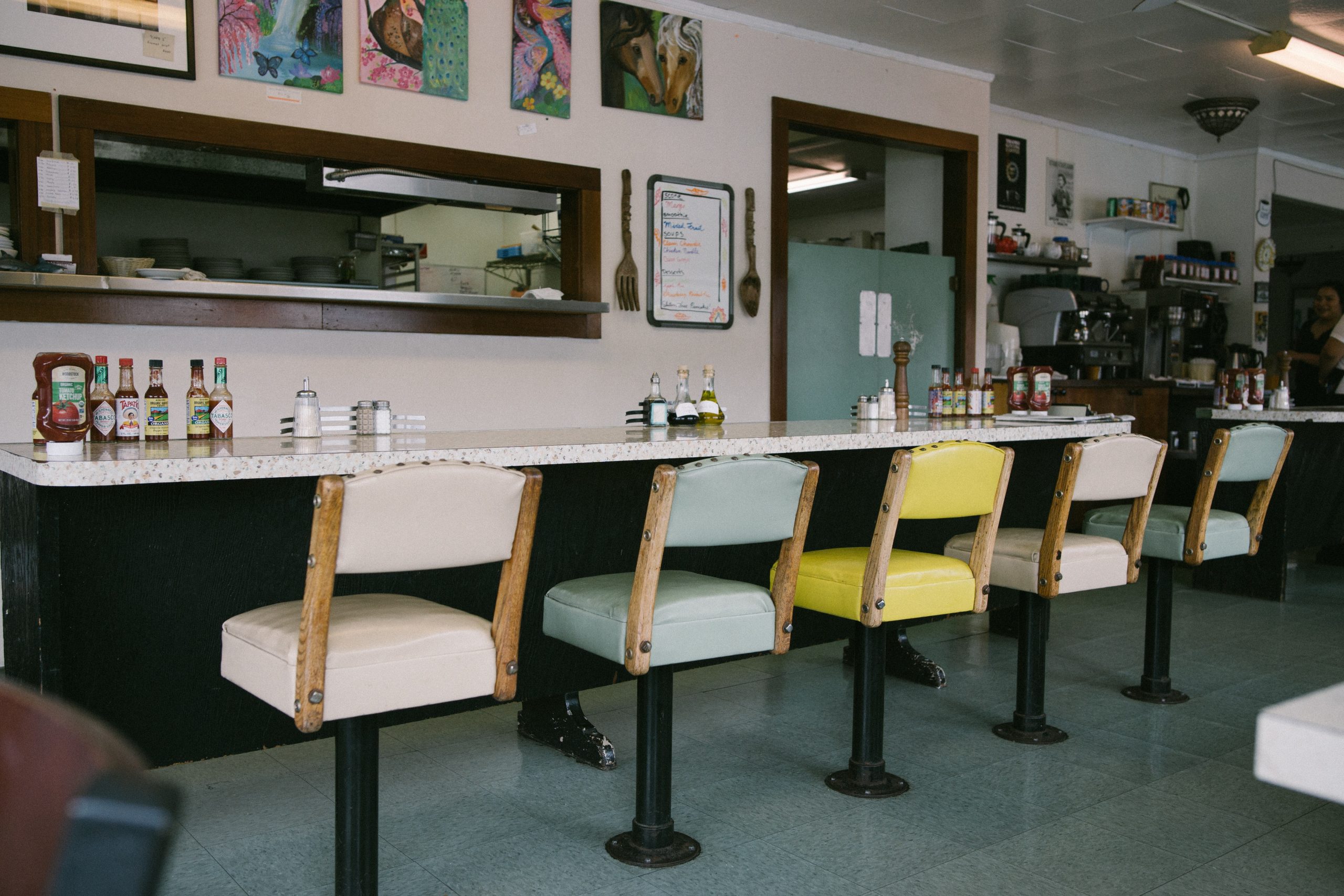
With an air of approval, you loop your immaculate arm carefully through mine for a stroll to the famous local diner. They’ve decorated with red cutout hearts and cupid garlands. You get the grilled cheese, I get an egg cream, we share a platter of fries. I couldn’t remember which one St. Lucy was; you are, of course, the one always depicted with her eyes both in her face and on a plate, which we make space for by the jams. You also doff your halo, wedging it between the ketchup and the napkin dispenser, where it dims. You seem much more approachable now that I can stop averting my eyes.

After we’ve finished, the waiter sweeps up my sloughings and clears the dishes as well, we realize belatedly, as your eye-plate. I rush to save the eyes before they get thrown out, but you catch my elbow and pull me back. We never learn what becomes of them.

I do not ask if you regret your virgin martyrdom, if wedding Christ was really an excuse to rebuff mortal men, if you respond so readily to all your supplicants. You do not point out my hypocrisy, resorting to religion only when science fails me. We linger long after the bill is settled, speaking of thoughts and feelings and other womanish trifles, voices low, for no one but each other. “Only the Lonely” plays on the jukebox but for once does not apply. 

7 Revolutionary Anthologies by Black Women Writers

I once took a course called “Modern American Literature” in college. The syllabus didn’t include one single Black female author. Every author we read was a white guy. I wondered why the works of Maya Angelou, Toni Morrison or Alice Walker—voices that turned the pretentious, white male-dominated literary canon on its head—did not qualify as Modern American Literature. As the lone Black female student in this class, I couldn’t help but feel that the lesson here was that I didn’t belong. My blackness, my womanness, was not American Literature. As I grew older and delved deeper into diverse literature, I discovered that Black and brown women were not superfluous or alien to Americanness, but essential to the story of the United States, and as long as our voices are suppressed, the story would never be complete.

The struggle for racial equality is far more than a moment in time—it’s a movement, one that Black women and women of color have been documenting for decades.

As we observe a wave of protests across the world, demanding justice for George Floyd and the countless other black people killed by police brutality, it’s increasingly important to understand the Black experience in order to be an ally for racial justice. Although the conversation on racial justice is often centered on Black men, we must not forget the names of the Black women who have recently been killed by law enforcement and racist vigilantes: Breonna Taylor, Oluwatoyin Salau, Rekia Boyd, Sandra Bland, and countless other voices that were silenced. In their honor, we celebrate Black female voices from across the diaspora through literature. 

One of the most powerful things people can do right now is to educate themselves by going directly to the source, that is, #ownvoices texts and literature that speaks directly to the impact of racial injustice in the United States. It’s important to note that the struggle for racial equality is far more expansive than this troubling moment in time—it’s a movement, one that Black women and women of color have been documenting for decades. The following anthologies capture the voices that always existed but were often shunned, ignored, or silenced altogether.  

Sisterfire: Black Womanist Fiction & Poetry edited by Charlotte Watson Sherman

The Sisterfire anthology came as a response to troubling times. Editor Charlotte Watson Sherman writes: “Shortly after the Rodney King Uprising, I woke from a dream with a voice telling me to ‘do the anthology.’” The anthology features writers such as Alice Walker, Bell Hooks, Ntozake Shange, Lucille Clifton, and more. The book is divided into nine parts, beginning with “Becoming Fluent: Mothers, Daughters, and other Family” and “Night Vision: Crack and Violence Against Black Women,” with each part alternating between poetry and fiction to paint a landscape of the issues heavy on the minds of women writers at the forefront of the Black womanist thought movement.

Well-Read Black Girl by Glory Edim

Well-Read Black Girl: Finding Our Stories, Discovering Ourselves by Glory Edim

This book is the ultimate ode to Black women writers. A collection of essays written by the most prominent Black women writers of our time reflecting on the role literature played in their own coming of age journeys. The collection includes essays by Jesmyn Ward, Jaqueline Woodson, Gabourey Sidibe, Tayari Jones, and others. With this anthology, Edim sends a clear message, “The essays in the following pages remind us of the magnificence of literature; how it can provide us with a vision of ourselves, affirm our talents, and ultimately help us narrate our own stories.” 

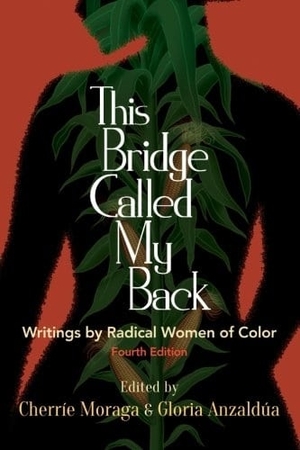
This Bridge Called My Back: Writings by Radical Women of Color edited by Cherrie Moraga and Gloria E. Anzaldua

Through personal essays, criticism, interviews, testimonials, poetry, and visual art, this collection (edited by Chicana writers, but including work from women with a range of racial identities) explores, as coeditor Cherríe Moraga writes, the “complex confluence of identities—race, class, gender, and sexuality—systemic to women of color’s oppression and liberation.”

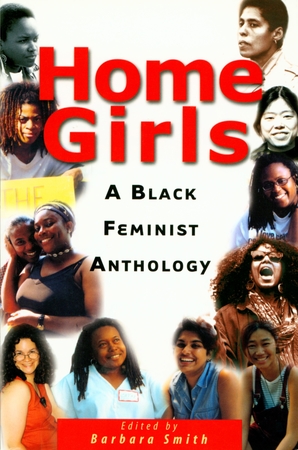
Home Girls: A Black Feminist Anthology edited by Barbara Smith

This collection of essays and poetry by Black feminist and lesbian activists is one of the leading texts in the field of women’s studies. Editor Barbara Smith brought together Toi Derricotte, Audre Lorde, Patricia Jones, Jewelle L. Gómez and many more. Since its initial publication in 1983, it has become an essential text on Black women’s lives and writings. 

New Daughters of Africa edited by Margaret Busby

New Daughters of Africa spans a range of genres—autobiography, memoir, oral history, letters, diaries, short stories, novels, poetry, drama, humor, politics, journalism, essays, and speeches—demonstrating the diversity and extraordinary literary achievements of black women who remain underrepresented. The anthology includes work from Margo Jefferson, Nawal El Saadawi, Edwidge Danticat, Zadie Smith, Chimamanda Ngozi Adichie, Imbolo Mbue, Yrsa Daley-Ward, Taiye Selasi, and Chinelo Okparanta. Each of the pieces in this collection demonstrates an uplifting sense of sisterhood, honors the strong links that endure from generation to generation, and addresses the common obstacles female writers of color face as they negotiate issues of race, gender, and class and address vital matters of independence, freedom, and oppression. 

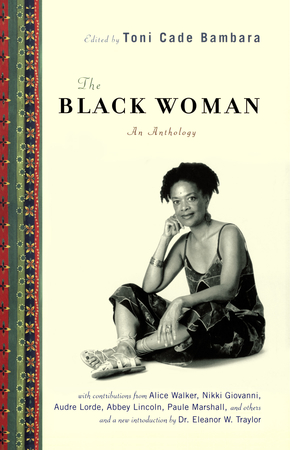
The Black Woman: An Anthology edited by Toni Cade Bambara

The Black Woman is a collection of early, emerging works from some of the most celebrated Black female writers. First published in 1970, The Black Woman introduced readers to groundbreaking original essays, poems, and stories. The anthology features bestselling novelist Alice Walker, poets Audre Lorde and Nikki Giovanni, writer Paule Marshall, activist Grace Lee Boggs, and musician Abbey Lincoln. These legendary voices tackle issues surrounding race and sex, body image, the economy, politics, labor, and much more.

Color of Violence

Color of Violence: The INCITE! Anthology edited by INCITE! Women of Color Against Violence

Color of Violence addresses the pervasive issue of violence against Black and brown women. With social media being more accessible than ever, we are seeing an endless stream of names turned into hashtags after violent encounters from police brutality to domestic and sexual violence. One in five women will experience sexual violence in their lifetimes and these numbers increase significantly for women of color, immigrant women, LGBTQIA+ women, and disabled women. The volume’s 30 pieces—which include poems, short essays, position papers, letters, and personal reflections—ask one haunting question: “What will it take to stop violence against women of color?”

You Should Have Been Listening to Octavia Butler This Whole Time

COVID-19 and the Black Lives Matter protests across the U.S. and all over the world have drawn our attention to systems of inequality that sustain white supremacy, racism, and anti-Blackness as well as the wealth gap, lack of social security, and inefficient health and education systems. We are recognizing and naming  injustices, but we also need to organize ourselves for collective action and sustainable community building. In their boundless wisdom, Black women like Octavia Butler have given us the blueprint. Butler’s Parable of the Sower is an excellent example of the work Black women have done to prepare us for this moment and the movement it is creating. Through her protagonist Lauren Olamina, Butler has been telling the world for decades that it was not going to last in its capitalist, racist, sexist, homophobic form for much longer. She showed us the way injustice would cause the earth to burn, and the importance of community building for survival and revolution. Through Parable of the Sower, we had a better future in our hands, but we did not listen. 

Butler’s Parable of the Sower is an excellent example of the work Black women have done to prepare us for this moment and the movement it is creating.

Published in 1993, Parable of the Sower warned us of the effects of climate change, disease outbreaks beyond our control, and an egotistical white-wing president backed by racist religious fundamentalists. Still, we were not ready. This is an indictment on us and our failure to listen to Black women. It need not render us immobile, though; instead, it calls us to act. If we did not know before, it is now clear, through speeches, poetry, music, and works of fiction, that Black women are powerful beyond measure. This power is not limited to knowledge and foresight, but extends to our thinking and attention on the way forward that has already, at least in part, been charted for us.

Consider—
We are born
Not with purpose,
But with potential.

We meet Lauren Olamina as a teenager with a sense of knowing. She quietly rejects the religion of her father, a Baptist preacher and the religious leader in their community of less than two dozen families in the fictional city of Robledo, California. It quickly becomes clear that Lauren is not only a hyperempath, feeling the observable pain and pleasure of other people, but a thinker and a strategist with a deep understanding of risk assessment, timing, and holding knowledge until the appropriate time. She learns, at the behest of her parents, to control herself so that no one can detect her hyperempathy. At the hands of her own brothers, she experiences the danger of her vulnerability in much the same way that Black women experience pain and learn to protect and heal ourselves from pain inflicted upon us by our kin. We use the same skills to shield ourselves from a world intent on eradicating us.

Parable of the Sower

Lauren spends time in deep thought and preparation. She knows the time will come when she will have to escape. She will need skills and supplies as a refugee. When her brother expresses his desire to leave, she tries to stop him, but she can’t make him understand timing. She is left to wait for news of his death. There is no celebration in the confirmation of her knowing because knowing is not the goal. Her vision is greater than her own exaltation and it is linked to the survival of her community so that it can one day thrive. She seeks liberation.

Through her observation of the world around her and her instinct, Lauren creates her own belief system—Earthseed. The scripture itself is about the changing nature of the god and, by extension, the world. It speaks to the power of the individual to affect change. Though it is never explicitly stated, it becomes clear that people—individually and in community—are god, shaping and reshaping the world through responses to what we have already created. It places responsibility on people themselves and calls on us to be attentive to our visions, understanding every decision as a move toward or away from it. Through it, Butler calls us to action.

All that you touch
You Change.
All that you Change
Changes you.
The only lasting truth
Is Change.
God
Is Change.

When the community is invaded and destroyed and most of the people murdered, Lauren is forced to leave. She scavenges with strangers in her own home for whatever might be of use and, when it is safe, unearths the stash she has prepared. The work of Black women—and girls—has always involved being hundreds of steps ahead, to see what is invisible, and to push past fear, grief, and exhaustion. This is what keeps Lauren alive and helps her to save others—another role Black women consistently hold. With the principles of Earthseed as her anchor, she embarks on a philosophical and physical journey toward a better world with societal destruction, violence, and crises of leadership at her heels.

The work of Black women—and girls—has always involved being hundreds of steps ahead.

Strong, highly skilled, armed, and androgynous, Lauren could easily move with speed and stealth toward her own safety and comfort—but neither she or Earthseed is singular in purpose. Black women have, for decades, committed to community and refused to leave anyone behind. In our move toward Black liberation, we know that we need people to believe and work with us to create it, but we also know that the people who don’t join us deserve it too, and we will have to carry them. It is much easier, however, if they come with us. Earthseed was about getting people to a place where they are willing to join the journey. 

Embrace diversity.
Unite—
Or be divided,
robbed,
ruled,
killed
By those who see you as prey.

One of the most difficult lessons from Lauren’s leadership of the Earthseed community is her insistence on making space for people in the face of great opposition. As they journey, the group members—previously saved and supported by earlier members—take great exception to Lauren’s openness. They do not understand her commitment to growing the community. She welcomed people without indoctrination. The understanding was that they had to work and contribute to the wellbeing of the community. It did not matter whether or not they came with skills. She was prepared to teach if they were prepared to learn. She built trust and dedication. She nurtured a solidarity that cannot be forced upon people. Lauren viewed diversity as survival and a pooling of resources, and understood that acceptance and care would bring people into the practice of Earthseed which was more important than debating dogma.

Kindness eases Change.
Love quiets fear.

The survival of the individual in Parable of the Sower is tied to the commitment and care of the community. Lauren never promised her followers an easy journey. She assured them that there would be work and everyone would have to carry their own weight. 

We depend on the power of community and the wisdom of Black women to transport us to our home among the stars.

Today, as Black Lives Matter protests take place across the U.S. and all over the world, we have confirmation that the communities Black women have been building and nurturing are critical to the liberation project. Adaptation and acceptance of our roles in this work move us toward the “new normal” that was elusive during the time of COVID-19, but is within our reach thanks to Black visionaries. Lauren used people’s need to survive to bring them to Earthseed. Black women are doing the same work now — pointing to the lived experiences of vulnerable people to recruit people to the revolutionary work ahead.

There is no end
To what a living world
Will demand of you.

As with Earthseed, we depend on the power of community and the wisdom of Black women to transport us to our home among the stars. May we listen, may we learn, may we touch, change, and be changed. Change is god. God is change. Black women are still changing the world.

4 Working-Class Women Fight For Success in Hyper-Competitive Seoul

In Frances Cha’s debut If I Had Your Face, four women reckon with their past and present circumstances as they make their way through the wilds of contemporary Seoul. 

If I Had Your Face by Frances Cha

The beautiful, icy Kyuri works at a room salon pouring drinks for wealthy men. Miho, an artist who won a scholarship to New York and uneasy entry into the city’s upper echelons, is dating the heir of one of the country’s major conglomerates. Ara, who can’t speak, works in a hair salon and worships a K-pop star. Wonna is pregnant and wonders how she and her husband will afford to raise a child. Sujin has plastic surgery done for the chance of getting herself on the path to a better job.

Cha, a former travel and culture editor for CNN in Seoul, offers a crisp portrait of the South Korean capital and its various obsessionsplastic surgery, class, food, and skincarethrough the alternating voices of the four women. I spoke to Cha, who lives in Brooklyn, about judging plastic surgery, K-pop fandom, and Korean fried chicken. 


JR Ramakrishnan: One of the fixations of your novel is beauty and Kyuri is the plastic surgery enthusiast. From the outside, it seems to be a very harsh obsession and one that comes with a lot of pressure and debt. Would you talk about this culture of plastic surgery? 

Frances Cha: Kyuri represents the most extreme of that kind of mentality towards plastic surgery. I think it’s really a cultural difference in the way that things are more blunt in Korean culture. Whenever the subject comes up, I do feel that there is a judgment about plastic surgery. It’s very real and I completely understand where it comes from. There is this sense that you should never have to change who you are. That to change means that you are bending to societal oppression and is considered frivolous and weak. 

However, something like braces, which is very prevalent in American society as well, has a similar effect to plastic surgery. It costs a lot of money, takes a lot of time, involves pain, and it drastically changes your face. You don’t really include that in the same category as plastic surgery and it probably is, in ways that your confidence is affected and how that, in turn, affects all parts of your life—from your love life to your job prospects.  

Plastic surgery is considered a very tactical way to make your life better. [But] I really hate the fact that it’s generalized for all of Korean society.

So yes, plastic surgery is considered a very tactical way to make your life better. I really hate the fact that it’s generalized for all of Korean society. I know Koreans who have had plastic surgery and I know those who haven’t and would never. I really don’t like the generalization that all Korean women have had it,  but I also don’t like the judgment of anyone who’s had it. 

The women in my book are not born into wealth and status. Even if they did have academic success and got a job with a really good salary, oftentimes, it’s impossible to buy an apartment because real estate prices have skyrocketed so exorbitantly. You need help in some form, whether it’s from your family, or you get a loan. But again, loans require financial standing and all of that. And so, the very practical way for Kyuri and for Sujin to make their lives better is by getting plastic surgery and having that improve their job prospects. I would hope that the reader will reserve judgment on them. I wanted to explore the deeper reasons why they make the choices they do. These are not, to me, frivolous or vain choices. 

JRR: Status is everything, it seems. We see Miho navigating the upper-class world of Ruby and Hanbin both in New York and Seoul. In Kyuri’s world—she is the top girl in her room salon and had to work her way up there. You write (from the realist Kyuri’s perspective) “It’s basic human nature, this need to look down on someone to feel better about yourself. There’s no point getting upset about it.”  

You have also an especially urban marker—the boundaries of what is the city and what is not—when you have one of the Bruce, one of Kyuri clients, make an offhand remark about a place that “barely counts as Seoul.” I also feel like the where-did-you-go-to-school question that Miho fields from Ruby’s rich friend is so loaded, but obviously everyone everywhere asks this in social contexts. Is it especially next-level in Seoul? Could you discuss this? 

FC: Yes, the part about Miho being asked about her middle school actually comes from my own experience. I attended a public middle school in a province of Korea. It’s not like it was that far outside of Seoul, probably about an hour and a half from the center of the city. Some of the responses that I would get upon being asked that! Like where? 

Korean society is so connected. You are always trying to identify what mutual person you have in common and the easiest way to do that is through finding out which school you went to. I do see, again, from how Western perspectives that this might all be very terrible, but it’s actually stemming from a place of trying to find connection and trying to understand the other person and contextualize the other person. And yes, of course, there’s some judgment embedded in that. 

New Yorkers have such disdain for New Jersey, which I find so ridiculous because it is literally 10 minutes away.

But New Yorkers also have these preconceived notions about neighborhoods. Living in the West Village versus, you know, Queens, for example. What kind of connotations does that bring, or, God forbid New Jersey, which is where I am quarantined right now. New Yorkers have such disdain for New Jersey, which I find so ridiculous because it is literally 10 minutes away. I just have a heightened observation of these dynamics because it’s just a very different cultural norm. 

JRR: Can we talk about Ara? Her story is intriguing because she can’t speak—because of a childhood incident—and she is obsessed with a K-pop idol in the novel. 

FC: My grandmother was deaf from her early 20s. Because of her disability, she very much lived in her own world. I would have all these questions to ask or want to ask her but it was impossible to infiltrate her world, which was very isolated even if she was with other family members. She was an inspiration for Ara.

Also in Korea, I go to the hair salon often because it’s so cheap. A beautiful, amazing blowout is like $10. I have this kind of therapist relationship with my stylist, who I’ve been going to for 20 years. I really believe that hairstylists function as therapists. They definitely do in the West as well but I think it’s more intensified because you don’t have therapy at your disposal in Korea. I’m so grateful to my stylist and was thinking of her a lot. 

Ara’s K-pop obsession came from when I was in a very dark place in my personal life after my father passed away. I went really off the deep end into the world of K-pop. The way that Ara is immersed in that world and in that all-consuming fandom is from my personal experience. I wanted to have her to be isolated but at the same time working (at the salon). I love Ara so much. She comes from a very personal place. 

JRR: There is a lot of abandonment (by parents, lovers, etc.) but also strong friendship in the novel. Could you meditate on that? 

FC: I wanted to explore people who are not born into wealth and who have to carve out a life for themselves and rely on each other. In Korea, friendships are so intense. People really go to bat for each other in a way that is just so moving and dramatic. 

I wanted to explore people who are not born into wealth and who have to carve out a life for themselves and rely on each other.

This fierce loyalty often lands people in trouble because of nepotism. In every industry and at every level, there are people who get into trouble because of this. In general, this actually comes from a place of really caring for friends. You feel bad for not helping people out if you have the power to do so. It’s considered a betrayal if you turn your back by not helping someone else if you can.

When I was at school, I used to volunteer at an orphanage, which inspired the one in the book. It was a very formative experience for me, this isolated orphanage in the middle of the woods and seeing the children grow up and build bonds there. In every stage of my own life, I’ve had friends who have pulled me out of dark places. I wanted to explore how even if you are abandoned by your family, it’s possible to have your own family by making one, which is what the women in the book are doing. 

JRR: It seems that in the last decade or so, there’s been this growing Korean literary mafia. I don’t know if Alexander Chee and Min Jin Lee are the capos or what, but what an incredible output recent years have brought! What do you think of this flourishing? What are your Korean American and Korean literary favs? 

FC: I don’t even know where to start with gratitude and my absolute idolization of the incredible Korean American and Korean writers out there! Janice Lee is amazing. She has also been so incredible in her mentorship and the way that she’s encouraged me in key moments in my career. 

I had the honor of being published on the same day in the U.S. as Kim Ji-young and her book, Born in 1982. It came out a few years ago in Korea, and has been a sensation. I think it is an absolutely incredible literary piece. Han Kang, who wrote The Vegetarian, has been incredibly inspirational as well. Baek Hee-na, who just won the biggest prize in children’s literature in the world, is someone I appreciate on a daily basis because I have children.

E.J. Koh’s The Magical Lives of Others is remarkable. I have been recommending it and gifting it to everyone. There’s Ed Park, who was one of my workshop professors at Columbia, just wrote for the New Yorker about the rise of anti-Asian sentiment in the States. 

JRR: Korean culture—cinema, skincare, and pop music—has been having a moment globally. What do you think is the greatest Korean contribution to global pop culture thus far? My vote is for the spa culture. I love Spa Castle in Queens. Have you been there? 

FC: I have not but I’ve actually covered spa culture a lot for CNN. I interviewed the ladies who scrub in a piece I call the Secrets of the Scrub Mistress. Not pop culture exactly but right now I would say drive-thru coronavirus testing is a life-changing and life-saving modern Korean invention. I would say Korean fried chicken too. I could subsist off that exclusively. 

“The Little Engine That Could” Is a Capitalist Nightmare

I would try in my cheeriest hushed voice to suggest other books and DVDs at the library, but what my son Theo wanted, from about ages three through five, were train stories. “Chug, chug, chug. Puff, puff, puff. Ding-dong, ding-dong,” I would soon be reading, “along came the little train.” Again. 

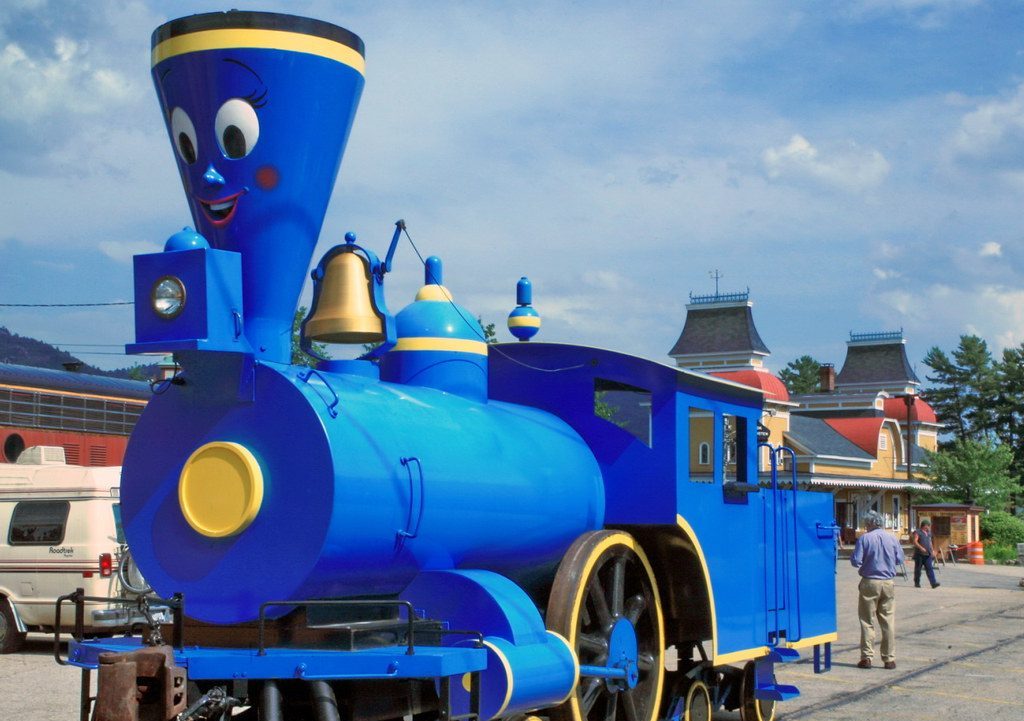
The Little Engine that Could by Watty Piper required my greatest test of will to endure. The book is enjoying its 90th anniversary this year, with a coup of a celebrity endorsement for its reissue: in early April, Dolly Parton chose it as the first book in “Goodnight with Dolly,” her YouTube series of reading bedtime stories during the pandemic. 

We are supposed to take great inspiration from this story, which  began as an American folk tale dating back to the early 20th century. Like John Henry, another industrial-era folk tale, The Little Engine that Could is a story of tremendous, mind-over-matter determination. She is a little engine, not built to haul freight or passengers, but she huffs and puffs “I think I can I think I can I think I can” to pull a train full of dolls and toys over the mountain. 

I am happy for the engine, the dolls and toys, and the “good little girls and boys” on the other side of the mountain, but there is a loose end in this story that reveals a cruel theme underneath it all. It begins not with the little blue engine that could, but a little red engine that couldn’t. 

She is the one who goes “Chug, chug, chug” in the book’s opening line, taking the toys to the foot of the mountain. “She puffed along happily,” Piper writes, 

Then all of a sudden she stopped with a jerk. She simply could not go another inch. She tried and she tried, but her wheels would not turn. 

What were all those good little boys and girls on the other side of the mountain going to do without the jolly toys to play with and the wholesome food to eat? 

“Here comes a shiny new engine,” said the little clown who had jumped out of the train. “Let us ask him to help us.” 

The help they seek is not for the little red engine—to see what is wrong, to repair her—but for themselves, to find a new ride over the mountain. “What are all those good little boys and girls going to do” indeed. They have no toys or food? That line always raises my hackles, because of what the story doesn’t also ask: What is the little red engine going to do? The answer is, we don’t know; as soon as she stops working, despite all she did to get everyone to the foot of the mountain, she vanishes from the story. The implication of this is, we shouldn’t care, either. Once her wheels stop, she’s not worth a second thought. 

Because these stories are about ‘the value of hard work,’ we learn about what kind of work is valued.

I have been the red engine. I have also been the blue engine, but that doesn’t help with the feeling that what we convey to our kids through anthropomorphized train stories like these is the cruel world of work. If a train is just a train, and the story is about riding it, or how it passes by—The Little Train by Lois Lenski, Train by Donald Crews, Train Coming! by Betty Ren Wright—the readers/listeners/viewers can admire its machinery, strength, and speed. But when we get to know the lives of the engines, because the stories are about “the value of hard work,” we learn about what kind of work is valued, how it is valued, and how their performance of this work—and these values—determines their fates. 

For a few examples, Choo Choo by Virginia Lee Burton is about an engine who wants to be seen as “smart,” “fast,” and “beautiful,” but when she tries to achieve this independently and neglects her duties, she becomes “a naughty runaway.” In Tootle by Gertrude Crampton, the spectacled train school teacher “always tells the new locomotives that he will not be angry if they sometimes spill the soup pulling the diner … But they will never, never be good trains unless they get 100 A+ in Staying On the Rails No Matter What.” What happens? Tootle goes off the rails. Thomas (the Tank Engine) & Friends are not friends. They are coworkers, who compete to be seen as “really useful engines” by Sir Topham Hat, fearing the scrap heap if they fail. These stories all have happy endings, of course, but they should begin with the same epigraph from Henry David Thoreau’s Walden: “We do not ride on the railroad; it rides upon us.” 

The Little Engine that Could rankles me the most because in the days of Theo’s train obsession (he is now twelve), I saw myself in the little red engine in two ways. First, I was a part-time community college teacher who, after six interviews, couldn’t manage to get a full-time job. We had moved from Iowa to Michigan for my wife to start a Ph.D. program, and upon arrival my professional wheels had apparently just stopped working. Secondly, my wife spent long days on campus teaching and taking classes, which also meant that I was the primary caretaker for our kids—our daughter Lena was born when Theo was three—and our family’s homemaker. In many ways this was the hardest and most rewarding job I’ve ever had, but it wasn’t honored as “work” in the same way. Socially speaking, making a home is being “out of the workforce.” 

Homemaking, in other words, is not the little blue engine pulling a train over a mountain, a singular act of physical strength that gets cheers from all the dolls and toys. Homemaking is the little red engine getting all the dolls, toys, and wholesome food organized, out the door, on the train, and to the foot of the mountain in the first place, a feat that takes tremendous emotional and physical resources but is not cheered, or even acknowledged, because we don’t have methods or practices of knowing it. Traditional gender roles, of course, have everything to do with this. “There are no yard measures, neatly divided into the fractions of an inch, that one can lay against the qualities of a good mother or the devotion of a daughter, or the fidelity of a sister, or the capacity of a housekeeper,” Virginia Woolf writes in A Room of One’s Own. “They remain even at this moment unclassifiable,” where traditionally male achievements are measured, known, and routinely celebrated. All I had to show for my homemaking was that everything was as it should have been: the house was standing, everyone was still alive, and dinner was almost ready. 

There is a feminist aspect of The Little Engine that Could not to be overlooked: the mentally and physically strong protagonist is a “she.” However, her heroism is honored when she proves herself to be as strong as any of the male freight and passenger engines. Male strength is what we glorify, whether a man or woman demonstrates it; likewise, whether the mom or dad performs it, homemaking and caretaking is invisible. 

If her labor is unknown, why is the little red engine even in The Little Engine that Could? Why not just begin the story with the little blue engine approaching the mountain, facing a challenge, and overcoming it? 

There are a couple possibilities. One has to do with the story’s structure. After the little red engine breaks down, the “shiny new engine” that the dolls and toys flag down tells them that he pulls passenger trains only. Then a freight train denies them help, saying, “I am a very important engine indeed”—too important for toys. Third, a rusty old engine says, “I must rest my weary wheels.” These three denials may provide a central meaning of the book. As a review of the book’s 50th anniversary reissue in The New York Times puts it, “The bigger train, the finer train, the older train—for which read ‘grown-ups’—all spurn the dolls’ pleas (too busy, too superior, too tired—how familiar the litany to a child), leaving it up to the little engine, the alter-ego children can identify with.” 

‘I think I can I think I can I think I can’ is an expression of her determination—and also desperation. She is huffing and puffing for her life.

But I’m not sure I want my own children to identify with the little blue engine. There’s another reason this first, failed engine might be in the book. The brief story of the red engine provides dramatic tension: if she couldn’t do it, it’s possible that the little blue engine can’t do it either. And what if the blue engine fails? She would not have better terms of employment than her little red counterpart. The stakes are the same. If something happens and she is unable to carry the dolls and toys any further, she’d be abandoned, too. “I think I can I think I can I think I can” is an expression of her determination—and also desperation. She is huffing and puffing for her life. 

The most bitter moment in The Little Engine that Could is when they crest the mountaintop. “Hurrah, hurrah,” cheer all the dolls and toys, “the good little boys and girls in the city will be happy because you helped us, kind, Little Blue Engine.” The rewards of her help are not only physical, but also moral: these feelings of kindness, goodness, and happiness are hers to enjoy. The red engine never got a “hurrah, hurrah” for the help she gave, and now, in retrospect, her failure becomes a moral one, too. 

After six years in Michigan, my wife neared the end of her Ph.D. program, and we came to realize we wanted to switch roles: she wanted to be the primary caretaker, at least for the foreseeable future, and I (still) wanted a full-time job. It was my turn to be a little blue engine. I sent out sixteen applications across the country, got one interview in Connecticut, and one temporary full-time job. Hurrah—but my contract was for a year (so only one “hurrah”). We decided it was not enough to relocate us all. I would go alone, and to keep applying for jobs on the tenure track. 

I had been a most-of-the-time dad and homemaker, and I would become a father who came home for one weekend a month. I also would become a husband who had left his wife with two kids to raise, a house to run, and a dissertation to write; she had to be both a red engine and a blue one. This move was the hardest thing I have ever done, professionally and personally, and the hardest thing I ever want to do. 

My two lowest moments were these. The week after I moved to Connecticut, I was driving home from work and got stuck behind a school bus. The bus’s little stop sign blinkered its lights, the doors folded open, and elementary school kids ran out to hug their parents. I missed my family so much I couldn’t bear to watch. For the next stretch of road it was the same scene again and again—oversized, bouncing backpacks, parents taking pictures of their kids—and behind them I wept over the steering wheel. 

The second lowest moment came in March. My dad, in Seattle, had a heart attack. He collapsed at the gym. There was a defibrillator on the wall, and a stranger saved his life. 

I was doing every last thing imaginable in my do-or-die, I-think-I-can-I-think-I-can job search year. 

My spring break was the following week. I had to see him, and I also wanted to see my mom and siblings, all of whom were living through the shock and would now begin the recovery. But I had planned to spend the week with my wife and kids, who were, at that point, in family therapy because of my absence; I was anxious—desperate, really—to spend time with them. My dad told me that he understood, that it was fine not to cancel or shorten my trip to Michigan. But he had died—died!—and was saved. How could I not go see him? I still feel guilty about this. In retrospect, I could have just taken time off of work and made two separate trips, but this didn’t even occur to me. I was doing every last thing imaginable, including perfect attendance as a hard-working employee in my do-or-die, I-think-I-can-I-think-I-can job search year. 

While in Connecticut I sent out 24 applications, and by the end of the year I did feel like a really useful engine. I had three job offers, two of them on the tenure-track, and hurrah, hurrah, I would pull my family over the mountain to Philadelphia. But, as the blue engine, I also felt like a bad father, husband, and son. Emotionally, psychologically, spiritually, the railroad had ridden all over me. 

I have to amend an earlier statement: the little red engine may have heard the dolls and toys cheer “hurrah, hurrah” at some point in her life. We don’t know. The sound of the cheer may have also been different, something like—in my recollection—the dryer click-clicking as it turned in the basement, little Lena kicking on a baby blanket, and Theo talking to himself as he lined up his Thomas & Friends engines on the curvy wooden track. Our cozy, two-bedroom, hardwood-floored, red-brick duplex had a working fireplace. Those long, house-bound afternoons during a midwestern winter, warmed by flickering coals, are among my favorite memories of being a young family. 

Sometimes I could even steal a moment just to watch and listen to it all, partly just amazed that no one and no thing needed my immediate attention. Perhaps there should be a prequel to The Little Engine that Could—call it The Little Engine that Finally Got to Sit Down for a Minute?—that can make this peaceful picture “achievement” enough. 

7 Books About Living Between Languages

Nothing defines the immigrant, mixed-race, or otherwise multicultural experience better than having to navigate between two or more languages. It’s not just about what languages you speak; it’s about how you speak—what accents and dialects you use, what slang words you can throw around on a night out. Language can provide crucial insight into how a community or relationship functions; at the same time, it can be the very thing that marks you as “different.” 

“Lost in translation” has long become a trope. But in our rapidly globalizing world, perhaps it’s time to turn the cliché on its head and ask: what is found in translation? How can we value translating—the state of being suspended and traveling between multiple landscapes, headspaces, and languages—as its own entity? What can we learn from the boundaries of language, and how do we blur those lines? Ultimately, the issues of translation and language point to an overarching question about the human condition: can we ever truly understand one another? Here are seven books that explore the limits of language—from playful to poignant, each has a unique take on what it means to live in (or between) multiple languages and continents.

99 Nights in Logar by Jamil Jan Kochai

99 Nights in Logar by Jamil Jan Kochai

In Kochai’s debut novel, twelve-year-old Marwand, who has grown up in the U.S., returns with his family to their hometown in Logar, Afghanistan. Kochai’s prose is scattered throughout with various dialects and languages, such as Farsi and Pashto, some of which are left untranslated. Through Marwand’s eyes—and headspace of fluctuating languages—Kochai concocts a tale that is both a youthful adventure and a heart-wrenching look at Afghanistan’s war-torn history. 

A Concise Chinese-English Dictionary for Lovers by Xiaolu Guo

A Concise Chinese-English Dictionary for Lovers by Xiaolu Guo 

Zhuang, or “Z,” is a young woman from rural China who has just moved to London for her studies. She falls rapidly into a relationship with an older British bachelor, and is thus inspired to write her own “Chinese-English Dictionary for Lovers.” Guo’s book, formatted as Z’s diary entries, begins each chapter with a new English word that Z has learned. While Z’s English grammar and vocabulary improve throughout the course of the novel, Z learns that speaking the same language as your lover does not always lead to better understanding. 

Stubborn Archivist by Yara Rodrigues Fowler

A young British Brazilian woman’s navigation of her mixed identity, Fowler’s debut novel merges poetry and prose, Portuguese and English, oral and written traditions. Fowler’s nonlinear narrative follows her narrator through her adolescence in South London, interspersed with trips back to Brazil, her mother’s homeland. The narrator—indeed a stubborn archivist—looks for, excavates, and grapples with her family heritage, while trying to gain a better understanding of her own body and dual cultures. 

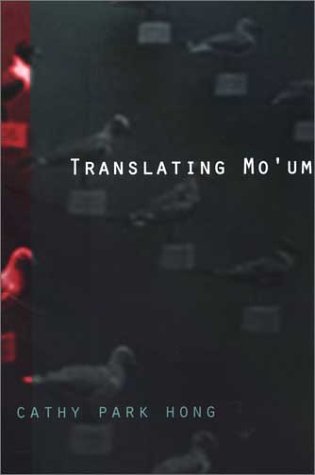
Translating Mo’um by Cathy Park Hong

This debut collection of poetry is a searing reflection on language as a visceral experience, contorting both English and Korean. Hong writes, “The mute girl with the baboon’s face unlearned / her vowels and cycled across a rugged phonestic map.” The phonetic map created in this collection travels through many eras and places—ranging from an immigrant family’s home in the U.S., the Chos’on Dynasty, New York streets, and 1800s London. Throughout, Hong rejects sentimentality and explicitly calls out Oriental fetishism; she emerges with a fragmented, multilingual exploration of Korean American identity. 

The Idiot by Elif Batuman

The Idiot by Elif Batuman

No reading list about the limits of language would be complete without The Idiot. In Batuman’s bestseller, Selin, a Turkish American student at Harvard, becomes obsessed with what we can and cannot convey through language. Through a series of cryptic emails, Selin falls in love with a boy from her Russian class during her freshman year. He convinces her to teach English abroad in his home country, Hungary, for the summer. Sprinkled with eccentric Russian textbooks and semiotic lectures, Selin’s coming-of-age story inextricably connects first love with linguistics.  

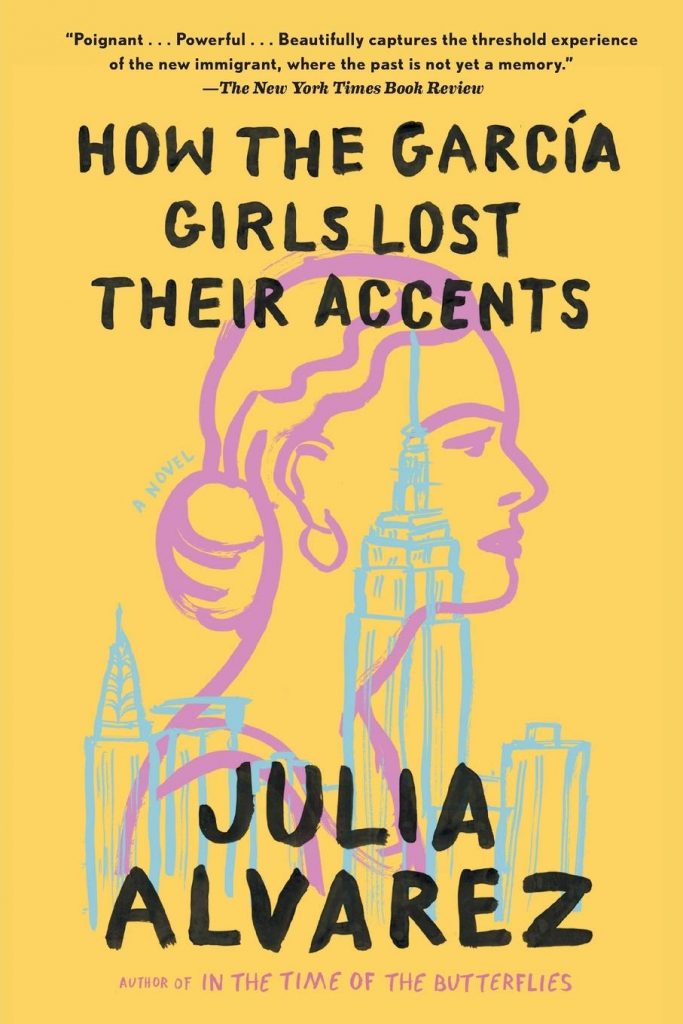
How the García Girls Lost Their Accents by Julia Alvarez

Alvarez’s debut novel tells the story of the four García sisters in reverse chronology and shifting perspectives, as they immigrate from the Dominican Republic to the U.S. Their attempt to assimilate into American society is deeply connected to language; for example, Yolanda García tries to “perfect” her English as a way to form a new identity. As the sisters navigate religion, tradition, and sexuality, Alvarez raises thought-provoking points about the globalization of English, and the cultural capital that it holds.

In Other Words| Penguin Random House Higher Education

In Other Words by Jhumpa Lahiri, translated by Ann Goldstein

A series of personal essays entirely in Italian certainly wasn’t the next work expected from Jhumpa Lahiri, a prizewinning author of Anglophone novels. Lahiri traces the journey of her love affair with Italian, beginning with a pocket-sized dictionary and resulting in a cross-continental move to Rome with her entire family. She not only documents the exhausting process of learning a new language, but also reflects on the linguistic tensions of being an immigrant, growing up in a Bengali-speaking household in the U.S. “No one, anywhere, assumes that I speak the languages that are a part of me,” Lahiri writes. Finding a new voice takes on a new meaning, in her memoir that is formatted in both Italian and English.

Before and After She Fell Down the Stairs

“Moments Earlier”
by Kate Doyle

Kelly lands in a heap when she falls down the stairs—she falls half a flight at least, hits the entryway tile. 

Daniel says he can’t remember screaming. Owen tells him that he did scream, a shout that echoed in the stairwell. 

Owen, for his part, keeps his cool. He always tries to be the sort of person who can do this, remain composed, unflappable. Owen is someone who would coolly say to someone else, in the hours after she flew back from Greece, in the moments before she fell down his stairs, “Do you think posting so many photos affected your ability to actually experience Athens? Didn’t you feel not entirely present? Is it okay to ask you that?” 

“Ask me anything,” Kelly told him—affectionate but also like try me. She sipped water from a coffee mug (it was all they’d had to offer her) and leaned against the fridge, her suitcase in the corner. Daniel was looking for his wallet. Owen was picturing a photo he’d seen on the internet: Kelly at the Parthenon, arms thrown wide in sheer delight. On the fridge behind her, postcards she’d sent them were taped up next to Daniel’s teaching schedule, plus a photo from college at an off-campus bar, Ria and Kelly’s shared birthday party, the four of them all drunk and hugging.

Kelly put down the mug and started putting on her lipstick. She said, “Will Ria be extremely mad we’re late?” Owen said, “No question,” and Kelly laughed and said, “Oh well, I’ll text her.” Daniel ran his hands through his hair—he needed a haircut, Owen thought. “Did I have my wallet when we left the laundromat?” Daniel was saying, and he started lifting up the couch cushions. Owen said he can’t remember, sorry, and then he said to Kelly, “What?” “Nothing,” Kelly told him. “Just, I’m glad to be here.” Owen felt restless then; he stuffed his hands into his pockets. “Hey Daniel?” he said. “Listen, I’ll spot you, we’re really very late.” 

It was unkind, what he said about her photos—that’s what Owen remembers thinking as they went into the hall, as they went down the stairs. He regretted having said it, he felt suddenly queasy. He decided that later, he’d say he was sorry. They were on their way to meet Ria downtown. The four them would have a drink, they would trade strong opinions about where to go to dinner, this was the plan: a reunion. All week Kelly had been emailing, Can’t wait : ) and, How has it been six whole months! and, See you very very soon, etc.

Then Kelly fell. Then Daniel screamed. Now Owen is calling an ambulance, looking down at Daniel bent over her, Daniel telling her, “Don’t worry you’ll be fine.” Can she even hear him? The dispatcher says to Owen, “Sir, it’s critical she doesn’t move.” It doesn’t seem to him this needs ensuring; she’s lying very still. Daniel’s frantic, his fingers pressed to Kelly’s wrist, her neck. “Age,” says the dispatcher, and Owen says, “Um, um, twenty-two?”

The EMTs arrive, they say Owen and Daniel should come to the hospital. They say cardiac episode, though Owen thought she only lost her footing when, below him on the stairs, she dropped away. Instinctively he reached for her, succeeded in catching briefly at the shoulder of her coat. Afterward, inanely, he keeps thinking: almost. From the hospital waiting room, pressing his forehead to the glass of a window, watching car headlights swim past below, he calls Ria. She picks up, annoyed. “Are you just ignoring my texts? This is late even by your standards.” And he tells her. “Wait,” she says. “Wait please slow down.” He says, “Come here, you need to come here. We called her parents—they’re getting on a plane, somehow. I mean they’re coming.” 

Ria shows up at the waiting room thirty minutes later, still dressed for dinner—heels, blazer. “Oh no,” she says. “Look at you, both of you.” Daniel starts crying. Owen says, “Um so, they’re telling us brain damage, maybe her brain is damaged. Not from the fall, from this cardiac episode, from loss of air to, well, but they say that there’s no way to know until she wakes up.” Ria is taking off her scarf. She says, “But then falling down the stairs, what about that?” Owen says, “We don’t know. They don’t know. They’ve got her in this coma—induced, no, maintained—they’re watching her. They have her in a kind of cooling bed, and they said it’s what you do, um, when you’re worried about a brain, because scientifically, it’s that near-victims of drowning, they apparently have better outcomes when it happens in cold water.” 

Daniel takes a wavering breath. He fiddles with the zipper on his jacket. He says, “She’ll be in that for twelve hours, in this deep freeze, then they’ll bring her out of it, and then.” Owen says, “No actually, not a deep freeze. Not freezing: cooling.” Daniel says, “Oh, true, that may be the wrong term.” He scratches vaguely at his ear as Owen says, “It is, yeah, it’s wrong.” 

Ria presses both her hands together, draws them to her throat. “Okay,” she says. “Well, we can’t think about this, not until we know more. Right?” A flicker of panic moves over her face, but then she gives them each a perfunctory hug and says, “Have you eaten? I haven’t eaten.” And she goes and buys three bags of cheesy popcorn from a pair of snack machines across the room. So they end up sitting in blue vinyl chairs, quiet, chewing, their fingers accumulating pale cheese film. Ria brushes crumbs from her coat, her hands sort of shaking. She says, “I’m trying to understand, could fright in the moment of falling lead to a cardiac incident? Or would it only ever be cardiac incident first?” Owen says, “It must be genetic, her grandmother, remember that story?” Daniel has his head down on his knees, has laced his fingers over the back of his neck. Then Ria says, “Think of the odds. After all those months traveling, of all places she’s standing on your stairs.” But Daniel lifts his head and says: “I don’t think we should pursue this kind of thinking, I don’t feel that we should do that.” 

Then comes another call from Kelly’s parents, and Owen unfolds out of his chair, pacing in front of Daniel and Ria, nodding and nodding his head, feeling himself becoming glazed and disoriented. Her parents are getting on a plane from LAX to JFK. An aunt, who lives in Gramercy, is on her way to the hospital.  This aunt has Owen’s phone number, as does Kelly’s brother who will stay in California, and Owen should keep these two updated while her parents are in flight. 

“I will, I will,” he tells them, but then can’t find what to say next, so he lets Ria take the phone. Daniel pats the chair beside him; Owen sits. Ria is saying to Kelly’s father, “The three of us are here, Daniel and Owen and me, and when you get here, we will be here, I promise, and we’ll find your sister, too.” Ria hangs up; she frowns, gives a brief twist of her head like an animal shaking off water. She says in a very small voice, “Now they have to shut off their phones. Can you imagine?” 

A feeling of confinement comes over Owen then, stealthy and crushing—he’d like to be out of this room, be somewhere else, alone. But Daniel beats him to it: running his hands through his hair again, bringing them down over his temples, looking from Owen to Ria, Ria to Owen. He says, “I maybe just need to go for a walk. I think I have to walk around, would that be okay?” He bounces a little on the balls of his feet. He’s always had this instinct, this nervous energy. It gets under Owen’s skin; it always has. Studying, in college, Daniel would pace the hallways of their freshman dorm, habitually roving, French vocabulary flashcards in hand. Murmuring “Je voudrais un café” and whatever, intermittently appearing in the open doorways to the room Daniel shared with Owen and, across the hall, the one that Ria shared with Kelly. 

They would listen to his approach, his muttered French verb conjugations, then listen to him fade away. Whereas Ria did her homework in the library—usually completed in the precise amount of time she’d allotted—and Owen might go hours without moving from the place on his bed where he liked to sit and read, his back against the cinderblock wall. Kelly, for her part, sat on the floor, her novels and notes spread around her. With both their doors propped open, Owen could see Kelly from where he sat, and they’d wave at each other, a well-worn joke. Kelly had to shield her eyes at certain times of day to see him, because of the way the light came in behind him through the window. “That,” she said once, “plus your general personal radiance,” and Owen rolled his eyes. 

Now, he says abruptly, to Daniel and to Ria, “Do you know, earlier tonight, I was criticizing her social media feed? I mean what the fuck is honestly actually wrong with me?” He stands suddenly, as Daniel looks away and balls his fists, but Ria says, with an adamant, desperate waving of both hands, “No, stop. Because maybe she is going to be fine, so you don’t have to, like, let’s not. Okay?” 

She looks from one of them to the other. Daniel says, “Look I can’t sit here like this. I’m going to go. I’m going to go walk around.” He gets up, the sliding doors part for him as he leaves. Ria watches him until the doors seal up again behind him, and then she looks back at Owen, almost dazed, as if she’s only now remembering she knows him. 

“What story?” Ria says, and it takes him a moment to realize what she’s asking. “Oh,” he says, “Kelly’s grandmother, you remember.” But Ria only looks at him. “I never heard it,” she says, “I don’t know what you mean.” 

Years earlier, when Kelly told Owen this story, she was writing about it for freshman comp, a required course. The two of them were in the same section, Tuesdays and Thursday at noon. “The horror,” he remembered Kelly would say darkly, anytime someone mentioned the class, which both of them detested. All semester she would cross the hall to lean against his doorway and read, with indignant relish, the most extremely boring sections of the Academic Writing textbook. Then she’d flutter the pages of that week’s reading and say, “Can you believe they get to make us do this?” It made Owen jumpy and impatient, the way Kelly liked to talk. The way she sometimes said things, just to hear the way they sounded. “Look,” he said, “I dislike the class too, but yes it is credible to me we’re required to take it.” Kelly exhaled; she covered her face with the book. She said, “But Owen I can’t do it. I just can’t.”

One week they were assigned to write on the subject of “family.” It was the only assignment of interest to either of them. “My grandmother died very young,” Kelly told him, her voice unusually measured. She was sitting on his floor in a white square of sunlight, her back against Daniel’s desk. She’d lost her computer charger somewhere on campus, it could not be recovered, so if Ria was out then Kelly would cross the hall to charge off one of theirs. She said, “I’m writing about this more from an imaginative position, like what would have happened if she’d lived, how life might have been different than it turned out. Because I did think that was interesting, what the TA said—about how it can be as truthful if you tell what might have happened, as it is to tell what did. More so, maybe, even. I mean I know you don’t like that TA, but.” 

Branches shifted in the window, their shadows moved along the floor, and from somewhere out on the quad a strange noise rose up. Owen couldn’t identify it, but right away it faded. He wasn’t sure what to say then, so he asked her, “Which grandmother?” “Oh,” Kelly said, “My father’s mother. My father was six, and if you can believe this, he was in the car. My grandmother drove their car off the road, and she died. But my father was fine. Of course, it was 1965, there was no autopsy, they’ll never know the reason. And there are times I’ve asked my father, don’t you want to figure out what happened here? But he says no. I think, you know, he feels he shouldn’t be affected, because all this time has passed. I mean this happened to my father when he was six, but here he is always saying: My sister has had a very hard life. My sister lost her mother at the age of two.” 

Kelly seemed to take interest in the tops of her knees then, which were bent to her chest. It must have been spring, the window behind her was open. Owen said, “That’s really, I mean,” and clicked his pen a few times over. Kelly looked up; he was sitting there with a draft of his essay open on his lap. She said, “My father doesn’t know that it’s okay to grieve for things that might have been. Anyway, what about you though? Are you still writing yours about your cat?” 

He felt uneasy, he had an impulse to sit next to her. He said, “Uh, now I’m not. Now that idea is sounding really kind of stupid. Thanks for coming over here, and taking our electricity, and putting things in horrible perspective.”

Kelly laughed as she reached to unplug her laptop. He thought she was going to say more, but instead they both heard Daniel intoning vocabulary down the hall—“La gare, le billet, se dépêcher”—and maybe those were Ria’s footsteps on the stairs. Owen looked out the window; in the wind the branches moved like waves. Anyway, Kelly was saying, “Thanks for the charge. I think this will be enough to tide me over.” Then Ria came around the corner—she was standing in his doorway, alert, her smile fading. She seemed to react to something in the air. What did she see in both their faces to make her ask: “What happened here?” 


In the years after the night Kelly falls down the stairs, only Ria keeps on living in New York. “I like my job so much,” she insists to Owen. “So I’m fine.” 

Daniel moves to Utah. He seems to feel the same as Owen, like he needs to make a change. He starts teaching high school French and—he tells Ria, who tells Owen—he takes up hiking in a serious way, he just wants to walk and walk. 

Owen relocates to DC. He takes this internship, then a PR job that turns out be okay. He gets into yoga, indoor rock-climbing, half-marathons; he goes running for miles along the Potomac. Then one day, when he’s been living there a couple years, he takes out his phone and starts reading, compulsively, his whole email history with Kelly. 

“Well, I bet that’s pretty normal,” Ria tells him. They try to catch up when they can on the phone. He gets bad cell reception at his place, so he sits on the building’s front stoop while they talk, as people go past him running, or on bicycles, with strollers and dogs, in fading light. 

“I think I disagree,” Owen tells her. “It doesn’t feel normal. I’m not so sure it’s healthy.” He tells Ria it’s unplanned, it just happens, but often: waiting for toast in the morning, or just having taken a shower, or walking from the elevator to his desk. He’ll just search Kelly’s name in his phone and start perusing, lose all track of time, the toast going cold, work emails left unopened, whatever. “It feels out of my control,” he tells Ria. “It makes me feel crazy.” “Well, no, I’m certain that it’s normal,” she insists, and he can hear the New York street noise in the background: clamorous voices, the growl of traffic, an MTA announcement as Ria descends into a subway station. She seems only to call him if she’s walking from one place to another, when she needs to fill the time. 

For several months that year Owen dates this med student, Natalie. He likes her; he isn’t sure why he goes and tells her everything he does, in so much detail. “I’ve heard of it,” Natalie says when he blurts some of this out, about Kelly, one night over dinner at Natalie’s apartment—he’s brought wine and she made pasta. “Congenital,” Natalie says. “Usually, there’s family history, right?” 

He says, “I have always felt guilty, to be honest. I was the one behind her on the stairs. Later, I found out I was the only one of us who knew this thing about her grandmother. Not that it changes anything, but. I always felt sort of responsible for her—well no that’s not the word. I felt, I don’t know what. I’m sorry, do you want another glass?” Natalie says, “Yes, sure, I’ll have another.” She reaches to take his hand, but it only makes him feel numb, and he wonders should he change the subject. The next day he deletes some emails, an effort to be present, stop dwelling, but then he arrives at this one that he really likes, with its total exuberance—Hello look at this photo, isn’t Sweden BEAUTIFUL, I’m never leaving—and he decides he won’t delete them after all. 

In the months when he was first receiving Kelly’s emails, they had just graduated from college, and she had begun her trip through Europe. The rest of them were brand-new transplants to New York—he and Daniel rented a U-Haul in June to move their things from Massachusetts. In September, Ria moved into a place downtown and started coding software for a startup, whose cutesy name Daniel and Owen mocked gently behind her back. Daniel was in his first semester of a PhD in French. Owen was tutoring to supplement, in theory, his freelance writing. And Kelly was sending them all these group emails, Hello from Copenhagen, Normandy, Berlin, etc, and mailing them postcards they taped to the fridge. All of this is strange now to remember. Owen and Daniel shared a one-bedroom far uptown—they were trying to save on rent—so Owen would email her back from his futon bed in the living room, his laptop open on his stomach, while Daniel paced a short loop from the front door into his room and back again, making notes in the margins of books or grading quizzes. 

Owen wrote, You will be glad to know the change in location has changed Daniel not at all. Kelly wrote back, Sigh of relief! She added, Stop being so gloomy in your emails, you can stop hinting how it’s going to be. Europe is beautiful, everyone I meet is wonderful. Let me have this before I join you in a lifetime of English-major underemployment. I’m totally realistic about my prospects and expect to spend my life inhabiting a series of increasingly expensive couches belonging to Ria. You can tell her I said so, xox. 

When he read this aloud off his phone in a dark East Village bar, Ria laughed and put her hands over her face. Daniel polished off his beer and said, “Too true. Ria makes much more money than any of us.” She elbowed him, he pretended to be injured. It was November, and Kelly was in Dublin. Her latest email described Trinity College, the Book of Kells, a bridge over the Liffey that she particularly liked. Owen said, “I miss her,” but it didn’t seem like either of them heard him. Ria was finishing her drink, Daniel waving down the bartender, joking that Ria would have to pay for the next round to make up for his bruised rib, seeing as she could afford it. 

Outside, an early snow was falling thinly on the sidewalks. Owen had not expected to feel Kelly’s absence on nights like this: the three of them without her in New York. When she first announced her plan to go away and travel, over Chinese takeout senior year, it had been a curious, small relief, and Owen left the feeling unexamined. Instead he’d stirred his noodles in their paper takeout box and listened to her chat, rhapsodic, about the profound and ancient beauty of the Greek language. All through college he would have said there was this space between him and Kelly—so much of what she said to him seemed inexcusably frivolous. “Proust,” she once told him appreciatively, from across a table in the library, “just knows how to write such a beautiful sentence.” She thumbed at the pages; they made a zippering sound on her skin. He stayed quiet and did not suggest that this was no observation of staggering insight. 

That was senior year, back when the four of them could spend whole Sundays around a table in the library, a little hungover from whatever party they’d been at the night before. He still recalls one morning, cold and bright, Kelly lifting her sunglasses away from her face on the library steps. “I just want to be enthusiastic and express how I love library Sundays,” she said. “I love them extravagantly and with abandon. I wish they didn’t have to end in May.” Owen, freezing, hugged his coat closer. He said, “Sure, agreed. Are we going inside?” Another time, at an after-party for a play that Kelly starred in, he recalled her dancing across the room to the place where he was leaning, ill at ease, against the wall. “I’m having so much fun,” she said, and he was possessed by a bottled feeling, like this moment was passing him by; he could not find the words to answer her. 

He wished he understood her better, he wanted to. He and Daniel were a solid match, the kind of roommates who could pass hours in the dorm in easy silence. Owen liked the way, if they ran into each other in another part of campus, Daniel brightened visibly. Then Ria was this intent, productive presence—she had, Daniel said once, an actually terrifying administrative drive. She would come home from class, from jazz ensemble, from her internship, she’d put down her bag and propose they all go to dinner now, or they should come with her to X lecture or Y film screening tonight, it was going to be excellent. Ria was the one who’d molded them all into a shabby, sudden whole, appearing in their doorway hours after move-in freshman year to ask would they like to go with her and her delightful new roommate to the ice cream social? Her dark hair was pulled back from her face, the roommate behind her wore a yellow shirt. They had honestly been thinking they might not even go, it sounded stupid, but Daniel said, “Why not, we’ll come along.” Owen remembered Kelly, the invoked roommate, sort of in the background, smiling too much.

Of course he always cared for her, it was just that something changed—once Kelly was traveling he depended on her emails in a way Daniel and Ria seemed not too. “Well sure,” Ria tells him on one of their phone calls, and in the background a car honks, someone starts shouting. Ria says, “I mean that much was clear. And so what? So you were always hard on her. Like what can you do? Be kinder to yourself.” Of late, Owen’s mostly been reading and re-reading one email from Kelly’s first week away: Dear O, Hi from Paris! Hard to believe you’ve now written back a third time. Don’t take this the wrong way, but it’s thrilling to see you break character. I’m flattered, though should note we’re in danger of establishing a healthy pattern here. What did I do to provoke this—or does it have nothing to do with me? Is real life agreeing with you, softening your edges? Or is real life just the worst, and you’re pining for the past? 

He remembered lying on his back on the futon, as he read it for the first time. Daniel was at the kitchen counter eating cereal, formulating a shared grocery list out loud. The light through the room’s single window streaked into the room, over Owen’s shoulder and on to the floor. His cursor blinked feverishly in the corner of a fresh email, re: What have you done with Owen. Daniel was saying they were out of paper towels—“Oh and orange juice,” he said. “Is that it? Anything else you need?” 

“No,” said Owen, “No nothing else, totally set, thanks.” To Kelly, he typed: Dearest K, No comment

All these things he says to Natalie in these months—over the course of so many dinners at her place, breakfasts at his, long runs together, and movie dates, and drinks in bars—it feels good to tell her, a kind of offloading sensation that both frightens and relieves him. Like something opens in his chest and the contents slide away. How after Kelly fell, after the hospital, after the funeral and everything, Owen and Daniel had arguments, raging fights about nothing: unwashed dishes, expired whatever in the fridge. How it had never been that way with them, how they started going crazy over old things from college, stuff they’d never talked about, things that hadn’t seemed to matter at the time. How Daniel started staying at his office later and later, even sleeping there some nights. How when their lease was up they said it might improve things if they lived apart. How Owen made the excuse that he was sick of the futon—he said a year was about as much as he could do, living that way. They moved out, Daniel went home to his parents’ in Boston, saying it would just be for the summer, he’d see them in the fall. And Owen lived on Ria’s couch for those three months. “We drank way too much,” he tells Natalie, who looks troubled but puts her hand on his. He says, “Just me and Ria at home, or we’d go walking blocks and blocks around New York at night. It was terrible, we didn’t know what to do with ourselves, we were always crying. I remember Ria would say, ‘We just can’t think about it, we just have to find things to do with our time.’ She called Daniel almost every day, but I never did. She’d sit on the fire escape and talk with the window closed. And then instead of coming back to the city Daniel takes this high school teaching job, he tells us he’s going on leave from the PhD. He says he just has to process things alone, he’ll just do this for one year and then he’ll be back, he promises. He came to the city once more before he moved out west, I think it was August, the three of us had a drink. Margaritas, on some rooftop, awful. We tried to talk about her, about what happened, but it was like, I don’t know. I remember Ria said, ‘Okay enough, let’s get the check, I can’t, I want to go home.’ I remember hugging Daniel, I said, ‘Good luck and let us know how you are there,’ and he said, ‘Definitely I will.’ But actually we don’t keep up at all, it’s only Ria who’s in touch with him, and rarely to be honest.” 

The night he says all this to Natalie, they’re walking to a restaurant for dinner. They meet up when she finishes class, she comes out of the front door buttoning her jacket, putting papers in her bag. She kisses him hello, her hand on the side of his face, and they go for a drink at a bar down the block, catch up about her day. Then she is talking about anatomy lab, and out of nowhere he is saying all of this. “Let’s walk,” Natalie says, “let’s walk to dinner.” She grasps his arm and then lets go. The light is all but faded as they come to Dupont Circle, the windows have a dusky shine, cars in the roundabout whirl violently, and he wishes Natalie would take his hand again, he has the impulse to reach for her himself, press the bones of her wrist, the length of her fingers. Instead he stuffs his hands down in the pockets of his coat and wishes for another way things might have been. He feels sorry for getting into this at all, and when they pause at a crosswalk he can feel Natalie look over at him—curious, gentle, just a little alarmed. In the dark, his face warms. 

He has never forgotten all those sensors, wires, taped to Kelly’s face. Taking the pulse of her brain. It was a smaller room than you’d expect, the lights off, everything sort of purple. The better to get at her forehead, someone had gathered her long hair away, piled in a twirl on the pillow, like dry seaweed strewn on a beach. 

He and Daniel and Ria stood there, shoulder to shoulder. Early hours of the morning, pre-dawn, her parents had arrived, and somewhere they were off conferring hopefully with doctors. It would be another hour before they tried to wake her, but a nurse came to check on all the charts and screens and fluid bags, and he said it was perfectly all right to take her hand if they would like to do that. 

In Owen’s memory, Ria straightens up, as though it’s clear she must go first. The hand sanitizer, in the corner, is automatic, it gurgles when she puts her palms out. Then she goes and links her hand in Kelly’s, looking stiff and anxious, her eyes fixed down. Daniel hesitates, then he goes to the hand sanitizer too. The machine growls briefly, and when Daniel turns back he meets Owen’s gaze, gives a small choked cough, and nearly laughs. Bleakly, Owen tries to smile, but Daniel looks away. The last time they are all four together in one place. Owen is bewildered, he takes Daniel by the elbow, knowing this is helping nothing. Ria takes a long unsteady breath, she lets go of Kelly’s hand, she lets it stay there on the blanket, her own hand hovering above it. “I don’t know what to do,” she says, in a voice that’s rising, verging panicked. She puts her hand up to her forehead, says, “I think maybe we should go now, should we go now, do you think?” She looks at Daniel, looks at Owen, like one of them is meant to tell her what to do. And then Owen can feel something between all of them, coming undone. Neither he nor Daniel answers, and everything is quiet, there is only this repeating beep, beep, beep, as Natalie turns in the crosswalk with an inscrutable expression. The crossing light flashes, Owen stands at the curb, his heart is racing. “Are you coming?” Natalie says, and puts out her hand. The dry leaves turn over in the wind, and over and over.

There Has Never Been a Better Time to Read Ursula Le Guin’s “Earthsea” Books

It didn’t start with George Floyd, but his death was the shock that brought thousands of heroic Black people from out of pandemic lockdown to fight back against systemic forces of death. The moment felt supernatural, like a scene from an Ursula K. Le Guin fantasy novel.

Le Guin, who passed in 2018, was a brilliant science fiction and fantasy writer who built entire worlds based on concepts of Taoism, feminism, and transformation. She loved color and trees, but mostly she loved subversive ideas.

Though the city backdrop of most high-profile protests is at odds with Le Guin’s lush settings, this moment in 2020 feels like something she might have imagined: Black and brown people banding together to uproot an inequitable system built by hordes of pale brutes. And then, as if by magic–just like the penultimate scene in one of her final books–a coalition of people of all hues and ideologies unite to rework society in the name of equilibrium. One thing that remains true, both in her vision and in our world, is that this magic originates with Black people.

That’s the brilliance of Le Guin’s Earthsea Cycle, one of the first fantasy series to cast dark-skinned people in protagonist roles. Normally, each autumn I immerse myself in all six of the books, but with the rise of a new Civil Rights movement, I’m moving that schedule up to summer, and I think now is the perfect time for everyone else to follow suit.

I stumbled upon A Wizard of Earthsea, the first book in the cycle, as a twelve-year-old. Bored with the Agatha Christie mystery my class was reading—And Then There Were None—I decided to skip through my literature book instead. Turning past pages of characters who had nothing in common with me, I settled into a cozy yet rustically sparse yarn about an adventurous adolescent who calls and commands hawks and apparitions of mist with equal aplomb. Using these gifts, he saves his home from “a savage people, white-skinned, yellow-haired, and fierce,” who liked “the sight of blood and the smell of burning villages.” 

Reading that line filled me with dread; the bad guys in this book were like the bad guys in my own life. I was the only Black kid at an all white school, and my classmates’ monolithic disregard for my being was appalling. But in this story was an unremarked-upon truth that I thought no one else knew: being white did not make you virtuous. Everything else I read at school taught me that being Black made me inferior. With A Wizard of Earthsea, I was more than equal. People who looked like me were not only the majority, they were the heroes. 

Everything else I read at school taught me that being Black made me inferior. With A Wizard of Earthsea, I was more than equal.

Sure, I’d read a couple of stories with Black superheroes before—Black Panther and Luke Cage—but their compressed, one-and-done storylines left me wanting more. With Earthsea, my brain was satiated by complicated concepts that extended beyond 24 pages. 

I spent the remainder of that day reading the book, ignoring every other lesson, even skipping P.E. and lunch until I’d made my way through all 200 pages. Whenever my teacher called on me, I replied without caring whether I was correct or not, so long as I was able to return to my adventure. In Earthsea I met a boy who receives his true name (Ged), rejects patience, is scarred and humbled yet grows up to slay a dragon, and finally embraces the shadowy aspects of his soul. 

I marveled that during these adventures, the writing refused to equate evil with blackness, even when Ged worked forbidden necromancy. “Evil” in Earthsea was abusing the world’s natural order. Yes, magic allowed one to summon rainstorms, but that water had to be taken from somewhere else; cause and effect with a dash of chaos theory.

Ged is responsible for the evil that occurs in the first book, when in an act of youthful boasting, he opens a portal to the land of the dead. What comes out is a shadowy, substanceless unbeing. The only way for it to continue to exist is by consuming his life force; Ged gave the world his shadow and now it will take over his entire being. This shadow pursues him across the world, becoming more distinct, and looking more like Ged anytime they come into contact. This unbalanced attempt to consume life manifests in different forms as the great evil in almost all of the Earthsea books.  

In Earthsea, the villains are not Black—but the protagonist is.

Contrast that with the dark—and frankly, racist—orcs of Tolkien’s tomes or any other de facto black evil. The elder gods who collapse the temple in the cycle’s second book, The Tombs of Atuan, or the vacuum that is devouring the world’s magic in the third book, The Farthest Shore, are bad because they take without giving anything in return and because they want to eliminate Ged. They are neither dark sorcerers, savage ethnics, nor brutal simians out to overthrow the white man. In Earthsea, the villains are not Black—but the protagonist is. This iconoclastic vision of who was allowed to be the hero did more to bolster my self esteem as a child than any prize I ever won. 

Le Guin was clear that the colorism in her work was a well-crafted decision. Her oft-cited essay on the matter from Slate is too delicious not to quote: 

My color scheme was conscious and deliberate from the start. I didn’t see why everybody in science fiction had to be a honky named Bob or Joe or Bill. I didn’t see why everybody in heroic fantasy had to be white (and why all the leading women had “violet eyes”). It didn’t even make sense. Whites are a minority on Earth now—why wouldn’t they still be either a minority, or just swallowed up in the larger colored gene pool, in the future?

In this same essay she dropped the mic on assumed privilege in our country: 

I think it is possible that some readers never even notice what color the people in the story are. Don’t notice, don’t care. Whites of course have the privilege of not caring, of being “colorblind.” Nobody else does.

The daughter of two prominent anthropologists, she began the Earthsea books in 1968 because her publisher wanted something that would sell to adventure-minded boys. Using the books, she built a world with solid rules that evolved and shifted to bring on new considerations. The Black majority of Earthsea weren’t pious characters concerned with respectability politics. Like Ged, they were allowed to be selfish, complicated, and beautifully disastrous. The antagonistic white savages from the Kargad Empire turned out to have their own equally developed system of beliefs. Neither side was perfect, but the Black majority led the story.

All of this came out over the span of 33 years as Le Guin dug deeper into Earthsea’s culture to comment on our own. Without starting over, or burning everything down, she used her final book to remake the system that readers thought they understood. Centuries before—according to Earthsea lore—the Black people used their magic to colonize the realm of dragons in order to create an afterlife. “The Dry Land” meant that Black people could exist even after death, but without any purpose. The white people rejected this system, banned magic, and reincarnated after they died. The dragons were pissed off and eager to reclaim their stolen dominion, while the dead wanted to end their eternal existence and rejoin the cycle of life. In The Other Wind all four sides unite to dissolve the Dry Land and create a re-balanced system.

The Earthsea cycle offers a world where the Black people who are at the center learn to expand their circle in order to construct a new social compact.

As fantastical as this is, the idea of giving up something as valuable as life after death in order to bring the world into balance can offer us a model as we reimagine a world without police. Like the Dry Land, the police force is founded on injustice and exists to perpetuate injustice—it protects white people at the expense of Black lives, as the Dry Land protects Black lives at the expense of everyone else. Pre-Civil War slave patrols transformed into a constabulary that enforced Jim Crow. Our country eventually passed legislation to abolish discrimination but without properly recreating the system. Previous injustices—like the idea that Black lives matter only three fifths as much—will continue to be reinforced in idea and practice until the institution that arose from them is dissolved. 

Emmett Till, Rodney King, Tamir Rice, Eric Garner, Breonna Taylor, George Floyd, Tony McDade, and too many others to name: their lost lives are proof that our system does not work. The Earthsea cycle offers a world where the Black people who are at the center learn to expand their circle in order to construct a new social compact.

To white protestors and accomplices, who say that they want to listen but are fearful of giving up some power so that we can all heal, I suggest you read the Earthsea cycle. You will need to learn to step away from the center to build a new world, and the Black majority in this fantasy series offers a better model than any white history. I encourage Black people to read Earthsea too, if only to remind yourselves that once upon a time a white woman in Portland saw us, recognized us as beautiful, and built an entire world where we had the privilege to decide that we could share our power.

Let’s make our new reality an even better world than Le Guin’s.