10 Books Set in Museums

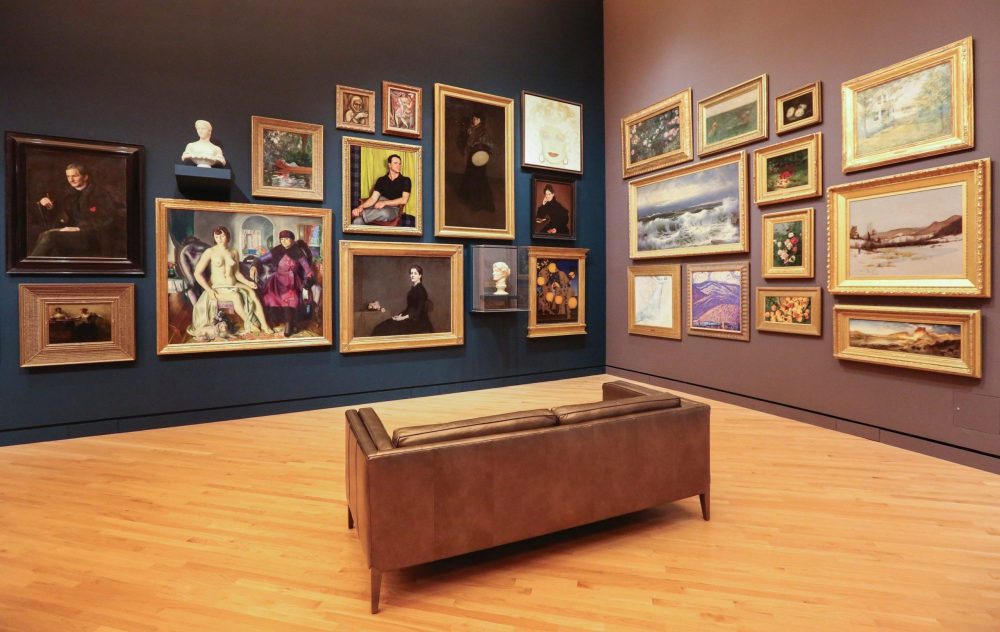
Museums are a lot like libraries and bookstores: quiet, contemplative spaces filled with wondrous objects that can light up your imagination and transport you to a different time and place. Now, like so many other cultural institutions amid the COVID-19 pandemic, most are shuttered for the time being. By one estimate, about a third of museums in the United States may never reopen

Still, some—like Amsterdam’s Rijksmuseum and the Getty Museum in Los Angeles—have taken to social media to creatively engage quarantined audiences with challenges like #BetweenArtAndQuarantine, in which members of the public recreate works of art using whatever they happen to have lying around at home (incorporating toilet paper rolls seems to be especially popular). The Metropolitan Museum of Art in New York City recently launched the #MetMaskChallenge, encouraging followers to design masks incorporating artwork from the collections to wear once it is safe to reopen, “because why not wear the art while you look at the art?”

If you find yourself longing to escape to the halls of a museum during these days of confinement, consider cracking open one of the following books about real and fictional collections.

Metropolitan Stories by Christine Coulson

Metropolitan Stories by Christine Coulson

First up is New York City’s Metropolitan Museum of Art, housing over 5,000 years worth of global art in its Fifth Avenue building, which spans four city blocks. Of course, the Met features in such classic novels as E. L. Konigsburg’s From the Mixed-Up Files of Mrs. Basil E. Frankweiler and Donna Tartt’s The Goldfinch. But here’s one you may not have heard of yet.

In Metropolitan Stories: A Novel, Christine Coulson — who worked at the Met for over 25 years — breathes magical life into the collections, giving voice to the art itself. The Duchess of Parma’s fauteuil chair craves a support group of other chairs with whom she can share stories of the family who once owned her, her lonely times in storage, and how she aches for the long-lost touch of human beings on her fabric and frame. When the museum’s director requires a muse to sit in on his meeting with Karl Lagerfeld, the curatorial departments dispatch headless stone graces and nineteenth century oil portraits to shuffle awkwardly to his office for inspection. The staff think they are protecting and studying the artworks while the artworks think they are protecting and studying the staff.

Coulson takes lovers of the Met — and those who have yet to discover its wonders in person — behind the scenes, diving deep into the special magic of this iconic institution.
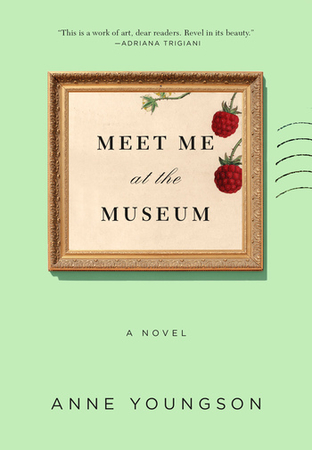
Meet Me at the Museum by Anne Youngson

Next up is the Silkeborg Museum in Denmark. In Anne Youngson’s gentle epistolary novel, an English farm wife in her sixties, trapped in a loveless marriage, begins a correspondence with the museum’s curator, himself a lonely widower. Tina Hopgood has long dreamed of visiting the Silkeborg Museum, where Tolland Man — an early Iron Age bog body with an unusually well-preserved face — is displayed. Curator Anders Larsen encourages her to finally make the trip. The two exchange letters and emails, reflecting on whether they have lived the lives they meant to, until surprising revelations leave Tina with big decisions to make.
The Octopus Museum by Brenda Shaughnessy

The Octopus Museum by Brenda Shaughnessy

Our third museum is fictional, though at the rate 2020 is going, is it so outlandish to imagine that the earth might soon be ruled by semi-benevolent octopus overlords with museums dedicated to the study of humanity? Could it hurt to start preparing, just in case? Shaughnessy’s poetry collection takes place in a world of ever-unfolding climate apocalypse caused by humans, with Octopodes reigning over us all. The table of contents is framed as a Visitor’s Guide to the Octopus Museum’s five exhibits about humans: The Gallery of a Dreaming Species; Special Collection: “As They Were”; “To Serve Man”: Rituals of the Late Anthropocene Colony; Found Objects / Lost Subjects: A Retrospective; and Permanent Collection: Archive of Pre-Existing Conditions.

The Museum of Innocence by Orhan Pamuk

The Museum of Innocence by Orhan Pamuk

Now to Istanbul, where tucked near the main shopping thoroughfare of İstiklal Street is the Museum of Innocence. This real life museum was conceived and developed by the Nobel Prize winning writer Orhan Pamuk as a companion project to his novel by the same name. In the book Kemal, the son of a wealthy Istanbul family, falls for his beautiful but distant cousin Füsun, a poor shop girl. He pursues her even as his engagement to another woman falls apart as a result and the two are briefly lovers, though Füsun remains his unrequited love much longer. After she marries another man, Kemal becomes a frequent visitor at their house, each time stealing an object to add to his collection commemorating their brief affair. Through his “museum” Kemal seeks to regain a closeness that he will never achieve with the actual person. 

The real life museum is filled with objects that the characters in the novel would have interacted with, evoking Istanbul life in the 1970’s. Display cases correspond to chapters in the book and Pamuk himself narrates the audio guide. The museum’s website states: “It is not essential to have read the book in order to enjoy the museum, just as it is not necessary to have visited the museum in order to fully enjoy the book. But those who have read the novel will better grasp the many connotations of the museum, and those who have visited the museum will discover many nuances they had missed when reading the book.”
Still Lives by Maria Hummel

Maggie Richter, the protagonist of this smart literary mystery/thriller, is an in-house editor at the fictional Rocque Museum in Los Angeles, whose boyfriend recently left her for provocative artist Kim Lord. Lord’s upcoming exhibit “Still Lives” features gruesome self-portraits of the artist recreating media images of famous murdered women. Though meant as a commentary on our culture’s fetishization of violence against women (especially beautiful women), some including Maggie see the work as glorifying that same violence and allowing the artist to capitalize off the victimization of others. When Lord goes missing on opening night, Maggie feels compelled to investigate and disprove the police’s theory that her ex is to blame. 
The Barnum Museum by Steven Millhauser

Next up is the Barnum Museum in Bridgeport, CT, or at least the highly fictionalized version it inspired. This story collection was originally published in 1990 by Steven Millhauser, who would go on to win the Pulitzer Prize in 1997 for his novel Martin Dressler: The Tale of an American Dreamer. Millhauser used to visit the Barnum Museum, founded by P. T. Barnum of “The Greatest Show on Earth” 19th-century circus fame, as a child in the 1950’s and clearly it made an impression. He set out to write about an impossibly large museum full of dubious things. The museum in the collection’s title story goes on forever, eventually swallowing Bridgeport and all of its residents. Each story in the collection can also be seen as an “exhibit” featuring a different experimental writing technique.
Rohan at the Louvre by Hirohiko Araki

Now to Paris and the Louvre Museum, by way of Japan. Teenaged Rohan is an aspiring manga artist when a seemingly disturbed tenant at his grandmother’s boarding house tells him of an evil, centuries old painting. She also destroys one of his works that features an image of her. A decade later, Rohan travels to Paris and finds the painting in a closed wing of the Louvre, unprepared for the power of the curse he unleashes by doing so. Rohan is a recurring character in Hirohiko Araki’s Jojo’s Bizarre Adventure series, and stars in this graphic novel, which is itself one of a series by different authors commissioned and published by the Louvre Museum. 
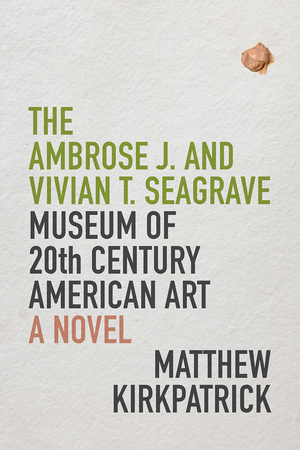
The Ambrose J. and Vivian T. Seagrave Museum of 20th Century American Art by Matthew Kirkpatrick

Our next museum is another fictional one, haunted this time. Its strange curator is in love with the ghost of an artist, while the daughter of the museum’s founders has disappeared under mysterious circumstances at sea. It is told in part through increasingly long and strange museum tags, in part through the musings of an elderly town resident who finds unexpected connections between the exhibits and her own past, though her thoughts on death and loss are at odds with the curator’s.
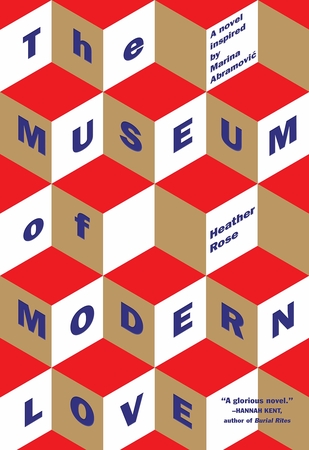
The Museum of Modern Love by Heather Rose

Once more to New York City, this time to the MoMA. Heather Rose’s novel is based on the real life performance of Serbian artist Marina Abramović at the Museum of Modern Art in 2010. Abramović, who gave the author full permission to use her as a character, spent over 700 hours silently gazing into the eyes of any audience members who chose to sit across from her. The novel follows film composer Arky Levin, whose wife suffers from a genetic disease and recently left him, ordering him never to see her again. At the MoMA, Arky meets a grieving widow from Georgia as well as a series of other characters, all transformed by Abramović’s performance as well as their tender, unsteady relationships with one another. This is the first novel by Australian writer Heather Rose to be published in the U.S.
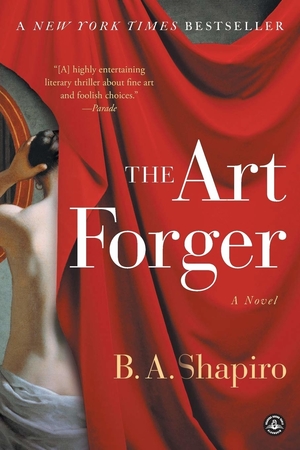
The Art Forger by B. A. Shapiro

Our tour ends at the Isabella Stewart Gardner Museum in Boston, infamous as the site of the world’s largest, still unsolved art heist in 1990. In Shapiro’s novel, a struggling artist with a scandalous past must discover the truth about one of the stolen masterpieces she is hired to forge, before she is arrested for her involvement. The mystery features fictionalized 19th-century letters from museum founder Isabella Stewart Gardner herself. If you enjoy the special pleasure of reading about how artists assemble their work in great detail, this book is definitely for you.
All the Best Weird Fiction Comes from Florida

JD Scott’s debut short story collection, Moonflower, Nightshade, All the Hours of the Day, calls on myth and magic, Florida and fabulism to tell stories of queer youth seeking out love and transformation within a world in crisis (and in the case of the collection’s novella, “After the End Came the Mall, and the Mall was Everything,” a world post-crisis).

There is a wry, constant humor and so much poetry that these stories sing as they wind through baroque lives and landscapes: a chinchilla is an amulet that keeps a couple together; a perfume maker poisons his boyfriend, slowly, carefully, beautifully; angels observe a generation of men abandoned by their families, dying alone of AIDS. The world is for the young, Scott tells us, but it is not always a good, kind, or fair world. And yet, somehow, there is laughter and hope. 

The collection weaves between YA, fantasy, science, and literary fiction, and this fluency creates a floating, dream-like quality to the stories, and the spaces between them. Scott’s dreams are beautiful and familiar, even when unpleasant, and they will linger long after you’ve left them.


Nicole Treska: You and I have talked about the poetic quality and potential of writing across literary genres, why is that so interesting to you?

JD Scott: There are these spaces that light my brain on fire, in a way. I grew up reading Diana Wynne Jones and Brian Jacques, stories that were more adventure-focused, or fantasy-oriented, as well as fairy tales. That was my first learning experience with writing. That becomes part of you. My approach to these things isn’t necessarily the approach of what someone who holistically reads fantasy or sci-fi would be, because I think if you’re reading fantasy and sci-fi, you’re looking for this pleasure, right? You’re looking for pleasure in these recognizable genre tropes, but I find a certain amount of displeasure in the fantastic, and that can become quite subversive in a way.

NT: These are coming of age stories, with characters falling in love, becoming disillusioned, searching for meaning in the world, with their “still fat faces,” as you described them. What draws you to these still fat-faced parts of our lives?

I’d become enamored with this idea of the ‘second adolescence,’ which is a queer concept that you might not have always been living your truth.

JS: We all have these obsessions we pursue in our writing. It was something on my mind, the idea of the youth, or the teenager. There’s this space of “anythingness,” of a certain age group that I was excited by. And I think as I got older, especially in my late twenties or early thirties, I’d become enamored with this idea of the “second adolescence,” which is a queer concept that you might not have always been living your truth, because you had to live someone else’s truth, when you were going through your first adolescence. So, you hit this second adolescence, living your truth for the first time. And that’s not necessarily my truth, but it’s something I became interested in. The performance of youth. And this idea of teenagers, this space that has these infinite futures, and space for transformation. I talked about genre tropes, and this idea of displeasure, but there has to be some balance to that displeasure. And maybe the idea of characters or even space or setting being able to be transformed balanced the displeasure. Maybe it’s a little bit cheesy, but maybe I buy into this idea of hope or tenderness. At least in as a book, at least in these stories.

NT: I had a question about “Their Sons Return Home to Die,” a story about gay men coming home to die of AIDS, to families who reject them, even then. It breaks the first-person singular narrative and goes takes a high, parable-like first-person plural, a “we,” that breaks your heart. I was wondering what about that more fabulist, fable-ish mode allowed you to capture that magnitude of loss?

JS: Everyone’s going to have a different entrance point. When I wrote that story, I was living in Alabama. I had returned to the South, after almost a decade in New York. And I had read this article about Ruth Coker Burks. This article called her the “Cemetery Angel,” because she took care of hundreds of gay men who were dying in and around Hot Springs, Arkansas. I believe she had inherited a family cemetery plot. So she had this plot of land, and she buried these dead gay men with her own two hands because, presumably, families had rejected them, and they had no one else to bury them.

Of course, New York certainly had its own relationship with the AIDS crisis. When you’re young enough to only barely remember ACT UP, like I am, you have to seek out these stories because they’re not always being passed on to you. The thing about AIDS and also the thing about gayness is most gay people are born from heterosexual couples. You have no one to teach you your lineage. And a lot of our teachers died in the AIDS crisis. I grew up in what felt like a generational disconnect. I returned to the South, which meant seeking out queer community, and by doing that I inherited this narrative of how Alabama deals with queerness.
When I was in Tuscaloosa, it was one of the first annual Pride events they had. And I remember this one woman, she was old, and she could barely stand and she got up at this gathering. It wasn’t a big, flashy Pride parade, it was like what a small Southern town might have as its first pride. And this woman was bitter. And she was mournful, and she’d got the mic and said, “We are the ones who had to watch our men return home to die.” That was the seed of that story. There was anger and a righteousness in her voice. Her voice blended with my own, and it became that “we” voice. It’s interesting because that first-person plural voice is where the angels are talking. The story is told by the angels. But of course, the angels are representative of these queer men who left to go to the cities, who left to go to New York, and San Francisco, and the new homes they created, where they could love each other and find acceptance. But unfortunately, when the AIDS crisis emerged, some people decided to leave those sort-of-heavens, to return for their families of blood, and families of origin, and places of origin to die.

That’s the fraught space where that story emerged. I’m also continuously dealing with this idea of the parable, or the Judeo-Christian stories that I grew up with, alongside Joseph Campbell and The Hero’s Journey. Those are the Bible stories I grew up with, and internalized, and I found a place for them in my work. But that’s also the transgression, to pit the biblical story and homoeroticize the angels, who are objectively queer and beautiful. And of course Tony Kushner, too. How could I not think of him after connecting the AIDS crisis to angels, and Angels in America?

NT: Do you think fabulist world-building comes more naturally to a Southern writer, who historically observe the bizarre without flinching, too much. Why do you think that Florida is capturing this moment of literary attention?

JS: With the Southern Gothic, there’s always been a sense of the uncanny, the grotesque, the derelict, the violent, the impoverished, the criminal, the alienated, the nightmarish, and the absurdist and fantastic. That’s Faulkner, that’s O’Connor. There’s something happening in Florida… what I call the Subtropic Gothic. If you look at what Joy Williams has done. There’s Kelly Link. Alissa Nutting, Jeff VanderMeer—all these people who have a connection to Florida doing very weird work. I’ve heard the term “The Florida Renaissance,” I don’t know if there’s a whole truth to that… but Florida certainly possesses a sub-genre of the Southern Gothic. 

We’ve honored this type of literary novel about upper-middle-class white people. So, maybe we’re looking for other types of stories.

If we interrogate what has been normative, we’ve centered these metropolitan novels, and now we are moving into the province, to see what’s happening in other places. We’ve honored this type of literary novel about upper-middle-class white people: heterosexual, and maybe they’re getting a divorce. So, maybe we’re looking for other types of stories.

I think the most fascinating book that took off, recently, is Kristen Arnett’s Mostly Dead Things, from Tin House. She is near me, in Orlando. It deals with taxidermy, and that specific brand of Florida strangeness, and queerness…it’s a Southern Gothic novel in a way. And it’s wonderful, and because Kristen’s book was so well-received, I think it shows there is some lingering interest in Florida as a place.

NT: Yes. It’s a fascination that’s bigger than just literature.

JS: Right. That’s the whole Florida Man thing. I could easily explain that. I mean, I don’t know if that steals the magic. Florida is unique in that it has these unprecedented public record laws. When I was a teenager, 15 or 20 years ago, we used to go on the Hillsborough County arrest inquiry website, and tried to look up people or adults we knew, to see if they had been arrested. With open access, you can find all these records. So, “the news of weird” in Florida can be uncovered a lot quicker. But that’s also, I mean, but I don’t want to fully put that reasoning forward as to why Florida’s strangeness is so ubiquitous. 

NT: A little bit of a Florida defense mechanism.

JS: I definitely have a Florida defense mechanism. And I don’t want to confirm the bias. Florida is weird, but I think the weirdness of Florida doesn’t always align with the idea of what non-Floridians think is weird about Florida. It’s not necessarily something you can put into words, but you see or experience something and it has a “Floridaness” to it. Like the red tide, and that’s a real phenomenon that I include in one of my stories, and is one that I experienced as a child. 

I didn’t leave Florida for the first time until I was seventeen. I think that’s something else about Florida. It’s such a long state. It’s not like New England, where you can quickly move between different areas and regions. We are sequestered and isolated.

For a long time, my parents went to the same motel every summer. That was our one vacation, and we went to the same beach. It was like 90 minutes from where we lived. But I have this one memory of a year we decided to go in the winter, and it was red tide season. So not only was it unseasonably cold, but the red tide had killed all the gulf life. So it was cold and you’re walking on the beach and there were octopuses and…all these fish and aquatic life I had never seen before because they live so far in that deepness, in the depths of the ocean. I remember how wrong it felt seeing them on the shore. It’s a red tide. It’s science, right? Science explains why red tide happens. For me, those are the types of moments that become magically charged, when they’re a wrongness to it. These fish shouldn’t be on the shore, and they’re dead, and they’re perverse. They’re on display for anyone to walk by, or touch, or poke them with a stick. But there are other Floridas. When people are talking about Florida Man, they’re like, “Oh, someone got drunk and threw a baby alligator through Taco Bell drive-thru window.” And that becomes the focus and barometer of Florida’s weirdness.

NT: I know you love to play a crane game app on your phone. I’ve watched and wondered. Tell me about this.  Why was it a JD Scott obsession for a while?

JS: I feel like it ignites the same place in your brain that addiction does, the reward centers. So, even though you’re on your phone, you’re actually playing a real crane game, sometimes called a UFO catcher game or claw-machine game, over webcam—you’re controlling a real one in Japan. And if you win the actual prize, they ship it to you from Japan, much to the chagrin of my USPS person. I think she retired because I was winning so many stuffed animals, but I was always at work, and never here to sign for my international stuffed animal packages. Once, I was at the post office picking up a package I missed, and the worker with like, wow, this big box is so light. It’s almost like it’s full of stuffed animals or something. And I laughed really nervously.

NT: Like, I’ll just take that package—goodbye.

JS: I mean the stuffed animals, I think they’re cute and love having them on display, but I stopped because there is no room for them in my apartment anymore. I have twenty of them. People are going to think I’m a serial killer.

NT: How much money does one have to spend on claw game?

JS: You get daily free tickets usually. That’s the exercise in self-control. There’s some pleasure there too, right? Getting one free ticket, and playing only once a day. There’s something monk-like about it. I have a lot of plants at home, and I have stuffed animals too. They do the same thing to my space, making it feel inhabited and sacred.

9 Books about the World-Changing Power of Protest

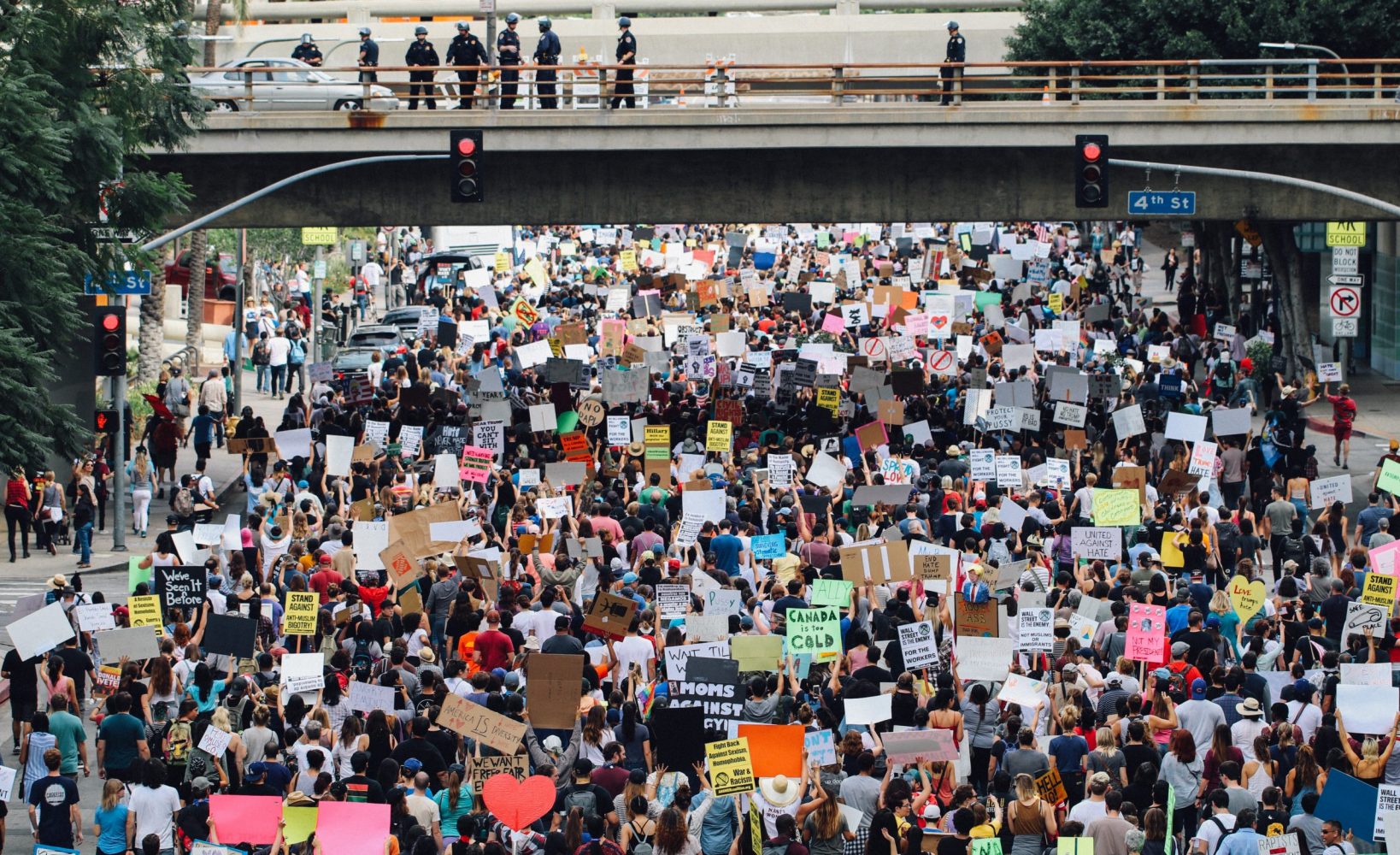
The history of progress is a history of protest. We would have few of our modern rights if no one had stood up and demanded them. The books on this list cover some of the largest protests in the last century, protests that reshaped societies and reimagined futures. These books show that small groups of people speaking up for their rights can become powerful movements that change the world.

Page 145 – Electric Literature

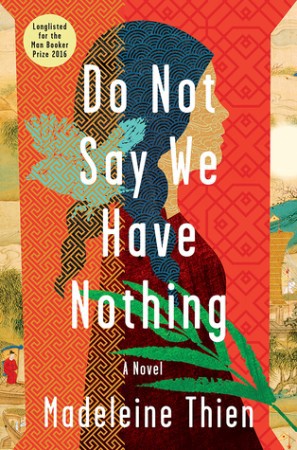
1989 Tiananmen Square Protests: Do Not Say We Have Nothing by Madeleine Thien

This sprawling novel covers generations of Chinese politics and upheaval through the lens of two young women, Marie and Ai-ming, as they try to unravel the mystery of why Marie’s father, Kai, killed himself. The women bond over a series of notebooks written by Ai-ming’s father, Sparrow, that detail Kai and Sparrow’s lives as friends and burgeoning musicians during China’s Cultural Revolution in the 1960s. As the Chinese government cracks down on artists and intellectuals, fear and political loyalties begin to tear the musicians apart.

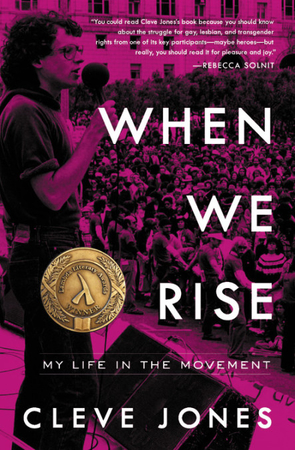
1993 March on Washington for Lesbian, Gay and Bi Equal Rights and Liberation: When We Rise by Cleve Jones

Growing up in the 1950s, Cleve Jones feared he might be the only gay man in the world. But when he moves to San Francisco in the 1970s, he immediately finds community and purpose. Jones joins the fight for gay rights, and soon he’s thrown to the forefront of the AIDS crisis during its terrifying beginning. This memoir documents Jones’ incredible life, from his time working with Harvey Milk, to his organization of the AIDS Memorial Quilt.

Egyptian Revolution of 2011: The City Always Wins by Omar Robert Hamilton

Mariam and Khalil are reporters who end up on the front lines of the 2011 Egyptian revolution as they attempt to raise awareness about governmental corruption in Cairo. Thrust into the chaotic, Twitter-fied world of modern revolution, the couple discovers that they’re part of a new kind of battle, one that relies on Facebook posts as much as it relies on physical warfare.

Human Acts by Han Kang

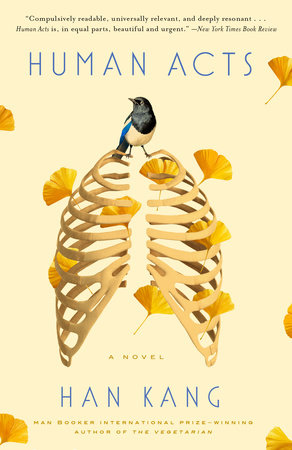
1980 Gwangju Uprising: Human Acts by Han Kang

In Gwanju, South Korea, in 1980, student uprisings are met with brutal police violence. Centered around the tragic murder of a 15-year-old boy, this novel splinters into seven sections that each chart a different character who has a relationship to the murdered boy. In these sections, Kang tells a story of grief, brutality, and suppression that is both painful and painfully human.

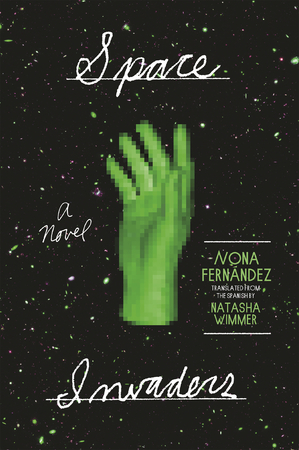
Armed Resistance in Chile (1973–1990): Space Invaders by Nona Fernandez

Set in Chile in the 1980s, Fernandez’s novel focuses on a group of young school friends as they become close with a young girl, Estrella, whose father is a government officer. Though the violence of Pinochet’s dictatorship looms beyond school walls, the children are more focused on their favorite video game. But when Estrella suddenly disappears, the remaining children must wrestle with her probable fate, even as she continues visiting them in dreams and letters.

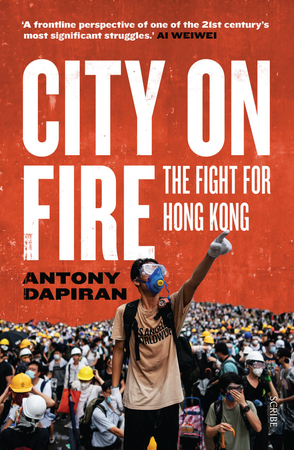
2019 Hong Kong Protests: City on Fire by Antony Dapiran

Anti-government protestors took to the streets of Hong Kong in the summer of 2019 and sparked a pro-democracy movement that took over the city for months. This movement created an entirely new kind of protest, one that had to fight not only police and tear gas, but also advanced surveillance technology. Dapiran offers an intimate look into contemporary Chinese politics, and a protest that has already changed China.

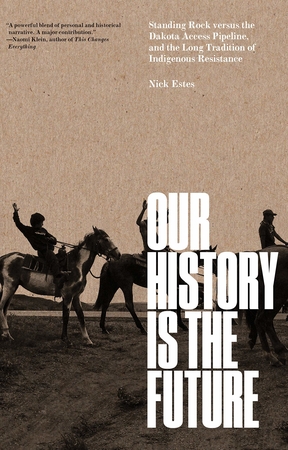
Dakota Access Pipeline Protests at Standing Rock, 2016- 2017: Our History is the Future by Nick Estes

What began as a small group of Indigenous people protecting their land from the Dakota Access Pipeline quickly became an environmental movement. Estes reports on the Water is Life movement at Standing Rock, then moves through time to examine the long history of Native American peoples attempting to protect and preserve their land from white settlers. This book presents the Water Protectors as an essential installment in a long line of Indigenous people protesting unjust seizure of their land by white Americans.

Occupy Wall Street 2011: The Not Wives by Carley Moore

Set against the uncertainty and financial instability of the Occupy Wall Street movement, this novel follows three women as they attempt to reinterpret the roles society has assigned them. Stevie is a professor and struggling single mother, her best friend Mel is a bartender who has become uncertain about her relationship with her wife, and Johanna is a homeless teenage runaway bound to Stevie through a shared tragedy. As the women navigate a city in protest, they must also revolt against their own identities.  

Unapologetic

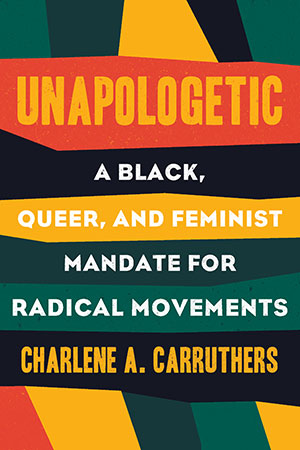
Unapologetic: A Black, Queer, and Feminist Mandate for Radical Movements by Charlene A. Carruthers

Grassroots activist and one of the Roots’ most influential young African-Americans in 2017, Charlene A. Carruthers offers her extensive knowledge and experience in protesting and activism in this handbook on radicalism. With a focus on empathy and organization, Carruthers builds on the history of Black radicalism and offers new ideas on how to recenter political strategy around those who are the least served.

In Case of Emergency, Have Your Cat Call an Ambulance

The True Story

Jessie was eating olives over the kitchen sink when she woke up in the emergency room. She’d almost died, but only almost. “It’s a good thing you called 9-1-1 before you hit the floor,” the doctor told her.

“But I didn’t call.” Jessie had been spitting pits into one hand, brine running down her forearm. She touched her forearm now, remembering. She touched the bruised, bald area of her scalp and the stitches.  

“The EMTs broke down the door.” 

She found her phone on the floor of her apartment. 

“See, you must have called,” her boyfriend said. “You were alone, weren’t you?” 

She nodded. “But my phone was way over there. It wasn’t me.” 

The boyfriend kept pausing the TV show to bring it up. “Then who called? The cat?”

They looked at the cat, who blinked.

Jessie stood watching the cat from different angles, then came up close to inspect the cat’s paws. She thought of the first time she saw the cat as a kitten in a box in a garage—how their eyes met over the cardboard edge. Later, Jessie shook her boyfriend awake in the night, her eyes wet and possessed. She garbled through her dental retainer, “I think you were right.” 

Jessie recreated the night in question, collapsing in front of the cat, waiting for a response. She hired a local pet psychologist to study the cat. She stared at the cat, as though imploring verbal corroboration. She found stories of feline heroism on the internet and read them aloud to the boyfriend while he showered, so he couldn’t escape. “You have to believe me if you want this to work,” she said. 

 “Let’s agree to disagree,” was the last thing he said before she broke up with him. 

Alone, Jessie repaid the cat for saving her life with treats and toys, incessant hugs and kisses. But the attention irritated the cat, who took to sitting in her litterbox and swiping at Jessie with claws. This went on until the cat, old and overweight, grew ill. 

The cat wailed in corners, losing her sight. Vomit dried into her fur. She scrabbled her paws mid-dream as though hurtling to earth from a terrifying height. Jessie hounded her local veterinarians, in search of better news, and her distress opened a portal of need through which the boyfriend returned. 

The volume of Jessie’s sorrow in the vet’s office frightened the boyfriend, and he apologized to the waiting room. “Don’t say sorry for her,” said an old woman with a pink-eyed Pitbull. “It’s her family.” Chastened, he rubbed Jessie’s back. The furry lump in her lap twitched. 

After, Jessie felt lighter, free, now that her duty to the creature was finished. It was like waking from a long, intense dream of having been saved by a cat. She stepped into the sunny parking lot with the cat’s wrapped body in an old backpack and took the boyfriend’s hand. She realized she no longer cared about winning. It was behind them. Wasn’t there more to love than a shared, compatible reality? 

In the car in the parking lot, the boyfriend yanked on his seatbelt and startled. He jerked to look at the backpack in Jessie’s lap. “Did you hear that?” he said. 

“What?” Jessie said. “Hear what?”

The boyfriend gingerly moved the backpack from her arms to the backseat. “Never mind,” he said, and started the car.  

That night, the boyfriend asked Jessie if she’d set her alarm, and she said yes, and they smiled at each other, an old routine revived. She fell asleep quickly, the heavy sleep of the unburdened, but the boyfriend rolled between the sheets. It was after two when he slipped into jeans, out the back door, to the patch of upturned soil, under which they had packed the cat’s lifeless body into the cold dirt. 

The flashlight’s beam cut shadows in the grass as the boyfriend lowered to his knees, sat on his heels. He listened, eager and afraid. The trees creaked in the wind. He slid to his stomach and pressed his ear against the earth, straining to hear it again, the sound of something impossible and his, something he’d be desperate and doomed to share.

24 New and Forthcoming Books That Celebrate Black Lives

Stories encompassing Black life and individuality do not begin and end with racism. Even when racism is part of the narrative, it is not all there is to our story. To become dedicated to anti-racism is to admit, first and foremost, that Black people are human. That we love, live, thrive, and hurt. That any predetermined “savagery” comes from the assumption that we do not deserve to be seen as people in the first place.

With this understanding, the question becomes: Where do we start? If you hadn’t seen it already, where do we begin to see the vastness, beauty, and complexity of Blackness? It’s not easy to know where to start, but we know where we want to end up: having our lives recognized and treated as equal to those who established social dominance through pillaging, looting, and genocide. Achieving this requires knowing our history. It requires recognizing that at heart we have more similarities than differences—and at the same time those differences should never be erased. It requires an openness to listening and embracing the layers of who people are and what they’ve experienced. 

This year has seen many new books, from middle-grade novels to literary fiction and poetry to memoir, that show the full complexity of Black communities. Like Black people ourselves, these books do not exist because of racism but in spite of it. 

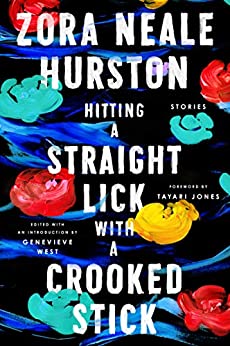
Hitting a Straight Lick with a Crooked Stick by Zora Neale Hurston 

Hurston continues to be essential for resisting the pressure to write “tragic negro” characters. All the stories in this new collection from Amistad Books center Southern Black characters, some who migrate north. One gets a taste of Hurston’s growth as an artist through her first short story publications to some of her latest from the 1920s to 1930s. Here you’ll find women who fight back, men who recognize their philandering ways (though they may or may not change), and karma for many spreading ill will. 

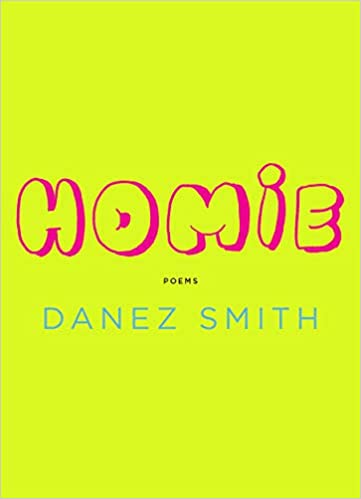
Homie by Danez Smith

The title page reveals the “real” name of Smith’s latest poetry collection, one that many are not allowed to say. Respect that, because the familiar designation between Black people is not one to be taken out of our mouths nor used against us in a bid for solidarity. From the real title onward, Smith ensures that those they are speaking to are embraced. The collection itself is about relationships, the shame of some and the intense love in many. Friendship in particular is at the forefront of Homie (aka My Nig) because those tethers to others lift and guide us through life, and many times may be the most pure form of love we extend and receive.

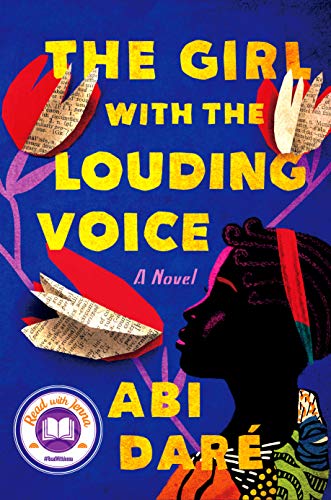
The Girl with the Louding Voice by Abi Daré

Debut author Abi Daré has called her main character Adunni “a 14-year-old spirited, intelligent dreamer.” Adunni’s pursuit of a “louding voice” through education means her refusal to live by others’ rules for her as a young woman. Through community and her own dedication, as well as the significant words passed down from her mother before she passes, Adunni’s journey for what she deserves means breaking through an already broken system. 

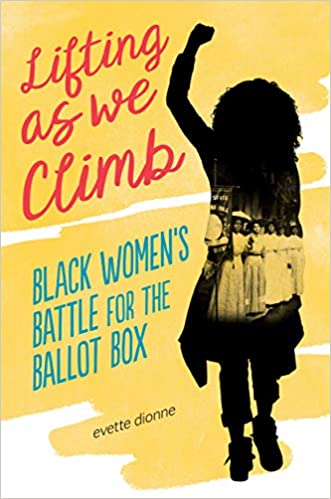
Lifting as We Climb: Black Women’s Battle for the Ballot Box by Evette Dionne 

When the Suffrage Movement is mentioned, often the names touted are white. Too often Black women have been erased or attributed as sidekicks in civil rights stories. In Lifting as We Climb, Dionne makes a point to put these women center stage. Heroines such as Anna Julia Cooper, Frances Ellen Watkins Harper, Mary Church Terrell should be in syllabi nationwide, and central to womanist discussion about women’s rights and particularly Black women’s rights. Thanks to Dionne’s new book, we gain even more insight and visibility for these trailblazers. 

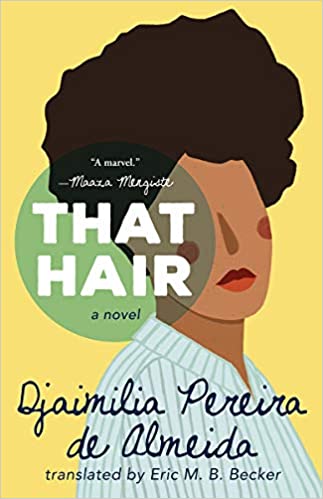
That Hair: A Novel by Djaimilia Pereira de Almeida

The narrator of That Hair begins at the beginning, or so she says, of a biography of her hair that is so much larger than the follicles on her head. Semi-autobiographical, Almeida’s book takes in racial context, standards of beauty, along with family lore and her own memories. Heartfelt and humorous, the book treats us to a worldview that feels close to home. 

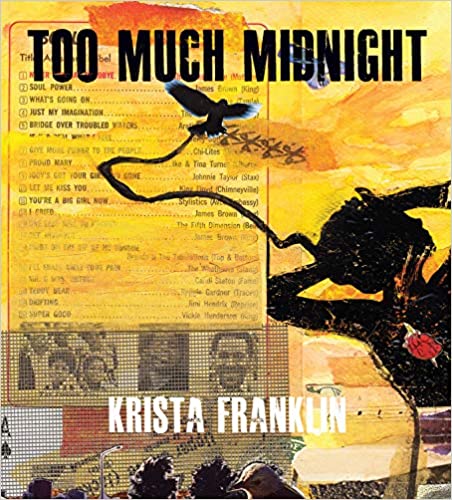
Too Much Midnight by Krista Franklin 

One of a few works of poetry joining imagery and the written word, Franklin’s Midnight spans storytelling modes, subject matter, and the depths and versatility of the Black experience. It’s not an easily categorized book and it shouldn’t be, because Blackness isn’t easily categorized either. 

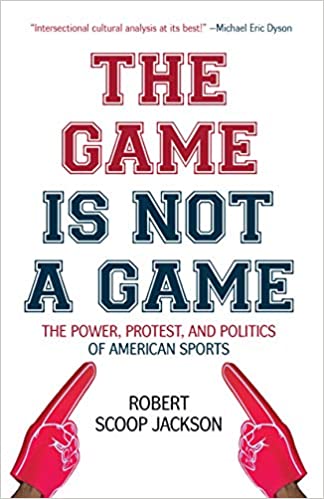
The Game Is Not a Game: The Power, Protest, and Politics of American Sports by Robert Scoop Jackson 

A huge percentage of American sports players are Black, and the number has grown over time. Jackson’s essay collection tears into the ways sports, for many Americans, is life. He considers the hypocrisy of the game, capitalism, activism (a la Kaepernick), disrespect to female athletes, and who benefits from sports the most. 

The Voting Booth by Brandy Colbert 

The importance of voting and voter registration as a radical act is at the heart of Colbert’s latest young adult novel. Considering the hard-won fight for the Voting Rights Act of 1965, it’s refreshing to see a contemporary novel star a teen, Marva, who is dedicated to making sure people in her community have access to vote their conscience and the power to have their voices heard. Marva teams up with Duke to help him gain his right to vote when he’s turned away, and in a side-story they’re also on the hunt to find Marva’s cat. 

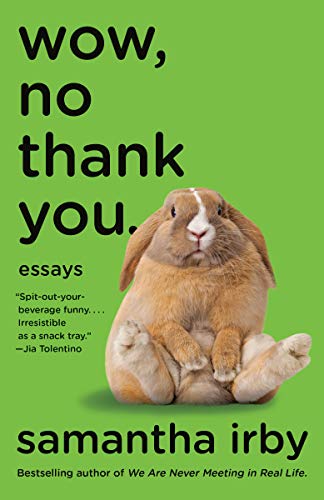
Wow, No Thank You by Samantha Irby 

Irby’s latest collection of essays came right on time (during quarantine) and became an instant bestseller. In Wow, Irby uses the same wry wit as in her previous (also bestselling) collection We Are Never Meeting in Real Life to break down a full day of being Samantha Irby complete with commentary on not being “too hydrated,” the decision making behind a nap or coffee in the late afternoon, and how late is too late when committing to going out. Irby’s frankness, voice, and on-the-nose topics recognizing a larger anxiety of society-at-large are not only relatable, they’re comforting. 

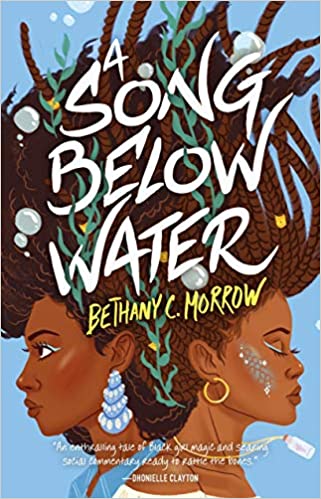
A Song Below Water by Bethany C. Morrow 

Black mermaids! That almost says it all about Morrow’s debut young adult novel, but really there’s more. Besties Tavia and Effie are fighting their own battles—literally, against literal demons—all while having to deal with high school in Portland, Oregon. Morrow’s latest utilizes the fantastical to explore evergreen themes like isolation, modern day witch-hunts, and the violence to Black women’s bodies. A Song Below Water shows the imbalance of power at the same time Tavia and Effie find their own.

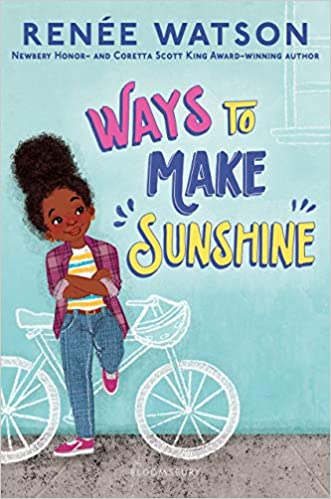
Ways to Make Sunshine by Renée Watson 

Sunshine does indeed provide many warm and thoughtful moments, plus Black girl growth in the first of this middle-grade series starring Ryan Hart. Like some of Watson’s work, this one also takes place in Portland, Oregon, where Ryan—whose name means “king”—moves to a new home, gains the courage to speak up for herself, and learns from her mistakes. This book is all about what happens when growing up and also provides endless opportunities for young readers to see themselves as leaders, just like Ryan does. 

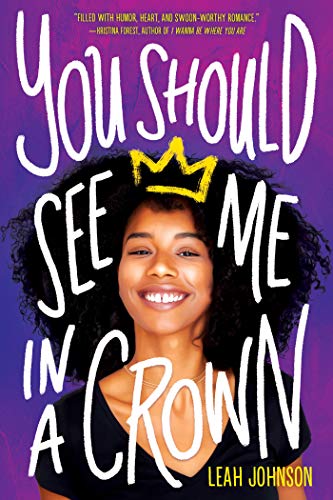
You Should See Me in a Crown by Leah Johnson 

Former Electric Lit employee Johnson’s debut is full of pop culture quips, awkward moments, and meet-cute romance. Liz Lighty’s biggest worry—well, one of her biggest worries—is how she’s going to pay for college when financial aid becomes nonexistent. She comes up with a plan to make potentially quick money, even though Liz considers it selling her soul, by running to be the next Prom Queen at her school. Through the competition Liz comes to find out what really matters as well as who really matters to her—cue the super cute new girl and prime love interest. 

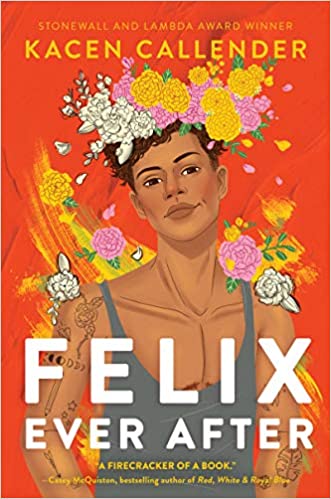
Felix Ever After by Kacen Callender 

A love story in so many ways, Felix follows a young trans man who sees love all around him—from the scribbles of initials on public transit to the couples engaging in serious PDA on the street—but has yet to experience it. Felix is already navigating his intersectionality, and when someone harasses him with transphobic messages his quest for revenge turns into a quest for enlightenment when it comes to love beyond storybook romance.

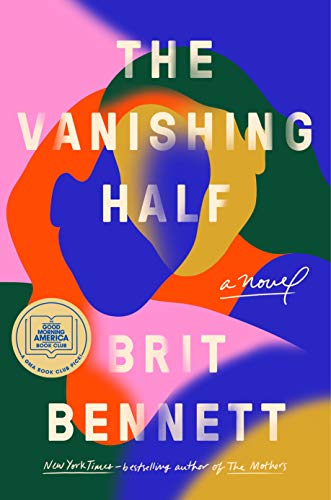
The Vanishing Half by Brit Bennett 

A book like Vanishing Half takes up where well-known books like Nella Larsen’s Passing left off, but this time with two identical sisters who are not so identical after all. The Vignes sisters, Desiree and Stella, live oppositional lives in their adulthood even identifying as different races—one Black and one white. Covering almost 50 years, Bennett’s sophomore novel jumps through place and time following characters through the trials of a life of secrecy, segregation, and silence. 

Take a Hint, Dani Brown by Talia Hibbert

Time for some shenanigans in romance! The second book in Hibbert’s Brown Sisters series follows Danika (aka Dani) on her quest for a friend-with-benefits. Of course this includes the hard-won and often comical pathway to love. Dani is practical, Zafir is a romantic, and the fun is finding out when, or if, these two will meet in the middle. 

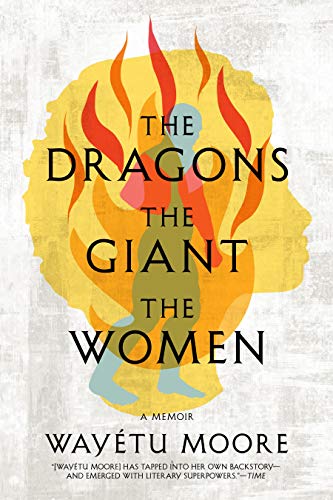
The Dragons, The Giant, The Women: A Memoir by Wayétu Moore 

Moore’s memoir begins with the Rainy Season and a question: “Where is she?” As a young girl in Liberia, Moore yearns for her mother’s companionship while her mother is off studying in New York City. Their reunion is bittersweet when war breaks out in Liberia and Moore and her family manage to escape and join her in the States. This is not where the story ends, it’s just the beginning of a new way of life as a Black woman migrating to a new country. Home is not a singular thing for many and Moore explores this seeking of home while holding close those we love. 

Seeing the Body: Poems by Rachel Eliza Griffith 

The multi-talented Griffith combines haunting photos with eviscerating text while exploring Black womanhood, grief, identity, and self-image. The balance of both the written word and the imagery illuminates Griffth’s many talents as an artist and the many ways to tell one’s story and see oneself in space and time. 

The Death of Vivek Oji by Akwaeke Emezi

Emezi’s writing always packs a punch; their stories are compact and fully alive with characters who jump off the page, even when that jump means their demise. Vivek Oji remains a mystery to those closest to him, and the mystery is unraveled bit by bit as we come to know Vivek in the ways his family may never come to. Taking place in Nigeria with an equally lively cast of characters, Emezi’s latest once again reveals the bonds and complexities of family. 

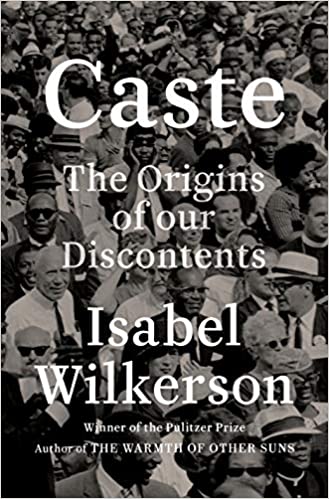
Caste: The Origins of Our Discontents by Isabel Wilkerson 

Wilkerson’s latest extensive work doesn’t solely center Black lives, yet her exploration of caste systems absolutely includes us and the ways we have been excluded by the system. Wilkerson is known for her in-depth reporting and highly detailed portraits through individuals who help tie together a larger narrative. In Caste, the ranking of people based on worth is dissected from the perspective of both science and propaganda. Going across continents and through America, Wilkerson exposes the continuous divides and their origins. 

Memorial Drive: A Daughter’s Memoir by Natasha Trethewey 

The Pulitzer Prize winner’s latest work puts into nonfiction a topic she’s often explored in her poetry: the unfortunate death of her mother and its lasting impact on her life. Trethewey recreates her mother’s life, not focusing on her as a victim but revealing the crux of her as a person leading up to that fateful evening. This is a dedication and memorial to a Black woman’s survival through racist and misogynist territory to lovingly raise a family. 

Wandering in Strange Lands: A Daughter of the Great Migration Reclaims Her Roots by Morgan Jerkins 

Jerkins’s second work of nonfiction is as exploratory as her collection of essays. In Wandering in Strange Lands, Jerkins mixes reportage with personal reflection, taking readers through Southern spaces not often given visibility by those inhabiting or those who built the towns because they’ve since seen another type of colonization. Connecting her present with her past and investigating the ways DNA for Black people is not secular but spans many regions in the United States, Jerkins delves into a family history she didn’t understand but brings herself, and us, closer to. 

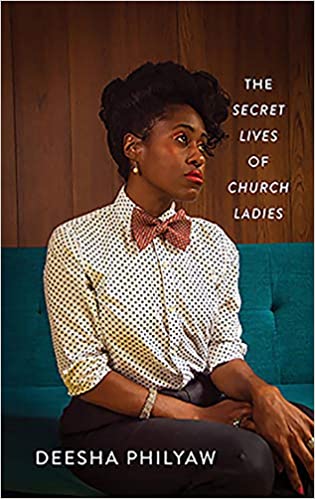
The Secret Lives of Church Ladies by Deesha Philyaw

The lives of several generations of family are woven through the stories in Philyaw’s debut work. Who hasn’t contested with their own wants and expectations from others due to faith or rearing or region? The church, sexuality, and everyday life come alive in each story bringing readers closer to experiences we can, or have, seen ourselves in.

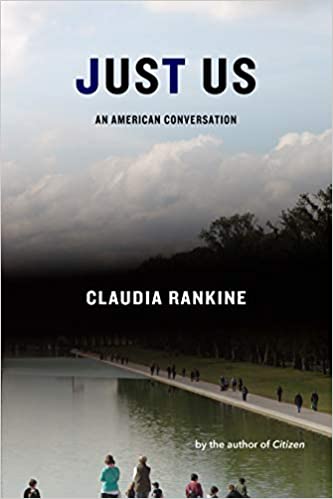
Just Us: An American Conversation by Claudia Rankine

In Just Us, MacArthur Fellow Claudia Rankine continues using the multi-genre form in another exploration on white supremacy in America. Rankine keeps copious notes and uses these to delve further into power structures, those who uphold it, and the fear of Black bodies that has nothing to do with Black people. 

Punching the Air by Ibi Zoboi and Yusef Salaam 

National Book Award finalist Ibi Zoboi and prison reform activist Yusef Salaam collaborate on a novel-in-verse that gives readers an inside look at the unforgiving nature of the penal system for Black teens, specifically through the eyes of 16-year-old artist Amal Shahid. This is not a story about Black trauma but about retaining your humanity when society may not recognize it. 

Being Scared to Death Is Part of Being a Mother

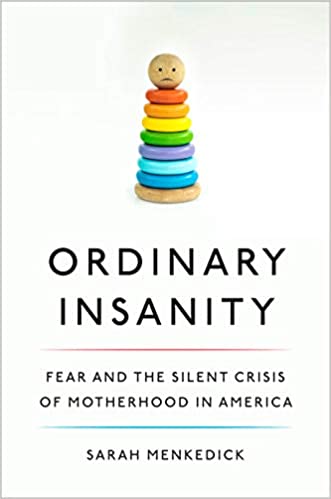
After the birth of her daughter, in 2014, Sarah Menkedick was surprised to find herself racked with anxiety. Rather than enjoying joyful days out in the world, Menkedick spent her days obsessing about everything that could potentially hurt her child. She was living in Mexico at the time, and at one point became so paralyzed by fear that she stopped going outside. Once she got treatment and had her anxiety under control, she started to research her condition. She discovered that while postpartum depression is increasingly discussed and screened for, postpartum anxiety isn’t even given its own diagnostic category. She began speaking to other mothers and found that her anxiety wasn’t unusual—in fact, it was almost considered standard behavior for new mothers. From the time that women become pregnant, they are expected to avoid any potentially risky behavior—even when that risk is infinitesimal—in the interest of their unborn child, and those expectations only multiply once the child is born. 

The result is Ordinary Insanity: Fear and the Silent Crisis of Motherhood in America, a wide-ranging and deeply researched book. Menkedick looks at all the ways women are expected to embrace what she calls the “ordinary insanity” of constant worry and self-sacrifice, and the racialized ways in which fear is used as a way to control mothers’ behavior. She argues that much of our quotidian parenting worries are the product of a society that not only ignores or miscategorizes the hazards mothers face (postpartum depression, maternal death and infant mortality, strictures on how to behave while pregnant) but that places too much onus on the mother to protect her child from all possible harm. We’re anxious, she writes, because we are taught that not to worry is a parenting failure. Reading her well-researched book, shot through with first-person accounts of the personal experiences of postpartum depression and anxiety, I felt by turns heartened to know that my fears were shared by others, and discouraged to know that my maternal obsessiveness and fear of judgment wouldn’t be going away any time soon.

Menkedick wrote her book long before COVID-19. Now that so much has changed, I wanted to talk to Menkedick about what this time is like for mothers. What happens when the garden-variety causes of maternal anxiety balloon into one of the scariest situations we’ve faced as a society? 


Anna Altman: I spent a bunch of yesterday—Mother’s Day—rereading a lot of the accounts of postpartum depression and anxiety in your book. 

Sarah Menkedick: Oh god.

AA: Which is a little bit harrowing! But in general so much of what you wrote about being a mother really resonated with me: your feeling that you had a vision of what kind of mother you would be, and then finding that rather than this bold nonchalant one that you were more quiet and interior; about that the things you love—quietly reading while your daughter drew. It’s really lovely, and so generous of you to share so much of yourself.

SM: Thank you, that is really nice to hear because there was some debate about that. The book started out more personal, in the same vein as my first one, Homing Instincts. That’s where I’m happiest as a creator. I could just report on my interior landscape all day. My first book was about that transition into stillness and this different way of being and then this book started out as being like, okay, I’ve descended into this really disturbing fear. It started out as a personal account of me trying to like come to grips with this and what it meant. My agent very gently was like, we need to make this a little bit more narrative. Creatively and personally, I had to push myself. I had done magazine reporting, but not on a book level. I had to start from scratch without anything personal. 

I intended to find these women and the book was going to be their stories and no me. I interviewed these women over and over and I tried to get as much depth in their stories as I could. But my big thing with nonfiction, and the reason why I was resistant to doing a more issue-driven, researched and reported book is because I really like a deep, emotional read. I was paranoid the whole time that the book wasn’t going to have any feeling in it. There’s a certain interiority that you just can’t get from someone else’s story ever. If I wanted to convey what this actually felt like I could only convey that if I was writing out of my own interior experience. 

AA: It’s interesting to hear you say that you because one of the things I really loved about your book and one of its great successes, I think, is the way that you integrate the voices of so many different kinds of women. I was really amazed at how open and articulate these women were about their experience and it sounded like many of them hadn’t ever really articulated this to anybody—not to their partners, not to their family. How did you find your subjects, and what was it like forging those relationships? A lot of them seemed really personal. It seems like this was like a huge emotional labor in addition to reporting and writing labor.

SM: It’s so cheesy to be like, “it was a healing journey,” but I don’t think I realized the degree of shame that I had about this until I started talking to other women. The first woman I talked to shocked me. When I first met her, I very much remember having this feeling of, Well, she looks normal. There I was, in throes of all my craziness, thinking of myself as totally normal, totally together. And in the coffee shop she looked, of course, the exact same way. It’s so backwards. She was so open about her behavior—that she had to put all the plastic bags in the basement, for example, because she was afraid of her child suffocating. I was doing similar things but I was still rationalizing to myself that I was being extra cautious. Hearing her talk so frankly about her experience was the first time that I felt relief. That it’s okay to talk about this. There was something freeing in that. 

AA: Your book talks so much about how motherhood and worrying go hand in hand and not only when that worry is pathological. Assuming that a child’s basic needs are met, then we worry about whether to breastfeed or bottle feed, what toxins are in the things that we’re feeding them, keeping our children away from screens or whatever it is—which at this point seems so quaint. What happens when the baseline expectation of maternal worry meets a situation like the one that we’re in? A global pandemic, which is genuinely really frightening and life changing? How do you mitigate against the worry becoming too big? I remember talking to a friend about your book a couple months ago, before we had heard of the coronavirus, and she had joked that it would be easier in some way if instead of worrying about toxins or whether formula is bad for your child, what if we had to worry about bears or war or an actual threat. Now that we have something that’s real and true and focuses our fear that’s also revealing so many other things that are scary—like our lack of safety net and the fragility of our economy—how have things changed about the way you thought about worry and the way that mothers worry? 

If you’re a white middle-class mother, and you’re obsessing about whether one hour of PBS is too much, that’s controllable, private nonsense. It just doesn’t matter.

SM: I don’t want to be overly simplistic here because I don’t want to be like, well, it goes to show how little we have to really worry about. That’s too basic. But I do think that to some extent. To use the screens as an example, this just illuminates how much of our parenting gets caught up in what Judith Warner called “controllable private nonsense.” Especially if you’re a white middle-class mother, and you’re obsessing about whether one hour or two hours of PBS is too much, that’s controllable, private nonsense. It just doesn’t matter. What’s fascinating now that we’re in the middle of this pandemic and everybody’s stuck in their houses, and a lot of people are trying to work a full time job and raise children, is that you have all these experts who’ve been hand-wringing about screen time for years and now they’re saying, Oh, it’s fine. All of a sudden it’s fine. That’s really revealing. Not only do we lean really hard on experts to tell us what’s okay, but maybe all those restrictions aren’t actually as rigid and determinative as we thought. It’s reflective of this larger issue in U.S. parenting, which is that if you are educated enough and well off enough to be reading the New York Times Parenting newsletter to figure out what the American Academy of Pediatrics recommends for your child at a particular age, then you’re probably wasting your time obsessing about screen time. And the people that we really need to worry about, we’re not really doing anything for. It’s missing the point entirely. 

The question for me is, what is that masking or replacing? I think that becoming a mother is the first time that many women have to confront the fact that something really awful could happen and how could you survive that? In my 20s I was hitchhiking alone across South America, taking all these huge risks and never really thinking about it. There’s this life transition in my 30s, where I became a little bit more aware of the fact that I’m not immortal. Having a child really was the first time I was like, I’m going to die, and that’s terrifying. What if something happens to me? What if something happens to my child, and I’m responsible for it? And the American response, especially for a certain type of mother, is to try to micro-control every single aspect of my child’s life to make sure that they’re super optimized and nothing bad will ever happen. What’s happening right now reveals how a lot of my anxiety is just a waste. Why am I spending all this time trying to get some futile sense of control? We think that if we research the right sunscreen brand or helmet that we can be on top of everything. That’s the insanity that it is to be beholden to this other human being and be totally in love with them and not able to really control what happens to them and what they become. 

AA: Your point is really well taken and I love that phrase “controllable private nonsense.” But on the flip side, for people who are in a state of heightened anxiety, maybe they just gave birth or they’re experiencing postpartum depression, and then it’s like, now this, what can we do to take care of those people when they’re so isolated? People are afraid of something quite real right now, and it might lead to unhealthy choices, or overlap with behavior that could be pathological.

There’s this notion that if anything is uncertain during pregnancy it’s just not worth the risk even if the risk is literally .0001%.

SM: That’s a super important point. I remember I read an article in a journal where the authors of this editorial on risk and pregnancy said that doctors are constantly formalizing this relationship between uncertainty and danger in pregnancy. And that’s really devastating for women because we all live with uncertainty all the time. You can’t control everything. But there’s this notion that if anything is uncertain during pregnancy it’s just not worth the risk even if the risk is literally .0001%. That can create a pathological normal, where women are dramatically modifying their lives to avoid even infinitesimal risk and already we’re willing to see that as good parenting. The risk of that is even higher during this time. When you pile all that up, it has a real impact. It’s even harder now because it’s something none of us have ever lived. It’s even harder for people who are walking a much finer line between debilitating anxiety and normal fear to say, yeah, you should take the risk. I think it’s really necessary for that reason to be more vigilant about when that fear starts to totally overtake a life. 

AA: You have a chapter in your book about psychoanalysis and the pressure on mothers, more than on parents, to make sure the child is well adjusted, learns all the things they’re supposed to—that you’re this sort of “mother-therapist.” We’ve been talking about how much pressure mothers are under at a time like this. What kind of advice would you give moms to let themselves off the hook a little bit?

SM: I keep telling myself that motherhood is a very textured experience. It’s never entirely good or entirely bad, and it’s not even-keeled. You have this beautiful moment where, you know, my daughter and I are lying in bed and there’s sunlight on her little face and she’s giggling and it’s perfect. And then two seconds later, the kid is screaming at you and refusing to leave the house if they don’t get a Starburst. You’re like, this is awful, I hate being a mother. It toggles between those things constantly. Rozsika Parker, a psychoanalyst that I cite, calls it maternal ambiguity. She defines it as living in this space between love and hate. I’ve felt a lot of angst about having it be one way or the other and now I’m just trying to not freak out and accept that sometimes it’s really great and really poignant and sometimes it really sucks and it doesn’t really matter how I feel about it. 

AA: What do you think has changed to allow more writers to treat this as a subject worthy of respect? 

SM: All of a sudden there was this curiosity. And now there’s been this surge of books in the last five years, which is great. But I think there’s still a tendency of, if you’re going to write about motherhood, it better be something critical and somewhat snarky with a sweet moment thrown in. I have mixed feelings about that. For women in particular, there’s this notion that negative and snarky is somehow more real. There’s definitely such sentimental crap out there about motherhood, too, and often the difficult parts of motherhood are invisible and I see the need to be really critical of the institution of motherhood, but at the same time, leaning too hard into that deprives the experience of its power. That’s something that I grappled with in this book. How do you find empowerment as a mother and how do you empower mothers without essentializing all women or falling into sentimental drivel? The Blue Jay’s Dance does that. It was powerful, beautiful writing and a celebration of womanhood that did not feel trivial or cliché. I don’t think our generation has an example of that yet. Snark is so much the thing of the day.

Introducing Brazil’s Best Classic Writer You’ve Never Heard Of

Introduction to The Posthumous Memoirs of Brás Cubas by Joaquim Maria Machado de Assis, published by Penguin Books, an imprint of Penguin Random House, LLC. Translation copyright © 2020 by Flora Thomson-DeVeaux.

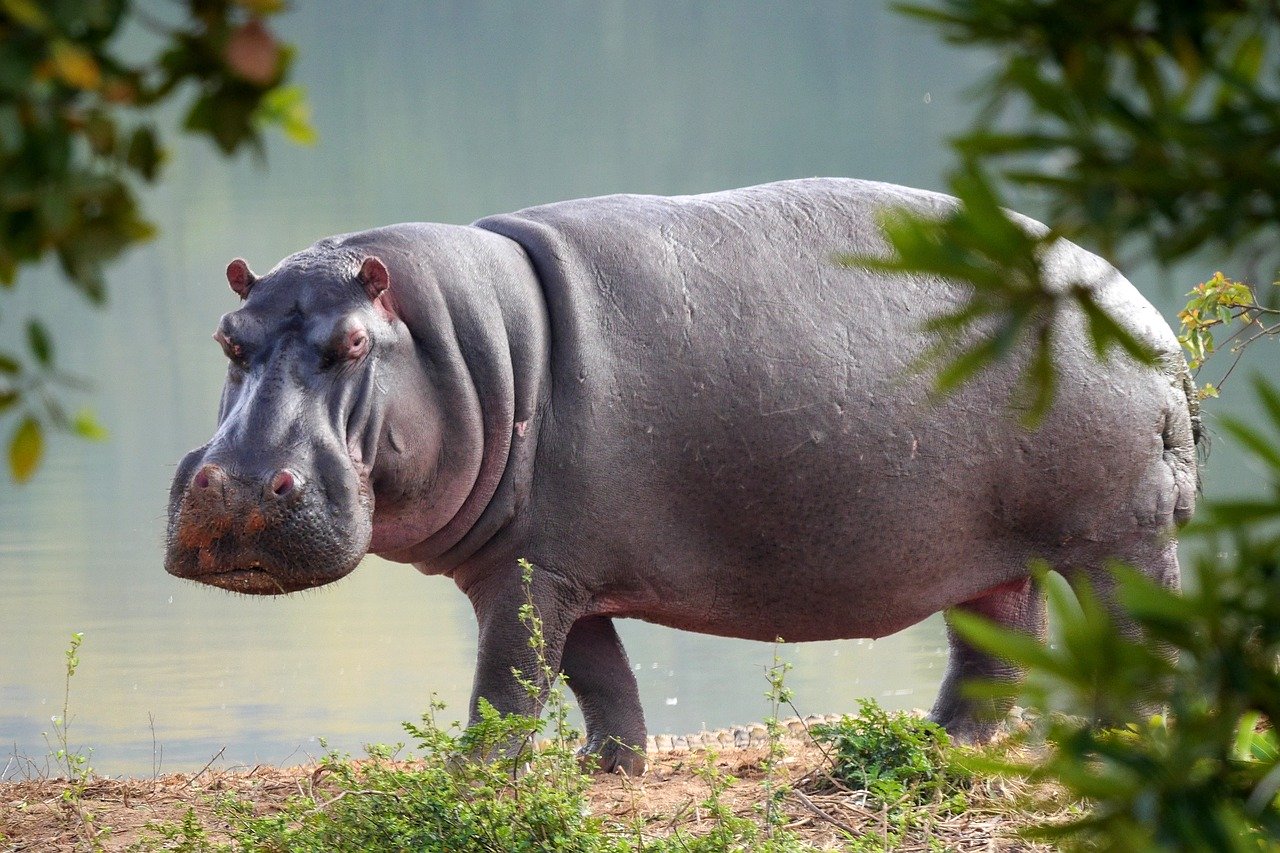
Fifteen pages into Memórias Póstumas de Brás Cubas, when the narrator, delirious and on the brink of death, is carried off by a gruff, talking hippopotamus, I remember putting the book down and staring out the window for a breath, delighted and taken aback. This was my first encounter with Brás Cubas. It was 2010, I was a sophomore in college with a few semesters of Portuguese under my belt, and this book was not what I had expected.

The Posthumous Memoirs of Brás Cubas by Joaquim Maria Machado de Assis

The average non-Brazilian reader might be forgiven for not expecting anything whatsoever. After all, The Posthumous Memoirs of Brás Cubas was Joaquim Maria Machado de Assis’s first novel published in English, 70 years after its release and nearly a half century after its author’s death. “The name of Machado de Assis will probably be unknown to nine out of ten people who pick up this book,” hazarded one of the early reviews of William Grossman’s pioneering 1952 translation. One would be hard-pressed to alter that figure today, even after Brás Cubas has won over such illustrious writers as Susan Sontag, Salman Rushdie, John Barth, and Philip Roth.

In 1960, in The Brazilian Othello of Machado de Assis, the critic and translator Helen Caldwell spoke of the author as Brazil’s “Kohinoor,” the diamond plucked from India to adorn Queen Victoria’s crown. Translations, needless to say, do not steal the original; English renditions of Machado de Assis’s works do not deprive Brazilian readers of their jewel. Still, Machado de Assis has yet to find his place in the Anglophone canon. Each generation seems to have its “Machado moment,” glimpsing the diamond of his work anew—a rediscovery by turns intimate, wondering, and “indignant,” as Caldwell put it in The Brazilian Master. Who is this master, and why haven’t we heard of him before?

Who is this master, and why haven’t we heard of him before?

For a beginning student of Brazilian literature, on the other hand, Machado de Assis seemed to be everywhere, as inescapable and imposing as the mountains of Rio de Janeiro. Born in that city in 1839, the mixed-race son of a humble family, the grandson of slaves, Machado—as he is familiarly known in Portuguese—rose from obscurity and relative poverty to be- come a fixture of literary life, and then a cultural patriarch. He wrote profusely, if not furiously: a largely self-educated, voracious reader, he began his career as a typographer’s apprentice, then a copy editor, journalist, theater critic, and censor. He penned hundreds of newspaper columns under various pseudonyms, wrote poetry and plays, made the bookstores of the swank Rua do Ouvidor a perennial haunt, and inserted himself into a number of literary societies before cementing his reputation with a series of novels. He was the founding president of the Brazilian Academy of Letters. At his funeral, in September 1908, he was mourned by statesmen and writers alike. A legend in life, he became a monument in death.

The Posthumous Memoirs of Brás Cubas occupies an almost mythical position in Machado’s trajectory. By 1880, Machado had written four well-received novels: Resurrection (1872), The Hand and the Glove (1874), Helena (1876), and Iaiá Garcia (1878), books in which marriage is either the end point or the fulcrum of the plot, and young women struggle in more or less melodramatic and scheming ways to secure their places in society.

And then came Brás Cubas. The novel was a long step outside the bounds of convention: the memoirs of a man, composed from his grave, dedicated to the worms gnawing at his corpse. It is full of disconcerting and playful images, mischievous mental creations brought to life. The narrator sees the idea for a grand invention somersaulting before him on a metaphysical trapeze; his thoughts take wing and nestle up against his lover’s thoughts on a moonlit windowsill; he lectures readers on the importance of cross-eyed fakirs and takes them into the brain of an envious hatmaker.

The novel was a long step outside the bounds of convention: the memoirs of a man, composed from his grave, dedicated to the worms gnawing at his corpse.

For those reading the serialized narrative in the magazine Revista Brazileira, the story stretched from March to December 1880 and would be published in book form the following year. Over the course of a hundred and sixty-odd chapters, the protagonist introduces himself, dies, is born, grows up, fails to make much of anything of himself, and complains with gusto about the task of writing and about the failings of his readers, looking down his nose at them and dismissing them from the heights of his gravebound superiority.

This peculiar work, despite the status it would come to attain, was at first received with no small perplexity. A handful of critics offered mild praise; others weren’t so charitable. The reaction was so icy that Machado’s brother-in-law had to give him a pep talk. “And what of it if the majority of the reading public didn’t understand your latest book? There are books that are for all, and books for a few—your last is of the second sort, and I know that it was quite appreciated by those who did understand it—moreover, as you well know, the best books are not those which are the most in vogue. Do not mind or think of public opinion when you write. Justice will be done, sooner or later, you may be sure.”

Indeed, this strange book would, in retrospect, be cast as the start of a new era for Machado de Assis. As a student of Brazilian literature, I became aware of the unique place it occupied in the mythology of the national canon. From certain angles, it seems that there is a before-and-after Machado de Assis—an author with whom subsequent generations have been forced to reckon—and that within Machado de Assis there is a before-and-after Brás Cubas. While the hard distinction between the first and second phases of his work (Romantic and conformist in the former, formally experimental and unsettling in the latter) has been rethought in recent decades as scholars have traced the roots of Machado’s experimentations back to previous works, something remains of the image of the dead narrator springing full-grown and grinning from the head of his creator, inexplicable and epoch-making.

In 19th-century Brazil, Machado was seen as an 18th-century writer; in 20th-century Brazil, he was seen as a 19th-century writer; and outside Brazil, by the 20th century he was starting to be seen as a 21st-century writer.

What was it that made Brás Cubas so strange? Writing in the 1990s, the Brazilian critic Wilson Martins commented that in 19th-century Brazil, Machado was seen as an 18th-century writer; in 20th-century Brazil, he was seen as a 19th-century writer; and that outside Brazil, by the 20th century he was starting to be seen as a 21st-century writer. The 18th-century tag comes courtesy of the book’s evident debt to Laurence Sterne; the list of striking commonalities between the Posthumous  Memoirs and Sterne’s The Life and Opinions of Tristram Shandy, Gentleman (1759–1767) includes both works’ digressiveness and formal experimentation. On the first score: in trying to tell the story of his life, Tristram famously gets so distracted that he gets around to narrating his birth in only the third volume; whereas Brás takes only ten chapters to do the same, he is given to wandering down all sorts of tangents and chastising readers when they fail to follow his zigzagging train of thought. On the second score, both books have daringly short chapters, some of which are composed entirely with punctuation, or less still: Tristram decides to cut ten pages from his Life and Opinions, for example, leaving a gap in the numbering, while Brás’s chapter “Of How I Did Not Become a Minister of State” is one long, disappointed ellipsis.

Even for those who had followed Machado’s increasingly whimsical crônicas (newspaper columns in which he, under a variety of pseudonyms, recounted and reflected on current events), it was jarring to find him plunging into the disagreeable head of a ghost with memoiristic ambitions. Perhaps the least unsettling thing in the book is its prose, which is master- fully elegant and largely law-abiding, though it conceals many a pitfall for the translator.

We may get a clearer sense of how odd the book seemed by looking at the company it kept. Machado’s contemporaries and immediate predecessors could mostly be found writing urban society dramas or origin stories that dwelled on the fusion of the nation’s “three races”—the Portuguese, Native peoples, and African slaves. (This was the sort of weighty narrative I think I expected to find when I sat down to read Brazil’s greatest novelist.) Their prose, for the most part, has aged, while Machado’s remains eerily fresh. “Death does not age one,” as Brás reminds us, exasperated, in Chapter CXXXVIII; a skeleton’s smile is eternal, and Machado’s style, while intricate, is anything but overly fleshy. When held against paeans to the lush Atlantic forest and self-sacrificing indigenous heroes, Machado’s novels seemed to many of his contemporaries rather lacking in national spirit, a grave defect for a country still working to define its culture and identity in relation to its former imperial power. As Machado would write in a famous 1873 essay: “One sometimes hears an opinion regarding this topic that I consider erroneous. This is that the only works of true national spirit are those that describe local subjects, a belief that if correct, would greatly limit the resources available to our literature.” If Shakespeare could lift plots from Italy and Spain, why couldn’t Machado dip his pen into a Sternean inkwell?

If Shakespeare could lift plots from Italy and Spain, why couldn’t Machado dip his pen into a Sternean inkwell?

John Gledson, a Machado scholar and translator, wrote that his attempts to read the master had been frustrated until he read a series of analyses by the literary critic Roberto Schwarz that gave him the key to interpret him. Gledson sums up one of the major arguments as follows: the seemingly arbitrary, disconcerting structure of The Posthumous Memoirs of Brás Cubas, “narrated by a frivolous, blithely inconsistent member of the ruling class, is itself socially inspired—there could hardly be a tighter connection between form and content.” In other words, Brás is far more than a reheated Tristram Shandy: his disconcerting freedom as a narrator is rooted in his disproportionate perch in a highly arbitrary Brazilian society. Machado’s appropriation of the Sternean form becomes a critique of his country’s relationship to power, albeit one so finely executed and so unwilling to be didactic that it would be perceived as such only belatedly. (In the case of one of his other masterpieces, Dom Casmurro, it took over a half-century for critics to grasp that the central fact of the narrative may be all in the narrator’s imagination. Their eyes were opened by none other than a Machadian translator, Helen Caldwell, who suggested that the protagonist, Bento Santiago, might not be an embittered, betrayed husband, but rather a cruel “Brazilian Othello.”)

Beyond the structural characteristics that refer back to the power dynamics of Brazilian society, the reader looking to appreciate the brilliance of Brás Cubas is faced with more hurdles—namely, issues of historical memory. Slavery haunts the novel in ways that might have been immediately present and uncomfortable for Machado’s contemporaries, but whose subtleties lie in contextual knowledge not readily accessible to modern readers. Brás’s perplexity at the cruelty of the yellow fever epidemic that swept through Rio in 1850, for example, is comprehensible on its face, but it takes on a different light entirely when we read that the plague had a distinctly racial bent. The city’s African population was largely spared, thanks to inherited immunity to the virus that caused the disease, while European immigrants and the white population were hardest hit. The disparity was so stark that some attributed the disease to revenge by Benedict, the black saint, after white churchgoers’ refusal to carry his statue on their shoulders during an 1849 religious procession. When another character fantasizes about mustering a half-dozen good men to throw all the English out of Rio de Janeiro, the sentiment becomes both slightly more understandable and more sinister when we know that the English government was working to strangle the Atlantic slave trade and had recently affirmed its right to stop Brazilian ships and search them for suspect cargo. The novel’s meanings far overspill its historical context, of course, but a fuller understanding of these time-bound elements—remote for Brazilian high school students today and downright otherworldly for the English-speaking reader with little knowledge of Brazil— enriches it immeasurably.

This deadpan treatment of the subject is quite deliberate. One of Machado’s most famous stories, from the post-abolition period, opens this way: “Half a century ago, slaves ran away quite often. There were many of them, and not all of them cared for slavery.”

As a non-white man working within a structure of power, Machado used his perch to defend the freedom that was being begrudgingly conceded.

Not only was Machado the grandson of former slaves, but he also served for decades in the Ministry of Agriculture at a time when Brazil was shamefully inching its way toward abolition. A fascinating study by historian Sidney Chalhoub, Machado de Assis historiador, shows how Machado was directly involved with the enforcement of the “Free Womb Law,” an 1871 measure that decreed that the children of slaves would be born free. As a non-white man working within a structure of power, Machado systematically used his perch to defend the freedom that was being begrudgingly and belatedly conceded. And as a non-white man in an overwhelmingly white literary establishment, he constructed a white narrator who can be casually amused by brutal injustice, holding up a grotesque mirror to a nation where slavery was then still legal. 

Take the opening to Chapter LXVIII. In the first sentence, Brás lets us know that he was strolling through a place called Valongo. What he does not tell us—in part because he doesn’t need to, given the dark familiarity of the name for Rio natives, and in part because he has no inclination to make his reflections on the subject anything but glancing—is that the Valongo was the city’s old slave market. By the time of the scene in the novel, the Americas’ largest slaving port, which alone may have received as many as a million enslaved Africans (nearly triple the total number brought to the United States), had been officially deactivated; but Machado would recall smuggled slaves being sold in broad daylight, years after the ban. Shortly after Brás’s stroll, in 1843, the Valongo wharf was chosen as the site to welcome Emperor Pedro II’s bride and renamed the “Empress’s Landing,” its irregular cobblestones covered over with even flagstones. After the monarchy fell, the area was used as a landfill. Only in the first decades of this century, thanks to the excavations prompted by the World Cup and the Olympics, did parts of the old slave wharf see the light again. Not too far off is the site of the Cemitério dos Pretos Novos, the common grave of tens of thousands of newly arrived Africans who succumbed even before they could be sold.

The sentence reads, Tais eram as reflexões que eu vinha fazendo, por aquele Valongo fora, logo depois de ver e ajustar a casa: “Such were my reflections as I strolled through Valongo, just having visited the house and made the necessary arrangements.” Brás’s reflections are shortly interrupted by the spectacle of a black man, his former slave, brutally whipping his own slave, a sight that he finds first bothersome, then philosophical, then rather funny. This notorious chapter is so short and so dense with meaning that any attempt by a translator to contextualize within the narration itself would bloat the prose and blunt its wickedness. And yet to leave the sentence as such, without any context, would be to impoverish it immeasurably.

The politely bemused initial reaction to this tour de force of a book is partially captured in the prologue to the fourth edition, as reproduced here: in January of 1881, the historian Capistrano de Abreu wrote to Machado, wondering whether Brás Cubas might properly be considered a novel at all. Elsewhere in the letter, he described the reading experience as deliciosa— e triste também, delightful and sad at the same time.

Brás’s bleak disregard for his fellow man in both life and death is as plain on the book’s face as its absurd humor.

My first reading was pure delight: I thrilled at the narrator thumbing his nose at readers and critics alike, leaping around the events of his life, crafting and discarding metaphors in the same breath, existing in blithe contradiction. But as I revisited the book in undergraduate and graduate seminars over the years, the hilarity of that first encounter seemed to fade away. More and more, what I saw was Brás’s bleak disregard for his fellow man in both life and death, which is as plain on the book’s face as its absurd humor. In the end, it was the process of translating the Posthumous Memoirs that unveiled the darkest parts of its history—and also helped me to laugh at its jokes again.

In part, getting to know the book better has been an exercise in dismantling my initial wonderment. By this I don’t mean ruining the book’s bitter fun—far from it. But to regard the novel as wonderfully inexplicable is to accept a blinkered view that cuts out the very real world from which it emerged; that became untenable as the process of parsing the text thrust me ever deeper into its time and place. While almost entirely shorn of jungles and beaches (as one contemporary of Machado’s would complain, “Não há uma árvore!”—there’s not so much as a tree in his urban, people-focused landscapes), the novel bears deep and abiding marks of its Brazilian origin. Many readers—including me—are swept off their feet by Chapter VII, “The Delirium,” in which Brás, hallucinating in his last days, is able to contemplate the frenzied march of hu- manity from his deathbed. The chapter is a remarkable, un- hinged jaunt through time, narrated by a man who, “on the verge of leaving the world, felt a devilish pleasure in jeering at it.” Prepossessing as the scene is, what the translation process and the exercise of historical contextualization reveal is the brilliant, cruel absurdity behind seemingly tamer or more elliptical passages in the novel, such as the chapter silently set in the city’s old slave market.

If Brás Cubas already seems like an anomaly in Portuguese, the strangeness is doubled, or squared, when it is appraised outside the Brazilian context. Looking to insert Machado into their literary constellations, both Carlos Fuentes and Harold Bloom called him a miracle: the heir of Cervantes or Sterne, shooting up unexpectedly from poor tropical soil. And then there’s the nickname that stuck to him, bestowed by the great Brazilian poet Carlos Drummond de Andrade: o Bruxo do Cosme Velho, the Wizard of Cosme Velho, a reference to the Rio neighborhood where he spent most of his adult life.

Not a miracle, not a mage: my Machado de Assis is an illusionist. There’s magic in the final effect, to be sure. But behind it are pure craft and skill, as well as the manipulation of human behavior—misdirection, playing with our assumptions, our vanity, our foolishness. These past few years translating his work have been an apprenticeship, spent staring at a deft-fingered master and doing my best to replicate his tricks for a new audience.

8 Stories by LGBTQ Women Writers From Around the World

Five years ago, my second collection of short stories, Amora, was published in Brazil to unexpected acclaim, taking home one of the country’s most important literary prizes. A surprise to everyone, not least of all me. The Prêmio Jabuti catapulted me into the limelight, making me a spokesperson for writing by LBTQ women. I was invited to give lectures and teach courses; I was asked about LBTQ women writers in Brazil and around the world, besides the ones everybody already knew about; I was pushed to name references, inspirations, and so on. Fierce nerd that I am, I decided to embark on a postdoc project to help me dig up some names. I called it “Lesbian Geographies,” and it riffs on a concept coined by Eduarda Ferreira and Kathe Browne in the field of Social Sciences and which I’ve applied to the study of literature, using geography to map and analyze the prose and poetry works of LBTQ women writers. When I first started I thought it would be easy. It was just a matter of finding works, adding them to a list, reading them. No biggie. I’d begin there and once I was done, start on the analysis. I was wrong. Today I’ve got more than four hundred names of women writers who’ve authored a crazy number of books, and I’ve encountered a wide range of genres and themes that have led me to rethink these geographies, to rethink the spaces these authors occupy in the world (media, market, audiences, etc.), as well as the poetic and fictional spaces they create. 

The word “amora” in Portuguese means blackberry, but it’s also a pun on the Portuguese word for love, “amor,” which is a masculine noun (go figure). Adding the particle “a” queers amor, making it feminine. Amora, is divided into two parts: “big and juicy” (short stories) and “small and tart” (prose poems) that depict lesbian protagonists of various ages and social backgrounds across a series of situations. Amora is not so much a book of love stories as it is a book showcasing multiple forms of affection as well as other scenarios rarely featured in mainstream Brazilian literature (with the exception of work by Cassandra Rios, who was truly a bestseller). My concern has always been to present lesbian protagonists in different contexts, not necessarily romantic ones, to move them beyond love in order to reveal their complexities and nuances in everyday circumstances. Amora was born not out of the references I was being asked to provide so much as their absence in my journey as a reader.

Below are some books and stories by LBTQ women writers from around the world that you can read in English. I hope they nourish you as much as they have nourished me.

Editor’s note: This article was translated from Portuguese to English by Julia Sanches.

Madwomen: The "Locas mujeres" Poems of Gabriela Mistral, a ...

Madwomen: The “Locas Mujeres” Poems of Gabriela Mistral, translated from the Spanish by Randall Couch

A posthumous work edited and translated by Randall Couch, this volume highlights the worries and anxieties of Mistral as a poet and social worker. The madwomen portrayed here are intense, strong, and humane. Needless to say, Mistral was awarded the Nobel Prize for Literature in 1945. 

Yellow Rose from Flower Stories by Nobuko Yoshiya and translated from the Japanese by Sarah Frederick

A short story that in a way inaugurated the shōjo genre (stories written for girls), Yellow Rose follows Katsuragi Misao, a young college graduate who takes a teaching position at an all-girls school outside Tokyo so she won’t have to get married. On the train there she meets Urakami Reiko, a future student (even though she doesn’t know that yet). An immensely moving and imaginative narrative.

Thus Were Their Faces by Silvina Ocampo

Thus Were Their Faces by Silvina Ocampo, translated from the Spanish by Daniel Balderston

Thus Were Their Faces is a collection of forty-two insanely obscure yet marvelous stories written between 1937 and 1988. I read once that Silvina Ocampo creates a world that leaves readers dizzy and dazed with unfamiliarity, and I completely agree. If you like Borges and Cortázar. . . Except Silvina Ocampo is much better.

Notes of a Crocodile

Notes of a Crocodile by Qiu Miaojin, translated from the Chinese by Bonnie Huie

The book is narrated by a lesbian, but we don’t know exactly who she is, maybe because the book is set in the post-martial-law era of 1980s Taipei, when people were denied the right of assembly, free speech, and publication. I love a good coming-of-age story and this certainly is one. It follows a group of queer young misfits as they experiment with art and love, and discover the meaning of friendship.

We All Loved Cowboys by Carol Bensimon, translated from the Portuguese by Beth Fowler

Coming-of-age meets on-the-road in this novel that follows Cora and Julia as they decide to go on a trip together to make peace after a fight that took place years ago. Along their journey, they realize they have to face the future, make plans, figure out who they are, and start their lives for real. If you want some non-cliché images of (southern) Brazil, this is a good place to start.

Rilke Shake by Angélica Freitas, translated from the Portuguese by Hilary Kaplan

A collection of fun, innovative, and daring poems. Angélica Freitas is one of my favorite contemporary Brazilian poets. Her books are a delightful mix of refinement (she references Gertrude Stein and Ezra Pound) and simplicity (she has Gertrude Stein take a bath and fart while she relaxes. What could be simpler?). 

Short Stories by LBTQ Brazilian Women Writers

There are a great deal of LBTQ women writers in Brazil, most of whom are published by small independent houses. But only a handful have been translated into English, a lot of it published in literary journals and online magazines.

The following are two writers I love. I’ve read everything they’ve ever written. None of their books have been translated into English yet, but you can read some of their writing at the links below. Here’s hoping this helps get some more Brazilian fiction in translation by LBTQ women writers out there.

Blog da Cidinha
Photo by Elaine Campos

The Stunt Double” by Cidinha da Silva, translated from the Portuguese by JP Gritton

It bears mentioning that Cidinha da Silva’s prose is intricately bound to Orishas and the contemporary world. This is the story of a young boy who’s taken to see a psychiatrist on account of some strange games he had played. There he describes his dreams, which feature superheroes, iron men, and swords of justice, and says that he one day hopes his life will have that kind of meaning.

Luciany Aparecida_photo credit_Louise Queiroz

What Males Want” and “Sunday Dress” by Luciany Aparecida, translated from the Portuguese by Sarah Rebecca Kersley

You’ll learn a lot about Luciany Aparecida’s phenomenally interesting creative process from these pieces. In the first story, the narrator describes in detail her method of killing men twice a week, while the second is the story of a woman pregnant with her thirteenth child who decides she can’t bear to spend the rest of her life giving birth. 

10 Nonfiction Books on Why We Need to Defund the Police

Why have the police become one of the most common perpetrators of violence in today’s America, rather than a measure of safety? It has been made clear, over and over again, that the killing of George Floyd is far from one cop being “a bad apple.” We have seen police violence escalate, tear gas and rubber bullets used on peaceful protestors. We have seen that the U.S. policing system is deeply rooted in anti-Black, racist structures of power that uphold white supremacy. The past week’s events have shown us, once again, that our national crisis is beyond a matter of police reform; it is long past time that we hold the police accountable for their brutal actions, and start thinking of more viable options for our future.  

To quote Alex S. Vitale, author of The End of Policing: “It’s time for everyone to quit thinking that jailing one more killer cop will do anything to change the nature of American policing. We must move, instead, to significantly defund the police and redirect resources into community-based initiatives that can produce real safety and security without the violence and racism inherent in the criminal justice system.”

Although by no means comprehensive, here are ten books to start learning more about the U.S. police system—and why we should consider defunding the police. If you’re also moved to take action against police brutality, here is one list of compiled resources for supporting the cause. 

Invisible No More: Police Violence Against Black Women and Women of Color by Andrea Ritchie 

What stories, voices, and deaths are ignored by mainstream media? For example, police sexual violence is rarely punished, although, as Ritchie notes, it is the second most common police misconduct. Invisible No More meticulously documents how police brutality disproortionately affects women of color, drawing on real-life accounts from Black women, Indigenous women, trans women, non-binary people of color, and others. Ritchie, a police misconduct attorney and the author of Say Her Name: Resisting Police Brutality Against Black Women (2015), not only compiles a narrative of often-silenced voices, but also demands a radical re-approaching of what we define as “safety.” 

The End of Policing by Alex S. Vitale

It’s not enough, says sociologist Vitale, to educate, retrain, or otherwise reform police within our current system. It’s modern policing itself that’s the problem—police authority as we understand it is incompatible with the public good. Vitale examines a wide body of international research to argue for the abolition of policing and the implementation of alternatives like harm reduction and restorative justice. (PSA: Verso has made the e-book 100% free on their website. Open access for all!)

Policing the Black Man: Arrest, Prosecution, and Imprisonment, ed. Angela Davis

A discussion of racialized police brutality wouldn’t be complete without acknowledging the prison industrial complex; the two go hand in hand in persecuting—and frequently incarcerating—people of color, specifically Black men. In this well-researched yet approachable anthology, scholars come together to discuss the policing and mass incarceration of Black men. From legal analyses to historical contextualizations, racial profiling to implicit bias, the anthology covers a wide range of approaches and topics. 

When Police Kill by Franklin Zimring

In 2017, when the book was published, approximately 1,000 people died every year from the police; in 2019, the statistic had not changed: 1,099 died from police shootings. Zimring, a UC Berkeley criminologist, provides a comprehensive, data-driven analysis of what exactly those numbers entail (Black people are twice as likely to be shot), why police shootings in the U.S. may vary from that in other countries, and how gun violence plays out within our police system. 

Unwarranted: Policing Without Permission by Barry Friedman

How has the rise of data surveillance and new technologies helped the police? Friedman, who is a constitutional lawyer, explores how the police often override the Fourth Amendment—the Constitutional rights “against unreasonable searches and seizures”—in the name of public defense. Friedman’s book shows how constant tracking and increased police militarization affect the lives of every U.S. resident. 

The Black and the Blue: A Cop Reveals the Crimes, Racism, and Injustice in America’s Law Enforcement by Matthew Horace and Ron Harris

“But aren’t there cops of color? Would they say that police are racist?” is a common retort one may hear. In The Black and the Blue, Matthew Horace describes his 28 years in the police department, rising through the ranks as a Black cop. But when a white colleague points a gun at his head, Horace realizes the extent to which racism is ingrained into the police system. Horace offers an insider’s account of the archaic power dynamics of the police, analyzing several publicized shootings and cases. 

Nobody: Casualties of America’s War on the Vulnerable, from Ferguson to Flint and Beyond by Marc Lamont Hill

The frequency with which police kill Black people means that it’s impossible to write a book about state-sanctioned violence in America without being immediately out of date. But in considering high-profile deaths from Trayvon Martin to Sandra Bland, Hill draws out truths about authoritative overreach, government neglect, and the wholesale disenfranchisement and exploitation of vulnerable communities that will still apply to the next tragedy (unless, of course, we abolish the police).

Policing the Planet: Why the Policing Crisis Led to Black Lives Matter, ed. Jordan D. Camp and Christina Heatherton

You may already know that the “broken windows” strategy of policing, focusing on strictly punishing petty crimes like graffiti and public drinking, drives a significant increase in police mistreatment of marginalized people, without clearly doing anything to prevent more serious crime. But how did this defective strategy spread, and how did it lead to crisis? Scholars, artists, and activists join together in this anthology to trace the failures of policing in America.

Fight the Power: African Americans and the Long History of Police Brutality in New York City by Clarence Taylor

To those who may view police brutality and grassroots movements for racial justice as a recent “trend,” Taylor’s book shows how they are part of an ongoing pattern. Focusing on New York City’s history from the 1940s onwards, Taylor contextualizes the New York Police Department’s violence and the various forms of Black community resistance that take place everywhere, from the church pews to the courtrooms to the streets. Drawing upon historical evidence, Fight the Power calls for a radical reduction of police power in New York. 

Beyond Survival: Strategies and Survival from the Transformative Justice Movement, ed. Ejeris Dixon & Leah Lakshmi Piepzna-Samarasinha

So yes, we say. Let’s defund the police. But what else can we do? In this collection,contributors write of “transformative justice,” a means of resolving violence on a community-based, grassroots level. The truth is, as Beyond Survival points out, there have been other ways of implementing accountability, redress, and equity in communities—practiced long before the implementation of our current-day police. Drawing upon a range of diverse voices, Beyond Survival outlines both concrete and creative ways we can redefine our system of justice. 

Any Friend of Pickles on Pizza is a Friend of Mine

An excerpt from Pizza Girl
by Jean Kyoung Frazier

Her name was Jenny Hauser and every Wednesday I put pickles on her pizza.

The first time she called in it’d been mid-June, the summer of 2011. I’d been at Eddie’s a little over a month. My uniform polo was green and orange and scratchy at the pits, people would loudly thank me and then tip me a dollar, at the end of shifts my hair reeked of garlic. Every hour I thought about quitting, but I was eighteen, didn’t know how to do much of anything, eleven weeks pregnant.

At least it got me out of the house.

The morning she’d called, Mom hugged me four times, Billy five, all before I’d pulled on my socks and poured milk over my cereal. They hurled “I love yous” against my  back as I fast-walked out the front door. Some days, I wanted to turn around and hug them back. On others, I wanted to punch them straight in the face, run away to Thailand, Hawaii, Myrtle Beach, somewhere with sun and ocean.

I thank god that Darryl’s boyfriend fucked a Walgreens checkout girl.

If Darryl’s boyfriend had been kind, loyal, kept his dick in his pants, I wouldn’t have answered the phone that  day. Darryl could make small talk with a tree, had a laugh that made shoulders relax—he manned the counter and answered the phones, I just waited for addresses and drove the warm boxes to their homes.

But Darryl’s boyfriend was having a quarter-life crisis. Ketchup no longer tasted right, law school was starting to give him headaches, at night he lay awake next to the man he loved and counted sheep, 202, 203, 204, tried not to  ask the question that had ruined his favorite condiment, spoiled his dreams, replaced sleep with sheep—is this it? One day, he walked into a Walgreens to buy a pack of gum and was greeted by a smile and a pair of D cups. The next day, Darryl spent most of his shift curbside, yelling into his phone. The front door was wide open, and I tried not to listen, but failed.

“On our first date you told me that even the word ‘pussy’ made you feel like you needed a shower.”

It was the slowest part of the day. A quarter past three. Too late for lunch, too early for dinner, pizza was heavy for a mid-afternoon snack. The place was empty except for me and the three cooks. They waved hello and goodbye and not much else. I couldn’t tell if they didn’t speak English or if they just didn’t want to speak to me.

“You know you’ve ruined Walgreens for me, right? I’m going to have to drive ten extra minutes now and go to the CVS to get my Twizzlers. God damn it, you know that I can’t get through a day without my fucking Twizzlers.”

I was sitting on an empty table, turning paper napkins into birds and stars and listening to my iPod at a volume that allowed me to think, but not too deeply. I couldn’t remember the name of the boy I used to share Cheetos with in first grade. I wondered if I had ever used every drop of a pen’s ink. All shades of blue made my chest warm. Our boss, Peter, napped around this time. Every day, at 3:00 p.m. without fail, he’d close his office door and ask us to please, please not fuck anything up. We never fucked anything up. We also didn’t get much done. I stared at a large puddle of orange soda on the floor and made a paper-napkin man to sit among the birds and the stars. “Oh God, tell me you wore a condom.”

The phone rang then. I was about to call for Darryl. He started shouting about abortion.

I’d be lying if I said I don’t look back on this moment and feel its weight. I could’ve just let it ring—no one would’ve known. I didn’t. I hopped off the table, walked to the counter, picked up the phone, and heard her voice for the first time.

“So—have you ever had the kind of week where every afternoon seems to last for hours?” Her voice was heavy, quivering, the sound of genuine desperation. Before I could reply, the woman kept talking. “Like, you’ll water your plants, fold your laundry, make your kid a snack, vacuum  the rug, read a couple articles, watch some TV, call your mom, wash your face, maybe do some ab exercises to get the blood pumping, and then you’ll check the clock and thirteen minutes have passed. You know?”

I opened my mouth, but she kept on going.

“And it’s only Wednesday! I’m insane, I know. I’m insane.

But do you know what I mean?”

I waited a few beats to make sure she was done. Her breathing was loud and labored.

“Um, yeah,” I said. “I guess.”

“Yes! So—you’ll help me?”

I frowned, started ripping up an old receipt. “I think you may have the wrong number.”

“Is this Eddie’s?”

“Oh, yeah. It is.”

“Then this is exactly the right number. You’re the only person who can help me.”

I remember shivering, wanting to wrap this woman in a blanket and make her a hot chocolate, fuck up anyone that even looked at her funny. “Okay, what can I do?”

“I need a large pepperoni-and-pickles pizza or my son will not eat.”

“I can put in an order for a large pepperoni pizza. We don’t have pickles as a topping, though.”

“I know you don’t. Nowhere out here does,” she said. “You’re the sixth place I’ve called.”

“So what are you asking?” I rubbed my lower back. It had been aching inexplicably the past couple of weeks. I figured it was the baby’s fault.

“We just moved here a month ago from North Dakota.

My husband got an amazing job offer and we love it here, all the palm trees, but our son, Adam, hates Los Angeles. He misses home, his friends, he doesn’t get along with his new baseball coach.” She sighed.

She continued: “He’s on a hunger strike. A couple days ago he came up to me and said, ‘Mommy, I’m not eating a damn thing until we go back to Bismarck.’ Can you believe that? Who has ever said that? Who likes Bismarck? And that potty mouth! Seven years old and already talking like a fucking sailor. How does that happen?”

I wasn’t even sure if she was talking to me anymore. I looked at the clock and saw that I’d been on the phone for over five minutes. It was the longest conversation I’d had with someone other than Mom or Billy in weeks. Darryl too, I guess, but that felt like it didn’t count.

“I’m sorry,” I said, “I just still don’t understand how I can help with this.”

“There was this pizza place back home that used to make the best pepperoni-and-pickles pizza. I swear, I’ve tried doing it myself, just ordering a regular old pepperoni pizza and putting the pickles on after. He said it wasn’t right, and when I asked him what wasn’t right about it, he just kept saying, ‘It’s not right,’ over and over, louder and louder, and wouldn’t stop until I yelled over him, ‘Okay, you’re right! It’s not right!’ ” She paused. “I just thought maybe if I could get him that pizza, something that reminded him of home, this silly hunger strike could end and he could start to love Los Angeles.”

There was a long pause. I would’ve thought she’d hung up if not for that loud, labored breathing.

When she spoke again, her voice was softer. I thought of birds with broken wings, glass vases so beautiful and fragile I was afraid to look at them for too long. “It just feels like I’ve been failing a lot lately,” she said. “I can’t even get dinner right.”

I thought of a night two years ago. Dad was still alive and living with us. The Bears game had just started. He wasn’t drunk yet, but by halftime he’d have finished at least a six-pack. Some nights, I was the best thing that ever happened to him, his pride, his joy; he talked often of buying us plane tickets to New York City and taking me to the top of the Empire State Building. On other nights, I was   a dumb bitch, a waste of space; sometimes he’d throw his empties at me. I didn’t want to find out what type of night it was. My window opened out onto the roof. I climbed out of it to sit and smoke, try to find stars in the sky. I was about to light up when I looked down and saw Mom’s car pull into the driveway.

I watched as she took the key from the ignition, killed the lights. I waited for her to come inside. She didn’t. She sat in the driver’s seat, just sat. Five minutes went by and she was still sitting, staring out the windshield. I wondered what she was staring at, if she actually was staring at anything, or if she was just thinking, or maybe trying not to think, just having a moment when nothing moved or mattered—I wished that she was at least listening to music. She sat and stared another ten minutes before going inside.

There was a supermarket not far from Eddie’s. Pickles were cheap. “What’s your address?” I asked.

The cooks eyed me funny when I came into  the  kitchen with a brown paper bag. They looked only slightly less nervous when I pulled a pickle jar out of it.

“It’s okay,” I said. “I’m just helping this lady out.” They stared blankly at me.

“Her kid isn’t eating.” Silence.

“Can you guys get me a large pepperoni?”

They looked at each other, shrugged, and started pulling the dough. I chopped a couple pickles into uneven slices and wedged myself between the cooks, sprinkled the pickles over the sauce, cheese, and meat. I told myself that it only looked off because it was raw, but the cooks didn’t seem to know what to make of it either. One sniffed it, another laughed, the third just stared and scratched his head. They eventually shrugged again and put the pizza in the oven.

While I waited, I walked out of the kitchen and to the front of the shop. Darryl was off the phone and back inside, pouring rum into a soda cup. We stared at each other for  a moment. His eyes were red and puffy; his face looked strange without a smile.

I coughed, just for something to do. “Any calls?”

“Just one,” he said. “Midway through, the guy decided he wanted Chinese and hung up.”

“Cool. I picked up one while you were—when you—” I coughed again. “Cool.”

I thought about asking him if he was okay, decided to mop the floor instead. Peter would be waking up soon and didn’t need much to start yelling at us. Darryl sipped his drink and wiped down the counter.

I mopped half the shop before my mind began to wander. There was a slip of paper in the back left pocket of my jeans with an address and the name Jenny Hauser scribbled above it.

“I’m Jenny, by the way. Jenny Hauser,” she’d said after she thanked me for the third time. “My grandma also had the same name. I don’t remember much about her except that she made real good rhubarb pie and hated black people.”

I’d thought she sounded too old to be a Jenny. She should be a Jen or a firm Jennifer—Jenny had a ponytail and scrapes on her knees, liked the crusts cut off of her PB and J’s, fought with her mom but always apologized, had never really been in love but had plenty of crushes on boys in her class, teachers who showed her kindness, Jenny believed in God and Kenny Chesney—I couldn’t stop imagining what she looked like.

“Yo,” Darryl hollered. “Order up.”

My dad didn’t have any money to leave us. He did have a ’99 Ford Festiva.

The paint job was faded, the driver’s door dented; there was a questionable yellow stain on the back seat; the A/C was broken, stuck on high, freezing air pumped through the car, even in the winter. Simply put, the car was a piece of shit.

I’d told Mom we should sell it for parts, take whatever we could get. She shook her head and said she couldn’t, she remembered him bringing it home for the first time. “He looked so handsome stepping out of it. He bought me flowers too,” she said. “Sunflowers.” I didn’t remember that. I did remember him teaching me to drive in it. He’d smoke and sip from his red thermos, flick ashes on me whenever I drove too slow or forgot to signal. Once, I sideswiped a car in a Popeyes parking lot and he made me iron his shirts and shine his shoes every Sunday night for a month.

When Mom got a new car last year—a used ’07 Toyota Camry that didn’t have dents or stains or broken radios, was a sleek shiny silver—she dropped the keys to the Festiva on my bedside table. I let the car sit in front of the house a week before I lost all willpower.

I spent that whole day driving, every song sounded good on full blast. It was a Los Angeles winter day, seventy and cloudless. Everything looked crisp and clean through the windshield. The full gas tank and the open road made my fingers and toes tingle. A man was selling oranges on the shoulder of a highway. I bought four bags and shouted along with a song that was about a girl and a goat and Missoula, Montana.

The radio was off when I was driving to Jenny’s house for the first time. My palms were sweaty against the steering wheel and I had that tight-chest feeling I sometimes got when I drank too much coffee. I hadn’t had any coffee for over a week. Billy said it was bad for the baby, he didn’t want to have a little girl or boy with twelve toes and poor reading skills.

The address took me to a nice part of town where all the homes were big and uniform with perfectly mowed front lawns. I saw three different golden retrievers being walked by three different women in tracksuits before I pulled up to her home. I was relieved to see that, though her home was big, it didn’t annoy me. It was one of the smaller ones on the block, and her lawn was slightly overgrown and yellowing in some places.

The coffee chest–feeling increased as I stepped out of my car and started walking to the front door. I appreciated then how good I felt on a daily basis, calm and centered, how little fazed me, my ability to walk tall and look straight ahead. Three weeks ago I peed on a stick, and when the little pink plus winked up at me, I walked downstairs, opened the freezer, and ate a Popsicle, thought about what I wanted to watch that night, a rom-com or an action movie—both would have broad-chested dudes, did I want to cry or see shit get blown up?

There was sweat in places I didn’t know I could sweat. I was confused why this instance of all instances was making me damp behind the knees, between my toes. As I knocked on Jenny’s door, three times hard, I reminded myself that she was just some lady with some kid. Then she opened the door and I wanted to take her hand and invite her to come with me whenever I ran away to Myrtle Beach.