Can I Write Fictional Stories About Real People?

The Blunt Instrument is an advice column for writers, written by Elisa Gabbert (specializing in nonfiction), John Cotter (specializing in fiction), and Ruoxi Chen (specializing in publishing). If you need tough advice for a writing problem, send your question to blunt@electricliterature.com.

Dear Blunt Instrument,

I’m fascinated by a particular cultural event from recent history. (Not a huge one, and not a negative one—think “the first season of Real World” in scope more than, like, #MeToo.) I’ve been wondering lately whether that fascination would lend itself to a novel, but I’m not sure how to walk the line of turning fact into fiction. If we continue with the Real World metaphor, could I write about Kevin, one of the actual contestants, which would mean ascribing thoughts and offscreen experiences to a real person who is presumably still alive? (It’s not actually Real World, so I had to look up the contestants’ names, please don’t anyone get mad if Kevin was boring.) Should I add a little more distance and write about a fictional fan, but still use real events from the show? Or should I write about a very popular and somewhat genre-defining fictional early reality show called, say, True Life? 

I realize some of these are just questions of preference, but I feel like there must be some general rules or at least suggestions. What considerations should I take into account when deciding how much to rewrite history, versus simply being inspired by it?

Sincerely,

I really thought the first season was the Puck one


Dear IRTtFSwtPO,

Blunt Instrument is many things—a critic, a taskmaster, a style icon—but Blunt Instrument is not a licensed lawyer. Before we talk about the ethics and aesthetics of your question, we’ll outline some potential legal issues you may want to discuss with an actual lawyer before you make a final call. 

Defamation is a notoriously weaselly area of the law, a discipline rich in weasels.

Let’s keep using the example you suggested, Kevin from Real World Season One. Just as a TV watcher or reviewer back in 1992 might have found Kevin either heroic or unsavory, and been free to say so, Kevin’s televised personality is fair game for your characters to snark on or stan. If they’re watching him on TV. 

The trickiness appears when you depict not only what TV watchers think about Kevin, but what Kevin thinks about Kevin, or you begin to invent things for him to do behind the scenes. Then you get into the realm of potential defamation. This is a notoriously weaselly area of the law, a discipline rich in weasels. “Perplexed with minute and barren distinctions,” defamation (like its cousin, slander) can be boiled down to three broad-strokes questions: 

  • Is the person you’re writing about dead? If so, knock yourself out. Dead people can’t sue you for what you write about them and neither can their heirs nor fans. Breakfast on their ashes, you monster.
  • Is the person you’re writing about famous enough to qualify as a Public Figure? Are they a big-name actor, musician, politician? If so, good news for you, because public figures have to clear a higher bar in a defamation case: they have to prove you were acting with “actual malice,” about which more below.
  • Is the person you’re writing about an obscure private citizen? If they aren’t in the least bit famous, you may have a problem. Especially if what you write is construed as implying an actual, real-life (insulting) truth about them, rather than pure invention. 

If something is so absurd that no one could possibly believe it—say a story in which Real World Kevin teleports back in time to seduce Marie Antoinette—you’re fine: no reasonable person would think that’s something Kevin might do; no one’s under the suspicion you’re making “actual statements of fact about the plaintiff.”

But let’s say it isn’t Kevin, rather my friend Gil, a non-famous person. If I write Gil into my novel but depict him only as a reasonable and forthright dude … well, I’ll probably be fine. If I tell the reader I don’t like him very much that’s also probably fine; “I don’t like Gil” isn’t actionable. “Gil’s objectively a shit” may be more so. To answer your question above, if I fictionalize Gil but everyone who knows him can tell it’s Gil, then we haven’t solved much. 

Let’s shift away from jurisprudence for a moment and into the realm of aesthetics. The trick with non-famous real people is not just to rename them but actually fictionalize them. Rather than giving real Gil the fictional name Gus and describing him as detestable, I’d do better to use my fiction for something other than settling a score with Gil. Fiction is a poor tool for revenge. In my role as a fiction instructor, I’ve read probably hundreds of stories expressly written for the purpose of revenge and almost all of them were dull, partial, not-quite-credible affairs. 

The trick with non-famous real people is not just to rename them but actually fictionalize them.

The dirty secret of humanity as a species is that people don’t differ from one another as much as we might like to think they do; what differs are their circumstances. Let’s say I’m writing a story about a standup comedian—I’m doing this because standup is an interesting and perennially topical subject. Let’s say I have an idea for a story and need to select my characters. I don’t know any professional standup comedians, so the first question I’ll ask myself is, “Who do I know who could be a standup comedian?” Not just who do I know who’s funny, because I know lots of funny people—who do I know who would actually have the guts to get onstage and be laughed at? 

Got someone: my friend Kirsten, a professional public speaker and also funny. Okay, so the standup comedian in my story—for pure story reasons—needs to be elected to the California State Senate, and then forced to resign. Eventually, for story purposes, I realize they need to be a man. Shoot, Kirsten may not work. But my friend Kenny will. Am I basing the character of the senator on Kenny, such that the senator is, basically, Kenny? Not as such. The Senator is an embezzler (Kenny never stolen a dime) and hotly religious (Kenny agnostic). But Kenny has a teasing way of greeting people he knows well—he squeezes their bicep, pinches their stomach. I’m porting that to the senator. Now I’m figuring out how to depict the Senator’s shamefaced return to standup in the ruin of his Senate career, so I’ll make use of the pursed, frozen frown Kenny greeted us with on his return from Florida after a bad breakup; I’ll keep in mind, too, the way that frown became, in the course of a week, boasts about how things were better without her, about how he’d been scheming to get out of that relationship all along. I’ll use lots of Kenny in the story, whole pages worth, and if I do it right he’ll never recognize himself. No one else will either. 

We think of ourselves as unique, partially because we’re trying to market that uniqueness. But in truth we’re collections of gestures and perceptions and received ideas, united mostly by whatever fiction we’re using to provide ourselves with coherence. (Rimbaud: Je est un autre. I am someone else). Even when we write about the very famous—people so constantly in the public eye the Public Figure defense protects our work—we’re inventing them, supposing, projecting. 

I’m thinking here of Chimamanda Ngozi Adichie’s wicked short story “The Arrangements,” a half-burlesque of Mrs. Dalloway that imagines Melania Trump reviewing the week just past as she prepares for the arrival of her Pilates instructor. What’s so effective about the story is the way Melania remains on the side of satire but resists becoming absurd. There’s a richly imagined world here. Her jealousy of Ivanka, protectiveness of Baron, even her fondness for Donald ring true (“even the way he nursed his grudges, almost lovingly, unleashing in great detail slights from 20 years ago, made her protective of him.”)

Public figures can’t sue The Onion, or Saturday Night Live. Satire is a legal shield.

The Trumps are a litigious family, but if Melania tried to sue Adichie for “The Arrangements” it wouldn’t survive summary judgement. Public figures can’t sue The Onion either, or Saturday Night Live. Satire is a legal shield. Even when Adichie’s Melania rubs caviar cream onto her son’s face, or fantasizes about seducing her instructor, or when “just thinking of Ivanka brought an exquisite, slow-burning irritation,” Adichie’s exercising her rights. 

There’s a deeper truth here too, which is that Adichie’s story isn’t about Melania at all, not the real person Melania may suspect herself to be. It’s about an actor in a Melania mask. Gore Vidal, who knew something about writing history (recent history included) wrote, “Each writer is born with a repertory company in his head. Shakespeare has perhaps 20 players … I have 10 or so, and that’s a lot. As you get older, you become more skillful at casting them.” To create a fictional character is to fit somebody for a mask. 

The law is mutable but the law is also for sale. On the one hand, the fiction writer ought to have godlike rein to invent and un-invent what she likes. On the other hand, there are lot of assholes out there. The First Amendment protects most books, but if you want to be on the safe side, denature your characters (or, as a smart editor told me of a too-autobiographical story I showed him: “Next time, chew your meat a little better.”)

I’ll leave you with an interesting coincidence. I know the example you chose in your letter was chosen at random, but Real World’s Kevin was, in fact, sued for slander only last year, thanks to something he’d written and published. The woman who sued him won

Writing Is Always a Political Act

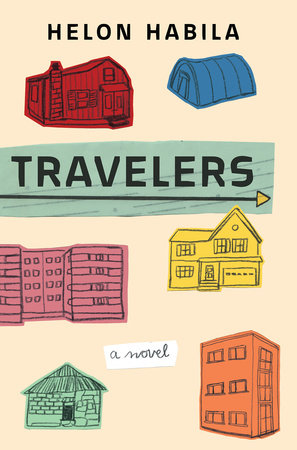
In 2013, Helon Habila crossed paths with many migrants and refugees in Germany, some of whom had fled his home country Nigeria to escape the Boko Haram militancy that had displaced millions. Urged by these migrants to record their experiences, Helon Habila began his new novel in search of answers to his long-held questions about the meaning of home, if one could return to the home they’d fled, and the possibility of making a home away from home.

Image result for travelers helon habila

Travelers is a fictional record of the real and harrowing experiences of  migrants fleeing certain death for uncertain survival in Europe. It follows the unnamed narrator, a Nigerian academic in Berlin—an expatriate really but for his skin color—who befriends a group of African refugees and their activist friends fighting for documentation and better life conditions. The slight advantage the narrator has over the African asylum seekers soon disappears when he misplaces his papers and accidentally boards a train heading for the refugee camps. In the camp, he learns how quickly lives can become displaced.


Kenechi Uzor: Your books have always struck me as interventive, political, always responding or reacting to some issue. Would you agree?

Helon Habila: We all write in reaction to something, what we often call the inspiration or the muse that triggers creativity. My muse happens to be more inclined towards social and political concerns, perhaps because of my history and the milieu in which I grew up in. In my country, and I guess in most other places, writing is always a very political act, it cannot afford not to be.

KU: “What is the point of art if it is not to resist?” How would you respond to this question posed by Mark, one of the characters in the Travelers?

In my country, and in most other places, writing is always a very political act, it cannot afford not to be.

HH: I think the best, and the most relevant writing, is always an act of protest. A refusal to keep quiet in the face of whatever seeks to dehumanize us—be it power, or oppression, or even simple lack of taste. Here I am referring especially to a long tradition of protest writing in Africa and other formerly colonized countries, and even in African American literatures—literatures described by Deleuz and Guttari as “minor literatures”—literatures subsisting within or underneath other, more dominant literatures, or within a dominant language. Such literatures, intentionally or otherwise, will always be political through their themes or aesthetics or use of language; such writers will always be seen as spokespersons for their community whether they like it or not. For such writers, to pretend not to be political will be futile.

KU: In the early pages of the book, the unnamed protagonist reflects on the “immigrant’s temperament,” the dilemma of wanting home and permanence in a new world but at the same time being reluctant and fearful of long-term commitments that could provide such permanence. I don’t think there’s been much conversation around this particular experience, at least not as much as the identity crisis that attends immigration.

HH: My image of the migrant is a person living out of a suitcase, with one foot always at the door, no matter how long he or she has lived in their new home. This image I guess is predicated on the trauma and uncertainty that always accompanies migration or exile—as Edward Said said, exile is compelling to think about, but painful to experience. This experience is manifested in many different ways, some over-compensate by embracing their new homes and not wanting to hear about the home they had left, associating it with all that is bad and evil; others can’t seem to feel at home in their new home, pining for their old country and never really making a life in the new place. This is what my character here calls his “immigrant’s temperament”—a permanent inability to fit in.

KU: In book 4, the narrator wonders why people etch their names in walls “only in places of bitterness and suffering and sweat” but never in “fancy hotels or restaurants or churches.” I’ve been thinking a lot about that and I’m wondering if you have some thoughts on this. 

HH: Well, they say that suffering forms character, meaning you benefit more from adversity than you do from a lack of it. To survive adversity is to have proven something, it means to have been tested and to have survived that test. This on the surface of it, like most axioms, makes absolute sense, but in a way, I am also questioning this common assumption that suffering is good for us, while the truth is that we’d rather not suffer at all. Wars teach us to hate violence but think of all the dying and the privation we have to go through just to learn that lesson. That quote from the book links to another section where Gina, the main character’s wife, prefers to paint migrants whose bodies bear visible marks of their suffering. She refuses to paint Mark because his face is too smooth and unmarked by suffering. She thinks these markers of suffering makes them more interesting, and more convincing, but the truth is that these migrants would rather have stayed at home, in their countries, with their loved ones. That is the irony of it.

KU: Your novel made me rethink my idea of nostalgia as a wistful longing of pleasant past. A few of the refugees like Karim seem to reflect with longing for not only their pleasant past but also on the past that held their travails as refugees and asylum seekers. Is it still nostalgia if the reflections are of unpleasant experiences? Is this a phenomenon similar to Stockholm Syndrome? What is it about the human psyche that longs for a past suffering?

HH: I guess for most migrants nostalgia isn’t only for a past, it can also be for the present and for the future. They miss the present that they cannot share with their families and friends back home, they miss the future they will never witness with their childhood friends and their families.

If I were white I guess they’d call me an expatriate.

One of the best books I have read to this subject of nostalgia and migration is Eva Hoffman’s memoir, Lost in Translation. She grew up in Poland post-WWII. It was by no means a paradise, especially for a Jewish family having to deal with the vestiges of the WWII antisemitism and the new resurgence of it—yet, when her family finally leaves Poland and moves to Canada, she is heartbroken. She doesn’t remember all the privations and the antisemitism they faced in Warsaw, she only remembers the good times. Psychologists call this a dissociative mechanism. Because our mind is unable to cope with the pains of losing our home and the challenges of making a new home in an alien and often hostile place, it escapes to the past and paints a pleasant picture of the past, even the unpleasant past, rather than face the present.

KU:  Language is often the first complication of traveling. In the refugee prison, where the segregation is by race and language, Karim’s two boys enjoy some privileges due to their ability to speak multiple languages. Can you speak a bit on the complication language brings to the immigrant experience?

HH: Language is the most common and the most effective tool humans have of expressing themselves, meaning of expressing their intelligence. Imagine if that is taken away from you. The characters in the camp have all been reduced to incoherence and even silence. I have often met adult migrants who—because they are not fluent in the new language, or because they speak with an accent, or because they cannot quickly understand a joke or cannot tell a joke—are looked upon as idiots. Sometimes, they have to depend on their children who are more fluent in the new language, to speak for them. And sometimes even their own children, who didn’t know who their parents were in their former life, begin to look upon their parents as not very smart.

In a way that is what I am playing with here, these adult characters have to rely on these kids to interpret this brave new world for them. For these kids the new world is not as frightening as it is for their parents because for them, it is normal, they have nothing to compare their situation with. They are fluent in the language of the present, whereas their parents are more fluent in the language of the past.

KU: Portia refers to her father, the resistant poet as a “professional exile” who “developed a taste for exile” and preferred to move from one asylum city to another rather than return home to his wife and daughter. Going by what happens to her father when he returns to Zambia, is the novel engaging with this idea that one can prefer and get so used to being in exile that returning home even in peacetime might not be the best for them?

HH: There are two types of exiles, those who never fit in and continuously hold on to the past, and the second are those that don’t want to hear about the past or the home they just left; instead they embrace the new home and overidealize it. Both are extreme cases, and both are dissociative mechanisms, they are not normal. James Kariku, Portia’s father, is on the end of the spectrum where exiles don’t want to hear about their home countries and even the family they left behind. In his case he has some justification, his country jailed him because of his political writing. He becomes a perpetual exile, a professional exile. Note that he is also an artist, a poet. Sometimes writers need that kind of opposition, even an imaginary one, to keep writing. A case in point is James Joyce, who kept alive his argument with Ireland and refused to go back or to hear anything good about Ireland; instead he decided to invent his own ideal city of Dublin, perhaps the way it used to be when he lived there. Clearly James Kariku can’t cope with the realities of the present, he can’t get over the slight done to him by his country and its rulers. He’d rather rot in exile than to go back—for people like him, to return is to die, both literally and figuratively. 

KU: Travelers point to the plight of refugees and the need for activism and resistance to the world status quo, but it also seems to reinforce the hopelessness of the human condition. There is so much futility expressed through the experiences of Mark, Karim, Mousa, Portia, James Kariku,  and the other characters that makes one wonder, like the narrator, if any change is possible, if there’s any point to resistance. Is futility the underlying theme of the novel? 

HH: I must disagree that futility is the ruling sentiment in the book. I think most of the characters would look at themselves as heroes, they refused to lay down and die in their own countries, they refused to give in to tyranny and hopelessness, instead they took the risk to seek a new beginning in a new land. I also try to look at their motives for doing so—for most of them they do it because they love their families, they want their children to have a better future and they are willing to face humiliation and even death to achieve that.

These characters refused to give in to tyranny and hopelessness. Instead they took the risk to seek a new beginning in a new land.

Karim, the Somali character, leaves Mogadishu and enters exile because a warlord wants to marry his ten-year-old daughter. His options are to stay and watch his beloved daughter marry this crazed warlord or to run into an uncertain future, but a future that offers his daughter better odds than the one he is leaving behind. There are no easy choices. In a way I am interrogating a world order that has left some people so far behind, leaving them no option but to escape from their native homes. I don’t call their actions futile, I call it heroic.

KU: Travelers also engages with existentialism. Have you always been interested in existentialist concepts in your writing?

HH: If by existentialism you mean the search for meaning in a meaningless world, and the individual’s drive to survive at all cost, especially in a world that tries to stifle the individual impulse, I will say yes. My characters fight and resist “group-think,” sometimes rebelling against tradition because tradition should be a starting point, not a destination. It is there to guide us, and in the end, we have to find out what works for us and fight for that with all our resources.

KU: How has living and teaching in America influenced your writing? Would you have written a book like Travelers if you weren’t living outside Nigeria?

HH: I doubt I would have, or could have. Living outside one’s country gives one a deeper perspective into the discourse around travel and migration. There’s a sense of recognition I felt while talking to African migrants in Europe for the book—of course there are all sorts of migrants and travelers, my travel is less traumatic in the sense that I didn’t have to escape war or persecution, if I were white I guess they’d call me an expatriate, an expert in his field who is working in another country other than his. Migrant, refugee, émigré, expatriate—sometimes these terms are created to limit and confine. That is why I decided to go with Travelers, because in the end we are all traveling.

KU: Who should tell the immigrant story? Who can tell the immigrant story and tell it, right? Who should tell any story?

HH: Whoever is inspired or compelled by circumstance can tell it. It is not a competition. Migrant narratives are some of the oldest genre in literature. Think of the Odyssey, think of the Iliad, these are among the oldest western texts, and they are on travel. I guess we have come to associate the immigrant story with stories of black or brown people seeking refuge or opportunity in western countries. But the colonialists who went to Africa to conquer and to live there were also migrants, the experience is the same whether you are a soldier or a refugee, you still have to deal with the nostalgia of losing your native home, you all have to deal with the challenges of self-reinvention in a new place. It is the oldest story ever told or written: a man or woman goes on a journey, or a man or a woman comes to town.

KU: Some writers often say they have no readers in mind when they write. Is this the same for you? Who would you consider as the primary audience for Travelers?

HH: I really wasn’t thinking of any particular reader when I wrote it. All I wanted to do was to do justice to the people who entrusted me with their stories and to go beyond the statistics and the headlines and in the process to humanize them as much as possible.

KU: What problems, if any, have you noticed with how African writers have been telling their own stories? If we’ve been doing so, have we really been telling it different, or do we still propagate the same flaws we accuse foreign media and writers of doing?

HH: There isn’t any wrong way or right way of telling a story, as long as one does it with sincerity and humility. Each writer has his or her own approach to telling a story. I know I have in the past been uncomfortable with certain modes of representation of the African experience by African authors, but in the end I think it is a matter of style. Some writers are more subtle, some are more nuanced, some are less so. But if I were to offer an advice, I’d say we need to write more about our heroes and less about our villains and dictators, but the truth is that stories about villains are often more compelling than about good people. So, there you have it.

How Lolly Willowes Smashed the Patriarchy by Selling Her Soul to Satan

Heinrich Kramer, the author of the Malleus Maleficarum or Hammer of Witches, the 1487 treatise on witchcraft, was not a man who thought highly of women. In the sixth of a series of questions, Kramer asks “Why is it that Women are chiefly addicted to Evil superstitions?” After all, he notes, most witches are women. His answers to his question are predictable and familiar: women are naturally inclined toward wickedness, their intellects are childish and weak, they gossip too much, they are feeble in mind and body, they are lustful, they are deceitful, they have weak memories, they need governance by men but resent and resist it, they tend toward hateful jealousy. Even in the Bible, Kramer reminds us, Potiphar’s wife falsely accused Joseph of rape when he wouldn’t satisfy her sexual demands. Women: you just can’t trust them.

Heinrich Kramer wrote his treatise after he was kicked out of town for his obsessive attentions to the sex lives of the women of Innsbruck, particularly the sex lives of women who refused to attend his sermons. The Malleus Maleficarum is his justification for his behavior, and he advances the claim that witchcraft, once viewed as a minor offense, is actually heresy, a much graver crime. The punishment for heresy was to be burned alive. His treatise, with the help of new technology, spread his ideas far and wide and helped kick off the witch hunts that took place in the early modern period throughout Europe and lands colonized by Europeans. The vast majority of convicted witches burned, hanged, or drowned over this several-hundred-year period were women, often older single women, and they were killed by the tens of thousands.

In her 1926 novel Lolly Willowes, Sylvia Townsend Warner, who did think highly of women, asks much the same question as Heinrich Kramer had asked over four hundred years earlier: why are witches so often women? What about selling your soul to the devil is so much more appealing than living by the standards of goodness and womanhood under patriarchy? Her protagonist, an unmarried middle-aged woman named Laura Willowes, has a different answer than Kramer, and yet they are in agreement on the premise: women are more inclined to sell their souls to the devil than men are, and witchcraft is a largely feminine preoccupation. In Lolly Willowes, that’s just a logical reaction to patriarchy.


The first sentence of Lolly Willowes reads, “When her father died, Laura Willowes went to live in London with her brother and his family.” The second sentence begins, “Of course.”

In Lolly Willowes, patriarchy is assumed as a fact of life. The book takes place among the white middle classes of England: the comfortably landed professionals who benefit from the violence of patriarchal colonization and yet rarely encounter violence themselves. Laura Willowes, the daughter of an English brewer with a small inheritance of her own, is hardly one of the foremost victims of English might. None of the men in her life feel any antipathy toward her, and some even love her. Her material needs are met, and she should be satisfied.

Despite the comfort of the middle classes, however, Laura will, by the book’s end, sell her soul to Satan and become a witch.

Though Lolly Willowes starts in 1902, the question of what to do with the unmarried woman was also relevant to 1926, when it was published. Between the Great War and the pandemic flu of 1918, a whole generation had become sexually lopsided in the course of just a few years. The colonial demands of Empire had also bled the British Isles of young British men, who proliferated in the lands they settled, far from English women and English marriage, ready to reshape and model English patriarchy for a new population—who, though they had never asked for such instruction, were still Englishly judged to need it. Lolly Willowes was a surprise success among people who saw themselves as liberated and modern. It was an international bestseller and the first Book of the Month Club selection. 

Lolly Willowes explores the ways that patriarchy can quietly, gently, lovingly deform a woman’s entire life.

Lolly Willowes explores the ways that patriarchy can quietly, gently, lovingly deform a woman’s entire life. Even the title is molded by outside influences and expectations. “Lolly” is a nickname bestowed upon Laura by the first child to make her an aunt, and it is immediately and irrevocably taken on by Laura’s family, although Laura herself dislikes the name, and the narrator never uses it, except to illustrate the thoughts of Laura’s relatives. Laura sees “Aunt Lolly” as a state into which she enters when she is moved into her brother’s house, and it is, moreover, a state she finds increasingly unbearable, and yet she bears it for years on end without any of her relatives suspecting her inner rebellion against it. It imposes itself on the title of the book, shaping from without. You cannot pick up the book without becoming complicit in making Laura into Lolly.


When I was a young mother, sometimes my duties to my family would become overwhelming, and I would imagine a scenario in which I got sick—not deathly ill, but ill enough to be hospitalized. In that state, people would have to take care of me, and I would have to take care of no one. I’ve talked to other women who had the same fantasy, and I was surprised by how long it took me to realize that if I was imagining it, I could imagine something better. I could imagine winning a paid vacation or being the kind of rich that only exists in fiction, where all is done for you, and you harm no one. I could even arrange something better in real life: ask for help, ease up on some duties, acknowledge that I was struggling. But no. Instead I pictured a hospital stay, which could not be my fault, and therefore could not be, even in my mind, a shirking of my duties.

Heterosexual couples, as a rule, don’t split parenting or housework duties evenly. This is true whether both partners work outside the home or not, whether the couples are old or young, whether they are college educated or not, whether they are on the left or right of the political spectrum. I’m pretty lucky, because my husband and I both despise housework fairly equally, and our expectations of one another are not terribly focused on domestic labor. Still, domestic labor needs doing, and while we split it as evenly as we can, we still live in a society that doesn’t place the burdens of those expectations evenly across genders. Even if we are fairly equitable, the judgment of a messy house is more likely to fall on me. 

Why not sell your soul when it doesn’t belong to you anyway?

In Lolly Willowes, though Laura is unmarried, her move into her brother’s house launches her into this role of domestic expectation. She is needed to help care for the children, needed to assist her sister-in-law in mending and embroidery, needed to take the children to their dance lessons and to do the shopping and to clean the canary’s cage. “Needed” is the word used in the text, but in fact it is work almost anyone could do, and work that presumably got done before she arrived. On Tuesdays she must go to the library to change out their books. Every summer, Laura goes with her brother’s family on holiday. She looks forward to it with anticipation of taking “long walks inland and find[ing] strange herbs, but she [is] too useful to be allowed to stray.” Every summer ends with a list of things she had hoped to do and failed to do. She is too useful to follow her interests and her work too useless to hold her interest. During the war she takes on war work, but this, too, is useful and useless at once. She is put to work wrapping packages, and is so good at it that she is never offered other work. Laura spends the first World War in an office, tying up brown paper parcels, needed by everyone but herself.

Why not sell your soul when it doesn’t belong to you anyway?


Over the years in Lolly Willowes, Laura settles into middle age and a state of Aunt Lolly so grim and permanent that she almost forgets her own name. Autumn unsettles her yearly. When autumn comes, she wants more than anything to be in the country, not for beauty, but for a something she doesn’t understand, “a something that was dark and menacing, and yet in some way congenial; a something that lurked in waste places, that was hinted at by the sound of water gurgling through deep channels, and by the voices of birds of ill omen.” But it passes yearly, leaving behind the frustration of having missed whatever the point of her “autumnal fever” might be. She buys small indulgences by which to wrap herself in “a sort of mental fur coat.” But the mental fur coat, too, fails. Being Aunt Lolly is stultifying to such a degree that Laura, at the age of 47, can no longer perform the part. Something in her cracks and she finds herself imagining a new life in a place she has never been. 

On a sudden autumn impulse, Laura moves, alone, to a village called Great Mop, where she both finds what she wanted and fails to find it. She wanders the countryside, map in hand, looking for that unknown something she has wanted in the autumns. But all of this comes crashing down when Laura’s nephew Titus shows up. 

Titus, the son of Laura’s brother James, is about to settle down into the family brewing business, but first he wants to stop and visit his Aunt Lolly. As soon as Titus arrives, he starts gently, lovingly pushing Laura back into the state of Aunt Lolly that she fled. Titus falls in love with the Chilterns, the range of hills north of London where Great Mop is located. But his love is oppressive: 

Love it as he might, with all the deep Willowes love for country sights and smells, love he never so intimately and soberly, his love must be a horror to her. It was different in kind from hers. It was comfortable, it was portable, it was a reasonable appreciative appetite, a possessive and masculine love. It almost estranged her from Great Mop that he should be able to love it so well, and express his love so easily. He loved the countryside as though it were a body.

Titus, a kind man, a good nephew, the best and closest of Laura’s family, is still unable to enter her world without loving her into pain and nightmarish alienation from herself and from nature. Walking with Titus in the hills and woods, Laura feels “the spirit of the place withdraw itself further from her.” She feels it as an animate rejection by the land. If she walks it as an aunt with a nephew, soon she will only be able to walk it as an aunt with her nephew.

Worse, because Titus’s oppressive love is true, he quickly decides to move to Great Mop himself. Laura feels the specters of the rest of her family coming alongside Titus, as he, sure of her, sure of himself, sure of the landscape, tells them, “You see, it’s all right. She’s just the same.” She feels it as an attack on her soul, which her family feels certain is already theirs.


When a soul is at stake, there is always a buyer. Laura cries out into the evening sky her determination not to go back, not to be held by those who love her and don’t know her. She begs for help. And in the moments that follow, she feels an animate silence that tells her that “surely a compact had been made, and the pledge irrevocably given.” When she gets back to her room, a kitten is waiting there, and Laura recognizes her familiar.

The middle-class spinster from a respectable family has made a pact with the devil. Laura feels at peace.

The middle-class spinster from a respectable family has made a pact with the devil. Laura feels at peace. She knows that, had she been “called upon to decide in cold blood between being an aunt and being a witch, she might have been overawed by habit and the cowardice of compunction.” But in a state of desperation, afraid of being forced into Aunt Lollyhood once more, Laura chooses unerringly: becoming a witch is the instinctive right choice. Moreover, she has always been a witch in training, she just wasn’t allowed to see it.

Grateful and secure in Satan’s loving hands, Laura knows that between the kitten and the devil, Titus will be gone. And indeed, mysterious bad luck suddenly seems to dog Titus. His milk spoils, even when it is fresh and new. When he replaces the milk with canned condensed milk, he cuts his thumb on the tin lid, and his wound festers. He is unable to write. He is plagued by flies, and then by bats. His lovely hair is chopped close. And finally, he is set upon by wasps and becomes engaged to the first female friend he runs into after the wasp incident. Titus will leave Great Mop. 


Gender under patriarchy can’t help but harm women. It harms men, too, but it offers particular benefits that make that harm worthwhile for a whole lot of men. Gender under capitalist patriarchy is necessarily impossible. It isn’t a coincidence that gendered expectations are contradictory. The contradictions make it impossible to fulfill those expectations, and the impossibility places it always just out of reach, fixable with the right product, new look, new attitude, new behavior. For women under capitalist patriarchy, failing to fulfill gendered expectations is financially punished, but, crucially, so is fulfilling those expectations reasonably well. You might get the job or the marriage by being attractive and tidy and correctly female, but the rise to authority and true ownership of wealth is unlikely to follow. Fulfilling femininity to the satisfaction of men is nearly always an argument against your own potential. 

A system that prevents alliance between women prevents witchcraft as well.

The women in Laura’s life who perform gender better than she does, who read the right books, got the right look, the right husband, the right house in London and the right holiday spots in the country or by the seaside, don’t have lives that look more open or fulfilling than her own. They are mothers, menders, and spoilers of husbands less capable than themselves. Of the sister-in-law with whom she lives for much of the book, Laura thinks, “She was slightly self-righteous, and fairly rightly so, but she yielded to Henry’s judgment in every dispute, she bowed her good sense to his will and blinkered her wider views in obedience to his prejudices.” This constant indulgence by his wife changes Henry’s “natural sturdy stupidity into a browbeating indifference to other people’s point of view.” A good wife makes a worse husband. 

Solidarity between women isn’t fully possible in this state. Perhaps Heinrich Kramer, writing his manifesto against female devilry, was right about “the woeful rivalry” between married and unmarried women. Kramer worried that when women talked to one another, they spread witchcraft. Their “slippery tongues” made them “unable to conceal from the fellow-women those things which by evil arts they know.” A system that prevents alliance between women prevents witchcraft as well.


The novel ends on a hillside. Laura finally gets a nice long sit-down talk with Satan. Reminded that Satan seeks out men as well as women, Laura says, “I can’t take warlocks so seriously, not as a class. It is we witches who count. We have more need of you. Women have such vivid imaginations, and lead such dull lives. Their pleasure in life is so soon over; they are dependent upon others, and their dependence so soon becomes a nuisance.” She imagines women all over Europe “living and growing old, as common as blackberries, and as unregarded.” She describes the lives of women, “settling down,” in “a dreadful kind of dreary immorality.” 

Being a witch offers so much more. Laura’s family is so sure of her soul, but they hardly know she has one. The Devil, though, knows women have souls, and he wants those souls, and he knows that they must be pursued and courted. Being a witch offers an escape from good and evil both, from the habits of useless work that Laura learned as a woman and aunt, from the need to always be in service to everyone else, anyone other than yourself. Laura, in giving up her soul, can finally call it her own. After all, Satan only worries at those he does not yet have. Like a hound, he pursues and attacks, but the attacks end when the hunted submits. The book is called Lolly Willowes, but its full title is Lolly Willowes, or, The Loving Huntsman.


Laura sold her soul in 1922. It seemed a strangely old-fashioned thing to do in the age of riotous nihilism and centers that would not hold and the looming shadows of Great Wars leaning in on either side. And yet it was also the most modern solution Laura’s author, a woman living a very modern life, could fashion.

We sit nearly a hundred years out from the events of Lolly Willowes, and it is still true that women’s lives are constrained, often by those who love us most. What Sylvia Townsend Warner saw was that patriarchy is not always a blow from a closed fist, but often the enclosure of an enveloping shawl, wrapped forcibly with love and concern, around someone who doesn’t want it and is already too warm. Throughout Lolly Willowes, characters insist that Laura will be too cold, is too cold, that she must avoid the outdoors where she is most secure and peaceful, that she must protect herself against that which most pleases her. Women are loved, in this world, not as individuals, but as archetypes. What Lolly Willowes imagines, and what Laura Willowes eventually attains, is a world where women can go out in the cold. A soul can be as much an encumbrance as a shawl, but in Lolly Willowes, it turns out to be just as easy to discard.

Married with Kids: One Star, Difficult to Assemble

“Patience”
by Courtney Maum

After putting his daughter Roxy on the school bus in a parka he had won a battle over and flip flops he had not, Mark returned to a kitchen bright with detritus from the night before. Crusted cake dishes, garbage bags of torn up wrapping paper, pink sequins here and there. It was a milestone of consequence: Mark had weathered a princess party with something close to grace. 

And then he saw an object on the kitchen table that hadn’t been there earlier: an opened birthday present with a Post-It note attached. It was immediate, the disheartening. His swallowed coffee burned.

This was the gift that had caused problems; the low point of the night. Initially, their four year-old had been thrilled with the LED “Glowbrite” drawing easel whose neon markers made your sketches look all psychedelic, but there was no way for mortal humans to wipe the markers off the screen. After Roxy had presented them with a slate full of “R”s and demanded room to make her “O”s, he and his wife had tried soap and water, even an ancient burp cloth, but the markers were immutable; these efforts only transformed his daughter’s letters into a beaming smear. 

Well after Roxy had been bribed into bed, Laurie had been sore about the botched cleaning, turning the scratched screen over and over with calculated sighs. Because his wife had been out of the room when Roxy had actually opened up the present, Laurie remained convinced that the challenge they were facing was Mark’s fault. That he’d misplaced the instruction manual, even though there hadn’t been one. 

Research? the Post-It on the easel asked, the question mark so coy it made Mark want to go back upstairs and take a sleeping pill. Tomorrow is another day, unfortunately, a college friend wrote recently on Facebook. Mark had pressed the heart button and liked it. And then he unliked it, because he didn’t want anybody to think that he didn’t like his life.

Mark sat down at the kitchen table with the offending item, the room almost indecent with October light. These Post-Its were a sickness. A manifestation, their upscale hippy friends would say. Laurie knew Mark was being visited by existential questions and she used it to her advantage. He’d spent most of last Friday researching toddler size 9 waterproof boots because of a sticky note he’d found on his own shoe.

Mark looked up the Glowbrite drawing easel up on his cell phone. The company didn’t even have a website, just terrible Amazon reviews. Only two of the markers weren’t dried up when we got it, read the first one. Impossible to clean. What a headache. Worthless and scratched. 

Mark scrolled through the various ways that strangers felt cheated by their products. And then he came to this: If the markers don’t work, the toy doesn’t work, and the markers don’t work.

He sat very still. He held his phone and waited. He had a feeling that this consumer review might hold something magical for him. Then his phone pulsed with a phone call. It wasn’t even 8:00 a.m.

“Hello?” he asked, his question mark, hopeful. 

It was his assistant producer. The lead in their new feature film quit. 


It wasn’t that Mark Lambros was an opera buff, exactly, but he was interested in the story of a once-famous opera star who, in the 1860s, refused to sing in public anywhere but her country house in Winsted, Connecticut, a humble river town which, back then, was reached by horse, train, horse. She spent her weekdays refusing different public concerts, and on the weekends, she would cart her favorite friends out for days and nights of opera, her singing it, them enjoying it, all of them discussing how much such singing meant. 

Mark wasn’t entirely sure why he was drawn to the project. The arbitrariness of this woman’s decision, her wish for control, maybe, her wish for something special that took place entirely in private. The director was young and fiery and convincing, and he’d done prize-winning shorts. Plus, he’d thought, how beautiful would it be to hear opera in the woods. 

What r we going 2 do?!! his assistant producer texted, even though they had just spoken. The star’s deflection was urgent; the calls coming were urgent. But Mark did not feel moved. At forty-six, he’d done this twenty times. It was so exciting in the beginning, producing indie films. The undiscovered talent, the electrifying hustle, even the gummy turkey wraps at film festivals and the weird seasonal beers. But now, distribution, the goal you used to aim for, and once in a while, get, had become such a pipe dream, that it didn’t really seem worth it to make movies any more. He could post a video of his daughter singing about poop and have more eyeballs on it than he’d ever have for his three-million-dollar doc/fiction-blend about a niche group of opera fanatics living in the woods. Who cared? No one really did. 

A duck fell out of the sky into the small pond outside his office. The pond was man-made, and had seemed like a charming water element when they’d visited the house. Now Mark spent as much time parenting that pond against infestations of filamentous algae and duckweed as he did his daughter against head colds and Lyme. Shouldn’t there be two of them? Shouldn’t that duck be south?

The director called. Mark let it go to voicemail. When he thought about the size of the thing he needed to accomplish, the cinematographer and the Belgian lighting director and the wistful supporting actress who’d all signed on to the film because of its big star, when he thought of the important people who would also quit when they heard that Mark had lost her, well this was a hurdle he wasn’t ready to run toward at 8:30 a.m.

He put his cellphone in a drawer where he kept the expired family passports and searched until he got back to the review about the toy not working if the markers didn’t either:

My two year-old received this easel as a birthday gift, and we decided to put it away until she was three, because at two years old, she could not properly handle the markers that came with this product.

Waiting for another birthday might account for why some of the markers were so dry by the time we gave it to her. We stored the gift in its original box which took up a lot of room in our house. Maybe it needed a different environment, the basement, for example.

This product is almost impossible to clean and it looks scratched after the first time that you use it. Before this, our daughter was only allowed to draw on paper though so she is very proud of it. Even our six year old plays with it sometimes. 

The reviewer’s dignity was striking. No agenda other than the sharing of a personal opinion, an opinion that didn’t point any fingers at the children who maybe left the caps off of those markers, or the husband (Mark bet it was a husband) who’d bought the wrong thing at the grocery store, again. Together, as a team, these parents had decided to delay the giving of the gift until their child could have a successful experience with it. It was awe-inducing, truly.

Mark looked above the review for the person’s name. Debbie Meyer. Debbie’s community activity board showed a smiling woman wearing a fleece coat. She appeared to be holding something, maybe a falcon. Her reviewer ranking was 2,250,249. She lived in Salt Lake City.

The drawer started rattling from the vibrations of his cellphone. The less quickly Mark responded to the assistant producer, the more frequently he texted. Mark looked at the other products Debbie had reviewed. A baby sun hat. A Nalgene water bottle. Metallic two-tone shoes. A “Better Life” floor cleaner that smelled like citrus mint.

Something in Mark’s heart twinged at this last product. Was he not living his life right? Should he have fragrant floors? There were a lot of people he knew who were having shameful problems in their home lives, but Debbie Meyer maybe wasn’t one of them. This was a woman who had kind and good solutions, who was probably raising a child who faced forward at the dinner table, instead of backward, with her feet up by her ears. Was she a pragmatic wife and mother and a falcon-tamer, as well?

Mark turned back to his computer, his hand shaking a bit. The most recent thing that Debbie had reviewed was a box of “Happy Belly Decaf.” She’d given it four stars. Delicious and FRESHLY ROASTED was the title of her review.

Mark got up and walked around his office. He felt moved—maybe irreversibly—by this woman’s praise. He let himself imagine what it would take for him to be the kind of person who took the time to leave four-star reviews of a bag of decaf coffee. When I got this, Debbie had written, it had only been roasted five days earlier. How awesome is that?

Mark felt sick to his stomach. He turned off his computer. He’d do the breakfast dishes, now. There had been a Post-It note about this, right next to the sink.


“Have you ever reviewed anything on Amazon?” Mark asked his wife that night after they’d reheated the food their daughter had refused to eat and eaten it themselves. 

Laurie was cutting up that day’s school notices into an ever-growing scratch pad. She didn’t like to waste paper, and every time Roxy’s backpack came home stuffed with all these notices, she threatened to say something to someone at the school. From the stack of flyers in front of her, Mark noticed two identical ones about “Socktober.” 

“Books,” she said, cutting both notices in half. “I’ve reviewed books.”

“Never a product?” he asked. 

“No,” she said. “Why?”

“I don’t know,” he said, disappointed that she wasn’t going to surprise him. “What would make you want to leave one?”

“Of, like, what?” she asked, her eyes meeting his.

“I don’t know, a thing. Or a kid’s toy.”

“I guess if it caught on fire or something, I’d want people to know that.” She shrugged. 

“Would you ever review, like, coffee? If it was really, really good?”

“Well, no. I wouldn’t.”

“Why?”

She squinted at him. “Because who has time for that? And also, there’s too many kinds of coffee. People are totally out of control about caffeine.”

“What about a decaf? Like if I found a really good decaf?”

Laurie looked to the lacquer tray they kept above the fridge with the unfinished bags of potato chips and an ancient Fed-Ex envelope of pot edibles that had a Post-It taped to it, DON’T EAT. 

“Are you high?” she asked.


The next morning, after learning of the star’s departure, the film’s supporting actress told her agent that she felt like she was working “in an unstable film environment” and Debbie had a new review up. It was for a “Utah Riffic Snapback Trucker Hat” from a company called, “THATS RAD.” It was fifteen dollars and forty-nine cents, and she’d given it four stars. 

What a fun hat but toooo big for this lady! was what she’d gone with as a title. Except, no, she wouldn’t have “gone with” anything, not Debbie. She didn’t question herself, try to present herself as anything; she cleaned her floors with “Better Life” floor cleaner and did not do coy:

I got this hat to hike in because my toddler pulls on the neck protector of my other hat. I am a woman with an average head size, I would say, but this hat was really big! What a disappointment because the hat was very cute. Unfortunately, this hat only comes in one size. So I had to return it. 

Mark indulged himself in the flood of good feelings that this news brought to him. Debbie had been excited about something, and it hadn’t worked out, but she was going to keep climbing up life’s mountain, regardless. Faced with the revelation that she didn’t have an average head size, Debbie hydrated her children and sunscreened the lot of them and went on without a hat. It occurred to him, as it did sometimes, in a burst of adrenalized clarity, that there was  beauty in his life that a simple change of attitude could help him to admire. Obstacles were challenges. Challenges were opportunities. When life put a big rock in front of Debbie Meyer, she just climbed around it. 

This mindset was challenged when Mark went into the kitchen and found a new Post-It note attached to the coffeemaker. The note read, Beans?☺


The thing was, Laurie hadn’t always been a castrater. (The couple’s therapist asked Mark not to call her that the first-and-only time he’d tried to; she suggested “deflector,” instead.) Laurie was a novelist who worked around the clock when she was inspired, and in the beginning (“their salad days,” as Laurie liked to call it, which wasn’t right, really, because they ate way more salad, now), they’d had a loosey-goosey life. A lot of things—a lot of them—fell through the cracks. They had to pay back taxes one year. The car would sit with the same sludge of unchanged oil for months. Or years, until something cracked. They’d run out of coffee and it would be something they complained about until one of them complained the hardest and finally made the trip out to the store, which was kind of far away, because in their early thirties they’d made the decision to leave the city for the country so they could have more time for art. 

Laurie had weathered that move phenomenally: she produced untold amounts of work in the new peace and silence. In the beginning, Mark had been inspired, too: he’d produced some award-winning shorts, and even written one himself which made it all the way to Tribeca, three hours away, but a big deal in the film world. And then, the projects had stopped appealing to him, or stopped feeling urgent, and he’d started tinkering with the house, learning a little carpentry, which was useful to the both of them because the house was kind of falling apart, and he was no longer doing the two-film a year thing that would keep him in the scene, and his name started to carry less weight, until it didn’t carry any weight at all. And the real problem was that it didn’t really matter because Laurie’s books were selling gloriously, so she told him to take time, take all the time he wanted. When really, if he really looked back on it, what she probably wanted was for him to fix more things around the house.

He had pushed for a child. He wasn’t allowed to forget this, by the way. And it felt awful to admit this about a being who brought him so much simple joy, but their little girl kind of decimated their marriage. Or at least, Roxy changed the way they were married to each other. They were married worse.

To Mark and Laurie’s credit, they’d fought off the operations management roles that parenthood auto-suggests. They tried not to have the mundane “checklist” conversations they’d witnessed other parent-friends tick through with defeated eyes. Do you have a snack, the bottle, do we have diapers, do you have the disheveled T-shirt blanket that probably is riddled with Ebola? They skipped these domestic check-ins because doing so felt like proof that they were still “spontaneous” and maybe even “in love,” but these forced inattentions usually resulted in Roxy pissing in her car seat because each of them thought the other one had put the diaper on.

It had never been a conversation. Something about parenthood had depressed Mark, in the full sense of the word, it had filled him and had slowed him, and it hadn’t done this to Laurie, so she was still working furiously and making money and he wasn’t, or he wasn’t making much, and so without either of them really talking about it, he’d become the eighty-nine percent-of-the-time caretaker of their child, and Laurie was the winner of the whole grain, sprouted bread. And the fact that they had never talked about it, hadn’t used words like “time out” or “depression,” hadn’t used any words at all, really, but just kind of shifted into these new positions that saw Laurie leaving Post-It notes that were punctuated as love letters but were obviously chores, had Mark feeling immobile. He resented his wife, and she resented him, but he needed her, and she needed him, also, but not for the kinds of things that he wanted to be needed for. 


That night, Mark asked Laurie if she had an Amazon wish list. In between trying to find a replacement for his opera star and convincing the panicked cinematographer not to jump ship also, he’d been tracking the things that Debbie wanted. She had a lot of stuff on hers. 

“A what?” Laurie was separating the school notices at the kitchen table, again. There was going to be a field trip to the fire station Friday. Their child was going to have to walk through a “smoke trailer,” and if they didn’t want that to happen, he was going to have to call the school. 

“An Amazon wish list. Where you put the things you want.” 

Laurie squinted. She was always squinting at him. “I just buy the things I want.”

“Exactly,” Mark said, pleased. There was an apple on the table for some reason, and he decided to eat it. 

“Are you accusing me?” she asked.

“Of what?” he crunched.

“Of, I don’t know.” She was holding onto a blue piece of paper. The Socktober notices had changed color. The need was urgent, now. 

“Well, what would you have on your wish list if you had one?” he asked.

“I would have less notices from this stupid school.” 


Debbie Meyer’s wish list had 27 items on it. Mark monitored it daily. She wanted a book of poetry by Mary Oliver, a replacement mop head for her spin mop, and a travel memoir by Bill Bryson. But she also wanted a lot of books about God. How incredible to see someone’s desires listed out so plainly! It made Mark dizzy to imagine a world in which he could see what Laurie wanted. The transparency, the happiness, the access of the thing! To know with a single click that you were living with someone whose heart sung for an expandable pull-out cabinet shelf, waterproof adult sandals, a 6.5 inch cast iron pan for making homemade donuts, and a turquoise shawl. It made him start with longing. It was a freedom—a freedom with a framework that he would never know. 

Mark and Laurie had composed wish lists once, under the supervision of their therapist. They’d had to fill out sheets that read, “What would make me feel loved?” at the top. It was bad, definitely, that Mark couldn’t remember what Laurie had on hers. He’d put “speak to me with the same face she uses for her girlfriends,” on his.

They’d made it three sessions with that therapist. Things improved, so they stopped going. Then things got sad again a year later, so Laurie called for an appointment, but the therapist had moved. To North Carolina, the voicemail said.


Socktober passed; 272 pairs of socks were gathered which didn’t come close to the 383 pairs received the previous year. “Humanity is fucked,” Laurie said when she fished the disappointing news from the “Parent/Teacher Communication Folder” in Roxy’s glitter backpack. 

Well it was true, wasn’t it—there wasn’t much hope left. They’d started 2016 with so much fury, tipsy with the potential of their specific rage. Laurie set up automatic payments from their checking account to ACLU and Planned Parenthood; they attended sign-painting parties with Roxy, and took those signs (and Roxy) to crowded government lawns; they hand-wrote postcards to senators; bought sheets and sheets of stamps.  

But you can’t stay in the fury stage; it’s followed by defeat. If you bang and bang on a door, and nobody opens it, barring the exception of the person who actually knocks the door down, most people walk away from the door with a new hunch in their shoulders, burred shame in their heart.

Mark’s wife was a fighter, but she disliked wasted time. Laurie wanted results for her actions that she could track online. At a dinner party the other night, she announced that the lack of action around gun laws had gotten to a point where she fully expected to be shot. That every time she went to some big chain place like Target or Trader Joes, she wondered: Is this the day it happens? In the patio and garden department, considering a pouf?

It was a lot to reckon with. It was. In so many ways, Mark understood why Laurie left him all these Post-It tasks. They ran out of coffee beans, and he got some. Roxy wanted to be a mermaid for Halloween, so he found her a costume. Laurie was worried she’d trip on her mermaid tail getting into the school bus, so on the 31st, he put it in his Google calendar that he’d drop her off at school. On the micro level, their world was manageable and functioning, they were winning every day. He ordered things from Amazon and like clockwork, they showed up. There was a gaping, spreading hole underneath their driveway, enlarging weekly, widening its gullet to swallow the whole world, but at least Laurie could go down knowing that Mark had stocked the fridge. 

A lot of his friends seemed like they were on the brink of losing it. But nobody did.


That Thursday was date night, every second Thursday was. They’d chosen a new place their friends had raved about that had an eighteen-dollar burger. Was this considered a good deal? The burger came with fries so Mark supposed it was.

The waiter handed them the menus, and they took time looking through them even though they’d probably order burgers. While they were waiting for the waiter to return, Laurie made an announcement. 

“I’ve sent the new manuscript to my agent,” she said.

“That’s great!” he answered.

“She’s going to hate it,” she added, pulling at the menu’s tassel.

Mark didn’t say anything else because this was probably true about the agent, who didn’t like Laurie to take risks of any kind. His wife wrote romantic chic-lit comedies about busy moms who did things like send their kids to school plays in an Uber. She’d put some lesbians in this one. 

“Well,” he said. “What now?”

Laurie actually looked at him. She had put on earrings. The unexpected effort both flattered him and made his stomach clench. Three years ago, she had asked him if they should try an open marriage. While they were folding laundry, he recalled. He said he’d rather not. He really did not want to have this conversation again. 

“What now is…” she faltered. The waiter had come back. But then he left again because he’d forgotten his writing pad. 

They both searched for something to say in the gape of the waiter’s absence. 

“How’s the opera proj—film?” Laurie course corrected. There had been hot water over this at the therapist’s, the fact she never called his films films, she called them “projects.” “That’s because so few of them actually become films,” is how she explained it to the therapist. Right in front of him. 

“I think what we’re going to do,” he said, picking at a tear in the menu’s lamination, “I think what we’re going to do is change the filming dates. To…accommodate her new schedule. So, like, April probably, instead.”

Mark watched Laurie work through the way this information would impact her own schedule. Her lips tightened, brow furrowed, the whole thing. 

“You couldn’t have mentioned this before?”

Mark stopped himself from saying that he was mentioning it now. He stopped himself, but it didn’t feel very good. “If we don’t get her back, the whole film will fall apart.”

His wife was going to say something, but the waiter re-appeared. 

“Are you ready to order?” the waiter asked.

“Um, we’ll have the burgers?” he replied. “Medium, for both?”

Laurie exhaled. She shut her menu. “I’ll have the mussels, actually.”

“Oh,” said Mark, once the waiter had left them. “Wow.”

“I know,” said Laurie. “Wild!”

Her earrings made a swoosh-swoosh sound when she laughed her little laugh.


In November, the cinematographer quit because April didn’t work for him, and Debbie added a new book to her wishlist: The Uncertain Church. She also posted a two-star review of her garlic press. We have now been using it regularly (a couple of times a week) for 8 months and the metal has become bent and rendered itself useless. It is possible, she accommodated, that we pushed too hard.

The fact that Debbie seemed to be flailing in her life and her belief system made Mark want to be strong for her. It made him want to be strong for the entire world. It made him want to be the exceptional person who knocks down the fucking door. 

He called up the cinematographer and used strong words. He ordered a drain cap and installed it in his gutter so that the leaves and chipmunks and whatever wouldn’t keep going down the S drain and clogging everything up. He went to a new Tai Chi class at the town recreation center and let everything flow. And when he found a Tupperware in his fridge with a Post-It note that said Really bony whitefish? Mark stuck another note on it that said, This is NOT my problem.

That night, for the first time in forever, Laurie initiated sex.


By December, Mark had convinced their original star to come back into the fold using the age-old solution of flattery and cash. They’d shoot the film in May, which was a terrible month to shoot in (black flies, persistent mud), but they’d shoot the film with her. Mark celebrated by taking Roxy and Laurie to the local church.

It had been something he’d been thinking about for quite a while now, going to a church. The catalyst had been the underlying piety of Debbie’s careful wishlist (she’d purchased a new copy of He Whispers Your Name, but had bought God Has a Plan for Your Life, used), but also, there was the quagmire of Roxy’s current age: she didn’t take what her parents said as fact any more, for each question, there were more questions—her mind was like an existential set of Russian nesting dolls. 

And then there had been pet week: the disastrousness of that. One day, Roxy came home with a missive in her Communication Folder to bring in a pet photo: this was what the kindergarteners were doing, bringing in photos of their pets. This was going to be difficult for Roxy, because the Lambros’ family pet was dead. Or at least they thought he was dead: Muffins had not come home one night and after three days of steel-hearted optimism, Laurie told Roxy that he’d gone to Coyoteland, which she had meant as a euphemism, obviously, but just made things more complicated. (“When will he be back?”)

So an irate Laurie had sent Roxy off to school with a picture of their dead cat, Muffins, when he’d been alive. (“What kind of public school assumes that everyone has a pet?” she asked.) It did not go well. No it did not go smoothly, and now Roxy was talking about death all the time, and because Mark didn’t have the answers, he had started thinking that they should go to church to find them. They had one right across the town green, a nice place that flew the rainbow flag and offered monthly “maker space” activities where the elderly passed on their knowledge of…well, Mark didn’t know of what, exactly, because they hadn’t been yet, but the young received instruction in something from the old. Aside from gratis activities and the fact that they had something to do on Sundays other than make pancakes (which, honestly, took Mark all day to digest), there was something stronger pulling him—all of them—to the Northwest Congregational. Wasn’t it kind of irresponsible to raise a child without religion? Not that religion was ever something he or Laurie had. Laurie’s parents were admitted atheists, and Mark had grown up thinking he was “epa-skopp-lian.” 

But still. A person should have answers. Especially right now when everything…felt hard. A person should be allowed to indulge in the belief of a master plan holder if it enables them to floss, drive on the right side of the dotted line, not phone all of it in.

To Mark’s astonishment, Laurie was enthusiastic about the church outing when he found the courage to suggest it. She spoke of it like a field trip—like a trip to the museum. At an ice cream social fundraiser for the school’s roof (which needed reinforcement, an assurance of some kind), she regaled their circle with a teaser about “their upcoming trip to church.” What she didn’t tell their friends is that—after that initial visit—the Lambros’ had kept going.

Roxy loved the little “houses” for the Bibles in the backs of all the pews. She liked to follow along in her prayer book like a “real” reader, and sing the grown-up songs. As for Mark, he loved the Pastor. (It was “Pastor,” right? The Fathers were Catholics?) Mark loved Pastor Rick in a way that made him think (worry?) that he was opening to the wonders of the world outside his house. Plus, he was so progressive! PR—as Laurie called him—was tall with boyish skin and a pair of glasses that weren’t interesting at all. He was a new kind of hip—earnest, vitamized. PR incorporated pop culture into his sermons and he ran around the neighborhood in freshly laundered sports gear; if Mark and Roxy made it out of the house five minutes earlier than usual, they could watch Pastor Rick run by in his ironed clothing while they waited for the bus. 

It was becoming very important to Mark, the church-going, but it was a fragile thing. He had no idea why Laurie was encouraging it—participating in it—and he was too afraid to ask. If he asked, he worried that it would wake her from some reverie, cause her to announce that now that they were expected there on Sundays, it was time to stop.

So Mark didn’t prod and Laurie didn’t say anything, and soon enough the holiday gauntlet was upon them, and they powered on. The church-going felt even more restorative and significant during the holidays—plus, it distracted Mark from the guck of daily life. In church, Mark didn’t need to consider whether Roxy was too young for the computer tablet she desperately wanted for Christmas, or ponder where he was going to find three-hundred-and-fifty-thousand dollars’ worth of lighting equipment with the hundred-thousand dollars he had left to light his film. No. On Sundays, Mark could think about babies in mangers, and what myrrh actually smelled like, and whether there was any way—like, scientifically?—that there actually was a God. Church kept him from, well, grinding, really. It sprung him from the cog. And it got him thinking of the big thingsthe great big, great beyond.

The best thing was the sermons, though. Thanks to these, Mark was finding answers to questions he didn’t know he’d been holding in the closed-up interrogation room inside him. Last week, Mark had spent hours mulling about the Pastor’s view on credence: “Don’t put a question mark where God has put a period.” But two weeks ago was the really good one; Mark’s favorite so far. Pastor Rick talked about Tom Petty, who had stopped living, recently. He used some of Petty’s lyrics to explain God’s relationship to his flock. 

It’s alright if you love me
It’s alright if you don’t
I’m not afraid of you running away, Honey
I get the feeling you won’t

“God waits,” the Pastor said. “He is patient. He’s the most patient man there is.”


Laurie was changing, too, from church, and definitely for the better. Normally, by this time of year (post Thanksgiving, pre-Christmas—or rather, the “Winter Holidays,” as Mark had recently been corrected by a woke gaffer), Laurie would have had Mark researching different thread counts and scouring holiday listicles for teacher appreciation gifts that made elementary teachers feel “seen,” but this year, she declared an entirely different tack. They were going to focus on giving experiences instead of things; privilege memory making over buying. So far, all of the ideas that Laurie was culling off of lifestyle blogs actually did entail buying things, but Mark was game. They were looking at different camping tents, and Laurie really wanted to find an ice skating rink for a family outing—they could rent the skates and get one of those little hobbly things for Roxy, who had never been on skates before. They were going to bake, also. They were going to bake for other people. Roxy was not going to take the news well that she would be giving, rather than getting this Ch—holiday season. There would be no tablet. But they agreed to present a united front about it. They agreed to stay the course.

Meanwhile, in Utah, things were not so good. The formerly steadfast Debbie Meyer seemed to be experiencing a real form of malaise. She was adding all kinds of funky items to her wishlist, but her actual purchases remained run-of-the-mill, which made Mark think that her soul’s song wasn’t being heard. For example: she wanted a weighted blanket; she purchased a second set of “Tike Right” drink trainers which she only gave three stars. Worse still, she left a one-star review of the choose-a-sheet paper towels she’d switched out for the basic family roll from a “bulk retailer” she’d previously favored. (“This product might be appropriate for a family who can’t easily make it to a supermarket, but I plan to switch back to my old paper towels after this because those towels were cheaper.”)

It was just defeatist, this attitude, defeatist and not like her. The Debbie who had taught Mark something important about faith and its rewards would have credited her children for making fewer spills than they used to, so she was one of the lucky few who didn’t have to be concerned about a superior absorption rate for a higher price. “My grace is sufficient for you, for my power is made perfect in weakness.” 2 Corinthians 12:9, she might have added, the Debbie he rooted for.

Even though it would break the “memories over materialism” credo that he and Laurie had aligned on, it just didn’t seem right—it didn’t—to let Debbie go ungifted. It was in Mark’s power to buy something off her Amazon wish list—he had looked it up, it was a new service they were offering called “Be an Awesome Neighbor.” And while Mark recognized that it was a little weird to buy something for someone that you had never actually met, the truth was that they had been through something together, he and Debbie, and so it wasn’t invasive, what he was considering doing. It was modern friendliness; a long-distance version of goodwill. 


Mark had been eyeing the Warm Tartan Checked Shawl that Debbie had had on her list forever, but then—two weeks before Christmas— it went out of stock. (This occurred before Debbie checked the item off as “purchased,” which pained him, on her behalf.) Of course there were the Mary Oliver back titles, but even Mark recognized that the sending of poetry was a step over the line. Laurie—if she knew any of this—would consider it all over the line, that you didn’t buy things for strangers that you had effectively been surveilling, but Mark had come far enough along in his intrapersonal efforts to recognize that this would be Laurie’s criticism of the situation, not Mark’s. As for Debbie? Debbie in Salt Lake with the falcon and the spills? Debbie would appreciate having her bird call answered, even if it was by a customer named “Spyro the Dragon” with no customer reviews.

Reminders about the Mitten Tree and the Cookie Drive flooded Roxy’s backpack; Laurie’s purchases of buckwheat flour and silicone oven mitts and Healthy Cookie Cookbooks flooded their mailbox. It became December 18th, 20th, and still Mark hadn’t found the perfect thing for Debbie. In search engines bearing mistletoe logos and chili pepper Christmas lights, Mark browsed gift lists for friends who were “having a hard time.” He found a furry worry monster with a zippered pouch that you could put your scribbled doubts inside of, compression socks with affirmations on them, non-stick egg rings in the shape of hearts. Mark paused —not for the first time—over the weighted blanket that had been on Debbie’s list for months now, his internal sensor zinging because of 1) the price and 2) the fact that Laurie would think it way over the line to give a stranger an item for her bed.

Grey and queen sized, non-toxic and hypoallergenic (which were kind of the same thing?), the blanket that Debbie wish-listed had glass beads inside that aided Deep Pressure Stimulation for an epic sense of calm. One-hundred-and-forty dollars (without shipping!) was way more than Mark should spend on a stranger—honestly, it was approaching the most he’d ever spent on Laurie from his own account—but still, the blanket felt just right. This was his parting gift to Debbie, proof that Mark wished her the very best on her particular path, which couldn’t be his path any longer—Laurie was keen on them doing a digital detox for the new year, so his access to the Internet was going to be severely pinched.

Mark ticked the blanket from her wish list and followed the “Be an Awesome Neighbor” instructions that an Amazon video tutorial had showed him how to do. He manifested the happy life he wished for Debbie inside of her new blanket, along with dreams that smelled of Nalgene bottles and citrus mint-cleaned floors. In his stomach, in the dark part where he kept the things that even PR hadn’t troubled, Mark registered that he was going to miss Debbie’s children and the things they spilled on floors, miss the demanding titles of the books she wanted to read, the real-time tracking of the money that she was saving up to spend. But you had to let go of an apple seed to grow an apple tree. (Pastor Rick that Sunday.) And so, with a sentiment closer to resignation than acceptance, Mark confirmed the buy.

White Supremacy Is America’s Original Pyramid Scheme

Ijeoma Oluo started writing about issues of race out of necessity. “The issues that were impacting me, my family and other Black people in Seattle were really incongruent with Seattle’s political attitude and reputation. It felt like gaslighting, and I was trying to find a way for people to get engaged.” Oluo started by sharing her work on Facebook and on Twitter. “First mostly people of color in the Seattle area started really being drawn to the work and asking if they could repost it.” Soon magazines and editors began contacting her. “Within a matter of years I really had to make a choice if I was going to continue writing or with my day job because I couldn’t do both. when you find a space where you can write openly about things that matter and can make a difference there really isn’t a choice.”

Her New York Times bestseller So You Want To Talk About Race guides readers in thinking and discussing race, gender, and sexuality while deconstructing white supremacy. Each chapter focuses on questions such as “What is intersectionality and why do I need it?” or “I just got called a racist. What do I do now?”

Oluo and I spoke by Skype the week that the Chicago teachers went on strike, a few days after Atatiana Jefferson was shot to death by the police, and a week before the 45th president deemed the current impeachment hearings a lynching. As a citizen of a nation founded on the twin evils of enslavement and genocide, I hesitate to say that Oluo’s scholarship is needed now more than ever, but I know that it is needed.

Oluo and I spoke about the model minority myth, how the origins of the police force play into the murders of people of color, and why protecting the childhoods of children of color should be viewed as a national emergency.


Deirdre Sugiuchi: You talk about white supremacy as being this nation’s original pyramid scheme,  one where even those who have lost everything are still waiting to cash out. Do you mind elaborating on this?

Ijeoma Oluo: The system of capitalism is a brutal system that exploits almost everyone. Slavery and the American system of race were created as a function to justify capitalism by getting as much free labor as possible out of Black people to justify the brutality required from it. Also it was to give a space for lower-income whites to play a part in the system to help uphold the system when they were going to get very little payout. The promise was that you were going to get something out of it, that you were going to at least be better off than Black people, that you were going to get your reward, that if you worked hard enough you were going to rise to the top in a way that people of color never would, because it was your birthright, not theirs. 

The system of capitalism is a brutal system that exploits almost everyone.

It helped convince lower and middle-class white Americans to play their part in exploiting Black people and Native people, in order to increase their chances and their payday that was never going to come, because capitalism has always been designed to make sure that a select few get the most profit out of the system. It’s a pyramid scheme. You’ve got middle managers getting lower-class whites to buy in constantly, telling them, “Your paycheck’s coming, your paycheck’s coming” and everyone is stepping on everyone else but all that cash is already spent. It’s already allocated to everyone on top.

People have wasted their entire lives and have participated in really violent systems in the hopes that one day it will pay off for them and all that it’s giving them right now is just a sense of identity and the ability to look in the mirror and go, “At least I’m not Black.” They’re losing so much more potential because there could be using a different system, one that doesn’t restrict 98% of the wealth to the very top. 

DS: Agreed. It’s so disgusting to me that right now the working class is being taxed at a higher rate than the billionaire class. We just had this highly racialized election and people have blatantly got screwed over and they’re still buying in. Speaking of, I love that you cite Ronald Takaki, who wrote about how racism is experienced by different ethnic groups in America and introduced me to that subject from a historical perspective.

IO: I first read Takaki in college. His work is so fundamental to talking about race in America, and the bamboo ceiling, and the model minority myth. I wish he was referenced more in contemporary works on race.

DS: I actually wanted to ask you about the model minority myth, which you say is an act of racism that harms Asian Americans and benefits white supremacy. Can you elaborate?

IO: It’s really important to recognize that the model minority myth was created to first be used against Black Americans and to say, “Look they have nothing to complain about. Look how great Asian Americans are doing.” It harms Asian Americans on so many levels because the story of the success of Asian Americans has to do with patterns of migration, who is allowed in and who isn’t, but also people like to lump all Asian Americans together. Asia is a huge section of the world and has so many countries and so many cultures and circumstances. [Lumping all Asian Americans together] ultimately erases the struggles that many Asian Americans face. It hides extreme wealth and opportunity imbalances within Asian American communities. It makes it much harder for many Asian Americans to effectively advocate for services and to be heard when they do because people go: “what are you talking about? You’re Asian, you should be just fine.”

It’s important to recognize that the model minority myth was created to first be used against Black Americans.

It also hides other issues impacting Asian American communities like the fact that you may well be able to rise up to middle management but your chances of being promoted to upper levels of management if you are Asian American is decreased. Your chances of being elected to government and having that sort of representation are decreased. Your chances of getting help for domestic violence or mental health issues are decreased because these myths are ingrained, that Asian Americans are strong, that they’re stoic, but also that they’re not really leaders. All of these work against Asian Americans and they also work against other people of color because that message is used to silence the issues of other groups of color have as well. It also stops any sort of solidarity between Asian Americans and Black Americans or Latinx Americans or Native people, because people are played against each other in a way that only serves white supremacy.

DS: Right now the nation is reeling from the death of Joshua Brown and Atatiana Jefferson, and before that from the death of Botham Jean. This past weekend here in my community of Athens, Georgia, a 28-year-old man is in serious condition due to excessive use of police force. You say that few subjects shed greater light on the racial divide in the United States than the subject of police brutality. Can you discuss the history of the police forces and how they were born from the Night Patrols, the units who controlled Black and Native populations in New England and assisted the Slave Patrols?

IO: I think it’s really important for people to understand that our police forces are rooted in violent white supremacy and they’ve always had dual purposes. The dual roles of these were to capture escaped slaves and protect white citizens. From the very beginning of the police forces we’ve had two separate mandates—to control Black people and to protect white people. It’s important to know that this is in the DNA. This is how our police forces were started.

The night patrols were precursors to police in America. Many white people who don’t understand the issue of police brutality because they are being served by that other mandate to protect and serve white people and it’s hard to reconcile how one officer you trust to save your life will take the life of a Black person. It’s important to recognize that the entire training, that the entire structure of the police force has been designed to ensure that that is what happens, that they will protect and serve whiteness and that they will control violently if necessary Black Americans. That dual identity has always existed and is part of the bones of American policing.

DS: This morning I was listening to NPR and they were talking about how the warrior mindset played into the death of Atatiana Jefferson. Basically this mindset views people as threats and that’s the way officers are trained. 

IO: That’s the part that always confuses me because the reason why we are supposed to appreciate police forces is because they’re supposed to risk their lives for us, but at the same time it is very clear even by the justifications given for the death of murders of Black Americans is that they are never supposed to risk their lives for us. Even at a hint of possible danger, they are trained to shoot us. So then why do we have police when they are never trained to risk their lives for ours?  Why do they have all of these vests? Why do they get all these accolades if they aren’t supposed to take some risk and that risk is this person may not be armed? 

From the very beginning, the police forces had two separate mandates—to control Black people and to protect white people.

But if that person is Black, that is not how they are trained. They’re trained to shoot to kill. They are not trained to protect us. They are not trained to risk their lives for us and that’s something I think we really need to understand is that all this defense people give for police, what they’re actually saying is when they say that phone could have been a gun, that hand in that pocket could have been a gun, what they’re actually saying is I’m not willing to risk my life. My life is so much more important than yours but even the hypothetical risk that your hand could be a weapon means that you deserve to die because that hypothetical chance is not big enough to take. I’m that much more important than you. It’s really what we’re saying about the value of Blacks and Native Americans in this country, that the hypothetical risk to our police isn’t even worth it and they’re the one people tasked to risk their lives to save people. That hypocrisy always just gets to me.

DS: I taught in public schools for fifteen years and was fascinated by all you had to say about the school-to-prison pipeline. Can you discuss how the high levels of suspensions and expulsions lead to the school-to-prison pipeline?

IO: Any time you have youths out of school, you’re going to increase the chance of crime, so when you have youths of color being released continuously from school you increase the likelihood with all the free time and the bad decisions that students make they’re going to tend towards crime. Also what we see is school resource officers are used to enforce suspensions and expulsions. Often the student is not just suspended and expelled, they are arrested. School resource officers really escalate the situation and not only that, they are predominantly placed in schools with large amounts of African American children. They predominantly target them in a way that doesn’t actually match any increase in violence, drugs, or truancy at school. They target them because they are there. 

Once a child is entered into that system, it’s very hard to get them out. Being removed from their friends or their social support groups and placed in detention centers, it is really hard for them to ever get back on track and it’s very hard for them to be treated like children worth educating by the school system after that, and it’s really the beginning of a lifelong relationship with a criminal justice system that really robs our youth of their whole livelihoods. It’s really important to recognize how heavy use of school resource officers, how unchecked discipline programs of suspensions and expulsions, are forcing our Black children and Hispanic children into the system, especially if they are at a really young age—dooming them to a life in prison before they even know what hit them. 

We have to find a solution to this, we have to start recognizing the right to education, a safe education for all of our children. What is deemed a threat to our children is different from what is deemed a threat to white children. Maybe some families might feel safer sending their white children to a school that has a school resource officer, but it often does not make Black and brown children any safer at all. Just like the rest of our criminal justice system, there is very little accountability for how youth of color are treated by the system. Very few people are looking into these numbers and figuring out nationwide how many of our children are being stolen. Activists are, of course, but I’m talking about the accountability government level. Our youth jails are filled with children of color, no matter how few children a color are within a demographic area. That absolutely needs to stop.

DS: You talk about how we are teaching from textbooks that teach white culture and taking tests designed for white students. A lot of the teachers are majority-white and come from different backgrounds from their students.  All of these things make it harder for children of color to succeed in school. How can we have a diverse and inclusive education for all of our kids in a white supremacist society?

IO: I think it’s important to realize that no matter what the racial makeup of your classroom is, you’re not adequately educating your children if you’re not providing a diverse and inclusive curriculum, if you’re not recognizing that absolutely every subject has contributions from people of color and it’s more than just one month a year for one racial and demographic. Your children aren’t learning anything accurate or adequate about any field—math, science, English, history, social studies—if they aren’t learning it from a diverse perspective. 

You’re not adequately educating your children if you’re not providing a diverse and inclusive curriculum.

Often times when I go into schools and workshop with teachers, we start talking about what sort of opportunities each class has to teach about to increase the diversity and teach through a racial justice lens, it’s often really hard for them to imagine the different ways. But when I do these exercises with students, especially students of color, they have a myriad of experiences. In almost every single class we have billboards of ideas from them that they know that if they had a class that really cared about racial justice, teachers that cared about racial justice, they have so many ideas about what that would look like. Because we are a racialized people, every subject has a racialized lens. Every subject has people of all races that are contributing to it and deserves to be heard and we need to normalize the thought of people of color existing and achieving and interacting in every system and every subject matter that our students learn about, and that’s something that students of color need to see and that’s something that white students need to see.

Oftentimes teachers only tend to see this issue if they have a high minority population in their class, but they’re also cheating their white students out of an adequate education if they don’t do this.

DS: For the most part I’ve only taught predominantly students of color, but thinking of my own education, I agree, it’s imperative for people, for society, to understand. I so appreciate you writing about children and sharing stories about your family and yourself. You say the biggest tragedy of our schools is the loss of childhood joy. Can you elaborate on this?

IO: Our children, I mean children of color, are not able to be rambunctious. They’re not able to make mistakes. They’re not able to be rebellious. They feel the thrill of discovery of seeing someone who looks like them in their textbooks, of getting the praise and attention from their teachers that white children get. All of these things are integral to childhood. They’re part of the whole fairy tale that we tell about childhood and it’s robbing our youth. And of course, in the more extreme, they’re being robbed of their youth when they are kicked out of school, when they are being sent to prison at an early age, when they are being brutalized by school resource officers. They’re being robbed of childhood and we can’t get those years back. 

As adults we can sue, we can do whatever we can to try to rectify the harm done to adults, but we cannot give a childhood back to someone. Those years never come back. Those formative experiences never come back and that absolutely breaks my heart when I see how often being an actual child just costs Black children, Native children, Hispanic children, in particular. They don’t get that back. They don’t get that carefree joy back. It robs you of something for the rest of your life and that absolutely breaks my heart. Too often instead of looking at how can we preserve and protect childhood for children of color, we look at how can we compensate them after it has already been stolen. And you can’t ever. To me, it’s an emergency. Each child that goes through the system without us doing something has lost something that can never be returned and that’s an absolute tragedy and a crime. We have to treat it like every day that we don’t address this, like we have lost another childhood. We have to treat it with that urgency.

7 Books About Insomnia to Distract You From Late-Night Dread

There are two ways people handle not being able to sleep––lie in bed staring up at your dark ceiling in an attempt to Pavlov your body into unconsciousness, or accept your fate and scroll through your phone in the hopes that its light will burn out your retinas. Maybe that second one’s just me. But we’ve all had our fair share of sleepless nights. This list ranges from the day-to-day experience of insomnia to imagined countries where no one can sleep, and from garden-variety sleeplessness to the world of dreams or sleep walking. Will these books cure you of insomnia? No. But they will distract you from something even worse: late night existential dread. 

Insomnia by Marina Benjamin

Insomnia by Marina Benjamin

More than a third of all adults experience insomnia and the number rises in those over sixty-five. Marina Benjamin writes on her personal experience with the condition and adds new dimensions to both our understanding of sleep, the night, and how we perceive darkness. In her usage of  literature, art, philosophy, psychology, pop culture, and more, Benjamin pays close attention in her musings to the relationship between women and sleep detailed throughout history. 

Sleep Donation by Karen Russell

Russell’s novella imagines a near future where hundreds of thousands of Americans have lost the ability to sleep. Trish Edgewater recruits for the non-profit Slumber Corp, which connects sleep donors to the needy afflicted. However, the discovery of the first universal donor, Baby A, lands Trish in a moral dilemma as the disease takes a terrifying turn and she discovers the secrets her employers have been keeping.

Black Moon by Kenneth Calhoun

Black Moon by Kenneth Calhoun

In another novel about the sleepless apocalypse, our narrator Biggs has just lost his wife Carolyn to an insomnia that is wreaking havoc across the nation. Sleep has become a precious commodity in this world. The telltale signs of red-rimmed eyes, slurred speech, and a clouded mind have yet to manifest in Biggs so he while he can still sleep and dream he sets out to find Carolyn–encountering others fighting against sleeplessness along the way. 

Image result for compass mathias enard

Compass by Mathias Enard 

Insomniac musicologist Franz Ritter takes to his sickbed and spends the entire night moving between dreams and memories, revisiting the span of his long life. At the heart of all these memories of his life-long fascination with the Middle East and the thinkers he admires is his elusive, unrequited love, Sarah, a fiercely intelligent French scholar.

After Dark by Haruki Murakami
=

After Dark by Haruki Murakami 

Nineteen-year-old Mari is reading in a Denny’s when she meets a young man who insists he knows her older sister–who has fallen into a deep sleep for the past few months–thus setting her on a late night odyssey through Tokyo. In the space of a single night, the lives of a diverse cast of Tokyo residents—hotel owners, prostitutes, mobsters, and musicians—collide in a world suspended between the surreal and the mundane. 

The Dreamers by Karen Thompson Walker

The Dreamers by Karen Thompson Walker

In an isolated Southern California college town, a freshman falls asleep in her dorm room and doesn’t wake up. Mei, her roommate, can’t rouse her, or the paramedics that carry her away, or even the doctors at the hospital. Then a second girl falls asleep, and then another, until a quarantine is announced.  The National Guard is contacted, classes are canceled, and stores run out of supplies. Why won’t the affected wake up, and what are they dreaming of?

The Day the Sun Died by Yan Lianke 

A fourteen-year-old boy named Niannian watches as one fateful night the residents of his small town deep in the mountains of Balou don’t go to sleep. They sleepwalk instead, at first carrying out their usual day-to-day activities like tilling fields and roaming the streets, before devolving into their baser impulses and growing increasingly violent. Niannian and his father work throughout the night to try to help their neighbors.

Poetry Can Give You What You’re Hungry For

Tommy Pico’s Feed, the fourth collection in his tetralogy, explores loneliness and growth. Pico interrogates ideas of life and death—what it means to live a full life, what it means to know your life could be shorter than others’. He plays with form and structure, asking the reader to reconsider these themes with each tracklist, each conversation at the High Line in Brooklyn, each text-like word. He recalls and recreates memories, hoping the speaker and readers will find their own answers about life. 

Image result for feed tommy pico

Pico, also known as Teebs, moved from the Viejas Indian reservation of the Kumeyaay nation to attend Sarah Lawrence College as a pre-med student. Now based in Brooklyn and Los Angeles, Pico has written four books IRL, Nature Poem, Junk, and Feed. He co-curates the reading series Poets with Attitude, the podcasts Food 4 Thot and Scream, Queen!, and is a contributing editor at Literary Hub.

I talked to Tommy Pico about how we’re all hungry for something, making mixtapes, and always needing a place to return.


Arriel Vinson: Tell me about the title of this collection. It’s called Feed, but there is so much lacking for the speaker—love, the idea of life, access, etc.—rather than a fullness.

Tommy Pico: It’s not about arriving at a fullness, it’s about understanding what it is that ultimately nurtures you. I think the speaker is on kind of an endless search to process and refine what that is: is it poetry? Is it friendship? Is it song? And maybe some things that were adequate nutrients in the past don’t work anymore. Some things you loved, you can’t really digest anymore. Today, especially, with the endless feed of the internet? Sometimes you need to restrict some streams of intake. Sometimes you need to log off.

AV: There’s a line in the beginning of Feed that says “the reason why we don’t have the conversation is because we’re afraid we already know the answer.” Even though this is about a current conversation between the speaker and someone else, the quote feels like a theme in this book. Can you say more about how this idea works throughout the piece/the life of the speaker?

Some things that were adequate nutrients in the past don’t work anymore.

TP: This is part of the process that I think the main dude is going through. I wanted to point to places in the poem where the person is given the opportunity to change and takes it up. This whole series of books started with IRL, a book that stacks evidence after evidence that the main character should change, the main character clocks all this growth, and then ultimately decides to choose pursuing dudes rather than art. He’s given the opportunity to change and doesn’t. I think Feed is that person choosing something new. There’s a different moment in the poem, later on in their lives, where Leo doesn’t let our hero off the hook, and he has to have an honest, real time admission of feeling—rather than not having the conversation, “because we’re afraid we already know the answer.” Instead of creating conflict by avoiding conflict, they resolve conflict by confronting it.

AV: Feed uses both song titles and lyrics to explain the speaker’s feelings. We move from Beyoncé to Salt-n-Pepa to Drake. Why does music speak in this collection, and what does that do?

TP: I just miss making mix tapes for people, lol. I wanted to make one for the reader but also for Teebs and for the book and for writing in general and I think what might be my last foray into poetry. It’s been a hell of a time, but I don’t know that I have anything left to say in poems. And let’s be honest, songs are so much better than poems tbqmfh.

AV: The form/language in Feed is also its own. There is text language, line breaks in some parts, paragraphs in others. Tell me more about not sticking to one form and how that decision was made. 

TP: I was commissioned to make a soundscape for the High Line park in New York in 2018, for the launch of their Spring ephemeral garden. The idea is that you would listen to it as you wandered the grounds. It came at the same time Vignettes Gallery and Gramma Press in Seattle commissioned me to make a soundscape about the difference between loneliness and being alone, that you would listen to while walking around Seattle. Both commissions came on the heel of a self-imposed curriculum where I could only listen to food podcasts, watch food movies and tv shows, read food books, could only eat things I cooked, and made myself cook with friends in their kitchens twice a week. When I braided those in the summer of 2018 to create the body of this work, I wanted to approximate a walk through the High Line, a walk through memory, a travelogue, that had the juxtaposed feel of the microclimates of plant life in the High Line. It’s curated to recall wilderness & wildness.

AV: Feed raises a lot of questions about love and loneliness, whether that be between romantic or familial relationships. The speaker is trying to define loneliness, but also figure out why we’re alone. Why was this a theme you wanted to explore? 

With the endless feed of the internet, sometimes you need to restrict some streams of intake. Sometimes you need to log off.

TP: In my personal life, I had basically just spent three years on book tours, finding that performing on the road could actually pay my rent. There was so much freedom in that! I had spent the previous 10 years only knowing at most a two mile radius in New York. I made friends, real ride or dies, in places like Baltimore, Philly, Seattle, San Francisco, Providence, Portland, Chicago, St Louis, etc etc etc. while on the road, reaching more and more people, but I missed the homies. The grind was constant and I found myself in hotel bathtubs—the height of luxury in my mind—wishing that my friends could be with me. 

I was also reading a lot about these projects to try and find extraterrestrial civilizations on exo-planets, how pointless that seemed to me, how much like dating that seemed to me, and I just thought: what if life is actually super rare? What if multicellular life is actually super rare? What if “civilization” is actually the rarest resource in the galaxy? What if we’re all that there is? Would that make you feel like life is even more precious, or would that make you nihilistic?

AV: This collection also deals with the idea of loss and life. In one section, the speaker says “I would love to imagine being alive in five years but I have these bones u know?” right after talking about a cousin’s death. Why is life a privilege in this collection?

Forming your worldview around death makes growing any older seem audacious.

TP: It’s literally in the text. The average age of death on my reservation is 40.7 years old. I’m 35. Even though I don’t live there anymore, I still get the texts from my mom on her way to funerals and anniversary masses and graveyard cleanings. Forming your childhood and your adolescence and your worldview around death makes growing any older seem audacious. I don’t have time to spare! I don’t have years to toss things in an editing drawer! These shits have to happen now!

AV: Throughout Feed, the speaker wrestles with memories — of the mother recognizing her aging, of the father being drunk one night, etc. How did memory shape the way you wrote Feed

TP: Memory isn’t necessarily the past. Memory is a craft, like writing. I think it can be a jumping-off point for starting to imagine writing a poem or a book or whatever because what you remember has a resonance. There’s something particularly loud about it. If you investigate that, I think you can probably connect the theme of that memory to something you’re interested in exploring in your writing.

AV: Feed is very concerned with place as well. The speaker wonders if we’re the only outpost of life in this large world, but we are also asked to think about Indian territories being taken/destroyed. How is setting significant in Feed, and what did you want the readers to take away from it?

TP: I think the person is very concerned about grounding, about finding his footing as he’s consistently traveling and going on dates with exoplanets in far flung galaxies. Having a topography to come back to, whether that’s familial or platonic or terrestrial, was something I wanted to keep referencing. I think by the end he realizes he makes home wherever he goes. As for the reader, I want them to keep reading lol.

AV: What are you working on now?
TP: I’m working on one film in particular and a few other screenplays in general and getting ready for another book tour and two podcasts (Food 4 Thot and Scream, Queen!) and maybe making out with someone in a movie theater that gives us double gin & tonics and a tater tots + queso.

9 New Books That Show How Truly Weird Artificial Intelligence Can Be

I’ve encountered a lot of artificial intelligences, both the ones I’ve trained for my blog AI Weirdness, and the ones I’ve written about for my book on artificial intelligence, You Look Like a Thing and I Love You: How AI Works and Why it’s Making the World a Weirder Place. I focus on the machine learning algorithms that exist today, the ones that sort spam, tag photos, and drive cars. We call them AI, but they’re as different from the AI of science fiction as a toaster is from a person.

You Look Like a Thing and I Love You

In the book, I spend a lot of time explaining why today’s AIs, with their tiny worm brains, don’t understand their tasks or the human world. They won’t be taking over from people, but they also won’t be saving us by questioning bad orders.

In science fiction, though, anything can happen. I’ve been working on my book for two years, and just in that time, a wealth of new science fiction stories have used AI to examine life and humanity. I’d like to step into the world of fiction and talk about some of these stories.

Wanderers by Chuck Wendig

Wanderers by Chuck Wendig

When I mention that this novel includes an AI named Black Swan that generates band names, paint colors, weird recipes, and terrible poetry, readers of my AI Weirdness blog posts about band names, paint colors, weird recipes, and terrible poetry will understand why I was excited about this story. The book is epic in every sense of the word (including being about 1000 pages long), with room in it for every terrible thing you could possibly imagine happening during an apocalypse. But it also has moments of humor and tenderness, and I’m tickled that a goofy AI is part of it.

Image result for martha wells murderbot diaries

Exit Strategy by Martha Wells

Murderbot is one of my favorite narrators ever, with its snarky self-awareness and totally relatable social anxiety. (Breq, from Ann Leckie’s Ancillary Justice series is another, published too early for my list, but among excellent company on this list by Tansy Rayner Roberts and Rivqa Rafael.) Among the many great things about the Murderbot books is a keen awareness of what it means to have a mind and body that are owned by a corporation and designed for its purposes. Murderbot is aware of the flaws in its original corporate design and is able to do something about it; today’s AI, often designed in ways that are less than competent, or which prioritize corporate profits over their users’ interests, doesn’t have the ability to fix these problems.

Image result for autonomous by annalee newitz

Autonomous by Annalee Newitz

As its title indicates, this novel digs deep into questions of autonomy and personhood. In this future vision of North America, the ability to own and hack sentient AI has lead neatly to the ability to own and hack sentient humans. Any future that has human-level AI intelligence will have to deal with these issues head-on, and Autonomous makes them vividly, warningly real in the parallel struggles of enslaved human and AI protagonists.

Image result for children of ruin cover

Children of Ruin by Adrian Tchaikovsky

Second in the same universe as Tchaikovsky’s award-winning Children of Time, Children of Ruin has minds running on all kinds of strange hardware, artificial, biological, and even somewhere in between. It would be spoiling the surprise to reveal the natures of the minds that encounter and try to understand one another; only know that their differences are delightful and their similarities crucial, even as they push the definitions of mortality in their various ways.

Exhalation by Ted Chiang

“On the Life Cycle of Software Objects” in Exhalation by Ted Chiang

Speaking of mortality! I move now to a short story, published in Ted Chiang’s astonishing collection Exhalation, which asks tough questions about life and mortality, and our responsibilities toward the lifeforms we create. Just recently an update to one of the most common machine learning toolkits, Tensorflow, made a bunch of algorithms suddenly out-of-date, unable to run on modern systems unless someone goes to the trouble to update them. Ted Chiang’s story vividly anticipates this, asking what will happen to virtual lifeforms as their codebase inevitably ages. It’s a realistic look at what would happen if we did make artificial general intelligences, as opposed to the highly-specialized narrow AIs we have today, and a strong argument against doing so.

Image result for nk jemisin black future month

“Trojan Girl” and “Valedictorian” in How Long Till Black Future Month? by N. K. Jemisin

A pair of short stories in N. K. Jemisin’s collection How Long Till Black Future Month? looks at possible futures for artificial intelligences that have emerged on their own, and their complex relationships with the human world. Essential are compassion and coexistence, yet humans generally don’t make this easy. The AIs in “Trojan Girl” hide from the human world—in a nod to the pervasive problem of algorithmic bias, the earliest and least creative of these hide behind Caucasian avatars, “a human minority who for some reason comprised the majority of images available for sampling in the Amorph.” The AIs in “Valedictorian” are also separated from humanity—but has humanity walled them out, or walled themselves in? If generally-intelligent AI did someday emerge, would we be able and willing to recognize it?

Image result for prey of gods nicky drayden

Prey of the Gods by Nicky Drayden

The theme of recognizing personhood also runs through Nicky Drayden’s novel Prey of the Gods, in which a future South Africa must come to terms with various forms of divinity and magic that thread through the history of the land and its people. At the same time that humans and gods are figuring each other out, sentience is spreading like a virus through their personal assistant bots. Most of the humans don’t realize this, treating their bots like inanimate things. We see some of the same issues today. With today’s AI unable to handle many of the tasks we most desperately want it to do, like voicemail transcription or customer service chats, many companies are turning to a hybrid approach that sometimes substitutes in remote human workers when the AIs falter. Of course, these remote workers sometimes end up being treated poorly by customers who don’t know they’re human, echoing the plight of the bots in Prey of the Gods.

Image result for sooner or later everything falls into the sea by sarah pinsker

“The Low Hum of Her” from Sooner or Later Everything Falls Into the Sea by Sarah Pinsker

Many stories of clockwork creatures are really stories of AI. This vivid, warmhearted story is set in an alternate version of 1940s Europe where a persecuted man builds his daughter an artificial grandmother to replace the Bubbe who has died. What was first a resented replacement becomes a vital comfort, as the family flees house and homeland. It’s a story of adaptation to new circumstances and new modes of being, and echoes the theme of many of these recent AI stories, of seeking humanity in others.

Love, Robot by Margaret Rhee

The last AI story in this list is actually a collection of poetry. While other stories explore AI minds, Love, Robot focuses lavishly on hardware. With its clockwork and circuitry, its wires and its servo motors, the feel is very retro. The poems deal with the beginning, middle, and end of relationships – the feel is tender and quirky, with the NSFW section particularly so. 

Personhood, autonomy, weirdness, and human rights—even if the AIs of science fiction are worlds ahead of the AI of today, they are still entirely relevant to the ways we use these technologies. In a world where screens and oceans can separate us from the people we’re interacting with, or where impersonal algorithms can be used to hide biased decisions behind veneers of plausible deniability, science fiction holds important lessons in recognizing the humanity of the people whose lives we touch.

Carmen Maria Machado Has Invented a New Genre: the Gothic Memoir

In the middle of Carmen Maria Machado’s new memoir In the Dream House, CARMEN, stylized in all caps like a play script, sits across from the woman with whom she’s been in an abusive relationship (THE WOMAN IN THE DREAM HOUSE). The scene is set (“the curtain rises”) and we’re shown, “the house inhales, exhales, inhales again.”

Image result for dream house by carmen maria machado

This moment, setting the tone in its quiet terror, is an example of what makes Machado’s memoir so extraordinary. The construction and style of playwriting is the perfect way to show what is so hard to describe: that trauma objectifies us in the strangest ways, that we can feel like figures moved around on stage by something unseen. This othering works because that’s how memory works; we look back in time to see ourselves talking and acting but we’re powerless to stop it. And there, at the end of this scene, we have the Dream House, which breathes and terrifies and haunts throughout the memoir. This small scene is one glimpse into how In the Dream House is not only a memoir but a masterclass in what genre can do. 

Genre is Machado’s sandbox; her short story collection, Her Body and Other Parties, troubles genre as often as it indulges in it, cherry picking from science fiction, horror and apocalyptic fiction. Dream House takes this to a delightful extreme. It picks up tropes, motifs and imagery and mixes and matches with joy. We see the dream house as soap opera, folk tale, self-help book and, running throughout always, the gothic. In Dream House, with its doppelgängers, hauntings and descents into trauma, Machado shows us that there is nothing more gothic than our own memory. 

Surely, no genre is more ripe for gothicizing than the memoir. To write about yourself is to double yourself, and looking back at your own life with present-you eyes is definitely uncanny. The point in a memoir at which we confront the worst parts of our memory is the ultimate descent: into trauma, into the bottom floors of our minds, into madness. These are all characteristics of gothic literature, the joys found in reading The Castle of Otranto, the fear waiting for us in Jane Eyre’s red room. And yet, for whatever reason, most memoirs not only ignore but resist the innate gothicness of memory; instead, they provide an artificially neat story, with no significant hauntings. Machado has the guts and the chops to embrace the fundamental eeriness of her project, and thus invent something new. It’s a retelling of an experience that feels at once uncanny and uncomfortably familiar to the reader. All of the ways in which memoir has the potential to be unsettling are heightened by the use of gothic standbys. And in memoir, the gothic can take new forms in ways that reinvent a centuries-old genre. 

No genre is more ripe for gothicizing than memoir.

In the classic gothic novel, a woman descends within a house, usually down stairs—away from the light, into the unknown. Memory sometimes works this way in a memoir, with the author delving further back into her past (although it’s more common to start all the way at the bottom of memory, as it were, and then ascend). But Machado also gestures toward descent in other, surprising ways. Footnotes draw us to the bottom of the pages as we read, directing us to an encyclopedia of folk motifs. “Choose Your Own Adventure” moments give us the allusion that we can control something that’s already happened even though it will remain unchanged. “Go to page ____ if you _____,” as if memory offered any possibility, as if we can change what’s already been done to us. 

Doppelgängers abound in Dream House, too. This is where the possibilities of gothic memoir really shine. Machado moves through the book with different pronouns: she is “I”, “you” and “CARMEN” at various points. By moving swiftly through pronouns and disrupting point-of-view, she others herself and renders language itself uncanny. At the same time, the act of writing about yourself is its own doubling. Machado is our unreliable narrator, reminding us how tenuous the connection between memoir, storytelling and the truth of memory can be. And, to complicate further, when a book is built in a way that purposefully mimics tropes from other genres, is the book itself a doppelgänger? 

And throughout the memoir, there’s the most recognizable gothic trope of all: the haunted house. The dream house itself serves as a character, as well as a place that haunts and is haunted. There is doubling here again: the dream house is at once the physical house where the abuse took place and the structure of memory we navigate while we read. Within it, you can lose your mind to the point that you feel like you are the one doing the haunting. The house transforms with every chapter: The Dream House as memory palace, The Dream House as Murder Mystery, The Dream House as Modern Art. A house can be so many things at once when you lived there during one of the worst times in your life. It takes new shape again and again so that we can understand it. Shapeshifting: another gothic trope. 

In the gothic there is always something we know is there but can’t see until the time is right: the monster in the house.

When we picture haunted houses we imagine long corridors with doors that lead nowhere or doors that won’t open at all. A memoir can work like that, too. You navigate another person’s memory and find questions with answers that aren’t easy and questions with answers that don’t exist.  This is one reason memoir, though rarely explicitly gothic, always has an element of the gothic to it. In the gothic there is always something to be found, something we know is there but can’t see until the time is right: the monster in the house. Often, we think of writing memoir as a cathartic way to face deep traumas and truths within ourselves; but the craft of writing memoir also offers the unique opportunity to choose where those dead ends and closed doors are placed, and what we discover behind them. The memoirist gets to both build the house and haunt it. 

In Dream House, the house is inhabited by two people in love—past Carmen, the one Machado calls “you,” and the unnamed woman—but it’s also haunted by their pain. Like most ghosts, this relationship is at once absence and presence, then and now: lovers in a house, but cohabitating with something darker. To marry the gothic and the memoir is the perfect way to illustrate the harsh realities of abuse, because abuse rarely feels linear; in an abusive relationship, a source of comfort becomes strange and unfamiliar, a secret monster. By moving in and out of time and manipulating tropes, Machado creates an uncanny and unsettling portrait of how a once loving and exciting relationship can decay and self-destruct.  Every ghost has a before-and-after: what they were and what they’ve become. Reading Dream House, you witness the optimism of a new relationship turn into something awful. What should be a place of safety becomes a site of anguish and hysteria. The spectre of abuse, the pain and shame of it, lurks around every corner in Dream House

Machado cites studies of abuse between queer women, using objective research along with the gut-punch of her own experience. Machado’s memoir introduces The Queer House to the genre when she shows us the house she shared with “the woman.” It’s a house with closed doors, that presents itself as benign to outsiders but is filled with horror: this is the house of abuse. About halfway through the memoir, light is shone on something that we don’t talk about within the queer community, something we rarely look at directly—if the house is queerness, then queer abuse is our monster in the house.

No one’s experience with abuse is the same, just as each queer couple’s dynamics differ from others’. But In the Dream House exists as an unsettling, spiraling account of queer abuse as it happened to one woman, in one house, in this way. The abuse illustrated in Dream House is hard to witness, like most accounts of abuse are, but it demands acknowledgement. Much in the way that gothic literature and horror forces us to look at things we’ve long avoided in our own lives and in the world, the gothic memoir marries the toughest moments of personal and universal experience. It serves a dual purpose; it’s a very real moment in one person’s life and a crucial piece of a larger narrative, a hard look at something that’s always been around us. The abuse is there, but no one talks about it. The ghost is here, in the house with us, and confronting it is the only way to push through. 

There are moments in Dream House that feel impossible to confront for Machado and, in turn, for the reader. She’s in the car with the woman from the Dream House and the woman is driving fast enough to kill them both, and the fear is heady and suffocating as you read. But you cannot look away. She’s in the Dream House and the woman is beating her fists on the bathroom door. We read, and feel the thudding within ourselves. The story feels wholly personal and internal, but also painfully, painfully universal.

In the Dream House may be the first book that could be described as a “gothic memoir,” but it also highlights all the ways in which the memoir was always already gothic. The gothic is all about ghosts (real and imagined) and just like ghost stories, memoirs are all about witnessing. In Machado’s descent into memory, we see a necessary portrait of a queer relationship rarely shown. And just as much as the relationship with “the woman” illustrates the realities of queer abuse, the memoir’s plot twist—yes, a memoir has a plot twist—reminds us of the depth of queer joy. Finishing Dream House is like walking back up the staircase, into the light. 

Every Generation Battles Its Own Doom

Self-Portrait with 80s Trash

We’ve ruined the planet, I say as I drive my daughter to piano, remembering 
my sister and I fighting about who sat in the front seat
 
in our rusted car the color of menstrual blood where you could watch the road
through the floor, fighting for the chance to choose the music

on the tape deck, and then I see it: island of plastic bags the size of Texas
I’ve read about, but this time: 8 track players, rotary phones with blank faces,

an IBM Selectric, floppy disks each the size of a man’s open hand
about to slap a girl. That’s my childhood, I’d say, on the tour of my life,

as the girls and I drive through my past, along the Gulf, 
watching chrome and bad plastic floating in too-warm waters.
 
Meanwhile I’m still fourteen in New Orleans and a man drives a truck 
alongside, keeping pace with me, as I walk faster, truck the color of green
 
hospital scrubs, man calling out, over and over, 
Hey, baby, do you want a ride?


Of Resist

I want to tell my daughter about the suicide pills—

when in the car, on the way home from school, she explains 
seventh-grade science. She says proudly, nuclear fission,
 
and we both agree: it is a beautiful phrase.
She names isotopes. Uranium-238. She explains

a nuclear chain reaction and I remember my first week of college,
when students in the mailroom gave us ballots to vote:

Should the university health services stock suicide pills in case of nuclear war?
Student organizers insisted we should have the option to die.

Suicide after a nuclear war would take on a whole different context than it has in this life.

Cyanide was the poison. I imagined us, seventeen-year-olds, lining up to drink a vodka-
colored poison from a shot glass, then one by one, dropping to the ground.

A student said he would vote for the referendum “just as an idea—just to put the word 
“suicide” beside “nuclear holocaust.”

I could only imagine it as a scene from Sylvia Plath’s Bell Jar, my favorite book at 
thirteen. I would swallow the pills as Esther Greenwood did and secret myself 
away, in a cellar or somewhere beneath the earth, where no one would find me.

*

To put the word beside:  daughter   death   war
 
To put the mother back in the girl’s body

in the car    in the mailroom    on the college green

in the cellar

*
 
I  used  to  think  motherhood  was  the  gradual  extinction  of  self  because  I  knew  nothing 
about  extinction  and  I  had  a  new  baby  and  I  wanted  to  be  alone—and  putting  the  baby 
down  early  meant  we  are  burying  her  in  the  dirt,  we’re  tumbling  her  small  body  in  an 
empty  grave,  she’s  a  swaddle  of  cotton,  deep  into  the  ground,  the  place  she’ll  go  years 
from now though she doesn’t know it and I can’t bear to think of her death, and although 
I strive to keep the knowledge of my death from her, though she knows, she knows, and 
as she gets older, she brings it up, especially at bedtime—