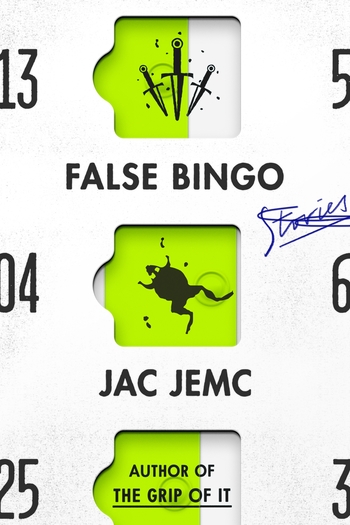
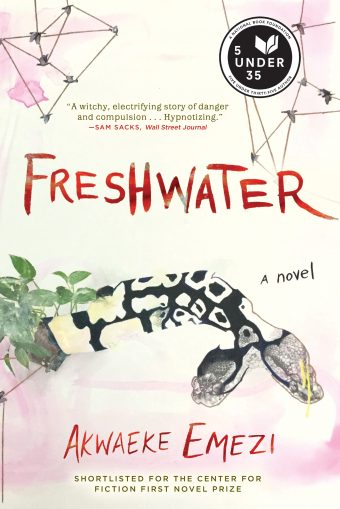
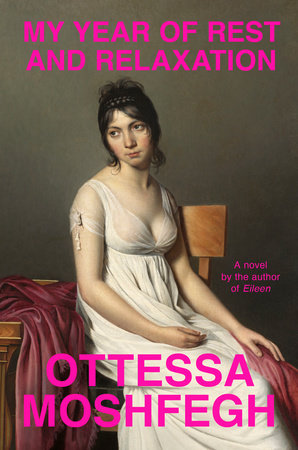
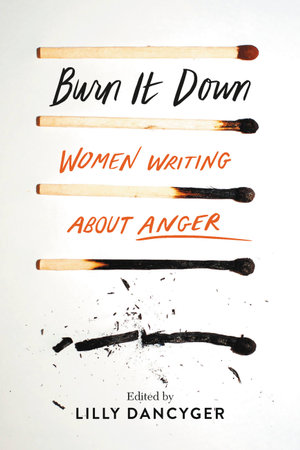
It is such a wonderful time to be lost in the specific and unfamiliar places in Jac Jemc’s new stories. In False Bingo, we spend time in a haunted guesthouse in the American South, an amateur taxidermy workspace, a bingo hall, a plastic surgery waiting room, and a yoga retreat. In our time of so much fear and mistrust, peeking into the idiosyncratic lives Jemc’s character live is a fascinating and consuming exercise in empathy.
I got to ask Jac Jemc about her process of empathy and how important the gray area is both in her stories and in our lives.
Jane Dykema: I saw Kelly Link interview Carmen Maria Machado once and she said for her first question she always likes to ask what the person’s grandparents did. I remembered that when I saw you dedicated False Bingo to your grandmothers, and I want to ask, what were your grandmothers like?
Buy the book
Jac Jemc: What a great question! When I was a kid, everyone told me I looked like my grandfathers, so I thought I identified with them more. One, Chester, was strong and silent, but very gentle. He’d keep me company when I was little and didn’t put up a fight when I wanted to play with my Barbies with him (as long as some sort of game was on in the background). The other, Raymond, was a real cornball. He had a seemingly endless supply of jokes—typical set-up and punchline style. A lot of groaners in his repertoire. At his funeral though, the place was jammed full of random people he’d made smile: grocery store checkout ladies and crossing guards. We always teased him for the way he’d default to telling jokes rather than having a normal conversation, but that way of being had spread a lot of joy. I share all of that as a way of setting a stage for who my grandmothers were and who they had to play off of.
Raymond’s wife, Lorraine, was a born hostess. She was a great cook—goulash and spitzbuben were her specialties. It was hard to get her to sit down at meals because she was always refilling bowls and glasses and checking on the next course. Neither of my grandmothers could drive, but this grandma would take us down to the Art Institute of Chicago on the bus. She introduced me to the miniature Thorne rooms in the basement of the museum, a childhood obsession. She took us to summer productions at the Theater on the Lake and square dances in her church basement. She made a gorgeous set of people out of wire and tissue paper for under her Christmas tree that all of us grandkids would fawn over and built a little grocery store in her spare bedroom that we could play with. She was the family documentarian, and took great photos and labeled them all clearly. She was my grandfather’s straight man, rolling her eyes at his jokes and telling him when enough was enough. I thought she was very glamorous. She always wore a fresh coat of bright lipstick and perfectly chosen brooch.
Chester’s wife, Dorothy, was a firecracker. She was smart as a whip up until the end. She had an earthshaking temper. She was practical to a fault and very frugal, but very quick to share the fruits of that penny-pinching. She had a stockpile of toys she’d bought on clearance in her back bedroom covered with a bedsheet that we knew better than to look under. If we completed a math or reading workbook, we could pick out a toy as a reward—everything had to be worked for. She was hard of hearing most of the time I knew her, but refused hearing aids. I think her condition suited her. She could talk whenever she wanted without having to worry about who she was interrupting. If someone else wanted to talk to her, it’d better be important and you’d have to address her very succinctly and very directly. In the last decade of her life she also developed macular degeneration, losing her vision from the center of her eyesight out, and that was very difficult for her because she was an avid reader. I tried to teach her to use audiobooks, but she’d lose her place with the tapes/CDs. She asked me to get her that “witch book,” by which she meant Harry Potter, so she could see what all the fuss was about, and we read it together and agreed we didn’t get it. My favorite detail about this time was that I’d visit her on weekends and we’d go through her mail together. If I tried to through out a flyer from AT&T or something, she’d catch me and say, “Now wait, what was that?” I’d tell her it was trash, and she’d ask me what it said. I’d tell her someone was trying to sell her the internet (which she never caught up to) and she’d scoff and say, “That’s trash! Throw it away! Don’t waste my time!” She never stopped wanting control.
The other fascinating aspect of her macular degeneration was that she started seeing visions, but she knew they were just images. She was convinced someone was projecting pictures into her house. She saw a naked man and she saw a little village scene, and she asked me to bring over my partner Jared, who is a videographer, to explain how someone was aiming a projector into her house. I did research and tried to tell her I thought it was something called Charles Bonnet Syndrome, essentially the parallel of a person feeling a phantom limb, but for sight. Where you no longer could see, your brain filled in images. She thought that was a reasonable theory, but insisted she was seeing these things in real life. I can’t blame her. How difficult must it be to reconcile the idea of something you’re seeing, like anything else, is made up by your brain?
JD: The way you describe them gives me a similar feeling to the way I felt when I was reading False Bingo. When I picture this book a series of really concisely detailed portraits flashes through my mind, pictures of these characters as complex and familiar as real people. And each person is so different from the others. I’m wondering about how you think of your process of inhabiting these different people and honoring them, and what implications that practice might have for the way you move through the world. It seems as though almost all of the hurting we do to each other, both on an individual level and on a systemic level, can be linked to us not being able or willing to imagine what it’s like to be someone else, someone we perceive to be very different from ourselves.
JJ: Empathy is everything. I heard that the thing that marks humans as being different from other animals (though who knows?) is that we can hold two opposing thoughts in our head and continue to function. I love to play devil’s advocate and attempt to see the opposite side of an argument. Not that I don’t have my own beliefs and habits that can become rote or lazy, but I find the current political/geological/cultural moment lacks a lot of empathy. People are cutting themselves off from people who think differently from themselves and social media is helping to silo people in that way. Refusal to make changes to address the climate issues is a failure of empathy for future humans; it’s a selfishness that favors the here and now.
It feels like we’re embracing a very black and white mentality, when the nature of most things exists in between.
I find call out culture and the way we shun anyone who makes one slight misstep to be a massive failure to show compassion, so that now the safest thing to do publicly seems to be to call out someone else for their wrongs. I invest personal time and effort into prison reform work, and it’s easy for me to transfer a lot of the issues of incarceration onto the problems created by just totally shunning people who make public mistakes. I don’t think turning people away helps anything. I’m not saying any of this is 100% good or bad or easy to address, but it feels like we’re embracing a very black and white mentality here, when the nature of most things exists in between. Those grey areas were much of what I was thinking about while working on the stories in this collection and thinking how they related to each other.
The other thought that came to mind with your question is about the lens through which we see the world. I was watching the Eddie Murphy (talk about a gray area) episode of Comedians in Cars Getting Coffee with Jerry Seinfeld, and they were talking about how the difference between comedians and humans is that, no matter how tragic, comedians can always see the comedy in a situation. I don’t know that that’s always true of me, but it’s usually true, especially in regards to my own circumstances. When I feel sorry for myself, I often quickly transition to laughing at the absurdity in my situation. Or if someone says or does something that is meant to upset me, my instinct, after the hurt, is to imagine what would cause the person to behave in that way. I’m making myself out to be a saint, which I am not. At all. I love to complain about people, but part of the fun of complaining is the speculation as to what drives people to behave in the ways they do.
JD: There’s a lot in this answer I want to come back to, but where you ended makes me have to ask: can we talk about LISA? I will never, ever forget Lisa from “Maulawiyah.” My muscles are tensing just typing her name.
JJ: Oh gosh, Lisa. I have so much love in my heart for Lisa. She is struggling and she’s not shy to share her struggle. I guess she’s pretty selfish, but she ultimately seems good-natured, even if that doesn’t always manifest in the most considerate way. She forces Raila to face some of her own ugliness in an uncomfortable way, and I’m grateful for people like that in the world who can prompt you to reevaluate yourself.
I’ve been in therapy for over a decade, and it’s taken only about that long for me to learn you can’t change other people, you can only change yourself. I heard that advice for years before I could actually put it into practice at all, and I certainly can’t do it quickly and constantly, but it’s something I’m always thinking about: what would it take to not only get along with this person, but to enjoy their company? I adore all of the Real Housewives, and one of the things that fascinates me is the number of times they vow to never ever talk to someone again, and then weeks later, they’re inseparable best friends. My emotional/social scale is so much narrower than that, but I’m riveted by people who feel and behave in those extremes.
JD: Yes, I love where we end with both Raila and the reader really feeling Lisa’s absence, and despite, at least for me, the aversion I felt toward her desperation and selfishness, missing her! Opposing feelings! This is a good segue into the gray area you were operating in in these stories. I feel like one of the ways you’re constructing this gray area is through the use of lessons. There are some real lessons, like in “Don’t Let’s” and “Bull’s-Eye” and some false lessons like in “Loitering” and some totally surprising ones like in “The Halifax Slasher.” Did you have a specific effect in mind for the reader by putting all these experiences in conversation with each other?
If there’s no conflict, then even a happy ending doesn’t feel earned or satisfying.
JJ: If there was a specific effect I was after, I think it was examining that gray area from different angles, and finding various ways to approach it, maybe suggesting that whatever meaning we take from an event, it’s easy to imagine how a completely opposite meaning might have been gleaned, or how we might stop just short of being able to take away something useful from an experience, or how evidence can indicate a certain truth in many cases, but there are still exceptions and mistakes, and evidence is most often subjective because it’s selective or incomplete, but we might not even know what’s missing.
JD: Some of my favorite moments were these moments of deflation: when one character imagines an exchange she would have with her friend so thoroughly she decides not to have it, or when it’s clearly stated that the people leading unusual love lives have surrounded themselves with people who accept and nurture them and have no obstacles to overcome. These moments seem so excitingly real, and actually like a harder story to tell. In places like this, is the decision to tell it a certain way an instinctual choice or a conscious one? Are you thinking more about the characters or the readers?
JJ: I remembered that another thing I was thinking about was the idea of what makes a story happy (as is talked about in the story “Gladness or Joy”), and how a story needs conflict, even when it’s happy. If there’s no conflict, then even a happy ending doesn’t feel earned or satisfying. In a story like, “Pastoral,” which I think is what you’re referencing with the idea of the lack of obstacles, the story is maybe more unsettling because there’s implied conflict, but the narrator “deflates” (love that choice of word!) that conflict by insisting there isn’t a conflict. I have to admit that I’m a person who, even on a good day is evaluating the range of what I’m feeling. I can find something to grump over no matter what, but that downside brings the successes and joys into sharper relief. I can’t believe I’m copping to how much I love complaining a second time here, but it really serves a lot of purposes for me.
“How Does a Person Become a Nun? A Practical Guide” by Blair Hurley
There is a process to these things, phases to the journey that you’ll be expected to pass through.
Period of Inquiry
Start young. When you’re walking with your mother down the streets of Boston, clinging to her hand, stare at a gaggle of nuns going by, the arresting flutter of their habits, the graceful uniformity of them. Point. “What are they?” They look like the swans that live in the Public Garden, moving in one honking crowd along the bank, an ungainly grace in their steps. “They’re sisters,” your mother will say. You’ve always wanted a sister. Cry without understanding why.
It begins with a vocation, but that small inner voice, that question that can’t be put aside, that call in the night, can seem at first like the normal wonderings of childhood, the fears and pressures of an ordinary life. Say your prayers at night even though no one is making you. Ask God to bless Mom and Dad and your brother and the dog. It will become a compulsion, a list that gets longer every night, a need to protect everyone you’ve ever known, until your mother makes you stop. “They don’t need your prayers,” she’ll say. “Go to bed.”
When you begin to contemplate being a nun, your mother will know before you do. She’s always been grateful for your quietness and obedience. The way you wash dishes and bag leaves on the lawn without complaint in the late afternoon sun, lost in your own world. “What are you thinking?” she’ll ask, and you’ll startle; you were in the middle of a vivid daydream, but now you can’t remember what it was.
Watch the swift steady motion of her hands as she sews a hole in your father’s sock. Take up the next holey sock in the pile and learn to do it, too. Hum to yourself in the soft stillness of the room. Forget to turn the light on until it’s nearly too dark to see, lost in your own shadowed otherworld, a place you go when you’re allowed to be alone, until the light comes on and your mother stands in the doorway, telling you you’ll go blind.
Your mother will notice the dreamy way you gaze up at the sky in the outfield at softball practice. Even when you think no one’s watching, she, working in the next room, will hear the whispered prayers you say over your dolls. When you watch the Alien movie, and the creature kills with an empty nihilism, an inhuman grin on its long jaws, you’ll wake up shaking and sobbing with terror for weeks afterward.
Your mother will watch you make a witch’s brew of maple syrup, mayonnaise and rubbing alcohol in a cracked flower pot in the backyard, chanting a spell and anointing the dog’s head with it to protect him from evil.
Imagine you’re friends with Jesus. Imagine his soft brown lambish curls and doey eyes. He has asked you among all the girls to dance with him. By twelve you’ve been to school dances where the boys lined the walls of the gym, miserable and hating you for making them miserable. The girls stood around in whispering packs, or rushed to the bathroom en masse to apply glitter scented like baby powder to their hair. Your friends are mostly the shy Jewish girls from your neighborhood, the ones who like spending free period in the library doing crossword puzzles. You promised each other not to split up, but when the next song came on, half of your friends were suddenly gone, shimmying on the floor with strange boys you didn’t know. A boy asked you to dance once, and you put your hand in his clammy, cheeto-ed hand and suffered through a slow number, both of you looking away. The boys are always disappointments.
From her office window your mother will see you dancing slowly across the yard in your girl shorts, your skinny white legs tangling. Already, you will seem very strange to her.
Normalcy
There will be a period of normalcy. You’ll fight with your older brother over who gets to play basketball. You’ll skip chores and lie and say you did them. You’ll have long games of catch with your father, and laugh at his clumsy Dad jokes, and squirm away from his hand ruffling your hair. You’ll buy gummy worms from the corner store even though she said no candy, and you’ll stash them in the back of your closet and eat one a day, parceling out the pleasure, until your mother finds them stale and hardening weeks later. You’ll sneak out of Debbie’s bat mitzvah with her to try her brother’s vape pen, sucking in the smoke and laughing, feeling wicked, getting caught and hauled back inside. Each of these small infractions will be in some way a relief. She’ll punish you, but with a sidelong glance and a smile, a look that seems to encourage your healthy greed.
She’ll punish you, but with a sidelong glance and a smile, a look that seems to encourage your healthy greed.
Period of Catechumenate
You’ll be fascinated with church, all that poetry and ritual that enters your life on occasional, haphazard Sundays. Listen wide-eyed to the sermons that bore other children your age. Think about the women rending their garments and weeping. Think about the star that guided the shepherds. Think about the Mysteries. Your mother never goes up for communion herself, but she’ll keep taking you and your brother out of a vague sense of obligation, fulfilling what she knows her own mother would want. She thinks of this Irish church in Boston as your cultural inheritance, and she doesn’t want you to grow up divorced from that long unbroken chain of unsmiling women putting oatcakes and potatoes on tables, making crosses over the soda bread. She likes the look of you in your lacy white First Communion gown. You’ll spin in your dress, delighted, imagining yourself floating like an angel. Try to tell her that sometimes you talk to angels, that now that the girls you knew are different, and you spend free periods in the library alone, they’re your most constant friends. Raphael is your favorite because he is a healer. When you had meningitis as a little girl and a dangerously high fever that threatened to cook your brain, your mother prayed to Raphael, and he protected you. When she tells you this story, in a half-laughing, shamefaced way, you’ll tell yourself that you now belong to the archangel.
Once you’ll go to church alone to get a closer look at the plaster statue of Raphael. You’ll light a candle at his sandaled feet. There are many candles here, for people seeking healing; you’ll watch their tiny flames guttering in the dim light. Raphael carries a spear and a caduceus, the healing staff; his face is both warlike and strangely feminine. As you’re standing there, sending out a shaky prayer, a great crack will sound, and a shower of dust and gold light will fall from above onto the angel’s face; you’ll look up, blinking, and see a workman staring down at you from a hole in the ceiling where he’s been fixing roof tiles. “Be careful,” he’ll shout to you.
This is too difficult, though, to make your mother understand; don’t try.
Doubt
The truth is, all that chanting and incense has always made your mother uneasy. This illogical insistence that the host contained the body and blood of Christ. How could he exist simultaneously in all the thousands of bodies around the world, and why do we eat Him? She is a practical woman who washes and re-uses yogurt containers, who thinks every woman should know how to change a tire so she will not feel obliged to the first man she knows who picks up his phone. Her common sense forbids her from believing that there is room for God inside the wafer. There is no room for two truths to live together in her head.
You’re facing an uphill battle. Your mother will be worried.
She’ll ask your father, Do you think Molly’s getting too fervent about church?
He’ll shrug. He has been raised in the church the same way she has; it’s as routine as traffic on the Mass Pike. These are the ritual obligations that he has returned to again and again–the yearly christenings, weddings, and funerals. He’ll ask, How do you get too fervent? Is she going to start bombing abortion clinics?
Your mother will shake her head. Your father has a morbid streak of humor, and he likes making fun of your mother when she starts taking herself, or motherhood, too seriously.
Your mother will say, I just wonder if she’s becoming — too devout.
He’ll laugh. So, she’s a nice Catholic girl. What are you afraid of?
She could become a nun, your mother will say. She could lock herself away in a convent somewhere, and we won’t be able to prevent it.
He’ll laugh. “A nun? You’re serious?” He can’t picture his little girl putting on a black veil, covering her glossy brown bangs. Those nuns that educated him, that he sees occasionally traveling in packs through airports, all old ladies with carpet bags, are beings entirely separate from you.
And anyway, fathers don’t want to think about their daughters as sexual beings. They don’t think about it as missing out. They couldn’t be happier if that part of growing up never entered the story at all.
Your mother knows the threat is real. She has prowled through your bedroom when you were at school, looking for secrets the way she sought out your brother’s wrinkled magazines under his bed. In the back of the closet she’ll find a black leather Bible, like the kind you might find in a hotel room. She has fingered the tissue-thin pages, seen the red ribbon flagging the page, the underlined verse: “do you not know that your body is a temple of the Holy Spirit within you, whom you have from God? You are not your own, for you were bought with a price. So glorify God in your body.” She has cried, privately, at the thought that she has raised a daughter who believes herself a slave.
She has cried, privately, at the thought that she has raised a daughter who believes herself a slave.
What about evolution, contraception, women’s rights, gay rights? Doesn’t all that matter to you? Your mother will shout unexpectedly one day in the car, when you’re trapped in traffic with her. They do, of course they do. You tell her stories about nuns fighting malaria in Africa, nuns researching particle physics, nuns running AIDS clinics. It seems like nuns are the best of the Catholic church these days, marching for truth and equality, daring excommunication for giving pregnant mothers life-saving abortions against orders. They’re free from the old shackles of marriage and family and men. They’re the ones breaking down doors. I’ve heard that before, your mother will say tiredly. That’s the argument they always give the slave, to convince him that he’s free.
Your mother will show your father the contraband Bible. It’s not that it’s forbidden, exactly, but that you’ve hidden it, aware that your feelings about it are too confused and strong just to have the book on the shelf with your unicorn fantasy novels. Your father will undo his tie, smile good-humoredly. Your mother will be half-laughing, embarrassed at her sleuthing. “Our daughter is a secret nun,” she’ll say.
He’ll put his hands on her shoulders. “Would that be so bad?”
“Of course you’d say that. You don’t understand.” She knows that he can’t imagine a sexless life for their daughter as a deprivation.
She’ll learn that he won’t be an ally in her fight. But it’s he who makes her strongest case. His calm and steady love for her is what she knows you’re giving up. The tenderness in his hands, whether he is buttering bread or cupping her breast. He is a good man, their marriage is a good one. It pains her, to imagine your life, without that chance of happiness.
Your mother would not tell you this, but she thinks of herself as a sensual person. She likes putting her bare feet up on the dash while your father drives, walking naked and brazen out of the shower and painting her nails without a towel on. There were boys, and then men, that she knew. She used to be the kind of girl who rubbed the TV remote between her legs when no one was home. You don’t know this about your mother, but you’ve always sensed something bubbling and alive about her, a glowing warmth under her freckled skin, an extra delight when she curls her tongue around an ice cream cone. Unlike so many other mothers you know, yours wears her body without shame, allowing it to expand a little each year, becoming more generous.
Unlike so many other mothers you know, yours wears her body without shame, allowing it to expand a little each year, becoming more generous.
She’s afraid of everything you stand to lose.
Rebellion
There will be brief campaigns of prevention. A month or six months where you are forbidden from attending church or praying. You’ll have to do it in secret, whispering Hail Marys under your covers at night the way other kids hold books and flashlights. A period where, when the seniors are allowed to sign out from school for lunch at the mall, you run to a nearby chapel in the city, where a priest will hurriedly administer the sacrament. You’ll whisper out your confession in the warm wooden closet smelling of rose water, as if she could hear you even here. You’ll run your strange secret rebellion, and she won’t know until you finally break down and tell her, because you cannot keep things from your mother, you never have been able to. She’ll listen, sorrowful, and tuck a strand of hair behind your ear. Well, I guess it’s better than drugs, she’ll say.
You’re still not sure what you’re fighting against, or why this rebellion must go on. You’ll only know you have been raised to be suspicious of a certain way of being — and that is precisely what draws you in.
Why do you have to punish yourself to be good? She’ll cry.
You’ll think of the ballet classes you took as a young girl, and the horrible feet of the girls who were actually any good: cracked and bleeding, the toes purple and warped beyond recognition. Their feet were war wounds, badges of excellence. They showed them off proudly.
You want to tell your mother about the ecstatic dreams of Hildegard von Bingen, of the women saints who chose to die rather than marry, the girls who burned at the stake or were assumed in magical puffs of air, who felt a keen kind of joy in their suffering, in their choice. But of course, you can’t tell her this. There are ways in which you and your mother speak the same intimate language, and ways that you don’t speak the same language at all.
The Call to the Sacraments
There will come a night that your father is out of town and an old friend of your mother’s is visiting with his son, a boy who is sixteen like you, startlingly beautiful, with dark hair and eyes and long romantic eyelashes like a camel’s. He likes the same Ursula Le Guin novels you do. He’ll trace his finger along the spines of your books in your pink bedroom, nodding approvingly, and you’ll shiver as though his hand has touched you. You won’t be sure how you feel. Your mother will want to go out to dinner with her old college friend, they’ll order a pizza for you and the son, rent a movie. You’ll watch her throw her head back to laugh at something her old friend has said. The free arch of her back, her bare freckled breastbone. She’s trying to show you something about the pleasure you can get from the company of men. How they can surprise you, open up parts of yourself like turning a key in a lock. Don’t wait up, she’ll say. You’ll understand that you’re being left alone deliberately. Halfway through the movie, the sound turned low, your lips still greasy from the pizza, the boy will start kissing you and his lips will be very soft. You’ll enjoy the small click of his teeth against yours, the feeling of his tongue on your tongue. Your heart will start to pound. You’ll wait for a sign, anything to tell you what to do. A gust of wind will blow the shutters against the side of the house like a booming knock on the door and you’ll go stiff.
The boy with the soft lips and the long eyelashes will pause and look at you, really at you, for the first time. “You okay?”
You’ll wonder, idly, if evil is working through him, using this boy for its aims. Or perhaps it’s your mother who is acting now, hoping you’ll take the bait.
You’ll straighten, and still be on the couch watching TV when your mother returns. She’ll come in and quickly scan the room for signs of something, anything. Your Dad’s waiting in the car, she’ll say to the boy, and he’ll yawn and stretch, give you a courteous little handshake. The understanding that something could have happened, it came close. Your mother’s face is flushed. You feel her eyes search your pale neck, then the top of your blouse for undone buttons. You’ll register the disappointment on her face, and coolly look away.
Period of Puriftcation
There will come a bright fall day in Roxbury, after graduating from high school, when the two of you tour convents as though they are colleges. Your father has made a few halfhearted visits with you, but it’s awkward for him, touring these spaces that men aren’t supposed to enter. “You know, there’s always time,” your mother will say, the hundredth attempt. “You could go to college first. Keep your options open.”
“I know,” you’ll say, and smile brightly, to show her you are fine, everything is just as you wanted. Really, though, your heart is pounding. You’re approaching the broad iron gates of the Daughters of Charity, and suddenly you’re afraid to go in. Two sisters are approaching in their black and white habits, an old one and a young one, and in your plain wool dress, your black socks, your gold earrings that now seem ostentatious, you feel immediately like an imposter.
Your mother takes your hand, squeezes it. When you were little you had this secret code with her: when you were in a public place, in line for Santa Claus or crushed among screaming kids at a fair, you’d tuck your little finger into her hand and scratch the palm. And immediately you would leave the scary place. You know she is waiting for that signal, and you know that if you gave it she would instantly spirit you away, back into the life you know. Driving with the windows down. Bad movies. College acceptance letters. Trashy magazines. The uncertainty of getting a job. Buttery popcorn and long hot baths and sleeping in on Saturdays. Arguing with your brother over something too stupid to remember, all of you in the backyard on a hot summer night, the smell of cookfires and charcoal in the air, your mother laughing at your father, saying, You always burn the burgers. You squeeze back, and then gently drop her hand.
This chapel is grand and gothic, but the dormitory is an ugly, modern concrete block. Your mother can’t stand the thought of you living here for the rest of your life. She hates it already. But she knows she has to swallow the feeling down, eke out a smile for the nuns approaching, their hands folded neatly into their wide black sleeves. The older nun shakes hands with both of you, then back hers go into her habit. “We welcome those considering the contemplative life,” she says.
Contemplative. That doesn’t sound so bad.
You know that beneath the usual questions you have prepared about the novitiate process, the meals and charity works, your mother has two questions of her own: how do parents let their children do this? And what could they have done to keep them from slipping away?
The air is cold and blustery, wet dead leaves picking up in little eddies at your feet. Your mother is imagining her girl, you, rising before dawn in those chilly cement rooms, hurrying down a corridor in the dark for the morning prayer. She can picture a line of those novices, all in their matching uniforms, their black habits brushing the floor, perfect in their conformity. To her, these images are heartbreaking.
“Let’s have Sister Catherine show Molly the rooms, and I’ll take you to my office so I can answer some questions,” the older nun says. Your mother looks at you, rolls her eyes. She knows she’s being separated from you, so the waves of disapproval won’t roll off her in your presence, tainting your impressions. Divide and conquer.
The young nun, Sister Catherine, beckons. “I’ll show you my cell,” she says, and then laughs, as if she’s suddenly aware of the word cell and all it evokes.
She’s small but busty, a petite curvy shape walking with a surprising sashay under her blocky black habit. A stray lock of blond hair wisping out from under her headpiece, a white band of cloth that’s wrapped snugly around her skull. The full forehead piece, she explains, is only for fully ordained nuns, and Sister Catherine is still a novice. “But I’ll be taking my vows next month,” she says, delighted at her own good news.
She leads you inside the dormitories, up a narrow winding staircase and down a hall streaming with sunlight. It’s not too different from any college dorm, really: shared bathroom at the end, small dark wood doors with small name plates. A crucifix over each door, tastefully small. “Have you thought about the name you’ll take?” she asks.
The question sounds surprisingly intimate: like asking what your new name will be after the gender confirmation surgery. The names on all the doors are the names of saints. “I can’t decide,” you say honestly.
Sister Catherine pauses and turns, that one lock of hair swinging before her face. “Don’t overthink it; just follow your feelings,” she says. “Take the saint whose story speaks to you.”
She shows you a rec room, with shafts of light dancing with dust, and outdated board games in a stack on a shelf; a music room with an upright piano and a line of recorders, like the kind you played in third grade, stumbling through “Eight Days a Week” and “Tequila!” There’s a low-grade panic in your chest as you imagine wiling away the hours on your recorder. “What do the — younger sisters do for fun? In their leisure hours?” you ask. You know there is time off, sometimes. You can picture your mother taking this in, the lameness of it.
Sister Catherine looks around. You’re alone in the dorms; everyone else is in chapel, getting ready for vespers. “Well. There’s this place we go. Do you want to see?”
She leads you down a back staircase, past the kitchen, and on into the basement. There’s a laundry room, a storage room, and then a tiny black door in one corner. You have to duck your head to fit inside: it’s the boiler room. An old-fashioned New England boiler fills most of the space, but there are folding chairs and cushions down here, a line of paperback books with shirtless men on the cover. A half-full ashtray, the smell of smoke in the air.
Sister Catherine covers her nose and mouth with her hand. “I hate the smell myself. But we have a few sisters who can’t quit. Sometimes at night — we come down here and talk. Just, you know. Blow off steam.” The boiler hisses, and you laugh, and she does too. Everyone, even nuns, have their secrets. You can picture the gathered few here, the girls who were cool in their school days or at least the coolest among the girls who eventually become nuns. Telling dirty jokes, reading their romance novels, putting their wool-stockinged feet in each other’s laps.
She leads you back upstairs to show you her cell. The room is bare, but light-filled: a simple cot and bedspread, a nightstand, a chest of drawers. A few family photos on the dresser, and a framed painting of Saint Catherine, a Caravaggio. She’s young, clutching a bloodied sword, her face fierce and luminous and nearly militant. Something sensual and knowing in her sidelong glance to the viewer, a bold invitation.
“She’s my matron saint, I really feel it,” Sister Catherine says, sitting on the bed. “The Romans condemned her to death on a spiked wheel, but she touched the wheel and it shattered. She is patron saint of libraries and all those whose livelihoods depend on wheels.” She smiles. “I love libraries. I thought I might be a librarian one day. But then — you know. The call.”
You sit on the bed beside her, listening to the quiet rush of air outside the window, traffic noise or just the breeze, trying to imagine this sound outside a cell of your own. You want to ask her how the call sounded to her, what form it took. Was it the sound of a voice in the night? Several times you thought you heard such a thing as a child, but when you woke it was always your mother, sitting by your bed because you had been moaning in your sleep. It was always her voice that soothed you back into darkness. You’ve been waiting all your life for a sign, an invitation.
You’ve thought a lot about Hildegard von Bingen, the medieval German nun who had ecstatic visions. It was like being hit with a thunderbolt of the divine, she said. The name is ridiculous, though. Do you really want to be Sister Hilde? Beside you, Sister Catherine is breathing quietly, letting your eyes wander around this plain concrete room and imagine yourself here. “There’s a sense of peace here, you’ll see,” she says. “We pray and sing together. We feel joy that doesn’t have any equivalent out there.” Her hand waves, indicates the world outside the room. The fingernails are nubby. Sister Catherine bites them, you can tell.
You nod. “I want that.” You want to explain to your mother that you have a sensual life too: you are seeking a greater intimacy with God. You’re so sure that’s what it means to feel love, purely.
You want to explain to your mother that you have a sensual life too: you are seeking a greater intimacy with God. You’re so sure that’s what it means to feel love, purely.
“You do, don’t you.” She touches your arm, leans in. She smells like sweat and honey. The nuns, you’ve been told, keep bees. You think, suddenly, that she might kiss you. There are these moments in life when someone comes close, when you think they might be prepared to share an intimacy you didn’t dream possible. You have to rise to meet it.
A part of you will want to lean closer to Sister Catherine and whisper, let’s get out of here. We’ll drink and put glitter in our hair. Kiss who we want because we feel like it. We don’t have to love God any less. There are so many ways to be good. There’s still time for us to be ordinary.
There are these moments in life when someone comes close, when you think they might be prepared to share an intimacy you didn’t dream possible. You have to rise to meet it.
Instead you ask, stammering, “Do — do you believe in reincarnation?” As a child, you thought sometimes that you were Joan of Arc. Or Hildegard. Or Darlugdach of Ireland, who was tempted by desire and put burning embers in her shoes to burn the sin away from her body. Maybe the doctrines have it wrong; maybe you are Darlugdach, not just her spiritual twin. Maybe her story is yours.
Sister Catherine pulls back, offended. “Of course not. I’m Catholic.” It has been we all along, but now it is I.
Period of Mystagogy
“We’ll see the chapel now,” says Sister Catherine, with a new briskness. You can feel her doubt like a cold wind between you.
Your mother is a slim dark figure across the quad; she’s too far away for you to read her expression, or for her to read yours. Sister Catherine is beside you, guiding you on the stone path around, but you break away, cutting straight across the damp grass. You know your mother has been interrogating the old nun, demanding answers about whether you will be well treated here, about whether you have the chance to be happy with this kind of life. You want suddenly to fling yourself into her arms like a child, have her shepherd you home. You want to hear her voice in the night. You’re still so young. You know you’ve been terribly bad, going down this path that might take you away from her. As a daughter, your life is never fully your own; it’s hers too. By handing it to God, you’re fencing stolen goods.
But when you get there, your mother doesn’t reach out to you. You don’t fully know it, but these choices you make are a reflection on her own sins. You don’t know it, but that night with the boy a year ago was really her chance to be out alone with the boy’s father, the man she loved in college. They kissed like teenagers in the car while it was parked a few streets away from the house, and cried a little, that life had brought them here. She never told your father. All the while she hoped you were kissing the boy back home, because it would make her own sins forgivable, and you’d be united that way.
“You could like it here,” she says. “You could make a life here, if that’s what you want.” There’s heroic effort in her smile. She’s not going to make the choice for you. There are many such times in the period of mystagogy, when we embrace the mystery of God’s plan, and walk uncertainly on the path.
The older nun has reached the two of you, and she looks stern. Your stockings are soaked. Already you’re breaking rules. You look down, a little ashamed. This is a feeling you’ll have to get comfortable with, you can tell. This life you want so badly runs on it.
“Would you like to speak with our priest?” she asks.
It’s just a meeting. A handshake and a conversation about the beauty of a life lived on principle. You can hear him now, a man old or young, explaining the rules you’ll be expected to follow, the rigorous training and prayer that lies ahead. He’ll sit with you in the chapel. You’ll be alone with him. The cool filtered light of stained-glass windows will fall on your heads and it will feel like it is time for your decision.
“Well?” she says.
You wait a little, though, before answering. There’s all the time in the world, a lifetime of signs and symbols to read. Your mother looks away, leaving you to gaze at her sun-weathered neck, the dense pattern of freckles there that you know so well. You could have the same, someday. Or you never will. You look back at Catherine, her bright untroubled eyes. And you look back at your mother. You wait, hoping.
New Orleans. Here’s a mini list of what I think comes up for the uninitiated or the casual traveler: French Quarter debauchery. Pastel shotgun cottages of Treme and columned plantation houses on St. Charles Avenue. The romance of the old-fashioned streetcars chugging down that avenue and now through to the Bywater. Beads thrown on Mardi Gras Day. The city submerged after Hurricane Katrina. Beignets and crawfish. Second line parades.
All of the above are true, per tourism board and media portrayals. But New Orleans defies one—or a million—quick platitudes of who and what it is. There is always another face, another layer of history and of the present, and another jolt of energy swirling, stewing—be it its history, recent and ancient, or the hurricanes blowing in from the Gulf—in the city, a below sea level bowl wedged between the Mississippi and Lake Pontchartrain.
For seven years, I lived on a street that ended in the historic (as is everything in New Orleans) Bayou St. John, and in a house from which I could hear Jazz Fest. During this time, I worked at a literary festival, held in honor of Tennessee Williams. I spent much time considering books about the city, how it was portrayed, the transplant class and gentrification-on-speed, and much else. There are a ton of lists for old-time picks (Google away!) and there are many works that illuminate the city’s specificities. On the latter, random but, I think, excellent, suggestions would include this anthology on the iconic Baby Dolls edited by Kim Vaz-Deville, this study of Congo Square by Freddi Williams Evans, this characterful short story collection by Fatima Shaik, Royce Osborne’s classic film of black Mardi Gras, and the outside choice from my earliest memory of learning about the city, Paul Schrader’s extremely 80s of remake of Cat People, for David Bowie’s theme song, and the slick visual design upon New Orleans’ own gothic character. I could go on but for now, the hugely subjective list below, however, hews to recent titles by contemporary New Orleanians and a few personal older favs.
Having been born and grown up in other sediment-rich estuary cities and lived in several entrancing metropolises since, I know well the impossibility of ever fully knowing a place, especially one as charismatic, complex, and contested as New Orleans. Still, these books offer different windows, into, for me, the most interesting city, the most American andthe least American city in America.
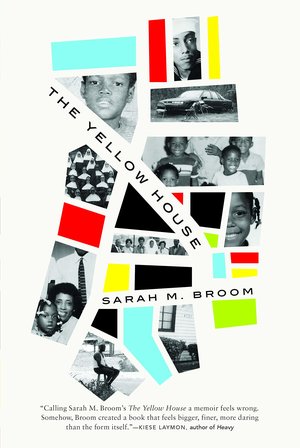
In The Yellow House, Sarah M. Broom offers the story of her family’s home—and a view into a city that is rarely seen by outsiders. Her tour begins by swerving away from the usual New Orleans landmarks like the French Quarter (though she later returns to this with both the extra-piercing gaze of both a native and a returnee who’s lived around the world) via the Chef Menteur Highway to New Orleans East. Broom writes: “By bringing you to here, to the Yellow House, I have gone against my learnings. You know this house not all that comfortable for other people my mother was always saying.” As readers, we can count ourselves lucky she did—and did so with such exacting reporting on the histories of her family and city in especially elegant prose. The National Book Award judges agreed—Broom’s memoir made the organization’s 2019 nonfiction shortlist.
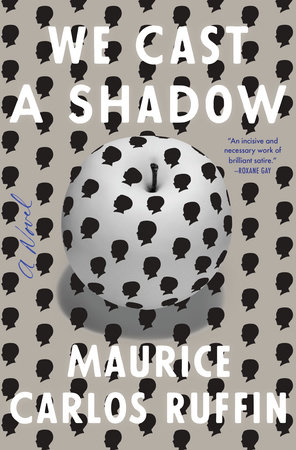
We Cast A Shadow is meant to be set in a white supremacist future America, where a black man is attempting to get his biracial son a “demelanization” procedure to secure the boy’s future. The opening scene of a soiree in a mansion on the “Avenue of the Streetcars,” however, reads as only ever so slightly out there. The unnamed narrator, a lawyer, notes: “She was one of the good ones, even if, as she once drunkenly admitted to me in a stalled elevator, she sometimes fantasized about wearing blackface and going on a crime spree. After shattering storefront windows and mugging tourists by the Cathedral, she would wash the makeup from her face, content in the knowledge that the authorities would pin her deeds on some thug who actually had it coming.” Ruffin, a former lawyer, paints the scene of the city’s Uptown surrealism with a mini museum of multicultural gods and a library that includes a title called The Hip Hop Ontologist’s View of Leda and the Swan, an especially intriguing title I’d love to borrow from the author. By bending reality without excess throughout, Ruffin’s sleight of hand with the peculiarities of New Orleans, which goes unnamed in the book, is even more hilarious. But what he cuts apart about race in America, now and in the book’s future setting (where the past is not even past in elements like the Dreadlock Ordinance and the Black Panther-like ADZE group), is unsurprisingly not easy.
Alex, comes to New Orleans when her father, a real estate developer, has a heart attack. The novel, Jami Attenberg’s first set in her adopted city, goes on to pick apart the family’s various dysfunctions, in pointed, raw prose that has become her signature. Alex, for example, almost tells a doctor, who gives her the news that her sick father hasn’t got much time left, “Do you promise?” The book zips around the city’s various neighborhoods, and is soaked in the boiling intensity of August in the city: “It has been hot since April. Was there ever a time when it was not this hot in New Orleans? They can no longer recall. Their will has been broken. Wake up, it’s hot. All day, hot. Nighttime, it feels cooler, but it’s a lie; it’s still hot. And wet. Everyone’s skin glows. Hide inside. Hydrate. Shield yourself. Too hot.”
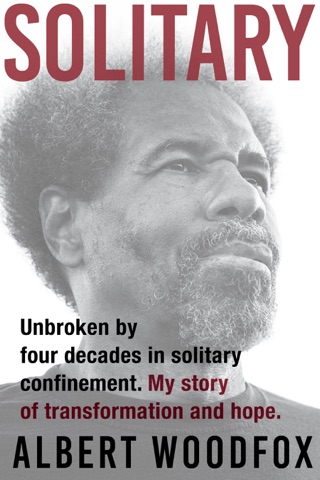
Albert Woodfox begins with his childhood in New Orleans’ Sixth Ward but Solitary’s setting is two hours away from the city in the confines of the Louisiana State Penitentiary. Otherwise known as “Angola,” the prison is named after the plantation it is located on, which in turn was named for the country from which the enslaved there were taken. It is a maximum security prison farm, which holds a biannual rodeo open to visitors. Woodfox was sentenced to 50 years for an armed robbery, and spent close to 45 years in solitary confinement there. He was finally released in February 2016. The survival of his spirit and resolve is awe-inspiring. An angering and intensely powerful read, the book is on the 2019 NBA nonfiction short list.
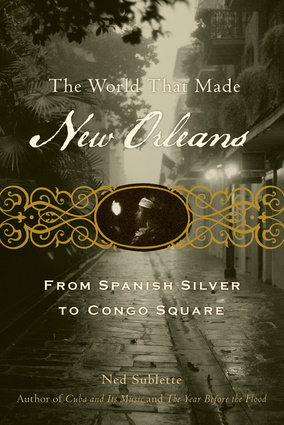
Ned Sublette’s packed, pacy social history of early New Orleans is the title to purchase right after you book your flights to the city. Sublette, a musician and musicologist who is also a hell of a storyteller, frames the city’s history in the context of Europe, Haiti, and Cuba, centering its African influences while not averting his gaze from the brutalities of enslavement (as well as its obscuring in other accounts). While most of this won’t be in your average plantation tour (unless you are headed to Laura or the Whitney Plantation; maybe also support a show and/or buy works by contemporary black artists too) and none of it qualifies as light, it will make the city’s past feel absolutely real, and its musical cultures more stunning than you previously realized.
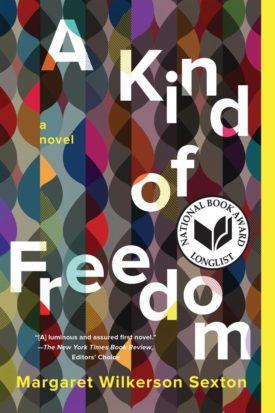
In A Kind of Freedom, Margaret Wilkerson Sexton portrays the New Orleans lived by three generations of an upper-middle-class black family in the city’s Seventh Ward neighborhood. Beginning in the mid-forties, Sexton traces the family through the 1980s to 2000s and shows how their fortunes change dramatically with Jim Crow and continued systemic racism. Sexton’s debut is both a feast of prose and story. Deservedly, it landed on the National Book Award long list in 2017, an incredible year, which included the eventual winner and great chronicler of the black Gulf South, Jesmyn Ward with her Sing, Unburied, Sing.
Set in Storyville, the infamous nightlife district of New Orleans at the turn of the last century, Coming through Slaughter has at its center a highly-fictionalized Buddy Bolden, the legendary cornet player, who is considered the progenitor of jazz, and of whom very little is known. Ondaatje adds the equally enigmatic photographer E.J. Bellocq, who photographed the sex workers of Storyville, to the mix. In its utter disregard for conventions of anything, all-over-the-place pronoun- and time-jumping, and the text’s unbearably alluring confusion, sensuality, and madness (as jazz, perhaps), Slaughter (a reference to a town near Baton Rouge, but to much else too) feelslike New Orleans to me. Case in point is this scene of a threesome:
“Then Bolden did a merciless thing. For the first time he used his cornet as jewelry. After the couple had closed their door, he slipped in a mouthpiece, and walked out the kitchen door, which led to an open porch. Cold outside. He wore just his dark trousers and a collarless white shirt. With every sweet stylised gesture that he knew no one could see he aimed for the gentlest music he knew. So softly it was a siren twenty blocks away. He played till his body was frozen and all that was alive and warm were the few inches from where his stomach forced the air up through his chest and head into the instrument. Music for the three of them, the other two in bed, not saying a word.”
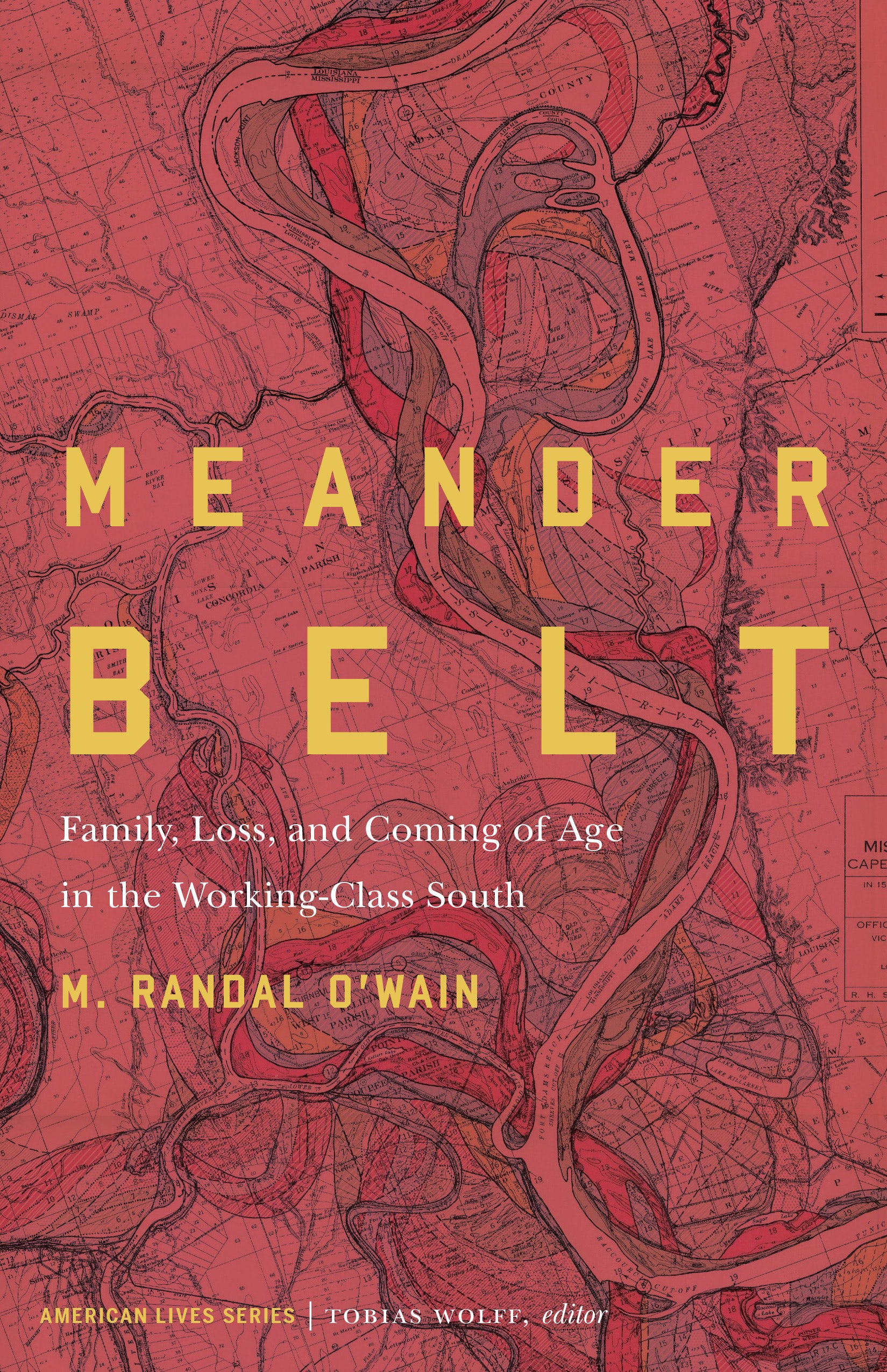
Publishing has come a long way in the past few years, with acknowledging its shortcomings in gender, race, and sexual orientation. The industry, however, doesn’t seem to have put much focus on class. Meander Belt, M. Randal O’Wain’s debut memoir, which was published this month by Tobias Wolff’s American Lives imprint at the University of Nebraska Press, is a perfect example of a remedy.
Buy the book
The book charts O’Wain’s early life, growing up in a ramshackle house in inner-city Memphis that is constantly under construction, raised by his carpenter father and a mother who was handicapped by polio. As a teen, he moves away from his family, to try and break away from what is expected of him as a son of working-class parents.
Through these events, O’Wain deftly parses the larger cultural forces that shaped his youth—the heavy thumb that is family, class, place, and tradition. The result is something that straddles the line between the intimacy and immediacy of someone simply telling their story, and the perspicacity of the best cultural criticism. It’s a tender, funny book with a clear vision and a true heart—I cried three times.
I spoke with Randal O’Wain about class, misconceptions, and his former life as a musician via email.
JE: The subtitle to your book includes the phrase “Working-Class South.” Would you describe your upbringing as “working-class”? What does that phrase mean to you?
MRO: The summer I turned fifteen, I was already a public school dropout, and my father put me to work cleaning up at construction sites while his crew did the skilled-labor. When I wasn’t working, I walked the streets of midtown Memphis. I met a homeless man named Father John. He was not a priest. He was paranoid schizophrenic and the Bible helped him stay locked into one frequency. One day, I saw Father John near my house. He looked so tired with his Bible and threadbare suit. I invited him to stay in my father’s engine-less Wonder Bread truck my friends and I used as a clubhouse (if kids who are fucking and doing drugs nightly can still have a clubhouse). I was afraid to tell my parents because I didn’t want them to refuse Father John. I happened to be home when my father found this strange black man leaving the backyard. I explained the situation and my mother made him dinner and gave him blankets, a pillow.
I knew that I would have to break from family if I wanted to make manifest the person I wished to be: a person who wrote books and went to college.
I haven’t thought about Father John in years, but I think about him now because it was always so important for my parents that I learn to be generous with those in need. My parents had never witnessed the benefits of college firsthand—I am the first person in my family to earn a degree—but we followed an old-world code of loyalty without question, labor as pure income, family as essential knowledge. This code is what working class identity means to me and I knew I would have to leave it behind, even before I found myself walking the streets of midtown without a knowable future. I knew that I would have to break from family if I wanted to make manifest the person I wished to be in my imagination: a person who wrote books and went to college. It is a heartbreaking choice to have made, no matter how necessary, especially in light of my father’s death.
JE: Personally, I grew up in California, went to school in New York, and have lived in West Virginia for the past five years. One thing that I’ve been confronted with, over and over again, during these past five years, is how ridiculous my ideas about the types of people who live in mostly rural, mostly “working class” areas really were. What are some things that people get wrong about working-class America?
MRO: What people often get wrong—pure and unabashed speculation here—is equating working class with what is actually the image of the bourgeoisie: driving expensive trucks, white people with faces that are somehow pasty and pink; or they imagine a nightmarish conflation of need and addiction. Working class folks, at least my family, are extremely private and insular and the phrase “We are all you have. We are all you will have in the end,” hangs above the bricked-up fireplace next to a plaque that reads: “What Can Go Wrong Will Go Wrong.”
When labor is your 9-to-5, the focus on survival narrows—red state or blue—onto family. This labor-lore is inherited from fathers and mothers and then imparted onto children. I mean, you might have a drunk uncle or uptight cousin who talks about the border or tax brackets, but this focus on national affairs belongs to people with something to lose from the system they benefit from and laborers, especially without representation, are often at odds with the system. Example: my father was fired from his job as foreman at a construction firm when discs in his spine slipped on the job. No severance. He had to sue in order to get his medical bills paid. Labor was his only resource, and his body was our trust fund.
JE: Conversely, what is something you wish outsiders—or, if we were to put it in media speak, then let’s call them “coastal elites” —knew about life in these regions?
MRO: It’s funny, but I think I am by association one of these “elites.” I’ve lost my southern accent and I now have two degrees and spend a lot of time speaking in teacher voice. When I go to the gas station in Alderson, West Virginia, and say hello to someone, they look at me like I’m an asshole. When I’m back in Memphis and meet a stranger, they inevitably ask what I’m doing there. This doesn’t change my connection to the Deep South, but in terms of belonging, I often feel as if I’ve been kicked out of the club.
But my favorite thing about West Virginia and Memphis is that there is a love for where you come from and a desire to maintain historical memory. The narrative upheld by the coasts is one of transience (of which I am a product), one of stylistic mobility where wealth provides the right clothes, the right books, the right loft, the coffee shop, and the microbrew, but does not concern itself with longevity or sustained livelihood. What is lost in this trade are roots and the pride of toughing it out at home. I often feel sorry for generations of locals from Brooklyn and Oakland, working class families and immigrants who have been displaced by people who have left the suburbs of Illinois or North Carolina to collect culture as if a city-scape, a loft, or metro ride to the art gallery could ever erase the suburban flight of fearful, but wealth-driven parents. I’m not concerned with what “coastal elites” think about the South because they are often not truly “coastal,” as I am not truly “elite.”
JE: I’ve noticed, though, that oftentimes city people seem to almost fetishize “authenticity,” in terms of microbrews, coffee, various cuisines, and certain characteristics about the background of an artist or businessperson, etc. Do you think that is related to this “transient narrative”?
MRO: This question sparks a lot of feelings. When I was growing up, the major intersection near my house included a used car lot, a Chinese restaurant, a canning factory, and vacant lots. My father worked for a contracting firm (for the same man who fired him after his injury) that was given urban renewal incentives, and soon one vacant lot became a Mexican restaurant, the used car lot became a bank, the unused factory became storefronts, the Chinese restaurant turned into a fine-dining spot. All of these changes were actually a lot of fun when I was a teenager. Eventually, I saw my first show—Oblivions—on the corner where my father helped build a concrete gazebo.
Labor was my father’s only resource, and his body was our trust fund.
With all of these changes, changes that my father had overseen as foreman, came higher property taxes. The ultimate goal of urban-renewal was achieved. The working-class homeowners were priced out. My father was forced to sell the family home he owned after money tightened once he’d lost his job.
But to return to your question, I think the word “transient” was a poor choice on my part; what is being sought is not movement, but a material-relationship to culture, or, you know: Hip stuff. Hip-stuff has a catalogue with pictures of cafes and bars, hip-stuff includes condos with earth-tones in reds and greens, it has a television series and a podcast . Places like Portland and Asheville are now Myrtle Beach or Gatlinburg, but for people who like beer, coffee, and most recently, throwing hatchets. The families who lived in modest working-class homes on the west coast now live in tents along residential streets because they cannot afford housing. This does not feel like capital-C-culture, but instead a fad that was fabulously marketed to people who are not artists, but want to be around artists; people who are not musicians but want to be around musicians.
I am a hypocrite. The only difference between the gross generalizations I am making about others and myself is that I was first-wave gentrification (unwittingly, of course) in places like Portland and Asheville, and I was later priced out with other musicians, writers, and artists when these areas became playgrounds.
JE: One of the things the book covers is your eventual turn from a musician to a writer. I’ve always been confused by and jealous of musicians. If you’re in a band, you’re collaborating with other people, in a medium that is meant to be shared with an audience. Writing, on the other hand, is done alone, and books are generally consumed alone. Readings are such a strange outlier, in that you take a solitary work and share part of it with an audience. Do you ever miss the collaborative elements that come with making music? Did performing in a band teach you anything about doing readings?
MRO: I really miss being a musician. I started touring in bands when I was sixteen and stopped when I was thirty-one. I loved going to practice two nights a week. I loved recording and making records. I loved living in a van for weeks at a time. But my favorite part was playing live shows and flailing around on stage, dripping sweat, and permanently damaging my hearing. But, truthfully, I was always so nervous that I never turned around when playing. I don’t think I began to feel comfortable playing with my face to the audience until my last tour.
At a reading, it is just you and so you have to own awkwardness in a different way. It would be awkward to read backwards.
I quit playing music. I realized I was not getting better at the guitar. My dear friend who passed away recently, the novelist Katherine Min, told me years ago that I had to choose. She said it was hard enough to do one thing well in a lifetime, let alone two. This off-handed comment stuck with me and I made the choice to move my creative efforts from music to writing. I still play air-guitar quite a bit. Most recently, I’ve been air-jamming with Reigning Sound and Neurosis.
The Older Brother in Mahir Guven’s debut novel drives for a ride-sharing service in Paris while his Syrian-born father is an old-school taxi driver. Their Uber politics conflict is further sullied by their religious divergence. Into this, Guven adds a Younger Brother, a talented nurse who could well become a doctor, who decides to pursue his humanitarian intentions—in Syria.
The novel, narrated by the Older Brother and Younger Brother, vibrates with sharply driven prose and wry humor, and takes us into the streets and the insides of working-class immigrant life in France, and to the battlefields and hospitals of Syria. We don’t find out the brothers actual names until the last pages of the novel—and readers will see why when they get to the terrific, mind-bending end. By then, why the novel, which won France’s prix Goncourt du premier roman in 2018 and is published in translation in the U.S. this month, will be absolutely obvious. In Guven’s inventive hands, Paris and its discontented inhabitants, as well as the bizarre, brutal world of ISIS-era Syria, come alive, grab you hard, and won’t let go.
I spoke to Mahir Guven, who just became the editorial director of a new imprint for debut works at French publisher JC Lattès, about being French, taking Ubers, and being spoken of in the same breath as Michel Houellebecq. (Thanks to Miriam Gordis for translation.)
JR Ramakrishnan: What was the question (or idea) that began the writing of this book for you?
Mahir Guven: I wanted to shout. By the way, in French, the letters in the word “to shout” (crier) are almost the same as the word “to write” (écrire). I was full of cold anger. Cold anger is never violent: it forces you towards awareness, it forces you to take action. This was a few months after the Bataclan attacks. I had experienced various strange emotions: incomprehension, bitterness, pain. The political climate had deteriorated and the executive branch was threatening to start revoking people’s citizenship. A portion of our country began to see French Muslims as internal enemies, almost like a virus or a disease invisible to the naked eye. Some people started to look suspiciously at anyone with Mediterranean features. It was terrible because when I was growing up in the 1990s, France was a peaceful place. Raï, which is a type of North African music, was extremely popular. Khaled came out with his hit “Aïcha.” So I started to write about a character, one of whose parents was French by heritage and the other French by choice. I deliberately avoided using the term “native French.” There are no French natives, there is no such gene, that is a stupid, racist idea. France is a melting pot of cultures that together form a nation. My nation.
In February 2016, I went to an exhibition about Martin Scorsese. I was interested in Taxi Driver and in the character of Travis Bickle. I knew that he was a former soldier lost in New York, who took a job to get by. The day after that, I was talking to a taxi driver who worked for an app-based company and he explained to me that his father was a traditional taxi driver and that they had a strained relationship. After this conversation, I sat down full of feverish anger and energy and wrote chapters one and three of my book.
JRR: The book seems to be a grand novel of a very particular slice of contemporary Parisian life. You were born in Nantes and my understanding is that in France, regional differences are huge. Would you reflect on the differences between growing up outside of the center and writing about it so intimately?
Cold anger is never violent: it forces you towards awareness, it forces you to take action.
MG: I see what you’re getting at. I generally believe that it is easier for us to understand things from the outside. I understand life better in Nantes now that I don’t live there anymore. Last year I lived in Germany and I understood France better than ever before. When I arrived in Paris, in 2006, it was a shock. So much wealth and so much speed. Paris seemed like a place of limitless possibilities. And then in less than a year, I wrote and staged a play there. The big difference between Paris and Nantes is that Nantes has almost no urban ghetto. I grew up in a small town of twenty thousand inhabitants, where all the social classes lived together and mixed. I almost never experienced racism, or at least, I didn’t notice it. Unlike my mother. By contrast in Paris, you can come from an ordinary background and study at a grande école, you just have to get on the metro. Paris seems inaccessible to people living outside of it. This is the drawback of very centralized countries. Finally, I would say that writing comes from what you see. You have to look around with your eyes wide open.
JRR: It’s bewildering to think of how real the phenomenon of young people going to Syria is, and how much it will be part of life (i.e. parents searching for their kids, etc.) for some time to come. The scene where the Older Brother has to pay off the bus station clerk for the passenger list was super powerful in these terms. I have often wondered what life is like over there amongst this multinational set who maybe don’t have much (or any) Arabic—the fight scene of the Younger Brother was amazing in illustrating this (“So they talked in English. But the French and their English…well it was a shitty mess.”) Also, he notes, “It did me good to hear my own language,” by which he means French.
MG: In reality, somewhere between 1400 and 2000 French citizens have gone to Syria. A tiny percentage compared to the International Brigades of the past. Seven hundred of these are fighters, the others are settlers looking for a utopia. History repeats itself. Those who suffer too much, the most fragile try to find a way out, an escape route to feel as though they exist. You might think this is a dangerous oversimplification, but I think we are experiencing a massive psychological crisis of hyper-existentialism. Everyone wants to find meaning in their lives, wants to be something. And young French people going to Syria are a part of this very modern dynamic.
You’re right that many people who think they are Arab realize that they are actually very French. Personally, I was born in France, undocumented, with refugee parents, and I became a French citizen when I was fourteen years old. When I was 20, I identified as a “ketur,” which is French slang for a Turkish person. Then I went to live in Turkey for a year and felt very, very French. The main problem then is the self-image that you receive from society. You might feel completely French, but some close-minded people who remark that “you come from somewhere else” will make you feel different. Now, at 33, I don’t care what anyone else thinks anymore, and if someone asks me, I just answer “I’m French. How about you?” until they start to feel stupid.
JRR: You inhabited both worlds so incredibly. How did you research and imagine the Syria that the Younger Brother experiences?
MG: I traveled through Syria by motorcycle in 2007 and 2010. So I was familiar with the landscape. It’s a bit like Nevada. Huge, magnificent stone deserts, where the solitude and the heat are your only travel companions. I also read Lebanese newspapers written in French, where they have profiles of refugees. I read David Thomson’s research on French people in Syria. I watched a lot of video blogs on everyday life there posted by French YouTubers. It was all astonishing. I remember one lifestyle blogger, who I think was named Samir, describing how you should dress in Syria. He recommended sweatpants and Nikes with all-over camouflage print. On Sunday, they have soccer games. I also read a lot of blogs by women in Syria, public reports by the French Ministry of Defense, BBC documentaries, art documentaries, and geopolitical journals which describe the structure of ISIS. It all blended together into a milkshake in my head and I became immersed in this world that a young idealistic, frustrated, and naïve young French man discovers in the book.
JRR: Your book has a number of tragedies, but an especially cruel turn of fate was the incident at the PSG tryouts, which ends the brothers’ dreams of being football players. Would you talk about this scene and more generally about the options available to kids of color like the brothers?
MG: Firstly, it’s not an issue of color in France. You can have white skin and still experience discrimination. If you come from the countryside, for example, or if your family origins are Romanian or Balkan. It’s all about your first and last names. You can have foreign roots, but if you’re named Jean, life will be easier for you. It’s strange, but for a long time France assimilated foreign populations based on first names. People would have to make a choice between their family’s culture and the culture of their new nation. This model has disappeared, but its reflexes and beliefs have remained in our nation’s subconscious. I would also say that sports are a fantasy because they promise to make you into a hero, whereas studying offers more security. This explains the profoundly different attitudes that boys and girls from poor backgrounds have towards studying. Society doesn’t encourage girls to become heroines (and when they succeed despite the odds, it is because they are truly exceptional).
There are no French natives, that is a stupid, racist idea. France is a melting pot of cultures that together form a nation. My nation.
There is another aspect to this. For a long time, sports have been a vehicle for social cohesion in the countryside and in poorer neighborhoods. For a hundred years, the French state has invested in this area. In fact, sports stars have almost always come from working class backgrounds. It is just more obvious today that poor people tend to be foreign. This scene is really about young people’s passion for soccer and how seriously devoted to it they are. They are capable of doing great things when we let them express themselves. But I wanted to show how someone’s dreams can be broken in a simple accident, how it can destroy your life and take you off track.
Finally, social advantage is more important than ethnic background. When I moved to Paris, I became friends with rich Moroccans from Casablanca. They had no problem studying and finding work. They knew all the social codes. Social codes are the most important thing.
JRR: Both brothers struggle with identity in France and abroad. They are not just children of immigrants but are also mixed race via their Breton mother. I loved this line from the Older Brother: “Aliens without knowing why.” What is your idea of home these days, and how do you identify in terms of ethnic and/or national identity?
MG: I am so happy you asked me this. We haven’t talked about race in France for a long time, for the simple reason that scientists told us that race didn’t exist. I agree with that. Race doesn’t exist. It’s imaginary. My mother had white skin and green eyes, she looked Russian, but she was Turkish and had a strong accent. She was called a dirty Arab, a dirty white woman. Try to find the logic in that. It’s incredibly stupid.
I am still amazed that a country like the United States, which prides itself on its liberalism, is still so attached to the concept of race. We can talk about discrimination without talking about race. It is enough to say, “people who have black skin experience discrimination.” This phrasing humanizes the individual, it doesn’t reduce them to the color of their skin and discriminating against a group based on a physical characteristic is clearly absurd. Right now, I am writing a book about a parallel world where people with red hair discriminate against people with blond hair. A person from our world appears and doesn’t understand what’s happening.
On another note, I was in Madagascar a few months ago. When I came back, I told my friend that I had felt incredibly guilty about how rich I was there, basically a walking gold bar. I was ashamed to have been born in Europe when I saw children picking bananas that would be sold for less than apples in France. My friend told me, “They thought you were white, that’s why.” And I was annoyed. In Madagascar, people are identified by their tribal origin or their status. I was a vasaha, a foreigner. Even if I were Senegalese and had black skin, I would still have been a foreigner. It’s a different way of seeing the world. To say that I’m white is to impose a European and Anglo-Saxon concept onto a different reality and dismiss this culture. By the way, my friend in this story is French and a militant antiracist.
We have to get past the idea of a unique identity. It’s completely outdated. Identity is individual. And it is unique to each individual. Identity is made up of all the cultural patterns that help us form groups, friendships, nations. Our identities are formed at the start by the identities of our parents, the neighborhoods where we grow up, our cities, our regions, and our countries. On top of that are layered our passions and the languages that we speak. All of this forms an identity and all these cultural patterns help us form relationships with other individuals. For example, when I lived in Germany, I quickly became friends with people who played basketball like me, who also spoke French, or who liked to cook like I do. I believe that each individual should define their own identity: everyone can define it however they like and ignore what others might think.
JRR: The conflict between the Older Brother and his taxi driver father includes amongst other things, Uber. I wonder after dwelling into much of the economics and ethics of ride sharing via the Older Brother, do you take Ubers yourself?
You might feel completely French, but some close-minded person saying ‘you come from somewhere else’ will make you feel different.
MG: Not anymore. To be totally frank, before Uber, it was very hard to get a taxi in Paris. The taxi union was very powerful and stopped the government from giving out more taxi licenses by blocking roads and striking. Then, almost twenty thousand young people found work in the Paris area. That is one hell of an achievement. However, these people didn’t gain any real work status, they didn’t get any benefits or unemployment. I support a tech economy that doesn’t destroy working conditions. I can’t just think about my own comfort. It’s stupid. I have had all kinds of odd jobs: I picked flowers in the fields, sold antivirus software, worked in a fast-food restaurant, but I always had rights. Uber doesn’t pay taxes in France and pays very little in the United States. They take advantage of common property, laws, traffic rules, the asphalt on the roads, without paying taxes. They can go fuck themselves.
JRR: I laughed so hard when the Older Brother pulls a minor con on the English couple he’s driving in his Uber and then says: “If you do it with Parisians, man, it makes them vote for the National Front. Gotta be on your best behavior with them.” Your novel is often hilarious. I feel like amongst all the perceptions of people of Arab descent, a fantastic, wry sense of humor doesn’t get mentioned often enough. I am not sure if it’s general culture or language but I never laugh as much as when my Arab friends are telling stories. Would you discuss how you inserted humor into what is a serious book?
MG: In truth, humor is a characteristic of working-class neighborhoods. It’s very important. I have never laughed as much as I laughed in my childhood. It’s not an Arab cultural trait, but popular humor that has always existed in France. Poor people entertain themselves, they’re funny because they don’t worry about what “people will say.” I have never been as happy as when I was poor. We laughed all the time. Everything was serious because we had no money and so we kept things light. I wanted to capture that spirit in the book. Also, the main character likes to smoke joints, which makes him a bit odd (which isn’t true of me. I only smoke marijuana two or three times a year).
JRR: What an ending! I won’t give it away, but I want to ask you about the power of stories in our times. Throughout the book, you reflect on words and the Older Brother is towards the end, writing. In our current world, what do you think stories can do for us?
MG: Our perception of the world is fictional. Right now, as I’m writing this, I don’t know what’s actually happening in Japan, so if I think about Japan, my mind comes up with images to represent it. Fiction began with stories told around the fire by prehistoric humans and cave paintings are fictitious representations that attempt to make sense of the world. Books help us understand the world. They reach into the depths of the human soul, more than any other art form. Internal monologue is one of the precious tools that only novels can use. Films and paintings have other strengths, but they can’t do that. There is nothing better than literature for understanding another person’s mind. And reading is an active practice, like sports, you have to concentrate. Reading is pleasure. Reading helps you grow, helps you relax. Reading saved me from my crazy adolescence and my infinite energy.
JRR: I was reading about your book in the French press and saw this piece mentioning Michel Houellebecq in relation to Older Brother. What do you think about this and his work in general? To English-speaking and American readers, who are maybe less familiar with contemporary French literature, your book would seem to be on some level in conversation with Submission.
Populists are Hitler’s grandchildren who got a keyboard and a mouse and who toy around with the internet.
MG: Michel Houellebecq is a great writer. A seismograph of the contemporary world and the devaluation of masculinity. In France, I have the feeling that he is angrier with men than with women. Michel Houellebecq idealizes women, which is why he also often writes crudely about them. He refuses sexuality and is too romantic, which transforms him into a pessimist. Submission is a racist novel. When he published it, people called him a genius too fast. His best book, in my opinion, is The Map and the Territory. The writing doesn’t feel labored, but it is grandiose. Even the title of Submission is a fraud. Submission is how the far-right in France translates the Arabic word “Islam,” which really means submission to peace. You see the mistake? It’s terrible. It’s dishonest.
So, I am happy to be compared to Michel Houellebecq because he’s a great writer, maybe because we are both realist writers, sharing the artistic current of dirty realism. But otherwise, I am an enthusiastic hyper-humanist. I believe in trust, I love my country, I love its past, its present, and also its future. Michel Houllebecq has a death wish. I would like Michel to have a life wish, which pulls us upwards and doesn’t make us depressed. He is close with populists, like Laurent Obertone, who he introduced to Nicolas Sarkozy. Their ideas are similar to Steve Bannon’s. And I can’t accept that. These fucking populists, we’ll show them how to live together and what civilization means, we’ll kick their asses. Sorry, I am getting carried away. He spreads hate everywhere, he plays with nations like he’s going bowling. These are Hitler’s grandchildren who got a keyboard and a mouse and who toy around with the internet.
JRR: Would you share some of the new writing in French that you are excited about?
MG: Some must-reads are Disoriental by Négar Djavadi, Vernon Subutex 1 and King-Kong Theory by Virginie Despentes, Un océan, deux mers, trois continentsby Wilfried N’Sondé, and The Life Before Us by Romain Gary, which is a masterpiece. I also recently discovered Alone in Berlin by Hans Fallada, who is a German author, and German Autumn by Stig Dagerman, which are two extraordinary books.
There are good Judy Garland fans and there are bad Judy Garland fans. As Susie Boyt sketches out in My Judy Garland Life: A Memoir, it’s very easy to pick out the differences between the two. “Judy, to her good fans,” she writes, “is both the epitome of a very theatrical brand of glamour and an approachable, natural, hard-working champ. She is sophisticated and homely, humanity in its most dazzling incarnation, unassuming and captivating.” This is a version of Garland that dominates loving tributes fifty years after her death. Her memorable turns in The Wizard of Oz, Meet Me in St. Louis, and A Star is Born; her electrifying live performances at The London Palladium, The Palace and Carnegie Hall; her magnetic TV performances in her variety show—they’re all reminders of the larger-than-life star she was.
Meanwhile, bad fans relish instead the lurid details of Garland’s most unseemly personal demons. “She is most beautiful to them when viewed through a lens of pain,” Boyt writes. Considering Garland battled addiction for much of her life, struggled with weight issues, had a string of unsuccessful marriages, and was on the receiving end of abusive behavior from suitors, agents, executives, and family members alike, there’s no shortage of Garland pain to wade through and exalt as a “bad fan.”
The film attempts to give us Judy the woman, but only offers us Judy the legend.
Watching Rupert Goold’s Judy, with Renée Zellweger in the titular role, you very quickly realize what kind of Garland fans these are, both in front of and behind the camera. The filmis perhaps the perfect example of what has become the norm when it comes to big screen biopics: complex individuals and their wayward journeys are distilled into palatable and very moving stories that polish off a sanitized image of the star in question. Working as a kind of posthumous publicity stunt, the biopic serves as an opportunity to make myth into reality, to tell the story as it should have happened with the added conceit that what you’re seeing is as faithful a recreation as one can find. Thus, while there are a number of exhaustive biographies of Garland out there (not to mention a musical currently playing at the Paper Mill Playhouse all about her childhood stardom and an upcoming Showtime documentary about her marriage to Sid Luft on the way), Judy is already primed to be the way many contemporary audiences encounter her backstage antics for the first time. And in true Hollywood fashion, it delivers a heart-tugging and tear-jerking drama that’s designed to make good Garland fans of us all. For, despite mining one of the most tumultuous years of the star’s life (we’re with her almost until the day she died of an overdose), Judy is almost too reverential, a hagiographic portrait that attempts to give us Judy the woman, but only offers us Judy the legend. Or rather, the gay legend, as told to us by oh-so-good fans.
Ostensibly based on Peter Quilter’s concert-cum-play After the Rainbow, Goold’s film dispenses with much of what made that theatrical event—a recreation of Garland’s months in London during a five-week run of sell-out concerts—so fascinating. Gone are many of the raunchy moments between Judy and her much younger husband Mickey Deans (played in the film by Finn Witrock); downplayed are Garland’s mood swings and suicidal ideations. The film also does away with one character from what was, on stage, a three-person play: Judy’s (fictional) gay London music director “Anthony,” a stand-in for all the fans who loved and wished to care for the A Star is Born actress. “We have given her everything,” he tells Deans at one point in the play. “Shown her the kind of loyalty and devotion that you couldn’t even dream of.” The line is nowhere in the film. Nor is Deans’ scathing comeback: “What the hell is it with you people? The more she falls apart, the more you adore her … If she was found half-dead in the gutter, you’d all cum in your pants.” But Anthony’s worshipful sensibility—and his sense that Garland owes something to the gay community in return for their adulation—has all but taken over the film’s approach to Garland and her story.
Judy gave voice to those who felt voiceless; they understood at a visceral level how her resilience made her all the more beautiful.
There’s a gay couple, in fact, who recur throughout the film. They love Judy to pieces and make a point of seeing her show as many times as possible. At one point, they even invite her out to dinner at their place, where they confess just how much she’s meant to them. They stand in not just for “Anthony,” but for millions of gay men, then and since, who saw in the young girl with the big voice an avatar for their own resilience. To them she was always first and foremost Dorothy, a wide-eyed girl in search for somewhere over the rainbow where misfits and oddballs could be themselves surrounded by a community that loved them for who they were. There was hope in the image Garland offered them; the personal issues she came to struggle with later in life—and the comebacks it fueled—merely made her feel more relatable to a community that felt equally targeted. Judy gave voice to those who felt voiceless; they understood at a visceral level how her resilience made her all the more beautiful, all the more worthy of their love. In Boyt’s configuration gay fans shuttle back and forth between being good and bad fans, celebrating her highs while always constantly keeping her lows in sight.
“Her audience,” as Vito Russo once wrote about her gay fandom specifically, “was never sure whether she’d fall into the abyss or soar like a phoenix. One wanted to hold her and protect her because she was a lost lamb in a jungle, and yet be held by her because she was a tower of strength, someone who had experienced hell but continued to sing about bluebirds and happiness.” Judy leans hard into that first impetus: Goold and screenwriter Tom Edge seemingly want nothing more than to protect Garland. And in Zellweger’s tic-ridden and squint-heavy performance, they go out of their way to elicit a mix of woeful pity and concerned well-earned compassion whenever Judy is on screen—even, or especially, when she’s hurting or depressed or in a drug daze. There’s an attempt here to show Judy Garland, warts and all, but those warts are so lovingly drawn and placed and lit that they don’t ever feel real.
Such an airbrushed image of Garland will feel familiar to anyone who’s loved The Wizard of Oz and A Star is Born and who, perhaps, knows little about the backstage drama that dominated the star’s life. But diehard fans (good and bad alike) will recognize how much the film goes out of its way to mollify Garland’s own personality, especially in the 1960s. If, like me, you’ve gone out of your way to learn everything there is to know about Judy (not just the whispered stories about her or the bite-sized trivia that litter her Wikipedia page) you know there’s more to the anxious insomniac the film depicts. To watch footage from Garland’s last decade or to hear the expletive-laden recordings she made when working on her memoir is to get a glimpse of a performer who was broken in a truly ugly way. To see her try and get through late night appearances (with Cavett or Carson, say) is cringe-inducing; she’s manic and unfocused, clearly trying her best to look put together even as she’s spiraling. Similarly, to hear her rail against the world in the privacy of her home to a recorder she doesn’t quite know how to operate is outright unpleasant. Those abrasive public and private moments color our perception of Judy. The impulse to look away from them, to want to shield others from them, is central to her good fans. For how could you bask in her light when faced when such darkness?
The biopic requires stars to merely suggest inner turmoil, never truly embody it.
In Judy, those moments are prettified to a fault. They must be. For the biopic demands and depends on our unconditional sympathy, a premise that requires stars merely suggest inner turmoil, never truly embody it. In an attempt to shower Garland with the empathy and compassion she so clearly lacked (and deserved) while alive, the film ends up over-protecting her, asking us to look away from the most unbecoming aspects of her private life. Even flashbacks about the abusive behavior she suffered at the hands of MGM’s Louis B. Mayer are beautifully framed in shadows and close-ups, as if the filmmakers didn’t trust us to grapple with Judy’s own disastrously formative scenes.
Similarly, the moments that should awe us into submission are few and far between. They come, mostly, in the shape of musical numbers. It is while singing Garland hits like “The Trolley Song” and “Come Rain or Come Shine” that Zellweger taps into what made Judy such an icon: she’s as dazzling as could be asked of her. But Zellweger can’t really match Judy’s vocal range—who can, really? Her voice is much too quivery and tinny. What that means is that Garland’s belts, those moments where you’d hear firsthand the strength she could conjure up when performing (or when yelling at her ex-husband), are not really in the film. We get instead some soulful whispered lyrics and a beautiful toned-down rendition of “Somewhere Over The Rainbow.” We get the intimate, heartbroken Garland but rarely the boisterous, brassy gal she could also be. Where Judy Davis (in the ABC miniseries Life with Judy Garland: Me and My Shadows, based on her daughter Lorna Luft’s memoir) and Tracie Bennet (in Quilter’s play) had found ways of weaponizing Garland’s iconic “big voice” to explore how she could be both an anxious mess and a tower of strength—they were both incandescent, with Bennet playing Judy like a wind-up toy whose manic energy could light up all of London, and whose blackouts were just as frightful. Zellweger plays more with Judy’s meekness, a performance that leans in on those moments where her voice broke on stage, not the times when it tore through the theater like a tornado.
There’s an admirable ambition in telling Judy Garland’s story with such affection. A lavish biopic starring an Oscar-winning A-lister, after all, is as loving a tribute as any screen legend could hope for, especially one who suffered at the hands of the Hollywood system that now fetes her with abandon. Here was a performer who struggled to feel loved—by her mother, by her husbands, by her peers, by her fans—all throughout her life. Her need was so overt that it was covered in the press; a 1963 headline in the TV Radio Mirror read “Behind Judy Garland’s Frantic Drive for Success is this Fervent Prayer: Please Somebody… Love Me!” Her good fans, as arbitrary and contrived as that kind of label may be, live to shower her with that love. And watching Judy you can’t help but feel how much Goold and Zellweger feel for their protagonist. To offer Judy that love in telling her story is a kind of kindness. But this is a film that so loves Judy and that so wishes to care for her that it ends up stripping her of the alluring complexity that defined in her life and enshrined her in death. Judy here is, to Russo’s point, more wounded bluebird than soaring phoenix—and not, like the real Judy, both at the same time.
Hot Girl Summer (™ Megan Thee Stallion) has come and gone, and it’s time to become a 24/7 Sylvia Plath and welcome Sad Girl Autumn to the scene. Dig up your blackest jeans and a sweater that’ll break your barista’s heart because you’ll be looking thoughtful and melancholy in the corner of your favorite coffee shop with one of these #sadgirl books under your arm. Here’s the perfect booklist to settle into the cooling weather while remaining a cool girl yourself.
When Esther Greenwood moves to New York City for a magazine internship, she is introduced to an adult life of sex and disappointment. Her depression and dissonance slowly worsen when she returns home to live with her mother for the summer. Following a failed suicide attempt, Esther is sent to a mental hospital where she finally begins to improve—at least for a moment. Plath’s masterpiece novel follows Esther as she spirals into darkness.
In a seaside hotel on the coast of Japan, seventeen-year-old Mari, daughter of the hotel owner, becomes obsessed with a middle-aged male guest. After the man is kicked out of the hotel for abusing a sex worker, Mari finds him in the small town they share and begins a dangerous relationship with him. But when rumors swirl through town that the man, a widower, murdered his wife, it becomes harder to keep their relationship secret, especially from Mari’s mother. This haunting novel explores the ways we hurt each other, and ourselves, in the search for intimacy.
Anna Morgan is painfully alone when she moves to London from the West Indies. She floats through her life like a ghost, trying to make ends meet as a chorus girl, until she meets an older man who offers to support her financially. What begins as a chance encounter becomes a foray into a world of sex and darkness that nearly pushes Anna to the edge.
When university student Jo moves from Norway to Australia for school, she decides to reinvent herself. Thus begins a novel that constantly questions the nature of reality as Jo moves into a decaying old brewery with her roommate, an older woman named Carral. As Jo loses touch with reality more and more, the brewery turns into a soggy, psychedelic den of fungus and rot, with Jo and Carral as roots that twine together. Norwegian artist and musician Jenny Hval explores the decay of identity in her debut novel.
Ada was born with more than just her own spirit in her body. As Ada grows up in southern Nigeria, the separate selves within her become more powerful. When she moves to America for college and experiences a tragedy, her separate selves begin to take over and Ada’s identity fractures even more. At the whim of her unpredictable selves, Ada’s life is thrown off kilter and into darkness.
Cindy dreams of escaping her life of poverty and maternal abandonment for something more. Her chance comes when Jude, wealthy girl from a better home, goes missing. When Jude’s grieving, alcoholic mother mistakes Cindy for Jude, Cindy slips quietly into her new identity as a girl who has it all: money, a beautiful house, and, most importantly, a mother’s undying love. For once, Cindy feels her life means something—but is it really her life at all? Stark, vivid and emotional, this novel examines what it means to disappear.
Nunu meets M. shortly after she moves to Paris. Nunu is trying to run away from her past in Istanbul; M. is a British novelist who writes about Turkey. The two strike up an unexpected friendship based on their conversations during long walks through the streets of Paris. Nunu shares her memories of Istanbul to help M. with his new novel, but as their friendship grows deeper, Nunu worries that by sharing her memories, she may be giving integral parts of herself away.
Skim, who has embraced a nasty nickname about her plus-size frame, is a Wiccan goth at an all-girls Catholic school. When the popular Katie Matthews’ boyfriend dumps her and then kills himself, the school descends into a chaos of mourning. Skim has to navigate her own depression as well as her peers’ performative grieving, fueled by guidance counselors and grief clubs—while also trying to cope with a confusing, heady crush on a female teacher.
A young woman in New York City should be happy with her seemingly-perfect life, but there’s something wrong (and it’s not her dead parents, deadbeat boyfriend, or frustrating best friend). So, she decides to hibernate for a year. Using a mix of prescription pills acquired under false pretenses, our narrator pulls away from society through a drug-induced haze of naps that shows how living a traditional life isn’t always satisfying, and isolation isn’t always painful.
I was speaking with a friend recently about how we both deal with our anger as women on a daily basis, but especially during a time in which our reproductive health and our bodies are under attack by our country. So many women carry anger within us as a necessary step towards healing from trauma, from mistreatment, from microaggressions, and daily living. The issue, she said, is when anger is no longer productive and keeps us stuck spinning our wheels, roiling around inside of us with nowhere to go.
Burn It Down, a new essay anthology, contains voices from women across cultures and experiences who are attempting to address this very problem. Their work discusses anger caused by many different catalysts: misogyny, transphobia, sexual assault, racism, Islamophobia, gun violence, domestic violence, hormones and the more innocuous things like hunger and annoyance that make us angry just because they do. But, as editor Lilly Dancyger says in her introduction, “this anthology is not about the things that make us angry; it’s about us, and all the many ways we feel and live with our anger.” The authors discuss how they continuously work towards validating their anger first before they can make use of it. So many times, women and femmes are socialized to suppress anger, to push it down and even question whether one’s own anger is justified. The title, Burn It Down, suggests that in order to make real change, anger must be allowed to burn first like a cleansing fire that can make room for new growth. Part of the work of this collection is to say, yes, women’s anger is justified, and more than that, it is necessary to live authentic, healthy lives.
I spoke with the editor Lilly Dancyger about what can happen when women are allowed to understand and own their rage.
Leticia Urieta: Why did it feel important to create this anthology now? Where did it begin for you?
Lilly Dancyger: The idea started with Seal [Press]; it was a project they developed in-house. I had a good relationship with an editor there and they reached out to me. And I was like, “Have you been reading my diary? Of course I want to work on this!” It felt important now largely, but not entirely because of the political climate and everything happening in the world right now. Many women are tapping into and reclaiming anger that they have been repressing or explaining away that they didn’t know was there. I think that collectively we are angry. Women are so conditioned not to get angry or not to show it when we are. We are supposed to be nice and sweet and kind. So for a lot of people who are experiencing this cultural and communal anger, it is an uncomfortable and confusing experience and they don’t know what to do with it or even if they are right to express it. I was excited at the opportunity for writers to articulate that anger and for others to see it and understand that they are not alone when they feel that way. A lot of the pieces in the book talk about not only feelings of anger but what to do with it, which I think is important to have as we all navigate this really infuriating time.
Women are so conditioned not to get angry or not to show it when we are.
LU: One of the ideas that I think comes across in this anthology is that anger expressed by women is a threat to patriarchal oppression, and this is why women are socialized to eat their anger before it leaks out and harms others. In your introduction, you describe having to push many of the writers in the anthology to “get angry” despite this socialization. How did you do so as an editor without being triggering or unkind?
LD: So much of editing is pulling out what is already there without veering into projecting what I think is there that is not. I am pushing them to go all the way there. That is why so much of this is a conversation. A lot of writers described what they were angry about, and so I would ask questions like “What did that feel like or look like? Can you describe it? What does it feel like physically to feel angry?” A lot of this process is getting back into the body. We often talk about emotions in a detached way, particularly as women in personal writing, and so embodying that rage is difficult and takes some digging and that is what an editor is for, to push you to go beyond the edges of the thing, and to go into the moment more deeply. Usually that is enough. But there were some writers who I pushed who pushed back and made me realize that I was imagining a version of the story that was in my head that wasn’t their experience.
LU: That seems important too because it seems that you are trying to get to an authentic representation of their anger without being performative.
LD: Yes, and it was really interesting working with so many different writers on the same topic all at once and to leave room for all of them to feel and express their anger differently. There were some things that came up a few times, like a few writers wrote about anger as the color red. I didn’t want to cut those patterns out because it is interesting to see concepts repeat and that there are things that are shared, like embodying physical heat. I also liked the variations. It was important to leave room for them to write about anger authentically to each of them, even in their writing styles. Some are more lyrical and others are more editorial, and I had to resist my impulse to make a uniform style because that was not authentic. I wanted to avoid a preconceived notion of any particular style or tone that I might be seeking.
LU: Do you think that the anthology is working to dispel the notion that women’s anger is singular in some way?
Women’s anger can be a positive force politically but it can also be poisonous if we don’t get it out.
LD: I hope so! Women’s anger is “popular” right now. It’s a topic that has emerged as a talking point and a political force, and we have culturally come around to at least admitting that it exists. But that also runs the risk of thinking about it as a singular thing or as uncomplicated or simple. Women’s anger is not just the Women’s March; women’s anger can be quiet, can be internal and self-destructive and sometimes it can be external and destructive, it can be healing, it can be productive, it can be empowering, it can be all kinds of things. It can be a positive force that we talk about politically but it can also be poisonous if we don’t get it out. I wanted to give space to talk about anger beyond, “rah rah, girl power” and to talk about it as it actually is in our lives.
LU: I think you are touching on how there is a danger in anger if we allow it to consume us. In your introduction you say that “I wanted to treat anger not as a means to an end, but for its own sake.” What healing is there when we allow anger to burn?
LD: There is harmful, all consuming anger that is expressed, like becoming obsessed with something, or looking for revenge, but a lot of the harm that comes with anger is when it is held inside and not acknowledged. Sometimes just acknowledging that “I’m angry” and allowing that to be true is a huge step. I do that when I fight with my husband. I like to talk through conflict, but sometimes I have to say, “I’m fucking pissed off right now, and you need to give me some space to be angry.” The first time I did that, I felt like I was breaking the rules! But once I did it, I realized that it’s not harsh or mean, it’s just true. Sometimes what you need is space to be angry.
LU: I think that is something happening in this anthology, which is acknowledging that anger is not an ending place, but a starting place.
There’s not always a way to redirect anger and turn it into something positive.
LD: Exactly. And I don’t know that there is an ending place. That’s the complicated thing about anger, there’s not always a way to redirect it and turn it into something positive. Sometimes it can be, and a lot of writers in the anthology talk about channeling into creative energy or politically energy, and have found a way to make it useful. But sometimes it’s not. It doesn’t have to become pretty and useful.
LU: Right, and that if it is allowed to exist, you are allowing yourself to live more authentically.
LD: Yes, and also that in feeling anger, it loses its power over you.
LU: How did you make it a priority to feature many different voices and expressions of women’s anger?
LD: That was a big priorityfrom the beginning.This whole project would be pointless if the entire book is a bunch of cis straight white women talking about anger. It would have made it invalid. At first the process of soliciting pieces was challenging because I wanted to include as many different writers as possible, but I also didn’t want to tokenize people like I’m checking off a list of perspectives or identities. So I prioritized reaching out to writers whose work I admired or am excited about, but also keeping track of demographics and considering representation. I didn’t ask any white women until the second or third round of solicitations. Some of the essays I solicited because of topics I was interested in them covering. I knew we couldn’t create a book about women’s anger without discussing the stereotype of the “angry black woman,” that had to be in there. I also knew that there had to be trans women’s voices included both to dispel any notion that trans women are not women, and to hear their perspectives on how they learned the rules of women’s expressions of anger and what that awareness looked like.
LU: Several of the essays in the collection, such as Marissa Korbel’s “Why We Cry When We’re Angry” and Meredith Talusan’s “Basic Math” ask the reader to reconsider what expressions of anger we consider feminine and what we consider masculine. Do you think that these pieces are complicating the gender binary and how it limits what expressions of anger are generally considered acceptable from women and femme peoples?
LD: It’s an immediately fraught topic to talk about gendered anger. We are already starting with a presumption of what that means. Still, that is why I reached out to the smartest writers I know! They already had that question in mind of what makes women’s anger women’s anger as opposed to just anger. The writers were immediately aware of assumptions around that. When I reached out to them I simply said “talk to me about anger and how you experience it.” A lot of it ended up being about how women are socialized to suppress anger, but it was also about how writers who happen to be women feel anger.
LU: What conversations about women’s anger do you hope to create with this book once the reader is finished with it?
LD: I hope that the reader will take a closer look at the ways that they experience anger, and the ways that they do or don’t express it. So many of the essays ended up talking about the unexpected ways that anger comes out when we try to repress it; it comes out as tears, or guilt, shame, eating disorders, so many ways. I hope that it encourages people to give themselves permission to get their anger out, to examine it, express it and letting it be what it is.
LU: Do you feel that examining anger is a path towards social change?
People don’t change the world by being apathetic, they do it by getting angry and not taking it any more.
LD: Yes, of course. I don’t want to de-value anger as a social tool, but I want to see it as more than that. I do think though that getting angry is essential to being directly engaged with society and making change. We can look around and see what is happening in the world and shrug, or we can get angry and do something about it. People don’t change the world by being apathetic, they do it by getting angry and not taking it any more. That’s a point I think we all need to get to.
LU: Yes. My hope is that a cis man would read this and understand a bit more and feel some compassion. Not that they will save us.
LD: It’s funny, I didn’t really think about that. This book felt like a reciprocal act of care between women. But yes, there is something to living in this world as women that cis men are oblivious too and it would be good for them to see what we are going through. However, I think that whether they listen or not, if enough of us get angry and go out and do what needs to be done, they won’t have a choice anymore.
They say it’s getting longer every year. Still, I thought earthquake season would be over by now. I was walking to work this morning when I realized it’s nearly April and they still haven’t announced the end. Distracted by this thought, I stepped into a crosswalk too early, just as a car was speeding up to make the yellow light.
“Get out of the goddamned way!” the driver screamed. I raised my middle finger at him. I hadn’t been yelled at since earthquake season started with that six-point-seven in July.
I talked to my coworker Sarah about it later that afternoon, in line for a coffee. She told me she’d noticed the same thing, when someone at the grocery store was cruel to an old man counting coupons too slowly. Sarah and I both speculated that this—the loss of goodwill, and not the official announcement on the news—this was the true sign that earthquake season was over.
On the other side of the coffee shop, a heavy-set woman in a wheelchair was struggling to move a chair out of the way to make space for herself at a table. Everyone looked away from her. Sarah and I were too far away to help, and it would have been awkward to walk across the whole room, so we stayed where we were. We shook our heads, and agreed we would miss the goodwill of the season.
Not twenty minutes later, we were gossiping about our upcoming annual reviews when our cups clattered to the floor.
We ran out into the street. People streamed out of the buildings on all sides. I realized I had forgotten about the woman in the wheelchair, but when I turned back she was already on the sidewalk. Two girls were helping her outside. I felt a little warm glow in my chest, watching the woman and the two girls hug each other and cry.
Then there was a sound like a shelf of wine glasses collapsing. The street-facing side of our office building was spilling down over itself like a waterfall. To my surprise, I started moving toward it immediately. Normally after an earthquake I’m paralyzed for a few minutes in shock. My slow generosity always embarrasses me—I’ve often been the last one running to help others. But today I was ready, and that made me feel proud.
Low wails rose as the dust settled. The front corner of the building had sheared off, leaving each floor open like a doll’s house. A figure stood on the edge of the fourth floor, peering out between stalks of rebar. I counted bodies on the rubble below—six—no, seven. Then another chunk of the floor collapsed and the figure from the fourth floor tumbled down with a cry. To think that just that morning I’d been dreading my annual review. I chuckled at myself as I grabbed a hunk of concrete from the edge of the pile where the front corner of the building used to be. The hunk was about the size of a microwave, but I hauled it up and aside easily. I marveled at my own calm strength. It’s taken me a while to get here, but I’m proud to say that today, for the first time, I became the best version of myself after an earthquake.
Then Sarah, working beside me, shrieked. She’d found a foot. A bunch of people rushed over to help, and we all worked together quickly, lifting rubble out of the way. We were careful never to disturb the pile; we’d all seen near-survivors crushed by tiny avalanches. We cleared space around the foot, and then the ankle, and then the calf and the knee. I soothed the emerging leg: We’re coming for you don’t worry hang in there.
An aftershock rumbled up around us. We all had to back away from the leg. We held our breath as concrete rained down and dust rose up. When it stopped, we rushed forward and exhaled loudly because the leg was still there, uncrushed. Almost there, you’ll see my face soon, I called out, until the buried person appeared.
It was one of our building security guards!
For a year this woman had greeted me by name every morning, and I always felt bad because I’d forgotten her name on her second day. I’d been too embarrassed to ask her again; I usually just said, “Oh, good morning!” Now, here she was covered in dust, and still I couldn’t greet her by name. “Oh, it’s you! You’re alright!” I said.
“I’m alright!” she said to me, amazed. In the shock I guess she had forgotten my name, too. “Angels!” she kept saying, looking at me and Sarah.
You rarely get to pull a whole person out of the rubble. But we did today. I stood on the security guard’s right side and Sarah stood on her left and we walked her out to where people were gathering, where the EMTs were already setting up pyramids of free bottled water. I’d heard on the news that the ranks of the EMT had swelled four hundred percent in the past five years, half of that in this last season. What a rush of human kindness. As I looked around today I realized why; those who signed up were only taking a small step by making it official; we are all first responders now.
We passed a man holding a mangled arm against his chest. I recognized the metallic smell of blood in the air, mixed with some chemical smell that always comes out of buildings when they collapse. We saw another leg, less lucky than that of the security guard. We saw a man put his jacket over a body on the ground. But what really matters is that we saw a lot of other people comforting the bloody and mangled. All of us were surrounded, comforting hands on all our shoulders. “What a beautiful world we have,” I said.
“Angels,” the security guard on my shoulder agreed. Sarah and I handed her over to a volunteer, who had a bottle of water and a place to wait until the worse injuries had been treated. We left her there, brushed off our hands, and walked along the street filled with people helping each other. It was beautiful.
And for as long as earthquake season lasts—and it’s getting longer every year; we’ve passed the point where we could have fixed it—but for as long as it lasts, we are all the best versions of ourselves.
Translating one medium into another is tricky. Music is music and art is art and dance is dance; to try to convey the power of another art in fiction is its own sleight-of-hand.
Buy the book
My own first novel takes on that challenge. In A Song For A New Day, musician Luce Cannon was on the cusp of making it big when escalating violence caused the government to pass congregation laws, preventing public gatherings of any sort. In the new After, she has to carve her own space, playing illegal shows. The second main character, Rosemary Laws, grew up on a remote wind farm in the After, and has never known anything other than virtual life–until she gets a new job that requires her to actually venture out in the world. It’s a novel of music and community, which to me are interconnected.
As a musician and an author myself, I love it when an author manages to convey music well in prose. I haven’t had a chance to read Annalee Newitz’s new book The Future of Another Timeline yet, which I’m betting should be on this list, but here are a bunch of novels and stories that I thought managed to capture music well in fiction, whether they’re talking about otherworldly bands, songs and collaborations that could’ve been, or the concert to end all concerts.
The rest of this list isn’t ordered, but I can’t imagine this book will ever slide off the top of my list of music done well in fiction. The book is told as an oral history of the Fairport Convention-standing Windhollow Faire, a band I found so believable that I looked them up at least twice while reading this, just to make sure they hadn’t actually existed. She perfectly captures the dynamics of a band holed up to record in a creepy English manor. I loved the combination of Gothic creepiness and “whatever-happened-to…”
I haven’t read this since high school, but it had a profound effect on me at the time. The protagonist, Ray Shackleford, is a washed-up music lover whose own music career never happened. I don’t remember the time travel mechanism that takes him back to the sixties, but he is able to connect with a series of musicians including Jimi Hendrix, Jim Morrison, Brian Wilson, and the Beatles, and get recordings of their lost or misrecorded music as it was meant to be, starting with an acoustic version of “The Long And Winding Road.” This came out before some of these lost recordings ended up appearing in our world—I don’t think anyone anticipated Brian Wilson actually releasing Smile—but Shiner, a musician as well as an author, captures and conveys the musical moments well, even for those of us without 60s nostalgia.
I’m going to cheat and include two short stories from Fiyah! Magazine’s excellent music issue last year. “Yard Dog” is about jazz musicians and a trumpet that maybe should not be blown. I love when music stories echo the genres they touch upon, and this story feels like 1940s jazz. It picks up some other things really nicely too, like the fact that most musicians see an interesting instrument and itch to get their hands on it. The description of the first time Yard plays his horn in the club echoes accounts of the first time New York heard Louis Armstrong. I love that this comes across like a tall tale, but also a story of joy and wonder. Some great lines too: “Open night is no excuse for bad jazz.”
Some of this novel hasn’t aged very well, starting with most of its portrayals of women. Like Glimpses, it’s nostalgic for a bygone musical and cultural era. That said, it has some very cool elements, starting with the band at the center, the Nazgul, and the paths the various members take. The band dynamics are good, and the outdoor concert that serves as a climax for the novel is every bit as grand and bombastic as it needs to be.
Yes, this is the second story on my list from the excellent music issue of Fiyah! Magazine. Technically a novelette, I think. It’s an alternate history of real-life musicians Sister Rosetta Tharpe and Memphis Minnie, in which they are exterminators charged with destroying a seeming plague of fungal “stumps” that take on the likeness of people before exploding and killing everyone in the vicinity unless neutralized first. It’s a system accepted by all until Tharpe and Minnie start poking around the edges. Wanak recreates these two women, both of whom deserve to be better known, and conjures a great relationship between the two. It also uses the stumps and exterminators—and the related ban on singing—as a powerful metaphor.
Moreno-Garcia conjures a powerful music-magic. I love the use of contemporary (okay, 80s) vinyl in the place where other novels have used ancient chants and madrigals. Music has power. I’ve never been to Mexico City, but the setting is used to excellent effect here too, as the narrative moves between the 80s, when the teen protagonists discover magic, and a second timeline twenty years later.
I’ve read a fair number of post-apocalyptic wasteland books, from McCarthy to Kunstler, and they are often joyless in a way that strikes me as deeply unrealistic. I loved that this book envisioned a dire post-apocalypse and still populated it with people who made art. The roving musicians travel under a credo lifted from Star Trek Voyager, stating “Survival is Insufficient.” I had a similar thought that I applied to my own novel, A Song For A New Day. People need music. People have always needed music. We clap our hands if we don’t have instruments; we raise our voices. This book leavened darkness with purpose.
“Three Voices” in Uncanny Magazine by Lisa Bolekaja
Composer Andre Irving stops caring that he was tricked by a friend into attending a street festival when a singer named Chocolate Tye blows him away. He knows she’s the only one to sing the difficult “Three Voices,” a piece his father had started and he had finished. Except the piece has plans of its own… Bolekaja does an excellent job of capturing both performance and the sweat that goes into getting music right.
I’m not sure if this fully qualifies as a music book, but it features a music exec and an aging rock star, so I’ll allow it. I’m also stretching things by calling it SFF, but parts of it take place in the near future, so again, I’ll allow it. I loved the strange non-linear structure and the way it somehow cohered, and the way the narrative flitted between characters, spotlighting one person and then letting her fade into the backing band until she appeared again in the background of someone else’s spotlight. I love the way we meet characters in their youth and their faded glory, and sometimes both at once (the goon in the title is time, and it isn’t a spoiler to say time visits everyone). On a further musical note, if I remember correctly, the powerpoint chapter manages to talk about songs that fade out until you think they’re over and then explode again, and then the book literally did exactly that thing, which I wouldn’t have thought possible for a book.
DON’T MISS OUT
Sign up for our newsletter to get submission announcements and stay on top of our best work.
YOUR INBOX IS LIT
Enjoy strange, diverting work from The Commuter on Mondays, absorbing fiction from Recommended Reading on Wednesdays, and a roundup of our best work of the week on Fridays. Personalize your subscription preferences here.