I can’t recall the first episode of ER I watched. It might have been “The Long Way Around”, a bottle episode where Carol Hathaway, a nurse played by Julianna Margulies, is trapped in a corner store with a gun-wielding thief played by guest star Ewan McGregor. I loved that episode when I was younger. It showed the complexity of Carol, who was tough and sensitive and, above all, a good nurse. Or maybe it was the episode where Dr. Mark Greene battles to deliver a baby. He makes a mistake at the beginning of the delivery, which unravels into a series of catastrophes. That episode makes my heart pound, still, when I watch it.
ER was my mother’s favorite television show. We watched reruns together if I was home sick with a stomach ache. I often had stomach aches. I remember lying on the couch with a quilt pulled to my chin, listening to ER’s opening credits. The theme sounded like an ambulance siren. It was comforting, as the sound of an ambulance can be. It means, whatever else, that someone is coming for you. My stomach aches grew worse. A doctor told me I had anxiety and handed me antacids. I became sick enough to go to the hospital. I was diagnosed, eventually, with a rare disease no one had heard of and fewer could spell. I needed surgery. I was eleven. A year later, I needed another surgery. During one of these many hospital stays I remember lying in a bed and watching ER on a television mounted to the ceiling. The nurse who was checking my temperature laughed. She asked me why I would want to watch a show about sick people when I was already sick. I don’t think I answered her. But it made perfect sense to me.
ER has been on my mind lately because of a new medical drama called The Pitt.Maybe you’ve heard of it. The show has averaged a staggering 10 million viewers per episode. It’s felt impossible to avoid headlines and tweets praising the show, and, for better or worse, comparing it to ER. An article in The New Republic declared: “…ER is back. Its name is The Pitt.” It’s true the shows share a producer in John Wells, and a lead actor in Noah Wyle. I skimmed these reviews, hoping to find a reason to not watch. I felt protective of ER. Would people say The Pitt was better? Would it replace ER in the canon of great medical shows? My friends told me how fantastic it was. That both shows could exist, separate but equal. I knew that was true. I still made excuses not to watch.
I thought about it, though, more than is normal for a show I wasn’t watching. I was stuck on a certain endorsement I had noticed while reading those reviews: The Pitt, they said, was the return of a medical show dedicated to “realism.” In an article that explores how real doctors are responding to the show, The New York Times labeled The Pitt “unusually accurate.” Doctors almost universally seem to love it. ER, in its heyday, was praised just as thoroughly for being true to life. In a gushing review of the pilot episode, Time called ER “…probably the most realistic fictional treatment of the medical profession TV has ever presented.”
These compliments serve in contrast to how we speak about “unrealistic” medical shows, such as House or Grey’s Anatomy. Bowen Yang was recently asked to sum up his feelings about Grey’s Anatomy between rounds of chicken wings on Hot Ones. “Imagine the unluckiest people in the world, all in one place,” he said. I’ve never watched more than a handful of episodes, but I laughed at this, and I understood. Grey’s is shorthand for the sort of medical show that is more soap opera than docudrama. Patients die of rare and absurd ailments, or, just as unbelievably, are saved. They reach emotional catharsis during a montage set to Coldplay. The doctors cross boundaries. Their lives are threatened by sinkholes and hospital fires and bombs, the most extreme tragedies we can dream up and solve in an hour, with a few deaths sprinkled in for shock value. There is a voyeuristic appeal in the show’s formula. While reviewing Grey’s most memorable disasters, I stumbled across a Reddit thread where users compared their favorite episodes. BasicAsparagus0 said, bluntly enough, “The shooting episodes”. No-Shoe-1528 agreed. “exactly my opinion. idk why i like the tragic ones the most lol.”
Some people want to see a version of medical trauma on steroids. I don’t blame them; we’ve been fetishizing the concept since General Hospital first aired in 1963. Perhaps, if people are lucky, they don’t know how the real thing looks and sounds. I do, and I still fell victim to House when I was fifteen. I have no excuse except that Hugh Laurie made me laugh, and I thought the blonde doctor was handsome. I kept watching after a brief return to the hospital. There was so much scar tissue in my stomach it twisted through my bowels and caused an obstruction. I left the hospital and my brain seemed filmed over. I thought I would stop watching House, and television in general, and I thought I would stop writing. It had happened before, after one of my surgeries. I hadn’t known, until I knew, that trauma could suck the color out of the sky. None of that happened this time. I went back to school, and I watched House until the final, outrageous episode.
The Pitt reflects the reality of our best doctors. It also tends to pass over patients like slabs of meat on the table.
I relented and started The Pitt after the finale aired and the fervor of the discourse had slowed. I noticed, right away, that The Pitt’s aesthetic style differs greatly from ER. ER was famous for shooting trauma scenes with a whirling Steadicam and pulsating score. The Pitt, on the other hand, uses cinematic techniques I recognized as a modern shorthand for a show trying to achieve a lived-in grittiness. There are no opening credits. A handheld camera jerks around the actors as they deliver dialogue full of medical jargon. The emergency room is white and bleach-bright. And there is no score at all, only the cacophony of background chatter.
I finished the first episode. Then I watched fourteen more. I felt a certain relief as I realized the show was objectively good. I began the series on a Thursday and finished on Friday morning. I thought first about all the ways this show was, as promised, real. It features some of the more advanced medical techniques employed in real ERs, including a scene of a patient arriving on a gurney, an automated chest compression device effortlessly pumping away at his body. And just like ER, The Pitt is willing to confront contemporary issues as honestly as possible. ER tackled HIV, gang violence, racial bias in medicine, and homophobia in the workplace; The Pitt takes on hot-button topics like fentanyl-laced party drugs, human trafficking, grooming of minors, and incels. It handles these issues with a sensible lack of hysteria or judgment. It is also primarily from the perspective of the doctors, which is where The Pitt faltered for me, not because of a fault in the show, but a divergence between the realistic perspective it’s courting and the one I’m most eager to see.
Their work demands they view us as bodies, first and foremost, with parts they understand and can reassemble.
The doctors of The Pitt are kind. Their burnout manifests as a bone-deep tiredness they ignore. They tend to bereaved parents. They have flashbacks to the trauma of Covid. They take a moment of silence when somebody dies. I don’t know if real doctors do this. I know I had a surgeon who once paced the room when he thought I was about to die, clenching his fists in worry. The Pitt reflects the reality of our best doctors and the collective effort it takes to save even a fraction of the patients they encounter. It also tends to pass over these patients like slabs of meat on the table. Perhaps this is real for ER physicians. Not because they don’t care, but because their work demands they view us as bodies, first and foremost, with parts they understand and can reassemble.
Anyone who has experienced medical trauma looks to see their reality reflected and understood. I found that in ER. I can’t imagine how isolated doctors felt during Covid, but I know I felt alone at night in the ICU, my skin itching under dried blood and surgical tape. Who else felt like this? What other kids were willing themselves to live each minute, each day? I know I felt less alone, later, when I re-watched ER after college. In Season 4, PA Jeanie Boulet forms a bond with a young cancer patient, Scott. Scott is sick, then healthy, then sicker. Jeanie asks if he wants his school friends to visit. No, he tells her. “They’re, I don’t know, just kids,” he says. I burst into tears then, mainly from shock. How could some writer know how it felt to be a kid and yet not a kid?
ER showed the lull between crises and the games shoved in front of our faces. They showed Scott watching a daytime soap with Jeanie, sucked into the habits of adults due to his circumstance. They showed how these adults will bribe us, beyond sense, like when my mother offered me an iPod in exchange for my continued survival. Scott is angry, obstinate, refusing tests and medicine, and ready to die. I was all of those things. I cursed my parents and every nurse in the hospital. I did want to die, from the pain, and what came after.
Our emotional truths are sometimes at odds with each other.
That was my reality. You have a different one, I’m sure, as do doctors, and nurses, and parents who watch their children suffer. It’s not always possible to gather these realities into one coherent vision. Real doctors may wince at the languid pace of ER, but feel seen by The Pitt’s Dr. Robbie, played by Noah Wyle, who is too frantic to even take a bathroom break.In Episode 15, Dr. Robbie, broken by the effort of treating mass shooting survivors, gives a speech to his colleagues. He tells them that the worst in humanity has brought out the best in them. I’m sure my worst day was some doctor’s finest hour. I don’t say this to belittle doctors, who are the only reason I am alive. I say it because this scene makes clear that our emotional truths are sometimes at odds with each other. My mother tells stories from my time in the hospital that sound like fiction to me. But she might see herself in the wailing parents of Episode 2 on The Pitt, or in the adult children who must allow their terminal father to die. She did that recently, with her sister, for their mother. The Pitt has likely helped people looking for reassurance that the hardest decision they ever made was the right one. We all want to be known, but it is often difficult to take up the burden of articulating the story. I’ve let ER speak for me when I could not, even as a writer, explain my history, even to myself.
While the idea of a universally “real” medical show may be a pipe dream, it’s still fascinating to see how the shared creatives of ER and The Pitt have refracted hospital life through two unique lenses. And on rare occasions, the writing can transcend those fractured realities with something so essentially true it touches everyone. I’m thinking not of the first ER episode I saw, nor the one I watched in the hospital, but my favorite: Season 2, Episode 10, “A Miracle Happens Here.” Dr. Greene treats an elderly carjacking victim, a woman who is also a holocaust survivor. Her granddaughter is taken in the carjacking. Dr. Greene assures her everything will be alright. These people who took her car wouldn’t hurt a baby. “But they would,” she says. I’ve never made it through this scene without weeping. I’m not a holocaust survivor, nor do I have a grandchild, but I know what it’s like to see a perceived safety in the world vanish, and never return. So do doctors. Later, the woman and Dr. Greene pray, and she says the real miracle is that they could pray. Faith, of any kind, is hard to sustain after loss.
ER is a miracle of a show, and so is The Pitt. Neither can be everything to everyone, but they keep our faith that we can interpret life’s unfathomable moments through art. At least, they show us that we still have enough faith to try.
Queer yearning for me, as with countless others, is a part of my DNA. It is indistinguishable from me, my coming of age, my coming of gender, my coming of desire. It feels, in some ways, that I have never known anything but yearning.
And it would be a disservice to queerness and our history to reduce it to something as simple as pining for another person. Of course, that is part of it, but queer yearning embodies so much more: a longing for connection, community, freedom, evidence of our history, safety, and a different, better way of living, one that rejects categories, binaries, and the status quo.
It feels appropriate to quote bell hooks here: “‘Queer’ not as being about who you’re having sex with (that can be a dimension of it); but ‘queer’ as being about the self that is at odds with everything around it and that has to invent and create and find a way to speak and to thrive and to live.”
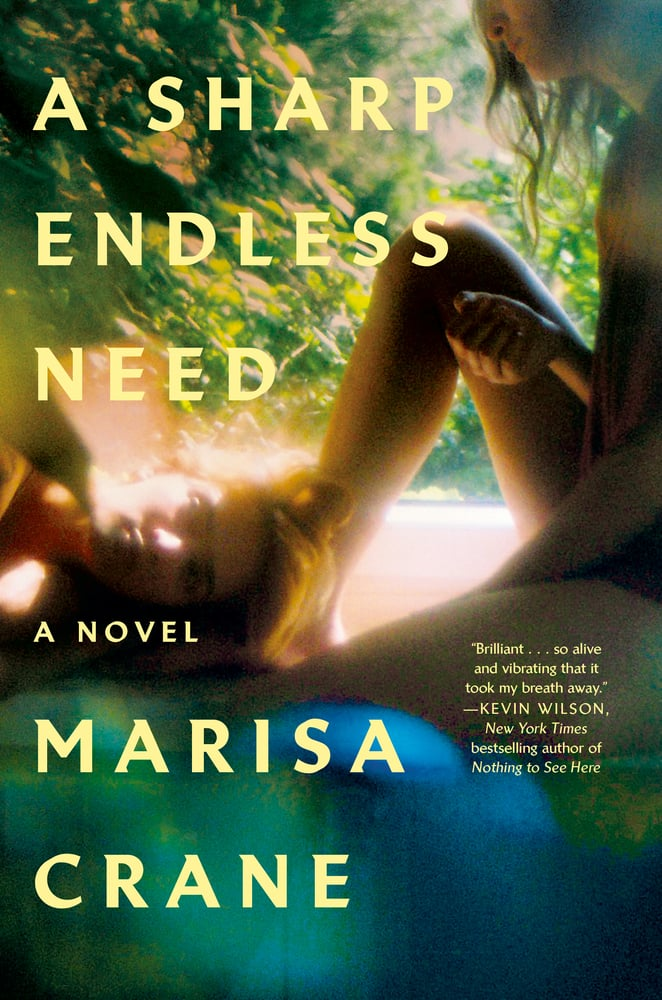
When I wrote my sophomore novel, A Sharp Endless Need, I considered the various ways in which my teen narrator, Mack, yearns, the many desires that trouble and ignite them. They long for their teammate, an impossible love, but they also yearn to escape their small town, a queer tale as old as time. They want to be the best basketball player the world has ever seen; they want to live forever in the minds of fans. They want an identity they understand, a gender that feels less confusing, or perhaps, the space to lean into that confusion.
And it thrills me to know and recommend so many beautiful, tender, smart novels that embody queer yearning. Here they are.
My life has been forever changed by Cantoras. Five queer women in 1970s Uruguay, living under dictatorship, carve a space for their love on the fringes of a brutal state. In it, yearning isn’t just romantic—it’s much more than that. It’s an achy longing for resistance, freedom, community, and connection. I love these women like they are my closest friends, my family.
The queer yearning in Rainbow Milk is intertwined with race, religion, trauma, and the desire for freedom, the desire to carve out a space for oneself to be held and known, truly known. This book covers many years, from the visceral hunger of a shared spliff with a teen boy to yearning for connection and care in fraught places to finding someone to build a life with. This one is for ex religious queers and/or those with mommy or daddy issues, for those who want nothing more than to be taken care of.
I teach a masturbation scene from this novel for a reason. As absurd and delusional as the narrator Cheryl is, there is, underneath her wild fantasies and strange desires, a desperate longing for connection that breaks my heart even as it makes me want to throw up a little. Here is a woman enveloped by queer yearning without any conventional language for it. She literally has to fantasize that she’s occupying a man’s body in order to access it, which is both tragic and honest.
Pizza Girl is a coming-of-age story about an 18-year-old pregnant pizza delivery girl who becomes obsessed with one of her customers, a married-to-a-man mother of a kid who likes pickles on his pizza. Come for the age-gap yearning, stay for the grief, dark humor, messiness, and disorientation of figuring out who you are and what you want out of life.
Mrs. S is a boarding school fever dream: stoic, claustrophobic, and erotic. A young butch matron at an English boarding school falls in love with the headmaster’s wife, Mrs. S. What could go wrong? This book is dripping with queer yearning, and Patrick writes desire with a restrained elegance that makes every moment feel loaded. It’s not just about erotic desire—it’s also about a longing to be seen.
How to Fall in Love in a Time of Unnameable Disaster follows Mira, a young Chinese American woman, who has moved back in with her mom after a devastating breakup with her ex, Mal. This speculative novel takes place in a NYC where acid rain falls every Tuesday. Mira and her mom share an apartment with two ghosts—her Grandpa Why and a gay cockroach named Shin. The yearning is ever-present—Mira for Mal, Shin for his lost cockroach lover, Mira for acceptance from her mother, and everyone for connection, for survival in a world that is collapsing all around them. It’s tender, achy, surreal, and incredibly moving.
I haven’t been able to stop talking about this book since I read it a few months ago. If it wasn’t a library book, I would have underlined basically every passage. To call Margery Kempe a queer yearning masterclass is an understatement—it’s unhinged, beautiful, obsessive, and devotional in a way that changes you forever. Glück takes a medieval mystic and folds her into a modern gay love story, where the narrator’s desire for L. is all-consuming, poetic, and holy.
Lie With Me by Philippe Besson is tender, aching, and absolutely devastating. It is, unfortunately, extremely relatable in its specific flavor of pining: a man looks back on an intense and secret affair he had with a boy as a teen in 1980s France. It embodies the tunnel vision of first love, especially for queer adolescents who had to love behind closed doors.
No queer yearning list would be complete without this book. It’s like the TV show Killing Eve meets Virginia and Vita’s love letters, with a speculative twist. Red and Blue are two agents on opposite sides of a war who begin as enemies but soon fall in love through poetic, yearning, and romantic-as-all-hell letters left across time. It is, in some ways, one of the most painful forms of longing; they can’t be seen together, let alone touch each other. All they have is their words, their secret love.
I haven’t been able to stop recommending this since it came out three years ago. It follows Owen, a boy who literally has a bird named Gail living in his chest. He is othered and isolated from the very beginning, but he yearns for connection, community, freedom, and to be loved unequivocally. It’s an incredibly tender and wholly original queer coming-of-age story that will both hurt and mend you.
My first orgasm was to the movie Valley Girl, starring Nicolas Cage, during which my grandmother lay asleep behind me on the sofa, but my first lover was the bathtub faucet.How did I even think to position myself under it, feet flat against the wall on either side of the hot and cold knobs? It wasn’t a natural position; it was a natural inclination. After that, I experimented with all sorts of household objects and reading materials from Valley of the Dolls to Rubyfruit Jungle.
How comforting it was to learn, years later, of the “hydrotherapy” craze that took hold of European and North American bathhouses, beginning in the late eighteenth century. From Bath, England, to Saratoga Springs, doctors touted the water cure for the disease of hysteria, which had been literally plaguing women for centuries.
The word hysteria is derived from the Greek word for uterus, which Plato famously described as “the animal within the animal” and was believed to set out wandering around the body if it was deprived of a baby, drawn by powerful smells like a raccoon to garbage cans. Many men, from ancient Greeks to doctors who specialized in gynecology hundreds of years later, postulated that a bad case of Wandering Womb led to hysteria, that better-known affliction about which much has been written as far back as the fifth century BC.
Symptoms might include headaches, fatigue; any sort of melancholy, frustration, or anxiety; an excess or deficit of sexual interest with “an approved male partner”—basically, the expression of any response other than total contentment to the patriarchal structures that governed their lives or a failure to reinforce the androcentric model of sex that reigned (and still does).
Hydrotherapy most popularly featured a high-pressure shower or “douche” that massaged the pelvic region—sometimes in the exact configuration I discovered at eleven. According to an 1851 essay about an English spa by R. J. Lane, after treatment the patients often claimed to feel “as much elation and buoyancy of spirits, as if they had been drinking champagne.” Common prescriptions suggested application of the water douche for four to five minutes, the same length of time in which researchers like Alfred Kinsey and Shere Hite later found most people able to achieve orgasm via manual masturbation.
Doctors of the nineteenth century claimed that more than 70 percent of women suffered from hysteria, thereby making it the pandemic of their time.
Despite my lack of neurosis around masturbation, I didn’t get my first vibrator until my junior year of college, when a friend gifted me a pink Pocket Rocket. A bestseller for some forty years, it’s the Toyota of vibrators: unglamorous, reliable, longitudinal. I used it for a decade, until its buzz grew so loud that it sounded like an actual Toyota in need of a new muffler, before sputtering out forever.
In my early twenties, my best friend and I lived in a series of Brooklyn apartments and shared a gargantuan vibrator that we christened “the Hammer of the Gods.” It was roughly the size and shape of a human arm, hinged at the “elbow,” with a blunt end where its hand would be. Whenever we felt moved, we shuffled into the other’s room, unplugged it, and carried it to our own bedroom. We practically had to wear jeans when using it because the force of its vibration even on the lowest setting would otherwise render our genitals insensate.
When desire becomes a perfunctory part of one’s job, it’s quickly shorn of whatever previous aura it carried.
The Hammer wasn’t what either of us would’ve chosen (most likely a Hitachi Magic Wand, that more elegant powerhouse vibrator) but it had been a gift from a client at the dungeon where we both worked as professional dominatrices. That’s where we met and where I learned how to talk freely about my own pleasure. When desire (or anything, really) becomes a perfunctory part of one’s job, it’s quickly shorn of whatever previous aura it carried. There’s no room for the sacred or profane in shoptalk.
The gifting client would come in weekly for a session with his current favorite, moving on every month or so to a newer hire. His requests were predictable: he basically just wanted to get you off with a giant vibrator or to watch you do it yourself. It seemed like a good deal, getting paid seventy-five dollars an hour to be brought to orgasm, or to masturbate for a one-man audience whose opinion meant next to nothing.
Nonetheless, I only saw him once. I found it unbearable to be watched.
It makes sense that nineteenth-century men wanted the hysteria “solution” to be applicable only by them. They got to have it all: a model of ideal sex that served them alone in terms of pleasure and procreation, to medicalize women’s pleasure, and to encourage women’s dependence on them. This way, they could deprive women of the legitimate satisfactions of both social freedom and sexual pleasure, pathologize their reasonable response, and then charge them money for a modicum of temporary relief. What a coup, for men to convince us that being masturbated to orgasm in a clinical setting by them was a “cure” for the imaginary illness whose symptoms were our humanity, and that to masturbate ourselves (along with drinking coffee or alcohol, and a slew of other ordinary behaviors) was yet another cause of the illness.
How appropriate that George Taylor, who patented his steampowered table vibrator in the late nineteenth century, called the cumbersome and expensive apparatus the “Manipulator.”
Locked inside the bathroom as a teenager, hazy with steam and the sough of rushing water, I felt most alone. In the trance of orgasm, I forgot myself completely. I forgot the bath, the room, the house, the town—every context in which I understood myself. Without a self, a body is everywhere and nowhere at once. Pleasure becomes synesthetic, exploding like splattered paint across the sky of consciousness. It’s a big bang of deafening thunder, the smell of lavender and salt.
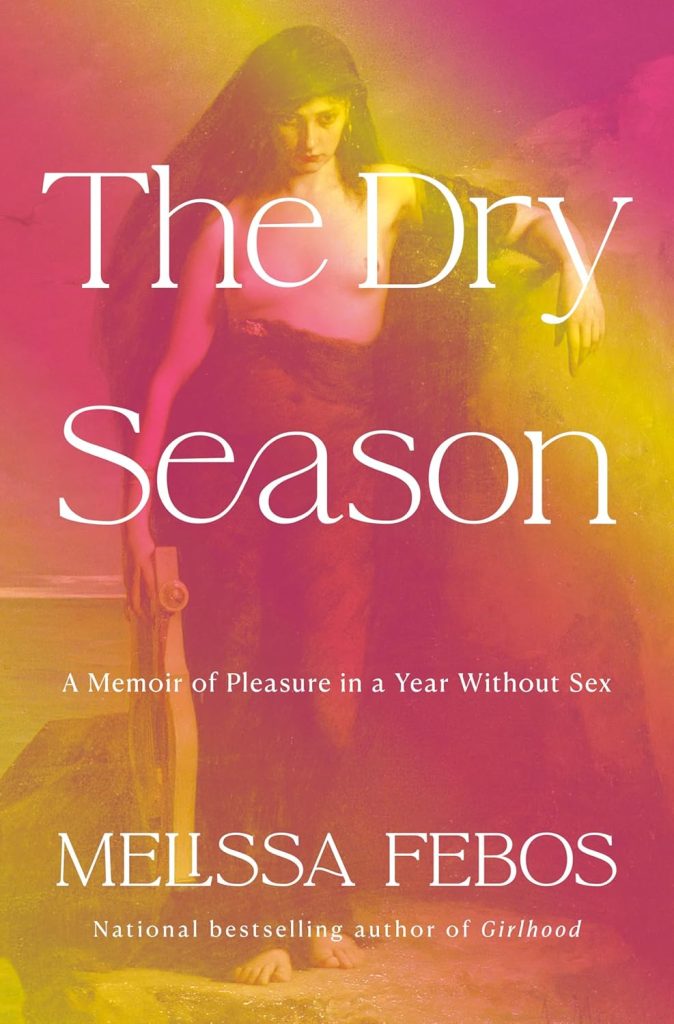
“In this vision my soul, as God would have it, rises up high into the vault of heaven and into the changing sky and spreads itself out,” wrote Hildegard von Bingen, the Benedictine abbess and mystic saint who had held my interest since those years when I first discovered erotic pleasure. All these years later, my decision to spend three months celibate led me back to her, and I remembered what had so enraptured me back then. I had no idea yet how important she would become to me.
Before Hildegard, my only impressions of nuns were gleaned from The Sound of Music and my father’s frightening tales of Catholic school. While Hildegard may have embodied elements of both of these—her musical genius is still widely appreciated today and a cruel streak would have served her well—nowhere had I encountered an image of a nun so powerful as she. Hildegard was empowered in ways people recognized as masculine: politically, intellectually, scientifically, linguistically, and artistically, but she embodied these in a wholly feminine way. That is, her powers served only God, nature, and her community. She seemed to lack the colonizing impulse that accompanied such power in men. Above all, she was a visionary.
In her seventies, Hildegard described her lifelong visions in a letter: “The light which I see . . . is far, far brighter than a cloud which carries the sun. I can measure neither height, nor length, nor breadth in it; and I call it ‘the reflection of the living Light.’ And as the sun, the moon, and the stars appear in water, so writings, sermons, virtues, and certain human actions take form for me and gleam.”
The aloneness of orgasm, the unbeingness of it, is similar in many ways to that of creation.When I am in the trance of creation, my self and its external contexts disappear, though sensation persists. The work becomes a mirror that reflects something other than the story of the self, something that disperses it to make room for a different kind of story.
Like that of most nuns, the goal of Hildegard von Bingen’s celibacy was to relate to God. But God didn’t assume human form. The only human forms in her abbey were other women, and she worked her whole life to make it so. At their inductions, she dressed them as brides in extravagant white silk, their hair flowing long and wild. She had passionate relationships with some, though allegedly she never had sex with anyone.
How then, did she write the first description of a female orgasm? How did she know the “sense of heat in her brain,” or how “the woman’s sexual organs contract, and all the parts that are ready to open up during the time of menstruation now close, in the same way as a strong man can hold something enclosed in his fist”?
Yielding to the divine was the only way to avoid yielding to men.
It was hard for me to imagine that nuns like her did not give themselves pleasure. I had given myself orgasms without even touching myself, aided by only a pillow, or the force of my own mind. Perhaps they did not connect that phenomena with the misogynistic rhetoric of the church around women’s sexuality that called it tantamount to evil. I liked to imagine they interpreted it as a holy gift, a vision, a fruit of devotion, the hand of God himself.
At the summer camp I attended as an adolescent, we played a game called Fishbowl, during which all of the girls would sit in a circle while the boys sat silently outside of it (in a following round, we would reverse positions). A female counselor would ask questions that the boys had submitted anonymously ahead of time. One of the questions the boys always asked was What does a female orgasm feel like?
Convulsion, we said.
A bright light flashing. A ripe persimmon, squeezed in a fist.
The mystics’ writings supported my hope. Beguine Mechthild of Magdeburg writes of eating and drinking Christ in sensuous rapture, while beguine Agnes Blannbekin tells a bizarre story of conjuring the foreskin of Christ on her tongue and swallowing it, an act which wracks her whole body with orgasmic pleasure. She repeats it one hundred times. Catherine of Siena used Christ’s foreskin as a ring when she wed him. Teresa of Ávila writes of an angel who “plunged [his] dart several times into my heart and that it reached deep within me. When he drew it out, I thought he was carrying off with him the deepest part of me; and he left me all on fire with great love of God. The pain was so great that it made me moan, and the sweetness this greatest pain caused me was so superabundant that there is no desire capable of taking it away.”
Some of these descriptions read like straightforward erotica, Jesus fanfiction that is sometimes quite kinky and seemingly stripped of coy metaphors. Others, like those of von Bingen, seemed more like oneness with the world, a spiritual experience achieved through the body (as so many are).
The female mystics claimed a desire to yield to the divine, to disperse their selfhood into the universe. Superficially, these expressions appeared to reinforce a familiar edict for the feminine: to submit. But the mystic saints’ descriptions of yielding often sounded nothing like submission. When the divine wrote through a person, her voice might more resemble that of a god than a supplicant. Artists find imaginative means of articulating our most stigmatized desires. “I am the flame above the beauty in the fields,” wrote von Bingen. “I shine in the waters; I burn in the sun, the moon, and the stars. And with the airy wind, I quicken all things vitally by an unseen, all-sustaining life.”
The more I read about Hildegard and other women who lived in devotion to God and seclusion from men, the more I saw it as a harbor for ambition. Imagine a woman rich in talent, in possession of an exceptional mind, a woman who hungers for power and craves challenge. What hell for her to live in a society where nothing is expected of her, nor indeed allowed, but to breed and cook and clean and otherwise care for men who are her inferiors.
Hildegard claimed visions from early childhood, but no one particularly cared until she was forty. As soon as her direct line to God was recognized by men, she claimed that God had commanded her: “Make known the wonders you live, put them in writing, and speak.”
In the High Middle Ages, women weren’t allowed to write music in the church and certainly no one was interested in their ideas or stories, but Hildegard became one of the most powerful and prolific thinkers in history. She wrote copious religious and scientific texts, was an unparalleled composer and lyricist, and invented a secret language for her nuns to speak to one another. Her understanding of physical pleasure seems not to have hindered this, though entanglement with another person might have.
Perhaps the mystic nuns simply wanted to live freely among other women, to compose music and write and wear luxurious silks and let their hair flow freely. Proving an exceptional relationship to God was the single route to such freedoms. Yielding to the divine was the only way to avoid yielding to men.
I did not think a desire to be free precluded a relationship to the divine, or that either precluded erotic pleasure. The body was an instrument for all of these, but in every case, its retrieval from the possession of others seemed a first step.
As an adult, I had never been a light-candles-around-the-bathtub type of masturbator. I was more of an eat-a-bag-of-chips kind of masturbator. A procrasturbator. The most reliable time that I masturbated was in the early stages of writing something. It was a useful way to burn off the nervous energy of breaking ground on a new project, so that I could focus when I approached the page.
One definition of compulsion is an act meant to relieve a mentalobsession, or some kind of distress. In that sense, my masturbatory practices qualified as compulsive. I was compelled by the anxiety of writing to watch a round of porn and have a handful of orgasms.
Unlike most other sex acts, I had never masturbated when I didn’t want to.
Despite my inclination to please, when lovers asked me to touch myself so they could watch, I always refused. I was shy, but that wasn’t it. The prospect repelled me the way that client with the vibrator had. There was no performance to my self-pleasure and there was so much performance with lovers. Self-pleasure was the sole realm of true pleasure, unmediated or degraded by performance. To allow the gaze of a spectator to intrude upon that realm would have polluted it. It would have activated my internal spectator. Masturbating for a lover had more in common with sex work than with my private pleasure.
Unlike most other sex acts, I had never masturbated when I didn’t want to. I had never followed a vibrator into a hotel room I did not want to visit. As a young person, self-pleasure seemed in direct opposition to my partnered experiences. Though I’d had plenty of orgasms with other people in my twenties and thirties, there was always an element of performance, of body consciousness, of other-orientation. The pleasure of a solitary orgasm did often feel like sunlight or thunder—elemental.
I’d had no internalized male gaze that directed my masturbation, and not because the activity was exempt from it; self-pleasure is a whole genre of porn, with copious subgenres. My masturbatory fantasies abounded with all sorts of hyper-patriarchal shit, but those images didn’t dominate my consciousness or govern what I did with my body. This exemption was likely due to the fact that my practice of self-pleasure predated that of performance. It was a relationship I formed with myself before I ever formed a sexual relationship with another person. While I had built an image of myself out of others’ esteem and others’ desires, one that I monitored during sex with partners, I had another, truer self, that I could sense but not see, because I had not objectified her. I felt her in that private space, where there was no distance between the act and the self, the self and its image.
My need for celibacy had more to do with performance than it did with pleasure, I realized. I wanted to close the distance between that private self and the self I created in relationships, who was created by them. It was not physical lust that had compelled me from monogamous relationship to monogamous relationship. If my ceaseless entanglements were a result of the ways that I related to other people, then the goal of my celibacy was to relate to myself. The masturbatory me might serve as a kind of teacher, then. A reference point for pleasure without performance, for a self without a story.
I decided that my celibacy would allow masturbation. My abstinence was about my relations with other people, not the expulsion or containment of desire. It was a space in which to tease apart the compulsive pursuit of “love” from real, sustaining forms of love. Sex with other people complicated that task. Sex with myself did not. Solitude could be sexy. In solitude, as in self-pleasure, the body opened. But if not to another, then to what? That night I ran a bath. I dipped my body in the steaming water.
As I lay submerged, the grit of salt beneath my thighs, breasts bobbing toward the surface, I listened to the hum of the refrigerator and the hiss of traffic in the distance. I watched my chest rise and fall with breath. I saw that most familiar hand, calling me home.
An earlier version of these pages was first published in Sex and the Single Woman: 25 Writers Reimagine Helen Gurley Brown’s Cult Classic, eds. Eliza Smith and Haley Swanson.
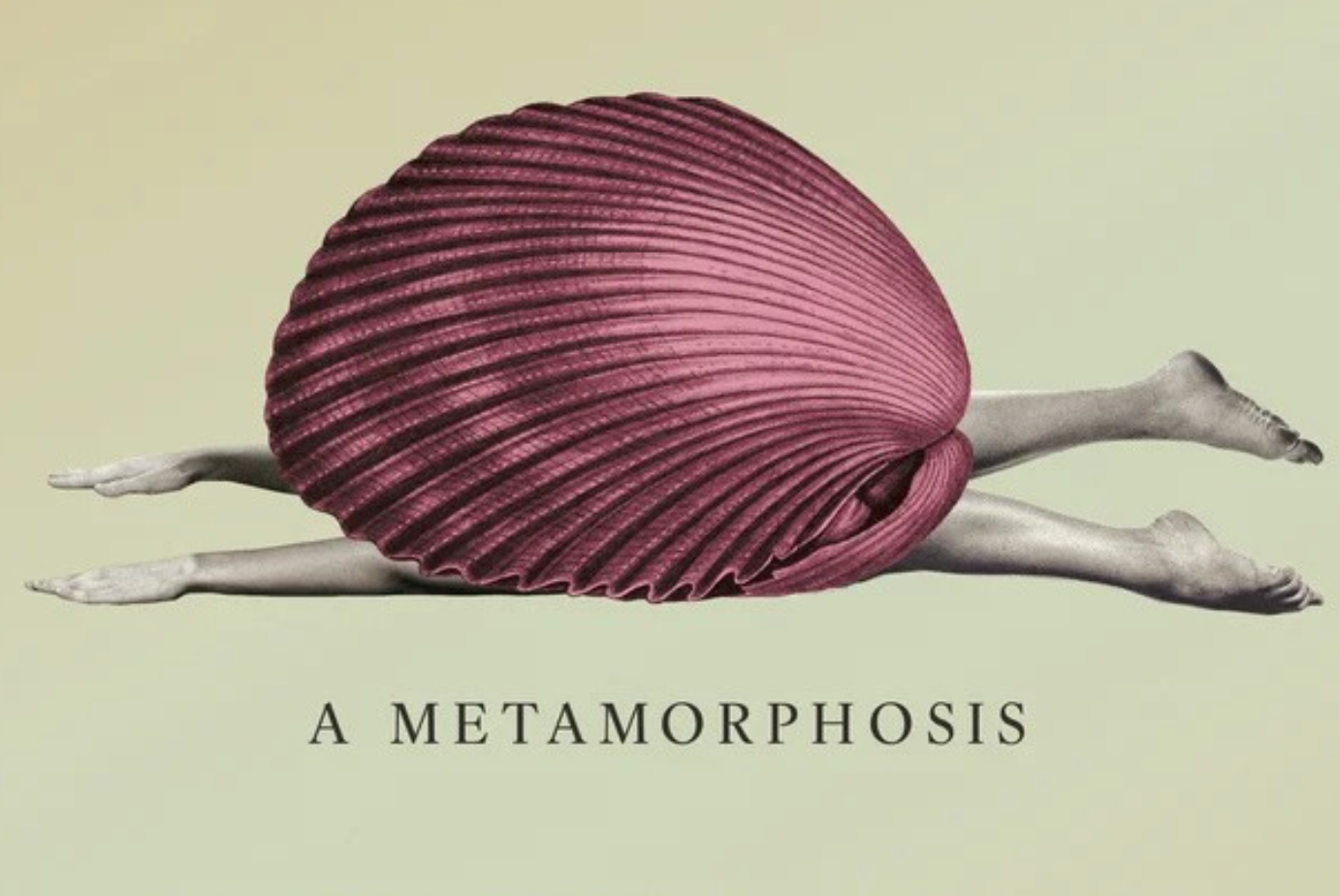
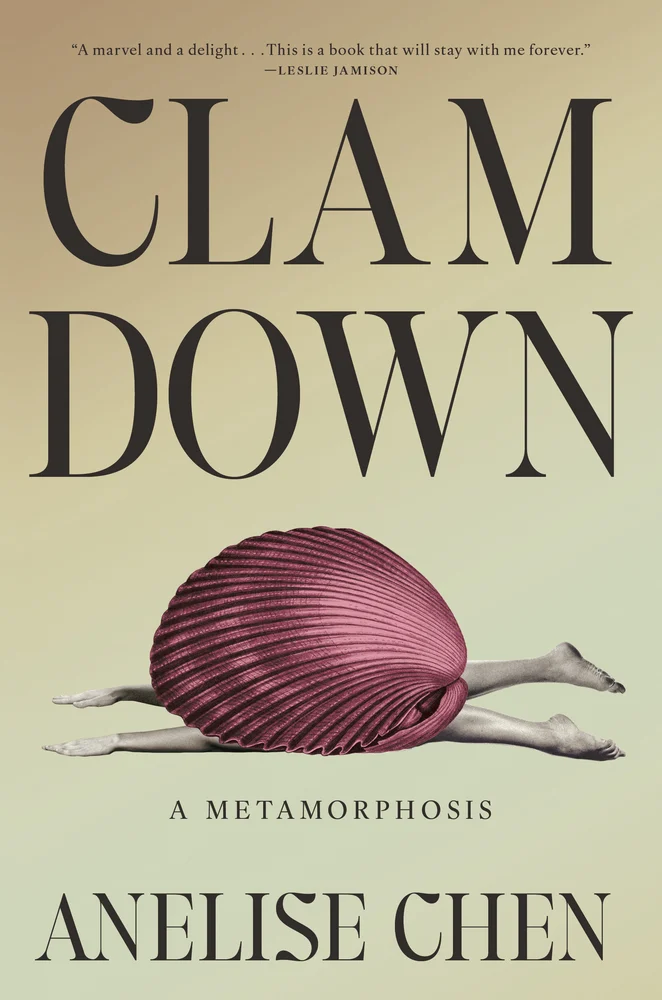
Anelise Chen’s hybrid memoir starts with an ingenious typo: Clam down, Chen’s mother texts her as she copes with her divorce, and poof!, the protagonist becomes a clam, determined to learn everything about her species and kin.
Though its namesake is a sedentary bottom feeder, Clam Downtransports us from a heartsick Friendsgiving in Paris to an ambivalent research trip along the Camino del Santiago to a hopeful artist’s residency in Arizona; across every stage of infatuation, heartbreak, and bittersweet contemplation; and, finally, through a process of mutual understanding with the protagonist’s father, who spent years away from his family to develop a program called Shell Computing. Along the way, the clam contemplates her own adaptive behaviors in love and family life, the significance of shells to artists and cultures across the world, and the long lineage of immigrant resilience and invention.
With meticulous research and generous self-insight, Anelise Chen creates gorgeous pearls of wisdom about history, family, love, and the beauty and terror of opening up to other people. I had the immense pleasure of speaking with her over the phone, safely on dry land.
E.Y. Zhao:I loved how Clam Down explores scientific theory as a form of storytelling, and how, conversely, storytelling is a kind of archeological science and biological process. How did your relationship to research and science evolve over the process of writing the book?
Anelise Chen: It changed me completely. I grew up in the suburbs and then lived in cities my whole life. And I barely took any science classes when I was in school. I Asian-failed chemistry, got a C or a C-plus or something. I didn’t know anything about nature. I had total plant blindness. I didn’t know the difference between a species and a family and a genus. I couldn’t tell you the difference between a pine tree and a maple tree. Through the process of writing this, I became so much more interested in the natural world and am so much more literate than I was before. And I just love it. I feel like I missed out on this education, like going to the Natural History Museum and being a kid again. That kind of wonder, my whole life is oriented around that now. How to captivate that wonder, how to share it, how to harness it in writing and spread it around. And it all happened because of this weird typo. Just thinking about clams. When I started writing this, I didn’t know what a clam was. I was like, it’s a kind of food, but what is it, actually? Is it alive? I didn’t know. So it really has opened up a whole new way of being in the world.
EYZ: You’ve been working on Clam Down for eight years. How do you feel sending it into the world?
AC: I’m always telling my students, if I just write about what’s personal to me, will it be relevant to anyone else? If I just write about my family, how is this going to affect or move anyone? But the more specific you are, the more relatable it is, in a way. So I’m trying to fall back on that.
EYZ: It’s so funny to hear you say that, because I feel like this is the most personal book to me I’ve ever read. To use a shell metaphor: what’s so beautiful about stories is that they have infinite variation, and in that variation, you find something resonant with the entire earth.
AC: The other shell metaphor I latched onto is by the poet Francis Ponge. He has a poem called “The Mollusc.” At the very end, there’s a line about how the mollusk secretes its shell, and after it dies, there’s this empty vessel, and the vessel is there for others to inhabit. That’s such a cool thing that books do: you secrete it, you write it, and then you leave and other people can go inside and use it. So it’s almost like my job is done. I can leave now and have others enter it and make use of it however they see fit.
EYZ: That’s such an apt metaphor. And it connects to a quote I noted: “All stories have one simple goal to mark out zones of possibility and impossibility.” What zones did this book help mark out for you?
AC: It made me aware of the zones that had been marked out for me, what seems possible and impossible. It’s not the case anymore, but when I was in my twenties and trying to become something, like, Who am I, what am I going to be, and what are my goals?, it could be at odds with what my family thought was appropriate. I wanted to be a writer, and I wanted to have this kind of life as an artist and without family. I wanted to break the mold, but the mold had been made for me. There’s that whole therapy movement where you have to tell a new story about yourself to change because stories are what constrain you, but the story you tell yourself is always influenced by the stories you’ve been told. How can you begin to tell a different story?
It is sobering because I just finished reading my audiobook, and it’s such a weird experience to go so slowly through your own work and reinhabit it. I came home from the first day of reading like, Oh my God, I haven’t changed at all. Everything that I wrote, I’m still the same. What does that say about me? And then my husband said, “Well, your book is about self-recognition and acceptance, not about transformation.” And I was like, yes, thank you.
EYZ: What you said about the therapy movement—there’s some Lacan concept where he says you can’t change the narrative per se, but through psychotherapy you can change which person you are in that story, reposition yourself and see it from a new angle. Which you literally do by writing about yourself from the third person. What was it like to narrate yourself in third?
I wanted to break the mold, but the mold had been made for me.
AC: It was fun and liberating, and that’s why I ran with it. When I first started writing, everything was so fresh. It was happening in real time. Writing it in first person felt too close and writing it in third person felt somehow still too close. But writing from third person clam was just the right amount of distance and humor and irony that I could finally enter the story. But then I had to turn it into a book. It became really constraining and stifling and I thought, how am I going to keep this going for 300 pages? Which is why the book became so polyphonic. But it was useful to have that top-down, detached POV.
EYZ: Can you walk me through that writing process? Secreting the shell that is Clam Down?
AC: Oh. Just, you know, a lot of head bashing and misery and complaining. The primary ingredient is confusion and a dogged determination to answer the question, whatever that is. I’m just always confused. There’s always questions floating on my mind. Like what am I trying to figure out and why am I so compelled by this? Where’s the energy here? Why this image? Why is the clam so funny to me? That generates a lot of notes and propels me to read, and that leads to more notes. So the reading, questioning, and notetaking start to cohere, and then you read it over and you’re like, Oh, there’s a thread here. There’s patterns emerging. Then you have to narrativize it. And you think, How do I plug it in to the larger story? But what is the larger story? I have magnet boards in my office where I plot out the story, then replot. And once you replot, information gets slotted in different places. Just an example: there was this section about animal communication versus human communication, how animal communication is so much more straightforward because it’s nonverbal, and words are so deceptive and don’t actually represent what you’re thinking. So where do I put that in the narrative? Where does it make sense for that to come up? That note card kept moving around. Should it come in the beginning? Should it come at the end? Is it going to come with a dad interview? So it really takes a long time. That’s a little bit in the weeds.
EYZ: I wanted to get in the weeds! There’s a moment where your dad thinks, “It’s been so many years. I can’t remember how to use my own program. The creator can’t enter his creation. I have to force quit the whole thing and start over.” When you felt that way about this book, what kept you going?
AC: Just stubbornness. That is one thing that I share with my dad. He had to see his program as far as he could take it. Writing is so lonely and so hard. Nobody can help you.You can get feedback, but you still have to be the one to solve your own problems, because you’re the only one holding all the details in your head. How do you describe how painful that is? The best you can do is have a cheerleading squad. I have a group chat with my friends, Lisa and Eugene, and we use it to commiserate. Like, I can’t solve your problems for you, but I know how hard it is. And that’s basically it. You just have to keep going. I mean, I could’ve stopped, right? You can always just stop. That’s another answer. Like maybe it’s just not meant [to] be right now. I’ve quit several projects. Sometimes you have to put it aside.
Writing is so lonely and so hard. Nobody can help you.
EYZ: Any wellsprings of inspiration that saw you through?
AC: I always read Sigrid Nunez when I’m stuck. I can never really figure out how she structures her books, so it lets me be a little looser because I’m so obsessed with structure. Calvino. I read “The Spiral” many, many times. The voice is so light.
EYZ: I’m curious about the structure Clam Down ended up taking. There’s third-person clam throughout, but also, in the later parts, sections written from your dad’s point of view and historical documents from Asian clams’ points of view. How did those come in?
AC: I hadn’t planned to write in my dad’s voice, but once I started interviewing him, I was like, Oh, there’s no way to capture him, because it’s so funny and some of the things he says are inadvertently very poetic. And I didn’t want the perspective to be the judging daughter. So his voice just took over. That was really fun to write because I had so many text messages and emails I could study. And the Asian clam stuff—that happened early on. I struggled with the form, initially. Should I write it? How should I write it? Every way I wrote, it kept sounding like an Asian American history book. I knew I had to do something more. The whole book is what clams can teach us; it seemed logical to extend that to interviewing actual clams. And I loved oral history: I read a lot of oral history compilations, I love the voice in them. You can really sense the person behind the interview. So I experimented with that and it felt right.
EYZ: Were there other ways you tried to access your dad’s voice? There are moments of interiority, like when he says “this project has gotten away from me,” or when he’s thinking about you: “Oh, she’s always here to ask for something and it’s really painful.” How did you tap into that?
AC: Well, a lot of that he just tells me. He talks a lot about his anxieties and what he dreamt about. It’s my thinking pattern too. I got it from him, the way he thinks through to the end of every terrible scenario. And his very uncharitable assessments of people, he just says that out loud, but later will take it back. I feel like pretty much everything I wrote he told me directly. Also, when he was taking me through the photographs and decided [I could] use this material, he was really good about narrating his internal thoughts.
EYZ: That embodies one of the book’s core themes, which is the surprise people contain. In some ways your dad is protecting himself and closed off to the world. But then there are these moments of poignancy and vulnerability.
AC: I think this happens a lot with our immigrant parents. It’s like the portal will open and then it will close. And that’s it.
EYZ: Does your dad feel like it’s going to be strange to see himself in fictional form?
AC: He always says, “I try very hard not to have any kind of emotional response.” So he’s good. He built his shell and it’s airtight and he doesn’t want to do anything to puncture his equilibrium. He hasn’t read anything of mine and he doesn’t plan to read it. I don’t even think he’s curious. I think he’s just like, okay, it’s yours now.
The whole book is what clams can teach us.
EYZ: Did you find that liberating while you were writing?
AC: It was. But I was also so anxious, because if someone’s going to read it, you want to feel you have permission. My mom read it. Then I feel, Well, you gave me permission. There’s this section in the book where I’m like, Wait, what did [my dad] mean when [he] said don’t betray [him]? For two or three years, I was just writing and I was like, I have no idea what [my dad] means by that, but I’ll just keep going. And then I finished. And even now, sometimes I’ll wake up and I’m like, Oh my gosh, what if my dad’s not okay with any of this?
EYZ: It does seem like, based on the exchange in the book, it was a kind of permission to write the version that feels true.
I have a semi-related question that’s just: What is freedom…? I don’t know if you want to take a stab at that?
AC: That is the question!
EYZ: Is there anything else on your mind as Clam Down makes its way into the world?
AC: I guess it is still just the question: should we clam or not clam? Especially right now, the sense of overwhelm and crisis is acute. What should our response be? But I do think, in the end, maybe we should try to open up. We should try.
It’s the night of the supermoon, something no one really knows the meaning of but that excites us all the same. We think it’s special, that it will appear larger than any moon we’ve ever seen before, though none of us really have a good memory of the moon. We so rarely look at it. We take the moon for granted.
Even if I talk about the supermoon in advance to my friends—and by talk I mean text on my hand computer I only occasionally use as a phone—half the time, I forget to look at it myself. But the next day, I talk about how I missed it, as full of energy as when I anticipated it. In this way, the idea of the supermoon supersedes the moon itself.
But now I’m actually looking at the moon, the last supermoon of the year. I stare at its surface, half dark patches, half luminous ones, swirled together like some messy yin-yang. I stare more intently, thinking I’ll see the sea of tranquility, or perhaps even an abandoned space rover or pole and a wavering flag.
But really, I see nothing. I know nothing about the moon. Still, I take a picture of it, only to discover my phone sees even less of it than I do. In the photo, there are no dark spots. It appears only as a shining white glob of light in the night, a couple rays shooting out to the sides, which I suppose are due to a smear on the lens.
Regardless, I send the picture to my friends, as if to say, Look what I didn’t forget, look how connected to nature I am. But really, the photo is only proof that I was staring at my phone instead of staring at the moon.
I’m in my fifties and my friends are scattered across the country. This is because I uprooted myself frequently in my 20s and 30s, and they uprooted themselves, and when we finally settled down somewhere, even the new people we befriended uprooted themselves and left the community we thought we were finally building. We call each other now and then, to catch up. We often talk of buying land together one day, finding a place where we can care for each other and grow old together. We have talked about this for years.
Over time, where that place is changes, based on which friends I’m talking to. At times when I visit, I feel like I’m being recruited. You can get still land cheap here. There’s great roads to bike on. The restaurants and bakeries are excellent here. You can’t beat a blue state with good hospitals.
It’s taken several years since the pandemic to discover that, like me, all my friends play daily games on their phones—Wordle, Spelling Bee, Crossword, Connections. We are educated nerds of a certain generation, too old to have gotten into serious video games. So instead, we play word games to make us feel smart, to momentarily forget about the state of the world, to feel we have accomplished something with our day. It’s as though we are preparing for the ultimate game show when these skills will determine who is saved, who will go to heaven, who will find that perfect plot of land near a progressive city that’s warm enough to grow vegetables, but protected from future global heat waves, flooding, hurricanes, and fires.
The other day, a queer friend said to me, I think the Wordle bot is gay.
How do you know? I asked.
If you look at the bot for a while, you’ll see it taps its foot.
So?
That’s a gay signal, he said.In public bathrooms, you tap your foot by the stall next to you, if you want to have sex.
So, the Wordle bot doesn’t just want to just share its analysis of my word guessing prowess, it wants to have sex with me?
Yes.
Are its guesses a form of flirting? When it saysYou beat the bot, is it being suggestive? Demanding?
Yes, yes, yes, said my friend. Think about it: every day the app asks you, What would you like to do? It wants to please you.It’s definitely a bottom.
After five minutes of staring at the moon, I’m tired. Or perhaps bored. We grow weary of what is always in front of us. The surface of the moon, the face of our partner.
Tonight when I go to bed, I am alone. It’s only ten o’clock and I’m sleepy, but I can’t sleep. Perhaps it’s the light from the supermoon shining through the window. It’s hard to believe that that light is from the sun, that it traveled 93 million miles, turning a soft white as it bounced off the surface of the moon, then traveled another 240,000 miles to Earth. It’s hard to believe it’s still so bright, especially when, at the last moment, it had to slip between the two sheets of glass in my bedroom window to reach me.
I sit in bed and set the time zone on my phone to Paris(though I’m in Philadelphia), so that the phone thinks it’s already past midnight. This way, I can play all of tomorrow’s daily online games tonight. I feel a great sense of power when I do this, having out-tricked a billion-dollar technology company and a major media source with a firewall.
If I’m kind to myself, I leave Wordle for tomorrow’s me. Sometimes I can’t resist, but tonight, I do and finally slip into sleep.
When I wake in the middle of the night, my first instinct is to reach for my phone to check the time. The room is dark until I press the small rubber button. Then the phone screen becomes a supermoon. The artificial light burns into my eyes. It illuminates my face and the sheets and practically the whole room.
But rather turn the phone off, I simply turn down the light. I’m now alone in the dark, a little island of light around my head, like a boat on the ocean at night.
My phone says it’s nearly 11 am, which doesn’t make sense. There is a dim light outside the window, but it’s not the sun—or the moon. It is a streetlight, one of the tiny moons of our city, that create what I like to call “a constellation prize” for having blotted out the night sky.
I stare at the time, confused, until I remember the phone is still in Paris. I tap in my password and reset the location back to where I am. But now I can’t fall back to sleep. I check my email and read texts from California friends who responded to my picture of the moon after I went to bed. Then I scroll through the news, which I’ve learned is updated throughout the night, but there is nothing of note. So, I try to guess the five-letter word of the day.
With my eyes on the screen, I don’t think so much of my body or my life, how I am lying in my bed, alone in this house, my friends scattered far across this country. I am like the solitary moon, resting in the void of the sky.
If I should get distracted from my screen long enough to think about that, about how far I am from everyone I know, there is one small comfort: when I’m done playing, when I have figured out the exact five-letter word that a computer somewhere on the planet has generated for the day, I know the bot will be there for me, tapping its foot expectantly, desirously, waiting to let me know how I’ve done today compared to everyone else who has played the game, and how I measure up to his own efforts. He will be there, as always, with his open invitation, asking me, as if it is something to seriously consider, What would you like to do?
I love to travel, but let’s get real: have you seen the price of plane tickets these days? Much cheaper, in my opinion, to spend a week on the Nile for thirty bucks or make the trip free by visiting your local library. For years, I have used books to travel. I was maybe ten when I realized, through reading, I could trade my dull, suburban, happy childhood for the exciting world of spy craft in Malaga or carnivals in Rio. I still use books—all of them: fiction, non-fiction, memoir, academic—to vacation. I love the giddy feeling of exploring parts unknown on the page, of trekking across an unfamiliar narrative and landscape. If some readers choose books based on their covers, I choose them (almost exclusively) based on their settings. I’m also a slow reader, so if I’m going to spend hours in a book, I want to spend those hours somewhere fun (or interesting/terrifying, but we’ll get to that).
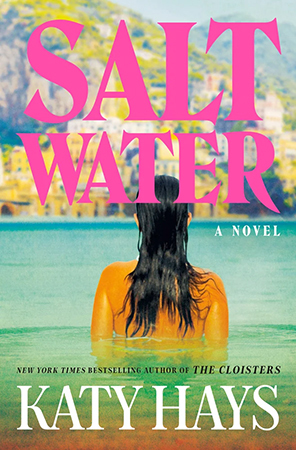
As a writer, I am equally drawn to the way a setting can shape a story. Moreover, I know that when I commit to a novel, I will spend months (often years) in my chosen locale. It is for these reasons that I decided to set my sophomore novel, Saltwater, on the island of Capri. A place where performances (of wealth, of celebrity, of excess) are common, Capri was the perfect backdrop for a story about a family obsessed with managing its public persona, even as cracks in its façade began to surface. Without the island—sultry, luxurious, claustrophobic—the family drama in the novel wouldn’t have been as vicious nor the results as killer. Which is why I’ve rounded up seven cheap vacations here, all of which have fatal consequences.
My favorite book in Rachel Hawkin’s enviable oeuvre of perfectly paced thrillers, Reckless Girls unfurls on the fictional South Pacific Island of Meroe where a young woman and her boyfriend have sailed their sailboat, The Susannah, for some much-needed rest and relaxation. It’s all aboard suntans and light beers until another vessel shows up one morning, anchored in their private cove. The ensuing resentments (and murder, naturally) fracture the serene atmosphere and transform the dreamy tropical island into a nightmare.
If you haven’t read Who is Maud Dixon stop everything, grab a copy, and thank me later. The story of a young woman who takes a job as an assistant to a critically acclaimed and commercially successful writer—Maud Dixon—and discovers the pseudonymous author is not who she seems, Who is Maud Dixon takes a dark turn when the two women travel to a Moroccan riad so that Maud can finish her next (overdue) novel. But Maud has bigger plans than writing and research. Luckily, so, too, does her assistant. Come for the publishing inside baseball, stay for the coasts of Morocco.
Everyone knows Silvia Moreno-Garcia is the queen of atmosphere, and while both Mexican Gothic and the Seventh Veil of Salome get a lot of (well earned!) attention it’s Untamed Shore that has long had my heart. A dreamy, sun-drenched noir set in Baja, Untamed Shore is the story of a local girl, Viridiana, who finds herself entangled in the lives of a wealthy couple vacationing on the coast. When one of the vacationers is found murdered, it quickly becomes clear that the hard glitter of the Pacific isn’t the only thing creating mirages on the beach!
Talk to me for five minutes about suspense fiction and I’ll try to get you to read Christopher Bollen. The Destroyers (my favorite of Bollen’s oeuvre) is set on the Greek island of Patmos where, legend has it, the Book of Revelation was written. Broke and desperate, Ian Bledsoe arrives on Patmos hoping to talk his childhood friend, Charlie, into offering him a financial lifeline. But when Charlie disappears, everyone on the island is a suspect. And I mean everyone. The Book of Revelation may have predicted the end times, but I guarantee this will be the beginning of your love affair with Bollen’s writing. (Bonus picks from Bollen include: A Beautiful Crime, set in Venice and Havoc, set along the Nile).
I am obsessed with Calla Henkel. So obsessed I don’t even care if she learns about it by reading this listicle. In her stunning, intricately plotted debut, Henkel takes us to early 2000s Berlin where art student, Zoe, finds herself partnered up with a pop culture and fame obsessed roommate. Together, they rent an impossibly chic apartment from a secretive thriller writer for their year abroad in Berlin, only to discover the city, its nightlife, and residents, have darker plans. Heady and intoxicating (with some great Amanda Knox salvos), not everyone in this apartment will survive their year in the Grey City.
Christine Mangan has made a career out of crafting perfect historical noirs and her latest, The Continental Affair, is no exception. In the gardens of the Alhambra, Henri, a desultory gopher for a criminal organization, watches Louise, the beneficiary of a modest inheritance, “accidentally” pick up the bag of money Henri was sent to collect. What follows is a game of cat and mouse across Europe as Louise searches for excitement and Henri searches for her. Glamorous, claustrophobic, and haunting, The Continental Affair updates Agatha Christie’s locked room mysteries with dramatic results.
What kind of list would this be without Patricia Highsmith? The truth is, very little happens in this novel. The set up is: a young woman commits suicide and her father arrives in Venice to exact his revenge on his daughter’s husband who he blames for her death. The father proceeds to stalk the widower, Ray, through the narrow alleys of Venice, down the canals, and across the Lagoon. A master class in atmosphere, tension, and letting the setting do the work for you, Those Who Walk Away is a slow but stunning work of fiction by one of the best suspense novelists to ever ply the trade.
Ask me for a book recommendation on the spot, and my mind will probably go blank. I can’t explain it, but when someone who knows I keep up with contemporary literature wants to know what they should read next, suddenly, it’s like I’ve never read a book in my life, or my mind can only access books I wouldn’t recommend. But if I’m given time to consider, Lydi Conklin’s Rainbow Rainbowwould be at the top of the list. It’s one of my favorite story collections from the past decade—maybe ever. The stories are propulsive, vivid, affirming, and just really damn good.
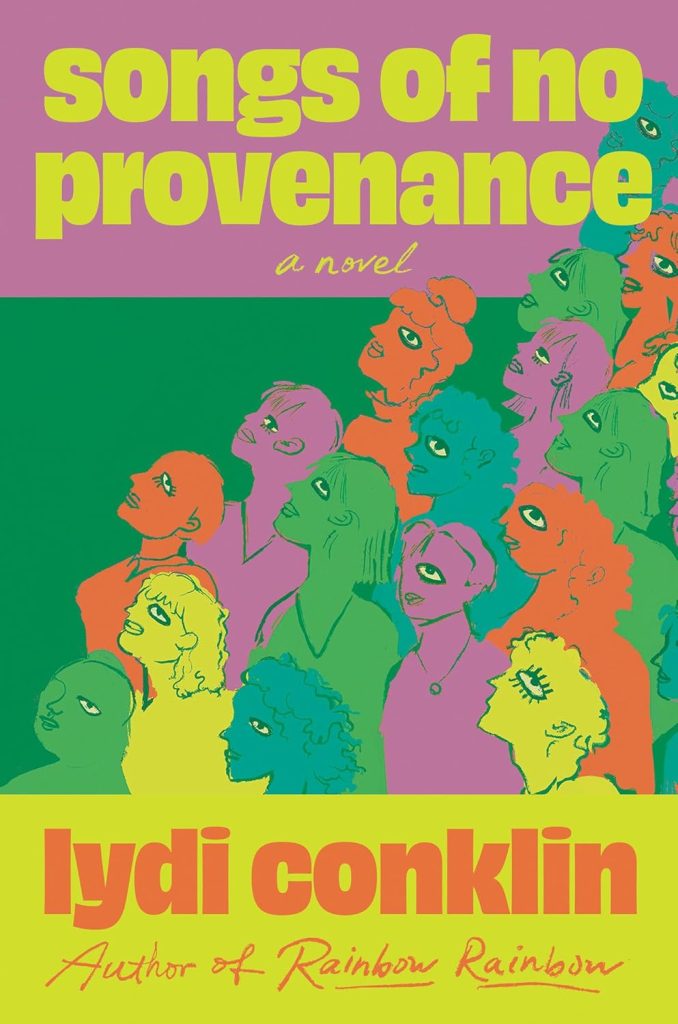
Needless to say, I couldn’t wait to check out their debut novel, Songs of No Provenance, about an indie folk singer who flees to teach songwriting at an art camp after doing something sexual on stage she’s quite certain will get her cancelled. Joan Vole isn’t interested in teaching these teenagers, but joins the staff as an attempt at refuge—campers aren’t allowed smart phones, so she’s hopeful no one there can get online and come across what she’s done. Surrounded by young artists and fellow camp staff—including Sparrow, a nonbinary artist who is a fan of her music—Joan questions her past, future, and relationship to making art. Songs of No Provenance hits that sweet spot of being character-driven, yet suspenseful. As the reader wonders if (when?) everyone at camp will discover what she did, we’re offered a compelling portrait of this flawed artist. The novel dives into issues of identity, queerbaiting and appropriation, kink, fame, secrecy, art making, and more. And like Lydi’s first book, it’s really damn good.
Lydi and I discussed their novel over a couple of weeks via Google Docs, and talked about music, queerbaiting and appropriation, and liminal identities.
Rachel León: We have a mutual friend [JP Solheim] who is composing one of the fictional songs from the novel, so I thought we could start there. You use such vivid descriptions of Joan’s music, I’m curious if you have your own sense of what her songs sound like? And do you have plans to share JP’s version of the song with readers?
Lydi Conklin: Oh I love JP so much! Yes, JP is one of the artists who so kindly agreed to interpret and record and/or perform songs from the book! So far I have gotten five songs. Three are the same song, which I love so much, because they are all done so differently and beautifully, by my musician friends Caitlin Watkins, Anna Vogelzang, and John Shakespear. I listen to them all the time, and I love how they live in the same universe and come from Joan’s mind but are each so deeply in their own voice. And then my friends Jacob Milstein and Emily Bielagus did two different songs from the book, which they added lyrics to and completely changed the meaning/emotion of the songs. I’m obsessed with both approaches. I do have my own idea of how Joan’s songs sound, and probably Emily’s voice and style is the most similar to Joan’s, though I love seeing the songs interpreted in vastly different ways from how I pictured them. I will release the songs the musicians have interpreted in the weeks leading up to the book’s release, which I’m really excited about. Usually writing a novel is such a solitary act, and it’s been amazing to get to work in collaboration on this piece.
RL: That’s so cool! You’ve done a lot of residencies, which often offer the opportunity to be in community with artists of other disciplines, in addition to having time to work in solitude. This novel made me wonder how much of your creative process pulls in other mediums. Like, I know you also draw comics—do you doodle when you’re stuck? Are you someone who writes with music or in silence? How does being in community with artists of other disciplines strengthen your own work?
LC: That’s such a good question! I keep my mediums pretty separate artistically for the most part. Like one editor who was interested in Rainbow Rainbow wanted to publish it with my drawings as well and to me that felt wrong. I really think of them as separate endeavors, and the way I work on them also reflects that. Like with comics, I often use speculative elements, and I have a rule in my fiction to never use speculative elements, because I’m more interested in the weirdest thing that could possibly happen in real life, whereas in comics I feel the medium is already in the world of the made-up, and so I use speculative elements like floating boobs and talking dogs to explore very real character-based emotions.
I don’t usually use art or music in the process of writing, though I did listen to songs over and over again that inspired this book, to try to get into Joan’s mindspace and creative space and to try to learn how to write songs myself. I had only written kind of silly songs [prior] to this book, like a song about sports. Although I did write some grim goth songs in middle school about people bleeding in graveyards. I do have a lot of friends who work across disciplines artistically. I did theater in high school and a lot of my friends are still in that world, which inspired a manuscript I’m working on now, and all my musician friends formed the inspiration for this book, especially my friends’ band You Won’t, which is my favorite band. I was always so jealous of their glamorous life of touring and playing shows and writing this book was one way to get to live inside that world.
RL: Ooh, can you share the songs that inspired the book? Or is that something you prefer to keep private?
There are definitely authors and musicians whose work I cannot consume at all because of what I know about them. And I don’t know if that’s right or wrong.
LC: Oh yes! There is one song that was the biggest inspiration of the book that for some reason I like to keep private! But there were many songs that inspired it. Paige’s career and vibe is slightly inspired by young Joanna Newsom. Artists that inspired Joan’s songwriting and vibe range wildly, and I studied many songs to get inspiration, such as the works of Adrianne Lenker, Ani Difranco, Diane Cluck, You Won’t, and many others.Certain songs I would play over and over to wedge myself as deep as I could into a certain vibe.
RL: I like that you’re keeping it private! Sometimes we need to do that as artists, for some things to belong to us alone…Keeping on the idea of consuming art, the novel explores the idea of how/if we can separate the art and the artist, particularly when the artist behaves problematically. It’s a question that comes up more and more with cancel culture, and I’m curious where you land on the issue: are the two inextricable, or can you separate the art from who made it?
LC: Oooh that’s such a good question, and the book definitely delves into those issues, thank you for noticing! I am especially interested in exploring that issue around queerbaiting as a phenomenon. It’s such a hard thing to think about—I recently read Monsters: A Fan’s Dilemma which was an interesting read on this exact subject. I have had difficulty separating the two when I know certain things about an author. But then I feel mixed about it, because of course there’s so much I don’t know about other authors who could be doing horrible things. Sometimes that’s why it’s better not to meet your heroes. But other people I have grown to love their work even more because I know them, and I know them to be such wonderful people. But yeah, there are definitely authors and musicians whose work I cannot consume at all because of what I know about them. And I don’t know if that’s right or wrong, and I think that’s so interesting. I often bring a lot of myself into the work, and so I’m always curious about how that conflation and separation occurs, and I enjoy playing with it intentionally. Like my next book is decidedly fiction, but it plays with the idea of autofiction.
RL: I want to talk about queerbaiting and appropriation—particularly in that context of the issue of the art vs. the artist.
LC: This is a complex issue that I have thought about a lot. I do remember when I was young seeking out role models who seemed like they were queer or were gesturing toward queerness in some way, and I would cling to them even though, in retrospect, many of them were just using queerness aesthetically or to gain an edge or whatnot and weren’t actually queer. But I have complicated thoughts about that since fandom is already such a land of fantasy and those figures did help get me through. In more recent years I have been frustrated at times by so many books about queerness written by cishet authors, though I’ve come to realize this also is a complicated situation because I was able to write about being trans years before I was able to come out and writing helped me figure out my gender. So there’s no way to know who is writing about such topics because they are beginning to face something in themself and who is using them in some kind of bad faith manner. That is an issue that comes up in the book with some of the other members of Joan’s singer-songwriter collective who experiment with gender to various depths and with Joan vs. Sparrow’s generational differences in thinking about trans identity.
RL: Complex for sure—like, when is it queerbaiting and when is it appropriation? Because there can be an overlap, right? Joan does both, doesn’t she?
I was able to write about being trans years before I was able to come out and writing helped me figure out my gender.
LC: Yes, she definitely does. But I think for Joan, what appears on the surface to be queerbaiting and appropriation and is problematic when she identifies as cishet at the beginning of the book eventually shifts to mean something else later in the book when she realizes more about her own queer identity and how it takes shape. Joan is a complicated figure who has built very sturdy shields against her darkest and hardest thoughts. So while Sparrow has one interpretation of the way Joan makes work, later it turns out perhaps there is a truer reason Joan is exploring those topics. But yeah I think queerbaiting probably in general is a subcategory of appropriation, like appropriation of a specific culture, with a bad faith intention attached to it.
RL: The way Joan’s identity shifts feels really true to me. You mentioned earlier the generational differences between how Joan and Sparrow think about trans identity, which made me think of a few of your short stories and how one thing I love about your work is the way you explore liminal identities. As someone whose gender identity and sexuality is constantly shifting, I’m grateful for how you capture liminal identities. I feel like our society wants everything to fit neatly into a box, to be able to categorize people as this or that, and I think pushing against thatis important, so thank you. Can you talk about capturing liminal identities on the page?
LC: Oh thank you so much, Rachel! That means so much to me to hear you say all that because that is really what I’m trying to get at. As a young person, I knew I was trans and was always drawn to trans identity, and really desperately wanted to have top surgery and change my name and pronouns, but I didn’t think it was possible to be transmasc without taking testosterone, which I didn’t want to do for various personal reasons. So for years, actually decades, I was in this space of sorrow where I felt there was no place for me in trans identity and no way forward for me to feel comfortable with myself. Then, years ago in some Brooklyn bar, I remember meeting Julia Weldon, an amazing singer/songwriter and actor who, many years later, did the narration for the Rainbow Rainbow audiobook, and I followed them on Instagram. They were a transmasc person like me who got top surgery without doing HRT. And I was like, whoa, you can do that? Why didn’t anyone tell me that? For years Julia was the only person I knew who had taken this journey, so I thought maybe just they were cool enough and no one else could! Then I had a really transphobic therapist who got in the way of my progress for a long time, but finally I got an amazing therapist who told me that the gender options are a buffet and you can take what you want and that was a big breakthrough for me. Ever since I have taken my own path no matter what people think about it. But I always thought back to how much Julia’s story affected my life, and how I wished there were more people taking similar paths that I could’ve witnessed in some form of media sooner. So I decided to explore those types of liminal identities in my own work ever after. I also frankly think liminal identities are more interesting to explore on the page, even if I didn’t have a personal stake in them, because nuance and complexity are the realms of literary fiction.
RL: Since we’re talking about things I admire in your work—another is the intersection of sad and funny. I’m drawn to humor that hits on multiple levels, stuff that can feel wrong to laugh at…I’d love to hear your thoughts on this topic.
Liminal identities are more interesting to explore on the page.
LC: Oh yes! I love the intersection of humor and sorrow so much. I admire Lorrie Moore for that, and there’s another story, called “Lupinski,” that my MFA student Nathan Blum introduced me to that does it beautifully as well. I always want the most visceral reaction possible from the reader, and both of those emotions are the most visceral ones you can pull out of anyone. I also feel like they go together. There is so much funny in the sad and so much sad in the funny, they can hardly be peeled apart from one another. So thank you for noticing it!
RL: We need to wrap up our conversation, but there’s still so much I’d hoped to discuss! Let’s try to tie some topics together: fame, secrecy, kink, shame, and songs of no provenance—the link [between them] being what we keep private (and why) and what’s public, and how that [decision] can change our relationship with that thing, whether that’s art or something about our sexuality and/or proclivities. Our lives have become more public with social media, but there’s a curation involved, just as I imagine there is with fame. The question of the interplay between fame and secrecy feels central to this novel. Was there anything you discovered about these things through writing Songs of No Provenance?
LC: Oh totally! I love this question. I’ve never thought too much about fame in the past because in my field, even if my work was of a flavor that could theoretically achieve fame, literary fiction is not a realm that ever comes with that type of fame. My greatest heroes are virtually unknown to people outside my world, which always makes me sad. I also, as my friends would attest, am hopelessly out of the loop with anything related to fame or pop culture, so it’s not something that interests me. But I became very interested in it through Joan’s world. The kind of success she would want in a vacuum is not maybe that far from what she has but when pitted against what her mentor/friend Paige achieves it starts to look sickly. And I love that idea that in a time of hunger for fame, secrecy and shameful acts that cannot ever be known about would have an even stronger erotic tenor. Songs without authors become so precious to Joan—before she even understands why, they stand in for works of art that can exist without any of the terror and wonder of actual fame and success, untethered as they are from any actual person.
The weather in San Angelo had been 72 and sunny since the day he arrived. The weatherman spent his first few months in town studying historical data and analyzing weather models in an attempt to solve the mystery of the newly formed microclimate, but no clear explanation emerged. Nobody seemed to mind. They were simply grateful that he had come and brought with him these endless days of gentle sunshine. Such appreciation was completely new to the weatherman. He’d spent the first nine years of his career in a Midwestern town he hated, where he was blamed regularly for tornadoes and floods; his former neighbor even billed him for the hail damage on her new truck. Maybe he deserved this new gig, his wife Lori suggested. Maybe San Angelo was his reward.
To celebrate one year in their new town, he and Lori went out to dinner at the local Moroccan restaurant. The hostess guided them to their favorite table, outside near a small fountain in the courtyard. As they dined, he was pleased when a gentle breeze drifted in from the north-northwest, as he forecasted that morning.
“All the stress I carried with me has totally evaporated,” he told his wife after the meal, as the waitress poured mint tea into their tiny glasses. “I honestly feel like I could do anything.”
“So you’re ready?” she asked, leaning forward.
The steam from the tea fogged his lenses. He wiped away the condensation with the end of his shirtsleeve. “Are you?”
Five chromosomally normal embryos, frozen in development, waited for them inside a lab somewhere in Utah. They’d banked them three years ago, after the miscarriage, but decided to wait on the transfer until Lori passed her real estate exam. Then delayed the process further when he snagged the job in San Angelo.
“I want to try,” she said. “Who knows, if you do for the implantation what you do for the weather, we may have a baby by Christmas.”
He squeezed her hand, delighted by their decision but also bristling at the suggestion that he did anything more than simply predict the weather. It was an absurd notion, that he had a certain power over the local climate, and yet he couldn’t deny that he’d considered the possibility, if only in passing. The weather in San Angelo had been unusually temperate since they arrived. “We’ll take a bottle of champagne to go,” he told the waitress, as the breeze picked up and snuffed out the candle on their table. “Rain is on the way.”
The weatherman and Lori shared the champagne on their walk home, laughing and stumbling through the serene streets of San Angelo under a star-studded sky. “Meteor!” Lori shouted, pointing up at what seemed like cosmic confirmation, a sign from the heavens that the life they wanted—in a pleasant town with a house they owned and a baby in their arms—was as likely as tomorrow’s sunrise.
His impromptu prediction for rain that evening didn’t pan out, and when he ran into the waitress at the café the next morning, she called him out on his miss. Lori’s comment at dinner stuck in his mind. Despite what the latest models indicated—clear, sunny skies for days on end—the weatherman, trying to redeem himself, guaranteed that rain would arrive later that evening, a forecast he later reiterated to his viewers. That night, when the weatherman stepped out onto his porch and held out his hand, small drops of precipitation landed in his open palm. It was the last rain that would fall in San Angelo for months.
The wildfire came in November, after their third unsuccessful embryo transfer. He almost missed it. He’d stopped double-checking his forecasts about six months in and hardly bothered consulting the models anymore. But on his walk to work that morning, a strong gust of wind flung his tie over his shoulder. Discarded cigarettes and newspapers tumbled down the empty street. Why hadn’t he worn a windbreaker?
At the station he studied the models and reviewed historical data on Novembers in San Angelo going back a hundred years. There was a day like this one 78 years ago, after a similarly long drought, and on that evening heat lightning sparked a wildfire up in the hills. He called Lori to tell her he had to stay late. He also asked her to pack a go-bag, just in case.
That evening, he forecasted something other than calm nights and smiling suns. A fire was imminent.
Lightning lit up the sky on his walk home. An orange glow blossomed high up in the hills. The swirling red lights of firetrucks twisted up the road towards the blaze. Smoke blanketed the night sky, and the winds gained strength, threatening to carry the fire west, into town. The weatherman couldn’t help but feel responsible.
The failed transfers had distracted him, the rising hope that came crashing down—not once, not twice, but three times. He worried about Lori. So fatigued from the influx of hormones, her life was in a holding pattern, waiting for a baby who refused to come. He worried about himself too: he wasn’t sure, after the three failures, if he could do a fourth—but those two perfectly viable embryos were still there in Utah, waiting their turn. Who knew their fate, or how Lori’s body would respond. It was all so unpredictable, out of his control.
The winds picked up, as he’d predicted, and the fire raced across the hills.
Desperate for a solution, the weatherman recalled the impromptu forecast for rain he made the night of their celebratory dinner at the Moroccan restaurant—his prediction hadn’t panned out until he announced it the next day, on television. At the time, he briefly considered whether his influence on the weather was somehow tied to his television appearances, but quickly dismissed the theory as outlandish—why would it matter whether he was on air? But now, with a wildfire threatening San Angelo, he saw no other option but to make an emergency forecast and hope his theory was right.
He ran back to the studio and convinced the night crew to let him on. Although he had no evidence to prove it, he forecast that in a matter of minutes heavy rain would fall in the area, enough to put out the fires but not enough to cause flooding or landslides. He would have never dreamed of pulling such a stunt as a rookie weatherman, back in that Midwestern town he hated, but his confidence had grown since he’d arrived in San Angelo.
Within the hour, the rain poured down, and the fire stopped.
Houses were saved, gardens were saved, the lives of horses and dogs and humans were saved. He was relieved, and in awe of his power.
The next morning, at the studio, his boss called him into her office. “You’re not like other weathermen, are you?” she asked.
“I don’t understand,” he said, wondering how much she knew.
“The people of San Angelo love you,” she said. “You’ve brought this town endless days of pleasant weather, and then you stop a wildfire?”
“You think I stopped it?” he asked, stunned.
“You made the forecast. That’s all that matters, right? Viewers associate you with the weather, good or bad. How long have you been a weatherman? You must know that.”
The weatherman understood that something more was at play here. He’d been fascinated with storms and tornadoes and floods for as long as he could remember, since he was just a kid in Nebraska. After years of studying models and analyzing patterns, he was convinced he’d reached a deeper level of intimacy with the movement of clouds and jet streams. The weather was a part of him.
He was convinced he’d reached a deeper level of intimacy with the movement of clouds and jet streams.
His boss searched through papers on her desk. “That’s precisely why I’m irritated with them for stealing you.” She handed him a letter. “They want you on the ‘Good Morning Show.’”
The “Good Morning Show” was the last of its kind, the only national broadcast that still reserved space for the weather. It was the reason the weatherman applied for the job in San Angelo in the first place, to work for a network affiliate that might propel him to the national stage. But he didn’t forecast success to come this fast.
That evening, when he showed Lori the offer letter, she popped open the fancy bottle of sparkling cider they’d been saving for when one of the transfers actually worked. “Finally, good news,” she said.
The next morning, on his drive up the coast to the studio in Los Angeles, he watched the sun climb over the peaks in the east, lighting up a band of cirrus clouds in purples and pinks. A week before, the appearance of the thin, wispy clouds would have delighted him for their beauty alone, but now all he could think about was whether the clouds signaled an approaching system, and where that system might land. He needed to look into high-altitude winds and study the topography of this area, only half an hour from his home in San Angelo but meteorologically foreign to him. He needed to learn so much about so many new places. He stepped on the gas.
At the studio, he stood in front of a green screen and introduced himself to the nation as their new weatherman. It terrified him, thinking about all those people watching, millions spread across the country, in all different climate regions. Overseeing the weather on the national stage, he realized, would be infinitely more complex than his local gig.
At his desk, he requested special reports from his team of data analysts and researchers. He studied Arctic weather patterns, the Aleutian low-pressure system, and the currents in the Gulf of Alaska. He read up on pollination cycles in the Central Valley and predator-prey relationships in the Southwest. It was an obscene amount of pressure, to know that you have the power to save towns from disaster, if that was indeed what was going on. Simply bringing about a rain shower or a modest change in wind direction, as he had in San Angelo, wouldn’t be enough. His domain expanded well outside of that climatically hospitable town, and he might now have the opportunity to do so much more: end droughts, disperse tornadoes, divert hurricanes. Calm the effects of climate change. In the glow of his monitors, he zoomed in and out on high-resolution maps late into the night, waiting to feel the weather move through him, as it had in San Angelo.
The work was exhausting, and after only a few weeks, the atmosphere of his marriage shifted. Lori dined solo at the Moroccan restaurant, leaving him leftovers in the fridge, which he ate over the kitchen sink alone when he finally arrived home. Unlike during the previous three cycles, he had to skip their check-ups at the clinic and left Lori on her own in the evenings to inject herself with progesterone. The weatherman apologized and told her he wanted to be there, but in truth he needed to keep this fourth cycle at a distance. If he hadn’t seen how those endless sunny days in San Angelo led to a wildfire, he might not be so vigilant. What might happen now if he let his guard down? A tornado could rake through Oklahoma, a blizzard could devastate Wyoming—and he’d only have himself to blame.
In the days leading up to the fourth embryo transfer, a hurricane formed in the Gulf. Not since the wildfire had he faced an event of this magnitude. After all those hours studying jet streams and pressure systems and regional climate patterns, this was his first real test. He monitored the system closely as it escalated from tropical disturbance to depression to storm. It was a wonder, watching it evolve. Wind speeds increased, thunderstorm activity concentrated near the center, and the storm’s circulation intensified. Refusing to leave the studio, he waited expectantly for the eye to form.
By the time the storm strengthened into a full-fledged hurricane, with that clear, visible eye at her center, he knew Audrey—as the World Meteorological Organization had christened her—intimately. She whirled over the waters of the Atlantic, pushing towards the coast. The weatherman knew by instinct what she would do; there was no more need to consult his reports or models. “The hurricane will weaken significantly before she hits land,” he told his viewers that morning, then in the afternoon, and again in the evening—but no matter how intently he insisted on this prediction, he could not get the models to agree with him. He debated warning everyone in Audrey’s path to evacuate, but where would he tell them to go? If he was wrong about her intensity, he might be wrong about her trajectory, too.
The timing for such complications wasn’t ideal. The fourth embryo transfer was the same day Audrey would hit land—but despite his forecast, Audrey slowed, delaying her arrival while she gathered strength and structure over the warm ocean waters. Her movements, more unpredictable than he’d anticipated, swirled his sense of time, and he missed the transfer.
He escaped the studio and rushed back to San Angelo when he realized his mistake. At the clinic, Lori let him walk her out to the car but wouldn’t talk to him. Instead, she rolled the window down and stared up at the row of palms in the median. At home, she lay on the couch, bloated, while he warmed up broth on the stove. He wished he could guide the embryo to its intended home, to safely implant and grow—but that, unlike the weather, was beyond his control.
When Lori fell asleep that night, he slipped away to the studio. Audrey had changed course. Contrary to his earlier predictions, she was now due to make landfall slightly east of where he’d anticipated, barely skirting Houston. This was good news: her eye would now cut through a less populated area. But his forecasts had focused on weakening the storm, not changing her course. What had he done to cause this recurvature? He racked his brain. Was it the westerly winds? The low-pressure system in the Southeast? Or another forecast he made days ago, for a completely different region? If he wanted to orchestrate the nation’s weather effectively, he desperately needed to grasp the multi-order effects of his interventions.
He wasn’t sure how many nights he’d spent at the studio, trying to understand how he’d diverted the hurricane, when Lori showed up at his cubicle. “This is unexpected,” he said, scrambling to cover his notes about Audrey. “How are you feeling?”
Lori placed a hand on her stomach. “I’m trying not to have any feelings this time,” she said. “I had a good feeling the other times and it never worked out.” She stared at his notes on the hurricane, still half visible under a stack of papers.“What’s going on with you?” she asked. “I get why you couldn’t make the appointments, but to miss the transfer?”
He wanted to share his secret, but he couldn’t tell her now, not while she was waiting for the embryo to implant. “It’s been really busy here,” he began.
“Work’s always busy,” she said, her voice rising. “That’s, like, the human condition. But you have to find time to show up for this shit.” The analyst in the next cubicle lifted his head; she lowered her voice. “Look, I went in for the blood test this morning.”
The weatherman glanced at his calendar. “I didn’t know that was today.”
“Because I didn’t tell you.” She took a deep breath. “My hCG levels indicate the embryo implanted.”
This wasn’t how he imagined finding out. He’d pictured Lori showing him a pregnancy test, the two of them popping open that bottle of sparkling cider in the fridge, like they had when he received news of his promotion, and brainstorming names. “So it actually worked?” he asked.
Lori nodded. “So far.”
In those months leading up to fatherhood, the weatherman installed a car seat in Lori’s SUV, researched pediatricians, and put together the crib, above which he hung a mobile of cumulus clouds, snowflakes, and rainbows. He also set up a makeshift weather center in the basement, in anticipation of days when he might have to work from home. The company offered parental leave, but with a child on the way, his work felt even more urgent. What a gift, to offer his daughter a more stable climate. He just needed a little more time.
The enormous complexity of unraveling the consequences of even a minor storm, however, left him defeated. Even the “Good Morning Show’s” sophisticated models had their limits. As an intermediary step, he wrote out long lists trying to establish clear priorities: should he even bother with hurricanes, or would tornadoes be easier? Would consistent, drought-ending rain in the Central Valley be fair to the animals who have adapted to the region’s cycle of wet and dry periods? And how should he define his area of responsibility? He was the nation’s weatherman, but the weather doesn’t respect borders.
The questions wouldn’t stop accumulating, not even after Ana was born that September.
The weatherman was home more often in those early months with his daughter, but whenever Lori had to feed her or she was asleep (usually on Lori, after eating), he retreated to his makeshift weather center in the basement to track storms and deliver the morning forecast in front of a green screen. It wasn’t the same as being in the studio, but it would have to work temporarily while they settled into their new life with Ana.
After a few months, Lori restarted coursework for her real estate license; and while she was in class, on Tuesday and Thursday afternoons, the weatherman studied his models alongside Ana, who batted at the plush clouds and smiling sun that hung from her baby gym. He’d bottle-feed her and hush her to sleep to a soundtrack of the rumbling sky. He loved spending time with his daughter and wished he could spend every hour with her—but he was still frustratingly far from easing the burden of climate change and knew his true duties as a father laid elsewhere.
He was still frustratingly far from easing the burden of climate change and knew his true duties as a father laid elsewhere.
When Ana started daycare, the weatherman disappeared back to the studio. Meanwhile, Lori began to establish herself as the top realtor in San Angelo. Sellers and buyers alike were attracted to her friendly demeanor and no-nonsense approach. She would tell you exactly what made a house special, but didn’t try to oversell it. The local board of realtors named her a Rising Star and honored her at the annual awards banquet, which unfortunately coincided with a series of tornadoes in Oklahoma. The weatherman did not attend, nor did he attend the two parent observation days at Ana’s daycare, due to a flood in Missouri and, later, a blizzard in Rochester. The weather never took a break, so neither could the weatherman.
Lori’s professional success renewed her confidence, and after another long string of nights when the weatherman came home too late to tell Ana goodnight, she waited for him at the kitchen table with a bottle of wine. When he finally walked through that creaky front door he promised to replace, she’d nearly finished the bottle.
“Where the hell have you been?”
“Another atmospheric river’s coming through,” he said, exhausted.
“That’s not what I mean. You know that’s not what I mean.” She took a drink. “You need to take a serious look at those little storm systems moving through your head.”
The weatherman sat down at the table, opposite Lori. “You want me to see a therapist?” he asked.
“No. I mean, sure. I don’t know. It’s just, we don’t even watch TV together anymore,” she said. “Don’t you see how that’s bad?”
“Since when do you care about TV?”
“There it is again,” Lori said. “You’re completely missing the point. I can’t keep doing this.”
He loosened his tie. “My work is not what you think,” he blurted out. She could share the stress, if that’s what would keep them together. “I’d much rather be with you, but I can’t. You know that rain we got the night of the fire? That was me. I made that happen.”
Lori was confused. “What are you talking about?”
“The wildfire a few years ago. I put that out. That’s why I got the promotion. I can control the weather.” He knew he sounded deranged, but if anyone would understand, it was Lori. “What I mean is, what I predict actually happens.”
“Isn’t that true of every decent weatherman?”
“It’s different with me,” he said. “Haven’t you noticed how the Central Valley is steadily climbing out of a drought? That doesn’t just happen.”
“It doesn’t?”
“No, I intervened.”
“Intervened?” she asked, pouring herself the last of the wine. “Do you realize how absurd that sounds?”
“Yes.”
She swirled her glass of wine, considering her husband’s claim. “Fine. If you control the weather, make it snow.” She gazed through the window at the live oak in their backyard, illuminated by the full moon.
“Lori, it’s July.”
“So what?”
“Well, it doesn’t work like that. For starters, I have to be on TV.”
Lori laughed. “Are you serious?”
“Completely.”
“So make it snow tomorrow.”
“You have to consider the downstream consequences.”
“The snowball effects!” Lori said, clearly not taking the weatherman seriously.
He stormed back downstairs to his home weather center and studied his models, trying to see where there might be potential for snow. He found an opening, a strong cold front he could possibly nudge further south, and prepared a forecast for the next morning. But at the studio, he couldn’t bring himself to deliver it. Snow in San Angelo in July would only set him back further—and that wouldn’t be fair to the farmers in the Central Valley, or the folks in double-wides in tornado alley, or, longer term, to Ana. Couldn’t Lori understand that?
When she asked him to move out, the weatherman rented a condo in Pasadena, not far from the studio. He assumed the arrangement was temporary: his marriage wasn’t perfect, but it could withstand whatever this was. But a few weeks later, when he picked up Ana for the weekend, Lori told him she’d started seeing someone and encouraged him to do the same. He pressed for details—was this new man the reason she asked for the separation?—but she didn’t divulge much, only that his name was Cooper and he worked as a general contractor.
Hoping to cast a gloom over Lori’s new relationship, the weatherman forecasted inclement weather for San Angelo for Lori and Cooper’s weekends together, while Ana was safe with him in Pasadena. But despite the heatwaves and the high winds he summoned, the couple seemed unfazed, even happy. Months later, at pickup, Lori told him she and Cooper were going out of town and left him with the address of their hotel in the Malibu Hills, in case of emergency. He recognized the name of the hotel. The lead anchor of the “Good Morning Show” always talked about how much she loved its world-class spa. Why would Lori, who hated overpriced luxury hotels, want to spend her weekend there? Then it dawned on him: Cooper planned to propose.
He needed to give her what she’d asked for, proof that he wasn’t delusional, that he’d been distracted and absent for good reason.
In his afternoon forecast, he described an unusually cold winter storm system that would bring Arctic air much further south, into the Los Angeles Basin. “If we’re lucky, we may even see a small amount of snow at higher elevations, near the Santa Monica Mountains and in the Malibu Hills,” he stated. Los Angeles drivers, unprepared for snow, would be forced to pull over and wait out the storm, Lori and Cooper included. They’d arrive at the hotel exhausted and irritated, having missed dinner, in no mood for a romantic retreat, the storm a sign from the gods that their relationship wasn’t meant to be. Watching the snow out her hotel window, Lori would finally believe he was telling the truth.
When the weatherman determined the storm would hit much harder than he intended—a ripple effect he hadn’t accounted for, likely due to his interventions in the Pacific Northwest—he demanded that the network put him on air. It was too late to shift the system; all he could do was issue a warning. “We’re anticipating heavy snow, zero visibility for drivers. Microbursts flipping vehicles,” the weatherman told viewers. “Please, shelter in place until this storm passes, and stay off the roads.”
He tried calling Lori; no answer.
He left the station and sped down the highway to San Angelo, where Lori’s parents would be with Ana. He had no idea what he’d do once he was at the house, but he knew he needed to be with his daughter. Maybe they had Cooper’s number? Maybe Lori had checked in with them?
When he arrived, he knocked on the door, a new wooden door with an intricately carved live oak at its center, acorns lining the perimeter. No one answered. The neighbor across the street spotted him as she covered her dahlias with burlap. “Mr. Weatherman!” she called out, her hands up in protest, irritated with the cold air that had traveled all this way to ruin her garden. “What is this!”
“Have you seen Ana?” he asked, frantically.
“They all headed out,” she shouted back.
“Ana is supposed to be here with her grandparents.”
“Pretty sure they all left. Saw two cars leave the driveway.”
He sped back up the highway, into the Malibu Hills, directly into the storm. When he reached the long line of cars stalled in the canyon, he flung open his door and bolted up the road on foot, searching for Lori’s car. As he ran faster, snow crunching under his dress shoes, he recalled the night he met Lori, back in that Midwestern town he hated. Snow was falling in the parking lot of the movie theater. When he stepped out from under the awning to gauge whether the flakes were fluffy or wet, a snowball thudded into his chest. Lori rushed up to him, laughing, and explained that she had mistaken him for someone else. He couldn’t remember what movie he’d seen that night, or the density of the snow, only Lori, her mittened hand offering him a snowball. “Take your best shot,” she said.
Traffic began moving ahead steadily.
The weatherman was still running when the “Good Morning Show’s” news van slowed alongside him. “What are you doing out here?” the producer asked, sliding open the door to let the weatherman in.
“What’s the latest on the storm?” he asked, still running. “Any fatalities?”
There was only an inch or two of snow on the road.
The producer shot his cameraman a look. “Nothing like that,” he said. “Just some stalled traffic, maybe a few ruined interiors for those sad fools in convertibles.”
The weatherman stopped, relieved Lori and Ana were safe, but also in shock, knowing how close he’d come to ushering in a more severe, life-threatening storm. When he caught his breath, he pleaded with the producer to put him on air. “Please,” he said. “It’s a matter of public safety.”
The producer didn’t need to be convinced. Reporting from the field always boosted ratings. The crew positioned the weatherman on the side of the road, where the wind had blown the snow into ankle-high mounds. Behind him, the hills were dusted white. The producer signaled for the cameraman to start rolling.
The weatherman looked directly in the camera and disclosed to the “Good Morning Show’s” viewers what had transpired during his tenure as the nation’s weatherman. He described his nascent ability to guide the weather, starting with the wildfire in San Angelo, and promised that he’d tried his best to bring pleasant conditions to all Americans, noting the consistent rain in the Central Valley, but admitted that in the end he found the task insurmountable.
Of course, nobody would believe him. They probably thought he was some Hollywood megalomaniac, driven mad by a small taste of celebrity.
All I wanted was to bring certainty into our lives, he continued. But the weather refuses to be controlled. It’s unpredictable, always changing. At least since the Babylonians, we’ve looked up at the clouds to see what will happen tomorrow—that’s thousands of years of practice, and we still get it wrong.
The producer signaled for him to wrap it up.
I used to believe a forecast was a glimpse into the future, but it’s nothing more than an accumulation of guesses designed to impose order on chaos, the illusion of control.
The weatherman leaned over and grabbed a handful of snow. He paused and stared into the camera, trying to find his reflection in the lens.
The producer dragged a finger across his throat.
Reporting live from the Malibu Hills, he concluded, this is your weatherman, saying farewell. He tossed the snowball at the camera, and it exploded onto Lori’s television screen.
When I was a young girl we would sit in a circle around a fire, the center as our hearth. The tall evergreens towered above us, swaying in the Northern prairie night sky, between thousands of tiny stars. My Mosom’s deep, ancient voice held the space as he told stories of our trickster, Wesakechak, and the dark spirit of the Witigo.
Us little ones, young Nehiyaw and Métis, would sit in awe and horror, unable to turn our ears down low. As a young Cree girl, this was the embodiment of storytelling. It was generational, sacred, amongst nature, and manifested ancient memory, as well as present and future memory. These teachings and philosophies are in my blood, which is exactly why when I sat down to write my memoir, Soft As Bones, I wove it together as a braided spiral. In my culture, circles are very important, as well as the spiral. It represents connectedness, and I was taught that we are connected to everything around us, everything that came before us, and everything that follows.
Soft As Bones is a memoir woven with my personal experiences, my parents’ and grandparents’ stories, colonial impact on our lineage, all blended together with ceremony, healing, and stories of Witigo and Wesakecahk. True to Indigenous storytelling, it is not just my personal memoir, it is collective—Soft As Bones is a microcosm for understanding intergenerational trauma, telling some of our shared histories and experiences, as well as generational healing and teachings for Indigenous peoples across Turtle Island. It is a book that does not vilify, but instead captures the ambivalence and complexity of the range of human emotion and experience, especially the Indigenous experience.
Soft As Bones does not speak for all Indigenous experience, because we are not a homogeny. We are connected, but we are not all the same, but there is a common thread across Indian Country. As storytellers, we carry our lineages, ancestors, and the land with us. Here are seven books by Indigenous storytellers that embody, reckon with, and claim the past in order to reclaim the present, and pave the way for what is still to come.
Drake’s debut poetry collection that won the National Poetry Series is a journey as much as a revelation, illuminating the terrain of Diné girlhood with grace and defiance. The Sky Was Once A Dark Blanket captures the Native experience of connection to language, land, and lineage all through the modern lens of what it means to be a young Diné woman existing in the modern world. From remembering Mildred Bailey, Native American Jazz singer, to water, Coyote, songs, and critiquing the influence of Kylie Jenner—The Sky Was Once A Dark Blanket embodies histories and preserves futures all at once.
Miranda’s memoir is a collage of personal memory, tribal history, and archival fragments telling the stories of her Ohlone and Costanoan-Esselen family that creates a mosaic confronting California’s genocidal mission past. Deeply lyrical and intimate prose intentionally resists linear storytelling, embracing Indigenous storytelling and the non-linear way we are connected to our histories and future. Beyond that, her structure mirrors the disruption that Native communities experienced as a result of colonialism.
Nenquimo traces her journey from her childhood in the Amazon rainforest to becoming a powerful leader and activist for the Waorani people of Ecuador. This memoir is deeply rooted in oral tradition and ancestral teachings, while also challenging the violent history of colonialism, missionary intervention, and environmental destruction that has threatened our Indigenous ways of life. We Will Be Jaguars is fierce advocacy and spiritual resilience, reclaiming a future where Indigenous land stewardship is essential when looking towards the future, highlighting that protecting the Earth is inseparable from protecting Indigenous memory and presence.
Mailhot’s memoir pulses with raw emotion and literary fire. She tells her story in poetic fragments, diving into the complexities of mental health, love, and survival as a Native woman who grew up on Seabird Island in the aftermath of colonial violence. Heart Berries strips everything down to its inner emotional core, baring truths about pain and self-sovereignty with a voice of unwavering honesty. In writing herself whole, she makes space and claims it for Indigenous women to exist—truthful, messy, brilliant, complex, dynamic, and unapologetically alive.
Johns blends haunting memory and horror in Bad Cree, a novel that is equal parts page-turning and cultural meditation. Dreams and waking life begin to blur for the protagonist Mackenzie when she wakes up from a nightmare holding the head of a dead crow. This young Cree woman finds herself being pulled back to the land—and the unresolved grief of her family’s past. What emerges is a story of reconnection to language, kin, and ancestral magic and power. Johns’ novel shows that the act of remembering is not passive—it is transformative, and sometimes terrifying.
Becoming Kin draws on Anishinaabe teachings, Christian history, and contemporary politics in order to confront the mythologies of settler colonialism with clarity and grace. This book asks the important question of what it would mean to truly live in kinship—with each other, the land, and the past. Krawec blends her personal memories and storytelling with activism, offering the reader a roadmap for decolonial healing rooted in honesty and accountability. Becoming Kin is a powerful invitation to examine the stories we inherit and the systems we live within.
Simpson’s Theory of Water embodies the sacred teachings of water for Indigenous people across Turtle Island. This book explores water like the constellations in the night sky, non-linear, but fully connected and part of the same system all rooted in Nishnaabe thought. Theory of Water envisions paths forward that honor ancestral wisdom while disrupting colonial frameworks, all through personal memory, cultural history, alongside the work of other influential artists and writers. Simpson invites readers to reconsider time, relationality, and governance through Indigenous paradigms—it is visionary, poetic, and deeply rooted in land and love.
Earlier this year, when I sent a note of congratulations to author Sanjena Sathian about her new novel Goddess Complex, she cheekily responded with, “Our doppelgänger books are doppelgängers of each other.”
And it was true. Similarly to Goddess Complex, my new novel The Other Latafeatures an Indian American woman who receives messages meant for another woman with the same name. Both of our novels are about how our protagonists meet their doubles, resulting in unexpected journeys of self-discovery.
Doubles and doppelgängers are having a huge moment in pop culture right now, as exemplified by the hit TV show Severance and the popular, acclaimed movies Sinners and Mickey 17. And of course, literature has a rich history of these stories as well, from Fyodor Dostoevsky’s The Double to Jekyll and Hyde to Tom Ripley, but what’s especially interesting to me is how prominently they’ve been featured in novels by Asian and Asian American authors in recent years. Bestsellers like Kirstin Chen’s Counterfeit and R.F. Kuang’s Yellowfaceimmediately come to mind, as does Kazuo Ishiguro’s modern-day classic Never Let Me Go. But the past five years have also seen Padma Viswanathan’s The Charterhouse of Padma, Matthew Salesses’ Disappear Doppelgänger Disappear, Amanda Jayatissa’s My Sweet Girl, Liann Zhang’s Julie Chan is Dead, and Mansi Shah’s upcoming release Saving Face.
It’s because we’re always being mistaken for one another.
While doubles are largely defined as having a similar if not identical resemblance to another, doppelgängers have a more a supernatural or otherworldly quality and serve as a manifestation of a character’s deepest fears. In some cases, their existence makes the protagonist reflect on what they are lacking, holding up a mirror to their insecurities. And in other cases, it can be a story of identity theft, in which the doppelgänger seeks to assume the protagonist’s life (or vice versa). Doubles and doppelgängers books written by AAPI authors tend to have characters assuming someone else’s identity as a way of navigating their complicated relationship with their own, as a reaction to the high expectations they feel from society or within their communities, to transcend their circumstances, or some combination of all of these.
Kirstin Chen reminded me of what also makes this terrain of particular interest to Asian and Asian American authors, particularly children of the diaspora: “It’s because we’re always being mistaken for one another.”
While in Julie Chan is Dead, Julie can easily take on her identical sister’s identity due to their shared resemblance, it’s nearly as seamless for the unrelated characters in Disappear Doppelgänger Disappear, The Other Lata, and Goddess Complex to swap identities too, for the reason Chen stated.
My inspiration for The Other Lata was an email mixup I experienced in the early 2000s, when someone who shared my first name forwarded me an email mistakenly sent to her. And while this mixup lingered in my thoughts long enough to inspire my third novel, what made me believe I could pull the premise off was a more recent experience.
A few years ago I attended a literary festival that only had one other South Asian author. We were constantly mistaken for another, as if we had inadvertently cast ourselves in the bookfest version of The Parent Trap, completely interchangeable because we were both authors and had brown skin. We would get called by each other’s names, my dinner order would be delivered to her, and when I went to get a drink at a bar, the bartender told me, “You were already here.”
It’s not the first time I’ve experienced this in my life. But because the festival took place in a small town over the course of a weekend, the way the two of us were so often conflated was particularly memorable. And it inspired this line in Lata:
“If someone isn’t looking to see a difference, they simply won’t notice.”
Cons and scamming lie at the heart of several of these novels. And it’s not a coincidence that wealth and luxury are motivators for this duplicity.
The doppelgänger motif arises as characters grapple with the extremes they will go to to level up in socioeconomic stature. In The Other Lata, Lata Murthy longs for the extravagant Manhattan lifestyle promised by Sex and the City. When she begins receiving invitations to fancy parties and soirees for a Mumbai socialite who shares her name, Lata seizes upon the opportunity to accept the invites and pretend to be the other Lata to gain entry into elite circles.
In Julie Chan is Dead, Julie Chan and Chloe VanHuusen are identical twins who were separated at a young age. Not only did they have little contact, they also end up living vastly different lives: Julie works as a grocery store cashier while Chloe is a popular influencer. Upon discovering her sister is dead, Julie literally steps into her twin’s shoes and takes over her social media accounts, at last having the opportunity to try on the glamorous life she had long coveted.
Both Lata and Julie find that the easiest way to take over their doubles’ lives is to brandish the markings of success, such as a high-end wardrobe, expensive jewelry and designer shoes and handbags. That the characters’ need to wield these status symbols to be fully accepted as their doubles also speaks to the class anxiety that is a shared commonality of the Asian and Asian American experience.
Class consciousness and materialism also plays an important role in Counterfeit, though it is not a traditional doppelgänger story. Ava and Winnie’s counterfeit luxury handbag business is predicated on how smoothly, and with minimal effort, Asians can be mistaken for another. The pair use the model minority myth to shield them from being detected in their subterfuge.
These protagonists are acutely aware that their lives do not measure up to what is expected from Asian Americans.
“The model minority myth is grounded in flattening differences between East Asian immigrants, a vast and wildly disparate group of people,” says Chen. “When I was writing Counterfeit, it was really fun to think about how Ava and Winnie could weaponize the very stereotype that was so often used against them.”
The model minority myth looms as a more menacing presence in a pair of novels in which the authors draw from their identities—specifically, their own names—for their doppelgänger novels. Goddess Complex’s Sanjana (the character shares the same first name as the author except for a slight difference in spelling) and Disappear Dopplegänger Disappears’s Matt are at their absolute lowest when they learn of their respective doppelgängers. These protagonists are acutely aware that their lives do not measure up to what is expected from Asian Americans, both within their communities and the expectations conferred on them from being in the “good” minority.
Sanjana does not regret her decision to have an abortion, but in doing so her life has become rootless: she is broke and near-homeless after dropping out of graduate school and walking away from a troubled marriage. Matt, a divorced novelist estranged from his daughter and adoptive family, feels so invisible while moving through the world that he actively wonders if he is disappearing from it. What makes encountering their doppelgängers an even more shocking and disorienting experience is not just the oddness of these doubles’ existences, but how Other Matt and Sanjena (spelled with an “e”) seem to be the better, more socially acceptable versions of themselves. To Matt and Sanjana, these figures are painful reminders of how they are failing, at least when measured against the concept of the model minority.
By naming their main characters after themselves, Salesses and Sathian add a metatextual layer to Disappear and Goddess. Sathian was consciously playing with the tropes of autofiction and the idea that readers often conflate the protagonist with the author. She says that the fact Sanjana and Sanjena share a resemblance and similar names also reflects the idea that “there is a homogeneity to the Indian American diaspora because of the way we are socially engineered to enter America.”
From an early age, many first and second generation Indian Americans have the same mandate to focus on schoolwork over a social life, attend the most prestigious colleges with the goal of establishing careers in stable, lucrative fields such as medicine, tech, and law, and to get married and have children with someone given that same mandate. If we are often mistaken for each other by non-desis, one of the reasons might be that so many of us are following the same “model minority” playbook.
“As our diaspora matures, it makes sense that [doubles and doppelgangers have become] a collective preoccupation,” Sathian adds.
Salesses also addresses the self-imposed conformity that accompanies the oppression of the model minority myth. In Disappear, Matt is astonished by his discovery of a parallel reality that includes his doppelgänger, Other Matt, who is smart, successful and well-respected—qualities that make this other Matt not just seen, but valued. Other Matt’s disappearance allows Matt to step into his doppelgänger’s life, yet it isn’t the quick fix that Matt desires. Too many malignant forces still seek to erode him from without and within.
The novel was published during the first Trump administration, referencing Matt’s anxiety and unease in a world where a presidential candidate is pointedly supported by citizens proudly sporting red hats. The invisibility that Matt struggles with stems from racism, as evidenced by the book’s preface, a list of legislation targeting Asians in America, such as the Chinese Exclusion Act 1882, the first major law barring immigration based on ethnicity, and the executive order that forced Japanese-Americans into internment camps during WWII.
In an interview with Ploughshares about Disappear, Salesses noted that “racism makes it difficult to love yourself, and encourages people to make themselves into the image racism prefers, in order to get some sort of approval.” Matt, as so many in the diaspora, ponders how much of his feelings of invisibility can be blamed on assimilation. It is an act of self-preservation in the wider world, yet at the same time costing him his self-worth and connecting to those most important to him.
As we are faced with the return of an administration that wants to further erode liberties, it might not be a stretch to say that our current timeline has an unfortunate doppelganger too.
So much of diasporic fiction is preoccupied by the notion that the better self is the one we were never allowed to choose.
Matt also has to face another disquieting reality, this one in relation to the passing of time. “He is at an age of dwindling options: Each choice he made limited the choices he had left.”
And it taps into a universal truth: as we get older, reinvention eludes us. The plentitude of opportunities we feel in our youth narrows as the hours and minutes go by. Doubles and doppelgängers represent the idea that what we hoped for ourselves was possible after all, if only we had made better choices. Or if only we had the freedom to make those choices at all.
So much of diasporic fiction is preoccupied by the notion that the better self is the one we were never allowed to choose. As immigrants, the children of immigrants, or transracial adoptees, we know there is a version of ourselves that could exist if we had never left our homelands. Who would that person have been?
Viswanathan mused on this in an essay about her novel for LitHub, writing:
“I would have grown up vegetarian, plus Indians’ posture and gait are different—as well as different cultural influences and values…But how different would I be fundamentally?”
We might be forever chasing this idealized version of ourselves that our families, communities, Western culture and Asian cultural norms tell us exist—and are not us. A fundamental question that will never have an answer. Except in fiction, when we can continue exploring ourselves, and the potential promise of these other versions of ourselves that remain ghostly, spectral and perpetually out of reach.
DON’T MISS OUT
Sign up for our newsletter to get submission announcements and stay on top of our best work.
YOUR INBOX IS LIT
Enjoy strange, diverting work from The Commuter on Mondays, absorbing fiction from Recommended Reading on Wednesdays, and a roundup of our best work of the week on Fridays. Personalize your subscription preferences here.