In ‘A Pure Heart,’ Two Egyptian Sisters Are Separated by a Bombing

Rajia Hassib’s second novel A Pure Heart lands in the reader’s hands as a prayer and an interrogation. It’s about two sisters, Rose and Gameela, who were close in their childhood in Cairo. Then Rose meets and marries Mark, an American journalist for the New York Times. Gameela is the only family member not thrilled with this news. Mark converts to Islam, but Gameela wonders if it’s in name only. Is he—can he be—a true believer? 

A Pure Heart by Rajia Hassib
Buy the book

From here the sisters’ paths diverge: Rose immigrates to the U.S. with Mark, where she does a PhD in Egyptology and works for the Met. Gameela gets involved in the Arab Spring. Her decision to wear a headscarf is part of her journey into traditional Islam, where she finds a system that engages with her longing to live a moral life. Gameela judges her upper middle-class parents for their distance from the protesters at Tahir Square, and the “bread and social justice” the protestors demand. 

The book opens with the news that Gameela has been killed in a terrorist explosion. Rose grieves by investigating her sister’s death the way she would approach an Ancient Egyptian excavation, collecting “artifacts” from Gameela’s room that Rose sifts through, discovering secrets. 

Rajia spoke to me on the phone from her home in West Virginia. We talked anti-Muslim prejudice and self-colonization.


Sunisa Manning: How did this novel come to you?

Rajia Hassib: I thought of the last scene first—not the last, but the climactic scene. And I don’t want to spoil the book, but it was 2014 and Egypt was going through all the aftermath of the Arab Spring. There was a lot of divisiveness going on because of politics. So I had all of that in the back of my mind. I also wanted to write something that directly addresses terrorism committed by someone who thinks that they’re doing this in the name of Islam. I wanted to explore that more directly. All of that came together in that moment that I had—when someone would commit a lone wolf act of terrorism, and someone else would happen to be there. It started from there.

SM: In the book, you have a cast of characters who inhabit the political spectrum. There’s Rose and Gameela’s parents, who are upper middle-class Cairo residents: educated, enamored with the West. Rose stays out of politics and concerns herself with her PhD study of Ancient Egyptians. Gameela’s sympathies take us into the Arab Spring. We come into contact with Saaber, who is described as a sympathizer to the Muslim Brotherhood. 

From this range the reader gets a sense of the multitudinous Egyptian responses to the protests at Tahir Square. This mirrors how Rose’s husband Mark, the American journalist at the New York Times, writes profiles of different Egyptians so that those in the West gain a composite portrait of Egypt, not just one of radicalization and revolution. 

Did you think about selecting a spectrum of characters when you conceived of the book? How much did the Western gaze inform how the novel was developed?

RH: The Western gaze informed it tremendously, specifically the tendency to classify people very clearly into different groups, or opposing groups. And just knowing people, growing up in Egypt, and still being in contact with people in Egypt, I always found that a little bit too simplistic.

I intentionally show a varied cast of characters. Yes, I try to demonstrate that you cannot easily say people are on that side or on this side and they have nothing in common. But sometimes they fall on a specific side of a political argument or something like the uprising and revolution that happened in Egypt. But it’s much more complex than the simple classification that their political attitudes can imply.

SM: Building on the last question, I enjoyed how you explored the intricacies of self-colonization in A Pure Heart

Rose’s parents love that a Westerner, and a journalist at the New York Times at that, has fallen in love with their daughter. This contrasts painfully with their reaction to the man Gameela loves, Fouad, an older farmer and socialist with an arrest record from his political youth. Rose’s real name is Fayrouz, but only Gameela called her that. Gameela, on the other hand, didn’t use her nickname Gigi. The sisters seem to inhabit the spaces of self-colonization and nationalism, Westernized and Egyptian, migratory and local. Would you agree with that? Tell us about the sticky places each sister’s stance gets into. 

RH: They get into something that I’ve observed– the postcolonial attitude of inferiority is still very much there. Even now, I see it sometimes when I talk to people. There’s a sense of fascination with everything that is Western. And I trace that back partly to the implied assumption that Western is almost always better. The problem with that is that the things that are seen as better are very superficial—it’s a fascination with things that don’t even define Western culture. It’s not fascination with the advances in technology, it’s fascination with the way people dress. 

We manipulate our beliefs and our ideologies and use them to justify whatever we want to do.

And I think that part of Rose and Gameela and their differences—what I was trying to demonstrate with that is that one way people have reacted to that was to embrace ethnic and religious roots. That sometimes comes as part and parcel of becoming more religious, which is a trend that happened in Egypt starting in the ‘80s and ‘90s. People would identify as religious and embrace Islam more openly are definitely larger numbers now than they were in the 80s. And part of that is, I think, a reaction to this kind of self-loathing, when people are just fascinated by everything that is not ethnically Egyptian or that is not traced back to Islam or to the ethnic origins of whoever they come from, like Arab or ancient Egyptian or whichever way you want to classify Egyptian. 

So part of that is the reason I wanted to have Gameela the way she is. Rose is a little bit more complex. I don’t think she has the same amount of self-loathing. She embraces both in a way that her parents, for example, can’t.

SM: Through the sisters, you’re able to explore the nuances in the spectrum between faith and secularism. It’s important to Rose that her husband be Muslim; she fasts for Ramadan and prays five times a day, but is also comfortable marrying an American. Faith, to Gameela, becomes something more. Even as I formulate the question I hear how I seem to be implying that Gameela radicalizes into a terrorist, but that’s not what I mean. So this is the question: are you concerned about the challenges of writing from a place of Muslim faith in this time of bigotry? 

RH: I’m not concerned. I think it is very important to write from the point of view of someone who identifies very clearly as faithful in this time, specifically because of what you are saying–that people tend to wonder right away whether being an observant Muslim who identifies as such is something dangerous. It is not. And that’s precisely why I think it is very important to write characters that are very clearly Muslim without making them into this. 

You can go back to that scene I was talking about, where I knew there would be a terrorist attack and someone would die–that’s why I wanted that main person who dies to also be a Muslim, because it’s a way to address the violence without blaming it on religion.

SM: Complicate the picture.

RH: Look at it in a more complex way by including characters who embrace the same faith, but have totally different attitudes toward how they make that level of religiousness work for them. Because at the end of the day, we manipulate things. We manipulate our beliefs and our ideologies and use them to justify whatever we want to do.

SM: Gameela’s fixated on what it means to live an ethical life. She tries to live her life as “jihad,” which she defines as “constant striving to do good in the world.” That’s beautiful. And of course to your typical Western reader, it’s not our first understanding of the term. 

Tell us about the moral thread running through the book, and what you were doing using “jihad” in this definition. 

RH: I specifically used jihad in that definition because that’s the definition Muslim clerics will refer to, if you ask them. The Western default definition that has very clearly tied jihad to terrorism is, of course, a result of the fact that terrorist groups have clearly tied whatever atrocities they’re committing to jihad. They’re claiming that they’re doing this because they’re participating in jihad, that they’re pleasing God. 

In the theology, one of the definitions of jihad is trying to fight against your own soul. It’s fighting against your inclination to do bad things.

But if you look at the theology, there are many things that fall under jihad. And one of them is the definition that Gameela is embracing, which is: trying to fight against your own soul. In a way, it’s fighting against your inclination to do bad things. You’re trying to tame yourself during your life in order to become a better person. And that is very hard to do. I think it’s much harder to do than to believe that others are enemies and– “if I can just conquer the enemy, then I will know everything will be better.”

I know it’s tricky to talk about morality, but it’s harder to identify the errors in one’s own attitudes and try to rectify them, or to pluck away hate from within ourselves, which is also part of trying to become a better person. So I wanted to explore that. But also in terms of fiction, of character development, it’s important to understand people’s motives, always. And that’s one thing that I’m always interested in—to understand how people come to act the way they act. To me, it’s one of the basic elements of building believable characters in fiction. And then those motives are so often driven by doing what the character thinks is the right thing and or what the character wants to do. Then in order to justify doing what the character wants to do, they have to convince themselves that this is the right fit, and that dynamic, specifically, that tendency to find a higher moral justification for one’s actions—it’s very interesting to me, and that’s something I wanted to explore.

SM: When Mark’s trying to make Rose comfortable in New York City, her new home, he says: “Places are always more welcoming. Places don’t care where you were born or how long you’ve lived in them. If you like them and make the effort to know them, they make you feel like you belong there. It’s their gift to you. It’s their way of liking you back.” This idea of place is significant to Gameela, too, who says she’s more at home on the farm than anywhere else. How do you think about place, and how people make homes in new places?

RH: That’s a personal attitude of mine as well. I’ve lived in so many different places, whether it’s in Egypt or when I moved to the U.S. I was in New York and New Jersey and California and West Virginia. I have come to experience this peace that you get somewhere when you become familiar enough with the place that you feel at home. That peace is interrupted only when people start making you feel less at home. I wanted to express that. It’s that power that people have over others, of making them feel Other, making them feel alien. It partly comes with having lived in a place before, or having roots there when others don’t.

But as an immigrant, and as someone who has lived in multiple places, I just wanted to explore that dynamic. How you can feel at home somewhere until the people who have claimed this home before you make you feel like you don’t belong there. But if you can shut that out, it becomes a source of peace. If you can enjoy the place where you’re living, if you can enjoy your relationship to it, it becomes a source of peace. And it’s anchored in a place. It makes you feel like you have a home.
Always Plenty More Hogs Going In, Coming Out

“Meat”
by Leah Hampton

The receiving line snaked through the chapel, its center aisle a corpus of grief, clutched purses, dark jackets. Miss Florence had insisted on cremation and a rented casket, had made her nieces promise only minimal fuss, because why spend good money on old bones? But then everyone showed up to pay respect, because they or their children had all spent time under Miss Florence’s care at the early childhood center. After forty years of wiping noses, Miss Florence always liked to say, everyone in town was her baby. Even the pastor had been one of her babies, a long time ago.

The service had been packed, and now hundreds pressed together in the best of gluts, waiting to offer condolences to Miss Florence’s family. It was early autumn, that hushed, forthright season, and the chapel hummed with good, clean, true grief. 

It was early autumn, that hushed, forthright season, and the chapel hummed with good, clean, true grief. 

Samuel Ammons brought his eldest granddaughter Alison, who had not been one of Miss Florence’s babies. Alison was only visiting, and she was not a churchgoer. She wore a borrowed dress, collared and polka dotted, which aged her. The dress clung to her back, and sweat dampened the dark curls on her neck. Alison looked feeble compared to everyone else—a mountain girl startled and shied by the flatland’s October heat, the only unsmiling mourner. 

“No, this is my grand daughter. This is Bryce’s girl,” Samuel said to the small knot of people around him in the receiving line. “Down from the hills.” He touched his fingers to Alison’s narrow shoulders. “We sure like having her visit with us. She’s all grown now.” 

Everyone nearby in line nodded. 

Well now, young lady, the mourners said, I expect you’re in school.

“She’s studying agriculture,” said her grandfather.

Everyone approved. There were still farms in this town. 

“Alison works in the university dairy,” Samuel said. “Bet you didn’t know App State owns that outfit over in Statesville? Milks a-hundred-sixty cows every morning, don’t you, Alison?”

Alison kept her lips shut and nodded. Everyone approved again. 

The front of the church was cluttered with lilies, ribbon-bright bouquets, an ornate easel with a photograph of Miss Florence, mementos, the sleek casket. Someone had parked a rusty tricycle under the easel. 

“They switched her out from the hog farm this summer,” Samuel said. “She had to go back home a while to rest.” 

Oh, was it the heat? the mourners asked. You won’t be used to that, they said. Poor thing.

People here did not think of the Blue Ridge Mountains as the South, or of Alison as anything but a stranger. She came from a wet, unknowable labyrinth of hollers, and she had been confused by the order of hymns during the service. The mourners peered at her as if they were thinking of snow, or of wildcats slinking low to the ground.

Samuel shook his head, lowered his voice. “She didn’t like the slaughterhouse.” 

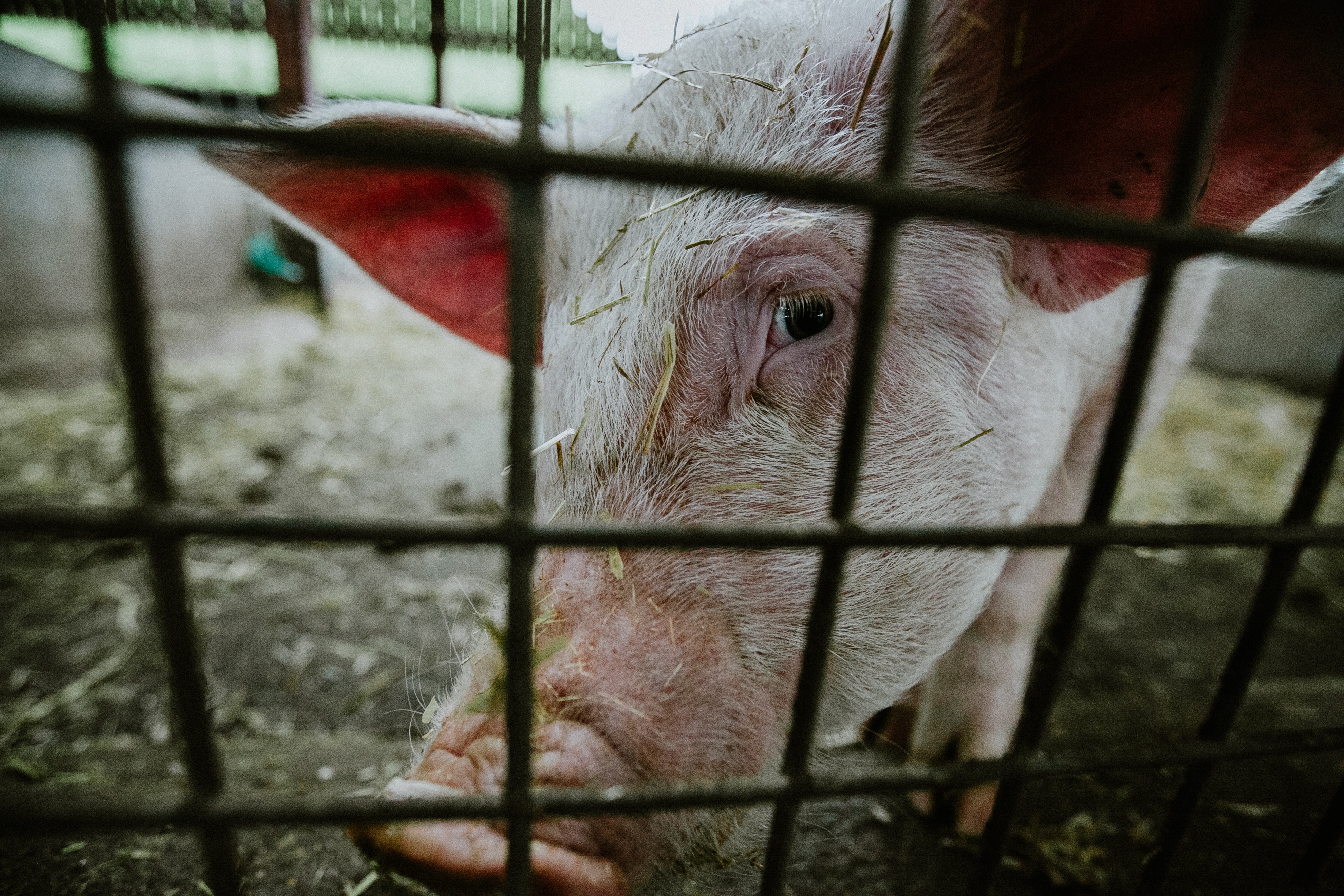
Everyone sighed. Ah. They wrinkled their noses compassionately. They knew the industrial hog facility just a few miles from here. They knew its smells, its lagoons of dung and chemical runoff that festered in the sun. They knew the cages, the livestock trucks rattling down the cracked county highway every day, each one packed with terrified, pink bodies.

Alison crossed her arms and dipped one hip towards the casket, which loomed nearer as the receiving line inched forward. 

For a whole month, she had worked in the main hog barn. The barn was the largest of five metal tubes at the end of the facility. Its ceilings were thirty feet high, rounded. Metal. Metal walls, metal roof, metal gestation cages. Metal fans whirred constantly above, but the barn stayed hot. The air was thick with sweat and shit and the tang of aluminum and scalding summer humidity. Everything echoed and reeked. 

She was the only student intern. For everyone else, the place was a job. So they gave Alison the worst duties: scraping muck and sludge, culling dead, filthy piglets from cages where they’d starved or been trampled. 

The noise. The smell. Alison was small, and the workers joked she was so skinny she would slip through the gratings in the floor if she wasn’t careful. The animals bit her. They screamed. Her skin cracked open in the heat. The hogs’ skin cracked open in the heat. Sows clamored and writhed, sometimes six to a cage. Nothing was clean. Even the ceiling was coated in grime.

She had been glad, at first, when the place was destroyed. 

“It’s tough work,” said Samuel. “Wasn’t for her.” He patted his belly. “So she went back up the mountain a while, finished her credits. Tested out of a bunch of classes, didn’t you?” 

Alison nodded again, moved her tongue around to loosen the thick spittle in her mouth.

“Then they switched her to the dairy. Inspections, monitoring.” He chucked his chin towards her. “She knows all about milk and eggs now, don’t you honey?”

Is that right? said the people in line. 

“She’ll do all right for herself,” said Samuel. “She could work for Jimmy Dean. She could work for Dairy Maid.” 

The air in the church was dense with flesh. So many people, good country people, a line of them ambling past the body, the pulpit, to Miss Florence’s family, then out the church’s side door, to the parking lot, to home, to their hot suppers elsewhere. 

They moved like sows. Like animals. Alison had seen it. She had seen this same slow movement in milk cows on their way to be pumped, in heifers corralled for tagging, and ewes heavy with mud-caked wool. 

She had seen this same slow movement in milk cows on their way to be pumped, in heifers corralled for tagging, and ewes heavy with mud-caked wool. 

Her grandfather was wrong. Alison had not switched to dairy studies, but to crop science. Her dairy internship was only temporary, a two-week stint to make up the required hours she lost over the summer. And it had not been the slaughterhouse that made her change majors. Her sows had burned. 

The morning of the fire, she had arrived for work at seven thirty. She wore thrift store clothes—all her own t-shirts had acquired an eye-watering, unwashable funk after just one shift in the barn, or been badly torn, so at the end of each day, she trashed whatever she was wearing. Soon her suitcase, which sat in her grandparents’ spare room, was empty. Her closet at home, full of white skirts and thick sweaters, felt far away, and she often wondered if she’d ever be clean enough to wear them again.

She turned in to the hog facility’s long gravel drive that morning and found the whole compound strewn with fire engines. First responder trucks were parked haphazardly in the grass. The smell of charred filth seeped through the vents of her tiny car. She pulled over and parked by the maintenance trailer where workers went to collect their weekly paychecks. When she got out, the burned air stuck to her like some unseen tar. The roof of her mouth itched. 

Someone called to her. “Hey runt!”

Alison ran up to a group of coworkers. They were walking towards the barns, the largest of which was gone. In its place was a black, smoking ruin. She asked what happened.

“Fire,” they said. “Main barn caught fire last night.” 

How did it start?

“Electrical, is what they told me,” someone else said. “All them old wires caught light, then the timber framing, I guess. And the supply lofts. Would have been fast.”

“It’s almost out,” said a woman who had laughed at Alison on her first day when she learned she was a college student. “They better let us help with the cleanup. I need my check.”

It was hot. The morning sun was already a knife. Alison asked about the animals.

“Cooked,” someone said, nodding at the barn. “They cooked in there.”

“It’s a mess,” said the woman who had laughed at her. “I saw it happen one time when I worked for this big outfit down east. All that metal. Once a spark gets going, the whole thing’s an oven.” 

As they walked towards the massive black hull, Alison almost went back to her car and drove home. Not home to her grandparents, but back home to the mountains, all the way up the interstate, through that channel of hills, to her parents’ house, or better still to her dorm room on her hilly campus, to white skirts and thinner air. She wanted to quit, run away, but she still needed two hundred more internship hours to graduate.  
Alison asked if they would be laid off. 

A few people laughed. “There’s four other barns,” they told her. “Always plenty more hogs coming in, going out. Plenty of work, always.”

Her supervisor approached the group and told them the fire was mostly extinguished, and that they should come back that afternoon to start the cleanup effort. His face looked grey. 

Alison asked him, is it bad?

“Come back after lunch,” he said.

In the afternoon, the workers walked to the main barn together. All that metal, so much heat. Flesh. Hogs are just flesh, and they had indeed cooked, alive in the fire, through the night. As they approached, the scent of smoke and carnage made a wall Alison could almost lean into. 

Someone handed her a dull pick axe and walked into the barn. The great curved roof above them was warped and black, and parts of it had collapsed. The floor was lifeless chaos: ash, charred beams, mounds of black tissue, bloodied bone. Stillness. She closed her eyes and pictured the living barn, before the fire. A thousand pink ears twitching under those giant fans, the hogs’ grunts and screams, her own body alive among them. She gripped the pick axe and backed away.

The floor was lifeless chaos: ash, charred beams, mounds of black tissue, bloodied bone. Stillness.

It took six days to clean out the main barn. The workers shoveled and scraped, mostly without safety equipment. Rotating shifts gutted the place so a construction crew could later rebuild the timber framing, rewire everything. Alison did what she could, but after a few minutes’ effort, even with a respirator, she would retch and have to go outside. Her supervisor finally put her on hosing duty. 

“Just wash it down,” he said, pointing to the concrete drive behind the barn and some machinery scattered around. “Wash everything down.” There was a river nearby that could carry away almost anything.

They found the sow on the second day. No one knew what to do about her. 

She was huge, alive, rustling under the grate. No one could figure out how she got there, how she’d survived the flames. Alison dropped her hose and followed the crowd to investigate. She peered down into the underfloor, the only part of the main barn that hadn’t burned or been left in tatters. The underfloor was a crawl space below the grates, where all the piss and muck and death from above dropped down. 

The sow was huge. The biggest Alison had ever seen. Her back was badly burned and cut open. The deep wounds looked like gashes from a whip. 

They called her supervisor, who stared down at her and nodded. 

“It happens,” he said with a shrug. “She probably fell between some grates when she was a little piglet.” 

Alison asked how the sow had lived. 

“There’s plenty to eat down there,” he said. “Just catch what falls. No one to bother you. We only muck it out every couple of months.” He cocked his head, sizing her up. “She’s mature,” he said, impressed. “Bet she’s been down there a year.” 

Her supervisor continued staring at the sow. They all did. 

“It’s a good place to hide.” He pointed vaguely east. “We’ll have to open that side fence, over by the drainage pipe. Try to coax her out.”

The sow grunted, sloshed a hoof in the black muck. Alison knelt down. Its eyes, she noted, looked like a child’s. Round and aware. 

Its eyes, she noted, looked like a child’s. Round and aware. 

“I guess she heard it all,” he said. “Just stayed hid; found someplace wet and waited it out. She was smart.” 

It took six workers to extract the sow. After she was caught, her supervisor let them eat her. 

One of the older workers, someone who knew how, slaughtered her so they could have a barbecue. Alison did not watch the slaughter. She knew it would be swift if not merciful, and she was grateful for his expertise. After the sow was butchered and bled out, two men loaded her carcass into the back of his truck, then drove her to a meat locker on the other end of the facility, where she would hang for a few days to tenderize.

She knew it would be swift if not merciful, and she was grateful for his expertise.

 The barbecue was held to celebrate finishing the cleanup. They pit roasted the sow under a heavy black drum. The wafting smells brought every last worker out for the meal. All the supervisors came, plus the administrative assistants in the payroll trailer, and even a few of the first responders and firemen who had helped put out the blaze. 

They ate her off Styrofoam plates, down by the river on the seventh day. 

Alison ate only a cob of corn, nothing else. Gristle and marrow churned inside her. The next day she quit. She emailed her advisor, filled out the change-of-major forms online, and told her grandparents she wouldn’t be back until the fall. 

She carried it all summer, carried it still. The cleanup, the smells and screams, the whole experience of the hogs weighed on her, silenced her. Before this, she had had no idea.

“I’m so sorry,” said Alison as she approached Miss Florence’s family.

She moved down the funeral receiving line, where no one recognized her. Her grandfather kept a gentle hand in the middle of her back, piloting her towards the nieces of Miss Florence, who were huddled together against a white wall. People leaned over them, sighing, embracing, blocking their view. The nieces looked dazed and trapped. 

Ahead, beyond the murmuring bodies, people took their leave and passed, one or two at a time, to the side door of the church, which led out to the parking lot. The exit flapped open, pierced Alison with hot afternoon light, then closed again. Flapped open, pierced with light, then closed.

“For your loss,” Alison said, nodding at one of the nieces. “I’m sorry.”

She moved along, nodded again.

“I didn’t know her,” she said. “Nice to meet you. I’m so sorry.”

A Starter Kit to Help You Pack for the Apocalypse

I’m a bit of a prepper. I don’t always mean to be, but I grew up in the mountains of southern Colorado, where every winter required a certain degree of readiness. We never knew when we would get snowed in and lose all access to fresh fruit, vegetables, or dairy. We lived two hours outside of the nearest town and kept our freezers filled with milk and salvaged road kill. (My dad once saw someone hit an elk on the highway. After dropping off me and my sister at home, he went back and cleaned and packed the dead bull. We ate off that beaut all winter.)

By prepping, I don’t mean I’m stocking up on guns or preparing for a violent overthrow of the government. Actually, I’m preparing for when other people do that, or when zombies explode onto the scene because we keep messing around with ancient mummy juice. And even if none of that happens, we’re headed for some serious climate crisis fallout in the next couple decades. Very few people seem to be taking seriously how bad things are going to get, except for feminist science fiction and fantasy authors.

These writers seem to understand my somewhat-founded anxiety better than anyone else, so I find myself turning to the pages of their novels for advice on how to prepare. While defensive perimeters and water capturing devices are important once you reach a stable location, getting there is often more than half the battle in these apocalyptic tales—and how prepared you are for difficult, even deadly migration often determines if you will make it or not.

If you’re anything like me, you’ve at least thought about putting together a go bag (AKA “bug out bag”). Today, some of the coolest feminist minds in science fiction and fantasy are going to help me give you a starting list—because in 2019, everyone should be prepared for the apocalypse.

The Fifth Season, by NK Jemisin

A durable bag: The Fifth Season by N.K. Jemisin

First and foremost, you’re going to need a bag to hold your various supplies, as readers quickly learn in N.K. Jemisin’s bleak, apocalyptic Broken Earth trilogy. The first book, The Fifth Season, drops us right into the cataclysmic action alongside Essun, a person with the ability to manipulate tectonic activity. In her society, people like her (orogenes) are seen as unwanted troublemakers. Essun carries the same runny-sack throughout most of the trilogy, the bag being pretty much her only consistent companion as she faces trial after devastating trial. Though it’s safe to assume her bag is made of a natural material such as canvas, I don’t think Essun would mind if you used a backpack instead.

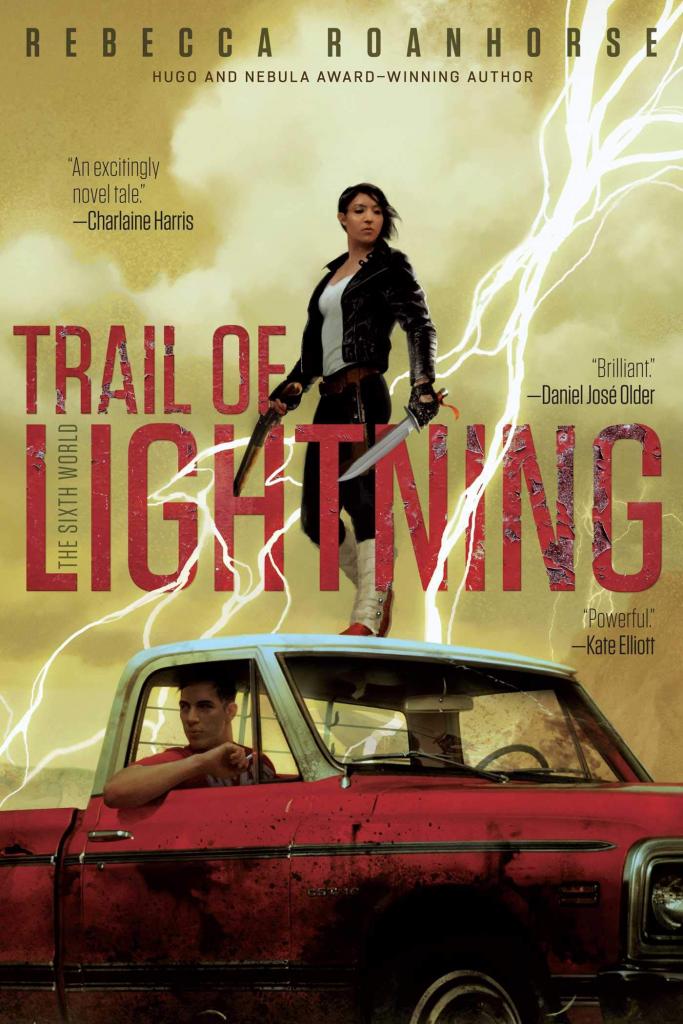
Trail of Lightning by Rebecca Roanhorse

A really good knife: Trail of Lightning by Rebecca Roanhorse

In her post-apocalyptic novel about the emergence of the Sixth World, brought on by human-caused flooding due to fracking, Rebecca Roanhorse arms her protagonist––the monster-slayer Maggie––with a very cool weapon: a Böker machete. The Böker comes in handy when Maggie uses her clan powers against her enemies, turning her into a super-fast killing machine. For general survival purposes, it would also be helpful for clearing paths, gutting animals, and other activities. Maggie just so happens to be particularly adept at murder.

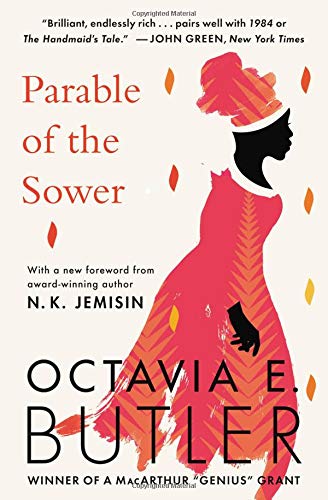
Parable of the Sower by Octavia Butler

Seeds: Parable of the Sower by Octavia Butler

In the not-so-distant future when a presidential candidate runs with the slogan “Make America Great Again,” Lauren Oya Olamina lives through the collapse of civilization in the U.S. Drinkable water is running out, sea levels are rising, and humanity is battling disaster. In Octavia E. Butler’s Parable of the Sower, Olamina faces the end of everything by packing her go-bag with viable seed packs. She changes out the seeds regularly to make sure they stay viable, with the goal of eventually being able to grow food once she reaches a safe place to garden. Seeds are at once the most practical and most hopeful item in your go bag. Planning for future nourishment is important, as is maintaining hope that there will be a future where you will need to eat, so make sure you have (viable) seeds in your bag.

Mara and Dann by Doris Lessing

Dried food: Mara and Dann by Doris Lessing

Twenty-five thousand years in the future, siblings Mara and Dann live on the only continent not covered in ice: Ifrik (modern day Africa). As they journey north in Doris Lessing’s novel, they are confronted by climate disasters, terrifying wild animals, and hostile humans who slit travelers’ throats over a piece of dried fruit. Starvation is an imminent and constant threat and the siblings find themselves facing danger time and again to search for food. During their trek, Mara’s hunger for knowledge (and old technology) takes precedence over her actual hunger, which puts both her brother and her at risk. Where most of the novels on this list provide a positive example of what to carry, Mara and Dann offers a lesson in not making the same mistakes. Any physical migration will require stamina and carrying sufficient dried rations will certainly make the journey easier, so make sure your go bag has ample dehydrated food—which is lighter than fresh items and easier to stock up on.

Severance by Ling Ma

A camera: Severance by Ling Ma

After fungal spores spread a zombie-like virus across the planet and devastate society, Candace Chen, going against popular post-apocalyptic wisdom, remains in New York. When the municipal infrastructure breaks down, she wanders the city taking photos with her camera and posting them to her blog. Ling Ma’s Severance depicts two timelines: the present of the collapsed world and the past that brought Chen to this point, adding another identity-driven aspect to her photographic documentation, as readers learn about Chen’s experiences as an immigrant. Chen is at once discovering and creating her identity in this new world—and a camera becomes an essential part of her process. The apocalypse is a natural time to go through an identity crisis––having a camera in your go bag is a great way to document your journey and your self-discovery alongside humanity’s descent.

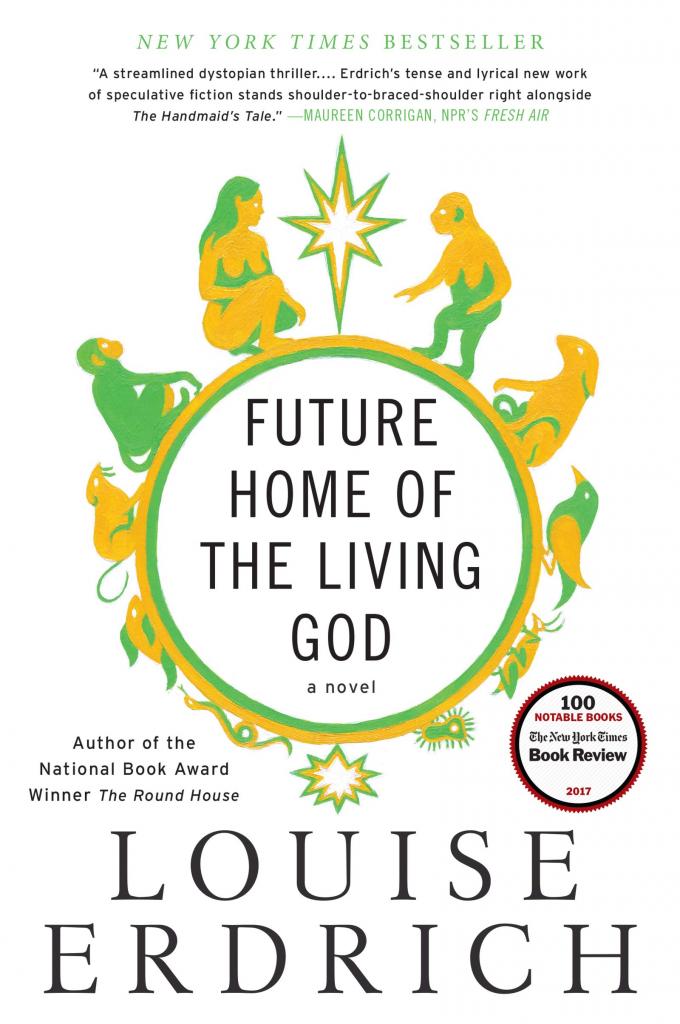
Future Home of the Living God by Louise Erdrich

A notebook: Future Home of the Living God by Louise Erdrich

Evolution on Earth has begun to run backwards and as babies begin to appear more and more primitive, fertility and pregnancy have become matters of the State. As you can imagine, this is a less than ideal time for Cedar Hawk Songmaker to realize that she’s pregnant. Despite bludgeoning swarming rats to survive and living in hiding to avoid abduction, Songmaker remains relatively hopeful. Erdrich’s novel takes the form of a series of letters from Songmaker to her unborn child. In the letters, Songmaker seeks to make sense of world events, her own identity, and her pregnancy. Whether or not you’re pregnant during the apocalypse, carrying a notebook in your go bag is important both as a tool for recording events and as a way to reflect and process trauma.

Station Eleven by Emily St. John Mandel

A physical connection to life before: Station Eleven by Emily St. John Mandel

In Emily St. John Mandel’s Station Eleven, a dark exploration of celebrity, memory, and tragedy, Kristin Raymonde is among the remaining one percent of the population that survives a super-flu outbreak. Raymonde is performing in King Lear when the flu hits, and the virus kills Arthur, the lead of the production. As Raymonde travels with her new post-apocalypse troupe, she collects clippings about Arthur, preserving his memory. The clippings also act as a touchstone for Raymonde, who cannot remember the year of the collapse, and she uses them to help her feel safe and connected to the past. While there’s no going back after a cataclysmic event of that scale, Mandel seems to suggest there’s something important about remembering the before—even if it’s remembered imperfectly. Clippings of celebrities you once knew may not be the ticket for your go bag, but you’ll want to include some memorabilia to tether you to your existence now.

All the Birds in the Sky by Charlie Jane Anders

Someone who’s got your back: All the Birds in the Sky by Charlie Jane Anders

OK, so this one can’t really fit in your bag, but Charlie Jane Anders’ All the Birds in the Sky makes it clear that the only way to survive the apocalypse is with a friend who has your back. In a novel that blends science fiction and fantasy, Anders explores what the end of the world will be like for a witch, Patricia Delfine, and a genius scientist, Laurence Armstead, who live in San Francisco. As the birds cry out, “Too late,” and the streets crack and crumble, these BFFs have to heal their friendship to survive. Make sure you’ve got a friend who’s got your back when the world tips on its side—and it doesn’t hurt if there’s a spark there, too. The end of the world will be lonely, after all.

A Nigerian American Strives to Be ‘A Particular Kind of Black Man’

Tope Folarin’s debut novel is all at once a search for identity, an immigrant story, and a bildungsroman. A Particular Kind of Black Man follows Tunde Akintola, a Nigerian American in a small town in Utah. Torn between the culture of his Nigerian parents, and the white Mormon culture of Utah, Tunde strives to find his own way of being and belonging. Influenced by his father as well as the condition of being black in America, Tunde struggles to reconstruct his identity into a particular kind of black man—the “ideal” whose blackness would not matter. 

Buy the book

The book borrows from Tope Folarin’s personal life, merging the autobiographical with wholly fictional parts to maximize the novelistic space, which, as he said in an interview, is “capacious enough to hold both the real and unreal.” And in this merging of the factual with the fictional, A Particular Kind of Black Man, not only breaks out of the confines of memory but also acknowledges the tenuity of memorial narration. We see this in later parts of the book when Tunde the narrator, doubting his memory, switches his narrative viewpoint from first to third person, and thereby shifts his recollections from certainty to conjectural possibilities. Perhaps the most appealing trait of the novel is its self-reference, its self awareness and how it aligns itself with the protagonist and changes with him.

Tope Folarin, a Rhodes Scholar who was born in Utah, won the Caine Prize for African Writing in 2013 and was shortlisted again in 2016. It was a delight to speak to him about his new novel, the concept of identity, memory and his artistic influences.


Kenechi Uzor: Is it ever possible for us not to question our identity especially now when identity goes beyond birthplace and ethnicity? I’m thinking of Tunde’s questioning of his Nigerian identity when all his Nigerian experiences are made in America.

Tope Folarin: I do think it’s possible for someone to walk through life without questioning their identity, and I think this happens all the time. I also think, however, that it’s becoming much harder to do so. You’ve alluded to one reason why this is the case: for various reasons—among them the spread of the world wide web, and the proliferation of DNA ancestry tests—we’ve become aware of the fact that identity encompasses much more than whatever culture we inherited from our family. We can create new identities for ourselves on the web, identities that are more aligned with who we are inside, or who we desire to be. And DNA tests have shown many of us that the story of who we come from and how we came to be is often much more complicated than we’ve been led to believe. 

KU: This future your protagonist imagines seems to be the kind where he could exist in more than one identity. In your recent essay for Lit Hub, you wrote, among other things, about an alternative where marginalized persons could inhabit multiple realities. Is there something about human nature that craves particularity—to be either this or that, and well defined? Would it be much easier for Tunde and others like him to embrace the multiplicity of their identities?

DNA tests have shown that the story of who we come from and how we came to be is often much more complicated than we’ve been led to believe. 

TF: I believe many humans do prefer a definitive cultural identity because most of us were taught that identity comes in one flavor or another.

That said, Tunde discovers what I’ve discovered, and countless other people have as well: we are more than one kind of person, we have more than one identity, and this reality we inhabit—this reality that was not created to accommodate the likes of us—simply doesn’t suffice. Tunde’s solution is to create art, to fashion a story and a reality that has space for him. He literally creates his own story, using the stuff of his life and memories, and inhabits that story. I believe this is a viable solution. 

KU: America wasn’t as Tunde’s parents expected. This is a recurring issue for many immigrants in America. Why are immigrants still blindsided by the reality of America? I am not sure if it’s simply that they were unaware America also has its problems.

TF: I think immigrants are aware that America has its problems, but they also believe that America is a place where, to invoke a cliché, their dreams can come true. Despite what the statistics say about social mobility in America vs., say, other Western countries, many immigrants are convinced that America is a place that always rewards hard work. But then they arrive and, alas, they find themselves in a society with its own entrenched prejudices and problems.

KU: When Tunde gets acquainted with African Americans, he sees them as being provincial and more interested in “lugging their pasts around rather than stepping into the future.” More than a few African immigrants share this view with some white Americans. Is this one of the reasons for the complicated relationship between African immigrants and African Americans?

TF: The section of my novel you’re referring to is the only section that is in third person. It’s in third person because my protagonist is beginning to consciously write fiction—he’s imagining a future in which his character, who shares his name, is living the life he could have lived. I’m emphasizing this here because Tunde, my protagonist, hasn’t actually had many experiences with African Americans. He’s writing this section of the book at Morehouse College [a historically black university], where he went precisely so he could learn more about African Americans. Yet instead of interacting with them, he’s isolated himself in his room because he’s experiencing a personal crisis. 

All of which is to say that my protagonist is writing this from a place of ignorance. In my experience, much of the friction that exists between African immigrants and African Americans is because of ignorance. Some African immigrants believe that African Americans are lazy because, frankly, their only sense of African American culture comes from media. Too, many African Americans believe that African immigrants are unsophisticated and primitive because of the media images they’ve ingested. In my experience, Africans and African Americans usually discover that they share much in common once they have a chance to interact. 

KU: The novel exposes the silent ways many Nigerian parents express love for their children, which is different in American homes. What are your thoughts on the effect, if any, on Tunde and kids like him, especially when they observe verbal and effusive way American parents express love for their kids?

TF: I think Tunde is probably of two minds about this. There is probably a part of him that would like for his father to be more effusive in stating his love, but he has no doubt whatsoever that his father loves him. My father is an immigrant as well, and though he constantly expressed his love for my siblings and me when we were growing up, we also knew he was expressing his love by waking up well before sunrise to work, and returning home long after the sun had set. This is how countless immigrants express their love to their families.

KU: Memory’s vital role in the novel is evident not just as narrative style but also as a theme. I am interested in why Tunde thinks it is easier to forgive his mother if he forgets her. Can you possibly talk about this idea of forgiveness and its relation to memory?  

We are more than one kind of person, we have more than one identity, and this reality we inhabit simply doesn’t suffice. 

TF: One of the main functions of memory—perhaps the main function—is to keep something (an idea, a person, a feeling) alive. Time passes and kills simultaneously; for example, I might ask you to tell me what you ate three Tuesdays ago, and in all likelihood you won’t remember. In effect, the meal and that moment is dead. Now, you could resurrect that moment by combing through your credit card records, but it is no longer a part of you. 

Tunde’s main issue is that the mother he remembers is a person who hurt him repeatedly. He wants to remember her, but doing so is an incredibly painful act for him. He can’t separate the pain from the love. Yet forgetting her isn’t an option either, because he loves her. So the very idea of memory—of attempting to inhabit some moment in the past—becomes corrupted for him. I suspect this is one of the reasons his memory begins to betray him. And this is why the idea of creating a fictional future appeals to him.

KU: Craft wise, the novel gets even more interesting and complicated near the middle when it shifts into an unconventional, experimental form. Can you speak a bit on what influenced your narrative choice for the novel?

TF: I mentioned this above, but the primary shift in the novel occurs when Tunde decides that instead of writing about his past he will write a story about a character who inhabits a future that Tunde would like to inhabit.

In the midst of his second journal entry in the book (September 9, 2001), Tunde says he had a chance to go to Bates College, but he declined because he thought Morehouse would be better for him. So in his fiction, Tunde writes about a “Tunde” who goes to Bates. He continues to write this fiction in the third person until he creates a woman who “Tunde” meets at a party.

One of my favorite kinds of stories is a story in which an artist creates a piece of art that somehow gains life. My parents told me various versions of this tale when I was younger, but the one I loved most came to me courtesy of Disney: Pinocchio. For a time I was obsessed with Pinocchio, especially the idea that Geppetto, his creator, had fashioned him from wood. As a child I loved how simple this seemed, the notion that an artist could create life with her hands. I think, in many ways, watching Pinocchio was a starting point in my journey to becoming an artist. 

This story recurs throughout the lifespan of Western culture—novels like Frankenstein, films like Metropolis, Weird Science and Ex-Machina, and so on. Then there’s the Greek myth of Pygmalion, which may be the starting point for these stories, in which a sculptor creates a statue of surpassing beauty and falls in love with it. I was thinking of Pygmalion and these films and stories when I wrote this section of my novel. 

KU: What I find most interesting about the novel is how Tunde’s fraught memory and his metawriting complicates his character as an unreliable narrator. Could you share some thoughts on this?

TF: As you know, the unreliable narrator is among the more popular—one could even say overused—tropes in contemporary literature. I don’t think Tunde is an unreliable narrator, at least in the traditional way. The entire notion of an unreliable narrator depends on the idea that there is some objective truth that the character in question is avoiding or doesn’t know about. Tunde starts the novel thinking this way, but as the book progresses he comes to recognize that there is more than one truth, more than one reality, and his objective is to reliably narrate all of them. 

KU: In your acknowledgements, you mentioned Gore Vidal, whose writing I love so much. Which is why I’d like more details on your relationship and the pep talks he gave to you as you wrote this novel.

TF: I met Mr. Vidal once, in 2010, when I was a fellow at the Institute for Policy Studies. I was fundraising on behalf of the Institute in Santa Monica, at a time in my life when I was struggling mightily to determine what I would do next. I spoke briefly at a house party where he was present, and after the party his assistant flagged me down—Mr. Vidal was in a wheelchair then—and told me Mr. Vidal wanted to speak with me. He told me he was impressed with my speech (I’d mentioned a few incidents in my life) and he said I should write about my experiences. His words felt like a balm and like a prophecy. I began to write my novel a few days afterward.

KU: I often ask authors about their experience as readers of their own work. What interests you as a reader of A Particular Kind of Black Man

TF: The thing that interests me most about my novel is that its structure is aligned with the story. It starts in a fairly conventional, accessible manner, with first-person past-tense narration, and Tunde himself is a fairly conventional, accessible person. As Tunde begins the search to discover who he actually is, though, the book begins a parallel search to find a storytelling mode that fits the story. Tunde’s fits and starts are reflected in the structure, and at the end, when he finally creates a piece of art that can accommodate him and his desires for the future, the book, too, finally settles into itself, different than it was, but whole. 

Baking Shows Are Secretly Reality TV for Frustrated Writers

A writer’s frustrations exist in private. The panic of a blank page; the fear of an editor’s note; the despair of a structural misstep. It’s possible to vocalize these terrors, sharing them in the hopes that the writer will feel less alone. But their specificity exists only in the author’s head, echoing,burrowing endlessly down. 

This is one of the reasons why writing is so hard to depict on screen. To make it visible is already to blunt its mystery. Films and TV constantly attempt to show us the process of writing, often through fabulation—think of the glittering world of newspaper columns in Sex and the City or the exaggerated horrors of writer’s block in The Shining—but the true mundanity of a writer’s frustrations are much too opaque to make for good on-screen drama. If only writing were more like singing. Or fashion design. Or cooking. Then we’d have a million reality TV competitions that might, admittedly, dumb down what it is that we do, but would also give us a chance to see the struggles of our progress reflected in vivid, consumable segments––enough to create the kind of kinship many of us long for when we write in isolation. 

In the absence of such entertainment, I’ve found myself gravitating more and more to baking shows, where I’ve unexpectedly discovered a genre that shines a light on those very writerly frustrations I longed to see dissected on screen. Watching things like Nailed It! and The Great British Bake-Off—not to mention the likes of Martha Bakes, Milk Street, and America’s Test Kitchen—has become a comforting distraction; one that’s as much about improving my own baking skills as it is embracing the messiness that come from wanting (and oftentimes failing) to make something perfect. Currently, no show does that better than Bon Appétit’s Gourmet Makes.

As much as I watch Gourmet Makes for the recipes and foibles, I’ve ended up enjoying it as an unintentional form of writing self-help. 

The popular YouTube series follows pastry chef Claire Saffitz as, every episode, she tries to recreate a gourmet version of a beloved supermarket-ready snack food. During its run, Gourmet Makes has pushed Claire to make everything from Twinkies and Skittles to ramen noodles and Doritos. Claire is the kind of chef that makes you feel at home in her kitchen: she brings an entire career’s worth of pastry knowledge to the table, but it is her curiosity and her resourcefulness that make her a perfect host for a show built on impossible requests. Her favorite part of any given episode is the moment she gets to list the lengthy, obscure ingredient list of whatever snack she’s trying to replicate—lists that include things like “mono and diglycerides,” “lecithin,” and “sulfur dioxide.” 

On the surface, the show is about the sheer difficulty of trying to recreate an industrial-made foodstuff by human labor alone. Did you know, for example, that Pop Rocks are made by trapping CO₂ at high pressure in its hard-rock sugar base? Or that Kit Kats are not just made of layers of wafers but include crushed wafers within those layers? Many of the foods Claire attempts to remake so obviously require mass-manufacturing tools and ingredients that her attempts are all but designed to fail. The writer in me is particularly tickled by such a proposition. Claire’s goal is to replicate an ideal she knows she can only ever approximate. In this pursuit she’s no different than many of us who write for a living, where every sentence can feel like an approximation of the ideal we aspire to but must understand we’ll never accomplish. This impossible toil, to me, is what Gourmet Makes is truly about.

Writing, like baking, is beholden to the vicissitudes of everyday life. One of the implicit rules that governs Gourmet Bakes is that Claire (possibly due to budgetary as well as scheduling concerns) will not spend more than four days trying to crack snack food’s secrets: how, for example,  Starbursts get that gooey yet firm consistency, or how those beloved Peeps get their signature shape. These constraints are part of what make the show so endlessly watchable. Every episode is an obstacle course wrapped up in a quippy, reverse-engineered recipe How To video. As Claire tries to craft a Kit Kat, for example, the video guides us through her process: “Test 1: Martha Stewart’s Stroopwafel recipe,” a title card informs us as she sets out to crack the wafer inside the chocolate bar. Two minutes later, we’re watching Claire go through Test 4 after a talk with her colleague Brad Leone (“Ignore Brad – Crush sugar cookie – Combine with Rice Krispies, bake”) as a montage shows her attempts to course-correct the shortcomings of Stewart’s initial wafer. In essence, you’re watching (almost) in real time just how many attempts it takes to pursue, but never quite attain, perfection. 

In its built-in restrictions, Claire’s baking process mirrors what writing can feel like, with deadlines, social calendars, routines, unforeseen events, and financial constraints curbing how much time you can afford to spend on any given project. It’s a show that asks us to relish the process more than the final result. Even with all the roadblocks that the show depicts, its playful core offers a crucial reminder: no matter the anxieties that baking—or writing—may elicit, there’s value in the act of creation, no matter how improbable or impractical it may seem.

Moreover, Gourmet Makes is a powerful example of the way in which things are rarely completed but merely submitted: “How many of these do I need finished, you think, to be like ‘I did it!’?” Claire  asks as she painstakingly covers a homemade Sno Ball in shredded coconut. As much of a perfectionist as Claire is, she’s also not one to create unreal expectations beyond the ones the show already sets out. There’s a groundedness, a maturity, to seeing a professional draw lines in the sand that put her own sanity and wellbeing above the work. As much as I watch Gourmet Makes for the recipes and the foibles that come along with them, I’ve ended up enjoying it as an unintentional form of writing self-help. 

No matter the anxieties that baking—or writing—may elicit, there’s value in the act of creation, no matter how improbable or impractical it may seem.

For that reason, seeing Claire fail—at tempering chocolate, say—is cathartic. Not because there’s any pleasure in seeing the failure, but because those mishaps are always immediately followed by small triumphs. It’s in those moments when I find myself wholly enraptured by what Gourmet Makes has become. This is a show whose first episode, clocking in at just 11 and a half minutes (more recent episodes were forty minutes each) was merely informational. Heavily edited to include just the right amount of entertaining banter, the episode was focused on the end-product: the recipe for a Gourmet Twinkie. Over the last two years, though, the episodes have leaned more forcefully on depicting Claire’s struggle, showing us the inherent value—and joy, even—of the process of making, as the title suggests. Long takes of her looking despondently at her misshapen experiments have come to dominate more recent episodes, making each one a mini-lesson in humility and resilience—two things I often have to remind myself are central to my life as a writer. 

But if Gourmet Makes has become a paean to the frustrations of aiming for perfection, it is also an example of the value of a strong peer support group. Claire may be the exasperated one in front of the camera, but it is the test kitchen team around her who constantly cheer her on, helping her muster the energy to finish what she started. Her colleagues pitch in with fashioning contraptions to perfect her Twizzlers’ signature shape, or step up whenever she needs an extra pair of taste buds to make sure the Doritos cheese dust has the right balance of flavors. But more than that, the camera-ready members of the kitchen function, in any given episode, as encouraging critics that push Claire to do better. Even if that means scrapping a day’s worth of work.

In those moments, when an unexpected compliment reminds her that she’s on the right path, or someone’s suggestion forces her to reevaluate her approach, you can see Claire realize how important it is to have colleagues who will motivate and challenge you in equal measure. Which is also part of what makes her small tantrums all the more relatable. “I want you to know,” she says during a homemade Kit Kat tasting before bursting into near maniacal, exhausted laughter, “that I can take zero criticism right now.” Whenever I’ve spent hours (or days! or weeks!) on a piece and then sent it to an editor, I’m always terrified. Not because I think that what I’ve written is perfect but because I know, deep down, that their feedback will make the writing stronger, requiring more effort at a time when I feel depleted of any desire to go on. 

My penchant for watching Gourmet Makes began as a procrastinating tool, a way to pass the time in between stretches of staring at a blank page. What it’s become instead is a therapeutic tool. I’m comforted by Claire’s sisyphean misadventures in the kitchen. More than simply depicting  the same anxieties I struggle with as a writer (is this good enough? Can I just be done already? Why did I attempt this in the first place?), they offer strategies that temper those same feelings (setting up healthy restrictions, knowing when to stop, finding a strong support group). Perhaps that sounds too pat. But seeing such a message delivered not as a working mantra but as a tangible part of someone’s process shows me what I’ve missed in other  attempts to render writing: the sheer banality of one’s frustrations, punctuated with brief spurts of exhilaration that follow when a job is done. A celebration of the necessary unruliness of one’s process, Gourmet Makes is proof that writerly epiphanies can come from the unlikeliest of places––even from frazzled pastry chefs in tricked-out kitchens trying to perfect the nougat on a homemade Snickers bar.

7 Debut Collections That Continue the Lineage of Queer Poetry

Poetry has always been queer for me—the first girl I ever kissed used to carry a book of Sylvia Plath poems (you know, as you do when you’re 16). Of the two of them, Sylvia was the one that stuck around—she’s tattooed on me now, alongside Walt Whitman and Ocean Vuong. It was through poetry that I first started to understand myself, and also to understand that I was part of a lineage of queer poetics.

Poetry is particularly suited to the queer experience, more so than any other format, because it is adept at capturing desire, longing, and loss. This desire—for another person, for home and homeland, for joy, for a time when things were simple, for a time when things will be simple, for understanding and connection—manifests in many different ways, all of which can be explored within the breadth of a single poem. Poetry is not bound by plot, nor are queer lives bound to the narrative that cishet hegemony dictates we should follow. Queer people exist, and poetry allows writers to redefine the meanings of this experience; to mold life into something that makes sense for them. We have updated non-inclusive rules of relationships, family, and culture.

One thing is universally true: writing about queerness is a significant act. Queerness is worthy of great art. Writing about the interior lives of queer people, our hopes and sadness and longings, enables us to get closer to the understanding we desire.

So we seek each other out, seek out the voices of those who have come before us and those who stand beside us. We uplift those who are claiming their place in the legacy of queer poetry. My contribution to this conversation is a list of seven debut queer poets I urge you all to read this fall.

Eyes Bottle Dark with a Mouthful of Flowers by Jake Skeets

Eyes Bottle Dark with a Mouthful of Flowers by Jake Skeets

The poems in this book feel big in that they take up space, like long stretches of cloudless sky. Skeets’ simple lines are highly impactful as they explore the complexities of love, desire and drunkenness and dirt and death. It is a collection full of silences in whitespace, moments that leave you feeling like you’re standing on the edge of a cliff. Skeets’ agility with craft is present in the spaces, the silences, the stretches—and it is incredibly beautiful.

Odes to Lithium by Shira Erlichman

Odes to Lithium by Shira Erlichman

These are undeniably love poems to mental health, chronicling the ups and downs of life with bipolar disorder. Erlichman questions what is “normal” and intricately navigates this lived experience through dealing with parents, doctors, lovers, Björk. With visuals alongside the poems, everything in this collection contains intimate and honest examinations of the stigma and realities of living with bipolar disorder as well as the imaginings of what life would be like, what a person might be like, without it.

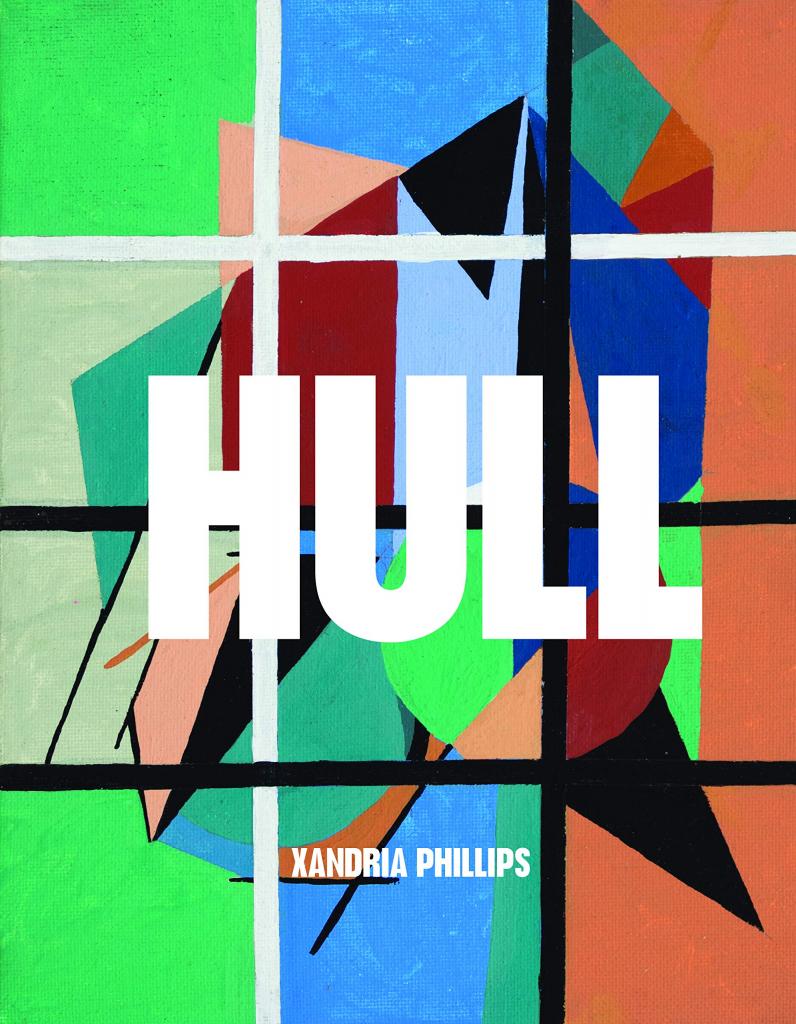
HULL by Xandria Phillips

HULL by Xandria Phillips

A collection that investigates the experience of Black queer femininity, HULL feels urgent and demands our attention. These poems find intimacy in moments of distress and take up space in our minds as well as on the page. Phillips explores bodies under siege, mental health and shared trauma, the luxury of love, and the beauty of soft, warm moments. In a world that oppresses and stifles, something as simple as folding laundry or sharing a cup of tea becomes incredibly powerful.

HoodWitch by Faylita Hicks

HoodWitch by Faylita Hicks

What is the difference between a god and a Gawd? What makes a woman a HoodWitch? Faylita Hicks speaks masterfully on the homespun magic of Black women, women who use “dime store candles” and Florida water to heal their wounds and care for themselves in a world that does not care for them. As much as these poems are battle cries, there is a sadness and a violence to them too. Gawdliness demands sacrifice. HoodWitch is a testament to the lineage of power, vulnerability, and strength.

I Can Hear You, Can You Hear Me? by Nolan Natasha

I Can Hear You, Can You Hear Me? by Nolan Natasha

The poems in I Can Hear You, Can You Hear Me? are sensory memories and slices of queer life—a certain song comes on the radio and puts you right back to where you were when you first heard it, small moments with lovers and friends, snippets of conversation that become meaningful in their simplicity. So much of queer life is about wanting to be seen, heard, and understood; the call awaiting a response. These poems exist in the instant someone picks up the other end of the line, and we feel that connection.

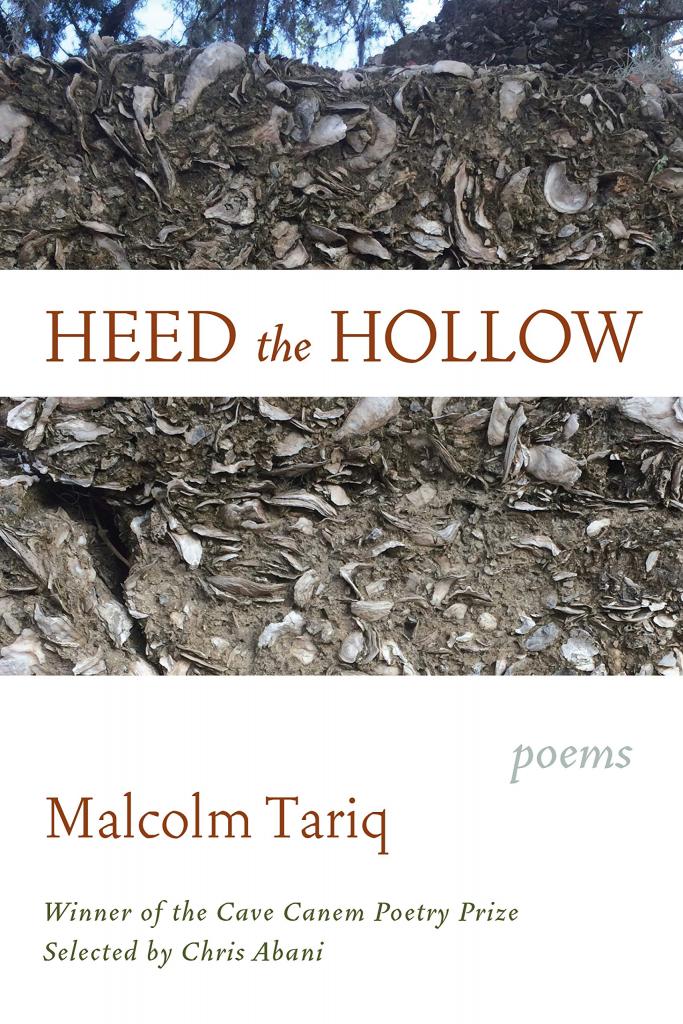
Heed the Hollow by Malcolm Tariq

Heed the Hollow by Malcolm Tariq

Any collection that opens with a poem called “Power Bottom” is a winner in my book. And while it quickly becomes  clear that Heed the Hollow goes much deeper than just, ya know, bottoming, Tariq’s wit and coolness is present throughout. Taking its place alongside the likes of Danez Smith, Jericho Brown, and Justin Phillip Reed, this collection explores Black queerness—particularly Southern black queerness—with the duality of nostalgia and resentment that comes with writing about home. Tariq is frank about the damage done to Black queer bodies and about the resilience of this experience.
Travesty Generator by Lillian-Yvonne Bertram

Travesty Generator by Lillian-Yvonne Bertram

I would venture to call this collection “experimental.” Though all poems are experiments in some way, Bertram’s collection is of that unique style that exists more easily on the page than spoken aloud. Yet her poems are full of sound and rhythm and space. This collection builds in energy, in urgency, in anger, leaving the reader breathless. Travesty Generator examines complacency in the digital age, and it feels like we’re peering through a matrix of racism and violence. 

The Women with an Appetite for Murder

Rachel Monroe has spent a great deal of time carefully considering aspects of American culture most would prefer to forget. In particular, she’s focused a lot on murder. 

Savage Appetites

In Savage Appetites, the Marfa, Texas-based journalist writes an exacting study of four different women and their unique relationships to crime: an early pioneer of forensic science from the 1940s, a Beverly Hills woman who enmeshes herself in Manson lore, a selfless advocate for a man wrongfully convicted of murder, and a Columbine-obsessed twenty-something who plots a mass shooting via Tumblr. It’s equal parts engrossing and disturbing.

As Monroe delves into the dark world of true crime, her investigations include not only the people incorporated into the narratives but also the people who consume them. Accordingly, she examines herself, looking at her own predilection for a culturally ascendant genre comprising a unique set of myths and suppositions.  


Andru Okun: You start your book writing about American women being enthralled by murder-related media, but you also point out how this fascination coincides with the U.S. murder rate nearing historic lows. What do you make of these contrasting realities? 

Rachel Monroe: I think it speaks to how the stories, particularly those that are categorized as “true crime,” have an element of fantasy or unreality. They almost feel like fables in some way in that they purport to be telling us about the world, but they’re telling us more about our fears and our dreams. The fact that people who are statistically at a very low risk of being murdered are fascinated by murder is actually not that surprising to me. I was just reading a book about the Weimar Republic. During a period when crime rates were dropping around World War I, there was also this culture that was really obsessed with crime. There were obviously reasons that people might have felt that their world was spinning out of control or heading into a frightening direction, but when there’s something else that you’re afraid of—something that’s more ineffable or huge and structural—then maybe crime stories reinforce that feeling of anxiety but with a more narrow target. 

AO: Why do you think so many women are fans of the true crime genre? 

I think that women have a complex relationship with their own vulnerability.

RM: I think there’s a lot of aspects to it. That’s why I wrote this book with four different sections, because every time I start to try and theorize about why, I feel a little stuck. There are so many reasons why somebody might find these stories fascinating. I think that women have a complex relationship with their own vulnerability and the culture is obviously preoccupied with female vulnerability, particularly white female vulnerability. Not everybody gets to be vulnerable in the same way. I think growing up in a culture that’s informing you about how at risk you are, about the dangerous things that can happen to you, you develop a really complicated relationship to those stories. 

AO: Your book addresses how popular accounts of murder tend to exclude and ignore marginalized communities. What do you think is the cumulative effect of these more common narratives? 

RM: I’ve been asking people what percentage of all U.S. murders do they think are committed with a male perpetrator and a female victim. Seventy or 80 percent is the standard guess; really, it’s 25 percent. Male violence against women is obviously a huge problem that needs to be addressed, but in fixating on these particular storylines, what other storylines are we leaving out? Native women have the highest rate of sexual victimization, but you never hear about it. Thinking about watching Oxygen or going to CrimeCon, those stories are not the stories that get to be emblematic of true crime. I’ve been wondering about what gets to fit into the genre, and what gets excluded, and whether it has to do with the fact that stories about black people, brown people, or native people are coded as political. True crime is something else—it’s about psychodrama and relationships, and it’s not political. Which is of course ridiculous. Everything’s political and these stories are particularly political because they’re mobilized and politicized. But when someone says “a victim of crime” cultural conditioning would have it that the image that pops up in your mind would be a white woman, which is statistically not representative at all.  

AO: This fits in with what you write about regarding the politics of empathy: “Pain that looks more like our own pain is easier to imagine as real.”

RM: Totally. With the Quentin Tarantino movie [Once Upon a Time in Hollywood] coming out, I’ve been thinking a lot about Debra Tate and the conversation I had with her. To me, she was such a fascinating example of this. She was of course Sharon Tate’s sister, and she’s become an advocate of victims’ rights and the way that she talks about crime and criminals… she’s a charming lady, but we disagree on a lot of things politically. The way that she talks about crime is very hardass, lock-em-up. For her, if people break the law they should be punished for it. But as soon as I started asking her about someone she knew, Roman Polanski, who broke the law and raped a young girl, there was all this nuance and there were excuses. “Oh, he didn’t know,” or, “Oh, this was fine in France,” or, “The judge was crazy.” It was such a stark contrast to me, how when we think of a criminal as an other, we’re willing to take all these extreme measures. When we flip that narrative and realize any of us could be in that position of victim or victimizer, we think about it in such a different way. 

AO: Debra Tate was someone I was hoping to hear you talk about more about. You write about being Mason obsessed at an early age, finding a copy of Helter Skelter on your parents’ bookshelf. So you grow up, become a writer, and find yourself meeting up with Sharon Tate’s sister for coffee. What was that like?

When we realize any of us could be in that position of victim or victimizer, we think about it in such a different way. 

RM: That was a really fascinating and complicated moment. I had spent so much time, not just in this book but elsewhere, thinking about people who were obsessed with Manson. That’s a world that I found really interesting. The Manson murders were such a huge cultural story that defined the way that people think about the era. In some ways I think that I too have come to think about the Manson murders in a slightly abstracted way, thinking about what they symbolize and how they function culturally. Then to actually talk to this person who was a teenager when her sister was murdered, and how that shaped the rest of her life… so much of the book is about people who identify with murders that didn’t happen to them, but she was someone who was directly impacted. It was good to bring me up short and think of all these people who feel entitled to these stories in a way, to think of what impact that has on the people who actually lived through them. She was a really interesting lady. 

AO: How so?

RM: I read a lot about her mom Doris, who died a couple of decades ago, who was this famously fiery force. She had a great steely drawl and could boss around politicians. She was a badass but also a badass that helped pass some laws that I feel uncomfortable with. You can see a lot of that in Debra—she has this kind of brassy, no-nonsense demeanor. Her life has been wild, she was still dealing with these health effects from when she was a mail carrier and there was a mad bomber at large. And she had some story about a horse that Ronald Reagan had given her that was stolen. She was just full of these wild stories and was super frank. I appreciated that I could tell her that I disagreed with her. 

AO: I identified with the way you describe mass incarceration in America as a “bleak normality.” I’m 32. I think you have a few years on me?

RM: Yeah, I’m 36.

AO: So we’re both of this generation that’s grown up in a world where prisons are part of the status quo, but the substitution of punishment for reform and rehabilitation is relatively new. How would you say that the victims’ rights movement impacted criminal law and incarceration in the U.S.? 

RM: The victims’ rights movement has a fascinating history, arising out of the feminist movement in the ‘70s. It started out doing these really amazing things that needed to happen, like educating police officers about sexual assault and creating rape crisis centers. But then around the ‘80s it took this hard turn, as much of the country was doing, and it became all about being “tough on crime.” These rare stories of the white woman victimized by a stranger were mobilized, used as something like a cover story that people could hold up when they say that they’re afraid. These stories became the impetus for all of these scary, rigid, punitive laws that we’re still dealing with now: three strike laws, parole denial, minimizing the use of the juvenile justice system. All of these things have led to mass incarceration, done on behalf of victims, even though victims as a group are obviously a wide and diverse one and what victims might want out of the justice system or what they think justice might look like is not one thing. But the “victim” as a political archetype became this wounded white woman who needed protection at all costs. 

AO: Columbine is a longstanding fascination of yours. It’s included in this book, and you’ve written about it previously. You once almost visited the school, only to be overwhelmed by an impulse to turn around instead. Can you talk about that? 

When things are deemed problematic, that seems like a good reason to look at them more closely.

RM: I think anybody that is interested in these crime stories, if they’re self-aware at all, will run into these moments that edge up against a kind of voyeurism or exploitation, something that just feels unsavory. I didn’t want to just shut it down, to say this is good and this bad. There’s a policing of women’s appetites that happens a lot. When things are deemed problematic, that seems like a good reason to look at them more closely, not necessarily as an endorsement but just to understand them rather than close it off to further inquiries. But it’s hard and it shifts. When are you honoring something and when are you feeding off of it? I’ve gone through phases where I was really fascinated and horrified by Columbine and I read a lot about it, similar to a lot of these girls on Tumblr, people who call themselves “researchers” because they don’t want to identify as fans. It frames it as intellectual, but in practice it does look a lot like fandom. When I was visiting family in Denver I saw the highway exit and I thought, “I’ll just go look at it.” Thank god for all the traffic that slowed me down enough to ask myself, “What am I really doing here? What am I looking to get out of this? Am I trying to provoke a feeling in myself?” That just didn’t seem like a good enough reason to turn somebody else’s tragedy into a tourist stop. 

AO: There’s an interesting thread in your writing related to the internet and crime—the discussion ranges from amateur sleuths in the dial-up days to serial-killer obsessed teens on Tumblr. How important do you think the internet is to the cultural obsession with crime?

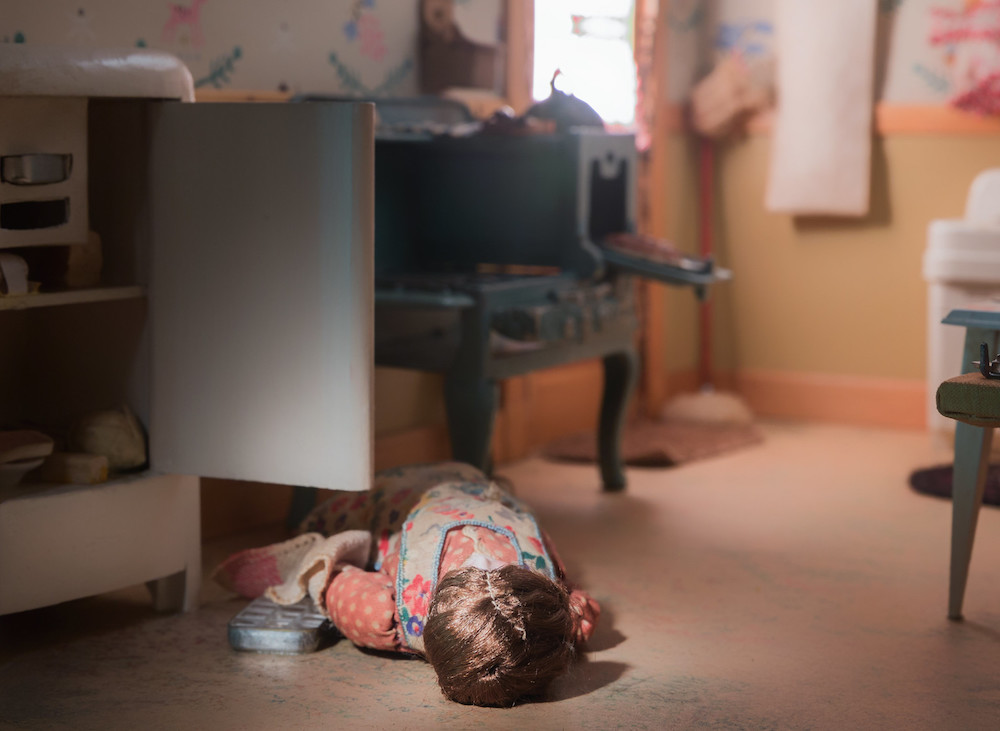
RM: It’s so important. I mean, I don’t think it’s necessary—people have been fascinated by crime and crime stories as long as there has been media, and probably even before that. But it is striking that the woman that I wrote about who came into this world before the internet, Frances Glessner Lee, making her doll houses in the ‘40s, she was wealthy enough that she could subscribe to all these journals and collect all these old books. She was influential enough that she could schmooze with the big players in early forensic science. Now the internet allows more access to information, so it democratizes things and people can find what they want. And I think often what people want in these obsessive communities is primary source information. They sense that the official story from the newspaper, the prosecutor, or the police is incomplete. The internet allows you to access full documents directly, and that can really lead people to go deep with these stories. And it creates communities, that’s the other thing that’s interesting. A lot of these worlds are social worlds.

AO: Why do you think this online community of “Columbiners” is mostly teenage girls?

RM: That community has shifted so much and it’s so hard to talk about what young people do on the internet because as soon as you look at it it has shifted and changed. When I first wrote about the Columbiners in 2012, it did seem to me that it was young girls, teens and tweens on Tumblr, overwhelmingly female. I sort of built up an idea in my head of what they were doing based on that. In the way that a lot of teen girls use their crushes to say something about themselves, a crush on a famous violent misfit is maybe telling us something, expressing feelings without owning it. But when I first heard about Lindsay [Souvannarath] and I’d heard that members of the Columbiner community had actually planned a shooting, it really did give me pause and made me want to go back to that community and question whether it was as harmless as I originally thought. I think in the vast majority of cases it really was, but Columbine fandom has a complex history. Before it was on Tumblr it was a big YouTube thing, and that was mostly boys who identified with the shooters rather than girls who wanted to love them. Checking back in with Tumblr, I realized that this world had shifted a little bit and that with some of these people there was more of an adulation of violence and proximity to Nazi imagery and racialized violence. There’s a lot of different strains in that community that ebb and flow and it’s become a very elastic myth that people apply if different ways. 

AO: You write that television programs about violence can be soothing. Why? 

RM: The one that gets talked about a lot is Law & Order: SVU. There’s also the more formulaic crime programming on Investigation Discovery. A lot of people will leave that on all night. There’s something about fear being stoked, but in this familiar shape with familiar characters. If you listened to the podcast “Running From COPS,” it makes it really clear how some of the police officers in that show are acting how they’ve seen other police officers they’ve seen on TV. It’s this feedback loop the producers are helping achieve. I think the television programs are soothing when they fit into a known category and the beats are familiar. It’s a contained fear. 

AO: Would you say it also validates some of the overblown fears people might have? 

RM: Yes, exactly. It gives them a face and a shape, validating what you already thought that you feared. 

Incendiary Clothing from the Consignment Shop of Horrors

Brocade

It will take investigators only two weeks to trace the fire’s origin to your backyard. They will find no trace of you.

It all started with a rich girl. Her family’s wealth had provided her many fine things but not, alas, common sense. It had spared her many troubles but not the pain of unrequited love. It did not, in the end, confer long life. Or even a medium-length one.

After her death, her parents were surprised to learn that she’d withdrawn from college. And that she’d spent the last tuition check they sent her on a custom-made brocade coat. The coat resembled a black and gold jacquard blazer belonging to a boy she hopelessly loved. The girl’s housemates suspected—and told her—that the boy didn’t really like girls that way. On the last night of her life she’d worn her bespoke coat to a party, where the boy pointedly ignored her. She left the party and went to bed, where her heart literally broke. This shocked everyone, given her youth and apparent health. Her parents were also surprised to learn that she’d carefully hung the coat in her closet before lying down. She’d always been so untidy.

You didn’t know the girl. You learn her story because she left behind a walk-in closet’s worth of beautiful clothes and accessories, and a friend of the girl’s mother delivered it all to the high-end consignment shop where you’ve worked for six years. You’ve listened while the woman related the sad details to your boss, the shop’s elegant owner.

“Oh, how tragic,” your boss says in her gracious, measured way.

“Yes,” says the woman. “Devastating.” She will collect 40% of the proceeds from the sale of the dead girl’s things. You wonder if the girl’s family will ever see that money. Perhaps they are so sad and so rich that they do not care.

Meanwhile you inventory, price, tag, and set out each new item, the dead girl’s things. The coat, with its mannish cut and astonishing fabric, gold roses subtly hand-woven into black silk, goes in the window, on the mannequin that models the shop’s priciest wares. But first you try it on, surreptitiously, in the back room. Even with the staff discount you could never afford it. Also, it doesn’t suit your short, lumpy frame. You look like a child playing dress-up.

Every morning, before you unlock the shop door, you take a moment to look up into the window and acknowledge the coat. You’re not sure why you do this. But one day, you come in and it’s gone. The shop owner can’t remember who she sold it to. “Maybe you can find something new for our mannequin?” she says. She always assigns you tasks by saying “Maybe.” Maybe you could deposit this at the bank during your lunch hour. Maybe you could take these to Goodwill on your way home.

You’re minding the shop alone when the coat returns. A sour-faced young woman brings it in. “My mom bought this here last month,” she says.

“Did it not work out for her?” you ask.

You’re ready to recite the store’s no-refund policy, but she says, “She died the day after she wore it.”

“Oh God, I’m sorry,” you say, and you are, because you’ve mistaken grief for petulance.

“You might have heard about it on the news,” the young woman continues, and indeed, you have. Her mother was a state senator running for re-election and had mysteriously died after a campaign event. You now learn that she’d worn the coat at the event.

When you tell the owner about the coat and the dead senator, her eyes widen. “How morbid,” she says. When you ask if she still wants to sell it, she says placidly, “But of course. It’s just a coat.”

You re-inventory the item. You raise the price. You write on the tag, “Not just a coat!” You don’t display it in the window or on a mannequin. You tell one prospective buyer, “It’s not a very slimming style.” But someone buys it on your day off, and you’ve nearly forgotten about it when it turns up, again.

This time you don’t mistake grief for sulking. You don’t ask. You don’t want to know. But she tells you anyway: Her sister, an aspiring actress and model, had bought the coat for a photo shoot. The woman insists on showing you a picture. Indeed, the deceased looked very glamorous in the coat.

“I’m so sorry,” you say, and you know: you’ve offered your condolences over this infernal garment for the last time.

Your boss is away at her seaside vacation home. By the time she’s allowed back, her shop will have burned up along with most of the town. She, like everyone who knows you, will be shocked to learn that the fire began behind your house in the town’s wooded outskirts. About your disappearance, she will say, in her earnest, even way, “How sad.”

She will not know, of course, that you took the coat home with you that day. That you tossed it in the firepit in your yard. That match after match smoldered and died on the lustrous fabric without catching. That you would finally resort to lighter fluid. That the flames that erupt into the clear hot sky will be the most gratifying sight of your life. That you will watch with unsurprised horror when a piece of the garment—part of a sleeve, maybe—rises over the altar, aflame, lightly touching down, anointing one drought-stricken tree after another before floating on toward town. That you won’t know what to do: run inside to call for help, jump in your car and speed away, dash up the street to alert the nearest neighbor—or walk into the wild, blazing tapestry before you. You’ll stand there wondering and wondering until another fragment of burning brocade flies up in the air and compels you to move.

a retelling of Lafcadio Hearn, “Furisode”

The Great Clarice Lispector Revival

We are currently living through the Great Lispectorean Revival. A midcentury cultural icon in Brazil, the genre-breaking novelist and short story writer Clarice Lispector has only found international acclaim over the last ten years. It began in 2009, when Benjamin Moser published Why This World: A Biography of Clarice Lispector, and crescendoed in 2015 with her newly translated Complete Stories. In the intervening years, New Directions has published most of Lispector’s novels in English for the first time.

Image result for clarice lispector the besieged city
Buy the book

Their latest, The Besieged City, was her third novel, written during Lispector’s depressing three-year stint in Switzerland. “What saved me from the monotony of Bern,” she wrote in a newspaper column, “was writing one of my least liked books, The Besieged City, which, however, people come to like when they read it a second time; my gratitude to that book is enormous: the effort of writing it kept me busy, saved me from the appalling silence of Bern, and when I finished the last chapter I went to the hospital to give birth to a boy.”

Even now, it’s easy to see why The Besieged City was poorly received in 1949. It’s almost a hyperobject—you can read whole chapters and still feel like the book refuses to reveal itself. On the surface, it’s the story of a woman named Lucrécia Neves living in a small town, São Geraldo, which quickly becomes an industrialized city. “Its hermeticism has the texture of the hermeticism of dreams,” wrote the Portuguese critic João Gaspar Simões wrote. “May someone find the key.”

I recently spoke with Johnny Lorenz—the son of Brazilian immigrants to the United States, an associate professor at Montclair State University, and the translator of The Besieged City—to help me better understand Clarice Lispector’s least-understood novel.


Adam Morgan: When and how were you first drawn to Lispector’s work? Did you ever struggle to make sense of it?

Johnny Lorenz: When I first read Lispector in college, I wasn’t ready for her. In fact, in her novel The Passion According to G.H., the text suggests it should be approached only by readers whose souls are already formed, readers who are ready for this intellectual and spiritual journey. That was not me. These days, maybe I’m not fully formed, intellectually or spiritually… but I’m ready. 

With Lispector, you have to be able to get beyond your expectations as to what a novel “should” do, how it should operate. Her books are less committed to “character development” or “climax” or that sort of thing. A Breath of Life, the first book by Lispector that I translated, defines writing as this: ? (a question mark). For Lispector, writing is a brutal and feverish inquiry.

AM: When did you first encounter The Besieged City? What were your first impressions?

JL: After I had translated A Breath of Life, Benjamin Moser asked me to translate another one: The Besieged City. I didn’t know this book — it’s one of her forgotten books, one of her overlooked books. I started reading it, and, foolishly, I thought to myself: it’s a courtship novel! There’s a love story! No reason to get anxious about this. And of course, I had already translated one book — a very challenging book — by Clarice (can we call her “Clarice,” please? Brazilian readers refer to her by her first name.) So, this book would be much easier to translate!  

Of course, I was wrong. The Besieged City was so, so difficult.

AM: Did that impression change during the process of translation?

JL: Let me continue, then, the point I started making above. In the previous novel I had translated, A Breath of Life, there is no real “plot.” A narrator invents a character, and then the two of them — the creator and the creation — engage in a dialogue. I guess it would be more accurate to say that they engage in a sort of collaborative monologue, because most of the time it’s unclear if these two voices are really engaged in a conversation — how could they be, if one of them is not “real”? Wild stuff. Very “meta,” as they say. Very self-referential.  

With Lispector, you have to be able to get beyond your expectations as to what a novel “should” do, how it should operate.

Now, The Besieged City begins with a young woman out on a date, going to dances, flirting with other suitors, taking tea with her mother, etc. There was much more physical action in this book and more conventional tropes. As I read on, however, and as I read more carefully, I realized that the syntax itself was even weirder than the syntax of A Breath of Life. The way Lispector uses verbs and even prepositions, the original and therefore very odd manner in which her sentences move, the contagious abstraction—it can be exciting for the reader, but it can be tricky, tricky stuff for the translator. If translators often strive for elegance, what do you do with a text that finds such elegance rather cliche, or too limiting? In the first pages of A Breath of Life, the narrator explains that this is not a book for people who want to “like” a book, whose experience of reading can be reduced to liking or not liking. Lispector is reinventing the language — constantly. She is not really interested in recognizably poetic/romantic experiences or the recycling of comforting fictions.  

AM: Were you more concerned with approximating Clarice’s exact vocabulary and syntax, or with preserving the tone and feel of each line, paragraph, chapter? Do those concerns naturally follow one another in translation, or is there a balancing act?

JL: Sticking close to Clarice’s syntax is crucial—and when it moves in a weird way, the translator must not attempt to prettify or embellish. On the other hand, you can’t invent your own weirdness. You must get off the road and walk into the woods with Clarice—but in those woods, you must walk to a very precise spot.

AM: What were your greatest fears when tackling this book? What were your biggest challenges during the translation process?

JL: There are passages where— as a translator —you feel like you’re groping in the dark. You’re going a little bit crazy. You’re not sure. You talk to others about it—the generous friends and colleagues who speak both languages. The ones who appreciate Clarice. You work some more. You avoid working on it for a while. You come back again. And again. Then you stop looking for the light; you focus on recreating the correct darkness.

AM: How did working on The Besieged City impact your interior life? Did it make its way into your dreams?

JL: After spending months and months on the nuances of her language, translating and revising, deleting and recreating, I sometimes found myself uncertain about my own words, about “normal” speech. All of a sudden, regarding the most banal statements, even just looking at my own emails, I wondered: does this make any sense? What is really being said here? What am I saying?

AM: Clarice said that writing The Besieged City “saved me from the silence of Bern.” What do you think she meant by that? And do you think São Geraldo was inspired by a particular real-life city?

JL: I think she was experiencing various kinds of tedium: the tedium of pregnancy, the tedium of an elegant marriage in an elegant city. São Geraldo is a particular kind of Brazilian “suburb,” but not the sort of suburb we speak of in the US. Not Montclair, New Jersey, where I live. Not that sort of thing. São Geraldo is a town on the periphery, a gritty location, a town that cannot help but compare itself to the larger metropolis in the distance, with its restaurants and theaters.   

AM: Why do you think The Besieged City was so poorly received when it was first published? Do you think it’s true, as she said, that “people come to like when they read it a second time”?

JL: I think The Besieged City is not unlike her other books in this sense: sometimes you’re just not ready for Clarice. Maybe a second read helps. Maybe not.   

AM: How do you think, or hope, it’ll be received differently in 2019?

JL: The only real difference I can think of is this: Clarice’s reputation has been firmly established. Perhaps there is—for certain readers—more trust that this writer knows exactly what she’s doing. She takes risks—it’s the only way she knows to write. If the (frustrated) reader can try to be patient and be open to what she’s doing, that reader will discover that Clarice Lispector achieves startling effects, unlike anything else the reader will have experienced before.

10 Novels about Disappearing

I suppose walking out in the midst of an argument is not a mature option. But walking out, leaving, even disappearing in order to carve out some sense of freedom? That, I believe, is an act of power when no other option remains. Sometimes, it’s a literal act of survival, and sometimes it’s not the survival of our bodies that’s at stake but of our deepest selves—and who’s to say those two things will remain separate?

The Den by Abi Maxwell
Buy the book

In my new novel, The Den, one character disappears. I suppose she doesn’t have to. She’s not in a war-torn country, she’s not destitute (yet), she does have a family that she could—ostensibly—go back to. Instead, she vanishes. As a young woman stripped of all agency, it’s the one act that no one can take away from her. And once I started looking for more examples of people who leave because it’s the necessary step toward some sense of freedom, I saw them everywhere.

Here are 10 books in which the characters leave not as a copout, but as the ultimate act of power of the self: 

The Lowland by Jhumpa Lahiri

The Lowland by Jhumpa Lahiri

There’s lots of leaving here—leaving one’s home, one’s country, one’s family—and there’s also lots of returning. But in this novel, there’s one particular act of disappearance that most interests me: the mother leaving her child for her own mental health. We see fathers do this so often, and this exquisite novel forces us to look at the way we judge mothers so much more harshly for that same act. 

Image result for always is laurie frankel

This Is How It Always Is by Laurie Frankel

This is the kind of novel that reminds me of why we read fiction—to see the truth. Here, a family stumbles along the complex path of raising a transgender child. In a sense, the leaving is brief—two characters go elsewhere for a short period of time—but in another sense it’s constant. Leaving one’s identity, leaving it again, restructuring it, all the while never being able to get away from who we really are.  

Runaway by Alice Munro

Runaway by Alice Munro

The title itself instills so much power. It’s not a command given by someone else: run away. But then is it the adjective, connoting a personality trait, or is it the noun, describing the person herself? There are so many runaways here. There are failed escapes, there are all too successful escapes. And just when we think we’ve left a story in the collection behind, its characters reappear, sometimes with entirely new identities. 

Jane Eyre by Charlotte Bronte

Jane Eyre by Charlotte Bronte

I can’t find a woman in literature before Jane Eyre who runs away as she does. That woman must exist somewhere in the world’s literature, but so far in my reading, Jane is the first, and her act is one of such power. Her choice—to live up to her moral code or to stay with the man she loves, despite his indiscretion—does not leave this steadfast and independent woman a choice. She casts out alone, and never mind that she ends up with him—those few days of her wandering the windswept landscape, hungry and alone, are some of the bravest I’ve read. 

Perma Red by Debra Magpie Earling

This one is the epitome of a particular type of leaving—the kind women do because they have no other options for power. Louise is constantly leaving. She leaves her family, men, her home, her reservation, and sometimes, it seems, even herself. She also returns over and over again, and in that this lyrical book forces us to ask so many questions about what it means to love, to belong, to rise up and become. 

Image result for washington black esi edugyan

Washington Black by Esi Edugyan

Like a true adventure, this book is constant movement—from plantation to ship to Canada to the Arctic. The leaving is very literal, and necessary—Titch, the protagonist, escapes the bondage of slavery. But this extraordinary book also examines the freedom of the mind, the existential leaving we must do to carve our freedom. 

My Year of Rest and Relaxation by Ottessa Moshfegh

My Year of Rest and Relaxation by Ottessa Moshfegh

Leave society by just taking pills and sleeping for a year? Why not? For me, this book moved from grotesque to gorgeous as I watched this off-putting narrator transform into a dynamic and surprising friend. And hilariously, the year actually worked. 

Image result for The Neapolitan Quartet by Elena Ferrante

The Neapolitan Quartet by Elena Ferrante

We know from the first paragraph of this stunning series that the woman at the center of it will disappear, and as we back up to her childhood we begin to see how that choice—after poverty, betrayal, domestic violence, class war—feels inevitable, and so, so powerful. 

Girls Burn Brighter by Shobha Rao

One girl is taken, and the other leaves to find her. The book becomes a quest at the same time as it is an escape. And it’s the most necessary kind of leaving—the kind where your life literally depends upon on it. Working against the most powerful forces of misogyny, the girls in this book are breathtakingly determined to escape and carve out their freedom.

Made for Love by Alissa Nutting

What does escape from marriage look like when your husband is a tech mogul who is terrifyingly adept at tracking you? This is an absurd, hilarious, and oddly true book about a woman’s escape in the modern age.