A Nigerian American Strives to Be ‘A Particular Kind of Black Man’

Tope Folarin’s debut novel is all at once a search for identity, an immigrant story, and a bildungsroman. A Particular Kind of Black Man follows Tunde Akintola, a Nigerian American in a small town in Utah. Torn between the culture of his Nigerian parents, and the white Mormon culture of Utah, Tunde strives to find his own way of being and belonging. Influenced by his father as well as the condition of being black in America, Tunde struggles to reconstruct his identity into a particular kind of black man—the “ideal” whose blackness would not matter. 

Buy the book

The book borrows from Tope Folarin’s personal life, merging the autobiographical with wholly fictional parts to maximize the novelistic space, which, as he said in an interview, is “capacious enough to hold both the real and unreal.” And in this merging of the factual with the fictional, A Particular Kind of Black Man, not only breaks out of the confines of memory but also acknowledges the tenuity of memorial narration. We see this in later parts of the book when Tunde the narrator, doubting his memory, switches his narrative viewpoint from first to third person, and thereby shifts his recollections from certainty to conjectural possibilities. Perhaps the most appealing trait of the novel is its self-reference, its self awareness and how it aligns itself with the protagonist and changes with him.

Tope Folarin, a Rhodes Scholar who was born in Utah, won the Caine Prize for African Writing in 2013 and was shortlisted again in 2016. It was a delight to speak to him about his new novel, the concept of identity, memory and his artistic influences.


Kenechi Uzor: Is it ever possible for us not to question our identity especially now when identity goes beyond birthplace and ethnicity? I’m thinking of Tunde’s questioning of his Nigerian identity when all his Nigerian experiences are made in America.

Tope Folarin: I do think it’s possible for someone to walk through life without questioning their identity, and I think this happens all the time. I also think, however, that it’s becoming much harder to do so. You’ve alluded to one reason why this is the case: for various reasons—among them the spread of the world wide web, and the proliferation of DNA ancestry tests—we’ve become aware of the fact that identity encompasses much more than whatever culture we inherited from our family. We can create new identities for ourselves on the web, identities that are more aligned with who we are inside, or who we desire to be. And DNA tests have shown many of us that the story of who we come from and how we came to be is often much more complicated than we’ve been led to believe. 

KU: This future your protagonist imagines seems to be the kind where he could exist in more than one identity. In your recent essay for Lit Hub, you wrote, among other things, about an alternative where marginalized persons could inhabit multiple realities. Is there something about human nature that craves particularity—to be either this or that, and well defined? Would it be much easier for Tunde and others like him to embrace the multiplicity of their identities?

DNA tests have shown that the story of who we come from and how we came to be is often much more complicated than we’ve been led to believe. 

TF: I believe many humans do prefer a definitive cultural identity because most of us were taught that identity comes in one flavor or another.

That said, Tunde discovers what I’ve discovered, and countless other people have as well: we are more than one kind of person, we have more than one identity, and this reality we inhabit—this reality that was not created to accommodate the likes of us—simply doesn’t suffice. Tunde’s solution is to create art, to fashion a story and a reality that has space for him. He literally creates his own story, using the stuff of his life and memories, and inhabits that story. I believe this is a viable solution. 

KU: America wasn’t as Tunde’s parents expected. This is a recurring issue for many immigrants in America. Why are immigrants still blindsided by the reality of America? I am not sure if it’s simply that they were unaware America also has its problems.

TF: I think immigrants are aware that America has its problems, but they also believe that America is a place where, to invoke a cliché, their dreams can come true. Despite what the statistics say about social mobility in America vs., say, other Western countries, many immigrants are convinced that America is a place that always rewards hard work. But then they arrive and, alas, they find themselves in a society with its own entrenched prejudices and problems.

KU: When Tunde gets acquainted with African Americans, he sees them as being provincial and more interested in “lugging their pasts around rather than stepping into the future.” More than a few African immigrants share this view with some white Americans. Is this one of the reasons for the complicated relationship between African immigrants and African Americans?

TF: The section of my novel you’re referring to is the only section that is in third person. It’s in third person because my protagonist is beginning to consciously write fiction—he’s imagining a future in which his character, who shares his name, is living the life he could have lived. I’m emphasizing this here because Tunde, my protagonist, hasn’t actually had many experiences with African Americans. He’s writing this section of the book at Morehouse College [a historically black university], where he went precisely so he could learn more about African Americans. Yet instead of interacting with them, he’s isolated himself in his room because he’s experiencing a personal crisis. 

All of which is to say that my protagonist is writing this from a place of ignorance. In my experience, much of the friction that exists between African immigrants and African Americans is because of ignorance. Some African immigrants believe that African Americans are lazy because, frankly, their only sense of African American culture comes from media. Too, many African Americans believe that African immigrants are unsophisticated and primitive because of the media images they’ve ingested. In my experience, Africans and African Americans usually discover that they share much in common once they have a chance to interact. 

KU: The novel exposes the silent ways many Nigerian parents express love for their children, which is different in American homes. What are your thoughts on the effect, if any, on Tunde and kids like him, especially when they observe verbal and effusive way American parents express love for their kids?

TF: I think Tunde is probably of two minds about this. There is probably a part of him that would like for his father to be more effusive in stating his love, but he has no doubt whatsoever that his father loves him. My father is an immigrant as well, and though he constantly expressed his love for my siblings and me when we were growing up, we also knew he was expressing his love by waking up well before sunrise to work, and returning home long after the sun had set. This is how countless immigrants express their love to their families.

KU: Memory’s vital role in the novel is evident not just as narrative style but also as a theme. I am interested in why Tunde thinks it is easier to forgive his mother if he forgets her. Can you possibly talk about this idea of forgiveness and its relation to memory?  

We are more than one kind of person, we have more than one identity, and this reality we inhabit simply doesn’t suffice. 

TF: One of the main functions of memory—perhaps the main function—is to keep something (an idea, a person, a feeling) alive. Time passes and kills simultaneously; for example, I might ask you to tell me what you ate three Tuesdays ago, and in all likelihood you won’t remember. In effect, the meal and that moment is dead. Now, you could resurrect that moment by combing through your credit card records, but it is no longer a part of you. 

Tunde’s main issue is that the mother he remembers is a person who hurt him repeatedly. He wants to remember her, but doing so is an incredibly painful act for him. He can’t separate the pain from the love. Yet forgetting her isn’t an option either, because he loves her. So the very idea of memory—of attempting to inhabit some moment in the past—becomes corrupted for him. I suspect this is one of the reasons his memory begins to betray him. And this is why the idea of creating a fictional future appeals to him.

KU: Craft wise, the novel gets even more interesting and complicated near the middle when it shifts into an unconventional, experimental form. Can you speak a bit on what influenced your narrative choice for the novel?

TF: I mentioned this above, but the primary shift in the novel occurs when Tunde decides that instead of writing about his past he will write a story about a character who inhabits a future that Tunde would like to inhabit.

In the midst of his second journal entry in the book (September 9, 2001), Tunde says he had a chance to go to Bates College, but he declined because he thought Morehouse would be better for him. So in his fiction, Tunde writes about a “Tunde” who goes to Bates. He continues to write this fiction in the third person until he creates a woman who “Tunde” meets at a party.

One of my favorite kinds of stories is a story in which an artist creates a piece of art that somehow gains life. My parents told me various versions of this tale when I was younger, but the one I loved most came to me courtesy of Disney: Pinocchio. For a time I was obsessed with Pinocchio, especially the idea that Geppetto, his creator, had fashioned him from wood. As a child I loved how simple this seemed, the notion that an artist could create life with her hands. I think, in many ways, watching Pinocchio was a starting point in my journey to becoming an artist. 

This story recurs throughout the lifespan of Western culture—novels like Frankenstein, films like Metropolis, Weird Science and Ex-Machina, and so on. Then there’s the Greek myth of Pygmalion, which may be the starting point for these stories, in which a sculptor creates a statue of surpassing beauty and falls in love with it. I was thinking of Pygmalion and these films and stories when I wrote this section of my novel. 

KU: What I find most interesting about the novel is how Tunde’s fraught memory and his metawriting complicates his character as an unreliable narrator. Could you share some thoughts on this?

TF: As you know, the unreliable narrator is among the more popular—one could even say overused—tropes in contemporary literature. I don’t think Tunde is an unreliable narrator, at least in the traditional way. The entire notion of an unreliable narrator depends on the idea that there is some objective truth that the character in question is avoiding or doesn’t know about. Tunde starts the novel thinking this way, but as the book progresses he comes to recognize that there is more than one truth, more than one reality, and his objective is to reliably narrate all of them. 

KU: In your acknowledgements, you mentioned Gore Vidal, whose writing I love so much. Which is why I’d like more details on your relationship and the pep talks he gave to you as you wrote this novel.

TF: I met Mr. Vidal once, in 2010, when I was a fellow at the Institute for Policy Studies. I was fundraising on behalf of the Institute in Santa Monica, at a time in my life when I was struggling mightily to determine what I would do next. I spoke briefly at a house party where he was present, and after the party his assistant flagged me down—Mr. Vidal was in a wheelchair then—and told me Mr. Vidal wanted to speak with me. He told me he was impressed with my speech (I’d mentioned a few incidents in my life) and he said I should write about my experiences. His words felt like a balm and like a prophecy. I began to write my novel a few days afterward.

KU: I often ask authors about their experience as readers of their own work. What interests you as a reader of A Particular Kind of Black Man

TF: The thing that interests me most about my novel is that its structure is aligned with the story. It starts in a fairly conventional, accessible manner, with first-person past-tense narration, and Tunde himself is a fairly conventional, accessible person. As Tunde begins the search to discover who he actually is, though, the book begins a parallel search to find a storytelling mode that fits the story. Tunde’s fits and starts are reflected in the structure, and at the end, when he finally creates a piece of art that can accommodate him and his desires for the future, the book, too, finally settles into itself, different than it was, but whole. 

Baking Shows Are Secretly Reality TV for Frustrated Writers

A writer’s frustrations exist in private. The panic of a blank page; the fear of an editor’s note; the despair of a structural misstep. It’s possible to vocalize these terrors, sharing them in the hopes that the writer will feel less alone. But their specificity exists only in the author’s head, echoing,burrowing endlessly down. 

This is one of the reasons why writing is so hard to depict on screen. To make it visible is already to blunt its mystery. Films and TV constantly attempt to show us the process of writing, often through fabulation—think of the glittering world of newspaper columns in Sex and the City or the exaggerated horrors of writer’s block in The Shining—but the true mundanity of a writer’s frustrations are much too opaque to make for good on-screen drama. If only writing were more like singing. Or fashion design. Or cooking. Then we’d have a million reality TV competitions that might, admittedly, dumb down what it is that we do, but would also give us a chance to see the struggles of our progress reflected in vivid, consumable segments––enough to create the kind of kinship many of us long for when we write in isolation. 

In the absence of such entertainment, I’ve found myself gravitating more and more to baking shows, where I’ve unexpectedly discovered a genre that shines a light on those very writerly frustrations I longed to see dissected on screen. Watching things like Nailed It! and The Great British Bake-Off—not to mention the likes of Martha Bakes, Milk Street, and America’s Test Kitchen—has become a comforting distraction; one that’s as much about improving my own baking skills as it is embracing the messiness that come from wanting (and oftentimes failing) to make something perfect. Currently, no show does that better than Bon Appétit’s Gourmet Makes.

As much as I watch Gourmet Makes for the recipes and foibles, I’ve ended up enjoying it as an unintentional form of writing self-help. 

The popular YouTube series follows pastry chef Claire Saffitz as, every episode, she tries to recreate a gourmet version of a beloved supermarket-ready snack food. During its run, Gourmet Makes has pushed Claire to make everything from Twinkies and Skittles to ramen noodles and Doritos. Claire is the kind of chef that makes you feel at home in her kitchen: she brings an entire career’s worth of pastry knowledge to the table, but it is her curiosity and her resourcefulness that make her a perfect host for a show built on impossible requests. Her favorite part of any given episode is the moment she gets to list the lengthy, obscure ingredient list of whatever snack she’s trying to replicate—lists that include things like “mono and diglycerides,” “lecithin,” and “sulfur dioxide.” 

On the surface, the show is about the sheer difficulty of trying to recreate an industrial-made foodstuff by human labor alone. Did you know, for example, that Pop Rocks are made by trapping CO₂ at high pressure in its hard-rock sugar base? Or that Kit Kats are not just made of layers of wafers but include crushed wafers within those layers? Many of the foods Claire attempts to remake so obviously require mass-manufacturing tools and ingredients that her attempts are all but designed to fail. The writer in me is particularly tickled by such a proposition. Claire’s goal is to replicate an ideal she knows she can only ever approximate. In this pursuit she’s no different than many of us who write for a living, where every sentence can feel like an approximation of the ideal we aspire to but must understand we’ll never accomplish. This impossible toil, to me, is what Gourmet Makes is truly about.

Writing, like baking, is beholden to the vicissitudes of everyday life. One of the implicit rules that governs Gourmet Bakes is that Claire (possibly due to budgetary as well as scheduling concerns) will not spend more than four days trying to crack snack food’s secrets: how, for example,  Starbursts get that gooey yet firm consistency, or how those beloved Peeps get their signature shape. These constraints are part of what make the show so endlessly watchable. Every episode is an obstacle course wrapped up in a quippy, reverse-engineered recipe How To video. As Claire tries to craft a Kit Kat, for example, the video guides us through her process: “Test 1: Martha Stewart’s Stroopwafel recipe,” a title card informs us as she sets out to crack the wafer inside the chocolate bar. Two minutes later, we’re watching Claire go through Test 4 after a talk with her colleague Brad Leone (“Ignore Brad – Crush sugar cookie – Combine with Rice Krispies, bake”) as a montage shows her attempts to course-correct the shortcomings of Stewart’s initial wafer. In essence, you’re watching (almost) in real time just how many attempts it takes to pursue, but never quite attain, perfection. 

In its built-in restrictions, Claire’s baking process mirrors what writing can feel like, with deadlines, social calendars, routines, unforeseen events, and financial constraints curbing how much time you can afford to spend on any given project. It’s a show that asks us to relish the process more than the final result. Even with all the roadblocks that the show depicts, its playful core offers a crucial reminder: no matter the anxieties that baking—or writing—may elicit, there’s value in the act of creation, no matter how improbable or impractical it may seem.

Moreover, Gourmet Makes is a powerful example of the way in which things are rarely completed but merely submitted: “How many of these do I need finished, you think, to be like ‘I did it!’?” Claire  asks as she painstakingly covers a homemade Sno Ball in shredded coconut. As much of a perfectionist as Claire is, she’s also not one to create unreal expectations beyond the ones the show already sets out. There’s a groundedness, a maturity, to seeing a professional draw lines in the sand that put her own sanity and wellbeing above the work. As much as I watch Gourmet Makes for the recipes and the foibles that come along with them, I’ve ended up enjoying it as an unintentional form of writing self-help. 

No matter the anxieties that baking—or writing—may elicit, there’s value in the act of creation, no matter how improbable or impractical it may seem.

For that reason, seeing Claire fail—at tempering chocolate, say—is cathartic. Not because there’s any pleasure in seeing the failure, but because those mishaps are always immediately followed by small triumphs. It’s in those moments when I find myself wholly enraptured by what Gourmet Makes has become. This is a show whose first episode, clocking in at just 11 and a half minutes (more recent episodes were forty minutes each) was merely informational. Heavily edited to include just the right amount of entertaining banter, the episode was focused on the end-product: the recipe for a Gourmet Twinkie. Over the last two years, though, the episodes have leaned more forcefully on depicting Claire’s struggle, showing us the inherent value—and joy, even—of the process of making, as the title suggests. Long takes of her looking despondently at her misshapen experiments have come to dominate more recent episodes, making each one a mini-lesson in humility and resilience—two things I often have to remind myself are central to my life as a writer. 

But if Gourmet Makes has become a paean to the frustrations of aiming for perfection, it is also an example of the value of a strong peer support group. Claire may be the exasperated one in front of the camera, but it is the test kitchen team around her who constantly cheer her on, helping her muster the energy to finish what she started. Her colleagues pitch in with fashioning contraptions to perfect her Twizzlers’ signature shape, or step up whenever she needs an extra pair of taste buds to make sure the Doritos cheese dust has the right balance of flavors. But more than that, the camera-ready members of the kitchen function, in any given episode, as encouraging critics that push Claire to do better. Even if that means scrapping a day’s worth of work.

In those moments, when an unexpected compliment reminds her that she’s on the right path, or someone’s suggestion forces her to reevaluate her approach, you can see Claire realize how important it is to have colleagues who will motivate and challenge you in equal measure. Which is also part of what makes her small tantrums all the more relatable. “I want you to know,” she says during a homemade Kit Kat tasting before bursting into near maniacal, exhausted laughter, “that I can take zero criticism right now.” Whenever I’ve spent hours (or days! or weeks!) on a piece and then sent it to an editor, I’m always terrified. Not because I think that what I’ve written is perfect but because I know, deep down, that their feedback will make the writing stronger, requiring more effort at a time when I feel depleted of any desire to go on. 

My penchant for watching Gourmet Makes began as a procrastinating tool, a way to pass the time in between stretches of staring at a blank page. What it’s become instead is a therapeutic tool. I’m comforted by Claire’s sisyphean misadventures in the kitchen. More than simply depicting  the same anxieties I struggle with as a writer (is this good enough? Can I just be done already? Why did I attempt this in the first place?), they offer strategies that temper those same feelings (setting up healthy restrictions, knowing when to stop, finding a strong support group). Perhaps that sounds too pat. But seeing such a message delivered not as a working mantra but as a tangible part of someone’s process shows me what I’ve missed in other  attempts to render writing: the sheer banality of one’s frustrations, punctuated with brief spurts of exhilaration that follow when a job is done. A celebration of the necessary unruliness of one’s process, Gourmet Makes is proof that writerly epiphanies can come from the unlikeliest of places––even from frazzled pastry chefs in tricked-out kitchens trying to perfect the nougat on a homemade Snickers bar.

7 Debut Collections That Continue the Lineage of Queer Poetry

Poetry has always been queer for me—the first girl I ever kissed used to carry a book of Sylvia Plath poems (you know, as you do when you’re 16). Of the two of them, Sylvia was the one that stuck around—she’s tattooed on me now, alongside Walt Whitman and Ocean Vuong. It was through poetry that I first started to understand myself, and also to understand that I was part of a lineage of queer poetics.

Poetry is particularly suited to the queer experience, more so than any other format, because it is adept at capturing desire, longing, and loss. This desire—for another person, for home and homeland, for joy, for a time when things were simple, for a time when things will be simple, for understanding and connection—manifests in many different ways, all of which can be explored within the breadth of a single poem. Poetry is not bound by plot, nor are queer lives bound to the narrative that cishet hegemony dictates we should follow. Queer people exist, and poetry allows writers to redefine the meanings of this experience; to mold life into something that makes sense for them. We have updated non-inclusive rules of relationships, family, and culture.

One thing is universally true: writing about queerness is a significant act. Queerness is worthy of great art. Writing about the interior lives of queer people, our hopes and sadness and longings, enables us to get closer to the understanding we desire.

So we seek each other out, seek out the voices of those who have come before us and those who stand beside us. We uplift those who are claiming their place in the legacy of queer poetry. My contribution to this conversation is a list of seven debut queer poets I urge you all to read this fall.

Eyes Bottle Dark with a Mouthful of Flowers by Jake Skeets

Eyes Bottle Dark with a Mouthful of Flowers by Jake Skeets

The poems in this book feel big in that they take up space, like long stretches of cloudless sky. Skeets’ simple lines are highly impactful as they explore the complexities of love, desire and drunkenness and dirt and death. It is a collection full of silences in whitespace, moments that leave you feeling like you’re standing on the edge of a cliff. Skeets’ agility with craft is present in the spaces, the silences, the stretches—and it is incredibly beautiful.

Odes to Lithium by Shira Erlichman

Odes to Lithium by Shira Erlichman

These are undeniably love poems to mental health, chronicling the ups and downs of life with bipolar disorder. Erlichman questions what is “normal” and intricately navigates this lived experience through dealing with parents, doctors, lovers, Björk. With visuals alongside the poems, everything in this collection contains intimate and honest examinations of the stigma and realities of living with bipolar disorder as well as the imaginings of what life would be like, what a person might be like, without it.

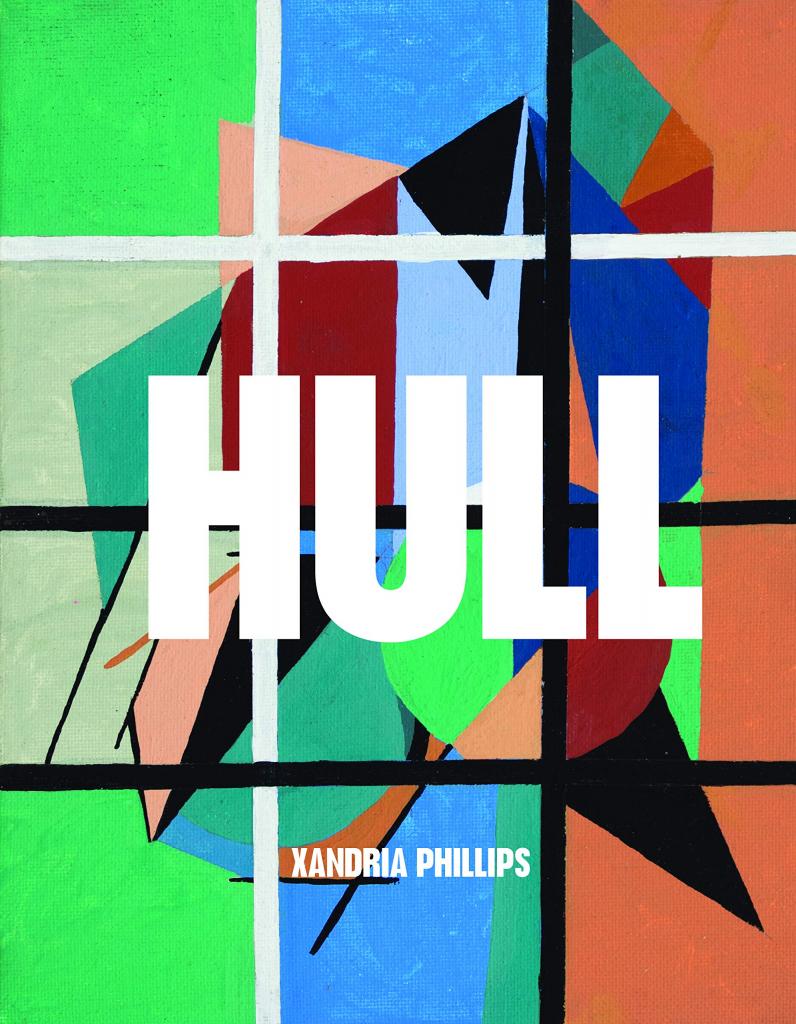
HULL by Xandria Phillips

HULL by Xandria Phillips

A collection that investigates the experience of Black queer femininity, HULL feels urgent and demands our attention. These poems find intimacy in moments of distress and take up space in our minds as well as on the page. Phillips explores bodies under siege, mental health and shared trauma, the luxury of love, and the beauty of soft, warm moments. In a world that oppresses and stifles, something as simple as folding laundry or sharing a cup of tea becomes incredibly powerful.

HoodWitch by Faylita Hicks

HoodWitch by Faylita Hicks

What is the difference between a god and a Gawd? What makes a woman a HoodWitch? Faylita Hicks speaks masterfully on the homespun magic of Black women, women who use “dime store candles” and Florida water to heal their wounds and care for themselves in a world that does not care for them. As much as these poems are battle cries, there is a sadness and a violence to them too. Gawdliness demands sacrifice. HoodWitch is a testament to the lineage of power, vulnerability, and strength.

I Can Hear You, Can You Hear Me? by Nolan Natasha

I Can Hear You, Can You Hear Me? by Nolan Natasha

The poems in I Can Hear You, Can You Hear Me? are sensory memories and slices of queer life—a certain song comes on the radio and puts you right back to where you were when you first heard it, small moments with lovers and friends, snippets of conversation that become meaningful in their simplicity. So much of queer life is about wanting to be seen, heard, and understood; the call awaiting a response. These poems exist in the instant someone picks up the other end of the line, and we feel that connection.

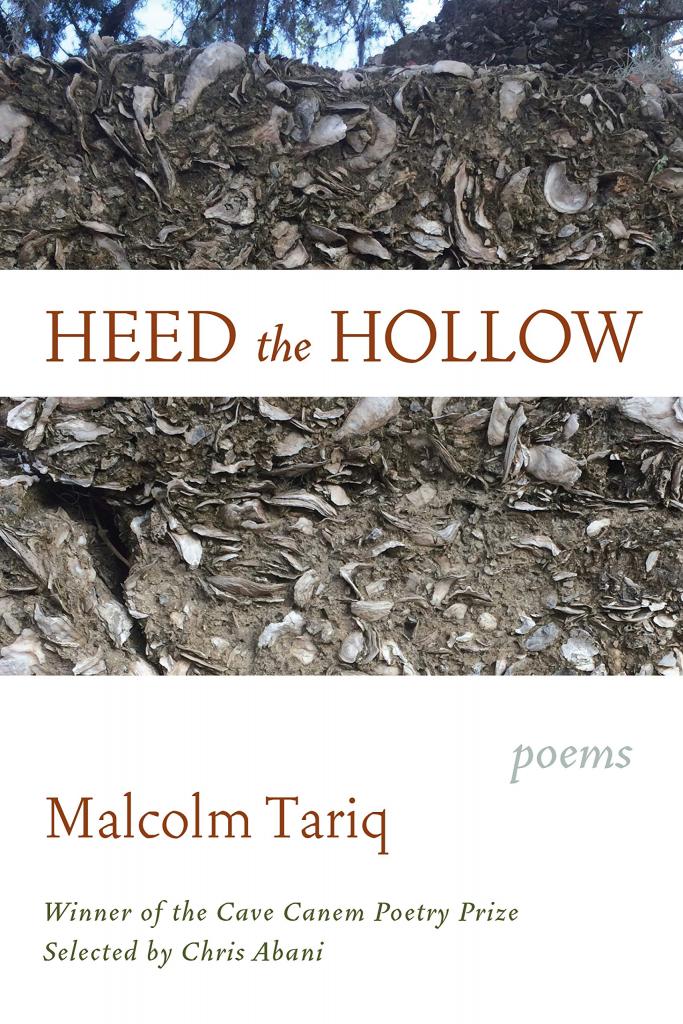
Heed the Hollow by Malcolm Tariq

Heed the Hollow by Malcolm Tariq

Any collection that opens with a poem called “Power Bottom” is a winner in my book. And while it quickly becomes  clear that Heed the Hollow goes much deeper than just, ya know, bottoming, Tariq’s wit and coolness is present throughout. Taking its place alongside the likes of Danez Smith, Jericho Brown, and Justin Phillip Reed, this collection explores Black queerness—particularly Southern black queerness—with the duality of nostalgia and resentment that comes with writing about home. Tariq is frank about the damage done to Black queer bodies and about the resilience of this experience.

Travesty Generator by Lillian-Yvonne Bertram

Travesty Generator by Lillian-Yvonne Bertram

I would venture to call this collection “experimental.” Though all poems are experiments in some way, Bertram’s collection is of that unique style that exists more easily on the page than spoken aloud. Yet her poems are full of sound and rhythm and space. This collection builds in energy, in urgency, in anger, leaving the reader breathless. Travesty Generator examines complacency in the digital age, and it feels like we’re peering through a matrix of racism and violence. 

The Women with an Appetite for Murder

Rachel Monroe has spent a great deal of time carefully considering aspects of American culture most would prefer to forget. In particular, she’s focused a lot on murder. 

Savage Appetites

In Savage Appetites, the Marfa, Texas-based journalist writes an exacting study of four different women and their unique relationships to crime: an early pioneer of forensic science from the 1940s, a Beverly Hills woman who enmeshes herself in Manson lore, a selfless advocate for a man wrongfully convicted of murder, and a Columbine-obsessed twenty-something who plots a mass shooting via Tumblr. It’s equal parts engrossing and disturbing.

As Monroe delves into the dark world of true crime, her investigations include not only the people incorporated into the narratives but also the people who consume them. Accordingly, she examines herself, looking at her own predilection for a culturally ascendant genre comprising a unique set of myths and suppositions.  


Andru Okun: You start your book writing about American women being enthralled by murder-related media, but you also point out how this fascination coincides with the U.S. murder rate nearing historic lows. What do you make of these contrasting realities? 

Rachel Monroe: I think it speaks to how the stories, particularly those that are categorized as “true crime,” have an element of fantasy or unreality. They almost feel like fables in some way in that they purport to be telling us about the world, but they’re telling us more about our fears and our dreams. The fact that people who are statistically at a very low risk of being murdered are fascinated by murder is actually not that surprising to me. I was just reading a book about the Weimar Republic. During a period when crime rates were dropping around World War I, there was also this culture that was really obsessed with crime. There were obviously reasons that people might have felt that their world was spinning out of control or heading into a frightening direction, but when there’s something else that you’re afraid of—something that’s more ineffable or huge and structural—then maybe crime stories reinforce that feeling of anxiety but with a more narrow target. 

AO: Why do you think so many women are fans of the true crime genre? 

I think that women have a complex relationship with their own vulnerability.

RM: I think there’s a lot of aspects to it. That’s why I wrote this book with four different sections, because every time I start to try and theorize about why, I feel a little stuck. There are so many reasons why somebody might find these stories fascinating. I think that women have a complex relationship with their own vulnerability and the culture is obviously preoccupied with female vulnerability, particularly white female vulnerability. Not everybody gets to be vulnerable in the same way. I think growing up in a culture that’s informing you about how at risk you are, about the dangerous things that can happen to you, you develop a really complicated relationship to those stories. 

AO: Your book addresses how popular accounts of murder tend to exclude and ignore marginalized communities. What do you think is the cumulative effect of these more common narratives? 

RM: I’ve been asking people what percentage of all U.S. murders do they think are committed with a male perpetrator and a female victim. Seventy or 80 percent is the standard guess; really, it’s 25 percent. Male violence against women is obviously a huge problem that needs to be addressed, but in fixating on these particular storylines, what other storylines are we leaving out? Native women have the highest rate of sexual victimization, but you never hear about it. Thinking about watching Oxygen or going to CrimeCon, those stories are not the stories that get to be emblematic of true crime. I’ve been wondering about what gets to fit into the genre, and what gets excluded, and whether it has to do with the fact that stories about black people, brown people, or native people are coded as political. True crime is something else—it’s about psychodrama and relationships, and it’s not political. Which is of course ridiculous. Everything’s political and these stories are particularly political because they’re mobilized and politicized. But when someone says “a victim of crime” cultural conditioning would have it that the image that pops up in your mind would be a white woman, which is statistically not representative at all.  

AO: This fits in with what you write about regarding the politics of empathy: “Pain that looks more like our own pain is easier to imagine as real.”

RM: Totally. With the Quentin Tarantino movie [Once Upon a Time in Hollywood] coming out, I’ve been thinking a lot about Debra Tate and the conversation I had with her. To me, she was such a fascinating example of this. She was of course Sharon Tate’s sister, and she’s become an advocate of victims’ rights and the way that she talks about crime and criminals… she’s a charming lady, but we disagree on a lot of things politically. The way that she talks about crime is very hardass, lock-em-up. For her, if people break the law they should be punished for it. But as soon as I started asking her about someone she knew, Roman Polanski, who broke the law and raped a young girl, there was all this nuance and there were excuses. “Oh, he didn’t know,” or, “Oh, this was fine in France,” or, “The judge was crazy.” It was such a stark contrast to me, how when we think of a criminal as an other, we’re willing to take all these extreme measures. When we flip that narrative and realize any of us could be in that position of victim or victimizer, we think about it in such a different way. 

AO: Debra Tate was someone I was hoping to hear you talk about more about. You write about being Mason obsessed at an early age, finding a copy of Helter Skelter on your parents’ bookshelf. So you grow up, become a writer, and find yourself meeting up with Sharon Tate’s sister for coffee. What was that like?

When we realize any of us could be in that position of victim or victimizer, we think about it in such a different way. 

RM: That was a really fascinating and complicated moment. I had spent so much time, not just in this book but elsewhere, thinking about people who were obsessed with Manson. That’s a world that I found really interesting. The Manson murders were such a huge cultural story that defined the way that people think about the era. In some ways I think that I too have come to think about the Manson murders in a slightly abstracted way, thinking about what they symbolize and how they function culturally. Then to actually talk to this person who was a teenager when her sister was murdered, and how that shaped the rest of her life… so much of the book is about people who identify with murders that didn’t happen to them, but she was someone who was directly impacted. It was good to bring me up short and think of all these people who feel entitled to these stories in a way, to think of what impact that has on the people who actually lived through them. She was a really interesting lady. 

AO: How so?

RM: I read a lot about her mom Doris, who died a couple of decades ago, who was this famously fiery force. She had a great steely drawl and could boss around politicians. She was a badass but also a badass that helped pass some laws that I feel uncomfortable with. You can see a lot of that in Debra—she has this kind of brassy, no-nonsense demeanor. Her life has been wild, she was still dealing with these health effects from when she was a mail carrier and there was a mad bomber at large. And she had some story about a horse that Ronald Reagan had given her that was stolen. She was just full of these wild stories and was super frank. I appreciated that I could tell her that I disagreed with her. 

AO: I identified with the way you describe mass incarceration in America as a “bleak normality.” I’m 32. I think you have a few years on me?

RM: Yeah, I’m 36.

AO: So we’re both of this generation that’s grown up in a world where prisons are part of the status quo, but the substitution of punishment for reform and rehabilitation is relatively new. How would you say that the victims’ rights movement impacted criminal law and incarceration in the U.S.? 

RM: The victims’ rights movement has a fascinating history, arising out of the feminist movement in the ‘70s. It started out doing these really amazing things that needed to happen, like educating police officers about sexual assault and creating rape crisis centers. But then around the ‘80s it took this hard turn, as much of the country was doing, and it became all about being “tough on crime.” These rare stories of the white woman victimized by a stranger were mobilized, used as something like a cover story that people could hold up when they say that they’re afraid. These stories became the impetus for all of these scary, rigid, punitive laws that we’re still dealing with now: three strike laws, parole denial, minimizing the use of the juvenile justice system. All of these things have led to mass incarceration, done on behalf of victims, even though victims as a group are obviously a wide and diverse one and what victims might want out of the justice system or what they think justice might look like is not one thing. But the “victim” as a political archetype became this wounded white woman who needed protection at all costs. 

AO: Columbine is a longstanding fascination of yours. It’s included in this book, and you’ve written about it previously. You once almost visited the school, only to be overwhelmed by an impulse to turn around instead. Can you talk about that? 

When things are deemed problematic, that seems like a good reason to look at them more closely.

RM: I think anybody that is interested in these crime stories, if they’re self-aware at all, will run into these moments that edge up against a kind of voyeurism or exploitation, something that just feels unsavory. I didn’t want to just shut it down, to say this is good and this bad. There’s a policing of women’s appetites that happens a lot. When things are deemed problematic, that seems like a good reason to look at them more closely, not necessarily as an endorsement but just to understand them rather than close it off to further inquiries. But it’s hard and it shifts. When are you honoring something and when are you feeding off of it? I’ve gone through phases where I was really fascinated and horrified by Columbine and I read a lot about it, similar to a lot of these girls on Tumblr, people who call themselves “researchers” because they don’t want to identify as fans. It frames it as intellectual, but in practice it does look a lot like fandom. When I was visiting family in Denver I saw the highway exit and I thought, “I’ll just go look at it.” Thank god for all the traffic that slowed me down enough to ask myself, “What am I really doing here? What am I looking to get out of this? Am I trying to provoke a feeling in myself?” That just didn’t seem like a good enough reason to turn somebody else’s tragedy into a tourist stop. 

AO: There’s an interesting thread in your writing related to the internet and crime—the discussion ranges from amateur sleuths in the dial-up days to serial-killer obsessed teens on Tumblr. How important do you think the internet is to the cultural obsession with crime?

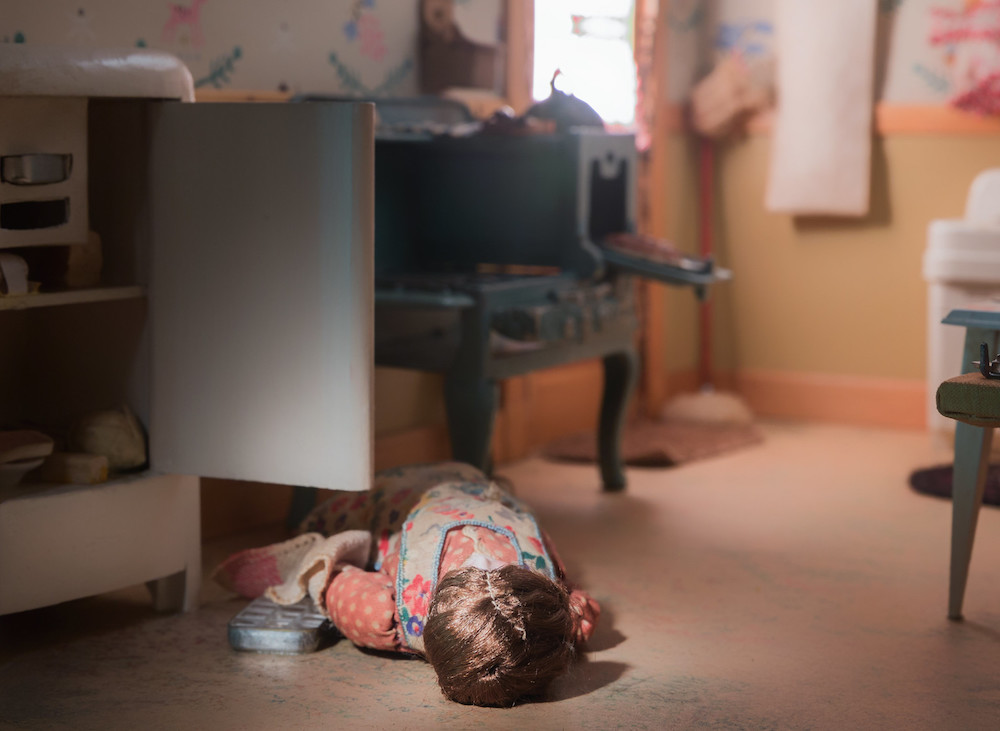
RM: It’s so important. I mean, I don’t think it’s necessary—people have been fascinated by crime and crime stories as long as there has been media, and probably even before that. But it is striking that the woman that I wrote about who came into this world before the internet, Frances Glessner Lee, making her doll houses in the ‘40s, she was wealthy enough that she could subscribe to all these journals and collect all these old books. She was influential enough that she could schmooze with the big players in early forensic science. Now the internet allows more access to information, so it democratizes things and people can find what they want. And I think often what people want in these obsessive communities is primary source information. They sense that the official story from the newspaper, the prosecutor, or the police is incomplete. The internet allows you to access full documents directly, and that can really lead people to go deep with these stories. And it creates communities, that’s the other thing that’s interesting. A lot of these worlds are social worlds.

AO: Why do you think this online community of “Columbiners” is mostly teenage girls?

RM: That community has shifted so much and it’s so hard to talk about what young people do on the internet because as soon as you look at it it has shifted and changed. When I first wrote about the Columbiners in 2012, it did seem to me that it was young girls, teens and tweens on Tumblr, overwhelmingly female. I sort of built up an idea in my head of what they were doing based on that. In the way that a lot of teen girls use their crushes to say something about themselves, a crush on a famous violent misfit is maybe telling us something, expressing feelings without owning it. But when I first heard about Lindsay [Souvannarath] and I’d heard that members of the Columbiner community had actually planned a shooting, it really did give me pause and made me want to go back to that community and question whether it was as harmless as I originally thought. I think in the vast majority of cases it really was, but Columbine fandom has a complex history. Before it was on Tumblr it was a big YouTube thing, and that was mostly boys who identified with the shooters rather than girls who wanted to love them. Checking back in with Tumblr, I realized that this world had shifted a little bit and that with some of these people there was more of an adulation of violence and proximity to Nazi imagery and racialized violence. There’s a lot of different strains in that community that ebb and flow and it’s become a very elastic myth that people apply if different ways. 

AO: You write that television programs about violence can be soothing. Why? 

RM: The one that gets talked about a lot is Law & Order: SVU. There’s also the more formulaic crime programming on Investigation Discovery. A lot of people will leave that on all night. There’s something about fear being stoked, but in this familiar shape with familiar characters. If you listened to the podcast “Running From COPS,” it makes it really clear how some of the police officers in that show are acting how they’ve seen other police officers they’ve seen on TV. It’s this feedback loop the producers are helping achieve. I think the television programs are soothing when they fit into a known category and the beats are familiar. It’s a contained fear. 

AO: Would you say it also validates some of the overblown fears people might have? 

RM: Yes, exactly. It gives them a face and a shape, validating what you already thought that you feared. 

Incendiary Clothing from the Consignment Shop of Horrors

Brocade

It will take investigators only two weeks to trace the fire’s origin to your backyard. They will find no trace of you.

It all started with a rich girl. Her family’s wealth had provided her many fine things but not, alas, common sense. It had spared her many troubles but not the pain of unrequited love. It did not, in the end, confer long life. Or even a medium-length one.

After her death, her parents were surprised to learn that she’d withdrawn from college. And that she’d spent the last tuition check they sent her on a custom-made brocade coat. The coat resembled a black and gold jacquard blazer belonging to a boy she hopelessly loved. The girl’s housemates suspected—and told her—that the boy didn’t really like girls that way. On the last night of her life she’d worn her bespoke coat to a party, where the boy pointedly ignored her. She left the party and went to bed, where her heart literally broke. This shocked everyone, given her youth and apparent health. Her parents were also surprised to learn that she’d carefully hung the coat in her closet before lying down. She’d always been so untidy.

You didn’t know the girl. You learn her story because she left behind a walk-in closet’s worth of beautiful clothes and accessories, and a friend of the girl’s mother delivered it all to the high-end consignment shop where you’ve worked for six years. You’ve listened while the woman related the sad details to your boss, the shop’s elegant owner.

“Oh, how tragic,” your boss says in her gracious, measured way.

“Yes,” says the woman. “Devastating.” She will collect 40% of the proceeds from the sale of the dead girl’s things. You wonder if the girl’s family will ever see that money. Perhaps they are so sad and so rich that they do not care.

Meanwhile you inventory, price, tag, and set out each new item, the dead girl’s things. The coat, with its mannish cut and astonishing fabric, gold roses subtly hand-woven into black silk, goes in the window, on the mannequin that models the shop’s priciest wares. But first you try it on, surreptitiously, in the back room. Even with the staff discount you could never afford it. Also, it doesn’t suit your short, lumpy frame. You look like a child playing dress-up.

Every morning, before you unlock the shop door, you take a moment to look up into the window and acknowledge the coat. You’re not sure why you do this. But one day, you come in and it’s gone. The shop owner can’t remember who she sold it to. “Maybe you can find something new for our mannequin?” she says. She always assigns you tasks by saying “Maybe.” Maybe you could deposit this at the bank during your lunch hour. Maybe you could take these to Goodwill on your way home.

You’re minding the shop alone when the coat returns. A sour-faced young woman brings it in. “My mom bought this here last month,” she says.

“Did it not work out for her?” you ask.

You’re ready to recite the store’s no-refund policy, but she says, “She died the day after she wore it.”

“Oh God, I’m sorry,” you say, and you are, because you’ve mistaken grief for petulance.

“You might have heard about it on the news,” the young woman continues, and indeed, you have. Her mother was a state senator running for re-election and had mysteriously died after a campaign event. You now learn that she’d worn the coat at the event.

When you tell the owner about the coat and the dead senator, her eyes widen. “How morbid,” she says. When you ask if she still wants to sell it, she says placidly, “But of course. It’s just a coat.”

You re-inventory the item. You raise the price. You write on the tag, “Not just a coat!” You don’t display it in the window or on a mannequin. You tell one prospective buyer, “It’s not a very slimming style.” But someone buys it on your day off, and you’ve nearly forgotten about it when it turns up, again.

This time you don’t mistake grief for sulking. You don’t ask. You don’t want to know. But she tells you anyway: Her sister, an aspiring actress and model, had bought the coat for a photo shoot. The woman insists on showing you a picture. Indeed, the deceased looked very glamorous in the coat.

“I’m so sorry,” you say, and you know: you’ve offered your condolences over this infernal garment for the last time.

Your boss is away at her seaside vacation home. By the time she’s allowed back, her shop will have burned up along with most of the town. She, like everyone who knows you, will be shocked to learn that the fire began behind your house in the town’s wooded outskirts. About your disappearance, she will say, in her earnest, even way, “How sad.”

She will not know, of course, that you took the coat home with you that day. That you tossed it in the firepit in your yard. That match after match smoldered and died on the lustrous fabric without catching. That you would finally resort to lighter fluid. That the flames that erupt into the clear hot sky will be the most gratifying sight of your life. That you will watch with unsurprised horror when a piece of the garment—part of a sleeve, maybe—rises over the altar, aflame, lightly touching down, anointing one drought-stricken tree after another before floating on toward town. That you won’t know what to do: run inside to call for help, jump in your car and speed away, dash up the street to alert the nearest neighbor—or walk into the wild, blazing tapestry before you. You’ll stand there wondering and wondering until another fragment of burning brocade flies up in the air and compels you to move.

a retelling of Lafcadio Hearn, “Furisode”

The Great Clarice Lispector Revival

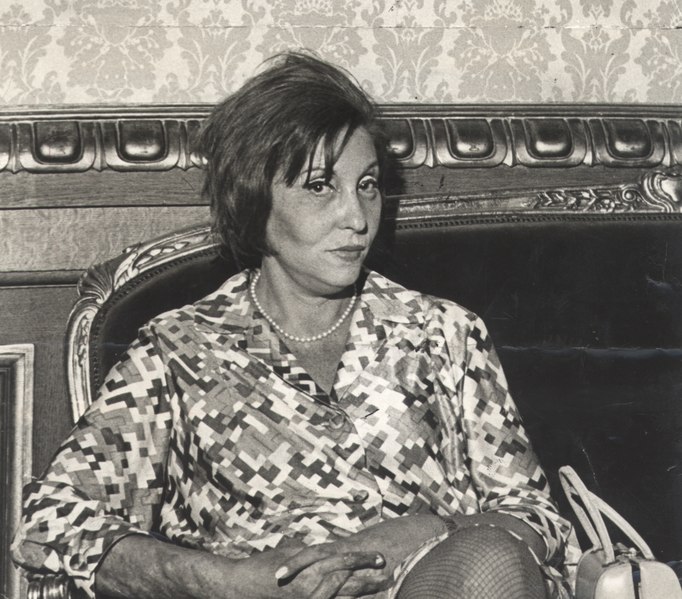
We are currently living through the Great Lispectorean Revival. A midcentury cultural icon in Brazil, the genre-breaking novelist and short story writer Clarice Lispector has only found international acclaim over the last ten years. It began in 2009, when Benjamin Moser published Why This World: A Biography of Clarice Lispector, and crescendoed in 2015 with her newly translated Complete Stories. In the intervening years, New Directions has published most of Lispector’s novels in English for the first time.

Image result for clarice lispector the besieged city
Buy the book

Their latest, The Besieged City, was her third novel, written during Lispector’s depressing three-year stint in Switzerland. “What saved me from the monotony of Bern,” she wrote in a newspaper column, “was writing one of my least liked books, The Besieged City, which, however, people come to like when they read it a second time; my gratitude to that book is enormous: the effort of writing it kept me busy, saved me from the appalling silence of Bern, and when I finished the last chapter I went to the hospital to give birth to a boy.”

Even now, it’s easy to see why The Besieged City was poorly received in 1949. It’s almost a hyperobject—you can read whole chapters and still feel like the book refuses to reveal itself. On the surface, it’s the story of a woman named Lucrécia Neves living in a small town, São Geraldo, which quickly becomes an industrialized city. “Its hermeticism has the texture of the hermeticism of dreams,” wrote the Portuguese critic João Gaspar Simões wrote. “May someone find the key.”

I recently spoke with Johnny Lorenz—the son of Brazilian immigrants to the United States, an associate professor at Montclair State University, and the translator of The Besieged City—to help me better understand Clarice Lispector’s least-understood novel.


Adam Morgan: When and how were you first drawn to Lispector’s work? Did you ever struggle to make sense of it?

Johnny Lorenz: When I first read Lispector in college, I wasn’t ready for her. In fact, in her novel The Passion According to G.H., the text suggests it should be approached only by readers whose souls are already formed, readers who are ready for this intellectual and spiritual journey. That was not me. These days, maybe I’m not fully formed, intellectually or spiritually… but I’m ready. 

With Lispector, you have to be able to get beyond your expectations as to what a novel “should” do, how it should operate. Her books are less committed to “character development” or “climax” or that sort of thing. A Breath of Life, the first book by Lispector that I translated, defines writing as this: ? (a question mark). For Lispector, writing is a brutal and feverish inquiry.

AM: When did you first encounter The Besieged City? What were your first impressions?

JL: After I had translated A Breath of Life, Benjamin Moser asked me to translate another one: The Besieged City. I didn’t know this book — it’s one of her forgotten books, one of her overlooked books. I started reading it, and, foolishly, I thought to myself: it’s a courtship novel! There’s a love story! No reason to get anxious about this. And of course, I had already translated one book — a very challenging book — by Clarice (can we call her “Clarice,” please? Brazilian readers refer to her by her first name.) So, this book would be much easier to translate!  

Of course, I was wrong. The Besieged City was so, so difficult.

AM: Did that impression change during the process of translation?

JL: Let me continue, then, the point I started making above. In the previous novel I had translated, A Breath of Life, there is no real “plot.” A narrator invents a character, and then the two of them — the creator and the creation — engage in a dialogue. I guess it would be more accurate to say that they engage in a sort of collaborative monologue, because most of the time it’s unclear if these two voices are really engaged in a conversation — how could they be, if one of them is not “real”? Wild stuff. Very “meta,” as they say. Very self-referential.  

With Lispector, you have to be able to get beyond your expectations as to what a novel “should” do, how it should operate.

Now, The Besieged City begins with a young woman out on a date, going to dances, flirting with other suitors, taking tea with her mother, etc. There was much more physical action in this book and more conventional tropes. As I read on, however, and as I read more carefully, I realized that the syntax itself was even weirder than the syntax of A Breath of Life. The way Lispector uses verbs and even prepositions, the original and therefore very odd manner in which her sentences move, the contagious abstraction—it can be exciting for the reader, but it can be tricky, tricky stuff for the translator. If translators often strive for elegance, what do you do with a text that finds such elegance rather cliche, or too limiting? In the first pages of A Breath of Life, the narrator explains that this is not a book for people who want to “like” a book, whose experience of reading can be reduced to liking or not liking. Lispector is reinventing the language — constantly. She is not really interested in recognizably poetic/romantic experiences or the recycling of comforting fictions.  

AM: Were you more concerned with approximating Clarice’s exact vocabulary and syntax, or with preserving the tone and feel of each line, paragraph, chapter? Do those concerns naturally follow one another in translation, or is there a balancing act?

JL: Sticking close to Clarice’s syntax is crucial—and when it moves in a weird way, the translator must not attempt to prettify or embellish. On the other hand, you can’t invent your own weirdness. You must get off the road and walk into the woods with Clarice—but in those woods, you must walk to a very precise spot.

AM: What were your greatest fears when tackling this book? What were your biggest challenges during the translation process?

JL: There are passages where— as a translator —you feel like you’re groping in the dark. You’re going a little bit crazy. You’re not sure. You talk to others about it—the generous friends and colleagues who speak both languages. The ones who appreciate Clarice. You work some more. You avoid working on it for a while. You come back again. And again. Then you stop looking for the light; you focus on recreating the correct darkness.

AM: How did working on The Besieged City impact your interior life? Did it make its way into your dreams?

JL: After spending months and months on the nuances of her language, translating and revising, deleting and recreating, I sometimes found myself uncertain about my own words, about “normal” speech. All of a sudden, regarding the most banal statements, even just looking at my own emails, I wondered: does this make any sense? What is really being said here? What am I saying?

AM: Clarice said that writing The Besieged City “saved me from the silence of Bern.” What do you think she meant by that? And do you think São Geraldo was inspired by a particular real-life city?

JL: I think she was experiencing various kinds of tedium: the tedium of pregnancy, the tedium of an elegant marriage in an elegant city. São Geraldo is a particular kind of Brazilian “suburb,” but not the sort of suburb we speak of in the US. Not Montclair, New Jersey, where I live. Not that sort of thing. São Geraldo is a town on the periphery, a gritty location, a town that cannot help but compare itself to the larger metropolis in the distance, with its restaurants and theaters.   

AM: Why do you think The Besieged City was so poorly received when it was first published? Do you think it’s true, as she said, that “people come to like when they read it a second time”?

JL: I think The Besieged City is not unlike her other books in this sense: sometimes you’re just not ready for Clarice. Maybe a second read helps. Maybe not.   

AM: How do you think, or hope, it’ll be received differently in 2019?

JL: The only real difference I can think of is this: Clarice’s reputation has been firmly established. Perhaps there is—for certain readers—more trust that this writer knows exactly what she’s doing. She takes risks—it’s the only way she knows to write. If the (frustrated) reader can try to be patient and be open to what she’s doing, that reader will discover that Clarice Lispector achieves startling effects, unlike anything else the reader will have experienced before.

10 Novels about Disappearing

I suppose walking out in the midst of an argument is not a mature option. But walking out, leaving, even disappearing in order to carve out some sense of freedom? That, I believe, is an act of power when no other option remains. Sometimes, it’s a literal act of survival, and sometimes it’s not the survival of our bodies that’s at stake but of our deepest selves—and who’s to say those two things will remain separate?

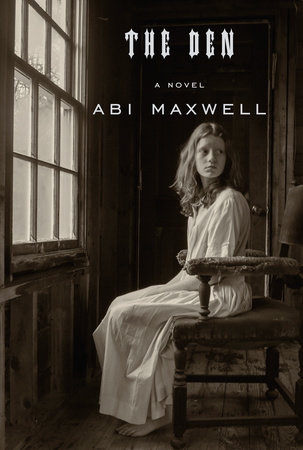
The Den by Abi Maxwell
Buy the book

In my new novel, The Den, one character disappears. I suppose she doesn’t have to. She’s not in a war-torn country, she’s not destitute (yet), she does have a family that she could—ostensibly—go back to. Instead, she vanishes. As a young woman stripped of all agency, it’s the one act that no one can take away from her. And once I started looking for more examples of people who leave because it’s the necessary step toward some sense of freedom, I saw them everywhere.

Here are 10 books in which the characters leave not as a copout, but as the ultimate act of power of the self: 

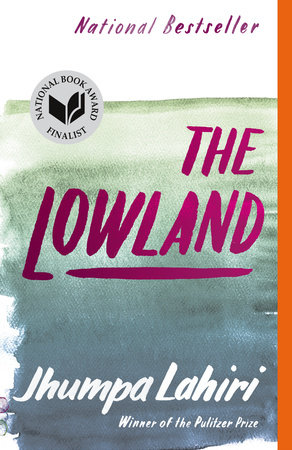
The Lowland by Jhumpa Lahiri

The Lowland by Jhumpa Lahiri

There’s lots of leaving here—leaving one’s home, one’s country, one’s family—and there’s also lots of returning. But in this novel, there’s one particular act of disappearance that most interests me: the mother leaving her child for her own mental health. We see fathers do this so often, and this exquisite novel forces us to look at the way we judge mothers so much more harshly for that same act. 

Image result for always is laurie frankel

This Is How It Always Is by Laurie Frankel

This is the kind of novel that reminds me of why we read fiction—to see the truth. Here, a family stumbles along the complex path of raising a transgender child. In a sense, the leaving is brief—two characters go elsewhere for a short period of time—but in another sense it’s constant. Leaving one’s identity, leaving it again, restructuring it, all the while never being able to get away from who we really are.  

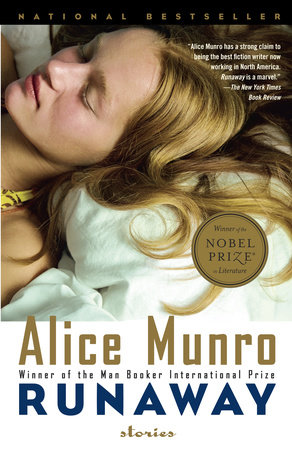
Runaway by Alice Munro

Runaway by Alice Munro

The title itself instills so much power. It’s not a command given by someone else: run away. But then is it the adjective, connoting a personality trait, or is it the noun, describing the person herself? There are so many runaways here. There are failed escapes, there are all too successful escapes. And just when we think we’ve left a story in the collection behind, its characters reappear, sometimes with entirely new identities. 

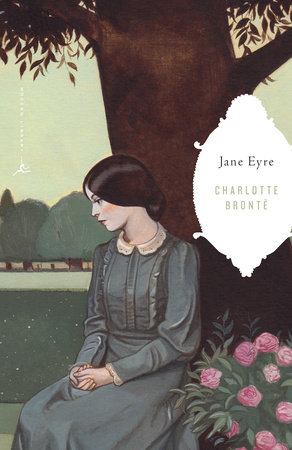
Jane Eyre by Charlotte Bronte

Jane Eyre by Charlotte Bronte

I can’t find a woman in literature before Jane Eyre who runs away as she does. That woman must exist somewhere in the world’s literature, but so far in my reading, Jane is the first, and her act is one of such power. Her choice—to live up to her moral code or to stay with the man she loves, despite his indiscretion—does not leave this steadfast and independent woman a choice. She casts out alone, and never mind that she ends up with him—those few days of her wandering the windswept landscape, hungry and alone, are some of the bravest I’ve read. 

Perma Red by Debra Magpie Earling

This one is the epitome of a particular type of leaving—the kind women do because they have no other options for power. Louise is constantly leaving. She leaves her family, men, her home, her reservation, and sometimes, it seems, even herself. She also returns over and over again, and in that this lyrical book forces us to ask so many questions about what it means to love, to belong, to rise up and become. 

Image result for washington black esi edugyan

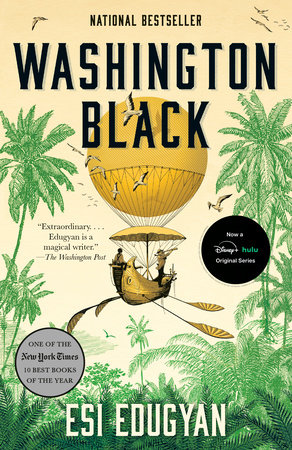
Washington Black by Esi Edugyan

Like a true adventure, this book is constant movement—from plantation to ship to Canada to the Arctic. The leaving is very literal, and necessary—Titch, the protagonist, escapes the bondage of slavery. But this extraordinary book also examines the freedom of the mind, the existential leaving we must do to carve our freedom. 

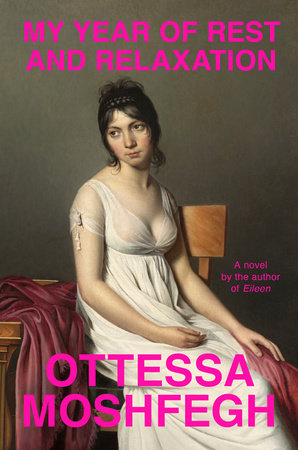
My Year of Rest and Relaxation by Ottessa Moshfegh

My Year of Rest and Relaxation by Ottessa Moshfegh

Leave society by just taking pills and sleeping for a year? Why not? For me, this book moved from grotesque to gorgeous as I watched this off-putting narrator transform into a dynamic and surprising friend. And hilariously, the year actually worked. 

Image result for The Neapolitan Quartet by Elena Ferrante

The Neapolitan Quartet by Elena Ferrante

We know from the first paragraph of this stunning series that the woman at the center of it will disappear, and as we back up to her childhood we begin to see how that choice—after poverty, betrayal, domestic violence, class war—feels inevitable, and so, so powerful. 

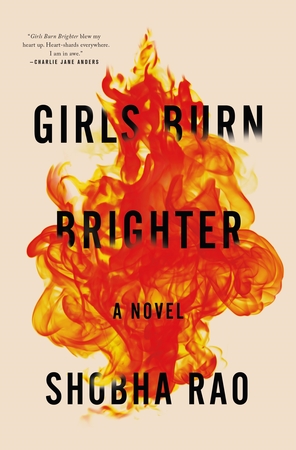
Girls Burn Brighter by Shobha Rao

One girl is taken, and the other leaves to find her. The book becomes a quest at the same time as it is an escape. And it’s the most necessary kind of leaving—the kind where your life literally depends upon on it. Working against the most powerful forces of misogyny, the girls in this book are breathtakingly determined to escape and carve out their freedom.

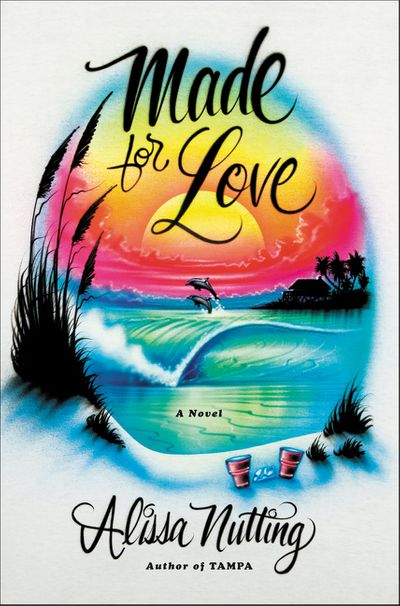
Made for Love by Alissa Nutting

What does escape from marriage look like when your husband is a tech mogul who is terrifyingly adept at tracking you? This is an absurd, hilarious, and oddly true book about a woman’s escape in the modern age. 

12 Books That Prove the Literary/Genre Distinction Is Bogus

When I first joined a workshop in 1994, American literary fiction was dominated by and continually lauded a “quiet” kind of writer, one often influenced by J.D. Salinger, Ernest Hemingway, or Raymond Carver. I loved literary fiction—I’d been reading, writing, and submitting it since high school. But what nagged at the corners of my mind was my sense that there was a vast gulf between what had given me so much pleasure in fiction once upon a time—the glittering work of writers like Zilpha Keatley Snyder, Lloyd Alexander, Ray Bradbury, Wilkie Collins, Philip K. Dick, the Brontë sisters, Robert Louis Stevenson—and what constituted “important” fiction that serious people read; what they assigned us in schools.

I didn’t come from a background where people, as a matter of course, read literary fiction or the New York Times on Sunday mornings, or went to readings. Both of my parents started out as frugal engineers and immigrants—well-educated and down-to-earth. Reading literary fiction was initially, to me, about migrating away from where I’d come from.

By the time I graduated college, some of my initial enthusiasm about the pleasure of genre fiction had been siphoned away. I became ambivalent about losing joy as I wrote, and also about finding it while reading. As someone who had spent her life gazing through a plate-glass window, nose pressed against it, to watch more closely what the rich people were eating, I was determined, when I started submitting, to write in a style and form that was recognized as literary fiction, even if that meant less pleasure for me.

But in 2003, I encountered Jonathan Lethem’s incredible semi-autobiographical The Fortress of Solitude. Here was fiction that united serious themes and original voices with the addictive desire to turn the page. The Fortress of Solitude made use of various storytelling structures, not restricting itself to what those unconcerned with literary pleasure might find worthy. Here lay the influence of comic books, detective stories, science fiction—some of the most viscerally pleasurable forms of narrative—along with Borges, Marquez, Calvino. It took a while for this high-low aesthetic to become more prominent, but over the years, I came to understand that this was also the kind of fiction I hoped I would write: literary fiction that was curious and voracious and inventive.

Following are twelve of the best contemporary literary novels I’ve read that play with genre tropes, fusing them to larger themes rooted in the concrete details of our present-day world—love, marriage, time, inequality, betrayal, ambition, memory, and storytelling itself—with distinctive prose. These novels pantomime genre: rather than directly mirroring it, they slip wholeheartedly inside the tropes and shake them up. They pull you to the top of a rollercoaster ride and let go, subverting your expectations of what literary fiction can or should do. 

Image result for heavens sandra newman

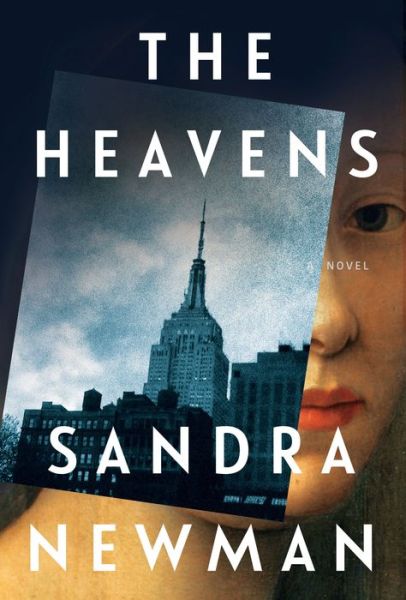
The Heavens by Sandra Newman

Sandra Newman’s seductive and charming novel borrows from both the time travel and romance genres. Kate and Ben meet at a party in Brooklyn and fall in love, but their romance is complicated by her inadvertent time traveling while she sleeps. In slumber Kate travels to Elizabethan London, where she’s known as Emilia and has a romance with the little-known playwright Will Shakespeare. She’s also certain she can save the world. Every time she travels, she changes the present-day, but not necessarily for the better. There’s also the question of her sanity. It is challenging enough to balance and generate heat within a single fictional timeline. Remarkably, Newman juggles two of them––highly disparate spaces, one of which is mildly absurd and yet has real effects on the other. 

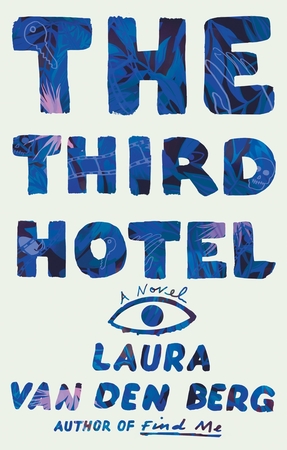
The Third Hotel by Laura van den Berg

Laura van den Berg’s surreal second novel The Third Hotel plays with the horror genre. A widow visiting Cuba for a screening of a zombie movie at a film festival spots her dead husband, a horror film professor, outside a museum. Believing he may have been resurrected, she begins tailing him through Havana. Meditations on grief and marriage arise organically from this setup. One of the most interesting pleasures of reading Laura van den Berg’s fiction—and there are many—is that she takes the shapes of genre and rewrites their structures  in a language all her own, simultaneously elegant and disturbing. At every turn, her sentences surprise, unsettle, and buttress her strange but riveting plots.

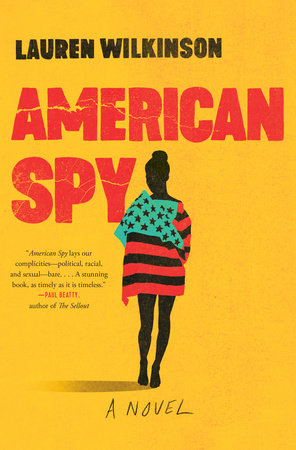
American Spy by Lauren Wilkinson

American Spy by Lauren Wilkinson

American Spy is a debut thriller in the John Le Carré model that explores politics and ideas one might not expect from a spy novel. The plot revolves around Marie Mitchell, a young Black woman who faces off with an intruder one night. Realizing his presence is due to her past as a CIA spy, she flees the country with her four-year-old twins to Martinique, where her mother lives. The novel is mostly set during the Cold War when Marie was stationed in Burkina Faso, shadowing the radical Thomas Sankara. American Spy has the kind of incredible political subtext that’s rare in  fiction. This is engaging work by an author who is having fun with ideas, without losing a sense of proportionality about how the world moves and what is important within it.

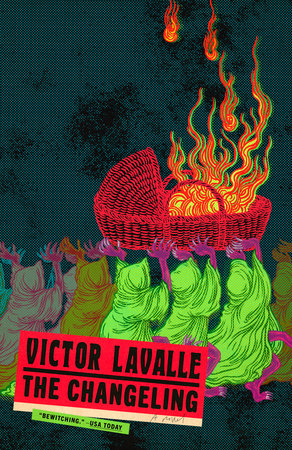
The Changeling by Victor LaValle

The Changeling by Victor LaValle

Victor LaValle’s haunting New York City novel starts at a slow burn, with intimations here and there that something dark is afoot. Apollo Kagwa’s father had disappeared during his childhood, leaving his son with a recurring nightmare and  a box labeled “Improbabilia.” Apollo’s wife Emma’s postpartum depression turns into something out of a horror movie, and she disappears. After a stint in jail, Apollo begins searching for answers in some strange places. As a woman on an island tells him: “You and Emma have ended up in one ugly fairytale.” In a voice that’s subtly magical, full of the fairytale forest, and all too real, LaValle keeps you turning the page.

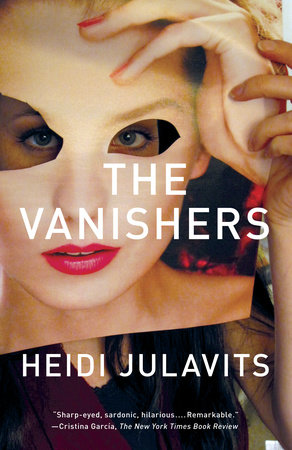
The Vanishers by Heidi Julavits

The Vanishers by Heidi Julavits

Julia Severn is a talented student at a school for psychics. She’s selected to be the stenographer for a famous psychic she idolizes. Julia transcribes the psychic’s regressions, but eventually, out of boredom, starts making up complicated stories about the trances instead. When the psychic figures out that the regressions don’t add up, she also discovers that Julia has psychic talents of her own. Jealously, she targets Julia for a psychic attack. Heidi Julavits is a stylish novelist whose eye is always trained towards what is simultaneously beautiful and upsetting. Her plots are improbable and exciting—this one reminds me of an X-Men comic book—yet somehow unfold with  what can only be described as the highest form of grace.

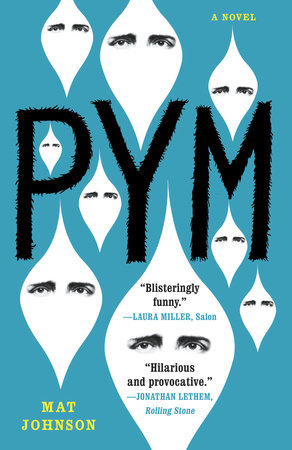
Pym: A Novel by Mat Johnson

Pym by Mat Johnson

Christopher Jaynes is a Black professor of American literature who is denied tenure and becomes obsessed with Edgar Allen Poe’s novel The Narrative of Arthur Gordon Pym of Nantucket. When he finds a manuscript suggesting that Poe’s novel is a true story, he tries to find the island of Tsalal. It’s described in Poe’s novel as a place of Blackness, which leads  Jaynes to imagine it as a kind of mythical refuge from whiteness. On his epic journey, he’s joined by a crew of Black adventurers following Pym’s path to Antarctica, and they face all kinds of surreal adventures. Johnson is incredibly funny, his observations sharp and cutting and full of heart and humor. He brilliantly excavates a piece of fiction that’s nothing more than a footnote in literary history, zooms in on it and turns it upside down, and in so doing, complicates Blackness while revealing the absurdities of white America.

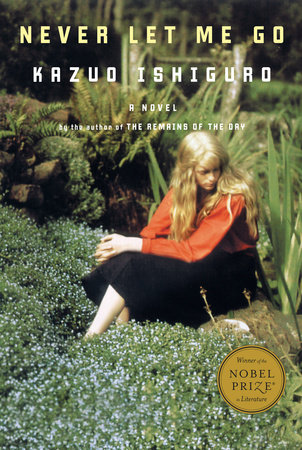
Never Let Me Go by Kazuo Ishiguro

Never Let Me Go by Kazuo Ishiguro

Never Let Me Go by Nobel Prize winner Kazuo Ishiguro is a dystopian novel about Kathy H., who is a “carer”—she works as a caregiver for other humans who’ve been cloned for the purpose of donating organs. During childhood, she attended a boarding school where the teachers ensured that the children understood the importance of health and making art. During her school years, Kathy befriends two students, Ruth and Tommy. Even though Kathy and Tommy have a clearer connection, it’s Ruth and Tommy who eventually develop a relationship. Years later, when Kathy is her carer, Ruth makes an unsettling confession. There’s no denying Kazuo Ishiguro’s unparalleled syntax and diction, his emotional genius, his bleak yet penetrating glimpses into the human heart and its mysteries. 

The Amazing Adventures of Kavalier & Clay (with bonus content) by Michael Chabon

The Amazing Adventures of Kavalier and Clay by Michael Chabon

“To me, Clark Kent in a phone booth and Houdini in a packing crate, they were one and the same thing . . . You weren’t the same person when you came out as when you went in,” Sam Clay tells people. Escape, magic, and transformation are explored in Michael Chabon’s lush, surprising, and comic Pulitzer Prize-winning novel The Amazing Adventures of Kavalier and Clay. Joe Kavalier and Sam Clay are cousins who meet in 1939. Their creativity leads them to illustrate and write comic books about the Escapist, an anti-fascist superhero. The novel is marked by the recurrence of a golem, an automaton brought to life by magic.

Washington Black by Esi Edugyan

Washington Black by Esi Edugyan

Washington Black is a subversion of the 19th-century British adventure yarn. It tells the story of George Washington Black, “Wash,” a slave on a sugar plantation in Barbados who is assigned to a new master, an inventor of a flying machine. After Wash escapes from the plantation on the flying machine, he begins to discover  his artistic talents and personal depths he’d never had the chance to recognize while enslaved. Edugyan turns the adventure on its head, directing her penetrating intellect and insight towards a figure who would have been a sidekick in a book by Robert Louis Stevenson or Jules Verne. But given even a sliver of a chance, Wash proves to be a hero in his own right. Edugyan is a novelist whose work reads as straightforward, yet is so deep and revelatory. It’s exciting, after reading her gothic debut The Second Life of Samuel Tyne and her second book Half Blood Blues, a jazz novel that jumps back and forth in time, to consider what she might do next. 

Image result for poster

A Questionable Shape by Bennett Sims

Bennett Sims’s A Questionable Shape is another book that rocked me to my core. This is a novel less interested in zombies and urgent excitement than it is in feelings and ideas. Set in Baton Rouge, Shape centers a young man and his girlfriend in the midst of a zombie outbreak. The zombies are being corralled and quarantined, but hurricane season is impending. The young man risks a bite to help his best friend on a quest to find the friend’s father, who might have been turned into a zombie. Meanwhile, the couple’s relationship is put under stress. The novel is more a philosophical meditation on memory than it is a zombie story, but it’s the threat of zombies that gives the novel its powerful atmosphere of dread and loss.

Mr. Fox by Helen Oyeyemi

Mr. Fox by Helen Oyeyemi

Helen Oyeyemi’s unabashed love for children’s stories and fairytales winds up in nearly every one of her novels. Mr. Fox is metafiction about a celebrated novelist’s character, Mary, who comes to life and declares she’s tired of seeing novelist John Fox kill all the women in his books. She suggests he’s avoiding what’s real in favor of what’s easy to write—murders––and wants him to examine human connection more closely. Mary and the author start to tell stories in a kind of battle that asks how storytelling can move  forward without a murder. Oyeyemi’s writing is unparalleled and ingenious. Her sentences are often miniature stories of their own, sometimes lending support to the larger story, and at other times serving as the fingers that yank away a Jenga block. Miraculously, Oyeyemi’s narrative structures remain standing.

How Has Intersectional Feminism Changed in the Past 18 Years?

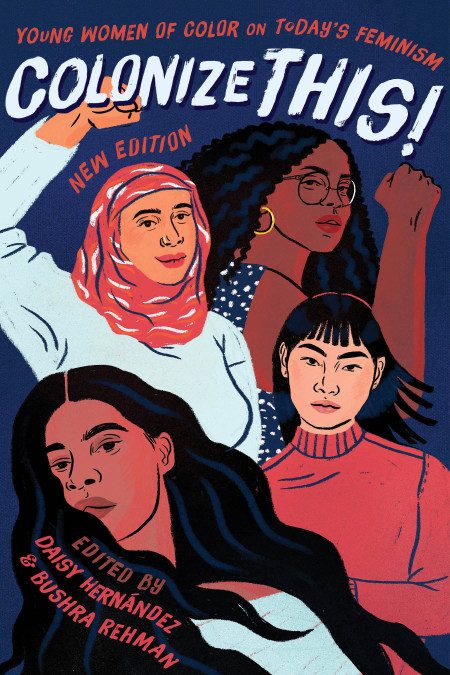
In 2002, when I was a relatively recent college graduate, I found a book that served both as a complement and counterpoint to the (white) feminist theory I had spent years studying in college. It was Colonize This! Young Women of Color on Today’s Feminism edited by Daisy Hernández and Bushra Rehman, a collection of essays about the politics of feminism and a scathing, pointed, and powerful commentary on then-contemporary definitions of feminism.   

Colonize This!
Buy the book

Hernández and Rehman assembled a roster of young feminists who addressed everything from gentrification to activism and organizing; from the body, reproductive rights, and mental health to beauty, sexual harassment, and rape––all through an intersectional lens at a time when the word “intersectional” was rarely heard outside of academic spaces.  

Seventeen years on, this landmark anthology has been re-edited and republished with nine new essays by a new generation of young feminists who take on trans motherhood, serve as abortion doulas, organized on the morning after Election Day 2016, live and make art as Diné women, and more. 

“What does feminism look like for young women of color who grew up with the first Black president? With a more visible transgender community? With social media platforms?” asks Hernández, a creative writing teacher at Miami University of Ohio, in her introduction to the second edition. “I was hungry to read the stories of these young women of color.” Adds poet, novelist, and teaching artist Rehman, “It is the youth, and has always been the youth, who have carried the fire and the light forward.”

I spoke with Hernández and Rehman about the genesis of the new edition of Colonize This!, youth feminist discourse, the “Squad,” and the weight of feminist history. 


Pooja Makhijani: What compelled you to re-edit/reissue Colonize This!, given that it is, perhaps, a defining feminist text of a generation?

Bushra Rehman: We were so amazed to see how the impact of the first edition was so powerful and far-reaching. Over the last two decades, we’ve been told by numerous readers that Colonize This! changed their lives. It brought them to feminism and activism, helped them feel less alone, inspired them to heal their relationships with their families, and empowered them to create lives on their own terms while creating meaningful communities.

When we did the first edition, it was in the midst of 9/11. This moment feels different. Not only are we again under threat, but we are also more equipped than ever to gather and organize. Our numbers are larger and the creativity and power we are seeing in today’s youth-led movements is deeply inspiring.

This moment in our country is so deeply disturbing. As people of color, our rights, our very humanity is being challenged in ways that feel more dangerous than they did 20 years ago. At the same time, the power we hold as people of color in this country also feels stronger. For all these reasons, this felt like the right time to put out a new edition. Both to document the amazing activism happening and to inspire more. The first edition inspired a generation of activists and we need all the inspiration we can get now to stand up for what we believe.

This felt like the right time to put out a new edition. Both to document the amazing activism happening and to inspire more.

It’s so hard to explain the lack of connectedness we felt before social media. To find friends and activists you had to find them in person and through books. This book was a message in a bottle that was sent out from us to the world; I was truly in awe at how quickly it was passed on and how it has lasted. That said, I also knew that we had not been able to cover certain topics at the time in 2001 and that this [republication] was a chance to remedy that.

PM: How do you hope these new essays broaden your original vision? And how did you source new work?

Daisy Hernández: We approached writers we knew in some cases. I knew I wanted Andrea Pino and Amber Taylor and Sonia Guiñansaca and Jamilah King. I was familiar with their creative work and activism and I knew they could speak to sexual assault on campus, coming of age during Obama, or being undocumented. We also brainstormed a list of topics that were specific to a new generation of women of color, like online bullying and social media. Other writers found us, which was incredible. I also wanted to honor the spirit of the first edition. I wanted to have writers who had never been published along with women of color who already have platforms. We added nine new essays and it really came together in incredible ways.

BR: I knew I wanted to include the stories of transgender writers [who were not represented in the first edition] and mothers, and stories about reproductive justice. We now have essays by writers on all of these topics, including Luna Merbruja’s, “Resisting Sterilization & Trans Motherhood,” which is about motherhood, trans justice and reproductive justice.

PM: What you hope readers will gain by rereading the original essays alongside the new ones?

DH: I hope they will feel inspired by both the original essays and the new ones. So many of the original essays speak to today, like Taigi’s [Smith] essay on gentrification [“What Happens When Your Hood Is the Last Stop on the White Flight Express”]. The 2002 edition made a lot of readers feel a sense of home and belonging. I think [the original] essays still do that. When I sat down to read the essays from the first edition, I immediately felt a sense of being with like-minded mujeres. I think readers today will feel that too.

BR: Also for second-generation children, many of the experiences are exactly the same: the complicated relationships with their families, with coming out, with being the first to go to college, with trying to find a way to move through the liminal space of multiple cultures, of dealing with racism, with being told to go back to where you came from. It’s worse now as we have the president saying it, but then we also have “The Squad” [the quartet of congresswomen of color who President Trump told to “go back home” in July 2019].

DH: “The Squad” is not a group we could have imagined in 2002, but we were working for it.

PM: What has changed in youth feminist discourse since the original anthology was published?

DH: I think part of what has changed are concepts of gender. We came out of “women’s studies”; most folks now are coming out of “women’s and gender studies.” We are now talking “gender nonconformist” and “cisgender.”

There’s more communication across borders thanks to technology. That has also changed discourse. In the Latinx community, folks are talking about “x” and whether it does or does not translate in Spanish. 

I think today women are more ready and insistent on working inside the belly of the beast. “The Squad” comes to mind, but also my sister and others working on local elections.

I think today women are more ready and insistent on working inside the belly of the beast.

BR: For me it’s been amazing to see how young Muslim women, who lived under the shadow of 9/11, have moved forward with great strength, community building, and pride. I agree with Daisy; I love how fluid this new generation is when it comes to gender and sexuality.

DH: But there is so much continuity, too. Young women of color still negotiating culture and sexuality, and our reproductive rights still being challenged in nightmarish ways. I still think young feminists of color are looking for their community.

BR: And the continuity of the idea of writing as a practice, and creating art that is radical, powerful, and healing. All of the contributors [to both editions] are people who have found writing as the secret door.

PM: What did you learn from your new contributors?

BR: A big shift for me was becoming a mother and, when I did, I realized how much motherhood was a feminist issue that I knew nothing about. This was an effect of second wave feminism on me. I just thought I could not have a child and continue to do the work I loved. When I did have a child, I realized how intense the misogyny of our patriarchal American culture seeps into every aspect of choosing to get pregnant (or not) choosing the ways you would like to give birth (or not) and the ways mothers are continually judged and held up to an impossible standard, especially given the lack of institutional support. It’s patriarchy at its finest, meaning its worst. 

Also, the “Me Too” movement has been so deeply inspiring. I am continually inspired by youth-led movements like these and March for Our Lives, Black Lives Matter, and She Has a Name. There is so much hope. I am happy to follow in their footsteps.

DH: Feminism for me has always been a way of looking at the world and it’s changed with me. So in my twenties, feminism was about being queer and Latina and negotiating with family. Then feminism started to help me see how prescribed gender roles intersect with race and dictate how Black and Brown and white boys can and do move through the world. I started to see racial violence’s relationship with gender .

Now I’m thinking about the border and what’s happening there to families, so feminism is about how I see questions of citizenship and claims to places and denials of rights.

PM: For many women of color my age, Colonize This! was one of the first surveys of feminism as practiced by women of color. You both reflect on This Bridge Called My Back Writings by Radical Women of Color edited by Cherríe Moraga and Gloria E. Anzaldúa, also a seminal feminist text. Did the history of the importance of Colonize This! weigh on you as you edited the second edition? If so, how do you carry that weight?

DH: The history was definitely very present for me. That’s what made it important for me that we have unpublished writers in the new edition. I wanted the book to be a way for these women of color [the new contributors] to have their voices amplified among readers. I do think it might’ve been harder for the writers than it was for us. They were creating new work that would go into the anthology that they had grown up with!

The benefit of being a little older is that I felt comfortable with the fact that we weren’t going to produce a perfect new edition. This is what I tell women of color now: growing older is so good for us! You become more confident in who you are and what you’re doing. And you have more friends and community than you did when you were younger. I got so much love and support from friends for this new edition, so that definitely carried me through any doubts.

BR: I see the book as a tool. There are so many people who shared with me that it brought them to activism and I feel we need all hands on deck right now.

PM: As “seasoned” feminists, do you feel an obligation to mentor young women of color? If so, how does that manifest?

DH: I don’t feel an obligation to mentor. I feel an incredible joy and necessity in mentoring. Mentoring younger women of color feeds me intellectually, spiritually, and creatively.

BR: It’s not an obligation. It’s simply a way of life that I’ve had since I was young myself. I’ve always been an elder sibling, and I was already an elder in the South Asian activist community for teens when I was barely past my teen years.

DH: Young women of color become mentors very early. We have to do it that way. We can’t wait for others. And we can’t wait to feel qualified. We didn’t feel qualified to work on the first edition, but we did it because we needed the book.

BR: Not feeling “qualified” was something I had to make peace with. I didn’t want to be seen as a spokesperson for WOC feminism since it is so multilayered and complicated. I was simply searching like everyone else. On this journey, all inspired by the first desire, which was to write and be a writer, I met Daisy and all of these amazing women of color activists. We wanted Colonize This! to be a way to bring the stories of these writers and activists to everyone else who was also searching. I believe we’ve done it again.

What Teen Romance Novels Failed to Teach Me About Sex

When I was twelve, I started smoking even though I knew my braces made it look ridiculous. I raked the neighbors’ leaves for pay, a seasonal gig for which wages amounted to little more than a meal at the local Panera. Worst of all, I’d begun to see the people around me in new ways: I’d never noticed cleavage before, nor the veined deltas of men’s forearms, nor lace peeking through a tank top or out of the backs of low-riding jeans. I noticed those things now with a vengeance, though their bearers did not notice me. My invisibility convinced me that I’d been left behind, doomed to smoke and rake and yearn without anything to show for it.

By then, my friends had been shy about their bodies for a while. They hid behind their arms when changing into pajamas at sleepovers. I spied pink razors in showers where before there had been nothing; caught whiffs of deodorant or perfume; saw shadowy outlines of training bras under shirts. Yet for all the hormonal soup that simmered inside my body, my outsides remained stubbornly untouched. I wasn’t yet embarrassed by sex like my friends were. Sex hadn’t come for me yet. Pulsating with miserable energy, all I could do was study up.

Loath to expose me to human sexuality, my mother still cased my YM Magazine every month, ripping out articles on how to be a good kisser or pictures of shirtless teen idols clenching their abs for the camera. But I’d found a loophole. Whenever my father and I went to the bookstore together, an outing that closed out our father-daughter dates at the Tastee Diner, I’d ask him to meet me in the kids’ section in thirty minutes and make it there in twenty-five, my books from the Young Adult section already purchased with my leaf-raking cash and hidden in the store’s opaque bag.
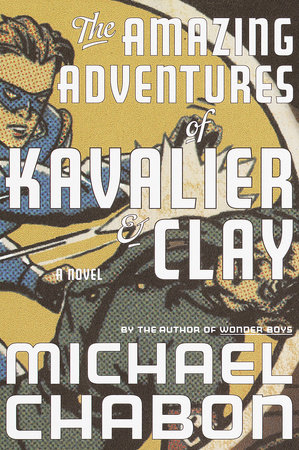
Sex hadn’t come for me yet. Pulsating with miserable energy, all I could do was study up.

The Young Adult section was a canny bit of marketing: at twelve I felt fabulously adult, but without access to the adult vices that might have sublimated that feeling. And if the Young Adult section was my lighthouse in a rainstorm, the Avon True Romance series was its lamp: pastel-colored, each cover embossed with feminine script, and sexier than anything I’d ever been permitted to read.


I never stood a chance against the Avon True Romance books. As an adult, I’d cringe at the reduction of sex and love to a precise formula; as a kid, untouched and unsexed, the formula was a lifeline. In the pages of Avon True Romances, male protagonists were “men” and their female counterparts were “girls.” The men were utter cads, their reputations shredded by decades of gambling, piracy, miscellaneous caddish behavior. The girls were virgins. They despised the men’s savagery, often while blushing. Halfway through, a catalyzing event would occur: the girl would prove her worth by doing something manly and respectable, like shooting a gun or outsmarting the count. Hark! Perhaps she wasn’t just a pampered virgin after all!

Once the man realized that the girl was worthy of his love, he was free to claim her, because she suddenly didn’t hate him anymore. (It was never clear when that happened––maybe she saw him shirtless while she was outsmarting the count.) Then the book would rev up the pace: a misunderstanding would trigger the fight that nearly drove the lovers apart, they’d go to their Special Shared Place at the same time to mope and realize they belonged together, the man’s eyes would express boundless profundities for six pages or so, he’d propose, she’d accept, they’d kiss, fin. Give or take a couple kisses. Give or take a fight.

In Gwyneth and the Thief, we meet Gwyneth just after she’s been promised to the hateful Baron DeVilliers by her dying father. As she sulks about this in a garden on her estate, a gang of thieves shows up. Gavin, their ringleader, loathes Gwyneth immediately, and the feeling is mutual. She hates him because he’s such a rogue, and he hates her for knocking him unconscious and forcing him to pose as a squire.

Gwyneth’s hatred is consuming, and yet all she can think about are Gavin’s finely chiseled biceps. She has to have him, and he her. They don’t take long to get there; maybe two hundred pages. Teen romance novelists are savvy to the fact that their audiences don’t yet have the emotional context for the subtleties and exigencies of the human heart. Only the juicy stuff matters.


At that age, I was desperately smitten with between fifty and a hundred people at any given minute, but none more so than Kyle Adams. Kyle Adams, who had reportedly fingered Justine Cartwright at a party, kick-starting the rush of hormones that catapulted him to six feet tall overnight. Kyle Adams, with his lion’s mane and his abs and his cigarette breath. Kyle Adams, sophisticated enough to hang out with both boys and girls at an age when most of us still believed in cooties.

I obtained his AIM username and threw myself at him every chance I got, trying to trick him into admitting that he found me attractive. Inexperienced in flirtation, I didn’t know what to do except to insult myself in the hopes that he’d counter with compliments, which he never did to my satisfaction. Even when he told me that I was pretty, I’d be unsatisfied, because he hadn’t said “beautiful,” or “sexy,” or “more finger-able than Justine Cartwright,” like a man in an Avon True Romance would have done.

It took me years to unlearn the lessons that Avon True Romances taught me about love.

One day he asked if I’d let him go down on me, and I told him yes, because I didn’t know what that meant––just that it was Kyle Adams asking me to do something with him. I would have let him set my family’s Torah on fire; I would have given him a kidney. “Going down on” sounded passive. It sounded like something I could do without breaking a sweat.

The appointed day came and I met him at his locker after school, still unwilling to admit that I didn’t know what we were doing. I smiled at him the way Cindy Crawford once counseled young women to smile, with my tongue pressed against my teeth.

“So,” I said. “Where are we going down to?”


Josephine Best owns a Civil War-era hair salon. Until her childhood nemesis Adam Morgan comes home from the war with finely chiseled biceps, she’s never once considered the transformative alchemy of a hot make-out session. But Adam has always been a ladykiller—until he returns to Josephine, the one lady who could kill him!

I don’t remember what else actually happens in Josephine and the Soldier, except that Josephine is headstrong and Adam is slutty. One Amazon reviewer describes it as “an excellent bouquet of emotions,” though, so it has to be good.


In those Kyle Adams years, I’d learned about the physical procedure of sex, and I’d been warned about the consequences of bringing it into the house. But I didn’t know the dance steps yet; the undignified two-step of human courtship. Inasmuch as I could flirt or be charming, I hadn’t learned it from other girls; I’d learned it from Avon True Romances.

Long before I even knew what the hell I’d do with a man if I caught one, I cinched all my clothes too tight to accentuate curves I didn’t yet have. I stomped around bison-like in clunky Charlotte Russe heels, my face brutally swatched by Wet ‘n Wild war paint. When my body came, I was relieved that I finally had something I could use as bait. Yet despite that afternoon I’d spent with Kyle Adams, I still hadn’t been kissed on the lips, ever.

I remembered the books in the moments that my sex life escalated beyond what I thought I could control.

The Avon True Romances gave voice to all that longing. Their authors maintained tween-friendly propriety in their plots—none of the heaving bosoms or pulsating erections of the adult romance novels that terrified me in the grocery store whenever I chanced to skim them. These starter romances knew what my little soul could handle. Not throbbing or orgasming but kissing, heated and expressionistic and for hours on end, like it never is in real life.
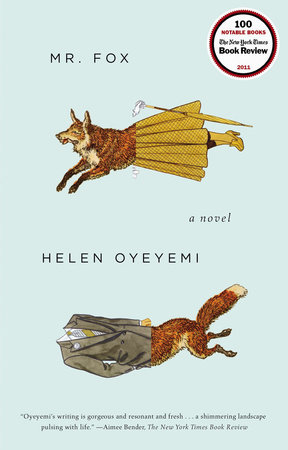
I remembered those books the first time I kissed a boy. The first time a boy laid down on top of me. The first time a boy took my shirt off. I thought I could feel the protagonists smiling down on me: she gets it. I thought I was kissing the way Gwyneth had kissed the thief, even in those early pubescent embarrassments of clanging teeth and stubborn bras. And I remembered them, too, in the moments that my sex life escalated beyond what I thought I could control—when things became frightening, too much or too sad.
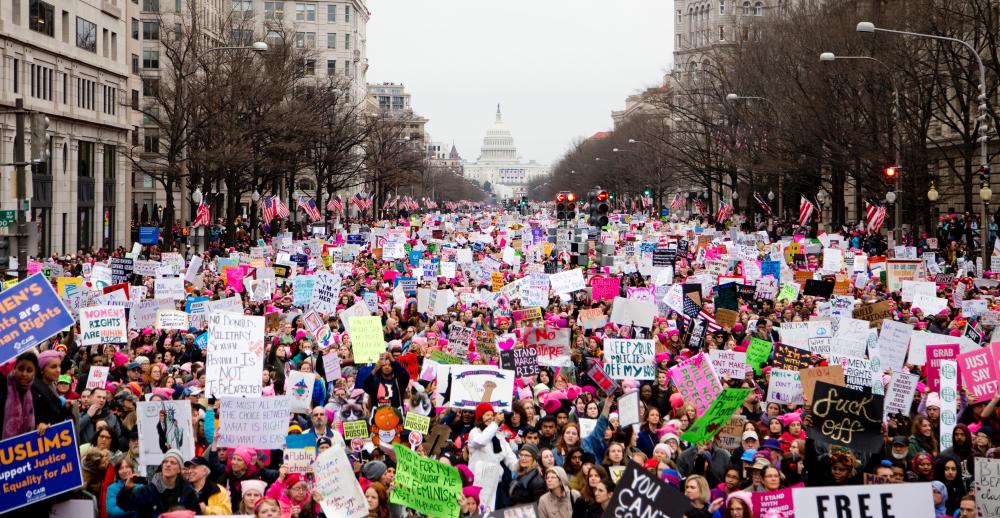

Emily and the Scot was my absolute favorite, because an early childhood viewing of Braveheart had implanted in me a fetish for Scottish men. The catalyst for Emily and the Scotsman’s love is that the two of them chase a pig through mud until they capture it together—teen romance authors are not afraid of hijinks!

Important teen romance buzzwords capitalized to clarify the formula: Lady Emily visits her PALATIAL resort in the Scottish Highlands to escape the monotony of courtly life. The Laird Jamie initially seems like some sort of SAVAGE BRUTE, but he just CAN’T HELP IT, because he is a PASSIONATE man with little patience for feminine foolishness. Jamie’s rudeness is intolerable, yet INTRIGUING. For once, Emily is FREE TO BE HERSELF. At some point, maybe during the pig chase, Jamie strips off his shirt to reveal—what else?—FINELY CHISELED BICEPS. They KISS. They WED.

And my little heart, bless it, is pounding.


It took me years to unlearn the lessons that Avon True Romances taught me about love. I learned, for example, that my one true love would have wavy hair, a slow smile, and eyes that would change color depending on his emotional state. What a blow to discover that the “loving man who just couldn’t control himself around a beautiful woman” was someone to be feared. To realize that certain death would come for me if I wandered alone through the Scottish Highlands, or into untrammeled wilderness, or anywhere at all with the handsome murderer who worked on my father’s ranch.

And I learned, too, not to chase men who could be described as “erstwhile.” Or men who had a “taste for adventure.” Or men who “lived life on the edge.” I realized that such men, be they marauding pirate thieves or simply adult poets with no bed frame, could never be cajoled into wearing a condom. Most crucial of all, I realized that any arrogant jerk bastard who seemed loathsome from the beginning truly was. I didn’t hate such men for no reason at all like my Gwyneths and Josephines did. I hated them aptly, I had every right to hate them, and I hate them to this day.

But I admit it: I love romance stories. Even the ones that are, in retrospect, tales of emotional abuse or neglect. They misled me, they gave me dreadful advice, they are often dull. I can understand every one of those objections ten times over and still have a soft spot in my heart for such stories. But it’s not a benevolent soft spot, the way people typically mean when they use that phrase. More like a fleshy brown abscess marring an apple: uncomfortably soft, and ruinous. To this day, I am easily reduced to that girl of twelve, one of my father’s cigarettes clenched between my lips, asking a man who knows what he wants to tell me what he’s going to do for me—to tell me where we’re going down to, and why.