I saw the children of my neighborhood destroyed by mangle comics, disease comics, and gory
  comics, aggravating hysterical fussbudgets,
dragging themselves through the sarcastic streets at dawn looking for an angry plaid ice cream,
angelheaded blockheads obligated to play outside whenever the starry dynamo in the machinery of
  night is shining,
who spanking and roughnecked and hollow-eyed and high sat up smoking in the supernatural
  darkness of second childhoods floating across the tops of suburbs contemplating the chromatic
  fantasia,
who bared their brains to The Great Pumpkin under the El and saw goldfishes or horses or lambs or
  chimpmunks staggering on suburban roofs illuminated,
who passed through kindergarten with a piece of candy hidden in their ear hallucinating caramel
  and Beethoven among the scholars of income tax,
who were expelled from the nursery for crazy & publishing mud pies on the windowsills of the
  skull,
who cowered in toy rooms in diapers, leaving their candy bars on the sidewalk and listening to the
  test patterns through the wall,
who got busted in their sandboxes for putting their hand into a glass of milk,
who hit one another with a piece of sod or drank lemonade in Paradise Alley, or hit their balls in
  the rough and were accused of killing snakes,
every winter it’s the same thing, girls in stadium boots,
incomparable blind streets of shuddering cloud and lightning in the mind leaping toward kite-eating
  trees, illuminating all the motionless world of Time between,
humiliation of bare soup, backyard green tree cemetery dawns, balloons supposed to be round, not
  square, storefront comic racks of joyride soda fountain blinking traffic light, oh, you dirty
  balloon, you better come back here, trash-can lid rantings, the hustle and bustle of the city,
to me there’s nothing more depressing than the sight of an empty old candy bag,
 until the noise of wheels and children brought them down shuddering mouth-wracked and battered
  bleak of brain all drained of brilliance in the drear light of Zoo,
who sat there trying to make people think the wind is blowing,
a lost battalion of platonic tricyclists rolling along the curbs, whose last pitches flew over
  the backstop and rolled down the sewer,
yacketayakking screaming vomiting whispering facts and memories and anecdotes and eyeball
  kicks and shocks of taxes, theology, tadpoles, tamales, time-tables, tea and Tennessee Ernie,
who sat listening to the ocean roar, supposed be home taking a nap, scared of a piece of fuzz on the
  sidewalk,
suffering Eastern sweats and bubble gum-chewings and migraines of macaroni under candy-
  withdrawal on bleak curbs,
who drew a line clear around the world wondering where to go, and went, leaving no broken hearts,
who just when you began to learn the technique your parents took away your blanket,
who studied muskrat or mole? Mackerel? Or maybe mouse? Magna charts? Mahler telepathy and
  bop kabbalah because the cosmos instinctively vibrated at their feet,
who loned it through the streets here on earth among millions of people, while that tiny star was out
  there alone among millions of stars,
who thought they were only aggravating when thirty-three marshmallows gleamed in supernatural
  ecstasy,
who was doomed to go through life with nothing but a face face,
who lounged, all nervous and tense, with nothing more relaxing than to lie with your head in your
  water dish,
who put the girl in charge of the salt mines leaving behind nothing but the shadow of dungarees and
  the lava and ash of poetry,
whose poem is supposed to have feeling, whose poem couldn’t touch anyone’s heart, whose poem
  couldn’t make anyone cry,
who gets depressed because he doesn’t know how to turn the set on,
who while eating supper was fooling around and was told ‘try to act like a human being’ and
  replied "define human being,"
who broke down crying in white gymnasiums naked and trembling before the machinery of other
  skeletons,
who bit parents in the neck and shrieked with delight in cribs for committing no crime but their
  own wild cooking pederasty and intoxication,
who was a mess when he ate and a mess when he played and a mess when just standing still, but was
  at least consistent,
who let themselves be fucked in the ass by saintly motorcyclists, now what brought that on? Are
  you out of your mind? What are you trying to do, disgrace our family? Oh, the humiliation of it
  all, we’ll probably have to move out of the neighborhood,
who went untouched and unmarred by modern civilization,
who hiccuped endlessly trying to giggle but wound up with a sob handing out lists of people’s
  faults,
who without your blanket would crack like a piece of old bamboo,
who is just about to starve to death when his grandma comes up with a baked-bean hot dish! The
  little kid wonders where the beans came from… then he notices something! His bean-bag is
  missing!
who if somebody likes you, he pats you on the head – if he doesn’t like you he kicks you,
who learned in medical circles the application of a spiritual tourniquet,
 who wept at the romance of Halloween with their paper bags full of rocks and bad music, who
 said these rocks are especially groomed to be hurled in anger!
who sat in boxes breathing in the darkness, always felt sorry for amoebas, and in all the excitement
  forgot to feed the dog,
who wasn’t sure whether he was going to end up in an orphanage or the humane society under the
  tubercular sky surrounded by orange crate racers of theology,
sometimes I think I’m a kind of vacant lot myself!
who scribbled all night rocking and rolling over lofty incantations which in the yellow morning
  were stanzas of gibberish, paypur, dore, howse, welkum, nice, spune!
awl this reeding is hard one mi eyes!
who cooked rotten animals lung heart feet tail dreaming of the pure vegetable kingdom, boy, I’m
  glad I’m not a lizard! I wonder if there are any dogs on the moon?
who plunged themselves under meat trucks looking for an egg, whose stomach has matured early,
who last year was the only person you knew who had three hundred and sixty-five bad days,
who threw their watches off the roof to "see time fly," & alarm clocks fell on their heads every day
  for the next decade,
in all the world there’s nothing more inspiring that the sight of someone who has just been taken off
  the hook!
who shot him behind the Davenport this actually happened and if that isn’t fatal I don’t know what
  is,
who had to erect some sort of mental fence to keep unpleasant news out of his mind,
and who therefore ran along the icy sidewalks obsessed with a sudden set of flashcards, only three
  years old and forced to go commercial,
who barreled down the sidewalks of the past journeying to each other’s sandbox-Pigpen-solitude or
  first-leaf-to-die watch,
who tricycled seventy-two hours to find out if I had a vision or you had a vision or he had a vision
  to just to find out insults seem to travel farther when the air is thin,
who nervous, lacking confidence, stupid and with poor taste and absolutely no sense of design,
  yet the type of personality that will probably inspire a heroic symphony, a personality so simple
  that it defies analysis,
a fourteen-carat blockhead, a blockhead, a nitwit, a numbskull!
I’m only trying to give Charlie Brown a little destructive criticism! Did you ever see a thief with
  such a round head?
I’ve been confused from the day I was born,
I have never pretended to be able to solve moral issues, I’m only human, I was an only dog, maybe
  I could blame it on society!
ah, Linus, while you are not safe I am not safe, and now you’re really in the total animal soup of
  time—
you’re the only one who will follow me wherever I go!
if I were the only girl on earth, would you like me?
when you’re a dog you don’t have to worry like that… everything is clear cut, they’re just imitation
  people,
I’ve never really seen an eclipse, that lemonade is full of weeds, what would you do if the moon
  fell right on your head?
can a person tear aside the veil of the future?
how about a pail of sand, old friend? to recreate the syntax of poor human prose and stand before
  you aggravating and doomed and shaking with shame,
putting down here what might be left to say in time come after death, the life you save may be a
  fussbudget,
and rising sort of tender-hearted, unable to bear to see the frightened faces of crazy salesmen,
with the absolute heart of the poem of life butchered out of their own bodies good to eat a thousand
  years,
the wrong person fell off that tricycle!
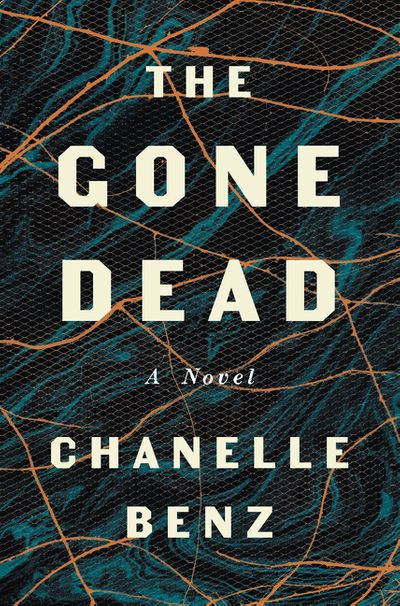
There was a point while reading Chanelle Benz’s debut novel, The Gone Dead, where I realized I wasn’t going to bed until I finished it all. And, it wasn’t just a few chapters toward the end, either. No, I was so deep into this Southern Gothic mystery that I was completely wired at 1 in the morning, knowing that I had to see who killed Billie James’ father, renowned poet, and why she went missing moments after his death thirty years prior.
Buy the book
As we follow Billie, a grant writer from Philadelphia, return to the home she spent her childhood and where her father’s dead body was discovered, information is revealed to us in a slow, deliberate manner that is simultaneously heavy and dense with tension in the way I imagine the weather, and life in general, is the Mississippi Delta. Throughout the novel, Billie revisits her father’s and her family’s past through a cast of characters that reveal the complications of racism and slavery that continue through to the present, complications that also threaten Billie’s life in the same way they ended her father’s.
Benz is the author of the story collection The Man Who Shot Out My Eye Is Dead, published in 2017 by Ecco Press. Long-listed for the 2018 PEN/Robert Bingham Prize for Debut Fiction and the 2017 Story Prize, The Man Who Shot Out My Eye Is Dead was named a Best Book of 2017 by The San Francisco Chronicle and was one of Electric Literature’s 15 Best Short Story Collections of the same year. She teaches at Rhodes College in Memphis, Tennessee.
Chanelle Benz and I spoke about the Delta, Southern Gothic as a genre, and the ghosts of The South.
Tyrese L Coleman: What is your relationship to the Mississippi Delta and what made you want to write a book set in this part of America?
Chanelle Benz: I was living in Hattiesburg, Mississippi when I started to explore the state and found myself drawn in particular to the Delta. It was beautiful but desolate, strange, and its tangled history intrigued me. I had known I wanted to write about Mississippi because of the way my expectations had been overturned while teaching there. But when I started reading about civil rights era cold cases in Mississippi, I became obsessed. It felt important to be a witness to these buried stories, and in particular, to try and find out what happened to these families afterward—the victim’s and the suspect’s.
TLC: Southern Gothic as a genre is intended to make real the consequences of slavery’s brutality via the grotesque and mysterious, the ghosts that haunt plantations and places like the Mississippi Delta. I described The Gone Dead to a friend as a ghost story with dead and living ghosts—dead being Cliff James, Billie’s father, and the living as all of the people Billie has to interact with to discover the truth about what happened to her father, and the ghost of the Klan, which is very much still alive. Would you define The Gone Dead as Southern Gothic?What writers or books in this genre have influenced your writing and this book in particular?
CB: I’m happy for the book to be included in the genre. I’m very much interested in the history and legacy of slavery and the mysterious, less so the grotesque.
Zoom out, remove the self, and ask what makes life more difficult for black folks and work to end it.
When I was researching, one thing that I found intimidating and fascinating was how I kept having to go back in time to understand what had created present attitudes and circumstances in the Delta. To understand the torture and murder of Emmett Till, you have to understand the violent, white supremacist backlash that follows Reconstruction, or the rise in lynchings in response to black veterans returning from war, or the formation of White Citizen Councils after Brown v. Board. All of this has a direct line back to slavery. I mean, after the Civil War it’s not former enslaved people that end up being given land by the government, but former Confederates. And in some ways this history still feels secret, either mired in Lost Cause propaganda or conspiracy theories, or simply omitted. But the land has not forgotten; the dead feel very present.
As far as Southern Gothic influences, I would say William Faulkner and the poet Frank Stanford, but in terms of the book, the strange, haunting stories I’ve heard or read from the people of the Delta.
TLC: I love that your inspiration comes from the people themselves. And maybe that is what made me connect to the characters in this book so much that I wrote in the margins of one scene, “this is my world.” What about the people you met while in Mississippi arrested you the most? You mentioned that the place did not live up to your expectations. What were those expectations?
CB: I think it began with the students that I taught in Mississippi. Initially, they didn’t seem as sophisticated as my previous students, which I assumed was because many hadn’t really left the state, let alone the South. But it turns out that they had a maturity my other students didn’t because they’d experienced struggle, and not just hardship, but their family depended on them to help carry the weight, and their connection to their family was deep and gracious.
I also met a few people who had weathered all sorts of trials and was struck by their incredible resilience—they knew their families, their communities needed them to do good in the world.
TLC: Billie James is a character that is unlike any other I’ve read. She felt very familiar to me being someone who was raised in the South and who now lives “up North.” I particularly love that she, in many ways, has not lived up to the legacy her parents created, especially her father. People often think that when you leave the South, suddenly you are a different person or “better off,” and I feel like The Gone Dead challenges that assumption with Billie. Did you intend to confront this myth or did the creation of an authentic character lead to this? What are you thoughts on this myth that life is better for Blacks outside the South?
CB: Certainly in Mississippi the jobs and opportunities are scarce and the rankings on infant mortality and education are bleak. But the idea that the rest of the country is less racist… well, surely that is debunked now under Trump. Rural communities can be more insular and the poverty in the Delta can feel stifling, but people stay and return because of family, because it feels like home, because they might not have a financial safety net but they have all these aunties and uncles and cousins and grandmomma’s who will do their best to catch them even with the most limited of means. I envy that. There’s also something powerful in staying and being the change from the inside since you have that unique insight.
TLC: To switch to, honestly, one of my favorite characters ever, Dr. Melvin Hurley. He is an absolute delight to read. Dr Hurley, Cliff James’ biographer, is so self-centered and I was often afraid his personal interests, ultimately, would put Billie in danger when he decides to promote his biography. He is so perfect of a character, I have to ask whether he is based on someone and what you intended for his character to represent in all of the voices collected in this novel.
How do you love somebody, live with or next to somebody, and not understand that they want the dignity of equality?
CB: Ha! I’m so happy to hear he is your favorite! Few people have mentioned him so I love that you are asking this. In part, his language is based on a few academics I have encountered who actually talk in the erudite and baroque style in which they write, which can range from mesmerizing to hilarious. But also in thinking about those who have chosen some lone figure no one else is interested in and whose careers have been thwarted because of it. Their subject’s unrecognized brilliance becomes theirs.
I wanted Billie to have a partner-in-crime, but also someone who knew more about the Black Arts Movement and might value her father’s writing even more than her. I also wanted another black character who is from the outside who sees Billie’s father not as a brother or friend, but as an artist.
TLC: I think Dr. Hurley stumbled upon a mystery rather than a biography in coming down to assist Billie. I kept thinking that in ten more years he would be on a podcast like Serial or This American Life recounting this entire story.
CB: Ha! He would be a perfect podcaster.
On the topic of voices, this book is told from multiple points of view. What made you want to approach it in this way instead of entirely through Billie’s lens?
CB: I realized that it’s not just her story. There are things she can’t know or tell because she wasn’t there at the time. And it wasn’t working to only see her and her father through her limited perspective.
TLC: People have this conception of the South that white and Black people live in two different worlds, which, yes, is true, but also not true. For example, the closeness between the McGee Family and the James Family. The almost familial type of existence between the two groups is a left-over from slavery that hardly anyone speaks about. As you started drafting this book, what was important to you in creating this relationship that you felt you had to get right? Why did you want to depict this type of relationship in The Gone Dead?
CB: It was one of the most powerful things I encountered. Not only historically, because so many of the people who are the perpetrators or suspects or witnesses know or have known the victims in the civil rights era cold cases/lynchings their whole lives; but also in the conversations I had with Black and white folks from the Delta about loving and losing these other families. It complicates what we may assume about race relations in the Deep South because how do you love somebody, live with or next to somebody, and not understand that they want the dignity of equality?
TLC: Yes. And then the question is what is more important: love or race? Family or race? Would you say that the McGees choose race when down to the wire or that it isn’t so simple as such a dichotomy? Why and why not?
CB: Well, I want to say love, of course—love all the way. But then it makes me think of the people who have a black best friend, or black daughter or grandson, or work side by side with black people who insist because of this fact, and indeed this genuine love, that they cannot be racist. Or of a white family member of mine who loves me but has a hard time accepting, or doesn’t want to know the way in which the world can be hostile because of my race. I think that it’s less about love and more about fear—if I have to look at how these systems privilege and benefit me as a white person, then I have to admit that they hurt you, and I’m participating in that hurt, which isn’t about hurt feelings or 150-years-old wounds, it’s about hundreds of years of policies and laws that keep people in “their place” through violence and poverty. To right that is a radical kind of love because we’re asking them to zoom out, remove the self, the ego, and ask what makes life more difficult for black folks—from daily microaggressions, getting a loan, police brutality—and work to end it.
The McGees chose not to question any deeper than they’d been forced to, to not want to know what the Jameses have to know.
The Wolf Girl somehow isn’t a cultural archetype, not the way Horse Girls are, and yet you knew what one was the moment you saw the words “Wolf Girl.” The Horse Girls are named Vanessa and have long shiny hair and square teeth and practice writing bubble letters and imagine themselves handing an apple to the gentle lips of a beautiful horse named Star (for the star on her forehead). The Wolf Girls are named Diana or Abigail-not-Abbie or Alizon (who used to be Alison), and they are the deeply weird girls whose stare makes others uncomfortable, the girls painting their nails and their purple Jansport backpacks with whiteout, girls with jagged edges and hair dyed to unsettle, the girls who can smell what you’ve got in your lunch, and maybe they want some. They tell you they can see at night. You’ve never seen them with a boy, but you also suspect they see a lot of boys, or girls, or whoever—or at least that they’d know exactly what to do with a boy or a girl or whoever, though it might not be anything you’ve heard about in school. They keep a lot of comics in their backpack, but not superhero comics. You suspect they might bite, figuratively and literally.
Wolf Girls love wolves because they are predators. They want to eat without being eaten.
Wolves, though unsolitary creatures, are shy around humans, and human wolves are similarly ill at ease in human company. They are fiercely loyal when their loyalty is earned, but it takes time to earn their trust, to avoid their snapping teeth and narrowed gaze. They are the subject of stares, but their own stare is controlling.
Wolf Girls love wolves because they are predators. They want to eat without being eaten.
Perhaps it is surprising that there should be such a thing as a Wolf Girl at all. In our stilted patriarchal shorthand, all dogs are boys and all cats are girls, and even more so, all wild predators are men. Wolves in particular are men, so much so that the same word that describes a species in which only a bonded alpha pair will typically mate also describes a predatory ladies’ man.
One controlling image of the wolf is a Tex Avery drawing of a human body with a wolf-like head. The creature wears a double-breasted blazer, red carnation in the buttonhole, and a bow tie. Although his head is shaped like that of a canid, he has a tiny, carefully-groomed mustache in place of whiskers. He looks almost civilized, until he sees a pretty woman and his eyes bulge out like orbital erections. His tongue unfurls. He has to howl. He is carnal appetite and his urge is to devour. As the sloppiest of erotic novels would have it, he’s hungry—but not for food.
We associate predators with hunger, and hunger is only allowable in men.
The human/wolf boundary has long been porous. The word “werewolf” appears once in Old English, in a text from around 1000 CE, and by the sixteenth century, there was “lycanthropy,” a medical condition in which human beings thought themselves to be a wolf or dog. Although the term is more closely associated with fiction and literal transformation today, lycanthropy is still a psychological diagnosis, and people still occasionally suffer the delusion of caninity. But Wolf Girls are not delusional. Like Sheila, they know they are human beings, but spiritually, they are wolves.
What does it mean that the concept of human wolves has been with us so long? Men change into wolves in Ancient Greek literature. Harald Fairhair of Norway had a company of fighting men called the Úlfhednar, or wolf-coated, men who wore wolf skins and were like Berserkers in battle. The werewolf appears in medieval romances. In the Lais of Marie de France, Bisclavret is a werewolf who bites off his cheating wife’s nose after she traps him in wolf form. (Bisclavret is one of the rare werewolves of literature who is portrayed as in control of himself and morally correct.) In the early modern era, there were werewolf witch trials primarily in German- and French-speaking countries. Peter Stumpp, the Werewolf of Bedburg, confessed under torture to cannibalism, including children and pregnant women, as well as to incest and black magic. His execution in 1589 was particularly brutal.
If the vampire is monstrous urbanity and sexuality, the human wolf is monstrous inhuman appetite.
Our fascination with wolves and men and men who are wolves has remained with us into the present. Boys become men, men become wolves, and we get a new crop of Remus Lupins and Jacob Blacks and Ethan Chandlers and, and, and. There’s probably a new hot wolf guy making his debut as I write this.
The recurring features of a human wolf that pervade our cultural tropes are insatiable hunger and lack of control. The human wolf becomes a wolf because he cannot help it. He eats his own, because he cannot help it. He chases women because he cannot help it. If the vampire is monstrous urbanity and sexuality, the human wolf is monstrous inhuman appetite.
When girls show up in most human wolf stories, they do so as prey. Whatever girls want, it cannot be food or sex. They cannot embody appetite. And yet girls do want, and sometimes the Wolf Girl sneaks into view, however much the wolf trope may align with men.
Even if you didn’t have a Wolf Girl at your high school—and you did have a Wolf Girl at your high school, and maybe beyond, although what the Wolf Girl grows into is not always predictable—you have encountered her in fiction. She is San of Princess Mononoke, her face smeared in blood, her hair short and wild, fighting her own kind to protect the wilderness that nurtured her. She is Nightfall or Dewshine or another wolfrider of ElfQuest, shaggy-haired and pointy of ear, wrapped in furs and astride her bonded-wolf-companion, revenging herself on the humans who burned her home. When she is outgoing, you somehow still don’t know her, like Gina Linetti of Brooklyn Nine-Nine. If she’s white, like Gina (and she likely is; whiteness does make it feel safer to be feral by choice), she might make wince-worthy claims about “spirit animals.” She is Sheila the She-Wolf of GLOW, her eyes ringed in kohl, her hair a shaggy black wig suggesting wolf ears, her anger expressed in a dead squirrel laid across a bed. She fights fiercely, but her interactions with humans are stilted, uneasy. “I know that I’m a human,” she says, “but spiritually, I’m a wolf,” and when she says this, her black-ringed eyes are filled with tears.
Wolf Girls also show up in that murky mixture of fiction and fact that surrounds the occasional and usually tragic feral child. In 1926, an orphanage rector in Bengal named Joseph Amrito Lal Singh wrote a report to a local newspaper claiming to have found two girls living in a wolf den. He said he’d first heard rumors of the girls in 1920, and described, in a letter to an inquiring scholar from the University of Vermont, a scene that he’d heard about secondhand, in which
Three wolves were observed to come out of a tunnel-like passage from their den, followed closely by two cubs; then there appeared a human head covered with bushy hair, with a ghastly look about the face. This head tarried for a little while looking to this side and that side, and then a human form came out of the den followed by another human being at its heels. The two children crawled on all fours.
Singh took the girls in to his orphanage and named them Amala and Kamala. Amala he estimated to be about two years old, and Kamala about eight. Amala died within a year of her arrival at the orphanage, but Kamala lived until 1929. In his 1926 letter, Singh describes Kamala’s human/wolf hybridity: “At the present time Kamala can utter about forty words. She is able to form a few sentences, each sentence containing two, or at the most three, words. She never talks unless spoken to; and when spoken to, she may or may not reply. She is obedient to myself and Mrs. Singh only.” Like the Wolf Girls of our adolescence, Singh describes Kamala as possessing “very acute hearing,” an “animal-like sense of smell,” and eyes that “possessed a peculiar glare” and could see “better at night than during the daytime.” He notes that Amala and Kamala “used to cry or howl in a peculiar voice, neither animal nor human.” The story of Amala and Kamala came from a single source, Singh, and a 2007 book by the French surgeon Serge Aroles, L’Enigme des enfants-loup, concludes that the story was a lie. The deception was aided by the credulity of an American anthropologist, Robert M. Zingg, who published a book on the wolf-children with the aid of Singh’s diary, many entries of which Aroles found to have been written long after the girls’ deaths. The girls were real, but their wolfishness was almost certainly not. Nonetheless, many details of the girls’ supposed behaviors matched the behaviors expected by readers of fiction, who were already well aware of the Wolf Girl, even if they didn’t know her name.
Wolves, pack animals, will occasionally exclude an individual wolf, or an individual wolf will exclude herself, and she (it’s usually a female wolf) will go on to search for or found a new pack. And yet, in human beings, the lone wolf is almost always male, and almost always violent. When we call someone a “lone wolf,” we mean he is staunchly, even toxically averse to the society of others. But we should be thinking of someone like Sheila the She-Wolf, an outcast who ultimately goes on to find a pack of her own.
Humans fear wolves, but our reasons are mixed. It is, on the one hand, utterly sensible to fear an unpredictable wild predator. On the other, wolf attacks are, and have always been, rare. Fictional stories of wolf attacks in English ramp up after the wolf has already been exterminated in England (by the 16th century), and the rise in anti-wolf stories and rhetoric accompany the rise of domesticated sheep and cattle. A 2002 report by the organization Norsk institutt for naturforskning (NINA) evaluated “existing literature and knowledge on wolf attacks on people from Scandanavia, continental Europe, Asia and North America” and looked for patterns in these stories. While “the result is not a summary of all wolf attacks on people,” it is one of the most complete examinations of these stories. The authors found that the majority of wolf attacks were by rabid wolves. Domesticated dogs have long been a greater danger to humans than wolves, and indeed, the worst European wolf attacks, in the Gévaudan region of France between 1764 and 1767, were thought to have been committed by wolf/dog hybrids, although they were perceived at the time as the work of a singular Beast. (A 2016 reevaluation of the evidence for National Geographicposits that the Beast was in fact a lion, but it has entered history and myth as a wolf.) Additionally, because humans fear wolves, when domesticated dogs attack, we sometimes read them as wolves, because we associate doggishness with good and wolfishness with bad.
Our claims that violent men are lone wolves seem to be a similar sort of misreading. Lone wolves might be desperate, but they mostly scavenge, because hunting is a pack activity⎯not one that is about violence in particular, but shared bonds and nourishment. Wolves will die if they don’t get meat. Human lone wolves hunt the pack, and solely for the violence and the pain it will cause, not for their own nourishment. It is a complete renunciation of the social bonding and cooperation that marks a pack hunt. The human wolves rarely expect to outlive the attack. Our lone wolves have weapons that allow them to kill many pack members alone and without assistance.
This is not wolflike behavior. Animal predation has functional purposes that take life, but also set the grounds for the continuance of life. Ecosystems that lose their top predators are subject to a top-down trophic cascade, a catastrophic reordering of the ecosystem that can result in its destruction. A human population under attack from one of its own is nihilistic. Though the human population is destructive, destroying our own is not healing, nor does it fundamentally alter the crises caused by our population. These are not wolves, but domesticated animals, nurtured in our midst.
Wolf Girls, on the other hand, will fight their own to protect themselves and the fundamental necessity of the pack. Though San begins Princess Monoke in opposition to all humans and their destruction, it is through her identification with the human Ashitaka that she can help to heal the trophic cascade started by the human destruction. Sheila the She-Wolf opposes Ruth’s attempts to deny her identity by referring to it as a “costume” and a “character,” but when the pack is in danger, she is there, filling in in any way necessary to keep GLOW alive, even when it means putting up with her own personal discomfort around humans outside of her pack.
We are more inclined, due to misunderstanding wolves and women, to see women in the victims of wolves than in wolves themselves.
We are more inclined, due to our misunderstandings of wolves and women, to see women in the victims of wolves than in wolves themselves. The werewolf preys on girls, turns them into something monstrous, destroys them. Dracula, in wolf form, attacks Lucy and her mother, and Mrs. Westenra, a good woman with a weak heart, dies of fright. The first victim of the Gévaudan Beast, a fourteen-year-old girl named Jeanne Boulet, a shepherdess watching her flock, was killed outright. Another victim of the Beast’s attack, Marie Jeanne Valet, though she survived the attack by fighting the animal off, is depicted in story and images as “the Maid of Gévaudan,” and in one eighteenth-century print, the Beast is shown tearing aside her bodice, exposing her breasts as he lunges, open-mouthed, at her head.
Little Red Riding Hood was a good girl, but the wolf ate her anyway. She was bringing a basket to her grandmother—such a good girl to bring a basket to her grandmother—but the wolf, seeing this good girl, wanting her, went ahead and ate her (and the grandmother, too). In some versions of the story, a woodcutter chops the wolf open and Little Red and the grandmother emerge, alive, but in Charles Perrault’s version it ends with her death, and Perrault tacks on the moral, in case you weren’t smart enough to pick up on it:
Children, especially attractive, well bred young ladies, should never talk to strangers, for if they should do so, they may well provide dinner for a wolf. I say “wolf,” but there are various kinds of wolves. There are also those who are charming, quiet, polite, unassuming, complacent, and sweet, who pursue young women at home and in the streets. And unfortunately, it is these gentle wolves who are the most dangerous ones of all.
Little Red was Charles Dickens’ first crush. In one of his Christmas stories, “A Christmas Tree,” he wrote “She was my first love. I felt that if I could have married Little Red Riding–Hood, I should have known perfect bliss. But, it was not to be; and there was nothing for it but to look out the Wolf in the Noah’s Ark there, and put him late in the procession on the table, as a monster who was to be degraded.” He would go on to laud many other good girl victims who triumphed through their resistance to gentle wolves, and good girls who won by getting swallowed by the right wolf.
Wolf Girls resist this narrative. They are not invulnerable, nor are they wholly predatory. They are, by taking on their wolf selves, more complex and human than the wolf’s victim can ever be. They claim remarkable abilities and remarkable anxieties. They do not give up their femininity, but they remake femininity in their own image. They are not domestic. In being wolves, they give up the domesticity of dogs and cats. They are themselves, the most terrifying thing a girl can be.
You’ve reached the Writer Envy Helpline, where we are happy to assist with all your jealousy emergencies. Our helpline is open 24 hours a day, seven days a week, and has extra staffing between midnight and 2 a.m., when we always see a surge of calls. Please note that this helpline is intended as a quick fix and is not a replacement for getting therapy or an MFA.
If news of someone else’s literary fortune has caused you to fall and you can’t get up for emotional reasons, press #. If you can’t get up for physical reasons, please hang up and dial 9-1-1.
If this is your first time calling today, please listen carefully as our menu options have recently changed:
If a friend just got an acceptance to the publication you have been unsuccessfully submitting to for ten years, press 1.
If another writer’s piece has 10,000 likes on Facebook and yours has 2 likes, one of which is your own, press 2.
To be transported to a period in history before social media when writer jealousy was less of a problem because it took months for your writing nemesis’s latest book to reach you via barge, close your eyes and click your clogs together three times.
If someone just signed with an agent and you can’t get your insurance agent to return your call about the hail damage to your Pontiac Aztek, press 3.
If a writer you know on Twitter has written an entire book in the time it’s taken you to call the hotline, press 4.
To hear a recording of your mom listing all the reasons why someone out there might actually be jealous of you, say “Replay middle school pep talk.”
If someone just won a literary award and you never even made employee of the month at the Taco Bell you worked at in high school, press 5.
To hear a list of all the publications your writing nemesis has been rejected from, press 6.
If someone else’s book just made the NYT bestseller list and yours is number 6218 in Literature & Fiction > Women’s Fiction > Domestic Life > Bedtime Stories > Books That Put People to Sleep, say “Category Emergency.”
If an author friend’s book is getting turned into a movie while yours is getting turned into a coaster at your second cousin’s yurt, press 7.
If you met a writer in person that you have been jealous of for years and they are actually really nice and you are unsure what to do with your conflicting emotions, press 8.
If you are pondering quitting writing to return to your old job making chalupas in hopes of finally achieving employee of the month, go directly to an animal shelter and adopt a pet.
To hear the list of publications your writing nemesis has been rejected from again, press 9.
If you were too distracted by searching #bookdeal on Twitter to hear all the options, please press * to repeat the menu.
It’s a cliché among authors that we write the books we wish existed, but two of the many reasons I set out to write The Lager Queen of Minnesota was because I wanted to read literary fiction set in a brewery, and frankly, I also wanted a reason to bum around the country researching contemporary beer. Like any American in the last fifteen years, I’ve noticed the incredible expansion of craft breweries, and in recent years I’ve also been pleased to see the emergence of bookstores paired with beer lists and even taprooms. Growing up in a world where the intoxicant of choice for readers was often wine or whiskey, I want to continue to fight for the assertion that books and beer are a natural pair.
Buy the book
To that end, I’ve compiled a short list of books that, in my opinion, share affinities with a particular beer or beer style. I felt it made little sense to pair beer with, say, The Great Gatsby in a world where countless worthy books haven’t yet received the attention they deserve, so with two notable exceptions, I’ve mostly paired beer with books that have received (as of the time of this writing) less than twenty reviews on Goodreads and Amazon. In many cases, depending on where you live, the books may be easier to find than the beer—order from your local indie if you have one—but if you’re fortunate enough to also have a local brewery, try their version of the relevant style. It’s beyond time to move book clubs out of living rooms and into brewpubs. I hope that this list gets you started.
The stories of Alice Munro was perhaps my biggest influence while writing my first novel, Kitchens of the Great Midwest. Her masterfully observed, kind, but unsparing portraits of rural Canadians were strikingly familiar to me as a native Minnesotan. If you haven’t read her work since college, or at all, start here with her second collection, which contains my favorite story of hers, “How I Met My Husband.” Read it with a cool, rustic Midwestern ale, like LiftBridge Brewery’s Farm Girl Saison.
To drink with The Sellout by Paul Beatty: Utopias by Samuel Adams
Man, I wish I could write like this. There have been many books I’ve admired over the last five years, but none gave me such delirious pleasure and envy as this novel. An ambitious, provocative story told with great verve and seamless craft, it’s earned a rarified realm in my mind, and therefore can only be paired with a rarified beer. There are a lot out there, but I’ll choose Samuel Adams Utopias, “the craft beer community’s most renowned and sought-after extreme barrel-aged beer,” according to the brewer. Seek out and savor them both.
To drink with Dog Years by Melissa Yancy: Stout by Central Waters Brewing
Melissa Yancy’s award-winning, masterful collection of thematically-linked stories, Dog Years, is another book that’s never left my mind. Inspired by her career as a fundraiser for medical causes, these stories all tackle different elements of modern medicine, from kidney transplants to facial reconstruction, and the recipients, caregivers, loved ones, and strangers who participate in a person’s trauma and recovery. Maybe because I read it over a rainy winter weekend, I imagine it as an inclement or cold weather book, and in this case, I’d pair it with a toasty stout. If I had to choose one brewery, I’d pick any of the stouts brewed by Central Waters Brewing Co. out of Amherst, Wisconsin.
To drink with The Cook by Maylis de Kerangal: Winter Garde by Sante Adairius Rustic Ales
I loved this novel. Due to its brevity (it’s a mere 100 pages) I’d go back and re-read sections, linger over especially gorgeous descriptions of food, and leave bookmarks scattered in places I wanted to revisit when finished. This lovely tale of the rise and maturation of a French cook was right in my personal wheelhouse. If it’s not too on the nose, you should pour a French Bière de Garde or two while you read it yourself. Unfortunately, I don’t yet know French beer well enough to make an educated, specific pairing, but Sante Adairius Rustic Ales, near Santa Cruz, has a Winter Garde that, while being different in character, will be an equal in complexity and satisfaction.
To drink with Learning by Andrew Choate: Or Xata by The Bruery
Every city should be fortunate enough to have a citizen like Andrew Choate. A curator and producer of avant-garde music and performance, Choate has been directly responsible for bringing some of the world’s most groundbreaking artists to whatever city he’s living in at the time. He’s also the writer of dazzlingly inventive works of poetry and prose, the latest of which is Learning. An autobiographical account in which he explores the circumstances of a brutal attack on his father, intermeshed with inquiries of ecstatically varying concurrent stimuli, Learning is a free-jazz poem of true crime, self-help, mystery, and personal exegesis. I’ll pair it with something from innovative California brewers The Bruery, perhaps their cinnamon and vanilla-infused blonde ale, Or Xata.
Sebastian Khan is not often a likeable protagonist. Like the privileged, impulsive youth out of a 1980s brat pack novel, he seems plenty smart but extremely unwise as he navigates the sex, politics, and sexual politics at a Model U.N. convention. You may be amused by his solipsism and depravity; I read actively wishing for his opprobrium, but Aatif Rashid’s debut novel is a pleasure either way. For the amount of time Sebastian spends drinking and drunk, there’s no reason you shouldn’t play along at home with an imperial IPA. One of the best widely-distributed brews of this variety is Dogfish Head’s 90-Minute IPA. At 9% alcohol, it pairs sufficiently with college kids behaving badly.
This powder keg of a book, from the 33 1/3 series, was perhaps my favorite read in 2018. Recommended by a neighborhood bookseller at Skylight Books, I instantly started reading it upon arriving home, and never needed a bookmark. Unpacking both the history and legend surrounding Merle Haggard and the recording of this album, Rubin tells a story of class, authenticity, and success fit for a book three times as long. You sincerely need no prior knowledge of Haggard or this album to enjoy this volume, and you will certainly see its themes echoing in our present political climate. That said, I’m tempted to pair a book on Merle’s divisive album with something else that’s been both unfairly denigrated and ignorantly celebrated—lager. A favorite of mine is Surly Hell from my home state of Minnesota, but your local favorite should go just fine with this book. Just pour one out for Merle.
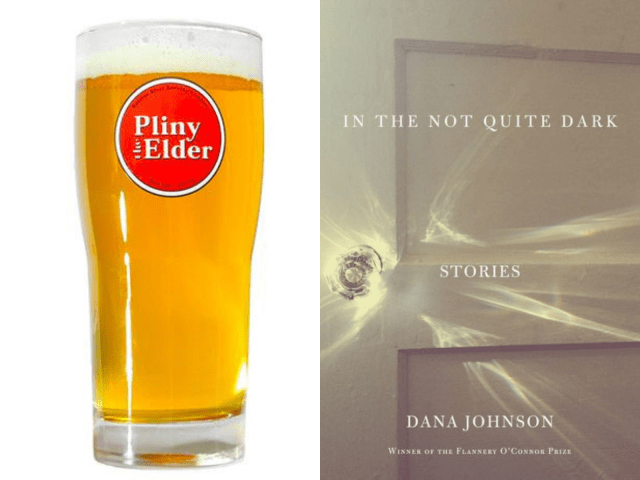
To drink with In the Not Quite Dark by Dana Johnson: Pliny the Elder by Russian River
Dana Johnson is, in my opinion, the most underrated chronicler of California life in contemporary fiction. The unerringly powerful stories in her collection In The Not Quite Dark are the kind that stick to your brain for weeks, beg for debate among book clubs, and, most importantly, reveal the lives of the people around us. For this book, I’m choosing a fellow Californian that isn’t remotely underrated but is equally mighty: Russian River’s Pliny The Elder.
It doesn’t feel like an exaggeration to say that Mira Jacob’s latest book Good Talkis a blueprint for a kinder world. In this graphic memoir, Jacob details a lifetime of difficult conversations—about politics, about race, about love and relationships. Seeing her handle these tricky talks, sometimes awkwardly and imperfectly, is like a survey course in how we disagree—and how we learn to live together anyway.
Jacob narrowed down her picks for our Read More Women series by choosing, she said, books that gave her the permission that the world doesn’t always give—books “that kept me going with their inventiveness, their ability to march outside borders.”
Read More Women is Electric Literature’s series, presented in collaboration with MCD Books, in which we feature prominent authors, of any gender, recommending their favorite books by women and non-binary writers. Twice a month, you’ll hear about the five non-male authors who most delight, inspire, and influence your favorite writers.
A few years ago, I sat down to draw a book about America. I had never drawn a book before. I had never even said out loud, “I’m going to draw a book.” To complicate things, as a brown kid of immigrants, I’ve always felt a little behind on everything—less entitled to takes huge risks or even small steps into uncharted territory. Wasn’t I lucky just to be in the novelist room at all? Shouldn’t I stay there?
But as things started getting worse in the country, as friends started showing up at my house scared and sickened, and my family splintered along race lines, something in me cracked open and no amount of well-wrought sentences could seal it back up. Drawing, though, helped. Drawing people especially—the ones I was worried for, the ones I was worried about. Some of these books I listened as I drew, some I reached for on nights when I could not sleep, some I remembered and re-read because I found them brave and wild and inventive in ways that made me feel like many things were possible.
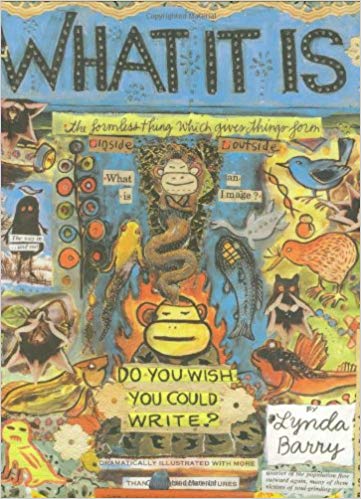
A longtime fan of Barry (and Marlys, the deeply awkward heroine of her ’90s comic strip, Ernie Pook’s Comeek), I stumbled into What It Is when I was trying to scare myself away from graphic work. It’s easy enough to do when you imagine entering a field of white dudes who basically have charcoal pencils for fingers, but decidedly less so when you crack open this brilliant tome that takes on the central question of what drives us to draw stories. Part memoir, part instructional manual, this combination of collages, essays and assignments breaks down all the moving parts of being an artist and allows you to hold each one, to imagine how it might live in you.
Tanwi Nandini Islam (a.k.a Tanaïs) is perpetually ahead of their time in vision and scope, as is evident in this lush, electric novel, which centers around three Bangladeshi Americans navigating inherited trauma while living outside of racial, religious, and gender norms. If that sounds like a lot, it’s because it is, but that precisely the joy of their work—the way it does not give up a single facet of its complication, the way it imagines itself so fully and gloriously that we are forced to do the same.
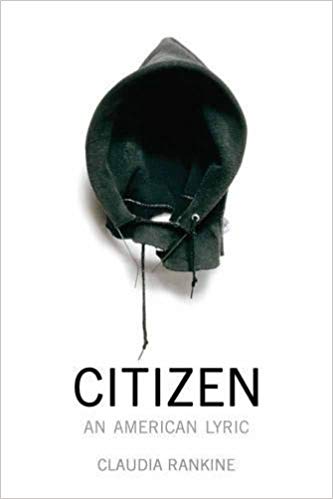
Yes, it was a National Book Award finalist, one that deftly connected the dots between the kinds of actions that whiteness will not identify as racism and the toll that action takes on blacks and brown bodies. But what I love most about this book is its form—the way Rankine soars from poem to criticism to prose to cultural commentary, the way turning each page becomes a surprise because we cannot predict where she will go next. The willingness to bend her words toward any form her subject demands makes this book an acrobatic and breathless read.
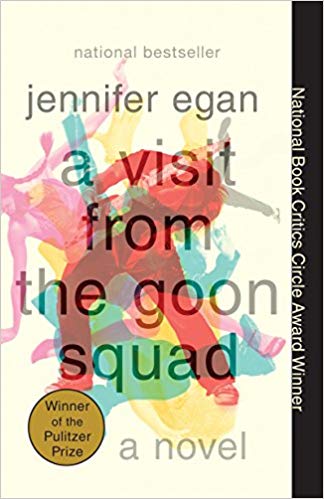
Listen, I have no idea if this book was fun to write but can I just say, it really, really seems like it was? Each of these stories is astonishing in its own right, but all together, it’s a stunner of a collection. I don’t know if Egan herself would love being called playful, especially when her sentences are cut with a jeweler’s precision, but the way she flips perspective and place and voice and time in these interlinked stories, the way she trusts her readers to stay for the minutes and decades? Yes, please.
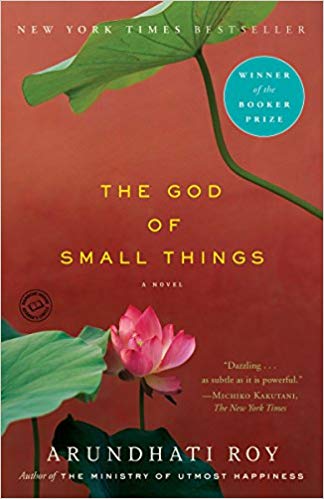
“But why did she have to write such terrible things about our community? Now the whole world will look at us and see this filth!” one of my Syrian Christian aunts lamented when this book published in 1997. Roy’s book, the story of fraternal twins whose lives are destroyed by a series of terrible secrets, went on to win the Booker Prize, and has taken up permanent residence in my mind as a book as sentence-by-sentence beautiful as it is instructive. For years I had been unwilling to discuss the worst parts of my community, knowing that it would only bring negative attention from eyes already prone to dismissing or belittling us. That changed after reading this book, after seeing parts of my own cultural experience fictionalized in a way that allowed me to reckon with them. To know myself. I always come back to this when I get scared: what it means to write the truth, and who you write it for.
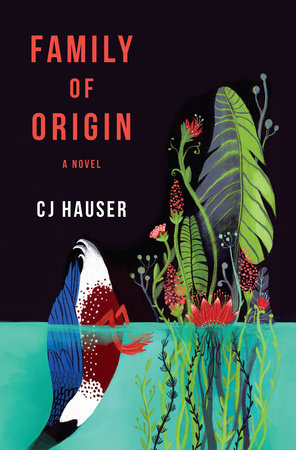
CJ Hauser’s novel, Family of Origin, tells the story of two estranged half-siblings who journey to a Gulf Coast island inhabited by quack scientists—where their father, one of said quacks, has just drowned. Isolated on “Leaps Island,” these pseudo-scientists concoct theories about evolution moving backwards; they study a local species of curiously feathered ducks to “prove” it. They call themselves “Reversalists.”
Purchase the novel
The adult siblings, Elsa and Nolan Grey, approach the enclave, each other, and pretty much everything with skepticism. As they struggle to understand why their father, a once-respected scientist, spent his final years observing ducks in seclusion, a plethora of other discomforts bubble to the surface.
CJ Hauser is a veteran of the literary world: she’s worked at multiple literary agencies, taught writing from Florida State University to the Gotham Writers Workshop, and received awards including the McSweeney’s Amanda Davis Highwire Fiction Award, the Jaimy Gordon Prize in Fiction, and Narrative’s Fall 2014 Short Story Prize.
She currently teaches at Colgate University, where we met several years ago at the Colgate Writers’ Conference. I am obsessed with the Instagram account she shares with her dog, Dr. James Moriarty. Don’t worry—we talk more about him later.
Deirdre Coyle: When I started reading Family of Origin, I immediately looked up whether the Reversalists were a real collective (and found no evidence, of course). How did you come up with their theories?
CJ Hauser: I’d actually been working on a kind of post-apocalyptic novel before Family of Origin—but I was hating every minute of writing it so I took a step back to ask myself what was going wrong. And it turned out, I wasn’t interested in what the world looks like once the worst has already happened. I was interested in how the hell a person is supposed to go about their life when they feel like the apocalypse might be just around the bend, but they still have to live in a world full of parking meters and doodle scheduling polls and ketchup-flavored potato chips. What is a person supposed to do with that?
And that’s where The Reversalists came from. They’re a bunch of charmingly grumpy scientists who move to this remote island to do research, but really, to hide from a world they can’t bear. They believe evolution is running backward because of a seaduck they’re studying, but every one of them has a different reason the duck “proves” that the world is going backward ie getting worse. I was interested in the idea that a rational person could become so totally despairing that they would lose their ability to do good scientific work any more and would instead start bending their science to prove their sentiments correct.
DC: Are you particularly fond of any real-world pseudoscientific theories?
Under what circumstances is a person morally allowed to plug their ears and sing la-la-la while the world burns around them?
CJH: So, I fucking love lake monsters. I spent a summer on lake Champlain as a kid and desperately wanted to find Champie. I will someday visit Loch Ness. I have watched Lake Placid way too many times. I aspire to find Lauren Groff’s Glimmerglass lake monster when I swim in Lake Ostego. Quagmire is one of my favorite episodes of The X-Files (I would love to fight someone about that last one…)
I actually teach a class on science-writing and scientific literacy and we talk a lot about why people believe in pseudo-sciences. I think so much of it comes down to what people are missing from their real lives that pseudo-sciences are able to offer them. Sometimes that’s people needing a more tangible way to point fingers at the government (UFO cover-ups!) and other times it’s missing a sense of control over their lives (we spend a lot of time talking about crystals) and sometimes it’s just a desire for the world to feel a little more exciting and magical than it normally does.
I love lake monsters because I really need to believe in these creatures who are bigger and older and stronger than humans who have been swimming around before us, and will still be swimming after us. If I can believe in that, then I can feel slightly less worried about humans having irrevocably disrupted and destroyed the planet. If Nessie is out there, hey, maybe we’re not as big and destructive as I fear we are.
DC: In one of my favorite threads, Elsa wants to go to Mars, trying to escape the wretchedness in both her life and the world at large. Why did you hit on Mars for Elsa, instead of a more earthbound escape plan like Australia, or opioid addiction?
CJH: Okay so the Mars One program really did draft and interview colonists for Martian settlement. Real people applied! You can find profiles of the applicants and interviews with them online. Some of these people had lovers and kids and jobs and lives and I became obsessed: what would make a person give up on earth and take a one way ticket to Mars?
For Elsa, she’s incapable of just living her life because all the greater problems of the world immobilize her. She wants to feel like she’s doing something good in the world, but she can’t imagine any choice she could make that she would be sure was good. Or be sure wasn’t good at the expense of something else better. In her mind, Mars gives her a kind of moral certainty she doesn’t think it’s possible to have anymore in this age, on this planet. And, going to Mars is also a way of sheltering herself from the problems of Earth. In space, she won’t be on the hook for dealing with them. In a way, Elsa is doing the same thing the Reversalists are doing: placing herself in a position where she can pretend she doesn’t have any agency or responsibility for the world at large anymore. It’s like a DIY Island of the Lotus Eaters. In a lot of ways the book is asking: under what circumstances is a person morally allowed to plug their ears and sing la-la-la while the world burns around them. Spoilers: there are none. We are all of us on the hook.
DC: What’s great about terrible family dynamics is that most people can relate. The Grey children, of course, have unique circumstances. Did you have difficulty writing their particular dynamic?
What would make a person give up on earth and take a one way ticket to Mars?
CJH: Writing the Grey siblings was the struggle and the heart of the book. I think what made Elsa and Nolan interesting to me was the idea that they share their father, Ian (they have different mothers), but he was their father under very different circumstances and at very different times of their lives.
The collective Greys had, years ago, tried to create a kind of utopian blended family, but it backfired extraordinarily and split the family up—I wanted to explore how that history reverberated through Nolan and Elsa’s later lives. Because they are two people who know they are bonded together by something, but with their father dead and them having lived as strangers for years, they’re not exactly sure what that something is. Nolan sometimes refers to Elsa as his ex-sister.
This is one of my hobbyhorses: the conventional rules for how people interact depend on what their relationship is (mother/daughter, boss/employee) but how do you interact with someone when you don’t know what your relationship to them is supposed to be? Nolan and Elsa are supposed to act like brother and sister, but no part of their life has trained them to do that. And when you strip away the roles and labels and conventional rules from a relationship, suddenly the participants have to negotiate terms, and make mistakes, and make new rules. I never get sick of trying to get to the bottom of how two people might do that.
DC: If you were going to Leaps Island, what’s the #1 thing you’d want to escape?
CJH: What an excellent and troubling question. In the book’s opening there’s a list of things people are trying to escape, and the list ping pongs between huge important things like climate change to petty personal things like their inboxes.
I think there’s something about being a worrying human today that causes us to mentally leap from worrying over the email we haven’t answered to worrying about children separated from their parents at the border to worrying about whether our mother’s minor surgery will go okay to worrying about whether or not all the polar bears are dying and the world is coming to an end to worrying about whether the vegetables in the fridge have gone bad.
This kind of mental vacillation is strange and exhausting and narcissistic and an inescapable part of the way so many of us live our lives these days and this manner of worrying small/large/small/large is where this book came from for me. Because it’s paralyzing and how can you do anything, small or large, when this is what your brain is doing? If I ran away to Leap’s it would definitely be to escape these mental gymnastics. But I like to think I wouldn’t run. I like to think I’d stay.
DC: Let’s talk about your very good dog for a minute. How does he handle your writing life? Is he helpful?
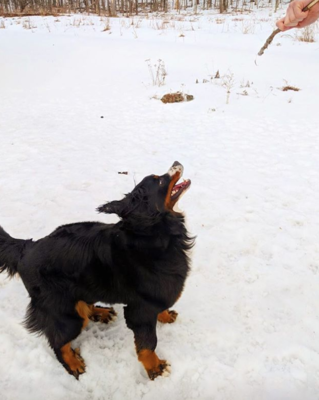
CJH: Dr. James Moriarty, criminal mastermind, Mori for short, is an enormous and fluffy mountain dog. He is, in fact, a very good boy. He is not a fan of my writing habits. Ie: writing. Ie: sitting at a desk for long hours. He flops on the floor and grunts and sighs.
That said, I have rediscovered walks since he came into my life. I remember learning that Wordsworth composed while on long walks and thinking HA HA must have been nice simpler times. But now suddenly I’m this person who goes walking in the woods for hours and the way my sad-rabbit of a brain starts moving when I’m out there is definitely different and better for storytelling and story-problem-solving then sitting at a desk. I usually take Mori to a trail called The Darwin Thinking Path, and this felt spiritually correct as I was working on this book about a movement of people trying to corrupt Darwin’s thinking.
Can a book change the way we think? I don’t mean that in the sense of a reader’s opinion or ideology shifting—of course the right literary work can do that. But can a book rewire the brain itself, literally changing the way one particular mind perceives and interprets the world around it?. The most convincing argument that this is possible might be the way that William Shakespeare’s work helped change the boundaries of both psychology and the English language to a previously unimaginable extent. The second best argument might be John Berger.
Berger’s book Ways of Seeinghas been altering its readers’ perceptions of media since its 1972 release—as both a television series and a book. Media literacy remains an ongoing concern around the globe; some governments have even launched programs to give their residents more tools with which to interpret and evaluate all that they encounter online, in publications, and on television.
Ways of Seeing (the book) opens with an introductory passage, letting the reader know what’s coming: seven essays, three of which consist entirely of images. “Our principled aim has been to start a process of questioning,” write Berger and his collaborators. (Before the title page, a note describes Ways of Seeing as “A book made by John Berger, Sven Blomberg, Chris Fox, Michael Dibb, Richard Hollis.” Berger’s name alone is on the spine and cover, and it was he who wrote the television version.) In a look back on Ways of Seeing published earlier this year, Vikki Bell and Yasmin Gunaratnam cited Berger’s “style of blending Marxist sensibility and art theory with attention to small gestures, scenes and personal stories.” Earlier this year, writer and theorist James Bridle wrote that “his landmark series showed how art revealed the social and political systems in which it was made.”
Ways of Seeing offers its readers (or viewers) a means to examine art that doesn’t require a host of advanced degrees to understand. But Ways of Seeing doesn’t simply confine itself to the fine-arts wing of the museum, so to speak. Instead, it also explores how these visual motifs and themes have turned up in modern media—especially advertising. There’s certainly a discussion and critique of advertising and contemporary media taking place here—but that’s not where Berger begins.
Media literacy is more important than ever, and Berger’s book continues to be an invaluable resource.
In an era where online hoaxes abound, partisan media entrenches itself, and incorrect information is spread for the lulz, media literacy is more important than ever—and Berger’s book continues to be an invaluable resource in this capacity.
In one of the essays in Zadie Smith’s recent collection Feel Free, she discusses the impact of Ways of Seeing on her life, as well as that of her late father:
…for a generation of non-experts, working-class aesthetes, generalists, TV viewers, anxious gallery-wanderers, Berger offered a long-overdue process of demystification. He urged us to throw aside the school-taught sensations of high-culture anxiety and holy awe. They were to be replaced with a fresh and invigorating mix of skepticism and pleasure.
Ways of Seeing has also spawned a legion of descendants—something that’s hardly shocking, given that the state of media in 2019 doesn’t entirely line up with the state of media in 1972. The aforementioned James Bridle, author of the fascinating and ominous New Dark Age, is behind a de facto sequel to Berger’s book, New Ways of Seeing, which aired on BBC Radio 4. As someone with a background in music writing, I’m particularly interested in author and musician Damon Krukowski’s own take on Berger’s work. Krukowski has brought his wealth of experience—he’s the author of several works of poetry and nonfiction, and has been a working musician since his days in the dreampop band Galaxie 500—to a book that pays homage to Berger’s original: Ways of Hearing.
Like its predecessor, Krukowski’s Ways of Hearing is also based on a work that first appeared in another medium: in this case, a six-episode podcast. And while the title and overarching themes line up with Berger’s work, there are also aspects of it that line up more closely with its broadcast medium, including interviews with author/musician Jace Clayton, Vanishing New York author Jeremiah Moss, and members of A Tribe Called Quest.
What soon becomes apparent about Krukowski’s approach is its breadth: while he’s writing about sounds and music, he’s also sensitive to larger trends and moments in history that may have impacted them. Early on, Krukowski addresses how technology influences how we hear. As one might expect, he also addresses questions of digital recording and sonic manipulation. But not long after that, Krukowski talks with historian Emily Thompson, who talks about the invention of the decibel meter in the 1920s and the ensuing efforts to regulate noise in cities—which in turn led to things like the acoustic design of New York’s Radio City Music Hall. From there, Krukowski addresses how acoustics are perceived, something that has ramifications for everything from opera halls to earbuds.
Here, Krukowski is taking a holistic approach to questions of, well, how we hear. It’s not simply enough to say that one format or design is “better”—instead, it’s useful to address how each one was formed, and what each was trying to convey. Like Berger in Ways of Seeing, Krukowski is willing to explore the larger ecosystems he’s writing about, and making bold comparisons between seemingly disparate entities.
As with Berger, there’s a sense of interconnectedness in Krukowski’s exploration of listening. It’s not enough to simply tell anecdotes or relay interesting sonic devices. Instead, this is a book about providing its readers (or, in its podcast form, its listeners) with some grounding to ask their own questions about their own listening. What might be gained or lost from a particular method of recording or broadcast? What historical conditions might have played a role in the creation of this style of music or this genre?
Like Berger in Ways of Seeing, Krukowski is willing to explore the larger ecosystems he’s writing about.
A great deal of writing about listening to music (or listening, period) boils down to arguments about format (LPs good, streaming bad—or vice versa), unlikely success stories (cassettes are back!), or discussions of the ethics of royalties (self-explanatory). All of these are understandable, necessary conversations to have—but Krukowski is after something more with his book, just as Berger was with his. Krukowski’s work here is about imparting critical thought processes to his readers: it’s as much Ways of Thinking About Hearing as it is Ways of Hearing.
Attempting to simply replicate Berger’s work is one thing, but doing so doesn’t necessarily make for a worthy follow-up to Ways of Seeing. Berger’s approach is a subtler one: it’s one that carefully builds a foundation for its argument before it segues into that argument’s implications. Rhetorically speaking, it doesn’t always line up with current trends in media. One can only imagine the headlines: “This One Weird Trick Unlocks the Aesthetic Secrets of Modern Advertising!” And it’s notable that Berger largely confined Ways of Seeing to a particular canon of art, rather than a more global view of it—though there’s also a difference between citing the visual approach that became influential for a particular culture and endorsing the history that led to that point. Paradoxically, Krukowski’s book ultimately succeeds as a worthy successor to Berger’s in the ways that it differs from its predecessor. Listening isn’t seeing; why should a book about one unnecessarily echo a book about the other? Krukowski gets more right by charting his own territory than he would by more closely following Berger’s blueprint.
These two books ultimately resonate on a similar frequency. The key seems to be in finding the right structure to get at the larger points: for some, it’s a series of visuals; for others, it’s a blend of interviews and other notable sounds. And it’s a solid illustration that the influence of Ways of Seeing can’t necessarily be boiled down to a formula, but can be very effective in grappling with contemporary questions. These are books that are edifying to read, but their ultimate importance is as a kind of first step. These are toolkits as much as they are tomes, and in an era where understanding the deeper questions found below numerous ongoing debates, they’re an essential part of media literacy.
“The First Day of What Remained for Tedman Ward” by Nell Hanley
As soon as he got clear of the jetty at the mouth of the harbor, there giving an amiable wave to the helmsman of an incoming fishing charter, Tedman put the Bowrider hard westward at a fair clip. She wasn’t much to look at, just an old sixteen-foot runabout, but the Evinrude outboard that came with her was a beast.
As a rule, Tedman never went out on the water alone. There were any number of disasters that could happen, friendly bay or no, and he’d never been a strong swimmer. About that his ex-wife used to say once upon a time with affection and once upon a later-time with disdain, “You swim like a tin man, Teddy. I swear.” But today he’d decided on the spur of the moment to toss his buddy-boating-only stricture and damn the torpedoes.
Dominating the bluff on the port-side stretch of shore was a new trophy home with a fifty-foot flagpole and a life-sized bronze sculpture of a breaching whale. The place belonged to Gart Mulligan, real estate pig and soon-to-be step-father to Tedman’s son and daughter, who were there now and would be there later this afternoon at their mother’s insistence for her much-fussed-over Fourth of July bash. His daughter would be lounging all day by the pool reading a book, and his son, who was a person of mood, would be holed up in his room with his guitar and downloading tablature from his computer until his mother made him come out and be sociable.
A righteous anger rose up in Tedman, and he let it. It lay dormant more and more often and for longer periods of time, now, two years since the shit hit the fan, and when it did come over him it lacked the tooth and vigor it once had, the fervid rage. He raised his arm in salute towards the house, with his middle finger extended, and leaned on the throttle. The Evinrude kicked up the water astern and threw the boat forward. Tedman had to grip the wheel with both hands.
The Evinrude groaned and the gull-wing hull thwacked into the chop. He took off his hat, lest he lose it to the wind, and tucked it into the waistband of his shorts. In the distance on his starboard side a sailboat race was in progress, colorless triangles of sail in shifting patterns, and beyond that the shapes of the lighthouse and monument across the bay at Provincetown. The sky was cloudless but for a few far off brush strokes that might just have been dissipating jet streams.
He made it to Sandy Neck around one and cruised the shore past a dozen or so leisure boats anchored in the shallows and went on to an unclaimed stretch of beach, where he steered the Bowrider into the gin-clear shallows, set anchor, cut the motor, and humped his beach chair and cooler well up the beach to allow for the turn of the tide. It came in fast out here.
Despite his late breakfast, he was hungry for lunch and went ahead and ate his Italian sub and a bag of potato chips. He’d always been able to eat anything without putting on weight. It was one of the things about him his ex-wife had come to despise. In the end, she couldn’t even be in the same room with him while he ate.
He washed it down with a couple of Narragansetts and surrendered himself to an hour’s digestive slumber in the sun, after which he took a dunk to rid himself of the stupor he felt from sleeping in the heat of the day, and then he set off to have a walk.
He’d gone maybe half a mile when a figure appeared in the distance along the shoreline. It wasn’t an upright, limbed figure. That was clear. It was something supine and amorphous. It might have been a rock or something maybe washed ashore—after the last spill, dolphins were landing blackened by oil all up and down the coastline, disemboweled and eyes plucked out. In any case it was hard to judge its distance with nothing to give it scale, like a long shot of a Bedouin in the desert, a flicker and wavering in the heat and the light. Like something out of Lawrence of Arabia, which he’d stayed up late watching the night before while drinking quantities of red wine.
He kept on, and before long and to his surprise he made the figure out to be a person flat out at the edge of the water, and when he drew closer still, he could see it was an enormous man wearing green bathing trunks and a royal blue t-shirt. The man was not in an attitude of leisure. There was something strange and too still about him, and Tedman was afraid that he might be happening upon a dead body, which would be horrible for a host of reasons, but then the man turned his head in Tedman’s direction. It was only for a glancing moment. When Tedman approached to within a few yards, the man looked at him again, yet without allowing any eye contact, and then looked away and up at the sky.
When he drew closer still, he could see it was an enormous man wearing green bathing trunks and a royal blue t-shirt. The man was not in an attitude of leisure.
He was the most enormous man Tedman had ever seen. Not so exceptionally fat, but oversized almost like an actual giant. Gargantuan, really.
Remarkable, too, was that the man’s rather pale skin was entirely covered with freckles. They were light orange and made Tedman think of the orange and white of tabby cats and Creamsicles, and a girl named Shannon who he’d kissed once in the sixth grade in the eraser room at school. The broad and rather flat plane of his face was also densely freckled, even his eyelids, and his lips were much the same color as the freckles. As was his hair, a fine, curly cap of it.
“Hey mister,” Tedman said. The man looked to be in his thirties, anyway. He wasn’t any kid. “You all right?” And the man just shook his head and closed his eyes against the sun, with the water lapping at the back of his knees. His grapefruit-sized heels were settled in shallow depressions caused by the water licking away at the sand around them. The tide had made its turn in.
Tedman stepped still closer, so he was practically right over the man, and said, “You need a hand? Did you fall down?”
“Yes,” the man said. His voice was thick and in the back of his throat. The t-shirt he had on was emblazoned with a restaurant logo and a cartoon lobster wearing a bib, on which was a cartoon of a smiling clam. It was from a well-known seafood joint out in P-town. Tedman and his ex-wife and the kids always went out there at least once every summer, made a day of it at the ocean with beach chairs and umbrellas and shovels and buckets, the works, and then into town for fried clams or lobster rolls and a stroll up and down Commercial Street, popping into gift shops and antique stores at will.
“Here,” Tedman said, and offered his hands to the man.
The man held out his right arm and Tedman took his wrist in both hands. It was nearly the size of Tedman’s upper arm. The man wrapped his hand easily around the entirety of Tedman’s forearm. His hands were of remarkable size, and, too, awash in freckles and a spray of orange hair. The flesh of his palm was uncalloused and cool.
“Can you bend your legs?” Tedman said. “If you can bend your legs—”
The man bent his legs with some effort and set his feet as though he were going to attempt a series of sit ups. Tedman stepped his right leg back and dug in. He put his weight on the forward leg, having to lean in somewhat to grip the man’s arm, and pulled. The man put in his effort to sit up, but it was clear that he wasn’t giving it a wholehearted try. It seemed strangely as though there was an acute self-consciousness in the man that was holding him back.
The man smelled strongly of coconut scented suntan lotion, and Tedman had no defense against the attending evocation of his ex-wife’s summertime skin. She was always slathering suntan lotion on herself, even when she wasn’t basking in the sun. “Just because I have Mediterranean skin doesn’t mean I don’t need sun protection,” she would say. “Skin cancer is a thing, Teddy.” She was relentless about it with the kids, especially their daughter, who had Tedman’s fair complexion.
“Wait a minute,” Tedman said. “I’m losing my grip.” He let go of the man and leaned forward with his hands on his knees. “Jesus,” he said. He was ankle deep in the water, which spread out behind him as far as the eye could see.
He stood up and said, “I wish we had a rope. It would give me some leverage.” Then he took off his t-shirt, exposing the pallor of his narrow chest, the fine coat of graying hair across his pectorals, and handed one end of it to the man. “Hold onto this,” he said. “It’ll have to do.” They took their grips, and Tedman said, “You ready?”
“Okay,” the man said.
“All right. Now, you’ve got to help me out,” Tedman said. “On the count of three.” He got into position and confirmed his grip on the shirt. “Now don’t let go,” he said. “Or I’ll be on my ass.”
On three they went at it. Tedman leaned back with all his negligible weight and pulled with everything he had until the man was in an almost sitting position, at which point, both their faces red and the tendons in Tedman’s neck risen hard from the strain, they hit an impasse.
“I don’t think that’s going to work,” the man said when he was flat out again. There was a patch of fine sand stuck to the right side of his face and a wave of dried salt along his hairline.
Tedman shook his head in agreement, too much out of breath to speak. He sat down next to the man, a few feet away, took off his hat and fanned himself with it. He was terribly thirsty. The sight of all that seawater only made it worse. He wished more than anything he’d brought a beer along with him.
After a bit he said, “I’m Ted, by the way. Ted Ward.”
“My name’s Woody,” the man said, and lifted his hand from the spread of his stomach in a brief, ironic wave. He had closed his eyes.
“You from around here, Woody?”
Woody shook his head no. “I live in Chicago,” he said.
“Huh,” Teman said. “I’ve never been, but I hear it’s a good time.”
“Yes,” Woody said. “It can be.” He licked the sweat from his upper lip and laid an arm across his face.
Tedman really couldn’t get over Woody’s size. His head and his hands and his feet were proportionately overlarge, unlike the way regular fat people can outgrow their extremities. But it was hard to judge his height from that angle, and he thought if he could lay out next to him he might gauge it pretty well by comparison to himself. He had to be well over seven feet, anyway.
“Say,” Woody said. He let his arm fall to his side and opened his eyes. “Do you think we could try again?”
“Sure,” Tedman said. “But we’ll have to try another tack.”
“Thanks,” Woody said. “I don’t do so well on my back for very long.”
Tedman had an all too vivid image of Woody’s lungs and heart, the actual lobes and chambers working in the amplitudinous cavity of his chest.
“If I could manage to get you over onto your stomach,” he said, “would you be able to get onto all fours?”
“Probably not,” Woody said.
Then Tedman figured that if he could just get Woody sitting up long enough, so that he could get down on his haunches behind him, he could get some leverage with his legs and push him forward onto his hands and knees, from where he might be able to get up.
He explained this to Woody and said, “Let’s try that. It’s worth a shot.”
“Yes,” Woody said. “Okay.”
They each took up an end of the shirt again. Tedman took an extreme stance like he was anchor in a game of tug of war, took a deep breath, and bore down so hard he feared some sort of bodily rupture. At last they managed to get Woody within reach of his knees, which he hung on to at Tedman’s urging.
“Just hold the hell on,” Tedman said.
He leapt into a squat behind Woody, pressed his back up against the spread of his, dug his heels deep into the sand and anchored his hands beside his hips. They sat like that together, catching their breaths.
“Okay, now,” Tedman said. “Let’s give it a heave ho.”
He counted off three and gave it all he had, pressing his back up against Woody’s back. He even went so far as to grab Woody by his shorts, without making apology or receiving protest, in the effort to get him off the ground. But it was a deadlock, and it wasn’t long before they gave out and their backs were heaving against each other.
Woody’s t-shirt was wet and covered with sand, and Tedman wished he’d been able to put his shirt back on.
“This is nuts,” he said. “I mean, no offense, Woody, but you really shouldn’t be out here alone. You’re lucky I came along.”
“I know,” Woody said. “I feel ridiculous.”
“Hell,” Tedman said. “Join the club.”
He looked up and down the beach, without expectation of finding any help. It was only an outward expression of his inner search for a solution. To the east he saw a smattering of color among the distant anchored boats and people on the beach, and to the west nothing but the stretch of coastline.
“What we need is a third, to pull you forward while I push,” he said.
“We might have to just wait for the tide,” Woody said.
Tedman could feel the reverberations of Woody’s voice against his back.
“I hate to say it,” Tedman said, “but that might be the only way.”
“I do feel better sitting up like this,” Woody said. “If you could stay where you are.”
Okay,” Tedman said. “But you’ve gotta do your part and lean forward as much as you can. Keep a hold of your knees and take some weight off me.”
“I’ll try,” Woody said.
“Won’t be too long,” Tedman said. The water was lapping at his buttocks. “The tide comes in out here like a mother.”
“Say—” Woody said after a minute. His voice was full of air, but then he cleared his throat and went on. “Would you mind if I borrowed your hat? I hate to ask, but the sun is getting to me. I’ve been out here a while.”
“No problem,” Tedman said. He handed the hat over his shoulder to him and said, “Might be a bit small.”
“Thank you so much,” Woody said. “It’ll do just fine.”
“No sweat,” Tedman said. He didn’t really want Woody to wear his hat, but under the circumstances he could hardly refuse. He wished he could retrieve his shirt and at least drape it over his shoulders, which would surely burn, but it was just out of reach beside them, bunched up in the water.
“So,” Tedman said, figuring that the best thing to do under the circumstances was make small talk. “What do you do in Chicago, Woody?”
“Oh I’m in computer programming,” Woody said.
“I tried to get into that once,” Tedman said. “But I don’t have the head for it.”
“Do what you’re good at,” Woody said. “That’s how I was raised. What about you, Ted? What do you do now?”
“I’m in the furniture business,” Tedman said. “You know Ward’s in Dennisport? Used to be Baxter Home Furnishings?”
“No,” Woody said. “I’m just here on vacation.”
“Right. You and the rest of the world,” Tedman said. “No offense. Anyway, it’s nothing to brag about, but it’s good to be my own boss. I used to be in advertising, back in the day. Now that I was good at.”
“Why’d you get out of it?” Woody said.
“Oh you know.” Tedman said. “The agency went under with everything else, and my wife wanted to live near the water. Ex-wife, that is. Biggest mistake I probably ever made, moving here.”
“I’m sorry to hear it,” Woody said.
“Yeah,” Tedman said. “But what am I gonna do—tie a concrete block to my leg and throw myself in to drown?”
“I should hope not,” Woody said.
“Nah, not my style,” Tedman said. “Enjoy life is what I say, no matter what. That’s what I tell my kids. Because you can never tell what’ll happen. But shit will. You know what I mean?”
Because you can never tell what’ll happen. But shit will. You know what I mean?
“Yes,” Woody said, “I do.”
“Say,” Woody said. “You weren’t kidding about the tide.”
“I know,” Tedman said. The water was already up to his waist. He had to wonder what someone who happened by might make of the two of them planted there like that with the tide pouring in around them.
“Heavens,” Woody said.
“Water water everywhere,” Tedman said, “and not a drop to drink.” His thirst had become a pressing discomfort and his thighs burned from the effort of resisting Woody’s weight. He adjusted his position as best he could, digging into the sand more with his hands to take the pressure off his legs.
Shortly there came the nasal drone of a small plane approaching. Tedman squinted at the sky and spotted it just inland, a single engine high-wing heading seaward. The the tightness of the engine’s sound loosening the closer it got. He made it out to be a Cessna, a pretty little taildragger, white with blue side stripes.
“On his way to P-town,” Tedman said.
He kept his eye on it until it became small again and the tremors it made in the air had died down and it was no longer a physical sensation, that sound, but only a noise in the distance again. It occurred to him he might try and take his son out there soon, to the airport, to watch the planes take off and land.
“Listen,” Tedman said, “this water gets much higher and I won’t be able to stick here. I’m starting to feel like a cork.” It was up to his chest, now, and he was having to fight to keep his weight against Woody’s back.
“Just a smidge more,” Woody said. “If you can.”
“Okay,” Tedman said. “But I’ve got to get reset.” He dug deep with his heels, straightened his legs to lift his hips off the ground, and pressed his palms against Woody’s back.
“Are you alright?” Woody said.
“I think so,” Tedman said. It was good to shift his weight, but the sand between their backs ground into his bare skin just that much more. He was glad at least that Woody was wearing a shirt.
“I used to think about killing myself,” Woody said. “Since you mentioned it — suicide. But then it just seemed illogical. Like it’s all over and done with soon enough, and for all you know there might be something good around the next corner.”
“If wishes were horses,” Tedman said.
The sun went behind a stroke of cloud, then, which was a relief, but passed shortly by and out over the water, casting its shadow there. There was an absence in the sky just then of gulls. Only a couple of them high and quiet.
Woody took a deep breath, then, held it a moment, let out a sharp sigh, and said, “I think if you let me lie back you’ll find I can float, now.”
“Okay,” Tedman said, but he wasn’t exactly sure how to go about it. He bent his legs and let go the pressure against Woody’s back, but as soon as he did so he was tossed off balance and went under. There was the sound of water all around him. It was good and cold on his head. When he got to his feet he wiped his eyes and saw that Woody was afloat on his back, holding Tedman’s hat up in the air.
“Your hat,” Woody said, and held it out for Tedman to take. “I don’t think it got too wet.”
Tedman took the hat and said, “Are you okay?”
“Wait,” Woody said, and he made his way out to deeper water with an unhurried, metronomic scissoring of his legs. His arms were buoyant and casual at his sides. He rode out the momentum of one final stroke of his legs, and then he shifted his weight forward in a rolling motion. He stood, bent at the waist and leaned forward for balance. Then in one slow but clean motion he straightened and stood up to his full height, belly-deep in the water, and turned to face the shore. He stood there as though to compose himself, with his head down and his hands just under the water on the spread of hips.
“Are you alright?” Tedman said, nearly shouted, loud enough to cover the distance between them. He dunked his hat and put it on as he walked out into the water until it came up to his chest.
When Woody looked up he was smiling. He came forward with labored strides, displacing the water in foaming waves around his legs, until he was towering over Tedman. The water had brought out his color. His hair, now a darker red, clung to the sides of his face, and his freckles had taken on a deeper shade, the way cedar shingles will after a rain.
“Not to worry, he said.”
His lower jaw was the sort that jutted somewhat forward so that it looked like he would have a lisp, but he didn’t. Tedman hadn’t noticed that before.
“Well, then,” Tedman said.
Woody nodded his spectacular head. “Yes,” he said.
It was obvious that neither one of them knew how to end it.
“My way is that way,” Tedman said, pointing eastward in the direction from which he’d come. “Can I give you a lift anyplace or anything?”
“No need,” Woody said. “You’ve done so much already.”
“It’s no problem,” Tedman said. “My boat’s just down the beach.”
“Honestly,” Woody said. “I prefer to swim. What about you, though? Will you be all right?”
“Hell,” Tedman said, “I’m fine.”
“Okay then,” Woody said. He bent down and took Tedman’s hand that lay buoyed in the water. He took it between his great palms and submerged their joint fist, thus allowing Tedman’s arm to be angled in a more natural handshake position rather than having to be held uncomfortably up out of the water to accommodate Woody’s height. “Thank you,” he said.
“Wasn’t anything the next guy wouldn’t do,” Tedman said.
“That’s not true,” Woody said. “Not true at all.” Woody gave Tedman’s hand a final shake, let it go, and stood up again to his full height. “I should be going,” he said.
“Right,” Tedman said.
It was a moment before Woody said, “Bye, Ted.”
“So long, Woody,” Tedman said.
Woody turned and lumbered away seaward. He looked once over his shoulder and gave Tedman a broad wave, as though from the railing of an ocean liner bidding farewell to an off-seer on the dock. Then Woody turned again seaward and laid himself into the water. He took a few breast strokes that seemed to Tedman luxuriant, the way he allowed his head to slip all the way under with each stroke, and then he set his face in the water and swam away westward at a steady crawl.
By the time Tedman made it back to his spread, his thirst had become awful. He couldn’t remember having ever been so thirsty. It was like being deprived of air. He fell upon his cooler and rejoiced to find the beer inside still cold. He downed one on the spot with a single pause to gasp and exclaim the ecstasy of his satisfaction.
Back on the Bowrider, Tedman pulled up anchor and got underway without ceremony and with thoughts of getting home to a shower and a rum and ginger ale, and grilled kebobs on the patio, and a decent bottle of red, with the particular pleasurable feeling there was to the far side of a beach day, when there was the sensation of being both spent and at the same time renewed, even after the most ordinary day when nothing at all remarkable had happened on which to dwell.
There wasn’t much chop, and the Bowrider cut a clean incision across the bay, water tossed away and falling back from her stern. When Grant Mulligan’s place came up on the starboard side, where the big bash was in full swing, Tedman drew the throttle down, came to a drifting halt, and cut the engine. There were a couple of dozen people on the beach, and a small throng on the bluff, gathered loosely around the bar set up at the base of the bronze whale, which now burned pale orange in the deepening afternoon light. It was pleasant there with the boat adrift—the easy clap of water against the hull, and the way the smell of fuel from the Evinrude hung in the air. He liked that smell in the same way he did the smell of fresh laid tar and new carpet. They were acrid and remotely reminiscent.
He was trying to spot his kids in the crowd when a heavyset woman dressed entirely in white came away from the house and strode towards a clutch of people by the bar. He couldn’t make out her face, but he knew her by the way she walked, and she was making an expansive gesture that Tedman had seen many times before. She was unmistakable, yet he could hardly put her together with the woman who’d said to him by the moonlight pouring through the windows of their honeymoon suite in Aruba, “Your eyes are all the world, Teddy. I swear,” and they had their whole lives ahead of them, then.
When you first walk into Candice Breitz’s video installation “I’m Your Man (A Portrait of Leonard Cohen),” you’re faced with a life-sized video projection of a men’s choir. The choir is singing beautifully, but intermittently, in expertly-arranged harmonies, a bunch of white men in black suits and black yarmulkes holding black folders.
This is the choir from the Shaar Hashomayim Synagogue, Cohen’s own congregation, located in the Westmount neighborhood of Montreal. I was also staying in Westmount, with my aunt and uncle, when I first saw Breitz’s piece at the contemporary art museum, MAC Montreal. It was part of the exhibition “Leonard Cohen: A Crack in Everything,” 20 commissioned artworks inspired by his oeuvre. I saw it again in Manhattan, at the Jewish Museum, where “A Crack in Everything” is in residence until the fall before traveling (somewhat stochastically) to Copenhagen and San Francisco—but there’s something very special about seeing it in Montreal, a city that loves Leonard Cohen the way I do. If I’d gotten off the bus a few stops earlier, I would have found his likeness painted on the side of a skyscraper, 20 stories tall. That’s the way I like to see him: a towering figure, one you can live inside.
My first memory of Cohen’s music is my parents listening to his then-new album “I’m Your Man” in the kitchen, which I recall as happening when I was about 14—but only because I think all music happened when I was 14. That age exerts such a strong gravitational pull on music that it collapses into a singularity where everything happens at once. In fact, when “I’m Your Man” came out, I was eight. This means Leonard Cohen was part of my life before The Simpsons, or REM, or Tamora Pierce novels, or the internet, or any number of pop cultural influences I barely remember the beginning of. He was there before I knew what MTV was, or how to use the radio, and fully half a decade before I had a CD player of my own.
The music gestures towards the poetry, which is too big to be held in a single song.
I did not particularly like Leonard Cohen’s music at that age, and not just because eight-year-olds aren’t known for their sophisticated opinions. His gravel-and-oil voice, which is now one of the most beautiful sounds I can think of, is very much an acquired taste. The melodies are repetitive, the backup singing is dated and cheesy, the instrumental parts often sound like a Casio preset. But the imperfect music makes you feel like the song itself is something larger than the singing or the instruments or even the melody, something vast and important, and we’re just seeing the cross-section that intersects with our fallen dimension. “Hallelujah,” his most-covered song, is the best example: one site that collects Cohen covers lists over 150 recordings of the song, including a version from the Shrek soundtrack and a cover of the version from the Shrek soundtrack. Some of them are translated; some use different subsets of the 80 verses Cohen originally wrote (Cohen’s first recording, on Various Positions, shares only half its lyrics with Jeff Buckley’s cover, probably the best-known). All of them feel like being exquisitely murdered with completely different weapons. But they are in effect all facets of the Platonic ideal of “Hallelujah,” the shadows on the cave wall as it turns. The music gestures towards the poetry, which is too big to be held in a single song.
I guess another way of saying this is that while I didn’t always like Leonard Cohen, I did (and do) love him, the way you love your family or anything else that’s inescapable from an early age. Loving him felt as optional as Judaism, which is to say not at all—not a choice you make, but something as deep as bone. But what I really loved, even more than Leonard Cohen the musician, was Leonard Cohen the writer. When I left home I took with me a 1968 copy of his collected poems, on whose cover my college-age dad had drawn glasses onto Cohen’s face in ballpoint pen. Every few years one of my parents contacts me to ask me to send them the poem that references a building whose windows look like they’re aflame from the setting sun. There’s no such poem—there’s only a line about “a fire in every window on the street,” a reference, in the context of the poem, to people burning documents. But that image inspired something just a bit grander and less grim in them, something that they’ve carried through 50 years.
The poems, too, are imperfect, full of self-indulgent language and microscopic obsessions. Like the songs, there is a giant overwhelming beauty lurking behind each one, like a bubble pushing through the poem’s skin—and even though it’s too big to translate onto the page, the fact that he had tried made me feel bolder. I didn’t want to write like Leonard Cohen, but reading Leonard Cohen made me think that if he could write so very much like Leonard Cohen, maybe I could write like me. In that vulnerable period between when Cohen showed up in my life and when I swiped that crumbling book to take to college, this was the best thing poems could be: not perfect, but possible.
Leonard Cohen died on November 7, 2016, the day before Trump was elected. It was the last day of the old world—a very bad world, but one that felt a little less doomed.
One of the small obsessions in his poetry, which was actually a very large obsession, one of the largest, was the Shoah—both the historical Holocaust, and the broader nuances of catastrophe. His concerns are both monumentally sad and indelibly caustic. One of his poetry collections is archly titled Flowers for Hitler. In the poem “All There Is to Know About Adolph Eichmann,” he lists off the monster’s qualities: height medium, weight medium, intelligence medium. “What did you expect? … Madness?”
I have never felt more in need of Leonard Cohen than now, when everything is spiraling towards oblivion.
My friend Brad recently said that every Leonard Cohen album exists on a spectrum of horniness to apocalypse, or maybe more accurately they can be plotted on two axes: horniness the X, of course, and apocalypse the Y. The line from which the exhibition got its name, “a crack in everything,” comes from one of the most optimistic songs on his most apocalyptic album, The Future (which nevertheless is not without its horniness). “There is a crack in everything / That’s how the light gets in,” he sings on “Anthem,” but then a few songs later: “From the fires of the homeless / From the ashes of the gay / Democracy is coming to the U.S.A.” I think both of these things are true. How can you think both of these things are true, that this imperfect world is a source of grace and also that all of our great ideals march us towards inevitable doom? It helps to be Jewish: we are death-obsessed, but in a sort of resigned way that sometimes even borders on cheerfulness. It helps to be raised on Leonard Cohen, with his knack for conjuring both the sublime and the toxically cynical from the same flawed patch of earth.
In The Flame, the posthumously-published collection of Cohen’s later poems and lyrics and drawings and notes, a printed poem called “What Is Coming” appears opposite its original in his strangely self-conscious handwriting, which looks like a child practicing formal calligraphy. “Your anger against the war / your horror of death / your calm strategies,” he writes—strategies for everything from tidying up to establishing the Fourth Reich—“these are merely / your activities.” You can control no part of the future, he says. You can’t even understand the consequences of what you do.
oh and one more thing you’re not going to like what comes after America
I have never felt more in need of Leonard Cohen than now, when everything is spiraling towards oblivion. He wouldn’t be able to cheer me up, but at least he wouldn’t try. But the fact that in the face of futility, I still grasp for words, not to stave off or distract from despair but just to give shape to it: that might have something to do with him.
You may watch the Shaar Hashomayim Synagogue choir for a while, humming and then lifting their voices to intone “THEN WE TAKE BERLIN” and then humming again, before you notice the lighted arrow that beckons you behind the screen.
What’s back there is a circle of more life-size video projections: eighteen men, all over 65, most of them white, all of them singing. Just a convention of musical dads. Most are in T-shirts, a few of them are wearing suits—one has a suit and a fedora. One’s wearing religious-looking robes. One of them sits with his cane over his knees. One does a constant, nonstop arm-swinging bop, no matter the tempo of the music. One whistles all the instrumental parts. What they are singing are the eight tracks from Leonard Cohen’s 1988 album I’m Your Man. They are not good singers, but on the choruses you hear the men’s choir from the other room, harmonizing, elevating.
The work might be more effective (although maybe not, who knows) if they weren’t mostly old white men. Leonard Cohen was an old white man, of course, but that doesn’t mean that all his avatars will be. (According to the exhibit card these men had to prove they were Leonard Cohen superfans, but two of them pulled out lyric sheets during “Jazz Police.” I know the words to “Jazz Police.” Put me in the piece.) Breitz reportedly chose only men because she wanted to celebrate and interrogate masculinity, but this is where she and I differ: I think the best way you can interrogate masculinity is by discarding it. But that’s not the point.
That’s what writing is. Your words in someone else’s mouth, past death.
The point is that in every one of these old men’s faces you see your father singing these songs in the car, and your mother singing these songs in the kitchen doing the dishes, and yourself singing these songs right now, under your breath, because you will have started singing under your breath. And in every one of those faces you see Leonard Cohen, who was also in the kitchen and the car and is here right now, because that’s what poetry is. That’s what writing is. Your words in someone else’s mouth, your tune in someone else’s throat, your heartbreak in someone else’s chest, past death.
Here’s something Leonard Cohen said about the works of Federico Garcia Lorca, when accepting a literary prize in Spain. A video of him saying it is included in one of the works in the exhibit, and it also appears in The Flame:
When I was a young man, an adolescent, and I hungered for a voice, I studied the English poets and I knew their work well, and I copied their styles, but I could not find a voice. It was only when I read, even in translation, the works of Lorca that I understood that there was a voice. It is not that I copied his voice; I would not dare. But he gave me permission to find a voice, to locate a voice; that is, to locate a self, a self that is not fixed, a self that struggles for its own existence.
And as I grew older, I understood that instructions came with this voice. What were these instructions? The instructions were never to lament casually. And if one is to express the great inevitable defeat that awaits us all, it must be done within the strict confines of dignity and beauty.
It wasn’t only Leonard Cohen who taught me that it’s possible to have a voice, or anyway that it’s possible for me to have one. That’s the kind of lesson I don’t learn easily, and I’m sure it took an army—all the mysterious “teachers of the heart” that Cohen sings about. But I do think he taught me that it’s possible—not easy, but possible—to send that voice into others, to ride across the world and past death behind someone else’s eyes, in someone else’s mouth, with the power of your words. That the ultimate goal of writing is something like an army of dads, all singing your song.
DON’T MISS OUT
Sign up for our newsletter to get submission announcements and stay on top of our best work.
YOUR INBOX IS LIT
Enjoy strange, diverting work from The Commuter on Mondays, absorbing fiction from Recommended Reading on Wednesdays, and a roundup of our best work of the week on Fridays. Personalize your subscription preferences here.