Perhaps the defining question of any book lover’s life is: should you read the hardcover or wait for it to come out in paperback? There are countless considerations to take into account when defining yourself as a Hardcover Person or a Paperback Type. Are you a weakling, or given to prancing around in a fancy evening gown with only a clutch to keep things in? Paperback. Are you looking for books that can be recycled as monitor stands or improvised weapons? Hardcover. If you care about being the first to read something, hardcover might be your best bet; if you’re prepared to buy your favorite book multiple times so you can lend it out, go with the cheaper paperback. But one consideration that rarely gets discussed is the aesthetic difference. Which cover looks better? What do you want to look at on your bedside table?
We’re back with our Battle of the Book Cover series, in which we judge books by their covers based on our Instagram poll results. This time, we’re looking at covers in their paperback and hardcover editions.
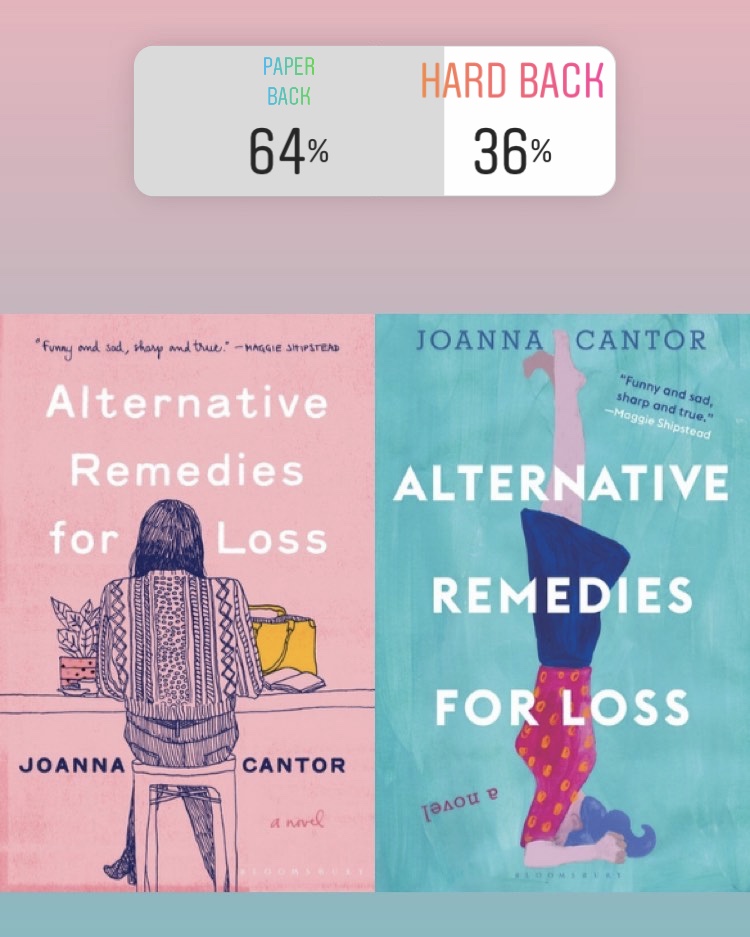
This is a funny novel about mourning, and one of the covers is more about the grief while the other is heavy on the humor. In contrast to the paperback cover, in which a sweater-clad woman sits hunched at her desk with her back to us, the hardback makes light of the story by showing a young woman doing yoga in full office attire. Our readers may have felt it lacked gravitas.
A thriller about 20-somethings living the high life in New York, Social Creature questions self-esteem, friendship, and the cultural obsession with social media, so it makes sense that this basically came down to a makeup challenge. Heavy eyeshadow marred by tears, or an avant-garde butterfly mask design? Voters preferred the butterfly lewk.
The title does a lot of work here, but it deserves a cover to back it up. The paperback of Your Heart is a trip: a distorted image of a crowd centering in on a person in red is vibrant and modern. But readers preferred the simpler, starker image of a crying eye on the hardcover of Yapa’s novel about grief, activism, and love.
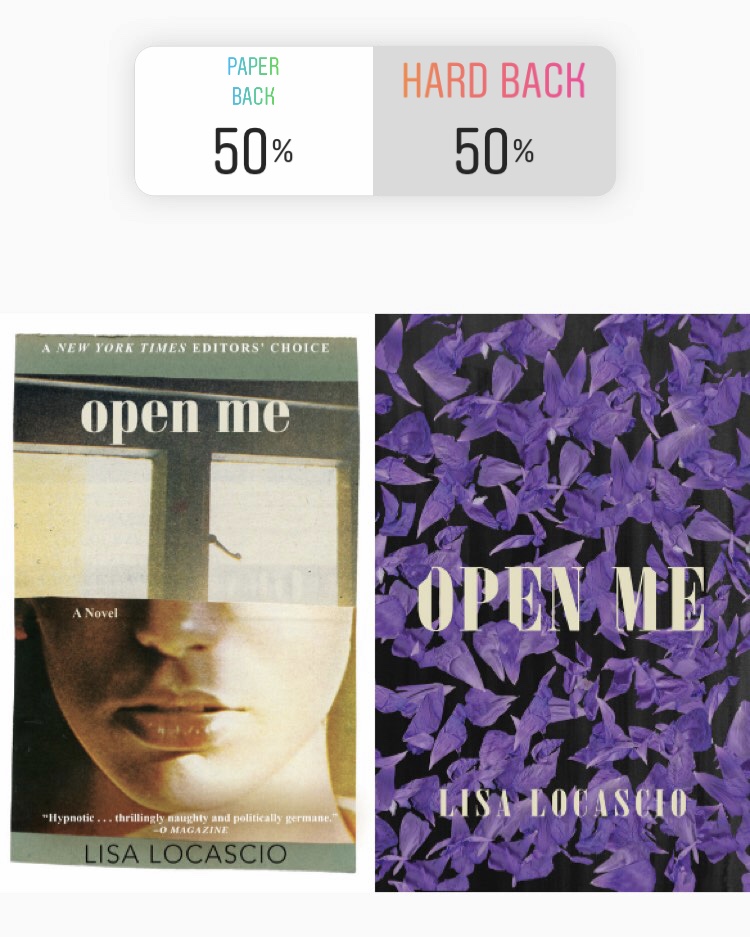
With a title that commands you to read it, Open Me is a bildungsroman about a high school grad with a lifelong dream of going to Paris who ends up in Copenhagen with an older Danish lover. The relationship takes a turn when the two move to a small town up north and she meets a Balkan War refugee, with whom she shares a special connection. <whispers> THE CONNECTION IS SEX. Our voters couldn’t choose between the juicy lips on the paperback and the deceptively chaste purple flowers on the hardback version.
Both of these look good as hell, but voters preferred the layered, intricately patterned window shapes of the paperback to the hardcover, showing scraps of paper scattering over a mountain. The book is about a biracial German Indian man looking back on his and his mother’s lives, so the fact that there’s actually a man looking at things on the paperback cover also helps.
The cover on the left shows us that this is an On the Road-esque journey that leads to Kathmandu by showing… someone driving to Kathmandu. In a VW bus. The ‘60s peace-and-love font of the hardback, despite featuring a LITERAL heart and peace symbol, is somehow less on the nose.
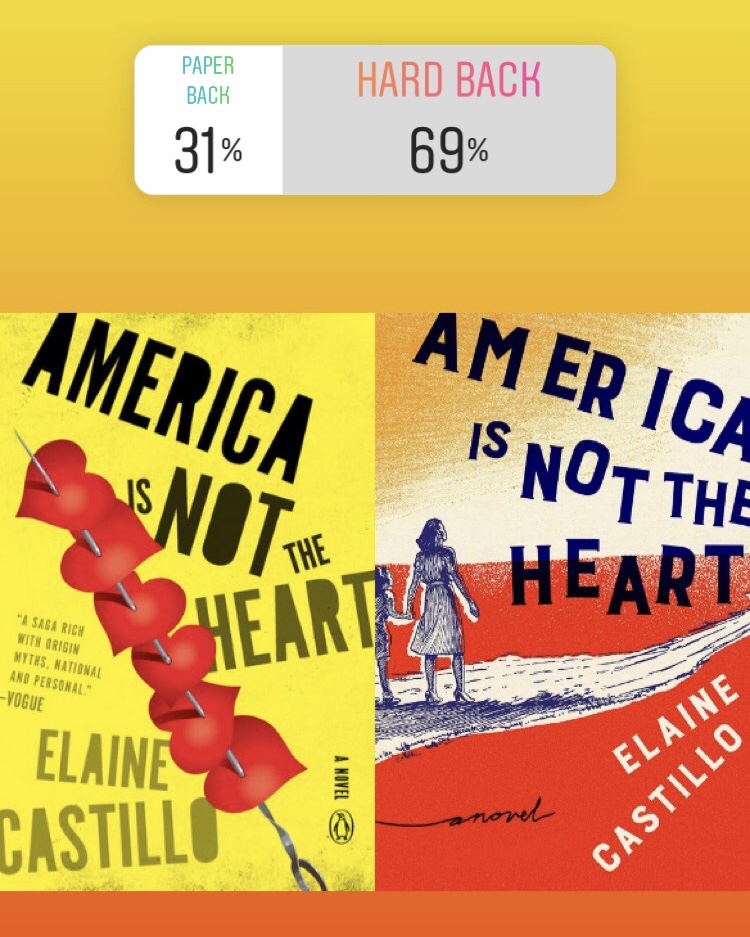
Voters preferred the illustration of a mother and daughter on a sunlit path walking into the horizon, on the hardcover of this tender story about three generations of women, rather than the paperback cover, which depicts the symbolic experience of motherhood: a skewer through the heart.
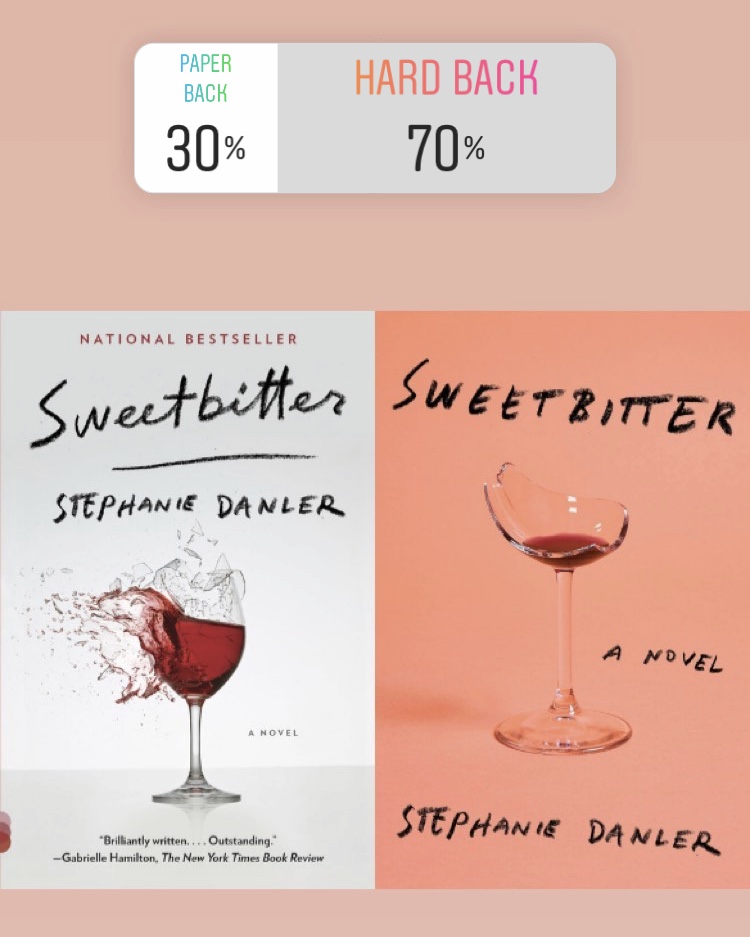
An image of red wine sitting in a broken glass graces both versions of this debut, a gritty story of a young woman who moves from Ohio to work in the glamorous and chaotic New York City restaurant scene. The paperback shows the act of the glass shattering and the hardcover shows the aftermath–perhaps EL readers preferred the latter with its millennial pink cover perfect for Instagram.
Irish novelist O’Neill’s first collection of short stories focuses on American men in the 21st century. In an interview with Lit Hub, O’Neill said, “When I came to New York, I saw there was a theme in the culture of men in particular trying to come to terms with what it means to be an adult, a crisis of maturity. It was a consumeristic, materialistic view of American society. This quest for maturity seems to be an American preoccupation.” Both covers capture O’Neill’s signature wry tone, but the ominous cloud floating in orange space makes the book look more enticing.
De Bernières writes about a couple left in turmoil in the aftermath of the World War I in his newest book. For a novel that travels between Western Europe and South Asia, the paperback seems pretty static. They’re just standing there! Right outside the house! Meanwhile, the hardcover accurately conveys the numerous lives the couple lives. With a plane emitting sections of an image of a tropical place as it soars from a person’s finger, this one wins.
These covers pose the question: Where do you want your house, in a suburb or on the moon? The hardback cover centers a house (emblematic of the Indian American family at the book’s center) against a huge moon and a bronze sky. On the paperback, it’s under fireworks in what looks like a subdivision. EL readers picked the more exotic locale.
Butterflies are at the center of both covers of Mira T. Lee’s debut about sisterhood, immigration, and mental illness. The paperback features a kaleidoscope of butterfly shadows flying in front of a faceless young woman, but readers preferred the hardback, which might be two butterflies, or a butterfly ripped in half. If you’re going to put a butterfly on your book, make it metal.
A BBC children’s radio producer grapples with her past and Great Britain’s history a decade after the Second World War, in which she was forced to engage in Fascist espionage. Is this better conveyed by a statuary angel or a flamingo? Voters didn’t think it was the flamingo.
It seems like a good idea to trust the story to stand on its own, as the black-and-grey text cover does. But this is a story about an eleven-year-old slave in Barbados who escapes and journeys from Barbados to Canada, London, Morocco, and even the Arctic. The paperback accurately conveys that sense of adventure—plus it makes you very curious whether he will end up flying in a hot-air-balloon-boat. (Spoiler: yes!)
The Falconer introduces us to Lucy Adler, a seventeen-year-old girl who preoccupies herself playing pickup basketball in New York City in the 1990s. A photograph of the legs of a young couple is centered on the honeydew-green paperback cover, portraying the budding romance with her wealthy classmate, with whom she plays basketball. This makes it seem like the book is about young love and detracts from the fact that Lucy is the center of the story. Maybe it’s not surprising that Electric Literature readers preferred the drawing on the hardcover that takes the man out of the picture.
The hardcover of Brinkley’s story collection, a finalist for the 2018 National Book Award in Fiction, might make your eyes cross; the image of a city street accurately evokes the urban setting, but it’s so blurry, like portrait mode without a portrait. Our voters preferred the poignant and original paperback art of silhouetted breakdancers.
A young mother travels from bustling San Francisco to the desert in Altavista, exploring what the Golden State has to offer for her and her toddler. While the paperback cover is muted and mysterious, it’s not as unique as the hardcover with the two blurry stacked images of a woman and the road, amplifying the cold and heavy aesthetic of this novel.
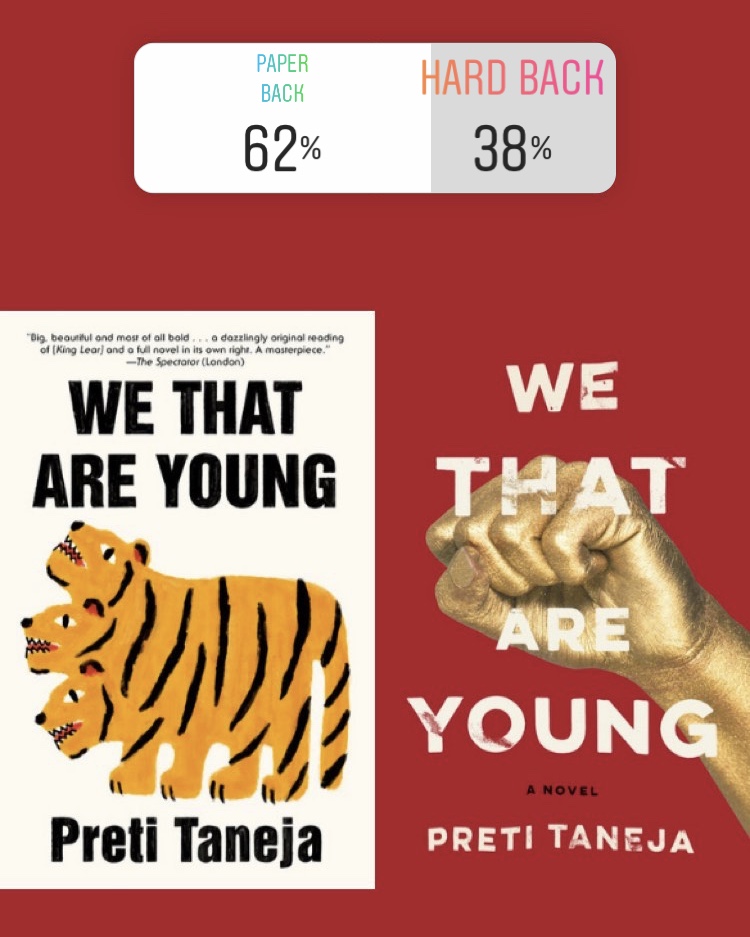
The cover on the right is gallant with a golden fist against a red background, but maybe EL readers couldn’t stop thinking about that urban legend about the woman who was painted gold and DIED. They preferred the childlike drawing of a three-headed tiger, symbolizing three daughters made to compete against each other by their successful, megalomaniacal father.
One of the most celebrated books of 2018, All the Names They Used for God is a genre collection as much as it is a short story collection. A mermaid on the paperback hints at one story that is a concoction of magical realism, but readers may have felt that the fragmented pressed flower collage on the hardcover does a better job of suggesting the other genres being played with: science fiction, horror, and more.
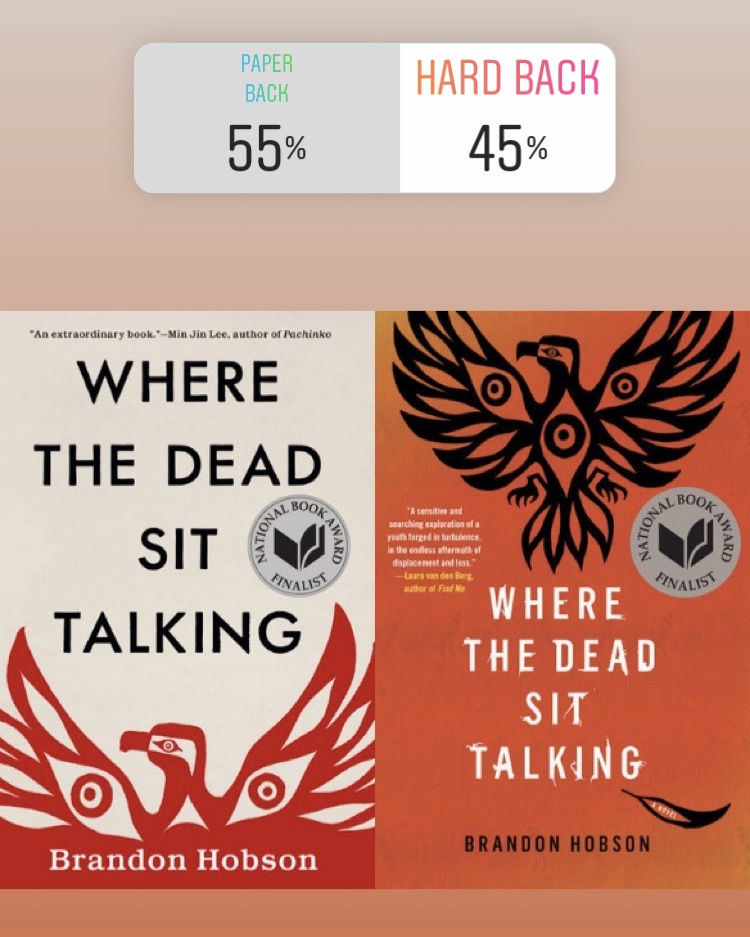
A finalist for the 2018 National Book Award, Where the Dead Sit Talking is a coming-of-age story about two Native American teenagers who connect in the foster care system. Both versions of this book cover feature the same bird of prey: one’s head and wings are shown at the bottom of the paperback and one floating with a single feather falling off on the hardback. The more grounded image won Instagram followers’ hearts—they like their birds at rest.
In the summer of 1892, members of the Amalgamated Association of Iron and Steelworkers (AA) union and the Carnegie-run steelworks in Homestead, Pennsylvania were squaring off in a labor dispute when matters came to a head: factory management attempted to bring in armed militiamen along the river abutting the plant, resulting in a battle between the hired gunmen and the strikers that killed ten and left a number of others injured. Today, the Homestead strike––sometimes referred to as the Homestead massacre––is widely remembered as one of the bloodiest moments in American labor history and represented a major blow to the AA’s unionization efforts throughout the United States.
Though typically referred to as detectives, employees of the Pinkerton Agency would perhaps more accurately be described as paramilitaries.
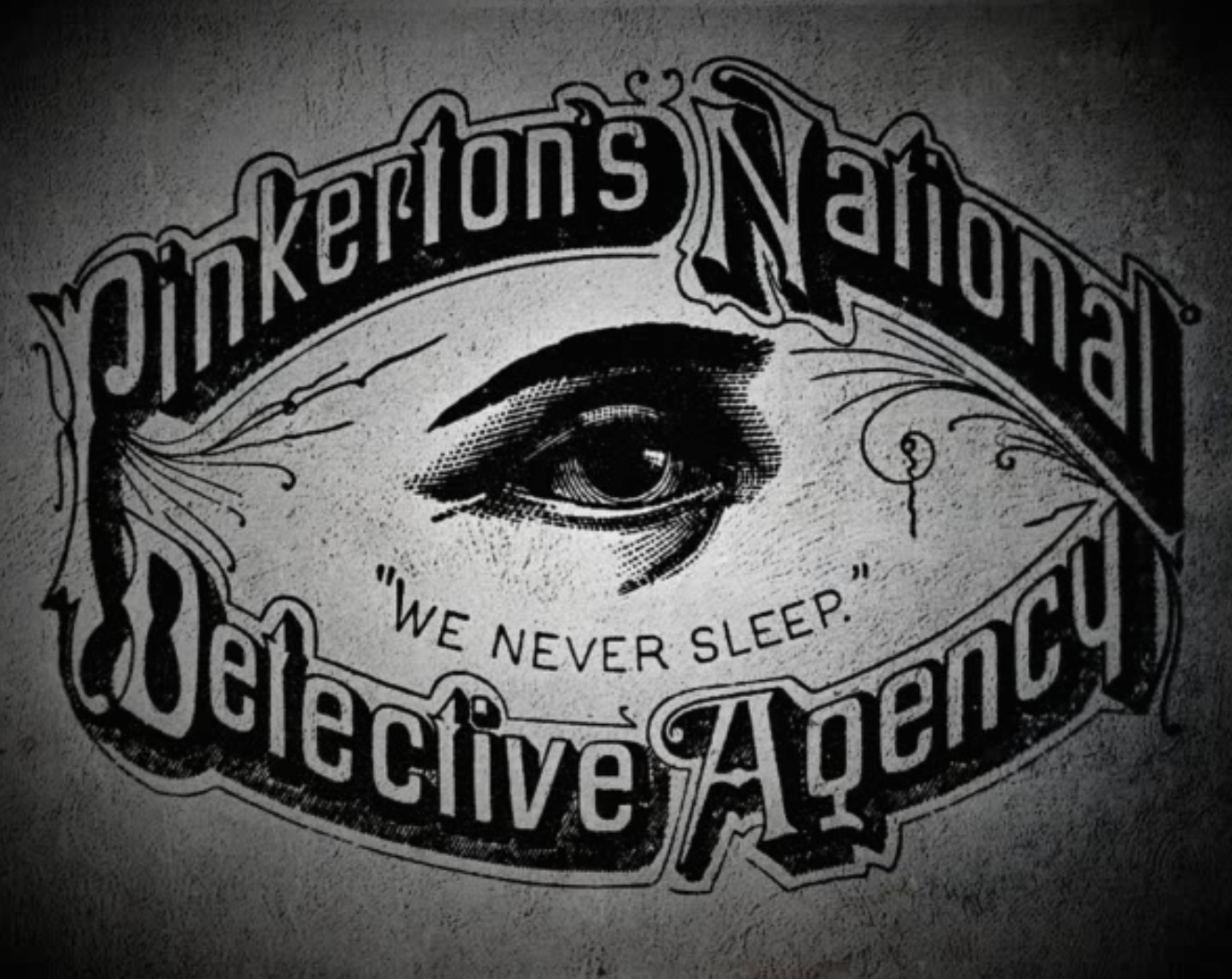
The armed forces who faced the strikers on the river at Homestead were members of the Pinkerton National Detective Agency, a private security force frequently hired by the robber barons of the era to investigate unioneers, infiltrate labor meetings, and instigate violence against strikers. Though typically referred to as detectives, employees of the Pinkerton Agency––whose logo of an ever-open eye and motto of “We Never Sleep” create a strong impression of menacing hypervigilance––would perhaps more accurately be described as paramilitaries. Amongst labor activists of the Gilded Age, Pinkertons were widely despised; in an essay on the Homestead strike, socialist organizer Eugene V. Debs referred to them as “a motley gang of vagabonds mustered from the slums of the great cities; pimps and parasites, outcasts, abandoned wretches of every grade; a class of characterless cutthroats who murder for hire; creatures in the form of humans but as heartless as stones.” Given its prominence as a cultural force, it’s perhaps unsurprising that the Agency exerted a strong pull on the imagination of many early icons of the detective fiction genre, some of whom admired the organization and some of whom vilified it.
One early pioneer of crime fiction to write about the Pinkertons was Sir Arthur Conan Doyle, who met William Pinkerton (son of the Pinkerton Agency’s founder) while the two were on a trans-Atlantic journey together. During the voyage, Pinkerton regaled his new companion with stories of Pinkerton agent James McParland’s recent exploits infiltrating a group of Irish Catholic miners in Pennsylvania known as the Molly Maguires. Conan Doyle was so impressed that he wrote McParland into the final Sherlock Holmes novel, TheValley of Fear. In that book, a Chicagoan Pinkerton agent by the name of Birdy Edwards recounts his attempts to bring a villainous group known as the Scowrers to justice. Conan Doyle also included a Pinkerton agent in “The Adventure of the Red Circle,” referring to the fictional detective as “the hero of the Long Island cave mystery.” Conan Doyle’s stories depicted the agents as professional and effective. In his admiration of the Pinkerton Agency’s sleuthing skills, Conan Doyle seems not to question––or even register––the organization’s politics. Yet for other early writers of detective fiction, that reality was evident––and became a shaping force in their writing as well.
One such author was Dashiell Hammett, whose classic The Maltese Falcon came out in 1930, fifteen years after Hammett (a school drop-out by the age of 13) joined up with the Pinkerton Agency. Not long after, the young Hammett was dispatched to Butte, Montana, at a time when the mining town was roiling. Earlier that year, 168 workers had suffocated when an underground fire had consumed the oxygen in the shaft, the deadliest hard-rock mining disaster in American history. Now, miners striking for better safety regulations, higher wages, and an end to abusive labor practices were meeting with violent suppression from their bosses.
Dashiell Hammett would later claim that as a Pinkerton, he had turned down an offer of payment to kill a union organizer.
Hammett, along with other Pinkerton agents, was sent to Butte in order to halt the ongoing industrial action. Attempts to quash the strike were violent: Hammett would later claim that he had turned down an offer of payment to kill Frank Little, an organizer for the Industrial Workers of the World who was lynched for his role in the strike and in anti-war activities. Whether that particular story is true or not, there is no doubt that Hammett returned from the strikes jaded and deeply marked by the anti-worker violence he saw. Later in his life, he would join the Communist Party and be elected president of the Civil Rights Congress. When called to testify in 1951 about a bail fund established by the CRC to aid those accused of political subversion, Hammett refused to reveal the names of its donors and was imprisoned for contempt. Two years later, his unwillingness to cooperate with the House Un-American Activities Committee led to him being blacklisted.
The seeds of Hammett’s later politics can be found in his 1929 debut novel, Red Harvest. The novel’s protagonist, a nameless figure known only as the Continental Op, is dispatched to Personville (a Butte stand-in nicknamed Poisonville by its residents) after an industrial magnate’s earlier attempts to enlist militiamen to quell a strike has descended into a lawless turf war between competing bands of hired guns. The Continental Op, cold-blooded and calculating, observes the killings around him with little reaction. Quite the opposite: his part in orchestrating the deaths of the people he’s been hired to eliminate causes him to go “blood-simple,” relishing the spectacle of violence instead of abhorring it. Far from Conan Doyle’s praiseful accounts, Hammett’s own fictionalization of the Pinkertons––one rooted not merely in hearsay tales but in his own first-hand experience with the agency––zeroes in on callousness and cruelty.
While Russia’s love for Pinkerton novels didn’t diminish with the Russian Revolution, their politics became something of a problem for a socialist state.
The literary influence of the Pinkertons extended beyond the United States as well. In Russia, where there was a craze for illustrated detective paperbacks, such books were collectively known as “Pinkerton novels,” or Pinkertonovshchina. One of the most popular protagonists of these books was a savvy investigator by the name of Nat Pinkerton, a clear homage to the American union-busters. While Russia’s love for Pinkerton novels didn’t diminish with the coming of the Russian Revolution in 1917, their politics became something of a problem: for a socialist state, the idea of idolizing an individualistic American hero with origins in violent anti-unionism was absolutely anathema. Yet there was no denying the books’ enduring popularity. In the 1920s, prominent Bolshevik Nikolai Bukharin (by all accounts a fan of thrillers himself) called for the creation of the so-called “red Pinkerton,” a detective story that would capitalize on the preexisting success of the genre to teach socialist values. In a 1922 speech delivered to the Russian Communist Union of Youth, he justifies his push for red Pinkertons by noting, “Marx, as is generally known, read crime novels with great enthusiasm.” Red Pinkertons like Marietta Shaginian’s Laurie Lane, Metalworker and Mess-mend, or Yankees in Petrograd (both penned under the pseudonym Jimmy Dollar) aimed to teach socialist ideas and capture the imagination of young readers, inspiring them to throw themselves into the revolutionary struggle. But the genre faced severe criticism from Party members who thought that the detective novel was inescapably enmeshed with bourgeois values, and debates about the genre quickly became a proxy battle for deeper internal rifts among the Bolsheviks. By the end of the 1920s, Bukharin had been forced to abandon his calls for the creation of a Soviet Pinkerton novel.
Though the red Pinkerton phenomenon was short-lived, its existence testifies to a growing global awareness of the ways in which mass media––including detective stories––could be harnessed for propagandistic purposes––an awareness that was latent amongst the authors who wrote about the Pinkertons from the beginning. Perhaps the strongest testament to the Pinkerton Agency’s skills in secrecy is the way it dropped off the cultural radar in the decades after it captured the attention of Conan Doyle, Hammett, and Soviet officials: though it no longer makes its way into major detective novels, the Agency still exists, repackaged as a corporate risk management firm after the growth of municipal police forces and the creation of the FBI took over much of its old territory. The history section of Pinkerton’s website, which claims that the company’s agents have long served “as guardians and protectors of organizations around the world,” makes no mention of its union-busting days. Its logo remains the all-seeing eye.
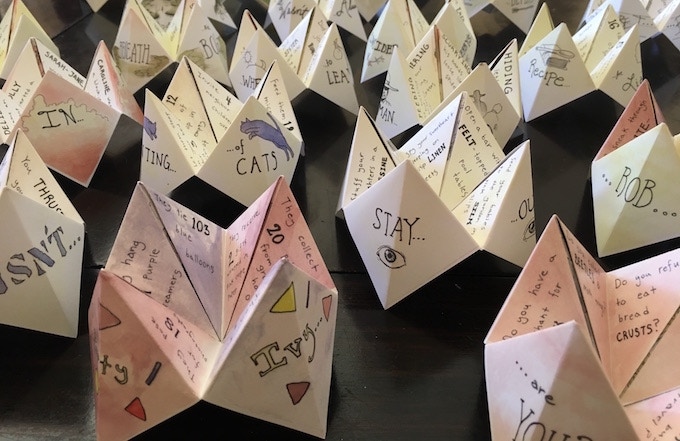
There are soothsayers in the back of the school bus. Their hands move in familiar patterns: they fold a piece of notebook paper in half, then again, tuck the corners toward center and crease. As they work, a small apparatus manifests, pleated and primped. It begins to move. It opens. It closes. It reveals your future.
Perhaps it’s been years, decades, since you’ve enacted these motions yourself: first, choose a color from the outside flaps, and the soothsayers speak the letters aloud while widening and shutting the device’s pointed mouth, a soft crinkling of paper swishing through the hushed air. Now choose a number from the inner folds. Five? Alright, whisper the soothsayers, one, two, three, four, five, they count, as their hands twitch in tandem. Pick again. Seven? The flap levitates open, and there, hidden beneath the innermost paper petal, lies your fate.
Yes, this is familiar. A dream or a question, just on the edge of your memory: the nostalgic step by step ritual of playing with a paper cootie catcher.
How to fold a cootie catcher
You may have known the device by another name— “fortune teller” is the most common alternative, though certain regions also favor salt-cellar, whirlybird, chatterbox, or snapdragon, among others. There’s Poland’s “niebo-pieklo,” Germany’s “himmel und hölle,” Italy’s “inferno-paradiso”—all of which translate into some form of “heaven and hell.” “Cootie catcher,” itself, refers to one particular style of decorating the apparatus, in which small, scattered dots, or “cooties,” would be drawn on half the second-tier flaps, so that opening and closing the catcher would reveal or swallow them.
Regardless of its title, chances are you’ve used the cootie catcher just the way I did: as a two-person game designed to tell brief, randomized fortunes. Like most folk traditions, evolving and adapting under the influence of many thinkers and makers throughout time, the catcher’s true origins are unclear, with some accounts tracking them all the way back to 17th-century Europe. We do know that the device was popularized in the United States during the 1950s. From there, it bloomed into one of the nation’s most popular children’s folk traditions, right up there with Bloody Mary in the mirror and “light as a feather, stiff as a board.” Traveling onwards between friendship-braceleted hands, stuffed into pockets, and torn from diary pages, the cootie catcher spread across the world. And, as a child mystic requires only a single sheet of paper and a writing utensil to conjure one of these fold-up fortune tellers into existence, the toy was available to children of all income levels and classes. By its very design, the tradition could survive in any community, could manifest in any child’s hands.
I had nearly forgotten about cootie catchers until three winters ago in New Orleans. It was a friend’s 25th birthday, and we had (in a youthful burst of exuberance) transformed her shotgun apartment into a labyrinthine series of blanket forts. Lace and golden string lights were draped over chair backs. A tunnel led from the front door into the main quilt-muffled chamber, forcing party guests to make their entrance by squeezing into the room on hands and knees. As dusk slipped towards midnight and the wine ran low, we found ourselves recalling the blanket forts of our childhoods—and the strange occult happenings that shimmered inside them. Someone took out a piece of paper, tore it into a square, and began to fold.
Girls have long been drawn to games of chance, of luck, of peering into a future that seemed to already have been decided for them.
The cootie catcher is primarily associated with girlhood, a gendered tradition passed hand-to-hand at sleepover parties and in schoolyards. Like so many divinatory games, young women have long been the keepers and practitioners. In our patriarchal society, young men have been emboldened to select their own paths, to determine who and what they wanted to become—leaving boys with no true need for fortune telling or luck. Why bother with divination when you can control the future? Adolescent girls, however, were never afforded this promise. Thus, girls have long been drawn to games of chance, of luck, of peering into a future that seemed to already have been decided for them. If they couldn’t control the future, at least they could get a preview of what’s to come.
As a writer by trade, I’ll admit that I was immediately intrigued by the narrative qualities of the cootie catcher. Relying on a sort of “choose-your-own-adventure” storytelling format, the secrets hidden within the innermost flaps can be read in any order, as selected by the players themselves. The game-play relies on spelling (counting letters in a given word), as well as full sentences of language. Unlike visual mediums like palm reading or tea leaves, the cootie catcher is an outright literary form of fortune telling. And the catchers’ creators take on an authorial role, composing unique, original text to fill each fortune.
The further I examined this intersection between divination and literature, the more I found intrinsic ties between them. Countless examples of literary divinations began to unfold, not unlike (dare I say) the many layers of a cootie catcher. For example, take bibliomancy, in which a book (often a bible) is dropped and whatever page falls open portends the future. Or fortune cookies, containing tiny, prophetic koans. Or automatic writing, where a pen-toting medium allows a message to flow onto the page without conscious effort. All of which is to say—language is given extraordinary social and psychological power. This is beyond “the pen is mightier than the sword”: writing serves specifically as an occult power, a supernatural tool that must be wielded delicately. And the implication? Language can transcend time, slipping past us to peer into the future. While we’re trapped in a single moment, tied to our mortal bodies, words can scurry on ahead of us. And oddly, this makes sense—already, writing is viewed as a sort of time travel. Through language alone, we can meander through the mind of a long-dead author, accessing ideas and images from prior centuries. If writing can carry us into the past, can even transcend death, then why shouldn’t it carry us into tomorrow, too?
When the tarot was first popularized in Europe during the mid-15th century, it was not used for divination, nor for psychological insight. Like a standard poker deck, the tarot was simply a set of cards used in game play. Over time, it shape-shifted. The cards were shuffled and dealt and passed hand to hand, until they had transformed into tools for premonition. What was it about the tarot that allowed such a dramatic re-purposing? I’d argue that the tarot’s magical root is as simple as this: every card tells a story.
If something can tell a story, chances are that it can tell your story. The Fool who steps into the unknown… the Three of Swords bearing heartbreak… the patient, dangling Hanged Man… As any good writing teacher can tell you, the microcosm contains the macrocosm— within the tarot, we view an individual illustration and immediately it expands, jumpstarting associations with similar images in our own lives. And so, through these archetypal narrative images come tales. And tales lead to questions. And questions lead into the future.
If something can tell a story, chances are that it can tell your story.
The tarot and the cootie catcher are far from the only divinatory forms that succeed as not only literature, but as games as well. The Ouija board—a form of automatic writing— contains similar traits, yet evolved in the opposite direction of the tarot: it began as an occult tool called a “spirit board,” used by professional mediums during the American spiritualism movement. Only later, after Hasbro patented the first “Ouija board” in 1890, did it transform into a party game. Ouija provided a rare opportunity for young men and women to be intimate in public, unsupervised, as game play required users to sit close, knees touching, with hands overlapping on the planchette. Cootie catchers, too, involve partnership to operate, as does the tarot—all telltale traits of gaming form. And I believe it’s no coincidence that the Ouija board relies on the written word, spelled out letter by letter, to reveal its powers. Once again, language and divination find themselves hand in hand.
Remember the game where you open a can of soda and toggle the tab back and forth while reciting letters of the alphabet? Whichever letter the tab snaps loose on marks the first letter of your future spouse’s name. Similar patterns are seen in children’s jump rope games, where letters are counted off, and wherever the jumper trips up marks their future sweetheart’s identity. As with the cootie catcher, these are both traditionally feminine games– and as such, focus on one of the greatest, most influential unknowns young women faced: marriage.
It seems that everywhere we look, from the psychic’s velvet draped, neon-signed shop front, to Pepsi vending machines, to the foggy mythos of our own childhoods, language has been playfully divining our paths for centuries.
Of course, this inspiration can go both ways. Authors have often repurposed divinatory forms directly into works of literature. Pulitzer-winning poet James Merrill used a Ouija board to write his epic poem The Changing Light at Sandover. Italo Calvino wrote his novel The Castle of Crossed Destinies though tarot cards, which his two characters display to recount their tales. Lily Hoang’s book Changing was written using the I Ching. I found myself wandering a similar path at that ethereal blanket fort soiree in my friend’s New Orleans home, wondering how the cootie catcher might be re-worked into a storytelling tool. Over the course of the next few years, I collaborated with an illustrator to create a spooky tale told exclusively in a series of cootie catchers, each liftable flap bearing new narrative secrets and revelations. (If this sounds like your kind of thing, the bizarre and illustrious Ninepin Press has agreed to publish this miraculous object-set in its entirety—you can take a peek here).
Whenever I purchase a new journal, I flip through the blank pages cautiously. I can’t help but be suspicious of them. Soon, those pages will fill up with intimate, documentary words, boiling over with memories I haven’t yet lived through. The journal will contain so much I cannot yet know. In those early moments when a new journal is clean, crisp, unsullied by ink, I can’t help feel that the pages already sense what they’ll eventually hold. I squint over them, as if trying to read a note written in lemon juice. What does this paper know of the future that I cannot? How can I read past the limitations of my own body, into the writings I’ll scrawl tomorrow?
“Reading” is an essential act in divination. Even non-linguistic divinatory forms that focus on image or symbol rather than words are still spoken of like, well… literature. A seer doesn’t watch or glance or speak a palm—she “reads” it. Fortune tellers “read” tea leaves and tarot, despite the fact that these are all visual mediums of soothsaying, not word-based.
At its heart, divination is rooted in story.
The consistent use of “read” implies something important. It suggests an intrinsic link between divination and literature. At its heart, divination is rooted in story. And even if the tools being used are illustrations, or Earl Grey, or the wrinkles in your own hand, at the end of the day what matters are the stories these symbols tell us.
There are always new soothsayers in the back of the bus. There are always children peering forward from the beginnings of their lives, hungry to know what the vast future will bring. There will always be stories, and there will always be new ways of reaching past our own, mortal forms into the flickering future. However, each individual cootie catcher itself will not stand the test of time. These are no hardbound books, nor precious documents sealed away in museums. A cootie catcher is ephemera. It begins to dissolve in the very hands that create it. These art objects, these literary devices, these vital pieces of literature authored by young women are doomed to slip away just as quickly as the years themselves. They tear at the corners. They’re abandoned in schoolyards and tossed into wastebaskets. Far from treasured heirlooms, they exist in a moment of strange, supernatural ritual before being unceremoniously abandoned. Perhaps this is the cootie catcher’s greatest poignancy— as the school bus soothsayers grow and age and yearn towards womanhood, into the futures they dreamt of, their paper fortune tellers fall behind. Time gallops on. And as the predicted storms and joys arrive, the very objects that once envisioned these fates no longer exist to see it.
Time drove down the street in her vintage Volkswagen Beetle, her best friend Gravity in the passenger seat. The top was down even though it was January. Their hair slapped their cheeks and got caught in the corners of their mouths and pulled against their scalps. They yelled over the top of a Black Flag song, destroying the lyrics.
Gravity laughed at the women on the sidewalk, who didn’t see the Beetle but felt a strange sense of self-consciousness overtake them. Gravity made one girl wobble in her high heels and fall into the arms of a married man. Time grinned and froze the tableau just long enough for his wife to come out of the shop. The girl in heels scraped her knees in the snow, the wife towering over her like a mad titan with mad titian hair. The husband twisted and twisted his ring.
At the next light, the Beetle rolled to a stop next to an old man in a Toyota Corolla. His gray hair brushed against the tips of his big ears, and when he turned to look at them, it started to rain. He had eyes filled with starlight. He remembered them in their cradles, and they wanted to forget.
Gravity pulled up Google Maps, and Time punched down on the gas.
II.
They blasted out of Boston, the blue Beetle wheezing beneath them. It was too cold, and the Christmas lights kept burning out, and the city air – flavored with asphalt and baseball and salt and sprawl – crusted their throats.
Dusty and lukewarm, El Paso wasn’t any better. The women were in tank tops; they accessorized with sunglasses and sweat. The men gazed into their half-drunk beer bottles, waiting for wisdom or unconsciousness.
Time pulled into a dive bar on the south side, vaulting over the driver’s door in ankle boots and short shorts, while Gravity took her sweet sweet time sliding from the car to the asphalt, her eyebrows as low as her neckline.
The bar was a smoke-dark lung that pulled at Gravity. The air clung. She was used to that, but the eyes lit up like wolves’ eyes as she slinked toward a booth at the back. She wanted to return to invisibility; she tugged at the hem of her skirt.
Time was hours ahead of her, slamming her sixth shot down on the cracked brown bar, her laughter arrowing through the dark and waking no one. At the scattered, scarred tables, the whiskey-worn patrons sniffed, their throats rumbled, but they didn’t move closer. The air around Time was a latticework of electricity and don’t-fuck-with-me. Gravity watched her back.
III.
Seattle: Gravity was hungry. Every smile she attracted was bone-thin and braced against the cold night. No one had candles for eyes, or stretched their fingertips toward her under the cloud-broken moon. They hurried past as though she were nothing special.
Time sat on the Beetle’s hood, watching the snow soak into the skin of her arms. She didn’t make it fall faster, only let it take its course. She could be a merciful god, sometimes.
IV.
Theoretically, the universe belongs to them now: Gravity pulling, Time propelling. The rest of the old gods – ghost-artists, dust-engineers, planet-mechanics, carbon-masons, silence-miners, fire-defiers, mothers – are lost in their own stories, can’t be bothered.
Time catwalks all the silences between stars in glitter-green ice skates, her umbrella inside-out. The comets swish their tails and streak the sky, uninterested in being pets. Gravity trudges behind. Her tutu droops with rain from Io, diamonds from a nameless place, rust from Mars. Her cigarette smells of silicon-petrichor from Saturn; she can’t light it out here; she slides it back behind her ear.
Time longs for the people with her whole body, which is the whole universe, which balances precariously in her belly, which is a ewer of wishes and endings.
The beginning (there is only one) is so far away now, not even Gravity can grasp the corners. She dons a knee-high pair of boots, and the very last parachute. Time drifts out but Gravity belts her back in. If they’re together when they fall, they always fall toward home.
I come from Moreno Valley—brown valley—in an area of California known colloquially as the Inland Empire, located three hours from Vegas, and two from the border. In the 80s and 90s, when I was growing up there, the I.E. was a constellation of freeways connecting deserts and meth labs and good dogs and medium people. It holds no relation to the David Lynch movie of the same name.
Buy the book
The Inland Empire is where I first fell in love with dry, barren landscapes and got to know them as the kind of beautiful, brutal places that will grow you right up. We—by which I mean my friends and I—lacked this perspective at the time. We ditched our classes and wore blue mascara daily and fell silent when the principal announced over the PA system that another student died huffing anti-freeze. In eighth grade, our friend’s mother’s meth lab blew up, and the announcement made a 2”x2” square in the back pages of the local paper. In high school, we shared a memorable year in the company of a twitchy ex-con named Worm—but that ended, inevitably, in his violent return to prison.
We spent the rest of our time in Palm Desert and San Bernardino and Indio, dancing the night away at various Indian casinos; we went to sleep in parked cars; we woke up to the sun frying us like eggs in our tin cans. We drove east to Vegas and north to Death Valley, crossing Reno in winter, stopping on the side of the road to buy blankets and fruit. When I finally left the desert, it was very much on purpose, so you can imagine my disappointment when I started writing a novel, only to realize that a part of me longed to return.
They say you can never go home again—and I think that’s true—but artists have always loved the desert for the inescapable fact that it’s blank and pitiless and full of possibility. What is nothing if not the most keenly seductive invitation to anything? It’s the absence of place that honors our most elemental self; it’s the desert’s famine that allows for all sorts of creatures to evolve as brutally and singularly as they must. Perhaps that’s why the stories that often emerge from deserts are often outlaws too, breaking traditional forms and narratives structures, unafraid to invent desperate risks. Many of us are blessed to be in driving distance to the Chihuahuan, the Sonoran, the Great Basin, or the Mojave—and if you are, I hope you’ll visit them while we still can. But if you find yourself out of reach of a great desert, you can always pick up one of these brilliant books and bring the desert home to you.
On the first page of this slim, powerful novel, we meet our sixteen year old narrator, Makina, who’s charged with hand-carrying a note from her mother in Mexico all the way to her brother in the United States. “I don’t like to send you, child,” Cora tells her, “but who else can I trust it to, a man?” Nope! So Makina sets off alone, first to gather intel for her journey from a series of local jefes, and then, with their blessing, she departs into the desert alone, picking her way towards our inhospitable border, hazarded by numerous mortal and political obstacles on the way. The division of family and the question of true reunification is one Hererra wants us to ponder, while Makina’s heartbreaking passage exposes the vulnerability of bodies and the violent schisms between men, women and country.
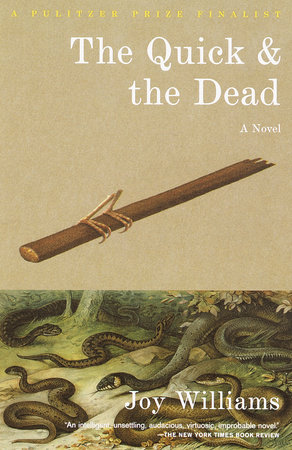
Alice, Corvus and Annabel are three young women coming of age in a small town in the Arizona desert. The girls spend their time stalking cats, blowing shit up, and being embarrassed by their parents, respectively—pretty true to life, in other words—but the novel’s more crucial enterprise is Williams’ devastating reflection on the banality of death. Among the girls, Alice is the guerrilla environmentalist, Corvus is the grave and solemn orphan grieving over her parents’ death, and Annabel is the late-to-town transplant whose arrival incites our tour of the town’s eclectic personalities and pedestrian violence, a place where roadkill leaves a “rosy kiss on the pavement,” elderly men and women wither “like iguanas” in a nearby nursing home, and vengeful, backtalking ghosts materialize with unsettling aplomb. Williams’ prose is artful and precise, the story is comic and outrageously clever, and the starkness of Williams’ narrative ecosphere exerts an intense pressure on her female characters to transmute their surroundings and become “extraordinary.”
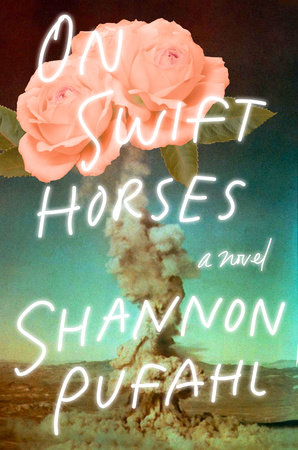
Shannon Pufahl’s On Swift Horses is an elegant, powerful novel about Muriel, a deceptively coy San Diego newlywed (by way of rural, postwar Kansas), and her shrewd brother-in-law Julius, a rambling cardshark betting his life on luck’s mercurial bidding. The two gamblers share an early connection before their fates diverge—Muriel becomes involved in the aggressive, male-dominated universe of horse-racing at Del Mar, and Julius flees to the old Las Vegas, that glamorous, mafia-orchestrated oasis whose surreptitious thrill was once a provisional lapse of repressive post-war social conventions. One of the unique pleasures of Pufahl’s seamlessly-researched novel is the momentary return to a less-excessive American excess —when the purchase of an ocean-proximate California home by regular, hardworking Americans wasn’t a laughable possibility; when Las Vegas had yet to be rebuilt into a 24-hour landlocked Royal Caribbean. It’s the kind of nostalgia that can only be enjoyed from the safe distance of (arguable) progress, especially by all those who were never been invited to partake in America’s middle class comforts. On Swift Horses is a solemn reminder of the resilience of generations of Americans who survived our country’s violent past, a timely reminder of the modern consequences of failing to relinquish its dogged shadow, and a heartbreaking elegy to those who never made it out.
A novel in three parts: first, “Mexicans Lost in Mexico,” written in epistolary form by the aspiring poet Juan García Madero, who begins his diary with his decision to take a writing workshop at his university. It’s there he first encounters Ulises Lima and Arturo Belano, two second-generation visceral realists, following in the tradition of the original visceral realists, “a Mexican avant-garde group [of] . . . writers or painters or journalists or revolutionaries.” Madero is seduced by Lima’s literary talent and wants to joins the group, despite remaining somewhat unclear who exactly the men are. As he gets to know Lima, Belano and their friends, Lima’s fascination with the original visceral realist movement and it’s founder Cesárea Tinjero evolves.
The second part of the novel is “The Savage Detectives,” comprised of variegated recollections from an array of characters who come in contact with Belano and Lima during their travels from 1976-1996. The third and final section of the novel, “The Deserts of Sonora,” returns us to Madero’s diary in 1976 as he, Lima, Belano drive into the Sonora Desert to search for Cesárea Tinjero. Bolaño loves to play with themes of recursion and doubling, often echoing personalities and settings across his works, and The Savage Detectives can be seen in many ways as the literary precursor to Bolaño’s subsequent masterpiece 2666, but while the two works share some literary preoccupations, The Savage Detectives is singularly concerned with the elliptical nature of time and the purpose of art in the politicized framework of Latin American history. A compulsively readable, structurally innovative novel told in Bolaño’s signature exuberant, roguish prose.
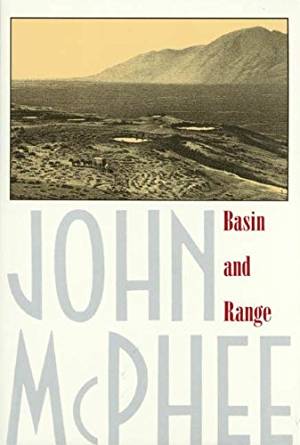
A stunning work of non-fiction, I can’t imagine more essential reading for our times than John McPhee’s legendary, lyric survey of the United States written through the prism of geological history. McPhee, a prolific journalist whose expertise on a broad range of topics won him a Pulitzer Prize, focuses this particular inquiry on the Western desert “with its welded tuffs a Franciscan mélange (internally deformed, complex beyond analysis), its strike-slip faults and falling buildings, its boiling springs and fresh volcanics, its extensional disassembling of the earth.” McPhee guides his readers through millions of years of “deep time” that have fashioned our most familiar Western landmarks through the pitching shifts of tectonic plates, eroding river currents and massive extinctions of plant and animal life that remain fossilized in our earth’s crust. You’ll leave this book with a deeper appreciation for our ancient planet and her centuries of gracious shelter.
I admire Don DeLillo’s work so much that I’d be happy to move inside his intellectually rigorous, doom-obsessed brain for five hours straight—which is, coincidentally, how long it took me to read this slim, dense novel in one sitting. If you’re the kind of person who gets turned on by intelligent, evasive repartee between two loquacious men committed to deploying their own emotional smokescreens, you’ll enjoy this novel that focuses on a scholar-turned-national-war-strategist Richard Elster and a documentary filmmaker, Jim Finley, who wants to make a film about Elster’s role in the (mis)management of the Iraq War.
Shortly after the novel opens, we learn Elster has been elusive about his willingness to be filmed, and Finley has been persistent, so Elster invites Finely to his desert hideaway, alone, so that he can unofficially consider the project. Because Finley is a man, he somehow doesn’t immediately find this request creepy or foreboding, despite the fact that Elster is described as wearing his long grey hair in a single braid, and frequently holds forth on a number of subjects at intense length, including the quality of the desert landscape they’re isolated in together, a place he feels is abortive of natural time, “the minute-by-minute reckoning” of city life. Elster argues that in the desert, “Day turns to night eventually but it’s a matter of light and darkness, it’s not time passing, mortal time. There’s none of the usual terror. It’s different here, time is enormous, that’s what I feel here, palpably. Time that precedes us and survives us.”
By the time Elster’s daughter shows up, you’ll be wondering how many different ways this situation could implode, but you won’t be able to look away, because DeLillo’s sentences always mange to build in on themselves at the same time they bridge out to the reader, collapsing into a singularly momentous experience the reader can’t forget. The usual terror is never DeLillo’s long game—but in Point Omega, as in all his works, DeLillo makes sure to serve up a uniquely American nightmare.
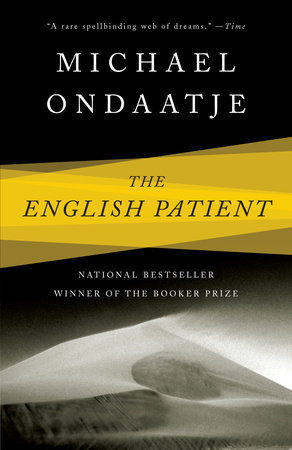
Arguably the most famous of Michael Ondaatje’s novels, this story opens with Hana, a young Canadian nurse stranded in the bombed-out ruins of an Italian villa during WWII. Hana has remained in the villa long after everyone else has fled to provide care for the English Patient, as he is rather arbitrarily named, a man burned beyond recognition, without face or country, who can recall nothing about who he is beyond a fractured key of memories—a violent plane crash and its subsequent blaze; the dry North African desert where he wakes bewildered and nearly blind, salvaged from the wreckage by Bedouin tribesmen who dress his charred body and carry him between them in a makeshift hammock they move across the dusty landscape.
Hana listens to the patient’s fragmented evocations of the desert as the pair is joined by two other stragglers from the war—Kip, a British Sikh sapper disillusioned with his time in the army, and Carvaggio, a charming criminal and former friend of Hana’s father. The novel’s setting is poignantly charged and the cast of characters are rich and diverse, their discordant backgrounds clashing to reveal the most surprising harmonies—and it’s only Ondaatje’s lush, lyric sentences that feel exotic, begging to be read aloud. This is a novel that meditates on loss, but what it interrogates is identity—who are we without our families, our pasts, our nationalities to shape us? How are we made, and how must we survive? The English Patient maps the delicate bonds and limitations between friends, and explores the “physical and spiritual sense of loneliness” that haunts all human experience.
Video games aren’t just about shooting zombies or jumping on mushrooms. A lot of them are downright literary—as in, the game revolves around reading text or making dialogue choices, and also, the mood and ambiance stay with you after you finish playing in the same way as a haunting novel. Plus, games offer opportunities for immersive storytelling that books can’t achieve (at least not yet). You want to talk about being drawn into the story? Try reading a story where you control the dialogue, change the outcome, or solve puzzles to move the plot forward. We’ve collected six atmospheric games for book lovers.
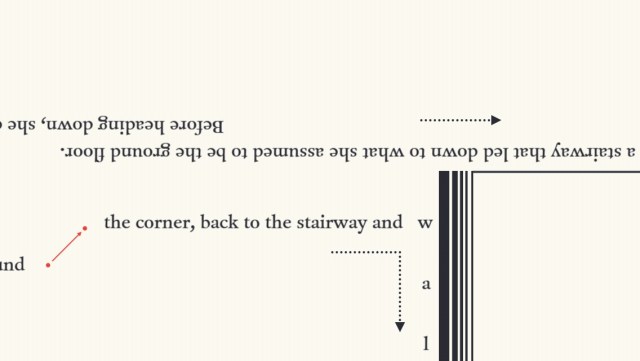
Playing Device 6 doesn’t just feel like reading a story—reading a story is the actual game mechanic. You begin by reading about a woman named Anna waking up in a mysterious castle, but the text itself quickly becomes the setting: a sentence that describes Anna walking down a hallway may move straight across the screen, then make a sharp left while describing Anna turning a corner. You might have to turn your device around multiple times to follow the text as Anna makes her way through the castle, or figure out how to open a locked door in order to read the next chapter. Puzzles and plot are embedded in the text and illustrations in a way that truly makes the story come to life.
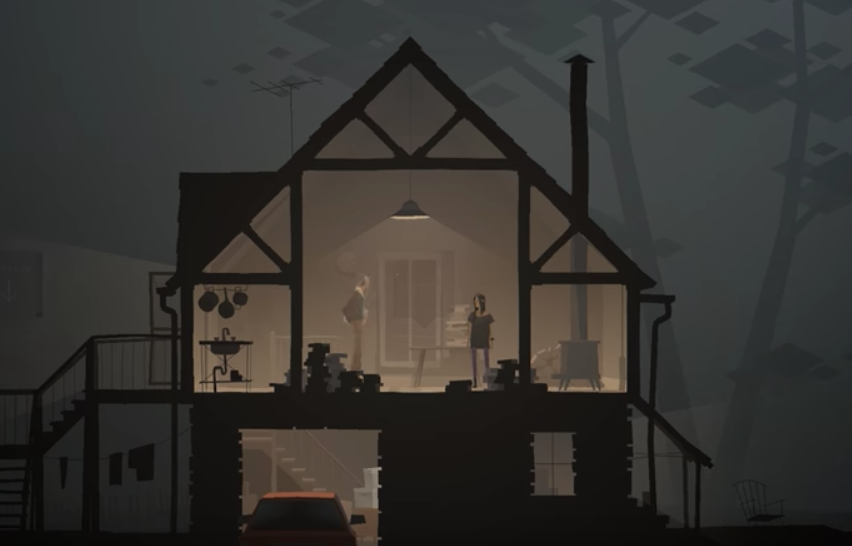
The spare visuals of this story-driven adventure game contribute to its air of surreality and light menace. You start out playing as a trucker named Conway who’s searching for the eponymous highway, a road seemingly outside of time and space. As Conway travels (including down a mine shaft, on the back of a bird, and yes, along Kentucky Route Zero) and meets new people, the player occasionally inhabits his traveling companions, learning more about their histories and the strange alternate Kentucky where they live. The atmospheric narrative feels a little like reading Flannery O’Connor by way of Welcome to Night Vale with a heaping dose of David Lynch.
You’re a cat named Mae whose best friend is an alligator named Bea, but don’t let the cute talking animals fool you: Night in the Woods takes on some heavy topics, including mental illness, the troubled American economy, and oh yes, mysterious chthonic cults. There are no puzzles to solve, but your choices affect Mae’s experiences and relationships with her old friends as she returns to her hometown and struggles with the ways it’s changed. You know how books that are ostensibly geared towards young adults are often the ones with the darkest themes, including casually bizarre magical realism? That’s what it feels like to pilot a cartoon cat through heart-to-hearts about her nervous breakdown and the town’s string of kidnappings.
How much more disorienting would it be to read a story about time loops if you were actually experiencing them? In the beautifully illustrated Oxenfree, you explore a haunted island, make dialogue choices that affect your relationships with other characters, and yes, experience time travel, loops, and even a spot of possession. Exploration gives you knowledge you can use in your showdowns with the island’s resident spooks, which determine the outcome of the game, including who lives and who (if anyone) gets erased from existence. It’s like reading a supernatural mystery, but with stakes that feel higher because you’re guiding the action.
The setup—your viewpoint character arrives at her parents’ house to find the place unexpectedly dark and deserted—feels like it’s setting up a jump scare around every corner. Instead, as you navigate your childhood home you also make your way through a multimedia, intertextual story, told in notes and diary entries and mix tapes. The first-person perspective feels like Doom or other shooter games, but the actual gameplay experience is more like an archival research project: you’re piecing together a story, and it turns out to be as emotional as any novel.
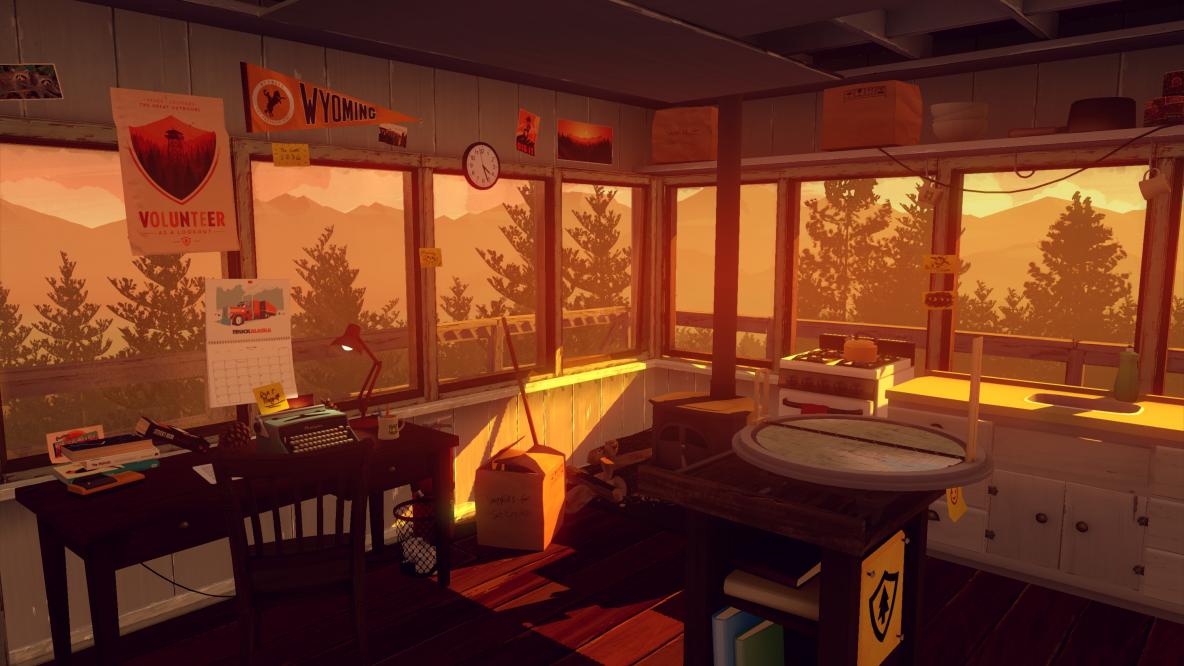
In this beautifully illustrated mystery game, your viewpoint character is a fire lookout who’s isolated from the world, in contact only with your supervisor Delilah over radio. When strange things start to happen, seemingly connected to an old unsolved disappearance, that walkie talkie and your relationship with Delilah—which the player can affect through dialogue choices—may be the only things keeping you tethered to reality. Like an (eerie) epistolary novel, the game centers on how two people talk to each other, even as the plot erupts around them.
When I began reading Sara Borjas’ debut collection of poetry, Heart Like a Window, Mouth Like a Cliff, I related to the way that she wrote about family, cycles of misogyny and abuse, and the struggle to find accountability and healing when conversations around these cyclical systemic problems are confined only to the page. This had been my experience for most of my life—that if those who hurt us won’t listen, then writing was the only way to grow, and heal. My grandmother Ines was an unpublished poet who wrote about her grief at losing her son in Vietnam, about my grandfather’s infidelities, and about the love she had for her children. I learned from her that sometimes writing poetry is the best means of survival.
Buy the book
I recognized in the poems the navigation of being Chicana, which means living as women of Mexican-American descent, but also the work Borjas does to use political Chicana discourse to reflect on the systems that would limit us. Even in her reclamation of the word “pocha,” referring to Chicanx peoples who don’t speak Spanish and who are thought to be disconnected from their Mexican culture, the poet illustrates that there is power in seeing oneself for who they are without judgement or shame.
Sara Borjas and I recently spoke about how writing about love, home, and the wounds that remain open like a broken window have helped her to claim an identity as a “pocha” poet that crosses boundaries and opens doors.
Leticia Urieta: I’d like to start by asking where this book, as a first collection, began for you?
Sara Borjas: I feel like this book had multiple beginnings. The first beginning was the questions I had about how to love people and what kind of love is healthy but also circumstantial. I was trying to investigate relationships with a boyfriend, with my parents, with other women and what is progressive. Part of this was understanding where I am at and how to move forward as an individual and as part of a community and a culture. When I started working on the book more seriously with Carmen Jimenez Smith and Blas Falconer, I began to ask myself, “what am I accountable for?” As a woman, as a Chicana woman, what am I accountable for in my actions and my own relationships, but also what am I capable of, what am I not capable of, and what can I ask others to do that is reasonable, given the circumstances? I telescoped in the further I went along.
LU: I think that does speak to what is naturally coming through in the book. In the epigraphs, you reference Audre Lorde and Cherrie Moraga, two writers who have addressed oppression in the lives of women of color. The quote from Cherrie Moraga, “Home is a place, for better or worse, we learn to love,” seems to speak to the struggles that this collection is in conversation with. Specifically, I was thinking of “We Are Too Big For This House,” which takes on one of the more experimental forms in the collection. Can you talk about how that poem, and others in the collection, address this contentious relationship with home?
SB: When Juan Felipe Herrera blurbed the book I found it interesting that he said,”it’s not nostalgia.” It’s a returning but not a returning. It’s coming through and saying what things really are. There’s a lot of coded language that we use in our familial homes that we use to protect each other but I think what we are ultimately protecting are these oppressive systems like Audre Lorde says.
As a woman, as a Chicana woman, what am I accountable for in my actions and my own relationships?
When I think about going home in the book, or trespassing on my home, or going into my mother’s life or beyond her, it’s a way of showing respect to the struggle. That’s why I say that the first beginning of this book was a false beginning because I was not holding my home accountable and so the push and pull is necessary for clarity and respect, for accountability, and in the name of love. You have to go back to clean up each act you do. I wasn’t going back to say, “we’re all fucked up!” I was going back to see what happened to my mom and dad and what they are capable of confronting right now and moving forward from there. I’ve learned writing the book, and through therapy, that it is not beneficial to call someone out. Because of that, I think the push and pull of the collection is trying to find a way to evolve and be a better family, a better daughter and a better partner.
LU: Let’s talk about the word “pocha.” Mexican American and Chicanx folks often have a contentious relationship with the word “pocha” because it is often associated with shame. It comes up several times throughout the collection, including in “Pocha Cafe,” where being “pocha” is a label that is wrapped in shame, despite the realities of this identity. However, in “Pocha Heaven,” which I felt was a wonderful mirror of “Pocha Cafe,” that poem addresses the sexism that often goes unspoken in Mexican American homes. I wondered, what does being “pocha” mean to you as a poet?
SB: [Pocha] is the only identity that feels real. I wish it was a scholarly move that I was making, but it’s really the only reality that I have ever had and it is the closest word that I have to work with. When I started using it, I never did feel intense shame around it. The only reason I think that is is because the person who called me a “pocha,” was a friend who I loved, and for two years I never even knew what it meant. I didn’t speak Spanish well enough and I was too embarrassed to ask what it meant. When I finally learned what it meant I thought, “well, she’s not wrong.” In the moment it didn’t feel like shame because I knew that my friend loved me, and also because she’s kind of pocha. This is why I emphasize going back and examining things in my past so that I can reconfigure that foundation to go forward. When I do that with the word “pocha,” I consider that these are folks who were colonized, whose indigenous language was erased and replaced with the colonizer’s language, and now they are shaming me for not speaking what I think is the colonizer’s language. I am not ashamed of that. I’ve had to find ways to say that to people who are really proud to be Mexican, or who are proud to speak Spanish in a way that is respectful to them, but also to insist that they not shame me.
LU: Do you feel like that aids you as a poet?
My poetic landscape is the house. It’s the kitchen, the linoleum floor, the grout my mother can’t get clean.
SB: It aids me in that the only place that I feel comfortable is not knowing anything. I think that is a good thing for a poet in this stage of my life to know and accept. For so long, I was trying to say what I knew. Now, I reach younger poets and they are writing poems that are so self-righteous when in reality, they are bad poems, and I was writing bad poems too. The fact that “pocha” is such a place of nothing, of crossings and that is my root and identity as a poet makes me feel good. I’m always going to be looking-I’m never going to be confirming or affirming or satisfied with answers. As a poet, it is good to be pocha in that I am not idealizing craft, which I sometimes think is code for “whiteness,” and I am not rejecting it either, but rather I want to examine how these tools are being used. We have to turn them inside out and wield these tools that is more than mimicry.
LU: The speaker in several of the poems mourns the relationships with men that could have been. I really appreciated that there were several poems that did the opposite, or that illustrated the solidarity and protection that women can find with one another, such as in “Pocha Heaven” and “The Island of Raped Women.” Why was this something you were interested in addressing?
SB: I think that some of the poems, like “Imagined Variation on Order” and “Love Triptych” were from the first beginning. And so the poems about the relationships between the speaker and men were old ways to that I used to love people. As I wrote, and loved, I realized that there was such a power imbalance and imbalance in respect, not just between couples, but between friends and family. In Chicanx families, we value labor. If you are not putting in labor, you are not worthy of respect. I had to look at those relationships and what ideas they were rooted in so that I didn’t perform that way. I feel most validated when I am in a room with a bunch of women and they are not gaslighting you, but listening to. It wasn’t a conscious choice to balance those two conflicting sensibilities, but I think it was an organic evolution of insight that being with women creates.
LU: Some of these poems also imagine what it would be like to not have to worry about having relationships with men. One of the series of poems that I found most interesting in the collection were the Narcissus poems. Could you talk about why you gravitated towards this Greek myth and why you chose to feminize the character?
Building community means to uplift our own people wherever we are.
SB: I started thinking about self-annihilation in a class I took about Sufi mysticism and poetry with Reza Aslan. I was very interested in the idea of dying to become a true living being. Along the way, it reminded me of Narcissus. I imagined if Narcissus were a poet. Narcissus died because he thought he was so cute, but as poets we are always looking inward and I felt that when I had this introspection, parts of me were dying, such as ideas I had or the way I did things. And rightly so. I’m glad that I moved on. That’s why I gravitated towards that myth, and also because I was experimenting with making European stuff “pocha;” not mimicking it, but playing with gender and other elements of the story. I am not sure that Narcissus is a woman in these poems. I use the pronouns “she” but I have never been strictly feminine, and so I don’t think they are either. I’ve always been hard in a lot of ways and this always made me feel outside of women but also shared with women. I liked the idea of using a traditionally male character and feminizing him and not really having to choose. There’s a lot of Narcissus poems that didn’t make it into the book, but I also liked the idea that Narcissus gets stuck by seeing themself in water. In the myths, his mother is a river; talking about alcoholism, about dying in water, about this system that is continually flowing was very appealing to me. This was a device that I was able to use to reveal energy transfers that were already going on. Sometimes you choose a metaphor because it sounds cute, but sometimes it helps you see things you couldn’t see before.
LU: Mirrors and reflections come up a number of times in this collection, and also windows—which can be mirrors, but also doors. These motifs played a number of roles.
SB: When I think of where my poetic landscape is, I consider, “is it nature?” But no, it isn’t. My poetic landscape is the house. It’s the kitchen, the linoleum floor, the grout my mother can’t get clean. I’m not trying to change that. That’s why I like the organic flow of the Narcissus myth and the river as reflection, which does mirror the house, which is the landscape that I am most comfortable in. It expands the scope of the tensions happening through those doors, and through those openings.
LU: You have talked about how other poets have been instrumental to the development of your work. How has being a part of a poetic community like CantoMundo [an organization that supports Latinx poets] been important in shaping your work?
SB: I didn’t feel that I was doing anything real until I had people around me who won’t lie to you. CantoMundo is not a place where everyone goes to perform. Everyone is just trying to shed. So when you go into that space where everyone is shedding something, you are able to have exchanges that make you feel real, and like your most exposed self. Going to CantoMundo and talking with that group for writers was affirming for me. No one said, “go out there and write a book!” It was more like, “go out there and stop lying to yourself!” Everyone asks “what is your relationship to Latinidad?” I got to see a lot of different ways to be Latinx and that was very nurturing, and really empowering, especially because it is cross generational-some poets are older, younger, have no books, have ten books, from all over the place, and that range made me feel more possible.
Now I’m having a conversation with other Latinx poets to see how we can proliferate these resources to use what we gain from these spaces for others. I have been thinking about how, if we use tools of whiteness in the same way, then they will continue to function in the same way. Building community means to uplift our own people wherever we are.
Tochi Onyebuchi’s young adult books, the duology Beasts Made of Nightand Crown of Thunder, are fantasy novels with a Nigeria-influenced setting. His upcoming War Girlsis set in a post-nuclear, post-climate change Nigeria of 2172. Riot Baby,his first novel for adults (also forthcoming), is a dystopian story about supernatural powers and American racism. Suffice to say, Onyebuchi knows a thing or two about envisioning alternate pasts, presents, and futures of the African and Black American experience. So we can’t wait to read his picks of Afrofuturist novels that aren’t written by men.
Read More Women is Electric Literature’s series, presented in collaboration with MCD Books, in which we feature prominent authors, of any gender, recommending their favorite books by women and non-binary writers. Twice a month, you’ll hear about the five non-male authors who most delight, inspire, and influence your favorite writers.
I first learned of the term “Africanfuturism” from Nnedi Okorafor. In the wake of Black Panther’s mammoth success and new cultural near-ubiquity, the term “Afrofuturism,” of American origin, would come to be slapped onto every speculative imagining that happened to prominently feature black characters. An attempt to stuff Tomi Adeyemi’s Children of Blood and Bone into the same cupboard as N.K. Jemisin’s Broken Earth trilogy and the musical stylings of Janelle Monaé with little regard for whether the work in question even fell along the traditional divides of fantasy or science-fiction. American publishing had turned a specific American-born artistic and literary tradition into a distended buzzword. Yet with as much as the term seemed to contain, it left out one rather important piece: Africa itself.
A trip to Lagos for the Aké Arts and Books Festival revealed to me a thriving, longstanding ocean of literary work by continental and diasporic Africans, one that didn’t necessarily have a culturally hybridized pan-African future as its goal. Nor did it seem to grow out of or in response to the cataclysmic dislocation caused by the transatlantic slave trade. Instead, it sprang from highly localized realities, traditions, and mythos. And imagined simultaneously scopic and specific, genre-bending futures.
An Electric Literature interview with the author put this multigenerational epic on my radar. The novel follows three families—one black, one brown, and one Indian—as their futures intertwine over the course of Zambia’s story. Simultaneously a historical narrative with fantastical elements and a science fiction novel, it begins in the nation’s pre-colonial past and extends into a near-future with solar-powered drones and smartphones that live in our hands. It contains so much. Colonialism, independence, revolution, the Zambian Space Program. And it does that wondrous thing of seeing from both the bird’s and the worm’s eyes, all without my ever having felt lost during the telling.
The setting is Jo’burg. Our protagonist: a recovering journalist and former addict named Zinzi December. Who is bonded to a sloth. Who she believes carries the spirit of her dead brother, Thando. You see, in this version of Johannesburg, someone who is culpable in a murder is automatically “animalled,” or psychically attached to an animal familiar. Stray too far from your animal, and you’ll catch panic attacks and nausea and debilitating withdrawal symptoms. And if your animal dies, you will be torn to shreds by a mysterious dark cloud. Now say you’re bound to a crime syndicate that’s paying off your debt to your dealer. And say, to escape your debt to the crime syndicate, you take a job from a music producer to track down the missing half of a teen-pop duo. The magic in this version of Johannesburg’s Hillbrow suburb carries the kind of grit that sticks between your teeth, the narrative voice coated in such hard-boiled rasp that you’ll find yourself constantly reaching for a glass of water.
I may be cheating including Emezi’s stunning autofiction debut on this list, but hear me out. This book defies categorization. It obliterates boundaries. It is, quite simply, mind-blowing, and I will take every opportunity I get to recommend it. Emezi’s protagonist is a young girl named Ada, born in southern Nigeria as a response to prayer, and plagued throughout her life by ọgbanje, a malevolent spirit that deliberately torments the possessed with misfortune. Interestingly enough, the term has sometimes been translated to changeling, and if you read the book with that in mind, that provides a rather interesting layer of resonance to Ada’s tale. Someone’s fantastika is another person’s reality; someone’s I, another person’s we. Freshwater is a daring story of how we occupy our bodies, about being and fashioning oneself out of many selves. It has, quite rightly, been dubbed a masterpiece. And Emezi accomplishes something on page 37 I had not thought possible in a book.
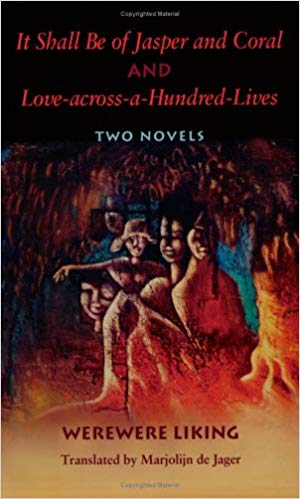
Elle sera de jaspe et de corail by Werewere Liking (English title: It Shall Be of Jasper and Coral, translated by Marjolijn de Jager)
One theme that has arisen so far in this list is the meaninglessness of borders, the futility of categorization. It Shall Be of Jasper and Coral is both song and novel consisting of nine journal entries on themes from art criticism to how to raise children. Interspersed throughout, and contributing to the novel’s polyphony, are dialogues between the comic relief, Babou and Grozi. Our journalist: a misovire from a future where there is no gender differentiation, a being who heralds the creation of a whole new race. Of Cameroonian origin, Liking—painter, playwright, artistic director, novelist—is an artist with unparalleled vision, for whom the novel as form is like putty in her hands.
Fellow Naijamerican Okorafor won the World Fantasy Award for this book that follows Onyesonwu, a child born of horrific violence, across a postapocalyptic simulacrum of Sudan scarred by genocide. From a young age, Onye manifests immense powers and when she discovers that a powerful being is chasing her, intent on her death, she must embark on a profound quest for revenge that will reverberate throughout all of society. This novel ripped me open and, somehow, both my brain and my heart were bigger for the experience. Transmuting local realities and issues into scopic, heartrending, hopeful futures, this is speculative fiction at its finest. The book has since been optioned for TV by HBO with none other than George R.R. Martin serving as an executive producer. This is an important and devastating book. If you won’t take my work for it, take his.
Deep, deep down and far away it lies, waiting, dormant, lazily latent and still waiting, confined, measuring the time, conditions and touching circumstances; imprisoned, but marking life and time with its own violent beats against suppressing strictures and rectitudes, and estimating the chances of being reborn.
Sometimes, in the night, it is expectant and therefore eager to be out. It has slept too long and is restless, fighting the force that keeps it patient. Years of internal slumber have drugged it, but not decisively, so that, once slightly touched, it starts and quivers and attempts to announce itself so strongly that, occasionally, a man’s mind will wake in his bed and ask itself: “Who is there?”
Why do they always fail me, Dennis ?” he said.
“I’m sure I don’t know,” I said.
“They never pay me back; but they always want to borrow again.”
“You’re too generous, Alfred,” I said. “Save your money.”
“Sometimes they won’t even speak to me on the street.
And when I try to speak to them they get mad.”
“That proves they’re not your friends,” I said. “Don’t lend them anything else.”
Alfred looked at me across the table. He spread his bony fingers flat on the plastic surface of the table and looked me full in the face. “You wouldn’t fail me, would you, Dennis?”
I looked again under the dress of a careless girl, at another table across the room, who had now noticed me and was pumping her knees up and down under the table, telling me to forget about the fellow who sat too intellectual and confident across from her.
“Of course not, Alfred,” I said.
“Thank you,” Alfred said.
He was a coffee-shop fag, to use a local expression, who was getting older and desperate so that his teeth were not wet when he smiled, as is their custom, because his mouth was so dry from his daily decreasing expectations. He was also losing most of the hair from the top of his head and his eyes were soft and scared, like a trapped animal who does not know how to fight. Doubtless he had been in that place before and had some unpleasant experience, because he kept looking over at the counterman, a rednecked fellow who picked at his chin, as if he expected to be thumbed out at any moment for some past sin against the establishment. He smiled very little, in fact, and leaned too far across the table when talking so that the entire clientele of the café, if they cared enough to look, could easily surmise what we were about. I had come into that place for coffee.
“Do you know Rudy Smith?” he breathed across the table almost passionately.
I recalled Rudy Smith, sometime stud, dope-pusher, and freelance hip black who wore a great head of natural hair and an African costume in order to work part-time as a shill in one of the mod shops. “No,” I said.
“You should. Everybody knows Rudy.”
“It’s a common name.”
“Well, he’s a friend of mine.” He paused to allow me to become sufficiently impressed. “He owes me money, too.”
“You must have lots of money to lend it out so freely.”
“I have a trust fund,” he said quickly. Then he added, somewhat more casually: “I’m really a poet.”
“Published?”
“I’ve a book almost finished. It’s on Melville’s poetry.”
“Did he write poetry?”
“Very little. It’s a small book. I’m trying to put all his poems in chronological order by tracing the deterioration of his handwriting in the original manuscripts. I had to take a course in handwriting analysis just to do that,” he said very proudly. “And I guess I have to do something scholarly to justify my own self as a poet.”
“Why?”
“People have this impression that poets just go around sniffing little girls’ bicycle seats.” He laughed. “It’s my private Holy Crusade.”
“Of course,” I said, looking at the bobbing knees again.
The intellectual friend was now explaining some very fine point to her. I heard him mention Nietzsche as he made little progressive motions on the table with his hand, and I knew that he was lost. He did not notice her smiling at me, he was so enraptured with his ideas.
“Are we going to be friends, Dennis?” Alfred Bowles was asking.
“Sure,” I said, not looking at him.
“You do like me?”
“Of course.” The friend had finally noticed her smiling and was now talking faster and making the motions on the table with both his hands.
“She’s got the clap,” said Alfred. He had been watching me all along.
I looked back at him. “How do you know?”
He looked pleased. “Rudy Smith told me when we were here last. She hangs out here all the time.”
“I guess he would know,” I said.
“I thought you didn’t know him?”
“I don’t. But I guess he would know all right.”
“Rudy gets around,” Alfred said. He considered for a moment and then said very carefully: “Let’s have a drink.”
Our coffee was cold by this time. “All the bars are closed now,” I said.
“I’ve got scotch at my place?” he offered.
“Not tonight,” I said. “I have something to do.”
“Please have just one. I don’t live far from here.” He leaned closer and said more intimately: “We could have some grass if you want.”
Bobbing Knees was looking hard at her watch and making sure that I saw her. “I’ve got to go,” I told Alfred.
“You’ll get clap,” he warned me.
“Maybe not.”
“What about him?”
“She knows what to do. Besides, we’re not after the same thing. He wants to impress her with his mind.”
“And you?”
“There’re too many good minds here to bother with exercises,” I said. “I can impress her with my lack of one.” I picked up my check very conspicuously. The girl pushed her watch close to the intellectual’s face. He looked at her watch and then at his own, and then he threw up his hands in what might have been exasperation or an over-dramatized apology. She got up quickly, motioned for him to stay and paused while he wrote something in his note- book. Then she left him and walked past us and toward the door.
“Goodbye,” I said to Alfred Bowles. “I really enjoyed the talk.”
“At least take my card,” he said. He handed me a homemade, handwritten quarter of a lined index card. “Everything’s on there,” he said. I glimpsed a wad of similar cards in his wallet before he put it back into his pocket. “Please call,” he said in a voice that made me look at him, really, for what was probably the first time in the whole hour we had spent at the table. The tone was sad and lacking optimism, as if he did not expect me to call but, deep inside himself, pleadingly wished that I would.
“I will,” I told him.
He gave me that last-hope look directly in the eyes and said: “Please don’t fail me, Dennis. Don’t be like all the others.”
We’ll talk, that’s all. We’ll be friends, that’s all.
“Look,” I said, trying to be sincere and trying not to be hard all in the same voice, “we’ll have a drink or something. That’s all. We’ll talk, that’s all. We’ll be friends, that’s all.”
“Good,” he said, somewhat slowly. “But do call.”
“I will,” I assured him. “I promise to call.”
I left him there looking over the brim of his empty coffee cup, holding it up to his face with both hands as if he were hiding, possibly searching the room for others who had not yet found their bobbing knees. I met mine out- side on the street, cigarette in mouth, being patient and selective about who she would ask for a match. I gave her a light and then walked away. She had only been for the benefit of Alfred, a convenient and manly excuse for get- ting out of that shop without having to give an aging fairy specific reasons why I would not have a scotch with him. Also, there was a certain affirmation of something, a certain pride, a sense of some small and sensual accomplishment in it for me.
II
For those who choose to live their lives as animals, life is really very simple. In the human jungle there are only the hunters and the hunted. The idea of social classes is a mythical invention, I suspect, manufactured like religion by successful hunters who have found their prey and who want to maintain what they have already won from other hunters. And successful hunters are a higher order; for once their prey is secure in their caves, other, less fortunate hunters begin to sniff around and smell them out and they then become the hunted. We all begin as hunters, uncertain and fumbling until we gain sufficient confidence in our weapons and equipment so that we can afford to rest, and let others seek us out. Sometimes, like the lion, we fight to keep other hunters away; and sometimes we share, out of generosity or kindness but most often out of unconcern and sated appetites, a small part of our prey. And this sharing also serves as a declaration, in the jungle of things, that one has passed the hunter stage and recognizes his coming into the ranks of the very select few who are hunted. A man is my friend and seeks me out either because he wants something I have acquired or he hopes to get closer to something to which I alone have the necessary access. Unsuccessful hunters are weaker than the hunted because they declare, by their searching, their inability to be self-sufficient; they have nothing to guard from others, they are always seeking, they have very little to lose. In nature, the stronger animals are not really the hunters; they are called so merely because they have the ability to fend for themselves. Those who follow the lion for the scraps he may leave, and not the lion himself, are the real hunters. The lion is all-confident and certain that he will always be able to bring down his meat, and allows jackals to follow him, at a safe distance, to see that he can very well survive on his own and needs them only to feed his own ego. Sometimes I want to be a lion because I have many friends who have grown strong that way.
We all begin as hunters, uncertain and fumbling until we gain sufficient confidence in our weapons and equipment so that we can afford to rest, and let others seek us out.
On the subway in the early-morning going-to-work hours I met Alfred again. His eyes were not the same as they had been that first night: they were very bright and open, and only his mouth, when he talked and occasionally wet his lips might have suggested to the straphangers around us in the jostling car who he really was. We talked of politics, poetry, our jobs, and certain other things. He was a teacher by day, he told me; poetry was only his nighttime thing. He was professionally cool and detached from me, his card, and anything of that night now more than two weeks old. “We might have lunch downtown some noon,” he said to me just before his station.
“That would be fine,” I said.
“I’d really like to know you,” he said sincerely, his eyes not looking at mine. “Truthfully, I really like talking to you.”
I gave him my number and address, knowing the risk of midnight desperation and sudden drop-ins, because he looked so changed and different from that night.
“I’ll make it a point to call you someday for lunch,” he said.
“Please do,” I told him.
He went away with the crowd and was one of them in an instant. I wondered how many others like him went that same way to work each morning without disclosing by their movements or eyes the secret thoughts or interludes of the night before.
I wondered how many others like him went that same way to work each morning without disclosing by their movements or eyes the secret thoughts or interludes of the night before.
III
He knocked on my door very late at night when I had been expecting a girl. Opening the door and seeing him there, nervous and sweating and a little funny because he was relieved and afraid at the same time, irritated me.
“Oh God!” he said. “Please can I talk to you!”
“Come in,” I said, resigned to tolerate him for the little time until the girl came. He moved into the room and sat on the sofa with the timidity of a child carefully exercising properly taught manners for the first time.
“Have a cup of coffee, Alfred,” I said.
He accepted and I heated water while he sat on the sofa, his face in his hands. “Oh my God! Oh my God!” he kept repeating.
“What’s wrong?” I asked from the kitchen when I knew he was waiting for me to respond.
“Nothing. Everything. I haven’t a friend in the world. Are you my friend, Dennis? Are you really?”
“Of course,” I said. “You know I am.”
“Do you like me?”
“Of course.”
“I like you. I love you.”
Not knowing how to respond, I handed him the cup of hot water and the jar of instant coffee. His hands shook as he put them on the coffee table and continued to stare at me.
“What happened?” I finally asked.
“It’s Rudy,” he said. “He won’t pay me. I went over to his place to talk about it—just to talk about the money— and he called me all kinds of names. Now, that wasn’t right. You know it wasn’t right.”
“No, it wasn’t,” I said.
“And he had a bitch there, and they both laughed at me. A bleached-blonde bitch, and she laughed at me! ”
“It wasn’t right,” I said again.
“Now I love your people,” he said. “I think they’re all beautiful. I think it’s a dirty shame the way they treat you people down South.”
“I’ve never been South,” I lied, drinking my own coffee busily.
“But Rudy owes me money and he and that bitch laughed at me.”
“I’m sorry about it,” I said. I looked at my watch. “Just don’t lend him any more money.”
He made a great effort to look deep into my eyes. I looked into his. They were his nighttime eyes now; the hurt there was that of a wounded animal, almost tearful and brightly moist and desperate for a life that was fast leaving him.
“I love your people,” he declared again. Then he paused and continued to look directly at me. And then he held out both his arms. “Dennis,” he said, “Dennis, Dennis, Dennis. Oh come to me.”
I looked at him, not quite in amazement. I had been expecting it all along, but I was disgusted by his lack of finesse or tact.
“You’re such a beautiful man, Dennis. You’re all so beautiful. Oh, God! You’re so beautiful!”
I got up from the chair and began to walk about the room and away from him. “Now look,” I said, with all the manhood in my voice I could muster. “I understand your position but you’ve got to see mine. I’m straight. I can’t do what Rudy does.”
“Come to me,” he said again, his arms still raised in a Christly pose.
“You have to go,” I said decisively.
“Please, Dennis, oh please, please, don’t leave me alone.”
“Finish your coffee and just cut it out.”
He mixed his coffee, which was now cold and undrinkable, and kept his eyes moving over my face, my legs, my body, all the while he was stirring. He drank it in gulps, glancing up at me as if I were holding a gun on him or had some great reward to be given as soon as the coffee was finished. It was a terrible power to have; and having it weakened me, made me want to give him reasons for not doing the thing he wanted. I hated Rudy Smith for having this power, I hated him for using it the way he had; and I hated and pitied Alfred, both at the same time, for forcing me to fall victim to his own inability to cope with himself and for forcing an invasion of his dignity onto me.
“Isn’t there some bar you could go to?” I asked.
“No. The vice squad men all know me and I’d have to pay them money.”
“Would it help if we just talked some—about your poems?”
He had that dying look again. “Please, Dennis, oh please help me!” he moaned, again with his head in his hands.
“I’m sorry, Alfred. I really am,” I said.
He kept his head pressed into his spread palms and commenced to sob. He sounded like a rooting pig, smothering great sniffles and coughs in his two hands. I could not touch him, although I wanted to; I dared not touch him, although he needed just the slightest touch, the merest sign at that moment more than anything else in the world. But my rooms were not the world, and his world was surely not there, in that room. And so I opened the door for him and stood outside it, and waited for him to come out because I had, all at once, the greatest fear of having him behind me. “Come and talk whenever you want,” I told him. He still sat on the sofa, his eyes red, his face blotched with very red and very white areas; sniffing, he sat there. I stepped out further into the hall. “I want you to know that you can come back to talk—to talk—whenever you want.”
I dared not touch him, although he needed just the slightest touch, the merest sign at that moment more than anything else in the world. But my rooms were not the world, and his world was surely not there, in that room
He rose meekly from the sofa and came out the door, toward me. I backed away. He looked hurt, even more, and I was sorry.
“I’m all right now, Dennis,” he said. He looked awfully tired. He looked at me a long moment longer, as if daring himself to say something more, and then he turned and went away down the hall.
I lay on my bed after I had made sure that he was not standing around in the hall and waiting before he knocked again. I lay on the bed and wondered at how close I had come to touching him. I thought about Betty and how late she was getting there and how I needed to ask her to spend the night, for company and for something else. I hated to have Betty in my bed in the morning: it was a small bed and she did not know what to do with her legs. Besides, she was a huge feeder and it disgusted me to have to eat with her and watch her eat breakfast. Still, I needed to have her there and I could endure anything as long as I had a girl there—for other things.
I thought about those other things.
Jeffrey is the only boy in our high-school class who has already got a moustache. We all envy him.
Sometimes he lets us touch it. Sometimes he lets me buy lunch for him. Then we hang around together after school. When I make Jeffrey laugh he slaps me on the back very hard. I like it. I try to make him laugh all the time. At graduation time he lets me autograph his yearbook. I use a whole page for a poem I write on friendship. Then the other kids come to autograph the book and see the poem and begin to look at me. I see them talking and laughing in the corners and Jeffrey is embarrassed and laughs too. The teacher knows about it and comes over to me and says, “Never mind, that’s a good poem,” but it does not help. I do not have anything to say to him. That last week of school I begin to find written on my desk the kind of words they put above the toilets in men’s rooms of bus stations.
“What happened to you ?” I asked Betty over the telephone. It was 2:00 a.m.
“I got tied up,” she said.
“Can you still come?”
“It’s too late.”
“You could have called.”
“I know,” she said. “I guess I’m no good for you.”
I could not lose her tonight and was prepared to lie relentlessly just to have her there that one night. “You’re too good for me. Come on over.”
“Look,” she said. “It’s late. We can have a drink some other time. Let’s both just get some sleep.”
“We could do that together.”
“I’m tired. And I’m sorry that I didn’t call or come but I just didn’t. Can’t you accept that?”
“Goodbye,” I said and pushed down the button.
It is very hard to push down a button that way when that little, little expenditure of strength cuts off forever the source of what has kept me from touching Alfred Bowles or from being on the streets like him, a hunter, with different, desperate eyes, reserved for the night, looking into back alleys and risking every degradation to solicit strangers in search of an affirmation of what he thought was himself. I lay back on my bed and thought of him, where he was now, whether he was still crying and to whom, or on what hard ear his pleas were falling. I thought of what must be his deep determination to get whatever it was he wanted, his desperate acceptance of whatever a hustler demanded for his company, his endur- ance of blows and laughs and insinuations, all for what? I had the feeling that I might have gone into Alfred’s arms earlier and that would have been all he really wanted, even though he might have tried to do something else, perhaps for no other reason than because he was expected to.
I took out my wallet and found his card, wondering how many other of these crude, homemade, handwritten offerings of himself were moving through the city, forgot- ten in wallets, left on the floors of men’s rooms or coffee shops or taverns or dormitories, or even libraries. I looked at the writing for the first time. It read: Alfred Bowles: 17 Brewster Street, Apartment Number 21, Telephone Number: 351–5210, Poet. Nothing was abbreviated; nothing that might misdirect the holder of the card was left to chance. It was a sad summation of himself, a crudely pleading invitation to invade a privacy he did not want. The card was a limited, almost secret, declaration of himself, cut and set and written, not by his own hands, but by the subtler, more powerful hands of men who had discovered girls very early in life in closets and school play areas, and who had learned, as he had not, that a man’s place in life must necessarily be that of the hunted and he must hurry through the hunter stages before something stops him from becoming a lion.
IV
My friend Gerald is one of the hunted. His specialty is girls. Although his reputation is firmly established as one of those to be sought out, he modestly prefers to call himself a cock-hound; and when in private company, but especially in the company of girls, he takes great pleasure in getting down on his knees and crawling around on the floor and declaring: “I am a cock-hound, gimme-some, gimme-some” in a voice very much like a bark. He is not crude, because he drinks good scotch and only does his dog thing in the company of honest girls who, he is always confident, will laugh immediately and not later, when they are alone. He has a keen eye for these girls, a virtue with which I was never blessed. He is a lion and is quite successful. Like me, he is a bachelor; unlike me, he knows how to live by his wits. He is my source. Whenever I do not have a girl, it is only necessary to call Gerald and he will arrange for me to meet one, usually the rare ones who do not laugh at his cock-hound bits.
“I need one,” I told Gerald that Thursday in our favorite barroom. “I need a date bad.”
He looked at me, thinking. Gerald is the kind of person who believes in the credit-debit system of life. He does not give anything away.
“I drove you to the airport last week,” I reminded him.
“Yeah,” he said from his carefully trimmed moustache.
“You did. Well, all I have for you is a dog.”
“Your kind?” I asked.
He laughed. “No, a real dog. I already had it. She’s a real bitch. A real community chest. Do you want it?”
“Sure,” I said, knowing that Gerald dislikes immensely anyone with tastes different from his own. “How do I play it?”
“Just be cool,” he said. “She’s such a dog your natural reaction to the way she looks will make you look cool. But don’t say anything intelligent; she’s also a dummy and can’t stand intelligence.”
“That’s all you got?”
“That’s it,” he said. “But it’s a sure thing. Take it or go horny all week.”
“It’s not the pussy, Gerald,” I said.
“Like hell,” said Gerald. “You can’t bullshit me. You just like to talk a lot before you get into it just to make yourself suffer.”
“You’re a real Freud,” I said.
“Like hell,” he said. “Freud knew the shit and went horny. I know it and don’t.”
“But it’s really not the pussy that matters.”
Gerald looked at his watch. “Do you want the dog or don’t you?” he said.
I thought about the weekend and some other things. “O.K.,” I said. “I’ll take the dog.”
Gerald smiled, and for a second his eyes and big teeth behind his moustache were laughing at me in the worst way. “Her name is Gloria,” he said. “I’m screwing her roommate Friday night so I’ll take you over when I go to pick her up.”
“Shouldn’t I call her myself?”
“Hell no,” said Gerald. “I told you she’s not that kind of girl. Look,” he said, eyeing me seriously for a moment, “this girl is a shortcoat. If you go over there longcoating you’ll fuck up and not get anything. Play it my way. Play it cool.”
“O.K.,” I said. “I’ll play it shortcoat.”
“Now you’re being hip,” said Gerald.
Certain people I do not know always speak to me on the street. They are very neat boys in tight pants and impeccable shirts; they are men who walk in fast, sometimes nervous steps, men with suggestive, sensitive mouths. They seem to recognize me or nod or stare, and know me; but I do not know them, although their eyes, passing over my face, say that I do. I make a point of not speaking to them, but I cannot help looking back whenever they recognize me. And whenever I do, I see that their eyes are frightened, always frightened, and I know that my own are. But I do not know why. Once, drinking beer in a bar with a friend, one of them comes over to our booth and ignores my friend and looks directly at me, and says: “What happened to you? They’re all waiting for you at the party.” I wink at my friend and he winks back and I begin to put the fellow on. “I stepped out for a while for a beer,” I say. “Tell them I’ll be back in an hour.”
“Take your time,” he says. “It’s been going on for days, it’ll last awhile longer.”
“Why did you leave?” I ask him.
“I’ll tell you later,” he says, noticing my friend for the first time. “But do hurry back. They’ll miss us both.”
“I’ll be there,” I say.
He walks back to the bar.
“Who was that?” my friend Norris asks.
“I don’t know,” I say honestly. “I was just putting him on.”
“He probably mistook you for somebody else,” says Norris.
“Yeah,” I say. “This is a crazy bar.”
“Wasn’t he gay?” asks Norris.
I think a minute. “He probably was,” I say at last. “There’re more fairies here than in the Brothers Grimm.”
Norris laughs and drinks his beer. I look at mine on the table and see how round and big my face looks reflected in the brown liquid. All at once I do not feel like drinking.
She was a real dog. I really expected her to bark, but she only held out her hand and looked very unhappy to see me. Gerald, of course, was very pleased to introduce us. His date was pretty, with smooth, dark brown skin and a genuine smile, and I could see that Gloria hated him, per- haps not so much for screwing her and then taking out her roommate, as for insinuating in his wide, toothy smiles and sly asides to me, that he was passing her body on to someone who had need of it for a night.
“Watch out for the curves, if you can find them,” Gerald said to me in his most obvious aside. Gloria was watching us as we stood by the door. I knew that she hated both of us.
“God help the dogs,” I said to Gerald, trying, in my own way, to be hip.
He laughed heartily.
“What’s funny?” said Gloria.
“You are,” Gerald said. “You are one funny chick.” “You know what I think of you,” she said.
“Yeah,” said Gerald. “And you know that I don’t give a good goddamn.”
The odd thing was that they were both smiling, which gave me the feeling that they had long ago arrived at some silent agreement, of which this scene was merely the verbal part.
The roommate came out of her room. She was very pretty, especially when she stood next to Gloria. She was wearing a white miniskirt, which complemented her skin. Out of the corner of my eye, I could see Gerald watching me watching her and laughing, and knew that he would not introduce me to her.
“Stay cool,” he said, still smiling and taking the roommate out the door. And then the dog and I were alone.
We talked. She was from the South and was ashamed of it. “I left when I was real young,” she said.
We drank. Scotch. Because, she said, that was all she ever drank. “It doesn’t get me drunk,” she said, watching me.
“What sort of music do you like?”
“I like Maggie and the Vaudevilles,” she said. “I like all their stuff. I like the Impressions a lot too.”
“That’s all you like?”
“Yeah,” she said defensively. “What about it?”
“Nothing. I like them too.”
We were both silent. “What do you think of Gerald?” I said just to hear myself speak.
“He’s a real son-of-a-bitch,” she said. “He’s a no-good bastard, if you ask me.”
“Oh,” I said.
“I’ll tell you something about Gerald. He uses people. He don’t give a damn about anybody but hisself.”
“Oh,” I said.
I had been sitting all this time in a cushioned chair, allowing her to sit by herself on the sofa, her thick legs open, her long girdle showing far below the hemline of her dress. I had been waiting all this time for her to become attractive; because everyone, even the worst dog or most colorless person, can become attractive almost immediately if they are touched in the right place. Even a round, hard face like hers can, almost magically, become interesting if the mind gives the eyes sufficient reason to come alive. Her magic spot was her utter helplessness and her dull inability to defend herself against it. She had been used, probably, all her life by people like Gerald and I suspected that she did not know or could never accept any other way to live. I pitied her for this. And because I pitied her, I remained in the chair while she shifted her legs on the sofa in a pathetic effort to be seductive, a grotesque display of all she had in the world to make her interesting. I did not want to play dumb in order to impress her because I did not want her. I wanted to brush her short, wiry hair with my hands and hold her hands and tell her that she would always be used and passed from body to body by men like Gerald and myself, and cry with her for all of us.
“What’s wrong with you?” she said.
“Nothing.”
“Why are you looking at me that way?” She was smiling, expecting a momentary movement over to where she sat on the sofa.
“I am looking at you this way, Gloria, because I do not know any other way to look.”
“You’re funny,” she said.
“I might as well be,” I said. “You want to dance?”
She put on one of the records, a slow one, and I got to touch her hair the way I wanted and then she laid her head on my shoulder and waited for me to execute the thing high-school boys do in the dark to girls at chaperoned dances. I could not bring myself that close to her.
She looked up at me, her small eyes uncertain, cloudy, questioning, her face big and hanging below me on the brink of something. “You’re queer,” she said.
I looked down at that face and felt something go far away from me. “I might as well be,” was all that I could say.
V
She was sitting on the sofa and I was back in my cushioned chair when Gerald and his date came in, early. We had not spoken to each other for almost twenty minutes when they came. Gerald called me out into the kitchen. “Man, I got fucked up tonight,” he said.
“What happened?”
“This is her night to be a bitch. She won’t do anything.”
“I thought you were going to a movie?”
Gerald looked at me, disgusted. “I never take a bitch out until afterwards. First we go to my apartment. That way if she won’t go, I save my money.” He looked as if I should have known that. And I should have, since I know him.
“How did you make out?”
“O.K.,” I said.
“Did you get over?”
I considered my reputation and esteem in Gerald’s eyes. “No,” I finally said.
“You weak cat! ” he said. “I told you that chick belongs to everybody. A real community chest. I told you, play it cool. Don’t pull that longcoat shit on her.”
“I know,” I said.
“And you just blew it?”
“Yeah.”
“You know your trouble?” Gerald said. “You’re trying to be a martyr.”
“That’s me,” I said. “A martyr.”
He thought for a minute. “Look man,” he said, “do you want it or not?”
“No,” I said flatly.
“Do you mind if I take it?”
“How can you when she hates you?”
“That bitch? She isn’t smart enough to hate anybody.”
“What about the other girl?”
“I’ll take Gloria out when she goes to bed. Don’t worry about it.”
I just looked at him.
“Now watch this,” he said. He went to the refrigerator and searched the bottom drawers until he found a large, thick cucumber. “Come on,” he told me, slamming the refrigerator door. He led me back into the living room. Both girls were now sitting on the sofa and the proximity was making Gloria a dog again. Gerald sat in my chair directly in front of them and I stood against the wall and watched. Gloria made a point of not looking at me.
Gerald put the big cucumber in his lap and commenced to tell his penis jokes. I knew them all from drinking beer with him. In a few minutes both girls were laughing with Gerald. I looked at Gloria. She was laughing much harder than the other girl or even harder than Gerald, who always laughs loudest at his own jokes. And even when the other girl said, “Oh come on, Jerry, that joke’s as old as the hills,” Gloria was so convulsed with laughter that she could not stop herself or stop the tears which were flowing from her eyes.
VI
There are certain green areas in every city given to the citizens for recreational purposes. Of course there are rapes and muggings and homeless men sleeping in them on summer nights, but for the daring, for the care-less, for those who want to be alone, these are very good places to walk, or recreate, or think. At certain times, very well into the night, a smell comes up from the grass that is worth any dangers present in these free areas. And there is a certain cleanliness, hard to distinguish, but just present, and there. There are also birds walking in these places in the late night, pecking in the ground for things only they can see, absolutely free of the popcorn bribes of children and well-meaning daytime bench-sitters. These animals are themselves at night and seem to unlearn all the day-time tricks they use to lure their daily doles of popcorn and bits of bread from some office girl’s lunchbag: they do not wander near the benches; they do not flutter up into the air and down again to tantalize a potential crumb- thrower; they do not coo gratefully when they swallow whatever it is they pull from the dark green, wet earth. They have earned it themselves, and they swallow without a sound. And continue to peck, again in silence, for more.
Certainly the most important thing I wanted to ask him was why certain people recognize me on the street and speak to me in bars when I am positive that in all my life I have never seen them before.
I called Alfred Bowles from a telephone booth at the far end of the park. Of course he was not in: it was only 2:00 a.m. and Alfred was, of necessity, a night hunter. If he had been in, I would have restated, over the telephone, my position, and would have required him to restate his. Of course it would not have mattered, being over the telephone, but we might have laid some ground rules for our talk and our drink that night. After the drink, I might have asked him about the crusade for Melville’s poetry, as if the man needed it, and his own crusade for himself as a poet and whatever else he wanted to be. I might even have let him touch me, in some inconsequential place. Certainly the most important thing I wanted to ask him was why certain people recognize me on the street and speak to me in bars when I am positive that in all my life I have never seen them before. Perhaps he might know.
At 3:00 a.m. I sat in the same coffee shop, at the same table, and recognized some of the same faces. Alfred was not there. Behind the counter, the rednecked waiter, it seemed, gave me the same look he had given Alfred that night. I did not care. At the next table sat an intellectual, pandering his readings late into the night to a girl whose legs I could not see. That did not matter either. My readings will always be safe with me, never pandered, never used without a legitimate purpose. That is the way I am. But sitting there, at that table, with the eyes of the counterman occasionally checking the direction of my own eyes, I began to wonder about the way I am.
We were mixing papier mache in art class. It was seventh grade. I was twelve. I liked that muddy mix, liked how it felt on my hands, liked spreading it on the balloon that had been distributed to me so that I could make a mask. I began to sing under my breath. I sang a ballad I particularly liked, a Botany Bay song where the prisoner escapes at the end and comes back to get revenge on the prison guards. It was one that my family, dedicated folk revivalists, sang at home. I knew the words to hundreds of traditional British Isles songs, and when it was my turn to do the dishes, I’d stand at the sink singing and replaying this fantasy in my head: I would be at an all-school assembly, and for some reason I would be asked to get up and sing my favorite sea chantey in front of everyone. At first, of course, my classmates would be confused. What was this new, yet ancient and stirring sound? Very quickly however, they would be enchanted, entirely compelled by the raw unvarnished beauty of my singing, so unlike the top 40 radio hits which were the only music any of us admitted to knowing about or liking. When I finished, they would cry, Another! Sing us another! Mindful of my idol, Pete Seeger, I would step to the microphone and say, Songs were meant to be sung together. Sing out! Sing out! Thus, the Fernwood Middle School student body would lift our voices and sing together about hauling in an anchor or about being raised honestly in Whidbey Town until becoming a sporting lad, or about being a female ramblin’ sailor. End fantasy.
Back to reality: I mixed papier mache and sang under my breath until I gradually became aware that all noise around me had ceased. My classmates were staring at me, but not with admiration. And then they did in fact begin to sing together, but only to make fun of me. And to help me realize I’d unconsciously been doing a fake English accent.
Of course, this story is only one of many stories like it from those years. The cool, older girl who asked me if my favorite outfit was some kind of Halloween costume, the boy who followed me down the hall asking if I was male or female, the one who called me a bitch because I told him my friend didn’t want him to hug her. On the one hand, I liked to be at odds with the ordinary. I had some impulse to stand up for myself and for other people. I had a hard time keeping my mouth shut. I had a hard time doing what was expected of me. But I also wanted to fit in, or at least to feel I had control over when and how I stood out, not to be constantly surprised and bewildered by how my peers responded to me. That day in seventh grade art class, my hands deep in the mud I’d made, it was all there: the difference between my private inside self and the public self I was desperately trying to polish up and present to the world.
The elves looked fierce. They looked angry. They looked happy.
Middle school is a place where immaturity and the smack-down of the adult world exist side by side, where I was wondering if I’d ever kiss someone at the same time I was trying to figure out what to do about my friend getting groped by a man as old as her father, where I didn’t have my period yet but had lost a classmate to gun violence, where I hadn’t worn a bra but could buy LSD from an eighth grader behind the dugout. That this process was painful and confusing is as unsurprising to me now as it was lost on me then. I knew things didn’t seem right. I don’t know if I could have said why.
Into this mess of adolescence, one weekend, strode my cousin Henry, himself deep in the same mess. Pigeon-toed and nearsighted, Henry knew what I knew. Our parents made music together, dads on fiddle and guitar, moms on pennywhistle and harmonies. They had a history of busking. Soon, Henry would pierce his eyebrow with a safety pin. I would shave my head. But the classic nerd move of encasing one’s self in the trappings of punk had not yet occurred to either of us. Instead, we spent a lot of time in the basements of community centers. We drew on our shoes with permanent markers. We avoided athletics. We turned in homework late or not at all. We did not join in. We liked stories. Henry walked into my room and frisbeed ElfQuestBook 1, the full color graphic novel, onto my bed. On the cover, a pack of wolves with elves on their backs bounded towards me. The head elf, caught mid war-cry, wielded a dagger. The elves looked fierce. They looked angry. They looked happy.
“Have you read ElfQuest?” he asked me. Real casual and cool, like maybe he didn’t even care.
I didn’t answer, just stared at the cover. Those elves looked like they’d never been made fun of in their lives.
“I thought not,” Henry said.
I picked the book up.
Raymond Carver describes influence as something far more holistic and far less controlled than simple literary emulation. “I don’t know about literary influences,” he writes. “The influences I know something about have pressed on me in ways that were often mysterious at first glance, sometimes stopping just short of the miraculous. These influences were (and they still are) relentless.” ElfQuest—independent, proto-feminist, character-driven, adventurous—came into my life at just the right time, at an age where there were no boundaries between what might influence me as a writer (which I was only beginning to suspect I was) and as a person. Mostly, ElfQuest was the story that helped, when little else did.
For the uninitiated, ElfQuest is a comic book series created by Wendy and Richard Pini (but mostly Wendy) that follows the story of the Wolfriders, a band of elves who are bonded with wolves—in other words, a little more feral than the standard Tolkien-style elf aristocrats. The comics are full of adventure, but are also highly focused on family, friendship, romance, sexuality, and community. There are lifemates, lovemates, soulmates. Non-monogamy abounds. There are children and wolf pups. They howl together. The elves can “send” with their minds, so they don’t have to talk unless they want to. They’re really good at climbing, leaping, fighting, hunting, healing, shaping trees. Wendy Pini’s art, lush and expressive, emphasizes the fluid emotion on her characters’ faces, rather than the constant action prized by mainstream comics companies.
I wanted to give him something that would make him feel like himself no matter where he was or who he was with. I gave him ElfQuest.
All of this influenced me, surely, but this isn’t the relentless and mysterious kind of influence that Carver’s talking about. Real influence, to me, is that frisbeeing motion, Henry’s flick of the wrist, the way he spun that book onto my bed with a nonchalance that could only mean significance. Henry shared his comics with me as an act of true friendship. Twenty-six years later, when I shared ElfQuest with Perley, the child narrator of my first novel, it was also an act of love. Perley’s character is far more guileless, more undefended and vulnerable, less able to hide himself than I ever was. I wanted to give him something that would protect him, something of his own that would make him feel like himself no matter where he was or who he was with. I gave him ElfQuest. In the novel, when Perley makes a friend, he shares the comics in the very same way that Henry shared them with me, with a flick of the wrist to solidify the shared project of remembering who you are in the face of crushing normativity.
ElfQuest helped. It was a fantasy but it felt more real to me than my life. If felt real because of its attention to each character’s individuality, oddity, ethical and emotional dilemmas, commitment to the collective, and personal power. The Wolfriders see each other. They recognize each other. They expect a lot from each other, and they give a lot too. Fitting in comes from a sense of belonging, a sense of being known and understood, of being necessary and responsible to your community. In other words, ElfQuest was completely the opposite of middle school.
If, as I do, you like to ask people what they carry around with them, you’ll know the variety of answers: A sliver of wood. Goggles with no lenses. A mix tape. A handkerchief. A pez dispenser. A titanium spork. A ballpoint pen with seven colors. A magnet. A knife. A pebble. Sometimes, these talismans are books—Their Eyes Were Watching God, The Last Unicorn, Cruddy, Housekeeping, The Dispossessed. When they function this way, as personal touchstones, these books become more object than text. When I wasn’t reading ElfQuest, I liked simply having it with me. On a particularly hard day at school, I liked being able to reach into my backpack and touch it.
When I wrote ElfQuest into my novel, it had been years since I’d read it. When I dug out my old books and opened them again, I found that, for someone who had cultivated such a single-minded obsession with this world, I remembered very little about it. For example, I didn’t remember that there were humans in ElfQuest. But there are humans, and as I read, my heart sank. Humans in the series are cast as “primitive” and ugly, their religion described as “superstitious.” There are rattling bones, animal skins, “high pitched” singing and “taut drumbeats.” Into the middle of this, in the story’s prehistory, a glowing palace descends from outer space, and blonde-haired, blue-eyed elves step out, wearing clothes fit for European royalty. Flowing filmy skirts. Puffy sleeves. Ruffled collars. (It later comes out that they had intended to appear human enough to look familiar to the planet’s inhabitants, but had miscalculated their attire by several centuries. Still, they’d also chosen to look Nordic, and the contrast between them and the “primitive” humans is no accident.)
These particular elves are not the series protagonists. The elves we are meant to identify with and love are the Wolfriders, the descendants of these Euro-elves. The Wolfriders are themselves depicted as tribal. But this too, follows a typical trope, subsuming into an indistinct mush the cultural specificity of different Native cultures for use by settlers. As Max Sisco remarks on the pop culture website Adventures in Poor Taste, “It’s a bit weird that the series is heavily based on tribal societies, but most of the characters as well as the creators are white…I get the feeling the Pinis didn’t do a whole lot of research on tribal societies before initially writing the series.”
Granted, this is fantasy. It doesn’t even take place on Earth, but on a planet called The World of Two Moons. Yet it relies on the familiar Western myth of “higher” beings (who just happen to be white aristocratic types) coming from elsewhere to bring refinement, order, light to the darkness, a worldview that even now fuels colonialism, racism, and yes, the climate crisis. Generations of Native writers and thinkers have worked to correct and expose such cosmologies as inaccurate and harmful. When Vine Deloria Jr. points out that “so-called primitive people do not cringe in superstition before nature and they are not fearful of natural processes,” he may as well be directly rebuking one of the backstories of ElfQuest, in which tribal humans bring devastation to elf and human alike when they set fire to the forest to appease an angry god. In the comics world, work by Native artists, like Arigon Starr’s Super Indian series, or DeerWoman: An Anthology edited by Elizabeth LaPensée and Weshoyot Alvitre, or the recent graphic novel, Surviving The City by Tasha Spillett and Natasha Donovan claim self-determined space for real indigenous storytelling.
This is one way that the social order maintains itself, with careful cultural instructions tucked inside a child’s mind.
The disappointment I felt when rereading ElfQuest is the way that I feel revisiting many books that I loved as a child. This is not the part of the story I remember, I want to protest. But of course, somewhere deep, I do remember it. I must. This is one way that the social order maintains itself, with careful cultural instructions tucked inside a child’s mind, just below conscious memory. I was a white kid who opened books expecting to see other white faces steering the action. The same stories that in one way helped me to resist dominant culture, in another way reinforced my place in it. This, too, is relentless influence.
There are other parts of ElfQuest I’d rather claim, of course. There is the frame where Dewshine, a teenage girl elf, takes the lead in a hunting party, and when another character tells her “it’s not a maiden’s place”, she retorts, “What? Why not?” as if she’s never heard anything so ridiculous in her life. But honestly, as an adult reader, coming across that scene was as surprising to me as rediscovering the floating palace. I had no memory of it at all. The clearest recollection I have of ElfQuest is a panel in issue #4. The elves are gathered at “The Holt,” their home in the woods. Some of them are astride their wolves, others are practicing archery, or laughing together. One is climbing a vine. Another is perched in a tree. Nothing much is happening. They are just hanging out. “Most of the time at school I’m just staring out the window like, Wolfriders, come take me away,” Henry’s younger sister Elspeth told me during those years when we’d linger in the comics section of the local bookstore until we missed our bus home. I knew exactly what she meant.
Last summer, I spent a very short time in jail after working with a coalition of people to blockade an ICE facility in Ohio. Each woman on my cell block had one or two books stacked next to her bed. Many of these books were missing covers. They were thrillers or sci-fi, true crime, romance, Harry Potter. In the common room I found The Fellowship of the Ring. I hadn’t read it since I was a kid, but I finished it in two days. I’m usually not much interested in Tolkien, but in this context my objections fell away; instead, I was more in tune to how liberating it felt to be reclaiming any amount of time and space in that cell block, to be reading at all.
My friends Caty and Sarah organize the Books to Prisoners chapter in Athens, Ohio, near where I live. They told me how difficult it is to get books into the hands of incarcerated people. Prisons create arbitrary and ever-changing rules about books. “The majority of restrictions are less about the topics of the books and more things that just make it difficult to get books in at all,” Caty said. Sarah told me, “Prisons want to dehumanize people as much as possible. They want people dull and quiet and submissive and thoughtless. Books help people to stay human. Books help people learn and grow. Books help people stay alive.”
When we are lost, vulnerable, alienated and in need, the stories that we find are most often simply the stories that are available. Availability is influence too, and it’s likely to be about whims of marketing and distribution, the gamble of a curbside free box, a table in front of a used bookstore, a library book sale, or the donations pile of the local Books to Prisoners chapter. We may not choose what is available to us, but once these stories come into our hands, we are responsible for what they become. In my novel, the characters who grow up with ElfQuest are like most of us: making do with the stories they have, while on their way to making stories of their own.
We may not choose what is available to us, but once these stories come into our hands, we are responsible for what they become.
ElfQuest directed me past itself, set me on a path not of escapism but of deeper engagement with the world I live in, the societal problems I’m not simply a victim of but am a participant in. Our own experiences of vulnerability, our own secret and disallowed selves should lead us to tend to and recognize the vulnerabilities of others, to help us do as my three year old’s well-worn copy of A Rule is to Break: A Child’s Guide to Anarchy instructs us: “Listen to the tiniest voice.” One reason why rampant racism and sexism within nerd and comic book culture is so dismaying is because it misses this opportunity. It represents alienation turning in on itself, becoming defended territory instead of open ground.
My pre-teen years were the awkward beginning of my quest to hone my oppositional sensibility, to develop my empathy, my critical thinking, to build my defenses, my fighting skills, and my compassion. Later, there would be riotgrrrl mix tapes (if you choose to fight then/ remember that the places to hit are/ eyes, knees, groin, throat), there would be Ani DiFranco, Sleater-Kinney. Later, I would carry in my backpack Listen Up: Voices from the Next Feminist Generation. I would read Audre Lorde, Lynda Barry, Ursula LeGuin, Octavia Butler. But before that, I had ElfQuest.
My adolescence wasn’t an especially difficult one, really. Compared to many people I love, it was easy. But for a while there, when I was twelve, I was grateful that my elven fantasy felt more real than what I faced every day, the daily lessons in how to look right and smell right and know the right TV shows, how to be a girl, how to be an American. If could just grab hold of something, the back of a wolf for example, pull myself up, draw my dagger, I knew I could make it through.
DON’T MISS OUT
Sign up for our newsletter to get submission announcements and stay on top of our best work.
YOUR INBOX IS LIT
Enjoy strange, diverting work from The Commuter on Mondays, absorbing fiction from Recommended Reading on Wednesdays, and a roundup of our best work of the week on Fridays. Personalize your subscription preferences here.