L sits across from me as I type this. We’ve been at this glass-encased box of a cafe near campus for two hours, and I’m just now starting to write. Before settling into work, we discussed our various projects, swapped advice, ranted about TV, gossiped, snacked on fries and brownies, built our case for why Charli XCX should have won the Nobel instead of Bob Dylan, and procrastinated sending out pitches and submissions. L hits “send” on my book review since I am too anxious to do it. “You got this,” she says. This is the work that cultivates a writerly friendship, and it’s precisely moments like these—bonding with my fellow writer friends through our work—that allow me to funnel my creative energy into language.
People think the writing life is a solitary one. They imagine a writer locked away in a room of her own with only the company of books, or retreating to a remote cabin surrounded by nature, or holed up in a studio that blocks out the city’s distractions—American individualism, artist edition. But writing need not be inherently isolating. Just because there is only one author does not mean there are not many forces shaping what words make their way onto the page. Writing can be collaborative: reading each other’s notebooks and making margin comments, swapping laptops back and forth to edit at the coffee shop, sending emails and texts and voice notes, asking for ideas and jotting them down to use later, even just talking through a story plot with a trusted ear. This is how I personally write best: in community.
People think the writing life is a solitary one—American individualism, artist edition.
When I’m by myself, crafting anything of substance is daunting. Alone at my desk in my basement bedroom, I stall. I fuss over outlines and research instead of constructing paragraphs. I type “AAAAAHHHHHHH.” I sing whatever song is pumping through my headphones. I click on a tab that takes me away from my Google Doc. I beat myself up for my unproductivity. In such moments, imagining an “ideal reader” who perfectly understands and loves my prose isn’t enough to get my fingers moving across the keys. Instead, I have friends, real-life ideal readers who not only understand and love my prose, but understand and love me; people whose mere presence puts a smile on my face and pulls me out of whatever malaise I may be in. Of course, I do write alone at my desk—especially when I’m on deadline—but whether I’m in the middle of writer’s block or not—though especially when I am—my friends’ support and encouragement make the writing process sweeter and more fulfilling.
I first met L in a workshop we shared during our first year in our MFA program. My feedback letters exalted my love of her writing in all caps, my marginalia effusive with exclamation points. Though our work covered different subject matter in different styles, I sensed a kindred spirit in her words, a fellow critic of the personal. I’m grateful and lucky to have found her friendship, and many others, in my program. MFAs supposedly offer a built-in writing community for those who can afford to attend, though such institutions are hardly welcoming to marginalized students. No amount of emails affirming a commitment to “community values” can ever foster a truly nurturing, sincere, caring space when administrators encourage police and ICE to commit violence against community members who protest genocide.
Long after that workshop, L and I continue to write alongside each other in coffee shops and libraries and bookstores across New York. We plop our books and notebooks and papers and laptops and pens on tables, balancing out the configuration with coffee and pastries. L cracks open a Moleskine to write by hand, and I unload everything in my overstuffed bag onto the table and inevitably knock something to the floor. I solicit L’s advice on how I should construct a scene or shape a sentence, and in turn, I share magazines I think would be good fits for her essays.
“You should share what you’re working on with me!” I say. “I’d love to read it and edit it for you!” Now that we’re no longer bound by workshop protocol, she tends to demure about sharing her work, saying she’s got more to figure out in the story first. I say I’m always here to help her figure that out if she wants. That’s what friends are for.
Writing through friendship is how Sofia Samatar and Kate Zambreno create, too. Across various forms and genres, they demonstrate how their friendship shapes their thinking and, subsequently, their writing. Since they live apart, their relationship primarily transpires through emails, which they incorporate into their work. In addition to directly co-authoring a book of criticism on tone, aptly titled Tone, their friendship has forged texts that are as companionable as the two authors, each of which is dedicated to the other: Samatar’s epistolary craft book on writing, Opacities, which is addressed to a friend in the second person, presumably Zambreno, and Zambreno’s hybrid novel/notebook, Drifts, which centers on an autobiographical narrator’s inability to write a novel called Drifts. In Opacities and Drifts, writing and community assume a reciprocal relationship: writing is the act that forges community, and community inspires writing’s enactment; the place where the two writers meet is, of course, the page itself.
Both books are composed of short vignettes—some ranging from a handful of sentences to a few pages—that collect the writers’ various abstract musings about writing. They document their struggles to create, which stem from anxieties over being perceived through their work. Both desire to relinquish themselves as subjects. “Annihilate the self, we wrote to one another,” writes Samatar in Opacities, while in Drifts, the narrator writes to another friend, “Drifts is my fantasy of a memoir about nothing. I desire to be drained of the personal. To not give myself away.”
As the writers withdraw from public consumption and its perils, they narrow the scope of their readership to each other. The intimacy of their friendship fosters a reparative, generative writing practice through correspondence. Samatar describes writing to friends as “a way to stay alive as a writer,” and replicates Zambreno’s opinion on the subject: “You said it was when you were most a writer: in letters to other writers.”
It’s no wonder, then, the overlap of ideas the writers express. The same concepts—whether it’s finding freedom in fragmentation, or an obsession with communing with the dead through art, or a frustration with language as an imperfect vessel for intent—are explored in the same conversations replicated in each book, even if Zambreno includes more personal narrative and Samatar keeps it more theoretical. I read Opacities and Drifts only a month apart, and writing this now, I find it difficult to remember which idea is attributed to each author, even when constantly flipping through my copies to track my notes. Within the books themselves, the authors constantly cite each other, making it nearly impossible to disentangle whose thoughts inform what lines. This is what makes their friendship inseparable from their writing.
Editing—and its cousin, revising—is still writing.
Opacities and Drifts distill the writing process of their authors, which includes grappling with the impossibility of perfection. When Zambreno’s narrator bemoans the lack of time and energy to write Drifts in Drifts, I remember my final year of undergrad, where I attended classes four days a week, worked 7-hour retail shifts the other three, and worked another part time job on top of it all, making it unfeasible to produce any new work for my creative thesis. I ended up just submitting old essays instead. When Samatar grapples with her simultaneous fear of and desire to research instead of just write, it reminds me of how, for this essay, I read a reference book and an extra five pieces by the authors to make sure I could, you know, someday, soon, sure, yeah, soon, write the best version of this essay. By commiserating over their paralyses, these problems of writing, Samatar and Zambreno carry on creating in spite of them. Samatar writes, “We exchanged confidences and confidence,” showing how their written exchange—and the friendship it signifies—motivates them to keep going.
That’s what my friends do for me. Sitting across from L, as I am doing now—even though, as I write this paragraph, it is a different day at a different cafe, this one filled with sweet-smelling flowers—makes the act of writing feel more feasible. I can turn to her for support and understanding, and be inspired by her own searing brilliance. “My goal is to write one word,” I told her as we sat down. I’ve been unable to write for days, my mind too flighty, my will too weak, Instagram reels too addicting. First, we rant about a TV show we both watch that’s been canceled. Then, we get to work.
L is not the only friend I turn to for such community. I see many other friends throughout the week to write, whether I’m working at bookstores with M as she revises her essay collection or at an overpriced vegan cafe in my neighborhood with J as he bangs the keys of a freewriting device. Is there goofing around and socializing and a lot of not writing? Yes. But there’s also accountability and focus. My friends stimulate my thinking in different ways: M with her dreamy and romantic mindset, J with his humor, and L with her affability coupled with a sharp wit and keen artistic perception. They point out new angles on ideas I’ve grown sick of, let me know what’s faltering and succeeding on the page. They are all there for me when I can’t be there for myself.
Today, L finally shares one of her recent essays with me. I clap in excitement. “I know it’s missing something,” she says preemptively. “But I’m not sure what.”
“That’s what I’m here for,” I say. Editing is my favorite method of turning community into collaboration. It allows me to maintain my creative instincts while adopting another’s intentions, essentially melding our minds together on the page—much in the same way as Samatar and Zambreno, sans crediting each other directly in the work. I benefit so greatly from being edited. I can never tell what is and isn’t working within my own pages, and being edited exposes me to a fresh perspective and direction—expand here, condense there, build this theme earlier. It’s a catalyst for reflection I can’t access on my own.
I’ve missed immersing myself in L’s work like this. Reading her essay on reading Toni Cade Bambara in Harlem, I make note of where she can incorporate more research or personal reflection, highlight lines I love, and comment on where I see her establish her main themes. Though I’ve never read Bambara myself, I see my own love of literature reflected in L’s writing, can relate to how art shapes the way we both view the world, even while acknowledging the differences in our perspectives. I hone my skills—my sense of pacing and structure, my aesthetic preferences for language and syntax—through L’s work, and I carry those skills back when I continue working on this essay. Simply put, her words inspire me to write better. Editing—and its cousin, revising—is still writing.
Samatar and Zambreno also forge more expansive definitions of what writing encompasses. In Drifts, the narrator is reassured by Sophia over their mutual lack of writing progress: “I was telling myself today […] that everything is writing, [Sophia] writes me. That reading is writing, taking notes is writing, watching films is writing, copying is writing.” Writing is more than just a singular act—it’s being immersed in the artistic world, being in conversation with other writers, whether that makes it onto the page or not. Essentially, writing is being in community.
That’s what makes writing through friendship so distinct and fulfilling for me: it takes the “failures” of my writing—the distractions, the procrastination, the frustrations at my limitations and circumstances—and turns them into opportunities for connection. It transforms failure from paralysis into something endurable—even pleasurable—in the company of others. It does not eradicate failure, but recontextualizes it as an opening instead of as a roadblock.
Of course, my friends are not always available to write with me. Satmatar and Zambreno contend with this constantly. Through them, I understand community extends beyond the people directly in front of me to the writers I admire and the work that I connect with. In addition to each other, Samatar and Zambreno cite Rilke, Clarice Lispector, Kafka, Roland Barthes, and many, many others across their pages. In Opacities, Samatar reproduces Zambreno’s opinion on citation: “You, too, you wrote, were fascinated by copyists. There were writers, you said, who wrote through reading. […] Writing of this, the word you used was kinship.” I think of this as kinship—friendship one degree removed; feeling connected to and understood by an author through their text alone. Citation, then, like friendship, becomes another mode of broadening one’s thinking—it becomes another mode of community. It’s also a way, as Samatar writes in an article in Poets and Letters, of revealing oneself: “I’m in the quotations. I am the quotations.” Citation is the self not as an individual, the tidily packaged commodity, but the self as a collective expanse of influence, a mind in constant formation via connectivity, a way of distilling that community into prose. Is that not the self I’m trying to construct right now in this essay?
Writing through friendship takes the “failures” of my writing and turns them into opportunities for connection.
Samatar’s and Zambreno’s voices echo in the conversations I have with friends about our artistic struggles, accomplishments, and complaints. In their jointly written Tone, the writers say they were motivated to begin the project based on “a desire for the collective. For the us that is us and beyond us.” Writing alongside L and my other friends, I am both utterly myself and beyond myself, a better person and a better writer, a self I can only become when I’m not just myself, but an us. Right now, as I write this particular sentence, we’re sitting together, L and I, in the basement of a grand, stone library on a rainy Friday afternoon. When I’m done, I’ll show her my laptop and see what she thinks.
Samatar writes, “That’s how I want to be seen and how I want the writers I love to be seen, not for the self but for the ecstasy, the writerly ecstasy, caught and passed on like an electric charge.” I feel this charge reading L’s writing, and I try to channel it back into mine. When L reads this essay—and she reads it a few times, in various forms—I know she can feel that charge returned. When she’s done, she looks up from my laptop and says, “I like it.”
What do we mean when we call a fiction writer “poetic” or “lyrical”? Often, I think we just mean a prose writer who applies a lot of candied metaphors to their sentences. Josephine Rowe is something different: she is a lyrical fiction writer in the tradition of Grace Paley and Elizabeth Hardwick, meaning that her language is radically compressed and distilled, purged of banalities and tedious expositional details. The kind of fiction that is incarnated out of totemic objects and dreamlike images and that is tethered to an overpoweringly vivid landscape, in Rowe’s case often rural Australia. She tends to dwell on interstitial moments and on ignored or underseen characters—loners struggling to survive the weight of the past (of loss, guilt, and inheritance) and whose lives are often shaped by violence.
Rowe started out as a songwriter, became a published poet, and has now authored five works of fiction: three story collections and two novels, the most recent of which is the lambent and rangy Little World.
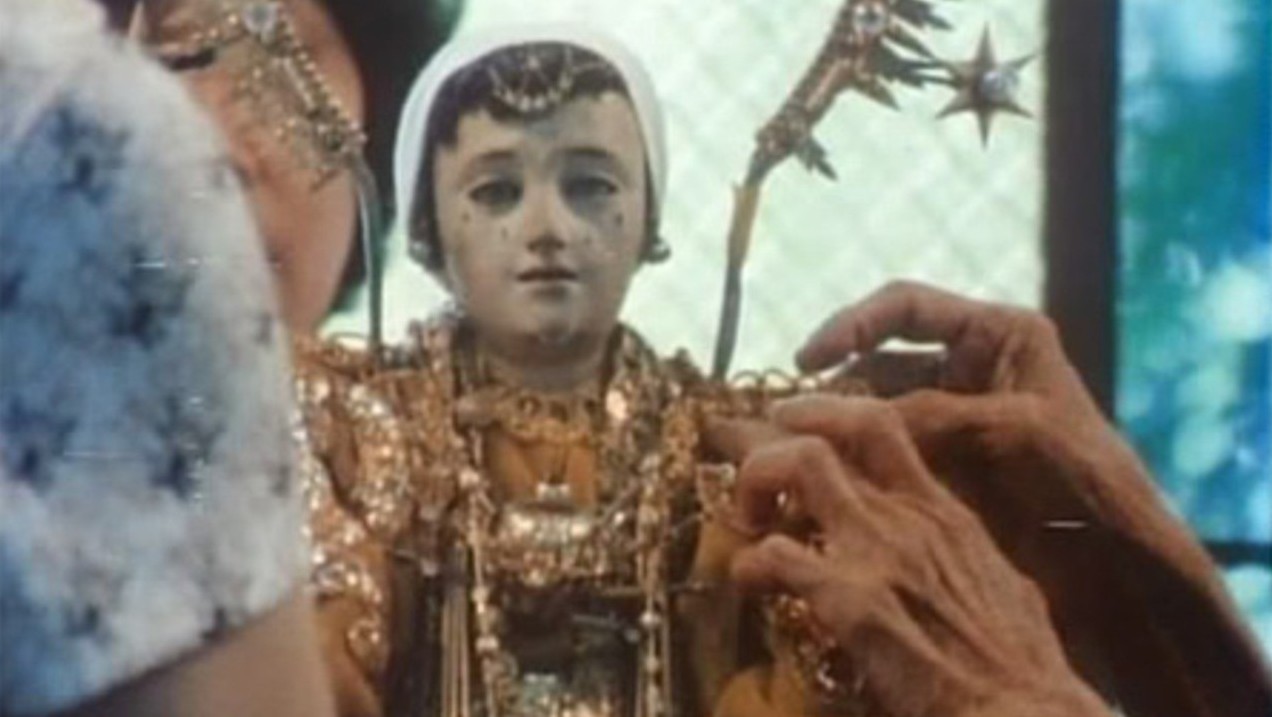
Little World is a triptych that begins in the 1950s Western Australian desert, as a sixty-something hermit named Orrin Bird receives a strange bequest from his former employer: the body of an apparent child saint, clad in antique finery and housed in a box made of tamanu (canoe timber). Where did this girl come from and why has her body never decayed? What does it mean for an assaulted child to persist, after death, as both symbol of protection and object of contemplation? The maybe-saint goes on, over the course of the novel, to touch the lives of two other outsiders: Matti, a 36-year-old woman driving two spoiled hippies across the Nullarbor Plain in the mid-70s; and Syb, a young woman grieving her lover’s departure in Covid-era Victoria. Along the way, we visit a Micronesian leper colony and a midcentury home for unwed mothers; learn about the incredible devastation wrought by phosphate mining on the island of Nauru; and experience the flickering, cosmic anger of the not-quite-dead girl’s consciousness. Little World is a slender, vast, visionary book about interdependency, predation, and the hunger for grace. It’s about the confounding experience of being a cosmic speck and yet still contending with what the saint dismisses as “the idiot anguish, the small stupid sorrow of the self.”
Rowe and I were Stegner Fellows together, and I once told her that her writing made me feel like a “galumphing Clydesdale” in comparison. Ten years later, not much has changed. I was so honored to correspond with her via email about her uncanny new work.
Mark Labowskie:Little World is about the traveling body of a saint who is revealed—very early on—to not be a “real” saint at all, but the body of a young girl, a victim of sexual violence, who has (for unknown reasons) not “corrupted.” But she is costumed and presented and perceived by the world as a child saint, possibly from centuries past, who has performed miracles. I’m curious what made you want to write about a “fake” saint?
Josephine Rowe: I really didn’t set out to write about saints. Or even maybe-saints. I came in with about as much knowledge of sainthood as Orrin has, where we meet him, and where we meet him is immediately out of his depth.
The book began and was contained in that opening image: a man in the Western Australian desert, waiting to receive the body of an alleged child saint delivered by horse float (horse trailer in the US). This image first appears in one of my notebooks in late 2018, and for whatever reason it keeps burning. Then, in 2019, a visit to the Kimberley region in Western Australia positively ignites it.
I really didn’t set out to write about saints. Or even maybe-saints.
From there on the writing was a matter of uncovering: where the girl has been brought from, what her brief life and the nature of her death has been, the inner logic or the “rules” of her phenomenal state, and what history these two people—both in different kinds of exile—could possibly share.
I knew that they were linked, that Orrin understands himself to be complicit in something he cannot and may never entirely grasp the long-term ramifications of, and that he is atoning for this, in his secular way, or at least opting out of complicity in further harm.
And I knew that the girl was not going to be as she appeared (so to speak; we don’t actually see her at that point) or as we might expect of a traditional saint, or the myths that amount to one.
ML: Is the book’s project—depicting the search for atonement or grace or protection in a secular way—at all related to what Matti later refers to Yeats poems as doing: “speak heterodoxically of God”?
JR: I wasn’t raised in any particular faith. How much is this book just the author hashing out her own questions about mortality? I think it’s more the author hashing out her ideas about relationality. In truth, I’m not particularly concerned by the idea of my consciousness winking out like a dead bulb. (Which is not to say that I’m not attached to my life. I am. But there’s also a general curiosity for what next, if anything.)
Pantheism and panentheism seem much more compelling than the autocratic, man’s-own-image, disappointed father God of most scriptures, and the need for the invocation of an afterlife—as reward, as punishment, as comfort, as control. Because isn’t what we live with and within already enough, already so far beyond our fathoming?
God in nature, the illusion of divisibility…the acceptance that there is probably no hereafter, or that the hereafter is here, in which our present selfhood will not be sustained. I’m interested in belief systems that recognize or at least allow for sentience, life force, soul (whatever we call it) in all non-human forms, and the interdependency and the flow between these. If the hereafter is here, then that redirects our accountability to here (Soliphilia, in Glenn Albrecht’s term), rather than some moral abstract, and along with that perhaps our units of measurement, beyond our own lifetimes or our kids’ lifetimes.
Ultimately, the book is—as I am—interested in the faith of the secular, the belief of the non-believer. Also, the courage and ingenuity of the ex- or the lapsed believer. Because it must take immense courage, and imagination, I think, to have access to the solace and structure and kinship of those answers, and to say, no, and to hand them back.
ML: The book focuses on three living characters—Orrin, Matti, and Syb. How did these characters develop? Did you think, on some level, who might be in need of interaction with a quasi-saint?
JR: I wrote the first and final sections simultaneously—reaching across about a 70–100-year span, with the sense that the book would be a triptych, but with only a hazy understanding of the intervening events that would connect them over time and space.
Some facets of a story arrive as vivid, fixed, audible. It’s a simple matter of transferal into language—while others exist as distant, indistinct intuitions. Sixth magnitude stars. You have to coax them into relief, tune them in like you would a radio, or like sharpening the focus of a lens.
Both Orrin and Syb—along with the saint—were already embedded in the landscape, part of the narrative firmament, and writing was a process of uncovering who they were to one another.
Mathilde was more of a rumor at that point and is the only character I wrote with any intentionality towards what might be mutually needed or recognized between herself and the maybe-saint. There was some question of experiential worthiness, in the echoes and mirrorings between their histories, of what kind of person would have had the life, the salt, to see or believe she sees through to the will of this stranded, aged child (without wanting to say too much more to this end—for all that it’s a book of atmosphere and immersion, it’s still spoilable).
I wrote Mathilde backwards, in a sense. As in, I met her old, or I glimpsed her, as others did—as the town and Sybil see her in the third section of the novel, somewhat foreshortened or abbreviated by the same pre-assumptions that hinder older solitary women everywhere. (Sexless, pastless, etc.)
Then I covered a lot of sleepless kilometers with her, travelling the 1970s insomniac Nullarbor highway from insomniac Omicron Manhattan, looking out at water towers and seeing drought-buckled water tanks…
ML: Early on, the not-exactly-dead girl thinks, “it’s best not to get too attached, to dogs or mountains, anything at all.” I thought about this statement a lot because the book’s human protagonists—Orrin, Matti, Syb—all seem to desire intense social isolation, living in rural areas with few traditional human relationships. And yet they are attached to things—to dogs, to trees. As you said earlier, you were interested in writing about relationality, the belief of the non-believer—how do those concepts relate to the question of attachments?
JR: I started writing [Little World] in 2019, so that was in the lead up to Covid and throughout the height of the pandemic, also in the tapering of. In that sense you could call it a pandemic novel, even though the on-page representation of that time is brief, something of a coda. I was clearly thinking a lot about the ways in which sickness shapes societies: in lasting structural, concrete ways, as well as interpersonally, our stigmas and fears along with our obligations to one another (to overcome those stigmas and fears).
Quite likely the isolation of that time contributed to those depictions of solitude, even in the non-contemporary sections of the novel. And the claustrophobia, the immobility, the lack of agency, the hearing for certain tactile experience…as we’re talking about it, yes, of course it must have. (Though at the same time, writing from solitary or marginalized perspectives is pretty on brand for me.)
In Syb’s case, that solitude is neither wanted nor sought after, and she feels her loneliness fiercely, as an abandonment (we never find out for certain whether that’s the case). But it’s a unidirectional loneliness: for her lover, Maree. As for the other people of the book, they’re not experiencing their aloneness in the same way, with the same discomfort, and perhaps would not even consider themselves as lonely, because, exactly as you say, they are keenly aware of and invested in their connections to the immediate, non-human world, and are striving to understand the nature of that entanglement.
I was clearly thinking a lot about the ways in which sickness shapes societies.
Perhaps Tilde might have once considered herself lonely but has grown into a self-sufficient and self-actualizing solitude. Solitude can be like that. An existential Type 2 thing. Perhaps uncomfortable or even agonizing initially, especially when not as we would choose it, but—beyond conditioning or resignation—it can become a preference, even a necessity. It opens up. You feel yourself backed into a corner, and at some point, you turn around and realize: Jesus, what a view.
In revisiting that final section during edits, I’ve sometimes wondered whether Tilde should be considered as a cautionary example, or an aspirational one.
ML: My favorite part of this book might be the passages evoking the incorruptible girl’s post-mortal consciousness: “her awareness is disengaged from human senses, is beyond human senses, but only so far.” There’s this human-but-not-quite-human demi-sentience that is unlike anything else I’ve read, and that to me is connected to the book’s interest in environmental devastation and the never-endingness of warfare and violence. Something about the steely tranquility of the narratorial gaze makes individual human striving seem less important than a termite mound. I wonder—did you feel as if you were writing in a different literary register than before, given the novel’s scope and concerns?
JR: That post-mortal or limboed consciousness of the maybe-saint, her demi-sentience (great term for it) is playing on the mind-body connection, that the body itself is a plurality, and the self we are so attached to is comprised of a multitude of entities we don’t entirely comprehend or are completely unaware of.
That narrative positioning and the embodied logic (of the maybe-saint) wasn’t planned as a device, but it does allow for a kind of intimate (occasionally ragey) omniscience, providing the book with its broader spatial and temporal framework, along with a vantage that renders taxonomy and clock-time as somewhat flimsy or arbitrary—the boundaries between things so fleeting and insubstantial as to be approaching meaninglessness.
As to whether I felt myself to be working in a different literary register than with previous works…I’m not so sure on that. I felt pulled along, beyond myself—out of depth, as perhaps all of the book’s people are—to decisions and directions that seemed outside my scope, which would steadily go on to make sense, knitting together in a spooky confluence.
I’ve had that now and again with other works. Perhaps what I do have this go-round is more conviction than ever about disregarding traditional narrative trajectory: the shapes a story may be expected to take, how characters are supposed to change, where they’re supposed to end up. Overcoming. Oh my god. Overcoming is just not available to everyone, and it doesn’t make those experiences less story-worthy. I’m interested in writing about those who are working within limitations, working with what they have.
Overcoming is just not available to everyone, and it doesn’t make those experiences less story-worthy.
We’re satisfied—or maybe I mean the industry is satisfied?—by a limited array of narrative configurations, and that bothers me, because they’re very often classist, reductive, and self-perpetuating, and I have no desire to reinforce that hardwiring, when as reader or audience I often find them insincere and unsatisfying, condescending.
ML: You mentioned to me—I hope it’s OK to share this—that you wrote Little World in the shadow of a bigger novel that you were “supposed” to be writing. Can you talk a little about your experience of writing smaller, stranger, less ostentatiously “important” works? What is your relationship to The Traditional Novel at this point?
JR: The other novel has kept, and will keep, I feel very sure of that. Some ideas have that patience and longevity. Others, if you don’t immediately drop everything and run with them, threaten to slip back into the idea place, wherever that is. LW was somewhere in-between, patient and impatient—it did come together over several years, often around the edges of other projects. But it reached a point where I felt that I couldn’t properly focus on anything else until I’d carried it through, regardless of whether or not anyone published it.
I suspect there’s a relationship between the pull towards shorter forms as a kind of inner, creative transience, and actual physical, geographic transience—which in both cases I think owes to a mix of restlessness and curiosity. (Also, less sexily, economics).
And while I of course read traditional-length, and traditionally structured novels, I do tend to gravitate more naturally towards shorter forms. I think I instinctively trust the integrity of a short book, the un-showiness of it, but also the conviction. Very likely the author has been urged, along the way, to pad it out a bit, and the author has clearly foregone that very commerce-oriented advice. Also, likely that the author is a poet, or has some flash of poet, and that always appeals. At the moment, I’m reading Anne de Marcken’s It Lasts Forever And Then It’s Over—which is actually another book about undeadness but striking a very different tone.
ML: Little World is also a deeply queer work. All of the main characters are queer working-class outsiders who survive in rural areas. How do you see the presence of the incorruptible girl—and the connotations of grace and meaning (“Wanting something to call Holy, call Hallowed, but without all the rest of the bullshit” in Syb’s words) that a seeming saint inevitably brings with them—as being particularly important to these solitaires? Is there less-trod queer narrative ground you wanted to explore in this work?
JR: I think of “queer” as such a wonderfully spacious and permissive term; big enough to run around in, to shift, to be a selves. If pressed to check a box somewhere, to define myself, it’s the term I feel most comfortable in.
But as to Orrin and Mathilde and Syb, there wasn’t a conscious or intentional link between queerness and the need for numinous guidance or presence.
I say conscious, as I’m not ruling out that a valid argument for connection could be made. But their sexualities weren’t a decision to that end—the central characters arrived as queer because that seemed true to character in each case, although not all of them might identify that way, given times, or insecurity, or reserve.
If there’s a line to be drawn perhaps it’s only inasmuch that in a book so concerned with dissolving arbitrary boundaries between people (and all else), reinforcing the idea of a sexual binary would be out of step. Although that’s possibly sidling closer to an even simpler why: that I just wasn’t moved to writing and reinforcing heterosexual sex and attachment—we’re so blitzed by those representations, as is. It wasn’t necessary or relevant here, to these people or this story.
I watch the sun-rays dance at the bottom of the pool, impossibly blue, and I dip my toes just to goosebump my skin, delighting in the light buzz of a carefree moment. Until, a bee.
She flies maniacally around my ankle, like she’s strapping an invisible rope to my leg. Every now and then she lands, perching on my skin, sniffing. She doesn’t find what she’s looking for, doesn’t stop looking either. I can feel her anger building. As she turns a corner around my heel, she jiggles her striped ass to warn me, Don’t move. Don’t move, or I’ll sting.
With bees, to raise a shield is to invite an all-out attack.
Her jiggly ass is equipped with a built-in weapon, always ready to pierce my skin with her venom. She seems more fragile than me, and in fact, is more fragile, weapon notwithstanding. But it is precisely her fragility that scares me. I’m scared to scare the bee. Between the two of us, I have to be the chill person. Because if I lose my shit, she loses her shit. And if she loses it, we both get hurt.
To be fair, I get hurt; she dies. Arguably, she’d have it worse. But I would be doomed to keep on living, now with a throbbing toe and the feeling of guilt over the bee’s death.
Had you been chill, this bee could’ve lived another 37 days, my pillow will whisper at night.
A BEE STORES VENOM IN HER BODY
Like a bee, my mom kept her anger inside, always an instant away from discharging, but never discharging, until it did. It shot out in my direction, a venom-filled spear lodging under my skin. The anger was hers, but its management was mine. It was my responsibility to predict and avoid her breaking point.
BEE VENOM IS DEADLIER THAN COBRA VENOM
When snapped at by my mother, my instinct wasn’t to snap back, but to calm her down with a note.
My siblings and I were emptying mom’s house so we could rent it out. Cupboards were gutted, boxes were opened, dusty piles of paper were lifted, all sorts of memories surfaced. From a drawer spilled a heap of recipes and postcards, and underneath them, a crinkled note. Unfolding it, I recognized my wiggly handwriting in colored pencil. At the top of the page there was a heart, and at the bottom, the date: August 21, 1990.
Mommy,
I like you a lot,
and never want you to talk like this:
“I hope you die.”
Because I adore you.
Keep this card.
Bye
I imagine it’s not uncommon for a mom of a six-year-old to wish her kid dead, in that split second that separates her exhaustion from her consciousness. A wish that dissipates almost before it exists. What I cannot imagine is this wish making its way into words, and being shot out at the child. I can’t imagine six-year-old me being pierced with that sentence.
Yet I must’ve been, because the venom from that day is still stored in me. That explains how my body now, thirty years later, reacts to otherwise harmless interactions. It explains the swelling in my throat when the person behind me on the sidewalk harrumphs. Or the sudden redness on my skin when the cashier taps her fingers. Or the nausea when the Uber driver growls. My veins carry the conviction that I am to blame for anything that erupts, especially other people’s temper.
After all, if my mom was so often so angry around me, the reason must have been me. I must give off a smell that awakens people’s rage; people’s rage, in turn, is a sign I may be in serious danger.
Already at six, when snapped at by my mother, my instinct wasn’t to snap back, but to calm her down with a note, a heart, an adore-you. Already at six, I knew that if I lost it, she’d lose it. And if she lost it, we’d both get hurt.
BEES HAVE SILENT WAYS TO COMMUNICATE
A rice bowl was passed around the table—along with the beans and the farofa—between my parents, my siblings, and I. Everyday menu, everyday conversation. Until my mom mispronounced the word CD-ROM, her tongue crumpling as she spit out a rolled R. The shiny discs, along with their acronym, were just arriving in Brazil, were alien to her, fluent neither in English nor in computers. I laughed at her pronunciation, the mean yet innocent laughter of a ten-year-old who was as young as the foreign machines; too young to consider there had ever been a world where words like modem mouse microsoft weren’t part of the Portuguese language. I laughed; she left. She stood up mid-lunch and locked herself up in her room. A reaction by then so familiar, I saw it in slow motion: the chair scratching the floor, the stomping, the slammed door, the silence that followed for a whole day. After she left, the whole family turned to me with a head-shake. You should’ve known better, I read in their bugged-out eyes.
I should’ve known she was so fragile; her fragility stung.
A BEE MAY BE UNABLE TO NOTICE A FLOWER JUST INCHES FROM HER
But she will notice every microscopic bump on the surface of a petal. Bees are peculiar in the way they read the environment around them. My mom, too, would sometimes disregard the larger picture and get hung up on the slightest detail. Her anger wasn’t fueled by long traffic jams or high interest rates, but by a misplaced laughter.
BEES ARE DEFENSIVE
My mom would never—has never—apologized. So I did, every single time.
A Fanta bottle was sitting on the table, halfway empty, its ribbed glass opaque from wear. Tiny me was looking at it, my legs dangling from the chair. The sun snuck in from the side and drew a yellow triangle on the table top. All was peacefully golden. Until a bee landed on the bottle’s sticky mouth. I freaked out, arms flailing. From above came a soothing voice, one of the adults explaining the trick was to sit still: The bee won’t do you harm unless she feels threatened by you.
On that day, I began to understand that my safety depends on how I make others feel. I can’t recall how old I was, and whether that was a new lesson, or a recap.
THE QUEEN BEE SETS THE MOOD OF THE HIVE
My house had a heavy wooden door that protected us from outside danger. I opened and closed this door, never giving it much thought. My biggest concerns were MTV and PMS and ICQ. Until my father, my brother, and my sister all walked out that door, within months of each other. One divorce and two marriages, and over the winter we went from a five-person household to a household of two: a teenage daughter and her fragile mother. Danger was now inside. I’d been left alone with the bee.
Every night, and sometimes all night, my mother and I had agonizing fights. Those fights bled into the wee hours, zig-zagging between accusations, until it wore us down and we simply split to our bedrooms. Our arguments had no resolutions, only respites. We lived in a permanent close-up of the microscopic bumps on the petal: she got worked up if I went out or if I stayed in or if I talked or if I was quiet or crying or laughing or nothing.
After those fights, there’d be the expected scratched floor, the stomping, the slammed door—but things wouldn’t get any better after she left her bedroom. In the following mornings, a dark cloud hummed over the house. We avoided the subject and we avoided each other’s eyes, until the hum became too loud to bear, and only an I’m-sorry punctured that hum. My mom would never—has never—apologized. So I did, every single time.
I can only take so many apologies, she often said. Once I give up on a person, there’s no turning back.
I sensed I was always treading too close to her breaking point. At every fight, I prayed it wouldn’t be the last. The last fight, I feared, wouldn’t end the conflict; it’d end the relationship.
A HONEYBEE CAN ONLY STING ONCE
But unlike a bee, my mom could sting over and over. A bee’s stinger has blades like a screw anchor—once in, it can’t be pulled out. It’s attached to the bee’s lower abdomen, and if she flies away from the victim, the stinger stays, and with it a string of her internal organs. She stings; she becomes hollow; she dies.
A BEE CAN STING ANOTHER BEE TO DEATH
A quiet truce—or rather a tense silence—followed our previous fight, as it did all our fights. The morning-after was made of our ghosts, exhausted, gliding through the house, eyes glued to the floor. Until I stirred up the hive by saying I was sorry, I—
Do you know what it’s like to taste a gun with the roof of your mouth?
Her question pierced me. I was fourteen. I held the hem of my oversized t-shirt, frozen by her confession. This time, it was not me she wished would die, as she had when I was six. It was herself.
Much like when I was six, nothing happened. She didn’t find the courage to do it. But like I’d recorded in that note, in my childish handwriting, she’d found the courage to say it. She wanted me to know she’d put a gun in her mouth. She wanted me to know what followed the scratching, the stomping, the slamming; what went on inside her bedroom, inside her mind.
And she wanted to remind me I had provoked this. I’d either cried or laughed or moved in a way she wasn’t expecting. Careless, I had released her anger. She lost it, I lost it. We both got hurt. Only this time, what had been a sting to me, could’ve been her death.
She wanted to warn me. I have a weapon. Don’t make me feel threatened. Don’t make me feel threatened, or I’ll sting. And die.
BEES REMEMBER
Under the fluorescent light of a university lab in London, a scientist called Lars was placing robot-spiders on certain flowers. If a bee landed on those flowers, the robot would grab her and then release her unharmed. The bees, Lars learned, could keep a memory of the encounter, and so they started inspecting the flowers for robot-spiders before landing. Some of them, though, started not only avoiding the actual threats but also avoiding flowers where there was nothing. Scared by false alarms, maybe by alarms ringing inside their own minds. The bees, Lars learned, can develop PTSD.
BEES CAN BE TRAINED TO SMELL EXPLOSIVES
After the gun conversation, whenever my mom hurt me, I knew better than to respond.
After the gun conversation, whenever my mom hurt me, I knew better than to respond. I did my best to appear innocuous. I dropped my shoulders, I wore my most tamed voice, I rushed an apology; my mouth spilled nothing but honey. Still, every time I came home from school or from the pool, I froze with the possibility I’d done something wrong, irreversibly wrong.
Had you been chill, your mom could’ve lived another 37 years, the front door whispered every time I slowly pushed it open.
ANY FEMALE LARVA HAS POTENTIAL TO BECOME A QUEEN BEE
I’m talking about my mom in the past as if she died. She didn’t—not from suicide, not from other external threats. She lives a quiet life, wandering along the flower beds of a nursing home, her inside hollowed out by advanced-stage Alzheimer’s. No stingers left now that words have lost all meaning to her.
That’d be a great time for forgiveness, say friends and therapists. The fighting’s finally over; my mother’s finally harmless.
They ignore that certain harms cannot be contained in the past. Stored in our bodies, harm seeps into the present, will eventually seep into the future. Though her venom has dried, I’m not free from it. Her rage is still here. It lives inside me, in my own stinger. More often than I’d like to admit, I find myself replicating her fuckedupness. I, too, have become an angry woman. I, too, expect others to manage my anger.
I want to yell at the bus driver who’s stuck in traffic. I want to yell at the lifeguard who does nothing about the rain on a Sunday. I yell on the phone that I need my package delivered now, while on the other end the robot repeats, unmoved, that I can press one to schedule a pickup or two to track a shipment.
I went from sucking on guilt at fourteen to regurgitating it at forty.
BEES ARE CREEPY
I watch the shadows of the monstera leaves dance on the ceiling, a lazy feeling, and I let some Brazilian jazz softly pour onto the living room floor. My husband sits across from me, and between us there’s just our Manhattans in stem-glasses, our sweet banter, the occasional laughter.
Until.
Suddenly, the living room is buzzing with tension. Leaning forward, I’m spitting out barbed words. I can see my spite already piercing through my husband’s skin. He must’ve said or sighed or whispered something, and I’ve yanked out all my rage in his direction. I feel hollow, dead almost, but there’s nothing I can do to stop my venom from spilling now. I have no idea how to contain my anger. My husband, shrunk in his seat, is distressed yet striving to keep chill. Behind his dilating pupils, I can see the exact words he’s thinking.
If I lose it, she loses it. If she loses it, we both get hurt.
I cannot think of Chinua Achebe’s Things Fall Apart without thinking about yams. So when one of the students in my Global Cultural Studies class mentioned yams as one of the main intrigues of the novel, I nodded and laughed. Yes. Great point! For Achebe, yams were not just a convenient plot device; they reflected the way his characters saw and understood the world. In Igbo culture, the harvest of yams is immensely symbolic; it charts the rhythm of the year, almost like a calendar, and it signifies the blessings of ancestors.
In my debut novel, This Kind of Trouble, a story that spans an entire century, I attempt to create a similar narrative motif using the Uchu river. Essentially, the river is my way of enacting what Achebe does with yams—a cultural homage that draws on an object’s spiritual and social connotations while refusing to get bogged down in anthropological explanation. This native-object symbolism is one of the many things I picked up from Achebe—a sense of cultural attunement that helps my story find historical texture without being overburdened by historical facts.
I am often drawn to these questions of tradition and lineage in craft, what T.S Elliot described as the way a writer carries in his work, the “presence of the past.” When I pick a book I love, especially a book by an African author, I want to know the ghosts of our literary elders lurking behind the pages. This is not a simple undertaking, it leads me to struggle with other questions, such as, what it means for the African novel to sing with the voice of its dead while being written in a language that has rendered its ancestors marginal to the Canon. While it’d be correct to say that I owe a lot to Hemingway and Updike—and especially to Morrison, and Marilyn Robinson—I owe much more to the golden age writers of African descent who brought their alienation and placelessness into literary form. The writers I claim here are not defined by geographic or national boundaries, since the idea of a homogenous Africa is itself a fiction. Instead, I embrace a literary archive of shared colonial histories, currents of Black Atlantic world-making, and diasporic relations to the continent. Many of these writers—from Lagos to Antigua, from Achebe to Selvon—worked within and against the Western canon in a language that was either adopted or imposed. Without references or frameworks, they wrote characters that were seemingly unrepresentable. It is in the work of these early novelists, in their legacy that This Kind of Trouble found permission to be itself. In honor of these elders, this list collects some of my favorite contemporary African novelists and puts them in conversation with the older African-Atlantic literatures they call to mind.
Bankole’s debut novel reads like a soulful meditation on fate, ruptured ambition, and the inevitability of endings. It follows the lives of three women, separated across generations, and a prophecy that appears to seal their destiny. Moving from Ibadan to New Orleans, America morphs from its promise as a place of reinventions to a place of fragmented returns. What I love most about The Edge of Water is the way it echoes with Yoruba traditional lores, the inescapable weight of the supernatural on the lives of its characters. It is a deeply moving novel that draws on the epistolary form and explores the domestic sphere as a site of gendered suffering and disillusionment in a way that reminds me of Mariama Ba’s 1971 novel, So Long a Letter.
Sarr’s meta-literary novel follows a young scholar turned novelist as he becomes obsessed with a fictional writer, T.C. Elimane, a mysterious literary genius who seems to have denounced literature and then vanished. I don’t think of Sarr as an upcoming talent—he’s already won France’s most prestigious literary prize—but I include his work for its intellectual scope, and the way it grapples with this question of African literary lineage. His prose moves from confessional intimacy to historical digressions, and his self-reflective style and philosophical treatise are reminiscent of J.E. Casely Hayford and his 1911 novel, Ethiopia Unbound. While Hayford, like many writers of his time, was more occupied with political emancipation rather than literary survival, he and Sarr share a sharp eye for dialogic discourse and meta fictionality.
In Ibeh’s Blessings, we follow Obiefuna, an adolescent coming to terms with his queer identity through a string of charged, often transgressive relationships that occur in his home and seminary boarding school. As the novel builds towards its critique of the 2014 anti-gay laws in Nigeria, Obiefuna must reckon with the cost of existing in a society that criminalizes queer desire. Ibeh’s bildungsroman reminds me of Tsi Tsi Dangarembga’s 1988 Nervous Conditions, which dwells in the same quiet, compelling interiority of a young protagonist who, in Dangarembga’s story, must contend with the small betrayals of a family insistent on defining her place in the world.
Esther Okonkwo’s debut, The Tiny Things Are Heavier, follows Sommy, a woman who has just arrived in Iowa for graduate school. Her early brush with America has none of the usual wide-eyed fascinations that grateful immigrants have. Instead, Sommy carries the weight of a relationship rupture; her brother, recently deported from Norway, has attempted to harm himself. This familial uncertainty sends Sommy careening into desperate sexual encounters, first with her roommate Bayo, and then her boyfriend, Bryan. The novel carries a particular Nigerianness in its dialogue, and this in turn gives it a spirited nostalgia. It reminds me of the 1977 novel Our Sister Killjoyby Ama Ata Aidoo. Where Aidoo’s protagonist, Sissie, is sharp-tongued and more lucid in tracing the mires of the African condition abroad, Okonkwo’s Sommy carries a quiet, understated mode to carry out her exploration of young womanhood and the search for her place in the world.
At forty, Jacob, handsome but unmarried, still lives with his father. Nnuro’s What Napoleon Could Not Do, a braided narrative about immigration and the trope of the American dream, draws from Jacob’s endless rejections, the latest of which is his failure to secure a visa to join his long-distance wife in America. It also turns to his sister, who lives in the U.S. but has spent a decade awaiting a green card despite being married to an American citizen. I especially love Nnuro’s shimmering use of irony and quiet humor to tell this story. Jacob’s arc calls to mind V.S. Naipaul’s 1961 novel, A House for Mr. Biswas, another portrait of a man seemingly thwarted by the circumstances of his birth. Nnuro shares Naipaul’s eye for weaving local lore into the everyday life of his characters. His dialogue, especially between Mr. Nti and Kwame Broni, is wicked, sharp, and a dazzling reminder of Naipaul’s brilliance on the page.
Khan’s novel has been described as spooky and gothic. It follows Sana—who describes herself as “un-mothered”—as she and her father move into a strange, haunted mansion in Durban. On the surface, it is a ghost story about a grieving Djinn and Sana’s discovery of the mansion’s long buried secrets. But at a deeper level, it is a story of loss, absence, and the unfinished work of mourning. Dead are everywhere in the novel’s landscape: a dead sibling taunts Sana, the Djinn follows her around, and the mansion itself—decrepit with its fluttering bulbs and broken plumbing—creates an underworldly aura. Khan adds a cultural and emotional specificity to gothic tropes that makes the novel particularly relevant in an African literary archive. I think of the enduring legacy of Amos Tutuola’s The Palmwine Drinkard, a 1952 novel which subverts the natural order of place-making and imagines a world where humans and ghosts can exist on the same terrain, one in which the supernatural is not a departure but a way of unearthing the secrets of the natural.
In Nigeria, madness is not always understood through a clinical or diagnostic lens. It can be a kind of colloquial shorthand, a way to capture misbehavior or everyday excess—wanting things that are just beyond reach, leaning towards the impossible, even the absurd. Uche Okonkwo captures this sentiment beautifully in her collection, A Kind of Madness. Her characters—a young woman with dreams of an international marriage; a boy hoping his family will adopt a chicken; teenage girls navigating the excitement and pessimism of puberty and boarding school—are piercingly perceptive, yet ordinary people. Okonkwo brings a sharply ironic clarity to narrating her characters that remind me of Annie in Jamaica Kincaid’s Annie John. It’s that piercing gaze of youthful innocence as it watches its personal world collapsing around it. This is a book to cherish.
Electric Literature is pleased to reveal the cover ofFat Swimby Emma Copley Eisenberg, which will be published on April 28, 2026 by Hogarth. You can pre-order your copyhere.
An electrifying collection of linked stories following a cast of characters navigating bodies, queerness, power, and sex—with radical results—from the bestselling author of Housemates.
With a brash and stylish voice that implicates and confronts the reader, Emma Copley Eisenberg wades into the contradictions, joys, and violence of a modern world shaped by looking and watching, examining how our hungers can both hijack and crack open our lives. In the title story, a young girl looks to a group of fat women at her local pool to teach her about her changing body. In “Swiffer Girl,” a woman agrees to try for a baby with her partner, only to suddenly find herself haunted by the viral sex video that made the rounds during high school—a video indelibly tied to her own sense of self. In other stories, an obscure fat makeup vlogger’s strange friendship with a middle schooler forces her to reflect on her past life at a toxic beauty startup, a boomer retiree tries to understand her nonbinary child’s gender and polyamory, and a trans librarian takes a job as assistant to a famous science fiction writer only to find himself screening hookups on his octogenarian employer’s behalf.
For better or for worse, these stories counsel, none of us can leave our bodies behind: they remind us what it is to be alive. As the characters in Fat Swim dance into and out of each other’s lives—and through and around Philadelphia—they seek connections and experiences that remind them of that fact, culminating in a reality-bending, tour de force finale, “Camp Sensation.” Eisenberg, whose fiction “should be studied by every contemporary author as the finest departure from the fatphobic hellscape of fiction that exists” (Electric Literature), has a singular vision, and Fat Swim is her most incisive and provocative work yet.
Here is the cover, designed by Elena Giavaldi:
Emma Copley Eisenberg: I’m absolutely in love with this cover. The large yellow inflatables are joyful but also a little unsettling, suggesting the ways that what is inside our bodies is always straining to get out and could pop at any moment. Pools and water are a strong presence in this book, offering buoyancy and respite but also the threat of exposure and drowning. It’s a layered cover that offers both brightness and despair, possibility and constriction, which feels very right for the characters in Fat Swim.
Elena Giavaldi: When I started working on the cover for this collection of stories, I first gathered input from the author, who had a strong vision. She imagined a bright yellow, or possibly a yellow-and-blue combination for the cover.
I knew the design needed to feel bold and a little edgy, just like the stories themselves, so I explored both typographic and photographic directions. In the end, we went with a typographic approach, using a painting by Lynne Jones for the background—the texture of painted water felt more dynamic and visually engaging than a photo.
To contrast the painterly texture, I used a bold, inflatable-style font for the title, paired with handwritten type to bring in a more personal, human touch. This was a fun and challenging project, and it was really rewarding to find the right visuals that brought the author’s vision to life.
For us, it’s over the moment that energy companies learn how to burn history. I won’t pretend to know how it works, no matter how many times you explain about “massive potential energy stored in past events” and “low boiling points in metaphysical space.” We’re told it’s cleaner than nuclear, solar, wind. Maximum impact, minimal consequences. Who needs to know whether life originated in deep-sea vents or shallow ponds, anyway?
In the metaphysical realm, companies keep samples of everything they burn “just as a safety precaution,” like we don’t all know about the dementia-riddled geologists, and you—you get me an Archivist job. Which I’m grateful for. On my first day, you kiss my nose beside the huge, gloaming portal before hurrying to a press conference a few floors up, your sneakers squeaking. I watch the recording after I clock out, since there’s no 7G in the domain of first principles. You lean into a horde of microphones, addressing what we privately call the “Marty McFly Fallacy” for the umpteenth time. The past has already happened. We aren’t going anywhere. Even on the tiny phone screen, your eyebags are enormous. Reporters argue with you like they know anything. Tonight, you’ll hurl a plate against the linoleum and apologize before the shards stop spinning. It’s okay, I’ll tell you, reaching up to wipe your tears. Forget about it.
Back when we were younger, we argued a lot (was my Classics degree useless, should you take that Tokyo post-doc) and fucked even more. Now, the energy’s flowed out of us. We snuggle on the couch in the dark, and I wonder if the CEOs and CFOs and C-who-knows are aware that their pet Nobel physicist devours Love Island. They expect new miracles during every walkthrough, like you aren’t the woman who set history alight to keep us warm.
If everything goes tits-up, you say when neither of us can sleep, We’ll release the archived material, and everything will go back to normal. Probably. I listen to your fast-beating heart, let the “probably” pass. You’re still a scientist, even if you use much more definitive language at press conferences.
My commute from the Meta-1 archives takes two hours, the first navigating shadowy interstitial spaces, the second nudging the car through traffic made dead-silent by chronobatteries. By the time I get home, most of what I labeled and boxed and shelved that day goes blank, though trilobites’ calico-striped shells emerge in quick gleams. While lifting spaghetti, I recall tentacles spooling around my wrists, a coworker wrestling Goniatites bohemicus into its crate, and I think of a joke to tell you: Not looking forward to Allosaurus! But it’s gone once you come home, and you’re tired again anyway. We spoon on the couch. Onscreen, another dating show host laughs, his teeth sharp. The Allosaurus joke resurfaces. I share it, eager. The TV’s changing light flickers over your frown. You’ll be long-dead by the time we hit the Jurassic. I would disagree—two years ago, we were shaking Snowball Earth’s ice crystals into envelopes, and now everyone’s booking overtime for the Cambrian Explosion—but I don’t remember this until I reach my desk the next morning.
If all of Earth’s history were a 24-hour clock, humans would only appear in the last twenty seconds. The companies say it like it’s comforting, but inside the archives, we’re glancing at our watches, running calculations. 9:38. 9:39. Outside the archives, people are comforted. We’re always just seconds into the day.
In the twilit interstices, we smell smoke, hear turbines churning. Time passes. Nothing changes. My officemate’s daughter has a soccer game on Saturday.
I never remember forgetting. I stumble out of the portal, whole, and then, I crumble. I’m driving home to cook dinner. You’ll be there late. You’ll fall asleep midway through an episode, and I’ll study your face, pale in the TV’s glow like a beloved’s death mask. In natural history museums, all the bones are still there, but guests’ eyes slide past. Once, I call you as soon as I emerge: Maybe we should release some archival material? I hear a keyboard clacking, and you say, What? Why? And I know it has something to do with old bones, so I say, Do you remember that summer I volunteered with the natural history museum? And you say, God, that was boring, and I lose the thread and say, I guess so. But on Monday, I think of our midnight picnic beneath the Mosasaur skeleton, and I sob in the archive’s angiosperm wing.
In the end, it’s a Hylaeosaurus that deals the first fatality. I don’t know the species exists before that day. It’s the first thing I’m glad to forget.
I am grateful for the job, I tell you. I am. But I think you should come in and see the archives for yourself. You refuse—too busy. A week passes, and I ask again, and again, and again. Stop putting this off! I snap. You look at me with distant disgust. You can’t expect me to remember everything.
Appalachia. Water bears. Mycelia. Moss. Ferns. Tiktaalik. Amniotic eggs. Gingko trees, magnolia flowers. Mosasaur. The furcula’s gentle swoop. The K-T line’s bright quartz. Purgatorius. Eohippus. Lucy and all her kind. Footprints in soft clay. Ochre pigment. Seed-gathering. Bone-setting. Burial practices. Dogs. Weaving. A line from Sappho over my desk: Someone, I tell you, will remember us, even in another time.
Remember this: on our first date, you asked the waiter for a pen and tried to diagram spontaneous processes on a napkin. We were both drunk already, impatient undergrads, frustrated but giggling as equations escaped you. Happy hour margaritas melting into lukewarm juice. Freezer-burned tropical fruit, tequila’s gasoline sear. At some point, you give up on the napkin, scrunch it into my hand, hold your sweaty fingers over mine. You tell me about endstates, thermodynamic equilibrium. You say, Entropy is highest when nothing can change. You say, Sometimes there’s no going back.
As a child in Brooklyn, my spirits rose and fell on the tides of a girl named Susan’s moods and disposition. We met in 1958, when both of us were three, our mothers both pregnant with unwanted (by us) younger siblings. We were inseparable—soulmates, I would have said, if I’d known the word—for years. Eight years, to be exact. And then my family moved a half-mile away, into a different school district.
Susan was only the first of a lifelong parade of best and near-best, second-, third-, and close-but-not-best friends (I often maintained a deep bench). I think about them all, whether we’re still close (Hula) or not (Ronnie). Whether we are still in touch or not—whether they are still alive or not. I think about them all—Maria, Amy, Vicki, Debra, Marly, Kathy, et al.—far more often, and with far more feeling (sadness, gladness, longing, love, regret, nostalgia—and, in one case, hurt and grief) than I think about any of my ex-boyfriends.
The truth is that even in my youth—my boy-crazy teens, my heat-missile-seeking 20s/early 30s—my friendships have always been more crucial to me than the romances that came and went. These were the relationships I knew I could count on (until, once in a while, I couldn’t—and then it was more shattering, and harder to get over, than a failed romance). It’s no surprise that I have gravitated all my life to good stories that center friendship. Or that I’ve been writing about friendship since before I published my first story in 1979. My latest book, the essay collection If You Say So, is dedicated to the friends who’ve come into my life in the last decade. It is also populated by them—a whole community that I lucked into in my 60s, a time when it’s supposed to be practically impossible to make new friends. The title essay is about one of them. Others sweep (and spin and leap) throughout. (This is not a metaphor. We take dance classes and perform together, and much of the book takes place in the dance studio.) And since stories about women’s and girls’ friendships—unlike those about romantic love—are not a dime a dozen, here’s a list of books in which it’s friendship that matters most, in every decade of a woman’s life.
I’m cheating a bit with this first one, as the Treasury includes all four of the first books in the Betsy-Tacy series—four of my favorite books of all time. Written in the 1940s, set in the last years of the 19th century, the depiction of friendship may be the most accurate, authentic, loving, nuanced one I’ve ever encountered. In these first four, the girls are five through 12 years old. The books chart their adventures and discoveries—their imaginative play, their lives at school and at home, their differences in temperament, the way they help each other understand the world. Light on plot, rich on characterization, insight, and emotion, these semi-autobiographical novels include moments of gravity and great profundity–including a scene, late in the first book, that dares to reckon with a child’s death. It’s a scene I’ve returned to again and again over the years–it is that beautiful, generous, and comforting.
This extraordinary novel is narrated by the now-adult August, an anthropologist whose research on customs and practices around death takes her all over the world. The slow reveal of her mother’s suicide by drowning, nearly three decades before—and August’s yearslong refusal to believe that her mother is dead—gives the book its shape; the story of her friendship with Sylvia, Angela, and Gigi—four Black girls in 1970s Bushwick holding onto one another for dear life—is at the book’s heart. The narrative weaves in and out of past and present, circuitously tracing August’s childhood from its start, on a decaying family farm in Tennessee—and the coming undone of her mother after the Vietnam war death of her sensitive, artistic brother, August’s Uncle Clyde—through the move to Brooklyn and the years August spends growing up there, “sharing the weight of growing up Girl” with her three best friends. In terms of pages, August and her friends’ teenage years are a small part of this slim, lyrical novel, but they are the book’s focal point, and it is only after the intensely close friendship between the four girls comes to an abrupt end when they are 15 that August acknowledges her mother’s death. (The novel opens with the line, “For a long time, my mother wasn’t dead yet.”)
Absolution is a looking-back novel, too, but of a different kind. It’s mostly written in direct address, as if in letters—or one very, very long letter—by Patricia, to the daughter of a woman who had been her friend six decades ago, when they were young wives and “helpmeets” in Saigon: two white American wives—Patricia, naïve, newly arrived, desperate to have a child, and haunted by an earlier friendship, and Charlene, careless mother of three, recklessly determined, driven by what she fiercely believes is altruism. The narrative, in the first and third parts of the novel, is such that one often forgets Patricia is writing to anyone: whole scenes unfold, in vivid and eventually searing detail, along with Patricia’s thoughts and feelings at the time. The periodic reminders (“the little girl, of course, was you”) serve to gently turn what might have been a more conventional first-person narrative (not that there’s anything wrong with that) into something warmer and more intimate. The epistolary form also complicates the narrative’s intention, as Patricia’s feeling about Charlene—then as well as now—are complex and contradictory, and her avowed purpose in telling this story to Charlene’s daughter Rainey is to help her understand her mother. (The middle third of the book is from Rainey’s point of view.) The story Patricia tells is, as the title suggests, one of absolution. But it is also about friendship—the way it changes us, the way it reverberates long after it is over.
In Their 30s
Still Born by Guadalupe Nettel, translated by Rosalind Harvey
The friendship between Alina and Laura in their mid-30s, in Mexico City, is rendered through Laura’s eyes. Part of what has long united them, as other friends from their 20s have fallen away, is their shared conviction that motherhood is off the table for them. When they come to what might have been—what the novel prepares us to expect to be, and what at first seems to be—a crossroads that will separate them (Laura reveals that she’s had her tubes tied—a decision made final; in return, Alina confesses that she has been trying to have a child), Laura surprises us—she surprises herself—by ultimately drawing closer to her friend. What follows is a deeply moving, subtle, and engrossing portrait of a friendship that sustains the two women in it, even as each of their own lives are challenged, even as they find themselves changing in ways they could not have foreseen. Alina’s storyline made me think of Heather Lanier’s beautiful memoir, Raising a Rare Girl(which I recommend as an excellent companion read to Still Born), and the story that unfolds in parallel to it, of Laura’s growing attachment to the troubled child of a neighbor who is too depressed to properly care for him, is so unexpected yet believable and affecting, the empathetic energy that’s generated makes reading this novel a transformational experience.
Here’s an outlier: a memoir, not a novel. I had to sneak it into this list because it’s one of the best memoirs I’ve ever read, and the only book I know of, in any genre, that does full justice to what having a best friend in middle age can be like. Caldwell was in her 40s when she met the writer Caroline Knapp (Pack of Two, Drinking: A Love Story, and other books—all of which are also well worth reading), and the two women—and their respective dogs—fell deeply in friendship-love almost at once. Caldwell writes: “Apart, we had each been frightened drunks and single women and dog lovers; together, we became a small corporation.” The two writers are inseparable: ferociously, determinedly independent women, devoted to their dog companions, holding onto one another for dear life, in continuous conversation. We know from the start that Knapp’s death (far too young, from stage IV lung cancer) is coming: the memoir opens with this information. Yet when the narrative brings us to her diagnosis, the blow is devastating. This chronicle of a once-in-a-lifetime friendship—in a way, the Platonic ideal of friendship—is imbued with so much tenderness, drawn with such lyric precision, it is something like the prose equivalent of a love sonnet.
This is a short, fierce novel sharply focused on a friendship (just as Nunez’s previous novel, The Friend, was). The two women in What Are You Going Through, both writers, are at the tail end of middle age—rough waters for us all. They have been friends for a long time, but it is only now that they’ve become particularly close—so close that one of them, who’s dying, asks the other to help her die, to go away with her and stay with her until she’s ready to take the pills that will end her life before cancer takes her “in mortifying anguish.” The narrator (of most of the novel, I hasten to say; there is a brief, wry, utterly perfect first-person account by a cat of its early, terrible life) reckons with the knowledge that saying yes and saying no are both morally perilous. Empathy, love—friendship—wins.
Now we’ve reached old age and we must brace ourselves (I just turned 70 myself; I’m happy to be your navigator). If the 50s and 60s are still euphemistically called “middle age,” there is no fooling oneself in the seventh decade of a life. Now we are old, like it or not. The friends in The Weekend—Jude, Wendy, and Adele—gather at the beach house that belonged to a fourth friend, Sylvie, who has died. They are in mourning and in full Marie Kondo-mode as they clear out the house, at the same time releasing long-buried old grievances against one another, but they are also worried about their careers, their bodies, lovers who won’t text them back, children and childlessness—in short, all the same preoccupations of women decades younger. This novel came out in 2020 and it thrilled me—I read it in the early days of lockdown, grateful for the company of women older than I (I had just turned 65), pleased beyond measure that these women and their friendship were being given their due. I’d never read anything remotely like it.
Until two years later, when Dark’s novel was published. It’s a very different kind of novel—a thick, sprawling one that grounds big philosophical, political, sociological, and psychological ideas in individuals and tackles its big subjects in dramatic ways (there is a big plot to match—not usually my thing, but in this instance it captivated me). What it has in common with The Weekend is how seriously it takes its main characters, Agnes and Polly, who have been friends for 80 years—since they were babies. There is nothing sentimental or cute in the portrayal of either their relationship or their old age. Agnes is a solitary, never-married, irritable, famous writer of children’s books with a secret identity as the author of a best-selling series of novels skewering the thinly disguised women of her social class—a feminist and conservationist who has been seething with anger for years at her friend, Polly, whose devotion and attention to her husband, Dick, infuriates her, both on principle and because Agnes wants to be (don’t we all?) the most important person in her best friend’s life. There are too many complicated plot lines to describe (trust me: they’re fascinating), but a secondary pairing—a cross-generational friendship that develops between Agnes and an indomitable 27-year-old editorial assistant named Maud—is a powerful force in the novel too. And just as in the great novels of the 19th century that I love most—Middlemarch and War and Peace and Anna Karenina—everything, remarkably, comes together in the end.
No round-up of books about women’s friendship would be complete without this one by Lore Segal. Brilliant, witty, fierce, full of surprises, this book was published a year almost to the day before her death, in 2024, at 96. (Full disclosure: Lore Segal and I were longtime friends.) If you don’t know her work, I urge you to read all of it, but there’s no reason not to start with this final collection, most of which is about a group of friends, now in their 90s, who’ve been close for decades. They meet regularly for lunch, where they tell each other everything. “We are the people to whom we tell our stories,” one of them tells the others. And so, when they can no longer meet in person, they talk on the phone and over Zoom—they persevere. As Lore Segal did.
What happens when you realize all you worked for is meaningless? When you are this close to achieving your goals, only to realize that you have betrayed everything you cherish? Cleyvis Natera’s second novel, The Grand Paloma Resort, explores these questions and more through the relationship between two sisters, Laura and Elena, as well as the staff and guests of a luxurious resort in the Dominican Republic.
Laura, a local woman from an impoverished community in the Dominican Republic, has risen by sheer determination to become manager of the luxury resort encroaching on her family’s home and is on the brink of a promotion she’s been working for all her life. But when Elena, who already doesn’t meet her sister’s high expectations, makes a fateful error, Laura decides to teach her a lesson—one which has repercussions not just on the two sisters or the resort, but on the community at large. Set over seven days on the coast and in the mountains of the Dominican Republic, menaced by an approaching hurricane, The Grand Paloma Resort is a searing exploration of how late stage capitalism impacts race, class, families, and communities, if not our very souls.
I first met Cleyvis Natera at a residency at the Virginia Center for the Arts when she was working on her debut novel, Neruda on the Park, which wasa New York Times Editor’s Choice, among other accolades. The two of us bonded over our love of the Dominican Republic, where Natera spent her early years, and where I was imprisoned during my adolescence at a now-defunct religious reform school. Since then, Natera has gone on to win awards and accolades including the International Latino Book Award, and fellowships from Pen America, Bread Loaf, and Kenyon. She’s also a Fulbright Specialist, and teaches at Barnard and Montclair State University. We spoke in the early summer over Zoom, a few weeks before Natera announced Ballantine will be publishing a sequel set in the Paloma Resort universe. We discussed writing about class, how selling the book on proposal changed her writing process, and allowing stories to end with hope.
Deirdre Sugiuchi: How old were you when you left the Dominican Republic, and how has your experience visiting the Dominican Republic changed since then?
Cleyvis Natera: When I left, I was 10 years old. My family didn’t have very much money. We weren’t people that were going to the beach or going to hotels or vacationing. The first time I saw a beach was after my mother traveled to the United States—my first conscious memory was going with one of my mom’s friends, when I was seven years old.
The next time that I went to the Dominican Republic was after college. I was in my twenties, and, when I went, I wanted to go to a resort.I love resorts—I love being in a place where everything is tailored to your needs. The pool is there, the beach is there, the food is there whenever you need it. Massages on demand. What is there not to love?
However, being a local, I think, and because my class has changed so much since I left the Dominican Republic, very often when I travel to these resorts, I’m aware of the class distinction and who is serving versus who’s vacationing there. I’m also really aware, oddly, about the fact that had I not immigrated, I’m not convinced that I would be able to partake in that kind of activity. There’s something that feels subversive about the fact that my immigrant dream enabled me to live a life in the Dominican Republic that probably wouldn’t have been available to me.
I travel a lot to the Caribbean with my husband, not just to the D.R. I love talking to workers. I find myself often interviewing and talking to people casually or more formally about what it’s like to work in the resort, and what it’s like to tend to tourists and to rich people. Some of those conversations really aided in me writing this book.
When I travel to these resorts, I’m aware of the class distinction and who is serving versus who’s vacationing there.
DS:You have a number of characters all related to this resort somehow. But at the core it’s two sisters…and they’re really complicated. Why are you drawn towards writing complicated people?
CN: After writing my first book, Neruda on the Park, I realized I’m obsessed with relationships and the way that grief and loss affects people. One of the things that I’m most interested in is the way grief turns people into monsters, and sometimes lingers in such a way that it deteriorates the person’s personality, or even the potential of who they could have been. I also was thinking about the ways in which love can sometimes be the only thing that can save you, but it can also be the thing that can harm you, if you’re not very careful.
It took a while for me to realize that this [was about] two sisters. I wanted to test these two women who have very different ideals, and put them on this pressure cooker of this resort…and put them into a situationthat would force them to reckon with both their relationships and who they are in the world, and who they want to be in the future. I realized that in order to do service to what I’m trying to do in this book, which is really to talk about the complex of a resort as a microcosm of the whole world of capitalism. And the only way you can do it is to have this kind of multiphonic narrative. You couldn’t really do it with one or two characters. It has to keep shifting. One of the things that I was committed to was [not] compromising on their complexities. I think all of us are very complicated and contradictory, and there’s ways in which I think life also makes us complicated depending on our station.
I think we don’t talk about how, in some ways, wealth can enable you to have almost a more stable personality, or to be very different and live more up to your ideals or values. I think about that a lot, the ways in which wealth and my station in life has changed so drastically from the time that I was a child in the Dominican Republic, and the ways it has enabled me to do amazing things like write books and even talk to you.
DS:Obviously this book’s in conversation with TheWhite Lotus, but from a completely different perspective. Can you discuss?
CN: In 2020 I had finished writing Neruda on the Park. [My agent] PJ [Mark] was ready to send it to market, but we realized we couldn’t because there was a pandemic, and the publishing industry had screeched to a halt. So, I started writing these short stories from the perspective of employees in a resort. I knew that the central thread of the story was the fact that they were all in service to the resort in one way or another—and then in 2022, when the first season of The White Lotus came out, I was so upset! I was like, “They beat me to it. They stole my idea!” And I remember talking to my agent and he was like, “This is not a bad thing.”
I actually sold this book as a novel proposal. I hadn’t finished writing the whole book. In some ways, I think the fact that the book is so clearly in conversation with this social phenomenon that has become The White Lotus, but is very centrally concerned with privilege from a different perspective, aided in the speed with which the book was picked up by my editor.
DS:You teach writing.Did writing this book on proposal and selling it on proposal change the way you wrote the book?Do you think you’ll teach differently afterwards?
CN: Yes, to both. I had never outlined a book before and so it gave me a lot of comfort to have an outline because every time I came to my laptop I had a job to do—my first book was a 15 year journey, and if there was one thing I wasn’t going to do, it was take another decade or more on my next book. But I think I also learned that even when you want to force a story to do something, the narrative has its own heart and its own energy.
The best plot moves through the character
After writing this book with an outline, now I understand not just that plot is critical, but in some waysthe best plot moves through the character—it isn’t two separate things.Making the outline made me think about character motivation and character desire and instinct in a different way. With my first book it was almost an iterative process, where you lay down the foundation of the book and then you inject some propulsion and some tension. With this book, I think just by the nature of me having a strong sense of where I wanted the story to go, I became a lot more capable or maybe more competent in injecting some of those elements into the character. What’s activating the plot is the character and not the story.
DS:This book is inspired by current events in the Dominican Republic, particularly how the troubles in Haiti impact the Dominican Republic. There was a scene—and this is not a spoiler, but a moment—where you describe Black people, Haitians, being picked up and thrown into vans to be deported. It was so similar to things happening here.
CN: I feel like really good fiction that is concerned with telling the truth about whatever it is that we’re obsessed with is always going to resonate with a present moment in the future. For example, the first time that I learned about the Parsley Massacre of 1937, where tens of thousands of Haitians were massacred at the command of the Dominican government, was through Edwidge Danticat’s The Farming of Bones. I was in my twenties. And now, I think about the fact that I went to school until fifth grade in the Dominican Republic, and my grandparents, and my father, who was much older than my mother, had all lived through Trujillo, yet at no point did I learn about [the massacre] through my family or through my schooling. It was through literature that I came to understand this really important aspect of my country’s history. I also learned that as an immigrant in the United States.
When I started traveling back from the United States, I would often see my country through the eyes of that book. In some ways it made me more empathetic to what I was witnessing. I think sometimes when you live through injustice and the horrifying treatment of people, you are desensitized. You almost don’t see it. I think Danticat taught me to pay more attention as a human being, which has really aided me as a writer.
One of the things I thought about when I decided I was going to write this book was that I couldn’t write without talking about what’s happening to Haitian people in the Dominican Republic. It’s a horrifying situation there, especially when you think about the deportation of Dominicans of Haitian descent. Birthright was removed as a right for Haitian people in the Dominican Republic—and that just happened in the last decade. Every time I would go to the Dominican Republic, I would think about [The Farming of Bones] and about how far and also how close we were to the incidents that happened, and the way history has a way of remaining alive, taking over the present moment unless you’re really vigilant.
DS: Yes. We’re seeing it right now. However, the question I want to end on is: Can you discuss the role of hope in your writing?
CN: Oh my goodness. Thank you for that question. I feel like I’m such a hopeful person in real life. Sometimes it is very difficult to be hopeful in literature because literature requires us to be really truthful about logic in a way that’s not like real life. I think hopeful people, optimistic people like you and I, often diverge from reality to remain hopeful. Ending this book on a hopeful note was probably the hardest thing I could do.
I knew the way I wanted to end the book, especially as it comes to these two women who have suffered so much loss, yet who also make decisions that are just so disturbing. But then I also was thinking about how important hope is in this story, especially because I’m also cognizant of fiction coming out of the Caribbean, and especially the way in which I think many of us [writers] are being truthful to the realities of locals in our islands, when it comes to privilege and tourism, class, and money—it’s sometimes difficult for our stories to end on a hopeful note.
In a way, for me, it was like, challenge accepted: There has to be a way in which I can find redemption for these characters. There has to be a way in which I can bring that optimism and hopefulness that is part of my life, the way that my life is guided by this idea that the impossible can be possible, that beautiful things are ahead, even during the most ugly and difficult times.
The little Angus heifer was lying in the shade of a black oak in the south pasture, legs tucked beneath her and her head a half foot off the ground. JR cranked down the window and sat with the pickup idling, watching the cow. She was a three-year-old and he’d never known her to be sick, but the way she had her head canted was very strange. Her open mouth was strange.
“Do you think it’s heatstroke?” Mary Louise asked.
“Don’t know,” JR told his wife. “Worth taking a look.”
He pushed the column shifter into park, fetched his hat from the bench seat beside him, opened the door, and stepped out.
He waded through the switchgrass, squaring the hat on his head. Within ten yards of the heifer, he felt the hair stand on the back of his neck and he stopped as though he’d struck a wall.
The first thing he noticed was the cow’s left ear was missing and the next thing he noticed was her left eye was gone. She wasn’t breathing.
JR moved forward slowly and began to circle the heifer. When he rounded her far side, he stopped once more and then squatted, reaching for the ground to steady himself. A rectangular swatch of hide had been sheared from her back. By a scalpel, looked like. Or a box cutter. He got to his feet and studied the bare earth beneath the tree. He’d had coyotes pull down calves over the years—yearlings, mostly—but there were no coyote tracks in the dirt, no tracks of any kind, not even the cow’s.
He heard the truck door slam and turned to see Mary Louise walking around the vehicle’s front end.
“Don’t come up here!” he called.
She stopped and stood there with her eyebrows arched. He asked her to get back in the pickup and Mary Louise said, “Did she fall?”
“Momma,” he said, “get back in the truck for me.” But his wife only crossed her arms.
JR glanced back at the heifer. Flies crawled across her flank and stifle. Flies swarmed around her parted lips. A breeze stirred the leaves overhead and there was the tang of urine in the air. He looked at the tree line across the pasture, then at the road that wound up toward the house. Cicadas buzzed from the buffalo grass. Birds called from the oaks. He started for the pickup, staggering slightly, frightened in a way he didn’t understand.
JR stood at the kitchen counter, flipping through the phone book. He could hear Mary Louise’s sewing machine upstairs, the click and chug of the treadle. His shirt was soaked in sweat.
When Sheriff Bledsoe pulled up the driveway in his cruiser, he walked out and shook the man’s hand.
Bledsoe said, “Cindy says you got a calf down?”
“Be better just to show you,” JR told him, and the two of them climbed in the old Ford and started down the dirt road that ran through the woods.
Bledsoe was a short man with thinning hair and a face that always seemed to be sunburned. He looked over at JR and said, “And how is Mary Louise?”
“Well,” said JR, “right now she’s kind of rattled.”
The sheriff didn’t seem to hear him. He said, “We saw her over at the bake sale last weekend. Wanted to see if she had any of those little tarts she makes, but Patty was in a hurry.”
JR nodded. He could feel the sheriff looking at him, waiting for a response, but he wasn’t about to talk bake sales with everything he’d seen that morning. After a few moments, Bledsoe turned to regard the pines blurring past the passenger window.
Then he said, “It’s a cow we’re going down here to look at?”
“Cow,” JR said.
He stopped the truck in the road a couple dozen yards from the oak tree in the pasture. The heifer was just as he’d left her, and when they came walking up, Bledsoe cupped his mouth in one hand and whispered something JR couldn’t hear. They stood there for half a quiet minute, staring at the striated ribbon of muscle and fat where the patch of hide had been cut away.
The sheriff said, “I never seen a dead animal with its head raised like that.”
JR told him he hadn’t either.
“This is how you found her?” Bledsoe asked.
“Exactly how I found her, bout ten o’clock this morning.”
“Remember when you saw her before that?”
“Feeding time yesterday evening,” said JR, “down at the barn.”
Bledsoe had stooped and begun to study the ground. He said, “Wasn’t coyotes.”
“No,” said JR, “I’m confident of that.”
The sheriff stepped closer and took a knee beside the carcass. He pulled a pen from his shirt pocket and prodded the heifer’s mouth with its tip, pressing her lower jaw down a few inches. His face flushed and he glanced up at JR.
“Come look at this,” he said.
JR walked over and knelt beside Bledsoe and saw what he’d missed before: the cow’s tongue had been sliced away below the root.
The creep of something climbed his backbone, joint by joint. He thought it was like coming home after a long trip to find your house ransacked, your drawers pilfered, muddy boot prints in your bed.
He said, “I hope you’re able to locate whoever did this ‘fore I do, Jack.”
“Well,” said the sheriff, “I don’t blame you feeling that way. You ain’t had a run-in with anybody, have you?”
“I don’t have run-ins,” JR said.
“I know it,” Bledsoe told him. “Those your tracks?” He was pointing the pen at a pair of prints in the soft earth under the tree.
“Them are mine,” JR said. “I’d known what I was walking up on, I’d’ve called you first.”
The sheriff nodded. He palmed his thighs, rose with a grunt, and stood there gripping the pen in one hand like a wand.
Then he said, “I reckon you already did a head count.”
“Did one first thing,” JR told him. “My Brahmans are up in the corral and the Angus and Black Baldies are in the west pasture. All accounted for.”
“Nothing else out of place?”
“Nothing,” JR said.
Bledsoe shook his head. “I never seen anything like it,” he said.
“No,” said JR.
“If we could figure out how to get her loaded, you might haul her in to Dr. Thrasher.”
JR looked at the man. “What would that do?”
“Hell, I don’t know,” said the sheriff. “I’d think a vet could tell you more than I could. This is the damnedest thing I ever seen.”
On the way back up to the house, Bledsoe sat silent as a sundial, staring at the dashboard. He still had the pen in his right hand and JR realized the sheriff wasn’t going to put it back in his pocket. Something about that troubled him worse than everything he’d seen that morning. Bledsoe hadn’t wanted to touch the heifer, and he didn’t want to touch anything that had. As though it might wear off on him.
“Wasn’t any blood,” the sheriff mumbled.
“What’s that?” JR asked.
“Blood,” said the sheriff. “I didn’t see a single drop.”
JR lifted his boot off the gas pedal and let the pickup roll to a stop, then just sat with his hands on the steering wheel. Crows cawed from the black oaks. A squirrel darted from the tree line, paused in the road with its ears twitching, then leapt back into the brush.
JR said, “I want you to listen at me, Jack. I’m going to find out who done this. I aim to treat it like a full-time job.”
“I can appreciate that,” Bledsoe said.
“Tell you something else. I catch somebody stepping foot on my property, it ain’t going to be no conversation. I’ll wear the ground out with him.”
Bledsoe nodded and cleared his throat. “I’m going to act like I didn’t hear that,” he said, “but if you shoot some ole boy for trespassing, you drag him in your house before you call us.”
“Is that right?” said JR.
“That’s right,” the sheriff said. “And you didn’t get that from me.”
They were sitting out on the deck after supper, watching the sunset reflect off the pond.
“And you don’t think it could’ve been a bobcat?” Mary Louise said.
JR shook his head and set his coffee mug on the little table between them. “It was a perfect patch cut off that heifer,” he told her. “Bobcats don’t carry pocketknives, last time I checked.”
Mary Louise brought the blue porcelain cup to her lips, blew into it, then tilted the cup, and sipped. She wore a nest of tight brown curls and in her plump, pretty face were a pair of hazel eyes.
“What did Jack have to say?”
“Not much,” said JR. “Seemed pretty baffled by the whole deal.”
“Well,” Mary Louise said, smoothing a hand over the left leg of her slacks, “I am too.”
Then into the quiet she said, “Where did you bury her?”
“Out on the pasture under that tree.”
“You don’t think the coyotes will dig her up?”
“Don’t know,” he said. “I cut down about five foot with the front-end loader. They’d have to work at it.”
Mary Louise said, “We ought to start shutting the gate down at the road. Of an evening, anyway.”
“Already done it.”
“Did you padlock it?”
“Padlocked it.”
They sat for several moments and then Mary Louise said, “Maybe it was teenagers.”
“Maybe.”
“Drunk teenagers pulling a prank.”
JR said, “Me and George Northcutt pulled a prank or two when we was kids. Never would’ve occurred to us to mess with a man’s cattle.”
“These kids now are different.”
“I mean that.”
“I saw this thing on TV,” she said. “There were people in Tulsa stringing cats to fences and a policeman said it was a Satanic deal.”
“Satanic?”
Mary Louise nodded. Then she said, “I don’t see how somebody could come in and do all that without Gretchen and Moses barking their heads off.”
“I thought about that,” he said. “Maybe they didn’t come up the drive.”
“You think they came through the woods?”
“Might’ve.”
Mary Louise seemed to consider that. She said, “If there was ever a reason to move into town, I don’t—”
“Momma,” he said, “don’t start.”
“Why not?”
“We’ve had that conversation,” he said.
“Yes,” she told him, “and we’re fixing to have it again.”
It’d become a sore spot between them and JR knew she couldn’t keep herself from prodding it.
“You know how I feel about this,” he said.
“And you know how I feel about throwing money out the window on your cows.” Her face had gone flushed. She brushed a piece of lint off her blouse.
He sipped his coffee. “They’re our cows,” he said.
“And is this our ranch?”
“You know it is.”
“I don’t know any such thing,” she said, her words coming a little faster, a little higher in pitch. “I’d like to be able to get something from the store without driving into Seminole. I’d like to meet Margaret and Lucille for lunch.”
“You meet them pretty regular,” JR said, trying to think of something that might put this to bed.
“Sitting out here on this farm,” she told him, “while you go around playing cowboy.”
She’d said that to him before and it always stung. He stood and tossed the last of his coffee over the porch rail, then turned and started for the door. He’d just opened it when she said, “JR?”
He glanced back at her and thought her face looked more troubled than mad: brow furrowed, eyes slightly wet.
“This has scared me something awful,” she said. “I don’t like knowing someone’s been on the place.”
“I don’t either,” he told her. “There’s nothing about it to like.”
He’d been looking for the Brahman going on three days, a little yearling named Belinda. It’d been two weeks since he’d found the mutilated heifer in the south pasture, and he was walking the fence line on the west side of his property, long about the shank of the afternoon. He glanced up and saw two turkey buzzards wheeling in the cobalt sky and knew he was about to come on something dead. He threaded his way through the brambles on the edge of the blackjack forest and went downhill through the oaks toward the creek.
He glanced up and saw two turkey buzzards wheeling in the cobalt sky and knew he was about to come on something dead.
The yearling was on her side in a brown bed of leaves, bloated, all four legs stretched out straight as a string. The air reeked of rotting flesh, sickly sweet. He approached from the animal’s rear, scanning the ground for tracks, and when he looked up, he saw there was an oval-shaped cavity where the cow’s vulva had been. He stood there, eyes watering from the smell. There was no doubt in his mind the cuts had been made by some sort of razor. He didn’t see a speck of blood. He turned and went back the way he’d come, stepping in his own boot prints, and when he returned a few hours later, Sheriff Bledsoe was with him.
It was Sunday and the man was out of uniform, but he’d brought a camera. He circled the heifer, taking pictures. He photographed the body, and he photographed the forest floor, then he asked JR to lift one of his feet off the ground, and he photographed the boot sole. When he was done, he capped the lens, and stood with the camera hanging from its leather strap, biting at his lower lip. He looked at JR.
“Left ear and eye,” said Bledsoe. “Just like the other.”
“Tongue too.”
“Tongue too,” the sheriff said.
JR pointed at the cow’s hind end. “They even cut out her business.”
“I seen that,” Bledsoe said, tapping his index finger against the camera’s lens cover.
“Jack,” said JR, “whoever’s doing this has done it before.”
“Meaning what?”
“Meaning it’s a smart chance it’s happening to someone else around here.”
The sheriff stood with the thumb of his left hand hooked in the rear pocket of his jeans. He said, “I think you might have something there. If I was to hold a meeting, would you mind telling folks what’s been going on?”
JR reached and scratched the whiskers on his cheek. “I reckon I could.” The sun beat down on them. “I don’t like a crowd,” he added.
“Don’t have to be nothing formal,” Bledsoe told him. “Just tell everybody what you seen. If there’s other ranchers have this happening, we might get an idea or two.”
“All right,” said JR.
“All right,” Bledsoe said. “I’ll go ahead and ask Buzz Gillespie to run it in the paper, and I believe I might get Brother Keith to mention it at service tonight.”
“I appreciate that,” JR said, but he was already worried what Mary Louise would say when he told her about the cow. She was liable to start in on him, demanding he sell the ranch. It’d be a real dust up and he didn’t know he had the wherewithal for that.
In fact, he knew he didn’t.
Friday evening, they gathered at the library down the street from the courthouse: Robert Gist and his wife, Lucille; George Northcutt and his. Ruth Martin was there with her grandson. Gene McQueen, Lois and Johnny Shoemaker, all three of the Buford brothers and their father, Gerald. Herb Gunter, Dr. Thrasher, Sandy Prince who owned the dog kennel north of town. Dennis Wisnatt came in swaying slightly; the man was often drunk. Turning to look back at the crowd who’d assembled, JR saw OU ballcaps, John Deere ballcaps, a cowboy hat or two, and then he saw Betsy and Phillip Harjo walk in and take seats at the far side of the room. They were Seminole, the only Native people in attendance. JR had known Philip for thirty years. The man was combat veteran, World War II and Korea; he’d been in the Marine division that’d taken Guadalcanal.
Just after seven, Sheriff Bledsoe approached the lectern and informed the audience about the mutilated heifers, then asked JR to speak.
JR and Mary Louise were sitting in the front row of folding chairs and he stood to face the crowd. He didn’t know what to do with his hands, ended up crossing them behind his back, holding his left wrist in his right palm. A panicked thought blossomed in his brain, the notion that the person responsible for carving up his cattle might be seated in this room.
When he was done telling them, the sheriff said, “Thing that struck me, there wasn’t any blood. And I mean not a single drop.”
“Coyotes,” said Johnny Shoemaker from the back of the room, pronouncing the word like a two-syllable slur: ki-oats.
“There weren’t any tracks,” Bledsoe told him. “And I’ve never known coyotes to drink blood.”
Robert Gist raised a hand and the sheriff nodded to him. Gist said, “Did the heifer looked like it’d been scrounged?”
“Well, that’s another thing,” said Bledsoe, “wasn’t none of that. Didn’t even look like the buzzards had been at her.”
“What about the tongue?” Dennis Wisnatt asked.
“Yes,” said Bledsoe, “Mr. Stewart mentioned it’d been cut—but we don’t mean chewed on. Looked like someone had done it with shears.”
Couples began mumbling to each other. JR glanced at Phillip Harjo and thought he saw something come into the man’s eyes, a faraway expression, slight crinkling of his brow. He looked as though he might say something, but he didn’t.
“Now,” said the sheriff, “that was enough to cause me concern, but then this past weekend Mr. Stewart found another one.” He turned to JR. “You mind talking about that?”
“So,” said JR, “this was a little yearling that had been missing a few days. Ended up finding her down by the creek and it was the same sort of deal: left eye, left ear, swatch of hide.”
“And her privates,” added the sheriff. “Whoever done this cut them out like a surgeon and there wasn’t tracks or blood, either one.”
JR saw several women in the audience cross their arms and then Ed Thrasher raised his hand.
“Yessir,” Bledsoe said.
The veterinarian said, “If I could, I’d like to take a look at the body.”
“Well,” said Bledsoe, “here’s the deal: that heifer was in the woods about a mile from the road and it wasn’t no way we could get a pickup in to tump her out. I believe Mr. Stewart buried her.”
“I did,” said JR. “Took me three hours to dig the grave and I had to use a pry bar to lever her into it.”
“It happens again,” said Dr. Thrasher, “I want you to call me.”
JR nodded.
“Now,” said the sheriff, “I didn’t call y’all down here to cause a panic, but me and Mr. Stewart thought if this was happening to him, it might be happening to some of you. If you know anything, I’d sure like to hear it. You don’t want to talk in front of everybody, you can call me at home.”
JR stood beside Bledsoe, watching the crowd. Most of the faces staring at him looked puzzled or uneasy. A few looked disgusted. Only Phillip Harjo looked unsurprised by what he’d heard. He sat there in his OSU ballcap, both hands cradling his left knee. He turned to his wife and whispered something.
The sheriff said, “Anyone had stock go missing?”
Men began to shake their heads and Gerald Buford said, “We do a head count ever morning. We hadn’t had nothing like what you’re talking about.”
Johnny Shoemaker said, “Any sumbitch comes traipsing around my place without a by-your-leave is going to end up with a bad case of lead poisoning. I’ll give him a load of double-ought buck.”
Several men smiled and Lois Shoemaker’s face went red.
Gene McQueen said, “JR, I hate hearing this. That sort of thing would eat me plumb up. Whoever’s behind this ought to be doing a stretch in McAlester, you ask me. There’s a reason ranchers used to make cattle rustlers the guest of honor at a string party.”
Robert Gist said, “Hear, hear.”
“Just awful,” said George Northcutt.
“Terrible,” Ruth Martin said.
“Now,” said the sheriff, “I want y’all to listen at me. I got a herd myownself and I’d be lying if I told you this hasn’t put me off my feed. But that’s no call for anyone to get crossways with the law over it. You see anything out of the ordinary, you call our dispatch. Me or one of my deputies will be there quick as a minnow can swim a dipper. Bad as you might want to, you can’t go shooting somebody over a cow.”
Every man but Phillip Harjo—the only person present who’d ever shot anyone—looked rankled.
“What if they was to come in our house?” Herb Gunter said.
“That’s a different story,” Bledsoe said. “If you’re in your home defending yourself, the law’s behind you and I am too. That’s always been the case. I just don’t want this turning into a corpse and cartridge occasion.”
JR watched the sheriff. Bledsoe seemed to be addressing everyone, but he was staring at Johnny Shoemaker.
“All right then,” Bledsoe said, “that’s all I got for you. Appreciate everybody coming down. Y’all see anything out of fix, you call. Otherwise, have a good evening.”
JR drove down the gravel road at dusk with the season’s last fireflies tracing luminous arcs in the pastures. He’d called Phillip Harjo 30 minutes before, asked if he could stop by, and Harjo had said, “Come see me, yeah.”
The land went rolling out east of JR’s ranch. He topped one hill and descended into the valley beneath, his mind following similar contours, cresting and plunging, the sun setting behind him, blue twilight ahead. He’d half begun to wonder if an oil company wasn’t behind his carved-up cattle, some yack trying to spook him into selling, and the thought made him feel crazy—it was a crazy thought to have. One man alone couldn’t have accomplished all he’d seen, and two or more would’ve left some trace, tire tracks, all manner of sign. He’d considered the possible motivations of his neighbors, weighing each man’s interests until he’d begun to suspect them, every one—which was foolish—and he’d started keeping a pistol on him at all hours, a Dan Wesson .357 revolver; it lay on the bench seat beside him now. He woke at odd hours and peered out the windows of his house.
He’d considered the possible motivations of his neighbors, weighing each man’s interests until he’d begun to suspect them, every one—which was foolish.
He turned south onto a red dirt road that cut through the black oak forest, sagging barbed wire fences on sun-bleached posts, the bar ditches overgrown, limbs hanging above the narrow lane thick enough to make night early.
When he pulled in at a well-kept drive that wound through the cedars, he crossed a cattle-guard, then crossed another, and stopped in front of a two-story cabin. He’d been there before, but never inside. Lifting thecolumn shifter, he pushed it all the way to the left, and then just sat, trying to gather himself. He glanced at the pistol, then hit the glove compartment button, leaned down, and stowed the revolver atop the papers and tire gauges and pairs of needle-nosed pliers. An old pocketknife he’d forgotten. A roll of nickels. When he sat up, he saw that Harjo had stepped out on the porch. The man raised a hand in greeting, and JR opened his door to get out.
They sat at a twin-slab table beside a large window that looked out into the woods. JR thought the cabin was a jim-dandy—more lodge than ranch house—with walls of lacquered pine and cedar crossbeams above. Mounted deer heads. Calfskin rugs. An upright piano in the living room and the entire house lit by electric lamps in walls sconces that resembled the old kerosene ones in the shotgun shanty he’d grown up in. Seminole was a boomtown then, the streets a mud quagmire, wooden derricks like a ghastly forest, far as the eye could see.
Betsy Harjo served them coffee and fried pies. Her blue-black hair was parted in the center and worn in long braids down her back. She had dark, dazzling eyes that stared out from a face that must have been older than it looked. JR thought she could’ve been any age between thirty and fifty-five—it was hard to say. She asked after Mary Louise and then about their son in Oklahoma City and then she nodded at her husband and went upstairs.
The two of them talked for a while about the assassination attempt on President Ford the previous week and then they talked about Patty Hearst who’d been arrested in San Francisco. When JR finished his coffee, he looked at Harjo and asked what he’d made of the meeting on Friday.
“Oh,” Harjo said, “that was something. John Shoemaker’s kind of funny, enit?”
“He’s worse than that,” JR said, and a few silent moments passed. A crow cawed from out in the night. He could just hear the muffled sound of a pumpjack engine, a faint, muted chug.
He said, “Phillip, it sort of seemed to me like you might’ve had some thoughts on what all’s been happening over at my place. Understand you not wanting to air your lungs in public, but I’d appreciate listening to anything you’d have to say.”
Harjo sipped his coffee, turned his head and glanced out the window where their reflections hung in the glass. Then he looked at JR and said, “Everyone talking about coyotes and outlaws. Gerald, I think it was? He wouldn’t know a bandit from a bull’s foot.”
“Have to agree with you there,” JR said. He picked a piece of crust off his plate and put it in his mouth, chewing slowly before speaking again. “I ain’t discussed this outside the family, but I’ve had a dozen oil companies try to buy me out so they could come in and drill. Mary’s wanted me to sell for a few years now and move us into town. Appreciate you not telling that around.”
“I don’t talk other people’s business,” Harjo said.
“I know you don’t. I’m just saying.”
“You able to turn a profit?” Harjo asked. “It wasn’t for these wells of mine, I wouldn’t have any cows at all.”
JR shook his head and exhaled a long breath. “I’ve lost a thousand dollars a year on my herd, but the ranch has been in the family since 1911. I hoped to pass it on to my boy, but he don’t care nothing about cattle. Can’t say I blame him. Sure ain’t no money in it. But I’d hate to see it go to some petroleum company. It’s Stewart land.”
Harjo was watching him with his calm, steady eyes. He said, “Reckon whose it was before?”
“Beg pardon?” JR said.
“Before the Rush, it was our land. Seminole land.”
“Well,” said JR, “I don’t mean to get into all that.”
“Why’s that?”
“I just don’t see it pertains.”
“No?” said Harjo.
“No,” said JR.
Harjo leaned back in his chair. “Since I was young,” he said, “I’ve heard our elders speak about these matters. There is a good deal of bitterness, you understand. They call your people chiselers. I would not say so. You had the property from your father and your father had it from his. But now a terrible thing has happened and you feel some great affliction.” He looked at JR. “This is how the Seminole have felt for generations.”
JR stared at the crumbs on his plate. “I don’t see how that helps.”
Harjo leaned forward and braced his forearms against the table’s edge. He said, “You own your mineral rights?”
“Surface and mineral,” JR said.
“What’s your acreage?”
“Six hundred and forty.”
“Whole section.”
“Whole section,” JR said.
Harjo glanced up at the ceiling, as if calculating figures in his head. Then he looked at JR. “I would buy it,” he said.
JR had heard him just fine, but he was so stunned he asked Harjo to come again.
“Your place,” said Harjo. “I would buy it from you.”
JR felt like he’d been splashed with hot water, anger scalding his face. Yes, I see, he thought. I can see it now.
He pushed his chair back and stood.
“Mr. Harjo,” he said, “I thank you for your time. You tell Miss Betsy I appreciate the refreshments.”
He crossed the room without waiting for a response, a kind of electricity coursing through him, the air all but crackling with it, and he’d just placed his hand on the doorknob when he heard Harjo say, “You think about it, yeah?”
JR opened the door and stepped out.
But JR didn’t see how Harjo could’ve carved up his cattle. He’d suspected so many culprits it drove him distracted. Probably, the smart thing would be to contact the OSBI, but when he called Bledsoe to float the idea, the sheriff said, “We could do that. We certainly could. But you really want the State Bureau poking around your property?”
“What about the Feds?” JR asked.
Bledsoe snorted. He said, “Them ole boys couldn’t drive nails in a snow bank. I wouldn’t let them step foot on my place.”
By the time he hung up the phone, he was wondering if the sheriff was involved, though that went against everything he’d ever known about Jack Bledsoe.
He’d heard folks talk about paranoia, but he’d never felt it until now: a chill behind your breastbone, wouldn’t seem to thaw. His people had come out of Howell County, Missouri; before that, Tennessee—Appalachian hill-folk, a long line of Scots-Irish bootleggers, long riders, barroom brawlers. They were fractious, short-tempered, at times. Certainly clannish. But not exactly paranoid. It was just good sense to assume anyone who wasn’t family was trying to fix your flint.
He wasn’t thinking clearly, wasn’t really sleeping. When he managed to drift off, he’d dream of a forest glade festooned with cattle teeth, a floor of white incisors. He dreamt of a boneyard pasture and a black sun in a scarlet sky or an owl on a low branch with a needle in its human hands.
Every morning, he did a head count of his beef and show cattle, and he did another in the afternoon. His Angus cows had always been a bit skeersome, but his Brahmans were little more than pets. He’d thread his way among the silver bodies, touching each blue-gray hump. He felt like he was going a little mad. One night at the supper table, Mary Louise looked over at him and said, “Why, JR.”
She was pointing at his plate with the tines of the fork she held, and he glanced down to see that he’d picked the bones out of the chicken wings he’d been eating and arranged them atop his mashed potatoes like a cairn.
Then he woke one morning from a dream he couldn’t recall and heard rain lashing the side of the house. Mary Louise was still asleep in the bed beside him, her face slack and her lips parted, her bosom rising and falling, rising and falling.
He stood at the window watching the gray sheets of rain. It was a real toad-strangler; he could hardly see twenty yards. He dressed and went in the kitchen to make coffee and by the time he’d sat down, the rain had stopped. He pulled on his rubber boots, tucked his jeans into the leg covers and went to do his morning count.
The Brahmans were under the eaves of the cowshed he’d built just outside the yard. His chow dogs were whining and pawing the fence, and he let down the tailgate of the truck for them to hop into the bed, then drove up to the hay barn in the west pasture where his Angus and Black Baldies would gather during a storm. He parked in the bay and did his count, came up one short, did the count again, and then a third time. One of the Angus steers was missing.
He couldn’t drive to the south pasture without the pickup bogging down, and by the time he got back to the house, a soft drizzle had begun to fall. He went inside to get his slicker.
Mary Louise wasn’t in the kitchen and she wasn’t in the living room and when he walked down the hall to their bedroom, the bed was made and all the pillows arranged against the headboard. He opened the closet and got his slicker from its hanger, then went back up the hallway and poked his head out into the garage: her car was sitting right there.
He stood in the living room numbly. Drops of rain beaded the windows.
“Momma,” he called, “you in here?” He listened to his voice Doppler along the wood-paneled walls. He walked down the hall and went upstairs.
The guest bathroom was empty, as was Jonathan’s old room. He knocked on the door of Mary Louise’s sewing room, then opened it and stepped inside. Without knowing why, he closed the door behind him and stood in the center of the room.
She enjoyed working in here because of the light from the south-facing windows. Her dress mannequin was in the corner—a headless torso on a walnut stand—and her antique sewing machine sat on its mahogany table against the wall. She’d been after him for a new electric model, but he liked that she did things the old way. The noise of the foot treadle was a comfort to him.
He heard a door slam downstairs, and he was about to walk out when, outside, Gretchen and Moses began to howl. He stepped over to the window. Water dripped from the eaves and through the light screen of rain he saw the dogs standing at the fence that enclosed the yard, ears back and hackles raised, rucking up a chorus. Out in the pasture, not fifty yards away, the Angus steer lay on its belly in a rumpled patch of bluestem, its legs bent at crazy angles, as if it had been dropped from a great height. From the bridge of its nose all the way around its lower jaw, a circle of the black hide had been sheared away.
He stood there, watching, trying to ignore the howling. Nothing he’d done, no one he’d spoken to, had brought him any closer to an answer, and suddenly he knew this would keep happening until his entire herd was gone. Turning, his eye fell on the sewing dummy again. The charcoal-colored dress Mary Louise was making hung over the torso like loose flaps of flesh and he saw how perfect the joinery, how precise the cuts. He stepped over and fingered the cloth. On a small table, beside bolts of fabric, lay a set of stainless steel X-ACTO knives. He glanced out the window at the mutilated steer, then back at the dummy, and the hair rose along his forearms. His heart began hammering against the thin wall of his chest and he could hear blood rushing in his ears.
Ain’t no way, he thought. Little woman, wife and mother, no more hurt in her than a sparrow. Georgie on her bosom in the hospital not three hours old and her face lit up like a sunbeam. She’d held him just the same after he went through that windshield down in Bowlegs, summer of ’62, had changed out his bedpan for two weeks while he was laid up, never once crinkled her nose. Thirty years and hadn’t asked for anything but some cash for the sewing store or not to have to sit around on a failing farm while he—
He looked out the window and he could see Mary Louise’s face that day in the south pasture, calm as a millpond. Wouldn’t listen to him. Wanted to see for herself.
Go around playing cowboy.
He stared at the bolt of fabric on her worktable, the cuts so clean.
“Ain’t no way,” he whispered, as if speaking the words would make them true.
A man makes decisions about what to believe and he makes decisions about what he won’t. He would auction off the herd, sell his ranch to Harjo or one of the oilmen, whoever made the best offer. His grandfather was a cattleman, his father too, but his days of raising cattle were over. He could stand knowing someone was dismembering his stock. He could stand suspecting his friends, his neighbors, even the sheriff. But his wife of thirty years? That was the last feather.
He heard Mary Louise on the stairs. “Daddy,” she called, “are you up here?”
That was a good question, he thought. All he’d wanted was to figure out what was happening to his cows, but now he decided he didn’t need to know. Wasn’t going to think about that anymore, wasn’t going to do it.
JR turned from the window and started across the room.
“Yes,” he said, and his voice sounded strange to him. He reached for the knob and opened the door.
Fiction often involves movement—in both the literal and figurative sense. The reader, accumulating pages, follows a character’s emotional and physical journey. The writer, accumulating drafts, goes in search of an elusive answer to a difficult question. For us—Rickey Fayne and Carrie R. Moore—fiction pays homage to places left and longed for, especially when it comes to the South.
In the winter of 2021, I met Rickey at the Michener Center for Writers. Like so many of our peers, I felt shaken by the pandemic, taking classes on Zoom and trying to write without the in-person communities MFAs often promise. Then– Rickey’s manuscript appeared in workshop. It reimagined the story of the Devil, who in Rickey’s telling, received a deal from Jesus: free Black folk from legacies of slavery and earn the chance to reenter heaven. Rickey’s pages were soulful, relentlessly honest, full of profound grace. I read as the Devil pursued generations of the Laurent family, offering each descendant a shaky salvation in the hopes of earning freedom for them both. Rickey’s work reminded me of home, of the South as I knew it. He was writing the way I hoped to, which is to say, he was complicating the people and places I loved. For years after that class, we traded work before we ever met in person. Now, his manuscript has become the novel The Devil Three Times, which was released May 13 by Little, Brown.
– Carrie R. Moore
I first encountered Carrie’s writing in a novel writing workshop. She shared a draft of her novel about two teens’ troubled relationship to their home, an all-black town known the world over for their stained glass. I tore through it in half a day in awe of Carrie’s prose. Her descriptions were rich, evocative, and kinetic. But what I was most taken with was the deep sense of place, the way this town felt alive. She’d written a book that catered to my readerly tastes. I feel the same about her debut short story collection Make Your Way Home, out from Tin House July 15th. Here, Carrie turns her attention to real places all throughout the South, delving into their histories, and peopling them with characters as tangible as anyone you might meet out on the street. I am beyond thrilled that her writing is finally out in the world.
– Rickey Fayne
Now, in the summer of our debuts, we decided to interview each other about how we arrived at our characters, the complexities of desires, and getting back home.
Carrie R. Moore: The Devil Three Times is so daring with its religious references (to this practicing Christian, in particular!). I’m floored by the amount of complexity it affords the Devil. He’s unsettling, and at the same time, I have a deep empathy for your version of him. Was there anything that pursued you as you wrote the novel? Something you just couldn’t shake until you’d gotten it right on the page?
Rickey Fayne: I was terrified of the Devil when I was kid. One of the things that separates the Black church from mainstream Christianity is the emphasis on immanence over transcendence. It’s as if the figures in the Bible are still living and you might one day encounter them in the world. I thought that one day I was going to turn the corner and he was going to be there waiting with a bargain for my soul too good to refuse. I could feel the shame that would be visited upon me when that happened. Part of my motivation for writing the Devil in this way was to pay homage to this attribute of Black religion and to find a way to forgive myself for not being perfect. I think a lot of people who grew up in the church were made to feel guilt for actions both real and imagined. If the road to hell is paved with good intentions, what hope do any of us have? None. But, if there’s hope for the Devil, there’s hope for everyone.
CRM: I definitely feel that sensation in your novel, especially the sense of shame that affects so many of the characters, whether they struggle with addiction, passing, or desire for the wrong person. And of course, there’s the Devil’s shame in his separation from God. It’s hard not to feel shame when being imperfect has such a cost, when you’ve been shunned or kicked out of someplace meaningful, like heaven in the Devil’s case.
RF: Where do yourown characters come from? Do you see or hear them first, or do you start with a situation and allow that to give rise to them?
CRM: They come from emotional extremes. Much of Make Your Way Home arose from my own inner turmoil, from moments when I felt like I was struggling with multiple ways of being. In my twenties, I wouldn’t just feel anger or disappointment or acute self-awareness. I would almost watch myself having those emotions and try to suppress them, as if that would afford me safety or control. I remember a specific instance where a former friend of mine said something deeply disappointing and hurtful about Black women’s desirability. Half of me felt a profound, unshakable anger. But the other half was aware of how easily people perceive Black women as angry, and this was the half that wanted to project some more positive emotion, even if my rage was justified and pretending otherwise wore me out.
I gave those internal conflicts to my characters. Cherie in “Naturale” has my anger. Claire in “How Does Your Garden Grow?” has my fear of trusting others. Damonia in “Gather Here Again” has my simultaneous hope and apathy for a better future in this country. Every character is born from one emotion or another that I’ve wrestled with late into the night. It’s not that I see or hear my characters, but I feel them, if that makes sense. Hopefully, that doesn’t sound crazy.
If there’s hope for the Devil, there’s hope for everyone.
Rickey Fayne
RF: It most certainly doesn’t. I know exactly what you mean. I think this is what Du Bois was trying to get at with his talk of double-consciousness, the “seeing one’s self through the eyes of another” of it all. But, more often than not, we spend so much time worrying about the “double” that we forget consciousness. Which is why I love your stories so much. You’re mapping out the inner life of Black feeling over the Southern landscape and working toward a deeper understanding of what unites us as Black Southerners outside the experience of race and it’s a joy to behold.
CRM: I deeply appreciate that. How do your characters come to you?
RF: It’s similar for me. I think of many of the characters in The Devil Three Times as versions of myself that might have existed if time and circumstance had had something else to say. All of them have something of my own feeling and experience. Reverend Walter’s eulogy for Lucille, his mother, is something akin to what I might have said if I’d had it in me to stand up at my own father’s funeral. Lucy’s having to choose between her art and her familial obligations mirrors how I felt when I looked up and realized that I’d spent the last few years of my grandparents lives on a dissertation only a handful of people would ever read. I don’t know that I was aware of these connections as I was writing but, once they were down, and I was able to look back over them they were disconcertingly obvious.
CRM: I can feel that realness in your characters. My favorite writers put their distress and unanswerable questions in their work.
RF: Speaking of unanswerable questions, I’m curious about what first compelled you to write about the South. In each of your stories, even before I’m told where I am, I can feel the South in the logic of thought, the rendering of image, the rhythm of speech. Then, once I’m pulled into the story, I see it in the presentness of the past and the problems your characters face. Why do you turn to the South over and over again?
CRM: I’m deeply interested in uncomfortable intimacies, in moments where you get so close that you can’t ignore a truth that makes you flinch. I was born and raised in the Atlanta area, which means the South has many warm memories for me. It’s where I ate tomatoes from my aunt’s garden and grew up alongside my cousins and first realized how easy it was to drive and suddenly end up in the mountains or at the beach. I have a deep love for the places and people that made me. And at the same time, I can’t ignore the way the South has been romanticized: moonlight and magnolias, the plantation wedding, the glamorization of the Confederacy. While conducting research for this collection, there were many times when I would encounter some law or historical event that absolutely horrified me, that was worse than anything I could’ve imagined. At their core, the stories in the collection are love stories—but they have to be honest. I write about the Black South again and again because I want to get that balance right. I’m always trying to make sense of the relationship between past and present.
Did you feel something similar while writing The Devil Three Times? My approach was to include as many stories as I could within the collection, but I can’t help but notice what the scope of your novel allows you to do in terms of time and its impact on the Laurent family.
RF: I did. What the past means for the present is always at the forefront of my mind when I write. At the same time, one of the most important revelations for me as a reader was that people throughout human history have largely worried about and wanted the same sorts of things. I wanted to show how historical forces inflect the worries and wants of one family over the course of hundreds of years. So although the external pressures bearing down on the characters toward the end of the book look very different from what their ancestors faced during slavery, emancipation, Reconstruction, and the Civil Rights era, internally they are all going through the same sorts of things. We used to sit around eating whole tomatoes fresh from the garden too, sprinkling salt onto them as we went, and I like to imagine our ancestors, no matter how bad things were, found time to do the same.
CRM: So true. With the first of my stories in the collection, “When We Go, We Go Downstream,” that feeling was the only way I could even begin to write characters who were enslaved, since there’s so much potential for a failure of research and imagination. What I wanted most was to capture my characters’ central human experiences. Even if liberation was the goal, I kept wondering about the small ways they’d try to take care of themselves, their inclinations toward family, the loves they would have craved. I kept seeking their interior lives. For many of the characters in the collection, actually, that became different forms of love and connecting with another person.
RF: It’s so interesting that you cite love as the unifying factor of your collection. I hadn’t thought about it in that way before but I definitely see it. I’m curious about this idea of uncomfortable intimacy, when I hear the term, I can’t help but think of the interpersonal dynamics in your stories, particularly “All Skin is Clothing,” where the younger brother sees his older sister as an extension of himself, or “Cottonmouths,” where the mother and daughter share pregnancies—that last scene where the daughter pours her mother tea gave me chills. Can you say more about what drew you to explore that kind of relationship? Is it still love when it goes that far? Or does it become something else?
CRM: My characters are looking for love in its best sense—what they want is for someone to know them for the entirety of who they are, to make space for their joys and hurts and vulnerabilities. Complete safety, in other words. And still that’s one-sided. They haven’t yet learned love as an act of service or, more specifically, how to give and receive care at the same time. The younger brother character in “All Skin is Clothing” is so emotionally wounded by experiencing gunfire that he sees his sister as a refuge. He’s right to. He’s a child who’s been through a harrowing experience. The same is true of Twyla in “Cottonmouths.” She only wants to be close to her mother as her pregnancy thrusts her into early womanhood. I’m always interested in how our needs—even when justified—can unsettle other people or become burdensome. I’m writing about how you get so close to another person through a continuous process of sharing and asking—until they get weary and have to take a step back. I’m interested in love as work.
RF: That’s interesting, I was more interested in what desire does to a person. At some point in my education, I was introduced to Lacan’s idea that desire is lack. But this idea is kind of reductive. In grad school, I encountered the work of Deleuze and Guattari and found more to grasp in their idea that desire is a productive force, the only means by which one entity may strive to become other than what it is. Lack presupposes a state of perfection to which one might return, whereas “becoming” is an open-ended process that could, potentially, lead to heretofore unimagined possibilities.
CRM: I love that. Whenever I write something that verges on the romantic, I’m always thinking about what that love—or perhaps desire—will mean to those characters, even outside the particular relationship.
RF: Exactly,we all have a story we tell ourselves about who we are, what we value, and what our limits are. After you develop intense feelings for someone else, your grip on the narrative slackens. Desire allows you to imagine alternative ways of being, to see life with fresh eyes and know that they’re capable of more. This sort of change can be positive or negative. For James—one of the few characters in the book who comes to understand that love is work—these intense feelings help him realize that he can do difficult things. For Porter, James’s brother, the after-effect of desire is the realization that he can leave all his problems behind.
CRM: Your characters’ personal relationships to desire—and its dark side—is one of the most intriguing elements to track throughout the Laurent family’s generations. Without giving too much away, some of the characters—such as Asa and Louis—initially lust after people who aren’t “technically” blood relatives, though this soon changes over the generations. Eventually, the limit stretches, until what counts as “sin” becomes particular to each character. Even then, what matters more is how they think of themselves in the wake of their actions. It’s astonishing.
RF: I’m thinking now about the title of your collection, Make Your Way Home, the epigraph from Jesmyn Ward, and something you said once about leaving the South, seeing it for what it was and is, and then returning. Did you know before you started writing what you wanted to write about all this or did you have to get it all down first to understand it?
I can’t ignore the way the South has been romanticized: moonlight and magnolias, the plantation wedding, the glamorization of the Confederacy.
Carrie R. Moore
CRM: I didn’t know, at first. I only knew I wanted to write about how multi-faceted the South really is, in terms of Black cultures and geographies. Much later, I realized I was writing about creating a home in a hostile environment, whether that hostility involved political and historical forces or interpersonal relationships. If I were to guess, based on how well I got to know you and your work during our time in our MFA, I’d imagine that’s true for you too.
The last word in my story collection was always “back.” Tell me, how did you arrive at the last word of your novel: “home”?
RF: When I was living at home, all I thought about was how much I wanted to get away. It wasn’t until I left that I realized what that place meant for me. I grew up at the intersection of Fayne Rd and Fayne Ln on land my family has lived on for almost two hundred years. By the time I came along it was filled with people who loved and wanted nothing but the best for me but, by the time I finally realized this, most of what made home home—my grandparents, my aunts, uncles, and cousins,—was gone. That is part of how I identify with the Devil. He didn’t realize Heaven was paradise until he left and by then it was too late to go back. Of course, I didn’t see any of this until I was several drafts in, which is when I wrote that last section. It came to me fully formed, all at once and it wasn’t until after I typed that last word that everything clicked.
CRM: My story is the same as yours. I grew up in Georgia, then began college in California, where I thought my life would begin. I wanted to make movies, then write novels. From there, the South called out to me. It kept showing up in my work.
But I think writing allows for that. If it can’t return you home, it can get you close.
DON’T MISS OUT
Sign up for our newsletter to get submission announcements and stay on top of our best work.
YOUR INBOX IS LIT
Enjoy strange, diverting work from The Commuter on Mondays, absorbing fiction from Recommended Reading on Wednesdays, and a roundup of our best work of the week on Fridays. Personalize your subscription preferences here.