Why Do Most Americans Believe in Conspiracy Theories?

Conspiracies have long been a point of fascination in America, but lately it feels like you can’t spend a day on the internet without encountering the work of a conspiracy peddler or a fake news controversy. In Anna Merlan’s new book Republic of Lies, the reader gets more than this daily sprinkling of the edges of conspiracy thinking: we’re able to gain a fuller understanding of why conspiracies happen, how conspiracy theorists think, and what their prevalence says about life in America today.

Buy the book

Merlan’s book is far more than a guide to the modern conspiracies of America. Through reporting on conferences with all types of conspiracy theorists: new age devotees, UFO enthusiasts, and even white supremacists, Merlan’s dedication shows through in the book’s fastidiousness. Her conversations with believers in the conspiracies she covers show a deep sensitivity and careful approach to an increasingly volatile subject. Merlan’s work toes a careful line: she never asks the reader to empathize with the most dangerous types of conspiracy, but she does make us understand how a broken social system creates a distrust that can lead to conspiratorial thinking, and in turn how everyone engages in questioning power.

We spoke on the phone about talking to conspiracy theorists, the roots of conspiracy thinking, and how conspiracy entrepreneurs came into being.


Rebecca Schuh: Something I thought about from the beginning of Republic of Lies was imagining you in these scenarios, talking to all your sources at the conferences where you went to interview conspiracy theorists, and how you navigated as though you were having normal conversations with normal people.

Anna Merlan: Most Americans believe in at least one conspiracy theory, so they are normal people. They are definitely in a deeper end of the pool than you or I, but fundamentally, conspiracy theories are not that strange. They’re not foreign to us in our everyday lives. Talking to people about their beliefs is not a huge challenge.

RS: Were you always talking about the topic at hand or did you end up talking about other things?

Most Americans believe in at least one conspiracy theory.

AM: People were pretty focused on talking about whatever we were there to discuss. But something I always try, with people who were in more extreme communities, is seeing if they will tell me anything about their day to day lives, or what they’re doing, when they’re not pursuing some of this stuff. I often find people either don’t have other interests that they really want to talk about, or at least don’t want to share them with me. A lot of times people are really focused, you know, if we’re at the UFO conference they want to talk to me about UFOs.

RS: That makes sense, I think about going to writing conferences and we end up talking a lot about writing and reading.

AM: A big theme of the book is that people believe in conspiracy theories, especially in the U.S., both because they believe they feel locked out of a sense of power, our financial system, our economic system, our medical system, and they find these systems really opaque, really hard to understand, really unjust, and so when people are talking about those feelings, even when I don’t agree with the conclusions that they’ve reached, the sentiment is not unfamiliar to me. It’s not hard for me to understand. It’s pretty easy to find some kind of common ground from which we can start talking about things. I would say the only real exception to that, besides obviously white supremacists, is people who are mass shooting truthers. Those people are not starting from the same vantage point as me or anyone I know, and it’s often hard for me to understand where they got onto that track. It’s one of the only conspiratorial beliefs that I’ve had a really hard time understanding what it is that people leads that people to become crisis actor truthers.

RS: I knew that [crisis actor truthers] existed but I hadn’t really known anything about the reasoning behind it. And then realizing that it came from this idea that shootings were staged by liberals trying to promote gun control and I was like wait…no gun control has happened! Why would this continue!

AM: There’s a big fear, especially on the far right, of government control, of government overreach, so it’s fundamentally about the government taking control and confiscating guns. The interesting thing about conspiracy theorists is that they react more or less the same way every time a mass shooting happens, even though no gun reform ever actually comes. They’re sort of stuck in this amnesia washing machine cycle. Where they can make the same proclamations and have the same warnings over and over again.

RS: That reminds me of the section in the book where you write about that study where it links conspiracist thinking to a belief that the world is getting worse, and you shouldn’t bring a child into the world.

People in the U.S. believe in conspiracy theories because they feel locked out of a sense of power.

AM: That’s a really cool study from a New Jersey researcher about anomia. It’s from November 1994 by Ted Goertzel. It’s less than 350 people, but it found that people who believed in one conspiracy theory believed in others, that people who believed in conspiracy theories had a lack of interpersonal trust, insecurity about employment, and generally a lack of optimism about their own lives, or about the future.

RS: I found the part about that study really interesting because I could identify with a lot of what it was positing, and I normally wouldn’t think of myself as someone susceptible to conspiracy theories.

AM: It’s also important to look at what our cultural and political and economic backgrounds are when figuring out what conspiracies do and don’t have an impact on our own lives. As someone who’s white and has more or less always been middle class, I’ve had access to a lot of privilege and education so conspiracy theories don’t serve the same purpose for me than they do for people who have had a different experience of how the United States works. So one sort of ugly thing about a lot of writing about conspiracy, is that it tends to be white, middle class journalists, sort of making fun of beliefs that people have enacted or developed because they are a lot more pessimistic about the ways that America is going to work. Which is not to say that every conspiracy theory is sympathetic or reasonable. There are a lot of conspiracy theories on the far right that are fundamentally Islamophobic, anti-semitic, that are not in any way excusable or understandable.

RS: You approached all of it in such a careful way.  

AM: I think there is no purpose in going to talk to people if you’re only going to ridicule them. Fundamentally I think why we’re so interested in conspiracy theories is because they are about a process of deciding what to believe and what to trust in how we view the world. One of the only ways we figure that out is talking to people who are not like us. There has to be some level of being able to listen to people while fact checking them while also resisting the urge to make fun of beliefs that are not like yours. It’s a balancing act.

RS: There are things in the past that you mention throughout the book, Iran-contra, government conspiracies that did turn out to be actual conspiracies, and I was curious about the line between something that ends up being a true conspiracy. Is that just an evidentiary line?

Conspiracy theories are about a process of deciding what to believe and what to trust in how we view the world.

AM: True conspiracies, especially involving the federal government, do not tend to stay secret forever, because of the number of people involved. There’s a really famous study that’s sort of about that, about the likelihood of conspiracies staying secret goes down as more people are involved. And so, some of it is about the legal and judicial process that brings these things to light, some of it is about real reporting, there are some examples of things that sound too crazy to be true being brought to light and being shown to be real. Iran-Contra is one, Watergate is another. At the start of the Watergate investigation it just sounded completely absurd, that the president could have been directly involved in something like this. The FBI harassing civil rights leaders and other activist groups throughout the ’60s and ’70s —these are things that sound crazy, but are true.

RS: Kind of on the opposite end of that, while reading I was thinking about the conspiracies that have become jokes in a certain subset of modern culture. In the section of your book about Bush and 9/11, I kept just hearing in my head, “Bush did 9/11” because of how many people have latched onto that as an online joke format. Taking a conspiracy and taking it on in an ironic way. What’s the relationship there, between irony and conspiracies?

AM: I think the fact that we make jokes about Bush did 9/11, jet fuel can’t melt steel beams, tin foil hats—I think these are signs of how ingrained humor and irony in the culture, and how ingrained conspiracies and conspiracy culture is in America.

I think a lot of people, especially younger left leaning people, see the way the Bush administration used the 9/11 attacks to their political advantage, and saying “Bush did 9/11” is a shorthand for a bunch of different things. One is the political utility of the attack, the other end of the spectrum is people who are saying that they literally believe that. It serves a wide variety of purposes.

RS: That’s a great way to put it. Something I had not heard of before I read about it in your book was the fact of conspiracy entrepreneurs. Do you have a sense of when that began?

AM: When we talk about conspiracy entrepreneurs (and that’s not a term that I coined, it’s a term that’s been in use for a while), we’re talking about people who make money promoting conspiracy theories either directly or indirectly. The most famous example is Alex Jones who has a pretty profitable media platform and also sells supplements through his Infowars store. A growing number of people are trying to monetize conspiracy theories, whether it’s monetizing Youtube videos, Periscope, or peddling e-books, lifestyle products, there’s any number of ways that people are trying to make money off of the practice of spreading conspiracy theories. Increasingly it is people like Mike Cernovich, who was previously a men’s rights activist, then dabbled in a bunch of really odious movements, who is now presenting himself as a journalist. They’re deciding that is one of the more straightforward ways to peddle their wares.

RS: I’m interested in the connection between health supplements and conspiracies. I sense that they’re connected, but also it seems random at first glance.

Conspiracy culture has a huge overlap with classic new age culture and far right natural health stuff.

AM: A lot of conspiracy theories are fundamentally about a fear of outside contamination. Outside influence or contamination. A lot of supplements are based on the idea that you need help being physically protected or guarded. The other thing is that most conspiracy theory peddlers will tell you that mainstream institutions, including mainstream medical institutions, are not trustworthy, so you need to be looking elsewhere for ways to be healthy, which obviously creates a really big market for them. And the last thing is that conspiracy culture has a really huge overlap with classic new age culture and far right natural health stuff. So there’s all these different places where the interest in supplements and natural health products come together.

RS: Given the current political climate and people holding onto the Russia stuff, do you think that you’re going to keep covering this type of thing as it’s so ingrained in the current conversation?

AM: I don’t see conspiracy culture dying down anytime soon. I see it growing in different ways on the right and the left. There will be space to cover it and to cover new information, fortunately or unfortunately.

RS: I’ve always thought of it as more of a right wing thing, but we really see in your book how conspiracy theorizing pendulums back and forth between the left and the right.

AM: It does, and there’s a tendency among folks on the left to say that conspiracy culture is for other people and not for us. But I think we know that that’s not true. When we examine some of the more extreme ends of the Russiagate stuff, we see that people do it because anyone who is not part of the dominant power group or dominant political party will find themselves more party to conspiracy thinking.

Millennial Narcissism Is Baby Boomer Narcissism, But Better

“The ‘Me’ Decade and the Third Great Awakening,” Tom Wolfe’s very long and very middling 1976 cover story for New York Magazine, might be the most famous essay comparing Jimmy Carter to a woman screaming about hemorrhoids. Wolfe argues, too many times, that all Americans spent the ‘70s proudly yelling about their hemorrhoids, or whatever equivalent. And they turned this viewpoint—up their own asses—into a movement.

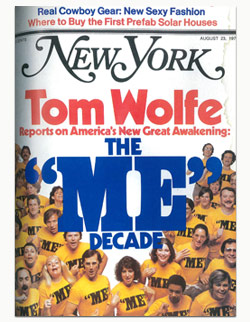
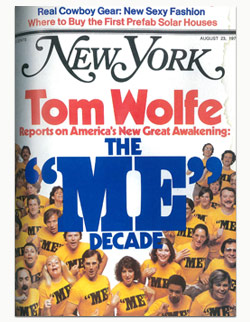
According to Wolfe, “they”—Baby Boomers entering adulthood, a flock of whom appeared on the cover of that New York Magazine issue in yellow “Me” t-shirts looking bold, self-actualized, and all the same—twisted a harmless Freudian term into a political act to fight the failed ‘60s counterculture and the ‘70s crisis of confidence. The term was “narcissism.” The burnout “Me” generation now used self-care to fight Nixon and their parents.

Whether or not Wolfe was joking doesn’t matter anymore. For better or worse, his influential, and outrageous, essay helped define this new narcissism for the mainstream. And after 40 years of political unease, and an Information Revolution as unprecedented as the late 18th century Industrial Revolution, Wolfe’s twist on narcissists still rings true. On the first anniversary of his passing, rereading “The ‘Me’ Decade” can show us how the world has changed both completely and not at all.

The 12,000-word, multi-chapter essay, published during America’s bicentennial, would have been most other writers’ career-defining Big Important Statement. For Wolfe, it was just his latest one. Already a prolific and influential writer on a hot streak—he would publish The Right Stuff four years later—Wolfe knew he had an audience that would read whatever he wrote. Taxi Driver and All The President’s Men, both released earlier that year, had reinforced how Watergate and Vietnam had set a new low for America’s self-image. He wanted to name that low. The mind behind “Radical Chic” and “New Journalism,” always looking to coin some snappy new phrase, offered his most famous one: “The ‘Me’ Decade.”

With his trademark style—funny, flashy, desperate to get your attention—Wolfe opens his essay with an anonymous female “explorer” at an LA Erhard Seminars Training (EST) session, followed by Jimmy Carter on the presidential campaign trail. According to Wolfe, these two embodied all Americans in the ‘70s. They saw something they didn’t like and attempted to squeeze it out through some communal, quasi-religious experience. One saw low morale in American politics and injected Baptist Jesus into his campaign. The other tried screaming out her hemorrhoids in a hotel lobby. It is a ridiculous introduction. A lesser writer would have fumbled such a leap. A better writer would not have talked down a woman for having self-interest while portraying Carter as misguided but at least guided. Wolfe was laughing either way. And that’s just the first 2,000 words.

The desire to achieve a higher self was not new in 1976. Instead, Wolfe explores the new reasons and methodologies. He spends the rest of his essay tripping over faddish examples of Americans trying to find themselves to underline a lofty, decade-defining thesis: Baby Boomers, hungover from Woodstock, out of college, and starting families, traded heavy psychedelic drugs and “we’re all in this together” marches for religion, or new insular niche communities. The hippies had jobs, but they still wanted a trip. The Jesus People, Maharaj Ji communes, Scientology, and more, all promising different freedoms, became the rage. Church and communal human farms were the new protests. In a decade of more visibly corrupt politics, rotting cities, stagflation, increasing environmental worries, continued racial violence, too many Jesus freaks, not enough Jesus freaks, and pet rocks, there was a lot to protest.

What’s the one thing you want to eliminate from your life? Now you can fix it. Go to your nearest store and find a cure.

If God or gods weren’t your thing, you could still buy your peace. Wolfe argued that, like the EST woman, more Americans were also now paying professionals to ask what they could never ask themselves: What’s the one thing you want to eliminate from your life? Your unsupportive partner? Your sexuality? Your self-hatred? Your inability to communicate? Your privilege? Your guilt? Your thinning hair? Now you can fix it. Go to your nearest store and find a cure. Mineral oil, softener tablets, prunes, coffee, more coffee (never less), TV, newspapers, magazines, self-help books, and yoga mats: mindful consuming is an easier, more personal protest. Not having any product is a net loss, for everyone. Wellness will save the world and your skin.

Wolfe’s next thesis attempts to define the economics of the decade: By 1976, the post-WWII “go-getter bourgeois business boom” finally killed off the working class. (“The word proletarian can no longer be used in this country with a straight face.”) That didn’t matter, because these workers, now a middling class, could join the wealthy to buy more stuff. Workers were not richer, but they were free. To Wolfe’s horror, they used their money to move to the suburbs.

According to Wolfe, the American socialist promise was freedom from metaphoric wallpaper: freedom from consumerism and a need to buy and surround yourself with useless, distracting “stuff.” (Wolfe also wanted Americans to be free from literal tacky decor.) We had a shot at being free. Instead, we went out and bought nicer wallpaper. Bauhaus be damned.

Wolfe brings it all home with Shirley Polykoff’s famous Clairol hair-dye slogan: “If I’ve only one life, let me live it as a blonde!” He argues that in this decade, with your one life, it’s your responsibility to be whatever blonde you wanted to be, as long as it’s your best blonde. Whoever “you” were, self-care was your key. The ‘60s were a lie, and we clearly live in a broken world. You can’t fix Nixon. But you can fix you. So let’s focus on making you better. Rich or poor. Silent majority or not. Let’s talk about Me, to make us all better. Me, Me, Me.

We had a shot at being free. Instead, we went out and bought nicer wallpaper.

It’s a lot to unpack in one magazine article. Not all of it works, especially the economics lesson. Not all of it worked even then. But it was entertaining. Wolfe didn’t set out to write an academic paper but to capture and define a mood. “The ‘Me’ Decade” is famous for being so famous, which was the point.

There is some genius here. Or, at least, there is a lot of excellent writing. A longtime and credible on-the-ground reporter, Wolfe mostly shows his case with his readable “you are in this room” style, which he was close to perfecting and would later perfect with 1987’s The Bonfire of the Vanities. He aw-shuckses his way through cults and shampoo ads with ease. And when he wanted to, he could write a perfect sentence. (“Out with the truth, you ridiculous weenie.”)

The most well-known section, where Wolfe offers his most genuine insight, is the shortest. In “The Holy Roll,” he famously depicts Jimmy Carter as your weird uncle, pounding a used Yamaha electric keyboard in a church basement for the Lord. God in C-major. Here, Wolfe goes into how politicians now tried to reach the “awakened vote” through what he called “enigmatic appeal.” You were saved and born again so that you could save others, which was the direct response to a numbed America wanting to believe in literally anything that could work. This “grim slide,” Wolfe’s catch-all cry for the world’s constant demise, brings about new kinds of movements and leadership. Each era has its own slide. To fight the ‘70s slide, Wolfe argued, you had to be an evangelical Baptist of the secular world. The new reborn Me must stop the madness. Righteous narcissism—this “Third Great Awakening”—will save us all.

The most immediate effect of Wolfe’s essay was highlighting this new form of religious and consumer narcissism. Before the ‘70s, “narcissism” was Freud’s explanation for how we try to self-manage expectations and deal with our failure to live up to family and societal expectations – the “ego ideal.” Throughout the early ‘70s, influential essays by the likes of Heinz Kohut and Otto Kernberg framed narcissism into something more accessible and alarming; it evolved from a natural coping mechanism into a condition. In Freud’s conception, to be human was to have some level of narcissism. Now you could have it or not, like a cold. It was a sickness, but you could cure it. You could transcend—if you tried hard enough to fix yourself.

In Freud’s conception, to be human was to have some level of narcissism. Now you could have it or not, like a cold.

Wolfe only uses the word “narcissism” once in “The ‘Me’ Decade,” towards the end as a throwaway, and yet he helped bring this new view of narcissism to the masses. After Wolfe’s essay, more people than ever were talking about this new “Me.” A few weeks later, the New York Review of Books published Christopher Lasch’s even more influential “Narcissist America.” Annie Hall came out a year later. Narcissistic Personality Disorder (NPD) became a recognized medical condition in 1980.

“The ‘Me’ Decade” was a hit, both as Wolfe’s desired decade-defining phrase and as a punchline for any self-proclaimed “important male writer” speaking on behalf of all Americans. Neither attention lasted long. When Carter’s infamous 1979 malaise speech made moralizing unsexy again, America more or less agreed to leave “The ‘Me’ Decade” behind. Wolfe also moved on; for defining the ‘80s, he settled on “Plutography,” a more vicarious form of narcissism for when Baby Boomers discovered cocaine and money. To talk about Me was to save the world. Now you were the world. It was your right to become rich and stay rich and enjoy being rich to achieve the best You, because that’s all there was. Master of the Universe. Throughout the rest of the 20th century, this evolved narcissism more or less stayed true for the “Me” generation, who still believed that they were saving the world through buying stuff. (“[The] Protest Generation comes of age as the Generation of Super-Consumers,” said Faith Popcorn in 1991.)

Wolfe’s essay never really went away, though. Its message disappeared, yet people still remembered that there was a “Me” decade, whatever that meant. Writers and historians loved the essay’s simplicity and took any chance to bring it up, even just to argue its logic. In 2013, a Time cover story tried to explain away Millennials as “The Me Me Me Generation,” which is less groundbreaking considering that “Me Me Me” kids were raised by “Me” parents. Wolfe’s essay is still famous for being famous, and We – now the Internet We – don’t like to forget famous things.

Two points are hard to ignore upon rereading this essay. First, it’s too long—you could start a brand in the time it takes to finish it. Second, Wolfe, intentionally or not, sometimes comes across as an open-minded bigot. He listed feminism as a “Me” trend and not a movement with an already-rich history, and he was mostly writing about affluent white Americans, and their relation to “the common man,” to an affluent white audience. Critics pointed this out in 1976, but it’s even more glaring now.

Essays like “The ‘Me’ Decade” have also grown more out of style in our post-blogging world. Shortcomings and all, it is interesting to read a popular writer from the ‘70s not openly taking sides but focusing more on observing and reporting. Wolfe highlighted a lot of good and bad takes, yet he never claimed them as his own. This kind of writing is getting harder to justify in an age of identity writing, in which a writer’s identity is woven into, and is inseparable from, one’s argument. Every Me is speaking for a specific We. If Wolfe covered this awakening now, his magazine cover would be more diverse, but everyone would now be wearing “We” T-shirts.

This is mostly for the better. At its best, identity writing allows marginalized voices the long-overdue chance to tell their stories without a patriarchal or white funnel. And more white people (including this writer) are realizing that they have an identity and aren’t just default people. At its very worst, which is becoming more common, it also gives a platform to hate groups claiming to have a “misunderstood” identity. Everyone has a We.

We don’t know how to act, so we act like our parents.

Rereading Wolfe’s essay now also feels eerie, as a new awakening has taken hold of America over this past decade and beyond. A so-called Burnout Generation, with its youngest members now entering adulthood, is facing new extremism in work-life balance, politics, art, the politics of art, and climate change. (There’s also the valid argument that this awakening is not new, even among Millennials.) These are specific challenges to this specific age. Yet at its core, our popular culture has embraced the current widespread political unrest and division in the same manner as the ‘70s: it is in vogue to feel numb. Electing Obama did not fix all our problems. Now Mueller isn’t going to save us. We don’t know how to act, so we act like our parents. No matter how many times we march, we still can’t fix our government or our racist uncles. So we are all back to focusing on Me, together online with our own We. And We are pissed.

Playing on Wolfe’s phrase, we are perhaps still in a sort of “We Decade,” a term this writer first heard from Marilynn Preston. In Wolfe’s ‘70s, you were born again, or you bought “stuff,” to find your new Me. The internet and social media also encourages you to find your new Me, but less from buying the right products and more from sharing the best parts of you: your photos, your videos, your music, your favorite movies, your humor, your beliefs, your politics, your friends, and so on. Your value and identity comes from who else values—literally “likes”—the stuff you already own. In a sense, you are your own “wallpaper,” or what we now call your brand. And if you surround yourself with likeminded Me people who are also projecting the best versions of themselves, there’s no need to transcend. Your We—your online communal human farm—is already perfect. In the 2010s, you are already your best self; you just need to find your audience.

All you need to do is find your We to be the best you. Look at all of We, through Me.

This isn’t automatically good or bad, in theory. An optimist—someone like Wolfe—would probably chalk this up to “same story, different age.” (Millennials did not invent narcissism.) On the flip side, you could counter that we now are the products or that art has turned into literal wallpaper. In either case, as it was in Wolfe’s ‘70s, narcissism is again the weapon to fight the grim slide. You can’t fix the President. But you can fix you. Wellness can save your world and your skin. All you need to do is find your We to be the best you. Look at all of We, through Me. We, We, We. Me. Me. Me.

Wolfe once believed we had a shot at freedom from our wallpaper of mindless “stuff.” Instead, the Internet gives our wallpaper more value, and we gain more value the more we share. Who has the prettiest, nicest, most interesting, most real wallpaper? “The ‘Me’ Decade” didn’t reflect the world in 1976, but it remains a fascinating and frustrating time capsule of an era when the dream was just to get nice wallpaper. Now we are our wallpaper; we are turning into our bunch of stuff.

Rereading this essay can bring on the groans, but it can also be a source of odd comfort. It’s a strange sort of relief knowing that Millennials did not invent the grim slide. These days are polarizing and extreme, and that should not be discredited. They are also not new. It is human to want to protect “me” and to connect with “we.” One’s identity and history should not be erased. It is also human to be more complex than “Me” or “We.” In real life, we are not our stuff. We also did not invent the grim slide, so we can look to the past to see how we can change and fight it in real life today. We don’t have to be wallpaper.

What it Takes to Win the World’s Loneliest Horse Race

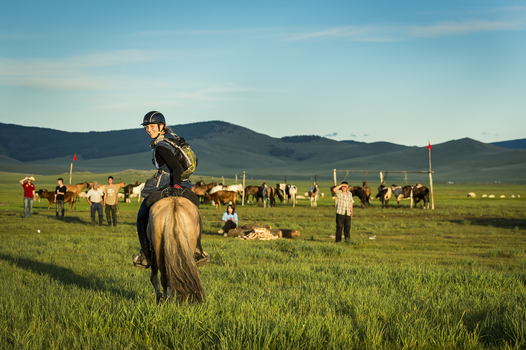
From the opening pages of Rough Magic, readers understand they are entering the mind of a unique personality. First, there are the superlatives. Lara Prior-Palmer was the youngest and the first woman to win the world’s longest and toughest horse race—25 segments totaling 1,000 kilometers on the Mongolian steppe, each ridden on a different semi-wild horse. (With a $6,000 entry fee in 2013, the year Prior-Palmer ran, and a nearly $15,000 entry fee for the 2020 race, one might also call it the most expensive.) And lastly, the subtitle of her memoir calls it the loneliest; many of those kilometers were spent without another human in sight, with only a horse to talk to.

Buy the book

Prior-Palmer describes the Mongol Derby as “a perfect hodgepodge of Snakes and Ladders and the Tour de France on unknown bicycles.” As a former horseback rider with and adventurous streak (who also happens to appreciate the Tour de France), I was predisposed to enjoy this book. But it was turns of phrases like that, I quickly realized—surprising, playful, unexpected—that were going to make me love it.

Six years have passed since her victory, secured at the audacious age of 19, during which she was able to write and publish a truly remarkable book. But the thrill of the story comes not from the fact that she won but how she did it. “Accidentally—or rather, fully intentionally,” she writes, phrasing that embodies the texture of Prior-Palmer’s storytelling: engaged, yet passive; present, yet dreamy; fierce, yet congenial.

The most popular adventure stories, to which Rough Magic has been compared, are often structured around emotional obstacles—to grieve, to overcome, to escape. Worthy projects, certainly, in memoir and in life. But the purpose of Prior-Palmer’s journey is less about the weight of the past then it is about the challenge of the present. It’s about committing fully to what’s in front of you and the emotional, physical, and spiritual requirements of going all in.

We spoke in Electric Literature’s Brooklyn office when Lara Prior-Palmer was in town for her New York book launch.


Halimah Marcus: You signed up for the Derby, as you describe it, on a whim. What do you think it is about your life experience and your personality that compelled you first to do that, and more so to actually follow through?

Lara Prior-Palmer: I was in a very constricted space in that year. I was going to university in the autumn, so I couldn’t commit to anything proper, and the pattern of my friends and I to work and then travel just felt bizarrely self-serving and to no end. I really had this urge to explode myself out of everything, and so, with that impetus, the race just walked into the stencil that I was holding. It’s a short race. It wasn’t going to take up my life.

It’s difficult because it’s a dangerous part of my personality that’s wrapped up in the potential for total lack of self-care. There’s also that part of me that doesn’t feel protective of my physical self, but is very protective of other parts of my inner psyche. But I didn’t realize the race was going to be so horrible, actually. I had no idea.

HM: What was the most horrible?

LPP: The relentlessness of it.

HM: The monotony.

LPP: Yes, monotony. Riding one horse from A to B, 25 miles farther than I had ever ridden—that’s something I would have to do 25 times in a race. So I did it once, I felt like the whole race had already happened. And it was horrible being alone and feeling neglected or self-neglected. Or like, ‘Why did I want to do this? Why did I want to put myself into this position?’

HM: I love this paragraph early on where you kind of fess up to the project of the book:

I’m telling the story about myself. There’s a British disease called modesty, which nearly stops me from sharing what I’ve written. After all, this is about an event that seemed to go well. Somehow, implausibly, against all the odds, I won a race labeled the longest and toughest in the world—a race I’d entered on a whim—and became the youngest person, and first female ever to have done so.

Given that this paragraph admits a disinclination to tell your story because of this modesty you’re culturally conditioned to have, what role did being the youngest and first woman to win play in giving you permission or an excuse to write this book?

LPP:  The state of being that the race put me into that was so shocking, having grown up in London, never feeling like my life had cohesion and never having put the whole of myself into anything. The race demanded all those things. And I had such a clear memory. I just wanted to write down every sight I saw, every thyme bush I could smell.

The fact it was being written about in the media—because people love the idea of the first woman and the youngest—meant that I felt legitimate in making this an outward project rather than an inward project. I didn’t ever particularly trust the first woman thing just because, frankly, it was the horses. Why is it impressive that a woman should win it? [The equestrian sport of] eventing, as you know, is mixed. Women are often winning. My aunt was winning in the seventies.

Lara Prior-Palmer at the 2013 Mongol Derby. Photo by Richard Dunwoody.

I felt very proud that I was the youngest because I had always a faith in my naiveté and my innocence. There’s something in children that is far more mature than anything that adults have. [I believe] life is an inverse journey, and we’re eroding into something rather than the other way around. Not that we begin pure. I don’t believe that either.

One of the things that I went into the race knowing is that if I finished I would become the youngest to finish it. I really liked the idea of that because I think young people need to reclaim their authority and their power. We go to school and we get taught to listen and oftentimes we are told we don’t know anything, and I really disagree with that. I think we know so much, and we are so much.

HM: Most people don’t realize that equestrian sports are one of the few sports where men and women compete equally at the highest levels. Your aunt, Lucinda Greene, was the World Champion and the European Champion of eventing, and that’s just full stop. She wasn’t the “Women’s World Champion.” Then at the same time, there are these condescending stereotypes about “horse girls,” or girls and their horses. Your aunt was featured a photographic book called All Those Girls in Love With Horses. It wasn’t “All Those Boys in Love With Horses,” of course. Here’s what you write about that:

They intrigue me, these mini republics of equestriennes. Do women really love horses? Or do horses love women? There’s the Freudian theory that women direct their erotic energy towards horses, whereas men often relate to them through dominance . . . If horses can make us powerful, they can also make us feel powerless—it’s the persuasion required to access their power that I find compelling.

Could you expand on that? Is anything to the “horse girls” stereotype? Is it just like patriarchal bullshit, or is there something there? Is your relationship to horses different as a woman?

LPP: I’m excited to think [on this topic] with you because I felt lonely writing those parts of the book. I couldn’t find much literature out there to bounce off. Women in the horse world aren’t writing about this much. I went through that paragraph many times, trying to work out what I really meant and felt. I’m still not sure I know.

There is that horrific and condescending male voice that associates pink, purple, horses, girls, glitter, as though it’s sickening. Whereas I think anyone’s relationship with animals is a beautiful thing.

But I also mistrust when the horse is somehow filling in for something that the person can’t give to a human being because it would irritate a human being. Or it allows the person into a complete monologue because to influence a horse you don’t have to listen. You have to listen to their body, but you don’t have to listen to their words. It does allow you to love them in weird ways.

HM: I want to ask about your transformation from kind of hapless entrant to fierce competitor. How did you experience that transformation?

I really had this urge to explode myself out of everything, and the race just walked into the stencil that I was holding.

LPP: Well there’s a plumb line going through all of it which is a sort of awareness that none of it matters—if it all goes wrong, it’s okay—and that giving me faith in myself, somehow. I didn’t feel hapless really until I spoke to someone on the phone who told me I sounded hapless, a past competitor who said that you don’t have any of the right attitudes, not to mention equipment. So maybe I did feel a bit hapless, but I was used to being classified as hapless. That was something that teachers had done, that my family had done. So I knew how to inhabit it without fully believing it, I guess.  

The fierce competitiveness was very human-centered. I felt very perturbed by the person who was in the lead of the race, and she lit the fire in me to go get ahead. Whereas prior to that moment of finding out she was in the front, I was just trying to get through it and not quite having a good time of it, imagining that that was the idea. Then, I just wanted to overtake her.

HM: That rival was Devan. What did she symbolize to you that stoked this competitive fire. What was it about her that made you want to win against her, specifically?

LPP: Now it all seems a bit false to me; everyone’s a human and no one wants to be irritating. At the time, I was very disaffected by what I perceived as a blindness to any other dimension of the race other than getting ahead. Someone said, “Can I ride with you?” in the beginning—because we were all trying to make partnerships—and she said, “If you can keep up.”

I was convinced she would win and she was very capable of talking about herself, and I think I got the most upset when it involved me, which is slightly, you know… That’s what it all ends up being about—me—doesn’t it? I asked her some questions one night at start camp because I wanted to find out more about her, and she didn’t ask me any questions back. I felt really unseen by her. I think I probably was quite unseen all the way until the end.

HM: Perhaps you needed to have that rival to find the strength within yourself to finish or to push.

LPP: There’s a line in the book somewhere which asks why can’t I just want to win for myself, not for the steward I have a crush on nor to beat Devan, but just my own volition and desire to put the whole of myself into something and do it as best I can.

HM: Going back to your aunt, Lucinda Greene, there’s some great kind of comic relief in the book when you ask her for advice about the Derby and she’s like, Hell if I know, you got yourself into it. What lessons did you learn from her, growing up with her, and how did you take them into the race?

I think we can all be brave if we just have the right inspiration.

LPP: I always absorbed by osmosis her way of being around [horses] and also loved to watch her riding cross-country. She just didn’t ride like anyone else and moved with the horse almost as though she wasn’t there. I was often trying to imitate her. She was my absolute idol and she just knew how to get on with it.

But also, I came to horses of my own volition and I don’t feel she has total ownership of my relationship with them. She was an idol, like a light in the distance. It’s easy to sort of say that it all harkened from her because I wanted to be her.

HM: Speaking of this instinct that she has for riding and that you learned from her and through your own riding, did that translate across all these borders? You’re in Mongolia, you’re a foreigner, you’re dealing with different kinds of horses. Was there a universal language that you found when it came to riding?

LPP: Lots of people see a horse in a field and want to be near them. Whether you’re privileged enough or can afford to do so is a whole other matter. So is there a universal horse language? There is. When I get on a horse I drop all of the sound out of my body. Because I know what the horse needs me to be and I know what horse is not going to respond to in me. It’s not utilitarian. It’s not like I want the horse to like me. It’s like the horse just puts me into another mode and I become more like a fairy around them.

[People think] these are inanimate or non-speaking beings and they don’t have voices and I think they absolutely do. That’s one of the things that I was trying to extract in the book: what all of these creatures have been saying. It’s quite easy to forget to ask them what they want or ask them what they think of you, in your head or aloud.

I remember a really scared friend; she’d come to ride recently at a place that I go to in California and she was terrified. When you’re terrified you’re trapped in yourself. Weirdly it came out of me, and I was quite forceful about it, but I just said, “Just thank the horse! He’s carrying you or she’s carrying you right now. Just say thank you.”

HM: The epigraph and the title for Rough Magic are from the Tempest, which you carried with you for the derby. Why that book?

LPP: So weird, isn’t it? In these lines like, “The isle if full of noises, Sounds and sweet airs,” there’s some musical tenor in there that felt to me like piano, a traveling adventurousness with a sort of delicate song. When I was preparing for the race I wanted things that I felt like came from the heart, because the heart is where bravery comes from and I knew that I was going to need to be brave. I think we can all be brave if we just have the right inspiration.

Being Published in Asia Changed Everything About My Asian American Writer Experience

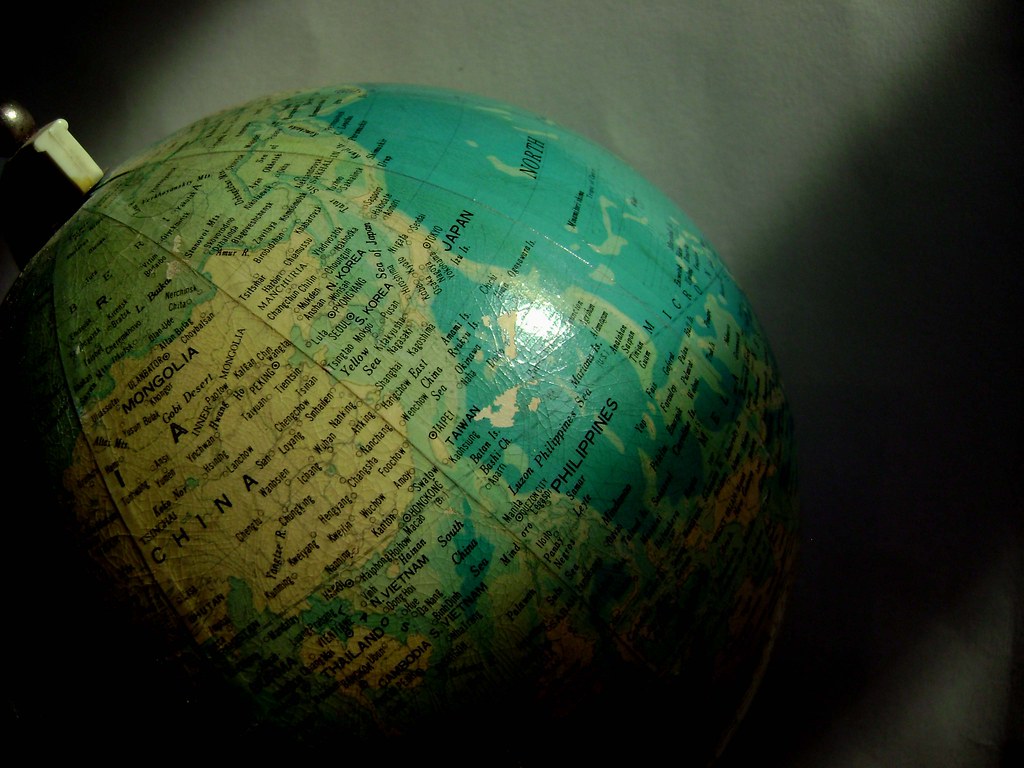
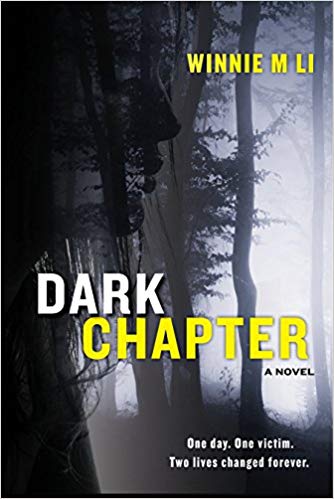
Last spring, I was flown to Seoul to launch the Korean edition of my debut novel, Dark Chapter. My publisher Hangilsa Press had astutely monitored the growing public response to #MeToo in Korea and had decided to not only bring forward my novel’s publication date, but also set up a full promotional “tour” for me with multiple TV interviews, public talks, and a press conference. In some ways, it was every debut author’s dream: a round-trip flight halfway across the world, five nights in a luxury hotel, guest of honor treatment throughout. It was also completely exhausting, requiring nonstop eloquence and enthusiasm about a difficult topic (my own rape)—and all this while jet-lagged, surrounded by translators. (I am Taiwanese American, not Korean American, and I don’t speak any Asian language fluently, but my Korean publisher, media, and audiences were unfazed by the language gap.)

It was simultaneously exhilarating and lonely, yet also the kind of publicity platform any ambitious novelist would love to have. But throughout most of this, a question popped up, the inverse of a more familiar one: Would my Korean publishers have done this if I were white?

I imagine most people of color living in the West have internally teased a question like that at various points in their lives: Would I have been treated like that if I weren’t Black? Would those strangers have said that to me if I weren’t Asian? Would I have gotten the job if I fit more easily into the mainstream culture—i.e., if I were white? Writers of color are accustomed to this question, too, and indeed, I asked it of myself many times while trying to find a U.S. publisher for Dark Chapter. Would this be so difficult if I were white, I wondered, or if I conformed more stringently to the narratives that white readers expect of Asian stories?

Dark Chapter struggled to find a U.S. publisher. In 2015, when it was on submission, many publishers were disturbed by its portrayal of sexual violence, which some editors considered “too real” or “too unflinching.” (An ironic comment, given how much some genres rely on sexual violence as a trope.) But the exact opposite happened in Taiwan in Autumn 2017, after my novel won The Guardian’s Not The Booker Prize. There, a five-way auction for Complex Chinese rights led to my biggest advance thus far. The Taiwanese edition of my book has just been published in April 2019. Rights for a mainland Chinese edition sold for more than twice the Taiwanese advance. Why this difference between U.S. and Asian publishers’ reactions to the same book?

You could argue Dark Chapter still falls within a tradition of “pain narratives” expected of writers of color by Western readers. But my book doesn’t directly address issues of race, even though the heroine’s identity as Asian American informs her experience of the world. It is more a story of gender and class, following the well-educated heroine’s encounter with the feral, illiterate Irish teenager who rapes her in Belfast. If my book were more overtly Asian (instead of inhabiting the amalgamated, international background that I come from), would American and British publishers have known how to market it more easily as literary fiction? If writers like Lisa Ko, Chang-Rae Lee, and Amy Tan address the immigrant experience, are all writers with Asian last names expected to as well?

The total advances from my three Asian publishers exceed the total advances from my nine Western publishers.

It seems to be a very different experience for Asian American writers in Asia. While on my Korean book tour, I encountered a very unfamiliar notion of privilege: in addition to losing out on opportunities because I wasn’t white, I was also getting new opportunities precisely because I was Asian American. The total advances from my three Asian publishers exceed the total advances from my nine Western publishers. And like my Korean publishers, my mainland Chinese publishers are hoping to fly me to Beijing to promote the novel. I can’t help but notice that the only publishers to have invested in a promotional tour thus far are Asian.

The cynic in me focused on the “optics” of marketing authors, but when I got to Seoul, I realized there may be some deeper emotional truth in promoting an Asian American female author to other Asian women. Since my book deals so directly with the painful, often private trauma of rape, I believe it meant something to potential readers in Korea—specifically female readers—to see an author who looked like them. As if our shared experience of womanhood, gender inequality, and (for some) sexual assault, somehow felt closer to theirs, because we were the same race.

Nominated for an Edgar Award in 2018, Dark Chapter is a fictionalized retelling of my own real-life stranger rape, but imagined equally from the perspectives of both the victim (a character with strong parallels to myself) and the perpetrator (in real life, an Irish teenager who stalked me in a park). It is set largely in Northern Ireland (where my rape took place) and London (where I lived at the time, and still do do now), so there is no direct connection with contemporary Korean or Asian culture, save for the fact that the victim, Vivian, is Taiwanese American.

But even this representation of Asian womanhood seemed to be something Korean women readers identified with, particularly around a subject that carries such a cultural taboo. During my promotional tour, Korean women lined up at the signing table, some of them sharing their own stories of sexual trauma with me. Some would cry, telling me how grateful they were I had written this book. My literary translator, Byeol Song, is herself a rape survivor and public about this—and I, in turn, was grateful for the emotional authenticity she gave to the Korean edition. Elsewhere on my tour, I conversed with leading feminist scholar Dr. HyunYoung Kwon-Kim, participated in a special discussion with women journalists, gave a lecture for Women’s Studies Masters program, delivered a TED-style televised talk. At night in my hotel room, I cried on my own—partly out of sheer exhaustion, partly out of the chance to connect with these women living on the other side of the world, Korean readers I wouldn’t have otherwise met.

If I were white and talking about my rape, would Korean readers have thought my life experience was too different from theirs to relate to?

My professional life in London often involves enabling conversations among rape survivors. Predominantly, participants in these conversations are white, although there is certainly ethnic diversity. But my experience in Korea raised another question. Because sexual assault is so deeply personal, do people naturally feel drawn to someone whose experience seems closer to theirs—because of how they look? If I were white and talking about my rape, would Korean readers have thought my life experience was too different from theirs to relate to, despite also being a rape survivor?

Strangely, I, too, found myself being more honest about being an Asian American author in the West, when Korean audiences asked me about it. I said that writers who looked like me were often expected to write about “being Asian,” rather than a more “universal” experience like gender or sexual assault.

It was the first time I felt I could even mention that publicly when discussing the book. To a more general, Western audience, I worried that such thoughts might label me a whiney or ungracious minority writer.  But in Korea, I sensed a duty to be honest about the kinds of unspoken discriminations that still happen to women of color in the West. Perhaps I myself perceived a sense of kinship with these Asian women.  Perhaps the optics affect all of us—even the most cynical—into an imagined sympathy with those who look like us. And yes, visibility matters. Even a symbolic visibility enables an author to connect with an audience.

Even a symbolic visibility enables an author to connect with an audience.

I am glad my Korean publishers recognized the value of promoting an Asian American female author to Asian women readers, but our readerships shouldn’t be limited by race.  It is truly a shame if Western publishers perceive a problematic gap between the race of an author and the race of a book’s intended readers—because there are readers of all ethnicities in the West, and we are all capable of empathy.  And literature, after all, is meant to transcend such human particularities. As a Taiwanese American girl growing up in the U.S., I certainly identified with characters who didn’t come from a world anything like mine: Scout Finch, Holden Caulfield, Bigger Thomas. And indeed, it works the other way around. I’ve had white male readers say that reading Dark Chapter made them understand a bit better what it’s like to be a woman, who cried reading the scenes of the heroine’s experience of the criminal justice system. So if they can identify with a Taiwanese American heroine, then that’s already one step towards progress.

Looking ahead, I am curious to see how my Taiwanese and Chinese publishers will handle Dark Chapter.  (Of the ten book covers finalized so far by international publishers, only the Dutch one explicitly shows an Asian face in the cover design). My mainland Chinese publisher will roll out the Simplified Chinese edition to billions of potential readers later this year.  A British-Vietnamese producer is optioning the film rights. And, as I write my second novel, I also wonder if it’s a disadvantage with Western publishers that my work doesn’t address ethnic identity more explicitly. Should I write what’s easier to market by an Asian American author, or what truly interests me?  Of course, it’s the latter. As I’ve been told time and time again by other writers, you just have to hope your work will find its readers. Regardless of your race and theirs.

How William Styron Kept Me Alive

Novel Gazing is Electric Literature’s personal essay series about the way reading shapes our lives. This time, we asked: What’s a book that changed your mind?

My first night in the hospital, I sleep on a gurney in a room imbued with the scent of hopeless men, the sounds of adults bawling in agony. The man adjacent to me, doughy and pallid, a homeless schizophrenic who has ingested some bad drugs, keeps muttering about humus and the mysteries of women’s bodies, about how he’s Jesus, how he’s going to kill the people that only he can see. Quiet finally comes when he’s tranquilized into insentience.

I curl up, feeling prenatal and pathetic, and face the wall. The hospital thrums all night, bodies in perpetual motion. A young girl on suicide watch tries to walk out the door and is apprehended. As two men escort her back to her room, leading her past my gurney, I can see her forearms mottled with scars, her eyes dark and sunken into her head.

In the photograph on my hospital bracelet, I’m snarling.

In the morning I go to the in-patient psychiatric unit, still wearing the clothes I arrived in. It’s a place of penitentiary gloom, free of lusts and luxuries. A blue gauzy shirt, three sizes too big, is draped over me; all of my things are locked up.

It takes a day to really assimilate into the unit. I’m initially hostile to the staff, and one of the patients, a bearded and garrulous man who’s been here for two weeks and will remain here for another three (this is his seventh or eighth stay in the unit), comes up to me and asks, sharply, “What are you doing here? You don’t belong here.” I threaten to break his face. I’m escorted to my room.

The unit can be broken down into three sections: the bedrooms, which I avoid because sharing quarters with three noxiously flatulent psychotic men who thrash in their sleep and openly masturbate is not conducive to a good night’s rest; the hallways, in which patients pace and lurk and occasionally sleep, all furled and exposed and uncaring; and the Dayroom, in which a television acts as electronic idol—it is to the patients what the Monolith is to David in Kubrick’s 2001.

With its hermetic atmosphere and unusual internal logic, the unit feels like the setting for a chamber drama, replete with a cast of tragicomic characters. Some patients burst into chortles, bouts of unending histrionics, for no discernible reason. Other patients sleep their days away, emerging only to eat, then receding back like the tide. Some amass trays of food in their rooms, flies doing curlicues over the remnants. One woman, with the sallow complexion of a nun, has revealed—during a movie about alien abductions, apropos of nothing—that she was raped by her uncle, and that her swollen belly may, in fact, contain his child. The older men in the room respond with skepticism and mirthless chuckles.

Being a city hospital, the unit lacks most amenities: salt, internet, phones, deodorant, shoelaces. You don’t realize how much you’ll miss these things until they’re gone. Garishly lit, and locked at both ends, the long halls have a sealed-off feeling. They’re the color of dirty teeth, often fetid, filled with the effluvia of bodies losing control.

The in-patient psychiatric unit of the hospital is a place of rigorous regulations. Maroon tape sections off the nurse’s station, sequestering the patients. The chairs are surprisingly heavy, so that patients can’t throw them. The mirrors are dented plates of aluminum. Patients adhere to strict routines; if dinner is served several minutes late, tantrums are thrown. When the food arrives, it’s all complaints about the blandness—every day, with little alteration.  

Wall-eyed and languid, sapped of energy by exhaustion and medication and sleep deprivation from sharing a bedroom with volatile and vociferous men, I spend my first day wandering the halls.

My lone, loyal companion during my stay is a book, a copy of William Styron’s Darkness Visible, which I picked up the day of my unwitting arrival from a bookstore in SoHo. I had spent the previous two weeks sleeping on friends’ couches and working as a customer service representative for a meal delivery company, spending my days answering emails and phone calls from customers vexed over the quality of their avocados, and doing cheap cocaine by myself in dive bar bathrooms to mitigate the feeling of failure that clung to me like stale cigarette smoke. The job numbed me; the drug obliterated the haze like a great beam of light from a lighthouse. When my boss, a stoical, laconic man who had been with the company since its embryonic stage, called me into one of those homogenous glass conference rooms, I knew what was coming. He asked me if I was happy. I said, Yes. He said, No you’re not. He said, We want our employees to be happy. So, after assuring me that my work had been very good, he nonetheless fired me for “being unhappy,” for bringing down the morale of the team.

When I found Styron’s memoir, I felt an epiphanic pang: this should be the last book I ever read.

The emasculating feeling of having been fired from a minimum wage job for being “unhappy,” and the more pragmatic problem of now having no source of income, commingled with the still-lingering malaise of having been dumped by my on-again off-again girlfriend several weeks earlier. An aphotic darkness, heavy and impermeable, pervaded my mind. A coterie of friends met up with me at a bar, where I, ripped on my favorite palliative, I desperately, futilely tried to use a torn can of Modelo to carve up my forearm in the sordid bathroom, an inane idea whose Sisyphean hopelessness seems, in retrospect, sort of silly. The next day, compelled by notions of self-destruction, I went to the bookstore, where I spent many afternoons typing fervently, thinking of myself as a writer, seeking solace in the pages of books. I was flummoxed, unsure of what to do with myself as I felt the end encroaching. I perused the great variegation of books. When I found Styron’s memoir, I felt an epiphanic pang: this should be the last book I ever read. I bought the book and shoved it into my bag, ensconced between an antiquated iPad and a notebook rife with the scrawlings of coke-induced mania.

That night, I went to a friend’s apartment, where I was ambushed by a gaggle of friends who, after an intense confrontation during which I almost punched one of them in the face, put me in an SUV and took me to Bellevue.

At the hospital, a man searched my bag, cataloging everything so they could store my stuff in a giant paper bag in a room rife with evidence of an outside world. When I saw Styron’s book sitting there amid the miscellany of items, I asked if I could bring that with me, so I at least have something to read. After a prolonged moment, they said yes.

For the duration of my stay, I carry the book everywhere, tracing the letters on its cover with the bulb of my thumb, flipping its pages and listening to the paper rustle. (There is a tiny library in the recreation room, though most of the books are bedraggled and battered, pages torn out, books left disemboweled, which contains, inexplicably, a pristine copy of Jonathan Franzen’s The Corrections, Oprah’s seal of approval adorning the cover, as well as a bevy of coloring books whose pages are already violently mottled with crayon and marker. Seeing the carnage, I keep my own book close.) Like Andrew Solomon’s The Noonday Demon, Styron’s splinter of a memoir taps into specific but familiar feelings of despondency, and, eventually, hope.

Initially, reading it is difficult, my brain not yet used to the drug they’re feeding me. My thoughts are soupy, a fog of confusion; words waver and swirl around the page. “The madness of depression is, generally speaking, the antithesis of violence,” Styron wrote. “It is a storm indeed, but a storm of murk.” But Darkness Visible cuts through the brume. As nothing sharp is permitted here, I feel a twinge of satisfaction at having snuck writing so lacerating into the unit. I chose Styron’s memoir as the last book that I would buy, the last I would add to my shelf, surrounded by wayward piles of hardcovers and softcovers and dog-eared mass markets, hundreds, some unread, some read repeatedly, but in the hospital, the book becomes something more, something almost transcendent: a source of familiarity, a relic from my outside life; it reminds me that I want to write, and that if I let the life drain from me, I will not be able to. In this sense, William Styron helps keep me alive.

The book reminds me that I want to write, and that if I let the life drain from me, I will not be able to.

If the stigma surrounding depression has been ameliorated in the almost 30 years since Darkness Visible, there still comes with the disease, like a parasite attached to a host, a sense of embarrassment and shame. You can see it on the faces of your friends when you try to tell them how you feel, their mouths contorted into looks of discomfort, their reticence exuding an air of apathy. The disquieting silence can make the depressed feel even worse for having become a burden. Reading Styron, I feel as though I’ve gained a new, caring friend, someone who understands. When I try to write about my own emotions, I don’t feel as narcissistic or melodramatic because Styron felt that same compulsion. Once the fog in my head started to dissipate, the medicine (an antidepressant, of course, and a small dose of an antipsychotic to mollify the mania to which I was occasionally prone) now working, I was able to luxuriate in Styron’s writing, able to write myself.

In 1990, during a radio interview, Styron described the disease: “I think the closest I’ve ever been able to hit upon an analogous pain is that of suffocation or of being in prison in an intensely hot room from which there’s no escape. It’s that kind of sort of diabolical discomfort.” I feel such a diabolical discomfort in a small, hot room, sudorific, the air stagnant and room suffused with the smell of sweat and flatulence. I want to cover my head with a pillow, but it’s too hot. I lay furled on the long, narrow bed, trying to ignore the sound of slick skin and enlivened breathing. My roommate hordes his food, leaving a pile of partially-eaten sandwiches, cookies, apples on the small table between our beds. A flotilla of flies accrues. I take one of the half-dozen wrapped cookies he’s stored in a pile. When he returns to the room, vexatious, bellicose, screaming about the missing cookie, they move me to a different room, one with four other roommates, none of whom ever leave their bed. In order to read, in order to live, I have to escape the hot room.

From the book:

A phenomenon that a number of people have noted while in deep depression is the sense of being accompanied by a second self—a wraithlike observer who, not sharing the dementia of his double, is able to watch with dispassionate curiosity as his companion struggles against the oncoming disaster, or decides to embrace it. There is a theatrical quality about all this, and during the next several days, as I went about stolidly preparing for extinction, I couldn’t shake off a sense of melodrama—a melodrama in which I, the victim-to-be of self-murder, was both the solitary actor and lone member of the audience.

Depression expunges from my mind any sense of lucidity; it is a roiling fog permeating my skull, leaving me unable to write. Words elude me, seem to evanesce. Styron’s writing cuts through the brume, and I am able to write again, scribbling my thoughts on anything I can find—paper plates, napkins, the cardboard sleeve from my doctor’s coffee. They give me a felt-tip pen, so I can’t stab anyone, and eventually some sheets of paper, which I festoon with slovenly handwriting, words fervidly scrawled before they disappear into the bog in my mind. According to James Salter’s review of Styron’s collected letters, the bibulous writer, who penned all of his works in longhand on yellow legal pads, found writing to be the hardest thing in the world, each word “sheer pain.” Yet it was the only thing that made him happy. Writing about my time in the hospital, about the influence of Styron’s book, makes me feel like I have a second self, like I’m writing about a character conjured from my imagination. There’s a sense of distance, of dislocation.

In Styron’s exacting lyricism, I find hope, a companion to my pain.

My hasty scribblings and Styron’s book are the only things I take with me when I leave the hospital, my hair an oleaginous mess, my friends relieved that I’ve seemingly climbed out of that dark pit of despair. I usually find Styron’s prose irritatingly loquacious (e.g. Lie Down in Darkness), but his writing about depression touches me, cuts me deep. In Styron’s exacting lyricism, I find hope, a companion to my pain. Depression is a selfish disease. You succumb to solipsistic thoughts, luxuriate in self-pity. It is a malady you can never truly mitigate, an affliction of histrionics and hyperbole, that sense of “melodrama” which Styron couldn’t shake off. Reading Styron’s descriptions of something I had tried but failed to articulate so many times, I feel less alone. All of the ineffable feelings I’ve felt are articulated with eloquence and precision and empathy in Styron’s book. I have wanted to be a writer my entire life; in my second grade yearbook, where it asks what I want to be when I grow up, I wrote, “A writer.” But everything I write seems to return to depression, the most loyal partner of my life; in Styron, I find, for the first time, writing that earnestly, honestly captures how I feel. It gives me an impetus, an inspiration.

The book now resides on the top shelf of my bookcase, nestled between similarly lissome paperbacks by Paula Fox and Renata Adler. When I feel, as Melville said, grim about the mouth, I turn to Styron’s memoir, as some turn to prayer. It is a beacon of hope for me, the light in the darkness.

7 Books That Look at Nature Up Close

There is an area of Central Park called Cherry Hill, located just above the Lake and east of Strawberry Fields, that is covered in a ring of its namesake trees. Ignored most of the year in favor of bigger, flatter picnicking spots like Sheep’s Meadow or the Great Lawn, Cherry Hill is overrun with visitors for a few weeks each spring. On a recent walk, I saw an engagement shoot, a couple taking wedding portraits, and a dozen tourists crowded under the pink boughs, all angling for a photograph that didn’t include someone else’s head. But soon the trees shed their petals for leaves, and now people indifferently pass by the slope, looking for the next Instagrammable shot.

The drawbacks of treating life like a highlight reel are becoming increasingly obvious, and not just to the people who have tried to do yoga in the Central Park rowboats. Many of us are trying to be more “present,” a term beloved by wellness blogs but which can be frustratingly hard to enact. What does being present look like? How do we attain this kind of tuned-in mentality? There are answers in a niche type of nature writing which I think of as field guides to being present.

Put simply, these books do what great literature does best: blend form and function. Their language is evocative and poetic, their writers generous, inquisitive, and open. For most us, it’s impossible to move to a secluded landscape and closely observe it for a year, but we can all be more engaged in the world around us. We can ask questions and observe, because the more we notice, the more we get in return.

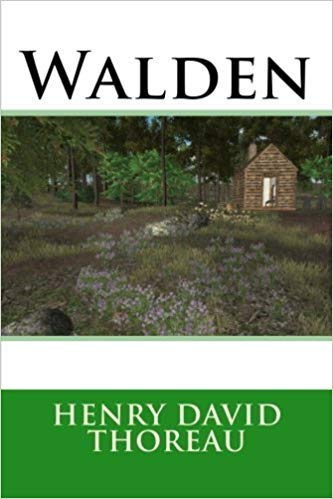
Walden by Henry David Thoreau

Walden by Henry David Thoreau

Like much of contemporary nature writing, this genre has strong ties to Henry David Thoreau. When Thoreau wrote Walden, his famous memoir-cum-manifesto about the two years he spent living at Walden Pond near Concord, Massachusetts, he obsessively detailed the natural world around him, tracking the changing colors of the pond water to the migration patterns of local birds. By capturing this “raw” wilderness (which actually wasn’t that far from town), Walden famously helped spread the idea of Transcendentalism, a social and philosophical movement that emphasizes the individual’s connection to nature. But Walden also helped popularize a literary genre in which a writer carefully observes a specific environment over a limited amount of time, usually one year.

Pilgrim at Tinker Creek by Annie Dillard

Pilgrim at Tinker Creek by Annie Dillard

Thoreau’s experiment at Walden Pond has inspired many nature writers, though the beauty of examining such a specific, and therefore unique, landscape, is that each writer inevitably comes to the format in their own way. Take Annie Dillard. Dillard won the 1975 Pulitzer Prize for her book Pilgrim at Tinker Creek, which captures a year spent at her house in Virginia’s Blue Ridge Mountains. Dillard combines David Attenborough’s passion for natural dramas with the voice of a poet; her prose is lyrical yet raw, and her description of the creeks—“an active mystery, fresh every minute”—could actually describe the book itself. The race to capture cherry blossoms would be anathema to Dillard, who is electrified by every aspect of her environment, and who keeps her eyes open for its surprises. For example, on the night that Dillard goes looking for muskrats, she fails to find any, noticing instead a small insect’s unlikely and inspiring escape from a spider’s web. Dillard is free from the constraints of expectation, which allows her to appreciate life’s many surprises.

The Outermost House by Henry Beston

The Outermost House by Henry Beston

Henry Beston was also trying to free himself. The year he spent living on a beach in Cape Cod was a respite from a country that was between World Wars and “sick to its thin blood for lack of elemental things, for water, for air, for the dear earth itself underfoot.” Beston recorded his observations from his isolated beachfront cottage in The Outermost House. Without a schedule or concern for time in a conventional sense, Beston’s work feels expansive and elemental. A pattern of waves might interest him for pages whereas his lunch is briefly mentioned, if at all. Of spring sand he writes, “it has entirely resumed its looseness, its fluidity, but the color still tells of winter in the faintest hint of grey.” Turning this kind of lens on something as seemingly mundane as sand is a lesson for the reader. After reading The Outermost House, it’s hard to step on a beach without thinking about how sand changes throughout the year, and then noting that day’s weight, color, and feel underfoot. To see just how much of an impact Beston had, you only have to look at the land he wrote about. The Outermost House is credited in the establishment of the Cape Cod National Seashore by John F. Kennedy, and Beston’s cottage was a national literary landmark until the 1970s, when it was tragically washed away in a storm.

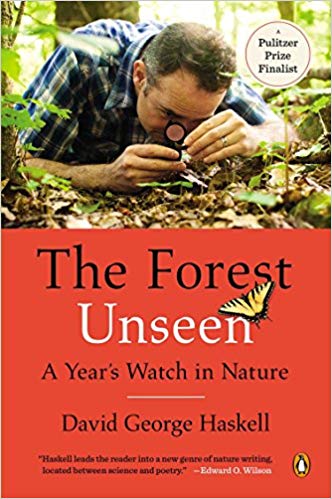
The Forest Unseen by David Haskell

The Forest Unseen, A Year’s Watch in Nature by David Haskell

What if instead of waiting for the next big event, you carefully noted the progress of everything around you, down to a single plant? That’s what David Haskell did in his Pulitzer Prize-nominated book, The Forest Unseen, A Year’s Watch in Nature.  Haskell marked off a one square meter plot of land in Tennessee’s Smoky Mountains and obsessively monitored everything that went on in this small ecosystem. As the Professor of Biology and Environmental Studies at the University of the South, Haskell is well-versed in the science of the forest floor, and his goal is to show us how nature is constantly in flux (lichen, for example, may look like a smear on a rock, but in some ways it’s actually busier than a tree, constantly altering its appearance based on the weather.) We might not all be scientists, but we can all benefit from this scientist’s mentality, and celebrate small changes rather than waiting for something huge.

Desert Solitaire by Edward Abbey

Desert Solitaire: A Season in the Wilderness by Edward Abbey

During the 1950s, Edward Abbey worked as a seasonal ranger for the United States National Park Service at Arches National Monument in Utah. His account, Desert Solitaire: A Season in the Wilderness, is a series of vignettes, including beautifully rendered descriptions of the unusual, arid landscape. Abbey, like Haskell, has a keen eye for what’s changing in his landscape, especially when it comes to what’s in decline or already gone. When he realized he wasn’t spotting as many bobcats or other large predators that historically ruled the park, he tracked their loss to the Department of Agriculture’s policies, which not only endangered some species but led to an explosion of rabbits and deer that threatened the park’s whole ecosystem. Abbey’s critical probing of what he sees is an important reminder of the reason why being present matters at all; it allows you appreciate what we have before it’s gone.

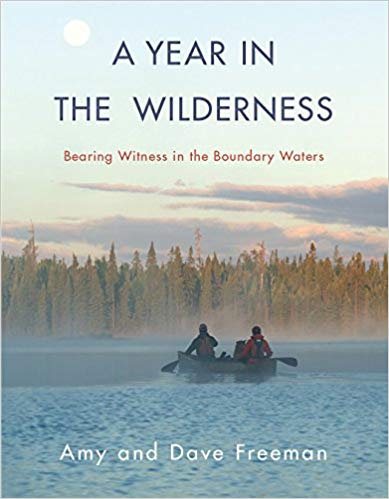
A Year in the Wilderness by Amy and Dave Freeman

A Year in the Wilderness: Bearing Witness in the Boundary Waters, Amy and Dave Freeman

The Boundary Waters is a one million-plus acre wilderness area in the Superior National Forest in Minnesota. Despite some government protection laws from 1964, it’s seen years of disputes over actions that would destroy the landscape, including mining, vehicle use, and pollution. When Amy and Dave Freeman learned that toxic mining had been proposed for the area’s watershed, they decided to call citizens to action by spending a year in the area and documenting their experience in its wilderness. The resulting book combines both nature writing and activism; it beautifully captures the flora and fauna which are so at risk—loons skating on misty water, the wolves who trailed them through the forest—and helped spur an ongoing, organized effort to save the Waters and ensure their permanent protection.

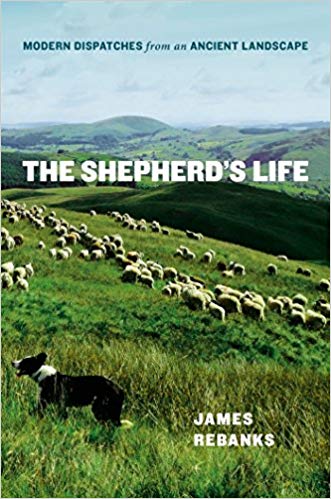
The Shepherd's Life by James Rebanks

The Shepherd’s Life by James Rebanks

When Michiko Kakutani named an English shepherd’s farming memoir one of her best books of 2015, people took notice. In fact the book had already been a success in Britain thanks to its incredibly honest, authentic, and moving portrayal of an ancient way of life. James Rebanks herds his sheep in the Lake District, a unique mountainous landscape which has been farmed by small homesteads for generations. Rebanks himself is an unlikely character, a man who comes from a long line of shepherds and loves his work, but also found his way to Oxford and writes as well as any experienced nature writer. What comes through most in this book is Rebanks’s deep appreciation for what he has, even through its many hardships. Every season presents new challenges, but that only means more moments of success.

We Can’t Hide if There’s No One Looking

January
 
In January we held out
 
for a snow that didn’t come –
instead, the clouds grew
 
varicose with rain.
 
I turned twenty-one
and my father watched me drink
 
a glass of wine with his best friend,
 
at a table worn rough by years of dinner.
This friend had trouble sleeping, and when he died
 
we read his journals: read catalogues of light,
 
the position of his head, the weight
of blankets; he’d kept volumes to determine
 
what might let him pass into that state –
 
yet in Vermont, he claimed he slept
like a dream, the four nights we stayed.
 
Remember, he wrote, in a journal we found,
 
the image of Natalie and Beatrice hugging in the morning.
They were so beautiful. They had such ease and acceptance.
 
Something I have never felt. Reminds me of my mother
 
when I was young. I’m crying
on the flight from Spain to Paris.
 
When I was ten, and flying into Iceland,
 
we saw below us a flaming house
in the midst of a black field,
 
and the lights of fire trucks, too far away –
 
I imagined I could hear them wailing
as they crawled their tiny way across the earth.
 
Loneliness is not a passive feeling;
 
it has teeth, it chews, and I believe
we take some power from it,
 
from how it puts its mouth around our heads
 
and forces us to stare
into the complicated tunnel of its throat.
 
We cannot hide if there is no one looking,
 
and the lonelier we are, the more we ask,
who am I, to myself?
 
Though perhaps the question ought to be,
 
who am I, to the winter?, and the answer
– in its coldness – nothing –
 
might hold the truth to shrink our grief. 

Vinegar Ghazal

To preserve this sight, please drop my eyes – like spring’s green fruit – in vinegar.
I’d put aside my wine for memory, and drink only thin vinegar.

New owner of antique furniture: do chairs remember bodies once held,
Do beds remember dreams of falling, or the taste of love’s skin-vinegar?

At the carnival of my ex-lovers, I watched you toss a ring: your prize?
An oak barrel of satisfaction, while you watched me win vinegar.

How did I come to be? I was distilled from yeast and sugar, heated
To a potent soul. If left too cold and still, I’d have been vinegar.

A doctor came to town and drew the crowds, crying Cure Your Loneliness
With this proprietary blend of blackened oats and Berlin vinegar!

At the café by my house, where I am known, they give me bread and oil
When I sit. They bring me salt. But they withhold my passion: vinegar.

Attic-bound, I write a drama for four sisters – wool blankets gown us,
Bittersweet piano trails the sour flute, the violin vinegar.

To make a sword that’s forged from blood, extract all iron from the body’s Veins. 
To make a knife from wine and ire, harvest grapes and smelt tin vinegar.

I walked across a grassy field to find the marble entrance of your
Crypt, and moved the stone. A dark room; your casket; and therein, vinegar.

Let me tell you what I look like with my clothes off. My eyes are rabid
Mice, and above the unset table of my chest, my grin’s vinegar.

Sanded down with thirst, how I long to be invited – Dear Emma, drink
This vintage and ascend, do not content yourself with maudlin vinegar!


“Infinite Detail” Imagines an Apocalypse Many of Us Long For

Tim Maughan is a technology reporter and fiction writer whose first novel, Infinite Detail, is about an apocalypse many of us dream about. A group of radicals in Bristol use a computer virus to destroy the entire internet, sending our hyper-connected society back to the pre-information age. We follow several characters in the U.S. and England as they cope with what often feels like civilizational collapse, and try to rebuild. Angry, keenly observed, and satirical by turns, the novel explores where contemporary digital politics might lead us. I talked with Tim over the internet, using a device he’s destroyed in his novel, to talk about political science fiction, smart cities, and why dystopia has hope at its core.


Annalee Newitz: As I was reading this novel I kept thinking of the term “cyber-communism.” There are a lot of little strands of cyberpunk in this novel, but it’s really quite different from what’s gone before in the genre because of this really strong focus on leftist politics that are named as such. These aren’t allegorical politics; they grow out of what’s happening politically right now. What are the kinds of political issues that you wanted to tackle, and how do you see them growing out of current issues?

Buy the book

Tim Maughan: It’s not because I want to be disrespectful to the kinds of science fiction that uses metaphor and tropes to discuss current political issues, because science fiction does that, even inadvertently. But that doesn’t appeal to me as a writer. I do enjoy reading books by [Ursula K.] Le Guin and classic science fiction books that tackled social and political issues through metaphor. But I want to write stuff about now that’s explicitly about now, that is kind of putting that out on the table and saying that this is what I’m doing. William Gibson had a tweet a few years ago, after I had already started this book, and he just summed it up perfectly. He said, cyberpunk isn’t particularly relevant anymore, but the tools that cyberpunk created—those narrative tools—he said he would like to see literature use those tools to explore our current situation. I thought, “Ah, that’s what I’m doing!”

AN: So I want to tease this out a little bit. What are the specific political movements you’re thinking of? We have this autonomous community in Bristol, where we spend a lot of time in the book. Are they anarchists? Are they cyber-communists? How would you describe the politics of that group?

TM: Kind of all of the above, really. And that idea came out of the community that I’ve been knocking around in for the last few years. I get invited to events that are this weird mixture of academics and people who call themselves futurists and artists. And it really came out of seeing artists in Europe, going to events in places like Amsterdam and Berlin, or Eyebeam in New York City where I used to hang around a bit. It was really exciting to see artists engaging with these issues, sometimes in very direct and forthright ways.

A person who is a huge influencer on the ideas behind this is Julian Oliver. He’s a New Zealand artist based in Berlin. A lot of his stuff has to do with jamming the internet, disabling WiFi networks, or replacing WiFi networks with other content in public spaces or in gallery spaces. He did a piece that’s like a remote control tank and you can drive it round and it blocks all the WiFi networks within range. He was trying to get people to confront and look directly at these infrastructures that are affecting and monitoring and essentially controlling them.

That was the core inspiration behind New People’s Republic of Stokes Croft—which is a real thing, I should point out. There is an organization in Bristol on Stokes Croft called the People’s Republic of Stokes Croft who are a local anarchists and community group, who do a lot of work in that area. So part of it was growing up in Bristol and seeing that conflict between community groups and social justice groups and anarchist groups and the local community around them. Because Stokes Croft used to be a very working class and very non-white neighborhood traditionally in Bristol.

AN: Cities themselves become characters in this book, and I love the fact that you have city hackers instead of traditional computer hackers. Of course they’re hacking the internet, too, but it’s ultimately city infrastructure hacking. Bristol does become a kind of character, especially as the novel goes on, as we come to understand how it’s changed and how it’s survived the apocalypse. I wondered if you could talk about why you wanted to really hone in on city hacking as opposed to looking at, let’s say, Twitter or other social media.

The crux of the book is that this technology affects people who don’t understand it or even know that it exists and then abandons them.

TM: I was writing this book for a long time, and it changed thematically early in its conception. I personally became very focused on the concept of smart cities and then looking at and writing critiques of the smart city model. It’s interesting that you talk about the cities as characters because the critique of smart cities that interests me the most is that smart cities are generic solutions. They view cities as problems and that there is a generic, off-the-shelf solution for them. That’s kind of the smart cities philosophy. But cities aren’t all the same, in terms of their communities and conflicts. So partly my aim was to give Bristol, and Brooklyn to a lesser extent, a kind of feeling that it was a unique place and couldn’t be pigeon-holed like that. And secondly, it’s a good literary device to get away from boring hacking scenes. People complain that hacking does not translate to the screen, but it translates to novels even worse now. Anyone who tried to read that terrible Bill Clinton hacking novel that came out last year can tell you that.

AN: Wow, did you actually read that? Good job. [laughter]

TM: No! I didn’t, I didn’t. A friend of mine did, and screen-grabbed lots of pages of it to Twitter and it was like, “Oh my god. I hope my book doesn’t read like this.” Because it’s hard to explain hacking concepts, right? And there’s a couple of times in the novel I have to do an infodump and explain what ransomware is, or what the internet of things and backdoors are. And it’s not fun writing that stuff. It’s very hard to do it.

AN: One of the images that really stuck with me from the novel is quite early on when one of our hacker characters, Rush, is in Brooklyn, and he is helping a homeless guy who’s collecting cans. All the cans have RFID tags, and the guy can’t turn them in for money anymore because he can’t prove that he bought them. So Rush takes basically a magic wand out of his pocket, which is an RFID hacking device—it’s an antenna—and he waves it over the cans and quickly resets all of their IDs. And as you’re reading the scene and imagining it—he looks like a wizard, and he is part of, I think, this strong current in the novel of magic realism, where we’re seeing a lot of characters respond to technology as magic or describing it as magic. They even describe branding as magic. There’s a lot of imagery of magic in the novel, and I wonder why did you want to do that? Is part of your point that we have to have this apocalypse partly because we are getting caught up in seeing this technology as magic, or is magic actually a kind of hopeful way of looking at technology? Tell me all about techno-magic.

Spoiler alert! There’s a glimmer of hope in all my writing. 

TM: Exactly. Yes is the answer to both those things, I think. Some friends of mine, Natalie Kane and Tobias Revell, created a piece of work called Haunted Machines. Their interest is in how technology is perceived in magic, and what the intentions are for that. It’s something that goes back to the Apple catchphrase: “It’s just magic. It just works.” The idea of technology being magic also obscures how it works and where it is in the environment—it gets back to all those issues we have with urban infrastructure, especially surveillance.

What’s important about that scene where Rush is playing the wizard and magically fixing these cans is that the canner Frank doesn’t understand what the hell he’s doing and thinks Rush is crazy, right? And that’s the crux of the book, that this technology affects people who don’t understand it or even know that it exists and then abandons them. I kind of wanted the reader to be introduced to this character of the canner Frank, maybe have some empathy for him or maybe not because he’s a bit old and crotchety and maybe a little bit racist, even, if you read between the lines. But I wanted readers to see that he’s a person who has a role in society who has just been abandoned because of technological progress. And I think the magic thing plays into that. Magic is an interesting way of explaining technology as a metaphor, but it’s also a way of obscuring and denying us understanding of how it works and its implications.

AN: One of the ideas in the book is the radicals have destroyed the internet through what is basically a magical piece of technology. We have this magical reset where we don’t have the internet anymore, and then one of the themes that we see again and again in the book is that even though there has been this huge change, people keep making the same mistakes and trying to rebuild the machines that caused their problems in the first place. This fits in with your idea of magic, because it appears that we never really understand what the problems were in the first place.

TM: Yes, exactly. And it’s that lack of understanding about what we’re doing that leads to [the radicals] not having a plan for afterwards.

AN: Yeah, that was so interesting to me. I wonder if you could talk about that idea of not having a plan for afterwards.

Dystopias are about imagining change because the characters are trying to imagine something different to what’s being presented.

TM: So, as I was coming towards finishing the book, I wasn’t quite sure how to tie it up at the end and I knew I wanted to make a point about failed revolutions and stuff. Around that time, Astra Taylor wrote this fantastic article for The Baffler called “Against Activism.” It was about the difference between activism and organizing, and it was just brilliant. Everything clicked into place, and I said, “This is what the ending of my book needs to be about.”  Protesting is important, it’s vital, it’s empowering, but without organization alongside it, without long-term organization, it doesn’t often count for much. A similar argument was made by Adam Curtis in his last film. He makes the argument that in the sixties, a lot of bourgeois white people dedicated their lives to the civil rights movement. They dropped out of their careers, they turned their academic and legal practices over to just the Civil Rights Movement in the U.S. Because they were able to have the white privilege to go to do that. But he argues that now, because of network culture, we’ve moved away from that. You can easily be involved in protests, but it doesn’t have a lot of the same long-term impact.

I was at an event giving a reading last year, and someone asked, “Do you consider yourself an activist?” I said no partly because of Astra Taylor. I’m not an activist. I write fiction, which is an incredibly selfish and narcissistic thing to do. Real activists, real organizers, dedicate their lives to these issues and I think that’s a really important distinction to make. In the Curtis documentary, he talks about “Occupy” a lot and how “Occupy” was incredibly exciting at the time. I was back in the U.K. when it was happening but little Occupy movements were springing up over there and it was very exciting to see people come together and kind of give up their lives to a certain extent. But the lack of focus and organization beyond that is why it didn’t work. That’s the argument Adam Curtis makes. I wouldn’t want to be as dismissive to Occupy as he probably is, but what he says rings true to the larger extent. Occupy is criticized a lot for not having a firm set of demands. And what came next? Well, what came next was a few people, the leaders of the movement, have lucrative speaking careers or work at Google. So I kind of wanted to tap into that a little bit and say, “Look, it’s exciting for us to have moments we can participate in activism through the internet, but unless we have a long term plan about what we want to see as a replacement for it, it’s almost as useful as being apathetic.”

AN: I want to circle back to something that you said just earlier. You said fiction is navel-gazing. But at the same time, you’re saying, well the problem of these movements is that they want to tear something down, but they don’t have this long term plan. Don’t you think fiction is part of the process of coming up with the long term plan? You first have to imagine something coming next. You can’t—

TM: Yeah, I think you’re right. And the aim of the book wasn’t to do that specifically, but it is there, right in the very end, on the final pages. Spoiler alert! I think there’s a glimmer of hope in this book. There’s a glimmer of hope in all my stuff. I get called dystopian a lot which is a term I don’t feel particularly comfortable with.

AN: Yeah, I always tell people it’s more like “topian.” There’s some good and some bad, just like the present. [laughter]

TM: Yes, exactly. I think that there’s a glimmer of hope in dystopia from the start if you’re going to use that term. Dystopias are always about someone trying to push back against the system even if they fail and that is hopeful. Dystopias are about imagining change because the characters are trying to imagine something different to what’s being presented. So yeah, I think fiction’s incredibly important in doing that and, like you say, it’s a really good structure for exercises about alternate futures. Will I write one specifically like that? I don’t know, maybe. I might have a book somewhere down the pipeline that’s almost explicitly doing that but right now it feels like the urgency is on pointing out problems. The point of Infinite Detail is that it’s vital that we have alternatives.

Other Literary Concepts That Should Be Met Gala Themes

“Many things in the world have not been named; and many things, even if they have been named, have never been described. One of these is the sensibility––unmistakably modern, a variant of sophistication but hardly identical with it––that goes by the cult name of Camp,” wrote Susan Sontag in 1964, in her now-famous essay “Notes on Camp.” Camp, of course, existed long before Sontag ever put pen to paper, as Lena Waithe’s brilliant outfit pointed out on Monday night, but the concept itself is so evasive, so difficult to grasp for those not already part of the “private code” of camp, that an attempt at elucidating it took Sontag the length of an entire essay. By way of Sontag, camp has become a term used (and often misused) in literary analysis—and now, to align with the new Met exhibition “Camp: Notes on Fashion,” it has also become a Met Gala theme. In other words, a bunch of celebrities had to turn a concept so nebulous that people build whole cultural criticism essays and art exhibits around it into a single outfit. This mostly didn’t work. Not least because Rihanna, who usually nails every Met Gala theme no matter how oblique, was nowhere to be seen.

The hilariously impossible assignment of matching a black-tie getup to the concept of camp made us wonder what some other Met Galas might look like if they continued to be themed to literary concepts. Here are just a few examples.


Magical Realism: Florence Welch wears a lady-wizard outfit just like she wears every year. Sarah Jessica Parker wears a dress by a South American designer that in no other way references magical realism. Rihanna wears a costume of the Met the size of the Met itself, a la Borges’ “On Exactitude in Science.”

Illustration of the Met with tiny legs coming out the bottom
Illustrations by Jared Pechacek

Plato’s Cave: Kim Kardashian wears a Grecian-draped goddess dress made out of latex. Gisele Bundchen and about seventy-two other female celebrities wear Grecian-draped dresses made of normal Grecian-draped dress material. A bunch of men all wear suits because, um, philosophy? Rihanna somehow constructs an effect in which she herself does not actually physically appear at the gala, but her shadow is projected onto its walls.

Postcolonialism: Benedict Cumberbatch wears a Thom Browne take on a 19th century British officer’s uniform and is subsequently cancelled by Twitter. Lena Dunham wears a suit embroidered entirely with quotes from Edward Said. Rihanna, understanding that it isn’t possible for the Met or anything involved with the Met to be post-colonialist, does not attend.

Fashion illustration of a thin white man who could very plausibly be Benedict Cumberbatch wearing an ornate 19th-century military uniform
Illustrations by Jared Pechacek

Deus Ex Machina: Kylie Jenner wears a naked dress studded with steampunk machinery. Lana Del Rey wears Gucci’s take on the Old Testament god (full beard, white satin ballgown). Beyonce wears something that isn’t on theme at all but she looks so beautiful, like an angel. Rihanna simply arrives at the last minute, as she usually does.

Orientalism: Oh wait, sorry, the Met Gala already did this one in 2015.

The Death of the Author: Lady Gaga wears a slinky dress with an illusion that makes her middle appear cut-out a la Goldie Hawn in Death Becomes Her. Lizzo wears a couture Grim Reaper cape and scythe with custom La Perla lingerie under it, and continues to wear it for the next two days, running around New York in it and scaring people on the subway. Cara Delevingne wears a latex bodysuit covered in fake blood. Jared Leto wears his same costume from this year. Rihanna wears a ballgown on which the “personal life” section of the Wikipedia entry for the designer has been printed, with all of the text struck through in red editing pen.

A fashion drawing of Lizzo wearing lacy lingerie, a robe, and a necklace of skulls, and carrying a scythe
Illustrations by Jared Pechacek

Free Indirect Discourse: Hailey Baldwin wears a Jane Austen costume. Harry Styles wears a Jane Austen costume. Ezra Miller wears a Jane Austen costume. Awkwafina wears a Jane Austen costume. Rihanna wears a better Jane Austen costume than everyone else.

Pathetic Fallacy: Billy Porter wears a beautiful golden Christian Siriano tuxedo gown that maybe represents the sun shining. Taylor Swift wears a blue dress. Rihanna wears a hat that automatically pours rain every time Anna Wintour frowns.

The Panopticon: Janelle Monae wears a dress covered in eyes that seem to follow you wherever you go. Lady Gaga wears a gigantic hat in the shape of a swivelling camera. Karlie Kloss wears a sexy mini-dress, but in grey, because the carceral state is serious. Kendall Jenner wears a couture sexy-cop costume. Anna Wintour, as herself, is the only person who is truly on theme.

Great Authors’ Letters to Their Long-Suffering Moms

The letters and biographical ephemera of the (dead white male) stars of the canon are like Us Weekly for English majors. Literary stars: they’re just like us!.  They forget to pay bills! They need to figure out how the laundry is going to get done and how to deal with the annoying sister who never reads any of their work! They also kind of suck at dealing with their moms!

Listen, it brings us no joy to tell you this. (Well, maybe a little joy.) Originally, when we set out to find letters written by authors to their moms, we hoped the literary greats could teach us how to express our inexpressible love (and maybe guilt) on holidays that demand those kinds of things from us. What we found instead was a series of letters from authors who were snarky, groveling, bored, and a whole host of other feelings towards their mothers.

While the letters we’ve excerpted here are not, exactly, ideal sentiments for your Mother’s Day card, they do provide further proof that a) the Dead White Males of the canon are, indeed, Just Like Us and b) moms put up with a lot of shit. Let’s be grateful for them today and always.

Edgar Allan Poe apologizes for not measuring up

In a letter to his mother-in-law/aunt “Muddy” (remember he “muddied” that line when he married his cousin), E.A. Poe first explains how much he loves her by way of imagining something horrible has happened to her, and then apologizes for being poor:

May God grand that this letter, so long delayed, may find you well—I ask no more—for I have been tortured, almost to death, by horrible dreams, in which I fancied that you were ill and helpless and I so far away from you. Oh, my dear, dear, good Muddy, I never knew the depth of my affection for you until this long and terrible separation. If you could but know my bitter, bitter grief at not being able to send you any money. But you know your Eddy’s heart, darling Muddy, and you feel that I would send it if I could get it in any way in the world.

Mark Twain is passive-aggressive with his mom

Mark Twain’s mother had a tendency to write letters to him on a series of scraps of paper. In one letter he admonishes her “Ma, write on whole letter sheets—is paper scarce in St. Louis?” But Ma goes on, doing as she damn well pleases. So Twain decides to give her a taste of her own medicine and write a letter on a series of nine scraps of paper, torn from other letters he had received. He goes above and beyond. Scholars at Berkeley have digitized them and you can read the full text here. But here’s Twain, at the end of the letter, gamely pretending that this work of metatextual snark is actually intended as an intellectual conversation:

Ma, I think it likely that some men are so constituted that they will, under certain circumstances of an irregular nature, manifest idiosyncrasies of an irrefragable and even pragmatic and latitudinarian character, but otherwise and differently situated the reverse is too often the case. How does it strike you?

Ernest Hemingway is kind of an ass to his mom

While we know that Hemingway didn’t attend his mother’s funeral and his parents weren’t totally on board with his career as an author (they returned his books to his publisher when they were sent to them), the letters acquired by Penn State over a decade ago add more dimension to that relationship. In short: Ernest might have kinda started it. After his father died, Hemingway, while living abroad, became the “head of the household,” and was managing finances for his mother. His mother was apparently not keen on the role reversal, and was resisting some of his advice. Hemingway mansplains:

Praying for advice and guidance is an excellent thing but advice and guidance even though unprayed for when accompanied by cash can be an excellent thing too.

Proust throws a tantrum and apologizes

Proust’s mom wanted to advise him on everything, if her letters are a suggestion of anything.  As Colm Toibin noted in an exhibition at the Morgan Library some years ago, Proust’s mother once wrote him to ask what time he got up and what time he went to bed, leaving blanks next to each question so he could fill them in and return them to her. But as Michael Wood notes in the London Review of Books, Proust wasn’t always willing to conform to her instruction. Believed to be around 1897 (when he was 26 years old), Proust flipped out after a particularly bad fight, slamming the door behind him. The glass panes in the door shattered. While his apology has been lost, his mother’s response hasn’t been:

My dear little one

Your letter did me good—your father and I were left with a very painful sense of things…Let’s think no more and talk no more about it. The broken glass will merely be what it is in the temple—the symbol of an indissoluble union.

Your father wishes you a good night and I kiss you tenderly.

J.P.

I do however have to return to the subject in order to recommend that you don’t walk without shoes in the dining room because of the glass.

Thoreau tells his mom New York is going SO GREAT, really

In 1843, Henry David Thoreau, in an attempt to establish his individualism by way of financial independence, set off for New York, where Ralph Waldo Emerson got him a couple tutoring gigs so he could have time to write. It went well excerpt for the part where he was supposed to make more money writing, which he didn’t really. In a letter home to his Mother, he explains:

I hold together remarkably well as yet, speaking of my outward linen and woolen man, no holes more than I brought away, and no stitches needed yet. It is marvellous. I think the Fates must be on my side, for there is less than a plank between me and—Time, to say the least. As for Eldorado that is far off yet. My bait will not tempt the rats; they are too well fed. The Democratic Review is poor, and can only afford half or quarter pay—which it will do—and they say there is a Ldy’s [sic] Companion that pays—but I could not write anything companionable. However, speculate as we will, it is quite gratuitous, for life never the less, and never the more, goes steadily on, well or ill fed and clothed, somehow, and “honor bright” withal. It is very gratifying to live in the prospect of great successes always, and for that purpose, we must leave a sufficient foreground to see them through.

Ezra Pound can’t be bothered explaining why his mom knows nothing about art

Pound is nothing if not concise. In one short letter, he figures out how to insult his mother’s artistic tastes, suggest the inconvenience of writing a letter to her at all, pat himself on the back for being a good poet, and insult America (even though she was the one who took him to Europe for the first time), all in just a few lines:

Dear Mother: It is rather late in the day to go into the whole question of  realism in art. I am profoundly pained to hear that you prefer Marie Corelli to Stendhal, but I can not help it.

As for Tagore, you may comfort yourself with the reflection that it was Tagore who poked my ‘Contemporania’ down the Chicago gullet. Or at least read it aloud to that board of imbeciles on Poetry and told ’em how good the stuff was.

I do not wish to be mayor of Cincinnati nor of Dayton, Ohio. I do very well where I am. London may not be the Paradiso Terrestre, but it is at least some centuries nearer it than is St. Louis.

T.S. Eliot is forced to tell his mom how great he is

In 1988, The New York Times printed a selection of T.S. Eliot’s letters. Eliot loved his mom. He was not afraid to express how much he needed her as he’s careful to mention in a letter shortly after his father died: “’I do long for you. I wanted you more for my sake than yours – to sing the Little Tailor to me.” Ever the child, in one particular letter, he is forced to be the one to tell her how great he is:

I only write what I want to—now—and everyone knows that anything I do write is good … There is a small and select public which regards me as the best living critic, as well as the best living poet, in England … I really think that I have far more influence on English letters than any other American has ever had, unless it be Henry James … All this sounds very conceited, but I am sure it is true, and as there is no outsider from whom you would hear it, and America really knows very little of what goes on in London, I must say it myself.

Roald Dahl is just right

There are plenty of well-founded criticisms to make about Roald Dahl as a person (mostly the antisemitism), but the beloved children’s author knew from an early age how to talk to his mom. As recorded in Love From Boy, the collection of Dahl’s letters to his mother, Roald Dahl took to writing his mother every week from the age of nine years old through the next twenty-plus years. In the first letter from the book, Roald Dahl, nine years old, is careful to cover all his bases: apologies first, justifications next, concern for the family, and then, the real ask, which is still careful to be conservative:

Please could you send me some conkers as quick as you can, but don’t send to meny [sic]. Just send them in a tin and wrap it up in paper

Love from

BOY