Myths rarely disappear. They mutate, migrate, and reappear in new forms. In contemporary fiction, their presence is often subtle, embedded in the structures of narrative or the emotional architecture of characters wrestling with forces larger than themselves.
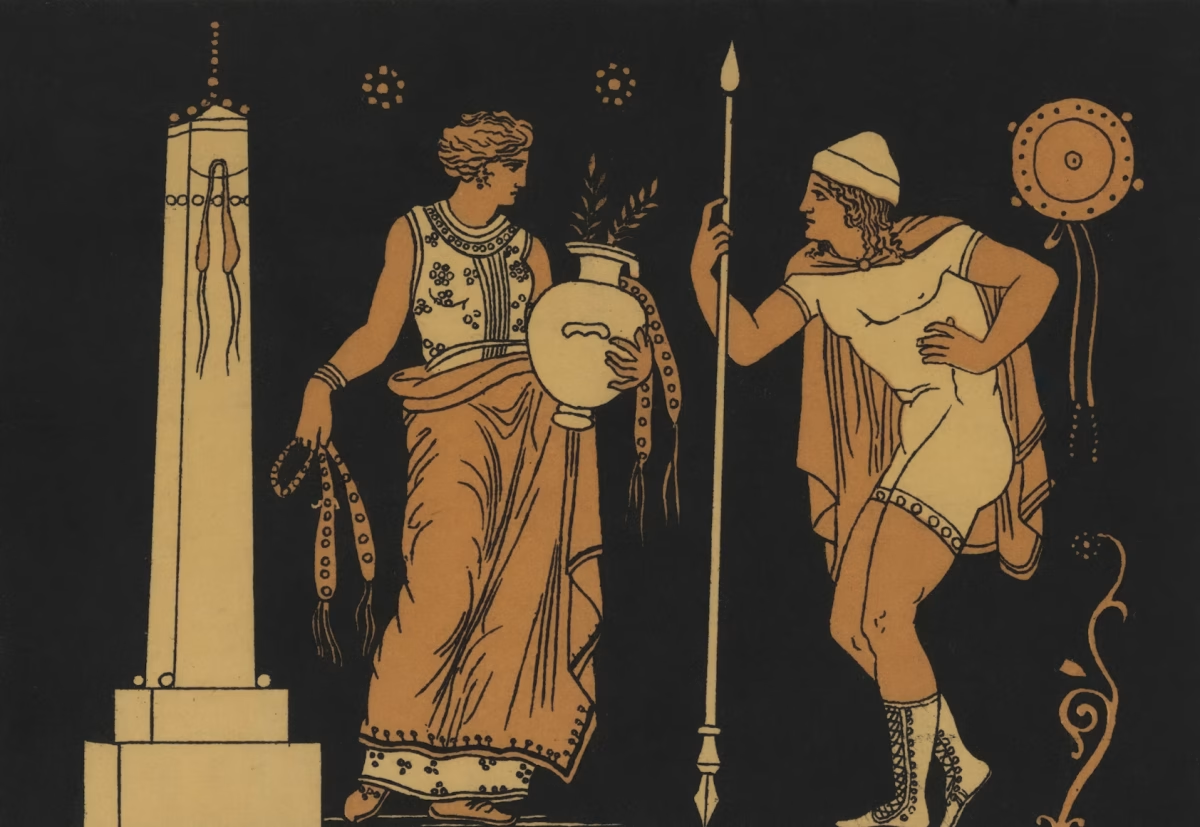
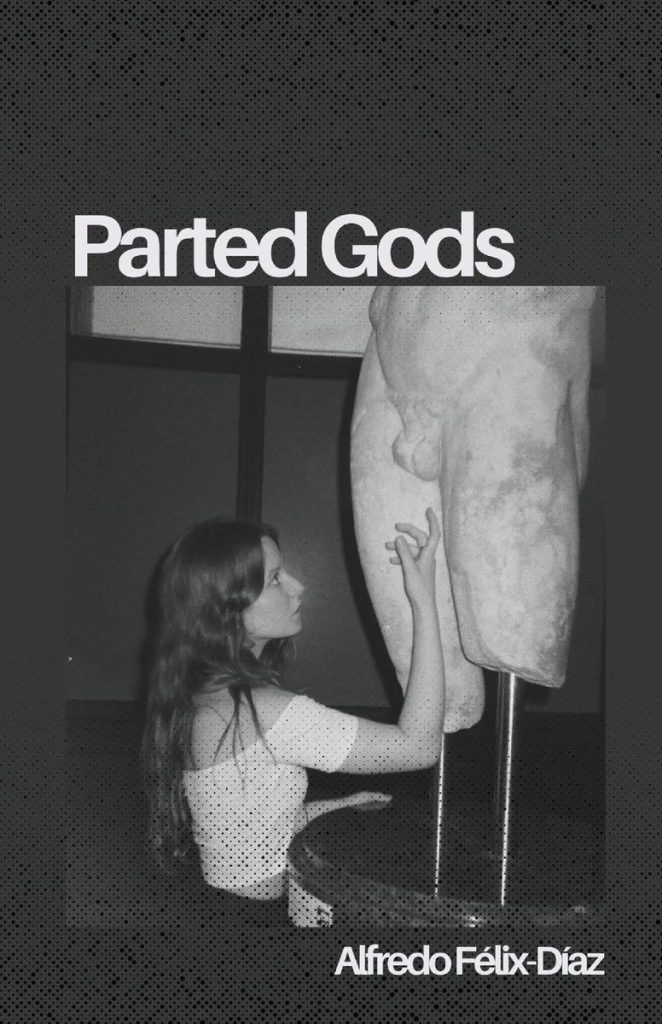
In Parted Gods, Alfredo Félix-Díaz builds a novel that moves between the ancient and the modern through the lives of fraternal twins Antonella and Federico Adamo—a painter and a jazz pianist whose artistic ambitions unfold across Berlin, Sicily, and New Orleans. Drawing on classical mythology while remaining grounded in contemporary artistic life, the novel brings music, painting, and literature into constant conversation. The result is a narrative attentive not only to plot but to rhythm, image, and artistic inheritance.
Félix-Díaz comes to the novel with a background in theater and screenwriting—disciplines that emphasize movement, dialogue, and visual composition. Those influences shape the structure of Parted Gods as much as myths do. The novel’s scenes often feel staged and the prose carries a musical cadence that mirrors the inner lives of its characters.
I sat down with Félix-Díaz to discuss the novel’s relationship to myth, how music and visual art shape narrative voice, and what happens when artists working across disciplines bring those sensibilities into fiction.
Summer Stewart: Alfredo, myth has persisted as a structural backbone in literature for centuries. What drew you specifically to the “hermaphrodite” myth and mythic duality while writing Parted Gods?
Alfredo Félix-Díaz: I wanted to start from the biggest cliché about love. Baudelaire used to say that there is nothing more beautiful than a cliché or a common saying—the first thing that approaches people before a “forest of symbols” opens up. Everyone talking about love says things like, “Oh, my other half” or “my better self.” Yet, when you really go into the myth, as my characters do, a huge world opens up. It implies a sense of history. My characters are international beings—Sicilians with a conflicted past. Their father is Argentinian and their mother is Austrian; they feel they have no “path,” but they have the path of this mythical past: the idea that we were once powerful beings joined together, but we were split apart.
It also speaks to a present that is relatable to all of us—the feeling that we are split within ourselves and split from the other. I’m very interested in right- and left-brain dynamics and the asymmetries between them. The myth puts my characters into a dramatic situation. We want to rejoin ourselves; we want to be powerful like the gods.
In Plato’s Symposium, this myth is told by Aristophanes, a comic poet. It’s not presented as a “true” final solution for what love is; it’s a bit grotesque. It goes against the ideal of Greek beauty. We were “monsters” before we were “complete.” This simple cliché about love has layers of darkness, an aspiration toward the divine, and an animalistic side. It implies the things that divide us from the gods—like the lack of “mating seasons,” which leads to the necessity of social controls like the taboo against incest. All these layers were buried in a myth that seems so accessible.
SS: Before turning to the novel, you worked extensively in theater and screenwriting. How do those disciplines shape the way you think about pacing and scene construction?
AFD: A lot of that is subconscious. In theater and screenwriting, you are used to having a “problem,” or something happening in every scene—even if it’s just someone trying to cross a room filled with plants and people.
I always like my characters to have “stage business” or props. For example, I have an image of Federico putting butter on toast while speaking to his sister. I don’t always dare to have a conversation if there isn’t enough stage business to ground it.
However, I tried to move away from cinema in terms of the “embodied self.” When Antonella gains awareness of her brother’s memories, she gains awareness of what he was feeling in his body. That is something I can’t easily transmit in cinema or theater. I leaned into that to avoid making a “cinematic” novel where you are just seeing things from the outside.
The moment you have twins, you get the friction that we usually only have inside ourselves.
SS: Antonella and Federico are both artists navigating ambition and rivalry. What does the dynamic of twinhood allow you to explore, regarding artistic identity, that might not emerge with a single protagonist?
AFD: It allows for dialogue and evades the “echo chamber.” Artists can be very Whitman-like: “I am myself and I am my universe.” The moment you have twins, you have a divided consciousness. Are they one? Are they two? You get the friction that we usually only have inside ourselves.
When you’re writing, is it your brain? Your feelings? Your fear? Your desire to please a reader? With twins, I can take that inner turmoil and dramatize it. For me, drama is always at least two people in dialogue. One person looking at themselves in a mirror doesn’t interest me as much.
SS: The novel moves through Berlin, Sicily, and New Orleans. How did those environments shape the emotional atmosphere, and what led you to choose them?
AFD: I was living in Berlin as I wrote the novel. I grew up in Mexico City and San Diego—San Diego is so spread out and Mexico City is a “monster”—but Berlin is complex and big enough to sustain everything I could imagine. I could contain the whole map in my head like a stage.
Regarding New Orleans, I identified with Federico’s approach because I’ve only been there a few times. He enters it as a complete foreigner, though he has “been there” through his music. Jazz and the piano playing he admires happened there, partly in reality and partly in his imagination. That gives it an unsettling energy.
Sicily is my favorite part of the novel, yet I have never been there. It represents an aspirational world. I love ancient Greek culture, and so much of it was in Sicily. For me, it is a world of nostalgia for something you lost but never actually had. Italian friends who read the manuscript couldn’t believe I’d never been. I compare it to the birth of opera or the violin in the Renaissance; they were created by people trying to recreate the sound of the ancient Greek lyre without actually knowing what it sounded like. From that imagination, something completely new was born.
SS: Music feels embedded in the prose itself. Do you think of scenes in terms of musical composition
I write novels like poems—which is a huge struggle.
AFD: Not exactly, because I’m not actually good at music! It’s a point of frustration for me. I had a piano at home as a kid, but I didn’t start classes until I was 15 or 16, which felt too late.
What you’re feeling is likely that I am a poet, and I think like a poet. I write novels like poems—which is a huge struggle. I wish I could just sit down and write a terrible first draft to get the story out, but I can’t. Every section I start, I have to find the perfect phrase, the right accent, the right alliteration. It’s tiresome, but it creates a musicality that comes more from poetry than from a technical knowledge of music.
SS: Antonella’s work as a painter introduces another artistic language. How did visual art influence your construction of imagery?
AFD: It was exciting to tell the story through the eyes of a painter. It gave me a lot of liberties. She is the narrator, and even when she’s telling Federico’s story, she has an aesthetic vision. She cares about color, shape, and composition.
I’ve written catalogs for sculptures before, and I love interpreting the world through that lens. Again, it’s a bit of a “frustrated artist” thing—I painted a bit as a teenager but wasn’t very good at it. It’s nice to take those frustrations and work through them in fiction.
SS: Many novels about artists focus on success or failure, but Parted Gods seems more interested in the psychological cost of creating. What questions about ambition were you exploring?
AFD: The concept of “success” is actually quite off-putting to me. Having lived in Europe for a long time, I feel this is a Central European novel. There, people aren’t as obsessed with the concept of success as Americans are. I find it strange when people track how much money a movie made on its opening weekend—why do we care? That’s for industry magazines.
The poet Paul Celan once asked the poet Ingeborg Bachmann why she wanted to go to America, saying he was puzzled by a place where experience is measured by success. I share that sensibility.
The twins’ ambition is deeper and perhaps more “dangerous” than success: It’s the act of creation itself—the “peak experience.” It’s about stealing fire from the gods. When you are possessed by the muse, you feel a sense of power. That “high” of inspiration is their true ambition.
SS: You engage with classical mythology without it becoming a simple retelling. How do you see myth functioning in contemporary fiction?
AFD: I think the “hero’s journey” has been cheapened by Hollywood. In ancient Greek myth, a hero isn’t necessarily someone who saves people; a hero is someone who has the capacity to suffer.
What if these myths were not myths, but facts occurring in our own bodies?
I try to do what Flannery O’Connor did with the Catholic religion. Myth was religion. I want to treat myth as an “incarnational” art—as if it were real. There is a famous anecdote about O’Connor where someone called the Eucharist a “wonderful symbol,” and she replied, “If it’s a symbol, to hell with it.” For her, it was a fact.
I wanted to make Greek myth a literal, incarnational fact. In Western art, art has often taken the place of religion. I wanted to take this to the level of the “grotesque,” asking: What if these myths were not myths, but facts occurring in our own bodies?
SS: Do you think of Parted Gods as engaging with a particular literary lineage?
AFD: Certainly Flannery O’Connor, but also the Impressionists like Joseph Conrad and Ford Madox Ford. They always used a narrator who was part of the story. Antonella is a bit of an unreliable narrator, but only because she filters everything through her own eyes. She isn’t lying to the reader; she’s telling the story to herself.
I also have to mention Hermann Hesse. I read all his novels as a teenager and then forgot about them, thinking they were “teenage” readings. But looking back, my focus on duality and twins is very much like a Hesse novel—like Narcissus and Goldmund or Steppenwolf. I also touch on alchemy toward the end of the book, which also ties back to that Jungian influence found in Hesse.
SS: Is there anything else you’d like to add about the “incarnational” aspect of the book?
AFD: I don’t care much for “newness.” Homer is the peak; we’ve been going downhill since then! But I think the idea of bringing myth into the body is what makes this work.
Painting has always done this. Antonella values Velázquez. In his paintings, you see Hephaestus working in his smithy. If no one told you he was a god, you wouldn’t know—he looks like a contemporary worker. Rembrandt’s Artemis is a huge, physical woman who has nothing to do with the “ideal” Greek form. Painting brings the gods into the present of the painter. I wanted to do that with the novel: to give the myth flesh.
This is my last fundraising letter to you as Executive Director. In my 10 years in this role, and 16 at Electric Literature, I have seen funding for the arts gutted. In 2025, we received $57,000 in grant funding, compared to $127,000 the previous year. This $70,000 reduction was a result of the Trump Administration dismantling the NEA and attacking artistic expression. As an indirect result, other funders have been spread thin and grant amounts have been broadly reduced.
I wish we lived in a country where there was more federal, state, and organizational support for the arts. Maybe one day we will. In the meantime, it’s on all of us to step up. Last year, you did. Individual donations to Electric Literature went from $155,000 in 2024 to $215,000 in 2025—a $60,000 increase that nearly covered EL’s grant losses.
One of the hardest lessons I’ve learned as Executive Director is to ask for what EL needs. This sounds simple, but for years I was inclined to ask for less—to ask for the amount that sounded palatable, or seemed achievable—and to make up the difference with debt and sacrifice. It took our community stepping up last year to teach me that getting what we need is possible.
Your support also taught me that caring for Electric Literature is not a responsibility I shouldered alone. As a nonprofit, Electric Literature does not belong to any one person; it belongs to all of us. To the staff, to the thousands of writers we publish and pay, and to the millions of readers who read their work for free every day.
Electric Literature is undergoing an exciting transition as I step away and other staff members take the reins. We’ve set a more ambitious goal for this spring fundraiser so that EL’s new leadership has the security to face whatever challenges lie ahead. Their vision for Electric Literature is fresh and inspiring and worthy of your investment. Together, we are strong, and the future of literature is bright.
I’m asking you, once more, to support this organization we all love before the April 15 deadline. We’re still over $20,000 away from our $35,000 target—maybe this goal is ambitious, but it’s what we need, so it’s what we’re asking for. Time is running out; please give generously.
The Person Who Lives Here Doesn’t Live Here Anymore
The man who’s called me out to pick his lock is lying. He doesn’t live there. I know this, because it’s my apartment.
When I received the message, my first reaction was shock. Not a stomach-churning kind of shock—like when Sarah decided to up and leave after ten years of marriage and told me with nothing but a text—but more a feeling of surprise. That of everyone in this damn city they could steal from, they’d choose me.
I thought about calling the police, but left the number undialed. I guess a part of me was curious. Everything’s already so fucked, I wanted to prod it a bit more just to see what would happen. So now I’m on my way to help a man break into my own home.
When I arrive, he’s sitting on the worn corridor carpet, staring at the ceiling. He’s in his late twenties, wearing tight jeans, a baggy tee featuring a band I’ve never heard of, and an old beanie. He’s a little jittery—understandable, given that he’s about to commit a felony—but all things considered he’s holding it together. It’s a look not so different from that of most of my customers. I used to enjoy watching their concern melt into relief whenever I teased their door open. I’d smile as they stepped over the threshold, arms outstretched as though hugging an old friend. That’s how I used to feel getting home, too. These days, I shuffle Metropolis-like through my front door, past wedding photos, past the jacket that Sarah used to say suited me, past the boomerang from our trip to Australia that we swore we’d learn how to throw. Everything’s preserved, like Pompeii after Vesuvius erupted—except in this case it was Sarah blowing up my life.
The man flashes a fake ID bearing my name. “I appreciate you coming out so quickly,” he says with as much confidence as he can muster.
I stare at him for a moment, pondering my next move. Confronting him’s still an option, of course. There’s no room in those drainpipe jeans of his for a weapon, and I’m sure a combination of old man strength and primal rage would see me through. But the same morbid curiosity that brought me here keeps dragging me along for the ride.
So instead, I sit there, picking the lock with the quiet professionalism I’d give any other customer. After a few minutes, the door springs open.
I wait in the van as he loads his car with my shit: the widescreen TV Sarah and I used to snuggle up in front of; the record player she bought me for my thirtieth; the food processor that’s been collecting dust for a year.
As the man drives away into the night, I step inside. Everything’s gone: not just the expensive stuff, but the small things too. Liquor, coasters, even the damn boomerang. And for the first time in forever, I can breathe a little more easily.
I love a rousing epic, but I’m equally drawn to smaller, more interior odysseys—stories set in kitchens, in unassuming towns, or in the mind itself. Unlike larger-than-life quest narratives with a traditional (and traditionally male) protagonist, these little odysseys take place in spaces often coded as female and just as often dismissed as unimportant. But their smallness is precisely the point, and although they promise neither resolution nor reward, they offer something equally rich: friction, intimacy, insight, and a slow remaking of the self.
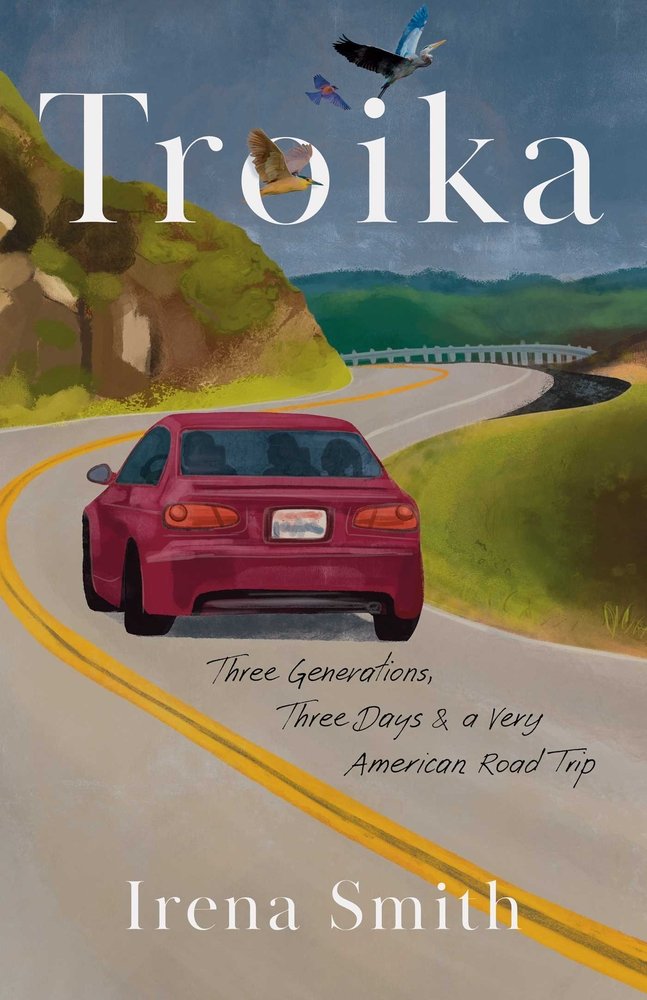
My book, Troika, chronicles a three-day road trip to California’s Central Coast. In the car: me, my 77-year-old mother, and my 22-year-old daughter. We drive 250 miles south to Solvang, a quaint Danish town made famous by the 2004 film Sideways, meander through the Santa Ynez Valley, stop at an ostrich farm, visit a stunning outdoor light installation in Paso Robles, bicker, binge-watch the second season of The White Lotus, and embark on a quest for the best latte art. It’s a modest journey—three women, three days, an unambitious itinerary—but along the way, Troika explores the complicated interior landscapes of myth, migration, and memory, braiding together echoes of the Odyssey, a legacy of loss, and a family history of fleeing from monsters, both real and imagined.
The nine books on this list undertake similarly circumscribed journeys: across a parlor, through a single unruly sentence, back into a childhood bedroom. Their protagonists are daughters, mothers, wives, caretakers, and strivers—women who struggle with the weight of inheritance and expectation, confront and name their own desires, and navigate uncharted interior terrain. But even when hemmed in by economic exigency, physical disability, or cultural constraints, these protagonists show us that nothing is more heroic than a consciousness finding a way forward on its own terms.
Over the course of a single, breathless, looping sentence that runs for a thousand pages, the unnamed narrator muses about her failed first marriage, her happy second marriage, her four children, her health, her health insurance, money, her part-time job baking pies, her earlier job as an untenured history professor, the sites of Native American massacres near the small Ohio town where she lives with her family, GRWM routines, climate change, internet headlines, and the thrumming violence just beneath the surface of American life. We may not know her name, but she contains multitudes, and by the end of the novel, she feels like a close friend.
Catherine Sloper’s beautiful, clever mother died in childbirth, and Catherine—who grows up to be neither clever nor beautiful—is left in the care of her meddlesome older aunt and her exacting, acerbic father, a well-regarded doctor who believes that “you are good for nothing if you aren’t clever.” What’s a girl to do, especially if she’s stuck in her father’s house with no marriage prospects? If you’re Catherine, you endure a broken heart, quietly defy your controlling father, take up needlepoint, find your backbone and your voice, and realize that your small-seeming life may not be so small after all—especially if you live it on your terms…
A mother and daughter embark on a treasure hunt in the Utah desert. They are carrying an unreliable map, a lifetime of resentments and regrets, and not enough sunscreen. The mother, Christy, is erratic and irresponsible; the daughter, Bea (short for Beautiful), seeks order in numbers and weather patterns. Their search for treasure loops and meanders, but much of the narrative drama takes place in the cramped spaces of memory, text exchanges, and snatches of conversation. A fraught, uneasy tenderness slowly builds between the two women as they chart an unexpected path back to each other.
Ruth’s fiancé has dumped her for another woman (“I loosened the jar lid,” she notes, “so someone else could open him”). Her father, who has Alzheimer’s, is flinging his pants and shirts into trees. Ruth returns to her childhood home, where she cooks cruciferous vegetables (her father calls them “crucified vegetables”) and jellyfish, which are supposed to stave off cognitive decline, accompanies her parents on walks to the park, and searches for projects that spark her father’s interest. The novel’s modest scale—meals prepared, notes left on the refrigerator, snatches of dialogue overheard in the street—belies its immense affection, wry hilarity, and attentive intelligence.
Daisy Hernández is five when she begins learning English—a language that sounds like “marbles in the mouth”—and for years afterward, the hurt of being the first to leave her Cuban-Colombian family for another language lingers. Her fluency puts her at a remove from the people she loves most; so does identifying as bisexual and speaking out in a culture that traditionally values stoicism and silence. But no matter how far she ventures, writing allows her to remain close to home; writing, she says, “is how I leave my family and how I take them with me.”
A self-described semi-famous artist sets out on a cross-country drive, but 20 minutes into her trip, she checks into a small-town motel. There, she spends an exorbitant amount of money redecorating the motel room, engages in an unconsummated affair, and dreads the “estrogen cliff” that will send her hurtling into the jaws of menopause. The novel is polarizing—readers have dismissed the protagonist as self-indulgent and unlikable and cringed at her no-holds-barred frankness—but I was brought to tears by her fearless willingness to explore the darkest recesses of her psyche and the rich intimacy of female friendships that undergird the novel.
Odysseus’s loyal wife, Penelope, spends most of The Odyssey weaving, waiting, and weeping. Now that she’s dead, she’s ready to drop some truth bombs from the underworld. She is no longer willing to bite her tongue, to keep the right doors closed and go to sleep during the rampages. She’s sardonic and angry. She regrets not standing up for the maids Odysseus and Telemachus slaughtered when Odysseus returned to Ithaca, but it’s too late; their voices haunt her story, for the maids understand better than anyone the steep cost of keeping the home fires burning.
Why go outside when you can hang out in your apartment with the internet, the TV, and your garbagemonster cat? Samantha Irby sees no reason for it. Her bowels are irritable, her arthritis is flaring, the dating scene is “fucking dire,” and her job skills are limited to—in her words—surly phone answering, playing the race card, and eating other people’s lunches in the break room. Also, her mind is a “never-ending series of shame spirals” leavened with depression and anxiety, which is why she’s staying home in her day pajamas, eating the snacks she ordered online, and spinning the dross of daily life into gold.
Imagine your father (who, incidentally, spent your college tuition on a guitar that once belonged to Paul McCartney) is one of a handful of non-celibate Roman Catholic priests in the world. You are nothing like him. You write poetry. On the internet, which has just become a thing, you meet another poet in a poetry chat room, and the two of you marry (at 19!)) and move to Savannah. You’re poor and happy, until a catastrophe forces you and your husband to move back into your father’s house, which in this case also happens to be the house of God. Lockwood’s main instrument of resistance—her profane, poetic, loose-limbed, exquisitely unhinged voice—punctures the domestic claustrophobia and creates its own sacred spaces.
Women’s stories feel different to me. People say that if only women ruled the world, there would be no more war (a lovely thought, and one I’ve been returning to lately) because women are socialized to revert first to empathy, to the collective rather than the fiercely individual, to taking care of other people and thinking of their needs, sometimes to a fault. We see that in the lens they bring to their fiction. Women in war hold families together; women in fiction often emphasize the vulnerable, rather than the physically strong. And they act—as the International Prize for Arabic Fiction (IPAF) called the women in Amira Ghenim’s ACalamity of Noble Houses—as “custodians of memory,” preserving a version of events that course-corrects accepted patriarchal accounts.
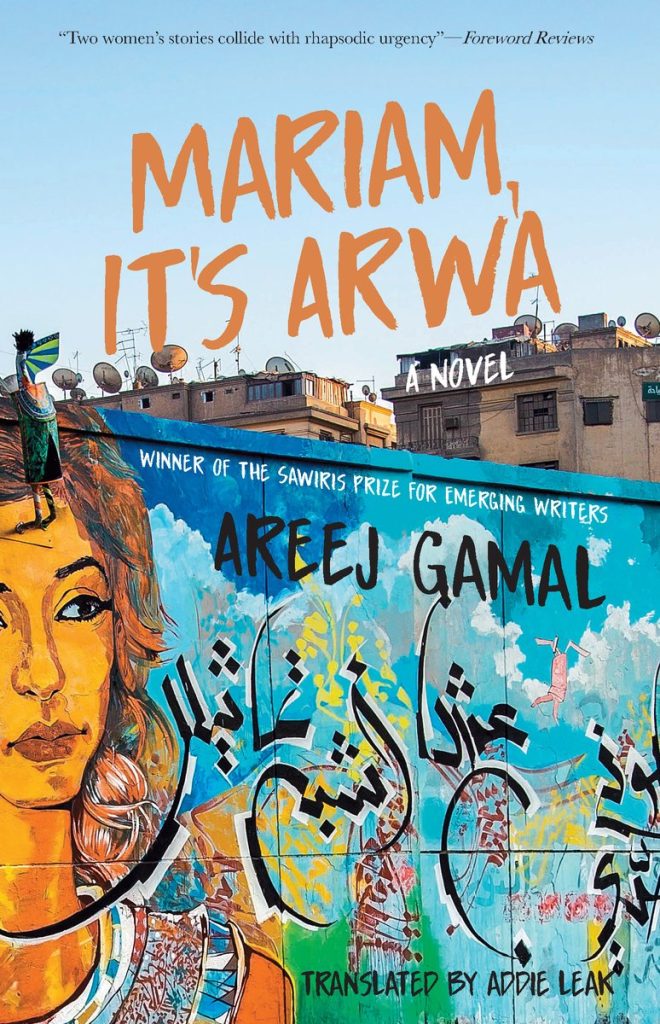
Over four years, I had the privilege of reading and translating Areej Gamal’s Sawiris Prize-winning novel Mariam, It’s Arwa. The book, emphatically and sublimely female, is about a multiplicity of revolutions, the most literal of them appearing in its frame plot, during the Arab Spring in Tahrir Square and Cairo’s streets. The novel spans generations of women: the mother who falls in love across class and religion and risks everything to follow her heart; the daughter who leaves an unhappy home and emigrates to Germany to find herself; the abused grandmother who has internalized the idea that a woman is nothing if she doesn’t bear a son; and the mother who nearly dies in her quest to make that dream a reality. And of course, the two main characters’ love is its own revolution—a remaking of the world as a more inclusive place in spite of itself, even if their world is one small apartment on Champollion Street. It’s my favorite kind of book: a book by a woman about women taking their lives into their own hands. One that centers women at the forefront of revolution/war and social change.
While my definition of “revolutionary” here is broad—encompassing societal revolution and personal rebellions against tradition—I admit that war is at the forefront of my mind. As I’m writing this, the normal city sounds in Amman, Jordan, where I am, are interspersed with emergency sirens, occasionally fighter jets and explosions. The US and Israel are attacking Iran, which is attacking back, and we are war-adjacent. More or less safe—we hope—but affected, as is the entire region. It’s hard not to see echoes of this chaos appearing in some of the novels on this list. But when I look around, I’m grateful to see echoes of the heroines’ tenacity and resilience, as well. These novels have much to teach us about the importance of knowledge-gathering and memory, seeking out joy in the midst of crisis, and rejecting any entity that tries to write our stories for us.
Nawal El Saadawi (1931-2021), the Egyptian writer, medical doctor, and psychologist, has often been compared to Simone de Beauvoir and Virginia Woolf—an outspoken feminist and activist whose writing had a dramatic impact on generations. Jailed under Sadat for “crimes against the state,” she wrote about authoritarianism, feminism, and capitalism, and Woman at Point Zero—what the British-Palestian writer and lawyer Selma Dabbagh calls a “small volume of fury”—is one of her seminal works. The main character, Firdaus, is in prison awaiting execution after killing a man. As she tells her story, it is difficult not to feel both anger and empathy. There are few points of hope in the book, in which money is the only source of autonomy for a woman and prostitution near-inevitable for one born without, yet it is through landmark novels like this one, with its fierce condemnation of patriarchal society, that change is possible. Pleasant? No. To say that the book needs a content warning would be an understatement. Important? Incredibly.
I first read William Granara’s translation of Granada, the trilogy’s first book, as part of a book club, where members were heartbroken that the subsequent parts were untranslated. Now, for the first time, the whole trilogy is available in English. The story begins in 1492, when the Arab kingdom of Granada falls to the Christian Castilians, and the Moorish presence in Spain becomes unstable. The text follows a Muslim family as it tries to make sense of the forced conversions, book burnings, job loss, immigration, rebellion, and Inquisition until, one hundred years later, their descendants are deported en masse. The women in the book stand out, particularly Salima, a great lover of books and a healer, and Maryama, her sister-in-law, who is clever, defiant, and compassionate, a rallying point for the community in chaotic times. Women are at the core of this book, conserving knowledge and holding their families together.
Planet of Clay by Samar Yazbek, translated by Leri Price
Told in lyrical, often cinematic prose from the perspective of a neurodivergent young woman named Rima, Planet of Clay depicts the Syrian Civil War and the aftermath of the chemical attack and siege on Ghouta. Rima, who does not speak, spent much of her childhood in a school library and has a deep love of books and painting. We find her lost in her thoughts when the book opens, trapped in a cellar with only boxes of paper and a pen, recording her story as she runs out of food. The war has stripped her of all the people she loved, and she cannot grasp why. “We are toys made out of clay, small toys, quick to break and crumble,” she writes. Still, this careful storyteller sees beauty at times when others don’t look for it, using her imagination to make sense of and find light in a dark world.
Set in 1930s Tunis, A Calamity of Noble Houses was shortlisted for the IPAF in 2021. It begins with Tunisian revolutionary Tahar Haddad, author of Our Women in the Shari’a and Society, and places her in the context of two upper-crust families, the conservative Ennaifers and the more progressive Rassaa family. Here, Haddad, a real historical figure from humble origins who was instrumental in shaping the future of women’s rights in Tunisia, falls in love with the young Zbaida Ali Rassaa, who becomes the wife of Mohsen Ennaifer. When dubious accusations of an affair surface, tragedy strikes. The novel decenters Haddad to tell the story of the two families as narrated by eleven different characters from disparate social classes who, together, paint a rich portrait of a nation in flux, spanning several decades.
In 1987, during the First Intifada, a curfew is imposed in a Nablus neighborhood, and three women are trapped inside the same house. Nuzha, its owner and daughter of a prostitute, is furious at society and the whispers that her mother was a spy for Israel. Sitt Zakia, a middle-aged midwife, uses faith as a barrier against the political violence surrounding her. And Samar, the optimist, is a university graduate studying how the Intifada has affected Palestinian women’s lives. Together, they hatch a plan to thwart Israeli soldiers’ effort to barricade the street. Like Mariam, It’s Arwa, this novel doesn’t gloss over the multiple fronts of the ongoing revolution. When it was published in 1990, the novel was criticized for daring to depict domestic violence on the part of Palestinian freedom fighters. But Khalifeh makes it clear that these women’s oppression is twofold: both Israeli Occupation and the patriarchy itself.
Minor Detail by Adania Shibli, translated by Elisabeth Jaquette
A finalist for the National Book Award and longlisted for the International Booker Prize, Minor Detail won the 2023 LiBeraturpreis, but the awards ceremony was indefinitely postponed in solidarity with Israel after the October 7 Hamas attacks—a move that drew criticism from numerous organizations. The novel is a haunting meditation on war and memory that includes two intertwined stories. The first begins in 1949, when an Israeli battalion massacres an encampment of Bedouins in the southern Negev and abducts a Palestinian teenager whom they rape, kill, and bury. The second is the story of a young woman from Ramallah, born twenty-five years to the day after this crime, who sets out to uncover more details about it, encountering obstacle after obstacle as she attempts to access archives that will give her information about her country’s past. This is knowledge-seeking as revolution at its best.
Blood Feast by Malika Moustadraf, translated by Alice Guthrie
Malika Moustadraf was a force of nature and an icon of feminism who passed away in 2006, at just 37 years old. A “rebel realist,” as she called herself, Moustadraf’s prose is so embodied that it often turns the stomach. It details what translator Alice Guthrie calls “an unflinching look at the worst traumas of the female experience in patriarchal society, shot through with wit, wordplay, and razor-sharp political commentary.” Her stories fearlessly take on abject poverty, religious hypocrisy, pimps and incels, a girl’s horrifying first period, cybersex, and the failure of the Moroccan medical system to help those in need. Moustadraf was maligned in her time due to her literary activism, and her two books had fallen out of print in Arabic at the time of her death; it’s thanks in large part to Guthrie’s tireless advocacy that her writing is now available again in both Arabic and English.
I bought my Arabic copy of this book for the cover art: a girl in a swing, her eyes closed, a daisy covering her mouth. Then I read about Zahra—“flower” in Arabic—a girl who yearns to be close to her mother, who, in turn, uses Zahra as a shield in her love affair. Originally published in 1980, this classic of the Lebanese Civil War is about a young woman seeking to establish her own identity, one who spends years escaping. First from an authoritarian father and disappointing mother to West Africa—where she has a miserable marriage—then back to war-torn Beirut, where she begins an affair with a sniper. The book tackles childhood trauma, assault, the complex emotional landscape of emigration, and the stigma surrounding female sexuality. Unlike Firdaus in Woman at Point Zero, Zahra experiences and embraces pleasure—a point of hope, if not ultimately of salvation.
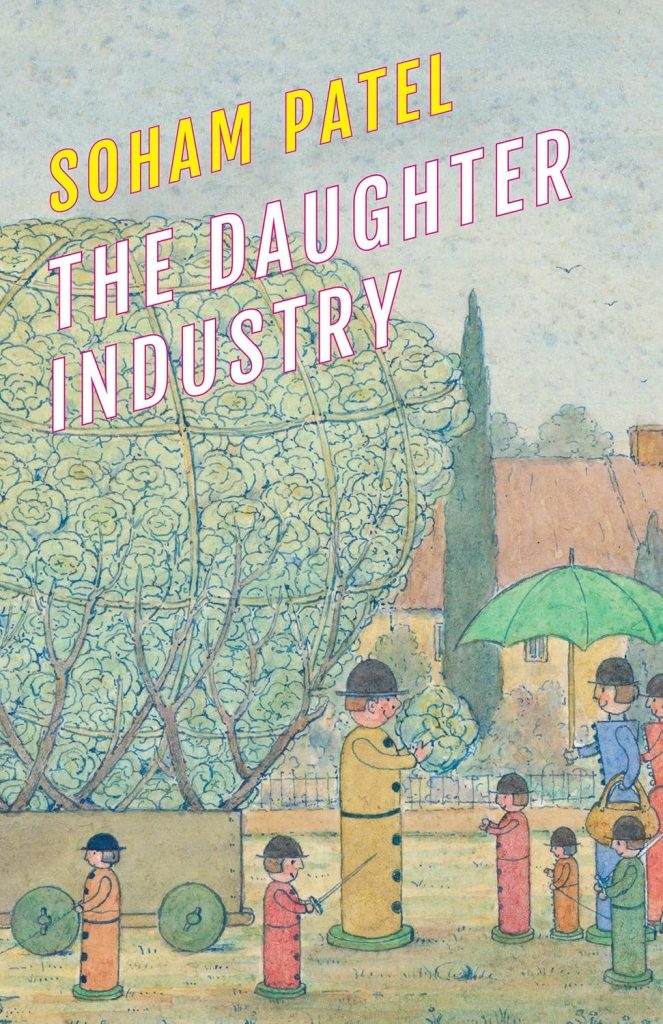
In a three-act whirlwind, autopoetic, hybrid play about the unborn ghosts of daughters lost to sex-selective elimination, Soham Patel’s The Daughter Industry delivers a genre abundant staging of social and economically produced gender woes. From sissy boi to high femme princess, seven players perform a complex yoga routine, lip sync, and engage in karaoke sing-offs to examine the bind of moving through a society that privileges the birth of those assigned male at birth, and figuring out where that leaves those who were determined, before birth, to be less socially viable. Hence the daughter industry, which churns out unborn ghost after ghost.
Despite the gravity of this subject, The Daughter Industry is lovingly choreographed by Patel’s recognizable charm, humor, and playfulness as a writer—traits which their players embody as well. Moody Scorpios and fastidious Virgos abound in this book, and gender becomes both a marker of where you are in this place and time as well as a moving target. The cast gives us this rich gender discourse while going into happy baby pose.
While Patel’s formally inventive deep dive into sex selective elimination takes on the South Asian Diasporic context, I am rocked by how we are all culturally implicated in this violent industry of assigned sex and the subsequent roles we are to perform, particularly as daughters. And yet, I am grateful for the ways Patel reminds us that there are still tender ties to our gendered upbringings. Our bodies are continuously yearning for answers, belonging, and to be free. Talking with Patel, I am reminded that the search for genres and forms that can hold these complicated questions is just as meaningful as the ways we make choices about how we embody our gender(s) in this lifetime.
Over email, Patel and I talked about the inextricability of genre and gender “bending” in The Daughter Industry, as well as the various bends, folds, and stretches that accompany the book’s elaborate yoga routine, and more.
Muriel Leung: The title of your latest collection is quite a legendary multi-genre assemblage: The Daughter Industry: A Hauntological Confession, Alternative History, Speculative Autopoetics in Three Acts with Seven Players. In so many ways, the charge of this genre-defiant work is consistent with its gender-defiant message, something we see in the gender bending and multiplicitous cast list (“all unborn ghosts”), and the opening poem “In My Dotted Suit and No Dupatta,” in which the speaker moves through having found their gender to “I hadn’t yet found my gender.”
Can you share the story behind this title (and illustrious subtitle)? How does the title mirror the intertwined relationship between genre and gender you’re thinking through in this work (especially the ghostliness of it all)?
Soham Patel: I’ve thought about the word “daughter” all my life because my parents gave me a name that’s traditionally assigned to sons. I know they wanted a boy and actually, when I was twelve or thirteen, one of my uncles started calling me Sohambhai (bhai meaning brother). It was a term of endearment while also him lowkey poking fun at my T-boy expressions. Gender’s always been a little confusing to me, but I don’t necessarily mean confusing as a bad thing. It’s a curious thing. That led me to the question “what makes a daughter?” and that’s where industry—that idea of making or manufacturing—plays into the title. Sex selection is an industry that eliminates daughters before they are born.
This is why the book is also a hauntology. It sees the ghosts of unborn folx, past, present, and future. One poem early in the collection is built around a speaker describing seeing a ghost. It also works within the tradition of confessional poetry: intensely vulnerable, controversial, conversational. I saw that ghost, and that was one of the starting points of this book. It’s an alternate history that examines a world where these victims of sex selection, these would-be daughters, (maybe) could have been born. I am making many selves through a poetics that imagines new realities about welcoming genders beyond the binary.
ML: That makes me think of Kazim Ali’s coining of the term “genre queer,” referring to the way genre, much like gender, is reflective of the myriad possibilities for embodiment and presentation.
There are seven players in the book, each of uncertain astrological placement and equally uncertain lineages, whose drama is told through a three-act structure, harkening Western dramatic forms, and also calling upon conventions of Indian theatre. What forms of play/performance did you feel called to draw on for the structure of this drama?
SP: The players allow me to draw on persona as form, messenger speech, and dramatic monologue. I wanted a multigenerational troupe of many genders to tell this story. Sai is masculine-presenting and serves as the solid older bro. Sajani is the matriarch. Suvali is the handsome femme sister who leaves town then comes back home. Sasmita’s younger and thinks this whole problem is audacious. Shasha/Sheetal, they’re kind of shy and obedient but not really. Sarah participates in heteronormativity and defends son preference while she understands it’s fucked up.
The elders’ discourse is more narrative while the younger ghost’s language use is more conceptual, they use documentary forms and are a bit more playful with the book’s topic and with each other. They’re irreverent but still they learn about the graveness of their situation and their playfulness eventually, by Act III, influences their elders.
ML: How realistic that there would be hierarchy even among the unborn! Why then a verse play? What does the use of verse in play form allow you to do?
SP: Making it a verse play took the pressure off of me and let them talk to each other. The three-part structure is based on the ayurvedic doshas: The first act is grounding, the second act is fire, a kind of metabolism, and the third act is air that’s evaporating not simply in acceptance, more at peace and accounting for the trace elements left by the sex selection processes. I tried this three-part structure in my first two books and I like how it forces some order on my chaotic ways of thinking,
I also draw on Kathakali theatre’s incorporations of music and dance and its elaborate use of tiny gestures, physical expression, and audience interaction. In the book, the players invite generative participation from readers by practicing yoga, staging a flash mob, throwing drag shows and lip synch revelries. Since a play gives the book a life beyond the page, I want The Daughter Industry to belong to other people and for them to imagine how these ghosts should occupy a stage of their own creation much like in the tradition of V.’s The Vagina Monologues.
ML: All this dynamism feels antithetical to the predetermined death issued by sex selective elimination. I feel the veils of this reality and the spirit realm become porous through every yoga pose and lip sync.
Earlier, you had mentioned your personal connection to the word “daughter.” I’m thinking of the title of your book again, where an industry of daughters indicates that “daughter,” much like girlhood, boyhood, or gendered roles or social positions are all manufactured through the joint production of culture, market mechanisms, and even proximity to or literal death. How has writing this book altered, if at all, your relationship to the term “daughter”?
SP: Daughter is speculation in the same way investments are. “Daughter” can be considered an asset that has a transactional value like a dowry or a diamond engagement ring or the wedding’s rehearsal dinner bill or covering the sangeet reception’s open bar. Both daughter and son function as commodities. In the book some of that function gets shuttled through poetry about trade, marriage, and parenthood. Writing the book also altered my relationship to the term daughter because it got me thinking about the term son with more complexity. I became more patient with both terms. For example, the work made me more sympathetic to the real pressures that are put upon sons within the context of son worship and patriarchal structures. This allowed for more room to give love to the boys and men in my life, that’s why I dedicate this collection to them.
ML: From a Chinese cultural context, I think too of what it means to not be just the eldest daughter but a “daughter-son” fulfilling both roles, given my disabled younger brother’s inability to fulfill traditional social and economic responsibilities as the son. I’ve always known that daughters are treated as commodities, but I think less about how sons participate in this gender economy too, so your explanation also helps me think more compassionately about the overall system we’re indoctrinated into.
Your mention of speculation, which is a market term as well as a literary one, also suggests play and imagination. I see this in the syntactical restlessness of your work. Lines that are playful at times, and at other moments emphasize with great seriousness the stakes of gender violence taking place through interrogation of medical language, religious tradition, and treatment of women as property. How do you know when it is appropriate to crack a joke on the page versus pushing forward a critique?
SP: At a certain point these ghost voices spoke to me and I became their interlocutor. As I moved in the world, I saw it through them and now they live with me and influence how I am thinking. Sometimes when I am watching TV with my wife, I point at a character and say something like, “He’s such a Sai,” “She’s totally giving Suvali,” etc. Sasmita’s likely cracking most of those jokes because for them, witticism can at once offer relief and put forward a critique. Shasha/Sheetal treat crisis with a cool irreverence too, sometimes they simply perform documentary poetics as they repeat the terrible things they overhear with a tonal disdain. Sajani, Suvali, and Sarah are more elegant and conditioned by these traditional forces that almost, but don’t quite, silence them.
ML: I think most people think of ghosts as fixed presences, static in their desires and post-life haunting. But these seven players change their minds, challenge the system of sex selection, confront the contradictions within their own beliefs, and learn that their own relationship to gender influences their positions. I imagine it’s a balancing act to write this book and to see how these different unborn ghosts impact each other.
As this manuscript began as your University of Wisconsin Milwaukee PhD dissertation, can you speak to how these players’ journeys have evolved over the years?
SP: Pronoun preferences and normalizing nonbinary genders became everyday language I didn’t have access to when I started writing these poems in 2010. Mine transformed from “she” only to include “they” which of course reshaped the use of “I” in my collection of lyric poetry about gender, reproduction, and the ghosts of sex selection. And while I read plenty and saw so many media representations, I still knew nothing firsthand about some topics the book approaches, and still [don’t], never will. Childbirth, for instance, or some experiences of both boyhood and girlhood.
I took a full-time job as an editor straight after completing my PhD. That day job transformed the book’s nighttime revision process in that I newly understood I could cut and reshape the drafts without losing the book’s essence, and I could think about audience more expansively. In the detached role of an editor, I discovered an intellectual and emotional freedom that had been impossible to access before. I also became a step-parent to two beautiful teenagers and that made my relationship fuller with the work. This major shift made me understand Suvali and Sajani’s perspectives on parenting with more accuracy as they now were informed by my lived experience. The speaker of these poems—persona, pantomime, the self of lyric I or otherwise—is always learning and language changes in their worlds every day.
ML: You’ve also published other collections that grapple with gender through ecological considerations—to afar from afar; ever really hear it, winner of the Subito Prize; all one in the end—/water. How do natural elements, from the blended forms that frame each act to the movement and scattered placement of humans that is diaspora, shape this work?
SP: Act II attempts a decentering of the human as it makes a thematic shift to exploring the reproductive practices of some animals. I watched all the videos in Isabella Rosselini’s Green Porno series many times as part of the research for adding this new vector into the book. Her animated shorts were such a great resource and offered a framework for challenging anthropocentric notions of gender.
Something I like about this book is that the work from all my books shape and influence it. The critical race theory and maudlin nostalgia from every really hear it is there, the question of home and belonging from to afar from afar appears, and the ecological crisis born from surveillance paranoia and corporate greed inevitable in our late capitalist structure that worries all the way through all one in the end—/water shores up in this book too. Flood subjects culminating.
ML: Indeed, this kind of spillage abounds and has cumulative force in The Daughter Industry! The collection takes us through a yoga routine—Sid (Sidhangana) does a series of prone poses, then serpent or cobra pose, savanasa the next, chants om, and goes into dead man’s pose—set to a playlist that includes pop classics like Whitney Houston’s “I Will Always Love You” and Destiny Child’s “I’m A Survivor.”
One of my most cherished memories of you is witnessing your rendition of Gloria Gaynor’s “I Will Survive” at AWP Literaoke in Tampa, Florida. I think at some point during your belting of the line, “You’d think I’d lay down and die,” you fell to your knees, and then in the next moment, staggered up with “No, not I, I will survive.” I believe you got some standing ovations, or it could just have been me waving my sweater like a propeller in the air. How do your daily practices and pop culture affinities make their way through the book? And what are some additional poses and songs you would like to add to the karaoke queue?
SP: Oh, I like this game! Add Madonna’s “Vogue” where we can strike a pose while singing along with that queer anthem and “I’m Every Woman,” Chaka Khan, 1978. Besides warrior one and two, I didn’t explicitly fit many triangle poses into the book. These always reshape my days into better ones when I do them, so let’s add some. Right now, as I’m composing these answers (it’s a Sunday, the first day of February in 2026), I just want to rest a bit in child’s pose because I’ve been watching on my phone so many people I love living through all the unrests brought by apocalypse, the start of a civil war, and the end of an empire. So I need to calm my nervous system daily or else I won’t survive. I’d love to start a running queue for any reader of the book interested in participating.
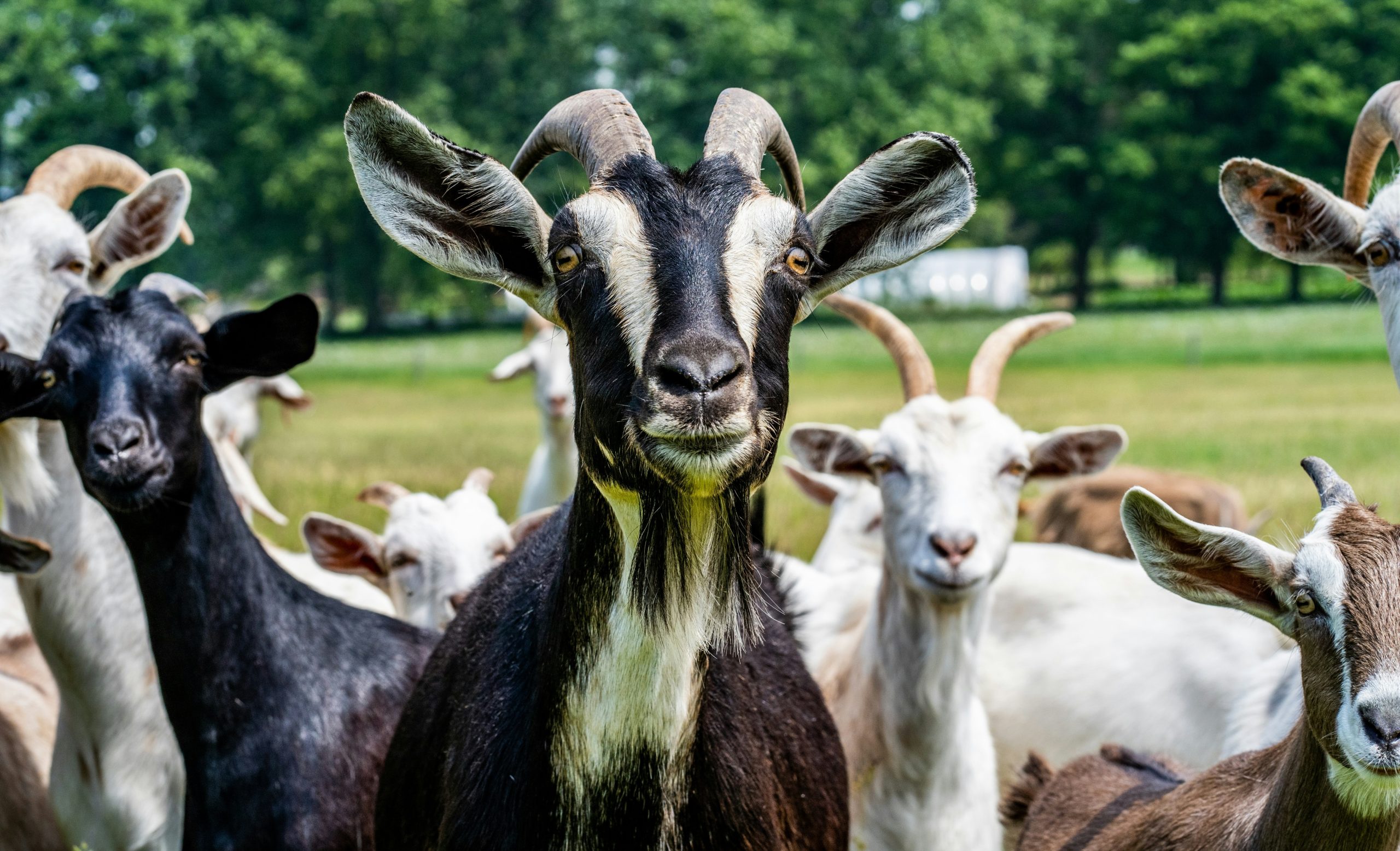
I was a small child, my head the height of theirs, when I noticed the black parts of their eyes were shaped like shoeboxes. But I didn’t know then that their rectangular pupils are adaptive. Goats take their meals on savannas or other wide-open spaces that leave them vulnerable to predators and the beating sun. Horizontal pupils let in less light from above and allow a wide field of vision.
Living with five Nubians—four does and a buck—I witness how nimbly they manage difficult terrain and remain vigilant at the same time. Because a misstep can be fatal.
The does greet me this morning by nibbling my flannel shirt, which I imagine tastes of woodsmoke and chicken broth. The barn smells of sweet-sharp hay, of pine dust, a wisp of ammonia that lets me know the straw bedding needs to be changed. It’s the heart of winter, and I pull the girls close.
The does are two months pregnant, so I’ve stopped milking to allow the young mamas to build their strength and keep their vitamins, which they’ll need to give birth to healthy kids come April.
A lot of people choose not to freshen does in their first fall, but I was impatient to grow my herd, to get a revenue stream going to stabilize the farm, and Judy said that as long as the girls were good sized and healthy, they’d be fine to breed. I’m thrilled every time I look at this burgeoning pack of curious females.
Yet it’s my first time as a goat midwife. Can I really manage the upcoming births on my own? We have no money to hire a helper or to call the vet if something goes wrong.
At least I have Judy on speed dial.
Opening the chicken coop, I let the birds loose and empty a bin of kale stems and squash rinds as an enticement to venture farther afield. Few eggs to collect this time of year, when the days are so short. The birds are healthy but they look horrendous, the runts and weaklings’ backs picked clean of feathers. Their bare pimpled skin shames me, even though my father’s hens looked the same, no matter what he did. “Lucy,” he’d tell me, “there you see the meaning of pecking order.”
I’d planned a lot of indoor projects for the winter milking break, but that was before Michael lost our money and we needed immediate income. So today, instead of YouTubing a toilet fix, I’ll be testing the endurance of my gluteal muscles, sitting on my flat butt at the Edin General Store.
I hear Michael calling me as soon as I take my boots off downstairs. He’s perched on the side of the bed, eyes a faded brown, head bald, just a few stray tufts to the side. A birdlike Roman nose that anchors his still-handsome face.
He tells me he wants to go for a ride in the new snow. He gestures out the window at the thick layer smothering the fields. We look together at the boot prints I’ve made between the house and the barn. “You’ve already been out in it,” he says. “Now it’s my turn.”
Not only does he want to see the snow, but there are library books being held for him, and a bacon and egg sandwich at Franco’s with his name on it. “Let’s go out for breakfast, bella. I’ll read you the obituaries. You love the life stories.”
Of course I do, and I love it when he reads to me, but we don’t have enough time for an outing. I offer to run out and pick up the books and the sandwich.
But no. He wants to get out of the house. His voice is both firm and pleading.
Changing his own socks into thicker woolens and wedging shoes onto his swollen feet can stretch to a quarter hour. Then getting his arms into each sleeve of a parka, plus scarf and hat. The driveway has been plowed but there’s still a slick of ice, and I shiver just thinking about leading him across it to reach the passenger door, then holding the full weight of his seventy-nine-year-old, six-foot frame to transfer him into the depths of the car seat.
I don’t want him to feel a burden, and I don’t want to pity him, so I tell him simply that we don’t have time. I’m due soon at the store.
This does not sit well. Michael’s forehead reddens and the corners of his mouth press down. He repeats his desire for an egg sandwich.
In case what he really wants is to be doted on, I say, “Why don’t you come into the kitchen, I’ll fry you eggs and toast, and you can admire the snow from there. See if there are any deer in the back field.”
“You’re just being selfish,” he mutters.
I pause, startled. These short, angry flares are new and I’m not yet used to them. They’ve arrived in the wake of the giant loss Michael incurred, which has thrown me back into the vexed center of my parents’ financial strain. We always had enough, but there was no fat in the budget, and Mom and Dad never once took a vacation longer than a three-day weekend, or pricier than an unelectrified lakeside bungalow. I have, it seems to me today, simply given up city comforts for the quaintly beautiful privations of the country.
I shower quickly, warmed by the hot water if dismayed by the rusting tub. I emerge with a soothing voice and suggest to my husband that I put on a movie. Make popcorn. We have a complete library of Gilbert and Sullivan and he chooses The Pirates of Penzance. “Watch with me, bella,” he says invitingly. He pats the couch cushion next to him. Removes his glasses and rubs his eyes as if to better appreciate me. Smiles. His bad mood has apparently already vanished, as quickly as our savings account dropped to zero. But I cannot stay. I have too much to do.
How do I manage my anger and despair? Well, that’s why a woman has a barn.
Because I’m late—flustered by the regrettable exchange with Michael, then by trying to settle him down in front of the TV and set aside something for his early dinner, labeling the container with masking tape that says eat me—Shruti is behind the counter at Edin General, where I should be, ringing up two Slim Jims, a string of lotto tickets, and three packs of Camel Lights. I’m sweating, my scarf trailing to the floor to the extent that I step on it and nearly choke myself.
“I can see how it’s going,” Shruti says, pointing to my pink face and hair matted across my brow. She takes the scarf, the hat, and my jacket, putting each in its cubby or hook to the side of the counter. As always, she looks immaculate and yet perfectly casual in her jeans and clean sneakers and brown and cream cardigan with coconut shell buttons. The color combination makes me think of Felicia, my favorite doe, and for a moment I long to be back in the barn surrounded by lop ears and so many beating hearts.
“Tough morning?” Shruti asks with concern.
If I say anything about the murky state of my husband’s mind, or the dire straits of our financial situation, I’ll cry myself a river. A nod is all I can manage.
Shruti tries another tack. “Did you see the game last night?” She is a Celtics superfan, having become hooked on the NBA through trying to bond with her son, now an assistant professor at one of the nearby colleges. “If he doesn’t give us grandchildren in five years, we’re going to sue him,” she joked recently. Shruti is dying to attend a Celtics game in person, though when I ask her why she hasn’t looked for tickets, she shrugs sheepishly and says her son is too busy to go with her. Apparently, Hari, her husband, does not share her passion.
“Sorry, hon. Missed it,” I say.
She tells me “our” team lost to Philadelphia 89–80. “Kyrie didn’t play,” which I guess explains everything.
Glumly thinking about her team’s loss, Shruti gives me a last look of concern, then leaves for the back room, where she has calls to make.
How do I manage my anger and despair? Well, that’s why a woman has a barn.
I open the cash register to the hand-worn scent of bills and coins and ink from leaky pens. The ding and thrust of the jaw opening and closing has the satisfying feel of childhood toys.
Shruti has given me the exalted title of associate manager to justify paying me ten dollars above minimum wage plus a small bonus at the end of the year. In addition to staffing the register, I help with inventory, checkout, writing and proofreading announcements and advertisements. Shruti and Hari hired me in part for my deep roots in the community, even though I explained that I’d been away so long, my contacts were limited to my parents’ now elderly friends and those from high school who never left. “Those are precisely the people we want to attract,” Shruti assured me.
“How much is this, and how do you eat it?” A lanky, dark-haired boy with bangs in his eyes holds up a package of Shruti’s frozen samosas. They are delicious, as good as Michael and I have eaten in any restaurant. I tell the kid what they are and how to reheat them in the oven so they get nice and crispy. A package of six is ten dollars, but because I want him to try them, I give it to him for five bucks and plan to slip the other five from my wallet into the register once he leaves.
“They go well with beer,” I say. “Try that IPA in the blue can; it’s from a brewery just on the other side of the river.”
“Yeah, I’ve heard of it,” he says, and shrugs. “Okay.”
I pack everything up and take his card. Then I hold out the chutneys, mint and tamarind, displaying them in the palm of my hand like precious stones. I explain they’re like salsa, a dipping sauce. “Come back and let me know if you like them.”
As much as I love Shruti, I often find the store disquieting, not only because I see people I used to know, or should know, or no longer want to know, but because I can be interrupted at any moment. That’s what makes retail the pits, as my mother used to say. It’s hard to believe that I worked for twenty years in a field where all you do is talk to people. I always found PR spiritually effortful, but I thought that’s just what a real job was. To make real money, you had to escape the provinces and do things you didn’t want to do.
I’m relieved when the doorbell sounds the young man’s exit. My eyes mindlessly follow him to his car waiting on the road’s shoulder, engine running.
Just then, the door to the house across the street opens, and a tall, well-shaped woman in stylish thick-heeled boots rushes down the stairs to the street.
My breath catches. I lean closer and jut my nose into the windowpane.
Then I rush to the back room, where Shruti is on the computer. “The woman across the street in the old Masonic Lodge. Do you know her?”
My friend peers at me over her computer glasses. “Alexandra Stevens? Just a little. I met her on the sidewalk last week. Why?”
“We went to high school together.”
“Were you friends?”
“Very close, for a time. Do you know why she’s here?”
Shruti looks at me curiously, a sly smile playing on her lips. “I guess she couldn’t stay away, like you.”
I shake my head. Back then, Sandy didn’t have a country bone in her body. That was part of what drew me to her.
I want to rush out and hug her. To share the shock of being back in Edin as adults. But I’m also hesitant. I’d always assumed Sandy left the way she did because she couldn’t stand to stick around our dumpy town anymore. And that included dumpy me. I look down at my wrinkled, untucked shirt and my dirty boots. Well, she wouldn’t be surprised at Lucy in the present day.
I return to the counter and watch out the window as Sandy fishes for her keys. I’m crouching. I don’t want her to see me. When I think of it through Sandy’s eyes, I’m embarrassed to be working at the store. More than once, living in New York over the years, I thought, If only Sandy could see me. She never did, and after all our teenaged talk about getting out of this place, it looks as if I’ve never left.
What’s she doing back, and what would she think of me now? I also can’t help but wonder if she’s sorry.
It was, at first, a triumphant return.
I quit Columbia’s PR office, and Michael retired from the university’s Classics Department. We planned to subsist on his 403(b) and our joint savings, while he enjoyed the writing life and I took over my father’s farm.
What a wonderful idea this was!
My husband was seventy-seven, and I was thirty years younger. We thought we had ten good years ahead of us. Michael was healthy, still walked all over the city, and his mother had lived to ninety-five. We still had sex most Saturday mornings. He’d never been self-conscious of our age difference. I wasn’t embarrassed, but I did notice the way people looked at us, wondering if we were a couple or father and daughter.
Five years before our move, during a stretch of intense craving that felt like the kind women describe when they want a baby, I suddenly wanted to keep goats and make my own yogurt and cheese. My father, thrilled, swiftly began a persuasion campaign. He was waiting for his heart to give out, and he told me bluntly that he’d die easier knowing the land would continue as a farm. He lived in fear of our family’s acres morphing into suburban sprawl. I was the only one left to save them. My mother was long dead, and my sister had left Edin at fourteen for boarding school and now lived contentedly in Westchester County.
Dad always said our land was more than a source of income. It was a landmark in town, referred to by our family name, the Richard Farm, and he’d been generous in allowing a local organization to build a section of trail across one corner of the back field that connected to a longer walking route through the conservation area. Dad wanted people to enjoy the farm’s bounty, whether by walking across it or eating what we raised.
Columbia gave me an unpaid leave, and I interned with Judy Martin at Birchbark Dairy in the Berkshires, two hours west of Edin. I’d called her after discovering her ash-covered, aged goat cheese at Murray’s.
Farming, that summer, was an urge I suddenly couldn’t ignore. And having reached my forties, I felt more entitled to follow such urges than I did when I was young.
Judy, who wore her hair in two gray braids, a whimsical daisy or dandelion woven in, would wake us before dawn and carry strong black tea with milk and honey in a thermos to the barn. After three hours of milking, feeding, and making the rounds, we’d return to the kitchen and eat hard-boiled eggs. Judy didn’t talk much until she’d eaten. If she thought I needed to witness something, she’d whistle like a whippoorwill and point. Those largely silent mornings of companionable labor were often my favorite parts of the day. Feeling a part of a natural rhythm and relishing the glowing sunrise on my cheeks.
Michael visited once during my months apprenticing with Judy, but for the most part he fell back into his urban bachelor routine of movies on Tuesdays and chess on Fridays. Cooking for a friend on Saturdays. In truth, that was still his routine after we married, except I didn’t play chess, and his social circle expanded slightly to include friends of mine from college and the office, women who were mystified by the age of my romantic partner but did their best to be supportive.
At Birchbark, I went to bed with earth under my nails and the smell of milk in my nose. I slept like the newly born.
At the end of the summer, I didn’t want to leave. I didn’t want to go back to city life. But I did, stuffing disappointment under my blazer each morning. I tried to imagine a way I could ease Dad’s worries about encroaching development and satisfy my own new craving for space, for the heady scent of summer soil, for raising bleating baby goats. Would my urban husband go for it?
He would. Michael still adored his graduate students and paternally advising them, but he’d grown distant from the undergrads and tired of his own performance in the lecture hall. I’m ready for the next adventure, he told me. A little house in the country in which to write his slim, popular Roman histories.
I took Michael to the farmhouse deck and spread my arms at the vision I had been nurturing for the better part of a decade. Behind us were the house, twenty acres of vegetables, and the country road. In front of us unfurled another twenty acres of relatively flat field, but then the land sloped upward into uneven hills, forested along the top ridge. You could see these hills from the road. Bikers and drivers often paused in the spring to photograph the flowering meadows and, in the fall, the brightly burning leaves.
Michael shook his head in wonder, the look that I was going for. The one that came across his face when he stood inside the Pantheon, no matter how many times he’d peered up into its dome. “Carina come una foto.”
These fields are more than a pretty picture to me, though. They’re a source of profound nourishment.
We decided to move to Edin, provided I agreed to first spend six months in Rome, the city he’d eagerly shared with me over the years.
When I told Dad that I’d take over his farm, I felt like the prodigal daughter. A grin an acre wide spread across his face.
“I never gave up on you,” he said. “No matter all your years away.” Then he cautioned me, “But you really have to do it. Work the land, I mean. That’s the only way to keep the tax breaks. Otherwise the property taxes and the upkeep will eat you out of house and home.” He died a year later, fully at peace, he assured me. My sister Sue was perfectly happy to leave the farm in my eager hands.
Of course I would farm it. I just needed to start small and learn along the way. At that point, Michael and I had plenty of savings to keep us going until the land turned a profit.
Our parallel visions of country cultivation and literary productivity worked according to plan our first year back in Edin, as Michael typed away on his Olivetti and I planted my first garden in thirty years. The harvest went smoothly, and I reopened the farm stand at the corner of the front field. I made a plan for our hundred and one acres. Built a rudimentary milking parlor and cheese room to get my state inspection. I wanted to start out all organic for the dairy, but the price of organic feed shocked me into making that a goal for a few years down the line.
After Judy’s does kidded last spring, I took home two mamas, Nana and Brie, and Nana’s two doelings, Bora-Bora and Felicia. Also a proven buck, Derek Jeter (Judy is a Yankees fan). I handled the kids from the get-go to accustom them to my voice and smell. It was love at first sight.
Also in April, I deducted the cost of every purchased animal and pound of feed and, in exchange for the near evaporation of my property taxes, swore to the government—as Dad had done—that I would not develop the land for ten years.
I handled the kids from the get-go to accustom them to my voice and smell. It was love at first sight.
Slow and steady, I’d build my dairy, consulting with Judy along the way.
And then six months ago, the whirlwind summer harvest underway, as we were dripping in tomatoes and melons and everything green, something curious occurred. When I went into the bank to apply for a home equity loan to replace our leaking roof and invest in more animals and equipment, I discovered a craterous hole in our savings.
Had we been swindled? I raced home to ask my husband what he knew.
As he explained, his eyes expanded, the pupils widening into larger and larger circles. A look I’d seen before. Sudden, extravagant purchases used to appear in our apartment from time to time: a top-flight Vitamix, tickets for a last-minute flight to San Francisco. Many of these luxuries on the border of affordability I was guilty of enjoying. Neither of us grew up with money, and we relished the finer things. His excuse was always some discount or time-limited window (truffles enjoy such a short harvest season!). In this case, he had “loaned” the money to Alfie Romano, a beloved former grad student, Italian-American like Michael. Alfie had always been special. He’d dined at our apartment nearly every Friday for five years. Michael had been devastated when Alfie quit the program, but I had seen that the young man was not cut out for the slow pace of academia. He was a thrill seeker with great ideas but poor execution. Unfortunately, Michael had never been able to recognize his brilliant student’s flaws. So when Alfie launched his machine translation company and exhausted his first and second rounds of funding, he’d come to Michael as a last-ditch effort. “I couldn’t bear to tell him no,” my generous husband said, his long face pulled down into sadness. “Besides,” he said brightly, “it can’t fail. We’ve gotten in on the ground floor!”
“There’s no ‘we’ here,” I said, still in shock. “What were you thinking, doing this without talking to me?”
“We’ll be fine,” Michael said. “We’ll get it back and then some.”
“When?” I reminded him about the leaking roof, the sagging barn. The dairy enterprise that lay dormant, waiting for funds to expand. My whole reason for moving back to Edin.
“Soon, my dear. Be patient. Genius takes time.”
I was furious. A hole gaped in the pit of my stomach. How would we manage?
But I also saw something terrifying in that moment. The flippancy of his answer told me that Michael had not thought through Alfie’s plan. When I asked him questions, he was evasive when normally he’d have exuberantly dived into the details. Something had clouded his judgment. Had Alfie pulled a fast one? Or was the problem internal to my husband?
Genius might take its sweet time, but I didn’t have to wait long for the results of Alfie’s venture. Michael woke up one morning three months ago, took a phone call in his office (my sister Sue’s old bedroom), and reported that Alfie’s business had failed. “It is no more,” is the way he put it.
There would be no return on investment. Nor a return of our investment. The ground floor had fallen through.
Yet Michael seemed to show no real understanding of the bind this placed us in. “I’m in my last years, I don’t need much. I’ll eat like a bird,” he said. Was that a serene smile on his face? Why did he show no remorse?
I called Judy in a cold panic.
“Good thing you’re freshening the does,” she said matter-of-factly. “Now you’ll have something to sell.”
I heard voices in the background. “You have company?” I asked. “I don’t want to keep you.”
“One of those silly talk shows,” she said in the same even tone.
I was too concerned with my own predicament to ask what she was doing inside at noon on a Saturday at the height of breeding season.
During my internship, I had asked a lot of questions. Usually, they were about the goats. But one morning, standing in the hayfield, Judy about to mount the tractor, the July sun shining down from high above, I asked if she ever got lonely; her closest neighbor lived two miles down a dirt road.
“Sometimes, at Christmas, I wish someone would roast me a goose,” she said, half smiling. “Big, luscious meals are for sharing. Of course, I have Brad, but he likes to travel with his friends and I’m not the hosting kind of mother, so I try not to put pressure on him.” She looked at me with eyebrows raised, wondering if I understood.
I did. Possibly I was so drawn to Judy because my mother died when I was in college; that would be the psychoanalytical interpretation. Except Judy wasn’t maternal in a classically nurturing way. She was about the transfer of information and valuing every living being’s special properties.
“So yes, I do get lonely for conversation. For sharing milestones. But the day to day . . .” She shook her head. “Nah. I have an abundance of life to keep me company.”
God, I admired her in that moment. I never again doubted her solitary contentment. I can do this on my own, I said to myself after hanging up. Just like Judy.
When I arrive home from the store, Michael is already asleep. I change into my barn clothes. A frigid sleet is from the sky.
But the does’ comically droopy ears lift my spirits. As I feed them, I admire Brie’s rich chocolate brown coat. She’s the most aloof of the four. Nana’s face is beige and white, and she’s still protective of her daughters, Felicia and Bora-Bora. Felicia has a wispy black beard and rubs her head against the side of my thigh affectionately. She’s my favorite, for the way she tilts her head when I speak to her, as if ardently listening.
All four paw the floor and bang impatiently against the slats that separate them from the feed trough.“I’m on it,” I tell them. I pour fresh water, noting with satisfaction the success of my low-budget solution to keep the water from freezing: a plastic bottle filled with saltwater floating on the surface, bobbing just enough to break up any ice. Someday I’d like to heat the goats’ drinking water in winter, to lessen the shock to their systems, but right now the extra electricity is beyond our budget.
I haven’t eaten since lunch but it’s been a long day. I chomp a wedge of Judy’s alpine-style cheese, call that supper, and get into bed.
Some hours later I’m awakened by a crash. Followed by a weak cry.
Michael is tipped over the sofa, his white T-shirt gleaming under a sliver of moonlight. Bare legs like plucked drumsticks.
He must have heard me come into the living room because he says, his voice muffled by the cushions, “I can’t move.”
My heart speeds up as I race toward him, nearly tripping on the coffee table. “What happened?”
“Lavatory,” he says. Where he was headed. “Carpet.” The shag that tripped him.
“Does anything hurt?”
Together we bend his knees so his lower legs are flat on the floor and he is able to wrestle his arms underneath him and push his torso up so he’s in a kneeling position. He’s sweating lightly and I feel his heat. Not once in the past few months have we been naked together, touching like we used to. He clasps his hands into a mock prayerful position. “Like the good Catholic I am.”
Please, God, let this not be the first of many. That is my useless supplication.
I get him up on his feet and walk gingerly to the bathroom. I wait while he waits—“Damn prostate”—and then support him as he walks back to bed, a noticeable wobble in his step.
“Do you need anything checked out? Sure nothing hurts?”
“I fell into the sofa, bella,” he says testily. “Not the bookcase. I’m fine.”
Despite his protests, I sit with him while he settles himself and falls back asleep.
And then I get to work. I turn on all the lights and pull on thick gloves, gather a pair of pliers and a large, sharp X-Acto. The first incision is tough, exhilarating work. I cut another strip and another, moving furniture as I go. With pliers I pull up the staples and then tug on the golden shag. Decades-old dust rises and I cough, remember a mask Dad kept in the pantry, and fit that on.
As I yank and pull with all my strength, I think about Sandy, the glimpse of her out the store window. An unnamable emotion rises within me. Am I still mad at her for leaving the way she did?
We were besties for all of high school—as soon as Sandy moved here from suburban Connecticut before the start of our freshman year and we both went out for soccer. We loved each other; I feel sure of that. We were always hanging our arms over each other’s shoulders, wrapping them around waists, sleeping with legs intertwined. This felt natural and normal, but sometimes we were made to think it wasn’t. Some guy would say, “Why don’t you two make out already?” But that didn’t bother us. It was strange that I was closer to Sandy than I was to my sister Sue, and for a while I think my parents felt bad about the contrast, but they liked Sandy so much, she was soon part of the family.
Summer after senior year I was working for Dad on the farm, which Sandy thought a bad idea. “Scoop ice cream with me,” she said. “All you’ve ever done is farm. Employers want to see a diversity of experience.” Something she’d read in the newspaper or heard from our drippy guidance counselor. She’d convinced the owner of the ice cream stand to give her the title of manager because she thought that would help her get better internships in college. But Dad counted on me, and I liked being outside. I didn’t want to sweat inside some tiny shack, even with Sandy by my side.
The plan that final day had been for me to ride my bike to The Big Dipper, then we’d put my bike on the back of her car and drive out to the lake. The previous night had been normal, cozy; we’d gotten tipsy on my father’s beer after swimming in the river all afternoon. Sandy fell asleep in my bed. The next day I rode the fifteen mountainous miles to the shack. But when I got there, her boss said she’d never shown up. Nor did she after I waited for her all afternoon, the boss finally taking pity on me and giving me a milkshake, an order gone wrong.
Too embarrassed to call my parents, and knowing they were busy anyway, I rode all the way back home, up and down the fierce hills, crying most of the way.
I called Sandy’s house, and her mother told me she’d left early for college. “She didn’t tell you?” Mrs. Stevens sounded surprised. “Guess that explains her bitchy mood.”
Sandy wrote one rambling, apologetic letter to me at Barnard once classes had started. I wrote back, holding my anger and pretending I understood that she was just “super anxious to get a job and settle in before Sept.” I asked if she’d be home for Thanksgiving, but I never heard from her again.
“Girls this age,” my mother said, shaking her head. “I know I was one, but I’ll never understand them. I can’t believe Sandy, our Sandy, would be so rude and heartless. Try not to take it too hard, chicken.”
Mom tried her best, but how do you get over such heart- break at eighteen?
I labor, sweating heavily, until the ghostly pre-dawn hours. Tomorrow I’ll call the plumber and fix up the back bathroom so my beloved no longer has to traverse the living room to pee in the middle of the night. Should have done that months ago. But months ago that haunted look didn’t flicker in Michael’s eyes. A look I mistook, at first, for guilt over throwing away our savings, but now I wonder if there isn’t something else going on. Something we both have chosen to ignore.
When I call my pal Lindy West, she answers from the road. She’s driving down Interstate 69 (nice) through some rural stretch of Indiana and tells me she just passed a billboard for the Uranus Fudge Factory and General Store, with the tagline: “The best fudge is in Uranus!” Because of course it is.
She’s currently on tour, which she’s turned into a full-blown road trip—renting a van and committing to all the requisite rituals of extended life on the road. When we talk, she’s en route to Detroit for the first of two nights of events with our mutual pal—and my biological mother—Samantha Irby.
But this is—by now, famously—not West’s first road trip.
Her new book, Adult Braces, is about an even bigger journey: the one she takes to reclaim herself. After the public triumph of Shrill, she found herself in private crisis—her marriage on shaky ground, depression creeping in, and a sense that the “Lindy” everyone else saw didn’t match the one she actually was. Over the course of the book, West takes a road trip through kitschy tourist destinations (and traps), awe-inspiring natural wonders, and unexpected campground epiphanies. Along the way, she experiments with hiking, journaling, and venturing far beyond her comfort zone. All of this happens while she reckons with what love, fidelity, and partnership mean to her—including her path toward polyamory, which no one is talking about online at all!
What emerges is a memoir that is equal parts laugh-out-loud and deeply revealing: a story of a woman learning to be the navigator of her own life, even when the road—and the heart—is messy, absurd, and full of unexpected detours.
Greg Mania: Lindy, the book is out. You’ve arrived. Again. How does this particular arrival feel?
Lindy West: It feels surreal! I worked on this for so long and now it’s out there and it’s not mine anymore! Readers get to do with it what they will, which is always scary and exhilarating and really, really rewarding.
GM: So much of this book is about reclaiming agency—does letting it go out into the world feel like another version of that?
LW: Kind of. I thought it would be. I expected it to feel easier, more therapeutic, to release it into the world. But I’ve actually found myself feeling a lot more protective and defensive, which I think is a response to the backlash. There’s this dynamic that comes up in conversations like this: I wrote something, and then a lot of people had a mixed bag of takes—some of them really cruel and, frankly, offensive—and many of those people didn’t even read the book. Then, if I say, “Hey, that sucks that you did or said that,” there’s this second wave of people who respond with, “Well, you wrote a memoir and put it out there.” It’s so strange that people think that’s some kind of ultimate gotcha. I can still have an opinion about how people are talking about me.What’s been hard is that so many of those takes strip me of my agency. So it’s definitely been a challenge to stay grounded in the agency I do have and just let it be. I’m trying—and I’m mostly succeeding—because I do believe in myself and in my own strength and autonomy.
GM: You became such a public symbol of confidence and self-possession after Shrill, but Adult Braces starts from a much more vulnerable place. When did you first realize that the “Lindy everyone else saw” and the Lindy you were actually living with had drifted apart?
I can still have an opinion about how people are talking about me.
LW: Probably in 2020, when we were all trapped at home with our thoughts. I started going to therapy in 2019 but I was still in crisis mode at that point, because so many different parts of my life were broken. It wasn’t until lockdown that I had a chance to sit with what I’d learned and begin to try little experiments to feel better and more whole. Things like hiking, journaling, meditating, gardening, building a new routine, all the cliché stuff we were doing. Turns out, that stuff really works!
GM: When you say “that stuff really works,” what do you think it was actually doing for you?
LW: I think it was getting me out of my head—and out of my phone and my computer—and back into my body. Not to sound like someone who drones on about how phones are bad, because I love my phone; it’s a dear friend of mine. But there’s this vortex—honestly, like the one I’m in right now—where what’s happening on your phone feels like it’s just sucking you in. Being outside, using my body, getting dirty, feeling aches and pains, writing on paper—just being a person in the physical world—feels like such potent medicine for getting out of my head, which can sometimes be a scary place to be. There are certain things that just ground you in who you really are. It sounds like a cliché, but it’s true—and it works.
GM: Did it ever feel like you’d lost yourself—or like you’d outgrown a version of yourself that used to fit?
LW: I definitely lost myself, but I don’t feel like I outgrew an old version of me. Maybe I outgrew an old version of my life. But it’s more like I’d never bothered to stop and think about what I wanted my life to look like. And that’s because I didn’t know who I was; I wasn’t confident, and I didn’t necessarily think I deserved to choose my own life. I was like, “You guys pick first, I’ll take whatever falls out of the truck!” I always looked to other people to tell me who I was. I still do it. In some ways releasing a book and waiting for the response is a version of that, which I have to fight. Because I think at some point I realized that looking externally for validation or self-definition never works. You get trapped forever in the question, because the only person who can answer it is you.
GM: Once you set out on the road trip, you started recording voice notes to yourself along the way. What did speaking your thoughts out loud—in real time—give you that silent reflection didn’t?
I always looked to other people to tell me who I was. I still do it.
LW: It made it much harder to do any posturing. Even in my journal, I sometimes find myself imagining someone else reading it and then I pull back or try to sound more sophisticated than I am. Recording the voice memos—which I was fairly certain would never be heard again, even by me, because I’m lazy and who wants to wade through 20 hours of rambling voice memos?—while driving the van and navigating and looking at bison, I didn’t have the motivation or the bandwidth to try and be cool. And I got such a special, unvarnished account of the trip as a result.
GM: You write about interrogating your own patterns—especially around codependency and your initial resistance to nonmonogamy. What surprised you most about the beliefs you realized you’d be carrying into your marriage?
LW: I was really surprised to realize how much I relied on control to feel safe. Even that paradigm, which of course you learn in therapy, of feeling safe versus unsafe emotionally—none of that had ever occurred to me before. I just took it for granted, and truly never even identified that I was doing this, that part of a relationship is trying to push or guilt or condition your partner into being the person you want. I think that’s so normalized. Obviously you have to have boundaries and conversations about how you expect to be treated, but that’s not what I’m talking about. I’m talking about, like, feeling panicked because your partner hasn’t texted you back in an hour so you call them crying until they pick up, even though you know they’re just out living their own life with their own friends, hobbies, whatever. That’s an attempt to clamp down on that person’s freedom and make them feel bad for having a real life outside of you. It also takes you away from yourself. It’s a scary place to live, yet we’re taught that it’s what safety looks like. I’ve never been more anxious and scared than when I was codependent. I have been surprised to learn how much I value freedom, both for me and for my partners.
GM: When those old instincts still show up—that panic, that urge to reach for control—how do you respond to them now? LW: It’s still a struggle, for sure. But what’s helpful now is that I know what these patterns are, and I know what they look like. I used to trust myself completely as a reliable narrator—I trusted the voice in my head. Now, when those feelings start to come up, I write them down. It’s so much easier to look at them and see what’s actually going on once they’re outside of my head. Even now, during this tour and with the backlash happening, I can see the signs. There are things in the book where I list the stages of my deterioration—and I notice them. Like, even yesterday, I realized I hadn’t showered, and it was like, okay, I know what this is. It becomes easier when I just push past that initial resistance. All I really have to do is push through a hard moment—a barrier—not solve some huge mystery. The obstacle has already been identified, and the treatment is known. I’m never going to be perfect at it, and I don’t think that should be the goal. The goal isn’t to feel great all the time or for nothing to ever be wrong—the goal is to try to take care of ourselves.
GM: You’ve talked about feeling a responsibility to others as a public figure—that changing your body might feel like a betrayal. How did you come to the place where using your body for yourself became the key to moving forward?
I was really surprised to realize how much I relied on control to feel safe.
LW: It helped, again, that I wasn’t working much during Covid. Just home alone with my body. And almost out of boredom I started to wonder, what if I . . . went kayaking? Went on a real hike? Planted a garden and shoveled manure all day? All kinds of things that I’d been afraid to try because I didn’t know if my body would fail me or embarrass me. But then all of a sudden it was lockdown and no one was watching me, and I was in therapy and my body and brain were becoming more and more integrated, rather than two faraway strangers. And it became so obvious—sitting perfectly still forever, out of fear, doesn’t do me any good. And if it isn’t good for me, why would it be good for readers who are looking to me for guidance or commonality or inspiration?
GM: Since finishing this book, are there any conclusions you arrived at while writing that you still find yourself wrestling with?
LW: Oh, a million! I still don’t know what I’m doing! A foundational ethos of this book is that I know freedom and healing are a process, and I’m sure I’m going to learn a thousand new earth-shattering things in my next decade of life, and then I’ll have to rewrite myself all over again.
After an exciting week of voting, March Cadness has officially come to a close. There were some truly despicable contenders in this year’s bracket, but only one cad could take the crown. Before we announce the winner, let’s take a look at how things played out:
This year’s Final Four all featured cads in novels from the nineteenth century, which, in hindsight, may not be a coincidence. After all, cad is itself a nineteenth-century term that comes with a loaded set of social anxieties, gender norms, and moral codes of that era. In trying to be clever and, of course, punny, did we unintentionally bias the bracket from the start? It’s possible. Or these characters have endured precisely because they defined the archetype and gave rise to the cads that followed.
Either way, the Final Four ultimately brought us back to four defining figures of nineteenth-century cad lit: Heathcliff from Wuthering Heights by Emily Brontë, George Wickham from Pride and Prejudice by Jane Austen, Dorian Gray from The Picture of Dorian Gray by Oscar Wilde, and Edward Rochester from Jane Eyre by Charlotte Brontë. Along the way, there were a few close calls. Dorian Gray eked by Lestat de Lioncourt from Interview with the Vampire by Anne Rice by just 10 votes, and Edward Rochester managed to dispatch early favorite Nino Sarratore from Elena Ferrante’s NeapolitanNovels by 14 votes.
In the semifinals, Heathcliff and Edward Rochester were eliminated, depriving us of any Brontë sisters in the final round and leaving a championship matchup between Dorian Gray and George Wickham.
And who won? In a close battle, with just 12 votes separating the two, the title of best (worst?) cad of them all goes to: George Wickham. Congratulations! And shame on you!
See below how the full bracket played out:
Thanks to everyone who joined in! We’re already looking forward to doing it again next year with another pun-based bracket.
In my first letter as Electric Literature’s incoming Director of Operations and Fiction Editor, I am tempted to dazzle you with numbers. EL has such an impressive array of them—3.5 million readers! 300,000 social media followers! Upwards of 6,000 published writers!—and numbers are an easy way to quantify success.
But as I sit down to write, it isn’t the big numbers I want to talk about. They’re not why I’m here, and I don’t believe they’re what make Electric Lit special. The real numbers—the numbers that matter—are much smaller.
For me, the most important number is the smallest. Zero is the number EL is committed to protecting. It’s the number driving every fundraiser, and the number every donation supports.
Many other magazines charge readers, levy submission fees, or pay writers less (or not at all). Frankly, it would be easier for Electric Lit to do any one of those things. But without access points, without opportunities to read and fall in love with literature free of charge, our community suffers. It becomes less inclusive, less relevant, less exciting. Electric Literature was built on the dream of a vibrant literary ecosystem; by giving literature away for free, we ensure it remains vital and valued.
Electric Literature must raise $35,000 by April 15 to cover our expenses, and we need to reach $10,000 by Monday to stay on track. I hope you’ll donate what you can, and I hope you’ll spread the word. Tell your friends! Share on social media. Fight for writers and readers and free access to literature. And, of course, keep reading.
Gratefully yours,
Wynter K. Miller Incoming Director of Operations and Fiction Editor
DON’T MISS OUT
Sign up for our newsletter to get submission announcements and stay on top of our best work.
YOUR INBOX IS LIT
Enjoy strange, diverting work from The Commuter on Mondays, absorbing fiction from Recommended Reading on Wednesdays, and a roundup of our best work of the week on Fridays. Personalize your subscription preferences here.